
Combined Effects of Metals and PFAS Exposure on Prevalent Diabetes



Abstract
1. Introduction
Objectives
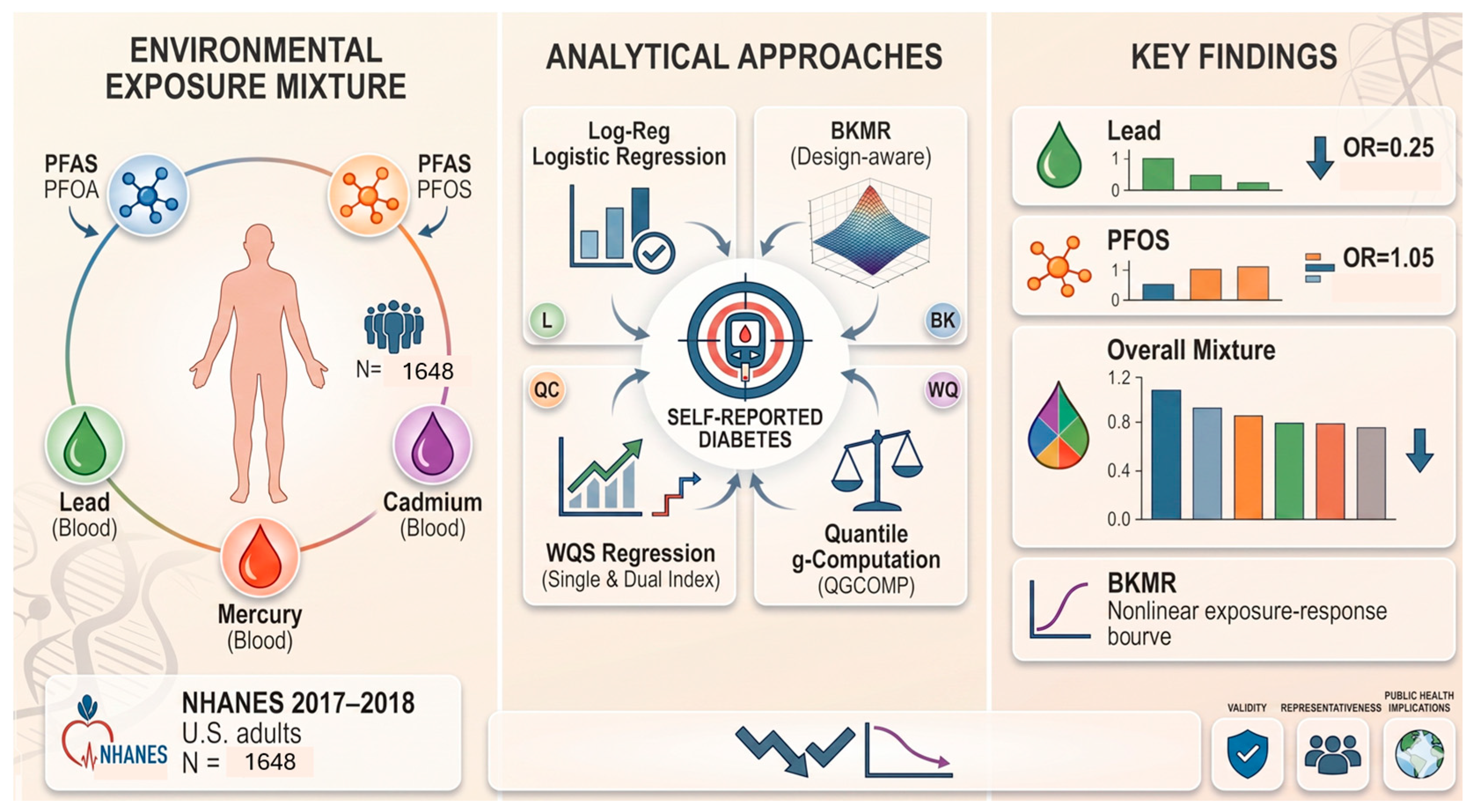
- To use survey-weighted logistic regression, limited to individuals with directly measured biospecimen concentrations for all five exposures, to assess the combined and individual associations of blood metals (lead, cadmium, and mercury) and PFAS compounds (PFOA and PFOS) with prevalent self-reported diabetes.
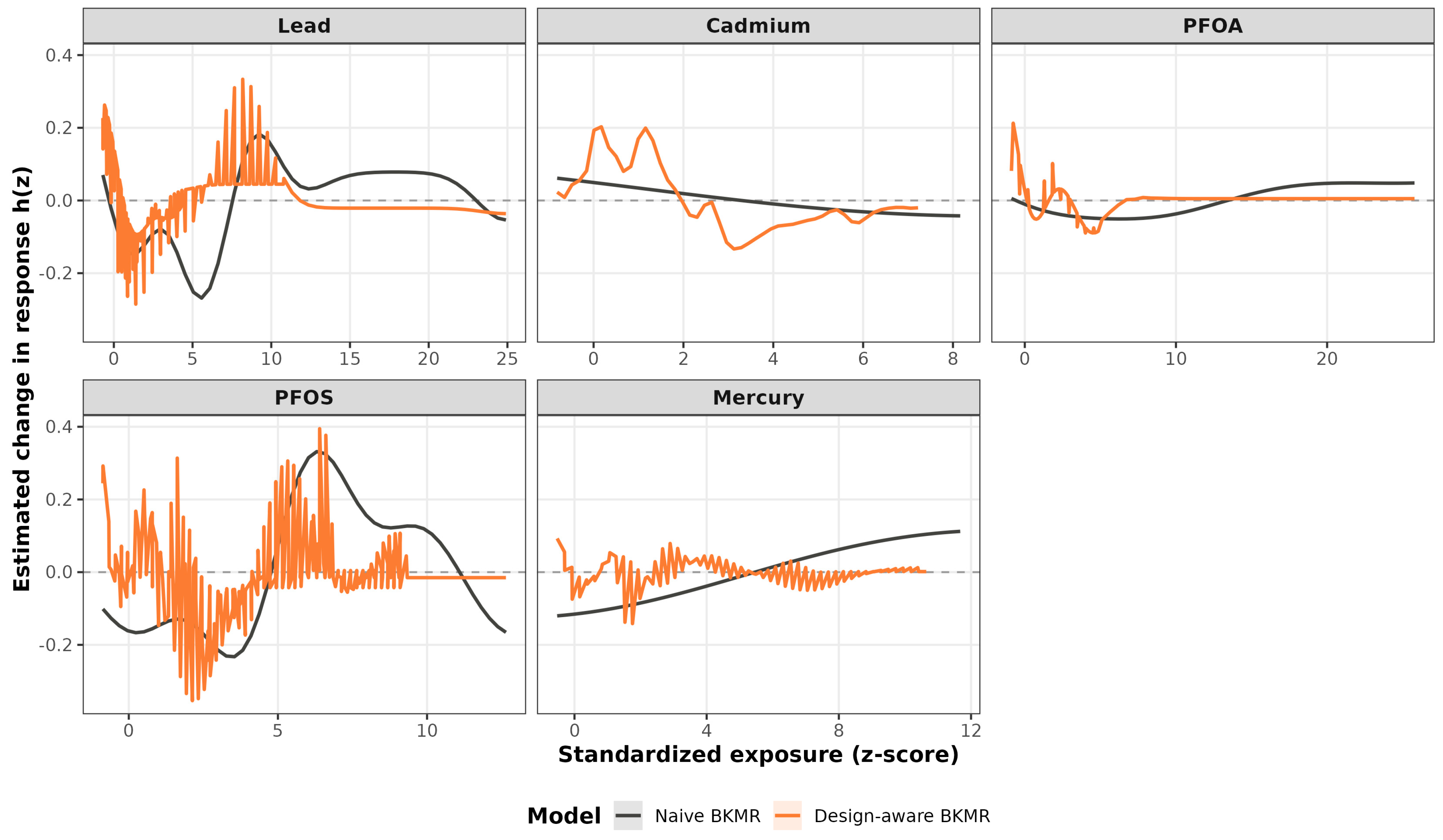
- To use BKMR to characterize nonlinear, concentration-specific exposure-response relationships between individual environmental exposures and diabetes risk, paying special attention to effects that occur within the low-to-moderate exposure range.
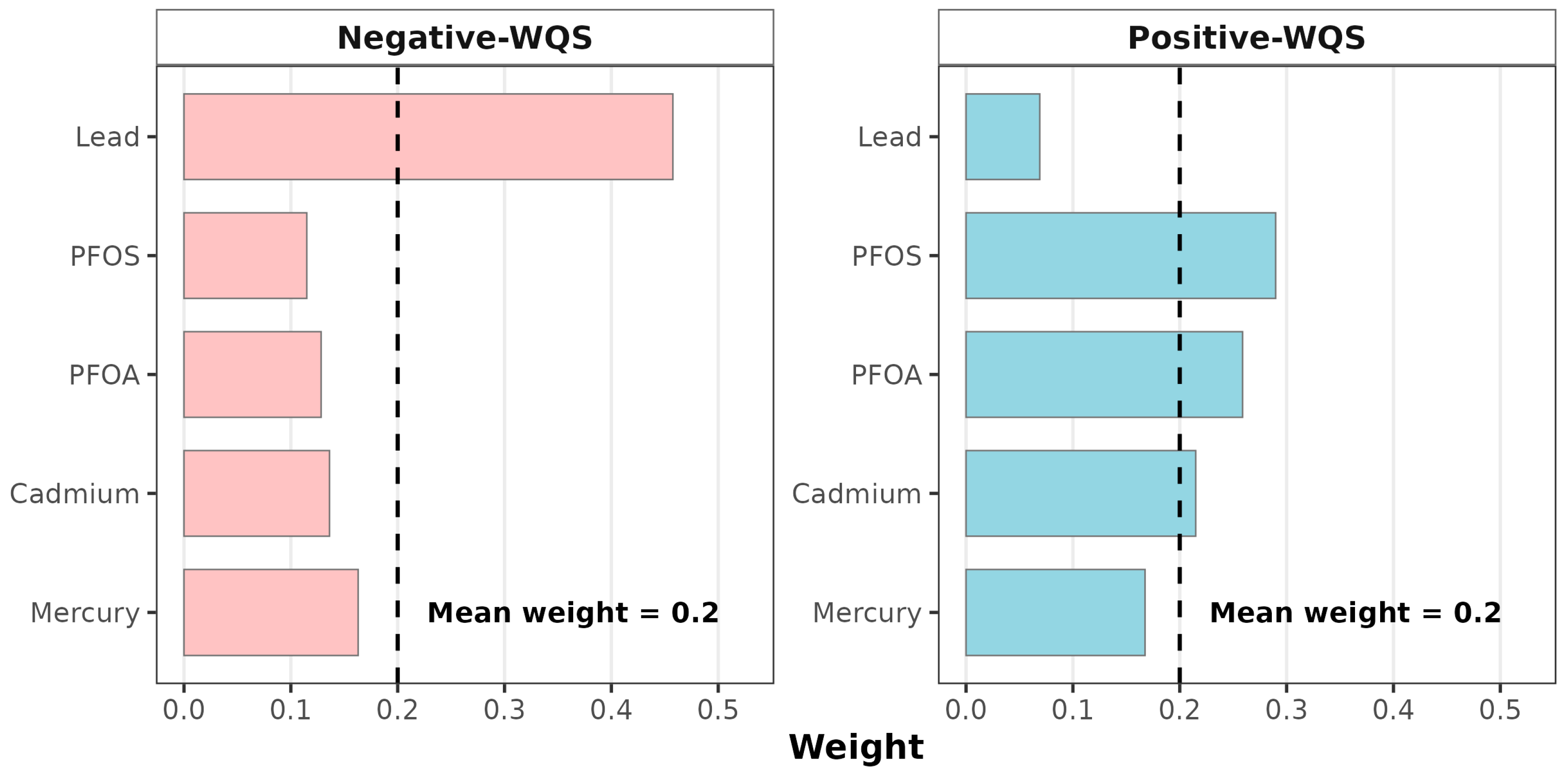
- To assess the relative importance of individual exposures within the mixture using posterior inclusion probabilities (PIPs) from BKMR, exposure-specific weights from dual-index WQS regression, and directional contributions from quantile g-computation, and also to evaluate the consistency of variable importance findings across complementary analytical frameworks.
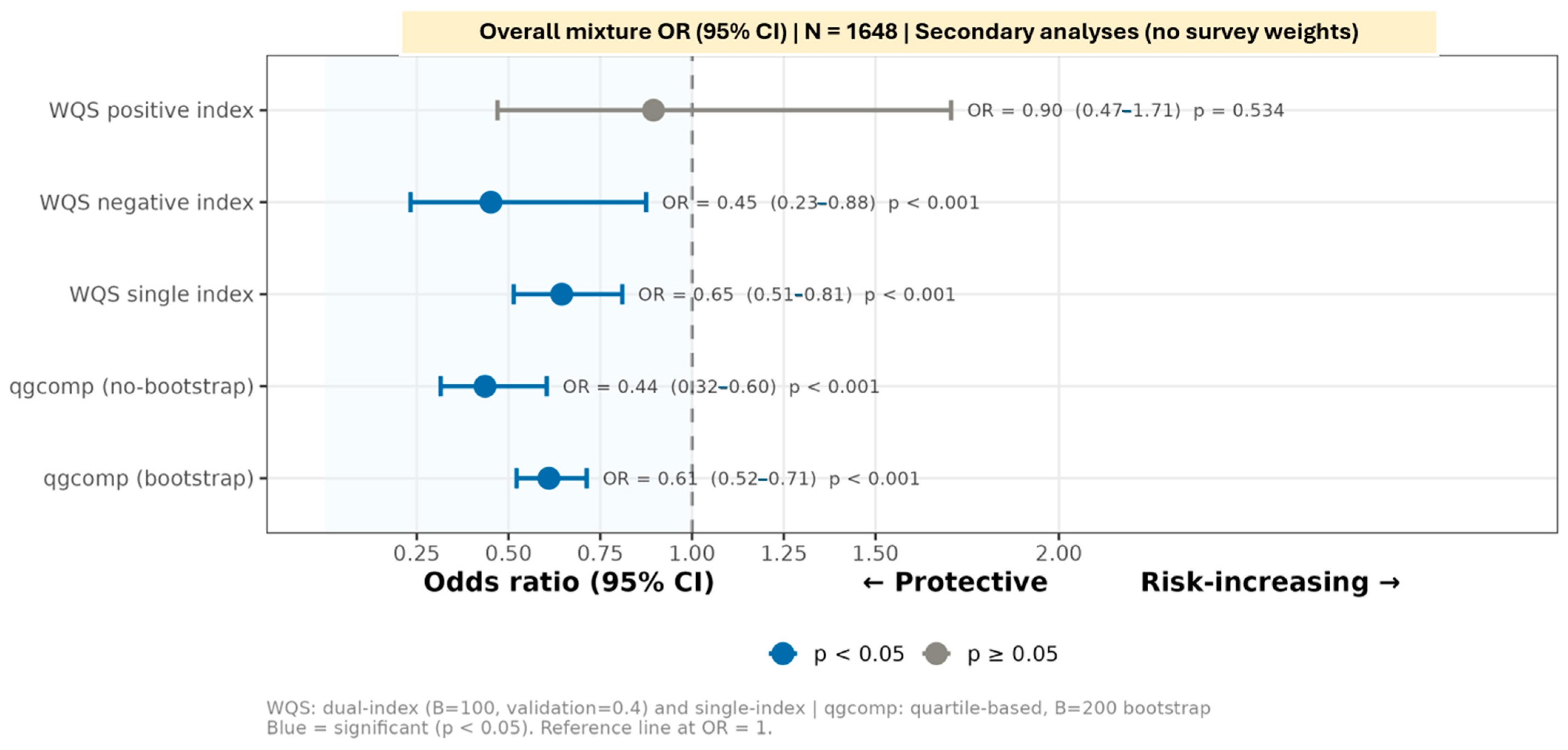
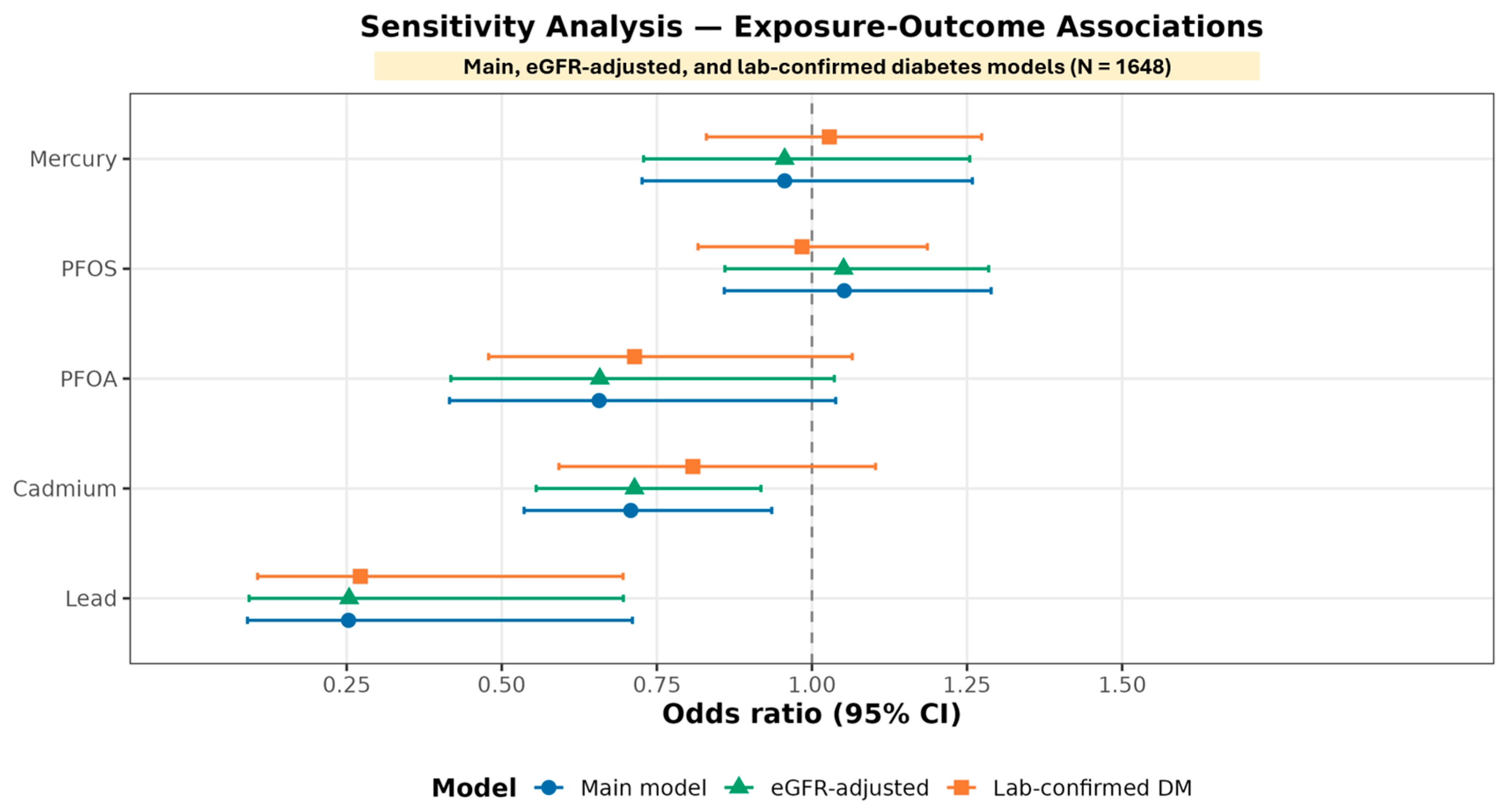
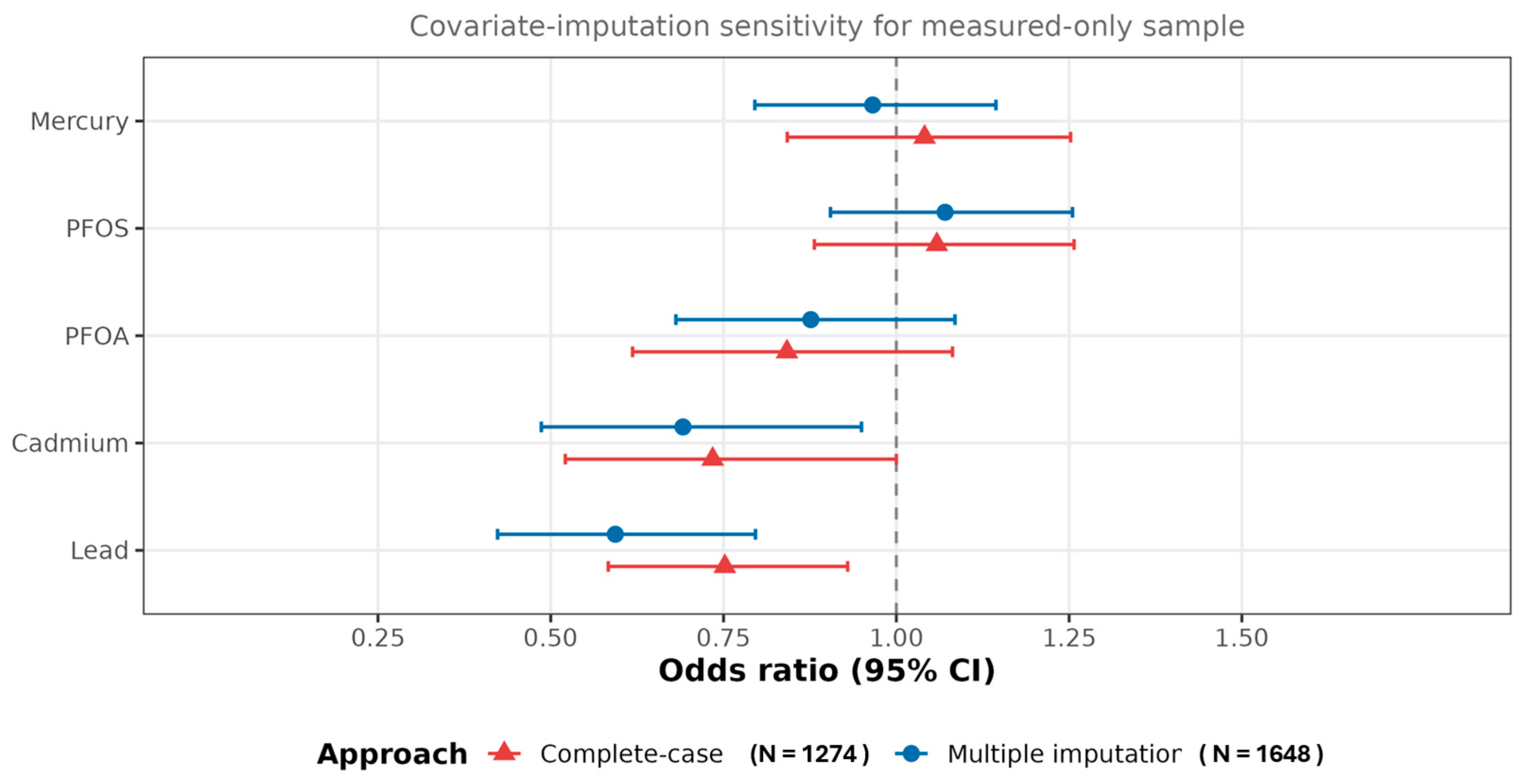
- To examine the overall joint mixture effect on diabetes prevalence using WQS regression and quantile g-computation, and to evaluate the robustness of findings through pre-specified sensitivity analyses including eGFR adjustment, lab-confirmed diabetes outcome definition, complete-case analysis, and exclusion of high-exposure outliers.
2. Materials and Methods
2.1. Data Source and Study Population
2.2. Outcome Definition
2.3. Exposure Assessment
- PFAS compounds: Perfluorooctanoic acid (PFOA) and perfluorooctanesulfonic acid (PFOS), measured in serum (ng/mL)
- Blood metals: Lead, cadmium, and mercury, measured in whole blood (µg/dL)
2.4. Covariates
- Demographic: age (continuous, years), sex (male/female), race/ethnicity (Non-Hispanic White, Mexican American, Other Hispanic, Non-Hispanic Black, Non-Hispanic Asian, Other/Multiracial)
- Socioeconomic: educational attainment (less than high school, high school graduate, some college, college graduate, above college), income-to-poverty ratio (continuous)
- Behavioral: smoking status (current, former, never), alcohol use (current drinker, past year drinker, none past year)
- Clinical: body mass index (BMI, continuous, kg/m2)
2.5. Survey Design and Sampling Weights
2.6. Missing Data and Imputation
2.7. Statistical Analysis
2.7.1. Descriptive Statistics and Correlation Analysis
2.7.2. Survey-Weighted Logistic Regression
2.7.3. Bayesian Kernel Machine Regression (BKMR)
2.7.4. Weighted Quantile Sum (WQS) Regression
2.7.5. Quantile g-Computation (qgcomp)
2.7.6. Sensitivity Analyses
2.8. Statistical Software
2.9. Analytical Strategy Summary
3. Results
3.1. Study Population
3.2. Exposure Characteristics
3.2.1. Distribution of Environmental Exposures
3.2.2. Correlation Structure of Environmental Exposures
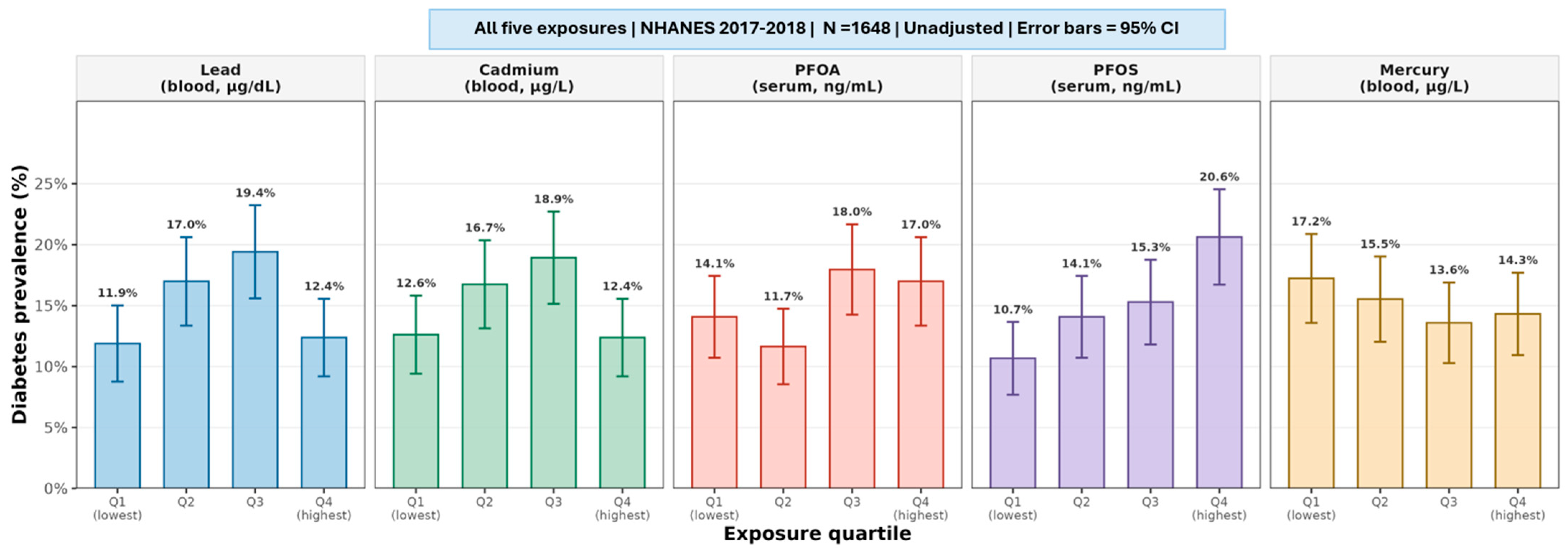
3.2.3. Unadjusted Diabetes Prevalence Across Exposure Quartiles
3.3. Survey-Weighted Logistic Regression Analyses
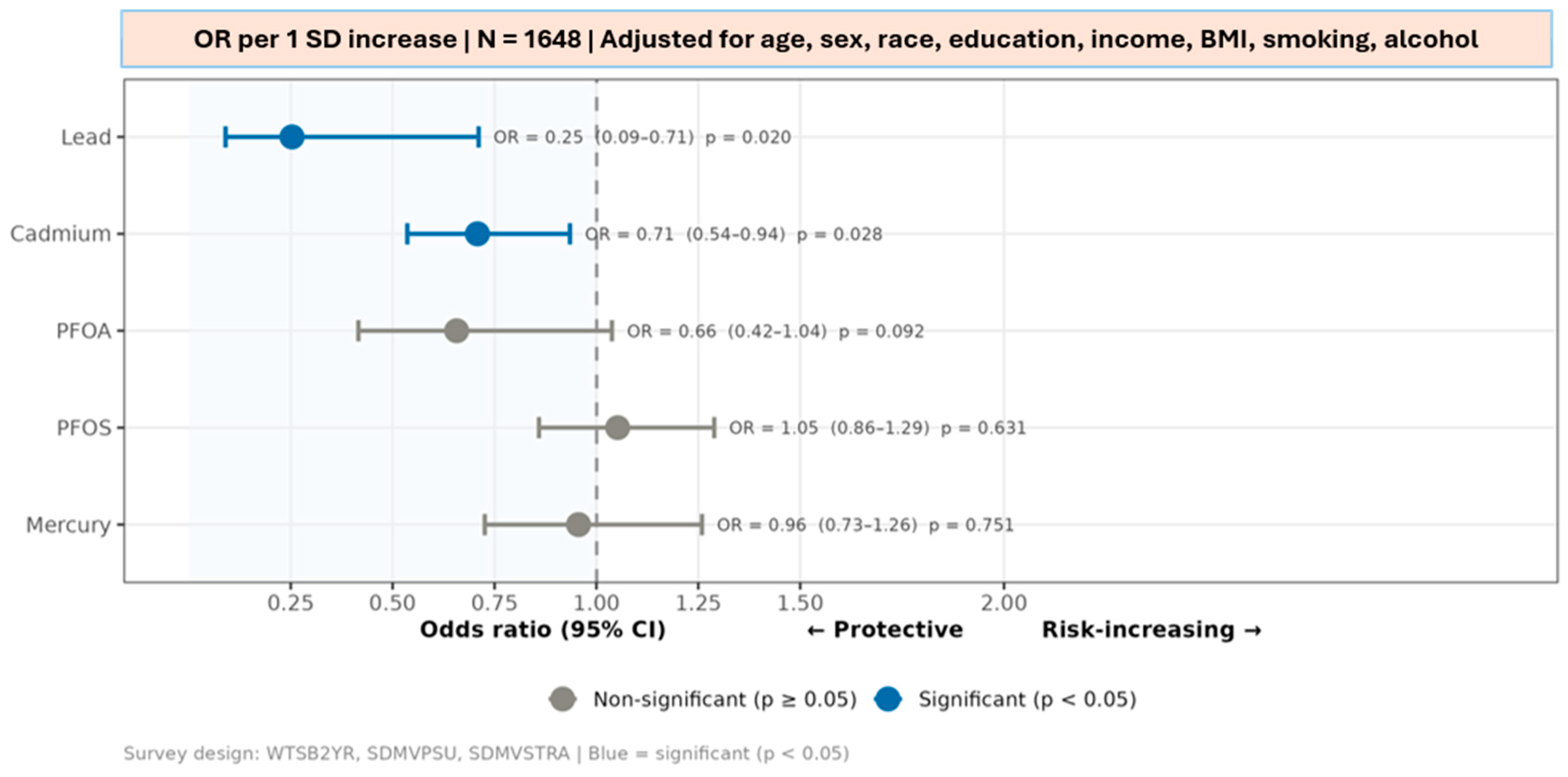
3.3.1. Primary Survey-Weighted Logistic Regression
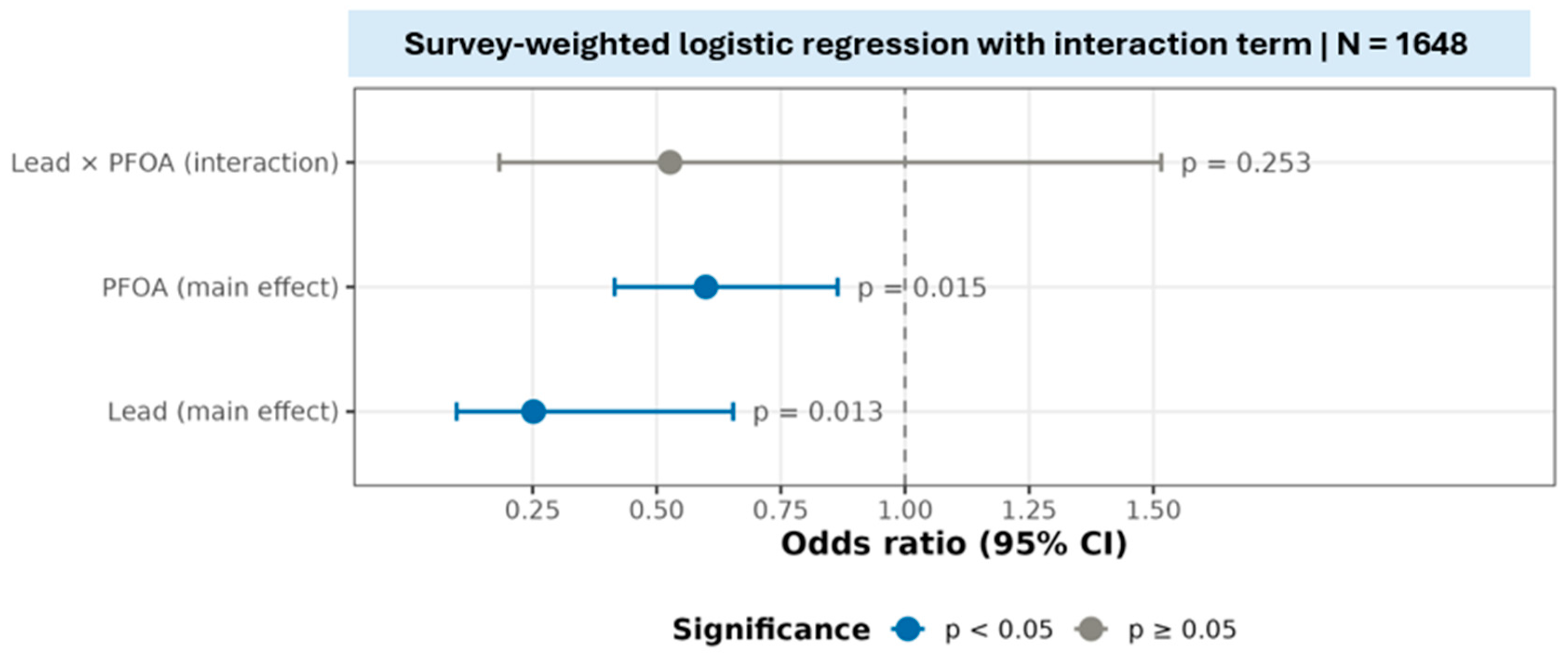
3.3.2. Lead × PFOA Interaction Analysis
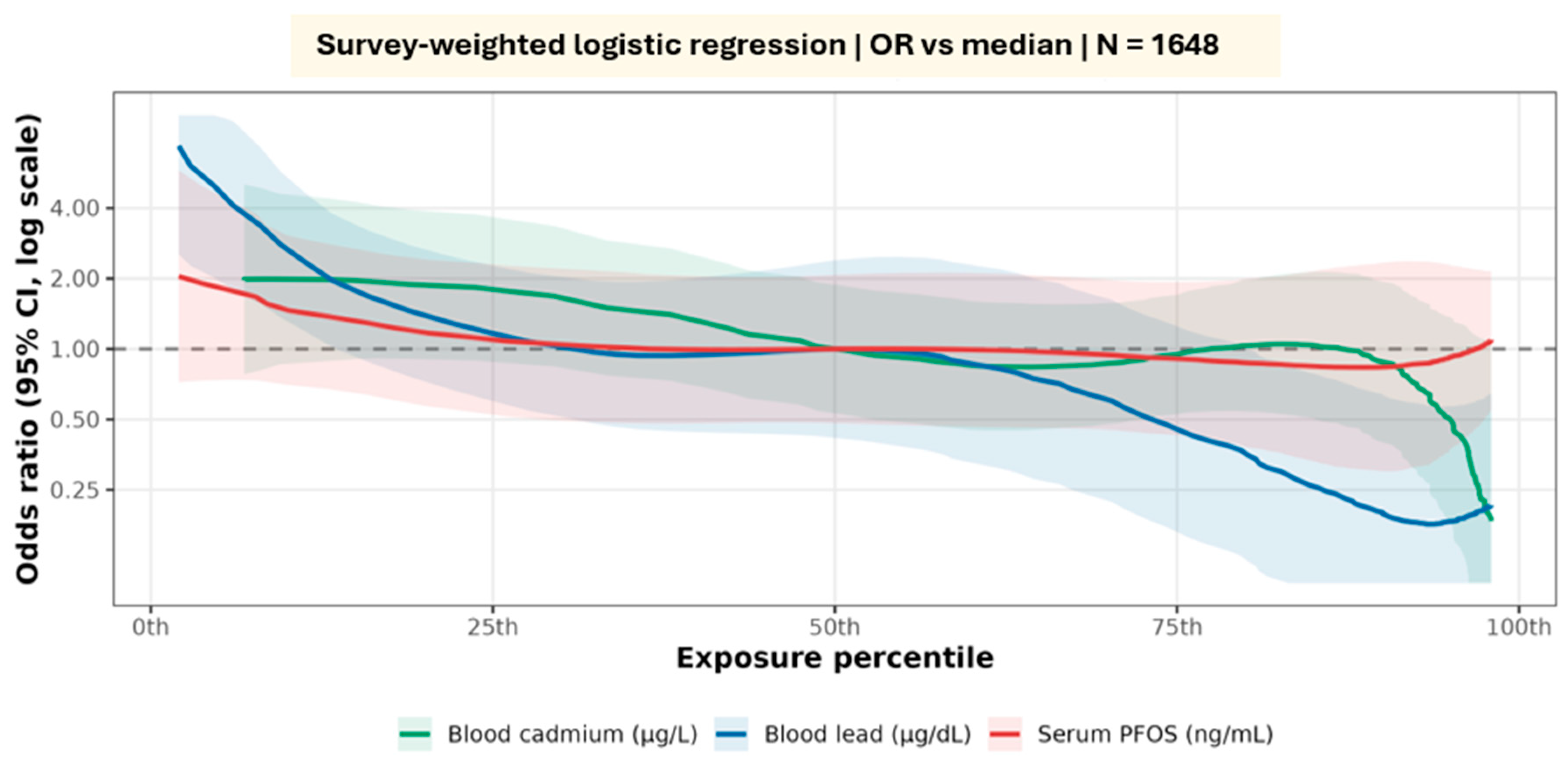
3.3.3. Nonlinear Dose–Response Relationships
3.4. Bayesian Kernel Machine Regression (BKMR) Analysis
3.4.1. Convergence Diagnostics
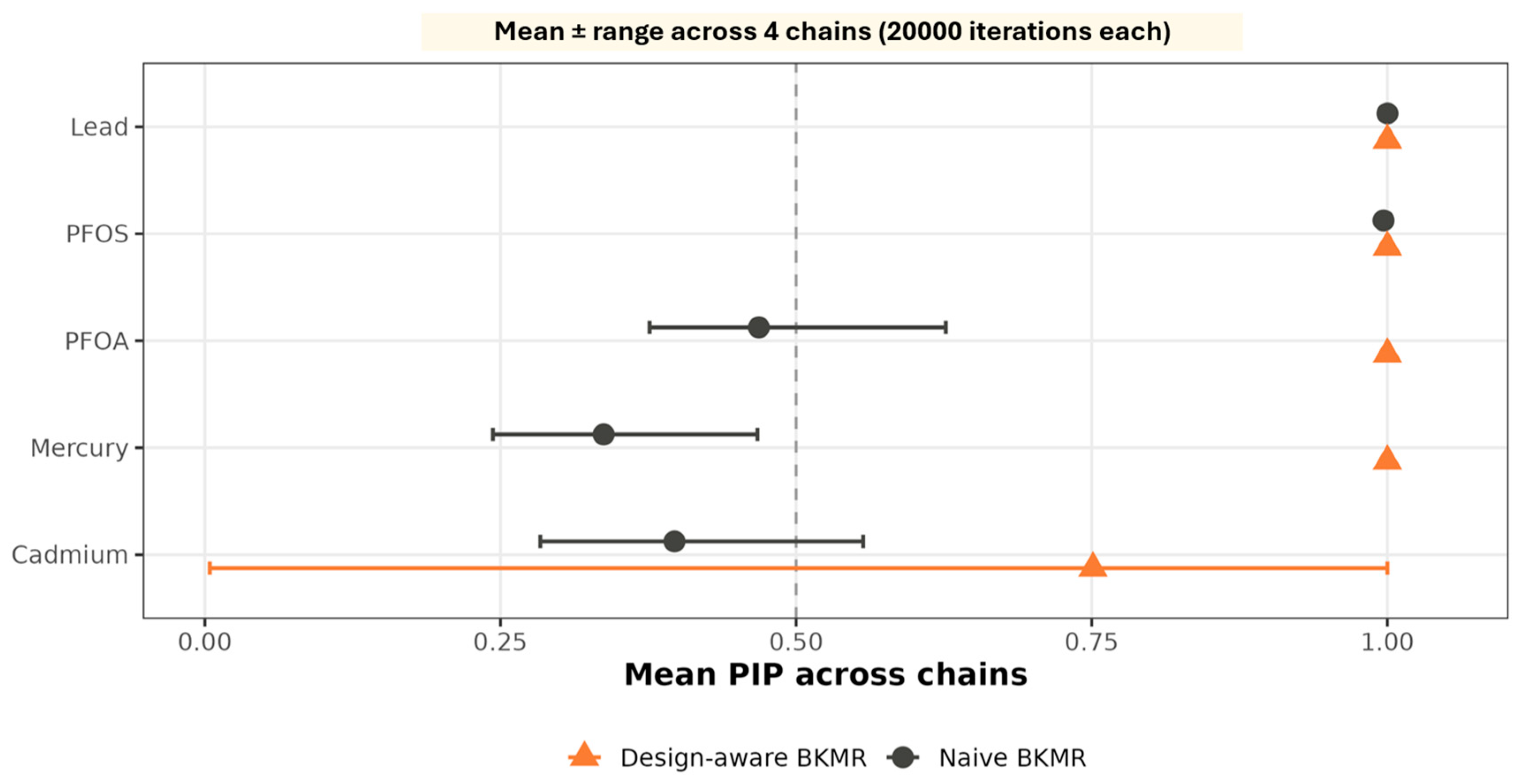
3.4.2. Posterior Inclusion Probabilities (PIPs)
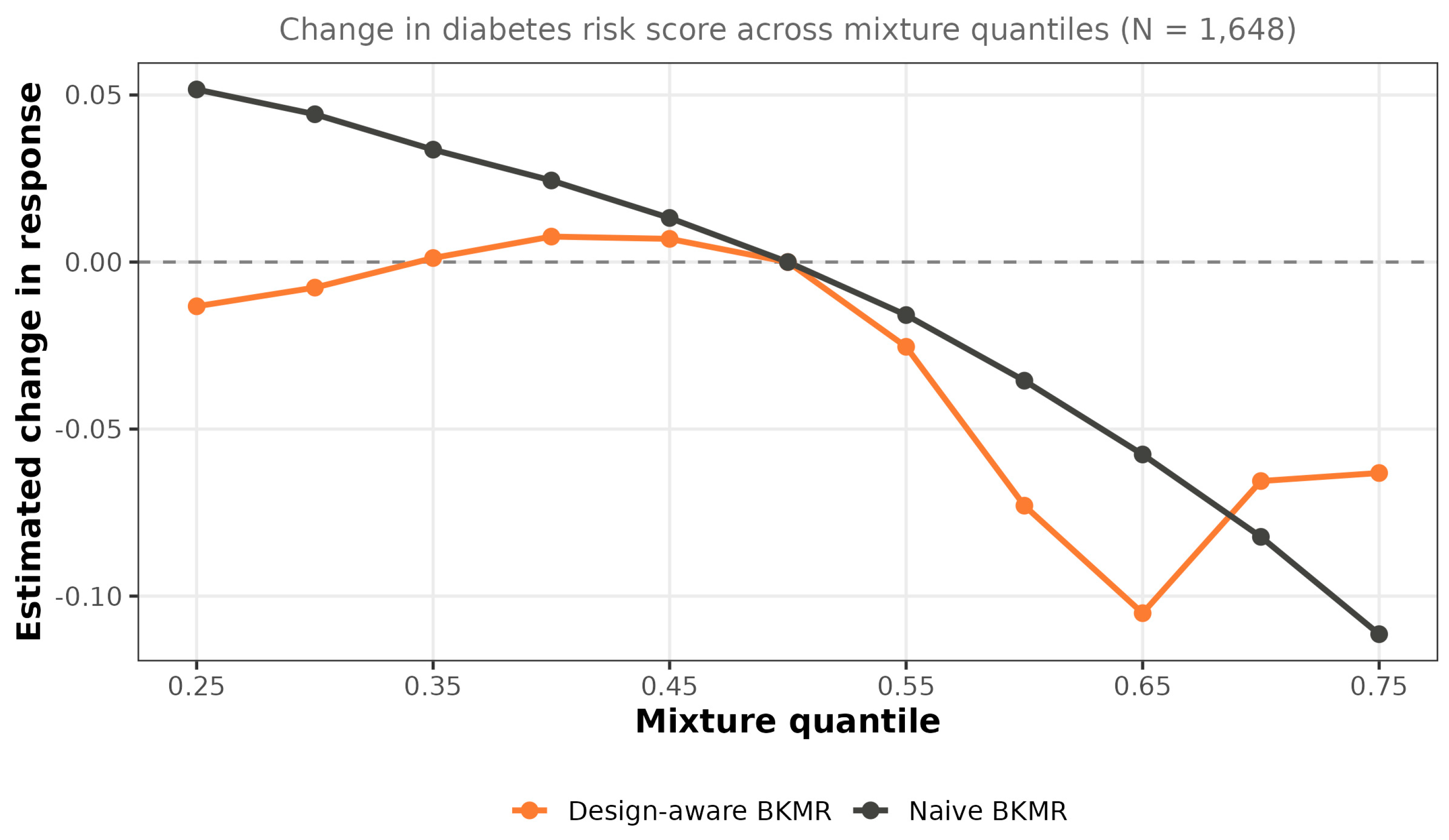
3.4.3. Overall Mixture Effect
3.4.4. Univariate Exposure-Response Functions
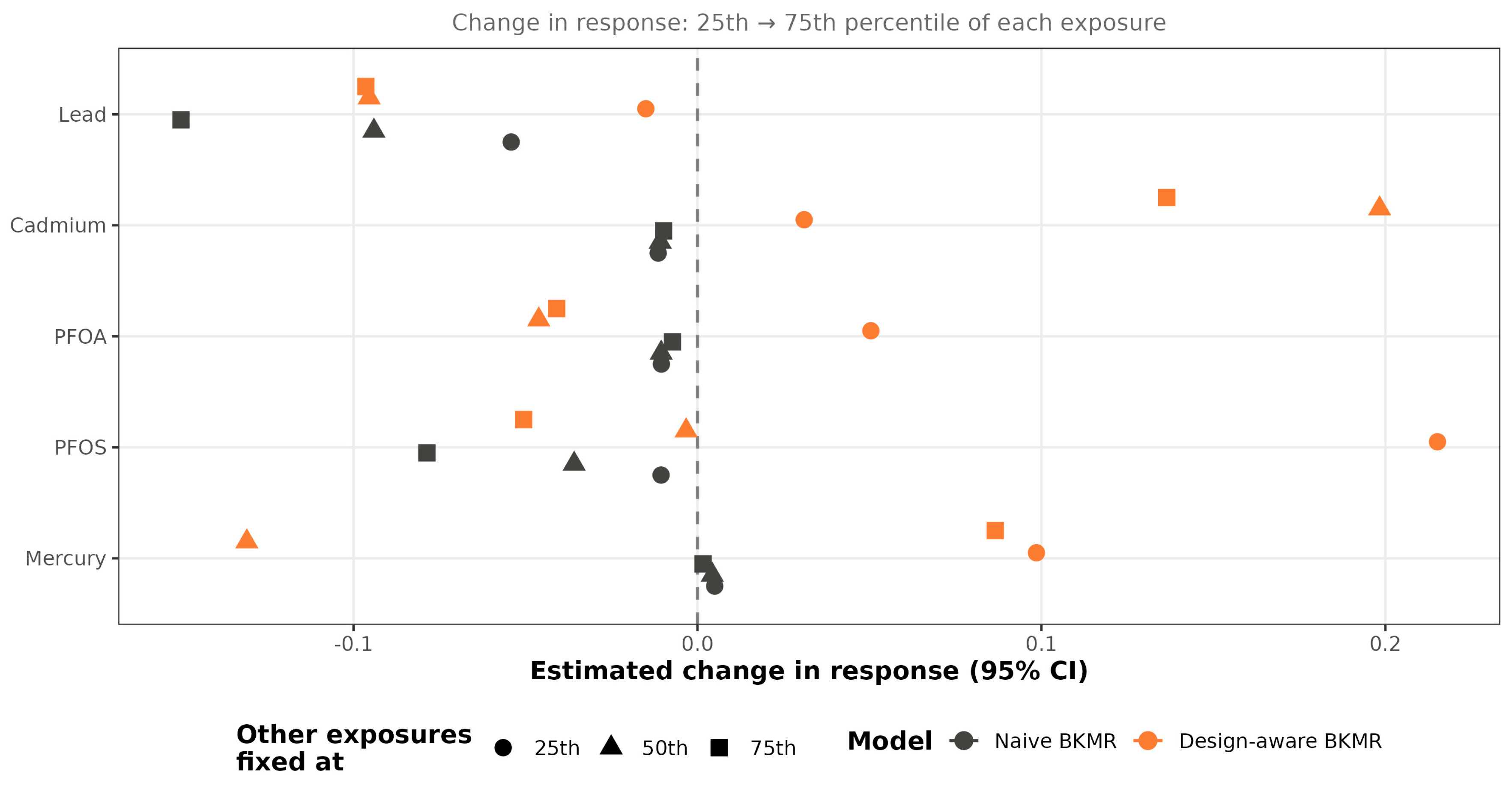
3.4.5. Single-Variable Risk Summaries
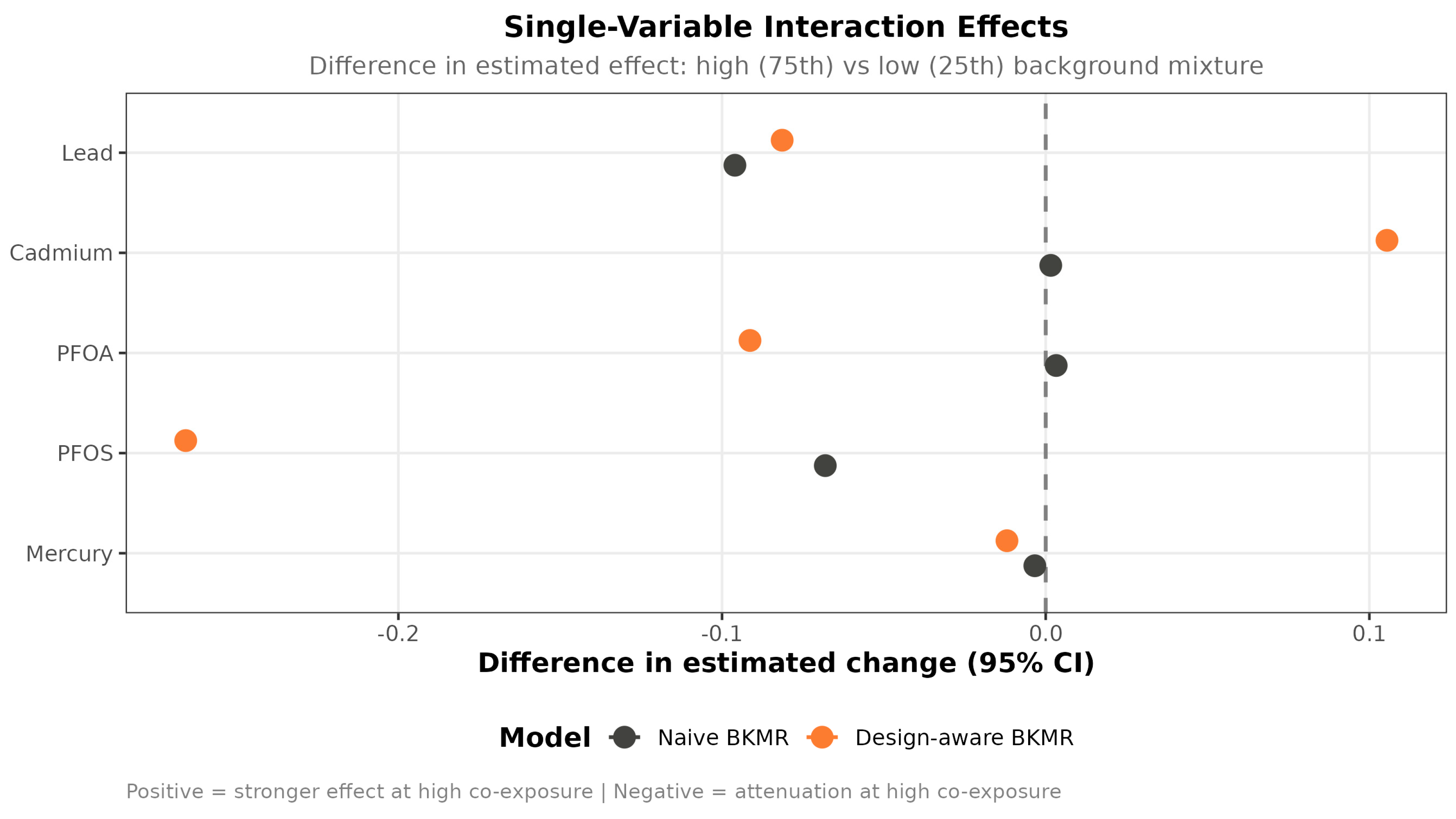
3.4.6. Assessment of Exposure Interactions
3.5. Weighted Quantile Sum Regression and Quantile G-Computation
Weighted Quantile Sum Regression
3.6. Results of Sensitivity Analyses
3.6.1. eGFR-Adjusted and Lab-Confirmed Diabetes Models
3.6.2. Complete-Case Sensitivity Analysis
4. Discussion
4.1. Interpretation of the Lead and Cadmium Associations
4.2. Importance of Nonlinear Mixture Modeling
4.3. Complementary Findings Across BKMR, WQS, and Quantile G-Computation
4.4. Biological Plausibility
4.5. Strengths
4.6. Limitations
5. Conclusions
Supplementary Materials
Author Contributions
Funding
Institutional Review Board Statement
Informed Consent Statement
Data Availability Statement
Conflicts of Interest
Abbreviations
References
- Duncan, B.B.; Magliano, D.J.; Boyko, E.J. IDF diabetes atlas 11th edition 2025: Global prevalence and projections for 2050. Nephrol. Dial. Transplant. 2026, 41, 7–9. [Google Scholar]
- Yang, A.M.; Lo, K.; Zheng, T.Z.; Yang, J.L.; Bai, Y.N.; Feng, Y.Q.; Cheng, N.; Liu, S.M. Environmental heavy metals and cardiovascular diseases: Status and future direction. Chronic Dis. Transl. Med. 2020, 6, 251–259. [Google Scholar] [CrossRef] [Scilit] [PubMed]
- Khalil, W.J.; Akeblersane, M.; Khan, A.S.; Moin, A.S.M.; Butler, A.E. Environmental Pollution and the Risk of Developing Metabolic Disorders: Obesity and Diabetes. Int. J. Mol. Sci. 2023, 24, 8870. [Google Scholar] [CrossRef] [Scilit] [PubMed]
- Parasin, N.; Amnuaylojaroen, T.; Saokaew, S.; Sittichai, N.; Tabkhan, N.; Dilokthornsakul, P. Outdoor air pollution exposure and the risk of type 2 diabetes mellitus: A systematic umbrella review and meta-analysis. Environ. Res. 2025, 269, 120885. [Google Scholar] [CrossRef] [Scilit] [PubMed]
- Adokwe, J.B.; Pouyfung, P.; Kuraeiad, S.; Wongrith, P.; Inchai, P.; Yimthiang, S.; Satarug, S.; Khamphaya, T. Concurrent Lead and Cadmium Exposure Among Diabetics: A Case-Control Study of Socio-Demographic and Consumption Behaviors. Nutrients 2025, 17, 710. [Google Scholar] [CrossRef] [Scilit] [PubMed]
- Liu, X.; Peng, G.; Lin, Y.; Chen, W.; Geng, H.; Liang, J. Environmental pollutants associated with blood glucose levels in healthy individuals. Sci. Rep. 2026, 16, 5592. [Google Scholar] [CrossRef] [Scilit] [PubMed]
- Gui, S.Y.; Qiao, J.C.; Xu, K.X.; Li, Z.L.; Chen, Y.N.; Wu, K.J.; Jiang, Z.X.; Hu, C.Y. Association between per- and polyfluoroalkyl substances exposure and risk of diabetes: A systematic review and meta-analysis. J. Expo. Sci. Environ. Epidemiol. 2023, 33, 40–55. [Google Scholar] [CrossRef] [Scilit] [PubMed]
- Zeeshan, M.; Zhang, Y.T.; Yu, S.; Huang, W.Z.; Zhou, Y.; Vinothkumar, R.; Chu, C.; Li, Q.Q.; Wu, Q.Z.; Ye, W.L.; et al. Exposure to isomers of per- and polyfluoroalkyl substances increases the risk of diabetes and impairs glucose-homeostasis in Chinese adults: Isomers of C8 health project. Chemosphere 2021, 278, 130486. [Google Scholar] [CrossRef] [Scilit] [PubMed]
- Cheng, X.; Wang, F.; Zhang, J.; Wang, Y.; Liu, L.; Liu, L.; Guo, H.; Gao, J.; Tan, Y.; He, M. Associations between per- and polyfluoroalkyl substances and type 2 diabetes: The modifying effects of lifestyle and genetic risk. J. Hazard. Mater. 2025, 497, 139644. [Google Scholar] [CrossRef] [Scilit] [PubMed]
- Zhou, Y.; Zhang, L.; Zheng, T.; Li, H.; Han, Y.; Meng, W.; Kuang, H.; Dong, C.; Yu, Z.L.; Zhu, X.; et al. Metals link to diabetes: Insights from a national cross-sectional investigation. J. Environ. Sci. 2025, 155, 720–729. [Google Scholar] [CrossRef] [Scilit] [PubMed]
- Botelho, J.C.; Kato, K.; Wong, L.-Y.; Calafat, A.M. Per-and polyfluoroalkyl substances (PFAS) exposure in the US population: NHANES 1999–March 2020. Environ. Res. 2025, 270, 120916. [Google Scholar] [CrossRef] [Scilit] [PubMed]
- Wang, M.; Wang, Z.; Liu, Y.; Li, R.; Shen, Y.; Zhuang, Z.; Wang, L.; Liu, Z.; Jing, T. Per-and polyfluoroalkyl substances and type 2 diabetes among older adults: Synthesizing cross-sectional population study and meta-analysis. Int. J. Hyg. Environ. Health 2025, 266, 114560. [Google Scholar] [CrossRef] [Scilit] [PubMed]
- Hong, H.; Xu, Y.; Xu, J.; Zhang, J.; Xi, Y.; Pi, H.; Yang, L.; Yu, Z.; Wu, Q.; Meng, Z.; et al. Cadmium exposure impairs pancreatic beta-cell function and exaggerates diabetes by disrupting lipid metabolism. Environ. Int. 2021, 149, 106406. [Google Scholar] [CrossRef] [Scilit] [PubMed]
- Mostafalou, S.; Baeeri, M.; Bahadar, H.; Soltany-Rezaee-Rad, M.; Gholami, M.; Abdollahi, M. Molecular mechanisms involved in lead induced disruption of hepatic and pancreatic glucose metabolism. Environ. Toxicol. Pharmacol. 2015, 39, 16–26. [Google Scholar] [CrossRef] [Scilit] [PubMed]
- Tyrrell, J.B.; Hafida, S.; Stemmer, P.; Adhami, A.; Leff, T. Lead (Pb) exposure promotes diabetes in obese rodents. J. Trace Elem. Med. Biol. 2017, 39, 221–226. [Google Scholar] [CrossRef] [Scilit] [PubMed]
- Wan, H.; Wang, B.; Cui, Y.; Wang, Y.; Zhang, K.; Chen, C.; Xia, F.; Ye, L.; Wang, L.; Wang, N.; et al. Low-level lead exposure promotes hepatic gluconeogenesis and contributes to the elevation of fasting glucose level. Chemosphere 2021, 276, 130111. [Google Scholar] [CrossRef] [Scilit] [PubMed]
- Ward, Z.; Obeng-Gyasi, E. Differential Associations of Internal and Residential Lead Exposure Pathways with Body Mass Index: A Mixture Analysis of Biomarkers and Household Dust. Environments 2026, 13, 200. [Google Scholar] [CrossRef] [Scilit]
- Gong, R.; Pu, X.; Cheng, Z.; Ding, J.; Chen, Z.; Wang, Y. The association between serum cadmium and diabetes in the general population: A cross-sectional study from NHANES (1999–2020). Front. Nutr. 2022, 9, 966500. [Google Scholar] [CrossRef] [Scilit] [PubMed]
- Ahluwalia, N.; Dwyer, J.; Terry, A.; Moshfegh, A.; Johnson, C. Update on NHANES dietary data: Focus on collection, release, analytical considerations, and uses to inform public policy. Adv. Nutr. 2016, 7, 121–134. [Google Scholar] [CrossRef] [Scilit] [PubMed]
- Tasnia, R.; Obeng-Gyasi, E. Evaluating Machine Learning Models for Classifying Diabetes Using Demographic, Clinical, Lifestyle, Anthropometric, and Environmental Exposure Factors. Toxics 2026, 14, 76. [Google Scholar] [CrossRef] [Scilit] [PubMed]
- Agarwal, S.; Kanapka, L.G.; Raymond, J.K.; Walker, A.; Gerard-Gonzalez, A.; Kruger, D.; Redondo, M.J.; Rickels, M.R.; Shah, V.N.; Butler, A.; et al. Racial-Ethnic Inequity in Young Adults With Type 1 Diabetes. J. Clin. Endocrinol. Metab. 2020, 105, e2960–e2969. [Google Scholar] [CrossRef] [Scilit] [PubMed]
- Moon, S.S. Association of lead, mercury and cadmium with diabetes in the Korean population: The Korea National Health and Nutrition Examination Survey (KNHANES) 2009–2010. Diabet. Med. 2013, 30, e143–e148. [Google Scholar] [CrossRef] [Scilit] [PubMed]
- Rotter, I.; Kosik-Bogacka, D.; Dołęgowska, B.; Safranow, K.; Lubkowska, A.; Laszczyńska, M. Relationship between the concentrations of heavy metals and bioelements in aging men with metabolic syndrome. Int. J. Environ. Res. Public Health 2015, 12, 3944–3961. [Google Scholar] [CrossRef] [Scilit] [PubMed]
- Wu, Q.; Gan, R.; Chen, S.; Qiu, M.; Chen, J.; Huang, D. Associations of metal mixtures with insulin resistance and glucose homeostasis in U.S. adults from the NHANES 2011–2018. Sci. Rep. 2026, 16, 2047. [Google Scholar] [CrossRef] [Scilit] [PubMed]
- Wang, X.; Mukherjee, B.; Park, S.K. Associations of cumulative exposure to heavy metal mixtures with obesity and its comorbidities among US adults in NHANES 2003–2014. Environ. Int. 2018, 121, 683–694. [Google Scholar] [CrossRef] [Scilit] [PubMed]
- Ji, J.H.; Jin, M.H.; Kang, J.-H.; Lee, S.I.; Lee, S.; Kim, S.-H.; Oh, S.Y. Relationship between heavy metal exposure and type 2 diabetes: A large-scale retrospective cohort study using occupational health examinations. BMJ Open 2021, 11, e039541. [Google Scholar] [CrossRef] [Scilit] [PubMed]
- Forte, G.; Bocca, B.; Peruzzu, A.; Tolu, F.; Asara, Y.; Farace, C.; Oggiano, R.; Madeddu, R. Blood metals concentration in type 1 and type 2 diabetics. Biol. Trace Elem. Res. 2013, 156, 79–90. [Google Scholar] [CrossRef] [Scilit] [PubMed]
- Barrera-Gomez, J.; Agier, L.; Portengen, L.; Chadeau-Hyam, M.; Giorgis-Allemand, L.; Siroux, V.; Robinson, O.; Vlaanderen, J.; Gonzalez, J.R.; Nieuwenhuijsen, M.; et al. A systematic comparison of statistical methods to detect interactions in exposome-health associations. Environ. Health 2017, 16, 74. [Google Scholar] [CrossRef] [Scilit] [PubMed]
- Bobb, J.F.; Claus Henn, B.; Valeri, L.; Coull, B.A. Statistical software for analyzing the health effects of multiple concurrent exposures via Bayesian kernel machine regression. Environ. Health 2018, 17, 67. [Google Scholar] [CrossRef] [Scilit] [PubMed]
- Keil, A.; Buckley, J.; O’Brien, K.; Ferguson, K.; Zhao, S.; White, A. A quantile-based g-computation approach to addressing the effects of exposure mixtures. Environ. Epidemiol. 2019, 3, 44. [Google Scholar] [CrossRef] [Scilit]
- Liu, K.; Li, L.; Ma, Y.; Jiang, J.; Liu, Z.; Ye, Z.; Liu, S.; Pu, C.; Chen, C.; Wan, Y. Machine learning models for blood glucose level prediction in patients with diabetes mellitus: Systematic review and network meta-analysis. JMIR Med. Inform. 2023, 11, e47833. [Google Scholar] [CrossRef] [Scilit] [PubMed]
- Bobb, J.F.; Valeri, L.; Claus Henn, B.; Christiani, D.C.; Wright, R.O.; Mazumdar, M.; Godleski, J.J.; Coull, B.A. Bayesian kernel machine regression for estimating the health effects of multi-pollutant mixtures. Biostatistics 2015, 16, 493–508. [Google Scholar] [PubMed]
- Nguyen, H.D.; Oh, H.; Jo, W.H.; Hoang, N.H.M.; Kim, M.S. Mixtures modeling identifies heavy metals and pyrethroid insecticide metabolites associated with obesity. Environ. Sci. Pollut. Res. Int. 2022, 29, 20379–20397. [Google Scholar] [CrossRef] [Scilit] [PubMed]
- Akinyemi, B.; Obeng-Gyasi, E. Mixture Effects of Metals, PCBs, Dioxins, and Furans on Liver Function. Toxics 2026, 14, 418. [Google Scholar] [CrossRef] [Scilit] [PubMed]
- Centers for Disease Control and Prevention. National Health and Nutrition Examination Survey: Analytic Guidelines. Available online: https://wwwn.cdc.gov/nchs/nhanes/analyticguidelines.aspx (accessed on 8 June 2026).
- Jehu-Appiah, D.; Obeng-Gyasi, E. A Practical Framework for Incorporating Complex Survey Design in Bayesian Kernel Machine Regression. Stats 2026, 9, 46. [Google Scholar] [CrossRef] [Scilit] [PubMed]
- James-Todd, T.; Stahlhut, R.; Meeker, J.D.; Powell, S.G.; Hauser, R.; Huang, T.; Rich-Edwards, J. Urinary phthalate metabolite concentrations and diabetes among women in the National Health and Nutrition Examination Survey (NHANES) 2001–2008. Environ. Health Perspect. 2012, 120, 1307–1313. [Google Scholar] [CrossRef] [Scilit] [PubMed]
- Woods, A.D.; Davis-Kean, P.; Halvorson, M.A.; King, K.; Logan, J.; Xu, M.; Bainter, S.; Brown, D.; Clay, J.M.; Cruz, R.A. Missing data and multiple imputation decision tree. PsyArXiv 2021. [Google Scholar] [CrossRef] [Scilit]
- Gelman, A.; Rubin, D.B. Inference from Iterative Simulation Using Multiple Sequences. Stat. Sci. 1992, 7, 457–472. [Google Scholar] [CrossRef] [Scilit]
- Carrico, C.; Gennings, C.; Wheeler, D.C.; Factor-Litvak, P. Characterization of Weighted Quantile Sum Regression for Highly Correlated Data in a Risk Analysis Setting. J. Agric. Biol. Environ. Stat. 2015, 20, 100–120. [Google Scholar] [CrossRef] [Scilit] [PubMed]
- Czarnota, J.; Gennings, C.; Wheeler, D.C. Assessment of weighted quantile sum regression for modeling chemical mixtures and cancer risk. Cancer Inform. 2015, 14, 159–171. [Google Scholar] [CrossRef] [Scilit] [PubMed]
- Renzetti, S.; Curtin, P.; Allan, C.; Bello, G.; Gennings, C. gWQS: Generalized Weighted Quantile Sum Regression. Available online: https://cran.r-project.org/web/packages/gWQS/index.html (accessed on 1 June 2026).
- Van Buuren, S.; Groothuis-Oudshoorn, K. mice: Multivariate imputation by chained equations in R. J. Stat. Softw. 2011, 45, 1–67. [Google Scholar] [CrossRef] [Scilit]
- CDC/NCHS; Centers for Disease Control and Prevention (CDC); National Center for Health Statistics (NCHS). National Health and Nutrition Examination Survey (NHANES): Continuous NHANES Overview; National Center for Health Statistics (NCHS): Washington, DC, USA, 2017. Available online: https://wwwn.cdc.gov/nchs/nhanes/continuousnhanes/overview.aspx?BeginYear=2017 (accessed on 8 June 2026).
- Yang, Q.S.; Xu, J.Q.; Liu, R.L.; Zheng, J.; Bao, M.H.; Zhong, Z.H.; Feng, Q.; Ding, Y.B. Environmental toxicant exposure and diabetes risk: An exposome-wide association study integrating mixture effects and molecular mechanisms. Ecotoxicol. Environ. Saf. 2026, 312, 119923. [Google Scholar] [CrossRef] [Scilit] [PubMed]
- Tinkov, A.A.; Filippini, T.; Ajsuvakova, O.P.; Aaseth, J.; Gluhcheva, Y.G.; Ivanova, J.M.; Bjorklund, G.; Skalnaya, M.G.; Gatiatulina, E.R.; Popova, E.V.; et al. The role of cadmium in obesity and diabetes. Sci. Total Environ. 2017, 601–602, 741–755. [Google Scholar] [CrossRef] [Scilit] [PubMed]
- Filippini, T.; Wise, L.A.; Vinceti, M. Cadmium exposure and risk of diabetes and prediabetes: A systematic review and dose-response meta-analysis. Environ. Int. 2022, 158, 106920. [Google Scholar] [CrossRef] [Scilit] [PubMed]
- Javaid, A.; Akbar, I.; Javed, H.; Khan, U.; Iftikhar, H.; Zahra, D.; Rashid, F.; Ashfaq, U.A. Role of heavy metals in diabetes: Mechanisms and treatment strategies. Crit. Rev. Eukaryot. Gene Expr. 2021, 31, 65–80. [Google Scholar] [CrossRef] [Scilit] [PubMed]







| Variable | Category | n (%) | Category | n (%) |
|---|---|---|---|---|
| Sex | Male | 813 (49.3) | Female | 835 (50.7) |
| Age (years) | Mean ± SD | 49.2 ± 18.7 | Median (IQR) | 50.0 (33.0–64.0) |
| Race/Ethnicity | Non-Hispanic White | 591 (35.9) | Non-Hispanic Black | 361 (21.9) |
| Mexican American | 239 (14.5) | Non-Hispanic Asian | 216 (13.1) | |
| Other Hispanic | 156 (9.5) | Other/Multiracial | 85 (5.2) | |
| Education | Less than high school | 141 (8.6) | High school graduate | 178 (10.8) |
| Some college | 358 (21.7) | College graduate | 522 (31.7) | |
| Above college | 362 (22.0) | Missing | 87 (5.3) | |
| Smoking status | Never | 992 (60.2) | Former | 369 (22.4) |
| Current | 287 (17.4) | |||
| Alcohol use | Past year drinker | 1081 (65.6) | None past year | 299 (18.1) |
| Never | 160 (9.7) | Missing | 108 (6.6) | |
| BMI (kg/m2) | Mean ± SD | 29.7 ± 7.8 | Median (IQR) | 28.3 (24.5–33.4) |
| Income-to-poverty ratio | Mean ± SD | 2.50 ± 1.61 | Median (IQR) | 2.04 (1.17–4.00) |
| Exposure | Mean (SD) | Median | IQR | Unit |
|---|---|---|---|---|
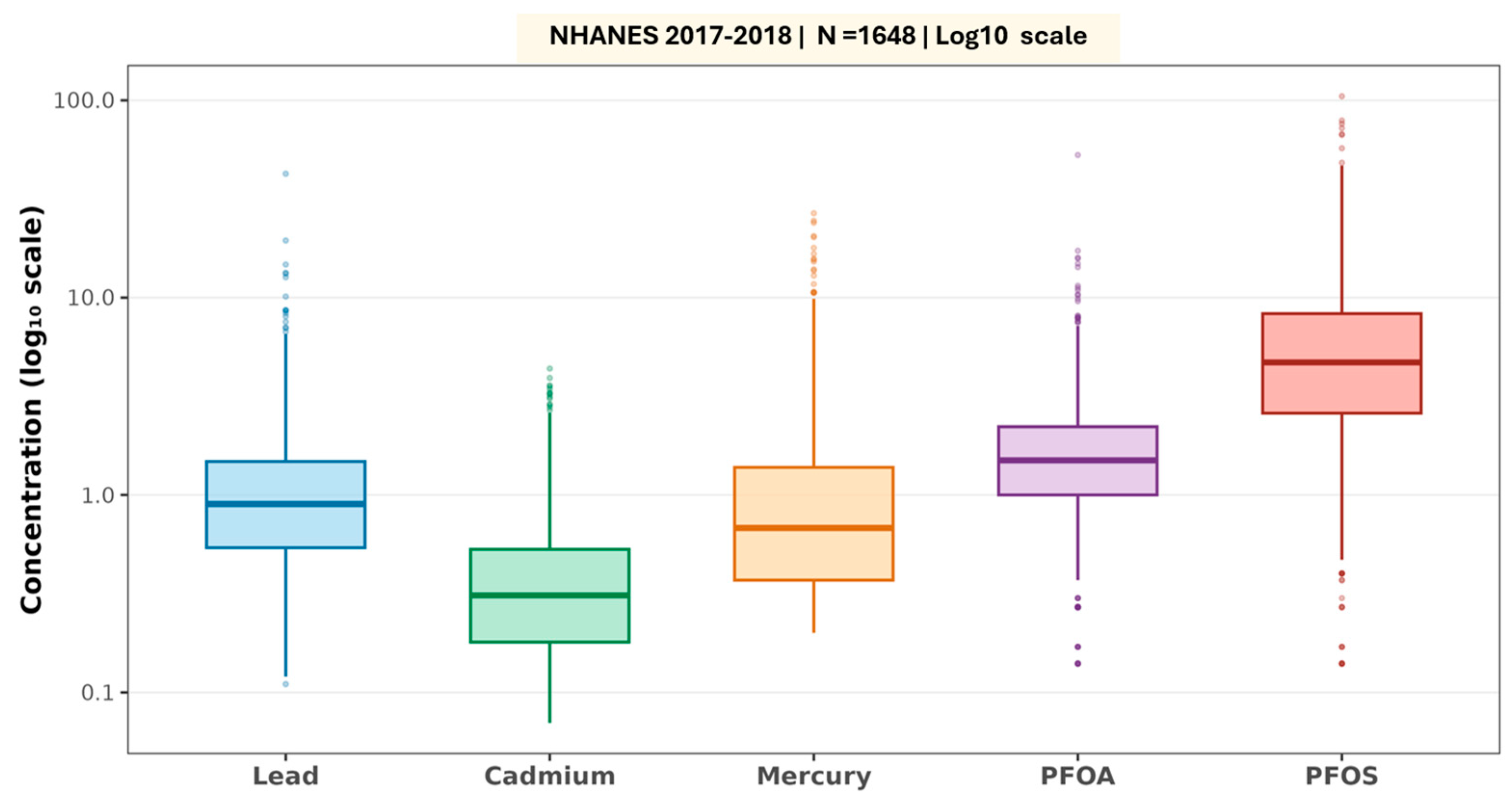
| PFOA | 1.89 (1.98) | 1.50 | 1.00–2.27 | ng/mL |
| PFOS | 6.87 (7.75) | 4.70 | 2.60–8.30 | ng/mL |
| Lead | 1.26 (1.65) | 0.90 | 0.54–1.48 | µg/dL |
| Cadmium | 0.46 (0.48) | 0.31 | 0.18–0.53 | µg/L |
| Mercury | 1.34 (2.18) | 0.68 | 0.37–1.38 | µg/L |
| Variable | OR | 95% CI | p-Value |
|---|---|---|---|
| Exposure variables | |||
| PFOA (per 1 SD) | 0.66 | 0.42–1.04 | 0.092 |
| PFOS (per 1 SD) | 1.05 | 0.86–1.29 | 0.631 |
| Lead (per 1 SD) | 0.25 | 0.09–0.71 | 0.020 |
| Cadmium (per 1 SD) | 0.71 | 0.54–0.94 | 0.028 |
| Mercury (per 1 SD) | 0.96 | 0.73–1.26 | 0.751 |
| Demographic variables | |||
| Age (per year) | 1.09 | 1.07–1.11 | <0.001 |
| Female (vs. male) | 0.72 | 0.43–1.22 | 0.243 |
| Race/Ethnicity (reference: Non-Hispanic White) | |||
| Other Hispanic | 0.51 | 0.28–0.92 | 0.041 |
| Non-Hispanic Black | 0.82 | 0.37–1.85 | 0.646 |
| Non-Hispanic Asian | 2.77 | 1.46–5.24 | 0.007 |
| Other race | 1.90 | 0.65–5.53 | 0.256 |
| Education (reference: Less than high school) | |||
| High school graduate | 0.93 | 0.35–2.47 | 0.890 |
| Some college | 0.47 | 0.22–1.03 | 0.079 |
| College graduate | 0.46 | 0.27–0.78 | 0.011 |
| Postgraduate or higher | 0.34 | 0.15–0.77 | 0.020 |
| Socioeconomic/Clinical variables | |||
| Income-to-poverty ratio | 1.08 | 0.92–1.27 | 0.358 |
| BMI (per kg/m2) | 1.07 | 1.03–1.11 | 0.005 |
| Smoking (reference: Current smoker) | |||
| Former smoker | 0.89 | 0.34–2.30 | 0.811 |
| Never smoker | 0.46 | 0.14–1.48 | 0.210 |
| Alcohol (reference: Current drinker) | |||
| None during past year | 1.55 | 0.77–3.14 | 0.241 |
| Never drinker | 0.93 | 0.37–2.34 | 0.877 |
| Model | Odds Ratio (OR) | 95% Confidence Interval | p-Value |
|---|---|---|---|
| WQS positive index | 0.90 | 0.47–1.71 | 0.534 |
| WQS negative index | 0.45 | 0.23–0.88 | <0.001 |
| WQS single index | 0.65 | 0.51–0.81 | <0.001 |
| Quantile g-computation (without bootstrap) | 0.44 | 0.31–0.60 | <0.001 |
| Quantile g-computation (bootstrap, B = 200) | 0.61 | 0.52–0.71 | <0.001 |
Disclaimer/Publisher’s Note: The statements, opinions and data contained in all publications are solely those of the individual author(s) and contributor(s) and not of MDPI and/or the editor(s). MDPI and/or the editor(s) disclaim responsibility for any injury to people or property resulting from any ideas, methods, instructions or products referred to in the content. |
© 2026 by the authors. Licensee MDPI, Basel, Switzerland. This article is an open access article distributed under the terms and conditions of the Creative Commons Attribution (CC BY) license.
Share and Cite
Tasnia, R.; Obeng-Gyasi, E. Combined Effects of Metals and PFAS Exposure on Prevalent Diabetes. J. Xenobiotics 2026, 16, 128. https://doi.org/10.3390/jox16040128
Tasnia R, Obeng-Gyasi E. Combined Effects of Metals and PFAS Exposure on Prevalent Diabetes. Journal of Xenobiotics. 2026; 16(4):128. https://doi.org/10.3390/jox16040128
Chicago/Turabian StyleTasnia, Rifa, and Emmanuel Obeng-Gyasi. 2026. "Combined Effects of Metals and PFAS Exposure on Prevalent Diabetes" Journal of Xenobiotics 16, no. 4: 128. https://doi.org/10.3390/jox16040128
APA StyleTasnia, R., & Obeng-Gyasi, E. (2026). Combined Effects of Metals and PFAS Exposure on Prevalent Diabetes. Journal of Xenobiotics, 16(4), 128. https://doi.org/10.3390/jox16040128