


Abstract
Background/Objectives: Nursing involves repeated exposure to emotionally, morally, and psychologically distressing experiences, yet the mechanisms through which low-intensity occupational stressors accumulate and contribute to psychological harm remain conceptually unclear. This scoping review examined how the nursing literature conceptualises the cumulative effects of repeated occupationally distressing experiences and identified the conceptual gap created by the absence of a unifying term such as micro-trauma. Methods: A scoping review was undertaken to map concepts used to describe cumulative occupational distress in nursing and determine whether any terminology captures the cumulative impact of repeated low-intensity exposures. Searches were conducted across CINAHL, MEDLINE, and Emcare, supplemented by citation searching, Google Scholar, targeted grey literature searching and structured generative artificial intelligence-assisted source identification. Data were extracted using a priori criteria and synthesised narratively. Consistent with Joanna Briggs Institute guidance, quality appraisal was not undertaken. Results: No included publication applied the term ‘micro-trauma’ to nursing or healthcare workers. Seven publications met the inclusion criteria following expanded searching across supplemental pathways. The literature used heterogeneous and overlapping terminology, including burnout, compassion fatigue, cumulative grief, moral distress, workplace trauma, and post-traumatic stress disorder symptomatology, to describe cumulative psychological burden, but none provided a unifying conceptual frame for repeated low-intensity exposures. Conclusions: The current literature does not yet clearly define or consistently apply micro-trauma in nursing, despite evidence that repeated occupational exposures contribute to cumulative psychological burden. This review highlights a conceptual space before end-point conditions such as burnout, compassion fatigue, or post-traumatic stress disorder symptomatology are recognised. Future research should develop and test a clearer conceptual framework for micro-trauma in nursing before it is applied as a distinct unifying concept.
1. Introduction
Nursing work is characterised by repeated exposure to emotionally, morally, and psychologically distressing experiences that accumulate over time and shape nurses’ health and well-being [1,2]. The frequency and impact of occupational stressors, workplace violence, and trauma-related outcomes in nursing are well documented [2,3,4]. These exposures often occur at low intensity but high frequency, forming part of the routine fabric of clinical practice and contributing to cumulative psychological burden [5]. Understanding how these repeated exposures accumulate conceptually is essential for clarifying upstream mechanisms of harm before end-point conditions such as burnout or PTSD symptomology emerge.
Micro-trauma is described in occupational health and psychoanalytic literature as repeated low-intensity emotionally or morally distressing events that may not meet the threshold for trauma when considered in isolation, but may accumulate over time and contribute to psychological burden [6,7]. Although micro-trauma has been explored in other disciplines, its relevance to nursing has not been clearly articulated. In nursing, day-to-day experiences such as emotional labour, moral tension, interpersonal conflict, and exposure to suffering may accumulate, yet these experiences are often normalised, minimised, or absorbed into expectations of professional resilience [1,8,9,10].
Despite increasing recognition of distress in nurses, limited conceptual clarity exists on how low-intensity occupational exposures accumulate and contribute to cumulative psychological harm [1]. Theoretical models such as the job demands–resources (JD–R) model [11,12] and the transactional model of stress and coping [13,14] provide a foundation for understanding how repeated exposures interact with appraisal processes, resource availability, and coping demands to produce cumulative burden. However, these models do not offer terminology that captures the small, repeated experiences that precede end-point conditions.
A multitude of interchangeable terms are currently used to describe the physical, psychological, and emotional symptomology experienced by nurses, including compassion fatigue, cumulative grief, secondary traumatic stress, vicarious trauma, and moral distress [1]. These constructs largely describe manifestations or outcomes of occupational distress rather than the cumulative effects of repeated workplace exposures that precede them [5,15]. Consequently, the literature is characterised by conceptual fragmentation, with related phenomena described through multiple partially overlapping terms and theoretical perspectives.
Cumulative trauma is an emerging concept that encompasses frequent or repeated exposure to potentially distressing events, both direct and indirect [16]. Although cumulative trauma overlaps with micro-trauma, the constructs are not interchangeable. Preliminary searching indicated that micro-trauma is not used in nursing literature, highlighting a gap in how the profession describes repeated low-intensity occupational exposures before end-point conditions manifest.
2. The Review
Aim
A scoping review was undertaken to examine how the nursing literature conceptualises the cumulative effects of repeated occupationally distressing experiences and to identify the conceptual gap created by the absence of a unifying term such as micro-trauma. The revised research question guiding the study was: What concepts are used in nursing literature to describe the cumulative effects of repeated occupationally distressing experiences on nurses’ health and well-being? To address this question, the review explored:
- What terminology is used to describe repeated occupationally distressing experiences in nursing.
- How included studies conceptualise cumulative processes arising from repeated low-intensity exposures.
- What health and well-being outcomes are associated with cumulative occupational distress.
- What conceptual gaps emerge from the absence of a unifying term such as micro-trauma.
3. Methods
3.1. Design
A scoping review methodology was selected to map how the nursing literature conceptualises repeated occupationally distressing experiences and to clarify the conceptual ambiguity concerning cumulative occupational distress. Preliminary searching indicated that the term “micro-trauma” is not used in nursing literature, and related trauma terminology is applied inconsistently and interchangeably. Because the literature lacked a unifying term, a scoping review was appropriate to map existing concepts rather than conduct a concept analysis. The review therefore examined cumulative trauma and related terminology as the closest conceptual descriptors of repeated low-intensity occupational exposures. The transactional model of stress and coping [13] and the job demands–resources model [11] provided a theoretical foundation for interpreting how repeated exposures accumulate over time and contribute to cumulative burden.
The review followed the Joanna Briggs Institute (JBI) nine-stage scoping review framework [17], including defining the objective and review question, developing eligibility criteria, planning and conducting the search, selecting and extracting evidence, analysing and presenting results, and summarising implications. Transparency and rigour were supported by conducting the review in accordance with JBI methodological guidance and reporting it using the Preferred Reporting Items for Systematic Reviews and Meta-Analyses Extension for Scoping Reviews (PRISMA-ScR) [18] (Supplementary Marterials, Table S1). A protocol was not registered due to the exploratory nature of the review and the evolving conceptual focus. Subsequent refinements, including the broadened healthcare worker search and supplementary AI-assisted source identification, are described in the search methods to support transparency.
3.2. Search Methods
An initial exploratory literature search was conducted in consultation with a senior health sciences librarian to identify relevant keywords, subject headings, and Boolean operators. Preliminary searching was undertaken in the Cumulative Index to Nursing and Allied Health Literature (CINAHL), Ovid MEDLINE, Scopus, and Ovid Emcare to identify relevant medical subject headings (MeSH). Structured exploratory queries were also run in Perplexity as part of AI-assisted source identification to identify additional terminology used in related fields. These terms informed the development of the formal search strategy. Consensus was reached that the selected terms were appropriate for capturing literature related to cumulative occupational distress in nursing.
Consistent with JBI scoping review guidance, the objective, review question, and eligibility criteria were aligned using population–concept–context logic [17]. The population was registered nurses and nurse-relevant healthcare populations, the concept was cumulative occupational distress and related terminology, and the context was occupational nursing and healthcare workers. The SPICE framework [19] was then used pragmatically to translate the review question into searchable concepts. SPICE supported structured searching for perspectives of registered nurses, the phenomenon of cumulative occupational distress, and the evaluation of health and well-being outcomes. Setting and comparison were not restricted to maximise conceptual capture across nursing and nurse-relevant healthcare contexts.
Formal searching was undertaken using multiple Boolean combinations in three databases (CINAHL, MEDLINE, and Emcare) between March and May 2024. No date limits were applied to ensure comprehensive coverage, as cumulative occupational distress has been described across multiple decades. The search was limited to English-language publications because translation resources were unavailable. Full-text access was sought through institutional subscriptions, open-access sources, publisher websites, and citation searching. Records for which full texts could not be retrieved after reasonable attempts were excluded at the screening stage, which may have introduced availability bias. Keywords were finalised using the SPICE framework [19] to reflect the revised review question, as shown in Table 1.
Table 1.
Search strategy concepts organised using the SPICE framework.
Following consultation with senior university librarians, the search protocol was expanded to include structured generative AI-assisted source identification. Perplexity, Microsoft Copilot, and Elicit were used to identify additional terminology and potentially relevant sources not retrieved through database searching. The use of AI-assisted source identification was informed by emerging guidance on AI-supported literature searching and review processes [20,21,22]. AI-assisted source identification was used only to identify candidate sources for verification and did not replace database searching, eligibility screening, or reviewer judgement.
Structured queries were developed to identify literature describing repeated occupationally distressing experiences in nurses, including terms such as ‘cumulative trauma’, ‘repeated exposure’, and ‘occupational distress in nurses’. Searches were conducted between March and May 2024 using standard settings available at that time. No paid versions or enhanced features were used. Because generative AI outputs are dynamic and may vary by tool version and retrieval environment, AI-assisted source identification was treated as a transparent supplementary source-identification strategy rather than a fully reproducible systematic search pathway.
Ethical considerations included transparency in AI use, avoidance of bias, and verification of all AI-identified sources. AI-generated records were screened using the same protocol as database-derived records, and inclusion criteria remained consistent across all search pathways.
Grey literature and Google Scholar searches were conducted using the same conceptual terms. The first three pages of Google Scholar results were screened, identifying six potentially relevant records for full-text retrieval. Targeted grey literature searching was limited to .gov and .org domains. Records were retained only where they addressed repeated occupational exposure, cumulative trauma, cumulative grief, workplace trauma, or nurse-relevant psychological trauma.
A three-step process was applied: (1) initial database searching and hand searching; (2) repeated searching using broadened healthcare worker terms; and (3) supplementary searching using generative AI tools, Google Scholar, and targeted grey literature. This staged approach aligns with PRISMA-ScR guidance for transparent reporting of information sources, search limits, and supplementary pathways.
3.3. Inclusion and Exclusion Criteria
The inclusion criteria comprised articles and selected grey literature reports that: (1) were published in English; (2) addressed registered nurses directly or healthcare populations in which nurses were explicitly included, discussed, or reasonably represented within the occupational context; and (3) examined repeated occupationally distressing experiences, cumulative exposure, cumulative psychological burden, or health and well-being outcomes associated with repeated occupational exposure. Sources addressing broader healthcare literature were retained only where they directly examined repeated occupational exposure, cumulative trauma, cumulative grief, workplace trauma, or related cumulative psychological burden relevant to nursing work. Where nurses were not analysed separately, but identified, findings were treated as indirect contextual evidence and were not interpreted as nurse-specific. Because explicit micro-trauma terminology was not identified in preliminary nursing searches, cumulative trauma-related terminology was operationalised as the closest conceptual descriptor of repeated low-intensity exposures.
Sources were excluded if they: (1) were not published in English; (2) did not address nursing or nurse-relevant healthcare populations; (3) focused solely on single acute traumatic events without repetition or accumulation; or (4) examined only clinical diagnosis, prevalence, or intervention outcomes without conceptual relevance to cumulative occupational distress.
For screening and synthesis, repeated exposure was defined as recurrent, prolonged, or repeated occupational contact with distressing events or conditions over time. Occupationally distressing experiences included workplace violence, verbal aggression, patient death and dying, errors or witnessed errors, resource constraints, emotional labour, and morally challenging care. End-point terms such as burnout, compassion fatigue, post-traumatic stress symptoms, secondary traumatic stress, vicarious trauma, reduced well-being, impaired professional functioning, and workforce attrition were retained only where they were linked to cumulative occupational distress. Records were managed manually, and no dedicated systematic review screening software was used. Search results were exported from each database, and AI-assisted, Google Scholar, and grey literature search outputs were recorded in a screening spreadsheet. Duplicates were identified and removed manually before title and abstract screening.
3.4. Search Outcome
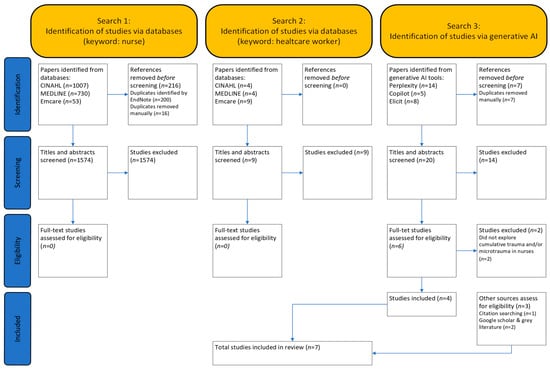
The initial database search retrieved 1790 results (CINAHL n = 1007, MEDLINE n = 730, Emcare n = 53). After manual removal of duplicates, 1574 titles and abstracts were screened independently by MD and CW using the revised eligibility criteria focused on cumulative occupational distress. Conflicts were resolved through discussion, with MC available as a third reviewer. Reviewer agreement statistics were not calculated. Citation-list hand searching did not identify additional eligible records. No studies from this first search met the inclusion criteria, because retrieved records did not conceptualise repeated low-intensity exposures or cumulative occupational distress. Instead, they focused on end-point diagnoses, general occupational stress, or interventions without addressing repetition or accumulation.
The second search substituted the keyword ‘nurse’ with ‘healthcare worker’ and retrieved 17 records (CINAHL n = 4, MEDLINE n = 4, Emcare n = 9). No duplicates were identified. Titles and abstracts were screened independently by MD and CW, with disagreements resolved through discussion and by MC where required. No studies from this second search met the inclusion criteria, because records did not conceptualise repeated occupational exposure or cumulative processes in a way relevant to nurses or nurse-relevant healthcare populations.
The generative artificial intelligence source identification process elicited 27 results (Perplexity n = 14, Microsoft Copilot n = 5, Elicit n = 8). After manual removal of duplicates (n = 7), 20 records were screened using the same eligibility criteria as database-derived records. Fourteen records were excluded at title and abstract screening because they did not address nursing or nurse-relevant healthcare populations, did not examine repeated occupational exposure or cumulative processes, or focused solely on end-point diagnoses or interventions. Six records proceeded to full-text review, and two were excluded because they did not meet the conceptual relevance criteria. Four studies were identified as eligible through AI-assisted source identification.
Citation searching, hand searching, Google Scholar, and targeted grey literature searching identified a further three studies. Google Scholar screening of the first three results pages identified six potentially relevant records for full-text retrieval, and three met the inclusion criteria. Targeted grey literature searching (.gov and .org domains) identified one additional eligible record. The final seven included publications therefore comprised four records identified through AI-assisted source identification and three records identified through supplementary searching. No eligible publications were identified through the initial nursing-specific or broadened healthcare worker database searches.
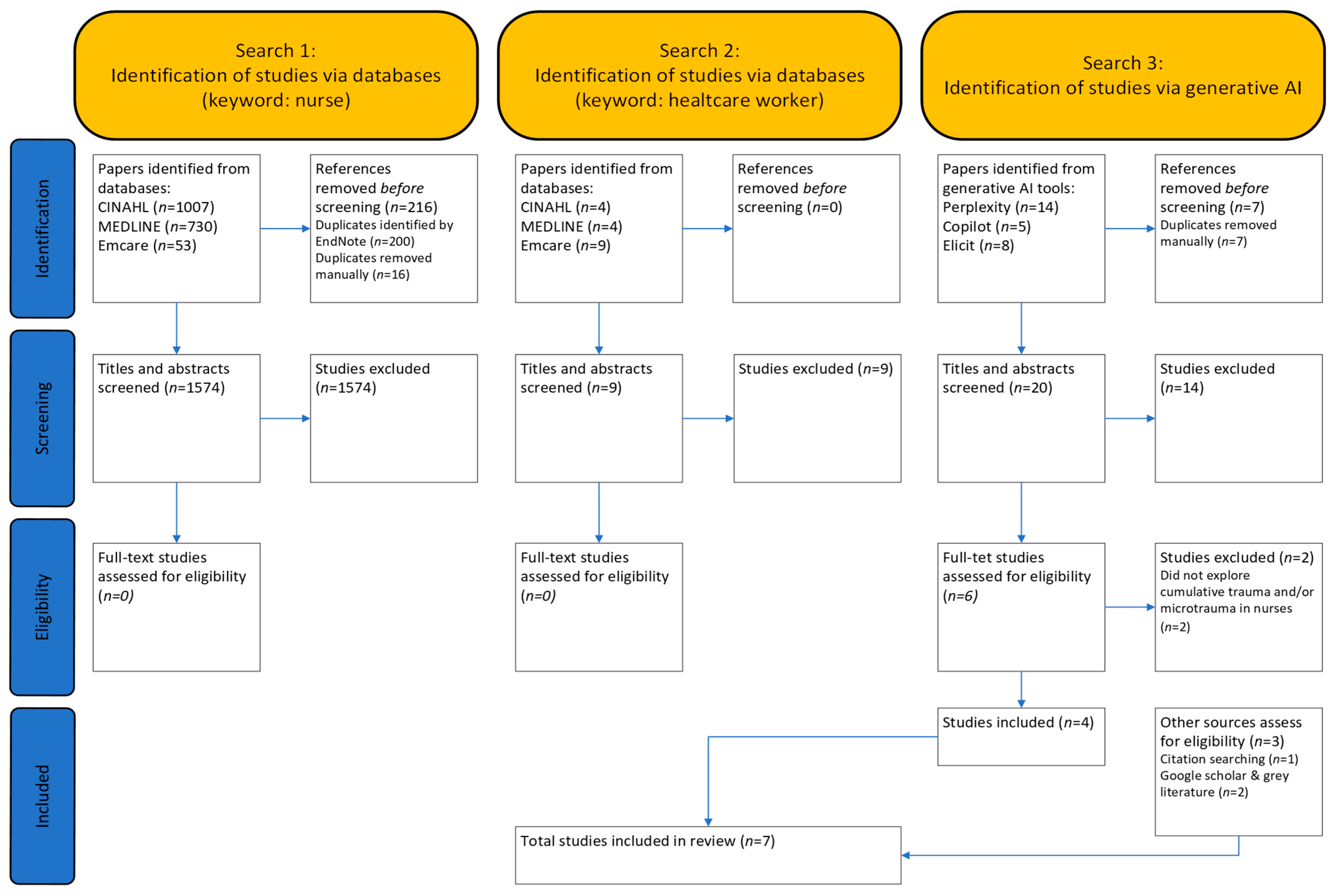
Full-text screening of all potentially eligible articles was undertaken independently by MD and MC, with conflicts resolved by CW. Reasons for exclusion included lack of repeated exposure or accumulation, absence of a nursing or nurse-relevant healthcare population, focus on single acute traumatic events, and focus on diagnosis or intervention outcomes without conceptual relevance to cumulative occupational distress. Figure 1 presents the PRISMA-ScR flow chart of the article selection process [18]. Table 2 presents the source pathway for each included publication.
Figure 1.
PRISMA flow diagram of study selection process.
Table 2.
Source pathway for included publications.
3.5. Data Abstraction and Synthesis
Guided by the JBI principles of data extraction [26], an extraction spreadsheet was developed, pilot-tested based on the a priori protocol, agreed on by all authors, and discussed throughout the extraction process. Extracted data included author/s, year published, country of origin, research aim, methodology, participants, key concepts, descriptions of repeated or cumulative exposure, and major relevant findings. Table 3 presents the data extraction findings chronologically to generate a timeline of the published literature and to illustrate how terminology describing cumulative occupational distress emerged across the included sources.
Table 3.
Data extraction findings for included publications.
The extraction process was designed to chart and summarise the available evidence rather than to undertake formal concept analysis. Accordingly, the review mapped terminology, populations, evidence characteristics, cumulative exposure patterns, and reported outcomes, but did not attempt to generate defining attributes, model cases, antecedents, consequences, or empirical referents for any single concept. Due to the heterogeneity of the included studies, it was not possible or appropriate to conduct a meta-analysis. Findings were therefore synthesised descriptively and narratively. Narrative synthesis focused on how included studies described repeated occupational exposure, cumulative processes, and associated health and well-being outcomes.
3.6. Quality Appraisal
Consistent with JBI guidance, quality appraisal was not conducted, because the aim of this scoping review was to map the existing literature and identify conceptual gaps rather than assess methodological quality [26,27]. The absence of quality appraisal means included sources were not ranked by methodological strength. Instead, they were used to describe the scope of the evidence, terminology, and conceptual patterns related to repeated occupational exposure and cumulative occupational distress.
4. Results
4.1. Absence of Explicit Micro-Trauma Terminology in Nursing Literature
The principal finding was that the term ‘micro-trauma’ did not appear in any of the seven included publications. Instead, repeated occupationally distressing experiences were described using cumulative trauma, cumulative grief, workplace trauma, and nurse-specific psychological trauma. End-point terms, including burnout, compassion fatigue, moral distress, secondary traumatic stress, vicarious trauma, and post-traumatic stress symptoms, were present as outcomes or sequelae of repeated exposure, rather than as concepts describing cumulative processes. Cumulative trauma was therefore synthesised as the closest adjacent concept.
Table 4 summarises the cumulative trauma and cumulative exposure terminology identified across the included literature. Table 5 maps how each included publication addresses accumulation, repeated exposure, and associated end-point outcomes.
Table 4.
Cumulative trauma and cumulative exposure terminology identified in the included literature.
Table 5.
Study-level mapping of accumulation across included publications.
4.2. Characteristics of the Literature
The seven included articles were analysed for their relevance to repeated occupational exposure and cumulative occupational distress in nursing. Publication dates ranged from 1985 [23] to 2022, with six articles published between 2018 and 2022 [1,5,15,16,24,25]. Four articles originated from the United States of America, two from Australia, and one from the United Kingdom.
Four studies examined nursing as an all-inclusive group, one focused specifically on forensic mental health nurses, and one included both nurses and doctors working in an intensive care unit. Bywood and McMillan [16] was retained as indirect cross-occupational evidence because it examined repeated exposure to work-related trauma across non-frontline occupational groups, including healthcare workers, teachers, and social workers. Nurses are discussed as a healthcare occupation exposed to direct and indirect trauma, and nursing-related evidence is represented within the broader healthcare evidence base; however, nurses were not isolated, analysed, or reported as a distinct occupational subgroup. Therefore, the findings inform the broader cumulative work-related trauma literature and terminology, but do not constitute direct nurse-specific evidence.
Across the included literature, cumulative trauma and related terminology were used to describe repeated or prolonged occupational exposure and its effects on nurses’ psychological health, well-being, and professional functioning.
4.3. Descriptive Mapping of Included Evidence
4.3.1. Concepts Used to Describe Cumulative Occupational Distress
The included literature used cumulative trauma and closely related cumulative exposure terminology to describe repeated occupational distress in nursing. Davidson and Jackson [23] applied cumulative trauma to explain long-term symptoms and maladaptive responses arising from repeated trauma-related experiences. Kapoor et al. [24] described cumulative grief associated with repeated exposure to death and dying in intensive care settings. Newman et al. [15] used workplace trauma to describe repeated exposure to violence, abuse, and threats to safety in forensic mental health nursing. Foli et al. [25] and Foli [5] developed nurse-specific psychological trauma terminology, including system-induced trauma, second-victim trauma, vicarious trauma, disaster trauma, and insufficient resource trauma. Boyle and Steinheiser [1] and Bywood and McMillan [16] discussed end-point outcomes such as burnout, compassion fatigue, moral distress, secondary traumatic stress, vicarious trauma, and post-traumatic stress symptoms. Collectively, the literature demonstrated recognition of cumulative occupational harm, although not through a single unifying term.
4.3.2. Repeated Occupational Exposures
Across the included studies, cumulative occupational distress was linked to repeated exposure to emotionally, morally, physically, and/or organisationally distressing events. Repeated exposure to death, dying, and unresolved grief was described in intensive care contexts through cumulative grief and the use of ritualised acknowledgement such as the sacred pause [24]. Workplace aggression, repeated verbal abuse, physical violence, sexual violence, self-harm events, and threats to safety were identified in forensic mental health nursing as forms of workplace trauma that may accumulate over time [15]. Errors, witnessed errors, system-induced trauma, insufficient resource trauma, vicarious trauma, and second-victim experiences were described within nurse-specific psychological trauma literature [5,25]. Sustained emotional labour, moral distress, compassion fatigue, and organisational emotional hazards were also identified as routine features of nursing work that may contribute to cumulative burden [1]. Bywood and McMillan [16] provided indirect contextual evidence that repeated direct and indirect exposure to work-related trauma may contribute to cumulative psychological harm across emotionally demanding occupational groups, including healthcare workers, teachers, and social workers. Nurses are identified in the report as one healthcare group exposed to trauma; however, the review did not extract, analyse, or report findings of nurses separately. The source was therefore used to contextualise cumulative trauma terminology and cross-occupational relevance, not to support direct claims about nurses. This distinction is important because some exposures are overtly traumatic, while others are embedded within routine care and may be normalised until harm becomes visible through end-point terminology.
4.3.3. Cumulative Processes
The included studies conceptualised cumulative processes as the mechanisms through which repeated exposures became layered over time. Davidson and Jackson [23] described cumulative trauma as the delayed effect of repeated trauma-related experiences. Kapoor et al. [24] framed repeated exposure to death and dying as cumulative grief and emphasised the value of ritualised acknowledgement. Newman et al. [15] described cumulative exposure to workplace violence and abuse as increasing vulnerability to psychological distress. Foli et al. [25] and Foli [5] explained nurses’ psychological trauma through cumulative burden and allostatic load. Boyle and Steinheiser [1] highlighted how affective demands and organisational conditions interact with individual responses over time. Across the literature, cumulative processes were described through recurrence, layering, unresolved emotional burden, temporality and allostatic load.
4.3.4. Effects on Nurses’ Health and Well-Being
The effects of cumulative occupational distress were described across psychological, emotional, professional, and organisational domains. Reported or conceptually linked outcomes included psychological distress, PTSD symptoms, burnout, compassion fatigue, moral distress, secondary traumatic stress, vicarious trauma, reduced resilience, fear for personal safety, avoidance of the workplace, reduced professional satisfaction, impaired well-being, and potential movement away from the profession. This pattern reinforces the conceptual gap identified in this review: nursing literature recognises the consequences of repeated occupational exposure, but does not consistently name or define the lower-intensity cumulative processes that may precede these outcomes.
5. Discussion
This scoping review examined how nursing literature conceptualises repeated occupationally distressing experiences and whether any terminology aligns with the emerging idea of micro-trauma. The absence of explicit micro-trauma terminology is significant because it highlights a gap not only in vocabulary, but in how nursing conceptualises cumulative precursor processes before end-point harms are recognised.
5.1. Terminology Fragmentation and Conceptual Overlap
The included evidence demonstrates the diverse terminology used to describe the sequelae of psychological trauma experienced by nurses. Cumulative trauma was the most relevant concept identified in the absence of micro-trauma terminology [16,23]. Other terms, including burnout, compassion fatigue, moral distress, vicarious trauma, secondary traumatic stress, and PTSD symptoms, functioned primarily as outcomes or related descriptors [1,5,15,25]. This pattern is consistent with the broader nursing literature, in which burnout, compassion fatigue, moral distress, psychological distress, and trauma-related symptoms are frequently examined as interrelated consequences of occupational stress rather than clearly differentiated cumulative processes [2,9,28]. This distinction matters because end-point terminology can obscure the cumulative process through which repeated exposure to grief, workplace aggression, moral constraint, resource insufficiency, emotional labour, and other distressing events becomes psychologically significant over time.
The inclusion of Bywood and McMillan [16] was undertaken with caution, recognising that the study aggregated data from multiple occupations and that nurses were not specifically analysed as a distinct group. Although this decision introduces a methodological limitation, the study provides indirect evidence that repeated exposure to work-related trauma, a phenomenon that cuts across emotionally demanding professions, may contribute to cumulative psychological harm. Its inclusion reflects the emerging and fragmented nature of the literature on cumulative occupational trauma, where similar concepts are described using variable terminology depending on the disciplinary field. Recognising this terminological fragmentation and the transversality of the underlying phenomenon is one contribution of this review to the nursing literature.
5.2. Conceptual Invisibility and the Problem of Naming Cumulative Precursor Processes
A key implication is that nursing appears to recognise cumulative occupational harm more readily at the point of consequence than at the point of emergence. Cumulative trauma provides language for repeated exposure, while end-point terms describe later or more visible consequences [16,23]. Without clearer terminology for the smaller repeated occupational experiences that contribute to cumulative trauma, exposure such as unresolved grief, moral constraint, repeated verbal aggression, resource insufficiency, errors, emotional labour, and repeated witnessing of suffering may remain normalised as ordinary nursing work [1,5,15,24,25]. This supports the need to examine the conceptual space before end-point harm occurs.
5.3. Theoretical Interpretation Through Stress, Coping, and Job Demands Frameworks
The transactional model of stress and coping [13] and the job demands–resources model [11,12] provide complementary ways to interpret the findings of this review. The transactional model explains why repeated occupational exposures do not produce uniform effects across nurses, as the meaning and impact of events such as death and dying, workplace aggression, moral constraint, resource insufficiency, or errors are shaped by individual appraisal, experience, perceived responsibility, controllability, and available support. The JD–R model extends this interpretation by locating cumulative occupational distress within the structure of work, where sustained emotional, cognitive, moral, physical, and organisational demands may contribute to a health-impairment pathway when adequate resources such as staffing, supervision, autonomy, debriefing, peer support, and organisational recognition are insufficient [11,12]. Read together, these frameworks help explain how repeated exposures may become meaningful at an individual level while also accumulating through organisational demands and resource limitations. However, neither framework provides specific terminology for the smaller, repeated, and often normalised occupational experiences that may occur before end-point harms are recognised. A future micro-trauma framework could therefore complement rather than replace existing stress and work-design theories by naming and organising the precursor space between exposure, appraisal, cumulative burden, and outcome. This supports the cautious position taken in this review: micro-trauma is not established in the nursing literature, but may offer a useful conceptual focus for future theory development and empirical testing.
5.4. Future Development of a Micro-Trauma Framework
Micro-trauma should therefore be positioned as a provisional area for future inquiry rather than an established nursing concept. The present review supports cumulative trauma as the closest evidence-aligned concept for understanding repeated occupational exposure in nursing. Future work may determine whether micro-trauma has a narrower role within cumulative trauma, for example, as a term for smaller, repeated, and often less visible occupational experiences that accumulate before end-point harms are recognised. This would require separate concept analysis, theory development, or empirical study.
A practical implication is that nursing research and workforce well-being initiatives should move upstream from end-point harm toward earlier recognition of cumulative exposure and cumulative burden. If future research can define and operationalise micro-trauma, it may support more precise assessment of recurring occupational exposures, clearer identification of cumulative precursor processes, and more targeted organisational responses. Until then, micro-trauma should be used cautiously as a possible framework for inquiry rather than an established explanation for nurses’ distress. This framing reinforces that responsibility for addressing cumulative occupational burden should not rest solely with individual nurses’ resilience, but also with the occupational conditions, repeated exposures, and organisational responses that shape nurses’ experience of work.
6. Study Limitations
This scoping review provides a broad synopsis of cumulative trauma in nursing; however, it is limited by the small number of included publications, heterogeneous terminology, and lack of consistent definitions across studies. Because the included literature did not explicitly use micro-trauma as a nursing concept, it could not be defined, validated, or established from the current evidence base. This review did not undertake a formal concept analysis either, and therefore did not identify defining attributes, model cases, antecedents, consequences, or empirical referents.
There was no consistent definition of what constituted an occupationally distressing or traumatic event or how repeated exposures were distinguished from cumulative trauma and end-point outcomes. One included source, Bywood and McMillan [16], was not nurse-specific and included healthcare workers, teachers, and social workers. This was retained as indirect cross-occupational evidence because it addressed repeated work-related trauma in comparable helping professions; however, its findings should not be interpreted as direct evidence about nurses.
The review was limited to English-language publications, and full texts were required to confirm eligibility and extract data. While every effort was made to access all identified manuscripts, records that could not be retrieved in full text could not be assessed, which may have introduced language and availability bias. The supplementary AI-assisted source identification pathway was also only partially reproducible because generative AI outputs may vary by tool version, date, and retrieval environment, even when identical prompts and standard platform settings are used. Searches were undertaken between March and May 2024, and the tools used have advanced substantially since that time, further limiting reproducibility. Google Scholar and grey literature searching were supplementary. Google Scholar screening was limited to the first three results pages, and grey literature searching was limited to .gov and .org domains. These limitations mean the findings should be interpreted as a map of current terminology and conceptual gaps rather than confirmation of micro-trauma as an established nursing concept.
7. Study Strengths and Implications
A strength of this review was the use of multiple complementary search approaches, including traditional database searching, citation and hand searching, Google Scholar, targeted grey literature searching, and AI-assisted source identification. Standard search methods involving large databases and established MeSH terms offer credibility; however, they may not always elicit findings for emerging or ambiguously defined concepts. In this review, AI-assisted source identification provided a contemporary supplementary means of identifying potentially relevant literature when traditional search methods did not yield included studies. This is consistent with the literature describing AI tools as potentially useful adjuncts for identifying hard-to-find literature while also requiring verification, transparency, and researcher judgement [20,22]. AI-identified results were used only to identify candidate records, and all AI-identified sources were checked against bibliographic databases, publisher information, and the review eligibility criteria before inclusion.
The main implication is that current end-point terminology may not fully capture the conceptual space before harm is recognised. Clearer terminology may support future research, nursing education, leadership training, and organisational policy by helping identify repeated occupational exposures and cumulative psychological burden earlier rather than after they manifest as burnout, compassion fatigue, moral distress, or PTSD symptoms.
8. Conclusions
This scoping review found that the nursing literature recognises the cumulative effects of repeated occupationally distressing experiences, but does not consistently name or define the lower-intensity cumulative processes that may preceded end-point harms. The term ‘micro-trauma’ was not identified as an established concept in the nursing literature. Instead, cumulative trauma, cumulative grief, workplace trauma, nurse-specific psychological trauma, emotional hazards, and end-point terms such as burnout, compassion fatigue, moral distress, secondary traumatic stress, vicarious trauma, and PTSD symptoms were used to describe related aspects of occupational harm.
These findings suggest an important conceptual space between routine occupational exposure and recognised end-point outcomes. Future research should develop and test a nursing-specific conceptual framework that can clarify whether micro-trauma is a useful and recognisable term for describing repeated, low-intensity, and often normalised occupational experiences that accumulate over time. Such work should avoid positioning occupational harm as an individual resilience issue alone and should account for the organisational, relational, moral, and resource-related conditions that shape nurses’ experience of work.
The findings have implications for nursing education, leadership development, workforce well-being, and organisational policy. Earlier recognition of cumulative exposure may support more proactive responses to staffing, supervision, debriefing, emotional labour, moral distress, workplace violence, supportive leadership, and trauma-informed organisational cultures. Expanding inquiry into the precursor space may help the profession identify not only the final straw, but also the accumulated burden of repeated occupational experiences over time.
Supplementary Materials
The following supporting information can be downloaded at https://www.mdpi.com/article/10.3390/nursrep16090299/s1. Table S1: Preferred Reporting Items for Systematic reviews and Meta-Analyses extension for Scoping Reviews (PRISMA-ScR) Checklist.
Author Contributions
Conceptualisation, M.D. and C.W.; methodology, M.D., M.C. and C.W.; validation, M.D., C.W. and M.C.; formal analysis, M.D.; investigation, M.D.; resources, C.W.; data curation, M.D.; writing—original draft preparation, M.D.; writing—review and editing, C.W. and M.C.; visualisation, M.D.; supervision, M.C. and C.W.; project administration, M.D.; funding acquisition, not applicable. All authors have read and agreed to the published version of the manuscript.
Funding
This research received no external funding.
Institutional Review Board Statement
Not applicable.
Informed Consent Statement
Not applicable.
Data Availability Statement
No new data were created or analysed in this study. Data sharing is not applicable to this article.
Public Involvement Statement
No public involvement in any aspect of this research.
Guidelines and Standards Statement
This scoping review was conducted and reported with the PRISMA Extension for Scoping Reviews (PRISMA-ScR) guidelines [18]. The completed PRISMA-ScR checklist is provided in the Supplementary Materials (Table S1).
Use of Artificial Intelligence
During the preparation of this manuscript, the authors used generative artificial intelligence tools (Perplexity (https://www.perplexity.ai/), Microsoft Copilot (https://copilot.microsoft.com/), and Elicit (https://elicit.com/)) to support supplementary source identification. AI tools were used to identify candidate sources only. All outputs were reviewed, verified against bibliographic or publisher information, screened against eligibility criteria, and interpreted by the authors, who take full responsibility for the content of this publication.
Acknowledgments
The authors would like to acknowledge the support of the university library staff for their assistance in refining the search strategy and providing guidance on database selection. The authors also wish to thank the academic and professional staff at James Cook University who provided support during the development of this research. Their assistance with administrative processes, research guidance, and access to institutional resources is gratefully acknowledged.
Conflicts of Interest
The authors declare no conflicts of interest.
Abbreviations
The following abbreviations are used in this manuscript.
| AI | Artificial Intelligence |
| CINAHL | Cumulative Index to Nursing and Allied Health Literature |
| Emcare | Elsevier Nursing and Allied Health Database |
| ICU | Intensive Care Unit |
| JD-R | Job Demands-Resources |
| JBI | Joanna Briggs Institute |
| MeSH | Medical Subject Headings |
| MEDLINE | Medical Literature Analysis and Retrieval System Online |
| n | number |
| NSW | New South Wales |
| PRISMA-ScR | Preferred Reporting Items for Systematic Reviews and Meta-Analyses Extension for Scoping Reviews |
| PTSD | Post-Traumatic Stress Disorder |
| SPICE | Setting, Perspective, Intervention, Comparison, Evaluation |
| USA | United States of America |
| WHO | World Health Organization |
| .gov | Government domain |
| .org | Organisation domain |
References
- Boyle, D.A.; Steinheiser, M.M. Emotional hazards of nurses’ work: A macro perspective for change and a micro framework for intervention planning. J. Infus. Nurs. 2021, 44, 78–93. [Google Scholar] [CrossRef] [Scilit]
- Adriaenssens, J.; De Gucht, V.; Maes, S. Determinants and prevalence of burnout in emergency nurses: A systematic review of 25 years of research. Int. J. Nurs. Stud. 2015, 52, 649–661. [Google Scholar] [CrossRef] [Scilit]
- Okoli, C.T.C.; Seng, S.; Lykins, A.; Higgins, J.T. Correlates of post-traumatic growth among nursing professionals: A cross-sectional analysis. J. Nurs. Manag. 2021, 29, 307–316. [Google Scholar] [CrossRef] [Scilit]
- Bhattacharjee, D. Workplace violence in healthcare: Towards a psychosocial perspective. Aggress. Violent Behav. 2021, 58, 101573. [Google Scholar] [CrossRef] [Scilit]
- Foli, K.J. A middle-range theory of nurses’ psychological trauma. Adv. Nurs. Sci. 2022, 45, 86–98. [Google Scholar] [CrossRef] [Scilit]
- Crastnopol, M. Micro-Trauma: A Psychoanalytic Understanding of Cumulative Psychic Injury; Routledge/Taylor & Francis Group: New York, NY, USA, 2015; pp. xiv, 252. [Google Scholar]
- Seides, R. Should the current DSM-IV-TR definition for PTSD be expanded to include serial and multiple microtraumas as aetiologies? J. Psychiatr. Ment. Health Nurs. 2010, 17, 725–731. [Google Scholar] [CrossRef] [Scilit]
- Babapour, A.-R.; Gahassab-Mozaffari, N.; Fathnezhad-Kazemi, A. Nurses’ job stress and its impact on quality of life and caring behaviors: A cross-sectional study. BMC Nurs. 2022, 21, 75. [Google Scholar] [CrossRef] [Scilit]
- Chen, C.; Meier, S.T. Burnout and depression in nurses: A systematic review and meta-analysis. Int. J. Nurs. Stud. 2021, 124, 104099. [Google Scholar] [CrossRef] [Scilit]
- Kelly, L. Burnout, compassion fatigue, and secondary trauma in nurses: Recognizing the occupational phenomenon and personal consequences of caregiving. Crit. Care Nurs. Q. 2020, 43, 73–80. [Google Scholar] [CrossRef] [Scilit]
- Bakker, A.B.; Demerouti, E. The Job Demands-Resources model: State of the art. J. Manag. Psychol. 2007, 22, 309–328. [Google Scholar] [CrossRef] [Scilit]
- Demerouti, E. Job demands-resources and conservation of resources theories: How do they help to explain employee well-being and future job design? J. Bus. Res. 2025, 192, 115296. [Google Scholar] [CrossRef] [Scilit]
- Lazarus, R.S.; Folkman, S. Stress, Appraisal and Coping; Springer Publishing Company: Cham, Switzerland, 1984. [Google Scholar]
- de Cordova, P.B.; Reilly, L.L.; Pogorzelska-Maziarz, M.; Gerolamo, A.M.; Grafova, I.; Vasquez, A.; Johansen, M.L. A theoretical framework for Acute Care Nurse Stress Appraisal: Application of the transactional model of stress and coping. J. Adv. Nurs. 2024, 80, 3835–3845. [Google Scholar] [CrossRef] [Scilit]
- Newman, C.; Roche, M.; Elliott, D. Exposure to workplace trauma for forensic mental health nurses: A scoping review. Int. J. Nurs. Stud. 2021, 117, 103897. [Google Scholar] [CrossRef] [Scilit]
- Bywood, P.; McMillan, J. Cumulative Exposure to Trauma at Work. Phase 2: Prevention and Intervention Strategies; Institute for Safety, Compensation and Recovery Research: Docklands, VIC, Australia, 2019. [Google Scholar]
- Peters, M.D.J.; Godfrey, C.; McInerney, P.; Munn, Z.; Tricco, A.C.; Khalil, H. (Eds.) Scoping Reviews. In JBI Manual for Evidence Synthesis; JBI: Adelaide, SA, Australia, 2020; Available online: https://synthesismanual.jbi.global/ (accessed on 12 July 2024).
- Tricco, A.C.; Lillie, E.; Zarin, W.; O’Brien, K.K.; Colquhoun, H.; Levac, D.; Moher, D.; Peters, M.D.; Horsley, T.; Weeks, L.; et al. PRISMA Extension for Scoping Reviews (PRISMA-ScR): Checklist and Explanation. Ann. Intern. Med. 2018, 169, 467–473. [Google Scholar] [CrossRef] [Scilit] [PubMed]
- Booth, A. Clear and present questions: Formulating questions for evidence based practice. Libr. Hi Tech 2006, 24, 355–368. [Google Scholar] [CrossRef] [Scilit]
- Wagner, G.; Lukyanenko, R.; Paré, G. Artificial intelligence and the conduct of literature reviews. J. Inf. Technol. 2022, 37, 209–226. [Google Scholar] [CrossRef] [Scilit]
- Flinders University. Using AI Tools in Research. Available online: https://library.flinders.edu.au/researchers/ai-tools-in-research (accessed on 28 April 2024).
- Blaizot, A.; Veettil, S.K.; Saidoung, P.; Moreno-Garcia, C.F.; Wiratunga, N.; Aceves-Martins, M.; Lai, N.M.; Chaiyakunapruk, N. Using artificial intelligence methods for systematic review in health sciences: A systematic review. Res. Synth. Methods 2022, 13, 353–362. [Google Scholar] [CrossRef] [Scilit]
- Davidson, P.; Jackson, C. The nurse as a survivor: Delayed post-traumatic stress reaction and cumulative trauma in nursing. Int. J. Nurs. Stud. 1985, 22, 1–13. [Google Scholar] [CrossRef] [Scilit]
- Kapoor, S.; Morgan, C.K.; Siddique, M.A.; Guntupalli, K.K. “Sacred Pause” in the ICU: Evaluation of a ritual and intervention to lower distress and burnout. Am. J. Hosp. Palliat. Med. 2018, 35, 1337–1341. [Google Scholar] [CrossRef] [Scilit]
- Foli, K.J.; Reddick, B.; Zhang, L.; Krcelich, K. Nurses’ psychological trauma: “They leave me lying awake at night”. Arch. Psychiatr. Nurs. 2020, 34, 86–95. [Google Scholar] [CrossRef] [Scilit]
- Pollock, D.; Peters, M.D.J.; Khalil, H.; McInerney, P.; Alexander, L.; Tricco, A.C.; Evans, C.; de Moraes, É.B.; Godfrey, C.M.; Pieper, D.; et al. Recommendations for the extraction, analysis, and presentation of results in scoping reviews. JBI Evid. Synth. 2023, 21, 520–532. [Google Scholar] [CrossRef] [Scilit]
- Munn, Z.; Peters, M.D.J.; Stern, C.; Tufanaru, C.; McArthur, A.; Aromataris, E. Systematic review or scoping review? Guidance for authors when choosing between a systematic or scoping review approach. BMC Med. Res. Methodol. 2018, 18, 143–147. [Google Scholar] [CrossRef]
- Wolotira, E.A. Trauma, compassion fatigue, and burnout in nurses: The nurse leader’s response. Nurse Lead. 2023, 21, 202–206. [Google Scholar] [CrossRef] [Scilit]

Disclaimer/Publisher’s Note: The statements, opinions and data contained in all publications are solely those of the individual author(s) and contributor(s) and not of MDPI and/or the editor(s). MDPI and/or the editor(s) disclaim responsibility for any injury to people or property resulting from any ideas, methods, instructions or products referred to in the content. |
© 2026 by the authors. Licensee MDPI, Basel, Switzerland. This article is an open access article distributed under the terms and conditions of the Creative Commons Attribution (CC BY) license.