


Abstract
Background: Maternal postpartum hospital readmissions represent profound implications for maternal health outcomes and potential gaps in quality of maternal care. Objective: This study aims to synthesise evidence on risk factors for maternal postpartum hospital readmissions within 42 days of discharge following birth hospitalisation. Methods: An electronic database search utilised CINAHL, EMBASE (Ovid), and MEDLINE for relevant studies published from 1 January 2010 to 30 June 2024. The studies that investigated the prevalence and risk factors for 42-day postpartum maternal readmission and reported risk estimates, published in English, were included. The risk of bias was assessed using the Newcastle–Ottawa Scale (NOS) for case-control studies and cohort studies. The PRISMA guidelines were followed in reporting this review. The review protocol was registered on PROSPERO (CRD42023442269). Results: A total of 7758 articles were retrieved, ultimately including 60 studies. The rate of maternal postpartum readmissions varied from 0.1236‰ to 26%. Significant risk factors were extracted and categorised into five groups: maternal demographic and socio-economic factors; behavioural and lifestyle factors; health institution structural factors; obstetric and delivery characteristics; as well as maternal morbidity The most frequently cited risk factors which contributed to maternal postpartum hospital readmissions were age, race/ethnicity, substance use, caesarean delivery, length of maternal hospital stay, premature birth, and all maternal morbidities, especially mental health disorders, severe maternal morbidity, and hypertensive disorders of pregnancy. Conclusions: This systematic review identified complex and diverse risk factors associated with maternal postpartum hospital readmissions within 42 days after discharge following birth hospitalisation. This helps our understanding of the risk factors and the strength of association with maternal postpartum hospital readmissions. Future research should develop a multidimensional risk assessment framework to guide clinical practice in adopting holistic individualised approaches for postpartum risk evaluation, thereby reducing readmission rates and improving maternal health outcomes.
1. Introduction
Postpartum hospital readmission (PPHR) is defined as a new mother’s readmission to the hospital within a specific time frame following childbirth [1,2]. Although the timeframe for tracking postpartum readmissions is variable, 42 days after delivery discharge is commonly used, as this period is a critical time for the mother’s physical and psychological recovery, as well as when many postpartum complications are likely to arise.
The incidence of PPHR, accounting for a substantial portion of maternal morbidity and mortality, has received global attention, which represents profound implications for maternal health outcomes and potential gaps in the quality and safety of maternal care [3]. In addition, maternal postpartum readmission within 42 days of initial discharge disrupts the crucial maternal–neonatal bond during the sensitive period [4], exacerbates the financial burden on the healthcare system [5], and causes more significant family function impairment [6].
The World Health Organization (WHO) emphasises the importance of quality postnatal care for the health and well-being of women after childbirth and their newborns. It highlights the global focus on reducing postpartum readmissions as a measure of quality care [7]. Identifying risk factors associated with PPHR can inform the development of evidence-based clinical practice guidelines to improve discharge preparedness for women who need additional care or monitoring, thereby reducing the likelihood of maternal readmission. Current research has identified risk factors for PPHR from multiple perspectives. However, the existing literature lacks a comprehensive systematic overview of the risk factors associated with PPHR. This paper aimed to review the characteristics of the included studies and synthesise the identified risk factors for PPHR within 42 days after delivery.
2. Materials and Methods
The review protocol was preregistered with the PROSPERO International Prospective Register of Systematic Reviews (code: CRD42023442269) and conducted following the Preferred Reporting Items for Systematic Reviews and Meta-Analysis (PRISMA) 2020 Statement [8] (checklist in Table S1).
2.1. Data Sources and Search Strategy
An electronic database search was conducted using CINAHL, EMBASE (Ovid), and MEDLINE with the key search terms, spanning from 1 January 2010 to 30 June 2024. We further examined the references of the included studies to identify relevant additional literature. A complete search strategy is provided in Table S2.
2.2. Eligibility Criteria
We defined the inclusion criteria in our review as follows: (i) primary research studies assessed the prevalence and risk factors of postpartum maternal readmission; (ii) PPHR measurement within 30 days (defined as 28–32 days) or 42 days after delivery; when multiple time were examined, only extracted data for 30-day or 42-day readmissions; (iii) study design stated clearly and reported risk estimates, including p-values, odds ratios (ORs)/relative risks (RRs)/hazard ratios (HRs), and 95% confidence interval (CI) or raw data could be calculated in an appropriate format; (iv) published in peer-reviewed journals; and (v) in English language with full text available.
Our exclusion criteria were as follows: (i) outcomes mixed PPHR with complications and/or Emergency Department (ED) visits; (ii) having two or more readmissions within the 30- or 42-day span of the trace, or maternal readmission after stillbirth; (iii) experimental design evaluating the effect of an intervention on readmission; (iv) studies focused on maternal readmission during the COVID-19 pandemic (due to the phased impact on PPHR); (v) conference abstract-only references.
2.3. Records Screening and Study Selection
All records identified using our search strategy were exported to EndNote. Duplicate articles were removed. Two reviewers (HH and HZ) independently screened all titles and abstracts for potential inclusion. Then, the full-text manuscripts of all the potentially eligible studies were reviewed against the inclusion criteria. Only a handful of disagreements between the reviewers were resolved by discussion. A hand search of the reference lists of all potential articles was conducted to identify any further relevant articles.
2.4. Data Extraction
The data were manually extracted from the eligible studies by the first reviewer (HH) and independently reviewed for accuracy and consistency by the third reviewer (HZ). Discrepancies were resolved through discussion or consultation with the last author. There were three discrepancies: the exact effect estimate, the definition of follow-up period, and whether a specific confounder was reported. All discrepancies were resolved through re-examination of the original articles and discussion with the last author. Finally, a consensus was reached among the three authors. Data were extracted using a data extraction form that included study characteristics, examined variables and identified risk factors. Study characteristics included study setting, population, sample size, timing of data collection, study design, data source, readmission rate and statistical analysis used to identify risk factors. Examined variables or confounding factors and significant risk factors were extracted. No automation tools were used in the data collection process.
2.5. Quality Assessment
The included studies were assessed for quality using the Newcastle–Ottawa Scale (NOS) quality assessment scale for case-control and cohort studies (checklist in Table S4). The evaluation focused on three aspects, selection of study groups, comparability, and outcome (case-control studies)/exposure (cohort studies), including eight items, with a maximum score of 9 points. Scores of quality assessment were grouped into three categories: low (0–3), moderate (4–7), and high (≥8). Disagreements were addressed and resolved by all the authors.
2.6. Data Preparation and Synthesis
Effect measures were extracted from the original publications, including readmission rate (proportions) and risk factors (p-values or ORs, RRs and HRs with 95% confidence intervals). If these were not reported, we attempted to calculate them from the available data. If the necessary data were not available in the publication, we contacted the corresponding authors by email to request it. Meta-analysis was not feasible for this review due to substantial clinical heterogeneity across study populations, risk factors, and follow-up periods examined for readmission risk. Accordingly, all included studies were eligible for a narrative synthesis. Studies were grouped and synthesised by the type of risk factors examined to facilitate a structured comparison.
3. Results
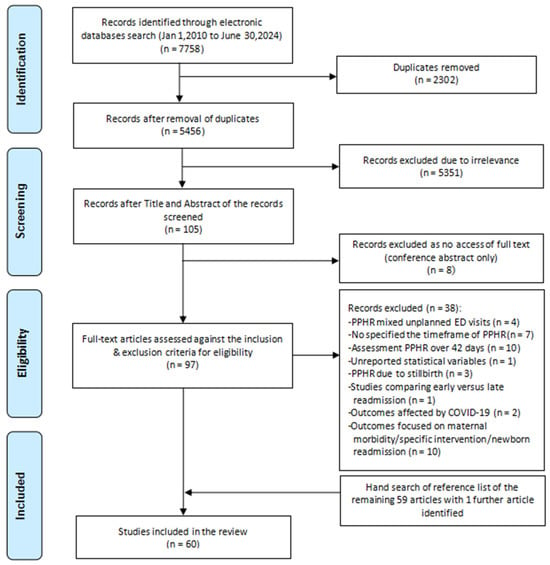
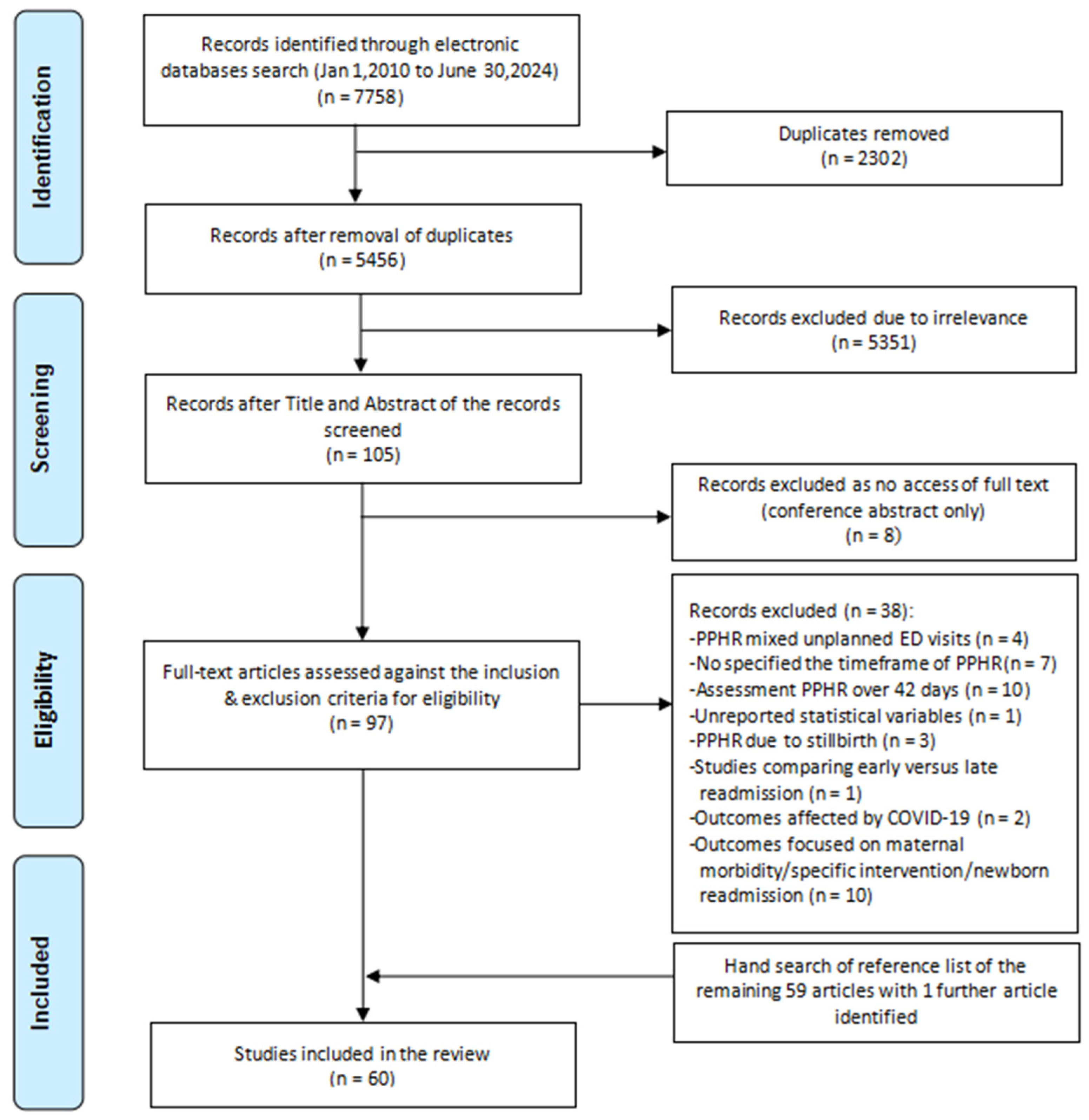
The initial electronic database search from 1 January 2010 to 30 June 2024 generated 7758 records. After removing duplicates and screening titles and abstracts, 97 references were reviewed in full text and assessed for eligibility. One additional article was identified during a hand search of the reference lists [9]. As a result, 60 studies were included in the systematic review. Figure 1 illustrates the search result and selection process. The studies excluded at the full-text screening stage, along with the reasons for exclusion, are presented in Table S3.
Figure 1.
Flow chart for the search and study selection process (PRISMA).
3.1. Characteristics of the Included Studies
Table 1 summarises the characteristics of the 60 included studies. Nearly 80% of the included studies (n = 46) were conducted in the United States of America (USA), three in the United Kingdom (UK), two each in Israel, and one each in Australia, Belgium, Canada, China, Egypt, Italy, Iran, Korea, and Poland. Forty included studies used a standard 42-day PPHR measurement, including one study [10] that further measured early readmission (7 days) and later readmission (8–42 days), while the remaining 20 included studies measured readmission over periods ranging from 28 to 32 days; these were assigned to the 30-day readmission category.
The majority of studies (n = 55) employed retrospective data collection, while five studies involved a prospective research design. All the included studies were of moderate to high quality (Table 2 and Table 3). Forty-three studies collected data from multiple sites, compared to 17 from single centres. The data retrieval period ranged from 80 days [11] to 22 years [12]. In particular, nine included studies [12,13,14,15,16,17,18,19,20] collected data over 10 years. Sample sizes varied from 82 [21] to 39,212,104 [20] postpartum women. Across the 60 included studies, the reported readmission rate varied from 0.1236‰ [22] to 26% [21]. Eleven of the 60 included studies reported risk-predictive performance models. Six studies employed a multivariable logistic regression model [23,24,25,26,27,28], one study used a generalised mixed linear model [15], two used Cox proportional hazard models [16,29], one study applied gradient boosted trees to generate a model [30], and the remaining one [31] used an internal–external cross-validation (IECV) approach. All eleven identified predictive models in the studies demonstrated moderate to high performance, with C-statistics ranging from 0.73 [27] to 0.90 [26].
3.2. Examined Variables and Significant Risk Factors
The examined variables and significant risk factors extracted from the 60 included studies are summarised in Table 4. Each study’s examined variables ranged from one to twenty-nine. Seven studies [12,32,33,34,35,36,37] reported inconclusive outcomes. The statistically significant risk factors were categorised into two PPHR measurements (30-day and 42-day readmissions) and presented under five subheadings: maternal demographic and socio-economic factors, maternal behavioural and lifestyle factors, health institution structural factors, obstetric and delivery characteristics, and maternal morbidity.
3.2.1. Demographic and Socio-Economic Factors
A total of eight maternal sociodemographic variables were associated with PPHR. The variables included age, race/ethnicity, marital status, education level, types of insurance, income level [22,38,39,40,41,42,43,44], place of residence [39,45] and living arrangement [46]. The three most frequently cited risk factors were age, race/ethnicity, and insurance type.
Table 1.
Characteristics of the 60 included studies.
Table 2.
Overview of bias assessment results using the Newcastle–Ottawa scale for included studies: cohort studies (55).
Table 3.
Overview of bias assessment results using the Newcastle–Ottawa scale for included studies: case-control studies (5).
Maternal age was cited as a significant factor associated with 30-day readmission by five studies [22,38,49,54,56], and 42-day readmission by thirteen studies [10,15,23,27,29,30,40,43,53,55,58,60,64]. The overwhelming majority of included studies identified advanced maternal age as a risk factor of readmission, among which four, further stratified by age, indicated that women in the group aged 40 years and above had a higher rate of PPHR compared to those under 40. One study [58] even indicated that the risk of 42-day readmission due to hypertension increased by 1.44 times for every 5-year age increment. However, a study involving participants with severe maternal morbidity found that women aged 20–30 years had a higher risk of 42-day readmission in comparison to those over 30 years old [29].
Race/ethnicity was identified as a risk factor for PPHR, irrespective of whether a 30-day [26,39,41,42,44,54,66] or 42-day [15,24,28,30,43,55,58,60] readmission measurements were used. Eight studies reported women of Black race were more likely to be readmitted (OR = 1.22–2.09) compared with others. Furthermore, two studies cited that the non-Hispanic Black race increased 42-day readmission [58,60], while another study [24] reported the Hispanic black race was 2.14 times more likely to be readmitted within 42 days. Three studies (one used 30-day readmissions and two within 42-day readmission) cited that African Americans were more likely to experience PPRH for hypertensive disorders of pregnancy (HDP) or postpartum preeclampsia [26] (Larsen, 2012), examining a 30-day window and in two studies using a 42-day window [28,30]. While three studies found that Hispanic ethnicity was associated with an increased risk of 30-day readmission [39,41,42], one study reported a lower likelihood of 30-day readmission (OR = 0.80) [54].
Type of health insurance was also reported as a factor associated with PPHR: private insurance has been consistently cited as having the lowest readmission rate compared to Medicare, Medicaid, and other types of health insurance in both 30-day [38,39,41,42,44,56] and 42-day [23,40,43,60] readmissions.
3.2.2. Behavioural and Lifestyle Factors
Behavioural and lifestyle factors were reported to be associated with PPHR. Four studies cited that women with substance use were linked to an increased incidence of PPHR within 30 days [41,61] or 42 days [40,43] compared to nonusers (OR = 1.27–2.86). Specifically, one study highlighted that multiple drug users were associated with a higher risk of 42-day readmission than single-category users [40]. Additionally, tobacco use was identified as another behavioural and lifestyle risk factor for readmission in studies using either a 30-day [44] or a 42-day time window [43,53].
3.2.3. Health Institution Structural Factors
Hospital structural characteristics, including hospital type, teaching status, hospital delivery volume, and midwifery staffing levels, were identified to be associated with increased odds of PPHR.
Hospital type as a predictive factor of PPHR was reported. Studies using a 30-day (p = 0.009) [44] and a 42-day (OR = 0.898) [43] readmission time window, respectively, reported community hospital designation as a protective factor for readmission. One study found women who delivered in tertiary hospitals were at a high risk of 42-day readmission (HR = 1.55) [29]. One study found that index admission at a for-profit hospital was associated with nearly a twofold increase in the odds of venous thromboembolism readmission within 30 days compared with non-profit hospitals [56].
Table 4.
Examined variables of the 60 included studies and the significant risk factors associated with PPHR.
Hospital teaching status was identified to be associated with 30-day readmission in three studies. One study reported that the distribution of hospital teaching status differed significantly between women with and without 30-day stroke readmission (p = 0.007), with a higher proportion of 30-day stroke readmissions occurring in metropolitan teaching hospitals. Consistently, another study reported that among women with epilepsy, those delivered at non-metropolitan hospitals had lower odds of 30-day readmission compared to those at metropolitan teaching hospitals (OR = 0.60) [38]. However, one study found that the risk of readmission due to infection was higher among women who gave birth at lower-referral-level hospitals than at teaching hospitals (OR = 2.81) [45].
Hospital delivery volume was identified as a factor of postpartum readmission in three studies. One study reported that hospitals with higher delivery volume (Quartiles 1–2) had higher odds for 30-day readmission rates than lower-volume hospitals (notably Quartile 4) (p < 0.001) [44]. Whereas another study found that women who delivered in hospitals with the lowest quartile of delivery volume were more likely to be readmitted up to 30 days postpartum (p < 0.0001) [41]. In addition, one study reported women with pre-pregnancy class III obesity delivering in low-prevalence institutions had a significantly increased odds of 42-day readmission than in high-prevalence hospitals (OR = 15.20) [59].
One study [49] reported that below-average midwife staffing was associated with more PPHR.
3.2.4. Obstetric and Delivery Characteristics
In the studies included, there were eight risk factors related to obstetric and delivery characteristics that contributed to PPHR, including mode of delivery, length of initial hospital stays for delivery (LOS), gestational age, parity, multiple gestation, history of previous pregnancy and delivery, conception methods (natural conception or assisted reproductive technology), and length of labour.
The mode of delivery was identified as the most frequently reported risk factor for PPHR. Women who had a caesarean delivery were consistently identified as having a higher risk of being readmitted within either 30 days or 42 days (OR = 1.28–3.13), while only one study found no association between caesarean and hypertension readmission within 30 days [65].
The association between LOS and PPHR was reported. Nine studies identified that prolonged LOS, especially greater than 3 or 4 days, had higher odds of PPHR. Four studies examined the association between early discharge and postpartum readmission, with three reporting no significant impact on 30-day or 42-day readmission [34,35,39]. Another study reported that the risk for PPHR did not differ significantly between expedited (<2 d after vaginal birth and <3 d after caesarean birth) and routine discharges (≥2d after vaginal birth and ≥3 d after caesarean birth) but found that expedited discharge was associated with significantly high risk for 42-day readmission among women with preeclampsia, gestational hypertension, and chronic hypertension (OR = 5.78) [11].
Gestational age was reported as a significant predictor of PPHR. Despite the heterogeneity in readmission definitions (ranging from all-cause readmission to condition-specific readmission, such as for HDP or sepsis, most studies consistently reported the association between premature birth and readmission (p < 0.01/0.001, OR = 1.45–7.30), demonstrating an inverse relationship between gestational age and the likelihood of PPHR. One study specifically reported that women who delivered before 28 weeks had more than a 7-fold increased risk for readmission with sepsis within 42 days of delivery [9]. Only one study cited that gestational age at delivery was not significantly associated with 42-day readmission for HDP [55].
Parity as a risk factor for PPHR was reported. Compared with multiparous women, primiparous women were associated with an increased risk of 42-day readmissions (p < 0.01–0.05; OR = 1.31–1.59) [29,60,62,64]. However, one study reported that women who had previously given birth were at a higher risk of 42-day readmissions due to HDP (p < 0.001) [30].
Five studies consistently reported multiple gestation as associated with an increased risk of PPHR compared with singleton gestation (p < 0.001–0.01; OR = 1.20–1.55). One study cited that women who had undergone assisted reproductive technology were more likely to be admitted within 42 days after delivery (OR = 1.73) [64].
Three studies referred to an adverse obstetric history (including previous pregnancy losses and prior caesarean delivery) as a risk factor for PPHR in a subsequent pregnancy, of which one used 30-day readmissions [44] Clapp, 2018 and two used 42-day readmissions [40,64]. One study mentioned conception achieved through assisted reproductive technology was associated with an increased risk of 42-day readmission compared to spontaneous conception (OR = 1.73) [64]. One study reported that prolonged labour duration was a risk factor for 30-day readmission in women with postpartum hypertension (OR = 1.06) [65].
3.2.5. Maternal Morbidities
- (1)
- Mental Health Disorders
Mental health disorders were examined across six different studies, with three studies examining 30-day readmissions [18,44,54] and the others measuring 42-day readmissions [10,40,43]. Consistent findings from the six studies showed that mental health conditions increased the risk of postpartum readmission (OR = 1.09–2.54). Furthermore, one study found that greater numbers of mental health conditions than a single type of mental disorder were associated with increased readmission rates [10].
- (2)
- Severe Maternal Morbidity (SMM)
Severe maternal morbidity (SMM) was consistently associated with a higher readmission rate across studies that used either a 30-day [18,54] or a 42-day [29,57,60] readmission measurement. Moreover, a study [18] (Girsen, 2022) reported that the risk estimates for SMM-related readmission were broadly similar between early (≤6 days) (OR = 3.46) and late (7–29 days) (OR = 3.27) readmission.
- (3)
- Pre-existing Comorbidities
Ten studies reported that pregnant women with pre-existing diabetes mellitus (DM) or gestational diabetes mellitus (GDM) had an increased risk of PPHR (OR = 1.18–1.85), of which six used 30-day readmissions [17,18,41,42,44,54], and four used a 42-day measurement [23,43,53,64]. One study further indicated that women with GDM had a modest decrease in the 30-day readmission rate compared to those with known DM and newly diagnosed DM (p = 0.046).
Five studies referenced the increased risk of PPHR associated with neurologic system diseases. Two studies reported that women with neurologic disorders had higher odds of 30-day readmission (OR = 1.55–2.57) [41,42]. One study cited that epilepsy was associated with a 1.9-fold increase in the odds of postpartum readmission within 30 days [38]. Two studies reported that seizure disorder also increased the risk of readmission, of which one used 30-day readmissions (p < 0.001) [44] and the other used 42-day readmissions (OR = 1.989) [43].
Four studies consistently reported that the coexistence of thyroid diseases during pregnancy increased the risk of 30-day or 42-day readmission (OR = 1.06–1.40) [18,43,44,54]. Three studies demonstrated that cardiovascular diseases (p < 0.0001 or OR = 2.36–3.84) [20,40,63], asthma (OR = 1.28–1.39) [43,44,54], and anaemia before delivery (OR = 1.18–1.35) [41,52,54] were associated with higher odds of 30- or 42-day readmission. Two studies each reported an increased risk of PPHR associated with renal disease (OR = 1.55–2.83) [40,54], sickle cell disease (OR = 1.27–2.32) [14,40], and immune system disorders (OR = 1.87–2.23) [40,54].
One study each mentioned that individuals with HIV (OR = 2.53) [67], breast disorder (OR = 2.26) [54], gall bladder disease (OR = 2.18) [54], liver disease (OR = 1.51) [54], and bleeding disorders (OR = 1.47) [18] before birth hospitalisation were associated with an increased risk of 30-day readmission, respectively.
In addition, three studies identified the Comorbidity Index as a risk factor correlated with heightened rates of 30-day readmission [22,41,42], and one study reported a similar association with the Emergency Severity Index within 42-day readmission [25]. One study indicated that women with deaf or hard-of-hearing (DHH) were more likely to be readmitted within 42 days after delivery compared to those without DHH (OR = 1.84) [16].
- (4)
- Obstetrics Complications
Various types of infectious complications were reported as risk factors for PPHR. Two studies, one using a 30-day readmission window and the other a 42-day window, both reported chorioamnionitis (OR = 1.10–2.30) [9,51] as a risk factor for PPHR. Similarly, urinary tract infections were identified as a risk factor in two studies (one within 30 days and the other within 42 days) (OR = 1.19–2.50) [9,54]. One study reported that pneumonia increased the risk of 42-day PPHR (OR = 5.7) [9]. Several other studies reported unspecified infections as a risk factor for 30-day readmissions [22,41,42,44,54]. One study [18] cited that sepsis during the index admission was associated with PPHR within 30 days (OR = 4.92). One study reported no significant association between leukocyte count at admission for labour or pre/postpartum difference and maternal readmission [12].
Eight studies referred to peripartum haemorrhagic complications, which were associated with an increased risk of postpartum readmission. Two studies reported that women with antepartum haemorrhage due to placenta previa faced a higher likelihood of being readmitted (OR = 1.14–1.40) [43,54]. Seven studies identified that women who experienced intrapartum and/or postpartum haemorrhage were more likely to be readmitted [9,18,23,44,54,62,64]. One study specifically indicated that primiparous women with blood loss ≥1000 mL during delivery were more susceptible to being readmitted within 42 days after delivery (p < 0.05) [62]. One study further reported that intrapartum and/or postpartum haemorrhage associated with a decrease in haemoglobin ≥3 g% or blood product transfusion was associated with 2.73- and 1.54-fold increases in 42-day readmission, respectively [64].
Three studies explored the correlation between injury/trauma and PPHR, yielding inconsistent results. Two studies reported that specific injury or trauma, including pelvic and peroneal trauma, uterine rupture, higher-order laceration and operative injury, contributed to an increased risk for 30-day readmission [44,54]. In contrast, one study reported no significant association between perineal trauma and 30-day readmission [18].
Additionally, one study each reported excess vomiting of pregnancy (OR = 1.28–1.38) [54], thrombotic event (p < 0.001) [44] and retained placenta with 3rd stage of labour removal of placental fragments by manual uterine revision (OR = 1.44) [64] were associated with PPHR.
- (5)
- Hypertensive Disorders of Pregnancy
Prenatal diagnosis of HDP as a primary driver of PPHR was identified. Studies using either 30-day readmissions [22,41,42,44,51] or those using a 42-day readmission [43,53] reported hypertensive disorders (not specifying the subtype) as a risk factor for readmission (OR = 1.37–2.29 or p < 0.05). Similarly, preeclampsia in pregnancy [18,24,26,30,40,41] (OR = 1.26–10.91, or p < 0.001), gestational hypertension [24,26,40,43,44] (OR = 1.65–3.44, or p < 0.001) and pre-existing hypertension [22,30,40,54] (OR = 1.59–3.67, or p < 0.05) were consistently reported as risk factors for PPHR, irrespective of whether a 30-day or 42-day readmission was used. Two studies reported that women who developed postpartum hypertension or hypertension diagnoses at discharge were at a higher risk of 42-day readmission (p < 0.01) [21,23]. Particularly, one study highlighted that pulmonary hypertension raised the risk of 42-day readmission by 7.26 times [40]. One study reported that a blood pressure reading exceeding 130/80 mmHg within the 24 h before discharge was associated with an increased risk of 42-day readmission [47]. A retrospective cohort study found that extending monitoring to 36 h before discharge with a strict BP target (<150/100 mmHg) did not reduce 42-day readmission for severe preeclampsia in women with a history of HDP [50]. In addition, two studies (one using 30-day readmissions [65] and the other 42-day readmissions [55]) revealed that antihypertensive medications were a protective factor against PPHR in women with hypertension (OR = 0.23–0.80). One study reported that the use of two or more antihypertensive agents was a protective factor against 42-day readmission (OR = 0.53) [48].
4. Discussion
This systematic review synthesised risk factors associated with maternal readmission within 42 days after delivery. Sixty studies were reviewed, and all identified risk factors were grouped into five categories: demographic and socio-economic factors; behavioural and lifestyle factors; health institution structural factors; obstetric and delivery characteristics; and maternal morbidity. There is a significant disparity in the prevalence of PPHR. All the included studies were of moderate to high quality, with no low-quality studies identified, indicating that the overall quality of evidence is acceptable. The risk factors associated with PPHR are complex and heterogeneous, reflecting the varied reasons for maternal readmission and the research focus.
Our study showed through included studies that advanced age, Black or Hispanic race, public insurance and poor income level were associated with PPHR in terms of maternal demographic and socioeconomic factors, and substance use was the main risk factor in terms of behavioural and lifestyle factors. Increasing maternal age, particularly over 40 years, was directly correlated with SMM [68], making them more likely to have caesarean sections due to medical indications such as placenta previa and foetal distress, which would experience a slower recovery due to decreased physical resilience and pre-existing health conditions, leading to a higher likelihood of readmission if complications arise during recovery. Racial and ethnic disparities in outcomes of PPHR were significant, particularly for Black and Hispanic women, who were more likely to live in socioeconomically disadvantaged areas [69] and had less access to private insurance, further limiting their ability to receive adequate care [70]. Additionally, Black and Hispanic women were more likely to undergo caesarean deliveries [71], which was associated with increased risk odds of poor outcomes in a more extended recovery period and more postpartum complications. Special attention to individuals with advanced age, as well as Black and Hispanic women, expanding the coverage of public insurance services for women with low socioeconomic status would reduce the risk odds associated with PPHR. Potential detrimental effects for the mother and her baby can be minimised or averted through the validity of universal screening for substance use during pregnancy and further treatment as well as comprehensive care throughout pregnancy for those who test positive in the screening [72]. Referring perinatal patients to a substance use provider in a timely manner is also critical for improving maternal health outcomes and reducing postpartum readmission [73].
Postpartum readmission rates are associated with four main health institution structural factors, including tertiary hospitals, teaching hospitals, delivery hospital volume, and average midwife staffing. However, a previous study reported that less than 1% of the variation in readmission rates was attributable to hospital factors, suggesting that hospital factors did not have a profound impact on PPHR. There should be an increasing focus on the quality of care at hospitals in the days before and after childbirth, rather than just on the type of hospital [44].
Our review highlights the significance of obstetric and delivery characteristics. Three notable risk factors are caesarean delivery, longer LOS, and preterm. Nineteen studies included found that caesarean delivery increased the rate of PPHR. Previous research evidence indicated that caesarean damaged the endometrial and muscle layer of the uterus, and subsequent pregnancies after caesarean were prone to complications such as placenta previa and placental adhesion, which affected the process of postpartum recovery and led to increased readmission. Surgical site infection is also a major contributor to readmissions after caesarean [74,75]. A longer LOS implies that there may be complex health issues for the parturient, which could potentially prolong the postpartum recovery and increase the rate of PPHR. However, a shorter LOS (early discharge) does not increase the risk of PPHR in the included studies, except for women with medical conditions [11]. The majority of included studies demonstrated the correlation between premature birth and PPHR. Women who experience preterm birth are at a higher risk of developing postpartum infection [76], often involving caesarean, and experiencing higher levels of anxiety and depression [77], which can lead to additional medical complications and increase the odds of PPHR. Therefore, promoting vaginal delivery over caesarean and providing comprehensive postpartum care for women with caesarean deliveries or premature birth can help reduce the risk of complications leading to readmission. Moreover, discharge decisions should be based on the mother’s actual health condition, rather than on a routine schedule, to reduce PPHR rates.
Our study results also show that both pre-existing comorbidities and complications during pregnancy and the postpartum period can increase the rate of PPHR. In particular, mental health disorders, SMM and HDP merit particular attention as risk factors reported as associated with readmission.
The studies included consistently reported strong associations between mental health conditions during the perinatal period and risk of PPHR, which is similar to previous research findings among individuals with mental health disorders [78,79]. Individuals with mental health conditions face an increased risk of adverse perinatal outcomes during the postpartum period, such as inability to perform self-care, self-harm or suicide, and a greater propensity for substance abuse [80,81]. In addition, women with perinatal comorbidities or complications are more likely to suffer from perinatal mental disorders, which further exacerbate adverse effects [82]. Given the severe adverse outcomes of perinatal mental health, it is reasonable to suggest the need for multifaceted efforts. During the prenatal and intrapartum period, health staff may reasonably consider providing targeted education, psychological support and skill guidance, especially for high-risk pregnant women, helping expectant mothers reduce stress and trauma brought on by pregnancy and delivery. A more important practical implication is to provide ongoing support during the postpartum period, including comprehensive discharge instructions, timely screenings for postpartum depression, providing counselling to alleviate anxiety, encouraging family support and social interaction, as well as continuity of care through conventional follow-ups and methods supported by information technology.
Severe maternal morbidity (SMM) is defined by the Centres for Disease Control and Prevention (CDC) as an index of 18 life-threatening conditions associated with both short- and long-term maternal morbidity [83]. The leading indicators of SMM at readmission are blood transfusions in response to postpartum haemorrhage, hysterectomy, multiple chronic comorbidities, preeclampsia, temporary ventilatory, pulmonary oedema, acute heart failure and sepsis [83,84,85]. Based on the available evidence, health staff may consider conducting a thorough assessment of SMM that extends beyond the prenatal period into the broader postpartum period to identify emerging conditions and take effective measures to reduce its impact. Furthermore, integrated multidisciplinary care for high-risk individuals, improved patients’ recognition of early warning signs through standardised education programs, effective discharge readiness, and ongoing postpartum care as needed may help to improve maternal safety and reduce PPHR.
Our study’s findings underscore the heightened risk of PPHR among women with a prenatal diagnosis of HDP, particularly those identified with preeclampsia. The results were consistent with the existing literature, which reports that HDP, especially preeclampsia, was a significant predictor of maternal mortality as well as postpartum readmission [86]. The increased vulnerability of these women to postpartum readmission may be attributed to the type and severity of HDP, as well as the effectiveness of blood pressure management. In particular, elevated blood pressure within 24 h of discharge was identified as a significant predictor of PPHR, emphasising the importance of close blood pressure monitoring in the postpartum period and the potential benefits of initiating antihypertensive treatment at lower thresholds to reduce the risk of readmission [65]. Therefore, a reasonable clinical implication is that postpartum care can be tailored to the specific risks associated with HDP, with a focus on early identification, aggressive medication management, and continuity of care through remote monitoring and a telehealth approach [87] to prevent HDP-related readmissions.
Most identified risk factors were similar for both the 30-day and 42-day readmissions. The major strengths of our study were the rigorous methods used to synthesise and interpret a wide range of evidence on maternal postpartum readmissions. We searched three major medical databases, including CINAHL, EMBAS, and MEDLINE, and predefined strict study selections, ensuring that comprehensive and relevant studies were considered. In addition, the large number and substantial heterogeneity of the original studies make synthesising evidence on risk factors for maternal readmission quite complex. To our knowledge, this is the first systematic review of risk factors for maternal postpartum readmission within 42 days of discharge following birth hospitalisation.
We acknowledge that this study’s limitations include the biases implicit in estimating the effect size. The mixing of high- and moderate-quality studies across risk factors prevented quality-stratified comparisons, thereby limiting our ability to directly assess the impact of study quality on effect sizes. The focus of the included studies markedly differed, from all-cause readmissions to those for specific reasons or populations. This diversity in readmission criteria led to substantial variation in the reported rates and risk factors, making a meta-analysis or further subgroup analyses unfeasible. Furthermore, given that all primary studies are observational, the reported factors should be viewed as predictive indicators rather than causal agents. Consequently, although some factors (such as private insurance, mental health conditions, severe maternal morbidity) showed consistent evidence supporting them as readmission risk factors, they should be interpreted with caution in clinical practice.
5. Conclusions
Our findings highlight the multifaceted and complex nature of the risk factors associated with maternal postpartum readmission within 42 days of delivery. Consistently cited predictors include Black race, low-income level, non-private insurance, substance use disorders, multiple gestation, previous adverse obstetrics history, mental health disorders, severe maternal morbidities, HDP, as well as all comorbidities and complications related to pregnancy and childbirth. The results highlight the significant contribution of racial and social determinants of health, as well as any maternal morbidity, to postpartum readmissions. The solutions to reduce PPHR, firstly, should consider focusing on specific high-risk populations such as women with Black race, mental health issues, SMM or HDP, which may be more effective than efforts targeting the general population. For high-risk populations, in addition to enhancing management and monitoring during birth hospitalisation, providing extended postpartum care and lengthening the duration of postpartum visits should also be considered. There is an imperative need to develop and standardise a comprehensive discharge plan to improve readiness for discharge, including a transition checklist and structured communication tools.
Future research is warranted to develop risk stratification tools or risk prediction models to accurately identify high-risk postpartum populations for targeted interventions. Educational programs, including training simulations, should be developed to improve healthcare providers’ ability to recognise women at higher risk of readmission following delivery. As comorbidities contribute significantly to PPHR, early intervention that improves women’s health should be implemented during the period of pre-pregnancy and interpregnancy.
Supplementary Materials
The following supporting information can be downloaded at: https://www.mdpi.com/article/10.3390/nursrep16070218/s1, Table S1: PRISMA Checklist 2020; Table S2: Full search strategy; Table S3: Full texts excluded with reasons; Table S4: NEWCASTLE–OTTAWA quality assessment scale.
Author Contributions
Conceptualisation, H.H., H.Z. and P.R.D.; methodology, H.H., H.Z. and M.W.; data curation, H.H., H.Z., M.W. and W.J.; writing—original draft preparation, H.H., H.Z., M.W., W.J. and X.W.; writing—review and editing, P.P., K.J. and P.R.D.; supervision, P.R.D. All authors have read and agreed to the published version of the manuscript.
Funding
This study was conducted independently by the authors without any external funding or influence from agencies or organisations.
Institutional Review Board Statement
Not applicable.
Informed Consent Statement
Not applicable.
Data Availability Statement
All data analysed in this review are included within the manuscript, Supplementary Materials and referenced articles.
Public Involvement Statement
No public involvement in any aspect of this research.
Guidelines and Standards Statement
This systematic review was conducted and reported in accordance with the Preferred Reporting Items for Systematic Reviews and Meta-Analyses (PRISMA 2020) guidelines [8].
Use of Artificial Intelligence
AI or AI-assisted tools were not used in drafting any aspect of this manuscript.
Acknowledgments
We would like to acknowledge Marta Rossignoli, the previous Librarian of the Child and Adolescent Health Service, Western Australia, for her assistance in the literature search.
Conflicts of Interest
The authors declare no conflicts of interest.
Abbreviations
The following abbreviations are used in this manuscript:
| DHH | Deaf or hard-of-hearing |
| DM | Diabetes mellitus |
| GDM | Gestational diabetes mellitus |
| HDP | Hypertensive disorders of pregnancy |
| PPHR | Postpartum hospital readmission |
| SMM | Severe maternal morbidity |
References
- Pressman, K.; Wellcome, J.; Pooran, C.; Crousillat, D.; Cain, M.A.; Louis, J.M. Factors associated with early readmission for postpartum hypertension. AJOG Glob. Rep. 2024, 4, 100323. [Google Scholar] [CrossRef] [Scilit] [PubMed]
- Kauffman, E.; Kline, C.R.; Dwyer, E.R.; Kline-Sharpe, C.; Albright, C.M.; Souter, V. 836 Postpartum readmission: Risk factors and diagnoses. Am. J. Obstet. Gynecol. 2021, 224, S520–S521. [Google Scholar] [CrossRef] [Scilit]
- Clapp, M.A.; Little, S.E.; Zheng, J.; Kaimal, A.J.; Robinson, J.N. Hospital-Level Variation in Postpartum Readmissions. JAMA 2017, 317, 2128–2129. [Google Scholar] [CrossRef] [Scilit] [PubMed]
- de Waal, N.; Boekhorst, M.; Nyklíček, I.; Pop, V.J.M. Maternal-infant bonding and partner support during pregnancy and postpartum: Associations with early child social-emotional development. Infant Behav. Dev. 2023, 72, 101871. [Google Scholar] [PubMed]
- Epperson, C.N.; Huang, M.Y.; Cook, K.; Gupta, D.; Chawla, A.; Greenberg, P.E.; Eldar-Lissai, A. Healthcare resource utilization and costs associated with postpartum depression among commercially insured households. Curr. Med. Res. Opin. 2020, 36, 1707–1716. [Google Scholar] [CrossRef] [Scilit] [PubMed]
- Levine, L.D.; Friedman, A.M.; Kim, Y.Y.; Purisch, S.E.; Wen, T. Postpartum readmissions among patients with adult congenital heart disease. Am. J. Obstet. Gynecol. MFM 2024, 7, 101580. [Google Scholar] [CrossRef] [Scilit] [PubMed]
- World Health Organization. WHO Recommendations on Maternal and Newborn Care for a Positive Postnatal Experience. 2022. Available online: https://www.who.int/publications/i/item/9789240045989 (accessed on 30 March 2022).
- Page, M.J.; Moher, D.; Bossuyt, P.M.; Boutron, I.; Hoffmann, T.C.; Mulrow, C.D.; Shamseer, L.; Tetzlaff, J.M.; Akl, E.A.; Brennan, S.E.; et al. PRISMA 2020 explanation and elaboration: Updated guidance and exemplars for reporting systematic reviews. BMJ 2021, 372, n160. [Google Scholar] [CrossRef] [PubMed]
- Foeller, M.E.; Sie, L.; Foeller, T.M.; Girsen, A.I.; Carmichael, S.L.; Lyell, D.J.; Lee, H.C.; Gibbs, R.S. Risk Factors for Maternal Readmission with Sepsis. Am. J. Perinatol. 2020, 37, 453–460. [Google Scholar] [PubMed]
- Brown, C.C.; Kuhn, S.; Stringfellow, K.; Moore, J.E.; Ayers, B. Association Between Mental Health Conditions at the Hospitalization for Birth and Postpartum Hospital Readmission. J. Women’s Health 2023, 32, 982–991. [Google Scholar] [CrossRef] [Scilit]
- Panzer, A.; Reed-Weston, A.; Friedman, A.; Goffman, D.; Wen, T. Expedited postpartum discharge during the COVID-19 pandemic and acute postpartum care utilization. J. Matern. Fetal Neonatal Med. 2022, 35, 9585–9592. [Google Scholar] [CrossRef] [Scilit] [PubMed]
- Srebnik, N.; Michaeli, J.; Shalev, L.; Ruchlemer, R.; Farkash, R.; Grisaru-Granovsky, S. The maternal leukocyte count at admission for labor is indicative of early maternal postpartum infectious morbidity and adverse neonatal outcome. Eur. J. Obstet. Gynecol. Reprod. Biol. 2021, 258, 9–15. [Google Scholar] [CrossRef] [Scilit] [PubMed]
- Fitzpatrick, K.E.; Kurinczuk, J.J.; Bhattacharya, S.; Quigley, M.A. Planned mode of delivery after previous cesarean section and short-term maternal and perinatal outcomes: A population-based record linkage cohort study in Scotland. PLoS Med. 2019, 16, e1002913. [Google Scholar] [PubMed]
- Bae, E.; Tangel, V.; Liu, N.; Abramovitz, S.E.; White, R.S. Inpatient mortality and postpartum readmission rates in sickle cell disease pregnancies: A multistate analysis, 2007–2014. J. Matern. Fetal Neonatal Med. 2021, 34, 2783–2792. [Google Scholar] [PubMed]
- McLaren, R.A.; Magenta, M.; Gilroy, L.; Duarte, M.G.; Narayanamoorthy, S.; Weedon, J.; Minkoff, H. Predictors of readmission for postpartum preeclampsia. Hypertens. Pregnancy 2021, 40, 254–260. [Google Scholar] [CrossRef] [Scilit] [PubMed]
- McKee, K.S.; Akobirshoev, I.; McKee, M.; Li, F.S.; Mitra, M. Postpartum Hospital Readmissions Among Massachusetts Women Who are Deaf or Hard of Hearing. J. Women’s Health 2023, 32, 109–117. [Google Scholar] [CrossRef] [Scilit]
- Wang, J.S.; Chin, M.C.; Chen, J.F.; Huang, C.N.; Hwu, C.M.; Ou, H.Y.; Yang, Y.S.; Hsu, C.C.; Wang, C.Y. Trends in hospitalizations and emergency department visits among women with hyperglycemia in pregnancy between 2008 and 2017 in Taiwan. Front. Endocrinol. 2022, 13, 1005722. [Google Scholar] [CrossRef] [Scilit]
- Girsen, A.I.; Leonard, S.A.; Butwick, A.J.; Joudi, N.; Carmichael, S.L.; Gibbs, R.S. Early postpartum readmissions: Identifying risk factors at birth hospitalization. AJOG Glob. Rep. 2022, 2, 100094. [Google Scholar] [CrossRef] [Scilit] [PubMed]
- Valent, F.; Driul, L. Postpartum readmissions and emergency department care following vaginal delivery in an Italian region. Ital. J. Gynæcol. Obstet. 2021, 33, 181–189. [Google Scholar] [CrossRef] [Scilit]
- Majmundar, M.; Doshi, R.; Patel, K.N.; Zala, H.; Kumar, A.; Kalra, A. Prevalence, trends, and outcomes of cardiovascular diseases in pregnant patients in the USA: 2010-19. Eur. Heart J. 2023, 44, 726–737. [Google Scholar] [PubMed]
- Christenson, E.; Stout, M.J.; Williams, D.; Verma, A.K.; Davila-Roman, V.G.; Lindley, K.J. Prenatal Low-Dose Aspirin Use Associated with Reduced Incidence of Postpartum Hypertension among Women with Preeclampsia. Am. J. Perinatol. 2023, 40, 394–399. [Google Scholar] [PubMed]
- Miller, E.C.; Wen, T.; Elkind, M.S.V.; Friedman, A.M.; Boehme, A.K. Infection During Delivery Hospitalization and Risk of Readmission for Postpartum Stroke. Stroke 2019, 50, 2685–2691. [Google Scholar] [CrossRef] [Scilit] [PubMed]
- Mukhtarova, N.; Alagoz, O.; Chen, Y.H.; Hoppe, K. Evaluation of different blood pressure assessment strategies and cutoff values to predict postpartum hypertension-related readmissions: A retrospective cohort study. Am. J. Obstet. Gynecol. MFM 2021, 3, 100252. [Google Scholar] [CrossRef] [Scilit] [PubMed]
- Stamilio, D.M.; Beckham, A.J.; Boggess, K.A.; Jelovsek, J.E.; Venkatesh, K.K. Risk factors for postpartum readmission for preeclampsia or hypertension before delivery discharge among low-risk women: A case-control study. Am. J. Obstet. Gynecol. MFM 2021, 3, 100317. [Google Scholar] [PubMed]
- Kawakita, T.; Thomas, A.; Landy, H.J. Evaluation of the Emergency Severity Index (Version 4) in Postpartum Women after Cesarean Delivery. Am. J. Perinatol. 2022, 39, 312–318. [Google Scholar] [CrossRef] [Scilit] [PubMed]
- Larsen, W.I.; Strong, J.E.; Farley, J.H. Risk factors for late postpartum preeclampsia. J. Reprod. Med. 2012, 57, 35–38. [Google Scholar] [PubMed]
- Gesner, T.; Fogel, J.; Bryson, L. Blood pressure medication use and postpartum hospital readmission among preeclampsia patients. Hypertens. Pregnancy 2023, 42, 2226210. [Google Scholar] [CrossRef] [Scilit] [PubMed]
- Lin, B.X.; Smith, M.; Sutter, M.; Penfield, C.A.; Proudfit, C. Association between Peripartum Mean Arterial Pressure and Postpartum Readmission for Preeclampsia with Severe Features. Am. J. Perinatol. 2024, 41, e2188–e2194. [Google Scholar] [PubMed]
- Nam, J.Y.; Park, E.C. The relationship between severe maternal morbidity and a risk of postpartum readmission among Korean women: A nationwide population-based cohort study. BMC Pregnancy Childbirth 2020, 20, 148. [Google Scholar] [CrossRef] [Scilit] [PubMed]
- Hoffman, M.K.; Ma, N.; Roberts, A. A machine learning algorithm for predicting maternal readmission for hypertensive disorders of pregnancy. Am. J. Obstet. Gynecol. MFM 2021, 3, 100250. [Google Scholar] [CrossRef] [Scilit] [PubMed]
- Venkatesh, K.K.; Jelovsek, J.E.; Hoffman, M.; Beckham, A.J.; Bitar, G.; Friedman, A.M.; Boggess, K.A.; Stamilio, D.M. Postpartum readmission for hypertension and pre-eclampsia: Development and validation of a predictive model. BJOG 2023, 130, 1531–1540. [Google Scholar] [PubMed]
- Patterson, J.; Randall, D.; Isbister, J.; Peek, M.; Nippita, T.; Torvaldsen, S. Place of birth and outcomes associated with large volume transfusion: An observational study. BMC Pregnancy Childbirth 2021, 21, 620. [Google Scholar] [CrossRef] [Scilit] [PubMed]
- Bayoumi, Y.A.; Bassiouny, Y.A.; Hassan, A.A.; Gouda, H.M.; Zaki, S.S.; Abdelrazek, A.A. Is there a difference in the maternal and neonatal outcomes between patients discharged after 24 h versus 72 h following cesarean section? A prospective randomized observational study on 2998 patients. J. Matern Fetal Neonatal Med. 2016, 29, 1339–1343. [Google Scholar] [PubMed]
- Plusquin, C.; Uvin, V.; Drakopoulos, P.; De Brucker, P.; Rosetti, J.; Francotte, J.; De Brucker, M. Reduction of hospital stay at maternity unit: An evaluation of the impact on maternal and neonatal readmission. J. Obstet. Gynaecol. 2020, 40, 46–52. [Google Scholar] [PubMed]
- Zhu, K.H.; Lewandowski, W.L.; Bisson, C.M.; Suresh, S.C.; Patel, E.; Mueller, A.; Silasi, M.; Rana, S. Discharge medication delivery location and postpartum blood pressure control in patients with hypertensive disorders of pregnancy. Pregnancy Hypertens. 2024, 36, 101125. [Google Scholar] [CrossRef] [Scilit] [PubMed]
- O’Carroll, J.E.; Zucco, L.; Warwick, E.; Radcliffe, G.; Moonesinghe, S.R.; El-Boghdadly, K.; Guo, N.; Carvalho, B.; Sultan, P. Ethnicity, socio-economic deprivation and postpartum outcomes following caesarean delivery: A multicentre cohort study. Anaesthesia 2024, 79, 486–497. [Google Scholar] [PubMed]
- Ghaffari, P.; Vanda, R.; Aramesh, S.; Jamali, L.; Bazarganipour, F.; Ghatee, M.A. Hospital discharge on the first compared with the second day after a planned cesarean delivery had equivalent maternal postpartum outcomes: A randomized single-blind controlled clinical trial. BMC Pregnancy Childbirth 2021, 21, 466. [Google Scholar] [CrossRef] [Scilit] [PubMed]
- Decker, B.M.; Thibault, D.; Davis, K.A.; Willis, A.W. A nationwide analysis of maternal morbidity and acute postpartum readmissions in women with epilepsy. Epilepsy Behav. 2021, 117, 107874. [Google Scholar] [CrossRef] [Scilit] [PubMed]
- Lui, B.; Khusid, E.; Tangel, V.E.; Jiang, S.Y.; Abramovitz, S.E.; Oxford, C.M.; White, R.S. Disparities in postpartum readmission by patient- and hospital-level social risk factors in the United States: A retrospective multistate analysis, 2015–2020. Int. J. Obstet. Anesth. 2024, 59, 103998. [Google Scholar] [CrossRef] [Scilit] [PubMed]
- Salemi, J.L.; Raza, S.A.; Modak, S.; Fields-Gilmore, J.A.R.; Mejia de Grubb, M.C.; Zoorob, R.J. The association between use of opiates, cocaine, and amphetamines during pregnancy and maternal postpartum readmission in the United States: A retrospective analysis of the Nationwide Readmissions Database. Drug Alcohol Depend. 2020, 210, 107963. [Google Scholar] [CrossRef] [Scilit] [PubMed]
- Wagner, J.L.; White, R.S.; Tangel, V.; Gupta, S.; Pick, J.S. Socioeconomic, Racial, and Ethnic Disparities in Postpartum Readmissions in Patients with Preeclampsia: A Multi-state Analysis, 2007–2014. J. Racial Ethn. Health Disparities 2019, 6, 806–820. [Google Scholar] [CrossRef] [Scilit] [PubMed]
- Aseltine, R.H., Jr.; Yan, J.; Fleischman, S.; Katz, M.; DeFrancesco, M. Racial and Ethnic Disparities in Hospital Readmissions After Delivery. Obstet. Gynecol. 2015, 126, 1040–1047. [Google Scholar] [CrossRef] [Scilit] [PubMed]
- Clapp, M.A.; Little, S.E.; Zheng, J.; Robinson, J.N. A multi-state analysis of postpartum readmissions in the United States. Am. J. Obstet. Gynecol. 2016, 215, 113.e1–113.e10. [Google Scholar] [CrossRef] [Scilit] [PubMed]
- Clapp, M.A.; Little, S.E.; Zheng, J.; Robinson, J.N.; Kaimal, A.J. The relative effects of patient and hospital factors on postpartum readmissions. J. Perinatol. 2018, 38, 804–812. [Google Scholar] [CrossRef] [Scilit] [PubMed]
- Kopeć-Godlewska, K.; Pac, A.; Różańska, A.; Żbikowski, P.; Rosiński, J.; Wojkowska-Mach, J. Infection-associated hospitalizations of women in labour. Eur. J. Public Health 2020, 30, 739–743. [Google Scholar] [CrossRef] [Scilit] [PubMed]
- Sakai-Bizmark, R.; Kumamaru, H.; Estevez, D.; Neman, S.; Bedel, L.E.M.; Mena, L.A.; Marr, E.H.; Ross, M.G. Reduced rate of postpartum readmissions among homeless compared with non-homeless women in New York: A population-based study using serial, cross-sectional data. BMJ Qual. Saf. 2022, 31, 267–277. [Google Scholar] [PubMed]
- Gibson, K.S.; Olson, D.; Lindberg, W.; Keane, G.; Keogh, T.; Ranzini, A.C.; Alban, C.; Haddock, J. Postpartum blood pressure control and the rate of readmission. Am. J. Obstet. Gynecol. MFM 2024, 6, 101384. [Google Scholar] [CrossRef] [Scilit] [PubMed]
- Mitro, S.D.; Hedderson, M.; Xu, F.; Forquer, H.; Baker, J.M.; Kuzniewicz, M.W.; Greenberg, M. Risk of postpartum readmission after hypertensive disorder of pregnancy and variation by discharge antihypertensive medication prescription. Am. J. Obstet. Gynecol. 2024, 231, 456.e1–456.e13. [Google Scholar] [CrossRef] [Scilit] [PubMed]
- Turner, L.Y.; Saville, C.; Ball, J.; Culliford, D.; Dall’Ora, C.; Jones, J.; Kitson-Reynolds, E.; Meredith, P.; Griffiths, P. Inpatient midwifery staffing levels and postpartum readmissions: A retrospective multicentre longitudinal study. BMJ Open 2024, 14, e077710. [Google Scholar] [CrossRef] [Scilit] [PubMed]
- Bronner, B.A.; Trowbridge, P.L.; Perry, A.C.; McCormick, A.C.; Waters, T.P.; de Los Reyes, S. Effectiveness of extended postpartum inpatient monitoring for hypertensive disorders of pregnancy to reduce the risk of readmission for preeclampsia with severe features. Am. J. Obstet. Gynecol. MFM 2023, 5, 100956. [Google Scholar] [CrossRef] [Scilit] [PubMed]
- Kumar, N.R.; Grobman, W.A.; Haas, D.M.; Silver, R.M.; Reddy, U.M.; Simhan, H.; Wing, D.A.; Mercer, B.M.; Yee, L.M. Association of Social Determinants of Health and Clinical Factors with Postpartum Hospital Readmissions among Nulliparous Individuals. Am. J. Perinatol. 2023, 40, 348–355. [Google Scholar] [PubMed]
- Cozzi, G.D.; Blanchard, C.T.; Edwards, J.T., Jr.; Szychowski, J.M.; Subramaniam, A.; Battarbee, A.N. Optimal predelivery hemoglobin to reduce transfusion and adverse perinatal outcomes. Am. J. Obstet. Gynecol. MFM 2023, 5, 100810. [Google Scholar] [PubMed]
- Yoselevsky, E.; McElrath, T.; Little, S. Readmission for postpartum eclampsia in the United States. J. Matern Fetal Neonatal Med. 2022, 35, 10082–10085. [Google Scholar] [CrossRef] [Scilit] [PubMed]
- Black, C.M.; Vesco, K.K.; Mehta, V.; Ohman-Strickland, P.; Demissie, K.; Schneider, D. Hospital Readmission Following Delivery With and Without Severe Maternal Morbidity. J. Womens Health 2021, 30, 1736–1743. [Google Scholar] [CrossRef] [Scilit]
- Bruce, K.H.; Anderson, M.; Stark, J.D. Factors associated with postpartum readmission for hypertensive disorders of pregnancy. Am. J. Obstet. Gynecol. MFM 2021, 3, 100397. [Google Scholar] [CrossRef] [Scilit] [PubMed]
- Cioci, A.; Kedar, W.; Urrechaga, E.; Gold, J.; Parreco, J.P.; Coll, A.S.; Curry, C.L.; Rattan, R. Uncaptured rates of postpartum venous thromboembolism: A US national analysis. BJOG 2021, 128, 1694–1702. [Google Scholar] [CrossRef] [Scilit] [PubMed]
- Matas, J.L.; Mitchell, L.E.; Sharma, S.V.; Louis, J.M.; Salemi, J.L. Severe maternal morbidity at delivery and postpartum readmission in the United States. Paediatr. Perinat. Epidemiol. 2021, 35, 627–634. [Google Scholar] [CrossRef] [Scilit] [PubMed]
- Chornock, R.; Iqbal, S.N.; Kawakita, T. Racial Disparity in Postpartum Readmission due to Hypertension among Women with Pregnancy-Associated Hypertension. Am. J. Perinatol. 2021, 38, 1297–1302. [Google Scholar] [CrossRef] [Scilit] [PubMed]
- Eriksen, K.J.L.; Souter, V.L.; Napolitano, P.G.; Chandrasekaran, S. Institutional prevalence of class III obesity modifies risk of adverse obstetrical outcomes. Am. J. Obstet. Gynecol. MFM 2020, 2, 100058. [Google Scholar] [CrossRef] [Scilit]
- Girsen, A.I.; Sie, L.; Carmichael, S.L.; Lee, H.C.; Foeller, M.E.; Druzin, M.L.; Gibbs, R.S. Rate and causes of severe maternal morbidity at readmission: California births in 2008–2012. J. Perinatol. 2020, 40, 25–29. [Google Scholar] [CrossRef] [Scilit] [PubMed]
- Lui, B.; Aaronson, J.A.; Tangel, V.; Quincy, M.; Weinberg, R.; Abramovitz, S.E.; White, R.S. Opioid use disorder and maternal outcomes following cesarean delivery: A multistate analysis, 2007–2014. J. Comp. Eff. Res. 2020, 9, 667–677. [Google Scholar] [CrossRef] [Scilit] [PubMed]
- Patel, S.; Rodriguez, A.N.; Macias, D.A.; Morgan, J.; Kraus, A.; Spong, C.Y. A Gap in Care? Postpartum Women Presenting to the Emergency Room and Getting Readmitted. Am. J. Perinatol. 2020, 37, 1385–1392. [Google Scholar] [CrossRef] [Scilit] [PubMed]
- Lima, F.; Nie, L.; Yang, J.; Owens, A.; Dianati-Maleki, N.; Avila, C.; Stergiopoulos, K. Postpartum Cardiovascular Outcomes Among Women With Heart Disease from A Nationwide Study. Am. J. Cardiol. 2019, 123, 2006–2014. [Google Scholar] [CrossRef] [Scilit] [PubMed]
- Zmora, I.; Bas-Lando, M.; Armon, S.; Farkash, R.; Ioscovich, A.; Samueloff, A.; Grisaru-Granovsky, S. Risk factors, early and late postpartum complications of retained placenta: A case control study. Eur. J. Obstet. Gynecol. Reprod. Biol. 2019, 236, 160–165. [Google Scholar] [CrossRef] [Scilit] [PubMed]
- Hirshberg, A.; Levine, L.D.; Srinivas, S.K. Clinical factors associated with readmission for postpartum hypertension in women with pregnancy-related hypertension: A nested case control study. J. Perinatol. 2016, 36, 405–409. [Google Scholar] [CrossRef] [Scilit] [PubMed]
- Stamilio, D.M.; Scifres, C.M. Extreme obesity and postcesarean maternal complications. Obstet. Gynecol. 2014, 124, 227–232. [Google Scholar] [CrossRef] [Scilit] [PubMed]
- Macdonald, E.M.; Ng, R.; Yudin, M.H.; Bayoumi, A.M.; Loutfy, M.; Raboud, J.; Masinde, K.I.; Tharao, W.E.; Brophy, J.; Glazier, R.H.; et al. Postpartum Maternal and Neonatal Hospitalizations Among Women with HIV: A Population-Based Study. AIDS Res. Hum. Retroviruses 2015, 31, 967–972. [Google Scholar] [CrossRef] [Scilit] [PubMed]
- Wen, T.; Overton, E.E.; Sheen, J.J.; Attenello, F.J.; Mack, W.J.; D’Alton, M.E.; Friedman, A.M. Risk for postpartum readmissions and associated complications based on maternal age. J. Matern Fetal Neonatal Med. 2021, 34, 1375–1381. [Google Scholar] [PubMed]
- Howell, E.A.; Zeitlin, J. Quality of Care and Disparities in Obstetrics. Obstet. Gynecol. Clin. N. Am. 2017, 44, 13–25. [Google Scholar] [CrossRef] [Scilit]
- Tangel, V.; White, R.S.; Nachamie, A.S.; Pick, J.S. Racial and Ethnic Disparities in Maternal Outcomes and the Disadvantage of Peripartum Black Women: A Multistate Analysis, 2007–2014. Am. J. Perinatol. 2019, 36, 835–848. [Google Scholar] [PubMed]
- Symonds, N.E.; Vidler, M.; Wiens, M.O.; Omar, S.; English, L.L.; Ukah, U.V.; Ansermino, J.M.; Ngonzi, J.; Bebell, L.M.; Hwang, B.; et al. Risk factors for postpartum maternal mortality and hospital readmission in low- and middle-income countries: A systematic review. BMC Pregnancy Childbirth 2023, 23, 303. [Google Scholar] [CrossRef] [Scilit] [PubMed]
- The American College of Obstetricians and Gynaecologists. Committee Opinion No. 711: Opioid Use and Opioid Use Disorder in Pregnancy. Obstet. Gynecol. 2017, 130, e81–e94. [Google Scholar] [CrossRef] [Scilit] [PubMed]
- Chang, G. Maternal Substance Use: Consequences, Identification, and Interventions. Alcohol Res. 2020, 40, 6. [Google Scholar] [CrossRef] [Scilit]
- Getaneh, T.; Negesse, A.; Dessie, G. Prevalence of surgical site infection and its associated factors after cesarean section in Ethiopia: Systematic review and meta-analysis. BMC Pregnancy Childbirth 2020, 20, 311. [Google Scholar] [CrossRef] [Scilit] [PubMed]
- Magro, M. Reducing Surgical Site Infections Post-Caesarean Section. Int. J. Womens Health 2023, 21, 1811–1819. [Google Scholar] [CrossRef] [Scilit]
- Henderson, J.; Carson, C.; Redshaw, M. Impact of preterm birth on maternal well-being and women’s perceptions of their baby: A population-based survey. BMJ Open 2016, 6, e012676. [Google Scholar] [PubMed]
- Cornish, R.P.; Magnus, M.C.; Urhoj, S.K.; Santorelli, G.; Smithers, L.G.; Odd, D.; Fraser, A.; Håberg, S.E.; Nybo Andersen, A.M.; Birnie, K.; et al. Maternal pre-pregnancy body mass index and risk of preterm birth: A collaboration using large routine health datasets. BMC Med. 2024, 22, 10. [Google Scholar] [CrossRef] [Scilit] [PubMed]
- Slomian, J.; Honvo, G.; Emonts, P.; Reginster, J.Y.; Bruyère, O. Consequences of maternal postpartum depression: A systematic review of maternal and infant outcomes. Women’s Health 2019, 15, 1745506519844044. [Google Scholar] [CrossRef] [Scilit] [PubMed]
- Albers, S.M.; Wen, T.; Monk, C.; Logue, T.C.; D’Alton, M.E.; Booker, W.A.; Friedman, A.M. Postpartum psychosis during delivery hospitalizations and postpartum readmissions, 2016–2019. Am. J. Obstet. Gynecol. MFM 2023, 5, 100905. [Google Scholar] [CrossRef] [Scilit] [PubMed]
- Wisner, K.L.; Murphy, C.; Thomas, M.M. Prioritizing Maternal Mental Health in Addressing Morbidity and Mortality. JAMA Psychiatry 2024, 81, 521–526. [Google Scholar] [CrossRef] [Scilit] [PubMed]
- Brown, C.C.; Tilford, J.M.; Thomsen, M.; Amick, B.C.; Bryant-Moore, K.; Gomez-Acevedo, H.; Nash, C.; Moore, J.E. Risk of adverse infant outcomes associated with maternal mental health and substance use disorders. Arch. Women’s Ment. Health 2025, 28, 551–561. [Google Scholar]
- Chhabria, K.; Selvaraj, S.; Refuerzo, J.; Truong, C.; Cazaban, C.G. Investigating the association between metabolic syndrome conditions and perinatal mental illness: A national administrative claims study. BMC Pregnancy Childbirth 2024, 24, 409. [Google Scholar] [CrossRef] [Scilit] [PubMed]
- Collier, A.Y.; Molina, R.L. Maternal Mortality in the United States: Updates on Trends, Causes, and Solutions. Neoreviews 2019, 20, e561–e574. [Google Scholar] [CrossRef] [Scilit] [PubMed]
- Admon, L.K.; Winkelman, T.N.A.; Heisler, M.; Dalton, V.K. Obstetric Outcomes and Delivery-Related Health Care Utilization and Costs Among Pregnant Women With Multiple Chronic Conditions. Prev. Chronic Dis. 2018, 15, E21. [Google Scholar] [CrossRef] [Scilit] [PubMed]
- Nik Hazlina, N.H.; Norhayati, M.N.; Shaiful Bahari, I.; Mohamed Kamil, H.R. The Prevalence and Risk Factors for Severe Maternal Morbidities: A Systematic Review and Meta-Analysis. Front. Med. 2022, 9, 861028. [Google Scholar] [CrossRef] [Scilit]
- Mogos, M.F.; Salemi, J.L.; Spooner, K.K.; McFarlin, B.L.; Salihu, H.H. Hypertensive disorders of pregnancy and postpartum readmission in the United States: National surveillance of the revolving door. J. Hypertens. 2018, 36, 608–618. [Google Scholar] [PubMed]
- Rajkumar, T.; Hennessy, A.; Makris, A. Remote blood pressure monitoring in women at risk of or with hypertensive disorders of pregnancy: A systematic review and meta-analysis. Int. J. Gynaecol. Obstet. 2025, 169, 89–104. [Google Scholar] [PubMed]
Disclaimer/Publisher’s Note: The statements, opinions and data contained in all publications are solely those of the individual author(s) and contributor(s) and not of MDPI and/or the editor(s). MDPI and/or the editor(s) disclaim responsibility for any injury to people or property resulting from any ideas, methods, instructions or products referred to in the content. |
© 2026 by the authors. Licensee MDPI, Basel, Switzerland. This article is an open access article distributed under the terms and conditions of the Creative Commons Attribution (CC BY) license.