


Abstract
Objectives: The incidence of distal gastric cancer has declined worldwide owing to successful Helicobacter pylori eradication and improvements in environmental and dietary factors. In contrast, adenocarcinoma of the esophagogastric junction (AEG) and proximal gastric cancer have become increasingly prevalent, creating a growing need for function-preserving surgical approaches. Proximal gastrectomy has emerged as an attractive alternative to total gastrectomy because of its potential advantages in nutritional preservation and postoperative quality of life. However, concerns regarding postoperative reflux esophagitis have historically limited its widespread adoption. This review aimed to summarize the evolution of reconstruction after proximal gastrectomy and evaluate the advantages, limitations, and clinical outcomes of contemporary reconstruction techniques. Methods: A narrative review of the current literature was performed, focusing on reconstruction strategies following proximal gastrectomy. Major contemporary techniques, including double-tract reconstruction (DTR), double-flap reconstruction (DFT; Kamikawa method), side-overlap fundoplication by Yamashita (SOFY), and Toupet-like fundoplication reconstruction, were reviewed. Comparative evidence regarding reflux control, nutritional outcomes, operative complexity, anastomotic complications, and postoperative quality of life was examined. Results: Substantial advances in reconstructive techniques have significantly improved functional outcomes after proximal gastrectomy. DTR provides reliable reflux prevention, reproducibility, and broad applicability in minimally invasive surgery. DFT achieves excellent anti-reflux efficacy while preserving physiological food passage through the remnant stomach. SOFY offers favorable functional outcomes with reduced technical complexity and is particularly suited to laparoscopic and robotic surgery. Toupet-like reconstruction represents a promising alternative with encouraging early clinical results. Comparative studies indicate that all contemporary anti-reflux reconstruction methods substantially reduce reflux esophagitis compared with conventional esophagogastrostomy. Although each technique demonstrates specific advantages and limitations, no single reconstruction method has consistently shown superiority across all clinically relevant outcomes, including reflux prevention, nutritional preservation, operative complexity, and quality of life. Conclusions: Modern reconstruction techniques have expanded the role of proximal gastrectomy as a function-preserving alternative to total gastrectomy for proximal gastric cancer and AEG. Current evidence suggests that DTR, DFT, SOFY, and Toupet-like reconstruction can all achieve satisfactory oncological and functional outcomes when appropriately applied. Rather than identifying a universally superior procedure, contemporary practice should emphasize individualized reconstruction based on patient characteristics, surgeon expertise, and institutional experience. Future advances in robotic surgery, perioperative care, and standardized outcome assessment are expected to further optimize long-term outcomes following proximal gastrectomy.
1. Introduction
The epidemiology of gastric cancer has changed substantially over recent decades. The incidence of distal gastric cancer has steadily declined in many countries, largely owing to successful eradication of Helicobacter pylori, improvements in food preservation, and changes in dietary habits [1]. In contrast, adenocarcinoma of the esophagogastric junction (AEG) has shown a continuous increase, particularly in Western populations, where obesity, gastroesophageal reflux disease (GERD), and Barrett’s esophagus are recognized as major etiological factors [2,3]. Similar epidemiological trends have recently been reported in several Asian countries, including Japan, raising growing concerns regarding the optimal management of proximal gastric and junctional tumors [4,5].
Historically, total gastrectomy (TG) has been regarded as the standard surgical treatment for cancers located in the upper third of the stomach and the esophagogastric junction. TG allows wide resection margins and comprehensive lymphadenectomy while avoiding concerns regarding remnant gastric recurrence [6]. However, complete removal of the stomach inevitably results in loss of gastric reservoir function and physiological digestive processes, frequently leading to postoperative weight loss, malnutrition, vitamin B12 deficiency, anemia, and impaired quality of life (QOL) [7,8]. As long-term survival after gastric cancer surgery has improved, increasing attention has been directed toward postoperative functional outcomes and patient-reported quality of life.
Against this background, proximal gastrectomy (PG) has re-emerged as an attractive function-preserving procedure for selected patients with early-stage upper gastric cancer and Siewert type II adenocarcinoma of the esophagogastric junction [9]. Several studies and meta-analyses have demonstrated that PG can achieve oncological outcomes comparable to those of TG while providing superior nutritional preservation, less body weight loss, and improved postoperative quality of life [10,11,12]. Consequently, PG has been increasingly adopted in East Asia, particularly in Japan and South Korea, where early detection of upper gastric cancers has become more common.
Despite these advantages, widespread acceptance of PG was historically limited by concerns regarding postoperative reflux esophagitis. Conventional esophagogastrostomy disrupts the natural anti-reflux mechanisms, including the lower esophageal sphincter and angle of His, resulting in a high incidence of reflux symptoms, esophagitis, and anastomotic complications [13]. To overcome these limitations, numerous reconstructive techniques have been developed, including double-tract reconstruction, double-flap reconstruction, side-overlap fundoplication by Yamashita (SOFY), and Toupet-like fundoplication procedures [14,15,16]. Recent advances in minimally invasive surgery, robotic platforms, and perioperative proton pump inhibitor therapy have further contributed to improved postoperative outcomes [17]. Consequently, reconstruction following PG has evolved into a critical component of surgical strategy, with current evidence suggesting that several modern reconstructive approaches can effectively balance reflux prevention, nutritional preservation, and quality of life. Unlike previous narrative reviews that primarily summarize individual reconstruction techniques, the present review provides a comparative synthesis of contemporary anti-reflux procedures, incorporates an evidence-level assessment framework, proposes a practical reconstruction-selection algorithm, and critically discusses the limitations of current evidence and future research priorities.
2. Methods
This review was conducted as a structured narrative review of contemporary reconstruction techniques following proximal gastrectomy for adenocarcinoma of the esophagogastric junction (AEG) and proximal gastric cancer.
A literature search was performed using PubMed/MEDLINE, Scopus, and Web of Science databases. Articles published between January 2000 and March 2026 were considered. Search terms included combinations of “proximal gastrectomy”, “adenocarcinoma of the esophagogastric junction”, “proximal gastric cancer”, “double-tract reconstruction”, “double-flap technique”, “Kamikawa reconstruction”, “SOFY”, “side overlap fundoplication by Yamashita”, “Toupet-like reconstruction”, “anti-reflux reconstruction”, “quality of life”, “nutritional outcomes”, and “reflux esophagitis”.
Priority was given to systematic reviews, meta-analyses, multicenter studies, randomized clinical trials, and influential observational studies. Additional relevant publications were identified through manual review of reference lists of selected articles.
The purpose of this review was not to perform a formal systematic review or meta-analysis, but rather to provide a clinically focused synthesis of the contemporary literature regarding anti-reflux reconstruction after proximal gastrectomy, with particular emphasis on reflux control, nutritional preservation, postoperative quality of life, technical feasibility, and future developments. Because of the heterogeneity of study designs, outcome definitions, and reconstruction techniques, a quantitative meta-analysis was not considered appropriate.
3. Evolution of Reconstruction After Proximal Gastrectomy
The fundamental objective of reconstruction following proximal gastrectomy (PG) is to restore gastrointestinal continuity while preserving postoperative nutritional status and quality of life, without compromising oncological outcomes. Unlike total gastrectomy, PG preserves the distal stomach, allowing maintenance of gastric reservoir function, intrinsic factor production, and more physiological digestion. However, the success of PG largely depends on the reconstruction method employed, as postoperative reflux esophagitis has historically represented the major obstacle limiting its widespread adoption [7,10,14]. The evolution of reconstruction after proximal gastrectomy reflects continuous efforts to balance oncological safety, physiological food passage, nutritional preservation, and effective reflux prevention. As understanding of postgastrectomy functional outcomes has improved, reconstructive strategies have progressively shifted from technically simple procedures toward more sophisticated anti-reflux techniques. The major milestones in the development of contemporary reconstruction methods are summarized in Table 1.
Table 1.
Evolution of reconstruction techniques after proximal gastrectomy.
In the early era of PG, direct esophagogastrostomy (EG) was the most commonly performed reconstruction because of its technical simplicity and relatively short operative time. Nevertheless, removal of the cardia and disruption of the lower esophageal sphincter mechanism frequently resulted in severe gastroesophageal reflux. Reported rates of reflux esophagitis often exceeded 30–40%, leading many surgeons to favor total gastrectomy despite its inferior functional outcomes [18]. Furthermore, chronic reflux symptoms negatively affected postoperative quality of life and occasionally resulted in anastomotic strictures requiring repeated endoscopic intervention.
Recognizing these limitations, surgeons sought to develop anti-reflux reconstruction techniques capable of preserving the advantages of PG while minimizing postoperative complications. Initial efforts focused on modifications of conventional esophagogastrostomy, including tube-shaped gastric reconstruction, valvuloplastic procedures, and fundoplication-based techniques [19]. Although some of these approaches demonstrated modest improvements, none achieved widespread acceptance because of inconsistent efficacy and technical variability.
A major breakthrough occurred with the introduction of double-tract reconstruction (DTR). Originally adapted from reconstruction methods used after total gastrectomy, DTR involves esophagojejunostomy combined with jejunogastrostomy and jejunojejunostomy, allowing food to pass through both the jejunal limb and the remnant stomach [20]. This approach effectively separates the esophagojejunal anastomosis from gastric acid exposure, thereby substantially reducing reflux. Several studies have reported favorable postoperative nutritional outcomes and low rates of reflux esophagitis, contributing to the growing popularity of DTR, particularly in laparoscopic surgery [15,17].
Another important milestone was the development of double-flap reconstruction (DFT), also known as the Kamikawa method. This technique utilizes a seromuscular double flap created from the anterior wall of the remnant stomach to construct a valve-like anti-reflux mechanism around the esophagogastric anastomosis [21]. The procedure closely mimics physiological anti-reflux barriers and has demonstrated excellent long-term outcomes regarding reflux prevention. Multiple Japanese studies have reported remarkably low incidences of reflux esophagitis while preserving direct food passage through the remnant stomach. However, the technical complexity of DFT and its associated learning curve have limited universal adoption, particularly during the early phase of minimally invasive surgery [14,21].
The rapid expansion of laparoscopic and robotic surgery further stimulated innovation in reconstructive techniques. Surgeons increasingly sought procedures that combined effective reflux prevention with technical feasibility under minimally invasive conditions. This led to the development of Side Overlap Fundoplication by Yamashita (SOFY), a novel reconstruction designed specifically for laparoscopic proximal gastrectomy [22]. SOFY creates a side-overlap esophagogastrostomy while utilizing the remnant stomach to generate a functional anti-reflux mechanism. Early clinical reports have demonstrated encouraging outcomes with low rates of reflux and anastomotic complications, making SOFY an increasingly attractive option in high-volume centers [22,23].
More recently, fundoplication-based approaches inspired by anti-reflux surgery have gained attention. Toupet-like partial fundoplication techniques attempt to recreate a posterior anti-reflux valve by wrapping the remnant stomach around the distal esophagus [24]. These procedures offer a relatively simple reconstructive strategy while preserving physiological food passage. Although long-term evidence remains limited compared with DTR and DFT, early studies suggest that they may provide satisfactory reflux control with acceptable functional outcomes.
Today, reconstruction after PG has evolved from a simple restoration of alimentary continuity into a sophisticated functional procedure aimed at optimizing postoperative quality of life. Advances in surgical stapling devices, high-definition imaging systems, robotic technology, and perioperative proton pump inhibitor therapy have further improved the safety and reproducibility of these reconstructions [16,17]. Consequently, multiple reconstructive options are currently available, each with distinct advantages and limitations.
Importantly, contemporary evidence suggests that no single reconstruction technique is universally superior in all clinical settings. Rather, the choice of reconstruction should be individualized according to patient characteristics, tumor location, remnant stomach size, surgeon expertise, and institutional experience. The evolution of reconstruction after PG therefore reflects a broader shift in gastric cancer surgery—from an exclusive focus on oncological radicality toward a more balanced emphasis on long-term function, nutritional preservation, and patient-centered outcomes.
3.1. Double-Tract Reconstruction
Double-tract reconstruction (DTR) has emerged as one of the most widely accepted and extensively investigated reconstruction methods following proximal gastrectomy. The technique was originally developed to overcome the major limitation of conventional esophagogastrostomy, namely postoperative reflux esophagitis, while preserving the nutritional advantages associated with retention of the distal stomach [20].
In DTR, the esophagus is anastomosed to the jejunum through an esophagojejunostomy. Subsequently, a jejunogastrostomy is created between the elevated jejunal limb and the remnant stomach, followed by a jejunojejunostomy. This configuration allows ingested food to pass through both the jejunal route and the remnant stomach. Consequently, the remnant stomach continues to participate in digestion and intrinsic factor production, thereby contributing to nutritional maintenance [15,17,20].
One of the principal advantages of DTR is its excellent anti-reflux efficacy. Because the esophagojejunal anastomosis is physically separated from the acid-producing remnant stomach, reflux of gastric contents into the esophagus is markedly reduced. Multiple studies have demonstrated significantly lower rates of reflux esophagitis compared with conventional esophagogastrostomy [15,25]. Furthermore, DTR is technically familiar to surgeons experienced in Roux-en-Y reconstruction and can be readily adapted to laparoscopic and robotic approaches [17].
Several comparative studies have also reported favorable long-term nutritional outcomes. Although food passage through the remnant stomach is not completely physiological, preservation of gastric secretion and partial food transit appear sufficient to maintain body weight and nutritional parameters better than total gastrectomy [10,26]. In addition, DTR generally demonstrates low rates of anastomotic stenosis and satisfactory postoperative quality-of-life scores.
Nevertheless, DTR is associated with certain limitations. The procedure requires three anastomoses and is therefore more technically complex than simple esophagogastrostomy. Operative time may be prolonged, particularly during minimally invasive surgery. Furthermore, because only a proportion of ingested food passes through the remnant stomach, some investigators have questioned whether the nutritional benefits of gastric preservation are fully realized [26]. Endoscopic surveillance of the remnant stomach may also be more challenging than after direct esophagogastrostomy. Despite these disadvantages, contemporary evidence suggests that DTR remains one of the safest and most reproducible reconstruction methods following PG [15,25].
3.2. Double-Flap (Kamikawa) Reconstruction
The double-flap technique (DFT), first described by Kamikawa and colleagues, represents one of the most sophisticated anti-reflux procedures currently available after proximal gastrectomy [21]. The procedure involves creating an H-shaped seromuscular flap from the anterior wall of the remnant stomach. The distal esophagus is then fixed beneath this flap, generating a valve-like mechanism that functions similarly to the physiological lower esophageal sphincter.
The primary advantage of DFT is its outstanding anti-reflux efficacy. By reconstructing a mechanical barrier at the esophagogastric junction, the technique effectively prevents retrograde flow of gastric contents into the esophagus [21]. Numerous Japanese studies have reported reflux esophagitis rates below 10%, and some series have demonstrated rates below 5%, making DFT one of the most effective anti-reflux reconstructions currently available [14,27].
Another important benefit of DFT is preservation of physiological food passage. Unlike DTR, all ingested food passes through the remnant stomach, allowing maintenance of more normal digestive physiology. Consequently, several studies have reported superior nutritional outcomes, reduced body-weight loss, and improved postoperative quality of life compared with total gastrectomy [7,10,27]. Direct endoscopic access to the remnant stomach is also maintained, facilitating postoperative surveillance.
Despite these advantages, DFT remains technically demanding. Precise construction of the seromuscular flap requires advanced laparoscopic suturing skills and substantial surgical experience. The procedure is associated with a significant learning curve, and operative times are generally longer than those observed with DTR [21,27]. Furthermore, some studies have reported a higher incidence of anastomotic stenosis, potentially related to excessive compression by the flap mechanism [28]. Nevertheless, as experience with robotic surgery continues to increase, DFT may become more widely applicable due to enhanced dexterity and intracorporeal suturing capabilities.
3.3. Side-Overlap Fundoplication by Yamashita (SOFY)
Side Overlap Fundoplication by Yamashita (SOFY) is a relatively recent innovation developed specifically to simplify anti-reflux reconstruction during laparoscopic proximal gastrectomy [22]. The procedure creates a side-overlap esophagogastrostomy in which the distal esophagus is positioned against the remnant stomach, generating a functional valve mechanism that minimizes reflux.
SOFY was designed to address several shortcomings of the double-flap technique while preserving effective reflux prevention. Compared with DFT, the procedure requires less intracorporeal suturing and is generally considered easier to perform during minimally invasive surgery [22]. This technical simplicity has contributed to its rapid adoption in several high-volume Asian centers.
Early clinical studies have demonstrated promising outcomes. Reflux esophagitis rates appear comparable to those reported for DTR and DFT, while postoperative nutritional status remains favorable because physiological food passage through the remnant stomach is preserved [22,23,29]. In addition, SOFY appears to be associated with a relatively low incidence of anastomotic stenosis.
However, several limitations should be acknowledged. Long-term follow-up data remain limited compared with those available for DTR and DFT. Furthermore, variations in technical details among institutions have complicated direct comparisons between published studies [29]. As a consequence, further multicenter investigations and standardization efforts are needed before SOFY can be considered a universally established procedure.
3.4. Toupet-like Fundoplication Reconstruction
Toupet-like fundoplication reconstruction represents another attempt to recreate a physiological anti-reflux mechanism following proximal gastrectomy. Drawing inspiration from Toupet fundoplication used in anti-reflux surgery, this approach utilizes partial posterior wrapping of the remnant stomach around the distal esophagus to generate resistance against reflux [24].
One of the major advantages of Toupet-inspired reconstruction is its relative simplicity. Compared with DFT, the procedure requires fewer complex maneuvers and can be performed without extensive flap creation. Moreover, the technique maintains direct food passage into the remnant stomach, preserving physiological digestive function and facilitating postoperative endoscopic surveillance [24].
Early clinical reports have demonstrated encouraging results regarding reflux prevention and postoperative quality of life [24,30]. The posterior fundoplication component may also reduce tension at the anastomotic site, potentially lowering the risk of leakage and promoting favorable healing.
Nevertheless, evidence supporting Toupet-like reconstruction remains less robust than that available for DTR or DFT. Most published studies involve relatively small patient cohorts, and substantial heterogeneity exists regarding technical modifications and evaluation criteria [30,31]. Consequently, direct comparisons with other established reconstruction methods remain challenging. Despite these limitations, Toupet-like reconstruction appears to represent a promising alternative, particularly in institutions seeking a balance between technical simplicity and effective reflux prevention.
Collectively, these four reconstruction methods represent the most widely utilized contemporary approaches following proximal gastrectomy. Although each technique possesses unique advantages and limitations, current evidence suggests that all can achieve satisfactory oncological, functional, and nutritional outcomes when performed by experienced surgeons in appropriately selected patients.
4. Comparative Outcomes of Reconstruction Methods After Proximal Gastrectomy
An important limitation of the current evidence base is the predominance of retrospective observational studies. Although several multicenter investigations and recent meta-analyses have provided valuable insights, high-quality randomized comparative trials remain scarce. Consequently, reported advantages of individual reconstruction techniques should be interpreted cautiously because institutional expertise and patient selection may substantially influence outcomes. Numerous retrospective studies, multicenter analyses, systematic reviews, and meta-analyses have attempted to determine the optimal reconstruction strategy following proximal gastrectomy (PG). Despite increasing evidence, direct comparisons among reconstruction methods remain challenging because of substantial heterogeneity in patient populations, tumor characteristics, surgical indications, operative techniques, and outcome definitions [14,15,31]. Furthermore, many studies originate from high-volume Asian centers, potentially limiting generalizability to other healthcare systems. Consequently, no universal consensus has yet been established regarding the ideal reconstructive procedure after PG. Although several multicenter investigations and recent meta-analyses have provided valuable insights, high-quality randomized comparative trials remain scarce. Consequently, the apparent advantages reported for specific reconstruction techniques should be interpreted cautiously because institutional expertise, patient selection, and procedural standardization may substantially influence outcomes. Although numerous studies have evaluated individual reconstruction methods following proximal gastrectomy, direct comparisons remain challenging because of variations in study design, patient selection, and outcome assessment. Nevertheless, several consistent trends have emerged from the contemporary literature. A practical comparison of the major reconstruction techniques currently used after proximal gastrectomy is summarized in Table 2.
Table 2 highlights several important observations. First, all contemporary reconstruction methods substantially improve reflux control compared with conventional esophagogastrostomy and have enabled the broader adoption of proximal gastrectomy as a function-preserving alternative to total gastrectomy. Second, procedures that preserve direct food passage through the remnant stomach, including DFT, SOFY, and Toupet-like reconstruction, may provide theoretical advantages in maintaining physiological digestion and nutritional status. Third, no reconstruction method consistently demonstrates superiority across all clinically relevant domains. DFT appears to provide the most robust anti-reflux mechanism but is technically demanding and associated with a steeper learning curve. DTR offers excellent reproducibility and remains one of the most widely utilized approaches worldwide. SOFY has emerged as an attractive minimally invasive option that balances technical feasibility with favorable functional outcomes, whereas Toupet-like reconstruction represents a promising alternative requiring further validation. Collectively, the available evidence supports an individualized approach in which reconstruction is selected according to patient characteristics, surgeon expertise, and institutional experience rather than adherence to a single universal strategy. Nevertheless, several consistent findings have emerged from the available literature. First, regardless of reconstruction type, PG generally provides superior functional and nutritional outcomes compared with total gastrectomy (TG). Preservation of the distal stomach allows maintenance of gastric reservoir capacity, intrinsic factor secretion, and partial physiological digestion, resulting in reduced body-weight loss, lower rates of vitamin B12 deficiency, and improved postoperative quality of life [7,10,11,12,26]. Meta-analyses comparing PG and TG have consistently demonstrated favorable nutritional outcomes after PG without compromising oncological safety in appropriately selected patients [10,12,32].
Table 2.
Comparative clinical outcomes of contemporary reconstruction methods after proximal gastrectomy.
4.1. Reflux Control
Prevention of postoperative reflux esophagitis remains the most important determinant of successful reconstruction after PG. Historically, conventional esophagogastrostomy was associated with reflux rates exceeding 30–40%, substantially limiting the acceptance of PG [18]. The development of modern anti-reflux procedures has dramatically improved postoperative outcomes.
Among contemporary techniques, double-flap reconstruction (DFT) consistently demonstrates the lowest reported incidence of reflux esophagitis. Several studies have reported endoscopic reflux rates below 10%, with some high-volume centers reporting rates below 5% [21,27,33]. The anti-reflux efficacy of DFT is attributed to its sophisticated valve mechanism, which recreates a functional barrier at the esophagogastric junction.
Double-tract reconstruction (DTR) also achieves excellent reflux control. Because the esophagus is anastomosed directly to the jejunum, exposure of the distal esophagus to gastric acid is minimized [20,25]. Most studies report reflux rates comparable to those observed after Roux-en-Y reconstruction and substantially lower than those associated with conventional esophagogastrostomy [15,25].
Similarly, SOFY reconstruction has demonstrated promising anti-reflux efficacy. Early reports suggest reflux rates comparable to those of DTR and DFT, although long-term follow-up data remain limited [22,29]. Toupet-like fundoplication reconstruction has also shown encouraging results, but the evidence base remains relatively small and consists primarily of single-center experiences [24,30]. Overall, DFT may provide the most effective reflux prevention, whereas DTR, SOFY, and Toupet-like procedures appear capable of achieving acceptable reflux control when performed appropriately [31].
4.2. Nutritional Outcomes
Nutritional preservation represents another major consideration when selecting a reconstructive strategy. Unlike TG, all PG procedures retain some degree of gastric function; however, differences exist among reconstruction methods.
DFT and SOFY preserve direct physiological food passage through the remnant stomach. Consequently, these procedures may facilitate more efficient digestion, iron absorption, and vitamin B12 utilization [27,29,35]. Several studies have demonstrated superior body-weight preservation and favorable nutritional parameters after DFT compared with TG [7,27].
DTR also provides nutritional advantages relative to TG, although only a proportion of ingested food passes through the remnant stomach [20,26]. Some investigators have suggested that nutritional outcomes after DFT may be slightly superior to those observed after DTR because all food traverses the remnant stomach. However, available evidence remains inconclusive, and most comparative studies have not demonstrated clinically meaningful differences [34].
Toupet-like reconstruction theoretically preserves physiological digestion similarly to DFT and SOFY, although robust nutritional data remain limited [24,30]. Therefore, current evidence suggests that all modern PG reconstructions provide satisfactory nutritional outcomes, with differences among procedures likely smaller than the differences observed between PG and TG.
4.3. Anastomotic Complications
Anastomotic complications remain an important concern following PG. Among these, anastomotic stenosis has received particular attention. Although DFT provides excellent reflux prevention, several studies have reported relatively higher rates of anastomotic stricture, potentially resulting from compression generated by the seromuscular flap [28,33]. Most strictures can be managed successfully with endoscopic balloon dilation; nevertheless, they may negatively affect patient satisfaction and postoperative quality of life.
DTR generally demonstrates lower stenosis rates because the esophagojejunostomy is performed using standardized techniques familiar to many surgeons [25]. Similarly, SOFY reconstruction appears to be associated with relatively low rates of both stenosis and leakage [22,29]. Current data regarding Toupet-like reconstruction remain limited but suggest acceptable complication profiles [30].
Importantly, the incidence of anastomotic complications is strongly influenced by surgeon experience and institutional volume, highlighting the importance of technical expertise regardless of the selected reconstruction method [31].
4.4. Operative Complexity and Learning Curve
From a technical perspective, significant differences exist among reconstruction methods. DFT is generally considered the most technically demanding procedure because it requires meticulous intracorporeal suturing and precise creation of the seromuscular flap [21,27]. Consequently, operative times are often longer, and the learning curve may be substantial.
DTR occupies an intermediate position. Although it requires multiple anastomoses, the individual reconstructive steps are familiar to surgeons experienced in Roux-en-Y reconstruction [20]. Therefore, DTR has become one of the most reproducible and widely adopted techniques worldwide.
SOFY was specifically developed to simplify anti-reflux reconstruction in minimally invasive surgery [22]. Several studies have suggested that SOFY may achieve outcomes comparable to DFT while reducing technical complexity [29,36]. Toupet-like reconstruction may offer similar advantages, although further validation is required [24,30]. The increasing adoption of robotic surgery may further influence procedure selection. Robotic systems facilitate complex suturing and may reduce the technical barriers associated with DFT, potentially expanding its applicability in the future [17,37].
4.5. Quality of Life and Patient-Reported Outcomes
Among available instruments, the Postgastrectomy Syndrome Assessment Scale-45 (PGSAS-45) is currently the most extensively validated tool for evaluating post-gastrectomy symptoms, nutritional consequences, meal-related distress, and overall quality of life. Future comparative studies should routinely incorporate standardized patient-reported outcome measures such as PGSAS-45 to facilitate meaningful comparisons among reconstruction techniques and to better capture outcomes that are important to patients. Ultimately, the success of reconstruction should be evaluated not only by technical outcomes but also by patient-reported quality of life. Studies utilizing the PGSAS-45 have consistently demonstrated superior quality-of-life outcomes after PG compared with TG [7,38].
Although differences among reconstruction methods are less pronounced, procedures associated with effective reflux prevention and preserved physiological food passage generally produce more favorable patient-reported outcomes. Reduced reflux symptoms, maintenance of body weight, and improved meal satisfaction appear to be the primary drivers of postoperative quality of life [7,27,38].
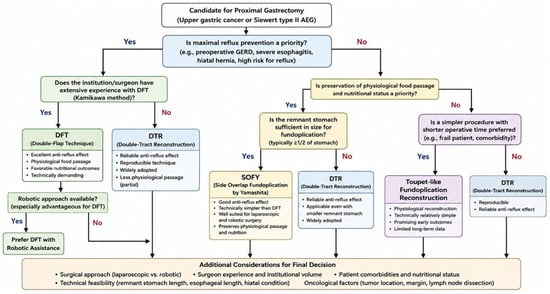
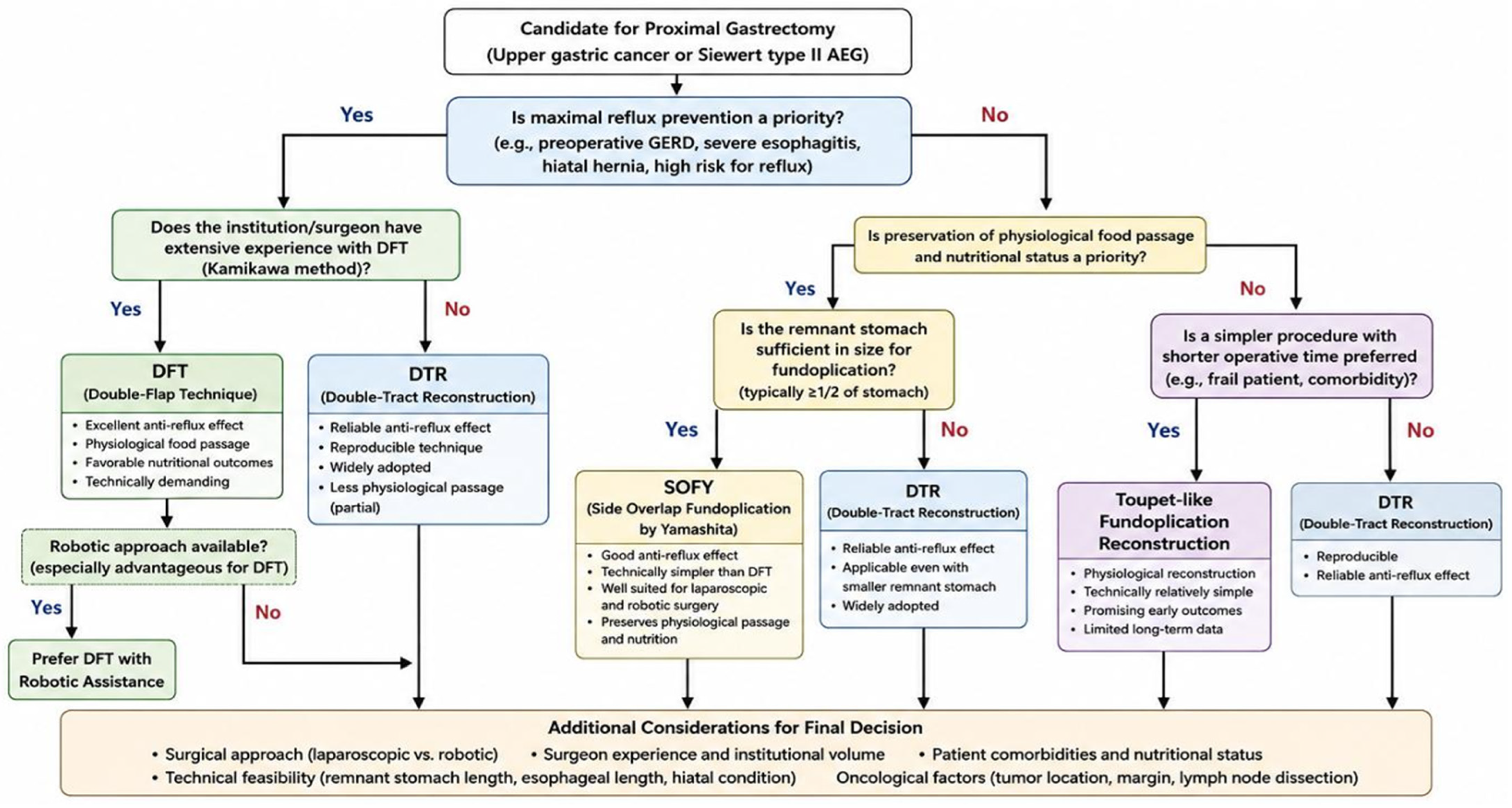
Taken together, the available evidence suggests that DFT may provide the most effective reflux prevention among currently available techniques. However, superiority in reflux control alone does not necessarily translate into overall clinical superiority because operative complexity, learning curve, nutritional outcomes, anastomotic complications, and institutional expertise must also be considered. DFT may provide the most powerful anti-reflux mechanism, DTR offers excellent reproducibility and safety, SOFY combines effective reflux prevention with technical simplicity, and Toupet-like reconstruction represents a promising emerging alternative. Therefore, reconstruction following PG should be individualized according to patient characteristics, surgeon expertise, institutional experience, and available technology. Rather than identifying a single “best” procedure, contemporary evidence supports a tailored approach in which multiple reconstructive strategies can achieve excellent functional outcomes when applied appropriately. Furthermore, the external validity of the current literature remains uncertain. Most available evidence originates from Japan and South Korea, where nationwide screening programs facilitate earlier diagnosis and where function-preserving surgery is routinely performed in high-volume centers. Differences in body mass index, disease stage, perioperative management, and institutional experience may limit direct extrapolation of these results to Western populations. Additional validation in multinational and Western cohorts is therefore required. To facilitate practical decision-making in daily clinical practice, a proposed reconstruction-selection algorithm is presented in Figure 1. The algorithm integrates patient-related, technical, and institutional factors that may influence reconstruction choice after proximal gastrectomy. DFT appears to provide the most effective anti-reflux mechanism among currently available techniques. However, superiority in reflux prevention alone does not necessarily translate into overall clinical superiority because operative complexity, learning curve, nutritional outcomes, anastomotic complications, and institutional expertise must also be considered.
Figure 1.
Practical Algorithm for Reconstruction Selection After Proximal Gastrectomy.
This algorithm integrated key clinical factors to assist in selecting the most appropriate reconstruction. When maximal reflux preventions is required, DFT is preferred in experienced centers, particularly with robotic assistance; otherwise, DTR is recommended. When physiological food passage and nutritional preservation are promised, SOFY is preferred if the remnant stomach is adequate in size; otherwise, DTR is selected. Toupet-like reconstruction may be considered for selected patients when a simpler procedure is preferred. Final decisions should be individualized based on patient characteristics, surgeon expertise, institutional experience, and technical feasibility.
AEG, adenocarcinoma of the esophagogastric junction; DFT, double-flap technique; DTR, double-tract reconstruction; SOFY, side overlap fundoplication by Yamashita; GERD, gastroesophageal reflux disease.
5. Future Perspectives
The role of proximal gastrectomy (PG) in the management of proximal gastric cancer and adenocarcinoma of the esophagogastric junction is expected to continue expanding as surgical techniques, perioperative management, and postoperative supportive care evolve. Despite substantial progress in reconstruction after proximal gastrectomy, several important challenges remain unresolved. Future developments are expected to arise from advances in surgical technology, perioperative management, outcome assessment, and personalized treatment strategies. The major areas of ongoing innovation and future research priorities are summarized in Table 3. Over the past two decades, the focus of gastric cancer surgery has shifted from purely oncological considerations toward a more comprehensive assessment of long-term functional outcomes and quality of life. As survival rates improve and an increasing proportion of patients undergo surgery for early-stage disease, preserving postoperative function has become a major priority. Consequently, future developments in reconstruction after PG will likely emphasize not only technical feasibility and oncological safety but also nutritional preservation, symptom control, and patient-centered outcomes [7,10,38].
Table 3.
Future directions and research priorities in reconstruction after proximal gastrectomy.
Table 3 highlights the multifactorial nature of future progress in reconstruction after proximal gastrectomy. Although substantial advances have already been achieved in reflux prevention and functional preservation, future improvements are unlikely to arise from a single technical innovation. Rather, the next generation of progress will likely result from the integration of advanced surgical technology, standardized outcome assessment, personalized treatment strategies, and multidisciplinary perioperative care. Importantly, future research should move beyond the search for a universally superior reconstruction method and instead focus on identifying the most appropriate procedure for individual patients. Such an approach aligns with the broader trend toward precision surgery and has the potential to further optimize long-term oncological, nutritional, and quality-of-life outcomes following proximal gastrectomy. One of the most important trends is the growing adoption of minimally invasive surgery. Laparoscopic proximal gastrectomy has become increasingly common in East Asia, particularly for early-stage upper gastric cancers. However, certain reconstruction methods, particularly double-flap reconstruction (DFT), remain technically demanding because of the need for precise intracorporeal suturing and flap creation [21,27]. The widespread implementation of robotic surgery may substantially alter this landscape. Robotic platforms provide three-dimensional visualization, articulated instruments, tremor filtration, and improved ergonomics, facilitating complex reconstructive procedures that were previously difficult to perform laparoscopically [17,37]. Several early studies have reported favorable outcomes after robotic PG, suggesting that robotic assistance may reduce technical barriers and improve the reproducibility of anti-reflux reconstruction techniques [39,40]. As robotic technology becomes more accessible and surgeons’ experience increases, procedures such as DFT may become more widely adopted.
To advance proximal gastrectomy outcomes, standardizing clinical endpoints is paramount. Currently, heterogeneous definitions of reflux, nutrition, and complications limit meaningful meta-analyses [15,31]. Future investigations must incorporate objective reporting systems and validated patient-reported outcome measures like the Postgastrectomy Syndrome Assessment Scale-45 (PGSAS-45) [38]. Routinely integrating the PGSAS-45 facilitates reliable comparisons among reconstruction techniques, capturing multi-dimensional, patient-centered outcomes crucial for evidence-based decisions.
Concurrently, the need for high-quality prospective data remains substantial. Most current evidence originates from retrospective or single-center analyses inherently susceptible to selection bias [14,15]. Well-designed randomized controlled trials evaluating long-term nutritional recovery, healthcare costs, and quality of life beyond five years are urgently needed [41]. Furthermore, technological innovations like advanced stapling, fluorescence-guided surgery, and artificial intelligence will refine surgical precision [42]. Utilizing indocyanine green fluorescence for real-time perfusion assessment significantly reduces anastomotic leakage risks during complex reconstructions [43].
Looking forward, research must shift toward personalized reconstructive strategies. Tailoring procedure selection based on patient-specific variables—such as age, body mass index, and preoperative symptoms—will optimize functional benefits while minimizing complications [44]. Beyond surgery, enhanced perioperative care is vital. Proton pump inhibitors remain a cornerstone for reflux management [16], while tailored Enhanced Recovery After Surgery (ERAS) protocols accelerate overall functional recovery [45]. Multidisciplinary nutritional interventions, including immunonutrition and sarcopenia rehabilitation, further maximize the advantages of function-preserving procedures [45].
Since major screening data originate from Japan and South Korea [4,5], international collaboration is crucial to validate these methods across Western populations. Integrating technological innovation, standardized PGSAS-45 assessment, and personalized multidisciplinary care will ultimately maximize oncological safety, symptom control, and long-term quality of life for patients undergoing proximal gastrectomy.
6. Conclusions
The epidemiology of gastric cancer has undergone a substantial transformation over recent decades. While the incidence of distal gastric cancer has declined, adenocarcinoma of the esophagogastric junction and proximal gastric cancer have become increasingly prevalent worldwide. This shift has renewed interest in function-preserving surgical strategies that maintain oncological safety while minimizing the long-term physiological consequences associated with total gastrectomy.
Proximal gastrectomy has emerged as an attractive alternative to total gastrectomy for appropriately selected patients with upper-third gastric cancer and adenocarcinoma of the esophagogastric junction. Accumulating evidence indicates that proximal gastrectomy can provide comparable oncological outcomes while offering important advantages in nutritional preservation, body-weight maintenance, and postoperative quality of life. However, the success of proximal gastrectomy is highly dependent on the reconstructive procedure employed, as postoperative reflux esophagitis has historically represented the principal limitation of this approach.
To address this challenge, several innovative reconstruction techniques have been developed. Double-tract reconstruction provides reliable reflux prevention, reproducibility, and broad applicability in minimally invasive surgery. Double-flap reconstruction offers one of the most effective anti-reflux mechanisms currently available while preserving physiological food passage through the remnant stomach. SOFY reconstruction represents a promising evolution toward technically simplified yet functionally effective anti-reflux reconstruction suitable for laparoscopic and robotic surgery. Similarly, Toupet-like fundoplication reconstruction has emerged as a potential alternative that combines physiological reconstruction with satisfactory reflux control.
Comparative studies have consistently demonstrated that contemporary anti-reflux reconstruction methods substantially reduce reflux esophagitis compared with conventional esophagogastrostomy. Nevertheless, no single reconstruction technique has consistently demonstrated superiority across all clinically relevant outcome measures. Reflux prevention, nutritional preservation, anastomotic complications, technical complexity, operative time, and patient-reported quality of life all represent important considerations, and each procedure possesses distinct advantages and limitations.
Future advances in robotic surgery, fluorescence-guided imaging, artificial intelligence-assisted surgical planning, enhanced recovery pathways, and individualized nutritional support are expected to further improve outcomes following proximal gastrectomy. Equally important will be the establishment of standardized reporting systems and high-quality prospective clinical trials capable of generating robust comparative evidence.
Reconstruction after proximal gastrectomy has evolved from a technical necessity into a critical determinant of long-term functional outcomes. Current evidence suggests that double-tract reconstruction, double-flap reconstruction, SOFY, and Toupet-like fundoplication can all be performed safely and effectively when applied in appropriately selected patients by experienced surgeons. Rather than identifying a universally superior procedure, contemporary practice should focus on tailoring reconstruction to individual patient characteristics, institutional expertise, and available technology. Such a personalized approach is likely to maximize oncological safety, nutritional preservation, symptom control, and quality of life for patients undergoing proximal gastrectomy.
Author Contributions
Conceptualization, T.O. and N.M.; methodology, T.O.; software, N.T.; validation, T.O., N.M. and N.T.; formal analysis, N.M.; investigation, N.M.; resources, T.O.; data curation, T.O.; writing—original draft preparation, N.M. and T.O.; writing—review and editing, T.O.; visualization, N.T.; supervision, T.O.; project administration, T.O. All authors have read and agreed to the published version of the manuscript.
Funding
This research received no external funding.
Institutional Review Board Statement
Not applicable.
Informed Consent Statement
Not applicable.
Data Availability Statement
No new data were created or analyzed in this study. Data sharing is not applicable to this article.
Conflicts of Interest
The authors declare no conflicts of interest.
References
- Sung, H.; Ferlay, J.; Siegel, R.L.; Laversanne, M.; Soerjomataram, I.; Jemal, A.; Bray, F. Global Cancer Statistics 2020: GLOBOCAN Estimates of Incidence and Mortality Worldwide for 36 Cancers in 185 Countries. CA Cancer J. Clin. 2021, 71, 209–249. [Google Scholar] [CrossRef] [Scilit] [PubMed]
- Obermannová, R.; Alsina, M.; Cervantes, A.; Leong, T.; Lordick, F.; Nilsson, M.; van Grieken, N.C.T.; Vogel, A.; Smyth, E.C.; ESMO Guidelines Committee. Oesophageal cancer: ESMO Clinical Practice Guideline for diagnosis, treatment and follow-up. Ann. Oncol. 2022, 33, 992–1004. [Google Scholar] [CrossRef] [Scilit] [PubMed]
- Rustgi, A.K.; El-Serag, H.B. Esophageal carcinoma. N. Engl. J. Med. 2014, 371, 2499–2509. [Google Scholar] [CrossRef] [Scilit] [PubMed]
- Matsuno, K.; Ishihara, R.; Ohmori, M.; Iwagami, H.; Shichijyo, S.; Maekawa, A.; Kanesaka, T.; Yamamoto, S.; Takeuchi, Y.; Higashino, K.; et al. Time trends in the incidence of esophageal adenocarcinoma, gastric adenocarcinoma, and superficial esophagogastric junction adenocarcinoma. J. Gastroenterol. 2019, 54, 784–791. [Google Scholar] [CrossRef] [Scilit] [PubMed]
- Matsueda, K.; Manabe, N.; Watanabe, T.; Sato, Y.; Mizuno, M.; Haruma, K. Adenocarcinoma of the esophagogastric junction: Characteristics of female patients and young adult patients based on a 12-year retrospective and prospective multicenter clinicoepidemiological cohort study in Japan. BMC Gastroenterol. 2024, 24, 342. [Google Scholar] [CrossRef] [Scilit] [PubMed]
- Japanese Gastric Cancer Association. Japanese gastric cancer treatment guidelines 2025 (7th edition). Gastric Cancer 2026, 29, 271–299. [Google Scholar] [CrossRef] [Scilit] [PubMed]
- Takiguchi, N.; Takahashi, M.; Ikeda, M.; Inagawa, S.; Ueda, S.; Nobuoka, T.; Ota, M.; Iwasaki, Y.; Uchida, N.; Kodera, Y.; et al. Long-term quality-of-life comparison of total gastrectomy and proximal gastrectomy by postgastrectomy syndrome assessment scale (PGSAS-45): A nationwide multi-institutional study. Gastric Cancer 2015, 18, 407–416. [Google Scholar] [CrossRef] [Scilit] [PubMed]
- Li, B.; Wang, Y.; Li, B.; Shan, F.; Li, Z. Short-term outcomes and long-term quality of life of reconstruction methods after proximal gastrectomy: A systematic review and meta-analysis. BMC Cancer 2024, 24, 56. [Google Scholar] [CrossRef] [Scilit] [PubMed]
- Katai, H.; Mizusawa, J.; Katayama, H.; Kunisaki, C.; Sakuramoto, S.; Inaki, N.; Kinoshita, T.; Iwasaki, Y.; Misawa, K.; Takiguchi, N.; et al. Single-arm confirmatory trial of laparoscopy-assisted total or proximal gastrectomy with nodal dissection for clinical stage I gastric cancer: Japan Clinical Oncology Group study JCOG1401. Gastric Cancer 2019, 22, 999–1008. [Google Scholar] [CrossRef] [Scilit] [PubMed]
- Lee, I.; Oh, Y.; Park, S.H.; Kwon, Y.; Park, S. Postoperative nutritional outcomes and quality of life-related complications of proximal versus total gastrectomy for upper-third early gastric cancer: A meta-analysis. Sci. Rep. 2020, 10, 21460. [Google Scholar] [CrossRef] [Scilit] [PubMed]
- Park, D.J.; Han, S.U.; Hyung, W.J.; Hwang, S.H.; Hur, H.; Yang, H.K.; Lee, H.J.; Kim, H.I.; Kong, S.H.; Kim, Y.W.; et al. Effect of Laparoscopic Proximal Gastrectomy with Double-Tract Reconstruction vs Total Gastrectomy on Hemoglobin Level and Vitamin B12 Supplementation in Upper-Third Early Gastric Cancer: A Randomized Clinical Trial. JAMA Netw. Open 2023, 6, e2256004. [Google Scholar] [CrossRef] [Scilit] [PubMed]
- Li, X.; Gong, S.; Lu, T.; Tian, H.; Miao, C.; Liu, L.; Jiang, Z.; Hao, J.; Jing, K.; Yang, K.; et al. Proximal Gastrectomy Versus Total Gastrectomy for Siewert II/III Adenocarcinoma of the Gastroesophageal Junction: A Systematic Review and Meta-analysis. J. Gastrointest. Surg. 2022, 26, 1321–1335. [Google Scholar] [CrossRef] [Scilit] [PubMed]
- Rosa, F.; Quero, G.; Fiorillo, C.; Bissolati, M.; Cipollari, C.; Rausei, S.; Chiari, D.; Ruspi, L.; de Manzoni, G.; Costamagna, G.; et al. Total vs proximal gastrectomy for adenocarcinoma of the upper third of the stomach: A propensity-score-matched analysis of a multicenter western experience (On behalf of the Italian Research Group for Gastric Cancer-GIRCG). Gastric Cancer 2018, 21, 845–852. [Google Scholar] [CrossRef] [Scilit] [PubMed]
- Hipp, J.; Hillebrecht, H.C.; Kalkum, E.; Klotz, R.; Kuvendjiska, J.; Martini, V.; Fichtner-Feigl, S.; Diener, M.K. Systematic review and meta-analysis comparing proximal gastrectomy with double-tract-reconstruction and total gastrectomy in gastric and gastroesophageal junction cancer patients: Still no sufficient evidence for clinical decision-making. Surgery 2023, 173, 957–967. [Google Scholar] [CrossRef] [Scilit] [PubMed]
- Tian, Z.; Cheng, Y.; Wang, Y.; Ren, J.; Wang, S.; Wang, D. A 3-Arm case-matched analysis of anti-reflux reconstruction methods after laparoscopic proximal gastrectomy—Single tract jejunal interposition vs double tract reconstruction vs tube-like stomach reconstruction. Eur. J. Surg. Oncol. 2025, 51, 109482. [Google Scholar] [CrossRef] [Scilit] [PubMed]
- Sun, Y.; Chen, C.; Hou, L.; Zhao, E. Short-term outcomes and quality of life of esophagogastrostomy versus the double-tract reconstruction after laparoscopic proximal gastrectomy. BMC Cancer 2024, 24, 1324. [Google Scholar] [CrossRef] [Scilit] [PubMed]
- Xin, C.; Wang, Z.; Zheng, Z.; Lu, S.; Wei, X.; Zhang, J.; Yin, J.; Zhang, Z. Comparison on the reflux and nutritional status of different reconstruction methods after laparoscopic proximal gastrectomy: A systematic review and network meta-analysis. Updates Surg. 2026, 78, 575–588. [Google Scholar] [CrossRef] [Scilit] [PubMed]
- Ahn, S.H.; Jung, D.H.; Son, S.Y.; Lee, C.M.; Park, D.J.; Kim, H.H. Laparoscopic double-tract proximal gastrectomy for proximal early gastric cancer. Gastric Cancer 2014, 17, 562–570. [Google Scholar] [CrossRef] [Scilit] [PubMed]
- Kuroda, S.; Ishida, M.; Choda, Y.; Muraoka, A.; Hato, S.; Kagawa, T.; Tanaka, N.; Mitsuhashi, T.; Kakiuchi, Y.; Kikuchi, S.; et al. A multi-center, prospective, clinical study to evaluate the anti-reflux efficacy of laparoscopic double-flap technique (lD-FLAP Study). Ann. Gastroenterol. Surg. 2024, 8, 374–382. [Google Scholar] [CrossRef] [Scilit] [PubMed]
- Nomura, E.; Lee, S.W.; Bouras, G.; Tokuhara, T.; Hayashi, M.; Hiramatsu, M.; Okuda, J.; Tanigawa, N. Functional outcomes according to the size of the gastric remnant and type of reconstruction following laparoscopic distal gastrectomy for gastric cancer. Gastric Cancer 2011, 14, 279–284. [Google Scholar] [CrossRef] [Scilit] [PubMed]
- Kuroda, S.; Choda, Y.; Otsuka, S.; Ueyama, S.; Tanaka, N.; Muraoka, A.; Hato, S.; Kimura, T.; Tanakaya, K.; Kikuchi, S.; et al. Multicenter retrospective study to evaluate the efficacy and safety of the double-flap technique as antireflux esophagogastrostomy after proximal gastrectomy (rD-FLAP Study). Ann. Gastroenterol. Surg. 2018, 3, 96–103. [Google Scholar] [CrossRef] [Scilit] [PubMed]
- Yamashita, Y.; Yamamoto, A.; Tamamori, Y.; Yoshii, M.; Nishiguchi, Y. Side overlap esophagogastrostomy to prevent reflux after proximal gastrectomy. Gastric Cancer 2017, 20, 728–735. [Google Scholar] [CrossRef] [Scilit] [PubMed]
- Nunobe, S.; Ida, S. Current status of proximal gastrectomy for gastric and esophagogastric junctional cancer: A review. Ann. Gastroenterol. Surg. 2020, 4, 498–504. [Google Scholar] [CrossRef] [Scilit] [PubMed]
- Sakuramoto, S.; Yamashita, K.; Kikuchi, S.; Futawatari, N.; Katada, N.; Moriya, H.; Hirai, K.; Watanabe, M. Clinical experience of laparoscopy-assisted proximal gastrectomy with Toupet-like partial fundoplication in early gastric cancer for preventing reflux esophagitis. J. Am. Coll. Surg. 2009, 209, 344–351. [Google Scholar] [CrossRef] [Scilit] [PubMed]
- Zhu, G.; Jiao, X.; Zhou, S.; Zhu, Q.; Yu, L.; Sun, Q.; Li, B.; Fu, H.; Huang, J.; Lang, W.; et al. Can proximal gastrectomy with double-tract reconstruction replace total gastrectomy? A meta-analysis of randomized controlled trials and propensity score-matched studies. BMC Gastroenterol. 2024, 24, 230. [Google Scholar] [CrossRef] [Scilit] [PubMed]
- Tokunaga, M.; Kurokawa, Y.; Machida, R.; Sato, Y.; Takiguchi, S.; Doki, Y.; Yabusaki, H.; Watanabe, M.; Hato, S.; Nakamori, M.; et al. Impact of postoperative complications on survival outcomes in patients with gastric cancer: Exploratory analysis of a randomized controlled JCOG1001 trial. Gastric Cancer 2021, 24, 214–223. [Google Scholar] [CrossRef] [Scilit] [PubMed]
- Kakiuchi, Y.; Kuroda, S.; Choda, Y.; Otsuka, S.; Ueyama, S.; Tanaka, N.; Muraoka, A.; Hato, S.; Kamikawa, Y.; Fujiwara, T. Prognostic nutritional index is a prognostic factor for patients with gastric cancer and esophagogastric junction cancer undergoing proximal gastrectomy with esophagogastrostomy by the double-flap technique: A secondary analysis of the rD-FLAP study. Surg. Oncol. 2023, 50, 101990. [Google Scholar] [CrossRef] [Scilit] [PubMed]
- Shoji, Y.; Nunobe, S.; Ida, S.; Kumagai, K.; Ohashi, M.; Sano, T.; Hiki, N. Surgical outcomes and risk assessment for anastomotic complications after laparoscopic proximal gastrectomy with double-flap technique for upper-third gastric cancer. Gastric Cancer 2019, 22, 1036–1043. [Google Scholar] [CrossRef] [Scilit] [PubMed]
- Yamashita, Y.; Tatsubayashi, T.; Okumura, K.; Miyamoto, T.; Ueno, K. Modified side overlap esophagogastrostomy after laparoscopic proximal gastrectomy. Ann. Gastroenterol. Surg. 2022, 6, 594–599. [Google Scholar] [CrossRef] [Scilit] [PubMed]
- Iwakiri, K.; Fujiwara, Y.; Manabe, N.; Ihara, E.; Kuribayashi, S.; Akiyama, J.; Kondo, T.; Yamashita, H.; Ishimura, N.; Kitasako, Y.; et al. Evidence-based clinical practice guidelines for gastroesophageal reflux disease 2021. J. Gastroenterol. 2022, 57, 267–285. [Google Scholar] [CrossRef] [Scilit] [PubMed]
- Kano, Y.; Ohashi, M.; Nunobe, S. Laparoscopic Function-Preserving Gastrectomy for Proximal Gastric Cancer or Esophagogastric Junction Cancer: A Narrative Review. Cancers 2023, 15, 311. [Google Scholar] [CrossRef] [Scilit] [PubMed]
- Tian, P.; Liu, Y.; Bian, S.; Li, M.; Zhang, M.; Liu, J.; Jin, L.; Zhang, P.; Zhang, Z. Laparoscopic Proximal Gastrectomy Versus Laparoscopic Total Gastrectomy for Proximal Gastric Cancer: A Systematic Review and Meta-Analysis. Front. Oncol. 2021, 10, 607922. [Google Scholar] [CrossRef] [Scilit] [PubMed]
- Yu, B.; Park, K.B.; Park, J.Y.; Lee, S.S.; Kwon, O.K.; Chung, H.Y.; Hwang, Y.J. Double tract reconstruction versus double flap technique: Short-term clinical outcomes after laparoscopic proximal gastrectomy for early gastric cancer. Surg. Endosc. 2022, 36, 5243–5256. [Google Scholar] [CrossRef] [Scilit] [PubMed]
- Cai, L.; Qiu, G.; Zhu, M.; Han, S.; Zhao, P.; Wang, P.; Li, X.; Liao, X.; Che, X.; Fan, L. Digestive tract reconstruction after laparoscopic proximal gastrectomy: Double tract reconstruction or double flap technique? Ann. Gastroenterol. Surg. 2024, 9, 98–108. [Google Scholar] [CrossRef] [Scilit] [PubMed]
- Tian, Z.; Zhang, Y.; Cheng, Y.; Wang, D. Long-term muscle-sparing benefits of proximal gastrectomy in elderly patients with upper-third early gastric cancer: A propensity score-matched analysis. Eur. J. Surg. Oncol. 2025, 51, 110373. [Google Scholar] [CrossRef] [Scilit] [PubMed]
- Zhang, H.; Zheng, Z.; Liu, X.; Xin, C.; Huang, Y.; Li, Y.; Yin, J.; Zhang, J. Safety and efficacy of laparoscopic proximal gastrectomy with SOFY versus laparoscopic total gastrectomy with Roux-en-Y for treating cT1-2 Siewert II/III adenocarcinoma of the esophagogastric junction: A single-center prospective cohort study. Langenbecks Arch. Surg. 2023, 408, 69. [Google Scholar] [CrossRef] [Scilit] [PubMed]
- Hu, Q.; Ohashi, M.; Ri, M.; Makuuchi, R.; Irino, T.; Hayami, M.; Sano, T.; Nunobe, S. Safety of robotic double-flap technique following proximal gastrectomy in the introductory phase compared with laparoscopic procedure: A propensity score-matched analysis. Surg. Endosc. 2024, 38, 5824–5831. [Google Scholar] [CrossRef] [Scilit] [PubMed]
- Nakada, K.; Ikeda, M.; Takahashi, M.; Kinami, S.; Yoshida, M.; Uenosono, Y.; Kawashima, Y.; Oshio, A.; Suzukamo, Y.; Terashima, M.; et al. Characteristics and clinical relevance of postgastrectomy syndrome assessment scale (PGSAS)-45: Newly developed integrated questionnaires for assessment of living status and quality of life in postgastrectomy patients. Gastric Cancer 2015, 18, 147–158. [Google Scholar] [CrossRef] [Scilit] [PubMed]
- Li, Z.; Zhou, W.; Yang, W.; Miao, Y.; Zhang, Y.; Duan, L.; Niu, L.; Chen, J.; Fan, A.; Xie, Q.; et al. Efficacy and safety of robotic vs. laparoscopic gastrectomy for patients with gastric cancer: Systematic review and meta-analysis. Int. J. Surg. 2024, 110, 8045–8056. [Google Scholar] [CrossRef] [Scilit] [PubMed]
- Shibasaki, S.; Suda, K.; Hisamori, S.; Obama, K.; Terashima, M.; Uyama, I. Robotic gastrectomy for gastric cancer: Systematic review and future directions. Gastric Cancer 2023, 26, 325–338. [Google Scholar] [CrossRef] [Scilit] [PubMed]
- Kim, Y.W.; Min, J.S.; Yoon, H.M.; An, J.Y.; Eom, B.W.; Hur, H.; Lee, Y.J.; Cho, G.S.; Park, Y.K.; Jung, M.R.; et al. Laparoscopic Sentinel Node Navigation Surgery for Stomach Preservation in Patients with Early Gastric Cancer: A Randomized Clinical Trial. J. Clin. Oncol. 2022, 40, 2342–2351. [Google Scholar] [CrossRef] [Scilit] [PubMed]
- Hashimoto, D.A.; Rosman, G.; Rus, D.; Meireles, O.R. Artificial Intelligence in Surgery: Promises and Perils. Ann. Surg. 2018, 268, 70–76. [Google Scholar] [CrossRef] [Scilit] [PubMed]
- Calabrese, E.C.; Kumar, S.; Shehata, D.; Kapsampelis, P.; Scholz, S.; Rodríguez-Luna, M.R.; Narula, N.; Chiu, J.; Husain, F.; Sylla, P.; et al. SAGES 2025 guidelines for fluorescence image-guided gastrointestinal surgery using indocyanine green. Surg. Endosc. 2025, 39, 7935–7957. [Google Scholar] [CrossRef] [Scilit] [PubMed]
- Liu, C.; Li, Y.; Liang, Y.; Tian, Z.; Zhang, L. Proximal vs. total gastrectomy for proximal advanced gastric cancer: A systematic review and meta-analysis of propensity score-matched studies. Front. Oncol. 2025, 15, 1632011. [Google Scholar] [CrossRef] [Scilit] [PubMed]
- Mortensen, K.; Nilsson, M.; Slim, K.; Schäfer, M.; Mariette, C.; Braga, M.; Carli, F.; Demartines, N.; Griffin, S.M.; Lassen, K.; et al. Consensus guidelines for enhanced recovery after gastrectomy: Enhanced Recovery After Surgery (ERAS®) Society recommendations. Br. J. Surg. 2014, 101, 1209–1229. [Google Scholar] [CrossRef] [Scilit] [PubMed]

Disclaimer/Publisher’s Note: The statements, opinions and data contained in all publications are solely those of the individual author(s) and contributor(s) and not of MDPI and/or the editor(s). MDPI and/or the editor(s) disclaim responsibility for any injury to people or property resulting from any ideas, methods, instructions or products referred to in the content. |
© 2026 by the authors. Licensee MDPI, Basel, Switzerland. This article is an open access article distributed under the terms and conditions of the Creative Commons Attribution (CC BY) license.