


Abstract
Non-specific lipid transfer proteins (nsLTPs) are small cysteine-rich proteins belonging to the cysteine-rich peptide (CRP) antimicrobial peptide superfamily, widely distributed across land plants and involved in key physiological processes including fertilization, cell wall organization, wax deposition, and responses to biotic and abiotic stresses. Recent genomic and evolutionary analyses have revealed an extensive diversification of nsLTPs across plant lineages, which has led to multiple classification systems based on molecular mass, cysteine spacing, intron structure, and GPI (glycosylphosphatidylinositol-anchored proteins)-anchor motifs. This diversity reflects their adaptive expansion during plant terrestrialization. This review proposes that nsLTPs act as central nodes connecting lipid metabolism, developmental signals, and stress response networks, functioning as integrative signaling hubs rather than simple lipid carriers. Building on this central thesis, we synthesize current knowledge on nsLTP structure, classification, and evolution, and examine their multifaceted roles in plant development and defense. We also highlight emerging biotechnological applications and identify key gaps that warrant further investigation.
1. Introduction
Plant non-specific lipid transfer proteins (nsLTPs for plant non-specific lipid transfer protein), members of the cysteine-rich protein–antimicrobial peptide (CRP-AMP), play pivotal roles in shuttling hydrophobic molecules critical for plant structural integrity and signaling. These small proteins (6.5–10 kDa) exhibit broad specificity and structural plasticity, enabling them to bind and transport diverse lipid substrates, including cutin and suberin monomers, surface waxes, fatty acids, phospholipids, and lipid-derived signaling molecules [1,2,3]. Although they are classified within the CRP-AMP superfamily and several members have been experimentally shown to possess antimicrobial activity, this functional trait is isoform-specific rather than a universal property of all nsLTPs. In addition, plant nsLTPs are capable of transferring phosphatidylcholine, phosphatidylglycerol, and phosphatidylinositol from liposomes to mitochondria. In several species, including sunflower, spinach, and oilseed rape, nsLTPs have also been shown to bind hydrophobic acyl-CoA molecules [4,5]. These proteins are widely distributed in plants, where they can account for up to 4% of total soluble protein. nsLTPs are thought to have evolved during plant adaptation to terrestrial environments and have been identified in mosses, liverworts, land plants, and algae. Marchantia polymorpha, one of the most primitive land plants (a non-vascular bryophyte), contains 14 nsLTP-encoding genes in its genome. Recently, Huang et al. [6] identified nsLTPs in ten species of green algae, whereas none were detected in red or brown algae. Green algal nsLTPs exhibit distinctive characteristics, including lower isoelectric points, higher molecular masses, extended spacing between the eight conserved cysteine residues, and the presence of multiple introns, suggesting the existence of a novel nsLTP lineage. The number of identified nsLTP genes ranged from one (Gonium pectorale, Tetrabaena socialis, and Volvox carteri) to eight (Coccomyxa sp. C-169), with most species harboring two genes (Klebsormidium nitens, Auxenochorella protothecioides, Chlamydomonas reinhardtii, Chlorella variabilis, Micractinium conductrix, Monoraphidium neglectum, Ostreococcus tauri, Ostreobium quekettii, and Raphidocelis subcapitata) [6]. nsLTPs are involved in a wide range of biological processes in plants, including growth and development, somatic embryogenesis, seed maturation, lipid metabolism, signaling, cuticular wax and cutin synthesis, programmed cell death, nitrogen fixation, sexual reproduction, pollen tube adhesion to the stigma, fertilization in flowering plants, defense against pathogens, responses to abiotic stresses [7,8,9,10], and symbiotic interactions. nsLTPs are also considered members of the pathogenesis-related protein (PR) family [11,12,13], and their defensive roles against bacterial, fungal, and viral pathogens have been well documented [2,8,14]. nsLTPs are synthesized as precursor proteins consisting of a signal peptide of 21–30 amino acids and a mature domain containing eight conserved cysteine residues. The signal peptide is essential for targeting the protein to its correct subcellular location via the secretory pathway. nsLTPs vary considerably in amino acid length, molecular weight, hydrophobicity, and isoelectric point across subfamilies, both within and between plant species [15,16]. For instance, in Pistacia chinensis, all identified nsLTPs are hydrophobic and play roles in transmembrane transport and hydrophobic interactions [17]. In potato, 6 out of 39 nsLTPs are hydrophobic and capable of lipid transport [18].
While several reviews have summarized the classical structural features, general classifications, and functional involvement of nsLTPs in plant growth and pathogen defense, a comprehensive framework integrating their regulatory mechanisms as signal transducers is lacking. In this review, we move beyond the classical view of nsLTPs as passive lipid transporters. Instead, we propose a new conceptual framework positioning nsLTPs as integrative signaling hubs that connect lipid trafficking, post-translational modifications (e.g., phosphorylation and Ca2+/calmodulin binding), and hormone- and kinase-mediated signaling networks (MAPK and RLKs). Furthermore, we synthesize recent evolutionary findings in green algae and crops, critically evaluate dynamic subcellular partitioning, and highlight emerging biotechnological applications for climate-resilient agriculture.
2. Structural Properties of nsLTPs
Plant non-specific lipid transfer proteins (nsLTPs) are small, soluble, and secreted proteins typically composed of 70–100 amino acids (6–10 kDa). They are defined by a conserved cysteine-rich motif comprising eight cysteine residues arranged in the consensus sequence “C–Xn–C–Xn–CC–CXC–Xn–C–Xn–C” [19]. These cysteines form four conserved disulfide bonds that stabilize the protein framework and outline a central hydrophobic cavity essential for ligand binding [15,16,20,21,22]. The central hydrophobic cavity is highly flexible and can expand substantially upon ligand binding, accommodating single- or double-chain lipids as well as bulkier molecules such as sterols. Although cavity dimensions vary among subfamilies (e.g., nsLTP2 proteins possess smaller cavities than nsLTP1), they retain structural plasticity and the capability to bind rigid hydrophobic ligands [23,24]. Structurally, nsLTPs adopt a conserved three-dimensional fold consisting of four α-helices stabilized by these disulfide bonds, supplemented by flexible loop regions and an unstructured C-terminal tail [25]. Additional hydrogen bonds contribute to their exceptional stability, conferring resistance to heat and proteolytic degradation [22,26]. The central hydrophobic cavity is highly flexible and can expand substantially upon ligand binding, accommodating single- or double-chain lipids as well as bulkier molecules such as sterols. Although cavity dimensions vary among subfamilies (e.g., nsLTP2 proteins possess smaller cavities than nsLTP1), they retain structural plasticity and the capability to bind rigid hydrophobic ligands [23,24]. Furthermore, the C-terminal region often harbors regulatory elements such as calmodulin-binding domains and potential phosphorylation sites, implicating these structural motifs in signal integration. Most nsLTPs are synthesized as precursor proteins containing a N-terminal signal peptide of 21–30 amino acids, which directs them to the secretory pathway [27].
3. Classification and Evolutionary History of nsLTPs
nsLTPs exhibit considerable evolutionary diversification, having evolved during plant adaptation to terrestrial environments. They are widely distributed across land plants, including mosses, liverworts, and vascular plants, with their early origins traceable to green algae. For instance, Marchantia polymorpha, an early-diverging land plant, harbors 14 nsLTP-encoding genes. Recently, Huang et al. [6] identified nsLTPs in ten species of green algae, whereas none were detected in red or brown algae. Green algal nsLTPs display distinctive structural features—such as lower isoelectric points, higher molecular masses, extended cysteine spacing, and multiple introns—suggesting the existence of an ancestral, novel nsLTP lineage [6]. Historically, nsLTPs were divided into two primary subfamilies based on molecular mass: nsLTP1 (~9 kDa) and nsLTP2 (~7 kDa). To account for expanding sequence diversity, Boutrot et al. [21] established a classification scheme comprising nine distinct types (Types I–IX) based on cysteine spacing within the eight-cysteine motif, intron position, and sequence similarity across Arabidopsis thaliana, rice (Oryza sativa), and wheat (Triticum aestivum). Lineage-specific expansions have since broadened this framework, leading to the identification of Type X nsLTPs in Solanaceae [28]. Subsequent phylogenetic refinement in 2011 by Edstam et al. [29] categorized plant nsLTPs into ten subgroups (I, II, C–K) based on sequence similarity, intron distribution, cysteine spacing, and glycosylphosphatidylinositol (GPI)-anchor motifs. Subgroups D and G are present in early-diverging lineages (mosses and liverworts), representing ancestral nsLTP clades, whereas other subgroups diversified later in vascular plants [8,24]. Some subgroups exhibit strong taxonomic specificity (e.g., subgroup H found exclusively in Selaginella moellendorffii), while others show lineage-specific loss, such as Type E nsLTPs in monocots [29,30]. Furthermore, GPI-anchored nsLTPs (nsLTPg) possess C-terminal signaling motifs for membrane attachment, functionally specializing in lipid deposition during the synthesis of cuticular wax, sporopollenin, and suberin [16,31].
Overall, nsLTPs exhibit considerable evolutionary diversification, serving as pivotal molecular innovations during plant adaptation to terrestrial environments [8,24,29]. The transition from aquatic habitats to desiccating aerial environments required specialized physical barriers and signaling mechanisms to mitigate water loss, UV radiation, and mechanical stress. Primitive nsLTP lineages, already present in green algae, underwent extensive diversification as early land plants emerged [6,29]. In bryophytes such as mosses (Physcomitrella patens) and liverworts (Marchantia polymorpha), specific ancestral subgroups—particularly types D and G nsLTPs—expanded to facilitate the extracellular transport of hydrophobic monomers required for cutin, suberin, and sporopollenin deposition [16,24,29,31]. This structural reinforcement of the outer plant surface was essential for conquering dry land. As vascular plants evolved, structural diversification within the eight-cysteine motif and the acquisition of GPI-anchor signals further specialized nsLTPs into distinct subfamilies dedicated to complex cuticle assembly, stomatal regulation, and land plant-specific signaling pathways [8,29,31].
4. Genome-Wide Expansion and Genomic Diversity of nsLTPs
Plant nsLTPs constitute large multigene families that have been characterized through genome-wide analyses across diverse taxa (Table S1). Notably, 79, 63, and 77 nsLTP genes have been identified in Arabidopsis thaliana, Zea mays, and Oryza sativa, respectively [19,32,33], underscoring extensive expansion in angiosperms. Additionally, numerous nsLTPs have been characterized in a wide range of plant species, including cereals, legumes, and woody plants [21,22,27,29]. Polyploid species exhibit even larger repertoires; for example, Brassica napus harbors 246 nsLTP genes classified into five major groups (Types I, II, C, D, and G). Similar expansions occur in Solanum tuberosum (39 genes across eight groups) [34] and Populus trichocarpa (42 genes across five major types) [35]. Gene duplication events represent the primary evolutionary driver behind the expansion and structural diversification of nsLTP multigene families. Comparative genomics reveals substantial structural variability and atypical inter-cysteine spacing among paralogs. For example, in Arachis duranensis, 64 nsLTPs fall into six groups with variations in canonical cysteine spacing [36]. Similarly, in Hordeum vulgare, 70 nsLTP genes distributed across five groups retain conserved exon–intron architectures within specific types while showing inter-type variability [37].
Gene duplication events—specifically Whole-Genome Duplications (WGDs) and tandem/segmental duplications—represent the primary evolutionary drivers behind the massive expansion and functional divergence of nsLTP multigene families [2,21,29]. While WGD events provided duplicated gene copies that were retained during major evolutionary transitions (such as the angiosperm radiation), local tandem duplications significantly expanded specific nsLTP clusters, such as the Type I, II, and GPI-anchored subfamilies [21,28,29]. Importantly, these duplication mechanisms catalyzed functional divergence through subfunctionalization and neofunctionalization. Duplicated nsLTP paralogs frequently evolved divergent promoter architectures, driving spatial and temporal expression partitioning across tissues (e.g., tapetum, seed coat, and root epidermis) [31,38,39]. Furthermore, post-duplication structural diversification altered the hydrophobic cavity dimensions and surface charge distributions, broadening ligand specificity from simple fatty acids to complex phytohormones (e.g., abscisic acid [ABA] and jasmonic acid [JA]) and pathogen-derived signaling molecules [22,23,40,41]. Consequently, duplication-driven expansion transformed nsLTPs from basic lipid transporters in early land plants into multifaceted signaling hubs in modern vascular crops.
Beyond structural variability, genome-wide nsLTP expansion is closely linked to transcriptional specialization. Across plant species, nsLTP paralogs display highly dynamic, spatial, and temporal expression patterns [21,27,31,33,34,36,37,42,43,44,45,46,47,48]. Organ-specific expression has been widely documented, for instance, in Sesamum indicum, where specific nsLTP genes are expressed exclusively in roots or seeds [45,46]. This genomic expansion and functional partitioning lay the groundwork for their involvement in specialized physiological processes and environmental stress responses (Table S2).
5. Expression Patterns and Functional Roles of nsLTPs
The remarkable expansion and diversification of nsLTP gene families across plant genomes are accompanied by highly dynamic and context-dependent expression patterns, which underpin their functional specialization. Accumulating evidence indicates that nsLTPs are not constitutively expressed housekeeping proteins but instead display tightly regulated spatial, temporal, and environmental expression profiles, as systematically documented across model and crop species [29,34]. Such regulation suggests that the diversification of nsLTPs following gene duplication has enabled their recruitment into distinct developmental programs and stress-responsive pathways [42,43,44,45,46,47,48]. At the organ and tissue levels, nsLTP expression is often highly specific, with different family members preferentially expressed in roots, leaves, flowers, seeds, or reproductive tissues [49]. During plant development, nsLTPs have been implicated in diverse processes, including embryogenesis, seed maturation, pollen tube growth, fertilization, and cuticle formation [47,49,50,51,52,53,54,55,56,57,58]. Genome-wide expression profiling in industrial and staple crops has confirmed this tissue specificity; for instance, specific nsLTP subfamilies have been shown to exhibit tissue-exclusive expression during cotton fiber elongation, seed coat maturation, and floral organ development [57,59,60]. Furthermore, recent evolutionary tracking by Huang et al. [6] revealed that even in green algal ancestors, primitive nsLTP lineages displayed stage-specific transcriptional regulation during lipid accumulation. In addition to their roles in plant development, many nsLTPs are strongly responsive to environmental cues [61,62,63]. Numerous genome-wide functional studies have demonstrated that nsLTP genes are differentially regulated under biotic stresses such as pathogen infection [64,65], as well as abiotic stresses including drought, salinity, temperature extremes, and nutrient limitation [18,65,66,67,68,69]. In these contexts, nsLTPs act either as direct antimicrobial peptides, components of physical barriers such as the cuticle, or mediators of lipid-derived signaling involved in stress perception and systemic defense responses [23,65].
Stress-induced expression patterns highlight the importance of nsLTPs as multifunctional players at the interface of plant development and environmental adaptation [70]. Taken together, the expression diversity and functional breadth of nsLTPs reflect the evolutionary success of this protein family in plants. The combination of genome-wide expansion, structural variability, and strict transcriptional control has enabled nsLTPs to acquire specialized yet often overlapping roles in growth, reproduction, and stress resilience.
In the following sections, we summarize current knowledge on nsLTP expression patterns and examine their functional contributions to key physiological processes and plant responses to biotic and abiotic challenges.
6. Multifunctional nsLTPs: Linking Developmental Programs and Stress Responses
nsLTPs exhibit highly dynamic and context-dependent expression patterns that underpin their functional specialization in plant development and stress adaptation. Far from being constitutive housekeeping proteins, nsLTPs are tightly regulated at the spatial, temporal, and environmental levels, enabling their recruitment into distinct developmental programs and defense pathways. They participate in diverse physiological processes such as embryogenesis, seed maturation, pollen tube growth, fertilization, and cuticle formation, where their expression is developmentally staged and tissue-specific (Figure 1) [71,72].
Figure 1.
Schematic representation of nsLTP structural features and their involvement in developmental and reproductive processes. Solid lines/arrows denote pathways and functional roles with direct experimental support in specific plant species: (1, 4) Cutin and cuticle synthesis (e.g., AtLTP2, LTPg). (2, 6) Pollen–stigma interaction and pollen tube growth (e.g., AtLTP1, AtLTP5, SCA). (3, 5) Seed maturation, germination, and lipid mobilization (e.g., HaAP10, OsLTPL18). (7) Suberin deposition (e.g., pea root LTPs). (8) Fruit development/ripening. (9) Tapetal lipid transport and microspore exine assembly (e.g., OsC6, TaMs1, Ms44). (10) Somatic embryogenesis (e.g., carrot and grapevine LTPs) (3D fold structure generated using standard PDB templates; figure created using FigureLab).
Inflorescence-specifically expressed nsLTPs have been implicated in pollen development. Lipid biosynthesis in pollen grains increases sharply after meiosis I [73], and several nsLTPs are expressed in the tapetum, where they may facilitate the transfer of fatty acids and lipid precursors required for pollen wall formation [74]. In Brassica napus, nsLTPs contribute to exine and pollen coat formation, structures essential for pollen–stigma interactions, pollinator adhesion, and pathogen resistance [75]. In Arabidopsis, the SCA-like protein AtLTP1 is highly expressed in stigma and pollen grain cell walls [38,76], whereas AtLTP5 shows minimal expression, suggesting functional diversification among SCA-like nsLTPs. Genetic studies further support the role of nsLTPs in male fertility. Knockdown of AtLTPg.3 and AtLTPg.4 results in deformed or sterile pollen [39]. Type C nsLTPs (AtLTPc.1, AtLTPc.2, AtLTPc.3) are specifically expressed in the tapetum and regulate intine morphology [31]. In maize, the type C gene Ms44 is expressed in tapetal cells, and defective secretion leads to dominant male sterility [77]. In rice, silencing of the anther-specific gene OsC6 reduces pollen fertility [78]. In wheat, the type G nsLTP TaMs1 is expressed during early microspore development and is essential for male fertility [31,55]. In carrot and grapevine, massive nsLTP secretion occurs during somatic embryogenesis [79,80]. Furthermore, nsLTP transcripts have been detected in embryos, endosperm, and surrounding tissues during seed development and germination, suggesting broader roles in developmental regulation (Figure 1) [81].
nsLTPs also contribute to symbiotic interactions, notably AgLTP24 in Alnus glutinosa and MtN5 in Medicago truncatula, which modulate nodule formation and nitrogen fixation [82,83]. Indeed, nsLTPs are among the most strongly upregulated genes during the early stages of symbiosis between A. glutinosa and the actinobacterium Frankia alni. Specifically, AgLTP24 stimulates Frankia nitrogen fixation at sub-lethal concentrations. This nsLTP localizes at the deformed root hair region after Frankia inoculation, and subsequently translocates into nodules around bacterial vesicles. Thus, AgLTP24 functions at early and late stages of symbiosis, probably by increasing nitrogen uptake by Frankia [83]. Similar symbiotic functions have been reported in Medicago truncatula. Specifically, MtN5, an nsLTP gene with known antimicrobial activity [84], plays a pivotal role during the early steps of rhizobial infection and nodule development [84,85]. Knockdown or silencing of MtN5 results in excessive root hair curling but a significantly reduced number of infection threads and nodule primordia [82]. Conversely, MtN5 overexpression increases the number of successful infection events and subsequent nodules [82]. These findings indicate that MtN5 is crucial for controlling the early entry and establishment of the symbiotic bacterial infection, thereby indirectly modulating overall nodulation efficiency [82]. Similarly, in Astragalus sinicus, the nsLTP gene AsE246 encodes a protein that binds digalactosyldiacylglycerol (DGDG); knockdown of AsE246 impairs nodule development, leading to fewer mature infected plant cells [86].
Under abiotic stress, nsLTPs reinforce cuticular and suberin barriers, stabilize membranes, and mediate hormonal crosstalk with ABA, JA, and SA, integrating lipid transport with stress signaling [41,87,88]. Their overexpression enhances tolerance to drought, salinity, and oxidative stress by regulating ROS homeostasis and activating antioxidant systems [60,89]. In biotic contexts, nsLTPs act as PR-14 proteins with direct antimicrobial activity against bacteria and fungi [89,90,91] and participate in hormone-mediated defense signaling, where JA-binding enhances resistance and SA-dependent pathways trigger systemic acquired resistance [66,92]. Collectively, these findings position nsLTPs as multifunctional lipid–signal integrators bridging development, stress resilience, and immunity through coordinated regulation of lipid transport, hormone signaling, and redox balance.
Thus, non-specific lipid transfer proteins play pivotal roles in plant adaptation to abiotic stresses, including drought, salinity, temperature extremes, and signaling inputs from phytohormones such as ABA, JA, SA, and ethylene (Figure 2).
Figure 2.
Integrated model of nsLTP functions in abiotic and biotic stress responses. (A) Mechanistic model of cuticular lipid export. Solid arrows illustrate experimentally validated apoplastic transport of cutin monomers and wax components mediated by GPI-anchored and soluble nsLTPs (e.g., AtLTPG1). Dashed arrows represent proposed passive diffusion or helper-protein transfer mechanisms within the hydrophobic cuticle matrix. (B) Multifunctional roles under environmental constraints. Confirmed mechanisms backed by functional characterization include salt/drought tolerance via ROS scavenging and membrane stabilization (e.g., TdLTP4, TdLTP2, NtLTP4), direct antimicrobial activity (e.g., Raphanus and onion seed nsLTPs), pathogen-induced stomatal regulation (e.g., StLTP10–PYL4 interaction), and cold acclimation. Solid arrows highlight demonstrated stress tolerance pathways; dashed arrows indicate proposed signaling mechanisms awaiting direct biochemical verification (Abbreviations: C16/C18/C20/C34, fatty acyl chain lengths. Figure created using FigureLab).
Numerous studies have shown that nsLTP genes are transcriptionally regulated in response to diverse abiotic constraints, highlighting their involvement in plant stress acclimation [22,93]. One of the most prominent roles of nsLTPs under abiotic stress conditions is their contribution to cuticle formation and maintenance [94]. The plant cuticle represents a critical physical barrier that limits water loss and protects against environmental stress. Accordingly, nsLTPs have been implicated in the transport of cutin monomers, wax components, and suberin precursors to the apoplast, where cuticle assembly occurs [95]. Enhanced nsLTP expression has been consistently observed in young, actively growing tissues characterized by intensive wax deposition, whereas expression declines in mature tissues [96]. Disruption of glycosylphosphatidylinositol-anchored nsLTPs (LTPg) leads to altered cuticular lipid composition, reduced wax deposition, and increased sensitivity to environmental stress, underscoring the importance of nsLTPs in maintaining cuticle integrity [87,88]. Beyond their structural role in cuticle formation, nsLTPs are also involved in regulating membrane stability and lipid homeostasis under stress. Specifically, several studies suggest that nsLTPs stabilize cellular and organelle membranes by binding lipids, particularly under dehydration, salinity, or freezing stress. This membrane-protective function is thought to contribute to stress tolerance by preserving membrane integrity and preventing lipid phase transitions under unfavorable conditions [97].
Hormonal crosstalk represents another important mechanism by which nsLTPs mediate abiotic stress responses. nsLTPs have been shown to interact with or respond to phytohormones such as ABA and JA, which are central regulators of drought and salt stress signaling. For example, StLTP10 from potato interacts with the ABA receptor PYL4, promoting stomatal closure during stress conditions and thereby limiting water loss [41]. Similarly, nsLTP overexpression lines often display altered sensitivity to ABA and JA, indicating that nsLTPs act as modulators rather than passive carriers within hormone signaling pathways [41].
Likewise, reactive oxygen species (ROS) homeostasis is another key component of nsLTP-mediated abiotic stress response [61]. Several nsLTPs function as regulators of ROS accumulation by enhancing the expression or activity of ROS-scavenging systems. Overexpression of nsLTP genes has been associated with reduced oxidative damage and improved stress tolerance in multiple plant species, whereas disruption of nsLTP expression can lead to excessive ROS accumulation and increased sensitivity to stress [89,90,91].
Functional evidence for nsLTP involvement in abiotic stress tolerance is particularly strong in transgenic studies. Overexpression of nsLTP genes from durum wheat (TdLTP4, TdLTP2) in Arabidopsis thaliana confers enhanced tolerance to salinity, drought, and hormone treatments (ABA and JA) while also improving overall plant growth under stress conditions. Moreover, TdLTP4 likely acts as a stress-induced factor, as it exhibits higher transcript accumulation in a salt-tolerant cultivar (e.g., ‘Om Rabiaa’) compared with a salt-sensitive one under salt stress [93,98]. These findings support the view that nsLTPs act as positive regulators of abiotic stress tolerance through combined effects on cuticle integrity, hormone signaling, membrane stabilization, and oxidative stress management [93,98].
Collectively, nsLTPs contribute to plant resilience against abiotic stresses through multifaceted mechanisms that integrate physical barrier reinforcement, lipid and membrane homeostasis, hormone-mediated signaling, and ROS regulation. Their broad functional spectrum reflects the evolutionary diversification of this protein family and highlights their central role in plant adaptation to fluctuating environmental conditions.
7. nsLTPs in Hormone Interaction and Signaling
Plant lipid-binding and transfer proteins, including nsLTPs and pathogenesis-related proteins such as PR-10 and PR-14, are capable of binding a wide range of hydrophobic molecules, including phytohormones. Accumulating evidence indicates that nsLTPs interact with hormones such as abscisic acid (ABA), jasmonic acid (JA), salicylic acid (SA), and cytokinins, thereby contributing to long-distance hormone transport and signal modulation during plant development and stress adaptation [99,100,101,102]. Hormone binding by nsLTPs has been demonstrated using biochemical and structural approaches, including fluorescence-binding assays, X-ray crystallography, and NMR spectroscopy. These studies have revealed that nsLTPs can reversibly bind phytohormones within their hydrophobic cavity, supporting their proposed role as mobile carriers or modulators of hormone availability in vascular tissues such as xylem and phloem sap. In pea roots, elevated levels of both ABA and nsLTPs were detected in the phloem under salinity stress, suggesting coordinated regulation of hormone transport during stress conditions [103].
Several studies have highlighted the functional consequences of nsLTP–hormone interactions. Jasmonic acid binding to nsLTPs enhances defense responses, as demonstrated by increased resistance to Phytophthora parasitica when plants were treated with LTP–JA complexes, whereas LTP or JA alone produced no significant effect [92]. Similarly, nsLTP overexpression alters JA signaling outputs: transgenic Arabidopsis plants overexpressing TdLTP4 exhibit reduced JA-mediated inhibition of root elongation, indicating that nsLTPs can modulate hormone sensitivity rather than merely transport hormones [98]. In addition, TdLTP2 has been shown to regulate JA signaling during fungal infection by modulating MYC2-dependent transcriptional responses [61]. nsLTPs are also involved in ABA-mediated signaling pathways. In potato, StLTP10 interacts directly with the ABA receptor PYL4, promoting stomatal closure during Phytophthora infestans infection and thereby limiting pathogen entry and water loss [41]. This interaction illustrates how nsLTPs can function as signaling cofactors that connect lipid or hormone binding to receptor-mediated responses. In a similar context, NbLTP1 regulates plant immunity via modulation of SA biosynthesis and signaling: silencing of NbLTP1 reduces expression of ICS1 and lowers endogenous SA levels, whereas overexpression enhances ICS1, NPR1, and PR gene expression, leading to elevated resistance to tobacco mosaic virus [104]. Interestingly, some nsLTPs appear to function analogously to plant hormones. For example, potato LTPs regulate stomatal behavior via ABA signaling, while tobacco LTPs enhance cell wall extension in vitro through their hydrophobic cavity, a mechanism reminiscent of auxin-mediated cell expansion. These observations suggest that nsLTPs may serve as multifunctional regulators that integrate lipid binding, hormone signaling, and cell wall dynamics [105,106].
Collectively, these findings demonstrate that nsLTPs are not passive lipid carriers but active participants in phytohormone-mediated signaling networks. Through hormone binding, modulation of receptor activity, and regulation of downstream transcriptional responses, nsLTPs contribute to the fine-tuning of plant growth, immunity, and stress adaptation. Their involvement at multiple levels of hormone signaling highlights their integrative role at the interface of metabolism, signaling, and environmental responsiveness.
8. nsLTP Regulation by Interacting Proteins
nsLTPs were first shown to promote lipid transfer between vesicle or organelle membranes in vitro [107]. To some extent, plant LTPs prevent the growth of bacterial and fungal pathogens [89,108]. It has been shown that the defense response mechanism could involve the secretion of nsLTPs into the apoplast, where they will be able to bind to other plant lipid molecules (including jasmonic acid) or to molecules secreted by pathogens [23]. Thus, nsLTPs can act as lipid transporters, antimicrobial agents, or act indirectly as signaling molecules [16]. The nsLTPs bind to lipid molecules, facilitating their interaction with different receptors, including serine/threonine protein kinases, which contain an extracellular leucine-rich repeat (LRR) domain, a cytoplasmic protein kinase (PK), and a transmembrane region. Such interaction activates different second messengers and thus activates a specific mitogen-activated cascade of protein kinases (MAPK) cascades, inducing the activation of a large number of genes. StLTP10 interacts with the ABA receptor PYL4 to synergistically induce stomatal closure in response to P. infestans [41]. LTP can form an LTP-JA complex with JA molecules, and the exogenous application of this LTP-JA complex induces resistance in grape plants against B. cinerea [109]. Unlike most nsLTPs that confer disease resistance, potato StLTP6 promotes viral infection during potato virus S (PVS) and Y (PVY) attack by repressing virus-induced RNA silencing pathways [110]. Furthermore, StLTP6 interacts with the viral movement protein TGB1 and targets the jasmonic acid (JA) biosynthesis enzyme StAOC for 26S proteasome-mediated degradation, thereby suppressing JA-mediated antiviral defense and enhancing host susceptibility [110]. An MAPK member, wound-induced protein kinase, was confirmed to interact with NtLTP4 via co-immunoprecipitation and a firefly luciferase complementation imaging assay. Taken together, this is the first functional analysis of NtLTP4 and proves that NtLTP4 positively regulates salt and drought stresses in N. tabacum [69]. The Ca2+/CaM complex was shown to be involved in the regulation of different proteins in many plants [111], such as PR-1 [112], glutamate decarboxylase [113], Mitogen-Activated Protein kinase phosphatase [114,115], and the ROS scavenging system: catalase enzymes in durum wheat (TdCAT1, [116]), Arabidopsis (AtCAT3, [117]), and potato [118].
NbLTP1, identified in Nicotiana benthamiana, regulates the transfer of lipids between membranes. This activity can be regulated by Ca2+-binding CaM located at the C-terminal portion of the proteins [81]. This was also demonstrated in Arabidopsis and maize [79,80]. The Ca2+/CaM complex’s interaction with nsLTPs ensures cavity opening and facilitates lipid binding [119]. In Chinese cabbage, LTP10 proteins bind to CaMs. Moreover, this protein can be phosphorylated by calcium-dependent protein kinase (CDPK). This phosphorylation occurs in the CaM-binding domains, diminishing CaM-binding ability and enhancing lipid-binding activity [120,121]. LTPs can bind convergent and divergent CaM isoforms. Such interactions could also be calcium-dependent or independent [81]. nsLTPs are also able to bind a plasma membrane receptor to promote their antifungal activity [92]. In cowpea (Vigna unguiculata), it has been found that VuLTP1 interacts with a cysteine protease, CPMV 24KPro, and inhibits its proteolytic activity in vitro and in vivo (Figure 3) [122]. Together, these interactions position nsLTPs as integrative signaling hubs that link lipid binding and transport to calcium-dependent regulation, phytohormone signaling, and kinase-mediated pathways, thereby enabling plants to rapidly fine-tune defense and stress responses at the molecular level.
Figure 3.
Molecular interaction map of nsLTPs with host and pathogen components. Confirmed Physical/Functional Interactions (solid lines): Direct binding to phytohormones (JA, ABA, SA); regulatory complex formation with Ca2+/calmodulin (Ca2+/CaM) and CDPK phosphorylation modulating lipid cavity dynamics (e.g., NbLTP1, maize LTPs, Chinese cabbage LTP10); physical association with Mitogen-Activated Protein Kinases (e.g., NtLTP4 with WIPK); interaction with ABA receptors (StLTP10 with PYL4); targeting of viral movement proteins and host enzymes (StLTP6 with TGB1 and StAOC); and direct inhibition of viral cysteine proteases (VuLTP1 with CPMV 24KPro). Hypothetical/Proposed Pathways (dashed lines): Downstream MAPK phosphorylation cascades and secondary messenger propagation leading to nuclear gene expression, which are hypothesized based on preliminary signaling models (Abbreviations: nsLTP, non-specific lipid transfer protein; JA, jasmonic acid; CaM, calmodulin; CDPK, calcium-dependent protein kinase; RLK/LRR, leucine-rich repeat receptor-like kinase; MAPK/MAPKK/MAPKKK, mitogen-activated protein kinase cascades; WIPK, wound-induced protein kinase. Figure created using FigureLab).
9. Subcellular Localization: Functional Implications of Dynamic Spatial Distribution
The precise subcellular targeting of plant nsLTPs is intimately linked to their biological functions, serving as a primary determinant of their functional specialization. Rather than merely reflecting structural sorting, the diverse subcellular sites of nsLTPs reflect their distinct roles in cell wall dynamics, organellar metabolic regulation, and apoplastic signaling networks [122,123,124,125,126,127,128]. A predominant proportion of nsLTPs is synthesized with a N-terminal signal peptide that directs them into the secretory pathway, ultimately leading to deployment in the plasma membrane, cell wall, or the apoplast [122,124,125,129]. This extracellular targeting is functionally essential for physical barrier formation and apoplastic immunity. Specifically, localization at the cell wall–cuticle interface allows nsLTPs to deliver cutin monomers and wax components directly to the plant surface, maintaining cuticular permeability and structural integrity [38,129]. Furthermore, apoplastic nsLTPs serve as front-line defense components, interacting directly with pathogen surfaces or apoplastic receptor-like kinases (RLKs) to trigger cell wall remodeling and immune cascades [104,128]. Conversely, intracellular localizations highlight specialized metabolic roles within distinct organellar compartments. For instance, targeting to glyoxysomes (or peroxisomes) in germinating seeds (e.g., HaAP10 in Helianthus annuus) is critical for mobilizing storage lipids and facilitating triglyceride degradation during germination [23,81]. Similarly, localization to chloroplast envelopes and cytosolic contact sites facilitates inter-organelle lipid trafficking, supporting photosynthetic membrane homeostasis and remodeling under physiological and environmental stress [126,127]. Notably, several nsLTPs exhibit dynamic, stress-induced translocation across compartments, such as the virus-induced shift in cowpea VuLTP1 from the apoplast to chloroplasts upon infection [122]. However, reported instances of dual localization must be interpreted with caution. Subcellular localization patterns observed experimentally can be significantly influenced by technical parameters, including the choice of expression system (e.g., artifacts arising from heterologous or strong constitutive transient overexpression vs. native stable expression), fluorescent tag placement (which may mask N-terminal signal peptides or C-terminal GPI-anchor cleavage sites), efficiency of signal-peptide processing, and prevailing experimental or environmental stress conditions. Critical evaluation of these technical factors is essential to distinguish true functional dual-targeting from experimental artifacts.
10. Conclusions
Non-specific lipid transfer proteins (nsLTPs) emerge as a central and versatile protein family in plants, combining a highly conserved structural framework with remarkable functional diversity. Defined by their characteristic eight-cysteine motif (8 CM) and hydrophobic cavity, nsLTPs have evolved to bind and transport a wide array of lipid ligands and signaling molecules. Genome-wide analyses reveal that their expansion is a conserved feature across land plants and certain green algae, reflecting an ancient origin closely linked to the adaptation of plants to terrestrial environments and subsequent diversification through gene duplication and specialization. Accumulating evidence demonstrates that nsLTPs participate in a broad spectrum of biological processes, ranging from plant development and reproduction to responses to biotic and abiotic stresses. Their roles extend beyond simple lipid shuttling to include the reinforcement of physical barriers such as the cuticle, modulation of membrane stability, regulation of reactive oxygen species (ROS) homeostasis, and integration into phytohormone-mediated signaling networks. Through these combined functions, nsLTPs act at key interfaces of metabolism, signaling, and environmental perception, thereby contributing to plant resilience and adaptive capacity. Recent advances have further expanded the functional landscape of nsLTPs by uncovering their dynamic subcellular localizations and interactions with receptors, kinases, hormones, and calcium-dependent signaling components. These findings suggest that nsLTP activity is tightly regulated in a context-dependent manner and that individual family members may function as molecular hubs coordinating lipid trafficking with signal transduction pathways. Such integrative roles help explain the apparent functional redundancy coupled with specificity observed within large nsLTP gene families. Looking ahead, translating this functional knowledge into agricultural applications offers promising biotechnological avenues. Specifically, concrete application pathways include improving crop cuticle barriers for enhanced drought and salinity tolerance through precise tissue-specific regulation or genome editing of targeted nsLTPs. Additionally, exploiting the potent antimicrobial properties of specific nsLTP isoforms presents a valuable foundation for developing novel biopesticides and green crop protection agents against devastating phytopathogens. Future studies integrating structural biology, functional genomics, advanced imaging, and systems-level approaches will be essential to elucidate the fine regulatory networks governing nsLTP activity, ultimately enabling their exploitation for sustainable agriculture and climate-resilient crop breeding.
Supplementary Materials
The following supporting information can be downloaded at https://www.mdpi.com/article/10.3390/ijpb17090095/s1. Table S1. Identified nsLTP members in plants, and their classifications. Table S2. Role of different identified nsLTPs in plants. References from 130 to 213 were cited in the Tables S1 and S2 [130,131,132,133,134,135,136,137,138,139,140,141,142,143,144,145,146,147,148,149,150,151,152,153,154,155,156,157,158,159,160,161,162,163,164,165,166,167,168,169,170,171,172,173,174,175,176,177,178,179,180,181,182,183,184,185,186,187,188,189,190,191,192,193,194,195,196,197,198,199,200,201,202,203,204,205,206,207,208,209,210,211,212,213].
Author Contributions
Conceptualization, M.G. and F.B.; methodology, M.G.; software, M.G.; validation, M.G. and F.B.; formal analysis, F.B.; investigation, M.G.; resources, F.B.; data curation, F.B.; writing—original draft preparation, M.G., K.J. and A.I.M.H.; writing—review and editing, F.B.; visualization, F.B.; supervision, F.B.; project administration, F.B.; funding acquisition, F.B. All authors have read and agreed to the published version of the manuscript.
Funding
This research was supported by the Deanship of Scientific Research at the University of Ha’il, Saudi Arabia, and the Ministry of Higher Education and Scientific Research-Tunisia.
Data Availability Statement
No data were used for the research described in the article.
Conflicts of Interest
The authors declare no conflicts of interest.
References
- Giri, B. Role of Arabidopsis LTP12 in Environmental Stress Response. Master’s Thesis, East Tennessee State University, Johnson City, TN, USA, 2024. Available online: https://dc.etsu.edu/etd/4397 (accessed on 25 June 2026).
- Santos-Silva, C.A.d.; Ferreira-Neto, J.R.C.; Amador, V.C.; Bezerra-Neto, J.P.; Vilela, L.M.B.; Binneck, E.; Rêgo, M.d.S.; da Silva, M.D.; Mangueira de Melo, A.L.T.; da Silva, R.H.; et al. From Gene to Transcript and Peptide: A Deep Overview on Non-Specific Lipid Transfer Proteins (nsLTPs). Antibiotics 2023, 12, 939. [Google Scholar] [CrossRef] [Scilit] [PubMed]
- Iqbal, A.; Khan, R.S.; Shah, D.A.; Hussain, S.A.; Abdalla, A.N.; Wadood, A.; Mii, M. Lipid transfer proteins: Structure, classification and prospects of genetic engineering for improved disease resistance in plants. Plant Cell Tissue Organ Cult. 2023, 153, 3–17. [Google Scholar] [CrossRef] [Scilit]
- Arondel, V.; Vergnolle, C.; Tchang, F.; Kader, J.-C. Bifunctional lipid-transfer: Fatty acid-binding proteins in plants. Mol. Cell. Biochem. 1990, 98, 49–56. [Google Scholar] [CrossRef] [Scilit] [PubMed]
- Tsuboi, S.; Osafune, T.; Tsugeki, R.; Nishimura, M.; Yamada, M. Nonspecific lipid transfer protein in castor bean cotyledon cells: Subcellular localization and a possible role in lipid metabolism. J. Biochem. 1992, 111, 500–508. [Google Scholar] [CrossRef] [Scilit] [PubMed]
- Huang, M.-D.; Wu, C.-W.; Chou, H.-Y.; Cheng, S.-Y.; Chang, H.-Y. The revealing of a novel lipid transfer protein lineage in green algae. BMC Plant Biol. 2023, 23, 21. [Google Scholar] [CrossRef] [Scilit] [PubMed]
- Amador, V.C.; Santos-Silva, C.A.d.; Vilela, L.M.B.; Oliveira-Lima, M.; de Santana Rêgo, M.; Roldan-Filho, R.S.; Oliveira-Silva, R.L.d.; Lemos, A.B.; de Oliveira, W.D.; Ferreira-Neto, J.R.C.; et al. Lipid Transfer Proteins (LTPs)—Structure, Diversity and Roles beyond Antimicrobial Activity. Antibiotics 2021, 10, 1281. [Google Scholar] [CrossRef] [Scilit] [PubMed]
- Missaoui, K.; Gonzalez-Klein, Z.; Pazos-Castro, D.; Hernandez-Ramirez, G.; Garrido-Arandia, M.; Brini, F.; Diaz-Perales, A.; Tome-Amat, J. Plant non-specific lipid transfer proteins: An overview. Plant Physiol. Biochem. 2022, 171, 115–127. [Google Scholar] [CrossRef] [Scilit] [PubMed]
- Morales-Quintana, L.; Rabert, C.; Mendez-Yañez, A.; Ramos, P. Transcriptional and structural analysis of non-specific lipid transfer proteins modulated by fungal endophytes in Antarctic plants under drought. Physiol. Plant. 2024, 176, e14359. [Google Scholar] [CrossRef] [Scilit] [PubMed]
- Liao, P.; Maoz, I.; Shih, M.-L.; Lee, J.H.; Huang, X.-Q.; Morgan, J.A.; Dudareva, N. Emission of floral volatiles is facilitated by cell-wall non-specific lipid transfer proteins. Nat. Commun. 2023, 14, 330. [Google Scholar] [CrossRef] [Scilit] [PubMed]
- McLaughlin, J.E.; Tumer, N.E. Roles of non-specific lipid transfer proteins in plant defense: Structural and functional perspectives. Front. Fungal Biol. 2025, 6, 1640465. [Google Scholar] [CrossRef] [Scilit] [PubMed]
- Zribi, I.; Ghorbel, M.; Brini, F. Pathogenesis related proteins (PRs): From cellular mechanisms to plant defense. Curr. Protein Pept. Sci. 2021, 22, 396–412. [Google Scholar] [CrossRef] [Scilit] [PubMed]
- Zribi, I.; Ghorbel, M.; Brini, F. Pathogenesis-related proteins and plant defense response. In Defense-Related Proteins in Plants; Academic Press: Cambridge, MA, USA, 2024; pp. 53–97. [Google Scholar] [CrossRef] [Scilit]
- Jung, H.W.; Kim, W.; Hwang, B.K. Three pathogen-inducible genes encoding lipid transfer protein from pepper are differentially activated by pathogens, abiotic, and environmental stresses. Plant Cell Environ. 2003, 26, 915–928. [Google Scholar] [CrossRef] [Scilit] [PubMed]
- Edqvist, J.; Blomqvist, K.; Nieuwland, J.; Salminen, T.A. Plant Lipid Transfer Proteins: Are We Finally Closing in on the Roles of These Enigmatic Proteins? J. Lipid Res. 2018, 59, 1374–1382. [Google Scholar] [CrossRef] [Scilit] [PubMed]
- Odintsova, T.I.; Slezina, M.P.; Istomina, E.A.; Korostyleva, T.V.; Kovtun, A.S.; Kasianov, A.S.; Shcherbakova, L.A.; Kudryavtsev, A.M. Non-specific lipid transfer proteins in Triticum kiharae Dorof. et Migush.: Identification, characterization and expression profiling in response to pathogens and resistance inducers. Pathogens 2019, 8, 221. [Google Scholar] [CrossRef] [Scilit] [PubMed]
- Sun, Q.; Wu, Y.; Zhang, Y.; Cao, J.; Shi, J.; Wang, C. Bioinformatic analysis and expression pattern of LTP family genes in Populus davidiana × P. alba var. pyramidalis. Bull. Bot. Res. 2022, 42, 211–223. [Google Scholar] [CrossRef]
- Wang, D.; Song, J.; Lin, T.; Yin, Y.; Mu, J.; Liu, S.; Wang, Y.; Kong, D.; Zhang, Z. Identification of potato Lipid transfer protein gene family and expression verification of drought genes StLTP1 and StLTP7. Plant Direct 2023, 7, e491. [Google Scholar] [CrossRef] [Scilit] [PubMed]
- José-Estanyol, M.; Gomis-Rüth, F.X.; Puigdomènech, P. The eight-cysteine motif, a versatile structure in plant proteins. Plant Physiol. Biochem. 2004, 42, 355–365. [Google Scholar] [CrossRef] [Scilit] [PubMed]
- Kader, J.-C. Lipid-transfer proteins in plants. Annu. Rev. Plant Biol. 1996, 47, 627–654. [Google Scholar] [CrossRef] [Scilit] [PubMed]
- Boutrot, F.; Chantret, N.; Gautier, M.-F. Genome-Wide Analysis of the Rice and Arabidopsis Non-Specific Lipid Transfer Protein (NsLtp) Gene Families and Identification of Wheat NsLtp Genes by EST Data Mining. BMC Genom. 2008, 9, 86. [Google Scholar] [CrossRef] [Scilit] [PubMed]
- Liu, F.; Zhang, X.; Lu, C.; Zeng, X.; Li, Y.; Fu, D.; Wu, G. Non-specific lipid transfer proteins in plants: Presenting new advances and an integrated functional analysis. J. Exp. Bot. 2015, 66, 5663–5681. [Google Scholar] [CrossRef] [Scilit] [PubMed]
- Finkina, E.I.; Melnikova, D.N.; Bogdanov, I.V.; Ovchinnikova, T.V. Lipid transfer proteins as components of the plant innate immune system: Structure, functions, and applications. Acta Naturae 2016, 8, 47–61. [Google Scholar] [CrossRef] [Scilit]
- Salminen, T.A.; Eklund, D.M.; Joly, V.; Blomqvist, K.; Matton, D.P.; Edqvist, J. Deciphering the evolution and development of the cuticle by studying lipid transfer proteins in mosses and liverworts. Plants 2018, 7, 6. [Google Scholar] [CrossRef] [Scilit] [PubMed]
- Wang, N.-J.; Lee, C.-C.; Cheng, C.-S.; Lo, W.-C.; Yang, Y.-F.; Chen, M.-N.; Lyu, P.-C. Construction and analysis of a plant non-specific lipid transfer protein database (nsLTPDB). BMC Genom. 2012, 13, S9. [Google Scholar] [CrossRef] [Scilit] [PubMed]
- Gonçalves, G.R.; da Silva, M.S.; dos Santos, L.A.; Guimarães, T.Z.A.; Taveira, G.B.; Almeida, F.A.; Ferreira, S.R.; Oliveira, A.E.A.; Nagano, C.S.; Chaves, R.P.; et al. Structural and functional characterization of new lipid transfer proteins with chitin-binding properties: Insights from protein structure prediction, molecular docking, and antifungal activity. Biochemistry 2024, 63, 1824–1836. Available online: https://pubs.acs.org/bichaw/article-abstract/63/14/1824/88887 (accessed on 16 September 2026). [CrossRef] [Scilit] [PubMed]
- Li, J.; Gao, G.; Xu, K.; Chen, B.; Yan, G.; Li, F.; Qiao, J.; Zhang, T.; Wu, X. Genome-wide survey and expression analysis of the putative non-specific lipid transfer proteins in Brassica rapa L. PLoS ONE 2014, 9, e84556. [Google Scholar] [CrossRef] [Scilit] [PubMed]
- Liu, W.; Huang, D.; Liu, K.; Hu, S.; Yu, J.; Gao, G.; Song, S. Discovery, identification and comparative analysis of non-specific lipid transfer protein (nsLtp) family in Solanaceae. Genom. Proteom. Bioinform. 2010, 8, 229–237. [Google Scholar] [CrossRef] [Scilit] [PubMed]
- Edstam, M.M.; Viitanen, L.; Salminen, T.A.; Edqvist, J. Evolutionary history of the non-specific lipid transfer proteins. Mol. Plant 2011, 4, 947–964. [Google Scholar] [CrossRef] [Scilit] [PubMed]
- Wei, K.; Zhong, X. Non-specific lipid transfer proteins in maize. BMC Plant Biol. 2014, 14, 281. [Google Scholar] [CrossRef] [Scilit] [PubMed]
- Kouidri, A.; Whitford, R.; Suchecki, R.; Kalashyan, E.; Baumann, U. Genome-wide identification and analysis of non-specific Lipid Transfer Proteins in hexaploid wheat. Sci. Rep. 2018, 8, 17087. [Google Scholar] [CrossRef] [Scilit] [PubMed]
- Noonan, J.; Williams, W.P.; Shan, X. Investigation of antimicrobial peptide genes associated with fungus and insect resistance in maize. Int. J. Mol. Sci. 2017, 18, 1938. [Google Scholar] [CrossRef] [Scilit] [PubMed]
- Li, F.; Fan, K.; Guo, X.; Liu, J.; Zhang, K.; Lu, P. Genome-wide identification, molecular evolution and expression analysis of the non-specific lipid transfer protein (nsLTP) family in Setaria italica. BMC Plant Biol. 2022, 22, 547. [Google Scholar] [CrossRef] [Scilit] [PubMed]
- Li, G.; Hou, M.; Liu, Y.; Pei, Y.; Ye, M.; Zhou, Y.; Huang, C.; Zhao, Y.; Ma, H. Genome-wide identification, characterization and expression analysis of the non-specific lipid transfer proteins in potato. BMC Genom. 2019, 20, 375. [Google Scholar] [CrossRef] [Scilit] [PubMed]
- Xiao, Y.; Xiao, C.; He, X.; Yang, X.; Tong, Z.; Wang, Z.; Sun, Z.; Qiu, W. A novel non-specific lipid transfer protein gene, CmnsLTP6.9, enhanced osmotic and drought tolerance by regulating ROS scavenging and remodeling lipid profiles in Chinese chestnut (Castanea mollissima Blume). Plants 2023, 12, 3916. [Google Scholar] [CrossRef] [Scilit] [PubMed]
- Song, X.; Li, E.; Song, H.; Du, G.; Li, S.; Zhu, H.; Chen, G.; Zhao, C.; Qiao, L.; Wang, J.; et al. Genome-wide identification and characterization of nonspecific lipid transfer protein (nsLTP) genes in Arachis duranensis. Genomics 2020, 112, 4332–4341. [Google Scholar] [CrossRef] [Scilit] [PubMed]
- Zhang, M.; Kim, Y.; Zong, J.; Lin, H.; Dievart, A.; Li, H.; Zhang, D.; Liang, W. Genome-wide analysis of the barley non-specific lipid transfer protein gene family. Crop. J. 2019, 7, 65–76. [Google Scholar] [CrossRef] [Scilit]
- Thoma, S.; Hecht, U.; Kippers, A.; Botella, J.; De Vries, S.; Somerville, C. Tissue-specific expression of a gene encoding a cell wall-localized lipid transfer protein from Arabidopsis. Plant Physiol. 1994, 105, 35–45. [Google Scholar] [CrossRef] [Scilit] [PubMed]
- Edstam, M.M.; Edqvist, J. Involvement of GPI-anchored lipid transfer proteins in the development of seed coats and pollen in Arabidopsis thaliana. Physiol. Plant. 2014, 152, 32–42. [Google Scholar] [CrossRef] [Scilit] [PubMed]
- Panda, S.; Singh, N.C.; Sonawane, P.D.; Meir, S.; Kamble, A.C. Jasmonate Responsive SlnsLTP Confers Resistance Against Botrytis cinerea and Verticillium dahliae in Tomato. J. Plant Growth Regul. 2025, 44, 4264–4284. [Google Scholar] [CrossRef] [Scilit]
- Wang, C.; Gao, H.; Chu, Z.; Ji, C.; Xu, Y.; Cao, W.; Zhou, S.; Song, Y.; Liu, H.; Zhu, C. A nonspecific lipid transfer protein, StLTP10, mediates resistance to Phytophthora infestans in potato. Mol. Plant Pathol. 2021, 22, 48–63. [Google Scholar] [CrossRef] [Scilit] [PubMed]
- Cossio, L.A.; Melgar, A.E.; Moyano, L.; Schrauf, G.E.; Zelada, A.M. Genome-wide identification of lipid transfer proteins in Sorghum bicolor and discovery of flower-specific promoters. Sci. Rep. 2025, 15, 25710. [Google Scholar] [CrossRef] [Scilit] [PubMed]
- Dong, X.; Zhu, H.; Hao, X.; Wang, Y.; Ma, X.; Zhao, J.; Chang, J. Genome-Wide Identification of Common Bean PvLTP Family Genes and Expression Profiling Analysis in Response to Drought Stress. Genes 2022, 13, 2394. [Google Scholar] [CrossRef] [Scilit] [PubMed]
- Vangelisti, A.; Simoni, S.; Usai, G.; Mascagni, F.; Ventimiglia, M.; Natali, L.; Cavallini, A.; Giordani, T. In Silico Genome-Wide Characterisation of the Lipid Transfer Protein Multigenic Family in Sunflower (H. annuus L.). Plants 2022, 11, 664. [Google Scholar] [CrossRef] [Scilit] [PubMed]
- Song, S.; You, J.; Shi, L.; Sheng, C.; Zhou, W.; Dossou, S.S.K.; Dossa, K.; Wang, L.; Zhang, X. Genome-wide analysis of nsLTP gene family and identification of SiLTPs contributing to high oil accumulation in sesame (Sesamum indicum L.). Int. J. Mol. Sci. 2021, 22, 5291. [Google Scholar] [CrossRef] [Scilit] [PubMed]
- Baiya, S.; Kitjaruwankul, S.; Juntaropakorn, M.; Promkatkaew, M. In silico analysis and transcript levels of non-specific lipid transfer proteins (SiLTPI.5 and SiLTPII.1) under abiotic stresses in sesame (Sesamum indicum). Agric. Nat. Resour. 2023, 57, 787–798. [Google Scholar] [CrossRef] [Scilit]
- Tapia, G.; Morales-Quintana, L.; Parra, C.; Berbel, A.; Alcorta, M. Study of nsLTPs in Lotus japonicus genome reveal a specific epidermal cell member (LjLTP10) regulated by drought stress in aerial organs with a putative role in cutin formation. Plant Mol. Biol. 2013, 82, 485–501. [Google Scholar] [CrossRef] [Scilit] [PubMed]
- Ji, J.; Lv, H.; Yang, L.; Fang, Z.; Zhuang, M.; Zhang, Y.; Liu, Y.; Li, Z. Genome-wide identification and characterization of non-specific lipid transfer proteins in cabbage. PeerJ 2018, 6, e5379. [Google Scholar] [CrossRef] [Scilit] [PubMed]
- Chen, Q.; Li, L.; Qi, X.; Fang, H.; Yu, X.; Bai, Y.; Chen, Z.; Liu, Q.; Liu, D.; Liang, C. The non-specific lipid transfer protein McLTPII.9 of Mentha canadensis is involved in peltate glandular trichome density and volatile compound metabolism. Front. Plant Sci. 2023, 14, 1188922. [Google Scholar] [CrossRef] [Scilit] [PubMed]
- Park, S.-Y.; Jauh, G.-Y.; Mollet, J.-C.; Eckard, K.J.; Nothnagel, E.A.; Walling, L.L.; Lord, E.M. A lipid transfer–like protein is necessary for lily pollen tube adhesion to an in vitro stylar matrix. Plant Cell 2000, 12, 151–163. [Google Scholar] [CrossRef] [Scilit] [PubMed]
- Tian, N.; Liu, F.; Wang, P.; Yan, X.; Gao, H.; Zeng, X.; Wu, G. Overexpression of BraLTP2, a lipid transfer protein of Brassica napus, results in increased trichome density and altered concentration of secondary metabolites. Int. J. Mol. Sci. 2018, 19, 1733. [Google Scholar] [CrossRef] [Scilit] [PubMed]
- Mofatto, L.S.; Carneiro, F.d.A.; Vieira, N.G.; Duarte, K.E.; Vidal, R.O.; Alekcevetch, J.C.; Cotta, M.G.; Verdeil, J.-L.; Lapeyre-Montes, F.; Lartaud, M.; et al. Identification of candidate genes for drought tolerance in coffee by high-throughput sequencing in the shoot apex of different Coffea arabica cultivars. BMC Plant Biol. 2016, 16, 94. [Google Scholar] [CrossRef] [Scilit] [PubMed]
- Wang, Q.; Tian, Y.; Chen, K.; Zhu, S.; Xiong, Y.; Wang, C.; Yu, X.; Bai, W.; Zheng, H.; You, S.; et al. OsPAD1, encoding a non-specific lipid transfer protein, is required for rice pollen aperture formation. Plant Mol. Biol. 2025, 115, 11. [Google Scholar] [CrossRef] [Scilit] [PubMed]
- Zaidi, M.A.; O’Leary, S.J.B.; Gagnon, C.; Chabot, D.; Wu, S.; Hubbard, K.; Tran, F.; Sprott, D.; Hassan, D.; Vucurevich, T.; et al. A triticale tapetal non-specific lipid transfer protein (nsLTP) is translocated to the pollen cell wall. Plant Cell Rep. 2020, 39, 1185–1197. [Google Scholar] [CrossRef] [Scilit] [PubMed]
- Kouidri, A.; Baumann, U.; Okada, T.; Baes, M.; Tucker, E.J.; Whitford, R. Wheat TaMs1 is a glycosylphosphatidylinositol-anchored lipid transfer protein necessary for pollen development. BMC Plant Biol. 2018, 18, 332. [Google Scholar] [CrossRef] [Scilit] [PubMed]
- Li, Q.; Zhai, W.; Wei, J.; Jia, Y. Rice lipid transfer protein, OsLTPL23, controls seed germination by regulating starch-sugar conversion and ABA homeostasis. Front. Genet. 2023, 14, 1111318. [Google Scholar] [CrossRef] [Scilit] [PubMed]
- Fang, C.; Wu, S.; Li, Z.; Pan, S.; Wu, Y.; An, X.; Long, Y.; Wei, X.; Wan, X. A systematic investigation of lipid transfer proteins involved in male fertility and other biological processes in maize. Int. J. Mol. Sci. 2023, 24, 1660. [Google Scholar] [CrossRef] [Scilit] [PubMed]
- Tao, Y.; Zou, T.; Zhang, X.; Liu, R.; Chen, H.; Yuan, G.; Zhou, D.; Xiong, P.; He, Z.; Li, G.; et al. Secretory lipid transfer protein OsLTPL94 acts as a target of EAT1 and is required for rice pollen wall development. Plant J. 2021, 108, 358–377. [Google Scholar] [CrossRef] [Scilit] [PubMed]
- Zhang, P.-G.; Hou, Z.-H.; Chen, J.; Zhou, Y.-B.; Chen, M.; Fang, Z.-W.; Ma, Y.-Z.; Ma, D.-F.; Xu, Z.-S. The non-specific lipid transfer protein GmLtpI. 3 is involved in drought and salt tolerance in soybean. Environ. Exp. Bot. 2022, 196, 104823. [Google Scholar] [CrossRef] [Scilit]
- Duan, Y.; Shang, X.; He, Q.; Zhu, L.; Li, W.; Song, X.; Guo, W. LIPID TRANSFER PROTEIN4 regulates cotton ceramide content and activates fiber cell elongation. Plant Physiol. 2023, 193, 1816–1833. [Google Scholar] [CrossRef] [Scilit] [PubMed]
- Missaoui, K.; Ghorbel, M.; Jrad, O.; Masmoudi, K.; Brini, F. The wheat lipid transfer protein (TdLTP2) mitigates biotic and abiotic stress damages in transgenic Arabidopsis thaliana plants. Physiol. Mol. Plant Pathol. 2023, 127, 102096. [Google Scholar] [CrossRef] [Scilit]
- Luo, D.; Ullah, R.; Li, R.; Li, B.; Wang, C.; Yue, J.; Pan, J.; Lu, H.; Li, Y.; Jin, G.; et al. A non-specific lipid transfer protein gene HcnsLTP111 positively regulates drought and salt stress tolerance in kenaf (Hibiscus cannabinus L.). Phytochemistry 2025, 241, 114665. [Google Scholar] [CrossRef] [Scilit] [PubMed]
- Yang, Y.; Song, H.; Yao, P.; Zhang, S.; Jia, H.; Ye, X. NtLTPI.38, a plasma membrane-localized protein, mediates lipid metabolism and salt tolerance in Nicotiana tabacum. Int. J. Biol. Macromol. 2023, 242, 125007. [Google Scholar] [CrossRef] [Scilit] [PubMed]
- Xue, Y.; Zhang, C.; Shan, R.; Li, X.; Tseke Inkabanga, A.; Li, L.; Jiang, H.; Chai, Y. Genome-wide identification and expression analysis of nsLTP gene family in rapeseed (Brassica napus) reveals their critical roles in biotic and abiotic stress responses. Int. J. Mol. Sci. 2022, 23, 8372. [Google Scholar] [CrossRef] [Scilit] [PubMed]
- Li, H.; Liu, Y.; Gao, W.; Zhu, J.; Zhang, H.; Wang, Z.; Liu, C.; Li, X. Genome-wide Characterization of Small Secreted Peptides in Nicotiana tabacum and Functional Assessment of NtLTP25 in Plant Immunity. Physiol. Plant. 2024, 176, e14436. [Google Scholar] [CrossRef] [Scilit] [PubMed]
- Zhu, X.; Li, Z.; Xu, H.; Zhou, M.; Du, L.; Zhang, Z. Overexpression of wheat lipid transfer protein gene TaLTP5 increases resistances to Cochliobolus sativus and Fusarium graminearum in transgenic wheat. Funct. Integr. Genom. 2012, 12, 481–488. [Google Scholar] [CrossRef] [Scilit] [PubMed]
- Zhu, F.; Cao, M.-Y.; Zhu, P.-X.; Zhang, Q.-P.; Lam, H.-M. Non-specific LIPID TRANSFER PROTEIN 1 enhances immunity against tobacco mosaic virus in Nicotiana benthamiana. J. Exp. Bot. 2023, 74, 5236–5254. [Google Scholar] [CrossRef] [Scilit] [PubMed]
- Yang, Y.; Li, P.; Liu, C.; Wang, P.; Cao, P.; Ye, X.; Li, Q. Systematic analysis of the non-specific lipid transfer protein gene family in Nicotiana tabacum reveal its potential roles in stress responses. Plant Physiol. Biochem. 2022, 172, 33–47. [Google Scholar] [CrossRef] [Scilit] [PubMed]
- Xu, Y.; Zheng, X.; Song, Y.; Zhu, L.; Yu, Z.; Gan, L.; Zhou, S.; Liu, H.; Wen, F.; Zhu, C. NtLTP4, a lipid transfer protein that enhances salt and drought stresses tolerance in Nicotiana tabacum. Sci. Rep. 2018, 8, 8873. [Google Scholar] [CrossRef] [Scilit] [PubMed]
- Fleury, C.; Gracy, J.; Gautier, M.-F.; Pons, J.-L.; Dufayard, J.-F.; Labesse, G.; Ruiz, M.; de Lamotte, F. Comprehensive classification of the plant non-specific lipid transfer protein superfamily towards its sequence–structure–function analysis. PeerJ 2019, 7, e7504. [Google Scholar] [CrossRef] [Scilit] [PubMed]
- McLaughlin, J.E.; Bin-Umer, M.A.; Widiez, T.; Finn, D.; McCormick, S.; Tumer, N.E. A lipid transfer protein increases the glutathione content and enhances Arabidopsis resistance to a trichothecene mycotoxin. PLoS ONE 2015, 10, e0130204. [Google Scholar] [CrossRef] [Scilit] [PubMed]
- Jacq, A.; Pernot, C.; Martinez, Y.; Domergue, F.; Payré, B.; Jamet, E.; Burlat, V.; Pacquit, V.B. The Arabidopsis lipid transfer protein 2 (AtLTP2) is involved in cuticle-cell wall interface integrity and in etiolated hypocotyl permeability. Front. Plant Sci. 2017, 8, 263. [Google Scholar] [CrossRef] [Scilit] [PubMed]
- Evans, D.E.; Taylor, P.E.; Singh, M.B.; Knox, R.B. The interrelationship between the accumulation of lipids, protein and the level of acyl carrier protein during the development of Brassica napus L. pollen. Planta 1992, 186, 343–354. [Google Scholar] [CrossRef] [Scilit] [PubMed]
- Piffanelli, P.; Ross, J.H.; Murphy, D.J. Intra-and extracellular lipid composition and associated gene expression patterns during pollen development in Brassica napus. Plant J. 1997, 11, 549–562. [Google Scholar] [CrossRef] [Scilit] [PubMed]
- Zhou, Z.; Dun, X.; Xia, S.; Shi, D.; Qin, M.; Yi, B.; Wen, J.; Shen, J.; Ma, C.; Tu, J.; et al. BnMs3 is required for tapetal differentiation and degradation, microspore separation, and pollen-wall biosynthesis in Brassica napus. J. Exp. Bot. 2012, 63, 2041–2058. [Google Scholar] [CrossRef] [Scilit] [PubMed]
- Chae, K.; Gonong, B.J.; Kim, S.-C.; Kieslich, C.A.; Morikis, D.; Balasubramanian, S.; Lord, E.M. A multifaceted study of stigma/style cysteine-rich adhesin (SCA)-like Arabidopsis lipid transfer proteins (LTPs) suggests diversified roles for these LTPs in plant growth and reproduction. J. Exp. Bot. 2010, 61, 4277–4290. [Google Scholar] [CrossRef] [Scilit] [PubMed]
- Fox, T.; DeBruin, J.; Haug Collet, K.; Trimnell, M.; Clapp, J.; Leonard, A.; Li, B.; Scolaro, E.; Collinson, S.; Glassman, K.; et al. A single point mutation in Ms44 results in dominant male sterility and improves nitrogen use efficiency in maize. Plant Biotechnol. J. 2017, 15, 942–952. [Google Scholar] [CrossRef] [Scilit] [PubMed]
- Zhang, D.; Liang, W.; Yin, C.; Zong, J.; Gu, F.; Zhang, D. OsC6, encoding a lipid transfer protein, is required for postmeiotic anther development in rice. Plant Physiol. 2010, 154, 149–162. [Google Scholar] [CrossRef] [Scilit] [PubMed]
- Li, Y.; Guo, L.; Cui, Y.; Yan, X.; Ouyang, J.; Li, S. Lipid transfer protein, OsLTPL18, is essential for grain weight and seed germination in rice. Gene 2023, 883, 147671. [Google Scholar] [CrossRef] [Scilit] [PubMed]
- Fleming, A.J.; Mandel, T.; Hofmann, S.; Sterk, P.; De Vries, S.C.; Kuhlemeier, C. Expression pattern of a tobacco lipid transfer protein gene within the shoot apex. Plant J. 1992, 2, 855–862. [Google Scholar] [CrossRef] [Scilit]
- Pagnussat, L.; Burbach, C.; Baluška, F.; de la Canal, L. An extracellular lipid transfer protein is relocalized intracellularly during seed germination. J. Exp. Bot. 2012, 63, 6555–6563. [Google Scholar] [CrossRef] [Scilit] [PubMed]
- Pii, Y.; Molesini, B.; Pandolfini, T. The involvement of Medicago truncatula non-specific lipid transfer protein N5 in the control of rhizobial infection. Plant Signal. Behav. 2013, 8, e24836. [Google Scholar] [CrossRef] [Scilit] [PubMed][Green Version]
- Santi, C.; Molesini, B.; Guzzo, F.; Pii, Y.; Vitulo, N.; Pandolfini, T. Genome-wide transcriptional changes and lipid profile modifications induced by Medicago truncatula N5 overexpression at an early stage of the symbiotic interaction with Sinorhizobium meliloti. Genes 2017, 8, 396. [Google Scholar] [CrossRef] [Scilit] [PubMed]
- Pii, Y.; Astegno, A.; Peroni, E.; Zaccardelli, M.; Pandolfini, T.; Crimi, M. The Medicago truncatula N5 gene encoding a root-specific lipid transfer protein is required for the symbiotic interaction with Sinorhizobium meliloti. Mol. Plant-Microbe Interac. 2009, 22, 1577–1587. [Google Scholar] [CrossRef] [Scilit] [PubMed]
- Pii, Y.; Molesini, B.; Masiero, S.; Pandolfini, T. The non-specific lipid transfer protein N5 of Medicago truncatula is implicated in epidermal stages of rhizobium-host interaction. BMC Plant Biol. 2012, 12, 233. [Google Scholar] [CrossRef] [Scilit] [PubMed]
- Lei, L.; Chen, L.; Shi, X.; Li, Y.; Wang, J.; Chen, D.; Xie, F.; Li, Y. A nodule-specific lipid transfer protein AsE246 participates in transport of plant-synthesized lipids to symbiosome membrane and is essential for nodule organogenesis in Chinese milk vetch. Plant Physiol. 2014, 164, 1045–1058. [Google Scholar] [CrossRef] [Scilit] [PubMed]
- Lee, S.B.; Go, Y.S.; Bae, H.-J.; Park, J.H.; Cho, S.H.; Cho, H.J.; Lee, D.S.; Park, O.K.; Hwang, I.; Suh, M.C. Disruption of glycosylphosphatidylinositol-anchored lipid transfer protein gene altered cuticular lipid composition, increased plastoglobules, and enhanced susceptibility to infection by the fungal pathogen Alternaria brassicicola. Plant Physiol. 2009, 150, 42–54. [Google Scholar] [CrossRef] [Scilit] [PubMed]
- DeBono, A.; Yeats, T.H.; Rose, J.K.; Bird, D.; Jetter, R.; Kunst, L.; Samuels, L. Arabidopsis LTPG is a glycosylphosphatidylinositol-anchored lipid transfer protein required for export of lipids to the plant surface. Plant Cell 2009, 21, 1230–1238. [Google Scholar] [CrossRef] [Scilit] [PubMed]
- Terras, F.R.G.; Goderis, I.J.; Van Leuven, F.; Vanderleyden, J.; Cammue, B.P.A.; Broekaert, W.F. In vitro antifungal activity of a radish (Raphanus sativus L.) seed protein homologous to nonspecific lipid transfer proteins. Plant Physiol. 1992, 100, 1055–1058. [Google Scholar] [CrossRef] [Scilit] [PubMed]
- Cammue, B.P.A.; Thevissen, K.; Hendriks, M.; Eggermont, K.; Goderis, I.J.; Proost, P.; Van Damme, J.; Osborn, R.W.; Guerbette, F.; Kader, J.C.; et al. A potent antimicrobial protein from onion seeds showing sequence homology to plant lipid transfer proteins. Plant Physiol. 1995, 109, 445–455. [Google Scholar] [CrossRef] [Scilit] [PubMed]
- Ben Hsouna, A.; Ben Saad, R.; Dhifi, W.; Mnif, W.; Brini, F. Novel non-specific lipid-transfer protein (TdLTP4) isolated from durum wheat: Antimicrobial activities and anti-inflammatory properties in lipopolysaccharide (LPS)-stimulated RAW 264.7 macrophages. Microb. Pathog. 2021, 154, 104869. [Google Scholar] [CrossRef] [Scilit] [PubMed]
- Buhot, N.; Gomès, E.; Milat, M.-L.; Ponchet, M.; Marion, D.; Lequeu, J.; Delrot, S.; Coutos-Thévenot, P.; Blein, J.-P. Modulation of the biological activity of a tobacco LTP1 by lipid complexation. Mol. Biol. Cell 2004, 15, 5047–5052. [Google Scholar] [CrossRef] [Scilit] [PubMed]
- Missaoui, K.; Gonzalez-Klein, Z.; Jemli, S.; Garrido-Arandia, M.; Diaz-Perales, A.; Tome-Amat, J.; Brini, F. Identification and molecular characterization of a novel non-specific lipid transfer protein (TdLTP2) from durum wheat. PLoS ONE 2022, 17, e0266971. [Google Scholar] [CrossRef] [Scilit] [PubMed]
- Liu, L.; Wang, X.; Chang, C. Toward a smart skin: Harnessing cuticle biosynthesis for crop adaptation to drought, salinity, temperature, and ultraviolet stress. Front. Plant Sci. 2022, 13, 961829. [Google Scholar] [CrossRef] [Scilit] [PubMed]
- Deeken, R.; Saupe, S.; Klinkenberg, J.; Riedel, M.; Leide, J.; Hedrich, R.; Mueller, T.D. The nonspecific lipid transfer protein AtLtpI-4 is involved in suberin formation of Arabidopsis thaliana crown galls. Plant Physiol. 2016, 172, 1911–1927, Correction in Plant Physiol. 2017, 173, 1936. https://doi.org/10.1104/pp.17.00171. [Google Scholar] [CrossRef] [Scilit] [PubMed]
- Horvath, B.M.; Bachem, C.W.; Trindade, L.M.; Oortwijn, M.E.; Visser, R.G. Expression analysis of a family of nsLTP genes tissue specifically expressed throughout the plant and during potato tuber life cycle. Plant Physiol. 2002, 129, 1494–1506. [Google Scholar] [CrossRef] [Scilit] [PubMed]
- Hincha, D.K. Cryoprotectin: A plant lipid–transfer protein homologue that stabilizes membranes during freezing. Philos. Trans. R. Soc. Lond. Ser. B Biol. Sci. 2002, 357, 909–916. [Google Scholar] [CrossRef] [Scilit] [PubMed]
- Safi, H.; Saibi, W.; Alaoui, M.M.; Hmyene, A.; Masmoudi, K.; Hanin, M.; Brini, F. A wheat lipid transfer protein (TdLTP4) promotes tolerance to abiotic and biotic stress in Arabidopsis thaliana. Plant Physiol. Biochem. 2015, 89, 64–75. [Google Scholar] [CrossRef] [Scilit] [PubMed]
- Buhtz, A.; Kolasa, A.; Arlt, K.; Walz, C.; Kehr, J. Xylem sap protein composition is conserved among different plant species. Planta 2004, 219, 610–618. [Google Scholar] [CrossRef] [Scilit] [PubMed]
- Djordjevic, M.A.; Oakes, M.; Li, D.X.; Hwang, C.H.; Hocart, C.H.; Gresshoff, P.M. The glycine max xylem sap and apoplast proteome. J. Proteome Res. 2007, 6, 3771–3779. [Google Scholar] [CrossRef] [Scilit] [PubMed]
- Lopes, N.d.S.; Santos, A.S.; de Novais, D.P.S.; Pirovani, C.P.; Micheli, F. Pathogenesis-related protein 10 in resistance to biotic stress: Progress in elucidating functions, regulation and modes of action. Front. Plant Sci. 2023, 14, 1193873. [Google Scholar] [CrossRef] [Scilit] [PubMed]
- Melnikova, D.N.; Finkina, E.I.; Bogdanov, I.V.; Tagaev, A.A.; Ovchinnikova, T.V. Features and possible applications of plant lipid-binding and transfer proteins. Membranes 2022, 13, 2. [Google Scholar] [CrossRef] [Scilit] [PubMed]
- Akhiyarova, G.R.; Ivanov, R.S.; Ivanov, I.I.; Finkina, E.I.; Melnikova, D.N.; Bogdanov, I.V.; Nuzhnaya, T.; Ovchinnikova, T.V.; Veselov, D.S.; Kudoyarova, G.R. Effects of salinity and abscisic acid on lipid transfer protein accumulation, suberin deposition and hydraulic conductance in pea roots. Membranes 2021, 11, 762. [Google Scholar] [CrossRef] [Scilit] [PubMed]
- Nieuwland, J.; Feron, R.; Huisman, B.A.; Fasolino, A.; Hilbers, C.W.; Derksen, J.; Mariani, C. Lipid transfer proteins enhance cell wall extension in tobacco. Plant Cell 2005, 17, 2009–2019. [Google Scholar] [CrossRef] [Scilit] [PubMed]
- Akhiyarova, G.; Finkina, E.I.; Zhang, K.; Veselov, D.; Vafina, G.; Ovchinnikova, T.V.; Kudoyarova, G. The long-distance transport of some plant hormones and possible involvement of lipid-binding and transfer proteins in hormonal transport. Cells 2024, 13, 364. [Google Scholar] [CrossRef] [Scilit] [PubMed]
- Kader, J.-C.; Julienne, M.; Vergnolle, C. Purification and characterization of a spinach-leaf protein capable of transferring phospholipids from liposomes to mitochondria or chloroplasts. Eur. J. Biochem. 1984, 139, 411–416. [Google Scholar] [CrossRef] [Scilit] [PubMed]
- Lin, P.; Xia, L.; Wong, J.H.; Ng, T.B.; Ye, X.; Wang, S.; Xiangzhu, S. Lipid transfer proteins from Brassica campestris and mung bean surpass mung bean chitinase in exploitability. J. Pept. Sci. 2007, 13, 642–648. [Google Scholar] [CrossRef] [Scilit] [PubMed]
- Gao, H.; Ma, K.; Ji, G.; Pan, L.; Zhou, Q. Lipid transfer proteins involved in plant–pathogen interactions and their molecular mechanisms. Mol. Plant Pathol. 2022, 23, 1815–1829. [Google Scholar] [CrossRef] [Scilit] [PubMed]
- Shang, K.; Xu, Y.; Cao, W.; Xie, X.; Zhang, Y.; Zhang, J.; Liu, H.; Zhou, S.; Zhu, X.; Zhu, C. Potato (Solanum tuberosum L.) non-specific lipid transfer protein StLTP6 promotes viral infection by inhibiting virus-induced RNA silencing. Planta 2022, 256, 54. [Google Scholar] [CrossRef] [Scilit] [PubMed]
- Shang, K.; Wang, C.; Wang, X.; Wang, Y.; Xu, K.; Zhou, S.; Liu, H.; Zhu, X.; Zhu, C. Non-Specific Lipid Transfer Protein StLTP6 Promotes Virus Infection by Inhibiting Jasmonic Acid Signalling Pathway in Response to PVS TGB1. Plant Cell Environ. 2025, 48, 2343–2356. [Google Scholar] [CrossRef] [Scilit] [PubMed]
- Virdi, A.S.; Singh, S.; Singh, P. Abiotic stress responses in plants: Roles of calmodulin-regulated proteins. Front. Plant Sci. 2015, 6, 809. [Google Scholar] [CrossRef] [Scilit] [PubMed]
- Ghorbel, M.; Zribi, I.; Missaoui, K.; Drira-Fakhfekh, M.; Azzouzi, B.; Brini, F. Differential regulation of the durum wheat Pathogenesis-related protein (PR1) by Calmodulin TdCaM1.3 protein. Mol. Biol. Rep. 2021, 48, 347–362. [Google Scholar] [CrossRef] [Scilit] [PubMed]
- Akama, K.; Akihiro, T.; Kitagawa, M.; Takaiwa, F. Rice (Oryza sativa) contains a novel isoform of glutamate decarboxylase that lacks an authentic calmodulin-binding domain at the C-terminus. Biochim. Biophys. Acta (BBA) Gene Struct. Expr. 2001, 1522, 143–150. [Google Scholar] [CrossRef] [Scilit] [PubMed]
- Ghorbel, M.; Zaidi, I.; Robe, E.; Ranty, B.; Mazars, C.; Galaud, J.-P.; Hanin, M. The activity of the wheat MAP kinase phosphatase 1 is regulated by manganese and by calmodulin. Biochimie 2015, 108, 13–19. [Google Scholar] [CrossRef] [Scilit] [PubMed]
- Ghorbel, M.; Zaidi, I.; Ebel, C.; Hanin, M. Differential regulation of the durum wheat MAPK phosphatase 1 by calmodulin, bivalent cations and possibly mitogen activated protein kinase 3. Plant Physiol. Biochem. 2019, 135, 242–252. [Google Scholar] [CrossRef] [Scilit] [PubMed]
- Ghorbel, M.; Feki, K.; Tounsi, S.; Haddaji, N.; Hanin, M.; Brini, F. The activity of the durum wheat (Triticum durum L.) catalase 1 (TdCAT1) is modulated by calmodulin. Antioxidants 2022, 11, 1483. [Google Scholar] [CrossRef] [Scilit] [PubMed]
- Yang, T.; Poovaiah, B.W. Hydrogen peroxide homeostasis: Activation of plant catalase by calcium/calmodulin. Proc. Natl. Acad. Sci. USA 2002, 99, 4097–4102. [Google Scholar] [CrossRef] [Scilit] [PubMed]
- Afiyanti, M.; Chen, H.-J. Catalase activity is modulated by calcium and calmodulin in detached mature leaves of sweet potato. J. Plant Physiol. 2014, 171, 35–47. [Google Scholar] [CrossRef] [Scilit] [PubMed]
- Wang, Z.; Xie, W.; Chi, F.; Li, C. Identification of non-specific lipid transfer protein-1 as a calmodulin-binding protein in Arabidopsis. FEBS Lett. 2005, 579, 1683–1687. [Google Scholar] [CrossRef] [Scilit] [PubMed]
- Li, C.; Xie, W.; Bai, W.; Li, Z.; Zhao, Y.; Liu, H. Calmodulin binds to maize lipid transfer protein and modulates its lipids binding ability. FEBS J. 2008, 275, 5298–5308. [Google Scholar] [CrossRef] [Scilit] [PubMed]
- Li, Q.; Zheng, Q.; Shen, W.; Cram, D.; Fowler, D.B.; Wei, Y.; Zou, J. Understanding the biochemical basis of temperature-induced lipid pathway adjustments in plants. Plant Cell 2015, 27, 86–103. [Google Scholar] [CrossRef] [Scilit] [PubMed]
- Ji, J.; Du, S.; Wang, K.; Qi, Z.; Zhang, C.; Wang, R.; Bruening, G.; Wang, P.; Duanmu, D.; Fan, Q. Cowpea lipid transfer protein 1 regulates plant defense by inhibiting the cysteine protease of cowpea mosaic virus. Proc. Natl. Acad. Sci. USA 2024, 121, e2403424121. [Google Scholar] [CrossRef] [Scilit] [PubMed]
- Edstam, M.M.; Laurila, M.; Höglund, A.; Raman, A.; Dahlström, K.M.; Salminen, T.A.; Edqvist, J.; Blomqvist, K. Characterization of the GPI-anchored lipid transfer proteins in the moss Physcomitrella patens. Plant Physiol. Biochem. 2014, 75, 55–69. [Google Scholar] [CrossRef] [Scilit] [PubMed]
- Maldonado, A.M.; Doerner, P.; Dixon, R.A.; Lamb, C.J.; Cameron, R.K. A putative lipid transfer protein involved in systemic resistance signalling in Arabidopsis. Nature 2002, 419, 399–403. [Google Scholar] [CrossRef] [Scilit] [PubMed]
- Park, C.-J.; Shin, R.; Park, J.M.; Lee, G.-J.; You, J.-S.; Paek, K.-H. Induction of pepper cDNA encoding a lipid transfer protein during the resistance response to tobacco mosaic virus. Plant Mol. Biol. 2002, 48, 243–254. [Google Scholar] [CrossRef] [Scilit] [PubMed]
- Wang, Z.; Benning, C. Chloroplast lipid synthesis and lipid trafficking through ER–plastid membrane contact sites. Biochem. Soc. Trans. 2012, 40, 457–463. [Google Scholar] [CrossRef] [Scilit] [PubMed]
- Chiu, L.-Y.; Chen, I.-H.; Hsu, Y.-H.; Tsai, C.-H. The lipid transfer protein 1 from Nicotiana benthamiana assists bamboo mosaic virus accumulation. Viruses 2020, 12, 1361. [Google Scholar] [CrossRef] [Scilit] [PubMed]
- Wolf, S. Plant cell wall signalling and receptor-like kinases. Biochem. J. 2017, 474, 471–492. [Google Scholar] [CrossRef] [Scilit] [PubMed]
- Ambrose, C.; Ruan, Y.; Gardiner, J.; Tamblyn, L.M.; Catching, A.; Kirik, V.; Marc, J.; Overall, R.; Wasteneys, G.O. CLASP interacts with sorting nexin 1 to link microtubules and auxin transport via PIN2 recycling in Arabidopsis thaliana. Dev. Cell 2013, 24, 649–659. [Google Scholar] [CrossRef] [Scilit] [PubMed]
- Fonseca-García, C.; Solis-Miranda, J.; Pacheco, R.; Quinto, C. Non-Specific Lipid Transfer Proteins in Legumes and Their Participation During Root-Nodule Symbiosis. Front. Agron. 2021, 3, 660100. [Google Scholar] [CrossRef] [Scilit]
- Hairat, S.; Baranwal, V.K.; Khurana, P. Identification of Triticum aestivum nsLTPs and functional validation of two members in development and stress mitigation roles. Plant Physiol. Biochem. 2018, 130, 418–430. [Google Scholar] [CrossRef] [Scilit] [PubMed]
- de Oliveira Silva, L.; da Silva Pereira, L.; Pereira, J.L.; Gomes, V.M.; Grativol, C. Divergence and Conservation of Defensins and Lipid Transfer Proteins (LTPs) from Sugarcane Wild Species and Modern Cultivar Genomes. Funct. Integr. Genom. 2022, 22, 235–250. [Google Scholar] [CrossRef] [Scilit] [PubMed]
- D’Agostino, N.; Buonanno, M.; Ayoub, J.; Barone, A.; Monti, S.M.; Rigano, M.M. Identification of non-specific Lipid Transfer Protein gene family members in Solanum lycopersicum and insights into the features of Sola l 3 protein. Sci. Rep. 2019, 9, 1607. [Google Scholar] [CrossRef] [Scilit] [PubMed]
- Chen, C.; Chen, G.; Hao, X.; Cao, B.; Chen, Q.; Liu, S.; Lei, J. CaMF2, an anther-specific lipid transfer protein (LTP) gene, affects pollen development in Capsicum annuum L. Plant Sci. 2011, 181, 439–448. [Google Scholar] [CrossRef] [Scilit] [PubMed]
- Schmitt, A.J.; Sathoff, A.E.; Holl, C.; Bauer, B.; Samac, D.A.; Carter, C.J. The major nectar protein of Brassica rapa is a non-specific lipid transfer protein, BrLTP2.1, with strong antifungal activity. J. Exp. Bot. 2018, 69, 5587–5597. [Google Scholar] [CrossRef] [Scilit] [PubMed]
- Liang, Y.; Huang, Y.; Chen, K.; Kong, X.; Li, M. Characterization of non-specific lipid transfer protein (nsLtp) gene families in the Brassica napus pangenome reveals abundance variation. BMC Plant Biol. 2022, 22, 21. [Google Scholar] [CrossRef] [Scilit] [PubMed]
- Chang, X.; Zhang, X.; Huang, X.; Yang, Z.; Chen, G.; Zhang, F. A non-specific lipid transfer protein, CtnsLTP18, mediates drought stress resistance in Cynanchum thesioides. Plant Cell Rep. 2026, 45, 111. [Google Scholar] [CrossRef] [Scilit] [PubMed]
- Wang, M.; Vannozzi, A.; Wang, G.; Liang, Y.-H.; Tornielli, G.B.; Zenoni, S.; Cavallini, E.; Pezzotti, M.; Cheng, Z.-M. Genome and transcriptome analysis of the grapevine (Vitis vinifera L.) WRKY gene family. Hortic. Res. 2014, 1, 14016. [Google Scholar] [CrossRef] [Scilit] [PubMed]
- Cotta, M.G.; Barros, L.M.G.; de Almeida, J.D.; de Lamotte, F.; Barbosa, E.A.; Vieira, N.G.; Alves, G.S.C.; Vinecky, F.; Andrade, A.C.; Marraccini, P. Lipid transfer proteins in coffee: Isolation of Coffea orthologs, Coffea arabica homeologs, expression during coffee fruit development and promoter analysis in transgenic tobacco plants. Plant Mol. Biol. 2014, 85, 11–31. [Google Scholar] [CrossRef] [Scilit] [PubMed]
- Bard, G.D.C.V. Potential of Antimicrobial Peptide of Seeds of Coffea canephora cv. Robusta Tropical in the Control of Phytopathogenic Microrganisms. Ph.D. Thesis, State University of Northern Rio de Janeiro, Rio de Janeiro, Brazil, 2016. Available online: http://www.sbicafe.ufv.br/handle/123456789/12116 (accessed on 12 April 2026).
- Salminen, T.A.; Blomqvist, K.; Edqvist, J. Lipid transfer proteins: Classification, nomenclature, structure, and function. Planta 2016, 244, 971–997. [Google Scholar] [CrossRef] [Scilit] [PubMed]
- Potocka, I.; Baldwin, T.C.; Kurczynska, E.U. Distribution of lipid transfer protein 1 (LTP1) epitopes associated with morphogenic events during somatic embryogenesis of Arabidopsis thaliana. Plant Cell Rep. 2012, 31, 2031–2045. [Google Scholar] [CrossRef] [Scilit] [PubMed]
- Kumari, K.; Zhao, M.; Britz, S.; Weiste, C.; Dröge-Laser, W.; Stigloher, C.; Deeken, R.; Becker, D. Female gametophyte expressed Arabidopsis thaliana lipid transfer proteins AtLtpI.4 and AtLtpI.8 provide a link between callose homeostasis, pollen tube guidance, and fertilization success. bioRxiv 2021. [Google Scholar] [CrossRef] [Scilit]
- Chae, K.; Kieslich, C.A.; Morikis, D.; Kim, S.-C.; Lord, E.M. A gain-of-function mutation of Arabidopsis lipid transfer protein 5 disturbs pollen tube tip growth and fertilization. Plant Cell 2009, 21, 3902–3914. [Google Scholar] [CrossRef] [Scilit] [PubMed]
- Simanshu, D.K.; Zhai, X.; Munch, D.; Hofius, D.; Markham, J.E.; Bielawski, J.; Bielawska, A.; Malinina, L.; Molotkovsky, J.G.; Mundy, J.W.; et al. Arabidopsis accelerated cell death 11, ACD11, is a ceramide-1-phosphate transfer protein and intermediary regulator of phytoceramide levels. Cell Rep. 2014, 6, 388–399. [Google Scholar] [CrossRef] [Scilit] [PubMed]
- Zhai, X.; Gao, Y.-G.; Mishra, S.K.; Simanshu, D.K.; Boldyrev, I.A.; Benson, L.M.; Robert Bergen, H., III; Malinina, L.; Mundy, J.; Molotkovsky, J.G.; et al. Phosphatidylserine stimulates ceramide 1-phosphate (C1P) intermembrane transfer by C1P transfer proteins. J. Biol. Chem. 2017, 292, 2531–2541. [Google Scholar] [CrossRef] [Scilit] [PubMed]
- Feng, G.; Zhong, Y.; Zou, W. Lipid transporter LSR1 positively regulates leaf senescence in Arabidopsis. Plant Signal. Behav. 2022, 17, 2007328. [Google Scholar] [CrossRef] [Scilit] [PubMed]
- Dhar, N.; Caruana, J.; Erdem, I.; Raina, R. An Arabidopsis Disease Related Nonspecific Lipid Transfer Protein 1 is required for resistance against various phytopathogens and tolerance to salt stress. Gene 2020, 753, 144802. [Google Scholar] [CrossRef] [Scilit] [PubMed]
- Champigny, M.J.; Isaacs, M.; Carella, P.; Faubert, J.; Fobert, P.R.; Cameron, R.K. Long distance movement of DIR1 and investigation of the role of DIR1-like during systemic acquired resistance in Arabidopsis. Front. Plant Sci. 2013, 4, 230. [Google Scholar] [CrossRef] [Scilit] [PubMed]
- Fahlberg, P.; Buhot, N.; Johansson, O.N.; Andersson, M.X. Involvement of lipid transfer proteins in resistance against a non-host powdery mildew in Arabidopsis thaliana. Mol. Plant Pathol. 2019, 20, 69–77. [Google Scholar] [CrossRef] [Scilit] [PubMed]
- Kim, H.; Lee, S.B.; Kim, H.J.; Min, M.K.; Hwang, I.; Suh, M.C. Characterization of glycosylphosphatidylinositol-anchored lipid transfer protein 2 (LTPG2) and overlapping function between LTPG/LTPG1 and LTPG2 in cuticular wax export or accumulation in Arabidopsis thaliana. Plant Cell Physiol. 2012, 53, 1391–1403. [Google Scholar] [CrossRef] [Scilit] [PubMed]
- Lee, S.B.; Suh, M.C. Disruption of glycosylphosphatidylinositol-anchored lipid transfer protein 15 affects seed coat permeability in Arabidopsis. Plant J. 2018, 96, 1206–1217. [Google Scholar] [CrossRef] [Scilit] [PubMed]
- Ariizumi, T.; Amagai, M.; Shibata, D.; Hatakeyama, K.; Watanabe, M.; Toriyama, K. Comparative study of promoter activity of three anther-specific genes encoding lipid transfer protein, xyloglucan endotransglucosylase/hydrolase and polygalacturonase in transgenic Arabidopsis thaliana. Plant Cell Rep. 2002, 21, 90–96. [Google Scholar] [CrossRef] [Scilit]
- Gao, H.; Ma, K.; Ji, G.; Pan, L.; Wang, Z.; Cui, M.; Zhou, Q. Protein glycosylation changes during systemic acquired resistance in Arabidopsis thaliana. Int. J. Biol. Macromol. 2022, 212, 381–392. [Google Scholar] [CrossRef] [Scilit] [PubMed]
- Sarowar, S.; Kim, Y.J.; Kim, K.D.; Hwang, B.K.; Ok, S.H.; Shin, J.S. Overexpression of lipid transfer protein (LTP) genes enhances resistance to plant pathogens and LTP functions in long-distance systemic signaling in tobacco. Plant Cell Rep. 2009, 28, 419–427. [Google Scholar] [CrossRef] [Scilit] [PubMed]
- Diz, M.S.; Carvalho, A.O.; Ribeiro, S.F.F.; Da Cunha, M.; Beltramini, L.; Rodrigues, R.; Nascimento, V.V.; Machado, O.L.T.; Gomes, V.M. Characterization, immunolocalisation and antifungal activity of a lipid transfer protein from chili pepper (Capsicum annuum) seeds with novel α-amylase inhibitory properties. Physiol. Plant. 2011, 142, 233–246. [Google Scholar] [CrossRef] [Scilit] [PubMed]
- Jung, H.W.; Kim, K.D.; Hwang, B.K. Identification of pathogen-responsive regions in the promoter of a pepper lipid transfer protein gene (CALTPI) and the enhanced resistance of the CALTPI transgenic Arabidopsis against pathogen and environmental stresses. Planta 2005, 221, 361–373. [Google Scholar] [CrossRef] [Scilit] [PubMed]
- Wang, Z.-B.; Qu, J.; Xie, P.; Yang, Z.-Q.; Mao, C.-X.; Zhang, Y.; He, Z.-W.; Yang, Z.-Y.; Mao, X.-Y.; Liu, Z.-Q. Integrative analysis of expression profile indicates the ECM receptor and LTP dysfunction in the glioma-related epilepsy. BMC Genom. 2022, 23, 430. [Google Scholar] [CrossRef] [Scilit] [PubMed]
- Gao, G.; Jin, L.P.; Xie, K.Y.; Qu, D.Y. The potato StLTPa7 gene displays a complex Ca2+-associated pattern of expression during the early stage of potato–Ralstonia solanacearum interaction. Mol. Plant Pathol. 2009, 10, 15–27. [Google Scholar] [CrossRef] [Scilit] [PubMed]
- Gangadhar, B.H.; Sajeesh, K.; Venkatesh, J.; Baskar, V.; Abhinandan, K.; Yu, J.W.; Prasad, R.; Mishra, R.K. Enhanced tolerance of transgenic potato plants over-expressing non-specific lipid transfer protein-1 (StnsLTP1) against multiple abiotic stresses. Front. Plant Sci. 2016, 7, 1228. [Google Scholar] [CrossRef] [Scilit] [PubMed]
- Han, Y.; Yang, R.; Zhang, X.; Wang, Q.; Wang, Y.; Li, Y.; Prusky, D.; Bi, Y. MYB24, MYB144, and MYB168 positively regulate suberin biosynthesis at potato tuber wounds during healing. Plant J. 2024, 119, 1239–1257. [Google Scholar] [CrossRef] [Scilit] [PubMed]
- Bvindi, C.; Howe, K.; Wang, Y.; Mullen, R.T.; Rogan, C.J.; Anderson, J.C.; Goyer, A. Potato non-specific lipid transfer protein StnsLTPI.33 is associated with the production of reactive oxygen species, plant growth, and susceptibility to Alternaria solani. Plants 2023, 12, 3129. [Google Scholar] [CrossRef] [Scilit] [PubMed]
- Chen, L.; Ji, C.; Zhou, D.; Gou, X.; Tang, J.; Jiang, Y.; Han, J.; Liu, Y.-G.; Chen, L.; Xie, Y. OsLTP47 may function in a lipid transfer relay essential for pollen wall development in rice. J. Genet. Genom. 2022, 49, 481–491. [Google Scholar] [CrossRef] [Scilit] [PubMed]
- Cao, H.; Li, X.; Wang, Z.; Ding, M.; Sun, Y.; Dong, F.; Chen, F.; Liu, L.; Doughty, J.; Li, Y.; et al. Histone H2B monoubiquitination mediated by Histone Monoubiquitination1 and Histone Monoubiquitination2 Is involved in anther development by regulating tapetum degradation-related genes in rice. Plant Physiol. 2015, 168, 1389–1405. [Google Scholar] [CrossRef] [Scilit] [PubMed]
- Guo, L.; Yang, H.; Zhang, X.; Yang, S. Lipid transfer protein 3 as a target of MYB96 mediates freezing and drought stress in Arabidopsis. J. Exp. Bot. 2013, 64, 1755–1767. [Google Scholar] [CrossRef] [Scilit] [PubMed]
- Chang, Z.; Zhao, M.; Qin, B.; Hong, L. Polar-localized OsLTPG22 regulates rice leaf cuticle deposition and drought response. Plant Stress 2024, 14, 100586. [Google Scholar] [CrossRef] [Scilit]
- Molina, A.; Diaz, I.; Carbonero, P.; García-Olmedo, F.; Vasil, I.K. Two cold-inducible genes encoding lipid transfer protein LTP4 from barley show differential responses to bacterial pathogens. Mol. Genet. Genom. 1996, 252, 162–168. [Google Scholar] [CrossRef] [Scilit] [PubMed]
- Molina, A.; García-Olmedo, F. Enhanced tolerance to bacterial pathogens caused by the transgenic expression of barley lipid transfer protein LTP2. Plant J. 1997, 12, 669–675. [Google Scholar] [CrossRef] [Scilit] [PubMed]
- Molina, A.; Segura, A.; García-Olmedo, F. Lipid transfer proteins (nsLTPs) from barley and maize leaves are potent inhibitors of bacterial and fungal plant pathogens. FEBS Lett. 1993, 316, 119–122. [Google Scholar] [CrossRef] [Scilit] [PubMed]
- Pan, Y.; Li, J.; Jiao, L.; Li, C.; Zhu, D.; Yu, J. A non-specific Setaria italica lipid transfer protein gene plays a critical role under abiotic stress. Front. Plant Sci. 2016, 7, 1752. [Google Scholar] [CrossRef] [Scilit] [PubMed]
- Yokoyama, S.; Kato, K.; Koba, A.; Minami, Y.; Watanabe, K.; Yagi, F. Purification, characterization, and sequencing of antimicrobial peptides, Cy-AMP1, Cy-AMP2, and Cy-AMP3, from the Cycad (Cycas revoluta) seeds. Peptides 2008, 29, 2110–2117. [Google Scholar] [CrossRef] [Scilit] [PubMed]
- Rogozhin, E.A.; Odintsova, T.I.; Musolyamov, A.K.; Smirnov, A.N.; Babakov, A.V.; Egorov, T.A.; Grishin, E.V. The purification and characterization of a novel lipid transfer protein from caryopsis of barnyard grass (Echinochloa crusgalli). Appl. Biochem. Microbiol. 2009, 45, 363–368. [Google Scholar] [CrossRef] [Scilit] [PubMed]
- Nawrot, R.; Józefiak, D.; Sip, A.; Kuźma, D.; Musidlak, O.; Goździcka-Józefiak, A. Isolation and characterization of a non-specific lipid transfer protein from Chelidonium majus L. latex. Int. J. Biol. Macromol. 2017, 104, 554–563. [Google Scholar] [CrossRef] [Scilit] [PubMed]
- Souza, A.A.; Costa, A.S.; Campos, D.C.; Batista, A.H.; Sales, G.W.; Nogueira, N.A.; Alves, K.M.; Coelho-de-Souza, A.N.; Oliveira, H.D. Lipid transfer protein isolated from noni seeds displays antibacterial activity in vitro and improves survival in lethal sepsis induced by CLP in mice. Biochimie 2018, 149, 9–17. [Google Scholar] [CrossRef] [Scilit] [PubMed]
- Yu, K.; Soares, J.M.; Mandal, M.K.; Wang, C.; Chanda, B.; Gifford, A.N.; Fowler, J.S.; Navarre, D.; Kachroo, A.; Kachroo, P. A feedback regulatory loop between G3P and lipid transfer proteins DIR1 and AZI1 mediates azelaic-acid-induced systemic immunity. Cell Rep. 2013, 3, 1266–1278. [Google Scholar] [CrossRef] [Scilit] [PubMed]
- Ahmed, S.M.; Liu, P.; Xue, Q.; Ji, C.; Qi, T.; Guo, J.; Guo, J.; Kang, Z. TaDIR1-2, a wheat ortholog of lipid transfer protein AtDIR1 contributes to negative regulation of wheat resistance against Puccinia striiformis f. sp. tritici. Front. Plant Sci. 2017, 8, 521. [Google Scholar] [CrossRef] [Scilit] [PubMed]
- Tucker, E.J.; Baumann, U.; Kouidri, A.; Suchecki, R.; Baes, M.; Garcia, M.; Okada, T.; Dong, C.; Wu, Y.; Sandhu, A.; et al. Molecular identification of the wheat male fertility gene Ms1 and its prospects for hybrid breeding. Nat. Commun. 2017, 8, 869. [Google Scholar] [CrossRef] [Scilit] [PubMed]
- Wang, Z.; Li, J.; Chen, S.; Heng, Y.; Chen, Z.; Yang, J.; Zhou, K.; Pei, J.; He, H.; Deng, X.W.; et al. Poaceae-specific MS1 encodes a phospholipid-binding protein for male fertility in bread wheat. Proc. Natl. Acad. Sci. USA 2017, 114, 12614–12619. [Google Scholar] [CrossRef] [Scilit] [PubMed]
- Sun, H.; Gong, S.; Carmody, R.J.; Hilliard, A.; Li, L.; Sun, J.; Kong, L.; Xu, L.; Hilliard, B.; Hu, S.; et al. TIPE2, a negative regulator of innate and adaptive immunity that maintains immune homeostasis. Cell 2008, 133, 415–426. [Google Scholar] [CrossRef] [Scilit] [PubMed]
- Kovalchuk, N.; Smith, J.; Pallotta, M.; Singh, R.; Ismagul, A.; Eliby, S.; Bazanova, N.; Milligan, A.S.; Hrmova, M.; Langridge, P.; et al. Characterization of the wheat endosperm transfer cell-specific protein TaPR60. Plant Mol. Biol. 2009, 71, 81–98. [Google Scholar] [CrossRef] [Scilit] [PubMed]
- Pallotta, M.A.; Warner, P.; Kouidri, A.; Tucker, E.J.; Baes, M.; Suchecki, R.; Watson-Haigh, N.; Okada, T.; Garcia, M.; Sandhu, A.; et al. Wheat ms5 male-sterility is induced by recessive homoeologous A and D genome non-specific lipid transfer proteins. Plant J. 2019, 99, 673–685. [Google Scholar] [CrossRef] [Scilit] [PubMed]
- Zhao, J.; Bi, W.; Zhao, S.; Su, J.; Li, M.; Ma, L.; Yu, X.; Wang, X. Wheat apoplast-localized lipid transfer protein TaLTP3 enhances defense responses against Puccinia triticina. Front. Plant Sci. 2021, 12, 771806. [Google Scholar] [CrossRef] [Scilit] [PubMed]
- Zhang, Y.; Wu, Z.; Chen, Q.; Zhang, H.; Ma, G.; Jing, R.; Mao, X.; Wang, C. Preliminary characterization of TaLTP3 function in abiotic stress responses and grain size regulation in rice. Plant Growth Regul. 2026, 106, 77. [Google Scholar] [CrossRef] [Scilit]
- Kirubakaran, S.I.; Begum, S.M.; Ulaganathan, K.; Sakthivel, N. Characterization of a new antifungal lipid transfer protein from wheat. Plant Physiol. Biochem. 2008, 46, 918–927. [Google Scholar] [CrossRef] [Scilit] [PubMed]
- Wei, H.; Movahedi, A.; Liu, G.; Zhu, S.; Chen, Y.; Yu, C.; Zhong, F.; Zhang, J. Characteristics, expression profile, and function of non-specific lipid transfer proteins of Populus trichocarpa. Int. J. Biol. Macromol. 2022, 202, 468–481. [Google Scholar] [CrossRef] [Scilit] [PubMed]
- Chen, Y.; Ma, J.; Zhang, X.; Yang, Y.; Zhou, D.; Yu, Q.; Que, Y.; Xu, L.; Guo, J. A novel non-specific lipid transfer protein gene from sugarcane (NsLTPs), obviously responded to abiotic stresses and signaling molecules of SA and MeJA. Sugar Tech 2017, 19, 17–25. [Google Scholar] [CrossRef] [Scilit]
- Chen, B.; Zhang, Y.; Sun, Z.; Liu, Z.; Zhang, D.; Yang, J.; Wang, G.; Wu, J.; Ke, H.; Meng, C.; et al. Tissue-specific expression of GhnsLTPs identified via GWAS sophisticatedly coordinates disease and insect resistance by regulating metabolic flux redirection in cotton. Plant J. 2021, 107, 831–846. [Google Scholar] [CrossRef] [Scilit] [PubMed]
- Deng, T.; Yao, H.; Wang, J.; Wang, J.; Xue, H.; Zuo, K. GhLTPG1, a cotton GPI-anchored lipid transfer protein, regulates the transport of phosphatidylinositol monophosphates and cotton fiber elongation. Sci. Rep. 2016, 6, 26829. [Google Scholar] [CrossRef] [Scilit] [PubMed]
- Gao, S.; Guo, W.; Feng, W.; Liu, L.; Song, X.; Chen, J.; Hou, W.; Zhu, H.; Tang, S.; Hu, J. LTP3 contributes to disease susceptibility in Arabidopsis by enhancing abscisic acid (ABA) biosynthesis. Mol. Plant Pathol. 2016, 7, 412–426. [Google Scholar] [CrossRef] [Scilit] [PubMed]
- Zottich, U.; Da Cunha, M.; Carvalho, A.O.; Dias, G.B.; Silva, N.C.; Santos, I.S.; do Nacimento, V.V.; Miguel, E.C.; Machado, O.L.; Gomes, V.M. Purification, biochemical characterization and antifungal activity of a new lipid transfer protein (LTP) from Coffea canephora seeds with α-amylase inhibitor properties. Biochim. Biophys. Acta (BBA)-Gen. Subj. 2011, 1810, 375–383. [Google Scholar] [CrossRef] [Scilit] [PubMed]
- Koyama, R.; Suzuki, A.; Ohnishi, K.; Hikichi, Y.; Kiba, A. Lipid transfer protein VAS inhibits the hypersensitive response via reactive oxygen species signaling in Nicotiana benthamiana. J. Exp. Bot. 2025, 76, 1285–1299. [Google Scholar] [CrossRef] [Scilit] [PubMed]
- Choi, Y.E.; Lim, S.; Kim, H.; Han, J.Y.; Lee, M.; Yang, Y.; Kim, J.; Kim, Y. Tobacco NtLTP1, a glandular-specific lipid transfer protein, is required for lipid secretion from glandular trichomes. Plant J. 2012, 70, 480–491. [Google Scholar] [CrossRef] [Scilit] [PubMed]
- Segura, A.; Moreno, M.; García-Olmedo, F. Purification and antipathogenic activity of lipid transfer proteins (LTPs) from the leaves of Arabidopsis and spinach. FEBS Lett. 1993, 332, 243–246. [Google Scholar] [CrossRef] [Scilit] [PubMed]
- Zou, H.-W.; Tian, X.-H.; Ma, G.-H.; Li, Z.-X. Isolation and functional analysis of ZmLTP3, a homologue to Arabidopsis LTP3. Int. J. Mol. Sci. 2013, 14, 5025–5035. [Google Scholar] [CrossRef] [Scilit] [PubMed]
- Tian, A.; Cao, J.; Huang, L.; Yu, X.; Ye, W. Characterization of a male sterile related gene BcMF15 from Brassica campestris ssp. chinensis. Mol. Biol. Rep. 2009, 36, 307–314. [Google Scholar] [CrossRef] [Scilit] [PubMed]
- Wang, C.; Xie, W.; Chi, F.; Hu, W.; Mao, G.; Sun, D.; Li, C.; Sun, Y. BcLTP, a novel lipid transfer protein in Brassica chinensis, may secrete and combine extracellular CaM. Plant Cell Rep. 2008, 27, 159–169. [Google Scholar] [CrossRef] [Scilit] [PubMed]
- Huang, Q.; Liao, X.; Yang, X.; Luo, Y.; Lin, P.; Zeng, Q.; Bai, H.; Jiang, B.; Pan, Y.; Zhang, F.; et al. Lysine crotonylation of DgTIL1 at K72 modulates cold tolerance by enhancing DgnsLTP stability in chrysanthemum. Plant Biotechnol. J. 2021, 19, 1125–1140. [Google Scholar] [CrossRef] [Scilit] [PubMed]
- Yang, X.; Li, J.; Li, X.; She, R.; Pei, Y. Isolation and characterization of a novel thermostable non-specific lipid transfer protein-like antimicrobial protein from motherwort (Leonurus japonicus Houtt) seeds. Peptides 2006, 27, 3122–3128. [Google Scholar] [CrossRef] [Scilit] [PubMed]
- Huang, Y.; Liu, H.; Jia, Z.; Fang, Q.; Luo, K. Combined expression of antimicrobial genes (Bbchit1 and LJAMP2) in transgenic poplar enhances resistance to fungal pathogens. Tree Physiol. 2012, 32, 1313–1320. [Google Scholar] [CrossRef] [Scilit] [PubMed]
- Carvalho, A.d.O.; Gomes, V.M. Role of plant lipid transfer proteins in plant cell physiology—A concise review. Peptides 2007, 28, 1144–1153. [Google Scholar] [CrossRef] [Scilit] [PubMed]
- Adhikari, P.B.; Han, J.Y.; Ahn, C.H.; Choi, Y.E. Lipid transfer proteins (AaLTP3 and AaLTP4) are involved in sesquiterpene lactone secretion from glandular trichomes in Artemisia annua. Plant Cell Physiol. 2019, 60, 2826–2836. [Google Scholar] [CrossRef] [Scilit] [PubMed]
- Gizatullina, A.K.; Finkina, E.I.; Mineev, K.S.; Melnikova, D.N.; Bogdanov, I.V.; Telezhinskaya, I.N.; Balandin, S.V.; Shenkarev, Z.O.; Arseniev, A.S.; Ovchinnikova, T.V. Recombinant production and solution structure of lipid transfer protein from lentil Lens culinaris. Biochem. Biophys. Res. Commun. 2013, 439, 427–432. [Google Scholar] [CrossRef] [Scilit] [PubMed]
- Aldakhil, T.; Alshammari, S.O.; Siraj, B.; El-Aarag, B.; Zarina, S.; Salehi, D.; Ahmed, A. The structural characterization and bioactivity assessment of nonspecific lipid transfer protein 1 (nsLTP1) from caraway (Carum carvi) seeds. BMC Complement. Med. Ther. 2023, 23, 254. [Google Scholar] [CrossRef] [Scilit] [PubMed]
- Eklund, D.M.; Edqvist, J. Localization of nonspecific lipid transfer proteins correlate with programmed cell death responses during endosperm degradation in Euphorbia lagascae seedlings. Plant Physiol. 2003, 132, 1249–1259. [Google Scholar] [CrossRef] [Scilit] [PubMed]
- Gasser, M.; Alloisio, N.; Fournier, P.; Balmand, S.; Kharrat, O.; Tulumello, J.; Carro, L.; Heddi, A.; Da Silva, P.; Normand, P.; et al. A nonspecific lipid transfer protein with potential functions in infection and nodulation. Mol. Plant-Microbe Interact. 2022, 35, 1096–1108. [Google Scholar] [CrossRef] [Scilit] [PubMed]
- Tassin, S.; Broekaert, W.F.; Marion, D.; Acland, D.P.; Ptak, M.; Vovelle, F.; Sodano, P. Solution structure of Ace-AMP1, a potent antimicrobial protein extracted from onion seeds. Structural analogies with plant nonspecific lipid transfer proteins. Biochemistry 1998, 37, 3623–3637. [Google Scholar] [CrossRef] [Scilit] [PubMed]
- Sawano, Y.; Hatano, K.-I.; Miyakawa, T.; Komagata, H.; Miyauchi, Y.; Yamazaki, H.; Tanokura, M. Proteinase inhibitor from ginkgo seeds is a member of the plant nonspecific lipid transfer protein gene family. Plant Physiol. 2008, 146, 1909–1919. [Google Scholar] [CrossRef] [Scilit] [PubMed]
- Wang, S.Y.; Wu, J.H.; Ng, T.B.; Ye, X.Y.; Rao, P.F. A non-specific lipid transfer protein with antifungal and antibacterial activities from the mung bean. Peptides 2004, 25, 1235–1242. [Google Scholar] [CrossRef] [Scilit] [PubMed]
- Megeressa, M. Structural Characterization and In Vitro Antiproliferative Activity of Non-Specific Lipid Transfer Protein 1 (nsLTP1) from Fennel (Foeniculum vulgare) Seeds. Doctoral Dissertation, Chapman University, Orange, CA, USA, 2021. [Google Scholar]
- Nazeer, M.; Waheed, H.; Saeed, M.; Ali, S.Y.; Choudhary, M.I.; Ul-Haq, Z.; Ahmed, A. Purification and characterization of a nonspecific lipid transfer protein 1 (nsLTP1) from Ajwain (Trachyspermum ammi) seeds. Sci. Rep. 2019, 9, 4148. [Google Scholar] [CrossRef] [Scilit] [PubMed]
- Isaacs, M.; Carella, P.; Faubert, J.; Champigny, M.J.; Rose, J.K.C.; Cameron, R.K. Orthology analysis and in vivo complementation studies to elucidate the role of DIR1 during systemic acquired resistance in Arabidopsis thaliana and Cucumis sativus. Front. Plant Sci. 2016, 7, 566, Correction in Front. Plant Sci. 2018, 9, 460. [Google Scholar] [CrossRef] [Scilit] [PubMed]
- Cai, K.; Wang, J.; Wang, M.; Zhang, H.; Wang, S.; Zhao, Y. Molecular cloning, recombinant expression, and antifungal functional characterization of the lipid transfer protein from Panax ginseng. Biotechnol. Lett. 2016, 38, 1229–1235. [Google Scholar] [CrossRef] [Scilit] [PubMed]
- Girault, T.; François, J.; Rogniaux, H.; Pascal, S.; Delrot, S.; Coutos-Thévenot, P.; Gomès, E. Exogenous application of a lipid transfer protein-jasmonic acid complex induces protection of grapevine towards infection by Botrytis cinerea. Plant Physiol. Biochem. 2008, 46, 140–149. [Google Scholar] [CrossRef] [Scilit] [PubMed]
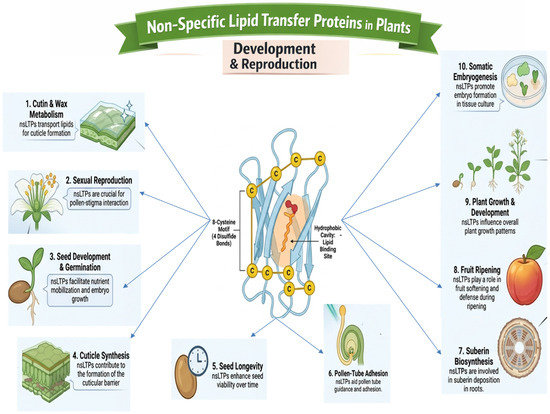
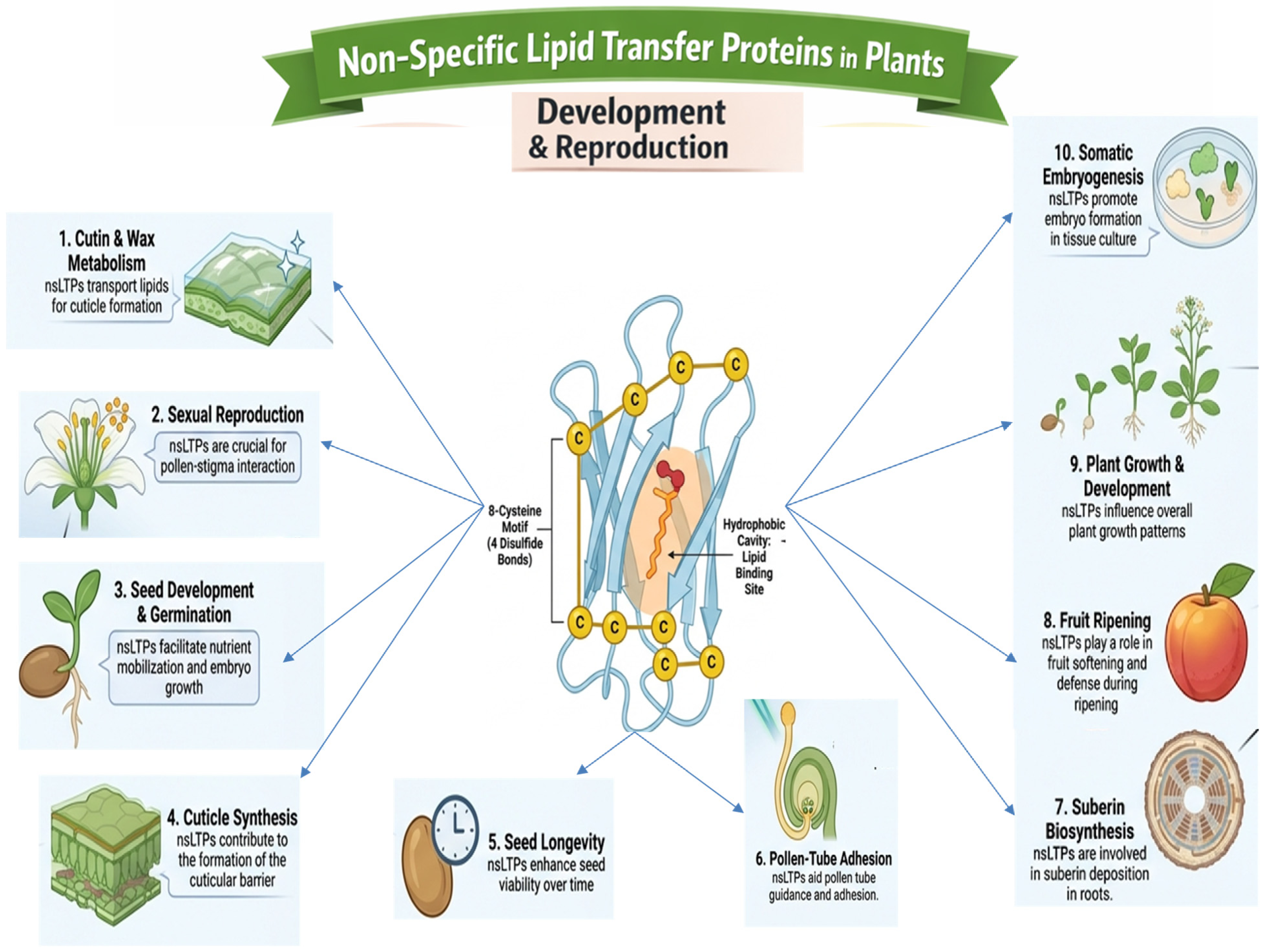
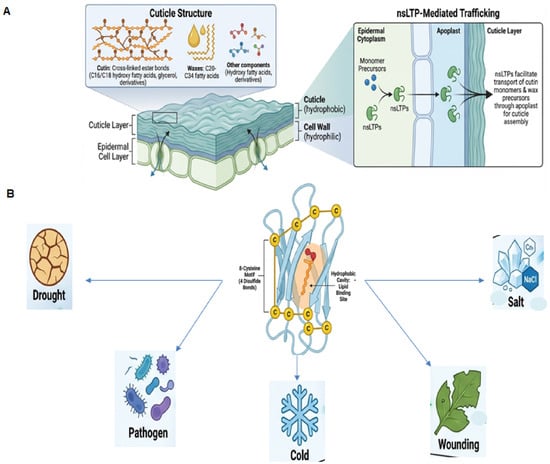
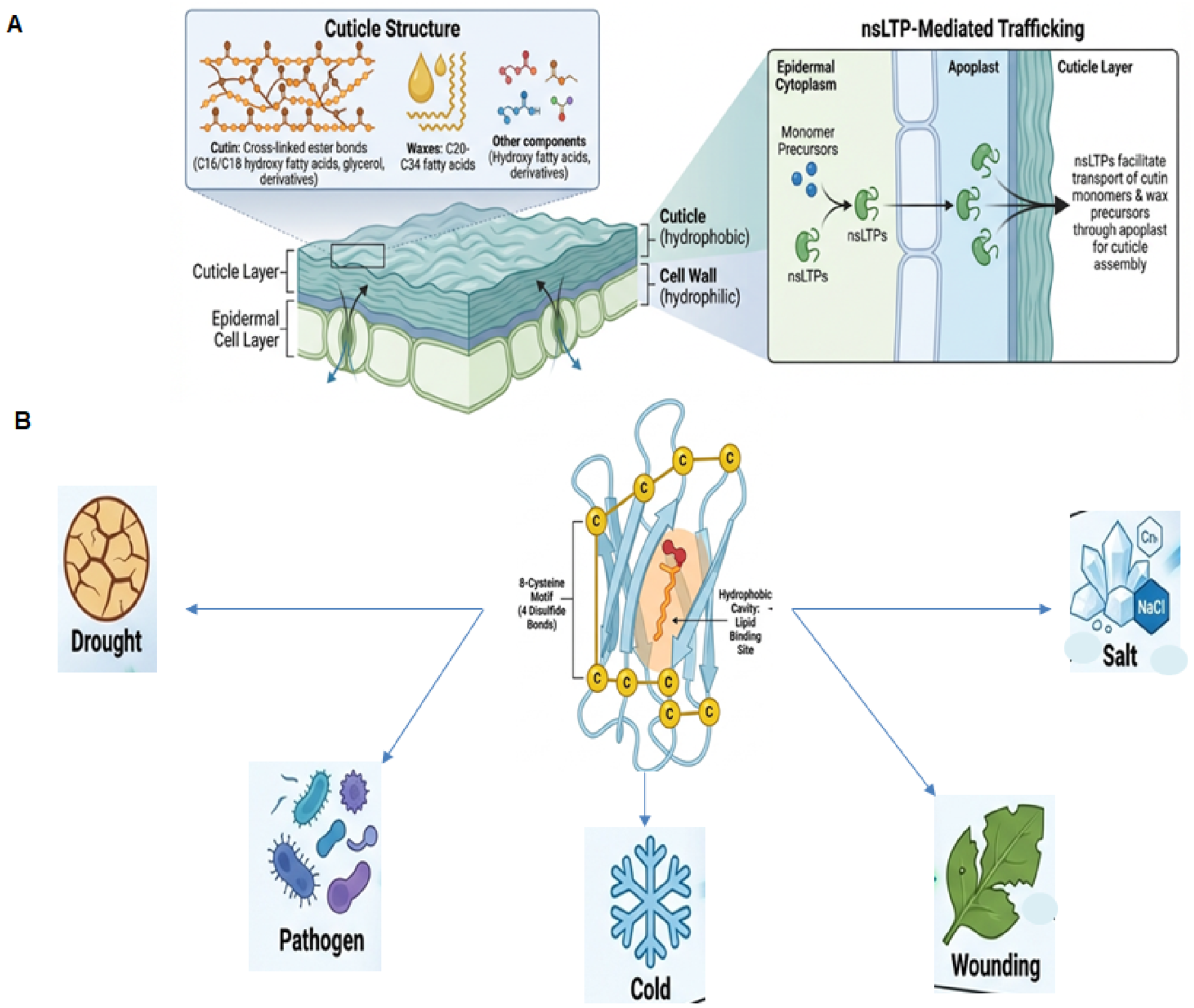
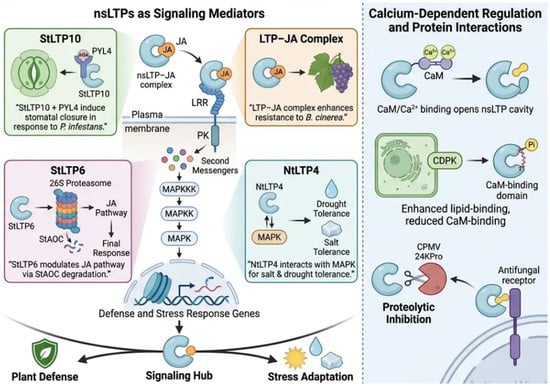
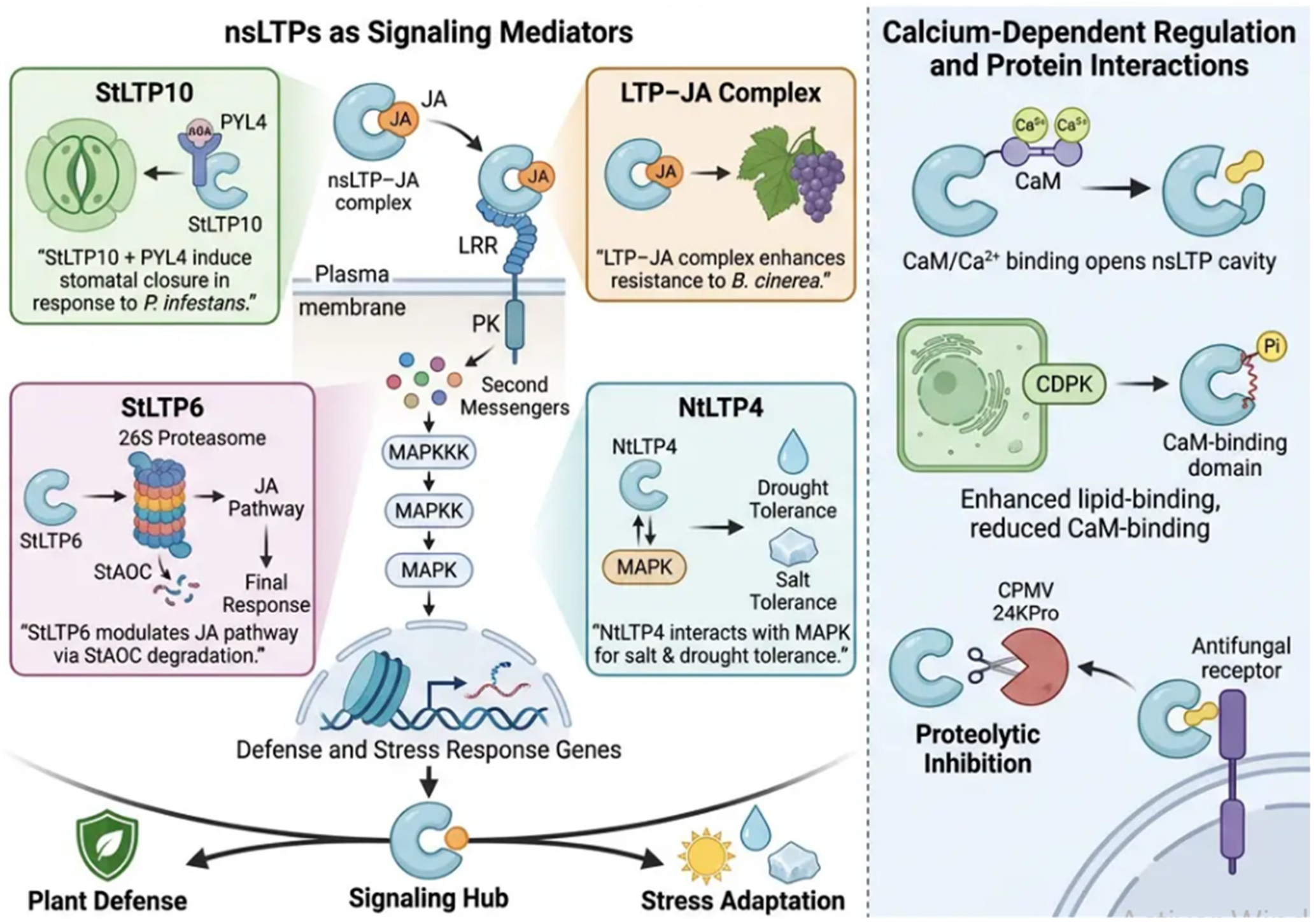
Disclaimer/Publisher’s Note: The statements, opinions and data contained in all publications are solely those of the individual author(s) and contributor(s) and not of MDPI and/or the editor(s). MDPI and/or the editor(s) disclaim responsibility for any injury to people or property resulting from any ideas, methods, instructions or products referred to in the content. |
© 2026 by the authors. Licensee MDPI, Basel, Switzerland. This article is an open access article distributed under the terms and conditions of the Creative Commons Attribution (CC BY) license.