


Abstract
Ultraviolet B (UV-B) irradiation has been investigated as a non-thermal treatment for fresh produce, but its antimicrobial effectiveness may vary during storage. This study evaluated the effects of UV-B irradiation on microbial populations and quality attributes of fresh-cut spinach during cold storage. Prior to packaging, spinach leaves were treated with 0, 0.3, 0.6, or 0.9 kJ m−2 UV-B and stored at 5 °C for 12 days. Total mesophilic aerobic bacteria (TMAB), total psychrophilic aerobic bacteria (TPAB), Enterobacteriaceae, and yeast and mold counts, together with total soluble solids (TSS), visual quality, and color characteristics, including lightness (L*), hue angle (h°), and yellowness index (YI), were evaluated during storage. UV-B exerted only a temporary suppressive effect on microbial growth, particularly on days 5–7, whereas some microbial populations increased during later storage, demonstrating the absence of sustained microbial control. In contrast, the highest UV-B dose (0.9 kJ m−2) maintained the highest overall visual quality and a favorable color profile, characterized by relatively low L* and high h° values. TSS showed treatment- and time-dependent response without a consistent dose-dependent pattern. Integrated hierarchical clustering and heatmap analyses revealed pronounced temporal organization and demonstrated that microbial and quality responses did not necessarily progress in parallel. Overall, UV-B treatment contributed to the preservation of selected quality attributes but did not provide sustained suppression of microbial populations during refrigerated storage, indicating that complementary preservation technologies may be necessary for effective microbial management.
1. Introduction
Spinach (Spinacia oleracea L.) is a leafy vegetable rich in vitamins A, C, and K, essential minerals (Fe, Ca, and Mg), and dietary fiber, as well as bioactive compounds such as flavonoids, carotenoids, and phenolic acids [1,2]. In recent years, the growing awareness of healthy nutrition combined with time constraints imposed by modern lifestyles has led to a rapid increase in consumer demand for fresh-cut and ready-to-eat products [3]. However, minimal processing operations such as washing and cutting disrupt tissue integrity, accelerate nutrient losses, and create favorable conditions for microbial proliferation, thereby rendering these products highly susceptible to microbial spoilage [4,5]. In particular, psychrophilic bacteria and pectinolytic molds capable of growing under cold storage conditions (0–5 °C) may cause tissue softening, while pathogens such as Escherichia coli O157:H7, Salmonella spp., and cold-tolerant Listeria monocytogenes pose serious public health risks in these raw-consumed products [6]. Therefore, controlling microbial populations throughout refrigerated storage is a critical factor in maintaining the microbiological quality and shelf life of fresh-cut spinach.
The inadequacy of conventional chlorine-based washing methods in ensuring microbial safety, together with concerns regarding the formation of potentially carcinogenic by-products, has brought non-thermal technologies such as ultraviolet (UV) radiation to the forefront [7,8,9]. UV light technology is recognized as an effective approach for microbial inactivation through the disruption of microbial DNA structures [10,11,12]. Based on wavelength, UV radiation is classified into three regions. UV-B light (280–315 nm) induces microbial inactivation by forming pyrimidine dimers in DNA, and has therefore attracted interest as a potential non-thermal intervention for reducing microbial populations on fresh produce [13]. In contrast, UV-C light (200–280 nm) exhibits a strong antimicrobial effect, whereas the impact of UV-A light (315–400 nm) remains relatively limited [14,15]. However, exposure to UV radiation may cause harmful effects on human skin and eyes; therefore, appropriate safety measures are required when operating UV equipment. Workers are recommended to use personal protective equipment (PPE), including UV-protective goggles, face shields, gloves, and protective clothing to prevent skin and ocular damage during UV exposure [16,17].
UV treatments cause damage to microbial DNA, leading to cell death when repair mechanisms fail. However, it has been reported that exposure to low-energy or insufficient UV radiation may result in sublethal injury, which does not ensure permanent inactivation [18]. When the threshold required for irreversible inactivation is not reached, surviving injured microorganisms are capable of restoring damaged DNA through photoreactivation or dark repair mechanisms [11,12,19]. Several studies have also indicated that UV exposure may induce mutations in bacteria and promote DNA repair mechanisms, thereby increasing resistance to subsequent UV treatments [18]. The effectiveness of UV applications is closely associated with irradiation dose, penetration capacity, and the surface morphology of the product. The indented anatomy of spinach leaves, including vein junctions and stomata, creates shaded microenvironments that can protect microorganisms from UV exposure [11,12,18]. Although UV treatments can provide surface decontamination, UV-C applications in leafy vegetables may also alter cell membrane permeability, leading to increased leakage of electrolytes, amino acids, and carbohydrates, which in turn can stimulate bacterial growth and shorten the shelf life of minimally processed products [20]. In addition, the antimicrobial effectiveness of UV radiation is largely limited to surface microorganisms because UV light has very low penetration capacity in plant tissues. Microorganisms located within internal tissues, stomata, or protected surface structures of leafy vegetables may therefore escape direct UV exposure, reducing the overall effectiveness of the treatment in cases of internal contamination [11,19]. These limitations indicate that the microbiological effectiveness of UV treatment should be evaluated throughout storage rather than solely on the basis of microbial reductions immediately after irradiation.
Most studies available in the literature have primarily focused on UV-C or combined UV applications, whereas investigations addressing UV-B and UV-A treatments remain relatively limited. Previous studies on UV-B-treated leafy vegetables have largely emphasized postharvest physiological and biochemical responses rather than microbial dynamics during storage. Recent studies have demonstrated that UV-B application preserves chlorophyll stability in spinach during subsequent cold storage, delays yellowing, increases phenolic content, and enhances the retention of minerals such as potassium, calcium, and phosphorus [1,2,21]. Similarly, in curly lettuce, UV-B treatment has been reported to increase antioxidant activity, total phenolic content, and ascorbic acid levels without inducing leaf yellowing [3]. Although these findings demonstrate that UV-B can be applied without necessarily compromising the postharvest quality of leafy vegetables, they provide limited information on whether its antimicrobial effects persist during refrigerated storage.
In particular, quantitative information on the behavior of different microbial groups following UV-B treatment throughout refrigerated storage remains limited. Microbiological assessments in UV-B-related studies have generally received less attention than physiological and biochemical quality responses, and the storage-dependent behavior of mesophilic and psychrophilic bacteria, Enterobacteriaceae, and yeasts and molds following UV-B exposure has not been sufficiently characterized. This information is particularly important because an initial antimicrobial response does not necessarily indicate sustained microbiological control, as sublethally injured microorganisms may recover and proliferate during subsequent storage.
Therefore, the primary objective of the present study was to quantitatively evaluate the effects of UV-B radiation applied at different doses on the microbiological quality of fresh-cut spinach during a 12-day storage period at 5 °C. In this context, changes in total mesophilic aerobic bacteria (TMAB), total psychrophilic aerobic bacteria (TPAB), Enterobacteriaceae, and yeast and mold (YM) populations were investigated by monitoring microbial populations throughout refrigerated storage. This study aimed to determine not only the transient antimicrobial response to UV-B irradiation but also whether such effects could be sustained over the storage period. By monitoring microbial populations throughout refrigerated storage, this study aimed to determine not only the transient antimicrobial response to UV-B irradiation but also whether such effects could be sustained over the storage period.
2. Materials and Methods
2.1. Plant Material
Spinach leaves (Spinacia oleracea L.) were used as plant material in this study. Spinach plants were grown in the greenhouse of the Department of Horticulture, Faculty of Agriculture, Kocaeli University, and were harvested manually. Immediately after harvest, the samples were transported to the Postharvest Physiology Laboratory of the Department of Horticulture. The spinach leaves were visually inspected, and defective leaves showing signs of wilting, decay, physical damage, or yellowing were removed and discarded. Subsequently, the roots were trimmed, and the leaves were washed by immersion in tap water at 13 °C. After washing, the leaves were air-dried at room temperature for 15 min. To minimize variability associated with the natural background microflora, the dried spinach leaves were thoroughly mixed and randomly distributed among the experimental groups prior to UV-B treatment. UV-B light treatment was then applied to the fresh-cut spinach leaves. Following UV-B irradiation, the leaves were portioned into 300 g samples and placed on polystyrene foam trays (26.5 × 17.5 × 3.5 cm). Each tray was completely wrapped with polyethylene (PE) stretch film so that the spinach leaves were not directly exposed to the surrounding air. The packaged samples were subsequently stored at 5 °C for 12 days.
2.2. UV-B Treatment of Fresh-Cut Spinach
The UV-B system consisted of two units, each equipped with three stainless-steel reflectors fitted with unfiltered germicidal lamps (TL 40 W/12 RS, Philips, Eindhoven, The Netherlands). To ensure uniform irradiation, spinach leaves were arranged in a single layer on the tray so that both sides of the leaves were directly exposed to UV-B radiation. Although each treatment consisted of 300 g of spinach leaves, the samples were spread evenly across the tray surface to minimize leaf overlapping and shadowing effects. The irradiation system consisted of lamp banks positioned above and below the samples, allowing simultaneous exposure of both leaf surfaces. The distance between the UV-B lamps and the sample surface was kept constant (30 cm) throughout all treatments to maintain consistent radiation intensity [21,22]. Prior to each experiment, the UV-B lamps were pre-warmed for at least 15 min to reach stable emission conditions.
During irradiation, treatments were conducted in a cold room (≈5 °C) to prevent temperature increases caused by radiation and to ensure that the observed effects were attributable to UV-B exposure rather than thermal effects. According to the manufacturer’s specifications, the UV-B light source used in this study operated within a wavelength range of 290–315 nm, with a peak emission at 305 nm [23]. UV-B treatments were applied to spinach leaves as follows: 0 min, non-irradiated control (Control); 2 min, 0.3 kJ m−2 (UVB2); 4 min, 0.6 kJ m−2 (UVB4); and 6 min, 0.9 kJ m−2 (UVB6). The UV-B doses selected in this study were based on a previous investigation in which these doses were shown to preserve the visual quality of fresh-cut spinach [1] and on preliminary trials conducted to determine suitable irradiation conditions without causing visible damage to the leaves. The UV-B dose delivered to the spinach leaves was calculated based on the irradiation time and lamp intensity according to the manufacturer specifications. To ensure consistency among treatments, the distance between the lamps and the samples was kept constant and all irradiation procedures were conducted under identical conditions. After irradiation, the leaves were immediately packaged to minimize additional environmental contamination. All treatments were performed under identical environmental conditions to ensure experimental reproducibility.
2.3. Microbiological Analyses
To determine the microbiological quality of fresh-cut spinach leaves, selected microbial groups of critical importance for shelf life and microbial safety were enumerated. Samples were collected on storage days 0, 2, 5, 7, 9 and 12, with three replicates taken at each sampling point, and microbiological analyses were performed in parallel for each interval. Considering the limited penetration capacity of UV-B light, a full homogenization method was employed to include microorganisms embedded within the plant tissue. For each analysis, spinach leaves were randomly selected from each treatment group and aseptically cut into small pieces using sterile scissors to ensure representative sampling.
Twenty-five grams of spinach leaf sample were placed in a sterile stomacher bag, mixed with 225 mL of buffered peptone water, and homogenized for 2 min using a stomacher, resulting in a 1:10 dilution. Serial dilutions were prepared using 9 mL of sterile buffered peptone water. From each dilution, 1 mL was aseptically plated in duplicate Petri dishes for bacterial microflora using the pour plate method, and 0.1 mL was plated for yeast and mold enumeration using the spread plate method.
Total mesophilic aerobic bacteria (TMAB) and total psychrophilic aerobic bacteria (TPAB) counts were determined according to AOAC Method 990.12 [24], while yeast and mold (YM) counts were assessed following AOAC Method 966.23 [25]. Enterobacteriaceae enumeration was conducted in accordance with ISO 21528-2:2017 [26]. The following culture media and incubation conditions were applied: plate count agar (PCA) was used for TMAB and TPAB, incubated at 35 °C for 48 h and at 5–7 °C for 7 days, respectively; violet red bile glucose (VRBG) agar was used for Enterobacteriaceae and incubated at 37 °C for 48 h; and dichloran rose bengal chloramphenicol (DRBC) agar was used for yeast and mold counts, incubated at 20–25 °C for 5–7 days. At the end of the incubation period, colonies formed on the Petri dishes were counted, and the results were expressed as log10 colony-forming units (CFU) per gram.
2.4. Color Characteristics, Visual Quality and Total Soluble Solids
Leaf surface color was determined using a chromameter (Minolta CR-400, Minolta Camera Co., Osaka, Japan) equipped with an 8 mm measuring head and a D65 illuminant, following the procedure described by Güvenaltın et al. [27] with minor adaptation. Prior to measurement, the instrument was calibrated against the manufacturer’s standard white plate. Measurements were taken at five different points on the leaf surface and recorded as CIELAB L*, a*, and b* coordinates. L* represents lightness from black (0) to white (100), whereas a* and b* describe the green (−) to red (+) and blue (−) to yellow (+) color axes, respectively. Hue angle (h°), representing the dominant color tone, was calculated from the a* and b* coordinates with appropriate quadrant correction. The yellowness index (YI) was calculated as YI = 142.86 b*/L*. L*, a*, b*, and YI are dimensionless, whereas h° is expressed in degrees (°).
Visual quality was evaluated based on the overall appearance of the spinach leaves, considering freshness, color, color uniformity, and surface brightness, according to a five-point rating scale as previously described for fresh-cut spinach [1]. The scale was defined as follows: 5 = excellent quality, with a fresh appearance and no visible defects; 4 = good quality, with only minor defects; 3 = fair quality, with slight to moderately objectionable defects; 2 = poor quality, with excessive visible defects; and 1 = extremely poor quality and no longer usable. Higher scores therefore indicated better overall visual quality.
For the determination of total soluble solids (TSS), juice extracted from lettuce leaves of each treatment group was analyzed using a digital refractometer (Atago Co., Ltd., Tokyo, Japan). The TSS content was expressed as a percentage (%).
2.5. Statistical Analysis
The experimental data were analyzed using a completely randomized design. Three independent biological samples were collected from each treatment group at each sampling time from the same harvest batch. Each sample was analyzed in duplicate for microbiological enumeration, resulting in a total of six analytical data points (n = 6) per treatment and sampling day. Statistical analyses were performed using MINITAB 16 (Minitab Inc., State College, PA, USA). One-way analysis of variance (ANOVA) was conducted to evaluate differences among treatment groups at each storage day as well as differences among storage days within each treatment. Mean comparisons were performed at a 95% confidence level (p < 0.05). In addition, hierarchical clustering analysis (HCA) was applied to explore overall relationships among samples based on their microbial profiles. Prior to clustering, microbial count data were Z-score normalized to minimize scale effects among variables. Clustering was performed using Euclidean distance as the similarity measure and the Ward linkage method. Hierarchical clustering was used to provide a multivariate perspective on microbial dynamics during storage and to support the interpretation of univariate statistical results.
3. Results and Discussion
3.1. Changes in Total Mesophilic Aerobic Bacteria (TMAB) Counts During Storage
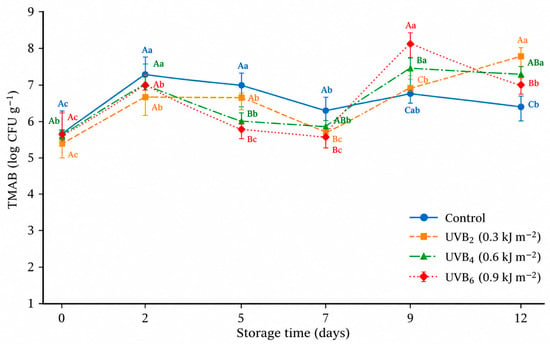
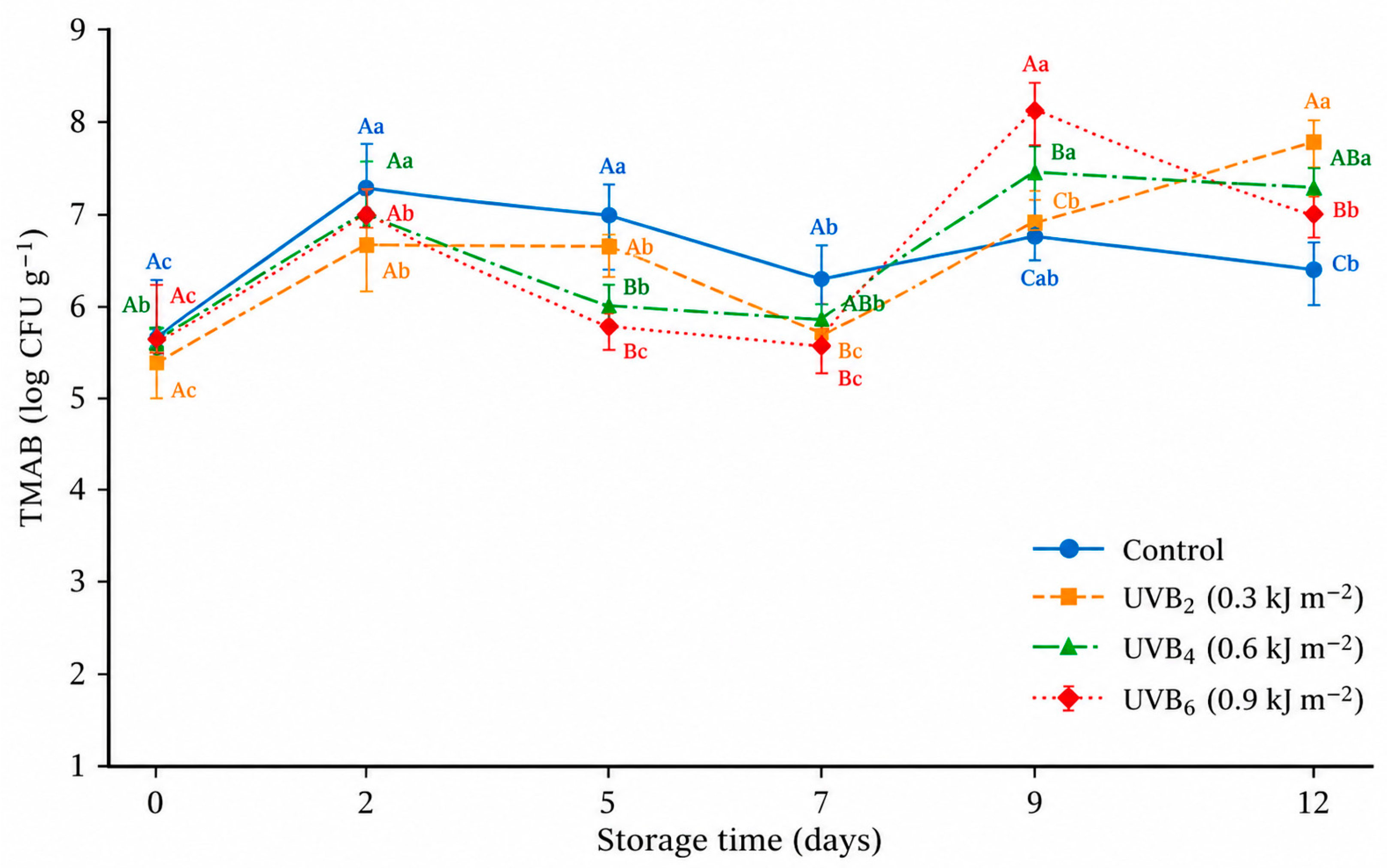
The effects of different UV-B doses on TMAB counts in fresh-cut spinach leaves were evaluated during storage at 5 °C (Figure 1). On a day-by-day basis, no significant differences among treatment groups were observed on days 0 and 2 (p > 0.05), whereas significant differences were detected on the remaining storage days (p < 0.05). Throughout the storage period, TMAB counts in fresh-cut spinach changed significantly in all treatment groups (p < 0.05).
Figure 1.
Changes in total mesophilic aerobic bacteria (TMAB) counts in fresh-cut spinach treated with different UV-B doses during storage at 5 °C for 12 days. Values are expressed as mean ± standard deviation (n = 6). Different uppercase letters (A–C) at the same storage time indicate significant differences among treatments (p < 0.05), whereas different lowercase letters (a–c) within the same treatment indicate significant differences among storage times (p < 0.05). Control: non-irradiated; UVB2: 0.3 kJ m−2; UVB4: 0.6 kJ m−2; UVB6: 0.9 kJ m−2.
In the control group, TMAB counts increased markedly up to day 5, followed by a decrease on day 7 and slight fluctuations thereafter (Figure 1. On storage days 5 and 7, TMAB counts in all UV-B-treated groups were lower than those in the control, with significantly lower values particularly observed in the UVB4 and UVB6 groups (p < 0.05). At later stages of storage (days 9 and 12), TMAB counts in UV-B-treated samples increased to levels higher than those of the control group (p < 0.05). Notably, the UVB6 group exhibited the highest TMAB count on day 9. On day 12, the ranking of TMAB counts among the treatments was UVB2 > UVB4 > UVB6 > Control (p < 0.05).
The absence of a pronounced reduction in TMAB counts during the first two days in the UV-B-treated groups may indicate that the initial damage induced by UV-B irradiation was tolerable for microorganisms. The lower TMAB counts observed in UV-B-treated samples, particularly on days 5 and 7, suggest a short-term suppressive effect of UV-B on microbial growth, possibly associated with sublethal injury and delayed proliferation of surviving cells. Sublethally injured microbial cells may remain viable but temporarily impaired, and their subsequent recovery during storage has been widely reported in food processing systems. In UV-based treatments, incomplete inactivation may allow injured cells to repair damage and later resume growth, thereby reducing the long-term effectiveness of the treatment [28,29]. In contrast, the observation that TMAB counts in UV-B-treated groups exceeded those of the control at later storage stages indicates that this suppressive effect could not be sustained as storage time progressed. This phenomenon may be explained by the recovery potential and adaptive mechanisms of UV-B-injured microorganisms. Even when subjected to sublethal damage, microorganisms can restore their populations during storage by activating cellular repair mechanisms [11,19]. Previous studies have reported that DNA damage induced by UV radiation can be repaired when injured microorganisms are subsequently exposed to wavelengths longer than 330 nm [18].
Similar to the findings of the present study, several reports have demonstrated that UV-C treatment is effective in suppressing mesophilic bacteria in the short term, whereas microbial growth rapidly resumes during prolonged storage. Artés-Hernández et al. [20] reported that in UV-C-treated spinach (0–4.54–11.35 kJ m−2), initial TMAB counts of 4.1–4.9 log CFU g−1 increased in all treatments during storage and reached 6.8–7.4 log CFU g−1 at the end of storage (5 °C, 13 days), with the highest count observed in the control group (8.8 log CFU g−1). Similarly, Collazo et al. [30] observed that natural TMAB counts in iceberg lettuce leaves treated with UV-C light (0.3 kJ m−2) combined with peracetic acid (40 mg L−1 PAA) increased from 6.9 to approximately 7.7 log CFU g−1 after 6 days of storage at 5 °C. In another study, Char et al. [31] applied UV-C irradiation (5–25 kJ m−2) to rocket leaves previously immersed in a 100 mg L−1 NaOCl solution (pH 6.5, 1 min) and subsequently packaged them under modified atmosphere conditions (Ar, He, and O2). Immediately after treatment, TMAB counts were reduced by 0.9–1.1 log units compared to the raw material (6.9 log CFU g−1); however, during storage (5 °C, 10 days), TMAB populations increased and reached final values of approximately 8.5 log CFU g−1.
3.2. Changes in Total Psychrophilic Aerobic Bacteria (TPAB) Counts During Storage
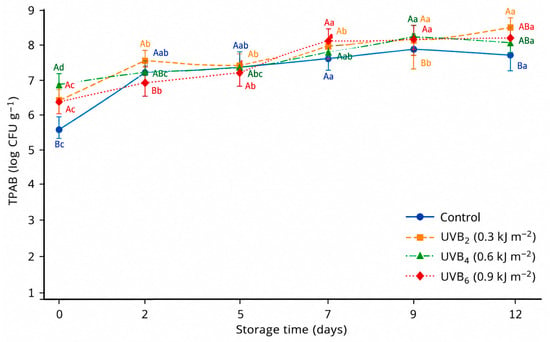
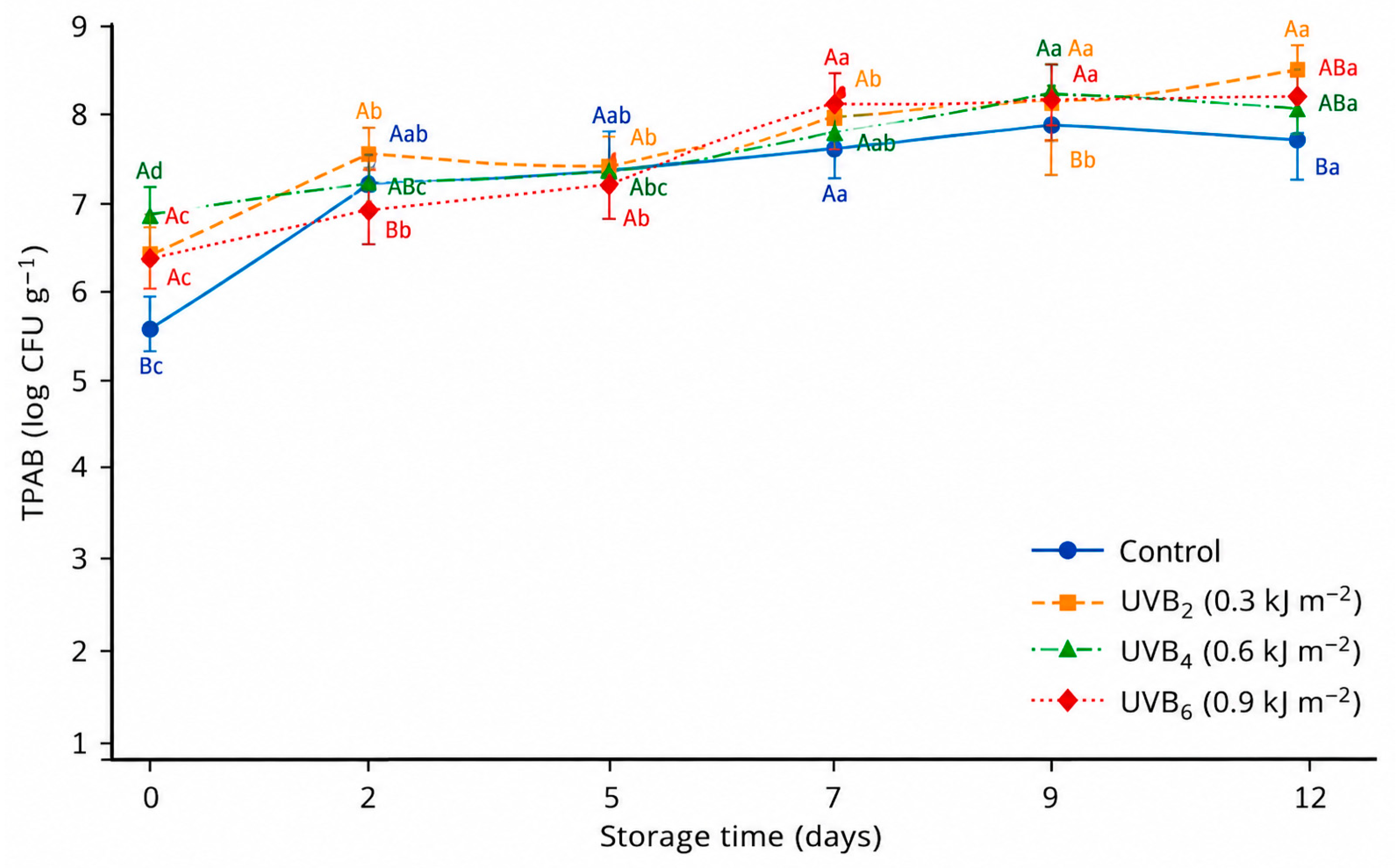
Changes in TPAB counts of fresh-cut spinach leaves in the Control, UVB2, UVB4, and UVB6 groups during storage at 5 °C are presented in Figure 2. On a day-by-day basis, differences among treatments were not significant on days 5 and 7 (p > 0.05), whereas statistically significant differences among treatment groups were observed on the remaining storage days (p < 0.05). When each treatment group was evaluated independently, TPAB counts changed significantly among storage days in all groups throughout the storage period (p < 0.05).
Figure 2.
Changes in total psychrophilic aerobic bacteria (TPAB) counts in fresh-cut spinach treated with different UV-B doses during storage at 5 °C for 12 days. Values are expressed as mean ± standard deviation (n = 6). Different uppercase letters (A,B) at the same storage time indicate significant differences among treatments (p < 0.05), whereas different lowercase letters (a–d) within the same treatment indicate significant differences among storage times (p < 0.05). Control: non-irradiated; UVB2: 0.3 kJ m−2; UVB4: 0.6 kJ m−2; UVB6: 0.9 kJ m−2.
In the control group, TPAB counts began to increase from day 2 onward and reached a relatively stable level between days 7 and 12. At the beginning of storage (day 0), TPAB counts in UV-B-treated groups were significantly higher than those in the control group (p < 0.05). Significant differences among treatments persisted on day 2, with the UVB2 and UVB4 groups exhibiting higher TPAB counts compared to the control (p < 0.05). On days 5 and 7, differences among treatment groups were largely reduced, and TPAB counts remained at comparable levels (p > 0.05). During the later stages of storage (days 9 and 12), TPAB counts in the UVB4 and UVB6 groups were significantly higher than those in the control group (p < 0.05). Notably, the highest TPAB counts on day 9 were observed in the UVB4 and UVB6 groups. At the end of the storage period, the ranking of TPAB counts among treatments was UVB2 > UVB6 ≈ UVB4 > Control (p < 0.05).
It is noteworthy that, at Day 0, microbial counts in some UV-B-treated groups were higher than those of the control group. Since the spinach samples were not artificially inoculated, the observed differences likely reflect the natural heterogeneity of background microflora present on fresh leaves. Microbial populations on leafy vegetables are known to be unevenly distributed due to variations in leaf surface structure, environmental exposure, and field conditions. Despite careful randomization and mixing of samples prior to treatment, such natural variability cannot be completely eliminated in studies involving naturally contaminated produce. Therefore, the higher initial counts observed in certain UV-B-treated groups should not be interpreted as a direct effect of UV treatment but rather as a consequence of inherent variability in the initial microbial load. The convergence of TPAB counts among treatments on days 5 and 7, followed by higher counts in some UV-B-treated groups during late storage, indicates that the effect of UV-B was transient. The subsequent increase may be associated with the recovery of sublethally injured cells and changes in nutrient availability during storage.
The absence of a clear microbial reduction immediately after UV-B treatment may be related to the relatively low UV-B doses used in this study. UV treatments applied at quality-preserving doses may not always produce an immediate measurable reduction in naturally occurring microflora but may instead induce temporary physiological stress or sublethal injury in microbial cells. Similar observations have been reported in previous studies. For example, Escalona et al. [32] demonstrated that UV-C radiation (0–12.24 kJ m−2) exerted an inhibitory effect on the microbial populations of baby spinach leaves primarily during the early stages of storage (up to 4 days) when stored at 5 °C for 13–14 days. Initial TPAB counts were reported as 5.3 log CFU g−1 for the control and 3.6–4.6 log CFU g−1 for UV-C-treated samples; however, these values increased throughout storage, reaching higher levels in UV-C-treated leaves (7.6–8.7 log CFU g−1) than in the control group (6.8 log CFU g−1). Similarly, Artés-Hernández et al. [20] reported that TPAB counts in UV-C-treated spinach leaves increased by 0.5–1 log unit after 6, 10, and 13 days of storage at 5 and 8 °C, with greater proliferation observed at higher UV-C doses (7.94 and 11.35 kJ m−2). In both studies, the authors suggested that the application of UV-C radiation to spinach leaves may have caused slight surface damage, thereby increasing nutrient availability for bacterial growth [20,32].
Allende and Artés [33] applied UV-C light (0.4–8.14 kJ m−2) to Lollo Rosso lettuce and stored the samples at 5 °C for 9–10 days. They reported that UV-C irradiation reduced TPAB growth; however, only the highest UV-C doses significantly suppressed microbial growth up to day 7. Nevertheless, TPAB counts in both untreated and treated lettuce samples were nearly identical after 7 days of storage. Consistent with these findings, no significant differences among treatment groups were observed on day 7 in the present study. In another study, Allende and Artés [34] investigated the combined effects of UV-C irradiation (0.41–8.14 kJ m−2) and passive modified atmosphere packaging on Red Oak Leaf lettuce stored for 9–10 days. The authors observed that UV-C treatments reduced psychrophilic microbial growth by approximately 0.5–2 log CFU g−1 on most sampling days from the beginning to near the end of storage. In a study conducted on rocket leaves, Char et al. [31] reported that initial TPAB counts of 7.1 log CFU g−1 decreased to 5.9–6.1 log CFU g−1 immediately after treatment but subsequently increased during storage, reaching 8.5 log CFU g−1, with significant differences observed only between the treated samples and the control group.
3.3. Changes in Enterobacteriaceae Counts During Storage
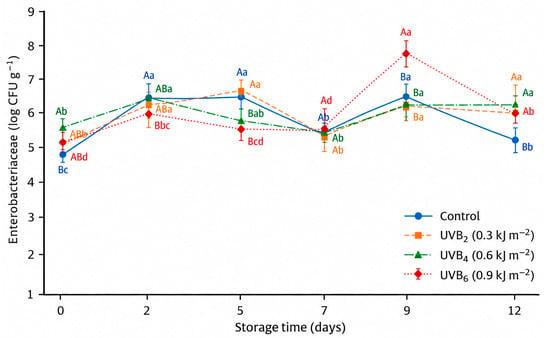
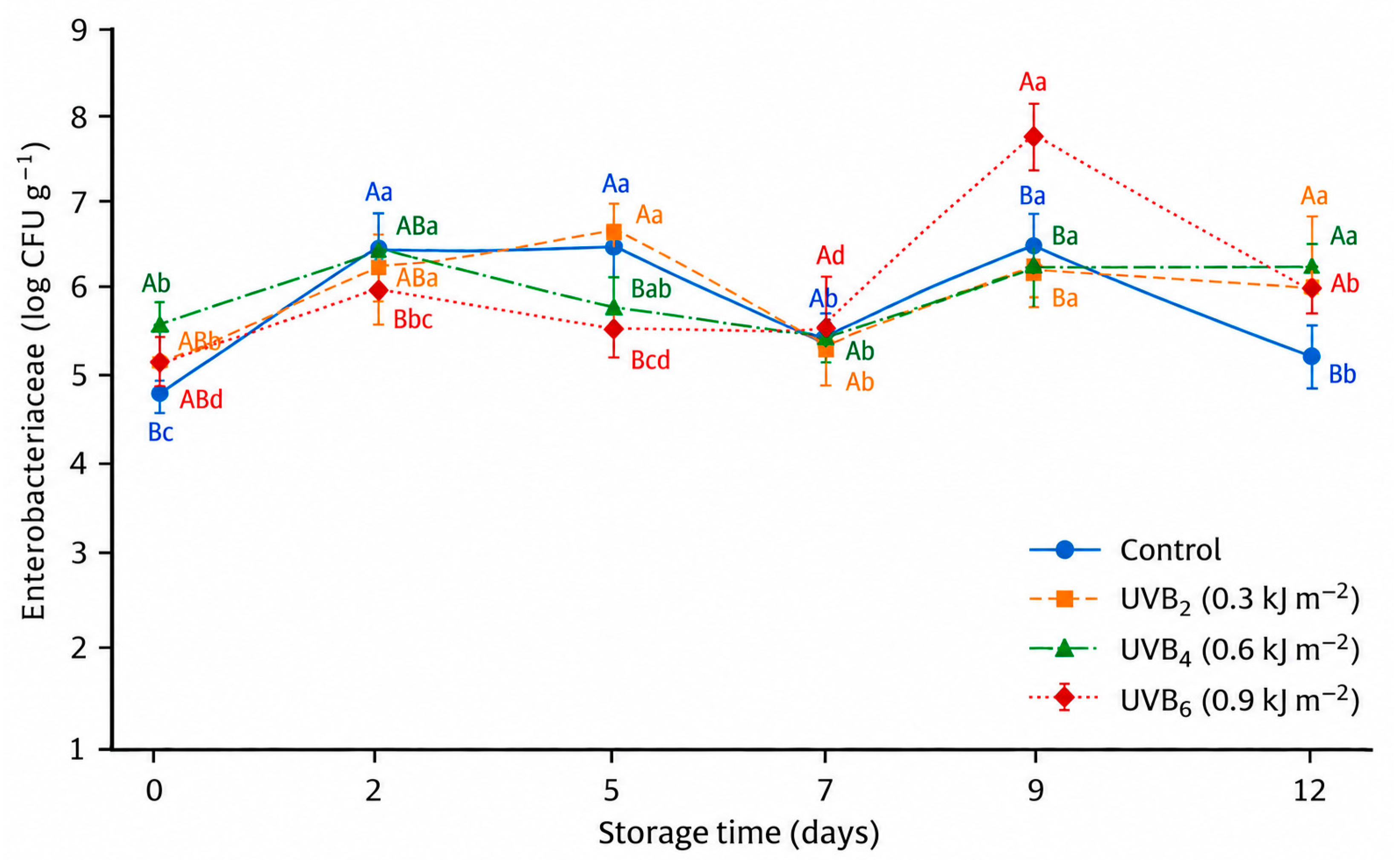
Changes in Enterobacteriaceae counts of UV-B–treated fresh-cut spinach leaves during storage at 5 °C are presented in Figure 3. On a day-by-day basis, differences among treatment groups were not significant on day 7 (p > 0.05), whereas statistically significant differences among treatments were observed on the remaining storage days (p < 0.05). Enterobacteriaceae counts in fresh-cut spinach changed significantly throughout the storage period in all treatment groups (p < 0.05).
Figure 3.
Changes in Enterobacteriaceae counts in fresh-cut spinach treated with different UV-B doses during storage at 5 °C for 12 days. Values are expressed as mean ± standard deviation (n = 6). Different uppercase letters (A,B) at the same storage time indicate significant differences among treatments (p < 0.05), whereas different lowercase letters (a–d) within the same treatment indicate significant differences among storage times (p < 0.05). Control: non-irradiated; UVB2: 0.3 kJ m−2; UVB4: 0.6 kJ m−2; UVB6: 0.9 kJ m−2.
At day 0 of storage, Enterobacteriaceae counts in UV-B–treated groups—particularly in the UVB4 treatment—were significantly higher than those in the control group (p < 0.05). Although differences among treatments on days 2 and 5 were statistically significant, they remained limited. On day 7, Enterobacteriaceae counts were comparable among all groups (p > 0.05). At a later stage of storage (day 9), the UVB6 group exhibited significantly higher Enterobacteriaceae counts than all other groups (p < 0.05). By day 12, counts in all UV-B-treated samples were higher than those in the Control, indicating that the applied UV-B treatments did not provide sustained control of Enterobacteriaceae during prolonged storage (Figure 3).
Ultraviolet radiation is known to have lethal effects on bacteria, yeasts, molds, protozoa, and viruses. In general, Gram-negative bacteria are considered more sensitive to UV radiation than Gram-positive bacteria due to differences in cell wall structure [10,35]. However, the present results indicate that the applied UV-B doses were insufficient for sustained suppression of Enterobacteriaceae, suggesting survival and subsequent recovery of at least part of the microbial population.
In agreement with the present findings, Artés-Hernández et al. [20] reported that Enterobacteriaceae counts in spinach increased from initial levels of 3.4–4.1 log CFU g−1 to 7.6–7.9 log CFU g−1 at the end of storage in UV-C-treated samples, while remaining at approximately 7 log CFU g−1 in the control and non-irradiated groups. Similarly, Allende and Artés [33,34] demonstrated in different lettuce cultivars that UV-C doses initially suppressed coliform growth, but produced results comparable to the control during later stages of storage. In their Lollo Rosso lettuce study, no differences in coliform counts were observed between the control and UV-C-treated samples after 7 days of storage, consistent with the present findings.
In another study, Escalona et al. [32] reported that UV-C irradiation effectively reduced Enterobacteriaceae counts in fresh-cut spinach stored at 5 °C for up to 4 days. In rocket leaves, Enterobacteriaceae populations subjected to combined UV-C–NaOCl treatment and modified atmosphere packaging exhibited progressive and proportional growth during storage, reaching levels of 7–8 log CFU g−1 in all treatments [31]. Moreover, UV-A irradiation alone has been shown to produce only a limited reduction (0.51–<1 log unit) in Escherichia coli O157:H7 counts; however, when combined with organic acids, this approach was effective in reducing foodborne pathogens in fresh spinach while preserving quality attributes [19,36].
3.4. Changes in Yeast and Mold (YM) Counts During Storage
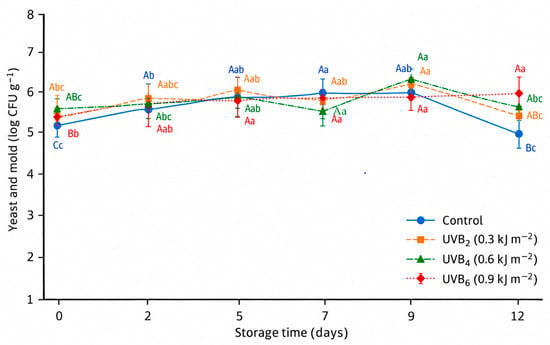
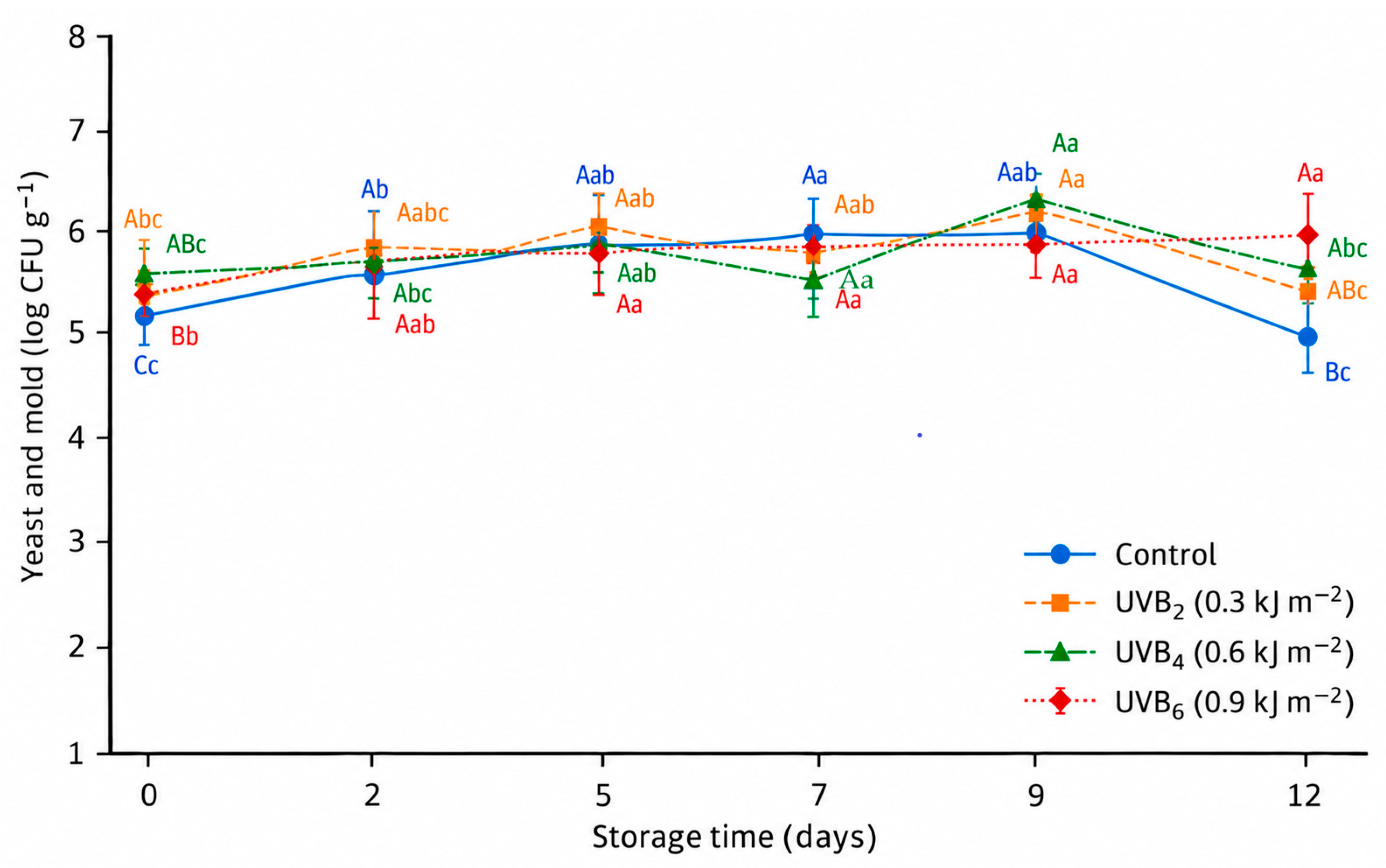
The effects of different UV-B doses on yeast and mold (YM) counts in fresh-cut spinach leaves were evaluated during storage at 5 °C (Figure 4). YM counts in fresh-cut spinach changed significantly throughout the storage period in all treatment groups (p < 0.05). On a day-by-day basis, differences among treatments were significant on days 0 and 12 (p < 0.05), whereas no significant differences were observed on the remaining storage days (p > 0.05).
Figure 4.
Changes in yeast and mold (YM) counts in fresh-cut spinach treated with different UV-B doses during storage at 5 °C for 12 days. Values are expressed as mean ± standard deviation (n = 6). Different uppercase letters (A–C) at the same storage time indicate significant differences among treatments (p < 0.05), whereas different lowercase letters (a–c) within the same treatment indicate significant differences among storage times (p < 0.05). Control: non-irradiated; UVB2: 0.3 kJ m−2; UVB4: 0.6 kJ m−2; UVB6: 0.9 kJ m−2.
At day 0 of storage, YM counts in the UVB2 group were significantly higher than those in the control group (p < 0.05), whereas differences between the control and other UV-B-treated groups were limited. No significant differences among treatments were observed on days 2, 5, 7, and 9 (p > 0.05). By day 12, however, significant differences were evident, with the highest YM count recorded in the UVB6 group.
Overall, the absence of persistent differences during most of the storage period, together with the higher YM population observed in UVB6 at the end of storage, indicates that the applied UV-B treatments did not provide sustained inhibition of yeast and mold growth.
Fungi, particularly molds, are reported to exhibit the highest resistance to UV-C radiation, followed by yeasts, while yeasts are generally more resistant than bacteria. This resistance is attributed to the nuclear organization of DNA bound to histones in eukaryotic cells and to the thicker and more complex structure of fungal cell walls [10,35]. Consistent with the present findings, Escalona et al. [32] reported that UV-C treatments in baby spinach exerted only limited and transient effects on yeast and mold growth. Although higher doses initially reduced microbial loads, yeast counts in UV-C-treated samples exceeded those of the control after 14 days of storage. Similarly, the increase in yeast counts observed at the end of storage in the present study parallels the findings of Allende and Artés [34], who reported higher yeast populations in UV-C-treated Red Oak Leaf lettuce compared to the control.
In minimally processed spinach leaves treated with UV-C, yeast and mold populations were reported to increase by 2.0–2.5 and 2.3–4.4 log CFU g−1 after 6 days of storage at 5 and 8 °C, respectively [20]. In rocket leaves, no significant differences in YM counts among UV-C treatments were observed during 10 days of storage [31]. Together with the present results, these findings indicate that the UV-B doses applied in this study were insufficient to reach a permanent inactivation threshold in microbial cells during long-term storage. In contrast, Yamaga et al. [37] reported that UV-B irradiation (15–120 kJ m−2) exerted a strong inhibitory effect on the in vitro growth of Penicillium italicum, reducing spore germination by more than 99%, and suggested that a UV-B dose of 60 kJ m−2 could be effective in controlling blue mold mycelial growth in inoculated Satsuma mandarin fruit.
The inhibitory effectiveness of UV radiation against microorganisms varies depending on the characteristics of the light source, the target microorganism, and the structural properties of the surface on which microorganisms reside [35]. Jeong and Ha [19] reported, based on FESEM observations, the presence of numerous deep protected sites (cracks, folds, and pores) on spinach leaf surfaces where microorganisms may reside. Similarly, Allende and Artés [34] emphasized that the physical shielding effect of surface topography should be considered, as it may protect microorganisms from incident UV radiation and thereby reduce overall treatment efficacy. In addition, UV-C treatment has been reported to alter cell membrane permeability in leafy vegetables, increasing the leakage of electrolytes, amino acids, and carbohydrates, which may stimulate microbial growth [20].
From a microbiological quality perspective, total aerobic counts of approximately 7 log CFU g−1 have been reported as an upper acceptability level for minimally processed vegetables [38,39]. In the present study, TPAB counts reached or exceeded this level from the early stages of storage, while TMAB counts in all UV-B-treated samples exceeded 7 log CFU g−1 by day 12. Therefore, although UV-B provided temporary suppression of some microbial populations during intermediate storage, the applied treatments did not maintain aerobic microbial populations below this commonly reported acceptability level throughout refrigerated storage.
3.5. Color Characteristics
The effects of UV-B treatments and storage duration on the color characteristics of fresh-cut spinach were evaluated using L*, hue angle (h°), and yellowness index (YI) (Table 1. Significant differences were observed among treatment means for L*. The highest mean L* value was recorded in UVB2 (41.1), indicating a lighter leaf appearance, whereas the Control (39.9) and UVB6 (39.7) exhibited significantly lower values and therefore maintained a comparatively darker appearance. UVB4 showed an intermediate response (40.1). Storage duration also affected L*, with the mean value increasing from 37.7 on day 0 to 41.5 on day 12. Overall, the increase in L* indicated a gradual lightening of the spinach leaves during storage.
Table 1.
Changes in color parameters (L*, hue angle, and yellowness index) of fresh-cut spinach treated with different UV-B doses during storage at 5 °C.
A similar treatment-dependent response was evident for hue angle. UVB6 exhibited the highest mean hue angle (124.7°), whereas UVB2 had the lowest value (123.6°); the Control (124.1°) and UVB4 (124.2°) showed intermediate values. The storage-time means decreased from 125.0° initially to 123.2–123.3° on days 9 and 12, indicating a gradual shift from the initial green color during prolonged storage. The relatively low L value and high hue angle of UVB6 indicate better maintenance of the characteristic dark-green appearance of fresh-cut spinach.
The treatment effect on YI was less pronounced statistically. Although UVB6 showed the lowest numerical mean YI (73.0), followed by UVB4 (73.4), UVB2 (74.7), and the Control (76.0), all treatments belonged to the same statistical group (p > 0.05). Thus, the lower YI observed in UVB6 represents a numerical tendency rather than a statistically significant treatment effect. Storage duration significantly influenced YI, which decreased from 77.0 at the beginning of storage to 71.5 on day 5, followed by moderate fluctuations thereafter.
Overall, the color measurements indicate that UVB6 was the most favorable treatment for maintaining the dark-green appearance of fresh-cut spinach. This result is consistent with previous studies reporting that UV-B treatment can contribute to chlorophyll and color retention in fresh-cut spinach during cold storage [2,40].
3.6. Visual Quality
The visual quality of fresh-cut spinach was significantly affected by both UV-B treatment and storage duration (Table 2). Considering the overall treatment means, UVB6 maintained the highest visual quality score (4.45) and was significantly superior to the other treatments (p < 0.05). UVB4 exhibited an intermediate mean score of 4.08, whereas the Control and UVB2 treatments showed significantly lower mean scores of 3.78 and 3.39, respectively. Thus, the highest UV-B dose (0.9 kJ m−2) was the most effective treatment for maintaining visual quality during storage.
Table 2.
Visual quality scores of fresh-cut spinach treated with different UV-B doses during storage at 5 °C.
Irrespective of UV-B treatment, visual quality progressively declined as storage advanced. The mean visual quality score decreased from 5.00 at the beginning of storage to 4.60 and 4.20 on days 2 and 5, respectively. A more pronounced decline occurred thereafter, with mean scores of 3.25 on day 7 and 3.08 on day 9. Although a slight numerical increase was observed on day 12 (3.42), the final visual quality remained significantly lower than that recorded during the early storage period (p < 0.05).
The beneficial effect of UVB6 on visual quality is consistent with its instrumental color characteristics, particularly its relatively low L value and high hue angle, which indicated better maintenance of a dark-green appearance. Similar quality-preserving effects of UV-B have been reported for fresh-cut spinach, including improved chlorophyll retention and reduced postharvest deterioration during cold storage [2]. Nevertheless, these quality benefits should be considered separately from antimicrobial efficacy, since the microbiological results demonstrated that UVB6 did not provide sustained microbial control during prolonged storage.
3.7. Total Soluble Solids (TSS)
The total soluble solids (TSS) content of fresh-cut spinach was significantly affected by UV-B treatment and storage duration (Table 3). All treatments had the same initial TSS value (5.0%) on day 0, indicating no initial difference among treatment groups. On day 2, the Control (6.8%), UVB2 (6.7%), and UVB6 (6.7%) exhibited similar TSS contents, whereas UVB4 showed a significantly lower value (5.2%) (p < 0.05). A different response emerged on day 5, when UVB4 (7.2%) and UVB6 (7.3%) had significantly higher TSS contents than the Control (6.2%) and UVB2 (5.3%). These results indicate that the effect of UV-B on TSS varied with storage duration rather than following a consistent dose-dependent response.
Table 3.
Total soluble solids (TSS) content (%) of fresh-cut spinach treated with different UV-B doses during storage at 5 °C.
Differences among treatments became more pronounced during later storage. On day 7, the Control exhibited the highest TSS content (8.3%), while UVB2 had the lowest value (5.3%); UVB4 (6.8%) and UVB6 (6.2%) showed intermediate responses. On day 9, TSS reached 8.7% in the Control, which was significantly higher than the values recorded in all UV-B-treated samples (6.3–7.3%) (p < 0.05). At the end of storage, the Control still showed the highest TSS value (8.7%), whereas UVB4 exhibited the lowest value (6.7%). UVB2 and UVB6 both had intermediate TSS contents of 7.7%.
Within individual treatments, TSS generally increased relative to the initial value, although the temporal pattern differed among treatments. A recent study on fresh-cut spinach similarly reported storage-dependent changes in TSS following UV treatments, with responses varying according to UV wavelength and storage period [2]. Therefore, the present results suggest that UV-B modified the temporal pattern of soluble solids rather than producing a consistent stimulatory or inhibitory effect.
Importantly, the higher TSS values observed in the Control during late storage should not be interpreted as evidence of superior postharvest quality. The Control reached 8.7% TSS on days 9 and 12, while its overall visual quality was lower than that of UVB6. In contrast, UVB6 maintained better visual and color characteristics despite having lower TSS during much of the later storage period. Thus, TSS represented a supporting physicochemical response and did not parallel either overall visual quality or microbiological stability.
3.8. Hierarchical Cluster and Heatmap Analyses
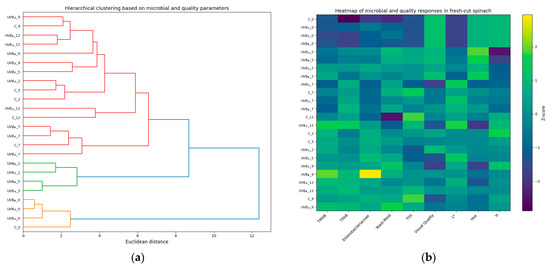
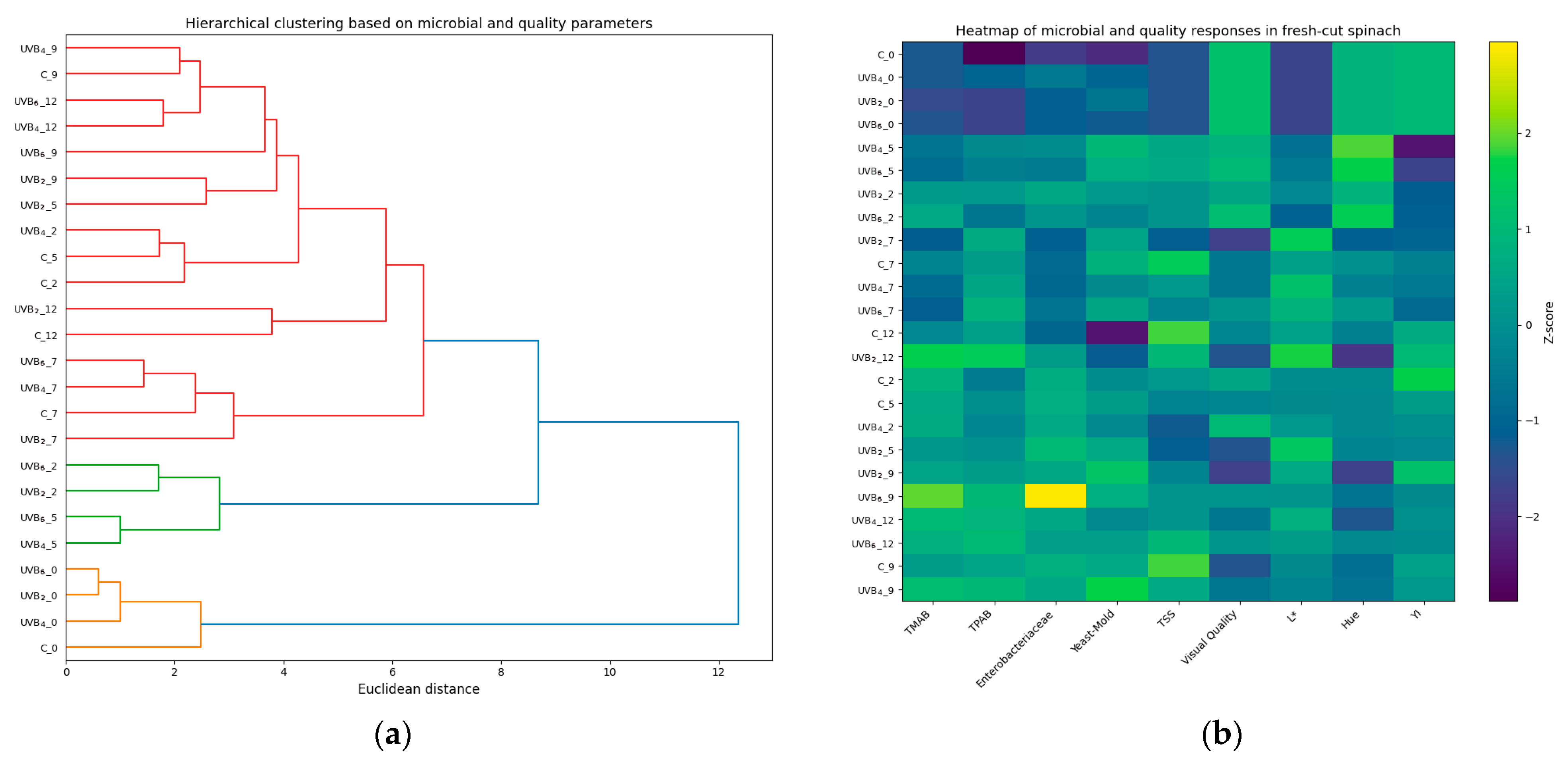
Hierarchical cluster analysis (HCA) and the corresponding heatmap revealed clear temporal changes in the combined microbial and quality profiles of fresh-cut spinach during storage (Figure 5a,b). All day-0 samples clustered closely together and were clearly separated from samples collected at later storage stages, indicating similar initial profiles irrespective of UV-B treatment. A distinct storage-related grouping was also evident on day 7, when all treatments were located within the same major cluster. Most samples from the later storage period (days 9–12) were positioned within another broad cluster, although treatment-dependent subclusters were evident, indicating that UV-B dose also contributed to variation within the overall temporal pattern.
Figure 5.
Hierarchical clustering and heatmap analysis of microbial and quality responses of fresh-cut spinach to UV-B irradiation during cold storage. (a) Hierarchical cluster analysis (HCA) of treatment × storage-time combinations based on standardized microbial and quality parameters; (b) heatmap showing the relative variation in the same parameters expressed as Z-scores. The analysis included total mesophilic aerobic bacteria (TMAB), total psychrophilic aerobic bacteria (TPAB), Enterobacteriaceae, yeast and mold counts, total soluble solids (TSS), visual quality, L*, hue angle, and yellowness index (YI). Data were standardized using Z-scores, and hierarchical clustering was performed using Euclidean distance and Ward’s linkage method. Positive and negative Z-scores indicate values above and below the overall mean of each variable, respectively. C: Control (non-irradiated); UVB2: 0.3 kJ m−2; UVB4: 0.6 kJ m−2; UVB6: 0.9 kJ m−2. Numbers following treatment codes indicate storage duration (days).
The heatmap further illustrated the variables underlying these clustering patterns. Day-0 samples were generally characterized by relatively low standardized microbial counts and high visual quality, whereas progressive storage was accompanied by shifts in both microbial and quality variables. Notably, UVB6_9 exhibited particularly high standardized TMAB and Enterobacteriaceae values, demonstrating that the highest UV-B dose did not provide sustained microbial suppression during prolonged storage. Despite these elevated microbial values, some UVB6 samples retained comparatively favorable visual and color characteristics. Overall, the multivariate analyses confirmed that storage duration was a major factor governing the microbial and quality profiles of fresh-cut spinach, whereas the influence of UV-B was dependent on both dose and storage time. The coexistence of elevated microbial populations with comparatively favorable quality characteristics in some late-storage samples further indicated that preservation of external quality did not necessarily reflect microbiological stability.
3.9. Mechanistic Considerations
The microbiological results demonstrate that the effects of UV-B irradiation on fresh-cut spinach were transient and strongly dependent on storage duration. At the doses applied in this study, UV-B was not sufficient to provide sustained suppression of naturally occurring microbial populations during prolonged cold storage. Several interrelated mechanisms may account for this response. At the doses applied in this study, UV-B was not sufficient to provide sustained suppression of naturally occurring microbial populations during prolonged cold storage, although the higher UV-B dose contributed to better maintenance of visual and color quality.
Several interrelated factors may account for the limited and transient microbial response. First, the applied UV-B doses may have caused sublethal microbial injury rather than complete and irreversible inactivation. Injured microorganisms may initially exhibit delayed growth but remain viable and subsequently recover through photoreactivation or dark repair mechanisms. Such recovery can contribute to renewed microbial proliferation during storage and represents an important limitation of UV-based decontamination strategies [11,16]. This mechanism is consistent with the present observation that the microbial suppressive effect of UV-B was most evident during the intermediate storage period but was not maintained during later storage.
Second, the heterogeneous surface structure of spinach leaves may considerably limit the effective delivery of UV-B radiation to microorganisms. Veins, folds, stomata, and micro-crevices can create shaded microsites in which microbial cells receive substantially less radiation than directly exposed cells [17,29]. Furthermore, because UV radiation has limited penetration into plant tissues, microorganisms located within protected surface structures or internalized in leaf tissues may escape direct irradiation. Consequently, surface UV-B treatment cannot be expected to provide equivalent control of all microbial populations associated with fresh-cut spinach.
Third, physiological changes in irradiated plant tissues may influence subsequent microbial behavior. UV-induced stress and alterations in membrane permeability can increase the release of electrolytes, amino acids, and soluble carbohydrates from damaged tissues, potentially increasing nutrient availability for surviving microorganisms [10,18]. Under refrigerated conditions, this effect may become particularly relevant for psychotropic microorganisms capable of proliferating during extended storage. Thus, late-storage increases in microbial populations may reflect the combined effects of microbial survival and recovery, tissue-associated changes, and prolonged storage rather than a simple loss of the direct antimicrobial action of UV-B.
Importantly, quality responses did not parallel microbial responses. The highest UV-B dose (UVB6; 0.9 kJ m−2) maintained the highest overall visual quality and showed a color profile characterized by a relatively low L* value, the highest hue angle, and the numerically lowest YI, collectively indicating better preservation of the characteristic dark-green appearance of fresh-cut spinach. However, the same treatment did not provide sustained microbial control, with increases in some microbial populations during the later stages of storage. TSS also showed a treatment- and time-dependent response without a consistent relationship with either visual quality or microbial development. Thus, the quality-preserving effects of UV-B did not necessarily correspond to improved microbiological stability.
The integrated hierarchical clustering and heatmap analyses further supported this distinction. When microbiological variables (TMAB, TPAB, Enterobacteriaceae, and yeast and mold counts) were evaluated together with TSS, visual quality, L*, hue angle, and YI, samples showed a pronounced temporal organization. Day-0 samples clustered closely together, whereas samples progressively shifted toward different profiles as storage advanced. Most day-9 and day-12 samples were positioned within the late-storage region, while treatment-dependent subclustering remained evident. These patterns indicate that storage duration was a major factor structuring the overall response, whereas the influence of UV-B varied according to treatment and storage time. Importantly, the heatmap showed that comparatively favorable quality characteristics could coexist with elevated microbial populations during late storage.
Taken together, these findings indicate that preservation of external quality should not be interpreted as evidence of microbiological stability in UV-B-treated fresh-cut spinach. The dose that provided the most favorable visual and color quality did not provide sustained microbial suppression. Therefore, UV-B may be more appropriately considered as one component of a hurdle-based preservation strategy, combined with complementary treatments capable of providing sustained microbial control without compromising product quality.
4. Conclusions
UV-B irradiation had a dose- and storage-dependent effect on the microbiological quality of fresh-cut spinach. Although some UV-B treatments temporarily suppressed microbial populations during intermediate storage, this effect was not sustained during prolonged cold storage. The highest UV-B dose (0.9 kJ m−2) better maintained visual and color quality, but this benefit was not accompanied by improved microbiological stability. Overall, UV-B irradiation alone was insufficient to provide sustained microbial control during refrigerated storage, suggesting that its combination with complementary preservation technologies may be necessary to maintain both microbiological and product quality.
Author Contributions
Conceptualization, N.D., M.P.-Ç., M.U.K. and R.K.; methodology, N.D., M.P.-Ç.; software, N.D., R.K.; validation, N.D., M.P.-Ç., M.U.K. and R.K.; formal analysis, N.D.; investigation, N.D.; resources, N.D., M.P.-Ç., M.U.K. and R.K.; data curation, N.D.; writing—original draft preparation, N.D.; writing—review and editing, N.D., M.P.-Ç.; visualization, N.D., R.K.; supervision, N.D., R.K.; project administration, R.K.; funding acquisition, N.D., M.P.-Ç., M.U.K. and R.K. All authors have read and agreed to the published version of the manuscript.
Funding
This research received no external funding.
Institutional Review Board Statement
Not applicable.
Informed Consent Statement
Not applicable.
Data Availability Statement
The original contributions presented in this study are included in the article. Further inquiries can be directed to the corresponding author.
Acknowledgments
The authors would like to thank the Department of Horticulture, Faculty of Agriculture, Kocaeli University, and the Department of Food Processing, İzmit Vocational School, Kocaeli University, for providing laboratory facilities, materials, and technical support during the experimental work. During the preparation of this manuscript, the authors used ChatGPT-5 (OpenAI) for language editing, text organization, and clarity improvement. The authors reviewed and edited the content generated by this tool and take full responsibility for the integrity, accuracy, and originality of the final manuscript.
Conflicts of Interest
The authors declare no conflicts of interest.
References
- Kasım, M.U.; Kasım, R. Yellowing of fresh-cut spinach (Spinacia oleracea L.) leaves delayed by UV-B applications. Inf. Process. Agric. 2017, 4, 214–219. [Google Scholar] [CrossRef] [Scilit]
- Kibar, H.; Kibar, B. Comparison of Ultraviolet A, B and C Treatments in Preserving the Quality and Nutritional Integrity of Fresh-Cut Spinach. Foods 2025, 14, 1374. [Google Scholar] [CrossRef] [Scilit]
- Değirmenci, Ö.C.; Borazan, A.A.; Devlez, E. The Effect of UV-A/UV-B Radiation on Quality Changes of Harvested Curly Lettuce During the Storage. J. Agric. Sci. 2025, 31, 80–90. [Google Scholar] [CrossRef] [Scilit]
- Erkan, M.; Yıldırım, I. Postharvest Quality and Safety of Fresh-Cut Vegetables. In Minimally Processed Refrigerated Fruits and Vegetables, 2nd ed.; Yildiz, F., Wiley, R.C., Eds.; Springer Science & Business Media: New York, NY, USA, 2017; pp. 271–326. [Google Scholar]
- Gündüz, G.; Güleryüz, Ö. Meyve ve sebzelerin dekontaminasyonunda su destekli UV-C sisteminin kullanılması. [Use of Water-Assisted UV-C Systems for the Decontamination of Fruits and Vegetables]. Gıda 2021, 46, 1069–1080. [Google Scholar] [CrossRef] [Scilit]
- Guo, S.; Huang, R.; Chen, H. Evaluating a combined method of UV and washing for sanitizing blueberries, tomatoes, strawberries, baby spinach, and lettuce. J. Food Prot. 2019, 82, 1879–1889. [Google Scholar] [CrossRef] [Scilit]
- Haider, M.W.; Nafees, M.; Valipour, M.; Asad, H.U.; Marc, R.A. Ultraviolet (UV) light technology for postharvest fruits and vegetables. In Sustainable Postharvest Technologies for Fruits and Vegetables; Ali, S., Mir, S.A., Dar, B.N., Ejaz, S., Eds.; CRC Press: Abingdon, UK, 2024; pp. 137–148. [Google Scholar] [CrossRef] [Scilit]
- Jeong, Y.J.; Ha, J.W. Synergistic antimicrobial effect of UV-A irradiation and malic acid combination treatment against foodborne pathogens on spinach and the underlying mechanism. Food Bioproc. Technol. 2022, 15, 379–390. [Google Scholar] [CrossRef] [Scilit]
- Sonntag, F.; Liu, H.; Neugart, S. Nutritional and physiological effects of postharvest UV radiation on vegetables: A review. J. Agric. Food Chem. 2023, 71, 9951–9972. [Google Scholar] [CrossRef] [Scilit]
- Darré, M.; Vicente, A.R.; Cisneros-Zevallos, L.; Artés-Hernández, F. Postharvest ultraviolet radiation in fruit and vegetables: Applications and factors modulating its efficacy on bioactive compounds and microbial growth. Foods 2022, 11, 653. [Google Scholar] [CrossRef] [Scilit]
- Koutchma, T. Ultraviolet Light in Food Technology: Principles and Applications, 2nd ed.; CRC Press: Boca Raton, FL, USA, 2019; p. 376. [Google Scholar] [CrossRef] [Scilit]
- Zhang, W.; Huang, R.; Zhang, T.; Wang, B.; Li, N.; Sun, Y.; Liu, Y. Study on the inactivation and reactivation mechanism of pathogenic bacteria in aquaculture by UVC-LED. Front. Mar. Sci. 2023, 10, 1139713. [Google Scholar] [CrossRef] [Scilit]
- Singh, C.; Joshi, N.U.; Kumar, R.; Kumar, A. Ultraviolet rays in food processing. In Nonthermal Food Engineering Operations; Kumar, N., Panghal, A., Garg, M.K., Eds.; Scrivener Publishing LLC: Hoboken, NJ, USA, 2024; pp. 435–485. [Google Scholar] [CrossRef] [Scilit]
- Jacobo-Velázquez, D.A.; Moreira-Rodríguez, M.; Benavides, J. UVA and UVB radiation as innovative tools to biofortify horticultural crops with nutraceuticals. Horticulturae 2022, 8, 387. [Google Scholar] [CrossRef] [Scilit]
- Yao, J.; Chen, W.; Fan, K. Recent advances in light irradiation for improving the preservation of fruits and vegetables: A review. Food Biosci. 2023, 56, 103206. [Google Scholar] [CrossRef] [Scilit]
- Britton, J.; Eadie, E.; Turner, D. An investigation of different types of eyewear and face shields in protecting patients and operators from the harmful effects of ultraviolet radiation. Photodermatol. Photoimmunol. Photomed. 2019, 35, 246–254. [Google Scholar] [CrossRef] [Scilit]
- Lyons, A.B.; Narla, S.; Torres, A.E.; Parks-Miller, A.; Kohli, I.; Ozog, D.M.; Lim, H.W.; Hamzavi, I.H. Skin and eye protection against ultraviolet C from ultraviolet germicidal irradiation devices during the COVID-19 pandemic. Int. J. Dermatol. 2021, 60, 391–393. [Google Scholar] [CrossRef] [Scilit]
- Yemmireddy, V.; Adhikari, A.; Moreira, J. Effect of ultraviolet light treatment on microbiological safety and quality of fresh produce: An overview. Front. Nutr. 2022, 9, 871243. [Google Scholar] [CrossRef] [Scilit]
- Jeong, Y.J.; Ha, J.W. Combined treatment of UV-A radiation and acetic acid to control foodborne pathogens on spinach and characterization of their synergistic bactericidal mechanisms. Food Control 2019, 106, 106698. [Google Scholar] [CrossRef] [Scilit]
- Artés-Hernández, F.; Escalona, V.H.; Robles, P.A.; Martínez-Hernández, G.B.; Artes, F. Effect of UV-C radiation on quality of minimally processed spinach leaves. J. Sci. Food Agric. 2009, 89, 414–421. Available online: https://scijournals.onlinelibrary.wiley.com/doi/epdf/10.1002/jsfa.3460 (accessed on 24 February 2026). [CrossRef] [Scilit]
- Kasım, M.U.; Kasım, R. Effects of the different wavelength ultraviolet radiation on postharvest quality of fresh-cut spinach. Yüzüncü Yıl Univ. J. Agric. Sci. 2016, 26, 348–359. Available online: https://izlik.org/JA66PH77XC (accessed on 24 February 2026).
- Kasım, M.U.; Kasım, R. Double-sided UV-C treatments delayed chlorophyll degradation but increased chilling injury of green bean (Phaseolus vulgaris L. cv. Helda) during storage. J. Food Agric. Environ. 2008, 6, 176–180. Available online: https://www.researchgate.net/publication/259810836_Double-sided_UV-C_treatments_delayed_chlorophyll_degradation_but_increased_chilling_injury_of_green_bean_Phaseolus_vulgaris_L_cv_Helda_during_storage (accessed on 25 February 2026).
- ATA. Available online: https://alkansan.com/product/1051-philips-tl-40w12-rs-uv-b (accessed on 20 February 2026).
- AOAC Official Method 990.12; Aerobic Plate Count in Foods: Dry Rehydratable Film Method (Petrifilm Aerobic Count Plate). AOAC INTERNATIONAL: Rockville, MD, USA, 2023.
- AOAC. Official Methods of Analysis, 18th ed.; Association of Official Analytical Chemists: Gaithersburg, MD, USA, 2005. [Google Scholar]
- ISO 21528-2:2017; Microbiology of the Food Chain—Horizontal Method for the Detection and Enumeration of Enterobacteriaceae—Part 2: Colony-Count Technique. International Organization for Standardization: Geneva, Switzerland, 2017.
- Güvenaltın, Y.; Demirel, M.; Samet, H.; Kasım, M.U.; Kasım, R. Synergistic Effects of Salicylic Acid and Calcium Oxide Nanoparticles on Physiological and Biochemical Quality of Fresh-Cut Lettuce During Cold Storage. Horticulturae 2025, 11, 1438. [Google Scholar] [CrossRef] [Scilit]
- Fan, X.; Huang, R.; Chen, H. Application of ultraviolet C technology for surface decontamination of fresh produce. Trends Food Sci. Technol. 2017, 70, 9–19. [Google Scholar] [CrossRef] [Scilit]
- Shao, L.; Sun, Y.; Zou, B.; Zhao, Y.; Li, X.; Dai, R. Sublethally injured microorganisms in food processing and preservation: Quantification, formation, detection, resuscitation and adaption. Food Res. Int. 2023, 165, 112536. [Google Scholar] [CrossRef] [Scilit]
- Collazo, C.; Noguera, V.; Aguiló-Aguayo, I.; Abadias, M.; Colás-Medà, P.; Nicolau, I.; Viñas, I. Assessing water-assisted UV-C light and its combination with peroxyacetic acid and Pseudomonas graminis CPA-7 for the inactivation and inhibition of Listeria monocytogenes and Salmonella enterica in fresh-cut ‘Iceberg’lettuce and baby spinach leaves. Int. J. Food Microbiol. 2019, 297, 11–20. [Google Scholar] [CrossRef] [Scilit]
- Char, C.; Yoplac, I.; Escalona, V.H. Microbiological and functional quality of ready-to-eat Arugula as treated by combinations of UV-C and nonconventional modified atmospheres. J. Food Process. Preserv. 2017, 41, e12978. [Google Scholar] [CrossRef] [Scilit]
- Escalona, V.H.; Aguayo, E.; Martínez-Hernández, G.B.; Artés, F. UV-C doses to reduce pathogen and spoilage bacterial growth in vitro and in baby spinach. Postharvest Biol. Technol. 2010, 56, 223–231. [Google Scholar] [CrossRef] [Scilit]
- Allende, A.; Artés, F. UV-C radiation as a novel technique for keeping quality of fresh processed ‘Lollo Rosso’ lettuce. Food Res. Int. 2003, 36, 739–746. [Google Scholar] [CrossRef] [Scilit]
- Allende, A.; Artés, F. Combined ultraviolet-C and modified atmosphere packaging treatments for reducing microbial growth of fresh processed lettuce. LWT Food Sci. Technol. 2003, 36, 779–786. [Google Scholar] [CrossRef] [Scilit]
- Korkmaz, A.; Gündüz, G.T. Meyve ve sebzelerde UV-C ışık uygulamaları ile küf inhibisyonu. [Mold Inhibition in Fruits and Vegetables by UV-C Light Treatments]. Akad. Gıda 2018, 16, 458–469. [Google Scholar] [CrossRef] [Scilit]
- Ding, Q.; Alborzi, S.; Bastarrachea, L.J.; Tikekar, R.V. Novel sanitization approach based on synergistic action of UV-A light and benzoic acid: Inactivation mechanism and a potential application in washing fresh produce. Food Microbiol. 2018, 72, 39–54. [Google Scholar] [CrossRef] [Scilit]
- Yamaga, I.; Kuniga, T.; Aoki, S.; Kato, M.; Kobayashi, Y. Effect of ultraviolet-B irradiation on disease development caused by Penicillium italicum in satsuma mandarin fruit. Hort. J. 2016, 85, 86–91. [Google Scholar] [CrossRef] [Scilit]
- García-Martínez, N.; Andreo-Martínez, P.; Almela, L.; Guardiola, L.; Gabaldón, J.A. Microbiological and sensory quality of fresh ready-to-eat artichoke hearts packaged under modified atmosphere. J. Food Prot. 2017, 80, 740–749. [Google Scholar] [CrossRef] [Scilit]
- Medina-Jaramillo, C.; Usgame-Fagua, K.; Franco-González, N.; López-Córdoba, A. Single and combined effect of mild-heat treatment and alginate coatings on quality preservation of minimally processed bunching green onions. Foods 2022, 11, 641. [Google Scholar] [CrossRef] [Scilit]
- Perera, W.P.T.D.; Navaratne, S.B.; Wickramasinghe, I. Review on effect of postharvest illumination by fluorescent and ultraviolet light waves on the quality of vegetables. J. Food Process Eng. 2022, 45, e13960. [Google Scholar] [CrossRef] [Scilit]

Disclaimer/Publisher’s Note: The statements, opinions and data contained in all publications are solely those of the individual author(s) and contributor(s) and not of MDPI and/or the editor(s). MDPI and/or the editor(s) disclaim responsibility for any injury to people or property resulting from any ideas, methods, instructions or products referred to in the content. |
© 2026 by the authors. Licensee MDPI, Basel, Switzerland. This article is an open access article distributed under the terms and conditions of the Creative Commons Attribution (CC BY) license.