

Interactions Between the Microbiome and Pharmacotherapy of Allergic Diseases: Current Evidence and Knowledge Gaps


 ,
,  , ,
, , 
Abstract
1. Introduction
2. Literature Search and Evidence Selection
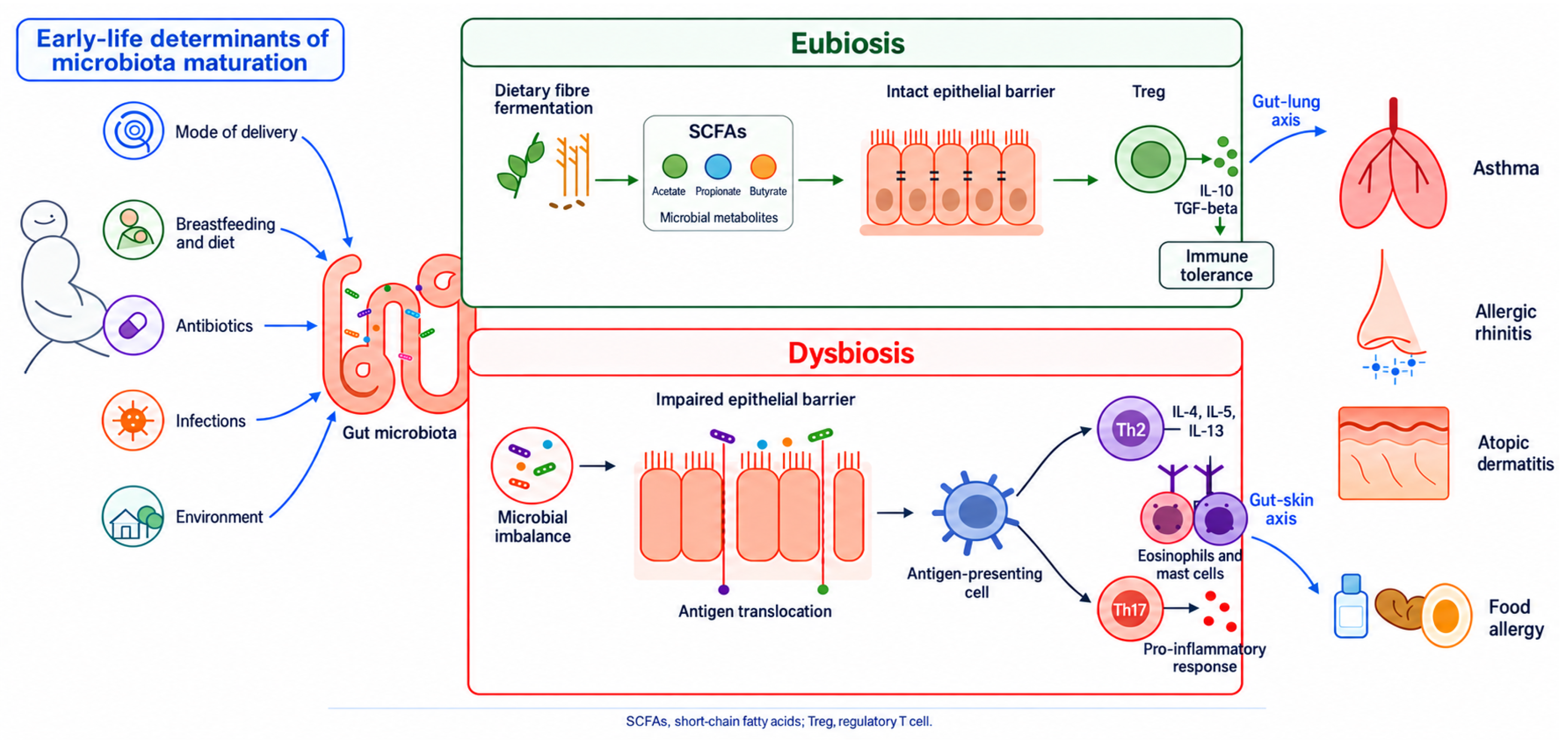
3. Gut Microbiome in Allergic Diseases—Relevant Background
4. Effects of Anti-Allergic Drugs on the Microbiome
4.1. Antihistamines and the Microbiome
4.2. Corticosteroids and the Microbiome
4.3. Leukotriene Receptor Antagonists and the Microbiome
4.4. Biologic Therapy and the Microbiome
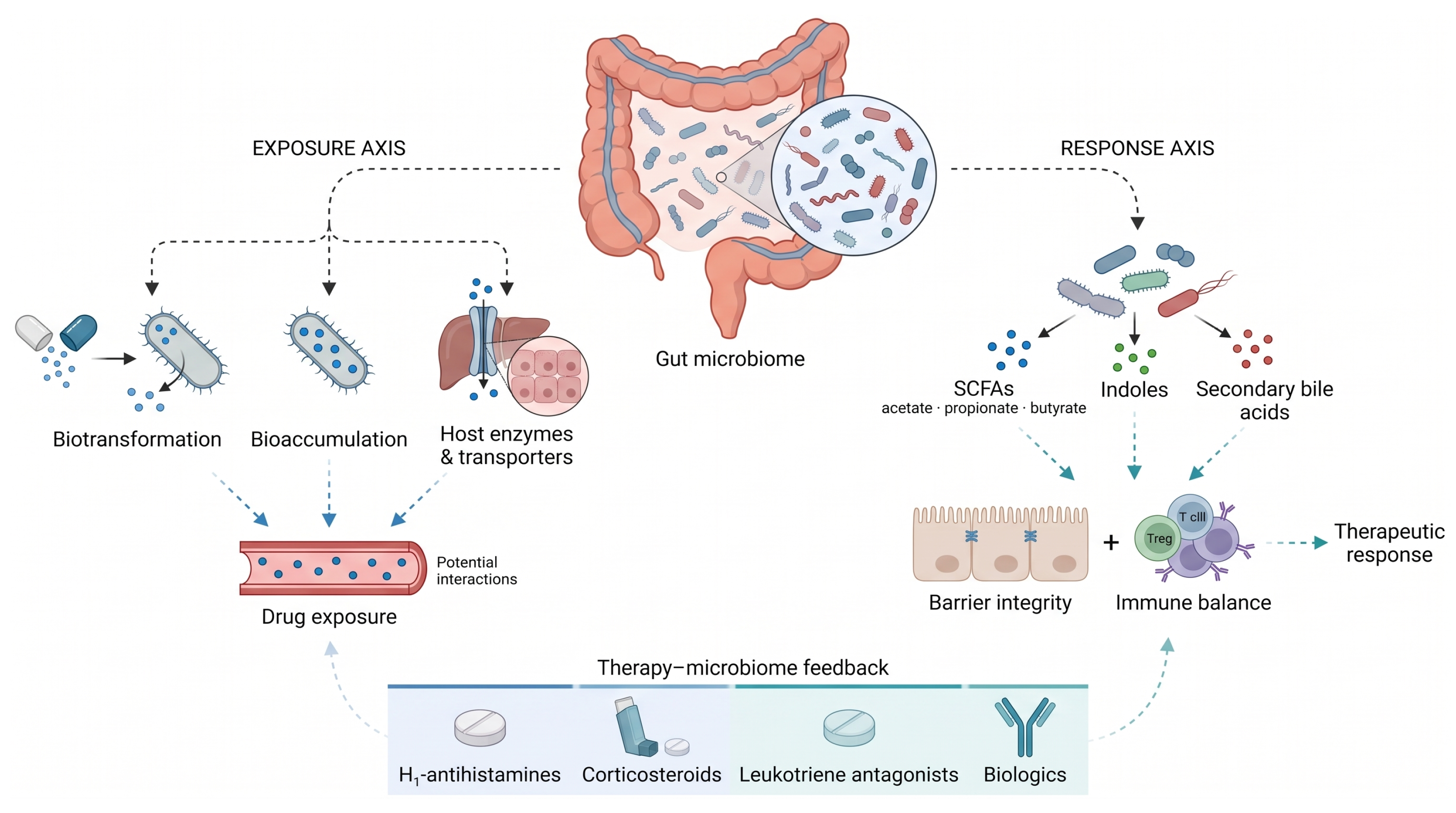
5. Impact of the Microbiome on Drug Metabolism and Response
5.1. Microbial Enzymes Involved in Drug Biotransformation
5.2. Microbiome-Mediated Modulation of Anti-Allergic Drugs: Class-Specific Interactions
5.2.1. Antihistamines
5.2.2. Corticosteroids
5.2.3. Leukotriene Receptor Antagonists
5.2.4. Biologic Therapy
6. Pharmacomicrobiomics in Allergic Diseases
7. Clinical Implications
Methodological Limitations and Barriers to Clinical Translation
8. Knowledge Gaps and Future Research Directions
9. Conclusions
Author Contributions
Funding
Institutional Review Board Statement
Informed Consent Statement
Data Availability Statement
Conflicts of Interest
Abbreviations
| GBD | Global Burden of Disease |
| Tregs | T-regulatory cells |
| Ths | T-helper cells |
| SCFA | Short-chain fatty acid |
| TGF-β | Transforming growth factor-β |
| IL | Interleukin |
| CYP | Cytochrome P450 |
| OsrABC | Organosteroid reductase ABC |
| PXR | Pregnane X receptor |
| CAR | Constitutive androstane receptor |
| FXR | Farnesoid X receptor |
| AhR | Aryl hydrocarbon receptor |
| FOXP3 | Forkhead box P3 |
| NF-κB | Nuclear factor kappa B |
| TSLP | Thymic stromal lymphopoietin |
| IL-4Rα | Interleukin-4 receptor alpha |
| IL-5Rα | Interleukin-5 receptor alpha |
| BCRP | Breast cancer resistance protein |
| MRP2 | Multidrug resistance-associated protein 2 |
| MRP3 | Multidrug resistance-associated protein 3 |
| OATP | Organic anion-transporting polypeptide |
| STORMS | Strengthening The Organizing and Reporting of Microbiome Studies |
References
- Oh, J.; Kim, S.; Kim, M.S.; Abate, Y.H.; Abd ElHafeez, S.; Abdelkader, A.; Abdi, P.; Abdulah, D.M.; Aboagye, R.G.; Abolhassani, H.; et al. Global, regional, and national burden of asthma and atopic dermatitis, 1990–2021, and projections to 2050: A systematic analysis of the Global Burden of Disease Study 2021. Lancet Respir. Med. 2025, 13, 425–446. [Google Scholar] [CrossRef] [Scilit]
- Ng, A.E.; Giri, A.; Bottoms-McClain, L. Diagnosed allergic conditions in children ages 0–17: United States, 2024. In NCHS Data Briefs; National Center for Health Statistics: Hyattsville, MD, USA, 2026; Volume 546, pp. 1–10. [Google Scholar] [CrossRef] [Scilit]
- Agache, I.; Torres, M.; Eguiluz-Gracia, I.; Bradatan, E.; El Abd, K.; Bilo, M.B.; Rivolta, F.; Sangalli, A.; Bumbacea, R.; Ali, S.; et al. Economic Impact of Allergic Diseases and Asthma—The HEAD Pan-European Registry. Allergy 2025, 80, 1677–1701. [Google Scholar] [CrossRef] [Scilit]
- Wiertsema, S.P.; van Bergenhenegouwen, J.; Garssen, J.; Knippels, L.M.J. The Interplay between the Gut Microbiome and the Immune System in the Context of Infectious Diseases throughout Life and the Role of Nutrition in Optimizing Treatment Strategies. Nutrients 2021, 13, 886. [Google Scholar] [CrossRef] [Scilit]
- Kim, C.H. Complex regulatory effects of gut microbial short-chain fatty acids on immune tolerance and autoimmunity. Cell. Mol. Immunol. 2023, 20, 341–350. [Google Scholar] [CrossRef] [Scilit]
- Wan, Y.; Zuo, T. Interplays between drugs and the gut microbiome. Gastroenterol. Rep. 2022, 10, goac009. [Google Scholar] [CrossRef] [Scilit]
- Zhao, Q.; Chen, Y.; Huang, W.; Zhou, H.; Zhang, W. Drug-microbiota interactions: An emerging priority for precision medicine. Signal Transduct. Target. Ther. 2023, 8, 386. [Google Scholar] [CrossRef] [Scilit]
- Klünemann, M.; Andrejev, S.; Blasche, S.; Mateus, A.; Phapale, P.; Devendran, S.; Vappiani, J.; Simon, B.; Scott, T.A.; Kafkia, E.; et al. Bioaccumulation of therapeutic drugs by human gut bacteria. Nature 2021, 597, 533–538. [Google Scholar] [CrossRef] [Scilit]
- Đanić, M.; Pavlović, N.; Lazarević, S.; Stanimirov, B.; Vukmirović, S.; Al-Salami, H.; Mooranian, A.; Mikov, M. Bioaccumulation and biotransformation of simvastatin in probiotic bacteria: A step towards better understanding of drug-bile acids-microbiome interactions. Front. Pharmacol. 2023, 14, 1111115. [Google Scholar] [CrossRef] [Scilit]
- Đanić, M.; Stanimirov, B.; Pavlović, N.; Vukmirović, S.; Lazić, J.; Al-Salami, H.; Mikov, M. Transport and Biotransformation of Gliclazide and the Effect of Deoxycholic Acid in a Probiotic Bacteria Model. Front. Pharmacol. 2019, 10, 1083. [Google Scholar] [CrossRef] [Scilit]
- Đanić, M.; Pavlović, N.; Dedić, N.; Zaklan, D.; Lazarević, S.; Stanimirov, B.; Mikov, M. Influence of probiotics and deoxycholate on azathioprine transport in the PAMPA model: Insights into pharmacomicrobiomics and interindividual variability in drug response. Front. Pharmacol. 2025, 16, 1608110. [Google Scholar] [CrossRef] [Scilit]
- Zemanová, N.; Lněničková, K.; Vavrečková, M.; Anzenbacherová, E.; Anzenbacher, P.; Zapletalová, I.; Hermanová, P.; Hudcovic, T.; Kozáková, H.; Jourová, L. Gut microbiome affects the metabolism of metronidazole in mice through regulation of hepatic cytochromes P450 expression. PLoS ONE 2021, 16, e0259643. [Google Scholar] [CrossRef] [Scilit]
- Lazarević, S.; Đanić, M.; Pavlović, N. Bidirectional Interplay Between IBD Therapies and the Gut Microbiota: A Pharmacomicrobiomic Approach to Personalized Treatment. BioDrugs 2025, 39, 877–897. [Google Scholar] [CrossRef] [Scilit]
- Calvo-Barreiro, L.; Zhang, L.; Abdel-Rahman, S.A.; Naik, S.P.; Gabr, M. Gut Microbial-Derived Metabolites as Immune Modulators of T Helper 17 and Regulatory T Cells. Int. J. Mol. Sci. 2023, 24, 1806. [Google Scholar] [CrossRef] [Scilit]
- Huang, Y.J.; Porsche, C.; Kozik, A.J.; Lynch, S.V. Microbiome–Immune Interactions in Allergy and Asthma. J. Allergy Clin. Immunol. Pract. 2022, 10, 2244–2251. [Google Scholar] [CrossRef] [Scilit]
- Koidl, L.; Untersmayr, E. An update on the clinical implications of the microbiome in the development of allergy diseases. Allergo J. Int. 2024, 33, 263–268. [Google Scholar] [CrossRef] [Scilit]
- Chan, M.; Ghadieh, C.; Irfan, I.; Khair, E.; Padilla, N.; Rebeiro, S.; Sidgreaves, A.; Patravale, V.; Disouza, J.; Catanzariti, R.; et al. Exploring the influence of the microbiome on the pharmacology of anti-asthmatic drugs. Naunyn Schmiedebergs Arch. Pharmacol. 2024, 397, 751–762. [Google Scholar] [CrossRef] [Scilit]
- Linton, S.; Hossenbaccus, L.; Ellis, A.K. Evidence-based use of antihistamines for treatment of allergic conditions. Ann. Allergy Asthma Immunol. 2023, 131, 412–420. [Google Scholar] [CrossRef] [Scilit]
- Alska, E.; Łaszczych, D.; Napiórkowska-Baran, K.; Szymczak, B.; Rajewska, A.; Rubisz, A.E.; Romaniuk, P.; Wrzesień, K.; Mućka, N.; Bartuzi, Z. Advances in Biologic Therapies for Allergic Diseases: Current Trends, Emerging Agents, and Future Perspectives. J. Clin. Med. 2025, 14, 1079. [Google Scholar] [CrossRef] [Scilit]
- Fyhrquist, N.; Werner, P.; Alenius, H. Host-microbiome interactions in atopic and allergic diseases. Curr. Opin. Toxicol. 2023, 35, 100420. [Google Scholar] [CrossRef] [Scilit]
- Selma-Royo, M.; Dubois, L.; Manara, S.; Armanini, F.; Cabrera-Rubio, R.; Valles-Colomer, M.; González, S.; Parra-Llorca, A.; Escuriet, R.; Bode, L.; et al. Birthmode and environment-dependent microbiota transmission dynamics are complemented by breastfeeding during the first year. Cell Host Microbe 2024, 32, 996–1010.e4. [Google Scholar] [CrossRef] [Scilit]
- Jokela, R.; Korpela, K.; Jian, C.; Dikareva, E.; Nikkonen, A.; Saisto, T.; Skogberg, K.; de Vos, W.M.; Kolho, K.-L.; Salonen, A. Quantitative insights into effects of intrapartum antibiotics and birth mode on infant gut microbiota in relation to well-being during the first year of life. Gut Microbes 2022, 14, 2095775. [Google Scholar] [CrossRef] [Scilit]
- Coker, M.O.; Laue, H.E.; Hoen, A.G.; Hilliard, M.; Dade, E.; Li, Z.; Palys, T.; Morrison, H.G.; Baker, E.; Karagas, M.R.; et al. Infant Feeding Alters the Longitudinal Impact of Birth Mode on the Development of the Gut Microbiota in the First Year of Life. Front. Microbiol. 2021, 12, 642197. [Google Scholar] [CrossRef] [Scilit]
- Barnett, D.J.M.; Endika, M.F.; Klostermann, C.E.; Gu, F.; Thijs, C.; Nauta, A.; Schols, H.A.; Smidt, H.; Arts, I.C.W.; Penders, J. Human milk oligosaccharides, antimicrobial drugs, and the gut microbiota of term neonates: Observations from the KOALA birth cohort study. Gut Microbes 2023, 15, 2164152, Erratum in Gut Microbes 2023, 15, 2260604. https://doi.org/10.1080/19490976.2023.2260604. [Google Scholar] [CrossRef] [Scilit]
- Cannon, J.L.; Seabolt, M.H.; Xu, R.; Montmayeur, A.; Suh, S.H.; Diez-Valcarce, M.; Bucardo, F.; Becker-Dreps, S.; Vinjé, J. Gut Microbiome Changes Occurring with Norovirus Infection and Recovery in Infants Enrolled in a Longitudinal Birth Cohort in Leon, Nicaragua. Viruses 2022, 14, 1395. [Google Scholar] [CrossRef] [Scilit]
- Nashed, L.; Mani, J.; Hazrati, S.; Stern, D.B.; Subramanian, P.; Mattei, L.; Bittinger, K.; Hu, W.; Levy, S.; Maxwell, G.L.; et al. Gut microbiota changes are detected in asymptomatic very young children with SARS-CoV-2 infection. Gut 2022, 71, 2371–2373. [Google Scholar] [CrossRef] [Scilit]
- Laursen, M.F. Gut Microbiota Development: Influence of Diet from Infancy to Toddlerhood. Ann. Nutr. Metab. 2021, 77, 21–34. [Google Scholar] [CrossRef] [Scilit]
- Mousavian, A.-H.; Zare Garizi, F.; Ghoreshi, B.; Ketabi, S.; Eslami, S.; Ejtahed, H.-S.; Qorbani, M. The association of infant and mother gut microbiomes with development of allergic diseases in children: A systematic review. J. Asthma 2024, 61, 1121–1135. [Google Scholar] [CrossRef] [Scilit]
- Hoskinson, C.; Dai, D.L.Y.; Del Bel, K.L.; Becker, A.B.; Moraes, T.J.; Mandhane, P.J.; Finlay, B.B.; Simons, E.; Kozyrskyj, A.L.; Azad, M.B.; et al. Delayed gut microbiota maturation in the first year of life is a hallmark of pediatric allergic disease. Nat. Commun. 2023, 14, 4785. [Google Scholar] [CrossRef] [Scilit]
- Arditi, Z.; Bunyavanich, S. Commensal collaborations: Food allergy and the microbiome. J. Allergy Clin. Immunol. 2023, 152, 1417–1419. [Google Scholar] [CrossRef] [Scilit]
- Sasaki, M.; Suaini, N.H.A.; Afghani, J.; Heye, K.N.; O’Mahony, L.; Venter, C.; Lauener, R.; Frei, R.; Roduit, C. Systematic review of the association between short-chain fatty acids and allergic diseases. Allergy 2024, 79, 1789–1811. [Google Scholar] [CrossRef] [Scilit]
- Zubeldia-Varela, E.; Barker-Tejeda, T.C.; Obeso, D.; Villaseñor, A.; Barber, D.; Pérez-Gordo, M. Microbiome and Allergy: New Insights and Perspectives. J. Investig. Allergol. Clin. Immunol. 2022, 32, 327–344. [Google Scholar] [CrossRef] [Scilit]
- Yan, T.; Bao, Y.; Cao, S.; Jiang, P.; Zhang, Z.; Li, L.; Kang, Y.; Wu, Q. The investigation of the role of oral-originated Prevotella-induced inflammation in childhood asthma. Front. Microbiol. 2024, 15, 1400079. [Google Scholar] [CrossRef] [Scilit]
- Lee-Sarwar, K.; Dedrick, S.; Momeni, B.; Kelly, R.S.; Zeiger, R.S.; O’Connor, G.T.; Sandel, M.T.; Bacharier, L.B.; Beigelman, A.; Laranjo, N.; et al. Association of the gut microbiome and metabolome with wheeze frequency in childhood asthma. J. Allergy Clin. Immunol. 2022, 150, 325–336. [Google Scholar] [CrossRef] [Scilit]
- Zhang, P.; Zhou, X.; Tan, H.; Jian, F.; Jing, Z.; Wu, H.; Zhang, Y.; Luo, J.; Zhang, J.; Sun, X. Microbial signature of intestine in children with allergic rhinitis. Front. Microbiol. 2023, 14, 1208816. [Google Scholar] [CrossRef] [Scilit]
- Goldberg, M.R.; Mor, H.; Magid Neriya, D.; Magzal, F.; Muller, E.; Appel, M.Y.; Nachshon, L.; Borenstein, E.; Tamir, S.; Louzoun, Y.; et al. Microbial signature in IgE-mediated food allergies. Genome Med. 2020, 12, 92. [Google Scholar] [CrossRef] [Scilit]
- Effendi, R.M.R.A.; Thio, H.B.; Kraaij, R.; Murad, C.; Farah Dwiyana, R.; Suwarsa, O.; Nijsten, T.E.C.; Pardo, L.M. Gut microbiota profiles in pediatric atopic dermatitis and their relationship with skin microbiota: An Indonesian case-control study. Front. Microbiol. 2026, 17, 1864438. [Google Scholar] [CrossRef] [Scilit]
- Wu, J.; Wang, D.; He, W.-J.; Li, J.-Y.; Mo, X.; Li, Y.-J. Allergen-specific sublingual immunotherapy altered gut microbiota in patients with allergic rhinitis. Front. Cell. Infect. Microbiol. 2024, 14, 1454333. [Google Scholar] [CrossRef] [Scilit]
- Díez-Madueño, K.; Montero, I.; Fernández-Gosende, M.; Martínez-Álvarez, N.; Hidalgo-Cantabrana, C.; de la Cueva Dobao, P.; Coto-Segura, P. Compositional and Functional Profile of Gut Microbiota in a Cohort of Adult Spanish Patients with Atopic Dermatitis Using Metagenomics: A Cross-Sectional Study. Dermatitis 2025, 36, 358–364. [Google Scholar] [CrossRef] [Scilit]
- Lee, K.H.; Guo, J.; Song, Y.; Ariff, A.; O’Sullivan, M.; Hales, B.; Mullins, B.J.; Zhang, G. Dysfunctional Gut Microbiome Networks in Childhood IgE-Mediated Food Allergy. Int. J. Mol. Sci. 2021, 22, 2079. [Google Scholar] [CrossRef] [Scilit]
- Zuberbier, T.; Abdul Latiff, A.H.; Abuzakouk, M.; Aquilina, S.; Asero, R.; Baker, D.; Ballmer-Weber, B.; Bangert, C.; Ben-Shoshan, M.; Bernstein, J.A.; et al. The international EAACI/GA2LEN/EuroGuiDerm/APAAACI guideline for the definition, classification, diagnosis, and management of urticaria. Allergy 2022, 77, 734–766. [Google Scholar] [CrossRef] [Scilit]
- Podder, I.; Pesqué, D.; Carrón, N.; González Torres, P.I.; Pujol, R.M.; Giménez-Arnau, A.M. Gut microbial alteration in chronic spontaneous urticaria unresponsive to second generation antihistamines and its correlation with disease characteristics- a cross-sectional case-control study. Clin. Transl. Allergy 2025, 15, e70027. [Google Scholar] [CrossRef] [Scilit]
- Liu, H.-L.; Chen, H.-F.; Wu, Y.-D.; Yan, Y.-J.; He, X.-C.; Li, Z.-Z.; Ruan, Y.; Wu, G.-L. Xiaoqinglong decoction mitigates nasal inflammation and modulates gut microbiota in allergic rhinitis mice. Front. Microbiol. 2024, 15, 1290985. [Google Scholar] [CrossRef] [Scilit]
- Hammouda, Z.K.; Wasfi, R.; Abdeltawab, N.F. Fexofenadine HCl enhances growth, biofilm, and lactic acid production of Limosilactobacillus reuteri and Bifidobacterium longum: Implications for allergy treatment. BMC Microbiol. 2025, 25, 430. [Google Scholar] [CrossRef] [Scilit]
- Tiligada, E.; Gafarov, D.; Zaimi, M.; Vitte, J.; Levi-Schaffer, F. Novel Immunopharmacological Drugs for the Treatment of Allergic Diseases. Annu. Rev. Pharmacol. Toxicol. 2024, 64, 481–506. [Google Scholar] [CrossRef] [Scilit]
- Daley-Yates, P.T.; Aggarwal, B.; Plank, M. Pharmacological Basis of Differences in Dose Response, Dose Equivalence, and Duration of Action of Inhaled Corticosteroids. Adv. Ther. 2024, 41, 1995–2009. [Google Scholar] [CrossRef] [Scilit]
- Yang, S.-I.; Lee, I.H.; Kim, M.; Ryu, G.; Kang, S.-Y.; Kim, M.-A.; Lee, S.M.; Kim, H.-J.; Park, D.-Y.; Lee, Y.J.; et al. KAAACI Allergic Rhinitis Guidelines: Part 1. Update in Pharmacotherapy. Allergy Asthma Immunol. Res. 2023, 15, 19. [Google Scholar] [CrossRef] [Scilit]
- Sidbury, R.; Alikhan, A.; Bercovitch, L.; Cohen, D.E.; Darr, J.M.; Drucker, A.M.; Eichenfield, L.F.; Frazer-Green, L.; Paller, A.S.; Schwarzenberger, K.; et al. Guidelines of care for the management of atopic dermatitis in adults with topical therapies. J. Am. Acad. Dermatol. 2023, 89, e1–e20. [Google Scholar] [CrossRef] [Scilit]
- Huang, C.; Yu, Y.; Du, W.; Liu, Y.; Dai, R.; Wang, P.; Zhang, C.; Shi, G. Insights into the Gut Microbiome and Its Functional Pathways in Asthma Patients Through High-Throughput Sequencing. Future Microbiol. 2021, 16, 421–438. [Google Scholar] [CrossRef] [Scilit]
- Harcęko-Zielińska, E.; Górska, A.; Romantowski, J.; Małgorzewicz, S.; Gruchała-Niedoszytko, M.; Wypych, T.; Gutowska-Owsiak, D.; Abouali, R.; Chełmińska, M.; Niedoszytko, M. Changes in the Gut Microbiome is Influenced by the Level of Control and Treatment in Asthma. J. Asthma Allergy 2025, 18, 1857–1867. [Google Scholar] [CrossRef] [Scilit]
- Daley-Yates, P.; Keppler, B.; Brealey, N.; Shabbir, S.; Singh, D.; Barnes, N. Inhaled glucocorticoid-induced metabolome changes in asthma. Eur. J. Endocrinol. 2022, 187, 413–427. [Google Scholar] [CrossRef] [Scilit]
- Asai, N.; Ethridge, A.D.; Fonseca, W.; Yagi, K.; Rasky, A.J.; Morris, S.B.; Falkowski, N.R.; Huang, Y.J.; Huffnagle, G.B.; Lukacs, N.W. A steroid-resistant cockroach allergen model is associated with lung and cecal microbiome changes. Physiol. Rep. 2023, 11, e15761. [Google Scholar] [CrossRef] [Scilit]
- Yagi, K.; Ethridge, A.D.; Falkowski, N.R.; Huang, Y.J.; Elesela, S.; Huffnagle, G.B.; Lukacs, N.W.; Fonseca, W.; Asai, N. Microbiome modifications by steroids during viral exacerbation of asthma and in healthy mice. Am. J. Physiol. Lung Cell. Mol. Physiol. 2024, 327, L646–L660. [Google Scholar] [CrossRef] [Scilit]
- Mayoral, K.; Lizano-Barrantes, C.; Zamora, V.; Pont, A.; Miret, C.; Barrufet, C.; Caballero-Rabasco, M.A.; Praena-Crespo, M.; Bercedo, A.; Valdesoiro-Navarrete, L.; et al. Montelukast in paediatric asthma and allergic rhinitis: A systematic review and meta-analysis. Eur. Respir. Rev. 2023, 32, 230124. [Google Scholar] [CrossRef] [Scilit]
- Fan, D.; Wu, Y.; Bao, Y.; Xie, H. Effects of montelukast combined with inhaled corticosteroids on the airway–gut microbiome and immune regulation in children with asthma. Acta Microbiol. Immunol. Hung. 2026, 73, 223–234. [Google Scholar] [CrossRef] [Scilit]
- Pizzo, V.; Francese, A.; Bottino, P.; Bertolina, C.; Gotta, F.; Gandino, M.; Felici, E.; Mazzucco, R.; Bertolotti, M.; Roveta, A.; et al. Gut Microbiota Profiling by 16S rRNA Sequencing in Children with Mild or Intermittent Asthma: A Pilot Study in Alessandria, Italy. Microorganisms 2025, 13, 2664. [Google Scholar] [CrossRef] [Scilit]
- Luo, J.; Zhang, D.; Zhan, G.; Ding, Y. Modulating the lung–gut axis: A randomized controlled trial of Xie Bai Zeng Ye decoction on intestinal flora and mucosal immunity in children with post-infectious cough. Medicine 2025, 104, e45819. [Google Scholar] [CrossRef] [Scilit]
- Camps-Massa, P.; Pérez-Mormeneu, J.; Guevara-Nuñez, D.; Saiz-Escobedo, L.; Calatayud, L.; González-Díaz, A.; Sanllorente, A.; Vicens-Zygmunt, V.; Santos, S.; Morros, R.; et al. Gut microbiome shift in long COVID: Impact of disease and montelukast treatment. J. Glob. Health 2026, 16, 04164. [Google Scholar] [CrossRef] [Scilit]
- El-Baz, A.M.; Shata, A.; Hassan, H.M.; El-Sokkary, M.M.A.; Khodir, A.E. The therapeutic role of lactobacillus and montelukast in combination with metformin in diabetes mellitus complications through modulation of gut microbiota and suppression of oxidative stress. Int. Immunopharmacol. 2021, 96, 107757. [Google Scholar] [CrossRef] [Scilit]
- Grießhammer, A.; de la Cuesta-Zuluaga, J.; Müller, P.; Gekeler, C.; Homolak, J.; Chang, H.; Schmitt, K.; Planker, C.; Schmidtchen, V.; Gallage, S.; et al. Non-antibiotics disrupt colonization resistance against enteropathogens. Nature 2025, 644, 497–505. [Google Scholar] [CrossRef] [Scilit]
- Yang, L.; Li, D.; Sun, S.; Liu, D.; Wang, Y.; Liu, X.; Zhou, B.; Nie, W.; Li, L.; Wang, Y.; et al. Dupilumab therapy improves gut microbiome dysbiosis and tryptophan metabolism in Chinese patients with atopic dermatitis. Int. Immunopharmacol. 2024, 131, 111867. [Google Scholar] [CrossRef] [Scilit]
- Ryser, F.S.; Demeter, T.; Pijuan, J.B.; Shambat, S.M.; Brühlmann, C.; Mauthe, T.; Hilty, M.; Soyka, M.B.; Steiner, U.C.; Brugger, S.D. Dupilumab Treatment Is Associated with Clinical Improvement and a Shift Toward a Health-Associated Nasal Passage Microbiota in Diffuse Type 2 Chronic Rhinosinusitis. Allergy 2025, 80, 1746–1756. [Google Scholar] [CrossRef] [Scilit]
- Cho, Y.T.; Chu, C.Y. Distinct Gut Microbiome Signatures of Complete Responders to Omalizumab in Chronic Spontaneous Urticaria. Exp. Dermatol. 2026, 35, e70208. [Google Scholar] [CrossRef] [Scilit]
- Wang, M.; Zhao, L.; Wang, K.; Qin, Y.; Jin, J.; Wang, D.; Yan, H.; You, C. Changes of Gut Microbiome in Adolescent Patients with Chronic Spontaneous Urticaria After Omalizumab Treatment. Clin. Cosmet. Investig. Dermatol. 2023, 16, 345–357. [Google Scholar] [CrossRef] [Scilit]
- Olesen, C.M.; Ingham, A.C.; Thomsen, S.F.; Clausen, M.-L.; Andersen, P.S.; Edslev, S.M.; Yüksel, Y.T.; Guttman-Yassky, E.; Agner, T. Changes in Skin and Nasal Microbiome and Staphylococcal Species Following Treatment of Atopic Dermatitis with Dupilumab. Microorganisms 2021, 9, 1487. [Google Scholar] [CrossRef] [Scilit]
- Hartmann, J.; Moitinho-Silva, L.; Sander, N.; Harder, I.; Häsler, R.; Rodriguez, E.; Haufe, E.; Kleinheinz, A.; Abraham, S.; Heratizadeh, A.; et al. Dupilumab but not cyclosporine treatment shifts the microbiome toward a healthy skin flora in patients with moderate-to-severe atopic dermatitis. Allergy 2023, 78, 2290–2300. [Google Scholar] [CrossRef] [Scilit]
- Thomova, T.; Jedlickova, H.; Bohm, J.; Holochova, P.; Ruzicka, F.; Borilova Linhartova, P. Effect of Systemic Therapies on Skin Bacteriome in Patients with Atopic Dermatitis: A Pilot Prospective Study. J. Investig. Dermatol. 2026, 146, 483–492.e8. [Google Scholar] [CrossRef] [Scilit]
- Lee, S.-J.; Kim, S.-E.; Shin, K.-O.; Park, K.; Lee, S.E. Dupilumab Therapy Improves Stratum Corneum Hydration and Skin Dysbiosis in Patients with Atopic Dermatitis. Allergy Asthma Immunol. Res. 2021, 13, 762. [Google Scholar] [CrossRef] [Scilit]
- Liu, Y.; Wang, S.; Liu, Y.; Yu, D.; Wang, Q.; Tian, Y.; Ma, L. Impact of Dupilumab on the Skin Microbiome in Children Aged 6–12 years with Moderate-to-Severe Atopic Dermatitis. J. Asthma Allergy 2026, 19, 570878. [Google Scholar] [CrossRef] [Scilit]
- Umemoto, N.; Kakurai, M.; Matsumoto, T.; Mizuno, K.; Cho, O.; Sugita, T.; Demitsu, T. Dupilumab Alters Both the Bacterial and Fungal Skin Microbiomes of Patients with Atopic Dermatitis. Microorganisms 2024, 12, 224. [Google Scholar] [CrossRef] [Scilit]
- Maniaci, A.; Vertillo Aluisio, G.; Stefani, S.; Cocuzza, S.; Lechien, J.R.; Radulesco, T.; Michel, J.; Santagati, M.; La Mantia, I. Differential Nasal Recolonization and Microbial Profiles in Chronic Rhinosinusitis with Nasal Polyps Patients After Endoscopic Sinus Surgery or Dupilumab Treatment: A Prospective Observational Study. Clin. Otolaryngol. 2025, 50, 262–270. [Google Scholar] [CrossRef] [Scilit]
- Bartosik, T.; Pjevac, P.; Séneca, J.; Morgenstern, C.; Arnoldner, T.; Gangl, K.; Sinz, C.; Campion, N.J.; Tu, A.; Stanek, V.; et al. Dupilumab treatment has no effect on the nasal microbiome in patients with NSAID-exacerbated respiratory disease: A longitudinal pilot study. Front. Immunol. 2025, 16, 1508500. [Google Scholar] [CrossRef] [Scilit]
- Patra, V.; Woltsche, N.; Cerpes, U.; Bokanovic, D.; Repelnig, M.; Joshi, A.; Perchthaler, I.; Fischl, M.; Vocanson, M.; Bordag, N.; et al. Persistent Neutrophil Infiltration and Unique Ocular Surface Microbiome Typify Dupilumab–Associated Conjunctivitis in Patients with Atopic Dermatitis. Ophthalmol. Sci. 2024, 4, 100340. [Google Scholar] [CrossRef] [Scilit]
- Diver, S.; Haldar, K.; McDowell, P.J.; Busby, J.; Mistry, V.; Micieli, C.; Brown, V.; Cox, C.; Yang, F.; Borg, C.; et al. Relationship between inflammatory status and microbial composition in severe asthma and during exacerbation. Allergy 2022, 77, 3362–3376. [Google Scholar] [CrossRef] [Scilit]
- Logan, J.; Martin, K.; Gillespie, L.; McConnachie, A.; Lee, W.-T.N.; Burhan, H.; Brown, T.; Faruqi, S.; Jackson, D.J.; Kurukulaaratchy, R.; et al. Asthma exacerbation profile of benralizumab for severe eosinophilic asthma (the BenRex study): A multicentre, prospective cohort study. Lancet Respir. Med. 2026, 14, 683–693. [Google Scholar] [CrossRef] [Scilit]
- Strilić, D.; Stanimirov, B.; Pavlović, N.; Lazarević, S.; Mikov, M.; Stanivuković, T.; Đanić, M. Pharmacomicrobiomics in metabolic syndrome and type 2 diabetes: The microbiome–drug–host triad. Front. Pharmacol. 2026, 17, 1831882. [Google Scholar] [CrossRef] [Scilit]
- Martinelli, F.; Thiele, I. Microbial metabolism marvels: A comprehensive review of microbial drug transformation capabilities. Gut Microbes 2024, 16, 2387400. [Google Scholar] [CrossRef] [Scilit]
- Lazarević, S.; Đanić, M.; Al-Salami, H.; Mooranian, A.; Mikov, M. Gut Microbiota Metabolism of Azathioprine: A New Hallmark for Personalized Drug-Targeted Therapy of Chronic Inflammatory Bowel Disease. Front. Pharmacol. 2022, 13, 879170. [Google Scholar] [CrossRef] [Scilit]
- Dhurjad, P.; Dhavaliker, C.; Gupta, K.; Sonti, R. Exploring Drug Metabolism by the Gut Microbiota: Modes of Metabolism and Experimental Approaches. Drug Metab. Dispos. 2022, 50, 224–234. [Google Scholar] [CrossRef] [Scilit]
- Đanić, M.; Pavlović, N.; Zaklan, D.; Stanimirov, B.; Lazarević, S.; Al-Salami, H.; Mikov, M. Computational studies for pre-evaluation of pharmacological profile of gut microbiota-produced gliclazide metabolites. Front. Pharmacol. 2024, 15, 1492284. [Google Scholar] [CrossRef] [Scilit]
- Collins, S.L.; Stine, J.G.; Bisanz, J.E.; Okafor, C.D.; Patterson, A.D. Bile acids and the gut microbiota: Metabolic interactions and impacts on disease. Nat. Rev. Microbiol. 2023, 21, 236–247. [Google Scholar] [CrossRef] [Scilit]
- Dutta, M.; Lim, J.J.; Cui, J.Y. Pregnane X Receptor and the Gut-Liver Axis: A Recent Update. Drug Metab. Dispos. 2022, 50, 478–491. [Google Scholar] [CrossRef] [Scilit]
- Pavlović, N.; Goločorbin-Kon, S.; Đanić, M.; Stanimirov, B.; Al-Salami, H.; Stankov, K.; Mikov, M. Bile Acids and Their Derivatives as Potential Modifiers of Drug Release and Pharmacokinetic Profiles. Front. Pharmacol. 2018, 9, 1283. [Google Scholar] [CrossRef] [Scilit]
- Stojančević, M.; Pavlović, N.; Goločorbin-Kon, S.; Mikov, M. Application of bile acids in drug formulation and delivery. Front. Life Sci. 2013, 7, 112–122. [Google Scholar] [CrossRef] [Scilit]
- Stanimirov, B.; Đanić, M.; Pavlović, N.; Zaklan, D.; Lazarević, S.; Mikov, M.; Stankov, K. Gut–Brain Axis and Bile Acid Signaling: Linking Microbial Metabolism to Brain Function and Metabolic Regulation. Int. J. Mol. Sci. 2025, 26, 12167. [Google Scholar] [CrossRef] [Scilit]
- Đanić, M.; Stanimirov, B.; Pavlović, N.; Goločorbin-Kon, S.; Al-Salami, H.; Stankov, K.; Mikov, M. Pharmacological Applications of Bile Acids and Their Derivatives in the Treatment of Metabolic Syndrome. Front. Pharmacol. 2018, 9, 1382. [Google Scholar] [CrossRef] [Scilit]
- Gao, S.; Sun, R.; Singh, R.; Yu So, S.; Chan, C.T.Y.; Savidge, T.; Hu, M. The role of gut microbial β-glucuronidase in drug disposition and development. Drug Discov. Today 2022, 27, 103316. [Google Scholar] [CrossRef] [Scilit]
- Simpson, J.B.; Walker, M.E.; Sekela, J.J.; Ivey, S.M.; Jariwala, P.B.; Storch, C.M.; Kowalewski, M.E.; Graboski, A.L.; Lietzan, A.D.; Walton, W.G.; et al. Gut microbial β-glucuronidases influence endobiotic homeostasis and are modulated by diverse therapeutics. Cell Host Microbe 2024, 32, 925–944.e10. [Google Scholar] [CrossRef] [Scilit]
- Poudel, S.; Huber, A.D.; Chen, T. Regulation of Nuclear Receptors PXR and CAR by Small Molecules and Signal Crosstalk: Roles in Drug Metabolism and Beyond. Drug Metab. Dispos. 2023, 51, 228–236. [Google Scholar] [CrossRef] [Scilit]
- Togao, M.; Kurakawa, T.; Tajima, S.; Wagai, G.; Ohta-Takada, Y.; Otsuka, J.; Kurita, A.; Kawakami, K. Human gut microbiota influences drug-metabolizing enzyme hepatic Cyp3a: A human flora-associated mice study. J. Toxicol. Sci. 2023, 48, 333–343. [Google Scholar] [CrossRef] [Scilit]
- Rzeczycki, P.; Pęciak, O.; Plust, M.; Droździk, M. Gut Microbiota in the Regulation of Intestinal Drug Transporters: Molecular Mechanisms and Pharmacokinetic Implications. Int. J. Mol. Sci. 2025, 26, 11897. [Google Scholar] [CrossRef] [Scilit]
- Kyaw, T.S.; Zhang, C.; Sandy, M.; Trepka, K.; Zhang, S.; Ramirez Hernandez, L.A.; Ramirez, L.; Goh, J.J.N.; Yu, K.; Dimassa, V.; et al. Human gut Actinobacteria boost drug absorption by secreting P-glycoprotein ATPase inhibitors. iScience 2024, 27, 110122. [Google Scholar] [CrossRef] [Scilit]
- Đanić, M.; Pavlović, N.; Stanimirov, B.; Lazarević, S.; Vukmirović, S.; Al-Salami, H.; Mikov, M. PAMPA model of gliclazide permeability: The impact of probiotic bacteria and bile acids. Eur. J. Pharm. Sci. 2021, 158, 105668. [Google Scholar] [CrossRef] [Scilit]
- Liu, R.; Peng, C.; Jing, D.; Xiao, Y.; Zhu, W.; Zhao, S.; Zhang, J.; Chen, X.; Li, J. Lachnospira is a signature of antihistamine efficacy in chronic spontaneous urticaria. Exp. Dermatol. 2022, 31, 242–247. [Google Scholar] [CrossRef] [Scilit]
- Song, Y.; Dan, K.; Yao, Z.; Yang, X.; Chen, B.; Hao, F. Altered Gut Microbiota in H1-Antihistamine-Resistant Chronic Spontaneous Urticaria Associates with Systemic Inflammation. Front. Cell. Infect. Microbiol. 2022, 12, 831489. [Google Scholar] [CrossRef] [Scilit]
- Su, Z.; Kang, Y. Influences of Bifid Triple Viable Capsules Plus Cetirizine on Gut Microbiota and Immune Function in Children with Eczema. Drug Des. Devel. Ther. 2022, 16, 2509–2515. [Google Scholar] [CrossRef] [Scilit]
- Can, P.K.; Kızıltaç, U.; Cüre, K.; Singer, R.; Degirmentepe, E.N.; Kocaturk, E. Evaluation of the effect of adding probiotic supplementation in patients with chronic spontaneous urticaria. Dermatol. Sin. 2024, 42, 280–286. [Google Scholar] [CrossRef] [Scilit]
- Tan, D.; Liao, K.; Yu, Y.; Yin, Y.; Qin, L.; Xiang, Q.; Yu, R. Efficacy and safety of probiotics as a complementary treatment for urticaria: A systematic review and meta-analysis. Front. Microbiol. 2025, 16, 1634990. [Google Scholar] [CrossRef] [Scilit]
- Zhu, L.; Jian, X.; Zhou, B.; Liu, R.; Muñoz, M.; Sun, W.; Xie, L.; Chen, X.; Peng, C.; Maurer, M.; et al. Gut microbiota facilitate chronic spontaneous urticaria. Nat. Commun. 2024, 15, 112. [Google Scholar] [CrossRef] [Scilit]
- Mastrorilli, E.; Herd, P.; Rey, F.E.; Goodman, A.L.; Zimmermann, M. Linking interpersonal differences in gut microbiota composition and drug biotransformation activity. bioRxiv 2026, bioRxiv:2026.01.21.700809. [Google Scholar] [CrossRef] [Scilit]
- Zhao, H.N.; Kvitne, K.E.; Brungs, C.; Mohan, S.; Charron-Lamoureux, V.; Bittremieux, W.; Tang, R.; Schmid, R.; Lamichhane, S.; Xing, S.; et al. A resource to empirically establish drug exposure records directly from untargeted metabolomics data. Nat. Commun. 2025, 16, 10600. [Google Scholar] [CrossRef] [Scilit]
- Perez-Garcia, J.; González-Carracedo, M.; Espuela-Ortiz, A.; Hernández-Pérez, J.M.; González-Pérez, R.; Sardón-Prado, O.; Martin-Gonzalez, E.; Mederos-Luis, E.; Poza-Guedes, P.; Corcuera-Elosegui, P.; et al. The upper-airway microbiome as a biomarker of asthma exacerbations despite inhaled corticosteroid treatment. J. Allergy Clin. Immunol. 2023, 151, 706–715. [Google Scholar] [CrossRef] [Scilit]
- Saheb Sharif-Askari, N.; Eladham, M.W.; Mdkhana, B.; Sekar, P.; Hafezi, S.; Shakartalla, S.B.; Hachim, I.; Saheb Sharif-Askari, F.; Halwani, R. The Role of Fecal Microbiome Transplantation in Steroid Hyporesponsive Asthma. Compr. Physiol. 2026, 16, e70196. [Google Scholar] [CrossRef] [Scilit]
- Ding, H.; Wan, Y.; Ma, L.; Su, S.; Zhao, Y.; Mao, W.; Zhang, L.; Huang, Z. Clostridium leptum attenuates allergic airway inflammation via tDC-Treg axis activation in a murine model of gut dysbiosis-associated asthma. Sci. Rep. 2025, 16, 2259. [Google Scholar] [CrossRef] [Scilit]
- Jacoby, C.; Scorza, K.; Ecker, L.; Nol Bernardino, P.; Little, A.S.; McMillin, M.; Ramaswamy, R.; Sundararajan, A.; Sidebottom, A.M.; Lin, H.; et al. Gut bacteria metabolize natural and synthetic steroid hormones via the reductive OsrABC pathway. Cell Host Microbe 2025, 33, 1873–1885.e7. [Google Scholar] [CrossRef] [Scilit]
- Arp, G.; Jiang, A.K.; Dufault-Thompson, K.; Levy, S.; Zhong, A.; Wassan, J.T.; Grant, M.R.; Li, Y.; Hall, B.; Jiang, X. Identification of gut bacteria reductases that biotransform steroid hormones. Nat. Commun. 2025, 16, 6285. [Google Scholar] [CrossRef] [Scilit]
- Coyne, S.; Ghergurovich, R.; Sacco, F.; Lombardi, F.; Paar, K.; DeMartino, J.; Kenfack, A.A.; Stack, T.M.M. Gut Bacterial 20-Hydroxysteroid Dehydrogenases Modify Endogenous Glucocorticoids and Corticosteroid Drugs. Biochemistry 2026, 65, 2180–2189. [Google Scholar] [CrossRef] [Scilit]
- Viglioli, M.; Rizzo, S.M.; Alessandri, G.; Fontana, F.; Milani, C.; Turroni, F.; Mancabelli, L.; Croci, N.; Rivara, S.; Vacondio, F.; et al. Investigating drug-gut microbiota interactions: Reductive and hydrolytic metabolism of oral glucocorticoids by in vitro artificial gut microbiota. Int. J. Pharm. 2024, 665, 124663. [Google Scholar] [CrossRef] [Scilit]
- Pakkir Shah, A.K.; Grießhammer, A.; Stincone, P.; Kalinski, J.-C.; Walter, A.; Wang, M.; Maier, L.; Petras, D. A functional metabolomics framework to track microbiome drug metabolism. bioRxiv 2026, bioRxiv:2026.01.30.702925. [Google Scholar] [CrossRef] [Scilit]
- Wu, Q.; Song, D.; Zhao, Y.; Verdegaal, A.A.; Turocy, T.; Duncan-Lowey, B.; Goodman, A.L.; Palm, N.W.; Crawford, J.M. Activity of GPCR-targeted drugs influenced by human gut microbiota metabolism. Nat. Chem. 2025, 17, 808–821. [Google Scholar] [CrossRef] [Scilit]
- Tripathi, A.; Kyawt, T.E.; Shin, J.; Won, K.-J.; Armstrong, A.T.; Ilktach, G.; Sullivan, P.; Weilbaker, H.A.; Ko, Y.; Lee, S.; et al. Gut bacterial O-demethylation modulates systemic exposure to oral etoposide. Gut Microbes 2026, 18, 2628358. [Google Scholar] [CrossRef] [Scilit]
- Pažur, K.; Francuzik, W.; El-Mahmoud, H.; Kraft, M.; Worm, M. Proteomic, miRNA and bacterial biomarker patterns in atopic dermatitis patients and their course upon anti-IL-4Rα therapy. J. Eur. Acad. Dermatol. Venereol. 2024, 38, 1749–1759. [Google Scholar] [CrossRef] [Scilit]
- Simpson, E.L.; Schlievert, P.M.; Yoshida, T.; Lussier, S.; Boguniewicz, M.; Hata, T.; Fuxench, Z.; De Benedetto, A.; Ong, P.Y.; Ko, J.; et al. Rapid reduction in Staphylococcus aureus in atopic dermatitis subjects following dupilumab treatment. J. Allergy Clin. Immunol. 2023, 152, 1179–1195. [Google Scholar] [CrossRef] [Scilit]
- An, S.B.; Yang, B.-G.; Jang, G.; Kim, D.-Y.; Kim, J.; Oh, S.-M.; Oh, N.; Lee, S.; Moon, J.-Y.; Kim, J.-A.; et al. Combined IgE neutralization and Bifidobacterium longum supplementation reduces the allergic response in models of food allergy. Nat. Commun. 2022, 13, 5669. [Google Scholar] [CrossRef] [Scilit]
- Stojančević, M.; Bojić, G.; Al Salami, H.; Mikov, M. The influence of intestinal tract and probiotics on the fate of orally administered drugs. Curr. Issues Mol. Biol. 2014, 16, 55–68. [Google Scholar] [CrossRef] [Scilit]
- Gronich, N.; Geva-Zatorsky, N.; Herren, R.; Kelly, L.; Cohen, Z.; Zhou, H.; Chen, Y.C.; Shah, K.; Robinson-Catala, T.A.; Frisby, G.; et al. Pharmacomicrobiomics. Clin. Pharmacol. Ther. 2025, 118, 1366–1377. [Google Scholar] [CrossRef] [Scilit]
- Lindell, A.E.; Zimmermann-Kogadeeva, M.; Patil, K.R. Multimodal interactions of drugs, natural compounds and pollutants with the gut microbiota. Nat. Rev. Microbiol. 2022, 20, 431–443. [Google Scholar] [CrossRef] [Scilit]
- Perez-Garcia, J.; Cardenas, A.; Lorenzo-Diaz, F.; Pino-Yanes, M. Precision medicine for asthma treatment: Unlocking the potential of the epigenome and microbiome. J. Allergy Clin. Immunol. 2025, 155, 298–315. [Google Scholar] [CrossRef] [Scilit]
- Goryanin, I.; Sorokin, A.; Seitov, M.; Emilov, B.; Iskakov, M.; Goryanin, I.; Osmonov, B. Metagenome and metabolome study on inhaled corticosteroids in asthma patients with side effects. J. Integr. Bioinform. 2025, 22, 20240062. [Google Scholar] [CrossRef] [Scilit]
- Steiner, H.E.; Patterson, H.K.; Giles, J.B.; Karnes, J.H. Bringing pharmacomicrobiomics to the clinic through well-designed studies. Clin. Transl. Sci. 2022, 15, 2303–2315. [Google Scholar] [CrossRef] [Scilit]
- Mirzayi, C.; Renson, A.; Furlanello, C.; Sansone, S.-A.; Zohra, F.; Elsafoury, S.; Geistlinger, L.; Kasselman, L.J.; Eckenrode, K.; van de Wijgert, J.; et al. Reporting guidelines for human microbiome research: The STORMS checklist. Nat. Med. 2021, 27, 1885–1892. [Google Scholar] [CrossRef] [Scilit]
- Rodriguez, J.; Hassani, Z.; Alves Costa Silva, C.; Betsou, F.; Carraturo, F.; Fasano, A.; Israelsen, M.; Iyappan, A.; Krag, A.; Metwaly, A.; et al. State of the art and the future of microbiome-based biomarkers: A multidisciplinary Delphi consensus. Lancet Microbe 2025, 6, 100948. [Google Scholar] [CrossRef] [Scilit]
- Verdegaal, A.A.; Goodman, A.L. Integrating the gut microbiome and pharmacology. Sci. Transl. Med. 2024, 16, eadg8357. [Google Scholar] [CrossRef] [Scilit]


| Allergic Disease or Phenotype | Taxa with Increased Abundance or Positive Association (↑) | Taxa with Decreased Abundance or Negative Association (↓) | Key Functional or Phenotypic Feature | Study Design and Population | Ref. |
|---|---|---|---|---|---|
| Shared early-life pattern across four allergic diseases | Eggerthella lenta, Escherichia coli, Enterococcus faecalis, Clostridium innocuum, Tyzzerella nexilis | Anaerostipes hadrus, Fusicatenibacter saccharivorans, Eubacterium hallii, Blautia wexlerae | Delayed microbiota maturation, compromised mucus integrity, increased oxidative activity and trace amine concentrations, and reduced secondary fermentation | Prospective longitudinal birth cohort; children evaluated for atopic dermatitis, asthma, allergic rhinitis, and food allergy at 5 years of age; microbiome and metabolome subset, n = 589 | [29] |
| Asthma | Prevotella bivia, P. disiens, P. oris, Bacteroides fragilis; Veillonella | Streptococcus thermophilus; Oscillospiraceae UCG-005 | Possible oral-to-gut transfer of Prevotella species, proinflammatory effects of microbial mimicry peptides, and alterations in lipid metabolism; higher wheeze frequency associated with Veillonella and histidine pathway metabolites | Paediatric case–control study: 30 children with asthma and 30 controls, with a metagenomic subset of 10 participants per group; separate ancillary longitudinal paediatric cohort | [33,34] |
| Allergic rhinitis | Bacteroidetes, Prevotellaceae, Enterobacteriaceae | Agathobacter, Parasutterella, Roseburia, Subdoligranulum; in a separate study, Streptococcus parasanguinis | Reduced abundance of butyrate-producing taxa and associations with nasal symptom severity, eosinophil counts, and total IgE concentrations; | Paediatric cross-sectional study: 24 children with allergic rhinitis and 25 controls | [35,38] |
| Atopic dermatitis | Dialister invisus, Parabacteroides, Flavonifractor, Lachnospiraceae UCG-009 | In adults, members of the families Ruminococcaceae, Akkermansiaceae, and Methanobacteriaceae | Paediatric gut microbiota differences were modest and selective, without significant disease-associated differences in overall α-diversity or community composition; adults exhibited reduced microbial diversity and decreased pathways involved in amino acid, vitamin, fatty acid, and lipid biosynthesis | Paediatric case–control study: 111 patients and 107 controls; adult cross-sectional metagenomic study: 38 patients and 32 controls | [37,39] |
| IgE-mediated food allergy | Ruminococcaceae UCG-002, identified as a hub taxon in a positively associated co-abundance module | Prevotella copri and selected Bacteroides spp. | Lower faecal concentrations of acetate, propionate, and butyrate and distinct microbial and metabolic profiles for milk, peanut, sesame, and tree-nut allergies; enrichment of methane and glycerolipid metabolism in food-allergic children | Cross-sectional study of persistent food allergy: 233 patients and 58 controls; paediatric network study: 33 children with food allergy and 27 controls | [36,40] |
| Pharmacotherapeutic Class | Drug | Study Design, Model and Evidence Type | Observed Microbial or Metabolite Changes | Interpretation and Limits | Ref. |
|---|---|---|---|---|---|
| H1-antihistamines | Cyproheptadine; desloratadine | In vitro experimental study of selected human gut bacterial strains, including a Caco-2/HT-29 adherence model | ↓ Growth and biofilm formation of the tested bacteria | Direct, drug-specific antimicrobial and antibiofilm effects; clinical relevance has not been evaluated | [44] |
| H1-antihistamines | Fexofenadine | In vitro experimental study of selected human gut bacterial strains, including a Caco-2/HT-29 adherence model | ↑ Growth of Bacteroides fragilis, Limosilactobacillus reuteri and Escherichia coli, but ↓ viable counts of Bifidobacterium longum; ↑ biofilm formation and adhesion of B. longum and L. reuteri; ↑ production of lactic, propionic and acetic acids, although only the increase in acetic acid was statistically significant | Drug- and species-specific growth, biofilm, adhesion and organic-acid effects in vitro; no demonstrated community-health or clinical benefit | [44] |
| H1-antihistamines | Loratadine | Comparator arm of a preclinical study in an ovalbumin-induced allergic-rhinitis mouse model (C57BL/6; loratadine group, n = 8) | Partial ↑ in Lactobacillus, Helicobacter and Dubosiella; no significant change in α-diversity | Limited, taxon-specific changes without clear community-wide restructuring; exploratory evidence because loratadine was not the primary intervention | [43] |
| Corticosteroids | Inhaled corticosteroids | Human cross-sectional 16S rRNA gene sequencing study comparing patients with asthma receiving or not receiving inhaled corticosteroids and healthy controls | ↓ Alloprevotella, unclassified Lachnospiraceae and the Lachnospiraceae NC2004 group; ↑ Sutterella and Sphingomonas in the gut microbiota | Fifteen predicted functional pathways differed between groups; the effect of treatment could not be separated from asthma phenotype and disease severity | [49] |
| Corticosteroids | Inhaled or systemic glucocorticoids | Human cross-sectional cohort comprising 49 patients with asthma and 18 healthy controls; oral and inhaled glucocorticoids were analysed together | ↑ Anaerovoracaceae and Christensenellaceae; ↓ Faecalibacterium | Treatment-associated differences were identified, but route-specific effects could not be determined | [50] |
| Corticosteroids | Fluticasone furoate or fluticasone propionate; budesonide | Human randomised, placebo-controlled plasma-metabolomics study (n = 54; [51]); two separate mouse experiments [52,53] | Humans: Altered plasma secondary bile acids at high or supratherapeutic doses. Mice: Compositional and predicted-pathway changes; caecal kynurenine or plasma metabolites measured in the respective models | Human metabolomics did not directly assess microbiota. Predicted functions and measured metabolites do not identify a microbial source or establish clinical benefit | [51,52,53] |
| Leukotriene receptor antagonists | Montelukast/leukotriene receptor antagonists | Human randomised add-on trial: 12 weeks, n = 100 [55]. Separate cross-sectional pilot: n = 20 [56] | Trial: ↑ faecal α-diversity, selected taxa and faecal/serum SCFAs. Pilot: treatment-associated differences in relative abundance; no demonstrated protective microbial activity | Measured SCFA concentrations in the trial are distinct from inferred taxon functions in the pilot; neither establishes microbiome-mediated clinical benefit | [55,56] |
| Leukotriene receptor antagonists | Zafirlukast | Experimental study using a defined community of 20 human gut bacterial species in vitro, followed by six-day oral administration in mice | Altered taxonomic composition of the defined bacterial community without a substantial reduction in total biomass; mild microbiome changes and ↓ colonisation resistance to Salmonella enterica serovar Typhimurium in mice | A direct ecological effect was demonstrated experimentally, but outside the context of allergic disease; clinical relevance has not been established | [60] |
| Biologic therapy | Dupilumab—gut microbiota | Human longitudinal treatment-associated observations: atopic dermatitis, 16 weeks (n = 27); chronic rhinosinusitis with nasal polyps, six months (27 treated, 10 untreated and 11 healthy controls) | Atopic dermatitis: ↑ Bifidobacterium, Ruminococcus gnavus and Coprococcus and altered tryptophan metabolites. Rhinosinusitis: no significant gut microbiota change | Compositional and metabolomic associations are disease-specific; microbial pathway activity and mediation of treatment response were not established | [61,62] |
| Biologic therapy | Dupilumab—skin microbiota | Human prospective/longitudinal observational studies in chronic rhinosinusitis with nasal polyps, including 22 dupilumab-treated and 22 surgical patients; separate pilot in NSAID-exacerbated respiratory disease | Generally ↑ bacterial diversity and the commensals Staphylococcus epidermidis, Staphylococcus hominis and Cutibacterium; ↓ Staphylococcus aureus and overall colonisation by Malassezia spp. | Changes accompanied clinical improvement and partly diminished after discontinuation. Diversity findings varied; functional restoration and mediation were not established | [65,66,67,68,69,70] |
| Biologic therapy | Dupilumab—nasal microbiota | Human exploratory longitudinal observational cohorts in chronic spontaneous urticaria (n = 14 and n = 10; approximately 12 weeks or three injections) | In chronic rhinosinusitis with nasal polyps, ↑ Lawsonella, Corynebacterium, Dolosigranulum and S. epidermidis, with loss of detectable Pseudomonas aeruginosa; no consistent community-wide change in another disease phenotype | Local microbiota restructuring may accompany improvements in sinonasal symptoms and olfactory function, but appears to depend on the disease phenotype | [62,71,72] |
| Biologic therapy | Omalizumab | Human secondary longitudinal analysis of sputum from two severe-asthma trial cohorts (overall n = 140; paired mepolizumab subset ≥12 weeks); treatment-associated analysis | No consistent change in α-diversity; altered β-diversity and ↓ Alphaproteobacteria, Betaproteobacteria, Burkholderia, Rhodococcus and Sphingomonas | Findings indicate limited restructuring of the gut microbiota, without a reproducible treatment-induced microbial signature | [63,64] |
| Biologic therapy | Mepolizumab | Human prospective open-label treatment cohort in severe eosinophilic asthma (n = 156; 121 exacerbations over 12–18 months); within-treatment observational associations | No significant change in sputum microbiota composition and no increase in Haemophilus, Moraxella or the Proteobacteria-to-Firmicutes ratio | Suppression of eosinophilic inflammation was not accompanied by detectable disruption of the lower-airway microbiota | [74] |
| Biologic therapy | Benralizumab | Human prospective/longitudinal observational studies in chronic rhinosinusitis with nasal polyps, including 22 dupilumab-treated and 22 surgical patients; separate pilot in NSAID-exacerbated respiratory disease | During exacerbations, ↓ α-diversity of the sputum microbiota and ↑ relative abundance of Moraxella | The observed pattern was associated with exacerbations occurring during treatment and does not constitute evidence of a direct drug effect | [75] |
| Pharmacotherapeutic Group | Drug | Microorganisms or Microbiome Pattern Involved | Mechanism of Microbiome-Mediated Modulation | Effect on Therapeutic Response | Study Design, Model and Evidence Type | Ref. |
|---|---|---|---|---|---|---|
| H1-antihistamines | Cetirizine; loratadine | Cetirizine was biotransformed across 89 ex vivo communities; no metabolites of cetirizine or loratadine were detected in a defined community of 111 species. | Potential direct biotransformation was not consistently reproduced; the responsible microorganisms and metabolites were not identified. | Effects on drug exposure, efficacy and safety have not been established. | Ex vivo experimental preprint, not peer-reviewed [100]; separate peer-reviewed in vitro study [101]. Neither is a human pharmacokinetic study | [100,101] |
| H1-antihistamines | H1-antihistamines, including levocetirizine | Response-associated taxa in chronic spontaneous urticaria; after correction for multiple comparisons, only Escherichia differed in the levocetirizine study | Associative profiles; SCFA, barrier and inflammatory mechanisms were not demonstrated by these taxonomic comparisons | Exploratory response associations; post-treatment sampling and cross-sectional designs limit predictive or causal interpretation | Observational clinical studies in chronic spontaneous urticaria; associative biomarker evidence. | [42,94,95] |
| H1-antihistamines | Cetirizine or ebastine plus a probiotic | Probiotic preparation; Lactobacillus reuteri in the ebastine study. | Possible modulation of the intestinal barrier, microbial metabolites and mast cell-mediated inflammation; antihistamine biotransformation has not been demonstrated. | Better clinical responses and fewer recurrences in individual studies and a meta-analysis; the evidence is heterogeneous. | Human retrospective observational study [96], prospective adjunct-treatment study [97], and meta-analysis [98]; designs and bias remain heterogeneous | [96,97,98] |
| H1-antihistamines | Class-level indirect mechanism | Klebsiella pneumoniae enhanced allergic inflammation, whereas Roseburia hominis and caproate attenuated it in a murine model. | Alterations in intestinal barrier permeability, lipopolysaccharide exposure and IgE-mediated mast cell activation. | Mechanistic context for allergic inflammation; the experiment did not demonstrate altered antihistamine pharmacokinetics or clinical responsiveness | Experimental murine model involving microbiota transfer and bacterial administration; mechanistic preclinical evidence. | [99] |
| Corticosteroids | Hydrocortisone; prednisone; budesonide | Ten communities with different compositions; the greatest capacity was observed in communities dominated by Bacteroides. | Microbial composition-dependent reduction and limited hydrolytic activation. | Variable drug stability and formation of reduced metabolites in vitro; the clinical effect was not investigated. | In vitro artificial gut microbial communities; direct mechanistic evidence. | [108] |
| Corticosteroids | Hydrocortisone/cortisone; prednisone/ prednisolone; dexamethasone; budesonide; methylprednisolone | Clostridium innocuum, Clostridium scindens, Bifidobacterium adolescentis, Agathobaculum desmolans and Clostridium steroidoreducens HCS.1. | 5β-reductase, 20α/20β-hydroxysteroid dehydrogenases and the reductive OsrABC pathway. | Direct corticosteroid reduction; in gnotobiotic mice, Clostridium steroidoreducens reduced distal-gut and serum exposure to prednisolone. | In vitro enzyme/biochemical studies [105,106,107]; gnotobiotic mouse colonisation experiment [105]. No human pharmacokinetic validation | [105,106,107] |
| Corticosteroids | Inhaled corticosteroids | Symptoms despite treatment: ↑ intestinal Veillonella and an altered sphingolipid metabolome. Exacerbations: ↓ nasal and salivary microbial diversity and ↑ nasal Prevotella and Dialister. | The microbiota may reflect an inflammatory and metabolic endophenotype associated with corticosteroid sensitivity. | Associations with persistent symptoms and exacerbations; an independent predictive effect has not been confirmed. | Observational clinical studies in paediatric and adult asthma; associative evidence. | [34,102] |
| Corticosteroids | Budesonide | Faecal microbiota transplantation (FMT) in steroid-hyporesponsive asthma; C. leptum administration in a separate dysbiosis-associated asthma model | Distinct immune-response experiments; C. leptum findings involved tolerogenic dendritic cells, regulatory T cells and reduced Th2/Th17 inflammation | FMT improved steroid responsiveness [103]. C. leptum enhanced budesonide anti-inflammatory activity [104]; this is not equivalent to reversal of established steroid hyporesponsiveness | Two separate experimental mouse models; preclinical pharmacodynamic evidence, with no patient efficacy validation | [103,104] |
| Leukotriene receptor antagonists | Montelukast | Bioaccumulation in individual strains, including Clostridium bolteae; depletion of the drug from the total culture in other strains. | Retention or depletion under experimental conditions; the depletion mechanism is unresolved, and microbial biotransformation was not confirmed in the second system | Consequences for drug exposure, receptor activity and clinical response remain unknown | Peer-reviewed in vitro isolate screen [8]; time-resolved synthetic-community preprint, not peer-reviewed [109]. No human pharmacokinetic evidence | [8,109] |
| Leukotriene receptor antagonists | Montelukast plus an inhaled corticosteroid | Treatment-associated microbiome and SCFA changes; study details are summarised in Table 2 and Section 4.3 | Microbial mediation remains a hypothesis; clinical and microbial changes were measured during the same intervention | Improved asthma control; an independent microbial contribution was not established | Human randomised add-on trial; exploratory microbial mediation hypothesis | [55] |
| Leukotriene receptor antagonists | Zafirlukast | Bacterial O-demethylation was not detected in two experimental systems. | O-demethylation was not detected; other transformation reactions or retention were not excluded | No demonstrated microbial effect on treatment response | Two in vitro screens; negative pathway-specific evidence | [110,111] |
| Biologic therapy | Omalizumab | Exploratory baseline diversity and taxonomic differences between complete and incomplete responders; treatment-associated changes are summarised in Table 2 | Potential response marker; neither microbial causation nor direct monoclonal-antibody biotransformation was demonstrated | Potential pretreatment predictive signature of a complete response, without independent validation | Human longitudinal observational cohort; exploratory baseline response association | [63] |
| Biologic therapy | Dupilumab | Baseline selected skin taxa did not predict response; an early reduction in S. aureus preceded clinical improvement | Potential markers of local inflammation and response; no demonstrated effect on drug pharmacokinetics | No baseline predictor; early microbial change is a candidate pharmacodynamic marker | Human observational study [112] and randomised intervention [113]; exploratory microbial response associations | [112,113] |
| Biologic therapy | Experimental IgE-TRAP | Bifidobacterium longum in a food-allergy model. | Immunomodulation of the intestinal environment, with additional reductions in free IgE and mast cell activity. | Enhanced pharmacodynamic activity of an experimental anti-IgE approach in a murine model. | Experimental murine food-allergy models; mechanistic preclinical evidence. | [114] |
| Therapeutic Class | Exposure Axis: Microbiome Effects on Drug Disposition | Evidence Type and Limits | Response Axis: Microbiome Effects on Therapeutic Response | Evidence Type and Limits |
|---|---|---|---|---|
| H1-antihistamines | Cetirizine findings differ between experimental systems; human exposure effects are unknown [100,101] | Ex vivo preprint [100]; in vitro study [101]. No human PK validation | Exploratory response associations and hypotheses involving barrier function and inflammation [94,95,99] | Human associations; mouse mechanism. No validated predictor |
| Corticosteroids | Bacterial steroid reduction; OsrABC reduced prednisolone exposure in gnotobiotic mice [105,106,107] | In vitro and mouse PK evidence; no human PK validation | Human symptom/exacerbation associations; FMT improved responsiveness in a steroid-hyporesponsive mouse model [34,102,103]. | Human associations; animal intervention. No established patient benefit |
| Leukotriene receptor antagonists | Experimental montelukast retention or depletion; mechanism and exposure consequences unresolved [8,109]. | In vitro screen; community preprint [109]. No human PK validation | Microbial and SCFA changes accompanied improved control; mediation was not demonstrated [55]. | Human randomised add-on trial; exploratory mediation hypothesis |
| Biologic therapies | Direct microbial biotransformation of monoclonal antibodies is not expected; a microbiome effect on their pharmacokinetics is unproven | No direct evidence | Exploratory baseline response associations and treatment-associated local microbial changes [63,112,113]. | Human observational and randomised studies; no validated predictor |
Disclaimer/Publisher’s Note: The statements, opinions and data contained in all publications are solely those of the individual author(s) and contributor(s) and not of MDPI and/or the editor(s). MDPI and/or the editor(s) disclaim responsibility for any injury to people or property resulting from any ideas, methods, instructions or products referred to in the content. |
© 2026 by the authors. Licensee MDPI, Basel, Switzerland. This article is an open access article distributed under the terms and conditions of the Creative Commons Attribution (CC BY) license.
Share and Cite
Poparić, M.; Milanović, B.; Strilić, D.; Pavlović, N.; Stojanović, V.; Vijatov-Đurić, G.; Đanić, M. Interactions Between the Microbiome and Pharmacotherapy of Allergic Diseases: Current Evidence and Knowledge Gaps. Microbiol. Res. 2026, 17, 183. https://doi.org/10.3390/microbiolres17090183
Poparić M, Milanović B, Strilić D, Pavlović N, Stojanović V, Vijatov-Đurić G, Đanić M. Interactions Between the Microbiome and Pharmacotherapy of Allergic Diseases: Current Evidence and Knowledge Gaps. Microbiology Research. 2026; 17(9):183. https://doi.org/10.3390/microbiolres17090183
Chicago/Turabian StylePoparić, Miljana, Borko Milanović, David Strilić, Nebojša Pavlović, Vesna Stojanović, Gordana Vijatov-Đurić, and Maja Đanić. 2026. "Interactions Between the Microbiome and Pharmacotherapy of Allergic Diseases: Current Evidence and Knowledge Gaps" Microbiology Research 17, no. 9: 183. https://doi.org/10.3390/microbiolres17090183
APA StylePoparić, M., Milanović, B., Strilić, D., Pavlović, N., Stojanović, V., Vijatov-Đurić, G., & Đanić, M. (2026). Interactions Between the Microbiome and Pharmacotherapy of Allergic Diseases: Current Evidence and Knowledge Gaps. Microbiology Research, 17(9), 183. https://doi.org/10.3390/microbiolres17090183