


Abstract
Facing the stringent demands of ultra-high pressure fuel injection systems on atomization quality and mixing efficiency, non-circular nozzle geometries have shown significant potential. Biodiesel, as a renewable alternative fuel, suffers from poor atomization due to its high viscosity, low volatility, and large surface tension, posing greater challenges for injector design. Among non-circular designs, the equilateral triangular orifice offers distinct advantages in promoting atomization of high-viscosity fuels and inducing jet axis-switching. This study demonstrates that such triangular nozzles under ultra-high pressure conditions exhibit intense turbulent vorticity at the outlet and distinctive cavitation development, which significantly affect the primary breakup of biodiesel. During spray development, a pronounced axis-switching behavior is observed, characterized by alternating spray cone angles between the major and minor axes. This phenomenon intensifies with higher injection pressure but is mitigated by increased ambient backpressure. The comparative analysis quantitatively establishes these macro–micro coupling characteristics over ultra-high injection pressures of 160–200 MPa, using fixed orifice lengths of 1.5 mm across exit cross-sectional areas ranging from 24,942 to 29,272 μm2. The axis-switching process is accompanied by vigorous air entrainment, which significantly enlarges the spray projected area, accelerates liquid breakup, and shortens penetration distance, collectively enhancing the mixing rate and uniformity of biodiesel with air. This work systematically investigates the atomization characteristics and axis-switching behavior of equilateral triangular orifices with varying side lengths when injecting biodiesel under ultra-high pressure conditions, providing an effective technical pathway for the active control of spray morphology and atomization enhancement of biodiesel.
1. Introduction
In recent years, increasingly stringent emission regulations and energy efficiency requirements have driven the fuel injection systems of biodiesel engines toward ultra-high pressures and miniaturized orifices, aiming to achieve clean and efficient combustion through improved atomization and mixing rates [1,2,3]. Beyond conventional circular holes, non-circular cross-sectional nozzles have emerged as a significant research direction in spray optimization due to the unique flow and atomization behaviors induced by geometric asymmetry [4,5,6]. Among them, elliptical orifices, as typical non-circular geometries, have been extensively studied and shown clear advantages: their internal cavitation exhibits non-axisymmetric distribution, and the turbulent vorticity at the outlet is substantially higher than that of circular holes, which promotes primary jet breakup and induces repetitive axis-switching [7]. This enhances air entrainment, expands spatial spray distribution, and ultimately improves biodiesel mixing quality [8,9,10,11].
Nevertheless, elliptical orifices still face certain limitations in practical applications. Their flow and atomization characteristics are mainly manifested in the major and minor axis directions, leaving relatively high structural symmetry and thus limited capability to regulate turbulent structures and mixing processes [12,13]. Moreover, as orifice dimensions further shrink, manufacturing precise and consistent elliptical holes becomes challenging [13]. These factors drive researchers to explore non-circular nozzles with more complex geometric features, in order to overcome the bottlenecks of existing atomization enhancement technologies [14,15,16,17].
Thus, the equilateral triangular orifice provides new possibilities for biodiesel jet breakup and mixing intensification. Compared with traditional non-circular nozzles (such as elliptical or rectangular ones) that typically possess a high degree of structural symmetry (e.g., two axes of symmetry), the equilateral triangular orifice breaks this conventional symmetry by introducing a unique three-axis geometric asymmetry [18,19]. Under ultra-high pressure conditions, this specific triangular geometry induces highly non-uniform pressure gradients and localized flow separation at the three sharp vertices, triggering unique corner vortex dynamics. This promotes a more intense and complex three-dimensional jet deformation and enhanced axis-switching behaviors, which are particularly effective for breaking up high-viscosity alternative fuels like biodiesel. While retaining the general advantages of non-circular nozzles (e.g., high turbulent vorticity and strong air entrainment), the unique corner flow separation and vortex dynamics in triangular orifices further trigger jet instability and axis-switching, exhibiting distinctive atomization responses under ultra-high pressure conditions [20,21,22,23]. Despite this, a systematic understanding is still lacking regarding the internal flow mechanisms, spray evolution, and their roles in biodiesel mixing enhancement for equilateral triangular orifices under realistic high-pressure injection environments.
In this paper, a numerical study is conducted to investigate the flow and atomization characteristics of biodiesel in equilateral triangular nozzles. To ensure a strictly controlled comparative study, two specific triangular side lengths are selected. By keeping the nozzle orifice length constant (1.5 mm), changing only the side lengths allows us to cleanly isolate the effects of hydraulic diameter and perimeter-to-area ratio on the development of in-nozzle cavitation and external spray deformation, avoiding the confounding effects of too many geometric variables. Furthermore, the injection pressure range of 160–200 MPa is selected because it represents the state-of-the-art operational boundaries of modern ultra-high-pressure common-rail fuel injection systems for heavy-duty diesel engines. Since biodiesel possesses inherently high viscosity, low volatility, and large surface tension, traditional lower injection pressures fail to provide sufficient kinetic energy for effective atomization. Investigating the 160–200 MPa range provides critical practical insights for the engineering design of next-generation clean engines burning alternative fuels [24]. By capturing the transient evolution of both internal and external flow fields, the underlying mechanisms of mixing enhancement are systematically discussed.
2. Mathematical Model of Equilateral Triangular Orifice
To elucidate the internal cavitating flow characteristics, jet breakup, and atomization enhancement mechanisms of an equilateral triangular orifice under ultra-high pressure conditions, a numerical model based on large eddy simulation (LES) [25,26,27] is established in this chapter. Systematic descriptions are provided covering the LES turbulence model, cavitation model, geometric modeling and meshing strategy, boundary condition setup, and model validation.
The internal flow within an equilateral triangular orifice exhibits strong transient characteristics, a high Reynolds number, and non-axisymmetric separation. Hence, the conventional Reynolds-averaged approach cannot adequately resolve the transient vortical structures and cavitation shedding induced by the non-circular cross-section. For this reason, LES is employed in this work to solve the turbulent flow field inside the orifice.
The Schnerr–Sauer cavitation model, which is based on the Rayleigh–Plesset bubble dynamics equation, is employed in this work. It shows good compatibility with the LES approach, effectively captures transient cavitation shedding, and exhibits low sensitivity to mesh resolution.
The transport equation for the vapor mass fraction is given as follows:
This cavitation model operates under the brief assumptions that the fluid phase change is driven primarily by localized hydrodynamic pressure drops, where the vapor bubbles are assumed to be spherical, uniformly distributed, and non-interacting, while sub-grid thermal equilibrium is maintained.
In (1), α denotes the vapor volume fraction, ρv is the vapor density, is the vapor velocity, Re is the vapor generation rate, and Rc is the vapor condensation rate.
The respective expressions for the evaporation and condensation source terms are as follows:
To accurately capture the intense fluid density variations, localized pressure drops, and transcritical phase changes in biodiesel under ultra-high injection pressures, this baseline framework is extended to the fully three-dimensional compressible LES formulation presented subsequently.
In these equations, ui is the velocity component in the x direction, p is the pressure, sij is the viscous stress tensor, hs is the sensible enthalpy, qi is the heat flux vector, Yk is the mass fraction of species, and Dkm is the equivalent binary mass diffusivity. The pressure is computed from the equation of state as follows:
Based on the linear eddy diffusivity hypothesis, the model can be expressed as:
where Vt is the eddy viscosity, and the SGS species flux term can be expressed as:
For transitional flows or those with large-scale instabilities, SGS equation models offer advantages over zero-equation counterparts. In the context of under-expanded jets, such advantages lead to improved predictions. Consequently, the SGS turbulent kinetic energy model is applied and takes the form:
The empirical constants and turbulent parameters utilized in the simulation are configured as follows: Cε = 1.44, Prt = 0.85, and Sct = 0.7.
3. Modeling of the Equilateral Triangular Orifice
In this chapter, a three-dimensional computational model of the internal flow inside equilateral triangular orifices is established. The flow characteristic parameters of triangular orifices with different sizes are compared, and the mechanisms underlying their different atomization behaviors are elucidated. Under injection pressures of 160, 180, and 200 MPa and ambient backpressures of 1 and 3 MPa, quantitative comparisons are made regarding spray penetration length, cone angle, projected area, and air entrainment for two distinct triangular orifice geometries. Furthermore, the liquid length under evaporative conditions is investigated, revealing the mechanism by which the equilateral triangular orifice reduces liquid length and improves fuel–air mixing.
Since the internal flow significantly affects the downstream atomization process, a cavitating flow model for the equilateral triangular orifice is developed. Given the complex turbulent structures within the triangular orifice, LES is adopted along with the Eulerian multi-phase approach to describe the two-phase flow. The Schnerr–Sauer cavitation model is employed to accurately capture micro-scale flow features.
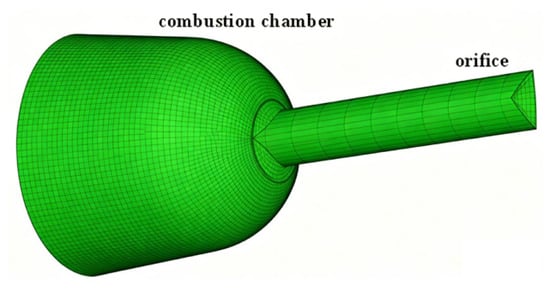
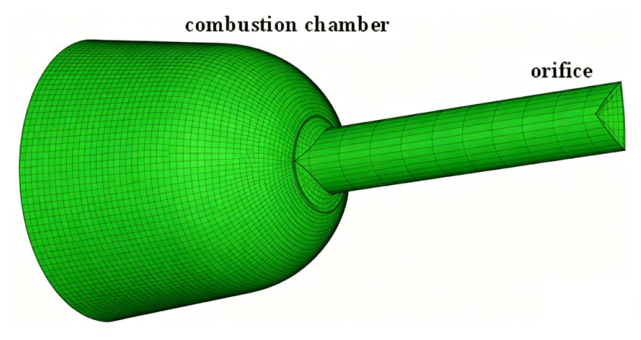
The numerical simulation of the internal flow in an equilateral triangular orifice involves four steps: geometry building, 3D meshing, boundary specification, and computation. Taking a single-hole mini-sac diesel nozzle as the object, the geometry of the equilateral triangular flow domain is established (see Figure 1). Pressure-type boundary conditions are imposed at the orifice inlet and outlet, where both injection pressure and ambient backpressure match the targeted conditions defined in the numerical simulations, enabling subsequent analysis based on the computed internal flow field.
Figure 1.
Triangular diesel injector nozzle mesh.
This paper presents a comparison of simulated spray characteristics among equilateral triangular orifices of different sizes. The corresponding geometric parameters are detailed in Table 1.
Table 1.
Triangular nozzle structural parameters.
4. Results and Discussion
Table 2 lists the specific operating conditions used in the simulations. To compare the effects of different equilateral triangular orifices on spray morphology and fuel–air mixing, the injection pressure and ambient backpressure were set according to realistic engine fuel supply parameters.
Table 2.
Boundary conditions.
4.1. The Spray Velocity from Equilateral Triangular Nozzle Orifices
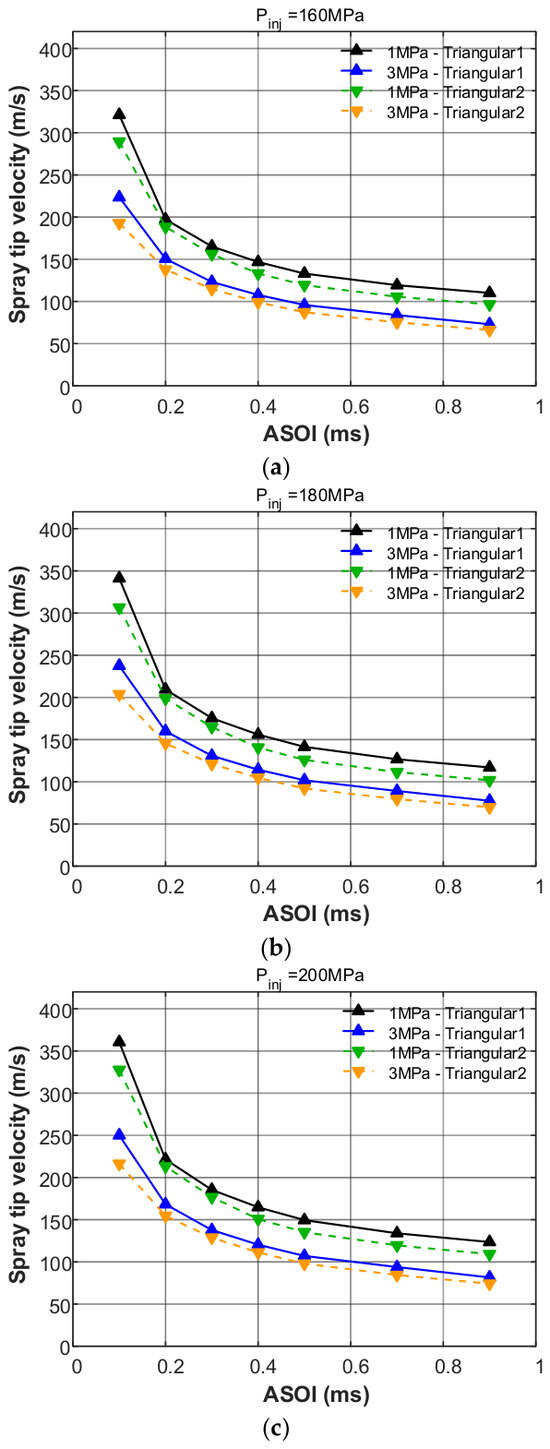
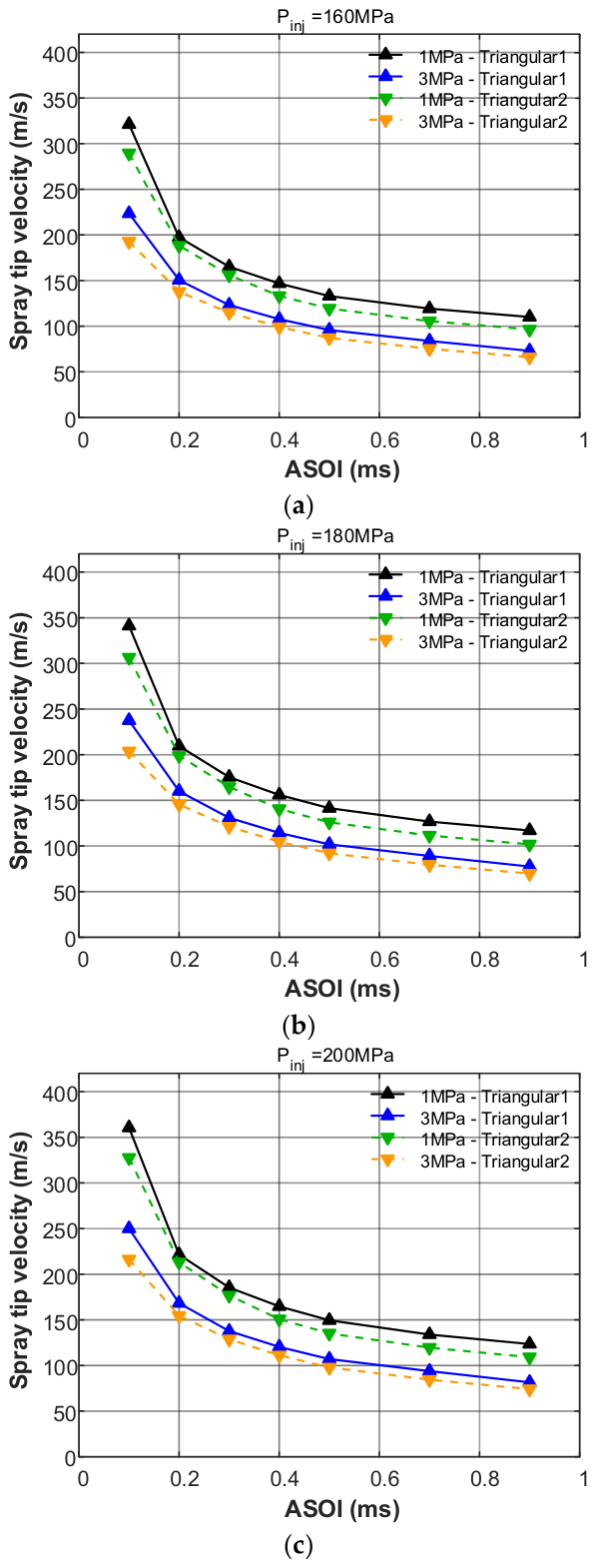
Figure 2 presents the evolution curves of the spray tip velocity over injection time for equilateral triangular orifices of different sizes under three injection pressures (160 MPa, 180 MPa, and 200 MPa) and two ambient backpressures (1 MPa and 3 MPa). The spray tip velocity is obtained by differentiating the spray penetration distance with respect to the corresponding injection instant. At the initial stage of injection, the spray tip velocity exhibits a decreasing trend with time, which is primarily attributed to the continuous kinetic energy loss of the spray jet due to in-cylinder gas resistance and turbulent dissipation. Moreover, the time scale for the spray velocity to rise from zero to its peak value at the very beginning of injection is shorter than the sampling interval of the simulation data; therefore, the brief rising phase of the tip velocity at the early injection stage is not captured. Further comparison shows that under all injection pressure and backpressure conditions, the spray tip velocity of orifices with smaller side lengths is generally higher than that of orifices with larger side lengths. This is mainly due to the fact that under the same injection pressure, a smaller orifice flow area enhances the throttling effect, leading to a higher initial biodiesel jet velocity. Meanwhile, the smaller jet is less affected by the aerodynamic drag from the surrounding air, thus maintaining a higher tip velocity throughout the entire injection period. In addition, injection pressure exerts a significant positive effect on the spray tip velocity. Under the same backpressure and orifice condition, as the injection pressure increases from 160 MPa to 200 MPa, the initial peak velocity of the spray tip increases markedly, and a higher velocity level is maintained even during the velocity decay stage in the mid-to-late injection period. On the other hand, an increase in ambient backpressure strengthens the aerodynamic drag by raising the in-cylinder gas density, which significantly reduces the spray tip velocity and accelerates its decay rate.
Figure 2.
The front velocity of the triangular spray under different injection pressures: (a) 160 MPa; (b) 180 MPa; (c) 200 MPa.
4.2. Equal-Sided Triangle Nozzle Spray Penetration Distance
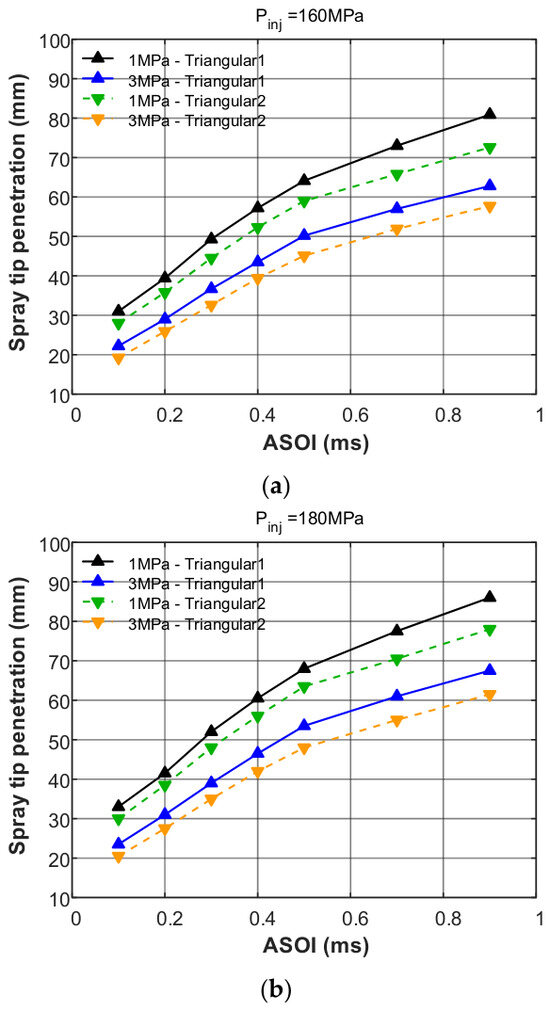
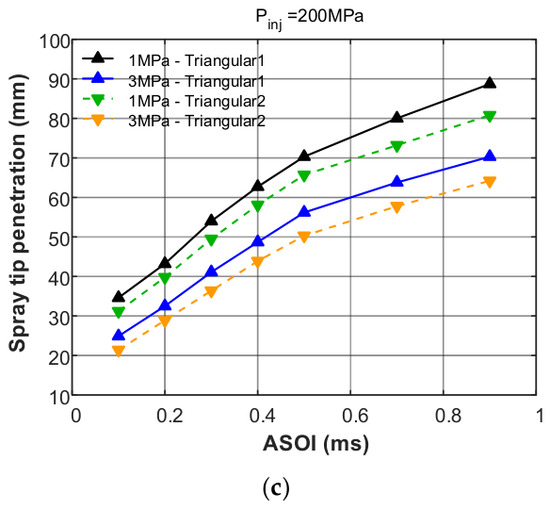
Figure 3 presents the evolution curves of spray penetration distance over injection time for equilateral triangular orifices of different sizes under three injection pressures (160 MPa, 180 MPa, and 200 MPa) and two ambient backpressures (1 MPa and 3 MPa). Overall, under all operating conditions, the spray penetration distance exhibits an approximately linear increase with injection time, with a slightly higher growth rate in the early stage than in the later stage, which corresponds to the decay behavior of the spray tip velocity. Further comparison indicates that under all injection pressure and backpressure conditions, the spray penetration distance of orifices with smaller side lengths is significantly larger than that of triangular orifices with larger side lengths. This finding is consistent with the observed difference in tip velocity, and is mainly attributable to the higher initial jet velocity and lower aerodynamic drag associated with smaller orifices, which endow the biodiesel spray jet with stronger in-cylinder penetration capability. Moreover, the results clearly demonstrate that both injection pressure and ambient backpressure have a marked influence on the spray penetration distance. Under the same backpressure and orifice condition, as the injection pressure increases from 160 MPa to 200 MPa, the spray penetration distance increases considerably throughout the entire injection period, indicating that a higher injection pressure effectively enhances the spray penetration. In contrast, an increase in ambient backpressure significantly suppresses the growth of spray penetration distance. Under identical injection pressure and orifice condition, the penetration distance under 3 MPa backpressure is always lower than that under 1 MPa backpressure. This is because a higher backpressure raises the in-cylinder gas density and intensifies the aerodynamic drag, thereby slowing down the axial development of the spray jet.
Figure 3.
The penetration distance of triangular spray under different jet pressures: (a) 160 MPa; (b) 180 MPa; (c) 200 MPa.
4.3. Equal-Sided Triangle Orifice Spray Projection Area
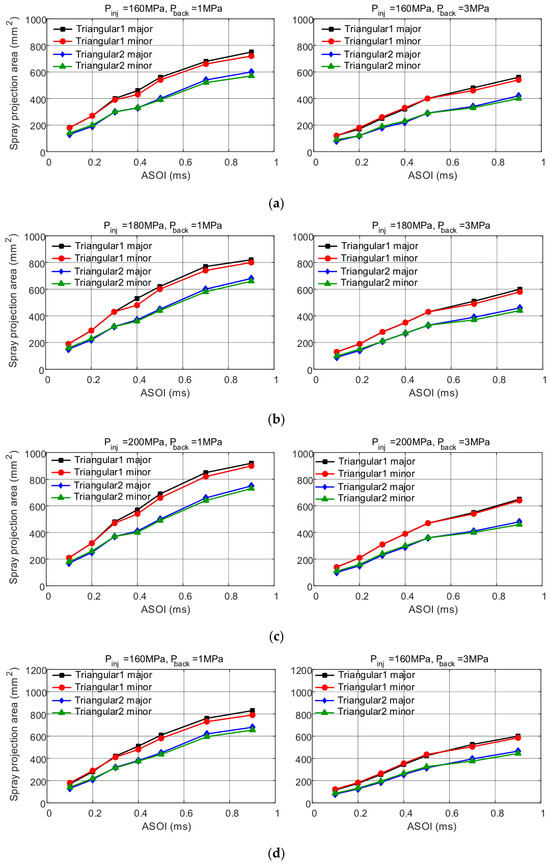
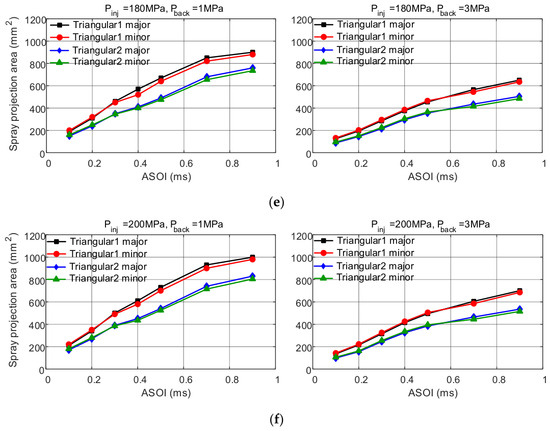
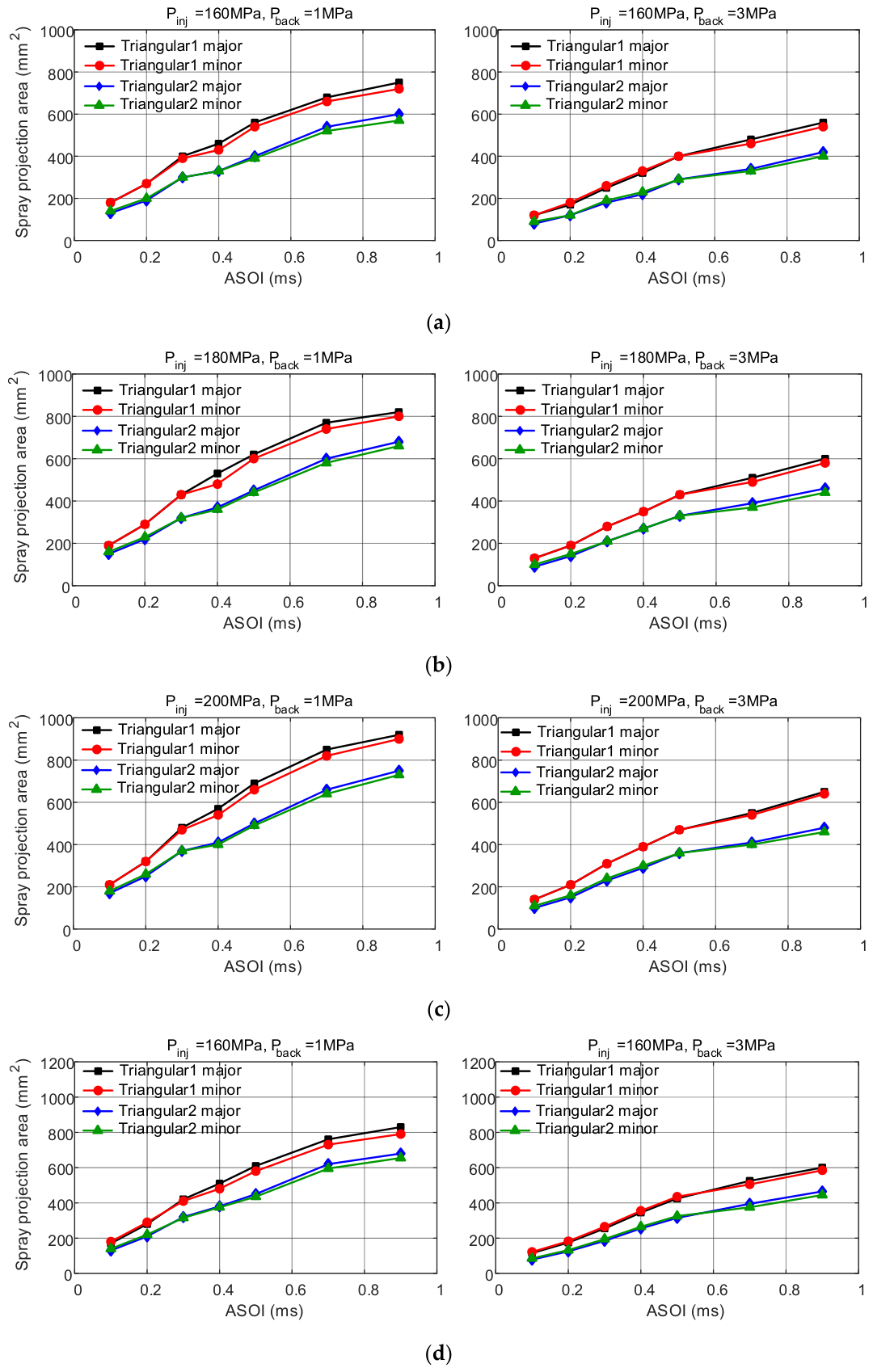
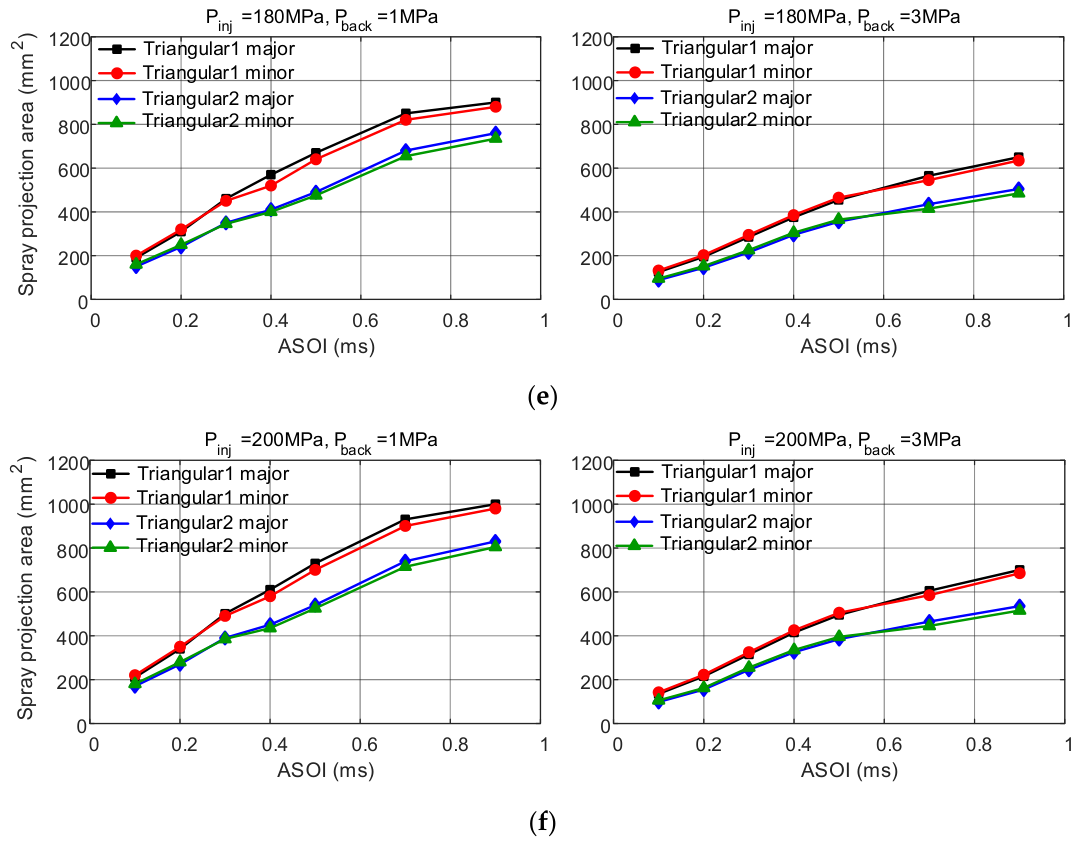
To quantitatively describe the influence of the geometric parameters of equilateral triangular nozzles on the fuel–air mixing process, this section compares the spray projected areas of two triangular nozzles at injection pressures of 160 MPa, 180 MPa, and 200 MPa and ambient backpressures of 1 MPa and 3 MPa. Figure 4 presents a comprehensive graphical representation of these average spray projected areas under various operating conditions. As illustrated, an increase in ambient backpressure leads to a monotonic decrease in the spray projected area for both diesel and biodiesel. This graphical trend is primarily driven by the enhanced aerodynamic drag of the high-density ambient medium, which severely dissipates the axial injection momentum. Concurrently, across all tested injection pressures and backpressures, biodiesel consistently exhibits a smaller projected area compared to diesel. This behavior underscores a competitive trade-off between spray penetration and cone angle: although elevated backpressure marginally widens the spray cone angle, the concomitant curtailment in spray tip penetration exerts a dominant weakening effect on the overall projected area, far outweighing the compensatory expansion of the cone angle. Regarding the geometric scale effects, a comparison between the two non-circular geometries reveals that the smaller triangular nozzle consistently achieves a larger spray projected area than its larger counterpart under identical operating conditions. According to classical non-circular jet dynamics [15,16], the periodic deformation of the jet cross-section during axis-switching inherently widens the spray boundaries in specific viewing planes. This localized expansion of the spray cone angle directly translates into a larger integrated macroscopic spray projected area over time. The underlying physical mechanism is governed by the enhanced near-field dynamics of the smaller orifice; a reduced hydraulic diameter intensifies the concentration of turbulent vortices and amplifies initial disturbances at the nozzle exit. This promotes a wider spray cone angle and elevates the frequency of the characteristic axis-switching behavior, thereby augmenting the radial spreading capability of the jet and the subsequent entrainment of the surrounding gas. Conversely, the increased side length of the larger nozzle stabilizes the exit flow, suppressing the axis-switching propensity and yielding a more constrained projected area. Notably, as the injection pressure increases from 160 MPa to 200 MPa, the divergence in the projected area between the two nozzles widens significantly. This demonstrates that higher injection energy effectively amplifies the initial disturbances and axis-switching intensity—a phenomenon that is more fully realized within the confined geometry of the smaller nozzle, thereby expanding its relative spatial coverage. In summary, downsizing the characteristic side length of an equilateral triangular nozzle serves as an effective mechanism for maximizing the spray projected area, an advantage that becomes progressively pronounced under ultra-high injection pressures.
Figure 4.
The projected area of the triangular spray under different jet pressures: (a) biodiesel 160 MPa; (b) biodiesel 180 MPa; (c) biodiesel 200 MPa; (d) diesel 160 MPa; (e) diesel 180 MPa; (f) diesel 200 MPa.
4.4. Spray Cone Angle of an Equilateral Triangular Nozzle Orifice
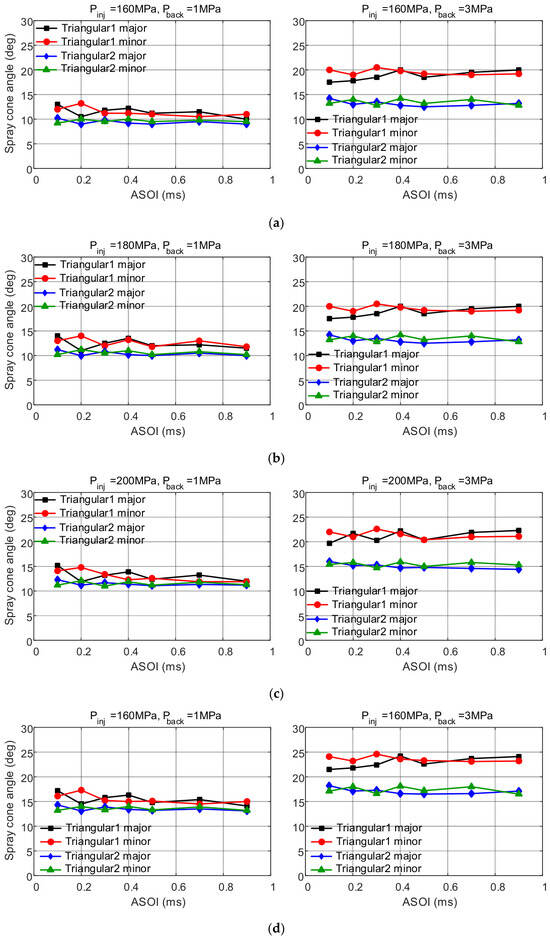
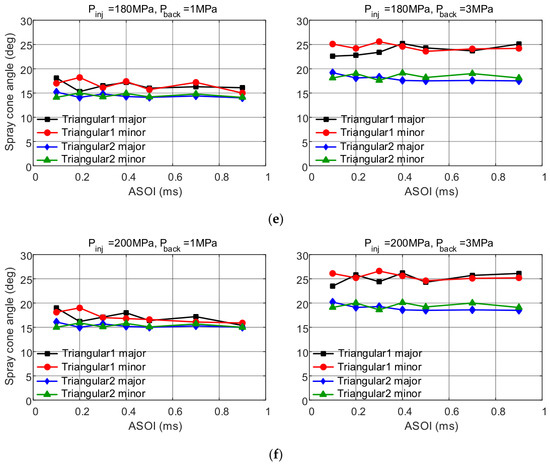
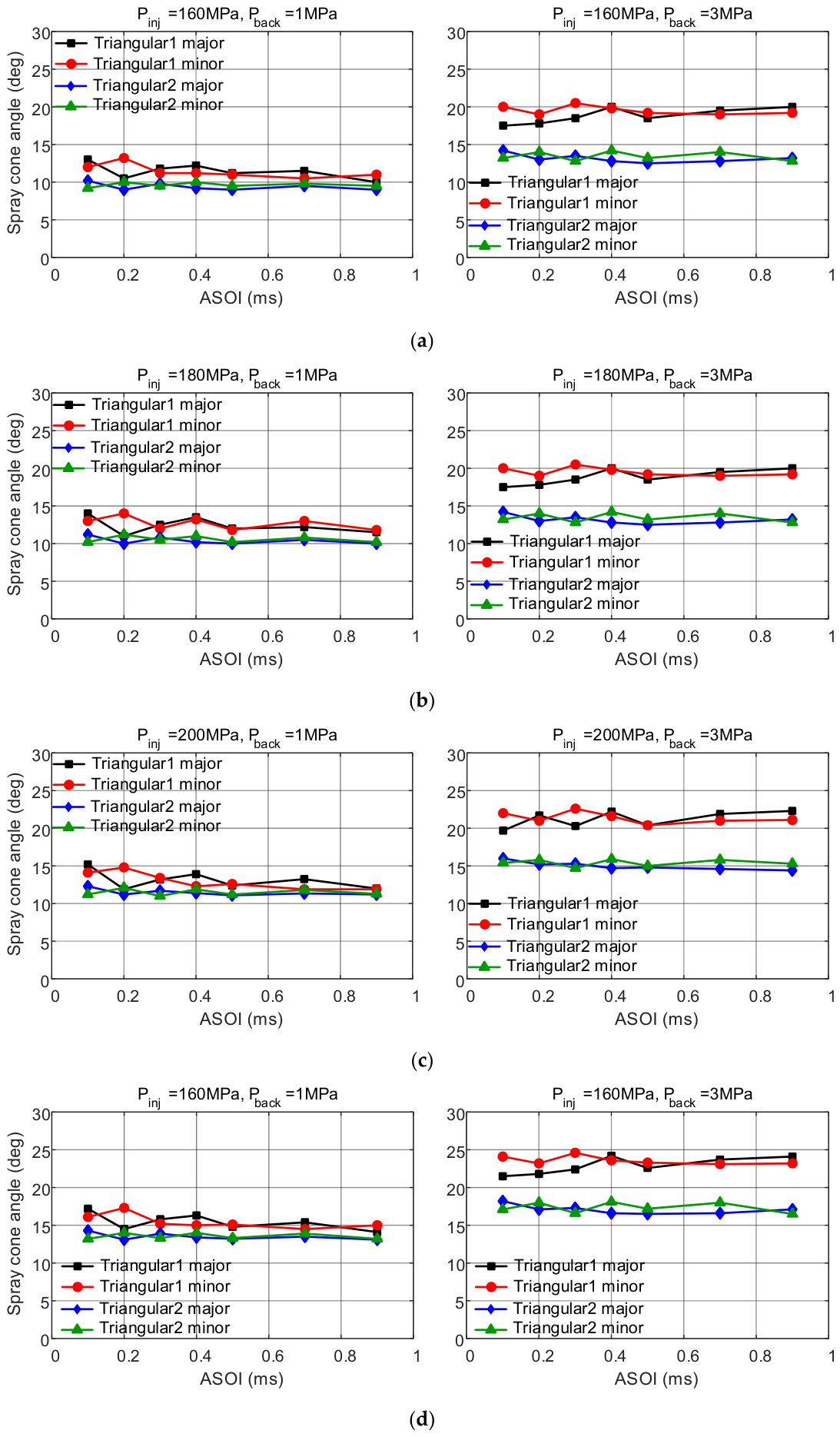
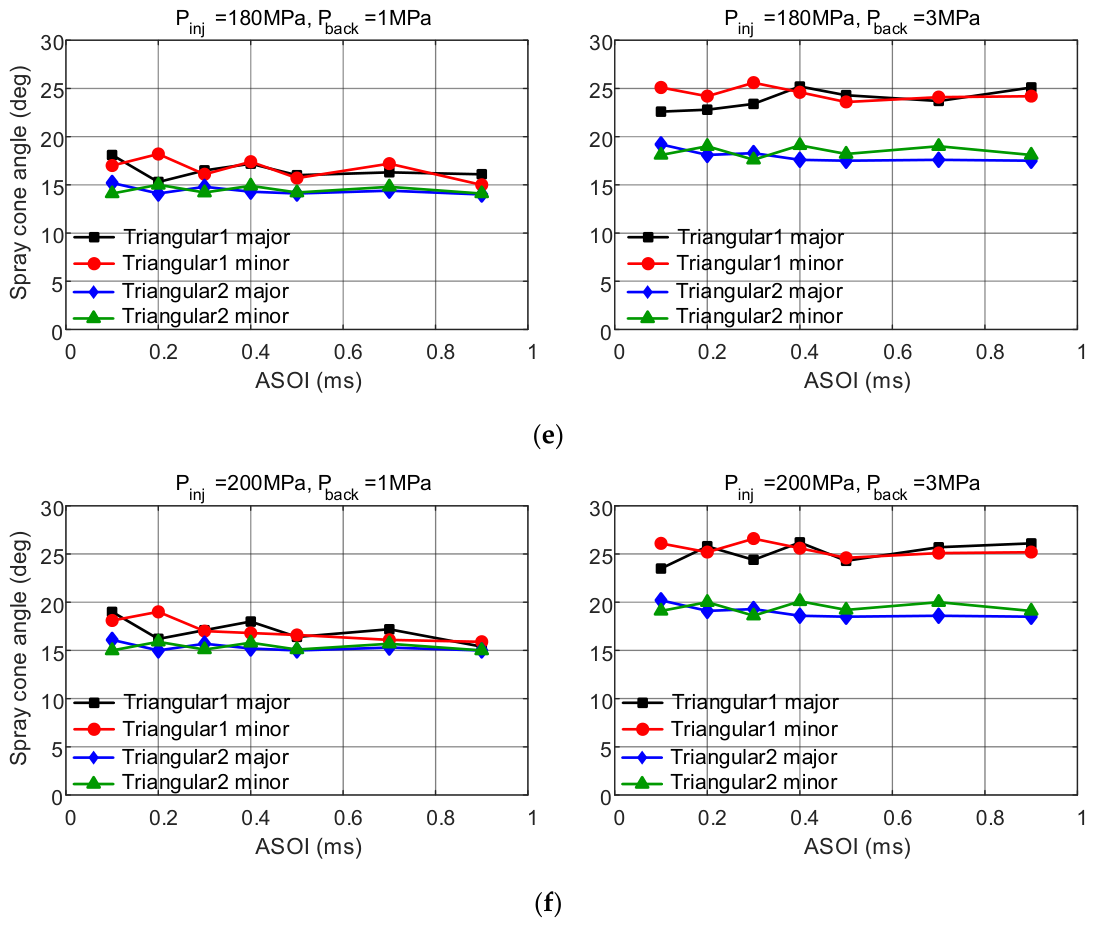
Figure 5 presents a comprehensive graphical comparison of the spray behavior for the two equilateral triangular nozzles operating under injection pressures of 160, 180, and 200 MPa, coupled with ambient backpressures of 1 and 3 MPa. As illustrated by the graphical trends, both diesel and biodiesel sprays exhibit a distinct, alternating axis-switching behavior of the spray cone angle between the major and minor planes—a phenomenon that responds sensitively to variations in both injection pressure and ambient backpressure. Quantitatively, for biodiesel under a low ambient backpressure of 1 MPa, three distinct cone-angle switching events are captured at injection pressures of 160 and 180 MPa, whereas escalating the pressure to 200 MPa increases the frequency to four axis-switching events. Furthermore, the graphical data reveals that the initiation time of axis-switching systematically advances with higher injection pressures. This trend indicates that elevated injection energy intensifies near-field vortex disturbances and non-axisymmetric hydrodynamic instabilities at the orifice exit, thereby accelerating the structural morphing of the spray cross-section. Conversely, when the ambient backpressure is elevated to 3 MPa, the heightened aerodynamic drag induced by the higher ambient gas density constrains the lateral deformation of the spray jet. Consequently, the number of axis-switching events for the smaller nozzle at 200 MPa is attenuated from four down to three. For the larger nozzle geometry, the increased hydraulic diameter inherently attenuates the initial disturbance intensity, graphically manifesting as smaller absolute spray cone angles and moderated axis-switching amplitudes. Under the high backpressure condition, this scale-induced dampening effect becomes even more pronounced, leading to a sharper reduction in the total number of switching events. Ultimately, the persistent occurrence of multiple axis-switching events across all evaluated operating conditions confirms the intrinsic advantage of non-axisymmetric nozzle topologies. This geometric feature effectively enhances axial alternating fluctuations within the spray flow field, fundamentally promoting the entrainment of the surrounding gas and optimizing air-fuel mixture uniformity.
Figure 5.
Spray cone angle of triangular nozzle under different injection pressures: (a) biodiesel 160 MPa; (b) biodiesel 180 MPa; (c) biodiesel 200 MPa; (d) diesel 160 MPa; (e) diesel 180 MPa; (f) diesel 200 MPa.
4.5. Comparison of Air Suction Volume of Equilateral Triangle Nozzles
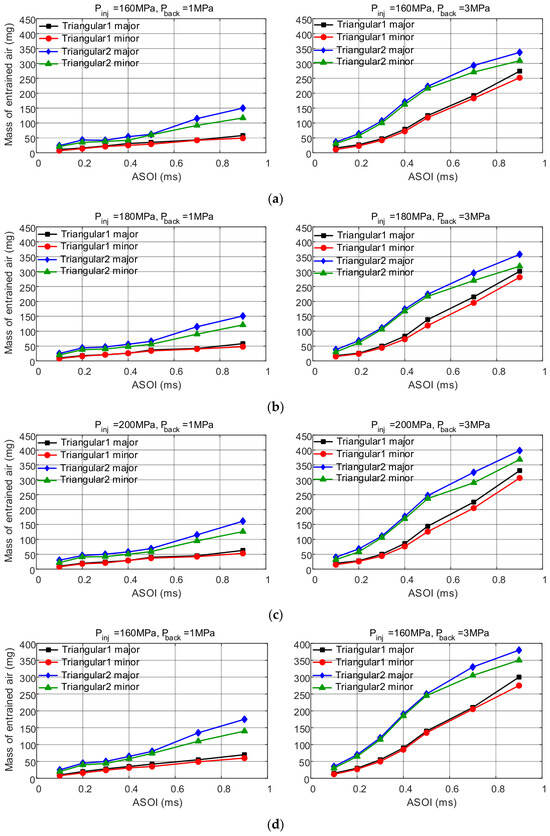
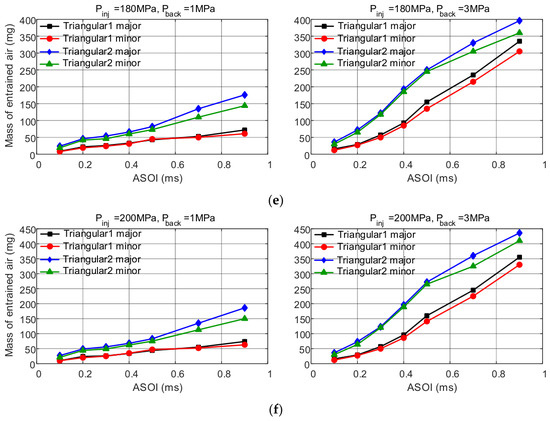
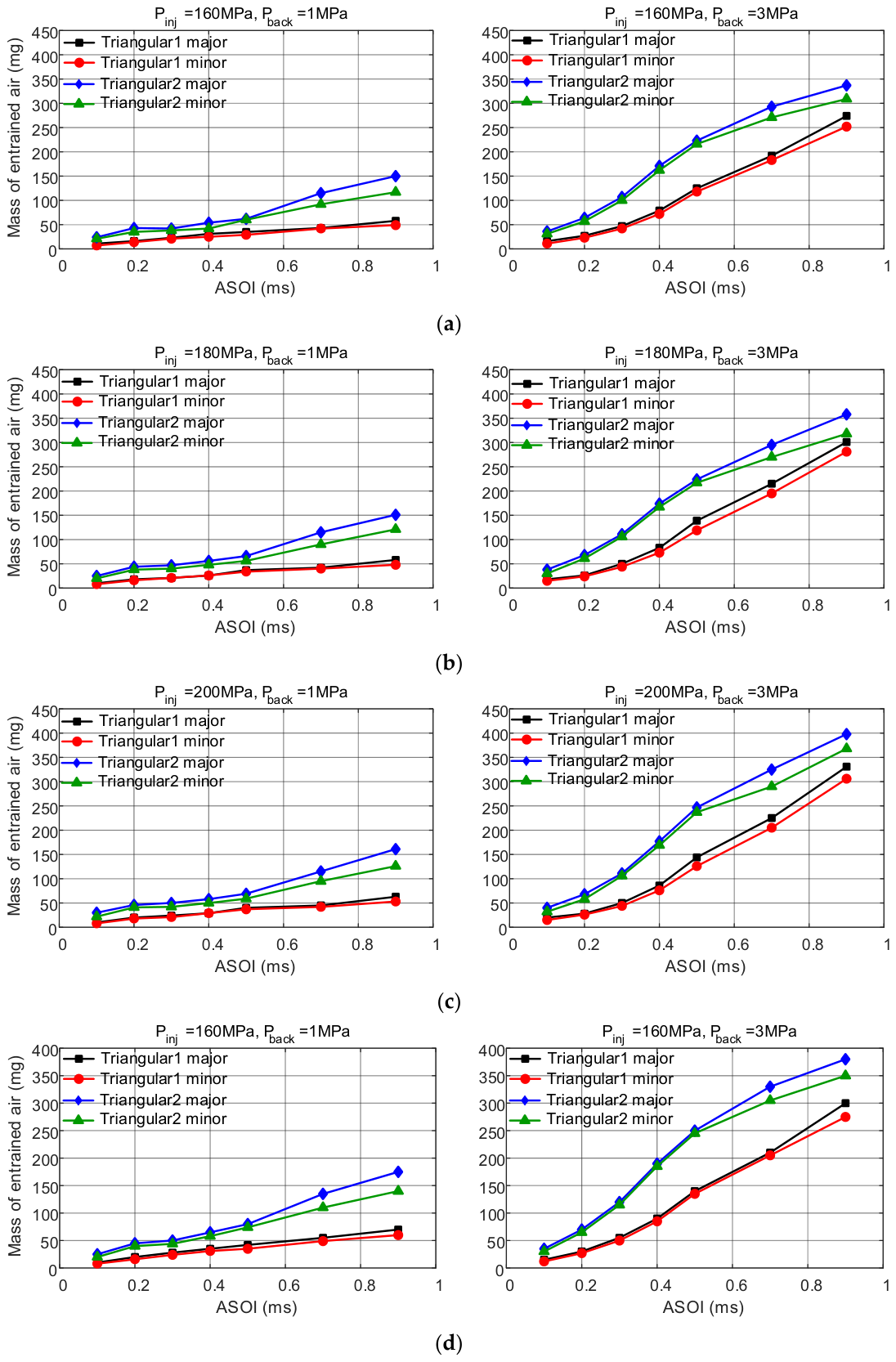
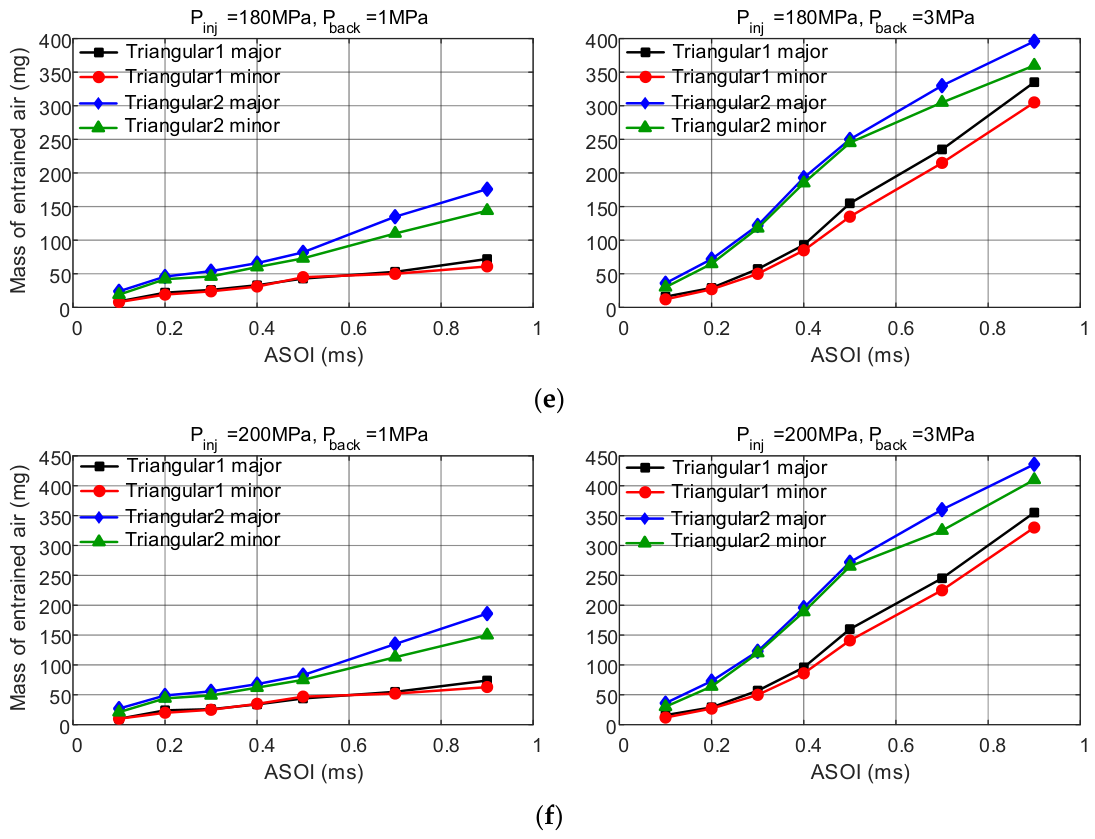
Figure 6 presents the air entrainment mass over injection time for equilateral triangular nozzles of different sizes under injection pressures of 160 MPa, 180 MPa, and 200 MPa and ambient backpressures of 1 MPa and 3 MPa. The data show that under all simulation conditions, the air entrainment mass increases cumulatively with injection progress, and the larger triangular nozzle systematically exhibits higher absolute entrainment mass at the same injection time than the smaller triangular nozzle. Although the larger nozzle experiences a reduced concentration of turbulent vorticity at the exit cross-section due to its increased hydraulic diameter, leading to a narrower spray cone angle, its axial penetration distance is significantly extended. Meanwhile, although the axis-switching events between the major-axis and minor-axis planes occur at a slightly lower frequency for the larger nozzle, each switching event involves a considerably larger spray volume and exerts a more persistent macroscopic entrainment effect on the surrounding gas phase. From a transport phenomena perspective, a larger spray projected area graphically signifies a wider spray envelope, which significantly increases the active shear-layer contact surface with the surrounding stagnant gas. Consequently, the enlarged interface accelerates momentum exchange, driving the subsequent increase in the absolute air entrainment rate. The air entrainment mass increases simultaneously with rising ambient backpressure and injection pressure, and under the synergistic condition of 200 MPa injection pressure and 3 MPa ambient backpressure, the difference in entrainment mass between the two nozzle sizes reaches its maximum. This phenomenon can be attributed to the higher initial penetration momentum imparted by the elevated injection energy, while the high-density ambient gas further amplifies the marginal gain of penetration distance difference on the total entrainment. In summary, moderately increasing the characteristic side length of the equilateral triangular nozzle can compensate for the radial diffusion loss due to cone angle reduction by significantly improving penetration performance, thereby achieving a higher overall absolute air entrainment mass. However, it should be noted that while the larger nozzle dominates in absolute volumetric air capture due to its larger fuel discharge, the smaller nozzle inherently maintains a distinct advantage in localized spatial mixing efficiency per unit mass of fuel.
Figure 6.
Air entrainment mass of the triangular spray under different jet pressures: (a) biodiesel 160 MPa; (b) biodiesel 180 MPa; (c) biodiesel 200 MPa; (d) diesel 160 MPa; (e) diesel 180 MPa; (f) diesel 200 MPa.
4.6. Comparison of Liquid Phase Length of Spray Holes in Equilateral Triangles
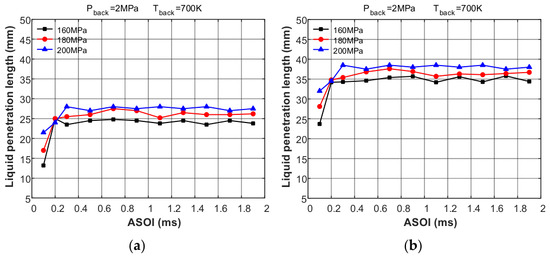
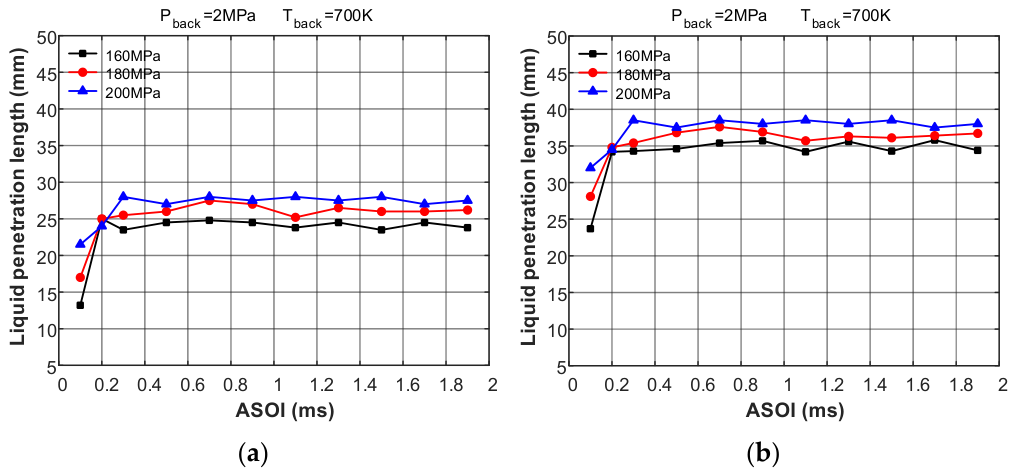
Within the jet pressure range of 160–200 MPa, the liquid phase lengths of the two equilateral triangular spray holes are shown in Figure 7. Both increase rapidly over time and then stabilize. However, the liquid phase length of the smaller triangular hole is always lower than that of the larger hole throughout the process, and the time required to reach stability is shorter for the smaller hole. This is mainly because the hydraulic diameter of the smaller side-length holes is smaller, and the frequency of jet axis change is higher, which leads to earlier and more intense growth and fragmentation of the liquid column surface waves. Additionally, the air suction caused by the axis change is also stronger, accelerating the evaporation and momentum decay of the liquid phase. As the jet pressure increases from 160 MPa to 200 MPa, the liquid phase lengths of both holes increase, but the increase in the smaller hole is slightly less than that of the larger hole. That is, the absolute difference in liquid phase lengths between the two holes increases slightly with the increase in pressure. This indicates that increasing the pressure will prolong the liquid phase length, but the smaller side-length holes can partially suppress the penetration growth caused by the pressure increase due to their stronger axis changing their fragmentation ability, thereby maintaining a shorter liquid phase length.
Figure 7.
Comparison of spray liquid length of triangular nozzle orifice under different injection pressures: (a) Triangular 1; (b) Triangular 2.
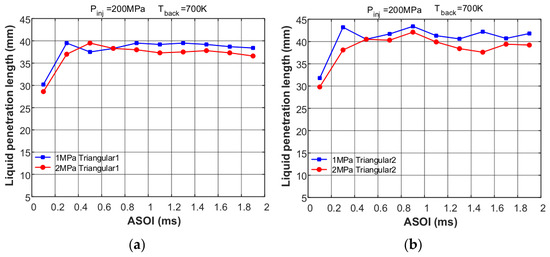
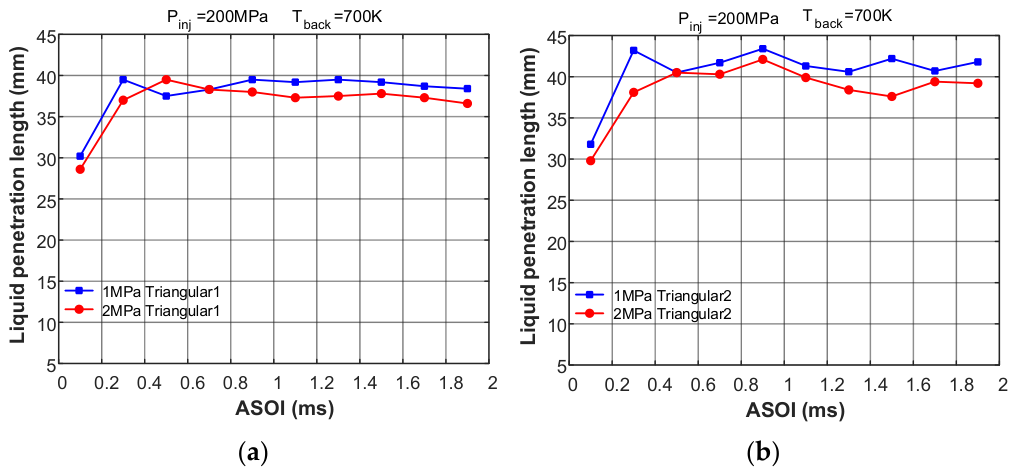
Figure 8 shows the influence of different environmental back pressures on the variation in the liquid phase length of an equilateral triangular spray over time under high-pressure conditions with an environmental temperature of 700 K and a jet pressure of 200 MPa. The results indicate that the liquid phase length increases initially and then stabilizes with respect to the injection time. As the environmental back pressure increases, the liquid phase length decreases throughout the process. The increase in environmental back pressure causes the spray cone angle to increase, and at the same time, the density of the environmental gas increases. On the one hand, the high-density hot air is drawn into the jet center to promote liquid phase evaporation. On the other hand, the higher gas density requires more liquid kinetic energy to inhibit the axial development of the liquid phase. These mechanisms together lead to a shorter liquid phase length under high back pressure. Additionally, under the same back pressure conditions, the liquid phase length of nozzle 2 is always greater than that of nozzle 1. This is because nozzle 2 has a larger hydraulic diameter and a lower rotation frequency, and the liquid phase fragmentation and evaporation process is relatively lagging behind. In summary, the environmental back pressure has a significant impact on the steady-state liquid phase length of the equilateral triangular spray holes.
Figure 8.
Comparison of spray liquid length of triangular nozzle orifice under different back pressures: (a) Triangular 1; (b) Triangular 2.
5. Conclusions
In this work, the internal flow and macro-spray characteristics—including spray tip velocity, penetration distance, projected area, axis-switching behavior, normalized air entrainment, and liquid phase length—of equilateral triangular orifices with two different side lengths were systematically investigated using numerical simulations under ultra-high pressure conditions. The specific conclusions drawn from the numerical analysis within the investigated scope are as follows:
- The spray tip velocity of both triangular orifices continuously decays over the injection period due to aerodynamic resistance. The orifice with a smaller side length maintains a higher tip velocity across all tested conditions owing to enhanced throttling effects. High injection pressures significantly elevate the initial peak velocity, whereas higher ambient backpressures accelerate the velocity decay.
- Correspondingly, the spray penetration distance of the smaller triangular orifice is consistently greater than that of the larger counterpart. While increasing the injection pressure from 160 to 200 MPa effectively extends the axial penetration, elevated ambient backpressure significantly restrains the penetration growth by increasing the ambient gas density.
- The spray projected area reduces with an increase in ambient backpressure due to axial momentum dissipation. Under identical conditions, the smaller nozzle exhibits a larger projected area than the larger nozzle, driven by stronger initial disturbances at the exit. Furthermore, owing to the higher viscosity and surface tension of biodiesel, its spray projected area becomes progressively smaller than that of conventional diesel as the injection proceeds.
- Elevated injection pressures increase the frequency and advance the initiation of the jet axis-switching behavior, with the number of switching events increasing to four at 200 MPa under low backpressure (1 MPa). Conversely, high ambient backpressure limits lateral deformation, thereby reducing the number of axis-switching events from four down to three. Biodiesel exhibits fewer axis-switching events compared to conventional diesel due to its higher flow resistance and surface tension.
- Although the larger triangular nozzle shows a higher absolute air entrainment mass due to its greater fuel discharge volume, the smaller triangular nozzle yields a higher normalized air entrainment rate (the ratio of entrained air mass to injected fuel mass). This indicates that the more frequent axis-switching and higher exit turbulent vorticity associated with the smaller orifice promote a more efficient fuel–air mixing process per unit mass of fuel, while the absolute air entrainment gap between the two nozzle scales reaches its maximum under the synergistic 200 MPa injection pressure and 3 MPa ambient backpressure condition.
- Under evaporative conditions, the liquid phase length stabilizes after an initial rapid growth. The smaller orifice maintains a shorter steady-state liquid length and stabilizes faster due to its higher axis-switching frequency and accelerated surface wave fragmentation. Increasing the ambient backpressure substantially shortens the steady-state liquid phase length for both geometries by promoting hot air entrainment into the spray core and increasing momentum decay.
- Orifice Geometry Selection: Utilizing non-circular nozzle geometries is recommended when rapid fuel–air mixing is prioritized over pure penetration length. The structural asymmetry enhances near-field shear stress and destabilizes the liquid core earlier.
Author Contributions
Methodology, B.S. and S.Z.; software, S.Z.; validation, B.S. and S.Z.; formal analysis, S.Z.; investigation, B.S. and S.Z.; resources, Z.L.; data curation, S.Z.; writing—original draft preparation, S.Z.; writing—review and editing, B.S., S.Z. and Z.L.; visualization, S.Z.; supervision, B.S.; project administration, B.S. and Z.L.; funding acquisition, Z.L. All authors have read and agreed to the published version of the manuscript.
Funding
The work presented in this paper is financially supported by the project: This research was supported by Guangxi Science and Technology Program (Project ID ZG2503980022).
Data Availability Statement
The original contributions presented in this study are included in the article. Further inquiries can be directed to the corresponding author.
Conflicts of Interest
Author Zhihua Li was employed by the company Yuchai Engineering Research Institution, Guangxi Yuchai Machinery Co., Ltd. The remaining authors declare that the research was conducted in the absence of any commercial or financial relationships that could be construed as a potential conflict of interest.
References
- Shivashimpi, M.M.; Alur, S.A.; Topannavar, S.N.; Dodamani, B.M. Combined effect of combustion chamber shapes and nozzle geometry on the performance and emission characteristics of CI engine operated on Pongamia. Energy 2018, 154, 17–26. [Google Scholar] [CrossRef]
- Yu, W.; Yang, W.; Zhao, F. Investigation of internal nozzle flow, spray and combustion characteristics fueled with diesel, gasoline and wide distillation fuel (WDF) based on a piezoelectric injector and a direct injection compression ignition engine. Appl. Therm. Eng. 2017, 114, 905–920. [Google Scholar] [CrossRef]
- Prasad, G.; Sujesh, G.; Nirmala, N.; Prasannakumar, P.; Raj, S.; Kumar, R. Comparative analysis of the emission reduction potential of algal biofuel blends and pure Jet A-1 fuel. Fuel 2026, 424, 139363. [Google Scholar] [CrossRef]
- Manigandan, S.; Vijayaraja, K. Acoustic and mixing characteristic of CD nozzle with inverted triangular tabs. Int. J. Ambient Energy 2018, 39, 787–791. [Google Scholar] [CrossRef]
- Rathakrishnan, E. AR 4 elliptic jet control with limiting tab. Fluid Dyn. Res. 2018, 50, 025505. [Google Scholar] [CrossRef]
- Mohanta, P.K.; Sridhar, B.T.N. Study of decay characteristics of hexagonal and square supersonic jet. Int. J. Turbo Jet-Engines 2017, 34, 115–122. [Google Scholar] [CrossRef]
- Zhang, Y.; Tian, Y.; Li, J.L. Review of atomization characteristics of liquid jets in crossflow. Phys. Fluids 2024, 36, 021302. [Google Scholar] [CrossRef]
- Ku, K.W.; Lee, Y.J.; Kim, I.S.; Lee, C.W. Experimental Study of the Effects of Nozzle Hole Geometry for di Diesel Engine. J. ILASS-Korea 2007, 12, 154–159. [Google Scholar]
- Yan, Z.H.; Yin, H.M.; Wu, L.N.; Wen, M.X.; Zheng, Z.H.; Yao, X.Y.; Lu, C.X. Effects of different jet forms on the gas–solid flow behavior in a downer reactor. Fuel 2026, 413, 138293. [Google Scholar] [CrossRef]
- Morad, M.R.; Khosrobeygi, H. Penetration of elliptical liquid jets in low-speed crossflow. J. Fluids Eng. 2019, 141, 011301. [Google Scholar] [CrossRef]
- Li, H.M.; Han, D.; Xu, S.H.; Guo, G.M.; Zhang, W.; Zhang, L.; He, Z.X. Numerical investigation of the effects of nozzle geometry on internal cavitation flow and near-field spray. J. Case Stud. Therm. Eng. 2026, 77, 107541. [Google Scholar] [CrossRef]
- Uhlmann, E.; Richarz, S. Twisted deep hole drilling tools for hard machining. J. Manuf. Process. 2016, 24, 225–230. [Google Scholar] [CrossRef]
- Satapathy, B.B.; Rana, J.; Maity, K. Numerical prediction of hole profile in laser drilling process and experimental validation. Int. J. Adv. Manuf. Technol. 2017, 90, 3099–3107. [Google Scholar] [CrossRef]
- Messina, T.; Acharya, S. Characteristics of an acoustically modulated spray issued from circular and elliptical orifice nozzles. At. Sprays 2006, 16, 331–348. [Google Scholar] [CrossRef]
- Satyanarayan, G.; Raj, E.; Muruganandam, T.M. Penetration of supercritical kerosene jet in supersonic crossflow: Effects of injection stagnation temperature and pressure. Fuel 2026, 410, 137977. [Google Scholar] [CrossRef]
- Sharma, P.; Fang, T. Spray and atomization of a common rail fuel injector with non-circular orifices. Fuel 2015, 153, 416–430. [Google Scholar] [CrossRef]
- Hua, L.; Li, H.; Jiang, Y. Axis-switching behavior of liquid jets issued from non-circular nozzles under low-intermediate pressure. Appl. Eng. Agric. 2021, 37, 367–378. [Google Scholar] [CrossRef]
- Hall, J.W.; Ewing, D. On the dynamics of the large-scale structures in round impinging jets. J. Fluid Mech. 2006, 555, 439–458. [Google Scholar] [CrossRef]
- Kim, W.H.; Park, T.S. Turbulent flow characteristics for enhanced thermal mixing in square and triangular jets. Numer. Heat Transf. Part A Appl. 2020, 79, 370–384. [Google Scholar] [CrossRef]
- Sharma, P.; Fang, T.G. Breakup of liquid jets from non-circular orifices. Exp. Fluids 2014, 55, 1666. [Google Scholar] [CrossRef]
- Gutmark, E.J.; Ibrahim, I.M.; Murugappan, S. Circular and noncircular subsonic jets in cross flow. Phys. Fluids 2008, 20, 075110. [Google Scholar] [CrossRef]
- Li, J.G.; Wang, L.; Shu, G.Q.; Mao, X.Q.; Wei, H.Q.; Pan, J.Y. Combined effects of pre-chamber nozzle diameter and fuel reactivity on jet ignition characteristics of ammonia-hydrogen blends. Fuel 2026, 413, 138302. [Google Scholar] [CrossRef]
- Wadekar, S.; Yamaguchi, A.; Oevermann, M. Large-Eddy Simulation Study of Ultra-High Fuel Injection Pressure on Gasoline Sprays. Flow Turbul. Combust. 2021, 107, 149–174. [Google Scholar] [CrossRef]
- Algayyim, S.J.M.; Wandel, A.P. Macroscopic and microscopic characteristics of biofuel spray (biodiesel and alcohols) in CI engines: A review. Fuel 2021, 292, 120303. [Google Scholar] [CrossRef]
- Zilic, A.; Pachler, K.; Cristofaro, M. Influence of Inflow Boundary Conditions on High-Pressure Fuel Injection: Assessment Based on Large Eddy Simulation Approach. SAE Int. J. Engines 2020, 13, 123–134. [Google Scholar] [CrossRef]
- Wang, Y.C.; Luo, K.; Xiao, H.L.; Jin, T.; Shao, C.X.; Fan, J.R. Large eddy simulation of spray combustion in a lean direct injection combustor using a novel subgrid-scale stress model. Appl. Energy Combust. Sci. 2025, 23, 100347. [Google Scholar] [CrossRef]
- Setzwein, F.; Ess, P.; Gerlinger, P. Large-eddy simulation of spray flames in the DLR generic single sector combustor. In Proceedings of the AIAA Propulsion and Energy 2019 Forum, Indianapolis, IN, USA, 19–22 August 2019. [Google Scholar] [CrossRef][Green Version]

Disclaimer/Publisher’s Note: The statements, opinions and data contained in all publications are solely those of the individual author(s) and contributor(s) and not of MDPI and/or the editor(s). MDPI and/or the editor(s) disclaim responsibility for any injury to people or property resulting from any ideas, methods, instructions or products referred to in the content. |
© 2026 by the authors. Published by MDPI on behalf of the World Electric Vehicle Association. Licensee MDPI, Basel, Switzerland. This article is an open access article distributed under the terms and conditions of the Creative Commons Attribution (CC BY) license.