Article

Study on Torque Production, Eddy Current Loss, and Demagnetization in Spoke-Type FI-IPM Motor Adopting Segmented Permanent Magnet Configurations

1
Faculty of Electrical and Electronic Engineering, The University of Danang—University of Technology and Education, Danang 50206, Vietnam
2
Department of Electrical Engineering, National Cheng Kung University, Tainan 701, Taiwan
3
Faculty of Electrical Engineering, The University of Danang—University of Science and Technology, Danang 50612, Vietnam
4
Division of Mechanical, Electrical and Electronic Engineering, Interdisciplinary Faculty of Science and Engineering, Shimane University, Matsue 690-8504, Japan
*
Authors to whom correspondence should be addressed.
World Electr. Veh. J. 2026, 17(7), 343; https://doi.org/10.3390/wevj17070343
Submission received: 22 May 2026 / Revised: 22 June 2026 / Accepted: 26 June 2026 / Published: 2 July 2026

Abstract

This paper investigates the impact of segmented permanent magnet (PM) configurations on torque production, eddy current loss, and demagnetization in spoke-type flux-intensifying interior permanent magnet (FI-IPM) motors. While PM segmentation has been explored in conventional interior permanent magnet synchronous motors (IPMSMs) for reducing losses, its effect in flux-intensifying (FI) motors, characterized by reverse saliency, remains underexplored. To address this, five rotor designs with segmented PMs are analyzed against a baseline model using finite element analysis, maintaining identical stator and PM volume. Results show that segmentation increases reluctance torque, compensating for reduced PM torque, while simultaneously lowering eddy current loss and enhancing demagnetization resistance. These improvements validate segmented PMs as a viable strategy to enhance the durability and efficiency of FI-IPM motors for electric vehicle applications.

1. Introduction

In recent years, the adoption of electric vehicles (EVs) has accelerated remarkably, generating a growing need for high-performance traction motors [1,2,3]. Among the various types of electric motors, interior permanent magnet synchronous motors (IPMSMs) have gained considerable attention in EV applications, primarily due to their superior torque density and operational efficiency [4,5]. Specifically, IPMSMs equipped with spoke-type rotor structures exhibit enhanced field weakening (FW) capabilities, facilitating a broad operational speed range that aligns well with the dynamic demands of EV propulsion systems [6,7]. Both conventional IPMSMs and their special spoke-type counterparts can be collectively referred to as FW-IPM motors due to their natural FW characteristic in all operating modes. However, FW-IPM motors suffer from two fundamental drawbacks. Under heavy loads, severe magnetic saturation causes a significant reduction in Lq, leading to a decreased Lq/Ld ratio and a loss of reluctance torque. Moreover, during high-speed operation, these motors heavily rely on a negative d-axis current, which directly opposes the permanent magnet (PM) field and exacerbates the risk of irreversible demagnetization.
To intrinsically overcome these drawbacks, this research focuses on flux-intensifying (FI) motors, a structural principle that utilizes strategically placed flux barriers to reverse the conventional inductance saliency, achieving Ld > Lq. In FI-IPM motors, these flux barriers ensure that Lq is less influenced by saturation, maintaining and even enhancing reluctance torque as the load increases. More importantly, to operate in the maximum torque per ampere (MTPA) region, FI-IPM motors require a positive d-axis current (Id > 0). This positive current actively aligns with and intensifies the inherent PM flux. Because the stator field actively boosts the total air-gap flux density, the motor can achieve its target torque using a smaller volume of PMs. This unique flux-intensifying mechanism directly minimizes the reliance on expensive rare-earth materials, reduces initial costs, and intrinsically protects the magnets from demagnetization during base-speed operation. Combined with the spoke-type configuration, this results in the highly durable and cost-effective spoke-type FI-IPM motor investigated in this paper.
On the other hand, while the performance requirements of EV traction systems continue to escalate, PM motors, regardless of their magnetic principles, face two notable issues, including eddy current loss and the risk of demagnetization in PMs. These issues are critical because they adversely affect both the efficiency and operational reliability of the motor [8,9]. In response, various design modifications and optimization techniques have been investigated, including PM segmentation and rotor topology refinements, to address these limitations and improve motor performance. Among these approaches, PM segmentation, which divides each PM pole into smaller segments separated by air gaps or thin iron bridges to significantly increase the electrical resistance of the eddy current paths, has recently become a particular focal point of research. For instance, advancements in rotor topology optimization have demonstrated that precise PM segmentation not only suppresses eddy current losses but also plays a pivotal role in limiting peak rotor temperatures during high-frequency operation [10,11,12]. Furthermore, contemporary research has placed a strong emphasis on the structural integrity of these designs, exploring how varying the dimensions of iron bridges can balance mechanical stress with electromagnetic performance at high rotational speeds [13], while also improving the resilience of PMs against irreversible demagnetization [14,15]. Additionally, recent studies, such as [16], have highlighted further efficiency gains achieved through multi-objective optimization of both bridge and PM dimensions. However, most of these studies focused on conventional IPMSM, where PM segmentation not only reduces magnetic torque by diminishing magnet flux but also offers limited reluctance torque benefits due to inherently low saliency. For the FI-IPM, research on PM segmentation for this type remains limited.
This study builds on and extends the research presented in our previous work [17]. While our earlier study focused on torque and FW performance, the current paper provides critical new insights into efficiency improvements and motor longevity through PM segmentation. Specifically, it systematically analyzes the effects of different PM segmentation strategies on the performance of spoke-type FI-IPM motors. In particular, it investigates how different segmentation patterns influence torque output, reduce eddy current loss, and increase resistance to demagnetization. The findings are expected to support performance optimization in high-speed, high-efficiency electric vehicle drive systems.

2. Background on Torque Production, Eddy Current Loss, and Demagnetization

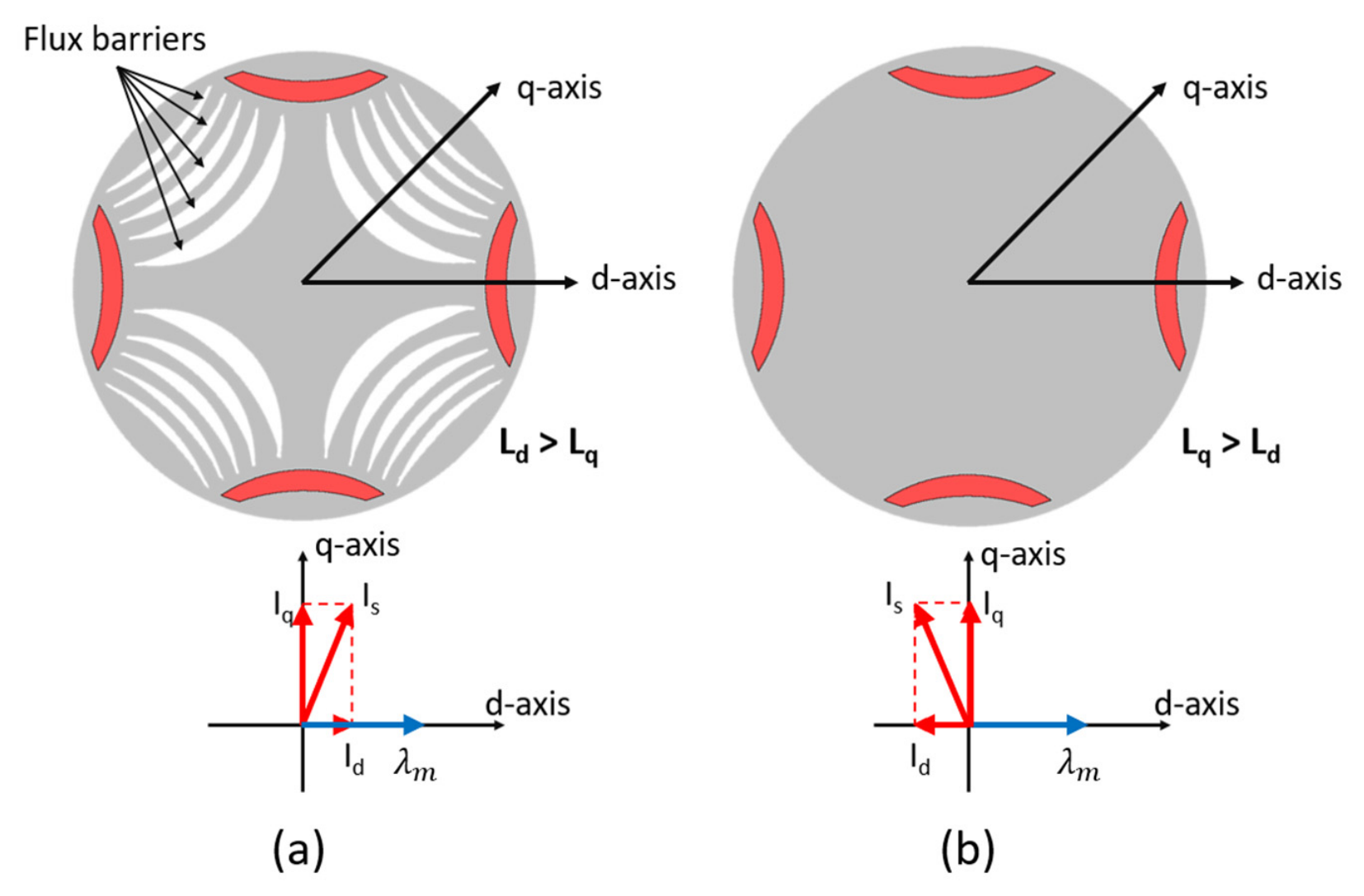
Figure 1 presents a rough comparison of configurations between FI-IPM and FW-IPM motors. The electromagnetic torque [18] is given by:
T = 3 p 2 λ m I q + 3 p 2 L d L q I d I q
where p is motor pole pairs, Ld and Lq are inductances along the d- and q-axes, Id and Iq are currents of the d- and q-axes, and λ m is the flux linkage contributed by PM. In addition, the first term is called the PM torque (Tpm), and the remaining term is called the reluctance torque (Trel).
The first advantage of the FI-IPM motor is the lower risk of irreversible demagnetization because the PM flux can be intensified by using positive d-axis current (Id(+)). This effect allows for the use of a smaller amount of PM, reducing initial cost while maintaining motor performance.
Thanks to the characteristic property of having Ld > Lq, the FI-IPM motors are capable of distributing reluctance torque in the opposite direction compared to FW-IPM motors. To achieve maximum torque in the maximum torque per ampere (MTPA) region, the FI-IPM motor requires an Id(+). As the motor speed exceeds its base speed, the Id current must be reduced by advancing the current angle and eventually becomes a negative d-axis current (Id(−)) to further suppress the back electromotive force (EMF).
The FW-IPM motor experiences a significant reduction in Lq due to saturation during operation, leading to a decreased Lq/Ld ratio and, consequently, a loss of reluctance torque, particularly under heavy load conditions. However, the opposite is true for the FI-IPM motor. The presence of flux barriers and the higher Ld > Lq characteristic not only prevent loss of reluctance torque but also result in an increased amount of this kind of torque as the load increases. Moreover, the presence of flux barriers ensures that Lq of the FI-IPM motor is less influenced by saturation, resulting in a more linear saliency, which is advantageous for sensorless control.
Eddy current loss occurs when conductive magnetic materials are exposed to time-varying magnetic fields, inducing circulating currents within the material. According to electromagnetic theory, a varying magnetic flux induces circulating currents (i.e., eddy currents) inside the PMs, which in turn produce resistive loss. The eddy current loss [19] can be approximated as follows:
P e = K e B 2 f 2 t 2 V
where K e is the eddy current constant, B is the flux density, f is the frequency of the magnetic field, t is the thickness of the material, and V is the volume of the material.
The loss of power due to eddy currents in a magnetic material is approximately proportional to both the thickness of the PM and the square of the frequency associated with the magnetic flux variation [20,21], the structural design of the considered PM motors [22,23], and the effect of the search coils used [24]. These losses result in thermal accumulation within the PMs, thereby raising their operating temperature. An increase in PM temperature adversely affects magnetic performance by diminishing the material’s coercivity and potentially shifting the operational point closer to its demagnetization threshold. Moreover, the thermal energy dissipated from these losses constitutes unusable power, ultimately degrading the overall efficiency of the motor.
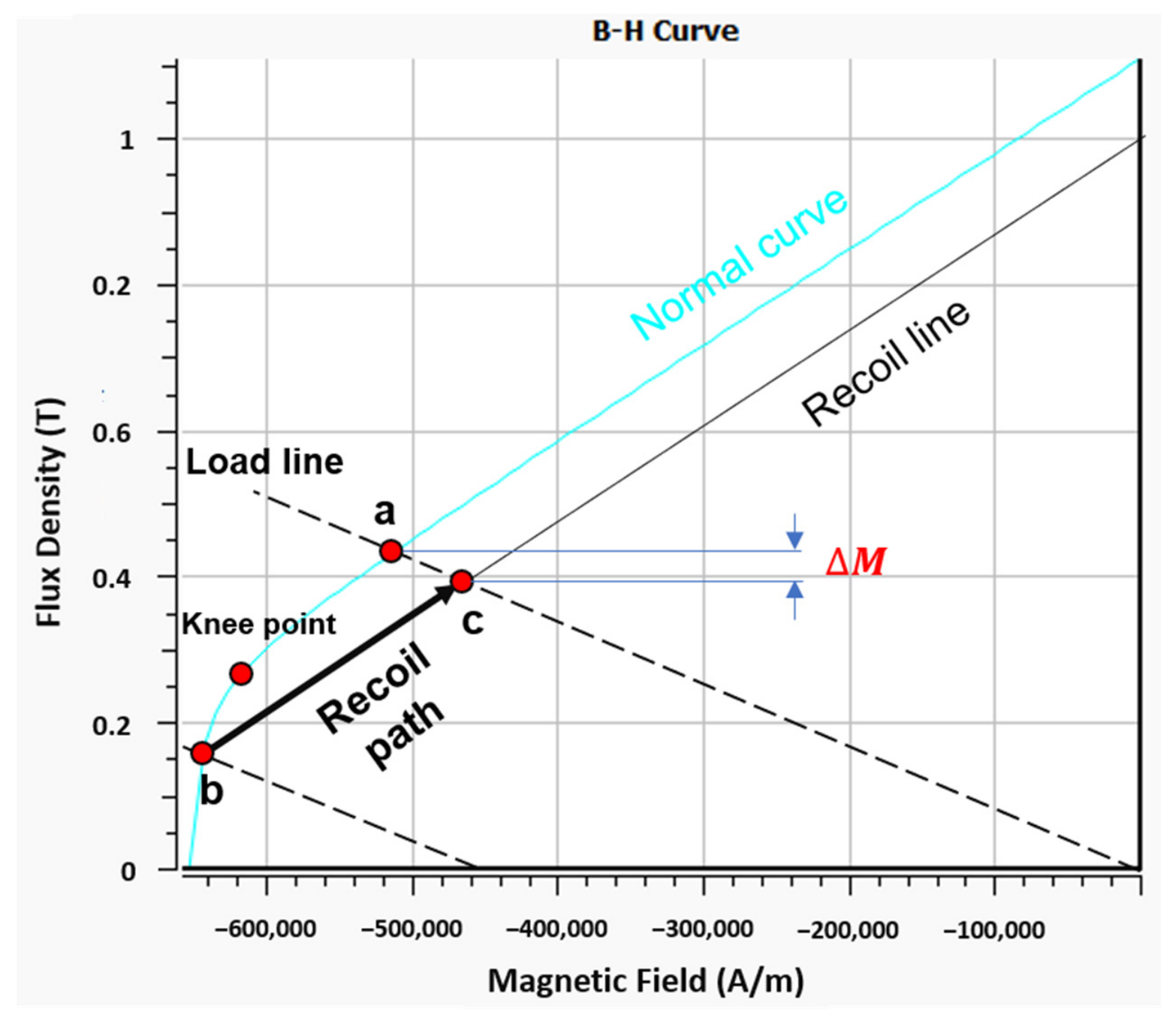
Demagnetization of PMs refers to the irreversible loss of magnetization that can occur as a result of exposure to adverse conditions, such as elevated temperatures or magnetic fields that oppose the inherent PM flux. In an IPMSM, armature reaction (especially a negative d-axis current for FW) produces a magnetic field that opposes the PM field. If this opposing field exceeds the PM’s coercive force (considering temperature reductions in coercivity), the PM may partially demagnetize, permanently losing some of its PM flux output. The demagnetization risk is commonly evaluated by examining the operating point of the PM on its B-H curve (demagnetization curve). If under worst-case conditions (e.g., maximum FW current and highest temperature), the operating point falls below the “knee point” of the curve, causing the operating point to transition from position (b) to (c), as shown in Figure 2 [25]. Demagnetization not only reduces the motor’s torque output (due to weakened PMs) but can also cause vibration and further heating due to the imbalance in magnetic fields. Therefore, preserving PM integrity under extreme electrical and thermal stress is crucial for EV motors.

3. Motor Configuration

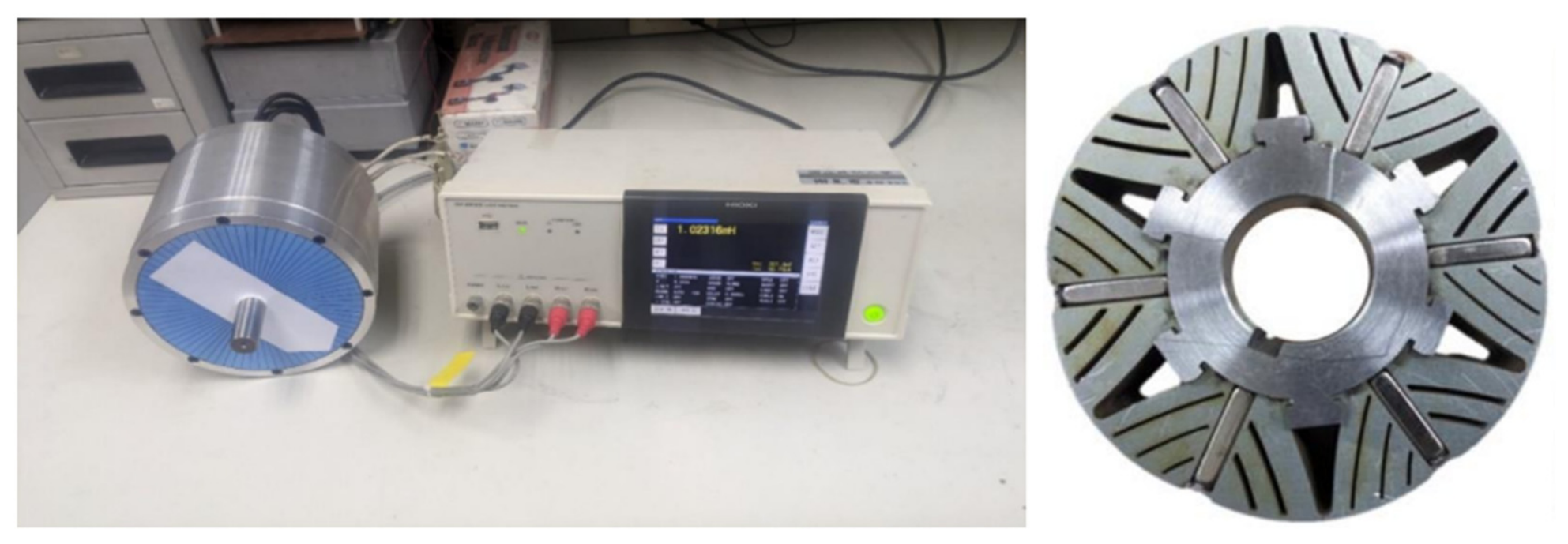
The baseline model used in this study is a spoke-type FI-IPM motor, which was originally designed, prototyped, and experimentally validated as part of the earlier study [26]. The detailed experimental setup, testing procedures, and corresponding foundational data are reported therein. The physical prototype and the original experimental equipment used for validation are illustrated in Figure 3. Key geometric and material parameters are summarized in Table 1.
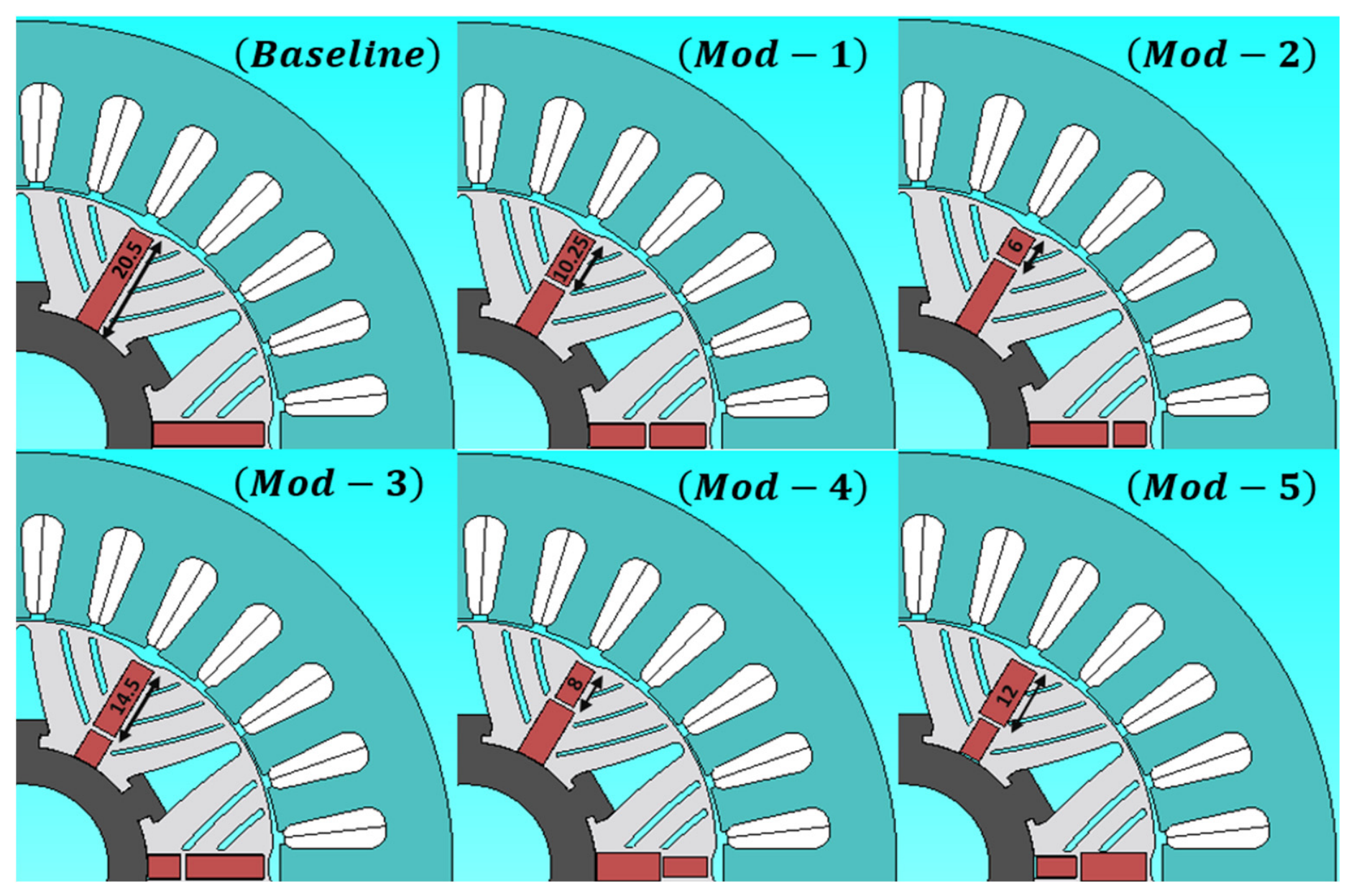
To investigate the effects of PM segmentation, five modified rotor configurations (labeled Mod-1 through Mod-5) were developed, as shown in Figure 4. The rationale for dividing the PM into exactly two segments (rather than three or four) is based on spatial and structural constraints. Every segmentation cut necessitates an iron bridge (0.8 mm thick). Implementing three or four segments would significantly reduce the active PM volume, thereby excessively degrading PM torque, and would also introduce multiple structural weak points susceptible to high centrifugal forces at high speed. Two segments serve as the optimal foundational configuration to investigate the physical phenomena. Furthermore, rather than conducting a full multi-objective algorithmic optimization, the locations and dimensions of these segments were strategically determined using parametric heuristic criteria. Models 1 to 3 systematically sweep the radial location of the iron bridge to isolate its effect on flux leakage and reluctance torque. Models 4 and 5 intentionally skew the radial volume distribution (inner-dominant versus outer-dominant) to isolate the effects of volume placement on demagnetization resilience and eddy current reduction. This systematic manual approach provides clear, physically interpretable comparisons before advancing to computer-aided evolutionary optimization in future studies.
It should be noted that the thickness of the iron bridges is kept constant at 0.8 mm across all proposed rotors. The distinctions among Mod-1 to Mod-5 are in how the PM is segmented and how the rotor iron bridges are arranged:
Mod-1, Mod-2, Mod-3 (varying iron bridge position): In these three rotor designs, the focus is on adjusting the radial position of the iron bridges located between two PM segments, while maintaining a consistent bridge thickness across all models. Specifically, each design shifts the iron bridge to a different radial location within the rotor structure, which alters the flux distribution and impacts the d-axis inductance. This setup enables a systematic investigation into how changes in the bridge’s position (without altering its thickness) influence both the reluctance torque generated by the motor and its resistance to demagnetization.
Mod-4 and Mod-5 (varying radial distribution of PM volume): These two designs explore the effect of changing the radial placement of PM material within the rotor while keeping the total PM mass constant. In Mod-4, the PM segment located closer to the rotor shaft (inner PM) occupies a larger volume than the outer one, concentrating more flux near the rotor core. Conversely, Mod-5 features a larger outer PM segment and a smaller inner one, shifting the flux distribution outward. This approach enables analysis of how varying the radial volume allocation of PMs affects eddy current loss, demagnetization resistance, and torque distribution of the motor.

4. Motor Performance Analysis

4.1. Torque Production

This paper employs finite element analysis conducted using JMAG Designer, developed and supported by JSOL Corporation. The results of torque production reveal the following insights:
-
Reduction in developed torque:
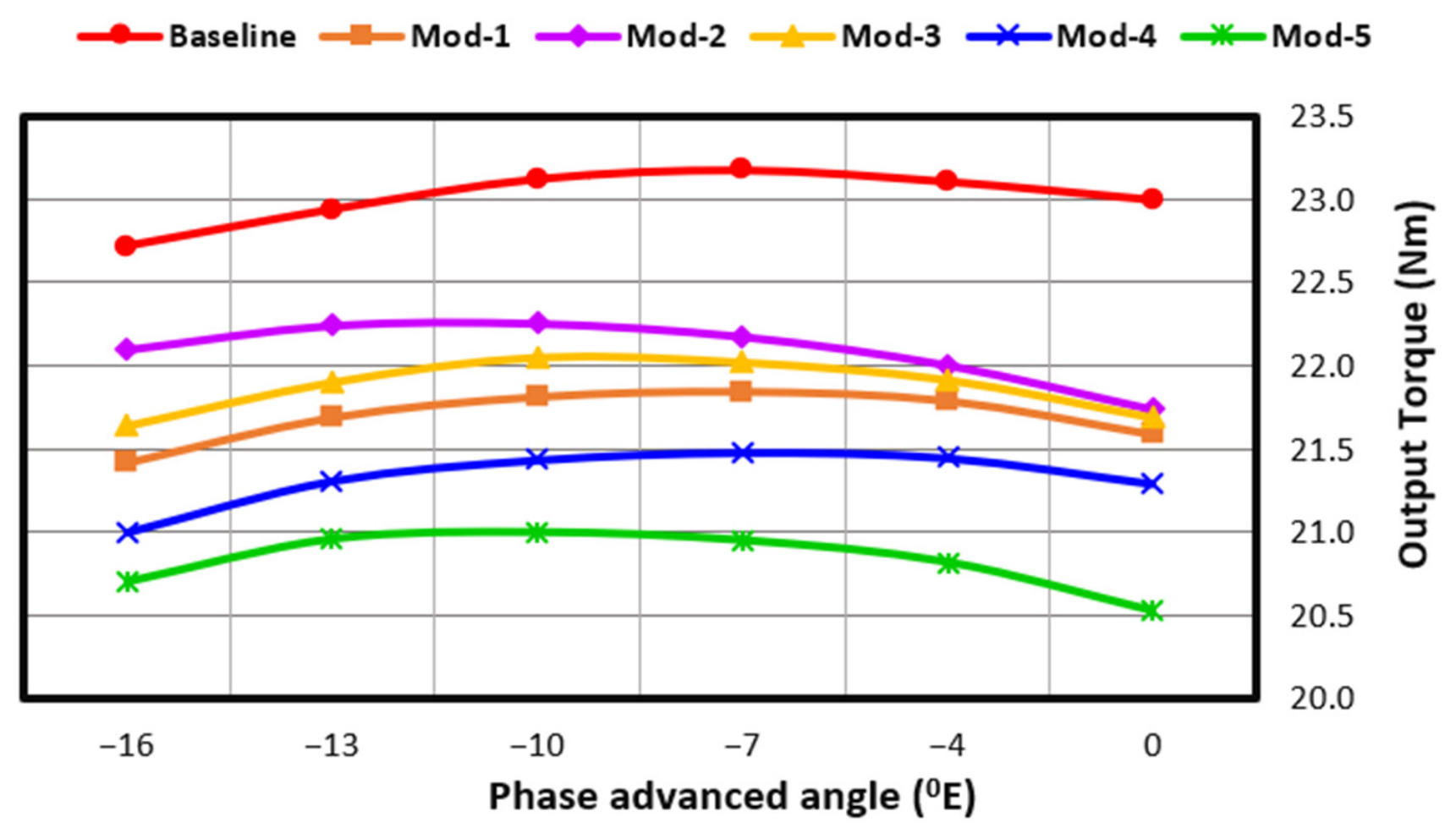
The simulation is first performed at the base speed of 2000 rpm with a peak phase current of 105 A. Meanwhile, the current angle (δ) was swept from 0° to −16° to identify the maximum output torque for each model, where results are shown in Figure 5 and Table 2. As can be seen, the baseline model delivers the highest torque (23.18 Nm at −7°), while all segmented models show a modest drop (from 4.33% to 9.63%).
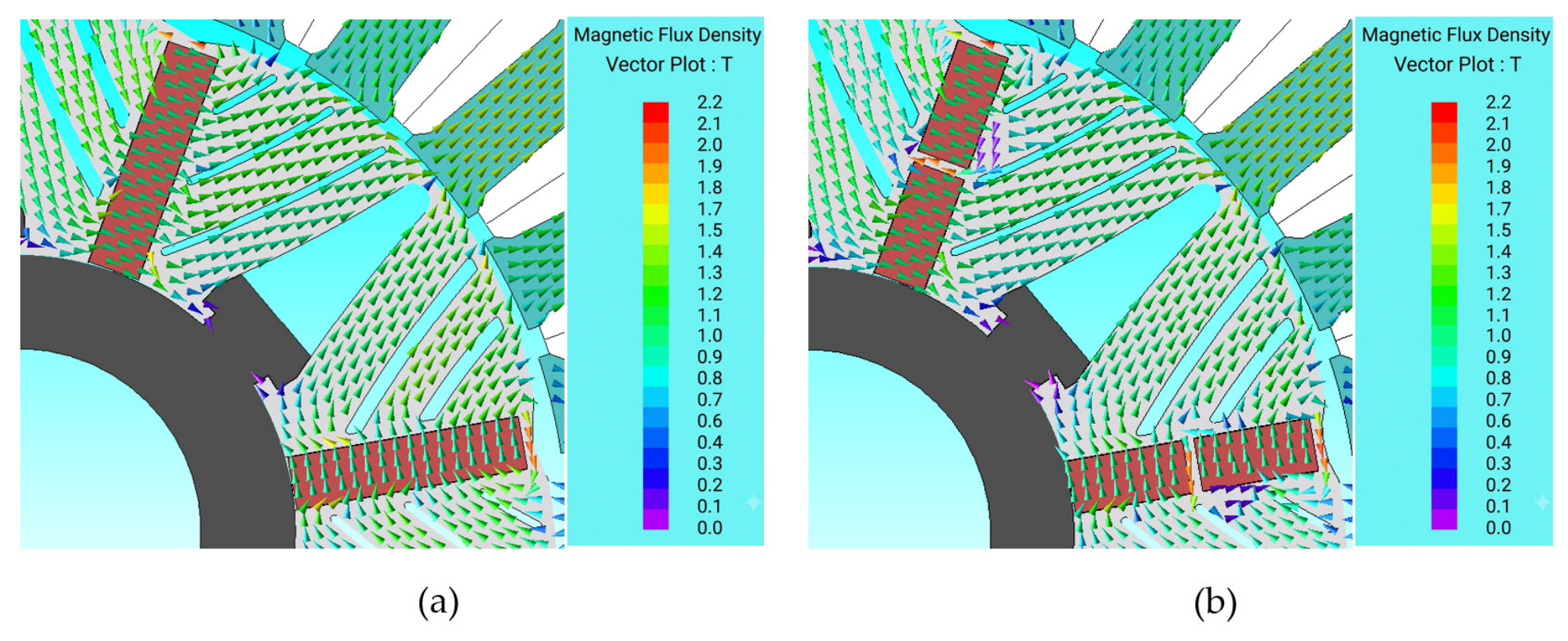
This reduction can be physically understood by examining the magnetic flux paths. Figure 6 visualizes and compares the magnetic flux lines between the baseline model and a representative segmented configuration (Mod-1). As clearly observed in the close-up view of Mod-1, the introduction of the 0.8 mm iron bridges creates parallel magnetic short-circuits. A portion of the PM flux prematurely circulates through these bridges as leakage flux, rather than crossing the air-gap into the stator. This localized leakage physically explains the reduction in effective coil flux linkage, which is quantitatively recorded in Table 3 and directly leads to the observed decrease in PM torque production.
-
Increases in inductance difference and reluctance torque:
It is well-established that in the FW-IPM motor, Lq > Ld. Therefore, in segmented magnet designs, Ld tends to increase, while Lq remains largely unaffected. This results in a decrease in the difference between Lq and Ld, leading to a reduction in reluctance torque. Additionally, magnet segmentation reduces the magnetic flux linkage with the stator windings, thereby decreasing magnetic torque. In summary, for conventional IPM motors, magnet segmentation reduces both reluctance torque and magnetic torque. In contrast, for the FI-IPM motor with Ld > Lq, segmenting the PMs reduces magnetic torque due to flux leakage at the iron bridges. However, this also increases Ld, which enhances the difference between Ld and Lq, thereby increasing reluctance torque. This increase in reluctance torque partially compensates for the reduction in magnetic torque, mitigating the overall torque loss. Table 3 shows the coil flux linkage, Ld, and Lq for all designs.
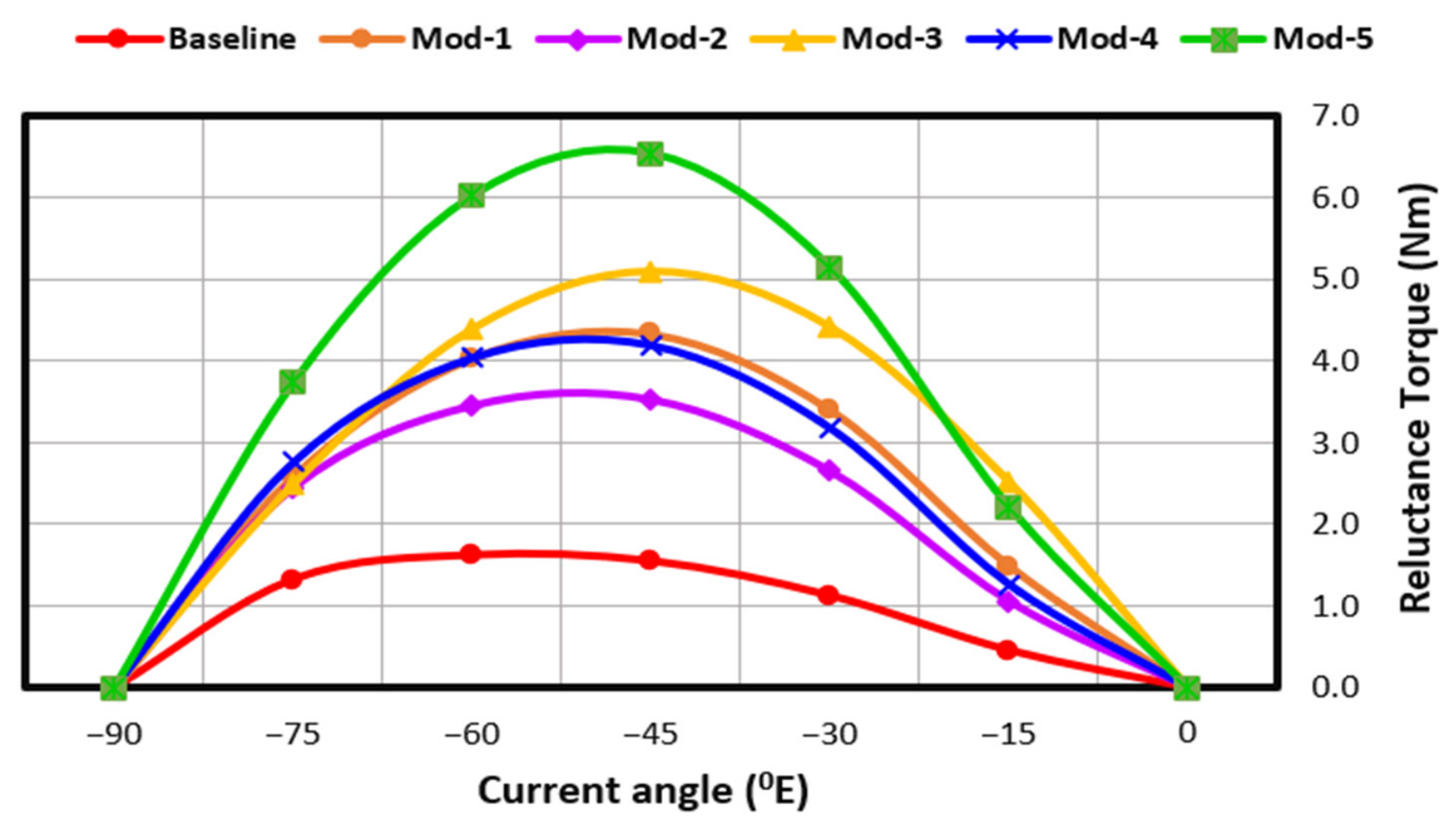
From this perspective, it is clear that all segmented PM models exhibit higher reluctance torque compared to the baseline, as shown in Figure 7. More specifically, the increase in reluctance torque in the segmented PM models compared to the baseline model, as well as the contribution of reluctance torque in all models, are listed in Table 4. As can be seen, Mod-3 and Mod-5 provide the highest reluctance torque, approximately 2.29 and 3.23 times above the baseline model, respectively. Moreover, the contribution of reluctance torque to maximum torque for these two models is also the most significant, at 7.55% and 10.53%, respectively. Those results clearly highlight the increased share of reluctance torque in Mod-3 and Mod-5, confirming the enhanced effectiveness of reluctance torque in models with segmented PMs.
Additionally, all segmented PM models achieve maximum torque at more negative δ values compared to the baseline model at −7°. This shift in optimal current angle confirms the stronger reliance on reluctance torque to compensate for lower PM torque.
In summary, although segmentation results in a modest reduction in PM torque due to magnetic flux discontinuity, it offers significant gains in reluctance torque and enables a more favorable control strategy characterized by a deeper current angle. These improvements also contribute to intensified PM flux and enhanced rotor mechanical integrity, resulting from the structural reinforcement provided by the iron bridges between segmented PMs.

4.2. Eddy Current Loss

As mentioned above, the value of eddy current loss depends greatly on the material size, which is also the reason why the stator and rotor are not made from a solid block of iron but are assembled from thin steel sheets. In this analysis, 6 models are operated at 3 different levels, including 2000 rpm (base speed), 4000 rpm, and 6000 rpm.
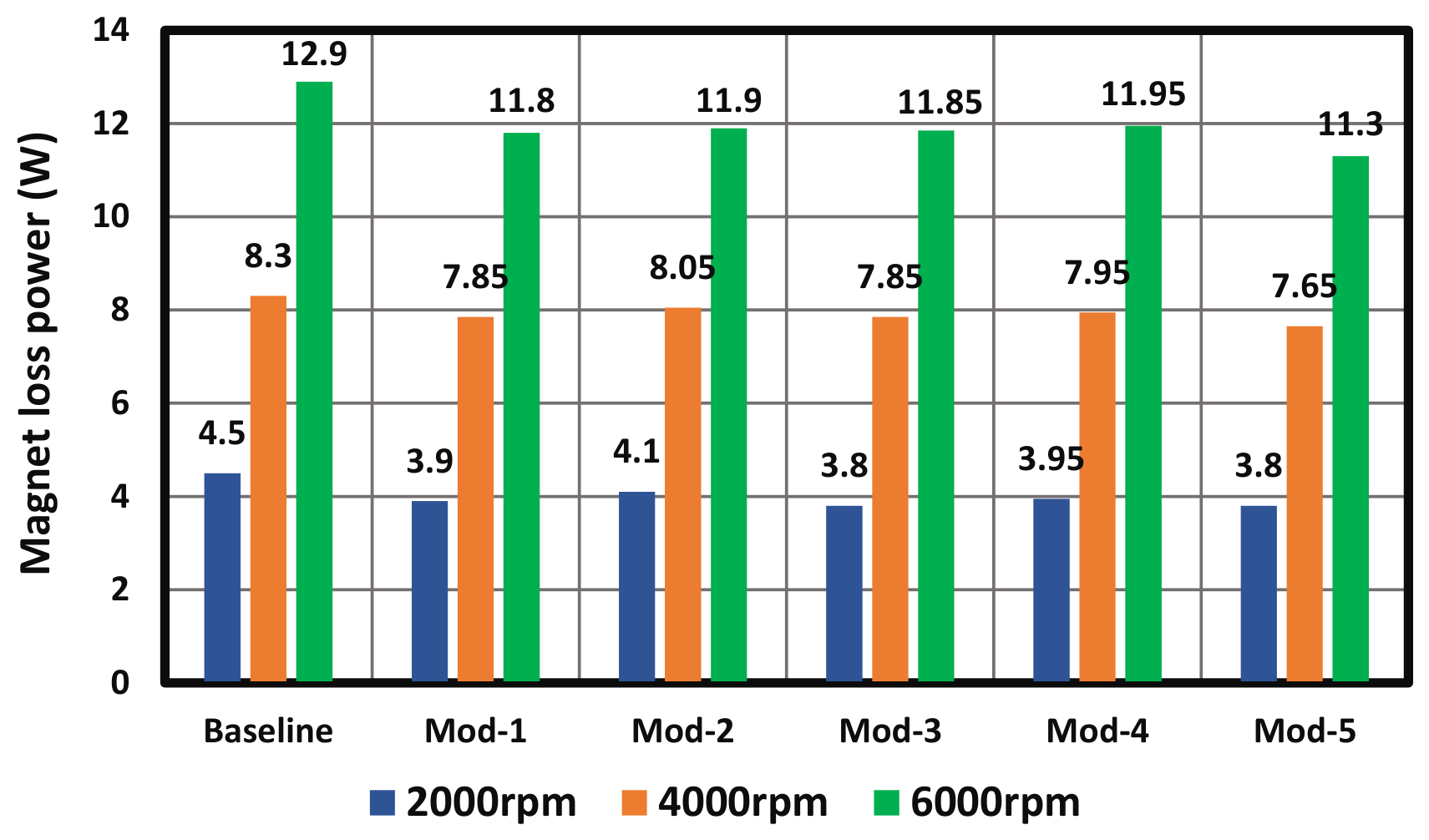
As depicted in Figure 8, the PM eddy current loss increases with motor speed. Compared to the baseline model, the five proposed models consistently exhibit lower losses under all operating conditions. Among them, Mod-5 achieves the most favorable performance, demonstrating reductions of 15.6%, 7.8%, and 12.4% at 2000 rpm, 4000 rpm, and 6000 rpm, respectively. It is important to emphasize that while PM eddy current loss constitutes a minimal fraction of the total machine losses (which are heavily dominated by stator copper and iron core losses), its reduction is not primarily aimed at improving the overall macroscopic efficiency of the motor. Rather, the critical impact of PM eddy current loss lies in localized thermal accumulation. Due to the poor thermal dissipation environment of the rotor, even a small magnitude of eddy current loss can cause a significant temperature spike within the PMs. This localized heating severely diminishes both the remanent flux density and intrinsic coercivity, thereby accelerating the risk of irreversible demagnetization during high-speed field-weakening operations. Thus, the practical significance of PM segmentation lies fundamentally in securing the thermal and magnetic stability, ensuring reliable high-speed operation, and extending the motor’s lifespan, rather than notably altering its overall loss distribution.

4.3. Demagnetization

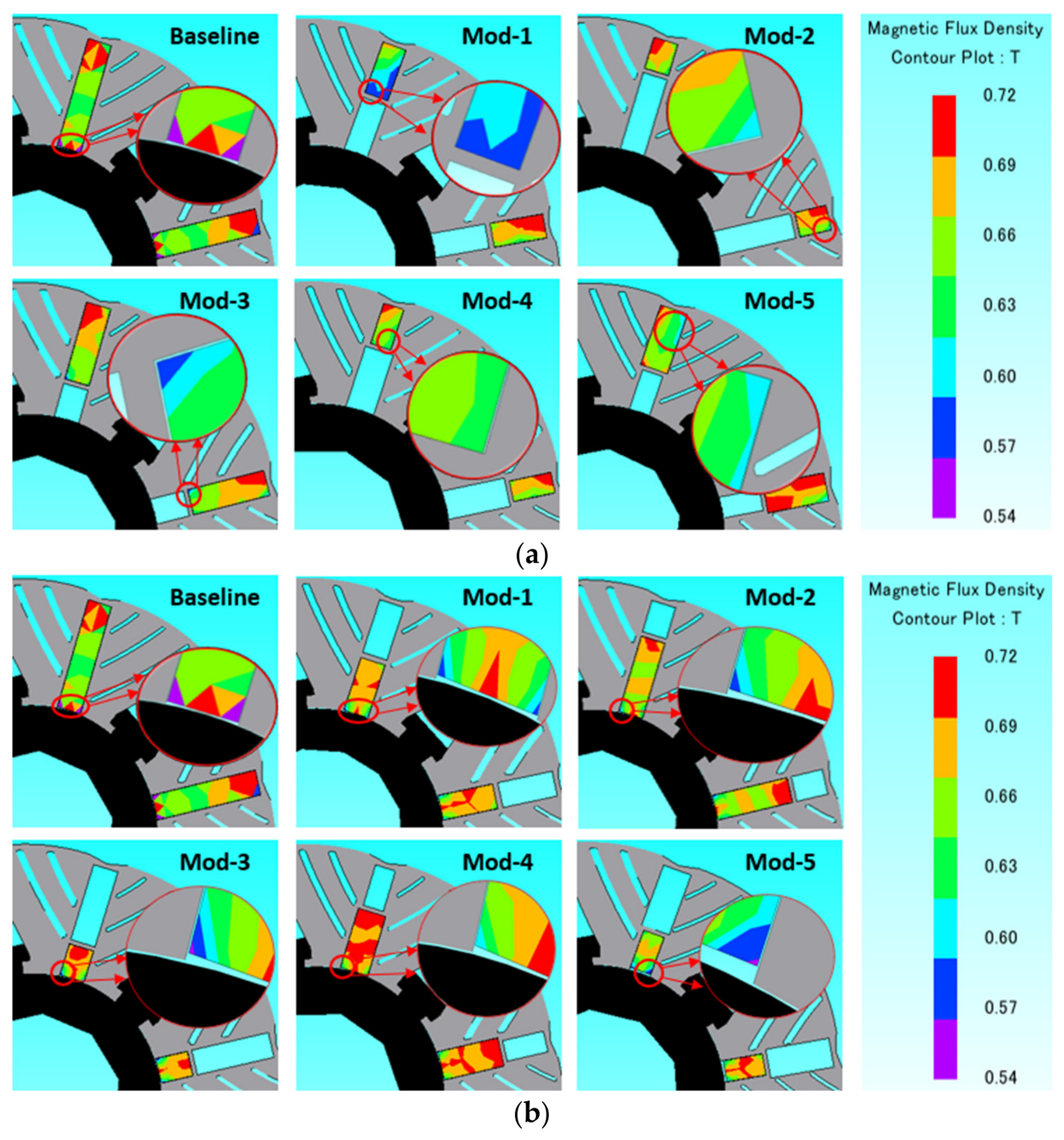
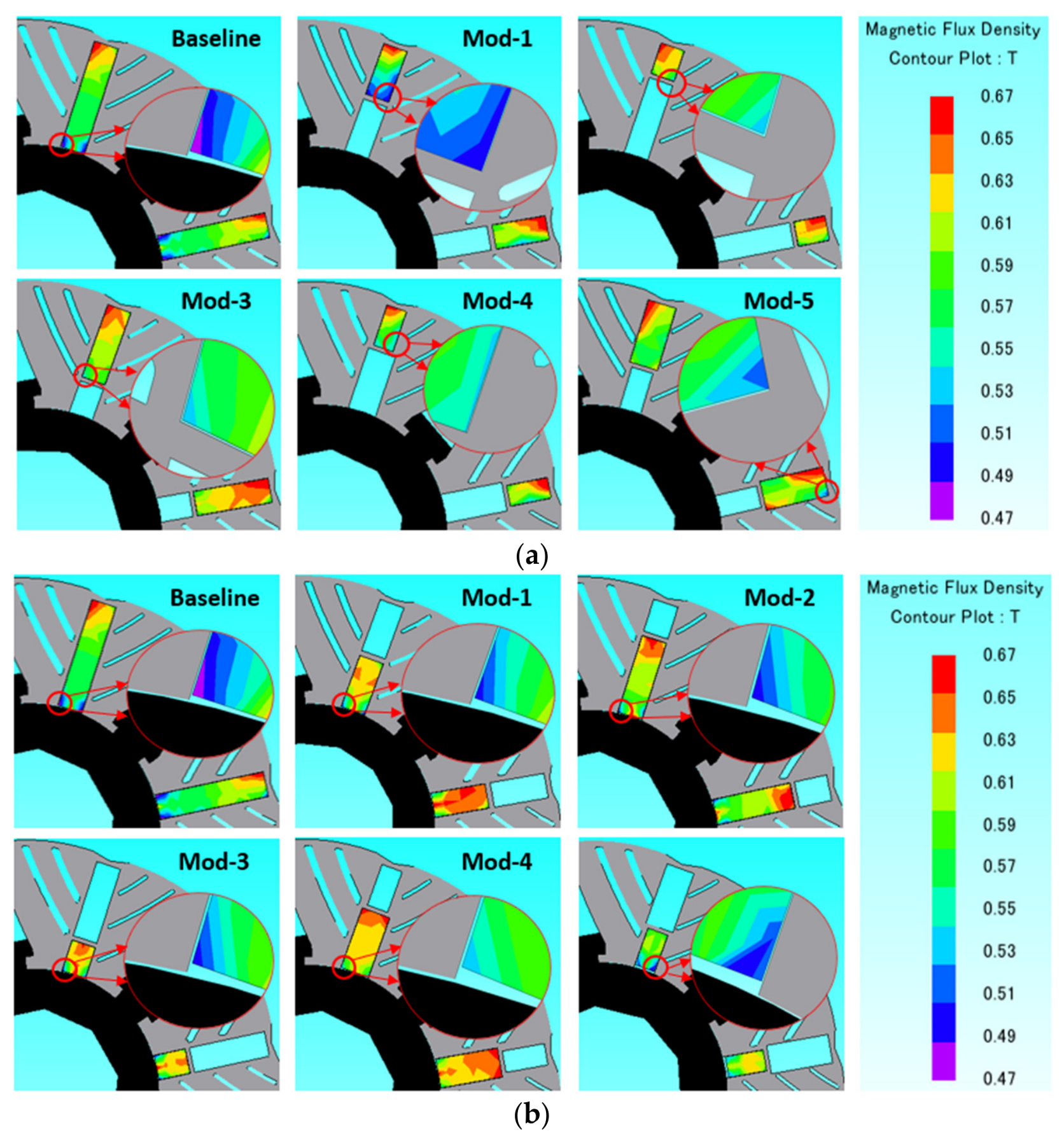
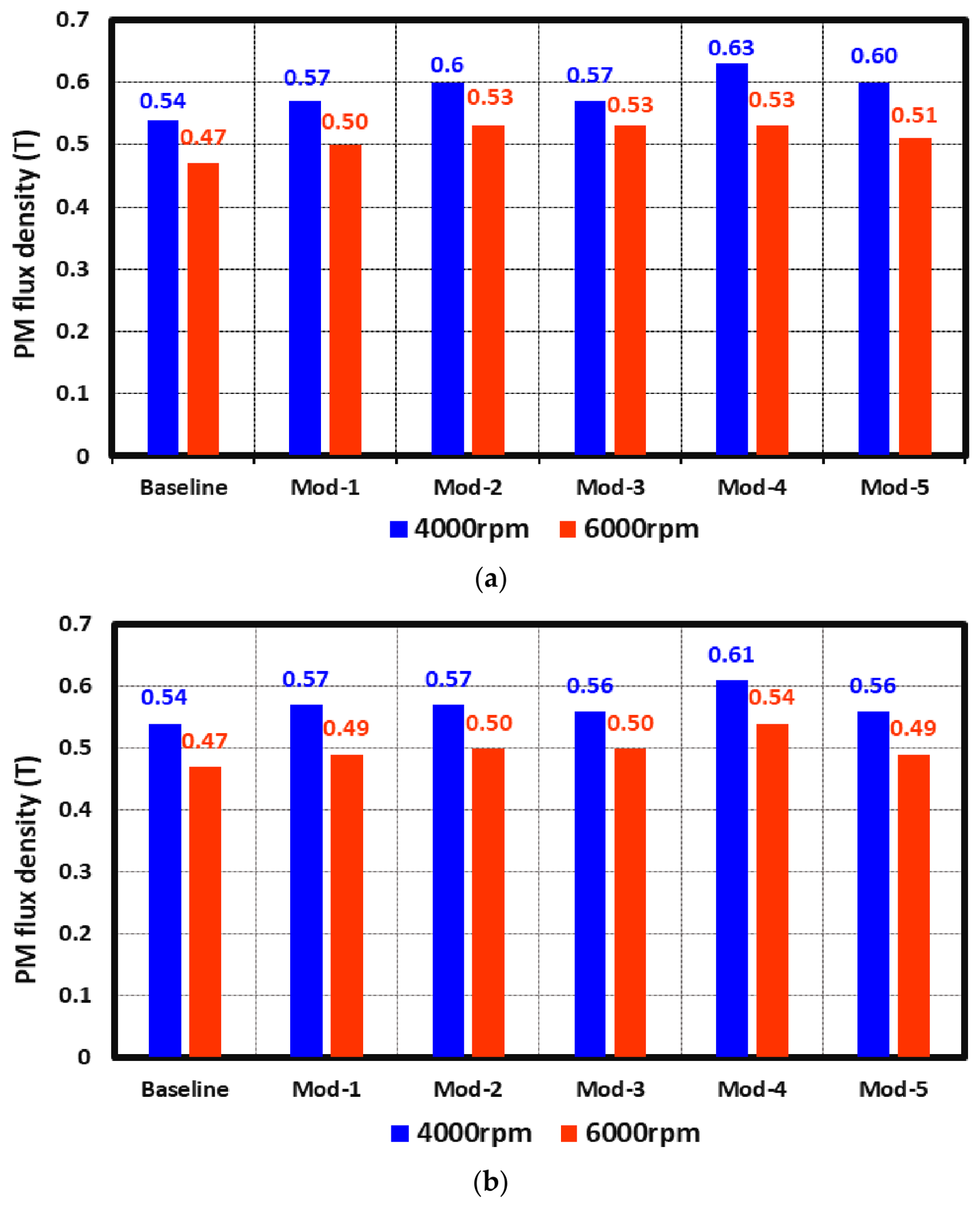
To evaluate demagnetization robustness, we examined the PM flux density in each design under severe operating conditions. Here, we simulate two high-speed conditions: 4000 rpm and 6000 rpm, each at the current angles allowed by the inverter’s voltage and current limits for those speeds. At these operating points, the PMs endure strong opposing d-axis magnetomotive force (MMF) and tend to have higher loss-induced heating. Figure 9 and Figure 10 plot the resulting PM flux density distribution in the rotor PMs for all models at 4000 rpm and 6000 rpm, respectively, while Figure 11 compares the minimum PM flux density among the models under these stress conditions.
The baseline model suffers the greatest reduction in PM flux density at high current angle, indicating it is the most susceptible to demagnetization. In fact, at 6000 rpm, the PM flux density of the baseline model falls to the lowest value among the six designs, raising concern about irreversible demagnetization. In contrast, the segmented PM models retain higher PM flux densities under the same conditions.
The segmented designs show higher values in PM flux density, thanks to reduced eddy current heating and the distributed demagnetizing field effect. The presence of iron bridges in the rotor helps to spread out and partially shunt the demagnetizing field, so no single PM segment faces the full brunt of the d-axis MMF.
It is noteworthy that, in general, the PMs positioned on the outer side exhibit higher flux density values when compared to those on the inner side. This can be attributed to the fact that, in a segmented PM configuration, the interaction between the outer and inner PMs could affect the flux distribution. The magnetic field from the outer PM might be influencing the inner PM in a way that reduces its effective flux density. This could occur due to the magnetic coupling between the PMs, where the magnetic field from the outer PM disturbs the flux distribution within the inner PM.
Among the variants, Mod-4 maintains the highest flux retention. This can be attributed to its inner-PM-dominant configuration, in which the inner PM segment is significantly larger than the outer one. In general, for multi-layer IPM motors, the inner-layer magnets exhibit lower flux density than the outer-layer magnets during operation because they are subject to demagnetizing flux from both the stator field and the magnetic field produced by the outer magnets. In the specific configuration of Mod-4, the magnetic field generated by the relatively small outer PM is insufficient to appreciably disturb the flux of the larger inner PM, thereby preserving a more uniform and stable flux distribution across both segments under high-speed, high-current conditions. At 4000 rpm, the flux density reaches a minimum of 0.63 T for the outer PM and 0.61 T for the inner magnet. At 6000 rpm, the minimum values are 0.53 T and 0.54 T, respectively. These results are notably higher than those observed in the baseline model, which exhibits much lower flux retention. Besides that, Mod-2 and Mod-5 also perform very well, with only slight differences in the retained PM flux compared to Mod-4.
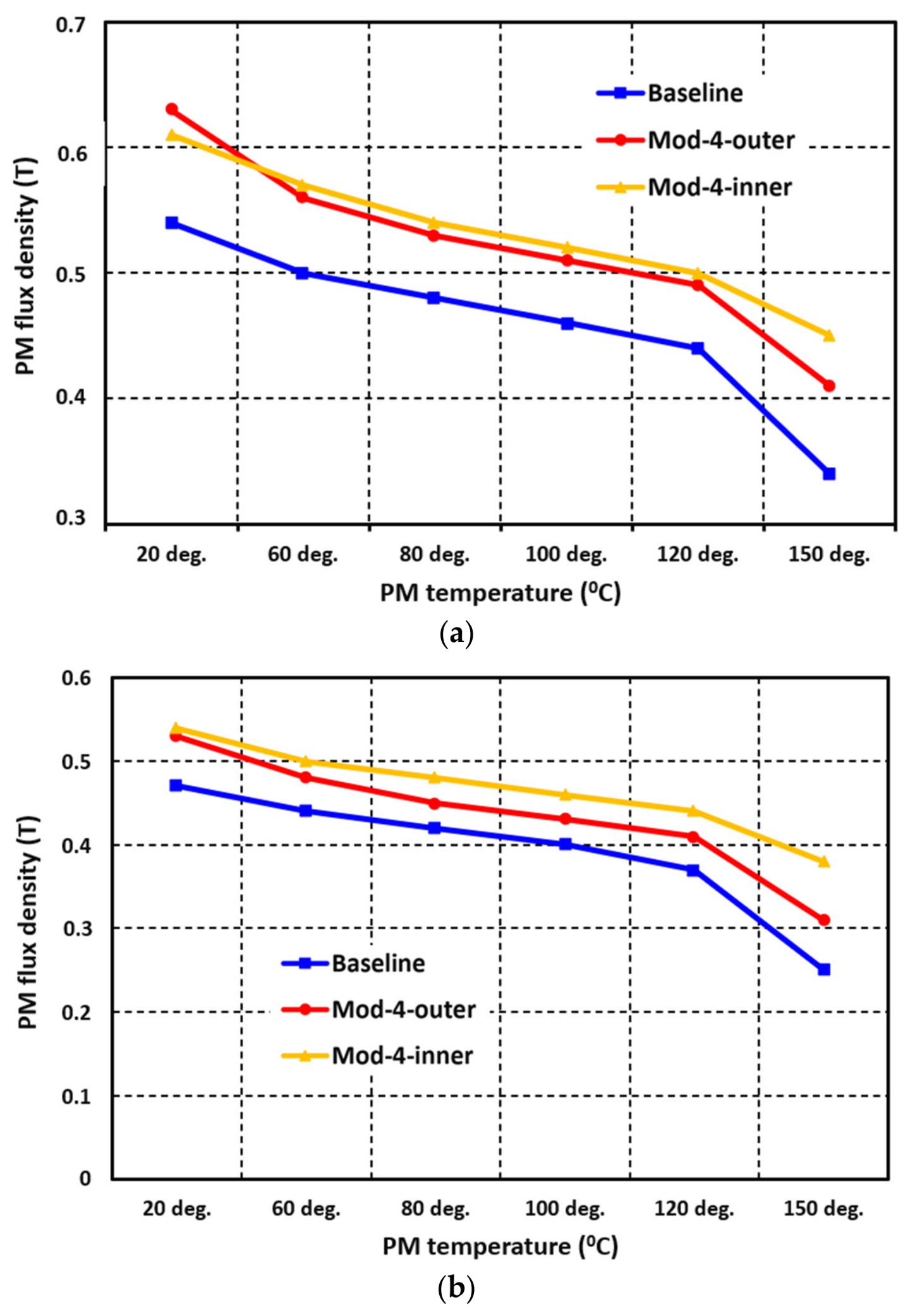
To obtain a more detailed assessment of the improvement in demagnetization resistance, the PM flux density values of the baseline model and Mod-4 models are further analyzed under various operating temperatures ranging from 20 °C to 150 °C.
As shown in Figure 12, Mod-4 maintains consistently higher PM flux density than the baseline model across the entire thermal spectrum. Notably, at 150 °C, the flux density experiences a sharper drop, indicating the operating point is closely approaching the “knee point” of the B-H curve, raising the risk of irreversible demagnetization. Under this extreme stress at 6000 rpm, the baseline model suffers a significant flux reduction, falling to approximately 0.25 T. Conversely, both the inner and outer segments of Mod-4 successfully retain much higher flux densities (up to 0.38 T for the inner PM). This confirms the superior thermal stability and demagnetization resilience of the segmented PM topology under severe conditions.
This superior thermal stability can be explained by two complementary mechanisms. First, as demonstrated in Section 4.2, all segmented PM models exhibit lower eddy current loss than the baseline, which leads to reduced heat generation within the PM during operation and consequently limits the temperature rise of the magnet material. Second, the iron bridges in the rotor distribute and partially shunt the demagnetizing field, preventing any single PM segment from bearing the full d-axis MMF. The combination of these two effects explains why Mod-4, representative of the segmented PM configurations, is less affected by temperature than the baseline model.
This result is particularly critical for high-performance applications where elevated operating temperatures are common and magnetic stability is essential.
Overall, the results confirm that segmented PMs better preserve PM flux under heavy electromagnetic stress, mitigating the risk of irreversible demagnetization. This is a critical advantage for EV motors, which often operate in FW mode at high-speed regions.

4.4. Overall Assessment and Practical Contribution for EV Applications

While each segmented PM configuration improves upon the baseline model in all three performance dimensions, the above results imply that no single configuration simultaneously optimizes torque output, eddy current loss reduction, and demagnetization robustness. Instead, a clear trade-off emerges depending on how the PM amount is distributed and where the iron bridges are positioned.
Notably, all segmented configurations exhibit a modest reduction in maximum total torque (between 4.33% and 9.63% at base speed) compared to the baseline. However, in real-world EV applications, peak total torque is typically demanded only during transient operations like initial acceleration or steep hill climbing. The slight compromise in base-speed torque is a highly justified engineering trade-off to achieve the significantly enhanced durability, thermal stability, and demagnetization resistance required for continuous high-speed highway cruising.
These distinct characteristics provide actionable EV design guidance:
-
Outer-PM-dominant configurations (e.g., Mod-5): Maximize reluctance torque and minimize eddy current losses, making them ideal for applications prioritizing efficiency at moderate speeds.
-
Inner-PM-dominant configurations (e.g., Mod-4): Provide markedly superior flux retention under high-temperature, high-current field-weakening conditions, offering the most reliable long-term behavior for sustained high-speed driving.
-
Intermediate configurations (e.g., Mod-1, Mod-2, Mod-3): Distribute the trade-off more evenly, with Mod-2 offering a well-balanced compromise across all performance dimensions.
Ultimately, this topology-aware sensitivity to segmentation geometry, which is a direct consequence of the reversed saliency inherent to FI-IPM motors, constitutes the principal practical contribution of this work for EV traction motor design.

5. Conclusions

This paper presents a comprehensive analysis of segmented PM configurations on torque production, eddy current loss, and demagnetization in spoke-type FI-IPM motors, evaluating five segmented PM configurations against a baseline design through FEA.
The central finding is that PM segmentation in FI-IPM motors produces a topology-specific response absent in conventional IPMSMs: the reversed saliency condition (Ld > Lq) causes segmentation-induced increases in Ld to widen the inductance differential, enabling reluctance torque to partially compensate for the reduction in PM torque, rather than compounding it as in baseline designs. Simultaneously, the physical division of PM material reduces eddy current losses and lowers operating temperature, reinforcing coercivity retention and demagnetization robustness under field-weakening conditions.
However, the degree to which each benefit is realized involves inherent trade-offs governed by segmentation geometry. Configurations that maximize reluctance torque and minimize losses tend to compromise flux retention, while those optimized for demagnetization robustness yield more modest gains in the other dimensions. Recognizing and characterizing these trade-offs is essential for targeted motor design. The geometric sensitivities identified here, particularly, the contrasting behavior of outer-PM-dominant versus inner-PM-dominant distributions. These provide a concrete foundation for multi-objective optimization of spoke-type FI-IPM motors in the future, for EV applications. Despite these promising findings, the current research has certain limitations. First, the validation is primarily based on finite element analysis, lacking dynamic in-vehicle drive cycle data. Second, while the 0.8 mm iron bridges improve magnetic performance, further evaluations, including high-speed mechanical stress, torque ripple, and cogging torque, are required. Therefore, future work will focus on multi-physics optimization, coupling electromagnetic analysis (including torque ripple and cogging torque) with structural analyses, followed by the physical prototyping of the most balanced segmented configuration for experimental validation under real-world EV conditions.

Author Contributions

Conceptualization, D.-K.N.; methodology, D.-K.N., V.-V.D. and M.-F.H.; software, V.-V.D., H.Q.V. and M.-H.L.D.; validation, D.-K.N., V.-V.D., H.V.P.N. and N.G.M.T.; formal analysis, D.-K.N., V.-V.D. and M.-F.H.; investigation, V.-V.D., H.Q.V. and N.G.M.T.; resources, D.-K.N., M.-F.H. and N.G.M.T.; data curation, V.-V.D. and H.Q.V.; writing—original draft preparation, D.-K.N. and V.-V.D.; writing—review and editing, D.-K.N. and N.G.M.T.; visualization, V.-V.D. and M.-H.L.D.; supervision, D.-K.N. and M.-F.H.; project administration, D.-K.N., M.-F.H. and N.G.M.T.; funding acquisition, V.-V.D. and N.G.M.T. All authors have read and agreed to the published version of the manuscript.

Funding

This research is funded by The University of Danang—University of Technology and Education under project number T2026-06-07.

Data Availability Statement

The original contributions presented in the study are included in the article. Further inquiries can be directed to the corresponding authors.

Acknowledgments

The authors would like to thank JSOL Corporation, Japan, for supporting JMAG.

Conflicts of Interest

The authors declare no conflicts of interest.

References

  1. Woo, M.-Y.; Ji, T.-H.; Park, S.; Jung, S.-Y. Rotor Flux Barrier Design by Topology for Stress Reduction and Extended CPSR of IPMSM for EV Traction Motor. In Proceedings of the 2022 25th International Conference on Electrical Machines and Systems (ICEMS); IEEE: New York, NY, USA, 2022; pp. 1–4. [Google Scholar]
  2. Contò, C.; Bianchi, N. A Guideline for Selecting Motors for Electric Bikes Based on Magnetic Analysis and Measurements. IEEE Trans. Energy Convers. 2024, 39, 97–106. [Google Scholar] [CrossRef]
  3. Kim, S.-I.; Park, S.; Park, T.; Cho, J.; Kim, W.; Lim, S. Investigation and Experimental Verification of a Novel Spoke-Type Ferrite-Magnet Motor for Electric-Vehicle Traction Drive Applications. IEEE Trans. Ind. Electron. 2014, 61, 5763–5770. [Google Scholar] [CrossRef]
  4. Dorrell, D.G.; Knight, A.M.; Evans, L.; Popescu, M. Analysis and Design Techniques Applied to Hybrid Vehicle Drive Machines—Assessment of Alternative IPM and Induction Motor Topologies. IEEE Trans. Ind. Electron. 2012, 59, 3690–3699. [Google Scholar] [CrossRef]
  5. Jung, H.-C.; Park, G.-J.; Kim, D.-J.; Jung, S.-Y. Optimal Design and Validation of IPMSM for Maximum Efficiency Distribution Compatible to Energy Consumption Areas of HD-EV. In Proceedings of the 2016 IEEE Conference on Electromagnetic Field Computation (CEFC); IEEE: New York, NY, USA, 2016; p. 1. [Google Scholar]
  6. Onsal, M.; Cumhur, B.; Demir, Y.; Yolacan, E.; Aydin, M. Rotor Design Optimization of a New Flux-Assisted Consequent Pole Spoke-Type Permanent Magnet Torque Motor for Low-Speed Applications. IEEE Trans. Magn. 2018, 54, 8206005. [Google Scholar] [CrossRef]
  7. Ustun, O.; Kara, D.B. Evaluation of Spoke Type IPM Synchronous Motors for IE4 Efficiency Class. In Proceedings of the 2018 XIII International Conference on Electrical Machines (ICEM); IEEE: New York, NY, USA, 2018; pp. 1176–1181. [Google Scholar]
  8. Yamazaki, K.; Kanou, Y.; Fukushima, Y.; Ohki, S.; Nezu, A.; Ikemi, T.; Mizokami, R. Reduction of Magnet Eddy Current Loss in Interior Permanent Magnet Motors with Concentrated Windings. In Proceedings of the 2009 IEEE Energy Conversion Congress and Exposition; IEEE: New York, NY, USA, September 2009; pp. 3963–3969. [Google Scholar]
  9. Kim, H.-K.; Hur, J. Dynamic Characteristic Analysis of Irreversible Demagnetization in SPM- and IPM- Type BLDC Motors. In Proceedings of the 2015 IEEE Energy Conversion Congress and Exposition (ECCE); IEEE: New York, NY, USA, 2015; pp. 308–313. [Google Scholar]
  10. Abbas, Z.; Heo, J.-H.; Ahmad, I.; Kang, J.-K.; Hur, J. 3-D FE Analysis of Magnet Segmentation for Optimizing Thrust Force and Eddy Current Loss of Arc Linear Servo Motor. IEEE Trans. Magn. 2025, 61, 7401005. [Google Scholar] [CrossRef]
  11. Demir, Y.; Onsal, M.; Aydin, M. Effect of Radial and Axial Magnet Segmentation on PM Eddy Current Losses for Brushless Synchronous Motors. In Proceedings of the 2023 IEEE International Magnetic Conference—Short Papers (INTERMAG Short Papers); IEEE: New York, NY, USA, 2023; pp. 1–2. [Google Scholar]
  12. Kawase, Y.; Yamaguchi, T.; Tu, Z.; Mizuno, M.; Minoshima, N.; Watanabe, M. Electrical Loss and Temperature Analysis of Interior Permanent Magnet Motor with Divided Magnets. In Proceedings of the 2009 International Conference on Electrical Machines and Systems; IEEE: New York, NY, USA, 2009; pp. 1–4. [Google Scholar]
  13. Yang, F.; Li, N.; Du, G.; Huang, M.; Kang, Z. Electromagnetic Optimization of a High-Speed Interior Permanent Magnet Motor Considering Rotor Stress. Appl. Sci. 2024, 14, 6033. [Google Scholar] [CrossRef]
  14. Pan, D.; Zhang, F.; Zheng, Y.; Rui, B. Design and Analysis of External Rotor High Speed Permanent Magnet Synchronous Motor for Flywheel Energy Storage. In Proceedings of the 2026 6th International Conference on Advances in Electrical, Electronics and Computing Technology (EECT); IEEE: New York, NY, USA, 2026; pp. 1–5. [Google Scholar]
  15. Kim, B.-C.; Lee, J.-H.; Kang, D.-W. A Study on the Effect of Eddy Current Loss and Demagnetization Characteristics of Magnet Division. IEEE Trans. Appl. Supercond. 2020, 30, 600805. [Google Scholar] [CrossRef]
  16. Zhao, H.; Zhang, H.; Zhang, X.; Gerada, D.; Li, J.; Zhang, J. Multi-Objective Optimization of the Iron Bridge between Segmeted PMs for an Outer-Rotor Brushless DC Motor. In Proceedings of the 2022 IEEE International Conference on Industrial Technology (ICIT); IEEE: New York, NY, USA, 2022; pp. 1–6. [Google Scholar]
  17. Do, V.-V.; Huynh, T.-A.; Hsieh, M.-F. Design and Analysis of Flux-Intensifying Spoke-Type IPM Motor for Improving Output Torque and Flux-Weakening Performance. In Proceedings of the 2022 25th International Conference on Electrical Machines and Systems (ICEMS); IEEE: New York, NY, USA, 2022; pp. 1–6. [Google Scholar]
  18. Hsieh, M.-F.; Ngo, D.-K.; Thao, N.G.M. Flux Intensifying Feature of Permanent Magnet Assisted Synchronous Reluctance Motor with High Torque Density. Electronics 2022, 11, 397. [Google Scholar] [CrossRef]
  19. Xu, Y.; Yuan, Q.; Zou, J.; Wang, H. Influence of Periodic Carrier Frequency Modulation on Stator Steel Core Loss and Rotor Eddy Current Loss of Permanent Magnet Synchronous Motor. In Proceedings of the 2014 17th International Conference on Electrical Machines and Systems (ICEMS); IEEE: New York, NY, USA, 2014; pp. 2094–2100. [Google Scholar]
  20. Rommel, D.P.; Di Maio, D.; Tinga, T. Transformer Hot Spot Temperature Prediction Based on Basic Operator Information. Int. J. Electr. Power Energy Syst. 2021, 124, 106340. [Google Scholar] [CrossRef]
  21. Thao, N.G.M.; Zhong, S.; Fujisaki, K.; Iwamoto, F.; Kimura, T.; Yamada, T. Assessment of Motor Core Loss, Copper Loss and Magnetic Flux Density with PAM Inverter under Dissimilar Excitation Angles. IET Electr. Power Appl. 2020, 14, 622–637. [Google Scholar] [CrossRef]
  22. Eichin, F.; Kamper, M.; Gerber, S.; Wang, R.-J. Symmetrical Short-Circuit Behavior Prediction of Rare-Earth Permanent Magnet Synchronous Motors. World Electr. Veh. J. 2024, 15, 536. [Google Scholar] [CrossRef]
  23. Guo, L.; Zhang, H.; Gao, X.; Zhou, Y.; Cheng, Y.; Wang, H. Structural Optimization Design and Analysis of Interior Permanent Magnet Synchronous Motor with Low Iron Loss Based on the Adhesive Lamination Process. World Electr. Veh. J. 2025, 16, 321. [Google Scholar] [CrossRef]
  24. Li, X.; Sun, C.; Xu, Z.; Li, C. Analytical Calculation of Mutual Inductance of Search Coils in Interior Permanent Magnet Synchronous Motor. World Electr. Veh. J. 2024, 15, 577. [Google Scholar] [CrossRef]
  25. JSOL Corporation JMAG—Designer-N38SH Neodymium Magnet B-H Curve. Available online: https://www.jmag-international.com/ (accessed on 22 July 2025).
  26. Do, V.-V. Design and Analysis of Novel Spoke Type Flux Intensifying IPM Motor. Master’s Thesis, National Cheng Kung University, Taiwan, China, 2023. Available online: https://hdl.handle.net/11296/9w4n4h (accessed on 25 June 2026).
Figure 1. Machine topology: (a) FI-IPM motor, (b) FW-IPM motor.
Wevj 17 00343 g001
Figure 2. Demagnetization curve of N38SH at 120 °C [25].
Wevj 17 00343 g002
Figure 3. Experimental setup and prototype of the spoke-type FI-IPM motor (baseline model), originally developed and validated in the earlier study [26].
Wevj 17 00343 g003
Figure 4. Illustrations of six models, including the baseline model: Mod-1, Mod-2, Mod-3, Mod-4, and Mod-5.
Wevj 17 00343 g004
Figure 5. Torque production comparison.
Wevj 17 00343 g005
Figure 6. Comparison of magnetic flux line distributions illustrating flux leakage through iron bridges: (a) baseline model; (b) Mod-1.
Wevj 17 00343 g006
Figure 7. Reluctance torque comparison.
Wevj 17 00343 g007
Figure 8. PM eddy current loss comparison.
Wevj 17 00343 g008
Figure 9. PM flux density at 4000 rpm: (a) Comparison between the outer PMs and baseline PM; (b) Comparison between the inner PMs and baseline PM.
Wevj 17 00343 g009
Figure 10. PM flux density at 6000 rpm: (a). Comparison between the outer PMs and baseline PM; (b) Comparison between the inner PMs and baseline PM.
Wevj 17 00343 g010
Figure 11. PM flux density comparison: (a) Comparison between the outer PMs and baseline PM; (b) Comparison between the inner PMs and baseline PM.
Wevj 17 00343 g011
Figure 12. PM flux density vs. temperature for baseline model and Mod-4: (a) at 4000 rpm; (b) at 6000 rpm.
Wevj 17 00343 g012
Table 1. Specifications of the investigated models.
ItemsValue
Peak power6.2 kW
Number of poles6
Number of slots27
Peak voltage80 V
Stator diameter160 mm
Stack length40 mm
Material of stator/rotor35CS300
Material of PMN38SH
Rotor diameter95
Air-gap length0.5 mm
PM dimensions of baseline model20.5 × 4 mm
Iron bridge thickness0.8 mm
Table 2. Maximum torque and current angle values.
ModelCurrent Angle (Degree)Maximum Torque (Nm)Torque Reduction (%)
Baseline−723.180.0
Mod-1−921.845.77
Mod-2−1022.184.33
Mod-3−1222.025.00
Mod-4−921.487.33
Mod-5−1320.959.63
Table 3. Coil flux linkage, Ld and Lq values.
ModelCoil Flux Linkage (Wb)Ld (mH)Lq (mH)LdLq (mH)
Baseline0.03910.3970.3520.045
Mod-10.03660.4190.3550.064
Mod-20.03690.4120.3520.060
Mod-30.03630.4230.3550.069
Mod-40.03550.4180.3550.063
Mod-50.03540.4370.3520.085
Table 4. Role of reluctance torque.
ModelReluctance Torque Increase (Times)Contribution of Reluctance Torque (%)
Baseline1.001.96
Mod-11.796.35
Mod-21.284.77
Mod-32.297.55
Mod-41.715.89
Mod-53.2310.53
Disclaimer/Publisher’s Note: The statements, opinions and data contained in all publications are solely those of the individual author(s) and contributor(s) and not of MDPI and/or the editor(s). MDPI and/or the editor(s) disclaim responsibility for any injury to people or property resulting from any ideas, methods, instructions or products referred to in the content.