


Abstract
Digital transformation has expanded data infrastructures, artificial intelligence (AI)-supported systems, and automation across knowledge-intensive domains. However, these developments often remain fragmented and are not consistently aligned with human well-being, epistemic integrity, or collective learning. This conceptual and integrative review develops a bounded multi-layer framework of noospheric technologies for examining the alignment of data infrastructures, AI-supported cognition, governance arrangements, and human capabilities in knowledge-intensive systems. Noospheric technologies are defined as a contemporary extension of the established noosphere concept, referring to socio-technical configurations that support collective knowledge production and socially accountable development. The framework is applied to scientific and educational systems as two focal domains. In science, the review examines Findable, Accessible, Interoperable, and Reusable (FAIR) research data environments, AI-assisted discovery, and automated research workflows. In education, it examines adaptive learning ecosystems, learning analytics, and AI-supported educational infrastructures. The synthesis identifies recurring constraints across the two domains, including data fragmentation, limited interoperability, opaque AI-mediated reasoning, algorithmic bias, incentive misalignment, privacy and governance challenges, and uneven capability development. The review translates the framework into observable mechanisms, risks, and evaluation criteria for future research, policy analysis, and institutional practice.
1. Introduction
1.1. From Digital Transformation to Noospheric Technologies
Digital transformation (DT) has advanced rapidly across knowledge-intensive institutional contexts, including science and education, yet its wider societal effects remain fragmented and unevenly aligned with human well-being and long-term development [1]. Although digital technologies have improved efficiency and connectivity in many settings, they have not consistently produced sustained system-level learning, coordination, or inclusive value creation. This review focuses on scientific and educational systems as two knowledge-intensive domains in which these tensions are especially visible: science depends on the production, validation, and reuse of reliable knowledge, while education depends on the transmission, adaptation, and conversion of knowledge into individual and collective capabilities.
DT is treated here not only as a set of organisational technology changes, but also as a structural process that increases interdependence across institutions and creates new requirements for coordination and governance [2]. The central problem addressed in this article is not the absence of digital technologies, but the limited capacity of existing socio-technical arrangements to organise knowledge, governance, and human participation across interconnected systems. These limitations do not primarily reflect a lack of technological capability. Rather, they point to the absence of integrative socio-technical architectures capable of coordinating digital infrastructures, cognitive systems, institutional rules, and human capabilities across domains. Noospheric technologies are introduced in this context as an analytical framework for examining how digital infrastructures, artificial intelligence, and automation can be organised to support collective intelligence and knowledge-driven societal development [3].
This framing is consistent with the shift from Industry 4.0 to Industry 5.0. While Industry 4.0 is commonly associated with automation, cyber-physical systems, data exchange, smart manufacturing, and efficiency-oriented digitalisation, Industry 5.0 reframes advanced digital transformation around human-centricity, sustainability, and resilience [4,5,6]. The European Commission presents Industry 5.0 as a vision that goes beyond efficiency and productivity as sole objectives and places worker well-being, skills, empowerment, circular resource use, respect for planetary boundaries, and adaptive resilience at the centre of industrial transformation [6]. Peer-reviewed Industry 5.0 scholarship similarly emphasises that the transition from Industry 4.0 to Industry 5.0 does not reject advanced automation, artificial intelligence, robotics, cyber-physical systems, or digital manufacturing. Instead, it redirects these technologies toward human–machine collaboration, societal value, sustainability, and resilient socio-technical systems [7,8,9]. This shift is relevant to the present review because noospheric technologies also require digital systems to be evaluated not only by technical performance, but by their capacity to support human capabilities, responsible governance, collective learning, and long-term societal value. However, while Industry 5.0 remains primarily anchored in industrial transformation and production systems, the noospheric framework developed here extends related concerns to knowledge-intensive socio-technical systems [10], especially science and education.
1.2. Motivation and Problem Statement
Empirical evidence shows that many DT initiatives remain confined to local or organisational optimisation, such as automated workflows, improved communication, or operational efficiency, while deeper changes in coordination, governance, and inclusion are more difficult to achieve [11,12,13]. As a result, the benefits of digitalisation are often uneven, modest, and difficult to scale. This discrepancy between technological potential and systemic outcomes is now recognised as a central limitation of contemporary digitalisation [14]. The problem is not simply that digital tools are insufficiently adopted, but that their growing scale and connectivity increasingly exceed the organisational and governance arrangements within which they are implemented.
This practical limitation is accompanied by a conceptual gap in the literature. Existing research has generated important insights into digital transformation, socio-technical systems, digital infrastructures, AI-supported decision-making, algorithmic governance, and human capability development. These strands, however, are often examined separately. There remains a need for an integrative framework that can explain how infrastructures, cognitive systems, institutional rules, and human capabilities interact within knowledge-intensive socio-technical systems. Without such a framework, it is difficult to diagnose whether failures of digital transformation arise from technical fragmentation, weak governance, limited interoperability, opaque AI-mediated reasoning, incentive misalignment, or unequal participation capacities.
The construction sector illustrates the practical side of this problem. Despite long-standing investments in digital tools such as building information modelling (BIM), the sector remains highly fragmented, characterised by project-based work, specialised subcontracting, and persistent divides between design and production [13]. These structural conditions hinder integrated process innovation and require coordination across multiple organisations, which no single actor can impose [15,16]. This example is used to illustrate a broader pattern of fragmented digital transformation, not to introduce construction as a domain of systematic review. It shows why digitalisation requires ecosystem-level coordination rather than sector-specific tool adoption alone.
Public-facing digital services provide a second illustration of the same gap. Evidence from digital public service adoption shows that expanded digital provision does not automatically produce participation, trust, or public value [17]. Digital inequalities strongly shape both usage and trust, as individuals with lower digital skills or limited access face heightened risks of exclusion [17,18,19,20,21]. This tension is often described as the “e-government paradox”: service availability expands, yet citizen engagement remains weak [22,23]. These findings show that digital infrastructures must be connected to governance, participation, and capability-building if they are to generate public value.
Digital inclusion research reinforces this diagnosis. Structural barriers, including limited literacy, affordability constraints, uneven connectivity, and institutional complexity, disproportionately affect low-income households, rural populations, older adults, and persons with disabilities [24]. Without explicit attention to equity, digital transformation may amplify existing disparities rather than reduce them [25]. These limitations motivate the present review. The study addresses the gap between fragmented digital transformation research and the need for a bounded framework capable of analysing how digital infrastructures, AI-supported cognition, institutional governance, and human capabilities interact in knowledge-intensive systems. This analytical space is addressed through the concept of noospheric technologies, applied in detail to scientific and educational systems.
1.3. Defining Noospheric Technologies and Scope
The concept of the noosphere, originally articulated by Vernadsky, Le Roy, and Teilhard de Chardin, described an evolutionary domain shaped by expanding human cognition and collective rationality [26]. Contemporary interpretations translate this idea into socio-technical terms, viewing the noosphere as an emergent layer of digitally mediated cognition, coordination, and problem-solving at a planetary scale [27]. In this review, noospheric technologies are understood as a conceptual synthesis that extends noospheric thinking into the context of digital transformation, AI-supported cognition, socio-technical systems, and knowledge governance. The term is not used to claim an entirely new technological category but used to provide an analytical framework for examining how digital infrastructures, intelligent systems, governance mechanisms, and human capabilities can be organised to support collective knowledge production and socially accountable development.
Noospheric technologies are defined here as socio-technical configurations that integrate digital infrastructures, human and organisational intelligence, AI-supported cognitive systems, and governance mechanisms to support collective knowledge production, adaptive coordination, and knowledge-driven societal development. Unlike conventional digital transformation approaches, which are often confined to individual sectors, organisations, or technology-adoption processes, noospheric technologies emphasise systemic alignment across infrastructures, cognitive processes, institutional governance, and human capabilities within knowledge-intensive socio-technical systems.
The conceptual traditions used in this review are not treated as equivalent or interchangeable frameworks. They are used selectively to clarify different dimensions of the proposed noospheric framework. Noospheric thinking provides the historical-philosophical basis for collective cognition; digital transformation explains the expansion of digital infrastructures and organisational change; socio-technical systems theory clarifies the interdependence of technologies, institutions, organisations, and human practices; collective intelligence research explains distributed problem-solving and coordination; human-centred AI foregrounds trust, accountability, and human oversight; and digital sovereignty highlights questions of data governance, control, and participation. The contribution of the noospheric technologies framework lies in organising these strands into a bounded multi-layer architecture linking information infrastructures, AI-supported cognition, institutional governance, and human–societal capabilities.
Conceptually, noospheric technologies are not proposed as a replacement for existing concepts such as digital transformation, digital ecosystems, smart governance, Industry 5.0, collective intelligence, human-centred AI, or socio-technical systems [28]. They provide an integrative analytical lens for examining how these related processes become aligned within knowledge-intensive ecosystems. Digital transformation describes broad processes of organisational and societal digitalisation; digital ecosystems emphasise networked value creation among heterogeneous actors; smart governance focuses on digitally enabled public coordination and service delivery; Industry 5.0 foregrounds human-centric, sustainable, and resilient industrial transformation [5,7,8,9]; collective intelligence highlights distributed problem-solving; human-centred AI emphasises reliable, safe, trustworthy, and human-aligned AI design [29,30,31,32]; and socio-technical systems theory explains the joint shaping of technologies, institutions, organisations, and human practices [33,34,35,36,37]. The noospheric technologies framework draws on these traditions but differs by treating information infrastructures, AI-supported cognition, governance arrangements, and human capabilities as interdependent layers of collective knowledge production, epistemic integrity, and socially accountable development. A fuller comparison with adjacent frameworks is provided in Section 4.3, allowing the Introduction to define the concept without overloading the argumentative thread.
Research on knowledge management shows that organisational effectiveness depends not only on advanced tools, but on the ability to create, share, and mobilise knowledge [33,34,35] Socio-technical systems theory further demonstrates that such capabilities emerge through the alignment of technologies, people, structures, and incentives [36,37]. Noospheric technologies extend these insights by situating knowledge processes within distributed ecosystems that span institutions and societal domains.
Research on digital ecosystems and smart service systems also shows that value creation increasingly arises through multi-actor networks built on shared infrastructures, sensing capabilities, and data analytics [38,39,40]. Intelligence in such systems is not centrally imposed, but emerges from distributed interactions within loosely coupled networks [41,42]. Affordance theory adds that digital artefacts both shape and are shaped by human intentions, skills, and collaborative practices [43,44,45]. Noospheric technologies connect these strands by conceptualising collective intelligence as a designed and governed capability, rather than as a spontaneous by-product of connectivity.
Trust and legitimacy are central to this configuration. Research on algorithmic governance demonstrates that transparency, explainability, and human oversight are decisive for the perceived fairness and acceptance of AI-supported decision system [29,30]. Large-scale digital infrastructures therefore require hybrid governance arrangements that safeguard accountability and democratic oversight [46,47]. Digital sovereignty adds another important dimension: secure distributed computation and sovereign cloud architectures are increasingly recognised as strategic infrastructures that shape who can participate in, govern, and benefit from data-driven systems [48,49].
Within this review, noospheric technologies are understood as systems that:
- integrate knowledge processes and socio-technical design [50];
- operate across interoperable digital ecosystems and multi-actor networks [51];
- embed transparent, accountable, human-centred algorithmic governance [31,32];
- rely on strategically governed, sovereign digital infrastructures [52];
- connect AI-supported cognition to institutional accountability, epistemic integrity, and human capability formation.
The scope of this review is deliberately bounded. It develops a general analytical framework for noospheric technologies, but applies this framework in detail to scientific and educational systems as two focal knowledge-intensive domains. These domains were selected because they occupy complementary positions in the societal knowledge cycle: scientific systems organise the production, validation, accumulation, and reuse of knowledge, whereas educational systems organise its transmission, adaptation, and conversion into individual and collective capabilities. Entrepreneurship, public administration, and other societal areas are positioned as adjacent contexts for future extension of the framework, while the present review reserves detailed domain analysis for science and education. Public governance is therefore treated primarily as a cross-cutting institutional condition shaping standards, accountability, interoperability, participation, and legitimacy, rather than as a separate domain systematically reviewed in this article.
1.4. Objectives and Contributions of the Review
This review addresses a specific form of fragmentation within the digital transformation literature. Research on data infrastructures, AI-supported decision-making, automation, governance, and human capability development has expanded rapidly. However, these strands are often examined in parallel, with limited integration into a shared socio-technical architecture that connects technical capacities with institutional arrangements and human participation. Consistent with the conceptual and integrative review design described in Section 2, this review does not aim to provide a comprehensive societal theory of digital transformation, but to develop a bounded conceptual and synthetic framework for analysing noospheric technologies within knowledge-intensive socio-technical systems. The novelty claimed here does not lie in the noosphere concept itself, which has a longer intellectual history, but in its contemporary synthesis and operationalisation for analysing AI-mediated, data-intensive, and institutionally governed knowledge ecosystems. The framework is general in analytical intent, but its detailed domain application in this review is deliberately limited to scientific and educational systems.
The form of integration proposed in this review is analytical, not technical. The review does not seek to merge digital systems into a single platform, develop a predictive model, or propose a new technological infrastructure. Instead, it synthesises bodies of literature that are often discussed separately, including knowledge management, socio-technical systems, digital infrastructures and data spaces, AI-supported cognition, algorithmic governance, digital sovereignty, and human capability development [53]. Section 2 details how these studies were identified, selected, evaluated, and synthesized. These strands are organised into a multi-layer framework that links infrastructural foundations, cognitive and analytical processes, institutional governance, and human–societal capacities. To make the conceptual contribution explicit, the framework is positioned in relation to existing models of digital transformation, socio-technical systems, digital ecosystems, collective intelligence, and human-centred AI, with the detailed comparison developed in Section 4.3. The review therefore consolidates existing perspectives while proposing an organising lens for identifying common mechanisms, including interoperability, feedback, transparency, contestability, and capability-building, through which digital transformation may evolve into noospheric technologies.
The ecosystem level is used here as a bounded unit of analysis. In this context, an ecosystem refers to the relationships among the infrastructures through which data circulate, the cognitive systems through which data are transformed into knowledge, the institutional arrangements through which decisions are governed, and the human capabilities through which individuals and communities participate in, interpret, and contest these systems. Within this bounded scope, the domain analysis focuses on scientific and educational systems as two focal knowledge-intensive domains. This selection is functional and systemic, rather than hierarchical, bibliometric, or representative of society as a whole. Scientific systems are examined as sites where knowledge is produced, validated, accumulated, and reused, whereas educational systems are examined as sites where knowledge is transmitted, adapted, and converted into individual and collective capabilities. These domains are approached as interdependent components of a broader noospheric process of knowledge production, circulation, and renewal. Public governance is treated as a cross-cutting institutional condition that shapes standards, accountability, interoperability, feedback, and legitimacy across such knowledge-intensive systems; it is not analysed as a separate empirical domain in this review. Similarly, entrepreneurship and public administration are recognised as relevant knowledge-intensive contexts, but are not included in the detailed comparative synthesis. Their role in this article is to indicate possible directions for analytical transfer and future domain-specific research.
Accordingly, the review pursues three bounded objectives. First, it clarifies and delimits the concept of noospheric technologies by synthesising insights from knowledge management, socio-technical systems, digital ecosystems, algorithmic governance, digital sovereignty, collective intelligence, and human-centred AI. Second, it applies the resulting framework to scientific and educational systems to examine developments and recurring constraints, including data fragmentation, limited interoperability, opacity in AI-mediated reasoning, incentive misalignment, and uneven participation capacities. Third, it identifies bounded cross-domain mechanisms within these two focal domains and develops operational criteria that may guide future empirical research, policy analysis, and institutional practice, including knowledge integration, feedback, transparency, contestability, and capability-building. Other domains, including entrepreneurship and public administration, are treated as contexts for future analytical extension, not as domains examined in detail in the present review.
These objectives are expressed through three research questions:
- How can noospheric technologies be conceptually defined and delimited in relation to adjacent frameworks?
- How do information infrastructures, AI-supported cognitive systems, institutional governance, and human–societal capabilities interact within scientific and educational systems, and what recurring constraints affect their alignment?
- What cross-domain mechanisms and observable criteria can be used to identify alignment and misalignment in noospheric ecosystems and inform future empirical research, policy analysis, and institutional practice?
The contribution of the review is conceptual and synthetic. It provides a structured framework for analysing how infrastructures, AI-supported cognitive systems, institutional governance, and human capabilities interact within bounded noospheric ecosystems. This contribution should be understood as a conceptual extension of established noospheric thinking, not as a claim to originate the noosphere as a concept. By connecting strands of literature that are often discussed in isolation, the review offers a basis for examining how digital transformation may move beyond fragmented or sector-specific optimisation toward more coherent forms of knowledge integration, collective learning, and socially accountable development. The contribution lies in framework-building and conceptual comparison: the review does not claim to replace existing models of digital transformation, socio-technical systems, or collective intelligence, but shows how these perspectives can be organised within a multi-layer architecture centred on knowledge production, epistemic integrity, governance, and human capability formation. Its comparative contribution is intentionally bounded: science and education provide the detailed analytical basis, while broader application to entrepreneurship, public administration, and other knowledge-intensive domains remains a task for future research.
2. Methodological Approach
This article adopts a conceptual and integrative literature review design. The purpose is not to conduct a systematic review, scoping review, meta-analysis, or bibliometric mapping, but to synthesise interdisciplinary literature and develop an analytical framework for understanding noospheric technologies as knowledge-intensive socio-technical ecosystems. This design is appropriate when a topic requires the integration of theoretical, empirical, and policy-oriented contributions across disciplinary boundaries, particularly when the aim is conceptual synthesis and framework development rather than statistical aggregation [54,55,56]. The review therefore does not claim exhaustive retrieval of all publications on digital transformation or the noosphere. Instead, it identifies, compares, and synthesises literature that is conceptually relevant to the proposed framework.
The literature search was conducted iteratively during manuscript development and updated before submission. Searches were carried out in PubMed and ScienceDirect, while Google Scholar was used as a complementary discovery source because the review spans several disciplinary fields and includes scholarly books, book chapters, and institutional or policy reports that may not be consistently represented in subject-specific databases. Google Scholar was not used as a standalone source or as an indicator of source quality. Its use as a supplementary search tool reflects its broad interdisciplinary coverage, while acknowledging that its results include grey literature and that its search and ranking procedures are less transparent than those of bibliographic databases [57]. The searches were complemented by backward citation tracing and selective forward citation checking of key conceptual and review papers. The review primarily considered literature published from 2000 onward, while earlier foundational works were retained where necessary to trace the intellectual origins of the noosphere, collective intelligence, and socio-technical systems. Search terms were organised around the main conceptual and domain-specific strands of the review, including “noosphere”, “noospheric technologies”, “collective intelligence”, “digital transformation”, “digital infrastructures”, “AI governance”, “algorithmic governance”, “knowledge infrastructures”, “open science”, “FAIR data”, “AI-assisted discovery”, “socio-technical systems”, “digital ecosystems”, “human-centred AI”, “learning analytics”, “AI in education”, and “human capability development”.
Approximately 400 sources were consulted during manuscript development. Sources were selected according to their conceptual and analytical relevance to the aims of the review. Eligible sources included peer-reviewed journal articles, academic books and book chapters, major review articles, and relevant institutional or policy reports. Institutional and policy reports were included selectively when they met the review’s criteria of conceptual relevance, institutional credibility, and explanatory value. Sources were included when they contributed to the conceptual foundations of noospheric technologies; the infrastructural, cognitive, institutional, governance, or human-capability dimensions of the proposed framework; the relationship between digital transformation and collective intelligence; or the analysis of science and education as knowledge-intensive domains. Sources were excluded when they lacked academic or institutional credibility, were unrelated to the framework, or addressed narrowly technical issues without relevance to the socio-technical argument of the review.
The screening process began with an assessment of titles, abstracts, keywords, and source relevance, followed by full-text review of sources considered central to the conceptual development of the manuscript. Backward citation tracing was used to identify foundational and conceptually influential works, while selective forward citation checking was used for key publications when newer developments were relevant to the review. References were managed using EndNote. During synthesis, greater interpretive weight was given to sources that were foundational to the relevant field, directly connected to the proposed analytical layers, or useful for comparing mechanisms across scientific and educational systems. Source evaluation therefore combined relevance, credibility, conceptual influence, and explanatory value for the framework, rather than relying on citation counts alone.
Several safeguards were used to improve transparency and reduce the risk of unsupported generalisation. First, the review typology and scope were explicitly delimited by defining the article as a conceptual and integrative review rather than as a systematic, scoping, meta-analytic, or bibliometric study. Second, literature identification combined database searches in Google Scholar, ScienceDirect, and PubMed with backward citation tracing and selective forward citation checking, reducing reliance on a single search route. Third, sources were selected according to conceptual relevance, academic or institutional credibility, and explanatory value for the proposed framework. Fourth, the synthesis compared several bodies of literature, including noosphere theory, digital transformation, socio-technical systems, knowledge infrastructures, AI governance, collective intelligence, human-centred AI, and capability-development research, so that the framework was not derived from a single theoretical tradition. Finally, detailed domain-level claims were limited to scientific and educational systems, while broader applications to other knowledge-intensive domains were treated as directions for future research. These safeguards are intended to improve transparency and limit overgeneralisation while remaining consistent with the conceptual and integrative nature of the review.
To clarify the review typology and analytical procedure, Figure 1 summarises the conceptual-integrative workflow followed in this study. The workflow begins with the definition of the conceptual scope and proceeds through literature identification, screening, source evaluation, thematic synthesis, framework development, domain application, and operationalisation. Figure 1 clarifies that the review was designed as a conceptual and integrative review rather than as a systematic review, scoping review, bibliometric study, meta-analysis, or statistical evidence synthesis. Its purpose was therefore to organise conceptually relevant literature into a multi-layer analytical framework and apply that framework to scientific and educational systems.
Figure 1.
Conceptual-integrative review workflow, summarising the main phases of the review process: (a) definition of the conceptual scope and focal domains; (b) literature identification through Google Scholar, ScienceDirect, and PubMed; (c) initial screening of titles, abstracts, keywords, and source relevance; (d) source evaluation using inclusion and exclusion criteria; (e) thematic synthesis of conceptually relevant literature; (f) development of the multi-layer noospheric framework; (g) application of the framework to scientific and educational systems; and (h) operationalisation through observable mechanisms, risks, alignment indicators, and evaluation criteria.
To make the concept-building procedure explicit, the synthesis was organised into four analytical steps. First, foundational literature on the noosphere and collective intelligence was used to establish the historical lineage of the concept and to position “noospheric technologies” as a contemporary analytical extension rather than as a wholly new category. Second, literature on digital transformation, socio-technical systems, digital ecosystems, knowledge infrastructures, human-centred AI, algorithmic governance, and digital sovereignty was compared to identify recurring mechanisms through which digital systems organise knowledge, authority, participation, and accountability. Third, concepts were retained when they contributed directly to at least one of three analytical functions: explaining how knowledge is produced and circulated; explaining how AI-supported or automated systems transform data into actionable understanding; or explaining how governance and human capabilities shape legitimacy, inclusion, and contestability. Fourth, the retained concepts were grouped into the four-layer architecture used in the review: information infrastructures, AI-supported cognitive systems, institutional governance, and human–societal capabilities. This architecture was therefore developed through comparative synthesis across the reviewed literatures rather than derived from a single theoretical tradition.
The three research questions guided the organisation and interpretation of the synthesis. Question 1 structured the conceptual definition and delimitation of noospheric technologies and their comparison with adjacent frameworks in Section 3 and Section 4.3. Question 2 guided the analysis of the four framework layers within scientific and educational systems in Section 5 and Section 6. Question 3 informed the bounded cross-domain synthesis and the development of observable criteria for identifying alignment and misalignment in Section 7.
The synthesis was thematic and framework-building. The selected literature was organised around four analytical layers: information infrastructures, AI-supported cognitive systems, institutional governance, and human–societal capabilities. These layers were derived by comparing recurring themes across the reviewed literatures, including data and knowledge infrastructures, AI-mediated cognition, governance and accountability, and human capability formation. The rationale for the multi-layer architecture is functional: each layer captures a necessary condition for noospheric integration. Information infrastructures explain how data and knowledge resources circulate; AI-supported cognitive systems explain how data are modelled, interpreted, and transformed into actionable knowledge; institutional governance explains how authority, accountability, standards, and incentives shape system behaviour; and human–societal capabilities explain whether individuals and communities can access, interpret, contest, and benefit from these systems.
Science and education were selected as focal knowledge-intensive domains because they occupy complementary positions in the societal knowledge cycle. Scientific systems are concerned with the production, validation, organisation, and reuse of knowledge, whereas educational systems are concerned with the transmission, adaptation, and conversion of knowledge into individual and collective capabilities. The review therefore does not claim exhaustive coverage of all societal domains. Instead, it uses science and education as analytically rich domains for examining how noospheric technologies emerge, how they are constrained, and how they may be governed.
All tables in this review were developed by the authors as synthesis, comparison, or operationalisation tools based on the reviewed literature. References included in the tables indicate the sources used to support the synthesis; they do not indicate that the tables reproduce previously published tables. Figures reproduced or adapted from previous studies were taken from open-access sources for which reuse is permitted under the applicable licence or publication conditions. The source and reuse status are stated in the relevant figure captions. Author-developed schematic figures are identified as such and represent the authors’ conceptual integration of the reviewed literature rather than reproductions of prior visual models.
3. Conceptual Foundations of Noospheric Technologies
This section establishes the conceptual foundations for the analytical framework introduced in Section 1.3. It does not treat the relevant theoretical traditions as separate or interchangeable bodies of work. Instead, it organises them around a common question: how digital transformation may support socio-technical ecosystems capable of collective intelligence, accountable governance, and human well-being. The section proceeds in three steps. First, it situates the noosphere within debates on planetary change and knowledge organisation. Second, it synthesises perspectives from the socio-technical, ecological, and infrastructural literature. Third, it identifies the conceptual implications that inform the definition of noospheric technologies.
3.1. From the Noosphere to Socio-Technical Ecosystems
The Great Acceleration since the mid-twentieth century has positioned humanity as a planetary-scale agent and has generated competing interpretations of the present epoch and the role of technology within it [58,59]. The Anthropocene frames human activity primarily as a geophysical force that destabilises climate systems, biogeochemical cycles, and biodiversity [60,61]. Within this literature, digital technologies are often understood as amplifiers of material throughput, acceleration, and systemic risk, reinforcing concerns about extraction, overreach, and governance failure. From this perspective, technological development may deepen planetary instability unless it is actively constrained.
In contrast, a noospheric perspective interprets planetary change not only through material impacts, but also through the emergence of globally interconnected cognition, communication, and shared meaning. Planetary change is therefore viewed not only as disruption, but also as a possible reorganisation of collective intelligence [62,63]. Contemporary scholarship extends this idea in socio-technical terms by interpreting the noosphere as a domain in which digital infrastructures, knowledge practices, and governance arrangements jointly shape humanity’s capacity for coordinated action. This contrast marks an important debate in the literature: whether digital transformation primarily intensifies planetary risk, or whether it can also enable forms of collective reasoning and adaptive coordination that help societies respond to those risks.
Figure 2 situates this debate within a broader conceptual trajectory. Figure 2a presents an author-developed schematic based on the 2023 planetary boundaries assessment by Richardson et al. [64]. The assessment reported that six of the nine planetary boundaries had been transgressed, indicating that human pressures had moved several critical Earth-system processes beyond the proposed safe operating space. The framework foregrounds thresholds, systemic vulnerability, and the consequences of interacting environmental pressures. Figure 2b introduces an evolutionary model that traces a trajectory from the geosphere to biosphere to technosphere through five properties: emergence, network dynamics, semantic information, complex adaptive organisation, and autopoiesis [65]. Importantly, this model does not assume linear progress. It suggests that early technospheric development may weaken adaptive capacities before higher-order integration can re-emerge. Figure 2c grounds these abstractions in an empirical context by depicting coupled socio-ecological interactions in the Southwestern Amazon, where soil dynamics, livelihoods, social cohesion, and climate feedbacks form closely linked systems [66]. Together, these perspectives shift the analysis from diagnosing planetary destabilisation alone to examining how cognitive, institutional, and technological arrangements shape adaptive capacity within socio-ecological systems.
Figure 2.
From Earth-system destabilisation to the emergence of planetary intelligence. (a) Author-developed schematic summarising the status of the nine planetary boundaries in the 2023 assessment, based on Richardson et al. [64]. Six of the nine planetary boundaries were reported as transgressed. (b) Conceptual model of the evolutionary trajectory from the geosphere to biosphere to technosphere. Reproduced from Ref. [65] under the Creative Commons Attribution 4.0 International Licence (CC BY 4.0). (c) Regional illustration of interconnected ecological, social, and climatic subsystems in the Southwestern Amazon. Reproduced from Ref. [66] under the Creative Commons Attribution Licence (CC BY).
Within this framing, the noospheric perspective changes the primary focus of societal transformation. Instead of treating technological efficiency or economic output as the central measures of progress, it directs attention to how societies organise planetary intelligence: how knowledge is produced, shared, validated, and operationalised across human and hybrid human–machine systems. This reframing is contested. Some authors caution that appeals to collective intelligence may obscure power asymmetries, technocratic control, or new forms of epistemic exclusion. Others argue that without deliberate governance and institutional design, digital infrastructures may reproduce existing inequalities rather than support shared reasoning. These tensions show that the noosphere is not a deterministic outcome of digitalisation. It is a socio-technical domain whose effects depend on governance, inclusion, and epistemic norms.
To operationalise this perspective, the review draws on complementary strands of literature that examine how knowledge, technology, and governance co-evolve. Knowledge-ecosystem research conceptualises science, innovation, and expertise as interdependent networks rather than linear pipelines, highlighting feedback, diversity, and recombination as sources of resilience [67]. This literature also debates whether such ecosystems naturally foster openness or instead concentrate advantage among well-resourced actors. Science and technology studies deepen this critique by showing that knowledge ecosystems are shaped by power relations, institutional incentives, and cultural assumptions, and may reinforce competitive or exclusionary regimes unless they are designed to support participation and epistemic justice [68]. Socio-technical and socio-technical–ecological systems research further extends these debates by showing how technologies mediate human–environment relations, redistribute agency, and rescale interactions across local, regional, and planetary levels [68]. From this perspective, digital infrastructures and automated systems are not neutral enablers. They are active components of coupled systems that can either enhance or undermine adaptive capacity. Noospheric technologies, including AI systems, interoperable data spaces, cyber-physical infrastructures, and algorithmic governance tools, operate within this nexus as sensing, interpretive, and coordinative mechanisms that shape how societies perceive complexity, generate knowledge, and coordinate responses [69]. The literature remains divided on whether such systems should prioritise decentralised emergence or stronger institutional orchestration, revealing an unresolved tension between autonomy and governance in large-scale socio-technical design.
At the same time, a growing body of work shows that digital infrastructures are stratified by access, trust, and relational inequalities. Research on relational infrastructures shows that information systems consist not only of technical artefacts, but also of social ties among citizens, institutions, and devices [70]. Their configuration determines whose knowledge becomes visible, how authority is distributed, and where vulnerabilities accumulate. Planetary-health scholarship reinforces this critique by emphasising that knowledge production is inherently political, and that governance must account for ecological boundaries, legitimacy, and representation if digital systems are to support sustainable and equitable outcomes [71]. These perspectives challenge overly optimistic accounts of collective intelligence by foregrounding power, accountability, and exclusion.
Taken together, these bodies of work form a contested field organised around a shared question: how do socio-technical systems organise knowledge, allocate agency, and govern collective action under conditions of planetary interdependence? This review advances the discussion by treating these perspectives not as parallel descriptions of digital change, but as interlocking lenses for identifying the conditions under which digital transformation may contribute to collective intelligence rather than systemic fragility. Accordingly, the noosphere is understood here not as an inevitable stage of technological evolution, but as a contested socio-technical domain in which values, institutional arrangements, and knowledge practices shape whether digital transformation enhances or undermines epistemic integrity, social inclusion, and long-term societal resilience.
Table 1 synthesises these conceptual lenses, including Anthropocene and noosphere paradigms [63], digital-infrastructure and sovereignty initiatives such as Gaia-X [72], algorithmic-governance scholarship [73], cyber-physical and Industry 4.0 research [74], relational-infrastructure and knowledge-ecosystem perspectives [68,70], socio-technical-ecological systems analysis [75], and planetary-intelligence and planetary-health frameworks [76]. The table provides the conceptual basis for understanding noospheric technologies as governed, relational, and epistemically consequential infrastructures.
Table 1.
Conceptual foundations for noospheric technologies: synthesis of key conceptual lenses based on the reviewed literature.
3.2. Core Components of Noospheric Technologies
Building on the conceptual foundations established above, this section translates the noospheric perspective into the analytical structure used throughout the review. Digital infrastructures, AI systems, and automation are not treated as separate technological trends. They are examined as interdependent components of socio-technical systems that organise cognition, coordination, and action at scale. The literature also shows persistent disagreement over how such systems should be designed, governed, and evaluated, especially in relation to the balance between technical capability, institutional control, and societal accountability.
In this review, noospheric technologies are analysed through three interdependent components:
- information infrastructures that structure data generation and exchange,
- intelligent management systems that transform information into decisions,
- automated cyber-physical processes that translate decisions into real-world interventions [77].
This tripartite structure reflects a central debate in the literature: whether collective intelligence emerges mainly through decentralised interaction among technical components, or whether it requires deliberate institutional orchestration to align technological capacity with societal goals. The following subsections therefore examine each component not as a neutral building block, but as a site of theoretical, political, and governance contention.
3.2.1. Information Systems: Data Spaces and Digital Infrastructures
Interoperable data spaces and federated digital infrastructures are widely regarded as the foundational layer of noospheric systems. Initiatives such as Gaia-X seek to enable decentralised common data spaces in which data remain at their source while circulating under shared standards, sovereign identity mechanisms, and verifiable compliance rules [78]. Proponents argue that such architectures address long-standing tensions between data sharing and sovereignty by avoiding centralised control and enabling trust through standards, certification, and governance rather than ownership alone [79].
The literature does not converge on a single model of infrastructural integration. Federated architectures are often presented as mechanisms for pluralism, interoperability, and institutional autonomy. Critical perspectives, however, emphasise that interoperability standards also embed power relations. Actors with greater technical, financial, or regulatory capacity are better positioned to shape specifications, compliance regimes, and certification processes, which may reproduce existing asymmetries. Relational-infrastructure scholarship shows that information infrastructures do more than transport data; they configure participation, visibility, and authority within socio-technical systems [80]. Decisions about metadata schemas, access rules, identity management, and trust frameworks determine whose knowledge becomes actionable and whose remains marginal.
These concerns are also present in planetary-health and socio-technical–ecological research, which emphasises that knowledge ecosystems require broad participation, institutional diversity, and reflexive governance if they are to avoid narrow technocratic control [76]. From this perspective, data infrastructures are technical, political, and epistemic constructs. The core issue is not interoperability alone, but how infrastructural design choices shape inclusion, accountability, and epistemic robustness. Within a noospheric framework, information infrastructures are therefore treated as governance instruments that condition the possibilities for collective intelligence, rather than as neutral substrates for data exchange.
3.2.2. Intelligent Management: AI-Supported Decision-Making and Algorithmic Governance
Intelligent management systems are built upon digital infrastructures and use AI to support decision-making in public administration, science, industry, and civic life [81]. Research shows that algorithmic systems can improve efficiency, consistency, and scalability in complex decision environments. At the same time, AI-supported decision-making has become one of the most contested areas in contemporary socio-technical scholarship because it raises questions about automation, discretion, responsibility, and democratic accountability.
Empirical studies show that transparency, explainability, and human oversight are important for perceptions of fairness, trust, and legitimacy [82,83]. The literature differs, however, on how these principles should be implemented. Some governance approaches prioritise innovation, flexibility, and rapid deployment, whereas others emphasise precaution, accountability, and rights protection. These differences have produced distinct regulatory strategies across jurisdictions [84]. Despite this variation, recurring concerns remain visible across contexts, including opacity, bias, automation bias, and the concentration of decision authority within proprietary or weakly accountable systems.
Public-value frameworks and planetary-health scholarship extend this critique by arguing that AI systems encode institutional priorities, assumptions, and value judgements [85]. From this perspective, intelligent management systems do not simply process information. They shape how evidence is interpreted, which problems become visible, and which trade-offs are treated as legitimate. The literature therefore debates whether AI should function primarily as an assistive instrument under strong institutional oversight, or as a semi-autonomous decision actor embedded more deeply within governance processes.
Within a noospheric framework, intelligent management systems are understood as components of large-scale cognitive architectures that influence collective reasoning across domains. Their contribution to collective intelligence depends not only on technical sophistication, but also on their integration within governance arrangements that support transparency, contestability, and alignment with societal values. Intelligent management therefore forms a critical interface between knowledge production and collective action, making its design and governance central to the viability of noospheric technologies.
3.2.3. Automation of Processes: Cyber-Physical Systems and Smart Service Ecosystems
Automation technologies translate digital signals and algorithmic outputs into material interventions. Cyber-physical systems integrate sensors, actuators, and networked computation to create responsive and adaptive production and service environments [86]. Smart products and smart service ecosystems extend these capabilities across organisational boundaries, enabling predictive maintenance, real-time optimisation, and dynamic coordination across distributed actors and infrastructures [87].
The literature highlights the ambivalent implications of these developments. Automation can expand human agency by reducing cognitive and physical burdens, enhancing monitoring capacity, and enabling timely responses to complex and rapidly changing conditions. It can also introduce new dependencies, redistribute risks, and exacerbate inequalities when governance arrangements do not keep pace with technical capability [88]. Automated systems may obscure accountability, displace human judgement, or lock organisations into rigid optimisation regimes that privilege short-term efficiency over long-term adaptability and resilience.
This ambivalence reflects a broader debate about the purpose of automation in socio-technical systems. Some strands of the literature frame automation mainly as a means of maximising throughput, control, and optimisation. Others argue for designs that support adaptive, regenerative, and human-centred forms of organisation, in which automation augments learning rather than replacing deliberation. From this perspective, the central issue is not the presence of automation itself, but how automated processes are coupled with governance, feedback, and institutional learning.
Within a noospheric framework, automation is important because it connects knowledge to action. Its contribution to collective intelligence depends on its integration with intelligent management systems and its embedding within broader value and governance frameworks [73]. When decoupled from epistemic oversight and institutional learning, automation can become a source of systemic fragility rather than societal benefit. Automation therefore represents a conditional component of noospheric technologies: its effects are shaped by alignment across infrastructural, cognitive, and institutional layers.
Table 2 summarises how planetary information infrastructures, collective-intelligence management systems, and automated sensing and orchestration combine to organise cognition and action across large-scale socio-technical systems.
Table 2.
Core components of noospheric technologies: synthesis of systemic functions and illustrative domains based on the reviewed literature.
3.3. Well-Being and Epistemic Integrity as Evaluative Dimensions of Knowledge-Driven Development
This subsection specifies well-being and epistemic integrity as the main evaluative dimensions used in the remainder of the review. Digital transformation is not treated here as an end in itself. The analysis instead asks whether emerging socio-technical configurations support collective learning, social resilience, and informed decision-making under conditions of complexity.
Digital transformation is still often assessed through economic indicators such as gross domestic product (GDP), despite long-standing criticism of GDP as an incomplete proxy for societal welfare [89]. Empirical evidence shows that well-being gains tend to plateau beyond certain income thresholds and that the benefits of economic growth are unevenly distributed: between 1995 and 2021, the top 1% captured 38% of global wealth growth, while the bottom 50% received only 2% [90]. GDP growth is also frequently associated with environmental degradation, which can undermine long-term well-being through climate impacts, biodiversity loss, and reduced ecosystem resilience [91,92,93,94].
In this review, well-being is used as a system-level evaluative criterion, not as a directly measured psychological or economic outcome. It refers to the extent to which noospheric configurations support equitable capabilities, inclusion, trust, social resilience, and meaningful participation over time. Epistemic integrity refers to the capacity of knowledge systems to produce, organise, validate, and use information in ways that are transparent, traceable, contestable, reproducible, and open to diverse perspectives. These criteria are used to assess whether digital infrastructures and AI-supported systems strengthen collective learning and legitimate decision-making, rather than merely increasing efficiency or automation.
Efforts to move “Beyond GDP” have produced alternative well-being frameworks and composite indicators, but these remain weakly embedded in policymaking because of institutional inertia and limited integration with decision processes [95,96]. Post-growth perspectives further argue that sustainable futures in high-income contexts require a separation of well-being from continuous economic expansion, with greater attention to meaningful lives within ecological limits [97,98].
From a noospheric perspective, development is understood as the expansion of equitable human capabilities supported by robust, inclusive, and trustworthy knowledge systems. Research on the social determinants of well-being shows that social cohesion, fairness, trust, and time affluence have stronger associations with life satisfaction than further increases in consumption beyond sufficiency levels [99]. Digital infrastructures and AI-enabled systems should therefore be evaluated by whether they strengthen these social and epistemic conditions, not only by whether they accelerate information flows or economic throughput.
Epistemic integrity provides the complementary evaluative dimension. Knowledge ecosystems become fragile when modelling practices are opaque, data governance is weak, or participatory structures exclude relevant perspectives [100]. Socio-technical–ecological research further shows that technologies mediate how environmental and social signals are sensed, interpreted, and acted upon, thereby shaping collective intelligence across scales [75]. For noospheric technologies to support sustainable well-being, transparency, accountability, provenance, and mechanisms for contestation are needed throughout the knowledge cycle, from data generation and modelling to decision-making and implementation [101].
Evidence linking digitalisation to the Sustainable Development Goals supports this dual perspective. Digital technologies can support high-skill employment, coordination, and resource efficiency in some contexts, yet they may also contribute to unemployment, extraction, and pollution when not embedded within appropriate governance and institutional frameworks [102]. Outcomes depend less on technology alone than on the investments, regulatory arrangements, and human development trajectories that shape its use.
The central implication is that well-being and epistemic integrity should serve as guiding evaluative criteria for analysing noospheric technologies [103]. This requires multidimensional, forward-looking indicators that integrate subjective well-being, distributive justice, ecological limits, and knowledge quality [104]. It also requires institutional arrangements that allow such metrics to inform decisions rather than remain symbolic commitments.
The following sections use this evaluative lens to interpret the enabling conditions and risks associated with noospheric configurations in scientific and educational systems. The review does not provide a quantitative measurement of well-being or epistemic integrity. Its purpose is to examine whether the infrastructures, AI-supported cognitive systems, governance arrangements, and capability-building mechanisms discussed in each domain are likely to strengthen or constrain inclusion, trust, epistemic reliability, and collective learning. Entrepreneurship, public administration, and other societal domains remain important contexts for future extension of this evaluative approach, while the present review reserves detailed assessment for scientific and educational system.
4. An Integrative Framework for Noospheric Ecosystems
4.1. Multi-Layer Architecture of Noospheric Infrastructures
Noospheric technologies are conceptualised in this review as multi-layer socio-technical ecosystems in which infrastructures, cognitive processes, institutions, and human capabilities operate as an integrated architecture rather than as isolated components. The term is used as a contemporary analytical extension of the established noosphere concept, not as a claim to introduce a new philosophical category. The framework therefore adapts noospheric thinking to knowledge-intensive systems shaped by digital infrastructures, AI-supported cognition, institutional governance, and human capabilities.
Integration does not imply the technical merging of all systems into a single platform. It refers to the analytical alignment of the layers through which data circulate, knowledge is produced, decisions are governed, and participation becomes possible. The framework examines how alignment or misalignment among these layers shapes four recurring mechanisms of noospheric ecosystems: interoperability, feedback, accountability, and capability formation. In this way, it addresses fragmentation in digital transformation research by specifying how distinct socio-technical layers interact to enable or constrain collective intelligence at scale.
In this framework, alignment refers to the extent to which information infrastructures, AI-supported cognitive systems, institutional governance mechanisms, and human–societal capabilities mutually reinforce one another in supporting reliable knowledge production, legitimate decision-making, and meaningful participation. Misalignment occurs when one layer develops without corresponding support from the others; for example, when advanced AI systems operate on fragmented or poorly governed data infrastructures, when institutional rules are insufficient for automated decision-making, or when users lack the capabilities required to interpret, contest, or benefit from digital systems. The framework is therefore intended not only as a conceptual architecture, but also as a diagnostic tool for identifying where socio-technical integration succeeds, fails, or produces unintended effects. Section 7 further operationalises these dimensions through observable mechanisms, risks, and evaluation criteria.
The infrastructure layer provides the material and digital foundation for data generation, storage, exchange, and protection. It defines the technical conditions under which information circulates and establishes baseline constraints related to interoperability, security, and sovereignty. The cognitive layer builds on this foundation by organising modelling, simulation, and analytic processes that transform distributed data into actionable knowledge. This layer shapes how systems sense complexity, generate explanations, and anticipate future states.
The institutional layer governs how these infrastructural and cognitive capacities are directed. It encodes rules, incentives, accountability mechanisms, and coordination arrangements that determine how decisions are made, legitimised, and enforced. The human–societal layer conditions participation and agency by shaping who can access, interpret, contest, and benefit from noospheric systems. This layer encompasses digital skills, social inclusion, trust, and the distribution of capabilities across populations.
The framework treats these layers as interdependent rather than hierarchical. System-level outcomes do not arise from optimising a single layer in isolation. They depend on how alignment, or misalignment, across layers structures feedback, learning, and adaptation. Strong infrastructures without inclusive capabilities may reinforce exclusion; advanced cognitive systems without institutional oversight may undermine legitimacy; and participatory governance without interoperable infrastructures may remain symbolic.
This multi-layer architecture provides an analytical basis for evaluating digital ecosystems beyond technical performance or sector-specific outcomes. It clarifies why similar technologies may produce different societal effects across contexts and why fragmentation persists when integration across layers is weak. Table 3 summarises the primary functions, mechanisms, and governance challenges associated with the four analytical layers, together with the cross-layer integration and feedback processes that connect them. It serves as a reference framework for the domain analyses that follow. The operational criteria developed in Section 7 extend this architecture by specifying how researchers and policymakers may identify observable signs of alignment and misalignment across the framework’s layers.
Table 3.
Multi-layer architecture of noospheric ecosystems: synthesis of functions, mechanisms, and challenges based on the reviewed literature.
Privacy and data protection are treated in this framework as cross-layer design and governance conditions, rather than as downstream compliance issues. In noospheric ecosystems, personal and sensitive data may circulate across repositories, cloud–edge infrastructures, AI-supported models, dashboards, institutional decision processes, and participatory interfaces. Privacy therefore needs to be integrated across all layers of the architecture. At the infrastructure layer, this includes purpose limitation, data minimisation, sensitivity classification, secure storage, access control, retention limits, pseudonymisation, encryption, and controlled or federated data environments where appropriate. At the cognitive layer, privacy requires attention to whether AI-supported models expose identifiable data, enable re-identification, or rely on learner, patient, citizen, or participant data without adequate safeguards. At the institutional layer, privacy should be supported through data governance policies, data-sharing agreements, audit trails, data-protection impact assessment for high-risk processing, and clear responsibility for data stewardship.
At the human–societal layer, privacy literacy and meaningful user rights are necessary so that individuals understand how data are collected, used, shared, corrected, contested, or withdrawn where applicable. Privacy is therefore not external to noospheric integration; it is a condition for trust, participation, legitimacy, and responsible collective intelligence.
4.1.1. Infrastructure Layer: Cloud–Edge Architectures and Secure Data Spaces
The infrastructural layer of noospheric ecosystems rests on distributed cloud–edge architectures that move computation closer to data sources while preserving trusted channels for aggregation, coordination, and analysis [105]. Research on cloud, edge, and fog computing shows that computation, storage, and bandwidth are increasingly shifting from centralised data centres toward sensors, devices, and local gateways, while remaining connected to cloud resources for large-scale orchestration [106,107,145]. Fog architectures provide virtualised services between devices and clouds, whereas edge environments prioritise low-latency analytics and local responsiveness [146,147].
Beyond performance, these architectures reshape data governance. Distributed infrastructures support secure data sharing in sensitive domains by enabling granular control over access, processing, and disclosure. Chadwick et al. [105], for example, proposed a five-level trust model for cyber-threat intelligence in which data owners select sanitisation strategies, ranging from pseudonymisation to homomorphic encryption, according to the degree of trust assigned to edge and cloud services. Complementary mechanisms draw on standards such as eXtensible Access Control Markup Language (XACML) [108] and usage-control systems that regulate downstream data use [109]. Similar approaches define trust domains within sensor networks and apply selective encryption, anonymisation, and access control to manage risk [110].
A central insight from this literature is that infrastructure governance is a design problem, not a purely technical one. Secure outsourcing schemes such as Twin Clouds, which combine private-cloud storage with public-cloud computation through garbled circuits [111], and sticky policy systems that attach machine-readable usage constraints directly to data [112], illustrate how governance rules can be embedded within infrastructural layers. Distributed ledgers and smart contracts can further strengthen auditability and authorisation [113,148,149], although they do not eliminate trade-offs among confidentiality, utility, and shared control.
Within a noospheric framework, these architectures are best understood as federated data spaces through which information circulates under configurable trust and governance arrangements. They determine whose data can be mobilised, at what level of granularity, and under which institutional conditions. The infrastructure layer therefore does more than support higher-level functions; it shapes the epistemic and political boundaries of collective intelligence on which cognitive and institutional layers depend.
4.1.2. Cognitive Layer: AI-Supported Modelling and Decision Support
The cognitive layer comprises AI-supported modelling and decision-support systems that transform distributed data into actionable understanding. Recent advances show how AI assistants can accelerate data discovery, code generation, model calibration, and documentation, reducing error and enabling rapid prototyping under compressed decision timelines [115,116,150]. Natural-language interfaces and interactive co-pilots may also broaden access to modelling capabilities for actors with limited programming expertise, potentially redistributing analytic capacity toward communities directly affected by environmental and societal risks [151,152].
These systems also introduce significant epistemic tensions. As AI tools generate increasing numbers of plausible model structures and hypotheses [120,121], the primary challenge shifts from model construction to model discrimination. Without robust methodological safeguards, AI systems may bypass best practices for calibration, sensitivity analysis, and uncertainty assessment [117,153], or produce persuasive representations that obscure flawed assumptions and hidden biases [119]. These risks are amplified when models are deployed in high-stakes decision contexts under time pressure.
Emerging proposals for adversarial or red-team AI illustrate how modelling may evolve into machine-to-machine contestation, in which competing systems stress-test assumptions, explore counterfactuals, and expose vulnerabilities [154]. Such approaches may improve robustness, but they also raise governance questions concerning validation, accountability, and interpretability.
In noospheric terms, the cognitive layer forms part of large-scale collective reasoning. Its design influences which patterns are recognised, which futures are considered plausible, and how evidence is translated into decisions. The contribution of AI-supported cognition to collective intelligence therefore depends not only on computational power, but also on how modelling practices are governed, documented, validated, and embedded within institutional learning processes.
4.1.3. Institutional Layer: Algorithmic Governance and Design-Based Control
The institutional layer comprises the rules, incentives, and accountability mechanisms through which digital infrastructures and cognitive systems are directed and constrained. Research on algorithmic governance shows that algorithms increasingly function as socio-technical instruments that shape resource allocation, prioritisation, and access to opportunities in public policy and organisational settings [123,124]. When trained on skewed data or embedded with implicit value choices, these systems can introduce risks of discrimination, opacity, and automation bias [125,128].
Beyond individual systems, algorithmic governance reshapes modes of coordination and authority. Automated enforcement mechanisms in areas such as traffic control, content moderation, and welfare administration blur traditional boundaries between hierarchical regulation, platform governance, and self-regulation, redistributing discretion and accountability among governments, private actors, and citizens [129,130]. These shifts challenge established notions of responsibility, due process, and democratic oversight.
Design-based governance adds a further dimension. In this mode of governance, behaviour is influenced through choice architectures rather than formal rules alone. Nudges, interface design, default settings, and recommender systems shape decision environments by structuring which options are visible, salient, or frictionless [131,132]. Such mechanisms can support public objectives, but they also raise concerns about manipulation, asymmetries of power, and the erosion of meaningful consent.
Within a noospheric framework, the institutional layer determines whether digital and cognitive systems support public value, transparency, and contestability, or consolidate opaque and privately governed architectures. Institutional design is therefore not a secondary concern; it is a constitutive element of collective intelligence. Without explicit governance arrangements, technical integration may increase efficiency while weakening legitimacy and trust.
4.1.4. Human–Societal Layer: Capabilities, Digital Skills, and Participation
The human–societal layer concerns the capabilities, skills, and forms of participation that determine whether individuals and communities can meaningfully engage with noospheric systems. Empirical evidence indicates that digital competences for interacting with public services remain unevenly distributed across demographic and socio-economic groups. Evidence from Slovakia, for example, shows moderate average levels of digital competence alongside pronounced disparities in usage, awareness, and confidence [134].
These inequalities were exposed and intensified during the COVID-19 pandemic. Institutions struggled with rapid digital adaptation, while individuals with limited skills, inadequate connectivity, or constrained access to devices were disproportionately excluded from employment, education, and essential services [134]. Broader scholarship confirms that digital skills have become foundational for labour market participation, access to social rights, and civic engagement, with persistent skill gaps reinforcing existing inequalities [134,138,155]. The digital divide has therefore expanded beyond access to include differences in proficiency, autonomy, and downstream life opportunities.
From a noospheric perspective, digital skills are not merely individual attributes; they function as capability infrastructures that support collective intelligence. Meaningful participation requires access to digital systems, but also the ability to interpret outputs, contest decisions, and contribute knowledge. The literature therefore emphasises lifelong learning, non-formal education, and targeted capability-building interventions as conditions for ensuring that noospheric systems remain inclusive rather than exclusionary [134].
Together, these four layers—infrastructure, cognition, institutions, and human capabilities—constitute the foundational architecture of noospheric ecosystems. Their interaction anchors the cross-layer properties of interoperability and feedback examined in the following sections. It also clarifies why collective intelligence depends on the alignment of technical integration, institutional governance, and human capability development.
4.2. Interoperability and Feedback in Noospheric Ecosystems
Interoperability in a noospheric ecosystem is both a technical capability and a governance condition. It refers not only to the ability of heterogeneous systems to exchange data, but to their capacity to do so in ways that are legally compliant, ethically grounded, and operationally meaningful for decision-making. From a noospheric perspective, interoperability is therefore inseparable from questions of authority, accountability, and institutional learning.
The Collaborative Health Information European Framework (CHIEF) provides an illustrative example of how interoperability can be operationalised in a sensitive policy domain such as non-communicable disease monitoring [140]. CHIEF is built upon a dense regulatory environment that includes the General Data Protection Regulation (GDPR), Organisation for Economic Co-operation and Development (OECD) guidance, the proposed European Health Data Space Regulation (EHDS), and the European Union Agency for Cybersecurity (ENISA) security guidelines [140,141]. While these frameworks establish common principles for data protection and reuse, the literature highlights persistent challenges arising from divergent national interpretations of privacy law and compliance requirements, which generate uncertainty for data controllers and limit cross-border data integration [142,156].
To address these challenges, the CHIEF consortium developed the Data Protection, Interoperability and Governance Assessment (DIGA) tool. DIGA is a structured self-assessment instrument that enables organisations to evaluate their legal, ethical, and governance readiness for participation in interoperable data ecosystems. Building on the earlier Privacy and Ethics Impact and Performance Assessment (PEIPA) methodology [143], DIGA integrates legal analysis and literature review into a 167-item framework spanning data protection, interoperability, and governance dimensions, supported by an embedded scoring engine [140], Importantly, DIGA is designed not only as a compliance tool but as a mechanism for continuous institutional learning, producing aggregated insights that can inform both organisational improvement and EU-level policymaking.
However, interoperability alone is insufficient to realise collective intelligence. For noospheric ecosystems to function effectively, integrated data must feed back into decision-making processes. Evidence-informed policy research demonstrates that this feedback loop is fragile. Although governments increasingly seek to use evidence to improve effectiveness and legitimacy, decisions are shaped by negotiation, persuasion, political priorities, and organisational routines [144]. As a result, evidence use varies substantially across domains, and formal evaluation systems often fail to generate sustained demand for research-informed decisions.
Viewed through a noospheric lens, interoperability and feedback constitute a coupled system property rather than independent design goals. Technical data integration must be aligned with governance instruments, institutional learning structures, and political incentives that enable shared information to influence real-world choices. Where such alignment is absent, cognitive capacities remain underutilised and digital ecosystems risk devolving into data-rich but decision-poor environments. Conversely, when interoperability is systematically linked to feedback and learning mechanisms, noospheric ecosystems can support adaptive governance, cross-domain coordination, and sustained collective intelligence.
4.3. Conceptual Delimitation and Novelty Relative to Adjacent Frameworks
The noospheric ecosystem framework overlaps with several established concepts, but is not intended to replace them. Digital transformation, digital ecosystems, smart governance, Industry 5.0, collective intelligence, human-centred AI, socio-technical systems theory, Society 5.0, Quadruple and Quintuple Helix models, and knowledge-infrastructure studies each address important aspects of technologically mediated knowledge, innovation, coordination, and governance [8,9,36,37,38,39,40,41,42,157,158,159]. These concepts are not treated as equivalent or interchangeable frameworks. They are used selectively to clarify different dimensions of the proposed noospheric framework. Digital transformation explains the broad expansion of digitalisation; socio-technical systems theory clarifies the joint shaping of technologies, institutions, and human practices; collective intelligence research explains distributed problem-solving; knowledge-infrastructure studies foreground the material and organisational conditions of knowledge production and reuse; and governance-oriented concepts such as smart governance, human-centred AI, and digital sovereignty clarify questions of accountability, legitimacy, control, and participation.
The Quadruple and Quintuple Helix models are closely related but analytically distinct. The Quadruple Helix extends the university–industry–government configuration by incorporating the media- and culture-based public sphere and civil society as the fourth helix. It therefore gives greater attention to public participation, communication, cultural values, knowledge democracy, and the societal embedding of innovation [160]. The Quintuple Helix retains these four helices but adds the natural environment as a fifth helix, thereby placing innovation within a broader socio-ecological context and emphasising the relationship among knowledge production, societal development, and environmental sustainability [161]. The distinction is therefore substantive rather than merely numerical: the Quadruple Helix broadens innovation governance through societal participation, whereas the Quintuple Helix explicitly incorporates ecological systems and sustainability into the innovation model.
The contribution of the noospheric framework is not to introduce the noosphere as a wholly new concept, nor to add another broad term to an already crowded theoretical landscape. The noosphere has an established historical and philosophical lineage. The contribution here lies in extending and operationalising that lineage for contemporary digital transformation, AI-supported cognition, data infrastructures, and socio-technical governance. More specifically, the framework organises related literatures into a bounded multi-layer analytical architecture centred on knowledge production, epistemic integrity, governance, and human capability formation. Table 4 clarifies how the proposed framework relates to adjacent concepts and where its analytical contribution lies.
Table 4.
Positioning noospheric technologies in relation to adjacent conceptual frameworks: comparative synthesis based on the reviewed literature.
Table 4 shows that the novelty claimed in this review lies not in the noosphere concept itself, but in the conceptual synthesis and architectural integration through which noospheric thinking is connected to contemporary digital transformation, socio-technical systems, AI governance, and knowledge-infrastructure literatures. Compared with digital transformation research, the noospheric framework shifts attention from the adoption or diffusion of digital tools to the alignment of infrastructures, cognitive systems, governance arrangements, and human capabilities. Compared with socio-technical systems theory, it extends the analysis from organisational or work-system alignment to distributed knowledge-intensive ecosystems shaped by AI, data infrastructures, and institutional governance. Compared with collective intelligence research, it specifies the conditions under which distributed cognition can become reliable, inclusive, transparent, and governable. The framework therefore does not replace these traditions; it connects them within a shared analytical structure.
This distinction matters because several adjacent frameworks address only part of the problem examined here. Digital transformation studies explain how digital technologies reshape organisations, services, and value creation, but they do not always specify how knowledge quality, governance, and capability formation interact across layers. Socio-technical systems theory provides a strong basis for understanding the joint shaping of technologies and social arrangements, but is less often applied to large-scale knowledge ecosystems in which AI-supported cognition, interoperable infrastructures, and institutional governance operate across organisational boundaries. Collective intelligence research explains how distributed actors and human–machine systems can solve problems, but it does not always identify the infrastructural, epistemic, and governance conditions required for such intelligence to remain trustworthy, inclusive, and accountable.
Smart governance and smart city frameworks provide useful empirical and conceptual reference points for understanding digitally mediated public coordination [157,158]. These approaches examine important innovations in service delivery, citizen participation, urban management, and platform governance. However, much of this literature remains city-focused, service-oriented, or platform-specific. Studies of smart governance in developing countries further show that digital initiatives often face structural barriers, including uneven human capital, limited policy capacity, regulatory fragmentation, cybersecurity concerns, financing constraints, and weak institutional trust [159]. These findings reinforce the need for frameworks that examine not only digital services, but also the deeper alignment of infrastructures, governance arrangements, knowledge processes, and human capabilities.
In this context, the noospheric framework contributes in two analytically distinct ways. First, it shifts the unit of analysis from individual platforms, organisations, cities, or technology-adoption processes to ecosystem-level architectures that integrate infrastructures, AI-supported cognitive systems, institutional governance, and human capabilities within a single analytical structure. This supports a comparison of patterns and constraints across domains that are often treated separately, including health-information governance [140], evidence-informed policymaking [144], and smart city initiatives [158,159]. Second, it treats interoperability, feedback, transparency, and capability-building not as isolated technical or managerial features, but as systemic properties that depend on coordinated standards, governance instruments, incentive structures, epistemic safeguards, and participatory capacities.
From this perspective, noospheric technologies are best understood as governed knowledge infrastructures for collective learning. Their contribution does not lie in proposing new digital tools, but in clarifying how existing digital components can be organised, governed, and evaluated to support collective intelligence rather than isolated optimisation. By making these cross-layer interactions explicit, the framework addresses a specific conceptual gap in the literature on digital transformation, socio-technical systems, and collective intelligence: the absence of an integrative model linking digital infrastructures, AI-supported cognition, governance, and human capabilities to epistemic integrity and knowledge-driven development.
5. Scientific Systems in Noospheric Ecosystems
5.1. State-of-the-Art
Science is examined here as a focal domain of knowledge production and validation within noospheric ecosystems [173]. Contemporary scientific practice is being reshaped by the convergence of large-scale research data infrastructures, Findable, Accessible, Interoperable, and Reusable (FAIR)-aligned governance frameworks, AI-supported discovery environments, and increasingly automated research workflows. These developments are not isolated innovations. Together, they form part of the technical and organisational substrate of a noospheric research ecosystem in which human and machine intelligence are increasingly coupled across distributed knowledge networks. This transformation, however, should not be interpreted as a linear movement toward openness, efficiency, or collective intelligence. The same infrastructures that support coordination also raise unresolved questions about standardisation, access, governance capacity, validation, and the conditions under which scientific knowledge can be reused reliably across institutional and disciplinary contexts.
A first major transformation is the long-term expansion and consolidation of national and international research data infrastructures. Since the early 2000s, major roadmap processes have progressively integrated research data resources, high-performance computing (HPC) facilities, software environments, and scientific networks across the United States, Europe, China, and other regions. Figure 3 summarises this development, showing how research infrastructures have shifted from relatively isolated facilities toward coordinated environments that combine data, computation, and digital research platforms [174]. These infrastructures are now widely treated as strategic assets for scientific competitiveness, technological innovation, and societal resilience, including in areas such as pandemic response and climate modelling. Yet this consolidation also creates a central tension in contemporary science: infrastructures designed to support shared knowledge may also concentrate technical capacity, governance authority, and access to computational resources within well-resourced institutions. The noospheric significance of research infrastructures therefore depends not only on their scale or sophistication, but also on whether they support broad participation, reliable reuse, and accountable coordination across heterogeneous scientific communities.
Figure 3.
Evolution of global research data infrastructures across major national and regional roadmaps since 2000, including research data resources, scientific networks, software environments, and high-performance computing systems. These infrastructures have become strategic instruments for scientific competitiveness and societal resilience. Reproduced from Ref. [174] under the Creative Commons Attribution 4.0 International License (CC BY 4.0).
A second development concerns the institutionalisation of FAIR principles through Secure and Authorized FAIR Environments. These environments operationalise FAIR governance in distributed cloud settings by mediating authorisation flows among users, project sponsors, and cloud platforms through standardised procedures. Figure 4 presents a representative architecture in which datasets are accessed through approved environments that expose interfaces supporting findability, accessibility, interoperability, and reusability [175]. Such architectures can reduce fragmentation in data governance and support the cross-border reuse of sensitive data under legal and ethical safeguards. As initiatives such as the European Health Data Space develop, Secure and Authorized FAIR Environments are becoming an important governance mechanism for interoperable research ecosystems.
Figure 4.
Architecture of Secure and Authorized FAIR Environments. The figure shows how users, project sponsors, and cloud platforms interact through authorisation procedures, approved environments, and interoperable interfaces that support FAIR data access. Reproduced from Ref. [175] under the Creative Commons Attribution 4.0 International License (CC BY 4.0).
FAIR alignment, however, should not be treated as a complete solution to the governance of scientific data. Making data findable or technically interoperable does not automatically ensure that they are meaningful, reusable, ethically governed, or equally accessible across disciplines and institutions. FAIR implementation depends on metadata quality, curation labour, domain-specific standards, legal interpretation, and sustained institutional investment. Tensions therefore remain between openness and privacy, interoperability and local disciplinary practice, standardisation and epistemic diversity, and data reuse and the protection of sensitive information. These tensions show why FAIR data environments should be understood not only as technical infrastructures, but also as socio-technical governance arrangements.
A third frontier is the integration of AI with high-performance computing. Figure 5 distinguishes three complementary pathways through which machine learning can be coupled with simulation workflows [176]. Machine learning-in-HPC replaces computationally intensive simulations with surrogate models; machine learning-about-HPC analyses simulation behaviour to identify bottlenecks and optimise campaign design; and machine learning-out-HPC deploys higher-level agents, such as reinforcement learning systems, to steer broader workflows [176]. Together, these modes mark a shift from static computational pipelines toward more adaptive discovery workflows in fields such as materials science, physics, climate modelling, and biology.
Figure 5.
Integration of machine learning with high-performance computing through three pathways: ML-in-HPC, ML-about-HPC, and ML-out-HPC. Author-created schematic based on the conceptual pathways described in Ref. [176]. The figure illustrates how machine learning can function as a surrogate within simulation workflows, as an analytical layer for interpreting and optimising HPC campaigns, and as an external decision agent that guides subsequent actions.
This integration expands scientific capacity, but it also changes the epistemic conditions under which scientific claims are produced and evaluated. AI–HPC systems can accelerate simulation, hypothesis generation, and workflow optimisation. They may also increase dependence on opaque models, complex software stacks, and computational environments that are difficult to reproduce outside specialised infrastructures. As discovery systems become more automated, the central challenge shifts from generating outputs to validating them, interpreting uncertainty, documenting assumptions, and ensuring that acceleration does not outpace epistemic scrutiny. The promise of AI-assisted discovery is therefore inseparable from questions of reproducibility, interpretability, access, and governance.
Scientific workflows are also becoming more automated. Data ingestion, computation, analysis, and documentation are increasingly embedded within reproducible pipelines that support collaboration, validation, and reuse. As AI-supported reasoning, automated simulation, and FAIR-aligned data governance converge, they create a technical foundation for noospheric science: an ecosystem that can support large-scale coordination, cumulative knowledge development, and collective intelligence across scientific communities [176]. Automation, however, does not by itself guarantee collective intelligence. Automated workflows can strengthen reproducibility when they are transparent, documented, and open to inspection, but they can also amplify errors or biases when modelling assumptions, data provenance, or validation procedures are weak. The central issue is not whether scientific work becomes more automated, but whether automation is embedded within accountable research practices and institutional learning mechanisms.
Taken together, the developments summarised in Figure 3, Figure 4 and Figure 5 show that contemporary scientific systems are increasingly organised around interconnected infrastructures that structure data, cognition, and action. Their significance for the noospheric framework lies in this ambivalence. Research data infrastructures, FAIR environments, AI–HPC integration, and automated workflows create new possibilities for collective knowledge production while also exposing tensions between openness and control, speed and validation, interoperability and disciplinary diversity, and computational power and equitable participation. This convergence illustrates the framework developed in Section 4 by showing how infrastructural integration, cognitive automation, and governance alignment interact to enable or constrain system-level learning in science.
5.2. Intelligent Management and Automation in Research
Advances in laboratory automation and machine-learning-driven discovery are transforming the organisation of scientific work, complementing the infrastructural developments outlined in Section 5.1 [177]. Contemporary research systems increasingly integrate automated hypothesis generation, robotic execution, real-time data processing, and adaptive feedback, rather than relying only on linear, manually curated workflows. Together, these elements form intelligent research management systems that operate across heterogeneous laboratory environments and adapt as data accumulate. This shift also changes the distribution of epistemic responsibility within research systems. As more stages of discovery are mediated by automated selection, modelling, and execution, the reliability of scientific outputs depends increasingly on how these systems are documented, validated, interpreted, and governed.
Recent AI systems can support hypothesis generation by identifying patterns in existing data, estimating uncertainty, and proposing candidate experimental directions [178,179,180]. When coupled with computational experiment selection, these systems can prioritise experimental campaigns, allocate resources dynamically, and adjust exploration strategies in response to emerging results. Laboratory orchestration platforms translate such decisions into executable protocols, schedule instruments, and support reproducibility through standardised, machine-interpretable procedures [181]. In this configuration, intelligent management systems mediate between abstract modelling and material experimentation. This connection between inference and experimental action is powerful, but it also creates a critical dependency: if data inputs, optimisation objectives, or model assumptions are weakly specified, automated systems may reproduce or amplify these limitations across the research workflow.
A defining feature of this paradigm is the emergence of closed feedback loops between automated experimentation and model refinement. As shown in Figure 6, instrument data are captured in structured formats, processed and curated, and then returned to machine learning engines that update their internal representations [181,182]. Updated models generate refined hypotheses and experimental designs, enabling iterative learning cycles. Research systems therefore function less as fixed automation pipelines and more as adaptive discovery workflows. The same feedback loops that make these systems adaptive, however, can also make errors more persistent if validation, uncertainty assessment, and human review are not built into the cycle. The value of closed-loop discovery depends not only on automation itself, but also on feedback quality, transparent model updating, and the capacity of researchers to intervene when outputs are uncertain or misleading.
Figure 6.
Integrated automation loop for intelligent research management. Author-developed schematic synthesis based on the principles of intelligent research automation described in Refs. [181,182]. The automated scientific discovery cycle shows how machine learning models generate hypotheses and select experiments, which are translated into executable protocols by a laboratory orchestrator. Automated instruments execute the experiments and return data to processing pipelines, where models are updated and refined. This closed-loop configuration supports adaptive research workflows.
This shift changes the role of automation in scientific work. Automation no longer functions only as a labour-saving mechanism; it can also redistribute scientific reasoning between humans and machines. Intelligent management systems expand the scale, speed, and tractability of experimental inquiry, but their contribution to scientific reliability remains conditional. They support knowledge production only when scientific judgement continues to guide problem formulation, interpretive evaluation, uncertainty analysis, and validation. Without such oversight, automation may accelerate discovery workflows while weakening the transparency and contestability of the reasoning processes on which scientific claims depend.
5.3. Gaps and Challenges
Despite substantial advances in data infrastructures, AI-assisted discovery, and automated experimentation, contemporary research systems continue to show structural vulnerabilities that limit the reliability, transparency, and integration of scientific knowledge. These vulnerabilities are not isolated shortcomings. They arise from the interaction of three closely connected domains: infrastructural fragmentation, epistemic risk in AI-mediated research, and incentive misalignment. The central tension is that the same developments intended to make science more open, scalable, and computationally powerful can also generate new forms of fragmentation, opacity, and uneven reliability when they are not supported by adequate governance, validation, and incentive structures. Together, these dynamics can create reinforcing feedback loops that limit the emergence of a coherent and trustworthy noospheric research ecosystem.
A first source of fragility lies in persistent infrastructural fragmentation. Although FAIR principles are widely endorsed, their implementation remains uneven across disciplines and institutions [174,175,183]. Many research domains continue to rely on heterogeneous data formats, incompatible metadata standards, and locally governed data silos. In sensitive research areas, the absence of harmonised governance protocols can further restrict lawful and timely data reuse. Empirical studies show that inconsistent curation practices, limited standardisation, and weak interoperability jointly undermine reproducibility and constrain large-scale evidence synthesis [184,185]. This creates a contradiction within the FAIR agenda itself: formal commitment to findability, accessibility, interoperability, and reusability does not automatically produce practically reusable knowledge. FAIR data require sustained curation, domain-sensitive metadata, clear access rules, institutional coordination, and long-term maintenance. Without these conditions, FAIR principles may remain only partially implemented, leaving advanced analytical systems dependent on incomplete, poorly integrated, or weakly governed data foundations. As a result, the cognitive potential of advanced analytical tools is constrained by fragmented informational foundations.
A second challenge concerns epistemic vulnerabilities introduced by AI-mediated research practices. As machine learning systems become embedded in modelling, hypothesis generation, and evaluation, risks associated with model opacity, biased training data, and limited interpretability increase. AI systems can generate persuasive outputs that rest on unstable assumptions or spurious correlations, allowing epistemic errors to propagate across research pipelines. Without explicit governance mechanisms, benchmarking procedures, and strong interpretive oversight, such distortions are difficult to detect and correct [186]. The contradiction is that AI-assisted discovery can increase the speed and scale of scientific reasoning while making parts of that reasoning less transparent, less reproducible, or more difficult to contest. Computational acceleration therefore does not necessarily produce epistemic robustness. The literature points to a growing gap between computational capability and epistemic control.
A third structural problem is incentive misalignment within academic and research institutions. Prevailing reward systems continue to prioritise novelty over verification, rapid publication over careful data stewardship, and citation impact over methodological robustness. Meta-research shows that these incentives suppress replication, discourage long-term dataset maintenance, and favour practices that optimise individual visibility rather than collective reliability [187,188,189]. When coupled with AI-accelerated workflows, these pressures can increase the output volume and speed without a corresponding expansion of validation capacity. This reveals a further contradiction: infrastructures and AI systems may expand the technical capacity to produce scientific outputs, while institutional incentives continue to undervalue the slower practices that make those outputs trustworthy, including replication, documentation, curation, uncertainty analysis, and negative or confirmatory findings.
These three domains interact. As illustrated in Figure 7, fragmented infrastructures degrade evidence quality and integrability, amplifying epistemic vulnerabilities in AI-mediated research. Distorted or incomplete evidence then circulates within incentive systems that reward novelty even under conditions of uncertainty. These incentives, in turn, reduce motivation to invest in shared infrastructures, governance mechanisms, and collective validation, creating feedback loops that sustain systemic fragility. The problem is therefore not simply that FAIR data, high-performance computing, and AI-assisted discovery face separate implementation barriers. Their limitations become mutually reinforcing when infrastructural weaknesses, opaque cognitive systems, and misaligned incentives interact across the research ecosystem.
Figure 7.
Systemic sources of reliability gaps in contemporary research ecosystems. Author-developed schematic synthesis based on the reviewed literature [174,175,187,188,189,190]. The triangular feedback structure shows how infrastructural fragmentation, epistemic vulnerabilities, and incentive misalignment may reinforce one another. Infrastructural fragmentation includes siloed datasets, incompatible standards, uneven FAIR implementation, and weak curation practices. Epistemic vulnerabilities include AI opacity, biased models, limited interpretability, and insufficient validation. Incentive misalignment includes publish-or-perish dynamics, novelty bias, insufficient replication incentives, and limited rewards for long-term data stewardship. Together, these dynamics show how reliability gaps may emerge from cross-layer interactions rather than isolated technical weaknesses.
From a noospheric perspective, scientific reliability cannot be secured through isolated technical fixes. Breaking these reinforcing loops requires coordinated, cross-layer interventions spanning data governance, incentive reform, AI oversight, and epistemic norms. Reliability should therefore be treated as a system-level property of research ecosystems rather than as an attribute of individual tools, actors, or outputs. In relation to the evaluative framework introduced in Section 3.3, these challenges represent threats to epistemic integrity because they affect the transparency, traceability, reproducibility, and contestability of knowledge production within scientific ecosystems.
5.4. Noospheric Opportunities in Scientific Systems
Alongside the challenges identified above, the development of research infrastructures, AI-assisted discovery, and interoperable data ecosystems creates important opportunities for noospheric scientific systems. These opportunities concern not only efficiency, but also how knowledge is produced, validated, translated, and embedded within society. They should, however, be understood as conditional rather than automatic. As Section 5.3 shows, infrastructures, FAIR-aligned environments, and AI-assisted workflows contribute to noospheric science only when supported by effective governance, validation practices, incentive structures, and human interpretive capacity.
A first opportunity lies in the development of cross-domain knowledge graphs that integrate heterogeneous data from research, policy, and education. Existing infrastructures already combine high-performance computing, curated repositories, and interoperable cloud platforms [174,175]. When linked through shared ontologies and FAIR-aligned standards, these infrastructures can support knowledge graphs that represent relationships among scientific evidence, regulatory frameworks, educational content, and societal outcomes. Such systems may help knowledge circulate across institutional boundaries, provided that the underlying data remain well-curated, interoperable, transparent, and contextually meaningful. In a noospheric configuration, knowledge graphs function as cognitive scaffolds for coordinated responses to complex challenges such as public health crises, climate risks, and technological transitions.
A second opportunity concerns continuous translation architectures that connect scientific discovery with policy and educational practice. AI-assisted discovery workflows and automated synthesis pipelines already enable the near real-time analysis of large and rapidly evolving evidence bases [176,191]. These capabilities, however, are often deployed mainly within research settings. Embedding them within structured translation cycles could allow emerging scientific insights to inform policy design, regulation, and curricula more continuously, rather than through delayed or episodic assessment. Feedback from implementation and learning contexts could, in turn, refine research priorities and modelling assumptions. Such translation depends on more than technical speed. It requires institutional mechanisms that can interpret evidence, assess uncertainty, deliberate over trade-offs, and decide when automated outputs are sufficiently reliable for policy or educational use. This bidirectional coupling marks a shift from one-way knowledge transfer to recursive learning across societal domains.
A third opportunity relates to the societal embedding and legitimacy of scientific knowledge. Secure FAIR environments and interoperable governance frameworks can reduce barriers to responsible data sharing and reuse, enabling broader participation in evidence generation and interpretation [175]. By connecting distributed knowledge sources within transparent and accountable infrastructures, noospheric systems may enhance epistemic diversity, support reproducibility, and reduce some biases associated with siloed, opaque, or exclusionary research practices [186,187,188,189,190]. Participation and legitimacy, however, cannot be achieved through infrastructure alone. They also require incentives for careful data stewardship, mechanisms for contestation, and institutional support for researchers and communities that lack access to advanced infrastructures or specialised computational expertise. The literature suggests that such inclusion is not only normative, but also epistemically consequential because it can expose assumptions and broaden the range of relevant perspectives.
These opportunities are synthesised in Figure 8, which presents a noospheric model of scientific knowledge circulation. A central cross-domain knowledge graph links research, policy, and education through shared ontologies and FAIR principles [174,175]. Continuous translation loops connect scientific outputs to curricular design and policymaking, while societal feedback informs subsequent research agendas. This triadic configuration illustrates how noospheric architectures differ from conventional models of digital transformation: they are designed to sustain learning, validation, and coordination across domains rather than to optimise isolated processes. Figure 8 should be read as a normative and analytical model, not as evidence that such integration has already been fully realised. Its purpose is to clarify the conditions under which scientific infrastructures, AI-supported cognition, governance mechanisms, and social feedback could be aligned.
Figure 8.
Noospheric opportunities for scientific systems. Author-developed schematic synthesis based on the literature on research data infrastructures, FAIR principles, and cross-domain knowledge integration [174,175]. The central knowledge graph links research, policy, and education through shared ontologies and FAIR principles. Arrows depict translation loops through which scientific outputs may inform policy and educational practice, while societal feedback may refine research priorities.
Taken together, these opportunities suggest a model in which scientific systems function as interconnected cognitive infrastructures. In such systems, research is not treated as a self-contained enterprise, but as a component of societal intelligence that supports continuous learning, cross-sector alignment, and more equitable knowledge distribution. This transformation remains dependent on resolving the tensions identified in Section 5.3, especially infrastructural fragmentation, epistemic opacity, incentive misalignment, and uneven capability development. The noospheric framework does not introduce new technologies. Its contribution is to specify how existing digital capacities can be organised, governed, and evaluated to support collective intelligence and long-term societal well-being.
6. Educational Systems in Noospheric Ecosystems
6.1. State-of-the-Art
Education is examined here as a focal domain of knowledge transmission and capability formation within noospheric ecosystems. Educational systems are being reshaped by the diffusion of AI tutors, large-scale learning analytics platforms, and increasingly interoperable massive open online course (MOOC) ecosystems [192]. These developments are not isolated innovations. They are increasingly understood as components of digital learning ecosystems in which platforms, analytics, users, and institutional processes interact. Recent scholarship identifies three major trends: adaptive AI-supported tutoring, analytics-driven governance of learning processes, and the integration of heterogeneous platforms into ecosystem-level architectures [193].
These technologies do not operate uniformly across educational levels. In school education, AI tutors and adaptive systems are usually embedded within teacher-mediated settings and raise specific questions about age-appropriate interaction, child data protection, and the role of teachers in interpreting automated feedback [194,195]. In higher education, learning analytics are more often linked to course progression, retention, assessment, and institutional decision-making, making transparency, consent, and contestability especially important [195,196]. In vocational, professional, and lifelong learning contexts, MOOCs, micro-credentials, and recommendation systems are more closely connected to flexible upskilling, employability, and credential portability. Their value, however, depends on quality assurance, recognition, learner support, and the characteristics of the learners and programmes involved [197,198]. This level-sensitive distinction is important because the same technology may support capability formation in one context while creating risks of exclusion, over-standardisation, or weak pedagogical integration in another.
AI tutors constitute a significant development in contemporary learning technologies. Building on natural-language processing, multimodal feedback, and real-time learner modelling, current systems increasingly function as personalised cognitive support tools for problem-solving, metacognition, and formative assessment [193]. Unlike earlier rule-based systems, these tutors use heterogeneous data streams, including digital interaction traces, task performance, and affective cues, to reorganise instructional pathways dynamically. The literature emphasises that their significance lies not only in personalisation, but also in their embedding within wider learning ecosystems that connect formal education, informal learning, and professional development.
Learning analytics platforms form a second major component of the current landscape. These systems aggregate learner data across courses, institutions, and devices, using dashboards, predictive models, and early-warning mechanisms to inform instructional practice and institutional decision-making [196]. Proponents emphasise their potential to support evidence-informed pedagogy and organisational learning, while critics raise concerns about surveillance, data governance, and accountability. In response, the literature calls for ethical frameworks, transparency mechanisms, and participatory oversight. Analytics platforms are also becoming more closely integrated with AI tutors, curricular resources, and assessment systems, creating feedback loops that connect individual learning trajectories with institutional intelligence.
A third development concerns the growing interoperability of MOOC ecosystems. Early MOOC platforms operated largely as self-contained environments with limited capacity for data exchange or modular content reuse. More recent initiatives have introduced standards, application programming interfaces (APIs), and metadata schemas that allow courses, micro-credentials, and learning activities to circulate across platforms and institutions [197]. This interoperability enables learners to construct personalised, cross-platform learning pathways and supports large-scale learning networks that bridge formal education, non-formal training, and workplace learning. It also provides the infrastructural conditions under which AI systems and analytics tools can operate coherently across heterogeneous educational contexts.
Figure 9 synthesises these developments by depicting the core components of contemporary digital learning ecosystems. In Figure 9, informal learning is located within the service layer rather than treated as a separate application or platform. It refers to self-directed and socially mediated learning opportunities enabled by the interaction of applications, users, networks, and services. Learning platforms, AI-supported tools, and social media environments generate digital traces and provide access to learning resources. Users contribute digital skills, emotional experiences, and participation in open communities, while networks provide connectivity and coverage. Informal learning is therefore implemented through services that support resource discovery, peer interaction, open-community participation, personalised recommendations, and learning beyond formal classroom structures, including MOOC-supported and lifelong learning pathways [193,196,197,199]. In this configuration, tutoring, informal learning, and data analytics operate as service functions that connect learner activity, platform resources, and feedback across the ecosystem.
Figure 9.
Components of digital learning ecosystems. Conceptual representation of the elements that structure contemporary learning ecosystems, including applications, user capabilities, networks, and services. In this schematic, informal learning is represented as a service-layer function implemented through self-directed learning, peer and open-community participation, personalised resource access, and learning pathways that extend beyond formal classroom structures. Adapted from Ref. [193] under the Creative Commons Attribution 4.0 International License (CC BY 4.0); the original figure was reformatted and the service label was clarified to improve visual interpretation.
Taken together, these developments suggest that education is moving toward a noospheric configuration. Digital infrastructures, intelligent management systems, and automated learning processes do more than enhance instructional efficiency; they reshape how knowledge is produced, shared, and governed within educational ecosystems. This reorganisation is level-sensitive. The governance needs of school education, higher education, vocational training, and lifelong learning differ because learners, institutions, risks, and capability requirements differ across these contexts. Education therefore provides a central domain for examining how noospheric technologies shape collective learning capacity, institutional adaptation, and long-term societal development.
6.2. Intelligent Management and Automation in Learning Ecosystems
Contemporary learning ecosystems increasingly rely on intelligent management layers that coordinate personalised curricula, automate assessment, and shape individual learning trajectories [200]. Advances in adaptive cognitive modelling and data-driven sequencing have made learner-state estimation and real-time pathway optimisation central mechanisms in large-scale educational platforms [201]. The literature also reflects continuing debate over how such systems should balance pedagogical effectiveness, learner autonomy, and institutional control. These tensions vary across educational levels. In school education, intelligent management systems usually require strong teacher mediation and age-appropriate safeguards. In higher education, they are often connected to assessment, retention, and institutional decision-making. In vocational, professional, and lifelong learning, they are frequently linked to skills recognition, flexible pathways, and micro-credential ecosystems [194,195,198].
A first development concerns automated learner-state modelling, through which systems infer evolving cognitive profiles from interaction histories, performance patterns, and the semantic properties of learning resources. Architectures such as adaptive cognitive pathway networks introduce hierarchical and temporally sensitive representations that capture how learners progress through conceptual spaces over time [202]. These approaches move beyond static difficulty levels toward continuously updated estimates of readiness, misconceptions, and cognitive load. Proponents emphasise gains in personalisation and scalability, while critics note that learner models necessarily simplify complex cognitive and contextual factors, raising questions about interpretability, bias, and pedagogical validity. For younger learners, such simplification may be especially consequential because automated estimates of readiness or misconception can influence the pace, difficulty, and feedback they receive before they have the maturity or confidence to challenge system outputs. In higher education, similar modelling may affect advising, risk classification, or assessment support, making transparency and contestability important institutional requirements.
A second development is dynamic content sequencing, in which algorithmic policies select subsequent learning activities to maximise the predicted long-term learning outcomes. Rather than relying on fixed tutoring scripts, optimisation-based approaches integrate anticipated learning gains, engagement signals, and cognitive-effort constraints to generate individualised progression pathways [202]. This automation of instructional design at scale represents a significant shift in educational governance because key pedagogical decisions are partly transferred from instructors to algorithmic systems. The literature therefore debates whether such sequencing enhances equity by adapting to diverse learners, or instead narrows learning trajectories through optimisation objectives that privilege measurable outcomes. This risk also differs across educational levels. In school contexts, over-personalised sequencing may prematurely channel learners into narrow pathways if the system underestimates their potential. In higher education, optimisation around completion, engagement, or predicted performance may conflict with broader educational goals such as critical thinking, disciplinary exploration, or intellectual risk-taking. In professional and lifelong learning contexts, sequencing systems may prioritise easily measurable skills while giving less attention to tacit knowledge, contextual judgement, or reflective professional competence.
A third dimension involves AI-supported resource generation and refinement, including the automated construction of exercises, explanations, and micro-lessons aligned with estimated learner states. Generative models and educational large language models can synthesise instructional materials, reorganise existing content, and calibrate difficulty dynamically. Automated evaluation modules further support intelligent management by analysing error patterns, predicting performance, and signalling when targeted intervention is required [202]. These capabilities expand instructional capacity, but they also raise concerns about content quality, epistemic authority, and the transparency of automated pedagogical judgements. At the school level, these concerns include whether generated explanations are age-appropriate, pedagogically sound, and supervised by teachers. In higher education, they include the reliability of generated disciplinary content and the implications for assessment integrity. In lifelong learning and micro-credential contexts, they include whether automated content and evaluation systems support genuine capability development or merely optimise short, platform-specific learning outcomes.
Taken together, these developments indicate a shift toward orchestrated learning ecosystems in which monitoring, decision-making, sequencing, and content provision are integrated within continuous feedback pipelines. From a noospheric perspective, intelligent management systems do not only optimise individual learning outcomes; they constitute the cognitive layer through which collective learning capacity is organised at scale. Their contribution to equitable and resilient education depends less on technical sophistication alone than on the governance arrangements that safeguard pedagogical pluralism, learner agency, and accountability. Because risks and governance requirements differ across school education, higher education, vocational training, and lifelong learning, noospheric learning ecosystems require level-sensitive design rather than a single universal model of automation. As the following subsection shows, the same mechanisms that enable large-scale adaptation may also introduce structural risks if institutional oversight and participatory design do not develop in parallel.
6.3. Gaps and Challenges
Despite rapid advances in AI-enabled learning technologies, educational ecosystems remain structurally fragmented, unevenly governed, and weakly integrated. These limitations are not confined to individual tools or platforms. They arise from the interaction of learner-data fragmentation, epistemic opacity, algorithmic bias, platform siloing, and weak pedagogical integration. Together, these gaps constrain the development of adaptive, equitable, and knowledge-rich learning environments, which are central to a noospheric approach to education. The risks also differ across educational levels. School education, higher education, vocational and professional training, and lifelong learning are affected by distinct forms of data dependency, institutional authority, learner vulnerability, and credential recognition. Figure 10 provides a schematic overview of how these challenges reinforce one another and weaken ecosystem-level coherence.
Figure 10.
Systemic gaps limiting the development of integrated digital learning ecosystems. Author-developed schematic synthesis based on the reviewed literature [193,197,202,203,204]. The diagram highlights five interconnected structural and epistemic challenges: fragmented learner data, opaque analytics, algorithmic bias, MOOC fragmentation, and weak pedagogical integration. These challenges may constrain the development of equitable, adaptive noospheric education systems.
A first obstacle is the fragmentation of learner data. Educational information is distributed across schools, universities, private EdTech providers, MOOC platforms, and national administrative systems, each governed by distinct metadata schemas, access protocols, and privacy regimes. Even where interoperability frameworks exist, institutional resistance, incompatible application programming interfaces (APIs), and non-standardised ontologies often prevent the construction of coherent learner profiles. As a result, AI tutors, learning analytics dashboards, and sequencing engines operate on incomplete or context-poor inputs, limiting the effectiveness and reliability of personalised learning pathways [193,203].
Privacy is a central component of this fragmentation problem. AI-supported learning ecosystems collect and combine detailed learner data, including interaction traces, assessment results, platform activity, behavioural indicators, and sometimes affective or cognitive signals. When such data are integrated without clear safeguards, personalisation may shift toward surveillance, and educational support may become difficult to distinguish from profiling. Privacy should therefore be integrated into educational noospheric systems through purpose-specific data collection, data minimisation, age-appropriate consent or assent procedures where relevant, restrictions on secondary data use, role-based access, retention limits, and institutional review of external AI tools before learner data are transferred to them. Where analytics are needed across institutions or platforms, aggregation, controlled-access environments, federated analytics, and other privacy-preserving approaches can reduce the unnecessary exposure of identifiable learner data. These measures allow learner data to support feedback, adaptation, and inclusion without weakening autonomy, trust, or institutional accountability.
A second challenge concerns epistemic opacity in learning analytics. Dashboards and predictive models promise early intervention and tailored support, yet their inferential logic is often inaccessible to educators and learners. Empirical studies document risks associated with opaque classification thresholds, biased risk indicators, and weak documentation practices, which may unintentionally reinforce institutional biases or disproportionately flag disadvantaged students. Without transparency, contestability, and governance mechanisms, learning analytics may undermine both epistemic integrity and educational legitimacy.
A third structural concern is algorithmic bias and inequity. Adaptive learning systems are commonly trained on datasets that inadequately represent linguistic, cultural, and socio-economic diversity. Under-represented learner groups may therefore experience systematic misestimation of competence, inappropriate recommendations, or overly constrained sequencing strategies. Evidence indicates that even technically advanced systems may converge prematurely on suboptimal learning trajectories for atypical learners, thereby reinforcing rather than mitigating achievement gaps [204].
A fourth limitation lies in the persistent siloing of MOOC ecosystems. Although initially conceived as open and interoperable infrastructures, many MOOC platforms continue to operate as closed systems with proprietary assessment formats, metadata standards, and credentialing schemes. The lack of cross-platform interoperability constrains the development of unified learning graphs through which learners could accumulate, transfer, and reuse micro-credentials across institutions and life stages [197]. MOOCs therefore often function as isolated micro-environments rather than as components of a coherent learning ecosystem.
A further challenge is the persistent disconnect between technological innovation and pedagogical practice. AI tutors, analytics dashboards, and recommendation systems are frequently deployed as add-on tools without accompanying curricular redesign, professional development, or organisational incentives. Educators may lack the interpretive capacity and institutional support required to integrate these systems meaningfully into teaching practice, resulting in superficial adoption and limited pedagogical impact. This gap shows that intelligent management alone cannot produce educational transformation without parallel investment in human and institutional capabilities.
Table 5 makes these risks more concrete by differentiating how similar technological mechanisms may generate distinct concerns across educational levels. The examples are illustrative rather than exhaustive, but they clarify why AI-supported learning ecosystems require level-sensitive governance rather than a single universal model of educational automation.
Table 5.
Examples of risks across educational levels in AI-supported learning ecosystems: illustrative synthesis based on the reviewed literature and policy guidance.
Taken together, these challenges form a mutually reinforcing system of constraints. Fragmented data weaken analytic reliability; opaque models amplify bias; platform silos limit cumulative learning; and weak pedagogical integration prevents feedback from improving system design. The level-specific examples in Table 5 show that these constraints are not only abstract risks. They affect how learners are classified, guided, assessed, credentialed, and included across educational settings. From a noospheric perspective, addressing these gaps requires coordinated reforms across governance, data standards, AI design practices, and professional capacity-building. Educational ecosystems should therefore be treated as integrated socio-technical systems in which equity, epistemic quality, and learning outcomes depend on the alignment of infrastructures, cognitive tools, institutions, and human capabilities, rather than on isolated technological interventions. Within the evaluative framework introduced in Section 3.3, these conditions correspond to well-being through equitable participation, capability development, and learner inclusion, and to epistemic integrity through trustworthy, transparent, and contestable knowledge processes.
6.4. Pathways Toward Noospheric Educational Systems
Educational technologies have become increasingly powerful, yet they remain fragmented and technologies have become more capable, yet they remain fragmented and unevenly integrated. Aligning them with a noospheric approach requires more than technical interoperability; it also requires collaborative knowledge production, transparent governance, and sustained mutual learning among the actors involved in educational ecosystems [205]. Evidence from integrated knowledge translation, co-production, and engaged scholarship provides empirically grounded principles for guiding this transition [206,207].
These pathways must be adapted to the educational level. In school education, noospheric integration requires strong teacher mediation, age-appropriate safeguards, and careful governance of learner data and automated feedback [195,208]. In higher education, the priority is to make learning analytics, automated assessment, and AI-supported advice transparent, explainable, and contestable within institutional decision-making [195]. In vocational, professional, and lifelong learning, governance must address credential portability, quality assurance, recognition of micro-credentials, and support for learners with unequal digital skills or limited access to learning infrastructures [195]. A level-sensitive approach is therefore necessary because the same digital tool may have different pedagogical, ethical, and governance implications across schooling, universities, workplace learning, and lifelong education.
A first pathway involves co-creation and shared authority in learning-system design. Research shows that educational technologies achieve greater relevance, legitimacy, and adoption when researchers, educators, learners, and system leaders jointly define objectives and interpret outcomes [206]. Co-creation helps align technological functionality with pedagogical practice and contextual constraints, allowing individual tools to function as components of a broader learning ecosystem rather than as isolated solutions.
A second pathway concerns transparency and reflexivity in the use of analytics and AI. Collaborative research traditions emphasise that data interpretation is shaped by institutional priorities, historical conditions, and social values. Applied to education, this means that learning analytics and AI systems require the explicit documentation of modelling assumptions, visible criteria for classification, and mechanisms through which educators and learners can question or reinterpret algorithmic outputs [206]. Such practices strengthen epistemic quality while supporting institutional trust and legitimacy.
A third pathway focuses on governance frameworks that sustain collaboration over time. Participatory approaches require organisational structures, resources, and incentives that allow partners to engage in ongoing reflection and shared decision-making. Studies of co-production show that durable collaboration emerges when it is recognised as core institutional work rather than treated as optional or peripheral [206,207]. Governance arrangements that formalise shared responsibility help maintain continuity, accountability, and fairness across educational ecosystems. In AI-supported education, such governance should explicitly include privacy-by-design, clear data-sharing rules, limits on secondary use of learner data, auditability of analytics systems, and procedures through which learners and educators can question, correct, or contest data-driven classifications.
A fourth pathway addresses epistemic diversity and inclusion. Co-production research shows that robust and resilient knowledge emerges when technical expertise is combined with experiential, cultural, and contextual forms of understanding [207]. From a noospheric perspective, educational systems should therefore enable diverse communities to contribute to system design, curriculum development, and evaluation, so that learning environments reflect a plurality of perspectives rather than a narrow set of assumptions.
A final pathway concerns the systematic cultivation of collaborative capacities. Integrated knowledge translation and engaged scholarship show that effective partnership requires skills in communication, negotiation, reflexivity, and shared leadership [206,207]. Without deliberate investment in these competencies, even well-designed participatory initiatives may reproduce fragmentation or inequitable power dynamics. Capacity-building therefore functions as an enabling condition for sustained noospheric integration. These pathways operationalise the two evaluative dimensions introduced in Section 3.3 by linking well-being to participation, capability formation, and inclusion, and epistemic integrity to transparent, reflexive, and accountable processes of knowledge production and use.
Together, these pathways clarify how educational systems can move from fragmented digital tools toward more integrated, knowledge-rich, and human-centred noospheric ecosystems. The central point is not that entirely new educational technologies are required, but that existing technologies must be embedded within governance, collaboration, and learning arrangements that allow knowledge to circulate, be contested, and be reused across institutional boundaries. Because educational levels differ in learner vulnerability, institutional authority, assessment practices, and credentialing needs, these arrangements cannot be uniform. They must be adapted to the specific conditions of school education, higher education, vocational training, and lifelong learning. Noospheric educational systems therefore emerge not from technological novelty alone, but from the deliberate organisation of collective intelligence within and across educational domains.
7. Bounded Cross-Domain Synthesis: Integrative Dynamics in Scientific and Educational Systems
This section synthesises the domain analyses presented in Section 5 and Section 6 to show how the integrative framework introduced in Section 1 and Section 4 operates across scientific and educational systems. The synthesis is intentionally bounded. It does not claim to provide a full comparative analysis of all knowledge-intensive domains affected by digital transformation. Instead, it examines science and education as two focal domains through which the noospheric framework can be conceptually developed and operationalised.
These domains are analysed separately for clarity, but they are understood here as interdependent components of a broader noospheric knowledge process rather than as independent or equivalent sectors. Scientific systems organise the creation, validation, accumulation, and reuse of knowledge, whereas educational systems organise its transmission, adaptation, and conversion into individual and collective capabilities. Their relationship is recursive rather than linear: scientific outputs shape educational content, professional learning, and public understanding, while educational capacities, societal needs, and implementation feedback influence the direction, uptake, and social relevance of scientific knowledge.
This interdependence provides the basis for the cross-domain synthesis developed in this section. Despite their distinct institutional histories and purposes, scientific and educational systems are undergoing structurally analogous transformations as digital infrastructures, intelligent management systems, and automated processes become embedded in their core operations [209]. These parallels reveal a broader integrative logic: the emergence of socio-technical ecosystems shaped by the architectural layers identified in Section 4, namely interoperable information infrastructures, AI-supported cognitive systems, institutional governance frameworks, and distributed human capabilities.
The comparison is limited to the two domains examined in detail in this review. Entrepreneurship and public administration are recognised as relevant adjacent contexts, but they are not treated as equivalent analytical cases in this section [210]. Their relevance lies in indicating where the framework may be extended in future domain-specific research, not in providing evidence for the present synthesis.
To make this bounded cross-domain synthesis explicit, Table 6 compares how the four architectural layers of the noospheric framework appear in scientific and educational systems. Rather than presenting these domains as identical, the comparison highlights shared socio-technical dependencies, domain-specific expressions, and recurring constraints that shape the transition from fragmented digital systems toward more integrated noospheric ecosystems.
The comparison in Table 6 shows that the two domains differ in institutional purpose but share an underlying socio-technical architecture. Scientific systems primarily organise knowledge creation, validation, and accumulation, whereas educational systems primarily organise knowledge transmission, adaptation, and capability formation. Both, however, depend on the alignment of infrastructures, cognitive systems, governance arrangements, and human capabilities. These common dependencies provide a basis for identifying ecosystem-level mechanisms rather than domain-specific technological solutions.
The first cross-cutting dynamic is infrastructural integration. Research data infrastructures and emerging learning ecosystems follow a shared trajectory toward federated, FAIR-aligned data spaces that enable cross-institutional interoperability. In science, these infrastructures support the circulation of heterogeneous datasets, simulations, and model outputs. In education, they link learner data, analytics processes, content repositories, and tutoring systems. In both domains, interoperability functions not merely as a technical property but as a governance capability. It determines whether institutions can contribute to shared knowledge graphs, whether data retain provenance and trustworthiness, and whether actors with unequal resources can participate meaningfully in collective intelligence processes. The infrastructural layer therefore operates as the substrate on which higher-order noospheric functions depend.
The second cross-cutting dynamic concerns the rise of AI-mediated cognitive architectures that increasingly shape how knowledge is generated, interpreted, and mobilised. In scientific systems, machine-learning engines guide hypothesis generation, workflow optimisation, and simulation steering. In educational systems, analogous engines estimate learner states, sequence instructional content, and generate personalised resources. Although the immediate objectives differ—scientific discovery in one domain and human development in the other—both systems rely on continuous inference over large and evolving data streams. Across domains, epistemic integrity emerges as a central constraint: the reliability and legitimacy of outputs depend on transparency, interpretability, and robust governance of the underlying models. These cognitive architectures form a core component of noospheric ecosystems by shaping which patterns are recognised, which futures are considered plausible, and which actions become possible.
The third cross-cutting dynamic involves feedback-driven institutional adaptation. In research systems, closed-loop architectures couple automated experimentation with model refinement and governance mechanisms that respond to reliability gaps. In education, feedback loops connect learner behaviour, analytics insights, and curricular decisions, although institutional constraints often limit the translation of evidence into practice. Across both domains, a common boundary condition becomes visible: informational feedback alone does not produce organisational learning. Translation systems, including interpretive frameworks, governance norms, incentive structures, and participatory mechanisms, are required to convert technical signals into adaptive institutional behaviour. This distinction separates noospheric technologies from narrower digital transformation approaches by shifting attention from technology deployment to learning-oriented governance systems.
Together, these dynamics support a bounded but important insight. In scientific and educational systems, noospheric technologies do not operate simply as domain-specific digital tools. They function as ecosystem-level arrangements in which infrastructures, AI-supported cognition, institutional governance, and human capabilities become mutually dependent. The mechanisms identified here are described as ecosystemic because they arise from cross-layer dependencies rather than from any single institution or technical component. Their relevance may plausibly extend to other knowledge-intensive socio-technical domains, including entrepreneurship and public administration, where infrastructures, decision systems, governance arrangements, and human capabilities also interact. However, such extension is analytical rather than evidential in the present review. Entrepreneurship and public administration are treated as separate directions for future research because they differ substantially in their actors, institutional structures, objectives, and operational processes. Each domain therefore requires its own concepts, units of analysis, and evaluation criteria.
Two boundary conditions delimit the effective functioning of noospheric ecosystems. The first concerns participation, capability asymmetries, and well-being-related conditions. Both research and education exhibit steep gradients in digital skills, institutional capacity, and access to high-quality infrastructures. Without sustained investment in capability-building and inclusive participation, noospheric systems may reinforce existing inequalities and limit well-being-related benefits. The second boundary condition concerns legitimacy and epistemic quality. As shown in Section 5.3 and Section 6.3, epistemic vulnerabilities in AI-mediated systems and misaligned incentives can propagate distortions across entire ecosystems. Effective noospheric architectures therefore require governance arrangements that embed transparency, oversight, contestability, and value alignment across layers, from data infrastructures to automated decision systems.
To further operationalise the framework for future empirical research, policy analysis, and institutional practice, Table 7 translates the noospheric layers into observable evidence, indicators of alignment, risks of misalignment, and evaluation criteria. Alignment refers to the extent to which infrastructures, AI-supported cognitive systems, governance arrangements, and human capabilities mutually reinforce one another in supporting reliable knowledge production, legitimate decision-making, and meaningful participation. Misalignment occurs when one layer develops without sufficient support from the others, producing fragmentation, opacity, weak accountability, or exclusion. Table 7 is not intended as a fixed measurement instrument. It provides a diagnostic guide for identifying where socio-technical integration succeeds, where it breaks down, and which conditions require attention in knowledge-intensive ecosystems.
Table 7.
Operational criteria for identifying alignment and misalignment in noospheric ecosystems: operationalisation of the proposed framework for empirical research, policy analysis, and institutional practice.
Privacy is integrated into these operational criteria as a cross-layer condition because responsible noospheric integration depends not only on data availability and interoperability, but also on purpose limitation, data minimisation, secure access, privacy-preserving analytics, accountability, and meaningful user rights.
Table 7 translates the noospheric framework into a diagnostic guide for empirical research, policy analysis, and institutional practice. It can be used in three steps. First, researchers or institutions can map a digital system onto the five framework dimensions: information infrastructures, AI-supported cognitive systems, institutional governance, human–societal capabilities, and cross-layer integration and feedback. Second, they can identify concrete evidence of alignment or misalignment in each dimension, such as fragmented data repositories, weak metadata standards, opaque AI outputs, insufficient model validation, unclear accountability, limited privacy safeguards, capability gaps, or feedback loops that do not influence institutional decisions. Third, they can determine the type of intervention required. In scientific systems, this may involve improving FAIR data infrastructures, strengthening provenance records, validating AI-assisted modelling workflows, redesigning reproducibility incentives, or investing in researcher training. In educational systems, it may involve improving learner-data governance, making learning analytics explainable and contestable, strengthening teacher or advisor oversight, protecting learner privacy, or supporting digital and privacy literacy among learners and educators. In this sense, the framework functions not as a generic checklist, but as an alignment-audit tool for identifying where socio-technical integration breaks down and what kind of corrective action is needed.
Taken together, this bounded cross-domain synthesis shows that the integrative framework proposed in this review is analytically applicable to the two knowledge-intensive domains examined in detail. By applying the same architectural lens to scientific and educational systems, the review shows how different strands of digital transformation research can be connected within a coherent socio-technical structure. The analysed domains serve as deliberately bounded cases: they reveal architectural regularities, governance tensions, and practical intervention points without implying empirical coverage of society as a whole. This clarification is important because entrepreneurship, public administration, healthcare, and environmental governance may share some noospheric mechanisms, but they require separate domain-specific analysis before stronger comparative claims can be made. By specifying observable evidence, alignment indicators, misalignment risks, and evaluation criteria, this section clarifies how the framework can support future empirical investigation, policy evaluation, and institutional diagnosis. The concluding section builds on this synthesis to outline implications for research, policy, and system design, grounded in the patterns and constraints identified in the analysed domains.
8. Conclusions
8.1. Main Findings and Cross-Domain Synthesis
Digital transformation presents a persistent paradox. Despite substantial advances in data infrastructures, artificial intelligence, and automation, many knowledge-intensive systems remain fragmented, unevenly coordinated, and insufficiently aligned with human well-being, epistemic integrity, and long-term sustainability. This review has argued that these limitations cannot be addressed through further sector-specific digitalisation alone. They reflect a deeper problem: the absence of integrative socio-technical architectures capable of organising knowledge, governance, and human participation across interconnected systems. To address this gap, the paper has developed the concept of noospheric ecosystems as a bounded conceptual framework for analysing how digital infrastructures, AI-supported cognitive systems, institutional governance mechanisms, and human capabilities interact to support collective intelligence. By linking these layers to observable criteria of alignment and misalignment, the framework also provides a basis for empirical diagnosis rather than remaining solely at the level of conceptual synthesis.
Industry 5.0 further clarifies this argument. It does not reject the technological foundations of Industry 4.0; rather, it redirects advanced digitalisation toward human-centred, sustainable, and resilient transformation. In this respect, Industry 5.0 provides an important bridge between digitalisation and broader societal value. The noospheric framework builds on a related concern but applies it to knowledge-intensive systems rather than to industrial production alone. Its focus is therefore not only on whether advanced technologies improve productivity, but also on how data infrastructures, AI-supported cognition, governance mechanisms, and human capabilities can be aligned to support reliable collective learning, epistemic integrity, and accountable coordination.
Across the conceptual foundations developed in Section 1, Section 2, Section 3 and Section 4 and the domain analyses of scientific and educational systems in Section 5 and Section 6, a consistent pattern emerges. Although institutionally distinct, these two knowledge-intensive domains are being reshaped by similar structural dynamics: the expansion of interoperable data infrastructures; the growing role of AI-mediated systems in knowledge production, interpretation, and feedback; the embedding of algorithmic processes within institutional governance; and the continued importance of human capabilities and participation. The focus on science and education reflects the bounded scope of the review and defines the evidential basis of the cross-domain synthesis. Entrepreneurship and public administration are relevant adjacent domains, but they are not treated here as fully analysed comparative cases. Taken together, the analysis suggests that contemporary digital transformation is not only a technological shift but also a reconfiguration of how knowledge is produced, validated, transmitted, and used within socio-technical systems.
The analysis also shows that this transformation remains incomplete. Persistent weaknesses, including fragmented infrastructures, epistemic opacity in AI systems, misaligned incentives, and uneven capability development, undermine reliability, legitimacy, and inclusion across the domains examined. These weaknesses do not operate independently; they form reinforcing feedback loops that limit system-level learning and coordination. From a noospheric perspective, such failures are best understood not as isolated technical problems but as symptoms of underdeveloped governance arrangements for large-scale knowledge-intensive systems.
8.2. Conceptual Contribution
The primary contribution of this review is conceptual and integrative. It does not claim to introduce the noosphere as a wholly new concept, establish a separate empirical field, or replace existing models of digital transformation, socio-technical systems, or collective intelligence. Nor does it treat the noosphere, planetary intelligence, knowledge ecosystems, socio-technical–ecological systems, and digital sovereignty as interchangeable theoretical frameworks. Instead, these traditions are used selectively to clarify different dimensions of the proposed framework, including collective cognition, digital interdependence, knowledge circulation, socio-technical governance, and control over data infrastructures.
The review shows how these perspectives can be organised within a bounded multi-layer architecture centred on knowledge production, epistemic integrity, governance, and human capability formation. Its contribution lies in reframing and operationalising established noospheric thinking for contemporary AI-mediated, data-intensive, and institutionally governed knowledge ecosystems. Compared with digital transformation research, the noospheric framework shifts attention from technology adoption to cross-layer alignment. Compared with socio-technical systems theory, it extends the analysis from organisational or work-system alignment to distributed knowledge-intensive ecosystems. Compared with collective intelligence research, it specifies the infrastructural, institutional, epistemic, and capability-related conditions under which distributed intelligence can become reliable, inclusive, and governable.
8.3. Practical Implications for Research, Institutions, and Policy
The review also offers practical implications for research design, institutional governance, and policy development. For researchers, the framework can be used as a diagnostic structure for studying where digital transformation succeeds or fails in knowledge-intensive systems. Instead of evaluating a single technology in isolation, researchers can examine whether four conditions are aligned: interoperable and well-documented data infrastructures; AI-supported systems that are explainable, validated, and contestable; governance arrangements that assign responsibility and enable oversight; and human capabilities that allow users to interpret, question, and use digital outputs.
In scientific systems, this means studying how FAIR repositories, automated research workflows, AI-assisted modelling, reproducibility incentives, and researcher training interact. In educational systems, it means examining how learning analytics, AI tutors, data privacy rules, teacher mediation, learner agency, and digital skills jointly shape learning outcomes and inclusion.
For institutions, the framework can be used as an alignment-audit tool before digital systems are expanded. Universities, research organisations, schools, and education providers can assess whether their data systems, AI tools, governance procedures, and capability-building programmes are mutually supportive. In practice, this requires data inventories, metadata standards, access-control rules, model documentation, validation procedures, clear lines of accountability, and mechanisms through which researchers, educators, learners, or other affected users can question automated outputs.
For research institutions, this also means rewarding responsible data sharing, reproducibility, long-term curation, and transparent AI-assisted workflows. For educational institutions, it means ensuring that learning analytics and AI-supported advising are accompanied by teacher or advisor oversight, learner-facing explanations, privacy safeguards, and procedures for correction or appeal.
For policymakers, the framework indicates that digital transformation policy should not be limited to technology adoption or infrastructure funding. Policy instruments should also create the conditions for accountable socio-technical integration. This includes support for interoperable and federated data infrastructures, privacy-preserving data governance, open standards, audit mechanisms for AI-supported decision-making, and capacity-building programmes for researchers, educators, administrators, and learners.
In science policy, this implies linking investment in digital research infrastructure to reproducibility, data stewardship, and responsible AI governance [211]. In education policy, it implies requiring transparency, privacy protection, accessibility, and contestability in AI-supported learning systems. Across both domains, the policy objective is not only to scale digital tools but also to ensure that digital systems contribute to epistemic reliability, inclusion, institutional learning, and long-term public value.
8.4. Limitations and Future Research
This review has several limitations. As a conceptual and integrative review, it does not claim exhaustive literature retrieval or quantitative evidence synthesis. Its detailed domain analysis is limited to scientific and educational systems, and the applicability of the framework to other knowledge-intensive domains therefore remains to be examined. In addition, the operational criteria proposed in Section 7 are intended as a starting point for empirical diagnosis and require further testing and validation in future studies.
Several directions for future research follow from this analysis. Further theoretical work is needed to refine the dynamics of noospheric ecosystems, including cross-layer interactions, feedback mechanisms, and the conditions that produce alignment or misalignment. Empirical studies should examine how such architectures operate in practice and under which institutional conditions they succeed, fail, or produce unintended consequences.
The operational criteria proposed in Section 7 can guide such studies by helping researchers identify observable signs of alignment and misalignment across infrastructures, AI-supported cognition, governance mechanisms, and human capabilities. Future research should also extend the framework beyond the two domains analysed in detail here. Entrepreneurship and public administration should be examined separately because their actors, institutional structures, objectives, and operational processes differ substantially.
In entrepreneurship, future research should examine how noospheric configurations influence opportunity recognition, knowledge recombination, entrepreneurial learning, innovation-network coordination, and access to data, finance, and expertise. Studies could also investigate how interoperable infrastructures and AI-supported analytics affect venture development, while considering risks related to unequal access, platform dependence, and concentrated decision-making power.
In public administration, future research should focus on inter-agency coordination, public-service delivery, administrative accountability, citizen participation, and the use of AI-supported systems within legal and institutional mandates. Further studies could examine whether cross-layer alignment improves policy coordination and public value while safeguarding transparency, privacy, contestability, due process, and democratic oversight.
Further applications may also examine healthcare and environmental governance, where knowledge production, institutional coordination, and public accountability are closely linked.
8.5. Concluding Remarks
In summary, this review positions noospheric technologies as a framework for understanding a key transition in the digital age: the movement from fragmented digital initiatives toward integrated socio-technical systems capable of supporting collective learning, epistemic reliability, and accountable coordination. Within this article, that transition has been examined through the bounded comparison of scientific and educational systems, while broader domain applications remain an agenda for future research.
The practical implication is that researchers should study alignment across layers, institutions should redesign governance and incentives around responsible integration, and policymakers should create the regulatory and infrastructural conditions needed for transparent, inclusive, and accountable digital ecosystems. Whether digital transformation contributes to societal resilience and well-being depends not on technological progress alone, but on how knowledge, governance, and human capabilities are organised within this emerging ecosystem.
Author Contributions
Conceptualization, M.I. and G.B.; methodology, M.I.; formal analysis, M.I.; writing—original draft preparation, M.I.; writing—review and editing, M.I. and G.B.; visualization, M.I.; supervision, M.I. and G.B.; project administration, M.I. and G.B. All authors have read and agreed to the published version of the manuscript.
Funding
This research received no external funding.
Institutional Review Board Statement
The authors declare that this review is based solely on publicly available literature and did not require ethics approval or consent.
Data Availability Statement
No new empirical data were generated for this review. The materials analysed consisted of publicly available peer-reviewed articles, books, book chapters, policy reports, and other scholarly sources identified through the literature search and selection process described in Section 2. The studies and sources included in the review are listed in the reference section of the manuscript. Additional details on the search strategy, inclusion and exclusion criteria, screening procedure, and reference tracking are provided in the methodological section.
Conflicts of Interest
The authors declare no conflicts of interest.
References
- Hameed, K.; Naha, R.; Hameed, F. Digital transformation for sustainable health and well-being: A review and future research directions. Discov. Sustain. 2024, 5, 104. [Google Scholar] [CrossRef] [Scilit]
- Cheng, L.; Mei, N.; Yi, G. How digital transformation enhances firm performance: Underlying knowledge and mechanisms from the perspective of value creation. J. Innov. Knowl. 2026, 14, 100952. [Google Scholar] [CrossRef] [Scilit]
- Lin, B.; Wu, S. Digital transformation in personalized medicine with artificial intelligence and the internet of medical things. Omics A J. Integr. Biol. 2022, 26, 77–81. [Google Scholar] [CrossRef] [Scilit] [PubMed]
- Fogaça, D.R.; Grijalvo, M.; Sacomano Neto, M. What are Industry 4.0 and Industry 5.0 all about? An integrative institutional model for the new industrial paradigms. Adm. Sci. 2025, 15, 118. [Google Scholar] [CrossRef] [Scilit]
- Breque, M.; De Nul, L.; Petridis, A. Industry 5.0: Towards a Sustainable, Human-Centric and Resilient European Industry; Directorate General for Research and Innovation (DG RTD) of the European Commission: Brussels, Belgium, 2021.
- Terziyska, M.; Ilieva, I.; Terziyski, Z.; Komitov, N. A Review of the Transition from Industry 4.0 to Industry 5.0: Unlocking the Potential of TinyML in Industrial IoT Systems. Sci 2026, 8, 10. [Google Scholar] [CrossRef] [Scilit]
- Xu, X.; Lu, Y.; Vogel-Heuser, B.; Wang, L. Industry 4.0 and Industry 5.0—Inception, conception and perception. J. Manuf. Syst. 2021, 61, 530–535. [Google Scholar] [CrossRef] [Scilit]
- Maddikunta, P.K.R.; Pham, Q.-V.; Deepa, N.; Dev, K.; Gadekallu, T.R.; Ruby, R.; Liyanage, M. Industry 5.0: A survey on enabling technologies and potential applications. J. Ind. Inf. Integr. 2022, 26, 100257. [Google Scholar] [CrossRef] [Scilit]
- Nahavandi, S. Industry 5.0—A human-centric solution. Sustainability 2019, 11, 4371. [Google Scholar] [CrossRef] [Scilit]
- Caballero, R.; Medina, D.M.A.; Romas, L.; Noguera, J.C.; Jaén-Ortega, A.A.; Castaño, C. AI-Enhanced Manufacturing in Latin America: Opportunities, Challenges, Applications, and Regulatory Policy Frameworks for Intelligent Production Systems. Appl. Sci. 2025, 15, 11056. [Google Scholar] [CrossRef] [Scilit]
- Acar, E.; Kocak, I.; Sey, Y.; Arditi, D. Use of information and communication technologies by small and medium-sized enterprises (SMEs) in building construction. Constr. Manag. Econ. 2005, 23, 713–722. [Google Scholar] [CrossRef] [Scilit]
- Chien, H.-J.; Barthorpe, S. The current state of information and communication technology usage by small and medium Taiwanese construction companies. J. Inf. Technol. Constr. (ITcon) 2009, 15, 75–85. [Google Scholar]
- Ghaffarianhoseini, A.; Tookey, J.; Ghaffarianhoseini, A.; Naismith, N.; Azhar, S.; Efimova, O.; Raahemifar, K. Building Information Modelling (BIM) uptake: Clear benefits, understanding its implementation, risks and challenges. Renew. Sustain. Energy Rev. 2017, 75, 1046–1053. [Google Scholar] [CrossRef] [Scilit]
- Samuelson, O.; Stehn, L. Digital transformation in construction–a review. J. Inf. Technol. Constr. 2023, 28, 385–404. [Google Scholar] [CrossRef] [Scilit]
- Mohd Nawi, M.N.; Baluch, N.H.; Bahaudin, A.Y. Impact of fragmentation issue in construction industry: An overview. MATEC Web Conf. 2014, 15, 01009. [Google Scholar] [CrossRef] [Scilit]
- Harty, C. Innovation in construction: A sociology of technology approach. Build. Res. Inf. 2005, 33, 512–522. [Google Scholar] [CrossRef] [Scilit]
- Hanelt, A.; Bohnsack, R.; Marz, D.; Antunes Marante, C. A systematic review of the literature on digital transformation: Insights and implications for strategy and organizational change. J. Manag. Stud. 2021, 58, 1159–1197. [Google Scholar]
- Bharadwaj, A.; El Sawy, O.A.; Pavlou, P.A.; Venkatraman, N.V. Digital business strategy: Toward a next generation of insights. MIS Q. 2013, 37, 471–482. [Google Scholar] [CrossRef] [Scilit]
- Kallinikos, J.; Aaltonen, A.; Marton, A. The ambivalent ontology of digital artifacts. MIS Q. 2013, 37, 357–370. [Google Scholar] [CrossRef] [Scilit]
- Mesa, D. Digital divide, e-government and trust in public service: The key role of education. Front. Sociol. 2023, 8, 1140416. [Google Scholar] [CrossRef] [Scilit] [PubMed]
- Robinson, L.; Cotten, S.R.; Ono, H.; Quan-Haase, A.; Mesch, G.; Chen, W.; Schulz, J.; Hale, T.M.; Stern, M.J. Digital inequalities and why they matter. Inf. Commun. Soc. 2015, 18, 569–582. [Google Scholar] [CrossRef] [Scilit]
- Savoldelli, A.; Codagnone, C.; Misuraca, G. Understanding the e-government paradox: Learning from literature and practice on barriers to adoption. Gov. Inf. Q. 2014, 31, S63–S71. [Google Scholar] [CrossRef] [Scilit]
- Caloghirou, Y.; Protogerou, A.; Panagiotopoulos, P. Public procurement for innovation: A novel eGovernment services scheme in Greek local authorities. Technol. Forecast. Soc. Change 2016, 103, 1–10. [Google Scholar] [CrossRef] [Scilit]
- Djatmiko, G.H.; Sinaga, O.; Pawirosumarto, S. Digital transformation and social inclusion in public services: A qualitative analysis of e-government adoption for marginalized communities in sustainable governance. Sustainability 2025, 17, 2908. [Google Scholar] [CrossRef] [Scilit]
- Qiao, C.; Chen, S. Digital transformation, management efficiency and intra-firm common prosperity. Int. Rev. Econ. Financ. 2025, 98, 103948. [Google Scholar] [CrossRef] [Scilit]
- Vidal, C. Pierre Teilhard de Chardin: A visionary in controversy. Hist. Philos. Life Sci. 2021, 43, 125. [Google Scholar] [CrossRef] [Scilit] [PubMed]
- Vidal, C. What is the noosphere? Planetary superorganism, major evolutionary transition and emergence. Syst. Res. Behav. Sci. 2024, 41, 614–622. [Google Scholar] [CrossRef] [Scilit]
- Acosta-Vargas, P.; Suarez, L.; Cuadrado, T.; Salvador-Ullauri, L. Mapping the Industry 5.0 Landscape: Enabling Technologies, Human-Centered Systems, Sectoral Applications, and SDG Alignment—A PRISMA-ScR Review. Technologies 2026, 14, 268. [Google Scholar] [CrossRef] [Scilit]
- Grimmelikhuijsen, S.; Meijer, A. Legitimacy of algorithmic decision-making: Six threats and the need for a calibrated institutional response. Perspect. Public Manag. Gov. 2022, 5, 232–242. [Google Scholar] [CrossRef] [Scilit]
- Fang, X.; Zhou, H.; Chen, S. A Replication of “Explaining Why the Computer Says No: Algorithmic Transparency Affects the Perceived Trustworthiness of Automated Decision-Making”. Public Adm. 2025, 103, 1232–1252. [Google Scholar] [CrossRef] [Scilit]
- Hillo, J.; Vento, I.; Erkkilä, T. Algorithmic governance: Experimental Evidence on Citizens’ and Public Administrators’ Legitimacy Perceptions of Automated Decision-Making. Public Adm. 2025. [Google Scholar] [CrossRef] [Scilit]
- Andrews, L. Public administration, public leadership and the construction of public value in the age of the algorithm and ‘big data’. Public Adm. 2019, 97, 296–310. [Google Scholar]
- Schönherr, S.; Eller, R.; Kallmuenzer, A.; Peters, M. Organisational learning and sustainable tourism: The enabling role of digital transformation. J. Knowl. Manag. 2023, 27, 82–100. [Google Scholar] [CrossRef] [Scilit]
- Zaki, M. Digital transformation: Harnessing digital technologies for the next generation of services. J. Serv. Mark. 2019, 33, 429–435. [Google Scholar] [CrossRef] [Scilit]
- Kutnjak, A. COVID-19 accelerates digital transformation in industries: Challenges, issues, barriers and problems in transformation. IEEE Access 2021, 9, 79373–79388. [Google Scholar] [CrossRef] [Scilit]
- Pasmore, W.; Winby, S.; Mohrman, S.A.; Vanasse, R. Reflections: Sociotechnical systems design and organization change. J. Change Manag. 2019, 19, 67–85. [Google Scholar]
- Lee, H.; Choi, B. Knowledge management enablers, processes, and organizational performance: An integrative view and empirical examination. J. Manag. Inf. Syst. 2003, 20, 179–228. [Google Scholar] [CrossRef] [Scilit]
- Porter, M.E.; Heppelmann, J.E. How smart, connected products are transforming competition. Harv. Bus. Rev. 2014, 92, 64–88. [Google Scholar]
- Porter, M.E.; Heppelmann, J.E. How smart, connected products are transforming companies. Harv. Bus. Rev. 2015, 93, 96–114. [Google Scholar]
- Beverungen, D.; Müller, O.; Matzner, M.; Mendling, J.; Vom Brocke, J. Conceptualizing smart service systems. Electron. Mark. 2019, 29, 7–18. [Google Scholar] [CrossRef] [Scilit]
- Adner, R. Ecosystem as structure: An actionable construct for strategy. J. Manag. 2017, 43, 39–58. [Google Scholar]
- Vargo, S.L.; Lusch, R.F. Service-dominant logic 2025. Int. J. Res. Mark. 2017, 34, 46–67. [Google Scholar] [CrossRef] [Scilit]
- Leonardi, P.M. When flexible routines meet flexible technologies: Affordance, constraint, and the imbrication of human and material agencies. MIS Q. 2011, 35, 147–167. [Google Scholar] [CrossRef] [Scilit]
- Leonardi, P.M. Theoretical foundations for the study of sociomateriality. Inf. Organ. 2013, 23, 59–76. [Google Scholar] [CrossRef] [Scilit]
- Markus, M.L.; Silver, M.S. A foundation for the study of IT effects: A new look at DeSanctis and Poole’s concepts of structural features and spirit. J. Assoc. Inf. Syst. 2008, 9, 5. [Google Scholar] [CrossRef] [Scilit]
- Alon-Barkat, S.; Busuioc, M. Human–AI interactions in public sector decision making:“automation bias” and “selective adherence” to algorithmic advice. J. Public Adm. Res. Theory 2023, 33, 153–169. [Google Scholar]
- Young, M.M.; Bullock, J.B.; Lecy, J.D. Artificial discretion as a tool of governance: A framework for understanding the impact of artificial intelligence on public administration. Perspect. Public Manag. Gov. 2019, 2, 301–313. [Google Scholar]
- Johnson, W.G. Governance tools for the second quantum revolution. Jurimetrics 2019, 59, 487–522. [Google Scholar]
- Commission, E. 2030 Digital Compass: The European Way for the Digital Decade; COM (2021) 118 final; European Commission: Brussels, Belgium, 2021.
- Thomas, A. Digitally transforming the organization through knowledge management: A socio-technical system (STS) perspective. Eur. J. Innov. Manag. 2024, 27, 437–460. [Google Scholar] [CrossRef] [Scilit]
- Herterich, M.M.; Dremel, C.; Wulf, J.; vom Brocke, J. The emergence of smart service ecosystems—The role of socio-technical antecedents and affordances. Inf. Syst. J. 2023, 33, 524–566. [Google Scholar]
- Gordon, G. Digital sovereignty, digital infrastructures, and quantum horizons. AI Soc. 2024, 39, 125–137. [Google Scholar]
- Santos, M.R.; Carvalho, L.C.; Francisco, E. A capability-based framework for knowledge-driven AI innovation and sustainability. Information 2025, 16, 987. [Google Scholar] [CrossRef] [Scilit]
- Torraco, R.J. Writing integrative literature reviews: Guidelines and examples. Hum. Resour. Dev. Rev. 2005, 4, 356–367. [Google Scholar] [CrossRef] [Scilit]
- Whittemore, R.; Knafl, K. The integrative review: Updated methodology. J. Adv. Nurs. 2005, 52, 546–553. [Google Scholar] [CrossRef] [Scilit] [PubMed]
- Snyder, H. Literature review as a research methodology: An overview and guidelines. J. Bus. Res. 2019, 104, 333–339. [Google Scholar] [CrossRef] [Scilit]
- Haddaway, N.R.; Collins, A.M.; Coughlin, D.; Kirk, S. The role of Google Scholar in evidence reviews and its applicability to grey literature searching. PLoS ONE 2015, 10, e0138237. [Google Scholar] [CrossRef] [Scilit] [PubMed]
- McNeill, J.R.; Engelke, P. The Great Acceleration: An Environmental History of the Anthropocene Since 1945; Harvard University Press: Cambridge, MA, USA, 2016. [Google Scholar]
- Steffen, W.; Broadgate, W.; Deutsch, L.; Gaffney, O.; Ludwig, C. The trajectory of the Anthropocene: The great acceleration. Anthr. Rev. 2015, 2, 81–98. [Google Scholar] [CrossRef] [Scilit]
- Thomas, J.A. Why the ‘Anthropocene’ Is Not ‘Climate Change’ and Why It Matters. AsiaGlobal. Available online: https://www.asiaglobalonline.hku.hk/anthropocene-climate-change (accessed on 26 July 2026).
- Zalasiewicz, J.; Waters, C.N.; Williams, M. The Anthropocene as a Geological Time Unit: A Guide to the Scientific Evidence and Current Debate; Cambridge University Press: Cambridge, UK, 2019. [Google Scholar]
- Heikkurinen, P. Sustainability and Peaceful Coexistence for the Anthropocene; Routledge: New York, NY, USA, 2017. [Google Scholar]
- Shoshitaishvili, B. From Anthropocene to noosphere: The great acceleration. Earth’s Future 2021, 9, e2020EF001917. [Google Scholar] [CrossRef] [Scilit]
- Richardson, K.; Steffen, W.; Lucht, W.; Bendtsen, J.; Cornell, S.E.; Donges, J.F.; Drüke, M.; Fetzer, I.; Bala, G.; Von Bloh, W. Earth beyond six of nine planetary boundaries. Sci. Adv. 2023, 9, eadh2458. [Google Scholar] [CrossRef] [Scilit] [PubMed]
- Frank, A.; Grinspoon, D.; Walker, S. Intelligence as a planetary scale process. Int. J. Astrobiol. 2022, 21, 47–61. [Google Scholar] [CrossRef] [Scilit]
- Froese, R.; Andrino, A.; Giudice, R.; Stuch, B.; Kilian Salas, S.; Böhner, J.; Boy, D.; Boy, J.; Brown, F.; Díaz García, E. Describing complex interactions of social-ecological systems for tipping point assessments: An analytical framework. Front. Clim. 2023, 5, 1145942. [Google Scholar] [CrossRef] [Scilit]
- Leal, M.; Leal, C.; Silva, R. Entrepreneurial Ecosystems and Knowledge Management: Systematic Literature Review and Bibliometric Analysis. J. Knowl. Econ. 2026, 17, 2920–2967. [Google Scholar]
- Smit, J.P. (De) naturalizing knowledge ecosystems: On the use of ecological metaphors in STS and innovation studies. Sci. Cult. 2025, 34, 355–383. [Google Scholar] [CrossRef] [Scilit]
- Androutsopoulou, M.; Carayannis, E.G.; Askounis, D.; Zotas, N. Towards AI-Enabled Cyber-Physical Infrastructures—Challenges, Opportunities, and Implications for a Data-Driven eGovernment Theory, Policy, and Practice. J. Knowl. Econ. 2026, 17, 6170–6207. [Google Scholar]
- Kallunki, V. Correction to: Information Resilience as a Relational Infrastructure of Society: Collective Preparedness from the Standpoint of Citizens. In Information Resilience and Comprehensive Security: Challenges and Complexities in Wicked Environments; Springer: Berlin/Heidelberg, Germany, 2025; pp. C1–C2. [Google Scholar]
- Larigauderie, A.; Mooney, H.A. The Intergovernmental science-policy Platform on Biodiversity and Ecosystem Services: Moving a step closer to an IPCC-like mechanism for biodiversity. Curr. Opin. Environ. Sustain. 2010, 2, 9–14. [Google Scholar] [CrossRef] [Scilit]
- Seidel, A.; Wenzel, K.; Hänel, A.; Teicher, U.; Weiß, A.; Schäfer, U.; Ihlenfeldt, S.; Eisenmann, H.; Ernst, H. Towards a seamless data cycle for space components: Considerations from the growing European future digital ecosystem Gaia-X. CEAS Space J. 2024, 16, 351–365. [Google Scholar]
- Mark, D.; Morison, J. Governing AI decision-making: Balancing innovation and accountability. Politics Gov. 2025, 13, 10245. [Google Scholar] [CrossRef] [Scilit]
- Jazdi, N. Cyber physical systems in the context of Industry 4.0. In Proceedings of the 2014 IEEE International Conference on Automation, Quality and Testing, Robotics, Cluj-Napoca, Romania, 22–24 May 2014; pp. 1–4. [Google Scholar]
- Ahlborg, H.; Ruiz-Mercado, I.; Molander, S.; Masera, O. Bringing technology into social-ecological systems research—Motivations for a socio-technical-ecological systems approach. Sustainability 2019, 11, 2009. [Google Scholar] [CrossRef] [Scilit]
- Özdemir, V. Innovating governance for planetary health with three critically informed frames. OMICS A J. Integr. Biol. 2019, 23, 623–630. [Google Scholar] [CrossRef] [Scilit] [PubMed]
- Piardi, L.; Leitao, P.; Queiroz, J.; Pontes, J. Role of digital technologies to enhance the human integration in industrial cyber–physical systems. Annu. Rev. Control 2024, 57, 100934. [Google Scholar] [CrossRef] [Scilit]
- Atzori, M.; Ciaramella, A.; Diamantini, C.; Martino, B.; Distefano, S.; Facchinetti, T.; Montecchiani, F.; Nocera, A.; Ruffo, G.; Trasarti, R. Dataspaces: Concepts, architectures and initiatives. In CEUR Workshop Proceedings; RWTH Aachen University: Aachen, Germany, 2024. [Google Scholar]
- Solanke, A. Sovereign cloud implementation: Technical architectures for data residency and regulatory compliance. Int. J. Sci. Res. Arch. 2024, 11, 2136–2147. [Google Scholar] [CrossRef] [Scilit]
- Pawlicka-Deger, U. Infrastructuring digital humanities: On relational infrastructure and global reconfiguration of the field. Digit. Scholarsh. Humanit. 2022, 37, 534–550. [Google Scholar]
- Poudel, N. The Impact of Big Data-Driven Artificial Intelligence Systems on Public Service Delivery in Cloud-Oriented Government Infrastructures. J. Artif. Intell. Mach. Learn. Cloud Comput. Syst. 2024, 8, 13–25. [Google Scholar] [CrossRef] [Scilit]
- de Fine Licht, K.; de Fine Licht, J. Artificial intelligence, transparency, and public decision-making: Why explanations are key when trying to produce perceived legitimacy. AI Soc. 2020, 35, 917–926. [Google Scholar] [CrossRef] [Scilit]
- Matta, S.S.; Bolli, M. Trustworthy ai: Explainability & fairness in large-scale decision systems. Rev. Appl. Sci. Technol. 2023, 2, 54–93. [Google Scholar] [CrossRef] [Scilit]
- Walter, Y. Managing the race to the moon: Global policy and governance in Artificial Intelligence regulation—A contemporary overview and an analysis of socioeconomic consequences. Discov. Artif. Intell. 2024, 4, 14. [Google Scholar] [CrossRef] [Scilit]
- Mohieldin, M.; Gonzalez-Perez, M.A.; Zahran, M. AI-Powered Sustainable Business; Palgrave Macmillan: Cham, Switzerland, 2025. [Google Scholar]
- Mourtzis, D.; Angelopoulos, J. Artificial intelligence for human–cyber-physical production systems. In Manufacturing from Industry 4.0 to Industry 5.0; Elsevier: Amsterdam, The Netherlands, 2024; pp. 343–378. [Google Scholar]
- Fernández-Miguel, A.; Ortíz-Marcos, S.; Jiménez-Calzado, M.; Fernández del Hoyo, A.P.; García-Muiña, F.E.; Settembre-Blundo, D. Agentic AI in Smart Manufacturing: Enabling Human-Centric Predictive Maintenance Ecosystems. Appl. Sci. 2025, 15, 11414. [Google Scholar] [CrossRef] [Scilit]
- Walker, G.; Shove, E. Ambivalence, sustainability and the governance of socio-technical transitions. J. Environ. Policy Plan. 2007, 9, 213–225. [Google Scholar] [CrossRef] [Scilit]
- Ahmad, N.; Schreyer, P. Measuring GDP in a Digitalised Economy; OECD Publishing: Paris, France, 2016. [Google Scholar]
- Jansen, A.; Wang, R.; Behrens, P.; Hoekstra, R. Beyond GDP: A review and conceptual framework for measuring sustainable and inclusive wellbeing. Lancet Planet. Health 2024, 8, e695–e705. [Google Scholar] [CrossRef] [Scilit] [PubMed]
- Dasgupta, S.; Robinson, E.J. Attributing changes in food insecurity to a changing climate. Sci. Rep. 2022, 12, 4709. [Google Scholar] [CrossRef] [Scilit] [PubMed]
- Bilak, A.; Bennett, K.; Bullock, N.; Cakaj, L.; Clarey, M.; Desai, B.; Ginnetti, J.; Maus de Rolley, C.; McClusky, P.; Monaghan, L. Global Report on Internal Displacement Grid 2017; Internal Displacement Monitoring Centre, Norwegian Refugee Council: Ginebra, Suiza, 2017; Available online: http://www.internal-displacement.org/global-report/grid2017/pdfs/2017-GRID.pdf (accessed on 26 July 2026).
- Gaupp, F.; Hall, J.; Mitchell, D.; Dadson, S. Increasing risks of multiple breadbasket failure under 1.5 and 2 C global warming. Agric. Syst. 2019, 175, 34–45. [Google Scholar] [CrossRef] [Scilit]
- Díaz, S.M.; Settele, J.; Brondízio, E.; Ngo, H.; Guèze, M.; Agard, J.; Arneth, A.; Balvanera, P.; Brauman, K.; Butchart, S. The Global Assessment Report on Biodiversity and Ecosystem Services: Summary for Policy Makers; IPBES: Paris, France, 2019. [Google Scholar]
- Hayden, A. From fantasy to transformation: Steps in the policy use of “Beyond-GDP” indicators. In The Well-Being Transition: Analysis and Policy; Springer: Cham, Switzerland, 2021; pp. 119–139. [Google Scholar]
- Battaglia, F. The use and impact of well-being metrics on policymaking: Developers’ and users’ perspectives in Scotland and Italy. Soc. Policy Adm. 2025, 59, 729–738. [Google Scholar]
- Jackson, T. Prosperity Without Growth: Foundations for the Economy of Tomorrow; Routledge: London, UK, 2016. [Google Scholar]
- Kallis, G.; Paulson, S.; D’Alisa, G.; Demaria, F. The Case for Degrowth; John Wiley & Sons: Hoboken, NJ, USA, 2020. [Google Scholar]
- Hayden, A.; Dasilva, C. The wellbeing economy: Possibilities and limits in bringing sufficiency from the margins into the mainstream. Front. Sustain. 2022, 3, 966876. [Google Scholar] [CrossRef] [Scilit]
- Buckingham Shum, S.; Aberer, K.; Schmidt, A.; Bishop, S.; Lukowicz, P.; Anderson, S.; Charalabidis, Y.; Domingue, J.; de Freitas, S.; Dunwell, I. Towards a global participatory platform: Democratising open data, complexity science and collective intelligence. Eur. Phys. J. Spec. Top. 2012, 214, 109–152. [Google Scholar] [CrossRef] [Scilit]
- Goncharenko, M.; Buluy, O.; Plotnikova, M.; Shvets, T.; Olena, A. Noosphere education as a system of environment personality development. In The Importance of New Technologies and Entrepreneurship in Business Development: In The Context of Economic Diversity in Developing Countries; Springer: Cham, Switzerland, 2020; pp. 1999–2010. [Google Scholar]
- Popkova, E.G.; De Bernardi, P.; Tyurina, Y.G.; Sergi, B.S. A theory of digital technology advancement to address the grand challenges of sustainable development. Technol. Soc. 2022, 68, 101831. [Google Scholar] [CrossRef] [Scilit]
- Durán, J.M.; Pirtle, Z. Epistemic standards for participatory technology assessment: Suggestions based upon well-ordered science. Sci. Eng. Ethics 2020, 26, 1709–1741. [Google Scholar] [CrossRef] [Scilit] [PubMed]
- Mesiäislehto, M.; Hiilamo, H.; Kestilä, L. Wellbeing Economy: Investments in Social Justice and Future Generations; Finnish Institute for Health and Welfare: Helsinki, Finland, 2025. [Google Scholar]
- Chadwick, D.W.; Fan, W.; Costantino, G.; De Lemos, R.; Di Cerbo, F.; Herwono, I.; Manea, M.; Mori, P.; Sajjad, A.; Wang, X.-S. A cloud-edge based data security architecture for sharing and analysing cyber threat information. Future Gener. Comput. Syst. 2020, 102, 710–722. [Google Scholar] [CrossRef] [Scilit]
- Li, C.; Xue, Y.; Wang, J.; Zhang, W.; Li, T. Edge-oriented computing paradigms: A survey on architecture design and system management. ACM Comput. Surv. (CSUR) 2018, 51, 1–34. [Google Scholar]
- Wang, T.; Zhang, G.; Bhuiyan, M.Z.A.; Liu, A.; Jia, W.; Xie, M. A novel trust mechanism based on fog computing in sensor–cloud system. Future Gener. Comput. Syst. 2020, 109, 573–582. [Google Scholar] [CrossRef] [Scilit]
- Godik, S.; Moses, T. Oasis Extensible Access Control Markup Language (XACML); OASIS Committee Secification cs-xacml-specification-1.0; OASIS Open: Woburn, MA, USA, 2002; Volume 48. [Google Scholar]
- Carniani, E.; D’Arenzo, D.; Lazouski, A.; Martinelli, F.; Mori, P. Usage control on cloud systems. Future Gener. Comput. Syst. 2016, 63, 37–55. [Google Scholar] [CrossRef] [Scilit]
- Henze, M.; Hummen, R.; Matzutt, R.; Wehrle, K. A trust point-based security architecture for sensor data in the cloud. In Trusted Cloud Computing; Springer: Cham, Switzerland, 2014; pp. 77–106. [Google Scholar]
- Bugiel, S.; Nürnberger, S.; Sadeghi, A.-R.; Schneider, T. Twin Clouds: Secure Cloud Computing with Low Latency: (Full Version). In Proceedings of the IFIP International Conference on Communications and Multimedia Security, Ghent, Belgium, 19–21 October 2011; pp. 32–44. [Google Scholar]
- Pearson, S.; Mont, M.C.; Chen, L.; Reed, A. End-to-end policy-based encryption and management of data in the cloud. In Proceedings of the 2011 IEEE Third International Conference on Cloud Computing Technology and Science, Athens, Greece, 29 November–1 December 2011; pp. 764–771. [Google Scholar]
- Liang, X.; Zhao, J.; Shetty, S.; Liu, J.; Li, D. Integrating blockchain for data sharing and collaboration in mobile healthcare applications. In Proceedings of the 2017 IEEE 28th Annual International Symposium on Personal, Indoor, and Mobile Radio Communications (PIMRC), Montreal, QC, Canada, 8–13 October 2017; pp. 1–5. [Google Scholar]
- Albshaier, L.; Almarri, S.; Albuali, A. Federated learning for cloud and edge security: A systematic review of challenges and AI opportunities. Electronics 2025, 14, 1019. [Google Scholar] [CrossRef] [Scilit]
- Holden, M.H.; Plagányi, E.E.; Fulton, E.A.; Campbell, A.B.; Janes, R.; Lovett, R.A.; Wickens, M.; Adams, M.P.; Botelho, L.L.; Dichmont, C.M. Cost–benefit analysis of ecosystem modeling to support fisheries management. J. Fish Biol. 2024, 104, 1667–1674. [Google Scholar] [CrossRef] [Scilit] [PubMed]
- Geary, W.L.; Bode, M.; Doherty, T.S.; Fulton, E.A.; Nimmo, D.G.; Tulloch, A.I.; Tulloch, V.J.; Ritchie, E.G. A guide to ecosystem models and their environmental applications. Nat. Ecol. Evol. 2020, 4, 1459–1471. [Google Scholar] [CrossRef] [Scilit] [PubMed]
- Bennett, N.D.; Croke, B.F.; Guariso, G.; Guillaume, J.H.; Hamilton, S.H.; Jakeman, A.J.; Marsili-Libelli, S.; Newham, L.T.; Norton, J.P.; Perrin, C. Characterising performance of environmental models. Environ. Model. Softw. 2013, 40, 1–20. [Google Scholar] [CrossRef] [Scilit]
- Al-Hadlaq, S.M.; Balto, H.A.; Hassan, W.M.; Marraiki, N.A.; El-Ansary, A.K. Biomarkers of non-communicable chronic disease: An update on contemporary methods. PeerJ 2022, 10, e12977. [Google Scholar] [CrossRef] [Scilit] [PubMed]
- Rudin, C. Stop explaining black box machine learning models for high stakes decisions and use interpretable models instead. Nat. Mach. Intell. 2019, 1, 206–215. [Google Scholar] [CrossRef] [Scilit] [PubMed]
- Guo, S.; Shariatmadari, A.H.; Xiong, G.; Huang, A.; Kim, M.; Williams, C.M.; Bekiranov, S.; Zhang, A. Ideabench: Benchmarking large language models for research idea generation. In Proceedings of the 31st ACM SIGKDD Conference on Knowledge Discovery and Data Mining V. 2, Toronto, ON, Canada, 3–7 August 2025; pp. 5888–5899. [Google Scholar]
- Zhang, E.; Zhu, V.; Saphra, N.; Kleiman, A.; Edelman, B.L.; Tambe, M.; Kakade, S.; Malach, E. Transcendence: Generative models can outperform the experts that train them. Adv. Neural Inf. Process. Syst. 2024, 37, 86985–87012. [Google Scholar] [CrossRef] [Scilit]
- Banad, Y.M.; Sharif, S.S.; Rezaei, Z. Artificial intelligence and machine learning for smart grids: From foundational paradigms to emerging technologies with digital twin and large language model-driven intelligence. Energy Convers. Manag. X 2025, 28, 101329. [Google Scholar] [CrossRef] [Scilit]
- Howlett, M. Matching policy tools and their targets: Beyond nudges and utility maximisation in policy design. Policy Politics 2018, 46, 101–124. [Google Scholar] [CrossRef] [Scilit]
- Latzer, M.; Festic, N. A guideline for understanding and measuring algorithmic governance in everyday life. Internet Policy Rev. 2019, 8. [Google Scholar] [CrossRef] [Scilit]
- Pasquale, F. The black box society: The secret algorithms that control money and information. In The Black Box Society; Harvard University Press: Cambridge, MA, USA, 2015. [Google Scholar]
- Burrell, J. How the machine ‘thinks’: Understanding opacity in machine learning algorithms. Big Data Soc. 2016, 3, 2053951715622512. [Google Scholar] [CrossRef] [Scilit]
- Eubanks, V. Automating Inequality: How High-Tech Tools Profile, Police, and Punish the Poor; Macmillan+ ORM: New York, NY, USA, 2018. [Google Scholar]
- Benkler, Y.; Faris, R.; Roberts, H. Network Propaganda: Manipulation, Disinformation, and Radicalization in American Politics; Oxford University Press: New York, NY, USA, 2018. [Google Scholar]
- Larsen, L.; Vavakos, V.; Zaidel, D. Comparison and Analysis of Traffic Enforcement Chains Across EU Member States and in Relation to EU Policies; European Commission: Brussels, Belgium, 2008. [Google Scholar]
- Van Dijck, J. Facebook and the engineering of connectivity: A multi-layered approach to social media platforms. Convergence 2013, 19, 141–155. [Google Scholar]
- Thaler, R.H.; Sunstein, C.R. Nudge: Improving Decisions About Health, Wealth, and Happiness; Penguin: London, UK, 2009. [Google Scholar]
- Yeung, K. ‘Hypernudge’: Big Data as a mode of regulation by design. In The Social Power of Algorithms; Routledge: London, UK, 2019; pp. 118–136. [Google Scholar]
- Rodgers, W.; Murray, J.M.; Stefanidis, A.; Degbey, W.Y.; Tarba, S.Y. An artificial intelligence algorithmic approach to ethical decision-making in human resource management processes. Hum. Resour. Manag. Rev. 2023, 33, 100925. [Google Scholar] [CrossRef] [Scilit]
- Stofkova, J.; Poliakova, A.; Stofkova, K.R.; Malega, P.; Krejnus, M.; Binasova, V.; Daneshjo, N. Digital skills as a significant factor of human resources development. Sustainability 2022, 14, 13117. [Google Scholar] [CrossRef] [Scilit]
- Taha, V.A.; Tej, J.; Sirkova, M. Creative management techniques and methods as a part of the management education: Analytical study on students’ perceptions. Procedia-Soc. Behav. Sci. 2015, 197, 1918–1925. [Google Scholar] [CrossRef] [Scilit]
- Litvaj, I.; Ponisciakova, O.; Stancekova, D.; Svobodova, J.; Mrazik, J. Decision-making procedures and their relation to knowledge management and quality management. Sustainability 2022, 14, 572. [Google Scholar] [CrossRef] [Scilit]
- Kokles, M.; Romanová, A.; Zelina, M.; Hamranová, A. Research of digital literacy of population in the Slovak Republic. J. Technol. Inf. Educ. 2017, 9, 175. [Google Scholar] [CrossRef] [Scilit]
- Van Laar, E.; Van Deursen, A.J.; Van Dijk, J.A.; De Haan, J. Measuring the levels of 21st-century digital skills among professionals working within the creative industries: A performance-based approach. Poetics 2020, 81, 101434. [Google Scholar] [CrossRef] [Scilit]
- Tsouparopoulou, E.; Symeonaki, M.; Parsanoglou, D.; Kazani, A. European youth and digital engagement: Attitudes, skills, and civic participation. J. Appl. Youth Stud. 2025, 8, 219–247. [Google Scholar] [CrossRef] [Scilit]
- Di Iorio, C.T.; Ronchi, E.; Pristas, I.; Buble, T.; Nicholson, N.; Carinci, F. Data Protection, Interoperability and Governance Assessment (DIGA) Tool: Results from a proof-of-concept survey. Front. Digit. Health 2025, 7, 1685774. [Google Scholar] [CrossRef] [Scilit] [PubMed]
- Regulation, P. Regulation (EU) 2016/679 of the European Parliament and of the Council. Regul. (EU) 2016, 679, 10–13. [Google Scholar]
- Hussein, R.; Wurhofer, D.; Strumegger, E.-M.; Stainer-Hochgatterer, A.; Kulnik, S.T.; Crutzen, R.; Niebauer, J. General data protection regulation (GDPR) toolkit for digital health. Stud. Health Technol. Inform. 2022, 290, 222–226. [Google Scholar] [CrossRef] [Scilit] [PubMed]
- Di Iorio, C.T.; Carinci, F.; Oderkirk, J.; Smith, D.; Siano, M.; de Marco, D.A.; de Lusignan, S.; Hamalainen, P.; Benedetti, M.M. Assessing data protection and governance in health information systems: A novel methodology of privacy and ethics impact and performance assessment (PEIPA). J. Med. Ethics 2021, 47, e23. [Google Scholar] [CrossRef] [Scilit] [PubMed]
- Head, B.W. Toward more “evidence-informed” policy making? Public Adm. Rev. 2016, 76, 472–484. [Google Scholar] [CrossRef] [Scilit]
- Shi, W.; Cao, J.; Zhang, Q.; Li, Y.; Xu, L. Edge computing: Vision and challenges. IEEE Internet Things J. 2016, 3, 637–646. [Google Scholar] [CrossRef] [Scilit]
- Bonomi, F.; Milito, R.; Zhu, J.; Addepalli, S. Fog computing and its role in the internet of things. In Proceedings of the First Edition of the MCC Workshop on Mobile Cloud Computing, Helsinki, Finland, 17 August 2012; pp. 13–16. [Google Scholar]
- Vaquero, L.M.; Rodero-Merino, L. Finding your way in the fog: Towards a comprehensive definition of fog computing. ACM SIGCOMM Comput. Commun. Rev. 2014, 44, 27–32. [Google Scholar]
- Mills, D.C.; Wang, K.; Malone, B.; Ravi, A.; Marquardt, J.; Badev, A.I.; Brezinski, T.; Fahy, L.; Liao, K.; Kargenian, V. Distributed Ledger Technology in Payments, Clearing, and Settlement; Board of Governors of the Federal Reserve System: Washington, DC, USA, 2016.
- Wang, S.; Zhang, Y.; Zhang, Y. A blockchain-based framework for data sharing with fine-grained access control in decentralized storage systems. IEEE Access 2018, 6, 38437–38450. [Google Scholar] [CrossRef] [Scilit]
- Collie, J.S.; Botsford, L.W.; Hastings, A.; Kaplan, I.C.; Largier, J.L.; Livingston, P.A.; Plagányi, É.; Rose, K.A.; Wells, B.K.; Werner, F.E. Ecosystem models for fisheries management: Finding the sweet spot. Fish Fish. 2016, 17, 101–125. [Google Scholar] [CrossRef] [Scilit]
- Gupta, S.; Chen, Y. Supporting inclusive learning using chatbots? A chatbot-led interview study. J. Inf. Syst. Educ. 2022, 33, 98–108. [Google Scholar]
- Cooper, N.; Clark, A.T.; Lecomte, N.; Qiao, H.; Ellison, A.M. Harnessing large language models for coding, teaching and inclusion to empower research in ecology and evolution. Methods Ecol. Evol. 2024, 15, 1757–1763. [Google Scholar] [CrossRef] [Scilit]
- Hipsey, M.R.; Gal, G.; Arhonditsis, G.B.; Carey, C.C.; Elliott, J.A.; Frassl, M.A.; Janse, J.H.; de Mora, L.; Robson, B.J. A system of metrics for the assessment and improvement of aquatic ecosystem models. Environ. Model. Softw. 2020, 128, 104697. [Google Scholar] [CrossRef] [Scilit]
- Spillias, S.; Trebilco, R.; Adams, M.P.; Boschetti, F.; Constable, A.; Dunstan, P.; Ferrier, S.; Porobic, J.; Grimberg, E.; Grigg, N. The Future of Artificial Intelligence in Ecosystem Modeling. BioScience 2025, 76, biaf169. [Google Scholar] [CrossRef] [Scilit] [PubMed]
- Van Laar, E.; Van Deursen, A.J.; Van Dijk, J.A.; De Haan, J. Determinants of 21st-century skills and 21st-century digital skills for workers: A systematic literature review. Sage Open 2020, 10, 2158244019900176. [Google Scholar] [CrossRef] [Scilit]
- Lehoux, P.; Rivard, L.; de Oliveira, R.R.; Mörch, C.; Alami, H. Tools to foster responsibility in digital solutions that operate with or without artificial intelligence: A scoping review for health and innovation policymakers. Int. J. Med. Inform. 2023, 170, 104933. [Google Scholar] [CrossRef] [Scilit] [PubMed]
- Paalosmaa, T. Smart Cities and Product-Service Systems—A Conceptual Framework for Urban Sustainability. IET Smart Cities 2025, 7, e70005. [Google Scholar] [CrossRef] [Scilit]
- Nastjuk, I.; Trang, S.; Papageorgiou, E.I. Smart cities and smart governance models for future cities: Current research and future directions. Electron. Mark. 2022, 32, 1917–1924. [Google Scholar]
- Tan, S.Y.; Taeihagh, A. Smart city governance in developing countries: A systematic literature review. Sustainability 2020, 12, 899. [Google Scholar] [CrossRef] [Scilit]
- Carayannis, E.G.; Campbell, D.F. ‘Mode 3’ and ‘Quadruple Helix’: Toward a 21st century fractal innovation ecosystem. Int. J. Technol. Manag. 2009, 46, 201–234. [Google Scholar] [CrossRef] [Scilit]
- Carayannis, E.G.; Barth, T.D.; Campbell, D.F. The Quintuple Helix innovation model: Global warming as a challenge and driver for innovation. J. Innov. Entrep. 2012, 1, 2. [Google Scholar] [CrossRef] [Scilit]
- Jiao, H.; Wang, T.; Libaers, D.; Yang, J.; Hu, L. The relationship between digital technologies and innovation: A review, critique, and research agenda. J. Innov. Knowl. 2025, 10, 100638. [Google Scholar] [CrossRef] [Scilit]
- Hendricks, L.; Matthyssens, P.; Kowalkowski, C. The co-evolution of actor engagement and value co-creation on digital platforms. Int. J. Prod. Econ. 2025, 279, 109467. [Google Scholar] [CrossRef] [Scilit]
- Lévy, P. Collective Intelligence: Mankind’s Emerging World in Cyberspace; Perseus books: Cambridge, MA, USA, 1997. [Google Scholar]
- Malone, T.W.; Laubacher, R.; Dellarocas, C. The Collective Intelligence Genome; MIT Sloan Management Review: Cambridge, MA, USA, 2010. [Google Scholar]
- Shneiderman, B. Human-centered artificial intelligence: Reliable, safe & trustworthy. Int. J. Hum. Comput. Interact. 2020, 36, 495–504. [Google Scholar] [CrossRef] [Scilit]
- Deguchi, A.; Hirai, C.; Matsuoka, H.; Nakano, T.; Oshima, K.; Tai, M.; Tani, S. What is society 5.0? In Society 5.0: A People-Centric Super-Smart Society; Springer: Singapore, 2020; pp. 1–23. [Google Scholar]
- Narvaez Rojas, C.; Alomia Peñafiel, G.A.; Loaiza Buitrago, D.F.; Tavera Romero, C.A. Society 5.0: A Japanese concept for a superintelligent society. Sustainability 2021, 13, 6567. [Google Scholar] [CrossRef] [Scilit]
- Fukuyama, M. Society 5.0: Aiming for a new human-centered society. Jpn. Spotlight 2018, 27, 47–50. [Google Scholar]
- Edwards, P.N.; Jackson, S.J.; Bowker, G.C.; Knobel, C.P. Understanding Infrastructure: Dynamics, Tensions, and Design; School of Information, University of Michigan: Ann Arbor, MI, USA, 2007. [Google Scholar]
- Borgman, C.L.; Scharnhorst, A.; Golshan, M.S. Digital data archives as knowledge infrastructures: Mediating data sharing and reuse. J. Assoc. Inf. Sci. Technol. 2019, 70, 888–904. [Google Scholar] [CrossRef] [Scilit]
- Fasoro, A. Cultivating Dignity in Intelligent Systems. Philosophies 2024, 9, 46. [Google Scholar] [CrossRef] [Scilit]
- Colther, C.; Doussoulin, J.P. Artificial intelligence: Driving force in the evolution of human knowledge. J. Innov. Knowl. 2024, 9, 100625. [Google Scholar] [CrossRef] [Scilit]
- Li, Y.; Dong, L.; Fan, X.; Wei, R.; Guo, S.; Ma, W.; Li, Z. New roles of research data infrastructure in research paradigm evolution. J. Data Inf. Sci. 2024, 9, 104–119. [Google Scholar] [CrossRef] [Scilit]
- Grossman, R.L.; Boyles, R.R.; Davis-Dusenbery, B.N.; Haddock, A.; Heath, A.P.; O’Connor, B.D.; Resnick, A.C.; Taylor, D.M.; Ahalt, S. A framework for the interoperability of cloud platforms: Towards FAIR data in SAFE environments. Sci. Data 2024, 11, 241. [Google Scholar] [CrossRef] [Scilit] [PubMed]
- Le Piane, F.; Vozza, M.; Baldoni, M.; Mercuri, F. Integrating high-performance computing, machine learning, data management workflows, and infrastructures for multiscale simulations and nanomaterials technologies. Beilstein J. Nanotechnol. 2024, 15, 1498–1521. [Google Scholar] [CrossRef] [Scilit]
- Kopac, T. Leveraging Artificial Intelligence and Machine Learning for Characterizing Protein Corona, Nanobiological Interactions, and Advancing Drug Discovery. Bioengineering 2025, 12, 312. [Google Scholar] [CrossRef] [Scilit] [PubMed]
- Gottweis, J.; Weng, W.-H.; Daryin, A.; Tu, T.; Sirkovic, P.; Myaskovsky, A.; Glowaty, G.; Weissenberger, F.; Orlandi, A.; Popovici, D. Accelerating scientific discovery with Co-Scientist. Nature 2026, 655, 487–496. [Google Scholar] [CrossRef] [Scilit] [PubMed]
- Seoni, S.; Jahmunah, V.; Salvi, M.; Barua, P.D.; Molinari, F.; Acharya, U.R. Application of uncertainty quantification to artificial intelligence in healthcare: A review of last decade (2013–2023). Comput. Biol. Med. 2023, 165, 107441. [Google Scholar] [CrossRef] [Scilit] [PubMed]
- Madanchian, M.; Taherdoost, H. The impact of artificial intelligence on research efficiency. Results Eng. 2025, 26, 104743. [Google Scholar] [CrossRef] [Scilit]
- Rahmanian, F.; Flowers, J.; Guevarra, D.; Richter, M.; Fichtner, M.; Donnely, P.; Gregoire, J.M.; Stein, H.S. Enabling modular autonomous feedback-loops in materials science through hierarchical experimental laboratory automation and orchestration. Adv. Mater. Interfaces 2022, 9, 2101987. [Google Scholar] [CrossRef] [Scilit]
- Abedi, V.; Zand, R.; Yeasin, M.; Faisal, F.E. An automated framework for hypotheses generation using literature. BioData Min. 2012, 5, 13. [Google Scholar] [CrossRef] [Scilit] [PubMed]
- Wilkinson, M.D.; Dumontier, M.; Aalbersberg, I.J.; Appleton, G.; Axton, M.; Baak, A.; Blomberg, N.; Boiten, J.-W.; da Silva Santos, L.B.; Bourne, P.E. The FAIR Guiding Principles for scientific data management and stewardship. Sci. Data 2016, 3, 1–9. [Google Scholar] [CrossRef] [Scilit] [PubMed]
- Tsueng, G.; Cano, M.A.A.; Bento, J.; Czech, C.; Kang, M.; Pache, L.; Rasmussen, L.V.; Savidge, T.C.; Starren, J.; Wu, Q. Developing a standardized but extendable framework to increase the findability of infectious disease datasets. Sci. Data 2023, 10, 99. [Google Scholar] [CrossRef] [Scilit] [PubMed]
- de Groot, R.; van der Graaff, F.; van der Doelen, D.; Luijten, M.; De Meyer, R.; Alrouh, H.; van Oers, H.; Tieskens, J.; Zijlmans, J.; Bartels, M. Implementing findable, accessible, interoperable, reusable (FAIR) principles in child and adolescent mental health research: Mixed methods approach. JMIR Ment. Health 2024, 11, e59113. [Google Scholar] [CrossRef] [Scilit] [PubMed]
- Rushforth, A. Research assessment reform as collective action problem: Contested framings of research system transformation. Minerva 2026, 64, 265–285. [Google Scholar] [CrossRef] [Scilit]
- Nosek, B.A.; Alter, G.; Banks, G.C.; Borsboom, D.; Bowman, S.D.; Breckler, S.J.; Buck, S.; Chambers, C.D.; Chin, G.; Christensen, G. Promoting an open research culture. Science 2015, 348, 1422–1425. [Google Scholar] [CrossRef] [Scilit] [PubMed]
- Munafò, M.R.; Nosek, B.A.; Bishop, D.V.; Button, K.S.; Chambers, C.D.; Percie du Sert, N.; Simonsohn, U.; Wagenmakers, E.-J.; Ware, J.J.; Ioannidis, J.P. A manifesto for reproducible science. Nat. Hum. Behav. 2017, 1, 0021. [Google Scholar] [CrossRef] [Scilit] [PubMed]
- Smaldino, P.E.; McElreath, R. The natural selection of bad science. R. Soc. Open Sci. 2016, 3, 160384. [Google Scholar] [CrossRef] [Scilit] [PubMed]
- Chester, M.V.; Allenby, B.R. Perspective: The cyber frontier and infrastructure. IEEE Access 2020, 8, 28301–28310. [Google Scholar] [CrossRef] [Scilit]
- Xu, Y.; Liu, X.; Cao, X.; Huang, C.; Liu, E.; Qian, S.; Liu, X.; Wu, Y.; Dong, F.; Qiu, C.-W. Artificial intelligence: A powerful paradigm for scientific research. Innovation 2021, 2, 100179. [Google Scholar] [CrossRef] [Scilit] [PubMed]
- Anson, A.M. Beyond the classroom: MOOCs and the evolution of lifelong learning. J. Comput. Sci. Appl. Eng. (JOSAPEN) 2024, 2, 6–10. [Google Scholar] [CrossRef] [Scilit]
- Rojas, M.P.; Chiappe, A. Artificial Intelligence and Digital Ecosystems in Education: A; Springer: Berlin/Heidelberg, Germany, 2024. [Google Scholar]
- Holmes, W.; Miao, F. Guidance for Generative AI in Education and Research; Unesco Publishing: Paris, France, 2023. [Google Scholar]
- Bo, N.S.W. OECD digital education outlook 2023: Towards an effective education ecosystem. Hung. Educ. Res. J. 2025, 15, 284–289. [Google Scholar] [CrossRef] [Scilit]
- Mahamad, S.; Chin, Y.H.; Zulmuksah, N.I.N.; Haque, M.M.; Shaheen, M.; Nisar, K. Technical review: Architecting an AI-driven decision support system for enhanced online learning and assessment. Future Internet 2025, 17, 383. [Google Scholar] [CrossRef] [Scilit]
- Ebner, M.; Schön, S.; Gasplmayr, K.; Taraghi, B. Implementing Multilingual MOOCs in European University Alliances with the Help of AI Usage, LTI and Open Licenses: Technical and Organizational Challenges. In European MOOCs Stakeholders Summit; Springer: Berlin/Heidelberg, Germany, 2025; pp. 168–178. [Google Scholar]
- Kato, S.; Gyorfi, R.; Weko, T. Micro-Credentials for Lifelong Learning and Employability: Uses and Possibilities; OECD Education Policy Perspectives; OECD Publishing: Paris, France, 2023. [Google Scholar]
- Partarakis, N.; Zabulis, X. A review of immersive technologies, knowledge representation, and AI for human-centered digital experiences. Electronics 2024, 13, 269. [Google Scholar] [CrossRef] [Scilit]
- Gorshenin, A. Toward modern educational IT-ecosystems: From learning management systems to digital platforms. In Proceedings of the 2018 10th International Congress on Ultra Modern Telecommunications and Control Systems and Workshops (ICUMT), Moscow, Russia, 5–9 November 2018; pp. 1–5. [Google Scholar]
- Gkintoni, E.; Antonopoulou, H.; Sortwell, A.; Halkiopoulos, C. Challenging cognitive load theory: The role of educational neuroscience and artificial intelligence in redefining learning efficacy. Brain Sci. 2025, 15, 203. [Google Scholar] [CrossRef] [Scilit] [PubMed]
- Hu, H.; Wang, A.; Zhu, Y. Adaptive Cognitive Pathway Network and Knowledge-Potential Optimization for Personalized Learning. Int. J. High Speed Electron. Syst. 2025, 2540805. [Google Scholar] [CrossRef] [Scilit]
- Williamson, B. Digital education governance: An introduction. Eur. Educ. Res. J. 2016, 15, 3–13. [Google Scholar] [CrossRef] [Scilit]
- Dumal, P.; Shanika, W.; Pathinayake, S.; Sandanayake, T.C. Adaptive and automated online assessment evaluation system. In Proceedings of the 2017 11th International Conference on Software, Knowledge, Information Management and Applications (SKIMA), Malabe, Sri Lanka, 6–8 December 2017; pp. 1–8. [Google Scholar]
- Khairullina, E.R.; Makhotkina, L.Y.; Svetlakov, A.P.; Emelina, E.D.; Vyatkina, I.V.; Lipatova, I.A.; Pavlushin, A.A.; Sorokoumova, E.A. Noosphere Concept Implementation in Methodology of Modern Ecologically Oriented Higher Education: Theoretical Aspect. Ekoloji Derg. 2019, 28, 713–720. [Google Scholar]
- Evain, N.; Exposito, E.; Gueye, M.L.; Arnould, P. Ontology-driven approach for competency-oriented and student-centered engineering education. In Proceedings of the 2024 IEEE Global Engineering Education Conference (EDUCON), Kos Island, Greece, 8–11 May 2024; pp. 1–10. [Google Scholar]
- Nguyen, T.; Graham, I.D.; Mrklas, K.J.; Bowen, S.; Cargo, M.; Estabrooks, C.A.; Kothari, A.; Lavis, J.; Macaulay, A.C.; MacLeod, M. How does integrated knowledge translation (IKT) compare to other collaborative research approaches to generating and translating knowledge? Learning from experts in the field. Health Res. Policy Syst. 2020, 18, 35. [Google Scholar] [CrossRef] [Scilit] [PubMed]
- Gómez-Puerta, M.; Chiner, E.; Villegas-Castrillo, E.; Suriá-Martínez, R. Digital and mediation competence for students’ safe use of the internet: Enhancing teacher training. Educ. Sci. 2024, 14, 1399. [Google Scholar] [CrossRef] [Scilit]
- Makhachashvili, R.; Semenist, I. Cybernetics and Informatics of Generative AI for Transdisciplinary Communication in Education. In Proceedings of the 16th International Multi-Conference on Complexity, Informatics and Cybernetics: IMCIC, Virtual, 25–28 March 2025; pp. 254–261. [Google Scholar]
- Čišić, D.; Drezgić, S.; Buterin, V.; Gržeta, I.; Kovačić, B.; Poščić, P.; Molinari, F.; Misuraca, G.C. Semantic Mapping of AI-for-Government Research: Uncovering the Knowledge Architecture of Digital-Era Governance. Adm. Sci. 2025, 16, 19. [Google Scholar] [CrossRef] [Scilit]
- Oncioiu, I.; Bularca, A.R. Artificial intelligence governance in higher education: The role of knowledge-based strategies in fostering legal awareness and ethical artificial intelligence literacy. Societies 2025, 15, 144. [Google Scholar] [CrossRef] [Scilit]
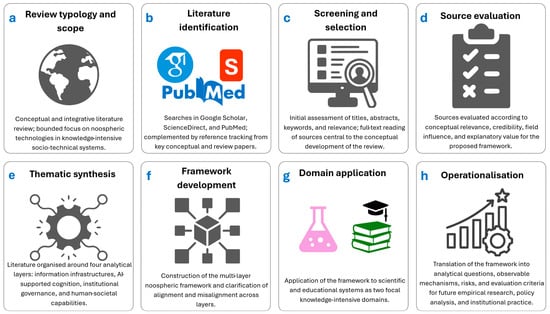
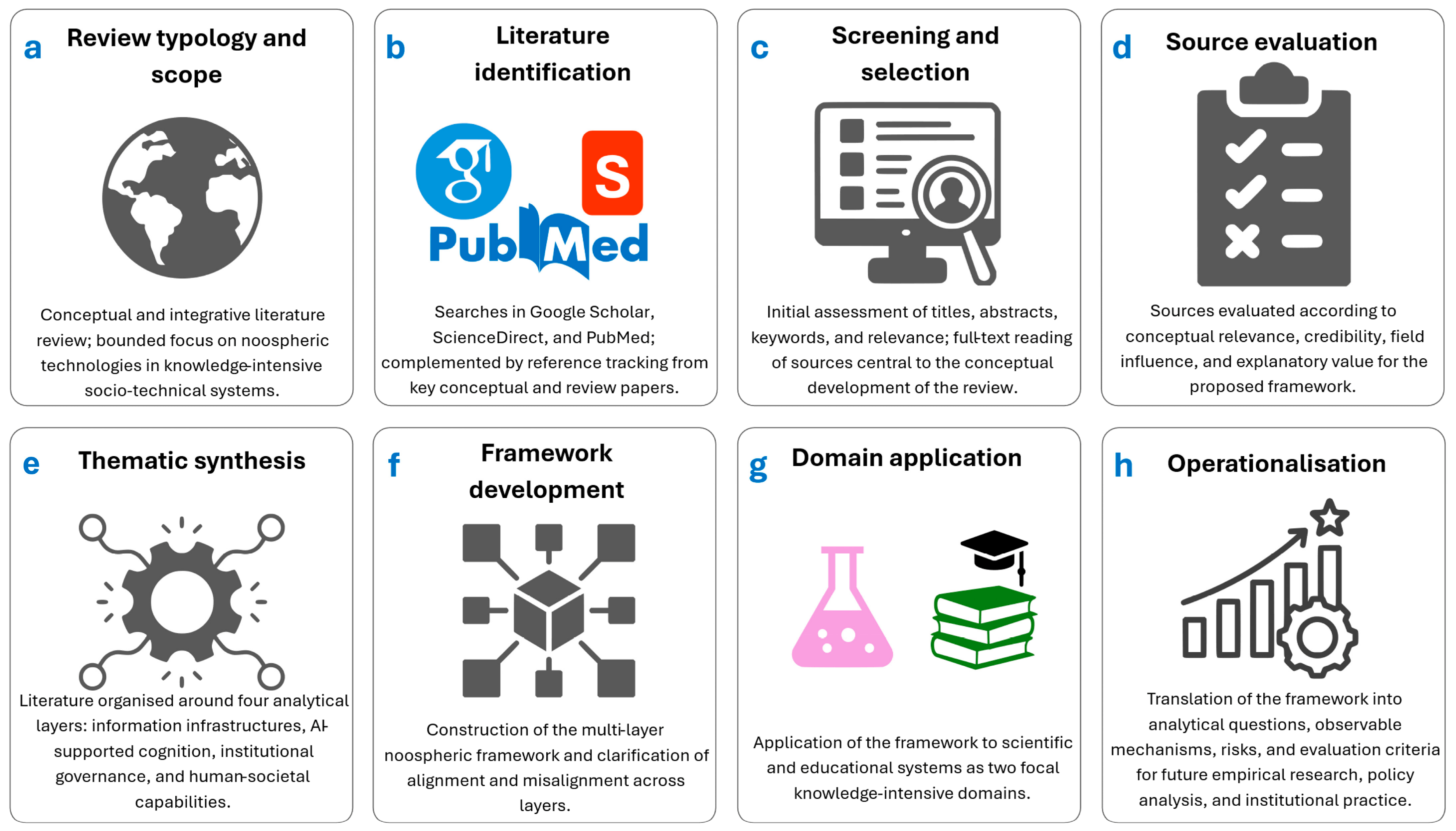
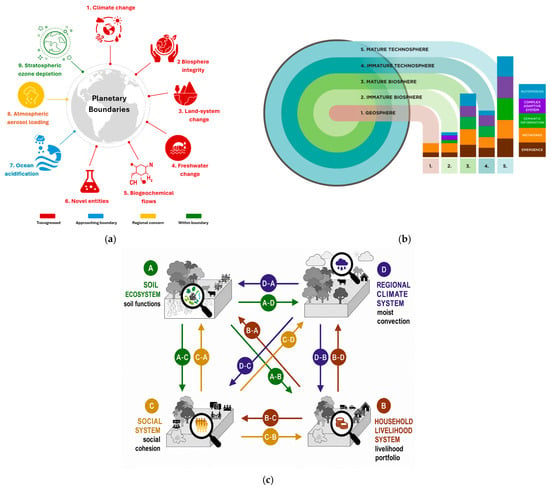
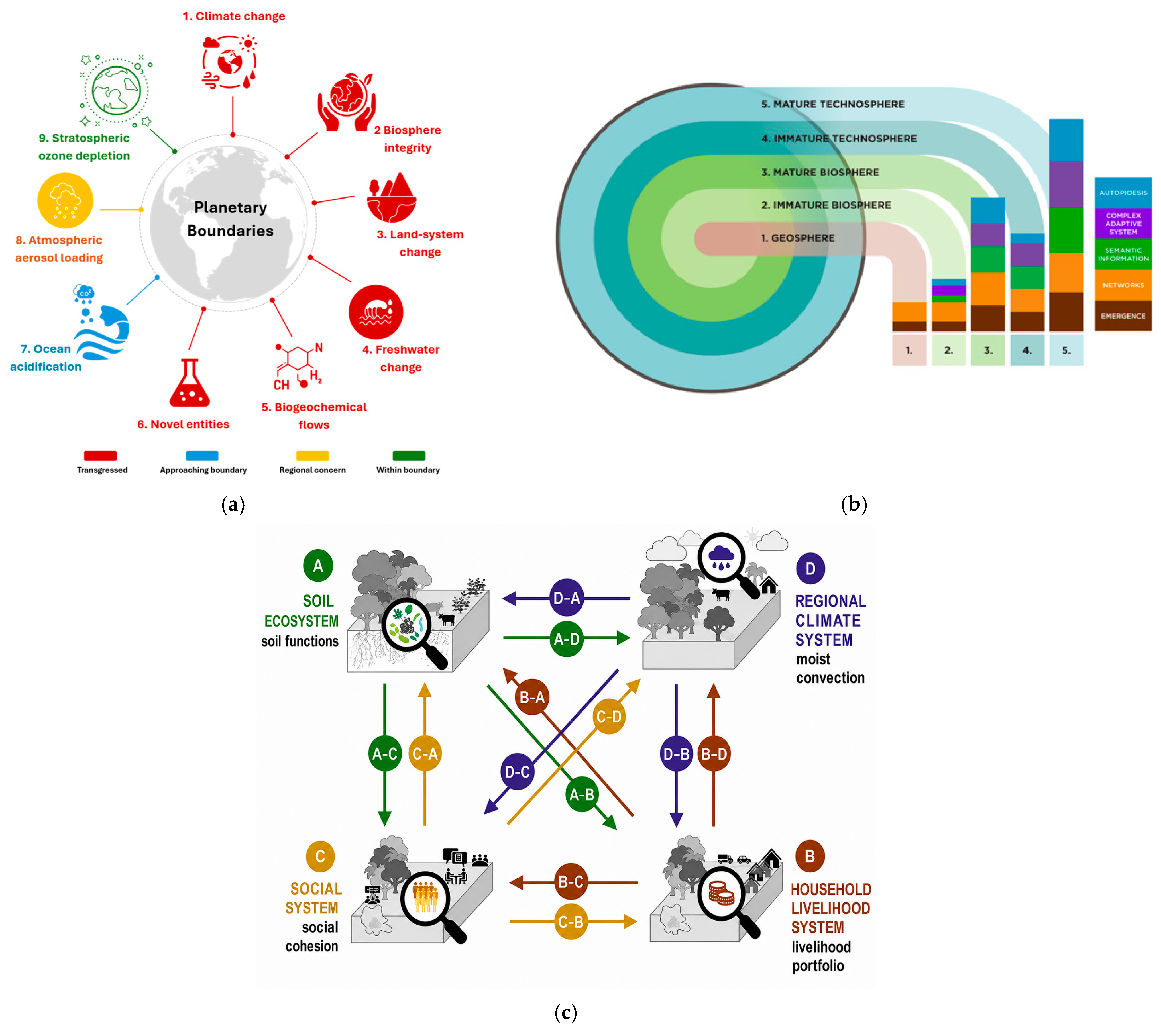
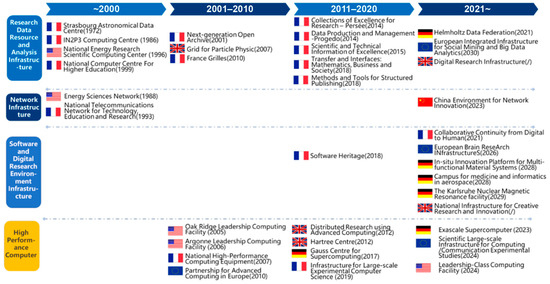
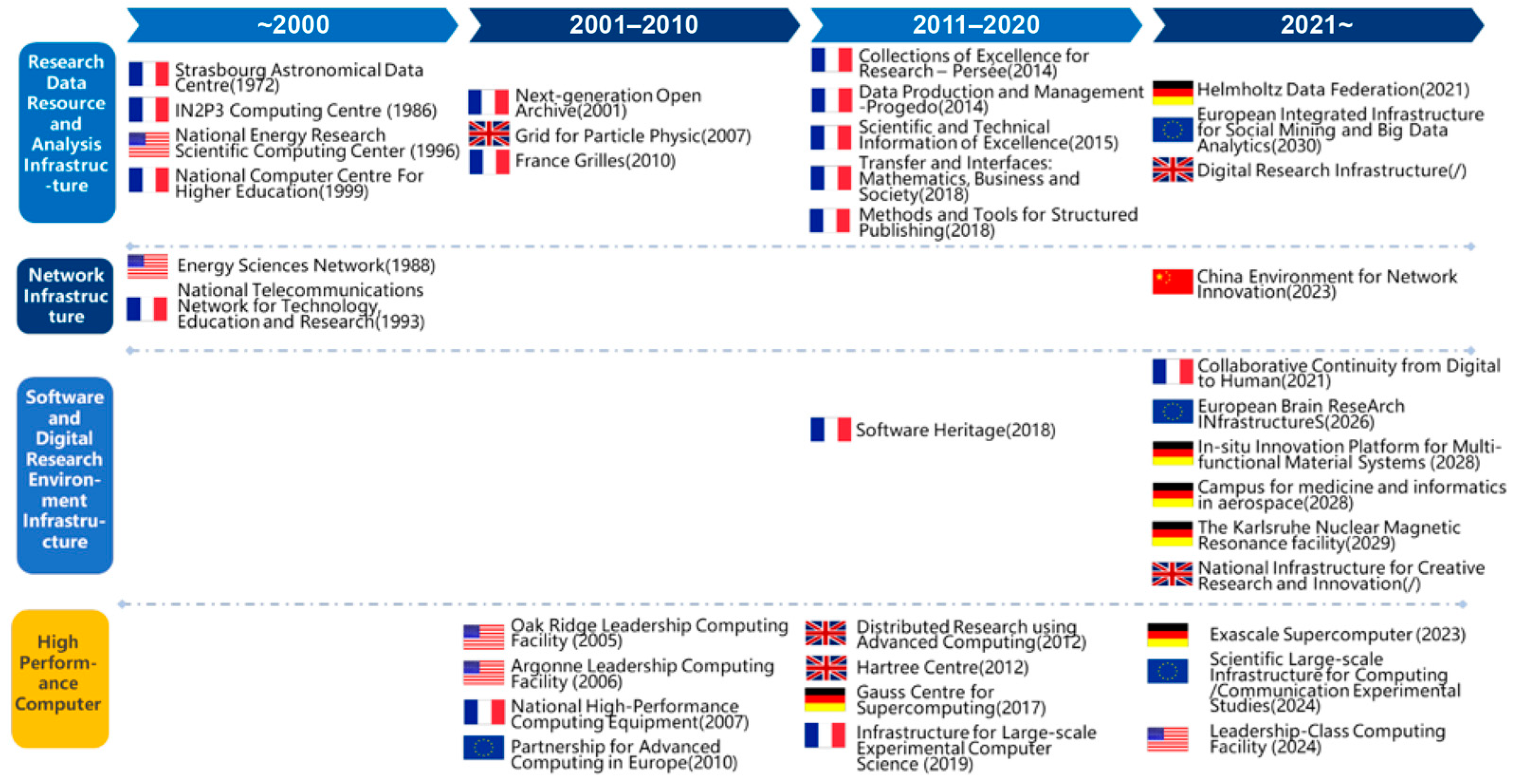
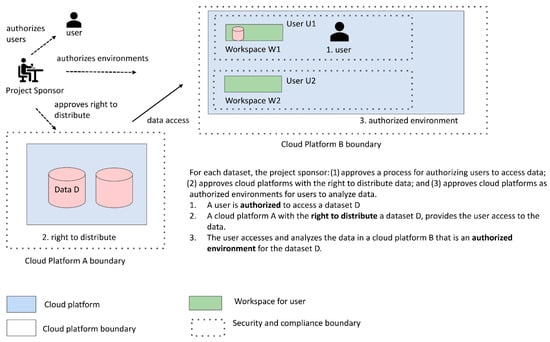
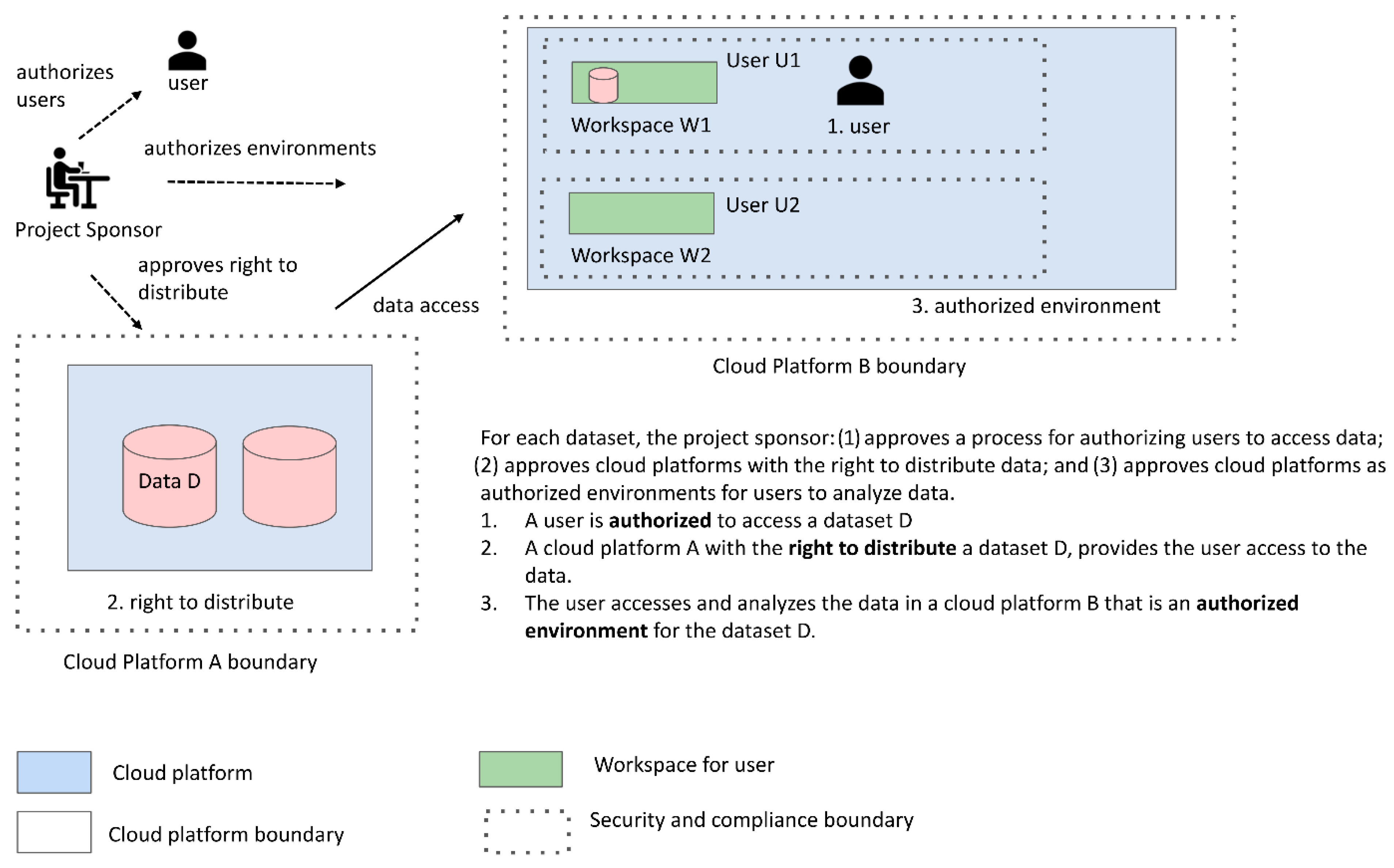
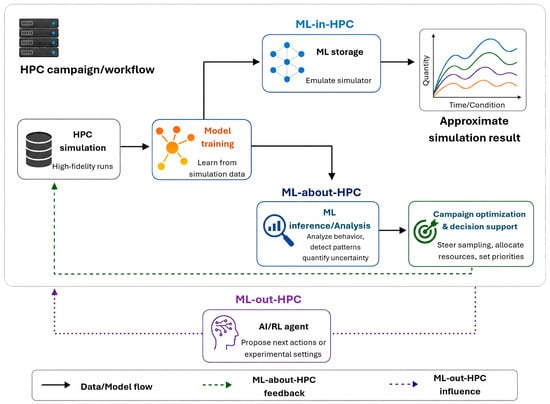
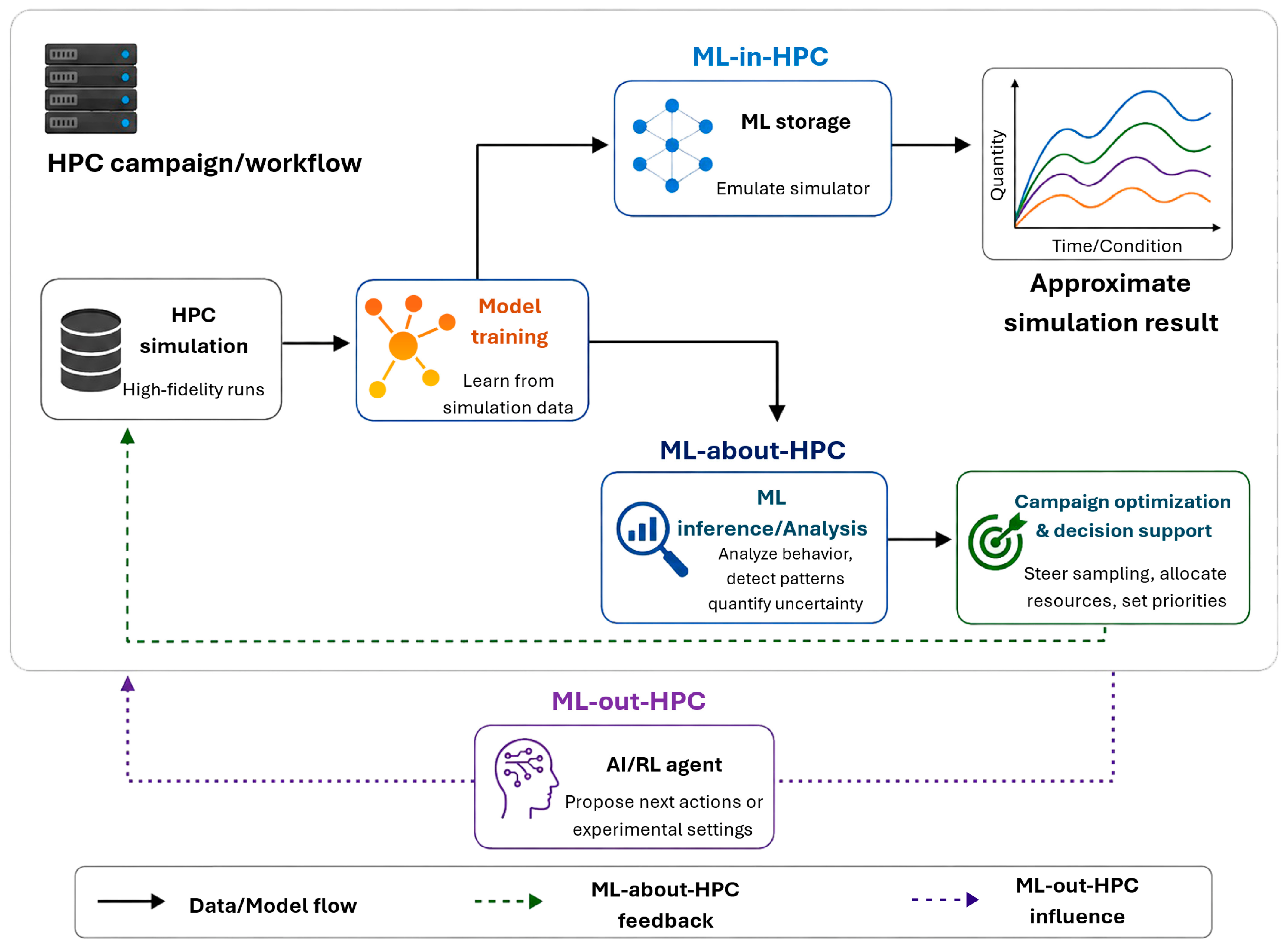
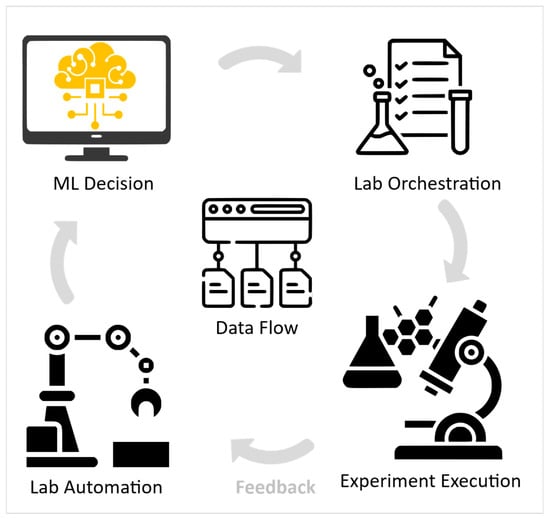
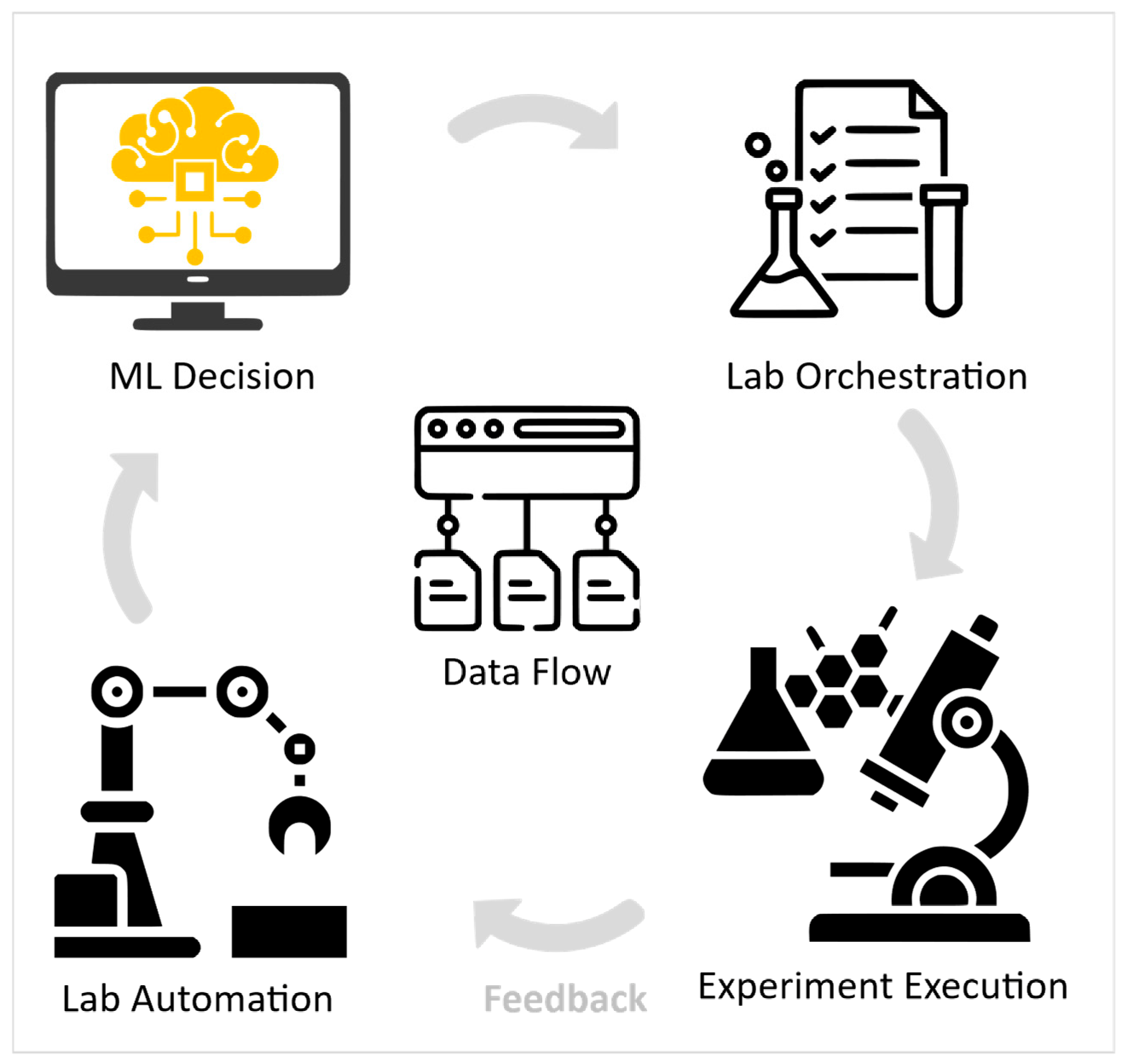
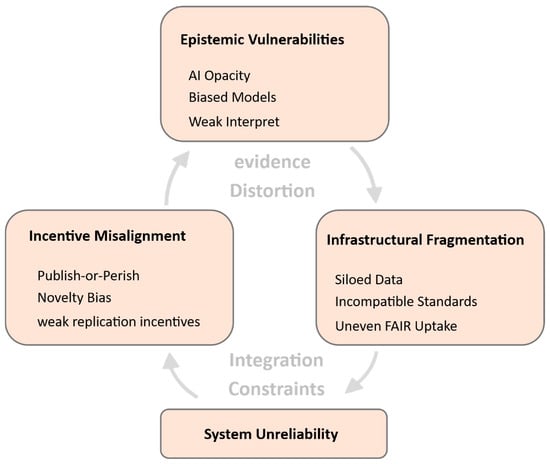
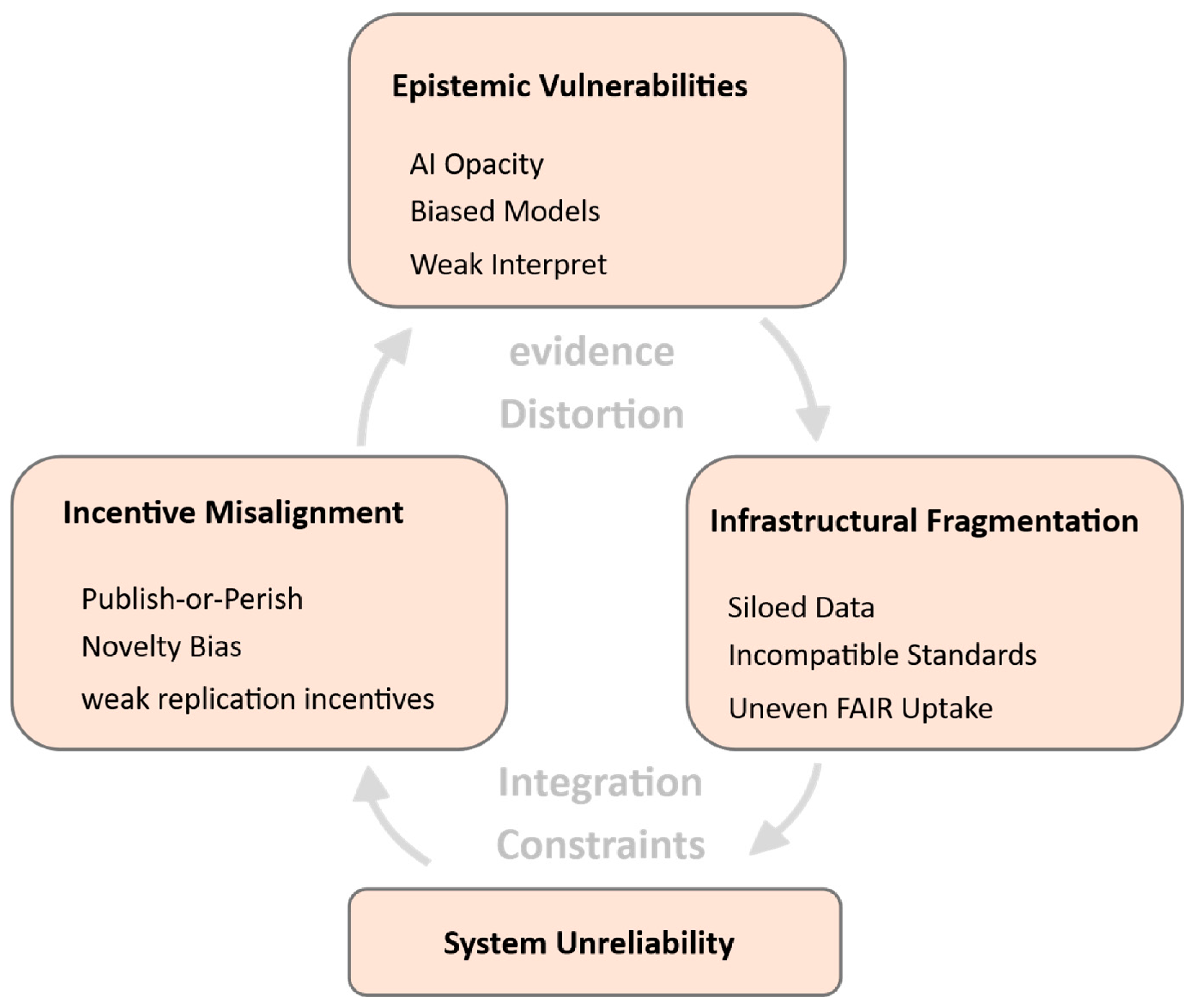
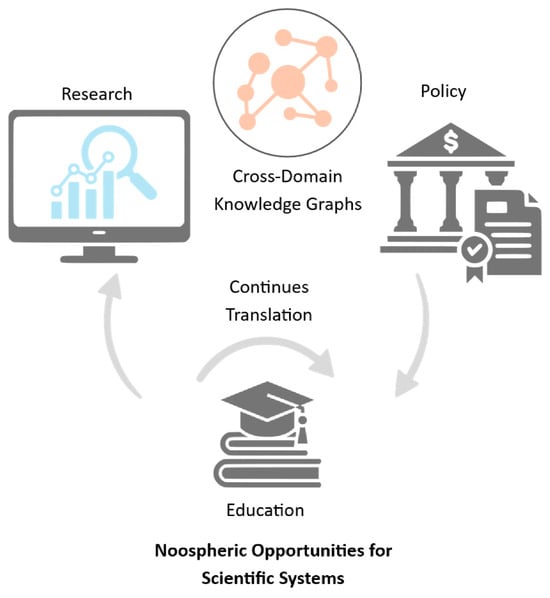
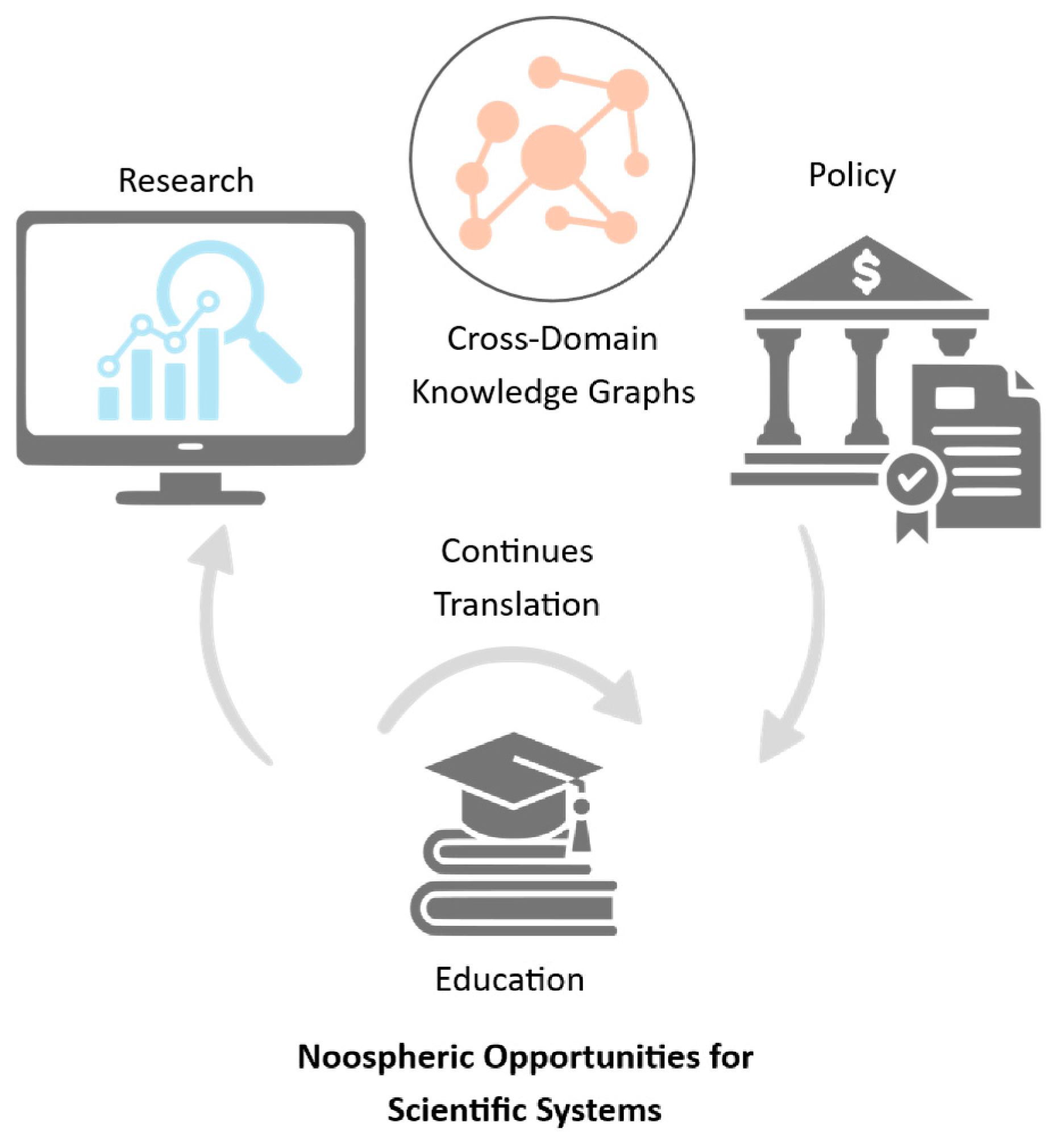
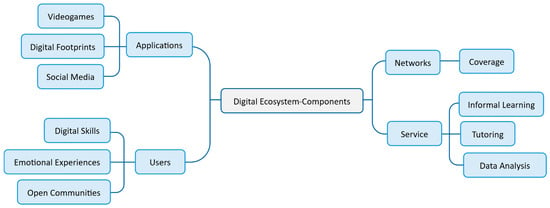
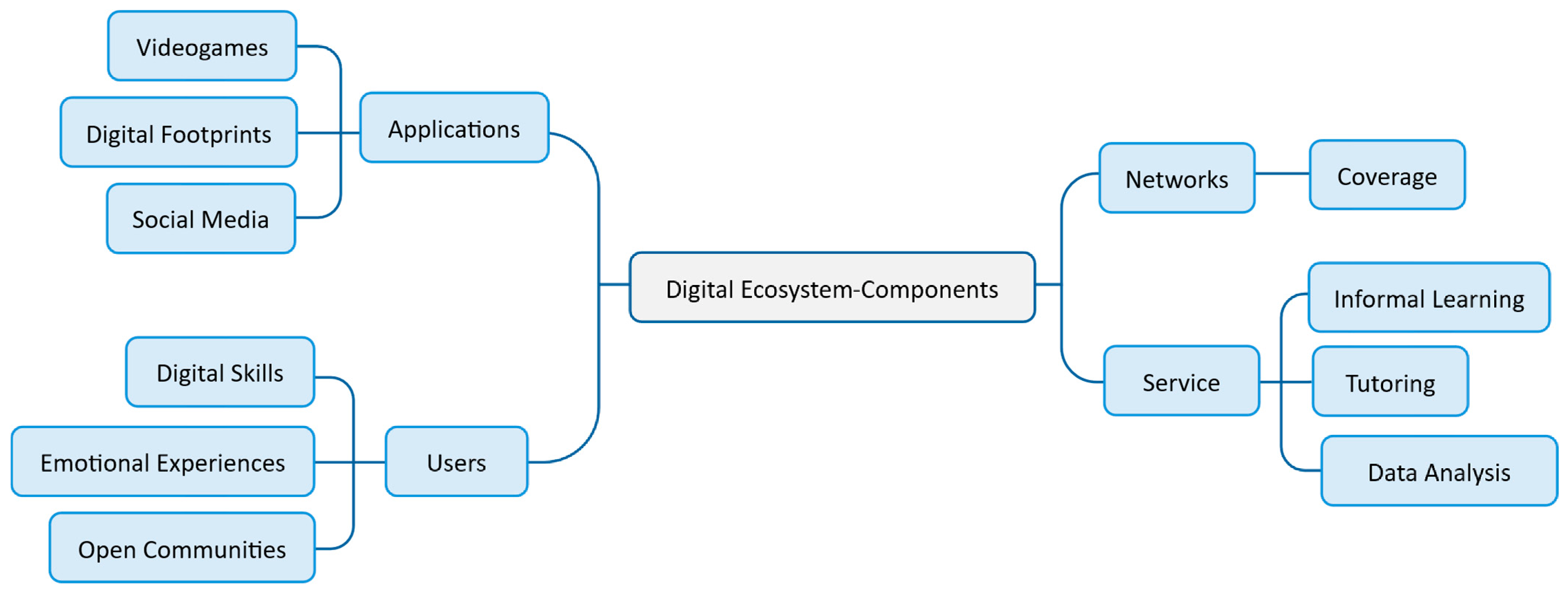
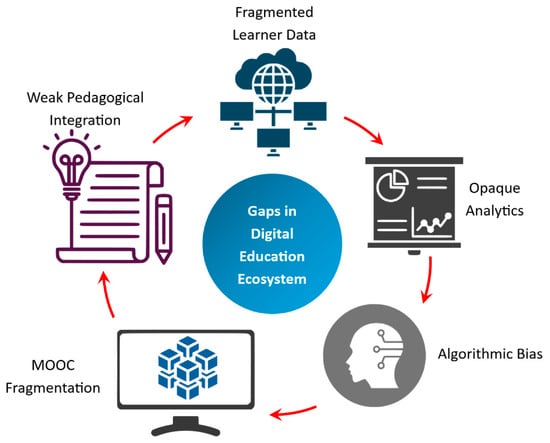
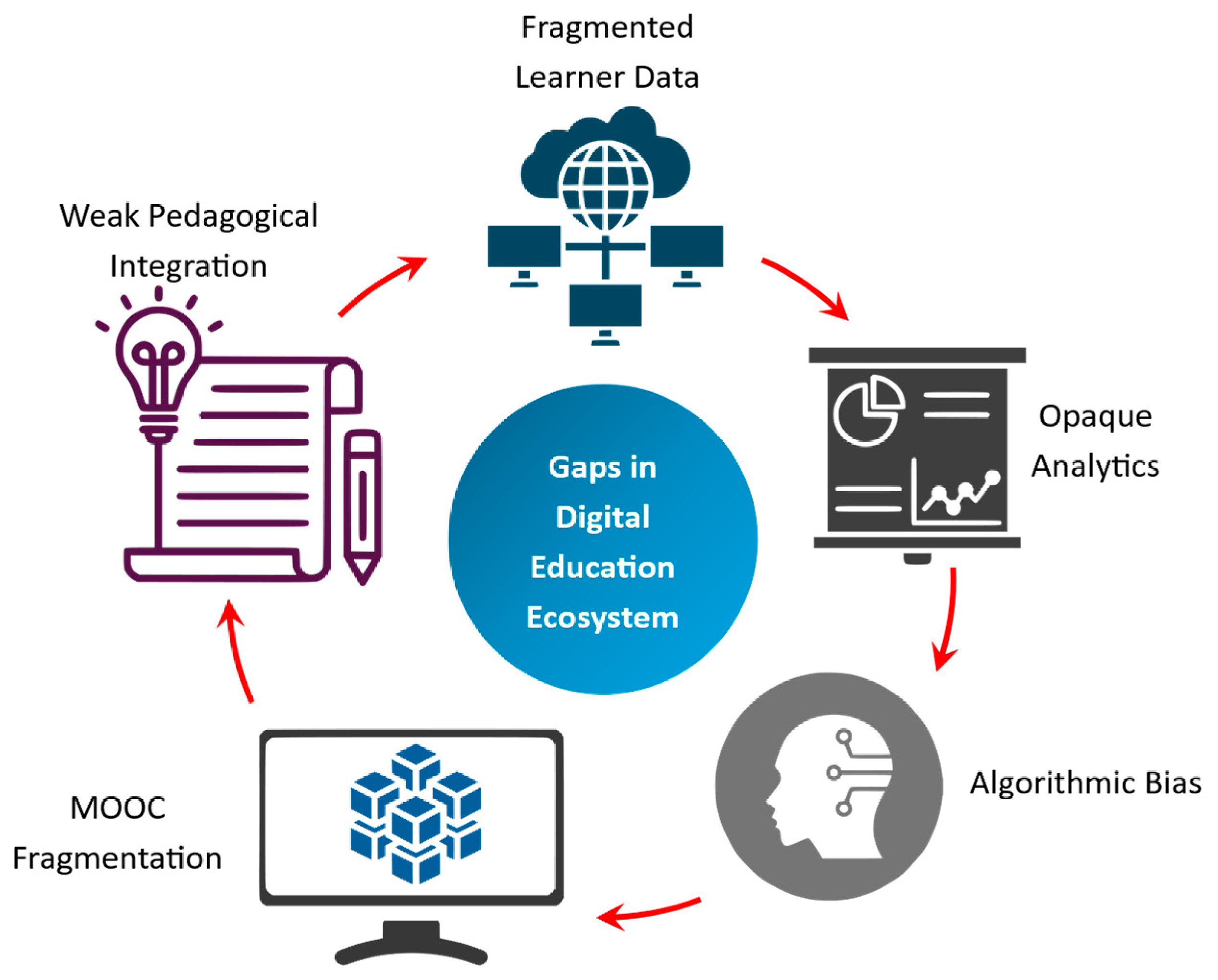

Disclaimer/Publisher’s Note: The statements, opinions and data contained in all publications are solely those of the individual author(s) and contributor(s) and not of MDPI and/or the editor(s). MDPI and/or the editor(s) disclaim responsibility for any injury to people or property resulting from any ideas, methods, instructions or products referred to in the content. |
© 2026 by the authors. Licensee MDPI, Basel, Switzerland. This article is an open access article distributed under the terms and conditions of the Creative Commons Attribution (CC BY) license.