


Abstract
Background: Prefilled syringes (PFSs) are increasingly used for self- and assisted administration of high-value parenterals, yet design verification (DV) planning remains challenging due to overlapping drug, device, and combination product expectations, as well as limited harmonization of device components. To the best of our knowledge, there is no publication providing an end-to-end DV approach for developers. This work aims to provide a best-practice template for structuring and justifying DV programs for PFSs, with the explicit intent of improving transparency and offering practical clarity to development teams navigating regulatory and technical complexity. Methods: A risk-based DV approach is presented for an exemplary 1 mL long staked needle glass PFS intended for subcutaneous administration of a surrogate solution representative of a high-concentration biologic. The approach starts with the design inputs which were derived from intended use, user requirements, and the drug’s quality target product profile (QTPP), then translated into design outputs including Essential Drug Delivery Outputs (EDDOs). These outputs were proven by executing drug-independent and simulated drug-dependent DV tests using ISO- and pharmacopeia-aligned methods, including defined sampling, and real-time/accelerated aging. Results: A best-practice DV approach is presented, including test results across the evaluated functional, mechanical, and integrity endpoints. Conclusions: The presented approach provides a transferable DV template linking intended use to acceptance criteria, sample size rationale, and test selection. As a best-practice contribution, it supports more consistent, defensible DV planning for PFSs and may reduce ambiguity in the interface between drug and device development expectations.
1. Introduction
Prefilled syringes (PFSs) have become a key driver in the growth of primary container closure and delivery systems for parenteral drug products, accelerated by trends towards self-administration, new biologic entities, home care, and the need to reduce healthcare-associated infections and medication errors [1]. As more patients inject high-value, often lifesaving therapies outside controlled clinical settings, the robustness of PFS design and performance has a direct impact on public health by helping to prevent device-related failures, patient non-adherence, drug recalls, and avoidable treatment interruptions.
There are still sterile injectable recalls linked to container closure issues such as loss of container closure integrity (CCI) and/or contamination, underlining the need for robust design, manufacturing and control strategies for PFSs [2,3,4]. In parallel, there is active debate about the clinical relevance of factors such as silicone oil-associated particles and protein aggregates, certain aspects of analytical approaches (e.g., for extractables and leachables and biocompatibility), or about the relative benefits and risks of traditional glass versus alternative polymer syringes, leading to diverging views on specification settings, material selection and how stringent design verification (DV) needs to be, increasing the complexity of the DV approach.
Within the medical device and combination product development framework, design verification is the process that demonstrates that design outputs meet the predefined design input requirements. It is a core element of design and development controls under 21 CFR 820 and ISO 13485 [5,6], and must be applied to combination products with a device constituent part, including prefilled syringes. Current best practice emphasizes that DV test plans should not be “tick lists” of generic methods but be derived from a holistic, risk-based assessment that considers both drug product and device aspects of the combination product [7].
Despite extensive efforts for standardization of individual test methods for prefilled syringes, the literature provides limited practical guidance on how to structure an end-to-end DV program that is traceable to intended use while remaining defensible at the interface of drug, device, and combination product expectations. This article therefore describes a structured DV approach that derives design inputs and DV tests from intended use and risk-based rationale, and reports the resulting evidence for critical functional, mechanical, and integrity attributes. The novelty of this work is therefore a transferable DV best-practice template that integrates:
- a traceability logic from intended use and user requirements to Quality Target Product Profile (QTPP)-driven [8] design inputs/outputs;
- a focused Essential Drug Delivery Output (EDDO) [9] framework to distinguish drug-delivery-critical outputs from other design outputs;
- a pragmatic, risk-commensurate sample size rationale for mixed variable and attribute endpoints in prefilled syringe DV.
To demonstrate how this template is applied in practice, a real-world PFS case study containing a surrogate solution is used. By presenting this end-to-end logic together with the corresponding results, we aim to provide a transparent, best-practice case study that can support other teams in designing, executing, and interpreting PFS DV programs and reduce ambiguity in acceptance criteria settings and sampling decisions where component-level limits are not harmonized across standards.
1.1. Intended Use, User Needs and Use Requirements
Our starting point concerns the intended use, user needs and use requirements which form the basis for both drug and device development. These are expanded into the QTPP, design inputs/outputs and Essential Drug Delivery Outputs (EDDOs) that directly inform the DV test matrix.
The following exemplary case was chosen: a 1 mL long prefilled glass syringe configuration containing fancydemumab at 100 mg/mL, developed for subcutaneous injection by a healthcare professional (HCP; the user). An exemplary intended use statement as it would finally appear in the Instructions For Use (IFU) could read:
“The prefilled syringe, containing fancydemumab, is intended for the subcutaneous administration to treat rheumatoid arthritis in adult patients, including elderly patients, and is administered by healthcare professionals. It is designed to ensure accurate dosing and reliable, ergonomic handling for trained users, supporting consistent treatment according to the prescribed regimen.”
Defining the intended use and the exact patient population is critical, as it drives key design choices (e.g., if there is no need for an extended finger flange to support reduced grip strength, finger flange does not need to incorporated) and influences toxicological considerations, such as the analytical evaluation threshold (AET) in biocompatibility and extractables and leachables (E and L) assessments [10].
User needs and user requirements translate the intended use into concrete expectations for product performance from the perspective of healthcare professionals and patients. They must derive from human factor, clinical, dose-ranging studies, patient counseling data (e.g., interviews/training observations) or literature references. User needs describe, in simple language, what must be achievable, whereas user requirements express these needs as specific, measurable and verifiable criteria (Table 1). Literature is available covering quantified and mapped forces that humans can comfortably exert based on sex, percentile, digit, health condition, etc. [11,12].
Table 1.
Exemplary extract of user needs and user requirements for a PFS administered by HCPs.
These user needs/requirements are directly linked to the DV tests and acceptance criteria described later, such as break loose and glide force testing, deliverable/residual volume measurements, and mechanical robustness tests (needle shield pull-off, needle pull-out, flange breakage).
1.2. Quality Target Product Profile (QTPP) and Design Inputs
The QTPP within the drug development process “forms the basis of design” of the drug product [8] and includes the intended use (see intended use statement above) and the critical quality attributes (CQAs) that must be achieved to ensure the desired quality, safety, and efficacy. It is important to note that the QTPP is iteratively refined throughout development, with the first truly finalizable version typically emerging around Phase II once clinically informed parameters such as dose strength, dose volume, and administration requirements have been sufficiently evaluated, recognizing that these criteria may continue to evolve as additional data are generated.
A vial presentation typically involves limited product/container interactions beyond basic compatibility and CCI. In contrast, a prefilled syringe introduces multiple drug/device part interface interactions that can directly affect product quality, safety, efficacy, and functionality, so a clear, robust QTPP is essential to translate clinical needs into the correct syringe design. The QTPP must also derive from human factor or clinical studies or literature references. Each defined parameter should be supported by a clear, documented rationale to ensure it is scientifically and technically defensible. Some exemplary QTPP elements relevant for syringe development are listed in Table 2.
Table 2.
Exemplary extract of relevant elements from a Quality Target Product Profile (QTPP).
The prefillable syringe (as the device constituent part) must be selected to ensure that the drug can meet these QTPP targets.
1.3. Design Inputs, Design Outputs and Essential Drug Delivery Outputs (EDDOs)
Building on this, the design inputs for the device constituent part are defined. They encompass:
- the intended use statement and defined user population;
- user needs and user requirements;
- QTPP attributes and associated CQAs;
- critical material attributes (CMAs);
- critical process parameters (CPPs) relevant to device performance.
Because these elements are interdependent, they have to be developed in an integrated manner. For example, the viscosity of fancydemumab solution might require further dilution and therefore influence the dose volume, which in turn determines the choice of barrel dimensions and needle gauge. A potential elderly rheumatoid arthritis population informs ergonomics (e.g., large round flange or extended finger flange in case of self-injection) and acceptable force levels (lower than typical in case of self-injection), and CQAs such as aggregate levels constrain material and lubricant choices for barrel, plunger and needle shield. Design inputs must be defined as specific, measurable and traceable into design outputs and the corresponding DV test protocol. Examples of design inputs and outputs relevant for this case study are given in Table 3.
Table 3.
Exemplary extract of design inputs and corresponding design outputs for the device constituent part.
Within this framework, EDDOs represent the small subset of system-level outputs that are most critical for the safe and effective delivery of the drug. They link user needs, risk analysis and QTPP to concrete, measurable performance criteria that must be demonstrated during DV (see Table 4). EDDOs per FDA are “essential for the proper functioning of the device” to deliver the drug (i.e., the intended use of the drug delivery device) [9].
Table 4.
Exemplary Essential Drug Delivery Outputs (EDDOs).
Note that glide force describes the plunger movement within an empty syringe to ensure consistent gliding, while extrusion force describes the force needed to extrude a liquid in a filled syringe. This difference becomes apparent with high viscosity drugs.
A challenge is that regulatory and pharmacopeial sources generally define acceptance criteria primarily at the finished product level, whereas explicit limits for individual syringe components (e.g., glass barrel, plunger stopper, rigid needle shield) are often not prescribed. Consequently, component-level specifications must be jointly established by the supplier and the drug product manufacturer based on risk, intended use and system performance requirements, which increases complexity and may introduce variability and uncertainty in how “fit-for-purpose” is demonstrated across organizations.
Finally, all developed acceptance criteria are assembled in a specification for the device constituent part (example shown in Table 5).
Table 5.
Exemplary extract of the device constituent part specification.
There is no consistent distinction between tests considered as “core” design verification (DV) of device performance and tests that are more material, process, or system qualification-driven (e.g., bioburden, endotoxins, particles, biocompatibility, extractables/leachables, transportation simulation, sterilization validation). In this manuscript, DV is defined narrowly as verification of the functional and mechanical performance tests, whereas the remaining activities would be covered by the respective process validation strategies or material specifications.
All design inputs and outputs and EDDOs must be captured in the risk management plan and evaluated using a formal FMEA, according to ICH Q9 and ISO 14971 [17]. Concerning the FMEA, it should be recognized that the device constituent part suppliers typically manufacture syringes for multiple applications and therefore generally cannot perform a use case- and patient-specific risk assessment without the drug product developer’s intended use context. As part of the design FMEA (dFMEA), potential ways in which the PFS system could fail to meet defined design inputs (e.g., functional, performance, and compliance-related requirements) are systematically identified, the potential impact of each failure is evaluated, plausible causes/mechanisms are assessed, and detection controls are defined. These elements are then used to estimate overall risk and to prioritize design controls, DV test selection, and bracketing conditions for the verification program.
1.4. Test Sample Size
The allocated risk priority class derived from the probability of occurrence and the severity of a specific harm then drives the decision of statistical sample sizes, such that the sampling plan is commensurate with the associated risk. Defining DV sample sizes is particularly challenging because risk scoring schemes and the resulting confidence/reliability targets vary across organizations and tests. Also, across the industry it is not always consistently defined whether a given test should be categorized as an attribute or a variable test, and companies apply differing classification approaches. While ISO 11608-1:2022 Annex F can serve as a pragmatic approximation, there is no broadly applicable regulatory guideline prescribing precise DV sample sizes for each test [18]. The most common practical distinction between attribute and variable evaluation is seen with container closure integrity (CCI): deterministic methods (e.g., helium leak) generate continuous leak-rate data, yet acceptance is typically applied as a pass/fail decision against a predefined threshold. Consequently, CCI is often treated as a variable during method development and limit justification, but as an attribute outcome for DV and specification compliance. ISO 11608-1:2022 Annex F provides a table (Table F.1) for sample sizes for attribute testing. For variable endpoints, sample size is additionally determined considering the tolerance factor k (which depends on one- vs. two-sided limits and increases when variability is estimated from the sample), distributional assumptions (normal vs. non-normal), and the need to represent key sources of variation (lots, timepoints) with statistically independent units.
In practice, a commonly applied convention (based on company internal standard procedures, depending on risk appetite and differing between companies) is a 95% confidence/95% reliability (“95/95”) target, which corresponds to sample sizes of a minimum of 20 for variable testing and 59 for attribute demonstrations.
1.5. Testing Strategy
Design verification testing is generally performed in two phases: drug-independent testing, which may be carried out at any stage and is typically performed upon device part selection, and drug-dependent testing, which requires the actual drug product (or a surrogate solution if justifiable) to evaluate potential interactions with the device part. For drug-dependent testing, the final commercial prefilled syringe should be used to capture any effects from the fill/finish process, such as plunger setting [19].
Table 6 provides an overview of the classification for the current approach.
Table 6.
Overview of DV test matrix for both drug-independent and drug-dependent testing, including categorization and sample size; “(in)dependent” indicates that it is both drug-independent and drug-dependent.
Samples tested to support design verification should be representative of the final product design and manufactured under Good Manufacturing Practice (GMP) commercial conditions. This includes having undergone shipping simulation before testing. Upon justification, certain drug-dependent tests can be performed using a surrogate solution.
It is a regulatory expectation to support shelf life with real-time stability data under the intended storage conditions, and to complement these data with accelerated studies in line with ICH stability principles (e.g., ICH Q1A(R2) [21,22]). In practice, real-time studies should extend through the proposed expiry period (commonly 24–36 months), while accelerated studies provide supportive, time-compressed evidence and help elucidate degradation pathways. For drug products intended for refrigerated storage (2–8 °C), ICH Q1A(R2) specifies long-term storage at 5 ± 3 °C and an accelerated condition of 25 ± 2 °C/60% RH ± 5% RH. For clarity, it should be noted that “stability” and “shelf life” refer not only to the chemical and physical stability of the drug product, but also to the functional performance stability of the delivery device, such that aged devices are tested to confirm continued performance throughout the labeled shelf life.
1.6. Platforming, Design Space and Quality Management System
The industry is clearly trending towards implementing platforming approaches wherever possible to streamline processes. The proposed DV template is readily extendable to a formulation platform strategy by establishing a standardized procedure. Within a defined formulation platform, the DV template can be combined with a structured bracketing strategy to efficiently cover the majority of relevant parameter combinations within the qualified design space. Specifically, worst-case brackets (e.g., upper viscosity at cold temperature, extremes of concentration/ionic strength, and representative surfactant levels) can be selected based on risk assessment and their expected impact on EDDO-linked performance such as injection forces, injection time, and delivered volume. This approach can streamline design verification by reducing redundant testing across nominal conditions while still providing objective evidence that performance requirements are met across the platform envelope. If a new molecule is formulated within this qualified framework, the DV template and supporting evidence can be leveraged with a structured formulation gap and risk assessment, supplemented by targeted confirmatory testing under worst-case and shelf life conditions. Conversely, formulation excursions outside the platform framework necessitate the re-justification and re-verification of affected EDDO-critical endpoints, particularly extrusion force and injection time.
Similarly, variations in design space and design inputs govern the extent to which the established test matrix, acceptance criteria, and sampling rationale can be directly leveraged. If a new program remains within the qualified framework of critical inputs (e.g., viscosity/temperature range, needle configuration, siliconization, plunger setting process windows, materials and interface tolerances, and storage/distribution conditions), the template can be applied largely unchanged with a bridging justification. Conversely, excursions toward the boundaries or outside the qualified design space may alter failure modes and margins for EDDO-linked performance (e.g., deliverable volume and injection forces), thereby necessitating the re-justification of limits and bracketing. In such cases, a structured gap and risk assessment should be used to identify which endpoints require confirmatory or full DV testing to re-establish objective evidence under the new configuration, formulation, and shelf life conditions.
While companies implement different quality management systems and documentation structures, the proposed DV template is QMS-agnostic because it is based on traceability and risk-based justification rather than company-specific workflows. Differences in QMS primarily affect ownership, approval pathways, risk classification thresholds, and change-control triggers, which in turn influence bracketing decisions, sample size rationale, and the level of supporting evidence required.
2. Materials and Methods
The syringe system configuration in scope of this case study is:
- Syringe: West, Synchrony™ S1 PFS system, 1 mL long staked needle, 29 G TW ½”, sprayed-on silicone oil medical grade 1000 cSt, EtO sterilized, West Waterford, Ireland.
- Needle shield: West, design rigid 4144, formulation 7028/55, EtO sterilized, West Waterford, Ireland.
- Plunger: West, 1 mL long NovaPure®, formulation 4023/50 with FluroTecTM barrier film and B2-Coating, steam sterilized, West Waterford, Ireland.
- Surrogate solution (fancydemumab): 100 mg/mL lysozyme (Sigma Aldrich, Atlanta, GA, USA), L-histidine/L-histidinehydrochloride buffer (20 mM; Sigma Aldrich, Saint Louis, MO, USA), 5% trehalose (Thermo Fisher Scientific, Pittsburg, PA, USA), 150 mM NaCl (Thermo Fisher Scientific, Pittsburg, PA, USA), 0.02% PS80 (Sigma Aldrich, Atlanta, GA, USA), pH 6.
- Fill volume: 1.05 mL.
Drug-independent testing was performed based on Table 6, and data were collected up to 1 year, both accelerated and real-time aging. Due to the limited amount of the fancydemumab surrogate solution, the simulated drug-dependent tests had to be performed using a sample size that was around a factor of four less than the actual sample size used for drug-independent testing. Drug-dependent data were collected for up to 6 months, both accelerated and real-time aging. Some data were not yet available at the time of writing. USP <697> specifies five samples to be used.
Table 7 gives an overview of the test matrix. Abbreviations for timepoints measured are: T0, 3 months real time (T3MRT), 3 months accelerated aging (T3MAA), 6 months real time (T6MRT), 6 months accelerated aging (T6MAA), 1-year real time (T1YRT), 1-year accelerated aging (1YAA).
Table 7.
Overview of DV test matrix for both drug-independent and simulated drug-dependent test, including sample size and timepoints.
The analytical method validations ([14], Section 6.1 in [18]) are out of the scope of this article, as most methods are described in the corresponding ISO standards. Precision, including repeatability and reproducibility studies, were performed to statistically verify that the analytical method’s measurement system is precise, consistent across operators, and suitable for generating reliable validation and release data [22,23]. Filling and plunger placement were performed using both a Bausch and Ströbel SVP 4600 (Bausch and Ströbel, Ilshofen, Germany) and a Colanar FSV 1253 machine (Colanar, Deep River, CT, USA). The plunger in filled syringes was placed using the vacuum-assisted placement method.
Force testing was performed using different models of Instron with axial modules and equipped with various load cells from 10 N to 2000 N to accommodate a range of forces being tested.
Samples aging at real time were stored at ambient room temperature. Surrogate solution samples were stored under monitored but not controlled humidity while drug-independent samples were stored under controlled humidity. Samples undergoing accelerated aging were stored at 40 ± 2 °C and 75% ± 5 RH conditions.
Needle shield pull-off force was measured according to ISO 11040-4:2024 standards, Annex G.6, method 2. The syringe was placed in the fixturing of a force testing machine. The needle shield and syringe body were both secured in the fixturing and were pulled apart. The maximum force corresponding to the needle shield pull-off force was recorded.
Needle pull-out force was measured according to ISO 11040-4:2024 standards, Annex G.1. The syringe was placed in the fixturing of a force testing machine. The needle and syringe body were both secured in the fixturing and were pulled apart. The maximum force corresponding to the needle pull-out force was recorded.
Needle penetration was measured according to ISO 11040-4:2024 standards, Annex F. The syringe was placed in the fixturing of a force testing machine. A test foil was affixed in a fixture under the needle. The needle penetrated the foil as force was recorded. The penetration force profile was recorded and analyzed; the maximum value was compared with the needle penetration specification.
Break loose and glide forces were measured according to ISO 11040-4:2024 standards, Annex E. The plunger was placed into an empty syringe and then this assembly was placed in the fixturing of a force testing machine. A plunger rod was inserted and depressed while the forces were recorded as the plunger traveled down the barrel. The initial maximum force required to move the plunger was recorded as the break loose force and the maximum force required to sustain the plunger movement was recorded as the maximum glide force.
Break loose and extrusion forces were measured similarly to ISO 11040-4:2024 standards, Annex E. The plunger was placed into the surrogate filled syringe and then this assembly was placed in the fixturing of a force testing machine. A plunger rod was inserted and depressed while the forces were recorded as the plunger traveled down the barrel. Initial maximum force required to move the plunger was recorded as the break loose force and the maximum force required to sustain the plunger movement was recorded as the maximum extrusion force.
The tightness test (blue dye) was performed similarly to ISO 11040-4:2024 standards, Annex H. Syringes were filled with water at a nominal volume and the plunger was placed. Syringe systems were then placed in a chamber filled with a solution of methylene blue dye. The pressure in the chamber was then reduced by 270 mbar and held for 10 min. After that, the pressure was returned to atmospheric pressure and the syringes were left immersed for another 30 min. The syringes were then removed, rinsed from external dye, and dried. After that, they were inspected for any traces of dye solution ingress.
Closure system liquid leakage was measured according to ISO 11040-4:2024 standards, Annex G.2. The syringes were filled with water and surrogate solution, respectively, between 1/3 and 2/3 of the nominal fill volume, and then a pressure of 110 kPa was applied for 5 s. After that, the sample was examined for signs of leakage.
Container closure integrity was evaluated as recommended in ISO 11040-8:2016, USP <382> and USP <1207> [24]. Helium leak methodology was used. The syringes were filled with water and surrogate solution, respectively, placed into the fixturing, and 100% helium gas flow was applied. The system was monitored under vacuum to determine the leak rate of helium. The plunger–syringe body interface was tested separately from the front closure interface.
Liquid leakage at the plunger was evaluated according to ISO 7886-1:2015, Annex D. The syringes were filled with water and surrogate solution, respectively, to the nominal capacity, the plunger was placed, and the closure end of the syringes was sealed. An axial pressure of 300 kPa was applied to the plunger stopper by the plunger rod, along with an addition of a sideways force of 0.25 N. The pressure was maintained for 30–35 s and the syringe system was then examined for leakage past the plunger seal.
Flange breakage resistance was measured according to ISO 11040-4:2024 standards, Annex C.1. The syringe was placed in the fixturing of a force testing machine. The loading pin was used to apply a force to the syringe while the force required to break the syringe flange was recorded.
To measure deliverable volume the syringe was first filled with 1.05 mL surrogate solution, and the plunger was placed. Deliverable volume was measured based on USP <697>. The liquid was expelled into a dry weighed beaker by slowly and constantly depressing the plunger. The resulting liquid was weighed and then the result was converted to volume using the density of the liquid.
Residual volume was measured according to ISO 7886-1:2017 standards, Annex C. The syringe assembly (syringe barrel and plunger) was weighed dry. Then it was filled, and the plunger was placed. After that, the liquid was expelled by slowly and constantly depressing the plunger. The resulting empty syringe assembly was weighed again. The weight gain of the syringe assembly after filling and emptying, relative to the initial dry weight, was then converted to volume using the density of the liquid.
3. Results
3.1. Needle Shield Pull-Off Force
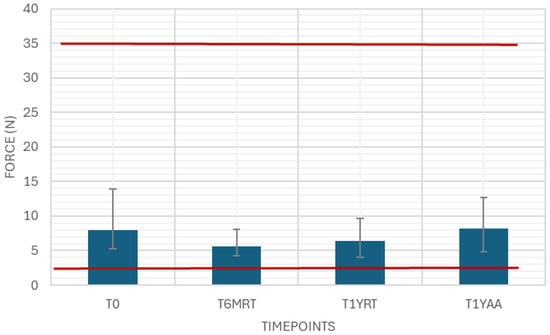
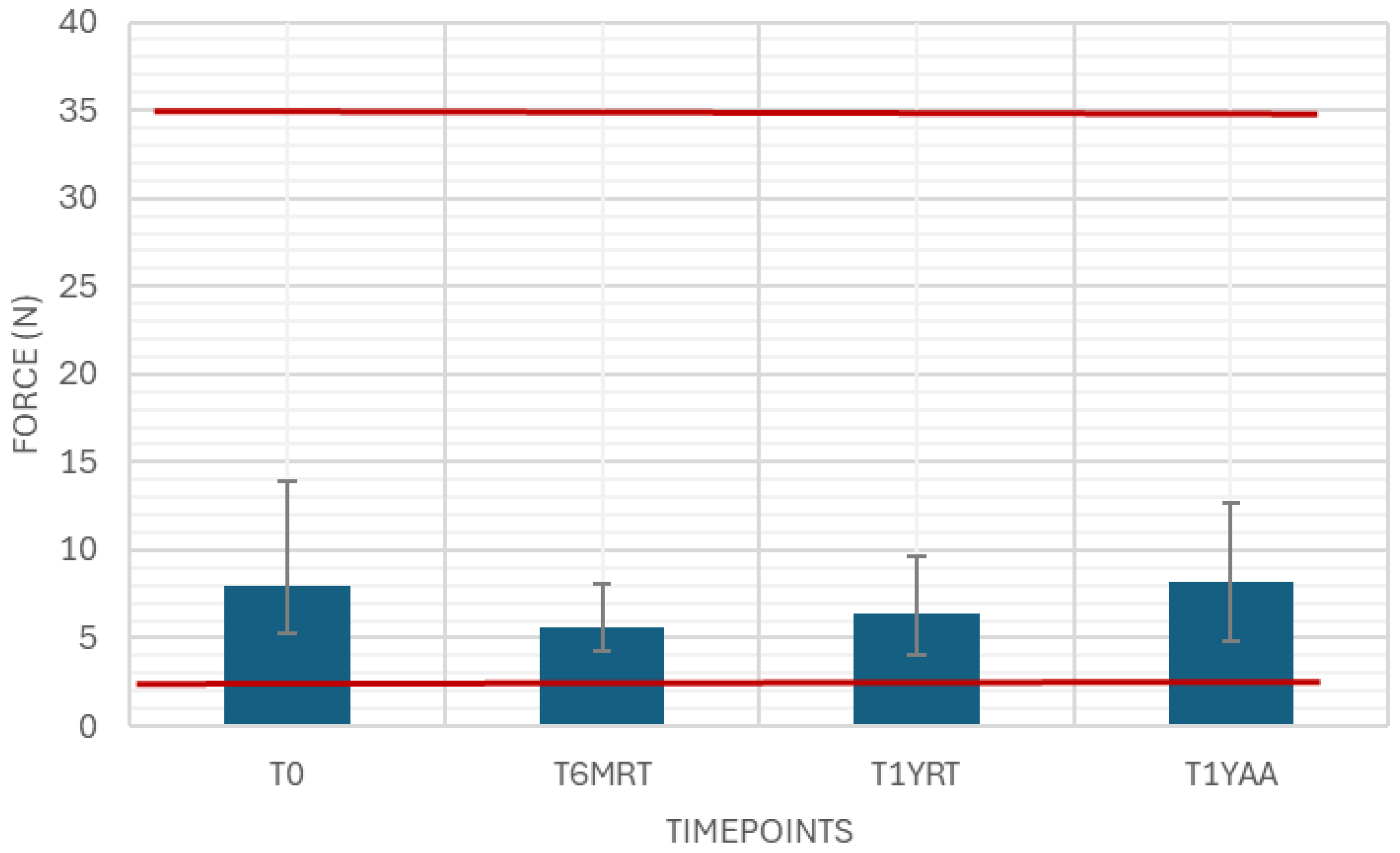
The needle shield pull-off force was measured as a variable drug-independent test with 40 samples at each timepoint. The results were in between the limits of 2 and 35 N (Figure 1).
Figure 1.
Needle shield pull-off force. Variable drug-independent test, 40 samples, specification: ≥2 N and ≤35 N.
3.2. Needle Pull-Out Force
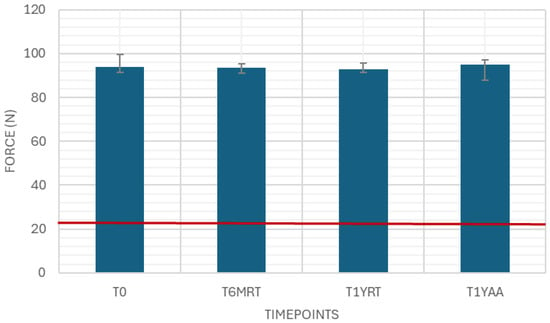
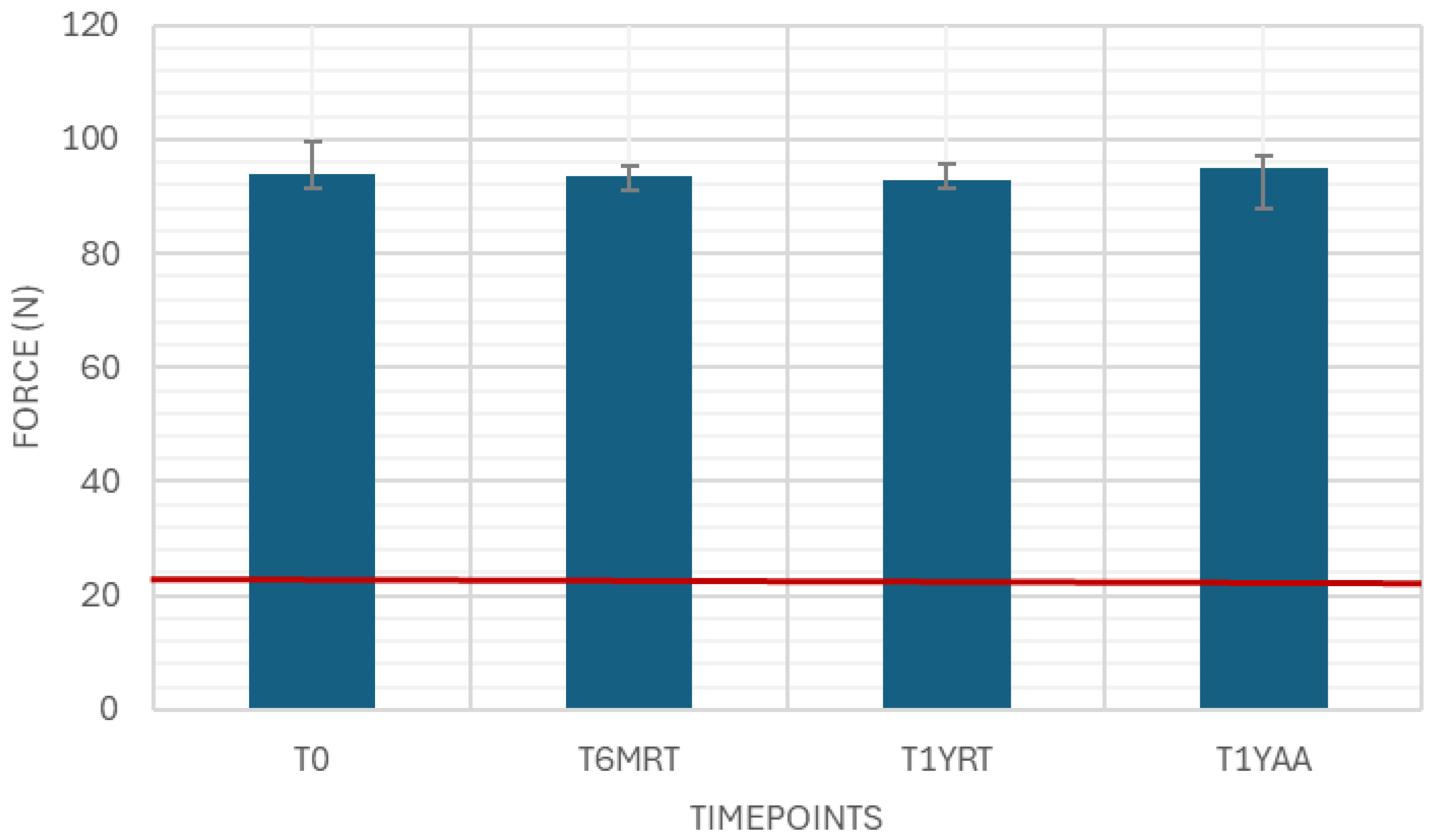
The needle pull-out force was measured as a variable drug-independent test with 40 samples. The results were well above the limit of 22 N (Figure 2).
Figure 2.
Needle pull-out force. Variable drug-independent test, 40 samples, specification: ≥22 N.
3.3. Needle Penetration Force
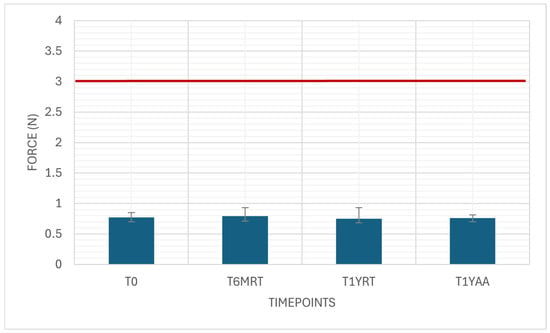
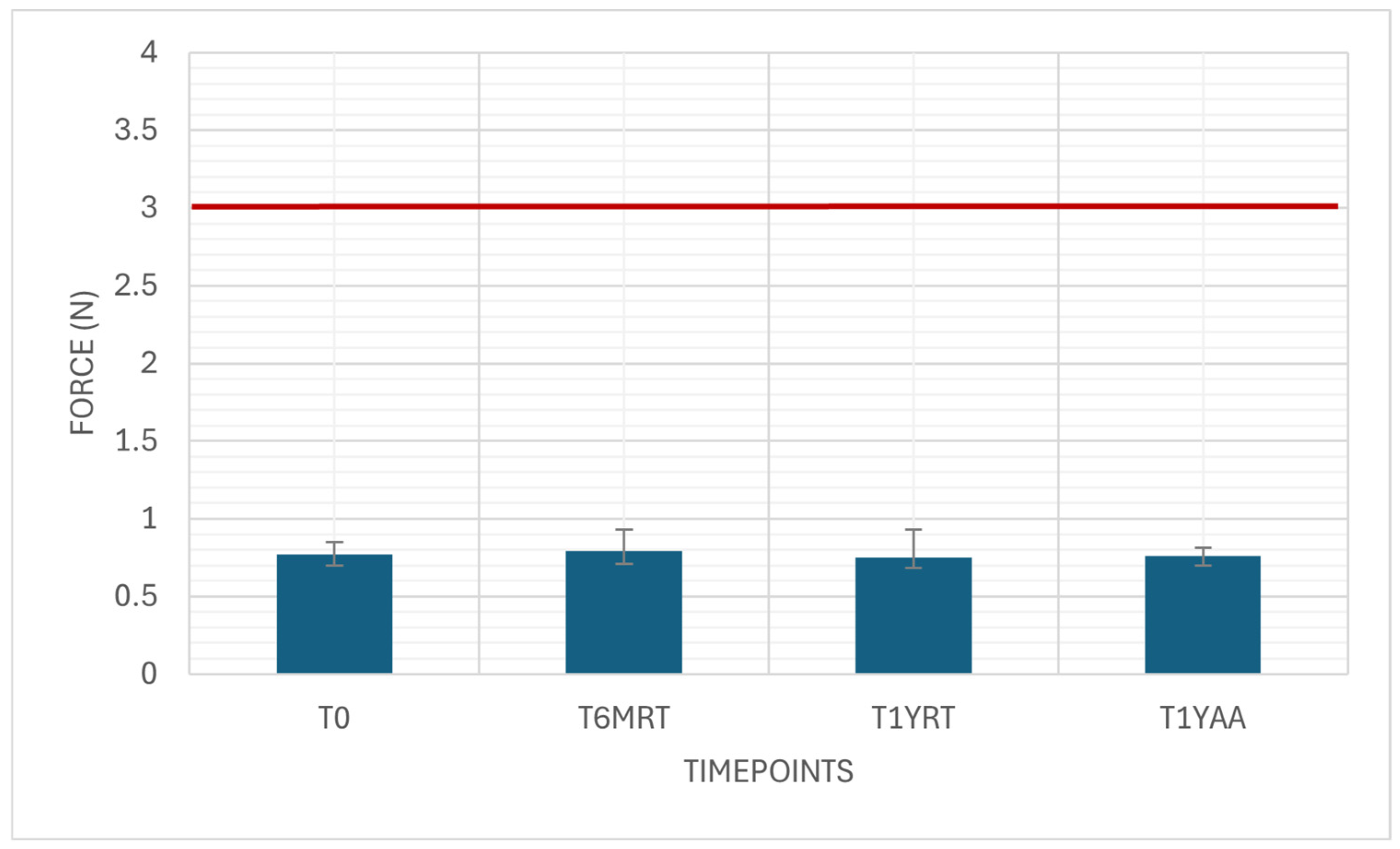
The needle penetration force was measured as a variable drug-independent test with 35 samples. The results were well below the limit of 3 N (Figure 3).
Figure 3.
Needle penetration force. Variable drug-independent test, 35 samples, specification: ≤3 N.
3.4. Flange Breakage Resistance
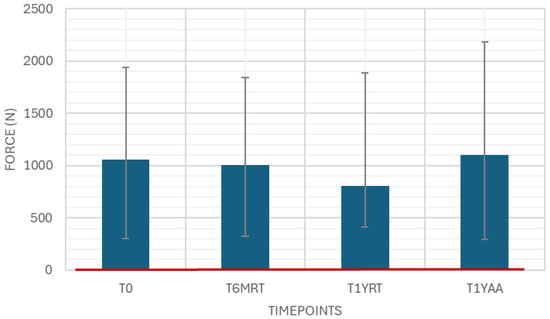
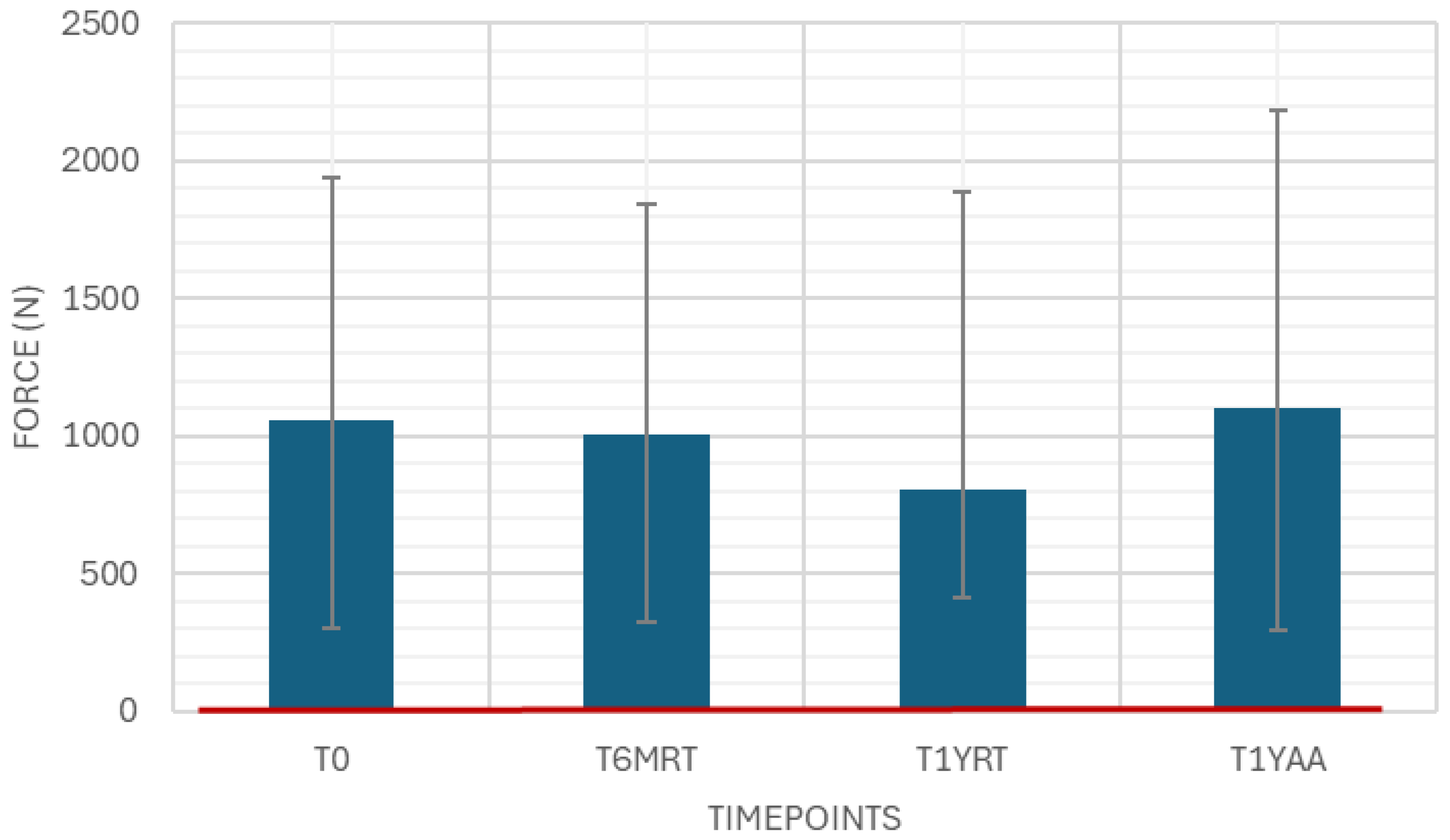
The flange breakage resistance was measured as a variable drug-independent test with 40 samples. The results were well above the limit of 35 N (Figure 4).
Figure 4.
Flange breakage resistance. Variable drug-independent test, 40 samples, specification: ≥35 N.
3.5. Break Loose and Glide/Extrusion Force
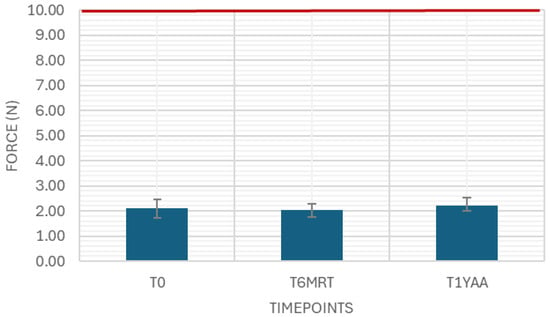
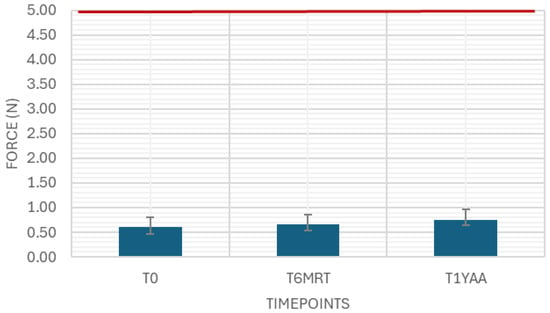
The break loose and glide force were measured as variable drug-independent tests with 40 samples. The results were well below the limit of 10 N and 5 N, respectively (Figure 5 and Figure 6).
Figure 5.
Break loose force. Variable drug-independent test, 40 samples, specification: ≤10 N.
Figure 6.
Glide force. Variable drug-independent test, 40 samples, specification: ≤5 N.
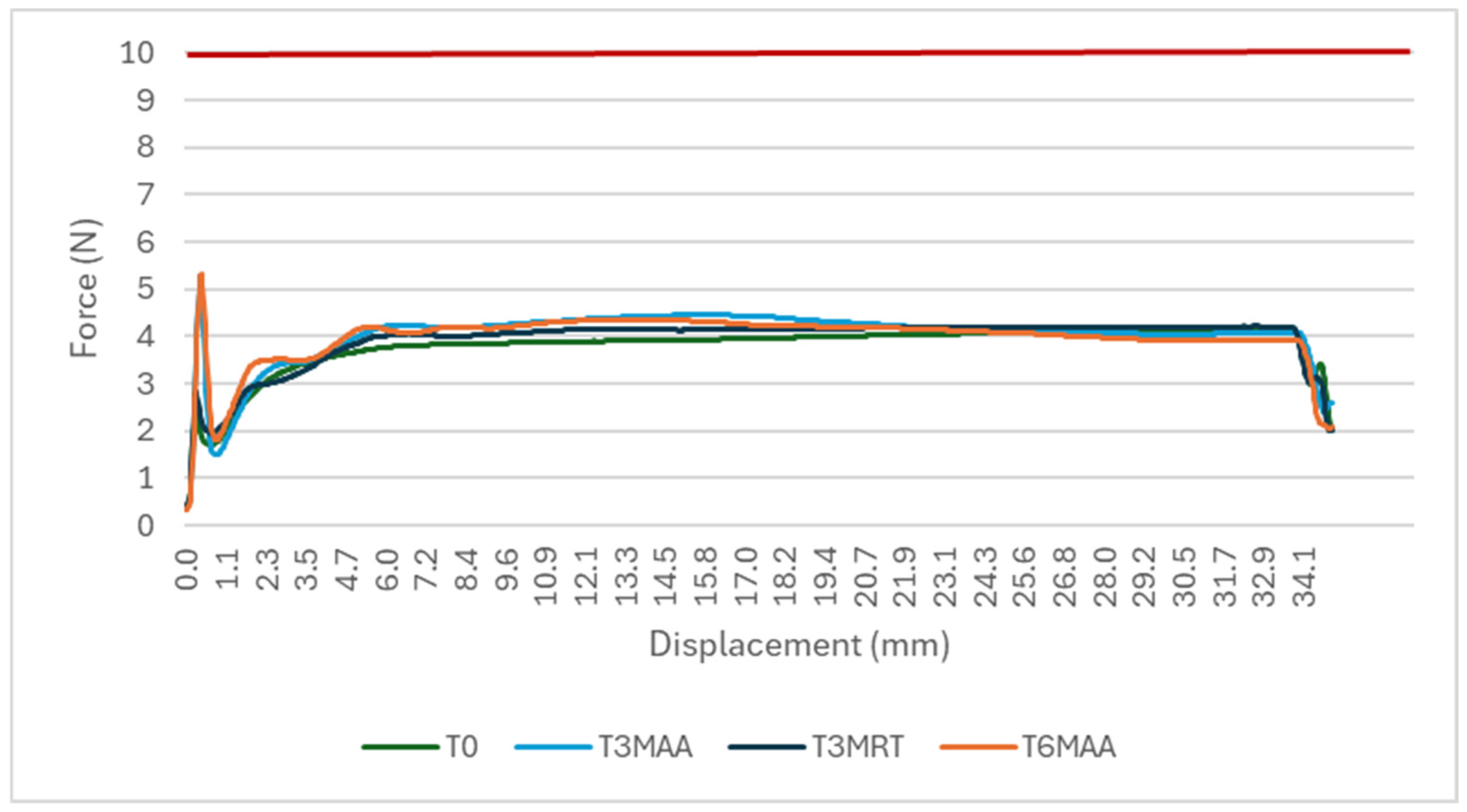
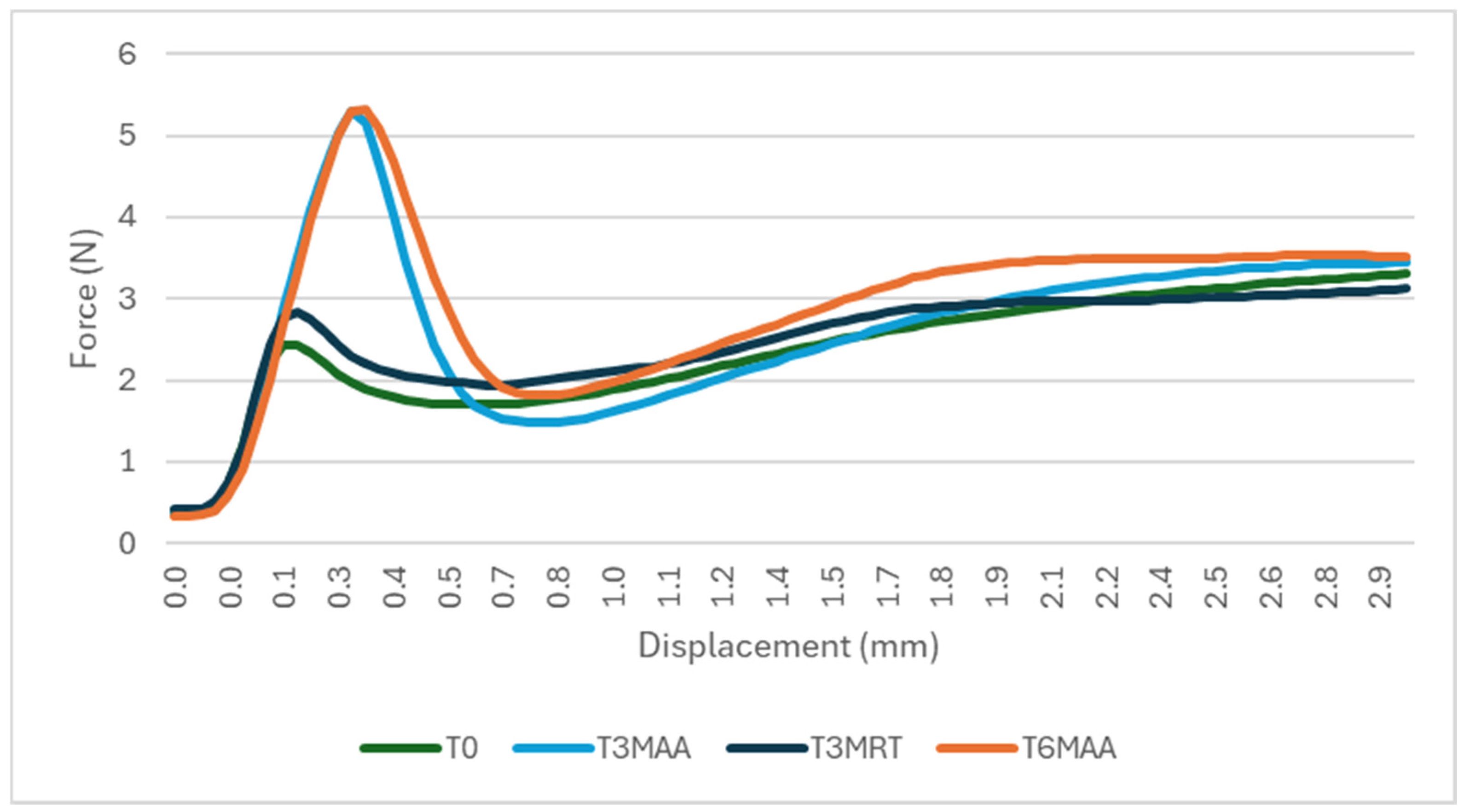
Break loose and extrusion forces were measured on the samples containing the surrogate solution. Figure 7 shows the entire measurement, while Figure 8 zooms into the break loose profile. One outlier measurement showed significantly higher force; it is excluded from the graph below, and the root cause has not yet been identified. The mean value of the 10 samples per each timepoint is shown.
Figure 7.
Break loose and extrusion. Variable simulated drug-dependent test, 10 samples at each timepoint, specification: break loose ≤10 N, extrusion force ≤20 N.
Figure 8.
Break loose profile. Variable simulated drug-dependent test, 10 samples at each timepoint, specification: ≤10 N.
3.6. Container Closure Integrity
Container closure integrity was measured in four variations (Table 8, Table 9, Table 10 and Table 11) to prove integrity of the closure system (closure system liquid leakage), integrity of the plunger (liquid leakage at the plunger), and the entire system (with helium leak as deterministic method and with blue dye test as probabilistic method [24]). Samples tested were 59 for the water solution and 15 and 12, respectively, for the surrogate solution. All tests passed (Table 8, Table 9, Table 10 and Table 11).
3.6.1. Closure System Liquid Leakage
Closure system liquid leakage was measured with water and surrogate solution as an attribute test, using 59 and 15 samples, respectively. None of the syringes showed droplets (Table 8).
Table 8.
Closure system liquid leakage.
3.6.2. Liquid Leakage at the Plunger
Liquid leakage at the plunger was measured with water and surrogate solution as an attribute test, using 59 and 15 samples, respectively. None of the syringes showed droplets (Table 9).
Table 9.
Liquid leakage at the plunger.
3.6.3. Container Closure Integrity at the Plunger
Container closure integrity at the plunger was categorized as variable data resulting in a sample size of 45 samples. All syringes were below the Kirsch limit (Table 10).
Table 10.
Container closure integrity at the plunger.
3.6.4. Dye Ingress (Tightness Test)
Dye ingress was only measured with the surrogate solution as an attribute test, using 12 samples. None of the syringes showed a color change (Table 11).
Table 11.
Dye ingress (tightness test).
3.7. Deliverable Volume
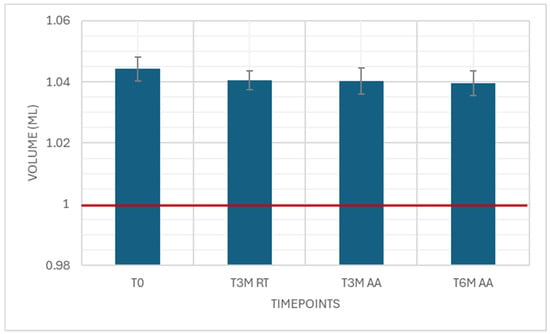
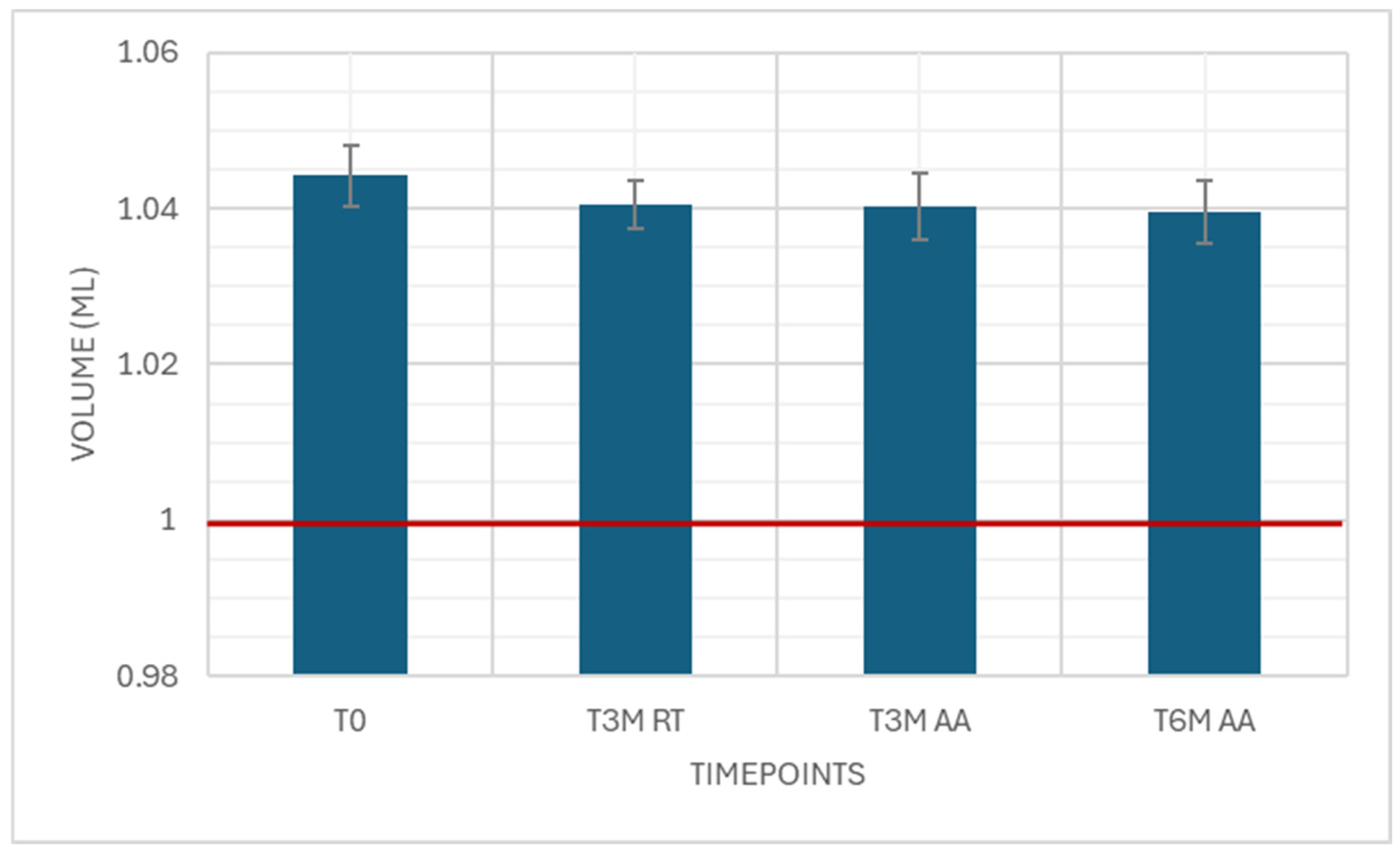
The deliverable volume was measured as an attribute test with five samples using water. As the results are not expected to change, only T0 was measured. All samples passed. With the surrogate solutions, 15 samples and all timepoints were measured. The results were well above the limit of 1.00 mL (Figure 9).
Figure 9.
Deliverable volume. Attribute simulated drug-dependent test, 15 samples each timepoint, specification ≥ 1.00 mL.
3.8. Residual Volume
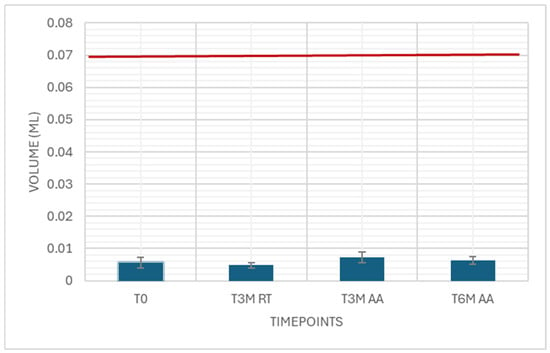
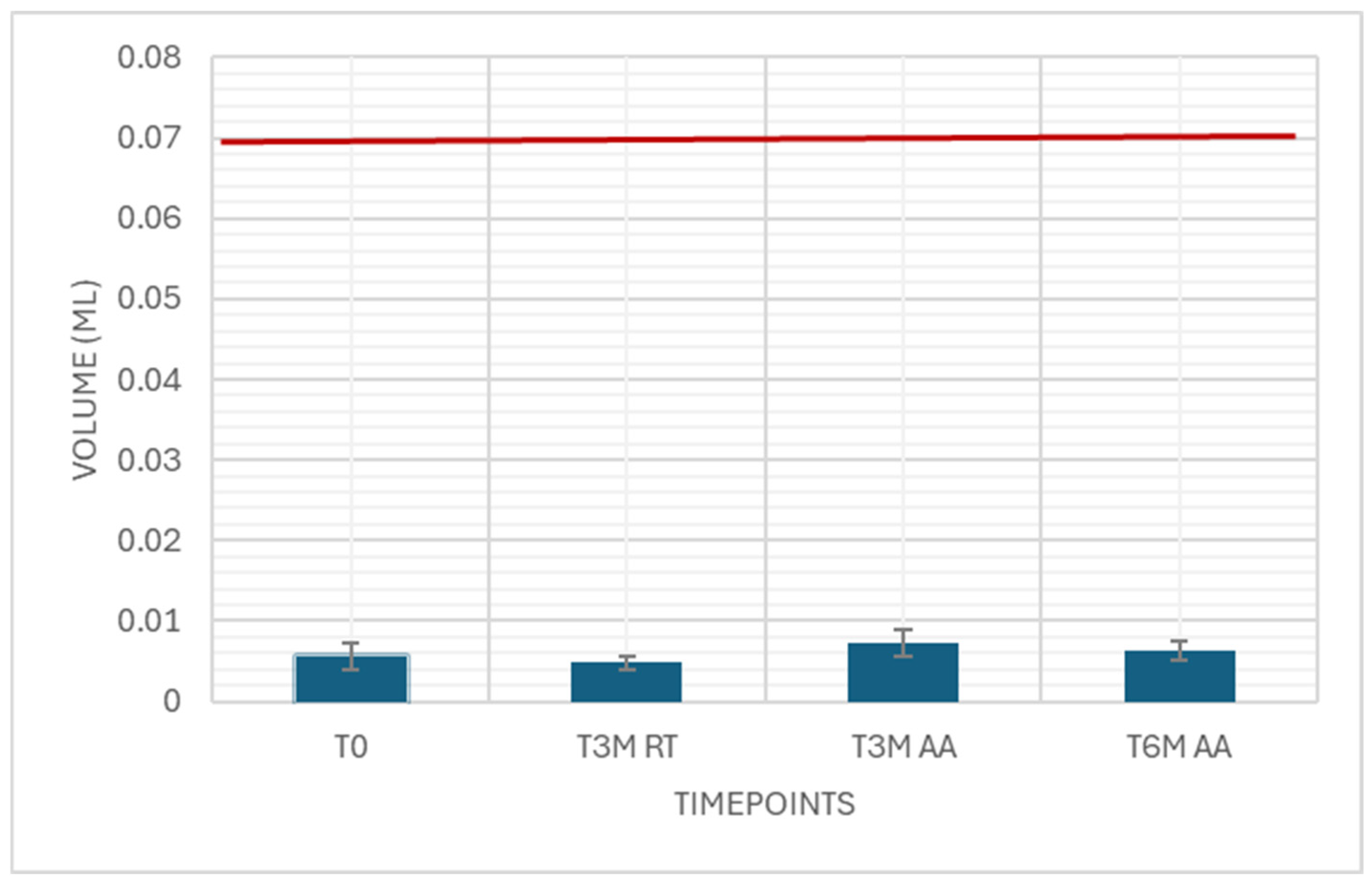
The residual volume was measured as an attribute test with 59 samples using water. As the results are not expected to change, only T0 was measured. All samples passed. With the surrogate solutions, 15 samples and all timepoints were measured. The results were well below the limit of 0.07 mL (Figure 10).
Figure 10.
Residual volume. Attribute simulated drug-dependent test, 15 samples each timepoint, specification ≤ 0.07 mL.
4. Discussion
This case study contributes a practical DV template that links intended use → user requirements → QTPP → design inputs/outputs → EDDOs → DV tests and acceptance criteria, enabling transparent traceability beyond a “test list” approach. A pragmatic sample size rationale is provided for DV endpoints with mixed data types (variable vs. attribute), illustrating how confidence/reliability targets and distributional assumptions can be combined into a risk-commensurate sampling strategy.
Across the evaluated endpoints, results met the predefined acceptance criteria under the applied test conditions and timepoints. For a final evaluation, further aspects may be considered for each parameter, as described below.
Needle shield pull-off force in this case study was found to be towards the lower end of the specification. This must be interpreted in the context of rigid needle shield design (material, inner geometry, venting features), the rubber/needle lubrication state, and dimensional tolerances of the needle and shield interface, as well as the glass syringe tip/cone geometry. In addition, storage/aging conditions (temperature, time), sterilization effects, and the needle shield assembly method (push-on force, alignment) can materially shift removal forces. Both limits are critical here as needle shields should not be too loose to easily fall off, nor too tight so they cannot be removed without excessive force.
Needle pull-out force is strongly driven by the process of attaching the needle (type and amount of adhesive, thermal staking parameters) and the syringe cone/needle seat geometry and tolerances. It should also be assessed with consideration of mechanical stresses from handling, packaging and transportation. The consistent results show that the needle pull-out force is not impacted by aging.
Needle penetration force depends primarily on needle geometry (gauge, bevel type, sharpness, tip quality) and surface condition (silicone oil coating, burrs). These results are also highly consistent, showing independence from aging.
Flange breakage resistance must be considered against the syringe forming process, annealing quality, and dimensional features such as flange thickness, radius and surface defects that drive stress concentration. Handling history (nesting/denesting forces, transport shock), environmental conditioning, and test fixture alignment/loading rate significantly affect the surface quality of the glass and thus the breakage resistance. This is also shown in the higher variability of the measured results. Nonetheless, the results are far beyond the specification. As breakage resistance is highly dependent on handling, these results can only be valid for the measured samples, and it is essential to ensure an appropriate process is in place to keep the surface defects as low as possible. Very good insights into appropriate glass handling can be found in the PDA Technical Report No. 87 [25].
While the break loose force in this case study was consistently low in the empty samples, there was a rise seen in the 3 and 6 months accelerated aging samples, but not in the 3 months real-time aging samples. Both break loose and glide force depend on the siliconization strategy (type, amount plus tolerances, distribution, potential migration, application method), elastomer formulation/lamination/coating, syringe barrel inner diameter and tolerances, and plunger placement method (e.g., vent tube vs. vacuum placement, insertion speed, applied force, and compression set). Additional influences include barrel inner diameter tolerance, storage orientation, temperature, and aging timepoints, all of which can change static friction at the start of motion. Process factors such as plunger setting depth, hold time before testing, and shipping-induced micro movements can further alter the force displacement profile and its variability. Extrusion force integrates plunger–barrel friction with formulation-driven flow resistance, and therefore depends on drug viscosity (and its temperature dependence), needle gauge/length, needle internal roughness, and any constrictions in the flow path, as well as potential time-dependent effects (e.g., protein adsorption, silicone oil migration, drug-silicone oil interactions) that can change friction or flow over shelf life. Extrusion forces in all samples showed a high consistency over aging.
Tightness, liquid leakage (at the front closure and the plunger), and deterministic CCI results should be interpreted as a combined picture of sealing performance, because they probe overlapping interfaces (plunger–barrel seal and front-end/needle-shield region) under different driving forces and detection sensitivities. Key influencing factors include component tolerances and surface conditions, plunger placement depth/method and resulting compression set, temperature, and internal pressure/headspace effects. Handling, sterilization, transport and aging can further introduce micro defects or relaxation effects that shift results over shelf life. All results passed with no leakage.
Deliverable and residual volume should be evaluated together because they are coupled through fill volume tolerance and system dead space, which is driven by syringe cone/needle/shoulder geometry, plunger head design and deformation at end-of-stroke. In addition, actuation conditions (speed, hold time at end-of-stroke), temperature, and formulation properties (viscosity, wetting/film formation) can shift the balance between expelled volume and retained volume, and should be controlled and reported when interpreting results across lots and aging timepoints. Results shown are highly consistent and independent of aging, as expected.
5. Conclusions
This paper presents a risk-based design verification framework for a 1 mL long glass prefilled syringe system used as a device constituent part for subcutaneous delivery, linking intended use, user requirements and QTPP elements to measurable design outputs and a focused set of EDDOs. To demonstrate how this framework is applied in practice, the complete workflow was executed using a 1 mL long glass PFS filled with a surrogate solution, and the corresponding measurement approach and results across functional, mechanical and integrity endpoints were reported. In this way, the case study is intended not as an isolated dataset, but as an end-to-end example showing how the proposed template is operationalized: from requirement definition through test execution to evidence generation. Under the conditions and timepoints evaluated in this case study, all DV results met predefined acceptance criteria, supporting fit-for-purpose performance of the syringe system in terms of preparation and handling, dose delivery functionality, mechanical robustness, and container closure integrity.
The approach is transferable to other PFS programs, as well as other combination products, and can serve as a practical template to:
- structure DV test selection;
- define sampling plans commensurate with risk;
- transparently justify acceptance criteria when standards and pharmacopeias primarily define finished-product expectations rather than component-level limits.
As a regulatory expectation, continued real-time aging to the end of shelf life and drug-dependent confirmation with the commercial formulation are the next steps to complete the evidence package.
Finally, we would also like to share some practical lessons learned. Early identification of QTPP elements is critical, as it drives downstream decisions and changing the QTPP late in development can necessitate re-definition of requirements and repetition of DV activities, hence the importance of “beginning with the end in mind.” Time and aging can affect endpoints differently; therefore, bracketing and timepoint selection should be tailored to the specific performance attribute rather than applied uniformly. Sampling plans should be defined as risk-commensurate decisions informed by formal risk evaluation and the data type (attribute vs. variable), rather than by a single universal convention. Finally, systematic generation and use of industry benchmarking datasets, through studies such as the present work, can support more transparent, evidence-based acceptance criteria settings where component-level limits are not harmonized across standards.
Author Contributions
Conceptualization, B.B.; methodology, B.A. and O.L.; writing—original draft preparation, B.B.; writing—review and editing, B.B., B.A. and O.L. All authors have read and agreed to the published version of the manuscript.
Funding
This research received no external funding.
Institutional Review Board Statement
Not applicable.
Informed Consent Statement
Not applicable.
Data Availability Statement
The original contributions presented in this study are included in the article. Further inquiries can be directed to the corresponding author.
Acknowledgments
The authors would like to thank Danielle Mendoza, Adam McLean, Christina Rice, Connor McInerney, and Angela Zhi for collecting data and Devang Patel and Evan Crouch for supporting DV testing.
Conflicts of Interest
Authors Bettine Boltres, Olga Laskina, and Brett Andrejko were employed by the company West Pharmaceutical Services. The authors declare that the research was conducted in the absence of any commercial or financial relationships that could be construed as a potential conflict of interes.
References
- DeGrazio, F.; Paskiet, D. Injectable Combination Product Development: Facilitating Risk-Based Assessments for Efficiency and Patient Centric Outcomes. J. Pharm. Sci. 2020, 109, 2101–2115. [Google Scholar] [CrossRef] [Scilit] [PubMed]
- U.S. Food and Drug Administration. Complete Response Letters (CRLs). Available online: https://open.fda.gov/data/transparencytools search for lenacapavir NDA 215973/215974 (accessed on 31 January 2026).
- Cardinal Health Issues Nationwide Recall of Select Monoject™ Flush Prefilled Saline Syringes. 20 August 2021. Available online: https://www.fda.gov/safety/recalls-market-withdrawals-safety-alerts/cardinal-health-issues-nationwide-recall-select-monojecttm-flush-prefilled-saline-syringes (accessed on 31 January 2026).
- U.S. Food and Drug Administration. Recalls, Market Withdrawals, & Safety Alerts. Available online: https://www.fda.gov/safety/recalls-market-withdrawals-safety-alerts (accessed on 31 January 2026).
- 21 CFR 820. Available online: https://www.ecfr.gov/current/title-21/chapter-I/subchapter-H/part-820 (accessed on 31 January 2026).
- ISO 13485:2016; Medical Devices—Quality Management Systems—Requirements for Regulatory Purposes. International Organization for Standardization: Geneva, Switzerland, 2020.
- Design Verification Testing of Combination Products. Available online: https://www.westpharma.com/blog/2024/june/design-verification-testing-for-combination-products?srsltid=AfmBOopZLV9H9r-VSz4ec41elZlZWcExYvzZYdJ2cmO9-Zbp9r4w82wA (accessed on 31 January 2026).
- ICH Guidance for Industry Q8: Pharmaceutical Development; International Council for Harmonisation: Geneva, Switzerland, 2009.
- U.S. Food and Drug Administration. Essential Drug Delivery Outputs for Devices Intended to Deliver Drugs and Biological Products Guidance for Industry; U.S. Food and Drug Administration: Silver Spring, MD, USA, 2024.
- ISO 10993-18:2020; Biological Evaluation of Medical Devices—Part 18: Chemical Characterization of Medical Device Materials Within a Risk Management Process. International Organization for Standardization: Geneva, Switzerland, 2020.
- Association for the Advancement of Medical Instrumentation (AAMI). Human Factors Engineering—Design of Medical Devices; ANSI/AAMI HE75:2009/(R)2018; AAMI: Arlington, VA, USA, 2018. [Google Scholar]
- Salvendy, G.; Karwowski, W. (Eds.) Handbook of Human Factors and Ergonomics, 5th ed.; John Wiley & Sons: Hoboken, NJ, USA, 2021. [Google Scholar]
- ISO 10993-1:2018; Biological Evaluation of Medical Devices—Part 1: Evaluation and Testing Within a Risk Management Process. International Organization for Standardization: Geneva, Switzerland, 2018.
- ISO 11040-4; Prefilled Syringes—Part 4: Glass Barrels for Injectables and Sterilized Subassembled Syringes Ready for Filling, Section 4.2. International Organization for Standardization: Geneva, Switzerland, 2024.
- Kirsch, L.E.; Nguyen, L.; Moeckly, C.S.; Gerth, R. Pharmaceutical container/closure integrity. II: The relationship between microbial ingress and helium leak rates in rubber-stoppered glass vials. PDA J. Pharm. Sci. Technol. 1997, 51, 195–202. [Google Scholar] [PubMed]
- ISO 7886-1:2017; Sterile Hypodermic Syringes for Single Use Part 1: Syringes for Manual Use. International Organization for Standardization: Geneva, Switzerland, 2017.
- ISO 14971:2019; Medical Devices—Application of Risk Management to Medical Devices. International Organization for Standardization: Geneva, Switzerland, 2019.
- ISO 11608-1:2022; Needle-Based Injection Systems for Medical Use—Requirements and Test Methods Part 1: Needle-Based Injection Systems. International Organization for Standardization: Geneva, Switzerland, 2022.
- Boltres, B.; deGrazio, F.; Neadle, S. Overcoming device component-related challenges and risks in prefilled syringe development. PDA J. Pharm. Sci. Technol. 2026, 80, 1–47. [Google Scholar] [CrossRef] [Scilit] [PubMed]
- United States Pharmacopeia. General Chapter, ⟨697⟩ Container Content for Injections; USP-NF; United States Pharmacopeia: Rockville, MD, USA, 2017. [Google Scholar] [CrossRef] [Scilit]
- ICH Guidance for Industry Q1A(R2): Stability Testing of New Drug Substances and Product; International Council for Harmonisation: Geneva, Switzerland, 2003.
- ICH Guidance for Industry Q2(R2): Guideline on Validation of Analytical Procedures; International Council for Harmonisation: Geneva, Switzerland, 2023.
- U.S. Food and Drug Administration; Center for Drug Evaluation and Research (CDER). FDA Guidance for Industry—Analytical Procedures and Methods Validation for Drugs and Biologics; U.S. Food and Drug Administration: Silver Spring, MD, USA, 2015.
- United States Pharmacopeia. General Chapter, ⟨1207⟩ Package Integrity Evaluation—Sterile Products; USP-NF; United States Pharmacopeia: Rockville, MD, USA, 2017. [Google Scholar] [CrossRef] [Scilit]
- Parenteral Drug Association. Technical Report No. 87: Current Best Practices for Pharmaceutical Glass Vial Handling and Processing; PDA: Bethesda, MD, USA, 2021. [Google Scholar]

Disclaimer/Publisher’s Note: The statements, opinions and data contained in all publications are solely those of the individual author(s) and contributor(s) and not of MDPI and/or the editor(s). MDPI and/or the editor(s) disclaim responsibility for any injury to people or property resulting from any ideas, methods, instructions or products referred to in the content. |
© 2026 by the authors. Licensee MDPI, Basel, Switzerland. This article is an open access article distributed under the terms and conditions of the Creative Commons Attribution (CC BY) license.