


Abstract
Feline infectious peritonitis (FIP) is a disease arising as a result of feline coronavirus infection. It used to be regarded a fatal disease, with euthanasia commonly recommended following diagnosis due to its very poor prognosis. The availability of effective antiviral therapies, particularly nucleoside analogues such as oral GS-441524, has fundamentally changed the outlook for cats with FIP. FIP is now a treatable and frequently curable disease. In these revised guidelines, the European Advisory Board on Cat Diseases (ABCD) presents an update on the treatment of FIP, incorporating the findings of new studies including the range of available treatments (such as GS-441524, remdesivir and molnupiravir (EIDD-2801) and its active metabolite EIDD-1931), which varies globally, as well as suggestions for monitoring and prognostic indicators. Tables are used to present easy-to-find information on antiviral and supportive treatments for cats with FIP. GS-441524 is the most extensively studied antiviral for FIP with treatment success rates often exceeding 90%. Remdesivir is primarily reserved as an injectable antiviral for severely affected cats unable to tolerate oral medication; it is usually replaced by oral medication as soon as, and when, possible. Although 84-day treatment courses have historically been used, emerging evidence suggests that shorter regimens of 42 days can be equally effective.
Keywords:
FIP; feline coronavirus FCoV; remdesivir; GS-441524; molnupiravir; EIDD-2801; EIDD-1931; GC376; nirmatrelvir; prednisolone 1. Introduction
The European Advisory Board on Cat Diseases (ABCD) Feline Infectious Peritonitis complete guidelines were first published in 2009 [1] and comprehensively revised and published again in 2023 [2]. This review presents a further update on a section of the full guidelines describing the treatment of FIP, a field of rapidly evolving evidence on an increasing number of antiviral drugs used for FIP. The availability of predictably effective treatments for FIP has totally changed the outlook of this disease for owners, caregivers and veterinarians. There is now an alternative to euthanasia as FIP has largely become curable (see Table 1). Novel antiviral treatments act quickly, with clinical improvement within a few days, allowing for the trial (diagnostic) treatment of cats in which FIP is very likely (see the ABCD FIP Diagnostic Tool for further quick-to-access information on diagnosis [3]) without confirmation of diagnosis (e.g., cat too sick to undergo testing, testing not available, financial constraints) or while waiting for diagnostic results [4,5]. A rapid and sustained positive response to antiviral treatment is a means of supporting a diagnosis of FIP.
Antivirals are not licenced in cats and are still not available legally in all countries, complicating their use. An increasing number of countries have access to veterinary compounded GS-441524 products [6,7,8,9,10,11], and others have access to antivirals developed or available for humans, such as remdesivir or molnupiravir. In other countries, owners source antivirals themselves online, often illegally [4,12,13], but the quality and content of active ingredients in these preparations is usually unknown and varies significantly, as they are unregulated [14,15]. However, they are clearly often effective based on published studies [12]. Veterinarians are often prevented by local regulations from prescribing and administering such treatments [16,17,18], but provision of veterinary-led supportive care is usually allowed and highly recommended [19] as prompt supportive care that sometimes needs to be intensive is believed to be an important reason for the excellent responses to therapy [20,21].
3. Immunomodulatory Treatments
Immunomodulatory therapies are no longer considered as sole treatments for FIP as they are ineffective in comparison to the antiviral treatments described earlier. Glucocorticoids are sometimes indicated combined with antivirals and the use of polyprenyl immunostimulant (PI) has been described in a few studies.
3.1. Glucocorticoids
Glucocorticoids can act as anti-inflammatories or immunosuppressants depending on dosage used. The median survival time of FIP cats treated with prednisolone was only eight days in one study [57] and 31 days in cats with suspected effusive FIP [62]. Although it is suggested that glucocorticoid treatment is associated with a poorer FIP outcome when used concurrently with other treatments (e.g., such as rfIFN-ω [19]), glucocorticoid use is helpful alongside antivirals in some situations, e.g., topical steroids for uveitis [34,63], anti-inflammatory prednisolone (1 mg/kg/day) for severe FIP-associated neurological signs [64,65,66] or immunosuppressive prednisolone (1–2 mg/kg/day) for FIP-associated IMHA [66,67], in cases where concurrent haemotropic mycoplasma infection has ideally been ruled out. In one study prednisolone was used in cats with neurological or ocular signs, at a tapering dosage starting at 1 mg/kg q 24 h, terminating before the end of the molnupiravir treatment [48].
3.2. Polyprenyl Immunostimulant
PI is an immunostimulant that might be helpful in the treatment of a few cats with FIP without effusions, especially in cats with haematocrit and/or albumin to globulin (A:G) ratios that are normal or that increase with treatment, although response to treatment is slow, over several months (normalisation times are ~182 days for haematocrit and ~375 days for the A:G ratio) [68]. It has been found that concurrent systemic glucocorticoid treatment should be avoided with PI, as this worsens prognosis [63] but topical glucocorticoid treatment can be used with PI in ocular FIP uveitis [63]. Reported dosages are 3 mg/kg PO three times a week or q 48 h [19,63,68,69]. Some cats are changed to a maintenance dosage of 3 mg/kg PO once or twice a week after one year of treatment [65].
3.3. Other Immunomodulators
Anti-TNF-α antibody blocks TNF-α that is involved in exacerbating clinical signs of FIP [70,71,72]. Some efficacy of anti-TNF-α antibodies has been reported in small studies of experimental-induced FIP; in one placebo-controlled study [73], and in another uncontrolled study alongside itraconazole treatment [74] in which two of three cats with FIP improved.
Table 1.
Antiviral drugs for FIP treatment. ALT indicates alanine aminotransferase, IV indicates intravenously, PO indicates orally, rfIFN-ω indicates recombinant feline interferon-omega, SC indicates subcutaneously. (a) Nucleoside analogue antivirals; (b) Non-nucleoside analogue antivirals. Note: Text in bold is to highlight charactertistics or usage of the described antivirals, to allow for easier visual use of the table. For all antiviral treatments, it is important to ensure the dose given to the cat preserves appropriate dosage if/when weight gain occurs because of recovery, e.g., in growing kittens and adults that have had weight loss. If the dose is not adjusted, underdosage occurs, which can be associated with disease relapse [9]. Accurate weight recording is also important to monitor response to treatment [22]. It is also important to note that unregulated antivirals are of unknown composition and concentration of active ingredient, making interpretation of ‘given’ doses difficult [14,15]. Alongside antiviral treatment, individualised analgesia and supportive care are essential for successful treatment of FIP; for further details on supportive treatment see text and Table 2.
4. Supportive and Concurrent Disease Treatment
Veterinary supportive care, which should be prompt and intensive, is particularly important in the recovery of cats that are very sick due to FIP [20,21]. Supportive care treatments are outlined in Table 2. However, veterinary support might not be sought by owners who have obtained antiviral drugs illegally for their cats as veterinarians are unable to advise, obtain or prescribe illegal drugs. It is possible and important for vets to give supportive care to cats in this situation for welfare reasons. Documentation in the medical records to confirm there has been no veterinary involvement in the illegal drug procurement or administration is recommended.
Stress should be minimised throughout care, adopting feline-friendly techniques [89,90]. Analgesia is important to consider as cats with FIP can be in pain due to their disease, e.g., pleuritis, peritonitis, uveitis, glaucoma, ileus, raised intracranial pressure, meningeal inflammation. Additionally, diagnostic procedures can also elicit pain, e.g., needle or biopsy samples, centesis procedures. Pain scoring should be carried out and appropriate analgesia such as opioids, non-steroidal anti-inflammatory drugs (NSAIDs, if no contraindications) (Table 2) provided [91]. Other supportive care should be provided as needed, e.g., intravenous fluids, appetite stimulants, antiemetics, and blood transfusions [8,92].
If a pleural effusion is causing dyspnoea, therapeutic drainage is indicated to provide relief to the cat so that breathing improves; the volume removed will depend upon the volume present and how dyspnoeic the cat is. Therapeutic drainage of ascitic fluid is only indicated if the degree of abdominal effusion is large enough to be compromising respiration, and then only enough to relieve this should be drained.
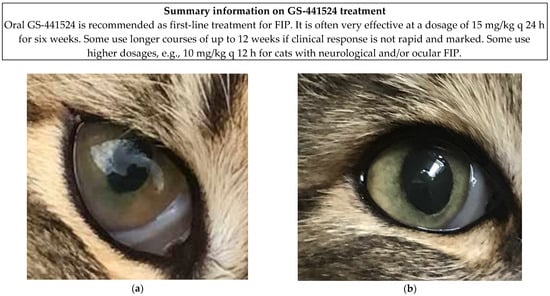
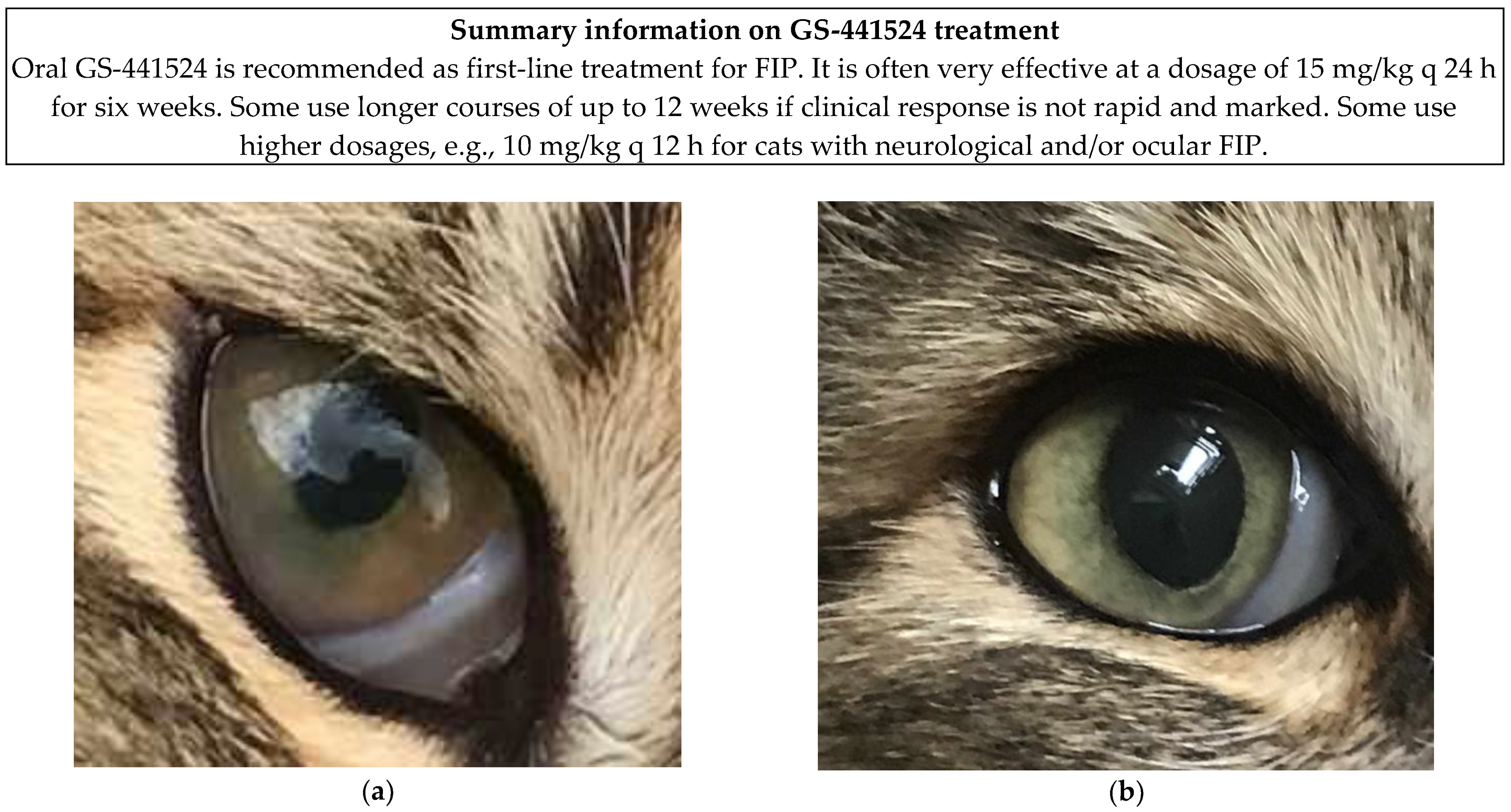
Antivirals will help control intraocular uveal inflammation in uveitis [34,63,93] (Figure 1) but other specific topical treatments might be needed, such as prednisolone acetate, NSAIDs and cycloplegics for miosis. Systemic prednisolone treatment has been suggested for its anti-inflammatory effect for severe posterior uveitis or panuveitis [94] but is more commonly given for neurological or immune-mediated disease signs than uveitis [93]. Ocular improvements start within 7 days of treatment and can take several weeks to resolve [93,94]. Of note is that posterior uveitis changes might only become apparent once an anterior uveitis has resolved enough to allow fundic examination [93]. If uveitis is present, it is important to regularly monitor intraocular pressure too.
If seizures occur in neurological cases of FIP, anti-seizure medication is required [8], such as levetiracetam and/or phenobarbitone [95]. Short-term prednisolone can be beneficial for cats with severe FIP-associated neurological signs in the early days of antiviral treatment [64,66], including hydrocephalus [96].
In cats that are hypoglycaemic, dextrose supplementation can be indicated [6,97] and hypotension might need to be treated with vasopressors. A viral sepsis could be occurring in very sick cats with severe hypovolaemia, dehydration, hypoglycaemia, persistent hypotension despite fluid resuscitation and when pressor support is not completely effective. More experience with the treatment of such cases is required but they seem to carry a poor prognosis [6,21].
IMHA is now recognised to occur in association with FIP [67] and most of these cats need glucocorticoids despite their FIP responding well to antiviral treatment [11,66,67]. A low prednisolone dosage of 1 mg/kg q 24 h PO can be used, tapering once there has been a response to treatment. Ideally, haemotropic mycoplasma infections should be ruled out too. Blood transfusions [98] might be required [8,21,36,67,99,100] for severe anaemia.
Myocarditis associated with FIP, and associated clinical signs, have now been described in several case reports and studies; these cats can respond to combined antivirals such as GS-441524 and appropriate medical treatment for CHF (e.g., furosemide, pimobendan), arrhythmias, and prophylactic antithrombotic treatment [78,101,102]. Completely reversed echocardiographic changes have been reported following effective treatment of the CHF and FIP [78,102].
Concurrent FeLV and/or FIV infection has not affected the response to GS-441524 treatment [5,28,103], nor have feline calicivirus or feline herpesvirus infections [28], chronic inflammatory disease [5] or renal lymphoma [104], although management of those coinfections or diseases is likely to be needed. Of note is that three cats with confirmed FIP from a prospective bicentre study did not respond successfully to GS-441524 treatment; toxoplasma-associated disease was diagnosed at postmortem examination and was considered the likely cause of failure to recover in these cats (personal communication: A.M.S., K.H., R.H.L.).
Table 2.
Supportive treatments that have been used in cats with FIP. Text in bold is to highlight charactertistics or usage of the described antivirals, to allow for easier visual use of the table. NSAID indicates non-steroidal anti-inflammatory drug, SC indicates subcutaneously, PO indicates orally, CRI indicates constant rate infusion. Alongside antiviral treatment, individualised analgesia and supportive care are essential for successful treatment of FIP.
6. Treatment Monitoring
Monitoring of treatment has mostly been described in cats receiving GS-441524, but the principles apply to other antiviral treatments. Weight gain is a simple measure of treatment efficacy and easy for caregivers to perform at home every one to two weeks using paediatric weighing scales [22,23,25,26,33]. Regular weighing importantly also allows for an increased dose to be calculated to maintain the appropriate dosage despite weight gain in the kitten/cat during recovery [9].
In some cats with FIP and effusions, a pattern of a drop in body weight, a serum globulin concentration upward spike and PCV drop occurs when an effusion is resorbed two weeks into treatment, and this does not indicate treatment failure [9]. Weight loss during the first two weeks of effective treatment has been reported in 21% of cats, interestingly with no difference between cats with or without effusions, although a worsening hyperglobulinaemia in effusive cases was reported [11].
Following resolution of fever and marked improvement of clinical signs, usually within a few days, hyperbilirubinaemia usually resolves quickly, followed by resolution of the effusion (if present, this often resolves within two weeks [56]), then an improvement in haematocrit and increasing A:G ratio. The hyperglobulinaemia can take longer— up to a few weeks—to normalise [8,19]. Cats given molnupiravir treatment can take longer to respond than cats given GS-441524 or remdesivir [47].
If the cat is not hospitalised for supportive care, it is important to obtain a verbal report of progress and ease of medicating the cat from the cat’s caregiver after 48 h of treatment is important as it is essential that antiviral administration is effective. After 2 weeks, any effusions should be reviewed (in-house ultrasound scanning, or abdominal girth measurement as an alternative for abdominal effusion monitoring); if the amount of effusion has not substantially decreased by two weeks, increasing the dosage of the antiviral should be considered (e.g., GS-441524 by 5 mg/kg/day if possible) and/or the diagnosis and differential diagnoses reviewed and/or the formulation of antiviral being used verified. Ideally, haematology and serum biochemistry are repeated after two weeks and then monthly if funds allow, although a minimum is to document normalisation of variables (although mild lymphocytosis and hyperglobulinaemia may still be present after 42 days of treatment) before stopping treatment. Laboratory testing can also be done at a lower cost by measuring only key variables in-house, e.g., total protein/albumin/globulin, bilirubin and/or spinning a microhaematocrit tube for packed cell volume/total proteins/colour of plasma.
AGP concentrations can increase in the first two days of oral GS-441524 treatment before decreasing thereafter [77]. Concentrations of SAA also decrease with effective GS-441524 treatment, even more rapidly than the AGP concentrations (due to the shorter half-life of SAA), mostly reaching normal values by seven days of treatment [77]. Two consecutively normal AGP measurements, at least a week or two apart, might confirm recovery from FIP [19] and be helpful to guide when treatment can be stopped; this can be especially useful now that 42-day treatment courses of GS-441524 are being used. Studies have shown that AGP concentrations decrease continuously after two days of oral GS-441524 treatment, being significantly reduced on day 7 compared to day 1 and usually normalising by days 14–28 of treatment [77].
Clearance of blood FCoV N gene RNA, tested by RT-qPCR, by the second week of treatment was classified as a favourable treatment response in one study; however, cats that were still RT-qPCR-positive in blood by this time also had a successful outcome [56]. FCoV antibody levels are not useful to track response to treatment. Residual abdominal lymphadenomegaly has been reported following effective GS-441524 treatment [5,32,108], as well as a mild lymphocytosis [108], but these do not signify FIP relapse. Residual neurological signs [64,95] are sometimes reported following GS-441524 treatment, but often these signs are static and not associated with FIP relapse. One study [96] described central vestibular signs in three cats that had been successfully treated with GS-441524 over a year before; MRI showed progressive hydrocephalus and no evidence of active FIP was found; these cats were treated with ventriculoperitoneal shunts, and this progressive hydrocephalus might represent post-inflammatory lesions (akin to ‘long COVID-19 syndrome’) beyond viral clearance.
7. Preventative Healthcare
In cats in which vaccination and neutering were deemed necessary, both have been performed during, or following, successful treatment of FIP with nucleoside analogues [8,9] without relapse of FIP. However, whether FIP affects vaccine efficacy has not been studied. Individual risk assessments should inform which vaccines are required [109,110,111,112]. Feline-friendly approaches and handling are recommended to minimise stress [89,90], including appropriate analgesia for neutering, gabapentin or pregabalin to reduce stress associated with clinic visits if needed, etc. Some veterinarians advise continuing antiviral treatment for two to four weeks after neutering surgery to ensure antiviral activity is there during a potential period of stress and recovery from surgery [103]. Parasiticide treatments have been administered to cats during and after treatment without problems or concerns regarding efficacy, although published studies are lacking.
8. Conclusions
Oral GS-441524 is the most extensively used antiviral for FIP with treatment success rates often exceeding 90% with prompt treatment. Intravenous remdesivir is primarily used in severely affected cats unable to tolerate oral GS-441524 medication, until they are well enough to receive oral medication. In some countries, molnupiravir is readily available and used, although response to treatment may be slower compared to GS-441524. More common adverse effects, including its mutagenic properties, suggest that other nucleoside analogues, such as GS-441524, should be used in preference to molnupiravir, if available. Although 84-day treatment courses have been used historically, shorter protocols of 42 days can be equally effective. Supportive treatments, e.g., analgesia, antiemetics, seizure medications, are important, as well as the rapid treatment of concurrent diseases, e.g., myocarditis, IMHA.
Author Contributions
All authors contributed to the discussions and preparation of the ABCD guideline on which this review article was based. All authors have read and agreed to the published version of the manuscript.
Funding
The European ABCD gratefully acknowledges the support of Boehringer Ingelheim (the founding sponsor of the ABCD), MSD Animal Health, Vetoquinol and Virbac.
Data Availability Statement
No new data were created or analysed in this study.
Acknowledgments
The authors would like to thank colleagues worldwide who have provided valuable information that has helped guide the evolution of treatment protocols for FIP over recent years. We thank Johanna Covell-Ritchie for photographs.
Conflicts of Interest
The authors are members of the European Advisory Board on Cat Diseases (ABCD), a scientifically independent board of experts in feline medicine. Some individual authors have been consultants for, or have received research funding and honoraria from, animal health companies and other organisations, but all authors declare no conflicts of interest for the writing of this independent review. The ABCD sponsors had no role in the writing nor in the decision to publish this review.
References
- Addie, D.; Belak, S.; Boucraut-Baralon, C.; Egberink, H.; Frymus, T.; Gruffydd-Jones, T.; Hartmann, K.; Hosie, M.J.; Lloret, A.; Lutz, H.; et al. Feline infectious peritonitis. ABCD guidelines on prevention and management. J. Feline Med. Surg. 2009, 11, 594–604. [Google Scholar] [CrossRef] [Scilit] [PubMed]
- Tasker, S.; Addie, D.D.; Egberink, H.; Hofmann-Lehmann, R.; Hosie, M.J.; Truyen, U.; Belák, S.; Boucraut-Baralon, C.; Frymus, T.; Lloret, A.; et al. Feline Infectious Peritonitis: European Advisory Board on Cat Diseases Guidelines. Viruses 2023, 15, 1847. [Google Scholar] [CrossRef] [Scilit] [PubMed]
- Tasker, S.; Addie, D.D.; Egberink, H.; Hartmann, K.; Hofmann-Lehmann, R.; Hosie, M.J.; Truyen, U.; Belak, S.; Boucraut-Baralon, C.; Frymus, T.; et al. European ABCD FIP Diagnostic Tool. 2024. Available online: https://www.abcdcatsvets.org/wp-content/uploads/2024/12/FIP_diagnostic_tool_November-2024.pdf (accessed on 1 March 2026).
- Schlachet, A.; Moillen, E.; Schuller, S.; Carranza Valencia, A. Unlicensed antiviral treatment with GS-441524: How are clinicians approaching feline infectious peritonitis in primary care practices? Schweiz. Arch. Tierheilkd. 2026, 168, 1–10. [Google Scholar] [CrossRef] [Scilit]
- Ansari Mood, M. Analysis of risk factors, clinical data, treatment outcomes for cats with feline infectious peritonitis using GS-441524 (2020–2024). Sci. Rep. 2025, 16, 1037. [Google Scholar] [CrossRef] [Scilit]
- Green, J.; Syme, H.; Tayler, S. Thirty-two cats with effusive or non-effusive feline infectious peritonitis treated with a combination of remdesivir and GS-441524. J. Vet. Intern. Med. 2023, 37, 1784–1793. [Google Scholar] [CrossRef] [Scilit]
- Sorrell, S.; Pugalendhi, S.J.; Gunn-Moore, D. Current treatment options for feline infectious peritonitis in the UK. Companion Anim. 2022, 27, 79–90. [Google Scholar] [CrossRef] [Scilit]
- Taylor, S.S.; Coggins, S.; Barker, E.N.; Gunn-Moore, D.; Jeevaratnam, K.; Norris, J.M.; Hughes, D.; Stacey, E.; MacFarlane, L.; O’Brien, C.; et al. Retrospective study and outcome of 307 cats with feline infectious peritonitis treated with legally sourced veterinary compounded preparations of remdesivir and GS-441524 (2020–2022). J. Feline Med. Surg. 2023, 25, 1098612X231194460. [Google Scholar] [CrossRef] [Scilit]
- Coggins, S.J.; Norris, J.M.; Malik, R.; Govendir, M.; Hall, E.J.; Kimble, B.; Thompson, M.F. Outcomes of treatment of cats with feline infectious peritonitis using parenterally administered remdesivir, with or without transition to orally administered GS-441524. J. Vet. Intern. Med. 2023, 37, 1772–1783. [Google Scholar] [CrossRef] [Scilit] [PubMed]
- Renner, K.A.; Cattin, R.; Kimble, B.; Munday, J.; White, A.; Coggins, S. Efficacy of oral remdesivir in treating feline infectious peritonitis: A prospective observational study of 29 cats. J. Feline Med. Surg. 2025, 27, 1098612x251335189. [Google Scholar] [CrossRef] [Scilit]
- Knies, M.; Smalbroek, A.I.; Kamp, A.L.; Assink, M.; Onis-Jackson, J.; Hofman, N.; Bontekoning, I.; Lubbers, M.; Broens, E.M.; Kooistra, H.S.; et al. Legal treatment of feline infectious peritonitis in the Netherlands. J. Feline Med. Surg. 2026, 28, 1098612X251407741. [Google Scholar] [CrossRef] [Scilit]
- Jones, S.; Novicoff, W.; Nadeau, J.; Evans, S. Unlicensed GS-441524-Like Antiviral Therapy Can Be Effective for at-Home Treatment of Feline Infectious Peritonitis. Animals 2021, 11, 2257. [Google Scholar] [CrossRef] [Scilit]
- Negash, R.; Li, E.; Jacque, N.; Novicoff, W.; Evans, S.J.M. Owner experience and veterinary involvement with unlicensed GS-441524 treatment of feline infectious peritonitis: A prospective cohort study. Front. Vet. Sci. 2024, 11, 1377207. [Google Scholar] [CrossRef] [Scilit]
- Mulligan, A.J.; Browning, M.E. Quality assessment and characterization of unregulated antiviral drugs for feline infectious peritonitis: Implications for treatment, safety, and efficacy. Am. J. Vet. Res. 2024, 85, 1–9. [Google Scholar] [CrossRef] [Scilit]
- Kent, A.M.; Guan, S.; Jacque, N.; Novicoff, W.; Evans, S.J.M. Unlicensed antiviral products used for the at-home treatment of feline infectious peritonitis contain GS-441524 at significantly different amounts than advertised. J. Am. Vet. Med. Assoc. 2024, 262, 489–497. [Google Scholar] [CrossRef] [Scilit] [PubMed]
- Pons-Hernandez, M.; Wyatt, T.; Hall, A. Investigating the illicit market in veterinary medicines: An exploratory online study with pet owners in the United Kingdom. Trends Organ. Crime. 2023, 26, 308–328. [Google Scholar] [CrossRef] [Scilit] [PubMed]
- Cooper, G. Comments on: Dealing with black market medications. In Pract. 2021, 43, 343. [Google Scholar] [CrossRef] [Scilit]
- Riley, N. Dealing with black market medications. In Pract. 2021, 43, 293–294. [Google Scholar] [CrossRef] [Scilit]
- Addie, D.D.; Silveira, C.; Aston, C.; Brauckmann, P.; Covell-Ritchie, J.; Felstead, C.; Fosbery, M.; Gibbins, C.; Macaulay, K.; McMurrough, J.; et al. Alpha-1 Acid Glycoprotein Reduction Differentiated Recovery from Remission in a Small Cohort of Cats Treated for Feline Infectious Peritonitis. Viruses 2022, 14, 744. [Google Scholar] [CrossRef] [Scilit]
- Krentz, D.; Zenger, K.; Alberer, M.; Felten, S.; Bergmann, M.; Dorsch, R.; Matiasek, K.; Kolberg, L.; Hofmann-Lehmann, R.; Meli, M.L.; et al. Curing Cats with Feline Infectious Peritonitis with an Oral Multi-Component Drug Containing GS-441524. Viruses 2021, 13, 2228. [Google Scholar] [CrossRef] [Scilit]
- Zuzzi-Krebitz, A.-M.; Buchta, K.; Bergmann, M.; Krentz, D.; Zwicklbauer, K.; Dorsch, R.; Wess, G.; Fischer, A.; Matiasek, K.; Hönl, A.; et al. Short Treatment of 42 Days with Oral GS-441524 Results in Equal Efficacy as the Recommended 84-Day Treatment in Cats Suffering from Feline Infectious Peritonitis with Effusion—A Prospective Randomized Controlled Study. Viruses 2024, 16, 1144. [Google Scholar] [CrossRef] [Scilit]
- Pedersen, N.C.; Perron, M.; Bannasch, M.; Montgomery, E.; Murakami, E.; Liepnieks, M.; Liu, H. Efficacy and safety of the nucleoside analog GS-441524 for treatment of cats with naturally occurring feline infectious peritonitis. J. Feline Med. Surg. 2019, 21, 271–281. [Google Scholar] [CrossRef] [Scilit]
- Katayama, M.; Uemura, Y. Therapeutic Effects of Mutian® Xraphconn on 141 Client-Owned Cats with Feline Infectious Peritonitis Predicted by Total Bilirubin Levels. Vet. Sci. 2021, 8, 328. [Google Scholar] [CrossRef] [Scilit]
- Larson, K.; Hart, E.; Negash, R.; Novicoff, W.; Jacque, N.; Evans, S. Prospective Analysis of Clinicopathologic Correlates of At-Home Feline Infectious Peritonitis Treatment Using GS-441524. Pathogens 2025, 14, 507. [Google Scholar] [CrossRef] [Scilit] [PubMed]
- Katayama, M.; Uemura, Y. Prognostic Prediction for Therapeutic Effects of Mutian on 324 Client-Owned Cats with Feline Infectious Peritonitis Based on Clinical Laboratory Indicators and Physical Signs. Vet. Sci. 2023, 10, 136. [Google Scholar] [CrossRef] [Scilit]
- Tršar, L.; Štrljič, M.; Svete, A.N.; Koprivec, S.; Tozon, N.; Žel, M.K.; Pavlin, D. Evaluation of selected inflammatory markers in cats with feline infectious peritonitis before and after therapy. BMC Vet. Res. 2025, 21, 330. [Google Scholar] [CrossRef] [Scilit]
- Sase, O.; Iwami, T.; Sasaki, T.; Sano, T. GS-441524 and molnupiravir are similarly effective for the treatment of cats with feline infectious peritonitis. Front. Vet. Sci. 2024, 11, 1422408. [Google Scholar] [CrossRef] [Scilit] [PubMed]
- Wenk, J.; Meli, M.L.; Meunier, S.M.; Felten, S.; de Witt Curtius, C.C.; Crespo Bouzon, A.; Cerchiaro, I.; Pineroli, B.; Kipar, A.; Unterer, S.; et al. Viral Coinfections Potentially Associated with Feline Chronic Gingivostomatitis in Cats with Feline Infectious Peritonitis. Viruses 2025, 17, 1505. [Google Scholar] [CrossRef] [Scilit]
- Dickinson, P.J.; Bannasch, M.; Thomasy, S.M.; Murthy, V.D.; Vernau, K.M.; Liepnieks, M.; Montgomery, E.; Knickelbein, K.E.; Murphy, B.; Pedersen, N.C. Antiviral treatment using the adenosine nucleoside analogue GS-441524 in cats with clinically diagnosed neurological feline infectious peritonitis. J. Vet. Intern. Med. 2020, 34, 1587–1593. [Google Scholar] [CrossRef] [Scilit]
- Murphy, B.G.; Perron, M.; Murakami, E.; Bauer, K.; Park, Y.; Eckstrand, C.; Liepnieks, M.; Pedersen, N.C. The nucleoside analog GS-441524 strongly inhibits feline infectious peritonitis (FIP) virus in tissue culture and experimental cat infection studies. Vet. Microbiol. 2018, 219, 226–233. [Google Scholar] [CrossRef] [Scilit]
- Cosaro, E.; Pires, J.; Castillo, D.; Murphy, B.G.; Reagan, K.L. Efficacy of Oral Remdesivir Compared to GS-441524 for Treatment of Cats with Naturally Occurring Effusive Feline Infectious Peritonitis: A Blinded, Non-Inferiority Study. Viruses 2023, 15, 1680. [Google Scholar] [CrossRef] [Scilit] [PubMed]
- Murphy, B.G.; Castillo, D.; Neely, N.E.; Kol, A.; Brostoff, T.; Grant, C.K.; Reagan, K.L. Serologic, Virologic and Pathologic Features of Cats with Naturally Occurring Feline Infectious Peritonitis Enrolled in Antiviral Clinical Trials. Viruses 2024, 16, 462. [Google Scholar] [CrossRef] [Scilit]
- Katayama, M.; Uemura, Y.; Katori, D. Effect of Nucleic Acid Analog Administration on Fluctuations in the Albumin-to-Globulin Ratio in Cats with Feline Infectious Peritonitis. Animals 2024, 14, 1322. [Google Scholar] [CrossRef] [Scilit] [PubMed]
- Addie, D.D.; Covell-Ritchie, J.; Jarrett, O.; Fosbery, M. Rapid Resolution of Non-Effusive Feline Infectious Peritonitis Uveitis with an Oral Adenosine Nucleoside Analogue and Feline Interferon Omega. Viruses 2020, 12, 1216. [Google Scholar] [CrossRef] [Scilit]
- Yin, Y.; Li, T.; Wang, C.; Liu, X.; Ouyang, H.; Ji, W.; Liu, J.; Liao, X.; Li, J.; Hu, C. A retrospective study of clinical and laboratory features and treatment on cats highly suspected of feline infectious peritonitis in Wuhan, China. Sci. Rep. 2021, 11, 5208. [Google Scholar] [CrossRef] [Scilit] [PubMed]
- Goto, S.; Kamiyoshi, T.; Iwasaki, R. Predictive factors associated with short-term mortality in cats with feline infectious peritonitis treated with remdesivir or GS-441524 or both. J. Vet. Intern. Med. 2025, 39, e17249. [Google Scholar] [CrossRef] [Scilit]
- Buchta, K.; Zuzzi-Krebitz, A.M.; Bergmann, M.; Dorsch, R.; Zwicklbauer, K.; Matiasek, K.; Hofmann-Lehmann, R.; Meli, M.L.; Spiri, A.M.; Zablotski, Y.; et al. Unexpected Clinical and Laboratory Observations During and After 42-Day Versus 84-Day Treatment with Oral GS-441524 in Cats with Feline Infectious Peritonitis with Effusion. Viruses 2025, 17, 1181. [Google Scholar] [CrossRef] [Scilit]
- Buchta, K.; Meunier, S.M.; Felten, S.; Erber, K.; Kipar, A.; Dorsch, R.; Zuzzi-Krebitz, A.M.; Zwicklbauer, K.; Bergmann, M.; Matiasek, K.; et al. EXPRESS: Large cell lymphoma in four cats after successful treatment of feline infectious peritonitis with oral GS-441524—A novel clinical observation. J. Feline Med. Surg. 2026. [Google Scholar] [CrossRef] [Scilit] [PubMed]
- Allinder, M.; Tynan, B.; Martin, C.; Furbish, A.; Austin, G.; Bartges, J.; Lourenco, B.N. Uroliths composed of antiviral compound GS-441524 in 2 cats undergoing treatment for feline infectious peritonitis. J. Vet. Intern. Med. 2024, 38, 370–374. [Google Scholar] [CrossRef] [Scilit]
- Furbish, A.; Allinder, M.; Austin, G.; Tynan, B.; Byrd, E.; Gomez, I.P.; Peterson, Y. First analytical confirmation of drug-induced crystal nephropathy in felines caused by GS-441524, the active metabolite of Remdesivir. J. Pharm. Biomed. Anal. 2024, 247, 116248. [Google Scholar] [CrossRef] [Scilit]
- Izes, A.M.; Yu, J.; Norris, J.M.; Govendir, M. Current status on treatment options for feline infectious peritonitis and SARS-CoV-2 positive cats. Vet. Q. 2020, 40, 322–330. [Google Scholar] [CrossRef] [Scilit]
- European Union. Commission Implementing Regulation (EU) 2024/1973 of 18 July 2024 Establishing a List of Antimicrobials Which Shall not Be Used in Accordance with Articles 112 and 113 of Regulation (EU) 2019/6 of the European Parliament and of the Council or Which Shall Only Be Used in Accordance with Those Articles Subject to Certain Conditions. Off. J. Eur. Union. 2024. Available online: http://data.europa.eu/eli/reg_impl/2024/1973/oj (accessed on 14 March 2026).
- Coggins, S.J.; Govendir, M.; Norris, J.M.; Malik, R.; Hall, E.J.; Thompson, M.F.; Kimble, B. Pharmacokinetics of GS-441524 following intravenous remdesivir in six cats and results of therapeutic drug monitoring during treatment of feline infectious peritonitis: 22 cases (2021–2024). J. Small Anim. Pract. 2025, 66, 495–506. [Google Scholar] [CrossRef] [Scilit]
- Cerna, P.; Wittenburg, L.; Hawley, J.; Willis, M.; Siegenthaler, B.; Lappin, M.R. Pharmacokinetics of Molnupiravir in Cats with Naturally Occurring Feline Infectious Peritonitis. Pathogens 2025, 14, 666. [Google Scholar] [CrossRef] [Scilit]
- Roy, M.; Jacque, N.; Novicoff, W.; Li, E.; Negash, R.; Evans, S.J.M. Unlicensed Molnupiravir is an Effective Rescue Treatment Following Failure of Unlicensed GS-441524-like Therapy for Cats with Suspected Feline Infectious Peritonitis. Pathogens 2022, 11, 1209. [Google Scholar] [CrossRef] [Scilit]
- Waters, M.D.; Warren, S.; Hughes, C.; Lewis, P.; Zhang, F. Human genetic risk of treatment with antiviral nucleoside analog drugs that induce lethal mutagenesis: The special case of molnupiravir. Environ. Mol. Mutagen. 2022, 63, 37–63. [Google Scholar] [CrossRef] [Scilit]
- Clark, T.M.; Coggins, S.J.; Korman, R.; King, J.; Malik, R. Treatment of feline infectious peritonitis in cats with molnupiravir: Clinical observations and outcomes for 54 cases. Aust. Vet. J. 2025, 103, 339–353. [Google Scholar] [CrossRef] [Scilit]
- Cerna, P.; Dow, S.; Hawley, J.; Willis, M.; Lappin, M.R. Clinical trial of molnupiravir with or without an oral immune stimulant as a first-line treatment of feline infectious peritonitis. J. Feline Med. Surg. 2026, 28, 1098612X251403283. [Google Scholar] [CrossRef] [Scilit]
- Yoshida, S.; Sugawara-Suda, M.; Sasaoka, K.; Sasaki, N.; Yokoyama, N.; Nakamura, K.; Morishita, K.; Kim, S.; Sunaga, T.; Takiguchi, M. Evaluation of the course of improvement with molnupiravir treatment for feline infectious peritonitis. Can. Vet. J. 2025, 66, 546–554. [Google Scholar]
- Sase, O. Molnupiravir treatment of 18 cats with feline infectious peritonitis: A case series. J. Vet. Intern. Med. 2023, 37, 1876–1880. [Google Scholar] [CrossRef] [Scilit]
- Reagan, K.L.; Brostoff, T.; Pires, J.; Rose, A.; Castillo, D.; Murphy, B.G. Open label clinical trial of orally administered molnupiravir as a first-line treatment for naturally occurring effusive feline infectious peritonitis. J. Vet. Intern. Med. 2024, 38, 3087–3094. [Google Scholar] [CrossRef] [Scilit]
- Kabinger, F.; Stiller, C.; Schmitzova, J.; Dienemann, C.; Kokic, G.; Hillen, H.S.; Hobartner, C.; Cramer, P. Mechanism of molnupiravir-induced SARS-CoV-2 mutagenesis. Nat. Struct. Mol. Biol. 2021, 28, 740–746. [Google Scholar] [CrossRef] [Scilit]
- Kennedy, A.; White, J. Nucleoside analogue EIDD-1931 in the treatment of naturally occurring feline infectious peritonitis. J. Feline Med. Surg. 2026, 28, 1098612X261420870. [Google Scholar] [CrossRef] [Scilit]
- Pedersen, N.C.; Kim, Y.; Liu, H.; Galasiti Kankanamalage, A.C.; Eckstrand, C.; Groutas, W.C.; Bannasch, M.; Meadows, J.M.; Chang, K.O. Efficacy of a 3C-like protease inhibitor in treating various forms of acquired feline infectious peritonitis. J. Feline Med. Surg. 2018, 20, 378–392. [Google Scholar] [CrossRef] [Scilit]
- Lv, J.; Bai, Y.; Wang, Y.; Yang, L.; Jin, Y.; Dong, J. Effect of GS-441524 in combination with the 3C-like protease inhibitor GC376 on the treatment of naturally transmitted feline infectious peritonitis. Front. Vet. Sci. 2022, 9, 1002488. [Google Scholar] [CrossRef] [Scilit]
- Takano, T.; Kamiyoshi, T.; Shiozumi, C.; Satake, C.; Doki, T. Early blood RNA clearance and protein fraction profiles predict treatment outcomes in cats with effusive feline infectious peritonitis. J. Feline Med. Surg. 2026, 28, 1098612X251405343. [Google Scholar] [CrossRef] [Scilit]
- Ritz, S.; Egberink, H.; Hartmann, K. Effect of feline interferon-omega on the survival time and quality of life of cats with feline infectious peritonitis. J. Vet. Intern. Med. 2007, 21, 1193–1197. [Google Scholar] [CrossRef]
- Yu, J.; Kimble, B.; Norris, J.M.; Govendir, M. Pharmacokinetic Profile of Oral Administration of Mefloquine to Clinically Normal Cats: A Preliminary In-Vivo Study of a Potential Treatment for Feline Infectious Peritonitis (FIP). Animals 2020, 10, 1000. [Google Scholar] [CrossRef] [Scilit]
- Kamiyoshi, T.; Kamiyoshi, N.; Jintake, C. High-dose induction therapy and treatment termination criteria for feline infectious peritonitis with remdesivir, GS-441524 and adjunctive mefloquine: 46 cases (2023). J. Small Anim. Pract. 2025, 66, 617–626. [Google Scholar] [CrossRef] [Scilit]
- Wanakumjorn, P.; Kimura, K.; Castillo, D.; McLarty, E.; Formaker, R.; Qiao, R.; Farrell, K.; Brostoff, T.; Ramarapu, R.; Pires, J.; et al. Mesenchymal stem/stromal cell therapy improves immune recovery in a feline model of severe coronavirus infection. Stem Cells Transl. Med. 2025, 14, szaf025. [Google Scholar] [CrossRef] [Scilit]
- Mohamadian, S.; Kazerooni, P.; Taheri Mirghaed, A.; Kia, M.; Soltani, M.; Akbaripazouki, A.; Ahani, S.; Asgari, P. Successful Treatment of Feline Infectious Peritonitis Disease (FIP) with Mesenchymal Stem Cells. Iran. J. Vet. Med. 2025, 19, 397–404. [Google Scholar] [CrossRef] [Scilit]
- Moyadee, W.; Sunpongsri, S.; Choowongkomon, K.; Roytrakul, S.; Rattanasrisomporn, A.; Tansakul, N.; Rattanasrisomporn, J. Feline infectious peritonitis: A comprehensive evaluation of clinical manifestations, laboratory diagnosis, and therapeutic approaches. J. Adv. Vet. Anim. Res. 2024, 11, 19–26. [Google Scholar] [CrossRef] [Scilit]
- Legendre, A.M.; Kuritz, T.; Galyon, G.; Baylor, V.M.; Heidel, R.E. Polyprenyl Immunostimulant Treatment of Cats with Presumptive Non-Effusive Feline Infectious Peritonitis In a Field Study. Front. Vet. Sci. 2017, 4, 7. [Google Scholar] [CrossRef] [Scilit]
- de Witt Curtius, C.C.; Rodary, M.; Hofmann-Lehmann, R.; Spiri, A.M.; Meli, M.L.; Bouzon, A.C.; Wenk, J.; Cerchiaro, I.; Pineroli, B.; Pot, S.A.; et al. Navigating neurological re-emergence in feline infectious peritonitis: Challenges and insights from GS-441524 and remdesivir treatment. J. Feline Med. Surg. Open Rep. 2025, 11, 20551169251360625. [Google Scholar] [CrossRef] [Scilit]
- Karpozilou, A.; De Stefani, A.; Liatis, T. Cervical ventroflexion in cats: 86 cases (2003–2024). J. Feline Med. Surg. 2025, 27, 1098612x251348328. [Google Scholar] [CrossRef] [Scilit]
- Meunier, S.M.; Felten, S.; Spiri, A.M.; Wenk, J.M.; De Witt Curtius, C.C.; Bouzon, A.B.; Meli, M.L.; Cerchiaro, I.; Pineroli, B.; Kipar, A.K.; et al. Short-term Outcome of Clinical and Laboratory Variables in Cats With Feline Infectious Peritonitis Receiving Oral Treatment With GS-441524, With and Without Additional Corticosteroids. J. Vet. Intern. Med. (Abstr.) 2024, 38, 3662. [Google Scholar]
- Černá, P.; Knies, M.; Assink, M.; Evans, S.; Tasker, S.; Gunn-Moore, D.A.; Hartmann, K.; Buchta, K.; Taylor, S.; Meunier, S.; et al. Immune-Mediated Hemolytic Anemia in Cats with Feline Infectious Peritonitis. Pathogens 2025, 14, 660. [Google Scholar] [CrossRef] [Scilit]
- Cerna, P.; Ayoob, A.; Baylor, C.; Champagne, E.; Hazanow, S.; Heidel, R.E.; Wirth, K.; Legendre, A.M.; Gunn-Moore, D.A. Retrospective Survival Analysis of Cats with Feline Infectious Peritonitis Treated with Polyprenyl Immunostimulant That Survived over 365 Days. Pathogens 2022, 11, 881. [Google Scholar] [CrossRef] [Scilit]
- Legendre, A.M.; Bartges, J.W. Effect of Polyprenyl Immunostimulant on the survival times of three cats with the dry form of feline infectious peritonitis. J. Feline Med. Surg. 2009, 11, 624–626. [Google Scholar] [CrossRef] [Scilit]
- Takano, T.; Hohdatsu, T.; Hashida, Y.; Kaneko, Y.; Tanabe, M.; Koyama, H. A “possible” involvement of TNF-alpha in apoptosis induction in peripheral blood lymphocytes of cats with feline infectious peritonitis. Vet. Microbiol. 2007, 119, 121–131. [Google Scholar] [CrossRef] [Scilit]
- Takano, T.; Hohdatsu, T.; Toda, A.; Tanabe, M.; Koyama, H. TNF-alpha, produced by feline infectious peritonitis virus (FIPV)-infected macrophages, upregulates expression of type II FIPV receptor feline aminopeptidase N in feline macrophages. Virology 2007, 364, 64–72. [Google Scholar] [CrossRef] [Scilit]
- Takano, T.; Azuma, N.; Satoh, M.; Toda, A.; Hashida, Y.; Satoh, R.; Hohdatsu, T. Neutrophil survival factors (TNF-alpha, GM-CSF, and G-CSF) produced by macrophages in cats infected with feline infectious peritonitis virus contribute to the pathogenesis of granulomatous lesions. Arch. Virol. 2009, 154, 775–781. [Google Scholar] [CrossRef] [Scilit]
- Doki, T.; Takano, T.; Kawagoe, K.; Kito, A.; Hohdatsu, T. Therapeutic effect of anti-feline TNF-alpha monoclonal antibody for feline infectious peritonitis. Res. Vet. Sci. 2016, 104, 17–23. [Google Scholar] [CrossRef] [Scilit]
- Doki, T.; Toda, M.; Hasegawa, N.; Hohdatsu, T.; Takano, T. Therapeutic effect of an anti-human-TNF-alpha antibody and itraconazole on feline infectious peritonitis. Arch. Virol. 2020, 165, 1197–1206. [Google Scholar] [CrossRef] [Scilit]
- Kamzeeva, P.N.; Aralov, A.V.; Alferova, V.A.; Korshun, V.A. Recent Advances in Molecular Mechanisms of Nucleoside Antivirals. Curr. Issues Mol. Biol. 2023, 45, 6851–6879. [Google Scholar] [CrossRef] [Scilit]
- European Union. Commission Implementing Regulation (EU) 2022/1255 of 19 July 2022 designating antimicrobials or groups of antimicrobials reserved for treatment of certain infections in humans, in accordance with Regulation (EU) 2019/6 of the European Parliament and of the Council. Off. J. Eur. Union 2022, 191, 58–60. Available online: https://eur-lex.europa.eu/legal-content/EN/TXT/?uri=CELEX:32022R1255 (accessed on 14 March 2026).
- Helfer-Hungerbuehler, A.K.; Spiri, A.M.; Meili, T.; Riond, B.; Krentz, D.; Zwicklbauer, K.; Buchta, K.; Zuzzi-Krebitz, A.-M.; Hartmann, K.; Hofmann-Lehmann, R.; et al. Alpha-1-Acid Glycoprotein Quantification via Spatial Proximity Analyte Reagent Capture Luminescence Assay: Application as Diagnostic and Prognostic Marker in Serum and Effusions of Cats with Feline Infectious Peritonitis Undergoing GS-441524 Therapy. Viruses 2024, 16, 791. [Google Scholar] [CrossRef] [Scilit]
- Buchta, K.; Friederich, J.; Zuzzi-Krebitz, A.-M.; Schöbel, J.; Eberhard, J.; Zwicklbauer, K.; Spiri, A.M.; Hofmann-Lehmann, R.; Hartmann, K.; Wess, G. Myocarditis in Cats with Feline Infectious Peritonitis Can Be Cured with GS-441524 and Symptomatic Cardiovascular Treatment. Animals 2025, 15, 1660. [Google Scholar] [CrossRef] [Scilit]
- Cooke, S.W.; Hammond, R.; Gunn-Moore, D.A. Therapeutic Drug Monitoring of GS-441524 in Cats with Feline Infectious Peritonitis: Pharmacokinetic Variability and Implications for Dose Optimization. Pathogens 2026, 15, 291. [Google Scholar] [CrossRef] [Scilit]
- Kim, Y.; Lovell, S.; Tiew, K.C.; Mandadapu, S.R.; Alliston, K.R.; Battaile, K.P.; Groutas, W.C.; Chang, K.O. Broad-Spectrum Antivirals against 3C or 3C-Like Proteases of Picornaviruses, Noroviruses, and Coronaviruses. J. Virol. 2012, 86, 11754–11762. [Google Scholar] [CrossRef] [Scilit]
- Lu, J.; Chen, S.A.; Khan, M.B.; Brassard, R.; Arutyunova, E.; Lamer, T.; Vuong, W.; Fischer, C.; Young, H.S.; Vederas, J.C.; et al. Crystallization of Feline Coronavirus M(pro) with GC376 Reveals Mechanism of Inhibition. Front. Chem. 2022, 10, 852210. [Google Scholar] [CrossRef] [Scilit]
- Barua, S.; Kaltenboeck, B.; Juan, Y.C.; Bird, R.C.; Wang, C. Comparative Evaluation of GS-441524, Teriflunomide, Ruxolitinib, Molnupiravir, Ritonavir, and Nirmatrelvir for In Vitro Antiviral Activity against Feline Infectious Peritonitis Virus. Vet. Sci. 2023, 10, 513. [Google Scholar] [CrossRef] [Scilit]
- Jiao, Z.; Yan, Y.; Chen, Y.; Wang, G.; Wang, X.; Li, L.; Yang, M.; Hu, X.; Guo, Y.; Shi, Y.; et al. Adaptive Mutation in the Main Protease Cleavage Site of Feline Coronavirus Renders the Virus More Resistant to Main Protease Inhibitors. J. Virol. 2022, 96, e0090722. [Google Scholar] [CrossRef] [Scilit]
- Schmied, K.; Ehmann, R.; Kristen-Burmann, C.; Ebert, N.; Barut, G.T.; Almeida, L.; Kelly, J.N.; Thomann, L.; Stalder, H.; Lang, R.; et al. An RNA replicon system to investigate promising inhibitors of feline coronavirus. J. Virol. 2024, 98, e0121623. [Google Scholar] [CrossRef] [Scilit]
- Mochizuki, M.; Nakatani, H.; Yoshida, M. Inhibitory effects of recombinant feline interferon on the replication of feline enteropathogenic viruses in vitro. Vet. Microbiol. 1994, 39, 145–152. [Google Scholar] [CrossRef] [Scilit] [PubMed]
- McDonagh, P.; Sheehy, P.A.; Norris, J.M. Identification and characterisation of small molecule inhibitors of feline coronavirus replication. Vet. Microbiol. 2014, 174, 438–447. [Google Scholar] [CrossRef] [Scilit]
- Delaplace, M.; Huet, H.; Gambino, A.; Le Poder, S. Feline Coronavirus Antivirals: A Review. Pathogens 2021, 10, 1150. [Google Scholar] [CrossRef] [Scilit]
- Ishida, T.; Shibanai, A.; Tanaka, S.; Uchida, K.; Mochizuki, M. Use of recombinant feline interferon and glucocorticoid in the treatment of feline infectious peritonitis. J. Feline Med. Surg. 2004, 6, 107–109. [Google Scholar] [CrossRef] [Scilit]
- Taylor, S.; St Denis, K.; Collins, S.; Dowgray, N.; Ellis, S.L.; Heath, S.; Rodan, I.; Ryan, L. 2022 ISFM/AAFP Cat Friendly Veterinary Environment Guidelines. J. Feline Med. Surg. 2022, 24, 1133–1163. [Google Scholar] [CrossRef] [Scilit]
- Rodan, I.; Dowgray, N.; Carney, H.C.; Carozza, E.; Ellis, S.L.; Heath, S.; Niel, L.; St Denis, K.; Taylor, S. 2022 AAFP/ISFM Cat Friendly Veterinary Interaction Guidelines: Approach and Handling Techniques. J. Feline Med. Surg. 2022, 24, 1093–1132. [Google Scholar] [CrossRef] [Scilit] [PubMed]
- Steagall, P.V.; Robertson, S.; Simon, B.; Warne, L.N.; Shilo-Benjamini, Y.; Taylor, S. 2022 ISFM Consensus Guidelines on the Management of Acute Pain in Cats. J. Feline Med. Surg. 2022, 24, 4–30. [Google Scholar] [CrossRef] [Scilit]
- Taylor, S.; Chan, D.L.; Villaverde, C.; Ryan, L.; Peron, F.; Quimby, J.; O’Brien, C.; Chalhoub, S. 2022 ISFM Consensus Guidelines on Management of the Inappetent Hospitalised Cat. J. Feline Med. Surg. 2022, 24, 614–640. [Google Scholar] [CrossRef] [Scilit] [PubMed]
- Bell, M.; Pot, S.; Meunier, S.M.; Spiri, A.; Felten, S.; Hofmann-Lehmann, R.; Rampazzo, A.; Suter, A. EXPRESS: Ocular findings in cats with feline infectious peritonitis treated with GS-441524: A preliminary prospective study of 118 cases. J. Feline Med. Surg. 2026, 28, 1098612X261424314. [Google Scholar] [CrossRef] [Scilit] [PubMed]
- Andrews, A.; Izaguirre, E.; Green, J.; Scurrell, E.; Gogova, S.; Tayler, S.; Kafarnik, C. Treatment With Remdesivir Alone or in Combination With GS-441524 in Cats With Ocular Involvement of Feline Infectious Peritonitis: An Observational Case Series. J. Vet. Intern. Med. 2025, 39, e70253. [Google Scholar] [CrossRef] [Scilit]
- Huynh, A.; Moraguez, P.; Watkins, L.M.; Wood, J.H.; Olarte-Castillo, X.A.; Whittaker, G.R. Rapid Clinical Resolution and Differential Diagnosis of a Neurological Case of Feline Infectious Peritonitis (FIP) Using GS-441524. Pathogens 2025, 14, 424. [Google Scholar] [CrossRef] [Scilit] [PubMed]
- Clouse, M.; Detwiler, W.R.; Gibson, E.A.; Eich, J.; Berg, J.; Joseph, R. Post feline infectious peritonitis progressive hydrocephalus: A case series. Front. Vet. Sci. 2025, 12, 1694679. [Google Scholar] [CrossRef] [Scilit]
- Guarnieri, C.; Bertola, L.; Ferrari, L.; Quintavalla, C.; Corradi, A.; Di Lecce, R. Myocarditis in an FIP-Diseased Cat with FCoV M1058L Mutation: Clinical and Pathological Changes. Animals 2024, 14, 1673. [Google Scholar] [CrossRef] [Scilit]
- Taylor, S.; Spada, E.; Callan, M.B.; Korman, R.; Leister, E.; Steagall, P.; Lobetti, R.; Seth, M.; Tasker, S. 2021 ISFM Consensus Guidelines on the Collection and Administration of Blood and Blood Products in Cats. J. Feline Med. Surg. 2021, 23, 410–432. [Google Scholar] [CrossRef] [Scilit]
- Norris, J.M.; Bosward, K.L.; White, J.D.; Baral, R.M.; Catt, M.J.; Malik, R. Clinicopathological findings associated with feline infectious peritonitis in Sydney, Australia: 42 cases (1990–2002). Aust. Vet. J. 2005, 83, 666–673. [Google Scholar] [CrossRef] [Scilit]
- Riemer, F.; Kuehner, K.A.; Ritz, S.; Sauter-Louis, C.; Hartmann, K. Clinical and laboratory features of cats with feline infectious peritonitis—A retrospective study of 231 confirmed cases (2000–2010). J. Feline Med. Surg. 2016, 18, 348–356. [Google Scholar] [CrossRef] [Scilit]
- Yoshida, T.; Ichikawa, N.; Koike, M.; Hirokawa, T.; Sasaoka, K.; Machida, N.; Taguchi, M. Two Feline Cases of Dilated Cardiomyopathy-Like Disease Caused by Feline Infectious Peritonitis Virus. J. Anim. Clin. Med. 2016, 25, 148–152. [Google Scholar] [CrossRef]
- Korzybska, E.; O’Halloran, C.; Culshaw, G.; Milevoj, N.; Fernandez-Gallego, A.; Oliveira, M.I. Successful treatment of feline infectious peritonitis-associated myocarditis in a cat. J. Feline Med. Surg. Open Rep. 2025, 11, 20551169251366442. [Google Scholar] [CrossRef] [Scilit] [PubMed]
- LaVigne, E.K.; Levy, N.E.; Bardzinski, A.R.; Scaletti, F.; Horecka, K.; Cuccinello, M.K.; Moore, D.M.; Levy, J.K. Spectrum of care approach to animal shelter management of feline infectious peritonitis complicated by feline leukemia virus. Front. Vet. Sci. 2025, 12, 1570267. [Google Scholar] [CrossRef] [Scilit] [PubMed]
- Beekhuis, I.; Serrano, G.; Almendros, A.; Giuliano, A. Do cats have 9 lives? Successful treatment and long follow-up of a young cat with FIP and renal lymphoma. Open Vet. J. 2025, 15, 5383–5390. [Google Scholar] [CrossRef] [Scilit] [PubMed]
- Hugo, T.B.; Heading, K.L. Prolonged survival of a cat diagnosed with feline infectious peritonitis by immunohistochemistry. Can. Vet. J. 2015, 56, 53–58. [Google Scholar] [PubMed]
- Bessant, C.; Dowgray, N.; Ellis, S.L.; Taylor, S.; Collins, S.; Ryan, L.; Halls, V. ISFM’S Cat Friendly Principles for Veterinary Professionals. J. Feline Med. Surg. 2022, 24, 1087–1092. [Google Scholar] [CrossRef] [Scilit]
- Quimby, J.M.; Lorbach, S.K.; Saffire, A.; Kennedy, A.; Wittenburg, L.A.; Aarnes, T.K.; Creighton, K.J.; Jones, S.E.; Paschall, R.E.; King, E.M.; et al. Serum concentrations of gabapentin in cats with chronic kidney disease. J. Feline Med. Surg. 2022, 24, 1260–1266. [Google Scholar] [CrossRef] [Scilit]
- Zwicklbauer, K.; Krentz, D.; Bergmann, M.; Felten, S.; Dorsch, R.; Fischer, A.; Hofmann-Lehmann, R.; Meli, M.L.; Spiri, A.M.; Alberer, M.; et al. Long-term follow-up of cats in complete remission after treatment of feline infectious peritonitis with oral GS-441524. J. Feline Med. Surg. 2023, 25, 1098612X231183250. [Google Scholar] [CrossRef] [Scilit]
- Day, M.J.; Horzinek, M.C.; Schultz, R.D.; Squires, R.A. WSAVA Guidelines for the vaccination of dogs and cats. J. Small Anim. Pract. 2016, 57, E1–E45. [Google Scholar] [CrossRef] [Scilit]
- Stone, A.E.; Brummet, G.O.; Carozza, E.M.; Kass, P.H.; Petersen, E.P.; Sykes, J.; Westman, M.E. 2020 AAHA/AAFP Feline Vaccination Guidelines. J. Feline Med. Surg. 2020, 22, 813–830. [Google Scholar] [CrossRef] [Scilit]
- European Advisory Board of Cat Diseases. European ABCD Vaccination Recommendations. Available online: https://www.abcdcatsvets.org/portfolio-item/factsheets-tools-for-vaccination-recommendations/ (accessed on 1 March 2026).
- Squires, R.A.; Crawford, C.; Marcondes, M.; Whitley, N. 2024 guidelines for the vaccination of dogs and cats—Compiled by the Vaccination Guidelines Group (VGG) of the World Small Animal Veterinary Association (WSAVA). J. Small Anim. Pr. 2024, 65, 277–316. [Google Scholar] [CrossRef] [Scilit]
Disclaimer/Publisher’s Note: The statements, opinions and data contained in all publications are solely those of the individual author(s) and contributor(s) and not of MDPI and/or the editor(s). MDPI and/or the editor(s) disclaim responsibility for any injury to people or property resulting from any ideas, methods, instructions or products referred to in the content. |
© 2026 by the authors. Licensee MDPI, Basel, Switzerland. This article is an open access article distributed under the terms and conditions of the Creative Commons Attribution (CC BY) license.