


Abstract
Viral diseases are a major threat to global grapevine production, resulting in substantial economic impacts and trade restrictions. Accurate determination of the phytosanitary status of grapevine planting material is therefore critical for both domestic certification and international movement of grapevine material. This study aimed to develop and evaluate a targeted high-throughput sequencing (HTS) strategy using a custom-designed oligoprobe panel to enhance the detection of grapevine-associated viruses. Ampliseq Custom DNA oligoprobe panels were designed to detect 24 RNA and six DNA viruses infecting grapevines, targeting structural and non-structural viral genes as regions of interest (ROIs). Four HTS-based approaches were compared in this study. Two were oligoprobe-based methods (OM): oligoprobe method total-RNA (OM-TR) and oligoprobe method-double stranded RNA (OM-DR), and two were non-oligoprobe-based methods (NOM): non-oligoprobe method-total-RNA (NOM-TR) and non-oligoprobe method-double stranded RNA (NOM-DR). Among these four approaches, the OM-TR and OM-DR demonstrated enhanced virus detection providing greater viral diversity and improved viral read intensity (RI) values. Virtool v8 application was used for HTS data curation and viral sequence analysis. The OM-DR approach detected seven viruses among the seven virus-infected grapevines followed by OM-TR detecting six viruses. The viruses detected by OM-DR included Grapevine leafroll-associated virus (GLRaV)-1, -2, -3, Grapevine rupestris stem pitting-associated virus (GRSPaV), Grapevine Pinot gris virus (GPGV), Grapevine virus H (GVH), and Grapevine red blotch virus (GRBV). The oligoprobe-based methods enhanced virus detection compared to the non-oligoprobe based approaches. The OM approach improved the detection of grapevine viruses and could be tested as a sensitive and scalable tool for grapevine virus diagnostics, providing valuable support for quarantine programs and the domestic certification of grapevine propagative material in Canada.
1. Introduction
Grapevines (Vitis. spp.) constitute one of the most economically vital fructiferous plants in the world. Canada boasts a robust viticultural sector, with grapevine cultivation spanning over 30,000 acres of land across four provinces. The economic contribution of the wine industry has surged from $6.7 billion in 2011 to $11.57 billion by 2019 [1]. To date, more than 100 viruses have been identified in grapevines which include several economically significant viruses [2]. The most economically important grapevine viruses worldwide include GLRaVs (Grapevine leafroll-associated viruses) disease complex, GFLV (Grapevine fanleaf virus) and GRBV (Grapevine red blotch virus) [2,3]. Viral damage to grapevines leads to diminished fruit quality and severe plant decline, requiring the critical need for timely diagnosis and removal of infected plants [4]. One of the major sources of grapevine virus spread is through virus-infected planting material. In Canada, the D-22-03 directive of the Canadian Food Inspection Agency (CFIA) outlines the necessary phytosanitary requirements for the import of propagative grapevine material from different sources and their domestic movement inside Canada. The import of pest-free propagative grapevine material is permitted from those sources with CFIA-accepted virus certification programs [5]. Aligning with the CFIA, the Canadian Grapevine Certification Network (CGCN), a national non-profit organization, ensures grapevine clean plant certifications to access high quality, virus-free, certified planting material. CGCN follows a systems approach which includes virus-testing, field inspection, isolation distances, and vector control to mitigate viruses. CGCN collaborates with scientists, regulators, growers, and nurseries to secure pathogen-free domestic grapevine certified material. The CGCN approved virus-testing methods includes PCR (polymerase chain reaction), quantitative PCR (qPCR), droplet digital PCR (ddPCR), magnetic capture hybridization and quantitative PCR (MCHqPCR), high throughput sequencing (HTS) and other diagnostic methods [6]. The National Clean Plant Network (NCPN) in the United States performs a similar role in providing high-quality, pathogen-tested propagation material [7].
Several serological and molecular methods have been used in plant virus detection, and their advantages and limitations were reviewed by several research groups [8,9,10]. Molecular detection methods, which include PCR (polymerase chain reaction) and HTS (high-throughput sequencing), also known as NGS (next-generation sequencing), offer superior sensitivity and robustness [11,12]. In plant virology, HTS has largely been adopted as a universal method for the detection and discovery of previously unknown viruses and viroids [8,11,12,13,14]. Additionally, HTS provides a versatile platform for studying multiple viruses concurrently [15,16,17]. Modern HTS can efficiently sequence millions of base pairs in minimal time, establishing them as the technology of choice for viral diagnostics, novel virus characterization, and evolutionary studies [18]. A major hindrance in HTS adoption for virus detection is the low sensitivity due to the high abundance of host nucleic acids. For this reason, the major HTS focus is to target specific regions of interest rather than entire genomes, leading to strategies such as targeted enrichment, custom DNA or RNA probes, and negative enrichment. Various RNA-Seq approaches have been widely reported with different nucleic acid inputs, library preparation, and sequencing platforms for plant virus discovery and characterization. These approaches include using total RNA (totRNA), ribosomal RNA-depleted total RNA (rRNA-depleted totRNA), double-stranded RNA (dsRNA), small RNA (sRNA), or polyadenylated RNA (polyA) [19]. Targeted enrichment involves amplifying specific genes before actual sequencing, thus enhancing detection of low-abundance pathogens and increasing the detection power [20,21]. The enrichment method in virus detection can be useful, but lacks high sensitivity due to low viral titers. Specific probe-based panels have been used to capture and enrich DNA for virus detection in vertebrates [22,23]. In plant systems, a targeted-HTS approach involving multiplexing PCR of small amplicons targeting viruses and viroids of fruit trees, followed by a single high-throughput sequencing (HTS), was able to detect viruses and viroids in pome and stone fruits [24]. More recently, an optimized and reliable targeted-HTS approach involving multiplexing targeting pome fruit viruses, two nepoviruses, tomato ringspot virus, and tobacco ringspot virus was reported [25]. A new Hiplex Amplicon-based HTS approach was reported for the detection of two grapevine viruses, Grapevine leafroll-associated virus 3 and Grapevine red blotch virus [26]. Based on the recent developments in employing targeted-HTS methods for plant virus detection, this study reports the development of an oligoprobe-based targeted-HTS approach for the detection of several viruses associated with grapevines. Considering the prevalence of latent and mixed infections, variation and diversity of the viruses, a novel virus specific probe-based panel was designed as an attractive strategy for improving the detection and addressing the prevalence of grapevine viruses in propagative material and quarantine purposes. This novel grapevine virus-specific amplicon-based targeted enrichment approach (hereafter referred to as oligoprobe method, OM) was intended to enhance the detection of several grapevine RNA and DNA viruses which were included in regulated and non-regulated pathogenic lists of viruses infecting grapevines in Canada.
2. Materials and Methods
Plant material: A total of nine samples were included in this study which included seven virus-infected grapevines, a virus-free grapevine and a Tomato brown rugose fruit virus (ToBRFV) infected tomato sample. ToBRFV was included as a non-host positive control sample from non-grapevine tissue in all the HTS approaches. The healthy and virus-infected grapevine samples that were used in this study were separately maintained in a phytotron facility located at Brock University. The list of virus-infected and healthy grapevine cultivars tested in this study are given in Table 1.
Table 1.
Details of the grapevine cultivars used in this study and their acronyms were represented in the table. Chardonnay-1 (CHA-1) was included as healthy (virus-free) negative control (NC). Tomato brown rugose virus (ToBRFV) infected tomato leaf sample was included as a non-host positive control (PC) in all the HTS methods.
Nucleic acid extraction: Total RNA (totRNA) and double-stranded RNA (dsRNA) were used as the source of viral nucleic acids for detection in HTS. Conventional end-point PCR and RT-PCR were carried out for a comparison of the HTS detection of grapevine viruses. Petiole tissue was collected from each grapevine leaf sample and ground in liquid nitrogen, followed by NA extraction. Total RNA (totRNA) from the liquid nitrogen ground samples was extracted using SpectrumTM Plant Total RNA kit (Millipore Sigma, St. Louis, MO, U.S.A.) following the manufacturer’s instructions was used for RT-PCR and HTS. Isolation and enrichment of dsRNA was carried out using ReliaPrepTM resin (Promega, Madison, WI, U.S.A.) as described [18]. For grapevine DNA viruses, DNEasy Plant Mini kit (Qiagen, Toronto, Canada) was utilized following the manufacturer’s instructions. Isolated totRNA and dsRNA were stored immediately in −80 °C until further use.
Ampliseq Custom DNA Oligoprobe Panel Design: In this study, the custom community oligoprobe panels were designed to target different grapevine viral species which are used for amplicon targeting and NA enrichment. The structural and non-structural proteins were chosen as the region of interest (ROI). Custom DNA oligoprobe panels were designed to target 24 RNA and six DNA grapevine viruses. These ROIs include viral coat proteins, HSP70h (heat shock protein 70 homolog), RdRp (RNA-dependent RNA polymerase), and movement proteins respectively. Custom oligoprobe DNA panels were designed by Concierge Designstudio Custom Assay Design and AmpliSeq DNA Gene assay version (Version 7.463) Illumina (San Diego, CA, USA) and the oligo design was created with a custom reference upload in the Ion AmpliSeq Designer. The oligoprobe panel was designed using a maximum amplicon length of 275 bases with high stringency (exon padding of 25 bases). The custom DNA probe panel was designed to target at least two different ROIs of each virus and at least two oligoprobes that specifically target each virus. A total of 67 oligoprobes were separated into two panels (panel-1 and -2). Panel-1 comprises 33 oligoprobes specific to 24 RNA viruses and seven grapevine DNA viruses. Panel-2 comprises 34 oligoprobes specific to 24 RNA viruses and seven grapevine DNA viruses (Table 2). All the oligoprobe working stocks were prepared according to the manufacturer’s instructions and stored at −30 °C until further use.
Table 2.
Details of the AmpliSeq Custom Oligoprobe Panel with target region of interest (ROIs) for the detection of grapevine viruses. The list of grapevine RNA and DNA viruses, their region of interest (ROIs) percentage coverage, and primer pool allocation are summarized.
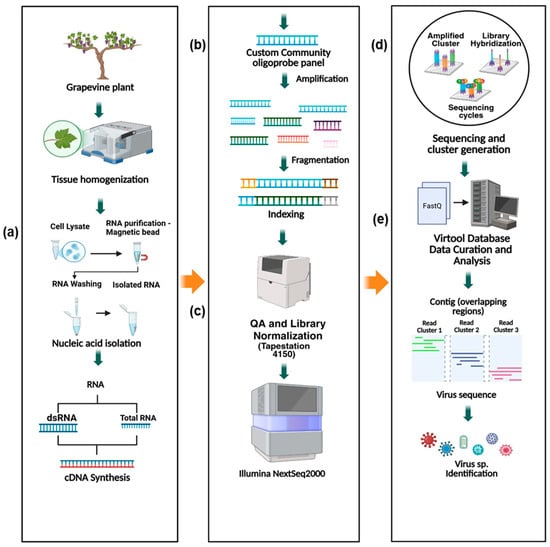
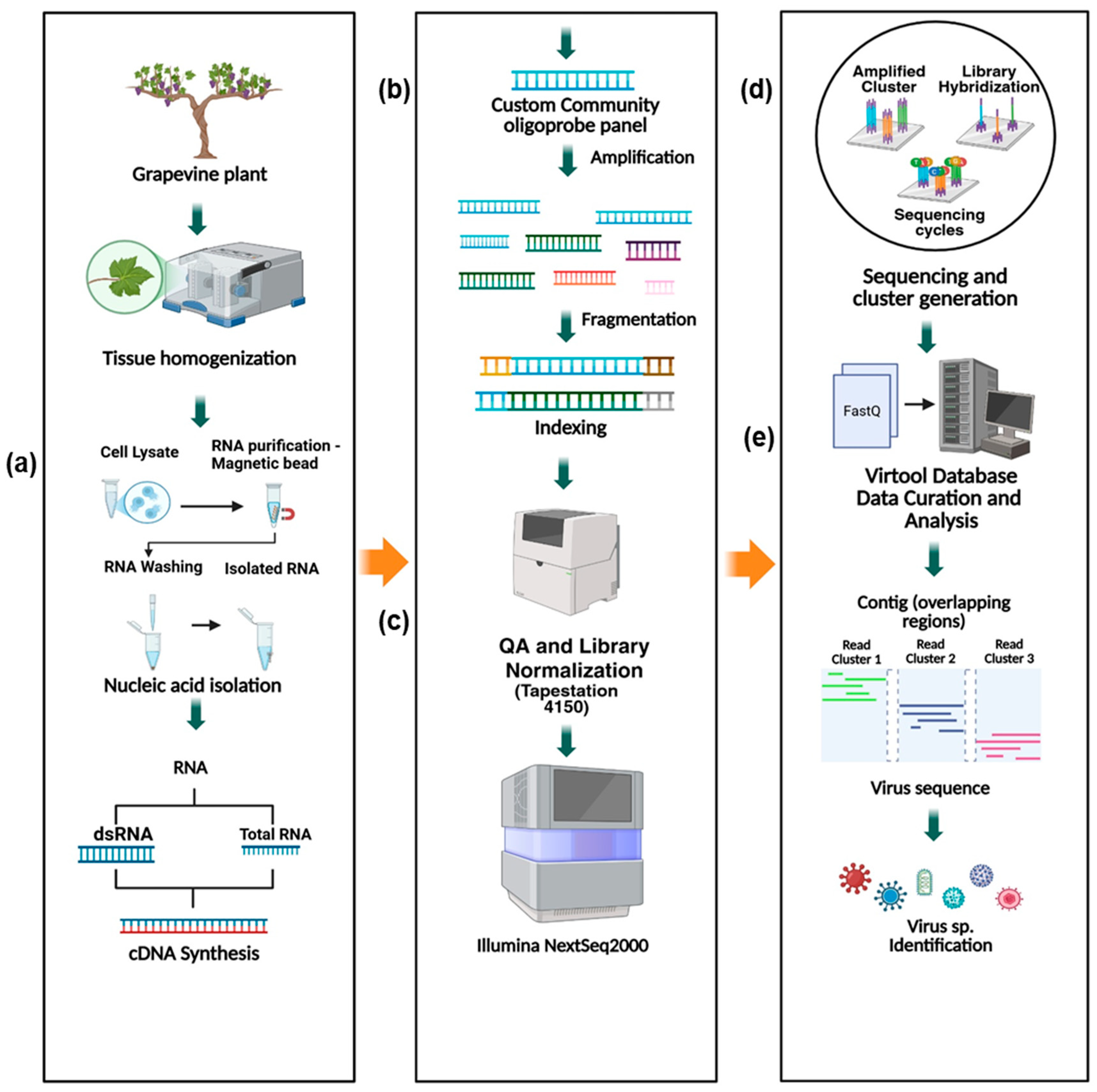
Assay Design: The complete methodology includes five major steps: (a) NA extraction; (b) cDNA synthesis and Custom DNA panel amplification; (c) library prep; (d) HTS using Illumina NextSeq-2000; and (e) Virtool analysis of HTS raw data and virus identification (Figure 1). The suitability of totRNA and dsRNA as the choice of viral NA for the oligoprobe and non-oligoprobe approach led to the following four approaches: (a) oligoprobe method (OM) using totRNA referred to as OM-TR; (b) non-oligoprobe method (NOM) using totRNA referred to as NOM-TR; (c) oligoprobe method (OM) using dsRNA referred to as OM-DR; and (d) non-oligoprobe method (NOM) using dsRNA referred to as NOM-DR. The totRNA was utilized without rRNA depletion step to exclude any RNA viruses which lack polyA sequence. A comparative assessment was carried out using the HTS data generated from both OM and NOM to determine a more practical approach for the detection of major grapevine viruses. Raw HTS data was curated and analyzed using Virtool for virus discovery. In each method, the samples were tested in duplicates. The resulting HTS amplification in the OM (OM-TR and OM-DR) would be a specific viral sequence rather than the amplification of the entire viral genome. The NOM (NOM-TR and NOM-DR) is a regular HTS but with a whole viral genome sequencing. The outcomes of the HTS analysis were further compared to end-point PCR data for determining the specificity and sensitivity of the detection method applied in this study (Figure 1).
Figure 1.
Overview of steps involved in HTS workflow for grapevine virus detection. The complete workflow follows five major steps: (a) viral nucleic acid (NA) isolation; (b) cDNA synthesis followed by oligoprobe panel amplification; (c) library preparation; (d) HTS; and (e) Virtool analysis of HTS data and virus identification (Created in BioRender: https://app.biorender.com/citation/6aa1d61b82987987ec4e362f).
HTS Methodology: Quality checks of totRNA and dsRNA were performed using Tapestation-4150 (Agilent Technologies, Santa Clara, CA, USA) with High Sensitivity RNA ScreenTape (Agilent Technologies, Santa Clara, CA, USA). The totRNA and dsRNA extracts with purity of A260/A280 ratio of ~1.6 to 1.8 or higher were used in subsequent HTS assays. In OM, all the steps involved in the methodology was based on AmpliSeq for Illumina On-Demand, Custom, and Community Panels RNA standard workflow module according to the manufacturer’s recommendations. Library preparation was carried out using an AmpliSeq for Illumina Custom RNA library prep (Illumina, San Diego, CA, USA) and Truseq RNA CD index plate (96 indexes) (Illumina, San Diego, CA, USA), following the manufacturer’s protocol. In NOM, HTS library preparation was carried out using Illumina® TruSeq® Stranded mRNA library kit (Illumina, San Diego, CA, USA). The DNA concentration for library preparation was quantified with Tapestation-4150 (Agilent Technologies, Santa Clara, CA, USA) using High Sensitivity D1000 ScreenTape (Agilent Technologies, Santa Clara, CA, USA). Resulting DNA libraries were sequenced to generate 150 bp paired-end reads using the NextSeq 2000 Sequencing Systems (Illumina, San Diego, CA, USA). All the HTS experiments included the PhiX Control v3 in a low concentration spike-in (1%) for improved sequencing quality control along with test samples.
Virtool Analysis of HTS data: Virtool, a cloud-based web application [27], was used for HTS raw data management, quality control, and analysis. HTS reads that passed the QA filters of Virtool were mapped against a database of plant virus and viroid genomic sequence databases using a modified version of Pathoscope 2.0 [28]. For a sample to be considered positive for a virus, the viral sequence must ensure the minimum assigned values of three parameters: (a) weight, (b) depth, and (c) coverage. The “weight” is the proportion of reads that map to a virus and is coarsely proportional to the virus titer. A “weight” >0.001 is a strong indicator of positive detection. The “coverage” indicates the fitness of mapped reads that cover the viral genome. In regular HTS (NOM), a coverage < 0.2 indicates that the sample might be likely negative, but requires re-confirmation by PCR-based methods. In OM, the “coverage” is calculated as the sum of individual coverages of each of the probes for a particular virus. The coverage represents two peaks resulting from two probes amplifying two ROIs. The “depth” parameter of Virtool was not considered applicable for OM detection since the percentage of coverage was less than half of the virus genome amplified using oligoprobes. Overall, in the NOP method, viruses with sequences (a) >15% coverage and (b) >0.001 weight in Virtool were considered a strong indicator of positive detection [27,28].
3. Results
3.1. Viruses Detected
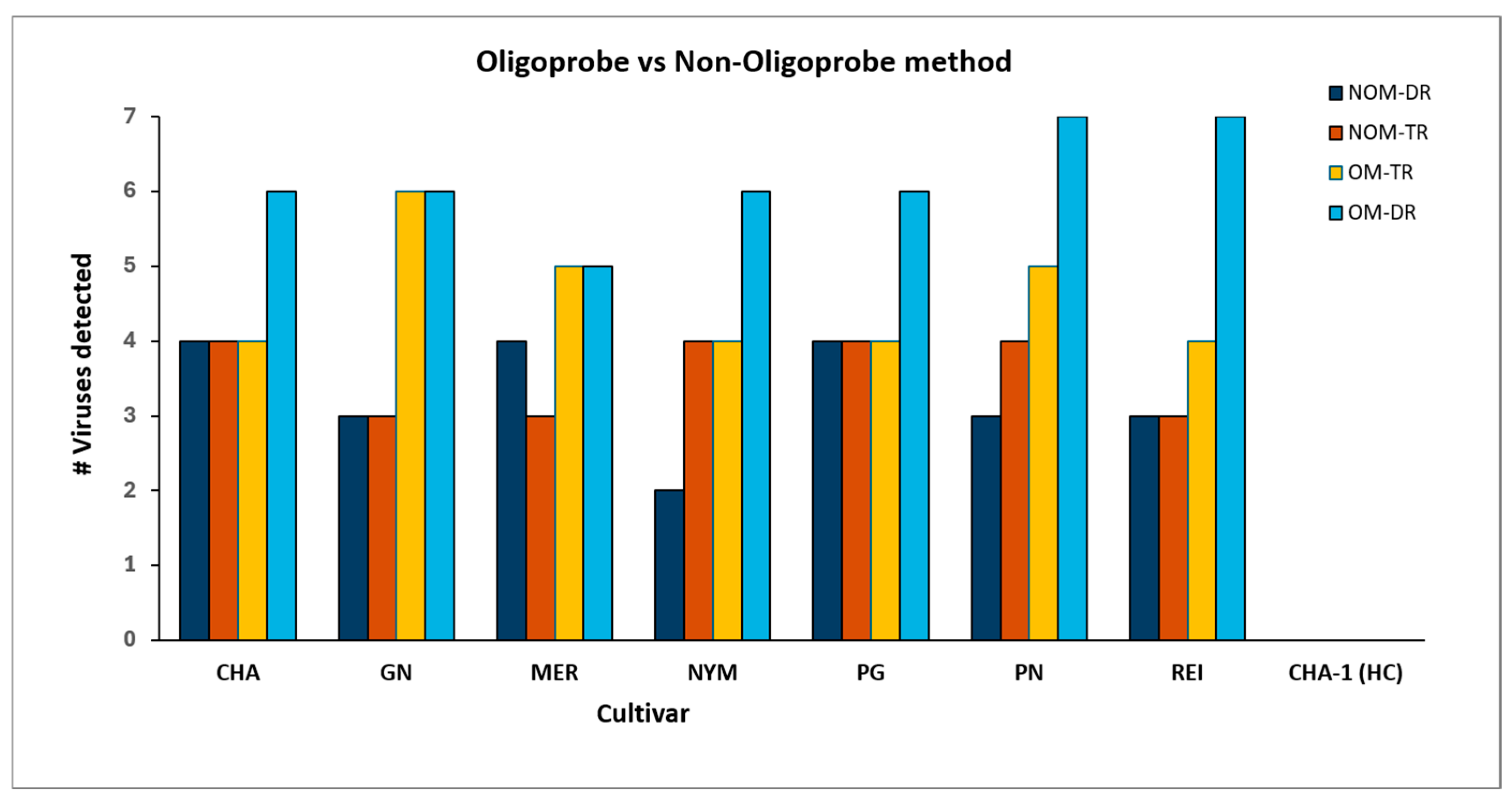
In this study, four HTS-based approaches were compared to assess their effectiveness to enhance grapevine virus detection. From the four approaches tested, we determined that oligoprobe-based approaches (OM-DR and OM-TR) were able to detect a greater number of viruses in comparison to the non-oligoprobe approaches from the grapevine samples tested in this study. The following ten viruses were detected in the seven infected grapevine samples, which include GLRaV-1, -2, -3, GRSPaV, GPGV, GVH, GVE, GRBV, GRGV and GEV-1, respectively. These four approaches appear to vary in the extent of virus detection, sensitivity, and consistency. The OM-DR approach, which likely consists of viral double-stranded RNA fraction, detected a greater number of viruses, with improved sensitivity of detection of GLRaV-2, GLRaV-3, and GRSPaV across most cultivars included in this study. OM-DR detected seven viruses from two virus-infected grapevine samples indicating enhanced viral RNA enrichment with the use of oligoprobe panels. In this study, two viruses, GPGV and GVH, showed an inconsistent detection across the HTS methods, indicating possible virus-specific biases or variable viral loads affecting the sequencing outcome. Furthermore, certain cultivars like PN and PG show relatively higher virus detections with OM-DR, suggesting the effectiveness of the use of oligoprobes in revealing mixed infections in these samples. The varying virus detection patterns across NOM-TR and OM-TR versus NOM-DR and OM-DR in all cultivars underscore that differences in nucleic acid targets (total RNA vs. dsRNA) and library preparation procedures could impact viral read recovery profoundly. In NOM-TR and OM-TR, likely representing total RNA-based HTS, often exhibit some variability in detection, sometimes missing viruses that were detected in NOM-DR and OM-DR approaches.
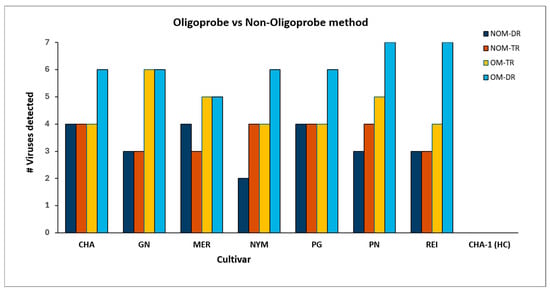
Eight of the ten viruses were non-regulated viruses included in the list of oligoprobe panels (Figure 2; Table 3). Five grapevine samples were found to be infected with at least five or more viruses in the OM-DR approach. While seven viruses were identified in PN and REI cultivars in the OM-DR, which was the highest among the four approaches tested, five and four viruses were detected in PN and REI cultivars through the OM-TR approach. The next highest number of viruses were detected by the OM-DR approach in CHA, NYM, PG, and GN samples, with six viruses in each sample. OM-DR and OM-TR detected six viruses each in GN and five viruses in the MER cultivar, respectively. Clearly, the sensitivity of detecting some of the leafroll-associated viruses through NOM-DR and NOM-TR was low compared to the OM-DR and OM-TR methods. NOM-DR and NOM-TR approaches successfully detected GRGV in REI and GN, which was not listed under the oligoprobe panel. In NOM, the NOM-DR approach performed better than NOM-TR and detected four viruses in the CHA and MER samples, respectively (Table 3). Results from conventional end-point PCR (GRBV) and RT-PCR (RNA viruses) generated using virus-specific primers obtained from HTS indicated the sensitivity of OM approaches in detecting viruses. Both PCR and OM-DR methods were able to detect GRBV in REI, MER, PN, NYM, and PG, while PCR was successful in detecting fewer RNA viruses compared to the OM approach. The total number of RNA viruses detected by RT-PCR were two each in CHA (GLRaV-1 and GRSPaV); REI (GLRaV-2 and GRSPaV); NYM (GLRaV-1 and GRSPaV) and three each in MER (GLRaV-2, GPGV, and GRSPaV); and PN (GLRaV-2, GLRaV-3 and GRSPaV). RT-PCR detected four viruses in PG (GLRaV-1, -2, -3 and GRSPaV) and GN (GLRaV-1, -2, -3 and GRSPaV), respectively. These results clearly indicated that OM-DR enhanced virus detection compared to the remaining approaches in this study. In practice, combining results from these different HTS protocols would provide a more comprehensive viral profile for each cultivar, mitigating the limitations of any single method and improving confidence in virus diagnosis and epidemiological studies. ToBRFV, the non-host positive control, was detected in all the four approaches, which indicated successful library preparation and HTS run.
Figure 2.
Comparison of oligoprobe (OM) and non-oligoprobe methods (NOM) for the detection of non-regulated grapevine viruses. Each bar represents each of the four approaches tested: non-oligoprobe-total RNA (NOM-TR); non-oligoprobe-double stranded RNA (NOM-DR); oligoprobe-total RNA (OM-TR) and oligoprobe-double stranded RNA (OM-DR). Grapevine cultivars included in this study: Chardonnay (CHA); Gamay Noir (GN), Merlot (MER); New York Muscat (NYM); Pinot Gris (PG); Pinot Noir (PN); and Riesling (REI). Chardonnay CHA-1 was included as a healthy control (HC).
Table 3.
List of viruses detected from four different HTS approaches used in this study. The source of virus nucleic acids were isolated from seven grapevine cultivars (CHA-Chardonnay; REI-Riesling; MER-Merlot; PN-Pinot noir; NYM-New York Muscat; PG-Pinot gris; GN-Gamay Noir; CHA-1-Chardonnay-1 included as a virus-free healthy control. (+ indicates virus positive; − indicates virus negative).
3.2. HTS Data and Virtool Analysis
The overall HTS run Q-score of Q20 indicated a good quality run. The raw HTS data was transferred to the Virtool application. The host grapevine genome was subtracted (filtered out) from the virus-specific data during analysis. The overall read data that included the host genome and viral sequence ranged from 100 to 6,000,000 reads among different samples and methods used in this study. The mapped reads pertaining to grapevine viral sequences ranged from 0.1% to 25% of the overall reads. The overall mapped reads observed in OM-TR and NOM-TR (0.1% to 25%) was greater compared to OM-DR and NOM-DR (0.1% to 10%) indicating a higher concentration of viral mRNA copies from the initial totRNA pool that subsequently amplified as a result of paired-end sequencing. On the other hand, the dsRNA that was isolated and enriched using the Reliapreap® resin method mostly had the virus-specific dsRNA. In all the HTS approaches, the non-host ToBRFV genome was amplified with 99.9 to 100% coverage and a weight ranging from 0.2–0.4.
3.3. Read Intensity (RI) Values
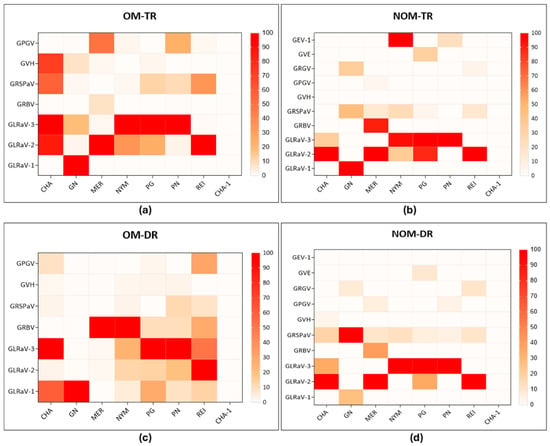
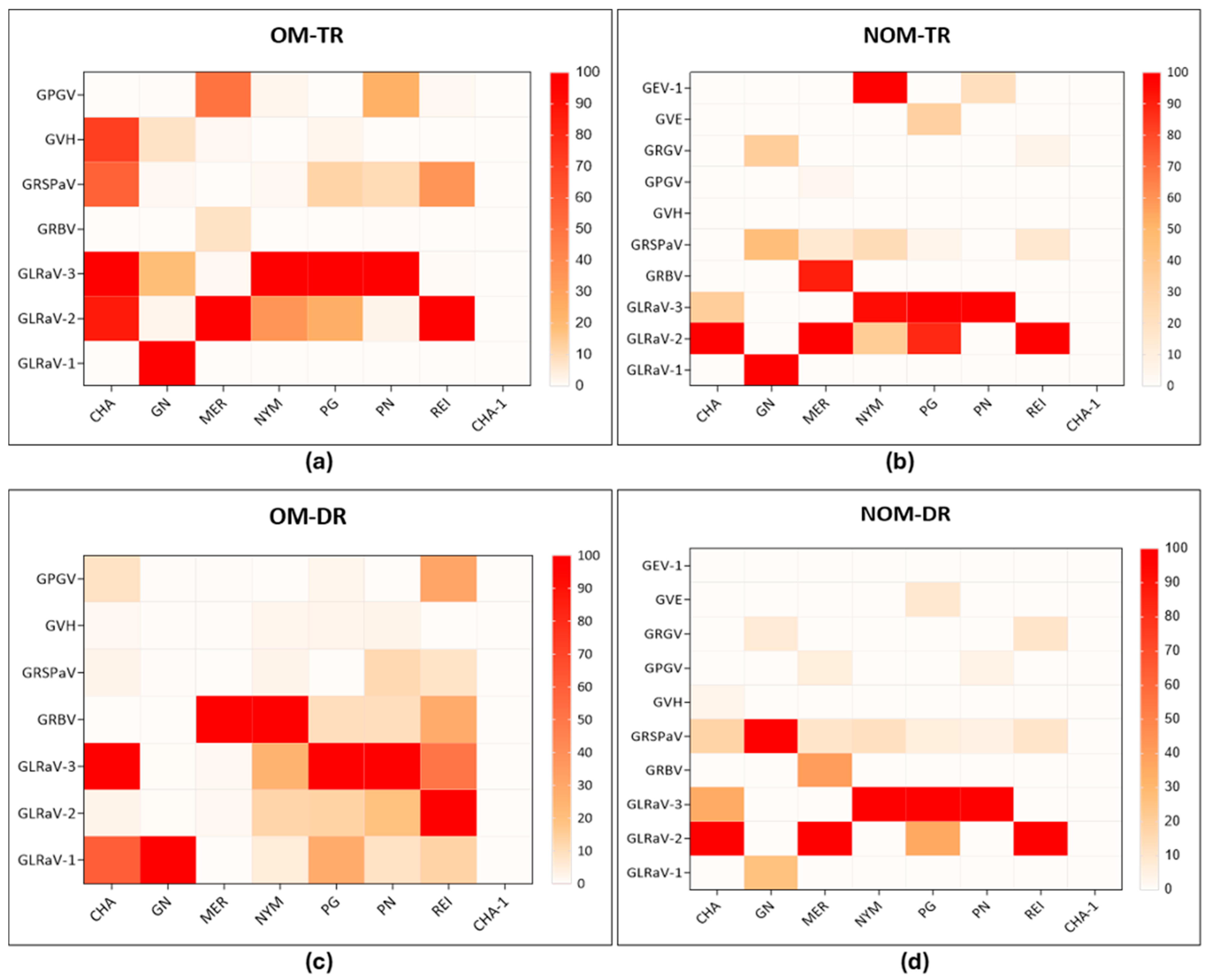
Read Intensity (RI) values: Virtool analysis of the raw data from the OM-DR and OM-TR in HTS display two peaks specific to two ROI of the amplified viral genome. Samples exhibiting either a single peak or more than two peaks in the pathoscope were excluded from the analysis. The “depth” option is not a necessary indicator of a virus positive for the oligoprobe HTS. Viral sequences > 20 read count are regarded as positive for the virus in the HTS involving dsRNA as the source of viral NA. Non-specific amplification and partially amplified viral sequences were excluded from the analysis. Among the grapevine samples tested, PN was found to contain greater number of viruses compared to the remaining samples. OM-DR method could successfully detect seven viruses (GLRaV-1, -2, -3, GRBV, GRSPaV, GPGV, and GVH) in PN while OM-TR method successfully detected five viruses (GLRaV-2, -3, GRBV, GRSPaV, and GPGV). NOM-DR detected three viruses (GLRaV-3, GRSPaV and GPGV) while NOM-TR detected two viruses (GLRaV-3 and GEV-1) respectively (Supplementary Figure S1). The read intensity (RI) of the OM-DR method ranged from 0 to 400,000. The RI of OM-TR approach ranged from 0 to 1.3 million with the highest RI value of 1.3 million recorded for NYM, PG, and PN which were detected positive for GLRaV-3. The RI values were observed to be not uniform among different OM and NOMs. On the other hand, NOM-DR and NOM-TR data indicated a lesser RI compared to the oligoprobe method values. The RI values of NOM-DR in this ranged from 0 to 2000 across the cultivars. Heat maps generated based on the RI values facilitated the identification of viruses and their HTS PE amplification as an indicator of RI values (Figure 3). The overall coverage of the ROI viral sequences in OM-DR and -TR reflected the average length of the total nucleotides spanned by the oligoprobes summarized in Table 2. In NOM, the viral genome coverage ranged between 1 (100%) and 0 (0%). In OM, the genome coverage represents the total nucleotides covered by the oligoprobe pair tested. The overall coverage values of the viruses detected in this study ranged from 2.0% to 15% of the overall genome (Supplementary Figure S1; Supplementary Table S1).
Figure 3.
Heatmap data generated from the Virtool analysis based on virus specific reads generated for individual samples included in HTS. (a) Oligoprobe method-total RNA, OM-TR (b) Non-oligoprobe method-total RNA, NOM-TR (c) Oligoprobe method-double stranded RNA, OM-DR (d) Non-oligoprobe method double stranded RNA, NOM-DR. The average read intensities obtained from each of the viruses considered as positive in Virtool were plotted on the Y-axis against the grapevine sample on X-axis. The read intensity (RI) values generated from each method were normalized to 100% based on the highest reading intensity in OM or NOM.
4. Discussion
Detection and characterization of grapevine viruses have been revolutionized by molecular diagnostics. Conventional PCR, qPCR, ddPCR, and newer methods such as magnetic capture hybridization qPCR (MCHqPCR) and high-throughput sequencing (HTS), offer robust and sensitive platforms for virus identification [8,11]. HTS, in particular, has become pivotal for the characterization of known and novel viruses, as well as analysis of mixed infections [11,13,15,17]. Nevertheless, HTS technology is challenged by the overwhelming presence of host nucleic acids, which can dampen sensitivity for low-titer viruses, necessitating enrichment methodologies such as probe-based panels and targeted amplicon sequencing [20,21,22]. Recent advances in amplicon-based oligoprobe enrichment strategies have significantly bolstered the sensitivity and utility of HTS, allowing simultaneous detection and characterization of multiple grapevine RNA and DNA viruses—particularly those included on regulated pathogen lists for grapevine propagation and quarantine [8,14,19]. This method not only facilitates regulatory compliance in certification programs but also strengthens the scientific basis for quarantine and surveillance efforts.
The phytosanitary status of a crop depends on the pathogen diversity, severity, and vector densities in a given ecosystem. Understanding virus–host interactions is viral infections in plants has been crucial as about 50% of the emerging plant diseases are caused due to viruses [29]. Sensitivity, cost effectiveness, scalability, and the extent of pathogen discovery have made HTS-based virus detection methods the preferred choice over traditional PCR-based methods [8,13,30]. As most plant viral genomes are composed of RNA, RNA-Seq is one of the highly utilized metagenomics applications that has gained momentum for quantifying and mapping transcriptomes and mining of viral sequences. Comparison of amplicon-based target enrichment method (referred to as oligoprobe method, OM) with a regular HTS using two different viral NA which included totRNA and dsRNA were successful in detecting grapevine viruses from the infected samples with varying number. The OM-DR approach displayed a higher sensitivity of virus detection compared to the other three approaches. The metagenomic shotgun sequencing (MSS) method, involving a targeted sequence capture panel (ViroCap), was able to successfully detect several viruses comprising 19 genera from 10 different families infecting vertebrate hosts. This method improved the percentage of viral reads and coverage post-capture approach [23]. Other notable target enrichment strategies, such as hybridization capture (HybCap) using probes focused on selected informative regions of the genome, enhance the sensitivity of target regions prior to sequencing. The designed probes target regions of pathogen genomes and extracted from nucleic acids for sequencing followed by identification of the pathogen. HybCap approach was demonstrated in vertebrate species and in selected bacterial and fungal pathogens in plants. However, these probes were designed for a whole genome coverage and were essential for understanding the sequence diversity and strain variations that determine the pathogenicity of viruses in particular [31,32].
In this study, the major emphasis of this methodology was to capture the existing viral community prevalent in a given grapevine plant pertinent to the domestic movement of propagative grapevine material rather than exploring the sequence diversities of the same virus. Several online and commercial bioinformatics toolkits are available for the detection and identification of viral genome sequences. These bioinformatics tools aid the researcher in reforming the NGS data and enhancing the viral sequence identification from the source data. The VirFind [33]; E-probe based Truffle application [34]; Viral surveillance and diagnosis (VSD) bioinformatics toolkit [35]; VirusSeeker [36]; VirusDetect [37], Virosaurus [38] and Virtool [27] are some of the bioinformatics pipeline resources that facilitate for analyzing viral sequences. The inclusion of Virtool application [27] in this study significantly reduced the dataset complexity generated due to the host sequence amplification while using the NOM approaches. The non-essential grapevine genome complexity was subtracted from the viral genome sequences using Virtool parameters to analyze and enhance virus identification. The outcomes of Virtool analysis indicated the presence mostly of non-regulated commercially important viruses that cause leafroll disease, red blotch disease, and other viruses with latent or non-symptomatic infections. Nevertheless, these viruses are of substantial concern in domestic movement of grapevine propagative material across Canadian vineyards. In this study, six viruses made it to the list of viruses of concern in the CGCN Certification Program where testing is mandatory at G3 level [6]. These viruses include GLRaV-1, -2, -3, GRSPaV, GPGV, and GRBV respectively. However, GVE, another CGGN virus of concern which was not detected by the OM-TR, OM-DR, and RT-PCR, but was found to be positive in NOM-TR and NOM-DR. The overall mapped reads observed in OM-TR and NOM-TR were 2.5 times higher compared to OM-DR and NOM-DR values. The overall individual RI values for each of the viruses identified to be positive was found to be three to 300-fold greater in OM-TR followed by OM-DR. The custom DNA oligoprobe panels designed in this study were found to be sensitive in detecting several economically important viruses that fall under the non-regulated virus category, and are at the same time critical for domestic quarantine and understanding the virus diversity existing at each of the cultivars in different grapevine growing provinces of Canada.
Amplicon-based HTS, as implemented by oligoprobe panels in this study enriches and sequences specific virus ROIs using custom probe panels, which boosts sensitivity and enables rapid and cost-effective identification of known viruses, making it ideal for routine screening and plant health programs. In contrast, the metagenomic HTS method sequences all nucleic acids in a sample to profile the full virome, including known and unknown pathogens. This broad scope, however, comes at the expense of lower sensitivity for low-titer viruses due to overwhelming host background, greater demand for computational resources, and higher operational costs. HTS has already impacted certification and quarantine programs in perennials like grapevine, citrus, and other fruit trees. Clean plant programs, such as CGCN in Canada and NCPN in the USA, now incorporate HTS for virus indexing and certification, leveraging its ability to screen for mixed and emerging infections in propagative materials. The targeted enrichment approach described here could further refine these programs by providing more reliable detection in a single assay, and is flexible enough to adapt to regulatory changes at the federal and provincial level, based on HTS-negative status, supporting quarantine, and movement of material. With virus diversity and strain variability a persistent challenge, probe panels can be tailored for specific country lists to comply with phytosanitary directives.
5. Conclusions
This study demonstrates the utility of targeted oligoprobe enrichment coupled with high-throughput sequencing (HTS) for the simultaneous detection and characterization of multiple viruses infecting grapevine. Comparison of oligoprobe-based and non-oligoprobe approaches using total RNA and double-stranded RNA (dsRNA) showed that the choice of nucleic acid substrate and enrichment strategy substantially influenced virus detection and sequence recovery. Among the workflows evaluated, the OM-DR and OM-TR approaches provided the greatest overall sensitivity for virus detection with OM-TR generated comparatively high virus-specific read intensities, demonstrating that detection sensitivity and sequence abundance represent distinct measures of HTS performance. The custom oligoprobe panel enabled simultaneous detection of several economically important grapevine viruses, including Grapevine leafroll-associated virus 1 (GLRaV-1), GLRaV-2, GLRaV-3, Grapevine rupestris stem pitting-associated virus (GRSPaV), Grapevine Pinot gris virus (GPGV), and Grapevine red blotch virus (GRBV). Integration of the HTS datasets with the Virtool bioinformatics platform further facilitated virus identification by reducing interference from host-derived sequences and enabling efficient analysis of complex datasets and mixed infections. Importantly, the detection of Grapevine virus E (GVE) by the non-oligoprobe approaches, but not by OM-TR, OM-DR, or RT-PCR, also highlights an inherent limitation of targeted enrichment which could arise due to oligoprobe non-specificity for virus strains or divergent variants that are inadequately represented in the probe panel and may escape detection. Targeted enrichment and untargeted metagenomic HTS should therefore be considered potential complementary approaches.
Overall, oligoprobe-assisted HTS provides a sensitive, scalable, and a cost-effective strategy for routine screening of grapevine propagative material when the viruses of concern are predefined. In contrast, untargeted HTS retains an important role in comprehensive virome characterization and the discovery of novel or highly divergent viruses. Periodic application of untargeted sequencing could consequently complement targeted panels and provide sequence information needed to update probe designs as grapevine virus diversity evolves. The findings have practical implications for grapevine certification, clean plant programs, surveillance, and the domestic movement of propagative material in Canada. Incorporation of appropriately validated targeted HTS approaches could facilitate simultaneous screening for multiple viruses in a single assay, while generating sequence information useful for virus characterization. With further analytical validation, assessment of inclusivity and exclusivity, and evaluation across a broader range of cultivars, virus isolates, geographic regions, and viral titers, the approach described here could contribute to the development of robust HTS-based diagnostic frameworks for grapevine health management. More broadly, adaptable probe panels combined with standardized bioinformatics pipelines could provide a flexible platform for responding to changing phytosanitary requirements and emerging viral threats in perennial crop certification systems.
Supplementary Materials
The following supporting information can be downloaded at: https://www.mdpi.com/article/10.3390/v18111173/s1, Supplementary Figure S1: Comparative analysis of HTS-based detection of viruses in a virus-infected grapevine sample using non-oligoprobe and oligoprobe methods; Supplementary Table S1: HTS data curation and interpretation using Virtool application for the detection of viruses in a grapevine sample involving four different approaches.
Author Contributions
Conceptualization, S.P.; Methodology, S.P., B.M.V., A.A. and A.M.; Design of the work; S.P., B.M.V. and A.A.; validation, S.P., B.M.V. and A.A.; resources, S.P. and B.M.V.; investigation, S.P., B.M.V. and A.A.; writing—original draft preparation, B.M.V. and A.A.; writing—review and editing, S.P., B.M.V. and A.A.; visualization, S.P., B.M.V. and A.A., supervision, S.P.; project administration, S.P.; funding acquisition, S.P. All authors have read and agreed to the published version of the manuscript.
Funding
This research was supported by Genome British Columbia and Genome Canada through the project (code 189GRP), entitled “CLEan plAnt extractioN sEquencing Diagnostics (CLEANSED) for Clean Grapevines in Canada”.
Institutional Review Board Statement
Not applicable.
Informed Consent Statement
Not applicable.
Data Availability Statement
Available upon request.
Acknowledgments
The authors wish to thank the Viticulture Innovation and Next-generation Oenology (VINO) Solutions program: The Ontario Research Fund-Research Excellence (ORF-RE 23-9209-3.2).
Conflicts of Interest
The authors declare no conflicts of interest.
References
- Wine Growers Canada. Canadian Wine and Grape Industry Contributes $11.57 Billion in Economic Impact to Canadian Economy. 2022. Available online: https://www.winegrowerscanada.ca/canadian-wine-and-grape-industry-contributes-11-57-billion-in-economic-impact-to-canadian-economy/ (accessed on 26 August 2025).
- Fuchs, M. Grapevine viruses: Did you say more than a hundred? J. Plant Pathol. 2025, 107, 217–227. [Google Scholar] [CrossRef] [Scilit]
- Poojari, S.; Moreau, D.L.; Kahl, D.; Ritchie, M.; Ali, S.; Úrbez-Torres, J.R. Disease incidence and genetic variability of economically important grapevine viruses in Nova Scotia. Can. J. Plant Pathol. 2020, 42, 584–594. [Google Scholar] [CrossRef] [Scilit]
- Miljanić, V.; Rusjan, D.; Škvarč, A.; Chatelet, P.; Štajner, N. Elimination of eight viruses and two viroids from preclonal candidates of six grapevine varieties (Vitis vinifera L.) through in vivo thermotherapy and in vitro meristem tip micrografting. Plants 2022, 11, 1064. [Google Scholar] [CrossRef] [Scilit] [PubMed]
- Canadian Food Inspection Agency (CFIA). 2025. Available online: https://inspection.canada.ca/en/plant-health/invasive-pests-and-plants/directives/horticulture/22-03 (accessed on 5 September 2025).
- Canadian Grapevine Certification Network (CGCN-RCCV). Grapevine Certification Programs. Available online: https://www.cgcn-rccv.ca/site/grapevine-certification (accessed on 10 September 2025).
- National Clean Plant Network (NCPN). 2023. Available online: https://www.nationalcleanplantnetwork.org (accessed on 10 September 2025).
- Maina, S.; Donovan, N.J.; Plett, K.; Bogema, D.; Rodoni, B.C. High-throughput sequencing for plant virology diagnostics and its potential in plant health certification. Front. Hortic. 2024, 3, 1388028. [Google Scholar] [CrossRef] [Scilit]
- Tyagi, A.; Mir, Z.A.; Ali, S. Revisiting the role of sensors for shaping plant research: Applications and future perspectives. Sensors 2024, 24, 3261. [Google Scholar] [CrossRef] [Scilit] [PubMed]
- Rithesh, L.; Paul, A.; Keloth, M.R.A.; Jose, S.; Kumar, A. Detection and identification of plant viruses, viroids, and phytoplasma based on high-throughput molecular approaches. In Molecular and Biotechnological Tools for Plant Disease Management; Chen, J.-T., Khan, M., Parveen, A., Patra, J.K., Eds.; Springer Nature: Singapore, 2025; pp. 235–256. [Google Scholar] [CrossRef] [Scilit]
- Villamor, D.E.V.; Ho, T.; Al Rwahnih, M.; Martin, R.R.; Tzanetakis, I.E. High Throughput Sequencing For Plant Virus Detection and Discovery. Phytopathology 2019, 109, 716–725. [Google Scholar] [CrossRef] [Scilit] [PubMed]
- Maina, S.; Zheng, L.; Rodoni, B.C. Targeted genome sequencing (TG-Seq) approaches to detect plant viruses. Viruses 2021, 13, 583. [Google Scholar] [CrossRef] [Scilit] [PubMed]
- Maree, H.J.; Fox, A.; Al Rwahnih, M.; Boonham, N.; Candresse, T. Application of HTS for routine plant virus diagnostics: State of the art and challenges. Front. Plant Sci. 2018, 9, 1082. [Google Scholar] [CrossRef] [Scilit] [PubMed]
- Schmidt, A.M.; Abad, G.; Brearey, S.; Dinsdale, A.J.; Ho, W.; Rabindran, S.; Rigano, L.A.; Rodoni, B.C.; Sultmanis, S. Managing regulatory issues arising from new diagnostic technologies: High throughput sequencing as a case study. CABI Agric. Biosci. 2025, 6, 24. [Google Scholar] [CrossRef] [Scilit]
- Massart, S.; Olmos, A.; Jijakli, H.; Candresse, T. Current impact and future directions of high throughput sequencing in plant virus diagnostics. Virus Res. 2014, 188, 90–96. [Google Scholar] [CrossRef] [Scilit] [PubMed]
- Visser, M.; Bester, R.; Burger, J.T.; Maree, H.J. Next-generation sequencing for virus detection: Covering all the bases. Virol. J. 2016, 13, 85. [Google Scholar] [CrossRef] [Scilit] [PubMed]
- Pérez-Losada, M.; Arenas, M.; Galán, J.C.; Bracho, M.A.; Hillung, J.; García-González, N.; González-Candelas, F. High-throughput sequencing (HTS) for the analysis of viral populations. Infect. Genet. Evol. 2020, 80, 104208. [Google Scholar] [CrossRef] [Scilit] [PubMed]
- Rott, M.; Ghoshal, K.; Lerat, S.; Brosseau, C.; Clément, G.; Phelan, J.; Poojari, S.; Gaafar, Y.; Vemulapati, B.M.; Scheer, H.; et al. Improving grapevine virus diagnostics: Comparative analysis of three dsRNA enrichment methods for high-throughput sequencing. J. Virol. Methods. 2024, 329, 114997. [Google Scholar] [CrossRef] [Scilit] [PubMed]
- Wu, Q.; Ding, S.W.; Zhang, Y.; Zhu, S. Identification of viruses and viroids by next-generation sequencing and homology-dependent and homology-independent algorithms. Annu. Rev. Phytopathol. 2015, 53, 425–444. [Google Scholar] [CrossRef] [Scilit] [PubMed]
- Shin, S.; Hwang, I.S.; Lee, S.-T.; Choi, J.R. Evaluation of an amplicon-based next-generation sequencing panel for detection of BRCA1 and BRCA2 genetic variants. Breast Cancer Res. Treat. 2016, 158, 433–440. [Google Scholar] [CrossRef] [Scilit] [PubMed]
- Singh, R.R.; Patel, K.P.; Routbort, M.J.; Aldape, K.; Lu, X.; Manekia, J.; Abraham, R.; Reddy, N.G.; A Barkoh, B.; Veliyathu, J.; et al. Clinical massively parallel next-generation sequencing analysis of 409 cancer-related genes for mutations and copy number variations in solid tumours. Br. J. Cancer. 2014, 111, 2014–2023. [Google Scholar] [CrossRef] [Scilit] [PubMed]
- Briese, T.; Kapoor, A.; Mishra, N.; Jain, K.; Kumar, A.; Jabado, O.J.; Lipkin, W.I. Virome capture sequencing enables sensitive viral diagnosis and comprehensive virome analysis. mBio 2015, 6, e01491-15, Erratum in mBio 2017, 8, e00615-17. [Google Scholar] [CrossRef] [Scilit] [PubMed]
- Wylie, T.N.; Wylie, K.M.; Herter, B.N.; Storch, G.A. Enhanced virome sequencing using targeted sequence capture. Genome Res. 2015, 25, 1910–1920. [Google Scholar] [CrossRef] [Scilit] [PubMed]
- Costa, L.C.; Atha, B.; Hu, X.; Lamour, K.; Yang, Y.; O’Connell, M.; McFarland, C.; Foster, J.A.; Hurtado-Gonzales, O.P. High-Throughput Detection of a Large Set of Viruses and Viroids of Pome and Stone Fruit Trees by Multiplex PCR-Based Amplicon Sequencing. Front. Plant Sci. 2022, 13, 1072768. [Google Scholar] [CrossRef] [Scilit] [PubMed]
- Costa, L.C.; Hu, X.; Lamour, K.; Devorshak, C.; Foster, J.A.; Hurtado-Gonzales, O.P. Optimization of Amplicon-Based Sequencing for Large-Scale Diagnostics of Known Pome Viruses and Viroids. Phytofrontiers 2024, 4, 469–475. [Google Scholar] [CrossRef] [Scilit]
- Abou Kubaa, R.; Stevens, K.A.; Erickson, T.M.; Al Rwahnih, M. A New HiPlex Amplicon Sequencing Approach for the Detection of Grapevine Leafroll-Associated Virus 3 and Grapevine Red Blotch Virus in Grapevines. Viruses 2026, 18, 959. [Google Scholar] [CrossRef] [Scilit] [PubMed]
- Boyes, I.; Hoffmann, R.; Rott, M. Virtool: Viral Infection Diagnostics Using Next-Generation Sequencing. 2020. Available online: http://www.virtool.ca (accessed on 12 September 2020).
- Kesanakurti, P.; Belton, M.; Saeed, H.; Rast, H.; Boyes, I.; Rott, M. Screening for plant viruses by next generation sequencing using a modified double strand RNA extraction protocol with an internal amplification control. J. Virol. Methods. 2016, 236, 35–40. [Google Scholar] [CrossRef] [Scilit] [PubMed]
- Anderson, J.T. Plant fitness in a rapidly changing world. New Phytol. 2016, 210, 81–87. [Google Scholar] [CrossRef] [Scilit] [PubMed]
- Al Rwahnih, M.; Daubert, S.; Golino, D.; Rowhani, A. Deep sequencing analysis of RNAs from a grapevine showing Syrah decline symptoms reveals a multiple virus infection that includes a novel virus. Virology 2009, 387, 395–401. [Google Scholar] [CrossRef] [Scilit] [PubMed]
- Cai, W.; Nunziata, S.; Rascoe, J.; Stulberg, M.J. SureSelect targeted enrichment, a new cost-effective method for the whole genome sequencing of Candidatus Liberibacter asiaticus. Sci. Rep. 2019, 9, 18962. [Google Scholar] [CrossRef] [Scilit] [PubMed]
- Yu, P.L.; Fulton, J.C.; Hudson, O.H.; Huguet-Tapia, J.C.; Brawner, J.T. Next-generation fungal identification using target enrichment and Nanopore sequencing. BMC Genom. 2023, 24, 581. [Google Scholar] [CrossRef] [Scilit] [PubMed]
- Ho, T.; Tzanetakis, I.E. Development of a virus detection and discovery pipeline using next generation sequencing. Virology 2014, 471–473, 54–60. [Google Scholar] [CrossRef] [Scilit] [PubMed]
- Visser, M.; Burger, J.T.; Maree, H.J. Targeted virus detection in next-generation sequencing data using an automated e-probe based approach. Virology 2016, 495, 122–128. [Google Scholar] [CrossRef] [Scilit] [PubMed]
- Barrero, R.A.; Napier, K.R.; Cunnington, J.; Liefting, L.; Keenan, S.; Frampton, R.A.; Szabo, T.; Bulman, S.; Hunter, A.; Ward, L.; et al. An internet-based bioinformatics toolkit for plant biosecurity diagnosis and surveillance of viruses and viroids. BMC Bioinform. 2017, 18, 26. [Google Scholar] [CrossRef] [Scilit] [PubMed]
- Zhao, G.; Wu, G.; Lim, E.S.; Droit, L.; Krishnamurthy, S.; Barouch, D.H.; Virgin, H.W.; Wang, D. VirusSeeker, a computational pipeline for virus discovery and virome composition analysis. Virology 2017, 503, 21–30. [Google Scholar] [CrossRef] [Scilit] [PubMed]
- Zheng, Y.; Gao, S.; Padmanabhan, C.; Li, R.; Galvez, M.; Gutierrez, D.; Fuentes, S.; Ling, K.-S.; Kreuze, J.; Fei, Z. VirusDetect: An automated pipeline for efficient virus discovery using deep sequencing of small RNAs. Virology 2017, 500, 130–138. [Google Scholar] [CrossRef] [Scilit] [PubMed]
- Gleizes, A.; Laubscher, F.; Guex, N.; Iseli, C.; Junier, T.; Cordey, S.; Fellay, J.; Xenarios, I.; Kaiser, L.; Le Mercier, P. Virosaurus: A reference to explore and capture virus genetic diversity. Viruses 2020, 12, 1248. [Google Scholar] [CrossRef] [Scilit] [PubMed]

Disclaimer/Publisher’s Note: The statements, opinions and data contained in all publications are solely those of the individual author(s) and contributor(s) and not of MDPI and/or the editor(s). MDPI and/or the editor(s) disclaim responsibility for any injury to people or property resulting from any ideas, methods, instructions or products referred to in the content. |
© 2026 by the authors. Licensee MDPI, Basel, Switzerland. This article is an open access article distributed under the terms and conditions of the Creative Commons Attribution (CC BY) license.