


Abstract
The field of retroviral integration research has a long history that started with the provirus hypothesis and subsequent discoveries of the retroviral reverse transcriptase and integrase enzymes. Because both enzymes are essential for retroviral replication, they became valued targets in the effort to discover effective compounds to inhibit HIV-1 replication. In 2007, the first integrase strand transfer inhibitor was licensed for clinical use, and subsequently approved second-generation integrase inhibitors are now commonly co-formulated with reverse transcriptase inhibitors to treat people living with HIV. International meetings specifically focused on integrase and retroviral integration research first convened in 1995, and this paper is part of the Viruses Special Issue on the 7th International Conference on Retroviral Integration, which was held in Boulder Colorado in the summer of 2023. Herein, we overview key historical developments in the field, especially as they pertain to the development of the strand transfer inhibitor drug class. Starting from the mid-1990s, research advancements are presented through the lens of the international conferences. Our overview highlights the impact that regularly scheduled, subject-specific international meetings can have on community-building and, as a result, on field-specific collaborations and scientific advancements.
1. Introduction
Retroviral integration research, with a history spanning 60 years, is deeply rooted in the traditional biological disciplines of genetics, virology, biochemistry, structural biology, and cell biology. The first international conference on retroviral integrase (IN) was held in 1995, and the most recent meeting—The 7th International Conference on Retroviral Integration (a.k.a. Retrointegration2023)—occurred between 31 July and 4 August 2023, in Boulder, Colorado. This treatise forms part of the Viruses Special Issue on papers presented at the 7th International Conference. Herein, we highlight early major research accomplishments in the retroviral IN and integration fields that occurred prior to the initial 1995 meeting. Starting from circa 1995, we then connect field advancements with presentations made at these historical conferences. Although research presented at the 2023 Boulder meeting will be presented in the Editors’ overview of the Special Issue and is accordingly not described in detail herein, our paper builds upon Dr. Grandgenett’s historical perspective of the IN/integration fields that was given as the closing oral presentation at the recent meeting.
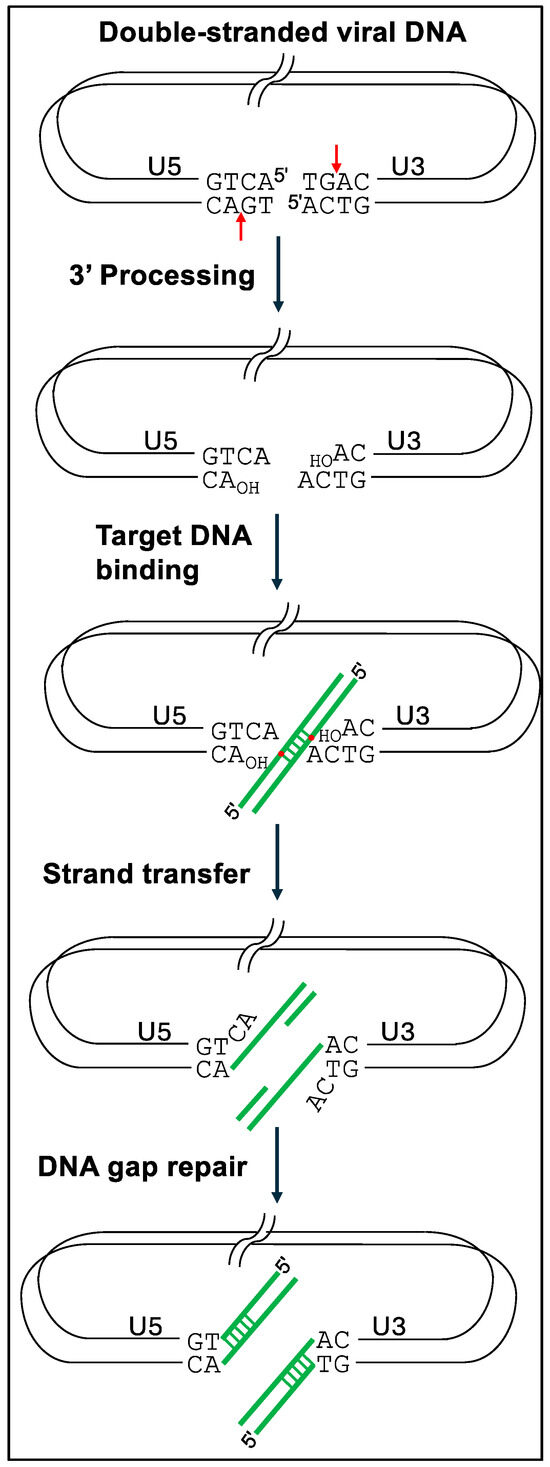
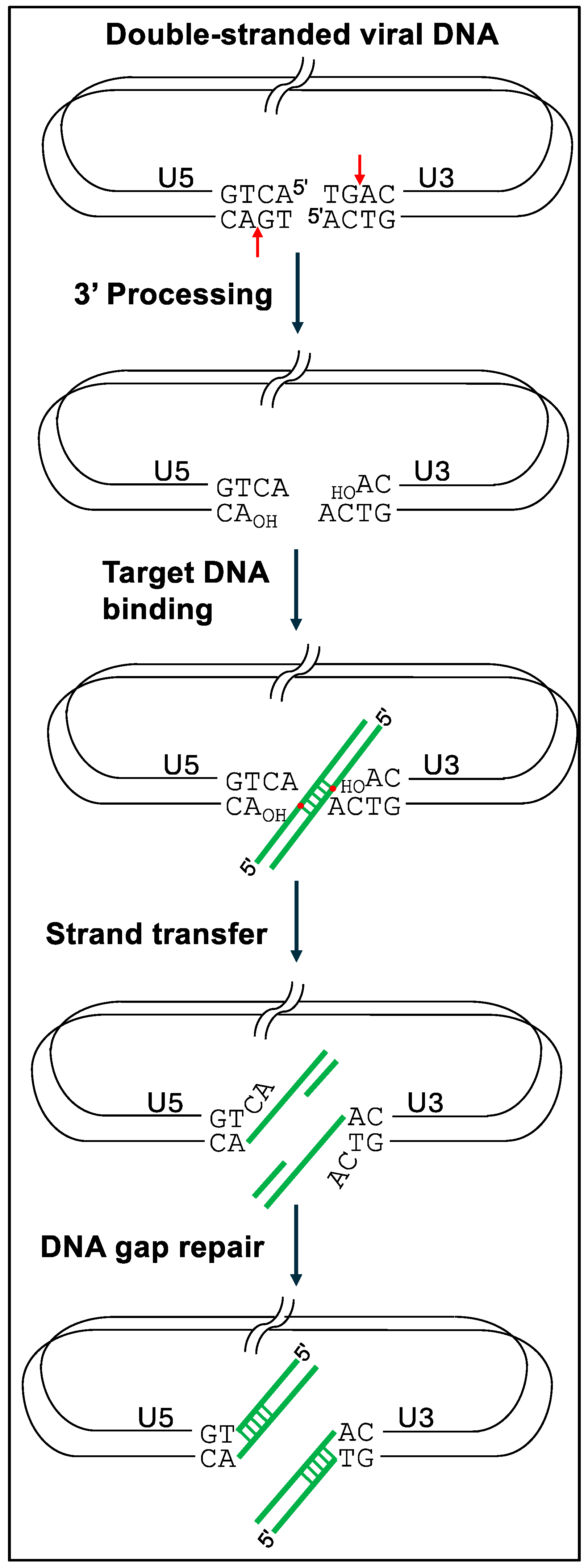
To follow the details, it is important to appreciate the key steps and players in the process of retroviral integration. To start, reverse transcription of retroviral genomic RNA yields linear double-stranded DNA containing a copy of the viral long terminal repeat (LTR) at each end. Each LTR is composed of U3RU5 sequences, so the upstream terminus of retroviral DNA is composed of U3 sequences and the downstream end is made of U5 sequences. Retroviral INs possess two catalytic activities central to the integration of viral DNA into host cell chromosomal DNA. In a reaction referred to as 3′ processing, IN hydrolyzes the U3 and U5 LTR ends adjacent to invariant CA-3′ dinucleotides, resulting in chemically reactive CAOH-3′ ends [1,2]. During the ensuing strand transfer reaction [3,4], IN uses the 3′-oxygen atoms to make a staggered, double-stranded cut in chromosomal target DNA, which joins the viral 3′ ends to the host DNA 5′ phosphates [5,6]. The resulting recombination intermediate, with unjoined viral 5′-ends, is repaired by cellular machinery to yield the integrated provirus flanked by a short target site duplication (TSD) of the staggered DNA cut sequence (Figure 1). Depending on the viral species, the size of retroviral IN-mediated TSDs vary from 4 bp to 6 bp.
Figure 1.
DNA cutting and joining steps of retroviral integration. Depicted is linear HIV-1 DNA (thin black lines) and chromosomal target DNA (thick green lines). Scissile phosphodiester bonds are shown as red vertical arrows (for 3′ processing) and small red circles (for DNA strand transfer). For simplicity, the IN enzyme was omitted from the drawing. See main text for additional details.
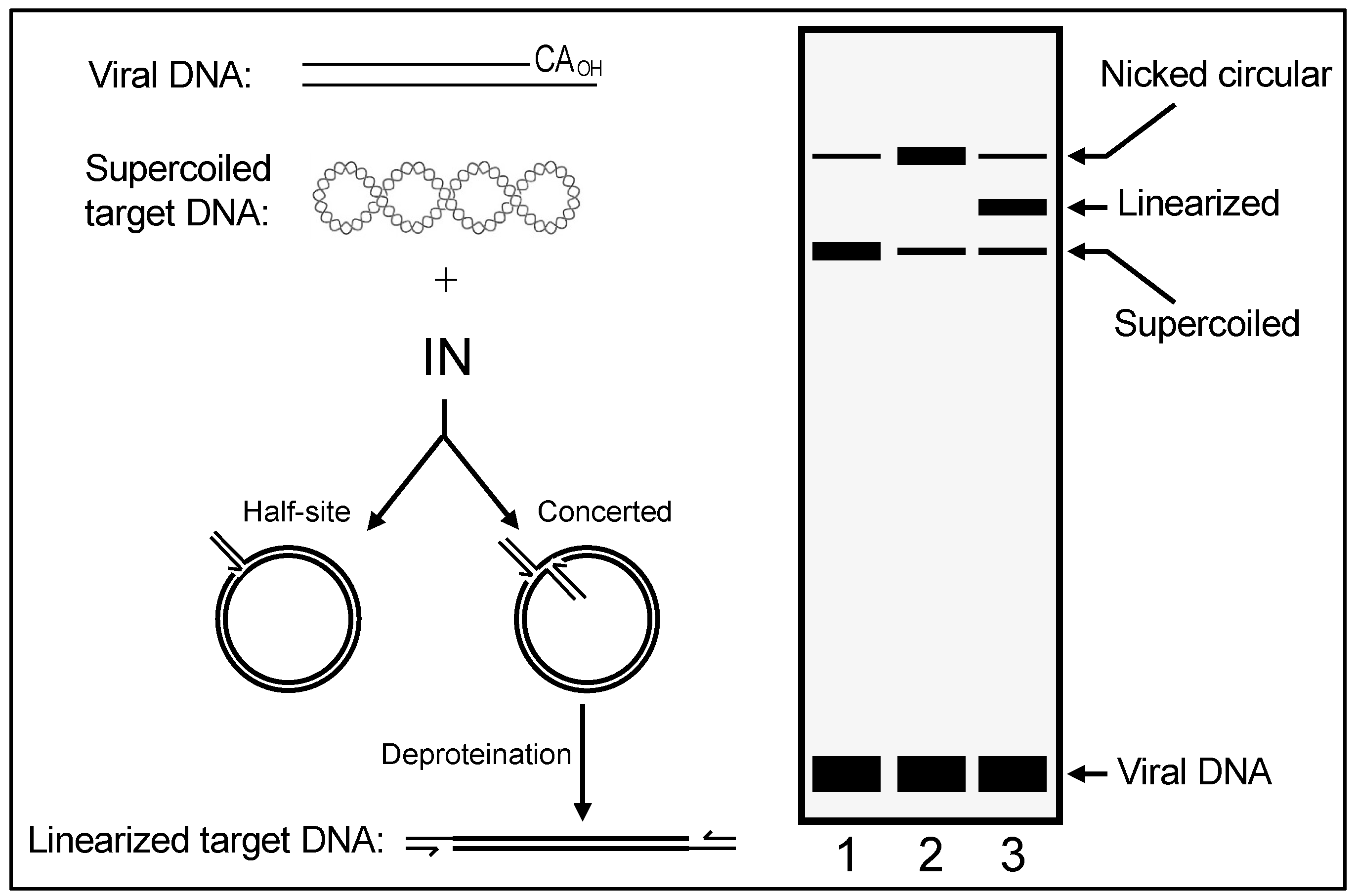
In their simplest forms, IN 3′ processing and DNA strand transfer reactions are staged using double-stranded oligonucleotides that model the terminal ~20–25 bp of viral U3 or U5 ends. Under these conditions, most strand transfer reaction products result from the integration of one LTR end into a second LTR end, the second molecule in this case playing the role of host chromosomal DNA. Integration during virus infection, by contrast, requires IN action on both U3 and U5 LTR ends, which is referred to as concerted integration activity. Modified reaction conditions that monitored the integration of two LTR ends, as well as the ability for these strand transfer events to generate the expected TSD, were required to study retroviral IN concerted integration activities [3,7,8,9,10] (Figure 2). Structural characterizations of retroviral intasomes in more recent years have elucidated the architectural details of how multimers of IN bind and synapse two ends of linear viral DNA together to catalyze 3′ processing and strand transfer of the DNA ends in concerted fashion (see ref. [11] for a recent review).
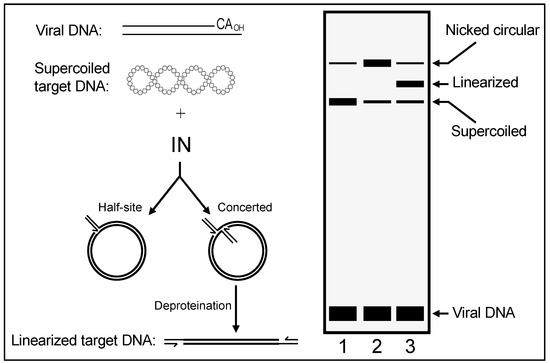
Figure 2.
Design of a representative concerted integration activity assay. Shown to the left are a viral DNA oligonucleotide synthesized with a recessed CAOH-3′ end and supercoiled target DNA. Supercoiled DNA in particular helps to distinguish products of concerted integration from single viral DNA end integration products, which are referred to as half-site integration. Deproteinized reaction products analyzed by agarose gel electrophoresis, schematized to the right, reveal the positions of unreacted viral and target DNA substrates in the absence of added IN (lane 1). Plasmid DNA isolation techniques invariably nick a fraction of supercoiled molecules, which migrate more slowly through the gel than does the compacted supercoiled population. INs that preferentially catalyze half-site integration, such as HIV-1, yield a predominance of single LTR-tagged circles, which comigrate under these conditions with nicked plasmid circles (lane 2) [12]. Other INs, such as those derived from Moloney murine leukemia virus (Mo-MLV) [3], avian myeloblastosis virus (AMV) [7], prototype foamy virus (PFV) [13], or mouse mammary tumor virus [14], possess robust concerted integration activities, which, after deproteination, yield reaction products that comigrate with linearized plasmid DNA (lane 3). HIV-1 IN concerted integration activity is enhanced through the use of comparatively long viral DNA substrates [9] or the IN-binding host factor lens epithelium-derived growth factor (LEDGF)/p75 [10].
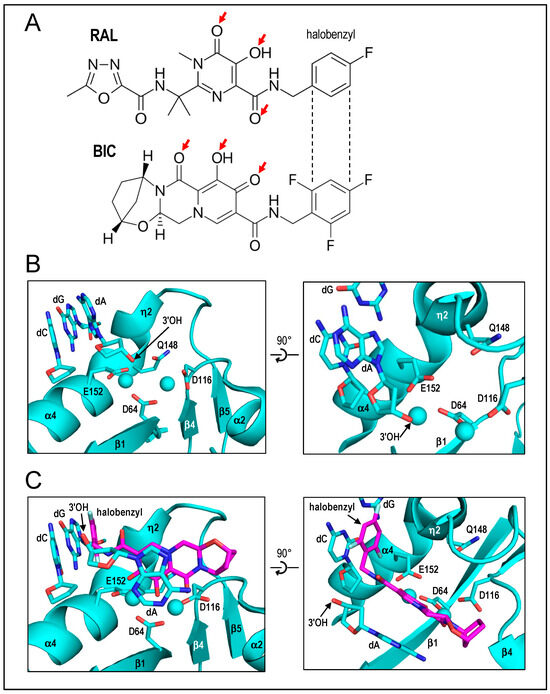
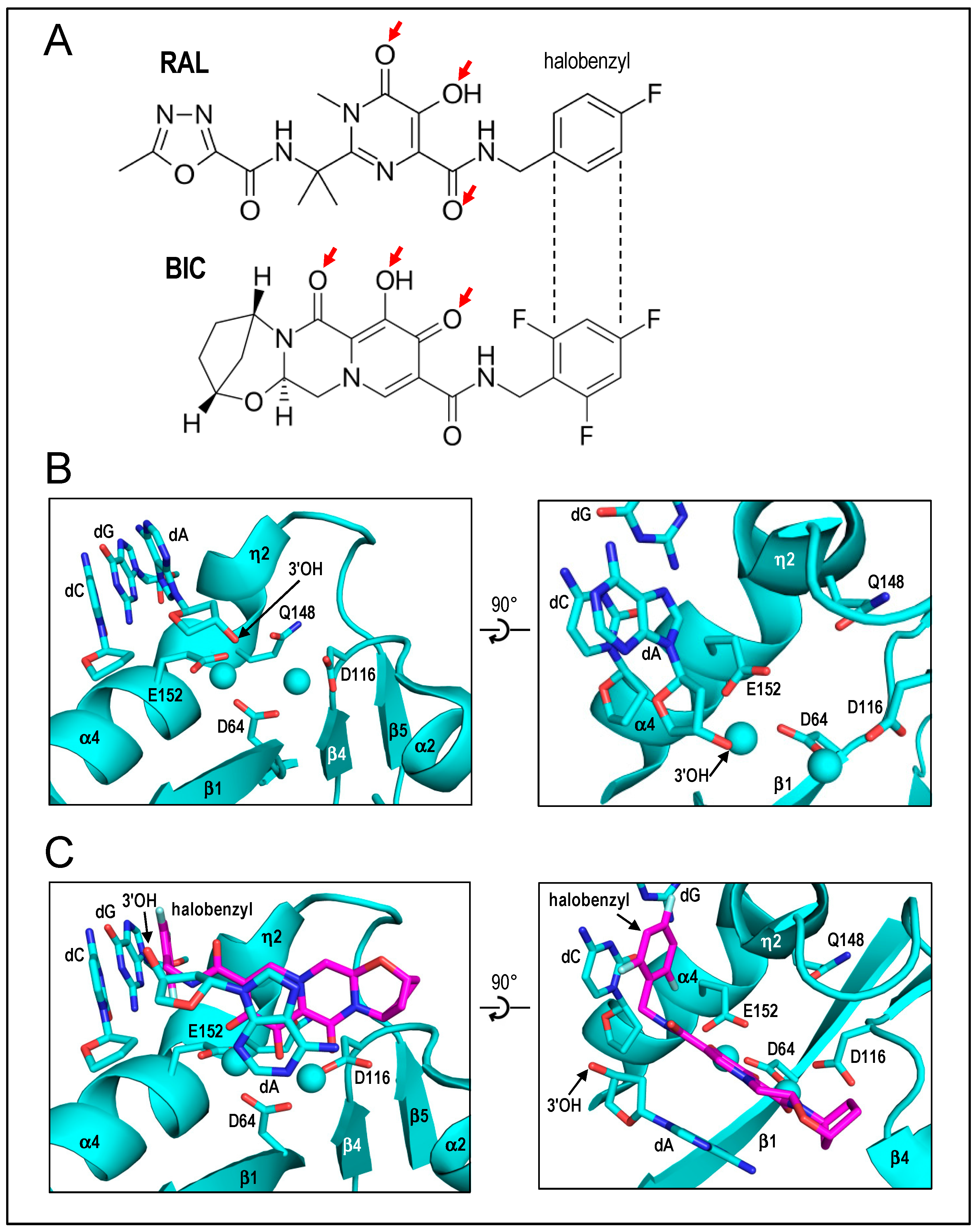
An important consequence of basic scientific research is the ability to inform the development of medicines for the betterment of society, and the field of HIV-1 IN research has witnessed superlative translational successes. DNA oligonucleotides that mimicked the products of IN 3′ processing activity importantly supported strand transfer activity in vitro [3,4,12] (Figure 2). Despite some initial speedbumps whereby suboptimal assay designs led to identification of off-target compounds or clinically nonviable leads [15,16], pre-binding HIV-1 IN to such pre-cleaved strand transfer reaction substrates led to the identification of diketoacid (DKA)-based compounds that preferentially inhibited IN strand transfer activity [17,18]. With the eventual development and rollout of raltegravir (RAL) in 2007, IN strand transfer inhibitors (INSTIs) made an immediate clinical impact, and the second-generation inhibitors dolutegravir (DTG) and bictegravir (BIC) impart much higher barriers to the generation of drug resistance than do the predecessor compounds RAL and elvitegravir (EVG) (reviewed in ref. [11]). Most commonly co-formulated with nucleoside reverse transcriptase (RT) inhibitors (NRTIs), second-generation INSTIs are now recommended for drug-naïve patients as well as for people living with HIV (PLWH) who have not previously failed an INSTI-containing regimen [19]. Recently, an injectable long-acting INSTI (cabotegravir; CAB) has been shown to significantly reduce the risk of HIV-1 acquisition [20] (Table 1).
Table 1.
FDA-approved INSTIs and formulations.
2. Early Studies
Early advancements in retroviral research leveraged animal viruses that were discovered via their abilities to cause disease in susceptible hosts. The virus family Retroviridae includes two subfamilies, Orthoretrovirinae and Spumavirinae. Orthoretroviruses that served key roles in the early days of retroviral integration research include cancer-causing α-retroviruses of birds, such as AMV, and leukemogenic γ-retroviruses of mice, such as Mo-MLV. Although it is non-pathogenic in animal hosts, the Simiispumavirus PFV would later rise to prominence due to its value as a structural biology model for IN-viral DNA complexes (a.k.a. intasomes) [11,21].
Retroviral integration research can be traced to Howard Temin’s brainchild that the α-retrovirus Rous sarcoma virus (RSV) must replicate through a proviral DNA intermediate [22]. Because RSV particles were known to harbor RNA (and not DNA), this suggestion at the time was practically heretical and Temin, needless to say, received significant pushback from colleagues. However, within a relatively short timeframe, both he and David Baltimore provided key evidence as to how retroviruses could replicate through a DNA intermediate: RSV virions [23], as well as Rauscher murine leukemia virus [24] particles, harbored RNA-dependent DNA polymerase activity, and the presumptive enzyme was dubbed “reverse transcriptase” by a Nature editor. Building off this central tenet that retroviral particles harbor within them enzymes needed to complete essential early replication steps, one of us (Grandgenett) formulated the following two-part hypothesis that led to the discovery of retroviral IN: (1) the protein must be present in purified core particles along with RT and viral RNA and (2) it must bind DNA and should possess DNA endonuclease activity for integration of the viral DNA into the host DNA genome. These properties were associated with a 32 kDa protein purified from isolated AMV cores using RNA-affinity chromatography during the purification process [25]. The purified protein was capable of nicking supercoiled DNA in the presence of Mg2+, and it bound DNA in a nitrocellulose DNA-binding filter assay. The protein was proteolytically derived from one of the β subunits (96 kDa) of the precursor RT ββ homodimer, which results in the active αβ heterodimeric form of RT found in α-retroviruses [26]. NH2- and COOH-terminal amino acid sequence analyses of the purified dimeric IN and RT αβ subunits helped to establish that partially phosphorylated IN was derived from the carboxyl terminus of the β subunit [27,28,29,30,31]. The NH2-terminus of HIV-1 IN (32 kDa) was subsequently characterized in 1986 [32], thus allowing the cloning and expression of the recombinant protein by many laboratories.
Genetic analysis of different retrovirus species revealed that a function provided by the 3′ end of their pol genes was required for integration of viral DNA. A single missense mutation or short deletion of Mo-MLV [33,34] and a short internal deletion of spleen necrosis virus (SNV) [35] established that these regions supplied a trans-acting factor required for integration. Viral DNA synthesis was not obviously affected by these pol gene changes. Two missense mutations near the NH2-terminus of α-retrovirus IN also failed to affect viral DNA synthesis, or for that matter integration, affecting only proteolytic processing of the β RT subunit [28,36]. Genetic approaches also helped to determine the extent of LTR sequences required for integration [37,38] and to determine that IN was responsible for 3′ processing of Mo-MLV DNA ends during virus infection [39]. Subsequent work that mainly focused on HIV-1 revealed that numerous IN mutations caused pleiotropic replication defects due to disruption of viral core formation and, as a consequence, led to DNA synthesis defects during the subsequent round of virus infection [40,41]. Such mutations have been labelled “class II” to distinguish them from class I IN mutations that primarily impact the integration step of the viral lifecycle [42]. Some mutations in Mo-MLV IN also yield reverse transcription defects [43]. A comprehensive analysis is required to ascertain the universality of class I versus class II IN mutant phenotypes across divergent retroviral species.
One key unknown in the early 1980s was the structure of the precursor form of retroviral DNA for integration. In addition to linear viral DNA, reverse transcription yields several circular forms, including 1- and 2-LTR containing circles. At the time, knowledge of DNA recombination mechanisms was largely confined to bacterial systems. DNA transposition, which resulted in the movement of a DNA transposon from one location to any number of new locations, yielded a short TSD flanking the newly transposed element. Integration of bacteriophage lambda, which by contrast occurred at a specific site in the bacterial chromosome, proceeded via a circular phage DNA precursor and did not generate any additional DNA sequences. The sequencing of proviral-host junctions by several labs in 1980 revealed short repeat sequences flanking the integrated viruses, indicative of transpositional recombination [44,45,46,47]. By introducing the LTR-LTR circle junction into an interior region of SNV, a now-infamous 1984 paper from Panganiban and Temin claimed that integration could occur via the 2-LTR circle junction [48]. This model, which borrowed from bacteriophage lambda integration, seemed valid because retroviral circle junctions harbor twofold symmetrical sequences, as did the bacteriophage attachment site, and subsequent biochemical efforts with purified IN proteins accordingly focused on circular LTR substrate DNAs [49]. Uncertainty remained until the publication of a breakthrough paper from Patrick Brown and colleagues in 1987. These investigators showed that extracts of cells infected with Mo-MLV possessed the ability to integrate the viral DNA made during the cell infection into an exogenously added target DNA in vitro. Careful analysis of the integration activities of cytoplasmic versus nuclear extracts proved that linear viral DNA was active for integration, casting doubt on the 2-LTR circle model [50]. Integration activity, moreover, tracked with a virus-derived high molecular weight complex termed the “pre-integration complex” or PIC for short [51,52]. One drawback of the 1987 study was that it scored integration via a genetic assay that required complementation of a suppressor bacterial strain following phage-mediated transduction of the in vitro integration product. Soon after, Fujiwara and Mizuuchi greatly simplified the assay by using Southern blotting to detect the products of integration. They additionally probed the structure of the unjoined viral DNA 5′ ends in the integration intermediate, which were 2 base extensions as compared to the 4-base extensions predicted for integration via the 2-LTR circle junction [5]. These breakthrough studies refocused biochemical efforts on linear LTR substrate DNAs, which in relatively short order defined bona fide IN 3′ processing and DNA strand transfer reaction conditions [1,2,3,4].
The simplicity of the in vitro 3′ processing and DNA strand transfer reactions led to a flurry of biochemical studies in the early 1990s. Although these studies are too numerous to comment on in much detail, highlights included elucidation of LTR bases required for IN activity [53,54,55] and discovery of a reversal of strand transfer activity called “disintegration” [56] that had less stringent requirements than strand transfer and would thus become important for characterizing mutant IN enzymes [57]. Parallel work defined IN as a 3-domain protein composed of the N-terminal domain (NTD), catalytic core domain (CCD), and C-terminal domain (CTD) [57,58,59,60] and characterized the roles of conserved amino acid residues (Figure 3). The NTD harbors HHCC amino acids that are conserved across retroviral and retrotransposon INs and that leverage zinc binding to fold into a helix-turn-helix [57,61]. The CCD harbors the IN active site, which is composed of electronegative Asp and Glu residues [59,62,63] and is conserved as a DDE triad among the mobilizing enzymes of an expanded superfamily [64]. The DDE carboxylate side chains coordinate the positions of two Mg2+ ions that enhance the nucleophilicity of attacking oxygen atoms (water for 3′ processing; 3′-oxygens of viral DNA for strand transfer) and destabilize associated scissile phosphodiester bonds [65].
Figure 3.
Domain organization of two representative retroviral IN proteins. Conserved amino acid residues highlighted in the main text are shown in single-letter code. The additional lysine (K) in the CCD, which plays a key role in sequence-specific viral DNA binding, is conserved among retroviral INs and some bacterial transposase proteins but is not seen in retrotransposon INs [66]. Numbers refer to amino acid positions of domain boundaries, as well as to interdomain linker and C-terminal tail lengths. NED, N-terminal extension domain present in a subset of retroviral INs (γ-retroviruses, ε-retroviruses, and spumaretroviruses).
4. Conclusions and Perspectives
The International Conferences on Retroviral IN/Integration that have taken place since 1995 afford intimate opportunities for like-minded scientists to meet and discuss research results and interests. Outside of these dedicated meetings, integration scientists would generally attend broader-based meetings such as the annual Cold Spring Harbor Meeting on Retroviruses or the annual Conference on Retroviruses and Opportunistic Infections (CROI). Although both are excellent conferences, the larger sizes of these meetings and broader subject matters naturally dilute the integration-tropic experience of the dedicated international meetings that we have described herein. Although 6 years transpired between the first and second IN meetings and then 7 years passed between the second and third conferences, an ad hoc committee that convened at the 2014 Asilomar conference recommended having the meetings every three years, a frequency that was met for the 4th, 5th, and 6th conferences. Due to the omnipresent COVID-19 monkey-wrench, 6 years once again transpired between the 6th and 7th meetings. The community has recommitted to the once-every-three-years frequency, and the 8th International Conference on Retroviral Integration is tentatively scheduled for the summer of 2026.
The combined seven meetings have thus far seesawed between US and European locations, which importantly engages the international community and gives the opportunity to attend at least every other time, given costs and time constraints that can impact international travel. To date, locations have been chosen to match the expertise of the local scientific organizer(s). This model has so far restricted our ability to convene conferences at expanded international locations, e.g., in Asia, South America, or the Middle East. The ad hoc committee that helps to plan the conferences, which includes one of us (Engelman), welcomes feedback from international scientists who may be interested in hosting a future international conference on retroviral integration.
Author Contributions
Writing—original draft preparation, D.P.G.; writing—review and editing, D.P.G. and A.N.E. All authors have read and agreed to the published version of the manuscript.
Funding
This research was funded by US National Institutes of Health grants R01AI052014 and R37AI039394 (to A.N.E.). D.P.G. currently serves as Emeritus Professor of Molecular Microbiology and Immunology, School of Medicine, Saint Louis University.
Institutional Review Board Statement
Not applicable.
Informed Consent Statement
Not applicable.
Data Availability Statement
Not applicable.
Acknowledgments
We are grateful to the numerous governmental agencies, academic institutions, and pharmaceutical companies that over the years have graciously offered their financial support to help underwrite the cost of running the International Conferences on Retroviral Integration.
Conflicts of Interest
The authors declare no conflicts of interest.
References
- Katzman, M.; Katz, R.A.; Skalka, A.M.; Leis, J. The avian retroviral integration protein cleaves the terminal sequences of linear viral DNA at the in vivo sites of integration. J. Virol. 1989, 63, 5319–5327. [Google Scholar] [CrossRef] [Scilit] [PubMed]
- Sherman, P.A.; Fyfe, J.A. Human immunodeficiency virus integration protein expressed in Escherichia coli possesses selective DNA cleaving activity. Proc. Natl. Acad. Sci. USA 1990, 87, 5119–5123. [Google Scholar] [CrossRef] [Scilit] [PubMed]
- Craigie, R.; Fujiwara, T.; Bushman, F. The IN protein of Moloney murine leukemia virus processes the viral DNA ends and accomplishes their integration in vitro. Cell 1990, 62, 829–837. [Google Scholar] [CrossRef] [Scilit]
- Katz, R.A.; Merkel, G.; Kulkosky, J.; Leis, J.; Skalka, A.M. The avian retroviral IN protein is both necessary and sufficient for integrative recombination in vitro. Cell 1990, 63, 87–95. [Google Scholar] [CrossRef] [Scilit] [PubMed]
- Fujiwara, T.; Mizuuchi, K. Retroviral DNA integration: Structure of an integration intermediate. Cell 1988, 54, 497–504. [Google Scholar] [CrossRef] [Scilit]
- Engelman, A.; Mizuuchi, K.; Craigie, R. HIV-1 DNA integration: Mechanism of viral DNA cleavage and DNA strand transfer. Cell 1991, 67, 1211–1221. [Google Scholar] [CrossRef] [Scilit]
- Vora, A.C.; McCord, M.; Fitzgerald, M.L.; Inman, R.B.; Grandgenett, D.P. Efficient concerted integration of retrovirus-like DNA in vitro by avian myeloblastosis virus integrase. Nucleic Acids Res. 1994, 22, 4454–4461. [Google Scholar] [CrossRef] [Scilit]
- Faure, A.; Calmels, C.; Desjobert, C.; Castroviejo, M.; Caumont-Sarcos, A.; Tarrago-Litvak, L.; Litvak, S.; Parissi, V. HIV-1 integrase crosslinked oligomers are active in vitro. Nucleic Acids Res. 2005, 33, 977–986. [Google Scholar] [CrossRef] [Scilit] [PubMed]
- Li, M.; Craigie, R. Processing of viral DNA ends channels the HIV-1 integration reaction to concerted integration. J. Biol. Chem. 2005, 280, 29334–29339. [Google Scholar] [CrossRef] [Scilit]
- Hare, S.; Shun, M.C.; Gupta, S.S.; Valkov, E.; Engelman, A.; Cherepanov, P. A novel co-crystal structure affords the design of gain-of-function lentiviral integrase mutants in the presence of modified PSIP1/LEDGF/p75. PLoS Pathog. 2009, 5, e1000259. [Google Scholar] [CrossRef] [Scilit]
- Maertens, G.N.; Engelman, A.N.; Cherepanov, P. Structure and function of retroviral integrase. Nat. Rev. Microbiol. 2022, 20, 20–34. [Google Scholar] [CrossRef] [Scilit] [PubMed]
- Bushman, F.D.; Craigie, R. Activities of human immunodeficiency virus (HIV) integration protein in vitro: Specific cleavage and integration of HIV DNA. Proc. Natl. Acad. Sci. USA 1991, 88, 1339–1343. [Google Scholar] [CrossRef] [Scilit]
- Valkov, E.; Gupta, S.S.; Hare, S.; Helander, A.; Roversi, P.; McClure, M.; Cherepanov, P. Functional and structural characterization of the integrase from the prototype foamy virus. Nucleic Acids Res. 2009, 37, 243–255. [Google Scholar] [CrossRef] [Scilit] [PubMed]
- Ballandras-Colas, A.; Brown, M.; Cook, N.J.; Dewdney, T.G.; Demeler, B.; Cherepanov, P.; Lyumkis, D.; Engelman, A.N. Cryo-EM reveals a novel octameric integrase structure for betaretroviral intasome function. Nature 2016, 530, 358–361. [Google Scholar] [CrossRef] [Scilit] [PubMed]
- Farnet, C.M.; Wang, B.; Lipford, J.R.; Bushman, F.D. Differential inhibition of HIV-1 preintegration complexes and purified integrase protein by small molecules. Proc. Natl. Acad. Sci. USA 1996, 93, 9742–9747. [Google Scholar] [CrossRef] [Scilit] [PubMed]
- Pommier, Y.; Johnson, A.A.; Marchand, C. Integrase inhibitors to treat HIV/AIDS. Nat. Rev. Drug Discov. 2005, 4, 236–248. [Google Scholar] [CrossRef] [Scilit] [PubMed]
- Hazuda, D.J.; Felock, P.J.; Hastings, J.C.; Pramanik, B.; Wolfe, A.L. Differential divalent cation requirements uncouple the assembly and catalytic reactions of human immunodeficiency virus type 1 integrase. J. Virol. 1997, 71, 7005–7011. [Google Scholar] [CrossRef] [Scilit] [PubMed]
- Hazuda, D.J.; Felock, P.; Witmer, M.; Wolfe, A.; Stillmock, K.; Grobler, J.A.; Espeseth, A.; Gabryelski, L.; Schleif, W.; Blau, C.; et al. Inhibitors of strand transfer that prevent integration and inhibit HIV-1 replication in cells. Science 2000, 287, 646–650. [Google Scholar] [CrossRef] [Scilit] [PubMed]
- Saag, M.S.; Gandhi, R.T.; Hoy, J.F.; Landovitz, R.J.; Thompson, M.A.; Sax, P.E.; Smith, D.M.; Benson, C.A.; Buchbinder, S.P.; Del Rio, C.; et al. Antiretroviral drugs for treatment and prevention of HIV infection in adults: 2020 recommendations of the International Antiviral Society-USA Panel. JAMA 2020, 324, 1651–1669. [Google Scholar] [CrossRef] [Scilit]
- Engelman, K.D.; Engelman, A.N. Long-acting Cabotegravir for HIV/AIDS prophylaxis. Biochemistry 2021, 60, 1731–1740. [Google Scholar] [CrossRef] [Scilit]
- Hare, S.; Gupta, S.S.; Valkov, E.; Engelman, A.; Cherepanov, P. Retroviral intasome assembly and inhibition of DNA strand transfer. Nature 2010, 464, 232–236. [Google Scholar] [CrossRef] [Scilit] [PubMed]
- Temin, H.M. The Participation of DNA in Rous Sarcoma Virus Production. Virology 1964, 23, 486–494. [Google Scholar] [CrossRef] [Scilit] [PubMed]
- Temin, H.M.; Mizutani, S. RNA-dependent DNA polymerase in virions of Rous sarcoma virus. Nature 1970, 226, 1211–1213. [Google Scholar] [CrossRef] [Scilit] [PubMed]
- Baltimore, D. RNA-dependent DNA polymerase in virions of RNA tumour viruses. Nature 1970, 226, 1209–1211. [Google Scholar] [CrossRef] [Scilit] [PubMed]
- Grandgenett, D.P.; Vora, A.C.; Schiff, R.D. A 32,000-dalton nucleic acid-binding protein from avian retravirus cores possesses DNA endonuclease activity. Virology 1978, 89, 119–132. [Google Scholar] [CrossRef] [Scilit] [PubMed]
- Schiff, R.D.; Grandgenett, D.P. Virus-coded origin of a 32,000-dalton protein from avian retrovirus cores: Structural relatedness of p32 and the beta polypeptide of the avian retrovirus DNA polymerase. J. Virol. 1978, 28, 279–291. [Google Scholar] [CrossRef] [Scilit] [PubMed]
- Copeland, T.D.; Grandgenett, D.P.; Oroszlan, S. Amino acid sequence analysis of reverse transcriptase subunits from avian myeloblastosis virus. J. Virol. 1980, 36, 115–119. [Google Scholar] [CrossRef] [Scilit]
- Hippenmeyer, P.J.; Grandgenett, D.P. Requirement of the avian retrovirus pp32 DNA binding protein domain for replication. Virology 1984, 137, 358–370. [Google Scholar] [CrossRef] [Scilit] [PubMed]
- Grandgenett, D.; Quinn, T.; Hippenmeyer, P.J.; Oroszlan, S. Structural characterization of the avian retrovirus reverse transcriptase and endonuclease domains. J. Biol. Chem. 1985, 260, 8243–8249. [Google Scholar] [CrossRef] [Scilit]
- Eisenman, R.N.; Mason, W.S.; Linial, M. Synthesis and processing of polymerase proteins of wild-type and mutant avian retroviruses. J. Virol. 1980, 36, 62–78. [Google Scholar] [CrossRef] [Scilit]
- Schiff, R.D.; Grandgenett, D.P. Partial phosphorylation in vivo of the avian retrovirus pp32 DNA endonuclease. J. Virol. 1980, 36, 889–893. [Google Scholar] [CrossRef] [Scilit] [PubMed]
- Lightfoote, M.M.; Coligan, J.E.; Folks, T.M.; Fauci, A.S.; Martin, M.A.; Venkatesan, S. Structural characterization of reverse transcriptase and endonuclease polypeptides of the acquired immunodeficiency syndrome retrovirus. J. Virol. 1986, 60, 771–775. [Google Scholar] [CrossRef] [Scilit] [PubMed]
- Donehower, L.A.; Varmus, H.E. A mutant murine leukemia virus with a single missense codon in pol is defective in a function affecting integration. Proc. Natl. Acad. Sci. USA 1984, 81, 6461–6465. [Google Scholar] [CrossRef] [Scilit] [PubMed]
- Schwartzberg, P.; Colicelli, J.; Goff, S.P. Construction and analysis of deletion mutations in the pol gene of Moloney murine leukemia virus: A new viral function required for productive infection. Cell 1984, 37, 1043–1052. [Google Scholar] [CrossRef] [Scilit] [PubMed]
- Panganiban, A.T.; Temin, H.M. The retrovirus pol gene encodes a product required for DNA integration: Identification of a retrovirus int locus. Proc. Natl. Acad. Sci. USA 1984, 81, 7885–7889. [Google Scholar] [CrossRef] [Scilit]
- Hippenmeyer, P.J.; Grandgenett, D.P. Mutants of the Rous sarcoma virus reverse transcriptase gene are nondefective in early replication events. J. Biol. Chem. 1985, 260, 8250–8256. [Google Scholar] [CrossRef] [Scilit]
- Panganiban, A.T.; Temin, H.M. The terminal nucleotides of retrovirus DNA are required for integration but not virus production. Nature 1983, 306, 155–160. [Google Scholar] [CrossRef] [Scilit] [PubMed]
- Colicelli, J.; Goff, S.P. Mutants and pseudorevertants of Moloney murine leukemia virus with alterations at the integration site. Cell 1985, 42, 573–580. [Google Scholar] [CrossRef] [Scilit] [PubMed]
- Roth, M.J.; Schwartzberg, P.L.; Goff, S.P. Structure of the termini of DNA intermediates in the integration of retroviral DNA: Dependence on IN function and terminal DNA sequence. Cell 1989, 58, 47–54. [Google Scholar] [CrossRef] [Scilit]
- Engelman, A.; Englund, G.; Orenstein, J.M.; Martin, M.A.; Craigie, R. Multiple effects of mutations in human immunodeficiency virus type 1 integrase on viral replication. J. Virol. 1995, 69, 2729–2736. [Google Scholar] [CrossRef] [Scilit]
- Elliott, J.L.; Eschbach, J.E.; Koneru, P.C.; Li, W.; Puray-Chavez, M.; Townsend, D.; Lawson, D.Q.; Engelman, A.N.; Kvaratskhelia, M.; Kutluay, S.B. Integrase-RNA interactions underscore the critical role of integrase in HIV-1 virion morphogenesis. Elife 2020, 9, e54311. [Google Scholar] [CrossRef] [Scilit] [PubMed]
- Engelman, A. In vivo analysis of retroviral integrase structure and function. Adv. Virus Res. 1999, 52, 411–426. [Google Scholar] [PubMed]
- Steinrigl, A.; Nosek, D.; Ertl, R.; Günzburg, W.H.; Salmons, B.; Klein, D. Mutations in the catalytic core or the C-terminus of murine leukemia virus (MLV) integrase disrupt virion infectivity and exert diverse effects on reverse transcription. Virology 2007, 362, 50–59. [Google Scholar] [CrossRef] [Scilit] [PubMed]
- Van Beveren, C.; Goddard, J.G.; Berns, A.; Verma, I.M. Structure of Moloney murine leukemia viral DNA: Nucleotide sequence of the 5′ long terminal repeat and adjacent cellular sequences. Proc. Natl. Acad. Sci. USA 1980, 77, 3307–3311. [Google Scholar] [CrossRef] [Scilit] [PubMed]
- Shimotohno, K.; Mizutani, S.; Temin, H.M. Sequence of retrovirus provirus resembles that of bacterial transposable elements. Nature 1980, 285, 550–554. [Google Scholar] [CrossRef] [Scilit] [PubMed]
- Dhar, R.; McClements, W.L.; Enquist, L.W.; Vande Woude, G.F. Nucleotide sequences of integrated Moloney sarcoma provirus long terminal repeats and their host and viral junctions. Proc. Natl. Acad. Sci. USA 1980, 77, 3937–3941. [Google Scholar] [CrossRef] [Scilit]
- Ju, G.; Skalka, A.M. Nucleotide sequence analysis of the long terminal repeat (LTR) of avian retroviruses: Structural similarities with transposable elements. Cell 1980, 22, 379–386. [Google Scholar] [CrossRef] [Scilit] [PubMed]
- Panganiban, A.T.; Temin, H.M. Circles with two tandem LTRs are precursors to integrated retrovirus DNA. Cell 1984, 36, 673–679. [Google Scholar] [CrossRef] [Scilit] [PubMed]
- Duyk, G.; Longiaru, M.; Cobrinik, D.; Kowal, R.; deHaseth, P.; Skalka, A.M.; Leis, J. Circles with two tandem long terminal repeats are specifically cleaved by pol gene-associated endonuclease from avian sarcoma and leukosis viruses: Nucleotide sequences required for site-specific cleavage. J. Virol. 1985, 56, 589–599. [Google Scholar] [CrossRef] [Scilit]
- Brown, P.O.; Bowerman, B.; Varmus, H.E.; Bishop, J.M. Correct integration of retroviral DNA in vitro. Cell 1987, 49, 347–356. [Google Scholar] [CrossRef] [Scilit]
- Bowerman, B.; Brown, P.O.; Bishop, J.M.; Varmus, H.E. A nucleoprotein complex mediates the integration of retroviral DNA. Genes Dev. 1989, 3, 469–478. [Google Scholar] [CrossRef] [Scilit] [PubMed]
- Farnet, C.M.; Haseltine, W.A. Integration of human immunodeficiency virus type 1 DNA in vitro. Proc. Natl. Acad. Sci. USA 1990, 87, 4164–4168. [Google Scholar] [CrossRef] [Scilit] [PubMed]
- Vink, C.; van Gent, D.C.; Elgersma, Y.; Plasterk, R.H. Human immunodeficiency virus integrase protein requires a subterminal position of its viral DNA recognition sequence for efficient cleavage. J. Virol. 1991, 65, 4636–4644. [Google Scholar] [CrossRef] [Scilit]
- Sherman, P.A.; Dickson, M.L.; Fyfe, J.A. Human immunodeficiency virus type 1 integration protein: DNA sequence requirements for cleaving and joining reactions. J. Virol. 1992, 66, 3593–35601. [Google Scholar] [CrossRef] [Scilit] [PubMed]
- Balakrishnan, M.; Jonsson, C.B. Functional identification of nucleotides conferring substrate specificity to retroviral integrase reactions. J. Virol. 1997, 71, 1025–1035. [Google Scholar] [CrossRef] [Scilit]
- Chow, S.A.; Vincent, K.A.; Ellison, V.; Brown, P.O. Reversal of integration and DNA splicing mediated by integrase of human immunodeficiency virus. Science 1992, 255, 723–726. [Google Scholar] [CrossRef] [Scilit] [PubMed]
- Bushman, F.D.; Engelman, A.; Palmer, I.; Wingfield, P.; Craigie, R. Domains of the integrase protein of human immunodeficiency virus type 1 responsible for polynucleotidyl transfer and zinc binding. Proc. Natl. Acad. Sci. USA 1993, 90, 3428–3432. [Google Scholar] [CrossRef] [Scilit]
- Khan, E.; Mack, J.P.; Katz, R.A.; Kulkosky, J.; Skalka, A.M. Retroviral integrase domains: DNA binding and the recognition of LTR sequences. Nucleic Acids Res. 1991, 19, 851–860. [Google Scholar] [CrossRef] [Scilit] [PubMed]
- Engelman, A.; Craigie, R. Identification of conserved amino acid residues critical for human immunodeficiency virus type 1 integrase function in vitro. J. Virol. 1992, 66, 6361–6369. [Google Scholar] [CrossRef] [Scilit]
- Engelman, A.; Bushman, F.D.; Craigie, R. Identification of discrete functional domains of HIV-1 integrase and their organization within an active multimeric complex. EMBO J. 1993, 12, 3269–3275. [Google Scholar] [CrossRef] [Scilit]
- Zheng, R.; Jenkins, T.M.; Craigie, R. Zinc folds the N-terminal domain of HIV-1 integrase, promotes multimerization, and enhances catalytic activity. Proc. Natl. Acad. Sci. USA 1996, 93, 13659–13664. [Google Scholar] [CrossRef] [Scilit]
- Kulkosky, J.; Jones, K.S.; Katz, R.A.; Mack, J.P.; Skalka, A.M. Residues critical for retroviral integrative recombination in a region that is highly conserved among retroviral/retrotransposon integrases and bacterial insertion sequence transposases. Mol. Cell. Biol. 1992, 12, 2331–2338. [Google Scholar] [PubMed]
- van Gent, D.C.; Groeneger, A.A.; Plasterk, R.H. Mutational analysis of the integrase protein of human immunodeficiency virus type 2. Proc. Natl. Acad. Sci. USA 1992, 89, 9598–9602. [Google Scholar] [CrossRef] [Scilit]
- Yuan, Y.W.; Wessler, S.R. The catalytic domain of all eukaryotic cut-and-paste transposase superfamilies. Proc. Natl. Acad. Sci. USA 2011, 108, 7884–7889. [Google Scholar] [CrossRef] [Scilit] [PubMed]
- Hare, S.; Maertens, G.N.; Cherepanov, P. 3′-processing and strand transfer catalysed by retroviral integrase in crystallo. EMBO J. 2012, 31, 3020–3028. [Google Scholar] [CrossRef] [Scilit] [PubMed]
- Jenkins, T.M.; Esposito, D.; Engelman, A.; Craigie, R. Critical contacts between HIV-1 integrase and viral DNA identified by structure-based analysis and photo-crosslinking. EMBO J. 1997, 16, 6849–6859. [Google Scholar] [CrossRef] [Scilit] [PubMed]
- Miller, M.D.; Farnet, C.M.; Bushman, F.D. Human immunodeficiency virus type 1 preintegration complexes: Studies of organization and composition. J. Virol. 1997, 71, 5382–5390. [Google Scholar] [CrossRef] [Scilit]
- Miller, M.D.; Wang, B.; Bushman, F.D. Human immunodeficiency virus type 1 preintegration complexes containing discontinuous plus strands are competent to integrate in vitro. J. Virol. 1995, 69, 3938–3944. [Google Scholar] [CrossRef] [Scilit]
- Vijaya, S.; Steffen, D.L.; Robinson, H.L. Acceptor sites for retroviral integrations map near DNase I-hypersensitive sites in chromatin. J. Virol. 1986, 60, 683–692. [Google Scholar] [CrossRef] [Scilit]
- Chalker, D.L.; Sandmeyer, S.B. Ty3 integrates within the region of RNA polymerase III transcription initiation. Genes Dev. 1992, 6, 117–128. [Google Scholar] [CrossRef] [Scilit]
- Withers-Ward, E.S.; Kitamura, Y.; Barnes, J.P.; Coffin, J.M. Distribution of targets for avian retrovirus DNA integration in vivo. Genes Dev. 1994, 8, 1473–1487. [Google Scholar] [CrossRef] [Scilit] [PubMed]
- Kitamura, Y.; Lee, Y.M.; Coffin, J.M. Nonrandom integration of retroviral DNA in vitro: Effect of CpG methylation. Proc. Natl. Acad. Sci. USA 1992, 89, 5532–5536. [Google Scholar] [CrossRef] [Scilit] [PubMed]
- Schroder, A.R.; Shinn, P.; Chen, H.; Berry, C.; Ecker, J.R.; Bushman, F. HIV-1 integration in the human genome favors active genes and local hotspots. Cell 2002, 110, 521–529. [Google Scholar] [CrossRef] [Scilit] [PubMed]
- Mitchell, R.S.; Beitzel, B.F.; Schroder, A.R.; Shinn, P.; Chen, H.; Berry, C.C.; Ecker, J.R.; Bushman, F.D. Retroviral DNA integration: ASLV, HIV, and MLV show distinct target site preferences. PLoS Biol. 2004, 2, E234. [Google Scholar] [CrossRef] [Scilit] [PubMed]
- Wang, G.P.; Ciuffi, A.; Leipzig, J.; Berry, C.C.; Bushman, F.D. HIV integration site selection: Analysis by massively parallel pyrosequencing reveals association with epigenetic modifications. Genome Res. 2007, 17, 1186–1194. [Google Scholar] [CrossRef] [Scilit] [PubMed]
- Goodarzi, G.; Im, G.J.; Brackmann, K.; Grandgenett, D. Concerted integration of retrovirus-like DNA by human immunodeficiency virus type 1 integrase. J. Virol. 1995, 69, 6090–6097. [Google Scholar] [CrossRef] [Scilit] [PubMed]
- Hickman, A.B.; Palmer, I.; Engelman, A.; Craigie, R.; Wingfield, P. Biophysical and enzymatic properties of the catalytic domain of HIV-1 integrase. J. Biol. Chem. 1994, 269, 29279–29287. [Google Scholar] [CrossRef] [Scilit]
- Jenkins, T.M.; Hickman, A.B.; Dyda, F.; Ghirlando, R.; Davies, D.R.; Craigie, R. Catalytic domain of human immunodeficiency virus type 1 integrase: Identification of a soluble mutant by systematic replacement of hydrophobic residues. Proc. Natl. Acad. Sci. USA 1995, 92, 6057–6061. [Google Scholar] [CrossRef] [Scilit]
- Dyda, F.; Hickman, A.B.; Jenkins, T.M.; Engelman, A.; Craigie, R.; Davies, D.R. Crystal structure of the catalytic domain of HIV-1 integrase: Similarity to other polynucleotidyl transferases. Science 1994, 266, 1981–1986. [Google Scholar] [CrossRef] [Scilit]
- Bujacz, G.; Jaskolski, M.; Alexandratos, J.; Wlodawer, A.; Merkel, G.; Katz, R.A.; Skalka, A.M. High-resolution structure of the catalytic domain of avian sarcoma virus integrase. J. Mol. Biol. 1995, 253, 333–346. [Google Scholar] [CrossRef] [Scilit]
- Hazuda, D.J.; Hastings, J.C.; Wolfe, A.L.; Emini, E.A. A novel assay for the DNA strand-transfer reaction of HIV-1 integrase. Nucleic Acids Res. 1994, 22, 1121–1122. [Google Scholar] [CrossRef] [Scilit]
- Eijkelenboom, A.P.; Lutzke, R.A.; Boelens, R.; Plasterk, R.H.; Kaptein, R.; Hard, K. The DNA-binding domain of HIV-1 integrase has an SH3-like fold. Nat. Struct. Biol. 1995, 2, 807–810. [Google Scholar] [CrossRef] [Scilit] [PubMed]
- Lodi, P.J.; Ernst, J.A.; Kuszewski, J.; Hickman, A.B.; Engelman, A.; Craigie, R.; Clore, G.M.; Gronenborn, A.M. Solution structure of the DNA binding domain of HIV-1 integrase. Biochemistry 1995, 34, 9826–9833. [Google Scholar] [CrossRef] [Scilit] [PubMed]
- Cai, M.; Zheng, R.; Caffrey, M.; Craigie, R.; Clore, G.M.; Gronenborn, A.M. Solution structure of the N-terminal zinc binding domain of HIV-1 integrase. Nat. Struct. Biol. 1997, 4, 567–577. [Google Scholar] [CrossRef] [Scilit]
- Eijkelenboom, A.P.; van den Ent, F.M.; Vos, A.; Doreleijers, J.F.; Hård, K.; Tullius, T.D.; Plasterk, R.H.; Kaptein, R.; Boelens, R. The solution structure of the amino-terminal HHCC domain of HIV-2 integrase: A three-helix bundle stabilized by zinc. Curr. Biol. 1997, 7, 739–746. [Google Scholar] [CrossRef] [Scilit] [PubMed]
- Lubkowski, J.; Dauter, Z.; Yang, F.; Alexandratos, J.; Merkel, G.; Skalka, A.M.; Wlodawer, A. Atomic resolution structures of the core domain of avian sarcoma virus integrase and its D64N mutant. Biochemistry 1999, 38, 13512–13522. [Google Scholar] [CrossRef] [Scilit]
- Wang, J.Y.; Ling, H.; Yang, W.; Craigie, R. Structure of a two-domain fragment of HIV-1 integrase: Implications for domain organization in the intact protein. EMBO J. 2001, 20, 7333–7343. [Google Scholar] [CrossRef] [Scilit]
- Chen, J.C.; Krucinski, J.; Miercke, L.J.; Finer-Moore, J.S.; Tang, A.H.; Leavitt, A.D.; Stroud, R.M. Crystal structure of the HIV-1 integrase catalytic core and C-terminal domains: A model for viral DNA binding. Proc. Natl. Acad. Sci. USA 2000, 97, 8233–8238. [Google Scholar] [CrossRef] [Scilit]
- Passos, D.O.; Li, M.; Yang, R.; Rebensburg, S.V.; Ghirlando, R.; Jeon, Y.; Shkriabai, N.; Kvaratskhelia, M.; Craigie, R.; Lyumkis, D. Cryo-EM structures and atomic model of the HIV-1 strand transfer complex intasome. Science 2017, 355, 89–92. [Google Scholar] [CrossRef] [Scilit]
- Passos, D.O.; Li, M.; Jozwik, I.K.; Zhao, X.Z.; Santos-Martins, D.; Yang, R.; Smith, S.J.; Jeon, Y.; Forli, S.; Hughes, S.H.; et al. Structural basis for strand-transfer inhibitor binding to HIV intasomes. Science 2020, 367, 810–814. [Google Scholar] [CrossRef] [Scilit]
- Li, M.; Chen, X.; Wang, H.; Jurado, K.A.; Engelman, A.N.; Craigie, R. A peptide derived from lens epithelium-derived growth factor stimulates HIV-1 DNA integration and facilitates intasome structural studies. J. Mol. Biol. 2020, 432, 2055–2066. [Google Scholar] [CrossRef] [Scilit] [PubMed]
- Yuan, B.; Li, X.; Goff, S.P. Mutations altering the moloney murine leukemia virus p12 Gag protein affect virion production and early events of the virus life cycle. EMBO J. 1999, 18, 4700–4710. [Google Scholar] [CrossRef] [Scilit] [PubMed]
- Yuan, B.; Fassati, A.; Yueh, A.; Goff, S.P. Characterization of Moloney murine leukemia virus p12 mutants blocked during early events of infection. J. Virol. 2002, 76, 10801–10810. [Google Scholar] [CrossRef] [Scilit] [PubMed]
- Tobaly-Tapiero, J.; Bittoun, P.; Lehmann-Che, J.; Delelis, O.; Giron, M.-L.; de Thé, H.; Saïb, A. Chromatin tethering of incoming foamy virus by the structural Gag protein. Traffic 2008, 9, 1717–1727. [Google Scholar] [CrossRef] [Scilit]
- Schaller, T.; Ocwieja, K.E.; Rasaiyaah, J.; Price, A.J.; Brady, T.L.; Roth, S.L.; Hué, S.; Fletcher, A.J.; Lee, K.; KewalRamani, V.N.; et al. HIV-1 capsid-cyclophilin interactions determine nuclear import pathway, integration targeting and replication efficiency. PLoS Pathog. 2011, 7, e1002439. [Google Scholar] [CrossRef] [Scilit] [PubMed]
- Sowd, G.A.; Serrao, E.; Wang, H.; Wang, W.; Fadel, H.J.; Poeschla, E.M.; Engelman, A.N. A critical role for alternative polyadenylation factor CPSF6 in targeting HIV-1 integration to transcriptionally active chromatin. Proc. Natl. Acad. Sci. USA 2016, 113, E1054–E1063. [Google Scholar] [CrossRef] [Scilit] [PubMed]
- Lesbats, P.; Serrao, E.; Maskell, D.P.; Pye, V.E.; O’Reilly, N.; Lindemann, D.; Engelman, A.N.; Cherepanov, P. Structural basis for spumavirus GAG tethering to chromatin. Proc. Natl. Acad. Sci. USA 2017, 114, 5509–5514. [Google Scholar] [CrossRef] [Scilit]
- Schneider, W.M.; Brzezinski, J.D.; Aiyer, S.; Malani, N.; Gyuricza, M.; Bushman, F.D.; Roth, M.J. Viral DNA tethering domains complement replication-defective mutations in the p12 protein of MuLV Gag. Proc. Natl. Acad. Sci. USA 2013, 110, 9487–9492. [Google Scholar] [CrossRef] [Scilit] [PubMed]
- Kalpana, G.V.; Marmon, S.; Wang, W.; Crabtree, G.R.; Goff, S.P. Binding and stimulation of HIV-1 integrase by a human homolog of yeast transcription factor SNF5. Science 1994, 266, 2002–2006. [Google Scholar] [CrossRef] [Scilit]
- Yung, E.; Sorin, M.; Pal, A.; Craig, E.; Morozov, A.; Delattre, O.; Kappes, J.; Ott, D.; Kalpana, G.V. Inhibition of HIV-1 virion production by a transdominant mutant of integrase interactor 1. Nat. Med. 2001, 7, 920–926. [Google Scholar] [CrossRef] [Scilit]
- Cherepanov, P.; Pluymers, W.; Claeys, A.; Proost, P.; De Clercq, E.; Debyser, Z. High-level expression of active HIV-1 integrase from a synthetic gene in human cells. FASEB J. 2000, 14, 1389–1399. [Google Scholar] [PubMed]
- Cherepanov, P.; Maertens, G.; Proost, P.; Devreese, B.; Van Beeumen, J.; Engelborghs, Y.; De Clercq, E.; Debyser, Z. HIV-1 integrase forms stable tetramers and associates with LEDGF/p75 protein in human cells. J. Biol. Chem. 2003, 278, 372–381. [Google Scholar] [CrossRef] [Scilit] [PubMed]
- Goldgur, Y.; Craigie, R.; Cohen, G.H.; Fujiwara, T.; Yoshinaga, T.; Fujishita, T.; Sugimoto, H.; Endo, T.; Murai, H.; Davies, D.R. Structure of the HIV-1 integrase catalytic domain complexed with an inhibitor: A platform for antiviral drug design. Proc. Natl. Acad. Sci. USA 1999, 96, 13040–13043. [Google Scholar] [CrossRef] [Scilit] [PubMed]
- Marchand, C.; Zhang, X.; Pais, G.C.; Cowansage, K.; Neamati, N.; Burke, T.R., Jr.; Pommier, Y. Structural determinants for HIV-1 integrase inhibition by beta-diketo acids. J. Biol. Chem. 2002, 277, 12596–12603. [Google Scholar] [CrossRef] [Scilit] [PubMed]
- Espeseth, A.S.; Felock, P.; Wolfe, A.; Witmer, M.; Grobler, J.; Anthony, N.; Egbertson, M.; Melamed, J.Y.; Young, S.; Hamill, T.; et al. HIV-1 integrase inhibitors that compete with the target DNA substrate define a unique strand transfer conformation for integrase. Proc. Natl. Acad. Sci. USA 2000, 97, 11244–11249. [Google Scholar] [CrossRef] [Scilit] [PubMed]
- Ciuffi, A.; Llano, M.; Poeschla, E.; Hoffmann, C.; Leipzig, J.; Shinn, P.; Ecker, J.R.; Bushman, F. A role for LEDGF/p75 in targeting HIV DNA integration. Nat. Med. 2005, 11, 1287–1289. [Google Scholar] [CrossRef] [Scilit] [PubMed]
- Li, M.; Mizuuchi, M.; Burke, T.R., Jr.; Craigie, R. Retroviral DNA integration: Reaction pathway and critical intermediates. EMBO J. 2006, 25, 1295–1304. [Google Scholar] [CrossRef] [Scilit]
- Li, M.; Jurado, K.A.; Lin, S.; Engelman, A.; Craigie, R. Engineered hyperactive integrase for concerted HIV-1 DNA integration. PLoS ONE 2014, 9, e105078. [Google Scholar] [CrossRef] [Scilit] [PubMed]
- McKee, C.J.; Kessl, J.J.; Shkriabai, N.; Dar, M.J.; Engelman, A.; Kvaratskhelia, M. Dynamic modulation of HIV-1 integrase structure and function by cellular lens epithelium-derived growth factor (LEDGF) protein. J. Biol. Chem. 2008, 283, 31802–31812. [Google Scholar] [CrossRef] [Scilit]
- Kessl, J.J.; Eidahl, J.O.; Shkriabai, N.; Zhao, Z.; McKee, C.J.; Hess, S.; Burke, T.R., Jr.; Kvaratskhelia, M. An allosteric mechanism for inhibiting HIV-1 integrase with a small molecule. Mol. Pharmacol. 2009, 76, 824–832. [Google Scholar] [CrossRef] [Scilit]
- Guan, R.; Aiyer, S.; Cote, M.L.; Xiao, R.; Jiang, M.; Acton, T.B.; Roth, M.J.; Montelione, G.T. X-ray crystal structure of the N-terminal region of Moloney murine leukemia virus integrase and its implications for viral DNA recognition. Proteins 2017, 85, 647–656. [Google Scholar] [CrossRef] [Scilit]
- Schneider, W.M.; Wu, D.T.; Amin, V.; Aiyer, S.; Roth, M.J. MuLV IN mutants responsive to HDAC inhibitors enhance transcription from unintegrated retroviral DNA. Virology 2012, 426, 188–196. [Google Scholar] [CrossRef] [Scilit] [PubMed]
- Zhu, Y.; Wang, G.Z.; Cingöz, O.; Goff, S.P. NP220 mediates silencing of unintegrated retroviral DNA. Nature 2018, 564, 278–282. [Google Scholar] [CrossRef] [Scilit] [PubMed]
- Geis, F.K.; Goff, S.P. Unintegrated HIV-1 DNAs are loaded with core and linker histones and transcriptionally silenced. Proc. Natl. Acad. Sci. USA 2019, 116, 23735–23742. [Google Scholar] [CrossRef] [Scilit]
- Machida, S.; Depierre, D.; Chen, H.C.; Thenin-Houssier, S.; Petitjean, G.; Doyen, C.M.; Takaku, M.; Cuvier, O.; Benkirane, M. Exploring histone loading on HIV DNA reveals a dynamic nucleosome positioning between unintegrated and integrated viral genome. Proc. Natl. Acad. Sci. USA 2020, 117, 6822–6830. [Google Scholar] [CrossRef] [Scilit] [PubMed]
- Hazuda, D.J.; Young, S.D.; Guare, J.P.; Anthony, N.J.; Gomez, R.P.; Wai, J.S.; Vacca, J.P.; Handt, L.; Motzel, S.L.; Klein, H.J.; et al. Integrase inhibitors and cellular immunity suppress retroviral replication in rhesus macaques. Science 2004, 305, 528–532. [Google Scholar] [CrossRef] [Scilit] [PubMed]
- Cooper, D.A.; Steigbigel, R.T.; Gatell, J.M.; Rockstroh, J.K.; Katlama, C.; Yeni, P.; Lazzarin, A.; Clotet, B.; Kumar, P.N.; Eron, J.E.; et al. Subgroup and resistance analyses of raltegravir for resistant HIV-1 infection. N. Engl. J. Med. 2008, 359, 355–365. [Google Scholar] [CrossRef] [Scilit] [PubMed]
- Langley, D.R.; Samanta, H.K.; Lin, Z.; Walker, M.A.; Krystal, M.R.; Dicker, I.B. The terminal (catalytic) adenosine of the HIV LTR controls the kinetics of binding and dissociation of HIV integrase strand transfer inhibitors. Biochemistry 2008, 47, 13481–13488. [Google Scholar] [CrossRef] [Scilit]
- Hare, S.; Vos, A.M.; Clayton, R.F.; Thuring, J.W.; Cummings, M.D.; Cherepanov, P. Molecular mechanisms of retroviral integrase inhibition and the evolution of viral resistance. Proc. Natl. Acad. Sci. USA 2010, 107, 20057–20062. [Google Scholar] [CrossRef] [Scilit]
- Marinello, J.; Marchand, C.; Mott, B.T.; Bain, A.; Thomas, C.J.; Pommier, Y. Comparison of raltegravir and elvitegravir on HIV-1 integrase catalytic reactions and on a series of drug-resistant integrase mutants. Biochemistry 2008, 47, 9345–9354. [Google Scholar] [CrossRef] [Scilit]
- Wu, X.; Li, Y.; Crise, B.; Burgess, S.M. Transcription start regions in the human genome are favored targets for MLV integration. Science 2003, 300, 1749–1751. [Google Scholar] [CrossRef] [Scilit] [PubMed]
- Leem, Y.E.; Ripmaster, T.L.; Kelly, F.D.; Ebina, H.; Heincelman, M.E.; Zhang, K.; Grewal, S.I.; Hoffman, C.S.; Levin, H.L. Retrotransposon Tf1 is targeted to Pol II promoters by transcription activators. Mol. Cell 2008, 30, 98–107. [Google Scholar] [CrossRef] [Scilit] [PubMed]
- Hizi, A.; Levin, H.L. The integrase of the long terminal repeat-retrotransposon tf1 has a chromodomain that modulates integrase activities. J. Biol. Chem. 2005, 280, 39086–39094. [Google Scholar] [CrossRef] [Scilit]
- Sandmeyer, S.; Patterson, K.; Bilanchone, V. Ty3, a Position-specific Retrotransposon in Budding Yeast. Microbiol. Spectr. 2015, 3, MDNA3-0057-2014. [Google Scholar] [CrossRef] [Scilit]
- Brady, T.L.; Schmidt, C.L.; Voytas, D.F. Targeting integration of the Saccharomyces Ty5 retrotransposon. Methods Mol. Biol. 2008, 435, 153–163. [Google Scholar]
- Grobler, J.A.; Stillmock, K.; Hu, B.; Witmer, M.; Felock, P.; Espeseth, A.S.; Wolfe, A.; Egbertson, M.; Bourgeois, M.; Melamed, J.; et al. Diketo acid inhibitor mechanism and HIV-1 integrase: Implications for metal binding in the active site of phosphotransferase enzymes. Proc. Natl. Acad. Sci. USA 2002, 99, 6661–6666. [Google Scholar] [CrossRef] [Scilit] [PubMed]
- Cook, N.J.; Li, W.; Berta, D.; Badaoui, M.; Ballandras-Colas, A.; Nans, A.; Kotecha, A.; Rosta, E.; Engelman, A.N.; Cherepanov, P. Structural basis of second-generation HIV integrase inhibitor action and viral resistance. Science 2020, 367, 806–810. [Google Scholar] [CrossRef] [Scilit]
- Li, M.; Oliveira Passos, D.; Shan, Z.; Smith, S.J.; Sun, Q.; Biswas, A.; Choudhuri, I.; Strutzenberg, T.S.; Haldane, A.; Deng, N.; et al. Mechanisms of HIV-1 integrase resistance to dolutegravir and potent inhibition of drug-resistant variants. Sci. Adv. 2023, 9, eadg5953. [Google Scholar] [CrossRef] [Scilit] [PubMed]
- Maertens, G.N.; Hare, S.; Cherepanov, P. The mechanism of retroviral integration from X-ray structures of its key intermediates. Nature 2010, 468, 326–329. [Google Scholar] [CrossRef] [Scilit]
- Yoder, K.E.; Bushman, F.D. Repair of gaps in retroviral DNA integration intermediates. J. Virol. 2000, 74, 11191–11200. [Google Scholar] [CrossRef] [Scilit]
- Desfarges, S.; San Filippo, J.; Fournier, M.; Calmels, C.; Caumont-Sarcos, A.; Litvak, S.; Sung, P.; Parissi, V. Chromosomal integration of LTR-flanked DNA in yeast expressing HIV-1 integrase: Down regulation by RAD51. Nucleic Acids Res. 2006, 34, 6215–6224. [Google Scholar] [CrossRef] [Scilit] [PubMed]
- Cosnefroy, O.; Tocco, A.; Lesbats, P.; Thierry, S.; Calmels, C.; Wiktorowicz, T.; Reigadas, S.; Kwon, Y.; De Cian, A.; Desfarges, S.; et al. Stimulation of the human RAD51 nucleofilament restricts HIV-1 integration in vitro and in infected cells. J. Virol. 2012, 86, 513–526. [Google Scholar] [CrossRef] [Scilit] [PubMed]
- Knyazhanskaya, E.; Anisenko, A.; Shadrina, O.; Kalinina, A.; Zatsepin, T.; Zalevsky, A.; Mazurov, D.; Gottikh, M. NHEJ pathway is involved in post-integrational DNA repair due to Ku70 binding to HIV-1 integrase. Retrovirology 2019, 16, 30. [Google Scholar] [CrossRef] [Scilit] [PubMed]
- Anisenko, A.; Nefedova, A.; Agapkina, Y.; Gottikh, M. Both ATM and DNA-PK Are the main regulators of HIV-1 post-integrational DNA repair. Int. J. Mol. Sci. 2023, 24, 2797. [Google Scholar] [CrossRef] [Scilit] [PubMed]
- Fu, S.; Phan, A.T.; Mao, D.; Wang, X.; Gao, G.; Goff, S.P.; Zhu, Y. HIV-1 exploits the Fanconi anemia pathway for viral DNA integration. Cell Rep. 2022, 39, 110840. [Google Scholar] [CrossRef] [Scilit]
- Anisenko, A.; Galkin, S.; Mikhaylov, A.A.; Khrenova, M.G.; Agapkina, Y.; Korolev, S.; Garkul, L.; Shirokova, V.; Ikonnikova, V.A.; Korlyukov, A.; et al. KuINins as a new class of HIV-1 inhibitors that block post-integration DNA repair. Int. J. Mol. Sci. 2023, 24, 17354. [Google Scholar] [CrossRef] [Scilit]
- Ge, H.; Si, Y.; Roeder, R.G. Isolation of cDNAs encoding novel transcription coactivators p52 and p75 reveals an alternate regulatory mechanism of transcriptional activation. EMBO J. 1998, 17, 6723–6729. [Google Scholar] [CrossRef] [Scilit] [PubMed]
- Shun, M.C.; Raghavendra, N.K.; Vandegraaff, N.; Daigle, J.E.; Hughes, S.; Kellam, P.; Cherepanov, P.; Engelman, A. LEDGF/p75 functions downstream from preintegration complex formation to effect gene-specific HIV-1 integration. Genes Dev. 2007, 21, 1767–1778. [Google Scholar] [CrossRef] [Scilit]
- Blanco-Rodriguez, G.; Gazi, A.; Monel, B.; Frabetti, S.; Scoca, V.; Mueller, F.; Schwartz, O.; Krijnse-Locker, J.; Charneau, P.; Di Nunzio, F. Remodeling of the core leads HIV-1 preintegration complex into the nucleus of human lymphocytes. J. Virol. 2020, 94, e00135-20. [Google Scholar] [CrossRef] [Scilit]
- Meehan, A.M.; Saenz, D.T.; Morrison, J.; Hu, C.; Peretz, M.; Poeschla, E.M. LEDGF dominant interference proteins demonstrate prenuclear exposure of HIV-1 integrase and synergize with LEDGF depletion to destroy viral infectivity. J. Virol. 2011, 85, 3570–3583. [Google Scholar] [CrossRef] [Scilit]
- Christ, F.; Voet, A.; Marchand, A.; Nicolet, S.; Desimmie, B.A.; Marchand, D.; Bardiot, D.; Van der Veken, N.J.; Van Remoortel, B.; Strelkov, S.V.; et al. Rational design of small-molecule inhibitors of the LEDGF/p75-integrase interaction and HIV replication. Nat. Chem. Biol. 2010, 6, 442–448. [Google Scholar] [CrossRef] [Scilit] [PubMed]
- McDonald, D.; Vodicka, M.A.; Lucero, G.; Svitkina, T.M.; Borisy, G.G.; Emerman, M.; Hope, T.J. Visualization of the intracellular behavior of HIV in living cells. J. Cell Biol. 2002, 159, 441–452. [Google Scholar] [CrossRef] [Scilit] [PubMed]
- Albanese, A.; Arosio, D.; Terreni, M.; Cereseto, A. HIV-1 pre-integration complexes selectively target decondensed chromatin in the nuclear periphery. PLoS ONE 2008, 3, e2413. [Google Scholar] [CrossRef] [Scilit] [PubMed]
- Francis, A.C.; Di Primio, C.; Quercioli, V.; Valentini, P.; Boll, A.; Girelli, G.; Demichelis, F.; Arosio, D.; Cereseto, A. Second generation imaging of nuclear/cytoplasmic HIV-1 complexes. AIDS Res. Hum. Retroviruses 2014, 30, 717–726. [Google Scholar] [CrossRef] [Scilit] [PubMed]
- Mukherjee, S.; Boutant, E.; Réal, E.; Mély, Y.; Anton, H. Imaging viral infection by fluorescence microscopy: Focus on HIV-1 early stage. Viruses 2021, 13, 213. [Google Scholar] [CrossRef] [Scilit] [PubMed]
- McColl, D.J.; Chen, X. Strand transfer inhibitors of HIV-1 integrase: Bringing IN a new era of antiretroviral therapy. Antiviral Res. 2010, 85, 101–118. [Google Scholar] [CrossRef] [Scilit] [PubMed]
- Underwood, M.R.; Johns, B.A.; Sato, A.; Martin, J.N.; Deeks, S.G.; Fujiwara, T. The activity of the integrase inhibitor dolutegravir against HIV-1 variants isolated from raltegravir-treated adults. J. Acquir. Immune Defic. Syndr. 2012, 61, 297–301. [Google Scholar] [CrossRef] [Scilit]
- Kobayashi, M.; Yoshinaga, T.; Seki, T.; Wakasa-Morimoto, C.; Brown, K.W.; Ferris, R.; Foster, S.A.; Hazen, R.J.; Miki, S.; Suyama-Kagitani, A.; et al. In Vitro antiretroviral properties of S/GSK1349572, a next-generation HIV integrase inhibitor. Antimicrob. Agents Chemother. 2011, 55, 813–821. [Google Scholar] [CrossRef] [Scilit] [PubMed]
- Qi, X.; Sandmeyer, S. In vitro targeting of strand transfer by the Ty3 retroelement integrase. J. Biol. Chem. 2012, 287, 18589–18595. [Google Scholar] [CrossRef] [Scilit]
- Cattoglio, C.; Maruggi, G.; Bartholomae, C.; Malani, N.; Pellin, D.; Cocchiarella, F.; Magnani, Z.; Ciceri, F.; Ambrosi, A.; von Kalle, C.; et al. High-definition mapping of retroviral integration sites defines the fate of allogeneic T cells after donor lymphocyte infusion. PLoS ONE 2010, 5, e15688. [Google Scholar] [CrossRef] [Scilit]
- Poletti, V.; Mavilio, F. Designing lentiviral vectors for gene therapy of genetic diseases. Viruses 2021, 13, 1526. [Google Scholar] [CrossRef] [Scilit] [PubMed]
- Jurado, K.A.; Wang, H.; Slaughter, A.; Feng, L.; Kessl, J.J.; Koh, Y.; Wang, W.; Ballandras-Colas, A.; Patel, P.A.; Fuchs, J.R.; et al. Allosteric integrase inhibitor potency is determined through the inhibition of HIV-1 particle maturation. Proc. Natl. Acad. Sci. USA 2013, 110, 8690–8695. [Google Scholar] [CrossRef] [Scilit] [PubMed]
- Fader, L.D.; Malenfant, E.; Parisien, M.; Carson, R.; Bilodeau, F.; Landry, S.; Pesant, M.; Brochu, C.; Morin, S.; Chabot, C.; et al. Discovery of BI 224436, a noncatalytic site integrase inhibitor (NCINI) of HIV-1. ACS Med. Chem. Lett. 2014, 5, 422–427. [Google Scholar] [CrossRef] [Scilit] [PubMed]
- Deng, N.; Hoyte, A.; Mansour, Y.E.; Mohamed, M.S.; Fuchs, J.R.; Engelman, A.N.; Kvaratskhelia, M.; Levy, R. Allosteric HIV-1 integrase inhibitors promote aberrant protein multimerization by directly mediating inter-subunit interactions: Structural and thermodynamic modeling studies. Protein Sci. 2016, 25, 1911–1917. [Google Scholar] [CrossRef] [Scilit] [PubMed]
- Gupta, K.; Turkki, V.; Sherrill-Mix, S.; Hwang, Y.; Eilers, G.; Taylor, L.; McDanal, C.; Wang, P.; Temelkoff, D.; Nolte, R.T.; et al. Structural basis for inhibitor-induced aggregation of HIV integrase. PLoS Biol. 2016, 14, e1002584. [Google Scholar] [CrossRef] [Scilit] [PubMed]
- Gupta, K.; Allen, A.; Giraldo, C.; Eilers, G.; Sharp, R.; Hwang, Y.; Murali, H.; Cruz, K.; Janmey, P.; Bushman, F.; et al. Allosteric HIV integrase inhibitors promote formation of inactive branched polymers via homomeric carboxy-terminal domain interactions. Structure 2021, 29, 213–225.e215. [Google Scholar] [CrossRef] [Scilit]
- Kessl, J.J.; Kutluay, S.B.; Townsend, D.; Rebensburg, S.; Slaughter, A.; Larue, R.C.; Shkriabai, N.; Bakouche, N.; Fuchs, J.R.; Bieniasz, P.D.; et al. HIV-1 integrase binds the viral RNA genome and Is essential during virion morphogenesis. Cell 2016, 166, 1257–1268.e1212. [Google Scholar] [CrossRef] [Scilit]
- Maehigashi, T.; Ahn, S.; Kim, U.I.; Lindenberger, J.; Oo, A.; Koneru, P.C.; Mahboubi, B.; Engelman, A.N.; Kvaratskhelia, M.; Kim, K.; et al. A highly potent and safe pyrrolopyridine-based allosteric HIV-1 integrase inhibitor targeting host LEDGF/p75-integrase interaction site. PLoS Pathog. 2021, 17, e1009671. [Google Scholar] [CrossRef] [Scilit]
- Cosnefroy, O.; Jaspart, A.; Calmels, C.; Parissi, V.; Fleury, H.; Ventura, M.; Reigadas, S.; Andreola, M.L. Activation of GCN2 upon HIV-1 infection and inhibition of translation. Cell. Mol. Life Sci. 2013, 70, 2411–2421. [Google Scholar] [CrossRef] [Scilit]
- Jaspart, A.; Calmels, C.; Cosnefroy, O.; Bellecave, P.; Pinson, P.; Claverol, S.; Guyonnet-Duperat, V.; Dartigues, B.; Benleulmi, M.S.; Mauro, E.; et al. GCN2 phosphorylates HIV-1 integrase and decreases HIV-1 replication by limiting viral integration. Sci. Rep. 2017, 7, 2283. [Google Scholar] [CrossRef] [Scilit]
- DeAnda, F.; Hightower, K.E.; Nolte, R.T.; Hattori, K.; Yoshinaga, T.; Kawasuji, T.; Underwood, M.R. Dolutegravir interactions with HIV-1 integrase-DNA: Structural rationale for drug resistance and dissociation kinetics. PLoS ONE 2013, 8, e77448. [Google Scholar] [CrossRef] [Scilit] [PubMed]
- Hightower, K.E.; Wang, R.; Deanda, F.; Johns, B.A.; Weaver, K.; Shen, Y.; Tomberlin, G.H.; Carter, H.L., 3rd; Broderick, T.; Sigethy, S.; et al. Dolutegravir (S/GSK1349572) exhibits significantly slower dissociation than raltegravir and elvitegravir from wild-type and integrase inhibitor-resistant HIV-1 integrase-DNA complexes. Antimicrob. Agents Chemother. 2011, 55, 4552–4559. [Google Scholar] [CrossRef] [Scilit] [PubMed]
- White, K.L.; Osman, N.; Cuadra-Foy, E.; Brenner, B.G.; Shivakumar, D.; Campigotto, F.; Tsiang, M.; Morganelli, P.A.; Novikov, N.; Lazerwith, S.E.; et al. Long dissociation of bictegravir from HIV-1 integrase-DNA complexes. Antimicrob. Agents Chemother. 2023, 65, e02406–e02420. [Google Scholar] [CrossRef] [Scilit] [PubMed]
- Engelman, A.; Liu, Y.; Chen, H.; Farzan, M.; Dyda, F. Structure-based mutagenesis of the catalytic domain of human immunodeficiency virus type 1 integrase. J. Virol. 1997, 71, 3507–3514. [Google Scholar] [CrossRef] [Scilit] [PubMed]
- Eisele, E.; Siliciano, R.F. Redefining the viral reservoirs that prevent HIV-1 eradication. Immunity 2012, 37, 377–388. [Google Scholar] [CrossRef] [Scilit] [PubMed]
- Gillet, N.A.; Malani, N.; Melamed, A.; Gormley, N.; Carter, R.; Bentley, D.; Berry, C.; Bushman, F.D.; Taylor, G.P.; Bangham, C.R. The host genomic environment of the provirus determines the abundance of HTLV-1-infected T-cell clones. Blood 2011, 117, 3113–3122. [Google Scholar] [CrossRef] [Scilit] [PubMed]
- Maldarelli, F.; Wu, X.; Su, L.; Simonetti, F.R.; Shao, W.; Hill, S.; Spindler, J.; Ferris, A.L.; Mellors, J.W.; Kearney, M.F.; et al. HIV latency. Specific HIV integration sites are linked to clonal expansion and persistence of infected cells. Science 2014, 345, 179–183. [Google Scholar] [CrossRef] [Scilit] [PubMed]
- Wagner, T.A.; McLaughlin, S.; Garg, K.; Cheung, C.Y.; Larsen, B.B.; Styrchak, S.; Huang, H.C.; Edlefsen, P.T.; Mullins, J.I.; Frenkel, L.M. HIV latency. Proliferation of cells with HIV integrated into cancer genes contributes to persistent infection. Science 2014, 345, 570–573. [Google Scholar] [CrossRef] [Scilit] [PubMed]
- Simonetti, F.R.; Zhang, H.; Soroosh, G.P.; Duan, J.; Rhodehouse, K.; Hill, A.L.; Beg, S.A.; McCormick, K.; Raymond, H.E.; Nobles, C.L.; et al. Antigen-driven clonal selection shapes the persistence of HIV-1-infected CD4+ T cells in vivo. J. Clin. Investig. 2021, 131, e145254. [Google Scholar] [CrossRef] [Scilit]
- Coffin, J.M.; Bale, M.J.; Wells, D.; Guo, S.; Luke, B.; Zerbato, J.M.; Sobolewski, M.D.; Sia, T.; Shao, W.; Wu, X.; et al. Integration in oncogenes plays only a minor role in determining the in vivo distribution of HIV integration sites before or during suppressive antiretroviral therapy. PLoS Pathog. 2021, 17, e1009141. [Google Scholar] [CrossRef] [Scilit]
- Bedwell, G.J.; Jang, S.; Li, W.; Singh, P.K.; Engelman, A.N. rigrag: High-resolution mapping of genic targeting preferences during HIV-1 integration in vitro and in vivo. Nucleic Acids Res. 2021, 49, 7330–7346. [Google Scholar] [CrossRef] [Scilit]
- Bone, B.; Lichterfeld, M. “Block and lock” viral integration sites in persons with drug-free control of HIV-1 infection. Curr. Opin. HIV AIDS 2024, 19, 110–115. [Google Scholar] [CrossRef] [Scilit]
- Justice, J.T.; Malhotra, S.; Ruano, M.; Li, Y.; Zavala, G.; Lee, N.; Morgan, R.; Beemon, K. The MET gene is a common integration target in avian leukosis virus subgroup J-induced chicken hemangiomas. J. Virol. 2015, 89, 4712–4719. [Google Scholar] [CrossRef] [Scilit]
- Zhang, Q.W.; Ye, Z.D.; Shi, L. c-Met kinase inhibitors: An update patent review (2014–2017). Expert Opin. Ther. Pat. 2019, 29, 25–41. [Google Scholar] [CrossRef] [Scilit]
- Ballandras-Colas, A.; Maskell, D.P.; Serrao, E.; Locke, J.; Swuec, P.; Jonsson, S.R.; Kotecha, A.; Cook, N.J.; Pye, V.E.; Taylor, I.A.; et al. A supramolecular assembly mediates lentiviral DNA integration. Science 2017, 355, 93–95. [Google Scholar] [CrossRef] [Scilit]
- Yin, Z.; Shi, K.; Banerjee, S.; Pandey, K.K.; Bera, S.; Grandgenett, D.P.; Aihara, H. Crystal structure of the Rous sarcoma virus intasome. Nature 2016, 530, 362–366. [Google Scholar] [CrossRef] [Scilit]
- Di Nunzio, F.; Fricke, T.; Miccio, A.; Valle-Casuso, J.C.; Perez, P.; Souque, P.; Rizzi, E.; Severgnini, M.; Mavilio, F.; Charneau, P.; et al. Nup153 and Nup98 bind the HIV-1 core and contribute to the early steps of HIV-1 replication. Virology 2013, 440, 8–18. [Google Scholar] [CrossRef] [Scilit]
- Koh, Y.; Wu, X.; Ferris, A.L.; Matreyek, K.A.; Smith, S.J.; Lee, K.; KewalRamani, V.N.; Hughes, S.H.; Engelman, A. Differential effects of human immunodeficiency virus type 1 capsid and cellular factors nucleoporin 153 and LEDGF/p75 on the efficiency and specificity of viral DNA integration. J. Virol. 2013, 87, 648–658. [Google Scholar] [CrossRef] [Scilit]
- Marini, B.; Kertesz-Farkas, A.; Ali, H.; Lucic, B.; Lisek, K.; Manganaro, L.; Pongor, S.; Luzzati, R.; Recchia, A.; Mavilio, F.; et al. Nuclear architecture dictates HIV-1 integration site selection. Nature 2015, 521, 227–231. [Google Scholar] [CrossRef] [Scilit]
- Chin, C.R.; Perreira, J.M.; Savidis, G.; Portmann, J.M.; Aker, A.M.; Feeley, E.M.; Smith, M.C.; Brass, A.L. Direct visualization of HIV-1 replication intermediates shows that capsid and CPSF6 modulate HIV-1 intra-nuclear invasion and integration. Cell Rep. 2015, 13, 1717–1731. [Google Scholar] [CrossRef] [Scilit]
- Achuthan, V.; Perreira, J.M.; Sowd, G.A.; Puray-Chavez, M.; McDougall, W.M.; Paulucci-Holthauzen, A.; Wu, X.; Fadel, H.J.; Poeschla, E.M.; Multani, A.S.; et al. Capsid-CPSF6 interaction licenses nuclear HIV-1 trafficking to sites of viral DNA integration. Cell Host Microbe 2018, 24, 392–404.e398. [Google Scholar] [CrossRef] [Scilit]
- Francis, A.C.; Marin, M.; Singh, P.K.; Achuthan, V.; Prellberg, M.J.; Palermino-Rowland, K.; Lan, S.; Tedbury, P.R.; Sarafianos, S.G.; Engelman, A.N.; et al. HIV-1 replication complexes accumulate in nuclear speckles and integrate into speckle-associated genomic domains. Nat. Commun. 2020, 11, 3505. [Google Scholar] [CrossRef] [Scilit]
- Taganov, K.D.; Cuesta, I.; Daniel, R.; Cirillo, L.A.; Katz, R.A.; Zaret, K.S.; Skalka, A.M. Integrase-specific enhancement and suppression of retroviral DNA integration by compacted chromatin structure in vitro. J. Virol. 2004, 78, 5848–5855. [Google Scholar] [CrossRef] [Scilit]
- Benleulmi, M.S.; Matysiak, J.; Henriquez, D.R.; Vaillant, C.; Lesbats, P.; Calmels, C.; Naughtin, M.; Leon, O.; Skalka, A.M.; Ruff, M.; et al. Intasome architecture and chromatin density modulate retroviral integration into nucleosome. Retrovirology 2015, 12, 13. [Google Scholar] [CrossRef] [Scilit]
- Lista, M.J.; Jousset, A.C.; Cheng, M.; Saint-Andre, V.; Perrot, E.; Rodrigues, M.; Di Primo, C.; Gadelle, D.; Toccafondi, E.; Segeral, E.; et al. DNA topoisomerase 1 represses HIV-1 promoter activity through its interaction with a guanine quadruplex present in the LTR sequence. Retrovirology 2023, 20, 10. [Google Scholar] [CrossRef] [Scilit]
- La Porte, A.; Cano, J.; Wu, X.; Mitra, D.; Kalpana, G.V. An essential role of INI1/hSNF5 chromatin remodeling protein in HIV-1 posttranscriptional events and Gag/Gag-Pol stability. J. Virol. 2016, 90, 9889–9904. [Google Scholar] [CrossRef] [Scilit]
- Dixit, U.; Bhutoria, S.; Wu, X.; Qiu, L.; Spira, M.; Mathew, S.; Harris, R.; Adams, L.J.; Cahill, S.; Pathak, R.; et al. INI1/SMARCB1 Rpt1 domain mimics TAR RNA in binding to integrase to facilitate HIV-1 replication. Nat. Commun. 2021, 12, 2743. [Google Scholar] [CrossRef] [Scilit]
- Asif-Laidin, A.; Conesa, C.; Bonnet, A.; Grison, C.; Adhya, I.; Menouni, R.; Fayol, H.; Palmic, N.; Acker, J.; Lesage, P. A small targeting domain in Ty1 integrase is sufficient to direct retrotransposon integration upstream of tRNA genes. EMBO J. 2020, 39, e104337. [Google Scholar] [CrossRef] [Scilit]
- Engelman, A.N.; Maertens, G.N. Virus-host interactions in retrovirus integration. In Retrovirus-Cell Interactions; Parent, L.J., Ed.; Academic Press: San Diego, CA, USA, 2018; pp. 163–198. [Google Scholar]
- Maertens, G.N. B’-protein phosphatase 2A is a functional binding partner of delta-retroviral integrase. Nucleic Acids Res. 2016, 44, 364–376. [Google Scholar] [CrossRef] [Scilit]
- Senigl, F.; Miklik, D.; Auxt, M.; Hejnar, J. Accumulation of long-term transcriptionally active integrated retroviral vectors in active promoters and enhancers. Nucleic Acids Res. 2017, 45, 12752–12765. [Google Scholar] [CrossRef] [Scilit]
- Tsiang, M.; Jones, G.S.; Goldsmith, J.; Mulato, A.; Hansen, D.; Kan, E.; Tsai, L.; Bam, R.A.; Stepan, G.; Stray, K.M.; et al. Antiviral activity of bictegravir (GS-9883), a novel potent HIV-1 integrase strand transfer inhibitor with an improved resistance profile. Antimicrob. Agents Chemother. 2016, 60, 7086–7097. [Google Scholar] [CrossRef] [Scilit]
- Cahn, P.; Pozniak, A.L.; Mingrone, H.; Shuldyakov, A.; Brites, C.; Andrade-Villanueva, J.F.; Richmond, G.; Buendia, C.B.; Fourie, J.; Ramgopal, M.; et al. Dolutegravir versus raltegravir in antiretroviral-experienced, integrase-inhibitor-naive adults with HIV: Week 48 results from the randomised, double-blind, non-inferiority SAILING study. Lancet 2013, 382, 700–708. [Google Scholar] [CrossRef] [Scilit]
- Malet, I.; Subra, F.; Charpentier, C.; Collin, G.; Descamps, D.; Calvez, V.; Marcelin, A.G.; Delelis, O. Mutations located outside the integrase gene can confer resistance to HIV-1 integrase strand transfer inhibitors. mBio 2017, 8, e00922-17. [Google Scholar] [CrossRef] [Scilit]
- Richetta, C.; Tu, N.Q.; Delelis, O. Different pathways conferring integrase strand-transfer inhibitors resistance. Viruses 2022, 14, 2591. [Google Scholar] [CrossRef] [Scilit]
- Irwan, I.D.; Karnowski, H.L.; Bogerd, H.P.; Tsai, K.; Cullen, B.R. Reversal of epigenetic silencing allows robust HIV-1 replication in the absence of integrase function. mBio 2020, 11, e01038-20. [Google Scholar] [CrossRef] [Scilit]
- Richetta, C.; Subra, F.; Malet, I.; Leh, H.; Charpentier, C.; Corona, A.; Collin, G.; Descamps, D.; Deprez, E.; Parissi, V.; et al. Mutations in the 3′-PPT lead to HIV-1 replication without integration. J. Virol. 2022, 96, e0067622. [Google Scholar] [CrossRef] [Scilit]
- Dekker, J.G.; Klaver, B.; Berkhout, B.; Das, A.T. HIV-1 3′-polypurine tract mutations confer dolutegravir resistance by switching to an integration-independent replication mechanism via 1-LTR circles. J. Virol. 2023, 97, e0036123. [Google Scholar] [CrossRef] [Scilit]
- Wijting, I.E.A.; Lungu, C.; Rijnders, B.J.A.; van der Ende, M.E.; Pham, H.T.; Mesplede, T.; Pas, S.D.; Voermans, J.J.C.; Schuurman, R.; van de Vijver, D.A.M.C.; et al. HIV-1 resistance dynamics in patients with virologic failure to dolutegravir maintenance monotherapy. J. Infect. Dis. 2018, 218, 688–697. [Google Scholar] [CrossRef] [Scilit]
- Van Duyne, R.; Kuo, L.S.; Pham, P.; Fujii, K.; Freed, E.O. Mutations in the HIV-1 envelope glycoprotein can broadly rescue blocks at multiple steps in the virus replication cycle. Proc. Natl. Acad. Sci. USA 2019, 116, 9040–9049. [Google Scholar] [CrossRef] [Scilit]
- Hikichi, Y.; Grover, J.R.; Schäfer, A.; Mothes, W.; Freed, E.O. Epistatic pathways can drive HIV-1 escape from integrase strand transfer inhibitors. Sci. Adv. 2024, 10, eadn0042. [Google Scholar] [CrossRef] [Scilit]



Disclaimer/Publisher’s Note: The statements, opinions and data contained in all publications are solely those of the individual author(s) and contributor(s) and not of MDPI and/or the editor(s). MDPI and/or the editor(s) disclaim responsibility for any injury to people or property resulting from any ideas, methods, instructions or products referred to in the content. |
© 2024 by the authors. Licensee MDPI, Basel, Switzerland. This article is an open access article distributed under the terms and conditions of the Creative Commons Attribution (CC BY) license (https://creativecommons.org/licenses/by/4.0/).