


Abstract
Mediterranean cork oak forests provide essential ecosystem services but face increasing threats from climate change, ecosystem simplification, and oak decline. Ensuring their long-term sustainability requires governance approaches that integrate regional planning frameworks with international certification standards. This study presents a pioneering case of public cork oak forest management in Alà dei Sardi, Sardinia (Italy), where municipal forest planning was aligned with national and regional regulations and further enhanced through Forest Stewardship Council® (FSC®) certification. The FSC system offers internationally recognized standards and the Ecosystem Services Procedure (FSC-PRO-30-006 v2-1) to verify responsible forest management and quantify key ecosystem benefits. The Alà dei Sardi forest is the first publicly owned municipal cork oak forest to achieve FSC Forest Management certification, with demonstrated positive impacts of its management activities on biodiversity conservation, carbon sequestration and storage, water protection, soil conservation, and recreational services. The certification process integrated management planning, stakeholder engagement, monitoring, and adaptive interventions, showing that public institutions can combine legal frameworks with voluntary standards to enhance ecological performance, accountability, and socio-economic value. This case illustrates a potentially scalable and replicable model for sustainable forest governance, linking territorial planning with market-based mechanisms, and provides a practical example of governance for resilient and multifunctional forest systems.
1. Introduction
Mediterranean cork oak (Quercus suber L.) forests constitute ecologically significant and socioeconomically valuable ecosystems characterized by their multifunctionality and capacity to provide a broad array of ecosystem services. These include cork production, non-timber forest products such as acorns, edible mushrooms, and melliferous herbs and shrubs, carbon sequestration, biodiversity conservation, soil and water regulation, and recreational opportunities [1,2]. These forests support rural livelihoods and cultural heritage across the Mediterranean region, exemplifying sustainable natural resource use through traditional management practices that allow periodic cork harvesting over many cork production cycles, provided that the vascular cambium has not been disrupted [3]. Beyond their local multifunctionality, forest ecosystems play a pivotal role at the global scale as major carbon sinks and key components of nature-based climate solutions, with significant potential to mitigate climate change through both the reduction of greenhouse gas emissions and the enhancement of carbon sequestration and storage [4]. However, recent studies highlight widespread challenges in the implementation of forest-based nature-based climate solutions, particularly in carbon accounting methodologies, which may compromise the achievement of climate neutrality targets, emphasizing the need for stronger integration between scientific approaches and governance policies [4]. Furthermore, species-rich forests play a crucial role in stabilizing ecosystem functions, as higher biodiversity promotes productivity, litter inputs, and long-term soil carbon storage, thereby enhancing ecosystem functional stability and its role in climate regulation [5].
However, Mediterranean cork oak ecosystems face escalating threats due to climate change-induced stressors such as increased frequency and intensity of droughts, heatwaves, and altered precipitation regimes, which exacerbate tree vulnerability and contribute to forest decline [6,7]. Emerging pathologies and dieback syndromes further exacerbate the decline of cork oak populations, posing significant challenges for forest planning processes, which must explicitly account for these dynamics to ensure long-term conservation and sustainable utilization [8,9]. Moreover, Mediterranean cork oak forests are further challenged by a suite of landscape-level and anthropogenic pressures. Fire regimes in Mediterranean environments, characterized by increasing frequency and severity, represent a major driver of structural alteration and biomass loss in cork oak landscapes, as recurrent wildfires can disrupt tree regeneration and reduce both carbon stocks and biodiversity [10]. At the same time, changes in land use, habitat fragmentation, and biodiversity loss undermine forest resilience and ecosystem functioning [11]. In particular, the expansion of agro-silvo-pastoral systems, especially in areas where the economic value of cork production is reduced, contributes to the isolation of cork oak stands and alters ecological interactions within forests, reducing resilience and increasing vulnerability to external perturbations [11].
Economic pressures, including fluctuating cork market dynamics, add further complexity to forest management decisions, frequently shaping both the intensity and type of forest use [12]. Effective management decisions should aim to simultaneously enhance cork productivity and technological quality, optimize the utilization of non-wood forest products, and maintain ecological integrity and ecosystem functionality [13,14,15].
In this context, strategic forest planning and robust governance frameworks are essential to safeguard the ecological integrity and multifunctional role of cork oak landscapes. At the European level, initiatives such as the European Green Deal and the Forest Strategy emphasize sustainable forest management aligned with climate and biodiversity objectives [16]. In Italy, the Italian National Cork Oak Plan provides guidance for the valorisation and conservation of cork oak resources [17]. Regionally, Sardinia’s forest governance is shaped by its Forest Law and Regional Forest Plan, which establish the legal and operational framework for forest management and ecosystem service enhancement [18].
Recent studies have improved knowledge on applying sustainable forest management practices and quantifying ecosystem services in cork oak landscapes, including approaches for monitoring biodiversity, carbon storage, and soil and water regulation [19]. However, few applied studies have empirically examined the integration of territorial planning tools with Forest Stewardship Council (FSC) certification frameworks and their effects, limiting the development of transferable governance models for multifunctional forest ecosystems [20,21]. FSC certification involves standards addressing forest management practices, chain of custody (CoC) traceability, and, more recently, the certification of ecosystem services impacts, providing a credible framework for assessing and ensuring sustainability along forest value chains [22,23]. While not a panacea, FSC certification contributes to transparency and accountability in forest governance, facilitating market recognition of sustainably managed forest products and promoting practices aligned with international environmental and social benchmarks. Such integrative approaches are essential to enhance transparency, traceability, and the comprehensive valuation of forest products and services [24,25].
Medium- and long-term planning processes, along with the implementation of FSC certification in a cork oak forest, represent an effective strategy for promoting sustainable forest management [26]. This governance approach directly influences operational decisions and balances ecological integrity with socio-economic objectives through adaptive strategies aimed at the forest’s multifunctionality. The findings are significant for forest managers, policymakers, and local stakeholders, providing a replicable example for cork oak landscapes and other multifunctional forest systems. This contributes to achieving several United Nations Sustainable Development Goals (SDGs), particularly SDG 15 (Life on Land), SDG 13 (Climate Action), and SDG 12 (Responsible Consumption and Production), by fostering biodiversity conservation, promoting nature-based climate solutions, and ensuring the sustainable management of forest resources.
This study, based on a systematic search of the FSC public database [27], presents the first known case of a municipal, publicly owned cork oak forest attaining an advanced level of FSC certification encompassing sustainable forest management, chain of custody, and the certification of five ecosystem services impacts. The governance model exemplified herein demonstrates how public institutions can effectively lead multi-level processes that reconcile legal directives with voluntary certification schemes, thereby enhancing forest accountability, ecological performance, and socio-economic benefits [28,29,30]. Our findings indicate that this integrated governance approach could be scalable and replicable by forest managers, decision-makers and local communities in other forests contexts, particularly where sustainable forest policy frameworks encompass public ownership and aim at forest multifunctionality provided that adequate administrative capacity, technical expertise and financial resources are available. By linking territorial planning instruments with market-based mechanisms, this case contributes critical insights to the evolving discourse on hybrid governance models for resilient and multifunctional forest ecosystems in the Mediterranean and comparable regions worldwide.
2. Materials and Methods
2.1. Study Area
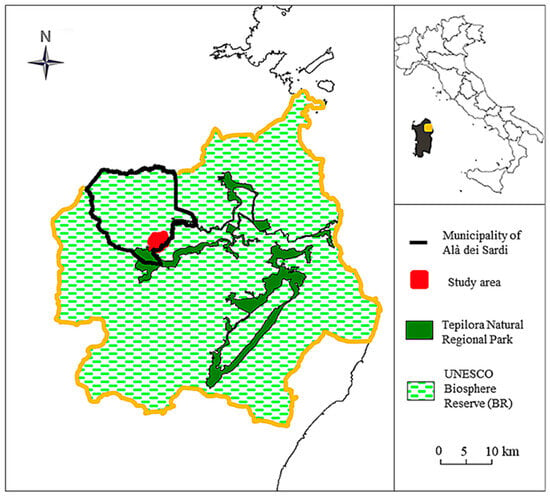
The study was conducted in the Sos Sonorcolos forest complex, covering approximately 465 hectares in northeastern Sardinia (Italy), within the municipality of Alà dei Sardi (Figure 1). The study area is located within the UNESCO-designated “Tepilora, Rio Posada, and Montalbo” Biosphere Reserve [31], established under the Man and the Biosphere (MAB) Programme, and directly borders the Tepilora Regional Natural Park, instituted by Regional Law no. 21 of 24 October 2014 (Figure 1).
Figure 1.
Geographic location of the study area in northeastern Sardinia, situated within the Tepilora, Rio Posada and Montalbo UNESCO Biosphere Reserve and along the boundary of the Tepilora Regional Natural Park.
The area is characterized by cork oak woodlands interspersed with shrublands and pasture, which shape the local landscape and support traditional economic activities. The site is located within one of Sardinia’s primary cork-producing districts [32]. Vegetation cover is characterized by a mosaic of forest types with varying degrees of canopy closure, structure, and management history. Where the arboreal layer is structurally more developed, cork oak represents the dominant tree species, while holm oak constitutes the second most frequent arboreal component. A shrub layer composed of typical Mediterranean maquis species is consistently present throughout the study area. In part of the site, shrub-dominated formations prevail, with oak species occurring mainly at the regeneration stage. The maquis layer includes species such as Arbutus unedo L., Erica spp., and Phillyrea spp., frequently associated with low shrub species including Cistus spp. and Lavandula stoechas L. Geologically, the area overlays intermediate-acid plutonic substrates, with soils exhibiting moderately coarse textures, ranging from loam to sandy loam. Surface stoniness can reach up to 40%, though no exposed bedrock is present. Climatic conditions correspond to a thermo-Mediterranean sub-humid regime, with a 30-year mean annual temperature of 17.1 °C. August is typically the hottest month (mean: 27.2 °C), while January is the coldest (mean: 9.6 °C). Mean annual precipitation is 814.4 mm, distributed over an average of 84 rainy days, supporting a diverse array of plant communities adapted to seasonal moisture fluctuations.
2.2. Governance and Planning Framework
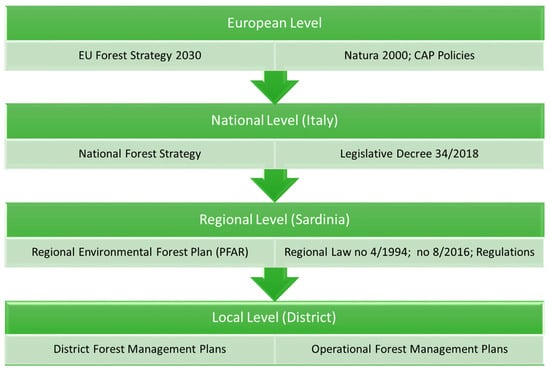
Although the European Union does not have a binding common forestry policy, forest management is increasingly integrated into key EU strategies addressing climate action, biodiversity conservation, and rural development. The EU Forest Strategy for 2030, a core component of the European Green Deal, promotes sustainable, multifunctional forest management, with special attention to the conservation of vulnerable eco-systems such as Mediterranean cork oak woodlands. Additionally, the Habitats Directive (92/43/EEC) designates cork oak forests (habitat code 9330) as priority habitats within the Natura 2000 network. The Common Agricultural Policy, particularly after the 2023–2027 reform, further supports forestry measures through national Strategic Plans, fostering conservation, fire prevention, ecological improvement, and the sustainable use of forest resources.
At the national level, Italian forest governance is framed by the Consolidated Act on Forests and Forestry Supply Chains (Legislative Decree 34/2018), which establishes principles of sustainable management, multifunctionality, and ecosystem service valorization, with a particular focus on Mediterranean forest ecosystems. The National Forest Strategy (2022) sets long-term goals for forest conservation, climate adaptation, biodiversity protection, and the sustainable development of forest-based supply chains, providing a reference framework for regional policies aligned with European commitments.
In Sardinia, forest governance operates under a framework of regional autonomy, which grants the Region exclusive competence over forest management. Over time, this has evolved through laws and planning instruments designed to address both the ecological specificity of Sardinian forests and their socio-economic importance. Notably, Regional Law no. 4/1994 provided a specific regulatory basis for cork oak cultivation and the cork industry, promoting sustainable practices and acknowledging the traditional economic role of the sector. A key milestone was the adoption of the Regional Environmental Forest Plan (PFAR) [15], which set strategic guidelines for sustainable forest management based on environmental protection, value chain development, multifunctionality, and participatory governance. The PFAR established a multi-level planning system linking regional strategies with local actions through District Forest Management Plans and, at the operational level, Forest Management Plans (PFPs) for individual forest areas.
This system was further strengthened by Regional Law n. 8/2016, which consolidated the principles of sustainable management and ecosystem service enhancement, aligning regional governance with national and European frameworks. Within this context, forest management in Sardinia, and particularly of cork oak woodlands, aims to balance ecological conservation with socio-economic development, fostering stake-holder involvement and promoting the sustainable, multifunctional use of forest resources (Figure 2).
Figure 2.
Multi-level forest governance framework for cork oak woodlands in Sardinia, from EU policies to regional planning and operational management.
2.3. Data Collection and Analysis
2.3.1. Forest Inventory Data and Cork Production
The study area comprises a mosaic of public and private lands, covering approximately 550 ha, of which 465 ha were included in the management plan. Forest compartments were delineated through a combination of desk analyses and field surveys, integrating orthoimagery and the Regional Technical Map via gvSIG 2.2.0. Homogeneous management units were delineated based on physiographic criteria to ensure that each unit was identifiable in the field and relatively uniform in structure, while accounting for landscape heterogeneity and multifunctional uses
Systematic sampling was implemented using a 300 m × 300 m digital grid, with permanent samples units (Plots, ADS) positioned at the center of each cell. This approach was adopted to avoid subjective plot selection and to ensure an even spatial distribution of ADS across the study area, improving representativeness of stand conditions and reducing potential sampling bias. Each ADS, with a fixed radius of 10 m (area = 314 m2), was georeferenced via GPS (±10 m) and physically marked on-site. Minor adjustments were made where terrain constraints required relocation, while maintaining representativeness of stand structure. A total of 40 ADSs were established across 465 ha, ensuring adequate representativeness of the study area, with a margin of error below 10% in mean stand density estimates.
Within each ADS, data were collected to characterize stand structure, dendrometric attributes of cork oak and other tree species, regeneration, understory composition, and vegetation cover. Cork extraction was assessed in accordance with regional legislation prescribing a minimum 10-year rotation. Field measurements indicated that cork in the study area requires approximately 12 years to reach optimal thickness, establishing the rotation period for the stand. Six extraction lines were initially present; for management efficiency and fire risk reduction, these were consolidated to two: one implemented in 2021 and a second scheduled for 2026.
Cork production per ADS was calculated from the generating surface of individual trees:
where Sg is the generating surface, Hd is bark stripping height, and C.Hd is the circumference at mid-stripping height. ADS-level values were scaled to per-hectare yield. Cork weight was estimated by multiplying the total cork-producing surface of each tree by the mean cork density. Cork density was determined from a representative set of samples collected from different trees. For each sample, a regular piece of cork was excised, its volume was measured using the water displacement method, and its fresh weight was recorded [33]. Cork density was then calculated as the ratio of fresh weight to volume.
Sg = Hd × C.Hd/2
2.3.2. Carbon Stock
Carbon stock was estimated using a non-destructive, inventory-based approach based on dendrometric data collected within each Plot, following the IPCC Guidelines for National Greenhouse Gas Inventories [34]. The assessment focused on living woody biomass and did not include deadwood, litter, or soil organic carbon in the stock estimates, due to the scope of the inventory and the lack of comprehensive field data for these carbon pools at the study scale. Tree diameter at breast height and total height measurements were used to estimate standing timber volume at the plot level.
Aboveground woody biomass was calculated by converting timber volume into dry biomass using the Biomass Conversion and Expansion Factors (BCEF = 0.8) based on IPCC 2006 Guidelines [34] for broadleaved forest types. The assessment included only living woody biomass, excluding deadwood, litter, and soil organic carbon which represent important components of total ecosystem carbon in Mediterranean cork oak forests. Therefore, the reported carbon stock values provide a conservative estimate of forest’s carbon sequestration potential, and the actual carbon storage is likely higher than indicated. Belowground biomass was estimated using root-to-shoot ratios applied to the corresponding aboveground biomass values. Total biomass was computed as the sum of above- and belowground components. Calculations were based on representative ADS, minimizing uncertainty despite limited field data.
Carbon stock was obtained by applying the default carbon fraction of 0.47, suitable for broadleaved Mediterranean forests; actual carbon content may vary among species and forest types [34]. Carbon values were subsequently converted to carbon dioxide equivalents (CO2 eq.) using the molecular weight ratio of CO2 to C (44/12). Estimates were aggregated at the compartment and forest management unit levels to support the evaluation of ecosystem services within the forest planning and FSC certification framework.
2.3.3. Floristic Data
Systematic floristic surveys were conducted in 2022 to characterize the composition and structure of vascular plant communities across the study area. Sampling was organized along transects and at permanent points established according to physiographic units and a regular grid layout, ensuring spatially representative coverage of the main vegetation types.
Species presence and abundance were recorded following the phytosociological method of Daget and Poissonet [35], which provides a standardized framework for quantifying species cover and frequency within defined plots. Voucher specimens were collected when necessary to confirm identification, and photographic documentation supported taxonomic verification. Species were identified using the criteria in [36], with nomenclature cross-checked against regional floras.
The collected data were subsequently analyzed to characterize biological spectra, including life forms and growth strategies, as well as chorological patterns of the plant communities. These analyses provided quantitative and qualitative information on vegetation composition and structure, supporting the assessment of ecological status, successional dynamics, and forest management planning within the cork oak landscape.
2.4. FSC Certification Process
The process for obtaining Forest Stewardship Council (FSC) certification for responsible Forest Management/Chain-of-Custody (FM/CoC), in compliance with the FSC forest stewardship standard for Italy (FSC-STD-ITA-01-2017 v1.0) and the verification of ecosystem services using the FSC Procedure (FSC-PRO-30-006 v1.2) in the municipal cork oak forest of Alà dei Sardi, was initiated in January 2022 through a formal collaboration between the Municipality of Alà dei Sardi and the AGRIS Sardegna Research Agency.
The forest stewardship standard ensures that a forest is managed in accordance with rigorous environmental, social and economic standards. In particular, the core tool for FSC forest certification is the Management Plan, which must align with the organization’s policies and objectives and be proportionate to the scale, intensity, and risk of management operations. The plan is developed, maintained and updated over time, based on monitoring data to enable adaptive management and enhance responsible forest management practices. It integrates comprehensive documentation, records and procedures to ensure environmentally appropriate, socially beneficial and economically viable forest management practices. The FSC Management Plan is implemented in accordance with regional forest governance frameworks (Regional Law no. 8/2016), ensuring consistency with sustainable forest management objectives. The plan explicitly addresses the objectives of FSC certification in accordance with the 10 FSC Principles and associated criteria. Key components include spatial mapping, historical and climatic data, vegetation maps, environmental and legal constraints, medium- and long-term management activities, relevant legislation, workplace safety compliance, personnel contracts, and arrangements with external contractors. A critical component of the certification process is the stakeholder engagement process, including structured consultations and questionnaires addressing motivations for pursuing FSC certification and to collect feedback on the certified organization and forest management practices implemented in the certified area. Along with forest management and chain of custody practices, the impact of management on five ecosystem services (biodiversity, carbon, water, soil and tourism-recreation services) was assessed using the FSC Procedure for Ecosystem Services [37].
The FSC Procedure for Ecosystem Services provides a framework for verifying the impacts of forest management practices on selected ecosystem services through the collection and evaluation of supporting evidence. The procedure allows the assessment of whether forest management activities maintain or enhance ecosystem services within the managed area, based on defined indicators and verification requirements.
The FSC framework focuses on a specific subset of forest ecosystem services, including carbon sequestration and storage, biodiversity conservation, watershed services, soil conservation, and recreational services. Moreover, the cork oak stands are classified under FSC as SLIMF (Small and Low-Intensity Managed Forests), reflecting low-intensity management and related lower negative impacts, since cork extraction does not involve tree felling and other impactful management practices; this results in a simplification from the requirements of the FSC forest stewardship standard.
The FSC FM/CoC certification is valid for five years, during which two field audits and three desk audits are conducted. The initial field and desk audits, conducted in December 2022, verified the compliance of all documented activities with FSC requirements. Upon a positive evaluation, the FSC certificate was formally issued in February 2023, officially recognizing responsible forest management, cork chain-of-custody, and the certification of five ecosystem services impacts provided by the cork oak forest.
3. Results
3.1. Territorial Planning Implementation
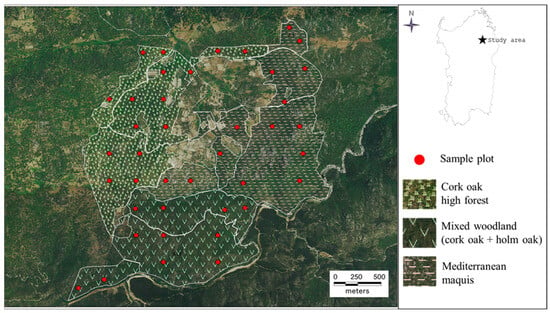
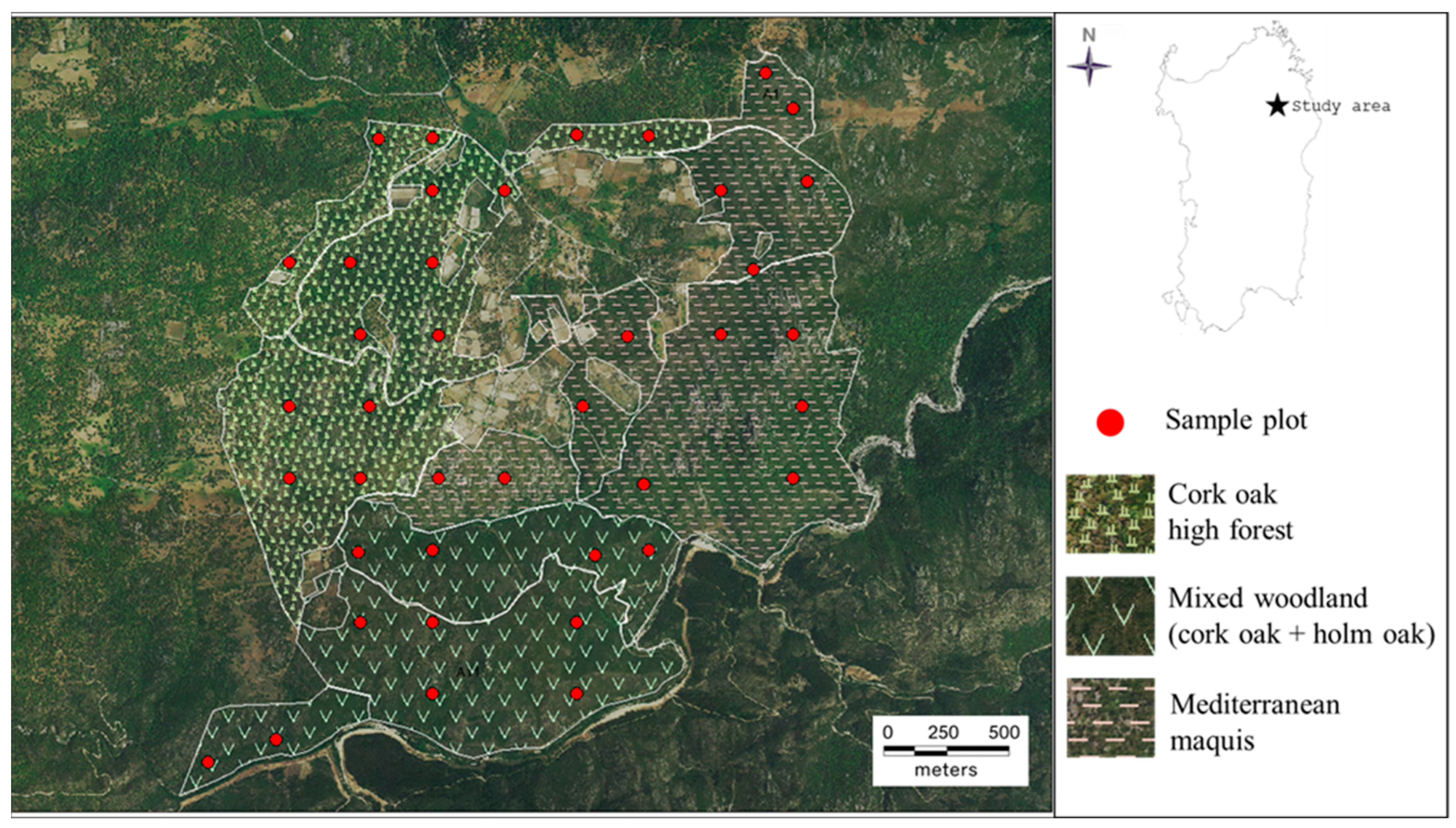
The territorial planning of the cork oak forests in Alà dei Sardi was implemented through a structured, participatory process involving the municipal administration, the Corpo Forestale e di Vigilanza Ambientale (CFVA), public and private forest managers, environmental organizations, and local stakeholders. The ten-year PFP, adopted under Regional Law no. 8/2016, established a coherent framework for the multifunctional management of approximately 465 hectares of cork oak forests. The PFP integrated environmental protection, socio-economic development, and stakeholder engagement, aligning local actions with regional forestry policies and the forest’s inclusion in the UNESCO Biosphere Reserve “Tepilora, Rio Posada e Montalbo.” Operationally, the PFP replaced fragmented management practices with a unified framework, delineating zoning and silvicultural prescriptions tailored to the ecological, protective, productive, and socio-cultural functions of each forest compartment. The plan clearly defined roles and responsibilities among municipal authorities, CFVA, and forest managers, while embedding regulatory and environmental constraints related to landscape protection, hydrogeological stability, and fire risk. The study area was organized into three principal forest compartments, each defined by distinct stand composition and management objectives, and all featuring Mediterranean maquis vegetation (Figure 3).
Figure 3.
Sample plots and forest compartments of study area.
The cork oak high forest, covering approximately 147 ha, is composed of naturally regenerated, coetaneiform cork oak stands, with stem diameters predominantly ranging from 20 to 35 cm. In this compartment, a well-developed Mediterranean maquis understory occurs beneath the oak canopy. Management objectives focus on maintaining natural regeneration, optimizing cork yield, and sustaining a multifunctional forest that provides secondary products alongside ecological functions. The Mediterranean maquis compartment with oak regeneration, spanning around 181 ha, is dominated by mature shrublands, within which cork oak and, to a lesser extent, holm oak emerges. This compartment primarily fulfils protective and ecological functions, with silvicultural interventions limited to promoting oak establishment through selective pruning and localized clearing around young trees. The mixed woodland compartment (cork oak + holm oak), covering approximately 137 ha, includes mature cork oak stands, non-productive cork oak, holm oak, and structurally developed maquis forming a continuous understory. Management in this compartment emphasizes selective pruning, thinning, and cork harvesting, while allowing natural understory development to maintain multifunctionality, protective capacity, and recreational values.
Across the three compartments, a total of 12 homogeneous management units (HMUs) were delineated. The boundaries of these units follow physiographic features that are clearly identifiable in the field, ensuring spatial coherence and operational feasibility. Silvicultural interventions and management prescriptions were defined at the level of each HMU, allowing site-specific measures to be tailored to local stand structure, density, and developmental stage. Within this framework, the Forest Management Plan (PFP) established a structured baseline of dendrometric and cork production data derived from field measurements conducted across 40 sample plots (Figure 3), capturing structural variability both within and among compartments. Mean diameter at breast height (DBH) ranged from 16.6 to 21.9 cm, mean tree height from 5.6 to 6.3 m, and stand density from 188 to 542 trees ha−1 (Table 1). These parameters supported the definition of extraction cycles, rotation lengths, and silvicultural treatments. Cork density was measured at 229 kg m−3, and cork yield was estimated in kg ha−1 (Table 1), providing a quantitative basis for operational decisions, including the consolidation of extraction lines, while ensuring low-impact harvesting and the maintenance of structural and ecological integrity. The observed difference in cork yield among compartments reflects variations in forest type and stand maturity. The cork oak high forest consists of mature, productive stands, whereas the mixed woodland compartment is composed of younger, less developed trees, not yet contributing substantially to cork production. In the Mediterranean maquis compartment, where the dominant cover is shrubland rather than cork oak, cork yield is negligible (Table 1).
Table 1.
Summary of dendrometric attributes and cork yield per forest type.
3.2. FSC Certification Outcomes
The municipal cork oak forest of Alà dei Sardi achieved FSC certification for responsible forest management, chain of custody, and ecosystem services, classified under the Small or Low-Intensity Managed Forests (SLIMF) category. The certification process verified compliance with FSC principles and criteria, including legal conformity, management planning, stakeholder engagement, monitoring, and maintenance of ecological functions applied to the publicly owned cork oak forest.
The certification also recognized the provision of five ecosystem services using the FSC Ecosystem Services Procedure, demonstrating that the forest management practices implemented in Alà dei Sardi met the requirements for sustainability and multifunctionality as assessed by an internationally recognized third-party certification scheme.
Certified Ecosystem Services Impacts Outcomes
The FSC Ecosystem Services Procedure enabled the formal assessment and recognition of five key ecosystem services impacts delivered by the municipal cork oak forest, based on quantitative and qualitative evidence derived from forest inventory data, ecological surveys, and management documentation. The verification of the impact on a given ecosystem service was based on the so-called theory of change, as provided for in the FSC Ecosystem Services Procedure. This theory consists of defining the actions that, in the medium and long term, lead to a planned impact on the ecosystem service concerned. More specifically, the forest manager is asked to define the management activities to be implemented, specifying the outputs (immediate consequences of the activities) and outcomes (direct consequences of the outputs) that lead to the desired, positive impact.
FSC-certified services include carbon sequestration and climate regulation, biodiversity conservation, soil and water protection and recreational value, reflecting the multifunctional role of cork oak ecosystems under public management. Specifically, the certification obtained concerns the following impacts: conservation of species diversity (ES 1.6) for biodiversity conservation; conservation of forest carbon stocks (ES 2.1) for carbon sequestration and storage; maintenance of the capacity of watersheds to purify and regulate water flow (ES 3.3) for watershed services; maintenance of soil condition (ES 4.1) for soil conservation and maintenance; and conservation of areas of importance for recreation and/or tourism (ES 5.1) for recreational service.
This has enabled the municipality to become the first cork oak forest in the world to be certified for both forest management and the verification of at least one impact for all ecosystem services covered by the FSC system.
The conservation of forest carbon stocks was directly linked to the maintenance of forest structure through thinning, phytosanitary control, and measures promoting natural regeneration. These efforts were supported by estimates of above- and below-ground woody biomass, derived from systematic forest inventory data and calculated according to [27] guidelines. The total carbon stock within the forested area was estimated at 8837.49 Mg of carbon, corresponding to 32,433.58 Mg CO2 equivalents.
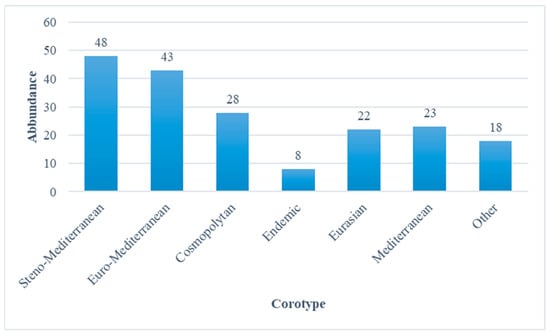
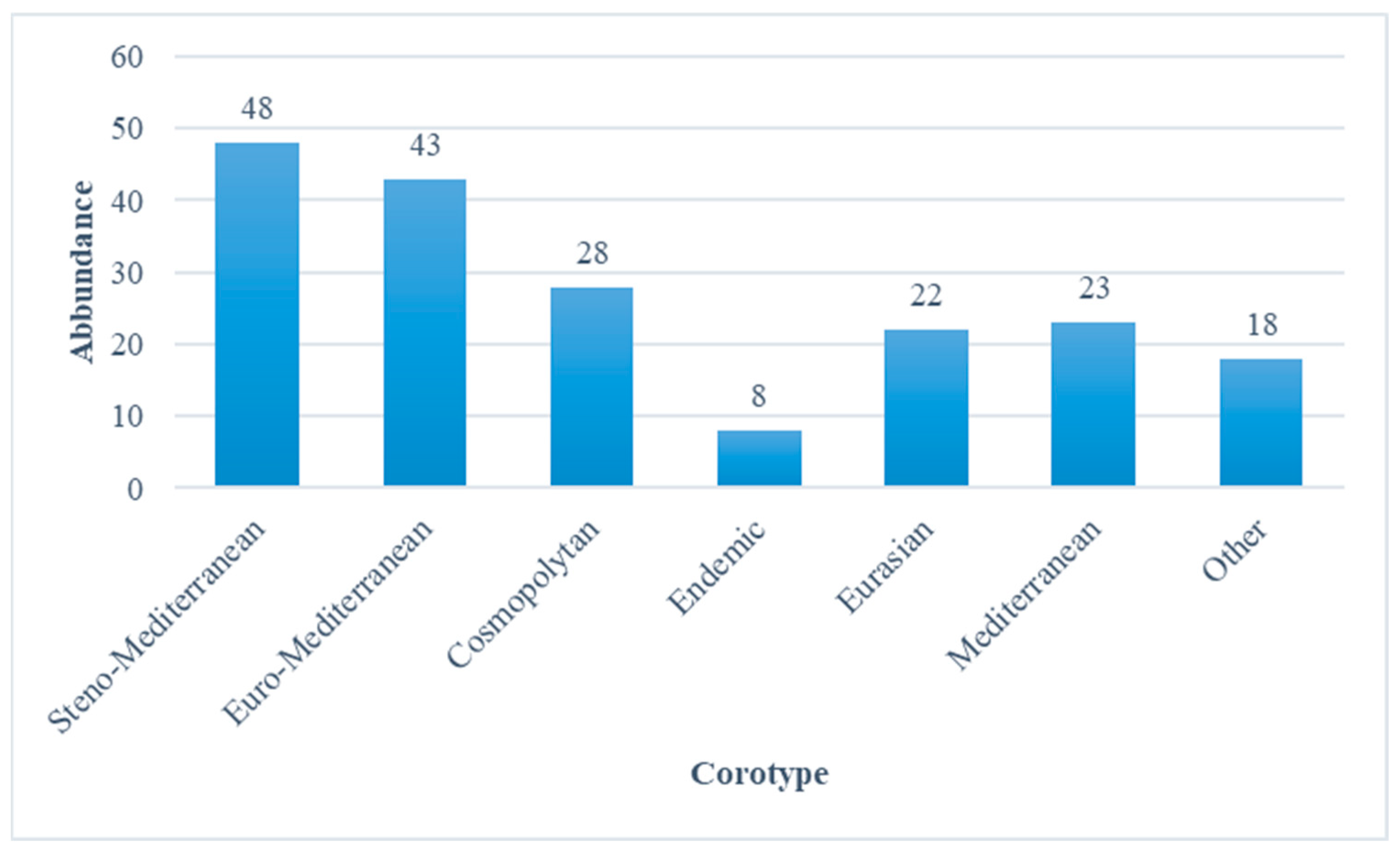
Floristic surveys recorded a total of 142 vascular plant species across the forest mosaic, of which 78% were native species. Among the natives, steno-Mediterranean species were the most prevalent (25.4%), followed by Euro-Mediterranean species (22.6%) and broadly Mediterranean species (12.1%). Endemic species accounted for 4.2% of the flora, reflecting their limited presence in the study area (Figure 4).
Figure 4.
Chorological spectrum of plants in the study area.
Cosmopolitan species represented 14.7% of the total and are likely associated with historical human activities, such as cultivation and grazing, in and around the forest (Figure 4). The stand composition exhibited high habitat heterogeneity and structural complexity, with natural regeneration, persistence of shrub layers, and minimal soil disturbance observed.
Soil and water protection services were associated with physiographic-based compartmentalization, low-impact management operations, and the widespread presence of shrub and litter cover, which were observed to reduce erosion risk and promote water infiltration on coarse-textured soils.
Recreational ecosystem services were assessed based on documented accessibility, landscape quality, and multifunctional use of the forest area. To support the conservation of areas with high recreational importance, structural maintenance of trails and viewpoints was planned and implemented as part of the FSC management plan. Essential visitor services were provided, and attendance was systematically monitored. All forestry operations in the certified areas were carried out following practices compatible with the preservation of wooded habitats. These activities were documented during the certification process as part of the assessment of recreation-related ecosystem services. Observations indicated that the municipal forest supports low-impact recreational activities, environmental education, and cultural practices related to traditional cork oak management.
4. Discussion
4.1. Integrated Governance and Participatory Planning
The results of this study demonstrate that the integrated governance model implemented in the municipal cork oak forest of Alà dei Sardi can effectively support sustainable and multifunctional forest management by linking structured territorial planning with voluntary certification standards. The Detailed Forest Management Plan (PFP) established a coherent framework to reconcile ecological, protective, and productive functions across the different forest compartments within the study area. The plan was explicitly aligned with regional and national regulatory instruments and guidelines [17,18], ensuring legal compliance while providing operational guidance for sustainable forest management. Medium- to long-term forest management plans (approximately 10 years) provide the temporal framework necessary to ensure coherence in silvicultural interventions and continuity in monitoring, supporting adaptive management and reducing operational fragmentation [38]. Contributions from municipal authorities, forest managers, local stakeholders, and community representatives guided the development of the PFP, which was thus developed through a participatory process. This approach promoted a transparent and shared planning framework that reflects local needs, balances multifunctional objectives, and facilitates coordinated decision-making between government entities and local communities inhabiting the forested landscape. Inclusive decision-making processes in participatory and collaborative planning are associated with higher legitimacy, improved outcomes, and better integration of local knowledge [39,40,41].
4.2. Forest Structure and Ecological Functioning
Ensuring structural complexity and diversity increases the capacity of forest eco-systems to resist, adapt, and recover from both abiotic and biotic stress factors. For example, periodic cork harvesting contributes to heterogeneity in cork thickness, reducing vulnerability to disturbances such as wildfires [42]. Similarly, maintaining high levels of biological diversity in cork oak forests promotes the presence of multiple host species for ectomycorrhizal communities compared to simplified ecosystems. These patterns of biological diversity are often influenced by management intensity and human interventions, with more intensively used areas, affected by practices such as overgrazing or soil tillage, showing greater structural simplification and reduced natural regeneration, whereas better-conserved areas maintain higher habitat heterogeneity and functional resilience [15]. In addition, continuous canopy cover mitigates drought by enhancing litter input, reducing evapotranspiration, and preserving soil and water resources, thereby improving the capacity of the ecosystem to adapt and maintain long-term functionality [43]. Therefore, active and adaptive silvicultural strategies implemented at the compartment level can strengthen overall resilience, supporting ecological stability and the economic sustainability of cork oak forest production [44]. Guided by these ecological principles, management units and compartment-specific silvicultural guidelines were established to translate observed structural and functional forest patterns into operational decisions, providing a framework to align management actions with ecological objectives [45,46,47,48]. By combining structural data with sustainability indicators, the plan identifies management pathways that balance traditional uses with the maintenance of ecological integrity and the delivery of regulating and supporting services, illustrating the practical application of adaptive, multifunctional forest management in the Alà dei Sardi municipal cork oak forest. Supporting stand structural diversity can influence key ecological processes such as interspecific competition, natural regeneration, and successional dynamics. For instances, more homogeneous diameter distributions may reflect past selective management interventions, whereas heterogeneous structures often indicate ongoing natural recruitment and small-scale disturbances [49], thus linking stand structure to underlying ecological pathways. Key structural variables such as stand density, species diversity, and canopy cover are directly associated with ecosystem functionality, including light and water distribution, biodiversity support, and productivity across forest ecosystems. Studies have shown that forest structural complexity correlates with functional diversity and can mediate ecological interactions that underpin species coexistence and ecosystem resilience [50,51]. Interpreting structural patterns in relation to these processes allows for a clearer understanding of forest dynamics and multifunctional outcomes, providing useful insights to support adaptive management decisions and the operationalization of multifunctional forest objectives.
4.3. FSC Certification as a Tool for Sustainable Management
A significant contribution of this study is the integration of FSC certification results as a complementary tool to evaluate and support local planning and management. FSC Certification can provide a solid foundation on which to implement responsible forest management practices; at the same time, it can serve as a virtuous model for forest management through the application of the environmental, social and economic sustainability requirements set out in the standards. Forest Management certification provided an external reference in terms of document structuring, traceability, and accountability in forest governance [52,53]. Regarding ecosystem services certification, while carbon sequestration (ES 1.1) and biodiversity conservation (ES 4.4) were validated through direct biophysical indicators, they are intrinsically linked to the management-driven results of the remaining services [54]. The conservation of forest carbon stocks, quantified via systematic inventory and IPCC guidelines, does not exist in isolation; rather, it is the direct outcome of the same silvicultural stability that ensures watershed protection (ES 2.1) and soil conservation (ES 3.3) [55]. By maintaining forest cover and implementing reduced-impact logging [56], the management framework simultaneously prevents soil erosion and optimizes the hydrogeological regulation of the basin, creating a synergistic effect where biomass accumulation (carbon) and structural complexity (biodiversity) reinforce one another [57,58].
Furthermore, the results for recreational services (ES 5.1) must be viewed as the socioeconomic interface of these ecological functions. The maintenance of trail networks and viewpoints is not merely an infrastructural task but a strategic intervention to manage anthropogenic pressure. By channeling visitors through verified infrastructure and monitoring attendance, the management plan protects the habitats identified in the biodiversity assessment and prevents the soil compaction that would otherwise undermine watershed integrity [59].
This integrated perspective demonstrates that the certification of these five positive impacts on the services is not a collection of independent results, but a confirmation of a forest ecosystem managed for multifunctional resilience [53,60].
Evidence from cork oak woodlands indicates that voluntary enrolment in forest certification schemes can positively affect key ecological attributes. Specifically, studies in FSC-certified cork oak woodlands showed a slower decline in tree density and canopy cover compared to non-certified stands over multi-year periods, suggesting that management practices associated with certification can mitigate certain aspects of forest decline [61]. Similarly, in certified cork oak forests, conservation areas with reduced management intervention exhibited higher natural cork oak regeneration and greater understory diversity compared to conventionally managed zones, likely due to reduced anthropogenic disturbance and grazing pressure [62]. However, these findings are mostly from simplified woodland structures; our study highlights the need for active silvicultural strategies to maintain structural complexity in Mediterranean cork oak forests with heterogeneous vegetation.
4.4. Multifunctional Management
Planning and certification initiatives emphasize the multifunctional role of cork oak systems, including cork production, recreational use, and other ecosystem services, which are often underrepresented in short-term economic models. This is particularly relevant in publicly owned forests, where management must integrate ecological, social, and cultural objectives [18,63].
Participatory development of the PFP and voluntary FSC certification facilitated shared understanding of constraints, objectives, and priorities between municipal authorities and local actors, reducing barriers to implementation and enhancing legitimacy. Systematic stakeholder engagement supports knowledge integration and informed decision-making in multifunctional forest management [40,64].
Implementing hybrid governance models combining local regulation with voluntary certification presents challenges, including technical, administrative, and economic investments, coherence across regulatory levels, and ongoing adaptation [65,66]. The Alà dei Sardi case illustrates how participatory approaches can promote multifunctional management and integrate environmental, social, and economic objectives [40,67].
4.5. Limitations and Future Research Directions
While this study provides valuable insights into adaptive, multifunctional management of the Alà dei Sardi municipal cork oak forest, several limitations should be acknowledged. The focus on a single case may limit the generalization of findings to other Mediterranean cork oak landscapes, and the temporal scope of the study may not fully capture long-term ecological dynamics or governance outcomes. Furthermore, the long-term sustainability of the integrated governance model could face administrative, social, or financial challenges. Additional uncertainties include methodological limitations in carbon stock estimation, potential biases in stakeholder perspectives, and the difficulty of establishing causal relationships between management actions and ecological outcomes.
Despite these constraints, the findings offer a robust framework for forest management and highlight pathways for future research. Continued monitoring through certification processes is expected to enhance ecosystem service performance over time, while integration with regional or national forest monitoring networks could provide insights into functional efficiency across larger spatial scales. Future studies should adopt a combination of traditional field-based methods, functional trait analyses, and large-scale remote sensing approaches, enabling both detailed local assessments and comprehensive landscape-level evaluations of forest structure, health, and multifunctionality [68,69].
5. Conclusions
This study reports the first documented case worldwide of a publicly owned, municipal cork oak forest certified under the FSC standard, encompassing sustainable management, chain of custody, and ecosystem services provision. The integrated governance model combines regional policy frameworks, voluntary certification processes, and public administration roles, promoting sustainability in environmental, social, and economic dimensions. Results support the replication of this model in other Mediterranean contexts and highlight the crucial role of public governance in enhancing certified forest management and ecosystem services impacts verification. Policy makers and forest managers are encouraged to adopt similar frameworks to enhance forest stewardship, ecosystem service recognition, and sustainable rural development, while acknowledging that that the replicability of the model depends on the availability of adequate administrative capacity, qualified personnel, sufficient financial resources, and its adaptation to local legal and management contexts.
Author Contributions
Conceptualization, S.S. and P.A.R.; methodology, S.S., G.P. (Giuseppino Pira), G.P. (Giovanni Piras), I.D.V., E.B., G.F. and P.A.R.; software, S.S., G.P. (Giuseppino Pira), G.P. (Giovanni Piras) and P.A.R.; validation, S.S. and P.A.R.; formal analysis, S.S., G.P. (Giuseppino Pira), G.P. (Giovanni Piras), I.D.V., E.B., G.F. and P.A.R.; investigation, S.S., G.P. (Giuseppino Pira), G.P. (Giovanni Piras) and P.A.R.; resources, S.S., G.P. (Giuseppino Pira), G.P. (Giovanni Piras) and P.A.R.; data curation, S.S., G.P. (Giuseppino Pira), G.P. (Giovanni Piras) and P.A.R.; writing—original draft preparation, S.S. and P.A.R.; writing—review and editing, S.S., G.P. (Giuseppino Pira), G.P. (Giovanni Piras), I.D.V., E.B., G.F. and P.A.R.; visualization, S.S., G.P. (Giuseppino Pira), G.P. (Giovanni Piras), I.D.V., E.B., G.F. and P.A.R.; supervision, S.S. and P.A.R.; project administration, S.S. and P.A.R. All authors have read and agreed to the published version of the manuscript.
Funding
This research received no external funding.
Data Availability Statement
The datasets generated and analyzed during the current study are available from the corresponding author upon reasonable request.
Acknowledgments
The authors would like to thank the Administration of the Municipality of Alà dei Sardi for the logistical support provided during field activities. In particular, we are grateful to Giorgio Scanu for his valuable assistance during fieldwork. We also acknowledge the Corpo Forestale e di Vigilanza Ambientale della Regione Sardegna for technical assistance and support in field operations.
Conflicts of Interest
The authors declare no conflicts of interest.
Abbreviations
The following abbreviations are used in this manuscript:
| FSC | Forest Stewardship Council |
| CoC | Chain of Custody |
| PFAR | Regional Environmental Forest Plan |
| PFP | Forest Management Plans |
| ADS | Permanent Samples Units |
| SLIMF | Small and Low-Intensity Managed Forests |
| CFVA | Corpo Forestale e di Vigilanza Ambientale |
| HMU | Homogeneous Management Units |
References
- Bugalho, M.N.; Caldeira, M.C.; Pereira, J.S.; Aronson, J.; Pausas, J.G. Mediterranean cork oak savannas require human use to sustain biodiversity and ecosystem services. Front. Ecol. Environ. 2011, 9, 278–286. [Google Scholar] [CrossRef] [Scilit]
- Campos, P.; Oviedo, J.L.; Álvarez, A.; Mesa, B.; Caparrós, A. The role of non-commercial intermediate services in the valuations of ecosystem services: Application to cork oak farms in Andalusia, Spain. Ecosyst. Serv. 2019, 39, 100996. [Google Scholar] [CrossRef] [Scilit]
- Oliveira, G.; Costa, A. How resilient is Quercus suber L. to cork harvesting? A review and identification of knowledge gaps. For. Ecol. Manag. 2012, 270, 257–272. [Google Scholar] [CrossRef] [Scilit]
- Anderegg, W.R.; Blanchard, L.; Anderson, C.; Badgley, G.; Cullenward, D.; Gao, P.; Goulden, M.L.; Haya, B.; Holm, J.A.; Hurteau, M.D.; et al. Towards more effective nature-based climate solutions in global forests. Nature 2025, 643, 1214–1222. [Google Scholar] [CrossRef] [Scilit] [PubMed]
- Beugnon, R.; Albert, G.; Hähn, G.; Yu, W.; Haider, S.; Hättenschwiler, S.; Davrinche, A.; Rosenbaum, B.; Gauzens, B.; Eisenhauer, N. Improving forest ecosystem functions by optimizing tree species spatial arrangement. Nat. Commun. 2025, 16, 6286. [Google Scholar] [CrossRef] [Scilit] [PubMed]
- Lloret, F.; Batllori, E. Climate-induced global forest shifts due to heatwave-drought. In Ecosystem Collapse and Climate Change; Springer: Cham, Switzerland, 2021; pp. 155–186. [Google Scholar]
- Gosling, R.H.; Jackson, R.W.; Elliot, M.; Nichols, C.P. Oak declines: Reviewing the evidence for causes, management implications and research gaps. Ecol. Solut. Evid. 2024, 5, e12395. [Google Scholar] [CrossRef] [Scilit]
- Moricca, S.; Linaldeddu, B.T.; Ginetti, B.; Scanu, B.; Franceschini, A.; Ragazzi, A. Endemic and emerging pathogens threatening cork oak trees: Management options for conserving a unique forest ecosystem. Plant Dis. 2016, 100, 2184–2193. [Google Scholar] [CrossRef] [Scilit]
- Seddaiu, S.; Riddell, C.; Piras, G.; Ruiu, P.A.; Sarais, L.; Mello, A.; Cock, P.J.A.; Brandano, A.; Green, S.; Scanu, B. Detection and diversity of Phytophthora species from declining Quercus suber stands using both DNA metabarcoding and soil baiting techniques. Mycol. Prog. 2025, 24, 19. [Google Scholar] [CrossRef] [Scilit]
- Salis, M.; Arca, B.; Alcasena-Urdiroz, F.; Massaiu, A.; Bacciu, V.; Bosseur, F.; Caramelle, P.; Dettori, S.; de Oliveira, A.S.F.; Molina-Terren, D.; et al. Analyzing the recent dynamics of wildland fires in Quercus suber L. woodlands in Sardinia (Italy), Corsica (France) and Catalonia (Spain). Eur. J. For. Res. 2019, 138, 415–431. [Google Scholar] [CrossRef] [Scilit]
- Acácio, V.; Holmgren, M. Pathways for resilience in Mediterranean cork oak land use systems. Ann. For. Sci. 2014, 71, 5–13. [Google Scholar] [CrossRef] [Scilit]
- Sierra-Pérez, J.; Boschmonart-Rives, J.; Gabarrell, X. Production and trade analysis in the Iberian cork sector: Economic characterization of a forest industry. Resour. Conserv. Recycl. 2015, 98, 55–66. [Google Scholar] [CrossRef] [Scilit]
- Sanz, R.C.; Tome, M.; González, M.S.; Miina, J.; Spanos, K.; Palahi, M. Modelling non-wood forest products in Europe: A review. For. Syst. 2010, 19, 69–85. [Google Scholar] [CrossRef] [Scilit]
- Sørensen, I.H.; Torralba, M.; Quintas-Soriano, C.; Muñoz-Rojas, J.; Plieninger, T. Linking cork to cork oak landscapes: Mapping the value chain of cork production in Portugal. Front. Sustain. Food Syst. 2021, 5, 787045. [Google Scholar] [CrossRef] [Scilit]
- Seddaiu, S.; Morittu, C.; Franceschini, A.; Iotti, M.; Scali, E.; Lancellotti, E. Dynamics of ectomycorrhizal communities in Sardinian cork oak forests: Influence of management system, lithological substrate and season. Mycorrhiza 2026, 36, 7. [Google Scholar] [CrossRef] [Scilit] [PubMed]
- Lier, M.; Köhl, M.; Korhonen, K.T.; Linser, S.; Prins, K.; Talarczyk, A. The new EU Forest strategy for 2030: A new understanding of sustainable forest management? Forests 2022, 13, 245. [Google Scholar] [CrossRef] [Scilit]
- Manzo, A.; Oieni, P.; La Mantia, T.; Dettori, S.; Maltoni, S.; Cutini, A.; Pignatti, G.; Filigheddu, M.R.; Franceschini, A.; Scanu, B.; et al. Piano Sughericolo Nazionale. 2023. Available online: https://www.reterurale.it/flex/cm/pages/ServeBLOB.php/L/IT/IDPagina/25072 (accessed on 1 December 2025).
- Sardegna, R.A. Piano Forestale Ambientale Regionale; Regione Autonoma Sardegna: Cagliari, Italy, 2007. [Google Scholar]
- La Riccia, L.; Assumma, V.; Bottero, M.C.; Dell’Anna, F.; Voghera, A. A contingent valuation-based method to valuate ecosystem services for a proactive planning and management of cork oak forests in Sardinia (Italy). Sustainability 2023, 15, 7986. [Google Scholar] [CrossRef] [Scilit]
- Wolff, S.; Schweinle, J. Effectiveness and economic viability of forest certification: A systematic review. Forests 2022, 13, 798. [Google Scholar] [CrossRef] [Scilit]
- Di Girolami, E.; Kampen, J.; Arts, B. Two systematic literature reviews of scientific research on the environmental impacts of forest certifications and community forest management at a global scale. For. Policy Econ. 2023, 146, 102864. [Google Scholar] [CrossRef] [Scilit]
- Paluš, H.; Krahulcová, M.; Parobek, J. Assessment of forest certification as a tool to support forest ecosystem services. Forests 2021, 12, 300. [Google Scholar] [CrossRef] [Scilit]
- Halalisan, F.; Romero, C.; Popa, B.; Landin, G.A.; Talpa, N.; Abrudan, I.V. Global assessment of FSC forest management certification auditing through analysis of accreditation reports. Land Use Policy 2023, 131, 106724. [Google Scholar] [CrossRef] [Scilit]
- Shanley, P. (Ed.) Tapping the Green Market: Certification and Management of Non-Timber Forest Products; Earthscan: London, UK, 2002. [Google Scholar]
- Sheppard, J.P.; Chamberlain, J.; Agúndez, D.; Bhattacharya, P.; Chirwa, P.W.; Gontcharov, A.; Sagona, W.C.J.; Shen, H.L.; Tadesse, W.; Mutke, S. Sustainable Forest management beyond the timber-oriented status quo: Transitioning to co-production of timber and non-wood forest products—A global perspective. Curr. For. Rep. 2020, 6, 26–40. [Google Scholar] [CrossRef] [Scilit]
- Boubacar, I.; Sissoko, Y. Sustainable Forest management through certification and wood products trade: Analyzing the role of the FSC across diverse economic and climatic contexts. J. Clean. Prod. 2025, 518, 145786. [Google Scholar] [CrossRef] [Scilit]
- Forest Stewardship Council (n.d.). FSC Public Certificate Search. Available online: https://connect.fsc.org/fsc-public-certificate-search (accessed on 8 March 2026).
- Campos, P.; Daly-Hassen, H.; Ovando, P.; Chebil, A.; Oviedo, J.L. Economics of multiple use cork oak woodlands: Two case studies of agroforestry systems. In Agroforestry in Europe. Advances in Agroforestry; Springer: Dordrecht, The Netherlands, 2009; pp. 269–294. [Google Scholar]
- Lopes-Fernandes, M.; Martínez-Fernández, E.; Alves, R.; Boa-Nova, D.; Branquinho, C.; Bugalho, M.N.; Campos-Mardones, F.; Coca-Pérez, A.; Frazão-Moreira, A.; Marques, M.; et al. Cork oak woodlands and decline: A social-ecological review and future transdisciplinary approaches. Agrofor. Syst. 2024, 98, 1927–1944. [Google Scholar] [CrossRef] [Scilit]
- Mexia, T.; Lecomte, X.; Caldeira, M.C.; Bugalho, M.N. Conservation zones increase habitat heterogeneity of certified Mediterranean oak woodlands. For. Ecol. Manag. 2022, 504, 119811. [Google Scholar] [CrossRef] [Scilit]
- Branca, D.; Haller, A.; Mossa, M. From the mountains to the sea: The Tepilora Natural Regional Park, Sardinia. J. Prot. Mt. Areas Res. Manag. 2023, 15, 28–34. [Google Scholar] [CrossRef] [Scilit]
- Dettori, S.; Falqui, A.; Filigheddu, M.; Sedda, L. Growth performance of cork oak plantations recently established on farmlands in Sardinia, Italy. For.-Riv. Di Selvic. Ed Ecol. For. 2006, 3, 327–338. [Google Scholar]
- Ramos, M.; Rocheta, M.; Carvalho, L.; Inácio, V.; Graça, J.; Morais-Cecilio, L. Expression of DNA methyltransferases is involved in Quercus suber cork quality. Tree Genet. Genomes 2013, 9, 1481–1492. [Google Scholar] [CrossRef] [Scilit]
- IPCC. Intergovernmental Panel on Climate Change 2006 IPCC Guidelines for National Greenhouse Gas Inventories; Institute for Global Environmental Strategies: Hayama, Japan, 2006. [Google Scholar]
- Daget, P.; Poissonet, J. Une méthode d’analyse phytologique des prairies: Critères d’application. Ann. Agron. 1971, 22, 5–41. [Google Scholar]
- Pignatti, S. Flora d’Italia; Edagricole: Bologna, Italy, 1982; Volume 3. [Google Scholar]
- Forest Stewardship Council. FSC-PRO-30-006 Ecosystem Services Procedure: Impact Demonstration and Market Tools; Forest Stewardship Council International Center: Bonn, Germany, 2025. [Google Scholar]
- Bettinger, P.; Boston, K.; Siry, J.P.; Grebner, D.L. Forest Management and Planning; Academic Press: London, UK, 2016. [Google Scholar]
- Buchy, M.; Hoverman, S. Understanding public participation in forest planning: A review. For. Policy Econ. 2000, 1, 15–25. [Google Scholar] [CrossRef] [Scilit]
- Reed, M.S. Stakeholder participation for environmental management: A literature review. Biol. Conserv. 2008, 141, 2417–2431. [Google Scholar] [CrossRef] [Scilit]
- Baldessari, S.; Paletto, A.; De Meo, I. Rethinking public participation in forest policies: A literature review of participatory techniques. Forests 2024, 15, 1514. [Google Scholar] [CrossRef] [Scilit]
- Catry, F.X.; Moreira, F.; Pausas, J.G.; Fernandes, P.M.; Rego, F.; Cardillo, E.; Curt, T. Cork oak vulnerability to fire: The role of bark harvesting, tree characteristics and abiotic factors. PLoS ONE 2012, 7, e39810. [Google Scholar] [CrossRef] [Scilit] [PubMed]
- Smith, J.; Pearce, B.D.; Wolfe, M.S. Reconciling productivity with protection of the environment: Is temperate agroforestry the answer? Renew. Agric. Food Syst. 2013, 28, 80–92. [Google Scholar] [CrossRef] [Scilit]
- Seddaiu, S.; Morittu, C.; Sarais, L.; Mulas, A.; Vilia, A.; Marzeddu, G.; Pira, G.; Ruiu, P.A.; Scali, E.; Piras, G.; et al. Influence of understory vegetation on fungal communities and 2,4,6-trichloroanisole contamination in raw cork from standing trees. For. Ecol. Manag. 2026, 601, 123350. [Google Scholar] [CrossRef] [Scilit]
- Pollastrini, M.; Chiavetta, U.; Cutini, A.; Casula, A.; Maltoni, S.; Dettori, S.; Corona, P. Indicators for the assessment and certification of cork oak management sustainability in Italy. iForest-Biogeosci. For. 2018, 11, 668. [Google Scholar] [CrossRef] [Scilit]
- Angiolini, C.; Foggi, B.; Sarmati, S.; Gabellini, A.; Gennai, M.; Castagnini, P.; Mugnai, M.; Viciani, D.; Fanfarillo, E.; Maccherini, S. Assessing the conservation status of EU forest habitats: The case of Quercus suber woodlands. For. Ecol. Manag. 2021, 496, 119432. [Google Scholar] [CrossRef] [Scilit]
- Nocentini, S.; Travaglini, D.; Muys, B. Managing Mediterranean Forests for Multiple Ecosystem Services: Research Progress and Knowledge Gaps. Curr. For. Rep. 2022, 8, 229–256. [Google Scholar] [CrossRef] [Scilit]
- Ćosović, M.; Bugalho, M.N.; Thom, D.; Borges, J.G. Stand Structural Characteristics Are the Most Practical Biodiversity Indicators for Forest Management Planning in Europe. Forests 2020, 11, 343. [Google Scholar] [CrossRef] [Scilit]
- Pach, M.; Podlaski, R. Tree diameter structural diversity in Central European forests with Abies alba and Fagus sylvatica: Managed versus unmanaged forest stands. Ecol. Res. 2015, 30, 367–384. [Google Scholar] [CrossRef] [Scilit]
- Ehbrecht, M.; Seidel, D.; Annighöfer, P.; Kreft, H.; Köhler, M.; Zemp, D.C.; Puettmann, K.; Nilus, R.; Babweteera, F.; Willim, K.; et al. Global patterns and climatic controls of forest structural complexity. Nat. Commun. 2021, 12, 519. [Google Scholar] [CrossRef] [Scilit] [PubMed]
- Ma, Q.; Su, Y.; Hu, T.; Jiang, L.; Mi, X.; Lin, L.; Cao, M.; Wang, X.; Lin, F.; Wang, B.; et al. The coordinated impact of forest internal structural complexity and tree species diversity on forest productivity across forest biomes. Fundam. Res. 2024, 4, 1185–1195. [Google Scholar] [CrossRef] [Scilit]
- Cashore, B.W.; Auld, G.; Newsom, D. Governing Through Markets: Forest Certification and the Emergence of Non-State Authority; Yale University Press: New Haven, CT, USA, 2004. [Google Scholar]
- Marx, A.; Cuypers, D. Forest certification as a global environmental governance tool: What is the macro-effectiveness of the Forest Stewardship Council? Regul. Gov. 2010, 4, 408–434. [Google Scholar] [CrossRef] [Scilit]
- Manning, P.; Loos, J.; Barnes, A.D.; Batáry, P.; Bianchi, F.J.; Buchmann, N.; De Deyn, G.B.; Ebeling, A.; Eisenhauer, N.; Fischer, M.; et al. Transferring biodiversity-ecosystem function research to the management of ‘real-world’ ecosystems. Adv. Ecol. Res. 2019, 61, 323–356. [Google Scholar]
- Ciesielski, M.; Golos, P.; Wysocka-Fijorek, E.; Kaliszewski, A. Relationships between forest ecosystem services—Current state of knowledge. Folia For. Pol. Ser. A For. 2024, 66, 228–248. [Google Scholar]
- Putz, F.E.; Sist, P.; Fredericksen, T.; Dykstra, D. Reduced-impact logging: Challenges and opportunities. For. Ecol. Manag. 2008, 256, 1427–1433. [Google Scholar] [CrossRef] [Scilit]
- Ali, A. Linking forest ecosystem processes, functions and services under integrative social–ecological research agenda: Current knowledge and perspectives. Sci. Total Environ. 2023, 892, 164768. [Google Scholar] [CrossRef] [Scilit]
- Xiong, K.; Deng, X.; Zhang, S.; Zhang, Y.; Kong, L. Forest ecosystem service trade-offs/synergies and system function optimization in karst desertification control. Plants 2023, 12, 2376. [Google Scholar] [CrossRef] [Scilit] [PubMed]
- Ballantyne, M.; Pickering, C.M. The impacts of trail infrastructure on vegetation and soils: Current literature and future directions. J. Environ. Manag. 2015, 164, 53–64. [Google Scholar] [CrossRef] [Scilit]
- Messier, C.; Bauhus, J.; Doyon, F.; Maure, F.; Sousa-Silva, R.; Nolet, P.; Mina, M.; Aquilué, N.; Fortin, M.J.; Puettmann, K. The functional complex network approach to foster forest resilience to global changes. For. Ecosyst. 2019, 6, 21. [Google Scholar] [CrossRef] [Scilit]
- Mexia, T.; Caldeira, M.C.; Lecomte, X.; Dias, F.S.; Tomé, M.; Nunes, L.; Bugalho, M.N. Is forest certification mitigating oak decline in Mediterranean open woodlands? For. Ecol. Manag. 2024, 568, 122105. [Google Scholar] [CrossRef] [Scilit]
- Dias, F.S.; Miller, D.L.; Marques, T.A.; Marcelino, J.; Caldeira, M.C.; Cerdeira, J.O.; Bugalho, M.N. Conservation zones promote oak regeneration and shrub diversity in certified Mediterranean oak woodlands. Biol. Conserv. 2016, 195, 226–234. [Google Scholar] [CrossRef] [Scilit]
- Plieninger, T.; Bieling, C.; Fagerholm, N.; Byg, A.; Hartel, T.; Hurley, P.; López-Santiago, C.A.; Nagabhatla, N.; Oteros-Rozas, E.; Raymond, C.M.; et al. The role of cultural ecosystem services in landscape management and planning. Curr. Opin. Environ. Sustain. 2015, 14, 28–33. [Google Scholar] [CrossRef] [Scilit]
- Armitage, D.R.; Plummer, R.; Berkes, F.; Arthur, R.I.; Charles, A.T.; Davidson-Hunt, I.J.; Diduck, A.P.; Doubleday, N.C.; Johnson, D.S.; Marschke, M.; et al. Adaptive co-management for social–ecological complexity. Front. Ecol. Environ. 2009, 7, 95–102. [Google Scholar] [CrossRef] [Scilit]
- Bergkvist, J.; Nikoleris, A.; Fors, H.; Jönsson, A.M. Maintenance and enhancement of forest ecosystem services: A non-industrial private forest owner perspective. Eur. J. For. Res. 2024, 143, 169–185. [Google Scholar] [CrossRef] [Scilit]
- Wiegant, D.; van Oel, P.; Dewulf, A. Scale-sensitive governance in forest and landscape restoration: A systematic review. Reg. Environ. Change 2022, 22, 25. [Google Scholar] [CrossRef] [Scilit]
- Friedman, R.S.; Guerrero, A.M.; McAllister, R.R.; Rhodes, J.R.; Santika, T.; Budiharta, S.; Indrawan, T.; Hutabarat, J.A.; Kusworo, A.; Yogaswara, H.; et al. Beyond the community in participatory forest management: A governance network perspective. Land Use Policy 2020, 97, 104738. [Google Scholar] [CrossRef] [Scilit]
- Álvarez-Martínez, J.M.; Lugonja, T.N.; Valdés, A.; Le Barbier, J.G.; Suárez, M.P.; Romero, G.H.; Radulović, M.; Knežević, M.; Tarčak, S.; Brkljač, B.; et al. Four decades of remote sensing for monitoring terrestrial ecosystems: A global review and future challenges. Sci. Remote Sens. 2025, 13, 100341. [Google Scholar] [CrossRef] [Scilit]
- D’amico, G.; Chirici, G.; Campetella, G.; Canullo, R.; Cervellini, M.; Chelli, S.; Di Biase, R.M.; Fattorini, L.; Floris, A.; Franceschi, S.; et al. National Forest Inventory in Italy: New perspectives for forest monitoring. Ann. For. Sci. 2025, 82, 35. [Google Scholar] [CrossRef] [Scilit]

Disclaimer/Publisher’s Note: The statements, opinions and data contained in all publications are solely those of the individual author(s) and contributor(s) and not of MDPI and/or the editor(s). MDPI and/or the editor(s) disclaim responsibility for any injury to people or property resulting from any ideas, methods, instructions or products referred to in the content. |
© 2026 by the authors. Licensee MDPI, Basel, Switzerland. This article is an open access article distributed under the terms and conditions of the Creative Commons Attribution (CC BY) license.