


Abstract
Vachellia gerrardii is a drought-tolerant tree and is considered a key species in arid and semi-arid environments. Arbuscular mycorrhizal fungi (AMF) associate with most of the plant species, improving their establishment and growth. This study aims to evaluate how AMF inoculation and different planting densities influence the growth performance and nutrient accumulation of V. gerrardii seedlings. Seedlings were cultivated in a greenhouse under inoculated and non-inoculated conditions across three planting densities (one, two, and three plants per pot) and arranged in a factorial design. AMF root colonization, vegetative growth, root morphology (ten diameter classes), and nutrient concentrations were assessed. AMF successfully colonized roots at all densities, with colonization rates of 96%, 97%, and 79%, respectively, while mycorrhizal structures were entirely absent from non-inoculated seedlings. Application of AMF significantly improved basal diameter and total dry weight. Planting density and its interaction with AMF also influenced growth and root traits, with significant effects varying among the measured parameters. Notably, AMF dependence rose with increasing density, reaching 46.2% and 42.2% at two and three plants per pot, respectively, compared with 4.7% at density one. AMF also enhanced root traits (length, surface area, volume, and root-tip production), with the largest expansions in fine-root classes (<1.0 mm). Nutrient concentrations (N, P, K) in seedling leaves and roots were consistently higher in AMF-inoculated than non-inoculated seedlings. Principal component analysis captured 94.78% of total difference of 78.94 and 15.84 for PC1 and PC2, respectively. Overall, AMF substantially improved growth, root development, and nutrient status of V. gerrardii seedlings along planting densities. These findings highlight AMF inoculation as a promising nursery practice for producing vigorous V. gerrardii seedlings and facilitating their establishment in arid and semi-arid environments.
1. Introduction
Successful seedling establishment is a critical stage in revegetation, mostly in dry ecosystems, where low soil fertility and prolonged drought impose strong constraints on plant survival and growth [1]. Vachellia gerrardii (Benth.), a native leguminous tree, is an ecologically important species in these environments, contributing to soil improvement, nutrient cycling, and the establishment of associated vegetation through canopy development and nitrogen inputs [2]. The ability of V. gerrardii to withstand harsh environmental conditions and its role as a key ecological species make it a valuable species for dryland restoration [3,4]. Because water and essential nutrients (N, P, K), are frequently limited in arid soils, development of an efficient root system is a key determinant of seedling establishment and early growth [5].
Root systems in general, and fine roots (<2 mm) in particular, are important in arid environments, because they provide the principal absorptive surfaces for water and nutrient acquisition and constitute one of the most dynamic components of the root system [6,7,8]. Root architectural traits, such as the total length, absorptive surface area, volume, branching intensity, and fine-root development, are consequently important indicators of a seedling’s capacity for soil exploration and resource acquisition. However, root development does not occur independently of the soil microbial environment. Fine-root development is particularly important in plant interactions with arbuscular mycorrhizal fungi (AMF), which can substantially expand the effective soil-exploration zone through their extensive extraradical hyphal networks [9].
AMF contribute substantially to successful plant establishment under nutrient and water-limited conditions. Through symbiotic associations with fine roots, AMF extend the absorptive capacity of the root system beyond the physical limits of roots, increasing access to nutrients that are relatively immobile [10]. AMF can enhance phosphorus and nitrogen acquisition and improve potassium uptake by increasing soil exploration and nutrient use efficiency [9]. Moreover, AMF colonization can modify the root system architecture by influencing fine-root production and carbon allocation among root components, thereby altering the balance between root development and resource acquisition [11].
Plant density represents another important factor regulating root development and resource acquisition during nursery production. Increasing plant density intensifies competition for water, nutrients, and growing space and can consequently alter the root biomass, branching patterns, and the ability of individual seedlings to explore the soil [12]. Under high density conditions, competition for belowground resources may restrict root development and increase resource limitation, potentially increasing the functional importance of AMF-mediated nutrient acquisition, particularly phosphorus acquisition [13,14]. Thus, plant density and AMF inoculation may interact to determine root system development and nutrient acquisition rather than acting as independent factors.
Understanding this interaction is particularly relevant for V. gerrardii, because the successful production of vigorous seedlings is an essential prerequisite for effective restoration of degraded arid landscapes [15]. Although the effect of AMF and plant density on plant development and competitive interactions are well recognized, relatively little is known about how these factors jointly regulate the root architectural plasticity, fine-root development, and NPK nutrition in V. gerrardii. This knowledge gap is important because nursery conditions can strongly influence belowground development and may determine the capacity of seedlings to acquire scarce resources and resist environmental stress following out-planting [16]. Identifying management conditions that promote seedling development and nutrient acquisition could therefore improve the seedling quality, reduce establishment limitations, and increase the effectiveness of native trees and their establishment in drylands [17]. Unlike previous research, this investigation offers a more integrated assessment of the combined effects of mycorrhiza and plant density by examining root traits across various classes of root diameters, with particular attention to fine-root responses, alongside nitrogen essential nutrients’ (N,P,K) concentrations in plant parts. This approach offers a more detailed understanding of how these factors influence root system structure and nutrient acquisition, thereby providing new insights into optimizing nursery practices for the production of high-quality V. gerrardii seedlings for dryland restoration.
Therefore, this study investigates the effects of mycorrhizal inoculants and plant density on root architecture, with particular emphasis on root morphological traits and their distribution across different diameter classes, as well as the nutritional status of V. gerrardii seedlings in terms of N, P, and K acquisition. By linking belowground architectural responses with nutrient acquisition, the study aims to clarify how biological symbiosis and intraspecific competition jointly regulate early seedling performance.
2. Materials and Methods
2.1. Preparation of Plant Materials, Mycorrhizal Inoculum and Design of Experiment
Seeds of the targeted species (V. gerrardii) were collected from natural growing trees in the southwestern region (Al-Baha area; 20°05′55.4″ N 41°35′01.5″ E) of Saudi Arabia, during June 2022. The collected seeds were separated from the pods manually, cleaned, sorted and kept in the refrigerator in the Forestry lab at the Faculty of Food and Agriculture Science, King Saud University. Thereafter, a greenhouse experiment was conducted to examine the effects of the mycorrhizal inoculant and seedling density on the shoot vegetative and root growth as well as the nutrient (NPK) status of V. gerrardii seedlings. The inoculum used in this experiment was acquired from Al-Baha (20°05′55.4″ N 41°35′01.5″ E) from the rhizosphere of V. gerrardii. The samples collected were checked for the presence and abundance of AMF propagules, and trap culture was set using Sorghum bicolor as a potential host plant, which was kept for 24 weeks. Later, the extracted spores from the trap culture were identified by following the established literature and comparing the species descriptions [18,19,20,21]. R. irregularis, which was predominantly present in the soil, was carefully separated and was subsequently propagated to obtain a single-species inoculum. The experiment followed a 2 × 3 factorial design, including two levels of AMF inoculation (AMF+ and AMF–) and three seedling densities (1, 2, and 3 seedlings per pot). Pots were treated as a randomized complete block design (RCBD), and each treatment was replicated four times. Each replication was an independently prepared pot, with 24 experimental pots (2 AMF inoculants × 3 seedling densities × 4 replications). The pots were randomly assigned to the treatment combinations within the four blocks. To minimize potential positional effects within the greenhouse, the blocks were rotated weekly. Measurements obtained from the seedlings within each pot were averaged, and the resulting pot-level means were used for statistical analysis.
2.2. Soil Preparation and AMF Inoculation
The soil (sandy loam) was gathered from a depth of 0–20 cm at a natural V. gerrardii habitat. The initial chemical properties of the soil, including the pH (7.6), EC (0.36), total and available nitrogen, phosphorus (Olsen P), and potassium were analyzed and reported in our previous study [22]. The collected soil was dried by air, sieved using 2 mm mesh, and then autoclaved at 121 °C for 1 h once to eliminate background microbial communities. Each pot (10 L volume) was filled with the sterilized soil. For the mycorrhizal treatments, AMF inoculum containing Rhizophagus irregularis (formerly Glomus intraradices) spores at a concentration of 80–100 spores g−1 dry soil, infested maize roots, and active hyphae was applied at 20 g per pot and mixed with the top layer. The identity and viability of the inoculum were verified before application, confirming the presence of abundant AMF propagules. The non-inoculated pots received 20 g of the same inoculum after autoclaving at 121 °C. No microbial wash was prepared or applied, and non-AMF microorganisms associated with the inoculum were not characterized.
2.3. Plant Establishment, Growth, and Experiment Conditions
The study was carried out under controlled greenhouse environments at the Faculty of Food and Agriculture Science, King Saud University. The greenhouse daytime temperatures ranged from 28 to 32 °C, with the nighttime temperatures from 20 to 24 °C, and the relative humidity averaged 70%–75% under natural daylight conditions. Before germination, seeds were scarified mechanically and immersed in water for 12 h to promote seed germination. Seeds were sown and germinated in the pots and thinned to specific density treatments after germination directly by keeping a homogenous size to reduce the size variation among treatments. The pots were randomly located throughout the greenhouse according to a completely randomized block design (CRBD). Pots containing seedlings were irrigated regularly (300 mL) with tap water every 3 days to maintain the soil moisture content. An equal irrigation volume and frequency were applied to all treatments, including the different planting densities, to ensure consistent irrigation management across treatments. The seedlings were grown for 6 months until sufficient root biomass and AMF colonization were achieved.
2.4. Measurement of Growth Traits
2.4.1. Harvest and Biomass Determination
Upon completion of the experimental period, seedlings were carefully uprooted, and seedlings roots were cut from the vegetative part and the soil was removed using running water. The shoot and root biomass were dried at 70 °C using an oven for 72 h, and then these parts were measured using an electrical balance. These measurements were averaged across seedlings within each pot, and the mean values were used as the experimental unit for statistical analysis. The AMF dependence was calculated separately for each planting density as the percentage increase in total dry biomass of mycorrhizal seedlings relative to the corresponding none mycorrhizal seedlings [23], using the following formula:
2.4.2. AMF Colonization Assessment
For the estimation of AMF colonization, fine-root subsamples underwent clearing with 10% KOH, acid treatment with 1% HCl, and subsequent staining using 0.05% trypan blue [24]. The extent of root colonization was assessed microscopically (Olympus BX53 microscope—Olympus Corporation, Tokyo, Japan) using the gridline intersection technique. The percentages of the total root colonization, arbuscules, vesicles, and hyphal colonization were recorded to assess AMF functional structures [25].
2.4.3. Measurements of Root Traits
Root systems of the seedlings were digitized at 600 dpi using a high-resolution flatbed scanning system and analyzed with WinRHIZO (version 2004a) software (Regent Instruments, QC, Canada). Measurements were conducted for the following root parameters: total root length (TRL), fine-root length and proportion, root surface area, root volume, average root diameter, and root tip count. Additionally, all these root parameters were measured across ten root diameter classes, namely 0–0.5, 0.5–0.1, 1.0–1.5, 1.5–2.0, 2.0–2.5, 2.5–3.0, 3.0–3.5, 3.5–4.0, 4.0–4.5, and 4.5–5.0 mm. WinRHIZO provided both the total measurements and the corresponding absolute measurements for each diameter class from the same scanned root systems. Each root parameter was analyzed separately, with particular attention given to identifying the root diameter classes that showed the most notable responses to AMF inoculation and planting density. The analysis of fine roots was performed as a distinct root class to assess their responsiveness to AMF inoculation and plant density. Measurements from seedlings within each pot were averaged, and the resulting pot-level means were used for statistical analysis.
2.5. Nutrient Content Analysis (NPK)
Dried leaves and root samples from V. gerrardii were finely ground and analyzed for nitrogen, phosphorus, and potassium concentrations. Nitrogen (N) was determined using the Kjeldahl digestion method [26]. Phosphorus (P) was measured after acid digestion using the molybdenum blue colorimetric method on a UV–VIS spectrophotometer (SHIMADZU, Kyoto, Japan, UV1800) [27]. Potassium (K) concentration was determined using the flame photometry method after acid digestion of the plant samples [28].
2.6. Statistical Analysis
The distributional assumptions were assessed according to the Shapiro–Wilk test. Subsequently, the analysis of variance was made to identify the mycorrhizal effects, as well as the planting density on the seedling biomass, root morphological traits, and nutrient concentrations. For treatment effects and separations, the least significant difference (LSD) test at p < 0.05 was used. Furthermore, principal component analysis (PCA) was conducted using OriginPro 2026b to examine the relationships between the studied traits and AMF and density treatments. Analysis of the data was achieved through Statistixs Software (version 10.0), whereas Excel was also used for depicting graphs.
3. Results and Discussion
3.1. Effect of AMF and Density on AMF Colonization and Seedling Growth Parameters
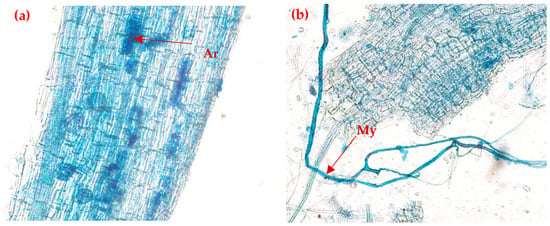
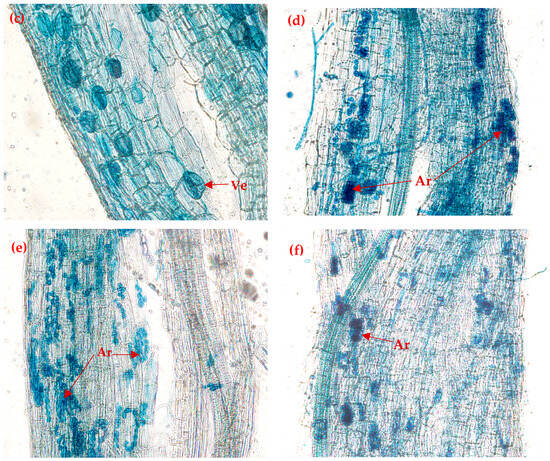
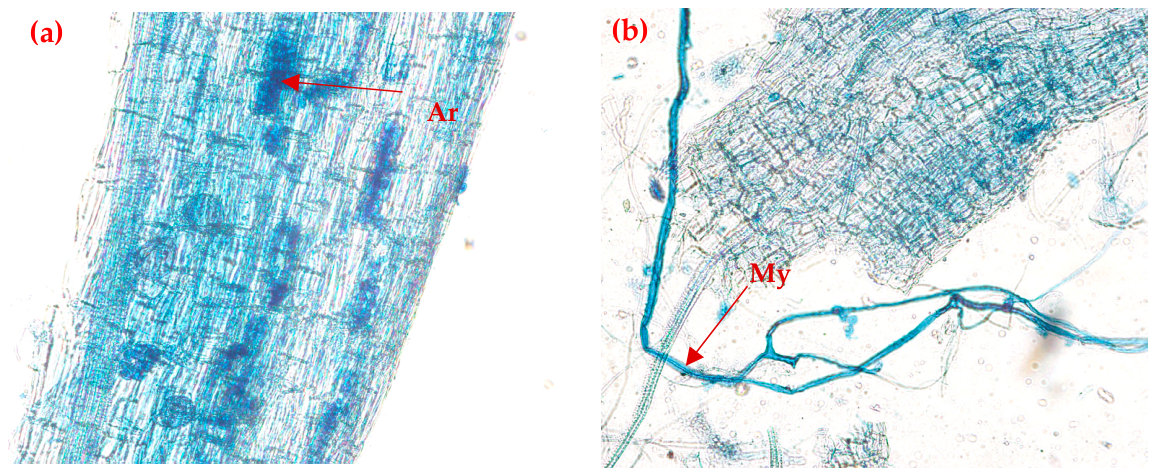
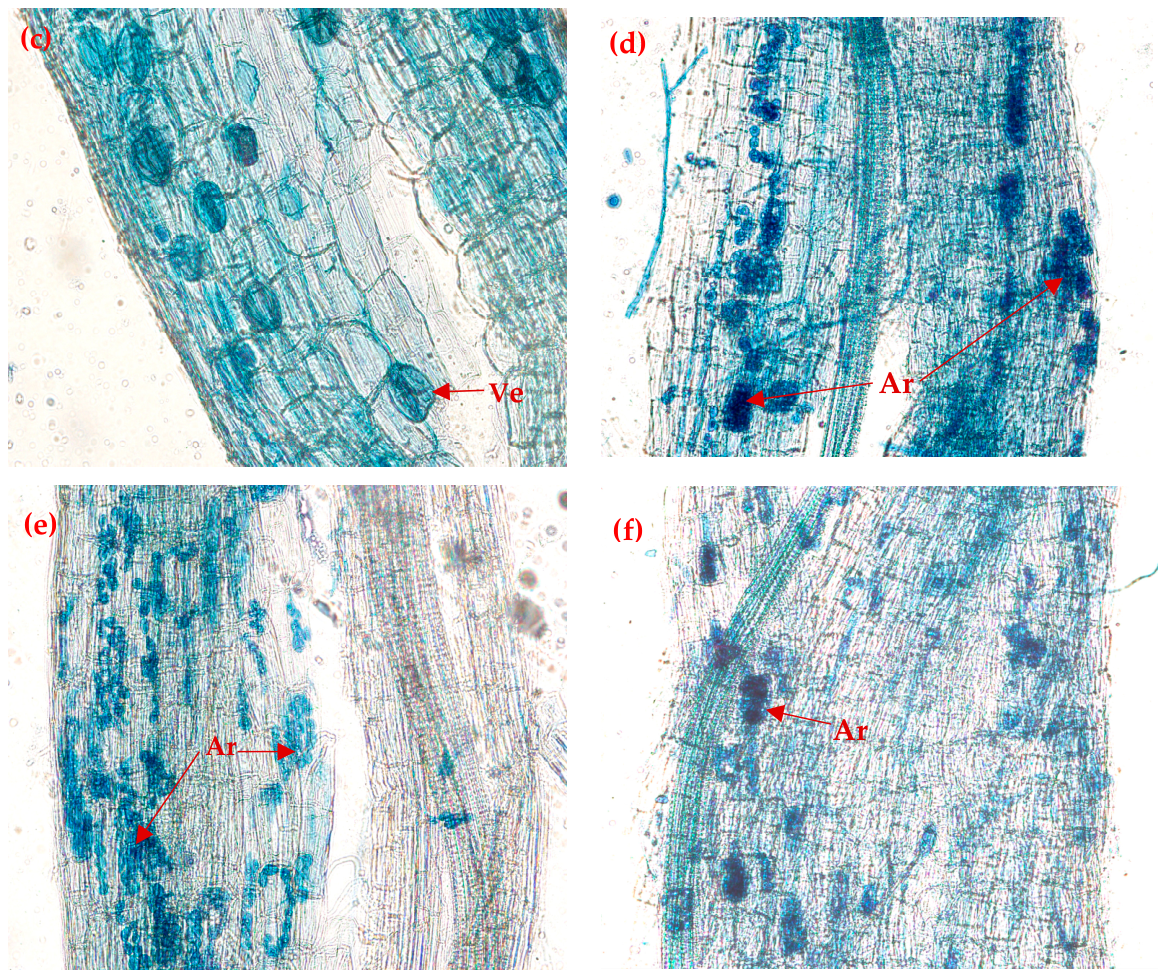
The results show that AMF successfully established in V. gerrardii roots at all planting densities, where hyphae, arbuscules, and vesicles were present in every inoculated treatment (Figure 1) and absent from the non-inoculated controls. The simultaneous occurrence of these three fungal structures indicates the successful establishment and development of the AM symbiosis [29]. The root colonization was highest at one and two plants per pot (96% and 97%, respectively) but declined to 79% at three plants per pot. This reduction suggests that increasing the planting density may constrain the AMF colonization intensity without preventing fungal establishment. Our findings broadly agree with several studies displaying that a higher plant density can reduce AMF colonization through increased competition for light and carbon, reduced root biomass per plant, and a less favorable cost–benefit balance for the symbiosis [30].
Figure 1.
AMF colonization in the roots of V. gerrardii seedlings under different plant densities. (a,b) Root colonization by AMF in seedlings grown at a density of 1 plant per pot−1; (c,d) AMF colonization in seedlings grown at a density of 2 plants per pot−1; and (e,f) AMF colonization in seedlings grown at a density of 3 plants per pot−1. Ar: arbuscule; My: mycelium; Ve: vesicles. Scale: 100 µm.
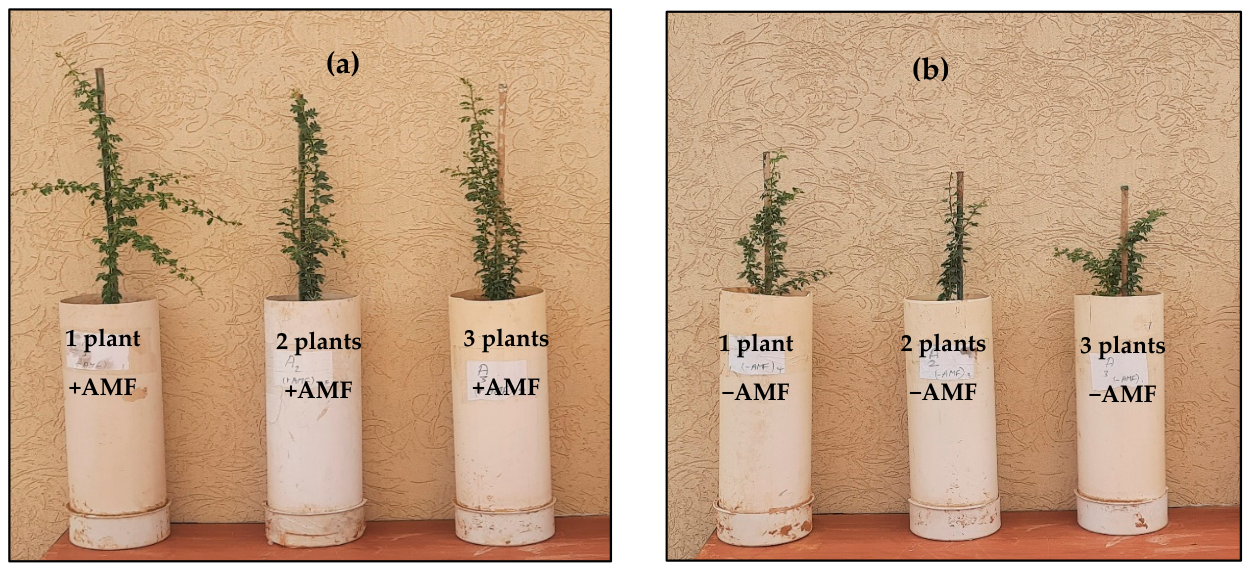
The results in Table 1 and Figure 2a,b below explain that the density significantly affected the basal diameter, root, shoot, and whole-plant dry biomass (p < 0.05). This highlights the importance of the planting density in determining the seedling growth and biomass accumulation. Similarly, the use of AMF inoculant significantly enhanced the basal diameter (p < 0.001) and total plant dry weight (p = 0.02), while it had a marginal effect on the root dry weight (p = 0.05) and no significant (p > 0.05) effect on the shoot dry weight. These findings suggest that AMF primarily benefited basal stem development and overall biomass accumulation, consistent with the recognized role of mycorrhizal symbiosis in enhancing plant development and nutrient acquisition [31]. However, the interaction of density × AMF was not significant for any parameter (p > 0.05), demonstrating that the mycorrhizal effect on these growth traits did not vary significantly across planting densities. The AMF dependence was 4.7%, 46.2%, and 42.2% at one, two, and three plant densities, respectively. Although these values were numerically higher at medium and high densities, the nonsignificant interaction indicates that the differences in AMF responses across densities were not statistically significant [32,33]. In general, such benefits highlight the potential of AMF inoculation as a nursery management practice to improve seedling growth and support the production of high-quality V. gerrardii seedlings for arid-land restoration [34].
Table 1.
Effects of AMF inoculation and plant density on seedling growth, biomass, and mycorrhizal dependence of V. gerrardii.
Figure 2.
Development and growth of V. gerrardii seedlings established with (a) and without (b) AMF inoculation at plant densities of one, two, and three plants/pot, shown from left to right, respectively.
3.2. Effect of Mycorrhizal and Density Treatments on Root Growth of V. gerrardii Seedling
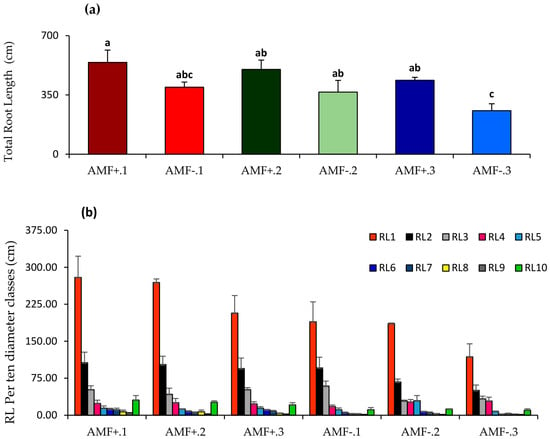
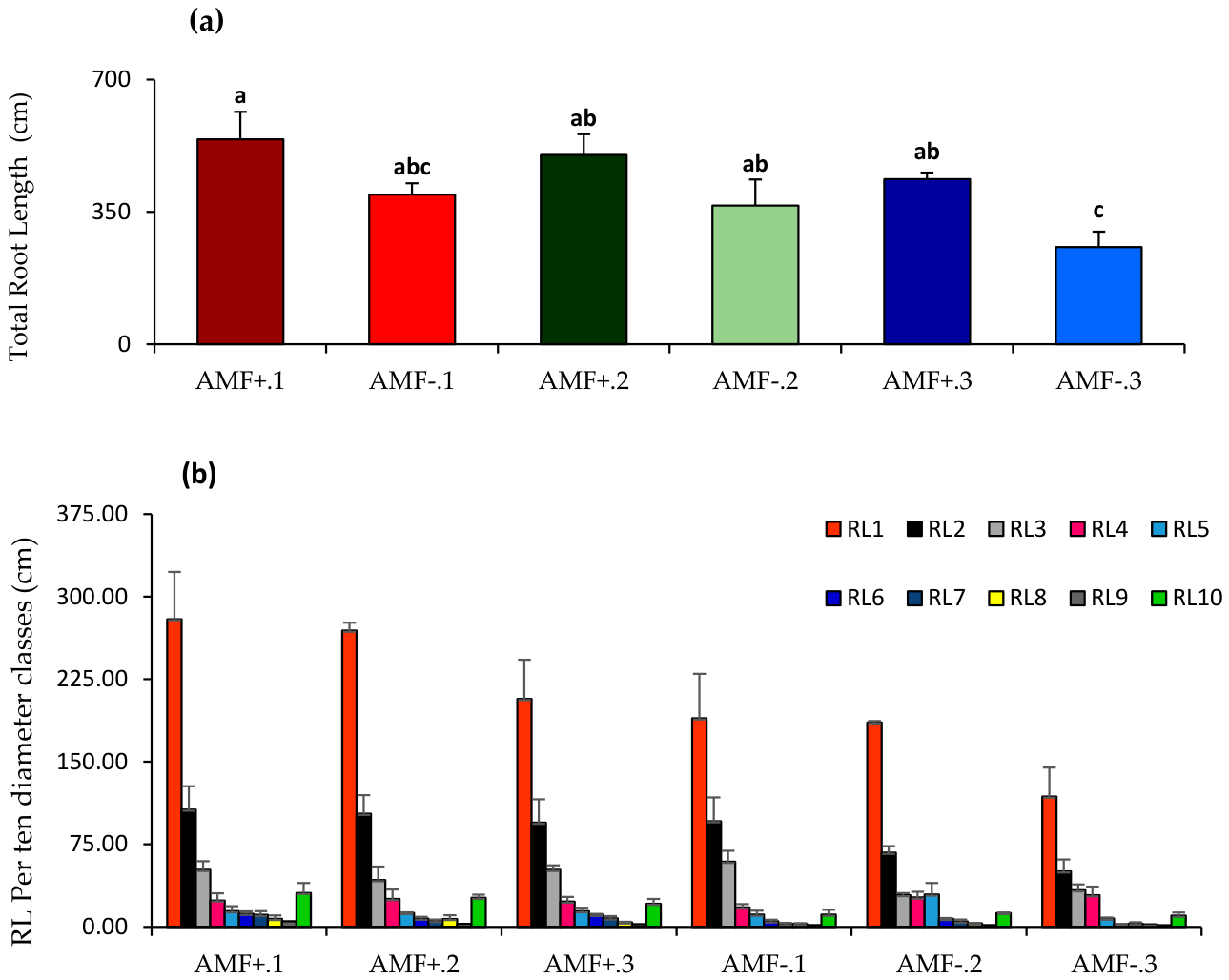
AMF inoculation significantly affected the total root length (TRL) in V. gerrardii seedlings (p = 0.0037; Figure 3a), whereas the planting density had no significant effect (p = 0.0934). The density × AMF interaction was also nonsignificant (p = 0.9015). In the different planting densities, seedlings with AMF inoculants exhibited higher TRL than non-mycorrhizal seedlings, highlighting the positive role of AMF in root system development. This result is in line with [35], who reported that AMF enhance the shoot and root traits of plants. The root length distribution was strongly skewed toward the finest diameter classes, with RL1 (0–0.5 mm) contributing the largest proportion, followed by RL2 (0.5–1.0 mm). AMF-inoculated seedlings generally showed higher root length in RL1 and RL2 than in non-inoculated seedlings across planting densities. The root length declined progressively from RL3 (1.0–1.5 mm) onward, with RL3–RL5 contributing considerably less and the larger diameter classes (RL6–RL10; >2.5 mm) contributing a relatively minor proportion of the overall root length. Overall, the AMF effect on root development was therefore most evident in the fine-root fraction (≤1.0 mm) (p ≤ 0.05). This result explains that AMF preferentially stimulate the development of absorptive roots, which has a determining role in water and nutrient uptake [36]. In the present study, increasing the plant density showed a tendency to reduce the total root length, although the effect was not statistically significant. In contrast, AMF inoculation significantly increased the total root length across planting densities. The nonsignificant density × AMF interaction indicates that the magnitude of the AMF response did not differ significantly among planting densities. This finding is in line with results that stated that AMF can promote root system development across a range of planting densities, potentially through extraradical hyphae that extend soil exploration and facilitate resource acquisition [37]. In contrast, the root length in intermediate- (1.0–1.5 mm) and medium-diameter classes (1.5–2.5 mm) showed weak or non-significant responses to AMF or density, consistent with their primarily structural and transport functions [38]. Thicker roots (>2.5 mm) contributed minimally to the total root length and were largely insensitive to treatments, reflecting their low morphological plasticity and primary role in transport and structural support compared with fine absorptive roots [39].
Figure 3.
Effects of AMF inoculation and plant density on total root length (a) and the distribution of root length across ten root diameter classes (b) in V. gerrardii seedlings. AMF + 1, AMF + 2, and AMF + 3 represent mycorrhizal seedlings grown with one, two, and three plants/pot, respectively, whereas AMF − 1, AMF − 2, and AMF − 3 represent non-mycorrhizal seedlings grown at the corresponding plant densities. RL1–RL10 indicate lengths of root classes across ten root diameters (0.0–0.5 mm to 4.5–5.0 mm), with each class representing a 0.5 mm diameter interval. Different lowercase letters indicate statistically significant differences among treatments according to the LSD test (p < 0.05).
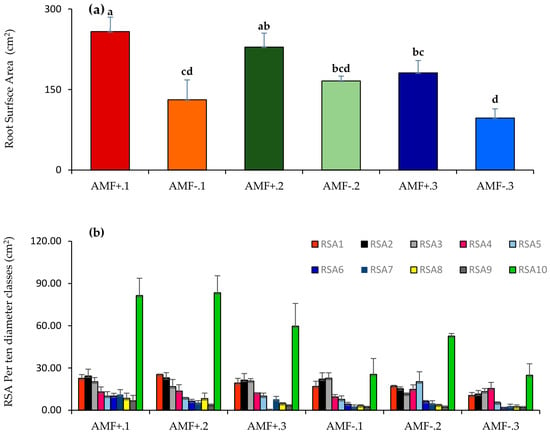
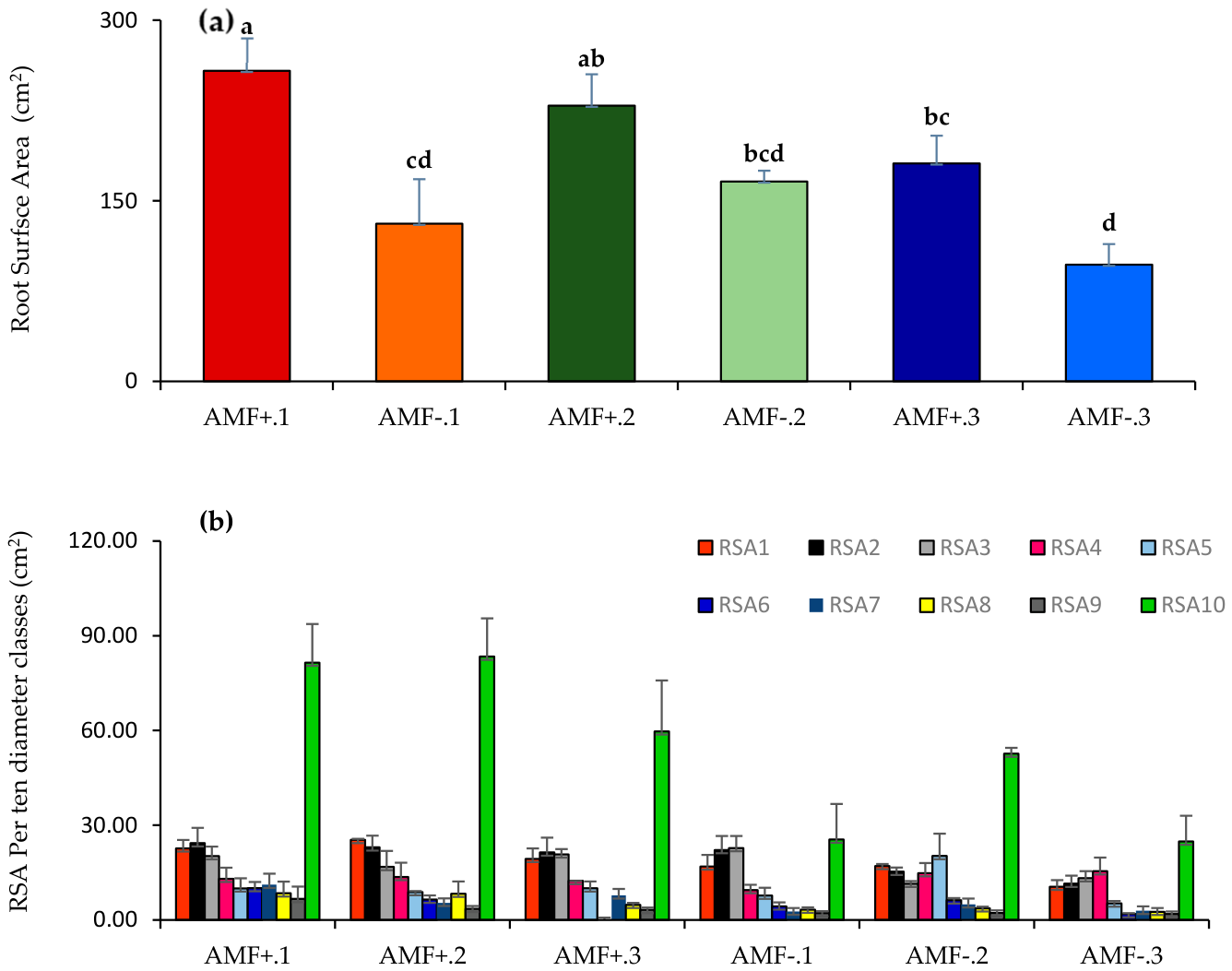
Inoculation with AMF significantly increased the total root surface area (RSA) in V. gerrardii seedlings (p = 0.0004). The planting density also exerted a statistically significant influence on RSA (p = 0.0419), whereas the density × inoculation interaction was not significant (p = 0.3863). Although the highest RSA was observed in AMF-inoculated seedlings at a density of one, the nonsignificant interaction indicates that the effect of AMF did not differ significantly among the planting densities. In general, mycorrhizal seedlings showed a higher RSA relative to seedlings without AMF (Figure 4a). Different research findings have stated that mycorrhizal inoculants enhanced the root surface area and promote root development in many plants [40].
Figure 4.
Effects of AMF inoculation and plant density on total root surface area (a) and the distribution of root surface area across ten root diameter classes (b) in V. gerrardii seedlings. AMF + 1, AMF + 2, and AMF + 3 represent mycorrhizal seedlings grown with one, two, and three plants/pot, respectively, whereas AMF − 1, AMF − 2, and AMF − 3 represent non-mycorrhizal seedlings grown at the corresponding plant densities. RSA1–RSA10 indicate surface area of root in ten diameter classes ranged from 0.0–0.5 mm to 4.5–5.0 mm, with each class representing a 0.5 mm diameter interval. Different lowercase letters indicate statistically significant differences among treatments according to the LSD test (p < 0.05).
The root surface area distribution varied considerably among diameter classes (Figure 4b), with RSA10 (>4.5 mm) contributing the largest share across treatments, particularly in AMF-inoculated seedlings. This indicates that the largest diameter class made the largest contribution to the total root surface area, although its relative contribution does not necessarily reflect the magnitude of the AMF response. Among the finer diameter classes, mycorrhizal seedlings generally displayed superior RSA to non-mycorrhizal seedlings, with the differences most evident in RSA1 (0–0.5 mm) and RSA2 (0.5–1.0 mm). The RSA of intermediate diameter classes (RSA3–RSA7) was comparatively lower and showed less consistent differences between AMF treatments. Thus, although the largest diameter class contributed most to the total RSA, the positive AMF responses were particularly pronounced in the fine-root classes. Coarser root classes (>3.0 mm) showed fewer differences between AMF treatments.
The higher RSA in fine-root classes of AMF-treated seedlings is constant with the role of AMF in enhancing nutrient acquisition, particularly phosphorus uptake, through fine-root development and extraradical hyphal networks [41]. Although the planting density significantly affected the RSA, the nonsignificant density × AMF interaction indicates that AMF effects did not differ significantly among densities, providing no statistical evidence that AMF mitigated density-induced root competition [10,42]. The substantial contribution of coarse roots to total RSA should also be distinguished from the functional importance of fine roots, which are particularly involved in resource absorption. The relatively limited differences in RSA among coarser root classes (>3.0 mm) support the view that AMF-associated changes in root development may be more evident in absorptive root fractions than in structural root components [36,43].
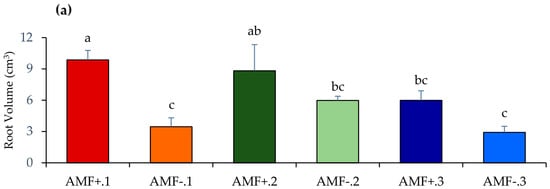
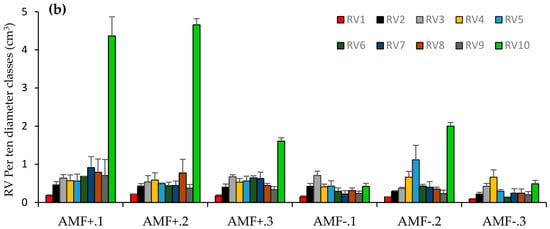
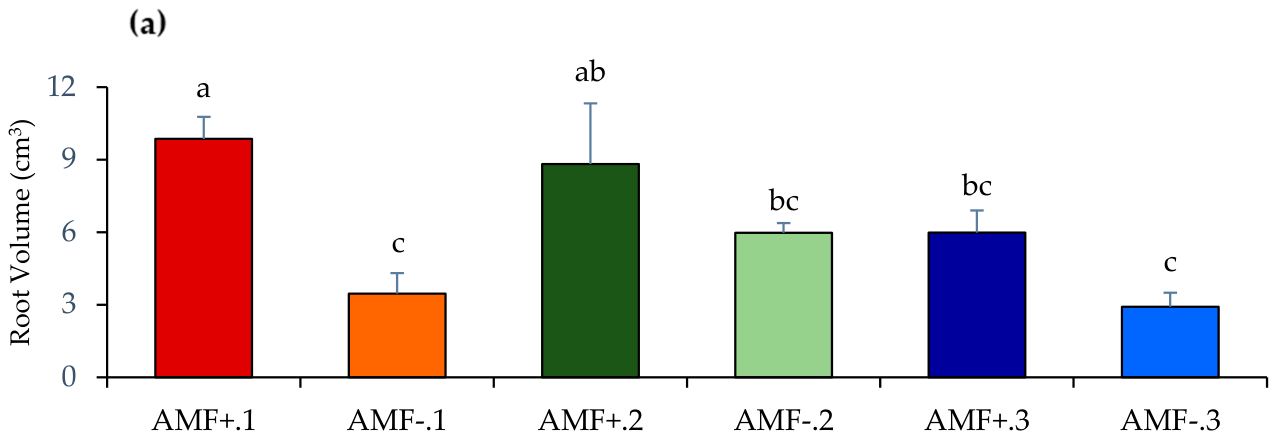
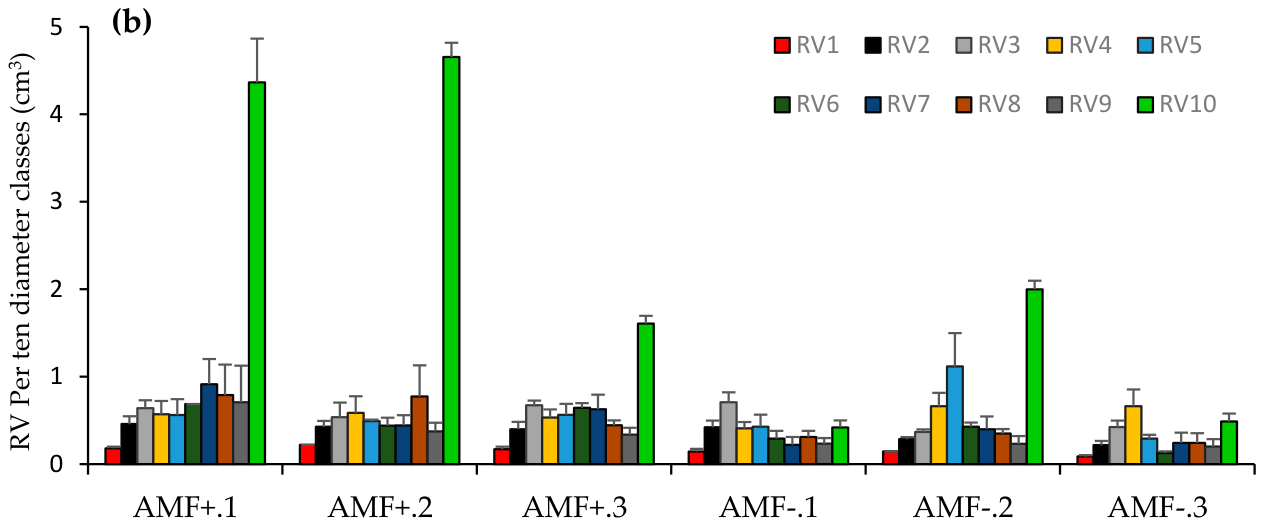
The results indicated that AMF inoculation significantly increased the total root volume in V. gerrardii seedlings (p = 0.001), whereas the planting density (p = 0.085) and the density × inoculation interaction (p = 0.311) were not significant. The root volume was highest in AMF + 1, followed by AMF + 2, with lower values in the non-inoculated treatments (Figure 5b). AMF generally enhanced the root volume, although in some cases, non-mycorrhizal plants allocated relatively more volume to specific classes [44]. Despite the numerical differences among planting densities, the nonsignificant interaction indicates that AMF effects on total root volume did not differ significantly across densities. Across diameter classes, the root volume was predominantly concentrated in the largest class (≥4.5 mm). This indicates that coarse roots made the largest contribution to the total root volume across treatments, reflecting their larger individual volume. However, this contribution should be distinguished from the response of individual diameter classes to AMF inoculation. AMF generally increased the root volume in several intermediate and larger diameter classes. Increasing the planting density, particularly to three plants per pot, was associated with lower root volume in some larger diameter classes; however, these differences should not be interpreted as evidence of a density-dependent AMF response.
Figure 5.
Effects of AMF inoculation and plant density on root volume (a) and the distribution of root volume across ten root diameter classes (b) in V. gerrardii seedlings. AMF + 1, AMF + 2, and AMF + 3 represent mycorrhizal seedlings grown with one, two, and three plants/pot, respectively, whereas AMF − 1, AMF − 2, and AMF − 3 represent non-mycorrhizal seedlings grown at the corresponding plant densities. RV1–RV10 indicate volume of seedling root in ten diameter classes ranged from 0.0–0.5 mm to 4.5–5.0 mm, with each diameter class representing a 0.5 mm diameter interval. Different lowercase letters indicate statistically significant differences among treatments according to the LSD test (p < 0.05).
The significant increase in the total root volume following AMF inoculation indicates that V. gerrardii seedlings developed a more extensive root system. Similar AMF-mediated modifications of root architecture have been reported for woody species such as trifoliate orange, tea, mulberry, and Catalpa, where increased root volume, branching, and fine-root formation are associated with improved nutrient uptake and drought tolerance [13,45,46]. These findings therefore strengthen the interpretation showing that mycorrhizae can enhance seedling root development through both improved host root architecture and extraradical hyphal networks [10,11,42]. Nevertheless, the predominance of the largest diameter class in total root volume highlights the importance of distinguishing the root volume responses from the root length and surface area responses when interpreting AMF effects on different components of the root system.
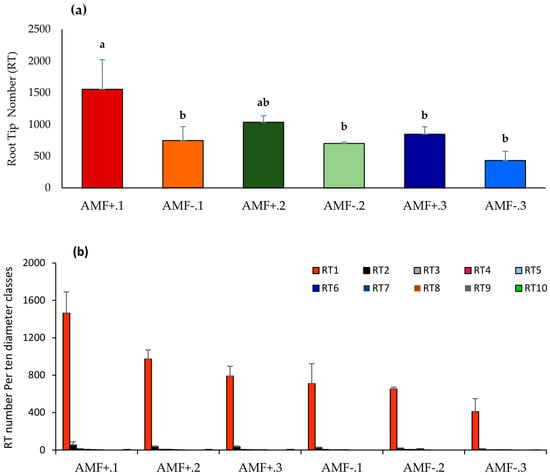
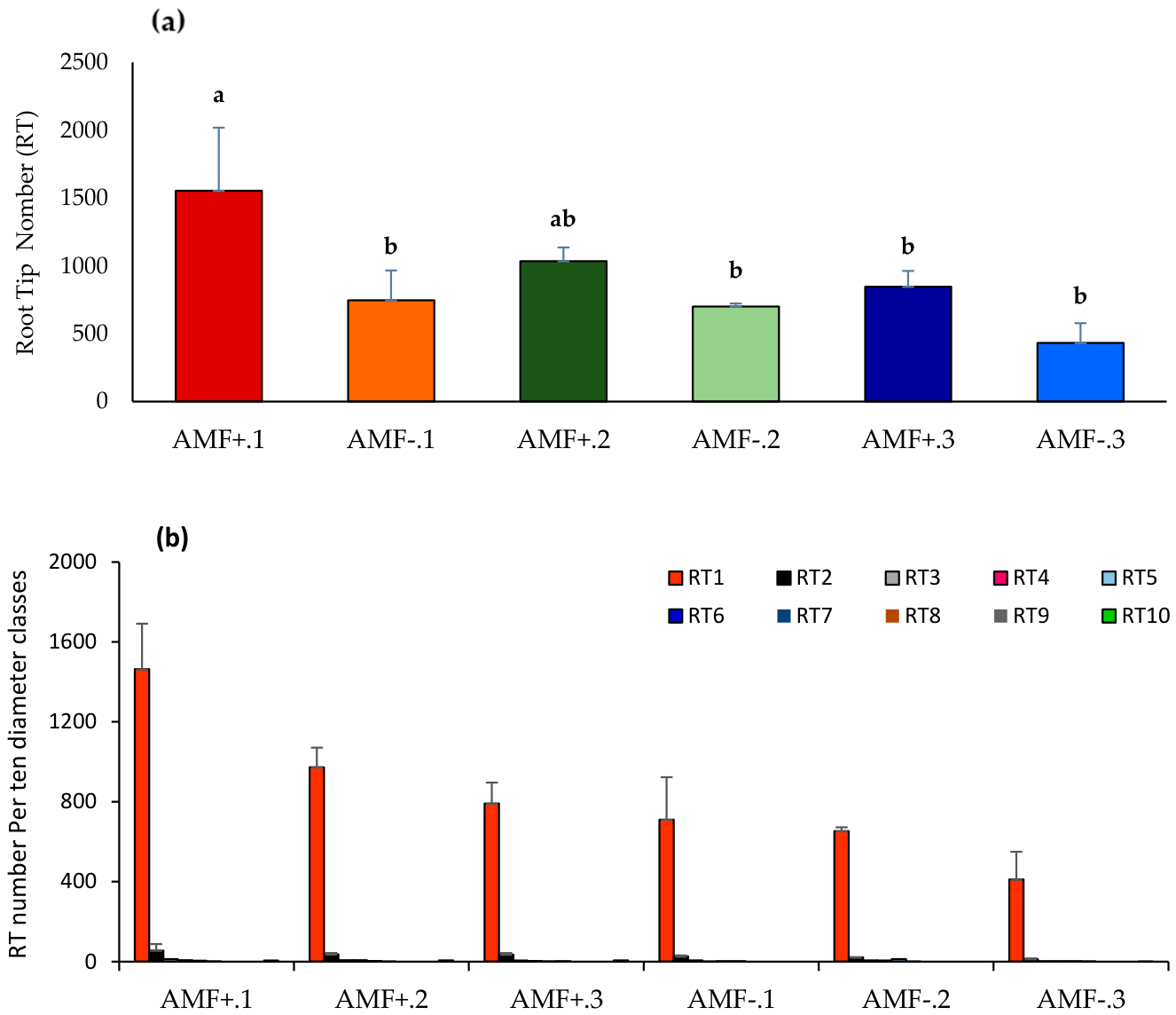
In V. gerrardii seedlings, mycorrhizal inoculant significantly increased the total number of root tips (p = 0.0164) (Figure 6a,b), demonstrating a statistically significant influence of inoculation on root tip production. The planting density and its interaction with AMF had no significant effects on the total root tip number (p > 0.05), indicating that the AMF response did not differ significantly among planting densities. Although the density of plants had no substantial effect on tips of seedling roots, AMF-inoculated plants produced approximately 1.2–2 times more root tips than non-mycorrhizal controls at the same planting density.
Figure 6.
Effects of AMF inoculation and plant density on the number of root tips (a) and the distribution of root tips across ten root diameter classes (b) in V. gerrardii seedlings. AMF + 1, AMF + 2, and AMF + 3 represent mycorrhizal seedlings grown with one, two, and three plants per pot, respectively, whereas AMF − 1, AMF − 2, and AMF − 3 represent non-mycorrhizal seedlings grown at the corresponding plant densities. RT1–RT10 indicate tips number of seedling roots at ten root diameter classes ranged from 0.0–0.5 mm to 4.5–5.0 mm, with each class representing a 0.5 mm diameter interval. Different lowercase letters indicate statistically significant differences among treatments according to the LSD test (p < 0.05).
This increase in root-tip production was predominantly associated with the finest diameter classes, particularly roots at 2.5 mm, which contained very few tips. This pattern agrees with studies showing that AMF can promote fine-root development and higher-order lateral branching [47], supporting improved nutrient uptake and stress tolerance across host species and environments [48].
3.3. Effect of AMF and Plant Density on Nutrient Concentration in Leaves and Root of V. gerrardii Seedling
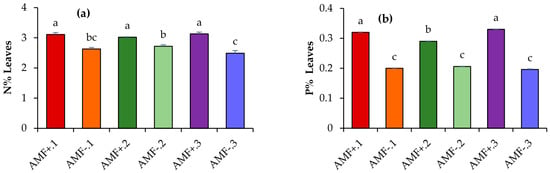
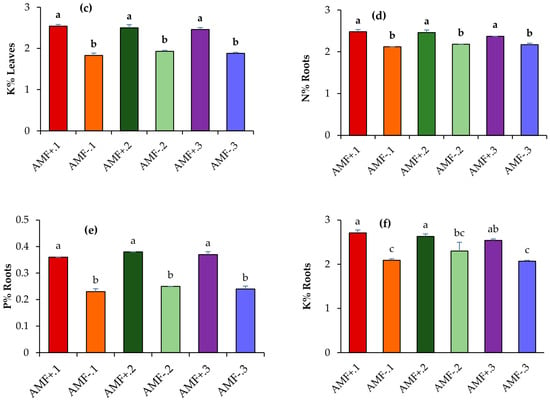
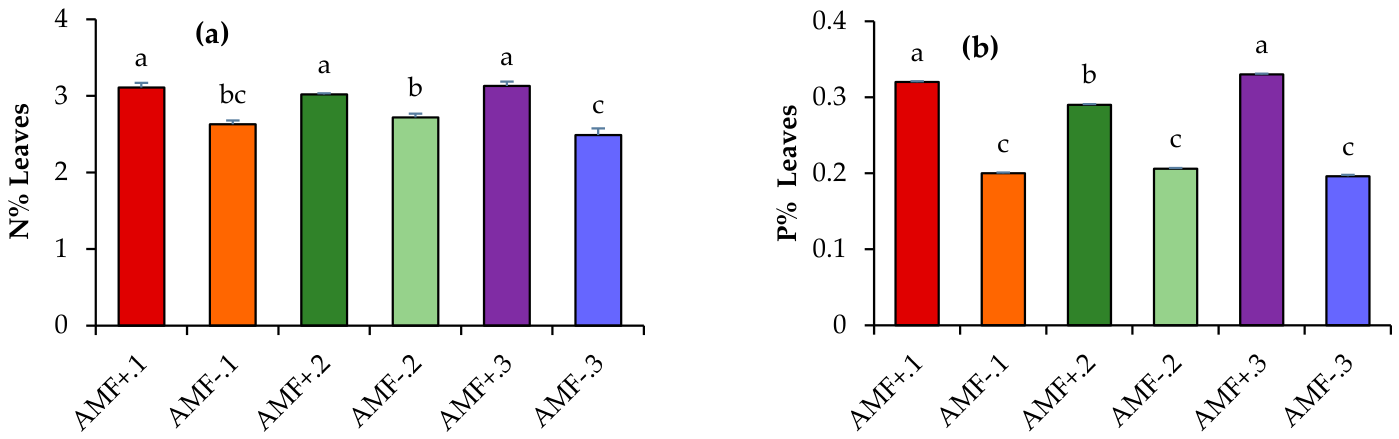
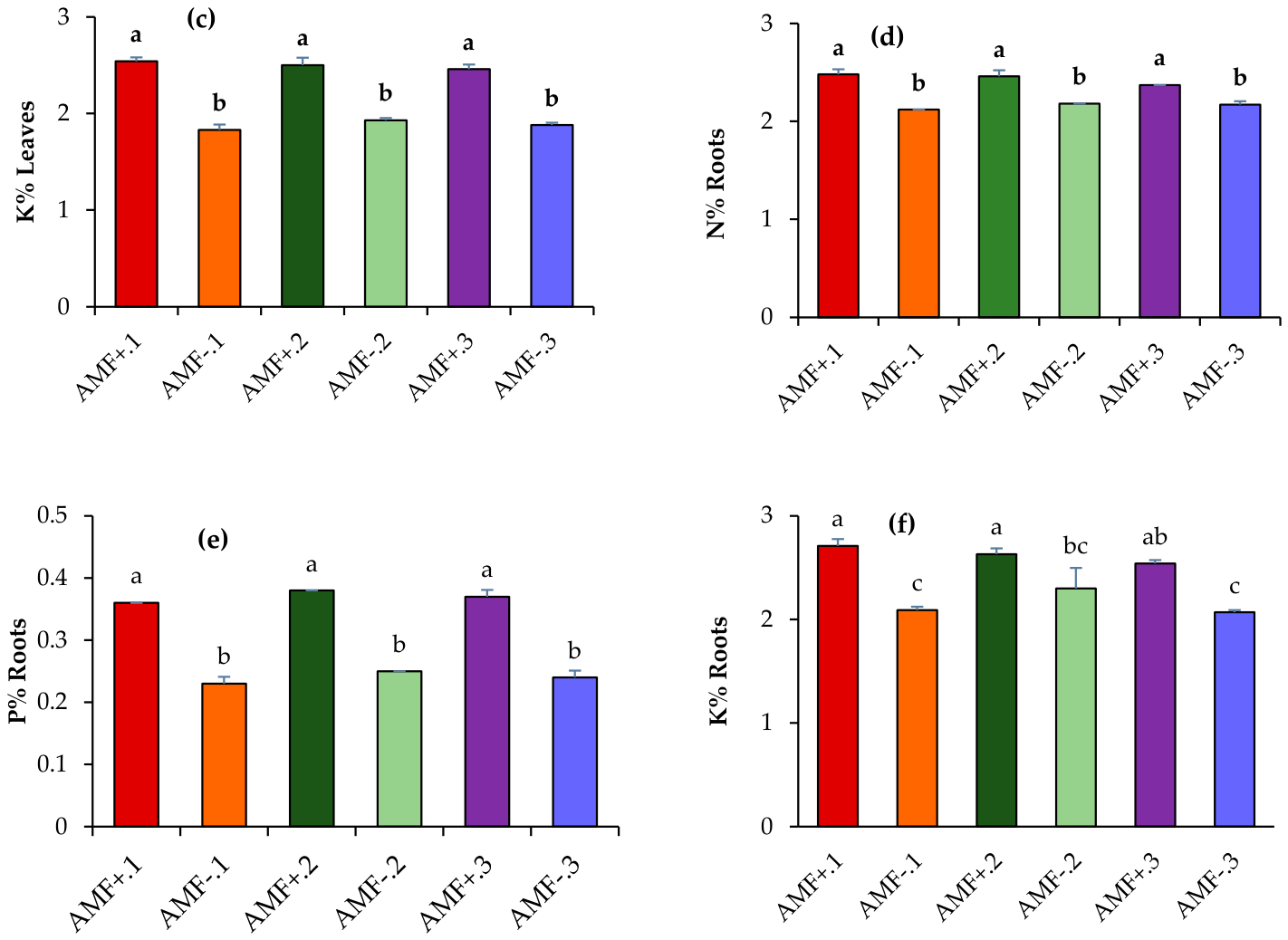
Mycorrhizal inoculants substantially enhanced the leaf N, P, and K concentrations in V. gerrardii seedlings across all planting densities (Figure 7a–c). Leaf N significantly (p < 0.01) increased from 2.49%–2.72% in non-inoculated seedlings to 3.02%–3.13% in AMF-inoculated seedlings, leaf P from 0.196%–0.20% to 0.29%–0.33%, and leaf K from 1.83%–1.93% to 2.46%–2.54%. These explain that mycorrhizae consistently improved the seedling nutrient status, in agreement with meta-analyses showing that AMF generally increase N and P concentrations in plant parts, with P often showing the strongest response [9,49]. The stronger increase in P is consistent with the central role of AMF in acquiring relatively immobile soil P through the mycorrhizal pathway and transferring it to host plants [48]. The increase in leaf N is also biologically plausible because AMF can enhance N acquisition and assimilation, and AMF-associated improvements in root morphology can expand the absorbing surface available for nutrient uptake [50]. The higher leaf K further suggests that AMF benefits were not limited to N and P, since AMF can also improve K uptake and transport, although this function has been studied less extensively than P nutrition [29,50].
Figure 7.
Effects of AMF inoculation and plant density on the nutrient (NPK) concentrations in the leaves (a–c) and roots (d–f) of V. gerrardii seedlings. AMF + 1, AMF + 2, and AMF + 3 represent mycorrhizal seedlings grown at 1, 2, and 3 plants/pot, respectively, whereas AMF − 1, AMF − 2, and AMF − 3 represent non-mycorrhizal seedlings grown at the corresponding plant densities. Different lowercase letters indicate statistically significant differences among treatments according to the LSD test (p < 0.05).
Root N, P, and K concentrations showed the same general pattern, remaining consistently higher in seedlings with mycorrhizae than in non-mycorrhizal seedlings at all planting densities. Root N increased from 2.12%–2.18% to 2.37%–2.48%, root P from 0.23%–0.25% to 0.36%–0.38%, and root K from 2.07%–2.30% to 2.54%–2.71% with AMF inoculation. This response agrees with reports that AMF hyphae act as extensions of the root part, thereby expanding the explored soil and transferring nutrients to host roots, and that AMF commonly enhance root nutrient contents, including N, P, and K [51]. The pronounced root P increase is especially aligned with the role of mycorrhizae in P uptake, while the increases in root N and K indicate broader improvements in nutrient acquisition and homeostasis [13,52]. The relatively small variation among planting densities, compared with the clear separation between AMF and non-AMF treatments, suggests that AMF comprised the dominant factor affecting nutrient accumulation in this experiment. This explanation is constant with findings stating that AMF can maintain nutrient-acquisition benefits under contrasting management conditions, including high planting density, although effect size still depends on environmental context and inoculation conditions [53]. Overall, the findings in this study state that AMF inoculation enhanced N, P, and K accumulation in both leaves and roots of V. gerrardii seedlings, with the clearest response in P, and that this positive effect was maintained across the tested planting densities.
3.4. PCA for the Growth and Root Parameters of V. gerrardii Seedlings Grown with and Without AMF Under Different Densities
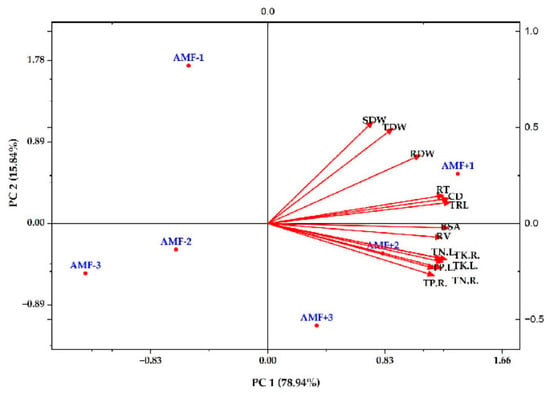
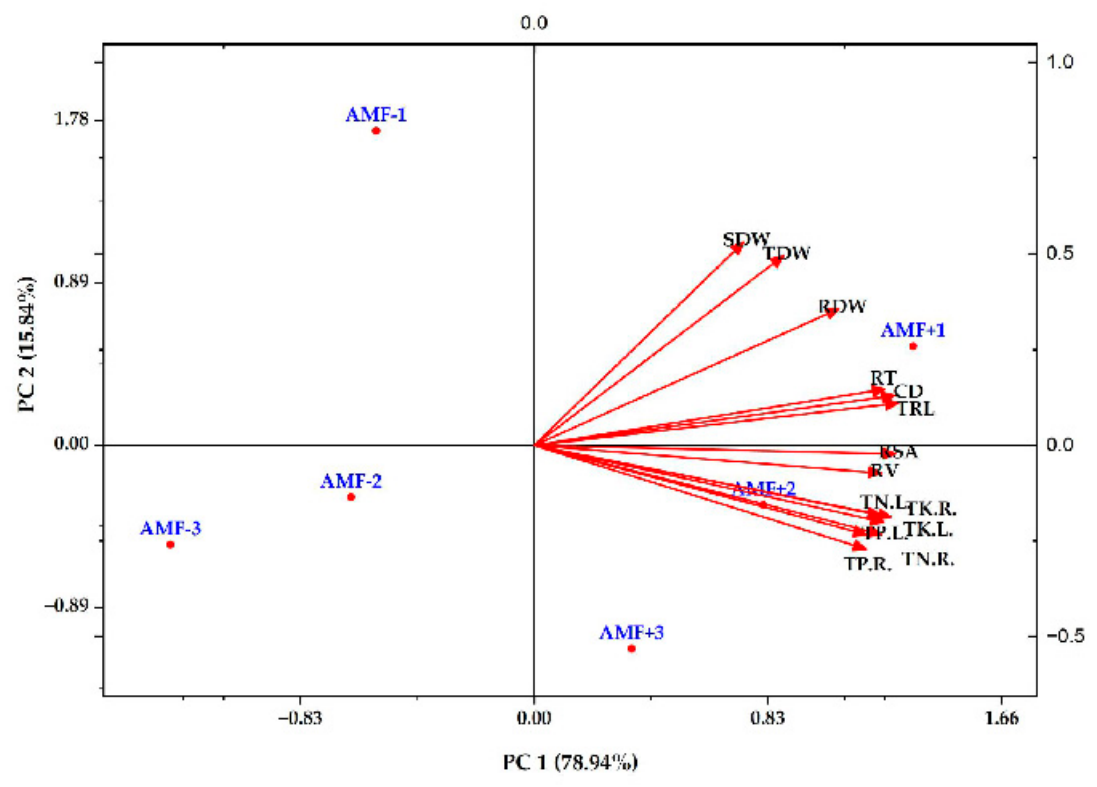
The PCA biplot explained 94.78% of the total variance. PC1 represented 78.94%, with PC2 accounting for 15.84%. PC1 clearly separated AMF-inoculated (AMF + 1–3) from non-inoculated seedlings (AMF − 1–3), indicating that AMF inoculation was strongly associated with the variation in seedling growth and root traits (Figure 8). Examination of the individual trait vectors revealed that biomass-related variables (SDW, TDW, and RDW) showed prominent contributions to the positive direction of PC1, highlighting their importance in explaining the variation associated with AMF inoculation. Root morphological traits, including TRL, RSA, RV, and RT, also showed positive associations with PC1, indicating that improvements in root development were accompanied by increased biomass accumulation. These findings are consistent with the evidence that AMF commonly induce coordinated changes in root architecture, nutrient acquisition, and whole-plant growth, rather than isolated changes in individual traits [54]. Previous studies have similarly demonstrated that AMF inoculation enhances the total plant shoot and root biomass [9], in addition to essential root architectural traits that support seedling performance [55]. These improvements are partly associated with enhanced mineral nutrient acquisition through fungal-foraging pathways and nutrient exchange at the root–fungus interface [56].
Figure 8.
PCA for 14 parameters in V. gerrardii seedlings under AMF inoculation and plant density treatments. AMF + 1–3 and AMF − 1–3 indicate mycorrhizal and non-mycorrhizal seedlings, respectively, at densities of 1–3 seedlings per pot. Abbreviations: SDW, shoot dry weight; RDW, root dry weight; TDW, total dry weight; CD, collar diameter; TRL, total root length; RSA, root surface area; RV, root volume; RT, root tips; T.N.L., T.P.L., and T.K.L., leaf N, P, and K concentrations, respectively; T.N.R., T.P.R., and T.K.R., root N, P, and K concentrations, respectively.
Nutrient-related variables, such as N, P, and K content, also exhibited positive associations with PC1, although their orientations along PC2 differed from those of the biomass and root morphological traits. This suggests that nutrient acquisition and allocation, together with biomass accumulation and root development, contributed to the overall multivariate response to AMF inoculation. The distribution of AMF-inoculated seedlings along PC2 further indicated that the planting density modified the expression of these responses. Separation among the AMF + 1–3 treatments suggests that seedlings grown at different densities exhibited distinct combinations of growth, root, and nutrient characteristics. This pattern agrees with previous studies showing that increasing the planting density can reduce the growth and root performance, particularly under intensified competition, whereas AMF may help maintain biomass accumulation and root development under competitive conditions [57]. Furthermore, AMF can influence root-system plasticity, lateral root formation, and plant–plant interactions, potentially explaining the density-related variation observed along PC2 [58].
Overall, the PCA indicates that AMF inoculation was the dominant source of multivariate variation, while the plant density contributed additional variation among the inoculated seedlings. The prominent representation of biomass, root morphological, and nutrient-related variables demonstrates that AMF-associated responses involved multiple interconnected plant characteristics rather than a single growth parameter. These findings support the previous evidence that AMF influence biomass production, nutrient uptake, and root morphology, although the magnitude of these responses may depend on fungal identity and environmental conditions [59].
4. Conclusions
This study demonstrated that the application of mycorrhizal inoculant substantially enhanced the growth, root development, and nutritional status of Vachellia gerrardii seedlings across different planting densities. AMF successfully colonized roots at all densities and enhanced several vegetative parts (such as dry biomass), root parameters (root length, surface area, volume, fine-root development, root-tip production), and N, P, and K contents in seedlings’ roots and leaves. Based on the absolute biomass production, one seedling per pot was the most favorable configuration, followed by two seedlings per pot. Although the latter showed the highest relative AMF dependence (46%) and colonization rate (97%), one seedling per pot provided the largest absolute growth, while two seedlings per pot may offer a potential alternative for nursery production. Overall, AMF inoculation represents a promising nursery management practice for producing vigorous V. gerrardii seedlings and supporting their propagation and restoration under arid and semi-arid environmental conditions. Field studies are recommended to confirm whether these nursery benefits improve post-planting survival and establishment.
Author Contributions
Conceptualization, A.M.A., T.S.A., A.A.A. and I.A.A.; data curation, A.M.A. and T.S.A.; formal analysis, A.M.A.; funding acquisition, T.S.A.; investigation, T.S.A.; methodology, A.M.A., T.S.A. and A.A.A.; resources, T.S.A., A.M.A. and A.A.A.; supervision, T.S.A. and A.A.A.; writing—original draft, A.M.A.; writing—review and editing, A.M.A., T.S.A. and I.A.A. All authors have read and agreed to the published version of the manuscript.
Funding
This research was funded by Ongoing Research Funding Program, (ORF-2026-2180), King Saud University, Riyadh, Saudi Arabia.
Data Availability Statement
The data of this study are presented in the paper.
Acknowledgments
The authors acknowledge the Ongoing Research Funding Program, (ORF-2026-2180), King Saud University, Riyadh, Saudi Arabia.
Conflicts of Interest
The authors declare no conflicts of interest.
References
- Gebirehiwot, H.T. Review on factors affecting early survival of tree/shrub seedlings and its remedy in restoration sites of Ethiopia. J. Landsc. Ecol. 2023, 16, 128–148. [Google Scholar] [CrossRef] [Scilit]
- Kyalangalilwa, B.; Boatwright, J.S.; Daru, B.H.; Maurin, O.; van der Bank, M. Phylogenetic position and revised classification of Acacia s.l. (Fabaceae: Mimosoideae) in Africa, including new combinations in Vachellia and Senegalia. Bot. J. Linn. Soc. 2013, 172, 500–523. [Google Scholar] [CrossRef] [Scilit]
- Mohammad, M.K.; Al-Rammahi, H.M.; Cogoni, D.; Fenu, G. Conservation need for a plant species with extremely small populations linked to ephemeral streams in adverse desert environments. Water 2022, 14, 2638. [Google Scholar] [CrossRef] [Scilit]
- Al-Ghamdi, A.A.; Tadesse, Y.; Adgaba, N. Evaluation of major Acacia species in the nursery towards apicultural landscape restoration around southwestern Saudi Arabia. Saudi J. Biol. Sci. 2020, 27, 3385–3389. [Google Scholar] [CrossRef] [Scilit] [PubMed]
- Cortina, J.; Vilagrosa, A.; Trubat, R. The role of nutrients for improving seedling quality in drylands. New For. 2013, 44, 719–732. [Google Scholar] [CrossRef] [Scilit]
- Freschet, G.T.; Roumet, C.; Comas, L.H.; Weemstra, M.; Bengough, A.G.; Rewald, B.; Bardgett, R.D.; De Deyn, G.B.; Johnson, D.; Klimešová, J.; et al. Root traits as drivers of plant and ecosystem functioning: Current understanding, pitfalls and future research needs. New Phytol. 2021, 232, 1123–1158. [Google Scholar] [CrossRef] [Scilit] [PubMed]
- Hodge, A. The plastic plant: Root responses to heterogeneous supplies of nutrients. New Phytol. 2004, 162, 9–24. [Google Scholar] [CrossRef] [Scilit]
- Eissenstat, D.; Volder, A. The efficiency of nutrient acquisition over the life of a root. In Nutrient Acquisition by Plants: An Ecological Perspective; Springer: Berlin/Heidelberg, Germany, 2005; pp. 185–220. [Google Scholar]
- Wu, Y.; Chen, C.; Wang, G. Inoculation with arbuscular mycorrhizal fungi improves plant biomass and nitrogen and phosphorus nutrients: A meta-analysis. BMC Plant Biol. 2024, 24, 960. [Google Scholar] [CrossRef] [Scilit] [PubMed]
- van der Heijden, M.G.; Martin, F.M.; Selosse, M.A.; Sanders, I.R. Mycorrhizal ecology and evolution: The past, the present, and the future. New Phytol. 2015, 205, 1406–1423. [Google Scholar] [CrossRef] [Scilit] [PubMed]
- Gutjahr, C.; Paszkowski, U. Multiple control levels of root system remodeling in arbuscular mycorrhizal symbiosis. Front. Plant Sci. 2013, 4, 204. [Google Scholar] [CrossRef] [Scilit] [PubMed]
- Cahill, J.F., Jr.; McNickle, G.G.; Haag, J.J.; Lamb, E.G.; Nyanumba, S.M.; St. Clair, C.C. Plants integrate information about nutrients and neighbors. Science 2010, 328, 1657. [Google Scholar] [CrossRef] [Scilit] [PubMed]
- Chandrasekaran, M. Arbuscular mycorrhizal fungi mediated enhanced biomass, root morphological traits and nutrient uptake under drought stress: A meta-analysis. J. Fungi 2022, 8, 660. [Google Scholar] [CrossRef] [Scilit] [PubMed]
- Ma, H.; Zhang, H.; Gao, Q.; Li, S.; Yu, Y.; Ma, J.; Zheng, C.; Cui, M.; Wu, Z.; Zhang, H. The relative contribution of root morphology and arbuscular mycorrhizal fungal colonization on phosphorus uptake in rice/soybean intercropping under dry cultivation. Plants 2025, 14, 106. [Google Scholar] [CrossRef] [Scilit] [PubMed]
- Lewandrowski, W.; Stevens, J.C.; Webber, B.L.; Dalziell, E.L.; Trudgen, M.S.; Bateman, A.M.; Erickson, T.E. Global change impacts on arid zone ecosystems: Seedling establishment processes are threatened by temperature and water stress. Ecol. Evol. 2021, 11, 8071–8084. [Google Scholar] [CrossRef] [Scilit] [PubMed]
- El Amrani, B. Exploring the importance of root architecture plasticity in plant adaptation to environmental constraints. Plant Species Biol. 2023, 38, 234–244. [Google Scholar] [CrossRef] [Scilit]
- Grossnickle, S.C.; Ivetić, V. Root system development and field establishment: Effect of seedling quality. New For. 2022, 53, 1021–1067. [Google Scholar] [CrossRef] [Scilit]
- Redecker, D.; Schüßler, A.; Stockinger, H.; Stürmer, S.L.; Morton, J.B.; Walker, C. An evidence-based consensus for the classification of arbuscular mycorrhizal fungi (Glomeromycota). Mycorrhiza 2013, 23, 515–531. [Google Scholar] [CrossRef] [Scilit] [PubMed]
- Schüssler, A.; Walker, C. The Glomeromycota: A Species List with New Families and New Genera; Arthur Schüssler & Christopher Walker: Gloucester, UK, 2010. [Google Scholar]
- Schenck, N.C. Manual for the Identification of VA Mycorrhizal Fungi; Synergistic Publications: Gainesville, FL, USA, 1990; 286p. [Google Scholar]
- Schüßler, A.; Schwarzott, D.; Walker, C. A new fungal phylum, the Glomeromycota: Phylogeny and evolution. Mycol. Res. 2001, 105, 1413–1421. [Google Scholar] [CrossRef] [Scilit]
- Adam, A.M.; Alshahrani, T.S.; Alqarawi, A.A.; Abd-ElGawad, A.M.; Ahmed, E.M.; Sorrori, S.N. Arbuscular mycorrhiza fungi alleviate the allelopathic effects of invasive Nicotiana glauca on the growth of Acacia gerrardii seedlings. Forests 2024, 15, 1447. [Google Scholar] [CrossRef] [Scilit]
- Hetrick, B.; Wilson, G.; Cox, T. Mycorrhizal dependence of modern wheat varieties, landraces, and ancestors. Can. J. Bot. 1992, 70, 2032–2040. [Google Scholar] [CrossRef] [Scilit]
- Phillips, J.M.; Hayman, D. Improved procedures for clearing roots and staining parasitic and vesicular-arbuscular mycorrhizal fungi for rapid assessment of infection. Trans. Br. Mycol. Soc. 1970, 55, 158–161. [Google Scholar] [CrossRef] [Scilit]
- Trouvelot, A.; Kough, J.; Gianinazzi-Pearson, V. Estimation of vesicular arbuscular mycorrhizal infection levels. In Research for Methods Having a Functional Significance; Institut National de le Recherche Agronomique: Paris, France, 1986. [Google Scholar]
- Bremner, J.M.; Mulvaney, C.S. Nitrogen—Total. In Methods of Soil Analysis: Part 2. Chemical and Microbiological Properties; Page, A.L., Miller, R.H., Keeney, D.R., Eds.; American Society of Agronomy: Madison, WI, USA, 1982; Volume 9, pp. 595–624. [Google Scholar]
- Nelson, D.W.; Sommers, L.E. Total carbon, organic carbon, and organic matter. In Methods of Soil Analysis: Part 2. Chemical and Microbiological Properties; Page, A.L., Miller, R.H., Keeney, D.R., Eds.; American Society of Agronomy: Madison, WI, USA, 1982; Volume 9, pp. 539–579. [Google Scholar]
- Isaac, R.A.; Kerber, J.D. Atomic absorption and flame photometry: Techniques and uses in soil, plant, and water analysis. In Instrumental Methods for Analysis of Soils and Plant Tissue; Wiley: Hoboken, NJ, USA, 1971; pp. 17–37. [Google Scholar]
- da Sousa, L.S.; Correia, T.S.; Dos Farias, F.D.S.; Santana, M.D.F.; Lara, T.S. Influence of arbuscular mycorrhizal fungi density on growth and metabolism of Handroanthus serratifolius (Vahl) S.O. Grose seedlings. Physiol. Plant. 2023, 175, e14067. [Google Scholar] [CrossRef] [Scilit] [PubMed]
- Zhang, Q.; Koide, R.T.; Liu, J.; Li, Z.; Sun, Z.; Sun, Q.; Yang, H. Intraspecific plant interaction affects arbuscular mycorrhizal fungal species richness. Plant Soil 2022, 470, 141–152. [Google Scholar] [CrossRef] [Scilit]
- Wahab, A.; Muhammad, M.; Munir, A.; Abdi, G.; Zaman, W.; Ayaz, A.; Khizar, C.; Reddy, S.P.P. Role of arbuscular mycorrhizal fungi in regulating growth, enhancing productivity, and potentially influencing ecosystems under abiotic and biotic stresses. Plants 2023, 12, 3102. [Google Scholar] [CrossRef] [Scilit] [PubMed]
- Hoeksema, J.D.; Chaudhary, V.B.; Gehring, C.A.; Johnson, N.C.; Karst, J.; Koide, R.T.; Pringle, A.; Zabinski, C.; Bever, J.D.; Moore, J.C.; et al. A meta-analysis of context-dependency in plant response to inoculation with mycorrhizal fungi. Ecol. Lett. 2010, 13, 394–407. [Google Scholar] [CrossRef] [Scilit] [PubMed]
- Birhane, E.; Bongers, F.; Damtew, A.; Tesfay, A.; Norgrove, L.; Kuyper, T.W. Arbuscular mycorrhizal fungi improve nutrient status of Commiphora myrrha seedlings under drought. J. Arid Environ. 2023, 209, 104877. [Google Scholar] [CrossRef] [Scilit]
- Zhang, Z.; Zhang, J.; Xu, G.; Zhou, L.; Li, Y. Arbuscular mycorrhizal fungi improve the growth and drought tolerance of Zenia insignis seedlings under drought stress. New For. 2019, 50, 593–604. [Google Scholar] [CrossRef] [Scilit]
- Gebremeskel, K.; Birhane, E.; Habtu, S.; Haile, M.; Chanyalew, S.; Tadele, Z.; Assefa, K. Arbuscular mycorrhizal fungi improve morphological and yield performance of Eragrostis tef genotypes in Tigray, Ethiopia. Sci. Rep. 2024, 14, 29716. [Google Scholar] [CrossRef] [Scilit] [PubMed]
- McCormack, M.L.; Dickie, I.A.; Eissenstat, D.M.; Fahey, T.J.; Fernandez, C.W.; Guo, D.; Helmisaari, H.S.; Hobbie, E.A.; Iversen, C.M.; Jackson, R.B.; et al. Redefining fine roots improves understanding of below-ground contributions to terrestrial biosphere processes. New Phytol. 2015, 207, 505–518. [Google Scholar] [CrossRef] [Scilit] [PubMed]
- Smith, S.E.; Read, D.J. Mycorrhizal Symbiosis, 3rd ed.; Academic Press: London, UK, 2008. [Google Scholar]
- Mommer, L.; Weemstra, M. The role of roots in the resource economics spectrum. New Phytol. 2012, 195, 725–727. [Google Scholar] [CrossRef] [Scilit] [PubMed]
- McCormack, M.L.; Guo, D.; Iversen, C.M.; Chen, W.; Eissenstat, D.M.; Fernandez, C.W.; Li, L.; Ma, C.; Ma, Z.; Poorter, H.; et al. Building a better foundation: Improving root-trait measurements to understand and model plant and ecosystem processes. New Phytol. 2017, 215, 27–37. [Google Scholar] [CrossRef] [Scilit] [PubMed]
- Zhu, R.; Chen, C.; Chen, M.; Miroslav, V.; Dao, J.; Xing, Y.; Kong, D.; Chen, B.; Wang, Z. How arbuscular mycorrhizal fungi shape plant root morphology: A global meta-analysis. Plant Cell Environ. 2025, 48, 7879–7881. [Google Scholar] [CrossRef] [Scilit] [PubMed]
- Smith, S.E.; Jakobsen, I.; Grønlund, M.; Smith, F.A. Roles of arbuscular mycorrhizas in plant phosphorus nutrition: Interactions between pathways of phosphorus uptake in arbuscular mycorrhizal roots have important implications for understanding and manipulating plant phosphorus acquisition. Plant Physiol. 2011, 156, 1050–1057. [Google Scholar] [CrossRef] [Scilit] [PubMed]
- Bever, J.D.; Dickie, I.A.; Facelli, E.; Facelli, J.M.; Klironomos, J.; Moora, M.; Rillig, M.C.; Stock, W.D.; Tibbett, M.; Zobel, M.; et al. Rooting theories of plant community ecology in microbial interactions. Trends Ecol. Evol. 2010, 25, 468–478. [Google Scholar] [CrossRef] [Scilit] [PubMed]
- Pregitzer, K.S.; DeForest, J.L.; Burton, A.J.; Allen, M.F.; Ruess, R.W.; Hendrick, R.L. Fine root architecture of nine North American trees. Ecol. Monogr. 2002, 72, 293–309. [Google Scholar] [CrossRef] [Scilit]
- Wang, X.-X.; Li, H.; Chu, Q.; Feng, G.; Kuyper, T.W.; Rengel, Z. Mycorrhizal impacts on root trait plasticity of six maize varieties along a phosphorus supply gradient. Plant Soil 2020, 448, 71–86. [Google Scholar] [CrossRef] [Scilit]
- Liu, C.-Y.; Hao, Y.; Wu, X.-L.; Dai, F.-J.; Abd-Allah, E.F.; Wu, Q.-S.; Liu, S.-R. Arbuscular mycorrhizal fungi improve drought tolerance of tea plants via modulating root architecture and hormones. Plant Growth Regul. 2024, 102, 13–22. [Google Scholar] [CrossRef] [Scilit]
- Yao, Q.; Wang, L.; Zhu, H.; Chen, J. Effect of arbuscular mycorrhizal fungal inoculation on root system architecture of trifoliate orange (Poncirus trifoliata L. Raf.) seedlings. Sci. Hortic. 2009, 121, 458–461. [Google Scholar] [CrossRef] [Scilit]
- Zou, Y.-N.; Wang, P.; Liu, C.-Y.; Ni, Q.-D.; Zhang, D.-J.; Wu, Q.-S. Mycorrhizal trifoliate orange has greater root adaptation of morphology and phytohormones in response to drought stress. Sci. Rep. 2017, 7, 41134. [Google Scholar] [CrossRef] [Scilit] [PubMed]
- Chandrasekaran, M. A meta-analytical approach on arbuscular mycorrhizal fungi inoculation efficiency on plant growth and nutrient uptake. Agriculture 2020, 10, 370. [Google Scholar] [CrossRef] [Scilit]
- Wu, S.; Shi, Z.; Huang, M.; Li, Y.; Gao, J. Effects of arbuscular mycorrhizal fungi on leaf N:P stoichiometry in agroecosystem. Agriculture 2023, 13, 358. [Google Scholar] [CrossRef] [Scilit]
- Han, A.-Q.; Chen, S.-B.; Zhang, D.-D.; Liu, J.; Zhang, M.-C.; Wang, B.; Xiao, Y.; Liu, H.-T.; Guo, T.-C.; Kang, G.-Z. Effects of arbuscular mycorrhizal fungi on the growth and nutrient uptake in wheat under low potassium stress. Plants 2025, 14, 1288. [Google Scholar] [CrossRef] [Scilit] [PubMed]
- Chen, S.; Zhao, H.; Zou, C.; Li, Y.; Chen, Y.; Wang, Z.; Jiang, Y.; Liu, A.; Zhao, P.; Wang, M. Combined inoculation with multiple arbuscular mycorrhizal fungi improves growth, nutrient uptake and photosynthesis in cucumber seedlings. Front. Microbiol. 2017, 8, 2516. [Google Scholar] [CrossRef] [Scilit] [PubMed]
- Xiao, X.; Liao, X.; Yan, Q.; Xie, Y.; Chen, J.; Liang, G.; Chen, M.; Xiao, S.; Chen, Y.; Liu, J. Arbuscular mycorrhizal fungi improve the growth, water status, and nutrient uptake of Cinnamomum migao and the soil nutrient stoichiometry under drought stress and recovery. J. Fungi 2023, 9, 321. [Google Scholar] [CrossRef] [Scilit] [PubMed]
- Ren, W.; Guo, Y.; Han, X.; Sun, Y.; Li, Q.; Wu, B.; Xia, T.; Shen, K.; Wu, P.; He, Y. Indigenous microorganisms offset arbuscular mycorrhizal fungi-induced plant growth and nutrient acquisition through negatively modulating the genes of phosphorus transport and nitrogen assimilation. Front. Plant Sci. 2022, 13, 880181. [Google Scholar] [CrossRef] [Scilit] [PubMed]
- Adam, A.M.; Alshahrani, T.S.; Alqarawi, A.A.; Abdelfadeel, I.A. Arbuscular mycorrhizal fungi modulate root growth and intraspecific interaction in invasive Nicotiana glauca Graham seedlings. Diversity 2026, 18, 456. [Google Scholar] [CrossRef] [Scilit]
- Wen, S.; Sun, J.; Zeng, W.; Xiang, H.; Zhao, M.; Xiang, D. Effects of different arbuscular mycorrhizal fungi on tobacco seedling growth and their rhizosphere microecological mechanisms. BMC Plant Biol. 2025, 25, 1578. [Google Scholar] [CrossRef] [Scilit] [PubMed]
- Sawers, R.J.; Yang, S.-Y.; Gutjahr, C.; Paszkowski, U. The molecular components of nutrient exchange in arbuscular mycorrhizal interactions. In Mycorrhizae: Sustainable Agriculture and Forestry; Springer: Dordrecht, The Netherlands, 2008; pp. 37–59. [Google Scholar]
- Adam, A.M.; Alshahrani, T.S.; Alqarawi, A.A.; Dar, B.A.; Malik, J.A.; Abd-ElGawad, A.M. The role of mycorrhizal fungi in the inter- and intraspecific competition of Nicotiana glauca and Vachellia gerrardii. Plants 2025, 14, 858. [Google Scholar] [CrossRef] [Scilit] [PubMed]
- Zhang, H.; Weinberger, N.; Powell, J.R. Functional diversity of arbuscular mycorrhizal fungi drives divergent plant resource allocation strategies under nitrogen limitation. J. Exp. Bot. 2026, 77, 4891–4902. [Google Scholar] [CrossRef] [Scilit] [PubMed]
- Sawers, R.J.; Gutjahr, C.; Paszkowski, U. Cereal mycorrhiza: An ancient symbiosis in modern agriculture. Trends Plant Sci. 2008, 13, 93–97. [Google Scholar] [CrossRef] [Scilit] [PubMed]

Disclaimer/Publisher’s Note: The statements, opinions and data contained in all publications are solely those of the individual author(s) and contributor(s) and not of MDPI and/or the editor(s). MDPI and/or the editor(s) disclaim responsibility for any injury to people or property resulting from any ideas, methods, instructions or products referred to in the content. |
© 2026 by the authors. Licensee MDPI, Basel, Switzerland. This article is an open access article distributed under the terms and conditions of the Creative Commons Attribution (CC BY) license.