Article

Threshold Responses of Canopy Cover and Tree Growth to Drought and Siberian silk Moth Outbreak in Southern Taiga Picea obovata Forests


by
Jesús Julio Camarero
1,*,
Tatiana A. Shestakova
2 and
Manuel Pizarro
1
1
Instituto Pirenaico de Ecología (CSIC), Apdo. 202, 50192 Zaragoza, Spain
2
Woodwell Climate Research Center, 149 Woods Hole Road, Falmouth, MA 02540, USA
*
Author to whom correspondence should be addressed.
Forests 2022, 13(5), 768; https://doi.org/10.3390/f13050768
Submission received: 8 April 2022 / Revised: 29 April 2022 / Accepted: 13 May 2022 / Published: 16 May 2022

Abstract

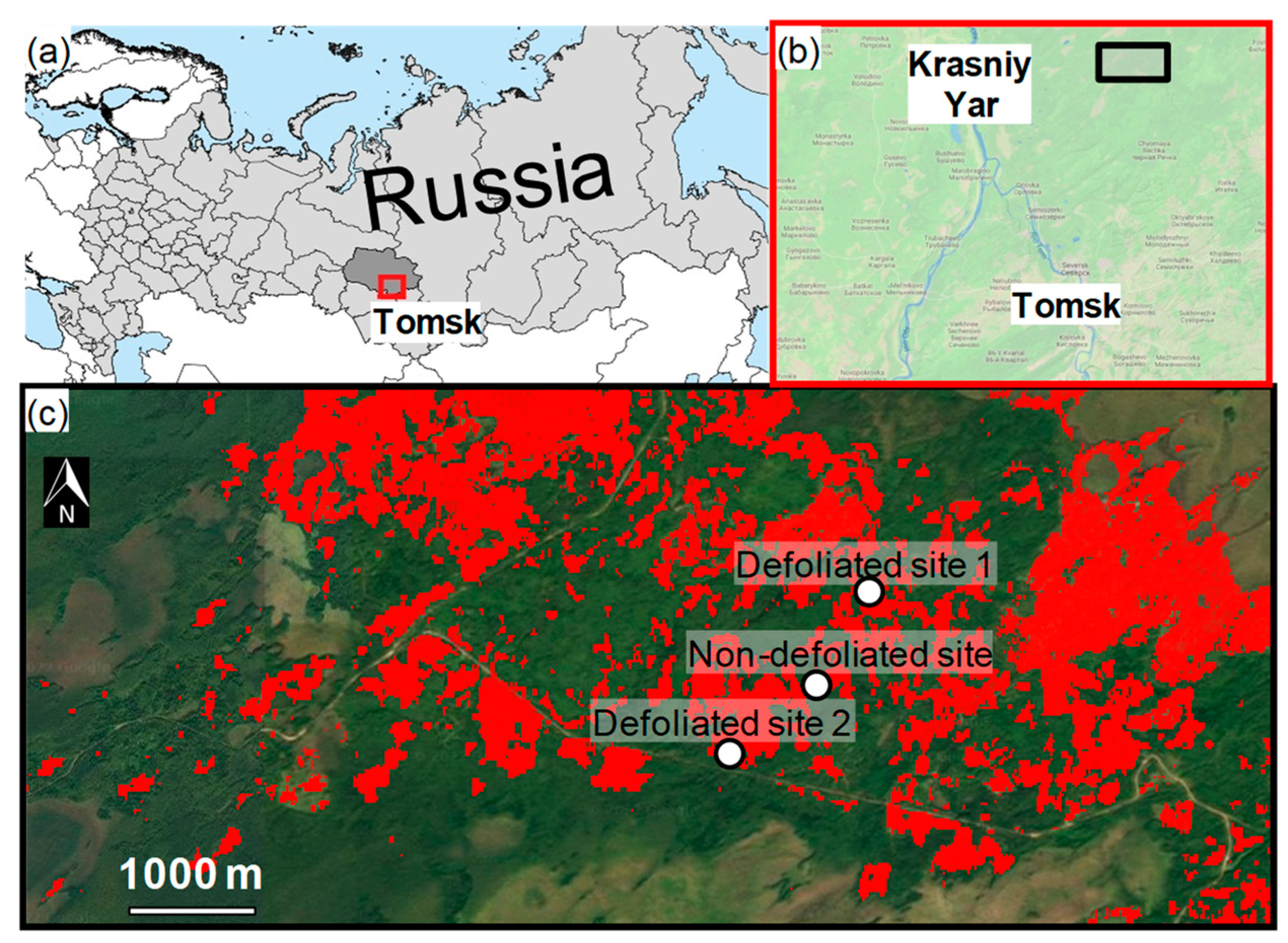
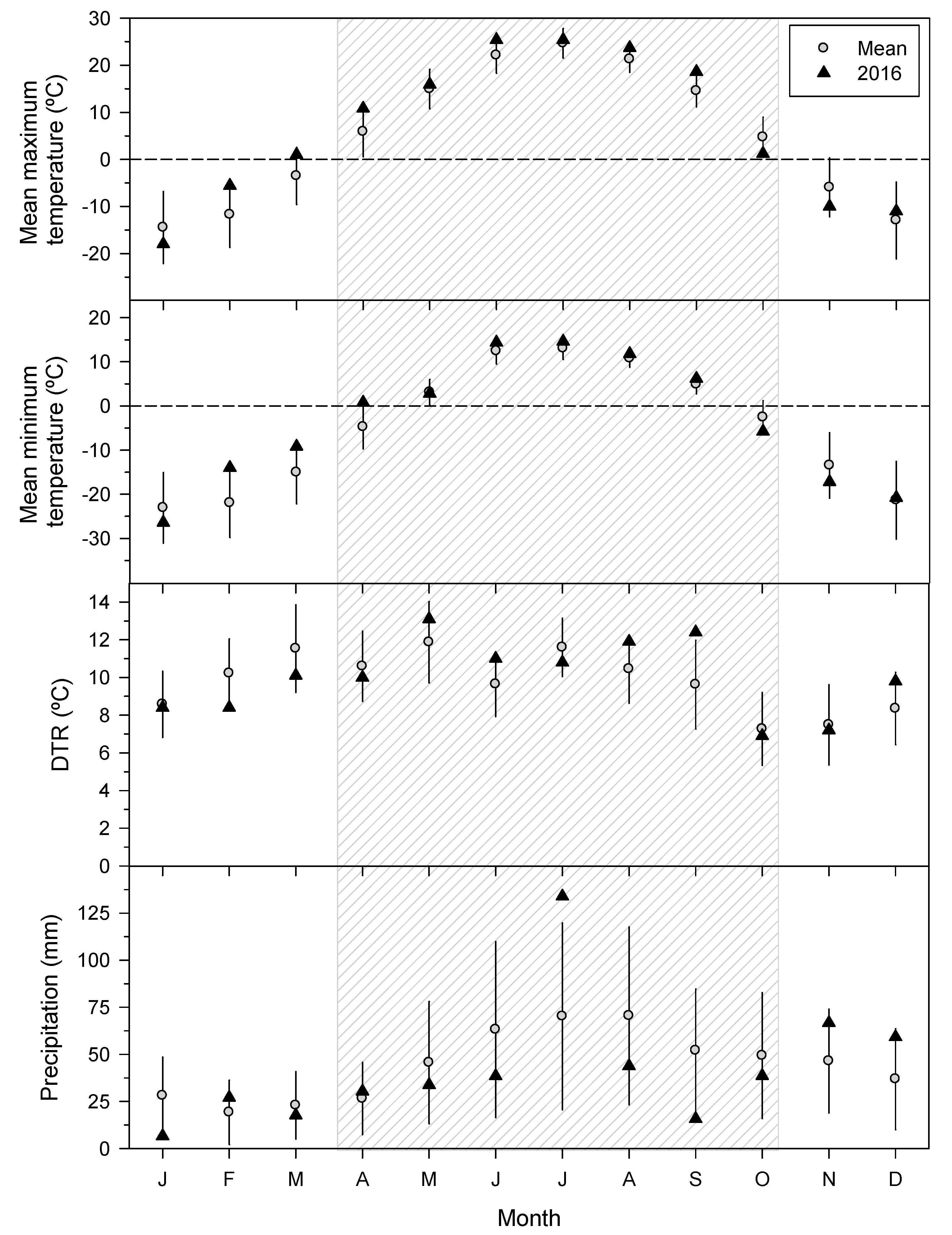
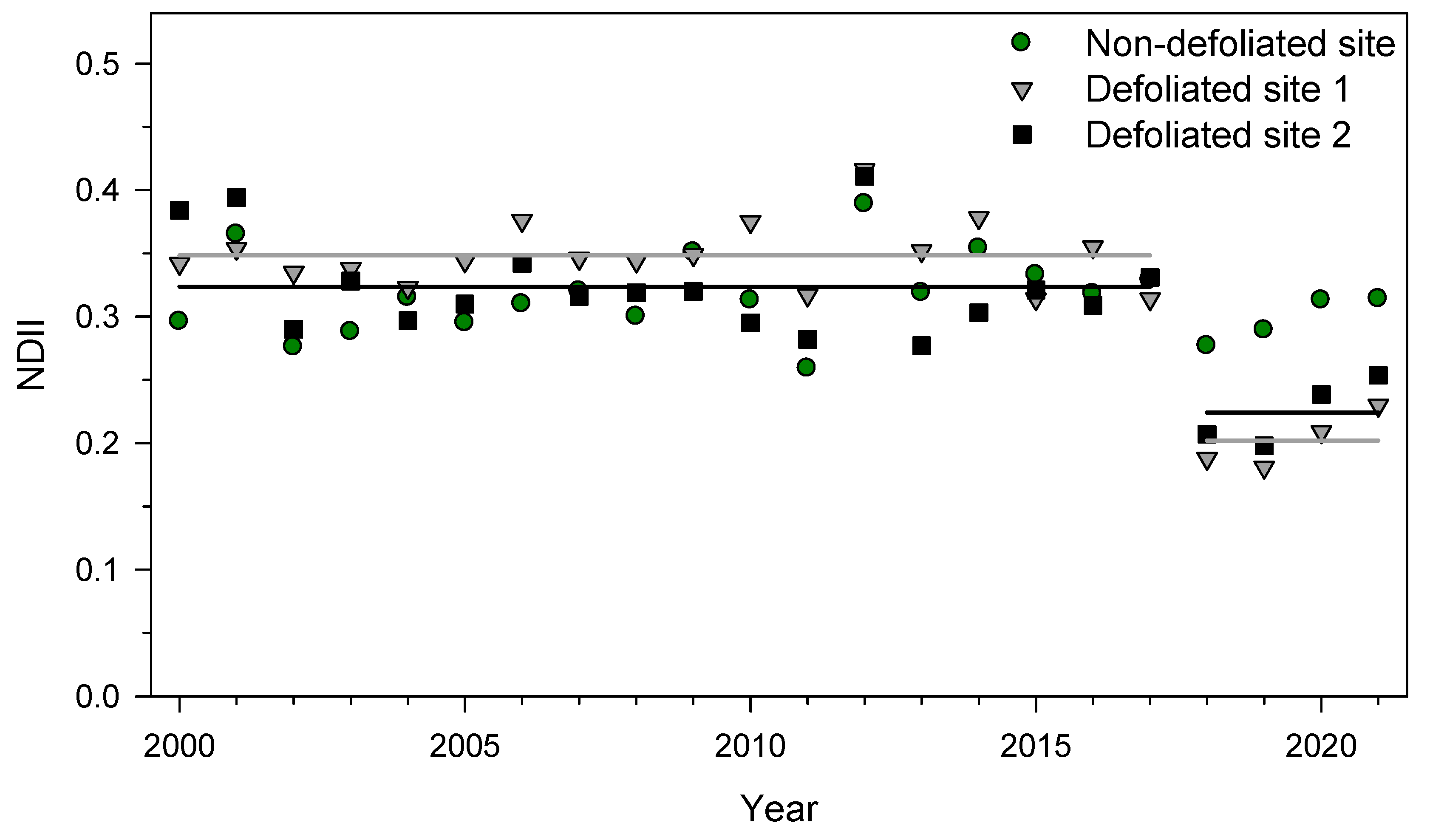
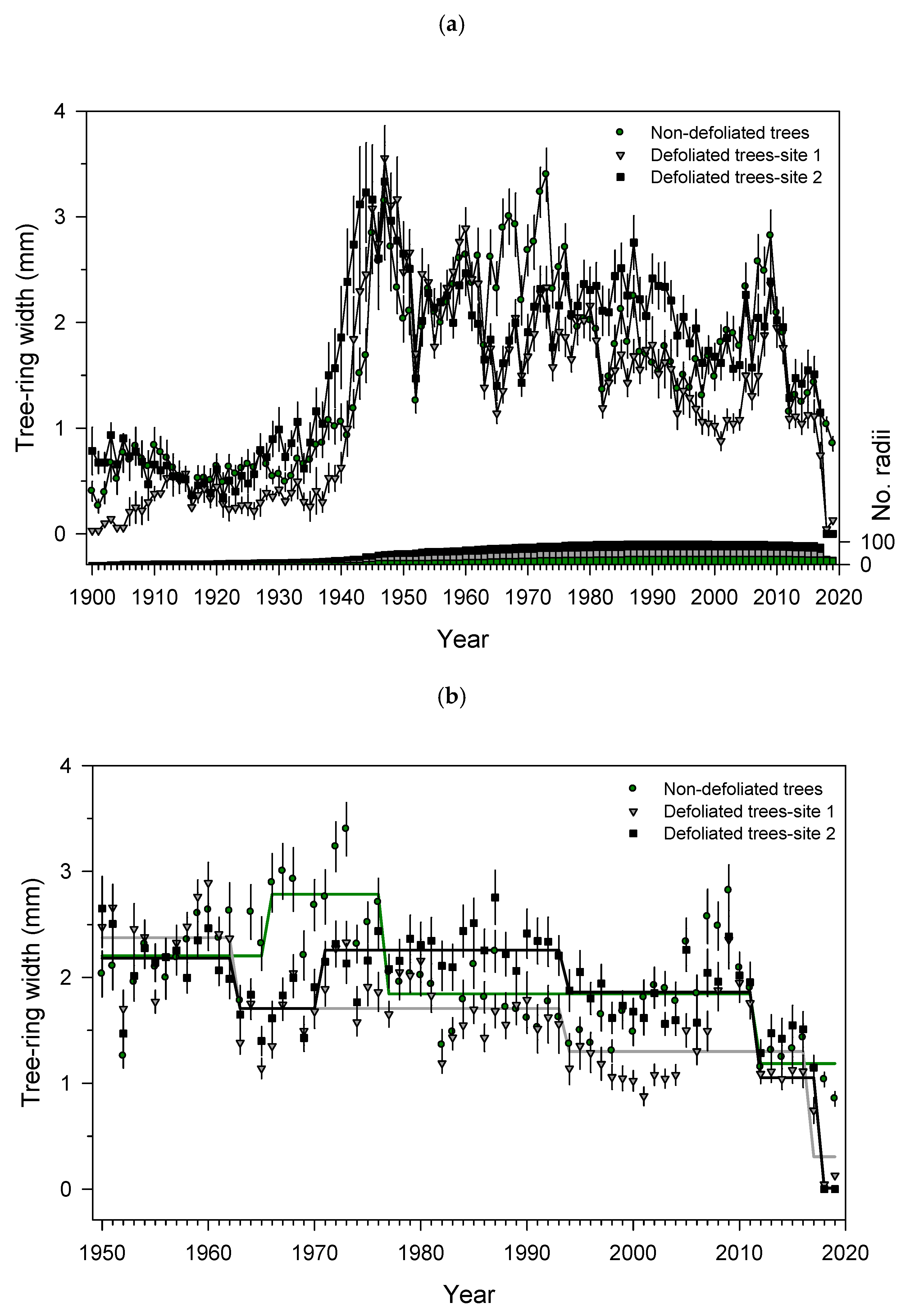
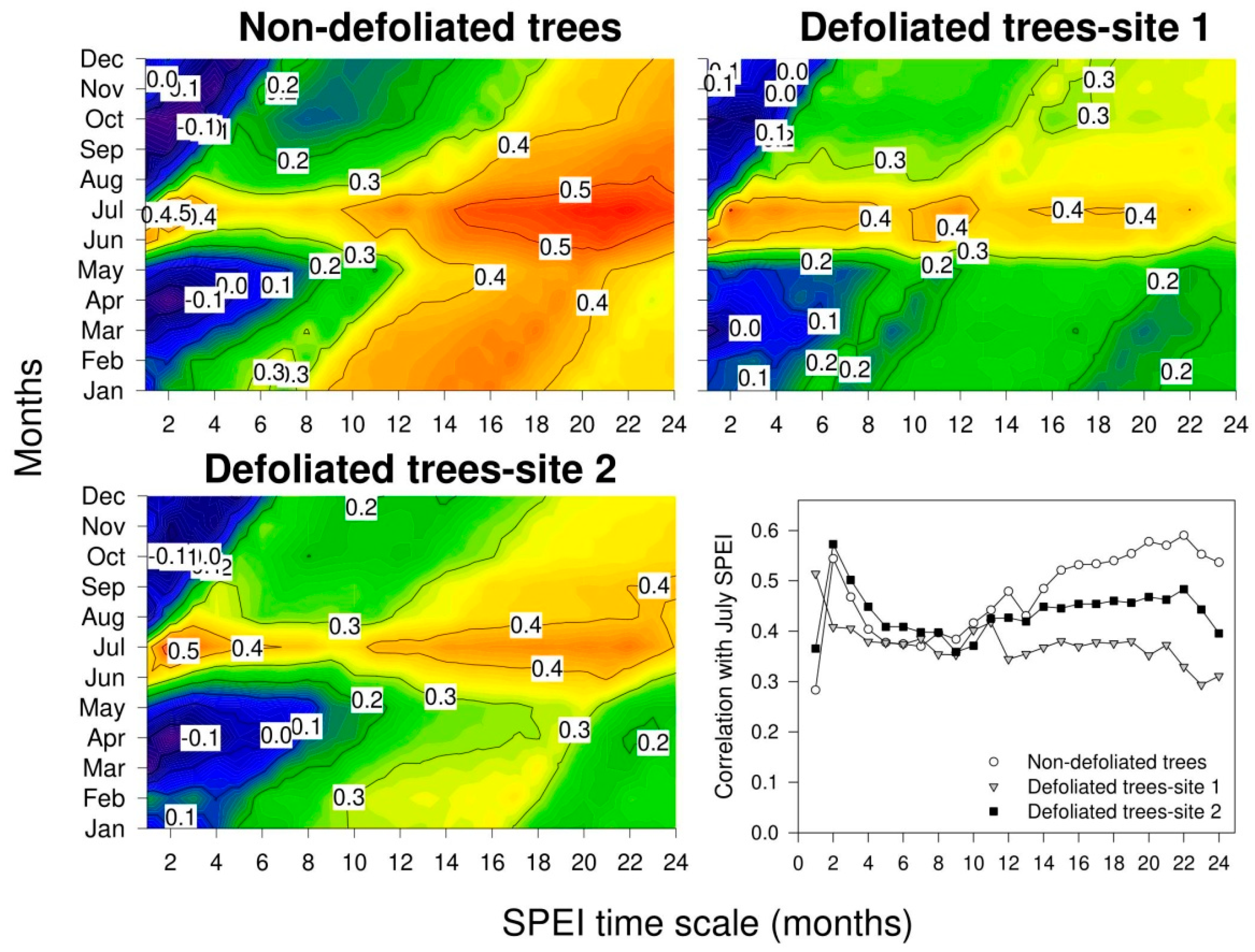
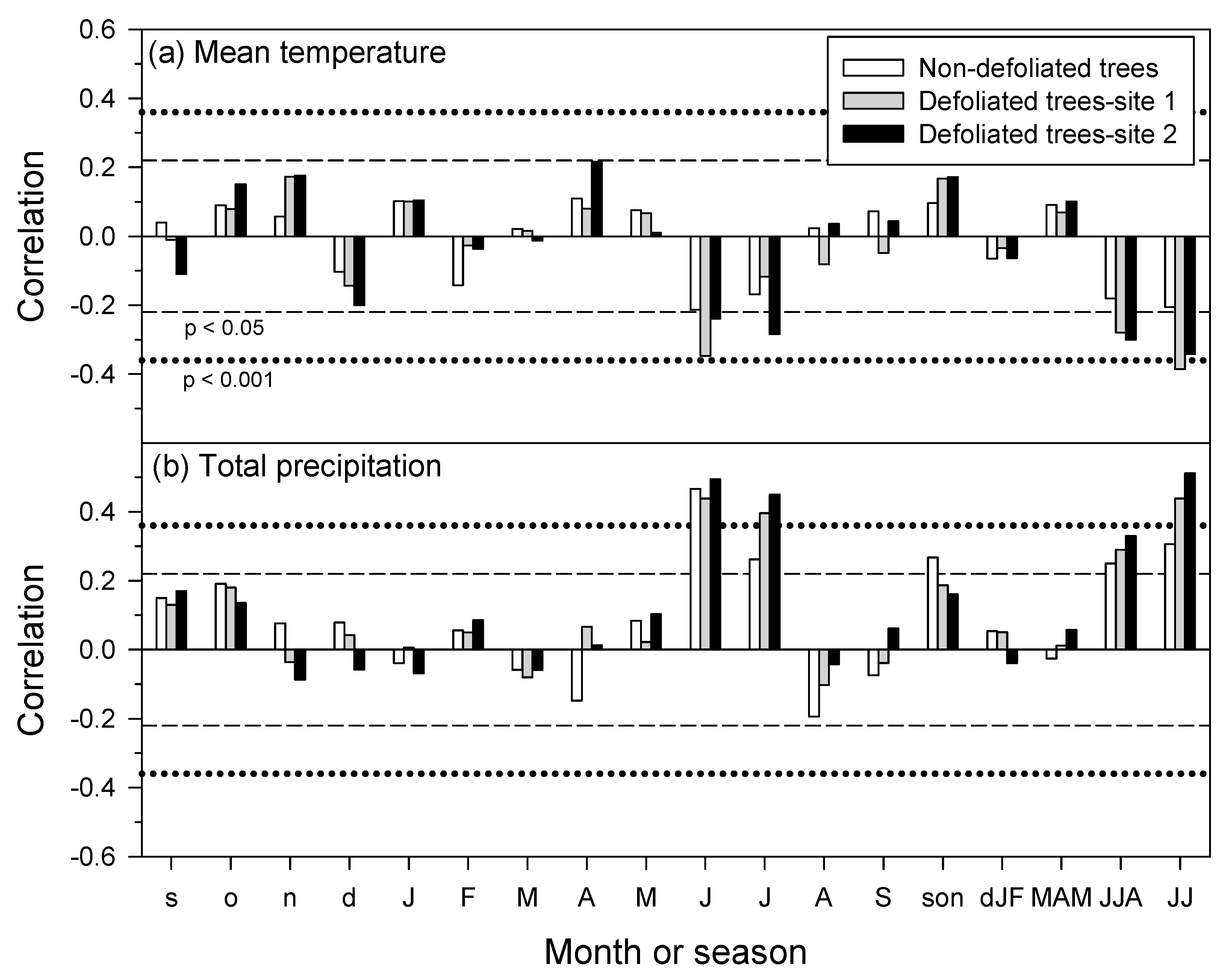
The consecutive occurrence of drought and insect outbreaks could lead to cumulative, negative impacts on boreal forest productivity. To disentangle how both stressors affected productivity, we compared changes in tree canopy cover and radial growth after a severe outbreak in Siberian spruce (Picea obovata) southern taiga forests. Specifically, we studied the impacts of the 2012 severe drought followed by a Siberian silk moth (Dendrolimus sibiricus, hereafter SSM) outbreak, which started in 2016, on spruce forests by comparing one non-defoliated site and two, nearby fully defoliated sites, using remote sensing and tree-ring data. The SSM outbreak caused total defoliation and death of trees in the infested stands. We found a sharp drop (–32%) in the normalized difference infrared index and reduced radial growth in the defoliated sites in 2018. The growth reduction due to the 2012 drought was –37%, whereas it dropped to 4% of pre-outbreak growth in 2018. Tree growth was constrained by warm and dry conditions from June to July, but such a negative effect of summer water shortage was more pronounced in the defoliated sites than in the non-defoliated site. This suggests a predisposition of sites where trees show a higher growth responsivity to drought to SSM-outbreak defoliation. Insect defoliation and drought differently impacted taiga forest productivity since tree cover dropped due to the SSM outbreak, whereas tree growth was reduced either by summer drought or by the SSM outbreak. The impacts of abiotic and biotic stressors on boreal forests could be disentangled by combining measures or proxies of canopy cover and radial growth which also allow the investigation of drought sensitivity predisposes to insect damage.
Keywords: climate warming; defoliation; Dendrolimus sibiricus; lepidoptera; Picea obovata; Siberia climate warming; defoliation; Dendrolimus sibiricus; lepidoptera; Picea obovata; Siberia