Article

Herbivory Rather than Root Competition and Environmental Factors Determines Plant Establishment in Fragmented Forests

1
College of Life and Environmental Science, Wenzhou University, Wenzhou 325035, China
2
Zhejiang Academy of Forestry, Hangzhou 310023, China
3
College of Life Sciences, Zhejiang University, Hangzhou 310058, China
*
Author to whom correspondence should be addressed.
Forests 2022, 13(5), 767; https://doi.org/10.3390/f13050767
Submission received: 10 April 2022 / Revised: 12 May 2022 / Accepted: 14 May 2022 / Published: 16 May 2022
(This article belongs to the Special Issue Biodiversity Conservation in Forest Fragments)

Abstract

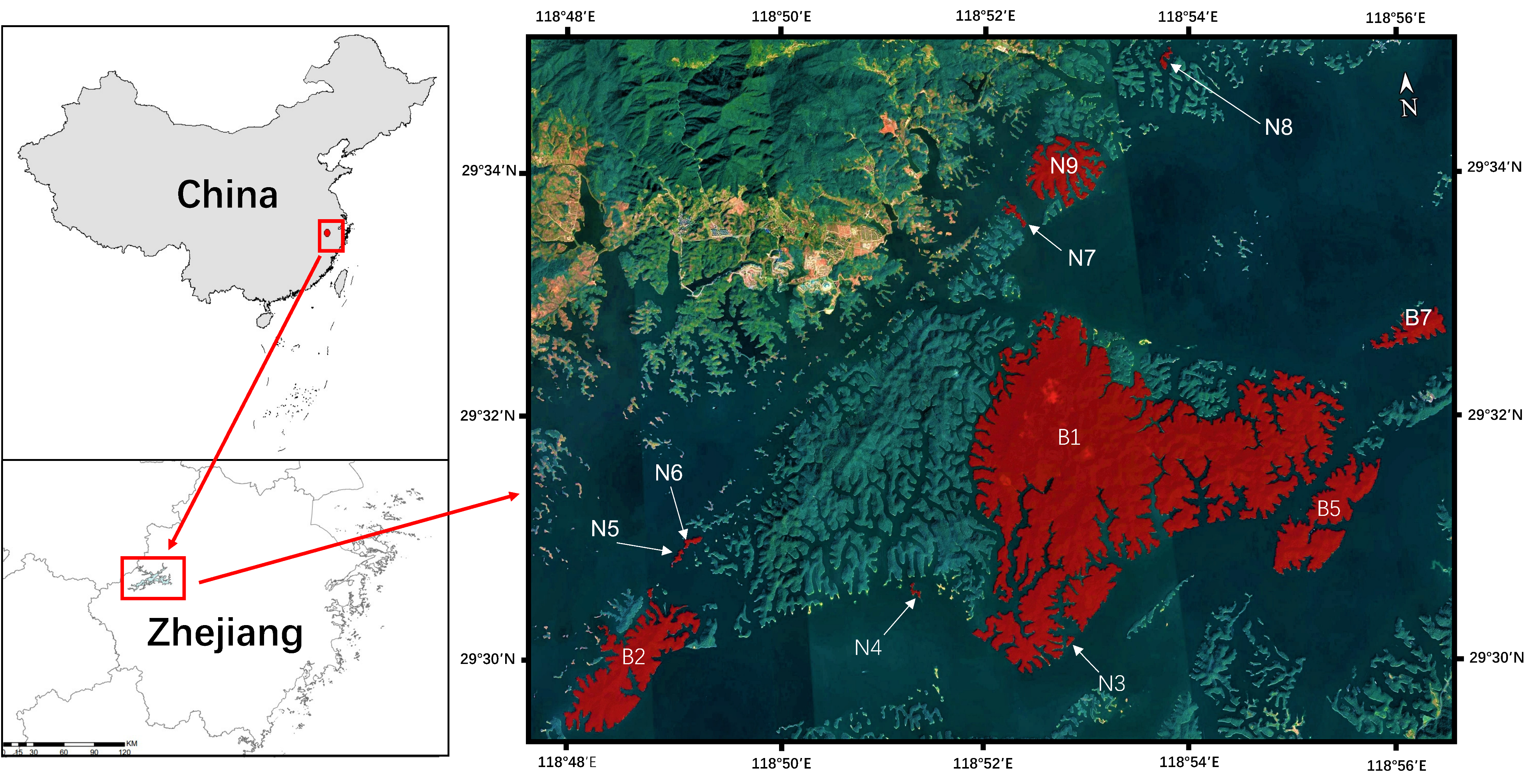
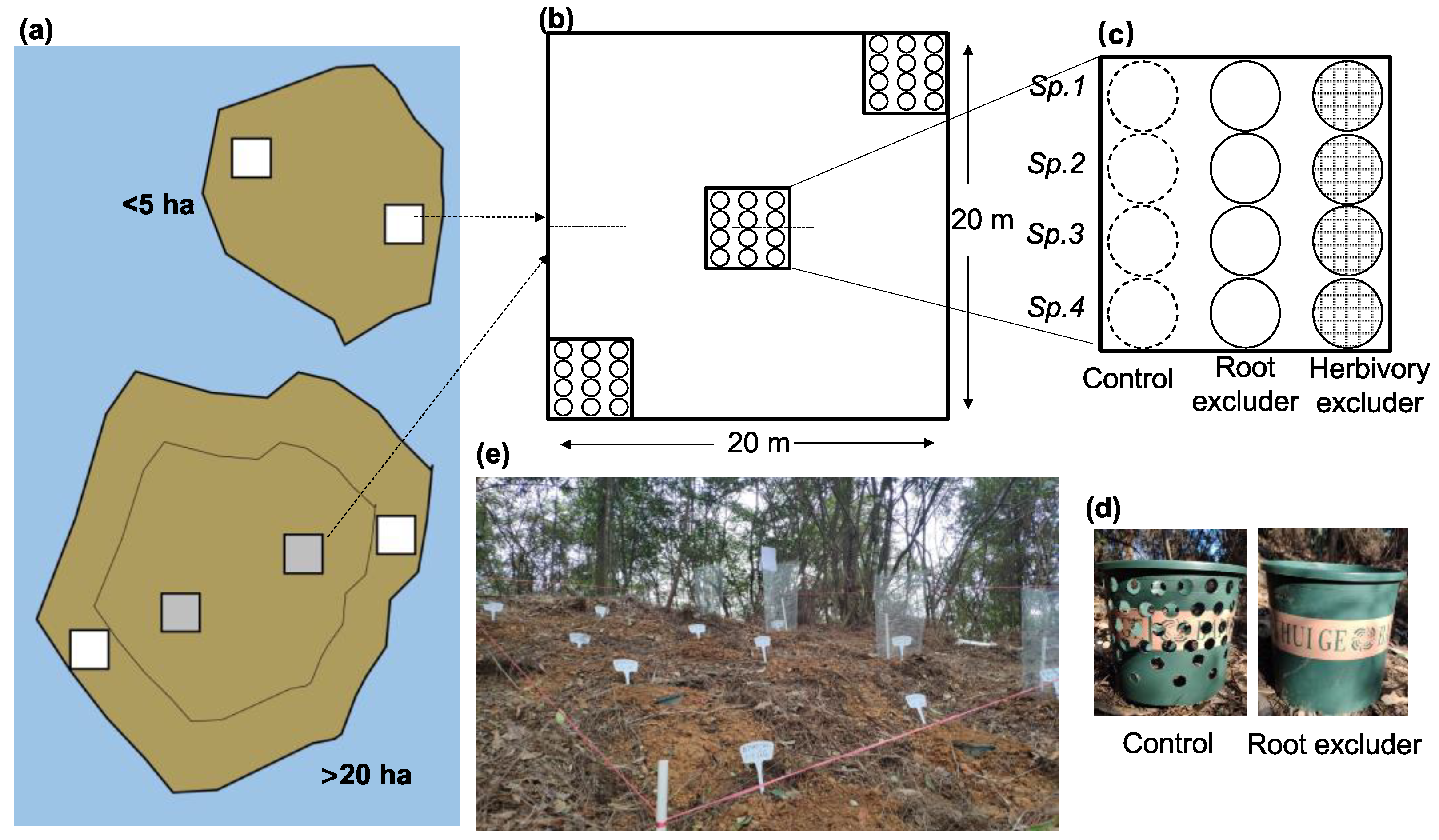
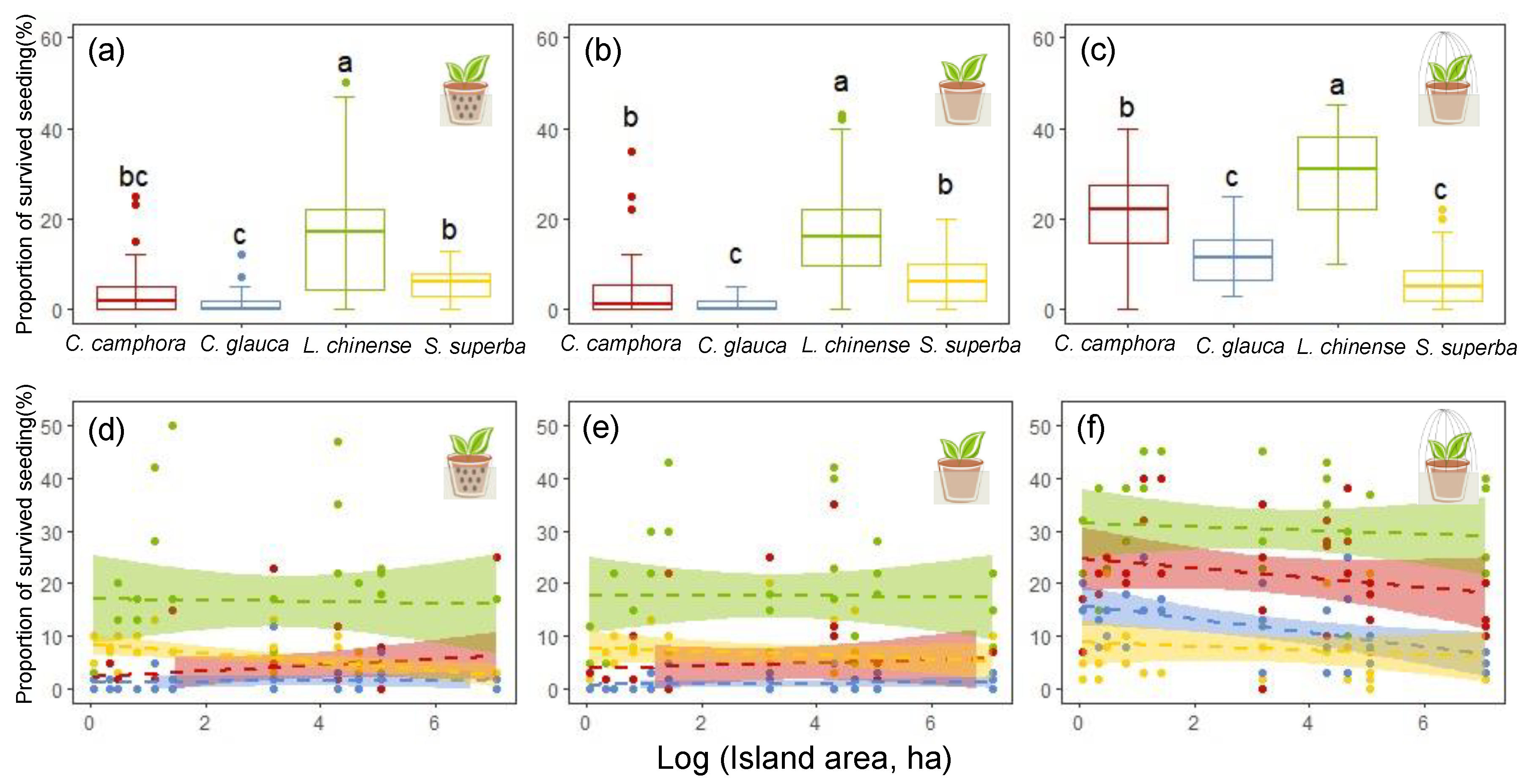
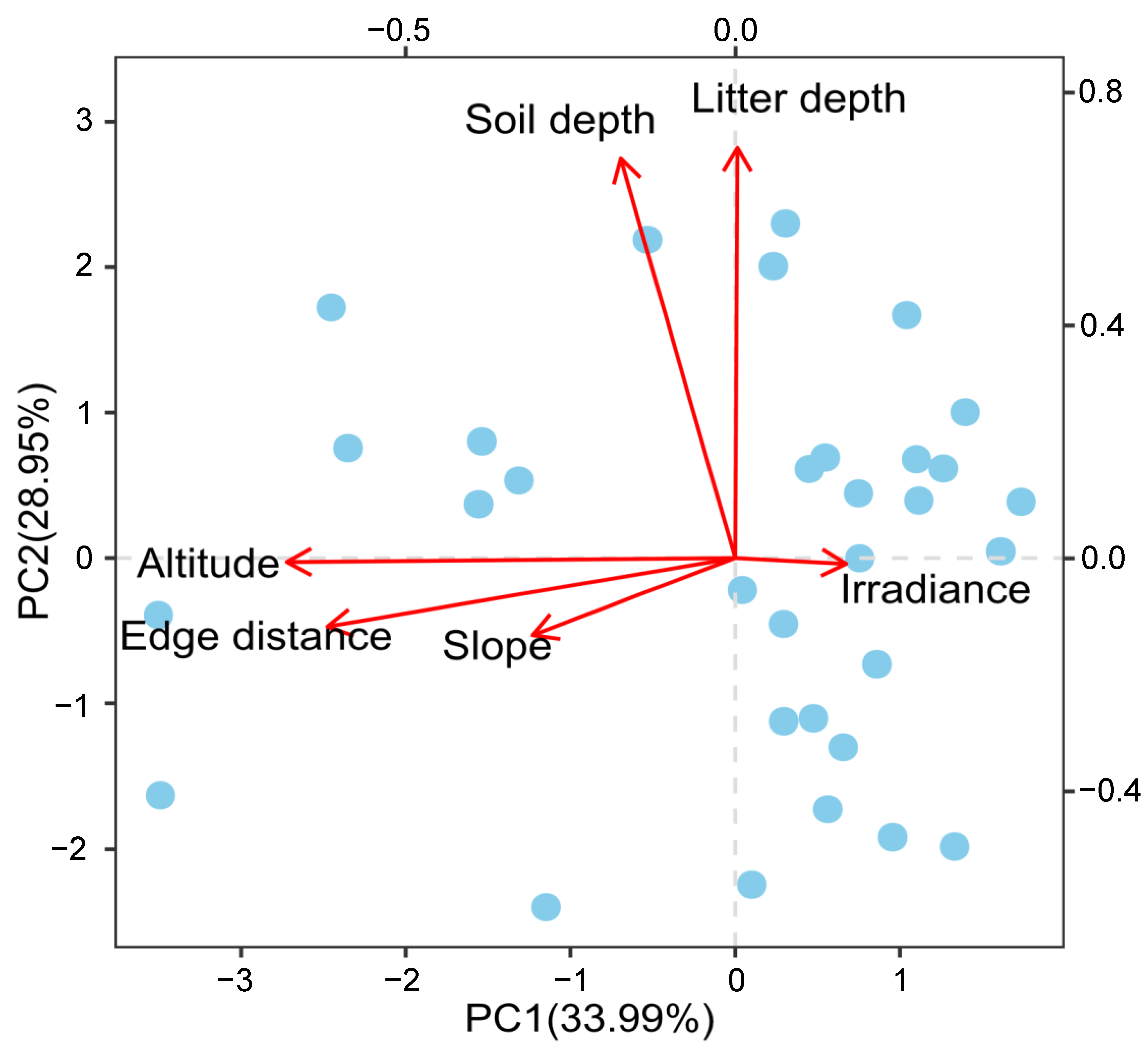
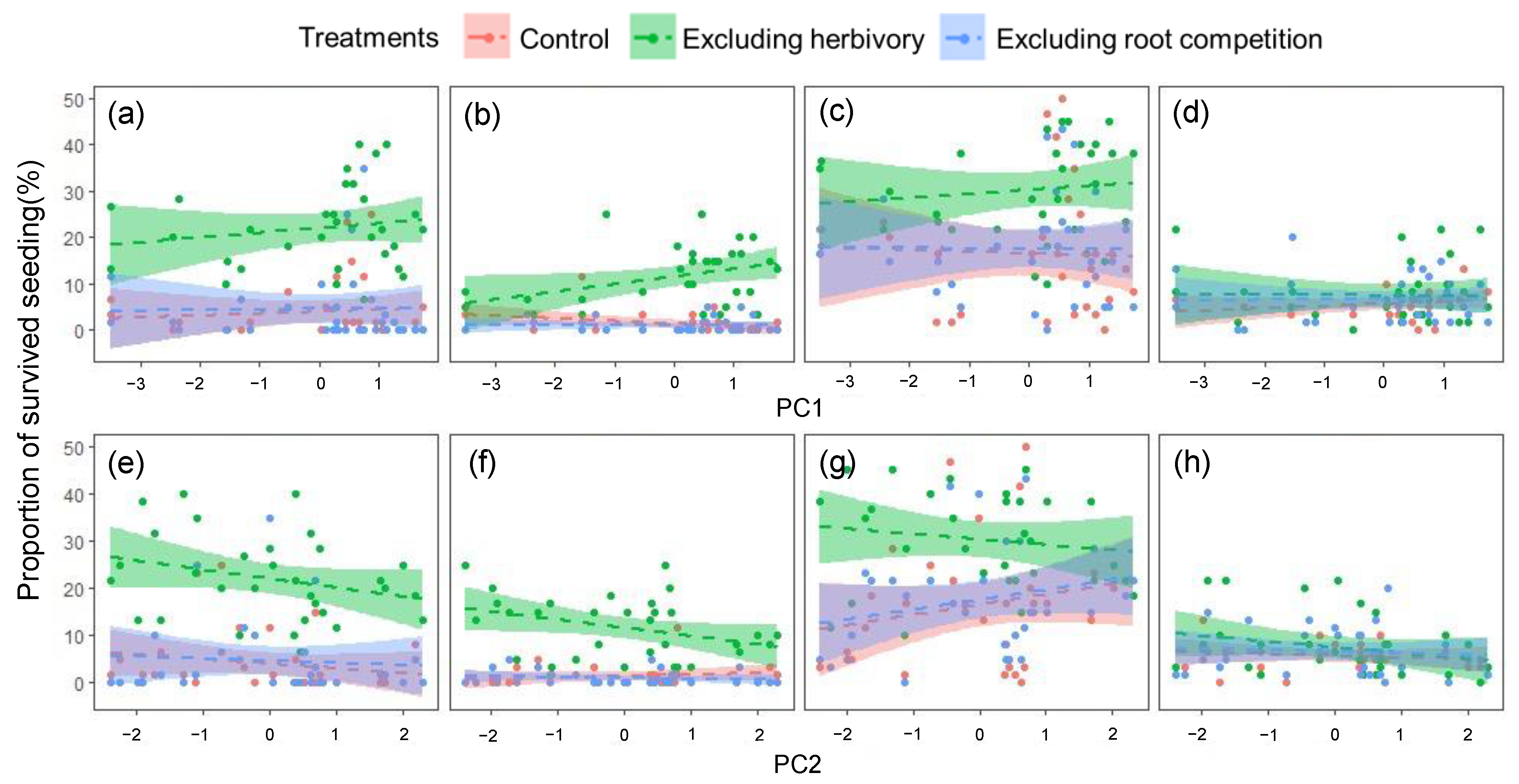
In fragmented forests, many factors can affect plant community establishment, including abiotic factors, below-ground root competition, aboveground seed predation, and seedling herbivory. Little is known about the relative effects of biotic and abiotic factors affecting the initial stage of seedling establishment: seed gemmation and early seedling survival. Here, we carried out a root competition exclusion experiment and a herbivory (including seed predation) exclusion experiment on 11 islands in Thousand Island Lake, China, using four native woody plant species that differed in functional traits (e.g., seed mass and dominance). The dominant species on islands showed the highest seedling survival, and there was no significant linear relationship between the proportion of surviving seedlings and island area under either treatment for any species. Compared to the control and excluding root competition treatments, excluding seed predation and herbivory significantly increased seedling survival after controlling for the environmental factors. However, abiotic factors had no effect on early seedling establishment. Our results suggest that seedling regeneration of rare species in fragmented ecosystems may be limited and that seedlings may be more susceptible to predators and herbivores in fragmented ecosystems. These results have significant implications for the conservation of plant diversity in fragmented forests.
Keywords: seedling recruitments; below-ground competition; herbivory; plant establishment; habitat fragmentation; islands; fragmented forest; biodiversity seedling recruitments; below-ground competition; herbivory; plant establishment; habitat fragmentation; islands; fragmented forest; biodiversity