


Abstract
Aggregate production planning (APP) helps medium-term production, manpower, inventory, and subcontracting decisions match expected demand. Deterministic planning models are generally ineffective in manufacturing due to demand and operational variability. Fuzzy linear programming (FLP) has been frequently used to describe imprecision using membership functions and satisfaction levels. Despite its versatility, accurate approaches for solving multi-objective FLP-based APP models become computationally expensive as issue size and complexity increase. Thus, metaheuristic algorithms are widely used, although many still have premature convergence, parameter sensitivity, and restricted scalability. This study investigates the Narwhal Optimization Algorithm (NO) as a population-based metaheuristic framework. It proposes two hybrid variants to improve convergence reliability and constraint-handling capability: NO combined with the Super Modified Simplex Method (SMS) for local refinement and NO integrated with a Runge–Kutta-based optimizer (RK) for search stability. These hybrid techniques are tested for solution quality, convergence behavior, and robustness using eight response-surface benchmark functions and four constrained optimization problems. A real-parameter fuzzy APP problem with three goods and a six-month planning horizon uses the best variations. The Elevator Kinematic Optimization (EKO) algorithm, chosen for its compliance with the same mathematical framework and consistent parameter values, is used to compare the offered solutions fairly and controlled. Fuzzy programming uses a max–min satisfaction framework with linear membership functions from positive and negative ideal solutions. Computational experiments assess solution quality, stability, and efficiency for nominal and ±10% demand disturbances. The hybrid NO variants better resist premature convergence, stabilize solutions, and satisfy users more than the original NO and benchmark approaches. For small and medium-sized organizations in dynamic situations, hybrid narwhal-based optimization appears to be a reliable and scalable decision-support solution for APP problems under uncertainty.
1. Introduction
Aggregate production planning (APP) is a critical decision layer in logistics operations and supply chain management. It establishes feasible levels of production, workforce, inventory, overtime, and subcontracting over a medium-term horizon, thereby connecting long-term strategic intent with short-term execution. In practice, APPs are frequently designed to span approximately 6 months to more than 1 year, allowing for the preservation of market responsiveness while capturing capacity and workforce dynamics. Firms can enhance service performance, stabilize resource utilization, and reduce avoidable costs when APP is executed effectively. Conversely, when executed poorly, the consequences are typically evident in the form of excessive overtime, inventory swings, backlog, avoidable subcontracting, and weakened competitiveness. These challenges are particularly severe for small and medium-sized enterprises (SMEs), which typically operate with tighter capacity reserves and less tolerance for inefficiency. Consequently, the quality of planning is a critical factor in determining resilience and profitability.
APP is intrinsically challenging due to the uncertainty, imprecision, and time-varying nature of actual decision environments, despite its significance. Demand forecasts are rarely precise; supply availability may vacillate; workforce attendance and productivity may fluctuate; and unit costs may vary in response to energy prices and material volatility. The resulting plans may be brittle when implemented, due to the assumption of precise parameters and concise constraints in classical deterministic linear programming formulations. The fuzzy set theory has been widely adopted to represent uncertainty and vagueness through membership functions rather than single-point inputs, thereby addressing the mismatch between model assumptions and operational reality. The incorporation of aspiration levels and tolerances into APP models, commonly referred to as fuzzy linear programming (FLP), is enabled by integrating fuzzy theory with linear programming. This approach provides a more realistic representation of managerial preferences and permissible deviations when information is incomplete or ambiguous.
Nevertheless, FLP-based APPs impose their own computational burden. Typically, the solution to a multi-objective fuzzy APP is achieved by converting objectives into membership functions and selecting a plan that maximizes the minimal satisfaction across objectives (a max–min decision principle). Although this method is conceptually appealing and practically interpretable, the cost of solving large and complex FLP instances using exact methods such as Simplex or Branch-and-Bound can be high, particularly when the decision space is large or when repeated re-optimizations are required for scenario analysis. This constraint has resulted in a growing dependence on metaheuristic optimization algorithms by researchers. These algorithms are intended to provide near-optimal solutions for complex and high-dimensional problems in a reasonable amount of time. However, the robustness and repeatability of numerous metaheuristics commonly employed in practical planning applications can be compromised by premature convergence, loss of diversity, and stagnation in local optima. These metaheuristics include genetic algorithms, particle swarm optimization, and harmony search.
This paper focuses on the Narwhal Optimization Algorithm (NO), a population-based metaheuristic inspired by the foraging and social interaction behaviors of narwhals, to address these challenges. The rationale for incorporating NO into APP is its intended equilibrium between exploration and exploitation, which is particularly important when the feasible region is influenced by numerous operational constraints and the objectives compete. Nevertheless, although NO has exhibited promising search behavior in general optimization contexts, its application to APP problems under uncertainty has not been thoroughly examined. Additionally, its baseline search dynamics may still be subject to the well-known risks of local entrapment and slow fine-tuning near high-quality solutions. This reveals a clear research gap: a narwhal-based solution approach is required that is both exploratory enough to prevent local minima and more exploitative and accurate once promising regions are identified. This is particularly important in fuzzy multi-objective structures, where constraint satisfaction and trade-offs must be carefully managed.
To resolve this discrepancy, we propose and evaluate hybrid narwhal-based optimizers that integrate mathematically grounded search operators and complementary local optimization into the NO framework. The initial hybrid method combines NO with a Super Modified Simplex (SMS) method, which improves the traditional simplex search by employing a refined update strategy based on polynomial interpolation to more effectively leverage local curvature information around candidate solutions. The second hybrid combines a Runge–Kutta-based optimizer operator with NO, utilizing the slope-based search logic of the Runge–Kutta numerical method to enhance movement decisions and prevent premature convergence. The Runge–Kutta optimizer family is inspired by the notion that slope variation, which is computed through Runge–Kutta updates, can function as an effective search mechanism for global optimization. This mechanism is further enhanced by the inclusion of mechanisms that prevent local optima and enhance convergence speed. It is anticipated that integrating such an operator into NO will enhance convergence accuracy and stability without compromising the population-based search advantages that render NO appealing for complex planning models.
A fuzzy programming approach to a multi-objective APP model developed over a six-month planning horizon serves as the methodological foundation of this study. The APP model takes into account operational decisions, including workforce levels, hiring and redundancies, production quantities, inventory, overtime, subcontracting, and backlog/stock-out variables, within the framework of constraints that enforce demand-inventory balance and capacity/workforce feasibility. In the fuzzy formulation, a linear membership function is used to represent each objective, which maps objective values to satisfaction grades. This function is calibrated using positive-ideal and negative-ideal solutions, as well as tolerance intervals. The overall decision is made by optimizing the minimum satisfaction level across objectives, resulting in a single compromise plan that reflects conservative preference aggregation in uncertain environments. The computational implementation is conducted in Visual C#2018 and employs the same fuzzy membership quantification logic for the algorithmic comparisons.
Despite significant progress in fuzzy aggregate production planning (APP), existing decision-support models still face several performance limitations. Many approaches rely on classical optimization or standalone metaheuristics, which often struggle with scalability when handling large and complex problem structures. In addition, these methods are prone to premature convergence and may fail to maintain an effective balance between exploration and exploitation, leading to suboptimal solutions under uncertain environments. Furthermore, some models lack robustness and consistency across multiple runs, limiting their practical applicability in real-world decision-making contexts. To address these limitations, this study proposes a hybrid Narwhal Optimization Algorithm (NO) framework that integrates complementary mechanisms to enhance performance. Specifically, random search is incorporated to improve diversification, the Super Modified Simplex Method (SMS) is used for local refinement and solution accuracy, and Runge–Kutta-based operators are applied to enhance convergence stability. These hybrid strategies collectively enable the proposed model to achieve improved solution quality, robustness, and reliability compared to existing approaches for solving fuzzy APP problems.
The experimental design of the paper is designed to distinguish between algorithmic validity and application performance. Initially, we assess the search quality, stability across replications, and constraint-handling capability of the original NO and its hybrid variants on eight response-surface test functions and four constrained test problems in controlled environments. This phase is employed to determine the most effective two narwhal-based strategies, with a focus on methods that exhibit low variability across trials and competitive objective values. Secondly, the most effective methods are implemented in the fuzzy APP case study with real-world parameters, including nominal demand and ±10% demand perturbations, characterized as normally distributed deviations around the nominal mean. This scenario design reflects the operational reality that SMEs encounter, in which a moderate forecast error can significantly alter subcontracting, overtime, and inventory decisions. It also enables us to compare the extent to which algorithmic robustness is translated into planning robustness.
This paper makes both theoretical and practical contributions. It theoretically expands the literature on hybrid metaheuristics for uncertain production planning by creating and evaluating narwhal-based hybrids that integrate population intelligence with structured local search (SMS) and mathematically grounded Runge–Kutta search operators. Practically, it provides a decision-support approach for fuzzy APP that is implementable and can be integrated into SME planning processes. This approach allows managers to achieve stable compromise plans in the face of demand uncertainty, while simultaneously controlling production and subcontracting-related costs through satisfaction-based fuzzy optimization. The study also provides a transparent pathway for practitioners to justify method choice beyond single-case tuning by explicitly coupling benchmark-based algorithm selection to a real fuzzy APP deployment.
The remainder of this paper is organized as follows. Section 2 reviews the relevant literature. Section 3 presents the fuzzy multi-objective APP model and its transformation into a fuzzy programming framework based on membership functions and the max–min satisfaction formulation. Section 4 describes the original NO and details the proposed hybrid mechanisms, including the Runge–Kutta operator integration and the SMS-based local refinement strategy. Section 5 explains the experimental design, covering the benchmark test functions, constrained engineering problems, parameter settings, and performance evaluation criteria, and reports and discusses the computational results for both the benchmarking study and the fuzzy APP case under nominal demand and ±10% demand perturbations. Finally, Section 6 concludes the paper and outlines directions for future research on hybrid narwhal-based optimization for complex fuzzy planning problems.
2. Literature Review
Aggregate production planning (APP) has long been recognized as a central tactical decision layer that translates strategic capacity decisions into implementable medium-term plans, typically balancing workforce, inventory, overtime, and subcontracting to meet demand efficiently. Because APP sits at the interface of forecasting, capacity, and cost trade-offs, uncertainty in demand, cost parameters, and execution quality often undermines the usefulness of purely deterministic linear programming solutions. A comprehensive synthesis of this evolution is provided by Jamalnia et al. [1], who document how modern APP research has shifted from crisp deterministic formulations toward uncertainty-aware models and hybrid solution strategies, highlighting that real industrial APP problems increasingly require both realistic uncertainty representation and scalable optimization methods.
Within an uncertainty-aware APP, fuzzy modeling has become a prominent approach because it captures imprecision through satisfaction levels rather than strict deterministic targets (Liu and Yang [2]). In automotive planning, Djordjevic and Petrovic [3] demonstrate how fuzzy linear programming supports APP decisions under ambiguous parameters, enabling more flexible plans than traditional formulations. More recent work has extended fuzzy APP into hybrid multi-objective forms and broader supply chain contexts. For example, Ghanbarzadeh-Shams et al. [4] integrate fuzzy multi-objective planning with reverse logistics, reflecting the growing need to coordinate production decisions with returns and sustainability considerations. Complementary to fuzzy uncertainty, stochastic programming remains a strong alternative when distributions can be specified. Gómez-Rocha and Hernández-Gress [5] propose a stochastic APP model for multiple products and strengthen tractability via valid inequalities, indicating that mathematical tightening can improve solvability but does not eliminate computational complexity as the model scales. In parallel, robust and scenario-based planning frameworks have emerged to hedge against uncertainty without requiring full probabilistic specification. Jang and Chung [6] address implementation error through a robust optimization perspective supported by bi-level particle swarm optimization, while Choopani Asgarabad et al. [7] develop a scenario-based green APP model for multi-site systems with workforce transferring, reflecting practical realities in distributed manufacturing. In a similar sustainability direction, Tirkolaee et al. [8] and Qasim et al. [9] embed environmental and health-related considerations into a multi-objective APP, demonstrating that APP is increasingly evaluated not only by cost but also by robust, sustainable performance criteria. Beyond classical manufacturing objectives, the scope of APP has also broadened toward energy planning. Leseure [10] reframes APP ideas into aggregate energy industrial consumption planning, emphasizing that the “aggregate planning” concept is transferable to resource planning under modern energy constraints.
Although uncertainty-aware and sustainability-aware formulations have advanced substantially, solution methodology remains a key challenge. For multi-objective APP, evolutionary algorithms and local-search hybrids are frequently adopted to navigate large, nonconvex, or multi-criteria decision spaces. Liu and Yang [11] propose a local search-based genetic algorithm for multi-product APP, and Liu and Yang [2] further extend the setting to include early and late delivery decisions, reinforcing the need for specialized search mechanisms to manage complex trade-offs. In decision-support settings, some studies avoid heavy optimization by employing multi-criteria methods for plan selection. Yu et al. [12] apply an extended TOPSIS approach to APP, showing that ranking-based approaches can be useful when alternative plans are available or can be generated efficiently. Software and implementation aspects are also gaining attention; Miranda-Meza et al. [13] develop an icon-based methodology for APP software prototyping, highlighting the need for practical tools that translate models into usable decision platforms. At the interface of forecasting and planning, Anindita and Yotenka [14] investigate integrated forecasting and aggregate planning with policy controls such as overtime and subcontracting, underscoring how uncertainty handling and operational levers must be considered jointly.
In recent decades, metaheuristic optimization algorithms have become powerful tools for handling nonlinear, multimodal, and large-scale optimization problems (Pamplona et al. [15] and Ivanovski et al. [16]). The Narwhal Optimizer (NO) is a novel nature-inspired algorithm. Using narwhal hunting and echolocation characteristics as inspiration, Masadeh et al. [17] developed the Narwhal Optimization Algorithm, which outperformed PSO, GA, GWO, and WOA on 30 benchmark functions. Genetic Algorithms (GA) are refined for complex applications in evolutionary-based approaches. Tian and He [18] suggested an improved quantum GA with adaptive dynamic rotation to overcome premature convergence in spatial optimization, obtaining faster convergence than the conventional GA. An improved GA using adaptive decoding and disjunctive graphs for robot cell scheduling by Teng et al. [19] significantly reduced the makespan. Also, Genetic Programming (GP) has improved interpretability and performance. Meng et al. [20] suggested a distance-based GP classifier to increase performance on imbalanced datasets, while de Vries et al. [21] introduced memory-based symbolic rules for control tasks.
Differential Evolution (DE) and related methods currently emphasize hybridization. Pourmahmoud et al. [22] scaled community detection problems utilizing DE, Mountain Gazelle Optimizer, and deep learning. Fang et al. [23] enhanced the Electromagnetism-like Mechanism algorithm for distant sensing screening in physics-inspired optimization, demonstrating robustness and global search efficiency. Khoudry [24] optimized distributed generator location with the Equilibrium Optimizer, reducing power loss. To prevent stagnation in high-dimensional issues, Chauhan [25] improved the Gravitational Search Algorithm with restart mechanisms. Early deterministic physics-based techniques, such as Central Force Optimization, Formato [26] presented gravitational analogies for multidimensional search. Later, Luangpaiboon, Aungkulanon, and Montemanni [27] introduced a decision-support tool based on the Elevator Kinematic Optimization (EKO) algorithm, integrating evolutionary computation with Taguchi experimental design to optimize multi-response manufacturing processes. Their results showed that the proposed method could generate more effective parameter settings and better optimization performance than traditional Taguchi approaches, highlighting the effectiveness of hybrid metaheuristic techniques in intelligent manufacturing systems.
Biologically inspired swarm-based approaches are influential. Tree Social Relations Optimization (TSR) by Mahmoud et al. [28] emphasizes hierarchical collective behavior for continuous and discrete issues. Misaghi and Yaghoobi [29] enhanced both the convergence speed and solution quality of Invasive Weed Optimization (IWO) using chaos theory. Many reference Mirjalili and Lewis‘s Whale Optimization Algorithm (WOA) [30], inspired by bubble-net hunting. Harris Hawks Optimization (HHO) by Heidari et al. [31] outperformed engineering benchmarks globally. Swarm-based frameworks, including Ant Colony Optimization (Li et al., [32]), Particle Swarm Optimization (Jhariya, [33]), and Artificial Bee Colony versions (Dong and Zhang, [34]), have consistently hybridized to increase convergence and scalability. Luangpaiboon et al. [35] proposed the Steepest Ant Sense Algorithm, a hybrid optimization approach combining an ant colony search mechanism with a steepest ascent method to optimize process parameters in industrial applications. The method demonstrated improved production precision and reduced product failure rates in processes such as stealth laser dicing and grease filling systems, outperforming conventional response surface methods.
Also popular were human-behavior-inspired algorithms. Mousavirad et al. [36] improved Human Mental Search (HMS) with global-best guiding and clustering techniques, and Mousavirad et al. [37] strengthened its theoretical foundation with a Markov-based convergence analysis. Intelligent Water Drops (Shah-Hosseini, [38]) used water-flow-inspired combinatorial search. Cellular and immunological methods have expanded the area. The classical global optimization approach, Simulated Annealing, works well (Delahaye et al., [39]). Deep reinforcement learning and Artificial Immune System algorithms optimize supply chains (Achamrah et al., [40]). Bacterial Foraging Optimization (Das et al., [41]; Chen et al., [42]) developed organism-based chemotaxis-inspired search techniques. Deterministic immune-based optimization options were available in the Dendritic Cell Algorithm (Greensmith and Aickelin, [43]). Finally, Endosymbiotic Evolutionary Optimization (Kim et al., [44]) improved variety and adaptability through symbiotic coevolution.
At the same time, evidence across optimization studies suggests that many metaheuristic approaches still suffer from well-known limitations in industrial-scale problems: high computational cost due to repeated fitness evaluation, sensitivity to parameter settings and initialization, premature convergence, and inconsistent performance across runs. Debnath et al. [45] explicitly compare particle swarm optimization and simulated annealing for APP optimization, illustrating that algorithm choice materially affects solution quality and computational efficiency, and that no single classical method dominates across settings. This observation aligns with broader optimization research outside APP. For example, Zhao et al. [46] show that adaptive hybrid mutation strategies can improve PSO performance in constrained optimization, suggesting that hybridization is often necessary to maintain both diversity and convergence strength. This methodological trend motivates the design of new hybrid metaheuristics that combine complementary operators to strengthen exploration, exploitation, and stability.
In this context, the Narwhal Optimizer offers a biologically inspired balance between exploration and exploitation, and it has been shown to solve complex optimization problems effectively (Masadeh et al., [17]). However, as with many recent nature-inspired optimizers, performance can be further improved by incorporating principled local refinement and trajectory-based search operators. The Super Modified Simplex Method (SMS) provides one such local-refinement mechanism; it is designed to improve search precision using a modified simplex strategy and has been applied successfully in optimization settings where response surfaces and process parameters must be tuned efficiently (Morgan et al., [47]; Kamoun et al., [48]). Separately, Runge–Kutta-inspired optimization has gained attention as a structured mechanism for generating stable and effective search steps, and recent surveys emphasize its broad applicability and the value of its variants for improving convergence behavior (Khurma, [49]). These developments suggest that combining NO with SMS and Runge–Kutta operators can plausibly address common weaknesses of metaheuristics—particularly premature convergence and inconsistent run-to-run behavior—while preserving NO’s global search capability.
Despite the rich literature on fuzzy APP formulations and the extensive use of metaheuristics, a clear gap remains at the intersection of three needs: (i) a fuzzy programming framework that yields interpretable satisfaction-based compromise solutions under demand uncertainty; (ii) a modern metaheuristic backbone capable of exploring large feasible regions effectively; and (iii) hybrid mechanisms that systematically enhance local refinement and convergence stability to ensure that results are repeatable enough for decision-support integration. Recent matheuristic work also indicates that practical uncertainty can be both fuzzy and stochastic simultaneously. Hoang and Nguyen [50] propose fuzzy Gaussian matheuristics for APP under fuzzy stochastic demand, reinforcing that uncertainty structures are becoming more realistic and, therefore, computational demands are increasing. However, there remains limited evidence on how hybrid operators such as SMS local refinement and Runge–Kutta trajectory steps can be embedded into a single coherent metaheuristic framework and validated systematically—first on benchmark functions, then on constrained models, and finally on a real fuzzy APP case—before being used as a reliable engine for subsequent fuzzy multi-criteria decision analysis.
Motivated by these gaps, the present research positions itself at the convergence of fuzzy programming for APP and hybrid metaheuristic optimization. Building on the fuzzy satisfaction framework (Djordjevic and Petrovic, [3]; Jamalnia et al., [1]) and the recognized need for scalable solvers in multi-objective and uncertainty-aware APP (Liu and Yang, [2]; Jang and Chung, [6]; Choopani Asgarabad et al., [7]), this paper develops and evaluates NO variants that incorporate (i) controlled random search for diversification, (ii) SMS-based local refinement for precision, and (iii) Runge–Kutta operator integration for stable step construction. The literature, therefore, leads directly to the research focus of this paper: designing a hybrid narwhal-based optimization framework that can reliably solve fuzzy APP under nominal and perturbed demand scenarios, producing consistent satisfaction-maximizing solutions suitable for downstream decision-support use, including the planned extension toward fuzzy APP-based evaluation and selection (Table 1).
Table 1.
Summary of the Reviewed Literature on Uncertainty-Aware Aggregate Production Planning, Fuzzy Programming, and Hybrid Metaheuristic Optimization Methods.
3. Fuzzy Programming Formulation for the Multi-Objective Aggregate Production Planning Model
In real-world production environments, aggregate production planning (APP) decisions are rarely made under conditions of complete certainty. Demand forecasts are inherently imperfect, cost parameters may fluctuate, workforce availability can vary, and operational constraints may shift due to unexpected disruptions. Traditional deterministic models assume that all coefficients and right-hand-side parameters are precisely known, an assumption that often leads to planning solutions that are theoretically optimal but practically fragile. When implemented in uncertain environments, such crisp models may result in infeasible production schedules, excessive inventory, unstable workforce adjustments, or unnecessary subcontracting costs.
To better represent the imprecision and vagueness inherent in managerial decision-making, fuzzy set theory provides a powerful modeling framework. Instead of treating objective targets and constraints as rigid quantities, fuzzy programming allows them to be expressed in terms of aspiration levels and tolerance ranges. This approach reflects the realistic notion that decision makers are often satisfied with solutions that are “essentially” greater than or equal to a target, rather than strictly meeting exact numerical thresholds. By incorporating membership functions, fuzzy programming transforms multiple-objective decision-making problems into satisfaction-based models, in which each objective is evaluated by its degree of achievement.
In the context of APP, the presence of multiple conflicting objectives—such as minimizing total production cost while also minimizing inventory carrying cost—naturally leads to a multi-objective linear programming (MOLP) formulation. Embedding this MOLP structure within a fuzzy framework enables the model to capture trade-offs among objectives while accounting for uncertainty in cost and operational parameters. The solution is then determined using a max–min aggregation principle, which maximizes the minimum satisfaction level across all objectives, yielding a balanced and robust compromise plan.
Fuzzy programming is widely recognized as an effective approach for multiple-objective decision-making (MODM) problems because it allows the decision maker to represent imprecision in goals and to search for a balanced compromise solution rather than a single deterministic optimum. In a fuzzy environment, each objective is associated with a membership function, usually denoted by , which maps the achieved value of the objective to a satisfaction degree on the interval [0, 1]. A satisfaction degree close to 1 indicates that the objective is achieved at a desirable level, whereas values close to 0 indicate poor attainment. For MODM problems, linear membership functions are frequently adopted because they are interpretable and computationally convenient. In particular, non-increasing linear membership functions are commonly used to represent objectives of the type “” and non-decreasing linear membership functions are used for objectives of the type “”. In fuzzy mathematical programming, decision-making is naturally defined through the intersection of the membership functions corresponding to all objectives, reflecting the idea that a feasible decision should satisfy every objective to an acceptable degree. Consequently, an optimal fuzzy decision is typically defined as the alternative that maximizes the minimum satisfaction level among all objectives, yielding a conservative but robust compromise solution consistent with the max–min principle.
Consider a general multiple-objective linear programming (MOLP) model with objectives. Let x ∈ ℝn be the decision vector, cₖ ∈ ℝn the coefficient vector of objective k, and A ∈ the constraint matrix with b ∈ ℝᵐ as the resource vector. The deterministic formulation can be written as follows:
This is subjected to the following:
In real applications, the parameters and aspiration levels embedded in these objectives are seldom known precisely, which motivates the fuzzy extension described next. In a fuzzy setting, objective aspiration levels are treated as imprecise. A common representation is to fuzzify the objective requirement using the linguistic concept “essentially greater than or equal to,” denoted by . The fuzzy MOLP can be expressed as follows:
To operationalize this model, a linear membership function is assigned to each objective. Let denote the positive-ideal solution (PIS), i.e., the best attainable value for objective when it is optimized individually, and let denote the negative-ideal solution (NIS), i.e., the worst feasible value observed for objective over the feasible region. Using these two anchor points, the tolerance width for objective is defined as follows:
The satisfaction level for the -th objective is then modeled by a monotonic membership function that increases from 0 to 1 across the tolerance interval. A commonly used linear form can be written as follows:
In this representation, the tolerance parameter controls the admissible violation of the objective aspiration, and it is defined objectively through the PIS–NIS gap rather than arbitrarily. The membership functions provide a normalized and comparable measure of how well each objective is achieved.
Under the min-operator aggregation, the fuzzy decision set is defined as the intersection of all fuzzy objective sets. The decision maker seeks the solution that maximizes the minimum satisfaction across objectives, which can be expressed as follows:
This model can be converted into an equivalent max–min formulation by introducing an auxiliary variable , representing the overall satisfaction (aspiration) level:
This is subjected to the following:
The resulting formulation is computationally attractive because it transforms the fuzzy multi-objective problem into a single optimization problem that maximizes , thereby producing a compromise solution that is fair across objectives. In the subsequent sections of this paper, the proposed metaheuristic algorithms are developed within this fuzzy programming framework and then applied to the APP case study.
Aggregate production planning (APP) is a critical component of supply chain management because it links long-term strategic objectives with medium-term operational decisions. Over a planning horizon typically ranging from six months to one and a half years, APP determines appropriate levels of production, workforce, inventory, and subcontracting to meet market demand efficiently without unnecessarily consuming scarce resources. The managerial value of APP is particularly evident in SMEs, where limited flexibility in labor and capacity makes the system more sensitive to inefficiencies and disruptions. In practical settings, however, APP is difficult to implement because demand is hard to forecast precisely, input prices fluctuate, workforce availability may change unexpectedly, and supply chains may face disruptions. These realities introduce uncertainties that traditional deterministic planning models cannot adequately represent, motivating fuzzy and metaheuristic approaches.
In this study, the APP problem is formulated as a two-objective linear programming model. The first objective minimizes total production-related costs, while the second minimizes total subcontracting costs. The model is subject to operational constraints that enforce demand–inventory balance, workforce and inventory bounds, production capacity, overtime limits, and non-negativity of decision variables.
This is subjected to the following:
The model also includes a standard material-flow balance relationship linking inventory, production, subcontracting, demand, and backlog/stockout quantities; capacity and workforce constraints restrict feasible production; and bounds ensure inventory and workforce remain within allowable limits. The primary decision variables include workforce size, hiring and layoffs, regular-time production, overtime, ending inventory, backlog/stockout, and subcontracting levels for each period.
Table 2 and Table 3 summarize the essential elements of the aggregate production planning (APP) case study used in this research. Table 2 defines the decision variables that the model must determine over the planning horizon, covering key operational choices such as workforce size, hiring and layoffs, production quantity, end-of-period inventory, subcontracting, overtime, and backlog/stockout levels. These variables form the structural basis for constructing the objective functions and operational constraints consistently. Table 3 then provides the initial parameter values and cost coefficients representing the firm’s operating environment, including material and labor costs, overtime cost, inventory holding cost, subcontracting cost, and workforce adjustment costs, together with system settings such as production rate, maximum overtime, working days per month, and initial/ending inventory and workforce conditions, which collectively serve as the baseline inputs for all computational experiments.
Table 2.
Decision Variables and Their Nomenclature in the APP Model.
Table 3.
Initial Parameter Values for the APP Case Study.
4. Narwhal Optimization Algorithm and Proposed Hybrid Mechanisms
Classical mathematical programming approaches, particularly deterministic linear programming, are limited in addressing uncertainty because they require precise inputs that are rarely available in real-world production environments. To cope with demand variability, cost fluctuations, and operational disruptions, researchers have increasingly relied on advanced optimization methodologies, especially metaheuristic algorithms and artificial intelligence, to obtain robust and computationally feasible solutions. In parallel, Fuzzy Theory has been widely adopted to represent imprecision and vagueness through membership functions rather than crisp values, and its integration with linear programming has produced Fuzzy Linear Programming (FLP), which offers greater realism by allowing uncertainty in objectives and constraints.
However, solving large-scale FLP instances using exact techniques such as Simplex or Branch-and-Bound can be computationally intensive and therefore impractical for industrial applications that require repeated scenario evaluation. This has encouraged the use of metaheuristics, which can deliver near-optimal solutions in an acceptable time by balancing exploration and exploitation. Nevertheless, conventional metaheuristics such as Genetic Algorithms, Particle Swarm Optimization, and Harmony Search often suffer from premature convergence, stagnation in local optima, and loss of population diversity, which reduces robustness and consistency when constraints are complex and the search landscape is highly multimodal.
Metaheuristic optimization methods typically combine stochastic perturbations with systematic improvement to search vast decision spaces effectively and to avoid entrapment in local optima. Motivated by different natural or physical inspirations, they can be broadly classified into evolution-based, physics-based, ecological/biological, swarm-intelligence, and cellular/physiological families (Figure 1). This interdisciplinary breadth explains their strong adoption across NP-hard, nonlinear, and multimodal problems in operations research and engineering. In this study, we focus on a biologically inspired optimizer derived from narwhal hunting behavior, as its natural metaphor supports an adaptive transition from global exploration to local exploitation. This is well aligned with fuzzy multi-objective APP, where the feasible set is constrained, and the satisfaction landscape can be nonconvex after membership-function transformations.
Figure 1.
Illustration of a structured taxonomy of metaheuristic algorithms, categorized into five major families: evolution-based, physics-based, ecological/biological, swarm intelligence, and cellular/physiological approaches.
4.1. Original Narwhal Optimization Algorithm (NO)
The Narwhal Optimization Algorithm (NO) is inspired by the hunting strategies of narwhals (Monodon monoceros), including echolocation-driven detection and tracking of prey, cooperative pursuit, and prey immobilization through tusk striking (Figure 2). In the computational analogy, each narwhal is a search agent whose position corresponds to a candidate solution in the decision space. The population is initialized randomly within problem bounds. The initial position of the -th agent () is generated by the following:
where and are the lower and upper bounds and is a uniform random variable. The initial best solution is identified as follows:
where is the objective/fitness function.
Figure 2.
The echolocation mechanism used by narwhals to detect and pursue prey.
The exploration phase of NO models involves echolocation-based searching and tracking. Biologically, narwhals emit clicks and interpret echoes to infer distance and direction, narrowing the search region as prey becomes localized. In the algorithm, exploration is regulated using a proximity measure, (), between the agent’s current position and the best known solution . This is defined through a cosine-similarity-based distance as follows:
A decaying “sound wave strength” term models the signal attenuation and injects the controlled stochasticity:
where , , , and is a decay constant. Exploration updates are as follows:
with the following exploration coefficient:
where controls how exploration decays across iterations. As the search progresses, NO transitions to exploitation to represent prey capture. This transition is guided by a prey-energy concept that decays over time:
with controlling decay speed and energy bound below by zero. When energy becomes low (or when improvement slows), the algorithm emphasizes exploitation and moves agents toward the best solution, supported by an attraction mechanism analogous to suction/capture dynamics. In the implementation, exploitation is as follows:
where depends on random coefficients, and the suction force increases as prey energy decreases and as the agent approaches the best region. Finally, NO employs an iteration-dependent exploration factor as follows:
and a dynamic exploration ratio that shifts the balance between exploration and exploitation based on fitness improvement and prey energy is also employed (Figure 3). This mechanism is particularly suitable for fuzzy APP, where max–min satisfaction surfaces can contain ridges and plateaus that require adaptive search pressure to maintain both diversity and convergence efficiency.
Figure 3.
Narwhal hunting behavior, showing tusk striking to stun prey (top) and echolocation for target detection (bottom).
4.2. Hybrid NO with Random Search Diversification (NORNG)
Although NO includes stochastic perturbations through its wave-strength term, population-based metaheuristics can still suffer from diversity loss and premature convergence, particularly on multimodal or constrained problems where feasible basins are narrow. To mitigate this risk, we introduce a random search diversification operator that periodically perturbs a subset of agents to explore new regions of the search space. This hybrid, denoted NORNG, is designed primarily to strengthen exploration without significantly increasing algorithmic complexity. In NORNG, after the standard NO update (exploration or exploitation depending on the current phase), a random-search perturbation is applied to selected agents with probability . A simple and effective form is a bounded random walk around the current position:
where controls perturbation magnitude, denotes elementwise multiplication, and the perturbation is clipped to . In constrained problems, feasibility can be maintained using a repair operator (e.g., projection to bounds and/or constraint handling, already adopted in the overall framework). The logic of this operator is that when improvement slows, injecting controlled randomness can relocate agents away from local basins, replenish population diversity, and increase the probability of identifying alternative feasible regions with higher satisfaction levels.
Within fuzzy APP, the satisfaction landscape induced by membership functions may contain wide, near-flat regions where small movements yield minimal change in fitness. The random search operator counteracts this by providing occasional larger jumps, enabling the population to discover new trade-off structures between objectives and to avoid being locked into suboptimal compromise solutions early in the run.
4.3. Hybrid NO with Super Modified Simplex Local Refinement (NOSMS)
While diversification helps avoid premature convergence, complex constrained problems often require strong local refinement once promising areas are found. To strengthen exploitation without sacrificing global search, we hybridize NO with the Super Modified Simplex (SMS) method. SMS extends simplex-based direct search by incorporating second-order polynomial interpolation, thereby using limited curvature information inferred from function values to replace poor solutions more intelligently than reflection-only schemes.
In SMS, three key points are considered: the worst point , its symmetric reflection , and an intermediate point . Their responses are denoted , , and . A quadratic approximation is constructed along the line defined by these points, and an interpolation coefficient is computed to estimate the point that most improves the response. Following your formulation, can be expressed in closed form (notation aligned with your response terms) as follows:
and the improved candidate is generated by the following:
In the proposed NOSMS hybrid, SMS is embedded as a periodic or conditional local search operator applied to selected solutions (e.g., elite agents or those near the current best). NO drives exploration and identifies promising regions, while SMS accelerates convergence and improves solution precision by exploiting local curvature patterns. This integration directly targets slow final-stage convergence and oscillations near optima, which are common in population metaheuristics when constraints compress the feasible region.
4.4. Hybrid NO with Runge–Kutta Operator Integration (NORKP)
The third hybrid integrates NO with a Runge–Kutta-inspired optimizer operator, motivated by the idea that numerical integration schemes can provide stable, directed search steps through aggregated slope-like evaluations. The Runge–Kutta optimizer operator used here has two main components: a Runge–Kutta-driven search mechanism and an enhancement module that adaptively improves candidate solutions. At each iteration, a new candidate is generated by combining current solutions, random agents, and the Runge–Kutta step:
where , , and is a small random scaling. The directed term is defined through an RK4-like aggregation:
with intermediate terms constructed using the best and worst solutions (, ) and stochastic coefficients, while the step is adaptively computed based on population statistics and iteration progress. The adaptive factor scales the step magnitude and decays with iterations as follows:
In NORKP, the Runge–Kutta operator is applied as a refinement mechanism to candidate solutions generated by NO, especially in exploitation-dominant stages or when improvement stalls. NO supplies population-level exploration and adaptive switching, whereas the Runge–Kutta operator provides a mathematically structured step that stabilizes trajectories and helps escape shallow local basins. This is particularly useful for fuzzy APP, where max–min satisfaction surfaces can create plateaus and ridges that make purely random perturbations inefficient. By incorporating the best/worst solutions and population mean information, the operator also tends to reduce variance across replications and improve repeatability, which is important for decision-support deployment.
Metaheuristic (MH) algorithms, including the NO, are widely used to obtain near-optimal solutions for large-scale, complex optimization problems that are difficult to solve using exact mathematical programming. Nevertheless, several limitations are repeatedly observed in practical applications. First, in large-scale optimization, repeated fitness evaluations often become a major computational bottleneck, particularly when objective functions are complex or simulation-based. Second, because MH algorithms operate without centralized control and rely on stochastic search dynamics, they are prone to premature convergence and entrapment in local optima. This highlights the need for adaptive mechanisms that sustain a proper balance between exploration and exploitation throughout the search. Third, their computational demand typically grows with problem dimensionality and the number of iterations required to reach acceptable solutions. Finally, the absence of a standardized structural framework across many established algorithms complicates systematic comparison and benchmarking of newly developed methods.
To address these limitations, hybridization of metaheuristics with complementary optimization techniques has gained increasing attention. Hybrid approaches integrate diverse search operators to improve convergence speed, strengthen robustness against local minima, and enhance scalability across problem domains. They also provide flexibility for tailoring exploration and exploitation behaviors to the characteristics of a specific problem, which is especially valuable in dynamic and uncertain environments, such as fuzzy aggregate production planning. In this study, the Narwhal Optimization Algorithm (NO) is adopted as the global search backbone because its echolocation-inspired exploration and prey-energy-based exploitation provide a natural adaptive transition mechanism, further supported by wave-strength modulation and iteration-dependent balancing. Building on this structure, three hybrid strategies are introduced to overcome the limitations of both exact FLP solvers and conventional metaheuristics in fuzzy APP. The NORNG hybrid strengthens diversification through controlled random perturbations, improving population diversity and coverage of the feasible region and reducing premature convergence risk. The NOSMS hybrid enhances local exploitation by incorporating interpolation-based Super Modified Simplex refinement, accelerating final-stage convergence, and improving precision under complex constraints. The NORKP hybrid improves convergence stability and search effectiveness by integrating Runge–Kutta-inspired aggregated steps with adaptive scaling, yielding smoother trajectories and more repeatable performance. The overall workflow of the Narwhal Optimizer with hybrid improvements—integrating exploration, exploitation, and the three adaptive hybrid mechanisms (NORNG, NOSMS, and NORKP)—is summarized in Figure 4.
Figure 4.
Flowchart of the proposed hybrid Narwhal Optimization framework, illustrating the initialization phase, adaptive exploration–exploitation transition, fitness evaluation and selection mechanism, and integration of hybrid enhancement strategies.
Figure 4 illustrates the overall workflow of the proposed hybrid Narwhal Optimization Algorithm (NO) framework. The process begins with the initialization of a population of candidate solutions (narwhals), followed by the evaluation of their fitness values based on the objective function. During the exploration phase, the Random Narwhal Generation (NORNG) mechanism is employed to introduce controlled stochastic perturbations, enhancing population diversity and preventing premature convergence. As the search progresses, the algorithm transitions to the exploitation phase, where the Super Modified Simplex Method (NOSMS) is activated to perform local refinement around promising solutions, improving search precision and accelerating convergence toward local optima. In parallel, the Runge–Kutta-based Optimizer (NORKP) is integrated to guide solution updates using a structured step-size mechanism inspired by numerical integration, which enhances convergence stability and ensures smoother search trajectories. These components are adaptively coordinated within each iteration to balance exploration and exploitation effectively. The algorithm iterates through evaluation, updating, and refinement steps until a termination criterion, such as the maximum number of iterations, is satisfied, after which the best solution is reported.
5. Results and Discussion
This section presents and analyzes the computational results of the proposed Narwhal-based optimization algorithms. The evaluation is conducted in two stages. First, the original Narwhal Optimization Algorithm (NO) and its hybrid variants—NO with Random Search (NORNG), NO with Super Modified Simplex (NOSMS), and NO with Runge–Kutta Procedure (NORKP)—are tested on standard benchmark functions and constrained engineering design problems to assess convergence behavior, robustness, and solution stability. Second, the two best-performing hybrid approaches are applied to the fuzzy aggregate production planning (APP) case study under three demand scenarios (nominal, −10%, and +10%) and two workforce policies (20 and 24 working days per month). The results are evaluated in terms of solution quality, satisfaction level (λ), and cost performance.
5.1. Performance on Benchmark Functions
The original Narwhal Optimization (NO) and its three enhanced variants—NORNG (random search hybrid), NOSMS (Super Modified Simplex hybrid), and NORKP (Runge–Kutta hybrid)—were tested on eight standard benchmark functions to assess the robustness and convergence performance of the proposed hybrid algorithms. Under identical parameter conditions (A = 1, K = 2π, Ω = 2π), all methods were executed with 10,000 iterations and 10 independent replications. The average objective value, minimum, maximum, and standard deviation were employed to evaluate performance.
The parameter settings in this study were determined using a systematic statistical approach rather than arbitrary selection. Specifically, a two-level factorial experimental design was employed to investigate the effects of key algorithmic parameters, including , , and , on the performance of the proposed methods. These parameters were varied at predefined low and high levels, and their impacts on solution quality were evaluated through multiple experimental runs. Subsequently, Analysis of Variance (ANOVA) was conducted to identify statistically significant factors and their interactions, allowing the selection of an appropriate parameter configuration that ensures robust performance across different problem types. As this procedure follows a standard, routine approach to parameter tuning for metaheuristic algorithms, the detailed experimental design and intermediate results are not reported for brevity. In addition, the number of iterations and replications was determined according to common practices in the literature to ensure statistical reliability and reproducibility.
NORKP demonstrated the most stable convergence for the Branin function, achieving the highest average value (5.4008) with the smallest standard deviation (0.0018). Conversely, the original NO exhibited a higher degree of variability (stdev = 0.1450), which implies that it was susceptible to initialization. In comparison to NO, NORNG and NOSMS also demonstrated substantial reductions in variance, supporting the notion that hybridization enhances stability. Performance disparities were considerably more pronounced in the Camelback function. Although NOSMS achieved the highest average value (17.5407), its standard deviation was relatively large (1.0432). The NORKP team demonstrated a more effective balance between exploration and exploitation by achieving a competitive average (17.5274) with slightly reduced dispersion. The original NO exhibited moderate variability, whereas NORNG did not substantially enhance stability in this multimodal landscape.
In terms of average performance, NOSMS and NORKP outperformed NO and NORNG for the Goldstein–Price function. NOSMS achieved a standard deviation of 0.0695, which is exceptionally low. This emphasizes the efficacy of local refinement based on interpolation within constrained search regions. All algorithms converged to identical optimal values with zero variance for the Parabolic and Rosenbrock functions, suggesting that these unimodal problems are relatively straightforward and do not necessitate sophisticated hybrid mechanisms. The Rastrigin function, renowned for its high multimodality, demonstrated the clear advantages of hybrid methods. NORKP demonstrated perfect consistency across replications, achieving the greatest average (100.0000) with zero standard deviation. In comparison to NO, which exhibited a higher degree of dispersion, NORNG and NOSMS also enhanced stability.
The advantages of hybridization were notably apparent in the case of the Shekel function, a complex, multimodal problem. NORKP significantly reduced the standard deviation to 0.0001, whereas the original NO exhibited considerable variability (stdev = 1.3439). The robustness of hybrid mechanisms in irregular landscapes was confirmed by the equivalent improvement in consistency of NOSMS and NORNG. Lastly, the Styblinski function yielded virtually identical averages for all algorithms. However, NORKP again recorded the smallest standard deviation (0.0003), following NOSMS. This consistent decrease in variance suggests that the convergence reliability has been enhanced (Figure 5).
Figure 5.
The comparative performance of the original NO and its hybrid variants across eight benchmark functions based on the mean and standard deviation over 10 replications (10,000 iterations).
In general, the benchmark results indicate that hybridization significantly improves performance stability. The Runge–Kutta hybrid (NORKP) consistently obtains the most stable convergence and the smallest variance across multimodal and constrained functions, whereas the original NO only provides competitive results. Additionally, the SMS hybrid (NOSMS) exhibits robust exploitation capabilities, particularly in structured landscapes. The random search hybrid (NORNG) enhances diversity; however, it fails to consistently surpass the other two hybrids. The selection of NOSMS and NORKP for subsequent application to the fuzzy aggregate production planning model is justified by these findings.
5.2. Performance on Constrained Engineering Design Problems
To further verify the effectiveness of the proposed Narwhal-based hybrid algorithms before applying them to the subsequent fuzzy AHP study, the original Narwhal Optimization (NO) and three enhanced variants—NORNG (random search hybrid), NOSMS (Super Modified Simplex hybrid), and NORKP (Runge–Kutta hybrid)—were evaluated on four well-established constrained engineering design problems. These test problems are widely used in the metaheuristic literature because they contain nonlinear objective functions, complex inequality constraints, and bounded decision variables, thereby providing a rigorous environment for assessing feasibility management, convergence behavior, and robustness. The selected problems include the three-bar truss design, speed reducer design, pressure vessel design, and tension/compression spring design. The results are reported using the average, minimum, maximum, and standard deviation of the objective value across replications.
The first test case, the three-bar truss design problem, aims to minimize the structural weight subject to three nonlinear stress constraints and variable bounds . This problem is challenging because feasible regions are narrow and strongly shaped by nonlinear constraint interactions. The results indicate that the original NO achieved the lowest average objective value (264.9192), while NORKP produced a slightly higher average (265.5125). However, in terms of robustness, NO also exhibited the lowest standard deviation (0.6634), whereas NORNG and NOSMS showed noticeably larger dispersion (1.5821 and 1.2144, respectively), implying greater sensitivity to stochastic perturbations when constraints compress the feasible region. NORKP demonstrated intermediate stability (0.8591), suggesting that while the Runge–Kutta operator improves stability in many settings, its additional movement structure may not always yield the lowest-weight solutions for highly constrained low-dimensional problems where the feasible optimum lies near tight boundaries. Nonetheless, all hybrids produced competitive averages within a narrow range, and their minimum values confirm their ability to locate high-quality feasible solutions.
The second test case, the speed reducer design problem, is a higher-dimensional constrained optimization problem with seven design variables and eleven inequality constraints. The objective function is nonlinear and includes multiple coupled design terms, while constraints enforce geometric feasibility and mechanical performance limits. This problem is commonly used to evaluate algorithm scalability because of its dimensionality and complex constraint surface. The results show a clear advantage for NORKP in mean performance, achieving the lowest average objective value (3030.021) compared with NO (3033.793), NORNG (3032.47), and NOSMS (3032.53). In addition, NORKP achieved the lowest minimum value (3018.425), indicating a stronger capability to locate very high-quality designs. Standard deviations across all methods were similar (approximately 4.4–5.5), suggesting that this problem remains computationally demanding and that variance reduction is harder to achieve because small parameter changes can trigger constraint violations and force the search back into feasible regions. Nonetheless, the improved mean and best-case performance of NORKP suggest that the Runge–Kutta operator contributes positively in higher-dimensional constraint-dominated environments, likely by producing more directed movements and maintaining progress toward promising areas.
The third test case, the pressure vessel design problem, seeks to minimize vessel weight while satisfying thickness, volume, and length constraints. This problem has been widely studied because it contains nonlinear constraints and a feasible region that is sensitive to small variations in the design variables. In this case, NORKP produced the best overall performance. It achieved the lowest average objective value (7204.277) and, most importantly, the smallest standard deviation (0.3368), which is substantially lower than NO (1.2427), NORNG (1.2915), and NOSMS (0.8017). This result strongly indicates that NORKP provides superior convergence stability and repeatability for problems with smooth objective surfaces and tight, nonlinear interacting constraints. The maximum objective value for NORKP (7204.95) is also considerably lower than the maxima of the other methods, confirming that the algorithm consistently converges to a narrow range of high-quality solutions rather than producing occasional poor runs. This finding is particularly valuable for real-world decision-support systems, where planners need reliable outputs and not only occasional best-case solutions.
The fourth test case, the tension/compression spring design problem, aims to minimize spring weight while satisfying constraints on deflection, shear stress, frequency, and diameter. Unlike the speed-reducer and pressure-vessel problems, this problem typically exhibits a well-behaved feasible region once constraint handling is effective. In the results, all methods achieved nearly identical performance, with averages around 0.0109–0.0110 and extremely small standard deviation (0.0001) across all algorithms. The minimum values are also very close. This indicates that the problem is comparatively easier for the tested algorithms under the given parameter settings and that all four methods can reliably reach near-optimal feasible solutions. Consequently, this case primarily serves to verify that the proposed hybrids do not degrade performance on simpler constrained tasks (Table 4).
Table 4.
Comparative Results of NO, NORNG, NOSMS, and NORKP on Four Constrained Engineering Design Problems.
Overall, the constrained engineering tests provide important insights prior to applying the algorithms to fuzzy AHP. First, the results confirm that all proposed hybrids are feasible and competitive across diverse constrained landscapes, demonstrating reliable constraint handling and good optimization capability. Second, the comparative trends suggest that the benefit of hybridization depends on problem characteristics. The random diversification mechanism in NORNG can improve exploration, but in some constrained problems, it increases run-to-run variability, as seen in the three-bar truss case. The SMS refinement in NOSMS strengthens exploitation and can reduce variability relative to NORNG, but it does not always produce the best mean performance on higher-dimensional designs. In contrast, NORKP shows the most consistent advantage in complex and higher-dimensional constrained problems, achieving the best mean and best-case solutions in the speed reducer problem and delivering the strongest stability and the lowest average in the pressure vessel problem. These results support the selection of NORKP (and NOSMS, depending on the downstream objective) as the most promising method for subsequent studies where stability, repeatability, and robustness are required.
From the perspective of the planned fuzzy AHP application, this performance assessment is essential because fuzzy AHP-based decision systems require repeated evaluation of alternative solutions and stable optimization behavior under uncertainty. Algorithms that occasionally achieve excellent solutions but show high variance are less desirable in such contexts because they may lead to inconsistent rankings or unstable decision outcomes. The low variability demonstrated by NORKP in the pressure vessel problem, combined with its strong mean performance on the speed reducer problem, indicates that it is well-suited for supporting fuzzy decision frameworks where reliability is a primary requirement. Consequently, the constrained engineering results provide empirical justification for carrying forward the best-performing hybrid narwhal-based algorithms into the fuzzy AHP phase of the research.
5.3. Results for the Fuzzy Aggregate Production Planning Model
This subsection reports the computational results of the fuzzy programming approach applied to the aggregate production planning (APP) model to determine the most reliable optimization method prior to subsequent deployment in a fuzzy AHP framework. A simulation program implementing the fuzzy APP model was developed in Visual C#2018, following the computational procedures described earlier. The fuzzy aspiration levels of both objectives were quantified using linear and continuous membership functions, defined analytically using the Positive-Ideal Solution (PIS) and the Negative-Ideal Solution (NIS). The tolerance interval, , for each objective was computed as the PIS–NIS range, where PIS and NIS were obtained by optimizing each objective separately for each demand scenario. In addition, following the harmony-search-based practice adopted in the preliminary calibration stage, the interval was consistent with the spread of responses observed in the solution memory used for estimating baseline objective ranges. All algorithms used identical parameter settings, , , and , with 20,000 iterations and 10 replications.
Demand uncertainty was modeled using three scenarios: nominal demand, a 10% decrease in demand, and a 10% increase in demand, with deviations assumed to be independent and normally distributed around the nominal mean. The fuzzy APP solution simultaneously minimizes total production cost and subcontracting cost/units over a six-month planning horizon by maximizing the overall satisfaction level under the max–min aggregation. Two operating policies were considered to reflect capacity flexibility: 20 working days per month and 24 working days per month. In this stage, the best-performing narwhal hybrids identified from benchmark screening—NOSMS and NORKP—were evaluated to choose a stable optimizer before applying the method to fuzzy AHP decision analysis.
5.3.1. Initial PIS, NIS, and Tolerance Intervals for Membership Functions
Table 5 summarizes the PIS and NIS values used to define membership functions for each demand scenario. Under nominal demand, the production-cost PIS and NIS were 2.0 and 2.4 million, producing a tolerance width, . Subcontracting cost ranged from 0.50 to 0.85 million (). Under a 10% demand decrease, the production-cost range remained the same, while the subcontracting-cost PIS and NIS shifted downward to 0.30 and 0.65 million, keeping the tolerance width unchanged. Under a 10% demand increase, both objectives shifted upward, and the tolerance widths changed: production-cost tolerance narrowed to 300,000, while subcontracting tolerance widened to 500,000. These scenario-dependent ranges are important because they directly affect the slope of membership functions and therefore the achievable satisfaction level . These scenario-dependent ranges directly influence the slope of the membership functions and, consequently, the achievable satisfaction level λ, highlighting the sensitivity of fuzzy decision-making to demand variability.
Table 5.
PIS, NIS, and tolerance intervals () used to construct linear membership functions.
To provide a robust performance benchmark, the Elevator Kinematic Optimization (EKO) algorithm is incorporated for comparison [27]. EKO is a metaheuristic inspired by elevator motion control, where solution updates follow directional movements combined with random external commands to balance exploration and exploitation. This mechanism enables effective escape from local optima and stable convergence in complex search spaces. EKO has demonstrated competitive performance in fuzzy aggregate production planning and multi-objective optimization problems, and is therefore used as a baseline for evaluating the proposed NO hybrid variants. Building on these membership function settings, Section 5.3.2 and Section 5.3.3 present the computational results under two operational scenarios—20 and 24 working days per month, respectively—to examine the impact of production capacity on solution quality, robustness, and satisfaction levels across different demand conditions.
5.3.2. Experimental Results Under 20 Working Days per Month
Table 6 reports the best satisfaction levels and corresponding objective values for EKO, NOSMS, and NORKP under the 20-day working policy. Under nominal demand, NORKP achieved the highest satisfaction level (λ = 0.64), outperforming both NOSMS (λ = 0.48) and EKO (λ = 0.45), while also producing lower total production cost and subcontracting cost. This indicates that NORKP provides a better compromise solution between the objectives rather than improving one objective at the expense of the other. Under a 10% decrease in demand, all methods show improved satisfaction levels due to reduced system pressure and lower reliance on subcontracting. The satisfaction values become closer (λ = 0.57 for EKO and NOSMS, and λ = 0.58 for NORKP). In this case, NORKP achieves slightly lower production costs, while NOSMS yields the lowest subcontracting cost, indicating a minor trade-off between the two objectives. With a 10% increase in demand, satisfaction levels decrease across all methods (λ ≈ 0.45–0.49), reflecting tighter capacity constraints. NORKP again achieves the highest λ value (0.49), followed by NOSMS (0.47) and EKO (0.45). Although NOSMS produces slightly lower production costs, NORKP maintains a more balanced trade-off by achieving lower subcontracting costs and higher overall satisfaction. This suggests that NORKP is more robust in handling increased demand conditions and better preserves solution quality when both objectives become more difficult to satisfy simultaneously (Figure 6).
Table 6.
Fuzzy APP results under 20 working days per month.
Figure 6.
Comparison of the maximum satisfaction level obtained by EKO, NOSMS, and NORKP for the fuzzy APP model under three demand scenarios (Nominal, −10%, +10%) with 20 working days per month over the six-month planning horizon.
5.3.3. Experimental Results Under 24 Working Days per Month
Table 7 reports the results for EKO, NOSMS, and NORKP under the 24 working-day policy. A clear pattern emerges: increasing the number of working days significantly improves the achievable satisfaction levels across all demand scenarios, indicating that enhanced capacity flexibility facilitates the simultaneous satisfaction of both objectives. Under nominal demand, all methods achieve high satisfaction levels, with NORKP remaining superior (λ = 0.95), compared with EKO (λ = 0.88) and NOSMS (λ = 0.87). In addition, NORKP achieves the lowest subcontracting cost, indicating a more efficient balance between in-house production and outsourcing decisions. Under a 10% demand decrease, all methods again perform strongly (λ = 0.85–0.90). NORKP attains the highest satisfaction level (λ = 0.90) and the lowest production cost, while NOSMS achieves the lowest subcontracting cost. EKO shows lower satisfaction, though it remains competitive across both cost components (Figure 7). With a 10% increase in demand, satisfaction levels remain high (λ ≈ 0.88–0.90), and the ranking changes slightly. NOSMS achieves the highest λ (0.90) and the lowest subcontracting cost, followed by NORKP (λ = 0.89) and EKO (λ = 0.88). Although NORKP maintains a comparable production cost, it incurs higher subcontracting costs under this scenario. This suggests that, when capacity is expanded, the SMS-based local refinement becomes particularly effective in managing subcontracting decisions under high demand, whereas NORKP generally provides a stronger overall balance across other scenarios (Table 7).
Table 7.
Fuzzy APP results under 24 working days per month.
Figure 7.
Comparison of the maximum satisfaction level obtained by EKO, NOSMS, and NORKP for the fuzzy APP model under three demand scenarios (Nominal, −10%, +10%) with 24 working days per month over the six-month planning horizon.
Across both workforce policies and all demand scenarios, the results demonstrate that NORKP generally yields higher satisfaction levels, particularly in the nominal case where balanced trade-offs are critical, and the feasible compromise region is most relevant. The increase from to for NORKP when shifting from 20 to 24 working days also quantifies the operational value of capacity flexibility and confirms that the fuzzy membership structure responds logically to changes in feasible operating conditions. Meanwhile, NOSMS remains competitive and, under certain scenarios (especially when demand increases over 24 working days), it can marginally outperform NORKP in λ and reduce subcontracting costs, indicating that simplex-based local refinement can be advantageous when the search landscape contains a well-defined local basin near a high-quality compromise solution.
In order to provide a progressive and defensible basis for selecting an optimizer before integrating it into a fuzzy AHP decision framework, the performance evaluation of the Narwhal Optimization Algorithm (NO) and its variants was intentionally structured in three layers: response-surface benchmark functions, constrained engineering design models, and the fuzzy planning application Staged validation is necessary because fuzzy AHP applications utilize repeated optimization runs to obtain stable alternative scores, and instability at the optimization layer might lead inconsistent rankings and inaccurate managerial conclusions.
The response-surface benchmark study shows that hybrid mechanisms reduce run-to-run variability, especially for multimodal functions. Despite having competitive average objective values, the original NO had more dispersion in tough environments, such as Shekel, Branin, and Goldstein–Price. In contrast, hybrid variants had fewer standard deviations, indicating better convergence across replications. NORKP had the strongest stability signal, with near-zero variance on Rastrigin and extremely minimal fluctuation on Shekel while maintaining competitive average performance. This shows that the Runge–Kutta operator stabilizes the search trajectory and lowers initialization sensitivity, a limitation of population-based algorithms in rocky fitness landscapes. NOSMS performed well, especially on structured functions where local refinement is beneficial. After identifying attractive places, SMS improves exploitation with lower dispersion than NO and competitive mean performance. NORNG improved diversity more than NO, but its gains were less consistent because random perturbations might aid escape from particular basins or create noise that undermines convergence stability, depending on the landscape. The response-surface results show that hybridization is desirable and often necessary for reproducible results, with NORKP and NOSMS being the most dependable downstream decision-support options.
Constrained engineering design issues evaluate feasibility more strictly due to nonlinear inequality constraints and small acceptable regions. These settings make the exploration–constraint handling interplay crucial. The three-bar truss issue, which is low-dimensional but severely limited, shows that hybridization does not always improve mean objective values. The original NO had the best average weight, but hybrids—especially NORNG—had more dispersion. In constrained low-dimensional problems, the feasible optimum can be near a tight boundary, and exploratory perturbations may move candidates outside the feasible region, triggering repairs or penalties that degrade average performance. The same result does not apply to higher-dimensional constrained issues. NORKP had the best average and minimum objective values in the speed-reducer design challenge, demonstrating its ability to navigate huge, limited search areas. Importantly, this shows that the Runge–Kutta operator becomes increasingly favorable as dimensionality and constraint coupling rise, where stochastic movements are less effective.
NORKP had the best average objective value and the lowest standard deviation in the pressure vessel design problem, demonstrating robustness. This shows that NORKP delivers more consistent viable solutions and avoids unstable oscillations in sensitive feasible regions. All techniques generated essentially the same answers in the spring design problem, indicating that the problem is trivial and the algorithms do not differ, provided the constraint handling is good. These constrained-model findings reinforce a key practical point: NORNG maintains diversity but can introduce instability in tightly constrained settings; NOSMS improves local exploitation and refines feasible solutions; and NORKP offers the best balance for complex constrained problems that require feasibility and stable convergence.
Fuzzy programming addresses the aggregate production planning (APP) problem by maximizing the minimum satisfaction level (λ), which requires a balanced compromise among multiple conflicting objectives rather than optimizing a single target. In this context, algorithm stability is important because λ can be sensitive to small changes in objective values, especially when membership function tolerances vary. The results indicate that NORKP generally achieves higher λ values than both NOSMS and EKO, particularly under nominal demand conditions where trade-offs between production and subcontracting are most critical. EKO consistently produces lower satisfaction levels, suggesting limited capability to balance objectives compared to hybrid approaches. Furthermore, increasing the number of working days from 20 to 24 improves λ across all methods, demonstrating that enhanced capacity flexibility reduces system pressure and dependence on subcontracting. This behavior aligns with managerial expectations in production planning under uncertainty. Notably, NORKP performs best under limited-capacity conditions, indicating that its structured search mechanism is effective when the feasible region is constrained with more significant trade-offs. In contrast, NOSMS becomes more competitive under expanded-capacity conditions, where local refinement is sufficient to achieve high-quality solutions. Overall, the results confirm that both hybrid approaches outperform EKO and are effective in generating well-balanced compromise solutions for fuzzy multi-objective APP problems.
These findings have apparent significance for fuzzy AHP in NO variant deployment. Optimization outputs can create alternative performance scores, calibrate criteria values under ambiguity, or run recurrent scenario comparisons in fuzzy AHP-based decision models. The optimizer must always have consistent convergence and low stochastic initialization sensitivity, or rankings may change across runs without any significant difference in the alternatives. The response-surface and constrained-model evidence suggest that the original NO has a strong exploratory backbone but may vary in difficult settings. NORNG increases diversification but may weaken ranking stability in confined feasible sets by increasing dispersion. NOSMS improves exploitation and local refinement, making it a good secondary optimizer for validation, sensitivity analysis, or well-shaped basin searches. NORKP is the best primary solver for the fuzzy AHP stage, where repeatability and robustness are crucial. It improves stability across multimodal functions, performs well in complex constrained designs, and achieves high satisfaction in fuzzy APP under uncertainty. NORKP is recommended as the main optimization engine in the fuzzy AHP extension, with NOSMS as a backup to verify ranks under alternate local-search dynamics (Figure 8).
Figure 8.
Overall performance summary using average rank (lower is better) across the validation stages: response-surface functions, constrained engineering models, and fuzzy APP cases.
The comparative results presented in Table 4 and the overall performance illustrated in Figure 8 provide clear evidence of the effectiveness of the proposed hybrid NO variants. As shown in Table 4, the hybrid approaches, particularly NOSMS and NORKP, consistently achieve improved average objective values compared to the standard NO, indicating enhanced solution quality. In addition, the lower standard deviation values observed for the hybrid methods demonstrate greater stability and robustness across multiple runs. This improvement can be attributed to the integration of local refinement and structured search mechanisms, which effectively balance exploration and exploitation. Figure 8 further supports these findings by illustrating overall performance trends, in which the hybrid variants exhibit superior convergence and maintain consistent performance across different test problems. In particular, the NORKP variant shows a more stable and reliable search trajectory, while NOSMS demonstrates strong local optimization capability. Overall, the results confirm that the proposed hybridization strategies significantly enhance both the accuracy and consistency of the NO framework compared to the original algorithm.
As shown in Figure 9, the Pareto solutions obtained from 15 replications of NORKP exhibit a clear inverse relationship between the two objectives: reducing production cost generally leads to higher subcontracting cost, and vice versa. This confirms the conflict between the objectives and highlights the need for compromise solutions. The distribution of solutions across the objective space demonstrates that the proposed method can generate diverse non-dominated solutions, offering decision-makers flexibility. To quantitatively evaluate the Pareto frontier, spacing and diversity metrics were employed to assess the uniformity and spread of the non-dominated solutions, while convergence was evaluated based on the distance to the reference Pareto front. The obtained spacing and diversity values indicate that the proposed method produces reasonably well-distributed Pareto solutions with acceptable uniformity and spread. Although the distribution is not perfectly uniform, the results demonstrate good coverage of the objective space and provide meaningful trade-off solutions for decision-making. Overall, these results indicate that the proposed method produces well-distributed solutions with good coverage of the Pareto frontier, confirming its effectiveness in maintaining both diversity and convergence in solving the fuzzy APP problem.
Figure 9.
Pareto frontier of total production cost and total subcontracting cost obtained from 15 replications using the NORKP approach.
6. Conclusions
A hybrid metaheuristic framework was created in this study to address an ambiguous multi-objective aggregate production planning (APP) problem in the presence of uncertainty. The APP model was developed within a fuzzy programming framework, which represented objective functions using linear membership functions and aggregated them using the max–min satisfaction principle, recognizing the constraints of deterministic linear programming in ambiguous environments. This transformation allowed simultaneous minimization of total production cost and inventory-related cost, while accounting for aspiration levels and tolerances derived from positive-ideal and negative-ideal solutions.
The core search engine, the Narwhal Optimization Algorithm (NO), was chosen to improve computational efficiency and robustness. This engine was further enhanced by implementing three hybrid mechanisms: random search diversification (NORNG), Super Modified Simplex local refinement (NOSMS), and Runge–Kutta-based trajectory enhancement (NORKP). Hybridization considerably enhances convergence stability and mitigates the risk of premature stagnation, as evidenced by benchmark experiments on constrained engineering problems and the response surface. In comparison to the original NO, the hybrid algorithms demonstrated more consistent cost performance and higher overall satisfaction levels (λ) when implemented in the real-world flexible APP case study with nominal and ±10% demand scenarios. In particular, the SMS-based hybrid enhanced local exploitation in constrained regions, while the Runge–Kutta-based hybrid enhanced the regularity and repeatability of convergence across replications.
The proposed framework offers a practical decision-support instrument for SMEs that are operating under demand uncertainty from a managerial perspective. The approach allows planners to generate balanced, robust production plans without relying on rigid, deterministic assumptions by combining adaptive hybrid metaheuristics with fuzzy modeling. The computational implementation demonstrates that the method is suitable for scenario-based planning and sensitivity analysis, as it can yield near-optimal compromise solutions within an acceptable timeframe.
Although these contributions have been made, there are still numerous opportunities for future research. The current model is initially limited to two objectives. Its applicability could be improved by extending the framework to a multi-objective environment that includes service-level, workforce stability, carbon emissions, or sustainability metrics. Second, linear fuzzy membership functions were employed to depict uncertainty. Future research may explore stochastic–fuzzy hybrid formulations or interval type-2 fuzzy sets to capture more complex uncertainty structures. Third, to enhance algorithmic efficiency, adaptive parameter optimization or self-adaptive hybridization strategies could be investigated. Lastly, integrating enterprise resource planning (ERP) systems with large-scale industrial case studies would enhance practical validation and enable real-time decision support. In conclusion, this research demonstrates that integrating hybrid narwhal-based metaheuristics with fuzzy programming provides a solution paradigm that is both flexible and robust for complex production planning problems in ambiguous, dynamic environments.
The proposed hybrid Narwhal Optimization Algorithm (NO) framework shows strong potential beyond the current fuzzy aggregate production planning problem. Its population-based and operator-driven structure makes it well-suited for solving nonlinear and nonconvex optimization problems. The integration of Runge–Kutta mechanisms enhances convergence stability, while SMS-based local refinement improves solution accuracy in complex search spaces. The framework can be extended to multi-objective problems with more than two objectives and adapted to multilevel decision-making contexts. In addition, it supports various uncertainty modeling approaches, including stochastic and hybrid fuzzy–stochastic representations. Overall, the proposed method provides a robust and scalable optimization tool applicable to a wide range of complex real-world problems.
Despite the promising performance of the proposed hybrid NO framework, several limitations should be noted. The integration of multiple mechanisms may increase computational cost, and the algorithm may still exhibit some sensitivity to parameter settings. In addition, the current study focuses on bi-objective fuzzy APP and selected benchmark problems, which may limit direct generalization to more complex real-world scenarios. Future research will focus on developing adaptive parameter strategies, improving computational efficiency, extending the approach to multi-objective, multilevel, and hybrid uncertainty problems, and integrating with advanced decision-support methods, such as fuzzy AHP.
Author Contributions
P.A. and P.L. contributed to the conceptualization, data curation, investigation, methodology, project administration, visualization, formal analysis, resources, software, validation, funding acquisition, writing—original draft, and writing—review and editing. R.M. contributed to the investigation, methodology, project administration, visualization, validation, funding acquisition, writing—original draft, and writing—review and editing. A.H. contributed to conceptualization, data curation, and investigation. All authors have read and agreed to the published version of the manuscript.
Funding
For P.A., this research budget was allocated by the National Science, Research and Innovation Fund (NSRF), King Mongkut’s University of Technology North Bangkok (Project no. KMUTNB-FF-68-B-22). For P.L., this work was supported by research funding from the Faculty of Engineering, Thammasat School of Engineering, Thammasat University.
Institutional Review Board Statement
Not applicable.
Informed Consent Statement
Not applicable.
Data Availability Statement
Data available upon request from the authors: The data that support the findings of this study are available from the first and corresponding authors upon reasonable request.
Acknowledgments
Generative Artificial Intelligence (GenAI) tools, specifically ChatGPT 5.4 and Gemini 3.0 were partly used during the preparation of this manuscript solely for grammar correction and for generating Figure 2 and Figure 3 to illustrate the conceptual framework of the proposed algorithm. The authors remain fully responsible for the content of this manuscript.
Conflicts of Interest
The authors declare no conflicts of interest.
References
- Jamalnia, A.; Yang, J.-B.; Feili, A.; Xu, D.-L.; Jamali, G. Aggregate Production Planning under Uncertainty: A Comprehensive Literature Survey and Future Research Directions. Int. J. Adv. Manuf. Technol. 2019, 102, 159–181. [Google Scholar] [CrossRef] [Scilit]
- Liu, L.; Yang, X. A Multi-Objective Model and Algorithms of Aggregate Production Planning of Multi-Product with Early and Late Delivery. Algorithms 2022, 15, 182. [Google Scholar] [CrossRef] [Scilit]
- Djordjevic, I.; Petrovic, D. A Fuzzy Linear Programming Model for Aggregate Production Planning (APP) in the Automotive Industry. Comput. Ind. 2019, 110, 48–63. [Google Scholar] [CrossRef] [Scilit]
- Ghanbarzadeh-Shams, M.; Yaghin, R.G.; Sadeghi, A. A Hybrid Fuzzy Multi-Objective Model for Carpet Production Planning with Reverse Logistics under Uncertainty. Socio-Econ. Plan. Sci. 2022, 83, 101344. [Google Scholar] [CrossRef] [Scilit]
- Gómez-Rocha, J.E.; Hernández-Gress, E.S. A Stochastic Programming Model for Multi-Product Aggregate Production Planning Using Valid Inequalities. Appl. Sci. 2022, 12, 9903. [Google Scholar] [CrossRef] [Scilit]
- Jang, J.; Chung, B.D. Aggregate Production Planning Considering Implementation Error: A Robust Optimization Approach Using Bi-level Particle Swarm Optimization. Comput. Ind. Eng. 2020, 142, 106367. [Google Scholar] [CrossRef] [Scilit]
- Asgarabad, H.C.; Jafari-Raddani, M.H.; Zokaee, M.; Toragay, O.; Rabbani, M.; Aghsami, A. A Scenario-Based Approach for a Green Aggregate Production Planning in a Multi-Site Manufacturing System with Workforce Transferring. J. Ind. Prod. Eng. 2025, 42, 840–857. [Google Scholar] [CrossRef] [Scilit]
- Tirkolaee, E.B.; Aydın, N.S.; Mahdavi, I.; Çelik, B. A Multi-objective Optimization Model for Sustainable-Robust Aggregate Production Planning Problem. In Proceedings of the Science, Engineering Management and Information Technology (SEMIT 2022), Ankara, Turkey, 2–3 February 2022; Mirzazadeh, A., Erdebilli, B., Tirkolaee, E.B., Weber, G.-W., Kar, A.K., Eds.; Communications in Computer and Information Science; Springer: Berlin, Germany, 2023; p. 1808. [Google Scholar] [CrossRef] [Scilit]
- Qasim, M.; Wong, K.Y.; Saufi, M.S.R.M.; Taib, M.F.M. Sustainable Aggregate Production Planning for Machining Operations Considering Cutting Fluid Consumption and Its Health and Safety Risks. OPSEARCH 2025. [Google Scholar] [CrossRef] [Scilit]
- Leseure, M. From Aggregate Production Planning to Aggregate Energy Industrial Consumption Plans. Energies 2024, 17, 6388. [Google Scholar] [CrossRef] [Scilit]
- Liu, L.-F.; Yang, X.-F. Multi-objective Aggregate Production Planning for Multiple Products: A Local Search-Based Genetic Algorithm Optimization Approach. Int. J. Comput. Intell. Syst. 2021, 14, 156. [Google Scholar] [CrossRef] [Scilit]
- Yu, V.F.; Kao, H.-C.; Chiang, F.-Y.; Lin, S.-W. Solving Aggregate Production Planning Problems: An Extended TOPSIS Approach. Appl. Sci. 2022, 12, 6945. [Google Scholar] [CrossRef] [Scilit]
- Miranda-Meza, E.; Derpich, I.; Sepúlveda, J.M. An Icon-Based Methodology for the Design of a Prototype of a Multi-Process, Multi-Product, Aggregated Production Planning Software. Mathematics 2024, 12, 336. [Google Scholar] [CrossRef] [Scilit]
- Anindita, S.; Yotenka, R. Integrated Forecasting and Aggregate Planning for Production Optimization: A Comparative Analysis of Overtime and Subcontracting Controls. Barekeng J. Math. Its Appl. 2024, 18, 2263–2272. [Google Scholar] [CrossRef] [Scilit]
- Pamplona, D.A.; Habermann, M.; Rebouças, S.; Alves, C.J.P. Metaheuristic Hyperparameter Optimization Using Optimal Latin Hypercube Sampling and Response Surface Methodology. Algorithms 2025, 18, 732. [Google Scholar] [CrossRef] [Scilit]
- Ivanovski, T.; Bakarić, M.B.; Matetić, M. Recent Advances in Metaheuristic Algorithms. Algorithms 2026, 19, 19. [Google Scholar] [CrossRef] [Scilit]
- Masadeh, R.; Almomani, O.; Zaqebah, A.; Masadeh, S.; Alshqurat, K.; Sharieh, A.; Alsharman, N. Narwhal Optimizer: A Nature-Inspired Optimization Algorithm for Solving Complex Optimization Problems. Comput. Mater. Contin. 2025, 85, 3709–3737. [Google Scholar] [CrossRef] [Scilit]
- Tian, H.; He, Y. An Improved Quantum Genetic Algorithm with Adaptive Dynamic Rotation for Urban Facility Spatial Optimization. Sci. Rep. 2026, 16, 3757. [Google Scholar] [CrossRef] [Scilit]
- Teng, Y.; Wang, T.; Li, X.; Zhang, C.; Gao, L.; Wang, Z.; Shen, W. Adaptive Active Decoding and Novel Disjunctive Graph-Based Improved Genetic Algorithm for Multi-Type Machine Robot Cell Scheduling in Mass Customization. Robot. Comput. Manuf. 2026, 100, 103246. [Google Scholar] [CrossRef] [Scilit]
- Meng, W.; Li, Y.; Zhang, F.; Gao, X.; Ma, J. Developing Distance-Based Genetic Programming Classifiers by Reconstructing Datasets for Imbalanced Binary Classification. Pattern Recognit. 2026, 173, 112825. [Google Scholar] [CrossRef] [Scilit]
- de Vries, S.; Keemink, S.; van Gerven, M. Discovering Continuous-Time Memory-Based Symbolic Policies Using Genetic Programming. Genet. Program. Evolvable Mach. 2026, 27, 5. [Google Scholar] [CrossRef] [Scilit]
- Pourmahmoud, S.; Gharehchopogh, F.S.; Masdari, M. A Hybrid Deep Learning and Metaheuristic Optimization Algorithm for Accurate and Scalable Community Detection in Complex Networks. Int. J. Data Sci. Anal. 2026, 22, 44. [Google Scholar] [CrossRef] [Scilit]
- Fang, Y.; Liu, K.; Zhang, X.; Lin, G.; Wang, H.; Dong, L.; Li, S. Application of Improved Electromagnetism-like Mechanism Algorithm on Massive Remote Sensing Image Screening. Appl. Sci. 2025, 15, 3542. [Google Scholar] [CrossRef] [Scilit]
- Khoudry, E. Optimal Placement and Sizing of Multiple Distributed Generators in Distribution Networks Using an Adapted Equilibrium Optimizer. IEEE Access 2026, 14, 11713–11743. [Google Scholar] [CrossRef] [Scilit]
- Chauhan, D. Restart Mechanism-Based Multilevel Gravitational Search Algorithm for Global Optimization and Image Segmentation. Eng. Appl. Artif. Intell. 2026, 163, 112904. [Google Scholar] [CrossRef] [Scilit]
- Formato, R.A. Central Force Optimization: A New Nature Inspired Computational Framework for Multidimensional Search and Optimization. In Proceedings of the Nature Inspired Cooperative Strategies for Optimization (NICSO 2007), Acireale, Italy, 8–10 November 2007; Studies in Computational Intelligence; Springer: Berlin/Heidelberg, Germany, 2008; p. 129. [Google Scholar] [CrossRef] [Scilit]
- Luangpaiboon, P.; Aungkulanon, P.; Montemanni, R. A Decision Support Tool for Intelligent Manufacturing Systems via an Elevator Kinematic Optimisation Based Method. Expert Syst. Appl. 2022, 203, 117576. [Google Scholar] [CrossRef] [Scilit]
- Alimoradi, M.; Azgomi, H.; Asghari, A. Trees Social Relations Optimization Algorithm: A New Swarm-Based Metaheuristic Technique to Solve Continuous and Discrete Optimization Problems. Math. Comput. Simul. 2022, 194, 629–664. [Google Scholar] [CrossRef] [Scilit]
- Misaghi, M.; Yaghoobi, M. Improved Invasive Weed Optimization Algorithm (IWO) Based on Chaos Theory for Optimal Design of PID Controller. J. Comput. Des. Eng. 2019, 6, 284–295. [Google Scholar] [CrossRef] [Scilit]
- Mirjalili, S.; Lewis, A. The Whale Optimization Algorithm. Adv. Eng. Softw. 2016, 95, 51–67. [Google Scholar] [CrossRef] [Scilit]
- Heidari, A.A.; Mirjalili, S.; Faris, H.; Aljarah, I.; Mafarja, M.; Chen, H. Harris Hawks Optimization: Algorithm and Applications. Future Gener. Comput. Syst. 2019, 97, 849–872. [Google Scholar] [CrossRef] [Scilit]
- Li, W.; Yang, F.; Li, Z.; Mou, J.; Ha, Y.; Liu, Y.; Qin, Y.; Wei, P.; Chen, L.; Deng, X.; et al. A Highly Efficient ACO-SA Algorithm for Robot Path Planning. EAI Endorsed Trans. AI Robot. 2026, 5, 1–17. [Google Scholar] [CrossRef] [Scilit]
- Jhariya, M.K.; Dehalwar, V.; Bharti, J.; Kumar, L. Energy Efficient Transactions for Blockchain Networks Using Adaptive Global Best–Worst Particle Swarm Optimization. Sci. Rep. 2026, 16, 1643. [Google Scholar] [CrossRef] [Scilit]
- Dong, C.; Zhang, H. An Improved Artificial Bee Colony Algorithm with Path Relinking Strategy for the Integrated Distributed No-Wait Flow-Shop Scheduling and Vehicle Routing Problem. Sci. Rep. 2026, 16, 4697. [Google Scholar] [CrossRef] [Scilit]
- Luangpaiboon, P.; Boonhao, S.; Montemanni, R. Steepest Ant Sense Algorithm for Parameter Optimisation of Multi-Response Processes Based on Taguchi Design. J. Intell. Manuf. 2019, 30, 441–457. [Google Scholar] [CrossRef] [Scilit]
- Mousavirad, S.J.; Schaefer, G.; Korovin, I. A Global-Best Guided Human Mental Search Algorithm with Random Clustering Strategy. In Proceedings of the 2019 IEEE International Conference on Systems, Man and Cybernetics (SMC), Bari, Italy, 6–9 October 2019; IEEE: New York, NY, USA, 2019; pp. 3174–3179. [Google Scholar] [CrossRef] [Scilit]
- Mousavirad, S.J.; Ebrahimpour-Komleh, H.; Schaefer, G. Convergence Analysis of the Human Mental Search Algorithm by a Markov Model. Knowl. Based Syst. 2026, 333, 115073. [Google Scholar] [CrossRef] [Scilit]
- Shah-Hosseini, H. Intelligent Water Drops Algorithm: A New Optimization Method for Solving the Multiple Knapsack Problem. Int. J. Intell. Comput. Cybern. 2008, 1, 193–212. [Google Scholar] [CrossRef] [Scilit]
- Delahaye, D.; Chaimatanan, S.; Mongeau, M. Simulated Annealing: From Basics to Applications. In Handbook of Metaheuristics; Gendreau, M., Potvin, J.-Y., Eds.; Springer: Berlin/Heidelberg, Germany, 2019. [Google Scholar] [CrossRef] [Scilit]
- Achamrah, F.E.; Riane, F.; Sahin, E.; Limbourg, S. An Artificial-Immune-System-Based Algorithm Enhanced with Deep Reinforcement Learning for Solving Returnable Transport Item Problems. Sustainability 2022, 14, 5805. [Google Scholar] [CrossRef] [Scilit]
- Das, S.; Biswas, A.; Dasgupta, S.; Abraham, A. Bacterial Foraging Optimization Algorithm: Theoretical Foundations, Analysis, and Applications. In Foundations of Computational Intelligence Volume 3; Studies in Computational Intelligence; Springer: Berlin/Heidelberg, Germany, 2009. [Google Scholar] [CrossRef] [Scilit]
- Guo, C.; Tang, H.; Niu, B.; Lee, C.B.P. A Survey of Bacterial Foraging Optimization. Neurocomputing 2021, 452, 728–746. [Google Scholar] [CrossRef] [Scilit]
- Greensmith, J.; Aickelin, U. The Deterministic Dendritic Cell Algorithm. In Proceedings of the Artificial Immune Systems (ICARIS 2008), Phuket, Thailand, 10–13 August 2008; Lecture Notes in Computer Science; Springer: Berlin/Heidelberg, Germany, 2008; p. 5132. [Google Scholar] [CrossRef] [Scilit]
- Kim, J.Y.; Kim, Y.; Kim, Y.K. An Endosymbiotic Evolutionary Algorithm for Optimization. Appl. Intell. 2001, 15, 117–130. [Google Scholar] [CrossRef] [Scilit]
- Debnath, A.; Faisal, S.M.F.; Mural, H.; Hossain, M.M.; Hasan, M. Aggregate Production Planning Optimization: Comparing the Efficiency of Particle Swarm Optimization and Simulated Annealing Algorithms. In Proceedings of the 2025 International Conference on Electrical, Computer and Communication Engineering (ECCE), Chittagong, Bangladesh, 13–15 February 2025; pp. 1–6. [Google Scholar] [CrossRef] [Scilit]
- Zhao, Y.; Chen, J.; Yang, S.; Chen, Y. Mining Plan Optimization of Multi-Metal Underground Mine Based on Adaptive Hybrid Mutation PSO Algorithm. Mathematics 2022, 10, 2418. [Google Scholar] [CrossRef] [Scilit]
- Morgan, E.; Burton, K.W.; Nickless, G. Optimization Using the Super-Modified Simplex Method. Chemom. Intell. Lab. Syst. 1990, 8, 97–107. [Google Scholar] [CrossRef] [Scilit]
- Kamoun, A.; Jaziri, M.; Chaabouni, M. The Use of the Simplex Method and Its Derivatives for the On-line Optimization of the Parameters of an Injection Moulding Process. Chemom. Intell. Lab. Syst. 2009, 96, 117–122. [Google Scholar] [CrossRef] [Scilit]
- Khurma, R.A. The Runge–Kutta Optimization Algorithm: A Comprehensive Survey of Methodology, Variants, Applications, and Performance Evaluation. Arch. Comput. Methods Eng. 2025, 32, 5075–5122. [Google Scholar] [CrossRef] [Scilit]
- Hoang, H.Y.; Nguyen, V.H. Fuzzy Gaussian Matheuristics for Aggregate Production Planning with Fuzzy Stochastic Demand. J. Ind. Prod. Eng. 2025, 43, 139–169. [Google Scholar] [CrossRef] [Scilit]
- Pérez-Salazar, M.R.; Aguilar-Lasserre, A.A.; Cedillo-Campos, M.G.; Posada-Gómez, R.; del Moral-Argumedo, M.J.; Hernández-González, J.C. An Agent-Based Model Driven Decision Support System for Reactive Aggregate Production Scheduling in the Green Coffee Supply Chain. Appl. Sci. 2019, 9, 4903. [Google Scholar] [CrossRef] [Scilit]
- Krishnan, T.; Khan, A.; Alqurni, J. Aggregate Production Planning and Scheduling in the Industry 4.0 Environment. Procedia Comput. Sci. 2022, 204, 784–793. [Google Scholar] [CrossRef] [Scilit]
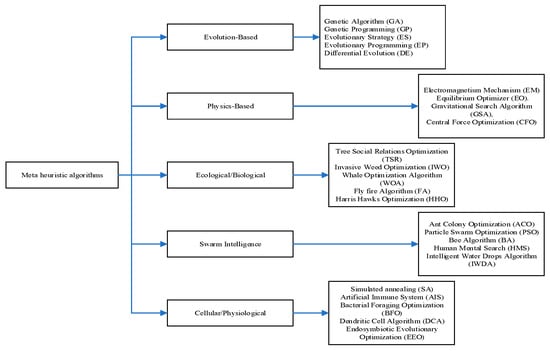
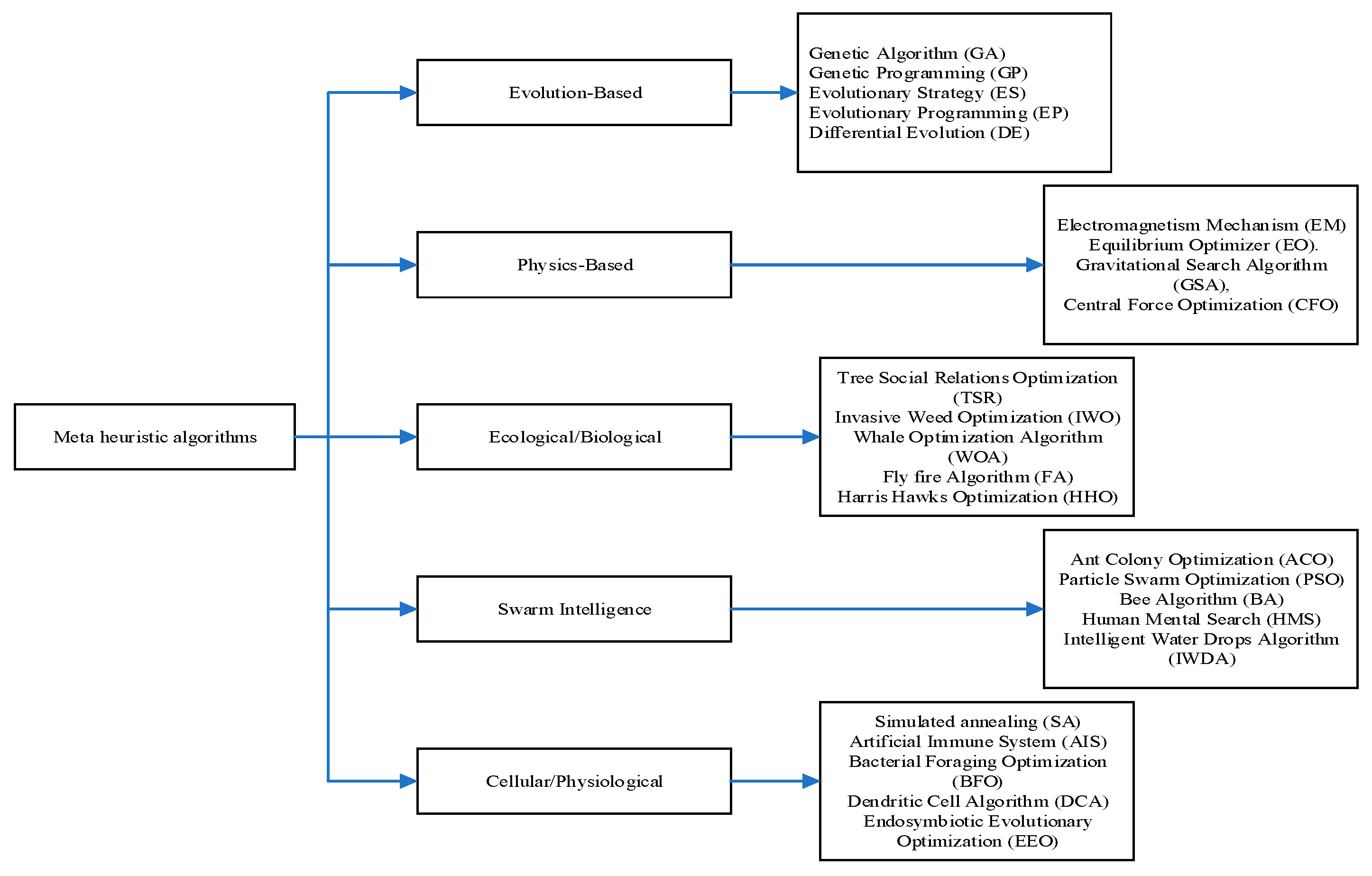
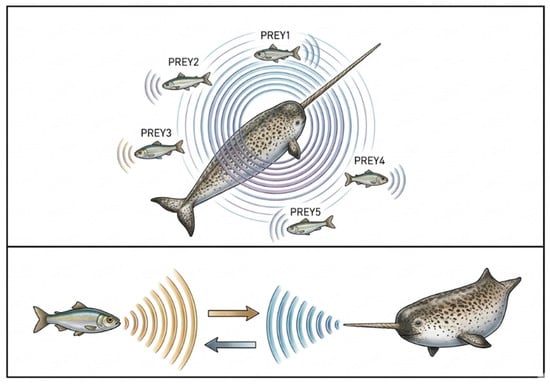
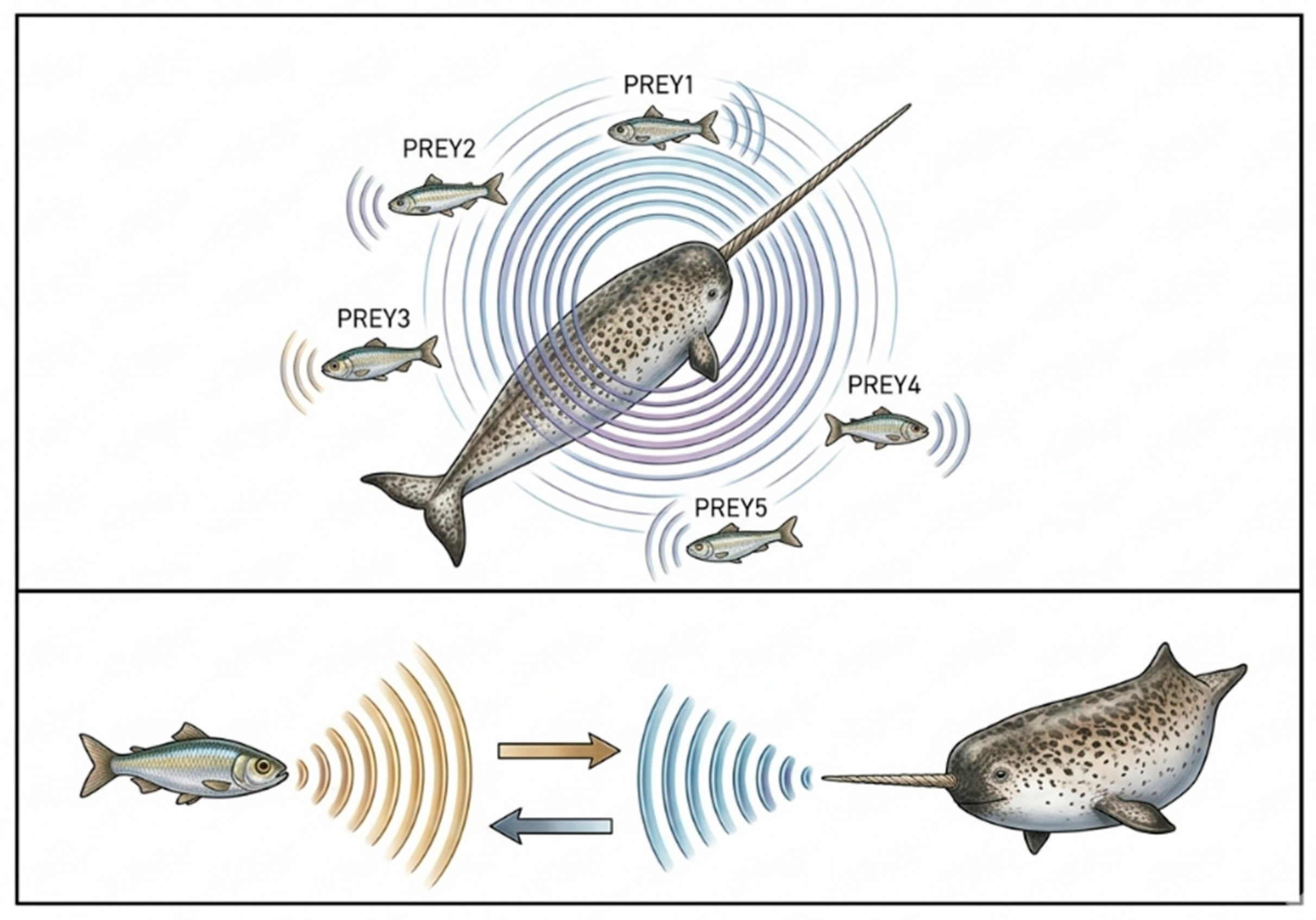
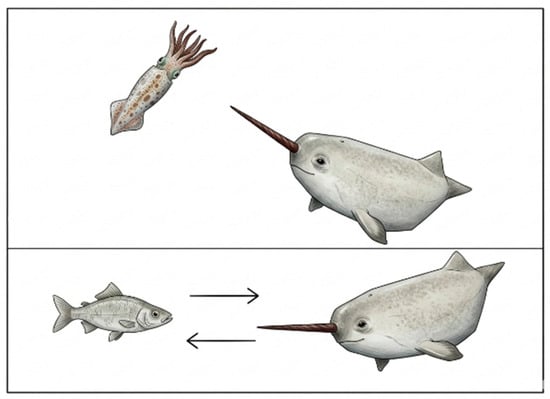
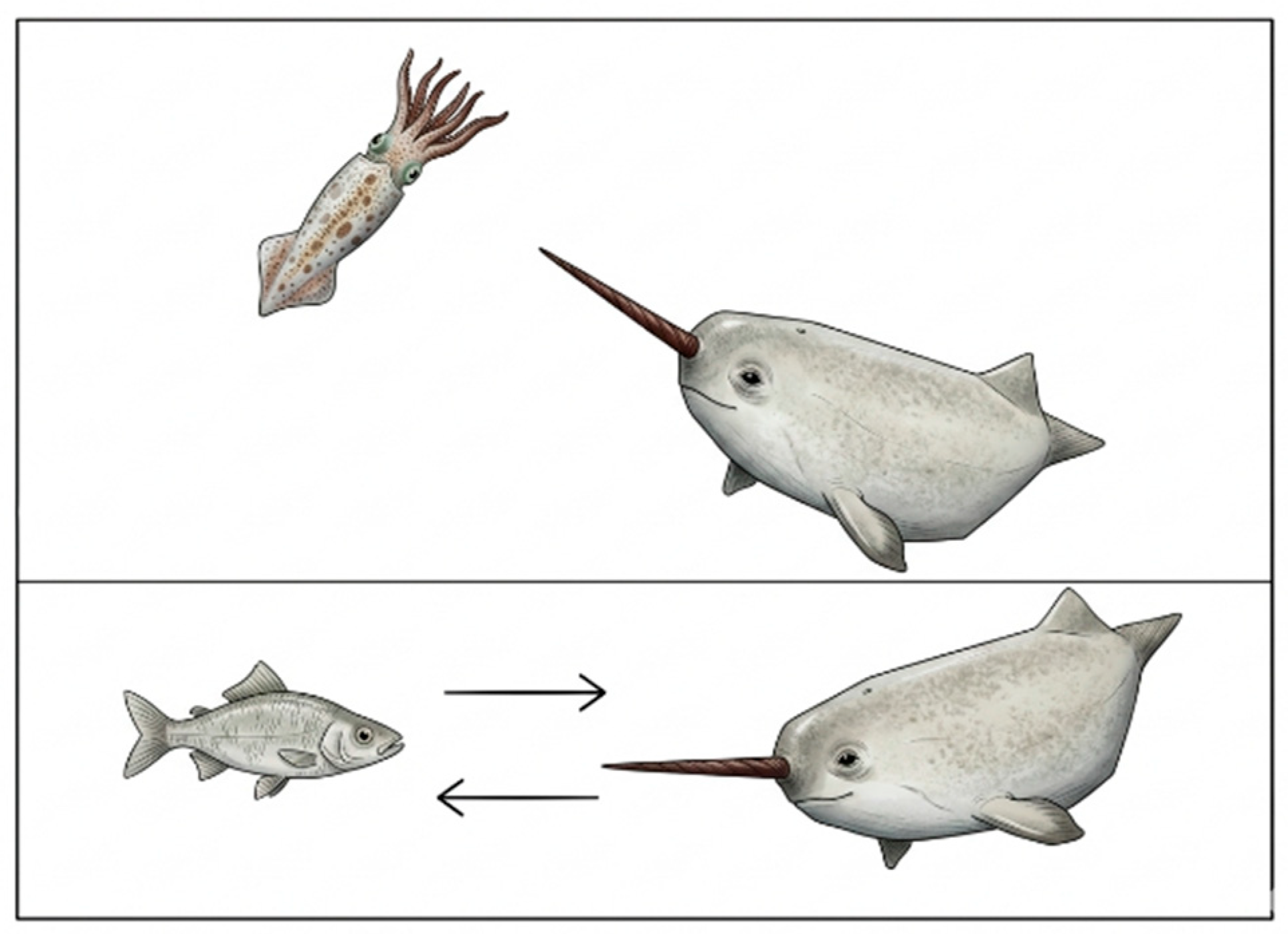
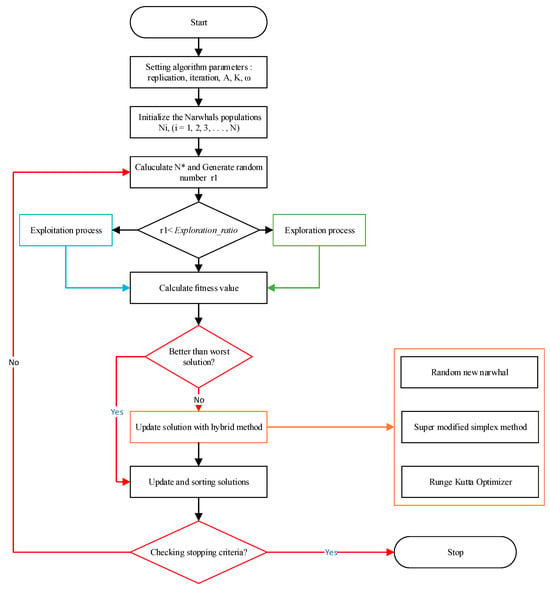
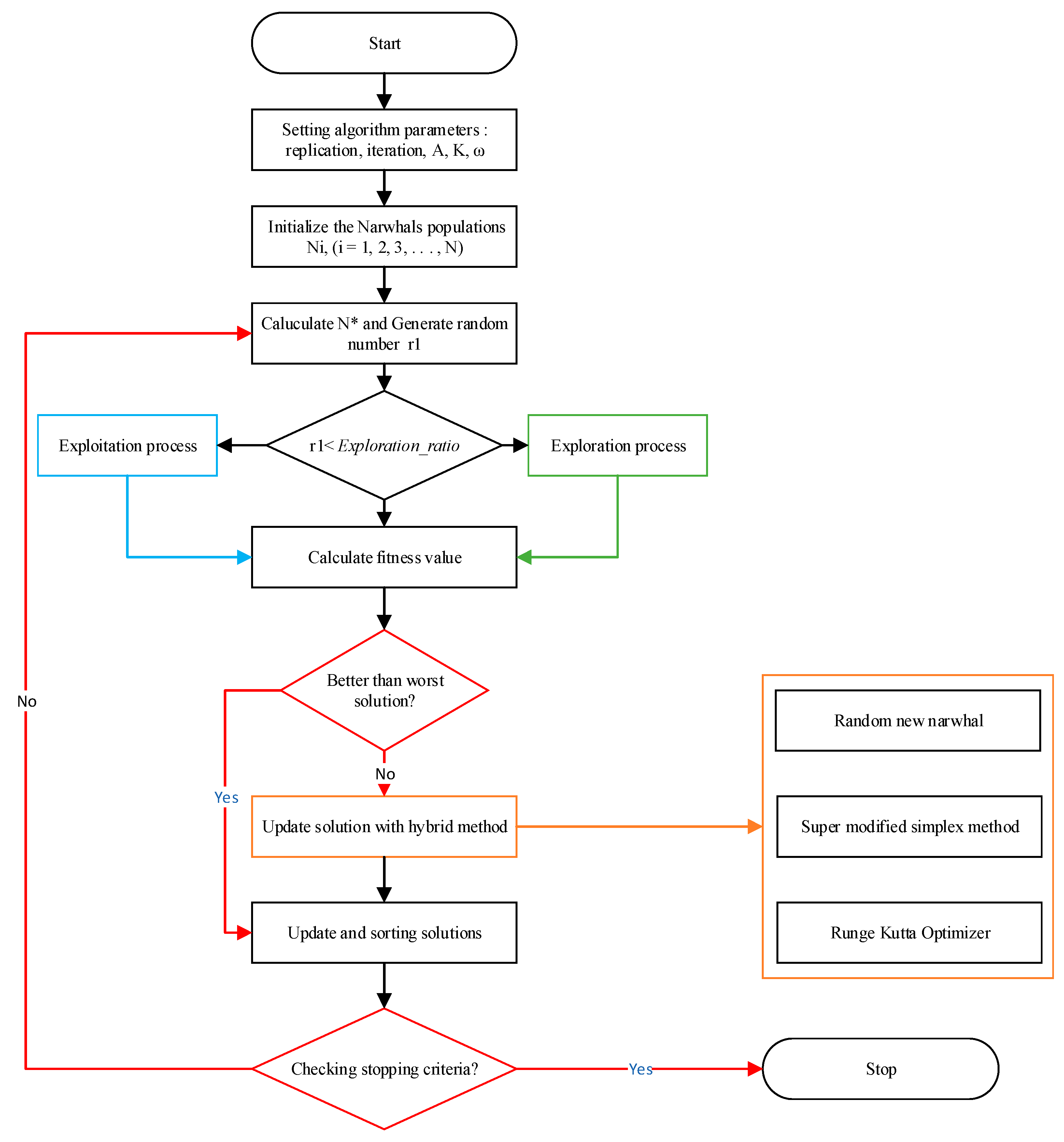
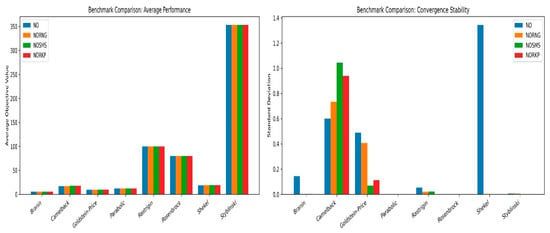
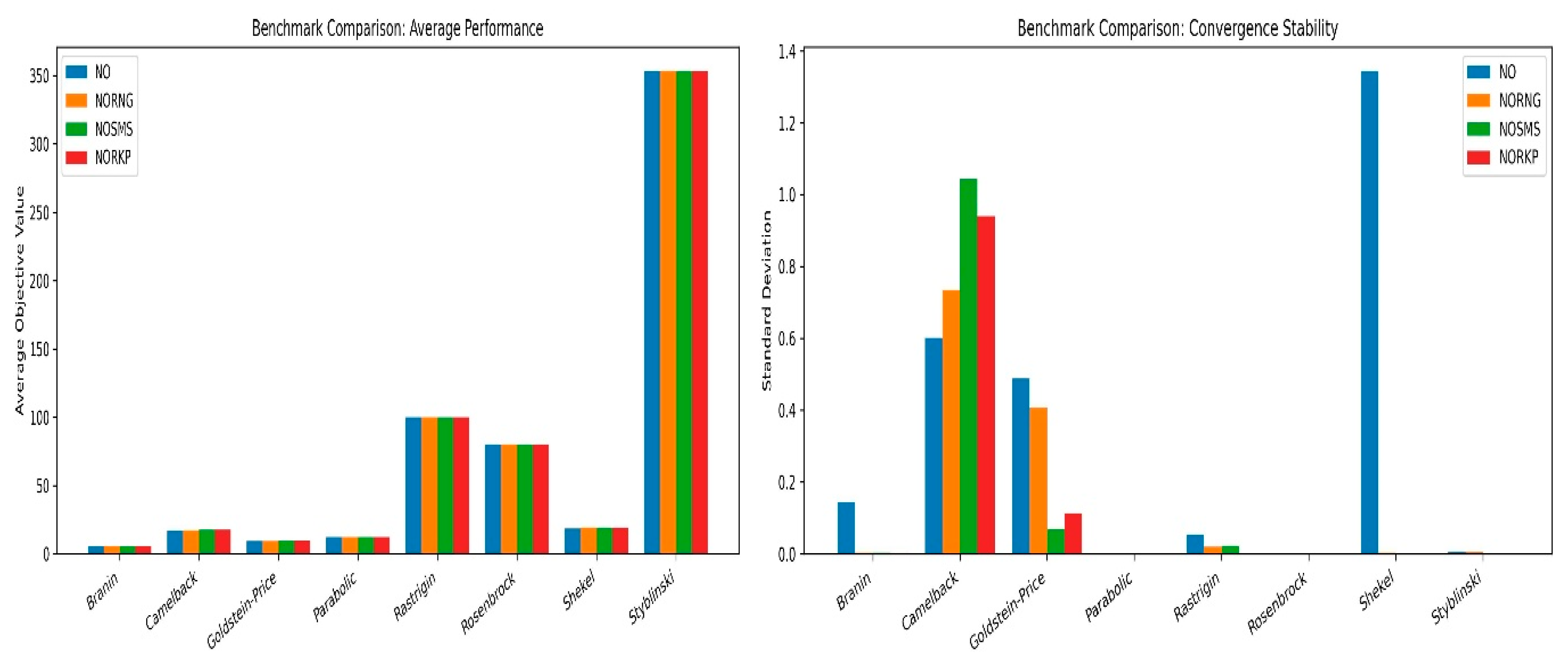
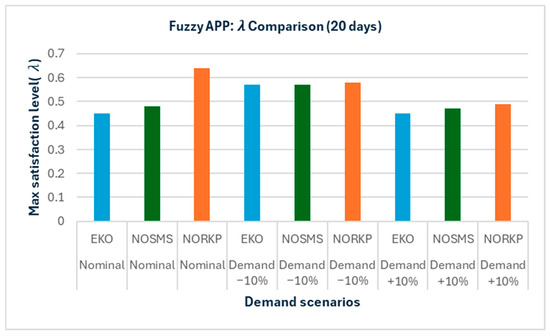
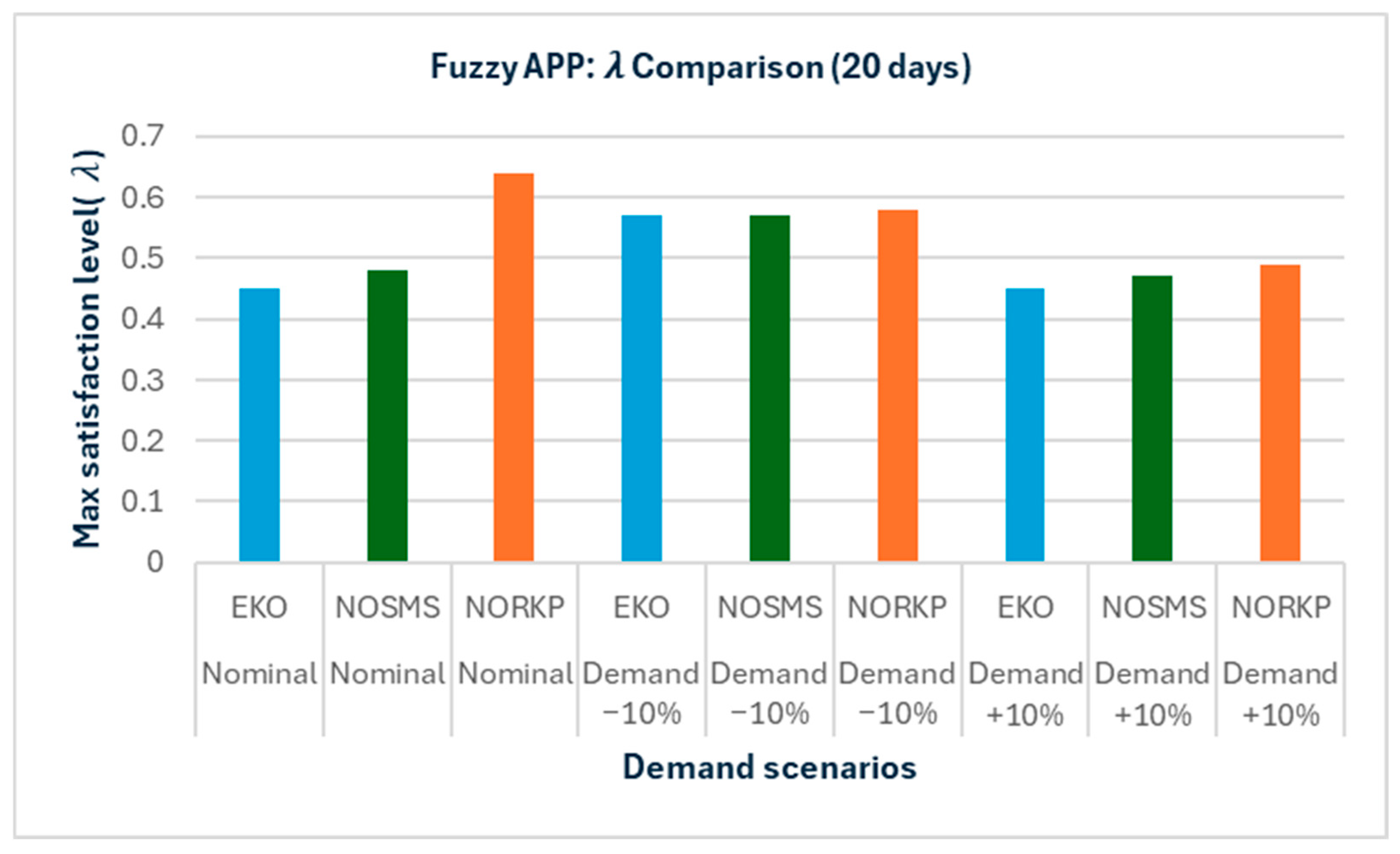
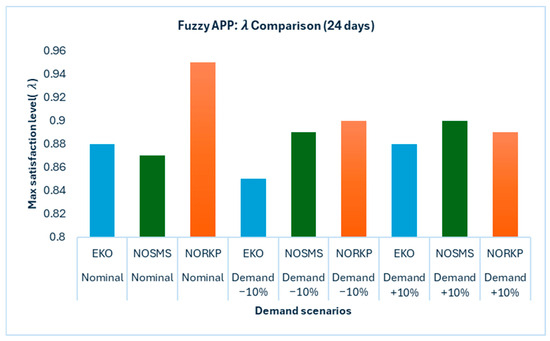
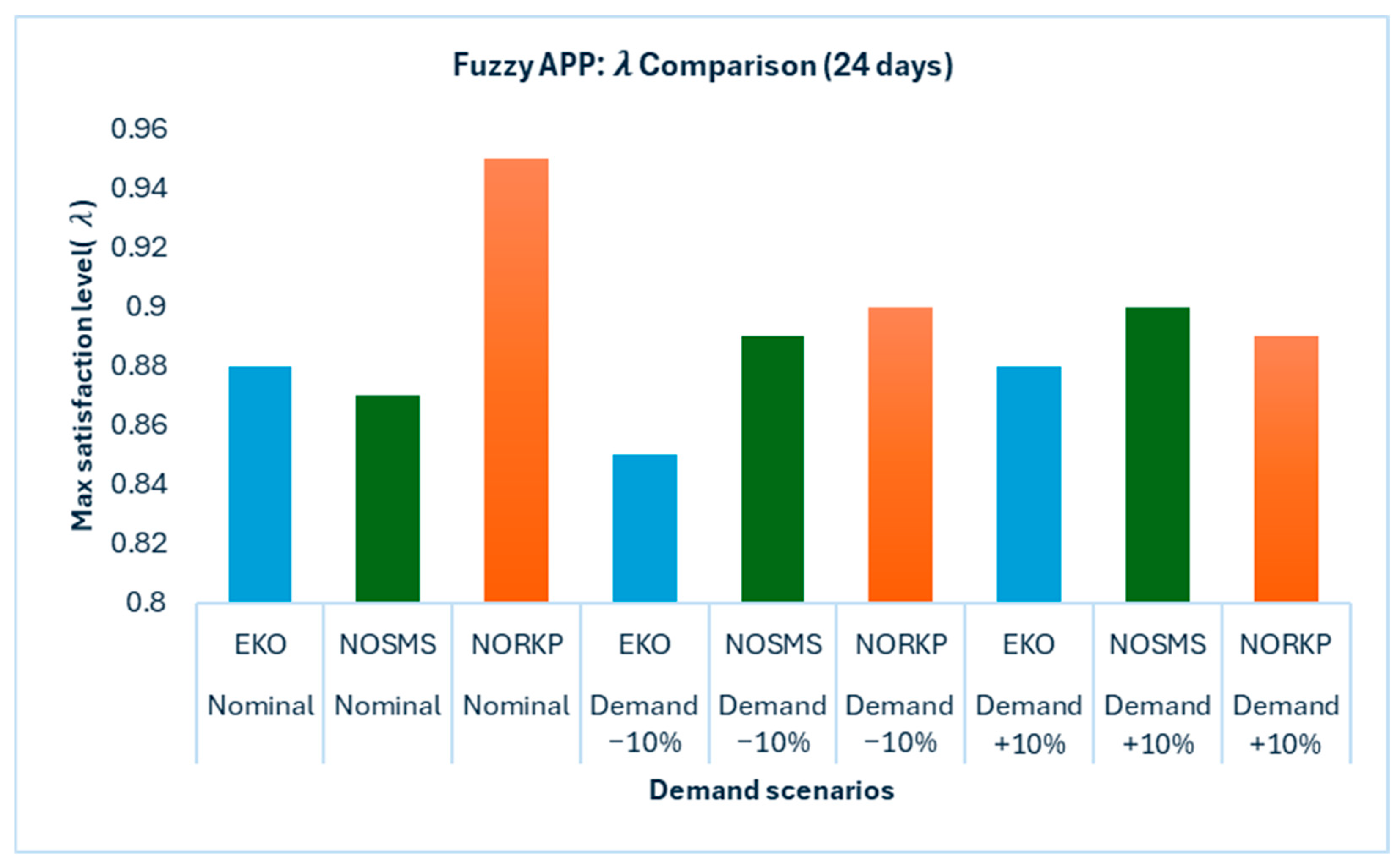
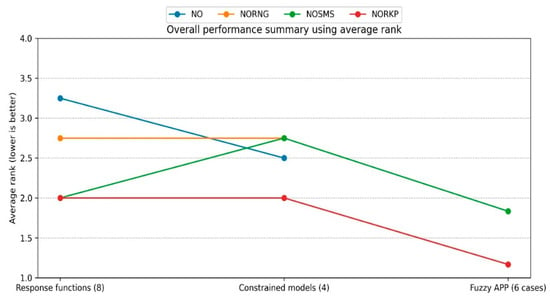
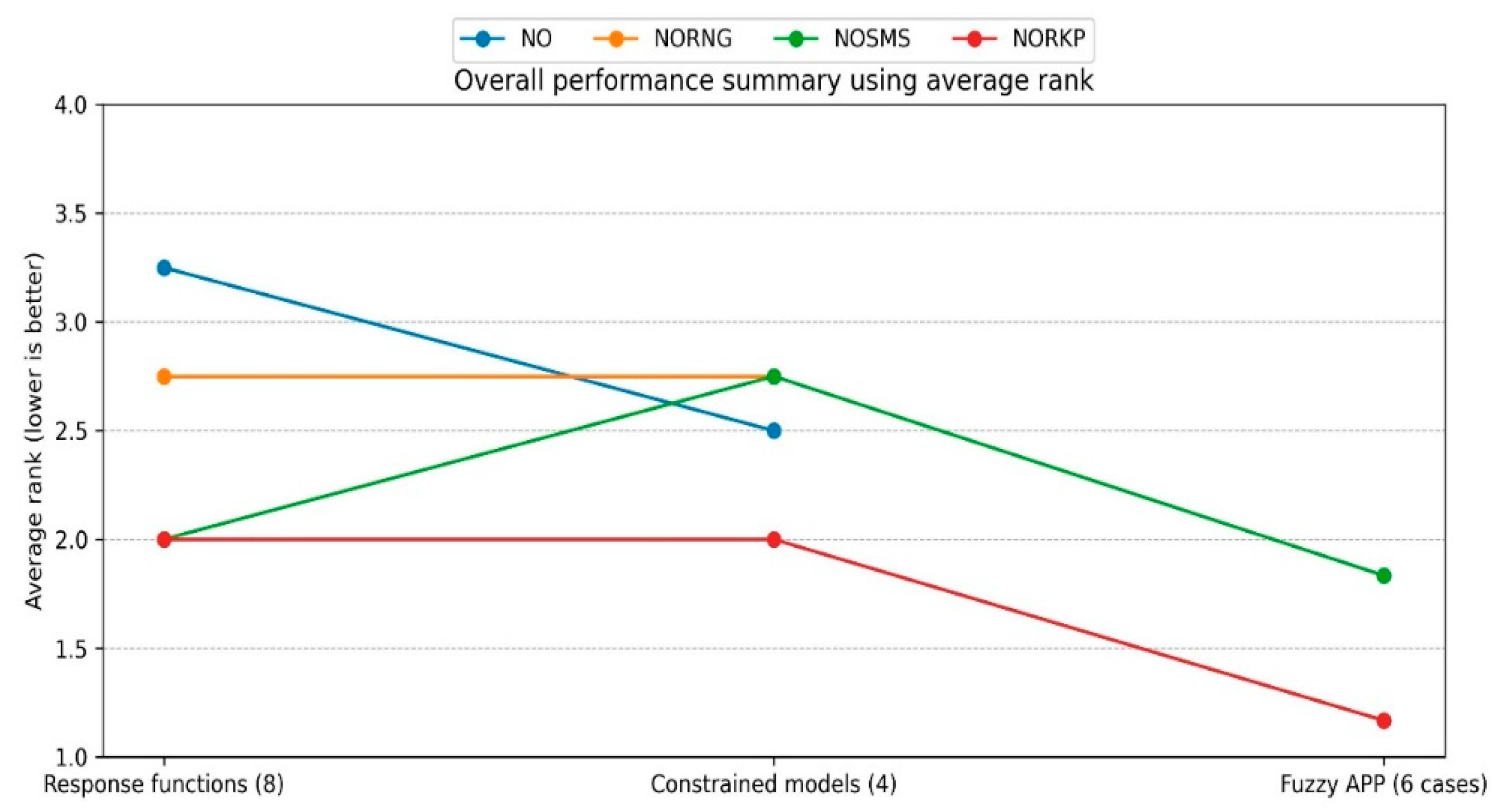
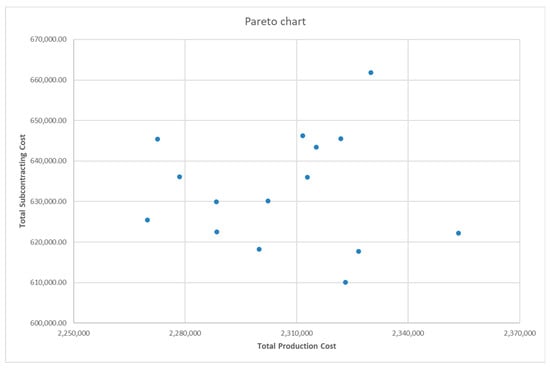
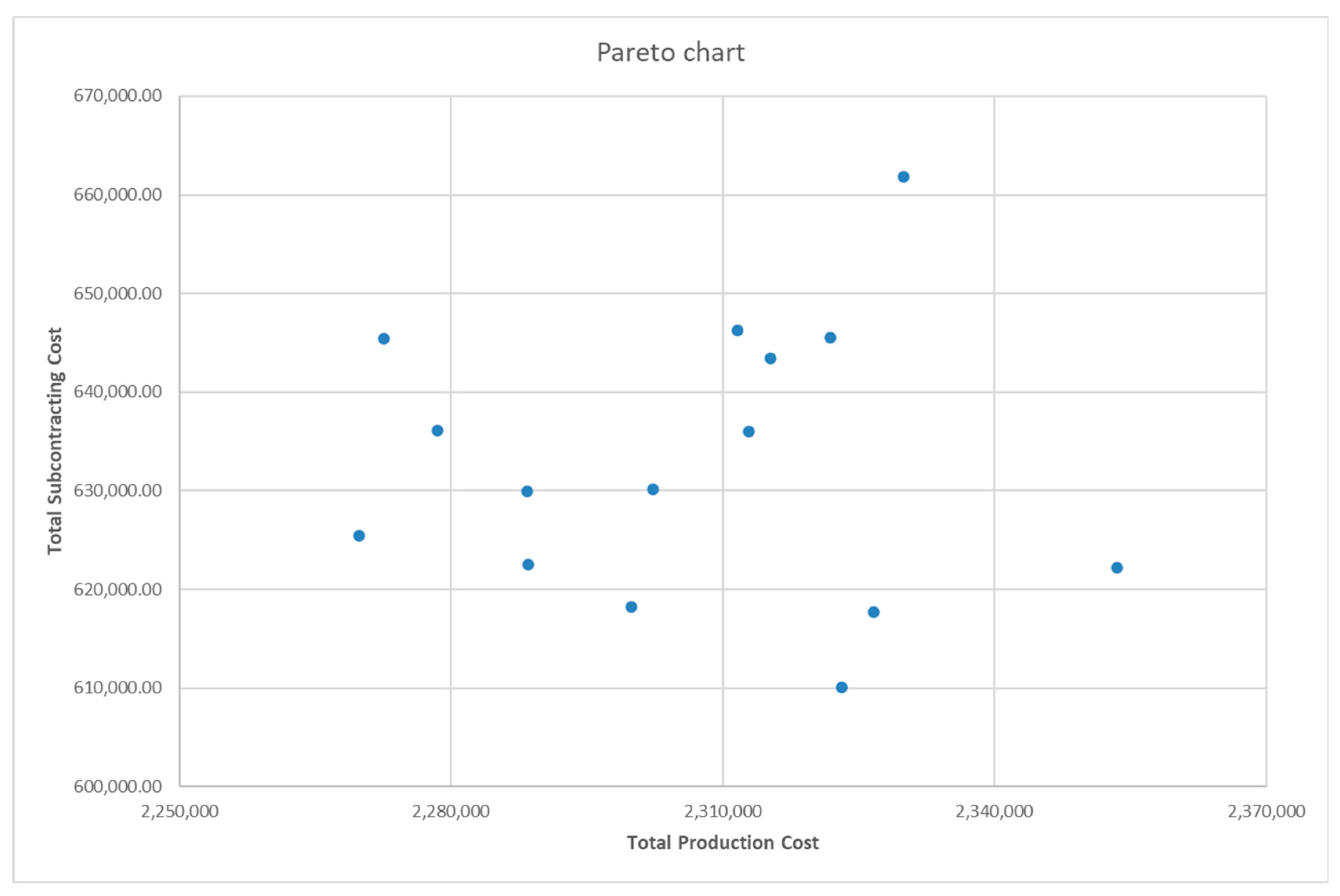

Disclaimer/Publisher’s Note: The statements, opinions and data contained in all publications are solely those of the individual author(s) and contributor(s) and not of MDPI and/or the editor(s). MDPI and/or the editor(s) disclaim responsibility for any injury to people or property resulting from any ideas, methods, instructions or products referred to in the content. |
© 2026 by the authors. Licensee MDPI, Basel, Switzerland. This article is an open access article distributed under the terms and conditions of the Creative Commons Attribution (CC BY) license.