Article

The Influence of Methods for Distributing the IF-WS2 Modifier into the Structure of Al2O3 Aluminium Oxide Coatings on Their Micromechanical Properties †

1
Institute of Materials Engineering, University of Silesia in Katowice, 41-500 Chorzow, Poland
2
Institute of Chemistry, Faculty of Science and Technology, University of Silesia in Katowice, 40-007 Katowice, Poland
*
Author to whom correspondence should be addressed.
This article is a revised and expanded version of the abstract and oral presentation entitled: “The Influence of Methods for Distributing the IF-WS2 Modifier into the Structure of Al2O3 Aluminium Oxide Coatings on Their Micromechanical Properties”, which was presented in the SICT2025 conference, Albufeira, Portugal, 23–25 April 2025.
Materials 2026, 19(4), 667; https://doi.org/10.3390/ma19040667
Submission received: 9 January 2026 / Revised: 26 January 2026 / Accepted: 6 February 2026 / Published: 9 February 2026

Abstract

This work examines the micromechanical response of Al2O3/IF-WS2 (IF-inorganic fullerene-like) composite coatings formed on the EN AW 5251 aluminium alloy by anodic oxidation. The resulting amorphous oxide layer contains a nanopores system that can be filled with IF-WS2 particles, provided the modifier is properly dispersed. Because commercial IF-WS2 powders exhibit strong agglomeration, a high-intensity ultrasonic treatment was applied to enhance particle separation before incorporation. The influence of newly established incorporation parameters was assessed using a two-level experimental design. As part of the research, analyses of the microstructure, micromechanical, and sclerometric properties were performed. Cross-sectional SEM observations confirmed the presence of IF-WS2 within the oxide structure and revealed differences in particle distribution, depending on the incorporation technique used. The results indicate that although microhardness and Young’s modulus are largely insensitive to the nanopowder incorporation method, the interaction between the anodising current density and the incorporation technique significantly influences the strain energy components and tribological response of the coatings. These findings suggest that appropriately selected processing parameters can be used to tailor the mechanical and tribological properties of Al2O3/IF-WS2 coatings to specific loading conditions and functional requirements, rather than striving for a single, universal, optimal processing configuration.

1. Introduction

High-performance aluminium alloys are widely used in engineering applications across the transportation and industrial sectors because they offer a favourable combination of low mass and structural capability. Despite these advantages, the surfaces of aluminium alloys exhibit limited resistance to friction-induced adhesive wear unless appropriately modified. As a result, numerous studies have focused on methods for forming durable anodic oxide layers that enhance the tribological behaviour of aluminium-based components [1,2]. Such honeycomb-structured matrices are significant due to their applications in nanodots, nanorods, nanowires, and nanotubes [3,4,5]. In recent decades, considerable research efforts have focused on developing various modifications to enhance the corrosion performance of anodic coatings on aluminium alloys. Information on studies of aluminium oxide coatings in tribological applications is also available, although it is significantly less abundant. Such coatings are commonly applied to improve the functional performance of metal surfaces, offering increased hardness and enhanced resistance to wear and corrosion. The porous nature of anodic oxide films also provides an opportunity to introduce functional additives into the coating, enabling the development of surfaces with lubricating capabilities. When filled, the pore network can reduce friction and wear during operation [6,7,8,9,10,11]. Historically, one of the main obstacles in such approaches has been the disparity between the characteristic dimensions of solid lubricant particles and the nanoscale pore structure of anodic alumina, which limits efficient incorporation. In addition, excessive thinning of the oxide layer was shown to degrade the surface’s mechanical integrity [12,13]. Growing interest in recent years has therefore shifted toward the use of nanosized lubricant additives and advanced methods for integrating them into anodic coatings, offering improved compatibility with the pore architecture and enhanced tribological performance [14,15,16,17,18,19,20].
The study of micromechanical and sclerometric properties is crucial for characterising anodic coatings. Micromechanical testing, including nanoindentation and scratch tests, enables the precise evaluation of hardness, elastic modulus, and adhesion strength. Sclerometric analysis provides further insights into the scratch resistance and mechanical durability of the anodic layer. Understanding these properties is essential for optimising coating performance in various industrial applications. Micromechanical and tribological dependencies on porosity have been demonstrated, among others, for coatings produced on AA1050 [21] and high-purity aluminium [22]. Fratila-Apachitei et al. [23] showed that increasing the current density from 3.0 to 6.0 A/dm2 during anodising for 50 min does not improve the average microhardness of the oxide layer but instead causes significant fluctuations. Extending the anodising time increases the layer thickness while reducing its average microhardness. In aluminium alloys, microhardness assessment is challenging due to macroscopic defects and entrapped silicon particles. Sulka et al. [24] observed that the average interpore distance and pore diameter values increase with the rising anodising potential. Meanwhile, the network porosity decreases as the cell potential increases. The complexity of the wear mechanisms of oxide coatings on aluminium alloys and the associated micromechanical parameters were shown in the work of a group of researchers [25,26,27,28,29]. Xia et al. [30] determined the Young’s modulus of the produced aluminium oxide to be 140 GPa. They also found that heat treatment at 650 °C increases the hardness of aluminium oxide from 5.2 to 6.3 GPa, while the presence of pores in the oxide contributes to greater transverse strength. Vojkuvka et al. [31] demonstrated that the mechanical properties of nanoporous anodised alumina samples depend on the porosity level and the type of acidic electrolyte used in the fabrication process. Gyu-Sun Lee et al. [32] observed that porous anodic alumina templates soaked in water for 30 min showed lower friction and a more extended transition to a steady state than those that were not soaked. Pores act as reservoirs for lubrication, releasing water during elastic–plastic deformation. However, the tribochemical oxide layer has a more significant effect than the lubricant reservoir. Abedini and Hanke [33] optimised the pore widening of the anodic coating in phosphoric acid to achieve the desired properties, improving the adhesion of the nickel layer to the coating and investigating its wear resistance. Gorokh et al. [34] confirmed in their studies that the microhardness of oxide coatings increased as the pore diameter decreased. In contrast, the coating’s indentation depth increased with the size of the carbon nanostructures used for doping. This demonstrated the coatings’ excellent tribological and mechanical properties, as well as their high practical value. In our study, we addressed the challenge of nanoparticle agglomeration, which is inherently linked to the nanopowder quality [19]. In one of our earlier studies, we reported the results of an experiment aimed at enhancing the dispersion of inorganic, fullerene-like tungsten disulfide (IF-WS2) through high-intensity ultrasonication, combined with newly developed conditions that facilitate the introduction of the powder into the nanopores of Al2O3 coatings [35]. Due to the complex nature of nanoparticle-modified anodic layer formation and the fact that both the process of introducing additives and their distribution within the coating structure can significantly affect performance, detailed studies are necessary to examine their microstructure and behaviour under mechanical loading. Parameters such as microhardness, modulus of elasticity, contribution of plastic and elastic deformation, and scratch resistance allow for us to assess whether modification with IF-WS2 powder actually translates into beneficial changes in the layer’s performance, especially under tribological conditions. Equally important is determining the extent to which the nanoparticle introduction method and anodising conditions affect the coating’s mechanical stability, i.e., conducting observations under critical loads. This approach, combined with the DOE design presented in this article, represents a significant step towards the design of modified anodic oxide layers with improved functional properties, especially for applications requiring mechanical stability and high tribological resistance.

2. Materials and Methods

2.1. Sample Preparation

The substrate selected for this study was the EN AW-5251 aluminium alloy. This alloy belongs to the 5xxx series, where magnesium is the principal alloying element, providing an excellent combination of moderate strength and high corrosion resistance, particularly in marine and atmospheric environments. Additionally, EN AW-5251 offers good weldability, formability, and surface finish, making it particularly suitable for sheet forming and anodising applications. These features justify its use in applications requiring lightweight, corrosion-resistant components, such as in the automotive, aerospace, and construction industries. The Al2O3/IF-WS2 composite coating investigated in this study was fabricated using a two-stage preparation route. In the first stage, a graded aluminium oxide layer was generated on EN AW-5251 (Table 1) alloy by electrochemical oxidation in a ternary acid electrolyte composed of sulfuric, oxalic, and phthalic acids (Avantor Performance Materials Poland S.A., Gliwice, Poland). Prior to anodising, the specimens were subjected to a sequential chemical pretreatment involving immersion in KOH and, subsequently, in HNO3 solutions (both supplied by Avantor Performance Materials Poland S.A., Gliwice, Poland). Hard anodising was then conducted under a total charge of 180 A·min/dm2 (Table 2), with the current density, processing time, and bath temperature maintained at 303 ± 1 K. The thickness of the Al2O3 coatings produced under the experimental conditions is 44.19 ± 2.11 μm and 45.82 ± 1.40 μm for 3 A/dm2 and 6 A/dm2, respectively.
During the second stage of processing, IF-WS2 nanoparticles (NanoMaterials Ltd., Yavne, Israel) were introduced into the pore structure of the anodic alumina, using two alternative incorporation techniques. In method 1, the anodised samples were submerged in an ethanol suspension containing 15 g/L of IF-WS2 nanoparticles, treated with 20 kHz ultrasonication for 5 min, delivering 10 kJ of energy, and subsequently left to settle for 24 h. In method 2, after the initial ultrasonic dispersion step, the samples were further treated with a 15 min ultrasonic bath before being removed from the suspension [35].

2.2. Microstructural Studies

To investigate the composition of nanosized Al2O3 fibres incorporating self-organised IF-WS2 nanoparticles (NPs), the prepared samples were analysed using a HITACHI S-4700 scanning electron microscope (SEM) (Hitachi High-Tech Corporation, Tokyo, Japan) equipped with a NORAN Vantage digital energy-dispersive X-ray spectroscopy (EDS) system (NORAN Instruments, Inc., Middleton, WI, USA). The surface and cross-sectional morphology of the Al2O3/IF-WS2 NP coatings were examined in secondary electron (BSE) mode, utilising an yttrium aluminium garnet (YAG) detector (Crytur, Turnov, Czech Republic). A YAG single crystal was used to minimise the electron dose. The cross-sectional analysis of the Al2O3/IF-WS2 NPs was conducted on freshly fractured samples. Before imaging, a thin carbon film was sputter-coated onto the specimens to enhance contrast and mitigate the image distortion caused by charge accumulation.

2.3. Micromechanical Properties Methodology

Micromechanical tests were performed using a Micro Combi Tester—MCT3 (Anton Paar, Neuchâtel, Switzerland). A Vickers diamond indenter (V-M 86) (Vickers Ltd., London, UK) was used, with a maximum load of 500 mN (50.99 gF). Loading and unloading were conducted over 30 s (at a rate of 1000 mN/min), with a 10 s holding time at peak load. Each sample underwent eight indentations, with a spacing of 150 µm in both the x and y axes, as specified by ISO 14577 [36]. Microhardness (HIT) and elastic modulus (EIT) were determined using the Oliver–Pharr method [37]. From the recorded load–unload curves, the total indentation work (Wtotal) and its components—plastic deformation work (Wplast) and elastic deformation work (Welast)—were calculated. When evaluating Vickers hardness, it is effective to use the indentation work by plastic deformation, Wplast [38]. The percentage of elastic recovery work (ηIT) and the maximum depth of indenter insertion (hmax) were also determined.

2.4. Methodology of Sclerometric Testing

The scratch resistance of the investigated layers was assessed using a Micro Combi Tester—MCT3 (Anton Paar, Neuchâtel, Switzerland), following the scratch-test method. The testing procedures adhered to the guidelines of ISO 19252 [39], ISO 20502 [40], ASTM C1624 [41], and ASTM D7027 [42], employing a Rockwell diamond indenter with a 200 μm tip diameter. Each test consisted of three stages: pre-scan—the sample profile was scanned under a 0.03 N load; scratch test (scan)—the primary test was performed with a progressively increasing load from 0.03 to 20 N; and post-scan—the scratch profile was rescanned under a 0.03 N load to evaluate the surface deformation. Each scratch was 6 mm long, with an indenter movement speed of 12 mm/min.
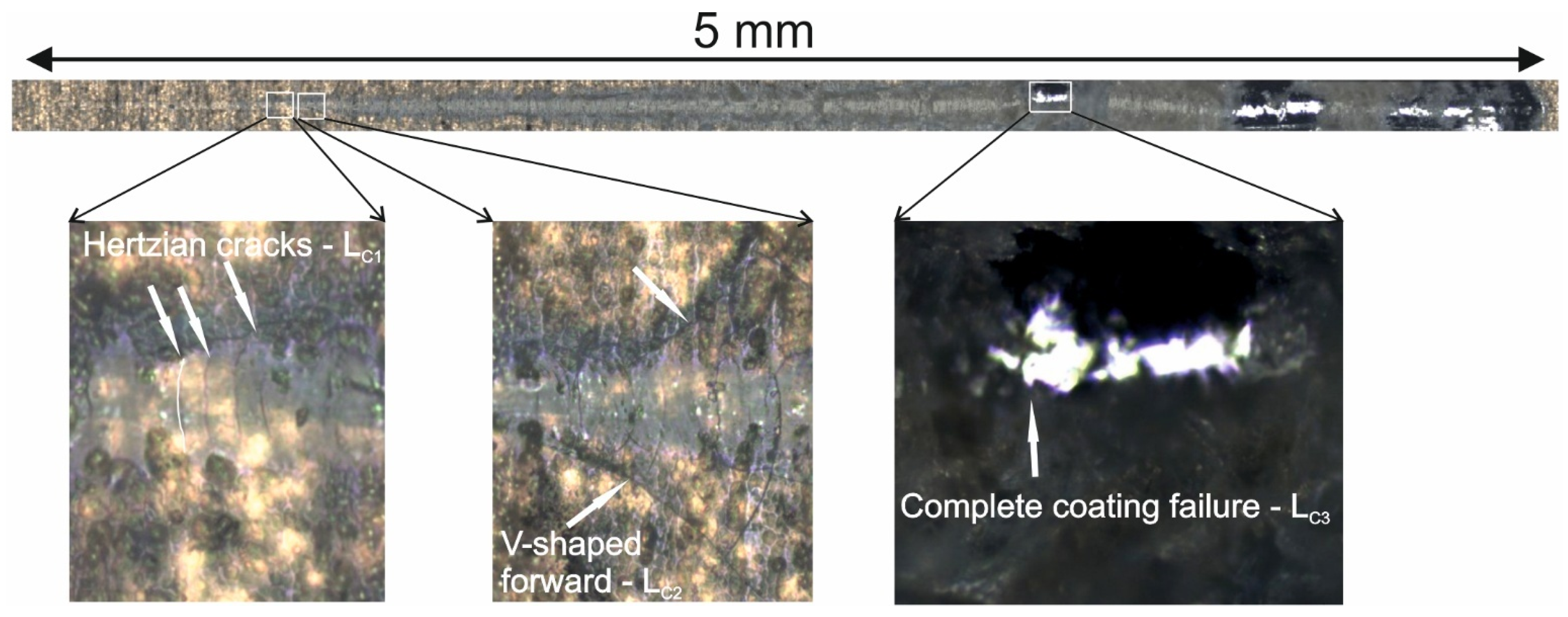
During the tests, the following parameters were recorded: normal force (Fn) [N], friction force (Ft) [N], indenter penetration depth under load (Pd) [μm], residual penetration depth after unloading (Rd) [μm], and acoustic emission (AE) [%]. Three critical loads (LC) were identified: LC1—the onset of arc tensile cracks (Hertzian cracks) within the scratch track, often accompanied by circular Hertz tensile cracks; LC2—the first occurrence of V-shaped forward-directed cracks at the inner and outer edges of the scratch track; and LC3—complete coating failure, characterised by continuous perforation of the coating. The scratch test on the coating surface was conducted in two mutually perpendicular directions to evaluate potential differences in the measured sclerometric values. This methodology enables the evaluation of adhesion strength, coating durability, and failure mechanisms under progressive mechanical loads, providing critical insights into the mechanical behaviour of the protective layers.

2.5. Experimental Design

A 2k factorial design experiment without replication was conducted using Statistica 13 software to evaluate the influence of input parameters on the dependent variables. The independent variables were current density (3 and 6 A/dm2) and method (1 and 2). The dependent variables for micromechanical properties were microhardness (HIT), Young’s modulus (EIT), elastic deformation work (Welast), plastic deformation work (Wplast), total indentation work (Wtotal), and elastic recovery work (ηIT), and for sclerometric testing, they were friction force (Ft) and LC1, LC2, and LC3. To verify model assumptions, normal probability plots of residuals were used to assess whether the residuals (i.e., differences between observed and predicted values) followed a normal distribution, a crucial assumption for linear regression. If residuals are normally distributed, the data points align along a straight line; however, deviations suggest departures from normality. The statistical analysis results were also used to visualise marginal mean plots with 95% confidence intervals. The ANOVA (analysis of variance) test was used to assess differences in critical load (LC) measurements in two mutually perpendicular directions. In ANOVA, one-dimensional significance tests assess differences among group means for a single factor. These tests, such as the F-test, assess whether observed variation is due to actual differences between groups or to random fluctuations. A benchmark analysis was performed using a factorial design and a two-factor interaction model. A Pareto chart was employed to identify the most influential factors, as it effectively ranks effects by magnitude and statistical significance. In statistical analysis, the p-value is commonly used to assess the importance of a factor. In the Pareto chart, bars crossing the reference line (p = 0.05) indicate statistical significance at 0.05. A detailed discussion of the DOE methodology can be found in studies [43,44,45].

3. Results and Discussion

To modify the functional behaviour of the anodised Al2O3 layer, inorganic fullerene-like tungsten disulfide (IF-WS2) nanoparticles were incorporated into its nanoporous structure. IF-WS2 is characterised by a hollow, multilayered spherical morphology [46], which provides advantageous mechanical responses under local loading. Owing to their layered architecture and ability to undergo shear between concentric WS2 shells, these nanoparticles can facilitate stress accommodation within the oxide matrix, leading to more favourable deformation behaviour [47].
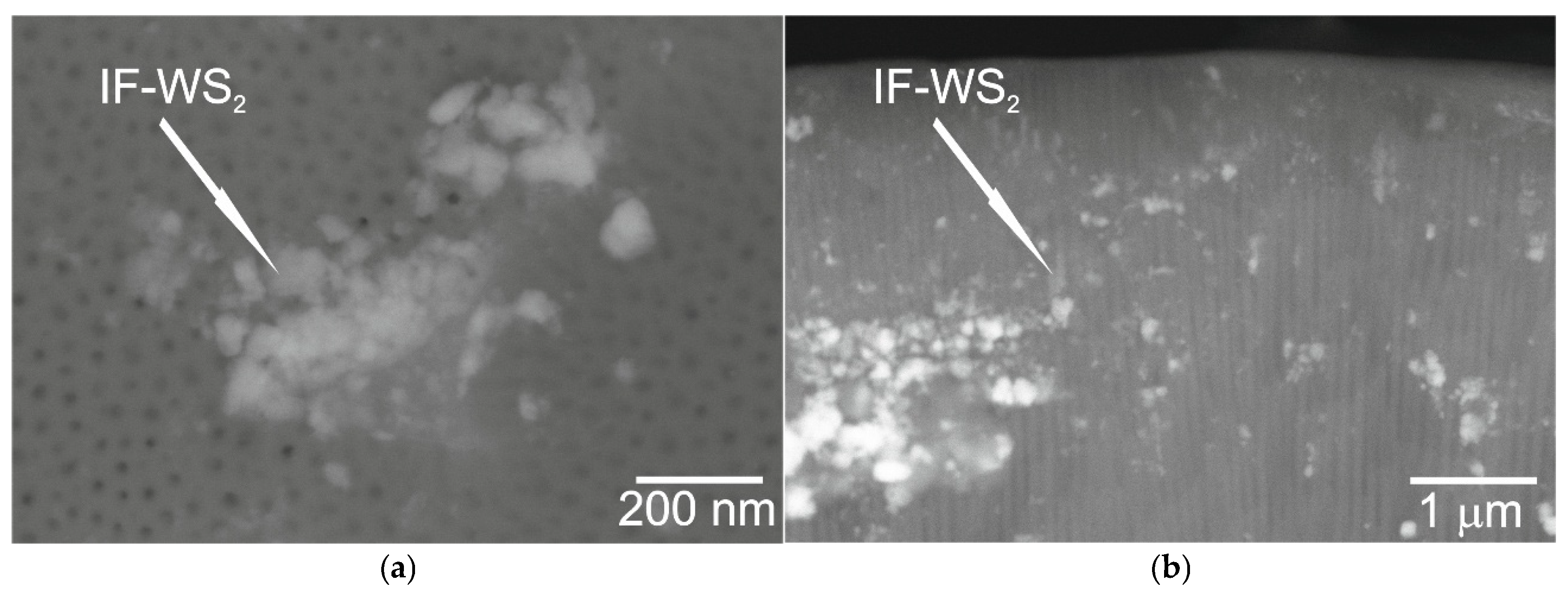
Their thermal and chemical stability further supports their use as robust nanomodifiers that are capable of operating under demanding conditions. In the context of anodic oxide films, achieving uniform dispersion of IF-WS2 is essential, as agglomeration can alter the local micromechanical response and affect parameters such as indentation work and scratch resistance. Therefore, special emphasis was placed on improving nanoparticle dispersion within the Al2O3 coating to ensure consistent mechanical performance. Figure 1a,b show examples of the SEM/YAG-BSE images of the surface and cross-sections of Al2O3/IF-WS2 coatings from sample no. 1. The photos highlight the embedded IF-WS2 in coatings. The use of method 1 allowed for a more homogeneous introduction of IF-WS2 nanoparticles into the structure of Al2O3 nanofibers, although, as shown in Figure 1, agglomeration of the nanolubricant still occurs. The microstructure is described in more detail in [35].
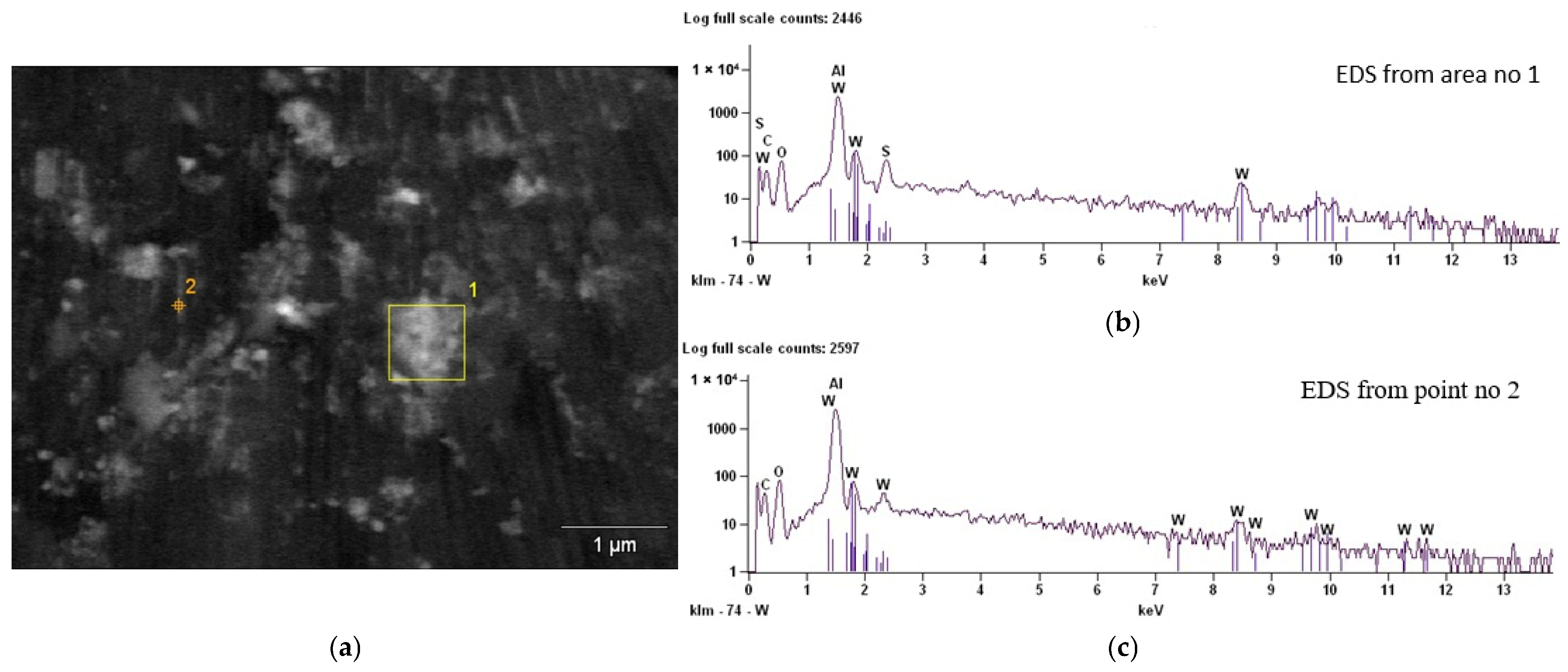
EDS analysis was conducted at the locations marked as area 1 and point 2 in Figure 2, summarising the results in Table 3. The “Atom%” column denotes the atomic percentage (at%) of each detected element, whereas the “Compnd%” column corresponds to the weight percentage (wt.%). The chemical composition of coating no. 2 was assessed by identifying and quantifying the elements that were present in the selected regions, with the results expressed as their respective compound formulas. The SEM/EDS cross-sectional analysis indicates that IF-WS2 nanoparticles can be introduced into the coating via the nanospaces between the alumina fibres. This structure may promote local retention of the additive, which can act as a nanolubricant reservoir in potentially tribologically active zones. It should be emphasised that the purpose of the EDS analysis was not to directly assess the uniformity of the additive distribution throughout the coating volume, but rather to confirm its presence and its ability to penetrate the porous structure. In this context, the effective accessibility of the IF-WS2 in the tribological contact zone and the potential for long-term interaction resulting from the presence of local nanolubricant reservoirs seem important. In both methods, the possibility of introducing IF-WS2 between the Al2O3 nanofibers was observed.
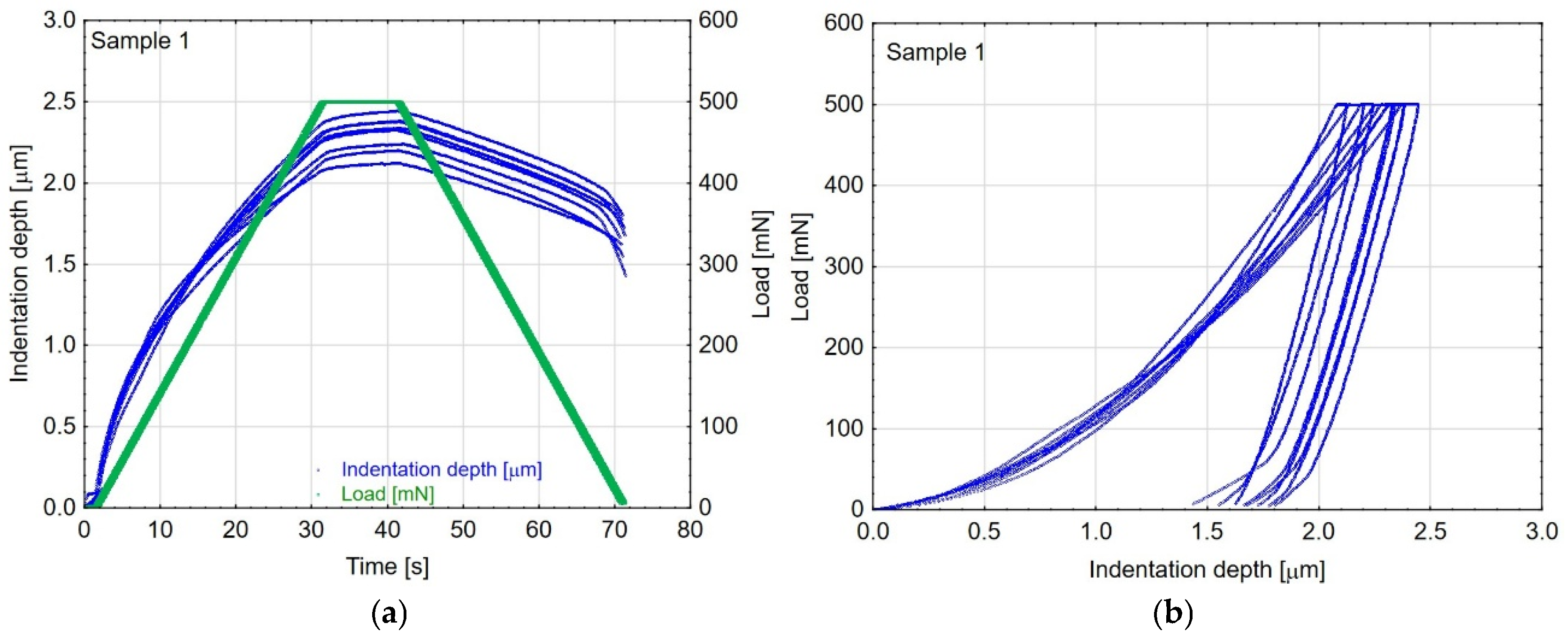
Microhardness tests were conducted on samples prepared using each fabrication method, with measurements repeated for every approach. A total of eight indentations were made on each sample. A representative graph illustrating the indentation depth and load as a function of time, along with the load–depth relationship, is presented in Figure 3. During the loading phase (0–35 s), with a linearly increasing load from 0 to 500 mN, the Vickers indenter’s penetration depth increases (Figure 3a), indicating material deformation. At the maximum load (35–40 s), the Vickers indenter reaches its most remarkable penetration depth. The maximum penetration depth for the exemplary sample number 1 ranges from 2.1 to 2.4 µm. As the load decreases to zero, the indentation depth also decreases but does not return to zero, indicating that the sample has undergone permanent deformation. A portion of the deformation is recovered (elasticity), while the remaining part persists (plasticity). The unloading curves (Figure 3b) exhibit material hysteresis, suggesting that the sample undergoes both elastic and plastic deformation. All tested samples exhibited the same material behaviour under the applied load described above.
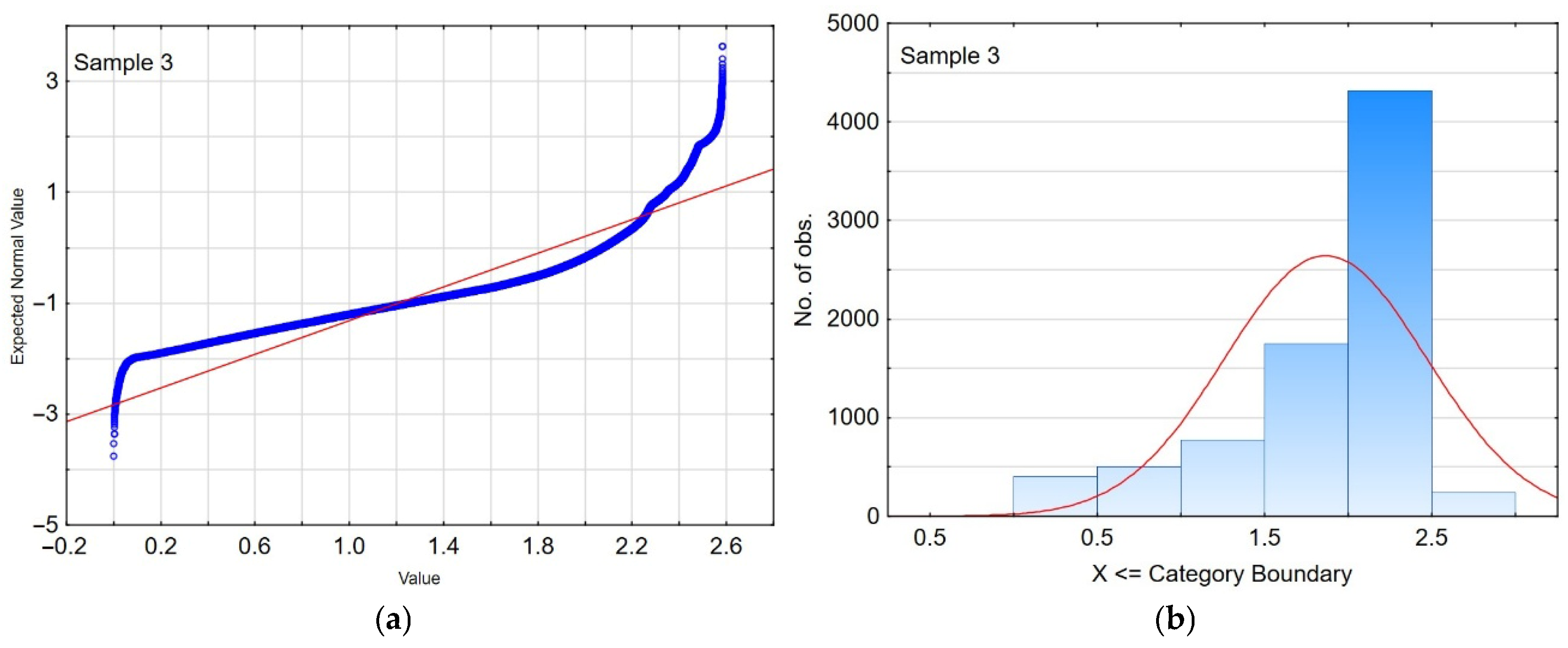
The series of penetration depth curves obtained for each surface of the Al2O3/IF-WS2 coating was subjected to statistical analysis. The non-parametric Kruskal–Wallis ANOVA test was employed, since the measurement series for each sample did not follow a normal distribution (as exemplified for sample number 3 in Figure 4). This test is used to verify the hypothesis of no shift between the compared distributions, meaning that the differences between the medians of the examined variable across multiple populations are generally insignificant. However, it was assumed that the analysed distributions were similar. In each test, significant differences were found between the penetration depth measurements for each sample at the adopted significance level of α = 0.05. Nevertheless, a binary test analysis was conducted to further confirm the presence or absence of differences in the micromechanical parameters of the examined coatings.
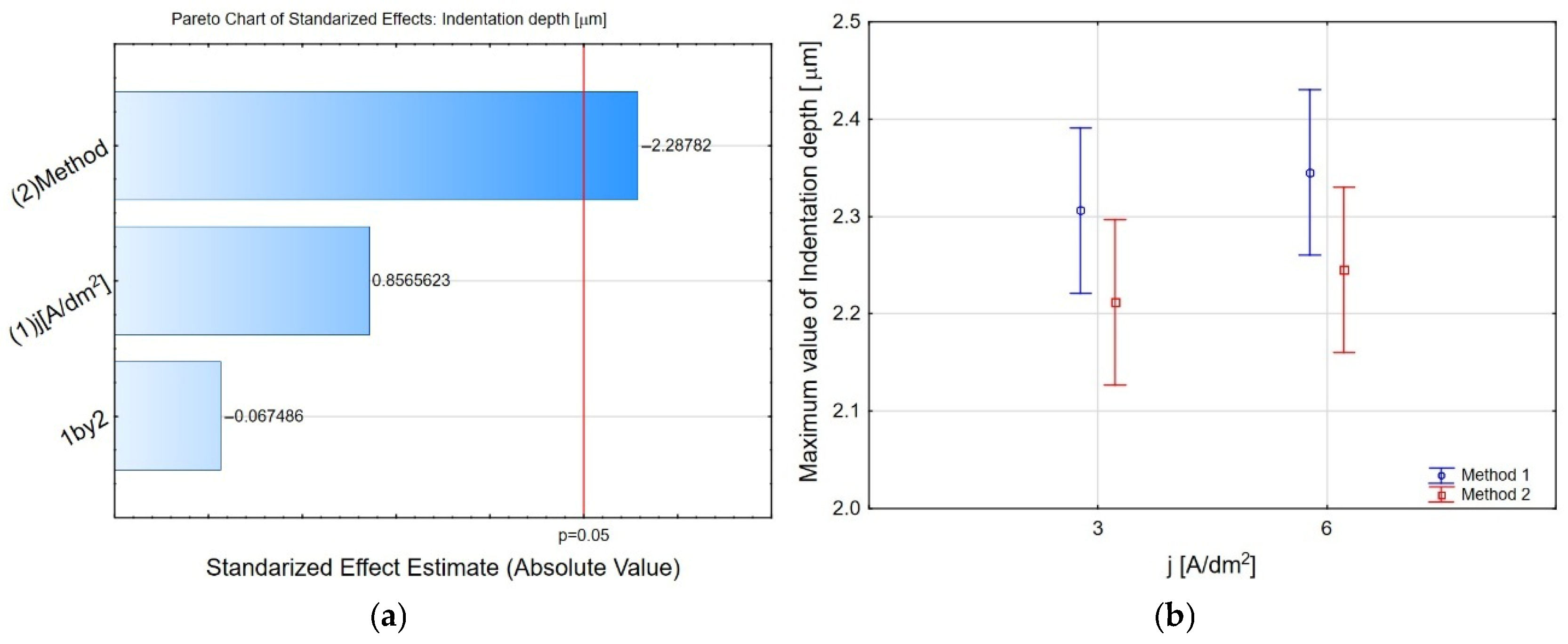
To analyse the indentation depth parameter, the focus was on its maximum values. The Pareto chart shown in Figure 5a shows the significant effect of the coating modification method on the maximum indentation depth. Figure 5b shows the marginal average values for the maximum indentation depths as a function of the current density for coatings produced by both methods. For both current density values (3 and 6 A/dm2), samples obtained by method 2 exhibit lower maximum indentation depths compared to method 1. Increasing the current density from 3 to 6 A/dm2 results in a slight increase in the maximum indentation depth for both methods, suggesting a change in the coating microstructure (e.g., increased porosity or changes in matrix morphology) at higher j values. However, this trend is weaker for method 2, indicating greater stability of the mechanical properties of coatings obtained by this technique. It should be emphasised that the standard deviation ranges partially overlap, suggesting that the observed differences represent a trend, rather than a sharp boundary between the methods. However, the consistently lower indentation depths for method 2 across the tested current density range indicate a beneficial effect of this method on penetration resistance/lower deflection under load.
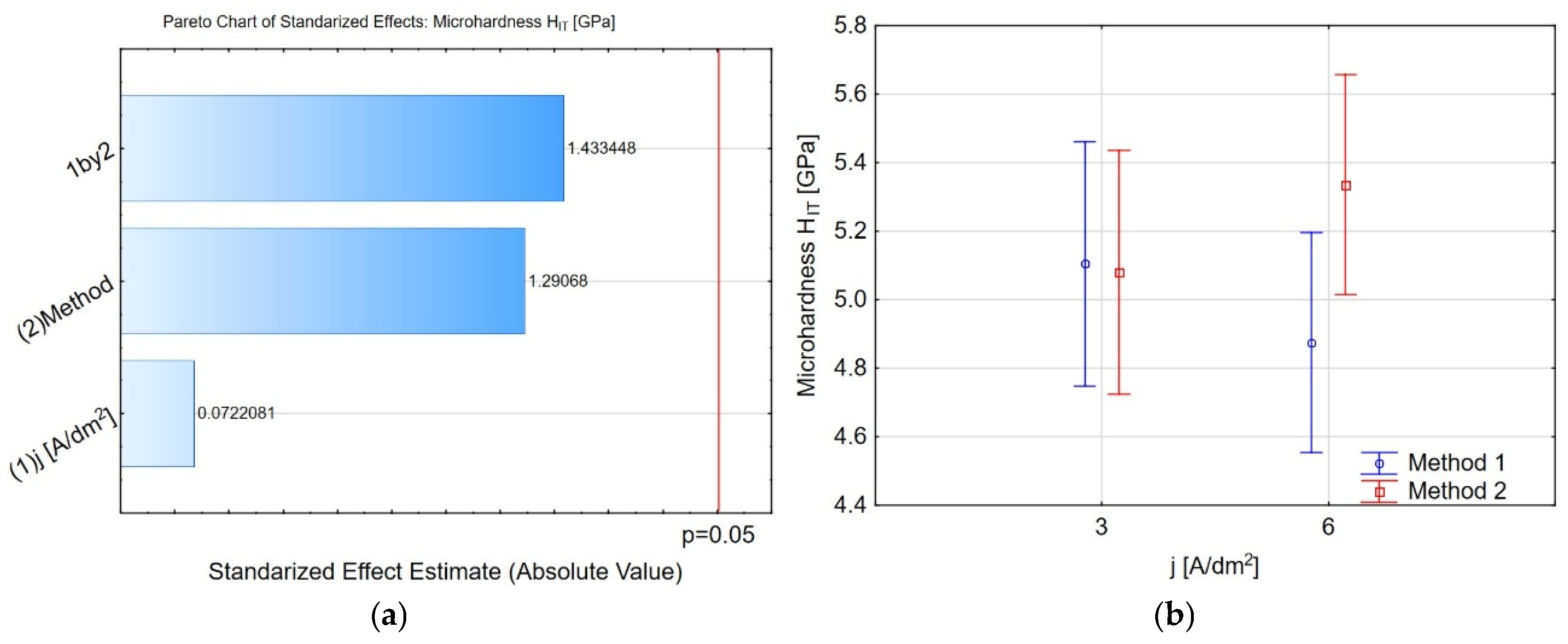
Figure 6, Figure 7, Figure 8, Figure 9 and Figure 10 present selected Pareto charts, marginal mean plots, and confidence interval plots from the analysis of the two-level factorial design, respectively. Based on this analysis, the significance of coating fabrication parameters on micromechanical properties is discussed below. As shown in Figure 6a, neither the method of introducing IF-WS2 nanopowder into the Al2O3 coating nor the applied current density during the coating deposition significantly affects the microhardness of the examined coatings. For j = 3 A/dm2, the microhardness is similar for both methods: HIT = 5.10 ± 0.59 and HIT = 5.08 ± 0.62 for methods 1 and 2, respectively. For j = 6 A/dm2, the microhardness is slightly higher in the case of method 2 (HIT = 5.33 ± 0.65), but it does not differ significantly from method 1 (HIT = 4.87 ± 0.68). This observation aligns with previous studies [23], which showed that increasing the current density from 3.0 to 6.0 A/dm2 at a fixed anodising time did not significantly improve the average oxide microhardness. It is noteworthy that measurements were conducted at half the coating thickness. The authors of the cited work also reported that variations in current density at a constant process duration resulted in substantial changes in microhardness across the entire coating thickness. This relationship is associated with the varying thickness of aluminium oxide nanofibers across the coating’s cross-section and, consequently, with the coating’s surface porosity [21,22,46,47,49]. Conversely, the thickness of Al2O3 nanofibers is governed by chemical dissolution processes affecting the oxide surface and pore walls during exposure to the acidic electrolyte [50]. The slight increase in microhardness—still within the method 2 margin of error—observed in Figure 6b is consistent with the findings reported by the authors of the study [27], who demonstrated a rise in Vickers microhardness with the increasing current density. The length of the confidence intervals suggests some uncertainty in the results. However, the investigated methods for introducing IF-WS2 into Al2O3 coatings generally do not significantly alter their microhardness, which is more important from the perspective of the research presented here. The microhardness values of the investigated coatings range from 4.87 to 5.55 GPa, corresponding to 496–566 HV. Similar values were observed for coatings deposited on the EN AW-5754 alloy by Kessetini et al. [51], on the AlSi(Cu) alloy by Fratila et al. [23], on EN AW-1050 by Remesova et al. [20], and on EN AW-5052 by Dervishi et al. [10].
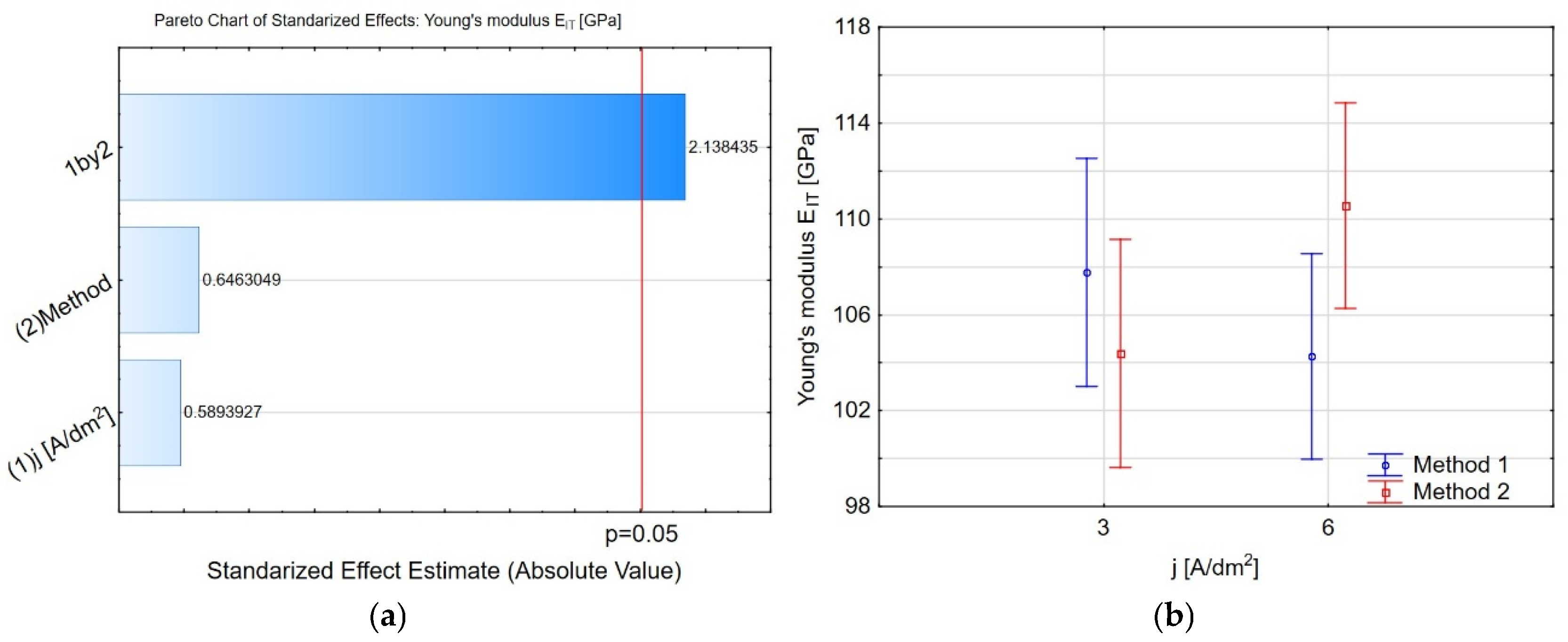
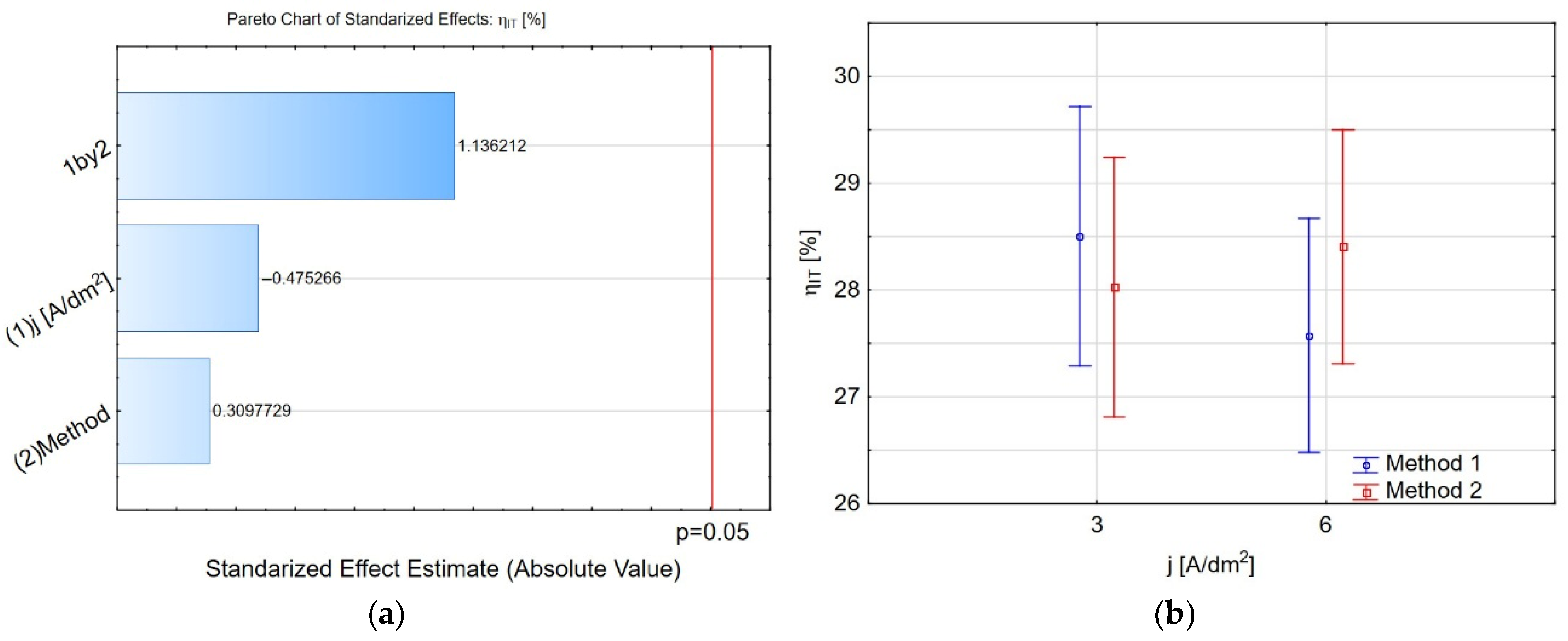
The Pareto charts (Figure 7a and Figure 8a) demonstrate that the interaction between the current density during coating deposition and introducing IF-WS2 nanopowder into Al2O3 is the only factor influencing the Young’s modulus value. For j = 3 A/dm2, the Young’s modulus values obtained using both methods are similar: EIT = 107 ± 11 and EIT = 104 ± 7, for methods 1 and 2, respectively (Figure 7b). For j = 6 A/dm2, method 2 yields a slightly higher value, EIT = 104 ± 7, than method 1, EIT = 110 ± 8. These values can be compared with the Young’s modulus values obtained for coatings produced in oxalic acid, as reported in [47], where the coating porosity was approximately 20%. The same behaviour is visible for the percentage of elastic recovery work ηIT (Figure 8b). The methods of obtaining the Al2O3/IF-WS2 coating do not affect the ηIT value.
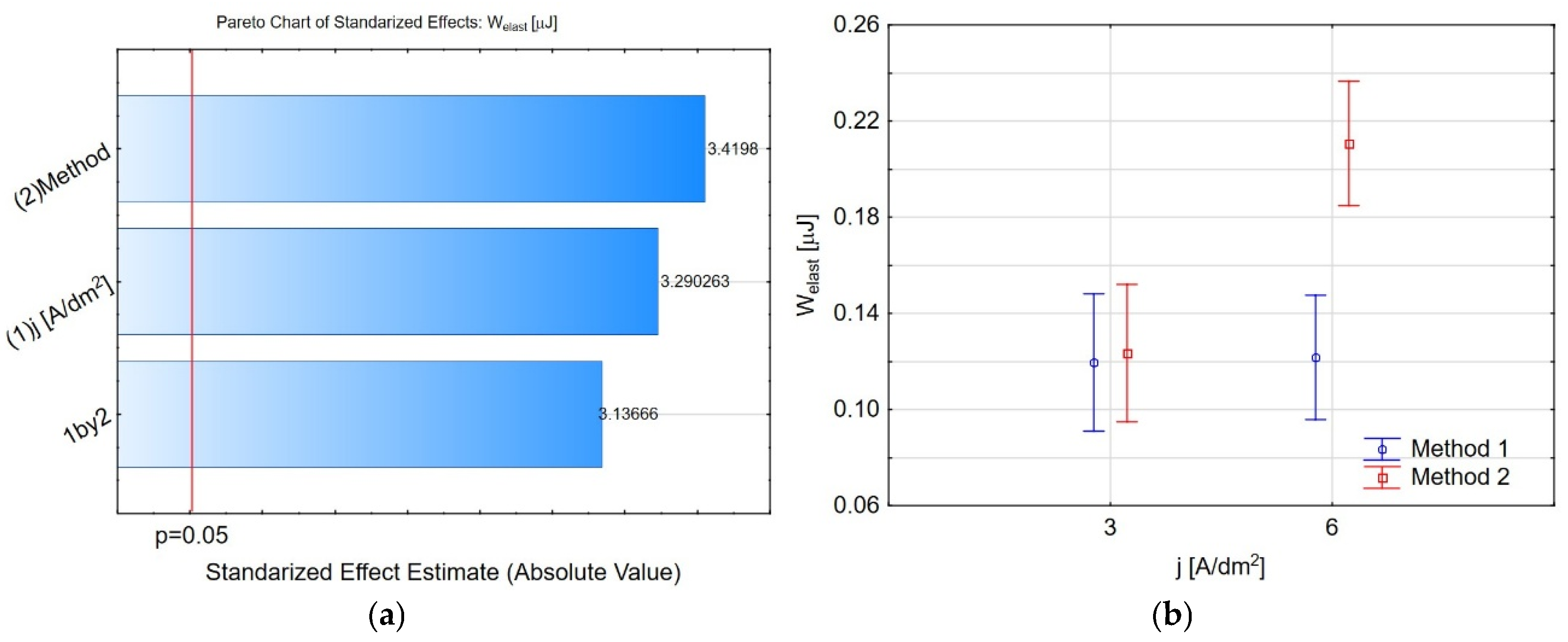
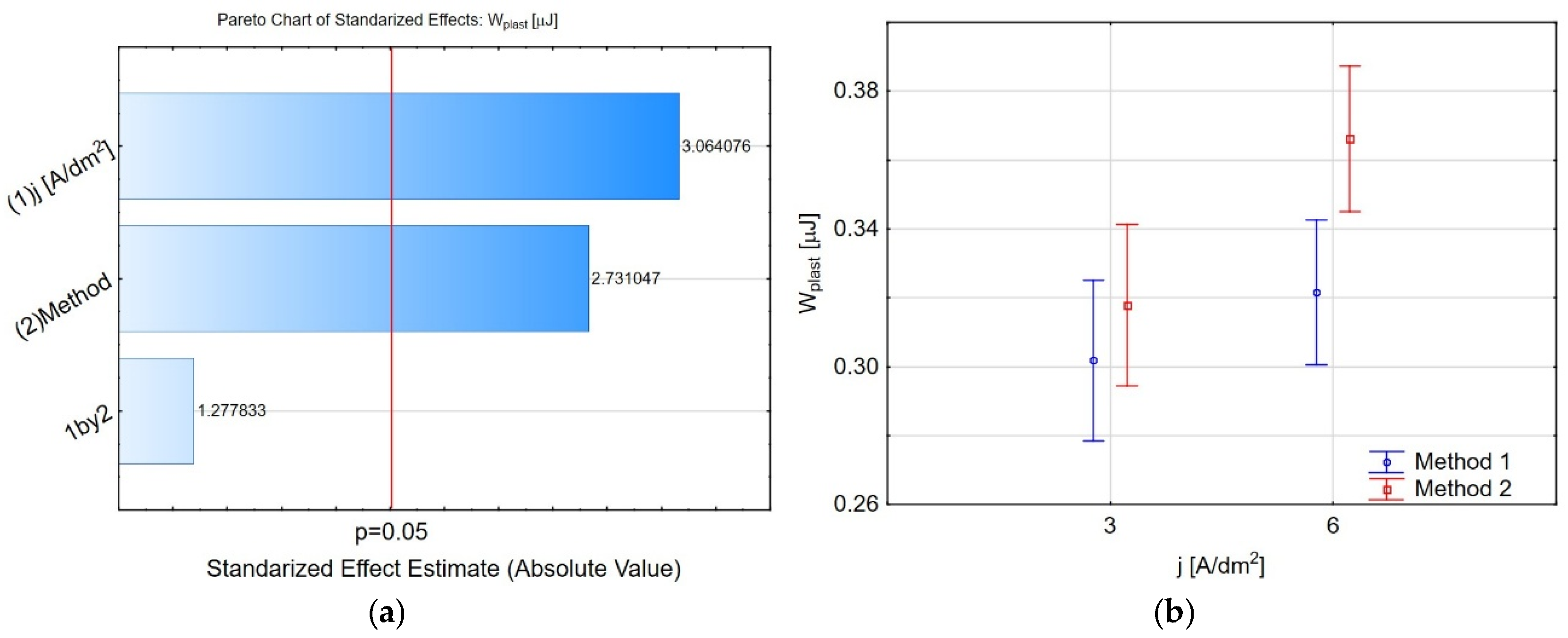
The Pareto chart (Figure 9a) indicates that the method, current density, and their interaction significantly affect the elastic deformation energy Welast, as their bars exceed the significance threshold (p = 0.05). A similar trend is observed for the plastic deformation energy Wplast (Figure 10a), except that the interaction between the manufacturing parameters does not influence it. At a higher current density (j = 6 A/dm2), higher values for Welast and Wplast can be observed (Figure 9b and Figure 10b, respectively). These values are higher for method 2 of nanopowder incorporation into the coatings in both cases. Based on the obtained results, it can be concluded that for coatings produced at a current density of j = 6 A/dm2 using method 2 (application of nanopowder onto the coating), the highest amount of elastic deformation work (Welast) was accumulated during deformation. Simultaneously, this coating exhibited the highest value of plastic deformation work (Wplast). Lower values of plastic deformation work Wplast and elastic deformation work Welast are most likely due to the method of the incorporated IF-WS2 nanolubricant present on the coating surface and/or within its nanopores. Lower current density j = 3 A/dm2 and method 1 are suggested to be better for higher deformation resistance.
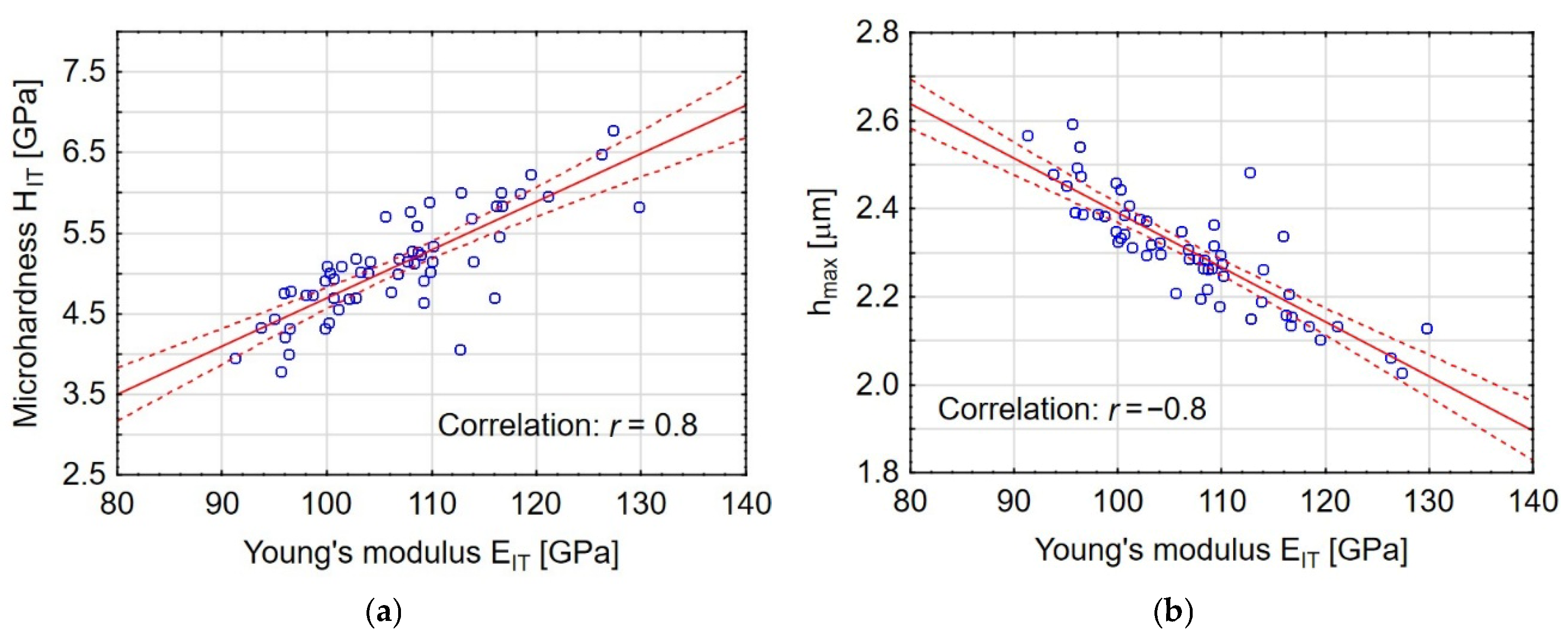
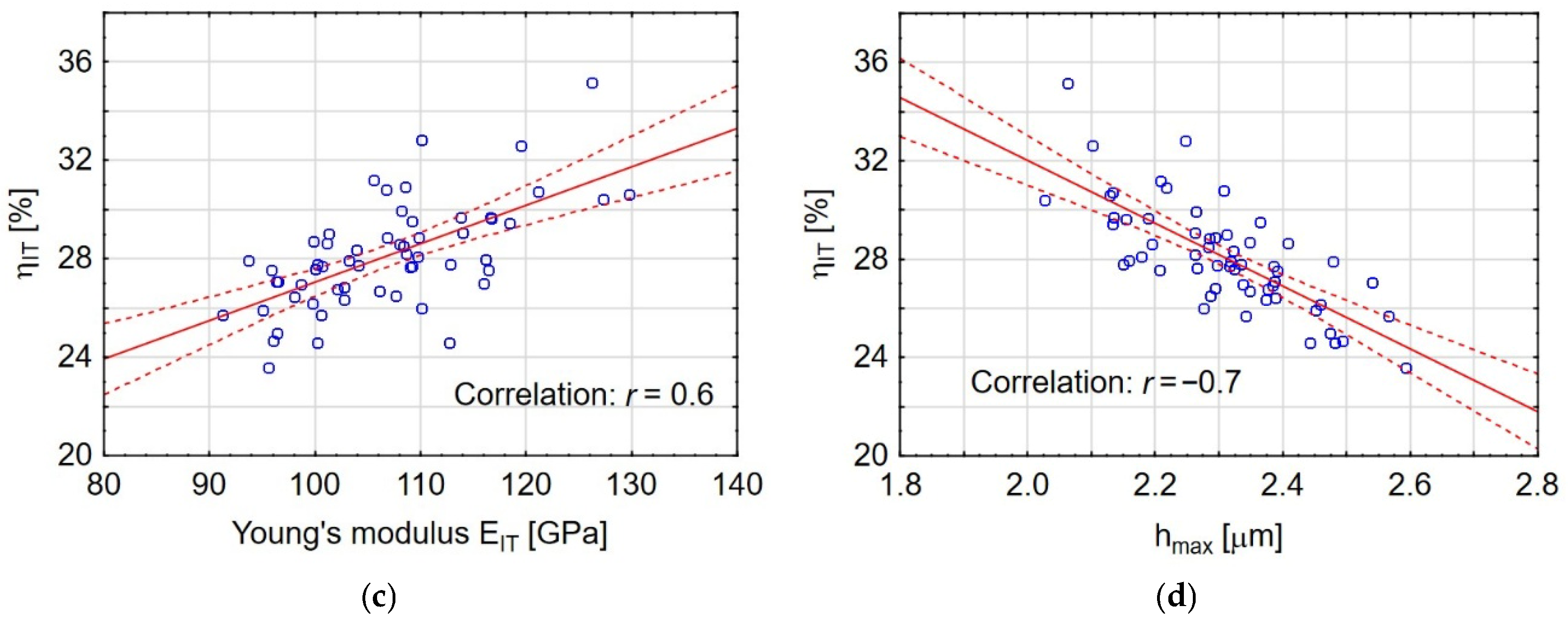
Figure 11 illustrates significant correlations between selected micromechanical property parameters. Figure 11a shows a scatter plot representing the relationship between microhardness HIT and Young’s modulus EIT. The plot includes a linear regression line, with dashed lines representing the confidence intervals. The correlation coefficient (r) is labelled as 0.8, indicating a strong positive correlation between the two variables. As the Young’s modulus increases, the microhardness tends to increase, reflecting a direct relationship between the two mechanical properties. A similar character of regression with a moderate correlation coefficient of r = 0.6 shows the relationship between the elastic recovery work ηIT and the Young’s modulus (Figure 11c). In contrast, a high negative correlation of r = −0.8 has been shown for the maximum depth of indenter insertion hmax and Young’s modulus (Figure 11b). A moderate correlation coefficient of r = −0.7 has been demonstrated for the elastic recovery work ηIT and a maximum depth of indenter insertion hmax (Figure 11d). The greater the penetration depth of the indenter, the less elastic energy is recovered from the coating. The indenter’s penetration depth mainly depends on the material’s porosity [47]. Our research also depends on the nanopowder introduced into the nanoporous microstructure.
By combining the micromechanical properties with the microstructural observations [35], some generalisations can be made. The observed effect of lower deflection under load for method 2 may be related to the greater number of IF-WS2 agglomerates accumulating in macropores on the coating surface, which promotes local strengthening of the contact zone during indentation. The presence of these agglomerates may limit direct indenter penetration into the Al2O3 matrix, resulting in lower maximum indentation depths despite no significant changes in microhardness. Unlike nanopores, which only promote the retention of single particles or small agglomerates, the macropores observed on the surface of coatings modified by method 2 allow for the accumulation of larger IF-WS2 agglomerates, which can act as local mechanical barriers, limiting indenter penetration and stabilising the mechanical response in the contact zone. At the same time, their presence promotes increased accumulation of elastic and plastic strain energy (Welast and Wplast), indicating a more deformable yet stable mechanical response of the contact zone. The lower values for plastic (Wplast) and elastic (Welast) strain work, observed for coatings obtained at a current density of j = 3 A/dm2 using method 1, most likely result from the presence of IF-WS2 nanopowder in smaller amounts on the coating surface and/or in its nanopores, where it acts as a nanolubricant, limiting strain development. In this context, a lower current density and method 1 may be advantageous in applications requiring limited accumulation of strain energy and increased resistance to permanent deformation, in contrast to method 2, which favours a more “working” mechanical response (the material deforms but does not collapse) associated with the presence of agglomerates in the macropores.
Figure 12 shows a sample optical image of the scratch track for sample no. 1. The photos include representative graphs showing Hertzian cracks (LC1), V-shaped forward (LC2), and complete coating failure (LC3).
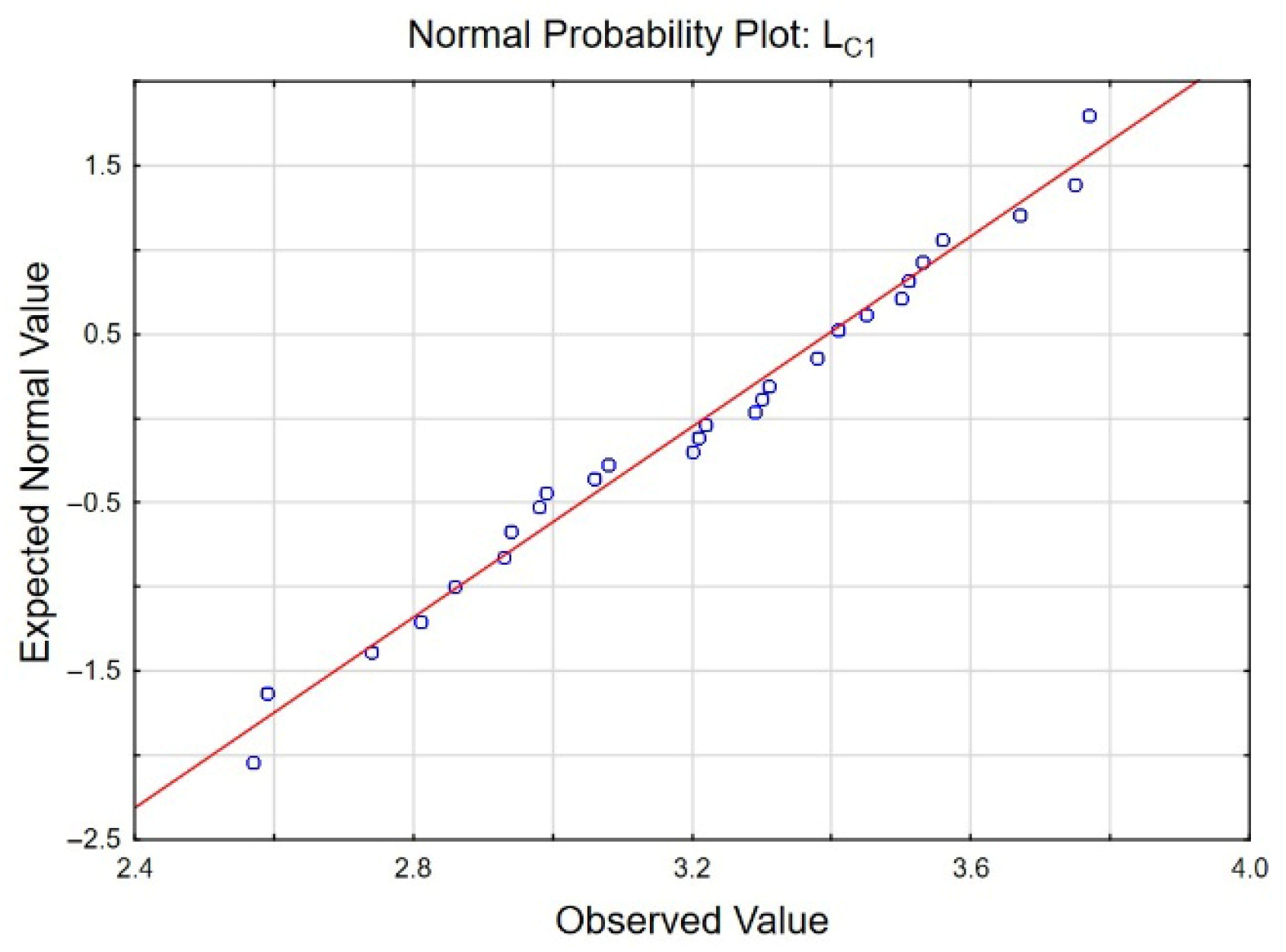
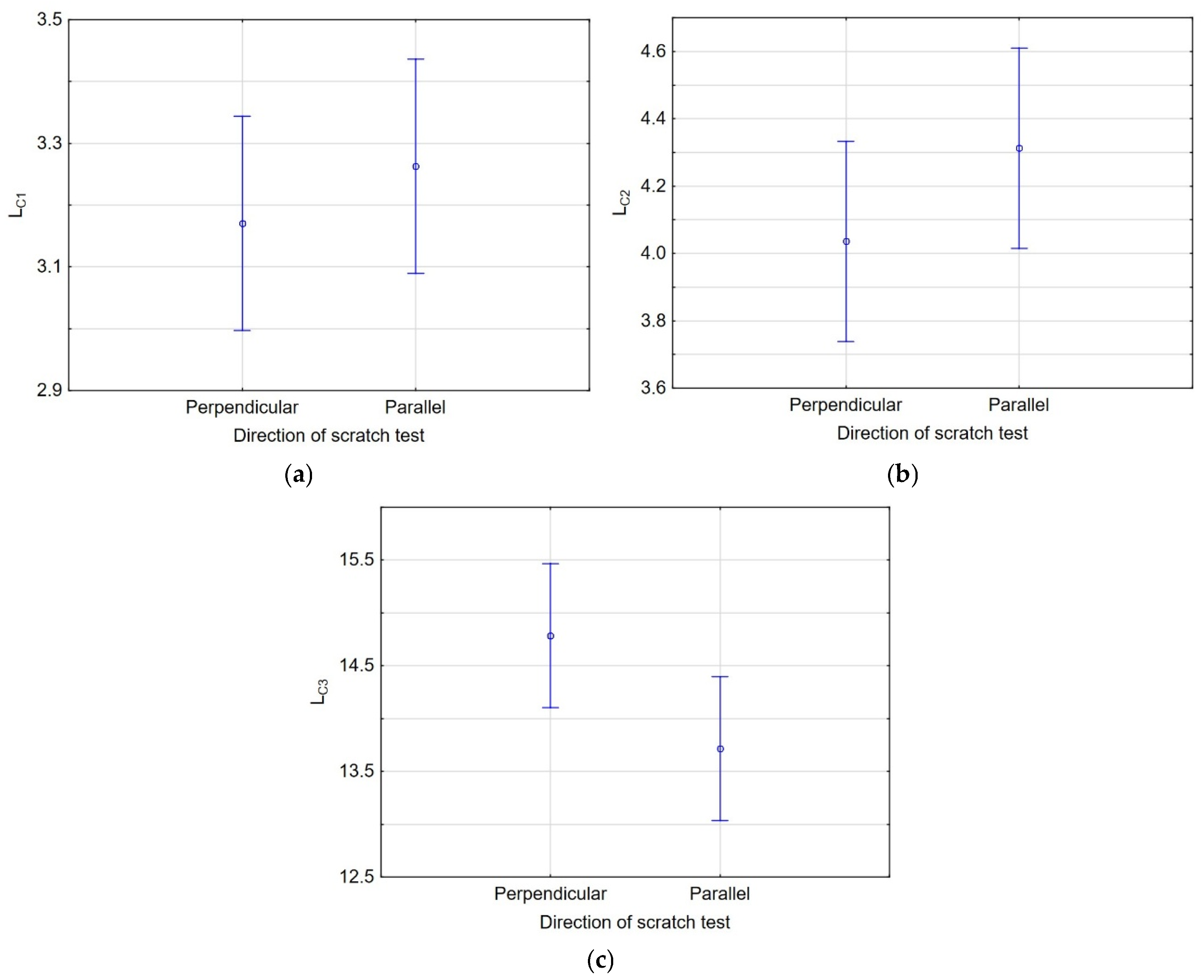
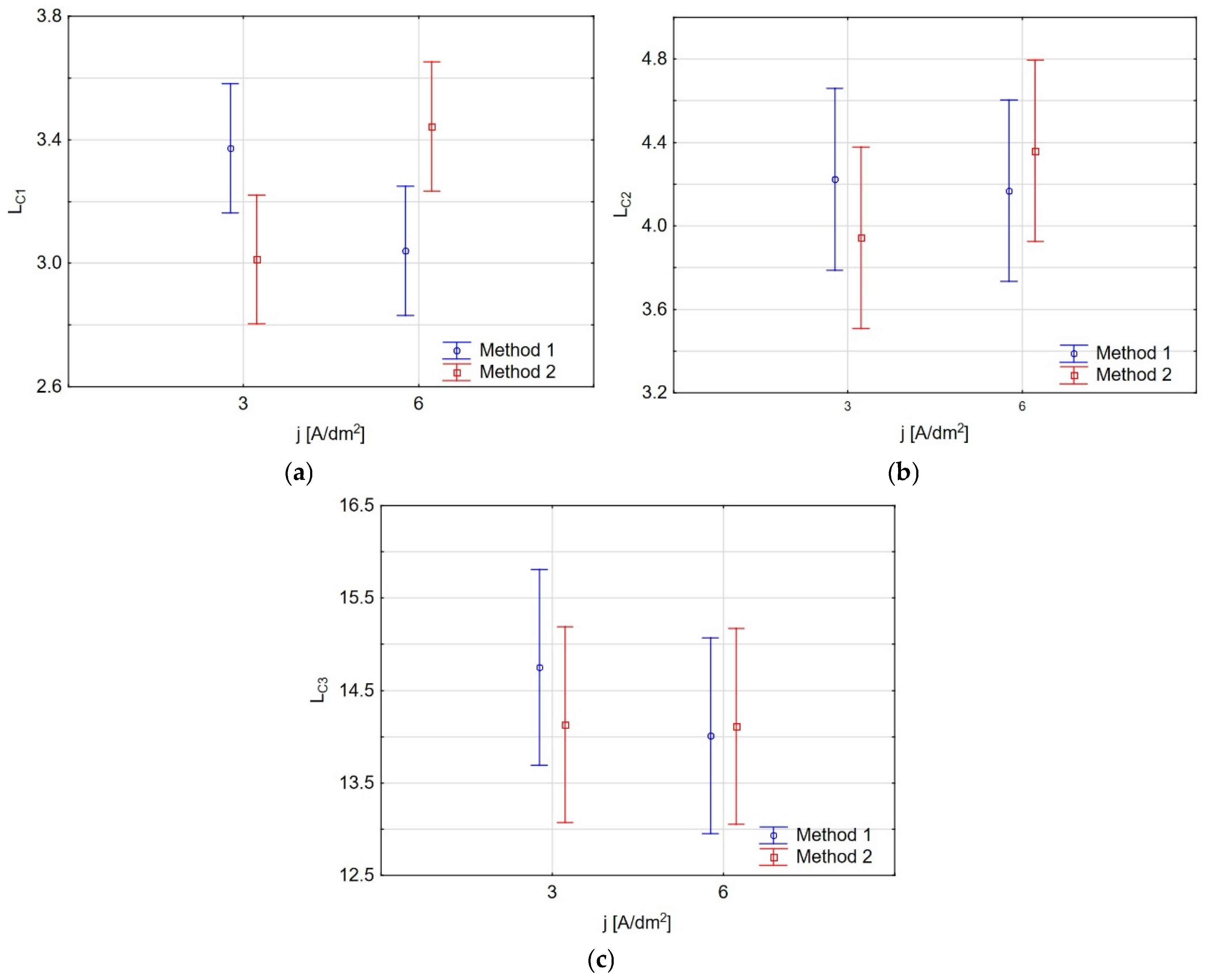
All research results for LC1, LC2, and LC3 exhibited normal distributions (an example for LC1 is shown in Figure 13). Consequently, a one-way analysis of variance (ANOVA) was applied to assess the significant differences in measurements of LC1, LC2, and LC3 in two mutually perpendicular directions. The ANOVA results indicated a significant difference in LC3 measurements, indicating complete failure of the coating. In contrast, for LC1 and LC2, the measurement direction of surface scratching was not a determining factor. Figure 14a–c present the expected mean values and 95% confidence intervals for LC1, LC2, and LC3, respectively.
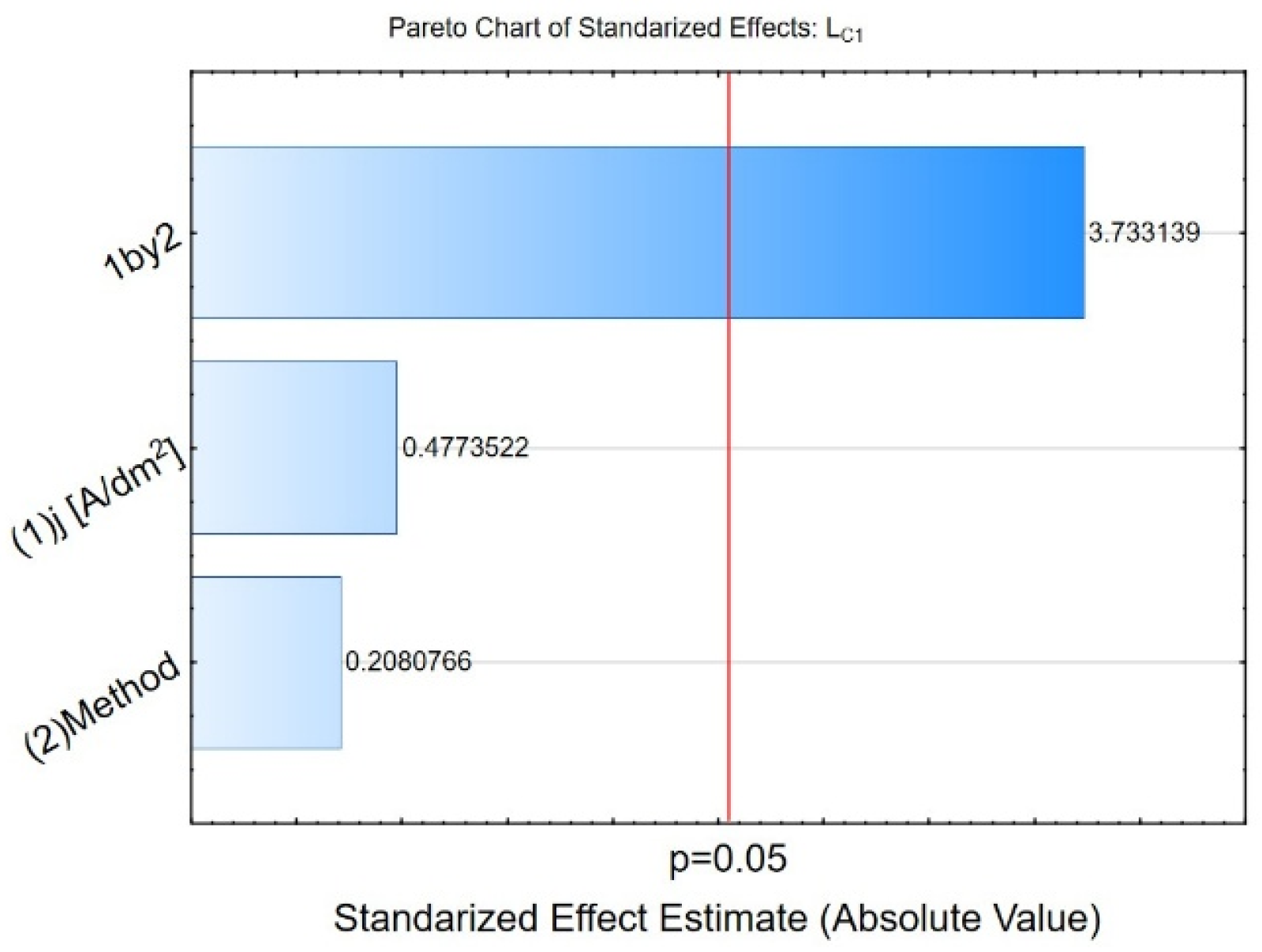
A two-level factorial design analysis was performed for the critical load LC measurements. The results demonstrated a significant effect of the manufacturing parameters only on LC1 values, as shown in Figure 15. According to the graph, only the interaction (one by two) between the manufacturing parameters of the tested coatings significantly impacts the output value LC1. Figure 16a–c show charts of marginal means and the confidence interval (95%) for the (a) LC1, (b) LC2, and (c) LC3 dependence on the method and electrolysis conditions. For LC1 (Figure 16a), j = 3 A/dm2, method 1 shows a slightly higher (LC1 ≅ 3.35 N) value than method 2 (LC1 ≅ 3.01 N), but both values overlap within their error margins. For j = 6 A/dm2, method 2 exhibits a higher (LC1 ≅ 3.44 N) value than method 1 (LC1 ≅ 3.04 N), with a more noticeable separation. In the case of LC2 (Figure 16b) (at j = 3 A/dm2 LC2 ≅ 4.22 N (method 1); LC2 ≅ 3.94 N (method 2); at j = 6 A/dm2 LC2 ≅ 4.17 N (method 1); LC2 ≅ 4.36 N (method 2)), and LC3 (Figure 14c) at (at j = 3 A/dm2 LC3 ≅ 14.75 N (method 1); LC3 ≅ 14.13 N (method 2); at j = 6 A/dm2 LC3 ≅ 14.01 N (method 1); LC3 ≅ 14.11 N (method 2)), both methods exhibit similar LC2 and LC3 values, with overlapping error bars, indicating no significant difference between the two methods.
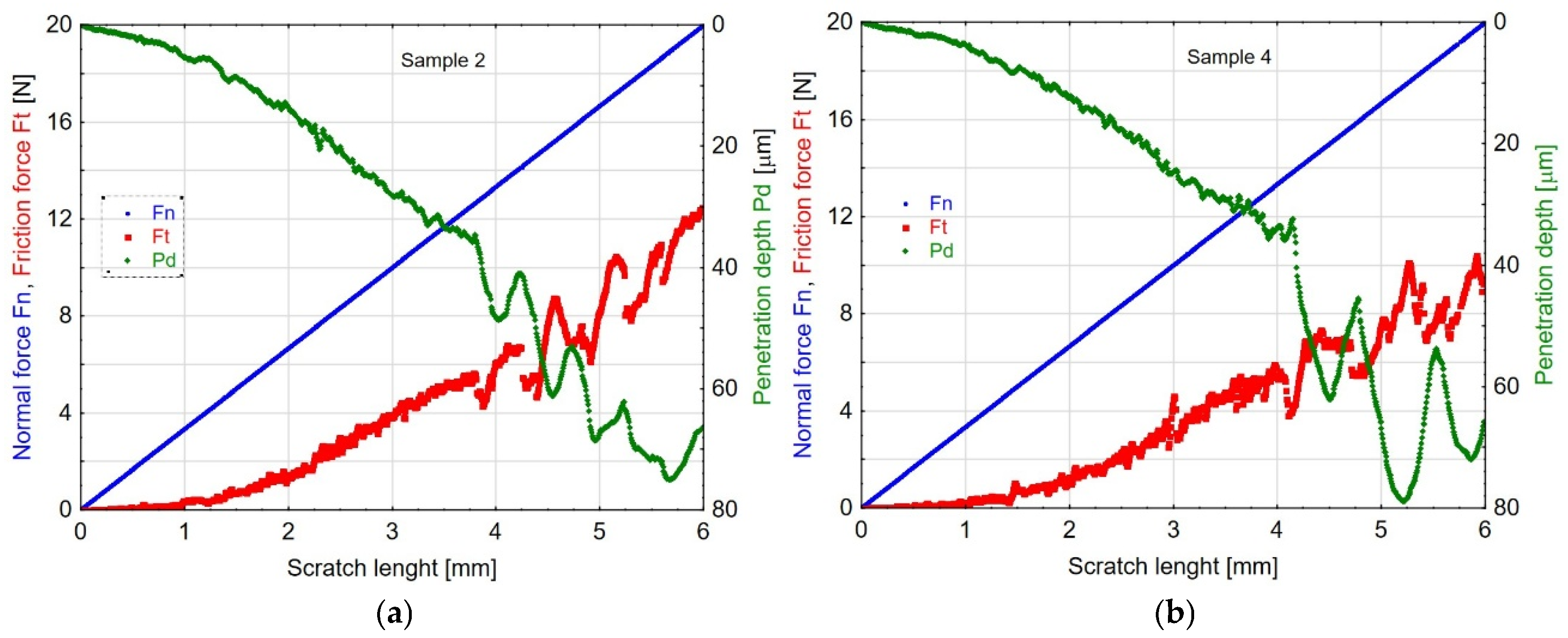
The parameters recorded during the scratch tests of the coatings enabled the characterisation of friction force and indenter penetration depth under load (Figure 17). The Fn curve represents the normal force applied by the indenter, progressively increasing up to 20 N along the entire scratch length. Consequently, this characteristic remains identical for all tested coatings. In contrast, the Ft and Pd curves illustrate the variations in friction force and penetration depth as functions of scratch length. In all cases, the friction force of the indenter increases as it penetrates the coating and substrate structure—an expected outcome, due to the progressive increase in normal force.
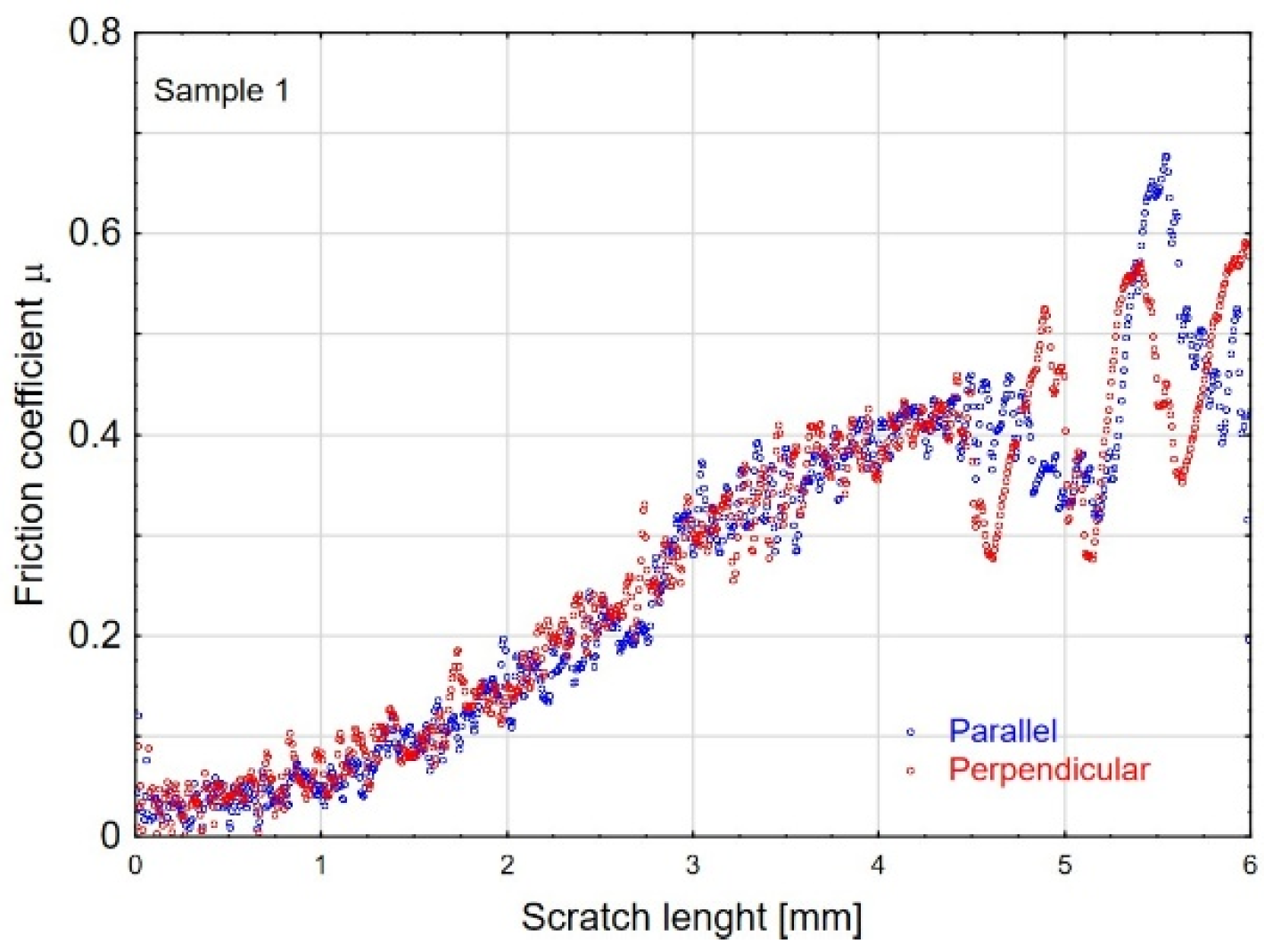
In Figure 18, sample values (sample 1) of the friction coefficient are shown as a function of the distance travelled during the scratch test for scratches in two perpendicular directions. For the analysis of binary tests, it was assumed that the friction coefficient measurements are independent of the measurement direction.
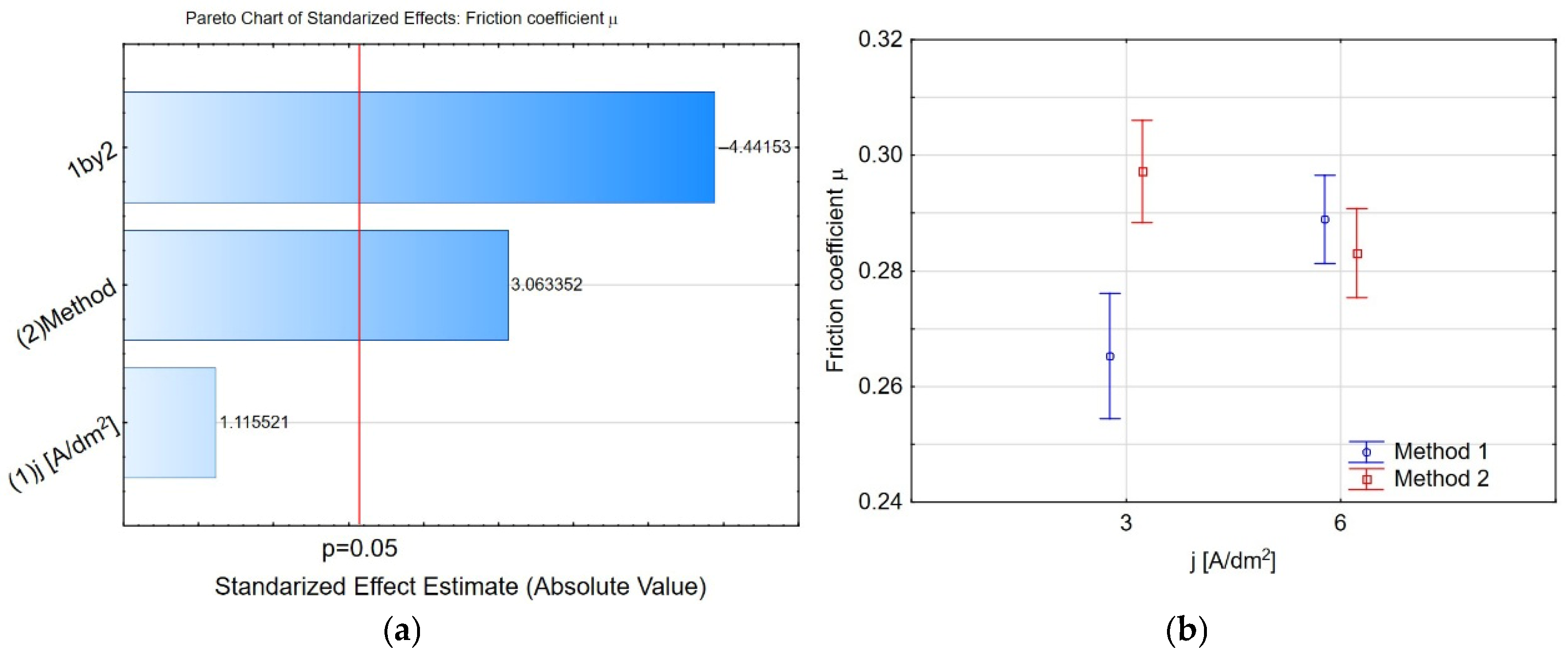
Figure 19a presents a Pareto chart, indicating that introducing nanopowder into the coating and the interaction between the preparation conditions (one by two) affect the friction coefficient. The provided graph (Figure 19b) illustrates the relationship between the friction coefficient μ and the current density j for methods 1 and 2. Each data point includes an error bar indicating the variability or uncertainty of the measurements. At j = 3 A/dm2, method 1 shows a lower friction coefficient with a more significant error margin than method 2. At j = 6 A/dm2, the friction coefficients for both methods are closer, with method 1 showing a slightly lower value than method 2. Overall, the graph suggests that the friction coefficient increases with the current density for method 1, whereas it remains relatively stable for method 2.
The stability of the friction coefficient observed for method 2 correlates with its ability to limit local penetration and with the presence of IF-WS2 nanoparticles, which act as local reservoirs that may favour a more controlled course of deformation and friction in the contact zone.

4. Conclusions

In this study, the current density and methods of incorporating nanoparticles into the microstructure have been applied to the aluminium alloy EN AW-5251 substrate, to produce porous anodic aluminium oxide coatings with the IF-WS2 nanolubricant. The effect of the above-mentioned condition on the resulting micromechanical properties of the porous Al2O3/IF-WS2 coatings was examined, and the following conclusion was drawn:
  • The IF-WS2 nanopowder introduction method and the deposition current density influence the mechanical and tribological response of Al2O3 coatings, with this effect manifesting primarily at the level of deformation and friction mechanisms, rather than in the form of significant changes in microhardness.
  • Method 2 leads to lower maximum indentation depths and greater stability of the mechanical response as a function of the current density, indicating improved resistance to local penetration.
  • At the same time, the lower current density (3 A/dm2) and method 1 help to reduce the accumulation of elastic and plastic strain energy, which may be beneficial in applications requiring increased resistance to permanent deformation.
  • DOE analysis confirmed that both the nanopowder introduction method and its interaction with the current density significantly affect the coefficient of friction, with method 2 demonstrating more stable tribological behaviour across the entire parameter range tested.
  • The obtained results indicate that there is no single, universally optimal technological variant, and the selection of the nanopowder introduction method and current density should depend on the dominant loading mechanism and the expected operational function of the coating.

Author Contributions

J.K.: Conceptualisation, Methodology, Formal Analysis, Investigation, Writing—Original Draft, Writing—Review and Editing, Funding Acquisition. A.B.: Micromechanical Investigation, K.C.: Sonicator Operation. M.N. and M.B.: Methodology, Supervision. All authors have read and agreed to the published version of the manuscript.

Funding

The project was co-financed by the European Union within the programme “The European Funds for Śląsk (Silesia) 2021–2027; GreenMat—Development of the University of Silesia in Katowice in the field of new material technologies towards the green transformation of the region”.

Data Availability Statement

The original contributions presented in this study are included in the article. Further inquiries can be directed to the corresponding author.

Acknowledgments

The authors gratefully acknowledge Marzena Dzida for the opportunity to utilise the sonicator and laboratory facilities for incorporating nanopowder into the coatings.

Conflicts of Interest

The authors declare no conflict of interest.

References

  1. Michalska-Domańska, M.; Norek, M.; Stȩpniowski, W.J.; Budner, B. Fabrication of high quality anodic aluminum oxide (AAO) on low purity aluminum—A comparative study with the AAO produced on high purity aluminum. Electrochim. Acta 2013, 105, 424–432. [Google Scholar] [CrossRef]
  2. Liu, Y.C.; Chen, Y.F.; Lin, Y.C.; Zheng, Y.H.; Lee, L.R.; Chang, M.H.; Ho, J.H.; Lin, Y.L.; Chen, J.T. Tailoring Nanopore Geometry in Anodic Aluminum Oxide Membranes through Physical Stretching and Controlled Anodization. Adv. Mater. Interfaces 2025, 12, 2400699. [Google Scholar] [CrossRef]
  3. Masuda, H.; Satoh, M. Fabrication of gold nanodot array using anodic porous alumina as an evaporation mask. Jpn. J. Appl. Phys. 1996, 35, L126. [Google Scholar] [CrossRef]
  4. Xu, Q.; Xue, Y.; Miao, M.; Shi, X. Au nanostructures with controllable morphology in porous anodic aluminum oxide templates. Chem. Phys. 2024, 580, 112241. [Google Scholar] [CrossRef]
  5. Domagalski, J.T.; Xifre-Perez, E.; Marsal, L.F. Recent advances in nanoporous anodic alumina: Principles, engineering, and applications. Nanomaterials 2021, 11, 430. [Google Scholar] [CrossRef]
  6. Tahir, N.A.M.; Liza, S.; Fukuda, K.; Yaakob, Y.; Zulkifli, N.A.; Rawian, N.A.M.; Ghazazi, N.A.M. Influence of humidity on the tribological performance of graphite reinforced aluminium anodic oxide coating. Tribol. Int. 2024, 197, 109752. [Google Scholar] [CrossRef]
  7. Xiong, Z.; Zhang, W.; Jin, S.; Wu, R.; Ma, F.; Wang, X.; Wang, G. One-step hydrothermal fabrication of Co-MOFs/LDH superhydrophobic composite coating with corrosion resistance and wear resistance on anodic aluminum oxide. Appl. Surf. Sci. 2024, 677, 161023. [Google Scholar] [CrossRef]
  8. Skeldon, P.; Wang, H.W.; Thompson, G.E. Formation and characterization of self-lubricating MoS2 precursor films on anodized aluminium. Wear 1997, 206, 187–196. [Google Scholar] [CrossRef]
  9. Santecchia, E.; Cabibbo, M.; Hamouda, A.M.S.; Musharavati, F.; Popelka, A.; Spigarelli, S. Dry sliding tribological properties of a hard anodized aa6082 aluminum alloy. Metals 2020, 10, 207. [Google Scholar] [CrossRef]
  10. Dervishi, E.; McBride, M.; Edwards, R.; Gutierrez, M.; Li, N.; Buntyn, R.; Hooks, D.E. Mechanical and tribological properties of anodic Al coatings as a function of anodizing conditions. Surf. Coat. Technol. 2022, 444, 128652. [Google Scholar] [CrossRef]
  11. Zhu, T.; Yuan, Y.; Yu, Q.; Xiang, H.; Liu, G.; Dai, X.; Liao, R. Enhanced corrosion resistance of slippery liquid infused porous aluminum surfaces prepared by anodizing in simulated marine atmosphere. Mater. Chem. Phys. 2023, 306, 128073. [Google Scholar] [CrossRef]
  12. Takaya, M.; Hashimoto, K.; Toda, Y.; Maejima, M. Novel tribological properties of anodic oxide coating of aluminum impregnated with iodine compound. Surf. Coat. Technol. 2003, 169–170, 160–162. [Google Scholar] [CrossRef]
  13. Maejima, M.; Saruwatari, K.; Takaya, M. Friction behaviour of anodic oxide film on aluminum impregnated with molybdenum sulfide compounds. Surf. Coat. Technol. 2000, 132, 105–110. [Google Scholar] [CrossRef]
  14. Yaqub, T.B.; Al-Rjoub, A.; Fernandes, F.; Cavaleiro, A. Recent Progress toward the Development of TMD-Based Industrial Dry Lubricants for Multi-Environment Sliding. Mater. Proc. 2022, 8, 20. [Google Scholar] [CrossRef]
  15. Rosenkranz, A.; Costa, H.L.; Baykara, M.Z.; Martini, A. Synergetic effects of surface texturing and solid lubricants to tailor friction and wear—A review. Tribol. Int. 2021, 155, 106792. [Google Scholar] [CrossRef]
  16. Pawlus, P.; Dzierwa, A. Tribological behavior of functional surface: Models and methods. Coatings 2021, 11, 333. [Google Scholar] [CrossRef]
  17. Kumar, N.; Sharma, A.; Manoj, M.K.; Ahn, B. Taguchi optimization of tribological properties and corrosion behavior of self-lubricating Al–Mg–Si/MoS2 composite processed by powder metallurgy. J. Mater. Res. Technol. 2023, 26, 1185–1197. [Google Scholar] [CrossRef]
  18. Korzekwa, J. Modification of the structure and properties of oxide layers on aluminium alloys: A review. Rev. Adv. Mater. Sci. 2023, 62, 20230108. [Google Scholar] [CrossRef]
  19. Korzekwa, J.; Gądek-Moszczak, A.; Zubko, M. Influence of the Size of Nanoparticles on the Microstructure of Oxide Coatings. Mater. Sci. 2018, 53, 709–716. [Google Scholar] [CrossRef]
  20. Remešová, M.; Tkachenko, S.; Kvarda, D.; Ročňáková, I.; Gollas, B.; Menelaou, M.; Čelko, L.; Kaiser, J. Effects of anodizing conditions and the addition of Al2O3/PTFE particles on the microstructure and the mechanical properties of porous anodic coatings on the AA1050 aluminium alloy. Appl. Surf. Sci. 2020, 513, 145780. [Google Scholar] [CrossRef]
  21. Aerts, T.; Dimogerontakis, T.; De Graeve, I.; Fransaer, J.; Terryn, H. Influence of the anodizing temperature on the porosity and the mechanical properties of the porous anodic oxide film. Surf. Coat. Technol. 2007, 201, 7310–7317. [Google Scholar] [CrossRef]
  22. Hu, N.; Ge, S.; Fang, L. Tribological properties of nano-porous anodic aluminum oxide template. J. Cent. South Univ. Technol. 2011, 18, 1004–1008. [Google Scholar] [CrossRef]
  23. Fratila-Apachitei, L.E.; Duszczyk, J.; Katgerman, L. Vickers microhardness of AlSi(Cu) anodic oxide layers formed in H2SO4 at low temperature. Surf. Coat. Technol. 2003, 165, 309–315. [Google Scholar] [CrossRef]
  24. Sulka, G.D.; Parkoła, K.G. Anodising potential influence on well-ordered nanostructures formed by anodisation of aluminium in sulphuric acid. Thin Solid Films 2006, 515, 338–345. [Google Scholar] [CrossRef]
  25. Bensalah, W.; Feki, M.; Wery, M.; Ayedi, H.F. Chemical dissolution resistance of anodic oxide layers formed on aluminum. Trans. Nonferrous Met. Soc. China 2011, 21, 1673–1679. [Google Scholar] [CrossRef]
  26. Bensalah, W.; Elleuch, K.; Feki, M.; DePetris-Wery, M.; Ayedi, H.F. Comparative study of mechanical and tribological properties of alumina coatings formed on aluminium in various conditions. Mater. Des. 2009, 30, 3731–3737. [Google Scholar] [CrossRef]
  27. Guezmil, M.; Bensalah, W.; Khalladi, A.; Elleuch, K.; Depetris-Wery, M.; Ayedi, H.F. Friction coefficient and microhardness of anodized aluminum alloys under different elaboration conditions. Trans. Nonferrous Met. Soc. China 2015, 25, 1950–1960. [Google Scholar] [CrossRef]
  28. Bensalah, W.; Elleuch, K.; Feki, M.; Wery, M.; Ayedi, H.F. Optimization of anodic layer properties on aluminium in mixed oxalic/sulphuric acid bath using statistical experimental methods. Surf. Coat. Technol. 2007, 201, 7855–7864. [Google Scholar] [CrossRef]
  29. Guezmil, M.; Bensalah, W.; Khalladi, A.; Elleuch, K.; De-Petris Wery, M.; Ayedi, H.F. Effect of Test Parameters on the Friction Behaviour of Anodized Aluminium Alloy. Int. Sch. Res. Not. 2014, 2014, 795745. [Google Scholar] [CrossRef]
  30. Xia, Z.; Riester, L.; Sheldon, B.W.; Curtin, W.A.; Liang, J.; Yin, A.; Xu, J.M. Mechanical properties of highly ordered nanoporous anodic alumina membranes. Rev. Adv. Mater. Sci. 2004, 6, 131–139. [Google Scholar]
  31. Vojkuvka, L.; Santos, A.; Pallarès, J.; Ferré-Borrull, J.; Marsal, L.F.; Celis, J.P. On the mechanical properties of nanoporous anodized alumina by nanoindentation and sliding tests. Surf. Coat. Technol. 2012, 206, 2115–2124. [Google Scholar] [CrossRef]
  32. Lee, G.S.; Choi, J.H.; Choi, Y.C.; Bu, S.D.; Lee, Y.Z. Tribological effects of pores on an anodized Al alloy surface as lubricant reservoir. Curr. Appl. Phys. 2011, 11, S182–S186. [Google Scholar] [CrossRef]
  33. Abedini, M.; Hanke, S. Improving the wear resistance of aluminum by a nickel-filled anodized porous alumina layer. Wear 2023, 522, 204858. [Google Scholar] [CrossRef]
  34. Gorokh, G.G.; Pashechko, M.I.; Borc, J.T.; Lozovenko, A.A.; Kashko, I.A.; Latos, A.I. Matrix coatings based on anodic alumina with carbon nanostructures in the pores. Appl. Surf. Sci. 2018, 433, 829–835. [Google Scholar] [CrossRef]
  35. Korzekwa, J.; Niedźwiedź, M.; Dercz, G.; Cwynar, K.; Sowa, M.; Bara, M.; Simka, W. Methods of Distributing the IF-WS2 Modifier for Its Introduction into the Structure of the Al2O3 Aluminum Oxide Coating. Coatings 2024, 14, 883. [Google Scholar] [CrossRef]
  36. ISO 14577-4:2016; Metallic Materials—Instrumented Indentation Test for Hardness and Materials Parameters Part 4: Test Method for Metallic and Non-Metallic Coatings. ISO: Geneva, Switzerland, 2016.
  37. Oliwer, W.C.; Pharr, G.M. An improved technique for determining hardness and elastic modulus using load and displacement sensing indentation experiments. J. Mater. Res. 1992, 7, 1564–1583. [Google Scholar] [CrossRef]
  38. Sawa, T. Correlation between nanoindentation test result and Vickers hardness. In Proceedings of the IMEKO 2010 TC3, TC5 and TC22 Conferences Metrology in Modern Context, Pattaya, Thailand, 22–25 November 2010; pp. 171–174. [Google Scholar]
  39. ISO 19252:2008; Plastics—Determination of Scratch Properties. ISO: Geneva, Switzerland, 2008.
  40. ISO 20502:2005; Fine Ceramics (Advanced Ceramics, Advanced Technical Ceramics)—Determination of Adhesion of Ceramic Coatings by Scratch Testing. ISO: Geneva, Switzerland, 2005.
  41. ASTM C1624-22; Standard Test Method for Adhesion Strength and Mechanical Failure Modes of Ceramic Coatings by Quantitative Single Point Scratch Testing. ASTM International: West Conshohocken, PA, USA, 2022.
  42. ASTM D7027-20; Standard Test Method for Evaluation of Scratch Resistance of Polymeric Coatings and Plastics Using an Instrumented Scratch Machine. ASTM International: West Conshohocken, PA, USA, 2020.
  43. Pietraszek, J.; Goroshko, A. The heuristic approach to the selection of experimental design, model and valid pre-processing transformation of DoE outcome. Adv. Mater. Res. 2014, 874, 145–149. [Google Scholar] [CrossRef]
  44. Pietraszek, J. Fuzzy Regression Compared to Classical Experimental Design in the Case of Flywheel Assembly. In Artificial Intelligence and Soft Computing, Proceedings of the 11th International Conference, ICAISA 2012, Zakopane, Poland, 29 April–3 May 2012; Rutkowski, L., Korytkowski, M., Scherer, R., Tadeusiewicz, R., Zadeh, L.A., Zurada, J.M., Eds.; Springer: Berlin/Heidelberg, Germany, 2012. [Google Scholar]
  45. Orman, Ł.J.; Radek, N.; Pietraszek, J.; Szczepaniak, M. Analysis of enhanced pool boiling heat transfer on laser-textured surfaces. Energies 2020, 13, 2700. [Google Scholar] [CrossRef]
  46. Korzekwa, J.; Tenne, R.; Skoneczny, W.; Dercz, G. Two-step method for preparation of Al2O3/IF-WS2 nanoparticles composite coating. Phys. Status Solidi Appl. Mater. Sci. 2013, 210, 2292–2297. [Google Scholar] [CrossRef]
  47. Tsyntsaru, N.; Kavas, B.; Sort, J.; Urgen, M.; Celis, J.P. Mechanical and frictional behaviour of nano-porous anodized aluminium. Mater. Chem. Phys. 2014, 148, 887–895. [Google Scholar] [CrossRef]
  48. Korzekwa, J.; Barylski, A.; Niedźwiedź, M.; Bara, M. The Influence of Methods for Distributing the IF-WS2 Modifier into the Structure of Al2O3 Aluminium Oxide Coatings on Their Micromechanical Properties. In Proceedings of the SICT2025 Conference, Albufeira, Portugal, 23–25 April 2025. [Google Scholar]
  49. Kwolek, P.; Obłój, A.; Kościelniak, B.; Buszta, R.; Tokarski, T.; Krupa, K.; Gradzik, A.; Nowak, W.J.; Wojnicki, M.; Motyka, M. Wear resistance of hard anodic coatings fabricated on 5005 and 6061 aluminum alloys. Arch. Civ. Mech. Eng. 2024, 24, 51. [Google Scholar] [CrossRef]
  50. Wernick, S.; Pinner, R.; Sheasby, P.G. The Surface Treatment and Finishing of Aluminium and Its Alloys, 5th ed.; Finishing Publications Ltd.: Stevenage, UK; ASM International: Materials Park, OH, USA, 1987. [Google Scholar]
  51. Kessentini, I.; Zouari, S.; Bakir, A.; Bargui, M. Comparative Study of Mechanical and Tribological Properties of Alumina Coatings Formed on 5754 Aluminium Alloy under Various Conditions. Surf. Eng. Appl. Electrochem. 2018, 54, 524–533. [Google Scholar] [CrossRef]
Figure 1. Microstructures of the surface (a,b) fresh cross-section of the Al2O3/IF-WS2 coating no. 1 [48].
Materials 19 00667 g001
Figure 2. (a) SEM/YAG-BSE of a fresh fracture cross-section with a marked area of EDS analysis; (b) EDS from area 1; and (c) EDS from point 2 of Al2O3/IF-WS2 coating no. 2.
Materials 19 00667 g002
Figure 3. Examples of (a) indentation depth and load vs. time and (b) load vs. indentation depth, recorded during micromechanical tests on sample no. 1.
Materials 19 00667 g003
Figure 4. Example: (a) normality test and (b) histogram for sample no. 3.
Materials 19 00667 g004
Figure 5. (a) The Pareto chart of standardised effects for the maximum value of indentation depth, and (b) charts of marginal means and confidence interval (95%), maximum value of indentation depth dependence on the method and electrolysis conditions.
Materials 19 00667 g005
Figure 6. (a) The Pareto chart of standardised effects for the microhardness HIT, and (b) charts of marginal means and confidence interval (95%) for the microhardness HIT dependence on the method and electrolysis conditions.
Materials 19 00667 g006
Figure 7. (a) The Pareto chart of standardised effect for the Young’s modulus EIT, and (b) charts of marginal means and confidence interval (95%) for the Young’s modulus EIT dependence on the method and electrolysis conditions.
Materials 19 00667 g007
Figure 8. (a) The Pareto chart of standardised effect for the ηIT, and (b) charts of marginal means and confidence interval (95%) for the ηIT dependence on the method and electrolysis conditions.
Materials 19 00667 g008
Figure 9. (a) The Pareto chart of standardised effect for the Welast, and (b) charts of marginal means and confidence interval (95%) for the Welast dependence on the method and electrolysis conditions.
Materials 19 00667 g009
Figure 10. (a) The Pareto chart of standardised effect for the Wplast, and (b) charts of marginal means and confidence interval (95%) for the Wplast dependence on the method and electrolysis conditions.
Materials 19 00667 g010
Figure 11. A scatter plot representing the relationship between (a) microhardness (HIT) and Young’s modulus (EIT); (b) maximum depth of indenter insertion (hmax) and Young’s modulus (EIT); (c) share of elastic deformation work (ηIT) and Young’s modulus (EIT); and (d) share of elastic deformation work (ηIT) and maximum depth of indenter insertion (hmax).
Materials 19 00667 g011aMaterials 19 00667 g011b
Figure 12. Scratch-track of sample 1.
Materials 19 00667 g012
Figure 13. Normal probability plot for LC1.
Materials 19 00667 g013
Figure 14. Expected mean values with a 95% confidence interval for (a) LC1, (b) LC2, and (c) LC3.
Materials 19 00667 g014
Figure 15. The Pareto chart of standardised effects for the LC1.
Materials 19 00667 g015
Figure 16. Charts of marginal means and confidence interval (95%) for the (a) LC1, (b) LC2, and (c) LC3 dependences on the method and electrolysis conditions.
Materials 19 00667 g016
Figure 17. Characteristics of scratch test parameters, Fn—normal force, Ft—frictional force, and Pd—penetration depth, for samples 2 (a) and 4 (b).
Materials 19 00667 g017
Figure 18. Friction coefficient vs. scratch lengths for sample no. 1.
Materials 19 00667 g018
Figure 19. (a) The Pareto chart of standardised effects for the friction coefficient and (b) charts of marginal means and confidence interval (95%) for the friction coefficient dependence on the method and electrolysis conditions.
Materials 19 00667 g019
Table 1. The chemical composition of EN AW-5251 (wt.%).
MnFeCuMgSiZnCrTiOther
0.1–0.50≤0.50≤0.151.70–2.40≤0.40≤0.15≤0.15≤0.15≤0.15
Table 2. Conditions for coating formation and WS2 NPs incorporation, based on a two-level factorial design [35].
Sample DesignationThe Electrolysis Conditions for Charge Density of 180 [A·min/dm2]The Conditions of Introducing IF-WS2 NPs
Time [min]J [A/dm2]
1603Method 1
2603Method 2
3306Method 1
4306Method 2
Table 3. Quantitative results for EDS from areas 1 and point 2.
AreaElement LineAtom%Atom% ErrorFormulaCompnd%
1O K34.87±1.81O21.19
Al K59.68±0.45Al61.16
S K3.55±0.24S4.32
W L1.91±0.34W13.33
Total100.00 100.00
2O K34.79±1.17O23.10
Al K64.61±0.47Al72.33
W L0.60±0.19W4.57
Total100.00 100.00
Disclaimer/Publisher’s Note: The statements, opinions and data contained in all publications are solely those of the individual author(s) and contributor(s) and not of MDPI and/or the editor(s). MDPI and/or the editor(s) disclaim responsibility for any injury to people or property resulting from any ideas, methods, instructions or products referred to in the content.