Adsorption Characteristics of Chloride Ions by Calcined Hydrotalcite and Its Influence on the Salt Corrosion Resistance of Asphalt Binder

Abstract
1. Introduction
2. Methodology: Materials and Experiments
2.1. Materials
2.1.1. Asphalt Binder
2.1.2. LDHs
2.1.3. Aggregates
2.1.4. NaCl
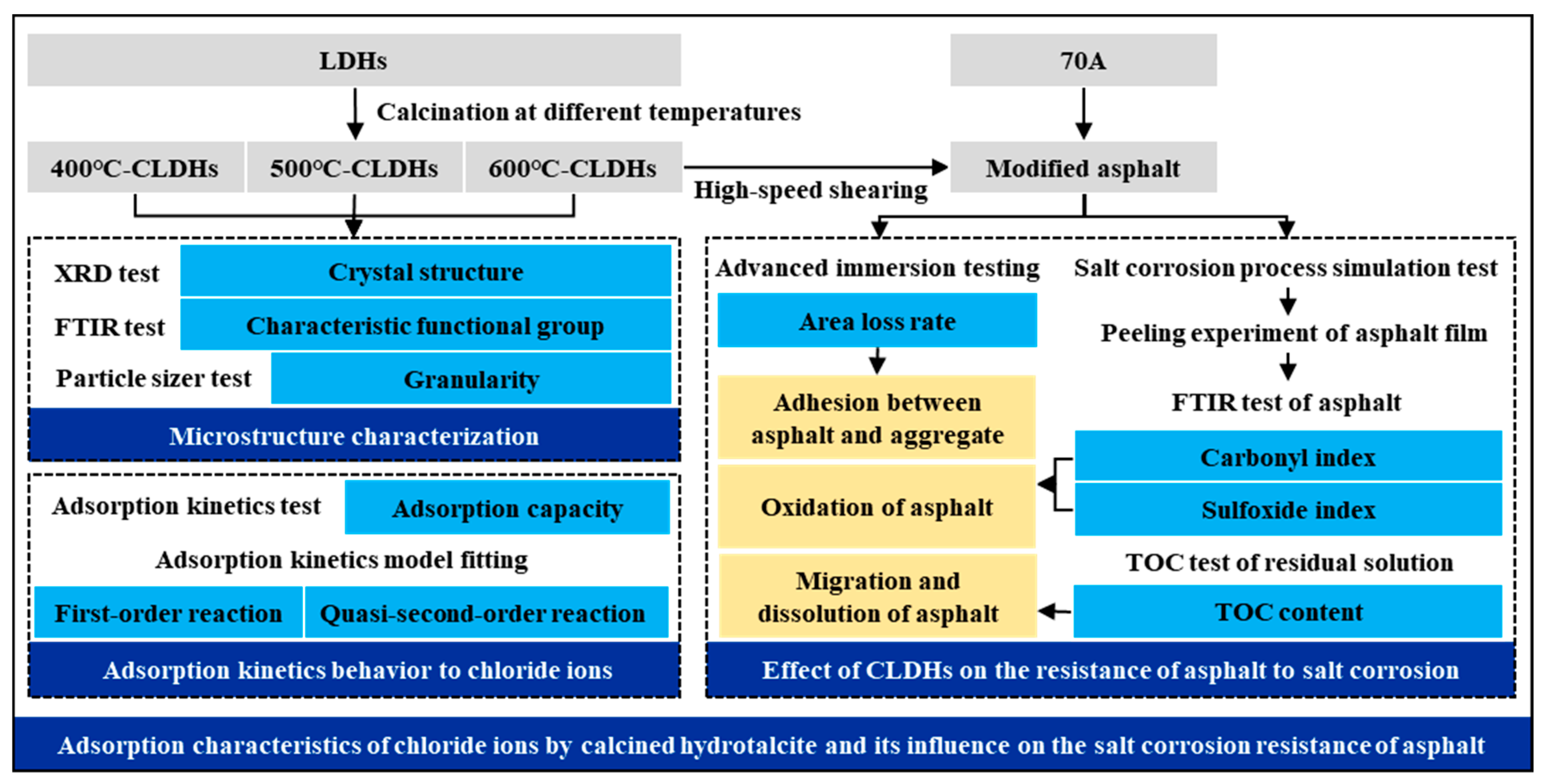
2.2. Research Methodology
2.3. Preparation of CLDHs
2.4. Preparation of CLDH-Modified Asphalt Binder
2.5. Experiments
2.5.1. X-Ray Diffraction (XRD) Test
2.5.2. Chloride Ion Adsorption Kinetic (CIAK) Test
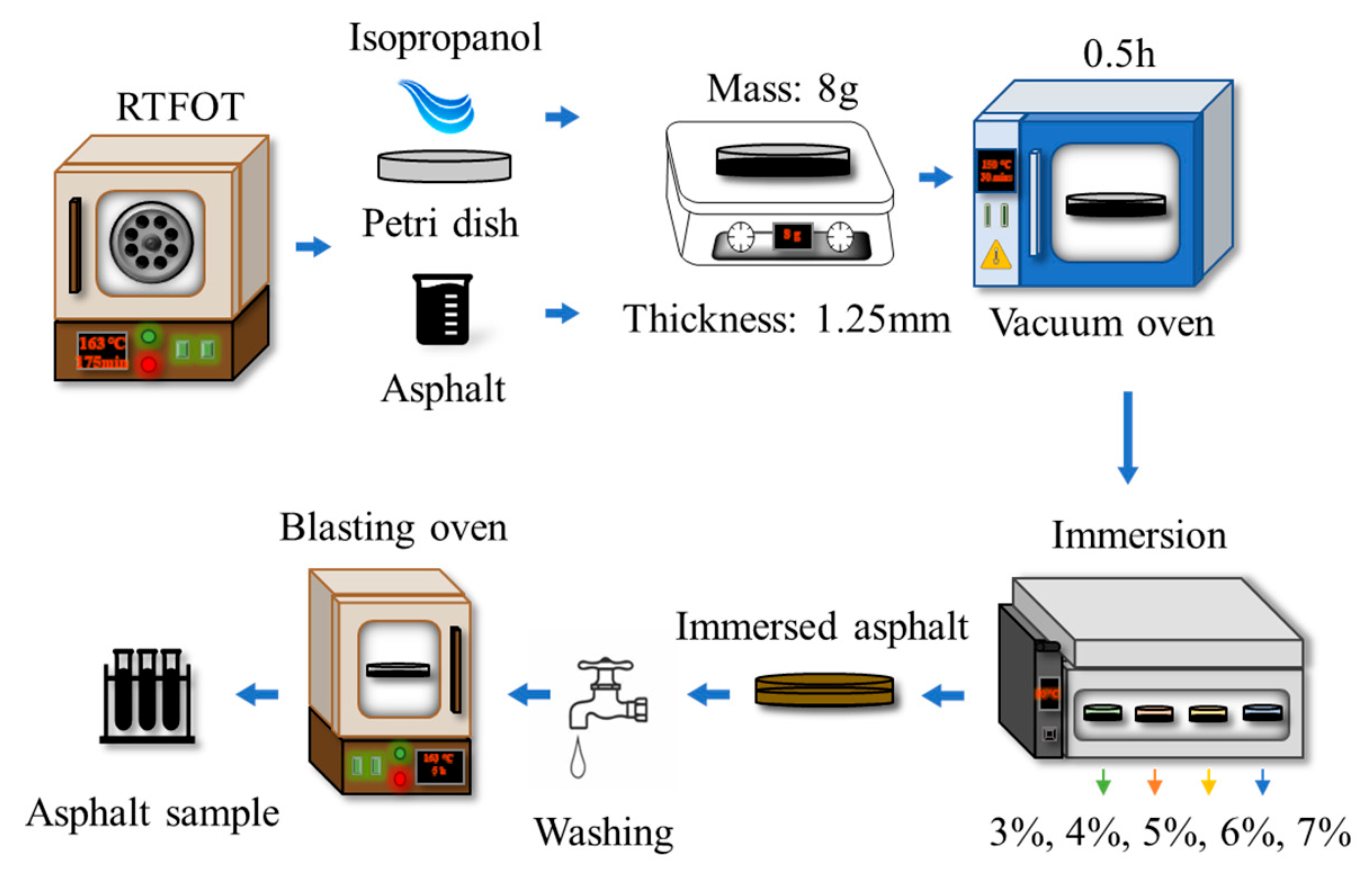
2.5.3. Modified Water Immersion (MWI) Test in Saline Solution
2.5.4. Salt Corrosion Process Simulation (SCPS) Test
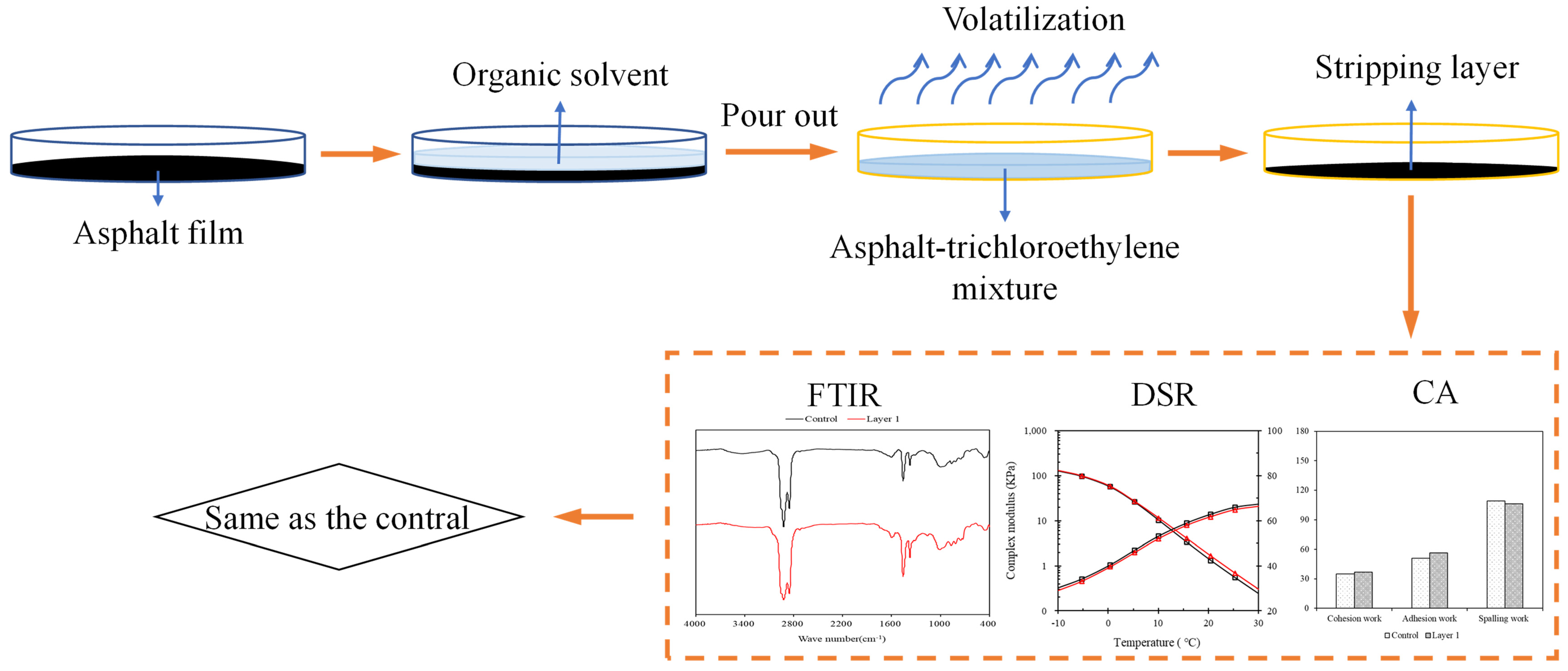
2.5.5. Peeling Test for Asphalt Binder
2.5.6. FTIR Test
2.5.7. TOC Test
3. Results and Analysis
3.1. Microstructural Characterization of CLDHs
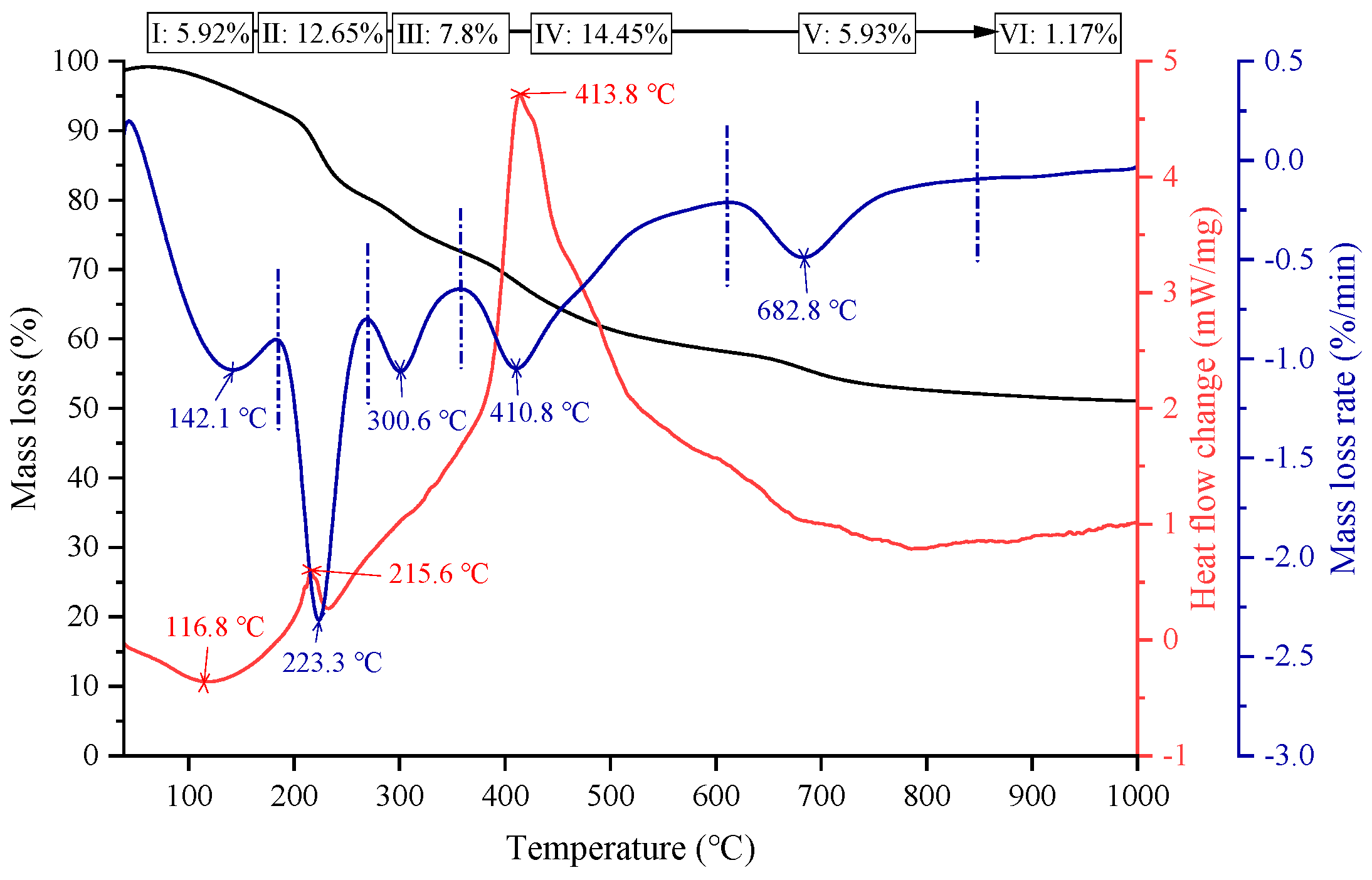
3.1.1. Thermodynamic Property of CLDHs
3.1.2. Crystal Structure of CLDHs
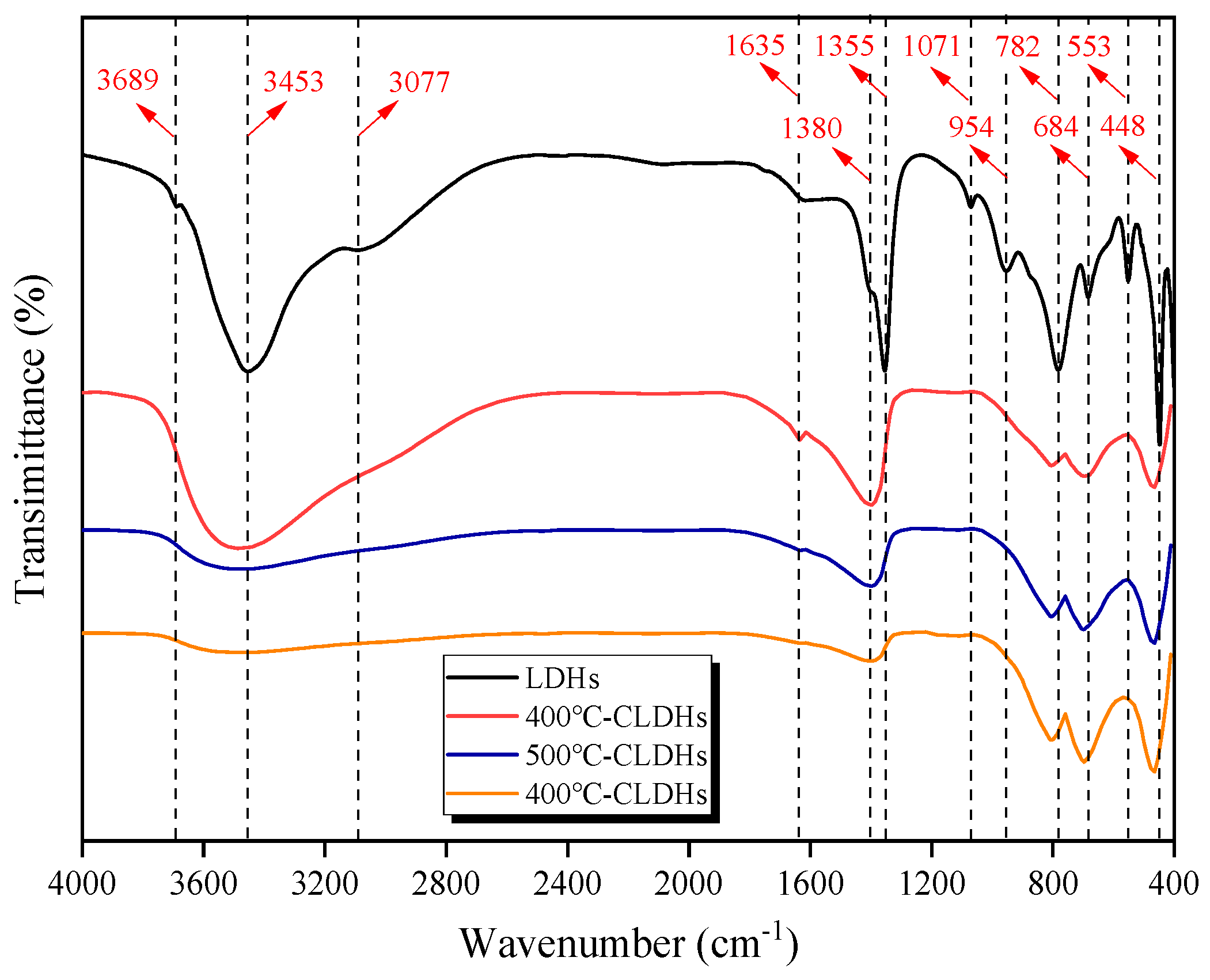
3.1.3. Characteristic Functional Groups of CLDHs
3.1.4. Particle Size of CLDHs
3.2. Chloride Ion Adsorption Kinetic Behavior of CLDHs
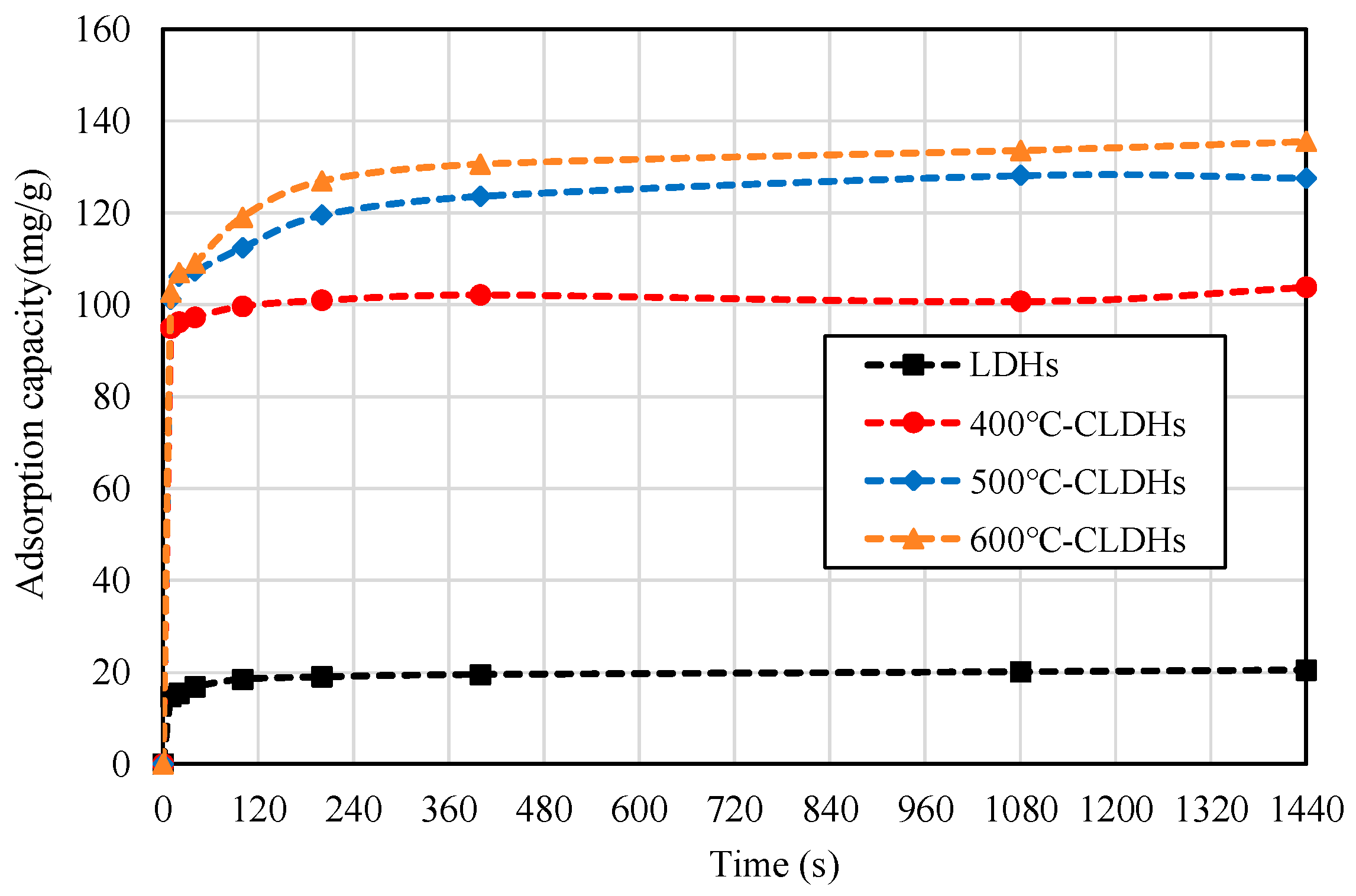
3.2.1. Relationship Between Chloride Ion Adsorption Capacity of CLDHs and Time
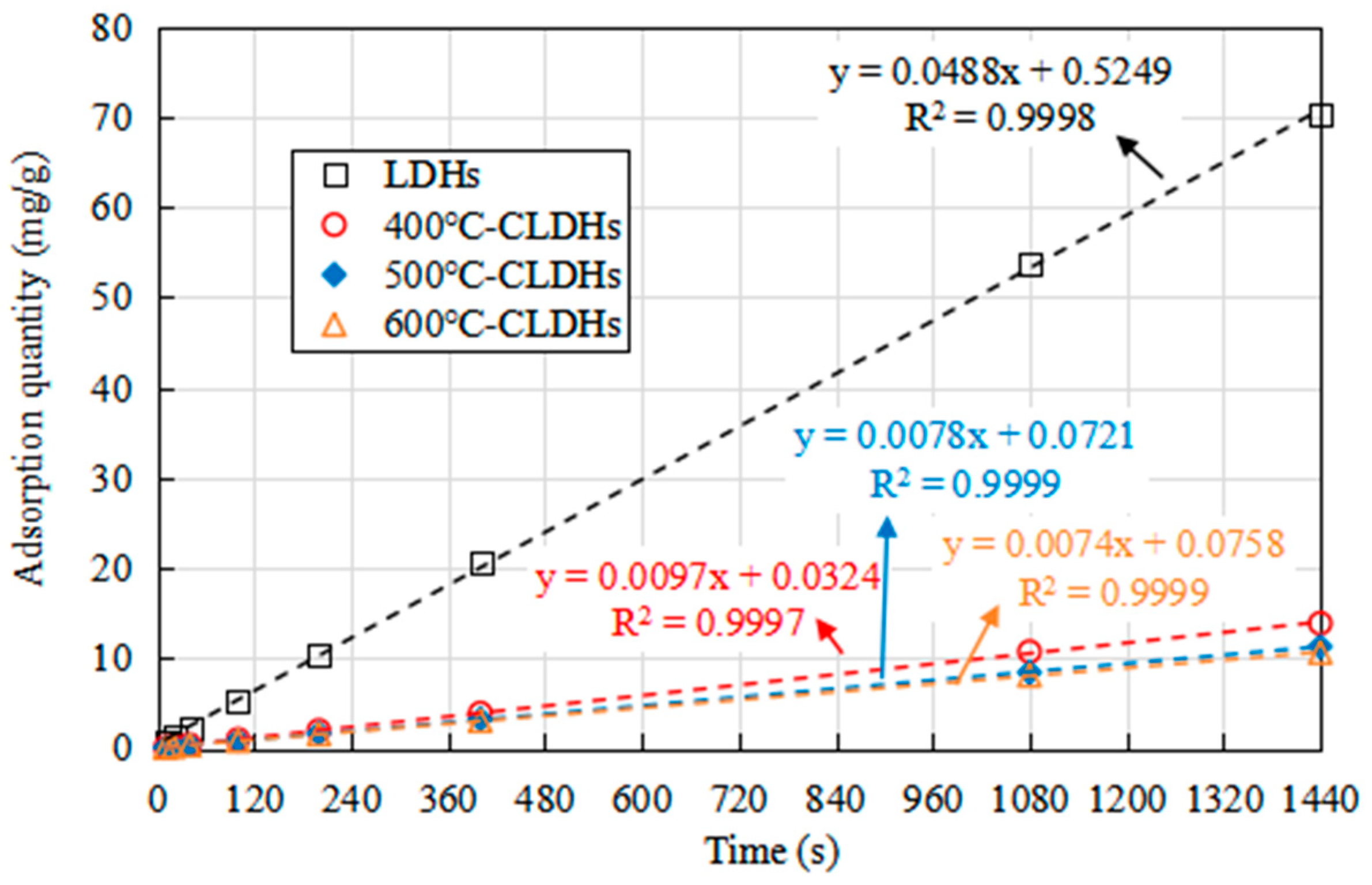
3.2.2. Kinetic Model Fitting for Chloride Ion Adsorption by CLDHs
3.3. Effect of CLDHs on the Salt Corrosion Resistance of Asphalt Binder
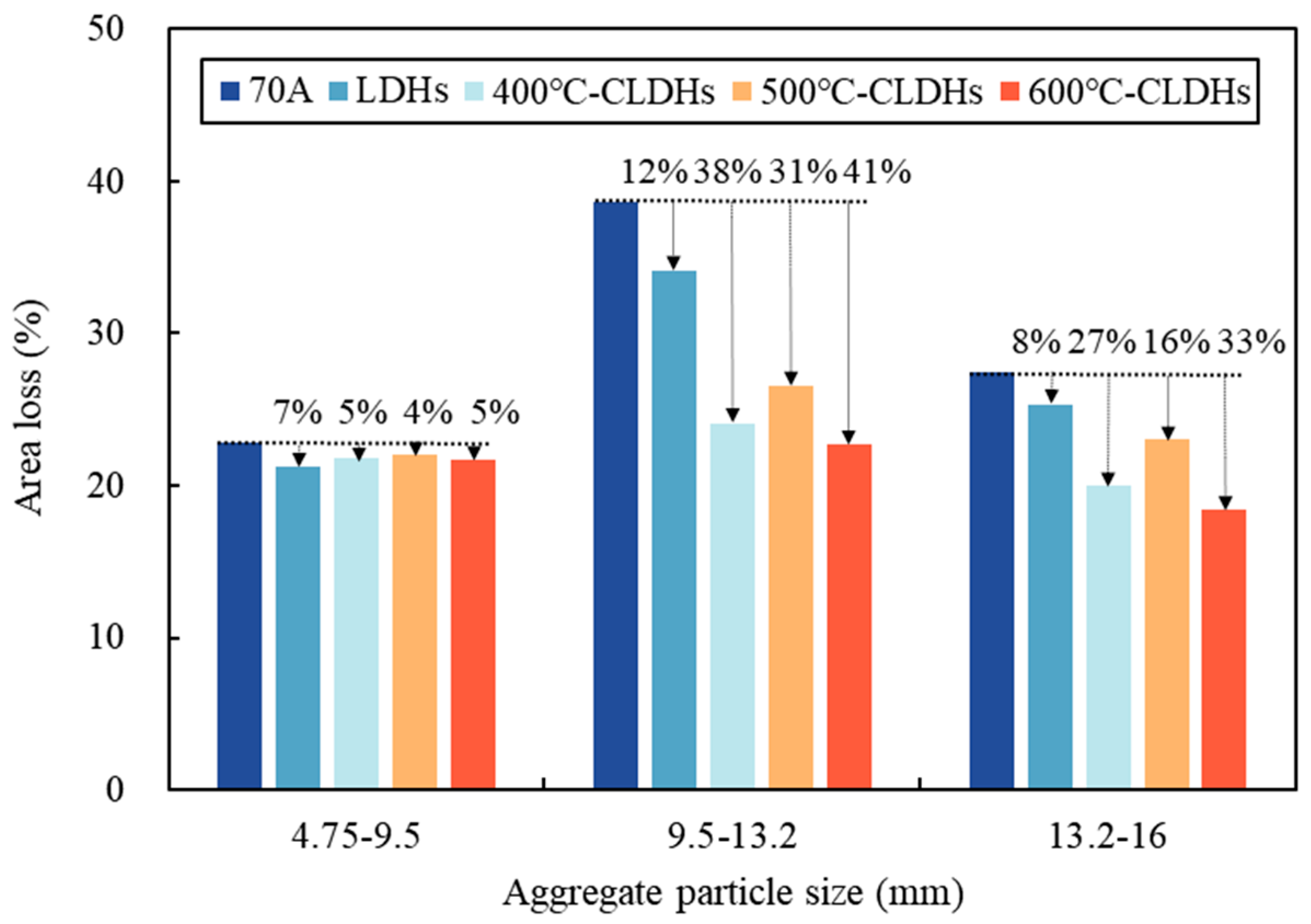
3.3.1. Adhesion Performance of CLDH-Modified Asphalt Binder in Chloride-Rich Environments
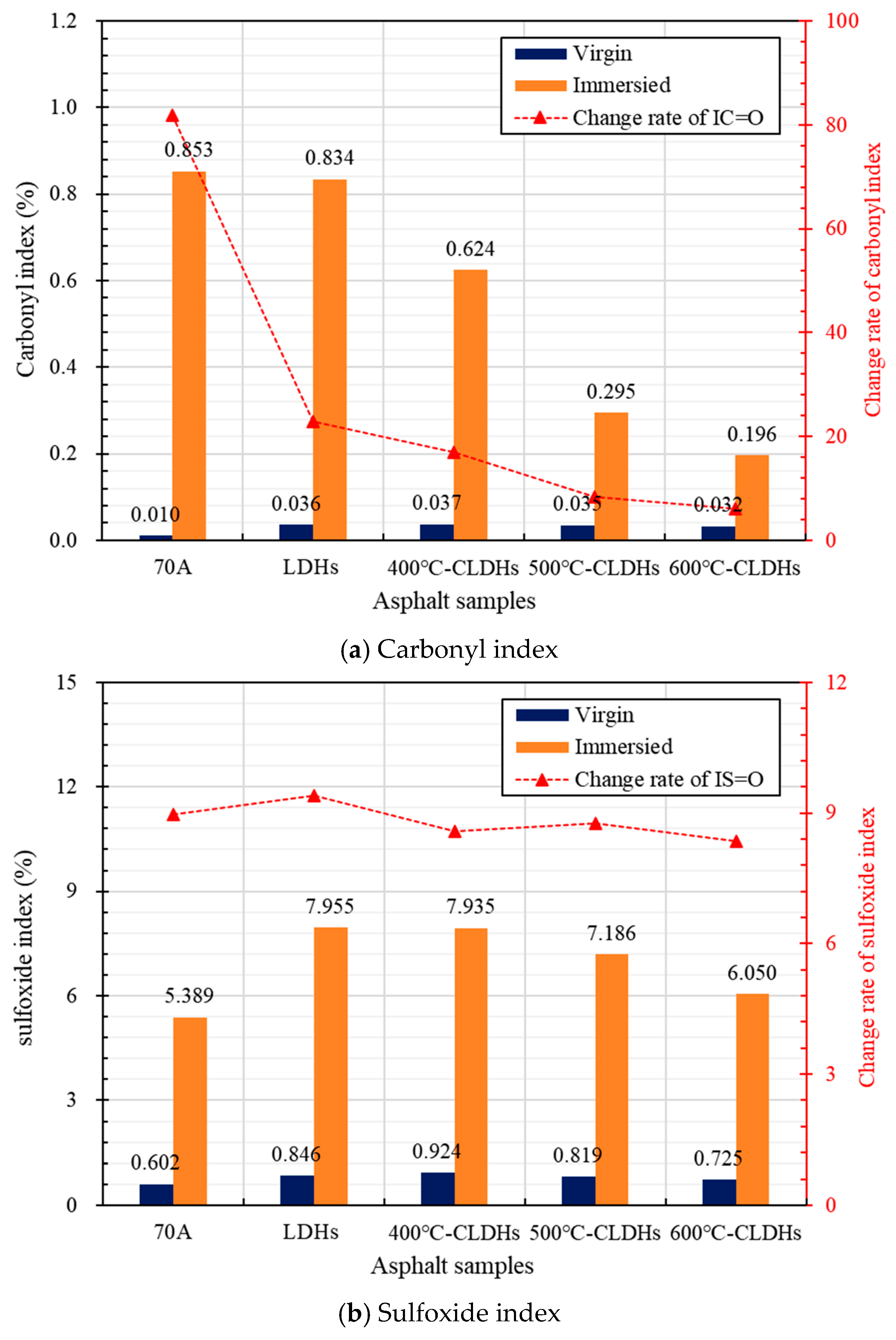
3.3.2. Characteristic Functional Group Indices of CLDH-Modified Asphalt Binder After Salt Corrosion
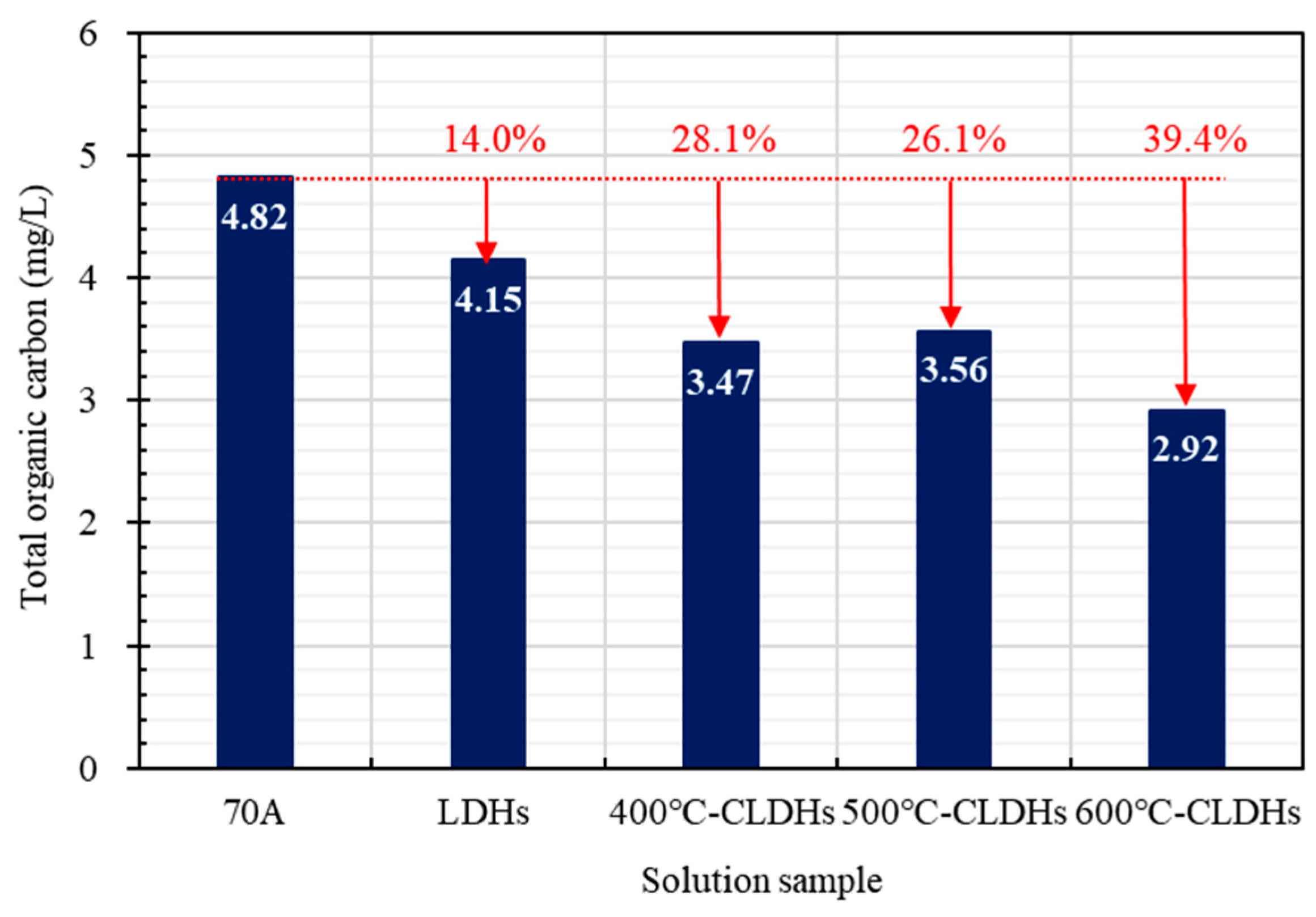
3.3.3. Total Organic Carbon Content in Residual Aqueous Solution After Salt Corrosion
4. Summary and Discussion
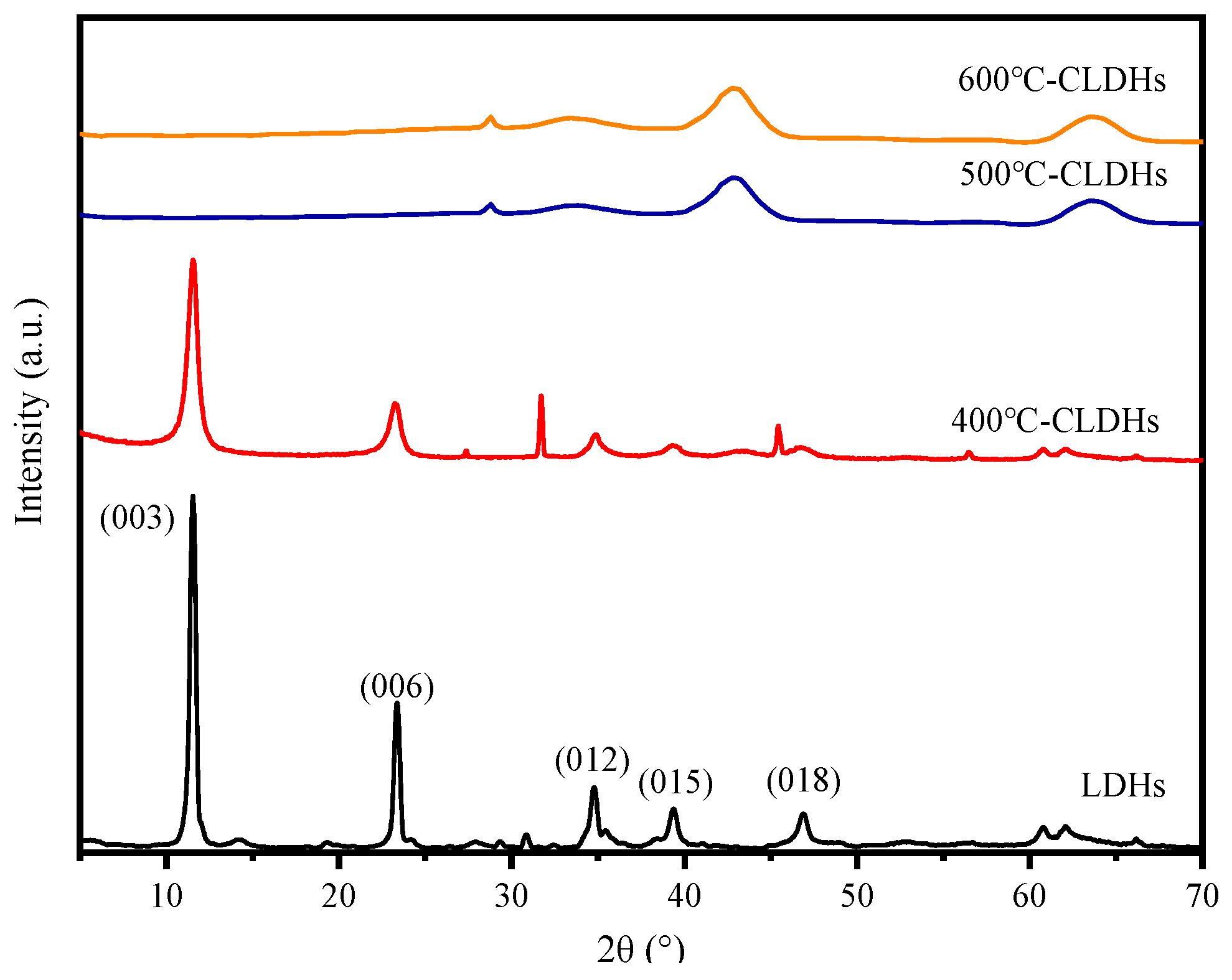
- The structure and physicochemical properties of CLDHs evolve with the calcination temperature gradient. At 400 °C, CLDHs retain a residual layered structure; at 500 °C, they transform into an amorphous structure; and, at 600 °C, they form MgO/γ-Al2O3 composite metal oxides. The specific surface area follows the order 500 °C-CLDHs < 400 °C-CLDHs < 600 °C-CLDHs, while the volume-average particle size shows the opposite trend.
- The chloride ion adsorption behavior of CLDHs conforms to the pseudo-second-order adsorption kinetic model (R2 > 0.999), indicating that chemical adsorption dominates the adsorption process. The calculated equilibrium chloride ion adsorption capacities of 400 °C-CLDHs, 500 °C-CLDHs, and 600 °C-CLDHs are 103.0928 mg/g, 128.2051 mg/g, and 135.1351 mg/g, respectively. The 600 °C-CLDHs exhibit optimal chloride ion adsorption efficiency due to their larger specific surface area and abundant active sites.
- CLDHs can enhance the adhesion performance between asphalt binder and aggregates of different particle sizes in a chloride-rich environment, with the most significant effect on coarse aggregates (9.5–13.2 mm). The incorporation of 400 °C-CLDHs, 500 °C-CLDHs, and 600 °C-CLDHs reduces the peeling rate by 38%, 31%, and 41%, respectively. CLDHs can inhibit the formation of carbonyl and sulfoxide groups in asphalt binder under salt corrosion conditions, and the improvement effect exhibits a positive correlation with the calcination temperature. The addition of 600 °C-CLDHs reduces the change rates of IC=O and IS=O of asphalt binder after salt corrosion by 92.6% and 6.9%, respectively. Additionally, CLDHs can significantly reduce the leaching of organic components from asphalt binder: the incorporation of LDHs, 400 °C-CLDHs, 500 °C-CLDHs, and 600 °C-CLDHs decreases the TOC content of the solution after salt corrosion by 14.0%, 28.1%, 26.1%, and 39.4%, respectively.
5. Conclusions
Supplementary Materials
Author Contributions
Funding
Data Availability Statement
Conflicts of Interest
References
- Jenouvrier, S.; Che-Castaldo, J.; Wolf, S.; Holland, M.; Labrousse, S.; LaRue, M.; Wienecke, B.; Fretwell, P.; Barbraud, C.; Greenwald, N.; et al. The call of the emperor penguin: Legal responses to species threatened by climate change. Glob. Change Biol. 2021, 27, 5008–5029. [Google Scholar] [CrossRef] [Scilit]
- Han, Z.; Leng, Y.; Xu, Z.; Tu, L.; Wang, C.; Li, S.; Wu, S.; Huang, Y.; Liu, S.; Wang, J.; et al. Location-optimized remediation measures for soil multifunctionality and carbon sequestration of saline-alkali land in China. J. Clean. Prod. 2025, 519, 146017. [Google Scholar] [CrossRef] [Scilit]
- Tang, Y.; Fu, Z.; Zhao, P.; Ma, F.; Hou, Y. Damage on asphalt surfaces caused by ionic solution erosion and salt crystallization at molecular scale. Appl. Surf. Sci. 2024, 643, 158718. [Google Scholar] [CrossRef] [Scilit]
- Qiu, X.; Deng, J.; Fu, Q.; Lou, Y.; Ye, Y.; Zhang, D. Investigation of chloride salt erosion on asphalt binders and mixtures: Performance evaluation and correlation analysis. Materials 2025, 18, 156. [Google Scholar] [CrossRef] [Scilit]
- Jiang, Q.; Chen, M.; Zhao, Y.; Wu, S.; Fan, Y.; Gan, Z.; Zhang, Y. Comprehensive assessment of the durability deterioration of asphalt pavement in salt environment: A literature review. Case Stud. Constr. Mater. 2022, 17, e01706. [Google Scholar] [CrossRef] [Scilit]
- Xie, Z.; Tang, L.; Tao, M.; Yang, F.; Zhong, Q. The properties of modified bagasse fiber/nano-TiO2 composite asphalt in a high-temperature and high-humidity salt environment. Materials 2023, 16, 5996. [Google Scholar] [CrossRef] [Scilit] [PubMed]
- Ogbon, W.A.; Xu, H.; Jiang, W.; Xing, C. Polymer-modified asphalt binders’ properties deterioration under the action of chloride salt. Road Mater. Pavement Des. 2023, 24, 2069–2089. [Google Scholar] [CrossRef] [Scilit]
- Yazdi, M.A.; Gruyaert, E.; Van Tittelboom, K.; De Belie, N. New findings on the contribution of Mg-Al-NO3 layered double hydroxides to the hydration and chloride binding capacity of cement pastes. Cem. Concr. Res. 2023, 163, 107037. [Google Scholar] [CrossRef] [Scilit]
- Chang, C.; An, L.; Zheng, W.; Wen, J.; Dong, J.; Yan, F.; Xiao, X. Research and engineering application of salt erosion resistance of magnesium oxychloride cement concrete. Materials 2021, 14, 7880. [Google Scholar] [CrossRef] [Scilit]
- Heikal, M.; Ali, M.A.; Ghernaout, D.; Elboughdiri, N.; Ghernaout, B.; Bendary, H.I. Prolonging the durability of maritime constructions through a sustainable and salt-resistant cement composite. Materials 2023, 16, 6876. [Google Scholar] [CrossRef] [Scilit]
- Tian, Q.; Guo, B.; Sasaki, K. Influence of silicate on the structural memory effect of layered double hydroxides for the immobilization of selenium. J. Hazard. Mater. 2020, 395, 122674. [Google Scholar] [CrossRef] [Scilit] [PubMed]
- Zhou, L.; Cai, Y.; Ma, C. Experimental study and numerical analysis of chloride ion diffusion in hydrotalcite concrete in chloride salt environment. Materials 2023, 16, 6349. [Google Scholar] [CrossRef] [Scilit]
- Wang, Y.; Gao, H. Compositional and structural control on anion sorption capability of layered double hydroxides (LDHs). J. Colloid Interface Sci. 2006, 301, 19–26. [Google Scholar] [CrossRef] [Scilit]
- Yang, P.; Xu, Y.; Yin, N.; Ai, Y. Preparation of uniform highly dispersed Mg–Al-LDHs and their adsorption performance for chloride ions. Ind. Eng. Chem. Res. 2020, 59, 10697–10704. [Google Scholar]
- ASTM D5/D5M-20; Standard Test Method for Penetration of Bituminous Materials. ASTM International: West Conshohocken, PA, USA, 2013.
- ASTM D36/D36M-12; Standard Test Method for Softening Point of Bitumen (Ring-And-Ball Apparatus). Annual Book of Standards. ASTM International: West Conshohocken, PA, USA, 2009.
- ASTM D113-99; Standard Test Method for Ductility of Bituminous Materials. ASTM International: West Conshohocken, PA, USA, 2007.
- ASTM D721-17; Standard Test Method for Oil Content of Petroleum Waxes. ASTM International: West Conshohocken, PA, USA, 2011.
- ASTM D70-09e1; Standard Test Method for Density of Semi-Solid Bituminous Materials (Pycnometer Method). ASTM International: West Conshohocken, PA, USA, 2009.
- ASTM D2170-07; Standard Test Method for Kinematic Viscosity of Asphalts (Bitumens). ASTM International: West Conshohocken, PA, USA, 2010.
- ASTM D6/D6M-95(2018); Standard Test Method for Loss on Heating of Oil and Asphaltic Compounds. ASTM International: West Conshohocken, PA, USA, 2024.
- Hui, Y.; Men, G.; Xiao, P.; Tang, Q.; Han, F.; Kang, A.; Wu, Z. Recent advances in basalt fiber reinforced asphalt mixture for pavement applications. Materials 2022, 15, 6826. [Google Scholar] [CrossRef] [Scilit]
- Carriazo, D.; Del Arco, M.; García-López, E.; Marcì, G.; Martín, C.; Palmisano, L.; Rives, V. Zn, Al hydrotalcites calcined at different temperatures: Preparation, characterization and photocatalytic activity in gas–solid regime. J. Mol. Catal. A Chem. 2011, 342, 83–90. [Google Scholar] [CrossRef] [Scilit]
- Lv, L.; He, J.; Wei, M.; Evans, D.; Duan, X. Uptake of chloride ion from aqueous solution by calcined layered double hydroxides: Equilibrium and kinetic studies. Water Res. 2006, 40, 735–743. [Google Scholar] [CrossRef] [Scilit]
- Khan, A.A.; Razin, A.A.; Ahammed, D.S.-S.; Kaiser, M.S. Comparison of electrochemical corrosion performance of eutectic Al-Si automotive alloy in deep seawater and 3.5% NaCl solution. Mater. Today Proc. 2023, 82, 241–247. [Google Scholar] [CrossRef] [Scilit]
- Vega-Zamanillo, Á.; Juli-Gándara, L.; Calzada-Pérez, M.A.; Teijón-López-Zuazo, E. Study on the conservation of bituminous mixes in high mountain roads and coastal zones. Transp. Res. Procedia 2021, 58, 325–332. [Google Scholar] [CrossRef] [Scilit]
- Vignisdottir, H.R.; Ebrahimi, B.; Booto, G.K.; O'Born, R.; Brattebø, H.; Wallbaum, H.; Bohne, R.A. A review of environmental impacts of winter road maintenance. Cold Reg. Sci. Technol. 2019, 158, 143–153. [Google Scholar] [CrossRef] [Scilit]
- Xie, Q.; Wang, D.; Fu, D.; Tao, H.; Liu, S. Recovery of soluble chlorides from municipal solid waste incineration fly ash using evaporative crystallisation and flotation methods. Sep. Sci. Technol. 2022, 57, 2276–2286. [Google Scholar] [CrossRef] [Scilit]
- Gong, S.; Liu, H.; Zhao, F.; Zhang, Y.; Xu, H.; Li, M.; Qi, J.; Wang, H.; Li, C.; Peng, W.; et al. Vertically aligned bismuthene nanosheets on MXene for high-performance capacitive deionization. ACS Nano 2023, 17, 4843–4853. [Google Scholar] [CrossRef] [Scilit]
- Ji, H.; Li, Y.; Jiang, G.; Zhu, H.; Li, J. Composition design, mechanism, and performance characterization of Granular High-viscosity and High-elasticity Asphalt modifier and asphalt materials. Constr. Build. Mater. 2025, 500, 144160. [Google Scholar] [CrossRef] [Scilit]
- Theiss, F.L.; Ayoko, G.A.; Frost, R.L. Thermogravimetric analysis of selected layered double hydroxides. J. Therm. Anal. Calorim. 2013, 112, 649–657. [Google Scholar] [CrossRef] [Scilit]
- Cao, K.; Yan, Z.; Wang, K.; Zhang, S.; Zhang, Y.; Chen, Q.; Zhu, H.; Jiang, X. Mechanical properties, durability and microstructures of calcined layered double hydroxide mortar in marine environment. Case Stud. Constr. Mater. 2025, 23, e05091. [Google Scholar] [CrossRef] [Scilit]
- Zhang, P.; Zhou, H.; Xu, Z.; Li, W.; Guan, Y.; Feng, L. Study on the adsorption mechanism of chloride ion in aqueous solution on Mg/Al-CLDH modified by high temperature calcination. Inorg. Chem. Commun. 2023, 150, 110403. [Google Scholar] [CrossRef] [Scilit]
- Zou, Y.; Gao, Y.; Chen, A.; Wu, S.; Li, Y.; Xu, H.; Wang, H.; Yang, Y.; Amirkhanian, S. Adhesion failure mechanism of asphalt-aggregate interface under an extreme saline environment: A molecular dynamics study. Appl. Surf. Sci. 2024, 645, 158851. [Google Scholar] [CrossRef] [Scilit]
- Li, Y.; Jiang, G.; Yan, S.; Feng, J.; Fang, Z. Degradation behaviour and anti-UV ageing method of sustainable road marking materials for strong UV light area. Int. J. Pavement Eng. 2025, 26, 2456737. [Google Scholar] [CrossRef] [Scilit]
- Zhang, N.; Fan, G.; Lv, S.; He, F.; Fan, X.; Peng, X.; Liu, T.J.; Liu, H. The influence of SBS modification on the rheological property of asphalt before and after regeneration. Constr. Build. Mater. 2021, 310, 125239. [Google Scholar] [CrossRef] [Scilit]





| Indicator | Requirement | Result | Indicator | Requirement | Result |
|---|---|---|---|---|---|
| Penetration (25 °C, 100 g, 5 s), 0.1 mm [15] | 60–80 | 71 | Penetration index [15] | −1.5–1.0 | −1.06 |
| Softening point, °C [16] | ≥46 | 47.6 | Ductility (10 °C, 5 cm/min), cm [17] | ≥20 | 76.6 |
| Wax content (distillation method), % [18] | ≤2.0 | 1.6 | Density (15 °C), g/cm3 [19] | Measured | 1.016 |
| Kinematic viscosity (60 °C), Pa·s [20] | 180–240 | 196 | Mass loss, % [21] | ≤0.8 | 0.04 |
| Parameter | Result | Parameter | Result |
|---|---|---|---|
| MgO/Al2O3 | 4 ± 0.2 | Mass loss rate (105 °C, wt%) | ≤0.5 |
| LDHs (%) | ≥99.5 | Specific surface area (m3/g) | 2.080 |
| Bulk density (g/cm3) | 0.34 | Average particle size (μm) | 5.078 |
| Composition | SiO2 | CaO | Al2O3 | Fe2O3 | MgO | Others | Loss |
|---|---|---|---|---|---|---|---|
| Content (%) | 45.27 | 7.38 | 14.22 | 12.84 | 9.30 | 9.14 | 1.85 |
| Indicator | Unit | Result | Indicator | Unit | Result |
|---|---|---|---|---|---|
| Physical state (60 °C) | / | Solid | Bromide | % | ≤0.01 |
| Relative molecular mass | / | 58.44 | Sulfate | % | ≤0.002 |
| Purity | % | >99.5 | Phosphate | % | ≤0.001 |
| pH value (50 g/L, 25 °C) | / | 7.00 | Potassium | % | ≤0.02 |
| Water-insoluble substances | wt% | ≤0.05 | Magnesium | % | ≤0.002 |
| Loss on drying | % | ≤0.5 | Calcium | % | ≤0.005 |
| Solubility in water (25 °C) | g/100 mL | 36.2 | Solubility in water (60 °C) | g/100 mL | 37.3 |
| Wavenumber (cm−1) | Functional Group | Wavenumber (cm−1) | Functional Group |
| 3689 | Asymmetric stretching vibration of M-OH in the layered sheet | 1071 | In-plane bending vibration of M-OH in the layered sheet |
| 3453 | Asymmetric stretching vibration of -OH in interlayer water molecules | 954 | Out-of-plane bending vibration of M-OH in the layered sheet |
| 3077 | Overtone peak of -OH stretching vibration in interlayer water molecules | 782 | Out-of-plane bending vibration of interlayer CO32−, or asymmetric stretching vibration of M-O in metal oxides |
| 1635 | Bending vibration of H-O-H in interlayer water molecules | 684 | Asymmetric stretching vibration of M-O in metal oxides |
| 1380 | Asymmetric stretching vibration of interlayer CO32− | 553 | Asymmetric stretching vibration of M-O in metal oxides |
| 1355 | Asymmetric stretching vibration of interlayer CO32− | 448 | In-plane bending vibration of M-O in metal oxides |
| Sample | LDHs | 400 °C-CLDHs | 500 °C-CLDHs | 600 °C-CLDHs |
|---|---|---|---|---|
| Specific surface area (m2/g) | 2.080 | 2.234 | 1.960 | 2.994 |
| Volume-average particle size (μm) | 5.078 | 4.740 | 4.856 | 4.309 |
| Model Type | Sample | Dynamic Equation | qe (mg/g) | k (1/min) | R2 |
|---|---|---|---|---|---|
| Pseudo-first-order | LDHs | 18.9613 | 0.1235 | 0.9522 | |
| 400 °C-CLDHs | 100.2320 | 0.2859 | 0.9949 | ||
| 500 °C-CLDHs | 118.8002 | 0.1732 | 0.9647 | ||
| 600 °C-CLDHs | 124.7822 | 0.1495 | 0.9525 | ||
| Pseudo-second-order | LDHs | y = 0.0488x + 0.5249 | 20.4918 | 0.0045 | 0.9998 |
| 400 °C-CLDHs | y = 0.0097x + 0.0324 | 103.0928 | 0.0029 | 0.9999 | |
| 500 °C-CLDHs | y = 0.0078x + 0.0721 | 128.2051 | 0.0008 | 0.9999 | |
| 600 °C-CLDHs | y = 0.0074x + 0.0758 | 135.1351 | 0.0007 | 0.9999 |
Disclaimer/Publisher’s Note: The statements, opinions and data contained in all publications are solely those of the individual author(s) and contributor(s) and not of MDPI and/or the editor(s). MDPI and/or the editor(s) disclaim responsibility for any injury to people or property resulting from any ideas, methods, instructions or products referred to in the content. |
© 2026 by the authors. Licensee MDPI, Basel, Switzerland. This article is an open access article distributed under the terms and conditions of the Creative Commons Attribution (CC BY) license.
Share and Cite
Sheng, J.; Zou, Y.; Lv, Y.; Huang, D.; Zhao, Z.; Ding, Y.; Cheng, S.; Xiao, J. Adsorption Characteristics of Chloride Ions by Calcined Hydrotalcite and Its Influence on the Salt Corrosion Resistance of Asphalt Binder. Materials 2026, 19, 587. https://doi.org/10.3390/ma19030587
Sheng J, Zou Y, Lv Y, Huang D, Zhao Z, Ding Y, Cheng S, Xiao J. Adsorption Characteristics of Chloride Ions by Calcined Hydrotalcite and Its Influence on the Salt Corrosion Resistance of Asphalt Binder. Materials. 2026; 19(3):587. https://doi.org/10.3390/ma19030587
Chicago/Turabian StyleSheng, Jun, Yingxue Zou, Yuejing Lv, Dan Huang, Zenggang Zhao, Yuanlin Ding, Siyu Cheng, and Jinxian Xiao. 2026. "Adsorption Characteristics of Chloride Ions by Calcined Hydrotalcite and Its Influence on the Salt Corrosion Resistance of Asphalt Binder" Materials 19, no. 3: 587. https://doi.org/10.3390/ma19030587
APA StyleSheng, J., Zou, Y., Lv, Y., Huang, D., Zhao, Z., Ding, Y., Cheng, S., & Xiao, J. (2026). Adsorption Characteristics of Chloride Ions by Calcined Hydrotalcite and Its Influence on the Salt Corrosion Resistance of Asphalt Binder. Materials, 19(3), 587. https://doi.org/10.3390/ma19030587