


Highlights
- •
- Proposing a novel biomimetic configuration: Breaking away from conventional straight-edge angular fractal patterns, circular stiffeners are embedded within hexagonal polyhedral tubes using inward, outward, and bidirectional gradient strategies, forming a hybrid multi-cell structure with hierarchical gradient characteristics.
- •
- Elucidating the coupling mechanism between gradient strategies and load angles: Demonstrated the energy-absorption advantages of bidirectional gradient structures under axial and low-angle impacts, alongside the robustness of outward gradient structures at high angles, providing quantitative guidance for engineering selection in complex collision scenarios.
- •
- Systematically elucidates performance patterns under multi-angle loading: Utilising experimentally validated finite element models, the structure’s impact resistance across 0° to 20° impact angles is comprehensively investigated.
Abstract
Thin-walled energy-absorbing structures play a crucial role in the field of impact protection. However, conventional multi-cell structures are often limited by issues such as high initial crushing peak force and low crushing force efficiency, and systematic investigations under multi-angle loading conditions remain insufficient. Inspired by the gradient hierarchical architecture of bamboo phloem, this paper proposes a biomimetic Multi-strategy Gradient Hierarchical Hybrid Multi-cell Tube (MHMT). Based on a conventional hexagonal multi-cell tube, the MHMT incorporates circular stiffening ribs of various orders through three distinct design strategies: inward gradient (IG), outward gradient (OG), and bidirectional gradient (BG). This configuration breaks the traditional straight-edge folded corner fractal pattern and introduces circular hierarchical elements that possess inherent potential for stable folding deformation. Using a validated finite element model, the crashworthiness performance of the MHMT structure under multi-angle loads is systematically evaluated. The results indicate that, under equal mass conditions, multi-gradient strategies enable synergistic optimization of crashworthiness performance, achieving a favorable balance between high energy absorption and low peak load risk. Under multi-angle loading, the influence of gradient strategies is significantly coupled with the loading angle. High-order bidirectional gradient configurations (e.g., MHMT-BG3) exhibit outstanding energy absorption capacity under axial and small-angle loading, achieving specific energy absorption (SEA) values 2.00 to 2.22 times those of the baseline structure. In contrast, under large-angle (20°) loading, the second-order outward gradient structure (MHMT-OG2) demonstrates superior robustness, attaining the highest SEA (14.48 J/g) and crushing force efficiency (CFE = 82.86%) among all configurations under the same loading condition. This study confirms that the synergistic design of gradient strategies and circular hierarchical elements enables effective regulation of the mechanical response and deformation modes of thin-walled structures, offering a novel design paradigm for lightweight crashworthy structures intended for complex loading scenarios.
1. Introduction
Thin-walled structures have long been regarded as ideal candidates in the field of impact protection due to their outstanding lightweight potential and efficient energy dissipation mechanisms. In applications such as vehicle collision safety [1,2,3,4], military protective equipment [5,6,7,8], and spacecraft landing buffering [9,10,11,12,13], these structures absorb or dissipate impact kinetic energy through controlled plastic deformation, thereby safeguarding occupants and critical equipment. With the continuously increasing performance requirements in engineering applications, enhancing the comprehensive crashworthiness of thin-walled structures under limited weight and space constraints has become one of the core research topics in the fields of structural design and safety engineering.
Over the past decade, researchers have extensively investigated the static and dynamic performance of thin-walled energy-absorbing structures with various cross-sectional shapes through experimental studies [14,15,16], numerical simulations [17,18,19,20] and theoretical analyses [21,22,23,24], Early research focused on single-cell thin-walled structures [25,26,27,28], aiming to improve their crushing response and energy absorption characteristics by optimizing cross-sectional geometry or material selection. However, single-cell configurations inherently exhibit limitations in deformation modes and material distribution, often leading to unstable folding mechanisms and significant load fluctuations. To address these issues, scholars have proposed transforming single-cell structures into multi-cell designs [29,30,31,32]. By introducing internal stiffening ribs or combining multiple single-cell units, these configurations promote a more stable progressive crushing process, thereby effectively enhancing the specific energy absorption of the structure. Nevertheless, multi-cell structures are often associated with high initial peak forces, which may subject the protected objects to excessive loads, and thus their crushing force efficiency still requires further improvement.
In recent years, inspired by the exceptional impact resistance of biological organisms in nature, biomimetic design has provided novel pathways for performance breakthroughs in thin-walled structures. The intricate structures and gradient material distributions evolved in biological systems often exhibit high specific strength, high toughness, and superior energy absorption capacity. To meet the growing demand for enhanced comprehensive crashworthiness, significant attention has been devoted to developing performance-improved thin-walled energy-absorbing structures by mimicking biological features [33,34,35,36,37,38,39,40]. For instance, inspired by impact-resistant antlers, Wei et al. [35] designed a thin-walled structure with dimensional gradients, achieving an SEA 2.17 times that of a cylindrical tube and a crushing efficiency of 91.54%. Drawing inspiration from beetle elytra, Yu et al. [36] proposed an end-beam elytron plate (EBEP) buffer box, whose energy absorption capacity and CFE reached five times and 2.6 times those of traditional buffer boxes, respectively. Motivated by the double-diagonal configuration in glass sponge spicules, Li et al. [37] designed a novel biomimetic multi-cell tube, demonstrating significantly improved crashworthiness through parameter optimization. Inspired by the hierarchical structure of wood, Ha et al. [38] proposed a biomimetic hierarchical circular honeycomb (BHCH) structure, which outperformed conventional circular honeycombs (CH) in energy absorption, and elucidated the enhancement mechanism through theoretical modeling. Further, Ha et al. [39] developed a biomimetic hierarchical multi-cell bi-tubular (BHMB) structure inspired by the dendritic features of water lily leaves, establishing corresponding theoretical analysis methods. Drawing from the corrugated and tapered characteristics of plant stems, Lam et al. [41] designed a corrugated inclined honeycomb core that exhibited superior crashworthiness compared to conventional cores at various impact velocities. Inspired by biological hierarchical structures such as bamboo, Gao et al. [42] developed a biomimetic hierarchical hexagonal multi-cell tube (BHMH), which significantly reduced the peak crushing force, with the third-order configuration achieving an SEA 2.5 times that of the zero-order tube and up to a 146% improvement over conventional hexagonal tubes. Similarly, motivated by the fractal hierarchical features of bamboo stems, Huang et al. [43] proposed a Hashin-type fractal structure, whose third-order model achieved a 216.36% increase in energy absorption (EA) and a 0.24% reduction in peak crushing force (PCF) compared to conventional square tubes.
The aforementioned studies demonstrate that biomimetic multi-cell structural design can significantly enhance the mechanical performance and energy absorption characteristics of structures. However, most existing biomimetic hierarchical multi-cell tubes are developed based on straight-edge folded corner fractals (e.g., triangular, quadrilateral, or hexagonal configurations), which are prone to stress concentration at the corners under loading, leading to substantial fluctuations in mechanical response and hindering stable progressive folding deformation, thereby compromising energy absorption performance. Although circular tubes have been proven to offer advantages in progressive folding deformation and efficient, stable energy absorption [44], research on biomimetic gradient hierarchical multi-cell tubes incorporating hybrid circular cross-sections remains limited. More importantly, in practical applications, thin-walled structures are often subjected to oblique loading [45,46,47], yet existing studies rarely systematically consider the influence of loading angles.
Although significant progress has been made in bioinspired hierarchical thin-walled structures and gradient design, the effects of different geometric units and their spatial arrangements on structural crashworthiness warrant further investigation. In our previous studies, we investigated the crashworthiness of asymmetric gradient hierarchical double-hexagonal tubes [8], bioinspired energy-absorbing structures [17], and asymmetric tree-like fractal gradient hierarchical structures [18]. In addition, Gao et al. [42] proposed a bioinspired hierarchical hexagonal multi-cell tube, while Huang et al. [43] improved the energy absorption performance of thin-walled structures through a gradient fractal configuration. These studies primarily focused on the development of hierarchical units and gradient distributions. However, systematic investigations into hybrid hierarchical configurations combining circular stiffening ribs with polygonal multi-cell structures, particularly the effects of different gradient arrangement strategies on crashworthiness under multi-angle impact loading, remain limited. To address this research gap, inspired by the gradient hierarchical architecture of bamboo phloem, this study proposes a Multi-strategy Gradient Hierarchical Hybrid Multi-cell Tube (MHMT) by embedding circular stiffening ribs of different sizes within a conventional hexagonal multi-cell tube. Three distinct gradient strategies, namely inward gradient (IG), outward gradient (OG), and bidirectional gradient (BG), are introduced to achieve different spatial arrangements of the circular stiffening ribs. Unlike conventional configurations predominantly based on straight-edged hierarchical units, the proposed design combines circular and polygonal elements and regulates the spatial distribution of stiffening ribs, providing an alternative geometric approach to controlling structural crushing behavior and energy absorption characteristics. Based on a validated finite element model, the crashworthiness of different MHMT configurations is systematically evaluated under equal wall thickness and equal mass conditions. Furthermore, their deformation modes and energy absorption characteristics are investigated under impact loading angles ranging from 0° to 20°, with particular emphasis on elucidating the relationship between gradient arrangement strategies and loading angles. The findings provide useful insights into the design and selection of lightweight thin-walled energy-absorbing structures subjected to complex loading conditions.
2. Structural Design and Crashworthiness Indicators
2.1. Structural Design
Systematic investigations by Zhang et al. [48] on the cross-sectional characteristics of bamboo have revealed an alternating pattern of low-density and high-density regions: the high-density zones, composed primarily of fiber bundles, are responsible for structural strength, whereas the low-density zones, consisting of parenchyma cells, xylem, and phloem, primarily contribute to structural toughness [48,49,50]. Notably, the bamboo phloem exhibits a gradient hierarchical architecture with distinct geometric regularity, which endows the material with superior mechanical performance [48].
Inspired by this gradient hierarchical configuration, this study proposes a class of biomimetic multi-strategy gradient hierarchical hybrid multi-cell tubes (MHMT) incorporating circular stiffening ribs. This design is achieved by embedding circular stiffening ribs into a conventional hexagonal multi-cell tube. Figure 1 illustrates the structural evolution and various configurations of the MHMT, with their cross-sectional evolution following well-defined geometric rules. Figure 2 presents a schematic diagram of the cross-sectional geometric parameters for all MHMT structures. All MHMT variants share uniform outer dimensions: a regular hexagonal cross-section with a fixed circumscribed circle diameter D0 = 72 mm and a total structural height H = 100 mm. The wall thickness is denoted as t, and the total mass of the structure as m. The conventional hexagonal multi-cell tube without any gradient hierarchy, designated as MHMT-G0, serves as the baseline structure. The gradient design commences with MHMT-G1, wherein a first-order circular stiffening rib of diameter D1 is embedded within each of the six triangular subregions of MHMT-G0, such that the rib is internally tangent to the adjacent tube walls. Higher-order MHMTs are iteratively developed based on three distinct gradient strategies.
Figure 1.
Structural evolution and configurations of the MHMT.
Figure 2.
Schematic diagram of the cross-sectional geometric parameters of the MHMT structure.
During the geometric modeling process, circular stiffening ribs of different hierarchical orders were arranged tangentially to the adjacent tube walls or lower-order circular ribs according to predefined geometric relationships. To ensure mechanical continuity between the structural components, a shared-node approach was adopted in the subsequent finite element modeling to connect the circular ribs with adjacent structural elements. Specifically, conforming meshes were generated at the connection regions, such that the nodes along the connecting boundaries were shared by adjacent components, thereby ensuring displacement compatibility and load transfer between different structural elements. This approach establishes mechanical continuity independently of geometric tangency, allowing the circular stiffening ribs and adjacent tube walls to deform cooperatively during the crushing process.
The first strategy is the Inward Gradient (IG) strategy. In this approach, second-order circular stiffening ribs of diameter D2 are embedded in the six newly formed triangular regions at the internal corners of MHMT-G1, producing MHMT-IG2. By further embedding third-order circular stiffening ribs of diameter D3, MHMT-IG3 is obtained. This design is characterized by the gradient placement of internal circular ribs toward the center of the cross-section, physically equivalent to concentrating material inward. The primary objective is to enhance the stiffness of the internal load-bearing region.
The second strategy is the Outward Gradient (OG) strategy. Here, second-order circular stiffening ribs of diameter D2 are embedded in the twelve newly formed triangular regions at the external corners of MHMT-G1, yielding MHMT-OG2. Subsequent embedding of third-order ribs of diameter D3 results in MHMT-OG3. The gradient direction is opposite to that of the IG strategy, with the circular ribs arranged toward the periphery of the cross-section. This configuration effectively concentrates material at the outer region, aiming to improve peripheral support and overall structural stability.
The third strategy is the Bidirectional Gradient (BG) strategy. In this case, second-order circular stiffening ribs of diameter D2 are embedded in the eighteen newly formed triangular regions located at both the internal and external corners of MHMT-G1, producing MHMT-BG2. Further addition of third-order ribs of diameter D3 leads to MHMT-BG3. This approach represents a synergistic integration of the IG and OG strategies, intended to coordinate deformation between the inner and peripheral regions of the structure, thereby promoting a more stable crushing deformation mode.
To systematically evaluate the energy absorption performance of the MHMT structures, MHMT-G0 is adopted as the baseline for comparative assessment. By embedding circular stiffening ribs of various orders into the conventional hexagonal multi-cell tube using the three gradient strategies, the proposed design offers dual advantages. On one hand, it breaks away from the traditional fractal pattern of straight-edge folded corners and introduces circular hierarchical elements with inherent potential for stable folding deformation, thus offering promising improvements in crashworthiness. On the other hand, through the implementation of different gradient strategies, the structure can generate a greater number of corner elements with graded dimensions, enabling extensive tunability of the mechanical response. This provides the flexibility to meet diverse energy absorption requirements encountered in various engineering applications under multi-angle loading conditions.
2.2. Crashworthiness Indicators
To comprehensively evaluate the crashworthiness performance of the structures, several quantitative indicators are introduced based on previous research experience [51,52]. These include Energy Absorption (EA), Specific Energy Absorption (SEA), Initial Peak Crushing Force (IPCF), Mean Crushing Force (MCF), and Crushing Force Efficiency (CFE).
Energy Absorption (EA) represents the total energy absorbed by the crashworthy structure within the effective compression displacement and can be expressed as Equation (1):
where d denotes the effective compression displacement and F(x) is the instantaneous crushing force during the compression process.
Specific Energy Absorption (SEA) is the most critical indicator of energy absorption efficiency, representing the energy absorption capacity per unit mass of the crashworthy structure, and is given by Equation (2):
where m is the total mass of the structure.
Mean Crushing Force (MCF) is defined as the ratio of the total energy absorbed by the thin-walled tube to the effective compression displacement, expressed as Equation (3):
Initial Peak Crushing Force (IPCF) refers to the first peak load encountered during the compression process of the crashworthy structure.
Crushing Force Efficiency (CFE) indicates the load-carrying stability of the crashworthy structure under impact and is defined by Equation (4):
A higher CFE value signifies a smaller deviation between the initial peak force and the mean crushing force, reflecting superior load stability.
3. Finite Element Model Construction and Validation
3.1. Finite Element Model Construction
To investigate the influence of biomimetic design on the crashworthiness of thin-walled structures, a finite element model of the MHMT structure under multi-angle loading was established using the commercial finite element software ABAQUS/Explicit 6.14, as illustrated in Figure 3.
Figure 3.
Schematic representation of the finite element model of the MHMT structure under loading.
The finite element model consists of three components: a fixed rigid plate, a thin-walled tube, and a moving rigid plate. The thin-walled tube has a total height of 100 mm, with its bottom constrained to the fixed rigid plate and the moving rigid plate positioned at the top. A concentrated mass of 600 kg is assigned to the reference point of the moving rigid plate, and a constant velocity boundary condition of 10 m/s is prescribed along the specified loading direction. The moving plate maintains this prescribed velocity throughout the simulation until the predefined crushing displacement is reached. It should be noted that this loading condition represents velocity-controlled dynamic compression rather than a free-impact process in which the moving plate is assigned only an initial velocity and subsequently allowed to decelerate.
For oblique loading conditions, compression models with different impact angles are established by adjusting the orientation and loading direction of the moving rigid plate. Five loading angles, namely 0°, 5°, 10°, 15°, and 20°, are considered, where 0° represents axial loading and the remaining angles correspond to different degrees of oblique loading. The loading angle is defined as the angle between the longitudinal central axis of the thin-walled tube and the direction of motion of the moving rigid plate. During compression, the moving plate travels along the prescribed loading direction and interacts with the thin-walled structure through contact. To ensure consistent evaluation of the mechanical response under different loading angles, the crushing displacement is defined as the displacement component of the moving rigid plate along its direction of motion. The compression process terminates when the effective crushing displacement reaches 75% of the initial structural height. Accordingly, the crushing force is characterized by the reaction force component along the loading direction, and the energy absorption is calculated by integrating the crushing force with respect to the corresponding crushing displacement. During finite element modeling, the MHMT structures are constructed and meshed as integrated geometric models. The circular stiffening ribs are geometrically connected to the adjacent tube walls, and shared-node meshes are employed at the connection regions to ensure displacement compatibility, thereby enabling load transfer and coordinated deformation between the structural components.
The MHMT structure is modeled using four-node reduced integration shell elements (S4R), with five integration points through the thickness direction. The contact between the rigid plates and the thin-walled tube is defined as general contact, with a tangential friction coefficient of 0.2 [53] and a hard contact formulation in the normal direction to prevent potential self-penetration. Figure 4 presents the true stress–strain curve of AA6061-O [54]. The material behavior is described using an isotropic elastoplastic constitutive model based on the von Mises yield criterion, with isotropic hardening adopted to characterize the plastic response. The Young’s modulus, Poisson’s ratio, and initial yield stress of AA6061-O aluminum alloy are 68 GPa, 0.33, and 71 MPa, respectively. The plastic hardening behavior is defined by inputting true stress–plastic strain data into the material model. Strain-rate effects are neglected in the present simulations [55,56], and no damage evolution or material failure model is incorporated. Accordingly, the numerical analysis focuses on the plastic deformation and energy absorption behavior of the structures under impact loading.
Figure 4.
True stress–strain curve of AA061-O.
3.2. Mesh Convergence Study
Previous research experience indicates that excessively coarse mesh sizes reduce the accuracy of finite element models, whereas overly fine mesh sizes substantially increase computational cost and time. To strike a balance between numerical accuracy and computational efficiency, a mesh convergence verification analysis was conducted for the finite element model. To verify the applicability of the selected mesh size to different configurations, mesh convergence analyses were conducted for MHMT-G1 and MHMT-BG3. Six mesh sizes, namely 1.0, 1.2, 1.4, 1.6, 1.8, and 2.0 mm, were considered for each configuration. The force–displacement curves, EA curves, and key crashworthiness indicators were compared under identical simulation conditions, as presented in Figure 5 and Figure 6. As shown in Figure 5, the force–displacement responses and EA curves of both MHMT-G1 and MHMT-BG3 gradually stabilized with decreasing mesh size. Figure 6 further shows that, when the mesh size was refined from 1.2 to 1.0 mm, the EA of MHMT-G1 decreased from 1281.22 to 1242.27 J, corresponding to a relative difference of 3.14%. For MHMT-BG3, the EA decreased slightly from 4429.33 to 4398.30 J, with a relative difference of only 0.70%, while the IPCF changed from 62.28 to 63.83 kN, corresponding to a relative difference of approximately 2.43%. These results indicate good numerical stability of the primary crashworthiness indicators for both configurations. Considering the trade-off between computational accuracy and efficiency, a mesh size of 1.2 mm was considered suitable for configurations with different levels of geometric complexity. Accordingly, a uniform mesh size of 1.2 mm was adopted for the finite element analyses of all MHMT configurations.
Figure 5.
Mesh convergence study of MHMT structures: (a) Force–displacement curves of MHMT-G1. (b) EA curves of MHMT-G1. (c) Force–displacement curves of MHMT-BG3. (d) EA curves of MHMT-BG3.
Figure 6.
Comparison of EA and IPCF of the structures under different mesh sizes: (a) MHMT-G1, (b) MHMT-BG3.
In summary, the energy absorption capacity of the structure converges as the mesh size decreases. When the mesh size is set to 1.2 mm, the computational accuracy of the finite element model is effectively ensured. Consequently, to conserve computational resources, a uniform mesh size of 1.2 mm × 1.2 mm is adopted for meshing the MHMT structures in all subsequent numerical simulations.
3.3. Finite Element Model Validation
To verify the accuracy of the finite element model, this section constructs a structural model identical to that used in the experimental study on conventional hexagonal multi-cell tubes reported in Reference [54], maintaining consistency in structural dimensions, material parameters (AA6061-O), and constraint conditions. It is noteworthy that the experiment in Reference [54] was conducted under quasi-static compression at a loading rate of 0.5 mm/s. Given the low strain-rate sensitivity of the aluminum alloy, the influence of inertia on structural crashworthiness under low impact velocities is minimal. Therefore, strain-rate effects can be reasonably neglected in the finite element model [55,56]. To enhance computational efficiency, the impact velocity in the finite element model employed for experimental validation was set to 0.5 m/s. The results indicate that the deformation modes obtained from the experiment and numerical simulation are in good agreement, and the force–displacement curves and deformation patterns are also generally consistent. The total internal energy of the structure is 1724.41 J, while the total kinetic energy is 74.12 J, with the kinetic energy accounting for only 4.47% of the internal energy (less than 5%). These results are consistent with our previous validation studies [17,18], further demonstrating that the quasi-static compression process is accurately simulated. Consequently, the finite element model is capable of reliably simulating the crushing process of such thin-walled structures. It should be noted that the experimental validation presented in this section primarily focuses on the axial compression response of a conventional hexagonal multi-cell tube, with the aim of assessing the capability of the finite element model to reproduce the plastic crushing behavior of the baseline structure. To reduce the computational cost of the explicit analysis, a higher loading velocity was adopted in the numerical validation than in the corresponding experiment. Although the kinetic energy remained relatively low compared with the internal energy and the numerical predictions showed overall good agreement with the experimental results, these observations do not conclusively establish the equivalence of the structural responses under the two loading velocities. Furthermore, complex hierarchical configurations may exhibit different local instability and deformation characteristics under dynamic oblique loading. Therefore, the present validation provides preliminary support for the adopted finite element modeling approach, while its applicability to complex hierarchical structures under dynamic oblique loading remains limited by differences in structural configurations and loading conditions.
4. Crashworthiness Analysis Under Axial Loading Conditions
4.1. Influence of Gradient Strategies Under Equal Wall Thickness Conditions
In this subsection, three sets of tests are conducted by maintaining a constant wall thickness of 0.20 mm, 0.40 mm, and 0.60 mm for all structures, respectively, to investigate the crashworthiness performance of all MHMT configurations under axial impact. It should be noted that the equal wall thickness and equal mass comparisons serve different evaluation purposes. The equal wall thickness comparison primarily aims to investigate the effects of hierarchical order and gradient strategies on the overall load-bearing response and total energy absorption capacity under identical wall thickness conditions. Since different configurations contain varying numbers of stiffening ribs and consequently have different structural masses, an increase in total energy absorption under equal wall thickness conditions does not necessarily indicate an improvement in material utilization efficiency. Therefore, Section 4.2 further introduces an equal mass comparison, in which the wall thickness of each configuration is adjusted to maintain a constant structural mass. This allows the energy absorption performance and material utilization efficiency of different gradient hierarchical configurations to be evaluated under identical material mass constraints. These two comparison criteria are complementary, providing insights into the overall energy absorption capacity and the crashworthiness performance under mass constraints, respectively.
4.1.1. Analysis of Mechanical Response and Deformation Mode
Figure 7 presents the force–displacement curves and EA curves of all MHMT structures under the three equal wall thickness conditions. The results indicate that, under the same gradient strategy, both the plateau force and EA increase significantly with increasing hierarchical order. Under the same hierarchical order, the plateau force and EA follow the sequence: Bidirectional Gradient (BG) > Outward Gradient (OG) > Inward Gradient (IG). This phenomenon is primarily attributed to the fact that, under equal wall thickness conditions, higher-order MHMT configurations incorporate a greater number of circular stiffening ribs that participate in plastic deformation, thereby absorbing more energy. Consequently, the adoption of a high-order bidirectional gradient strategy enables increased material support within the confined space, enhancing structural stiffness and plateau force, and thus improving energy absorption performance.
Figure 7.
Force-displacement curves and EA curves of MHMT structures under equal wall thickness conditions: (a) Force-displacement curves for t1 = 0.2 mm; (b) Force-displacement curves for t2 = 0.4 mm; (c) Force-displacement curves for t3 = 0.6 mm; (d) EA curves for t1 = 0.2 mm; (e) EA curves for t2 = 0.4 mm; (f) EA curves for t3 = 0.6 mm.
The energy absorption capacity of a structure is closely related to its deformation mode. Figure 8 illustrates the cross-sectional profiles of the final deformation modes of each MHMT structure under equal wall thickness (t2 = 0.40 mm). The analysis reveals that, under the same gradient strategy, the number of folds increases with increasing hierarchical order. Under the same hierarchical order, the number of folds follows the sequence: Bidirectional Gradient (BG) > Outward Gradient (OG) > Inward Gradient (IG). The regularity of the folds improves with increasing hierarchical order under the same gradient strategy, while differences among the three strategies at the same order are relatively minor. When correlated with the EA curves, it is noteworthy that, despite exhibiting slightly reduced fold regularity, the third-order structures still achieve higher energy absorption capacity compared to their second-order counterparts. This is attributed to the dense arrangement of gradient ribs in the third-order structures, which generate stronger interactions during deformation. Although this interaction compromises fold regularity, it also promotes more extensive participation of the material in plastic deformation, thereby dissipating greater kinetic energy. Coupled with the increased number of folds, this further consolidates the advantage of third-order configurations in energy absorption performance.
Figure 8.
Cross-sectional profiles of the final deformation modes of MHMT structures under equal wall thickness (t2 = 0.40 mm).
4.1.2. Analysis of Crashworthiness Parameters
Based on the ratios of key crashworthiness parameters of each MHMT structure relative to the baseline structure (MHMT-G0) under the three equal wall thickness conditions, as presented in Figure 9, and combined with the data in Table A1 of Appendix A, the influence of gradient strategies on the crashworthiness of MHMT structures can be summarized as follows: For all gradient strategies, both EA and SEA increase significantly with increasing hierarchical order. As illustrated in Figure 9a for the condition t1 = 0.20 mm, the EA ratios of MHMT-G1, MHMT-BG2, and MHMT-BG3 relative to MHMT-G0 increase to 3.70, 9.77, and 13.23, respectively, demonstrating a pronounced upward trend. This indicates that increasing the hierarchical complexity within the structure (the number of dimensionally graded circular stiffening ribs) effectively enhances the plastic deformation capacity, thereby enabling the absorption of greater impact energy. Under the same hierarchical order (e.g., second or third order), distinct differences in energy absorption performance are observed among the different gradient strategies, and the ranking of gradient strategies remains consistently: Bidirectional Gradient (BG) > Outward Gradient (OG) > Inward Gradient (IG). As shown in Figure 9b, this trend is consistently reflected in both EA and SEA parameters, indicating that the bidirectional gradient strategy achieves the highest efficiency in material distribution and deformation coordination, thereby utilizing the material most effectively for energy dissipation. As illustrated in Figure 9c, the IPCF also increases with increasing hierarchical order, attributable to the enhanced overall structural stiffness resulting from increased structural mass. However, the rate of increase in IPCF is generally lower than that of EA. Consequently, as shown in Figure 9d, the CFE improves substantially with increasing hierarchical order, and among structures of the same order, the bidirectional gradient strategy (BG) yields the highest CFE.
Figure 9.
Ratios of key crashworthiness parameters of MHMT structures relative to the baseline structure (MHMT-G0) under equal wall thickness conditions: (a) EA ratio; (b) SEA ratio; (c) IPCF ratio; (d) CFE ratio.
In summary, among all configurations, the MHMT-BG3 structure exhibits the most favorable comprehensive crashworthiness performance. Taking the second equal wall thickness condition (t2 = 0.40 mm) as an example, the EA of MHMT-G0 is only 377.55 J, whereas that of MHMT-BG3 increases to 4428.65 J, representing an EA ratio of 11.73 times that of MHMT-G0. The SEA of MHMT-G0 is merely 8.09 J/g, while that of MHMT-BG3 increases to 30.57 J/g, yielding an SEA ratio of 3.78 times that of MHMT-G0. The CFE of MHMT-G0 is only 30.27%, whereas that of MHMT-BG3 increases to 94.81%, corresponding to a CFE ratio of 3.13 times that of MHMT-G0. Concomitantly, the IPCF also increases markedly with increasing hierarchical order: the IPCF of MHMT-G0 is 16.63 kN, while that of MHMT-BG3 rises to 62.28 kN, representing an IPCF ratio of 3.75 times that of MHMT-G0. Fortunately, the magnitude of increase in IPCF is comparatively smaller than that of EA, thereby preserving the advantage of higher-order structures in terms of comprehensive crashworthiness. This finding highlights the necessity for engineering designers to perform trade-offs among these performance metrics based on specific crashworthiness objectives (e.g., prioritizing total energy absorption versus minimizing peak load).
In conclusion, it can be preliminarily inferred that, under axial loading conditions, the application of a high-order bidirectional gradient strategy in the design of MHMT structures can significantly enhance structural stiffness and deformation mode, thereby improving the plateau force of the mechanical response and the energy absorption capacity of the structure, ultimately enabling superior comprehensive crashworthiness performance.
4.2. Influence of Gradient Strategies Under Equal Mass Conditions
To eliminate the confounding effect of mass, this subsection further investigates the influence of gradient strategies on the crashworthiness performance of MHMT structures under equal mass conditions. Three sets of equal mass conditions (93.30 g, 117.00 g, and 140.00 g) are established by adjusting the wall thickness of each MHMT structure to maintain consistent mass within each group. Detailed parameters are provided in Table A2 of Appendix A.
4.2.1. Analysis of Mechanical Response and Deformation Mode
Figure 10 presents the force–displacement and energy absorption (EA) curves of all MHMT structures under the three equal mass conditions. The results indicate that, with increasing hierarchical order, both the plateau force and EA of the structures improve significantly, with the MHMT-BG3 configuration exhibiting the most favorable performance across all metrics. In the comparison between adjacent orders, the most substantial performance enhancement is observed between MHMT-BG2 and MHMT-G1. This is attributed to the more pronounced increase in the number of internal ribs and corner deformation units in MHMT-BG2 relative to MHMT-G1, which enables more effective participation in plastic deformation and energy dissipation during impact. These observations suggest that, under constrained material usage, the adoption of a high-order bidirectional gradient strategy can enhance structural stiffness and plateau force through optimized material distribution, thereby achieving more efficient energy absorption.
Figure 10.
Force–displacement curves and EA curves of all MHMT structures under three equal mass conditions: (a) Force–displacement curves for m1 = 93.30 g. (b) Force–displacement curves for m2 = 117.00 g. (c) Force–displacement curves for m3 = 140.00 g. (d) EA curves for m1 = 93.30 g. (e) EA curves for m2 = 117.00 g. (f) EA curves for m3 = 140.00 g.
Figure 11 illustrates the cross-sectional profiles of the final deformation modes of all MHMT structures under the equal mass condition (m2 = 117.00 g). The deformation characteristics are similar to those observed under equal wall thickness conditions: the number of folds increases with increasing hierarchical order, and under the same hierarchical order, the number of folds follows the sequence: Bidirectional Gradient (BG) > Outward Gradient (OG) > Inward Gradient (IG). The regularity of the folds improves with increasing hierarchical order under the same gradient strategy, while differences among the three strategies at the same order remain relatively minor. When correlated with the EA curves, it is noteworthy that, despite exhibiting slightly reduced fold regularity, the third-order structures still demonstrate higher energy absorption capacity compared to their second-order counterparts. This is again attributed to the stronger interaction among the gradient ribs within the third-order structures. Although this interaction marginally compromises fold regularity, it promotes more extensive material participation in plastic deformation; simultaneously, the increased number of folds further enhances energy dissipation capacity. Consequently, superior crashworthiness performance is achieved under equal mass conditions. The results indicate that, under equal mass conditions, gradient strategies significantly optimize the mechanical response and energy dissipation modes of MHMT structures by regulating material distribution and structural stiffness allocation.
Figure 11.
Comparison of deformation modes of MHMT structures with different configurations under equal mass condition (m2 = 117.00 g).
A comparative examination of the final deformation modes shown in Figure 8 and Figure 11 reveals that both hierarchical order and gradient strategy influence the folding characteristics of MHMT structures under equal wall thickness and equal mass conditions. As the hierarchical order increases, the number of circular stiffening ribs and potential plastic deformation regions increases, thereby modifying the local support conditions and crushing response of the structures. However, the improvement in energy absorption performance depends not only on the number and regularity of folds but also on the material distribution and sustained load-bearing capacity of different configurations. Under equal wall thickness conditions, the increase in total energy absorption is also influenced by variations in structural mass. In contrast, under equal mass conditions, higher-order bidirectional gradient configurations still exhibit superior energy absorption capacity, suggesting that appropriate arrangements of stiffening ribs can enhance structural crashworthiness without increasing material usage. Therefore, Figure 8 and Figure 11 provide complementary insights into the deformation characteristics of different configurations under equal wall thickness and equal mass conditions, respectively, contributing to a better understanding of the effects of gradient hierarchical design on structural energy absorption behavior.
4.2.2. Analysis of Crashworthiness Parameters
For ease of comparison, Figure 12 presents the ratios of the crashworthiness parameters of each MHMT structure relative to MHMT-G0 under the three equal mass conditions, together with the trend curves of these parameters for all MHMT configurations. Detailed crashworthiness parameters for all MHMT structures under equal mass conditions are summarized in Table A2 of Appendix A.
Figure 12.
Ratios of key crashworthiness parameters of MHMT structures relative to the baseline structure (MHMT-G0) under three equal mass conditions under axial loading (0°): (a) EA ratio, (b) SEA ratio, (c) IPCF ratio, (d) CFE ratio.
For structures employing the same gradient strategy, EA, SEA, and CFE all increase with increasing hierarchical order. This improvement stems from the ability of higher-order gradient strategies to induce more orderly and more fully developed progressive folding deformation. Under the same hierarchical order, the performance of different gradient strategies follows the consistent ranking: Bidirectional Gradient (BG) > Outward Gradient (OG) > Inward Gradient (IG). This ordering is closely related to deformation compatibility: the bidirectional gradient strategy yields a more balanced distribution of overall stiffness, thereby generating more stable plastic hinges during axial crushing and promoting efficient energy dissipation. In contrast, unidirectional gradient structures, characterized by markedly asymmetric stiffness distributions, exhibit comparatively less favorable deformation modes.
It is noteworthy that under equal mass conditions, the IPCF of each structure exhibits minimal variation. This stands in stark contrast to the significant increase in IPCF observed with increasing order under equal wall thickness conditions. This advantage is attributable to the refined regulation of local stiffness afforded by gradient strategies under a fixed total material mass, which avoids the sharp rise in the force required to initiate the first deformation fold that typically accompanies an overall increase in wall thickness. Taking MHMT-G0 as the baseline, only MHMT-BG2 and MHMT-BG3 exhibit a slight increase in IPCF (maximum ≤ 5%), far outweighed by the multiple-fold enhancements in EA, SEA, and CFE. This demonstrates that the proposed design substantially improves energy absorption capacity while effectively controlling the peak impact load. Overall, MHMT-BG3 exhibits the most superior performance among all configurations. Taking the (m3 = 140.00 g) group as an example, its EA (4320.47 J) and SEA (30.86 J/g) are both twice those of the MHMT-G0 structure, and its CFE (95.60%) is also nearly double that of MHMT-G0, while its IPCF increases only marginally to 60.26 kN (1.02 times that of MHMT-G0).
In summary, under axial loading conditions, the application of a high-order bidirectional gradient strategy in MHMT structures enables simultaneous achievement of high EA, high CFE, and controllable IPCF under equal mass conditions through the optimization of structural stiffness gradients and deformation coordination mechanisms. This provides a clear theoretical foundation and an effective engineering pathway for the design of lightweight crashworthy structures.
5. Crashworthiness Analysis Under Multi-Angle Loading Conditions
In this section, finite element models of all MHMT structures under multi-angle loading conditions are established following the modeling methodology described in Section 3.1. The MHMT-G0 structure with a wall thickness of 1.0 mm and a mass of 117.00 g is adopted as the baseline; the masses of all other MHMT structures are maintained equal to this value to ensure a fair comparison of their crashworthiness performance.
5.1. Deformation Mode Analysis
To preliminarily assess the crashworthiness of the MHMT structures, the deformation modes of all MHMT configurations under multi-angle loading conditions are first analyzed in this subsection. Figure 13 and Figure 14 present a comparative overview of the deformation modes of all MHMT structures under multi-angle loading. These deformation modes can be broadly categorized into progressive folding deformation and global bending deformation.
Figure 13.
Comparison of deformation modes of MHMT structures under multi-angle loading conditions (0°, 5°, 10°).
Figure 14.
Comparison of deformation modes of MHMT structures under multi-angle loading conditions (15°, 20°).
Specifically, under axial loading (0°), the influence of gradient strategies on the deformation modes of MHMT structures is relatively minor, with all configurations exhibiting progressive folding deformation. In this case, structural load-bearing stability is generally optimal, facilitating the full utilization of energy-absorbing material. Under small loading angles (5°, 10°), the effect of gradient strategies on deformation modes becomes more pronounced; the deformation is predominantly characterized by progressive folding, and the structural load-bearing stability remains relatively favorable, enabling reasonably sufficient exploitation of the energy-absorbing material. Under large loading angles (15°, 20°), the influence of gradient strategies on deformation modes is substantially greater, with global bending deformation becoming the dominant mode, leading to inefficient utilization of the energy-absorbing material.
Under oblique impact loading, the deformation response of MHMT structures is governed not only by axial compression but also by the combined effects of bending and local cross-sectional deformation. As the loading angle increases, global bending becomes more pronounced and may be accompanied by cross-sectional warping, local distortion, and nonuniform plastic deformation, thereby affecting the effective load-bearing stiffness and crushing response of the structures. Relevant geometrically nonlinear theories for thin-walled structures have demonstrated that cross-sectional deformation and warping are important factors that cannot be neglected when analyzing large-displacement bending responses [57]. For the proposed MHMT structures, the circular stiffening ribs do not necessarily eliminate cross-sectional distortion but may alter its spatial distribution and evolution by modifying local support conditions and the cross-sectional stiffness distribution. In particular, the outward gradient strategy places stiffening ribs toward the periphery of the cross-section, potentially enhancing peripheral support under oblique loading. This interpretation is consistent with the relatively high specific energy absorption exhibited by MHMT-OG2 under the 20° impact condition. Nevertheless, the present results do not allow the contributions of cross-sectional distortion and other plastic deformation mechanisms to be quantitatively distinguished. Therefore, the above discussion provides a qualitative interpretation of the possible mechanical mechanisms through which different gradient strategies influence the structural response under oblique impact loading.
In summary, under axial loading (0°) and small loading angles (5°, 10°), the deformation modes of the MHMT structures are primarily governed by progressive folding, accompanied by relatively good load-bearing stability and adequate material utilization. As the loading angle increases, the structures are prone to global bending deformation, which results in low energy absorption efficiency and inferior comprehensive crashworthiness.
5.2. Analysis of Mechanical Response Curves
To further evaluate the crashworthiness of each MHMT configuration, this subsection analyzes the mechanical responses of all MHMT structures under multi-angle loading conditions and investigates the influence of gradient strategies on the crashworthiness performance of each MHMT configuration.
5.2.1. Small-Angle Loading
Figure 15 presents the force–displacement curves and EA curves of each MHMT configuration under small-angle loading conditions (0°, 5°, 10°). It can be observed that the force–displacement curves of the various MHMT configurations exhibit similar trends, and the corresponding EA curves, obtained by integrating force with respect to displacement, display analogous patterns. In general, the MHMT structures employing the bidirectional gradient (BG) strategy demonstrate relatively higher plateau forces and EA values, whereas those utilizing the inward gradient (IG) strategy yield comparatively lower values; the performance of structures adopting the outward gradient (OG) strategy lies between the two aforementioned strategies. Notably, compared to axial loading (0°), the IPCF and plateau force of each MHMT configuration decrease to a certain extent under small-angle loading conditions (5°, 10°), thereby compromising the load-bearing capacity of the structures.
Figure 15.
Force–displacement curves and EA curves of MHMT structures under small-angle loading conditions (0°, 5°, 10°): (a) Force–displacement curves at 0°. (b) Force–displacement curves at 5°. (c) Force–displacement curves at 10°. (d) EA curves at 0°. (e) EA curves at 5°. (f) EA curves at 10°.
5.2.2. Large-Angle Loading
As illustrated in Figure 16, under large-angle loading conditions (15°, 20°), the overall trends of the force–displacement curves for different MHMT configurations differ substantially from those observed under the aforementioned small-angle loading conditions. At a loading angle of 15°, most MHMT configurations exhibit a pronounced decline in force after reaching the IPCF, yet a distinct plateau force stage remains evident. However, when the loading angle increases to 20°, only three configurations (MHMT-G0, MHMT-G1, MHMT-BG2) continue to display a clear plateau force stage. This indicates that these particular MHMT configurations avoid catastrophic global bending deformation and are better able to withstand impact under large-angle loading, thereby demonstrating superior load-bearing stability. Since EA is the integral of force with respect to displacement, its slope reflects the energy absorption efficiency of the structure; consequently, the marked drop in the plateau force observed in the force–displacement curves is manifested in the EA curves as a distinct reduction in slope.
Figure 16.
Force–displacement curves and EA curves of MHMT structures under large-angle loading conditions (15°, 20°): (a) Force–displacement curves at 15°. (b) Force–displacement curves at 20°. (c) EA curves at 15°. (d) EA curves at 20°.
5.3. Analysis of Crashworthiness Parameters
Table A3, Table A4, Table A5, Table A6 and Table A7 in Appendix A summarize the detailed crashworthiness parameters of the various MHMT configurations under multi-angle loading conditions. Figure 17 presents a comparative overview of the crashworthiness parameters of different MHMT configurations under multi-angle loading.
Figure 17.
Comparison of crashworthiness parameters of different MHMT configurations under multi-angle loading: (a) 0°; (b) 5°; (c) 10°; (d) 15°; (e) 20°; (f) Mean.
Under multi-angle loading conditions, the influence of gradient strategies on the crashworthiness of MHMT structures exhibits a pronounced coupling with the loading angle. Overall, bidirectional gradient (BG) structures demonstrate significant energy absorption advantages under axial and small-angle loading (0°, 5°, 10°), achieving EA and SEA values 1.84–2.22 times those of the baseline MHMT-G0 structure, highlighting the effectiveness of this strategy in frontal impact scenarios. However, as the loading angle increases to 15° and 20°, the performance of bidirectional gradient (BG) structures deteriorates sharply, with EA and SEA reaching only 1.20–1.77 times those of the baseline G0 structure. In contrast, outward gradient (OG) structures exhibit superior robustness, with EA and SEA decreasing more gradually with increasing loading angle; notably, at 20°, they achieve the highest values among all configurations. Inward gradient (IG) structures are the most sensitive to angular variation, and their performance at a 20° loading angle is even inferior to that of the baseline MHMT-G0 structure, underscoring the limitations of this strategy under oblique loading. It is worth noting that the CFE generally reaches its peak (>90%) under oblique loading at 5–10°, indicating that a moderate oblique angle can induce a more stable progressive crushing process. This finding holds significant implications for structural crashworthiness design.
It should be noted that the arithmetic mean across the five loading angles is adopted in this study to provide a consistent basis for comparing the overall crashworthiness performance of different configurations, rather than to assume that all loading angles have equal probabilities of occurrence in real-world impact scenarios. Therefore, the overall performance ranking based on the equally weighted average values is applicable only to the evaluation conditions considered in this study. In practical engineering applications, the selection of suitable configurations should account for the expected distribution of impact angles and the corresponding protection requirements. Based on the average values of the crashworthiness parameters of each MHMT structure under multi-angle loading, as provided in Table A8 of Appendix A, a comprehensive assessment of the overall performance of MHMT structures under multi-angle loading conditions can be conducted, and the engineering applicability of the different gradient strategies can be further clarified. From the averaged data, the bidirectional gradient structure (MHMT-BG3) exhibits the highest average numerical energy absorption performance under the equal-weight evaluation criterion, achieving the highest average SEA (21.60 J/g) and average EA (2527.76 J) among all configurations. MHMT-BG3 exhibits the highest average energy absorption performance under the equal-weight evaluation across the five loading angles. However, this result does not necessarily imply that it is the optimal configuration for all possible impact angle distributions encountered in practical applications. However, when analyzing the specific performance at each loading angle, it becomes evident that this advantage stems primarily from its outstanding performance under axial and small-angle loading; its SEA at a large angle (20°) is notably lower (11.34 J/g) than that of the outward gradient structure MHMT-OG2 (14.48 J/g), and its average IPCF (38.35 kN) is also relatively high. Further examination of Table A7 reveals that, under the 20° loading condition, MHMT-OG2 and MHMT-BG3 exhibit nearly identical initial peak crushing forces (IPCFs) of 27.27 kN and 27.35 kN, respectively. However, their mean crushing forces (MCFs) differ considerably, reaching 22.59 kN for MHMT-OG2 and 17.69 kN for MHMT-BG3. Consequently, MHMT-OG2 achieves a specific energy absorption (SEA) of 14.48 J/g, approximately 27.7% higher than the 11.34 J/g obtained for MHMT-BG3. These results indicate that the primary performance difference between the two configurations lies not in their initial peak loads but in their sustained load-bearing and energy dissipation capacities during the subsequent crushing process. From a structural perspective, the outward gradient arrangement of circular stiffening ribs may enhance peripheral support and local deformation compatibility under large-angle bending-dominated loading, thereby contributing to a higher mean crushing force and improved energy absorption efficiency. In contrast, the MHMT-OG2 structure not only ranks among the top in terms of average SEA (19.35 J/g) and average CFE (85.83%) but also exhibits the highest SEA (14.48 J/g) and a favorable CFE (82.86%) among all configurations at a 20° large angle. This demonstrates that its performance fluctuates only minimally across different loading angles, reflecting superior robustness.
This finding further underscores the important trade-off between “overall efficiency” and “angular robustness” in crashworthiness design. If average performance under multi-angle loading is adopted as the evaluation criterion, the bidirectional gradient structure (MHMT-BG3) can be regarded as the optimal choice. However, considering the unpredictability of angular distribution in real-world impact scenarios and the potential hazards associated with large-angle loads, the outward gradient structure (MHMT-OG2) offers greater engineering practical value, as it maintains consistently high and stable performance across a wide range of loading angles. Moreover, the averaged data also reveal a complex relationship between gradient strategy and hierarchical order selection: for the bidirectional and inward gradient strategies, increasing the hierarchical order leads to improved average performance; for the outward gradient strategy, however, the second-order structure (MHMT-OG2) achieves average SEA, CFE, and IPCF values comparable to or even better than those of the third-order structure (MHMT-OG3), indicating the existence of an “optimal order” within this strategy.
Therefore, in the engineering design and selection of MHMT structures under multi-angle loading conditions, evaluation should go beyond a mere comparison of average performance and instead adopt a systematic assessment methodology based on the expected impact angle spectrum. For scenarios dominated by frontal collisions, the bidirectional gradient structure (MHMT-BG3) may be preferentially selected to leverage its ultimate energy absorption capacity. For scenarios involving a wide distribution of impact angles or a focus on oblique impact protection, the outward gradient structure (MHMT-OG2) should be chosen to ensure reliable crashworthiness.
6. Conclusions
Inspired by the gradient hierarchical characteristics of bamboo phloem, this study proposes a class of biomimetic multi-strategy gradient hierarchical hybrid multi-cell tubes (MHMT). By embedding circular stiffening ribs into conventional hexagonal multi-cell tubes through three distinct gradient strategies—Inward Gradient (IG), Outward Gradient (OG), and Bidirectional Gradient (BG)—the crashworthiness performance of these structures under multi-angle loading is systematically investigated. The main conclusions are as follows:
- (1)
- Multi-gradient strategies substantially and quantifiably enhance axial crashworthiness performance. Under axial loading, among all MHMT structures with equal wall thickness, the bidirectional gradient structure (MHMT-BG3) exhibits the most favorable comprehensive performance. Taking the equal wall thickness condition (t2 = 0.40 mm) as an example, its EA, SEA, IPCF, and CFE are increased to 11.73 times, 3.78 times, 3.75 times, and 3.13 times those of the baseline structure (MHMT-G0), respectively. However, the substantial increase in IPCF poses a potential risk to the protection of occupants and critical equipment. This finding highlights the necessity for engineering designers to perform trade-offs among these performance metrics based on specific crashworthiness objectives (e.g., prioritizing total energy absorption versus minimizing peak load).
- (2)
- Under equal mass conditions, multi-gradient strategies enable synergistic performance optimization. Within the constraint of constant material usage, the bidirectional gradient structure (e.g., MHMT-BG3) achieves significant improvements in SEA (up to 2.00–2.10 times that of the baseline structure) and CFE (up to 1.96–2.14 times that of the baseline structure), while limiting the increase in Initial Peak Crushing Force (IPCF) to an extremely low level (e.g., a marginal increase of only 2%). This demonstrates the potential of the proposed design to simultaneously achieve high energy absorption and low peak load risk under lightweight constraints.
- (3)
- The loading angle exerts a significant influence on the performance of MHMT structures, revealing a coupling mechanism between gradient strategy and loading angle. Under oblique loading, the structural performance exhibits characteristics closely related to both the gradient strategy and the loading angle: the bidirectional gradient structure (MHMT-BG3) demonstrates a clear energy absorption advantage under axial and small-angle loading (achieving SEA values 2.00–2.22 times those of the baseline structure); however, as the loading angle increases, the outward gradient structure exhibits superior robustness, maintaining leading SEA (14.48 J/g) and CFE (82.86%) values under large-angle (20°) loading, along with a more stable deformation mode and enhanced resistance to global bending.
- (4)
- For engineering applications, a trade-off between “overall efficiency” and “angular robustness” is essential. If average performance under multi-angle loading is adopted as the evaluation criterion, the bidirectional gradient structure (MHMT-BG3) offers the optimal overall energy absorption efficiency (average SEA of 21.60 J/g). However, considering the unpredictability of loading angles and the reliability of large-angle load protection, the outward gradient structure (MHMT-OG2) demonstrates superior engineering practical value, as it maintains consistently high and stable performance across a wide range of loading angles (notably achieving the highest SEA at 20°).
Through quantitative analysis, this study confirms that the integration of biomimetic gradient hierarchical design with circular cross-sectional elements can effectively and substantially enhance the crashworthiness of thin-walled structures under multi-angle loading. The findings provide clear quantitative foundations and effective design strategies for the development of lightweight energy-absorbing structures tailored to complex loading scenarios in fields such as automotive engineering, aerospace, and protective equipment. Future work may incorporate multi-objective optimization algorithms and experimental validation to further explore the synergistic design principles governing gradient parameters and dynamic loading conditions.
Author Contributions
Conceptualization, Q.F.; methodology, X.D.; software, Q.F.; validation, X.D., Q.F., X.G. and S.X.; formal analysis, X.G. and S.X.; investigation, Q.F. and X.G.; resources, X.D.; data curation, Q.F. and S.X.; writing—original draft preparation, Q.F.; writing—review and editing, X.D., Q.F., X.G. and S.X.; visualization, Q.F.; supervision, X.D.; project administration, X.D.; funding acquisition, X.D. All authors have read and agreed to the published version of the manuscript.
Funding
This work was funded by the National Natural Science Foundation of China (No. 52365036) and Key Scientific Research Platform Incubation Project of Wuzhou University (WZXYPT2026001).
Institutional Review Board Statement
Not applicable.
Informed Consent Statement
Not applicable.
Data Availability Statement
The original contributions presented in this study are included in the article. Further inquiries can be directed to the corresponding author.
Conflicts of Interest
The authors declare no conflicts of interest.
Abbreviations
The following abbreviations are used in this manuscript:
| MHMT | Multi-strategy Gradient Hierarchical Hybrid Multi-cell Tubes |
| IG | Inward Gradient |
| OG | Outward Gradient |
| BG | Bidirectional Gradient |
| MHMT-G0 | Zeroth-order Gradient MHMT |
| MHMT-G1 | First-order Gradient MHMT |
| MHMT-BG2 | Second-order Bidirectional Gradient MHMT |
| MHMT-BG3 | Third-order Bidirectional Gradient MHMT |
| MHMT-IG2 | Second-order Inward Gradient MHMT |
| MHMT-IG3 | Third-order Inward Gradient MHMT |
| MHMT-OG2 | Second-order Outward Gradient MHMT |
| MHMT-OG3 | Third-order Outward Gradient MHMT |
| EA | Energy Absorption |
| SEA | Specific Energy Absorption |
| IPCF | Initial Peak Crushing Force |
| MCF | Mean Crushing Force |
| CFE | Crushing Force Efficiency |
Appendix A
Table A1.
Detailed crashworthiness parameters of MHMT structures with different configurations under three equal wall thickness conditions under axial loading (0°).
Table A2.
Detailed crashworthiness parameters of MHMT structures with different configurations under three equal mass conditions under axial loading (0°).
Table A3.
Detailed crashworthiness parameters of MHMT structures with different configurations under axial loading (0°).
Table A4.
Detailed crashworthiness parameters of MHMT structures with different configurations under oblique loading (5°).
Table A5.
Detailed crashworthiness parameters of MHMT structures with different configurations under oblique loading (10°).
Table A6.
Detailed crashworthiness parameters of MHMT structures with different configurations under oblique loading (15°).
Table A7.
Detailed crashworthiness parameters of MHMT structures with different configurations under oblique loading (20°).
Table A8.
Average crashworthiness parameters of MHMT structures with different configurations under five loading conditions.
References
- Duan, L.; Xu, Z.; Xu, W.; Zhang, X.; Du, Z.; Liu, X.; Jiang, H. Subdomain hybrid cellular automata method for material optimization of thin-walled frame structure under transverse impact. Int. J. Impact Eng. 2023, 174, 104524. [Google Scholar] [CrossRef] [Scilit]
- Li, Q.; Luo, Y.; Miao, X.; Hu, L.; Li, E.; Liu, X. Axial crashworthiness and multi-objective optimization of single-hat beams with sinusoidal cross-sections. Struct. Multidiscip. Optim. 2022, 65, 279. [Google Scholar] [CrossRef] [Scilit]
- Guan, W.; Yu, Y.; Gao, G. Crashworthiness performance and multiobjective optimization of a combined splitting circular tube energy absorber under eccentric impact for subway vehicles. Int. J. Impact Eng. 2021, 158, 104006. [Google Scholar] [CrossRef] [Scilit]
- Guang, X.; Huang, H.; Deng, X. In-plane dynamics of symmetric reentrant tetrachiral auxetic metamaterials. Compos. Commun. 2025, 57, 102428. [Google Scholar] [CrossRef] [Scilit]
- Ge, J.; Luo, T.; Qiu, J. Discretized macro-element method to evaluate the crushing behavior and protective performance of crashworthy devices under ship collisions. Ocean Eng. 2024, 306, 118125. [Google Scholar] [CrossRef] [Scilit]
- Fang, H.; Mao, Y.; Liu, W.; Zhu, L.; Zhang, B. Manufacturing and evaluation of Large-scale Composite Bumper System for bridge pier protection against ship collision. Compos. Struct. 2016, 158, 187–198. [Google Scholar] [CrossRef] [Scilit]
- Majdak, M.; Baranowski, P.; Małachowski, J. Numerical studies of the energy absorption capacities and deformation mechanisms of 2D cellular topologies. Arch. Civ. Mech. Eng. 2024, 24, 111. [Google Scholar] [CrossRef] [Scilit]
- Fu, Q.; Deng, X.; Xu, S. Theoretical and numerical study of crashworthiness of asymmetric gradient-hierarchical bi-hexagonal tubes. Compos. Struct. 2025, 360, 119033. [Google Scholar] [CrossRef] [Scilit]
- Alkhatib, F.; Mahdi, E.; Dean, A. Development of composite double-hat energy absorber device subjected to traverser loads. Compos. Struct. 2020, 240, 115332. [Google Scholar] [CrossRef] [Scilit]
- Lv, W.; Li, D. Quasi-static and blast resistance performance of octet-truss-filled double tubes. Eng. Struct. 2023, 275, 115332. [Google Scholar] [CrossRef] [Scilit]
- Praveen Kumar, A.; Yadi Reddy, M.; Shunmugasundaram, M. Energy absorption analysis of novel double section triangular tubes subjected to axial impact loading. Mater. Today Proc. 2021, 47, 5942–5945. [Google Scholar] [CrossRef] [Scilit]
- Xu, S.; Huang, H.; Fu, Q.; Guang, X.; Deng, X. Design, study and optimization of crashworthiness and energy absorption of symmetric and asymmetric offset hexagonal honeycombs. Thin-Walled Struct. 2025, 215, 113556. [Google Scholar] [CrossRef] [Scilit]
- Fu, Q.; Deng, X.; Chen, Y.; Yang, F. Out-of-plane impact characteristics of missing rib-plate type anti-tri-chiral honeycomb. Mech. Adv. Mater. Struct. 2024, 32, 4506–4525. [Google Scholar] [CrossRef] [Scilit]
- Zhu, G.; Zhao, Z.; Cao, X.-A.; Wei, L.; Wang, Z.; Zhao, X. On crushing behavior of square aluminum/CFRP hybrid structures subjected to quasi-static loading. Thin-Walled Struct. 2023, 184, 110486. [Google Scholar] [CrossRef] [Scilit]
- Yang, C.; Chen, Z.; Yao, S.; Xu, P.; Li, S.; Alqahtani, M.S. Quasi-static and low-velocity axial crushing of polyurethane foam-filled aluminium/CFRP composite tubes: An experimental study. Compos. Struct. 2022, 299, 116083. [Google Scholar] [CrossRef] [Scilit]
- Wang, S.; Zhang, M.; Pei, W.; Yu, F.; Jiang, Y. Energy-absorbing mechanism and crashworthiness performance of thin-walled tubes diagonally filled with rib-reinforced foam blocks under axial crushing. Compos. Struct. 2022, 299, 116149. [Google Scholar] [CrossRef] [Scilit]
- Fu, Q.; Deng, X.; Xu, S.; Guang, X. Novel bionic crashworthiness structures that simultaneously achieves high specific energy absorption and high crushing force efficiency. Mech. Adv. Mater. Struct. 2025, 33, 2509263. [Google Scholar] [CrossRef] [Scilit]
- Fu, Q.; Deng, X.; Yang, F.; Cai, Z. Energy absorption characteristics of asymmetric tree-like fractal gradient hierarchical structures. Mech. Adv. Mater. Struct. 2024, 31, 13036–13052. [Google Scholar] [CrossRef] [Scilit]
- Zhou, H.; Zhong, Y.; Lan, J.; Lu, W.; Deng, X.; Huang, J. Crashworthiness analysis of novel bidirectional gradient hierarchical double tubes inspired by the leaf tissue. Eur. J. Mech.-A Solids 2024, 107, 105391. [Google Scholar] [CrossRef] [Scilit]
- Deng, X.; Lu, Q.; Cai, Z.; Zhang, X. In-Plane Mechanical Properties of a Tetra-Missing Rib Symmetry Honeycomb. Materials 2026, 19, 553. [Google Scholar] [CrossRef] [Scilit] [PubMed]
- Zhang, X.; Zhang, H. The crush resistance of four-panel angle elements. Int. J. Impact Eng. 2015, 78, 81–97. [Google Scholar] [CrossRef] [Scilit]
- Zhang, X.; Zhang, H. Numerical and theoretical studies on energy absorption of three-panel angle elements. Int. J. Impact Eng. 2012, 46, 23–40. [Google Scholar] [CrossRef] [Scilit]
- Huang, J.; Zheng, Z.; Deng, X.; Wang, Y. Crashworthiness analysis of gradient fractal thin-walled structure. Thin-Walled Struct. 2022, 181, 110102. [Google Scholar] [CrossRef] [Scilit]
- Mu, M.; Guo, K.; Cai, W.; Zhu, L.; Pi, Z.; Zhou, S. A New Plastic Design Approach for the Vertical-Side-Plating Thickness of Ice-Strengthened Ships Suffering from Ice Floe Impacts. J. Mar. Sci. Eng. 2024, 12, 233. [Google Scholar] [CrossRef] [Scilit]
- Xiang, X.; Xiao, C.; Ha, N.S.; Lu, G.; Zhang, S.; Liu, Y. The quasi-static compressive mechanical properties of barnacle bioinspired structures. Eng. Struct. 2023, 275, 115307. [Google Scholar] [CrossRef] [Scilit]
- Wang, K.; Sun, G.; Wang, J.; Yao, S.; Baghani, M.; Peng, Y. Reversible energy absorbing behaviors of shape-memory thin-walled structures. Eng. Struct. 2023, 279, 115626. [Google Scholar] [CrossRef] [Scilit]
- Zuo, W.; Luo, Q.; Li, Q.; Sun, G. Effect of thermal and hydrothermal aging on the crashworthiness of carbon fiber reinforced plastic composite tubes. Compos. Struct. 2023, 303, 116136. [Google Scholar] [CrossRef] [Scilit]
- Guan, W.; Gao, G.; Yu, Y. Crushing analysis and multiobjective crashworthiness optimization of combined shrinking circular tubes under impact loading. Struct. Multidiscip. Optim. 2021, 64, 1649–1667. [Google Scholar] [CrossRef] [Scilit]
- Ha, N.S.; Lu, G. Thin-walled corrugated structures: A review of crashworthiness designs and energy absorption characteristics. Thin-Walled Struct. 2020, 157, 106995. [Google Scholar] [CrossRef] [Scilit]
- Zhang, Y.; He, N.; Song, X.; Chen, T.; Chen, H. On impacting mechanical behaviors of side fractal structures. Thin-Walled Struct. 2020, 146, 106490. [Google Scholar] [CrossRef] [Scilit]
- Yang, F.; Deng, X. Study on the crashworthiness of star-shaped multicellular tubes. Mech. Adv. Mater. Struct. 2023, 31, 4880–4897. [Google Scholar] [CrossRef] [Scilit]
- Li, Z.; Yang, C.; Yao, S. Impact Performance Prediction and Optimization of a Circumferentially Corrugated Tube with Variable Wall Thickness Using Support Vector Machine. Machines 2023, 11, 217. [Google Scholar] [CrossRef] [Scilit]
- Qin, S.; Deng, X.; Liu, X. Crashworthiness analysis of bioinspired hierarchical gradient multicell tubes under axial impact. Thin-Walled Struct. 2022, 179, 109591. [Google Scholar] [CrossRef] [Scilit]
- Zou, M.; Xu, S.; Wei, C.; Wang, H.; Liu, Z. A bionic method for the crashworthiness design of thin-walled structures inspired by bamboo. Thin-Walled Struct. 2016, 101, 222–230. [Google Scholar] [CrossRef] [Scilit]
- Wei, Z.; Zhang, X.; Zheng, Y. Investigation on crashworthiness and mechanism of a bionic antler-like gradient thin-walled structure. Bioinspiration Biomim. 2023, 18, 026001. [Google Scholar] [CrossRef] [Scilit] [PubMed]
- Yu, X.; Pan, L.; Chen, J.; Zhang, X.; Wei, P. Experimental and numerical study on the energy absorption abilities of trabecular–honeycomb biomimetic structures inspired by beetle elytra. J. Mater. Sci. 2018, 54, 2193–2204. [Google Scholar] [CrossRef] [Scilit]
- Li, Y.; Hu, D.; Yang, Z. Crashworthiness design of a sponge-inspired multicell tube under axial crushing. Int. J. Mech. Sci. 2023, 244, 108070. [Google Scholar] [CrossRef] [Scilit]
- Ha, N.S.; Pham, T.M.; Tran, T.T.; Hao, H.; Lu, G. Mechanical properties and energy absorption of bio-inspired hierarchical circular honeycomb. Compos. Part B Eng. 2022, 236, 109818. [Google Scholar] [CrossRef] [Scilit]
- Ha, N.S.; Pham, T.M.; Chen, W.; Hao, H. Energy absorption characteristics of bio-inspired hierarchical multi-cell bi-tubular tubes. Int. J. Mech. Sci. 2023, 251, 108260. [Google Scholar] [CrossRef] [Scilit]
- Han, M.; Dong, Q.; Wang, H. Bio-Inspired Voronoi-Based Porous Tubular Structure Design and Crashworthiness Properties. Materials 2026, 19, 997. [Google Scholar] [CrossRef] [Scilit] [PubMed]
- Lam, L.; Chen, W.; Hao, H.; Li, Z. Crushing behaviour of corrugated tilted honeycomb core inspired by plant stem. Thin-Walled Struct. 2023, 188, 110852. [Google Scholar] [CrossRef] [Scilit]
- Gao, Z.; Zhang, H.; Zhao, J.; Ruan, D. The axial crushing performance of bio-inspired hierarchical multi-cell hexagonal tubes. Int. J. Mech. Sci. 2023, 239, 107880. [Google Scholar] [CrossRef] [Scilit]
- Huang, J.; Zhou, H.; Huang, W.; Zhang, Y.; Du, G.; Lu, W.; Xiang, X.; Gou, J. Design and crashworthiness analysis of novel gradient hashtag-shaped fractal thin-walled structure. Mater. Des. 2025, 254, 114076. [Google Scholar] [CrossRef] [Scilit]
- Xiang, Y.; Yu, T.; Yang, L. Comparative analysis of energy absorption capacity of polygonal tubes, multi-cell tubes and honeycombs by utilizing key performance indicators. Mater. Des. 2016, 89, 689–696. [Google Scholar] [CrossRef] [Scilit]
- Song, J.; Xu, S.; Zhou, J.; Huang, H.; Zou, M. Experiment and numerical simulation study on the bionic tubes with gradient thickness under oblique loading. Thin-Walled Struct. 2021, 163, 107624. [Google Scholar] [CrossRef] [Scilit]
- Deng, X.; Chen, Y.; Huang, J. Crashworthiness analysis of hexagonal hierarchical gradient tubes with axial variable thickness inspired by tree fractal structure. Mech. Adv. Mater. Struct. 2023, 31, 5398–5413. [Google Scholar] [CrossRef] [Scilit]
- Fu, Q.; Xu, S.; Guang, X.; Deng, X. Oblique loading effects on compressional dynamic behavior and energy absorption process in novel bionic bi-gradient hierarchical asymmetric fractal bi-hexagonal tube structures. Mech. Based Des. Struct. Mech. 2025, 54, 2563682. [Google Scholar] [CrossRef] [Scilit]
- Zhang, S.; Song, W.; Mu, Z.; Zhang, Z.; Yang, J.; Yu, H.; Wu, W.; Han, Z.; Ren, L. Multidirectional energy absorption of bionic multi-cell tubes inspired by bamboo phloem. Chem. Eng. J. 2025, 519, 165457. [Google Scholar] [CrossRef] [Scilit]
- Deng, L.; Li, P.; Chu, C.; Ding, Y.; Wang, S. Symplasmic phloem unloading and post-phloem transport during bamboo internode elongation. Tree Physiol. 2020, 40, 391–412. [Google Scholar] [CrossRef] [Scilit] [PubMed]
- Tsuyama, T.; Hamai, K.; Kijidani, Y.; Sugiyama, J. Quantitative morphological transformation of vascular bundles in the culm of moso bamboo (Phyllostachys pubescens). PLoS ONE 2023, 18, e0290732. [Google Scholar] [CrossRef] [Scilit] [PubMed]
- Cai, Z.; Deng, X. Recent advances in reinforced honeycomb mechanical metamaterials: A review. Mater. Des. 2026, 263, 115593. [Google Scholar] [CrossRef] [Scilit]
- Yao, R.; Pang, T.; Zhang, B.; Fang, J.; Li, Q.; Sun, G. On the crashworthiness of thin-walled multi-cell structures and materials: State of the art and prospects. Thin-Walled Struct. 2023, 189, 110734. [Google Scholar] [CrossRef] [Scilit]
- Zhang, D.H.; Fei, Q.G.; Liu, J.Z.; Jiang, D.; Li, Y.B. Crushing of vertex-based hierarchical honeycombs with triangular substructures. Thin-Walled Struct. 2020, 146, 16. [Google Scholar] [CrossRef] [Scilit]
- Zhang, X.; Zhang, H. Energy absorption limit of plates in thin-walled structures under compression. Int. J. Impact Eng. 2013, 57, 81–98. [Google Scholar] [CrossRef] [Scilit]
- Huang, W.; Zhang, Y.; Xu, Y.; Xu, X.; Wang, J. Out-of-plane mechanical design of bi-directional hierarchical honeycombs. Compos. Part B Eng. 2021, 221, 109012. [Google Scholar] [CrossRef] [Scilit]
- Huang, W.; Zhang, Y.; Su, L.; Liu, B.; Li, K.; Zhang, F. A bi-factorial hierarchical honeycomb with promising crushing resistance. Int. J. Mech. Sci. 2022, 229, 107511. [Google Scholar] [CrossRef] [Scilit]
- Iandiorio, C.; Salvini, P. A geometrically nonlinear shell theory for thin-walled tubes and beams subjected to large displacements and cross-section deformation. Thin-Walled Struct. 2025, 216, 113583. [Google Scholar] [CrossRef] [Scilit]
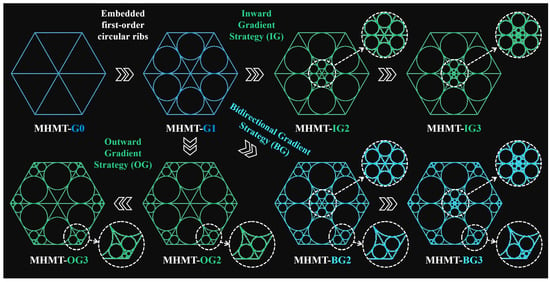
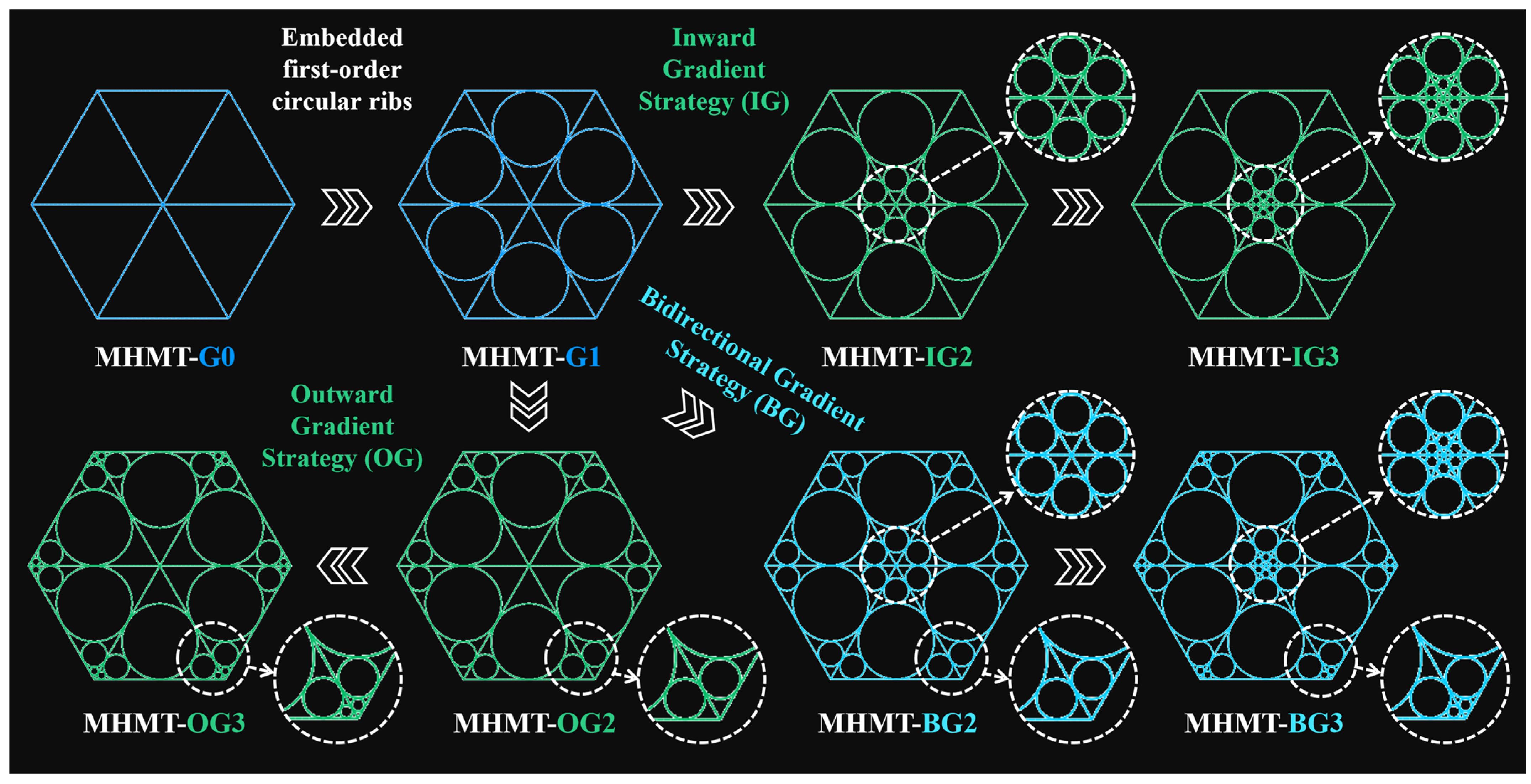
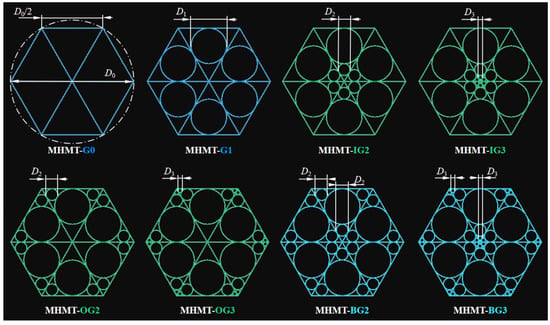
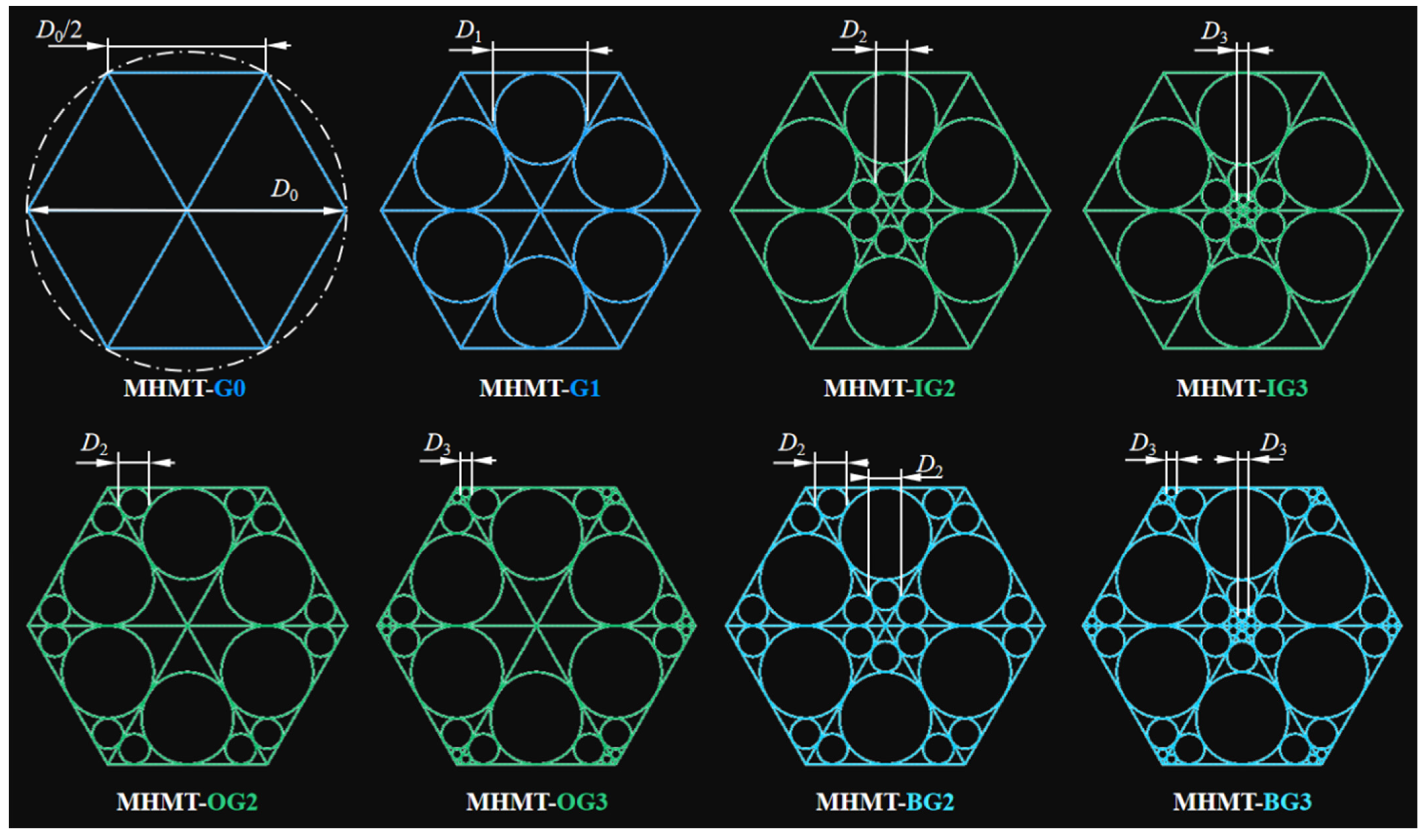
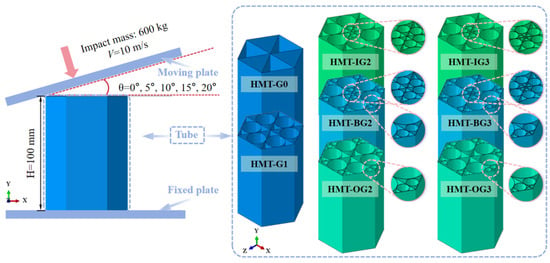
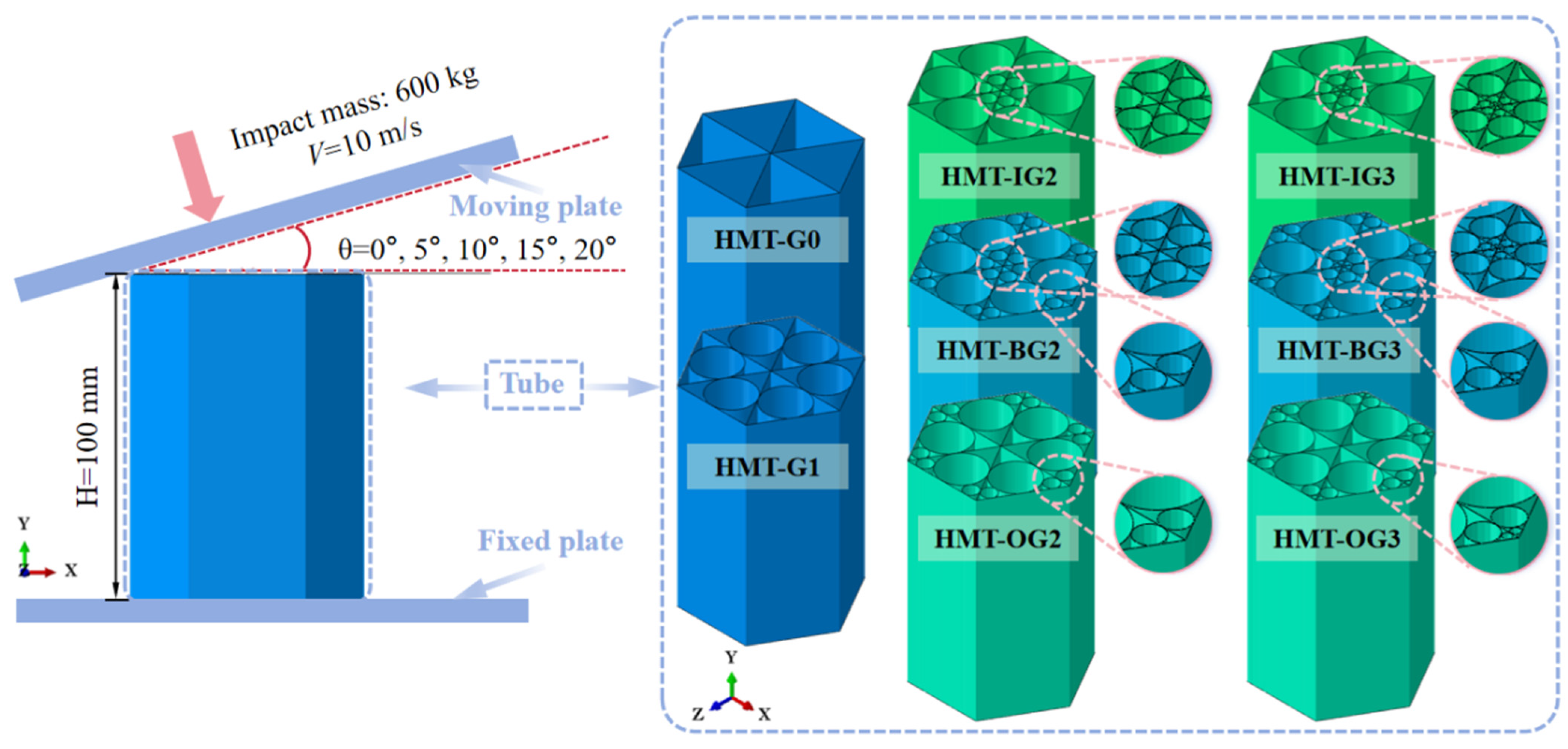
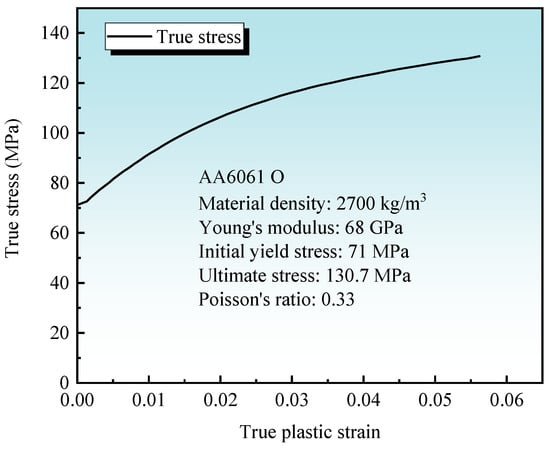
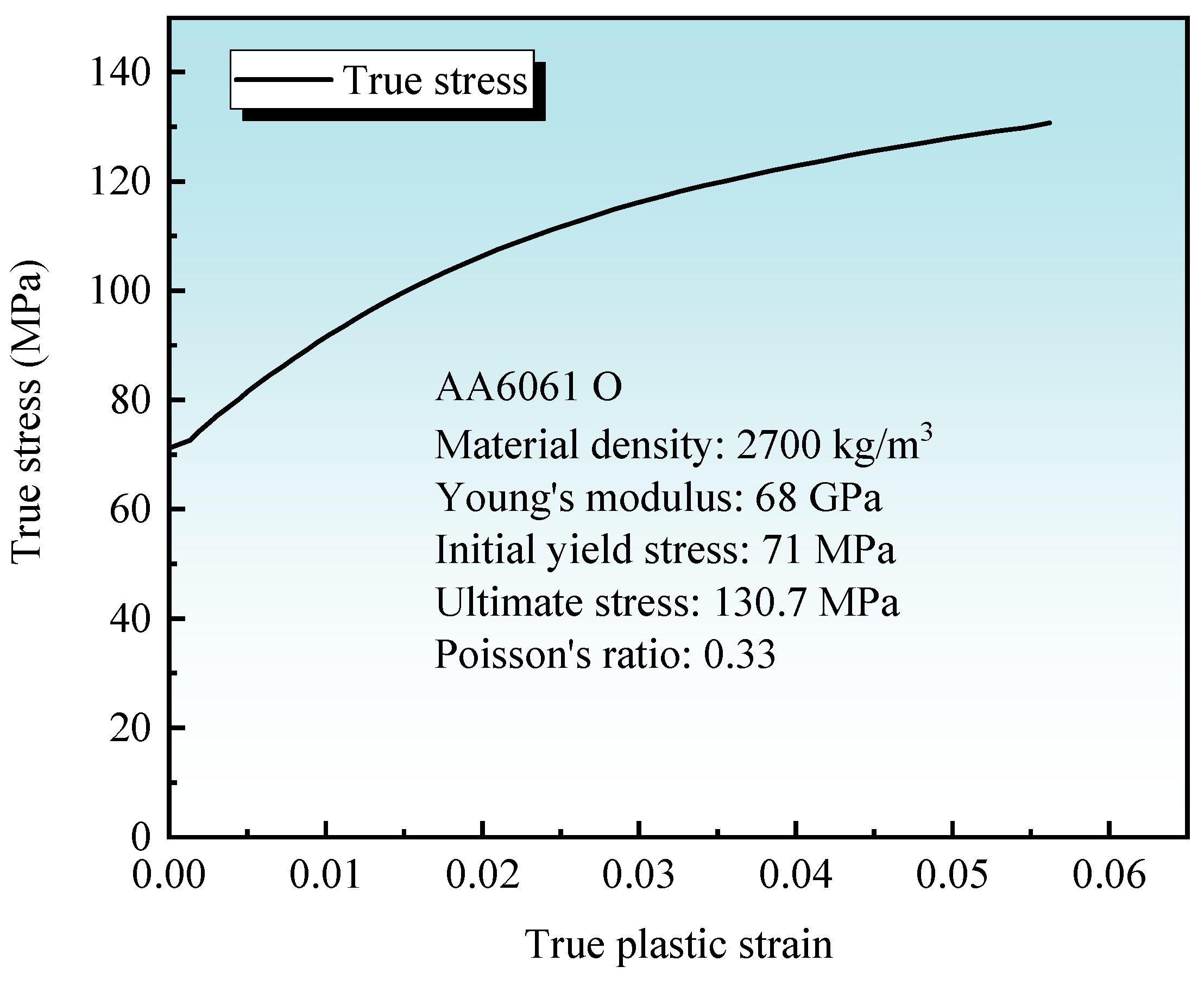
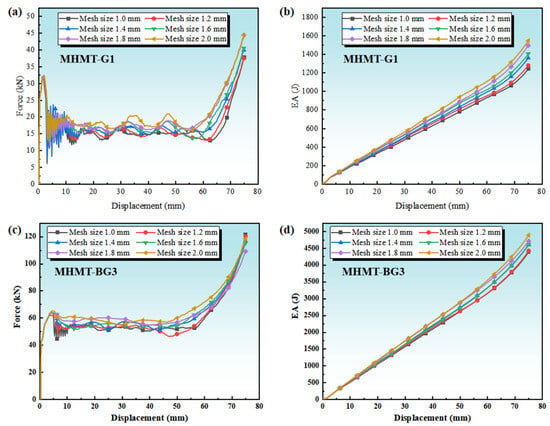
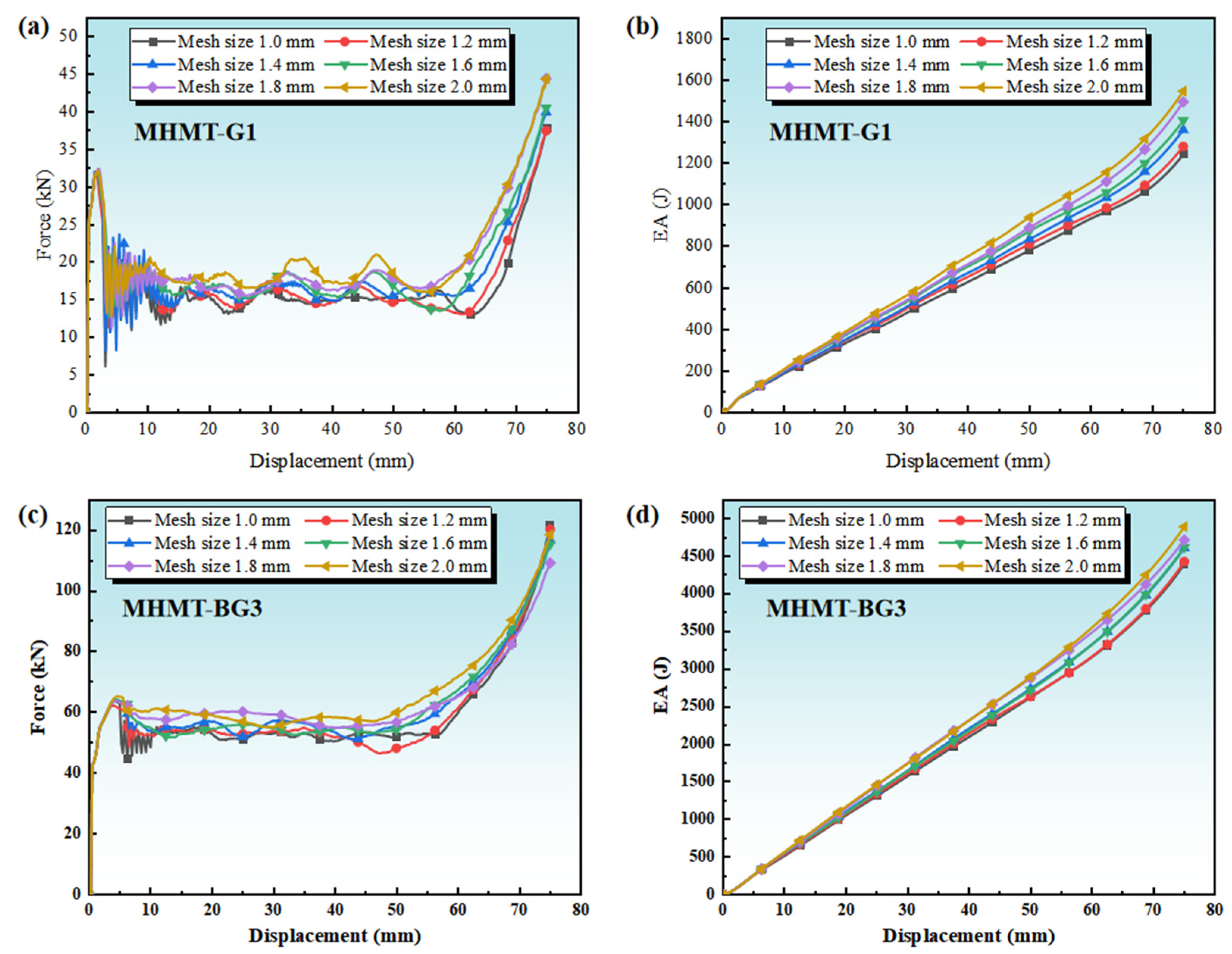
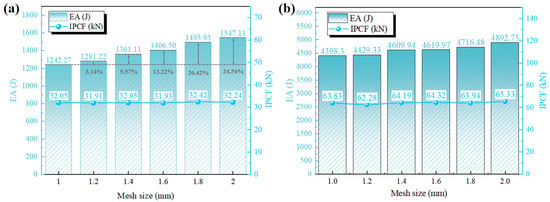
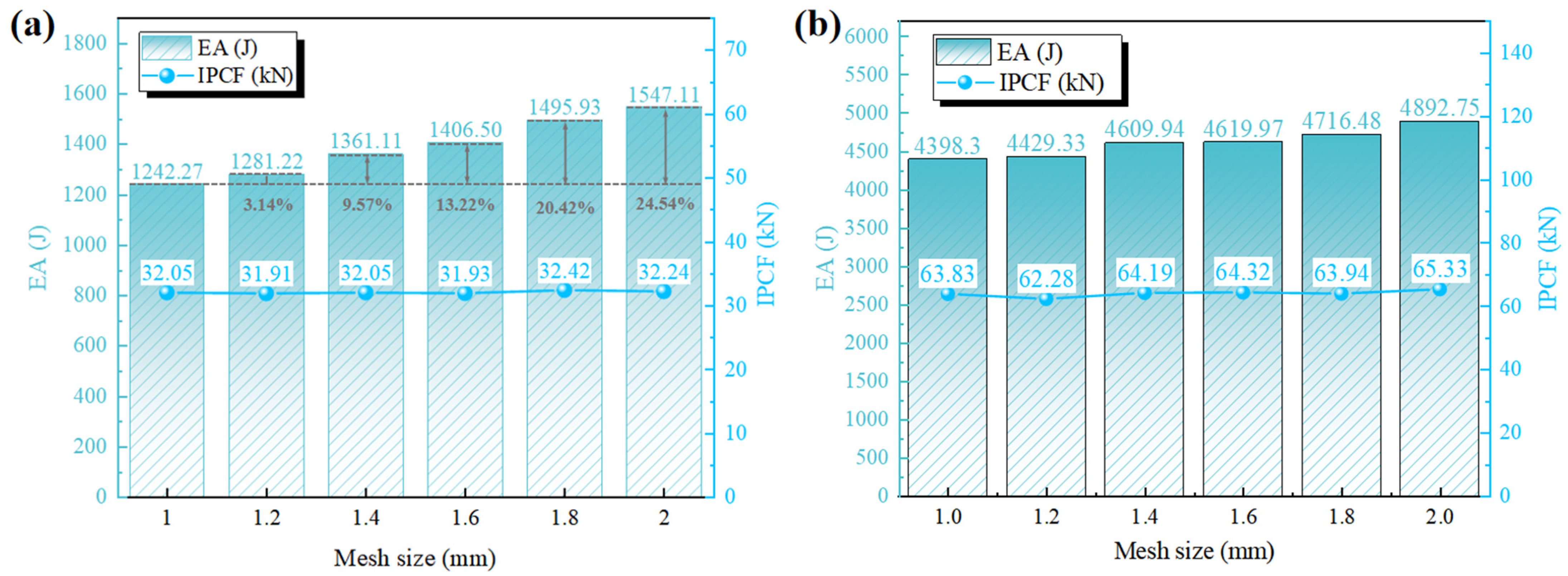
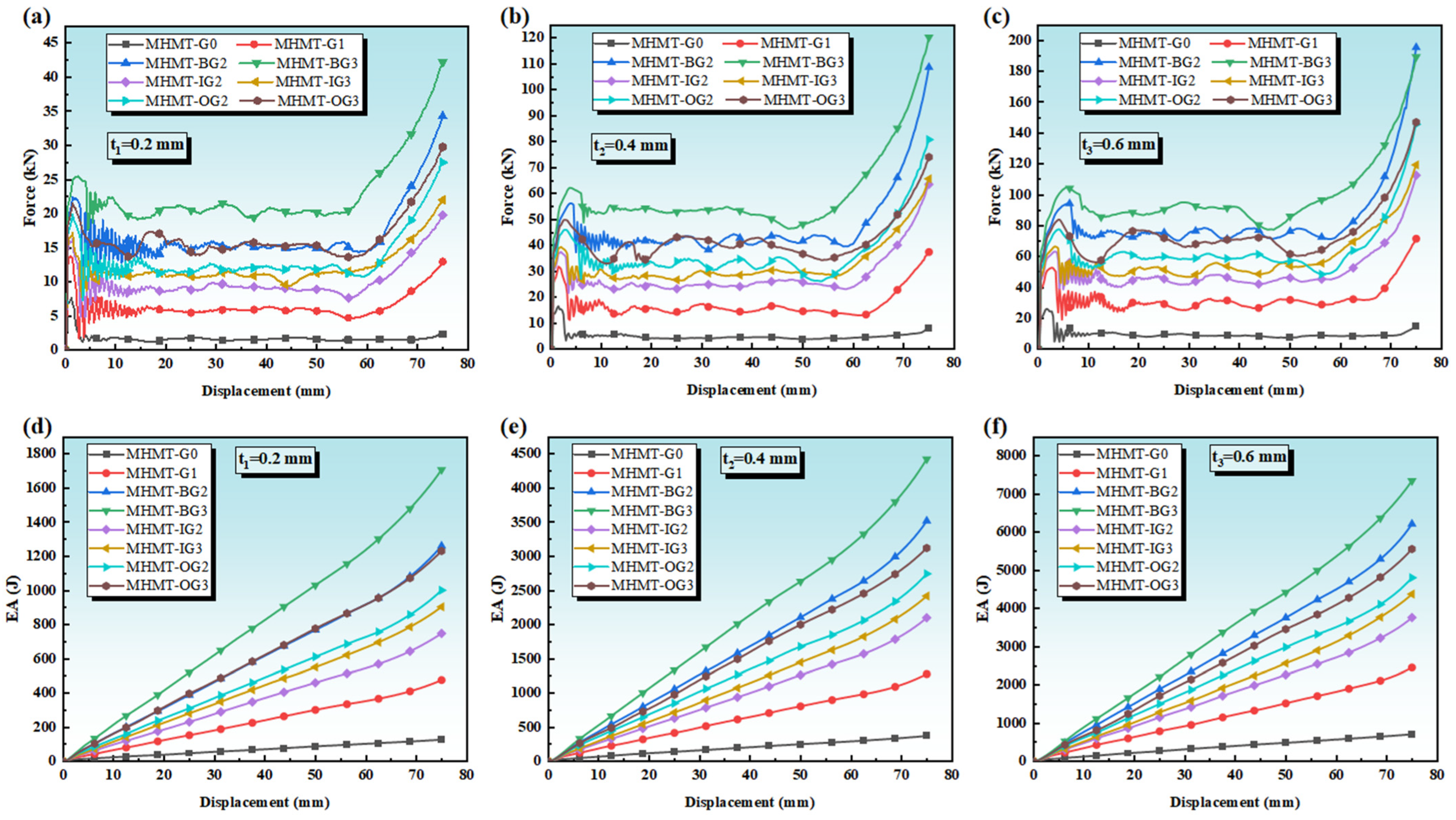
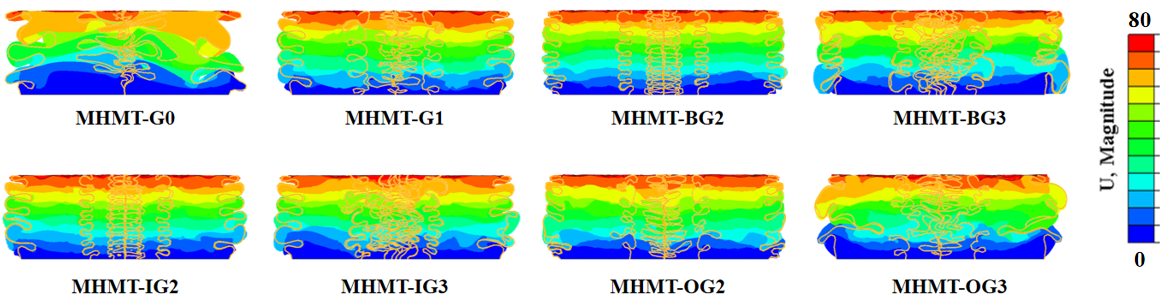
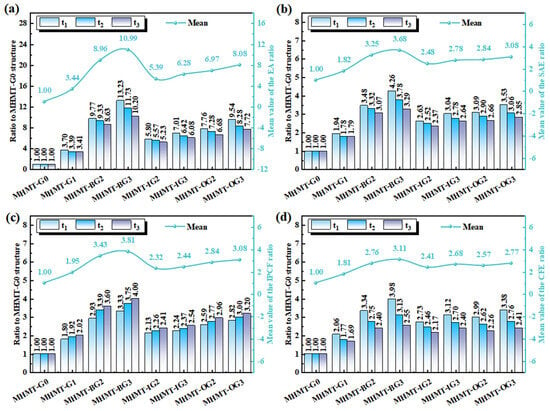
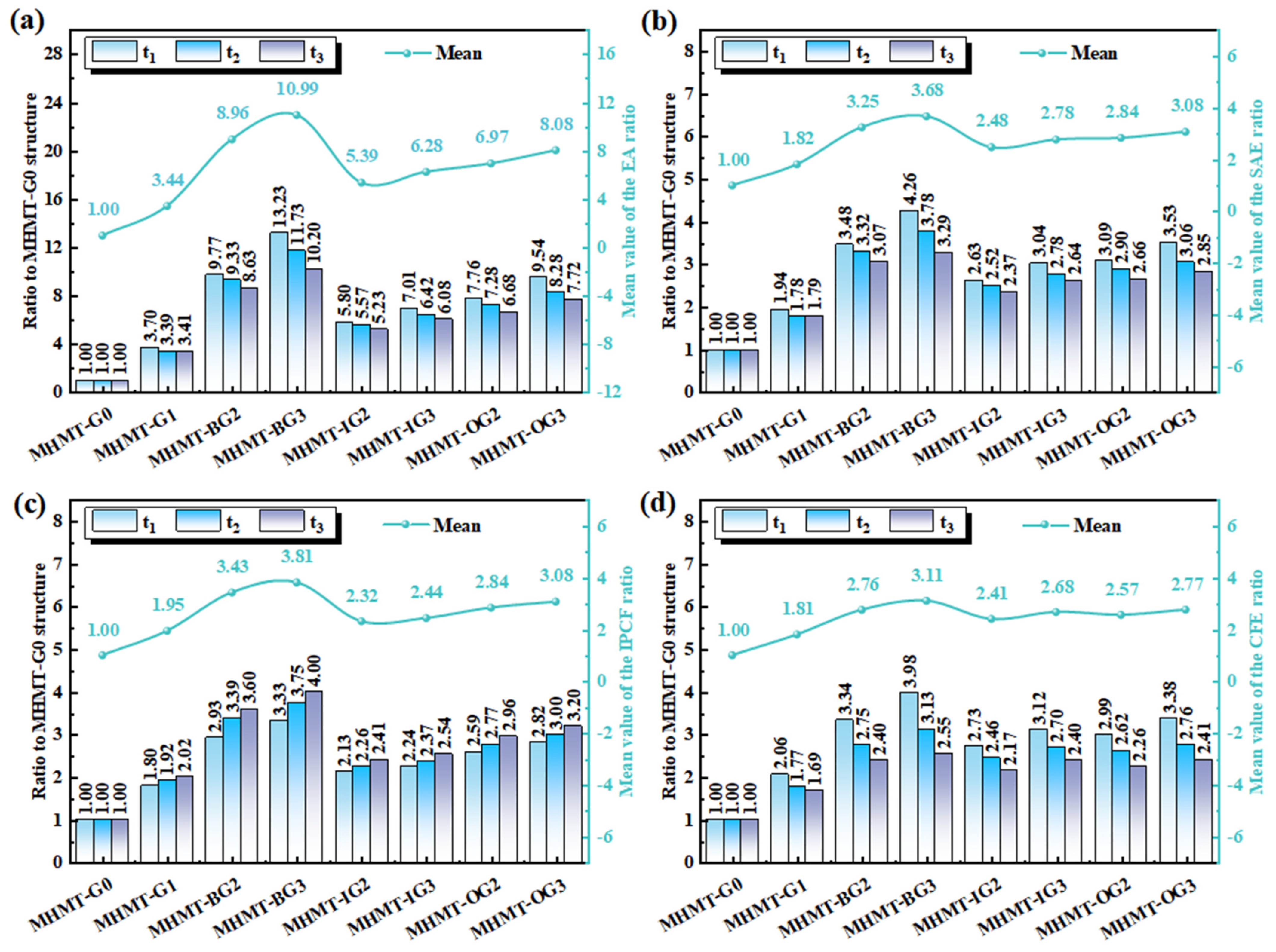
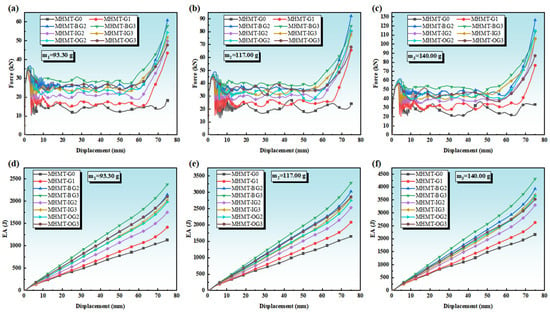
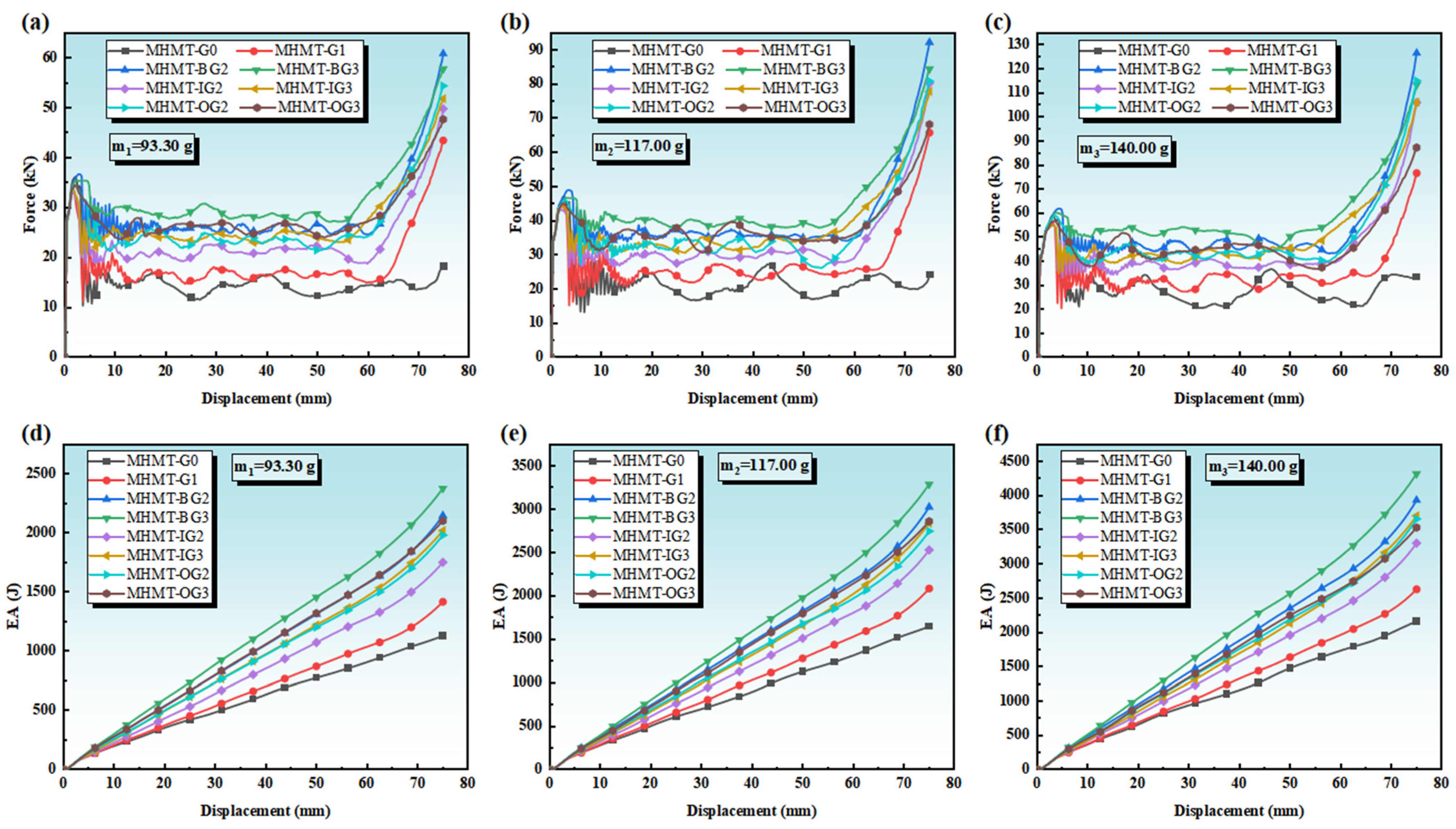
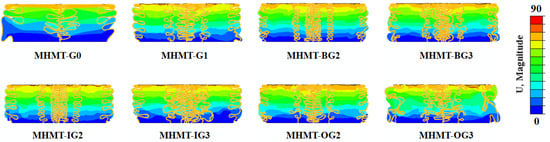
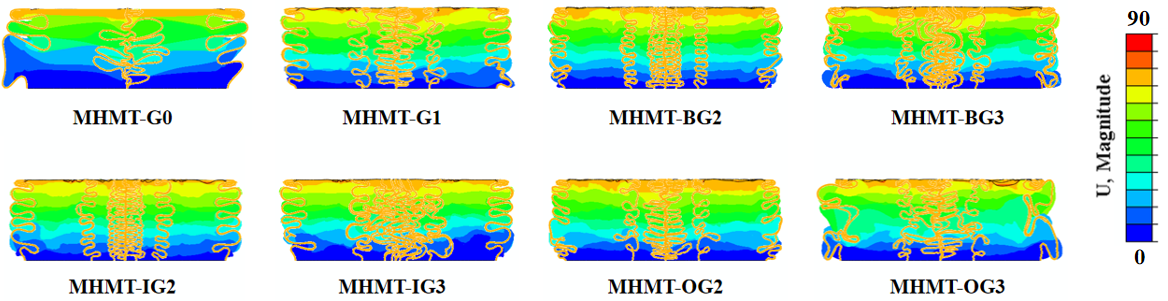
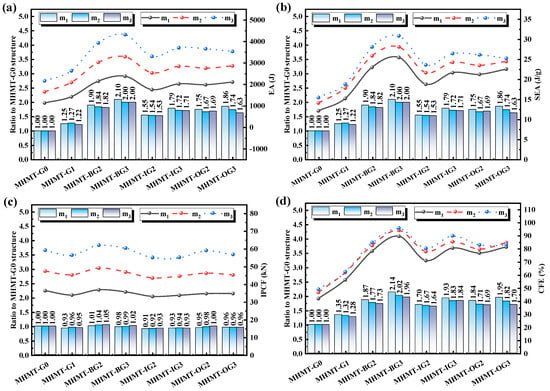
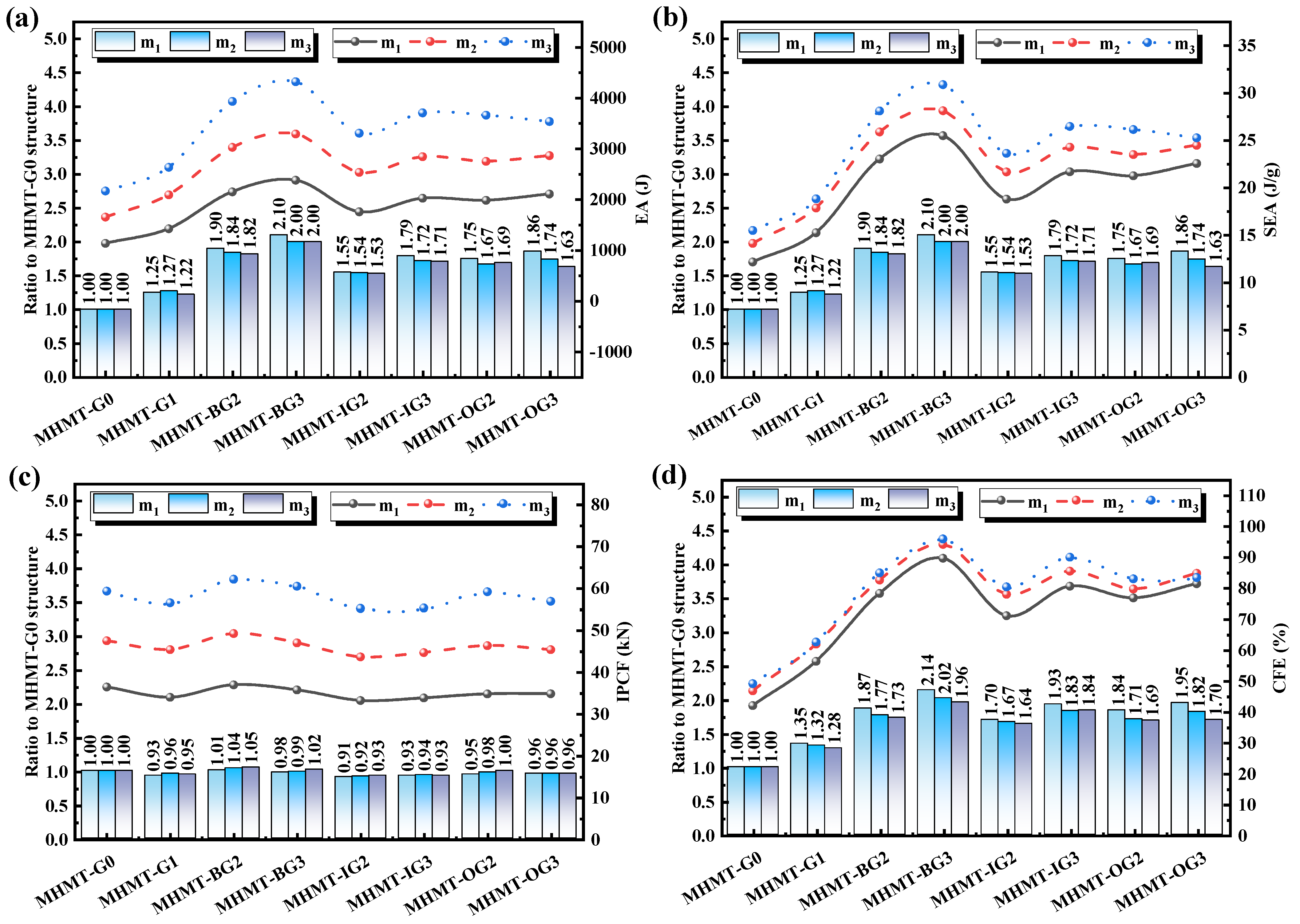
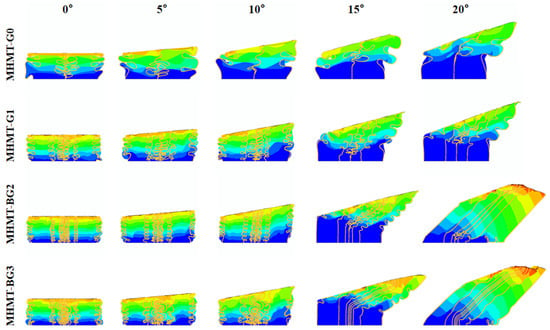
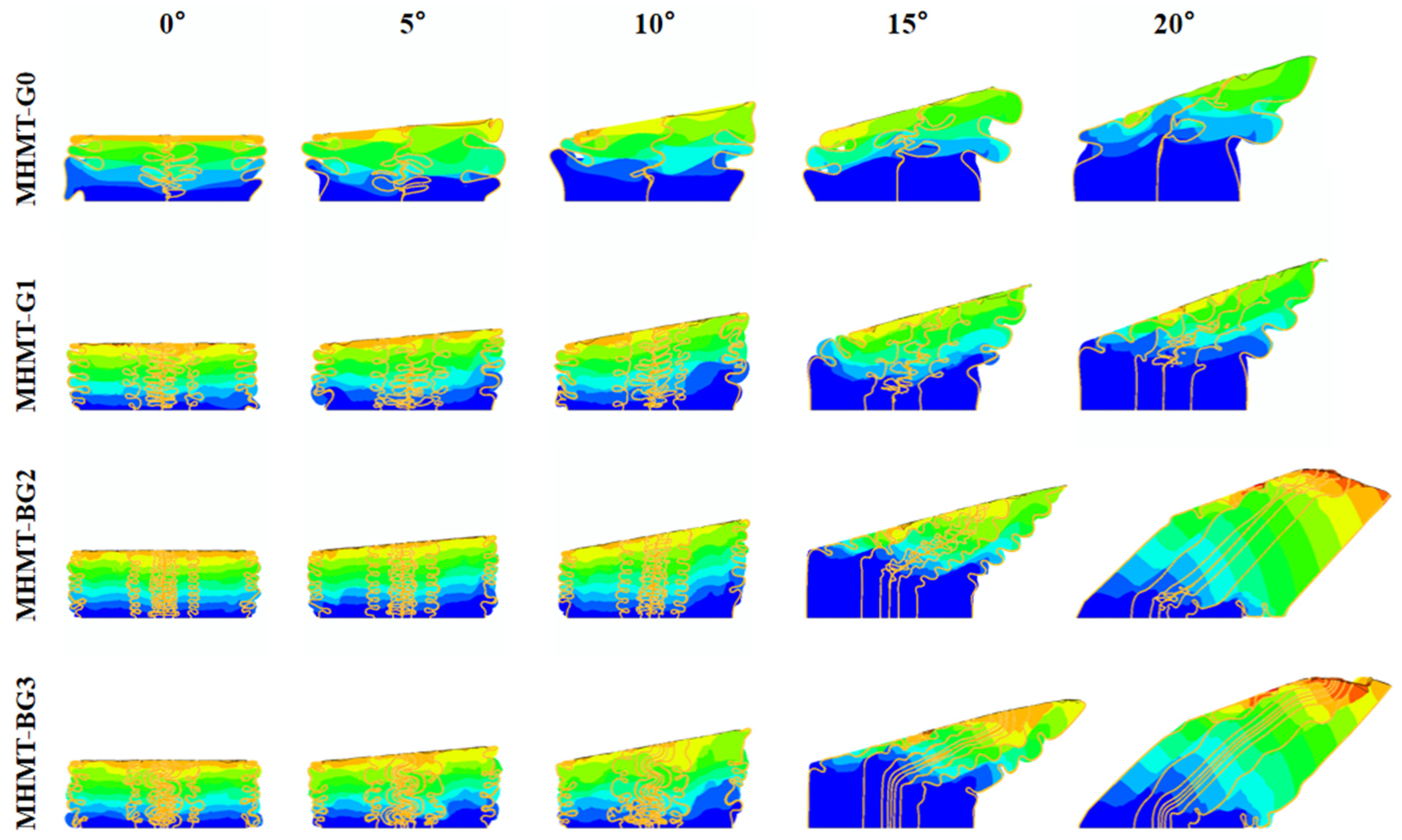
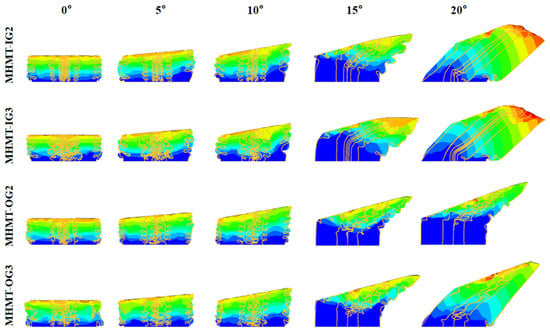
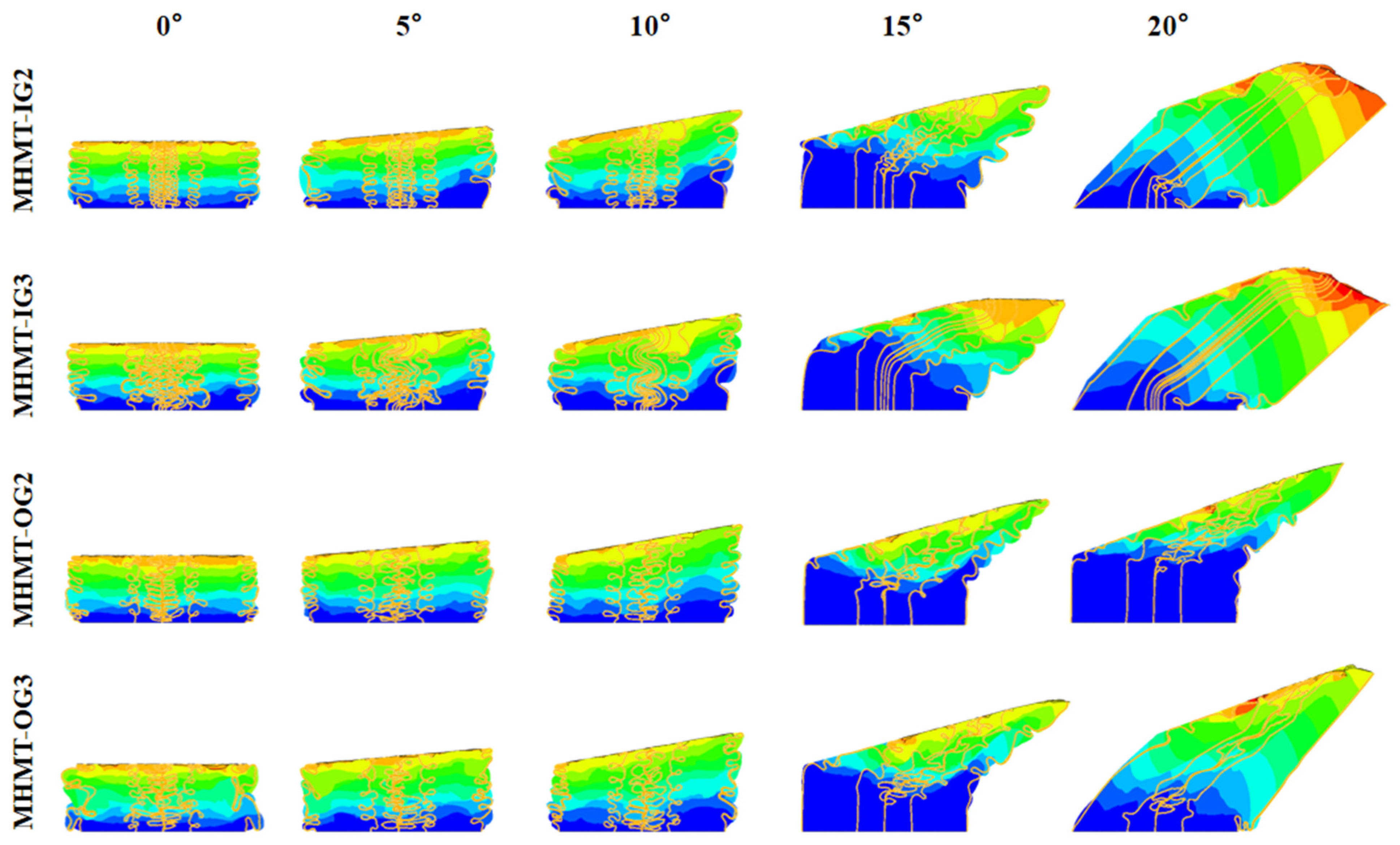
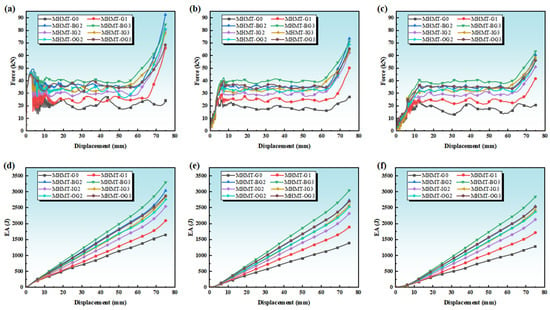
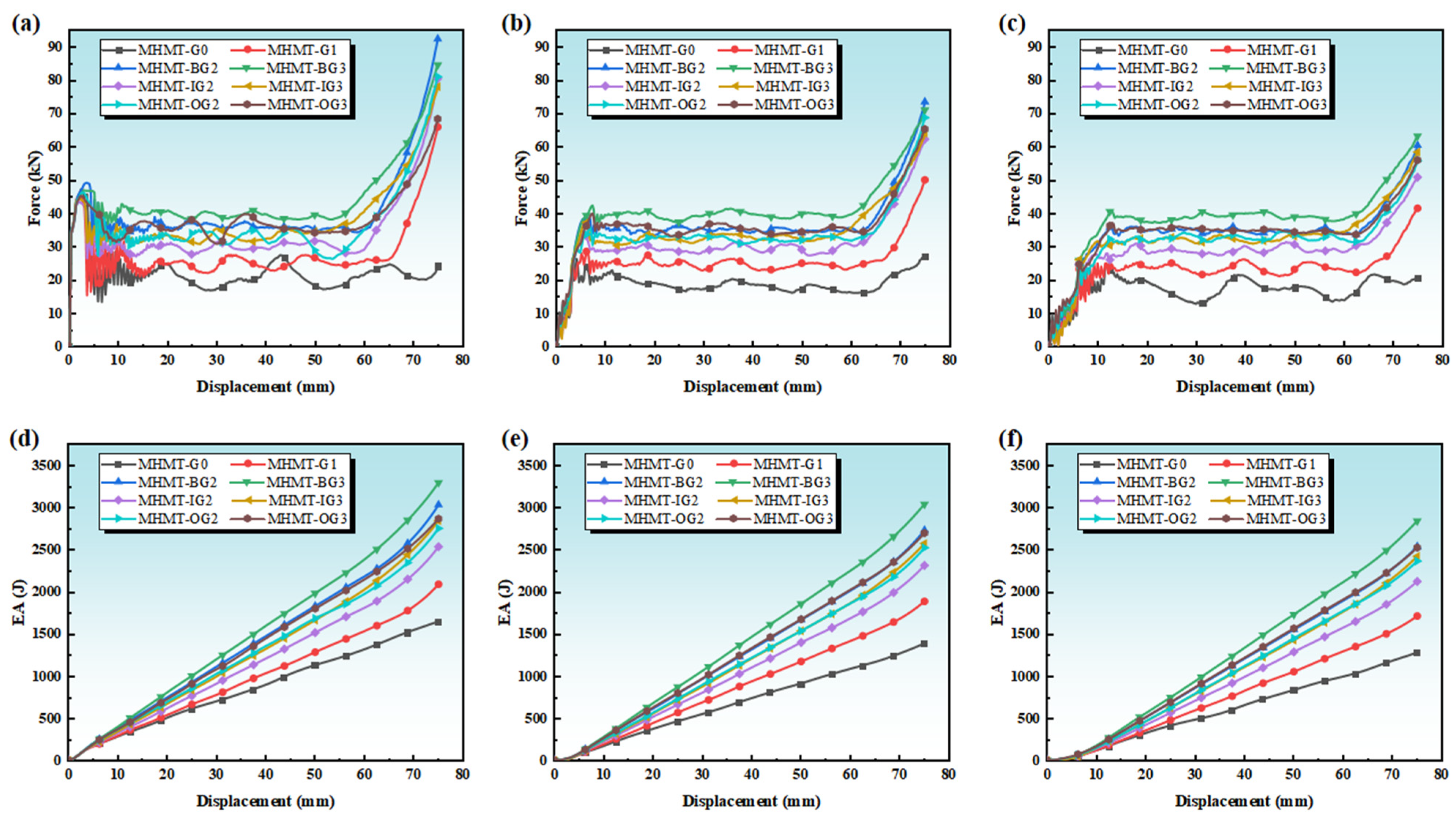
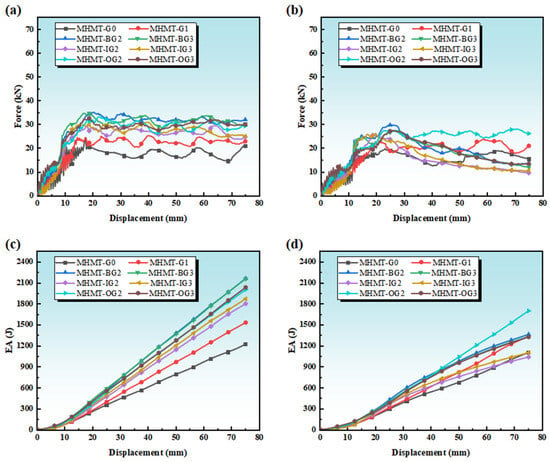
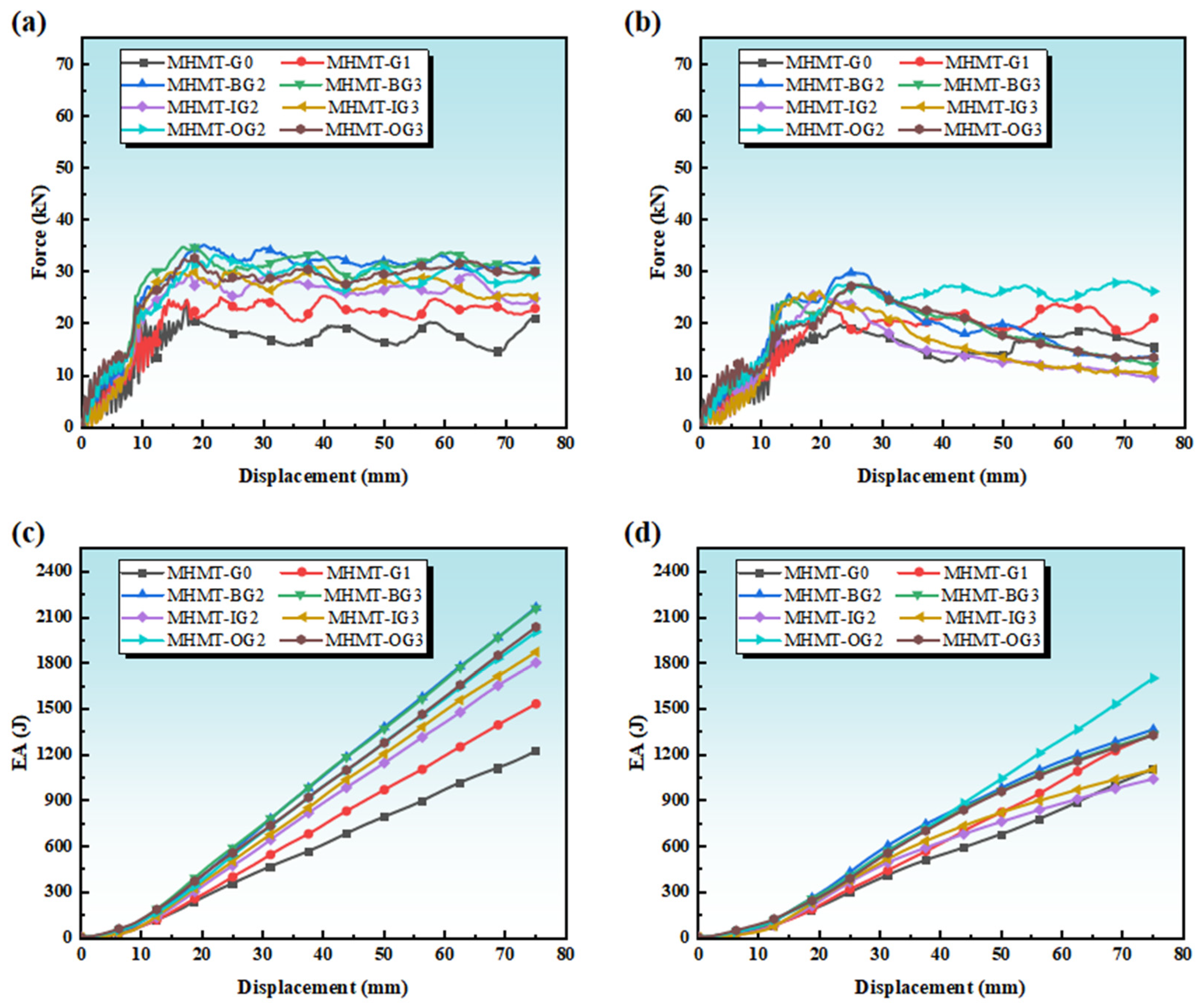
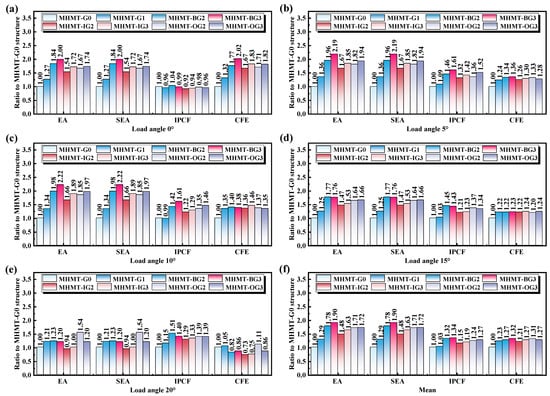
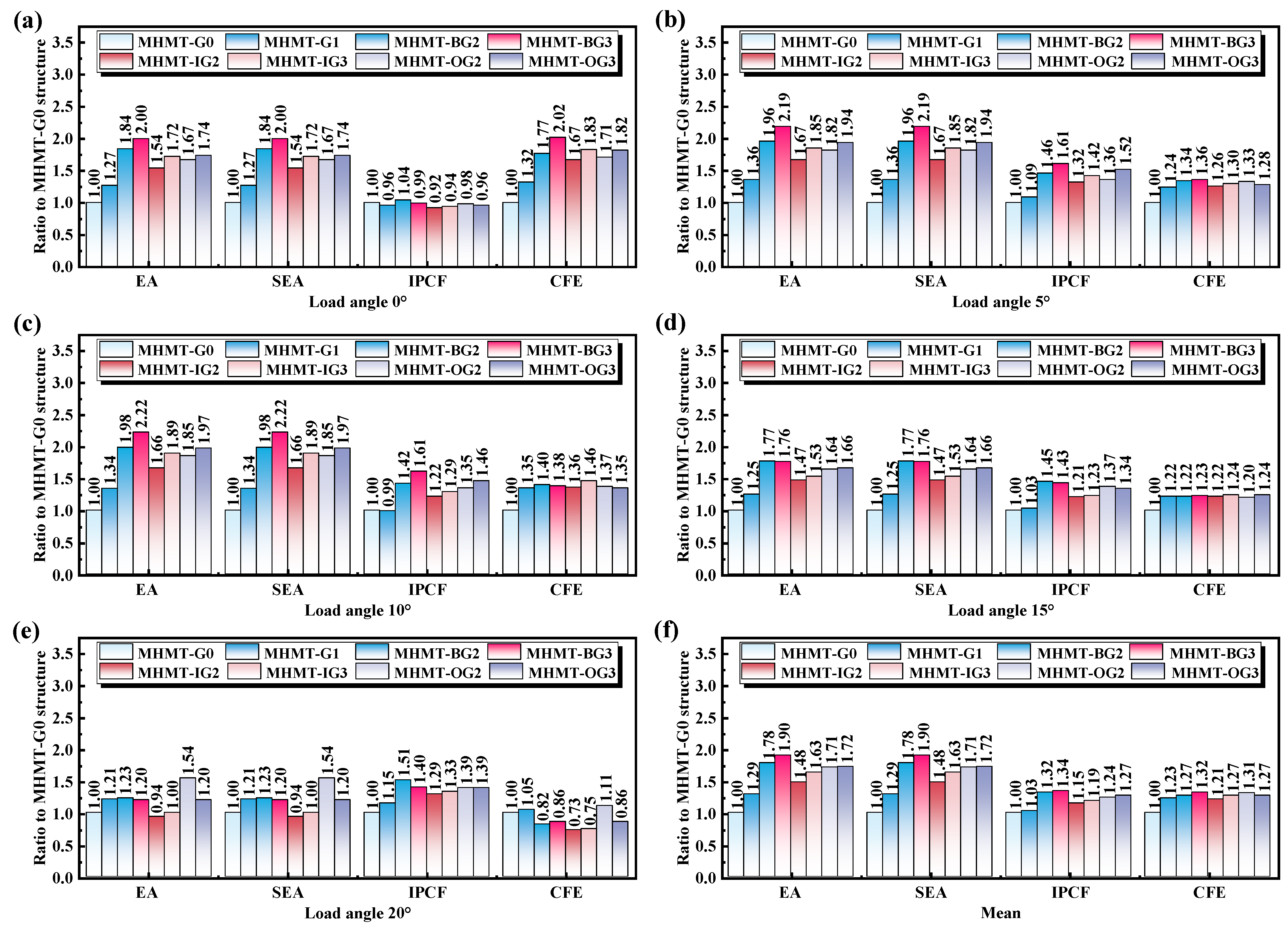
Disclaimer/Publisher’s Note: The statements, opinions and data contained in all publications are solely those of the individual author(s) and contributor(s) and not of MDPI and/or the editor(s). MDPI and/or the editor(s) disclaim responsibility for any injury to people or property resulting from any ideas, methods, instructions or products referred to in the content. |
© 2026 by the authors. Licensee MDPI, Basel, Switzerland. This article is an open access article distributed under the terms and conditions of the Creative Commons Attribution (CC BY) license.