


Abstract
During cementing operations in ultra-deep wells, abnormally high-pressure formations are frequently encountered, necessitating the adoption of high-density cement slurries to balance the formation pressure. However, weighting agents in high-density systems are generally inert and do not participate in hydration, resulting in consistently low set-cement strength that often fails to meet the load-bearing requirements of cement plugs under conditions such as open-hole sidetracking. To address this issue, a high-density cement slurry system is designed in this study with a density of 2.30 g/cm3 using Class G oil-well cement, micro-manganese, ultrafine silica sand, and silica fume as the main components. The slurries were cured for 3 and 7 days at 120 °C and 25 MPa. By combining testing results of compressive strength, X-ray diffraction (XRD) phase analysis, and thermogravimetric analysis (TGA), the effects of micro-manganese and silica fume contents, as well as the particle size and content of ultrafine silica sand, on the mechanical properties of the set cement could be systematically investigated. The results indicate that as the micro-manganese content increased from 60% to 100%, the compressive strength of the set cement gradually decreased. Reducing the silica sand particle size and increasing the silica sand and silica fume contents effectively enhanced the compressive strength of the set cement; however, these parameters had to be adjusted within reasonable ranges. The use of excessively fine silica sand or excessively high silica fume and silica sand contents could decrease the compressive strength of the set cement. Microstructural analysis by XRD and TGA was consistent with the compressive strength trends, confirming that tobermorite is the primary source of strength in this system and further explaining the mechanism described above. Through the synergistic effect of silica fume and ultrafine silica sand, the compressive strength of high-density set cement cured at 120 °C and 25 MPa for 3 days exceeded 80 MPa.
1. Introduction
As oilfield exploration and development continue to advance into deeper formations, ultra-deep oil and gas resources have become a crucial strategic area for future reserve expansion and production growth. Cementing in ultra-deep wells often involves passing through abnormally high-pressure zones, where the drilling fluid density can reach 2.5 g/cm3 or higher. In such situations, the density of the injected wellbore fluid is typically increased to ensure that the wellbore pressure remains in equilibrium with, or slightly higher than, the formation pressure [1,2,3,4,5]. Under these conditions, the cement slurry density is typically greater than 2.3 g/cm3. In addition, because of the complex downhole conditions and frequent accidents in ultra-deep wells, extremely high demands are placed on cement plug performance. During open-hole sidetracking, cement plugs must be strong enough to withstand drilling and formation pressures and ensure uniform cutting of the wellbore wall and the cement plug during drilling, thereby preventing complex accidents such as wellbore instability, loss of wellbore trajectory control, and stuck pipe [6]. Therefore, developing a cement slurry system that combines high density and high strength has become a critical technological bottleneck requiring urgent breakthroughs in ultradeep well cementing.
At present, the problems associated with high-density cement slurry systems can be broadly categorized into three areas: first, high-density cement slurries have a low liquid-to-solid ratio, which often results in high viscosity and poor flowability, making them difficult to pump [7,8,9]; second, weighting agents have high densities, and when added to the cement system, they can easily cause slurry settlement [10,11,12]; and third, since weighting materials are typically inert and do not participate in the hydration reaction, they lack cementitious strength, resulting in low set-cement strength [13]. Recent studies addressing these issues have mainly focused on suppressing settling and improving strength. Ahmed et al. used nuclear magnetic resonance (NMR) to quantitatively characterize the internal segregation of heavy-weighted set cement [14], and synthetic clay, vermiculite, and perlite particles were employed to mitigate the settling of barite/ilmenite-weighted slurries and improve the set-cement properties [15,16,17]. Abdelaal et al. incorporated perlite into a high-density cement slurry to reduce settlement and improve compressive strength; the set-cement strength after 24 h of curing was 12.7 MPa [18]. Song et al. optimized the cement slurry formulation through proper particle grading and selection of high-density weighting materials, achieving a set-cement compressive strength of 17.8 MPa after 72 h of curing [19]. Overall, although many high-density systems with good workability have been designed, the compressive strength of the resulting set cements rarely exceeds 50 MPa.
High-density cement slurries are typically prepared by adding weighting materials such as hematite, barite, or ilmenite powder. However, such coarse-grained weighting agents often increase the water demand of the slurry, leading to higher porosity in the set cement and limiting strength development; moreover, at high temperatures, they tend to impair the settlement stability of the slurry [20,21]. Weighting materials also affect the carbonation behavior of oil-well cement-based composites in high-temperature, CO2-rich environments [22]. Recent comparative studies on different weighting materials have shown that hematite, magnetite, and Micromax exert distinctly different influences on the properties of Class G cement; combining Micromax with hematite significantly reduces the density variation and plastic viscosity of heavy-weight systems [23]; and an economical combination of Micromax and ilmenite has been demonstrated to balance pumpability and settlement stability [24]. In contrast, micro-manganese has higher density, a finer particle size, lower cost, and a better particle size distribution. It can increase the density of the cement slurry while significantly reducing the liquid-to-solid ratio, thereby ensuring the compactness of the set cement and making it an excellent weighting material [25,26]; however, micro-manganese alone is insufficient to improve set-cement strength at high temperatures.
Extensive research has confirmed that adding silica sand at high temperatures can reduce the calcium-to-silica ratio in cement formulations, causing the hydration products to transform into tobermorite, thereby increasing strength and inhibiting strength retrogression [27,28,29,30,31]. Conventional coarse silica sand reacts slowly at approximately 120 °C; in contrast, ultrafine silica sand has a high specific surface area and high reactivity, which helps enhance the early strength of set cement at 120 °C. Silica fume can fill interparticle voids, reduce the water-to-cement ratio, and undergo pozzolanic reactions at high temperatures, consuming additional calcium hydroxide and increasing the early strength of set cement [32]. Recent studies on oil-well cements under high-temperature, high-pressure conditions further demonstrate that the curing and testing temperature–pressure conditions decisively influence the mechanical performance of oil-well cement [33], and that silica fume combined with inorganic salts and nanomaterials can produce a pronounced synergistic enhancement in a low-density oil-well cement slurry [34]. However, previous studies have mainly focused on conventional-density cement systems or single admixtures. The influence of ultrafine silica sand fineness on the performance of high-density cement systems has not been investigated, and systematic research on the synergistic effects of silica fume–ultrafine silica sand composites on high-density cement slurries and set cements at high temperatures is still lacking.
To address the above problems, this study investigates a high-density Class G oil-well cement system incorporating micro-manganese, ultrafine silica sand, and silica fume, with a target slurry density of 2.30 g/cm3. The specific objectives are (1) to develop a high-density oil-well cement slurry with suitable workability for cementing high-pressure formations in ultra-deep wells and (2) to systematically investigate the effects of ultrafine silica sand fineness and silica fume content, both individually and in combination, on the compressive strength and hydration phase assemblage of hardened cement under curing conditions of 120 °C and 25 MPa. Particular attention is paid to tobermorite formation and its relationship with strength development. Quantitative XRD analysis using Rietveld refinement, supplemented by qualitative TGA characterization, is employed to characterize the hydration products and elucidate the phase evolution underlying the mechanical performance. Based on these results, an optimized mix formulation is identified to achieve a balance between slurry workability and high compressive strength.
2. Materials and Methods
2.1. Materials
The raw materials used in this study were oil-well cement, silica sand, micro-manganese, silica fume, and chemical admixtures. The true densities of the solid powders and liquid admixtures were measured at room temperature using an UltraPYC 1200e (Anton Paar, Graz, Styria, Austria) and an AccuPyc II 1340 (Micromeritics, Norcross, GA, USA), respectively; both instruments have a measurement accuracy of 0.0001 g/cm3.
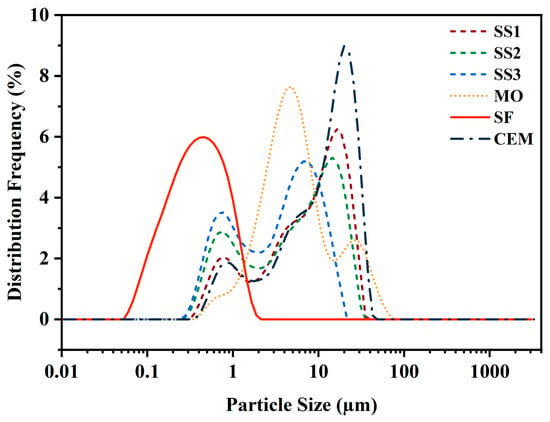
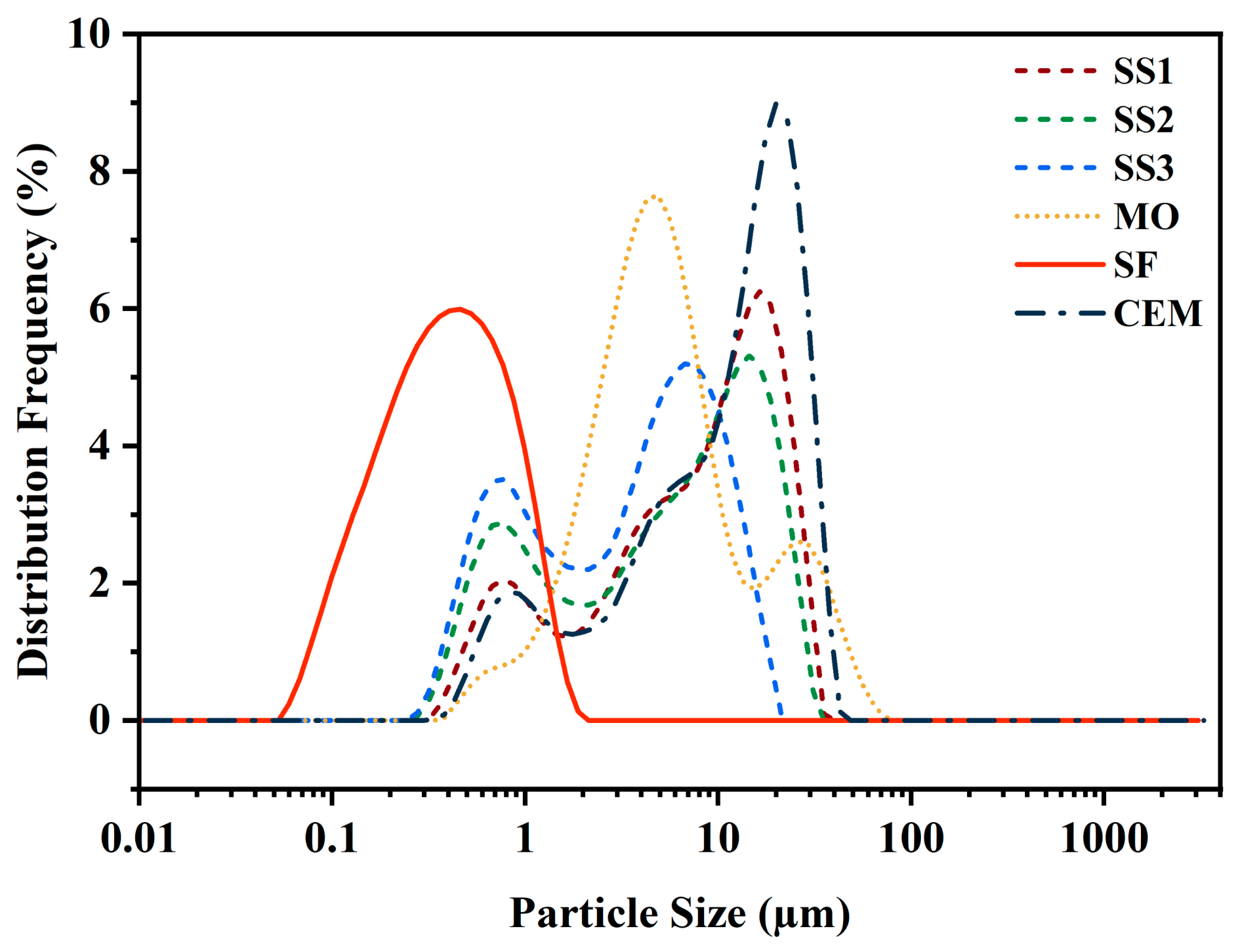
Class G oil-well cement (CEM) was purchased from Sichuan Jiahua Special Cement Co., Ltd., Leshan, Sichuan, China. Ultrafine silica sand was supplied by Hongwei Mineral Products Co., Ltd., Nanyang, Henan, China and had particle sizes of 9.06 μm (SS1), 6.52 μm (SS2), and 4.08 μm (SS3). The micro-manganese (MO) used was Micromax micro-manganese provided by Elkem Silicones (Shanghai) Co., Ltd., Shanghai, China. Silica Fume (SF) was provided by Sinopec Shengli Oilfield Co., Ltd., Dongying, Shandong, China. In addition, to adjust the slurry properties, several admixtures were selected, including a retarder (BCR), a dispersant (BCD), a fluid-loss additive (BXF), a defoamer (G603), and two suspending agents (SW and DRS). The retarder, dispersant, fluid-loss additive, and defoamer were supplied by CNPC Tianjin Bo-Xing Engineering Science & Technology Co., Ltd., Tianjin, China, while the two suspending agents were supplied by China National Petroleum Corporation Engineering Technology Research Institute Co., Ltd., Beijing, China. The particle sizes of the cement and admixtures were measured using a Mastersizer ultra-high-speed intelligent particle size analyzer (Malvern Panalytical, Malvern, UK), and the particle size distribution curves are shown in Figure 1. The densities of the materials and the particle sizes of the dry materials are listed in Table 1.
Figure 1.
Particle size distribution curve of cement and admixtures.
Table 1.
Density of each material and particle size of dry materials.
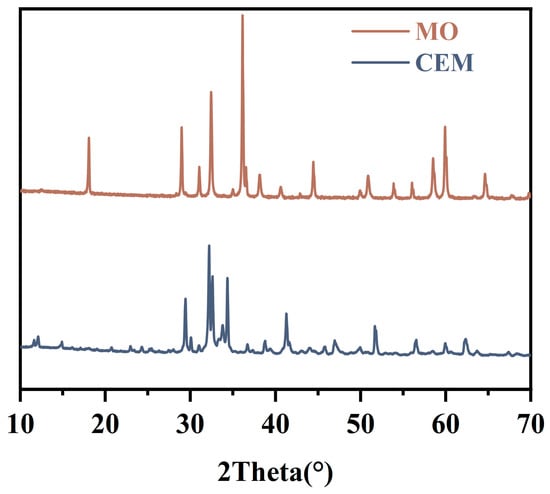
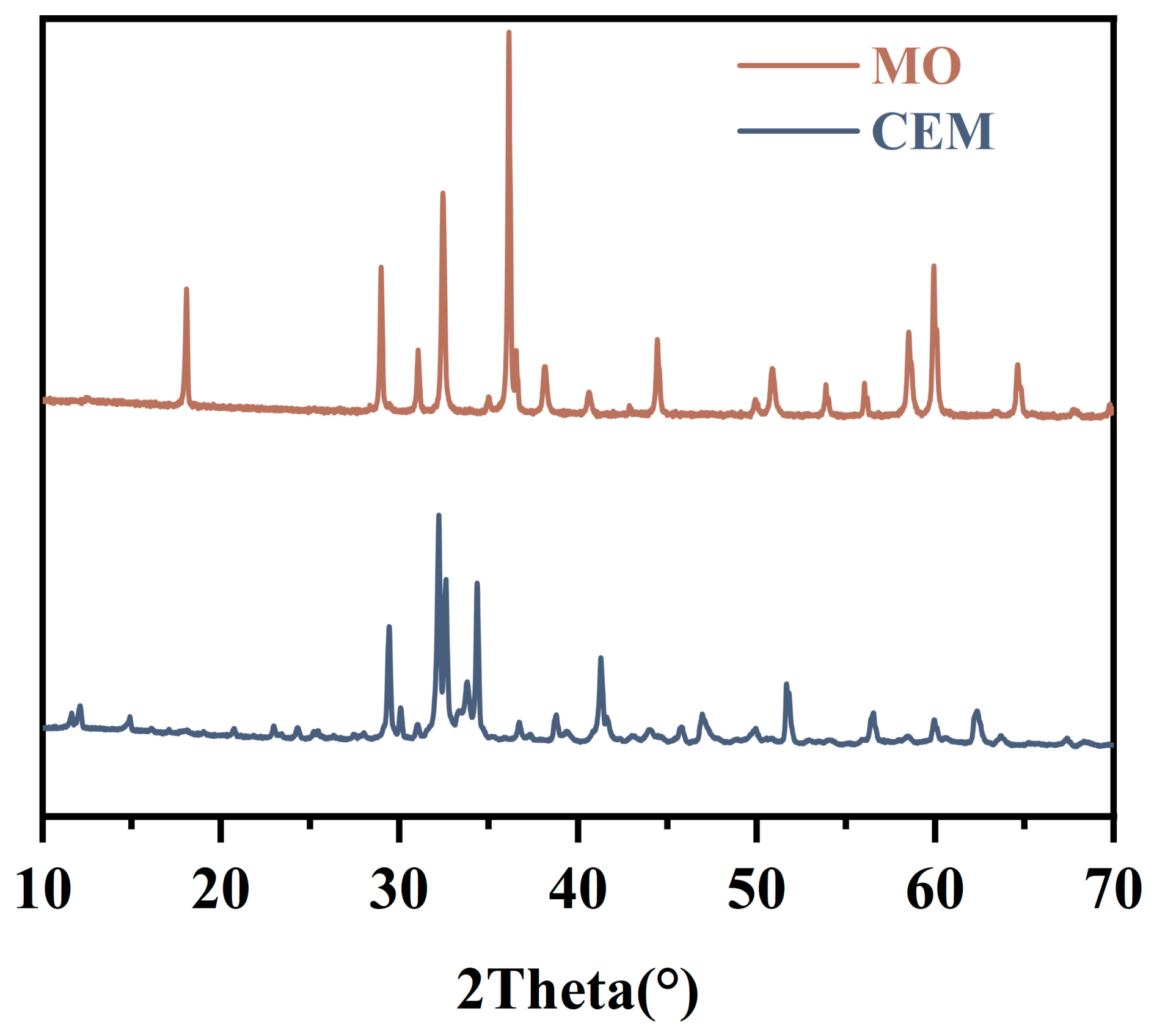
Elemental analysis of the cement was performed by wavelength-dispersive X-ray fluorescence (WD-XRF) spectrometry. The oxide contents determined by quantitative WD-XRF analysis are shown in Table 2. XRD measurements were performed on the cement and micro-manganese using a PANalytical Aeris benchtop X-ray diffractometer (PANalytical B.V., Almelo, The Netherlands). From the XRD patterns, the phase composition of the cement was estimated by quantitative Rietveld full-pattern fitting. The XRD patterns of the cement and micro-manganese are shown in Figure 2, and the mineral compositions are presented in Table 3.
Table 2.
Oxide composition of cement (wt.%).
Figure 2.
XRD patterns of the cement and micro-manganese.
Table 3.
QXRD main-phase analysis results of Class G cement and MO.
2.2. Mix Design and Preparation of Cement Slurry
The cement slurry formulations are shown in Table 4, Table 5 and Table 6, where all components are expressed by weight of cement (BWOC). The L/S values listed in Table 4, Table 5 and Table 6 denote the liquid-to-solid ratio of each formulation, which is defined as the ratio of the total liquid phase to the total solid phase in the slurry. During formulation design, the cement slurry density was fixed at 2.3 g/cm3. Test Series I–III were based on a 40% SS2 ultrafine silica sand content, with the remaining variables adjusted to investigate the effects of these variables on the compressive strength of the set cement. The formulation for Test Series I is shown in Table 4. It preliminarily determines the optimal micro-manganese dosage and adjusts the dispersant and retarder dosages to ensure optimal slurry performance, thereby investigating the effect of micro-manganese dosage on slurry performance and set-cement compressive strength. To investigate the effect of silica fume dosage on the compressive strength of cured set cement, Test Series II and III (Table 5) were designed with different silica fume dosages at 70% and 80% micro-manganese contents. Because silica sand particle size and content affect the cement hydration rate and final hydration products, Test Series IV and V (Table 6) were designed to investigate the synergistic effect of ultrafine silica sand particle size and content with silica fume at 70% and 80% micro-manganese contents.
Table 4.
Test series I cement slurry formulation design (%BWOC).
Table 5.
Cement Slurry Formulation Design for Test Series II and III (%BWOC).
Table 6.
Cement Slurry Formulation Design for Test Series IV and V (%BWOC).
The cement slurry was prepared and tested in accordance with the standards outlined in GB/T 19139-2012 (Test Methods for Oil Well Cement) [35], SY/T 5504-2008 (Evaluation Methods for Oil Well Cement Additives) [36] and SY/T 6466-2016 (Performance Test Methods for Oil Well Cement Stones) [37]. Place the weighed dry solid ingredients into the mixing cup, and then weigh the required amount of liquid ingredients into the mixing cup. Place the mixing cup on a constant-speed mixer in accordance with API 10B-2 [38]. While adding the dry ingredients, adjust the mixer speed to 4000 rpm and mix at a constant speed until all dry ingredients are fully incorporated. Then increase the speed to 12,000 rpm and mix at a constant speed for 35 s to complete slurry preparation. The mixing cup and constant-speed mixer were provided by Qingdao Haitongda Specialized Instruments Co., Ltd., Qingdao, Shandong, China.
The dosages of the components in the mix design were determined based on the following considerations. The micro-manganese content was set at 60–100% BWOC, which is the dosage range commonly used in field applications; Test Series I was designed within this range to investigate the effect of the micro-manganese content on the slurry workability and set-cement strength, with the aim of determining the highest acceptable micro-manganese content that still provides good workability at a slurry density of 2.30 g/cm3, so as to minimize the dilution of strength by the inert weighting phase and achieve a relatively high compressive strength. The ultrafine silica sand content was set at 30% and 40% to adjust the calcium-to-silica ratio of the system to an optimal range, promoting the complete conversion of the hydration products into tobermorite and inhibiting strength retrogression under curing at 120 °C. The slurry density was fixed at 2.30 g/cm3, and the water content of each formulation was adjusted to meet this density requirement. The silica fume content was set at 3%, 5%, and 7% to investigate the optimal dosage range for its filling effect and pozzolanic reaction.
2.3. Experimental and Analytical Methods
2.3.1. Curing of High-Temperature, High-Pressure Set Cement
In accordance with API 10B-2, the prepared slurry was immediately poured into cylindrical molds (25 mm × 70 mm). During this process, the slurry was stirred up and down approximately 30 times with a fine glass rod to remove air bubbles. The molds containing the cement slurry were then placed in a high-temperature, high-pressure curing chamber and cured at 120 °C and 25 MPa. Formulations I–V were cured for 3 days. Formulations A2 and B2, which exhibited the highest uniaxial compressive strength, were cured for 7 days. After curing, the heating program was shut off, and it took approximately 1 day for the chamber to naturally cool from 120 °C to room temperature. The molds were then removed, and the end faces of the demolded specimens were cut and polished to produce cylindrical test specimens measuring 25 mm × 50 mm. All test specimens were stored in water to ensure saturation. The high-temperature, high-pressure curing chamber was provided by Nantong Xinhua Cheng Scientific Research Instrument Co., Ltd., Nantong, Jiangsu, China.
2.3.2. Compressive Strength Test
The compressive strength of the cement specimens was tested using a Sansi Zongheng UTM5105X microcomputer-controlled electronic universal testing machine (Shenzhen Sansi Zongheng Technology Co., Ltd., Shenzhen, China). The maximum load capacity of the testing machine was 150 kN, and the loading rate was 0.3 mm/min. The extensometer gauge length was 50 mm, the strain measurement range was 0.002–2000%, and the measurement accuracy was <0.005%. Three specimens were prepared for each formulation in Series I–V for each specified curing time.
2.3.3. Thickening Performance Test
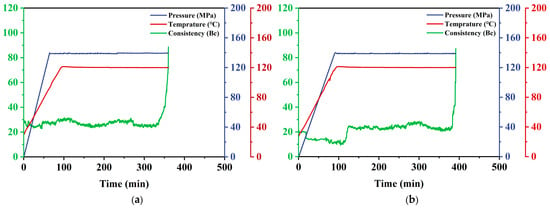
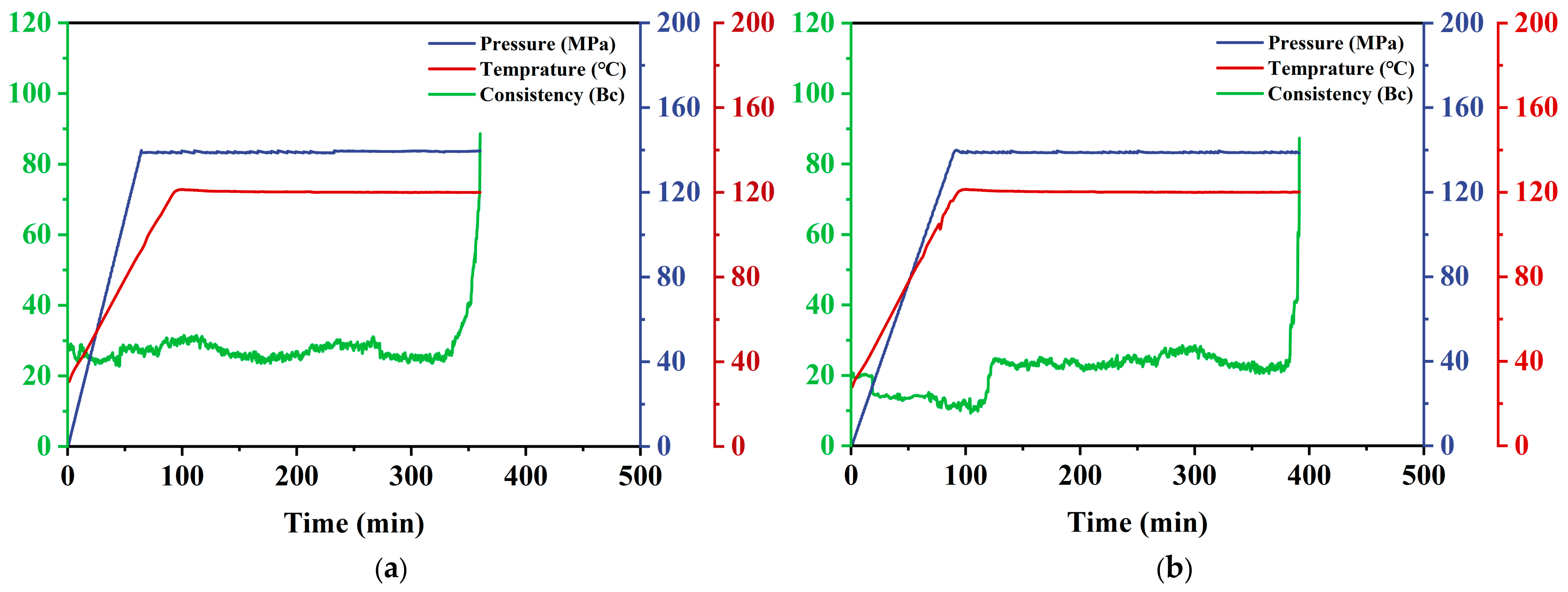
The thickening properties of the cement slurries for Formulations A2 and B2 were tested using an NZCQ2120 high-temperature, high-pressure thickening tester (Tianjin Ningsai Technology Co., Ltd., Tianjin, China). The prepared cement slurry was poured into the slurry cup, with the liquid level kept within 6 mm of the rim. The outer wall of the cup was gently tapped with a wooden mallet to remove air bubbles. After the slurry cup was assembled, cleaned, and dried, it was placed in the thickening tester. The thickening test parameters were set as follows: temperature, 120 °C; pressure, 140 MPa; heating and pressurization time, 90 min; and rotation speed, 150 r/min. Because the dispersant BCD contains polycarboxylic acid components and exhibits a retarding effect, the initial consistency of Formulation A2 after 15 min was 26.5 Bc, and the thickening time was 360 min; Formulation B2 was blended with a 1% retarder (B2*) to verify that the thickening time was linearly adjustable; its thickening time was 391 min, longer than that of Formulation A2, and its initial consistency after 15 min was 19.5 Bc. The thickening curves for Formulations A2 and B2* are shown in Figure 3.
Figure 3.
Thickening property test data for optimal cement formulations under 120 °C, 140 MPa: (a) thickening curve of A2 formula; (b) thickening curve of B2* formula.
2.3.4. Microstructural Property Testing
Thermogravimetric analysis (TGA) and X-ray diffraction (XRD) were used to characterize the phase composition of the set cement. XRD measurements were performed on a Panalytical Aeris benchtop X-ray diffractometer(PANalytical B.V., Almelo, The Netherlands) at an operating voltage of 40 kV and a current of 15 mA, with a scan range of 2θ = 5–70°, a step size of 0.02°, and a scan time of approximately 30 min. Before testing, the samples were washed with ethanol, vacuum-dried for 3 days, and finely ground. TGA was performed on a Setline STA instrument (Caluire-et-Cuire, France) under a nitrogen atmosphere; sample preparation followed the same procedure as that used for XRD. For each test, approximately 70 mg of powder was placed in an alumina crucible and heated at 10 °C/min to 100 °C, where it was held for 1 h to remove free water; the temperature was then raised at the same rate to 1000 °C to remove bound water. The cumulative mass loss over the entire heating process represented the total mass loss of the sample.
3. Results and Discussion
3.1. Test Results and Analysis of Uniaxial Compressive Strength
3.1.1. Effect of Micro-Manganese Content on the Ordinary Ultrafine Silica Sand System
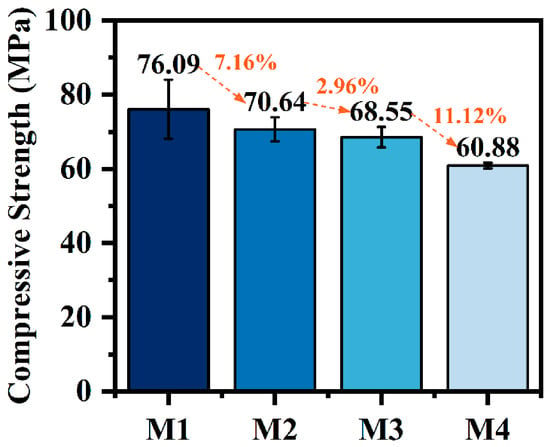
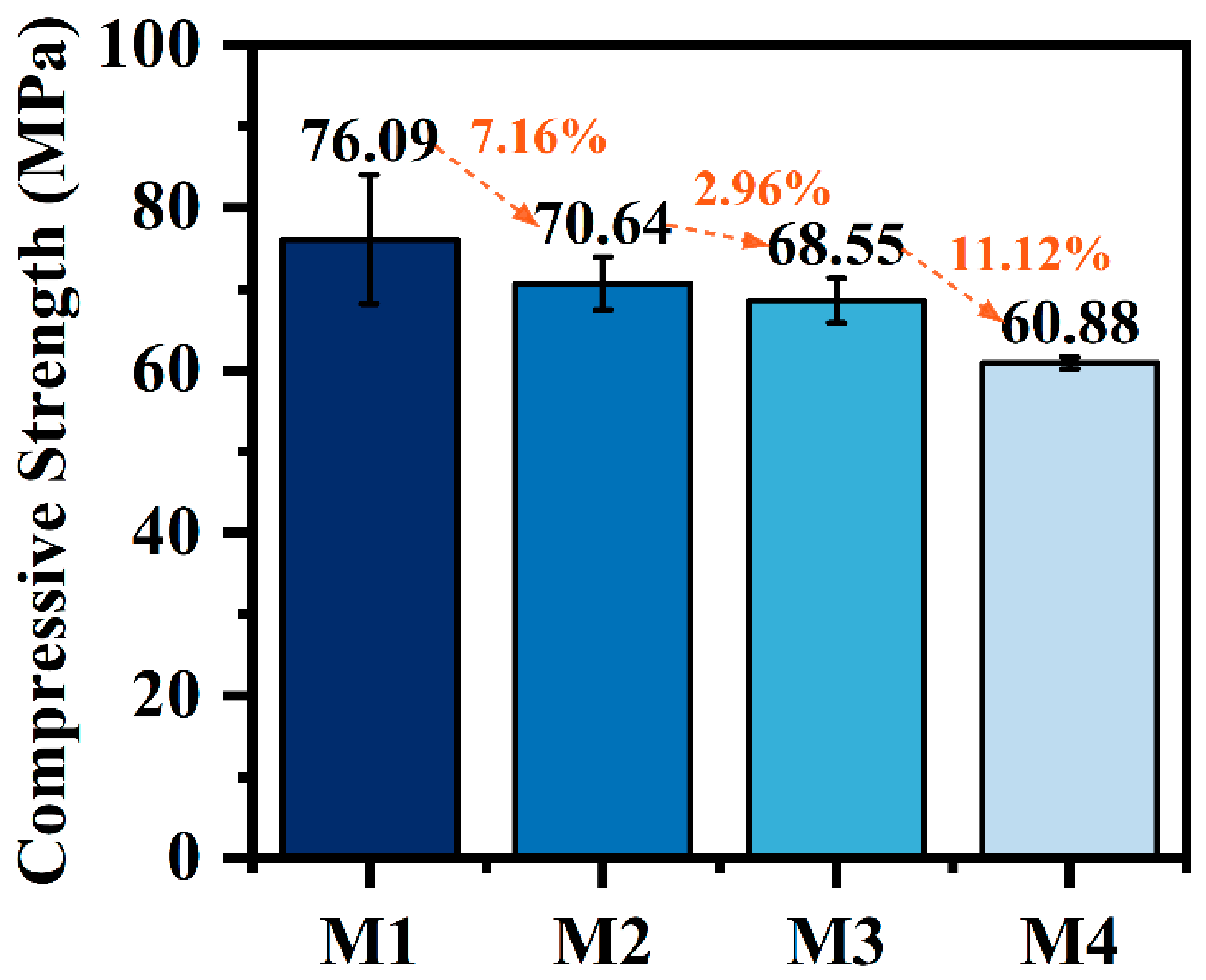
Figure 4 shows the compressive strength results for Test Series I, excluding data from partially unstable set-cement specimens; the error bars represent the standard deviation among replicate samples. As shown in Figure 4, although a few individual set-cement specimens with 60% micro-manganese (M1) achieved compressive strengths exceeding 80 MPa, the formulation as a whole exhibited poor mechanical stability. By contrast, the formulations with 70% (M2), 80% (M3), and 100% (M4) micro-manganese exhibited good mechanical stability. As the micro-manganese content increased from 60% to 100%, the compressive strength of the set cement cured from the formulations gradually decreased. Compared with the formulation with the next lower micro-manganese content, M2–M4 exhibited relative compressive strength reductions of 7.16%, 2.96%, and 11.12%, respectively. This occurred because, as the micro-manganese content increased, the relative mass ratio of cement to silica sand in the slurry decreased, reducing the amount of effective hydration products. During consistency testing, the initial consistency of Formulation M1 was too high, which is unfavorable for pumping. The set-cement strength of Formulation M4 was relatively low. To investigate the synergistic effect of silica fume and ultrafine silica sand on high-density cement slurries at ultrahigh strength levels, Series II–V tested formulations with 70% and 80% micro-manganese contents.
Figure 4.
Bar chart of compressive strength for Test Series I after 3 days of curing.
3.1.2. Effect of Silica Fume Content on the Synergistic System of Ultrafine Silica Sand and Silica Fume
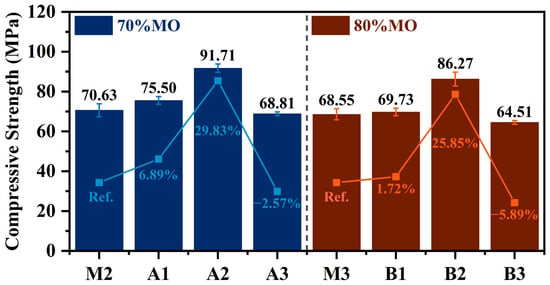
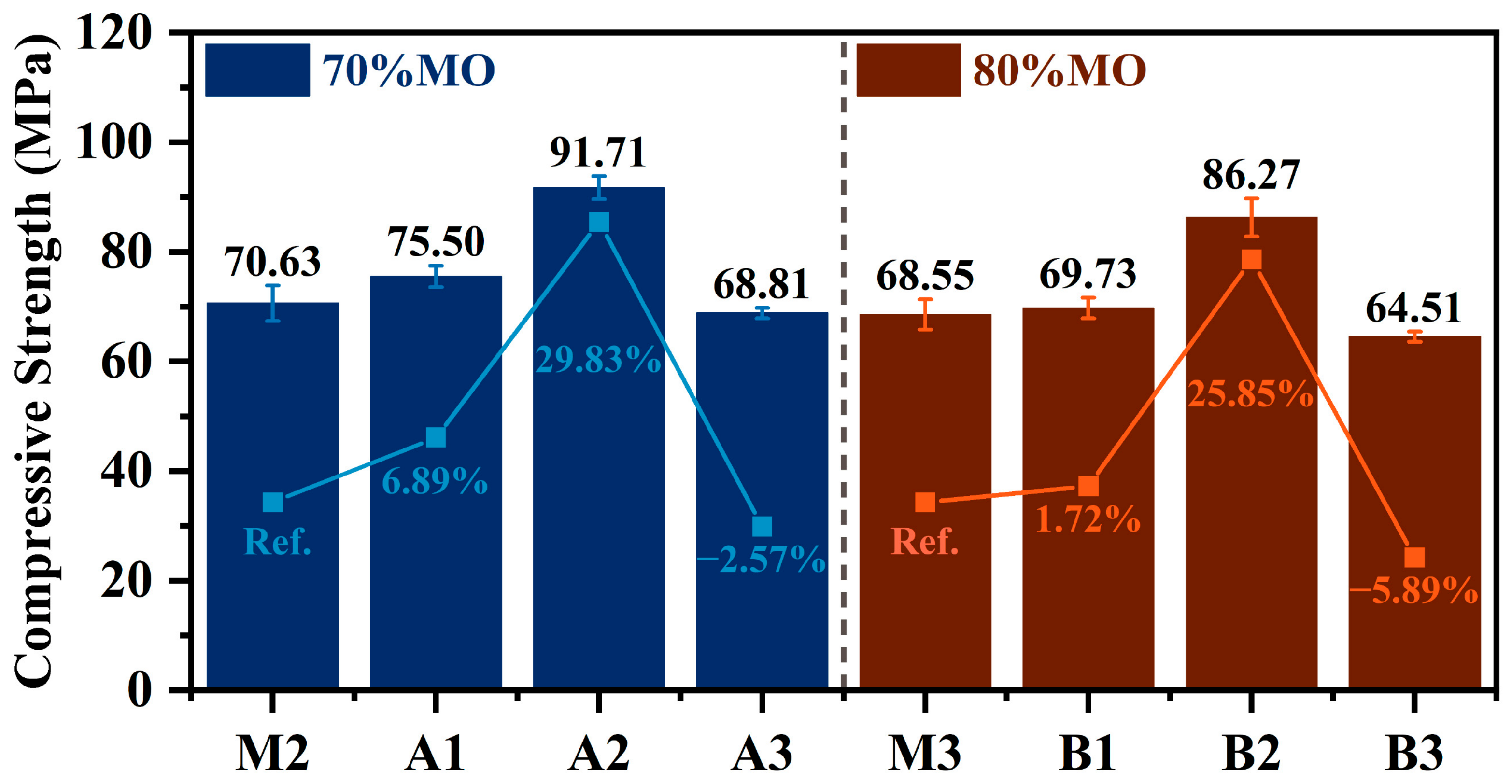
Figure 5 shows the mechanical property test results for set cement cured for 3 days, obtained from mixtures with different silica fume contents and 70% and 80% micro-manganese contents. The results show that in systems incorporating silica fume, the uniaxial compressive strength of set cement cured from the formulations with 70% micro-manganese (A1–A3) was generally higher than that of the formulations with 80% micro-manganese (B1–B3). At an 80% micro-manganese content, compared with the formulation without silica fume (M3), the compressive strength of the formulation containing 3% silica fume (B1) increased by 1.72%. When the silica fume content was increased to 5% (B2), the uniaxial compressive strength of the set cement cured from Formulation B2 increased by 25.85% compared with the formulation without silica fume, demonstrating a significant strengthening effect. When the silica fume content was further increased to 7% (B3), the compressive strength of the set cement in Formulation B3 decreased; compared with Formulation M3, its average compressive strength decreased by 5.89%. Results from the formulations with a 70% micro-manganese content (A1–A3) similarly confirmed this pattern. This indicates that the strengthening effect of silica fume on the set-cement system is limited. At lower dosages, silica fume can undergo pozzolanic reactions, consuming a certain amount of Ca(OH)2 and forming stable hydration products, thereby improving compressive strength to a certain extent. However, higher silica fume contents resulted in compressive strengths lower than those of the formulation without silica fume. This may occur because excess silica fume consumes Ca(OH)2, altering the alkaline environment of the system and inhibiting hydration between the cement and silica sand.
Figure 5.
Compressive strength of set cement in Test Series II and III after 3 days of curing. (The bars represent compressive strength, while the lines indicate the relative changes in compressive strength with respect to the reference mixtures. “Ref.” denotes the reference mixture in each test series).
3.1.3. Effects of Silica Sand Particle Size and Dosage on the Synergistic System of Ultrafine Silica Sand and Silica Fume
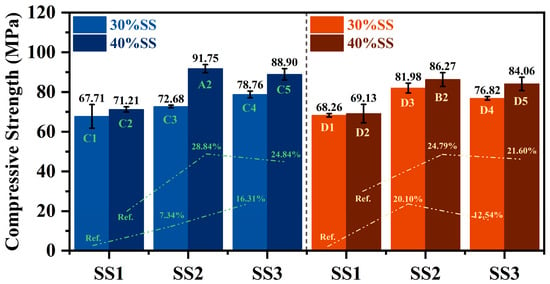
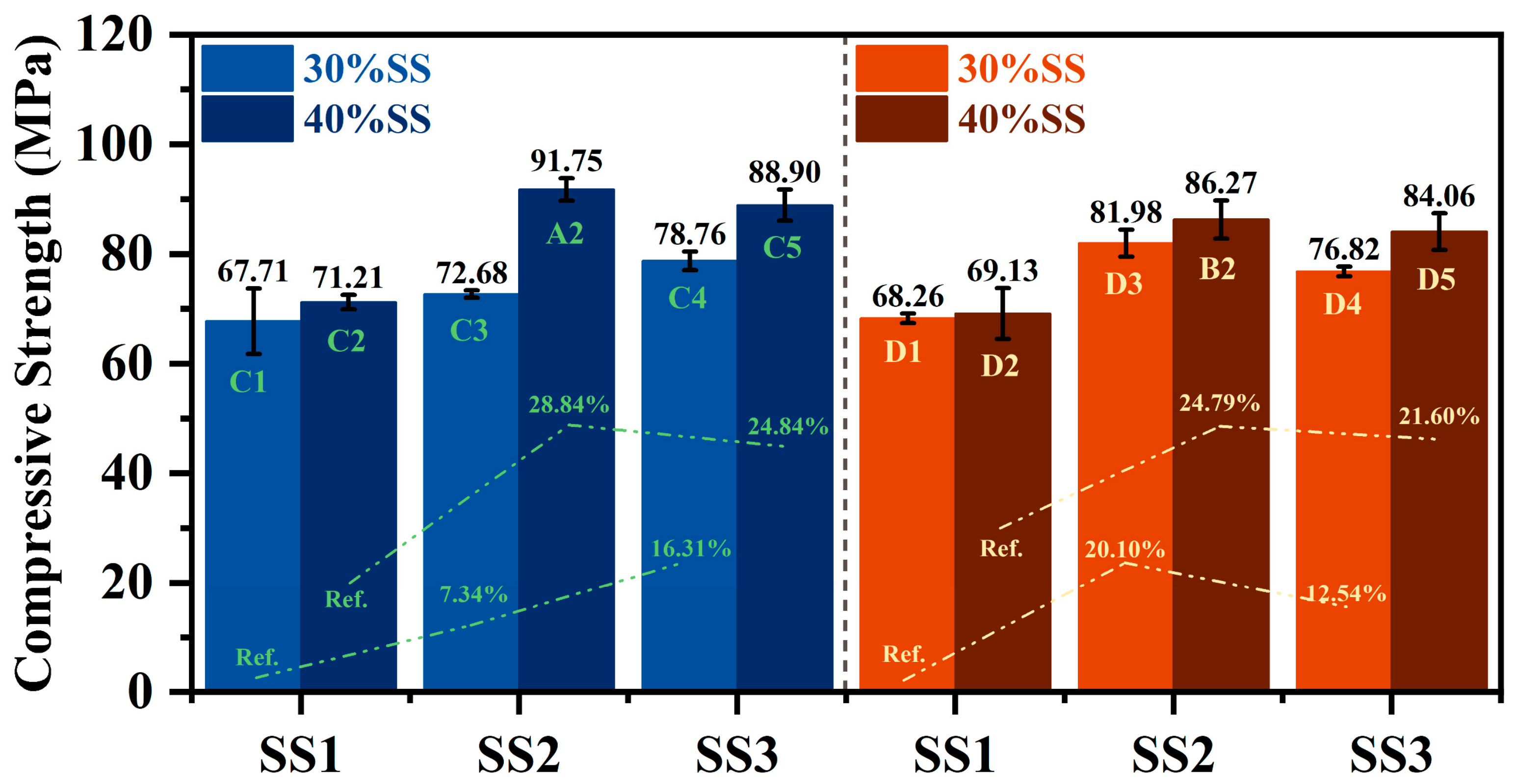
As shown in Section 3.1.2, at a silica fume content of 5%, mixtures with 70% and 80% micro-manganese contents exhibited higher compressive strength. Therefore, Series IV and V were based on formulations with a 5% silica fume content, with adjustments to the particle size (SS1, SS2, and SS3) and content (30% and 40%) of ultrafine silica sand to investigate the effects of ultrafine silica sand particle size and content on the synergistic system of ultrafine silica sand and silica fume. The compressive strength test results for the set cement cured from Series IV and V formulations are shown in Figure 6. As shown in the figure, the average compressive strength of formulations with 70% micro-manganese was generally higher than that of formulations with 80% micro-manganese, particularly for formulations with 40% silica sand. Furthermore, under the same conditions, all formulations with 40% silica sand had higher compressive strength than those with 30% silica sand, indicating that a higher silica sand content effectively optimized the calcium-to-silica ratio in the cement system and increased the compressive strength of the set cement. For Test Series IV, at a 30% silica sand content, the compressive strength of the formulation containing 6.52 μm silica sand (SS2) was 7.34% higher than that of the formulation containing 9.06 μm silica sand (SS1), and that of the formulation containing 4.08 μm silica sand (SS3) was 16.31% higher. At a 40% silica sand content, the compressive strength of the 6.52 μm formulation was 28.84% higher than that of the 9.06 μm formulation, whereas that of the 4.08 μm formulation was 24.84% higher. Test Series V yielded similar results: compared with SS1, the uniaxial compressive strengths of the set cement cured from SS2 and SS3 mixtures at 30% and 40% silica sand contents increased by 20.10%, 12.54%, 24.79%, and 21.60%, respectively. This indicates that, at the same micro-manganese content, silica sand particle size has a more significant effect on formulations with high silica sand contents, and compared with formulations containing 80% micro-manganese, high silica sand contents had a more pronounced enhancing effect on the uniaxial compressive strength of set cement cured from formulations containing 70% micro-manganese. The set cement formed from the two series of high-silica sand formulations exhibited high overall strength, with average compressive strengths ranging from 67 to 92 MPa. Among these, four formulations containing 40% SS2 or SS3 silica sand and one formulation containing 30% SS2 silica sand (with 80% micro-manganese) achieved uniaxial compressive strengths exceeding 80 MPa. Overall, the test results for SS2 silica sand were the best. The overall compressive strength of the set cement cured with SS3 ultrafine silica sand was slightly lower than that of the SS2 formulations, possibly because SS2 disperses well in the cement slurry and reacts more fully with the cement. When the silica sand content was increased beyond 40%, the silica sand could not disperse completely, and white spots were observed in the cured set cement.
Figure 6.
Compressive strength of set cement in Test Series IV and V after 3 days of curing. (The bars represent compressive strength, while the lines indicate the relative changes in compressive strength with respect to the reference mixtures. “Ref.” denotes the reference mixture in each test series).
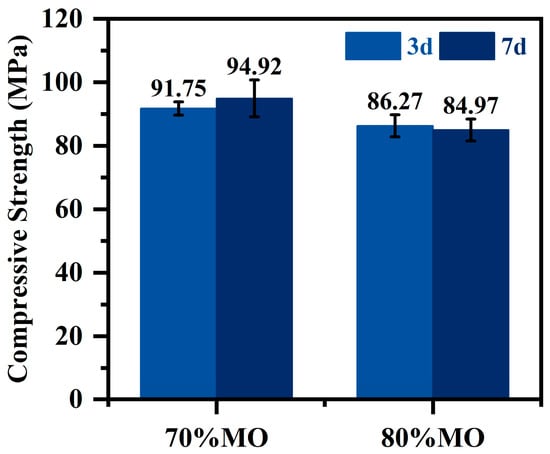
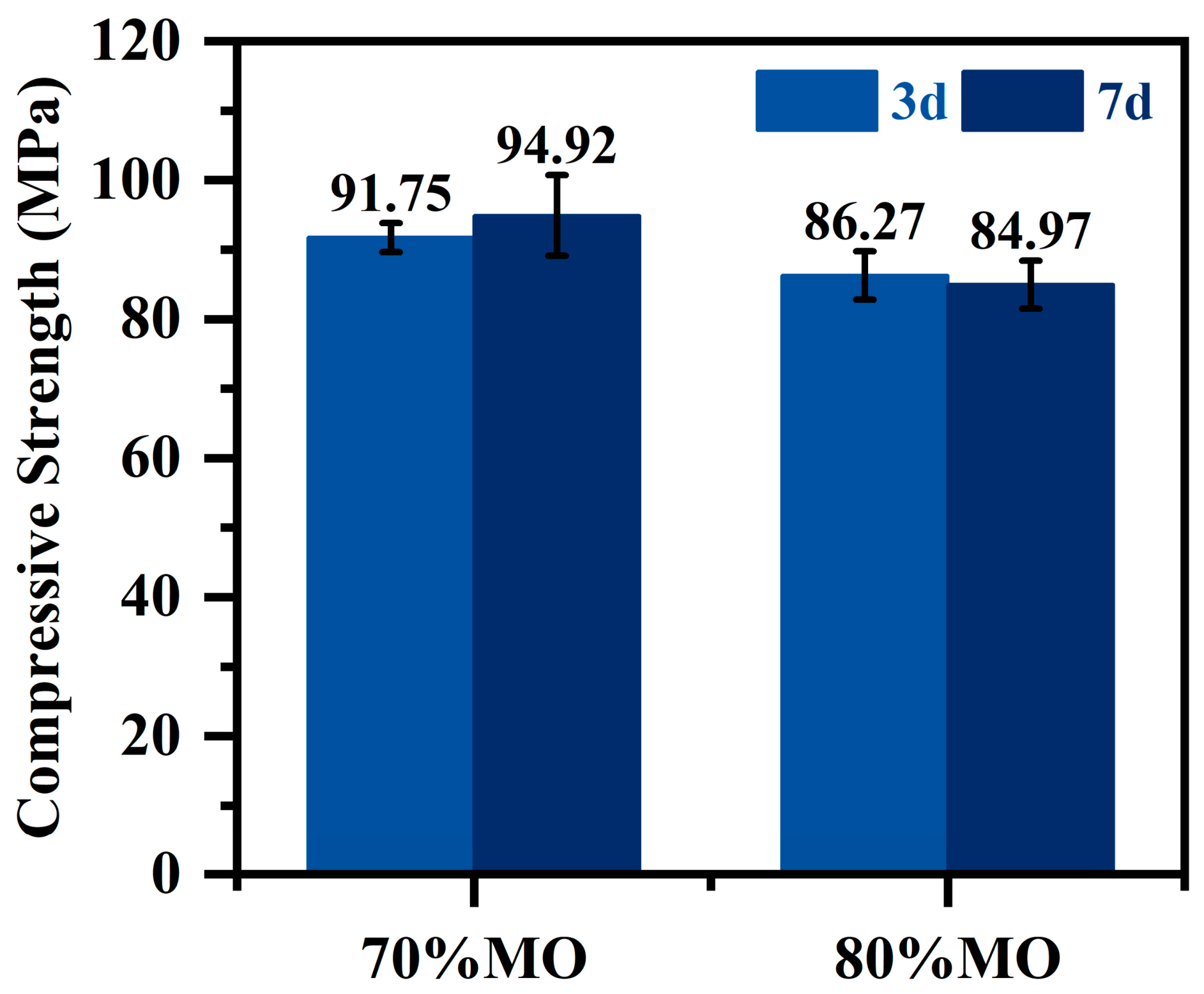
Formulations A2 and B2, which exhibited excellent uniaxial compressive strength, were cured for 7 days under the same temperature and pressure conditions (120 °C and 25 MPa). After curing, their uniaxial compressive strength was tested, and the results are shown in Figure 7. There was little difference in set-cement strength between the 7-day and 3-day curing periods. The compressive strength of the formulation with 70% micro-manganese increased, possibly because of a more thorough reaction between the silica sand and cement, whereas the compressive strength of the formulation with 80% micro-manganese showed a slight decline.
Figure 7.
Comparison of compressive strength of set cement from Formulations A2 and B2 at different curing ages.
In terms of strength level, the compressive strengths of set cements from high-density systems reported in the literature are generally below 50 MPa at short curing ages [18,19], whereas the present system achieves more than 80 MPa after only 3 days of curing at 120 °C and 25 MPa through the synergistic optimization of silica fume and ultrafine silica sand, ranking among the higher levels reported for similar high-density systems [13,14]. Mechanistically, the XRD and TGA results of this work show that tobermorite is the primary source of strength, which is consistent with findings in the literature that adding silica sand lowers the calcium-to-silica ratio and converts the hydration products into tobermorite, thereby inhibiting strength retrogression [27,28,29,30,31]; on this basis, the present study further reveals the synergistic effects of the fineness and content of ultrafine silica sand combined with silica fume.
3.2. X-Ray Diffraction (XRD) Analysis
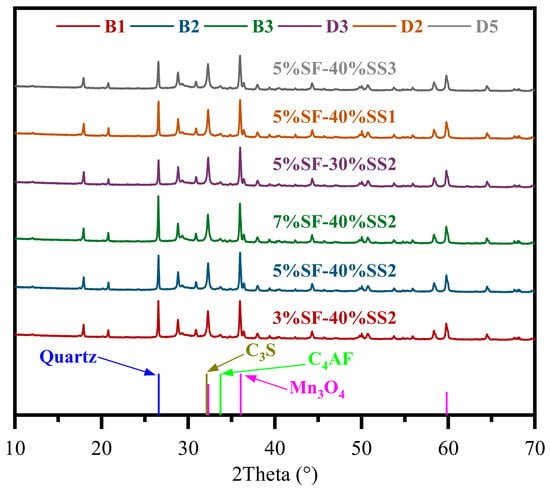
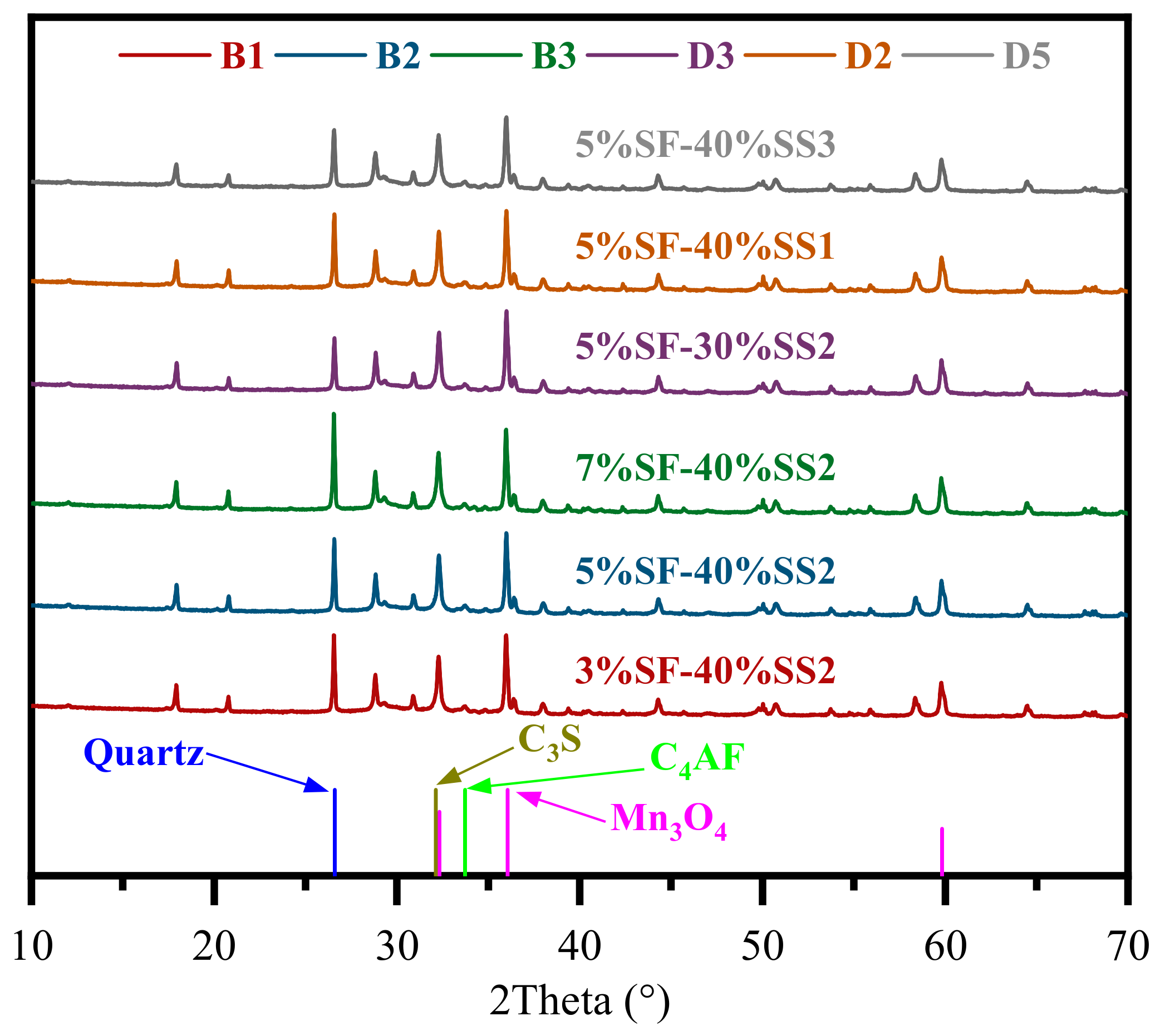
Because the workability of the formulation with 70% micro-manganese was difficult to control, and its mechanical property trends were similar to those of the formulation with 80% micro-manganese, XRD analysis was conducted only on the formulations with 80% micro-manganese to further investigate the effects of various factors on the uniaxial compressive strength of the set cement. Figure 8 summarizes the XRD results for formulations with 80% micro-manganese and varying silica sand particle sizes, silica sand contents, and silica fume contents. As shown in the figure, the phases primarily consist of an amorphous fraction, the weighting material Mn3O4, unreacted silica, and incompletely reacted C3S and C4AF. The amorphous fraction encompasses the C–S–H gel, which is recognised as the principal contributor to the strength of hydrated cement. Consequently, the strength development of the set cement can be assessed, for an initial approximation, from the variation in the amorphous phase content. The peaks at 28–30° correspond to tobermorite, which is the primary source of strength in this cement system. The peak near 26.5° corresponds to unreacted silica; as the silica fume content increased, this peak became more pronounced. The peaks at 32.12° and 33.73° represent partially reacted C3S and C4AF, respectively. The phase corresponding to the highest peak is Mn3O4, located primarily near 36.05°.
Figure 8.
X-ray diffraction results of set cement.
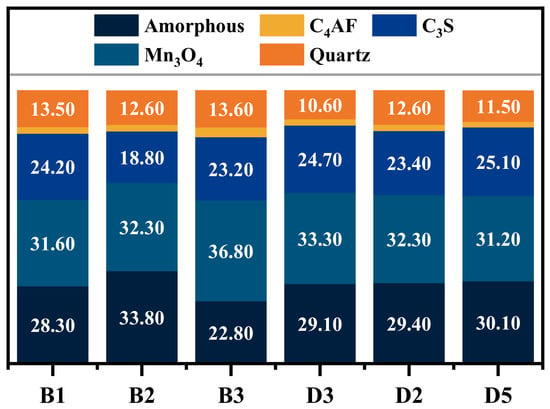
To further elucidate the evolution of the mineral composition of set cement under different formulations and to investigate the mechanisms by which silica fume and silica sand content and particle size affect compressive strength, quantitative phase analysis was performed using HighScore Plus 5.0 software, combined with Rietveld full-pattern fitting refinement and the external standard method, with single-crystal silicon as the external standard. The phase compositions of the set cement for different formulations are shown in Figure 9. As shown in the figure, for Formulations B1–B3, as the silica fume content increased from 3% to 5% and then to 7%, the content of the amorphous phase first increased and then decreased; at 7% silica fume, the content of the amorphous phase was lower than at 3%, consistent with the mechanical property test results. This may be attributed to the difficulty of dispersing excess silica fume in the cement system. By comparing Formulations B2 and D3, the effect of silica sand content on the compressive strength of set cement can be investigated. The content of amorphous phase in the set cement of Formulation D3, which had a low silica sand content, was lower than that in Formulation B2, which had a high silica sand content. Moreover, the D3 system contained a higher content of unreacted C3S. These Rietveld refinement results corroborate the compressive strength results in Section 3.1.3. To examine the effect of silica sand particle size on the cement formulation, Formulations D2, B2, and D5 can be compared. As the silica sand particle size decreased, the content of amorphous phase in the set cement first increased and then decreased, and the amorphous phase content of Formulation D2 was lower than that of Formulation D5. Consequently, the compressive strength of Formulation B2 was higher than that of Formulation D5. However, for Formulation D5, which incorporated finer silica sand, the lower degree of dispersion and incomplete reaction resulted in a greater amount of undispersed silica filling the set-cement structure during curing, leading to lower compressive strength in D5 than in B2.
Figure 9.
Mass fractions of phases in set cement from different formulations after Rietveld refinement.
3.3. Thermogravimetric Analysis (TGA)
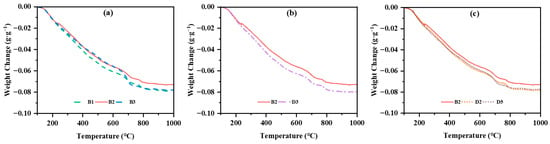
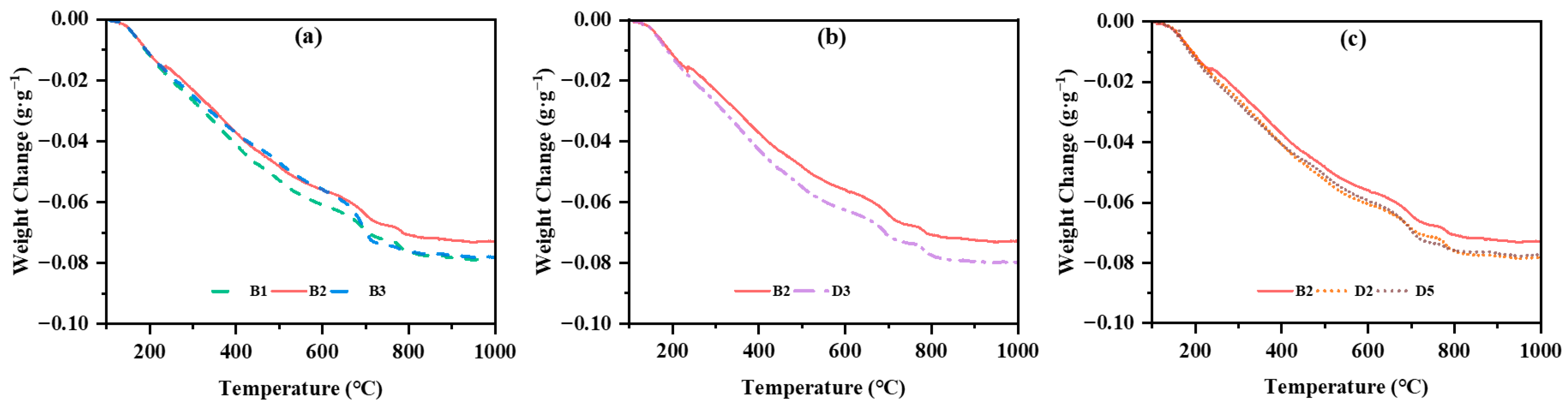
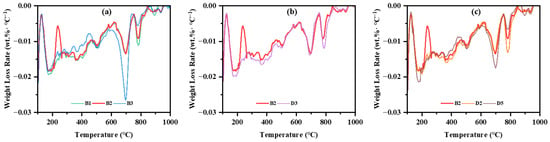
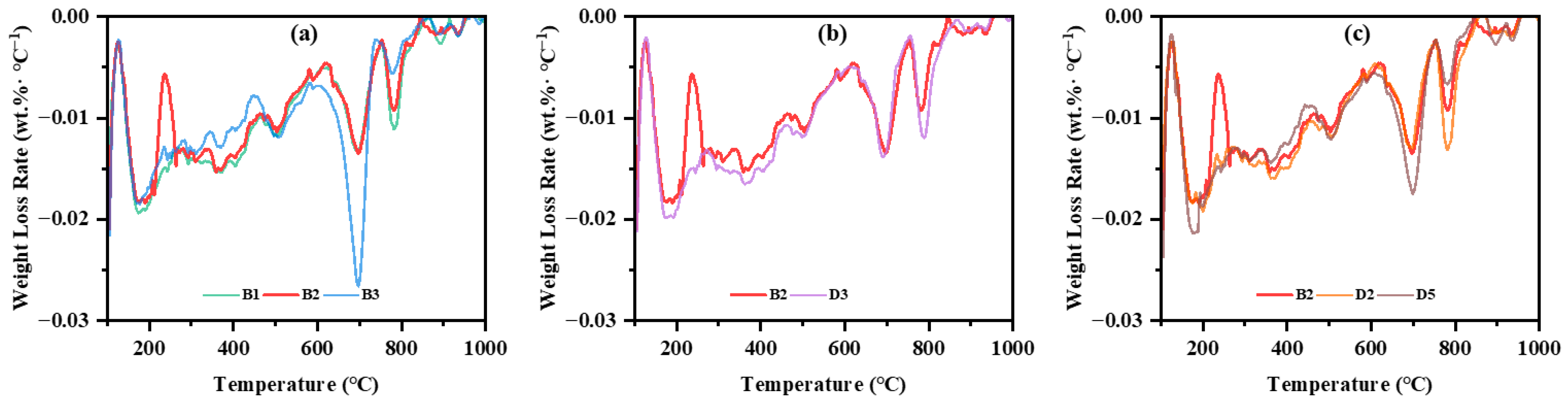
Figure 10 and Figure 11 present the TG and DTG results for the formulations with different silica sand particle sizes, silica sand contents, and silica fume contents at 80% micro-manganese. The DTG curves were obtained by differentiating the mass-loss curves. By analyzing the main decomposition peaks at different temperatures, the dehydration temperature ranges corresponding to specific hydration phases can be identified, and the peak areas can be used to reflect the decomposition intensity of these phases. The peaks between 100 °C and 200 °C are relatively distinct; these peaks are generally associated with the removal of interlayer water and part of the structural water of the C-S-H gel, and the decomposition peaks of the various formulations nearly coincide. In the 200–600 °C range, the removal of more strongly bound structural water from C-S-H and the decomposition of calcium hydroxide (CH) are involved; however, no distinct peak appears on the DTG curves, indicating that CH has been completely consumed. In the 600–800 °C range, two narrow peaks appear on the DTG curves, which may be related to the decomposition of carbonates; in the 500–1000 °C range, all systems exhibit decomposition peaks that may involve the decomposition of various mineral phases. It should be noted that, because the high micro-manganese content dilutes the hydration products, TGA is used in this work only as supporting evidence. The quantitative contents of the hydration products in each formulation are therefore taken from the Rietveld refinement results shown in Figure 9.
Figure 10.
TG curves showing the effects of different factors at 80% micro-manganese content: (a) silica fume content; (b) silica sand content; and (c) silica sand particle size.
Figure 11.
DTG curves showing the effects of different factors at 80% micro-manganese content: (a) silica fume content; (b) silica sand content; and (c) silica sand particle size.
4. Conclusions
In this study, systematic experiments were conducted to investigate the synergistic effects of silica fume and ultrafine silica sand on the mechanical properties of high-density oil-well cement slurries at high temperatures. Based on compressive strength testing, XRD phase analysis, and TGA, the following conclusions were drawn:
(1) As the micro-manganese content increased from 60% to 100%, the compressive strength of the set cement showed an overall downward trend. In the formulation with 60% micro-manganese, the compressive strength of some individual specimens exceeded 80 MPa; however, these specimens exhibited poor mechanical stability and excessively high initial consistency, which was detrimental to pumpability. In contrast, formulations with 70% and 80% micro-manganese exhibited high compressive strength and good mechanical stability.
(2) Under high-temperature curing at 120 °C, adding an appropriate amount of silica fume enhanced the compressive strength of the set cement to some extent; however, adding too much silica fume reduced set-cement strength. When the micro-manganese content was 80%, adding 3% silica fume increased the compressive strength by only 1.72% compared with the formulation without silica fume; increasing the silica fume content to 5% increased the compressive strength by 25.85%; however, when the silica fume content was further increased to 7%, the compressive strength was lower than that of the formulation without silica fume. The same pattern was observed for formulations with 70% micro-manganese. This indicates that an appropriate amount of silica fume can consume Ca(OH)2 through pozzolanic reactions and promote the formation of hydration products. However, excess silica fume may alter the alkaline environment of the system, thereby inhibiting hydration between the cement and silica sand.
(3) The particle size and content of ultrafine silica sand significantly affect the strength of set cement cured at high temperatures. At the same micro-manganese content, the compressive strength of formulations with 40% silica sand was generally higher than that of formulations with 30% silica sand. This may be because the higher silica sand content reduced the calcium-to-silica ratio. At the same silica sand content, the compressive strength of set cement cured from mixtures containing 6.52 μm silica sand (SS2) was higher than that of mixtures containing 4.08 μm silica sand (SS3) and 9.06 μm silica sand (SS1). Fine-grained silica sand has a higher specific surface area, allowing a more complete reaction with the cement; however, excessively fine particles can impair dispersion in the cement slurry, resulting in decreased rather than increased strength.
(4) Silica fume has an extremely fine particle size, enabling it to fill the voids between cement and ultrafine silica sand particles. It also undergoes pozzolanic reactions at high temperatures, consuming Ca(OH)2 and promoting the formation of hydration products. Ultrafine silica sand can reduce the calcium-to-silica ratio of the system. At appropriate dosages, these two materials complement each other and effectively increase the compressive strength of the set cement. By appropriately controlling the silica sand particle size and content as well as the silica fume content, the synergistic use of silica fume and ultrafine silica sand can yield a high-density set cement of 2.30 g/cm3 and a short-term compressive strength exceeding 80 MPa under curing conditions of 120 °C and 25 MPa.
Author Contributions
Conceptualization, Z.Z., H.Y., Z.L., J.Y., Z.A., Y.W. and S.J.; Methodology, Z.Z. and J.Y.; Software, J.Y.; Validation, Z.Z. and J.Y.; Formal analysis, Z.Z.; Investigation, Z.Z., H.Y., Z.L., Z.A., Z.G., Y.W., S.J., X.P. and J.T.; Resources, Z.Z., J.Y., Z.G. and X.P.; Data curation, Z.Z., Z.L., J.Y., Z.G., Y.W. and X.P.; Writing—original draft, Z.Z., Z.L., J.Y. and X.P.; Writing—review & editing, Z.A. and X.P.; Visualization, H.Y., J.Y., Z.A., Y.W., S.J. and J.T.; Supervision, H.Y., Z.L., J.Y., Z.A., Y.W., S.J. and J.T.; Project administration, J.Y., Z.A. and J.T.; Funding acquisition, Z.A. All authors have read and agreed to the published version of the manuscript.
Funding
This research received no external funding.
Data Availability Statement
The original contributions presented in this study are included in the article. Further inquiries can be directed to the corresponding authors.
Conflicts of Interest
Authors Zhi Zhang, Heng Yang, Zhongfei Liu, Zhengqing Ai, Yindong Wang, Shaorui Jing and Jiqing Tang were employed by the company R&D Center for Ultra-Deep Complex Reservoir Exploration and Development, CNPC. Authors Zhi Zhang, Heng Yang, Zhongfei Liu, Zhengqing Ai, Yindong Wang, Shaorui Jing and Jiqing Tang were employed by the company Petrochina Tarim Oilfield Company. The remaining authors declare no conflicts of interest.
References
- Broni-Bediako, E.; Joel, O.F.; Ofori-Sarpong, G. Oil well cement additives: A review of the common types. Oil Gas. Res. 2016, 2, 1–7. [Google Scholar]
- Ahmed, A.; Mahmoud, A.A.; Elkatatny, S.; Al Shehri, D.; Ayranci, K. Enhancing the properties of high-density oil well cement with Qusaiba kaolinite. Sci. Rep. 2024, 14, 25914. [Google Scholar] [CrossRef] [Scilit] [PubMed]
- Ahmed, A.; Elkatatny, S.; Adebayo, A.R. Minimizing the particles settling of ilmenite weighted oil well cement using laponite. Geoenergy Sci. Eng. 2024, 232, 212471. [Google Scholar] [CrossRef] [Scilit]
- Si, S.; He, J.; Liu, P.; Liu, J.; Yan, G.; Yao, Q.; Yang, Y.; Chen, X.; Liu, C. Oil charging power simulation and tight oil formation of Fuyu oil layer in Sanzhao area, Songliao basin. Front. Earth Sci. 2022, 10, 825548. [Google Scholar] [CrossRef] [Scilit]
- Wang, S.X.; Lin, F.; Zhang, F.; Deng, J.G.; Yu, B.H.; Cao, Y. Abnormal High Pore Pressure Prediction and Cause Analysis of Salt and Anhydrite Formation of Fauqi Oilfield in Iraq. Appl. Mech. Mater. 2014, 638, 350–354. [Google Scholar] [CrossRef] [Scilit]
- Lv, G.Z.; Zhang, J.Q. Optimization Design of Open Hole Long Horizontal-Section Well Multi-Stage Fracturing in the Shenli Tight Oil Reservoir. Adv. Mater. Res. 2012, 524, 1256–1260. [Google Scholar] [CrossRef] [Scilit]
- Song, L.; Wang, C.; Liu, J.; Li, D. Temperature-responsive micro-cross-linking: A novel solution for enhancing high-temperature viscosity and settlement stability of high-density cement slurry. Gels 2025, 11, 138. [Google Scholar] [CrossRef] [Scilit] [PubMed]
- Zhang, X.X.; Qiao, D.P. The rheological properties and yield stress model of high-density slurry added with coarse sands. Appl. Mech. Mater. 2014, 580, 231–237. [Google Scholar] [CrossRef] [Scilit]
- Abdelaal, A.; Elkatatny, S. Synergy of retarders and superplasticizers for thickening time enhancement of hematite based fly ash geopolymers. Geoenergy Sci. Eng. 2023, 224, 211641. [Google Scholar] [CrossRef] [Scilit]
- Song, L.; Wang, C.; Liu, J.; Li, Y. Nano-Grafted Polymer Suspension Stabilizers for Oil Well Cement: Polymerization Innovation Dominated by Acrylamide and Breakthroughs in High-Temperature Applications. Processes 2025, 13, 376. [Google Scholar] [CrossRef] [Scilit]
- Chen, X.; Wang, C.; Xue, Y.; Chen, Z.; Jin, J.; Wang, R. A novel thermo-thickening viscosity modifying admixture to improve settlement stability of cement slurry under high temperatures. Constr. Build. Mater. 2021, 295, 123606. [Google Scholar] [CrossRef] [Scilit]
- Wu, L.; Zhao, B.; Zou, J.; Hou, W.; Shi, L.; Dong, Z.; Zou, S.; Lu, H.; Ao, K.; Tian, L.; et al. Preparation and performance evaluation of cationic hydrophobically associating suspension agent for cementing. J. Dispers. Sci. Technol. 2026, 47, 1471–1482. [Google Scholar] [CrossRef] [Scilit]
- Wei, J.; Li, L. Research of optimization design of high-performance high-density cement slurry system with close packing technology. AIP Conf. Proc. 2019, 2073, 020002. [Google Scholar] [CrossRef] [Scilit]
- Ahmed, A.; Elkatatny, S. Deep characterization of heavy-weighted oil well cement segregation by a novel nuclear magnetic resonance (NMR) technique. Geoenergy Sci. Eng. 2023, 226, 211755. [Google Scholar] [CrossRef] [Scilit]
- Ahmed, A.; Elkatatny, S.; Adebayo, A.R. Synthetic clay application to reduce the segregation of barite-based oil-well cement. ACS Omega 2024, 9, 36076–36085. [Google Scholar] [CrossRef] [Scilit] [PubMed]
- Ahmed, A.; Khan, F.; Elkatatny, S. Utilization of vermiculite particles in the enhancement of the ilmenite based oil well cement properties. Geoenergy Sci. Eng. 2023, 231, 212398. [Google Scholar] [CrossRef] [Scilit]
- Ahmed, A.; Mohamed, A.; Elkatatny, S. Investigating the effect of perlite particles on ilmenite-based oil well cement. J. Pet. Explor. Prod. Technol. 2024, 14, 3237–3249. [Google Scholar] [CrossRef] [Scilit]
- Abdelaal, A.; Elkatatny, S.; Abdel Fattah, A.M. Perlite incorporation for sedimentation reduction and improved properties of high-density geopolymer cement for oil well cementing. Sci. Rep. 2024, 14, 9707. [Google Scholar] [CrossRef] [Scilit] [PubMed]
- Song, Y.; Gao, F.; He, J.; Yang, Q.; Yang, J.; Liu, X. Research on and Application to BH-HTC High Density Cementing Slurry System on Tarim Region. IOP Conf. Ser. Earth Environ. Sci. 2017, 81, 012059. [Google Scholar] [CrossRef] [Scilit]
- Wang, J.; Xiong, Y. Research and application of high-density cementing slurry technology under the condition of oil-based drilling fluid in salt formation. Arab. J. Sci. Eng. 2022, 47, 7069–7079. [Google Scholar] [CrossRef] [Scilit]
- Ahmed, A.; Adjei, S.; Elkatatny, S.; Adebayo, A.R. Investigation of the Impact of Vermiculite on the Properties of Barite-Based Oil Well Cement. Arab. J. Sci. Eng. 2024, 49, 8587–8597. [Google Scholar] [CrossRef] [Scilit]
- Wu, Z.; Song, J.; Xu, M.; Liu, W.; Chen, R.; Pu, L.; Zhou, S. Effect of weighting materials on carbonation of oil well cement-based composites under high temperature and CO2-rich environment. Arab. J. Chem. 2023, 16, 104670. [Google Scholar] [CrossRef] [Scilit]
- Abdelaal, A.; Elkatatny, S. Mixed Micromax and hematite-based fly ash geopolymer for heavy-weight well cementing. Sci. Rep. 2023, 13, 8669. [Google Scholar] [CrossRef] [Scilit] [PubMed]
- Ahmed, A.; Alsabr, J.; Elkatatny, S. A novel and economical combination of (Micromax/ilmenite) for high pressure and high temperature oil-well cement applications. In Proceedings of the SPE/IATMI Asia Pacific Oil & Gas Conference and Exhibition, Jakarta, Indonesia, 14–16 October 2025. SPE-226525-MS. [Google Scholar]
- Knop, Y.; Peled, A.; Cohen, R. Influences of limestone particle size distributions and contents on blended cement properties. Constr. Build. Mater. 2014, 71, 26–34. [Google Scholar] [CrossRef] [Scilit]
- Tan, C.; Wang, M.; Chen, R.; You, F. Study on the oil well cement-based composites to prevent corrosion by carbon dioxide and hydrogen sulfide at high temperature. Coatings 2023, 13, 729. [Google Scholar] [CrossRef] [Scilit]
- Krakowiak, K.J.; Thomas, J.J.; Musso, S.; James, S.; Akono, A.T.; Ulm, F.J. Nano-chemo-mechanical signature of conventional oil-well cement systems: Effects of elevated temperature and curing time. Cem. Concr. Res. 2015, 67, 103–121. [Google Scholar] [CrossRef] [Scilit]
- Ostroot, G.W.; Walker, W.A. Improved compositions for cementing wells with extreme temperatures. J. Pet. Technol. 1961, 13, 277–284. [Google Scholar] [CrossRef] [Scilit]
- Zhang, J.; Xu, M.; Gao, L.; Xiao, H. Effect of temperature and additives on strength of class G oilwell cement. Oil Drill. Prod. Technol. 2003, 25, 19–23. [Google Scholar]
- Sun, L.; Pang, X.; Ghabezloo, S.; Wang, H.; Sun, J. Hydration kinetics and strength retrogression mechanism of silica-cement systems in the temperature range of 110 °C–200 °C. Cem. Concr. Res. 2023, 167, 107120. [Google Scholar] [CrossRef] [Scilit]
- Qin, J.; Pang, X.; Santra, A.; Cheng, G.; Li, H. Various admixtures to mitigate the long-term strength retrogression of Portland cement cured under high pressure and high temperature conditions. J. Rock Mech. Geotech. Eng. 2023, 15, 191–203. [Google Scholar] [CrossRef] [Scilit]
- Qin, J.; Pang, X.; Cheng, G.; Bu, Y.; Liu, H. Influences of different admixtures on the properties of oil well cement systems at HPHT conditions. Cem. Concr. Compos. 2021, 123, 104202. [Google Scholar] [CrossRef] [Scilit]
- Yang, H.; Wang, L.; Yang, C.; Zhao, J.; Huang, G.; Guo, Y.; Liu, W.V. Mechanical performance of oil-well cement slurries cured and tested under high-temperatures and high-pressures for deep-well applications. Cem. Concr. Res. 2024, 175, 107355. [Google Scholar] [CrossRef] [Scilit]
- Fikeni, K.G.; Pang, X.; Zhao, Y.; Guo, S.; Ren, J.; Lv, K.; Sun, J. Synergistic effects of silica fume, nanomaterials and inorganic salts on the hydration and compressive strength of low-density oil well cement slurry. Cement 2025, 19, 100125. [Google Scholar] [CrossRef] [Scilit]
- GB/T 19139-2012; Testing of Well Cements. Chinese Standard: Beijing, China, 2012.
- SY/T 5504-2008; Technical Specification for Cementing of Oil and Gas Wells. Chinese Standard: Beijing, China, 2008.
- SY/T 6466-2016; Specification for Cement Slurry of Oil and Gas Wells. Chinese Standard: Beijing, China, 2016.
- API RP 10B-2; Recommended Practice for Testing Well Cements, 2nd ed. International Organization for Standardization: Washington, DC, USA, 2013.

Disclaimer/Publisher’s Note: The statements, opinions and data contained in all publications are solely those of the individual author(s) and contributor(s) and not of MDPI and/or the editor(s). MDPI and/or the editor(s) disclaim responsibility for any injury to people or property resulting from any ideas, methods, instructions or products referred to in the content. |
© 2026 by the authors. Licensee MDPI, Basel, Switzerland. This article is an open access article distributed under the terms and conditions of the Creative Commons Attribution (CC BY) license.