


Abstract
Instrument fracture during endodontic treatment significantly compromises treatment outcomes, with sodium hypochlorite (NaOCl) and other irrigants potentially affecting the cyclic fatigue resistance of nickel–titanium (NiTi) rotary files. This systematic review evaluated the impact of endodontic irrigants on NiTi instrument durability. A comprehensive literature search was conducted across PubMed, Scopus, Web of Science, Embase, Cochrane Library, and WorldCat databases through June 2025, following PRISMA guidelines. Studies investigating cyclic fatigue resistance of NiTi rotary instruments exposed to various irrigants were included. Twenty-seven in vitro studies met the inclusion criteria, involving instruments across multiple file systems and irrigant solutions. The review revealed that NaOCl, particularly at concentrations ≥5% and elevated temperatures, significantly reduced cyclic fatigue resistance in most studies, with scanning electron microscopy confirming surface corrosion and microcrack formation. Heat-treated NiTi alloys demonstrated superior fatigue resistance compared to conventional austenitic alloys. Short-term NaOCl exposure (1–5 min) showed minimal impact, while prolonged exposure combined with autoclave sterilization produced cumulative weakening effects. Alternative irrigants such as EDTA and chlorhexidine showed more neutral effects on instrument integrity. These findings suggest that irrigant selection and exposure protocols significantly influence NiTi instrument longevity, with implications for clinical endodontic practice and instrument safety protocols.
1. Introduction
Modern dentistry is advancing across multiple disciplines at an unprecedented pace. Preventive care, restorative dentistry, and endodontics play a crucial role in preserving natural dentition and safeguarding oral health [1,2,3,4,5,6]. Long-term clinical observations, combined with the development of advanced medical imaging, have significantly deepened our understanding of the crucial role that high-quality endodontic therapy plays in achieving long-term treatment success. Continuous innovations in dental technology have markedly improved the prognosis of endodontic procedures. One of the most critical stages of root canal treatment is the precise mechanical preparation of the canal walls. Adequate canal shaping—which includes the removal of infected tissue and the creation of an optimal canal geometry—facilitates effective obturation, a key determinant of therapeutic outcome [1]. Incomplete debridement and the persistence of necrotic tissue or microbial biofilms within the root canal system can lead to complications such as residual pulpitis, periapical periodontitis, and ultimately, tooth loss [2]. Currently, the gold standard in endodontic therapy involves the mechanical preparation of root canals using rotary nickel–titanium (NiTi) instruments [3]. Advances in material science, instrument design, and clinical protocols have contributed to the widespread availability and improved performance of rotary endodontic systems.
The diversity of root canal preparation techniques has led to the development of numerous types of instruments used during endodontic treatment. Rotary instruments are classified based on their working technique: instruments designed for the step-back technique (e.g., Lightspeed), those used for the crown-down technique (e.g., Profile, Protaper), and instruments intended for the single-length technique (e.g., Mtwo) [4]. Among these, systems based on the crown-down technique are the most employed in clinical practice. A shared characteristic of all rotary systems is their construction from nickel–titanium alloy (NiTi). This alloy exhibits properties such as shape memory, flexibility, and increased fracture resistance, all of which contribute to enhanced operator comfort and improved endodontic outcomes. A key feature of rotary systems is the taper of the files. The taper may be constant along the entire file (the same difference between each millimeter of the cutting part), may vary between successive files, or may change within different sections of the same file [4,7]. Currently, most manufacturers employ computer-guided laser technology in the production process, ensuring greater precision and dimensional stability of the instruments. Depending on the intended technique, manufacturers modify parameters such as instrument shape, helical angle, cutting edge configuration, and metal alloy composition. Within a single rotary system, instruments may vary in taper, cross-section, and tip design, allowing for tailored canal shaping based on individual clinical needs. The shape of the core of the file can also influence its fatigue behavior. A larger core diameter improves resistance to torsional fatigue; however, it decreases flexibility and may shorten cyclic fatigue resistance in curved canals. Conversely, advances in heat-treatment technology have demonstrated the ability to enhance cyclic fatigue resistance, thereby extending the functional lifespan of NiTi instruments [7,8,9,10].
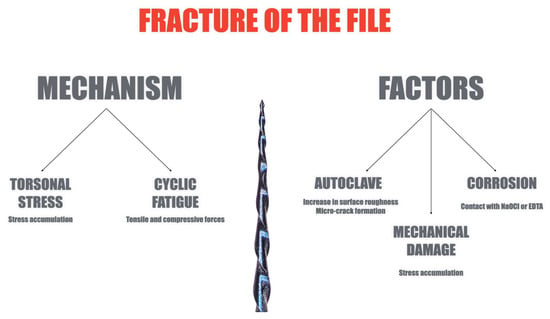
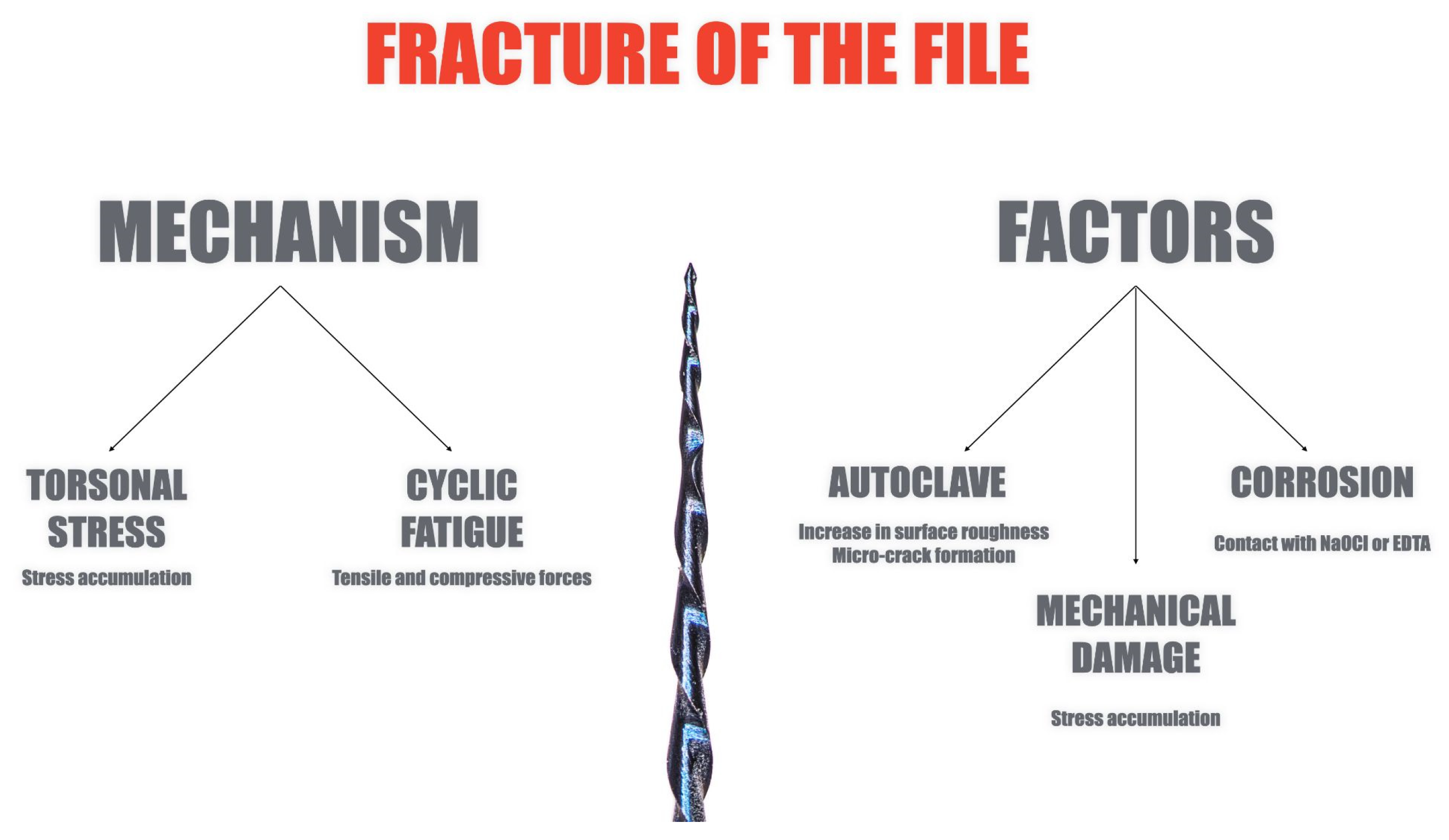
Fracture of an endodontic instrument during root canal treatment constitutes a significant procedural complication that can markedly reduce the effectiveness of chemomechanical debridement, canal shaping and three-dimensional obturation of the root canal system [7,8]. Such disruption may adversely affect both the long-term prognosis and the biological outcome of endodontic therapy [9]. Instrument damage is usually attributed to two dominant mechanical failure modes—cyclic fatigue fractures and torsional stress, or combination of both [7]. Cyclic fatigue is generated by repeated tensile and compressive forces acting on the instrument as it operates in curved canals, the fracture risk increasing in anatomies featuring curvatures greater than about 30° and small radii of curvature [10,11]. Torsional failure occurs when the tip of the instrument becomes locked within the canal while the file shaft continues to rotate, leading to stress accumulation and sudden breakage [12]. Autoclave sterilization, especially after multiple cycles, can increase surface roughness and cause micro-cracks in NiTi instruments, making them more prone to damage. Routine mechanical use also creates microscopic surface defects and reduces torsional resistance, and these effects worsen when followed by sterilization. In addition, irrigants contribute to corrosion: sodium hypochlorite can cause pitting and nickel loss in NiTi files, while EDTA increases surface roughness even after short contact with the instrument [13]. These changes weaken the file structure and raise the risk of fracture. Summary of the factors is shown on Figure 1.
Figure 1.
Mechanism and factors promoting fracture of the endodontic files.
Existing reports usually analyze a single file system in only one or two irrigants, which makes it difficult to translate the findings into everyday practice. To date, no comparable comprehensive review or experimental comparison has been published that encompasses stainless-steel files, conventional austenitic NiTi, and modern heat-treated NiTi instruments tested against the full spectrum of clinically used irrigants—NaOCl at various concentrations, EDTA, chlorhexidine, saline, deionized water, etidronate, and lubricating oil—under fatigue test conditions, highlighting both the novelty and clinical relevance of our work. The objective of this review is to examine how the type, concentration, and exposure time of irrigants influence both the number of cycles to fracture and the post-fracture surface morphology of rotary files. From a clinical perspective, this question is critical, because file fracture can obstruct apical access, reduce the effectiveness of disinfection, necessitate bypass or retrieval procedures, prolong chair-time and ultimately threaten the long-term prognosis of the tooth. By identifying irrigation protocols that either preserve or weaken instrument integrity, our results will help clinicians balance antibacterial efficacy against mechanical safety.
2. Materials and Methods
2.1. Focused Question
This systematic review was designed in accordance with the PICO framework, addressing the following question: In nickel–titanium rotary instruments used in endodontic procedures (Population), does exposure to endodontic irrigants (Intervention) result in altered cyclic fatigue resistance (Outcome) compared to instruments not exposed to irrigants or exposed to control solutions (Comparison)?
2.2. Protocol
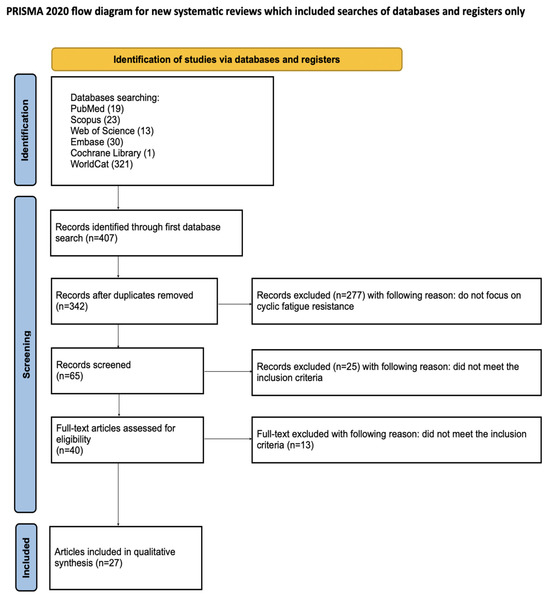
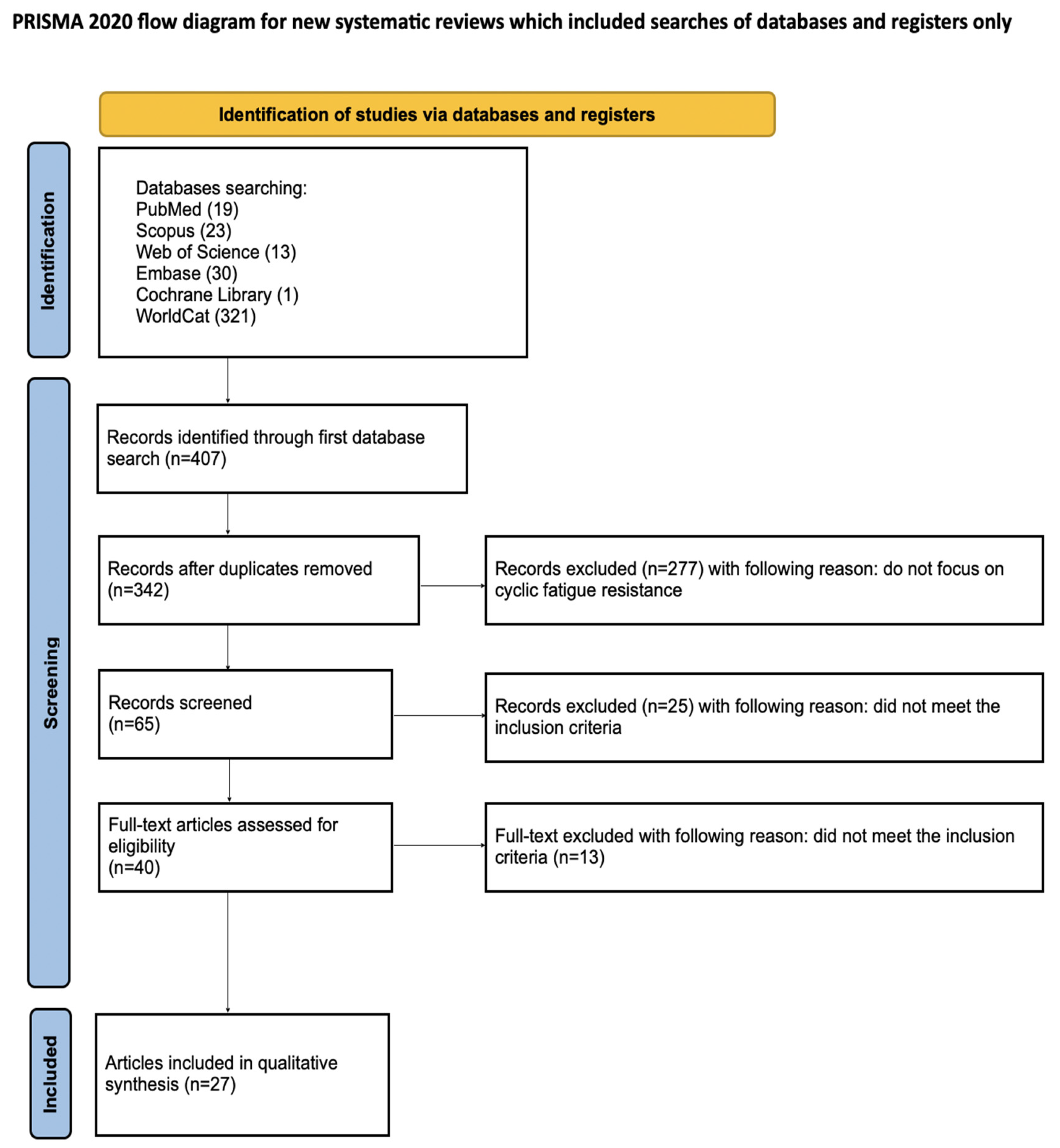
The article selection process for the systematic review was carefully outlined using the PRISMA flow diagram (Figure 2). The systematic review was registered with the Open Science Framework under the following link: osf.io/5nb8a (accessed on 24 July 2025) [14].
Figure 2.
The PRISMA 2020 flow diagram [15].
2.3. Eligibility Criteria
Studies were considered acceptable for inclusion in the review if they met the following criteria [16,17,18,19,20,21]:
- Investigation of cyclic fatigue resistance of NiTi rotary instruments depending on irrigant solutions
- Changes in specified surfaces evaluated using optical microscope and/or Scanning Electron Microscope (SEM) and/or profilometers and/or Micro-Computed Tomography (Micro-CT);
- In vitro studies;
- Studies in English;
- Full-text articles;
The exclusion criteria the reviewers agreed upon were as follows:
- Not an investigation of irrigant solutions on cyclic fatigue resistance
- Non-English papers;
- Clinical reports;
- Opinions;
- Editorial papers;
- Review articles;
- No full-text accessible;
- Duplicated publications.
No restrictions were applied with regard to the year of publication
2.4. Information Sources, Search Strategy, and Study Selection
A comprehensive literature search was conducted in June 2025 across six electronic databases: PubMed, Scopus, Web of Science, Embase, Cochrane Library, and WorldCat. The search strategy combined controlled vocabulary (e.g., MeSH/Emtree terms where applicable) and free-text keywords with Boolean operators. No restrictions were applied regarding the year of publication. Filters were set to include only full-text, peer-reviewed articles published in English. Only studies fulfilling the predefined eligibility criteria were considered for inclusion.
The general search string applied was:
(“Nickel-Titanium” OR “NiTi files”) AND (“Sodium Hypochlorite” OR NaOCl OR EDTA OR “irrigation solutions”) AND (“Fatigue” OR “cyclic fatigue resistance” OR “instrument fracture”) AND (“Dental Instruments” OR “rotary endodontic instruments”)
Database-specific adaptations were as follows:
PubMed: (“Nickel-Titanium”[Mesh] OR “NiTi files”) AND (“Sodium Hypochlorite”[Mesh] OR NaOCl OR EDTA OR “irrigation solutions”) AND (“Fatigue”[Mesh] OR “cyclic fatigue resistance” OR “instrument fracture”) AND (“Dental Instruments”[Mesh] OR “rotary endodontic instruments”)
Scopus: TITLE-ABS-KEY(“Nickel-Titanium” OR “NiTi files”) AND TITLE-ABS-KEY(“Sodium Hypochlorite” OR NaOCl OR EDTA OR “irrigation solutions”) AND TITLE-ABS-KEY(“Fatigue” OR “cyclic fatigue resistance” OR “instrument fracture”) AND TITLE-ABS-KEY(“Dental Instruments” OR “rotary endodontic instruments”)
Web of Science (WoS):
TS = (“Nickel-Titanium” OR “NiTi files”) AND TS = (“Sodium Hypochlorite” OR NaOCl OR EDTA OR “irrigation solutions”) AND TS = (“Fatigue” OR “cyclic fatigue resistance” OR “instrument fracture”) AND TS = (“Dental Instruments” OR “rotary endodontic instruments”)
Embase: (‘nickel titanium’/exp OR ‘niti files’) AND (‘sodium hypochlorite’/exp OR naocl OR edta OR ‘irrigation solutions’) AND (‘fatigue’/exp OR ‘cyclic fatigue resistance’ OR ‘instrument fracture’) AND (‘dental instruments’/exp OR ‘rotary endodontic instruments’)
Cochrane Library: (“Nickel-Titanium” OR “NiTi files”) AND (“Sodium Hypochlorite” OR NaOCl OR EDTA OR “irrigation solutions”) AND (Fatigue OR “cyclic fatigue resistance” OR “instrument fracture”) AND (“Dental Instruments” OR “rotary endodontic instruments”)
WorldCat: (“Nickel-Titanium” OR “NiTi files”) AND (“Sodium Hypochlorite” OR NaOCl OR EDTA OR “irrigation solutions”) AND (Fatigue OR “cyclic fatigue resistance” OR “instrument fracture”) AND (“Dental Instruments” OR “rotary endodontic instruments”)
2.5. Data Collection Process and Data Items
Four reviewers (B.K., A.K., M.L., and Z.N.) independently screened and selected studies that met the inclusion criteria. For each eligible article, data were extracted on the first author’s name, year of publication, study design, article title, specifications of the nickel–titanium rotary instruments used, and their cyclic fatigue resistance in relation to various irrigation solutions. All extracted data were systematically recorded in a standardized Excel spreadsheet.
2.6. Risk of Bias and Quality Assessment
During the preliminary phase of study selection, each reviewer independently assessed the titles and abstracts to reduce the risk of selection bias. Inter-reviewer agreement was measured using Cohen’s kappa statistic. Any disagreements regarding the inclusion or exclusion of studies were resolved through group discussion and consensus among the reviewers.
2.7. Quality Assessment
Two blinded reviewers (J.M. and M.D.) independently examined the methodological quality of each selected study utilizing the Joanna Briggs Institute (JBI) assessment tool for quasi-experimental designs (non-randomized experimental studies). This evaluation instrument contains nine specific criteria formulated to assess the methodological quality of such investigations.
- Is it clear in the study what is the ‘cause’ and what is the ‘effect’?
- Were the participants included in any similar comparisons?
- Were the participants included in any comparisons receiving similar treatment/care, other than the exposure or intervention of interest?
- Was there a control group?
- Were there multiple measurements of the outcome both before and after the intervention/exposure?
- Was a follow-up completed, and if not, were differences between groups in terms of their follow-up adequately described and analyzed?
- Were the outcomes of participants included in any comparisons measured in the same way?
- Were the outcomes measured in a reliable way?
- Was an appropriate statistical analysis used?
Each item on the checklist was rated as “yes,” “no,” “unclear,” or “not applicable.” When reviewers provided conflicting responses, disagreements were addressed through discussion until a consensus was reached. Inter-rater reliability was assessed using Cohen’s kappa statistic, calculated with MedCalc software (version 23.1.7; MedCalc Software Ltd., Brussels, Belgium). The resulting kappa value of 0.86 (p < 0.001) indicated a high level of agreement, demonstrating near-perfect consistency among the reviewers.
3. Results
3.1. Study Selection
The initial search of PubMed, Scopus, WoS, Embase, Cochrane Library and WorldCat databases yielded 407 potentially relevant articles. After removing duplicates, 342 articles remained, and studies not related to irrigants solutions effects on cycling fatigue resistance were excluded. The remaining 65 articles were screened. After an initial search of titles and abstracts, 25 articles that did not meet the inclusion criteria were excluded. Of the remaining 40 studies, 13 did not meet the inclusion criteria after full text analysis. Ultimately, a total of 27 articles were included in the qualitative synthesis of this review. The considerable heterogeneity of the included studies prevented the conduct of a meta-analysis.
3.2. General Characteristics of the Included Studies
The included studies displayed considerable heterogeneity in methodology, with no single standardized testing protocol. A total of eight studies assessed only one NiTi file system [15,22,23,24,25,26,27], while nineteen studies investigated multiple systems [28,29,30,31,32,33,34,35,36,37,38,39,40,41,42,43,44,45,46]. In most studies, the instrument sizes were consistent across groups, with only three exceptions where different sizes were used [22,26,36]. Variability in taper was more common, with discrepancies noted in fourteen studies [15,22,28,29,30,31,32,33,36,40,41,42,43,44]. Twelve studies evaluated instruments made from conventional austenitic NiTi alloy [12,14,15,18,21,23,24,25,26,28,32,34], whereas nineteen involved heat-treated NiTi instruments [25,27,29,30,31,32,33,34,35,37,39,40,41,42,43,44,45,46,47]. Both alloy types were assessed in seven studies [30,33,35,37,40,41,45]. Regarding testing models, the most frequently used canal curvature was 60° [24,25,27,32,33,34,35,36,37,38,40,41,42,43,44,45,46], followed by 45° [22,23,29,30,39], 75° [31], and 90° [26,47]. Only one study evaluated more than one curvature configuration [15] (see Table 1).
Table 1.
General characteristic on included studies.
Sodium hypochlorite (NaOCl) was the most commonly used irrigant, featured in 26 studies [15,22,23,24,25,26,27,28,29,30,31,32,33,34,35,36,37,38,39,40,41,42,43,44,45,47]. In most cases, a single concentration was used, except in two studies where multiple concentrations were tested [27,43]. The most frequent concentration was 5–5.25% (19 studies) [22,23,24,25,26,27,29,31,33,34,35,36,38,39,40,41,42,43,46], followed by 2.5% [27,32,37,43], 1.2% [15,28], 3% [30,44], and 6% [44,47]. The irrigant temperature varied across studies. Most used room temperature, although body temperature (37 °C) was the most common in those that used heated irrigants [24,27,30,32,33,38,40,41,42,43,46]. Six studies evaluated more than one temperature setting [25,27,35,41,43,46]. NaOCl was compared with distilled or deionized water in eight studies [15,22,27,35,40,41,43,44], with EDTA in three [39,43,44], chlorhexidine in one [47], and saline in one [26]. One study assessed only water, with fatigue testing performed at four different temperatures (3 °C, 22 °C, 37 °C, 60 °C) [46]. To facilitate comparability across future studies, these findings highlight the need for standardized protocols. Specifically, NaOCl should be tested at clinically relevant concentrations (2.5–5.25%) and maintained at 37 °C to simulate intraoral conditions. EDTA (17%) and CHX (2%) should also be evaluated under the same temperature setting, while distilled water, saline, and other solutions should continue to serve as controls.
All studies assessed the impact of irrigants on cyclic fatigue resistance. In over half of the studies, instruments were immersed in irrigants prior to testing [23,24,26,29,30,31,32,33,34,36,37,38,39,41,45], while in fewer cases, immersion occurred during testing [15,25,27,35,42,43,44,46,47]. Only one study combined pre- and intra-test immersion [22].
Five studies incorporated autoclave sterilization as an additional experimental factor prior to fatigue testing [26,31,33,34,37].
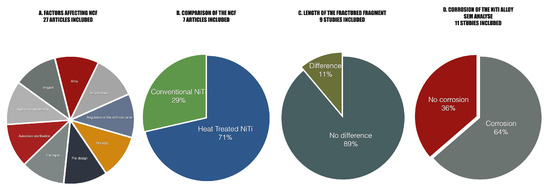
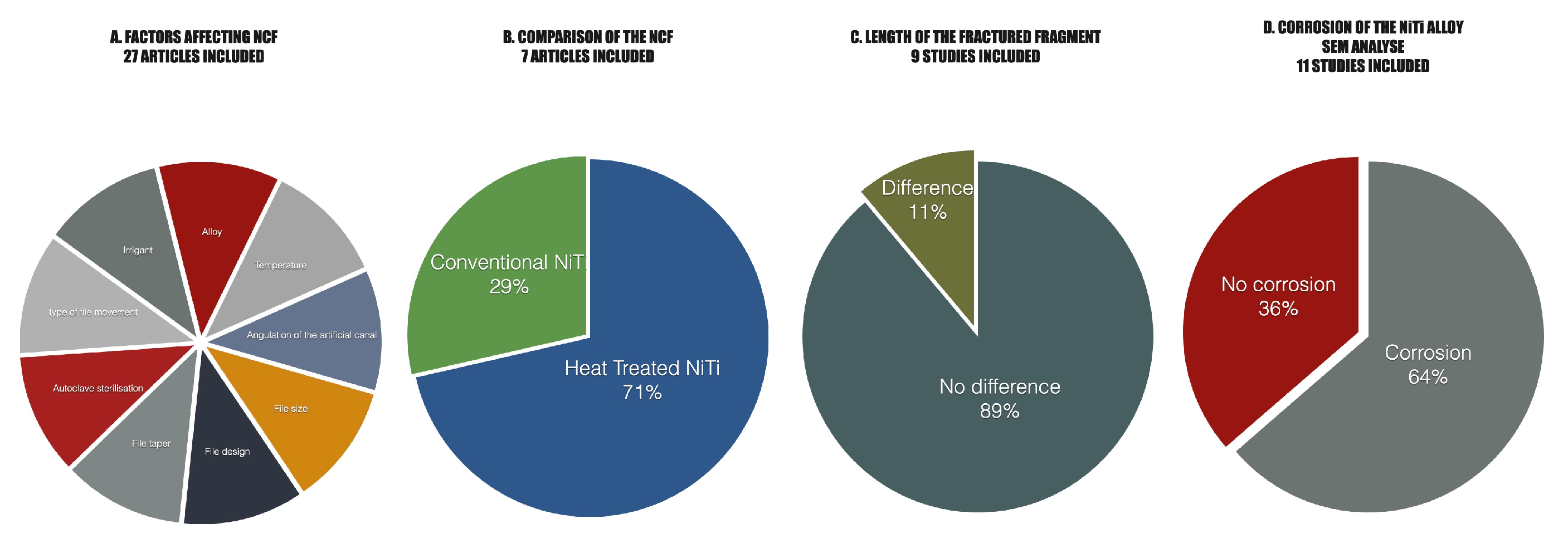
Seventeen studies employed scanning electron microscopy (SEM) to evaluate post-fracture surface features, including corrosion and microcrack formation [15,22,23,24,27,28,30,33,34,35,39,40,41,42,43,44,47]. Among these, eleven studies specifically assessed corrosion, with 64% confirming signs of corrosion and 36% reporting no corrosion of the NiTi alloy (see Figure 3).
Figure 3.
Summary of findings from included studies regarding cyclic fatigue resistance of NiTi instruments. (A) comparison of heat-treated vs. conventional NiTi in terms of number of cycles to failure (NCF); (B) factors influencing NCF identified across studies; (C) reported differences in fractured fragment length; and (D) presence of corrosion on fractured surfaces based on SEM analysis.
3.3. Main Study Outcomes
All included studies evaluated cyclic fatigue resistance, either expressed as the number of cycles to fracture (NCF) or as time to fracture, which can be converted to NCF based on the rotational speed (RPM) of the instrument. In addition, a substantial proportion of studies assessed post-fracture surface characteristics using scanning electron microscopy (SEM) [15,22,23,24,27,28,30,33,34,35,39,40,41,42,43,44,47]. (see Table 2)
3.3.1. Number of Cycles to Fracture (NCF)
The number of cycles to fracture was the primary outcome measure in all included studies. This parameter was evaluated under diverse experimental conditions, including different file systems, irrigant types and concentrations, exposure temperatures, and durations of immersion, as detailed in Section 3.2.
Among the 27 studies, eleven investigated instruments made from conventional austenitic NiTi alloy [15,26,30,33,35,36,37,38,40,41,45], while nineteen studies used heat-treated NiTi systems such as Blue Wire (VDW), Gold Wire (Dentsply), CM Wire (Coltene), or EDM Wire (Coltene) [25,27,29,30,31,32,33,34,35,37,39,40,41,42,43,44,45,46,47]. Seven studies directly compared both alloy types within the same experimental design [30,33,35,37,40,41,45]. In most cases, the differences between conventional and CM wire instruments were highly significant and readily observable. Palma et al. [30] reported that the mean NCF after 5 min of immersion was 1172 for ProTaper Next and 5508.33 for HyFlex EDM. Similarly, Huang et al. [35] compared K3 and Vortex files under different conditions; cyclic fatigue testing in 60 °C sodium hypochlorite revealed NCF values of 284.17 and 609.72, respectively. These findings underline the superior fatigue resistance of modern heat-treated alloys, which may translate into reduced risk of unexpected file fracture and greater safety in challenging clinical situations.
In most of these comparative studies, heat-treated alloys exhibited significantly greater resistance to cyclic fatigue, with higher NCF values reported for files such as Reciproc Blue, WaveOne Gold, and HyFlex EDM compared to conventional counterparts [30,35,40,41,45]. This difference is typically attributed to enhanced flexibility and improved metallurgical properties imparted by proprietary thermomechanical processing. However, one study by Kermeoğlu et al. found that a conventional reciprocating instrument made from M-Wire outperformed a heat-treated file, suggesting that other factors such as motion type (reciprocation vs. continuous rotation) and cross-sectional design may influence fatigue resistance [33].
Statistical significance in NCF reduction due to irrigant exposure—especially immersion in sodium hypochlorite (NaOCl) or elevated temperature—was reported in nineteen studies [15,24,27,29,30,31,32,33,34,35,36,38,40,41,42,43,44,46,47]. These findings support the hypothesis that aggressive or heated irrigants may compromise the structural integrity of NiTi alloys by initiating surface corrosion or microstructural changes.
Conversely, ten studies found no significant difference in NCF following irrigant exposure [23,25,26,29,33,34,37,38,39,45]. Notably, Javadi et al. demonstrated that the effect of NaOCl immersion was file-specific—reducing the NCF of the M3 file but not affecting the SP1 file, despite both being manufactured from heat-treated alloy [29]. Similarly, Pedullà et al. observed no impact of NaOCl on fatigue resistance but reported superior performance of Reciproc over WaveOne, indicating that instrument design may outweigh irrigant effects in certain conditions [38].
The results of recent studies corroborate the enhanced properties of heat-treated NiTi alloys. Thermal processing induces the formation of a titanium oxide layer on the wire surface. This protective layer increases surface hardness, thereby reducing susceptibility to degradation by sodium hypochlorite. Furthermore, the improved surface homogeneity and smoothness minimize the initiation of corrosion pits, contributing to greater structural integrity and durability of the instruments.
3.3.2. Fracture Fragment Length
Fracture fragment length was evaluated in nine studies as a secondary outcome, intended to assess whether irrigant exposure or testing conditions affected the location and consistency of file failure. Eight studies concluded that irrigant type, concentration, or exposure temperature had no significant influence on the length of the fractured fragment [25,27,28,37,40,44,47]. These results suggest that, although irrigants may reduce the instrument’s fatigue life, they do not appear to influence the site of fracture along the instrument shaft.
Only one study, conducted by Kermeoğlu et al., reported a difference in fragment length, which was attributed to multiple autoclave sterilization cycles rather than irrigant exposure [33]. The study noted shorter fragment lengths in files subjected to repeated sterilization, indicating that thermal cycling may weaken certain portions of the instrument.
3.3.3. Scanning Electron Microscopy (SEM) Analysis
Scanning Electron Microscopy (SEM) was employed in 17 studies to assess surface degradation, presence of corrosion, and fracture morphology in NiTi files following irrigant exposure [15,22,23,24,27,28,30,33,34,35,39,40,41,42,43,44,47]. In all cases, sodium hypochlorite was used as the test irrigant, either alone or in comparison with other solutions.
More than half of the SEM-based studies confirmed the presence of corrosion or pitting on the instrument surface following immersion in NaOCl [15,24,27,28,39,41,42]. These surface alterations are considered precursors to crack initiation and premature failure under cyclic loading. The studies typically described features such as irregular corrosion pits, intergranular attack, or local erosion, which weaken the passive oxide layer on the NiTi surface and increase susceptibility to fatigue. Alfawaz et al. [27] indicated that cracks often initiate at the cutting edge and may represent the starting point for complete file fracture, a finding later confirmed by Cheung et al. [15]. Moreover, Cheung reported that multiple crack origins can be present within a single instrument [15]. Several studies have also emphasized that immersion in sodium hypochlorite may induce pitting through the leaching of nickel from the instrument surface, although this phenomenon appears to occur less frequently than microcrack formation [15,24,28,42].
In contrast, four studies found no visible signs of corrosion following NaOCl exposure, suggesting that short-term or low-temperature immersion may be insufficient to initiate surface degradation [22,23,35,40]. Differences in alloy composition, surface finish, and protective coatings may also account for the variability in corrosion response.
Eleven studies that utilized SEM identified consistent fracture patterns in failed instruments, including features indicative of ductile failure (e.g., dimples and microvoid coalescence) and fatigue striations, often located near the initiation site [15,27,28,33,34,35,40,41,42,43,44]. These findings corroborate the mechanical fatigue nature of the failure process and highlight the complex interplay between material properties, irrigant chemistry, and cyclic loading.
Table 2.
Detailed characteristics of included studies.
3.4. Quality Assesment
For all of the 9 questions, 3 papers received a positive answer to 9 of them [22,23,25], 23 papers received a positive answer to 8 of them [15,24,27,29,30,31,32,33,34,35,36,37,38,39,40,41,42,43,44,45,46,47] and 1 paper received a positive answer to 7 of them [26] (see Table 3).
Table 3.
JBI checklist for quasi-experimental studies (nonrandomized experimental studies).
4. Discussion
The aim of this systematic review was to evaluate the effect of various endodontic irrigants on the cyclic fatigue resistance (CFR) of nickel–titanium (NiTi) rotary instruments. The included studies examined the influence of different irrigants—primarily sodium hypochlorite (NaOCl)—on the fatigue performance of NiTi files under varying experimental conditions. In the majority of studies [22,23,24,25,27,28,29,30,32,35,36,39,40,43,44,45,47], the use of NaOCl at concentrations of 5.25%, particularly when combined with elevated temperatures, was associated with a significant reduction in CFR. Berutti [24], Alfawaz [27], and Tyagi [43] specifically demonstrated that higher concentrations and temperatures of NaOCl accelerated instrument fracture. Scanning electron microscopy (SEM) analyses conducted in several studies [15,22,23,24,27,30,43,44,47] revealed characteristic features of cyclic fatigue failure, including crack initiation sites, fatigue striations, and ductile fracture zones. In many cases, surface corrosion was evident after exposure to NaOCl, whereas other irrigants produced no noticeable surface alterations. In summary, the findings of this review indicate that NaOCl, especially at high concentrations and elevated temperatures, has a detrimental effect on the cyclic fatigue resistance of NiTi rotary instruments. In contrast, alternative irrigants such as EDTA or saline appear to exert a more neutral influence, particularly on heat-treated NiTi alloys.
The fracture resistance of endodontic instruments is strongly influenced by the metallurgical properties of the alloy and the specific thermal treatments applied during the manufacturing process [48]. Conventional nickel–titanium (NiTi) alloys, which predominantly exist in the austenitic phase at body temperature, tend to exhibit lower flexibility and greater susceptibility to cyclic fatigue, particularly in curved canals [48,49,50]. Multiple studies supporting the present findings have demonstrated that modern heat-treated NiTi files—such as those made from M-Wire, CM-Wire, Gold, and Blue alloys—offer enhanced flexibility and improved resistance to cyclic fatigue [3,49,50,51]. These properties enable the instruments to better adapt to complex canal anatomies, thereby reducing the risk of instrument separation during root canal preparation.
The choice of irrigant type plays a critical role in the durability of NiTi rotary instruments. Sodium hypochlorite, while widely used for its potent antimicrobial activity and tissue-dissolving capabilities, has been shown to compromise the structural integrity of NiTi files by promoting surface corrosion and initiating microstructural defects such as microcracks [49,50]. In a meta-analysis, dos Reis-Prado et al. reported that sodium hypochlorite concentrations ≥5% and temperatures ≥37 °C significantly reduced the fatigue life of NiTi instruments, particularly those made from conventional alloys, resulting in a marked decrease in the number of cycles to fracture (NCF) [50]. These findings are consistent with the data presented in the current review and underscore the need to consider not only the antimicrobial efficacy of irrigants but also their impact on instrument longevity during endodontic procedures.
The type of kinematic motion—rotary versus reciprocating—plays a critical role in the stress distribution and fatigue resistance of NiTi endodontic instruments, particularly in curved canals. Systematic reviews have demonstrated that reciprocating motion significantly enhances cyclic fatigue resistance compared with continuous rotation, as measured by the number of cycles to fracture (NCF) [52]. To emphasize this difference, it is valuable to present available data. A study by Keles et al. [41] demonstrated that the time to fracture (TtF, in seconds) was more than four times higher in 60 °C heated NaOCl for Reciproc Blue (301 s) compared with OneShape (85 s). Similarly, Kermeoglu et al. [33] reported an average TtF of 20.89 s for the ProTaper Universal file across all tests, compared with 112.75 s for Reciproc M-Wire. Independent of canal curvature angle or radius, reciprocating motion appears to reduce torsional stress and delay the onset of fatigue failure more effectively than rotary motion [5,53]. This advantage is particularly relevant in anatomically challenging cases, such as sharply curved or S-shaped canals, where repetitive flexion near the apical curvature accelerates fatigue-related damage during continuous rotation.
Several limitations of this systematic review should be taken into account when interpreting the findings. Firstly, all included studies were conducted under in vitro conditions, which do not fully replicate the complexity of the clinical environment. Factors such as intracanal temperature fluctuations, the presence of organic tissues, and natural root canal curvature are difficult to simulate accurately, potentially limiting the clinical applicability of the results. Secondly, this review included only studies published in English, which may have introduced language bias and led to the exclusion of relevant research reported in other languages. This restriction, however, was necessary to ensure accurate interpretation and critical appraisal of methodological details. Additionally, while scanning electron microscopy (SEM) was frequently employed to evaluate surface degradation and fracture characteristics, inconsistencies in imaging protocols and evaluation criteria across studies may have contributed to variability in the results. Moreover, the methodological quality of the included studies, as assessed using the JBI checklist for quasi-experimental studies (9 criteria in total), showed some variation: three studies fulfilled all 9/9 criteria [22,23,25], twenty-three studies fulfilled 8/9 criteria [15,24,27,28,29,30,31,32,33,34,35,36,37,38,39,40,41,42,43,44,45,46,47], and one study fulfilled 7/9 criteria [26]. This variation highlights another constraint in the quality of the studies that may have impacted the reliability and consistency of the results. To enhance the quality and relevance of future research, it is recommended that investigators adopt standardized in vitro protocols that more closely mimic clinical conditions. This includes the use of consistent cyclic fatigue testing parameters, uniform SEM evaluation methods, and, when feasible, natural human teeth to better reflect clinical performance. Expanding the language scope in systematic literature searches may also increase the comprehensiveness and generalizability of future reviews.
Given the available data and the absence of a clear and reproducible testing protocol, the need for greater standardization can be assumed. From a clinical perspective, two key groups of factors require particular consideration: canal curvature and the chemical environment. To closely simulate clinical conditions, all irrigants—especially sodium hypochlorite—should be maintained at a constant temperature of 37 °C. Furthermore, a 60° curvature with a 5 mm radius represents the most commonly employed configuration of artificial canals across studies and may therefore serve as a suitable standard for future investigations.
5. Conclusions
Within the limitations of the reviewed data, it was confirmed that sodium hypochlorite—especially at concentrations of 5% or higher and at elevated temperatures, including body temperature—was the most corrosive irrigant, negatively affecting the cyclic fatigue resistance of nickel–titanium (NiTi) rotary instruments. Scanning electron microscopy (SEM) revealed surface corrosion and fatigue-related structural changes in most studies following exposure to NaOCl. Heat-treated NiTi instruments showed significantly greater resistance to cyclic fatigue compared to conventional alloys in the majority of studies. Short-term immersion in NaOCl (1–5 min) did not result in statistically significant reductions in fatigue resistance; however, when combined with repeated autoclave sterilization, a cumulative weakening effect on the alloy was observed. These findings highlighted the importance of considering both irrigant selection and clinical protocols to preserve the mechanical integrity and performance of NiTi instruments during root canal treatment. A thorough analysis of the available data leads to a practical conclusion: files subjected to multiple sterilization cycles and/or exposure to sodium hypochlorite at higher concentrations may exhibit surface alterations and increased fragility. Consequently, the reuse of such instruments should be approached with caution, particularly in anatomically challenging cases. From a clinical perspective, we recommend that clinicians (i) limit the number of reuse cycles for NiTi instruments, (ii) avoid reusing files previously exposed to high NaOCl concentrations in complex canals, and (iii) routinely inspect instruments under magnification before reuse. Adoption of these measures may reduce the risk of unexpected fracture and improve patient safety.
Author Contributions
Conceptualization, B.K., J.M. and M.D.; methodology, B.K. and J.M.; software, B.K., M.T. and J.M.; validation, B.K., J.M. and M.D.; writing—original draft preparation, B.K., A.K., M.L. and Z.M.; writing—review and editing, B.K., A.K., M.L., Z.M., J.M. and M.D.; visualization, B.K. and M.T.; supervision, J.M. and M.D.; project administration, J.M. and M.D.; funding acquisition, M.D. All authors have read and agreed to the published version of the manuscript.
Funding
This work was financed by a subsidy from Wroclaw Medical University.
Institutional Review Board Statement
Not applicable.
Data Availability Statement
No new data were created or analyzed in this study. Data sharing is not applicable to this article..
Conflicts of Interest
The authors declare no conflicts of interest.
References
- Janeczek, M.; Kosior, P.; Piesiak-Pańczyszyn, D.; Dudek, K.; Chrószcz, A.; Czajczyńska-Waszkiewicz, A.; Kowalczyk-Zając, M.; Gabren-Syller, A.; Kirstein, K.; Skalec, A.; et al. The Effect of File Size and Type and Irrigation Solutions on the Accuracy of Electronic Apex Locators: An In Vitro Study on Canine Teeth. BioMed Res. Int. 2016, 2016, 8594087. [Google Scholar] [CrossRef] [Scilit]
- Raducka, M.; Piszko, A.; Piszko, P.J.; Jawor, N.; Dobrzyński, M.; Grzebieluch, W.; Mikulewicz, M.; Skośkiewicz-Malinowska, K. Narrative Review on Methods of Activating Irrigation Liquids for Root Canal Treatment. Appl. Sci. 2023, 13, 7733. [Google Scholar] [CrossRef] [Scilit]
- Orozco-Ocampo, Y.M.; Escobar-Rincón, D.; Jiménez-García, F.N.; Álvarez-Vargas, C.A.; Jaramillo-Gil, P.X. Factors Influencing NiTi Endodontic File Separation: A Thematic Review. Dent. Med. Probl. 2024, 61, 269–278. [Google Scholar] [CrossRef] [Scilit] [PubMed]
- Kinjrawi, L.; Abdo, A.; Alnour, A.; Achour, H.; Rekab, M.S. Post-Endodontic Pain in Curved Canals Prepared with Different Rotary Instrumentation Techniques: A Randomized Controlled Trial. Dent. Med. Probl. 2024, 61, 191–196. [Google Scholar] [CrossRef] [Scilit]
- Lile, I.E.; Hajaj, T.; Veja, I.; Hosszu, T.; Vaida, L.L.; Todor, L.; Stana, O.; Popovici, R.-A.; Marian, D. Comparative Evaluation of Natural Mouthrinses and Chlorhexidine in Dental Plaque Management: A Pilot Randomized Clinical Trial. Healthcare 2025, 13, 1181. [Google Scholar] [CrossRef] [Scilit]
- Hajaj, T.; Lile, I.E.; Veja, I.; Titihazan, F.; Rominu, M.; Negruțiu, M.L.; Sinescu, C.; Novac, A.C.; Talpos Niculescu, S.; Zaharia, C. Ifluence of Pontic Length on the Structural Integrity of Zirconia Fixed Partial Dentures (FPDs). J. Funct. Biomater. 2025, 16, 116. [Google Scholar] [CrossRef] [Scilit] [PubMed]
- Rocha, A.R.; Limoeiro, A.G.; Seckler, I.N.; Alves, B.R.; Soares, A.J.; Lima, S.N.; Vieira, V.T.; Marceliano-Alves, M.F.V.; Nascimento, W.M.; Rasquin, L.C.; et al. Multimethod Analysis of a Novel NiTi Rotary System: Cyclic Fatigue, Buckling Resistance, and Bending Tests. Eur. J. Dent. 2025. Epub ahead of print. [Google Scholar] [CrossRef] [Scilit]
- Alzamanan, M.M.; Albassam, A.A.; Khattab, E.M.; Alghamdi, F.T. Micro-Computed Tomography Evaluation of Dentinal Cracks after Root Canal Preparation with Different Endodontic Rotary Files: An Ex Vivo Study. Dent. Med. Probl. 2025, 62, 89–98. [Google Scholar] [CrossRef] [Scilit]
- Karaś, B.; Pitułaj, A.; Szyba, M.; Matys, J.; Dobrzyński, M. Two-Step Endodontic and Surgical Treatment of Large Periapical Lesions in the Maxilla: A Case Report. Ann. Ital. Chir. 2025, 96, 286–295. [Google Scholar] [CrossRef] [Scilit]
- Zakrzewski, W.; Dobrzyński, M.; Zawadzka-Knefel, A.; Lubojański, A.; Dobrzyński, W.; Janecki, M.; Kurek, K.; Szymonowicz, M.; Wiglusz, R.J.; Rybak, Z. Nanomaterials Application in Endodontics. Materials 2021, 14, 5296. [Google Scholar] [CrossRef] [Scilit]
- Assaf, D.; El Seoud, M.A.; Kataia, M.; Saber, S. Impact of Angle of File Access and Location of Canal Curvature on the Dynamic Cyclic Fatigue of Nickel Titanium Rotary Instruments. Eur. Endod. J. 2024, 9, 133–138. [Google Scholar] [CrossRef] [Scilit]
- Jamleh, A.; Almedlej, R.; Alomar, R.; Almayouf, N.; Alfadley, A.; Alfouzan, K. Evidence for Reduced Torsional Resistance of Rotary Files under Curved Position. Saudi Dent. J. 2021, 33, 614–619. [Google Scholar] [CrossRef] [Scilit]
- Pai, A.R.V. Mechanism and Clinical Aspects of Sodium Hypochlorite Accidents: A Narrative Review. Dent. Med. Probl. 2025, 62, 173–185. [Google Scholar] [CrossRef] [Scilit] [PubMed]
- Page, M.J.; McKenzie, J.E.; Bossuyt, P.M.; Boutron, I.; Hoffmann, T.C.; Mulrow, C.D.; Shamseer, L.; Tetzlaff, J.M.; Akl, E.A.; Brennan, S.E.; et al. The PRISMA 2020 Statement: An Updated Guideline for Reporting Systematic Reviews. BMJ 2021, 372, n71. [Google Scholar] [CrossRef] [Scilit]
- Cheung, G.S.P.; Shen, Y.; Darvell, B.W. Effect of Environment on Low-Cycle Fatigue of a Nickel-Titanium Instrument. J. Endod. 2007, 33, 1433–1437. [Google Scholar] [CrossRef] [Scilit]
- Kensy, J.; Dobrzyński, M.; Wiench, R.; Grzech-Leśniak, K.; Matys, J. Fibroblasts Adhesion to Laser-Modified Titanium Surfaces—A Systematic Review. Materials 2021, 14, 7305. [Google Scholar] [CrossRef] [Scilit]
- Rygas, J.; Matys, J.; Wawrzyńska, M.; Szymonowicz, M.; Dobrzyński, M. The Use of Graphene Oxide in Orthodontics—A Systematic Review. J. Funct. Biomater. 2023, 14, 500. [Google Scholar] [CrossRef] [Scilit] [PubMed]
- Rajewska, J.; Kowalski, J.; Matys, J.; Dobrzyński, M.; Wiglusz, R.J. The Use of Lactide Polymers in Bone Tissue Regeneration in Dentistry—A Systematic Review. J. Funct. Biomater. 2023, 14, 83. [Google Scholar] [CrossRef] [Scilit] [PubMed]
- Małyszek, A.; Kiryk, S.; Kensy, J.; Kotela, A.; Michalak, M.; Kiryk, J.; Janeczek, M.; Matys, J.; Dobrzyński, M. Identification of Factors Influencing Fluoride Content in Tea Infusions: A Systematic Review. Appl. Sci. 2025, 15, 5974. [Google Scholar] [CrossRef] [Scilit]
- Piszko, P.J.; Piszko, A.; Kiryk, J.; Lubojański, A.; Dobrzyński, W.; Wiglusz, R.J.; Matys, J.; Dobrzyński, M. The Influence of Fluoride Gels on the Physicochemical Properties of Tooth Tissues and Dental Materials—A Systematic Review. Gels 2024, 10, 98. [Google Scholar] [CrossRef] [Scilit]
- Kubiak-Mihkelsoo, Z.; Kostrzębska, A.; Błaszczyszyn, A.; Pitułaj, A.; Dominiak, M.; Gedrange, T.; Nawrot-Hadzik, I.; Matys, J.; Hadzik, J. Ionic Doping of Hydroxyapatite for Bone Regeneration: Advances in Structure and Properties over Two Decades—A Narrative Review. Appl. Sci. 2025, 15, 1108. [Google Scholar] [CrossRef] [Scilit]
- de Castro Martins, R.; Bahia, M.G.A.; Buono, V.T.L.; Horizonte, B. The Effect of Sodium Hypochlorite on the Surface Characteristics and Fatigue Resistance of ProFile Nickel-Titanium Instruments. Oral Surg. Oral Med. Oral Pathol. Oral Radiol. Endod. 2006, 102, e99–e105. [Google Scholar] [CrossRef] [Scilit]
- Ormiga Galvão Barbosa, F.; Antônio da Cunha Ponciano Gomes, J.; Pimenta de Araújo, M.C. Influence of Sodium Hypochlorite on Mechanical Properties of K3 Nickel-Titanium Rotary Instruments. J. Endod. 2007, 33, 982–985. [Google Scholar] [CrossRef] [Scilit]
- Berutti, E.; Angelini, E.; Rigolone, M.; Migliaretti, G.; Pasqualini, D. Influence of Sodium Hypochlorite on Fracture Properties and Corrosion of ProTaper Rotary Instruments. Int. Endod. J. 2006, 39, 693–699. [Google Scholar] [CrossRef] [Scilit] [PubMed]
- Mousavi, S.A.; Norouzi, N.; Memarzadeh, B.; Havaei, S.R.; Yousefshahi, H. Effect of the Temperature of Sodium Hypochlorite on the Cyclic Fatigue Resistance of ProTaper Gold Rotary Files. Dent. Med. Probl. 2021, 58, 533–537. [Google Scholar] [CrossRef] [Scilit] [PubMed]
- Svec, T.A.; Powers, J.M. Effects of Simulated Clinical Conditions on Nickel-Titanium Rotary Files. J. Endod. 1999, 25, 759–760. [Google Scholar] [CrossRef] [Scilit]
- Alfawaz, H.; Alqedairi, A.; Alsharekh, H.; Almuzaini, E.; Alzahrani, S.; Jamleh, A. Effects of Sodium Hypochlorite Concentration and Temperature on the Cyclic Fatigue Resistance of Heat-Treated Nickel-Titanium Rotary Instruments. J. Endod. 2018, 44, 1563–1566. [Google Scholar] [CrossRef] [Scilit]
- Cheung, G.S.P.; Darvell, B.W. Low-Cycle Fatigue of Rotary NiTi Endodontic Instruments in Hypochlorite Solution. Dent. Mater. 2008, 24, 753–759. [Google Scholar] [CrossRef] [Scilit]
- Javadi, A.A.; Jafarzadeh, M.; Tavakoli, N.; Karampour, M. Effect of Immersion in Disinfectants on Cyclic Fatigue Resistance of Nickel-Titanium Instruments: An in Vitro Study. Front. Dent. 2023, 20, 15. [Google Scholar] [CrossRef] [Scilit]
- Palma, P.J.; Messias, A.; Cerqueira, A.R.; Tavares, L.D.; Caramelo, F.; Roseiro, L.; Santos, J.M. Cyclic Fatigue Resistance of Three Rotary File Systems in a Dynamic Model after Immersion in Sodium Hypochlorite. Odontology 2019, 107, 324–332. [Google Scholar] [CrossRef] [Scilit]
- Priya, D. A Comparison of The Cyclic Fatigue Resistance of Various File Systems Following Sterilization or Immersion in Sodium Hypochlorite. J. Pharm. Negat. Results 2022, 13, 2529–2535. Available online: https://www.pnrjournal.com/index.php/home/article/view/9139 (accessed on 20 August 2025).
- Abuhulaibah, H.F.; AbuMostafa, A. Resistance to Cyclic Fatigue of Nickel-Titanium Files Immersed in Sodium Hypochlorite at Body Temperature. Int. J. Dent. 2020, 2020, 8830163. [Google Scholar] [CrossRef] [Scilit] [PubMed]
- Kermeoglu, F.; Abduljalil, M. Impacts of NaOCl and Irritrol Irrigation Solutions with/without Autoclave Sterilisation on the Cyclic Fatigue Resistance of Different Nickel-Titanium Files. Aust. Endod. J. 2022, 48, 392–399. [Google Scholar] [CrossRef] [Scilit]
- Pedullà, E.; Benites, A.; La Rosa, G.M.; Plotino, G.; Grande, N.M.; Rapisarda, E.; Generali, L. Cyclic Fatigue Resistance of Heat-Treated Nickel-Titanium Instruments after Immersion in Sodium Hypochlorite and/or Sterilization. J. Endod. 2018, 44, 648–653. [Google Scholar] [CrossRef] [Scilit]
- Huang, X.; Shen, Y.; Wei, X.; Haapasalo, M. Fatigue Resistance of Nickel-Titanium Instruments Exposed to High-Concentration Hypochlorite. J. Endod. 2017, 43, 1847–1851. [Google Scholar] [CrossRef] [Scilit] [PubMed]
- Topçuoğlu, H.S.; Pala, K.; Aktı, A.; Düzgün, S.; Topçuoğlu, G. Cyclic Fatigue Resistance of D-RaCe, ProTaper, and Mtwo Nickel-Titanium Retreatment Instruments after Immersion in Sodium Hypochlorite. Clin. Oral Investig. 2016, 20, 1175–1179. [Google Scholar] [CrossRef] [Scilit]
- Bulem, Ü.K.; Kececi, A.D.; Guldas, H.E. Experimental Evaluation of Cyclic Fatigue Resistance of Four Different Nickel-Titanium Instruments after Immersion in Sodium Hypochlorite and/or Sterilization. J. Appl. Oral Sci. 2013, 21, 505–510. [Google Scholar] [CrossRef] [Scilit]
- Pedullà, E.; Grande, N.M.; Plotino, G.; Palermo, F.; Gambarini, G.; Rapisarda, E. Cyclic Fatigue Resistance of Two Reciprocating Nickel-Titanium Instruments after Immersion in Sodium Hypochlorite. Int. Endod. J. 2013, 46, 155–159. [Google Scholar] [CrossRef] [Scilit]
- Cai, J.-J.; Tang, X.-N.; Ge, J.-Y. Effect of Irrigation on Surface Roughness and Fatigue Resistance of Controlled Memory Wire Nickel-Titanium Instruments. Int. Endod. J. 2017, 50, 718–724. [Google Scholar] [CrossRef] [Scilit] [PubMed]
- Elnaghy, A.M.; Elsaka, S.E. Effect of Sodium Hypochlorite and Saline on Cyclic Fatigue Resistance of WaveOne Gold and Reciproc Reciprocating Instruments. Int. Endod. J. 2017, 50, 991–998. [Google Scholar] [CrossRef] [Scilit]
- Keles, A.; Uzunoglu Ozyurek, E.; Uyanik, M.O.; Nagas, E. Effect of Temperature of Sodium Hypochlorite on Cyclic Fatigue Resistance of Heat-Treated Reciprocating Files. J. Endod. 2019, 45, 205–208. [Google Scholar] [CrossRef] [Scilit]
- Alfawaz, H.; Alqedairi, A.; Alhamdan, M.; Alkhzim, N.; Alfarraj, S.; Jamleh, A. Effect of NaOCl and EDTA Irrigating Solutions on the Cyclic Fatigue Resistance of EdgeTaper Platinum Instruments. BMC Oral Health 2022, 22, 195. [Google Scholar] [CrossRef] [Scilit]
- Tyagi, G.; Kumar, P.; Kumari, A.; Shakarwal, P.; Singh, A.; Kusum, P. Comparing the EdgeFile X3, GenEndo, HeroGold, and ProTaper Gold Rotary Instruments Regarding the Effect of Different Concentrations and Temperature of NaOCl on Cyclic Fatigue Resistance. J. Contemp. Dent. Pr. 2023, 24, 715–721. [Google Scholar] [CrossRef] [Scilit]
- Erik, C.E.; Özyürek, T. Effects of Etidronate, NaOCl, EDTA Irrigation Solutions and Their Combinations on Cyclic Fatigue Resistance of Nickel-Titanium Single-File Rotary and Reciprocating Instruments at Body Temperature. Odontology 2019, 107, 190–195. [Google Scholar] [CrossRef] [Scilit] [PubMed]
- Pedullà, E.; Grande, N.M.; Plotino, G.; Pappalardo, A.; Rapisarda, E. Cyclic Fatigue Resistance of Three Different Nickel-Titanium Instruments after Immersion in Sodium Hypochlorite. J. Endod. 2011, 37, 1139–1142. [Google Scholar] [CrossRef] [Scilit] [PubMed]
- Dosanjh, A.; Paurazas, S.; Askar, M. The Effect of Temperature on Cyclic Fatigue of Nickel-Titanium Rotary Endodontic Instruments. J. Endod. 2017, 43, 823–826. [Google Scholar] [CrossRef] [Scilit] [PubMed]
- Tanomaru, A.A.; Limoeiro, A.G.; De Jesus Soares, A.; Junior, E.L.M.; Campos, G.R.; Hamasaki, S.K.; Nascimento, W.M.; Horta, L.M.; Goulart, P.A.D.S.R.; Do Couto, V.R.; et al. Influence of Sodium Hypochlorite and Chlorhexidine on the Dynamic Cyclic Fatigue Resistance of XP Endo Shaper Instruments. Eur. J. Dent. 2022, 16, 580–584. [Google Scholar] [CrossRef] [Scilit]
- Lubojanski, A.; Dobrzynski, M.; Nowak, N.; Rewak-Soroczynska, J.; Sztyler, K.; Zakrzewski, W.; Dobrzynski, W.; Szymonowicz, M.; Rybak, Z.; Wiglusz, K.; et al. Application of Selected Nanomaterials and Ozone in Modern Clinical Dentistry. Nanomaterials 2021, 11, 259. [Google Scholar] [CrossRef] [Scilit]
- Zupanc, J.; Vahdat-Pajouh, N.; Schäfer, E. New Thermomechanically Treated NiTi Alloys—A Review. Int. Endod. J. 2018, 51, 1088–1103. [Google Scholar] [CrossRef] [Scilit]
- Dos Reis-Prado, A.H.; Abreu, L.G.; De Arantes, L.C.; Paula, K.d.S.d.; Oliveira, S.d.C.; Goto, J.; Viana, A.C.D.; Benetti, F. Influence of Sodium Hypochlorite on Cyclic Fatigue Resistance of Nickel–Titanium Instruments: A Systematic Review and Meta-Analysis of in Vitro Studies. Clin. Oral Investig. 2023, 27, 6291–6319. [Google Scholar] [CrossRef] [Scilit]
- Abdellatif, D.; Iandolo, A.; Scorziello, M.; Sangiovanni, G.; Pisano, M. Cyclic Fatigue of Different Ni-Ti Endodontic Rotary File Alloys: A Comprehensive Review. Bioengineering 2024, 11, 499. [Google Scholar] [CrossRef] [Scilit] [PubMed]
- De Pedro-Muñoz, A.; Rico-Romano, C.; Sánchez-Llobet, P.; Montiel-Company, J.M.; Mena-Álvarez, J. Cyclic Fatigue Resistance of Rotary versus Reciprocating Endodontic Files: A Systematic Review and Meta-Analysis. JCM 2024, 13, 882. [Google Scholar] [CrossRef] [Scilit] [PubMed]
- Ahn, S.-Y.; Kim, H.-C.; Kim, E. Kinematic Effects of Nickel-Titanium Instruments with Reciprocating or Continuous Rotation Motion: A Systematic Review of In Vitro Studies. J. Endod. 2016, 42, 1009–1017. [Google Scholar] [CrossRef] [Scilit] [PubMed]

Disclaimer/Publisher’s Note: The statements, opinions and data contained in all publications are solely those of the individual author(s) and contributor(s) and not of MDPI and/or the editor(s). MDPI and/or the editor(s) disclaim responsibility for any injury to people or property resulting from any ideas, methods, instructions or products referred to in the content. |
© 2025 by the authors. Licensee MDPI, Basel, Switzerland. This article is an open access article distributed under the terms and conditions of the Creative Commons Attribution (CC BY) license (https://creativecommons.org/licenses/by/4.0/).