Article

Dual Light Emission of CsSnI3-Based Powders Synthesized via a Mechanochemical Process

by
Xuan Huang
1,2,
Xiaobing Tang
1,3,4,
Xiyu Wen
5,
Yuebin Charles Lu
1,2,* and
Fuqian Yang
1,3,*
1
Laboratory of Functional Materials, University of Kentucky, Lexington, KY 40506, USA
2
Department of Mechanical and Aerospace Engineering, University of Kentucky, Lexington, KY 40506, USA
3
Department of Chemical and Materials Engineering, University of Kentucky, Lexington, KY 40506, USA
4
School of Mechanical Engineering, University of Shanghai for Science and Technology, Shanghai 200093, China
5
Center for Aluminium Technology, University of Kentucky, Lexington, KY 40506, USA
*
Authors to whom correspondence should be addressed.
Materials 2024, 17(14), 3577; https://doi.org/10.3390/ma17143577
Submission received: 13 June 2024 / Revised: 10 July 2024 / Accepted: 15 July 2024 / Published: 19 July 2024

Abstract

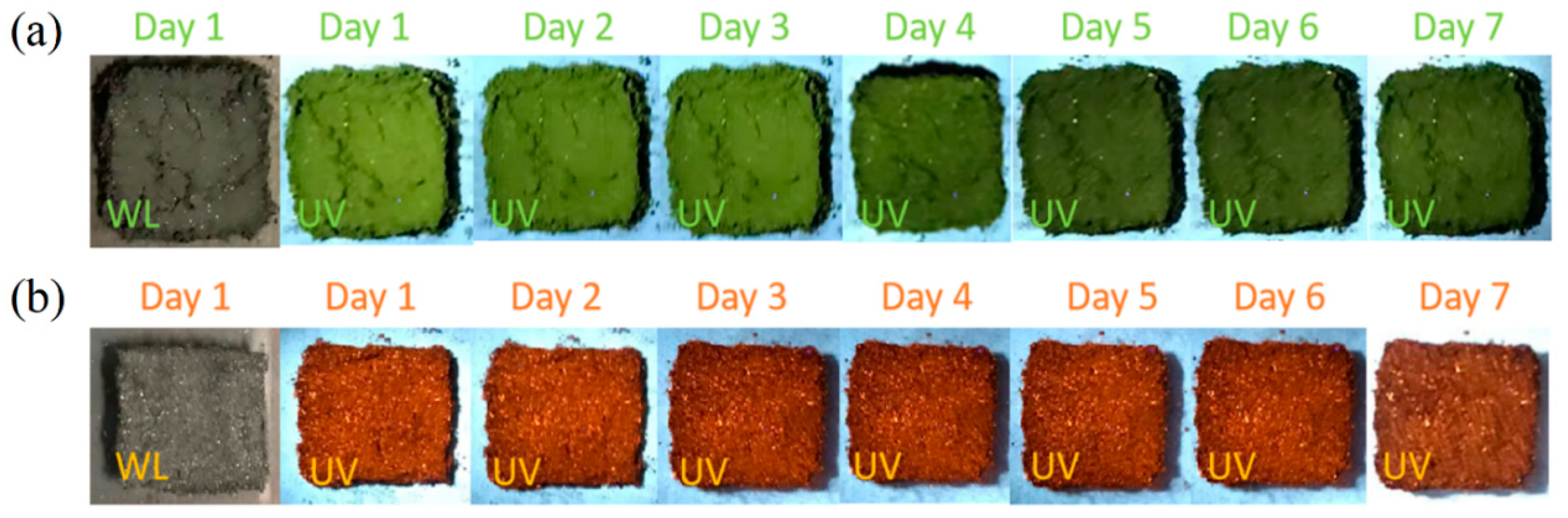
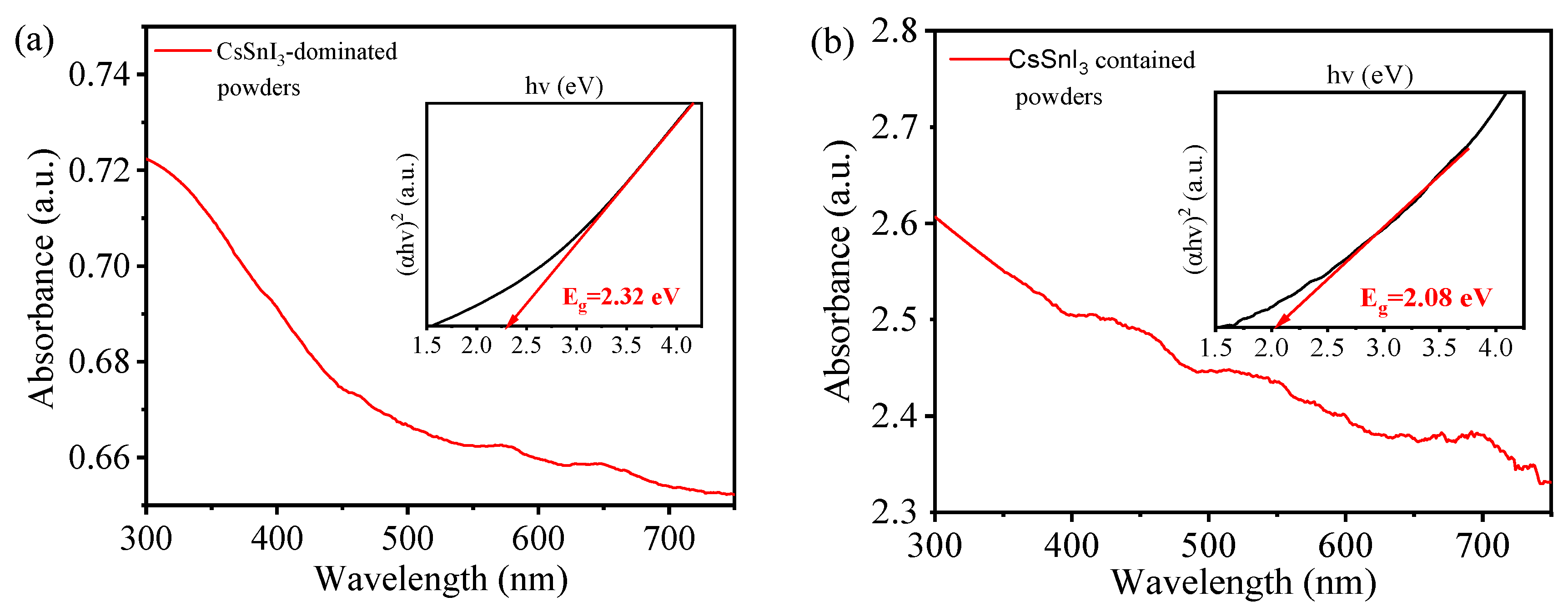
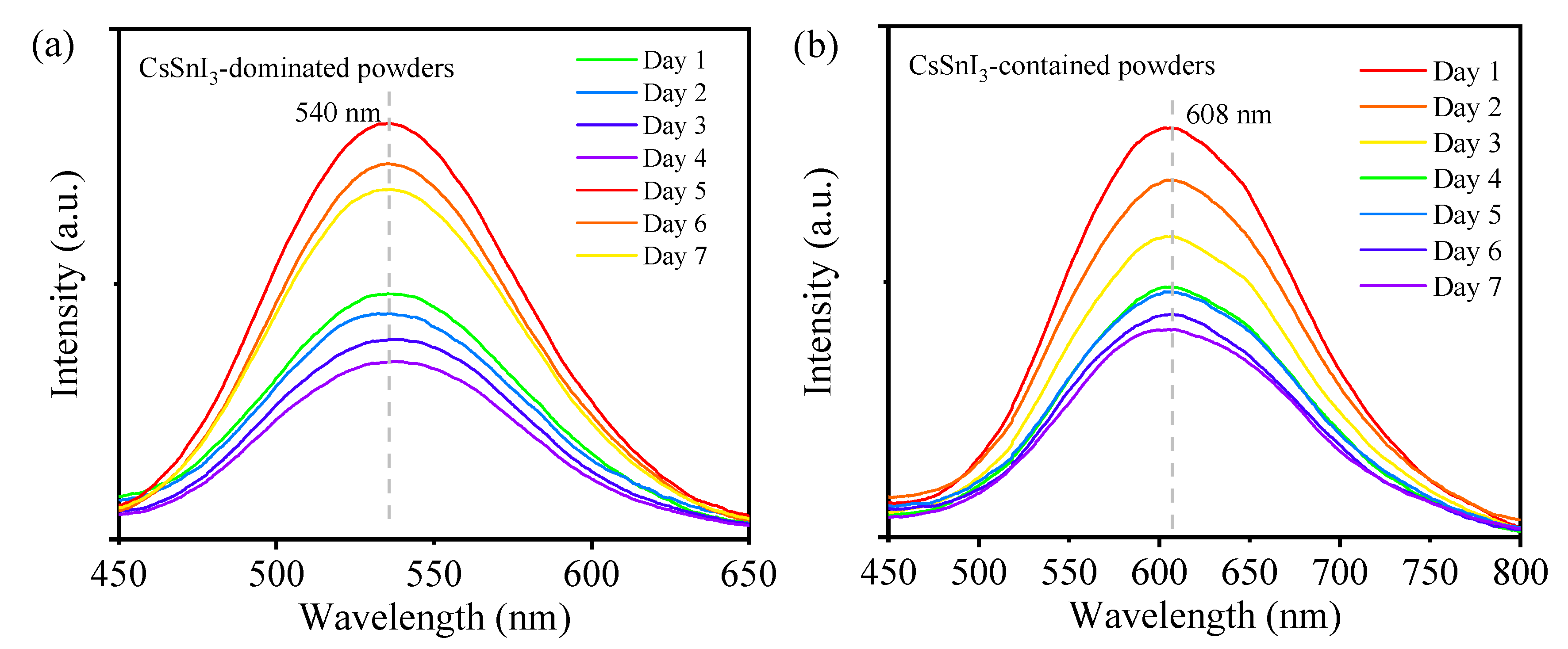
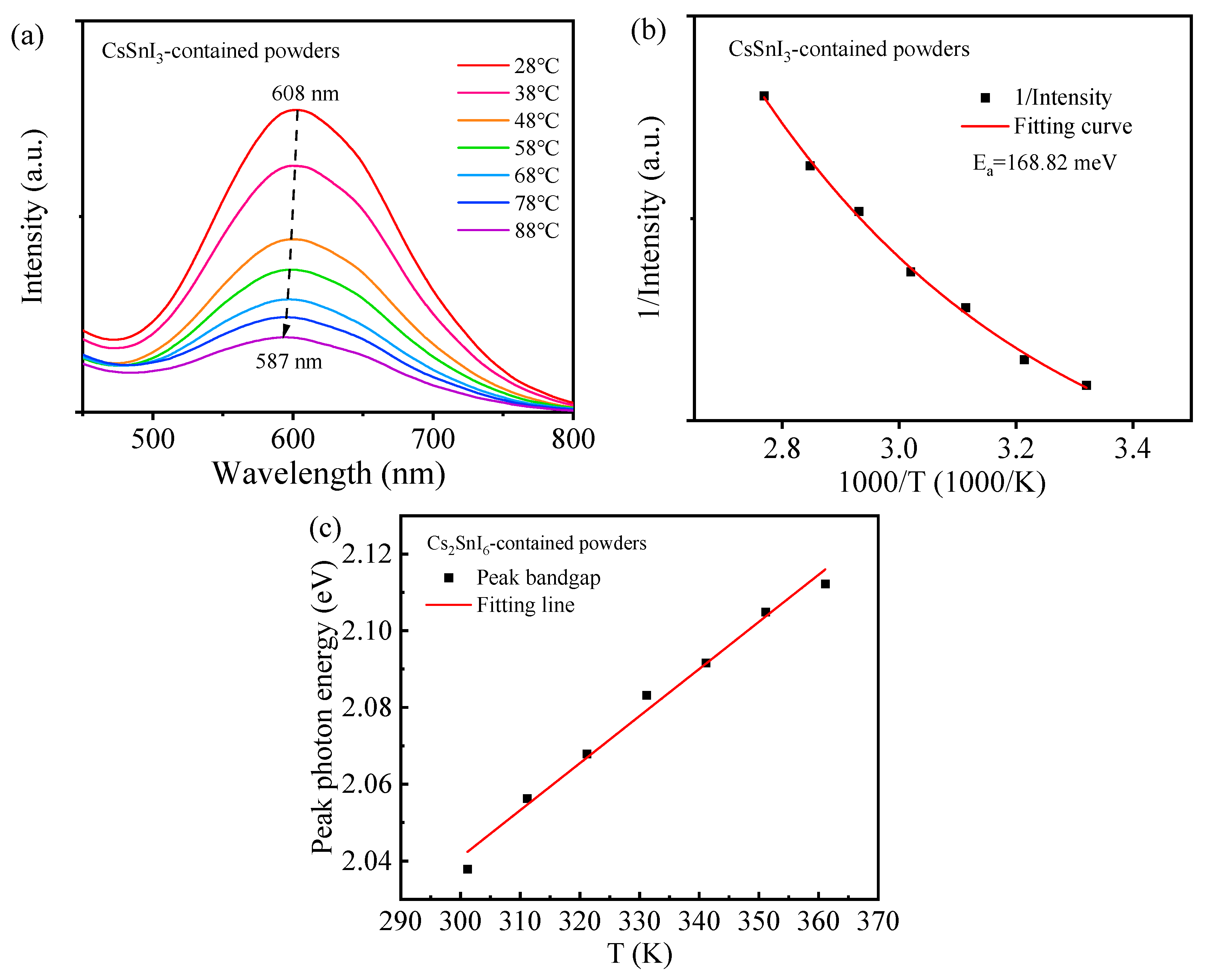
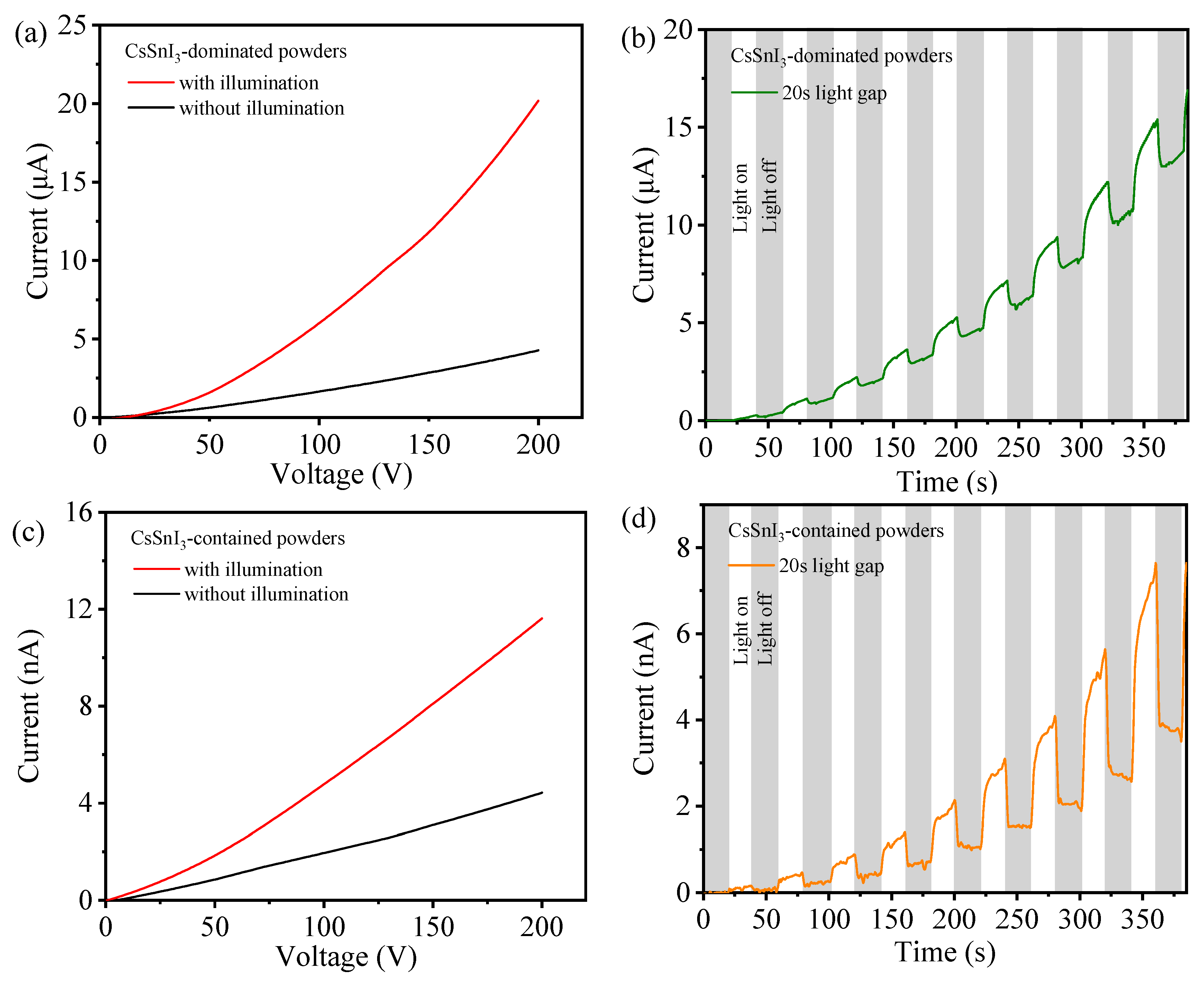
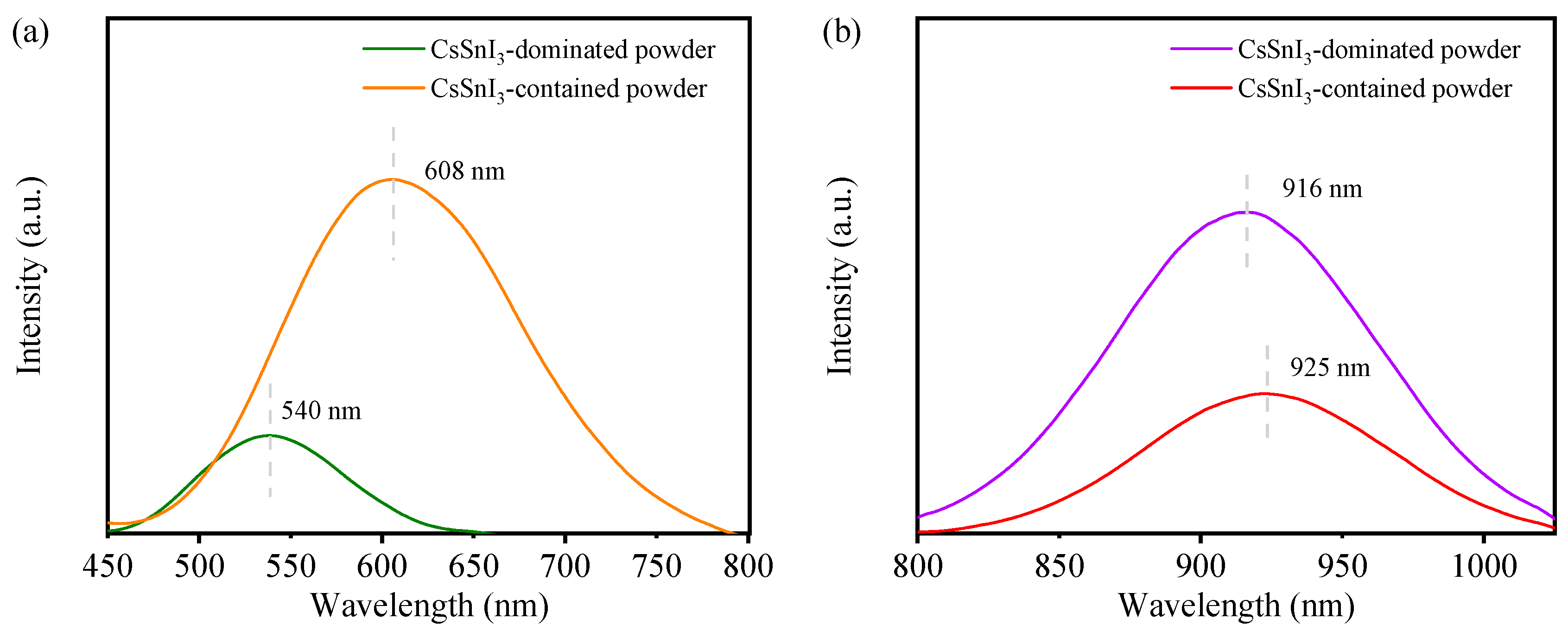
Lead toxicity has hindered the wide applications of lead halide perovskites in optoelectronics and bioimaging. A significant amount of effort has been made to synthesize lead-free halide perovskites as alternatives to lead halide perovskites. In this work, we demonstrate the feasibility of synthesizing CsSnI3-based powders mechanochemically with dual light emissions under ambient conditions from CsI and SnI2 powders. The formed CsSnI3-based powders are divided into CsSnI3-dominated powders and CsSnI3-contained powders. Under the excitation of ultraviolet light of 365 nm in wavelength, the CsSnI3-dominated powders emit green light with a wavelength centered at 540 nm, and the CsSnI3-contained powders emit orange light with a wavelength centered at 608 nm. Both the CsSnI3-dominated and CsSnI3-contained powders exhibit infrared emission with the peak emission wavelengths centered at 916 nm and 925 nm, respectively, under a laser of 785 nm in wavelength. From the absorbance spectra, we obtain bandgaps of 2.32 eV and 2.08 eV for the CsSnI3-dominated and CsSnI3-contained powders, respectively. The CsSnI3-contained powders exhibit the characteristics of thermal quenching and photoelectrical response under white light.
Keywords: mechanochemical synthesis; lead-free perovskites; CsSnI3; dual light emission mechanochemical synthesis; lead-free perovskites; CsSnI3; dual light emission