Article

Space Maintainers Used in Pediatric Dentistry: An Insight of Their Biosecurity Profile by Applying In Vitro Methods
by
Magda Mihaela Luca
1,2,†,
Malina Popa
1,2,†,
Claudia G. Watz
3,4,
Iulia Pinzaru
4,5,*,
George Andrei Draghici
4,5,*,
Ciprian V. Mihali
6,7,
Cristina Adriana Dehelean
4,5,
Roxana Buzatu
8 and
Camelia Szuhanek
9,10
1
Department of Pedodontics, Faculty of Dental Medicine, “Victor Babeş” University of Medicine and Pharmacy Timisoara, 9 No., Revolutiei Bv., 300041 Timişoara, Romania
2
Pediatric Dentistry Research Center, Faculty of Dental Medicine, “Victor Babeş” University of Medicine and Pharmacy Timisoara, 9 No., Revolutiei Bv., 300041 Timişoara, Romania
3
Departament of Pharmaceutical Physics and Biophysics, Faculty of Pharmacy, “Victor Babeş” University of Medicine and Pharmacy Timisoara, 2nd Eftimie Murgu Sq., 300041 Timişoara, Romania
4
Research Center for Pharmaco-Toxicological Evaluations, Faculty of Pharmacy, “Victor Babes” University of Medicine and Pharmacy Timisoara, Eftimie Murgu Square No. 2, 300041 Timişoara, Romania
5
Departament of Toxicology and Drug Industry, Faculty of Pharmacy, “Victor Babeş” University of Medicine and Pharmacy Timisoara, 2nd Eftimie Murgu Sq., 300041 Timişoara, Romania
6
Department of Life Sciences, Faculty of Medicine, “Vasile Goldis” Western University of Arad, 86 No., Liviu Rebreanu St., 310414 Arad, Romania
7
Molecular Research Department, Research and Development Station for Bovine, 32 No., Bodrogului St., 310059 Arad, Romania
8
Department of Dental Aesthetics, Faculty of Dental Medicine, “Victor Babeş” University of Medicine and Pharmacy Timisoara, 9 No., Revolutiei Bv., 300041 Timişoara, Romania
9
Department of Orthodontics, Faculty of Dental Medicine, “Victor Babes” University of Medicine and Pharmacy Timisoara, 300041 Timişoara, Romania
10
Orthodontic Research Center, Faculty of Dental Medicine, “Victor Babeş” University of Medicine and Pharmacy Timisoara, 9 No., Revolutiei Bv., 300041 Timişoara, Romania
*
Authors to whom correspondence should be addressed.
Authors with equal contribution.
Materials 2021, 14(20), 6215; https://doi.org/10.3390/ma14206215
Submission received: 21 August 2021 / Revised: 3 October 2021 / Accepted: 14 October 2021 / Published: 19 October 2021

Abstract

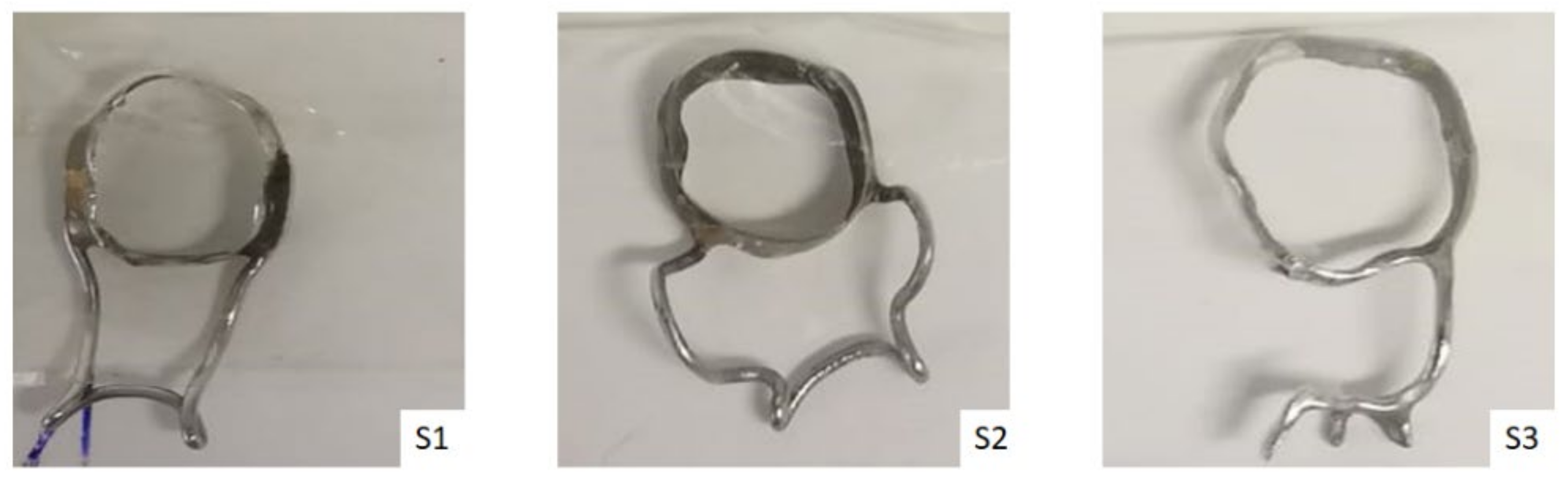
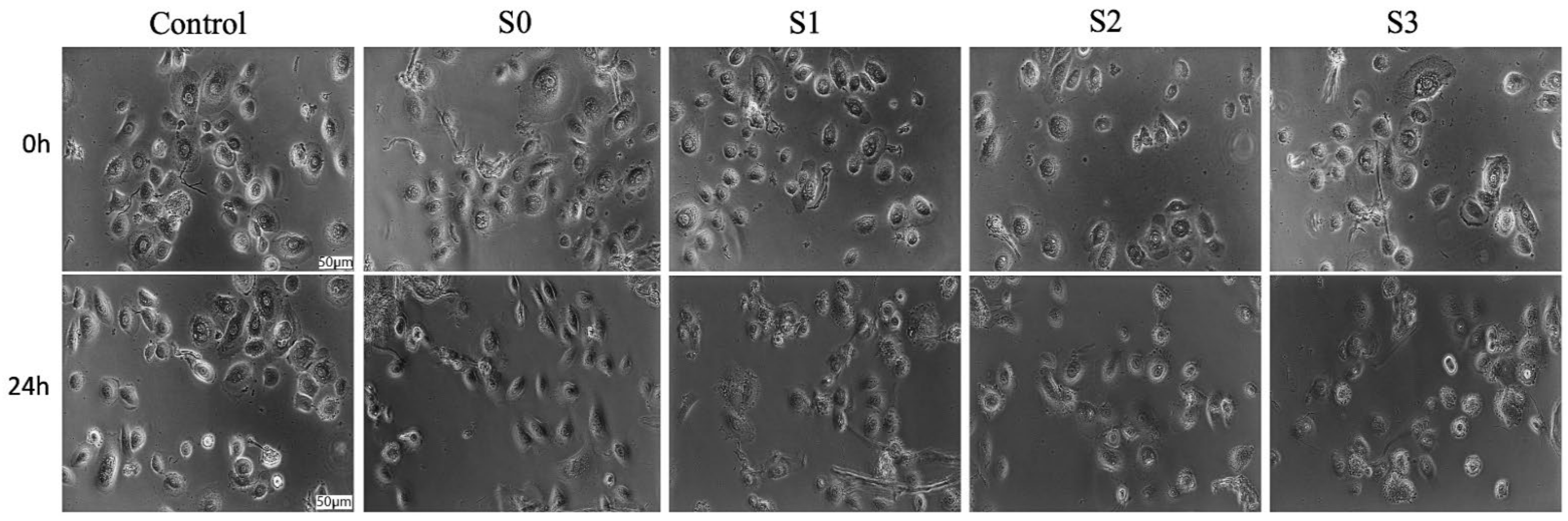
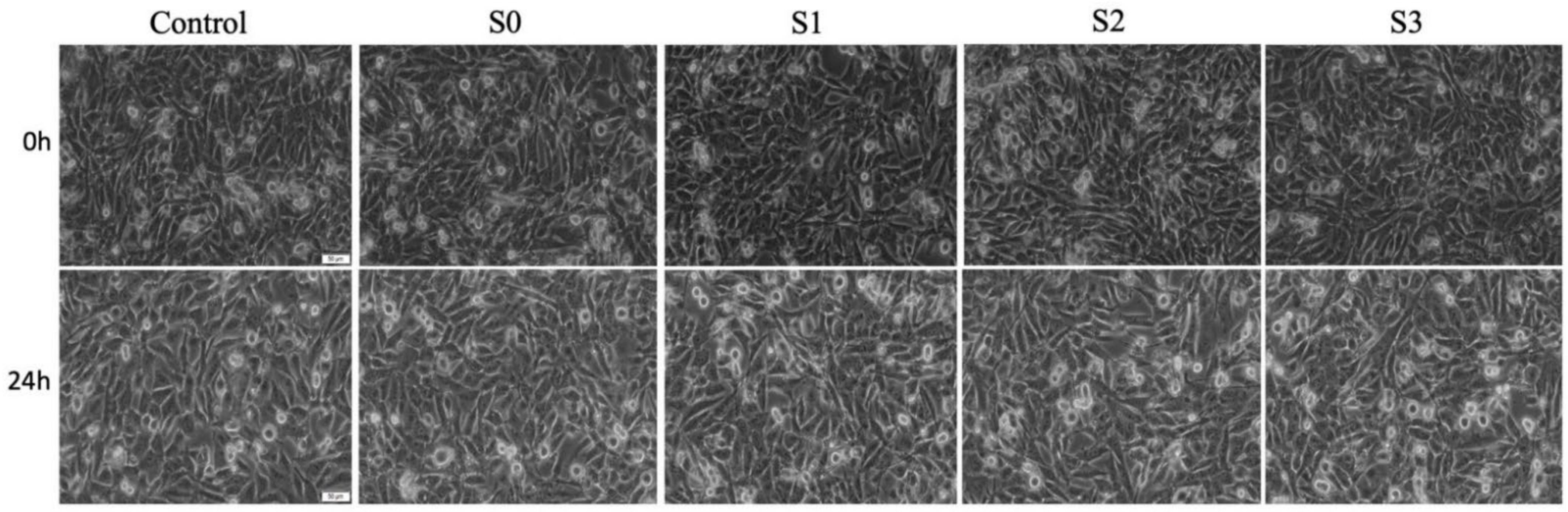
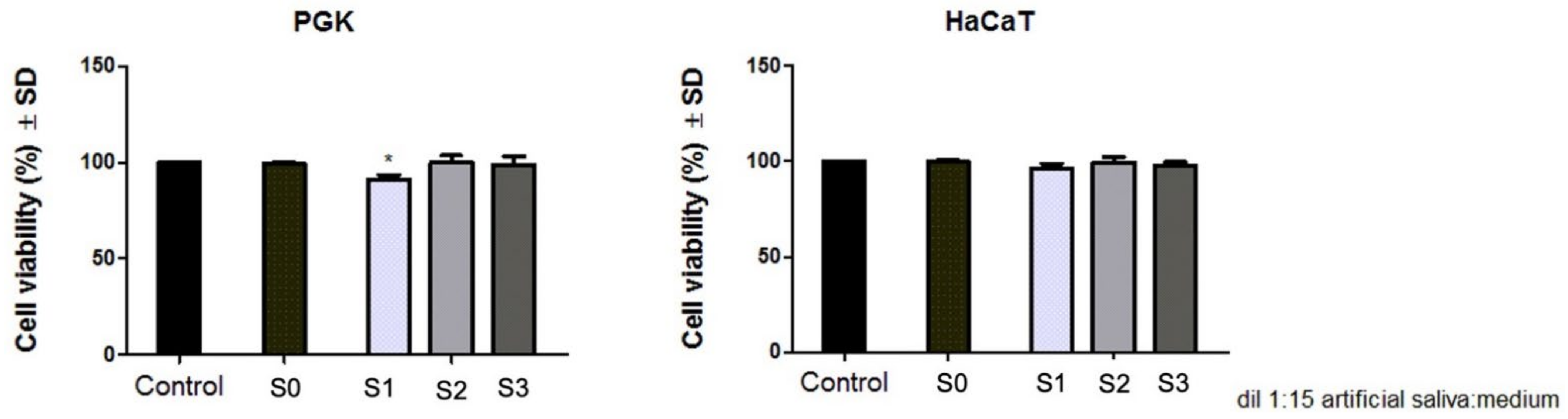
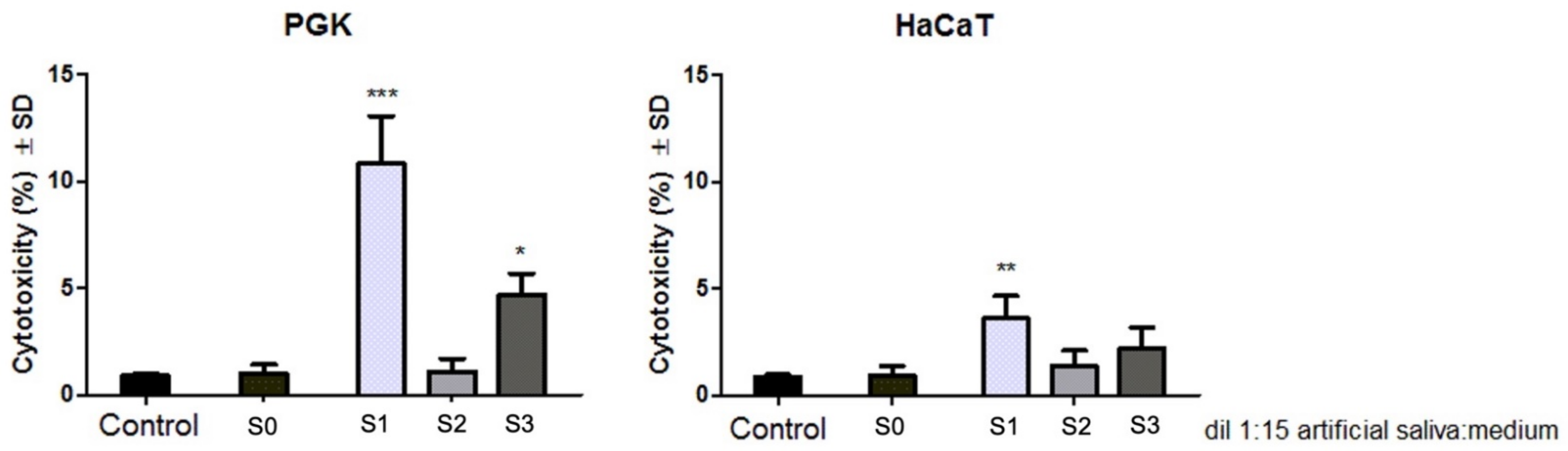
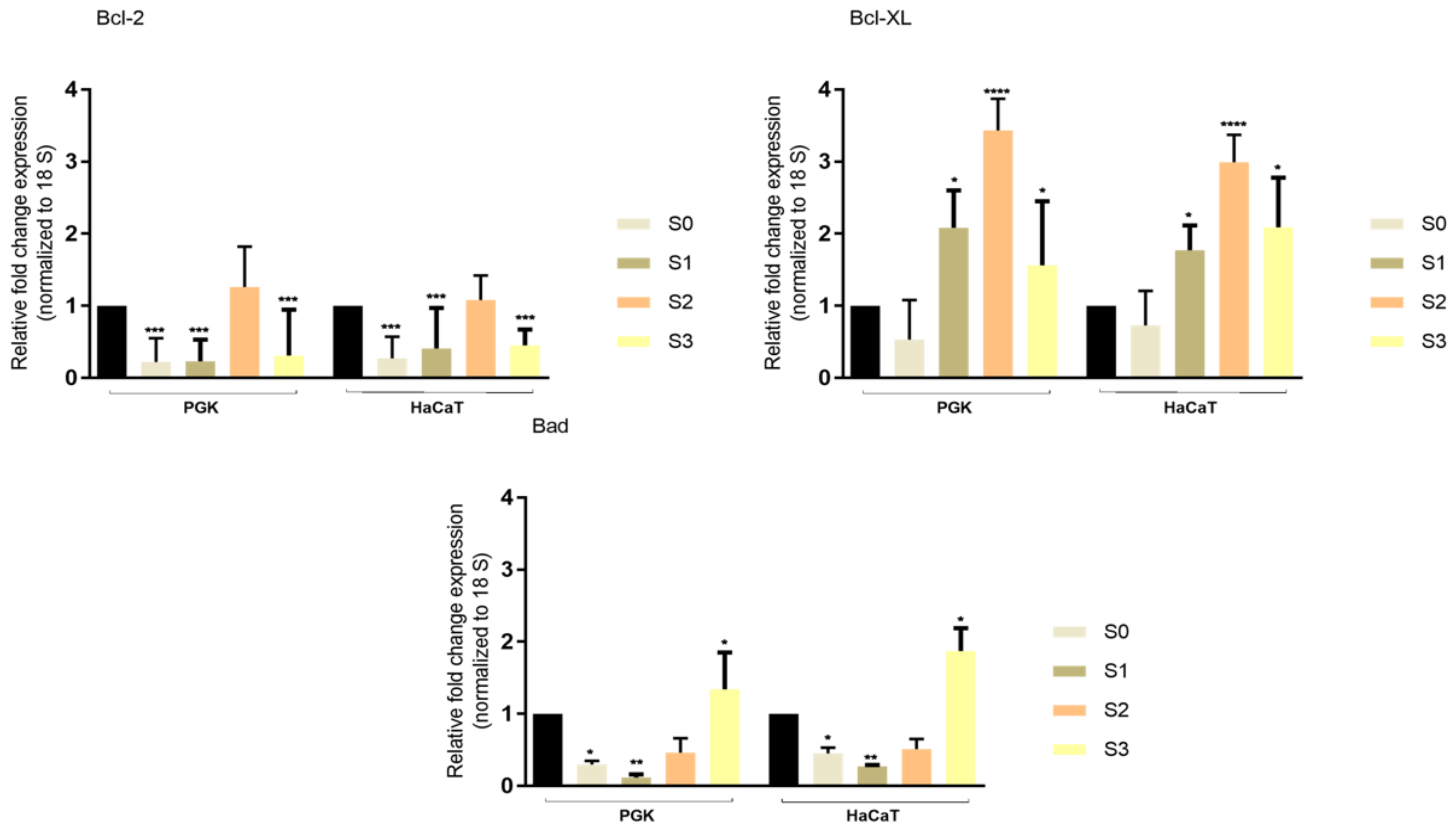
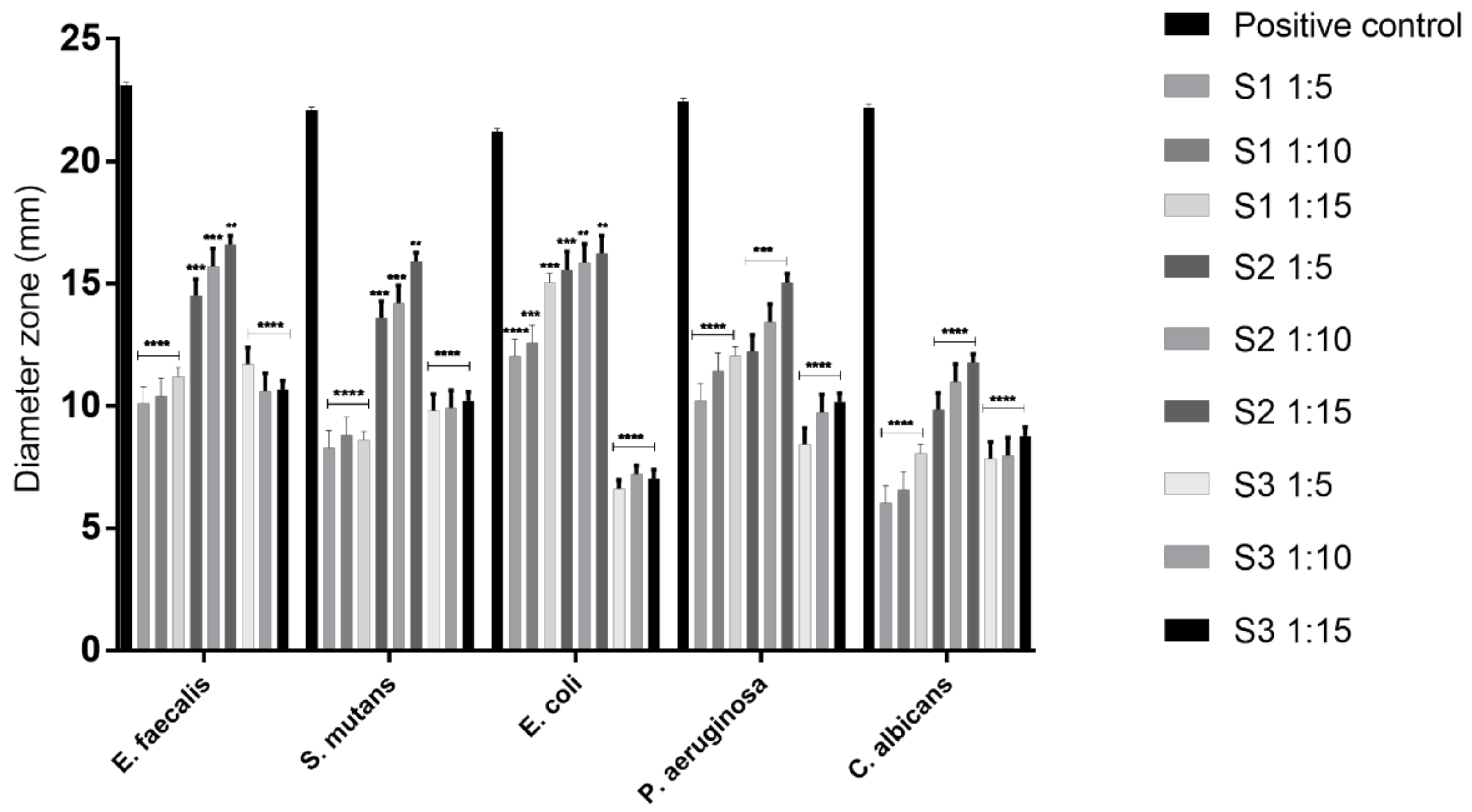
Space maintainers have presented an increased interest due to their chemical composition which influences the electrochemical and electrolytic processes of the oral cavity, leading to important biological activity. The present study was purported to evaluate the biological in vitro activity of three types of space maintainers (S1, S2, and S3, differing from each other in terms of metal composition) used in pediatric dentistry, in terms of their antimicrobial effect and biosecurity profile using two types of keratinocytes (PGK: primary gingival keratinocytes, and HaCaT: human immortalized keratinocytes) by assessing the morphology, viability, cytotoxicity, and gene expression of the cells. Statistical differences were calculated by the one-way ANOVA test, followed by Tukey’s post-test. Antimicrobial screening highlighted a dilution-dependent influence that, in the case of all strains tested, did not show inhibition or stimulation of bacterial growth. The in vitro evaluations revealed that the test samples did not induce important cytotoxic potential on both keratinocyte cell lines (HaCaT and PGK), with the cells manifesting no morphological alteration, a good viability rate (above 90%: PGK–S1, * p < 0.05), and a low cytotoxic activity (less than 11%: PGK, S1 *** p < 0.001 and S3 * p < 0.05; HaCaT, S1 ** p < 0.01). The data obtained in this study highlight the fact that the samples analyzed are biocompatible and do not develop the growth of the studied bacteria or encode the gene expression of primary and immortalized keratinocytes.
Keywords: metallic biomaterials; keratinocytes; antimicrobial activity; morphology; cytotoxicity; gene expression metallic biomaterials; keratinocytes; antimicrobial activity; morphology; cytotoxicity; gene expression
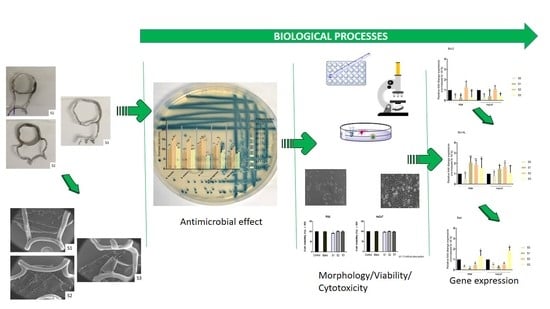
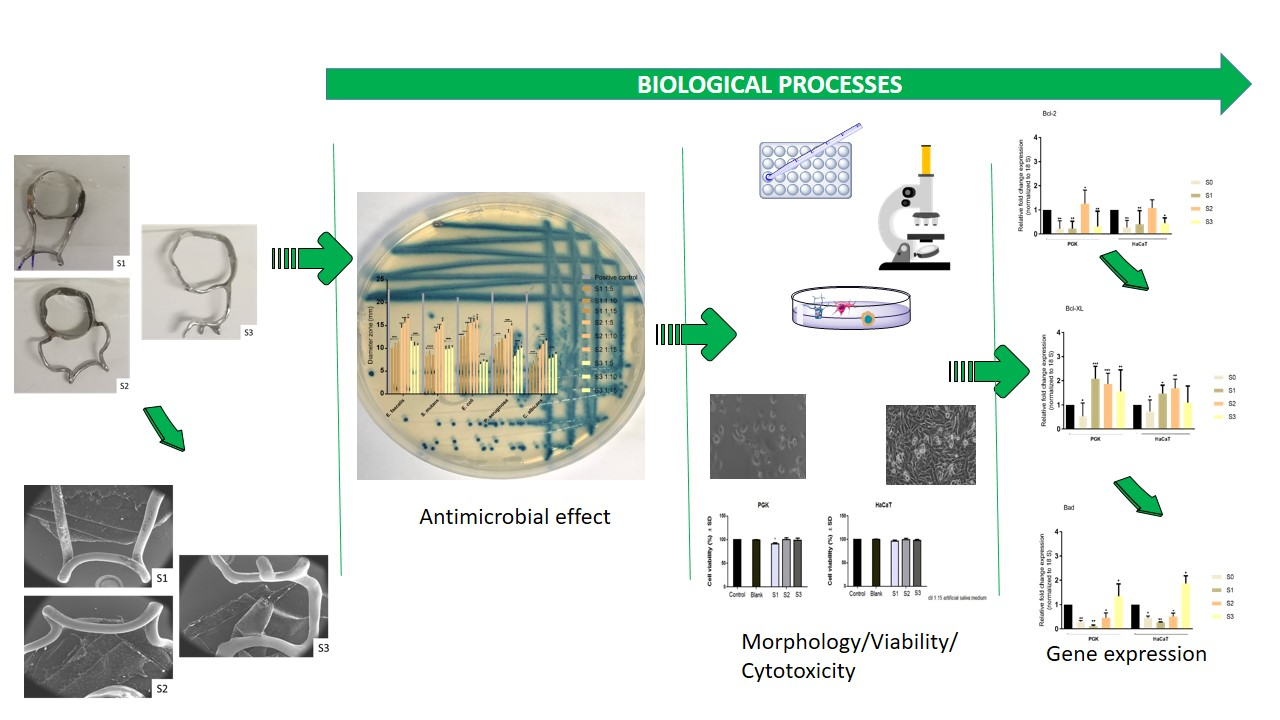
Graphical Abstract