


Abstract
Diesel engines have evolved significantly over the last century while maintaining core qualities such as reliability, durability, and fuel economy. Currently, the viability of their continued use is under discussion, mainly due to the environmental impact of polluting emissions from conventional fossil fuels. An advantage of these engines is their high fuel flexibility, which includes the capability to operate with pure vegetable oils. Following the established limitations of large-scale conventional biodiesel use, this perspective explores the implementation of straight vegetable oils (SVOs) blended with low-viscosity, low-octane (LVLC) oxygenated solvents to address climate targets such as the “Fit for 55” agenda. The discussion examines the potential of these advanced biofuels to contribute to the 2050 carbon neutrality goals while addressing the technical and economic requirements of the transport sector.
1. Current Situation of Europe’s Energy Transition Under the Green Deal
The Paris Agreement, an international agreement whose main objective is to achieve carbon neutrality in emissions by 2050, is currently fully in force to reduce the rate of global warming to less than 2 °C. In this sense, to date, 148 countries have made explicit commitments to achieve carbon neutrality, having enacted climate change laws. Thus, the global climate agenda has currently shifted to implementing actions to achieve more ambitious, concrete emission reduction targets through stricter policies [1]. However, putting these ambitious laws into practice requires the effective implementation of technologies capable of achieving the set goals. This technologies, among other factors, has led several countries to slow down their initial greenhouse gas (GHG) emission reduction projects. Thus, the British government has postponed the cut-off date to produce new gasoline and diesel cars from 2030 to 2035, and Germany has delayed the implementation of heating systems entirely operated with neutral energy sources in greenhouse gas [2]. However, in April 2021, the Federal Constitutional Court ruled that the 2019 Climate Protection Act was inadmissible because it proposed a climate protection schedule that was incompatible with the Paris Agreement, thus suggesting the need to develop a more ambitious climate policy [3]. In this same context, an intense debate remains open throughout the European Union (EU) about the limits to be reached to achieve the European Green Deal, which aims to turn this region into the first climate-neutral continent in the world. In short, the goal is to gradually reduce CO2 emissions from new vehicles, with a 55% reduction in emissions from cars and a 50% reduction from vans by 2030. The goal is to achieve zero emissions from all new cars by 2035, thus achieving the carbon neutrality target for 2050. In parallel, the Commission also intends to promote the increase in zero- and low-emission vehicles, combined with electric motors [4].
In this context, the European automotive industry is calling for greater flexibility in the path to 2035, with greater recognition of “carbon-neutral” fuels, incentives for production with a lower CO2 footprint, and a reduction in penalties for fossil fuel consumption. In other words, although electrification must continue, the pace and regulations require significant adjustments to avoid disrupting the European industrial fabric. Essentially, they believe there are multiple reasons for the diesel engine to continue to play an important role in the automotive industry, as it could be essential in hybrid vehicles for a long period of time. In other words, a time-bound scenario is emerging in which several propulsion systems will necessarily have to coexist for a long time, where the relationships between these propulsion systems will have to be complementary, not competitive. In this scenario, internal combustion engines will continue to play an essential role in road transport, air transport, and maritime transport. The key to making internal combustion engines more efficient, environmentally friendly, and clean must be directed primarily toward the development of renewable fuels with very low emission pollution limits [5].
2. Different Scenarios Where Internal Combustion Engines Cannot Currently Be Replaced by Electric Engines
According to the Intergovernmental Panel on Climate Change (IPPC), air transport is currently one of the four major contributors to global greenhouse gas emissions, with air transport responsible for approximately 3.5% of anthropogenic climate change. Furthermore, it is projected that, if no action is taken to substantially reduce these emissions, aviation’s contribution could increase to 5% of the total contribution by 2050 and could rise to 15% in the worst-case scenario [6].
Maritime transport is how more than four-fifths of the world’s goods are exchanged. Therefore, although this type of transport has lower GHG emissions per unit of cargo, it contributes significantly to global GHG emissions. In 2023, it contributed around 3% of total global CO2 emissions. This is why the International Maritime Organization (IMO) warns that, without strict measures, CO2 emissions from ships could increase between 0% and 50% by 2050, compared to 2018 levels [7]. For the time being, given the lack of more efficient technologies, the focus is on promoting more sustainable aviation fuels by requiring aircraft to use sustainable blended fuels (mixtures of fossil fuels with biofuels in varying proportions) on all departures from EU airports. Regarding the maritime sector, the strategy to increase decarbonization aims to have major ports serving ships with land-based power, thereby reducing the use of polluting fuels that also harm local air quality [8,9,10,11].
Road transport of all types of goods is a fundamental economic activity, so there is a close correlation between GDP (gross domestic product) and the increase in demand for freight transport, which in turn generates an increase in polluting and greenhouse gas emissions. In this sense, it is estimated that 30% of global freight transport activities depend on road transport, with heavy-duty vehicles (HDVs) accounting for almost 75% of these activities, equivalent to 5% of global anthropogenic CO2 emissions. In this regard, the European Union has already set the goal of net-zero greenhouse gas (GHG) emissions by 2050. During this transition, heavy-duty vehicles (HDVs) will play a fundamental role, given their significant contribution to GHG emissions from road transport and the continued increase in road transport activity. At present, there is no definitive technology available that can guarantee the expected emission levels for heavy-duty road transport. In this regard, different alternatives are being evaluated to reduce CO2 emissions, including system electrification or autonomous driving. Different types of engines, such as fuel cell vehicles (FCEVs) or battery-only vehicles (BEVs), are being considered. However, it is still unclear which type of propulsion system will prevail in the future [12]. There are several studies that investigate the potential for CO2 reduction using hybrid propulsion systems in heavy trucks and urban buses [13]. Accordingly, various designs are being considered, varying depending on the application and charging availability. In this sense, plug-in hybrids offer a good short-term option to achieve CO2 reduction targets [14]. In addition, various systems are even being considered that use the capture and storage of anthropogenic CO2 through adsorption on different materials, to mitigate emission levels in heavy vehicles [15].
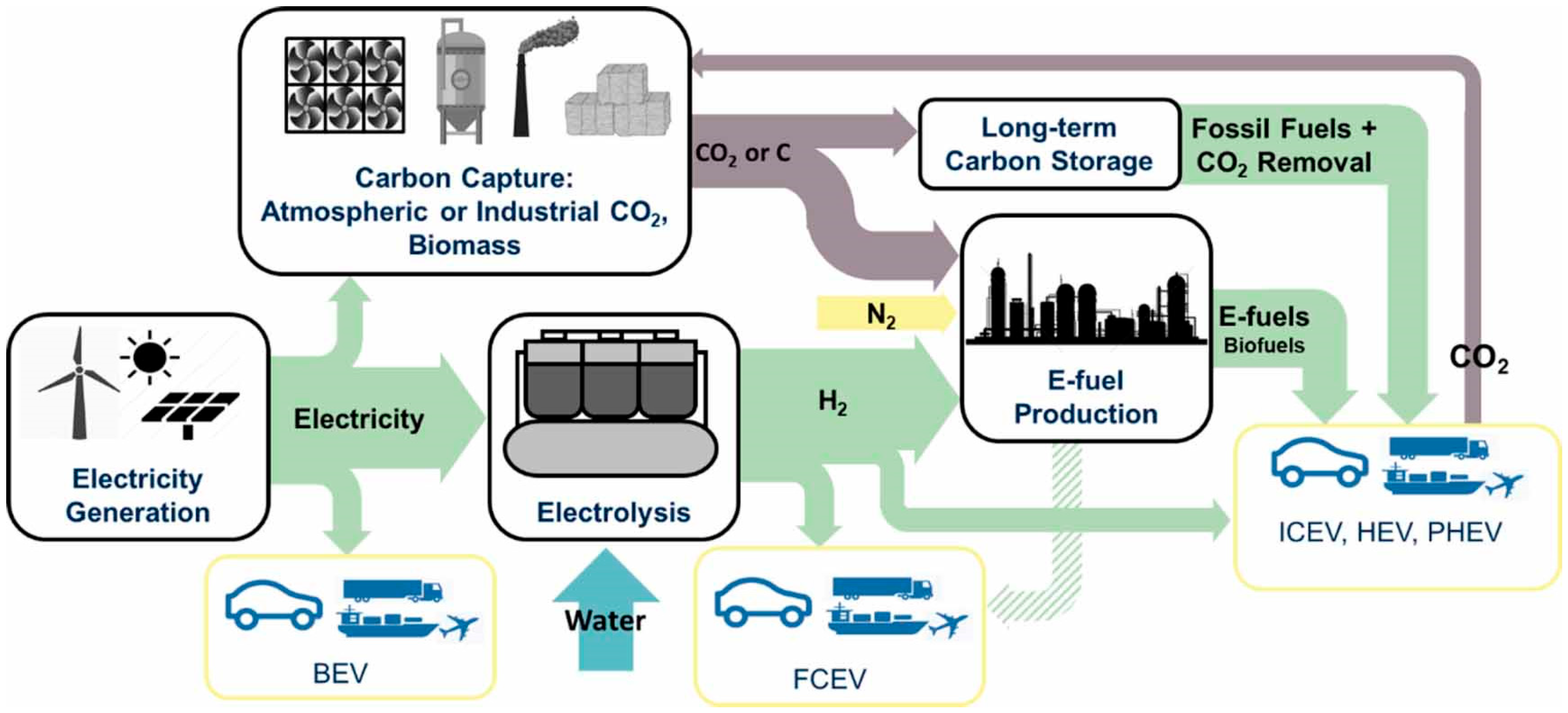
From a theoretical perspective, it is currently possible to incorporate innovative technologies to produce renewable energy applicable to the road freight transport sector based on the availability of renewable electricity, obtained with low or zero CO2 emissions. Thus, as shown in Figure 1, four main options can be considered to achieve decarbonization [16]. They are considered electrofuels (e-fuels) produced from electricity, with low CO2 emissions and therefore can be used for transport with a low climate impact [17]. The question is that none of these technologies capable of producing E-fuels with minimal greenhouse gas (GHG) emissions is mature enough for the scale industrial production within the relatively short timeframe provided by current regulations such as the Treaty of Paris and the European New Green Deal, as well as the REDII, which aims to achieve climate neutrality in Europe by 2050 [18,19,20]. Therefore, we must consider the potential for diesel engines, avoiding the use of fossil fuels, as the only alternative to avoid a collapse in the transportation industry, by trying to push the real capabilities of alternative technologies within very limited timeframes [21].
Figure 1.
Four main decarbonization options for transport (BEV, battery electric vehicle; FCEV, fuel cell electric vehicle; HEV, hybrid electric vehicle; ICEV, internal combustion engine vehicle; PHEV, plug-in hybrid electric vehicle) [17].
To achieve the emission reductions required during this long transition period, a drastic reduction in the use of fossil fuels is essential, as is their replacement with other fuels that can be used in internal combustion engines without generating greenhouse gas emissions. Currently, this can only be achieved with the use of biofuels or biomass green fuels [22,23,24,25]. Thus, with the help of electric motors, the incorporation of hydrogen engines, and other emerging technologies, a smooth transition to a fossil fuel-free scenario could be achieved by the middle of this century [26,27,28].
3. Current Possibilities for the Use of Biofuels Obtained from Biomass in Internal Combustion Diesel Engines
Given the foreseeable high demand for transport fuels for all types of vehicles in the next few decades, in order to carry out a planned energy transition in an efficient and sustainable manner, it is absolutely essential to have technically and economically viable biofuels, not only to gradually replace the fossil fuels used by current diesel engines used in trucks, ships and especially airplanes, where the introduction of electric motors cannot yet be considered in a predictable timeframe due to the immaturity of alternative technologies [29,30,31], but also to serve the current conventional diesel engines in use, which will have to continue operating for relatively long periods. Therefore, the increasing introduction of electric motors in the transport sector in the coming decades does not justify abandoning research into the different biofuels from biomass, since this will facilitate the necessary energy transition by increasing the profitability of current conventional internal combustion engines over an indefinite period.
On the other hand, biodiesel, the only biofuel used so far in combustion engines used for transportation, does not currently represent a significant proportion compared to fossil fuels usually used [32,33,34,35,36]. This relatively low use of biodiesel is due to several factors, including the complex synthesis process of this biofuel and, above all, the difficulty of managing the glycerin generated as a byproduct, which can represent up to 15% of the total reaction product. Furthermore, it is essential to clean the biodiesel of the residual glycerin, which remains as a microemulsion, by successive washing it with water. The result is a significant increase in production costs compared to the relatively low price of fossil diesel [37]. However, there is currently broad consensus that straight vegetable oils (SVOs) are the only raw material capable of being used to produce a biofuel that can adequately power an internal combustion diesel engine [38].
To improve the process of generating biofuels from vegetable oils, the production process of so-called green diesel, “renewable diesel (RD)” or hydro-treated/hydro-processed SVO, is currently being implemented. This is a renewable biofuel composed of fossil fuel-like hydrocarbons, obtained by several processes like cracking or pyrolysis, hydrodeoxygenation or hydrocracking of the vegetable oils. In this way, vegetable oils are converted into a hydrocarbon mixture very similar to that which constitutes fossil diesel [39,40,41].
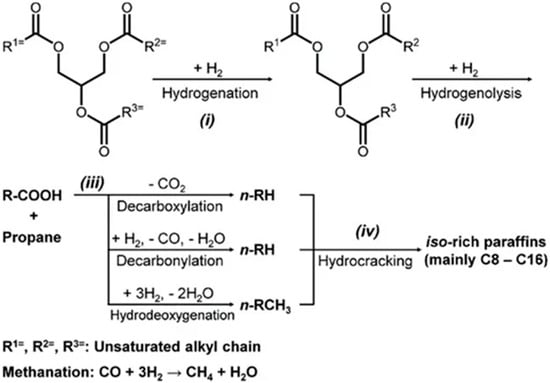
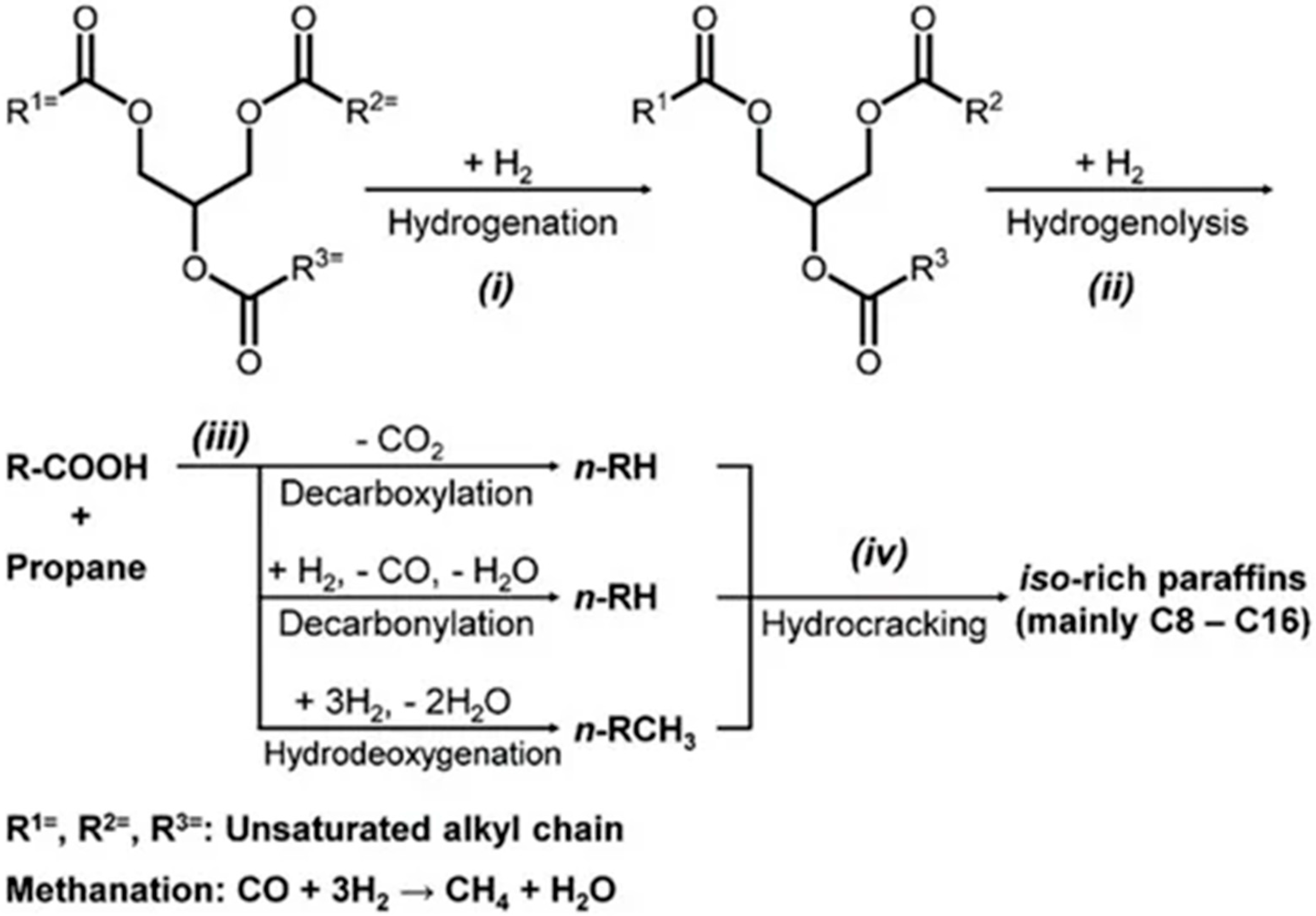
Furthermore, these processes can be carried out in existing refinery facilities [42]. In any case, this process involves catalytic treatment, as it is shown in Figure 2 [43], with an associated economic cost that will affect the final price of the biofuel. Furthermore, a portion of the vegetable oil is lost as CO2 and H2O. This drop could be close to the amount of glycerin generated in the production of conventional biodiesel, as can be seen in Figure 2, with the advantage of not requiring subsequent waste management [44].
Figure 2.
Reaction pathways for the hydro-conversion of triglycerides into green diesel: (i) hydrogenation of unsaturated alkyl chains, (ii) hydrogenolysis of the glycerol backbone to produce fatty acids and propane, (iii) deoxygenation via decarboxylation, decarbonylation, and hydrodeoxygenation, and (iv) hydrocracking and isomerization into paraffins. Reproduced from [43].
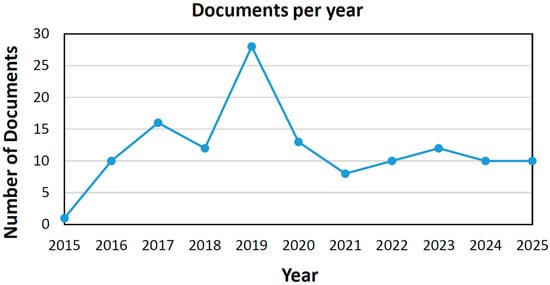
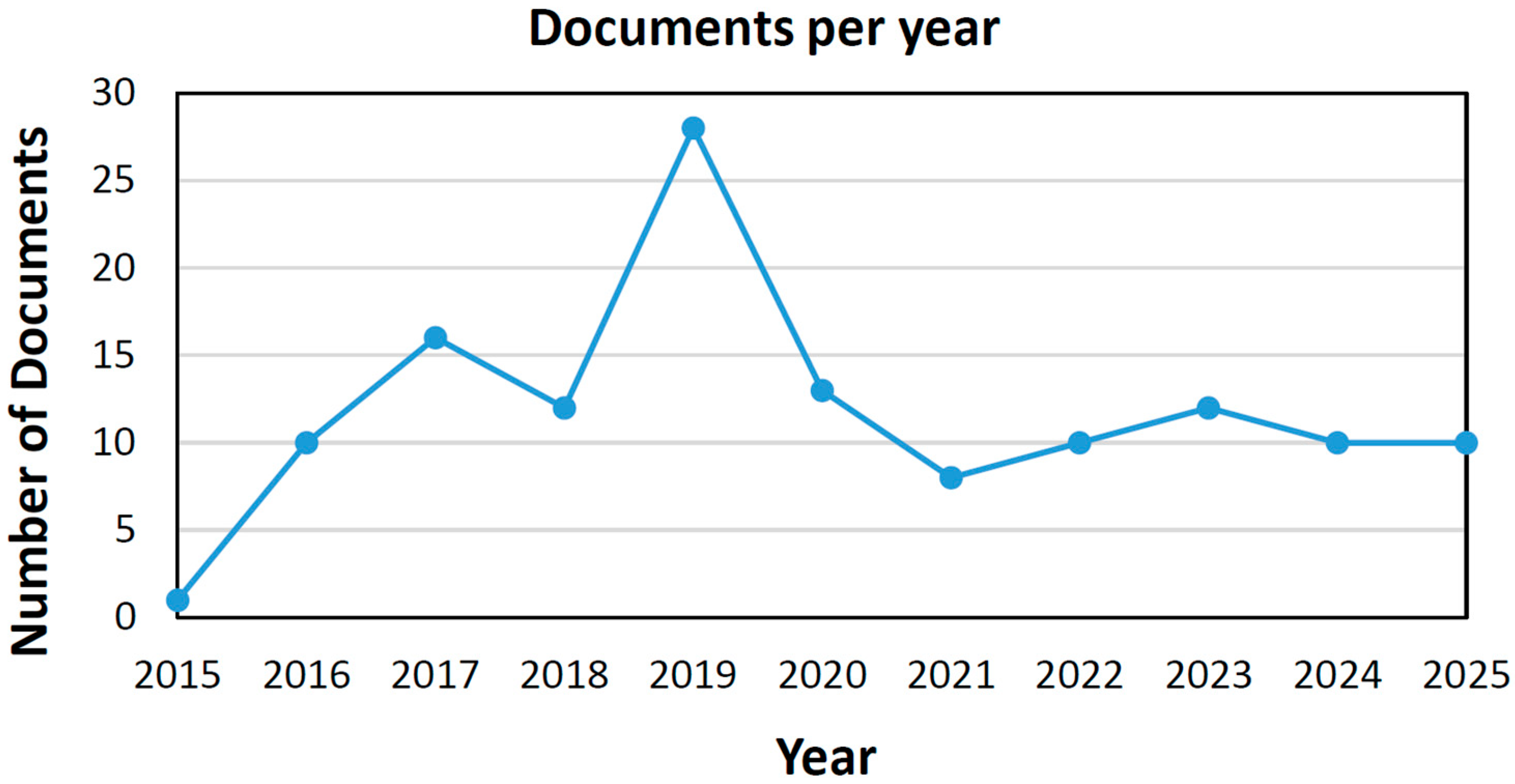
Furthermore, in the last decade, an alternative methodology to the chemical treatment of straight vegetable oils (SVOs) has been proposed to reduce their viscosity (above 35 cSt) to the 2.5–4.0 cSt range, which is the range currently found in fuels derived from fossil diesel, so that they can be used in up-to-date diesel engines. This methodology is based on using mixtures of vegetable oils with lower viscosity organic solvents, in the adequate proportion to get that these mixtures acquire appropriate viscosity values, to be compatible with current C.I. diesel engines. The low-viscosity organic solvents investigated to date consist of relatively short, oxygenated hydrocarbon chains, which also result in relatively low cetane numbers due to their lower calorific of these compounds. Thus, these solvents are called LVLC (low velocity, low cetane) solvents [45,46,47,48,49,50,51,52,53]. Furthermore, most studies conducted with these types of blends have shown significant reductions in polluting gases such as carbon monoxide (CO), NOx, smoke, unburned hydrocarbon emissions, and soot, highlighting their great potential as a renewable energy source to partially or fully replace fossil fuels in current diesel engines [45,46,47,48,49,50,51,52,53,54,55,56,57,58,59,60]. Thus, as the only disadvantage, the method involves a reduction in the cetane number, and therefore slightly higher fuel consumption. Consequently, these blends are being investigated with great interest, given the technical and economic advantages they offer. They also allow the direct use of different oils and greases, without any chemical treatment, in significant proportions, generally in the form of triple diesel/oil/LVLC blends. Figure 3 gives an idea of the interest generated in the last decade, in the use of these LVLC solvents, for their use as biofuels in these triple mixtures. Thus, to date many oxygenated compounds have been investigated as LVLC solvents, including alcohol, ketones, esters, or ethers. Most of the results obtained indicate that not only can a high percentage of fossil fuel be replaced in current diesel engines without reducing engine performance, but a significant reduction in pollutant emissions is also achieved [48,49,50,51,52,53].
Figure 3.
Annual publications addressing the use of LVLC solvents to enable the use of different vegetable oils as fuels in diesel engines.
Within this LVLC methodology, which offers the greatest advantages in the application of vegetable oils as fuel in current diesel engines, the application of low viscosity, and high-cetane-number (LVHC) solvents has recently been proposed as a solution to the limitations imposed by low cetane number values, which negatively affect combustion performance. For this purpose, the use of low molecular weight nitroalkanes has been considered. For this purpose, the use of 2-ethylhexyl nitrate (EHN) has been described as a cetane improver capable of increasing the cetane number by 12–16 points while simultaneously reducing nitrogen oxides (NOx), carbon monoxide (CO), and unburned hydrocarbon emissions [61]. Therefore, 2-ethylhexyl nitrate is a cetane improver that has very recently demonstrated its effectiveness as a low-viscosity, high-cetane-value (LVHC) solvent in methanol [62,63], 1-butanol-diesel blends [64], as well as in blends containing pure vegetable oils (SVOs) [65], improving cetane number, performance in diesel engines with comparable power output that diesel fossil but with stable and lower emissions. However, there is a slight increase in NOx emissions, but small enough, thus allowing compliance with the current regulations on diesel gas emissions [65].
Since EHN can be produced renewably using green hydrogen, it could be an ideal candidate for biofuel blends in diesel engines, offering a partial alternative to fossil diesel. The results obtained show that the power output from these blends is like or greater than that of fossil diesel, with comparable fuel consumption. In addition, the blends significantly reduce emissions of carbon monoxide (CO) and soot, although NOx emissions are slightly higher due to the nitrogen content in EHN. However, NOx levels remain within permissible limits.
A very important aspect of this procedure for reducing the viscosity of vegetable oils by blending them with LVLC and/or LVHC solvents is the drastic reduction in pollutant emissions from these blends, compared to the emission levels of so-called green diesel or renewable diesel (RD). In fact, these biofuels, despite being derived from hydro-treated/hydro-processed vegetable oils (SVOs), exhibit a similar emission level to fossil diesel, given their similar composition after de hydroprocessing treatment.
However, the European Green Deal not only aims to drastically reduce CO2 emissions, but these reductions have been extended to all types of pollutants present in exhaust emissions. To this end, legal regulations have been developed specifying the permissible emission levels in exhaust gases from motor vehicles and other equipment. These regulations address not only CO2 emissions, but also the concentration of pollutants such as nitrogen oxides (NOs), carbon monoxide (CO), and particulate matter (PM). The established limits for these pollutants vary depending on the type of motor vehicle and engine. These limitations have been specified in successive exhaust emission standards, which establish the emission limits that vehicles must meet to be registered. Since 1993, when the first cars were registered under the Euro 1 standard [66], the EU has progressively implemented more stricts limits, leading up to the current Euro 6 standard [67], in force since 2015, when the first Euro 6 vehicle registrations took place. This currently applicable standard sets the emission limits for carbon monoxide (CO) 500 mg/km; for nitrogen oxides (NOx): 80 mg/km; and for particulate matter (PM): 4.5 mg/km [68,69,70]. The upcoming Euro 7 emissions standard, which is scheduled to come into effect for new light commercial vehicles with combustion engines, including diesel, starts in 2035. However, diesel vehicles already registered will be allowed to continue circulating, although with potentially increasing restrictions in Low-Emission Zones (LEZs) in cities until 2050 [71,72,73].
Nevertheless, the increase in restrictions on pollutant emissions, fully justified by the need to protect public health, is raising questions about the European Union’s climate roadmap due to the difficulty in developing engines with the necessary technical capabilities to achieve the proper combustion required by the planned Euro 7 standard [73,74]. Presumably, LVLC and LVHC blends will be able to meet the Euro 7 standards much more easily than so-called green diesel or renewable diesel (RD) fuels, that are also obtained from SVO, after various more complex and expensive catalytic hydrotreatments, and which are currently considered the best option for obtaining carbon-neutral fuels.
4. Current Uncertainties Regarding the Possibility of Using the Electric Motor as the Sole Instrument to Achieve Zero Anthropometric Emissions Level Within the Timeframe Projected
It is a fact that the different European regulations currently place their main emphasis on the urgent introduction of electric vehicles as the only tool to achieve zero emissions within the planned deadlines. And it is undeniable that electric motors will constitute the best technology for car and van transportation in an indeterminate future. However, it is also beyond dispute that electric motors have not yet reached a clear definition regarding the most suitable technology to be employed in the middle or long term. Thus, there is an intense and in-depth technological debate to decide the advisability of using battery electric vehicles (BEVs), plug-in hybrid electric vehicles (PHEVs), or fuel cell electric vehicles (FCEVs), given the for and against that each entail.
With respect to electric cars, there are two very different technologies to be operated, electric batteries (BEVs), or fuel cells (FCEVs), with very different technology-specific advantages and disadvantages, to consider. Accordingly, there are currently numerous studies comparing both types of technologies for operating electric motors. In general, the main weaknesses of battery-powered electric motors lie in their relatively long charging times and the potential insecurity arising from the difficulty in securing a massive supply of strategic minerals, such as lithium, which are currently traded in a relatively small number of countries. Regarding fuel cell technologies, they achieve efficient conversion of hydrogen into electrical energy and offer a significant advantage in refueling times compared to electric batteries, with refueling times like those of conventional liquid fossil fuels. However, they present the challenge of the logistics required for transporting green hydrogen gas and providing also a network of specific refueling stations for FCEV cars.
These questions highlight that there is insufficient certainty to establish the projected pace for the complete replacement of fossil fuels in cars and vans by the middle of this century on the projected timeline. This would entail not only replacing the current fleet of vehicles based on internal combustion engines (C.I.) with electric vehicles that use electric batteries or hydrogen as fuel, but also being able to solve, within two decades, a series of problems related to increasing the technological efficiency of these vehicles, as well as the massive increase in electric vehicle charging stations and/or hydrogen refueling stations. Any delay in any of these elements will generate a bottleneck that will delay the entire process. Thus, to maintain the planned pace for the reduction in greenhouse emissions, the most appropriate matter will be to put into play all the instruments available in parallel to obtain CO2-neutral fuels to be used in IC diesel engines [75].
In summary, despite the potential of electric motors to in due course replacing the internal combustion engines currently used in transportation, vegetable oils are, for the time being, irreplaceable for obtaining renewable fuels for use in internal combustion engines, not only for heavy vehicles, aviation, maritime and land transport, but also for gradually replacing the fossil fuels currently used by the vehicles that make up the large fleet of cars and vans in the European Union [76,77,78]. In this respect, the energy demand for transport is so high that, even with the combined action of electric motors of all types, powered by batteries or fuel cells, and internal combustion engines operating on emission-neutral fuels, difficulties could arise in achieving the targets set out in the “Fit for 55” agenda [79]. Therefore, to achieve a sufficient reduction in emissions to meet the decarbonization target beyond the “Fit for 55”, the only viable option is to gradually introduce an increasing percentage of carbon-neutral biofuels into blends with fossil fuels for use in operating internal combustion engines over the next few decades [80]. Therefore, to achieve the climate objectives proposed by the European Green Deal to make Europe the first climate-neutral continent in the world [4], biofuels will have to play a fundamental role since they can be gradually integrated with conventional fuels in blends, generating increasingly environmentally friendly emissions. In this respect, although a wide variety of crops can be used for biofuel production, vegetable oils will play a fundamental role in obtaining specific biofuels for internal combustion engines. The incorporation of biofuels into the environmental effort to reduce emission levels will also significantly contribute to the utilization of currently underutilized agricultural land in various regions of the world, which is useful to produce vegetable oils.
5. Actual Possibilities of SVOs as Biofuels in Current Conventional I.C. Diesel Engines
Regarding the massive use of vegetable oils, we must consider not generating ethical conflicts with the possibility that the edible oils may ultimately be used as biofuels, instead of for feeding. To avoid this, biofuels, all properly collected waste oils from cities and industries, must be used first, in a comprehensive circular economic approach. However, since these waste oils will always be insufficient, the use of non-edible oils as raw materials must be considered. Castor oil (Ricinus communis L.) is the only non-edible oil that can be currently considered as a raw material for use as a biofuel, since it is available in industrial quantities in international markets, given its extensive use in the chemical and pharmaceutical industries [81,82,83].
The only biofuel used to date in combustion engines for transportation is biodiesel, which currently represents a minimal proportion compared to commonly used fossil fuels [32,33,34,35,36,37]. This limited application of biodiesel is due to its high production costs, compared to the price of fossil diesel. These high costs are mainly due to factors related to the complexity of the biodiesel synthesis and cleaning process, and above all to the difficulty of managing the glycerin waste produced [36,37]. Thus, due to the economic unviability of conventional biodiesel, a methodology for utilizing vegetable oils as biofuels is being increasingly applied. This methodology is based on the thermal conversion and/or hydrogenation of triglycerides from various sources, primarily waste oils. These biofuels are produced through catalytic processes such as cracking, pyrolysis, hydrodeoxygenation, or hydrotreatment of vegetable oils. These processes are currently considered the best alternatives for obtaining renewable biofuels, or green diesel [36,38,43] with properties very similar to those of fossil diesel, since they are composed of hydrocarbon mixtures very similar to those that make up fossil diesel. These catalytic processes allow for the management of gaseous waste, CO2 and H2O, which is much more cost-effective than that of the glycerol generated in transesterification. However, the synthesis process for these biofuels also presents relatively high energy costs and the loss of some of the biofuel material due to the elimination of oxygen molecules present in the triglycerides in the form of H2O and CO2. In fact, the absence of oxygen in the biofuels obtained by these hydrotreatment processes explains the production of the same level of emissions as those produced when using conventional fossil fuels, given the similarity in their hydrocarbon composition. These biofuels are considered particularly suitable for use in aviation engines [43,84,85,86,87].
Regarding the availability of sufficient quantities of vegetable oils (SVOs) to address their incorporation into the biofuels market, we must consider the enormous amount of waste vegetable oils produce globally, which is currently unrecovered for proper recycling. The circular economy recommends the use of these residues both for their potential as biofuels and to reduce their environmental impact. In this sense, it is estimated that more than 16.54 million tons of waste cooking oil are annually generated worldwide [88].
The potential quantities of WCO available represent a defined limit that could be reached after an efficient collection and recycling process. But it is also possible to obtain very high quantities of vegetable oil obtained by growing species such as castor oil. Castor oil is not edible and is currently the only oil used on an industrial scale with around 500,000 tons being produced annually, which is intended to supply various industrial, cosmetic and pharmaceutical uses. Currently there is no appreciable demand for its use as biofuel, but these quantities indicate that this crop could be very widely implemented [89]. In this respect, the agricultural area dedicated annually to the cultivation of Ricinus communis (castor plants, from which castor oil is obtained) worldwide is not as high as that of other oilseeds such as rapeseed, soybeans, or sunflowers, but it is already significant given that the cultivated area worldwide, according to data from the Food and Agriculture Organization of the United Nations (FAOSTAT), is annually higher than one million hectares [90]. Moreover, castor has a great adaptability in different soil and climate conditions, and it is known as a low-key maintenance crop. These characteristics, together with the necessity of increasing renewable energy sources, with the possibility of re-evaluating marginal lands, make castor the ideal plant to be exploited in the years to come [91].
Regarding the LVLC solvents, there are multiple renewable and non-renewable compounds described in the literature, with reduced costs, easily available in different regions and/or countries [45,46,47,48,49,50,51,52,53,54,55,56,57,58,59,60,61,62,63,92,93,94,95,96], which could be used within the concept of circular economy as components of biofuels in conventional diesel engines. Therefore, it is currently possible to obtain biofuels based on the direct use of SVO in conventional diesel engines, with a high capacity to replace fossil fuels, with truly acceptable production costs, generating much lower polluting emissions than fossil fuels, and perfectly integrable into the circular economy, for the cost-effective elimination of a wide variety of industrial, urban and food waste.
6. Conclusions
Given the urgent need for sustainable biofuels with affordable costs and high performance, this study presents a conceptual model that positions advanced SVO-based blends as a strategic bridge for the energy transition. This model addresses the current limitations of electrification in heavy-duty, maritime, and aviation sectors, where alternative technologies are not yet mature enough to meet the 2050 Net-Zero scenario.
Central to this conceptual framework is the use of straight vegetable oils (SVOs), sourced from waste cooking oils or non-edible crops like castor, blended with low-viscosity, low-cetane (LVLC) and high-cetane (LVHC) solvents. This methodology solves the traditional drawbacks of SVOs in C.I. engines without requiring expensive chemical treatments or incurring material losses, as occurs in conventional biodiesel or green diesel production. Furthermore, the model demonstrates that the incorporation of oxygenated solvents and cetane improver like 2-ethylhexyl nitrate (EHN) significantly reduces pollutant emissions (CO, NOx, and soot) while maintaining power outputs comparable to fossil diesel.
In conclusion, the proposed model offers a circular economy pathway that is technically viable and economically acceptable. By aligning with the “Fit for 55” agenda and Euro 7 standards, these advanced biofuel blends ensure that internal combustion engines remain a clean and essential component of the global decarbonization strategy during the necessary coexistence of multiple propulsion systems.
Author Contributions
Conceptualization, D.L.; Investigation, D.L., R.E., F.J.L.-T. and V.M.; writing—original draft preparation, D.L. and R.E.; writing—review and editing, V.M. and F.J.L.-T.; visualization, D.L. and F.J.L.-T.; supervision, D.L.; project administration, D.L. All authors have read and agreed to the published version of the manuscript.
Funding
MCIN/AEI/10.13039/501100011033 (project PID2022/142275OB-I00), MCIN/AEI/10.13039/501100011033 and Unión Europea “NextGenerationEU/PRTR” (project TED2021/132224B-I00).
Data Availability Statement
No new data were created or analyzed in this study.
Acknowledgments
F.J.L.-T. acknowledges funding from Universidad de Córdoba under the Plan Propio de Investigación 2025 (Subprogramme 2.3, UCO Postdoctoral Contracts).
Conflicts of Interest
The authors declare no conflicts of interest.
References
- Zhang, S.; Cai, W.; Zheng, X.; Lv, X.; An, K.; Cao, Y.; Cheng, H.S.; Dai, J.; Dong, X.; Fan, S.; et al. Global readiness for carbon neutrality: From targets to action. Environ. Sci. Ecotechnol. 2025, 25, 100546. [Google Scholar] [CrossRef] [Scilit]
- Nascimento, L.; Kuramochi, T.; Woollands, S.; Moisio, M.; Missirliu, A.; Wong, J.; Fekete, H.; de Vivero, G.; Lui, S.; Pelekh, N.; et al. Greenhouse Gas Mitigation Scenarios for Major Emitters, Analysis of Current Climate Policies and Mitigation Commitments: 2023; This Report Has Been Prepared Under Contract to the European Commission, DG CLIMA (EC Service Contract N°090302/2021/854077/SER/CLIMA.C.1/REN ‘Analytical Capacity on International Climate Change Mitigation and Tracking Progress of Action’); European Commission DG CLIMA: Brussels, Belgium, 2022; Available online: http://newclimate.org/publications/ (accessed on 12 April 2026).
- Traber, T.; Hegner, F.S.; Fell, H.J. An Economically Viable 100% Renewable Energy System for All Energy Sectors of Germany in 2030. Energies 2021, 14, 5230. [Google Scholar] [CrossRef] [Scilit]
- Salim, S.S.; Luxembourg, S.L.; Smekens, K.; Longa, F.D.; van der Zwaan, B. Pathways to climate neutrality: Europe’s energy transition under the Green Deal. Renew. Sustain. Energy Rev. 2026, 226, 116272. [Google Scholar] [CrossRef] [Scilit]
- Zhao, F.; Chen, K.; Hao, H.; Liu, Z. Challenges, Potential and Opportunities for Internal Combustion Engines in China. Sustainability 2020, 12, 4955. [Google Scholar] [CrossRef] [Scilit]
- Atabekov, M.; Bilotkach, V.; Kawata, K.; Khan, G.D.; Miyoshi, C.; Sakamoto, M.; Yoshida, Y. Double-edged impacts of carbon footprint information on international air travel demand. J. Air Transp. Manag. 2024, 117, 102570. [Google Scholar] [CrossRef] [Scilit]
- Sun, R.; Abouarghoub, W.; Demir, E.; Potter, A. A comprehensive analysis of strategies for reducing GHG emissions in maritime ports. Mar. Policy 2025, 171, 106455. [Google Scholar] [CrossRef] [Scilit]
- Pezzella, G.; Baaqel, H.; Messa, G.M.; Sarathy, S.M. Towards decarbonized heavy-duty road transportation: Design and carbon footprint of adsorption-based carbon capture technologies using life cycle thinking. Chem. Eng. J. 2025, 508, 161168. [Google Scholar] [CrossRef] [Scilit]
- Ejder, E.; Dinçer, S.; Arslanoglu, Y. Decarbonization strategies in the maritime industry: An analysis of dual-fuel engine performance and the carbon intensity indicator. Renew. Sustain. Energy Rev. 2024, 200, 114587. [Google Scholar] [CrossRef] [Scilit]
- Hero, M.; Vidmar, P.; Perkovič, M. Reduction of Greenhouse Gas (GHG) Emissions in the Maritime Sector. Časopis Pomor. Fak. Kotor−J. Marit. Sci. (JMS) 2024, 25, 61–72. [Google Scholar] [CrossRef] [Scilit]
- Ibokette, A.I.; Ogundare, T.O.; Akindele, J.S.; Anyebe, A.P.; Okeke, R.O. Decarbonization Strategies in the U.S. Maritime Industry with a Focus on Overcoming Regulatory and Operational Challenges in Implementing Zero-Emission Vessel Technologies. Int. J. Innov. Sci. Res. Technol. 2024, 9, 131–162. [Google Scholar] [CrossRef] [Scilit]
- Sigle, S.; Hahn, R. Energy Assessment of Different Powertrain Options for Heavy-Duty Vehicles and Energy Implications of Autonomous Driving. Energies 2023, 16, 6512. [Google Scholar] [CrossRef] [Scilit]
- Zacharof, N.; Bitsanis, E.; Broekaert, S.; Fontaras, G. Reducing CO2 Emissions of Hybrid Heavy-Duty Trucks and Buses: Paving the Transition to Low-Carbon Transport. Energies 2024, 17, 286. [Google Scholar] [CrossRef] [Scilit]
- Martinez-Boggio, S.; Monsalve-Serrano, J.; García, A.; Curto-Risso, P. High Degree of Electrification in Heavy-Duty Vehicles. Energies 2023, 16, 3565. [Google Scholar] [CrossRef] [Scilit]
- Pezzella, G.; Bhatt, P.M.; AlHaji, A.; Ramirez, A.; Grande, C.A.; Gascon, J.; Eddaoudi, M.; Sarathy, S.M. Onboard capture and storage system using metal-organic frameworks for reduced carbon dioxide emissions from vehicles. Cell Rep. Phys. Sci. 2023, 4, 101467. [Google Scholar] [CrossRef] [Scilit]
- Boa Morte, I.B.; Araújo, O.Q.F.; Morgado, C.R.V.; de Medeiros, J.L. Electrification and decarbonization: A critical review of interconnected sectors, policies, and sustainable development goals. Energy Storage Sav. 2023, 2, 615–630. [Google Scholar] [CrossRef] [Scilit]
- Brynolf, S.; Hansson, J.; Anderson, J.E.; Skov, I.R.; Wallington, T.J.; Grahn, M.; Korberg, A.D.; Malmgren, E.; Taljegård, M. Review of electrofuel feasibility—Prospects for road, ocean, and air transport. Prog. Energy 2022, 4, 042007. [Google Scholar] [CrossRef] [Scilit]
- Stryhunivska, O.; Zwolinska, B.; Giel, R. The Management of Harmful Emissions from Heavy-Duty Transport Towards Sustainable Development. Sustainability 2024, 16, 10988. [Google Scholar] [CrossRef] [Scilit]
- Ke, J.; Jiang, H.; Yang, X.; Fu, M.; Huang, Z.; Wang, Y.; Ding, Y. Evaluation of real-world CO2 and NOX emissions of various in-use heavy-duty vehicles. J. Hazard. Mater. 2025, 496, 139243. [Google Scholar] [CrossRef] [Scilit] [PubMed]
- Middela, M.S.; Mane, A.; Djordjevic, B.; Ghosh, B. Greenhouse gas emissions from heavy-duty vehicles in Ireland. Transp. Res. Part D 2024, 130, 104156. [Google Scholar] [CrossRef] [Scilit]
- Bae, Y.; Rindt, C.R.; Mitra, S.K.; Ritchie, S.G. Fleet operator perspectives on alternative fuels for heavy-duty vehicles. Transp. Policy 2024, 149, 36–48. [Google Scholar] [CrossRef] [Scilit]
- Patnaik, S.; Khatri, N.; Rene, E.R. Fueling the future: Exploring the synergy of artificial intelligence-based algorithms and the use of biofuels in engine development. J. Taiwan Inst. Chem. Eng. 2025, 177, 105729. [Google Scholar] [CrossRef] [Scilit]
- Jayakumar, M.; Gebeyehu, K.B.; Abo, L.D.; Tadesse, A.W.; Vivekanandan, B.; Sundramurthy, V.P.; Bacha, W.; Ashokkumar, V.; Baskar, G. A comprehensive outlook on topical processing methods for biofuel production and its thermal applications: Current advances, sustainability and challenges. Fuel 2023, 349, 128690. [Google Scholar] [CrossRef] [Scilit]
- Mignogna, D.; Szabó, M.; Ceci, P.; Avino, P. Biomass Energy and Biofuels: Perspective, Potentials, and Challenges in the Energy Transition. Sustainability 2024, 16, 7036. [Google Scholar] [CrossRef] [Scilit]
- Sagin, S.V.; Sagin, S.S.; Fomin, O.; Gaichenia, O.; Zablotskyi, Y.; Pístek, V.; Kucera, P. Use of biofuels in marine diesel engines for sustainable and safe maritime transport. Renew. Energy 2024, 224, 120221. [Google Scholar] [CrossRef] [Scilit]
- Vorwerg, F.C.; Torkayesh, A.E.; Venghaus, S. From fossil fuels to alternative fuels: Strategy development for a sustainable transport sector in Germany. Energy Sustain. Soc. 2025, 15, 4. [Google Scholar] [CrossRef] [Scilit]
- Shamsuddoha, M.; Kashem, M.A.; Nasir, T. A Review of Transportation 5.0: Advancing Sustainable Mobility Through Intelligent Technology and Renewable Energy. Future Transp. 2025, 5, 8. [Google Scholar] [CrossRef] [Scilit]
- Zhironkin, S.; Abu-Abed, F. Fossil Fuel Prospects in the Energy of the Future (Energy 5.0): A Review. Energies 2024, 17, 5606. [Google Scholar] [CrossRef] [Scilit]
- Bae, Y.; Mitra, S.K.; Rindt, C.R.; Ritchie, S.G. Factors influencing alternative fuel adoption decisions in heavy-duty vehicle fleets. Transp. Res. Part D 2022, 102, 103150. [Google Scholar] [CrossRef] [Scilit]
- Abdullah, Z.; Keeley, A.R.; Coulibaly, T.Y.; Managi, S. The impact of fuel cell vehicles deployment on road transport greenhouse gas emissions through 2050: Evidence from 15 G20 countries. J. Environ. Manag. 2024, 370, 122660. [Google Scholar] [CrossRef] [Scilit]
- Shimamoto, H. Design Problem of Travel Sections for Shared Autonomous Vehicles Considering the Immaturity of Autonomous Vehicle Technology. Int. J. Intell. Transp. Syst. Res. 2024, 22, 81–93. [Google Scholar] [CrossRef] [Scilit]
- Cherwoo, L.; Gupta, I.G.; Flora, G.; Verma, R.; Kapil, M.; Arya, S.K.; Ravindran, B.; Khoo, K.S.; Bhatia, S.K.; Chang, S.W.; et al. Biofuels an alternative to traditional fossil fuels: A comprehensive review. Sustain. Energy Technol. Assess. 2023, 60, 103503. [Google Scholar] [CrossRef] [Scilit]
- Malik, K.; Capareda, S.C.; Kamboj, B.R.; Malik, S.; Singh, K.; Arya, S.; Bishnoi, D.K. Biofuels Production: A Review on Sustainable Alternatives to Traditional Fuels and Energy Sources. Fuels 2024, 5, 157–175. [Google Scholar] [CrossRef] [Scilit]
- Babadi, A.A.; Rahmati, S.; Fakhlaei, R.; Barati, B.; Wang, S.; Doherty, W.; Ostrikov, K. Emerging technologies for biodiesel production: Processes, challenges, and opportunities. Biomass Bioenergy 2022, 163, 106521. [Google Scholar] [CrossRef] [Scilit]
- Neupane, D. Biofuels from Renewable Sources, a Potential Option for Biodiesel Production. Bioengineering 2023, 10, 29. [Google Scholar] [CrossRef] [Scilit] [PubMed]
- Shanthini, V.S.; Chitra, D.; Ganesh Moorthy, I. Biodiesel: A comprehensive review of properties, catalyst types, and feedstock sources. Results Chem. 2025, 18, 102678. [Google Scholar] [CrossRef] [Scilit]
- Estevez, R.; Aguado-Deblas, L.; Bautista, F.M.; Luna, D.; Luna, C.; Calero, J.; Posadillo, A.; Romero, A.A. Biodiesel at the Crossroads: A Critical Review. Catalysts 2019, 9, 1033. [Google Scholar] [CrossRef] [Scilit]
- Deora, P.S.; Verma, Y.; Muhal, R.A.; Goswami, C.; Singh, T. Biofuels: An alternative to conventional fuel and energy sources. Mater. Today Proc. 2022, 48, 1178–1184. [Google Scholar] [CrossRef] [Scilit]
- Pratama, J.H.; Rahmawati, Z.; Widyanto, A.R.; Gunawan, T.; Abdullah, W.N.W.; Jamari, N.L.A.; Hamzah, A.; Fansuri, H. Advancements in green diesel production for energy sustainability: A comprehensive bibliometric analysis. RSC Adv. 2024, 14, 36040–36062. [Google Scholar] [CrossRef] [Scilit]
- Osipi, S.R.; Senko, C.E.K.; Ravagnani, M.A.S.S. Renewable propane and diesel production via used cooking oil hydroprocessing. Energy Convers. Manag. 2025, 346, 120460. [Google Scholar] [CrossRef] [Scilit]
- Rahmawati, Z.; Santoso, L.; McCue, A.; Jamari, N.L.A.; Ninglasari, S.Y.; Gunawan, T.; Fansuri, H. Selectivity of reaction pathways for green diesel production towards biojet fuel applications. RSC Adv. 2023, 13, 13698–13714. [Google Scholar] [CrossRef] [Scilit]
- Barbosa, I.V.; Scapim, L.A.; Cavalcante, R.M.; Young, A.F. Industrial production of green diesel in Brazil: Process simulation and economic perspectives. Renew. Energy 2023, 219, 119591. [Google Scholar] [CrossRef] [Scilit]
- Garcia-Sánchez, M.; Sales-Cruz, M.; Lopez-Arenas, T.; Viveros-García, T.; Perez-Cisneros, E. An Intensified Reactive Separation Process for Bio-Jet Diesel Production. Processes 2019, 7, 655. [Google Scholar] [CrossRef] [Scilit]
- Song, M.; Zhang, X.; Chen, Y.; Zhang, Q.; Chen, L.; Liu, J.; Ma, L. Hydroprocessing of lipids: An effective production process for sustainable aviation fuel. Energy 2023, 283, 129107. [Google Scholar] [CrossRef] [Scilit]
- Vallinayagam, R.; Vedharaj, S.; Yang, W.M.; Roberts, W.L.; Dibble, R.W. Feasibility of Using Less Viscous and Lower Cetane (LVLC) Fuels in a Diesel Engine: A Review. Renew. Sustain. Energy Rev. 2015, 51, 1166–1190. [Google Scholar] [CrossRef] [Scilit]
- Coughlin, B.; Hoxie, A. Combustion Characteristics of Ternary Fuel Blends: Pentanol, Butanol and Vegetable Oil. Fuel 2017, 196, 488–496. [Google Scholar] [CrossRef] [Scilit]
- Mat, S.C.; Idroas, M.Y.; Teoh, Y.H.; Hamid, M.F.; Sharudin, H.; Pahmi, M.A.A.H. Optimization of Ternary Blends among Refined Palm Oil-Hexanol-Melaleuca Cajuputi Oil and Engine Emissions Analysis of the Blends. Renew. Energy 2022, 196, 451–461. [Google Scholar] [CrossRef] [Scilit]
- Eiadtrong, S.; Maliwan, K.; Theppaya, T.; Kattiyawan, T.; Prateepchaikul, G.; Leevijit, T. An Investigation to Utilize Ternary Diesel-Palm Fatty Acid Distillate-10 wt% n-Butanol Blends as Simply Novel Diesel Substitutes. Fuel 2021, 289, 119965. [Google Scholar] [CrossRef] [Scilit]
- Çelebi, Y.; Cengiz, M.; Aydın, H. Biofuel usage in diesel engines powered by butanol and its blends: A review. Fuel 2025, 387, 134316. [Google Scholar] [CrossRef] [Scilit]
- Yilmaz, N.; Vigil, F.; Donaldson, B. Effect of n-Butanol Addition to Diesel Fuel on Reduction of PAH Formation and Regulated Pollutants. Polycycl. Aromat. Compd. 2023, 43, 8785–8799. [Google Scholar] [CrossRef] [Scilit]
- Aguado-Deblas, L.; Hidalgo-Carrillo, F.J.; Bautista, F.B.; Luna, C.; Calero, J.; Posadillo, A.; Romero, A.A.; Luna, D.; Estevez, R. Evaluation of Dimethyl Carbonate as Alternative Biofuel. Performance and Smoke Emissions of a Diesel Engine Fueled with Diesel/Dimethyl Carbonate/Straight Vegetable Oil Triple Blends. Sustainability 2021, 13, 1749. [Google Scholar] [CrossRef] [Scilit]
- Aguado-Deblas, L.; López-Tenllado, F.J.; Luna, D.; Bautista, F.M.; Romero, A.A.; Estevez, R. Advanced Biofuels from ABE (Acetone/Butanol/Ethanol) and Vegetable Oils (Castor or Sunflower Oil) for Using in Triple Blends with Diesel: Evaluation on a Diesel Engine. Materials 2022, 15, 6493. [Google Scholar] [CrossRef] [Scilit]
- Estevez, R.; López-Tenllado, F.J.; Aguado-Deblas, L.; Bautista, F.M.; Romero, A.A.; Luna, D. Evaluation of Advanced Biofuels in Internal Combustion Engines: Diesel/Fusel Oil/Vegetable Oil Triple Blends. Fuels 2024, 5, 660–672. [Google Scholar] [CrossRef] [Scilit]
- Mat, S.C.; Idroas, M.Y.; Hamid, M.F.; Zainal, Z.A. Performance and Emissions of Straight Vegetable Oils and Its Blends as a Fuel in Diesel Engine: A Review. Renew. Sustain. Energy Rev. 2018, 82, 808–823. [Google Scholar] [CrossRef] [Scilit]
- Tiwari, K.P.; Singh, R.N. A technical review on performance and emission characteristics of diesel engine fueled with straight vegetable oil. Curr. World Environ. 2023, 18, 462–482. [Google Scholar] [CrossRef] [Scilit]
- Selvanathan, A.; Vijayaragavan, M. Effect on minor addition of aromatic (benzyl alcohol) and diethyl ether in Calophyllum inophyllum blended diesel fuel in a CI engine operates by hydrogen energy as a secondary fuel. Energy 2023, 285, 129529. [Google Scholar] [CrossRef] [Scilit]
- Mat, S.C.; Idroas, M.Y.; Teoh, Y.H.; Hamid, M.F. Assessment of basic properties and thermal analysis of hybrid biofuel blend. Energy Sources Part A Recovery Util. Environ. Eff. 2018, 41, 2073–2082. [Google Scholar] [CrossRef] [Scilit]
- Sonthalia, A.; Varuvel, E.G.; Subramanian, T.; Kumar, N. NOx emission reduction in low viscous low cetane (LVLC) fuel using additives in CI engine: An experimental study. Clean Techn. Env. Policy 2024, 27, 3349–3367. [Google Scholar] [CrossRef] [Scilit]
- Karagöz, M. Investigation of Performance and Emission Characteristics of an CI Engine Fueled with Diesel–Waste Tire Oil–Butanol Blends. Fuel 2020, 282, 118872. [Google Scholar] [CrossRef] [Scilit]
- Özer, S. The Effect of Diesel Fuel-Tall Oil/Ethanol/Methanol/Isopropyl/n-Butanol/Fusel Oil Mixtures on Engine Performance and Exhaust Emissions. Fuel 2020, 281, 118671. [Google Scholar] [CrossRef] [Scilit]
- Qian, W.; Huang, H.; Pan, M.; Huang, R.; Tong, C.; Guo, X.; Yin, J. Effects of 2-Ethylhexyl Nitrate and Post-Injection Strategy on Combustion and Emission Characterizes in a Dimethyl Carbonate/Diesel Blending Engine. Fuel 2020, 263, 116687. [Google Scholar] [CrossRef] [Scilit]
- Liu, H.; Li, M.; Wei, H.; Wang, C.; Song, T.; Huang, Z.; Zhang, Z.; Cui, Y.; Jin, C. Effects of Injection Parameters and EHN Mixing on the Combustion Characteristics of Fueling Pure Methanol in a Compression Ignition Engine. Processes 2024, 12, 48. [Google Scholar] [CrossRef] [Scilit]
- Liu, H.; Zhang, X.; Zhang, Z.; Wu, Y.; Wang, C.; Chang, W.; Zheng, Z.; Yao, M. Effects of 2-ethylhexyl nitrate (EHN) on combustion and emissions on a compression ignition engine fueling high-pressure direct-injection pure methanol fuel. Fuel 2023, 341, 127684. [Google Scholar] [CrossRef] [Scilit]
- Kuszewski, H.; Jaworski, A. Investigating the Effect of 2-Ethylhexyl Nitrate Cetane Improver (2-EHN) on the Autoignition Characteristics of a 1-Butanol–Diesel Blend. Energies 2024, 17, 4085. [Google Scholar] [CrossRef] [Scilit]
- Estevez, R.; López-Tenllado, F.J.; Montes, V.; Romero, A.A.; Bautista, F.M.; Luna, D. Characterization of Several 2-Ethylhexyl Nitrates with Vegetable Oil (Castor or Sunflower Oil) Blends in Triple Blends with Diesel, Working as Advanced Biofuels in C.I. Diesel Engines. Appl. Sci. 2024, 14, 11968. [Google Scholar] [CrossRef] [Scilit]
- Standard (Euro 1): Directive 91/441/EEC; Council Directive of 26 June 1991 Amending Directive 70/220/EEC on the Approximation of the Laws of the Member States Relating to Measures to be Taken Against Air Pollution from Emissions from Motor Vehicles. European Commission: Brussels, Belgium, 1991.
- Standard (Euro 6): Regulation (EC) No 715/2007; Regulation of the European Parliament and of the Council on Type Approval of Motor Vehicles with Respect to Emissions from Light Passenger and Commercial Vehicles (Euro 5 and Euro 6) and on Access to Vehicle Repair and Maintenance Information. European Commission: Brussels, Belgium, 2007.
- Pielecha, J.; Magdziak, A.; Brzeziński, L. Nitrogen oxides emission evaluation for Euro 6 category vehicles equipped with combustion engines of different volume. IOP Conf. Ser. Earth Environ. Sci. 2019, 214, 012010. [Google Scholar] [CrossRef] [Scilit]
- Pielecha, J.; Gis, W. Testing Exhaust Emissions of Plug-In Hybrid Vehicles in Poland. Energies 2024, 17, 6288. [Google Scholar] [CrossRef] [Scilit]
- Dimaratos, A.; Giechaskiel, B.; Clairotte, M.; Fontaras, G. Impact of Active Diesel Particulate Filter Regeneration on Carbon Dioxide, Nitrogen Oxides and Particle Number Emissions from Euro 5 and 6 Vehicles under Laboratory Testing and Real-World Driving. Energies 2022, 15, 5070. [Google Scholar] [CrossRef] [Scilit]
- Kossioris, T.; Maurer, R.; Sterlepper, S.; Günther, M.; Pischinger, S. Challenges and Solutions to Meet the Euro 7 NOx Emission Requirements for Diesel Light-Duty Commercial Vehicles. Emiss. Control Sci. Technol. 2024, 10, 123–139. [Google Scholar] [CrossRef] [Scilit]
- Barbier, A.; Salavert, J.M.; Palau, C.E.; Guardiola, C. Analysis of the Euro 7 on-board emissions monitoring concept with real-driving data. Transp. Res. Part D 2024, 127, 104062. [Google Scholar] [CrossRef] [Scilit]
- Morgan, C.; Goodwin, J. Impact of the Proposed Euro 7 Regulations on Exhaust Aftertreatment System Design New Euro standards of global importance to the automotive industry. Johnson Matthey Technol. Rev. 2023, 67, 239–245. [Google Scholar] [CrossRef] [Scilit]
- Standard (Euro 7): Regulation (EU) 2024/1257; Regulation of the European Parliament and of the Council on Type-Approval of Motor Vehicles and Engines and of Systems, Components and Separate Technical Units Intended for Such Vehicles, with Respect to Their Emissions and Battery Durability (Euro 7). European Commission: Brussels, Belgium, 2024.
- Schreyer, F.; Ueckerdt, F.; Pietzcker, R.; Odenweller, A.; Merfort, A.; Rodrigues, R.; Strefler, J.; Lécuyer, F.; Luderer, G. From Net-Zero to Zero-Fossil in Transforming the EU Energy System. Nat. Commun. 2025, 16, 10700. [Google Scholar] [CrossRef] [Scilit] [PubMed]
- Detsios, N.; Theodoraki, S.; Maragoudaki, L.; Atsonios, K.; Grammelis, P.; Orfanoudakis, N.G. Recent Advances on Alternative Aviation Fuels/Pathways: A Critical Review. Energies 2023, 16, 1904. [Google Scholar] [CrossRef] [Scilit]
- Arias, A.; Nika, C.E.; Vasilaki, V.; Feijoo, G.; Moreira, M.T.; Katsou, E. Assessing the future prospects of emerging technologies for shipping and aviation biofuels: A critical review. Renew. Sustain. Energy Rev. 2024, 197, 114427. [Google Scholar] [CrossRef] [Scilit]
- Kourkoumpas, D.S.; Bon, A.; Sagani, A.; Atsonios, K.; Grammelis, P.; Karellas, S.; Kakaras, E. Life cycle assessment of novel thermochemical—Biochemical biomass-to-liquid pathways for sustainable aviation and maritime fuel production. Bioresour. Technol. 2024, 393, 130115. [Google Scholar] [CrossRef] [Scilit]
- Rosamond, J.; Dupont, C. Investigating the politics of democratic legitimacy in EU climate policymaking: The special case of Fit for 55. J. Eur. Integr. 2025, 47, 237–255. [Google Scholar] [CrossRef] [Scilit]
- Sarma, H.H.; Paul, A.; Sonowal, S.; Medhi, M.; Devi, O.R.; Dutta, S.K.; Borkotoky, B.; Talukdar, N. Biofuel: A sustainable approach to clean energy solutions, transition, carbon neutrality and green economy. Plant Arch. 2024, 24, 92–98. [Google Scholar] [CrossRef] [Scilit]
- Patel, V.R.; Dumancas, G.G.; Viswanath, L.C.K.; Maples, R.; Subong, B.J.J. Castor Oil: Properties, Uses, and Optimization of Processing Parameters in Commercial Production. Lipid Insights 2016, 9, 1–12. [Google Scholar] [CrossRef] [Scilit] [PubMed]
- Talwan, P.; Gautam, D.; Kumar, R.; Sharma, S.; Dhiman, S.; Gill, R.; Thakur, A.; Sharma, D.; Sharma, S.; Kumar, A. A review of the chemical composition, modification, and biomedical application of Ricinus communis. Indian J. Nat. Prod. Resour. 2024, 15, 21–42. [Google Scholar] [CrossRef] [Scilit]
- Gizaw, D.G.; Periyasamy, S.; Isabel, J.B.; Hunegnaw, B.M.; Jayakumar, M.; Asaithambi, P.; Gupta, S.K.; Sivashanmugam, P. Potential oil sources, conversion routes and process limiting factors for sustainable biodiesel production—A comprehensive outlook. J. Taiwan Inst. Chem. Eng. 2025, 177, 106240. [Google Scholar] [CrossRef] [Scilit]
- de Sousa, F.P.; Pasa, V.M.D. Catalytic deoxygenation of palm oils to produce bio-hydrocarbons in the range of sustainable aviation fuels (SAF) and green diesel over Nb2O5. Mol. Catal. 2025, 585, 115354. [Google Scholar] [CrossRef] [Scilit]
- de Sousa, F.P.; dos Reis, V.M.D.; Pasa, V.M.D. Catalytic pyrolysis of vegetable oils over NbOPO4 for SAF and green diesel production. J. Anal. Appl. Pyrolysis 2024, 177, 106314. [Google Scholar] [CrossRef] [Scilit]
- Cuan, J.E.I.; García, V.F.; Palacios, R.; Ensinas, A.V. Optimisation for Sustainable Supply Chain of Aviation Fuel, Green Diesel, and Gasoline from Microalgae Cultivated in Sugarcane Vinasse. Processes 2025, 13, 1326. [Google Scholar] [CrossRef] [Scilit]
- Adzahar, N.A.; Kareem-Alsultan, G.A.; Lee, H.V.; Taufiq-Yap, Y.H. Advances in supported monometallic and bimetallic catalysts towards green aviation fuels: A review. Energy Adv. 2025, 4, 966–1005. [Google Scholar] [CrossRef] [Scilit]
- Tulashie, S.K.; Alale, E.M.; Agudah, P.Q.; Osei, C.A.; Munumkum, C.A.; Gah, B.K.; Baidoo, E.B. A review on the production of biodiesel from waste cooking oil: A circular economy approach. Biofuels 2025, 16, 99–119. [Google Scholar] [CrossRef] [Scilit]
- Cafaro, V.; Testa, G.; Patanè, C. Castor: A Renewed Oil Crop for the Mediterranean Environment. Agronomy 2025, 15, 1402. [Google Scholar] [CrossRef] [Scilit]
- Chun, C.V.; Uribe, G.J.P.; Santos, A.L.; Jiménez, A.J.M. An index of environmental and cultural suitability for the cultivation of climate resilient castor bean in rainfed low-productivity common lands in Mexico. Ital. J. Agron. 2023, 18, 2107. [Google Scholar] [CrossRef] [Scilit]
- Dlamini, C.S.; Tshidzumba, R.P.; Gotore, T.; Kabia, G.; Munjoyo, R.S.M.; Kachamba, D. Potential for production and use of liquid biofuels as a strategy for developing green and circular economies in Southern Africa. South. For. A J. For. Sci. 2026, 88, 97–108. [Google Scholar] [CrossRef] [Scilit]
- Morajkar, P.P.; Penña, G.D.J.; Raj, A.; Elkadi, M.; Rahman, R.K.; Salkar, A.V.; Pillay, A.; Anjana, T.; Cha, M.S. Effects of Camphor Oil Addition to Diesel on the Nanostructures and Oxidative Reactivity of Combustion-Generated Soot. Energy Fuels 2019, 33, 12852−12864. [Google Scholar] [CrossRef] [Scilit]
- Subramanian, T.; Varuvel, E.G.; Ganapathy, S.; Vedharaj, S.; Vallinayagam, R. Role of fuel additives on reduction of NOx emission from a diesel engine powered by camphor oil biofuel. Environ. Sci. Pollut. Res. 2018, 25, 15368–15377. [Google Scholar] [CrossRef] [Scilit]
- Bragadeshwaran, A.; Kasianantham, N.; Balusamy, S.; Muniappan, S.K.; Reddy, D.M.S.; Subhash, R.V.; Pravin, N.A.; Subarao, R. Mitigation of NOx and smoke emissions in a diesel engine using novel emulsified lemon peel oil biofuel. Environ. Sci. Pollut. Res. 2018, 25, 25098–25114. [Google Scholar] [CrossRef] [Scilit]
- Thiyagarajan, S.; Geo, V.E.; Ashok, B.; Nanthagopal, K.; Vallinayagam, R.; Saravanan, C.G.; Kumaran, P. NOx emission reduction using permanent/electromagnet-based fuel reforming system in a compression ignition engine fueled with pine oil. Clean Technol. Environ. Policy 2019, 21, 815–825. [Google Scholar] [CrossRef] [Scilit]
- Januszewicz, K.; Hunicz, J.; Kazimierski, P.; Rybak, A.; Suchocki, T.; Duda, K.; Mikulski, M. An experimental assessment on a diesel engine powered by blends of waste-plastic-derived pyrolysis oil with diesel. Energy 2023, 281, 128330. [Google Scholar] [CrossRef] [Scilit]
Disclaimer/Publisher’s Note: The statements, opinions and data contained in all publications are solely those of the individual author(s) and contributor(s) and not of MDPI and/or the editor(s). MDPI and/or the editor(s) disclaim responsibility for any injury to people or property resulting from any ideas, methods, instructions or products referred to in the content. |
© 2026 by the authors. Licensee MDPI, Basel, Switzerland. This article is an open access article distributed under the terms and conditions of the Creative Commons Attribution (CC BY) license.