


Abstract
This research explores public awareness, perceptions, and behavioral attitudes toward renewable energy in Saudi Arabia, drawing on data from a sample of 217 respondents predominantly based in the Riyadh region. The demographic profile reveals a diverse age distribution, with a notable concentration of younger participants, particularly those aged 16–25, who constituted 40.1% of the sample. Employing a descriptive survey design, the research explores key themes including environmental attitudes, economic considerations, personal behavior, media influence, and educational engagement. The findings indicate strong public support for the national transition to renewable energy, with 73.4% of the respondents expressing confidence in its potential as a primary energy source. Many of the respondents recognized both the ecological and financial advantages of renewable technologies, such as reduced emissions and job creation. The participants widely acknowledged the environmental and economic benefits of renewable technologies, such as reduced pollution and job creation. However, concerns persist regarding fossil fuel dependency, energy transition costs, and the adequacy of current educational and media efforts. The statistical analysis revealed significant associations between awareness levels and favorable attitudes toward investing in renewables. The results underscore the importance of targeted educational initiatives, strengthened communication strategies, and enhanced institutional transparency to reinforce public engagement and facilitate Saudi Arabia’s sustainable energy goals under Vision 2030.
1. Introduction
The Kingdom of Saudi Arabia has made significant advancements in adopting clean, renewable energy as part of its Vision 2030 initiative, which focuses on sustainability and economic diversification. Renewable energy has emerged globally as a critical component in transitioning toward environmentally sustainable energy systems, diversifying energy supplies, and addressing climate change [1,2].
The combustion of fossil fuels for electricity and transportation represents a major source of greenhouse gas. These emitted gases cover the Earth’s atmosphere by trapping heat and driving up global temperatures, which leads to climate change. The demand for energy is directly linked to population growth, prompting governments to explore cleaner and more sustainable energy alternatives [3]. With rising awareness of the environmental costs of fossil fuels, interest in cleaner alternatives, like solar, wind, and hydropower, has been growing. Global adoption trends show that countries are increasingly integrating renewable energy sources into their sustainability strategies [4].
In the recent reports that have been published, collectively, about 30% of global electricity now relies on renewable sources [5]. The International Energy Agency (IEA) has presented a forecast that this share could surpass 50% by the middle of the century [6]. Renewable energy sources strengthen energy security by decreasing the dependence on unpredictable fossil fuel markets [7]. Another important aspect of getting hands on renewable technologies is that the sector contributes to economic growth by generating employment. In fact, the International Renewable Energy Agency (IRENA) and the International Labour Organization (ILO) estimate that around 13 million people worldwide were working in renewable energy industries as of 2022 [8].
Countries traditionally known for their wealth in oil and gas, such as Saudi Arabia, Qatar, Kuwait and other neighboring Gulf countries, are now transitioning toward renewable and clean energy sources to meet their power needs. Saudi Arabia’s Vision 2030 aims to fully adopt renewable energy options nationwide and promote sustainable, clean energy solutions [9,10]. Under the National Renewable Energy Program (NREP), led by the Ministry of Energy, Saudi Arabia aims to generate half of its electricity from renewable sources while meeting its national targets for reducing carbon emissions [11]. Supporting this effort is the Saudi Green Initiative (SGI), launched in 2021, which includes ambitious goals such as planting 10 billion trees and cutting annual carbon emissions to 278 million metric tons by 2030 [12].
Public opinion plays a powerful role in shaping how quickly and smoothly renewable energy technologies are accepted and implemented. When people are well informed and hold positive attitudes toward clean energy, they are more likely to support related initiatives, adopt new technologies, and even advocate for broader changes [13]. These supports can accelerate progress and create a favorable environment for innovation and investment. However, if misinformation spreads or if there is a general lack of understanding about the benefits and capabilities of renewable energy, public hesitation or opposition may arise. This not only slows down progress but can also lead to resistance against projects that are vital for sustainable development.
Studies from around the world underscore the strong influence of public perception on the success of renewable energy programs. For example, a 2020 survey in Kenya found that nearly 91% of the respondents believed renewable energy could help lower electricity costs, and 73% actively supported its expansion. Similarly, research by Kacan (2015) in Turkey showed no significant gender gap in awareness levels regarding renewable energy sources [14]. Other studies have highlighted how factors like education and income significantly shape attitudes toward renewables, particularly among younger generations who tend to be more open to clean energy solutions. Together, these findings emphasize the importance of accurate, accessible, and science-based communication. Addressing knowledge gaps and correcting false narratives can build trust, encourage informed decision-making, and ultimately support a smoother, more inclusive transition to renewable energy.
At the national level, several studies have examined Saudi Arabia’s public perception of renewables. According to Almulhim’s 2022 research, while most participants (79.2%) were worried about environmental pollution, almost all (97.2%) felt that renewable technologies were still too expensive for widespread use [15]. Mosly and Makki (2018) noted that economic well-being was a key determinant in adoption decisions [16]. Akinwale (2022) reported moderate awareness levels among university students in Eastern Saudi Arabia, with many displaying indifference toward energy-saving practices, although family influence and education significantly shaped their views [17].
Other local research focused on solar energy acceptance. Bouaguel and Alsulimani (2022), using an extended Technology Acceptance Model (TAM), found that relative advantages, environmental awareness, and perceived costs all influenced the adoption of solar energy within households [18]. Similarly, Alsulami et al. (2024) found that although concern for the environment was strong among participants, the limited understanding of solar technology posed a barrier to its adoption [19].
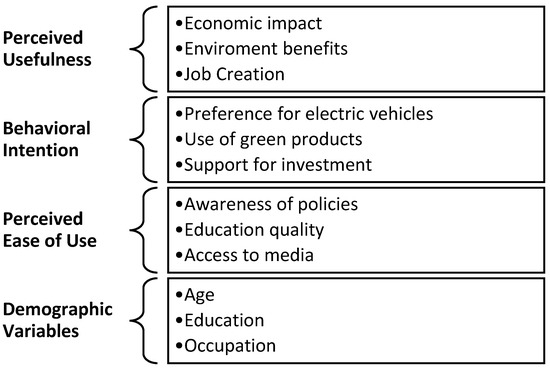
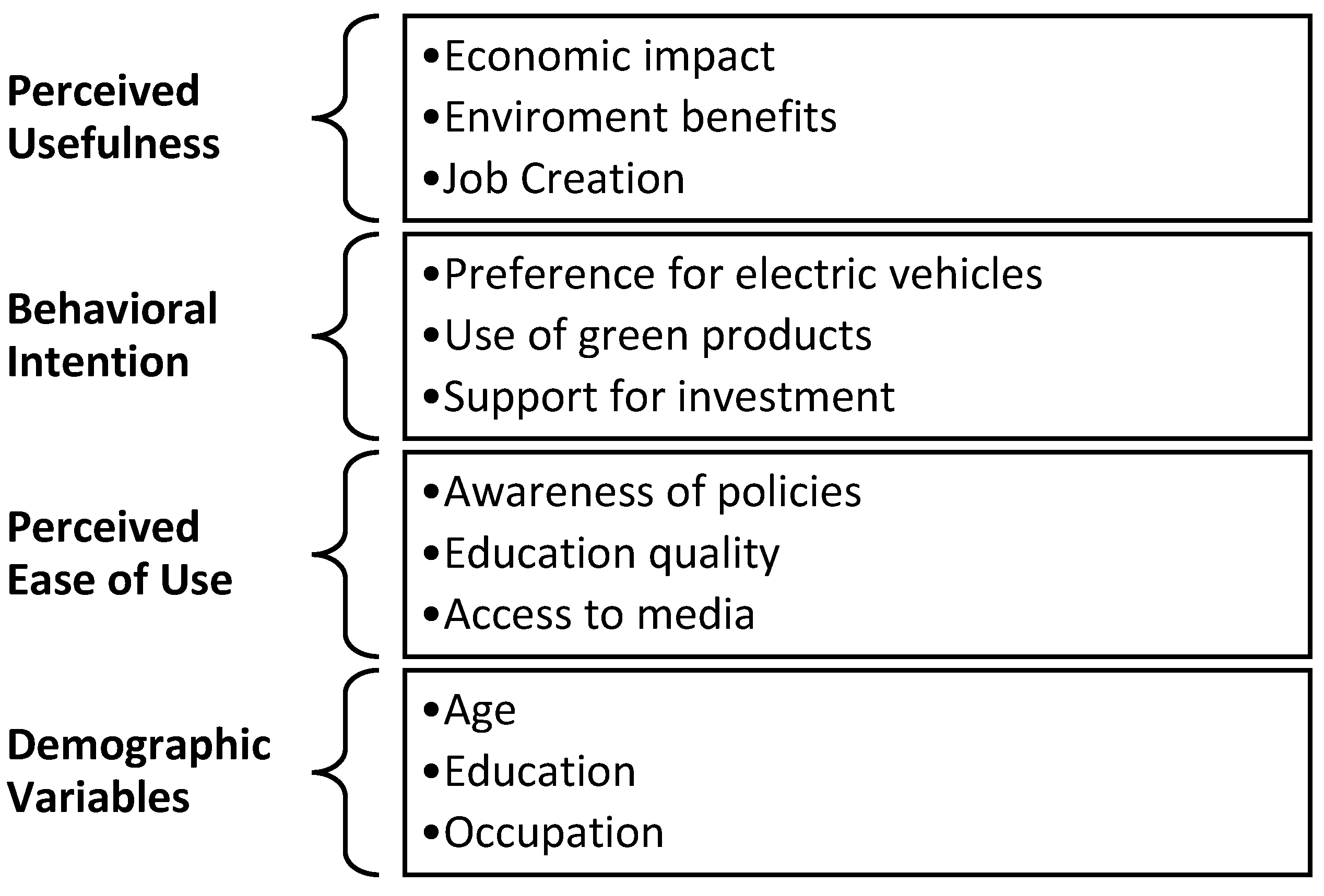
The public perceptions of renewable energy vary across countries depending on social and educational factors. In Saudi Arabia, this topic remains particularly important as the country transitions from a fossil fuel-based economy toward cleaner energy alternatives. Although several studies have examined the public perception of renewable energy, few studies have applied a comprehensive framework, such as the Technology Acceptance Model (TAM), to assess public attitudes in the context of Saudi Arabia. In addition, previous studies have often focused on specific aspects, such as cost or environmental awareness, without integrating multiple dimensions within a single model. Therefore, this study aims to fill this gap by providing a more comprehensive analysis of public awareness, perceptions, and behavioral intentions toward renewable energy in Saudi Arabia. To better understand the public attitudes toward renewable energy, this study employs a conceptual framework based on the Technology Acceptance Model (TAM). This model is widely used to explain how individuals respond to new technologies, and in this research, it was adapted to align with the context of renewable energy adoption. The core TAM constructs were operationalized into measurable survey items. The perceived usefulness was assessed through indicators related to economic benefits, environmental impact, and job creation. Additionally, the perceived ease of use was captured through factors such as awareness of government policies, quality of education, and accessibility of information through media channels. Furthermore, the behavioral intention was evaluated by examining participants’ willingness to adopt environmentally responsible practices, including the use of electric vehicles, support for renewable energy investments, and preference for eco-friendly products. Demographic characteristics—such as age, education level, and occupation—were incorporated to identify variations among the respondents. Based on these components, the survey instrument was developed, and the collected data were analyzed to investigate the relationships among awareness, public perception, and support for renewable energy. The complete conceptual framework is illustrated in Figure 1.
Figure 1.
The conceptual framework, which was inspired by the Technology Acceptance Model (TAM) and applied to public attitudes toward renewable energy in Saudi Arabia.
2. Materials and Methods
This study employed a quantitative descriptive survey design to assess public awareness, perceptions, and attitudes toward renewable energy in Saudi Arabia. The survey instrument was structured to explore seven thematic areas, namely: demographic background, public awareness, environmental attitudes, personal behavior, economic perceptions, education and media quality, and future outlook and risk assessment.
In addition, this study incorporated elements of the Technology Acceptance Model (TAM) to guide the design of the survey instrument. The key TAM constructs were adapted to the context of renewable energy. The perceived usefulness was measured through items related to economic benefits, environmental impact, and job creation. The perceived ease of use was reflected in factors such as awareness of policies, access to information, and the quality of education. The behavioral intention was assessed by examining participants’ intention to adopt renewable energy-related practices, such as supporting green investments and using environmentally friendly technologies.
The data were collected using an online questionnaire shared through various digital channels from August to December 2025. A total of 217 valid responses were obtained from participants representing different age groups, educational backgrounds, and employment sectors.
The sample size was considered appropriate for a descriptive study aimed at identifying general trends in public perceptions. In addition, the use of convenience sampling was suitable for this exploratory survey, where the main objective was to obtain initial insights rather than achieve full population representativeness. Notably, the majority of the respondents resided in the Riyadh region, reflecting the primary distribution of the survey.
The questionnaire consisted of a combination of multiple-choice questions and Likert-type scale items (e.g., five-point scales and categorical responses such as “agree”, “neutral”, and “disagree”) used to measure the participants’ perceptions, including their views on economic growth related to renewable energy. Prior to distribution, the instrument was reviewed by energy experts to ensure clarity and content validity. Participation was entirely voluntary, and all the responses were kept anonymous to ensure ethical compliance and protect participant privacy. For the data analysis, responses were coded and processed using Microsoft Excel 365. The analysis primarily relied on descriptive statistics, including frequencies and percentages, to present the distribution of the responses across the various survey items. Accordingly, this study focuses on understanding public perceptions rather than developing or validating a measurement scale. Therefore, the analysis was designed to highlight key patterns in the data.
3. Results and Discussion
This section presents and discusses the findings of a community-based survey conducted to evaluate public perceptions, awareness, and attitudes toward renewable energy in Saudi Arabia. As the Kingdom accelerates its transition toward sustainability and reduces its reliance on fossil fuels, understanding public engagement with renewable energy becomes increasingly critical. The results offer valuable insights that can inform researchers, policymakers, and stakeholders involved in the design of educational initiatives, awareness campaigns, and renewable energy policies.
3.1. Personal Information
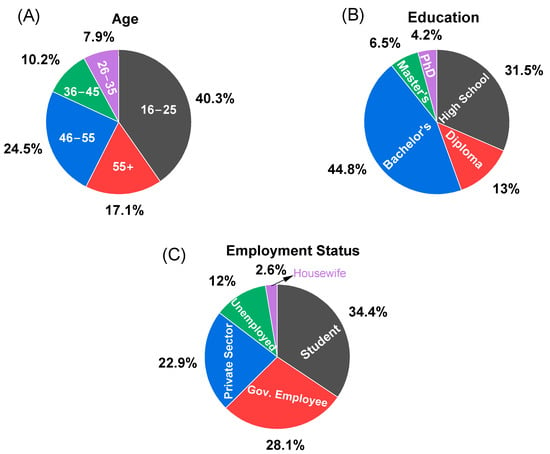
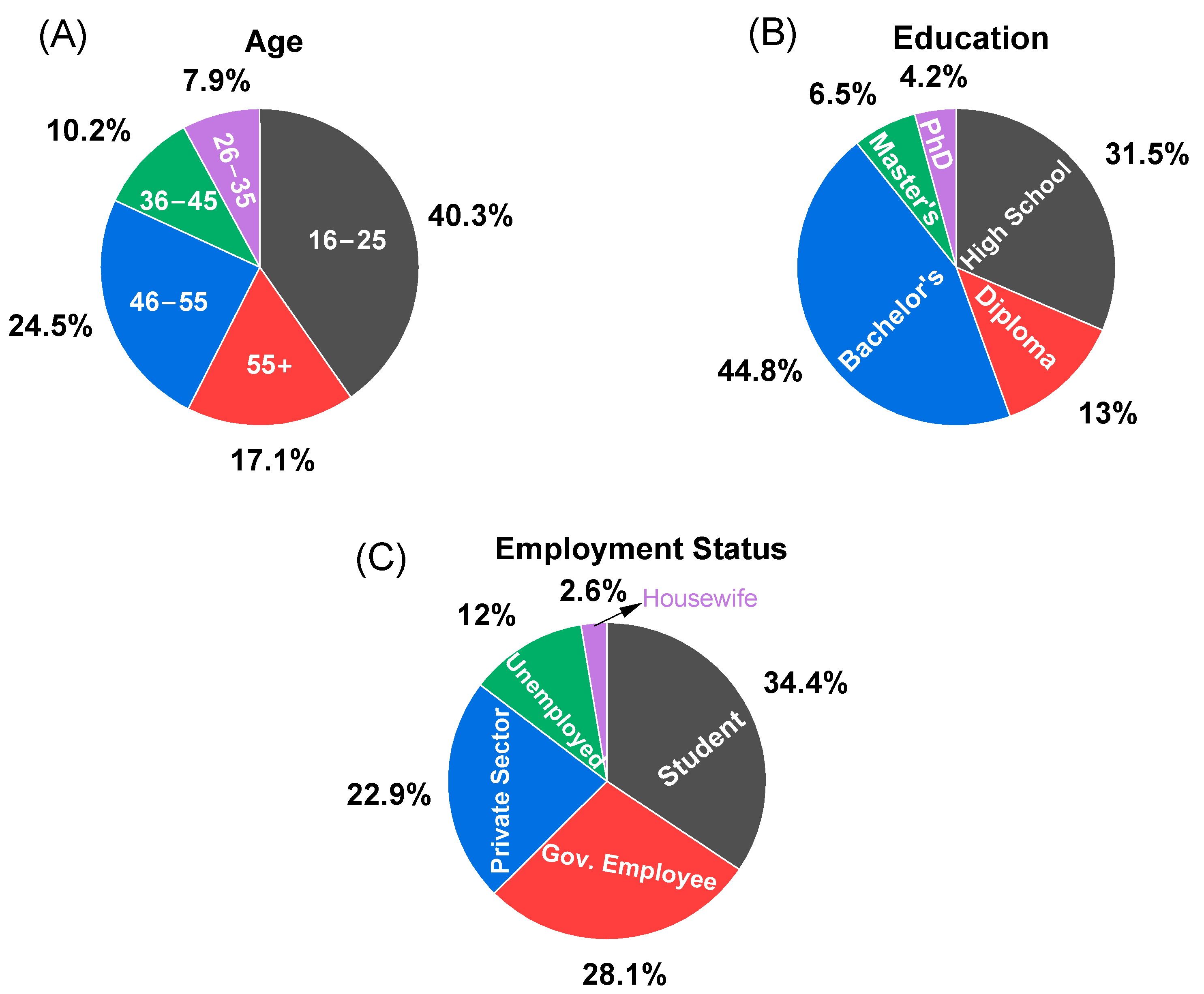
The demographic characteristics of 217 respondents provide insights into the diversity and representation within the study sample. As shown in Figure 2A, the majority of the participants (40.3%) were aged 16–25, followed by those aged 46–55 (24.5%), those over 55 years old (17.1%), and those aged 36–45 and 26–35, which accounted for 10.2% and 7.9%, respectively. This age distribution highlights the dominance of youth in the sample, a group that is particularly engaged with sustainability and energy transition goals. This higher proportion of younger respondents is likely due to the use of online surveys, which are more commonly used by younger individuals. As a result, the findings may reflect higher awareness and more positive attitudes toward renewable energy. Therefore, these findings should be interpreted with this limitation in mind. Despite this limitation, the observed trend is consistent with Saudi Arabia’s Vision 2030, which acknowledges that although we have a strong natural potential in solar and wind energy, and we provide it locally with energy that will support a significant portion of the population by 2030 by 2030, we still lack a diversified sector in the new energy sector at present. In order to build this sector, we set ourselves an initial target of 9.5 gigawatts of renewable energy. It also aims to localize a large part of the energy value chain within the Saudi Arabian economy, including research and manufacturing [10].
Figure 2.
The demographic characteristics of the respondents, including (A) age distribution, (B) education level, and (C) employment status.
The gender distribution was relatively balanced, with 55.8% female and 44.2% male. In terms of geographic representation, most respondents (79.9%) were from the Riyadh region, with the remaining participants scattered across other regions. Regarding educational attainment (Figure 2B), nearly half of the respondents (44.8%) held a bachelor’s degree, followed by 31.3% who completed secondary education. The participants with diplomas, master’s, and PhD degrees represented 13%, 6.5%, and 4.2%, respectively. This educational background reflects a well-informed sample that is capable of engaging meaningfully with renewable energy issues. As illustrated in Figure 2C, students made up the largest occupational group (34.4%), followed by government employees (28.1%) and private sector workers (22.9%). Other categories, such as military personnel, business owners, and trainees, collectively represented 3.7% of the sample and are mentioned here for clarity, but they are not shown in the figure to keep the focus on the main employment groups.
3.2. Public Awareness
Public awareness plays a vital role in shaping national energy transitions. While technical feasibility and economic considerations are important, the success of renewable energy deployment also depends on the public’s level of understanding, trust, and support for such initiatives. As renewable energy is a central pillar in Saudi Arabia’s Vision 2030 [10], this section explores how participants perceive and engage with this transition.
The survey results indicate that the public is generally informed and supportive. A significant majority (70.5%) correctly recognized that fossil fuels in Saudi Arabia primarily depend on oil, reflecting a basic awareness of the nation’s current energy model. Furthermore, when asked to evaluate their knowledge of renewable energy sources, 53% of participants rated their understanding as “average,” while 29.5% rated it as “good,” and only 17.5% considered their knowledge to be “poor.”
In terms of attitudes toward reducing fossil fuel reliance, 51.2% of participants supported the idea that Saudi Arabia should reduce its dependence on fossil fuels, while 26.7% were uncertain. This highlights a moderate yet meaningful level of awareness of the environmental and economic implications of continued fossil fuel use. Regarding awareness of the challenges associated with renewable energy, responses were more divided: 41% reported being aware of such challenges, while 30.4% were not, and 28.6% were unsure. This suggests that, although general support exists, detailed knowledge of technical or policy-related issues may still be lacking. These findings are consistent with previous studies showing that public awareness and attitudes toward renewable energy are influenced by perceived barriers and the role of information sources in shaping public understanding [20]. Notably, 61.3% of participants reported having heard about the government programs related to renewable energy, indicating that official initiatives are gaining visibility. Encouragingly, 76% of the respondents expressed confidence that renewable energy could become the Kingdom’s primary energy source. However, expectations about the future of fossil fuels remain mixed: 40.1% believe their use will continue, 27.2% believe it will not, and 32.7% were uncertain.
As shown in Table 1, most participants demonstrated a solid understanding of Saudi Arabia’s energy landscape and expressed optimism about a future powered by renewables. Continued public education and transparent communication from institutions will be essential to bridge these gaps and foster a smoother energy transition.
Table 1.
A summary of the participants’ responses regarding renewable energy awareness and attitudes.
3.3. Environmental Impact
The public perceptions regarding the environmental implications of energy sources reflect an encouraging level of awareness and responsibility. As summarized in Table 2, a majority of the respondents (72.8%) expressed support for the global efforts aimed at reducing carbon emissions. This aligns well with the goals of national initiatives such as theSaudi Green Initiative (SGI), which targets net-zero emissions by 2060 through investment in renewable energy, improved energy efficiency, and carbon capture technologies [21]. The support for further national investment in renewable energy technologies was particularly strong, with 87.1% of the respondents favoring such efforts. Furthermore, 87.1% believed that renewable energy can effectively reduce pollution, indicating a strong awareness of its environmental benefits. These responses reflect a solid understanding of the connection between clean energy and environmental protection. This result is consistent with previous research showing that renewable energy can help reduce pollution, improve environmental sustainability, and support broader sustainable development goals in Saudi Arabia [22].
Table 2.
A summary of the participants’ responses regarding environmental impact and behavior.
When asked about industrial activities that negatively affect the environment, the majority of participants were either opposed (35%) or strongly opposed (32.3%). This reinforces the notion that the public views environmental degradation as a critical issue that requires regulation and change. Regarding the levels of concern about the environmental impact of fossil fuel consumption, most respondents (53.9%) selected the midpoint of the 1–5 scale, reflecting moderate concern. This may suggest a mix of environmental awareness and recognition of the country’s current reliance on fossil fuels. It may also indicate trust in the government’s ongoing efforts to manage the transition toward cleaner alternatives.
Behavioral aspects were also explored. Regarding consumer habits, 25.8% of the respondents said they consistently opt for products powered by renewable energy—even when they cost more—while another 60.4% do so sometimes, suggesting a growing willingness to prioritize sustainability over price. This reveals a growing interest in environmentally conscious consumer behavior, even when financial factors are involved.
3.4. Personal Behavior
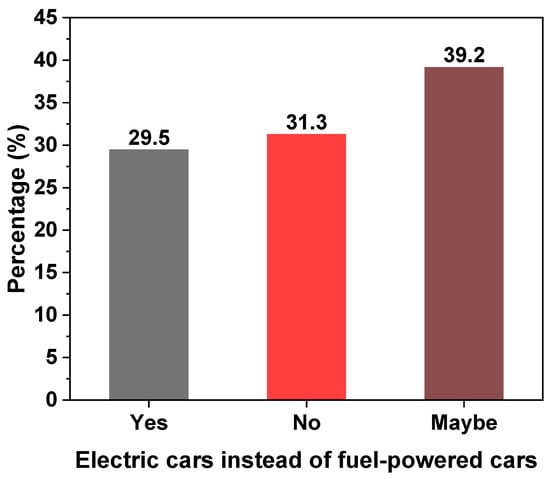
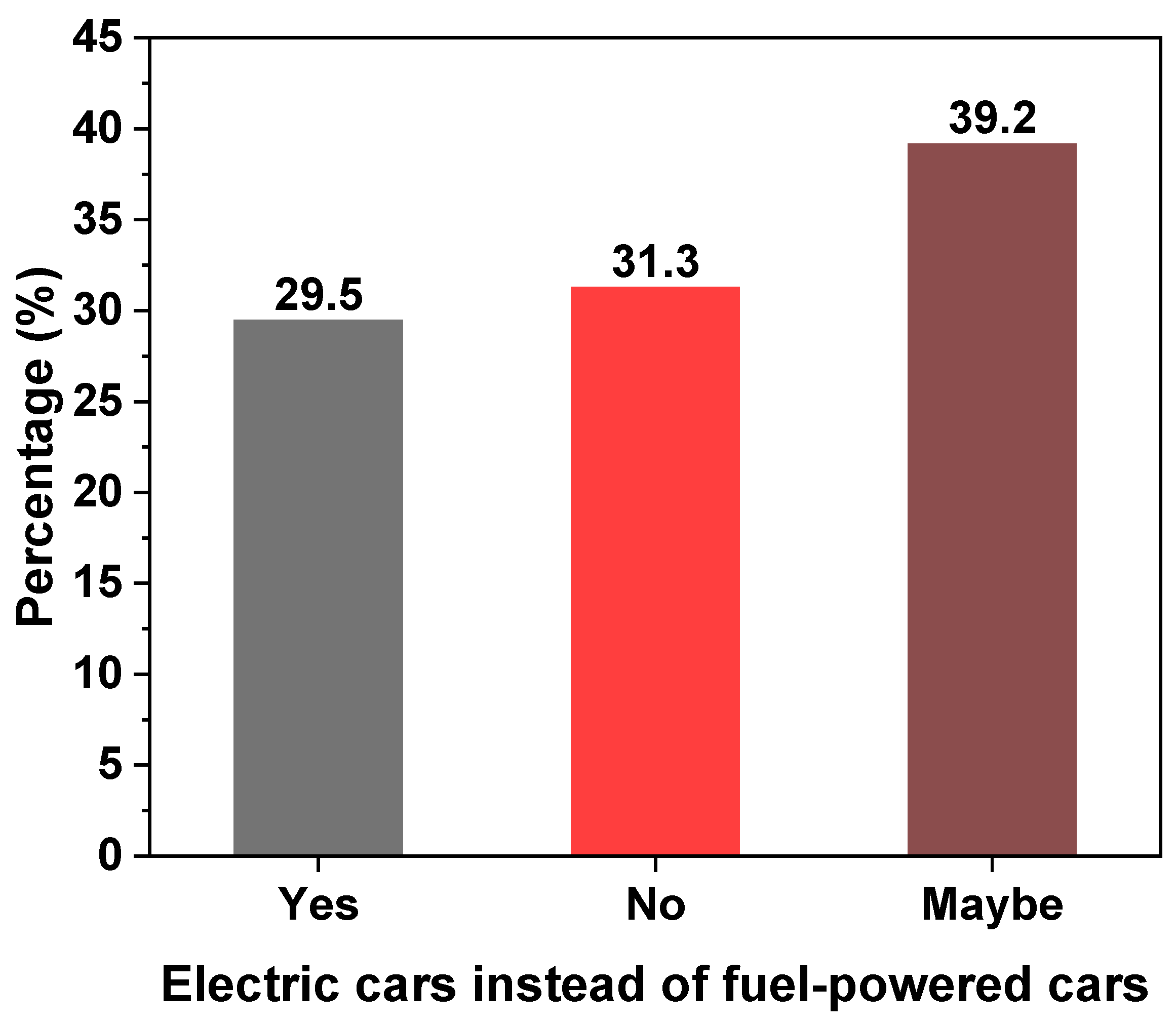
Personal behavior plays a critical role in supporting the transition toward sustainable energy. As shown in Figure 3, nearly 29.5% of participants indicated a willingness to adopt electric vehicles, while an additional 39.2% expressed an openness to the idea. This growing acceptance likely stems from environmental concerns and the appeal of modern technology. The prominence of younger respondents in the sample (especially those aged 16–25) may also explain this inclination.
Figure 3.
The public opinion on switching to electric cars instead of using fuel-powered vehicles.
Other behaviors related to energy efficiency were also examined. This study found that 33.6% of the respondents reported having already implemented energy-saving renovations in their homes, and 37.8% expressed plans to do so. These findings reflect a proactive attitude toward improving energy performance in domestic settings. However, the use of energy-monitoring tools remains relatively low, with only 30.9% of participants utilizing such applications, indicating a need for increased awareness and accessibility of digital energy management solutions. Encouragingly, 73.3% of the respondents stated a desire to receive more information about renewable energy and the national energy transition. This highlights a strong demand for educational campaigns and outreach efforts, particularly among young individuals who are already inclined to support sustainable practices. Such engagement is in line with the goals of Saudi Vision 2030, particularly through its Quality-of-Life Program [10], which promotes enhanced living standards and environmental responsibility.
3.5. Economic Impacts of Renewable Energy
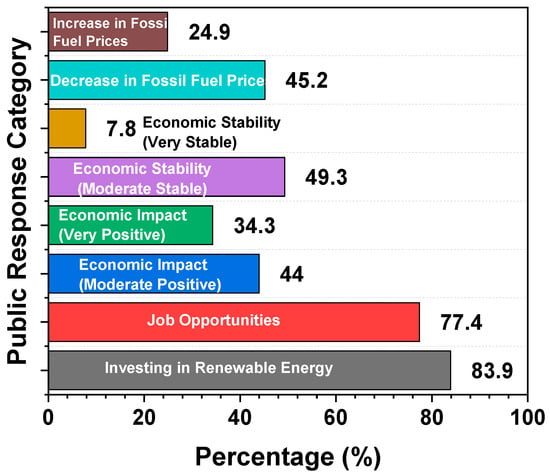
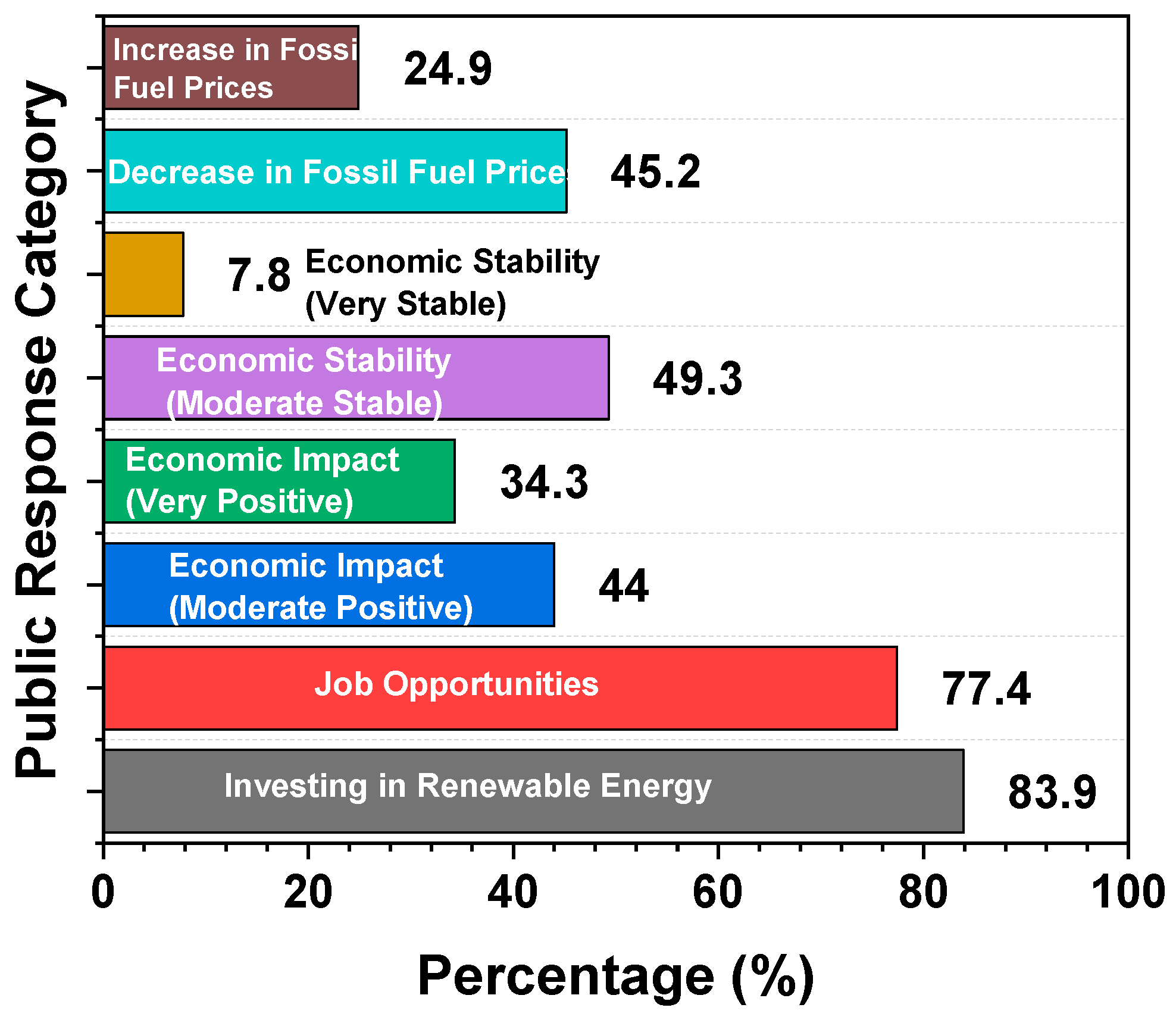
The economic implications of transitioning to renewable energy in Saudi Arabia are increasingly viewed as favorable by the public. As illustrated in Figure 4, 83.9% of the respondents believe that investing in renewable energy will promote economic growth, while only a small percentage (3.2%) expressed disagreement, and 13% remained uncertain. This perception aligns with Saudi Arabia’s broader economic diversification goals under Vision 2030, where renewables are positioned as a core pillar for reducing oil dependency and enhancing economic resilience [23,24,25].
Figure 4.
The results of the participants’ views on the economic impact of renewable energy.
Regarding economic stability, nearly half of the participants (49.3%) anticipated a moderate level of stability resulting from the energy transition, while 24.4% expected it to bring strong stability. Meanwhile, a smaller group (7.4%) expressed concerns about the potential instability, and 18.9% were unsure, indicating that although overall expectations ofeconomic stability are positive, a degree of uncertainty remains. The job creation potential of renewable energy also received strong support, with 77.4% of the respondents agreeing that it would contribute to employment opportunities. This finding is supported by international trends, where renewable energy industries continue to generate new roles in manufacturing, installation, operation, and maintenance.
The perceptions of the transition’s effect on fossil fuel prices were more varied. While 24.9% of participants believed that expanding renewables would lead to higher fossil fuel prices, possibly due to reduced supply efficiency or taxation, 45.2% expected prices to decrease due to falling demand. Others remained unsure (22.2%) or believed there would be no significant change (7.8%). These mixed views reflect the complex and evolving relationship between energy markets. Taken together, the results reveal optimism about the economic potential for renewable energy in Saudi Arabia, particularly in terms of growth and employment. However, they also highlight the need for clearer public communication on how energy market dynamics, especially fossil fuel pricing, will respond to long-term shifts in energy sourcing.
3.6. Quality of Educational Information About Energy
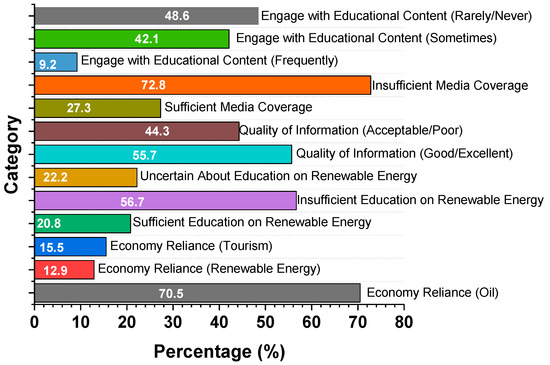
Access to high-quality educational content is essential for achieving Saudi Arabia’s transition toward a more sustainable and diversified energy future. Effective energy education plays a pivotal role in shifting the public perceptions away from an oil-dependent economy toward one that embraces solar, wind, and other renewable technologies. It also prepares future generations with the knowledge and skills required to actively contribute to this national transformation [10]. According to the survey findings shown in Figure 5, a significant majority (70.5%) of the respondents view the Saudi economy as still heavily reliant on oil, with only 12.9% recognizing renewable energy as a key contributor. Similarly, 56.7% of participants reported that the current educational content on renewable energy is insufficient, indicating a strong need to enhance both the quantity and quality of energy education.
Figure 5.
The results on energy education and media coverage in Saudi Arabia.
The perceptions of media coverage mirror these concerns. Nearly 72.8% of the respondents believe that media attention on renewable energy topics is lacking, limiting the public’s exposure to critical energy-related developments. In terms of information quality, 55.7% rated the available content as “good” or “excellent,” while 44.3% considered it “acceptable” or “poor.” The engagement with educational materials also appears limited, with 48.4% stating they rarely or never interact with energy-related educational content, and only 9.2% doing so frequently. These findings collectively suggest that the public understanding of renewable energy is hindered by both insufficient formal education and weak media representation. To address these gaps, it is recommended that renewable energy education be more deeply integrated into school curricula, supported by accessible and engaging resources through digital platforms. Additionally, public campaigns, exhibitions, and media collaborations, especially with social influencers, can broaden the reach and improve public literacy in this area.
3.7. Future Prospects and Risk Assessment
The future of renewable energy in Saudi Arabia appears promising, primarily due to its potential to reduce greenhouse gas emissions and decrease the dependence on fossil fuels. However, realizing this potential requires careful consideration of the associated risks, particularly those related to intermittency, grid stability, and the technological and economic challenges of integration. A balanced understanding of both the opportunities and the risks is crucial to building a sustainable and reliable energy system [26,27]. According to the results illustrated in Table 3, 31.3% of participants believe that fossil fuels will remain dominant over the next two decades, while 30.9% believe they will gradually decline, and 18.5% believe they will be replaced entirely by renewables. A notable 72.4% agreed that younger generations are more likely to adopt renewable energy, indicating a generational shift in mindset. Furthermore, 88.9% of the respondents view major companies as playing a key or potential key role in advancing renewable energy goals. When asked about the challenges facing the transition, 48.4% identified multiple barriers, including oil dependency, high transition costs, lack of awareness, and technical limitations. Regarding the perceived benefits, 67.7% highlighted an emissions reduction and energy independence, while 32.3% emphasized economic improvement and job creation.
Table 3.
The results of the participants’ responses on future prospects and risk assessment.
The public safety perceptions were also assessed, with 78.3% expressing low to moderate perceptions of the safety of transitioning away from fossil fuels, and only 21.7% giving high safety ratings. Moreover, 66.7% expressed concern or uncertainty about job security during the transition, reflecting fears over the future of fossil fuel-related employment. Similarly, 81.6% were either concerned or unsure about the economic risks of the shift, while only 18.4% believed there were no risks. In addition, the health risk perceptions were more optimistic: 69.6% believed that renewable energy poses fewer or similar risks compared to fossil fuels. Finally, grid stability was a significant concern, with 56.6% reporting actual or potential issues and only 43.4% expressing confidence in maintaining stability. This concern is consistent with the recent studies emphasizing the importance of integrating renewable energy in a way that maintains grid reliability and supports a stable and resilient power system in Saudi Arabia [28]. Overall, these insights suggest that while there is clear support for renewable energy, concerns around infrastructure, safety, and economic disruption remain. Addressing these issues through transparent communication, improved technology, and regulatory frameworks will be critical in building public confidence and accelerating the energy transition.
3.8. Statistical Analysis
To supplement the descriptive findings, inferential statistical tests were conducted to examine the associations between the key variables derived from the Technology Acceptance Model (TAM), as well as the demographic characteristics and attitudes toward renewable energy. Chi-square tests and cross-tabulations were used to identify statistically significant relationships at the conventional significance threshold (p < 0.05). Several significant associations emerged from the analysis. For example, a strong relationship was found between individuals’ awareness of the government’s renewable energy initiatives and their self-reported knowledge of renewable sources (χ2 = 15.96, p < 0.001), reflecting the role of perceived ease of use in shaping awareness and understanding. Similarly, those who supported the national investment in renewable technologies were significantly more likely to believe that renewables promote economic growth (χ2 = 15.16, p = 0.019) and that the shift would create new job opportunities (χ2 = 45.96, p < 0.001). Another significant result indicated that the respondents who believed renewables could reduce pollution were more confident in their potential as a primary energy source for the Kingdom (χ2 = 17.29, p = 0.002), further supporting the influence of perceived usefulness. Furthermore, a relationship was identified between home energy renovation and preference for renewable-powered products despite higher cost (χ2 = 14.19, p = 0.007), suggesting a link with behavioral intention and actual supportive behavior.
This relationship is clearly demonstrated in Table 4, which shows that the 180 respondents who agreed that renewable energy supports economic growth also supported the investment in the sector, compared to only 10 who did not. Among those who expressed neutral views, 20 supported the investment while five did not. Notably, among those who disagreed with the economic benefits of renewable energy, support for the investment dropped to only five, with six explicitly opposing it. This comparison reflects how perceptions of economic impact (perceived usefulness) directly influence intention to support renewable energy initiatives.
Table 4.
The cross-tabulation between the support for renewable energy investment and the perceptions of economic growth.
These findings suggest that the key TAM factors, along with demographic characteristics and prior exposure to renewable energy topics, play an important role in shaping perceptions and acceptance. Such statistically significant insights emphasize the importance of public education and targeted awareness efforts to strengthen support for the Kingdom’s clean energy transition. However, one limitation of this study is that the term “renewable energy” was used in a general sense without distinguishing between specific technologies such as solar or wind energy. Given that Saudi Arabia’s renewable energy strategy places a strong emphasis on solar energy, future research could benefit from examining the public perceptions of specific renewable energy technologies in more detail. In addition, the generalizability of the findings is limited due to the use of a non-probability convenience sampling approach. The sample is also largely concentrated in the Riyadh region, which may not fully represent the perspectives of the entire population of Saudi Arabia. Future studies are encouraged to include more geographically diverse and randomly selected samples to improve national representativeness.
4. Conclusions
This survey offers a meaningful look into how people in Saudi Arabia view renewable energy, based on feedback taken from 217 participants. This includes mostly people aged between 23 and 54 years from the city of Riyadh. The results forecasted a picture of cautious optimism, with nearly three out of every four respondents (73.4%) believing that renewables could one day be the country’s main source of energy. More than half (51.2%) also expressed support for reducing the reliance on fossil fuels, a sign that public attitudes are slowly shifting in line with the goals of Vision 2030. Most people are well aware of the significance of renewable energy sources and have at least a basic understanding (53%). Encouragingly, above 60% said they were aware of the government’s efforts to promote clean energy, which suggests that these programs are starting to reach the public. Environmental concerns also came through, but nearly 90% support a greater investment in renewables, and more than 80% believe these technologies can help cut pollution, particularly carbon emissions. On the economic side, confidence is high: 83.9% think renewable energy will boost the economy, and almost 78% expect it to create new jobs. Still, not everyone feels entirely confident about the transition. Many voiced worries about how changes in the energy market might affect jobs in traditional sectors, and some raised concerns about the reliability of the power grid as more renewables energy is integrated into the energy system. Another key takeaway was the general feeling that schools and the media are not doing enough to educate the public about clean energy. Over half of those surveyed felt that the current efforts fall short, highlighting the need for better educational materials, stronger outreach, and easier access to reliable information. This can be improved by including renewable energy topics in school education, promoting targeted awareness campaigns through social media, and encouraging a stronger collaboration between the government and educational institutions to provide clear and accessible information. Overall, the results show that the main TAM factors, perceived usefulness, perceived ease of use, and behavioral intention, help explain how people perceive renewable energy.
Author Contributions
Conceptualization, N.S.A. and K.N.A.; methodology, M.H.A., K.M.A., M.S.A. (Mohammed S. Alnafisah), D.D.A. and L.A.S.; software, N.S.A. and K.M.A.; validation, M.S.A. (Mohammed S. Almoiqli), N.S.A. and K.N.A.; formal analysis, M.H.A., K.M.A., M.S.A. (Mohammed S. Alnafisah) and M.S.A. (Mohammed S. Almoiqli); investigation, D.D.A. and L.A.S.; data curation, N.S.A., K.M.A., M.S.A. (Mohammed S. Alnafisah) and M.H.A.; writing—original draft preparation, M.H.A., M.S.A. (Mohammed S. Alnafisah) and K.M.A.; writing—review and editing, N.S.A. and K.N.A.; visualization, K.N.A.; supervision, N.S.A.; project administration, N.S.A. All authors have read and agreed to the published version of the manuscript.
Funding
This research received no external funding.
Institutional Review Board Statement
Ethical review and approval were waived for this study due to the nature of the research, which involved a voluntary and anonymous questionnaire that did not collect personal or sensitive data and did not involve vulnerable populations or clinical procedures.
Informed Consent Statement
Informed consent was obtained from all subjects involved in the study. The participation was voluntary, and the completion of the questionnaire was considered as implied consent. Written consent was not required because the survey was conducted anonymously and did not involve the collection of identifiable personal data.
Data Availability Statement
Data are available on request from the corresponding author. The data are not publicly available to ensure appropriate use of the dataset.
Acknowledgments
The authors thank King Abdulaziz City for Science and Technology (KACST) for its continual support for this project. The authors have reviewed and edited the output and take full responsibility for the content of this publication. The authors also acknowledge Ahmed Alsaleh for his valuable assistance in improving the understanding of the quantum analysis. The authors further thank Khalid Alnajem for his support in facilitating the distribution of the survey to the public. The authors used AI to assist with English language editing and grammar refinement. All outputs were carefully reviewed and validated by the authors, who take full responsibility for the content of the manuscript.
Conflicts of Interest
The authors declare that they have no known competing financial interests or personal relationships that could have appeared to influence the work reported in this paper.
Abbreviations
The following abbreviations are used in this manuscript:
| IEA | International Energy Agency |
| IRENA | International Renewable Energy Agency |
| ILO | International Labour Organization |
| NREP | National Renewable Energy Program |
| SGI | Saudi Green Initiative |
| TAM | Technology Acceptance Model |
References
- Cohen, G.; Joutz, F.; Loungani, P. Measuring energy security: Trends in the diversification of oil and natural gas supplies. Energy Policy 2011, 39, 4860–4869. [Google Scholar] [CrossRef] [Scilit]
- Gan, K.E.; Taikan, O.; Gan, T.Y.; Weis, T.; Yamazaki, D.; Schüttrumpf, H. Enhancing Renewable Energy Systems, Contributing to Sustainable Development Goals of United Nation and Building Resilience Against Climate Change Impacts. Energy Technol. 2023, 11, 2300275. [Google Scholar] [CrossRef] [Scilit]
- Salem, H.S.; Pudza, M.Y.; Yihdego, Y. Harnessing the energy transition from total dependence on fossil to renewable energy in the Arabian Gulf region, considering population, climate change impacts, ecological and carbon footprints, and United Nations’ Sustainable Development Goals. Sustain. Earth Rev. 2023, 6, 10. [Google Scholar] [CrossRef] [Scilit]
- Edenhofer, O.; Pichs-Madruga, R.; Sokona, Y.; Seyboth, K.; Kadner, S.; Zwickel, T.; Eickemeier, P.; Hansen, G.; Schlömer, S.; von Stechow, C. Renewable Energy Sources and Climate Change Mitigation: Special Report of the Intergovernmental Panel on Climate Change; Cambridge University Press: Cambridge, UK, 2011. [Google Scholar]
- Ambrose, J. Renewable Energy Passes 30% of World’s Electricity Supply. Available online: https://www.theguardian.com/environment/article/2024/may/08/renewable-energy-passes-30-of-worlds-electricity-supply (accessed on 6 April 2026).
- IEA. Net Zero by 2050; IEA: Paris, France, 2021; Available online: https://www.iea.org/reports/net-zero-by-2050 (accessed on 9 April 2026).
- Tansel Tugcu, C.; Menegaki, N.A. The impact of renewable energy generation on energy security: Evidence from the G7 countries. Gondwana Res. 2024, 125, 253–265. [Google Scholar] [CrossRef] [Scilit]
- Renner, M.; Garcia-Banos, C.; Khalid, A. Renewable Energy and Jobs: Annual Review 2022; ILO: Abu Dhabi, United Arab Emirates, 2022. [Google Scholar]
- Islam, M.T.; Ali, A. Sustainable green energy transition in Saudi Arabia: Characterizing policy framework, interrelations and future research directions. Next Energy 2024, 5, 100161. [Google Scholar] [CrossRef] [Scilit]
- Vision 2030, Annual Report 2024, Kingdom of Saudi Arabia. Available online: https://www.vision2030.gov.sa/ar/ (accessed on 6 April 2026).
- Renewable Energy. Available online: https://www.moenergy.gov.sa/en/eco-system/programs/renewable-energy (accessed on 9 April 2026).
- Saudi Green Initiative. Available online: https://www.vision2030.gov.sa/en/explore/projects/saudi-green-initiative (accessed on 6 April 2026).
- Mirza, Z.T.; Anderson, T.; Seadon, J.; Brent, A. A thematic analysis of the factors that influence the development of a renewable energy policy. Renew. Energy Focus 2024, 49, 100562. [Google Scholar] [CrossRef] [Scilit]
- Kacan, E. Renewable energy awareness in vocational and technical education. Renew. Energy 2015, 76, 126–134. [Google Scholar] [CrossRef] [Scilit]
- Almulhim, A.I. Understanding public awareness and attitudes toward renewable energy resources in Saudi Arabia. Renew. Energy 2022, 192, 572–582. [Google Scholar] [CrossRef] [Scilit]
- Mosly, I.; Makki, A.A. Current Status and Willingness to Adopt Renewable Energy Technologies in Saudi Arabia. Sustainability 2018, 10, 4269. [Google Scholar] [CrossRef] [Scilit]
- Akinwale, Y.O. Awareness and Perceptions of University Students in the Business College towards Energy Savings and Renewable Energy Sources in Saudi Arabia. Int. J. Energy Econ. Policy 2022, 12, 470–476. [Google Scholar] [CrossRef] [Scilit]
- Bouaguel, W.; Alsulimani, T. Understanding the Factors Influencing Consumers’ Intention toward Shifting to Solar Energy Technology for Residential Use in Saudi Arabia Using the Technology Acceptance Model. Sustainability 2022, 14, 11356. [Google Scholar] [CrossRef] [Scilit]
- Alsulami, A.; Fairbrass, J.; Botelho, T.; Assadinia, S. Renewable energy and innovation in Saudi Arabia: An exploration of factors affecting consumers’ intention to adopt Solar PV. Technol. Forecast. Soc. Change 2024, 204, 123430. [Google Scholar] [CrossRef] [Scilit]
- Karasmanaki, E.; Arabatzis, G.; Tsantopoulos, G. Citizens and Energy Transition: Understanding the Role of Perceived Barriers and Information Sources. Energies 2025, 18, 4984. [Google Scholar] [CrossRef] [Scilit]
- SGI Forum 2023. Available online: https://www.vision2030.gov.sa/en/media/media/sgi-forum-2023 (accessed on 9 April 2026).
- Benhacene, H.L.M.; Hussien, A.M. The Impact of Adopting Renewable Energy Resources on Sustainable Development in Saudi Arabia: A Qualitative View. Sustainability 2025, 17, 768. [Google Scholar] [CrossRef] [Scilit]
- Mufti, I. Saudi Arabia’s Growing Solar Power Capabilities Gain Interest from UK Government. Available online: https://gowlingwlg.com/en/insights-resources/articles/2023/saudi-arabia-s-growing-solar-power-capabilities (accessed on 6 April 2026).
- Saudi Arabia Renewable Energy Market Growth Analysis—Market Size, Share, Forecast Trends and Outlook Report (2025–2034). Available online: https://www.researchandmarkets.com/reports/6113403/saudi-arabia-renewable-energy-market-growth?srsltid=AfmBOooaWhYMoMx8UBqfIld-skZBv4YfbC9J-wVRN9Rcfr0pG6jc1T9o (accessed on 6 April 2026).
- Fostering Effective Energy Transition 2023. Available online: https://www.weforum.org/publications/fostering-effective-energy-transition-2023/?gad_source=1&gad_campaignid=22228224717&gbraid=0AAAAAoVy5F5WelzVDdlBrlNAZtOl1l8Au&gclid=Cj0KCQiA7fbLBhDJARIsAOAqhscTGe3-TgYBO37smxoChgdyu8RR8-nQOyhSFTmciDj3jfQwR11b_XQaAoT4EALw_wcB (accessed on 6 April 2026).
- Blakers, A.; Lu, B.; Stocks, M. 100% renewable electricity in Australia. Energy 2017, 133, 471–482. [Google Scholar] [CrossRef] [Scilit]
- Renewable Energy and Jobs: Annual Review 2020. Available online: https://www.irena.org/publications/2020/Sep/Renewable-Energy-and-Jobs-Annual-Review-2020 (accessed on 6 April 2026).
- Almutairi, A.; Alhamed, Y. Sustainability and Grid Reliability of Renewable Energy Expansion Projects in Saudi Arabia by 2030. Sustainability 2025, 17, 4493. [Google Scholar] [CrossRef] [Scilit]

Disclaimer/Publisher’s Note: The statements, opinions and data contained in all publications are solely those of the individual author(s) and contributor(s) and not of MDPI and/or the editor(s). MDPI and/or the editor(s) disclaim responsibility for any injury to people or property resulting from any ideas, methods, instructions or products referred to in the content. |
© 2026 by the authors. Licensee MDPI, Basel, Switzerland. This article is an open access article distributed under the terms and conditions of the Creative Commons Attribution (CC BY) license.