


Abstract
Wakes generated by upstream turbines in an offshore wind farm severely reduce the efficiency and power output of downstream turbines. Wind farm layout optimization offers a way to alleviate these negative impacts, where the main challenge lies in accurate and efficient evaluation across a vast number of potential configurations. Analytical wake models are crucial tools for this optimization, owing to their superb ability to efficiently predict wake distributions. This paper evaluates and discusses recent advances and persistent challenges in analytical wake modelling for layout optimization of wind farms. While the Jensen model remains efficient for discrete searches, the models capturing radial velocity gradients have become a preferred choice for high-fidelity optimization designs. Advanced models show the transition to full wakes to cover near-wake characteristics and complex inflow conditions. Motion corrections and physically based superposition methods improve the performance evaluation of floating offshore wind farms. Multi-objective optimization frameworks balance energy production and fatigue life by the integration of turbulence modelling. However, the increasing scale of modern wind turbines, the dynamic complexity of floating offshore wind farms, the clustering, and the model validation of large-scale wind farms present significant challenges to the applicability of these models. This paper highlights these emerging limitations in optimization problems, clarifying that addressing the gaps in these specific areas is essential for the development of high-fidelity optimizations and the design of future large-scale offshore wind turbine clusters.
1. Introduction
Driven by the COP28 climate target to triple renewable energy capacity [1], the global energy transition highlights the leading role of wind power in renewable expansion. With global cumulative wind capacity exceeding 1136 GW and offshore turbine technology advancing toward 26 MW, wind farms are moving into the GW-scale clusters [2]. The rapid increase in wind turbine dimensions and wind farm scales has made wake effects, an aerodynamic interference between turbines, a critical factor limiting the efficiency of wind farms. In densely arranged wind farms, the low-velocity, high-turbulence wake regions generated by upstream turbines reduce downstream power output by 10–20% [3] and 5–15% additional fatigue loading [4]. Therefore, the scientific layout to mitigate such interference within limited sea areas has become a fundamental problem in wind engineering.
Wind farm layout optimization (WFLO), or micro-siting optimization, aims to determine the optimal installation positions of wind turbines within a given sea area. The optimization must balance specific targets against various constraints, including restricted boundaries, minimum spacing, and seabed topography. Mathematically, WFLO is a multi-constrained, non-convex, and non-linear optimization problem. It involves a high-dimensional variable space (turbine coordinates) and complex inter-variable relationships (wake effects) and is characterized by a lot of local optima. While traditional WFLO focused on single objectives like maximizing annual energy production (AEP) or minimizing the cost of energy [5], modern research has evolved into a multi-objective optimization problem targeting AEP or the levelized cost of energy (LCOE) [6], incorporating factors such as cabling and infrastructure costs [7,8,9], turbine fatigue loads [10,11,12,13], and environmental impacts [14,15,16].
With the advancement of computational power and insights into problem complexity, WFLO has evolved from discrete, simplified methods toward continuous, high-fidelity strategies. Early research, such as the pioneering work by Mosetti et al. [17], primarily adopted a discrete approach solved with genetic algorithms (GA) [18,19]. This grid-based method partitions the farm into a grid, restricting turbines to specific cell centres. This configuration significantly simplifies the application of GAs through binary encoding and reduces computational complexity. However, this approach lacks flexibility, artificially preventing the optimization to explore the space between grids and hindering the search for a global optimum. To overcome grid-based limitations, Ozturk and Norman [20], along with subsequent researchers [5], introduced the continuous approach, which enables the search for turbine positions in a continuous coordinate space. By expanding the search space and incorporating more diverse optimization algorithms, such as particle swarm optimization [21], evolutionary algorithm [22], random search [23], and greedy reposition [24], WFLO has achieved more refined layouts, higher energy production, and enhanced computational efficiency [25,26,27].
Despite the availability of diverse optimization algorithms, the heart of WFLO consists of the rapid and accurate evaluation of wake effects across a vast array of potential layout configurations to determine the corresponding energy production. Although the high-fidelity method of computational fluid dynamics (CFD) offers superior accuracy, it remains computationally impractical for iterative optimization processes involving thousands of evaluations. Therefore, considering superior efficiency, analytical wake models have become an indispensable choice for WFLO. Based on mass or momentum conservation, these models utilize simplified mathematical formulations, including the classic Jensen [28,29] and Frandsen models [30], as well as the more recent Gaussian [31,32,33], cosine [34,35,36], and polynomial models [37,38], to characterize the evolution of wake velocity deficit along the downstream direction. By providing sufficient accuracy at a negligible computational cost, their practical utility has been tested. However, as the wind power development shifts toward upscaling, clustering, far-offshore deployments, and smart management, traditional wake models are encountering greater complexities and challenges in a practical WFLO. Early top-hat models can no longer precisely resolve the complex behaviours in modern large-scale turbines, floating wind farms, and active yaw control systems [39,40]. Developing advanced models that provide both computational efficiency and physical fidelity, suitable for complex scenarios and innovative control strategies, has become a critical frontier for WFLO.
In this context, through an overview of advances in analytical wake modelling for WFLO, this paper identifies the emerging limitations of current models in optimizing future large-scale offshore wind clusters and clarifies the essential requirements and directions for their future development. First, the application of prevailing wake models and superposition methods is overviewed, analysing their merits and limitations for offshore wind farms. Recent advances in wake modelling that adapt to complex environments and advanced optimization requirements are also discussed, focusing on extension from far wake to full wake, consideration of complex inflow environment, models for floating offshore wind turbines (FOWTs), turbulence intensity modelling, and momentum-conserving superposition. Finally, the paper provides an outlook on future challenges regarding implications of offshore wind turbine upscaling, dynamic wake modelling of FOWTs, large-scale cluster and cluster-level interactions, and validation and benchmarking in offshore environments.
2. Application of Analytical Models in Layout Optimization
2.1. Prevailing Wake Models
Table 1 lists the prevailing wake models adopted in the WFLO study. In addition, the superposition methods (including linear sum (LS), root sum of square (RSS), localized root sum of square (LRSS), localized linear sum (LLS), and linear aggregation of power deficits (LAPD)) and layout configurations adopted are presented. Despite the variety of models reported, such as the cosine and polynomial models, the Jensen model and Gaussian model are two of the most dominant models. These two models represent the fundamental theoretical prototypes in the evolution of wake modelling. The former established the kinematic mass-conservation approach, while the latter introduced the momentum-conserving, self-similar velocity profile. Most alternative models are modifications or refinements derived from the core principles of these two prototypes. This section focuses on the theoretical basis and respective applications of these two representative models to provide a clear understanding of the current state of analytical wake modelling in layout optimization.
Table 1.
Summary of WFLO studies.
2.1.1. Jensen Wake Model
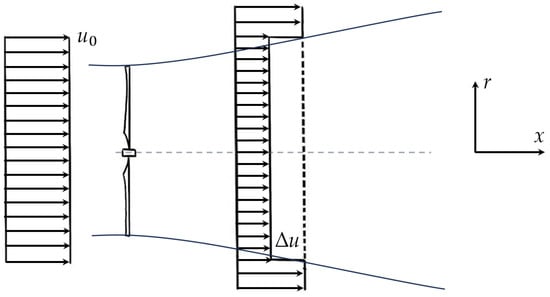
As the most classical wake model developed in the 1980s, the Jensen model [28,29,62] is still widely favored in modern wind power industry and extensively utilized in WFLO studies. Based on the assumption of mass conservation, the model assumes that the wake region expands linearly with downstream distance and that the velocity deficit within the wake follows a uniform top-hat distribution as shown in Figure 1. As the velocity deficit is determined exclusively by the downstream distance, it is regarded as a one-dimensional model, expressed by
where, Δu/ is the velocity deficit Δu normalized by the freestream inflow velocity ; is the thrust coefficient; k is the wake expansion rate; x is the downstream distance; and is the rotor radius.
Figure 1.
Top-hat velocity distribution. The gap between the black dashed and solid lines illustrates the velocity deficit Δu.
Characterized by its simplicity and low computational cost, the model runs with just one parameter, the wake expansion rate k. It is highly popular due to its robustness and efficiency, particularly in grid-based WFLO. In the early research of WFLO, Mosetti et al. [17] pioneered a classical discrete optimization framework based on this model. They partitioned the wind farm area into a 10 × 10 grid, utilizing a GA to search for the optimal layout within the discrete space. Grady et al. [18] adopted this grid-based setup and further enhanced Mosetti et al.’s results through refined GA. Recent studies have further affirmed the distinct advantages of the Jensen model within discretized frameworks. Li et al. [41] noted that for grid-based layout problems, the precision offered by the Jensen model is sufficient to ensure algorithmic convergence. Zhang et al. [42] highlighted that the model’s clear linear boundaries are particularly beneficial for geometric computation and identifying wake overlaps. Similarly, Tao et al. [43] maintained that the top-hat profile is compatible with discretization, allowing for the effective assessment of overall layout performance while bypassing the complexities of near-wake gradient variations. This approach has also been extensively applied in offshore wind farm design. Cazzaro and Pisinger [44] implemented the variable neighbourhood search algorithm within a discrete grid framework for large-scale offshore wind farms. Bai et al. [45] optimized offshore wind turbine layouts in discrete spaces by combining Monte-Carlo Tree Search with adaptive evolutionary algorithms. Furthermore, Sun et al. [46] simultaneously addressed the optimization of both turbine count and hub heights in offshore WFLO.
For achieving superior micro-siting and energy capture, continuous coordinate optimization is becoming the mainstream framework. The efficiency of the Jensen model remains vital for addressing such high-dimensional problems. To overcome early computational bottlenecks, Ozturk and Norman [20] introduced a hybrid two-step framework by a polynomial wake model that transits from discrete to continuous positioning. By balancing global exploration and local refinement, this framework has been further adopted by Huang et al. [26] through the Jensen model to optimize both energy output and layout aesthetics. Recently, purely continuous frameworks have become more prevalent. Cazzaro et al. [8] addressed the joint optimization of layout and cabling in offshore WFLO. Díaz et al. [15] and Kim et al. [47] focused on floating wind farms, with the former employing a multi-criteria approach across technical, economic, and environmental dimensions for turbine siting and the latter considering platform aerodynamics. Additionally, Zuo et al. [48] integrated 3D seabed geography into the co-optimization of offshore layouts and collector systems.
2.1.2. Gaussian Wake Model
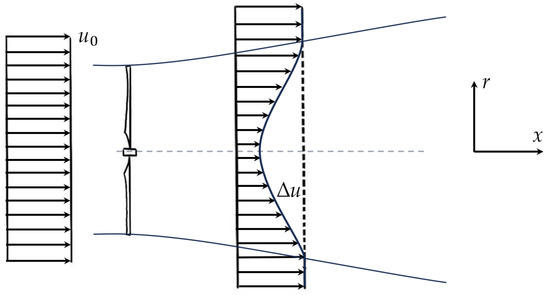
While the Jensen model is favoured in WFLO for its robustness and efficiency, its idealized assumptions are becoming a bottleneck as need for higher precision. Experimental evidence shows a bell-shaped distribution of velocity deficit [63], which contradicts the top-hat characteristic of the model, making it unable to resolve non-linear radial gradients and limiting its utility in refined layout optimization. This gap in physical fidelity has promoted the adoption of more advanced models. Among these, as shown in Table 1, the Gaussian wake model, especially the model proposed by Bastankhah and Porté-Agel [31], has emerged as a preferred alternative for cases requiring high accuracy. Based on mass and momentum conservation, it uses a Gaussian-based self-similar profile to describe the velocity deficit, as shown in Figure 2, providing a realistic description of the smooth radial decay of velocity across the wake. The model is expressed by
where, C(x) is the normalized maximum velocity deficit; r denotes the radial distance from the wake centre; and σ is the Gaussian wake width.
Figure 2.
Gaussian velocity distribution. The gap between the black dashed and solid lines illustrates the velocity deficit Δu.
In a comparative study, Huang et al. [26] pointed out that optimization results based on the Gaussian model yield a higher cost per unit of energy compared to the Jensen model, reflecting its more conservative and precise performance in capturing wake characteristics and assessing economic viability. To address the complexities of offshore wind farms, researchers have further expanded the dimension of Gaussian models. Zhang et al. [9] validated the effectiveness of 3D modelling strategies in assessing LCOE. Regarding the strong coupling problem between turbine layout and cable routing, Cao et al. [7] constructed a nonlinear framework using a 3D Gaussian model, while He et al. [49] employed a joint framework combining the NSGA-II algorithm with Mixed-Integer Linear Programming. Both studies confirmed the overall economic advantage of sacrificing a fraction of energy production to achieve reductions in cabling costs.
In terms of resolving conflicting multiple objectives, Barnabei et al. [14] utilized the NSGA-II algorithm to find optimal trade-offs between LCOE and social acceptance, while Manikowski et al. [16] extended the optimization scope to include six objectives: efficiency, AEP, LCOE, cable length, turbine count, and farm area, demonstrating the superiority of the NSGA-III algorithm in handling such complex optimization. Research on active control and load management for wake effects is also increasing. Tao et al. [50] and Huang et al. [51] both utilized the Gaussian to achieve the joint optimization of layout and active control strategies. Cao et al. [10] optimized layouts based on this model to alleviate turbine fatigue loads. Furthermore, to mitigate the computational cost associated with high-fidelity models, Zhang et al. [13] introduced artificial neural networks to handle load constraints efficiently.
2.1.3. Other Wake Models
Besides the Jensen and Gaussian models, some WFLO studies also employ polynomial and cosine wake models to evaluate wake effects. These models primarily differ in their assumption of the wake velocity deficit profile in the radial direction. Some models are derived by modifying the top-hat distribution of the Jensen model, such as the polynomial model used by Ling et al. [37] and Shen et al. [38], and the cosine model adopted by Tian et al. [34] and Liu et al. [36]. In the modifications, these models preserve the same wake radial scale and cross-sectional mass flux as the Jensen model, while assuming velocity continuity at the wake boundary. Based on these assumptions, the wake models ensure radial continuity and capture radial velocity gradients as illustrated in Figure 2. The velocity distribution for the polynomial and cosine models is given in Equations (3) and (4), respectively.
where, C1, C2, C3, C4, C5, ω, and φ are distribution coefficients; and u is the wake velocity. The wake models utilized by Zhang et al. [35] and Romero-Barrera et al. [53] also adopt the cosine distribution shown in Equation (4). However, similar to the Gaussian model, they are established based on the conservation of mass and momentum. This ensures more rigorous physical consistency compared to the modified models derived from the Jensen model.
Although other models offer more precise predictions, the Jensen model remains dominant in the discrete optimizations and the preliminary phases of two-step optimizations as shown in Table 1. Comparative studies [53,64] demonstrated that Jensen-based frameworks significantly reduce computational time within metaheuristic algorithms while maintaining convergence stability. Furthermore, despite its simplified top-hat physics, the Jensen model can still yield surprisingly accurate power estimates in aligned wind farm configurations, occasionally outperforming more complex models due to error cancellation effects. These advantages align with the requirements of discrete optimization frameworks, contributing to the widespread adoption of the Jensen model. Conversely, other advanced models have become a preferred choice for high-fidelity micro-siting, where capturing the smooth radial gradients is essential for accurate prediction. Therefore, model selection is a strategic decision that balances computational cost with fidelity, necessitating alignment with the practical requirements of the optimization framework.
2.2. Superposition Methods for Wind Farm Arrays
In WFLO, selecting a wake model (such as Jensen or Gaussian) only addresses the characterization of flow field from a single turbine. However, in actual large-scale wind farms, turbines are typically arranged in clusters, where downstream turbines are situated in areas of overlapping wakes by upstream ones, facing complex mixed wake effects. To accurately quantify the cumulative impact across multiple turbines, wake superposition methods must be introduced. These methods aim to integrate independent velocity deficits into a composite effective velocity deficit through specific mathematical combinations, thereby determining the actual inflow wind speeds for downstream turbines. The modelling chain is illustrated in Figure 3. As shown, uncertainties propagate and accumulate step by step, eventually manifesting in the evaluation of the objective function within the WFLO framework. As the critical bridge between single-turbine characteristics and full-field energy assessment, the choice of superposition method directly determines the reliability of WFLO. Superposition models that overestimate deficits tend to drive the optimizer towards sparse turbine spacings to mitigate losses. Conversely, methods that underestimate deficits may lead the algorithm to converge on overly dense configurations. Therefore, using an inappropriate superposition model can skew the layout ranking, causing a theoretically optimal design to be sub-optimal in field operations. The common superposition methods, linear sum (LS) [65], root sum of square (RSS) [29], localized root sum of square (LRSS) [66], and localized linear sum (LLS) [67], are listed in Table 2, where, u is the wake velocity; is the wake velocity only considering turbine i; is the inflow velocity of turbine i; is the overlap area between the wake of the upstream turbine and the rotor swept area of turbine i; and is the rotor area of turbine i. In models accounting for radial velocity gradients (e.g., the Gaussian wake model), is regarded as equivalent to [64,68].
Figure 3.
Schematic of the analytical modelling chain in WFLO and the propagation of uncertainty. The dashed boxes represent the uncertainties introduced in each step.
Table 2.
Common superposition methods.
In terms of mathematical expression, LS offers the most simplistic form. However, Tian et al. [68] observed the superiority of RSS over LS at Horns Rev using a cosine-based model. Consequently, owing to its good balance of robustness and accuracy, RSS is more widely adopted in WFLO, as shown in Table 1. Nonetheless, Peña et al. [69] suggested that model performance is sensitive to the array depth utilizing the Jensen model. While RSS provided higher precision for the first four turbines in a row at the Anholt wind farm, LS exhibited better predictive accuracy for the subsequent downstream turbines within extensive arrays (e.g., 21 turbines in total). Regarding LLS, while Niayifar and Porté-Agel [67] noted its superior precision over the other three methods, recent research by Zhang and Huang [70] indicated that LRSS can outperform LLS in some scenarios. Consequently, WFLO studies seeking enhanced reliability and physical fidelity tend to adopt these two methods [9,11,25,49].
In addition to the common methods, Ma et al. [71] introduced a new superposition method which calculates the wake velocity by taking the root mean square of . Based on evaluations using the Jensen model at the Lillgrund and Anholt wind farms, this method demonstrated superior predictive precision compared to the traditional LS, RSS, and LRSS. Beyond physical fidelity, recent research has also focused on the computational efficiency of large-scale WFLO. Gonzalez-Rodriguez et al. [27] proposed a method to simplify AEP evaluations by identifying geometric interaction patterns within wind farm layouts based on RSS, enhancing prediction efficiency by more than two orders of magnitude. Similarly, Gonzalez-Rodriguez et al. [24] developed the linear aggregation of power deficits (LAPD) method, which significantly simplifies the power prediction process with precomputed look-up tables and facilitates the rapid layout optimization of offshore wind farms.
3. Advances in Analytical Wake Modelling for Layout Optimization
As offshore wind power moves toward deep-sea and large-scale developments, WFLO is no longer merely about spatial arrangement and power maximization. It has become a systemic engineering seeking an optimal balance between power efficiency, structural security, and economic costs. To facilitate these complex decisions, wake models have undergone a significant evolution in both fidelity and practicality. The five research directions highlighted in this section reflect how these advanced models enhance the quality and reliability of WFLO in complex real-world environments by incorporating a broader range of physical phenomena. Section 3.1 and Section 3.2 address the demands for accuracy under complex conditions by refining spatial modelling and environmental parameters. Section 3.3 and Section 3.4 focus on floating turbine motion coupling and fatigue damage. Finally, Section 3.5 explores momentum-conserving superposition methods established to mitigate prediction errors in large-scale wind farms.
3.1. Extension from Far Wake to Full Wake
Due to limited planning areas, wind farms may adopt compact configurations, particularly in minor wind directions where turbine spacing can be less than 4D [72] (D denotes the rotor diameter). Moreover, the capacity expansion of existing sites requires inserting new turbines among existing ones [52]. The mixed configurations inevitably lead to significantly reduced distances between turbines. Meanwhile, the evolution of floating offshore wind has further introduced the concept of multi-turbine platforms, where multiple turbines are densely arranged on a single floating platform [73,74,75,76]. Although the Gaussian model proposed by Bastankhah and Porté-Agel [31] addresses the velocity gradient limitations of the Jensen model providing an analytical solution from mass and momentum conservation, it remains a far-wake model. In the near wake (x/D < 4), the presence of hub blockage effects, blade induction [63], and strong adverse pressure gradients [77] violates the simplified conservation assumptions. Consequently, the model fails to accurately capture the characteristics of the near wake.
To address the limitations of the conventional Gaussian wake model, Ishihara and Qian [32] introduced a modified Gaussian model by incorporating a distance-decaying correction term into the velocity deficit formulation. By explicitly coupling ambient turbulence and the thrust coefficient, this new model enables a continuous and accurate prediction of the wake velocity distribution for both near wake and far wake. Owing to its good performance, the model has gained recognition in various WFLO studies [7,9,12,26,53]. By evaluating various wake models for WFLO problems, Romero-Barrera et al. [53] found that different models can lead optimization algorithms toward entirely different optimal layouts. Notably, Gaussian models (particularly the Ishihara & Qian model) are superior in characterizing wake details, and this increased fidelity typically results in more conservative evaluations of total energy production.
By incorporating a cosine correction function, Liu et al. [36] proposed a unified model for both near wake and far wake by integrating the modified inviscid near-field wake model and modified Jensen model. This model is applicable for predicting full-field wake velocity distributions across the entire wind farm, regardless of the layout density. The impact of spacing on overall power output of wind farms was evaluated for multiple regular arrangement patterns. This model is computationally efficient, capable of assessing large-scale wind farms in a second for single inflow scenarios and executing layout optimizations based on AEP within just a few hours [60]. Building upon this model, Liang and Liu [58] conducted layout optimization studies for offshore wind farms of varying densities and scales, providing a comparative analysis of several optimization algorithms’ performance in addressing WFLO problems. The application of these models in WFLO has enhanced the reliability of layout optimization and provided theoretical support for high-fidelity wind farm design.
3.2. Consideration of Complex Inflow Environment
Traditional wake models are typically based on idealized assumptions, such as uniform inflow wind speed, axisymmetric wake velocity distributions, and a neutral atmospheric boundary layer (ABL). Nevertheless, these simplifications cannot realistically capture the complex physical processes within the actual operating environment of wind turbines—the ABL, which is characterized by vertical wind shear, wind veer, and variable atmospheric stability. Significant vertical wind shear exists across the swept area of turbine rotors, leading to non-uniform wake propagation in three-dimensional space [63,78]. Furthermore, observations have shown that the wake-centre velocity deficit can differ by a factor of two under different atmospheric stability conditions [79,80]. Specifically, offshore environments have a large heat capacity and exhibit more frequent stable stratification compared to onshore regions [81]. Stable conditions reduce turbulent mixing, thereby slowing down the rate of wake recovery. Therefore, models lacking stability corrections may fail to capture these slow-recovery characteristics, potentially compromising the accuracy of production assessments in offshore wind farms.
By introducing vertical wind shear and relative elevation, Sun et al. [46] and Zuo et al. [48] developed 3D Jensen model. While Sun et al. [46] focused on the layout optimization across varying turbine numbers and hub heights, Zuo et al. [48] integrated water depth variations from seabed topography into the optimization process by modelling wind shear and changes in wake overlap areas. Furthermore, Zhang et al. [9] employed a 3D Gaussian model for heterogeneous layout optimization, where turbines of different capacities and hub heights were deployed within the same farm. Their results indicated that turbines with lower hub heights (typically smaller capacity units) tend to be strategically positioned upstream, aligning with previous findings by Sun and Yang [82]. Shen et al. [38] further accounted for anisotropic wake expansion in 3D space by distinguishing between horizontal and vertical expansion rates. On this basis, they proposed a joint optimization framework that integrates active yaw control with varying hub heights.
Guo et al. [54] addressed the limitation of traditional layout optimization, which typically assumes a neutral ABL, by proposing a framework that accounts for the impact of atmospheric stability on wake recovery. By incorporating the Monin–Obukhov length and Coriolis force, they modelled the wake expansion coefficient as a function of transverse turbulence intensity and atmospheric stability, capturing the heterogeneous wake growth in different atmospheric stability [83]. Case studies on the Horns Rev wind farm demonstrates that atmospheric stability significantly influences layout efficiency, with results showing that considering real-world stability during optimization can yield an additional AEP gain of nearly 1%.
3.3. Models for Floating Offshore Wind Turbines
With offshore wind energy advancing into far-offshore and deep-sea regions, floating offshore wind turbines (FOWTs) have emerged as a key technology for harvesting vast wind resources. Unlike fixed-bottom turbines, FOWTs are secured by mooring systems and possess six degrees of freedom (DoF). This mobility alters the position and orientation of the rotor relative to the incoming flow, which subsequently affects the wake distribution. Since conventional wake models primarily developed based on stationary structures and steady inflow conditions, they fail to accurately capture the wake dynamics induced by platform motions, leading to distorted predictions. Such deviations reduce the reliability of WFLO results.
To address the layout optimization of floating offshore wind farms, Kim et al. [47] proposed a modified Jensen model that accounts for the impact of floating platform dynamic responses on wake effects. By identifying surge and pitch motions as the dominant factors influencing wake propagation distance through numerical simulations, a displacement correction parameter is introduced to reflect the distance variations between turbines caused by these two motions. The nearly 2% error in AEP estimation observed when neglecting platform motions proves that incorporating multi-DOF characteristics is essential for reliable floating wind farm layout optimization.
A distinctive feature of FOWTs is that their locations are not rigidly stationary, as they are constrained by mooring systems to move within a defined range. Rodrigues et al. [55] performed a preliminary exploration into the feasibility of increasing wind farm efficiency through a static approach to constrained layout optimization, where FOWTs were granted limited translational mobility in the horizontal plane. In the study by Froese et al. [56], FOWT relocation was achieved through aerodynamic control, enabling static layout optimization with neutral positions, mooring distances and angles, and cable lengths as variables to effectively maximize energy production. In contrast to the quasi-static layout optimization analyses performed with steady-state models in previous works, Jard and Snaiki [57], building upon the dynamic wake model developed by Kheirabadi and Nagamune [84], achieved real-time dynamic layout optimization for time-varying wind conditions and wake effects. Liang and Liu [59,60] optimized the layout of FOWTs featuring rotational DoF, using a self-adaptive multi-turbine platform. This platform can self-rotate around its mooring centre, like a weathervane, to face the incoming wind dynamically. By implementing a dynamic coordinate conversion to capture this behaviour within the wake model, the study [60] demonstrated the significant potential of this technology for reducing wake-induced energy losses more than 10%.
3.4. Turbulence Intensity Modelling
Wind turbine wakes not only result in downstream velocity deficits but also significantly amplify the turbulence intensity within the flow field, which is the primary driver for increased fatigue loads on downstream turbines [63,85]. Conventional layout optimization, focused solely on energy production, tends to strategically place turbines in high-shear zones at the wake edges to capture higher wind speeds. However, this strategy exposes certain turbines to severe non-uniform turbulence loads, accelerating fatigue damage to blades and towers [11]. Maximizing AEP alone is a short-sighted strategy that sacrifices machine life and increases maintenance burdens. Thus, accounting for wake-induced turbulence and fatigue within the optimization framework is of critical importance for the engineering and economic sustainability of wind farms.
Based on a 3D added turbulence model characterized by a hybrid Gaussian-cosine profile [85], Cao et al. [10] incorporated the minimization of added turbulence intensity into their optimization objectives. This approach significantly reduces the operating time of wind turbines under high turbulence intensity by more than 30% without compromising energy production. Tian et al. [86] established the 3D-COTI model to account for the non-uniform 3D spatial distribution of added turbulence, employing trigonometric forms and distinguishing between lateral and vertical profiles. Utilizing this model for layout optimization, Ling et al. [11] significantly reduced the cumulative operating time of high-load turbines by 25% under high-turbulence conditions.
Unlike previous studies that indirectly reflect fatigue through turbulence minimization, Yang et al. [12] explored the non-linear competition between AEP and fatigue life in offshore wind farms. Using a double-Gaussian turbulence model by Ishihara and Qian [32], Yang et al. [12] introduced a fatigue life evaluation method for monopile-based offshore turbines, accounting for both inflow velocity and turbulence. They noted that while wakes reduce mean stress via velocity deficits, they simultaneously increase stress amplitudes via added turbulence, making fatigue life a result of this trade-off. The optimization results show that pursuing maximum fatigue life leads to a more compact layout than AEP-driven designs. This configuration utilizes the velocity deficit to lower mean stress levels.
3.5. Momentum-Conserving Superposition
While computational convenience makes superposition methods like RSS popular for layout optimization, their empirical nature leads to significant errors in handling multi-turbine interactions. These methods generally violate streamwise momentum conservation. The LS method causes the total momentum deficit to accumulate unrealistically with distance [87], while the RSS overlooks the turbulence-induced acceleration of wake recovery in overlapping zones [88]. The apparent effectiveness of RSS often relies on offsetting errors between single-wake and superposition components instead of physical truth [89]. Therefore, improving the reliability of large-scale wind farm optimization necessitates more sophisticated models capable of capturing complex features like wake merging and turbulence mixing from a fundamental physical perspective.
Zong and Porté-Agel [87] introduced a momentum-conserving superposition method to overcome the physical flaws of traditional methods. This approach ensures that the total momentum deficit of the overlapped wake equals the sum of the momentum deficits generated by individual turbines, thereby correcting the non-physical velocity accumulation observed in traditional methods. By linearizing momentum equations via a mean wake convection velocity, they modelled the total wake deficit as a weighted sum where the coefficients depend on the relative convection velocities. This captures the physics that wakes carrying more momentum deficit (i.e., those with higher convection velocities) should have higher weights. This method significantly enhances the prediction accuracy, achieving an error reduction of over 10% in large-scale wind farms compared to RSS. Furthermore, it successfully extends the principle of momentum conservation to transverse velocity superposition under yawed conditions, effectively capturing wake deflection effects in active wake control.
Based on the momentum-conserving superposition method, Tao et al. [50] established an integrated optimization model coupling layout and control to maximize AEP for floating offshore wind farms. The study utilizes a quasi-static analysis to reflect the wake variations caused by FOWTs’ movements in the horizontal plane. A real-number grid method was introduced to refine the resolution of the discrete configuration. By sequentially optimizing the turbine positions and then their yaw offsets, the proposed two-stage framework significantly enhances energy capture efficiency.
Although the momentum-conserving method by Zong and Porté-Agel [87] significantly improves prediction accuracy by correcting the physical flaws of traditional methods, its high computational cost remains a major drawback for practical WFLO. The mean convection velocity of the combined wake within the weighting term remains unknown prior to the superposition process, necessitating an iterative procedure to reach a converged solution. To overcome efficiency shortcomings, Yu [61] introduced an explicit solution for the weighting terms based on the analytical solution of the 2D actuator disk pressure equation. This method was subsequently applied to the power assessment of aligned wind farms. This explicit weighting superposition method maintains the same accuracy as the implicit approach while significantly accelerating the solving process, providing a critical tool for improving the reliability and efficiency of WFLO.
4. Challenges and Future Directions
4.1. Implications of Offshore Wind Turbine Upscaling
To reduce the LCOE, the wind industry has reached a consensus on the upscaling of wind turbines, with 20 MW class turbines now entering the application phase. These turbines, featuring hub heights above 150 m and total heights exceeding 300 m, interact with a highly complex ABL. Wind veer becomes increasingly pronounced across the large rotor plane. This phenomenon refers to the variation of horizontal wind direction with height. It is primarily driven by the Coriolis force within the ABL, which causes the wind direction to rotate as altitude increases. The Coriolis force can induce an inflow direction deviation of over 25° between the rotor top and bottom [90]. This directional veer twists the wake cross-section, breaking the axisymmetric assumption inherent in traditional models and resulting in a skewed, ellipsoidal velocity deficit distribution. Furthermore, traditional wind shear models may fail under some offshore conditions, such as during spring when sea–land temperature gradients trigger low-level jets (LLJs). These jets create strong shear where portions of the rotor experience negative shear where wind speed decreases with increasing altitude [91].
There remains a significant lag in characterizing these complex physical phenomena within current WFLO research. Most optimization models still rely on neutral atmospheric stability assumptions and Gaussian wake distributions, neglecting the natural wake deflection and structural deformation induced by wind veer. Standard Gaussian models, constrained by their symmetric mathematical formulation, fail to capture this lateral stretching, leading to a systematic bias in assessing wake effects for compact layouts and a failure to utilize veer-driven deflection for staggered turbine arrangements to mitigate wake interference [92]. Furthermore, existing layout optimizations generally employ simplified power law profiles to represent wind shear. These monotonic profiles are mathematically incapable of describing the nose shape of LLJs where wind speed decreases with height, which are inadequate for capturing power deficits under LLJ conditions. These limitations directly compromise the prediction accuracy of AEP for wind farms in complex atmospheric environments.
To address these challenges, there is an urgent need to establish analytical wake models and layout optimization frameworks that incorporate the effects of both wind veer and wind shear within complex oceanic–atmospheric environments. Analytical frameworks should evolve towards skewed distributions or coordinate-transformed models that include the veer angle as a variable to restore prediction accuracy. Such advances are essential to achieving high-fidelity layout optimization for offshore wind farms in the context of the ongoing upscaling of wind turbines.
4.2. Dynamic Wake Modelling of FOWTs
As offshore wind energy expands into deep-water regions, the dynamic characteristics of FOWTs introduce a new dimension of complexity to wake modelling. Unlike fixed-bottom foundations, floating platforms undergo 6-DoF motions under the combined action of wind, waves, and currents; notably, surge and pitch motions result in significant horizontal displacements [47]. Specifically, the variations in relative wind speed induced by surge motion create a breathing effect within the wake. Simulations indicate that even moderate surge amplitudes (e.g., 0.03D) can induce power output fluctuations of approximately 4.5% [93]. Meanwhile, pitch motion alters the effective rotor swept area and deflects the wake centreline in the vertical plane, leading to significant vertical asymmetry [39].
Driven by the need to lower costs, floating wind farms are adopting compact or multi-rotor designs, frequently positioning turbines in the near wake, even less than 3D [73,75,76]. However, current layout optimization studies predominantly rely on wake models based on self-similarity assumptions, which struggle to accurately characterize the complex bimodal velocity distributions and strong pressure gradients in the near wake [77,94]. Furthermore, compact arrangements may further amplify the blockage effect and wake interactions between adjacent turbines [95,96,97]. Although the advanced analytical models [32,36,94] demonstrate improved capability in capturing near-wake characteristics, these formulations are predominantly established based on single-turbine physics. In the context of compact floating layouts or emerging multi-rotor designs, these models currently lack the sufficient predictive reliability to resolve the complex merging wake structures. Consequently, the integration of high-fidelity methods remains unavoidable to ensure accurate assessments.
Additionally, the complex dynamic motions are time-averaged and simplified in the static or quasi-static assessment methods [55,56], accounting for floating dynamics with feasible computational costs. However, a fully coupled framework, which resolves time-varying wakes and dynamic optimizations, remains exploratory. Moreover, there is a critical deficiency in the prediction of dynamic turbulence intensity and fatigue loads. The persistent motions of FOWTs induce significant added turbulence, which intensifies the fatigue damage of downstream turbines. As current turbulence models rely on empirical data from fixed-bottom wind farms [10,11], they cannot quantify the non-uniform turbulence driven by platform motions. This limitation prevents optimization frameworks from effectively balancing energy production against service life.
Addressing these gaps requires the development of dynamic analytical models that use time-domain or statistical methodologies to forecast wake behaviours and turbulence. These tools will enable more accurate co-optimization of floating wind farm layouts and fatigue performance. Moreover, for compact turbine arrangements, layout optimization frameworks need to be refined to incorporate the physical interactions of near-wake and neighbouring turbine effects.
4.3. Large-Scale Cluster and Cluster-Level Interactions
As offshore wind energy enters the era of GW-scale cluster development, wake effects have evolved from local phenomena at the single-farm scale into complex multi-scale coupled issues. Long-distance wake is now a core concern for energy evaluations. Under stable boundary layer conditions, vertical momentum exchange is suppressed, leading to slow wake recovery that can extend 50 to 100 km downstream [98]. On such scales, Coriolis-induced effects are magnified, increasing wind veer and causing wakes to deflect naturally in the far wake [90,99]. Moreover, farm-scale blockage from these massive clusters creates an upstream barrier. This effect creates a high-pressure zone extending kilometres upstream, forcing the incoming flow to slow down or divert around the entire cluster before reaching the first row of turbines. This induces an inflow deceleration and an estimated 2% to 5% loss in total power generation [100].
Currently, layout optimization research for large-scale clusters has begun adopting refined superposition methods with more physically based superposition method [50,87]. In addition, the Cumulative Wake Model developed by Bastankhah et al. [89] offers an efficient way to calculate velocity deficits within clusters by accounting for multi-turbine thrust effects. However, existing analytical models still lack the mesoscale atmospheric parameters, their capacity to reflect cluster-level interactions remains to be further investigated. Moreover, they propagate disturbances only downstream, which are incapable of resolving the upstream pressure field caused by the blockage.
While traditional methods optimize farms independently, GW-scale developments link them through cluster-level interactions, and the outflow of upstream farms directly constitutes the inflow for downstream ones. Future large-scale layout optimization necessitates a transition from isolated single wind farm optimization to multi-cluster optimization.
4.4. Validation and Benchmarking in Offshore Environments
As models become more complex to capture the phenomena discussed above, validating them against high-fidelity data becomes increasingly difficult. Validating analytical wake models for large-scale and deep-sea floating wind farms is highly challenging due to the lack of field data. Current validation work is limited by the shortage of high-quality, open-access measurements. Most existing datasets rarely cover the complex offshore conditions involved in long-distance wake propagation [101], making it difficult to assess model performance.
This problem is even more critical for FOWTs. The interaction between the platform’s motion and wake evolution adds significant physical complexity. However, validations still rely on small-scale water tank tests or comparisons between different codes [102,103]. These small-scale experiments often suffer from scaling issues, meaning that they cannot fully reproduce the real aerodynamic characteristics of large-scale turbines in the offshore environment [104].
Furthermore, although large eddy simulation (LES) is often used as a numerical wind tunnel, applying it to GW-scale wind farms is extremely expensive [105]. More importantly, the LES method itself has uncertainties, and its internal models need to be calibrated against real data. Relying only on LES, errors in the simulation might be passed on to the analytical models. Additionally, installing measuring devices in the deep sea is difficult and costly, which limits the capability for long-term cluster observations. Consequently, establishing standardized offshore benchmark datasets covering multi-scale physical processes is a critical frontier for enhancing the reliability of future models and optimization frameworks.
5. Conclusions
This paper evaluates the applicability of analytical wake models in offshore WFLO. It explores key technical advances in analytical wake modelling within recent layout optimization studies, while highlighting future challenges arising from complex oceanic–atmospheric environments, next-generation turbine designs, and large-scale cluster configurations. The insights provided are intended to facilitate the construction of accurate and reliable frameworks for next-generation offshore WFLO.
Regarding analytical wake modelling, the Jensen model has demonstrated robust performance in discrete grid optimization and large-scale preliminary optimization due to its efficiency. Meanwhile, as the demand for continuous coordinate optimization and higher fidelity grows, Gaussian models based on mass and momentum conservation have become the mainstream choice. Gaussian, polynomial and cosine models more accurately capture the radial gradients of the wake through realistic bell-shaped velocity deficit profiles. Furthermore, this paper evaluates various superposition methods. An appropriate superposition method acts as a pivotal bridge between single turbine and full-field energy estimation, directly determining the reliability of the optimized layout.
The paper highlights major advances in analytical wake modelling of WFLO, including the transition from traditional far-wake models to full-field models covering both near wake and far wake, alongside the integration of complex ABL inflow conditions. For FOWTs, researchers have preliminary addressed the impact of motions on wake distribution by introducing displacement correction parameters. Additionally, by incorporating turbulence modelling with momentum-conserving superposition method, new models improve yaw-based flow predictions. These improvements effectively enable a multi-objective optimization framework that balances energy production with fatigue life.
Looking ahead, the upscaling, dynamic complexity, clustering and model validation of offshore wind are challenging current optimization frameworks. The emergence of 20 MW level turbines demands innovative models to handle the complexities of wind shear and wind veer. Floating turbines need refined models to capture dynamic turbulence and its uncertainties. Concurrently, establishing standardized offshore benchmarks is important to ensure model reliability. Ultimately, as development moves toward GW scale clusters, layout optimization must expand from single farms to multi-cluster scales, focusing on long-range wake and blockage effects to ensure the efficient design and robust operation of future large-scale offshore wind farms.
Author Contributions
Conceptualization, H.L.; methodology, H.L. and Z.L.; formal analysis, Z.L., Y.Z. and X.G.; writing—original draft preparation, Z.L.; writing—review and editing, H.L.; supervision, H.L. All authors have read and agreed to the published version of the manuscript.
Funding
Financial support from the National Natural Science Foundation of China (Grant no. 51539008).
Data Availability Statement
Data will be made available on request.
Conflicts of Interest
The authors declare no conflicts of interest.
Nomenclature
| overlap area between the wake of the upstream turbine and the rotor swept area of turbine i (m2) | |
| rotor area of turbine i (m2) | |
| C1 | distribution coefficient in polynomial models (m−1·s−1) |
| C2 | distribution coefficient in polynomial models (s−1) |
| C3, C4, C5 | distribution coefficient (m/s) |
| thrust coefficient (dimensionless) | |
| C(x) | normalized maximum velocity deficit (m/s) |
| D | rotor diameter (m) |
| i | number of turbines (dimensionless) |
| k | wake expansion rate (dimensionless) |
| r | radial distance from the wake centre (m) |
| rotor radius (m) | |
| u | wake velocity (m/s) |
| freestream inflow velocity (m/s) | |
| wake velocity only considering turbine i (m/s) | |
| inflow velocity of turbine i (m/s) | |
| Δu | velocity deficit (m/s) |
| x | downstream distance (m) |
| σ | Gaussian wake width (m) |
| φ | distribution coefficient in cosine models (dimensionless) |
| ω | distribution coefficient in cosine models (m−1) |
References
- Abdelilah, Y.; Bahar, H.; Bojek, P.; Briens, F.; Criswell, T.; Martínez, L.M.; Veerakumar, K. COP28 Tripling Renewable Capacity Pledge; International Energy Agency (IEA): Paris, France, 2024. [Google Scholar]
- Zhao, F. Global Wind Report 2025; Global Wind Energy Council (GWEC): Lisbon, Portugal, 2025. [Google Scholar]
- Barthelmie, R.J.; Pryor, S.C.; Frandsen, S.T.; Hansen, K.S.; Schepers, J.G.; Rados, K.; Schlez, W.; Neubert, A.; Jensen, L.E.; Neckelmann, S. Quantifying the Impact of Wind Turbine Wakes on Power Output at Offshore Wind Farms. J. Atmos. Ocean. Technol. 2010, 27, 1302–1317. [Google Scholar] [CrossRef] [Scilit]
- Thomsen, K.; Sorensen, P. Fatigue loads for wind turbines operating in wakes. J. Wind Eng. Ind. Aerodyn. 1999, 80, 121–136. [Google Scholar] [CrossRef] [Scilit]
- Tao, S.Y.; Xu, Q.S.; Feijoo, A.; Zheng, G.; Zhou, J.M. Nonuniform wind farm layout optimization: A state-of-the-art review. Energy 2020, 209, 118339. [Google Scholar] [CrossRef] [Scilit]
- Zhang, X.F.; Wang, Q.; Ming, X.X.; Luo, K.; Fan, J.R. Multi-objective layout optimization in complex terrain wind farms using an improved non-dominated sorting genetic algorithm. Energy Convers. Manag. 2026, 347, 120528. [Google Scholar] [CrossRef] [Scilit]
- Cao, Z.W.; Chen, L.W.; Li, K.; Huang, G.Q.; Liu, R.L. A Mathematical Programming Approach for Joint Optimization of Wind Farm Layout and Cable Routing Based on a Three-Dimensional Gaussian Wake Model. Wind Energy 2025, 28, e2960. [Google Scholar] [CrossRef] [Scilit]
- Cazzaro, D.; Koza, D.; Pisinger, D. Combined layout and cable optimization of offshore wind farms. Eur. J. Oper. Res. 2023, 311, 301–315. [Google Scholar] [CrossRef] [Scilit]
- Zhang, D.Q.; Liu, Z.Q.; Liang, Y.; Li, C.; Zhang, J.Z.; Hu, G. Bilevel optimization of non-uniform offshore wind farm layout and cable routing for the refined LCOE using an enhanced PSO. Ocean Eng. 2024, 299, 117244. [Google Scholar] [CrossRef] [Scilit]
- Cao, L.C.; Ge, M.W.; Gao, X.X.; Du, B.W.; Li, B.L.; Huang, Z.; Liu, Y.Q. Wind farm layout optimization to minimize the wake induced turbulence effect on wind turbines. Appl. Energy 2022, 323, 119599. [Google Scholar] [CrossRef] [Scilit]
- Ling, Z.Y.; Zhao, Z.Z.; Liu, Y.G.; Liu, H.W.; Ali, K.; Liu, Y.; Wen, Y.F.; Wang, D.D.; Li, S.J.; Su, C.H. Multi-objective layout optimization for wind farms based on non-uniformly distributed turbulence and a new three-dimensional multiple wake model. Renew. Energy 2024, 227, 120558. [Google Scholar] [CrossRef] [Scilit]
- Yang, K.; Zhang, M.M.; Yang, S.H.; Song, Y.W.; Dong, X.H.; Deng, Y.F.; Deng, X.W. Pareto frontier for multi-objective wind farm layout optimization balancing power production and turbine fatigue life. Renew. Energy 2025, 252, 123429. [Google Scholar] [CrossRef] [Scilit]
- Zhang, X.F.; Wang, Q.; Ye, S.T.; Luo, K.; Fan, J.R. Efficient layout optimization of offshore wind farm based on load surrogate model and genetic algorithm. Energy 2024, 309, 133106. [Google Scholar] [CrossRef] [Scilit]
- Barnabei, V.; Conti, M.; Ancora, T.; Delibra, G.; Castorrini, A.; Rispoli, F.; Corsini, A. Minimizing Levelized Cost of Energy and visual impact in Mediterranean offshore wind farms: A multi-objective optimization approach. Energy Convers. Manag. 2025, 344, 120204. [Google Scholar] [CrossRef] [Scilit]
- Díaz, H.; Silva, D.; Bernardo, C.; Soares, C. Micro sitting of floating wind turbines in a wind farm using a multi-criteria framework. Renew. Energy 2023, 204, 449–474. [Google Scholar] [CrossRef] [Scilit]
- Manikowski, P.; Craven, M.; Walker, D. Many-objective optimisation of offshore wind farms. Appl. Soft Comput. 2025, 173, 112879. [Google Scholar] [CrossRef] [Scilit]
- Mosetti, G.; Poloni, C.; Diviacco, B. Optimization of wind turbine positioning in large windfarms by means of a genetic algorithm. J. Wind Eng. Ind. Aerodyn. 1994, 51, 105–116. [Google Scholar] [CrossRef] [Scilit]
- Grady, S.A.; Hussaini, M.Y.; Abdullah, M.M. Placement of wind turbines using genetic algorithms. Renew. Energy 2005, 30, 259–270. [Google Scholar] [CrossRef] [Scilit]
- Şişbot, S.; Turgut, Ö.; Tunç, M.; Çamdalı, Ü. Optimal positioning of wind turbines on Gokceada using multi-objective genetic algorithm. Wind Energy 2010, 13, 297–306. [Google Scholar] [CrossRef] [Scilit]
- Ozturk, U.A.; Norman, B.A. Heuristic methods for wind energy conversion system positioning. Electr. Power Syst. Res. 2004, 70, 179–185. [Google Scholar] [CrossRef] [Scilit]
- Zhang, J.H.; Jiang, Y.W. Joint optimization of the number, type and layout of wind turbines for a new offshore wind farm. J. Renew. Sustain. Energy 2020, 12, 053308. [Google Scholar] [CrossRef] [Scilit]
- Shin, J.; Baek, S.; Rhee, Y. Wind Farm Layout Optimization Using a Metamodel and EA/PSO Algorithm in Korea Offshore. Energies 2021, 14, 146. [Google Scholar] [CrossRef] [Scilit]
- Feng, J.; Shen, W.Z. Solving the wind farm layout optimization problem using random search algorithm. Renew. Energy 2015, 78, 182–192. [Google Scholar] [CrossRef] [Scilit]
- Gonzalez-Rodriguez, A.G.; Roldan-Fernandez, J.M.; Serrano-Gonzalez, J.; Muñoz-Díez, J.V. Gradient Descent Algorithm with Greedy Repositioning Using Power Deficit Aggregation of Wakes to Accelerate the Offshore Wind Farm Layout Optimization Problem in Irregular Concession Areas. Appl. Sci. 2024, 14, 11331. [Google Scholar] [CrossRef] [Scilit]
- Xu, X.S.; Du, L.; Zhang, Z.Y.; Gu, J.Y.; Xing, Y.H.; Gaidai, O.; Dou, P. A case study of offshore wind turbine positioning optimization methodology using a novel multi-stage approach. Front. Mar. Sci. 2022, 9, 1028732. [Google Scholar] [CrossRef] [Scilit]
- Huang, G.Q.; Chen, Y.; Li, K.; Luo, J.K.; Zhang, S.; Lv, M.M. A Two-Step Grid-Coordinate Optimization Method for a Wind Farm with a Regular Layout Using a Genetic Algorithm. Energies 2024, 17, 3273. [Google Scholar] [CrossRef] [Scilit]
- Gonzalez-Rodriguez, A.; Serrano-Gonzalez, J.; Roldan-Fernandez, J.; Burgos-Payan, M. Identifying interaction patterns to speed-up the AEP evaluation in large offshore wind farms with uniformly distributed turbines and exclusion zones. Renew. Energy 2025, 255, 123445. [Google Scholar] [CrossRef] [Scilit]
- Jensen, N.O. A Note on Wind Generator Interaction; Risø-M-2411; Risø National Laboratory: Roskilde, Denmark, 1983. [Google Scholar]
- Katic, I.; Højstrup, J.; Jensen, N.O. A Simple Model for Cluster Efficiency. In Proceedings of the EWEC86, Rome, Italy, 7–9 October 1987; pp. 407–410. [Google Scholar]
- Frandsen, S.; Barthelmie, R.; Pryor, S.; Rathmann, O.; Larsen, S.; Højstrup, J.; Thøgersen, M. Analytical modelling of wind speed deficit in large offshore wind farms. Wind Energy 2006, 9, 39–53. [Google Scholar] [CrossRef] [Scilit]
- Bastankhah, M.; Porté-Agel, F. A new analytical model for wind-turbine wakes. Renew. Energy 2014, 70, 116–123. [Google Scholar] [CrossRef] [Scilit]
- Ishihara, T.; Qian, G.W. A new Gaussian-based analytical wake model for wind turbines considering ambient turbulence intensities and thrust coefficient effects. J. Wind Eng. Ind. Aerodyn. 2018, 177, 275–292. [Google Scholar] [CrossRef] [Scilit]
- Sun, H.Y.; Yang, H.X. Study on an innovative three-dimensional wind turbine wake model. Appl. Energy 2018, 226, 483–493. [Google Scholar] [CrossRef] [Scilit]
- Tian, L.L.; Zhu, W.J.; Shen, W.Z.; Zhao, N.; Shen, Z.W. Development and validation of a new two-dimensional wake model for wind turbine wakes. J. Wind Eng. Ind. Aerodyn. 2015, 137, 90–99. [Google Scholar] [CrossRef] [Scilit]
- Zhang, Z.Y.; Huang, P.; Sun, H.C. A Novel Analytical Wake Model with a Cosine-Shaped Velocity Deficit. Energies 2020, 13, 3353. [Google Scholar] [CrossRef] [Scilit]
- Liu, H.X.; Fu, J.N.; Liang, Z.T.; Liang, Z.C.; Zhang, Y.M.; Xiao, Z. A simple method of fast evaluating full-field wake velocities for arbitrary wind turbine arrays on complex terrains. Renew. Energy 2022, 201, 961–976. [Google Scholar] [CrossRef] [Scilit]
- Ling, Z.Y.; Zhao, Z.Z.; Liu, Y.G.; Liu, H.W.; Liu, Y.; Ma, Y.Z.; Wang, T.G.; Wang, D.D. A three-dimensional wake model for wind turbines based on a polynomial distribution of wake velocity. Ocean Eng. 2023, 282, 115064. [Google Scholar] [CrossRef] [Scilit]
- Shen, L.; Zhou, P.H.; Han, Y.; Mi, L.H.; Xu, W.X.; Xu, J.L. Wind farm layout optimization based on dynamic Levy sparrow search algorithm: A multi-parameter analysis with active yaw control. Energy 2025, 324, 135989. [Google Scholar] [CrossRef] [Scilit]
- Zhang, P.; Li, C.C.; Wei, Y.T.; Wu, W.Q. Three-dimensional analytical wake model for floating offshore wind turbines under pitch motion. Ocean Eng. 2024, 311, 118935. [Google Scholar] [CrossRef] [Scilit]
- Liang, Z.C.; Liu, H.X. Novel yaw-based wake modelling and controlling to enhance the power output of floating offshore wind farms. Renew. Energy 2026, 256, 123838. [Google Scholar] [CrossRef] [Scilit]
- Li, J.Y.; Zhang, Z.H.; Zheng, T.; Tang, J.; Lei, Z.Y.; Gao, S.C. Discrete bi-population differential evolution for optimizing complex wind farm layouts in diverse terrains. Energy 2025, 335, 137885. [Google Scholar] [CrossRef] [Scilit]
- Zhang, C.; Li, H.T.; Li, X.X.; Cheng, J.J.; Lei, Z.Y.; Gao, S.C. Probabilistic bootstrap-based evolutionary algorithm for three-objective wind farm turbine position optimization. Swarm Evol. Comput. 2025, 96, 101972. [Google Scholar] [CrossRef] [Scilit]
- Tao, S.; Liu, S.C.; Zhao, R.; Yang, Y.F.; Todo, H.; Yang, H. A State-of-the-Art Fractional Order-Driven Differential Evolution for Wind Farm Layout Optimization. Mathematics 2025, 13, 282. [Google Scholar] [CrossRef] [Scilit]
- Cazzaro, D.; Pisinger, D. Variable neighborhood search for large offshore wind farm layout optimization. Comput. Oper. Res. 2022, 138, 105588. [Google Scholar] [CrossRef] [Scilit]
- Bai, F.Y.; Ju, X.L.; Wang, S.Y.; Zhou, W.Y.; Liu, F. Wind farm layout optimization using adaptive evolutionary algorithm with Monte Carlo Tree Search reinforcement learning. Energy Convers. Manag. 2022, 252, 115047. [Google Scholar] [CrossRef] [Scilit]
- Sun, H.Y.; Yang, H.X.; Tao, S.Y. Optimization of the Number, Hub Height and Layout of Offshore Wind Turbines. J. Mar. Sci. Eng. 2023, 11, 1566. [Google Scholar] [CrossRef] [Scilit]
- Kim, H.; Han, W.; Kim, D.; Lee, S. Windfarm layout optimization with a newly-modified multi-wake model based on aerodynamic characteristics of floating wind-turbines. J. Mech. Sci. Technol. 2023, 37, 4661–4670. [Google Scholar] [CrossRef] [Scilit]
- Zuo, T.J.; Zhang, Y.C.; Xiong, L.S.; Su, X.J.; Zhang, X.L.; Meng, K.; Dong, Z.Y.; Liu, H.T.; Hao, S.P. Complete joint-optimization for offshore wind farm planning. Int. J. Electr. Power Energy Syst. 2024, 157, 109832. [Google Scholar] [CrossRef] [Scilit]
- He, J.; Ge, M.W.; Zarkovic, S.D.; Li, Z.T.; Hilber, P. A novel integrated optimization method of micrositing and cable routing for offshore wind farms. Energy 2024, 306, 132443. [Google Scholar] [CrossRef] [Scilit]
- Tao, S.Y.; Yang, J.S.; Zheng, G.; He, R.Y.; Feijóo-Lorenzo, A. A two-stage optimization model for floating offshore wind farm layout and control. Renew. Energy 2025, 253, 123614. [Google Scholar] [CrossRef] [Scilit]
- Huang, Z.S.; Lin, C.H.; Wang, Q.; Wu, W.C. A Bilevel Optimization Method for Wind Farm Layout Considering Yaw Control. IEEE Trans. Ind. Inf. 2025, 22, 520–531. [Google Scholar] [CrossRef] [Scilit]
- Bouchekara, H.; Ramli, M.; Javaid, M. Wind Farm Layout Optimization/Expansion of Real Wind Turbines with a Parallel Collaborative Multi-Objective Optimization Algorithm. Energies 2024, 17, 5632. [Google Scholar] [CrossRef] [Scilit]
- Romero-Barrera, A.; Casillas-Pérez, D.; Cornejo-Bueno, L.; Pérez-Aracil, J.; Paricio-Garcia, A.; Lopez-Carmona, M.; Blanco-Sancho, J.; Ghimire, S.; Deo, R.; Caamaño, A.; et al. A comparative study of different kinematic wake models within metaheuristics for efficient wind farm layout optimization. Results Eng. 2025, 26, 105112. [Google Scholar] [CrossRef] [Scilit]
- Guo, N.Z.; Zhang, M.M.; Li, B.; Cheng, Y. Influence of atmospheric stability on wind farm layout optimization based on an improved Gaussian wake model. J. Wind Eng. Ind. Aerodyn. 2021, 211, 104548. [Google Scholar] [CrossRef] [Scilit]
- Rodrigues, S.F.; Pinto, R.T.; Soleimanzadeh, M.; Bosman, P.A.N.; Bauer, P. Wake losses optimization of offshore wind farms with moveable floating wind turbines. Energy Convers. Manag. 2015, 89, 933–941. [Google Scholar] [CrossRef] [Scilit]
- Froese, G.; Ku, S.Y.; Kheirabadi, A.C.; Nagamune, R. Optimal layout design of floating offshore wind farms. Renew. Energy 2022, 190, 94–102. [Google Scholar] [CrossRef] [Scilit]
- Jard, T.; Snaiki, R. Real-time dynamic layout optimization for floating offshore wind farm control. Ocean Eng. 2025, 316, 119971. [Google Scholar] [CrossRef] [Scilit]
- Liang, Z.C.; Liu, H.X. Layout Optimization Algorithms for the Offshore Wind Farm with Different Densities Using a Full-Field Wake Model. Energies 2023, 16, 5916. [Google Scholar] [CrossRef] [Scilit]
- Liang, Z.C.; Liu, H.X. Layout Optimization of a Modular Floating Wind Farm Based on the Full-Field Wake Model. Energies 2022, 15, 809. [Google Scholar] [CrossRef] [Scilit]
- Liang, Z.C.; Liu, H.X. Layout optimization of an offshore floating wind farm deployed with novel multi-turbine platforms with the self-adaptive property. Ocean Eng. 2023, 283, 115098. [Google Scholar] [CrossRef] [Scilit]
- Yu, H. A Momentum-Conservation-Based Computational Model for Full-Field Wake Velocities in Wind Farms. Master Thesis, Tianjin University, Tianjin, China, 2025. [Google Scholar]
- Burton, T.; Jenkins, N.; Sharpe, D.; Bossanyi, E.; Graham, M. Wind Energy Handbook, 3rd ed.; Wiley: Hoboken, NJ, USA, 2021. [Google Scholar]
- Porté-Agel, F.; Bastankhah, M.; Shamsoddin, S. Wind-Turbine and Wind-Farm Flows: A Review. Bound. Layer Meteorol. 2020, 174, 1–59. [Google Scholar] [CrossRef] [Scilit]
- Archer, C.L.; Vasel-Be-Hagh, A.; Yan, C.; Wu, S.; Pan, Y.; Brodie, J.F.; Maguire, A.E. Review and evaluation of wake loss models for wind energy applications. Appl. Energy 2018, 226, 1187–1207. [Google Scholar] [CrossRef] [Scilit]
- Lissaman, P.B.S. Energy effectiveness of arbitrary arrays of wind turbines. J. Energy 1979, 3, 323–328. [Google Scholar] [CrossRef] [Scilit]
- Voutsinas, S.; Rados, K.; Zervos, A. On the analysis of wake effects in wind parks. Wind Eng. 1990, 14, 204–219. [Google Scholar]
- Niayifar, A.; Porte-Agel, F. Analytical Modeling of Wind Farms: A New Approach for Power Prediction. Energies 2016, 9, 741. [Google Scholar] [CrossRef] [Scilit]
- Tian, L.L.; Zhu, W.J.; Shen, W.Z.; Song, Y.L.; Zhao, N. Prediction of multi-wake problems using an improved Jensen wake model. Renew. Energy 2017, 102, 457–469. [Google Scholar] [CrossRef] [Scilit]
- Peña, A.; Schaldemose Hansen, K.; Ott, S.; van der Laan, M.P. On wake modeling, wind-farm gradients, and AEP predictions at the Anholt wind farm. Wind Energy Sci. 2018, 3, 191–202. [Google Scholar] [CrossRef] [Scilit]
- Zhang, Z.Y.; Huang, P. Prediction of multiple-wake velocity and wind power using a cosine-shaped wake model. Renew. Energy 2023, 219, 119418. [Google Scholar] [CrossRef] [Scilit]
- Ma, Y.; Archer, C.L.; Vasel-Be-Hagh, A. The Jensen wind farm parameterization. Wind Energy Sci. 2022, 7, 2407–2431. [Google Scholar] [CrossRef] [Scilit]
- Schreiber, J.; Balbaa, A.; Bottasso, C.L. Brief communication: A double-Gaussian wake model. Wind Energy Sci. 2020, 5, 237–244. [Google Scholar] [CrossRef] [Scilit]
- Bashetty, S.; Ozcelik, S. Design and Stability Analysis of an Offshore Floating Multi-Wind Turbine Platform. Inventions 2022, 7, 58. [Google Scholar] [CrossRef] [Scilit]
- Jang, H.K.; Park, S.; Kim, M.H.; Kim, K.H.; Hong, K. Effects of heave plates on the global performance of a multi-unit floating offshore wind turbine. Renew. Energy 2019, 134, 526–537. [Google Scholar] [CrossRef] [Scilit]
- Lee, H.; Poguluri, S.K.; Bae, Y.H. Performance Analysis of Multiple Wave Energy Converters Placed on a Floating Platform in the Frequency Domain. Energies 2018, 11, 406. [Google Scholar] [CrossRef] [Scilit]
- Zhang, Y.M.; Liu, H.X. A Novel Structural Configuration of Modular Floating Wind Farms With Self-Adaptive Property. J. Offshore Mech. Arct. Eng. 2021, 143, 052002. [Google Scholar] [CrossRef] [Scilit]
- Li, B.L.; Ge, M.W.; Li, X.T.; Liu, Y.Q.; Luo, C.; Zhu, Y.H.; Tang, Y.J. A pressure-corrected double-Gaussian analytical wake model for wind turbines. Phys. Fluids 2025, 37, 115110. [Google Scholar] [CrossRef] [Scilit]
- Liu, H.X.; Liu, M.Q.; Liang, Z.C. Investigation of Three-Dimensional Wake Width for Offshore Wind Turbines Under Complex Environmental Conditions by Large Eddy Simulation. J. Offshore Mech. Arct. Eng. 2025, 147, 022001. [Google Scholar] [CrossRef] [Scilit]
- Iungo, G.V.; Porté-Agel, F. Volumetric Lidar Scanning of Wind Turbine Wakes under Convective and Neutral Atmospheric Stability Regimes. J. Atmos. Ocean. Technol. 2014, 31, 2035–2048. [Google Scholar] [CrossRef] [Scilit]
- Subramanian, B.; Chokani, N.; Abhari, R.S. Impact of atmospheric stability on wind turbine wake evolution. J. Wind Eng. Ind. Aerodyn. 2018, 176, 174–182. [Google Scholar] [CrossRef] [Scilit]
- Møller, M.; Domagalski, P.; Sætran, L.R. Comparing abnormalities in onshore and offshore vertical wind profiles. Wind Energy Sci. 2020, 5, 391–411. [Google Scholar] [CrossRef] [Scilit]
- Sun, H.Y.; Yang, H.X. Wind farm layout and hub height optimization with a novel wake model. Appl. Energy 2023, 348, 121554. [Google Scholar] [CrossRef] [Scilit]
- Cheng, Y.; Zhang, M.M.; Zhang, Z.L.; Xu, J.Z. A new analytical model for wind turbine wakes based on Monin-Obukhov similarity theory. Appl. Energy 2019, 239, 96–106. [Google Scholar] [CrossRef] [Scilit]
- Kheirabadi, A.C.; Nagamune, R. A low-fidelity dynamic wind farm model for simulating time-varying wind conditions and floating platform motion. Ocean Eng. 2021, 234, 109313. [Google Scholar] [CrossRef] [Scilit]
- Li, L.; Huang, Z.; Ge, M.W.; Zhang, Q.Y. A novel three-dimensional analytical model of the added streamwise turbulence intensity for wind-turbine wakes. Energy 2022, 238, 121806. [Google Scholar] [CrossRef] [Scilit]
- Tian, L.L.; Song, Y.L.; Xiao, P.C.; Zhao, N.; Shen, W.Z.; Zhu, C.L. A new three-dimensional analytical model for wind turbine wake turbulence intensity predictions. Renew. Energy 2022, 189, 762–776. [Google Scholar] [CrossRef] [Scilit]
- Zong, H.H.; Porté-Agel, F. A momentum-conserving wake superposition method for wind farm power prediction. J. Fluid Mech. 2020, 889, A8. [Google Scholar] [CrossRef] [Scilit]
- Li, D.S.; Chang, J.X.; Ma, G.S.; Huo, C.Y.; Li, R.N. Optimized wake-superposition approach for multiturbine wind farms. Sci. Rep. 2023, 13, 6672. [Google Scholar] [CrossRef] [Scilit]
- Bastankhah, M.; Welch, B.L.; Martínez-Tossas, L.A.; King, J.; Fleming, P. Analytical solution for the cumulative wake of wind turbines in wind farms. J. Fluid Mech. 2021, 911, A53. [Google Scholar] [CrossRef] [Scilit]
- Abkar, M.; Sørensen, J.N.; Porté-Agel, F. An Analytical Model for the Effect of Vertical Wind Veer on Wind Turbine Wakes. Energies 2018, 11, 1838. [Google Scholar] [CrossRef] [Scilit]
- Debnath, M.; Doubrawa, P.; Optis, M.; Hawbecker, P.; Bodini, N. Extreme wind shear events in US offshore wind energy areas and the role of induced stratification. Wind Energy Sci. 2021, 6, 1043–1059. [Google Scholar] [CrossRef] [Scilit]
- Simley, E.; Fleming, P.; Girard, N.; Alloin, L.; Godefroy, E.; Duc, T. Results from a wake-steering experiment at a commercial wind plant: Investigating the wind speed dependence of wake-steering performance. Wind Energy Sci. 2021, 6, 1427–1453. [Google Scholar] [CrossRef] [Scilit]
- Fang, Y.; Li, G.; Duan, L.; Han, Z.; Zhao, Y. Effect of surge motion on rotor aerodynamics and wake characteristics of a floating horizontal-axis wind turbine. Energy 2021, 218, 119519. [Google Scholar] [CrossRef] [Scilit]
- Qian, G.W.; Ishihara, T. A novel double-Gaussian full wake model for wind turbines considering dependence on thrust coefficient and ambient turbulence intensity. Appl. Energy 2025, 391, 125859. [Google Scholar] [CrossRef] [Scilit]
- Liu, M.Q.; Liang, Z.C.; Liu, H.X. Numerical Investigations of Wake Expansion in the Offshore Wind Farm Using a Large Eddy Simulation. Energies 2022, 15, 2022. [Google Scholar] [CrossRef] [Scilit]
- Zhang, Z.H.; Kuang, L.M.; Zhao, Y.S.; Han, Z.L.; Zhou, D.; Tu, J.H.; Chen, M.S.; Ji, X.R. Numerical investigation of the aerodynamic and wake characteristics of a floating twin-rotor wind turbine under surge motion. Energy Convers. Manag. 2023, 283, 116957. [Google Scholar] [CrossRef] [Scilit]
- Liang, Z.C.; Zhang, J.J.; Guo, X.R.; Liu, H.X. Investigation of Wake Expansion for Spanwise Arranged Turbines in the Offshore Wind Farm by Large Eddy Simulation. Energies 2025, 18, 2999. [Google Scholar] [CrossRef] [Scilit]
- Platis, A.; Siedersleben, S.K.; Bange, J.; Lampert, A.; Bärfuss, K.; Hankers, R.; Cañadillas, B.; Foreman, R.; Schulz-Stellenfleth, J.; Djath, B.; et al. First in situ evidence of wakes in the far field behind offshore wind farms. Sci. Rep. 2018, 8, 2163. [Google Scholar] [CrossRef] [Scilit]
- Snaiki, R.; Makki, S. A new analytical wind turbine wake model considering the effects of coriolis force and yawed conditions. J. Wind Eng. Ind. Aerodyn. 2024, 250, 105767. [Google Scholar] [CrossRef] [Scilit]
- Cañadillas, B.; Foreman, R.; Steinfeld, G.; Robinson, N. Cumulative Interactions between the Global Blockage and Wake Effects as Observed by an Engineering Model and Large-Eddy Simulations. Energies 2023, 16, 2949. [Google Scholar] [CrossRef] [Scilit]
- Sun, H.; Gao, X.; Yang, H. A review of full-scale wind-field measurements of the wind-turbine wake effect and a measurement of the wake-interaction effect. Renew. Sustain. Energy Rev. 2020, 132, 110042. [Google Scholar] [CrossRef] [Scilit]
- Wang, X.B.; Cai, C.; Cai, S.G.; Wang, T.Y.; Wang, Z.K.; Song, J.J.; Rong, X.M.; Li, Q.A. A review of aerodynamic and wake characteristics of floating offshore wind turbines. Renew. Sustain. Energy Rev. 2023, 175, 113144. [Google Scholar] [CrossRef] [Scilit]
- Otter, A.; Murphy, J.; Pakrashi, V.; Robertson, A.; Desmond, C. A review of modelling techniques for floating offshore wind turbines. Wind Energy 2021, 25, 831–857. [Google Scholar] [CrossRef] [Scilit]
- He, Z.; Yang, X.; Sun, H. A review on modeling, simulation and experiment of dynamic wake effect of floating offshore wind turbines. Appl. Energy 2026, 406, 127283. [Google Scholar] [CrossRef] [Scilit]
- Churchfield, M.; Lee, S.; Moriarty, P.; Martinez, L.; Leonardi, S.; Vijayakumar, G.; Brasseur, J. A Large-Eddy Simulation of Wind-Plant Aerodynamics. In Proceedings of the 50th AIAA Aerospace Sciences Meeting including the New Horizons Forum and Aerospace Exposition, Nashville, TN, USA, 9–12 January 2012; p. 537. [Google Scholar]



Disclaimer/Publisher’s Note: The statements, opinions and data contained in all publications are solely those of the individual author(s) and contributor(s) and not of MDPI and/or the editor(s). MDPI and/or the editor(s) disclaim responsibility for any injury to people or property resulting from any ideas, methods, instructions or products referred to in the content. |
© 2026 by the authors. Licensee MDPI, Basel, Switzerland. This article is an open access article distributed under the terms and conditions of the Creative Commons Attribution (CC BY) license.