


Abstract
Saline lacustrine basins represent a key target for shale oil and gas exploration. The Shahejie Formation in the Jiyang Depression of the Bohai Bay Basin, China, is a typical example of saline lacustrine shale oil. However, its pore-fracture system characteristics and the factors controlling reservoir structure (porosity and pore-network development) remain poorly understood, limiting efficient exploration. This study focuses on shale intervals spanning the Lower Es3 to Upper Es4 of the Paleogene Shahejie Formation in the Jiyang Depression of the Bohai Bay Basin. By integrating core analysis, thin-section examination, field-emission scanning electron microscopy (FE-SEM), XRD, total organic carbon (TOC), and Ro data, we investigate the reservoir characteristics and the factors controlling reservoir quality of saline lacustrine shales, with the ultimate goal of predicting shale-oil sweet spots. Results show that Shahejie Formation mainly consists of laminated calcareous shale, laminated dolomitic shale, laminated mixed shale, and laminated clayey shale. The spatial configuration between minerals and organic matter formed during deposition exerts a primary control on reservoir properties. In laminated calcareous shale, microcrystalline calcite closely coexists with organic matter, forming micrometer-scale “source-reservoir” coupled pairs, where intercrystalline calcite pores and edge fractures along organic matter create an initial pore network. In laminated dolomitic shale, subhedral to euhedral dolomite crystals form a rigid framework, resulting in well-developed intercrystalline pores and stronger resistance to compaction. The carbonate-rich laminae of laminated calcareous shale exhibit porosities of 8–15%, whereas Fabric B shows porosities 3–5 times higher than Fabric A under comparable maturity conditions. The primary controlling factor for reservoir quality is lamina-fabric type, followed by carbonate mineral abundance. Diagenetic fluid alternations between acidic and alkaline conditions exert nonlinear modifications on pore systems. At Ro ≈ 0.7–0.9%, carbonate dissolution and associated pore enlargement are enhanced, preferentially dissolving calcite and further widening dolomite intercrystalline pores. When Ro > 1.0%, alkaline conditions promote carbonate cementation, reducing porosity, while overpressure-induced pore preservation and fracture generation effects also shift. Based on this, we propose a “fabric-constrained nonlinear reservoir evolution model,” indicating that sweet spots result from the spatial superposition of carbonate-organic matter coupled depositional architecture and moderate diagenetic modification (Ro = 0.8–1.0%). Because calcite is more soluble, it is preferentially dissolved by organic acids during the early oil window, generating dissolution pores; dolomite is more chemically stable, so its rigid crystal framework resists compaction and preserves intercrystalline pores. When these two minerals alternate in thin laminae, calcite laminae provide dissolution-enhanced pores while dolomite laminae maintain a rigid pore framework—This complementary coexistence provides a favorable mineral–fabric configuration for sweet-spot development. This study provides geological criteria for identifying intervals with favorable pore development and potential storage capacity in lacustrine saline-lake shales.
1. Introduction
Saline lacustrine basins are important targets for shale oil and gas exploration. In recent years, industrial breakthroughs have been achieved in the Shahejie Formation of the Paleogene in the Jiyang Depression of the Bohai Bay Basin in China, demonstrating considerable resource potential. Laminated fine-grained deposits are widespread features of lacustrine depositional systems and have been extensively documented in classic lacustrine oil-shale successions such as the Green River Formation in the United States [1,2]. The Shahejie Formation was deposited in a closed or semi-closed saline lake environment under semiarid climatic conditions, and is characterized by thick successions of dark, fine-grained sediments with well-developed laminae [3,4], satisfying the geological conditions of “possessing favorable geological conditions for shale oil accumulation, including self-generation and self-storage and source–reservoir integration” for shale oil [5], making it the core formation for shale oil reserve increase and production enhancement in China’s continental shale oil exploration at present. This formation has a wide variety of shale facies, among which the carbonate-rich laminated shale is characterized by laminated calcareous shale and laminated dolomitic shale; the carbonate-poor laminated facies is represented by laminated clayey shale [6]. The pore-fracture system consists of a multiscale pore network, including intercrystalline/interparticle pores, intraparticle and organic-matter-hosted pores, dissolution pores, and microfractures [7,8,9,10]. The pore-fracture system includes micro- to nano-scale intercrystalline pores, dissolution pores, organic matter pores, and micro-fractures [11]. However, due to the thin thickness of individual laminae, the diverse facies, and extremely strong heterogeneity [12], the formation mechanism and controlling factors of the storage space are still unclear, severely restricting the precise prediction and efficient development of shale oil sweet spots.
Regarding the key controlling factors of the pore-fracture system in continental shale, there is currently a persistent debate between “sedimentary control” and “diagenesis control”. Scholars emphasizing sedimentary control argue that the mineral-organic spatial organization within laminae can establish an initial framework for pore development and strongly influence subsequent pore connectivity [2,13,14,15,16,17]; while those emphasizing diagenetic modification point out that processes such as organic acid dissolution of carbonate minerals and hydrocarbon generation pressure-induced micro-fractures have decisive modifying effects on reservoir properties [10,18,19]. Discussions on the controlling effect of carbonate minerals on reservoir storage are particularly intense [20,21]: one view regards it as the material basis for dissolution and pore enlargement, while the opposing view points out that the extensive cementation of micritic carbonate can significantly reduce pores; the “pore preservation” and “fracture formation” effects of abnormal overpressure also have yet to reach a consensus [22]. The root of these discrepancies lies in the fact that most existing studies examine sedimentary fabric and diagenetic modification separately, and fail to effectively distinguish between “lamina fabric type” and “carbonate mineral content”, which are two commonly conflated controlling variables [16,23,24]—the former reflects the spatial organization of minerals, while the latter only represents the abundance of minerals, and these two variables may exert fundamentally different controls on the development and distribution of pore-fracture systems.
In response to the above issues, this paper takes the shale of the Shahejie Formation in the Jiyang Depression of the Bohai Bay Basin as the research object. Through multi-scale observations of core samples, thin sections, field emission scanning electron microscopy, as well as systematic tests such as XRD, TOC, and Ro, it conducts research on the reservoir characteristics and controlling factors of four main lithofacies: laminated calcareous shale, laminated mixed shale, laminated dolomitic shale, and laminated clayey shale. First, by comparing different lithofacies under comparable maturity conditions, the influence of sedimentary fabric on pore development was evaluated while considering variations in carbonate content. Secondly, using the natural maturity gradient of Ro ranging from 0.4% to 1.3% in the study area, the changes in reservoir properties of the same sedimentary fabric during thermal evolution are tracked to reveal the nonlinear transformation law of variations in fluid acidity and alkalinity and the differentiated responses of calcite and dolomite. Finally, we establish a reservoir evolution model constrained by sedimentary fabric that integrates the concepts of “sedimentary control” and “diagenetic control” on reservoir development, clarifies the dual controls governing sweet-spot formation, and provides a theoretical basis for predicting shale oil sweet spots in saline lacustrine basins.
2. Regional Geology Overview
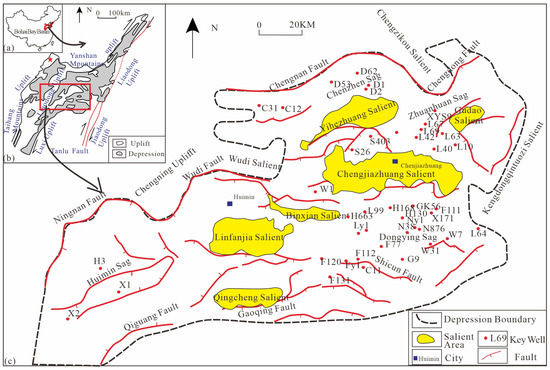
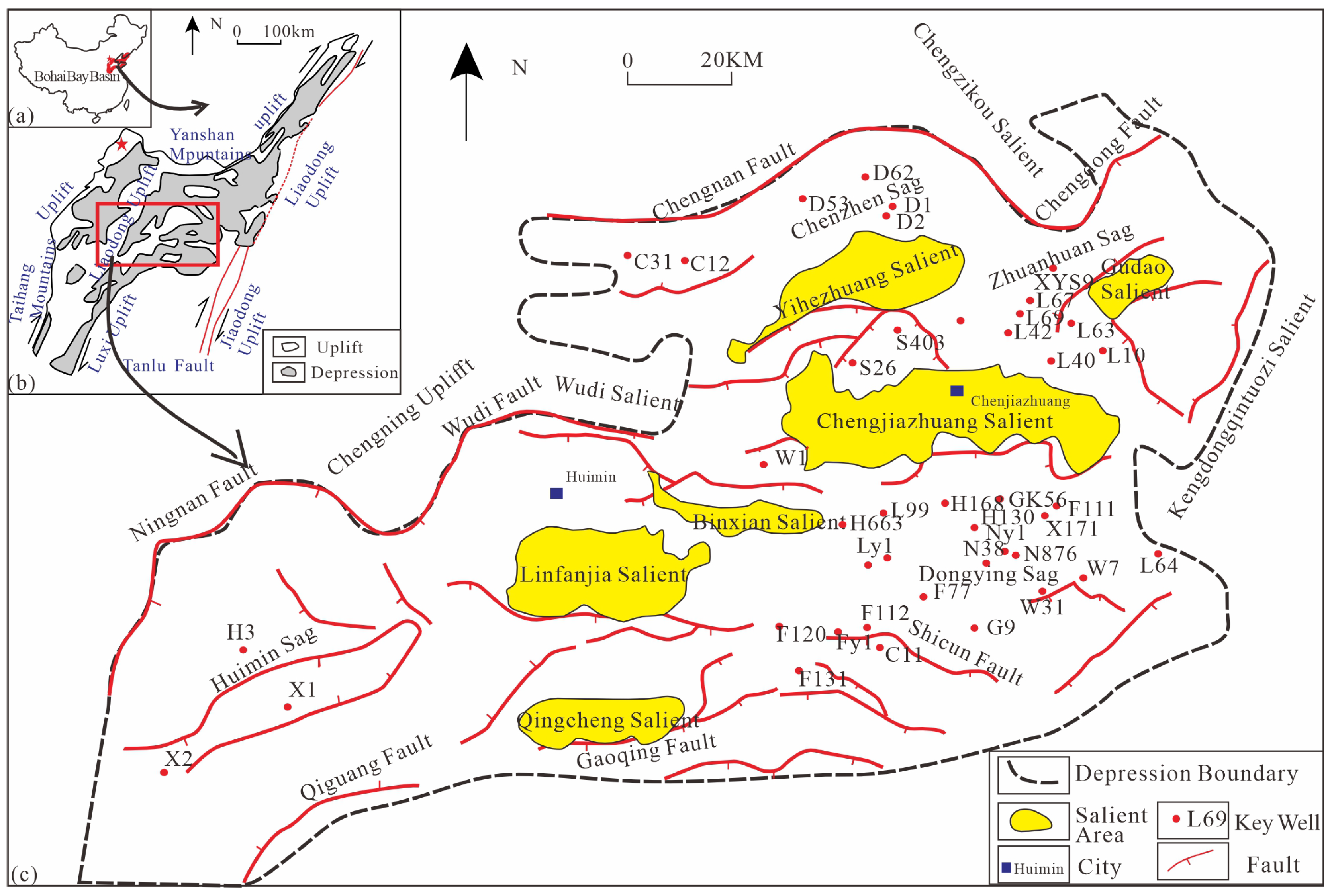
Jiyang Depression is located in the southeastern part of the Bohai Bay Basin, covering an area of approximately 26,000 square kilometers. It is adjacent to the Chengning Platform to the north, connects with the Luoxi Platform to the south, and is bordered by the Tan-Lu Fault Zone to the east. It is an important secondary structural unit of the Bohai Bay Basin [25,26,27] (Figure 1). The depression exhibits a typical fan-shaped faulted-depression architecture and consists of four half-graben sub-depressions—Dongying, Zhanhua, Huimin, and Chezhen—with major boundary faults along their northern margins and a southward-overlapping configuration. The sub-depressions are separated by nearly east–west-trending uplifts, while the northeast-trending fault system dominates the overall structural framework [28]. The Jiyang Depression results from the superposition of two tectonic episodes: Mesozoic compression generated nearly E–W-trending basement faults that subsequently underwent negative inversion during the Late Jurassic–Cretaceous. Cenozoic rifting, further overprinted by strike-slip deformation along the Tanlu fault zone, reactivated these pre-existing weak zones to form the present half-graben geometry. The major boundary faults established during Paleogene rifting controlled depocenters and accommodation, and therefore the distribution of organic- and carbonate-rich fine-grained sediments of the Shahejie Formation; these syn-depositional faults also served as preferred pathways for later basinal fluids and hydrocarbon migration, exerting a major control on the depositional fill and hydrocarbon accumulation pattern [29,30].
Figure 1.
Geologic Overview of Jiyang Depression in the Bohai Bay Basin of China. (a) Regional location map of Bohai Bay Basin in China; (b) Regional location of the Jiyang Depression in the Bohai Bay Basin; (c) Structural map of the Jiyang Depression in the Bohai Bay Basin of China.
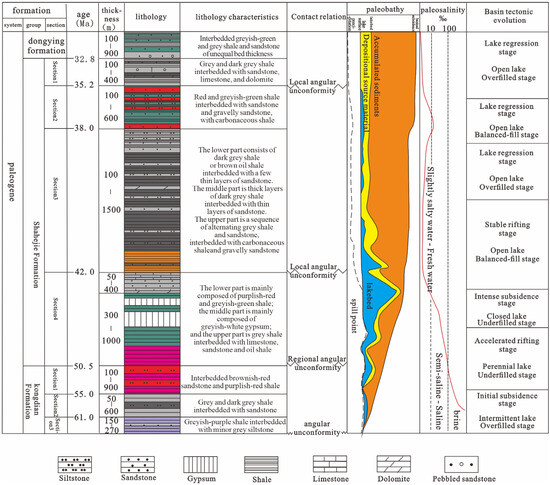
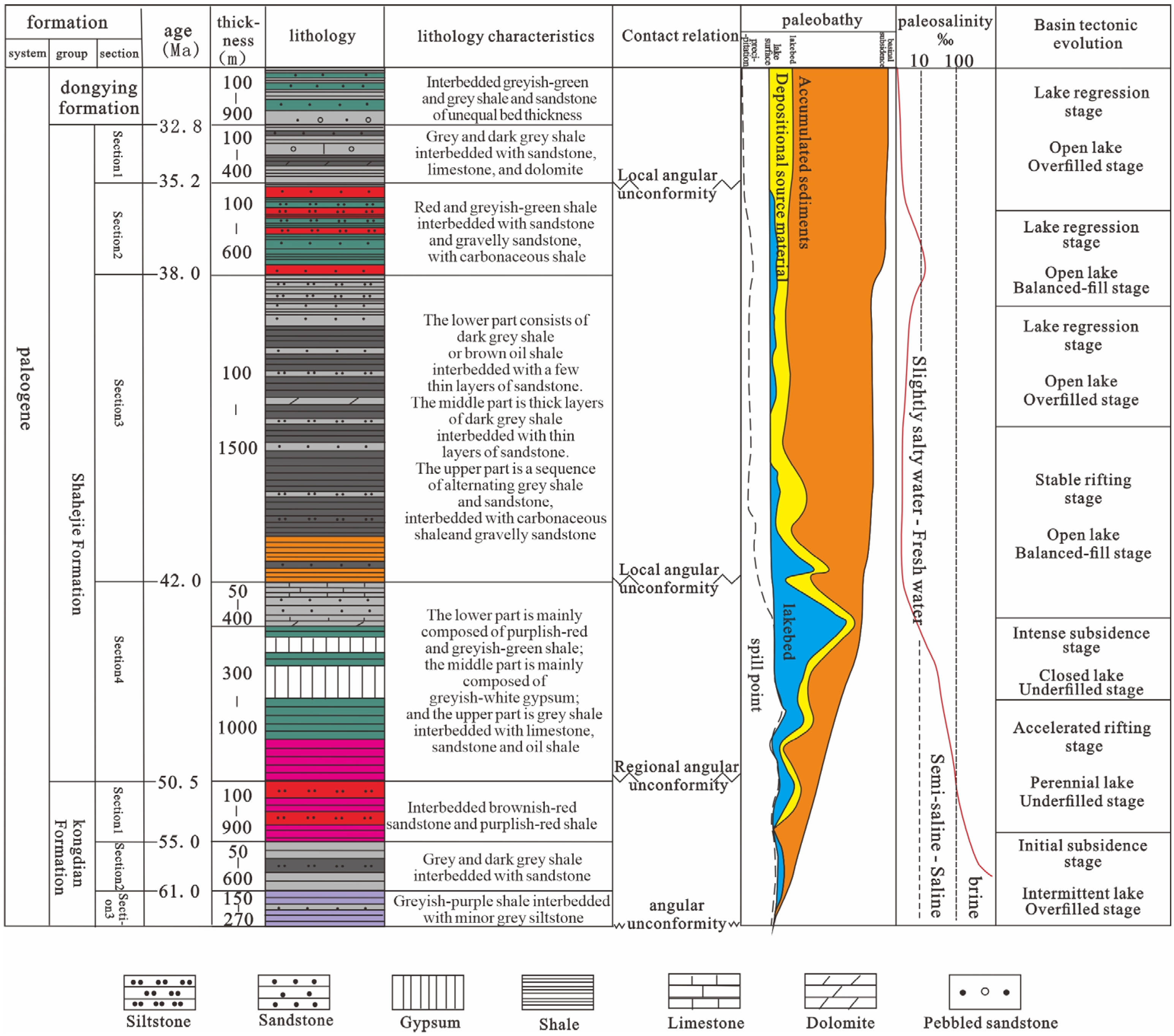
The Cenozoic succession reaches a maximum thickness of approximately 7000–10,000 m in the Jiyang Depression. Among them, the Shahejie Formation of the Paleogene is the most important source-rock and shale-oil-bearing interval [31,32]. The Shahejie Formation is subdivided into four members from bottom to top, with the main shale oil laminae concentrated in the lower submember of the third member of the Shahejie Formation (Lower Es3) (Es3x) and the upper submember of the fourth member of the Shahejie Formation (Upper Es4) (Es4s) [3] (Figure 2). Es3x is mainly composed of dark gray organic-rich shale and calcareous shale, widely and relatively continuously distributed [33,34]; Es4s is composed of laminated calcareous shale, dolomitic mudstone and evaporite interbeds, with an average carbonate mineral content of about 43%, reflecting typical saline lake sedimentation [35]. This set of shale strata is continuously distributed throughout the area, with single-layer thickness ranging from tens to hundreds of meters. The organic matter abundance is high, and the thermal maturity is at the low-mature—mature stage. The pore-fracture system is mainly composed of inorganic pores and microfractures [36,37]. In terms of sedimentation, the sedimentary period of the Upper Es4 was arid, and the lake water salinity was high, with the development of evaporite and organic-rich shale interbeds; the sedimentary period of the Lower Es3 was wet, the lake basin expanded, and widespread deep-lake—semi-deep-lake shale developed, while the edge areas developed fan deltas and near-shore underwater fan sand bodies [28,33]. The Guantao Formation (Ng) and the Minghuazhen Formation (Nm) of the Neogene are mainly composed of riverine clastic rocks, and they are unconformably overlaid on the Paleogene. In general, the saline lake environment of the Paleogene in the Jiyang Depression provided favorable conditions for the development of organic-rich shale, and the subsequent moderate tectonic modification and diagenetic evolution jointly shaped the present-day characteristics of the shale pore-fracture system.
Figure 2.
Comprehensive columnar diagram of the Shahejie Formation strata in the Jiyang Depression of the Bohai Bay Basin.
3. Sample Selection and Experimental Methods
3.1. Sample Selection
The samples for this study were taken from the Fengnan, Dongying and Zhanhua sub-basins of Jiyang Depression in the Bohai Bay Basin, from seven shale-oil exploration wells (FY1, FY1HF, FY2HF, NY1, N55, BYP5, and L69). The target stratum is the shale of the Shahejie Formation’s Lower Es3 to Upper Es4 in the saline lake basin of the Paleogene period, with a burial depth range of 2860 to 4180 m. They covered various structural settings such as the center of the depression, slope zone, and fault zone, including the main lithofacies types such as laminated calcareous shale, clayey shale, dolomitic shale, and mixed shale. A total of 176 cylindrical shale core samples were collected. Analytical subsets were selected to provide coverage across the seven wells, four lithofacies, structural settings, burial depths, and thermal maturity range. FE-SEM samples were additionally selected based on preservation of the sedimentary fabric and suitability for argon-ion polishing. Samples for Ro measurements were selected where sufficient measurable vitrinite particles were present. In total, 86 samples were examined using polarized-light microscopy, and 42 were prepared by argonion polishing and examined using field-emission scanning electron microscopy (FE-SEM). All 176 samples underwent whole-rock and clay-mineral XRD analyses and total organic carbon measurements, while 92 samples underwent vitrinite reflectance (Ro) measurements. Of the 92 samples with Ro data, 28 also had quantitative two-dimensional pore-area fraction data. These paired data were used to constrain the regional maturity framework shown in Section 5.2. Collectively, the sample set covers the principal lithofacies, organic-matter abundances, and thermal maturity range of the studied shale interval.
3.2. Experimental Methods
3.2.1. Core and Thin Section Examination
Core observation is carried out using high-precision core photography and centimeter-level description scales, meticulously recording lithology, bedding structure, fracture development, and oil-bearing characteristics. Microscopic thin section identification employs the OLYMPUS BX53 microscope (Olympus Corporation, Tokyo, Japan) polarizing microscope to systematically identify the mineral composition, pore-filling types, bedding structure, and diagenetic modification features of 86 standard-thickness transmission thin sections.
3.2.2. Scanning Electron Microscopy
The micro-nano morphology analysis was conducted using a Hitachi SU8010 field emission scanning electron microscope from Japan, along with a Leica EM TIC 3X argon ion polishing system (Leica Microsystems CMS GmbH, Wetzlar, Germany). The samples were subjected to ion polishing and carbon spraying for conductive treatment. Observations were made under high vacuum mode and 15 kV acceleration voltage conditions. Precise depictions of intercrystalline pores, dissolution pores, organic matter pores, and microfractures at the micrometer-nanometer scale, as well as the pore diameter distribution and pore throat connectivity, were achieved. Combined with micro-area energy spectrum analysis, the mineral carriers for pore development were identified.
For quantitative pore-area analysis, three to five FE-SEM images were randomly selected from the argon-ion-polished surface of each sample. Pore regions were segmented in ImageJ (Image J 1.54p). A grayscale threshold was determined using ImageJ’s automatic thresholding function and then applied unchanged to all analyzed images. The two-dimensional pore-area fraction of each image was calculated as the segmented pore area divided by the analyzed image area × 100%. Image-level values were arithmetically averaged to obtain a value for each sample, and the sample-level values were then arithmetically averaged within each lithofacies.
3.2.3. XRD Analysis of Whole Rock and Clay Minerals
Using the Bruker D8 Advance X-ray diffractometer (Bruker AXS SE, Karlsruhe, Germany), 176 powder samples with a 200-mesh size were tested for the entire rock and clay minerals. The scanning angle ranged from 5° to 90°, with a step size of 0.02°. Through spectral fitting, the relative contents of quartz, feldspar, carbonate, pyrite, and various clay minerals were quantitatively obtained, clearly identifying the differences in mineral composition and diagenetic evolution characteristics of saline shale.
3.2.4. Total Organic Carbon Test
Using the EA3000 elemental analyzer (EuroVector S.p.A., Pavia, Italy), the samples were treated by boiling with hydrochloric acid to remove inorganic carbon, dried, and ground for pre-treatment before being tested on the instrument. The organic matter abundance was accurately determined, providing quantitative data for analyzing the development of organic pores and the hydrocarbon generation potential of source rocks.
3.2.5. Vitrinite Reflectance Measurement
Using the Leica MPV microphotometer (Leica Microsystems CMS GmbH, Wetzlar, Germany), each sample had no less than 20 effective measurement points. The wavelength was 546 nm, and the Ro value was accurately obtained. The organic matter thermal evolution stage was divided, and the control effect of thermal evolution on pore-fracture system modification was constrained.
4. Result
4.1. Lithofacies Types and Lithofacies Combination Characteristics
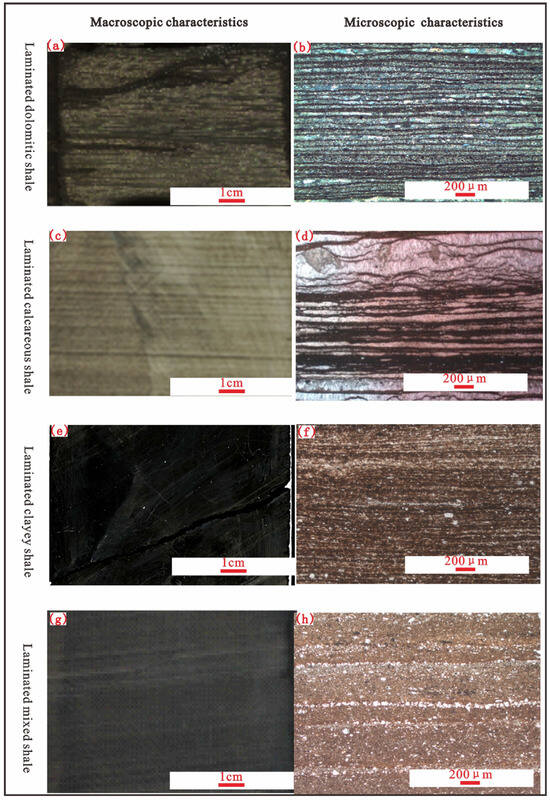
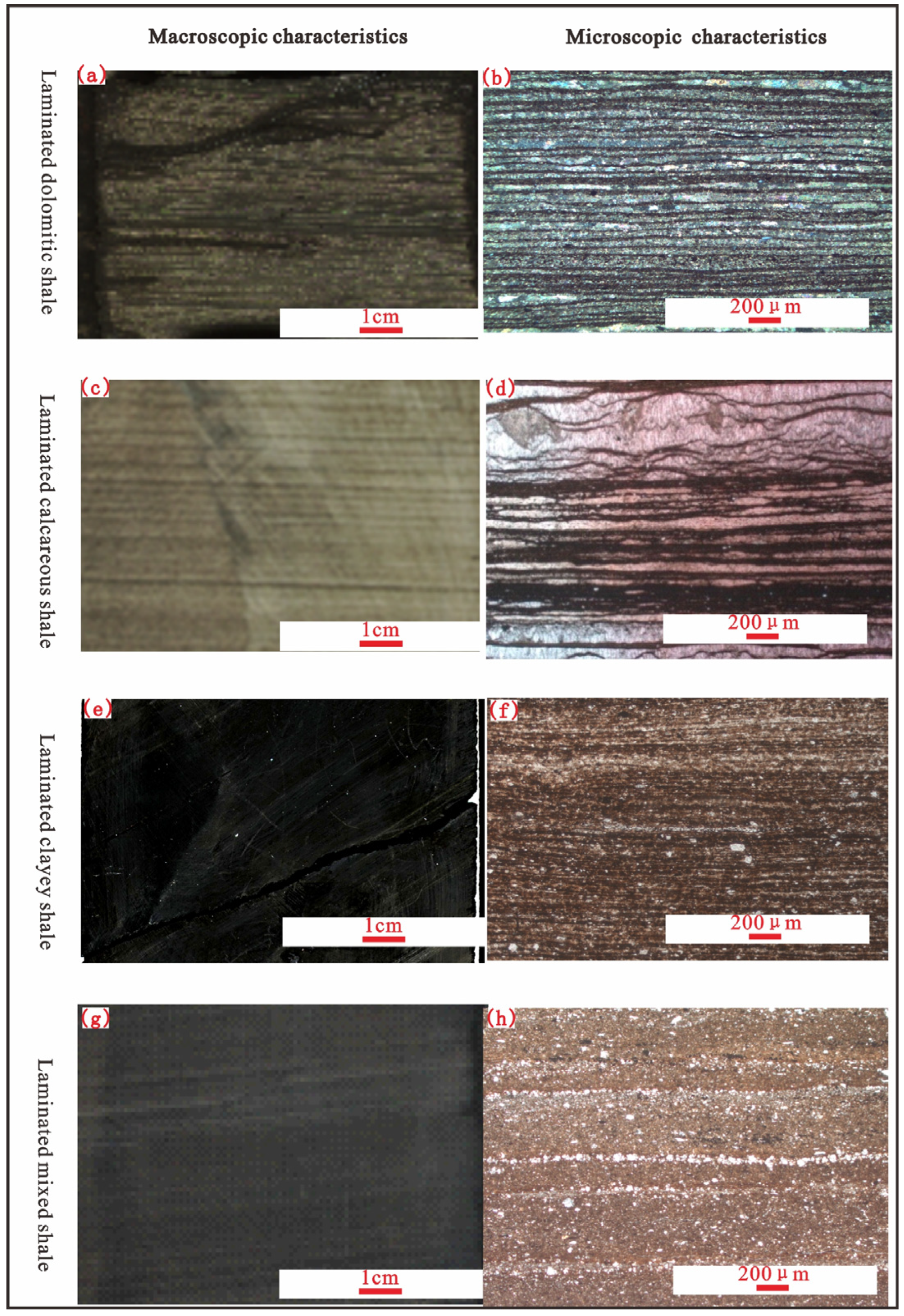
Based on the macroscopic description of the cores and the thin section identification using a polarizing microscope, four major lithofacies are recognized in the shale of the Shahejie Formation in the saline lake basin of the study area (Figure 3). The laminated calcareous shale is characterized by millimeter-scale alternating light and dark laminae. The light-colored laminae are rich in microcrystalline calcite, while the dark-colored laminae are rich in organic matter and clay minerals, forming a “carbonate-organic matter” laminae combination. The laminated mixed shale has relatively small variations in the content of various minerals, with organic matter and clay minerals dispersed and filling the intercrystalline pores. The laminated dolomitic shale is mainly composed of subhedral to euhedral dolomite crystals, with intercrystalline pores identifiable under the microscope. The laminated clayey shale has a mineral composition mainly of clay and quartz, with low carbonate content and disordered dispersion of organic matter. In stratigraphic sections, laminated calcareous shale is often interbedded with mixed shale or dolomitic shale, while laminated clayey shale is more frequently found in laminae with relatively stable water dynamics.
Figure 3.
Characteristics of shale cores and thin sections of Shahejie Formation. (a) Well NY1, 3448.2 m, laminated dolomitic shale, core characteristics. (b) Laminated dolomitic shale, thin section characteristics. (c) Well N55-X4, 3810.8 m, laminated calcareous shale (d) Laminated calcareous shale, thin section characteristics. (e) Well BYP5, 4119.25 m, laminated clayey shale, core characteristics. (f) Laminated clayey shale, thin section characteristics. (g) Well FY1-X2, 3681.5 m, laminated mixed shale. (h) Laminated mixed shale, thin section characteristics.
4.2. Mineral Composition
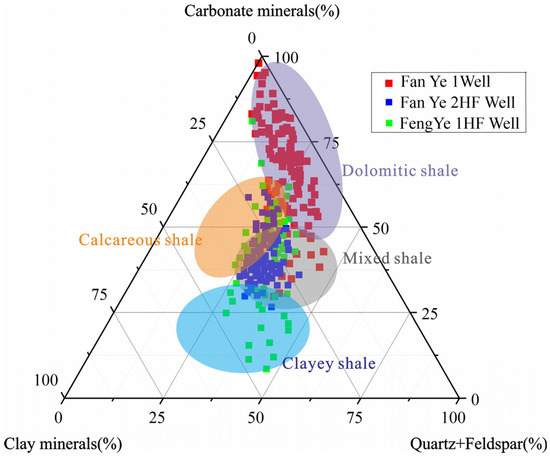
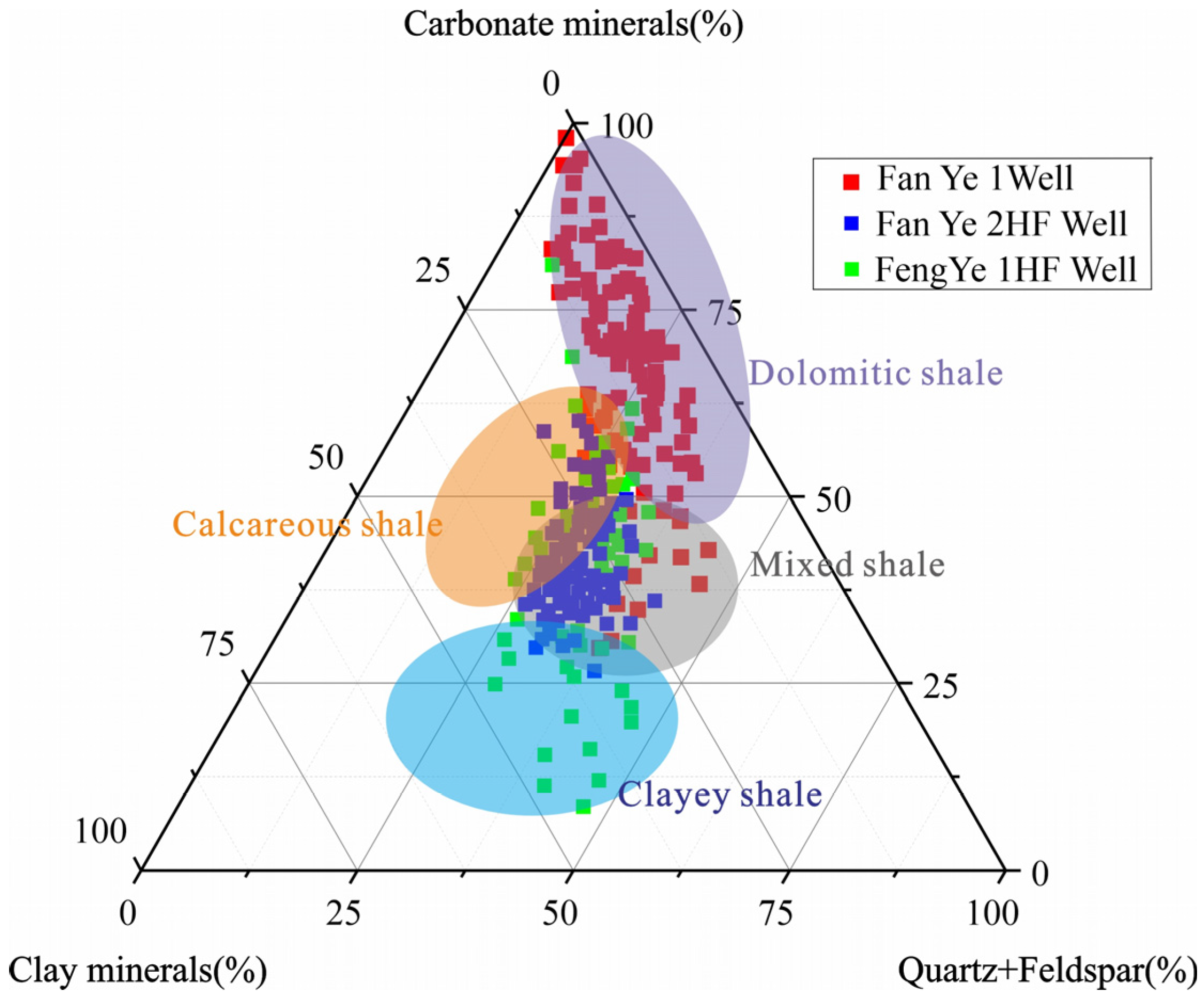
The samples from the three wells (FY1, FY2HF, FY1HF) show continuous zoning on the triangular diagram (Figure 4). This directly reflects the differences in the mineral components of different lithofacies, and visually presents the differentiation characteristics of the carbonate and clay mineral contents of the four types of lithofacies described in the text. The total carbonate minerals in the laminated mixed shale range from 30% to 55%, mainly composed of calcite, and the dolomite content in some laminae can reach 20% to 40%, while the clay minerals are 20% to 35%, and the pyrite is 2% to 5%; in the laminated calcareous shale, the calcite content is 50% to 75%, with less than 10% of dolomite and 10% to 20% of clay minerals; in the laminated dolomitic shale, the dolomite content is 40% to 65%, with less than 10% of calcite and 15% to 25% of clay minerals; in the laminated clayey shale, the clay minerals range from 40% to 55%, with quartz and feldspar accounting for 25% to 35%, and the total carbonate minerals are less than 15%. In the analyzed samples, comparatively high carbonate and organic-matter contents commonly co-occurred in laminated calcareous shale, whereas no consistent co-occurrence pattern was evident in the other lithofacies. Because the samples span different wells and maturity levels, this descriptive observation is not interpreted as an independent statistical correlation [38,39].
Figure 4.
Ternary diagram of shale mineral composition of the Shahejie Formation in the Jiyang Depression of the Bohai Bay Basin.
4.3. Types and Quantitative Characteristics of the Pore-Fracture System
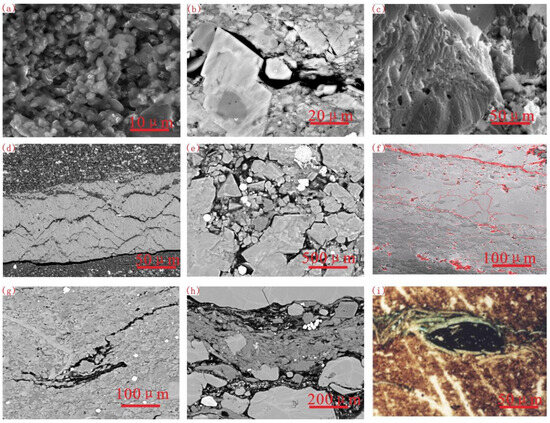
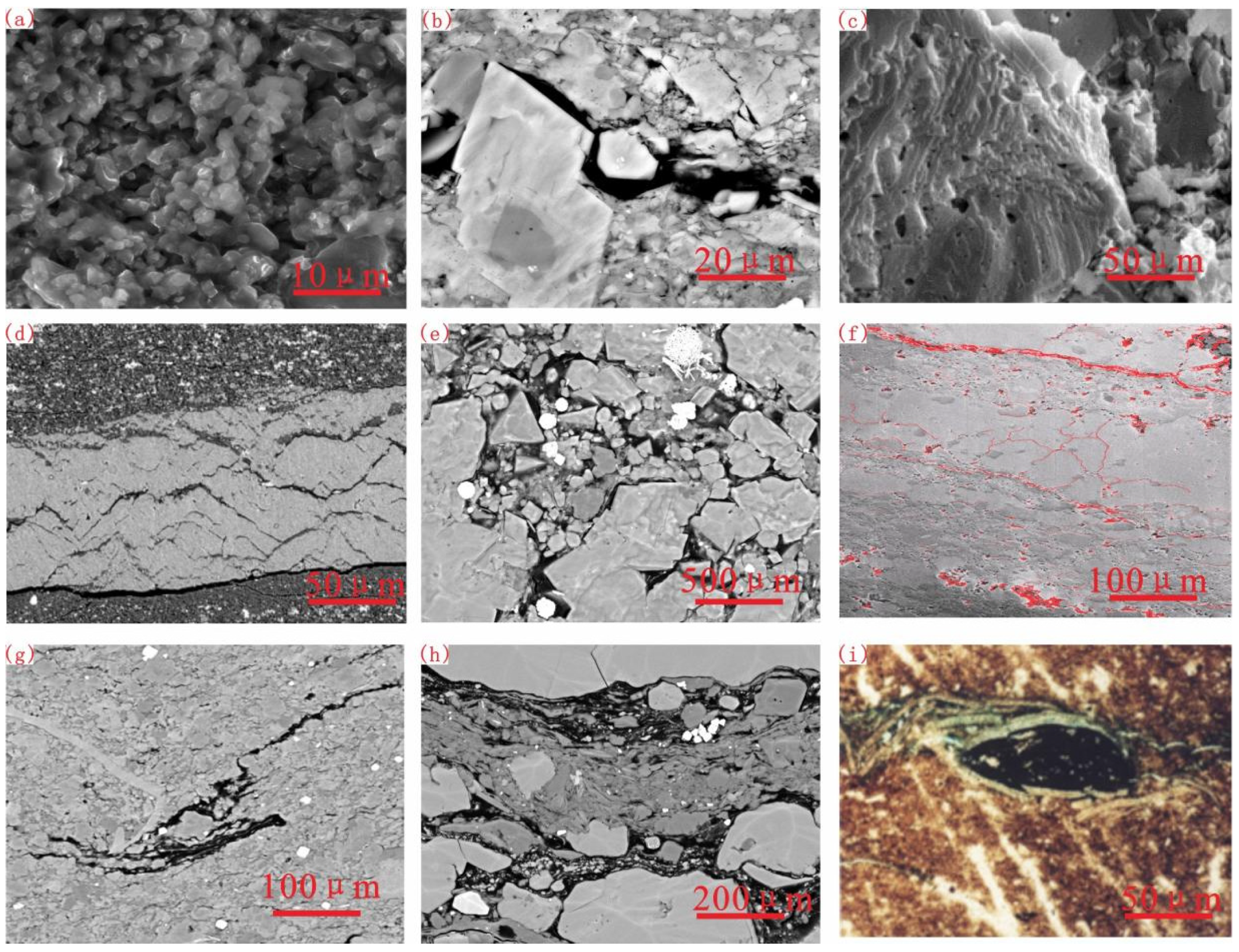
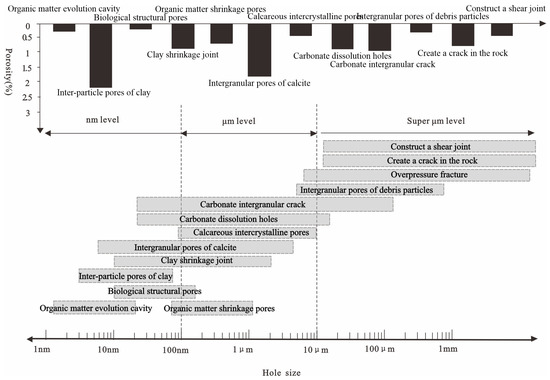
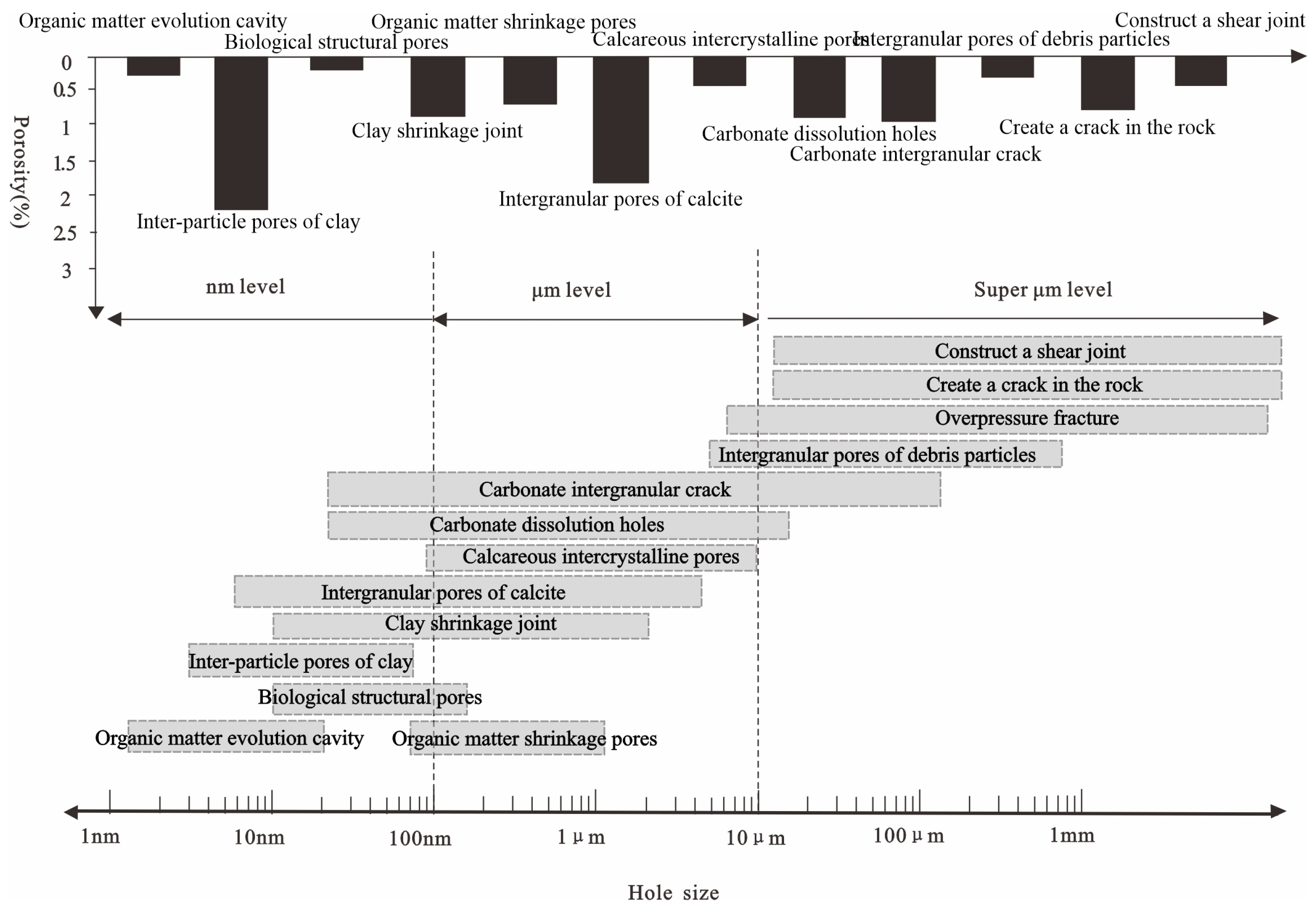
Shale reservoirs commonly contain multiscale pore systems comprising mineral-associated interparticle and intraparticle pores, organic-matter-hosted pores, and fracture-related porosity [7,8,9,10]. The shale of the Shahejie Formation mainly contains four main types of pore and fracture features: intercrystalline pores, dissolution pores, organic matter pores, and micro-fractures (Figure 5). Pore size distribution of reservoir space in the Shahejie Formation shale shows the classification and corresponding pore diameter range of different pore types, including organic-matter pores, clay interparticle pores, carbonate pores, shrinkage joints, and fractures (Figure 6). Combined with the pore-size distribution and image-derived two-dimensional pore-area fraction shown in Figure 6, the intercrystalline pores are mainly composed of dolomite rhombohedral intercrystalline pores (50–500 nm) and calcite micro-intercrystalline pores (20–200 nm), which are mainly distributed in the carbonate lamina; the dissolution pores have a pore size of 100 nm to 2 μm and are directionally distributed along the lamina; the organic matter pores have a pore size of 5–100 nm and are concentrated in the organic-rich lamina; the micro-fractures include bedding fractures, structural fractures, and contraction fractures, and the bedding fractures develop along the bedding interface.
Figure 5.
Pore-fracture system in the Shahejie Formation. (a) Intercrystalline pores of quartz; (b) Angular intercrystalline pores between dolomite crystals; (c) Irregular dissolution pores on calcite crystal surfaces; (d) Foliation fissures and structural fissures, etc.; (e) Inclusions of pyrite and intercrystalline pores of detrital minerals; (f) Overpressure fissures and matrix pores; (g) Contracted fissures; (h) Intercrystalline pores of clay minerals; (i) Ostracod shell-mold pores.
Figure 6.
Pore-size distribution and image-derived two-dimensional pore-area fractions of different pore types in the Shahejie Formation shale.
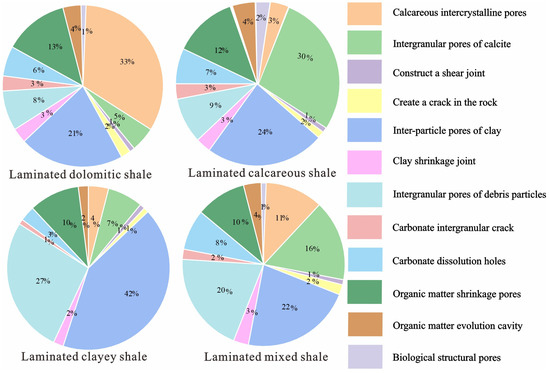
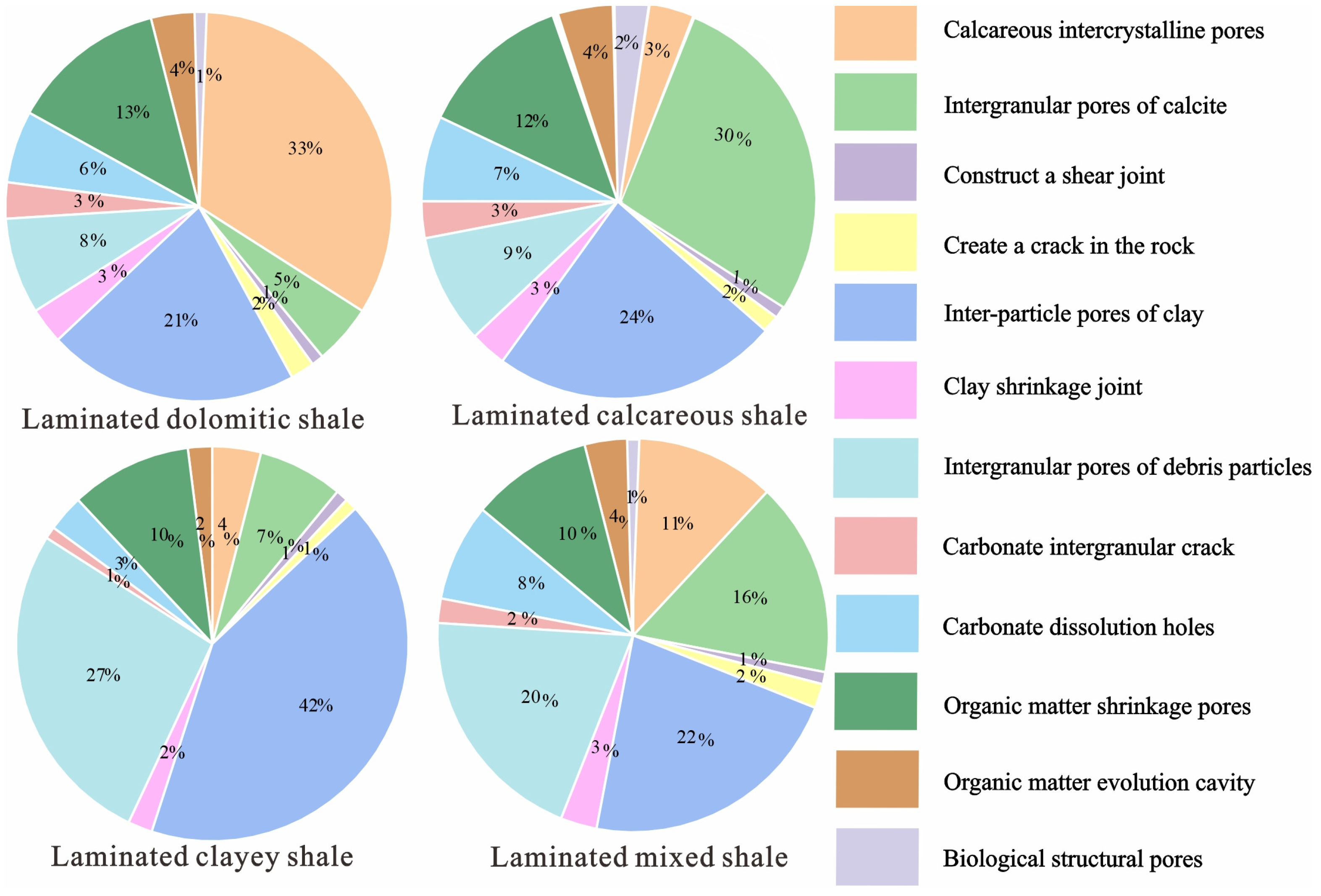
The pore composition of the four rock types shows significant differences (Figure 7). The carbonate laminae of the laminated calcareous shale exhibit a two-dimensional pore-area fraction of 8–15%, whereas the clay-rich laminae exhibit values of 1–3%; FE-SEM images of the laminated dolomitic shale yield a two-dimensional pore-area fraction of 3–8%; and the corresponding two-dimensional pore-area fraction of the laminated mixed shale is 2–5%. The laminated clayey shale exhibits a two-dimensional pore-area fraction of less than 2%. The positive correlation between porosity and carbonate content is only manifested in the laminated structure, and the increase in different lamina-fabric rock types’ carbonate cannot effectively enhance the pore-fracture system. Therefore, the effect of carbonate minerals on pore development is not a simple positive correlation; rather, the extent to which carbonate minerals enhance pore development depends on their mode of occurrence and their coupling relationship with lamina fabric [6,11,39].
Figure 7.
Porosity distribution across four lithofacies at comparable maturity.
5. Discussion
5.1. Governing Mechanisms of Sedimentary Fabric on Reservoir Properties
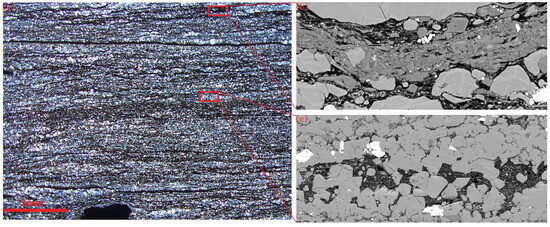
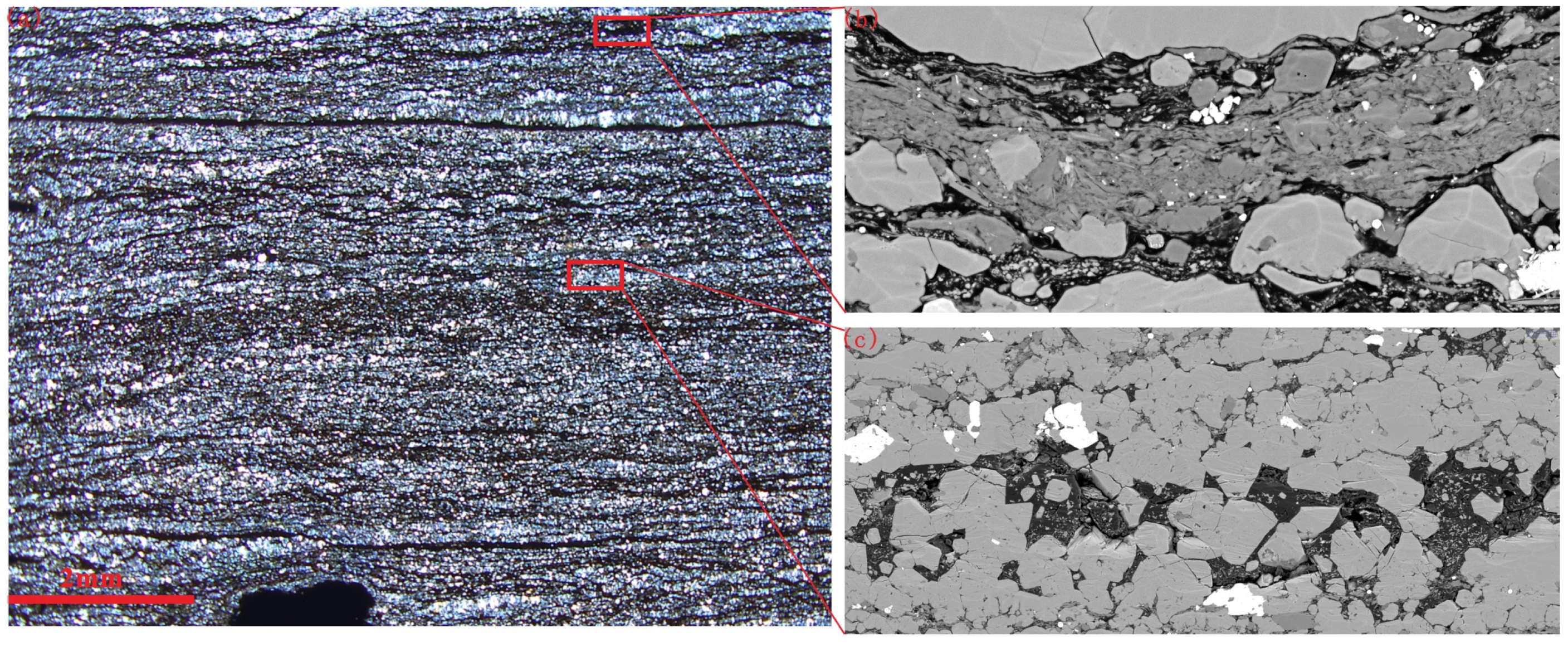
The non-random distribution of pore space and fractures has also been recognized in international studies of lacustrine oil shales, where lamina-scale variations in organic and mineral components contribute to strong microstructural heterogeneity and anisotropy [2,13,14]. In the Shahejie Formation, our observations further demonstrate that pore-fracture development is strongly controlled by the specific spatial configuration of minerals and organic matter established during deposition [40,41]. In this study, through the systematic characterization of the major lamina types of various types of laminations in the Shahejie Formation of Jiyang Depression, the “clay-organic matter-little pores” fabric (fabric A—Figure 8b), “calcite-organic matter-intercrystalline pores” fabric (fabric B—Figure 8c), and two distinct endmember types were identified. The latter has a rigid framework composed of subhedral microcrystalline calcite, with organic matter in a film-like or filling-like manner closely adhering to the growth of calcite crystals, and the intercrystalline pores of calcite and the edges of organic matter contraction fissures form the initial reservoir network; the former has organic matter enriched in strip-like form within the clay lamina, and the pore-fracture system is spatially separated from it.
Figure 8.
Relationship between sedimentary structures and pore-fracture system of shale in the Shahejie Formation; (a) Well L69, 3058.6 m. Interbedding of clayey laminae and calcareous laminae. Polarized thin section (orthogonal polarization), (b) BSE scanning electron microscope of clayey laminae, (c) BSE scanning electron microscope of calcareous laminae. Polarized thin section.
Under the same maturity conditions (Ro = 0.7–0.8%), the porosity of Fabric B is 3 to 5 times that of Fabric A, and the pore connectivity is significantly better. The essence of this control lies in the fact that the mineral-organic matter combination formed during the sedimentation period strongly influences the initial architecture of the pore-fracture system. The rhythmic alternation of organic matter-rich and carbonate-rich laminae constitutes a natural source–reservoir coupling unit at the micrometer scale, in which organic matter serves as the source and intercrystalline pores within carbonate-rich laminae provide the pore-fracture system. This discovery advances the concept of “source-reservoir integration” from the macro-stratigraphic scale to the micrometer scale of the layer, providing a recognizable initial material criterion for sweet spot prediction.
5.2. Diagenetic Modification of the Pore System
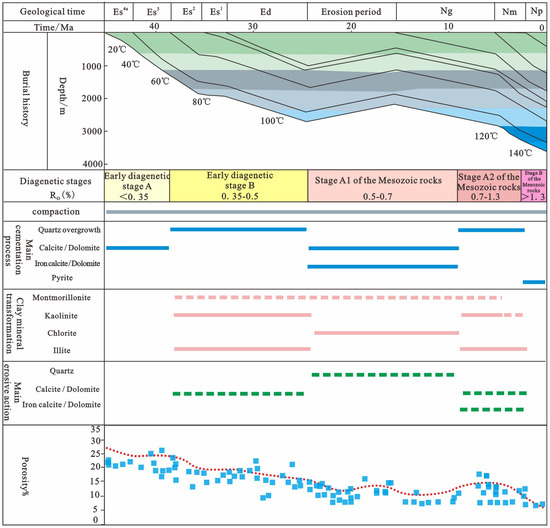
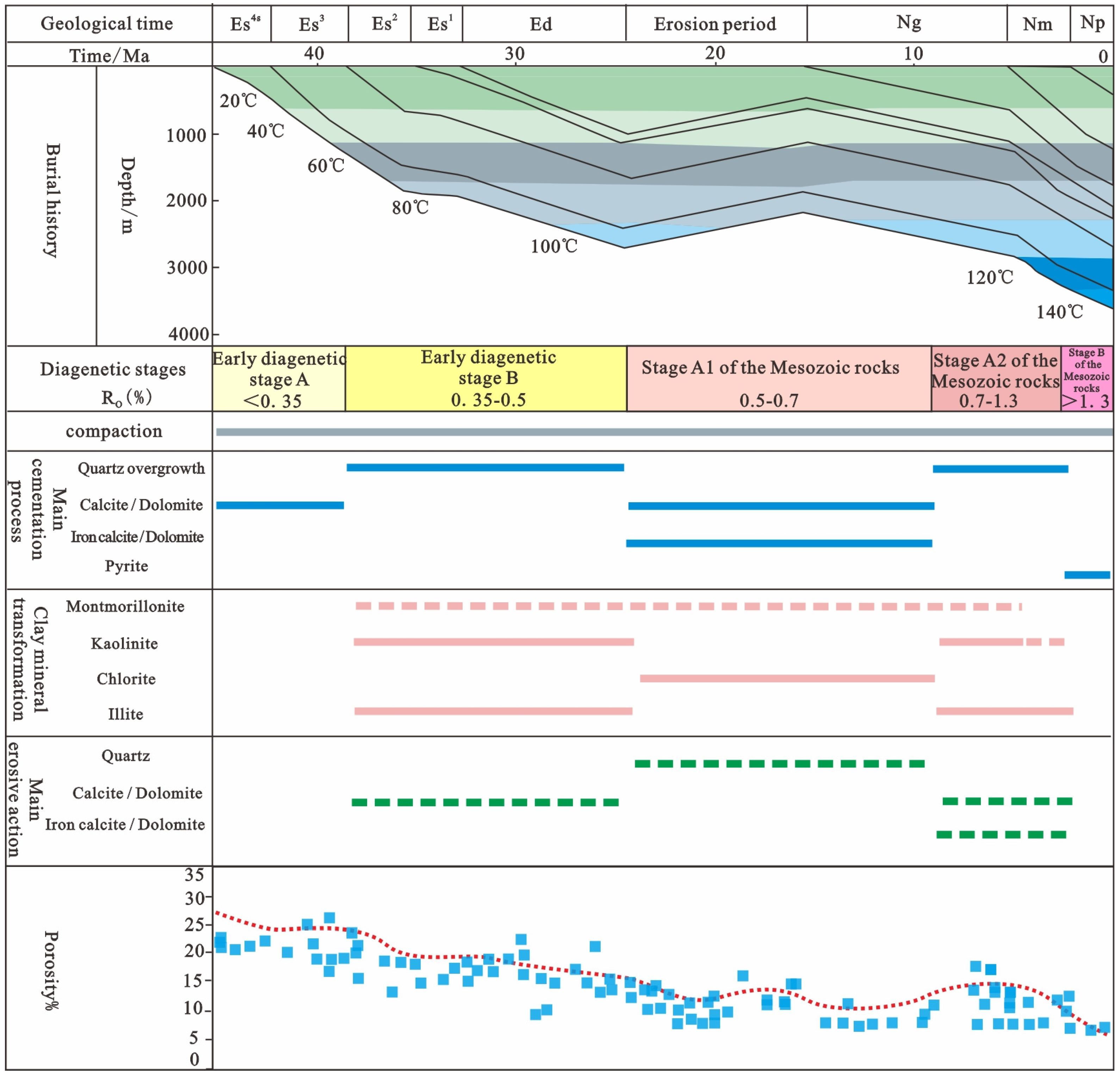
On the initial framework established by the sedimentary fabric, the modifying effects of the diagenetic fluids cannot be ignored either. However, this modification is not a simple linear superposition [42] (Figure 9). The conceptual evolutionary framework in Figure 9 qualitatively integrates interpretations of regional burial–thermal history, mechanical compaction, carbonate cementation and dissolution, and clay-mineral transformation. Fabric B samples spanning shallow-to-deep burial and Ro = 0.4–1.3% in the Shahejie Formation of the Jiyang Depression were then compared to interpret possible nonlinear pore-system modification by evolving diagenetic processes and fluid conditions.
Figure 9.
Sequence of diagenesis and pore-fracture system evolution of shale in the Shahejie Formation.
During the low-maturity stage (Ro < 0.6%), carbonate mineral content is positively correlated with porosity, suggesting that pore development was predominantly inherited from the original sedimentary fabric. As maturity increases through the early oil-generation window (Ro ≈ 0.7–0.9%), carbonate mineral content decreases while porosity increases, indicating enhanced carbonate dissolution and associated pore enlargement. Experimental studies of shale reservoirs in the Bohai Bay Basin have shown that organic acids generated during thermal maturation can locally dissolve carbonate and feldspar minerals, providing a plausible mechanism for this trend [18]. At higher maturity (Ro > 1.0%), renewed carbonate cementation is accompanied by a decrease in porosity. This trend is consistent with regional evidence from the Shahejie Formation showing an overall alkaline–acidic–alkaline evolution of diagenetic fluids and the development of late-stage carbonate cementation [43]. Figure 9 presents a regional conceptual evolutionary framework; it does not quantitatively reconstruct the history of individual wells or separate the contribution of each process to pore development.
More importantly, this non-linear transformation has a critical maturity window. Independent regional pressure data demonstrate that overpressure is widely developed in the Shahejie Formation of the Jiyang Depression. Pressure coefficients in shale-oil intervals of the Dongying and Zhanhua sags generally exceed 1.2 and locally reach approximately 1.8, while more than 350 drill-stem-test pressure measurements have identified distinct overpressure systems in the Es3 and Es4 intervals of the Bonan Sag [30,44]. Within the range of Ro = 0.8–0.9%, the dissolution and pore enlargement effect reaches its maximum, and the “pore-preserving” effect of the overpressure development and the organic acid dissolution form a synergistic enhancement effect; while when Ro > 1.1%, the role of overpressure may gradually shift from a “pore-preserving” effect toward microfracture generation, with microfracture development gradually becoming the dominant mechanism. This transformation of the dominant mechanism explains why the reservoir properties of deep shale do not monotonically decrease with depth, but instead show “sweet spots” enrichment at specific depth intervals.
5.3. Synergy Between Depositional Fabric and Diagenetic Modification
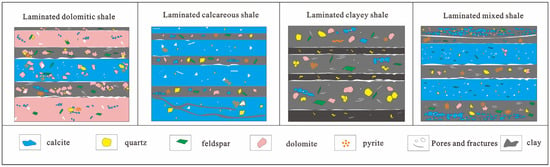
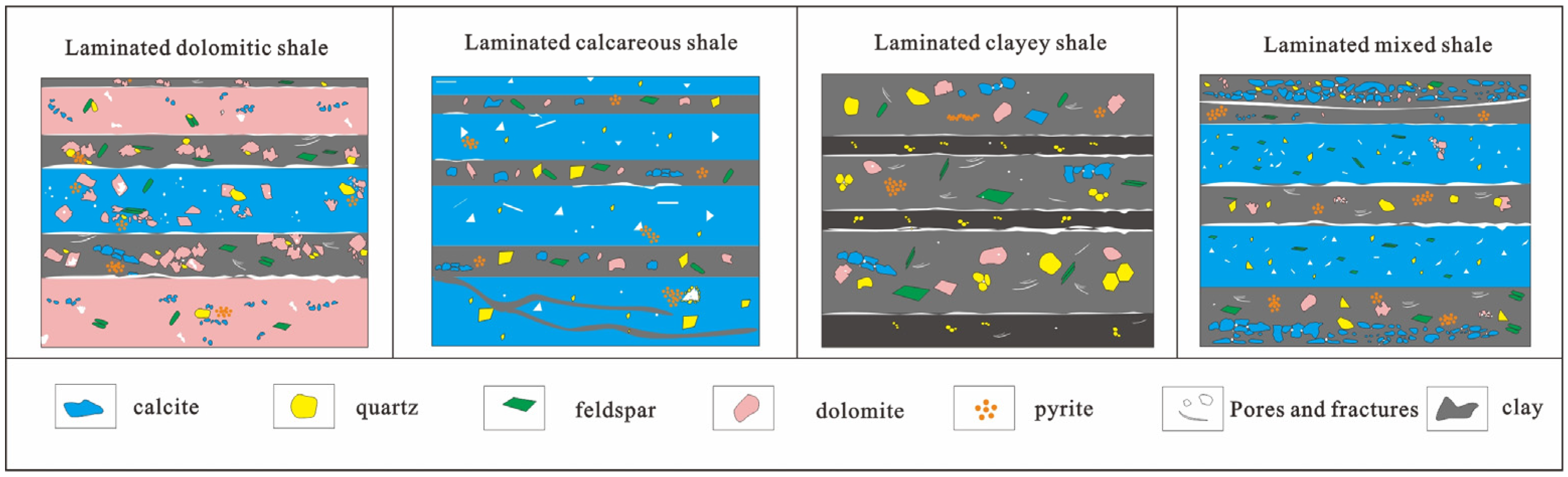
The differences in depositional fabric among various lithofacies can be clearly illustrated by the conceptual model of lamina fabric (Figure 10). This model depicts the mineral laminae configurations and pore-fracture development characteristics of four lithofacies: laminated dolomitic shale, laminated calcareous shale, laminated clayey shale, and laminated mixed shale. Laminated dolomitic shale is characterized by alternating laminae enriched in dolomite and clay-organic matter, with abundant intercrystalline pores aligned within the laminae developed within the laminae and abundant organic-mineral contact interfaces. Laminated calcareous shale exhibits alternating laminae rich in calcite and organic-clay laminae, with well-defined lamina boundaries and relatively well-developed bedding-parallel microfractures. Laminated mixed shale features frequent alternations of multiple mineral laminae, resulting in complex mineral assemblages. The carbonate-bearing lithofacies exhibit varying degrees of carbonate–organic matter coupling at the lamina scale. In contrast, laminated clayey shale is dominated by clay minerals, with carbonate minerals occurring only sparsely and discontinuously, resulting in relatively indistinct lamina boundaries and the absence of continuous intercrystalline pore networks and effective fluid-migration pathways.
Figure 10.
Schematic diagram showing the development of pore-fracture system in different laminae of the Shahejie Formation shale.
Based on these observations, this study proposes a “fabric-constrained nonlinear reservoir evolution model.” Final pore-system characteristics reflect the combined influence of initial depositional fabric and subsequent diagenetic modification, rather than their simple sum [45,46,47]. Depositional fabric determines the evolutionary pathway of the reservoir. Fabric B, which contains intercrystalline pores and extensive organic–mineral interfaces, may provide preferential sites for fluid access and dissolution-related pore enlargement. In contrast, Fabric A contains fewer observed pores and reactive interfaces, severely limiting the efficiency of diagenetic fluid alteration; even under equivalent organic acid input, its porosity increase remains minimal. Although carbonate minerals may occur locally in laminated clayey shale, the absence of a lamina-based channel network restricts dissolution to isolated edges of individual mineral grains, resulting in limited pore development in the observed two-dimensional sections—this striking contrast clearly demonstrates the constraining role of fabric on diagenesis.
The sweet spot intervals of the Shahejie Formation in the Jiyang Depression possess two key attributes: “favorable initial fabric” and “moderate diagenetic modification.” Favorable initial fabric is reflected in coupled carbonate–organic matter depositional structures, in which calcite and dolomite form complementary mineral associations within laminae. At the microscale, FE-SEM observations show angular intercrystalline pores between subhedral-to-euhedral dolomite crystals, commonly bounded by relatively intact crystal faces (Figure 5b). In contrast, calcite-associated pores exhibit irregular, embayed margins and etched crystal surfaces characteristic of dissolution (Figure 5c). These contrasting morphologies suggest that calcite dissolution generated or enlarged pores, whereas some dolomite-associated pores may represent relict intercrystalline spaces retained during compaction. Moderate diagenetic modification corresponds to an approximate favorable maturity interval of Ro = 0.8–1.0%. During this interval, calcite dissolution enhances porosity, while the dolomite crystal framework may help retain some intercrystalline pores. These processes may coincide with overpressure-related pore preservation before widespread cementation substantially reduces porosity. Because no mechanical or compaction experiments were conducted, the inferred pore-preservation role of dolomite remains a petrographically based interpretation rather than direct proof. This understanding elevates sweet spot prediction from empirical analogy to mechanistic forecasting, clarifying that sweet spots reflect the spatial superposition of specific depositional fabrics and diagenetic stages. Similar controls of laminae and lithofacies on pore development have been reported from the Lucaogou Formation in the Jimusar Sag and the Lower Ganchaigou Formation in the Qaidam Basin [48,49]. However, mineral composition, organic matter characteristics, fluid evolution, burial history, and tectonic conditions vary among basins. Therefore, the present model should be regarded as a conceptual framework, and its maturity thresholds require independent basin-specific calibration and validation.
6. Conclusions
(1) The sedimentary facies of the Shahejie Formation in Jiyang Depression has a significant layer-specific selection for a shale pore-fracture system. Microcrystalline calcite, dolomite, and organic matter are closely coexisting within the laminae, forming a composite pore-fracture system consisting of intercrystalline pores, organic matter edge fractures, and dissolution-expanded pores. Carbonate–organic matter coupled laminae exhibit porosities of approximately 8–15%. The pore-fracture system is mainly located in the carbonate-rich laminae, while the reservoir properties of the clay laminae and laminated clayey shale segments significantly deteriorate. The heterogeneity of the reservoir essentially reflects the macroscopic spatial distribution of the differences in the types and stacking patterns of the layer structures.
(2) The spatial configuration of minerals and organic matter established during sedimentation is the primary controlling factor on reservoir quality. Under comparable carbonate mineral contents, substantial differences in reservoir properties are observed among lithofacies with different lamina fabrics, demonstrating that carbonate enrichment alone does not necessarily lead to enhanced pore development. A positive contribution of carbonate minerals to reservoir quality occurs primarily when carbonate minerals are organized into well-developed laminae and are spatially coupled with organic matter-rich laminae. Therefore, lamina-fabric type exerts a stronger control on reservoir quality than carbonate mineral abundance, which acts as a secondary controlling factor. These findings demonstrate the limitations of evaluating reservoir quality solely on the basis of bulk-rock mineral composition.
(3) The modification of the pore-fracture system by diagenetic fluids has significant nonlinear characteristics and mineral selectivity. As maturity increases, the reservoir properties undergo a three-stage evolution: “inheritance and retention—dissolution expansion—cementation reduction”. Dissolution and pore enlargement are enhanced at Ro ≈ 0.7–0.9%, and after Ro > 1.0%, late carbonate precipitation cementation leads to a decrease in porosity. Calcite is preferentially dissolved due to its higher solubility, contributing to “early dissolution and pore expansion”. The relatively stable dolomite crystal framework may favor the retention of some inter-crystalline pores, contributing a possible framework-related pore-preservation effect. The coexistence configuration of these two minerals in the laminated structure is the optimal mineral combination for sweet spot development.
(4) Final reservoir quality is governed by the coupled effects of depositional fabric and subsequent diagenetic modification. The carbonate-rich laminated framework contains abundant pore-bearing interfaces and reactive mineral surfaces that may facilitate diagenetic alteration. The clay-rich structure lacks this framework and has extremely low diagenetic modification efficiency. The shale-oil sweet spot is the product of the superimposition of the carbonate-organic matter coupling sedimentary structure and the moderate diagenetic modification window with Ro = 0.8–1.0%. This fabric-constrained nonlinear reservoir evolution model provides a conceptual framework for interpreting the joint association of lamina architecture and diagenetic modification with pore development.
Author Contributions
Conceptualization, Z.J. and X.T.; methodology, X.G. and W.S.; formal analysis, T.Z.; investigation, T.Z., X.G., W.S. and Z.C.; resources, X.G. and Z.F.; data curation, T.Z.; writing—original draft preparation, T.Z., X.G., W.S. and X.T.; writing—review and editing, Z.C. and Z.F.; visualization, Z.F.; supervision, Z.C.; project administration, Z.J.; funding acquisition, Z.J. and X.T. All authors have read and agreed to the published version of the manuscript.
Funding
This research was funded by the National Natural Science Foundation of China (Grant Number: 42372144).
Data Availability Statement
The raw data supporting the conclusions of this study are not publicly available due to confidentiality restrictions of the research project. Anonymized data may be available from the corresponding author upon reasonable request with permission from the relevant institution.
Acknowledgments
We would like to express our gratitude to Sinopec Petroleum Exploration and Development Research Institute for providing the samples, and to the reviewers for their valuable comments.
Conflicts of Interest
Authors Tianwen Zhang and Xusheng Guo were employed by the company Sinopec Petroleum Exploration and Development Research Institute. The remaining authors declare that the research was conducted in the absence of any commercial or financial relationships that could be construed as a potential conflict of interest.
References
- Burton, D.; Woolf, K.; Sullivan, B. Lacustrine Depositional Environments in the Green River Formation, Uinta Basin: Expression in Outcrop and Wireline Logs. AAPG Bull. 2014, 98, 1699–1715. [Google Scholar] [CrossRef] [Scilit]
- Saif, T.; Lin, Q.; Singh, K.; Bijeljic, B.; Blunt, M.J. Dynamic Imaging of Oil Shale Pyrolysis Using Synchrotron X-Ray Microtomography. Geophys. Res. Lett. 2016, 43, 6799–6807. [Google Scholar] [CrossRef] [Scilit]
- Zhang, S.; Liu, H.-M.; Wang, M.; Liu, X.-J.; Liu, H.-L.; Bao, Y.-S.; Wang, W.-Q.; Li, R.-Z.; Luo, X.; Fang, Z.-W. Shale Pore Characteristics of Shahejie Formation: Implication for Pore Evolution of Shale Oil Reservoirs in Dongying Sag, North China. Pet. Res. 2019, 4, 113–124. [Google Scholar] [CrossRef] [Scilit]
- Ma, C.; Fang, X.; Ma, X.; Liu, X.; Xu, B.; Ge, X. Properties and Model of a Lacustrine Shale Oil Reservoir: A Case Study of the Upper Fourth Member and Lower Third Member of the Shahejie Formation in Dongying Sag and Zhanhua Sag, Jiyang Depression. J. Mar. Sci. Eng. 2023, 11, 1441. [Google Scholar] [CrossRef] [Scilit]
- Wang, M.; Ma, R.; Li, J.-B.; Lu, S.-F.; Li, C.-M.; Guo, Z.-Q.; Li, Z. Occurrence Mechanism of Lacustrine Shale Oil in the Paleogene Shahejie Formation of Jiyang Depression, Bohai Bay Basin, China. Pet. Explor. Dev. 2019, 46, 833–846. [Google Scholar] [CrossRef] [Scilit]
- Liu, H.-M.; Bao, Y.-S.; Zhang, S.-C.; Li, Z.; Li, J.-L.; Wang, X.-J.; Wu, L.-B.; Wang, Y.; Wang, W.-Q.; Zhu, R.-F.; et al. Structural Characteristics of Continental Carbonate-Rich Shale and Shale Oil Movability: A Case Study of the Paleogene Shahejie Formation Shale in Jiyang Depression, Bohai Bay Basin, China. Pet. Explor. Dev. 2023, 50, 1320–1332. [Google Scholar] [CrossRef] [Scilit]
- Loucks, R.G.; Reed, R.M.; Ruppel, S.C.; Jarvie, D.M. Morphology, Genesis, and Distribution of Nanometer-Scale Pores in Siliceous Mudstones of the Mississippian Barnett Shale. J. Sediment. Res. 2009, 79, 848–861. [Google Scholar] [CrossRef] [Scilit]
- Loucks, R.G.; Reed, R.M.; Ruppel, S.C.; Hammes, U. Spectrum of Pore Types and Networks in Mudrocks and a Descriptive Classification for Matrix-Related Mudrock Pores. AAPG Bull. 2012, 96, 1071–1098. [Google Scholar] [CrossRef] [Scilit]
- Milliken, K.L.; Rudnicki, M.; Awwiller, D.N.; Zhang, T. Organic Matter-Hosted Pore System, Marcellus Formation (Devonian), Pennsylvania. AAPG Bull. 2013, 97, 177–200. [Google Scholar] [CrossRef] [Scilit]
- Ougier-Simonin, A.; Renard, F.; Boehm, C.; Vidal-Gilbert, S. Microfracturing and Microporosity in Shales. Earth-Sci. Rev. 2016, 162, 198–226. [Google Scholar] [CrossRef] [Scilit]
- Rao, Q.; He, Z.-L.; Dong, T.; Wang, W.-Q.; Wang, X.-Y.; Rao, L.-Q.; Wang, T.; Huang, L.-W. Pore and Fracture Characteristics and Diagenetic Evolution Mechanisms of Low-Maturity Lacustrine Shales from the Paleogene Shahejie Formation in the Jiyang Depression, Bohai Bay Basin, Eastern China. Mar. Pet. Geol. 2024, 170, 107154. [Google Scholar] [CrossRef] [Scilit]
- Zhao, W.-N.; Feng, M.-S.; Gao, Y.-Y.; Fu, Y.; Meng, W.-B.; Fan, S.-Y.; Lan, Y.; Zhang, B. Comprehensive Characterization of Micro-Pore Structures in Different Lithologies of the Lacustrine Fine-Grained Mixed Sedimentary Reservoir of the Shahejie Formation in the Jiyang Depression. Ore Energy Resour. Geol. 2025, 18, 100075. [Google Scholar] [CrossRef] [Scilit]
- Saif, T.; Lin, Q.; Bijeljic, B.; Blunt, M.J. Microstructural Imaging and Characterization of Oil Shale Before and After Pyrolysis. Fuel 2017, 197, 562–574. [Google Scholar] [CrossRef] [Scilit]
- Saif, T.; Lin, Q.; Butcher, A.R.; Bijeljic, B.; Blunt, M.J. Multi-Scale Multi-Dimensional Microstructure Imaging of Oil Shale Pyrolysis Using X-Ray Micro-Tomography, Automated Ultra-High Resolution SEM, MAPS Mineralogy and FIB-SEM. Appl. Energy 2017, 202, 628–647. [Google Scholar] [CrossRef] [Scilit]
- Wang, Y.-G.; Liang, C.; Cao, Y.-C.; Xiong, Z.-H.; Han, W.-L.; Liu, H.-M.; Wang, J.-R. Distribution Patterns of Storage Space and Diagenesis in Lacustrine Shale Controlled by Laminae Combinations—A Case Study from Jiyang Depression. Mar. Pet. Geol. 2025, 180, 107488. [Google Scholar] [CrossRef] [Scilit]
- Bai, C.-Y.; Yu, B.-S.; Han, S.-J.; Shen, Z.-H. Characterization of Lithofacies in Shale Oil Reservoirs of a Lacustrine Basin in Eastern China: Implications for Oil Accumulation. J. Pet. Sci. Eng. 2020, 195, 107907. [Google Scholar] [CrossRef] [Scilit]
- Li, T.-W.; Jiang, Z.-X.; Li, Z.; Wang, P.-F.; Xu, C.-L.; Liu, G.-H.; Su, S.-Y.; Ning, C.-X. Continental Shale Pore Structure Characteristics and Their Controlling Factors: A Case Study from the Lower Third Member of the Shahejie Formation, Zhanhua Sag, Eastern China. J. Nat. Gas Sci. Eng. 2017, 45, 670–692. [Google Scholar] [CrossRef] [Scilit]
- Li, J.-J.; Ma, Y.; Huang, K.-Z.; Zhang, Y.-N.; Wang, W.-M.; Liu, J.-W.; Li, Z.; Lu, S.-F. Quantitative Characterization of Organic Acid Generation, Decarboxylation, and Dissolution in a Shale Reservoir and the Corresponding Applications—A Case Study of the Bohai Bay Basin. Fuel 2018, 214, 538–545. [Google Scholar] [CrossRef] [Scilit]
- Liu, H.; Zhang, S.; Song, G.; Zhang, S.; Hao, X.; Xie, Z.; Xu, N.; Liu, P. A Discussion on the Origin of Shale Reservoir Inter-Laminar Fractures in the Shahejie Formation of Paleogene, Dongying Depression. J. Earth Sci. 2017, 28, 1064–1077. [Google Scholar] [CrossRef] [Scilit]
- Zhao, W.-Q.; Yang, L.-L.; Jiang, Z.-X.; He, W.-J.; Huang, L.-L.; Chang, Q.-S.; Tang, X.-L.; Ye, H. Geneses of Multi-Stage Carbonate Minerals and Their Control on Reservoir Physical Properties of Dolomitic Shales. Mar. Pet. Geol. 2023, 153, 106216. [Google Scholar] [CrossRef] [Scilit]
- Wang, J.; Cao, Y.-C.; Liu, K.-Y.; Gao, Y.; Qin, Z.-J. Fractal Characteristics of the Pore Structures of Fine-Grained, Mixed Sedimentary Rocks from the Jimsar Sag, Junggar Basin: Implications for Lacustrine Tight Oil Accumulations. J. Pet. Sci. Eng. 2019, 182, 106363. [Google Scholar] [CrossRef] [Scilit]
- Bjørlykke, K.; Høeg, K. Effects of Burial Diagenesis on Stresses, Compaction and Fluid Flow in Sedimentary Basins. Mar. Pet. Geol. 1997, 14, 267–276. [Google Scholar] [CrossRef] [Scilit]
- Li, M.-W.; Jin, Z.-J.; Dong, M.-Z.; Ma, X.-X.; Li, Z.-M.; Jiang, Q.-G.; Bao, Y.-J.; Tao, G.-L.; Qian, M.-H.; Liu, P.; et al. Advances in the Basic Study of Lacustrine Shale Evolution and Shale Oil Accumulation. Pet. Geol. Exp. 2020, 42, 489–505. [Google Scholar]
- Liang, C.; Cao, Y.-C.; Liu, K.-Y.; Jiang, Z.-X.; Wu, J.; Hao, F. Diagenetic Variation at the Lamina Scale in Lacustrine Organic-Rich Shales: Implications for Hydrocarbon Migration and Accumulation. Geochim. Cosmochim. Acta 2018, 229, 112–128. [Google Scholar] [CrossRef] [Scilit]
- Allen, M.B.; Macdonald, D.I.M.; Xun, Z.; Vincent, S.J.; Brouet-Menzies, C. Early Cenozoic Two-Phase Extension and Late Cenozoic Thermal Subsidence and Inversion of the Bohai Basin, Northern China. Mar. Pet. Geol. 1997, 14, 951–972. [Google Scholar] [CrossRef] [Scilit]
- Zhao, L.; Zheng, T.-Y. Seismic Structure of the Bohai Bay Basin, Northern China: Implications for Basin Evolution. Earth Planet. Sci. Lett. 2005, 231, 9–22. [Google Scholar] [CrossRef] [Scilit]
- Ma, L.-C.; Song, M.-S.; Wang, Y.-S.; Wang, Y.-G.; Liu, H.-M. Exploration Progress of the Paleogene in Jiyang Depression, Bohai Bay Basin. Energy Geosci. 2023, 4, 42–50. [Google Scholar] [CrossRef] [Scilit]
- Yang, T.; Cao, Y.-C.; Liu, K.-Y.; Wang, Y.-Z.; Zavala, C.; Friis, H.; Song, M.-S.; Yuan, G.-H.; Liang, C.; Xi, K.-L.; et al. Genesis and Depositional Model of Subaqueous Sediment Gravity-Flow Deposits in a Lacustrine Rift Basin as Exemplified by the Eocene Shahejie Formation in the Jiyang Depression, Eastern China. Mar. Pet. Geol. 2019, 102, 231–257. [Google Scholar] [CrossRef] [Scilit]
- Wan, Z.; Xia, B.; Lü, B.; Cai, Z.; Liu, W. Yinggehai Basin Gas Exploration: Comparison with Jiyang Depression. J. Earth Sci. 2012, 23, 359–372. [Google Scholar] [CrossRef] [Scilit]
- Zhang, S.; Liu, H.-M.; Liu, Y.-L.; Wang, Y.-S.; Wang, M.; Bao, Y.-S.; Hu, Q.-H.; Li, Z.; Zhang, S.-P.; Yao, S.-P.; et al. Main Controls and Geological Sweet Spot Types in Paleogene Shale Oil Rich Areas of the Jiyang Depression, Bohai Bay Basin, China. Mar. Pet. Geol. 2020, 111, 576–587. [Google Scholar] [CrossRef] [Scilit]
- Jiang, Z. Sedimentary Dynamics of Windfield-Source-Basin System: New Concept for Interpretation and Prediction; Springer: Singapore, 2018. [Google Scholar]
- Wang, Y.; Liang, C.; Sun, X. Shale Oil Reservoir Characteristics and Enrichment in the Jiyang Depression, Bohai Bay Basin, East China. J. Earth Sci. 2017, 28, 977–986. [Google Scholar] [CrossRef] [Scilit]
- Zhu, X.-M.; Zhang, M.-Z.; Zhu, S.-F.; Dong, Y.-L.; Li, C.; Bi, Y.-Q.; Ma, L.-C. Shale Lithofacies and Sedimentary Environment of the Third Member, Shahejie Formation, Zhanhua Sag, Eastern China. Acta Geol. Sin.-Engl. Ed. 2021, 96, 1024–1040. [Google Scholar] [CrossRef] [Scilit]
- Xie, X.-M.; Li, M.-W.; Littke, R.; Huang, Z.-K.; Ma, X.-X.; Jiang, Q.-G.; Snowdon, L.R. Petrographic and Geochemical Characterization of Microfacies in a Lacustrine Shale Oil System in the Dongying Sag, Jiyang Depression, Bohai Bay Basin, Eastern China. Int. J. Coal Geol. 2016, 165, 49–63. [Google Scholar] [CrossRef] [Scilit]
- Liang, C.; Wu, J.; Jiang, Z.-X.; Cao, Y.-C.; Song, G.-Q. Sedimentary Environmental Controls on Petrology and Organic Matter Accumulation in the Upper Fourth Member of the Shahejie Formation (Paleogene, Dongying Depression, Bohai Bay Basin, China). Int. J. Coal Geol. 2018, 186, 1–13. [Google Scholar] [CrossRef] [Scilit]
- Wang, Y.-S.; Li, Z.; Gong, J.-Q.; Zhu, J.-J.; Hao, Y.-Q.; Hao, X.-F.; Wang, Y. An Evaluation Workflow for Shale Oil and Gas in the Jiyang Depression, Bohai Bay Basin, China: A Case Study from the Luojia Area in the Zhanhua Sag. Pet. Res. 2016, 1, 70–80. [Google Scholar] [CrossRef] [Scilit]
- Ma, C.-F.; Elsworth, D.; Dong, C.-M.; Lin, C.-Y.; Luan, G.-Q.; Chen, B.-Y.; Liu, X.-C.; Muhammad, J.M.; Muhammad, A.Z.; Shen, Z.-C.; et al. Controls of Hydrocarbon Generation on the Development of Expulsion Fractures in Organic-Rich Shale: Based on the Paleogene Shahejie Formation in the Jiyang Depression, Bohai Bay Basin, East China. Mar. Pet. Geol. 2017, 86, 1406–1416. [Google Scholar] [CrossRef] [Scilit]
- Zeng, X.; Cai, J.; Dong, Z.; Bian, L.; Li, Y. Relationship between Mineral and Organic Matter in Shales: The Case of Shahejie Formation, Dongying Sag, China. Minerals 2018, 8, 222. [Google Scholar] [CrossRef] [Scilit]
- Li, C.; Wu, Y.; Ding, X.; Xie, X.; Luo, T.; Zhang, J.; Sun, Y.; Xia, C. Formation of Carbonate Laminae in Shale and Their Impact on Organic Matter in Dongying Depression. Sci. Rep. 2025, 15, 22093. [Google Scholar] [CrossRef] [Scilit]
- Xi, W.; Xu, M.; Ma, K.; Liu, J. Pore Structure Heterogeneity and Its Controlling Factors of Lacustrine Shale Oil Reservoirs: A Case Study from the Shahejie Formation, Jiyang Depression. Energies 2022, 15, 7218. [Google Scholar] [CrossRef] [Scilit]
- Xu, S.; Gou, Q. The Importance of Laminae for China Lacustrine Shale Oil Enrichment: A Review. Energies 2023, 16, 1661. [Google Scholar] [CrossRef] [Scilit]
- Wang, X.; Zeng, J.-H.; Jia, K.-K.; Wang, W.-Q.; Li, B.; An, C.; Zhao, W. Evolutionary Process of the Wettability of Low-Permeability Sandstone Reservoirs Under the Control of Diagenesis and Its Mechanism: A Case Study of the Dongying Sag, Bohai Bay Basin. Oil Gas Geol. 2023, 44, 1308–1320. [Google Scholar] [CrossRef]
- Han, S.J.; Yu, B.S.; Ruan, Z.; Bai, C.Y.; Shen, Z.H.; Lohr, S.C. Diagenesis and fluid evolution in the third member of the Eocene Shahejie Formation, Bonan Sag, Bohai Bay Basin, China. Mar. Pet. Geol. 2021, 128, 105003. [Google Scholar] [CrossRef] [Scilit]
- Hua, Y.; Guo, X.; Tao, Z.; He, S.; Dong, T.; Han, Y.; Yang, R. Mechanisms for overpressure generation in the Bonan Sag of Zhanhua Depression, Bohai Bay Basin, China. Mar. Pet. Geol. 2021, 128, 105032. [Google Scholar] [CrossRef] [Scilit]
- Cai, J.; Cai, C.; Lu, L.; Jiang, Q.; Ma, X.; He, J. Hydrous Pyrolysis of Source Rocks with Different Maturity in Dongying Sag, Bohai Bay Basin, China: Implications for Shale Oil Exploration and Development. Energies 2023, 16, 6219. [Google Scholar] [CrossRef] [Scilit]
- Zhang, X.; Li, J.; Ge, X.; Wang, M.; Miao, Q.; Zhang, D. Mechanism-Constrained Electrical and Non-Electrical Log Fusion for Oil Saturation Evaluation in Low-Resistivity Lacustrine Shale Oil Reservoirs. Processes 2026, 14, 2781. [Google Scholar] [CrossRef] [Scilit]
- Xie, M.; Yang, W.; Zhao, M.; Li, Y.; Deng, Y.; Gao, Y.; Xu, C.; Hou, H.; Yao, L.; Zhang, Z.; et al. Diagenetic Facies Controls on Differential Reservoir-Forming Patterns of Mixed Shale Oil Sequences in the Saline Lacustrine Basin. Minerals 2023, 13, 143. [Google Scholar] [CrossRef] [Scilit]
- Li, K.; Xi, K.; Cao, Y.; Shan, X.; Lin, M. Diagenetic alterations induced by lamina-scale mass transfer and the impacts on shale oil reservoir formation in carbonate-rich shale of the Permian Lucaogou Formation, Jimusar Sag. Mar. Pet. Geol. 2024, 162, 106709. [Google Scholar] [CrossRef] [Scilit]
- Liu, Z.; Zhang, Y.; Song, G.; Li, S.; Long, G.; Zhao, J.; Zhu, C.; Wang, Y.; Gong, Q.; Xia, Z. Mixed carbonate rocks lithofacies features and reservoirs controlling mechanisms in a saline lacustrine basin in Yingxi area, Qaidam Basin, NW China. Pet. Explor. Dev. 2021, 48, 80–94. [Google Scholar] [CrossRef] [Scilit]
Disclaimer/Publisher’s Note: The statements, opinions and data contained in all publications are solely those of the individual author(s) and contributor(s) and not of MDPI and/or the editor(s). MDPI and/or the editor(s) disclaim responsibility for any injury to people or property resulting from any ideas, methods, instructions or products referred to in the content. |
© 2026 by the authors. Licensee MDPI, Basel, Switzerland. This article is an open access article distributed under the terms and conditions of the Creative Commons Attribution (CC BY) license.