


Abstract
A coupled model integrating three-dimensional heat transfer in the geological formation with one-dimensional non-isothermal flow in the wellbore was developed for medium-deep coaxial geothermal wells under the geological conditions of Changsha, Central-South China. The effects of wellbore configuration, materials, and operating parameters on heat transfer performance were investigated. The results show that the outlet and bottomhole temperatures decrease rapidly initially and subsequently decline at a slower rate, while the thermally disturbed zone continues to expand. Increasing the well depth raises both the outlet temperature and heat extraction rate. A large-diameter–high-flow-rate configuration increases the heat extraction rate but reduces the outlet temperature. Reducing the thermal conductivity of the central pipe mitigates thermal short-circuiting between the inner and outer flow passages, thereby increasing both the outlet temperature and heat extraction rate. Increasing the thermal conductivity of the cementing material enhances radial heat transfer, although the incremental benefit gradually diminishes, while the segmentation depth of the cementing material has only a minor effect. Increasing the inlet flow rate lowers the outlet temperature but increases the heat extraction rate, whereas increasing the inlet temperature produces the opposite effects. These findings provide a reference for wellbore configuration design, material selection, and operating-parameter optimization in Central South China.
1. Introduction
China’s rapid economic development and the progressive depletion of conventional fossil fuels have increased the urgency of transitioning its energy system [1]. Developing clean and reliable renewable energy sources has become an important research priority in support of China’s goals of peaking carbon dioxide emissions before 2030 and achieving carbon neutrality before 2060 [2]. Geothermal energy offers abundant resources, a low environmental impact, and high reliability [3], with applications in heating, cooling, and power generation [4]. Borehole heat exchangers are key components of geothermal energy utilization systems and can be classified as U-tube, helical, or coaxial configurations according to their pipe geometry [5]. Medium-deep coaxial borehole heat exchangers operate in a closed loop and offer a compact structure, a small surface footprint, and high pressure resistance. Their heat transfer performance is influenced by borehole depth, pipe diameter, pipe material, cementing material, inlet flow rate, and inlet temperature [6]. However, heat exchange between the hot fluid in the inner pipe and the cold fluid in the annulus causes thermal short-circuiting within the borehole [7], reducing the heat extraction capacity. Investigating the transient heat transfer characteristics of medium-deep coaxial borehole heat exchangers and their key influencing factors is therefore important for optimizing borehole design and operating parameters.
The heat transfer performance of coaxial borehole heat exchangers has primarily been investigated through analytical modeling, numerical simulation, and field testing. Kohl et al. [8] conducted early field tests and numerical analyses of deep borehole heat exchanger systems, providing an engineering basis for medium-deep geothermal energy development. Pan et al. [9] developed an analytical heat transfer model for coaxial deep borehole heat exchangers, which Luo et al. [10] subsequently improved using a segmented finite heat source method to better represent the geothermal gradient and nonuniform heat transfer along the borehole depth. Chen and Tomac [11] reviewed modeling approaches and engineering applications of medium-deep coaxial borehole heat exchangers, identifying design and material optimization, accurate simulation of complex geological–fluid interactions, and long-term operational stability as key research priorities. Advances in multiphysics numerical simulation have enabled increasing attention to coupled modeling of transient heat conduction in the surrounding formation and convective heat transfer within the borehole. Pokhrel et al. [12] conducted field tests and numerical simulations of a 500 m deep coaxial borehole heat exchanger to evaluate its outlet temperature and heat extraction capacity under actual geothermal conditions. Wang et al. [13] compared field measurements, numerical models, and operating modes for a medium-deep coaxial borehole heat exchanger near Beijing, demonstrating stable heat extraction at an economically favorable flow rate. Niu et al. [14] combined field tests in the Matouying area of Tangshan with a systematic analysis of the effects of geological conditions, borehole configuration, and operating parameters. Based on field tests in Xining, Zhao et al. [15] developed a coupled model of three-dimensional heat transfer in the formation and fluid flow within the borehole, and examined the effects of inlet flow rate, inlet temperature, and inner pipe thermal conductivity on heat transfer performance. Existing studies have shown that borehole depth, pipe diameter, geothermal gradient, formation thermal conductivity, inlet flow rate, inlet temperature, inner pipe material, and cementing material all influence heat transfer performance [16]. Gascuel et al. [17] and Ma et al. [18] investigated structural optimization and long-term performance, respectively, of coaxial borehole heat exchangers in cold regions. A sensitivity analysis by Li et al. [19] also identified inlet temperature, initial ground temperature, flow rate, pipe material, and backfill material as factors affecting heat transfer. These findings indicate that regional differences in subsurface temperature distributions, stratigraphy, and climatic conditions can lead to substantial variations in system performance. The design and operating parameters of medium-deep coaxial borehole heat exchangers should therefore be determined according to local conditions.
South-central China experiences hot summers and cold, humid winters, resulting in substantial building cooling and heating demands and a practical need for research into the clean utilization of geothermal energy. Several studies have investigated geothermal resources in Hunan Province in recent years. Long et al. [20] evaluated shallow geothermal resources and their suitability for development in Changsha. Liu et al. [21] investigated the heat transfer performance of a medium-deep coaxial borehole heat exchanger system in the Huanghua Airport area of Changsha. Zhao et al. [22] analyzed the temperature field and the factors controlling its distribution in the Reshuixu geothermal field in Rucheng, Hunan, while Ye et al. [23] further examined the geothermal geological characteristics and resource potential of hot dry rock in Rucheng. These studies indicate the potential for medium-deep geothermal resource development in south-central China. However, relatively few studies have examined the transient heat transfer performance of medium-deep coaxial borehole heat exchangers under the region’s actual stratified geological conditions. Existing research has largely focused on individual parameters, with limited systematic investigation of structural, material, and operating parameters.
This study investigates the heat transfer characteristics of medium-deep coaxial borehole heat exchangers using Changsha, a city in south-central China, as a case study. A model coupling three-dimensional heat transfer in the surrounding formation with one-dimensional non-isothermal pipe flow was developed in COMSOL Multiphysics 6.0. The model was used to evaluate system heat transfer characteristics under baseline operating conditions and to examine the effects of borehole depth, pipe diameter, inner pipe length, pipe material, cementing material, inlet flow rate, and inlet temperature. The results provide a basis for optimizing borehole design and operating parameters.
2. Numerical Model
2.1. Physical Model and Basic Assumptions
South-central China has a complex geological setting characterized by widespread faults and fractures, with substantial variations in lithology and thermophysical properties with depth. The study area is located in Changsha and is surrounded by several tectonic units, including the Tongguan Depression Zone, the Qingshanpu–Gushan Uplift Zone, the Huanghua–Changsha Fault Basin, and the Tiaoma Fault Uplift Zone. The subsurface consists of strata of different geological ages, predominantly sandstone, mudstone, and sandy conglomerate, exhibiting pronounced stratification [21]. Based on borehole analysis and well logging data, the formation surrounding the geothermal borehole was divided into multiple stratigraphic units.
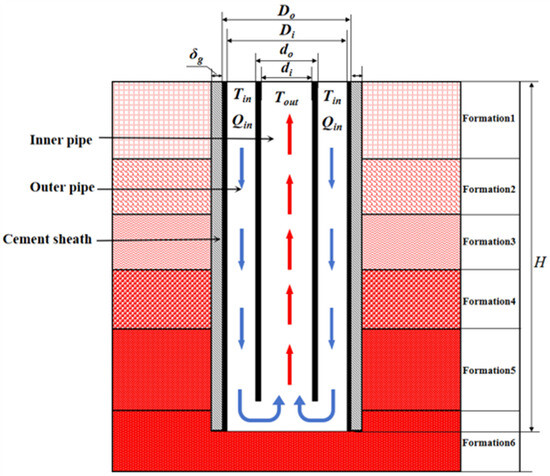
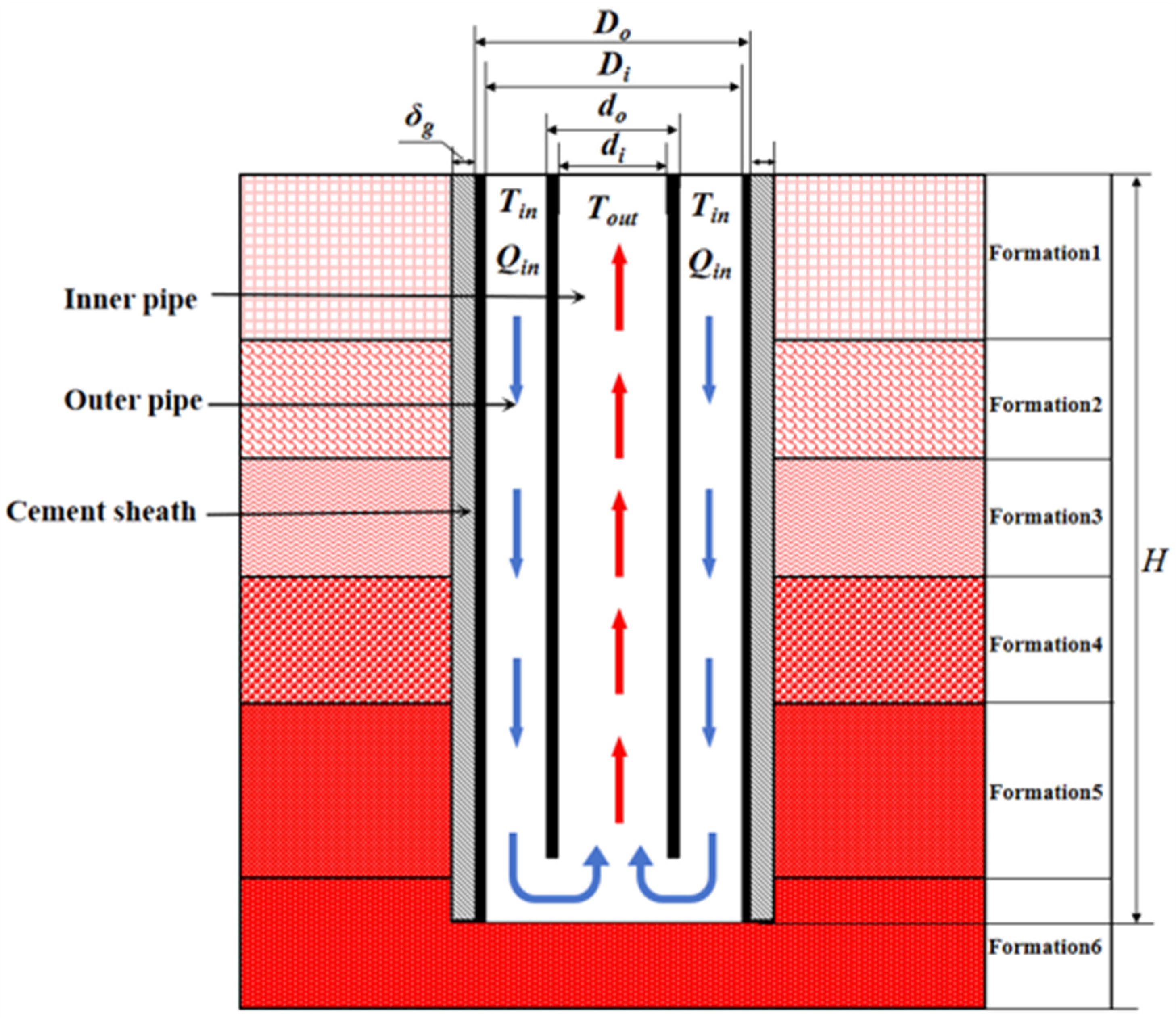
The medium-deep coaxial borehole heat exchanger consists primarily of the surrounding formation, a cement sheath, an outer casing, and an inner pipe. Cold circulating water enters the annulus at the wellhead and flows downward to the bottom of the borehole, where it enters the inner pipe and returns upward to the outlet at the wellhead. During circulation, the fluid absorbs heat from the surrounding formation. Heat is also transferred through the inner pipe wall between the hot fluid in the inner pipe and the cold fluid in the annulus. Figure 1 illustrates the heat transfer mechanism.
Figure 1.
Schematic illustration of the heat transfer mechanism.
A three-dimensional transient heat transfer model for solids was used to calculate the temperature fields in the formation and cement sheath, while a one-dimensional non-isothermal pipe flow model was used to calculate the pressure, velocity, and temperature distributions of the fluid in the annulus and inner pipe. The following assumptions were adopted to simplify the model:
- Radiative heat transfer and other additional volumetric heat sources were neglected.
- Heat conduction through the pipe walls was represented using the wall thickness and the thermal conductivity of the pipe material.
- Each geological layer was treated as a homogeneous, continuous, and isotropic medium, with distinct thermophysical properties assigned to different layers.
- Perfect thermal contact was assumed at the interfaces between the formation, cement sheath, and pipe walls, with no additional interfacial thermal contact resistance.
- Owing to the low permeability of the formation and cement sheath, convective heat transfer caused by groundwater flow was neglected, and only heat conduction was considered in these domains.
2.2. Mathematical Model
Heat transfer in a coaxial borehole heat exchanger primarily involves convective heat transfer within the borehole fluid and transient heat conduction through solid media, including the formation, cement sheath, and pipe walls [24]. These processes were simulated by coupling a three-dimensional transient heat conduction model for solids with a one-dimensional non-isothermal pipe flow model. Owing to the low permeability of the medium-deep formations in the study area, heat convection induced by groundwater flow was neglected. Heat transfer within the formation was therefore governed primarily by conduction, described by the following equation:
where is the formation density (kg/m3); is the specific heat capacity of the formation at constant pressure (J/(kg·K)); is the thermal conductivity of the formation (W/(m·K)); is the formation temperature (°C); is the volumetric heat source (W/m3).
Similarly, owing to the low permeability of the cementing material, convective heat transfer within the cement sheath was neglected. Assuming no volumetric heat generation, only heat conduction was considered, and the governing equation was expressed as follows:
where is the density of the cementing material (kg/m3); is its specific heat capacity at constant pressure (J/(kg·K)); is its thermal conductivity (W/(m·K)); is the cement sheath temperature (°C).
Water was assumed to be incompressible, with flow occurring predominantly along the pipe axis. The governing equations for the fluid were expressed as follows [25]:
where is the cross-sectional area of the flow passage (m2); is the fluid density (kg/m3); is the fluid velocity (m/s); is the fluid pressure (Pa); is the Darcy friction factor; is the hydraulic diameter (m); is the fluid temperature (°C); is the specific heat capacity of the fluid at constant pressure (J/(kg·K)); is the fluid thermal conductivity (W/(m·K)); represents the heat transfer from the surrounding medium to the working fluid through the pipe wall, calculated as follows:
where is the temperature of the medium outside the pipe (°C), is the overall thermal conductance per unit length (W/(m·K)).
For heat transfer involving an internal fluid film resistance, conductive resistances through multiple cylindrical wall layers, and an external fluid film resistance, the overall thermal conductance per unit length can be expressed as follows:
where is the internal fluid film heat transfer coefficient (W/(m2·K)); is the external fluid film heat transfer coefficient (W/(m2·K)); is the thermal conductivity of the pipe wall (W/(m·K)); , are the inner and outer pipe radii (m), respectively.
The fluid film heat transfer coefficient was determined from the Nusselt number:
The Prandtl number of the fluid was calculated as follows:
For flow within the circular inner pipe, the Nusselt number can be expressed as follows:
Under turbulent flow conditions, the Nusselt number was calculated using the Gnielinski correlation [26]:
2.3. Geothermal Conditions in Changsha
A field investigation was conducted in Changsha to characterize the geothermal conditions of the study area. Borehole geological records and ground temperature measurements were used to determine the stratigraphy, ground surface temperature, and geothermal gradient. A layered formation model was then developed to represent the local geological conditions, and the initial temperature field and outer boundary temperatures were specified accordingly.
Based on ground surface temperature data obtained from the field investigation, the mean ground surface temperature of the study area was set to 19.5 °C, and a constant-temperature boundary condition was imposed at the top of the computational domain. Field measurements indicated that the ground temperature remained approximately constant within the upper 20 m and increased with depth below 20 m at a geothermal gradient of 0.0245 °C/m. With the ground surface defined as z = 0 and the positive z-axis directed vertically upward, the temperature distribution was expressed as follows:
Field investigations and borehole geological records revealed distinct stratification with depth in the study area. The formation was therefore divided into six layers according to the observed stratigraphy, with a corresponding thermal conductivity assigned to each layer. The detailed parameters are listed in Table 1.
Table 1.
Stratigraphy and thermophysical properties in Changsha.
2.4. Mesh Independence Test and Model Validation
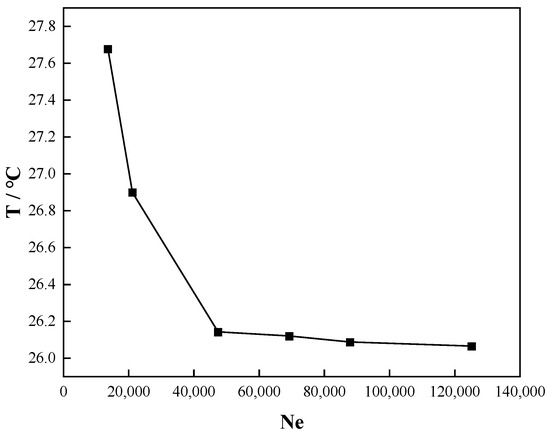
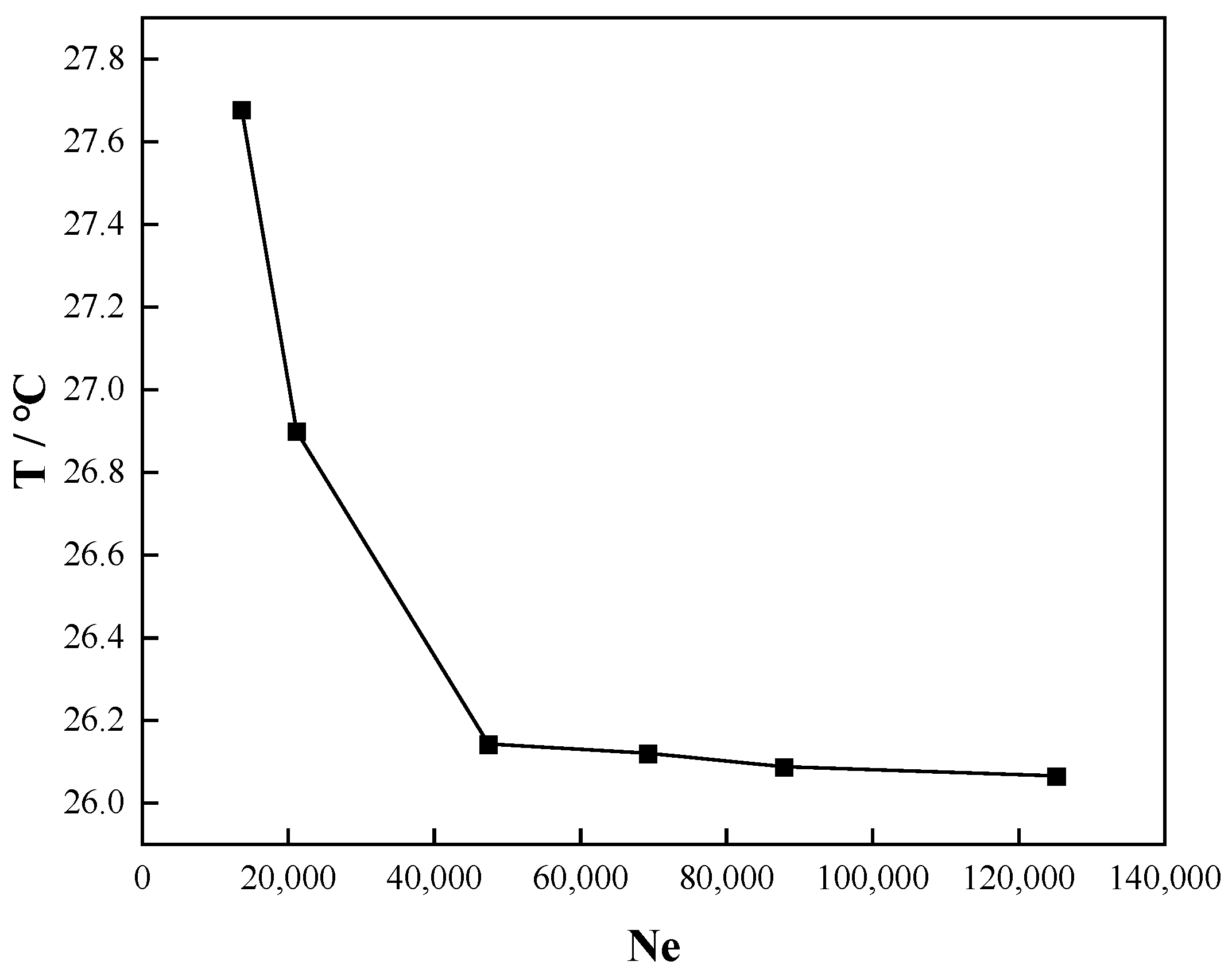
A three-dimensional mesh was used for the formation and cement sheath, with local refinement near the borehole, while one-dimensional edge meshes were used for the outer and inner pipes. The borehole depth was 2600 m, and the computational domain had a radius of 100 m. The mesh independence results and mesh distribution are shown in Figure 2. The comparison showed that the outlet temperature became nearly constant when the number of mesh elements, Ne, reached 47,437. Considering both computational accuracy and efficiency, a mesh comprising 47,437 elements was adopted. Mesh independence was assessed for the 2600 m reference borehole, for which 47,437 elements provided the selected spatial resolution. Radial and axial mesh sizes were controlled separately, with local refinement near the borehole. The same resolution settings were applied to the other borehole depths, resulting in different total element counts for different geometries.
Figure 2.
Mesh independence test based on outlet temperature.
To validate the numerical model of the medium-deep coaxial borehole heat exchanger, three operating conditions from field heat exchange tests were simulated. The validation data were obtained from field heat-exchange tests conducted by the authors at the Changsha Airport site. The test well is located at the Changsha Airport site in Huanghua Town. Its drilled measured depth is 2611.58 m. The completion casing has an outer diameter of 177.8 mm, a wall thickness of 9.19 mm, and an installation depth of 2525.95 m. The central pipe is modified polypropylene with an outer diameter of 110 mm and a wall thickness of 10 mm. Distributed temperature sensing was installed along its outer surface. Circulation flow rate and inlet and outlet water temperatures were monitored during testing. The circulation flow rate, inlet temperature, and test duration for each condition are listed in Table 2. The borehole configuration, formation thermophysical properties, and operating parameters were specified according to the field test conditions. The simulated outlet temperatures were compared with the measured values, as shown in Table 2. The agreement between the simulated and measured temperatures indicates that the coupled model can reasonably represent the heat transfer process in the medium-deep coaxial borehole heat exchanger and is suitable for subsequent analyses of heat transfer performance and its influencing factors.
Table 2.
Operating conditions and outlet temperatures for model validation.
3. Effects of Different Parameters on Heat Transfer Performance
3.1. Heat Transfer Characteristics Under Baseline Operating Conditions
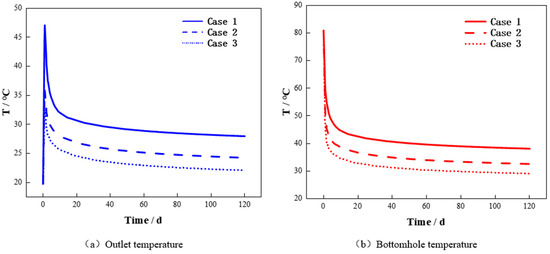
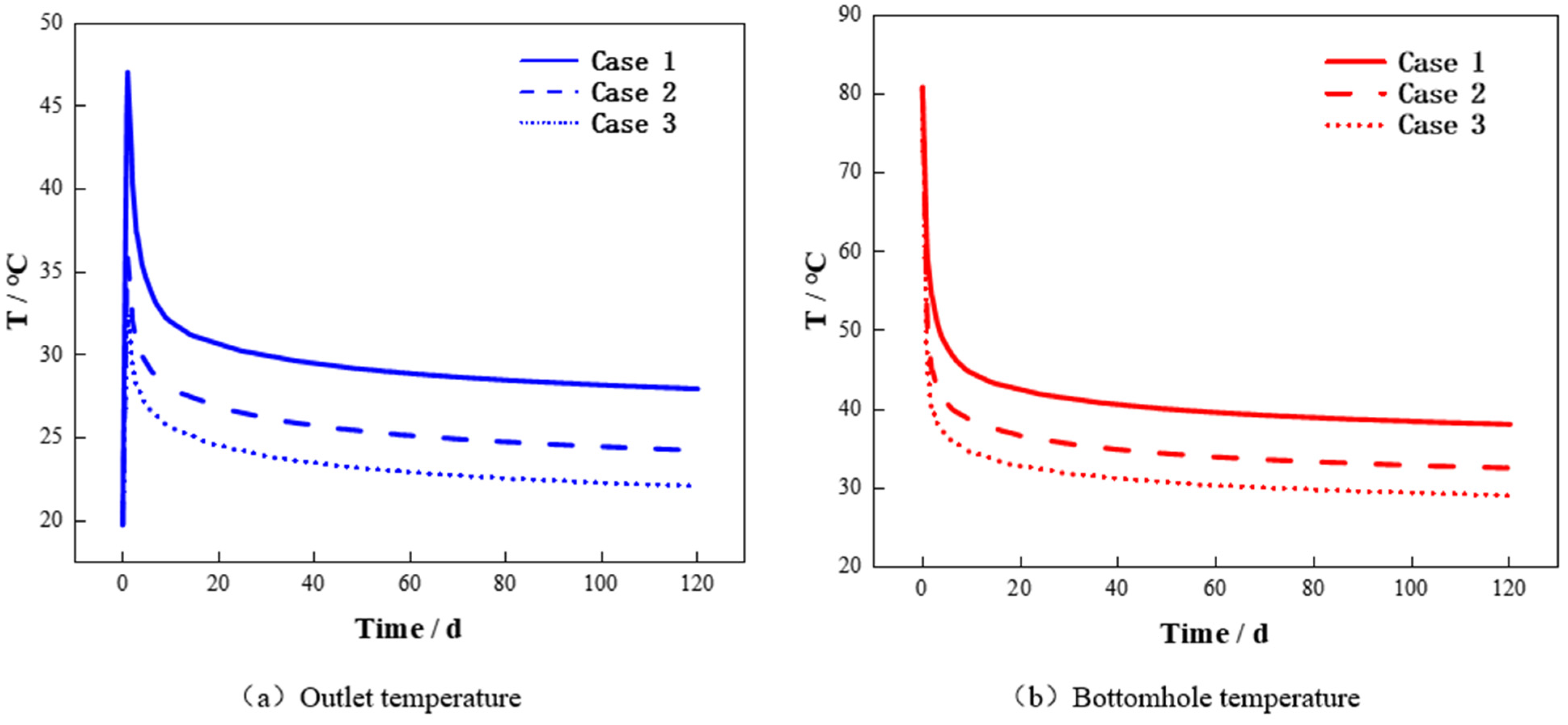
Three operating conditions corresponding to the field tests were selected as baseline cases to characterize the heat transfer behavior of the coaxial borehole heat exchanger under different operating conditions. The inlet flow rates for Cases 1, 2, and 3 were 18, 23, and 28 m3/h, respectively, with corresponding inlet temperatures of 15, 12, and 11 °C. Figure 3 shows the variations in outlet and bottomhole temperatures with operating time for the three baseline cases. In all cases, the initially high water temperatures decreased rapidly during the early stage of operation, followed by a progressively slower decline. After 120 days of operation, the outlet temperatures for Cases 1, 2, and 3 were approximately 28.0, 24.3, and 22.1 °C, respectively, while the corresponding bottomhole temperatures were approximately 38.2, 32.6, and 29.1 °C. The bottomhole temperature remained higher than the outlet temperature in each case, indicating heat loss as the fluid returned upward through the inner pipe.
Figure 3.
Variations in outlet and bottomhole temperatures with operating time under different baseline operating conditions (H = 2600 m, d0 = 177.8 mm, d1 = 110.0 mm; Lin = 2496 m, λin = 0.21 W/(m·K), λc = 1.3 W/(m·K), G = 0.0245 °C/m).
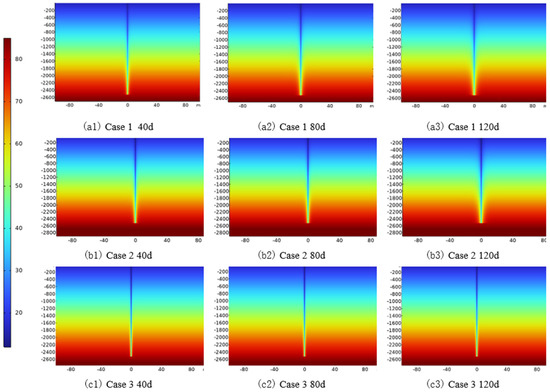
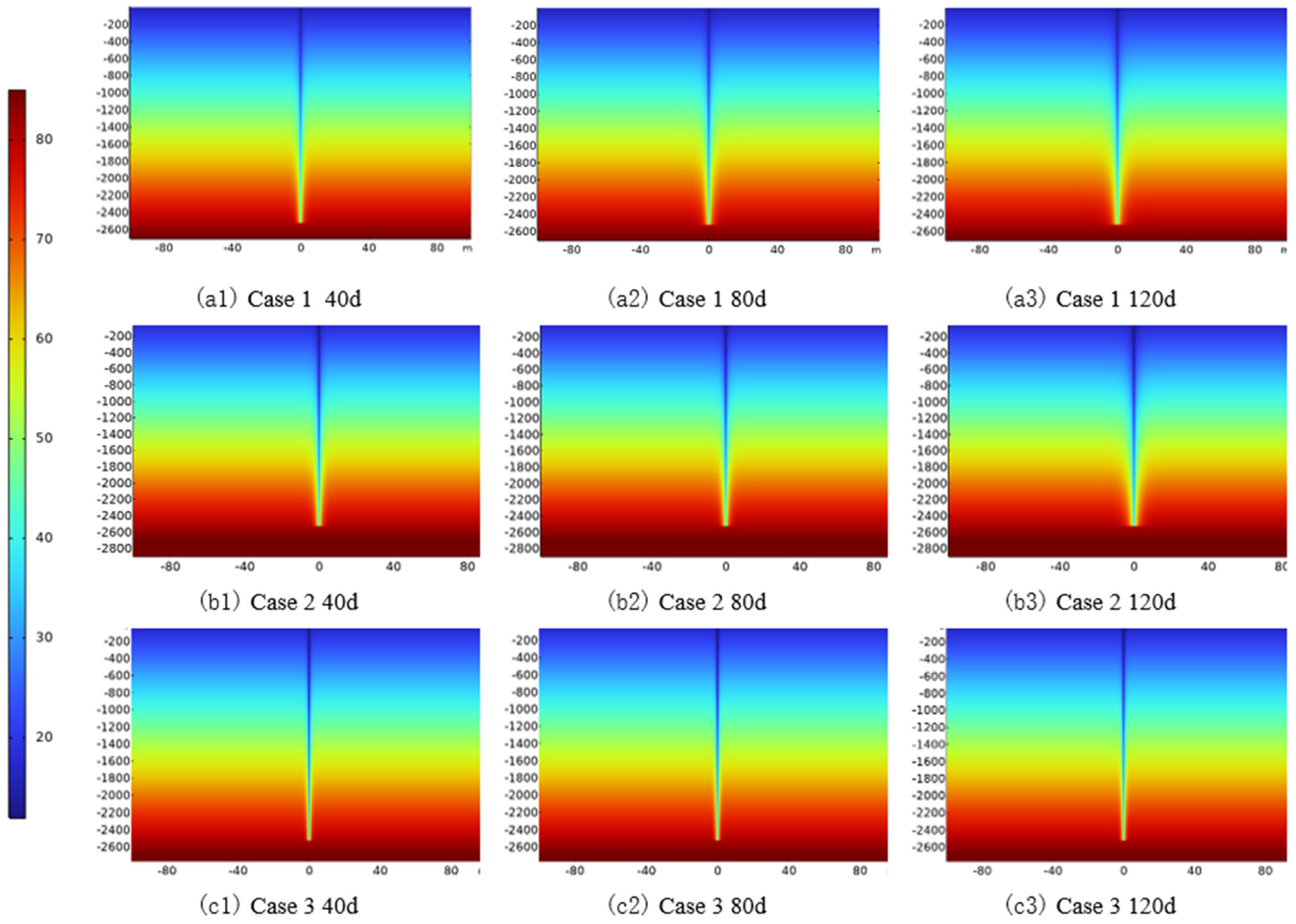
Figure 4 presents the formation temperature fields after 40, 80, and 120 days of operation for the three cases. The formation temperature increased with depth, while a cooled zone developed around the borehole along its depth and gradually expanded with operating time. Temperature changes were concentrated near the borehole, with only minor changes farther away. Continuous heat extraction cooled the surrounding formation, thereby reducing the temperature difference driving heat transfer between the formation and the circulating fluid. This behavior is consistent with the decreases in outlet and bottomhole temperatures shown in Figure 3.
Figure 4.
Evolution of the formation temperature field with operating time under different baseline operating conditions (H = 2600 m, d0 = 177.8 mm, d1 = 110.0 mm; Lin = 2496 m, λin = 0.21 W/(m·K), λc = 1.3 W/(m·K), G = 0.0245 °C/m).
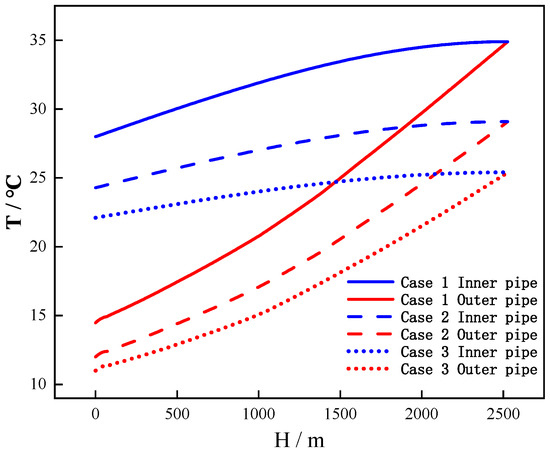
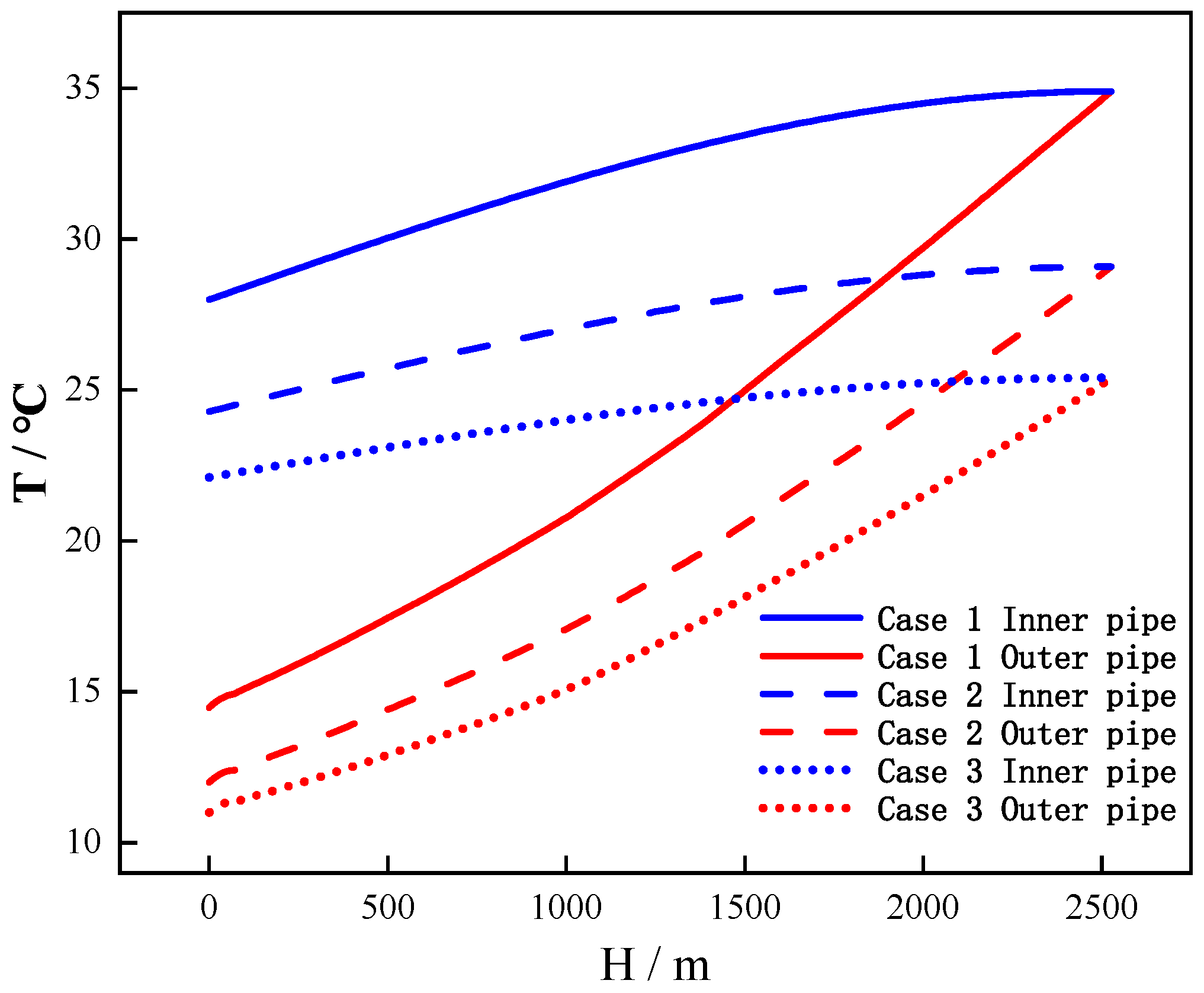
Figure 5 shows the temperature profiles along the borehole after 120 days of operation. The temperature in the outer steel casing increased with depth, indicating that the descending fluid in the annulus continuously absorbed heat from the formation. The fluid temperature in the inner pipe gradually decreased as the fluid returned upward from the bottomhole, indicating continuous heat exchange between the ascending fluid and the descending annular fluid. The temperature profiles differed markedly among the cases, reflecting the influence of operating conditions on heat transfer within the borehole.
Figure 5.
Temperature profiles along the borehole under different baseline operating conditions (t = 120 d, H = 2600 m, d0 = 177.8 mm, d1 = 110.0 mm; Lin = 2496 m, λin = 0.21 W/(m·K), λc = 1.3 W/(m·K), G = 0.0245 °C/m).
3.2. Effects of Borehole Structural Parameters
3.2.1. Effect of Borehole Depth
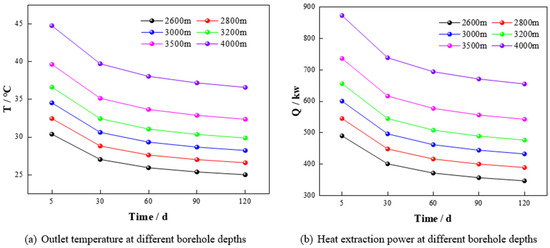
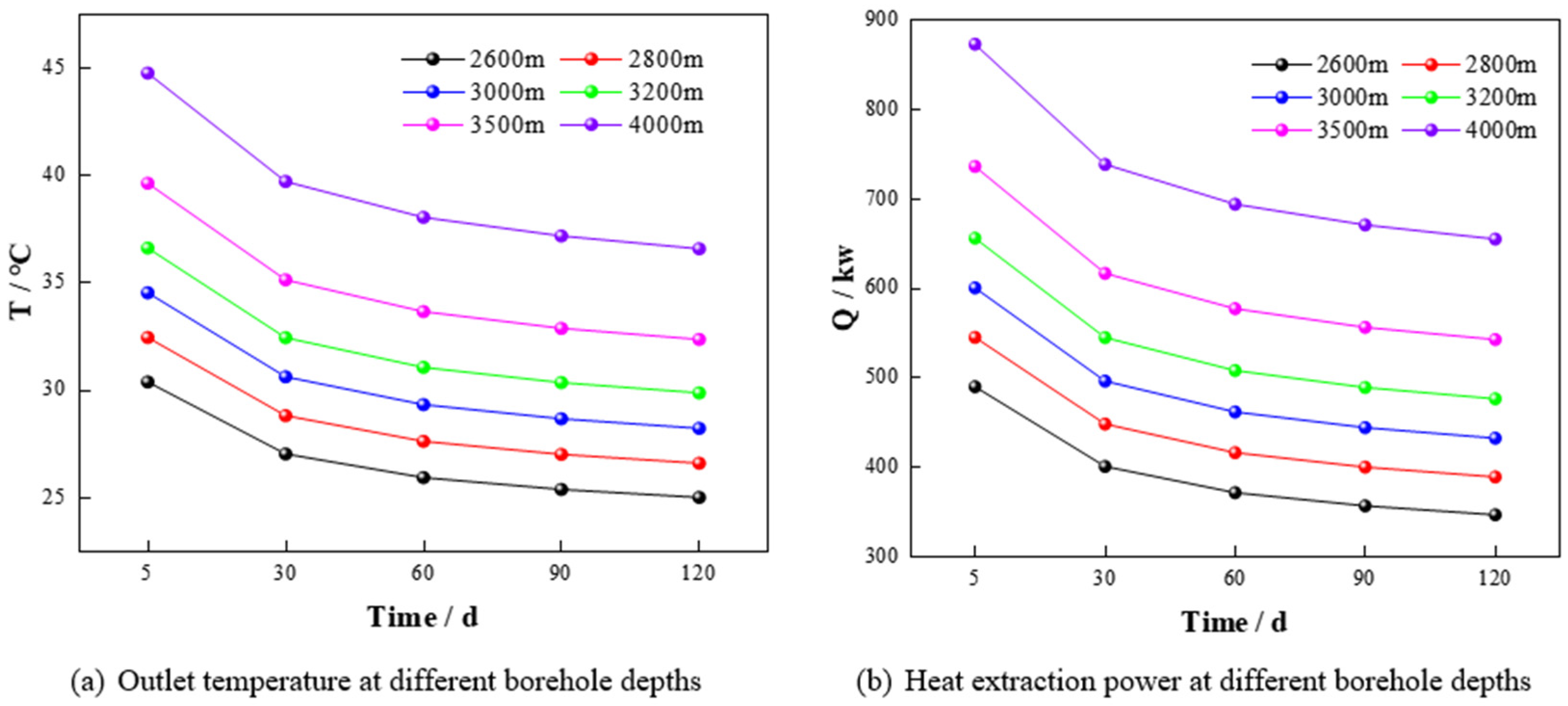
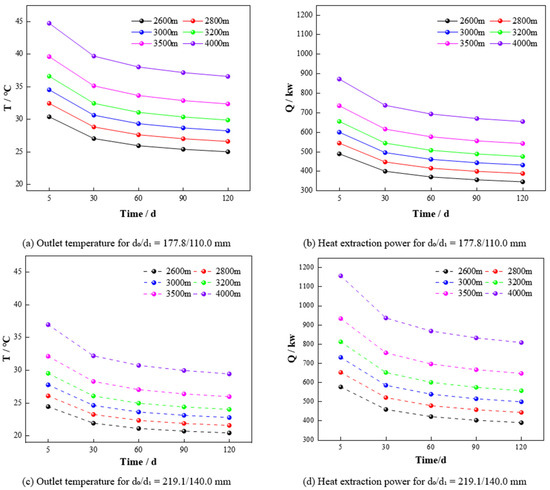
Figure 6 shows the outlet temperature and heat extraction power at different borehole depths. As the borehole depth increased from 2600 to 4000 m, the outlet temperature after 5 days of operation increased from 30.40 to 44.75 °C, representing a 47.2% increase. After 120 days, it increased from 25.03 to 36.59 °C, corresponding to a 46.2% increase. The heat extraction power increased from 490.32 to 872.75 kW after 5 days and from 347.14 to 655.24 kW after 120 days, representing increases of 78.0% and 88.8%, respectively. Both outlet temperature and heat extraction power increased with borehole depth. This improvement can be attributed to the longer effective heat exchange length and the higher formation temperatures at greater depths. A deeper borehole allows heat exchange between the circulating fluid and a larger portion of the deep, hot formation, while the higher formation temperatures increase the temperature difference driving heat transfer. These effects increase the cumulative heat extraction along the borehole. However, greater borehole depth also increases drilling requirements, material consumption, and construction costs. Borehole depth should therefore be selected by balancing heat transfer performance against well construction costs.
Figure 6.
Outlet temperature and heat extraction power at different borehole depths (d0 = 177.8 mm, d1 = 110.0 mm; λin = 0.21 W/(m·K), λc = 1.75 W/(m·K), G = 0.0245 °C/m; V = 23 m3/h, T = 12 °C).
3.2.2. Comparison of Combined Pipe-Diameter and Flow-Rate Configurations
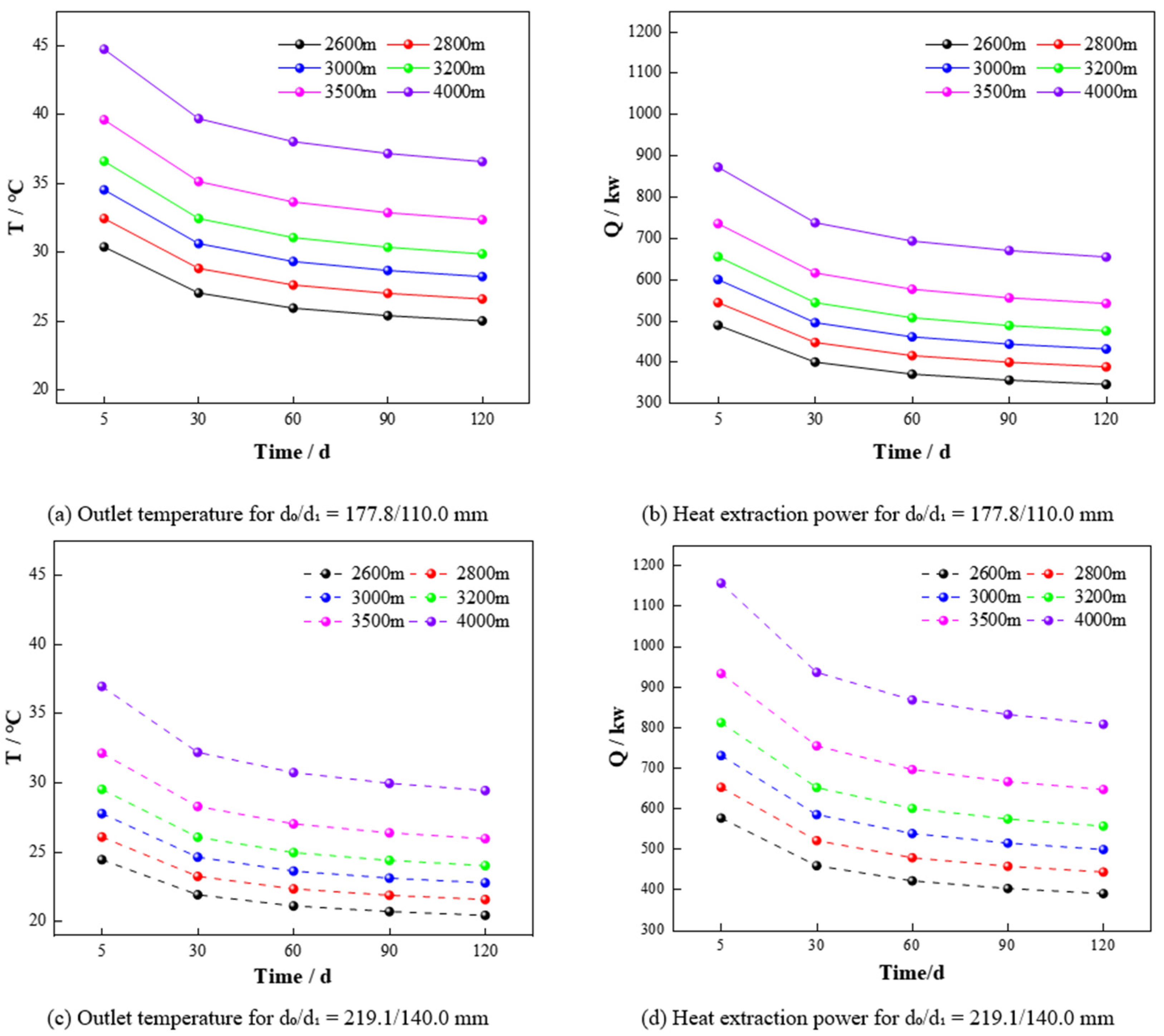
Two combined configurations were compared at different borehole depths: d0/d1 = 177.8/110.0 mm at 23 m3/h and d0/d1 = 219.1/140.0 mm at 40 m3/h. Because pipe dimensions and flow rate varied simultaneously, this comparison evaluates their combined thermal performance rather than the independent effect of pipe diameter. As shown in Figure 7, the larger-diameter, higher-flow configuration produced a lower outlet temperature but a higher heat extraction rate at the same borehole depth and operating time. After 120 days, its outlet temperature was approximately 4.6–7.1 °C lower, while its heat extraction rate was approximately 43–155 kW higher across the investigated depths. The higher mass flow rate compensated for the smaller fluid temperature rise, resulting in greater thermal output. The difference in heat extraction rate increased with borehole depth. These results illustrate a trade-off between outlet temperature and thermal output for the two combined configurations; they do not establish the contribution of diameter alone or an optimal configuration when pumping demand is considered.
Figure 7.
Thermal performance of the two combined pipe-diameter and flow-rate configurations at different borehole depths (23 m3/h for d0/d1 = 177.8/110.0 mm and 40 m3/h for d0/d1 = 219.1/140.0 mm; λin = 0.21 W/(m·K), λc = 1.75 W/(m·K), G = 0.0245 °C/m, T = 12 °C).
3.3. Effects of Material Parameters
3.3.1. Effect of Inner Pipe Material
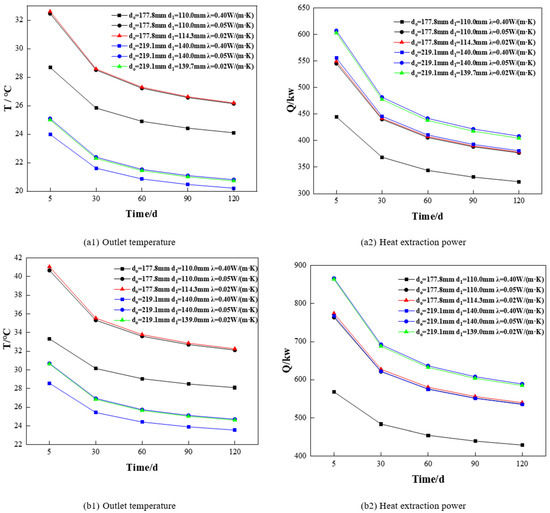
The inner pipe provides the main return passage for the hot fluid from the borehole bottom to the surface. Its thermal conductivity directly affects heat exchange between the fluid in the inner pipe and that in the annulus. To investigate this effect, three inner pipe thermal conductivities, λin = 0.40, 0.05, and 0.02 W/(m·K), were considered at borehole depths of 2600 and 3200 m. At an inlet flow rate of 23 m3/h, the d0/d1 = 177.8/110.0 mm configuration was used for λin = 0.40 and 0.05 W/(m·K), whereas the d0/d1 = 177.8/114.3 mm configuration was used for λin = 0.02 W/(m·K). At an inlet flow rate of 40 m3/h, the corresponding configurations were d0/d1 = 219.1/140.0 mm for λin = 0.40 and 0.05 W/(m·K) and d0/d1 = 219.1/139.7 (139.0) mm for λin = 0.02 W/(m·K). Figure 8 shows the outlet temperatures and heat extraction power for the different inner pipe materials. As shown in Figure 8, reducing the inner pipe thermal conductivity increased both outlet temperature and heat extraction power, with a particularly pronounced improvement when the conductivity decreased from 0.40 to 0.05 W/(m·K). For the d0 = 177.8 mm configurations, after 120 days of operation, the outlet temperature at a borehole depth of 2600 m increased from 24.1 to 26.1 °C, while the heat extraction power increased from 322 to 377 kW. At a depth of 3200 m, the outlet temperature increased from 28.1 to 32.1 °C, and the heat extraction power increased from 429 to 536 kW. By comparison, the curves for λin = 0.05 and 0.02 W/(m·K) were relatively close, indicating limited additional benefits from further reducing the thermal conductivity. A lower inner pipe thermal conductivity increases the thermal resistance between the inner pipe fluid and the annular fluid. This suppresses heat transfer from the hot ascending fluid to the cold descending fluid and reduces thermal short-circuiting within the borehole. The differences among the material configurations were greater at 3200 m than at 2600 m, indicating that the cumulative contribution of inner pipe heat transfer to thermal short-circuit losses becomes more pronounced as the return flow path lengthens. The differences among material configurations were also greater for d0 = 219.1 mm than for d0 = 177.8 mm. This was attributed to the higher circulation flow rate associated with the larger pipe diameter, which shortens the fluid residence time and reduces heat exchange between the inner and outer flow passages.
Figure 8.
Heat transfer performance with different inner pipe materials (λc = 1.75 W/(m·K), G = 0.0245 °C/m, T = 12 °C; V = 23 m3/h for d0 = 177.8 mm and V = 40 m3/h for d0 = 219.1 mm): (a1,a2) borehole depth of 2600 m; (b1,b2) borehole depth of 3200 m.
3.3.2. Effect of Length Allocation Between Inner Pipe Segments
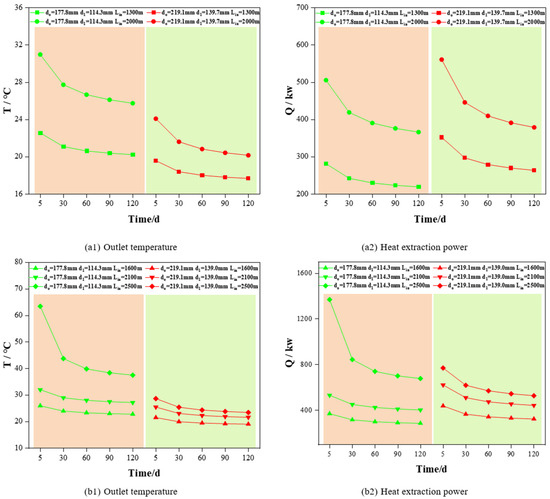
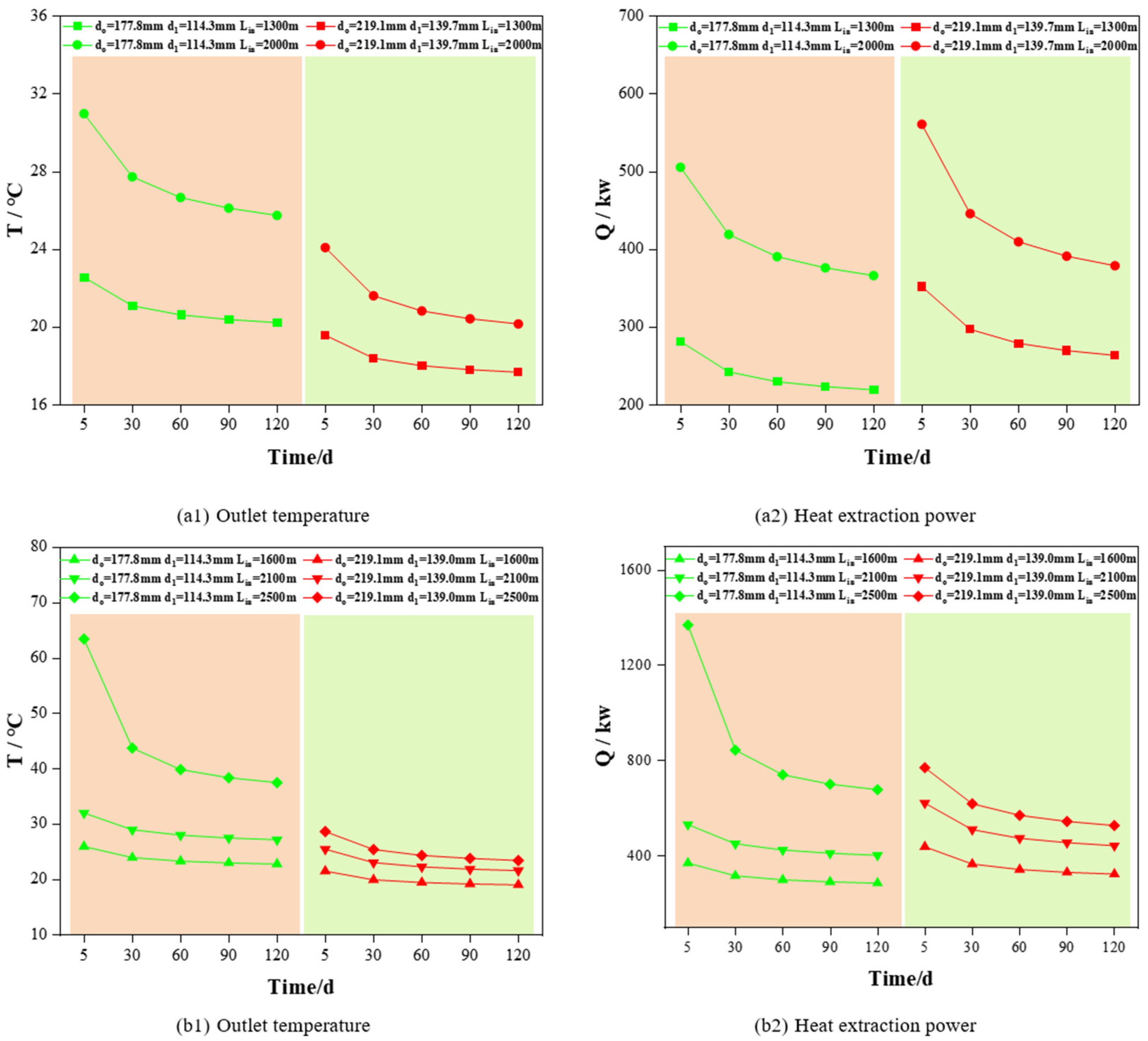
The inner pipe consists of upper and lower segments made of materials with different thermal conductivities. The allocation of their lengths determines the distribution of thermal properties along the borehole and affects heat exchange between the ascending fluid in the inner pipe and the descending fluid in the annulus. To investigate this effect, the thermal conductivities of the upper and lower segments were set to λin,0 = 0.02 W/(m·K) and λin,1 = 45 W/(m·K), respectively. Lin denotes the position of the interface between the two materials and corresponds to the length of the upper inner pipe segment. At a borehole depth of 2600 m, the total inner pipe length was 2570 m, and upper segment lengths of Lin = 1300 and 2000 m were considered. The inlet flow rates were 23 m3/h for d0/d1 = 177.8/114.3 mm and 40 m3/h for d0/d1 = 219.1/139.7 mm. At a borehole depth of 3200 m, the total inner pipe length was 3170 m, and Lin was set to 1600, 2100, and 2500 m. The d0/d1 = 177.8/114.3 mm configuration and its corresponding flow rate remained the same as those at 2600 m, while the outer diameter of the inner pipe in the d0 = 219.1 mm configuration was adjusted to 139.0 mm. Figure 9 shows the outlet temperatures and heat extraction power for different inner pipe segment length allocations. For both borehole depths and pipe diameter configurations, outlet temperature and heat extraction power increased as the material interface moved deeper. At a borehole depth of 2600 m, after 120 days of operation, increasing Lin from 1300 to 2000 m raised the outlet temperature from 20.3 to 25.8 °C and the heat extraction power from 220 to 367 kW for the d0/d1 = 177.8/114.3 mm configuration. For the d0/d1 = 219.1/139.7 mm configuration, the outlet temperature increased from 17.7 to 20.2 °C, and the heat extraction power increased from 264 to 379 kW. The same trend was observed at 3200 m, with more pronounced differences among the length allocations. At this depth, Lin = 2500 m yielded the highest outlet temperature and heat extraction power for both pipe diameter configurations. Increasing Lin extends the low-conductivity segment farther down the borehole and shortens the lower segment, where thermal short-circuiting is pronounced. This reduces heat exchange between the inner and outer flow passages, thereby limiting thermal short-circuit losses. The stronger cumulative effect of thermal short-circuiting in deeper boreholes further increases the performance differences among the segment length allocations.
Figure 9.
Heat transfer performance for different inner pipe segment length allocations (λc = 1.75 W/(m·K), G = 0.0245 °C/m, T = 12 °C; V = 23 m3/h for d0/d1 = 177.8/114.3 mm and V = 40 m3/h for d0/d1 = 219.1/139.7 (139.0) mm): (a1,a2) borehole depth of 2600 m; (b1,b2) borehole depth of 3200 m.
3.3.3. Effect of Cementing Material
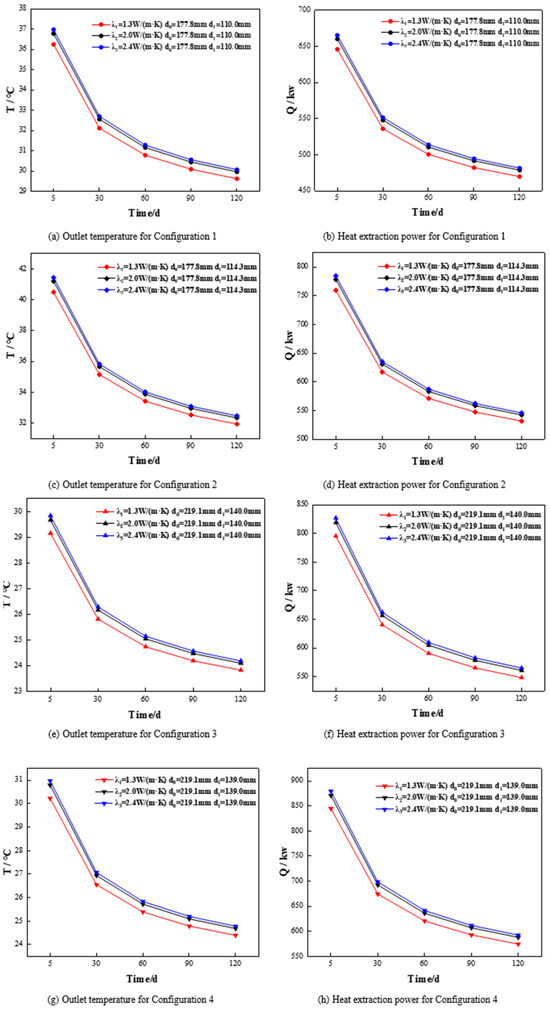
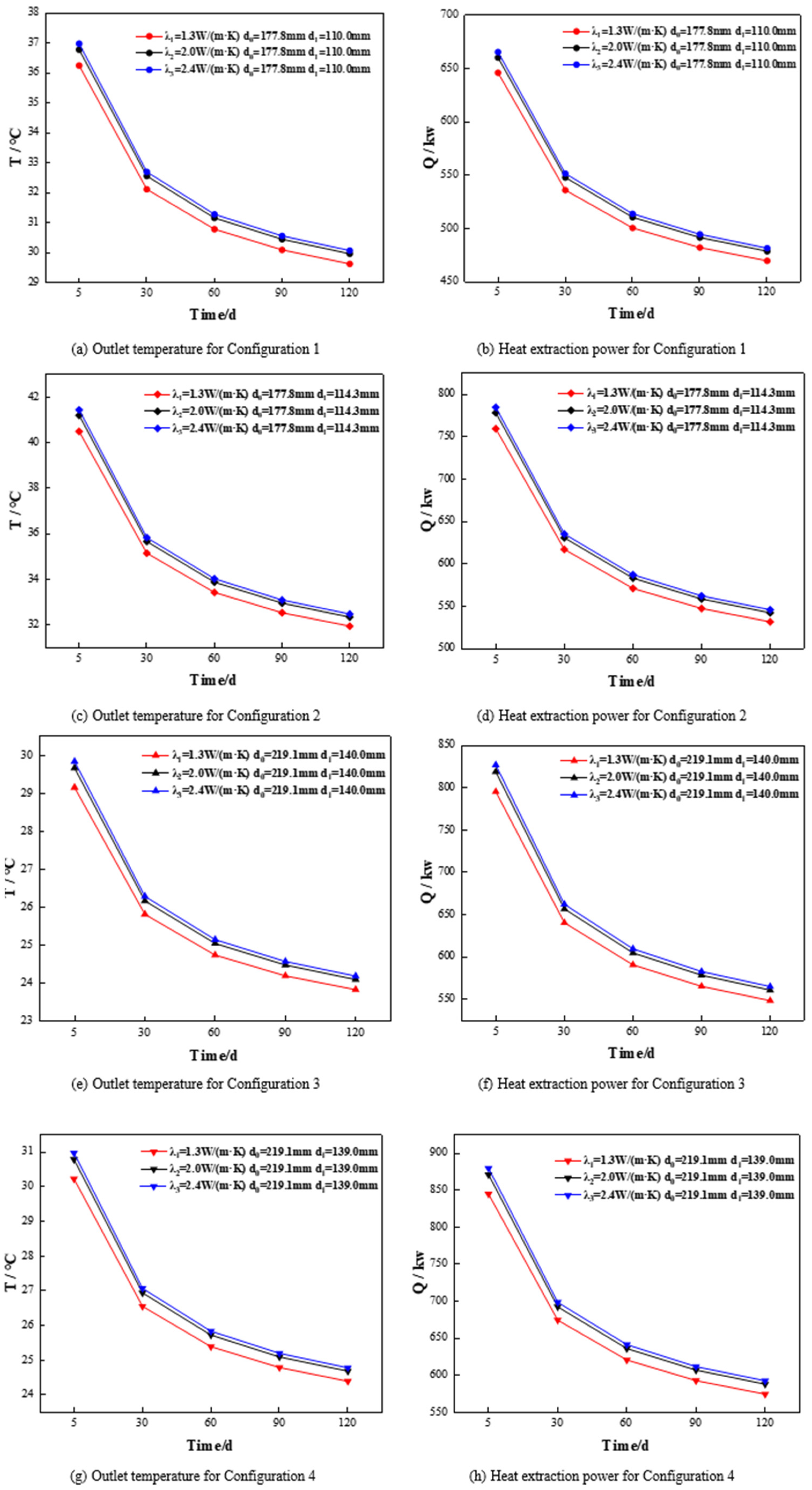
The cement sheath lies between the outer casing and the formation, and its thermal conductivity directly affects the radial thermal resistance to heat transfer from the formation to the borehole. To investigate this effect, three cementing material thermal conductivities, λc = 1.3, 2.0, and 2.4 W/(m·K), were considered for four combinations of pipe diameters and inner pipe thermal conductivity. The d0/d1 = 177.8/110.0 mm and 219.1/140.0 mm configurations used λin = 0.21 W/(m·K), while the d0/d1 = 177.8/114.3 mm and 219.1/140.0 mm configurations used λin = 0.02 W/(m·K). Figure 10 shows the heat transfer performance at different cementing material thermal conductivities. As shown in Figure 10, outlet temperature and heat extraction power increased with cementing material thermal conductivity for all four configurations. The improvement was more pronounced when λc increased from 1.3 to 2.0 W/(m·K), while a further increase to 2.4 W/(m·K) produced a smaller gain. After 120 days of operation, increasing λc from 1.3 to 2.4 W/(m·K) raised the outlet temperature by approximately 0.4–0.6 °C and the heat extraction power by approximately 10–20 kW across the configurations, indicating a relatively modest overall improvement. Increasing the cementing material thermal conductivity reduces the thermal resistance along the heat transfer path from the formation through the cement sheath to the outer casing, facilitating heat transfer to the circulating fluid. As λc increases, the cement sheath contributes a smaller proportion of the total thermal resistance. Consequently, further increases in its thermal conductivity yield progressively smaller improvements in overall heat transfer performance.
Figure 10.
Heat transfer performance with different cementing materials (H = 3200 m; G = 0.0245 °C/m, T = 12 °C; V = 23 m3/h for d0 = 177.8 mm and V = 40 m3/h for d0 = 219.1 mm).
3.3.4. Effect of the Interface Depth Between Cementing Materials
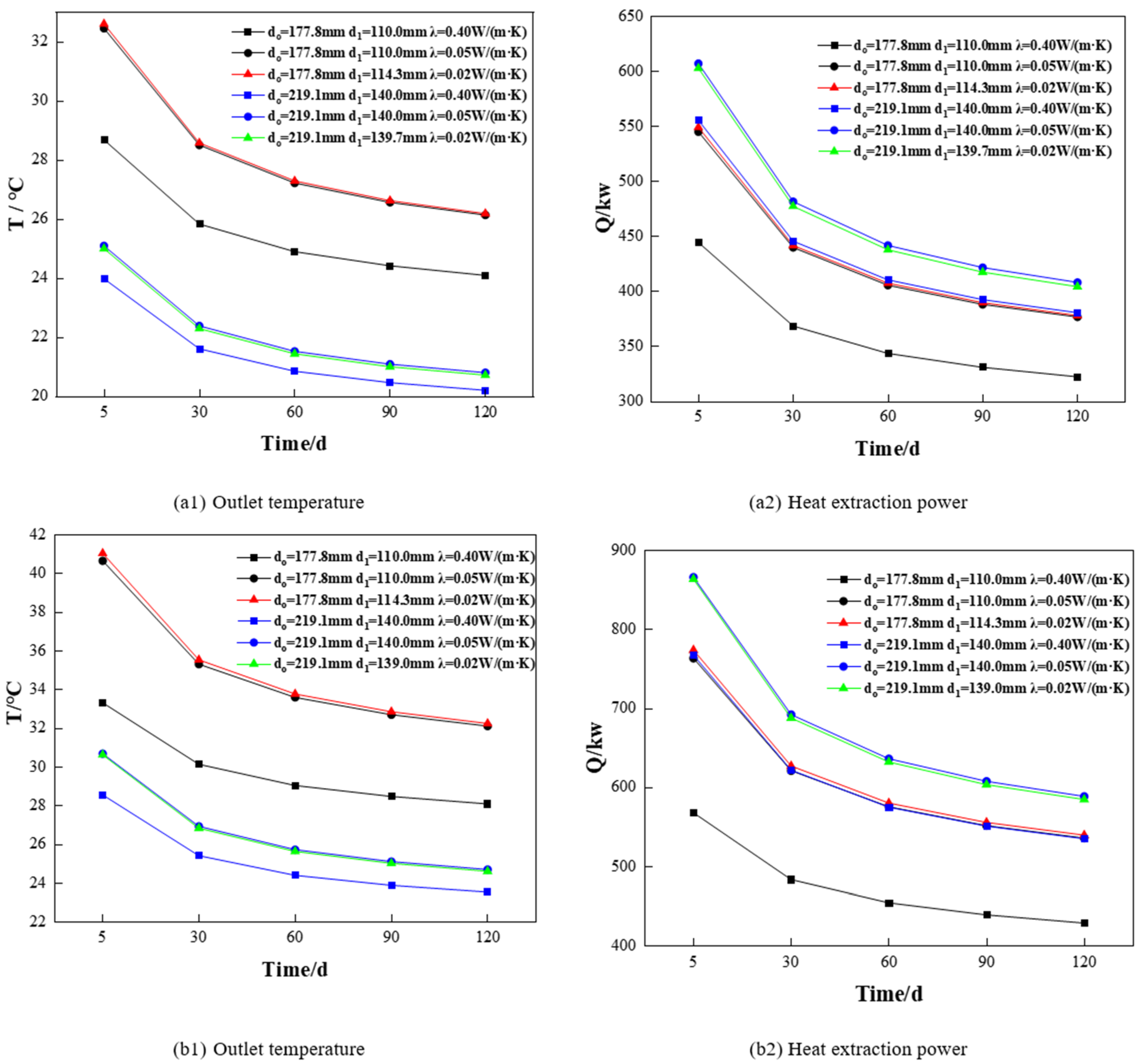
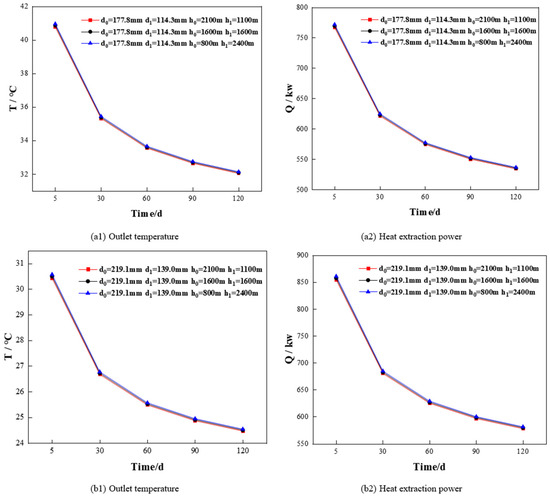
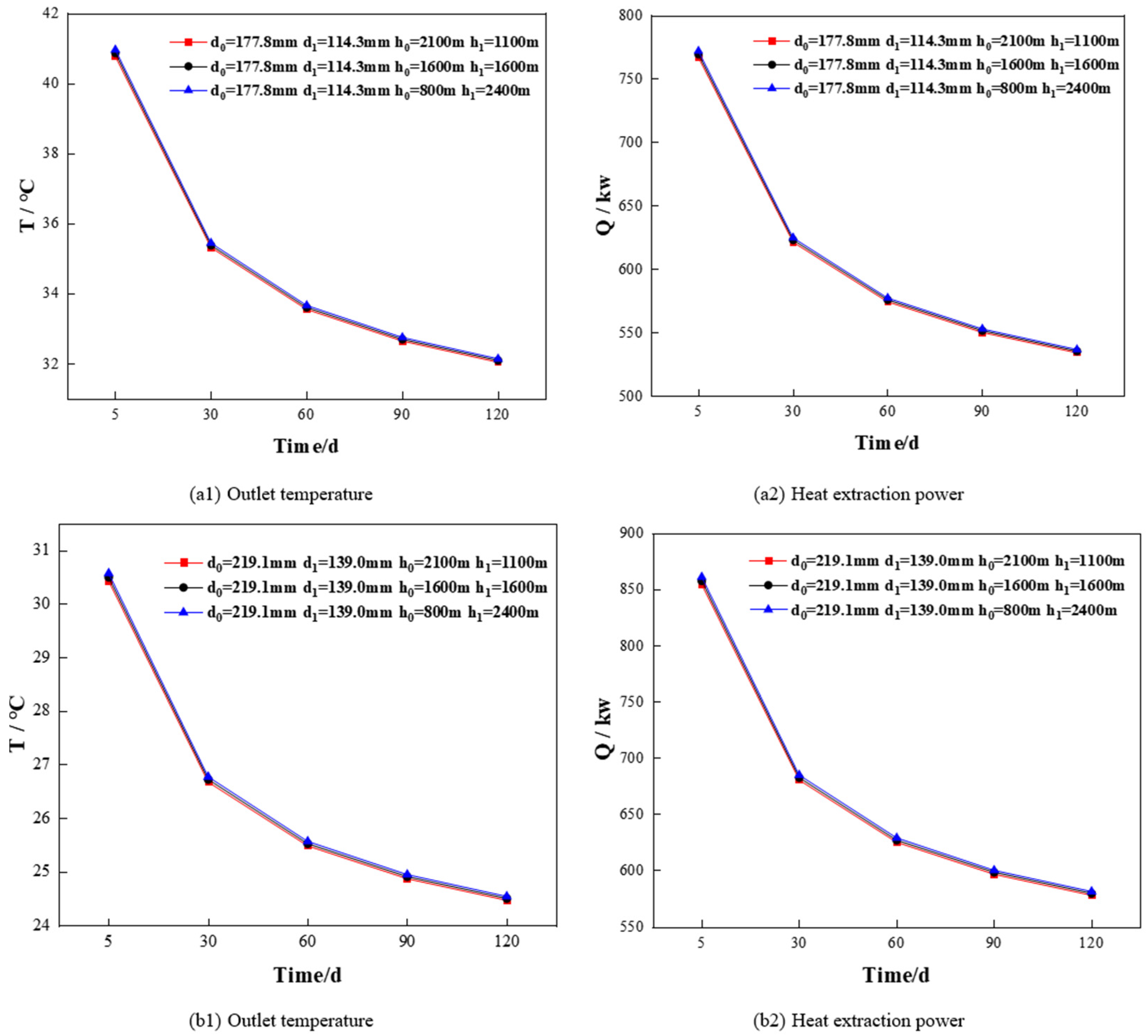
The distribution of cementing materials along the borehole affects radial heat transfer at different depths. To investigate the effect of placing materials with different thermal conductivities along the borehole, the cementing material thermal conductivity was set to λc,0 = 1.30 W/(m·K) in the upper section and λc,1 = 1.75 W/(m·K) in the lower section. Three combinations of upper and lower section lengths, h0 and h1, respectively, were considered: h0 = 2100 m and h1 = 1100 m; h0 = 1600 m and h1 = 1600 m; and h0 = 800 m and h1 = 2400 m. Simulations were conducted for the d0/d1 = 177.8/114.3 mm and 219.1/139.0 mm configurations. Figure 11 shows the heat transfer performance for the different interface depths. The outlet temperature and heat extraction power curves were close for all three arrangements. The h0/h1 = 800/2400 m arrangement yielded slightly higher values, while the 2100/1100 m arrangement yielded relatively lower values. After 120 days of operation, the outlet temperatures differed by approximately 0.1 °C, and the heat extraction power differed by only a few kilowatts. Both pipe diameter configurations exhibited similar behavior. Extending the section containing the higher-conductivity cementing material reduces the local thermal resistance in the deep, hot portion of the borehole. However, total heat extraction depends on heat transfer along the entire borehole, so localized changes in material distribution have a limited effect on the overall thermal resistance. Within the parameter range considered in this study, the interface depth between the cementing materials therefore had only a minor influence on overall heat transfer performance.
Figure 11.
Heat transfer performance for different interface depths between cementing materials (H = 3200 m; λin = 0.02 W/(m·K), λc,0 = 1.30 W/(m·K), λc,1 = 1.75 W/(m·K); G = 0.0245 °C/m, T = 12 °C; V = 23 m3/h for d0/d1 = 177.8/114.3 mm and V = 40 m3/h for d0/d1 = 219.1/139.0 mm): (a1,a2) d0/d1 = 177.8/114.3 mm; (b1,b2) d0/d1 = 219.1/139.0 mm.
3.4. Effects of Operating Parameters
3.4.1. Effect of Inlet Flow Rate
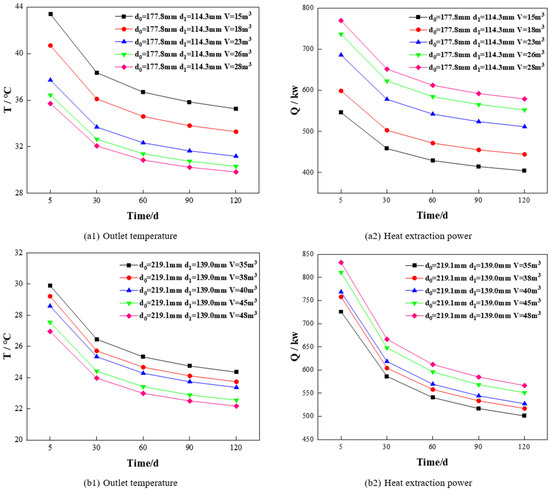
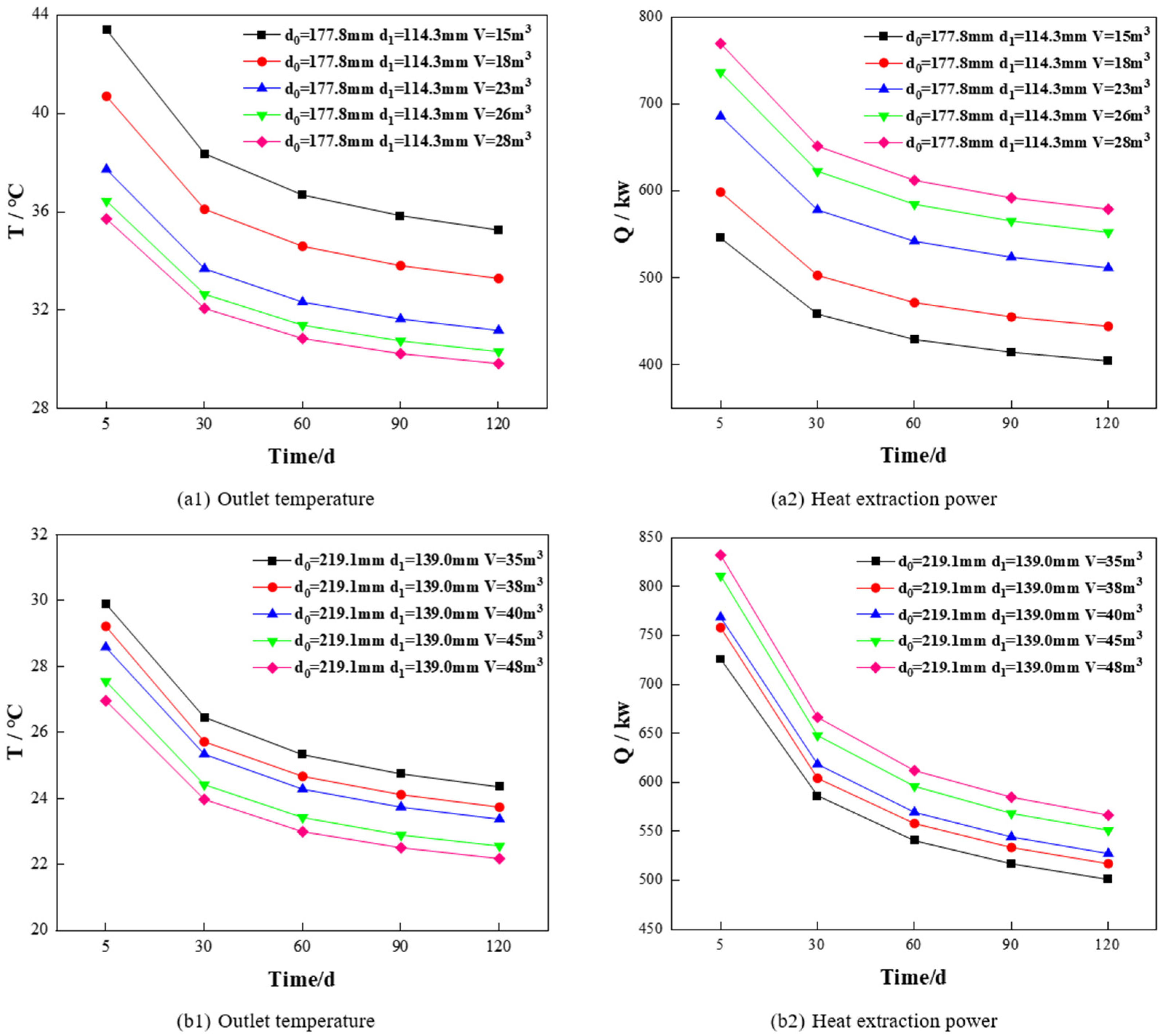
The inlet flow rate affects the velocity, residence time, and mass flow rate of the circulating fluid within the borehole. To investigate its effect on heat transfer performance, the total inner pipe length was set to 3170 m, comprising an upper segment of 2500 m with λin,0 = 0.02 W/(m·K) and a lower segment of 670 m with λin,1 = 45 W/(m·K). The cement sheath consisted of an upper section of 1200 m with λc,0 = 1.30 W/(m·K) and a lower section of 2000 m with λc,1 = 1.75 W/(m·K). Inlet flow rates of V = 15, 18, 23, 26, and 28 m3/h were considered for the d0/d1 = 177.8/114.3 mm configuration, while V = 35, 38, 40, 45, and 48 m3/h were considered for the d0/d1 = 219.1/139.0 mm configuration, giving ten operating conditions in total. Figure 12 shows the outlet temperatures and heat extraction power at different inlet flow rates. For both pipe diameter configurations, increasing the inlet flow rate decreased the outlet temperature but increased the heat extraction power. For the d0/d1 = 177.8/114.3 mm configuration, after 120 days of operation, increasing the inlet flow rate from 15 to 28 m3/h reduced the outlet temperature from 35.2 to 29.8 °C and increased the heat extraction power from approximately 404 to 579 kW. The d0/d1 = 219.1/139.0 mm configuration exhibited the same trend. A higher inlet flow rate increases the mean fluid velocity and shortens the residence time within the borehole. Consequently, the fluid experiences a smaller temperature rise, resulting in a lower outlet temperature. Heat extraction power, however, depends on both the mass flow rate and the temperature difference between the outlet and inlet. The increase in mass flow rate more than compensates for the reduced temperature rise, leading to higher total heat extraction power.
Figure 12.
Heat transfer performance at different inlet flow rates (H = 3200 m; T = 12 °C; λin = 0.02 W/(m·K), λc,0 = 1.30 W/(m·K), λc,1 = 1.75 W/(m·K), h0/h1 = 1200/2000 m, G = 0.0245 °C/m): (a1,a2) d0/d1 = 177.8/114.3 mm; (b1,b2) d0/d1 = 219.1/139.0 mm.
3.4.2. Effect of Inlet Temperature
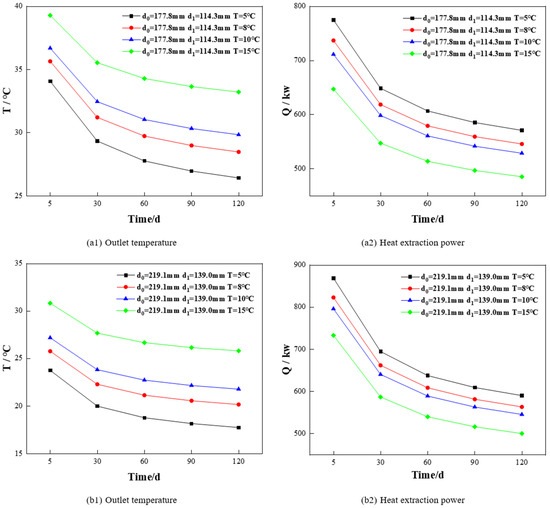
The inlet temperature directly affects the temperature difference driving heat transfer between the circulating fluid and the surrounding formation. To investigate this effect, the borehole configuration and material segmentation described in Section 3.4.1 were adopted. Four inlet temperatures, T = 5, 8, 10, and 15 °C, were considered for the d0/d1 = 177.8/114.3 mm and 219.1/139.0 mm configurations, with inlet flow rates of 23 and 40 m3/h, respectively. Figure 13 shows the heat transfer performance at different inlet temperatures. For both pipe diameter configurations, the outlet temperature increased with inlet temperature, whereas the heat extraction power decreased. After 120 days of operation, increasing the inlet temperature from 5 to 15 °C raised the outlet temperature from 26.4 to 33.2 °C and reduced the heat extraction power from 571 to 485 kW for the d0/d1 = 177.8/114.3 mm configuration. For the d0/d1 = 219.1/139.0 mm configuration, the corresponding outlet temperature increased from 17.7 to 25.8 °C, while the heat extraction power decreased from 590 to 500 kW. A higher inlet temperature reduces the temperature difference between the circulating fluid and the formation, weakening the driving force for radial heat transfer. For the d0/d1 = 177.8/114.3 mm configuration, after 120 days of operation, increasing the inlet temperature from 5 to 15 °C reduced the fluid temperature rise from 21.4 to 18.2 °C, indicating reduced heat transfer from the formation to the borehole. The inlet temperature therefore affects outlet temperature and heat extraction power in opposite directions.
Figure 13.
Heat transfer performance at different inlet temperatures (H = 3200 m; λin = 0.02 W/(m·K), λc,0 = 1.30 W/(m·K), λc,1 = 1.75 W/(m·K), h0/h1 = 1200/2000 m, G = 0.0245 °C/m; V = 23 m3/h for d0/d1 = 177.8/114.3 mm and V = 40 m3/h for d0/d1 = 219.1/139.0 mm): (a1,a2) d0/d1 = 177.8/114.3 mm; (b1,b2) d0/d1 = 219.1/139.0 mm.
4. Conclusions
This study examines the relative influences of well configuration, axial material allocation, and operating conditions for a stratified geothermal site in Changsha. Particular attention is given to inner-pipe insulation allocation, cement-material distribution, and the trade-off between outlet temperature and heat extraction rate. The model was validated against field test data and used to investigate borehole heat transfer characteristics and their key influencing factors. The main conclusions are as follows.
(1) The outlet and bottomhole temperatures decrease rapidly during the initial stage of operation, followed by a progressively slower decline. Continuous heat extraction creates a cooled zone around the borehole that gradually expands with operating time. Heat exchange between the ascending fluid in the inner pipe and the descending fluid in the annulus causes thermal short-circuiting within the borehole.
(2) Both outlet temperature and heat extraction power increase with borehole depth. Configurations combining larger pipe diameters with higher flow rates yield lower outlet temperatures but higher heat extraction power. The effect of inner pipe length depends on borehole depth and pipe diameter configuration, with different trends observed under different structural conditions. Inner pipe length should therefore be determined in conjunction with borehole depth and pipe diameters.
(3) Reducing the inner pipe thermal conductivity suppresses thermal short-circuiting and increases outlet temperature and heat extraction power, although the additional benefits diminish at low thermal conductivities. Increasing the cementing material thermal conductivity improves radial heat transfer, while the interface depth between cementing materials has only a minor effect on overall heat transfer performance.
(4) Increasing the inlet flow rate decreases outlet temperature but increases heat extraction power. Increasing the inlet temperature raises outlet temperature but reduces heat extraction power. Operating parameters should therefore be selected to satisfy the requirements for both outlet temperature and heat extraction power. The present analysis focuses on thermal performance, characterized by outlet temperature and heat extraction rate. Pumping electricity, pressure losses, and economic costs are not evaluated. Therefore, configurations with higher heat extraction rates should not necessarily be regarded as optimal in terms of net energy output or overall system efficiency.
(5) For engineering application, priority should be given to inner-pipe insulation allocation; a 2500 m upper insulated segment performed best among the tested options for the 3200 m borehole. Adjusting the cement-material interface depth offered limited thermal benefits. Flow rate should balance outlet-temperature requirements, heating demand, and pumping electricity, while increased well depth requires assessment of deeper geological conditions and drilling costs.
Author Contributions
Conceptualization, J.Z., R.X., Y.Z., and H.Z.; methodology, J.Z., D.X.; software, Z.W., H.A.; validation, J.Z., H.A., Z.W. and D.X.; formal analysis, J.Z., H.A., Z.W., R.X., H.Z. and D.X.; investigation, J.Z., H.A., Z.W., Y.Z.; resources, H.Z.; data curation, J.Z., R.X., Y.Z.; writing—original draft preparation, H.A., and Z.W.; writing—review and editing, J.Z., H.Z., and Dan Xu; visualization, H.A., and Z.W.; supervision, D.X.; project administration, D.X.; funding acquisition, J.Z. All authors have read and agreed to the published version of the manuscript.
Funding
This work was supported by the project “Research and Application of Efficient Development and Utilization Technology for Medium-Deep Geothermal Energy Supply Systems” funded by the Hunan Provincial Department of Science and Technology (No. 2025JK2072).
Data Availability Statement
The data supporting the findings of this study are available from the corresponding author upon reasonable request.
Acknowledgments
The computational support from the High Performance Computing Center of Central South University is also acknowledged.
Conflicts of Interest
Authors Jiajie Zhu, Rong Xie, Yuan Zheng and Hui Zhu were employed by the company Hunan Electric Power Design Institute Co., Ltd. The remaining authors declare that the research was conducted in the absence of any commercial or financial relationships that could be construed as potential conflicts of interest.
References
- Liu, Q.; Tang, L. Research on the accelerating effect of green finance on the transformation of energy consumption in China. Res. Int. Bus. Finance 2022, 63, 101771. [Google Scholar] [CrossRef] [Scilit]
- Ramachandra, T. Renewable energy transition: Perspective and challenges. In Energy India 2020—A Shape of Things to Come in Indian Energy Sector; Saket Projects Ltd.: Ahmedabad, India, 2020; pp. 175–183. [Google Scholar]
- Nkinyam, C.M.; Ujah, C.O.; Asadu, C.O.; Kallon, D.V. Exploring geothermal energy as a sustainable source of energy: A systematic review. Unconv. Resour. 2025, 6, 100149. [Google Scholar] [CrossRef] [Scilit]
- Manzella, A. General introduction to geothermal energy. In Geothermal Energy and Society: Theory, Methods and Applications; Springer: Cham, Switzerland, 2025; pp. 1–17. [Google Scholar]
- Florides, G.; Kalogirou, S. Ground heat exchangers—A review of systems, models and applications. Renew. Energy 2007, 32, 2461–2478. [Google Scholar] [CrossRef] [Scilit]
- Huang, Y.; Zhang, Y.; Xie, Y.; Zhang, Y.; Gao, X. Thermal performance analysis on the composition attributes of deep coaxial borehole heat exchanger for building heating. Energy Build. 2020, 221, 110019. [Google Scholar] [CrossRef] [Scilit]
- Li, Y.Q.; Xu, S.H.; Zhang, W.D.; Sun, Y.L.; Han, Y.L.; Zhang, H.; Huang, J.F. Thermal short-circuiting and heat transfer performance of coaxial borehole heat exchanger. Coal Geol. Explor. 2020, 48, 183–188. [Google Scholar]
- Kohl, T.; Brenni, R.; Eugster, W. System performance of a deep borehole heat exchanger. Geothermics 2002, 31, 687–708. [Google Scholar] [CrossRef] [Scilit]
- Pan, A.; Lu, L.; Cui, P.; Jia, L. A new analytical heat transfer model for deep borehole heat exchangers with coaxial tubes. Int. J. Heat Mass Transf. 2019, 141, 1056–1065. [Google Scholar] [CrossRef] [Scilit]
- Luo, Y.; Yu, J.; Yan, T.; Zhang, L.; Liu, X. Improved analytical modeling and system performance evaluation of deep coaxial borehole heat exchanger with segmented finite cylinder-source method. Energy Build. 2020, 212, 109829. [Google Scholar] [CrossRef] [Scilit]
- Chen, H.; Tomac, I. Technical review on coaxial deep borehole heat exchanger. Geomech. Geophys. Geo-Energy Geo-Resour. 2023, 9, 120. [Google Scholar] [CrossRef] [Scilit]
- Pokhrel, S.; Sasmito, A.P.; Sainoki, A.; Tosha, T.; Tanaka, T.; Nagai, C.; Ghoreishi-Madiseh, S.A. Field-scale experimental and numerical analysis of a downhole coaxial heat exchanger for geothermal energy production. Renew. Energy 2022, 182, 521–535. [Google Scholar] [CrossRef] [Scilit]
- Wang, H.; Xu, Y.; Sun, Y.; Zhao, S. Heat extraction by deep coaxial borehole heat exchanger for clean space heating near Beijing, China: Field test, model comparison and operation pattern evaluation. Renew. Energy 2022, 199, 803–815. [Google Scholar] [CrossRef] [Scilit]
- Niu, Q.; Ma, K.; Wang, W.; Pan, J.; Wang, Q.; Du, Z.; Wang, Z.; Yuan, W.; Zheng, Y.; Shangguan, S.; et al. Multifactor analysis of heat extraction performance of coaxial heat exchanger applied to hot dry rock resources exploration: A case study in Matouying uplift, Tangshan, China. Energy 2023, 282, 128277. [Google Scholar] [CrossRef] [Scilit]
- Zhao, Z.; Zhan, X.; Yan, B.; Qin, G.; Yu, Y. Heat exchange effectiveness and influence mechanism of coaxial downhole in the alpine region of Xining City, Qinghai Province. Energies 2025, 18, 4451. [Google Scholar] [CrossRef] [Scilit]
- Kerme, E.D.; Fung, A.S. Heat transfer analysis of single and double U-tube borehole heat exchanger with two independent circuits. J. Energy Storage 2021, 43, 103141. [Google Scholar] [CrossRef] [Scilit]
- Gascuel, V.; Raymond, J.; Rivard, C.; Marcil, J.-S.; Comeau, F.-A. Design and optimization of deep coaxial borehole heat exchangers for cold sedimentary basins. Geothermics 2022, 105, 102504. [Google Scholar] [CrossRef] [Scilit]
- Ma, Y.; Yang, F.; Zhu, R.; Zhou, X.; Liu, G.; Yuan, L.; Wang, X.; Dong, J.; Lü, H.; Li, C.; et al. A numerical study on the sustainability and efficiency of deep coaxial borehole heat exchanger systems in the cold region of northeast China. Renew. Energy 2024, 237, 121562. [Google Scholar] [CrossRef] [Scilit]
- Li, P.; Li, H.Z.; Yang, C.; Fang, Y.; Duan, X.; Su, P.; Ma, D. Numerical simulation of heat exchange performance of coaxial ground heat exchanger. Bull. Geol. Sci. Technol. 2025, 44, 110–120. [Google Scholar]
- Long, X.T.; Yuan, R.Q.; Pi, J.G.; Sun, X.L.; Liu, C.M. Investigation and evaluation of shallow geothermal energy resources in Changsha. J. Nat. Resour. 2016, 31, 163–176. [Google Scholar]
- Liu, S.P.; Su, Q.Y.; Kuang, W.; Wu, T. Research on heat transfer performance of middle-deep coaxial buried pipe heat exchange system. Sol. Energy 2025, 5, 96–102. [Google Scholar]
- Zhao, B.F.; Wang, Q.N.; Guan, D.W.; Chen, T.G.; Fang, W. Characteristics of temperature field and heat-controlling factors of banded thermal reservoir geothermal field: A case study of Reshuiwei geothermal field in Rucheng County, Hunan Province. Geol. Bull. China 2022, 41, 2035–2046. [Google Scholar]
- Ye, J.L.; Su, Q.Y.; Li, F.Q.; Yang, H.Y. Geological characteristics and resource potential of hot dry rock geothermal resources in Rucheng, Hunan. Geol. Bull. China 2024, 43, 1149–1157. [Google Scholar]
- Morchio, S.; Fossa, M. On the ground thermal conductivity estimation with coaxial borehole heat exchangers according to different undisturbed ground temperature profiles. Appl. Therm. Eng. 2020, 173, 115198. [Google Scholar] [CrossRef] [Scilit]
- Zhang, Y.; Yu, C.; Li, G.; Guo, X.; Wang, G.; Shi, Y.; Peng, C.; Tan, Y. Performance analysis of a downhole coaxial heat exchanger geothermal system with various working fluids. Appl. Therm. Eng. 2019, 163, 114317. [Google Scholar] [CrossRef] [Scilit]
- Gnielinski, V. New equations for heat and mass transfer in turbulent pipe and channel flow. Int. Chem. Eng. 1976, 16, 359–367. [Google Scholar]

Disclaimer/Publisher’s Note: The statements, opinions and data contained in all publications are solely those of the individual author(s) and contributor(s) and not of MDPI and/or the editor(s). MDPI and/or the editor(s) disclaim responsibility for any injury to people or property resulting from any ideas, methods, instructions or products referred to in the content. |
© 2026 by the authors. Licensee MDPI, Basel, Switzerland. This article is an open access article distributed under the terms and conditions of the Creative Commons Attribution (CC BY) license.