


Abstract
The shift towards the integration of and transition to renewable energy has led to an increase in renewable energy communities (RECs) and smart grids (SGs). The significance of these RECs is mainly energy self-sufficiency, energy independence, and energy autonomy. Despite this, in low- and middle-income countries and regions like Pakistan and the Middle East, SGs and RECs are still in their initial stage. However, they have potential for green energy solutions rooted in their unique geographic and climatic conditions. SGs offer energy monitoring, communication infrastructure, and automation features to help these communities build flexible and efficient energy systems. This work provides an overview of Pakistani and Middle Eastern energy policies, goals, and initiatives while aligning with European comparisons. This work also highlights technical, regulatory, and economic challenges in those regions. The main objectives of the research are to ensure that residential service sizes are optimized to maximize the economic and environmental benefits of green energy. Furthermore, in line with SDG 7, affordable and clean energy, the focus in this study is on the development and transformation of energy systems for sustainability and creating synergies with other SDGs. The paper presents insights on the European Directive, including the amended Renewable Energy Directive (RED II and III), to recommend policy enhancements and regulatory changes that could strengthen the growth of RECs in Asian countries, Pakistan, and the Middle East, paving the way for a more inclusive and sustainable energy future. Additionally, it addresses the main causes that hinder the expansion of RECs and SGs, and offers strategic recommendations to support their development in order to reduce dependency on national electric grids. To perform this, a perspective study of Pakistan’s indicative generation capacity by 2031, along with comparisons of energy capacity in the EU, the Middle East, and Asia, is presented. Pakistan’s solar, wind, and hydro potential is also explored in detail. This study is a baseline and informative resource for policy makers, researchers, industry stakeholders, and energy communities’ promoters, who are committed to the task of promoting sustainable renewable energy solutions.
1. Introduction and Background
The world is moving from centralized fossil fuel energy systems to a local community-driven, decentralized renewable energy model. Renewable energy communities (RECs) are emerging as key solutions to local communities’ energy generation, consumption, and sharing in a cooperative model. This approach is in line with the global objectives of power network sustainability, energy independence, and resilience in energy supply. Researchers provide a multidimensional concept of a sustainable energy community (SEC), focusing on its economic, social, and environmental benefits [1]. The study places SECs as key drivers of energy transition and social innovation, emphasizing local participation, cooperative governance, and digital tools. Although focused on Europe, the REC-related bibliography provides valuable insights on frameworks for low- and middle-income countries like Pakistan, where SECs can tackle energy poverty, achieve decentralization of generation, and promote the adoption of renewable energy in disadvantaged regions. Smart grids are important to make RECs work by integrating technologies like advanced metering infrastructure (AMI), Internet of Things (IoT), artificial intelligence (AI), and blockchain. These technologies facilitate peer-to-peer (P2P) energy trade, demand response (DR), and grid stability.
This paper outlines strategies for integrating RECs with SGs in Pakistan and the Middle East and a comparison with respect to Europe. This work gives a perspective overview and comparative analysis of RECs and SGs with special reference to Pakistan and the Middle East, akin to the regulatory frameworks implemented by the European Union under the renewable energy directives (RED II and RED III). Moreover, the article synthesizes technical, regulatory, economic, and socio-institutional aspects of decentralized energy systems and explicitly identifies the ways in which RECs, with the help of SG technologies, can be used to overcome energy poverty, energy autonomy, and grid inefficiencies, as well as those that ensure that the chosen energy systems are sustainable in line with sustainable development goal number 7 (SDG 7).
In the following, the rest of the introduction lists different categories of RECs and SGs based on organization, structures, and applications, including countries where they are already developed and connections between RECs and SGs. Also, macro-economic, regulatory, policy, energy-saving, and environmental aspects are dealt with.
1.1. Off-Grid RECs, Agriculture, and Rural Electrification
The authors in [2] highlight the critical role of mini-grid solutions for electrifying remote areas in Pakistan, where the expansion of the national grid is not feasible; the report examines models like public–private partnerships, community-based ownership, and pay-as-you-go (PAYG) systems. PAYG systems in decentralized and renewable energy solutions involve prepaid access to electricity or energy services, enabled through digital metering, mobile payments, and remote monitoring. Users purchase energy credits (e.g., daily, weekly, or monthly), and the system automatically allows or restricts service depending on the available credit balance. Once payments are completed, users may either continue under a usage-based scheme or gain full ownership of the system, depending on the contractual arrangement. Moreover, PAYG systems offer policy recommendations to overcome financial, regulatory, and technical obstacles. Such systems constitute a prepayment method where consumers pay for energy in advance of use, or lease rather than receiving a bill after consumption. These systems are enabled by smart metering technology and offer greater control over energy costs. Consumers are charged for actual usage, instead of paying fixed charges or being subject to a long-term contract. The authors’ [2] emphasis is on scaling and adapting SGs to local communities. In [3], Pakistan’s heavy reliance on fossil fuels is outlined, which supply about 63% of its electricity, thus contributing to environmental pollution. It is reported by the authors that in 2023, only 5.4% of the country’s energy came from renewable sources (solar, wind, and biomass) and 25% from hydropower, leaving an untapped potential estimated at 60,000 MW from hydropower, 40,000 MW from solar, and 346,000 MW from wind. Facing a 7000 MW energy deficit, Pakistan’s aim (in 2023) was to generate 30% of its energy from renewables by 2030 [4]. Recently, Pakistan reaffirmed a renewable energy target of 60% by 2030 [5]. This target was announced in a new climate plan and reaffirmed in official statements, aligning with its commitment to the UN SDGs. An older target of 58% was observed based on an IEA report from April 2025, but the most recent and official government commitment is 60%. In [6], the authors present a hybrid micro-grid model that combines solar and other renewable energy sources (RESs) for rural communities, offering insights into technical design, financial feasibility, and community engagement strategies for sustainable non-grid electrification. Rural electrification is a crucial component of meeting sustainable development goals. In Pakistan, load shedding and power outages are frequent. According to the authors, Pakistan is experiencing a shortfall of power between 6000 and 6500 MW. Micro-grid (MG) technology has the potential to provide a solution to this problem in an efficient and low-cost manner. This paper proposes the development of a hybrid MG system (HMGS) for rural communities. For that purpose, a technological analysis of HMGSs for rural electrification is performed. Solar photovoltaic (PV)- and wind resource-based renewable energy systems are proposed in this work for the electrification of rural areas of Pakistan, the same activity that Canada is carrying out for native communities [7]. The author takes a closer look at how renewable energy impacts the well-being of remote indigenous communities in Canada. Through panel analysis, the study reveals that adopting renewable energy can enhance various aspects of community life, namely socio-economic conditions, health outcomes, and energy security. The paper emphasizes the vital role of sustainable energy solutions in building resilience and fostering social development in these isolated areas, mainly inhabited by native people. A hybrid PV/wind system is designed using CLOVER (continuous lifetime optimization of variable electricity resources), an open-source energy system software. Simulation results show that a 230 V sinusoidal output voltage can be produced by the proposed model. The advantage of this model is that it minimizes the impact of transients and provides a sinusoidal output waveform. The research work in [8] performed social, technical, and economic assessments of solar power deployment in the remote off-grid village Helario in the Tharparkar district, Sindh province, Pakistan. Their research evaluated the district’s human development index, with 87% of the population living below the poverty line. The whole region faces extreme heat, droughts, and associated food and water scarcity, making reliable energy access crucial for development. Solar-power-based systems can provide a decentralized solution for providing electric energy access to remote and off-grid communities. Regarding decarbonization strategies, renewable energy integration, and efficiency, the work in [9] addresses the role of decentralized renewable energy (DRE) systems in enabling Pakistan to meet Paris Agreement targets. Their work concludes that to meet the targets of the agreement, major policy reform, investment, and consistent implementation are required to cope with the current challenges like reliance on fossil fuels and insufficient infrastructure while simultaneously fostering socio-economic development and energy equity. In one work [10], authors analyzed the effect of transitioning from diesel-powered to solar photovoltaic energy for irrigation tube wells in the agricultural sector of Pakistan’s Lower Indus Basin. Their results showed that converting to solar power pumps provided more groundwater pumping when compared to diesel pumps (p = 0.005 *). Water pumped with solar- and diesel-powered pumps annually recorded about 1.6 * 103 and 1.3 * 103 mm, respectively. Their work introduces solar energy into irrigation for economic and environmental benefits. However, this can cause excessive groundwater extraction. In one study [11], researchers propose an environmentally and economically friendly model for hybrid renewable energy systems by integrating photovoltaics, biogas, and hydro and battery storage designed to provide sustainable energy in remote regions in Pakistan. The HOMER Pro software is used to optimize the most efficient and economical hybrid energy system. Their results show that the hybrid system, with 91.4 kWp of solar panels, 19.6 kW of hydroelectricity, 50 kW of biogas, 36 batteries with 60.6 kW of converters, is the most economical option. The system uses cyclic charging and the energy cost is USD 0.0728/kWh, with a net current cost of USD 152,242. They concluded that the annual electricity generation of the system is 294,782 kWh, with PV leading at 59.4%, BG at 6.02%, and hydropower at 34.6%, ensuring uninterrupted power supply.
1.2. Net Metering, Gross Metering, Pricing, and Grid-Connected Distributed Energy
In [12], the authors from Pakistan evaluate the net-monitoring (NM) program, which is a policy to promote the transition to distributed renewable energy. Introduced in 2015, NM’s installation increased from 56,000 units (950 MW) in 2023 to 100,000 units (1950 MW) in mid-2024. However, recent changes in tariffs and regulations have reduced investor confidence. They have reduced ROI to 20% and extended repayment time from four to thirteen years. Their study uses technological economics, stakeholder, and financial analysis to identify issues like weak grid infrastructure. They also consider the uncertainty of authorizations and limited access to green financing. They evaluate the role of banks (with 60% of them adopting green standards) and call for regulatory stability. Moreover, they suggest the inclusion of the industrial sector and financial incentives like tax cuts and green bonds to support green energy transition. This shows that the NM framework for Pakistan’s renewable energy objectives and sustainable energy future is essential to achieving stability and good support from the private sector as well.
Reductions in confidence amongst investors in Pakistan’s energy industry are due to alterations in regulations and sudden policies, which are linked with changes and unsolved issues [12]. The following lists the most important and recent ones:
- (i)
- Limits to repatriated profits, which primarily involve haphazard and convoluted taxation, import, and exportation measures. Federal and provincial tax regulations are often and regularly changing, making it impossible to predict the business environment. Foreign investors report non-transparent tax assessments, and the government is known to require huge advance payments in terms of tax and deliberately make it take a long time to give refunds.
- (ii)
- Contract renegotiation, termination, and currency change, and renegotiation of contracts and termination. The government carries out contract renegotiation and termination with Independent Power Producers (IPPs) and other parties through what investors refer to as coercive means. This includes adjustment of payment conditions to the domestic currency and reducing capacity tariffs, which undermine the sanctity of contracts and promote the impression of regulations being flexible after money has been spent.
- (iii)
- Limitations on repatriation of capital. The State Bank of Pakistan (SBP) has sometimes prevented or slowed down the process of repatriation of profits, dividends, and returns on investments to foreign investors.
- (iv)
- Poor rule of law and dispute settlement. This is always quoted by investors as a difficulty of over-regulation, red tape, and the slowness of bureaucracy. There is a low level of trust towards the local courts regarding the enforcement of commercial contracts.
- (v)
- The 2025 budget had a 25 percent disallowance on certain expenditure of multinational corporations, remitting their royalties, and this is not applicable to any local business. This is perceived to favor foreign firms and provide them with a level playing field. The gross metering policy, a few days ago, turned into the net metering policy.
- (vi)
- NM to gross metering. The National Electric Power Regulatory Authority (NEPRA) has proposed a change in net metering to gross metering of new rooftop solar consumers, as more pressure on the electricity grid has been witnessed. The draft provisions were to sell electricity at gross metering with a purchase back rate of PKR 11.30/unit and a five-year term of the contract. The existing net metering contracts will expire and be at a rate of PKR 22/unit. This change is in reaction to financial stress on conventional consumers and financial risks associated with the rapid expansion of solar capacity. Feedback to stakeholders and the Prime Minister is invited in 30 days, with a request to review the proposed tariff.
In [13], the author investigates the optimization of a mixed renewable energy system connected to a grid for Pakistan. Using HOMER Pro (Hybrid Optimization Model for Multiple Energy Resources), their results show that the cost of energy for an energy system with a hybrid combination is 0.13 USD/kWh, while the energy price with a grid system is 0.18 USD/kWh. Their aim is to evaluate the feasibility and advantages of integrating hybrid systems like solar energy and wind energy into institutions. The results indicate that these systems can increase the reliability of energy and support the sustainability of education. Their studies demonstrate that by being economically and technically feasible, 1575 tons of carbon dioxide will be cut annually. Thus, their suggested hybrid energy system can be implemented at institutional levels as a step towards sustainable development.
1.3. Modeling, Simulation, and Optimization Approaches
Regarding approaches like modeling, simulation, and optimization, in the research work in [14], the authors developed a framework for maximizing economical and sustainable energy transition through RECs. Their study focused on aligning policies, market strategies, and technological progress in order to improve the efficiency and long-term sustainability of RECs. The authors in [15] introduced a master–slave game-based operational model aimed at optimizing the share of energy storage in RECs, showing how such systems can facilitate frequency regulation and improve the stability of the network in a heavily renewable environment. In one study [16], the authors explored the optimization and loss estimation of energy-deficiency poly-generation systems in Pakistan. They focused on how to integrate RESs effectively into these systems to increase efficiency and reduce energy loss. The paper contains a case study of Pakistan’s public utility, demonstrating how renewable energies can help alleviate energy shortages and improve the overall performance of poly-generation systems. The study in [11] used hybrid optimization for rural energy modeling. The study work in [13] carried out a hybrid optimization of grid connections within educational institutions. In [17], the authors reviewed the global practice of integrated energy planning, with an emphasis on energy security and Pakistan’s implementation of the Paris Agreement. This paper discussed how integrated energy planning strategies can help Pakistan achieve climate goals and improve energy security by adopting sustainable and resilient energy systems. Modeling-based studies lay the analytical foundations for scalable, efficient, and financially viable RECs and intelligent network architecture.
1.4. Water–Energy Nexus
In relation to the water–energy nexus, the work in [18] presented and assessed an integrated system modeling approach. This study integrated planning methodologies, such as a long-range energy alternatives planning system (LEAP) and water evaluation and adaptation planning (WEAP), to facilitate the interconnection of water and energy management (EM) systems. “LEAP is a software tool for energy policy analysis and climate change mitigation assessment to track energy consumption, production and resource extraction in all sectors of an economy. WEAP is software tool for integrated water resource management and policy analysis.” This study found that current policies will prevent Pakistan from reaching its targets of a 30% reduction in water consumption by 2027 and a 50% reduction in energy usage by 2030. Their study confirmed the need for integration of sustainable practices within these sectors to address the nation’s growing resource challenges. From the water–energy nexus, the need for integrated planning can be highlighted. This is because the current policies in Pakistan remain fragmented, weakly enforced, and largely incremental rather than transformative. First, existing regulations emphasize short-term conservation programs and voluntary efficiency measures, but they lack binding national targets, sector-specific reduction mandates, or compliance penalties, which limits their effectiveness. Second, the policy framework does not sufficiently integrate industrial water–energy nexus planning, leading to misaligned incentives between utilities, industries, and provincial governments. Third, subsidies for electricity, groundwater extraction, and inefficient industrial processes discourage investment in cleaner technologies and resource-efficient practices. Finally, limited fiscal support, inadequate monitoring infrastructure, and weak institutional coordination delay implementation of large-scale retrofitting, wastewater reuse, and energy-efficient modernization programs that would be necessary to achieve the stated reduction goals. As a result, the pace and scale of current policy actions are misaligned with the magnitude of the targeted resource-reduction commitments
1.5. Macro-Economic and Socio-Economic Determinants
Regarding macro- and socio-economic indicators, the authors in [19] noted CO2 emissions as the main issue. Their study discussed that economic growth consistently showed a positive correlation with environmental degradation in both CO2 and ecological footprint. They urged policy makers to recommend ways to maximize the nation’s renewable energy resources (solar, wind, and hydro). They showed that both natural resources and renewable energy had an asymmetric impact on environmental quality. The authors stressed the significance of environmental innovation and optimizing policies to support a green energy transition in Pakistan. In [20], the author presented the connection between trade liberalization, non-renewable energy consumption, geopolitical risks, and environmental sustainability in Pakistan. Their analysis included data spanning from 1980 to 2021. The results of the research revealed that the following factors have a negative and statistically significant effect, i.e., 0.234, 0.052, 0.028, and 0.070 units on environmental sustainability, corresponding to geopolitical risks (GPR), non-renewable energy consumption (NRE), natural Resource (NR) and industrialization (IND). Natural resources (NR) have a negative, albeit insignificant, effect on environmental sustainability. Trade liberalization (TR) and urbanization (UB) also presented a positive and statistically significant impact, i.e., 0.040 and 0.437 units, respectively, on ES. The values discussed correspond to the long-run vector error correction model (VECM) model coefficients and reflect the marginal change in the ES index for a one-unit change in each explanatory variable. The authors in [21] described the asymmetric macro-economic factors influencing Pakistan’s generation of renewable energy. Their work explored how numerous economic factors, like GDP growth, energy pricing, and foreign investments, influence the output of renewable energy. Moreover, their research shed light on how macro-economic factors influence the growth of renewable energy generally and in Pakistan in particular. These unique macro-level studies and research reveal that renewable adoption is deeply influenced by economic cycles, geopolitical stability, financial structure, and institutional capacity.
1.6. Energy-Saving Strategies, Efficiency, and DSM
Energy-saving and efficiency through DSM play an important role in SGs. In [22], the authors studied demand-side management through energy efficiency measures to ensure a sustainable energy future for Pakistan. Their results showed energy efficiency, conservation, and load management scenarios for the years 2021–2050 when analyzed using the LEAP to create a DSM model. They revealed that following the energy efficiency scenario is highly beneficial for Pakistan, giving large energy unit and cost reductions, and reducing carbon emissions. They also emphasized how successful DSM implementation can result in primary energy savings of up to 10–15%. In [23], the authors tackled the challenges and opportunities of implementing RECs. They considered historic urban areas, presenting a city-scale validated model. Moreover, in the PV production analysis, raising roof coverage to 70% significantly increased energy output, with single-family residences in the northern zone producing up to 4 kWh more daily compared to 30% coverage. They found that an ideal balance between self-sufficiency and energy exported to the grid was reached by mixed-use REC setups (residential and commercial), with average monthly shared energy reaching 32.4 kWh in the north and 61.5 kWh in the south.
1.7. Policy-Oriented Studies and Governance
An overview of SG technology that is relevant to Pakistan’s policy was discussed in [24]. Policy and governance are crucial during the initiation and implementation phases. The study stressed its benefits, like real-time monitoring, transmission loss reduction, and network resilience building while finding ways to face these difficulties in human resource capabilities and technology standards. In another work [25], the transition to green energy in Pakistan was evaluated and the main hurdles were highlighted. It emphasized including high initial investment costs, inadequate institutional frameworks, and low public/private awareness. The work discussed transition requirements, investment requirements, and practical policy recommendations. It suggested policy recommendations to facilitate Pakistan’s green energy transition, including (i) phasing out fossil fuels and phasing in renewable energy, (ii) financing and investment, (iii) policy support and reforms, and (iv) environmental and social safeguards. Regarding green innovation and perspective, the authors in [26] presented a detailed policy-oriented analysis showing the relationship between green innovation, financial structures, and ecological footprint in Pakistan. The authors used data from 1990 to 2022 and applied a dynamic autoregressive distributed lag (ARDL) method, revealing several key dynamics in Pakistan, including that (i) green innovation is beneficial, (ii) financial structure (FS) initially increases impact, and (iii) the moderating role of green innovation. This means green technologies are essential for financial development in a way that reduces, rather than exacerbates, ecological damage. This work concluded that Pakistan needs a new policy perspective that strategically integrates green innovation with its financial structure to achieve a long-term decrease in ecological damage while sustaining economic development.
The policy-oriented literature stresses that effective governance frameworks are od dire need to convert technical potential into real-world renewable penetration and implementation.
1.8. Regulatory Hurdles and Implementation Challenges
Regularity and implementation challenges are related to policies as well. The authors in [27] identified the main obstacles to the deployment of SGs in Pakistan. Their work focused on including political issues, lack of skilled persons, financial constraints, and technological in experience. Through stakeholder analyses and expert interviews, they expressed the need for a coordinated roadmap and capacity improvement. In the work in [28], the authors presented an overview of SGs, energy sources, applications in private homes, virtual power plants as an efficient media for integrating renewable energy resources into SGs, and electric vehicle integration into SGs. In [29], the researchers analyzed the role of SGs in supporting the integration of renewable energies into Pakistan’s energy grid. Their work stated that there are five main dimensions of energy sustainability, namely technical, economic, social, institutional, and environmental. In [30], the authors presented a comprehensive assessment of SG technologies and their application in the transition to sustainable energy. Their report highlighted certain major improvements such as network digitalization, automation, and bidirectional communication that are required to permit RECs and to promote broader integration of renewable energies. These provide strategic direction for Pakistan’s upgrading of power infrastructure and enhanced interconnection of networks. Moreover, in [31], the authors discussed the broader dynamics of Pakistan’s energy transition, focusing more on carbon trading and sustainable electricity generation. Their work categorized emissions into six-factor effects, as follows: carbon trade intensity, fossil fuel intensity, electricity financial, trade fuels, RES productivity, and financial situations for Pakistan from 1992 to 2021, using decomposition, decoupling, the mitigation rate of CO2 emissions, and prediction analysis. Their work’s focus was on both the potential of solar-driven RECs in achieving national decarbonization targets and the regulatory hurdles that impede their country-wide adoption.
1.9. Low-Speed Wind and Green Renewable Applications
The work in [32] showed how to achieve the integration of low-speed wind energy technologies with practically zero-energy buildings (NZEBs) in Pakistani urban settings. It presumably studied how architectural alterations to buildings might be used to boost wind energy capture potential. Moreover, in [33], the authors explored clean energy initiatives in Pakistan. Their findings implied that a 1% rise in clean fuels and technologies for cooking reduces CO2 by 0.23%, whereas a 1% escalation in biofuel drops CO2 by 0.34%. Likewise, a 1% spike in RESs and environmental innovation reduced CO2 by 0.051% and 0.18%, respectively, highlighting their role in sustainable transition and lowering carbon emissions. This shows that green renewable transition to low-speed wind highlights the need for technology based on local environmental conditions.
1.10. Environmental and Waste-to-Energy Perspectives
Environmental and waste-to-energy-related work was studied in [34]. The results showed that by increasing the load capacity factor, nuclear and renewable energy supports sustainable growth. In contrast, economic expansion and the use of hydro energy reduce the load capacity factor, which hinders environmental sustainability. Furthermore, policy-oriented recommendations were presented after these noteworthy results. The authors in [35] examined the future potential of biomass waste as a renewable energy source in Pakistan. Their work indicated that Pakistan has potential for using biomass waste as a renewable energy source in the future. It can solve the country’s energy issues, lessen reliance on fossil fuels, and have a positive impact on the environment and the economy. Pakistan is an agricultural nation that generates enormous volumes of biomass waste every year, including 7.5 million tons of urban solid trash, 427 million tons of animal manure, and 121 million tons of crop leftovers. It has the ability to create an estimated 20,709 MW of bio-electricity and 12,615 million m3 of biogas yearly, which may considerably bridge the gap between energy supply and demand. In [36], the challenges identified by authors were (i) systemic issues, (ii) ineffective practices, and (iii) environmental and health impacts. They discussed the opportunities for improvement such as resource recovery, economic benefits, technological integration, and stakeholder engagement. They suggested recommendations in terms of policy reform, financial support, public participation, and improved governance. In addition to highlighting prospects like waste-to-energy potential and job creation, they made the case that public–private partnerships, thorough regulatory reforms, and more public engagement are essential for the shift to a circular economy.
1.11. Other Countries’ Initiatives
The subsequent works detail other countries’ initiatives, including Asian and EU countries. The authors in [37] examined India’s renewable energy ecosystem and focused on undiscovered possibilities, as well as the existing rules and incentive structures that support energy security and the growth of RECs. Their research provided a thorough summary of national policies and initiatives that support the combination of solar, wind, and bioenergy, illustrating how these initiatives are matched with India’s overall energy transformation objectives. They found that meeting the government’s 2030 objective of 500 GW is doable with supportive legislation and by resolving critical barriers. Moreover, the research in [38] proposed an optimal design for a public–private REC in a small Italian town while offering a governance and financial framework to promote balanced stakeholder involvement and effective integration of renewables at the community level.
Our work explores the future, role, characteristics, and challenges of SG implementation in Pakistan and the Middle East (ME). These regions are characterized by unique socio-economic structures, energy demand, and climatic conditions and provide opportunities and obstacles to decentralized energy transitions. Moreover, we take into account a comparison with EU-based REC policies and implementation, as well as the integration and interconnection of SGs to emerging REC frameworks. This comparative and perspective study focuses primarily on policies, future goals, characteristics, and integrative initiatives. This paper examines the development policies of energy and infrastructure, dynamics for shaping the smooth transition from green energy to a renewable energy mix, and SGs with green energy deployment, while also emphasizing the main role of technologies and regulations. This will enable efficient energy exchange, demand management, and resilience in these communities. This research compares EU REC policies and identifies region-specific features, like informal community structures, climate-based approaches, and evolving regulatory frameworks, while carrying out thorough thematic analyses of recent case studies, energy policies, and technological developments. It also highlights best practices and future policy paths to promote inclusive, sustainable, and digitally enabled energy ecosystems in low- and middle-income countries and regions like Pakistan and the ME.
Specifically, this perspective work extends beyond a descriptive review by (i) developing a cross-regional comparison study for REC and SG integration in high-income and low- and middle-income countries, (ii) systematically mapping policy and institutional gaps, and (iii) identifying recurrent technological, governance, political, and policy barriers that constrain implementation.
Our systematic review of the literature covers the most recent three years of studies, 2023–2025, stratified by region, i.e., Asia, the Gulf, and the European Union. The discussion is inclusive of renewable energy technologies, energy transition objectives, the current position of strategic goals in SGs or RECs, and associated policies. Moreover, the methodology framework that forms the basis of this process, including literature and data collection, inclusion and selection criteria, and the search strings or keywords that were used, is given in Appendix A, with an elaborative framework diagram shown in Figure A1.
The rest of the paper is presented as follows: Section 2 describes the concept of RECs and Section 3 presents the concept of SGs. Section 4 examines Pakistan’s current energy policies and national objectives in the ME. Section 5 describes global case studies and methodologies related to RECs and SGs. Section 6 focuses on the role and technological progress of intelligent grids, and Section 7 deals with the deployment of SGs in low- and middle-income countries. Section 8 examines the interconnection and optimization mechanisms between REC and SG. Section 9 identifies the challenges and hurdles to the implementation of REC and SG. Section 10 provides a comparative perspective on Pakistan’s indicative generation capacity expansion plan (IGCEP), the ME and North Africa (MENA), and the EU’s power generation and capacity. Section 11 provides a future perspective and policy recommendations, and Section 12 concludes this work.
2. Renewable Energy Community (REC) Concept
RECs are becoming a vital aspect in global energy markets by shifting focus to decentralized energy systems. In RECs, communities come together to invest in and manage renewable energy projects. REC implementation not only boosts local economies, but also supports environmental sustainability and empowers individuals to seek local control and energy independence.
The study referenced in [39] took a detailed look into European energy societies, examining how RECs in Europe are transforming the energy system by empowering end-users and enabling new market dynamics. The key characteristics and trends were identified as empowered consumers, decentralization and decarbonization, local economic benefits, and technological integration. Under the legal framework, RED II and RED III provide the structure for the definition and operation of two main types of energy community, RECs and citizen energy communities (CECs). The study also suggested that models integrating multiple services (e.g., heating, transportation, and electricity) are more efficient and economically feasible, with payback periods of 1 to 9 years for medium solar–PV systems. Moreover, researchers in another study [40] explored the concept of RECs. Their focus was on its scope, progress, challenges, and recommendations for further development. They outlined the key factors driving energy communities’ success, i.e., technological advances, policy support, and community participation. They also discussed hurdles to implementation, including insufficient infrastructure and resources in Pakistan. The authors of [41] explored the potential of RECs to allow fair energy transitions by harmonizing stakeholders’ incentives. Moreover, the requirements of EU policy frameworks were explored. Their research examined the functions of RECs in Portugal, Spain, Norway, and Latvia. They offered information on how these communities may advance energy justice and empower local stakeholders. This might be the foundation for the ME and Pakistan. According to the authors’ research, RECs are sociopolitical organizations that may impact local policy and accomplish long-term sustainability goals in addition to being technical institutions. The authors of [42] carried out a case study on Portugal’s Corvo Island, highlighting the essential planning and optimization methodologies for obtaining 100% RECs in distant and resource-limited contexts. Pakistan and other emerging nations can benefit much from their study framework. Significant difficulties include legal ambiguity, lack of funding, and lack of collaboration between community groups. These are challenges that must be addressed in order to successfully establish robust and sustainable RECs. In [43], the authors outlined a survey of SG systems and emphasized how upcoming technologies, particularly artificial intelligence and advanced analytics, might detect impediments to renewable integration while increasing system resilience. This paradigm is particularly applicable for Pakistan’s growing network demands, which require both technical innovation and strategic policy backing. In [44], the authors concentrated on optimizing hybrid renewable energy systems in remote Canadian communities. However, despite being geographically distinct, their work provides important lessons for Pakistan’s rural electrification strategy. They demonstrated how solar, wind, and storage integration can provide low-cost and sustainable energy access to isolated community homes far from the grid. In [45], the feasibility and development of REC in urban environments were examined. This analysis addressed the technological, economic, and societal ramifications of urban RECs. Solutions are offered to increase energy security and minimize greenhouse gas emissions. The authors in [46] presented an innovative way to build accessible multi-source RECs, implementing their system in a central Italian forest. Their strategy gives a realistic roadmap for combining diverse RESs in rural or wooded areas, striving for community-level sustainable energy independence. Meanwhile, the study in [47] discussed the link between community renewable energy projects and multi-level governance systems in Nigeria.
The authors of the study in [48] suggested the integration of RECs with Italy’s UVAM (Unità Virtuali Abilitate Miste, in Italian language) project, with electrolysis, fuel cell, and internal combustion on renewable hydrogen. They presented a business model for storage of distributed renewable hydrogen that can be used with national electric grid. The UVAM project, which aggregates 1 MW of capacity to access the ancillary services market, is currently not economically feasible due to the high costs of the involved hydrogen technologies (production via electrolysis, storage, use in fuel cells/engines), but it is forecasted to become sustainable by 2035 for REC configurations involving over 3000 people and 1.8 kWp/capita of solar penetration, offering a new business model for RECs with surplus renewable generation. This study thus suggests a creative business model which would suit managers of RECs with surplus renewable production. It is not currently profitable, but projections for 2035 show it becoming viable for larger RECs (3000 people, high PV penetration), since the financial, technological, and regulatory preconditions of sustained viability are expected to be attained after such a time. In [49], the authors proposed a dynamic life cycle assessment (LCA) of a DC nano-grid over 10 kW, which was tested in residential application, intending to evaluate the environmental effect of RECs. An environmental evaluation using LCA for home application named in the ComESto project nGfHA was tested. In [50], the authors discussed monetary incentives for the amount of virtual shared energy within RECs, as defined by the Italian regulatory framework. The primary incentive is a specific feed-in premium, which forms the basis for an optimization model aiming to maximize revenues for community members. The Italian incentive system incorporates shared electricity feed-in-tariff (FiT), valorization of self-consumed electricity, and withdrawal of surplus electricity. The paper used a case study where the incentive for energy sharing is set at a specific value (e.g., 0.1 EUR/kWh or 100–110 EUR/MWh, depending on the specific community configuration). Any surplus electricity generated by the community’s assets and fed into the national grid is withdrawn (sold) by the “gestore dei servizi energetici (GSE)”, providing an additional revenue stream. The authors of [51] proposed a strategy to achieve zero emissions in ports by transforming them into renewable energy hubs through the establishment of an REC model. The research provided guidelines and a model for stakeholders to implement single or multiple RECs within a port’s framework, assessing their techno-economic viability and potential for supplying surplus energy to surrounding areas. The authors proposed design can cover up to 60% of a port’s total energy demand and achieve 90% renewable energy self-consumption. With incentives, large-scale systems can achieve a payback period of less than six years, and smaller power plants can achieve one in as little as two to four years. In [52], the authors introduced a stochastic-based optimization approach that accounts for uncertainties in energy generation and demand. The total life-cycle costs for the community are then distributed fairly among participants using the Shapley value mechanism.
In [53], the authors performed a SWOT analysis combined with an analytic hierarchy process (AHP) to identify the strengths, weaknesses, opportunities, and threats associated with RECs in Italy. Their work used an incentivized online survey of over 300 Italian consumers to gather initial perceptions on key factors. The AHP was employed simultaneously with a panel of experts to weigh the importance of these factors. The full analysis can be read. In [54], the authors studied advanced EM strategies for operating flexible sources within the REC scenarios. Their study discussed how these strategies help to balance energy demand and supply. They simulated the model in a decentralized approach, ultimately improving energy efficiency and grid stability. The authors also highlighted the role of SGs and DR mechanisms, optimizing the operation of flexibility sources, namely batteries and renewable energy generation.
In countries such as Pakistan, SGs and RECs are seen as a feasible solution to energy shortages through the use of abundant renewable resources, namely solar, wind, and hydropower. Through decentralization, RECs reduce energy transmission losses, provide affordable energy access, and promote energy independence. Considering the traditional dependence of the ME on fossil fuels, countries are also exploring REC initiatives to diversify their energy mixtures and reduce carbon emissions. RECs not only contribute to clean energy, but also create jobs, thereby promoting local economic growth. Figure 1 shows the benefits and functions of RECs. The core components and benefits of the REC model integrate various entities, i.e., apartments, schools, corporate offices, and data warehouses, as consumers of both energy generation and consumption, mainly through RESs, i.e., solar power, biogas and battery-containing wind energy systems. The main features of RECs include the following:
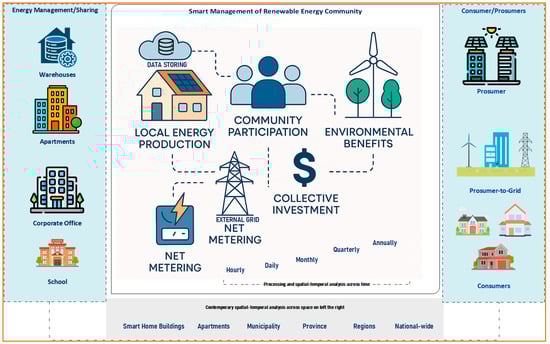
Figure 1.
REC methodologies, schemes, working, and flow of energy from prosumers to the grid with features and architecture.
- a.
- Local energy production: Rooftop/on-site solar systems that generate electricity locally, reducing national grid dependency.
- b.
- Communities and public active participation: Involvement ensures collective decision-making and energy equity.
- c.
- Environmental impact and benefits: These will also help to lower carbon emissions and enhanced sustainability through clean energy transition.
- d.
- Collective and SME investment: Shared funding supports infrastructure, improving the economic viability of a country.
- e.
- Net metering and energy sharing: Excess energy is fed back to the external national grid, or neighbors provide financial support.
- f.
- EM and trading: Intelligent energy flow among community buildings ensures efficient use of energy and load balancing.
- g.
- Data storage and management: RECs deal with real-time data from energy generation, consumption, and storage, which is collected, stored, and analyzed, often in data warehouses, to optimize energy usage and system performance.
- h.
- Integrated model: RECs and SGs collaboratively enable a sustainable, decentralized, and community-empowered energy future.
It is clear how the potential of RECs may revolutionize the energy landscape of high-income and low- and middle-income countries. Consequently, RECs have transformed global energy challenges, but successful implementation requires coordination efforts by governments, the private sector, and local communities, as well as continuous innovation in renewable technologies and EM systems. The path to widespread adoption of RECs will not be without obstacles, but strategic investment and supportive policy environments will contribute to sustainable and inclusive energy.
3. Smart Grid Technologies
SGs are modern technologies equipped with digital communication network electrical systems configured in such a way to enhance the monitoring, control, and optimization of electricity flows. These grids enable bidirectional communication between distribution utilities and consumers, improving grid reliability, efficiency, and resilience. One of the key advantages of SGs is their capacity to integrate RES technologies, namely solar and wind. They are intermittent in nature and provide decentralized power generation. Real-time supply and demand balancing is made easier by this connection. To lower energy losses, SGs allow sophisticated applications like dynamic pricing and rapid fault detection. The function of SGs in supporting RECs is becoming increasingly critical, particularly in guaranteeing grid stability and maximizing the usage of renewable energy. The study conducted by [55] investigated the connection between the load capacity factor and power losses. The ARDL method was used to simulate the local electricity industry in Pakistan. The main objectives of the study were to investigate the direct relationship between electricity losses (including technical and non-technical losses) and load capacity factors (LCFs), a measure of the efficiency of power generation capacity, and to analyze Pakistan’s evidence using the ARDL model, providing short-term and long-term effects [55]. The outcomes highlight how crucial it is to update the electrical grid system. In order to increase operational effectiveness and guarantee energy security rather than poverty, transmission and distribution losses must be minimized. The report gives vital information for authorities attempting to repair Pakistan’s outdated grid infrastructure and link energy planning with environmental goals. In the study in [56], the authors explored the growth trajectory of the liquefied petroleum gas (LPG) business in Pakistan. Their study analyzed Pakistan’s development of LPG by focusing on factors such as productivity and efficiency to understand its role in the country’s sustainable energy mix. The authors in [57] numerically discussed the problem of greenhouse gas (GHG) emissions from Pakistan’s electric power industry. Pakistan, a low/middle-income country that has committed to the Paris Agreement, relies on heat sources for more than 60% of its electricity, which has high carbon emissions, as global electricity demand is rising and climate change is severe. This study introduced a new time-varying method for calculating GHGs in the Pakistani electricity sector (including CO2, CH4, and N2O) and revealed peak emissions (up to 650gCO2-eq/kWh) during the winter due to a decline in the availability of hydroelectric power supplies. In the work in [58], the authors discussed how energy efficiency might be enhanced in buildings by adapting building information modeling (BIM) and strategic orientation planning, especially in the context of Pakistan’s complex geography. The study aimed to find an optimal way to optimize the orientation of buildings, the direction of buildings in different geographical and climate zones, and energy efficiency in various areas of Pakistan by using BIM to create digital representations of facilities, analyzing and simulating building energy performance. Their study focused on finding the optimal orientation of buildings to minimize cooling and heating loads in different terrains (such as hot/arid plains or cold/hilly regions) in Pakistan. Their method helped to reduce overall operating energy consumption and costs. The researchers in [59], taking into account the economic and environmental impacts of retiring coal plants early, specifically looked at Chinese-funded coal projects in Vietnam and Pakistan. They proposed a shift towards decarbonization of the energy sector through early retirement of coal-fired power plants. They proposed new financing strategies for RESs. The results showed that high-income countries, especially in Asia, which accounts for 76% of the world’s coal production, have coal plants with a high retirement age. The study evaluated the company values of six coal plants operated by China between 2010 and 2023 in Vietnam and Pakistan, with capacities ranging from 600 MW to 1320 MW, under three financing models and future geo-economic scenarios affecting the CPPs’ cash flows. The findings indicated that refinancing can strengthen corporate values and support early retirement.
Despite the growing interest in SG and REC technologies, there remains a lack of comprehensive studies. Examining the social, economic, and policy reforms in regions like Pakistan, the EU, and the ME, this perspective paper aims to bridge this gap by presenting a comparative study. Moreover, a case study of Pakistan’s indicative generation plan for 2022–2031 are provided. This work focuses on following aspects:
- a.
- The current state of SGs and the energy community approach in Pakistan and the ME in terms of capacity and future plans.
- b.
- Energy policy initiatives facilitating advanced RES integration into communities.
- c.
- Technological advancements and challenges in implementing SG infrastructures based on the EU RECs model.
- d.
- Existing REC models and case studies highlighting initiatives, implementations, and lessons to be learned.
- e.
- Renewable energy poverty mitigation strategies, effects on carbon footprint in Asia, and the status of the ME and EU with recommendations and discussions.
The integration of SGs with RECs gives potential for transforming the energy landscape in Pakistan and the ME. Recent policies and initiatives push a commitment to embracing renewable energy to reduce energy poverty and modernize grid infrastructure. However, there are still challenges, including the need for a policy framework, technological advances, and community engagement. It is essential that continued research and collaboration between stakeholders and policy makers maximize the benefits of this integration and achieve sustainable energy objectives in the region. Despite extensive research into RECs and SGs separately, their interconnection in low- and middle-income countries is still under-explored. Figure 2 depicts the flow diagram of SGs, showing generation in communities, working and residential smart homes (SHs), and commercial and industrial consumption with utility- and net-metering-enabled data sharing.
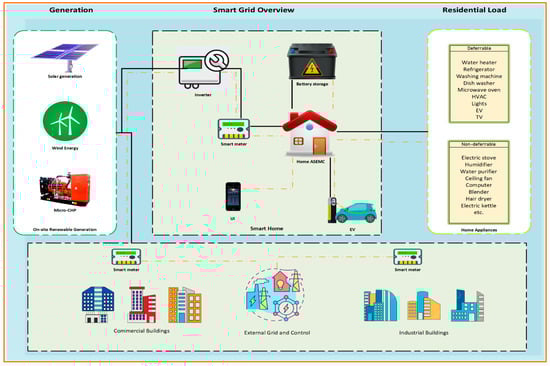
Figure 2.
SG flow and working architecture considering commercial, industrial, and residential buildings (black line shows energy flow, and the orange dotted line shows communication).
4. Existing Energy Policies and Goals in Pakistan and the Middle East
The integration of RECs and SGs requires a supportive policy framework to encourage the adoption of renewable energy and the modernization of energy infrastructure. In Pakistan, several policies have been adopted to support the deployment of renewable energy technologies and improve grid efficiency. Pakistan’s main policies include net-monitoring policies (NMPs) to encourage consumers to generate their own electricity and feed surplus energy to the grid, and energy wheeling policies (EWPs) to promote private electricity generation and transmission through the national grid. Furthermore, the energy imports policy (EIP) supports the diversification of energy sources by allowing electricity imports from neighboring countries, as described in the introduction [12]. The Energy Efficiency and Conservation Act (EECA) aims to improve energy efficiency in the sector. Countries such as the United Kingdom, UAE, and Saudi Arabia are investing heavily in renewable energy projects. They are introducing policies to support the transition to clean energy. For example, the UAE is developing five-gigawatt solar power plants with integrated battery storage to provide reliable electricity. Furthermore, the UAE’s national energy strategy for 2050 aims to achieve 50% of clean energy in the energy mix by 2050 to reduce the final demand for energy by 40% [60]. Saudi Arabia’s 2030 vision targets include cutting dependence on fossil fuels and expanding RESs. Saudi Arabia aims to reduce net greenhouse gas emissions by 2060 and 50% by achieving a renewable energy transition by 2030, focusing on economic diversification under Vision 2030.
Regarding policy and geography, the authors in [61] detailed issues, aspects, and feature in Pakistan. The effective integration of RECs and SGs is predicated on robust and adaptable policy frameworks. These help the adoption of renewable technologies and facilitate the transformation of traditional grids, expansion of energy resources, and shareholder engagement. In both Pakistan and the ME, governments are working on energy policies to meet demand and support the green energy transition, even with circumstantial challenges and trajectories.
4.1. Pakistan’s Energy Policy Ecosystem
Pakistan engages in energy initiatives to speed up the transition towards renewable energy and increase energy efficiency. The NMP, 2015, enables both business and residential customers to generate electricity from RESs. EWPs make it easier for commercial energy providers to use public transmission networks. By permitting cross-border power trade, the EIP helps with short-term energy demands. The study in [62] developed a comprehensive decision-making framework (DMF) to assess the energy sustainability of both macro (e.g., political, economic, and legal) and micro (e.g., system flexibility, durability, and share of renewables) factors within Pakistan’s energy infrastructure. Their key findings were that micro aspects, such as energy system flexibility and the share of renewables in the energy mix, are more critical than macro aspects for developing sustainable energy infrastructure in Pakistan. The authors in another study [63] proposed the use of pump-as-turbine (PAT) technology a cost-effective and smart solution for generating small-scale hydropower in Pakistan. PATs can be mixed, radial, single-stage, or multi-stage when used for power generation, and are capable of producing power (5 kW–1000 kW). They offer advantages over traditional hydro-turbines, including lower costs, lower complexity, and faster installation. The study promoted this technology to address Pakistan’s persistent energy deficit and reduce its reliance on expensive fossil fuels.
The transportation industry in Pakistan is also progressing toward electrification. One study [64] analyzed the policy framework, technical requirements, and existing challenges for adopting EVs and electrifying the transportation sector in Pakistan. The main point was that although government policies (like the National Electric Vehicle Policy) exist, the study found that affordability (high upfront costs) and limited charging infrastructure are major barriers to EV adoption, particularly for four-wheelers. This work used a SWOT analysis to evaluate strengths, weaknesses, opportunities, and threats. In [65], it was demonstrated that structured planning approaches utilized in other contexts might serve as obstacles and opportunities related to sustainable grid integration and the role of financial policies in expanding RESs in Pakistan. The relevant impact of policies like NM highlights the need for robust institutional frameworks, enhanced fiscal incentives, and long-term planning to overcome institutional, financial, and regulatory barriers that constrain the effective deployment of renewables.
The concept of RECs and SGs is still in its early stages in Pakistan and the ME. These regions do not yet have structures that mirror the European Union’s REC models. However, there are various programs underway that stress dispersed energy generation. Community solar projects and grid upgrade initiatives in these locations are growing. Below are the important main elements to consider, which describe the development of major projects for renewable energy promotion and SGs in these areas, as follows:
- i.
- Community Solar Projects and Mini-Grids: Efforts aimed at rural electrification through off-grid solar systems. They are gaining popularity, notably in rural Pakistan and different ME states. These projects are often backed by international organizations. They focus on boosting electricity access for underprivileged populations while supporting sustainable energy adoption.
- ii.
- Net Metering Policy: This policy allows individuals and businesses to sell any surplus solar energy. They sell back to the grid, which incentivizes renewable energy adoption and supports the integration of decentralized energy resources. The Net Metering Regulations of 2015 facilitate consumers’ ability to sell surplus solar energy, providing an important financial incentive for renewable energy adoption to users [66].
- iii.
- Regulatory Gaps: Despite the progress in renewable energy adoption, there are still regulatory gaps in Pakistan and the ME. The country has launched multiple solar and wind initiatives, especially in off-grid and rural areas. Community-based solar mini-grids and pilot smart metering projects have emerged under NEPRA’s initiatives and the Alternative Energy Development Board (AEDB) [66]. However, large-scale adoption remains limited due to a lack of infrastructure, inconsistent funding, and public awareness.
- iv.
- Alternative and Renewable Energy Policy 2019: The policy aim was to scale up renewable energy solutions in the power sector, with a goal of increasing renewable energy production to 20% by 2025 and 30% by 2030 [67]. Currently, as already stated, the new target for 2030 is set at 60% transition to RESs.
- v.
- National Electric Power Regulatory Authority: NEPRA oversees the integration of renewable energy into the national grid. It has made strides toward creating supportive regulations for renewable energy projects and REC initiatives [68].
4.2. Middle East: Reforming Energy Through Strategic Policy
The energy policy landscape across the ME, including Gulf Cooperation Council (GCC) nations, is undergoing profound strategic reform. Targets and long-term goals have been set under the National Energy Strategy 2050 [60]. They are transitioning towards greener energy sources to improve integrated SG development and efficiency. The key project includes the implementation of a large-scale solar PV system, a 5 GW solar complex. This aims to achieve net-zero emissions by the year 2060 and produce a cumulative 50% of its power from RESs. This energy policy also supports the 4 GW green hydrogen project in NEOM. In the study in [69], the authors identified that institutional coordination, public engagement, and national coherent energy policies are still required. In another study [70], the authors stated that geopolitical perspectives have an impact on renewable energy in supporting governance resilience across the GCC. Their findings indicated that the widespread use of RESs, especially solar power, promotes political and environmental stability. In another study [71], the authors described that the government’s role and economic growth are connected to renewable energy uptake in the larger ME and North Africa (MENA) area. Their analysis showed that while renewable energy can contribute to carbon neutrality, its success depends greatly on policy deployment, institutional preparation, and regional collaboration. GCC nations are focusing more on public–private partnerships, international green funding, and digital solutions like AMI and EV integration in order to overcome these obstacles.
While Pakistan still needs to address foundational challenges like energy poverty and policy consistency, the ME, especially Saudi Arabia and the UAE, are spearheading top-down strategic reforms [61,71], as well as Iran and Qatar. Pakistan is catching up quickly due to targeted national strategies and initiatives like Masdar and DEWA’s SG projects. Some projects are discussed in detail in Section 5.3 and show a strong commitment to digital infrastructure and renewable energy in the UAE. In the research in [70], the authors demonstrated how the UAE has established robust energy governance systems. The country has encouraged grid integration, large-scale solar installations, and public–private energy partnerships. Moreover, Iran is progressing its energy modernization through the National Smart Metering Program (FAHAM, Persian acronym), which focuses on digitizing power distribution and boosting grid efficiency [72]. Qatar has focused on incorporating renewable energy into its system through national development objectives. In Bangladesh, efforts are concentrated on supplying off-grid power to distant regions using hybrid renewable energy systems. One work conducted a techno-economic analysis of such systems, proving the cost-effectiveness and sustainability of decentralized energy solutions for rural electrification [73].
China’s efforts to update its electricity grid since 2014 were highlighted in another study [74], with a focus on the integration of RESs. The deployment of modern digital technologies and the transformation of market mechanisms were adjusted to promote a more robust and efficient energy system.
Political fragility inhibits SGs’ deployment in countries like Iraq, Syria, and Yemen, but other states in the area continue to move forward. High upfront costs, disjointed rules, and poor cross-sectoral collaboration persist in these regions. Coordinated policy frameworks, international financing, and technology transfer channels can help to overcome these challenges. As these countries continue to change their energy reforms, SGs are emerging as key options not just for enhancing grid resilience, but also for strengthening communities and attaining climate goals. Despite disparities in government structures and resource availability, a unifying thread throughout these locations is the strategic emphasis of decentralized, intelligent, and sustainable energy systems.
Table 1 highlights RESs’ integration and SGs’ status in countries from Asia and the ME region, including key barriers and policy implications. Moreover, Table 2 provides an overview of research articles published in relation to SGs in 2023–2025, with technological approaches, barriers, and policy implications.

Table 1.
RESs’ integration, RECs’ and SGs’ status in Asia and the ME (Emerging—E: early pilots or initiatives; Developing—D: expanding initiatives with partial institutional support; Established—ED and Advanced—A: mature or widely deployed systems, and Limited—L; the initiatives are still focused on centralized systems.).
Table 2.
Overview of recent research articles published related to SGs in 2023–2025.
5. Methodologies and Case Studies: RECs and SGs
Various ranges of methodological approaches were observed in the selected literature as per the preferred reporting items for systematic reviews and meta-analyses (PRISMA) approach (discussed in more detail in Appendix A). The literature ranges from techno-economic modeling and hybrid system optimization to artificial intelligence applications and policy analysis. The studies discussed in this section specifically address methodologies and opportunities within the context of Pakistan, Bangladesh, India, Iran, China, UAE, Qatar, Jordan, MENA, the Middle East, and the EU. For example, the study in [87] applied machine learning techniques to predict electricity consumption patterns in Pakistan’s residential sector while enhancing demand-side management strategies. The authors in [88] examined blackout resilience by proposing layered grid designs and fault-tolerant architectures for Pakistan’s aging infrastructure. Other works explore system design innovations; namely, the authors in [89] presented the integration of wireless sensor networks for operational intelligence in SGs. Moreover, in [90], the authors evaluated hybrid off-grid systems, particularly PV–wind–battery combinations. Their work is in the domain of rural electrification, offering insights applicable to Pakistan’s remote areas. In [91], the authors extended this by conducting a geospatial and techno-economic assessment of green hydrogen production via solar PV, also addressing long-term energy stability concerns. The researchers in [92] introduced a hybrid energy storage system (ESS) combining batteries and hydrogen to support long-duration, stable MG operations. This dual-storage model is especially relevant for enhancing the resilience of RECs in Pakistan’s off-grid or disaster-prone zones. Adding to this, in [93], the authors explored the role of CPEC Phase 2.0 in accelerating green energy collaboration between China and Pakistan. The study in [94] employed cascade neural networks to address economic emission dispatch issues. Their work presented a dynamic economic emission dispatch (DEED) model based on artificial neural networks (ANNs) which is able to combine reliability measures and transmission losses. The model utilizes predictive capabilities to improve accuracy and efficiency. The methodology will reduce fuel cost, minimize emissions, and enhance reliability by using a multi-objective Northern Goshawk Optimizer (MONGO) with non-dominated sorting. The empirical data show that its performance is better and its solution diversity is higher in comparison to traditional DEED methods, thus improving the sustainable and reliable work of the power system. Then, the conceptual framework of RECs, their types, the current issues, prominent examples of international cases, and the particular barriers in Pakistan and the ME were discussed.
5.1. RECs: Concept of Implementation
RECs are locally and legally governed renewable energy systems where participants can be involved as consumers (consume energy), producers (produce energy), or prosumers (produce and consume electricity). They emphasize energy sharing, cost reductions, and environmental sustainability [40]. RECs represent an innovative and decentralized approach to energy generation and consumption, where local stakeholders play a central role in the production, management, and utilization of that energy. In contrast to conventional grid systems where consumers are passive, RECs enable community members to be active producers or prosumers (individuals or entities that both produce and consume energy). This involvement encourages local energy control, develops active participation, and improves impacts on environmental sustainability. It results in decreased energy prices and grid reliance. RECs aspire to democratize energy access by empowering individuals, local institutions, cooperatives, and small companies, who can invest in and profit from renewable energy infrastructure by focusing on community-scale renewable generation such as solar, wind, and small hydropower. Moreover, biogas RECs can also contribute to the decarbonization of energy systems, which will improve energy resilience and often delivers socio-economic benefits, especially in underserved or remote areas. Following this, we discuss the different types of RECs and global case studies.
5.2. Types of RECs
The structure and operational model of an REC can vary depending on geographic, economic, and policy contexts. Broadly, RECs can be categorized into the following two main types:
- i.
- Grid-Connected RECs
These RECs are integrated into the national or regional electricity grid, enabling bidirectional energy flows. Community members can import and export electricity, participating in schemes such as net metering, feed-in tariffs, and P2P energy trading. This model enhances financial viability and scalability, especially in urban or semi-urban regions [95].
The P2P energy trading in RECs is based on auction, blockchain, and game-theoretic technologies, representing a future perspective to be adapted for sustainability. Let power generated by user at time , and load demand of user at time ; then, the net injection to the grid is:
For P2P energy trading, the optimization objective might be to minimize the total energy cost, as follows:
where is the energy traded between peers and , and is the unit cost. Using a blockchain-based platform, prosumer sets a price for excess energy, and consumer bids . The market clearing condition is:
Example: An urban residential community installs rooftop solar panels. During sunny hours, prosumers sell their excess electricity to neighbors or the grid using a P2P platform. At night or during low production, they import electricity, optimizing both consumption and economic return.
- ii.
- Off-Grid RECs
On the other hand, off-grid RECs operate independently from the centralized grid, making them vital for energy access in remote or underdeveloped areas. These systems often integrate renewables (solar, wind, hydro) with ESSs and local controllers [4]. Local energy balance is maintained as:
Battery constraints and state of charge (SOC) are represented as:
An example of this can be a rural village implementing a solar-powered MG with an ESSs. Electricity can be managed locally, providing stable supply to homes, schools, and hospital that previously lacked access to reliable energy.
5.3. Global Case Studies of RECs
To understand the practical implementation and socio-technical impact of RECs, this section highlights case studies from Germany, Denmark, the UAE, Iran, Saudi Arabia, and Jordan. These examples show pathways to community energy resilience, sustainability, and decentralization.
- i.
- Germany’s Energy Cooperatives
In Germany, RECs are called energy cooperatives. They are mainly organized as cooperatives focused on local solar and wind generation. But they also face regulatory, technical, and bureaucratic barriers, especially due to the slow implementation of EU energy-sharing rules, reduced feed-in tariffs, and limited digital infrastructure. However, they still promote citizen participation, local value creation, and decentralized renewable energy development. RECs in Germany are related to around 86% of electricity energy production, mainly from photovoltaics, wind, and biomass. Germany is a pioneer in community-led renewable energy, with more than 900 energy cooperatives established across the country. These cooperatives are made up of SMEs, local governments, and people. They have contributed with initiatives aimed at solar, wind, and biomass development. The RESs Act (EEG), especially its Feed-in Tariff (FiT) provisions, encourages broad involvement by guaranteeing grid access and reliable income for renewable producers. Projects in Schönau and Freiamt demonstrate this style, where community-owned electricity generation fosters local development. Furthermore, governance models range from municipal utilities to regional cooperative networks. They have been instrumental in establishing RECs and promoting public involvement [96].
- ii.
- Denmark’s Wind Cooperatives
Denmark’s wind energy success is backed by civic participation. Since the 1970s, the Danish government has encouraged the co-ownership of wind turbines, mainly in the Middelgrunden Offshore Wind Farm, which is co-owned by 8500 citizens. This strengthens public trust and engagement with clean energy transitions. Officially, developers are mandated to offer at least 20% of ownership to nearby residents, which is a policy that enhances local acceptance and economic returns. Ørsted integrated its sustainability reporting into its annual report in line with the EU’s Corporate Sustainability Reporting Directive (CSRD). The 2024 report marks the company’s first fully CSRD-compliant edition, also providing transparent disclosures on environmental, social, and governance (ESG) impacts with risks and opportunities. The key 2024 achievements include completing the shutdown of its last coal-fired plant and pioneering low-emission steel use, while introducing recyclable turbine blades and launching a biodiversity framework with major noise-reduction innovations. Ørsted also advanced community engagement through workforce training, considering local benefit funds and indigenous consultation. With over 18 GW of renewable capacity worldwide, it continues to lead the global transition to green energy [97].
- iii.
- UAE—Masdar City and DEWA SG
The UAE’s Masdar City functions as a paradigm of integrated sustainability by merging renewable energy, green buildings, and e-mobility. Digital metering, distributed generation integration, and real-time grid management are all part of DEWA’s SG 2021 project. These projects highlight how regulatory forethought and public–private collaborations can accelerate smart and sustainable REC adoption in high-density metropolitan zones [98].
- iv.
- Iran—FAHAM Smart Metering Project
An important step toward grid renovation was taken in Iran with the FAHAM (Farsi acronym for “National Smart Metering Program”) project, which is Iran’s large-scale national initiative to deploy AMI. The key roles and objectives are (i) electricity reforms, (ii) loss reduction, (iii) demand management, and (iv) improving efficiency and reliability. The targeted initial deployment prioritized large-scale consumers (like industrial and agricultural sectors with high consumption) [72].
- v.
- Saudi Arabia—Sakaka PV Project
By the year 2030, the GCC wants to install 66 GW of national-scale renewable energy systems. The driving factor behind this goal is the depleting fossil fuel reserves. With meditation between CCUS, solar energy, and hydrogen, Saudi Arabia’s Sakaka 300 MW solar PV project is a significant step toward the Kingdom’s Vision 2030 sustainable transformation. Their declared 2030 energy targets average about 26% of capacity from renewable sources, with targets reaching 50% in Saudi Arabia and 30% in the UAE and Oman. Current plans aim to add 42.1 GW of solar PV and CSP, significantly increasing current installed capacity (which was only about 0.15% of global installed capacity as of 2022). However, there is big challenge for large utility-scale solar and CCUS deployment regarding energy efficiency, demand-side management, and nature-based solutions [99,100].
- vi.
- Jordan, Mafraq Community Solar Projects
Public institutions and NGOs have funded community solar installations in Mafraq, Jordan. The goal is to empower local people and combat energy poverty. These initiatives supply not just clean power, but also job generation and skills, as well as development in underserved areas. However, challenges remain, namely regulatory hurdles, financing, and grid limitations. Studies highlight both the promise and structural barriers to scaling RECs in Jordan’s suburban regions [76,77].
5.4. Challenges in Pakistan and the Middle East
While the concept of RECs offers immense potential to democratize energy access, reduce carbon emissions, and promote local economic development, the practical implementation of RECs in Pakistan and Middle Eastern countries faces structural, financial, and policy-related barriers. These challenges hinder the scalability and sustainability of community-based energy systems. Pakistan developed “Quaid-e-Azam Solar Park” and “Local Solar Cooperatives” in Sindh. While large-scale projects face some efficiency issues, smaller solar cooperatives enable the electrification of remote villages. Decentralized solutions with community involvement tend to be more sustainable in rural contexts [101]. The financial, regularity, and grid-infrastructure-related challenges are listed as follows.
- i.
- Limited Financial Support for Community Energy Projects
One of the most significant constraints in the region is the scarcity of accessible financing mechanisms. Unlike high-income nations where cooperatives benefit from favorable loans, government subsidies, or green investment funds, people in Pakistan and ME countries often lack capital, credit access, and financial literacy, which are essential to initiate or sustain renewable energy projects. In Pakistan, high upfront capital costs for technologies like solar PV, wind turbines, and battery storage are beyond the reach of most rural communities. Furthermore, there is a lack of financial support, namely low-interest micro-loans and community energy grants, which are crucial for jump-starting RECs in low-income regions. In the ME, although self-governing wealth funds and national energy programs invest in large-scale RESs projects, community-based models receive minimal attention or support. Most investments are directed toward utility-scale infrastructure [102].
- ii.
- Lack of Regulatory Frameworks to Energy Sharing Enabling
The lack of legislative and policy support for energy exchange and consumer participation is another fundamental obstacle. Both in Pakistan and ME countries, energy legislation is still largely centralized and utility-oriented, limiting communities’ ability to actively participate in energy production or trade. Although progress is being made in initiatives like net measuring, Pakistan’s existing frameworks do not adequately address P2P energy trade, energy cooperatives, or community ownership models. There is little legal recognition for RECs as formal entities capable of concluding contracts, owning infrastructure, or managing MGs. Although there are ambitious national renewable energy plans in countries such as Saudi Arabia and the United Arab Emirates, decentralization and community participation policies are still being developed. Bureaucratic obstacles and the dominance of state-owned services limit local innovation and participation of the general public [102].
- iii.
- Grid Constraints and Poor Infrastructure
Technical and infrastructure challenges also play a role in restricting the development of RECs. Many regions in Pakistan and parts of the ME are affected by aging networks, frequent power outages, and low electrical rates in remote areas. These conditions hamper the integration of locally produced renewable energy into the national grid. This would provide reliability for off-grid or hybrid community systems. Excessive load loss, power outages, system failures, and voltage fluctuations are common in Pakistan’s rural areas. Such issues result in ineffectiveness of MG or SG operation. Technical assistance and maintenance services are also limited, especially in remote villages. In the ME, urban infrastructure is advanced, but rural or nomadic populations are often disconnected from grid. Harsh weather conditions, such as extreme heat and dust storms, also pose technical challenges in the operation, durability, and maintenance of solar and wind equipment. Despite the promising potential of RECs in changing Pakistan’s and Middle Eastern energy landscapes, some interdependent obstacles must be overcome. Financial constraints, political and regulatory gaps, and infrastructure constraints collectively suppress the growth of the community energy system. To meet these challenges, multi-level governance interventions, inclusive policy reforms, capacity-building programs, and targeted financial incentives are required. Learning from international best practices and adapting them to local socio-economic realities can pave the way for a just and decentralized energy transition in the region. Figure 3 shows the implementation of RECs with community participation through SG and energy modeling, taking into account data analysis and funding from investors.
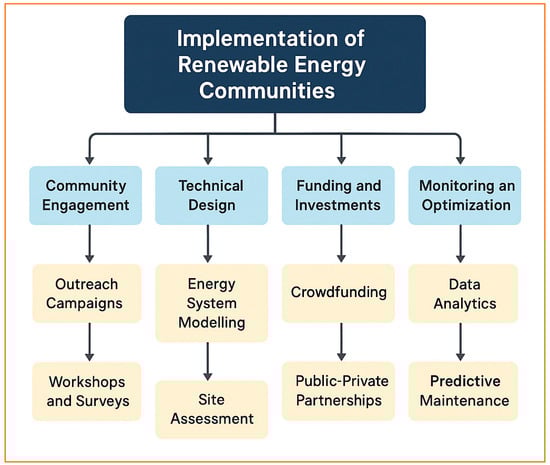
Figure 3.
Implementation of REC steps, funding mechanisms, and techniques.
6. SGs: Role and Technological Advancements
There is a dire need for the following technologies to be integrated into the conventional grid to take a transitional step towards modern SGs.
6.1. AMI: Real-Time Monitoring of Energy Production/Consumption
AMI plays a key role in SGs, allowing for real-time monitoring. It also records and manages energy production and consumption. AMI enables utilities to collect detailed data on energy usage at the customer level. AMI operation includes efficient energy management, distribution to enhance the national grid reliability, and response to DR mechanisms. Consumption data accumulated from users are used by distribution companies to predict demand patterns, calculate bills, optimize energy flows, and enhance system stability in real time. The study in [103] was based on the influence of long-term residential electric energy consumption patterns. This work showed that personalized communication can effectively promote energy-saving behaviors and improve consumers’ experience. In [104], the authors presented a model for optimal household appliance scheduling in SGs. They considered inclining block tariffs and net metering, aiming to reduce electricity costs and optimize energy usage.
6.2. DR: Adaptive Consumption Based on Real-Time Pricing
Adaptive consumption based on real-time pricing needs DR programs to enable consumers to adjust their energy usage in response. Real-time price signals or grid conditions also provide economic incentives to reduce peak demand and improve grid reliability. In residential sectors, DR can be integrated into SHs for automated energy optimization and balancing comfort with energy efficiency. Researchers in one study [105] illustrated the effectiveness of real-time DR strategies in reducing energy consumption. Incorporating efficient integration of RESs by balancing supply and demand has practical real-world impacts.
6.3. Blockchain-Based Energy Trading: Enabling Decentralized Peer-to-Peer (P2P) Energy Exchange
Blockchain-based technology is revolutionizing the way energy is traded by enabling decentralized P2P surplus energy exchanges. Using blockchain-based ledger technologies, auction-based mechanisms, or market pricing, consumers can directly trade surplus energy generated from renewable sources to their neighbors or the grid, creating a transparent, secure, and tamper-proof energy trading environment. In the study in [106], the authors discussed how blockchain can facilitate distributed EM and DR while also offering solutions to overcome current energy market inefficiencies.
6.4. AI and IoT Integration: Automated Energy Optimization for Efficiency
The integration of IoT and AI tools into SGs enables bi-directional communication and real-time monitoring and optimization of energy distribution. At both distribution and consumer ends, IoT sensors gather data on various aspects of the grid, such as fault detection, energy consumption, and grid stability. Then, the AI algorithms process these aspects to optimize EM. Adding to this study [86], some authors proposed a real-time load scheduling and energy storage control strategy. They considered grid-connected solar integrated smart buildings, focusing on enhancing energy efficiency while maintaining comfort levels. They developed a residential load scheduling model that considers both cost efficiency and consumer preferences for DR in SGs to optimize electricity usage. They also introduced an optimal home EM system that incorporates demand charge tariffs and operational dependencies of appliances to minimize energy costs and improve overall system performance. The combination of AI and IoT can enhance grid resilience, improve load forecasting, and support demand-side management. Research by [107,108] demonstrated how the integration of AI and IoT works to enhance the performance and efficiency of SGs. Figure 4 shows SGs’ and RECs’ common components, features, and their interconnection in terms of communication, DR signals, and work implementations. Some aspects of EU REC framework, including consumer rights to energy sharing, transparency in benefit distribution, standardized metering and access to data, and encouragement of community-based forms of governance, are viewed as realistically applicable in the context of Pakistan and the Middle East. Nonetheless, we also observe that other elements, including wholesale market coupling, flexibility markets, dynamic tariff structures, and sophisticated regulatory compliance mechanisms under RED II/III, might be more challenging to implement considering institutional capacity constraints, less market liberalization, and varying regulatory maturity. These differences can be explicitly addressed to reflect concerns regarding the transferability and adaptation requirements of EU-inspired REC policies.
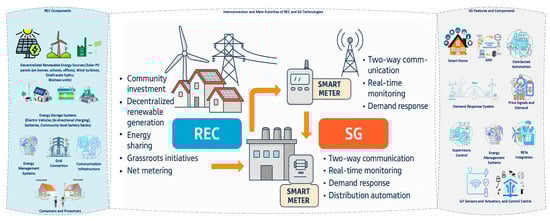
Figure 4.
REC and SG interconnection in terms of components, communication, DR, and energy sharing.
7. SG Deployment in Low- and Middle-Income Countries
SG deployment in low- and middle-income countries such as Pakistan and those in the ME faces unique challenges. These countries are exploring SG technologies, but scaling up remains difficult. This is due to high implementation costs, lack of technical expertise, and regulatory hurdles. The authors in [109] presented a two-stage multi-objective framework for optimizing the operation of modern SGs. Also, they incorporated DR programs to enhance efficiency and grid reliability. In addition, they focused on optimizing residential battery ESS scheduling to simultaneously reduce costs and emissions, highlighting the importance of smart scheduling in sustainable EM. The unique challenges and difficulties in deployment and transition to modern grids are listed as follows.
7.1. High Implementation Costs
The high capital cost associated with the deployment of SGs, which includes AMI, sensors, and communication networks, remains a barrier. These technologies require high initial investment, which is often not affordable for low- and middle-income countries. They need foreign investment or loans from other nations or international organizations. Researchers have discussed the need for international collaboration and financing mechanisms. Their purpose is to offset these costs and enable large-scale implementation of SGs in regions like South Asia, Pakistan, and the ME [110].
7.2. Regulatory Bottlenecks
In low- and middle-income countries, obsolete regulatory structures are the main obstacles to SG adoption. These regulations fail to provide support for the complexities of modern energy systems. As decentralized energy generation systems accumulate, system upgrading and energy trading need more complex structures. In one study [111], the authors discussed that regulatory reforms are needed to accommodate emerging technologies. They explored blockchain and P2P energy trading platforms within SG systems and Industry 5.0.
7.3. Cybersecurity Concerns
The amalgamation of new IoT and digitalization in SGs also increases vulnerability to cyber–physical attacks, which compromise grid reliability and consumers’ data privacy. The work in [106] identified cybersecurity as a critical challenge in the adoption of SG cyber–physical technologies, especially considering approaches in low- and middle-income countries where cybersecurity infrastructure is in its infancy compared to high-income countries. Secured communication channels and advanced security protocols are essential for the large-scale deployment of SGs.
8. Interconnection in Optimization Between RECs and SGs
The incorporation of REC models with SGs shows the potential for green energy sustainability and independence. Also, integration will improve the national power grid’s reliability and support the transition to a low-carbon energy future. By merging the decentralized energy generation of RECs with the advanced control mechanisms and management capabilities of IoT and SGs, these cohesive technologies can optimize energy production, energy storage, and power consumption, as studied in [112,113,114], which proposed optimized smart EM systems. Firstly, a multi-objective approach called the Nizar optimization algorithm was proposed to minimize costs associated with both grid energy consumption and battery degradation. Second, an optimized smart home EM was developed to reduce costs and grid consumption, utilizing DR schemes and a hybrid architecture. Next, an integrated multi-objective EM was formulated for a smart micro-grid that specifically includes EV charging stations and DR programs, while also addressing the challenge of uncertainty (likely in renewable generation or demand forecasting). Figure 4 above shows the interconnection of RECs and SGs, the main infrastructure of communication, energy optimization, and sharing, and DR features of each with essential components.
- i.
- Theoretical Framework for Integration
The integration of RECs and SGs enables more efficient energy distribution, which allows better management of RESs and improved system resilience. Research work by [115] discussed the multi-objective optimization approach for residential SHs. They addressed a case study with a grid, which jointly optimizes the management of responsive appliances and renewable ESSs. They emphasized the synergy between SGs and RECs.
- ii.
- Technological Synergies
Technological advancements such as AI, IoT, and blockchain offer promising solutions for the integration of RECs into SGs. AI-operated extrapolative analytics cope with intermittent energy generation and consumption variability patterns. While IoT sensors deliver real-time data management for grid performance and energy usage, blockchain, auction-based market, and game theory technologies facilitate transparent and secure P2P energy trading. This will allow communities, prosumers, and producers to sell excess energy to their neighbors or to feed into the grid. In some studies [106,116,117], blockchain technologies’ potential integration to decentralize energy trading was highlighted, while it was also shown how IoT-enabled home EM systems can optimize energy distribution and reduce consumption costs.
- iii.
- Economic and Regulatory Considerations
Successful assimilation of REC frameworks and SGs needs supportive policies, regulatory approaches, and economic incentives. Government and stockholder incentive-based policies are essential to encourage the development of RECs. Also, offering standardized policies will ensure fair and transparent consumer-to-grid interactions. The work in [118] examines how the ailing Pakistani power industry can be transformed into a SG advanced energy system to end the long-running energy crisis in the country. According to the authors, a number of systemic problems that are presently paralyzing the electric network in Pakistan include bureaucratic infrastructure, economic strain, and management concerns. The proposed study presents a smart grid model in accordance with the national institute of standards and technology (NIST) interoperability standards (release 4.0). This model seeks to establish an integrated energy management system, which links power organizations to the national grid.
9. REC and SG Implementation’s Challenges and Barriers
This section describes, in detail, the implementation of RECs and SGs. The challenges and barriers to this are continuing to rise day by day. These challenges and barriers are a compound set of the following six main aspects: (i) consumption controlling, (ii) production regulation, and (iii) security, (iv) technical, (v) economic, and (vi) regulatory issues that challenge large-scale implementation. These several interrelated challenges must be overcome. One key issue on the consumption side involves the multi-objective optimization of household energy scheduling in peak hours, where reducing peak load and costs must be balanced through maintaining user comfort engagement, appliance operation/preferences, and consumer behavioral variability [119]. The uncertainty in appliance and consumption patterns further disturbs DR coordination, especially under IoT-based control frameworks constrained by interoperability, and real-time data handling limitations. Authors in [120], develops a two-stage robust optimization framework that significantly reduces residential electricity costs by integrating photovoltaic-battery storage, electric vehicle charging, and demand response strategies while accounting for uncertainties in renewable generation and energy prices. Moreover, a robust multi-objective optimization model is used to combine both price- and incentive-based demand response schemes which optimize electricity costs and peak load in the smart residential buildings without compromising the comfort of the occupants and controlling the energy uncertainties discussed by the authors in [121]. These technical issues are compounded by inadequate digital infrastructure and limited data integration, along with weak grid resilience in low- and middle-income regions, restricting the scalability and stability of REC–SGs. The key factors are listed below from the previous studies.
9.1. Technical Barriers
- i.
- Grid incompatibility with decentralized approach
Existing grids in Pakistan and the ME are not equipped to handle decentralized energy production efficiently, such as that from renewable sources like solar energy, biogas energy, and wind energy. This grid incompatibility also poses a barrier to the transition of national grids to SGs. The study in [122] discussed the need for technical upgrades to enable seamless integration of distributed RESs.
- ii.
- Cybersecurity risks in blockchain-based P2P energy trading
Blockchain ledger-based technologies offer a solution for decentralized energy trading. However, they also introduce risks of cybersecurity and data privacy. These risks are particularly concerning in low- and middle-income countries like India, Pakistan, and others in Asia, where cybersecurity infrastructure is still in a developing stage. The authors in one study [106] showed the importance of addressing these risks to ensure the security and reliability of blockchain-based energy trading platforms.
9.2. Economic Barriers
The economic barriers are discussed as follows.
- i.
- High capital costs for smart meters, IoT sensors, and automation
The cost of implementation is high for AMI, smart IoT sensors, and automation technologies, particularly for countries with limited financial resources. The research work on economic barriers in [123] showed the challenges faced by low- and middle-income countries in financing SG infrastructure.
- ii.
- Lack of financing models for REC development
Low- and middle-income countries struggle to secure funding for large-scale REC projects, especially when these projects lack clear economic models or profitability in the future. The study in [88] discussed the need for innovative funding mechanisms to support the deployment of SG and REC technologies.
9.3. Regulatory Barriers
- i.
- Absence of policies for community energy ownership
Many countries lack policies that allow communities to own and manage RESs. Without clear legal frameworks for community energy ownership, the potential of RECs remains untapped. The authors in [12,19,24,26,64] advocated for policy reforms that enable community participation in energy generation and distribution.
- ii.
- Restrictive energy trading laws in certain Middle Eastern countries
In some Middle Eastern countries, restrictive laws hinder the growth of decentralized energy markets and P2P trading. These laws must evolve to accommodate new energy models. In the studies in [95,124,125], the authors discussed how regulatory reform is needed to allow the development of P2P-based energy selling/trading systems within SGs.
10. Pakistan IGCEP, MENA, and EU Generation and Capacity: Perspective Study
This section discusses and compares Pakistan’s, the ME’s, and the EU’s energy transitions and plans for renewable energy with potential in the future. Regarding Pakistan’s potential from June 2022, its NTDC system had 500 MWp utility-scale solar PV and 1845 MW wind power commissioned, with an additional 100 MWp solar PV in the Karachi Electric system. Following the Cabinet Committee on Energy decisions in 2019 and 2020, various wind, solar PV, and bagasse projects (excluding those under litigation) are expected to be added to the national grid in the coming years. The agreed capacity factors for these projects are 22.1% (utility solar PV), 20% (feeder-based solar), 17% (solar net metering), 42% (wind), and 55% (bagasse).
Pakistan has rapidly emerged as a solar powerhouse providing 25.3% of utility electricity in early 2025, with its solar capacity rising five-fold between 2022 and 2024. Pakistan’s targets include 60% renewable electricity by 2030 [5]. According to Ember data from January 2025 to April 2025, Pakistan has sourced 25% of its utility consumption of electricity from solar power, far above most other countries and regions. The sharp increase in both capacity and generation has elevated solar power from Pakistan’s fifth-largest electricity source in 2023 to its leading source by 2025. Figure 5, Figure 6 and Figure 7 show the energy power generation from different sources in the Indicative Generation Capacity Expansion Plan (IGCEP) 2022–31 [126,127]. Figure 5 illustrates how different energy-mix scenarios, ranging from base and demand-sensitive cases to supply enhancement options like new hydropower, nuclear, and local coal additions, shift the projected installed capacity across generation categories, highlighting hydropower and solar PV as the most sensitive and highest-impact contributors to future capacity expansion. Figure 6 shows a consistent upward trend in hydropower, renewable energy, and RLNG capacity across fiscal years, while fossil options like furnace oil and cross-border imports decline sharply, reflecting Pakistan’s gradual shift toward a cleaner and more secure generation mix. Figure 7 shows that exports overwhelmingly dominate Pakistan’s economic linkages, with a few major partners such as Saudi Arabia and the UAE, while manufacturing and financing flows remain comparatively modest and taper off sharply across the remaining countries.

Figure 5.
Demand and scenario-wise installed capacity by 2030–2031.
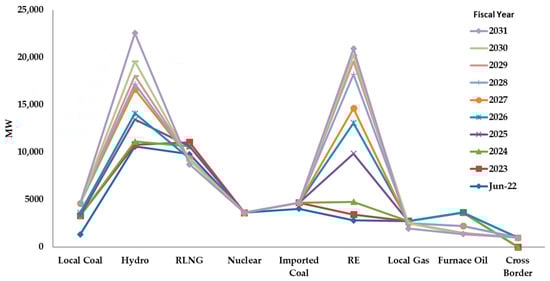
Figure 6.
Yearly generation from 2022 to 2031 capacity additions by source.
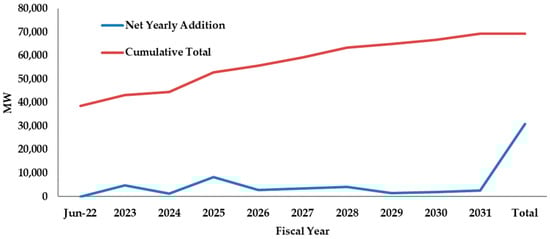
Figure 7.
Cumulative installed capacity over time with yearly addition.
A comparison to the EU and ME in Figure 8 shows yearly generation data by bioenergy, coal, gas, hydro, nuclear, other fossil, other renewables, solar, wind, and total generation data for 2024. Regarding the clean and green energy transition, carbon emissions and clean energy technology in Asia and the ME are shown in Figure 9. Evaluating data on manufacturing, export, and financing, China’s overseas clean-energy activity is driving the greatest emission reductions in South Asia and the MENA, where carbon-intensive power grids mean that new solar installations displace high-emissions generation. Pakistan has become the single largest market, as recurring electricity shortages and the growing affordability of solar have accelerated adoption, with Chinese exports supplying much of the capacity. Similar patterns are seen in South Africa, another top ten country for avoided emissions, underscoring how both the scale of Chinese clean-tech exports and the characteristics of recipient grids amplify the climate benefits abroad, even though the climate gains from Chinese EVs in these regions would be smaller given their fossil-heavy grids. Figure 10 shows Pakistan’s RES targets and projection plan. By 2030–2031, most of the percentage is from hydro power. Figure 11 shows Pakistan, Europe, Asia, and other countries’ solar energy potential from 2019 to 2025, with solar projection increasing by month. The data consists of time series samples, representing quarterly time points from 2019 to 2025. The series includes 4 months, January, April, July, and October, for each year (2019, 2020, 2021, 2022, 2023, 2024, and 2025), resulting in a total of 28 months of observations. It shows the total REC deployments and share of RESs in the energy consumption of the EU in 2023, as well as their goal by the 2030. Figure 12 and Figure 13 together highlight a systematic relationship between national RES penetration levels and the maturity of REC deployment across EU countries. Countries with higher renewable energy shares and more ambitious 2030 targets (e.g., Sweden, Finland, Denmark, and Portugal) also exhibit larger numbers of RECs and lower citizens-per-REC ratios, indicating stronger community participation and greater decentralization of energy ownership. Conversely, countries with lower RES uptake tend to show fewer and more concentrated RECs, suggesting that policy ambition, market integration, and social participation in energy communities co-evolve as mutually reinforcing drivers of the energy transition.
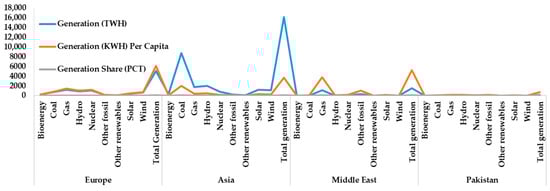
Figure 8.
Yearly power generation, 2024. Europe, Asia, ME, and Pakistan comparison.
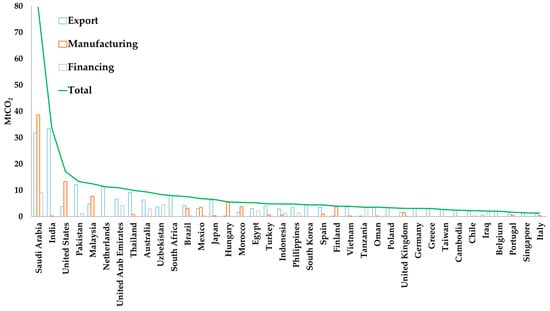
Figure 9.
Avoided carbon emissions from China’s clean-tech activity in 2024, million metric tons of carbon dioxide (MtCO2) by country.
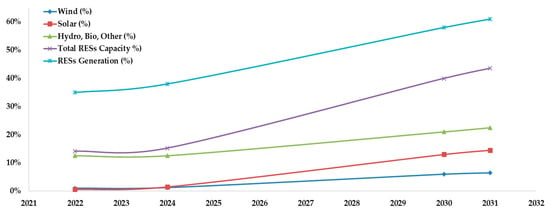
Figure 10.
Pakistan’s RES targets and projection plan by 2030–2031.
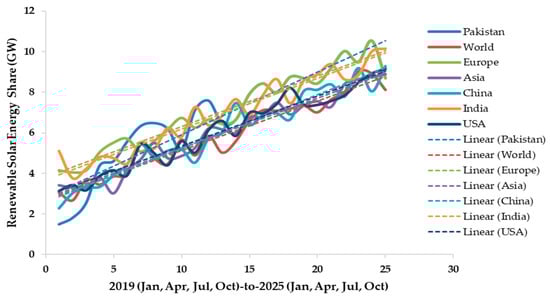
Figure 11.
Pakistan, Europe, Asia, and other countries’ solar energy potential from 2019 (January, April, July, and October) to 2025 (January, April, July, and October), with 4 months’ data each year.
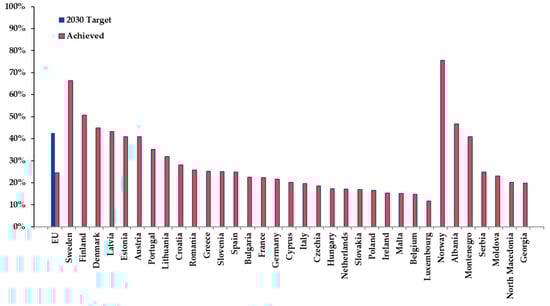
Figure 12.
Share of RESs in total energy consumption in EU countries in 2023, as well as their 2030 targets.
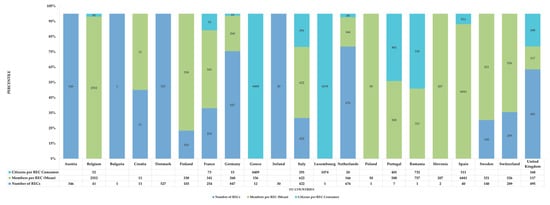
Figure 13.
Adaptations and deployment of RECs, citizens-per-REC, and total in EU countries.
10.1. Pakistan and Middle East’s REC Potential
Pakistan has rapidly emerged as a solar powerhouse, with solar providing 25.3% of its utility electricity in early 2025, marking a five-fold increase in capacity between 2022 and 2024 [128]. According to Ember [129] data from January 2025 to April 2025, Pakistan has sourced 25% of its utility electricity consumption from solar power, ranking among the highest in the world and well above the averages of Asia (≈7%), Europe (≈8%), and the USA (≈6%) during the same period [130]. The sharp increase in both capacity and generation has elevated solar power from Pakistan’s fifth-largest electricity source in 2023 to its largest by 2025 [127]. This understudied transition is supported by policy measures according to the IGCEP 2022-31, which outlines multiple renewable deployment scenarios, including a high-demand case to address potential overloads in electricity demand [68].
As discussed in the previous section, Figure 5 shows the projected generation mix for Pakistan from the IGCEP, with solar and wind combined expected to exceed 19 GW by 2030 and hydropower maintaining its share of over 21 GW. In comparison, Middle Eastern countries have shown slower adoption of large-scale RECs, with notable exceptions in UAE’s Masdar projects and Saudi Arabia’s NEOM Green Hydrogen initiative, which integrate PV, wind, and energy storage in grid-connected hybrid REC models [100]. Figure 8, already discussed above, illustrates 2024 comparative renewable shares for Pakistan, the EU, and selected Middle Eastern states.
10.2. Global Energy Poverty and Transition
Globally, an estimated 770 million people (out of the 8 billion total population, this is approximately 9.6%) lacked access to electricity in 2023, with the majority residing in Sub-Saharan Africa and parts of South Asia [131]. Additionally, 2.3 billion people continue to rely on traditional biomass for cooking, leading to health and environmental impacts [132]. In the EU, energy poverty affects between 8% and 16% of the population, translating to approximately 35–72 million people struggling to afford adequate energy for heating, cooling, or basic appliances [133]. The Energy Poverty Advisory Hub (EPAH) identifies building retrofits, demand-side management, and local renewable energy projects, including RECs, as primary mitigation strategies [134]. The global clean energy transition has accelerated. In 2024, solar and wind collectively generated over 15% of global electricity, with clean sources (including hydro and nuclear) surpassing 40% of global supply for the first time in analysis by [135]. The EU remains a leader, with RESs accounting for 54% of electricity generation in 2025 (second quarter). While the ME averages below 10%, ongoing mega-projects in Saudi Arabia, UAE, and Oman are expected to substantially increase this share by 2030 [136].
10.3. Territory and Atlas of Pakistan and Middle East in Terms of Solar, Wind, and Hydro
Pakistan possesses RES potential in the solar, hydro, and geothermal domains. Solar irradiance averages 5.3–5.5 kWh/m2/day. It has a total estimated PV potential exceeding 40 GW, particularly in the Punjab, Sindh, and Balochistan provinces, as studied in Ref. [137]. Hydropower remains the main supply for Pakistan’s electricity, with 9.9 GW installed capacity, although it has a theoretical potential exceeding 60 GW, primarily in Khyber Pakhtunkhwa and Gilgit-Baltistan, as studied in [138]. Micro- and mini-hydro projects under community-led REC frameworks have proven effective in remote valleys, with unit costs ranging between 4 and 10 PKR/kWh [139]. Geothermal potential is comparatively underdeveloped, but surveys in northern high-temperature zones (Hunza, Gilgit) and southern low-enthalpy areas (Sindh, Balochistan) suggest viable applications for district heating and small-scale generation within hybrid REC systems [140]. GIS-based resource mapping (World Bank and AEDB datasets) supports zonal REC planning, integrating multiple resource types for higher resilience and year-round generation. As of 2024, Pakistan covers 796,096 km2. The Indus River basin spans ≈ 520,000 km2 (~65% of the territory), supporting irrigated plains and dense settlements [141]. Major deserts (Thar, Cholistan, Thal, Kharan, etc.) account for ≈110,000 km2 (~13.8%) [142]. Land use is dominated by agriculture (~47% of land, with ~39% arable), while forests cover only ~4.7–5.1% [143,144]. The Pakistan energy capacity atlas in terms of photovoltaic, wind speed, and hydro power plants can be seen in [145,146,147]. Moreover, Pakistan’s population is ≈251.3 million (2024, UN data), with ~38–39% urbanized [148]. The median age is ~20.6 years, one of the youngest globally, with a total dependency ratio around 69% [149,150].
- Availability and Constraints of Renewable Resources (Pakistan)
Solar: Solar irradiance averages 5–6 kWh/m2/day across most of Pakistan [145].
Wind: High-quality corridors in Gharo–Jhimpir (Sindh) and coastal Balochistan are suitable for utility-scale wind projects [146].
Hydro: Installed hydropower is ~9.5 GW, with >60 GW theoretical potential, concentrated in Khyber Pakhtunkhwa and Gilgit-Baltistan [138].
Biomass: Abundant residues (wheat, rice, sugarcane bagasse) in the Indus plains support local REC applications [143]. Constraints include dust/aerosols reducing PV output in urban–industrial belts, arid deserts requiring high O&M, and very low forest cover limiting biomass expansion [144].
- b.
- Suitability of Territories for RECs (Pakistan)
REC potential is strongest in peri-urban plains, where feeder-level net metering and rooftop PV can be aggregated into communities. Mountainous valleys can combine micro-hydro power with solar and storage. The Indus basin (~65% of territory) concentrates grid access and demand, making it ideal for REC clustering [141,151].
- c.
- The ME: Spatial and Demographic Context
The ME (focusing on GCC and Jordan) is dominated by arid/desert terrain with high solar potential. Saudi Arabia’s GHI averages 5.7–6.6 kWh/m2/day, while the UAE’s ranges ~2100–2300 kWh/m2/year, a daily average of 5.61 kWh/m2/day [136,152]. Populations are totally urbanized, at >80% in Saudi Arabia and >85% in the UAE. Saudi Arabia targets 50% renewables by 2030, Oman ~30% by 2030, while Jordan aims for ~30% [69,78,153].
- d.
- Availability and Constraints of Renewable Resources in the ME
Solar: Among the best resources globally, enabling large-scale PV and storage [136].
Wind: Selective corridors in Saudi Arabia, Oman, and Jordan are expanding [154].
Constraints: Dust storms, high ambient heat reducing efficiency, and legacy thermal-based grids requiring modernization [153].
- e.
- Suitability for RECs in the ME
Urban/Suburban: Rooftop PV, DSM, and P2P trading pilots are growing.
Industrial Parks/Campuses: On-site PV, storage with private REC networks.
Remote Settlements: Hybrid MGs reduce diesel reliance (notably in Oman and Jordan) [78,152,154].
10.4. REC Simulation Tools for Establishment and Implementation
Simulation platforms are increasingly vital for REC design, optimization, and policy evaluation. PyPSA-Earth provides open-source, country-scale power system modeling with full sector coupling, enabling REC feasibility analysis under variable resource, demand, and policy scenarios [155]. In Pakistan-specific contexts, HOMER Pro has been widely applied for MGs and can be adopted for REC hybrid PV–wind–battery configurations, producing least-cost LCOE values around USD 0.07–0.15/kWh for off-grid communities [156]. EM in RECs, optimization models, frameworks to balance cost, emissions, REC distributions in the EU and worldwide, implementations, and setups are discussed in [157]. Open datasets from online website energydata.info, open power system data, and IEA data portal allow the integration of hourly demand and generation profiles into REC dispatch simulations. Blockchain-based P2P trading modules are also being trialed in virtual REC models, using agent-based simulation to evaluate economic and social benefits [124]. Digital tools to support RECs are listed in Table 3 below by [158,159].
Table 3.
RECs and SGs simulation platforms and tools.
11. Future Perspectives and Policy Recommendations
The future of SGs and RECs is totally based on innovative technologies and adaptive policies that are mainly aimed at improving efficiency, resilience, and sustainability. To improve the accuracy of load forecasting in evolving SGs, concept drift must be addressed using adaptive ensemble long short-term memory (LSTM) models, as discussed in research work [160]. This new work and innovation forge the path for smarter DSM and greater integration of RES technology. Future micro-grids should also maintain real-time management, efficient utilization of RESs, and energy storage with optimization-based scheduling. As discussed in [161], this would result in a 26.21% bill reduction and a 37.7% reduction in peak load, demonstrating economic and operational benefits. It is important to pair residential user engagement through DR schemes with distributed generation and batteries. Also, optimized power consumption management contributes to cost savings and improved grid efficiency. Moreover, regional collaboration also plays a vital role, as stated in other work [162]. This work showed that the potential for massive CO2 emission reduction (77–98%) can be achieved in the SAARC region by using 100% RESs. The integration of these renewable resources into national power grid systems is slow, which the study aimed to address with a novel Markov chain-based model for demand management and power sharing via HVAC/HVDC lines and super SGs. The concept of a SAARC super SG provides a model for large-scale RES integration across South Asia. Other similar research, such as [163,164], offers the integration of deep learning and methods such as XAI (explainable AI) and federated learning (a decentralized machine learning approach) to enable safe, transparent, and intelligent EM in smart residential buildings.
Additionally, studies in [165,166], based on techno-economic analysis, an off-grid system, and a hybrid energy system using PV, wind, and hydrogen for EV charging, optimized operational costs by 38.24%, and decreased CO2 emissions by 46.05%. A techno-economic and environmental feasibility study was carried out for upgrading a university’s energy grid into a smart, sustainable, and resilient system.
The following presents a two-fold perspective and recommendations to advocate for investment in AI-driven technologies and tools, as well as cross-border energy frameworks. This can demonstrate support for initiatives that will help influence future energy systems and policy.
- a.
- Technological innovations
AI-based predictive analytics and blockchain-based trading are promising solutions for enhancing the performance and efficiency of SGs and CECs/RECs. AI algorithms will optimize energy distribution and production forecasting. Blockchain, game theory, and auction-based trading can decentralize energy trading, ensuring transparent and secure P2P energy selling transactions. It is suggested that these innovations are critical for enabling the vast adoption of SGs and RECs [106].
- b.
- Policy reforms
To support the future of RECs and SGs, the implementation regulatory and energy reforms is needed. This could facilitate the integration of decentralized power systems into national grids. This includes establishing energy policies that allow for public interest and ownership of renewable energy projects. In addition, this would involve creating incentives for private sector investment and standardizing grid operations to ensure interoperability. The importance of these policy changes in fostering an environment conducive for the development of SGs in low- and middle-income regions is also highlighted [111].
Based on this perspective and a literature survey, the future directions for energy policy makers, prosecutors, and public–private partners should focus on the following:
- i.
- Regulatory innovation and policy harmonization: To create a uniform framework and incentivize systems that prioritize SG integration and REC involvement.
- ii.
- Technological progress: To promote research on hybrid storage systems (e.g., battery, hydrogen), AI-driven, real-time forecast models, and P2P energy trading platforms.
- iii.
- Strengthening and preparing capacity: To enhance the technical skills and active involvement of residents, including awareness, ownership, and confidence within communities.
- iv.
- Data-driven decision-making: The use of large data centers, IoT, and digital twin technologies to monitor in real time and optimize control of decentralized energy systems.
- v.
- Scalability and Replication Models: To promote pilot projects with scalable frameworks, especially in rural and disadvantaged regions, to enable equal access to energy in rural and underserved areas.
The confluence of RECs and SGs has the potential to democratize energy generation and consumption. With attention on policy support, creative finance, and sustained research, this synergy can serve as a cornerstone for low-carbon and energy-saving societies across the globe.
Table 4 shows the categorization of our cited literature collection with research perspectives and themes.
Table 4.
Thematic categorization of literature on RECs and SGs and perspective.
12. Conclusions
This work has provided a systematic review analysis and future perspectives of RECs, SGs, and concepts, considering their benefits, types, and cooperatives, as well as technological advancements relevant to energy efficiency measures, RESs, BESs, and monitoring in Pakistan and the Middle East region. We discussed the progress, challenges, and future directions of RECs with their benefits across environmental, economic, social, and policy domains. RECs play a crucial role in fighting climate change by reducing greenhouse gas emissions, promoting local development while enhancing energy resilience, social unity, and community empowerment. Although RED II points out their advantages, many countries are lagging behind in putting these ideas into action. Countries like Germany, Italy, and Finland have embraced the REC framework to varying degrees, but there are still major hurdles to overcome. The administrative, financial, regulatory, technical, and social domains are still crucial issues. Tackling these challenges is vital for the progress of RECs. This perspective paper discussed practical implications, future trends, goals to be achieved, and how to move forward. This includes the combination of SGs and RECs with potential to address energy scarcity in Pakistan and the Middle East. Energy policy makers, politicians, and other stakeholders can take into account regulatory issues, financial funds, and technical hurdles by making perceptive policy adjustments. They can focus on integrated modern technologies, with collaboration across all stakeholders. Future development in energy sectors should focus on pilot projects, the usage of secure and emerging blockchain technologies, and AI-driven grid management with real-time monitoring. Merging RECs with SGs is a smart solution for constructing decentralized sustainable and resilient energy systems. SG technology integration will increase the system efficiency and economic feasibility of RECs and CECs with two-way communication. It can also delve into predictive analytics and load with demand-balancing features. Positive energy policy changes, such as the EU’s revised RED III, and national frameworks that favor decentralized energy models continue to encounter practical hurdles.
This comparative study is a good start for researchers on renewable and green energy initiatives, future goals, collaboration programs, and national policies in Pakistan and the Middle East. Moreover, in Pakistan and the Middle East, the deployment of RECs and SGs is primarily constrained by centralized energy governance, limited regulatory recognition of community models, high upfront financing costs, and weak consumer participation mechanisms. In contrast, countries where REC development is progressing demonstrate the effectiveness of pilot-level regulatory sandboxes, targeted capital support for community projects, standardized metering and data-access rules, and capacity-building programs for local actors. The comparison with EU practices indicates that institutional and market adaptations, not technology alone, are the critical enablers of REC and SG uptake in low- and middle-income-region contexts. For Pakistan and the Middle East, policy efforts should, therefore, prioritize clear legal definitions for RECs, fair remuneration frameworks, financing mechanisms for community-scale projects, and inclusive governance models rather than broad technological expansion narratives.
RECs in the EU governed by the RED III serve as established examples of decentralized energy governance to Pakistan, the Middle East, and other nations around the globe. Nevertheless, the deployment of RECs and SGs offers potential for addressing energy poverty, enhancing security, and boosting decarbonization in these developing areas. Priority should be given to smart and progressive regulations, pilot-based projects, and technology innovations. Blockchain-enabled trade, AI-driven optimization, and hydrogen-based storage must be considered. Future plans must also prioritize public–private partnerships, community awareness and involvement, and inclusive governance policies. This will operate as a bridge for the implementation gap. In principle, merging REC frameworks with SG technologies can act as a catalyst for sustainable, decentralized, and resilient energy systems, enabling Pakistan and the Middle East to accelerate their clean energy transition in alignment with global climate goals and the EU’s successful community-based energy models.
Author Contributions
Conceptualization, A.U.R., D.A., S.C. and P.C.; methodology, A.U.R., S.C., D.A. and P.C.; writing—original draft preparation, A.U.R., D.A. and P.C.; writing—review and editing, A.U.R., D.A. and P.C.; visualization, S.C. and P.C.; supervision, S.C.; project administration, A.U.R., S.C., D.A. and P.C. All authors have read and agreed to the published version of the manuscript.
Funding
This research received no external funding.
Data Availability Statement
No new data were generated or analyzed in this study. All data discussed are from published sources cited in the manuscript.
Conflicts of Interest
The authors declare no conflicts of interest.
Nomenclature
The following abbreviations are used in this manuscript:
| Acronym | Definition |
| AEDB | Alternative Energy Development Board |
| AI | Artificial Intelligence |
| AMI | Advanced Metering Infrastructure |
| ANN | Artificial Neural Network |
| ARDL | Auto-Regressive Distributed Lag |
| BIM | Building Information Modeling |
| CCUS | Carbon Capture, Utilization, and Storage |
| CSRD | Corporate Sustainability Reporting Directive |
| DEED | Dynamic Economic Emission Dispatch |
| DERs | Distributed Energy Resources |
| DHOMUS | Data HOMes and Users |
| DR | Demand Response |
| DRE | Decentralized Renewable Energy |
| DSM | Demand Side Management |
| EECA | Energy Efficiency and Conservation Act |
| EEG | Renewable Energy Sources Act (Germany) |
| EIP | Energy Imports Policy |
| EPAH | Energy Poverty Advisory Hub |
| ESG | Environmental, Social, and Governance |
| EV | Electric Vehicle |
| EWP | Energy Wheeling Policy |
| FAHAM | National Smart Metering Program (Iran) |
| FiT | Feed-in Tariff |
| GCC | Gulf Cooperation Council |
| GDP | Gross Domestic Product |
| GHG | Greenhouse Gas |
| GHI | Global Horizontal Irradiance. |
| GIS | Geographic Information System |
| HMGS | Hybrid Microgrid System |
| IGCEP | Indicative Generation Capacity Expansion Plan |
| IoT | Internet of Things |
| LCA | Life Cycle Assessment |
| LEAP | Long-range Energy Alternatives Planning System |
| LCOE | Levelized Cost of Electricity |
| LSTM | Long Short-Term Memory |
| LPG | Liquefied Petroleum Gas |
| MENA | Middle East and North Africa |
| Middle East | ME |
| MONGO | Multi-Objective Northern Goshawk Optimizer |
| MtCO2 | Metric Tons of Carbon Dioxide |
| NEPRA | National Electric Power Regulatory Authority |
| NM | Net Metering |
| NMP | Net Metering Policy |
| P2P | Peer-to-Peer |
| PATs | Pumps as Turbines |
| PV | Photovoltaic |
| PyPSA | Python for Power System Analysis |
| REC | Renewable Energy Community |
| RECON | Renewable Energy Community ecONomic Simulator |
| RED | Renewable Energy Directive |
| RES | Renewable Energy Source |
| RESs | Renewable Energy Sources |
| SAARC | South Asian Association for Regional Cooperation |
| SDG | Sustainable Development Goal |
| SEC | Sustainable Energy Community |
| SG | Smart Grid |
| UAE | United Arab Emirates |
| UHV | Ultra-High Voltage |
| VECM | Vector Error Correction Model |
| WEAP | Water Evaluation and Adaptation Planning |
Appendix A
This perspective paper followed a structured and transparent literature collection and screening process. The preferred reporting items for systematic reviews and meta-analyses (PRISMA)-based technique was adapted as shown in Figure A1. The search strategy covered major Scopus and Web of Science scientific academic databases (MDPI, IEEE Xplore, ScienceDirect, and SpringerLink), complemented by relevant gray literature (policy reports, government documents, and institutional publications). The search was conducted for the period 2023–2025 (with a time window of recent research, as it is a perspective paper) using the following combinations of refined keyword strings:
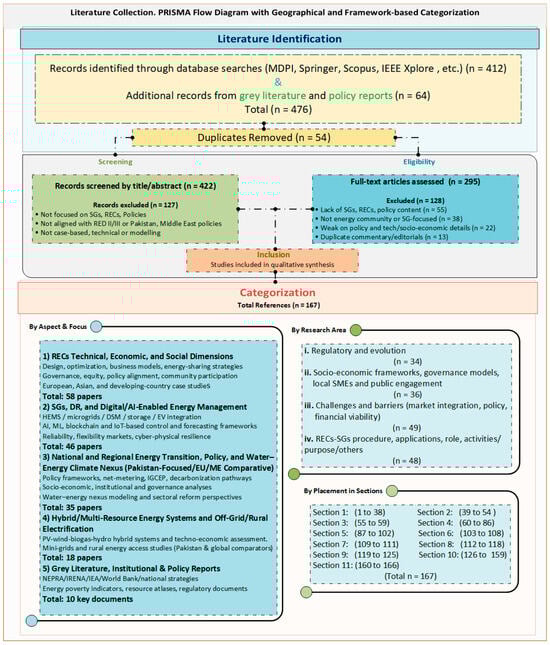
Figure A1.
Our literature collection and identification framework, preferred reporting items for systematic reviews and meta-analyses (PRISMA)-based flow diagram [167].
Figure A1.
Our literature collection and identification framework, preferred reporting items for systematic reviews and meta-analyses (PRISMA)-based flow diagram [167].

(“Renewable Energy Communities” OR REC* OR “Community Energy”) AND (“Smart Grid*” OR “Smart Energy System*”) AND (“Distributed Generation” OR “Decentralized Energy” OR “Distributed Energy Resources”) AND (“Energy Management” OR “Demand Response”) AND (“Policy Framework*” OR “RED II” OR “RED III”) AND (“Energy Transition” OR “Sustainable Transition”) AND (“Economic Impact” OR Feasibility OR Benefits) AND (Barriers OR “Community Participation” OR “Stakeholder Engagement”) AND (Optimization) AND (“European Union” OR Europe OR EU OR Pakistan OR “Middle East” OR “MENA” OR Asia OR “South Asia” OR “Central Asia” OR “East Asia”)
The screening process followed a title, abstract, and then full-text reading approach. Inclusion criteria required that studies (i) addressed RECs, smart grids, or closely related socio-technical or policy dimensions; (ii) presented empirical findings, case studies, modeling, or conceptual frameworks; and (iii) were published in English. Exclusion criteria removed duplicate records, non-scholarly commentary, papers lacking methodological rigor, and studies unrelated to the energy community or grid-integration context. After removing duplicates, an initial pool of 476 records was screened at the title and abstract level, reducing the set to 422 papers for full-text reading and assessment. Following detailed evaluation against the inclusion criteria and considering relevance to the research objectives, a total of 166 documents were retained, including peer-reviewed articles and selected gray literature. To mitigate bias, multiple sources were cross-checked, and preference was given to studies with clear methodology, reproducible evidence, and contextual relevance.
References
- Basilico, P.; Biancardi, A.; D’Adamo, I.; Gastaldi, M.; Yigitcanlar, T. Renewable Energy Communities for Sustainable Cities: Economic Insights into Subsidies, Market Dynamics and Benefits Distribution. Appl. Energy 2025, 389, 125752. [Google Scholar] [CrossRef]
- IPS. Sustainable Mini-Grid Solutions for Off-Grid Electrification in Pakistan; Institute of Policy Studies: Islamabad, Pakistan, 2023. [Google Scholar]
- Abbas, Y.; Aslam, R.A. Potential of Untapped Renewable Energy Resources in Pakistan: Current Status and Future Prospects. Eng. Proc. 2023, 56, 108. [Google Scholar] [CrossRef]
- Joyo, F.H.; Groppi, D.; Kumar, L.; Nastasi, B.; Astiaso Garcia, D. Achieving Energy Sustainability of Pakistan’s Power Sector through Long-Term Scenario Modeling and Analysis. Energy 2025, 328, 136549. [Google Scholar] [CrossRef]
- Admin. Pakistan Targets 60% Renewable Energy by 2030, Says FM Dar at UN Forum. Energy Update. 22 July 2025. Available online: https://www.energyupdate.com.pk/2025/07/22/pakistan-targets-60-renewable-energy-by-2030-says-fm-dar-at-un-forum/ (accessed on 12 October 2025).
- Ali, M.; Riaz, M.; Koondhar, M.A.; Akram, M.S.; Guerrero, J.M.; Vasquez, J.C.; Khan, B. Renewable Energy Sources-Based Hybrid Microgrid System for Off-Grid Electricity Solution for Rural Communities. Energy Sci. Eng. 2023, 11, 3486–3499. [Google Scholar] [CrossRef]
- Zapata, O. Renewable Energy and Well-Being in Remote Indigenous Communities of Canada: A Panel Analysis. Ecol. Econ. 2024, 222, 108219. [Google Scholar] [CrossRef]
- Khalid, R.; Landini, S.; Valasai, G.D.; Khalid, F.; Sandwell, P. Towards Equitable and Inclusive Energy Systems for Remote Off-Grid Communities: A Socio-Technical Assessment of Solar Power for Village Helario in Tharparkar, Pakistan. Renew. Sustain. Energy Transit. 2023, 3, 100067. [Google Scholar] [CrossRef]
- Ahmad, R.; Liu, G.; Rehman, S.A.U.; Fazal, R.; Gao, Y.; Xu, D.; Agostinho, F.; Almeida, C.M.V.B.; Giannetti, B.F. Pakistan Road towards Paris Agreement: Potential Decarbonization Pathways and Future Emissions Reduction by a Developing Country. Energy 2024, 296, 134075. [Google Scholar] [CrossRef]
- Jamil, M.K.; Smolenaars, W.J.; Ahmad, B.; Dhaubanjar, S.; Immerzeel, W.W.; Lutz, A.; Akbar, G.; Ludwig, F.; Biemans, H. The Effect of Transitioning from Diesel to Solar Photovoltaic Energy for Irrigation Tube Wells on Annual Groundwater Extraction in the Lower Indus Basin, Pakistan. J. Agric. Food Res. 2025, 20, 101799. [Google Scholar] [CrossRef]
- Mukhtar, S.; Muhammad, S.; Alyousef, H.A.; Khan, W.; Shah, R.; El-Tantawy, S.A. Enviro-Economic and Optimal Hybrid Energy System: Photovoltaic–Biogas–Hydro–Battery System in Rural Areas of Pakistan. Heliyon 2024, 10, e35182. [Google Scholar] [CrossRef]
- Khan, N.S.; Kazmi, S.A.A.; Anwar, M.; Mughal, S.U.R.; Ullah, K.; Rathi, M.K.; Salal, A. Enhancing Renewable Energy Integration in Developing Countries: A Policy-Oriented Analysis of Net Metering in Pakistan Amid Economic Challenges. Sustainability 2024, 16, 6034. [Google Scholar] [CrossRef]
- Rehan, M.A. Optimization of Grid-Connected Hybrid Renewable Energy System for the Educational Institutes in Pakistan. Prime 2024, 10, 100781. [Google Scholar] [CrossRef]
- Teng, Q.; Wang, X.; Hussain, N.; Hussain, S. Maximizing Economic and Sustainable Energy Transition: An Integrated Framework for Renewable Energy Communities. Energy 2025, 317, 134544. [Google Scholar] [CrossRef]
- Li, J.; Yang, Z.; Wu, Z.; Yang, L.; Li, S.; Zhu, Y. Master-Slave Game-Based Operation Optimization of Renewable Energy Community Shared Energy Storage under the Frequency Regulation Auxiliary Service Market Environment. J. Energy Storage 2024, 103, 114499. [Google Scholar] [CrossRef]
- Saleem, M.S.; Abas, N. Optimization and Loss Estimation in Energy-Deficient Polygeneration Systems: A Case Study of Pakistan’s Utilities with Integrated Renewable Energy. Results Eng. 2025, 25, 104001. [Google Scholar] [CrossRef]
- Moeen, M.S.; Jupesta, J.; Hanaoka, T. Integrated Energy Planning: Review of Global Practices for Energy Security and Paris Agreement Implementation in Pakistan. Nexus 2025, 18, 100413. [Google Scholar] [CrossRef]
- Ahmad, R.; Liu, G.; Rehman, S.A.U.; Gao, Y.; Meng, F.; Zhou, X.; Liu, B.; Cristiano, S. Integrated Systems Modeling for Assessing the Water–Energy Nexus in Pakistan: Lessons Learned from Coupling LEAP–WEAP Planning Approaches. Engineering 2025, 50, 72–87. [Google Scholar] [CrossRef]
- Ullah, S.; Lin, B. Natural Resources, Renewable Energy-Environment Nexus for Pakistan: A Policy Perspective. Resour. Policy 2024, 74, 104788. [Google Scholar] [CrossRef]
- Khurshid, N. Does the Causality between Environmental Sustainability, Non-Renewable Energy Consumption, Geopolitical Risks, and Trade Liberalization Matter for Pakistan? Evidence from VECM Analysis. Heliyon 2023, 9, e21444. [Google Scholar] [CrossRef]
- Iqbal, S.; Wang, Y.; Ali, S.; Haider, M.A.; Amin, N. Shifting to a Green Economy: Asymmetric Macroeconomic Determinants of Renewable Energy Production in Pakistan. Renew. Energy 2023, 202, 833–843. [Google Scholar] [CrossRef]
- Chughtai, A.; Uqaili, M.A.; Mirjat, N.H.; Sheikh, F.U.; Gulzar, M.M.; Habib, S.; AboRas, K.M.; Mbasso, W.F. Demand Side Management through Energy Efficiency Measures for the Sustainable Energy Future of Pakistan. Heliyon 2024, 10, e34798. [Google Scholar] [CrossRef] [PubMed]
- Tarpani, E.; Hong, T.; Pigliautile, I.; Zhang, W.; Sun, K.; Pioppi, B.; Pisello, A.L. On Renewable Energy Community Implementation in Historic Cities: A City-Scale Validated Model. Energy Build. 2025, 338, 115709. [Google Scholar] [CrossRef]
- Zaheer, B.; Salam, A.U.; Butt, M.F.; Shahid, M.A. Policy Frameworks for Ensuring Electricity as Fundamental Right in Pakistan: A Pathway to Achieving Sustainable Development and Economic Growth in Pakistan. Crit. Rev. Soc. Sci. Stud. 2025, 3, 3645–3659. [Google Scholar] [CrossRef]
- Green Energy Transition in Pakistan: A Path to Sustainable Development|PEP. Available online: https://www.pep-net.org/blog/green-energy-transition-pakistan-path-sustainable-development (accessed on 29 October 2025).
- Ullah, S.; Lin, B.; Zhu, R. Developing a New Sustainable Policy Perspective for Pakistan: An Intricate Nexus between Green Innovation, Financial Structure and Ecological Footprint. Energy 2025, 316, 134496. [Google Scholar] [CrossRef]
- Nazir, L.; Sharifi, A. An Analysis of Barriers to the Implementation of Smart Grid Technology in Pakistan. Renew. Energy 2024, 220, 119661. [Google Scholar] [CrossRef]
- Ohanu, C.P.; Rufai, S.A.; Oluchi, U.C. A Comprehensive Review of Recent Developments in Smart Grid through Renewable Energy Resources Integration. Heliyon 2024, 10, e25705. [Google Scholar] [CrossRef]
- Nzeanorue, C.C.; Okpala, B.C.; Nzeanorue, C.C.; Okpala, B.C. Smart Grids and Renewable Energy Integration: Challenges and Solutions. Path Sci. 2024, 10, 3050–3060. [Google Scholar] [CrossRef]
- Kabeyi, M.J.B.; Olanrewaju, O.A. Smart Grid Technologies and Application in the Sustainable Energy Transition: A Review. Int. J. Sustain. Energy 2023, 42, 685–758. [Google Scholar] [CrossRef]
- Raza, M.Y.; Lin, B. Energy Transition, Carbon Trade and Sustainable Electricity Generation in Pakistan. Appl. Energy 2024, 355, 123782. [Google Scholar] [CrossRef]
- Gondal, I.A. Low-Speed Wind Energy Devices to Facilitate Nearly Zero Energy Buildings in Urban Pakistan. Proc. Inst. Civ. Eng. Energy 2024, 178, 16–33. [Google Scholar] [CrossRef]
- Ullah, S.; Lin, B. Clean Energy Initiatives in Pakistan: Driving Sustainable Development and Lowering Carbon Emissions through Environmental Innovation and Policy Optimization. J. Environ. Manag. 2024, 317, 123647. [Google Scholar] [CrossRef]
- Ullah, S.; Lin, B. Green Energy Dynamics: Analyzing the Environmental Impacts of Renewable, Hydro, and Nuclear Energy Consumption in Pakistan. Renew. Energy 2024, 178, 121025. [Google Scholar] [CrossRef]
- Ahmad, W.; Nisar, J.; Anwar, F.; Muhammad, F. Future Prospects of Biomass Waste as Renewable Source of Energy in Pakistan: A Mini Review. Biotechnol. Biofuels 2023, 16, 101658. [Google Scholar] [CrossRef]
- Rashid, S.; Sultan, H.; Rashid, W.; Talpur, B.D.; Supe Tulcan, R.X.; Khan, M.T.; Bohnett, E.; Korai, M.S.; Zhang, L. A Critical Review of Opportunities and Challenges of Solid Waste Management in an Emerging Economy—Evidence from Pakistan. Environ. Dev. 2025, 41, 101182. [Google Scholar] [CrossRef]
- Dubey, B.; Agrawal, S.; Sharma, A.K. India’s Renewable Energy Portfolio: An Investigation of the Untapped Potential of RE, Policies, and Incentives Favoring Energy Security in the Country. Energies 2023, 16, 5491. [Google Scholar] [CrossRef]
- Laurini, B.; Bonvini, B.; Bracco, S. Optimal Design Model for a Public-Private Renewable Energy Community in a Small Italian Municipality. Sustain. Energy Grids Netw. 2024, 40, 101545. [Google Scholar] [CrossRef]
- López, I.; Goitia-Zabaleta, N.; Milo, A.; Gómez-Cornejo, J.; Aranzabal, I.; Gaztañaga, H.; Fernandez, E. European Energy Communities: Characteristics, Trends, Business Models and Legal Framework. Renew. Sustain. Energy Rev. 2024, 197, 114403. [Google Scholar] [CrossRef]
- Ahmed, S.; Ali, A.; D’Angola, A. A Review of Renewable Energy Communities: Concepts, Scope, Progress, Challenges, and Recommendations. Sustainability 2024, 16, 1749. [Google Scholar] [CrossRef]
- Standal, K.; Leiren, M.D.; Alonso, I.; Azevedo, I.; Kudrenickis, I.; Maleki-Dizaji, P.; Laes, E.; Di Nucci, M.R.; Krug, M. Can Renewable Energy Communities Enable a Just Energy Transition? Exploring Alignment between Stakeholder Motivations and Needs and EU Policy in Latvia, Norway, Portugal and Spain. Energy Res. Soc. Sci. 2023, 106, 103326. [Google Scholar] [CrossRef]
- Graça Gomes, J.; Sammarchi, S.; Yang, Q.; Yang, T.; Chong, C.T.; Sousa, A.M.; Lim, J.S.; Li, J. Maximising Sustainability: Planning and Optimisation Strategies for Achieving 100% Renewable Energy Communities in Remote Islands—A Case Study of Corvo Island, Portugal. Energy 2025, 319, 134802. [Google Scholar]
- Ahmadi, M.; Aly, H.; Gu, J. A Comprehensive Review of AI-Driven Approaches for Smart Grid Stability and Reliability. Renew. Sustain. Energy Rev. 2026, 226, 116424. [Google Scholar] [CrossRef]
- Hosseini, M.; Lubitz, W.D.; Tasnim, S.H.; Mahmud, S. Optimization of Hybrid Renewable Energy Systems for Remote Communities in Northern Canada. Renew. Energy 2025, 244, 122729. [Google Scholar] [CrossRef]
- Cavana, G.; Becchio, C.; Bottero, M. Feasibility and Evolution Studies on Renewable Energy Communities in Cities. Renew. Sustain. Energy Rev. 2025, 213, 115477. [Google Scholar] [CrossRef]
- Brunelli, L.; Belloni, E.; Pigliautile, I.; Cardelli, R.; Pisello, A.L.; Cotana, F. A Novel Methodology for Accessible Design of Multi-Source Renewable Energy Community: Application to a Wooded Area in Central Italy. Int. J. Electr. Power Energy Syst. 2025, 165, 110496. [Google Scholar] [CrossRef]
- Kaze, K.; Balta-Ozkan, N.; Shrimpton, E. Connecting Power to People: Integrating Community Renewable Energy and Multi-Level Governance towards Low-Carbon Energy Transition in Nigeria. Energy Res. Soc. Sci. 2025, 121, 103938. [Google Scholar] [CrossRef]
- Raimondi, G.; Spazzafumo, G. Integrating Renewable Energy Communities and Italian UVAM Project through Renewable Hydrogen Chain. e-Prime-Adv. Electr. Eng. Electron. Energy 2024, 10, 100819. [Google Scholar] [CrossRef]
- Di Florio, G.; Pinnarelli, A.; Busi, E.; Vizza, P.; Brusco, G.; Baratto, M.C.; Menniti, D.; Sorrentino, N.; Basosi, R. Dynamic Life Cycle Assessment of an On-Field Tested DC-Nanogrid for the Environmental Evaluation of Renewable Energy Communities. Energy Rep. 2024, 13, 477–490. [Google Scholar] [CrossRef]
- Di Somma, M.; Dolatabadi, M.; Burgio, A.; Siano, P.; Cimmino, D.; Bianco, N. Optimizing Virtual Energy Sharing in Renewable Energy Communities of Residential Users for Incentives Maximization. Sustain. Energy Grids Netw. 2024, 35, 101492. [Google Scholar] [CrossRef]
- Buonomano, A.; Giuzio, G.F.; Maka, R.; Palombo, A.; Russo, G. Empowering Sea Ports with Renewable Energy under the Enabling Framework of the Energy Communities. Energy Convers. Manag. 2024, 253, 118693. [Google Scholar] [CrossRef]
- Volpato, G.; Carraro, G.; De Giovanni, L.; Dal Cin, E.; Danieli, P.; Bregolin, E.; Lazzaretto, A. A Stochastic Optimization Procedure to Design the Fair Aggregation of Energy Users in a Renewable Energy Community. Renew. Energy 2024, 181, 121580. [Google Scholar] [CrossRef]
- Caferra, R.; Colasante, A.; D’Adamo, I.; Yilan, G.; Lancialonga, D. A Strategic Analysis of Renewable Energy Communities in Achieving Sustainable Development. J. Urban Plan. Dev. 2024, 150, 101810. [Google Scholar] [CrossRef]
- Gallo, A.; Capozzoli, A. The Role of Advanced Energy Management Strategies to Operate Flexibility Sources in Renewable Energy Communities. Energy Build. 2024, 276, 115043. [Google Scholar] [CrossRef]
- Zhao, S.; Ali, S.; Asghar, M.; Sheikh, M.R.; Ullah, S. The Impact of Energy (Electricity) Losses on Load Capacity Factor: A Dynamic ARDL-Based Evidence from Pakistan. Power Syst. Electr. Power 2024, 100, 118. [Google Scholar] [CrossRef]
- Raza, M.Y.; Lin, B. Development of LPG in Pakistan: Factor Productivity and Efficiency Perspectives. Energy Sustain. Dev. 2025, 32, 101712. [Google Scholar] [CrossRef]
- Umer, M.; Abas, N.; Rauf, S.; Saleem, M.S.; Dilshad, S. GHG Emissions Estimation and Assessment of Pakistan’s Power Sector: A Roadmap towards a Low Carbon Future. Renew. Energy Ind. Eng. 2024, 22, 102354. [Google Scholar] [CrossRef]
- Khan, A.M.; Tariq, M.A.; Alam, Z.; Alaloul, W.S.; Waqar, A. Optimizing Energy Efficiency through Building Orientation and Building Information Modelling (BIM) in Diverse Terrains: A Case Study in Pakistan. Energy 2024, 311, 133307. [Google Scholar] [CrossRef]
- Nedopil, C.; Ang, L.; Carpio, M.; Yue, M. Can Investors Benefit from the Early Retirement of Coal Plants: A Plant-Level Analysis of Chinese-Sponsored Coal Stations in Vietnam and Pakistan. Energy Policy 2024, 139, 114291. [Google Scholar] [CrossRef]
- International Renewable Energy Agency (IRENA). UAE National Energy Strategy 2050; International Renewable Energy Agency: Abu Dhabi, United Arab Emirates, 2016. [Google Scholar]
- Wakeel, M.; Hayat, T.; Shah, N.S.; Iqbal, J.; Khan, Z.U.H.; Shah, G.M.; Rasool, A. Biogas Energy Resources in Pakistan: Status, Potential, and Barriers. J. Urban Plan. 2023, 52, 101643. [Google Scholar] [CrossRef]
- Mehmood, A.; Moktadir, M.A.; Zhou, J.; Ren, J.; Zhang, L. Energy Sustainability Blueprint: A Critical Analysis of Macro and Micro Influential Factors in Pakistan. Energy Sustain. Dev. 2023, 70, 101311. [Google Scholar] [CrossRef]
- Ali, A.; Yuan, J.; Javed, H.; Si, Q.; Fall, I.; Ohiemi, I.E.; Osman, F.K. Small Hydropower Generation Using Pump as Turbine; a Smart Solution for the Development of Pakistan’s Energy. Heliyon 2023, 9, e14993. [Google Scholar] [CrossRef]
- Masood, A.; Hassan, S.Z.; Kamal, T.; Khan, S.; Rizvi, S.A.A.; Salman, S. Electrification of Transportation: Policy Framework, Technical Aspects and Challenges in Pakistan—A Case Study. Prime 2024, 2, 100803. [Google Scholar] [CrossRef]
- Ba-abbad, M.A.; Touti, E.; Alrougy, I.; Alalweet, F. Examining Sustainable Grid Integration and Financial Policies for Renewable Energy Resources in Pakistan: A Case Study. Clean. Energy Technol. 2024, 15, 100871. [Google Scholar] [CrossRef]
- National Electric Power Regulatory Authority (NEPRA). Net Metering Regulations 2015; National Electric Power Regulatory Authority (NEPRA): Islamabad, Pakistan, 2015. Available online: https://policy.asiapacificenergy.org/node/2832 (accessed on 23 October 2025).
- Alternative and Renewable Energy Policy 2019, Government of Pakistan: Islamabad, Pakistan. Available online: https://climate-laws.org/document/alternative-and-renewable-energy-policy-2019_991c (accessed on 23 October 2025).
- National Electric Power Regulatory Authority (NEPRA). Annual Report 2023: Power Sector Performance and Renewable Integration; National Electric Power Regulatory Authority (NEPRA): Islamabad, Pakistan, 2023. Available online: https://www.nepra.org.pk/publications/Annual%20Reports/Annual%20Report%202023-24.pdf (accessed on 23 October 2025).
- Islam, M.T.; Ali, A. Sustainable Green Energy Transition in Saudi Arabia: Characterizing Policy Framework, Interrelations and Future Research Directions. Nucl. Energy Adv. 2024, 3, 100161. [Google Scholar] [CrossRef]
- Sim, L.-C. Renewable Energy and Governance Resilience in the Gulf. Energies 2023, 16, 3225. [Google Scholar] [CrossRef]
- Alaed, O.A.A.; Çelebi, A.; Işıktaş, S. Assessing Policy Strategies for Achieving Carbon Neutrality in MENA Countries: Integrating Governance, Green Energy, and Oil Rent Management in a Dynamic Modeling Framework. Sustainability 2025, 17, 8650. [Google Scholar] [CrossRef]
- Salari, M.; Zarei, A.; Mirzaei, M. The Role of Smart Metering in Electricity Reform: Case Study of Iran’s FAHAM Project. Sustainability 2023, 15, 3231. [Google Scholar] [CrossRef]
- Hasan, S.M.N.; Ahmad, S.; Liaf, A.F.; Mustayen, A.G.M.B.; Hasan, M.M.; Ahmed, T.; Howlader, S.; Hassan, M.; Alam, M.R. Techno-Economic Performance and Sensitivity Analysis of an Off-Grid Renewable Energy-Based Hybrid System: A Case Study of Kuakata, Bangladesh. Energies 2024, 17, 1476. [Google Scholar] [CrossRef]
- Smart Grid Development in China: Achievements and Trends. Available online: https://climateandenergypartnerships.org/studies/smart-grid-development-in-china-achievements-and-trends (accessed on 31 October 2025).
- Sadabadi, A.A.; Shahi, N.; Borhani, F. Change Management in Iran’s Energy Policies: Analyzing the Transition Process from Fossil Fuels to Renewable Energies. Energy Convers. Manag. X 2025, 28, 101269. [Google Scholar] [CrossRef]
- Al-Habaibeh, A.; Al-haj Moh’d, B.; Massoud, H.; Benjamin Nweke, O.; Al Takrouri, M.; Badr, B.E.A. Solar Energy in Jordan: Investigating Challenges and Opportunities of Using Domestic Solar Energy Systems. World Dev. Sustain. 2023, 3, 100077. [Google Scholar] [CrossRef]
- Prospects and Obstacles Associated with Community Solar and Wind Farms in Jordan’s Suburban Areas. Available online: https://www.mdpi.com/2673-9941/4/2/14 (accessed on 31 October 2025).
- Oman Authority for Public Services Regulation. Renewable Energy Outlook 2023; Oman Authority for Public Services Regulation: Muscat, Oman, 2023. [Google Scholar]
- Shahzad, Q.; Aruga, K. Energy Policy Evolution in Pakistan: Balancing Security, Efficiency, and Sustainability. Energies 2025, 18, 3821. [Google Scholar] [CrossRef]
- Khalid, M. Smart Grids and Renewable Energy Systems: Perspectives and Grid Integration Challenges. Energy Strategy Rev. 2024, 51, 101299. [Google Scholar] [CrossRef]
- Raza, M.Y.; Dongsheng, L. Analysis of Energy-Related CO2 Emissions in Pakistan: Carbon Source and Carbon Damage Decomposition Analysis. Environ. Sci. Pollut. Res. 2023, 30, 107598–107610. [Google Scholar] [CrossRef]
- Choudhary, S. Deep Learning Based Renewable Energy Forecasting in Microgrids. In Proceedings of the 2023 4th International Conference on Smart Electronics and Communication (ICOSEC), Trichy, India, 20–22 September 2023; pp. 774–780. [Google Scholar]
- Bani Younisse, R.; Alkasassbeh, M.; Aldweesh, A. Advanced Technologies to Smart Grid Systems: Challenges and Demands. IEEE Access 2025, 13, 117732–117752. [Google Scholar] [CrossRef]
- A Comprehensive Review of Sizing and Energy Management Strategies for Optimal Planning of Microgrids with PV and Other Renewable Integration. Available online: https://www.mdpi.com/2076-3417/14/22/10479 (accessed on 1 November 2025).
- Gharib, M.R.; Mohammadbeigi, A. Optimal Sizing, Techno-Economic, and Environmental Assessment of Hybrid Renewable Energy Systems. Energy Strategy Rev. 2025, 59, 101721. [Google Scholar] [CrossRef]
- Pandiyan, P.; Saravanan, S.; Kannadasan, R.; Krishnaveni, S.; Alsharif, M.H.; Kim, M.-K. A Comprehensive Review of Advancements in Green IoT for Smart Grids: Paving the Path to Sustainability. Energy Rep. 2024, 11, 5504–5531. [Google Scholar] [CrossRef]
- Jarral, M.S.; Amber, K.P.; Cheema, T.A.; Hussain, M.I. Using Machine Learning Techniques to Identify Major Determinants of Electricity Usage in Residential Buildings of Pakistan. J. Build. Eng. 2025, 100, 111800. [Google Scholar] [CrossRef]
- Ahmed, I.; Adnan, M.; Iqbal, S.; Raza, A.; Hassan, W.; Mohamed, S.E.G. A Survey of Challenges and Potential of Implementing a Resilient Network for Pakistan’s Electric Power Infrastructure to Avoid Blackouts. Renew. Energy 2024, 210, 103004. [Google Scholar] [CrossRef]
- Baruah, A.N.; Akkur, M.S.; Seth, J.; Shah, J. Integrating Sensor Networks to Facilitate Efficient Energy Management for Smart Grids. Measurement 2024, 192, 101393. [Google Scholar] [CrossRef]
- Samatar, A.M.; Mekhilef, S.; Mokhlis, H.; Kermadi, M.; Alshammari, O. Performance Analysis of Hybrid Off-Grid Renewable Energy Systems for Sustainable Rural Electrification. Energy Convers. Manag. 2024, 265, 100780. [Google Scholar] [CrossRef]
- Tahir, M.M.; Abbas, A.; Dickson, R. Green Hydrogen and Chemical Production from Solar Energy in Pakistan: A Geospatial, Techno-Economic, and Environmental Assessment. Int. J. Hydrogen Energy 2025, 50, 678–690. [Google Scholar] [CrossRef]
- Diabate, M.F.; Krishnamoorthy, H.S.; Shi, J. Optimal Design and Modeling of a Hybrid Energy Storage System Including Battery and Hydrogen in DC Microgrids. IEEE Trans. Ind. Appl. 2025, 61, 7571–7583. [Google Scholar] [CrossRef]
- Accelerating Green Energy Transition under China–Pakistan Economic Corridor 2.0. Available online: https://www.mdpi.com/2673-4591/75/1/31 (accessed on 1 November 2025).
- Nagulsamy, N.; Chandrasekaran, K.; Manoharan, P.; Derebew, B. Multi-Objective Approach for Dynamic Economic Emission Dispatch Problem Considering Power System Reliability and Transmission Loss Prediction Using Cascaded Forward Neural Network. Int. J. Comput. Intell. Syst. 2024, 17, 199. [Google Scholar] [CrossRef]
- Aoun, A.; Adda, M.; Ilinca, A.; Ghandour, M.; Ibrahim, H. Comparison between Blockchain P2P Energy Trading and Conventional Incentive Mechanisms for Distributed Energy Resources—A Rural Microgrid Use Case Study. Appl. Sci. 2024, 14, 7618. [Google Scholar] [CrossRef]
- Energy Communities. Available online: https://pub.norden.org/nordicenergyresearch2023-03/germany.html (accessed on 1 November 2025).
- Ørsted. Sustainability Reporting. Available online: https://orsted.com/en/who-we-are/sustainability/sustainability-report (accessed on 1 November 2025).
- Waltero Smart Grid in UAE: Advancing Renewable Energy and Efficiency. Available online: https://waltero.com/blog/tech/smart-grid-uae (accessed on 1 November 2025).
- Sanfilippo, A.; Vermeersch, M.; Benito, V.B. Energy Transition Strategies in the Gulf Cooperation Council Countries. Energy Strategy Rev. 2024, 55, 101512. [Google Scholar] [CrossRef]
- International Renewable Energy Agency (IRENA). Renewable Energy Market Analysis: GCC 2024; IRENA: Abu Dhabi, United Arab Emirates, 2024. Available online: https://www.irena.org/-/media/Files/IRENA/Agency/Publication/2024/Jul/Renewable_energy_highlights_FINAL_July_2024.pdf (accessed on 1 November 2025).
- Jamil, I.; Lucheng, H.; Habib, S.; Aurangzeb, M.; Ahmed, E.M.; Jamil, R. Performance Evaluation of Solar Power Plants for Excess Energy Based on Energy Production. Energy Rep. 2023, 9, 1501–1534. [Google Scholar] [CrossRef]
- Clingendael Institute; Clingendaelorg; Clingendael-Institute. Cutting through the Green Hype: The Political Economy of Renewable Energy in the United Arab Emirates and Oman. Available online: https://www.clingendael.org/publication/cutting-through-green-hype-political-economy-renewable-energy-united-arab-emirates-and (accessed on 1 November 2025).
- Schrammel, J.; Diamond, L.M.; Fröhlich, P.; Mor, G.; Cipriano, J. Influencing Residential Electricity Consumption with Tailored Messages: Long-Term Usage Patterns and Effects on User Experience. Energy Sustain. Soc. 2023, 13, 15. [Google Scholar] [CrossRef]
- Shaban, A.; Salhen, M.; Shalaby, M.A.; Abdelmaguid, T.F. Optimal Household Appliances Scheduling for Smart Energy Management Considering Inclining Block Rate Tariff and Net-Metering System. Comput. Ind. Eng. 2024, 190, 110073. [Google Scholar] [CrossRef]
- Asaleye, D.A.; Murphy, D.J.; Shine, P.; Murphy, M.D. The Practical Impact of Price-Based Demand-Side Management for Occupants of an Office Building Connected to a Renewable Energy Microgrid. Sustainability 2024, 16, 8120. [Google Scholar] [CrossRef]
- Ahmad, J.; Rizwan, M.; Ali, S.F.; Inayat, U.; Abdul Muqeet, H.; Imran, M.; Awotwe, T. Cybersecurity in Smart Microgrids Using Blockchain-Federated Learning and Quantum-Safe Approaches: A Comprehensive Review. Appl. Energy 2025, 393, 126118. [Google Scholar] [CrossRef]
- Jo, H.-C.; Park, H.-A.; Kwon, S.-Y.; Cho, K.-H. Home Energy Management Systems (HEMSs) with Optimal Energy Management of Home Appliances Using IoT. Energies 2024, 17, 3009. [Google Scholar] [CrossRef]
- Kanakadhurga, D.; Prabaharan, N. Smart Home Energy Management Using Demand Response with Uncertainty Analysis of Electric Vehicle in the Presence of Renewable Energy Sources. Appl. Energy 2024, 364, 123062. [Google Scholar] [CrossRef]
- Elshenawy, M.R.; Mohamed, A.; Ali, A.A.; Mosa, M.A. Two-Stage Multi-Objective Framework for Optimal Operation of Modern Distribution Network Considering Demand Response Program. Sci. Rep. 2025, 15, 989. [Google Scholar] [CrossRef]
- Li, N.; Okur, Ö. Economic Analysis of Energy Communities: Investment Options and Cost Allocation. Appl. Energy 2023, 336, 120706. [Google Scholar] [CrossRef]
- Khan, S.; Mazhar, T.; Shahzad, T.; Khan, M.A.; Rehman, A.U.; Hamam, H. Integration of Smart Grid with Industry 5.0: Applications, Challenges, and Solutions. Meas. Energy Appl. 2024, 5, 100031. [Google Scholar] [CrossRef]
- Rabee, H.W.S.; Majeed, D.M. Energy Management System-Based Multi-Objective Nizar Optimization Algorithm Considering Grid Power and Battery Degradation Cost. Energies 2025, 18, 5678. [Google Scholar] [CrossRef]
- Ali, A.O.; Elmarghany, M.R.; Hamed, A.M.; Sabry, M.N.; Abdelsalam, M.M. Optimized Smart Home Energy Management System: Reducing Grid Consumption and Costs through Real-Time Pricing and Hybrid Architecture. Case Stud. Therm. Eng. 2024, 64, 105410. [Google Scholar] [CrossRef]
- Hasani, R.; Mohammadi, M.; Samanfar, A. Integrated Multiobjective Energy Management for a Smart Microgrid Incorporating Electric Vehicle Charging Stations and Demand Response Programs under Uncertainty. Energies 2025, 2025, 9531493. [Google Scholar] [CrossRef]
- Liu, Y.; Li, H.; Zhu, J.; Lin, Y.; Lei, W. Multi-Objective Optimal Scheduling of Household Appliances for Demand Side Management Using a Hybrid Heuristic Algorithm. Energy 2023, 262, 125460. [Google Scholar] [CrossRef]
- Hematian, M.; Vahedi, M.; Moghaddam, M.S.; Salehi, N.; Azarfar, A. Stochastic Dynamic Reconfiguration in Smart Distribution System Considering Demand-Side Management, Energy Storage System, Renewable and Fossil Resources and Electric Vehicle. J. Electr. Eng. Technol. 2023, 18, 3429–3441. Available online: https://link.springer.com/article/10.1007/s42835-023-01427-w (accessed on 30 October 2025). [CrossRef]
- Chen, X.; Miller, C.; Goutham, M.; Hanumalagutti, P.D.; Blaser, R.; Stockar, S. Development and Evaluation of an Online Home Energy Management Strategy for Load Coordination in Smart Homes with Renewable Energy Sources. Energy 2023, 290, 130134. [Google Scholar] [CrossRef]
- Raza, M.A.; Aman, M.M.; Abro, A.G.; Tunio, M.A.; Khatri, K.L.; Shahid, M. Challenges and potentials of implementing a smart grid for Pakistan’s electric network. Energy Strategy Rev. 2022, 43, 100941. [Google Scholar] [CrossRef]
- Muhsen, D.H.; Haider, H.T.; Al-Nidawi, Y.; Shayea, G.G. Operational Scheduling of Household Appliances by Using Triple-Objective Optimization Algorithm Integrated with Multi-Criteria Decision Making. Sustainability 2023, 15, 16589. [Google Scholar] [CrossRef]
- Karimianfard, H. A Robust Optimization Framework for Smart Home Energy Management: Integrating Photovoltaic Storage, Electric Vehicle Charging, and Demand Response. J. Energy Storage 2025, 110, 115259. [Google Scholar] [CrossRef]
- Talebi, H.; Kazemi, A.; Shakouri, G.H.; Kocaman, A.S.; Caldwell, N. An Integrated Price- and Incentive-based Demand Response Program for Smart Residential Buildings: A Robust Multi-objective Model. Sustain. Cities Soc. 2024, 113, 105664. [Google Scholar] [CrossRef]
- Almihat, M.G.M.; Munda, J.L. The Role of Smart Grid Technologies in Urban and Sustainable Energy Planning. Energies 2025, 18, 1618. [Google Scholar] [CrossRef]
- Bolin, A. Economic Implications of Smart Meter Deployment in Enhancing Energy Efficiency and Demand Flexibility in the Residential Smart Economy. Energy Build. 2025, 349, 116496. [Google Scholar] [CrossRef]
- Russell Sadeghi, S.; Sadeghi, A.; Memari, A.; Rezaeinejad, S.; Hajian, A. A Peer-to-Peer Trading Model to Enhance Resilience: A Blockchain-Based Smart Grids with Machine Learning Analysis towards Sustainable Development Goals. J. Clean. Prod. 2024, 450, 141880. [Google Scholar] [CrossRef]
- Zhou, Y.; Lund, P.D. Peer-to-Peer Energy Sharing and Trading of Renewable Energy in Smart Communities—Trading Pricing Models, Decision-Making and Agent-Based Collaboration. Renew. Energy 2023, 207, 177–193. [Google Scholar] [CrossRef]
- Government of Pakistan. Indicative Generation Capacity Expansion Plan (IGCEP) 2022-31; National Electric Power Regulatory Authority (NEPRA): Islamabad, Pakistan, 2022. Available online: https://nepra.org.pk/licensing/Licences/IGCEP/IGCEP%202022-31%20.pdf (accessed on 10 November 2025).
- National Electric Power Regulatory Authority (NEPRA). High-Demand Scenario Analysis, IGCEP 2022-31; NEPRA: Islamabad, Pakistan, 2022. [Google Scholar]
- Ember. Pakistan’s Solar Share of Electricity, 2025; Ember Climate Data Portal: London, UK, 2025. Available online: https://ember-energy.org/countries-and-regions/pakistan/ (accessed on 10 November 2025).
- International Energy Agency (IEA). World Energy Outlook 2024; International Energy Agency: Paris, France, 2024. Available online: https://www.iea.org/reports/world-energy-outlook-2024/executive-summary (accessed on 20 November 2025).
- Ember. Global and Regional Solar Generation Shares, January–April 2025; Ember Climate Data Portal: London, UK, 2025. Available online: https://ember-energy.org/latest-updates/global-solar-installations-surge-64-in-first-half-of-2025/ (accessed on 20 November 2025).
- International Energy Agency (IEA). Energy Access Outlook 2024; IEA: Paris, France, 2024. Available online: https://www.iea.org/reports/world-energy-outlook-2024 (accessed on 20 November 2025).
- World Health Organization (WHO). Household Air Pollution and Health; WHO: Geneva, Switzerland, 2024. Available online: https://www.who.int/news-room/fact-sheets/detail/household-air-pollution-and-health (accessed on 21 November 2025).
- European Commission. EU Energy Poverty Indicators, 2024; European Commission: Brussels, Belgium, 2024. Available online: https://publications.jrc.ec.europa.eu/repository/bitstream/JRC139550/JRC139550_01.pdf (accessed on 21 November 2025).
- Energy Poverty Advisory Hub (EPAH). Energy Poverty Handbook: Diagnosis; Energy Poverty Advisory Hub (EPAH): Brussels, Belgium, 2024. Available online: https://energy-poverty.ec.europa.eu/system/files/2024-05/EPAHhandbook_diagnosis_finalpdf.pdf (accessed on 21 November 2025).
- Ember. Global Electricity Review 2025; Ember Climate: London, UK, 2025. Available online: https://ember-energy.org/latest-insights/global-electricity-review-2025/ (accessed on 21 November 2025).
- International Renewable Energy Agency (IRENA). Renewable Energy Market Analysis: Middle East 2024; IRENA: Abu Dhabi, United Arab Emirates, 2024. Available online: https://www.irena.org/Publications/2024/Jul/Renewable-energy-statistics-2024 (accessed on 21 November 2025).
- Alternative Energy Development Board (AEDB). Solar Resource Assessment for Pakistan; AEDB: Islamabad, Pakistan, 2024. Available online: https://www.iea.org/policies/5380-alternative-energy-development-board (accessed on 21 November 2025).
- Water and Power Development Authority (WAPDA). Hydropower Potential and Projects; Water and Power Development Authority (WAPDA): Lahore, Pakistan, 2024. Available online: https://nepra.org.pk/Policies/Hydel%20Potential%20in%20Pakistan.pdf (accessed on 21 November 2025).
- Sarhad Rural Support Programme (SRSP). Community Micro-Hydro Initiatives in Northern Pakistan, 2023; SRSP: Peshawar, Pakistan, 2023. Available online: https://srsp.org.pk/wp-content/uploads/2025/04/Annual-Review-2023-24.pdf (accessed on 21 November 2025).
- World Bank. Geothermal Development Potential in Pakistan; Energy Sector Management Assistance Program (ESMAP): Washington, DC, USA, 2024. Available online: https://www.esmap.org/node/55899 (accessed on 21 November 2025).
- Food and Agriculture Organization (FAO). Indus River Basin Irrigation System Atlas; FAO: Rome, Italy, 2023. Available online: https://openknowledge.fao.org/handle/20.500.14283/cd4260en (accessed on 21 November 2025).
- United Nations Environment Programme (UNEP). Pakistan Desertification Profile; UNEP: Nairobi, Kenya, 2023. Available online: https://www.unep.org/annualreport/2023 (accessed on 21 November 2025).
- World Bank World. Development Indicators: Agricultural Land (% of Land Area), Pakistan; World Bank: Washington, DC, USA, 2015. Available online: https://data.worldbank.org/indicator/AG.LND.TOTL.K2?locations=PK (accessed on 21 November 2025).
- Global Forest Watch. Pakistan Forest Data; World Resources Institute: Washington, DC, USA, 2024. Available online: https://www.globalforestwatch.org/dashboards/country/PAK/ (accessed on 31 October 2025).
- World Bank. ESMAP Global Solar Atlas: Pakistan; World Bank: Washington, DC, USA, 2017. Available online: https://globalsolaratlas.info/download/pakistan (accessed on 31 October 2025).
- World Bank. ESMAP Global Wind Atlas: Pakistan Wind Corridors; World Bank: Washington, DC, USA, 2017. Available online: https://globalwindatlas.info/en/area/Pakistan (accessed on 31 October 2025).
- HydroATLAS. Available online: https://www.hydrosheds.org/hydroatlas (accessed on 31 October 2025).
- United Nations Department of Economic and Social Affairs (UN DESA). World Population Prospects 2024: Pakistan; United Nations Department of Economic and Social Affairs (UN DESA): New York, NY, USA, 2024. [Google Scholar]
- World Bank. Urban Population (% of Total Population), Pakistan; World Bank: Washington, DC, USA, 2024. Available online: https://data.worldbank.org/indicator/SP.URB.TOTL.IN.ZS?locations=PK (accessed on 31 October 2025).
- United Nations Economic and Social Commission for Asia and the Pacific (UN-ESCAP). Demographic Indicators for Asia and the Pacific 2024; United Nations Economic and Social Commission for Asia and the Pacific (UN-ESCAP): Bangkok, Thailand, 2024. [Google Scholar]
- Water and Power Development Authority (WAPDA). Hydropower Development in Pakistan: Progress Update; Water and Power Development Authority (WAPDA): Lahore, Pakistan, 2024. [Google Scholar]
- UAE Solar Atlas. Solar Resource Assessment for the UAE; Dubai Supreme Council of Energy: Dubai, United Arab Emirates, 2024. [Google Scholar]
- International Renewable Energy Agency (IRENA). Grid Integration Challenges in MENA; International Renewable Energy Agency (IRENA): Abu Dhabi, United Arab Emirates, 2023. [Google Scholar]
- Jordan Ministry of Energy. Energy Strategy 2020–2030; Jordan Ministry of Energy: Amman, Jordan, 2023. [Google Scholar]
- Parzen, M.; Abdel-Khalek, H.; Fedotova, E.; Mahmood, M.; Frysztacki, M.M.; Hampp, J.; Franken, L.; Schumm, L.; Neumann, F.; Poli, D.; et al. PyPSA-Earth. A new global open energy system optimization model demonstrated in Africa. Appl. Energy 2023, 341, 121096. [Google Scholar] [CrossRef]
- Lambert, T.; Gilman, P.; Lilienthal, P. HOMER Pro Optimization Results for Pakistan’s off-Grid RECs. Appl. Energy 2023, 341, 121043. [Google Scholar]
- Corasaniti, S.; Coppa, P.; Atzori, D.; Rehman, A.U. Renewable Energy Communities (RECs): European and Worldwide Distribution, Different Technologies, Management, and Modeling. Energies 2025, 18, 3961. [Google Scholar] [CrossRef]
- Mutani, G.; Tundo, A.; Capezzuto, P. Renewable Energy Communities in Italy: A National Framework for Sustainable Cities. Chall. Sustain. 2025, 13, 398–411. [Google Scholar] [CrossRef]
- Piserà, D.; Ferrucci, T.; Fioriti, D.; Poli, D.; Silvestro, F. Freeware Digital Platform for Designing Renewable Energy Communities in Italy: An Overview. In Proceedings of the 2023 AEIT International Annual Conference (AEIT), Rome, Italy, 5 October 2023; pp. 1–6. [Google Scholar]
- Azeem, A.; Ismail, I.; Mohani, S.S.; Danyaro, K.U.; Hussain, U.; Shabbir, S.; Jusoh, R.Z.B. Mitigating Concept Drift Challenges in Evolving Smart Grids: An Adaptive Ensemble LSTM for Enhanced Load Forecasting. Energy Rep. 2024, 13, 1369–1383. [Google Scholar] [CrossRef]
- Hafeez, G.; Ullah, S.; Islam, M.; Khan, F.A.; Alsafran, A.S.; Alghamdi, B.; Kraiem, H. An Improved Meta-Heuristic Algorithm for Energy Optimization in Smart Grids Considering Photovoltaic, Storage Battery, and Demand Response. Energy Storage Technol. 2025, 119, 115929. [Google Scholar] [CrossRef]
- Raza, A.; Liaqat, M.; Adnan, M.; Iqbal, M.S.; Jingzhao, L.; Ahmad, I. SAARC Super Smart Grid: Navigating the Future—Unleashing the Power of an Energy-Efficient Integration of Renewable Energy Resources in the SAARC Region. Comput. Electr. Eng. 2024, 118, 109405. [Google Scholar] [CrossRef]
- Li, D.; Channa, I.A.; Chen, X.; Dou, L.; Khokhar, S.; Azar, N.A. A New Deep Learning Method for Classification of Power Quality Disturbances Using DWT-MRA in Utility Smart Grid. Comput. Electr. Eng. 2024, 117, 109290. [Google Scholar] [CrossRef]
- Khan, M.A.; Farooq, M.S.; Saleem, M.; Shahzad, T.; Ahmad, M.; Abbas, S.; Abu-Mahfouz, A.M. Smart Buildings: Federated Learning-Driven Secure, Transparent and Smart Energy Management System Using XAI. Energy Rep. 2025, 13, 2066–2081. [Google Scholar] [CrossRef]
- Kumar, M.; Shaikh, M.A.; Soomro, A.M.; Kazmi, S.A.A.; Kumar, A. Techno-Economic Comparative Analysis of an off-Grid PV–Wind–Hydrogen Based EV Charging Station under Four Climatically Distinct Cities in Pakistan. Int. J. Hydrogen Energy 2024, 93, 1268–1282. [Google Scholar] [CrossRef]
- Abbasi, M.; Kazmi, S.A.A.; Iftikhar, M.Z.; Anwar, M.; Hassan, M.; Alghamdi, T.A.H.; Alenezi, M. Reinforcement of Smart Campus Grid Infrastructure for Sustainable Energy Management in Buildings across Horizon 2030. Renew. Integr. Energy 2025, 25, 104300. [Google Scholar] [CrossRef]
- Page, M.J.; McKenzie, J.E.; Bossuyt, P.M.; Boutron, I.; Hoffmann, T.C.; Mulrow, C.D.; Shamseer, L.; Tetzlaff, J.M.; Akl, E.A.; Brennan, S.E.; et al. The PRISMA 2020 Statement: An Updated Guideline for Reporting Systematic Reviews. BMJ 2021, 372, n71. [Google Scholar] [CrossRef]

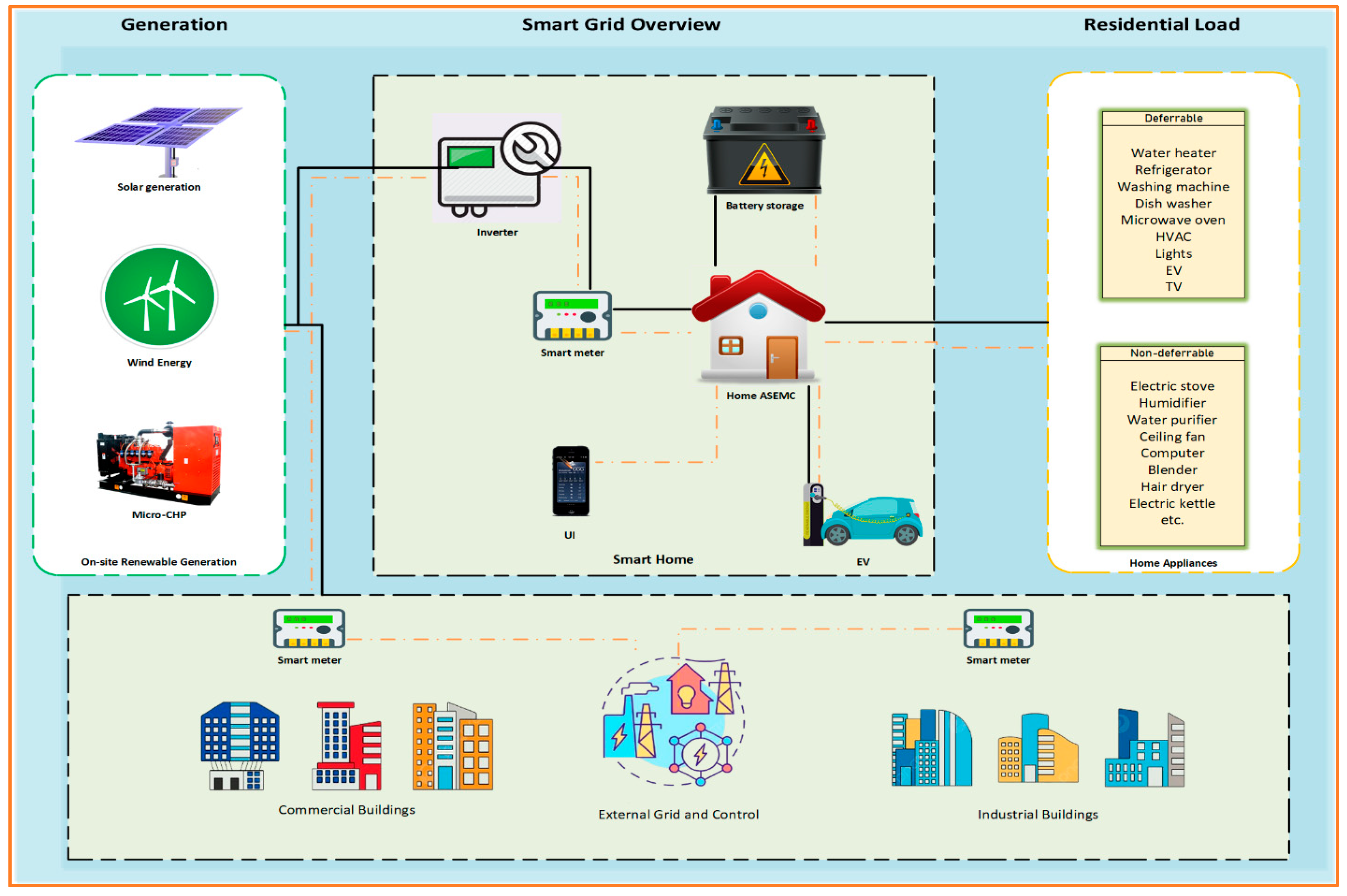
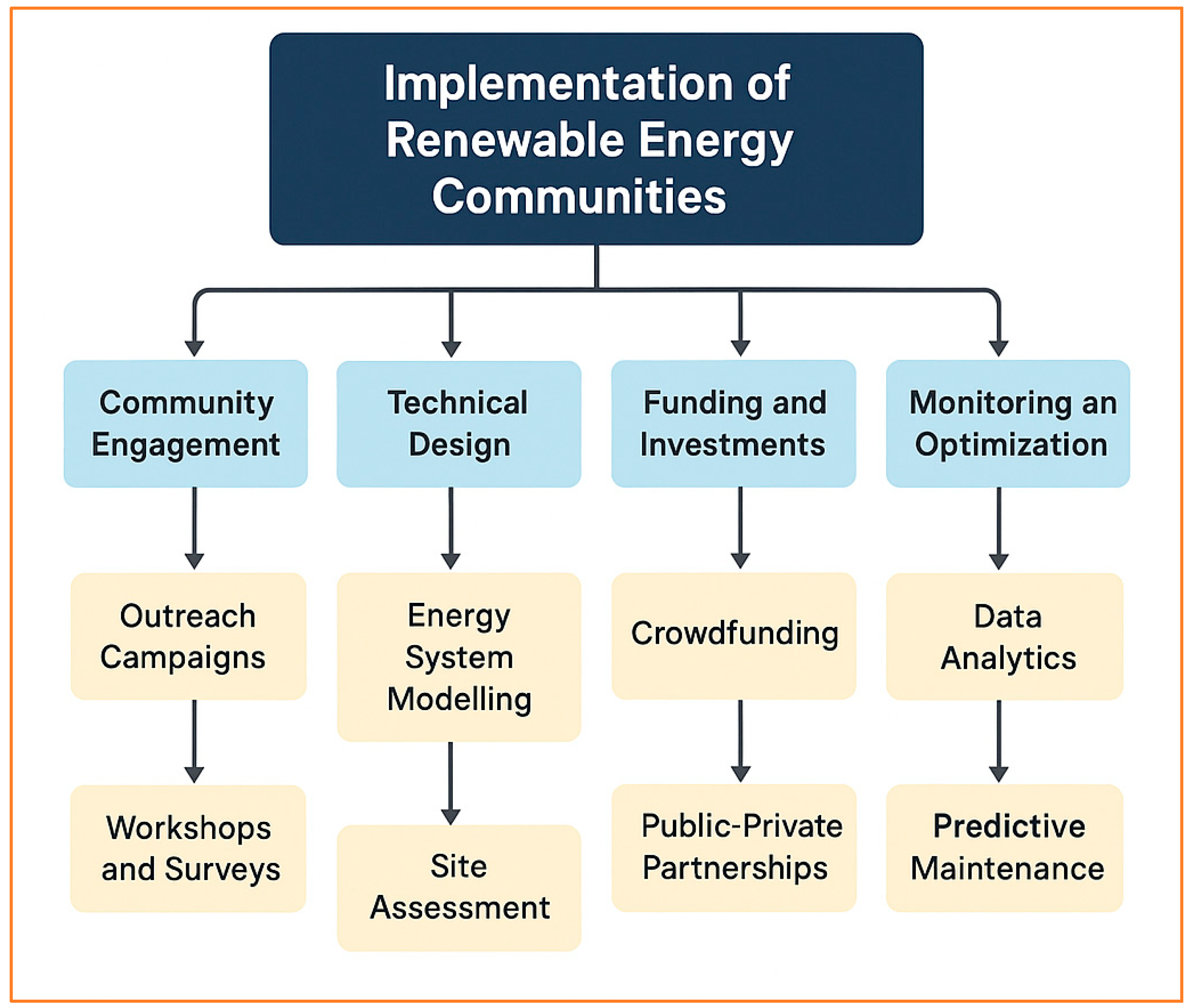
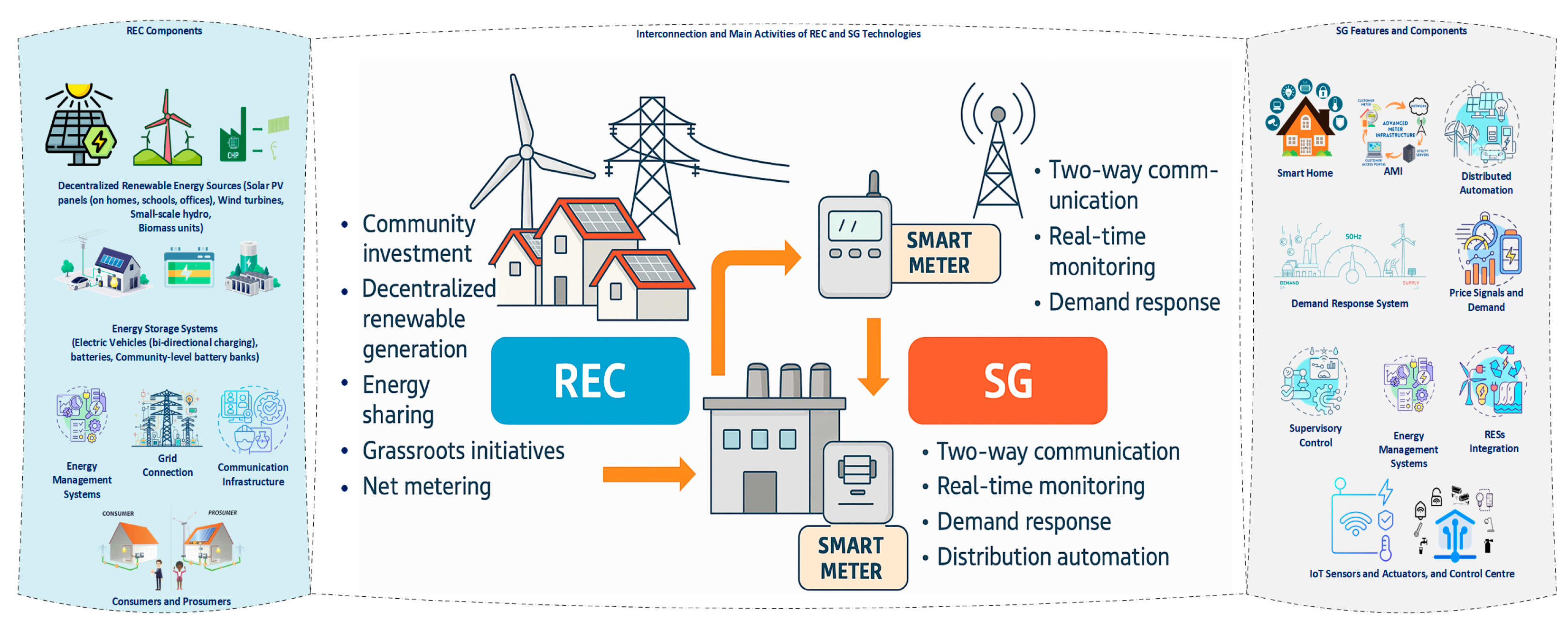
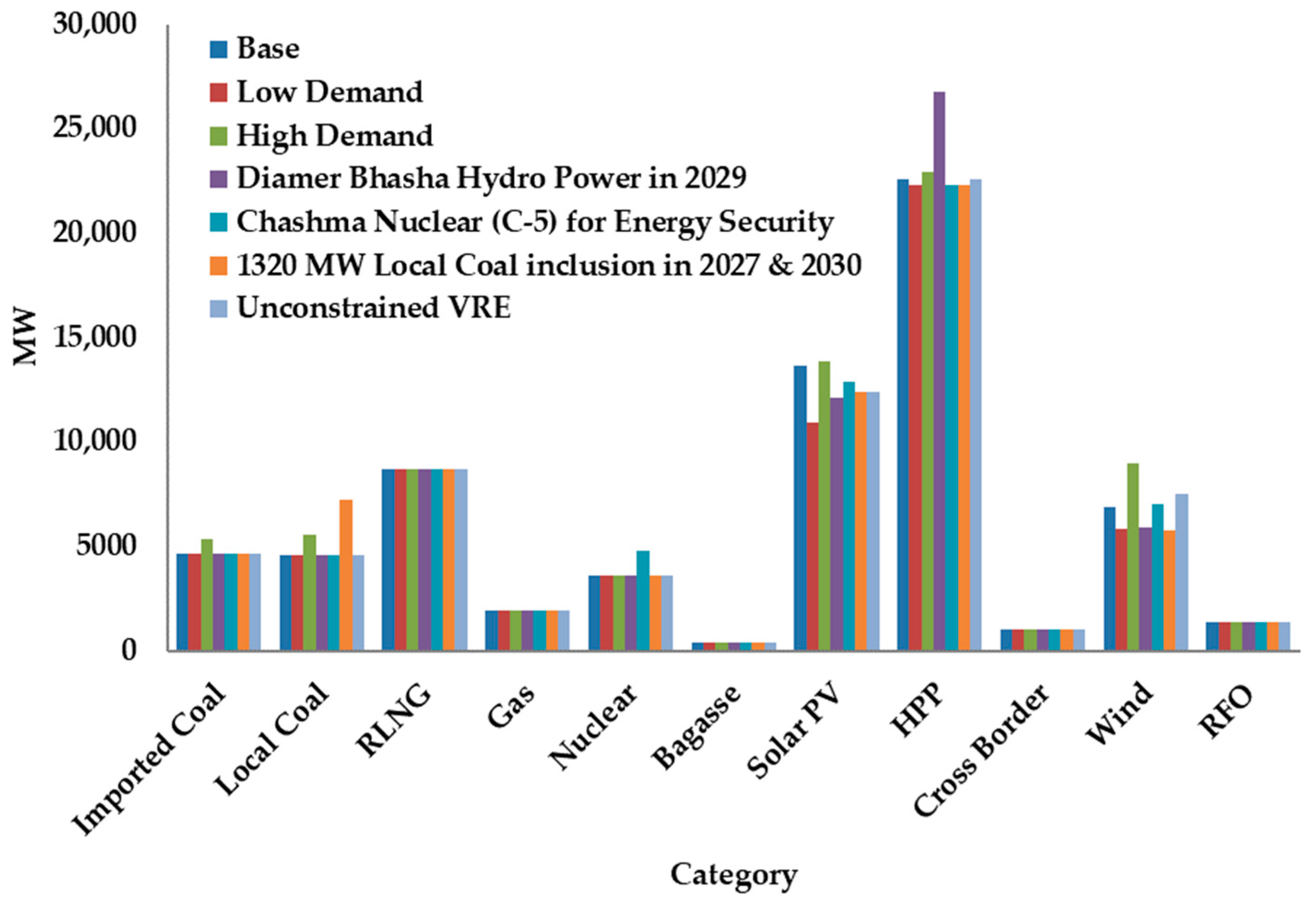
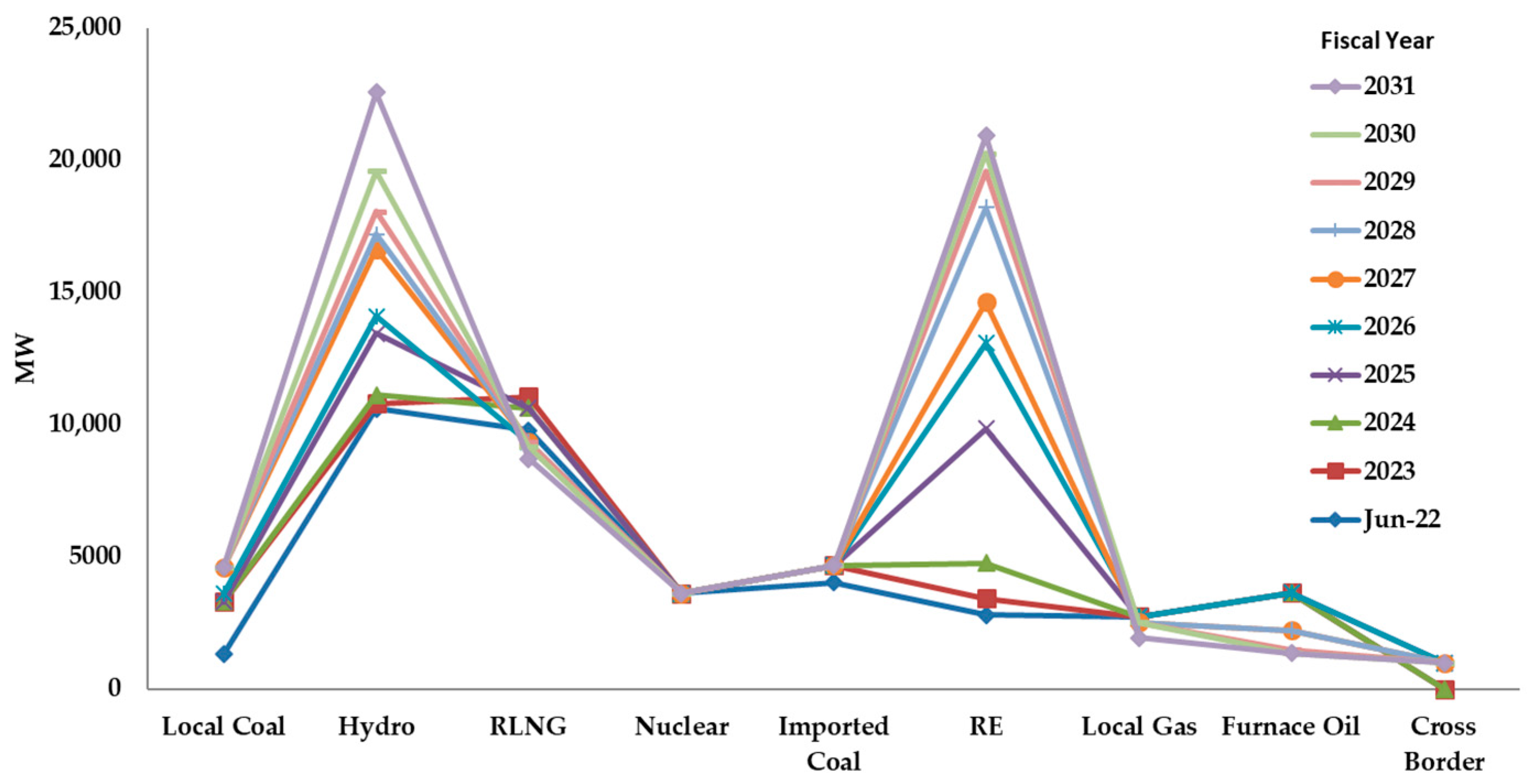
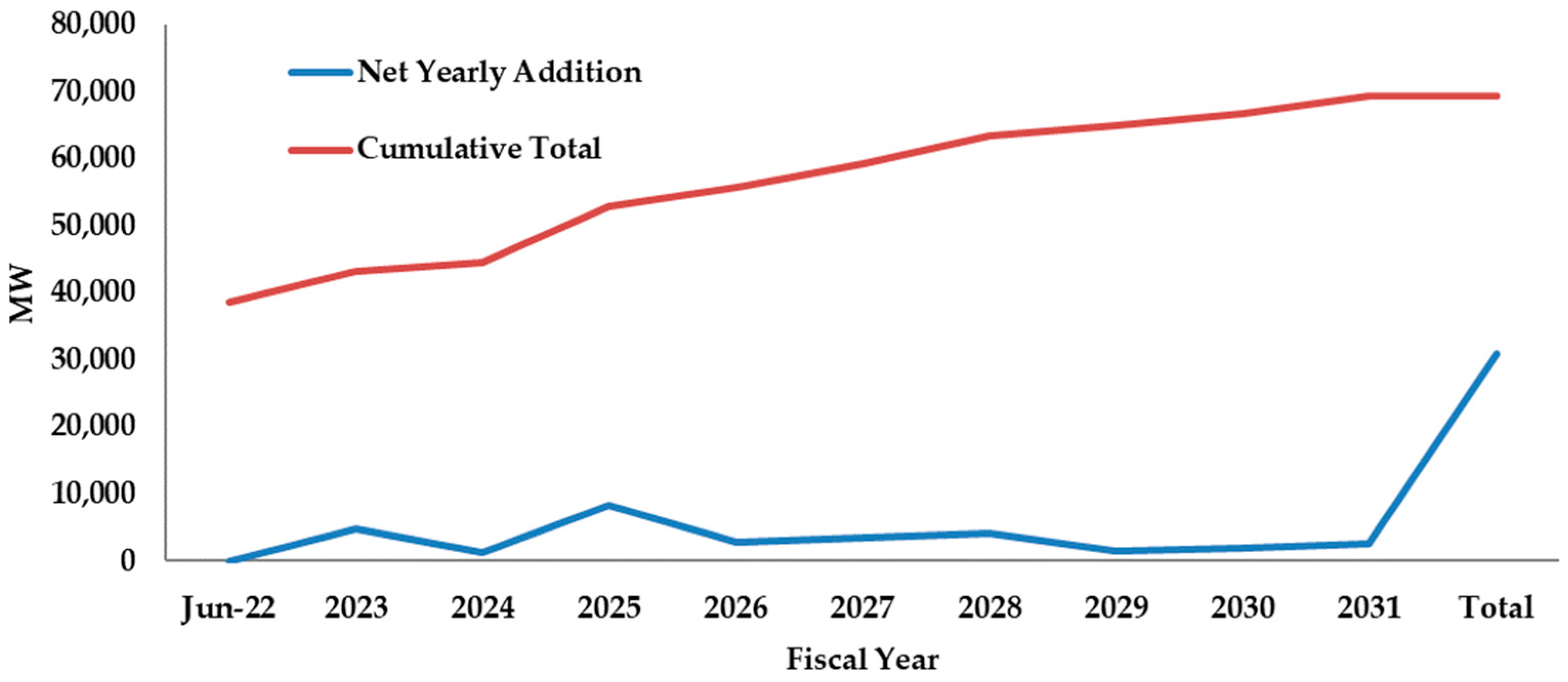
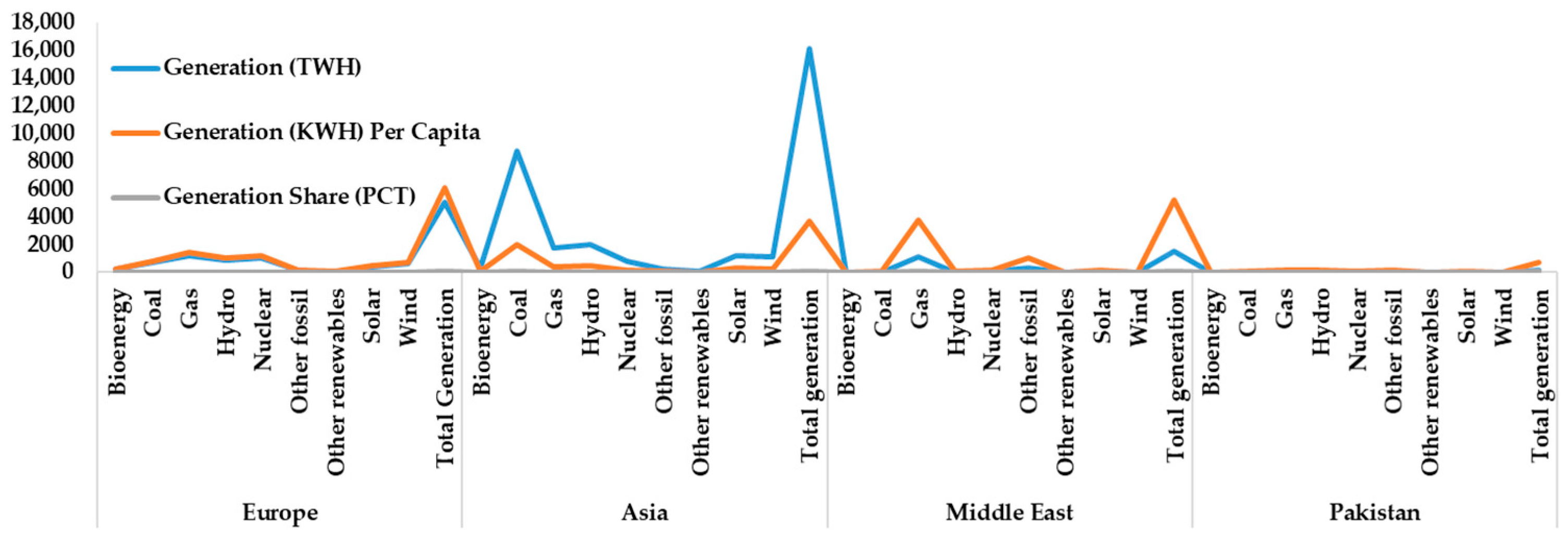
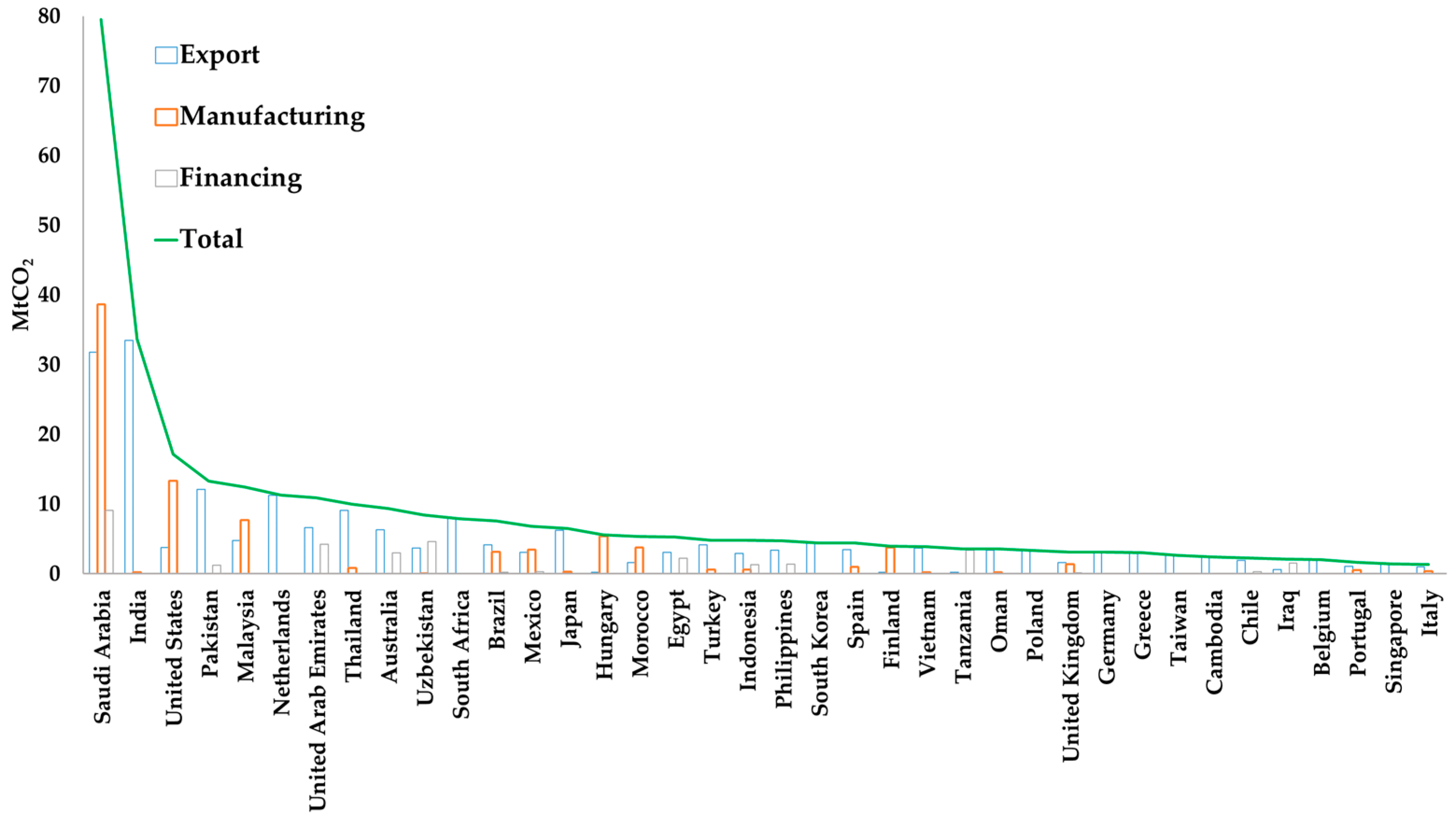
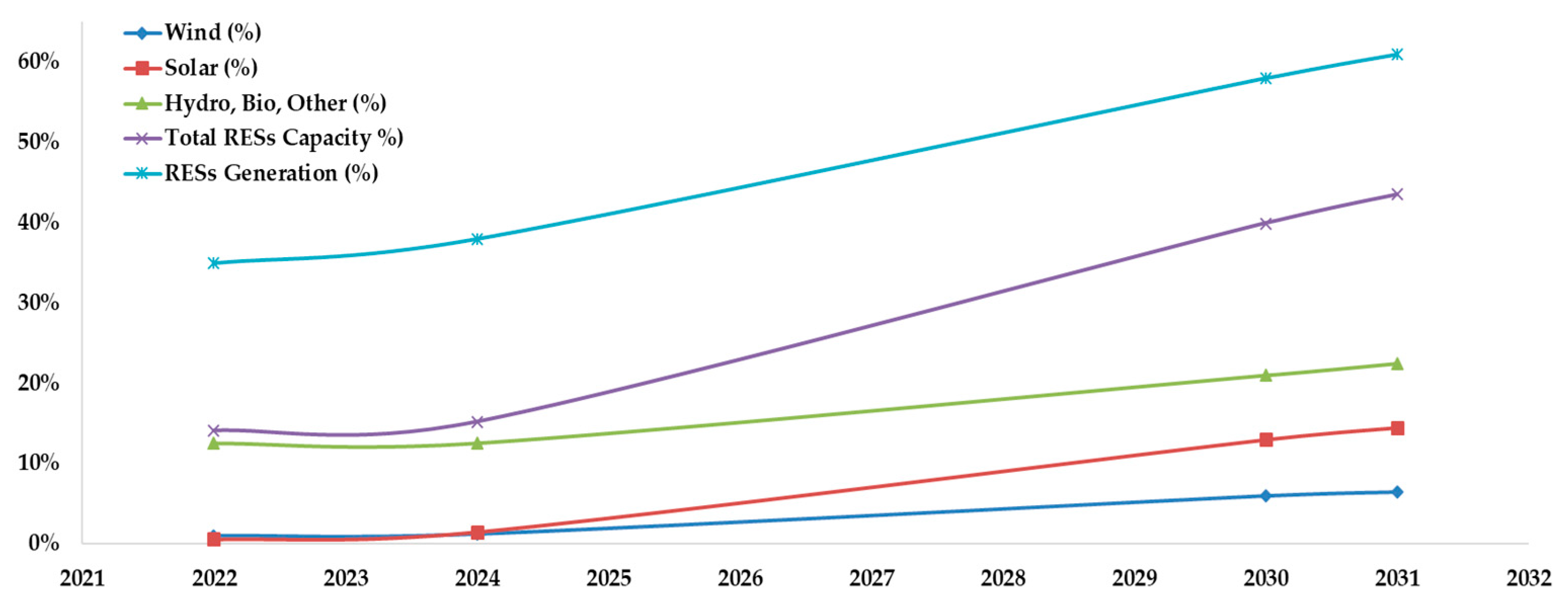

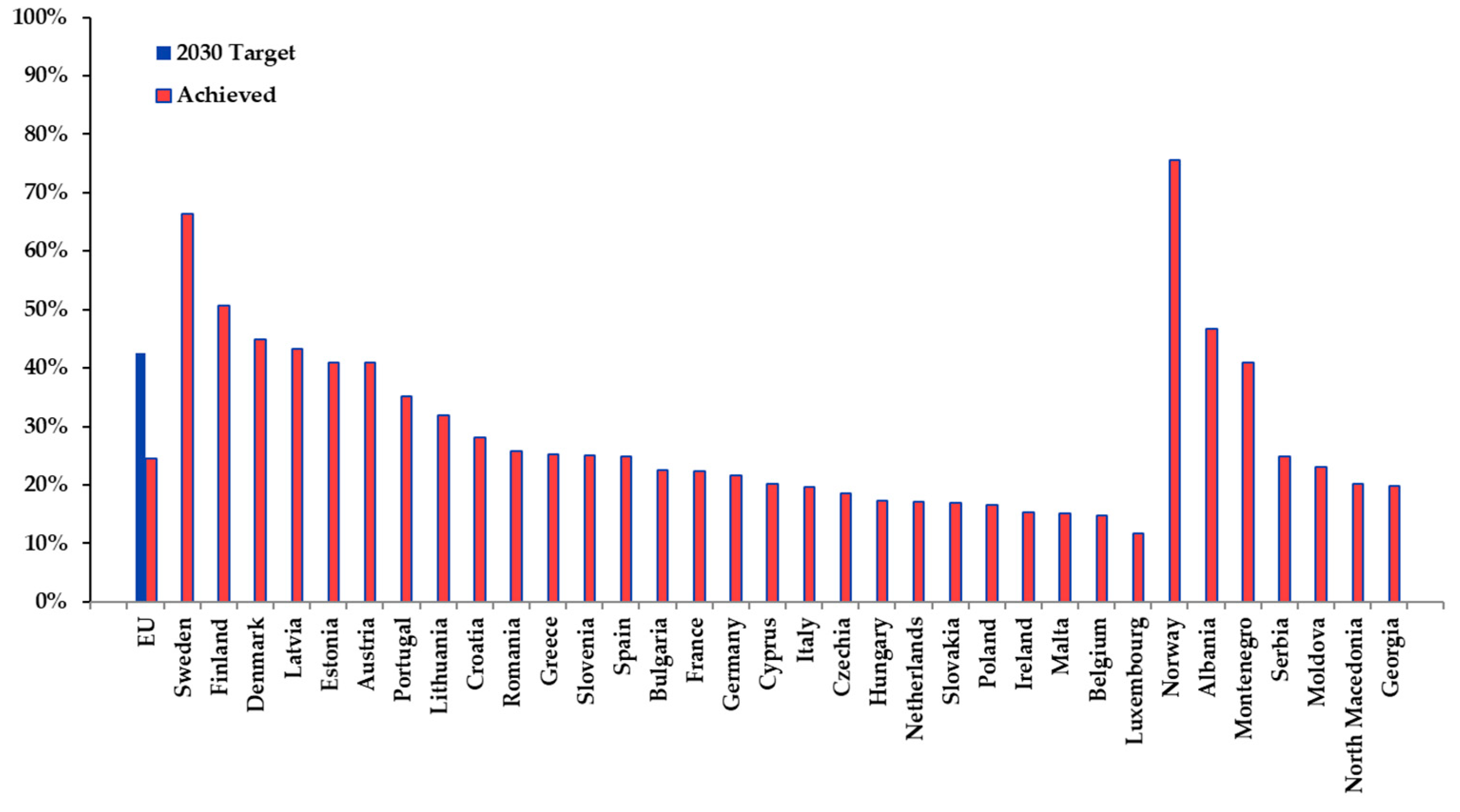
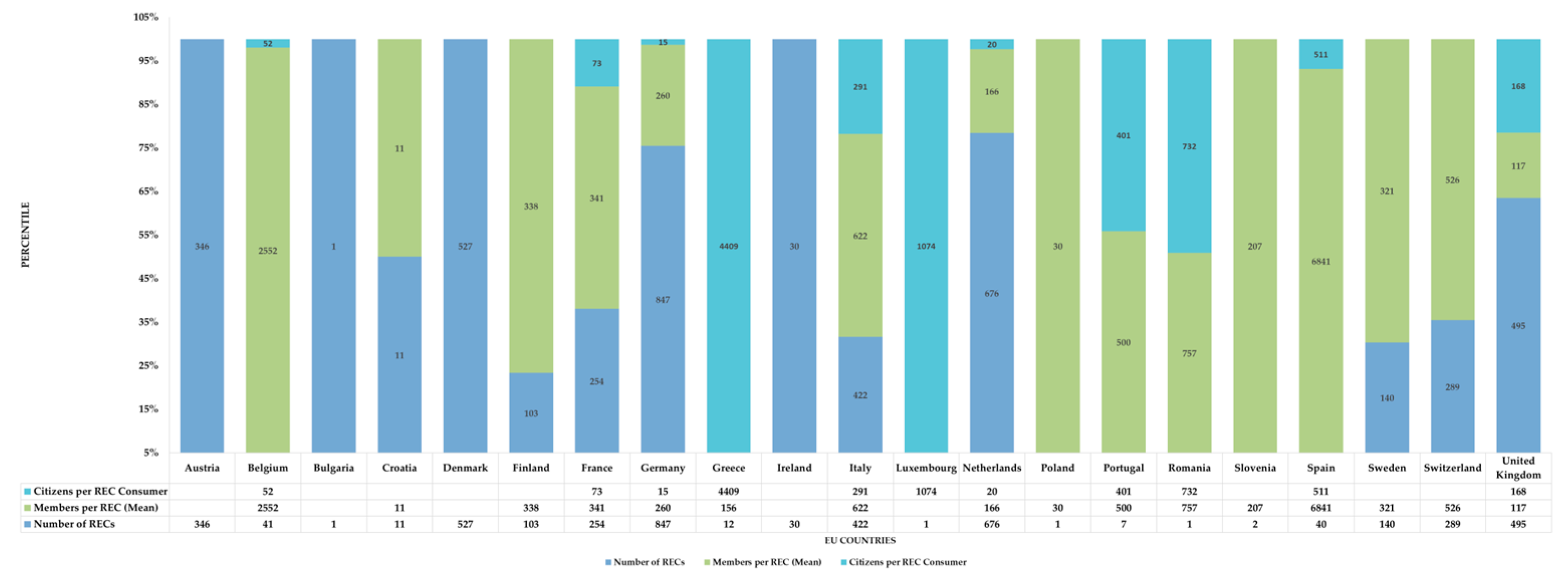
Disclaimer/Publisher’s Note: The statements, opinions and data contained in all publications are solely those of the individual author(s) and contributor(s) and not of MDPI and/or the editor(s). MDPI and/or the editor(s) disclaim responsibility for any injury to people or property resulting from any ideas, methods, instructions or products referred to in the content. |
© 2026 by the authors. Licensee MDPI, Basel, Switzerland. This article is an open access article distributed under the terms and conditions of the Creative Commons Attribution (CC BY) license.