


Abstract
Current research on photovoltaic–storage–charging (PSC) systems operating in market-oriented environments mainly focuses on individual service types, such as charging services or ancillary services, without fully considering the interactions among multiple market mechanisms. In particular, the competition and coordination of shared flexible resources across different markets are seldom explicitly modelled, while the economic opportunities associated with spot market participation are often overlooked. These limitations may lead to an incomplete assessment of the operational flexibility and economic value of PSC systems. To overcome these shortcomings, this paper develops a coordinated scheduling approach for PSC systems participating in multiple markets under market-rule constraints. A unified modelling framework is established to describe the allocation of shared resources among charging services, ancillary service provision, and spot market trading activities. Based on this framework, the scheduling problem is formulated with the objective of maximizing the total economic return of the system. Using charging services and peak-shaving services as representative applications, the proposed method determines both the optimal deployment of flexible regulation resources and the corresponding electricity trading decisions. Numerical results under the representative case study demonstrate that the coordinated utilisation of resources across multiple markets can improve the economic performance of the PSC system compared with single-market participation. The findings further demonstrate the effectiveness of the proposed framework in unlocking and quantifying the flexibility value of PSC systems.
1. Introduction
A “photovoltaic–storage–charging” (PSC) system is a novel distributed energy resource aggregation framework and application scenario, which contains photovoltaics, energy storage, and charging piles. While charging services are provided, the regulation capability of the PSC system can also be utilised to participate in ancillary service markets, thereby making it an important source of flexibility for emerging power systems. Consequently, the PSC system is simultaneously involved in both the charging service market and the ancillary service market. Therefore, how to fully consider the coupling constraints between the two markets and achieve the maximisation of comprehensive revenues has become a research issue worthy of further investigation.
Existing studies on the operational strategies of PSC systems have mainly focused on energy management and operational control under basic charging service scenarios, with most research concentrating on single-market and non-market-oriented optimisation problems.
To improve renewable energy utilisation and operational efficiency, capacity configuration and energy balancing mechanisms of PSC systems have been widely investigated. A hierarchical capacity optimisation strategy based on dispatchable charging station capacity and energy storage output characteristics has been proposed in [1], while a robust configuration model considering time-of-use electricity pricing and photovoltaic uncertainty has been established in [2].
With the increasing penetration of PSC systems in microgrids and distribution networks, research attention has gradually shifted from capacity planning to operational energy management. A bi-level coordinated scheduling model for PSC clusters and distribution networks has been proposed in [3], where the interaction mechanism between PSC systems and utility grids has been analysed. Coordinated control strategies for PSC systems have further been developed in [4,5] from the perspective of system microstructure. To address the supply–demand mismatch caused by disorderly electric vehicle charging behaviour, a hierarchical charging energy management strategy has been proposed in [6], through which charging service quality and operational stability have been improved.
In addition, charging scheduling and pricing incentive mechanisms have also been extensively studied. Differentiated pricing strategies and charging admission mechanisms have been proposed in [7,8,9,10] to guide electric vehicle charging behaviour and improve both user and operator benefits. Considering the uncertainty of photovoltaic output and charging demand, stochastic optimisation, reinforcement learning, and intelligent optimisation methods have been introduced in [11,12,13,14] to realise real-time energy management and charging service optimisation. However, the optimisation objectives and operational frameworks in these studies have still largely been limited to single-service scenarios.
In parallel, multi-market coupling models for distributed energy resources have been investigated from the perspectives of market participation behaviour and market interaction mechanisms. Coordinated operation and trading strategies among electricity, carbon, and green certificate markets have been analysed in [15,16,17], while electricity-gas and electricity-hydrogen coupled market optimisation frameworks have been proposed in [18,19]. Furthermore, game-theoretic multi-agent optimisation models for multi-market environments have been established in [20]. Although these studies have provided important theoretical support for multi-market coordinated optimisation, most of them have focused on system-level or aggregation-level modelling, with insufficient consideration given to the internal operational characteristics and fine-grained market response capability of distributed energy units.
As a typical distributed system integrating source–storage–load characteristics, the PSC system possesses significant flexibility and cross-market regulation potential. However, its coordinated participation mechanisms, capability coupling characteristics, and value extraction potential under diversified electricity market environments have not yet been systematically investigated. Therefore, a unified coupling modelling and coordinated optimisation framework for PSC systems in multi-market environments is still required.
With the continuous improvement of ancillary service market mechanisms, many research studies focus on the regulation potential of distributed resources in multi-market operation. A day-ahead retail market model incorporating price-based demand response has been proposed in [21], while a stochastic multi-agent demand response model for electric vehicle charging users has been established in [22]. In [23,24], coordinated scheduling strategies involving energy storage and renewable generation have been introduced to enhance the coordinated operation between electricity energy and frequency regulation markets. A multi-timescale coordinated optimisation strategy integrating energy market trading and AGC frequency regulation services for PV-storage systems is proposed in [25], where battery degradation and frequency regulation characteristics were considered, while a hierarchical game framework for charging station operators participating in day-ahead electricity markets is established in [26] by modelling charging flexibility, bidding strategies, and market interactions.
Although existing studies have provided valuable insights into flexible load management and multi-market coordination, the charging periods of PSC systems are relatively fixed and their load-shifting capability is limited. Therefore, conventional time-shifting-based control strategies are insufficient for PSC operational scheduling, making it necessary to further investigate the temporal and capacity coupling relationships between charging services and ancillary services.
Unlike conventional studies that optimise charging services and ancillary services sequentially or independently, this study formulates their coordination within a unified optimisation framework. The simultaneous participation of the system in charging services and peak-shaving services is considered as a representative scenario. Based on the characterization of the schedulable capability of the system and its associated constraints, a unified flexibility representation is established to describe heterogeneous resource capabilities under different market rules, upon which a multi-market coordinated scheduling model is constructed with the objective of maximising overall revenues. The methodological novelty of the proposed framework lies in modelling the capability interaction among shared resources rather than introducing new optimisation formulations. The proposed concept of “coupling” mainly refers to the coupling of resource capabilities under market rule constraints. On the one hand, the rule constraints associated with different markets, including bidding mechanisms, market clearing mechanisms, and time scales, jointly affect the operational scheduling process of the system. On the other hand, various market services rely on shared resources such as energy storage capacity, photovoltaic generation output, and charging load regulation capability, thereby forming coupling relationships at the level of system schedulable capability. Consequently, heterogeneous resources and multiple market services can be coordinated within a single optimisation framework, enabling dynamic resource allocation according to market values instead of predefined scheduling priorities.
The main methodological contributions of this work are summarised as follows:
- (1)
- A unified flexibility representation is proposed to characterise heterogeneous PSC resources under different market rules.
- (2)
- A capability interaction mechanism is established to explicitly model resource allocation conflicts among charging services and peak-shaving services.
- (3)
- A coordinated optimisation framework is developed to dynamically allocate shared resources according to market values, improving overall operational profitability.
2. Load Profile Model of the PSC System
Due to the strong temporal variability and uncertainty of photovoltaic generation, electric vehicle charging demand, and energy storage operation states, the load profile of the PSC system exhibits significant dynamic and coupling features. Meanwhile, the operational behaviour of the system is jointly influenced by multiple factors, including photovoltaic output fluctuations, charging demand distribution, user charging behaviours, energy storage charging/discharging states, and market operation mechanisms. Under multi-market participation scenarios, these factors further interact with market service requirements and scheduling objectives, thereby increasing the complexity of system operation. Therefore, in order to accurately characterise the operational flexibility and schedulable capability of the PSC system, it is necessary to establish a load profile model that comprehensively considers the coupling relationships among photovoltaic generation, charging loads, and energy storage resources. On this basis, the photovoltaic model, charging pile model, and energy storage model are further constructed to provide fundamental support for the subsequent multi-market coordinated scheduling and optimisation process.
The output characteristics of photovoltaic generation are significantly affected by natural environmental factors, among which solar irradiance is the primary factor determining the photovoltaic output level. Meanwhile, ambient temperature exerts an important influence on photovoltaic output by affecting the operating efficiency of photovoltaic modules. Since system parameters such as the rated capacity, installation configuration, and tilt angle of photovoltaic modules are generally determined during the planning and construction stages, and thus exhibit limited variation during short-term operation. Therefore, detailed modelling of installation configurations and equipment parameters is not further considered in this study. The output characteristics of photovoltaic generation are presented in Equation (1).
where PPV(t) denotes the photovoltaic output, and KT is the temperature coefficient (%/°C), determined by the material properties and manufacturing process of the photovoltaic modules. PSET represents the rated output power of the photovoltaic unit; I(t) refers to the solar irradiance (kW/m2), while ISET is the standard irradiance level, typically taken as 1 kW/m2; T(t) denotes the ambient temperature at time t (°C), and TSET is the reference ambient temperature, set to 25 °C.
The operating characteristics of charging piles are largely constrained by the travel patterns of electric vehicle users on the demand side. Meanwhile, the charging pile capacity of the charging station itself also imposes limitations on its charging service capability. Under the combined influence of user-side characteristics and system operational constraints, the charging service exhibits strong stochasticity and flexibility during operation, which can be shown as below:
where M denotes the number of charging pile types, while N represents the total number of charging piles. Pij indicates the output power of charging pile j belonging to type i and PEV(t) describes the electric vehicle charging demand profile at time t. Equation (3) specifies the minimum charging service requirement that must be satisfied during PSC system operation. The parameter α is a scalar in the range [0, 1], determined according to the requirements of the aggregator.
The electric vehicle travel characteristics considered in this study are generated based on the National Household Travel Survey (NHTS) conducted in the United States. The NHTS dataset is adopted to represent general EV mobility characteristics and charging demand patterns rather than to reproduce the travel behaviour of a specific geographical region. In this work, the NHTS dataset is employed to validate the proposed operational optimization framework under realistic charging demand patterns rather than to reproduce the travel behavior of a specific region. Based on the survey data, the daily travel distance of electric vehicles is modelled as a normally distributed random variable. The corresponding probability density function can be expressed as:
where μG is selected as 3.6 and σG is selected as 0.85 in this study.
To emphasise the resource scheduling relationships of the PSC system under multi-market participation, the operation of the energy storage system is simplified in this study. As the focus is on revealing the dispatching potential of existing PSC resources in multi-market environments rather than on investment or capacity sizing, battery degradation is not explicitly considered. The model focuses on the fundamental operating constraints of the energy storage system, namely the limits on charging and discharging power, energy capacity boundaries, and state-of-charge (SOC) restrictions. The operating mode of the storage unit is determined by its SOC, which dictates whether it is in a charging or discharging state. The formulation is presented as follows:
where Pin denotes the charging power of the energy storage system, Pout denotes the discharging power, and Qn represents the maximum energy capacity of the storage system.
Different from long-term lifecycle economic assessments proposed in [27], this study focuses on the short-term operational optimization of existing PSC systems; therefore, PV degradation and battery aging effects are not explicitly considered.
Due to internal electrochemical reaction characteristics, the charging power has a strong relationship with the charging rate C, shown as Equation (6).
In the above formulation, represents the maximum charging and discharging power available to the energy storage system, PP2E(t) and Pg2E(t) denote the charging power supplied by the photovoltaic system and the utility grid, respectively. The charging rate C is assumed to be 1 Ah.
Considering the energy interaction relationships described previously, the net grid-side load of the PSC system, Qgrid, can be determined according to Equation (7).
where Qg2EV denotes the electricity purchased by charging piles for electric vehicle charging; Qchr represents the electricity consumed for charging services in the PSC system; Qout denotes the electricity discharged from the energy storage system to the grid; Q0 and Q1 represent the initial and final energy levels of the storage system, respectively.
Uncertainties in renewable generation and load are not explicitly modelled in this study, as the focus is on the day-ahead scheduling stage and the coordination of PSC system flexibility among multiple market services. Deterministic photovoltaic generation and aggregated EV charging demand profiles are adopted to eliminate the influence of external prediction errors and focus on evaluating the intrinsic scheduling capability of the PSC system.
3. Market Mechanism Model of the PSC System
3.1. Peak-Shaving Service Model
The PSC system aggregates multiple distributed energy resources, including photovoltaic generation, energy storage, and electric vehicle charging loads, enabling flexible regulation of power and energy over time. Owing to these operational characteristics, PSC systems can effectively contribute to peak-shaving services and offer additional flexibility to the power grid.
Accordingly, the peak-shaving service capability of the PSC system is formulated as shown in Equation (8).
where Pava(t) represents the adjustable power of the PSC system available for peak-shaving services at time t, corresponding to the maximum deliverable power at that moment. It is composed of the discharge power from the energy storage system to the grid. Pout(t) is the surplus photovoltaic generation after satisfying local self-consumption demand.
Since the storage discharging power Pout(t) is related to the charging demand PEV(t) of the PSC system, the system can further participate in high-value peak-shaving services by adjusting its charging service, as shown in Equation (9).
where Pout[t, PEV(t)] describes the coupling relationship between the discharging power of the energy storage system and the electric vehicle charging load. It reflects how the charging demand at time t influences the corresponding energy storage output.
During a time interval t~t + Δtpeak, the energy provided by the PSC system for peak-shaving services can be expressed as:
Subject to the above physical constraints and in line with the Implementation Rules for the Management of Ancillary Services in the Southern Regional Power Grid, participation in peak-shaving services must satisfy additional requirements on service duration and power output, as specified in Equations (11) and (12).
where Equation (11) indicates that, when the system participates in peak-shaving services, its ramping rate shall not be lower than β times the available adjustable capacity Pava(t), where β is typically set to 1%. Equation (12) specifies that the duration of participation in peak-shaving services shall not be less than the minimum required duration Δtmar, which is typically 15 min.
3.2. Charging Service Model
In the PSC system, charging service represents the most fundamental operational scenario and serves as a key source of energy consumption and economic revenue. Its operating characteristics directly determine the available flexibility of the system.
From an operational perspective, the revenue of charging services mainly consists of electricity payments from users and service fees. The energy supply for charging demand is provided by both energy storage discharging and electricity purchased from the grid. Under the constraint of energy conservation, the system can dynamically adjust the charging supply and scheduling strategy QE2EV, as well as the grid trading strategy Qg2EV, thereby enabling the regulation and fulfilment of charging demand, as shown in Equation (13).
Furthermore, from an operational perspective, electric vehicle charging demand is significantly influenced by user travel behaviour, exhibiting strong stochasticity and distinct temporal distribution characteristics, while also possessing a certain degree of adjustability within a feasible range, as shown in Equation (2). Therefore, the charging load not only constitutes the primary energy consumption side of the system but also provides a flexible load resource that can participate in system regulation. Its adjustable capability is jointly affected by the temporal distribution of charging demand, charging pile capacity, and user behavioural constraints.
3.3. Electricity Purchasing Strategy Model
The electricity spot market is a core trading platform that reflects the supply–demand balance and operational constraints of power systems, and it also serves as an important mechanism for the market-based allocation of flexible resources. Under the spot market mechanism, the PSC aggregator develops its trading strategy by jointly considering charging load forecasts, day-ahead electricity prices, medium- and long-term contract prices, and contractual constraints.
Constrained by the trading mechanism and the principle of supply–demand balance, the day-ahead declared electricity quantity of the system is given in Equations (14) and (15).
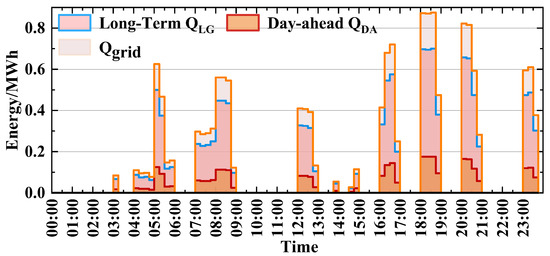
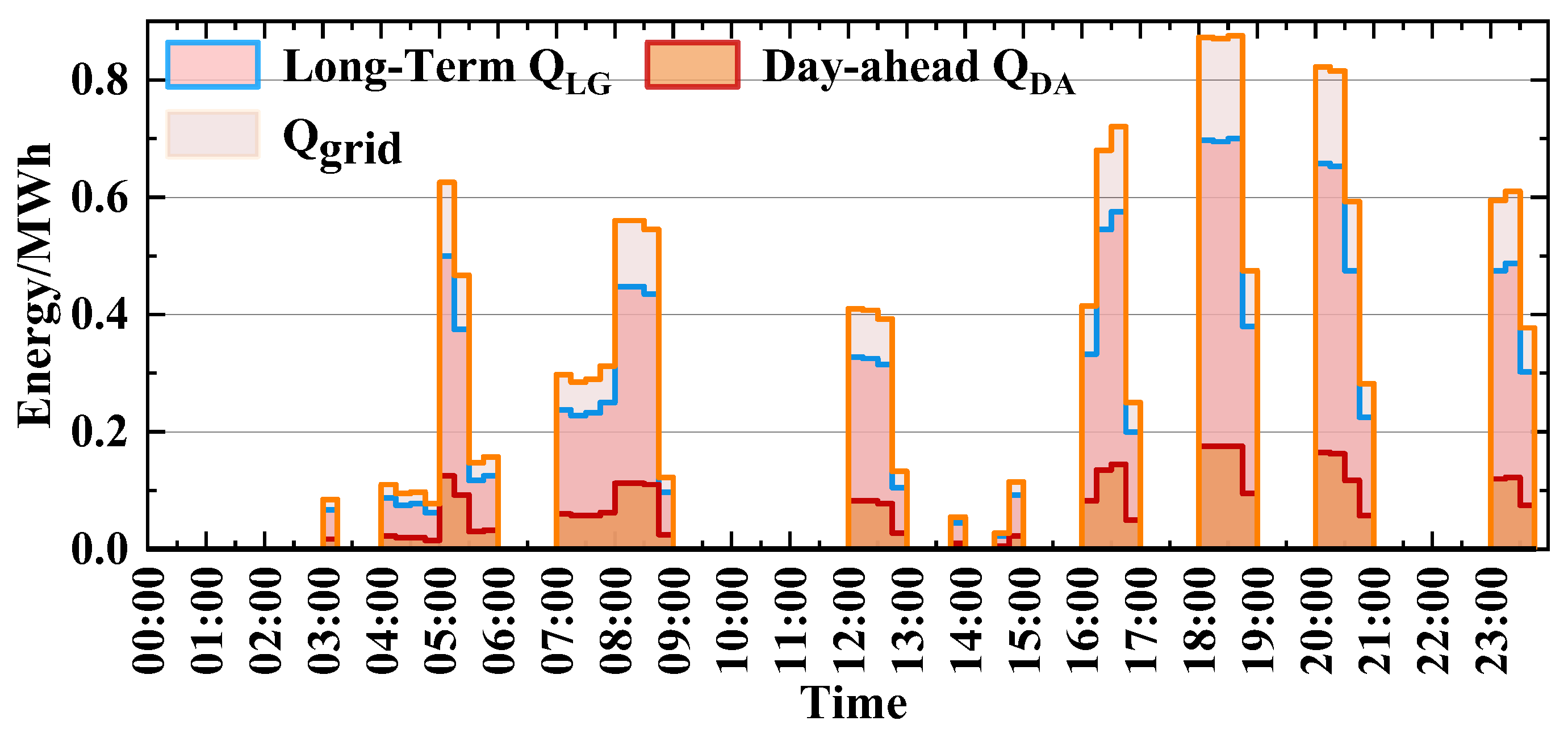
where QLG and QDG represent the medium- and long-term net contracted electricity and the day-ahead market declared electricity of the PSC system, respectively. Equation (15) indicates that the electricity available for spot market arbitrage shall not exceed φ times the load characteristic Qgrid of the PSC system.
4. Scheduling Strategy of the PSC System in Market Coupling Scenarios
4.1. Market Coupling Model of the PSC System
Under a multi-market environment, the operating state of the PSC system at any time t can be jointly characterised by its power allocation relationship and temporal operating state. The decision variables include not only charging service power and peak-shaving service output, but also the electricity trading quantity in the spot market and its temporal distribution.
Although different market services are associated with distinct trading mechanisms and revenue structures, they can essentially be represented in a unified manner as functions of the system operating strategy, thereby forming the objective function framework for multi-market coordinated optimisation. The operating state vector of the PSC integrated system at time (t) is defined in Equation (16).
where Pi(t) represents the output power or trading quantity of the system in the ith market, and R denotes the types of participating markets, such as charging services, peak-shaving services, and spot market trading.
The upper limit of the system’s market service capability at time t is determined by the resource states and can be uniformly expressed as:
In a multi-market setting, the system’s operational objective is represented as a weighted revenue function, as formulated in Equation (18).
where Rm(·) denotes the revenue function of the mth market, which is affected by Pm, and ωm represents the weighting coefficient of different markets, reflecting the preference for market revenues.
Based on the analysis of the load profiles and market mechanisms of the PSC system in Chapter 2, the load profile constraints x(t) and market mechanisms constraints s(t) jointly constitute the constraint vector of the market coupling model, as shown in Equation (19). The intersection between the constraint vector and the objective vector in the power-time space defines the feasible operating region of the system Ω(t), which can be uniformly expressed in the form of vector intersection, as shown in Equation (20).
4.2. Formulation of the PSC System Revenue Function
The revenue obtained by the PSC system from charging services includes both electricity sales revenue and service fees, as formulated in Equation (21).
where δchr(t) denotes the electric vehicle charging price, δser represents the charging service fee of the PSC system and Jgrid(t) denotes the electricity purchasing cost.
In accordance with the Implementation Rules for the Management of Ancillary Services in the Southern Regional Power Grid, the system revenue associated with peak-shaving participation within an invited scheduling period is calculated as given in Equation (22).
where Psch(t) denotes the planned regulation capacity curve of the PSC integrated system during the scheduling period, m is the adjustment coefficient of the peak-shaving compensation intensity, typically set to 1; Tpeak is defined as the calculation interval, typically set to 15 min, and δpeak represents the compensation price of the peak-shaving service.
For electricity trading in the spot market, the PSC system is modelled to achieve minimum expected total purchasing cost, which is given in Equation (23).
where δDA denotes the day-ahead spot market electricity price, and δLT represents the energy price of medium- and long-term contracts.
4.3. Constraint Functions of the PSC System
According to Equation (19), the constraints of the PSC system in participating in charging services and peak-shaving services consist of two components: resource characteristic constraints and market mechanism constraints.
Under the multi-market scenarios, the resource characteristic constraints of each component at time t are given in Equations (1)–(7), while the market mechanism constraints are presented in Equations (8)–(14). The constraint function Γ(t) can be described as Equation (24).
4.4. Optimisation and Scheduling Strategy Considering Market Coupling
At the capability level, the PSC system demonstrates interdependence across multiple market services. The proposed model seeks to maximise the combined revenue from charging and peak-shaving services, subject to constraints imposed by resource characteristics and electric vehicle charging demand. Under this framework, the optimal charging decision and the coordinated dispatch strategy for peak-shaving participation are obtained.
According to Equation (18), the operational objective function of the PSC system can be described as:
where ωchr and ωpeak represent weighting coefficients of charging service and peak-shaving service, respectively.
The optimal scheduling strategy of the PSC system for joint participation in charging and peak-shaving services is determined by the interaction between the objective function and the set of constraints, as formulated in Equation (26).
In summary, the capability coupling model proposed in this study characterises the coordinated interactions among PSC resources by taking capability maximisation as the operational boundary and economic maximisation as the optimisation objective. Under constraints related to resource characteristics and charging demand, the model yields an optimal coordinated scheduling scheme for the PSC system.
The proposed optimisation model is expressed in linear form for both the objective function and the associated constraints, while binary variables are introduced to capture the operating states of the PSC system across different electricity markets. Owing to this formulation, the problem is transformed into a mixed-integer linear programming (MILP) model. Implementation is carried out in Python 3.14 using the Pyomo 6.10.1 optimisation framework, and the resulting MILP is solved via the GLPK solver to derive the optimal scheduling solution.
5. Simulation Analysis
5.1. Parameters Setting
The case study in this section is designed as a representative validation scenario for the PSC system proposed in this paper, rather than an analysis of a specific regional power grid or market. It is not intended to represent the complete operational conditions or economic performance of a specific PSC system, Guangdong Province, or the Southern Regional Power Grid. Instead, representative operational parameters, charging demand characteristics, photovoltaic generation profiles, and market information from different sources are adopted to construct a typical PSC operation scenario for methodology validation.
Specifically, the EV charging demand profiles adopted in this study are derived from the National Household Travel Survey (NHTS), which provides representative travel and charging behaviour characteristics of EV users. Meanwhile, the time-of-use electricity pricing scheme from Guangdong Province is adopted as a typical market signal to reflect practical demand-side management mechanisms. Although the selected datasets originate from specific regions, they represent common operational characteristics and market structures that widely exist in many regions. Therefore, the constructed case study provides a representative validation scenario for the proposed framework rather than being limited to a specific geographical area.
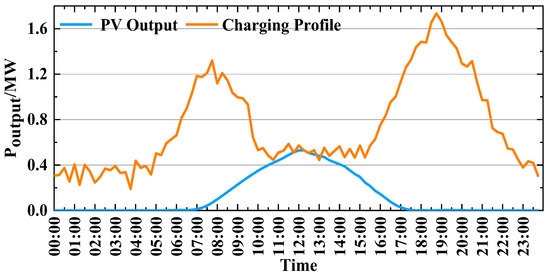
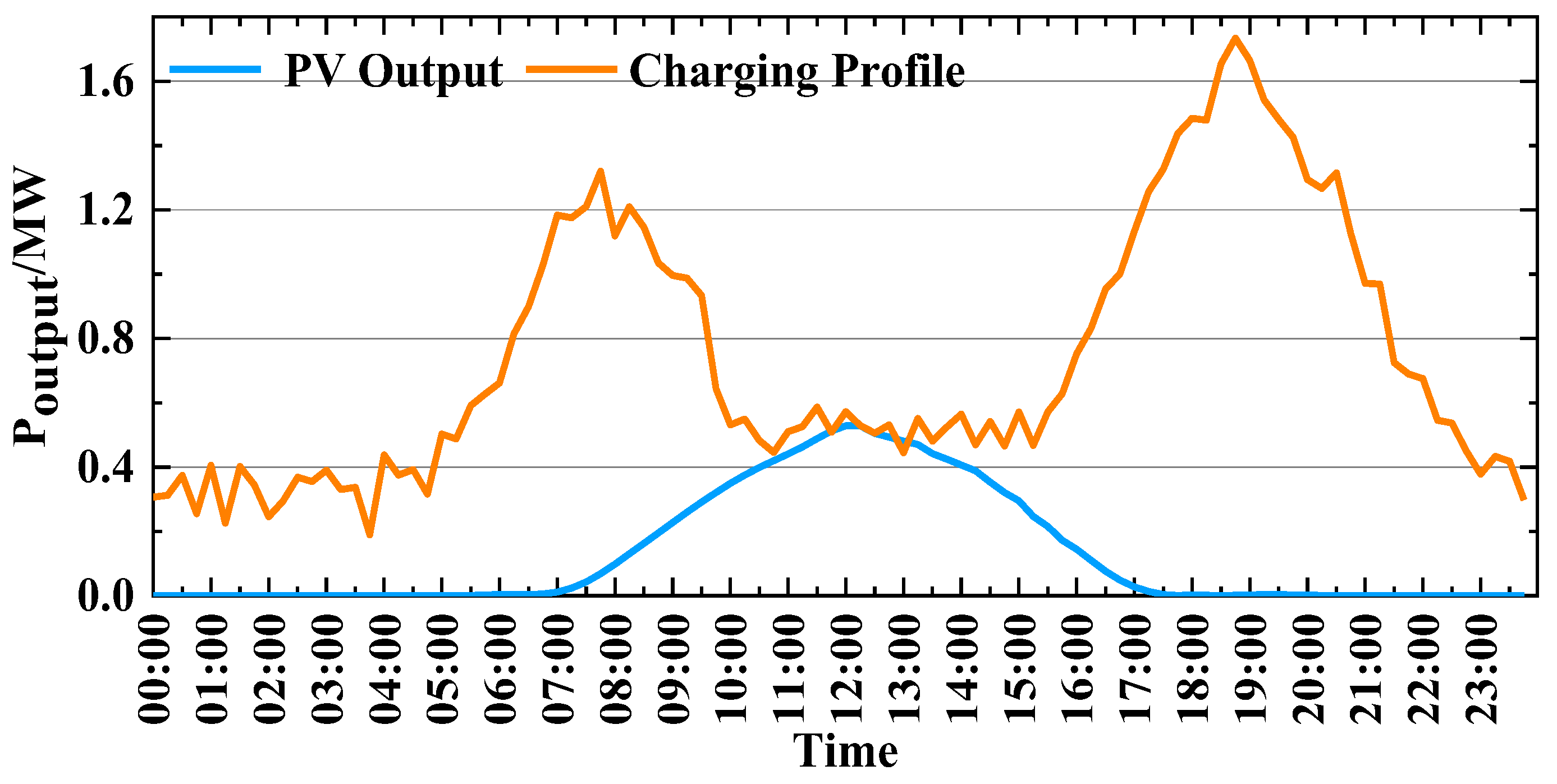
In this study, the charging load characteristics are modelled based on Equation (4), while a typical photovoltaic generation scenario is selected, as shown in Figure 1. This assumption is adopted because the focus of this work is the operational optimization of existing PSC assets under multi-market coupling conditions rather than detailed energy consumption prediction.
Figure 1.
Charging Profile and Photovoltaic Output.
The PSC system parameters are derived from an actual operational charging station. The detailed settings are provided in Table 1.
Table 1.
Parameters Settings.
Uncertainties in renewable generation and load are not explicitly modelled in this study, as the focus is on the day-ahead scheduling stage. In practice, such uncertainties are typically managed through intra-day and real-time market adjustments, as well as reserve mechanisms.
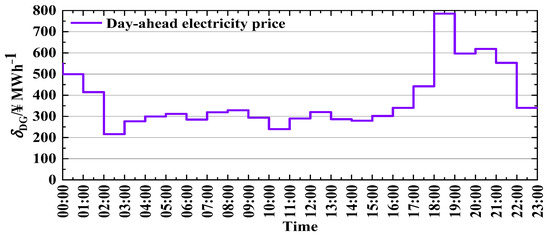
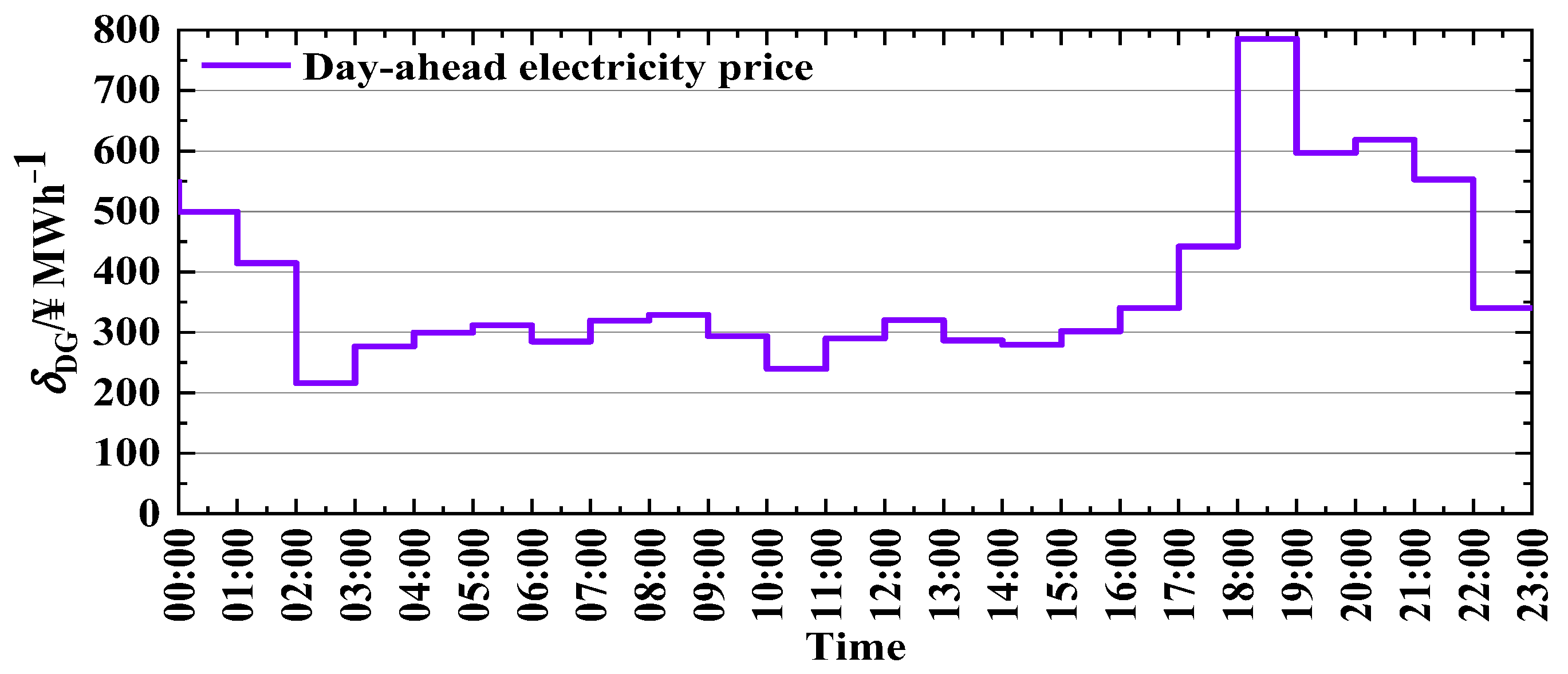
The day-ahead electricity price, denoted by δDG, is derived from actual market operation data and is shown in Figure 2. For ancillary service participation, the remuneration rate of peak-shaving services (δpeak) is determined according to the highest subsidy level currently implemented in Guangdong Province, with a value of 1.6 ¥/kWh. This assumption is adopted because the objective of this work is to characterize the economic benefits and coordinated scheduling capability of the PSC system under multi-market coupling conditions, rather than to model detailed market price fluctuations. In practical applications, peak-shaving compensation may vary across weekdays, weekends, and seasons due to differences in load profiles and grid operational requirements.
Figure 2.
The day-ahead electricity price.
The electricity price associated with medium- and long-term contracts (δLT) is assumed to be 0.4 ¥/kWh. Regarding charging services, the electricity tariff charged to electric vehicle users (δchr) is assumed to follow the day-ahead market price, while the corresponding service charge (δser) is fixed at 0.3 ¥/kWh. The electricity prices and peak-shaving rules are adopted from Guangdong Province to establish a representative market environment for evaluating the proposed scheduling strategy. These regional market parameters are only used to reproduce the corresponding market mechanisms and operational constraints, rather than to represent the complete operational conditions or economic performance of PSC systems in Guangdong Province. Since the objective of this work is to validate the proposed optimisation methodology instead of conducting a region-specific economic assessment, the market parameters and charging load mobility data are selected independently to represent the market mechanism and charging demand characteristics, respectively.
5.2. Scheduling Strategy of the PSC System in Charging Service and Peak-Shaving Service
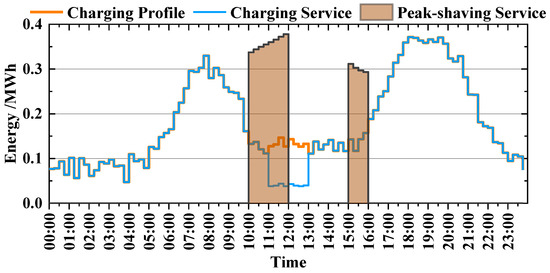
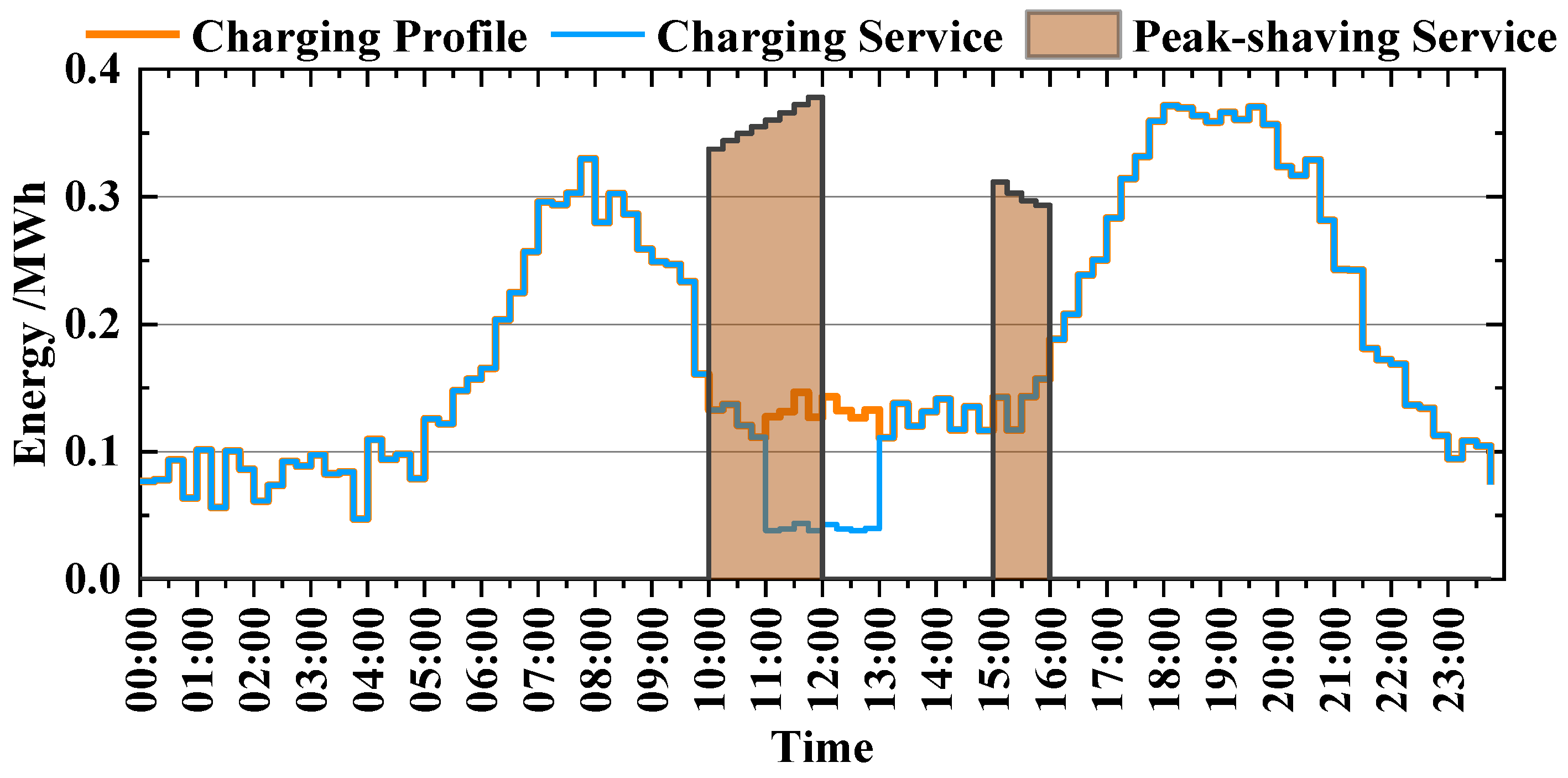
In the case study, the PSC system is assumed to concurrently provide charging services and peak-shaving services, while also engaging in electricity transactions within the spot market. The peak-shaving service windows are scheduled during 10:00–12:00 and 15:00–16:00.
Considering the operational characteristics of the charging service market, the peak-shaving market, and the spot electricity market, together with the load demand of the PSC system, the coordinated scheduling problem is formulated according to the objective function in (25) and the corresponding constraints in (26). The resulting optimal operating strategy is illustrated in Figure 3.
Figure 3.
Optimal Scheduling Strategy of PSC System.
The daily revenues of the PSC system from participating in charging services, peak-shaving services during the periods of 10:00–12:00 and 15:00–16:00, and the spot market are presented in Table 2.
Table 2.
Daily Revenues of the PSC System Participating in Different Market Services (/¥).
As shown in Table 2, when the PSC system participates in peak-shaving services, part of the charging service load is intentionally curtailed during the peak-shaving periods, resulting in a reduction in charging service revenue. Meanwhile, additional electricity purchases are required to maintain energy balance during the provision of peak-shaving services, leading to an increase in electricity purchasing costs. However, under the specific representative operating scenario considered in this case study, the additional revenue obtained from peak-shaving services compensates for the reduction in charging service revenue and the additional electricity purchasing cost. Consequently, under the assumed parameter settings, the total daily revenue increases by 39.54% compared with the charging-service-only scenario.
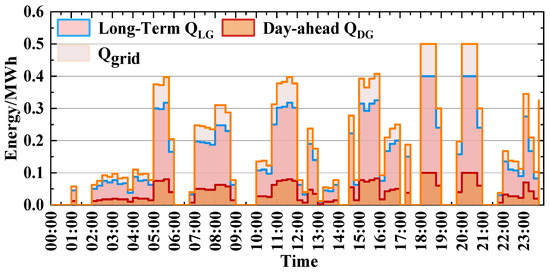
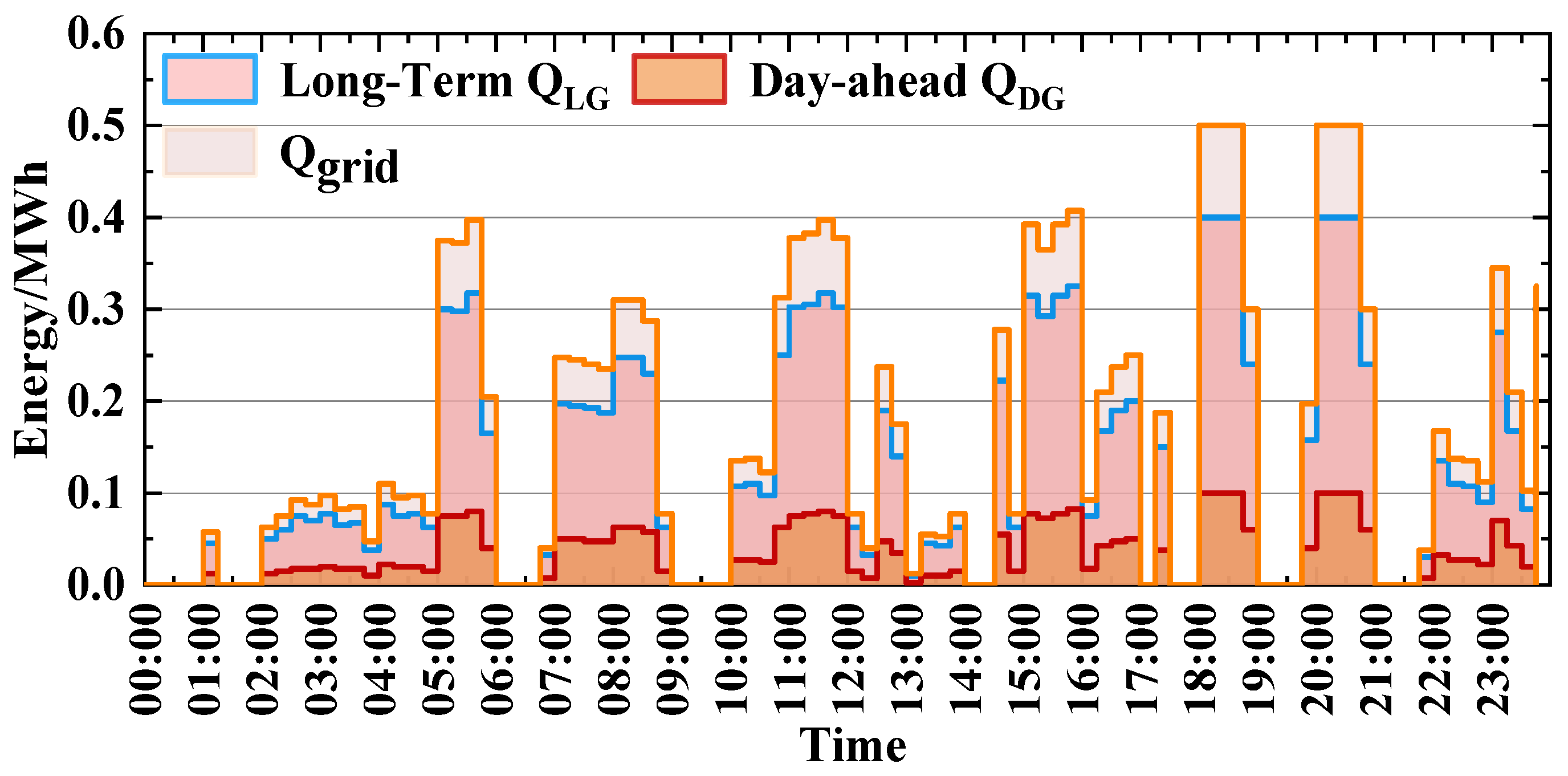
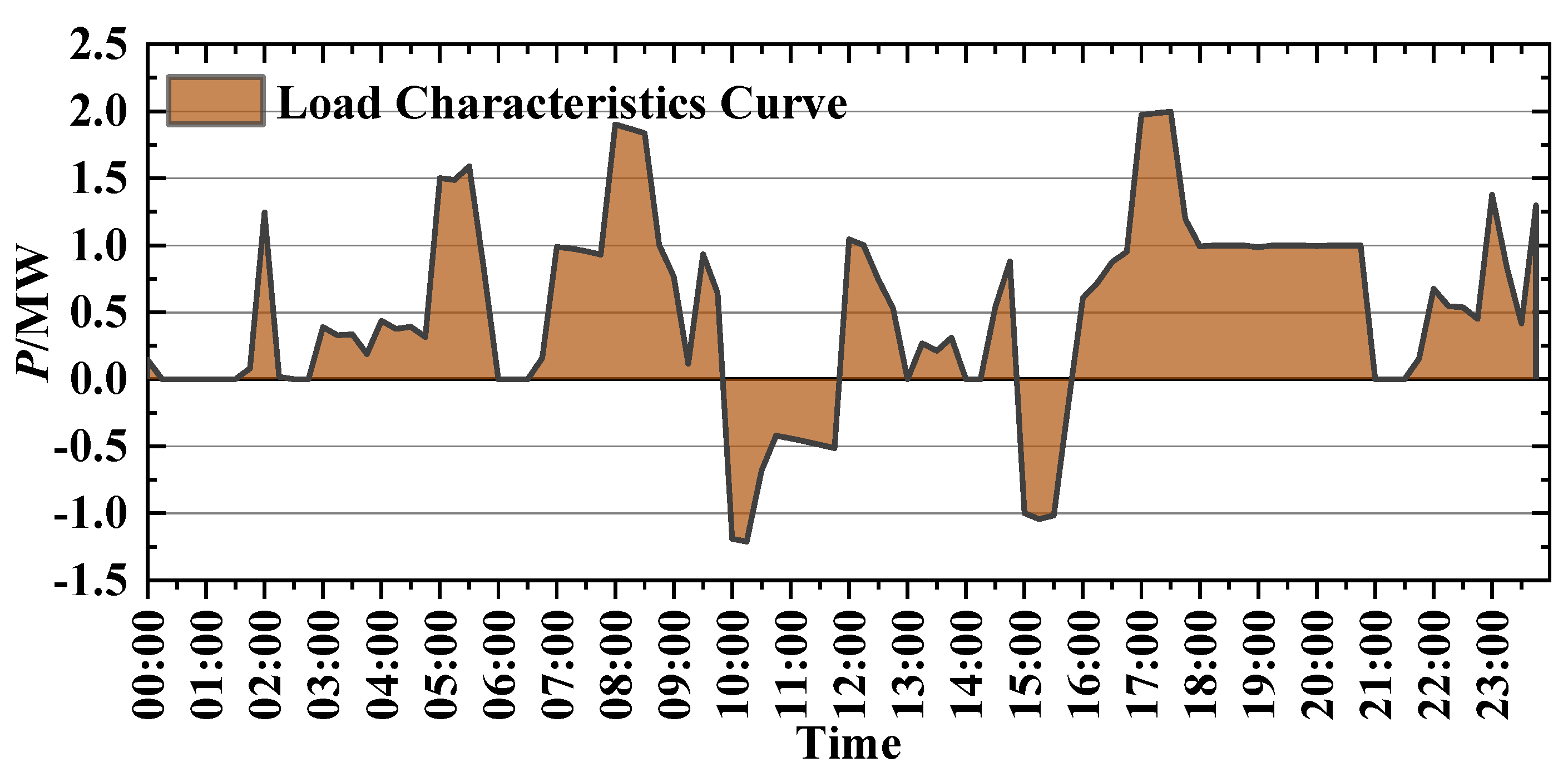
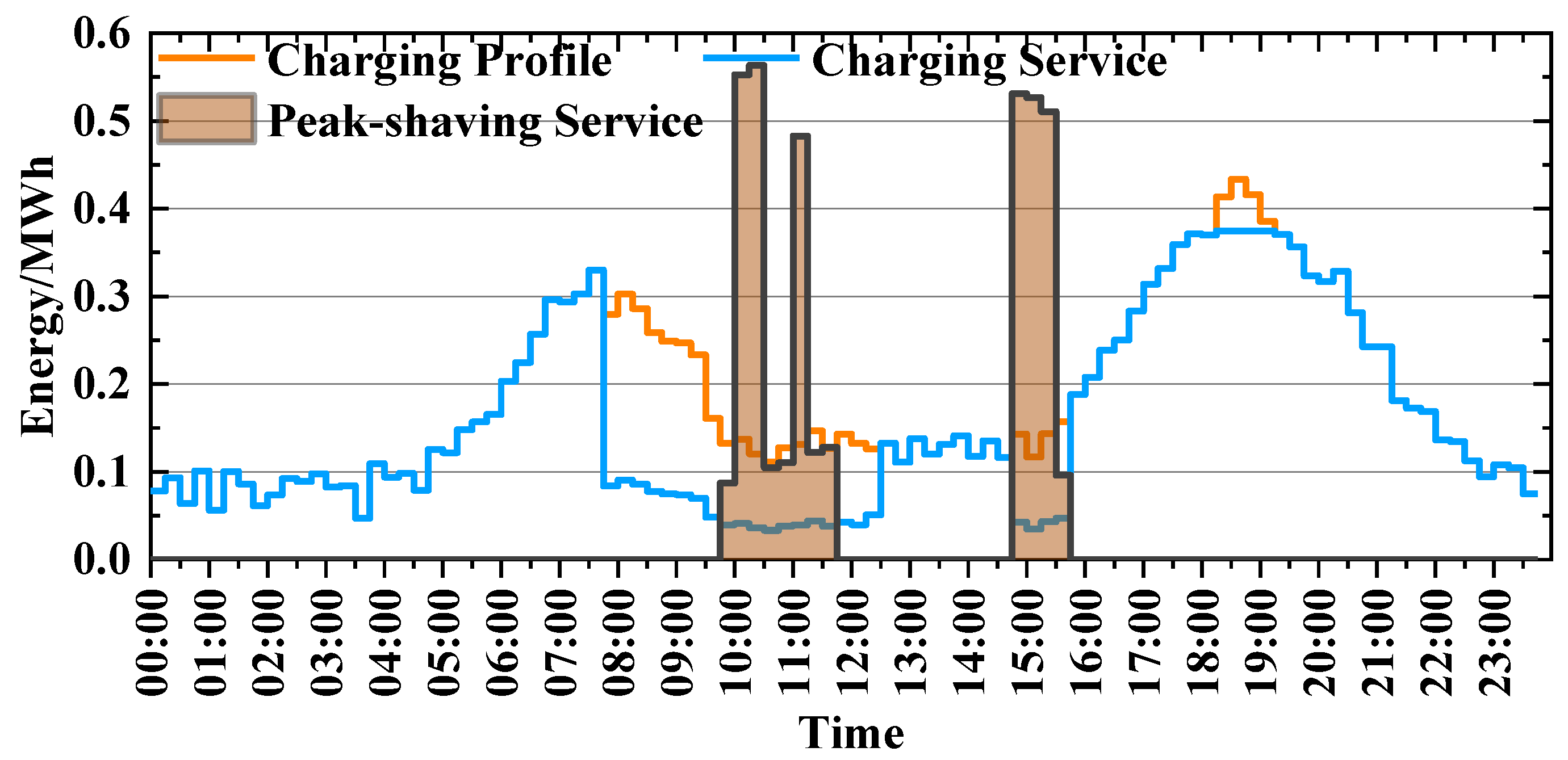
Day-ahead electricity procurement strategy in the spot market under charging service, peak-shaving service and spot market can be shown in Figure 4.
Figure 4.
Day-ahead Electricity Procurement Strategy.
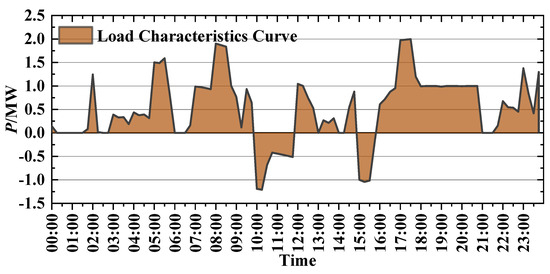
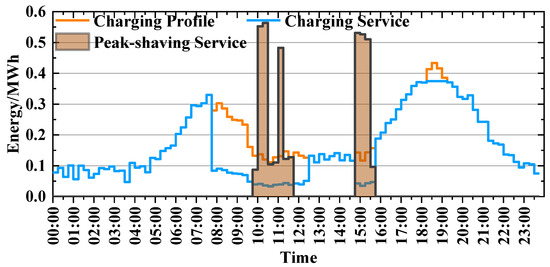
Figure 5 depicts the operating power trajectory of the PSC system during the optimisation horizon. Periods with positive P denote grid power purchases, while periods with negative P indicate energy storage discharge to support system operation.
Figure 5.
Load Characteristics Curve.
For peak-shaving services, the total peak-shaving capacity of the system is 3.3 MW based on Table 2. According to Equation (11), the minimum ramping rate for providing peak-shaving services is 37 kW/min.
Between 10:00 and 12:00, the compensation provided by the peak-shaving market exceeds the corresponding electricity purchasing cost. To take advantage of this price differential, the PSC system imports electricity during 09:00–10:00 and reserves flexible capacity for the subsequent peak-shaving service. With the proposed operating strategy, the system achieves a ramping rate of 48.04 kW/min, which meets the required market response criterion.
In contrast, between 15:00 and 16:00, lower charging demand releases additional operational flexibility from shared resources. This enables the PSC system to allocate surplus capacity directly to peak-shaving services, achieving a ramping rate of 34.7 kW/min while maintaining the required response standard.
5.3. Sensitivity Analysis
In the coordinated scheduling setting where PSC systems engage simultaneously in electricity energy and ancillary service markets, service provision is governed by the operating states of underlying resources. Changes in resource parameters reshape the system’s feasible flexibility region, thereby affecting market participation choices, power exchange behaviour, and resulting economic outcomes.
Within the integrated resource set, energy storage provides time-shifting and fast-response functionality. Its installed capacity and charging/discharging efficiency jointly define the magnitude of dispatchable flexibility that can be exploited in market operations. Photovoltaic generation, on the other hand, depends on solar irradiance conditions; its variability alters the net load profile and consequently changes grid interaction requirements. Together, these resource characteristics govern the energy balancing process and the attainable operational flexibility of the PSC system, which in turn drives multi-market scheduling performance.
To investigate these dependencies, a series of sensitivity analyses is carried out by varying energy storage capacity, charging/discharging efficiency, and solar irradiance. The case in Section 5.2 is used as the baseline (Scenario I), while Scenario II considers an energy storage capacity of 2 MWh. The daily revenue of the PSC system under different storage capacities is reported in Table 3. The optimal scheduling strategy and electricity procurement strategy are presented in Figure 6 and Figure 7, respectively.
Table 3.
Impact of Energy Storage Capacity on System Economic Performance (/¥).
Figure 6.
Optimal Scheduling Strategy of PSC System (energy storage capacity of 2 MWh).
Figure 7.
Day-ahead Electricity Procurement Strategy (energy storage capacity of 2 MWh).
When the energy storage capacity is sufficiently large, the system exhibits stronger energy regulation and inter-temporal shifting capabilities, enabling it to prioritise high-value peak-shaving services. In this case, part of the charging service may be curtailed or temporarily suspended to release dispatchable capacity for ancillary service participation. Consequently, the operational strategy shifts from charging-service-dominant operation to peak-shaving-prioritised operation, reflecting a clear market-value-driven dispatch behaviour.
The charging-discharging efficiency of energy storage systems tends to deteriorate over extended operation due to electrochemical ageing, and this degradation is further intensified under high-rate and deep-cycle operating conditions. Such efficiency variations may significantly affect the revenue performance of PSC systems in multi-market participation scenarios. To examine this effect, the ideal case with 100% efficiency is used as the reference benchmark, while Scenario III considers a reduced efficiency level of 60%. The corresponding results are reported in Table 4.
Table 4.
Daily Revenue Analysis for Different Charging Efficiency Levels (/¥).
Due to the decline in storage efficiency, energy losses during charging and discharging increase, requiring additional electricity purchases from the grid to compensate for the energy deficit, thereby raising electricity procurement costs. In peak-shaving applications, efficiency degradation weakens the effective regulation capability of the energy storage system even when the installed capacity remains unchanged. This results in a reduction in both the available support duration and power provision for peak-shaving services, thereby lowering the corresponding revenue.
Solar irradiance is a key factor affecting photovoltaic output. In this study, the simulation case in Section 5.2 is taken as the benchmark, where scenarios with higher irradiance are defined as Scenario IV and lower irradiance as Scenario V. The corresponding revenue comparison is presented in Table 5.
Table 5.
Daily Revenue Analysis for Different Solar Irradiance Levels (/¥).
Peak-shaving revenue mainly depends on intra-day load fluctuations. Under low-irradiance conditions, the overall market service capability of the system is constrained, leading to reduced available capacity for peak-shaving and consequently lower revenue. In contrast, under consecutive high-irradiance conditions, increased photovoltaic output enhances the power-supply characteristics of the PSC system, resulting in higher electricity export and increased revenue from peak-shaving services.
6. Conclusions
This paper investigates the operation of a photovoltaic–storage–charging (PSC) system participating in both electricity energy and ancillary service markets and develops a coordinated optimisation approach based on a unified flexibility boundary.
The objective of this case study is to demonstrate the capability of the proposed framework in coordinating shared resources among multiple market services, rather than to provide a region-specific economic assessment.
Unlike conventional hierarchical scheduling strategies, where charging demand is satisfied first and ancillary services rely solely on remaining resources, the proposed method transforms heterogeneous resource characteristics and market requirements into a common flexibility representation. This enables the establishment of a capability interaction mechanism that explicitly captures resource allocation conflicts among multiple market services.
Based on the proposed flexibility representation, charging demand and peak-shaving services are jointly optimised within a single decision-making framework. Shared resources can therefore be dynamically allocated according to their economic value, allowing the system to balance different service requirements while improving the utilisation of flexible resources.
Results from the representative case study indicate that the proposed approach can improve the economic performance of the PSC system compared with conventional single-market scheduling strategies while satisfying fundamental charging demand requirements. The analysis further reveals that operational profitability is highly sensitive to photovoltaic generation conditions, energy storage capacity, and charging infrastructure deployment. Higher solar irradiance levels increase renewable energy availability and release additional flexible capacity for ancillary service provision, thereby reducing grid electricity dependence and creating new revenue opportunities. Similarly, the results demonstrate that energy storage capacity is an important factor affecting the operational flexibility of PSC systems. A larger energy storage capacity provides greater scheduling flexibility and enables the system to better respond to market signals, leading to higher economic benefits under multi-market coupling conditions.
The results also show that participation in ancillary service markets may reduce a portion of the revenue that would otherwise be obtained from charging activities. Nevertheless, the additional income generated from flexibility-oriented services can more than compensate for this loss, leading to superior overall economic outcomes. From a broader power system perspective, peak-shaving services provide essential support for balancing supply and demand and maintaining operational reliability. The results suggest that allocating available flexibility to high-value peak-shaving markets may improve the economic performance of PSC systems under suitable market conditions while providing additional flexibility support for power system operation.
It should be noted that this study focuses on validating the proposed optimisation framework rather than evaluating the economic performance of a specific geographical region. Deterministic photovoltaic generation and aggregated electric vehicle charging demand are adopted to isolate the effectiveness of the proposed scheduling strategy from forecasting uncertainties, while battery degradation costs are not explicitly considered because the emphasis is placed on short-term operational scheduling and system-level resource coordination. These modelling assumptions do not affect the comparative evaluation of different market participation strategies, as all simulation scenarios are conducted under identical conditions. Future work will incorporate geographically consistent electric vehicle travel datasets, renewable generation uncertainty, stochastic electric vehicle charging behaviour, and battery degradation mechanisms to further enhance the practical applicability and regional relevance of the proposed framework.
Author Contributions
Conceptualization, Z.L., B.L. and Z.Q.; Methodology, Z.L., B.L. and Z.Q.; Software, X.S., Y.H. and X.Q.; Validation, Z.L. and X.S. and Y.H.; Formal Analysis, B.L. and Z.Q.; Investigation, Z.L., B.L., Z.Q. and X.S.; Resources, Z.L. and B.L.; Data Curation, X.S., Y.H. and X.Q.; Writing—Original Draft Preparation, Z.L., B.L. and Z.Q.; Writing—Review & Editing, X.S. and Y.H.; Visualization, Z.L. and X.Q.; Supervision, B.L.; Project Administration, Z.L., B.L. and Z.Q.; Funding Acquisition, Z.L., B.L. and Z.Q. All authors have read and agreed to the published version of the manuscript.
Funding
The authors declare that the study received funding from “Southern Power Grid Network Level + Special Key Technology Project + Research on Distributed Energy Storage Cluster Resource Pooling Technology and Control Management System—Topic1: Research on Distributed Energy Storage Cluster Resource Pooling Technology and Aggregation Management System” (031300KC23090015/GDKJXM20230998).
Data Availability Statement
The original contributions presented in this study are included in the article. Further inquiries can be directed to the corresponding author.
Conflicts of Interest
Author Zhichao Lin was employed by the company Huizhou Power Supply Bureau of Guangdong Power Grid Co., Ltd. The remaining authors declare that the research was conducted in the absence of any commercial or financial relationships that could be considered as a potential conflict of interest.
References
- Erdinç, O.; Taşcıkaraoǧlu, A.; Paterakis, N.G.; Dursun, I.; Sinim, M.C.; Catalão, J.P. Comprehensive optimization model for sizing and siting of DG units, EV charging stations, and energy storage systems. IEEE Trans. Smart Grid 2017, 9, 3871–3882. [Google Scholar] [CrossRef] [Scilit]
- Sun, B. A multi-objective optimization model for fast electric vehicle charging stations with wind, PV power and energy storage. J. Clean. Prod. 2021, 288, 125564. [Google Scholar] [CrossRef] [Scilit]
- Li, D.; Cai, W. Optimal configuration of photovoltaic energy storage capacity for large power users. Energy Rep. 2021, 7, 468–478. [Google Scholar] [CrossRef] [Scilit]
- Dai, Q.; Liu, J.; Wei, Q. Optimal photovoltaic/battery energy storage/electric vehicle charging station design based on multi-agent particle swarm optimization algorithm. Sustainability 2019, 11, 1973. [Google Scholar] [CrossRef] [Scilit]
- Kouka, K.; Masmoudi, A.; Abdelkafi, A.; Krichen, L. Dynamic energy management of an electric vehicle charging station using photovoltaic power. Sustain. Energy Grids Netw. 2020, 24, 100402. [Google Scholar] [CrossRef] [Scilit]
- Yao, L.; Damiran, Z.; Lim, W.H. Optimal charging and discharging scheduling for electric vehicles in a parking station with photovoltaic system and energy storage system. Energies 2017, 10, 550. [Google Scholar] [CrossRef] [Scilit]
- Kabir, M.E.; Assi, C.; Tushar, M.H.K.; Yan, J. Optimal scheduling of EV charging at a solar power-based charging station. IEEE Syst. J. 2020, 14, 4221–4231. [Google Scholar] [CrossRef] [Scilit]
- Ray, S.; Kasturi, K.; Nayak, M.R. Multi-objective electric vehicle charge scheduling for photovoltaic and battery energy storage based electric vehicle charging stations in distribution network. Green Energy Intell. Transp. 2025, 4, 100296. [Google Scholar] [CrossRef] [Scilit]
- Liu, Y.; Jian, L.; Jia, Y. Energy management of green charging station integrated with photovoltaics and energy storage system based on electric vehicles classification. Energy Rep. 2023, 9, 1961–1973. [Google Scholar] [CrossRef] [Scilit]
- Lyu, C.; Zhan, S.; Zhang, Y.; Song, Z. Synergistic two-stage optimization for multi-objective energy management strategy of integrated photovoltaic-storage charging stations. J. Energy Storage 2024, 89, 111665. [Google Scholar] [CrossRef] [Scilit]
- Yan, Q.; Zhang, B.; Kezunovic, M. Optimized operational cost reduction for an EV charging station integrated with battery energy storage and PV generation. IEEE Trans. Smart Grid 2018, 10, 2096–2106. [Google Scholar] [CrossRef] [Scilit]
- Xia, F.; Chen, H.; Li, H.; Chen, L. Optimal planning of photovoltaic-storage fast charging station considering electric vehicle charging demand response. Energy Rep. 2022, 8, 399–412. [Google Scholar] [CrossRef] [Scilit]
- Zhang, J.; Hou, L.; Zhang, B.; Yang, X.; Diao, X.; Jiang, L.; Qu, F. Optimal operation of energy storage system in photovoltaic-storage charging station based on intelligent reinforcement learning. Energy Build. 2023, 299, 113570. [Google Scholar] [CrossRef] [Scilit]
- Liu, N.; Zou, F.; Wang, L.; Wang, C.; Chen, Z.; Chen, Q. Online energy management of PV-assisted charging station under time-of-use pricing. Electr. Power Syst. Res. 2016, 137, 76–85. [Google Scholar] [CrossRef] [Scilit]
- Cao, J.; Xu, C.; Siqin, Z.; Yu, M.; Diao, R. Scenario-driven distributionally robust optimization model for a rural virtual power plant considering flexible energy-carbon-green certificate trading. Appl. Energy 2025, 379, 124904. [Google Scholar] [CrossRef] [Scilit]
- Li, Q.; Zhou, Y.; Wei, F.; Li, S.; Wang, Z.; Li, J.; Zhou, G.; Liu, J.; Yan, P.; Yu, D. Multi-time scale scheduling for virtual power plants: Integrating the flexibility of power generation and multi-user loads while considering the capacity degradation of energy storage systems. Appl. Energy 2024, 362, 122980. [Google Scholar] [CrossRef] [Scilit]
- Zhang, T.; Hu, Z. Optimal scheduling strategy of virtual power plant with power-to-gas in dual energy markets. IEEE Trans. Ind. Appl. 2021, 58, 2921–2929. [Google Scholar] [CrossRef] [Scilit]
- Yang, Z.; Li, K.; Chen, J. Robust scheduling of virtual power plant with power-to-hydrogen considering a flexible carbon emission mechanism. Electr. Power Syst. Res. 2024, 226, 109868. [Google Scholar] [CrossRef] [Scilit]
- Liu, X.; Li, Y.; Wang, L.; Tang, J.; Qiu, H.; Berizzi, A.; Valentin, I.; Gao, C. Dynamic aggregation strategy for a virtual power plant to improve flexible regulation ability. Energy 2024, 297, 131261. [Google Scholar] [CrossRef] [Scilit]
- Li, Q.; Dong, F.; Zhou, G.; Mu, C.; Wang, Z.; Liu, J.; Yan, P.; Yu, D. Co-optimization of virtual power plants and distribution grids: Emphasizing flexible resource aggregation and battery capacity degradation. Appl. Energy 2025, 377, 124519. [Google Scholar] [CrossRef] [Scilit]
- Dehghanpour, K.; Nehrir, M.H.; Sheppard, J.W.; Kelly, N.C. Agent-based modeling of retail electrical energy markets with demand response. IEEE Trans. Smart Grid 2016, 9, 3465–3475. [Google Scholar] [CrossRef] [Scilit]
- Shafie-Khah, M.; Catalão, J.P. A stochastic multi-layer agent-based model to study electricity market participants behavior. IEEE Trans. Power Syst. 2014, 30, 867–881. [Google Scholar] [CrossRef] [Scilit]
- Eldeeb, H.H.; Faddel, S.; Mohammed, O.A. Multi-objective optimization technique for the operation of grid tied PV powered EV charging station. Electr. Power Syst. Res. 2018, 164, 201–211. [Google Scholar] [CrossRef] [Scilit]
- Yang, M.; Zhang, L.; Zhao, Z.; Wang, L. Comprehensive benefits analysis of electric vehicle charging station integrated photovoltaic and energy storage. J. Clean. Prod. 2021, 302, 126967. [Google Scholar] [CrossRef] [Scilit]
- Ye, X.; Liu, Z.; Zhang, J.; Huang, J.; Yang, H. Multi-Market Coordination Operation Strategy for PV-Storage Systems Considering Zone-Based Frequency Regulation Strategy. Processes 2026, 14, 1995. [Google Scholar] [CrossRef] [Scilit]
- Shi, J.; Zhang, W.; Bao, Y.; Gao, D.W.; Fan, S.; Wang, Z. Optimal strategy of the charging station operator participating in day-ahead electricity market: A hierarchical game framework. Sustain. Energy Grids Netw. 2025, 42, 101686. [Google Scholar] [CrossRef] [Scilit]
- Alfalah, B. Effectiveness of installing a photovoltaic system on a high-density building in a hot climate zone. Sustainability 2025, 17, 7523. [Google Scholar] [CrossRef] [Scilit]

Disclaimer/Publisher’s Note: The statements, opinions and data contained in all publications are solely those of the individual author(s) and contributor(s) and not of MDPI and/or the editor(s). MDPI and/or the editor(s) disclaim responsibility for any injury to people or property resulting from any ideas, methods, instructions or products referred to in the content. |
© 2026 by the authors. Licensee MDPI, Basel, Switzerland. This article is an open access article distributed under the terms and conditions of the Creative Commons Attribution (CC BY) license.