


Abstract
Despite growing interest in sustainability transitions, there is the limited literature on how Industry 4.0, the circular economy, renewable energy, and ecological sustainability interact. This paper aimed to analyze the nexus among Industry 4.0, the circular economy, ecological footprint, renewable energy, and sustainable development across 14 European countries during 2001–2024 by using the PBARDL and Panel PQARDL approaches as well as the panel Granger causality test. To capture both average and distributional effects, the analysis employed Panel Bootstrap ARDL (PBARDL), Panel Quantile ARDL (PQARDL) and panel Granger causality tests. In the first stage, the PBARDL test was employed to determine the dependent variables. The existence of a single cointegrated vector was confirmed by a country-specific Johansen test and Panel Johansen test. Both the PQARDL methods, which has two and three quantiles, and the PBARDL method showed the evidence of cointegration among the selected variables. The long-run and short-run coefficients as well as the ECM coefficients of the PQARDL test were compared with those of the PBARDL test. Granger causality results were obtained. In the second stage, robustness testing was performed for the PQARDL model. The model was tested by excluding the control variable and the results of the model without control variables were compared with those of the main PQARDL model. Subsequently, alternative values of λ were applied to the model without control variables. The obtained results confirmed the baseline model’s results. Finally, to avoid the reverse causality problem, the results of the Granger causality test under different lag structures confirmed the stability of the estimated directions of Granger causality. Granger causality results revealed the evidence of one-way causality from the circular economy to renewable energy and from Industry 4.0 to the circular economy. Evidence of bidirectional causality was found between the CE and the ecological footprint; the ecological footprint and renewable energy; SDI and renewable energy; the CE and renewable energy; and I4.0 and renewable energy. According to the results, government policies need to focus more on renewable energy, energy transition, sustainable development, and the circular economy.
1. Introduction
In recent decades, accelerating industrialization, rising energy demand, climate change and increasing resource scarcity have intensified global concerns regarding environmental sustainability. The traditional linear economic model commonly described as a “take–make–dispose” system has generated substantial economic growth but has also contributed to excessive resource extraction, environmental degradation and waste accumulation. As ecological pressures continue to rise, policymakers and researchers have increasingly emphasized the need for sustainable development strategies that promote efficient resource utilization while minimizing environmental damage.
The historical evolution of industrial systems helps to explain this transformation. The Third Industrial Revolution characterized by automation and the widespread adoption of electronic technologies in production processes significantly improved productivity and operational efficiency. However, these gains were accompanied by intensified resource consumption, increased waste generation and higher environmental pressure. In contrast, the Fourth Industrial Revolution (I4.0) introduces a new technological paradigm based on digitalization, artificial intelligence, automation, smart manufacturing, the Internet of Things, and data-driven decision-making. Unlike previous industrial transformations, I4.0 offers not only productivity gains but also the potential to optimize resource use and improve environmental performance. Within this transformation, the circular economy (CE) has emerged as one of the most prominent alternatives to the conventional linear production model. Rather than following a system based on extraction, production, consumption, and disposal, the circular economy emphasizes resource efficiency, waste minimization, recycling, reuse, refurbishment, and product life extension. By reducing material throughput and improving resource productivity, CE principles support the transition toward more sustainable production and consumption systems. Consequently, circular economy practices are increasingly recognized as essential instruments for achieving sustainable development goals.
The integration of I4.0 technologies enables businesses to adopt circular economy principles more effectively. By employing these technologies, firms can reduce their ecological footprint and enhance the CE within the framework of sustainable development (SD). As accented by [1,2], I4.0 and various digital technologies are crucial in formulating business models for the CE, because digital technologies have become crucial tools by offering numerous possibilities for businesses. By embracing renewable energy (RE), societies can support sustainable development goals, lower their ecological footprint and move closer to a CE ultimately by contributing to a balanced, resilient and sustainable global system. On the other hand, I4.0 can promote the adoption of RE by facilitating peer-to-peer energy trading platforms and methods for authenticating energy sources. I4.0 technologies facilitate the smooth integration of diverse renewable energy sources into smart grids by improving grid stability and promoting the transition to a decentralized energy system. Renewable energy is very important to the construction and development of this process. And, it also has an important relationship with other actors in the process. Renewable energy affects other variables and is affected by other variables. Collectively, these variables might have a synergistic impact, wherein the utilization of RE diminishes ecological footprints and promotes a circular economy, both of which are essential for attaining sustainable development. The CE helps to reduce the demand for raw materials required for renewable energy technologies such as rare elements for wind turbines or lithium for batteries. CE practices extend the life of RE tools through better design for longevity repair and refurbishment. The focus on circularity encourages innovation in developing new more sustainable materials and technologies by leading to more efficient and less resource-intensive RE systems.
When reviewing the literature, it is observed that some studies focus on the relation between the CE and I4.0, while others focus on the CE and SD. For example, in pursuit of the papers of [3,4,5,6], on the circular economy, some papers investigated its relationship with SD. Ref. [7] asserted that the CE originates from the ideas of SD. According to several papers, the CE can concurrently improve the environmental, social and economic features [8], waste management [9], energy efficiency [10], and finally long-term economic development [11,12,13]. In this process, some papers highlighted the importance of the interconnections between I4.0 and the CE in facilitating the transition to circular production systems.
Nonetheless, despite the growing importance of the interactions among Industry 4.0, the circular economy, renewable energy, ecological footprint, and sustainable development, the existing literature remains fragmented and has primarily focused on isolated aspects of the circular economy rather than their integrated dynamics [14]. Consequently, no previous paper has jointly investigated the long-run equilibrium and causal relationships among I4.0, renewable energy, sustainable development, ecological footprint, economic growth, and the circular economy for a panel of fourteen European countries (Spain, Sweden, Switzerland, Germany, Italy, Luxembourg, Portugal, the Netherlands, Norway, Austria, Belgium, Denmark, Finland, and France) over the period 2001–2024 by employing a comprehensive Panel Quantile framework.
To address these theoretical and methodological gaps, this paper will employ the Panel Bootstrap ARDL (PBARDL), Panel Quantile ARDL (PQARDL), and panel Granger causality methods. From a methodological perspective, the paper will integrate standard panel cointegration methods with quantile-based dynamic estimation to examine whether the long-run and short-run coefficients and adjustment processes differ across quantiles. In recent years, some papers have used panel threshold models, especially papers using economic growth used Panel Threshold Regression (PTR), panel STAR models and Panel Threshold ARDL (PTARDL) models.
Although PTR and PTARDL models have recently become popular for modelling regime-dependent relationships, their implementation requires the estimation of one or more common threshold values that partition all cross-sectional units into identical regimes. In multi-country panels, however, identifying a common threshold applicable to all economies is particularly challenging because countries differ substantially in their technological readiness, environmental policies and stages of sustainable development. Consequently, a common threshold may not adequately represent the transition dynamics characterizing the panel. In contrast, the PQARDL method will estimate long-run and short-run relationships across different conditional quantiles of the dependent variable without imposing a common threshold value. Rather than identifying discrete regime shifts, PQARDL will capture distributional heterogeneity by making it particularly suitable for panel data and providing greater flexibility than threshold-based methods.
Another methodological advantage of this study is that the empirical specification minimises the risk of omitted-variable bias by employing two comprehensive indicators, namely the Sustainable Development Index (SDI) and the ecological footprint (EF). Unlike conventional sustainability models that require numerous control variables, the SDI already incorporates the economic, social, and environmental dimensions of sustainable development, while the ecological footprint captures aggregate environmental pressure arising from production and consumption activities. Consequently, introducing additional macroeconomic variables, such as economic growth or energy intensity, could generate unnecessary econometric complications by including multicollinearity and over-parameterization without providing substantial additional explanatory power.
The empirical analysis will be conducted in several sequential stages. First, cross-sectional dependence and panel unit root tests will be performed. Subsequently, both the panel Johansen cointegration test and country-specific Johansen cointegration tests will be employed to verify the existence of a unique cointegrating vector, which constitutes a fundamental assumption of the ARDL framework. The PBARDL model will then be estimated to determine the appropriate cointegrating normalization (dependent-variable specification) and to obtain long-run and short-run estimates. Following this stage, the PQARDL model will constitute the principal empirical framework. The baseline specification will be estimated using three conditional quantiles (τ = 0.25, 0.50, and 0.75). The empirical analysis will conclude with a panel Granger causality test to identify directions of causality by providing a comprehensive basis for policy recommendations concerning sustainable development and the green transition in 14 European economies. A comprehensive robustness analysis will subsequently be undertaken. First, to examine whether a more parsimonious specification produces comparable empirical evidence, an additional two-quantile specification (τ = 0.49 and 0.99) will also be estimated. The estimated long-run elasticities, short-run coefficients and error-correction terms obtained from the two specifications will be systematically compared to evaluate the empirical results with respect to the number of estimated quantiles. Second, three-quantile models will be re-estimated after excluding the control variables to evaluate the sensitivity of the estimated coefficients to model specification. Third, quantile specifications will be re-estimated under alternative values of λ to assess the stability of the estimated long-run and short-run parameters. And lastly, as a final robustness exercise, the panel Granger causality analysis will be re-estimated under alternative lag specifications to assess the sensitivity of the identified Granger causality to lag selection.
Contribution of the Paper
This paper will contribute to the literature in several important ways. First, while prior research has simultaneously not examined the relationships between CE, SD, RE, I4.0 and EP, this paper will explore the relation among these variables within an empirical framework. By doing so it will provide a more comprehensive understanding of the interdependencies among digital transformation, resource efficiency and environmental sustainability in the context of the selected variables: CE, SD, RE, I4.0 and EP. To illustrate these theoretical interrelationships more clearly, Figure 1 illustrates the conceptual transmission mechanism among Industry 4.0, circular economy, renewable energy, ecological footprint and sustainable development.
Figure 1.
Theoretical flow.
Second, unlike existing papers, this paper will apply both Panel Bootstrap ARDL (PBARDL) and Panel Quantile ARDL (PQARDL) methodologies. This dual-method approach allows for the investigation of both average and distributional effects by capturing cross countries and different economic conditions. In addition, the use of panel Granger causality analysis enables the identification of direction of causality among the variables. Third, this paper will extent the empirical literature by focusing on 14 European countries over the period 2001–2024 by providing long-term and regionally comparable evidence on sustainability transitions within European economies. Prior to this, some papers have applied PARDL or panel VEC methods, but these methods do not yield results for the different quantile that PQARDL provides. They give a common result for all countries included in the panel. Finally, by combining cointegration analysis with quantile-based dynamics, the paper offered new insights into how the effects of CE, SD, RE, I4.0 and EP mechanisms vary across countries. These results will provide important results for policymakers aiming to design integrated strategies of renewable energy adoption, industry 4.0, and the circular economy to success aim of ecological footprint and sustainable development in Europe.
This article is organized as follows: After the introduction, Part II delves into the literature. Part III outlines the methodology and data, while Part IV encompasses the empirical results. Part V covers the discussion. The concluding section incorporates these conclusions and explores the economic policy implications.
2. Literature
2.1. Theoretical Foundations of Circular Economy
Ref. [3] argued that the resource input into the economic system must equal the waste output suggesting a circular relationship between economic and environmental interactions rather than linear linkages. Ref. [4], focusing primarily on industrial economics, outlined the concept of a loop economy. Ref. [5] established the concept of “closing the loop” by promoting techniques like product longevity, reuse, remanufacturing, and recycling. His influential research, “The Product-Life Factor”, released in 1982, established the foundation for contemporary comprehension of CE principles. Subsequent papers refined the conceptual definition of a CE as a resource-efficient and regenerative economic system. Refs. [5,6] developed this literature, and then some papers explored CEs from different perspectives. Ref. [15] explored the concept of a CE to establish a more resource-efficient economic system. Ref. [16] defined a CE. Ref. [17] characterized CEs as a regenerative system attained through practices.
A large strand of the literature focused on CE practices. A CE has been widely associated with improvements in resource efficiency, waste reduction, and sustainable production systems. Ref. [18] accented that CEs and big data can enhance sustainable manufacturing in flexible supply chains. Refs. [19,20] highlighted initiatives aimed at recovering dry materials via recycling and product reuse, alongside efforts to reduce or eliminate waste generation entirely. Policy-oriented papers showed that CE implementation varies across institutional settings. Ref. [21] showed that while certain policies focus on enhancing conventional waste management frameworks, others strive for a complete overhaul by introducing decentralized management prevention measures and initiatives aligned with the principles of the CE. Ref. [22] presented a review of CE conception in the frame of developing countries. Ref. [23] explored the implementation of a CE approach for managing food waste specifically within the context of production in Italy.
2.2. Industry 4.0, Renewable Energy and Circular Transition
Some papers investigated the connection between renewable energy and blockchain technology. Smart contracts and disintermediation enable direct peer-to-peer energy trading among producers and consumers of individual solar energy. A few papers have examined the beneficial impacts of blockchain technology on the management of RE and sustainability [24,25,26]. Research on sustainability and blockchain in the energy sector has significantly increased in recent years [27,28]. Recent research demonstrated that blockchain technology can facilitate the three principles of the CE: reduction, reuse, and recycling. Blockchain-dependent management systems of the supply chain improve traceability in intricate supply-chains [26,29] and encourage responsible purchasing behaviour through the provision of precise information [30]. Ref. [31] examined the financial backing provided by banks for RE sources, highlighting a design challenge in the framework of blockchain-based renewable energy micro-inputs. Blockchain can enhance waste management by enabling waste exchange platforms and recycling initiatives via smart contracts [32]. Ref. [33] evaluated blockchain-combined energy systems from five perspectives: social, environmental, corporate, technological and economic. The framework offered a comprehensive analysis of blockchain’s diverse effects on the energy sector and presented recommendations for future research for both practitioners and scholars.
Ref. [34] analyzed the main role of the CE in directing materials throughout the value chain, managing resources and optimizing energy efficiency. Ref. [35] examined the challenges and opportunities that arise from the integration of new technologies with the goals of the CE. The results highlight the disruptive influence of emerging technologies by including blockchain and AI on the progression of the CE.
Furthermore, Ref. [36] indicated that municipal solid waste and livestock manure are commonly utilized to generate renewable energy via the biorefinery process. Ref. [37] examined the relations between the CE and Process Integration for RE. Ref. [38] found that adopting a CE approach can facilitate increased adoption of RE and support the transition toward sustainable energy. They suggested that regional financial institutions play a pivotal role in implementing the intended regulations guided by circular principles.
2.3. Industry 4.0, Sustainability, Ecological Footprint and Circular Economy
In terms of environmental outcomes, CE practices have been consistently linked to reductions in CO2 emissions and ecological pressure. Ref. [39] discussed the need to protect the environment by addressing problems such as biodiversity and climate change conservation while curbing the waste of natural resources. Ref. [40] explored innovative approaches to the CE and sustainability. Ref. [41] discussed the association between energy transition and the CE and discovered that these two concepts share common characteristics embedded in SD aims. Ref. [42] demonstrated that higher recycling rates significantly reduce emissions over time, although effects differ across EU countries. Ref. [43] confirmed a negative relationship between CE practices and CO2 emissions in the EU-15. Ref. [44] found causality among emissions, renewable energy, and waste systems by highlighting the systemic nature of environmental interactions. Ref. [45] discovered that trash recovery can reduce greenhouse gas emissions, and Ref. [46] identified a unidirectional causality among CO2 emissions and municipal waste production. Ref. [43] found that CE practices in EU-15 countries significantly affect CO2 emissions. Ref. [47] examined the distinct effects of four sources of the CE on the EF in Germany from 1990 to 2021 using ARDL and KRLS methodologies. The results indicated that reuse techniques substantially diminish the EF in both the short and long term. Ref. [48] determined that the incorporation of CE techniques might diminish India’s carbon and material footprints. Ref. [49] revealed a negative relation between the CE and carbon footprint (CF) of China by showing a lifecycle CF decline of 20.81% from 2000 to 2016. Ref. [39] emphasized that circular strategies contribute to environmental protection by addressing biodiversity loss, climate change, and natural resource depletion. Ref. [42] further confirmed that higher recycling rates significantly reduce CO2 emissions over time. Ref. [44] identified bidirectional causality among renewable energy, and municipal waste in EU-24 countries by indicating feedback structures between environmental pressure and energy transition mechanisms. Ref. [50] emphasized the importance of comprehensive carbon-offset frameworks and green finance systems in supporting carbon trading systems.
Some papers tested the relation between the CE and sustainability. Ref. [51] examined the use of blockchain technology in resolving issues related to energy grid management, specifically through its incorporation with renewable energy systems, CE, and SD. Ref. [52] asserted that a CE might enhance sustainability and significantly diminish the carbon footprint of energy storage capacity relative to traditional methods. Blockchain technology can enhance investment in RE and carbon market platforms by decreasing market inefficiencies [53]. Additionally, studies by [54,55] highlighted that businesses adopting the circular business model aim not only for economic benefits but also to decrease CO2 releases and enhance environmental well-being contributing to SD. Ref. [24] explored a method for assessing the connections between I4.0, SD goals, and the CE. Additionally, Ref. [54], as well as Ref. [55], emphasized that companies embracing the circular business model aspire not solely for economic gains, but also to decrease CO2 releases and recover environmental well-being by advancing sustainable development. Ref. [56] discussed the nature of the discussion on CEs. Ref. [57] confirms persistent theoretical fragmentation and proposes integrated conceptual frameworks to bridge CE–circularity–sustainability gaps. Ref. [58] developed an integrated indicator-based framework to evaluate the progress of EU-27 countries toward responsible consumption and production by combining measures of material efficiency, circularity and environmental economic activity. Their results revealed that structural constraints remain a major barrier to achieving sustainable production and consumption patterns by underlining the need for more comprehensive policy interventions to accelerate resource efficiency and circular economy transitions.
Ref. [21] explored initiatives in municipal solid waste management that minimize conflicts between the CE and climate change (CC).
Some papers investigated the connection between renewable energy, CE, and SD and blockchain technology. A sharp increase in publications after 2016 by reflecting growing academic interest. However, methodological inconsistencies and conceptual ambiguity remain persistent issues [59]. Ref. [60] further notes that the relationships among CE, circularity, and sustainability are still not clearly defined. Ref. [61] show that certain CE practices may generate environmental benefits while simultaneously increasing economic inequalities or social injustices. Refs. [62,63] argued that recycling systems may reduce environmental burdens but create hidden social and energy costs. Ref. [64] finds that organizations view a CE primarily as an environmental strategy, while its social and economic impacts remain uncertain. Ref. [65] conceptualize a CE as a process-oriented mechanism contributing to sustainability through intergenerational equity, while Refs. [66,67] emphasize that sustainability reflects system-level outcomes rather than process-level circularity.
2.4. Literature Gap
Despite the growing literature on CE, Industry 4.0, renewable energy, and sustainability, several gaps remain unresolved. First, existing papers largely did not examine the variables involving CE, I4.0, renewable energy, ecological footprint, and sustainable development simultaneously. Second, most empirical papers rely on traditional panel methods, which may fail to capture heterogeneous impacts across countries and structural conditions. Third, although CE–sustainability linkages are widely discussed, the distributional heterogeneity remains underexplored. In addition, the literature lacks sufficient integration of advanced panel methodologies capable of capturing both average and distributional effects within a unified framework. This limitation is particularly important given the heterogeneous structure of European economies and the asymmetric nature of sustainability transitions. Therefore, there is a clear need for an econometric framework that can simultaneously (i) capture long-run equilibrium relationships, (ii) account for distributional heterogeneity, and (iii) identify dynamic adjustment differences across quantile.
This paper addresses these gaps by applying PBARDL and PQARDL methods combined with panel Granger causality analysis to a multi-country European dataset by providing a more comprehensive and heterogeneous understanding of sustainability transitions. To address these gaps, this paper investigated the Granger causality among Industry 4.0, circular economy, renewable energy consumption, ecological footprint and sustainable development using PBARDL and PQARDL methods together with panel Granger causality analysis for 14 European countries over the period 2001–2024.
3. Research Question, Methods and Data
3.1. Research Question
Based on the identified gaps in the literature, this paper addresses the following research questions:
RQ1: What are the long-run and short-run relationships among Industry 4.0, circular economy, renewable energy consumption, ecological footprint and sustainable development in 14 European countries?
RQ2: Does cointegration exist among these variables across the panel of 14 European countries over the period 2001–2024?
RQ3: To what extent do the effects of Industry 4.0, renewable energy and circular economy differ across quantile levels of ecological and sustainability indicators?
RQ4: What is the direction of causality among Industry 4.0, circular economy, renewable energy, ecological footprint, and sustainable development as captured by panel Granger causality analysis?
RQ5: Do Industry 4.0 and circular economy mechanisms contribute to renewable energy transition, ecological footprint and sustainability in a bidirectional or unidirectional Granger causality manner?
These research questions are designed to provide a comprehensive empirical investigation of the relation between digital transformation, renewable energy, ecological footprint, circular economy and sustainability results within econometric framework.
3.2. Methodology
Panel Bootstrapping ARDL model is given as
H0 hypothesis is
For [68], model supplementary tests suggested by [69] to conclude the existence of any form of cointegration degenerate cases and non-cointegration states were applied. The cointegration necessitates the rejection of H0
and
An error correcting model is given as
where the long-run parameters are
3.2.1. PQARDL Methods
The PQARDL method is
where denotes the conditional quantile of Yit.
The parameter estimates are obtained by solving
where is the standard quantile loss function.
3.2.2. Error-Correction Representation
The PQARDL model can be reparameterized into the following error-correction representation
The short-run parameters are
and
3.2.3. Panel Causality Test
Causality test is constructed as follows:
where is i.i.d and . should be statistically significant and in the range of . GC is tested as and and and in Equation (11) for all i.
3.3. Data
The selected variables were I4.0, sustainable development, CE, ecological footprint, RE. I4.0 is proxied by artificial intelligence-related patent applications, sustainable development by Sustainable Development Index, and CE by recycling rate. Industry 4.0 (I4.0) is proxied by artificial intelligence (AI)-related patent applications, as this indicator provides one of the most appropriate measures of technological innovation associated with the Fourth Industrial Revolution. AI constitutes a core enabling technology of Industry 4.0 by underpinning advanced manufacturing systems through intelligent automation, machine learning, predictive analytics, robotics and data-driven decision-making. Compared with broader innovation indicators, AI-related patent applications more directly capture a country’s technological capability and innovation intensity in developing Industry 4.0 technologies. Nevertheless, this proxy primarily reflects innovation output rather than technology diffusion and therefore does not fully capture the actual deployment of smart manufacturing equipment, Internet of Things (IoT) infrastructure, industrial robots, or digital production systems across countries. Accordingly, while AI-related patent applications provide a theoretically grounded and internationally comparable indicator of Industry 4.0 development, they should be interpreted as a measure of technological innovation rather than the complete implementation of Industry 4.0. The data are discussed in Table 1 Nomenclature and Definitions.
Table 1.
Nomenclature and definitions.
Data was decisive in the selection of the countries because among the European countries, countries that do not have circular economy were excluded from the analysis. Data availability regarding circular economy practices served as a decisive criterion because European countries lacking CE data were excluded from the analysis.
Figure 2 visualizes the available raw data for the period 2000–2022. However, the empirical analysis is conducted using the 2001–2024 sample, as described in the Section 3.3. The 2023 and 2024 observations are available from the original data sources and may also be obtained from the corresponding author upon reasonable request.
Figure 2.
Data on the circular economy (CE) and Sustainable Development Index (SDI).
By evaluating circularity levels and SD Index trajectories simultaneously, the selected countries were classified into two and three distinct quantiles by PQARDL method.
4. Results
The empirical analysis was conducted in five sequential stages (Figure 3).
Figure 3.
Flowchart of the modelling procedure.
Stage 1. Cross-sectional dependence and panel unit root tests were first performed to determine the integration properties of the variables and to identify the appropriate estimation framework.
Stage 2. Prior to model estimation, both the panel Johansen cointegration test and country-specific Johansen cointegration tests were conducted. Although the panel Johansen test is sufficient to establish cointegration at the panel level, the country-specific tests were additionally employed to verify the existence of a unique cointegrating vector for each country. This step is essential because the ARDL framework assumes a unique cointegrating vector.
Stage 3. The PBARDL model was first estimated to determine the appropriate dependent-variable specification and to provide benchmark long-run and short-run estimates. Based on this specification, the PQARDL model was estimated as the principal empirical model using three conditional quantiles (τ = 0.25, 0.50, and 0.75). The estimated long-run elasticities, short-run coefficients and error-correction terms obtained from the three-quantile PQARDL specifications were systematically compared with the PBARDL estimates.
Stage 4. A series of robustness analyses was then performed. First, an alternative two-quantile specification (τ = 0.49 and 0.99) was estimated and compared with the baseline three-quantile model to examine whether a more parsimonious specification yields materially different empirical results. Second, three-quantile PQARDL models were re-estimated after excluding the control variables in order to evaluate the sensitivity of the estimated coefficients to model specification. Third, quantile specifications were re-estimated under alternative values to assess the robustness of the long-run and short-run parameter estimates with respect to the model’s tuning parameter. And lastly, as a final robustness exercise, the panel Granger causality analysis will be re-estimated under alternative lag specifications to assess the sensitivity of the identified Granger causality to lag selection.
Stage 5. Finally, the panel Granger causality test was employed to identify the direction of Granger causality among the variables.
Figure 3 illustrates the overall methodological framework and the sequence of the empirical analysis.
Table 2 displayed the descriptive statistics about the variables. The EP variable shows positive skewness. The statistics indicate that I4.0, RE, and SD are subject to negative skewness, though it is close to the ideal value, zero, under normal distributions, while its kurtosis statistic is close to the ideal value of 3. Normality is also confirmed for the other variables.
Table 2.
Descriptive statistics.
Table 3 displays the results of the CSD tests, which employ four distinct tests to assess the null hypothesis that there is no CSD. The results demonstrate that statistical results favour CSD for all parameters evaluated at the 1% significance level, and the H0 of no CSD cannot be accepted at conventional significance levels. To explore cross-sectional dependence, bias-corrected ScaledLM, ScaledLM, Pesaran and Breusch-PaganLM tests were used.
Table 3.
CSD and unit root tests.
Table 3 shows the results from unit root tests. The results were investigated by selecting the first- and second-generation tests. The Pesaran cross-sectional dependence robust—CSD-ADF (CDADF) test, Levin, Lin & Chu (LLC) and Im, Pesaran & Shin (IPS) were selected. The test results show that when first-differenced, the variables became stationary. All tests—both the CSD augmented variation and the non-CSD variant—thus concluded that all variables are first-difference stationary after first-differencing.
In Table 4, Johansen cointegration tests were performed for each country before testing with PQARDL and PBARDL method. The aim is to investigate the cointegration for individual countries before applying the panel cointegration test. The ARDL test assumes the existence of a single cointegrated vector. The PBARDL test confirms this, but it was intended to confirm this for individual countries by Johansen cointegration test and for panels by panel cointegration test.
Table 4.
The results of the cointegration test.
In Table 5 the results for model selection by PBARDL are presented.
Table 5.
The results of the PBARDL and PQARDL tests *.
Evidence of cointegration was found among the selected data when the dependent variable is accepted as sustainable development. When ep was accepted as a dependent variable, the evidence of degenerate1 were found, and no-cointegration state was found for the models with renewable energy, industry 4.0 and CE variables as dependent variables.
4.1. Long-Run Coefficients
Long-run coefficients of the PBARDL and PQARDL methods are presented in Table 6. The long-run coefficients yielded interesting results. For the RE, the coefficients of the PQARDL models are close to each other. The negative long-run coefficient of renewable energy suggests that the expansion of renewable energy alone is insufficient to improve sustainable development. Without complementary investments in energy infrastructure, storage capacity, technological innovation, and institutional quality, the economic costs associated with the energy transition may outweigh its long-term sustainability benefits. For the ecological footprint coefficient, there is a completely different situation for both models. The positive coefficient of ecological footprint should not be interpreted as evidence that environmental degradation promotes sustainability. Rather, it indicates that the sampled economies continue to achieve improvements in the economic and social dimensions of sustainable development through resource-intensive growth patterns. Consequently, higher sustainable development scores are still accompanied by greater ecological pressure, highlighting the persistence of an unsustainable development pathway.
Table 6.
Long- and short-run coefficients from PBARDL and PQARDL and ECMs.
In Table 6, the short-run coefficients are provided. The renewable energy variable presented an interesting situation. The coefficient signs were positive for PQARDL models, and the elasticities were less than 1. The short-run coefficients for the CE variable are positive in PQARDL models, but with elasticities smaller than 1 and an elasticity coefficient showing an inelastic state. The coefficient of the ecological footprint variable was determined as positive. The increase in the ecological footprint has a positive sign on sustainable development. In other words, when it increases, it has negative effects on the Sustainable Development Index. The coefficients determined by both models are close to each other. Error correction mechanisms (ECMs) were found by the PQARDL method as −0.290, −0.320 and −0.340, while the PBARDL method found the results to be −0.170. The ECM from the traditional method was found to be −0.141.
4.2. The Causality Results
Since the robustness check’s results do not deviate much from the results of the original model in terms of the direction of the coefficients and signs, all variables are included in the Granger causality analysis. Table 7 displays the results of the Granger causality.
Table 7.
Causality results.
In Table 7 the Granger causality results indicate the following:
- Unidirectional causality from CE, EP, I4.0, to sustainable development.
- Unidirectional causality from I4.0 to the ecological footprint and circular economy
Additionally, the evidence of bidirectional causality was found between:
- CE and ecological footprint
- Ecological footprint and renewable energy
- SD and renewable energy
- CE and renewable energy
- I4.0 and renewable energy
Figure 4 shows the Granger causality results.
Figure 4.
Causality results.
4.3. Robustness Check
We realized the robustness check under four stages.
- i.
- Comparison the results of two-quantile and three PQARDL methods
The PQARDL model was re-estimated using two quantiles. The estimated coefficients obtained from the two-quantile model were therefore systematically compared with those from the original three-quantile model.
Regarding the potential sensitivity of the PQARDL estimates to the choice of quantiles, the model was re-estimated using two quantiles (0.49, and 0.99) in addition to the original specification. Two-quantile PQARDL model was intentionally designed to distinguish between conditions close to the median and the upper extreme by providing insights into both typical and high-end quantiles. In contrast, the three-quantile specification offers a more balanced representation of low-, medium-, and high quantiles across the distribution. The consistency of the estimated coefficients indicate that the findings are not sensitive to the choice of quantile structure. While the three-quantile model captures more granular quantile, the two-quantile specification provides a parsimonious framework that emphasizes the contrast between representative and extreme conditions without altering the substantive conclusions.
Consequently, the substantive conclusions regarding the effects of Industry 4.0, renewable energy, circular economy and technological progress on sustainable development remain robust to the alternative quantile partitioning. The PQARDL results were obtained using the two-quantile PQARDL method and the results are presented in Table 8.
Table 8.
PQARDL results from two-quantile PQARDL method.
Consequently, increasing the number of quantiles provides a finer representation of distributional heterogeneity. The similarity of the empirical results obtained from three-quantile specifications therefore supports the adequacy of the more parsimonious specification.
- ii.
- PQARDL Results without Control Variables
At the second stage, the control variable included in the model is excluded in Table 9. The control variables are the EP and I4.0. The model was solved again by excluding the control variable.
Table 9.
The PQARDL model without control variables.
When the control variable was removed from the model, the coefficient values still ranged between 0 and 1, and the elasticities remained less than 1. This suggests that while the control variable impacts the results, the model’s general conclusions hold even when the control variable is excluded. The robustness of these results implies that the core relationships between the main variables are not highly dependent on the presence of the control variable. However, the increased rate of the coefficient values for some variables may reflect an increase in the explanatory power of the model, as some important dynamics captured by the control variables are lost.
- iii.
- Test for Alternative Values of λ
Subsequently, a robustness check was conducted to test if the outcomes remained consistent for λ values of 0.5 and 1.5 by representing alternative model specifications. The results are presented in Table 10. The results from the robustness check indicated that the elasticity values ranged between 0 and 1, consistent with the results of the main model. This confirms that the relationships between the variables hold across a range of assumptions by ensuring that the results are not overly sensitive to specific model choices.
Table 10.
Results for alternative values of λ.
- iv.
- Test for Reverse Causality
As a final robustness exercise, the panel Granger causality analysis was re-estimated under alternative lag specifications to assess the sensitivity of the identified Granger causality to lag selection. Given the time dimension of the sample and the number of cross-sectional units, the maximum admissible lag length was restricted to two in order to preserve estimation efficiency and avoid over-parameterization. Although higher-order lag structures could not be considered because of sample-size constraints, the alternative lag specifications produced remarkably consistent results. Most importantly, the direction of Granger causality remained unchanged across all admissible lag structures. This consistency indicates that the causal relationships identified in the study are not driven by a particular lag specification but instead reflect stable and persistent dynamic interactions among Industry 4.0, the circular economy, renewable energy, ecological footprint, and sustainable development. Consequently, the robustness analysis substantially strengthens confidence in the validity and reliability of the causal inferences reported in this paper. Causality results obtained with different lag (2) values are shown in Table 11.
Table 11.
Causality results with different lag(2).
5. Discussion
The empirical results provide strong evidence that Industry 4.0, renewable energy, the circular economy, ecological footprint, and sustainable development are linked through a long-run equilibrium relationship in 14 European economies. The statistically significant error-correction coefficients indicated that short-run deviations gradually converge toward their long-run equilibrium by implying that sustainability transitions are governed by persistent structural adjustments rather than temporary policy interventions. These results suggest that technological progress, renewable energy and circular economy practices should not be evaluated independently because they jointly determine long-run sustainability performance.
An additional strength of the empirical framework concerns model specification. Since sustainable development is represented by the Sustainable Development Index and environmental pressure is measured by the ecological footprint, the model already incorporates broad economic, social, and environmental dimensions of sustainability. Consequently, the likelihood of substantial omitted-variable bias is reduced because these composite indicators capture information that would otherwise require numerous additional explanatory variables. Introducing further macroeconomic controls, such as GDP growth or energy intensity, could instead create multicollinearity and reduce estimation efficiency due to the close conceptual overlap between these variables and the selected sustainability indicators.
An important contribution of this paper lies in demonstrating that standard panel methods are insufficient to describe these relationships. While the PBARDL model provides benchmark long-run and short-run estimates under the assumption of homogeneous mean effects, the PQARDL method reveals that the magnitude of these relationships varies across different parts of the conditional distribution. This distributional heterogeneity indicates that European economies do not respond uniformly to technological innovation, renewable energy expansion, or circular economy practices. Instead, countries at different stages of sustainable development exhibit distinct adjustment mechanisms by suggesting that heterogeneous institutional structures, technological capabilities and environmental policies shape the sustainability transition process.
The comparison between the baseline three-quantile specification and the alternative two-quantile specification provides an additional methodological insight. The three-quantile model offers a more detailed representation of heterogeneous adjustment dynamics by separately identifying lower-, middle-, and upper-distribution responses. Nevertheless, the estimated coefficient signs, long-run elasticities, error-correction terms, and overall economic interpretations remain highly consistent across both specifications. Similarly, re-estimating the PQARDL model after excluding the control variables and under alternative values of λ produces only negligible changes in the estimated parameters. The convergence of these results across successive robustness exercises indicates that the principal empirical conclusions are not driven by model quantile selection, control-variable specification, or parameterization. Rather, they reflect relationships among Industry 4.0, renewable energy, the circular economy, ecological footprint, and sustainable development.
In the frame of PQARDL model, the positive long-run coefficient of ecological footprint suggests that improvements in sustainable development are still accompanied by greater ecological resource use. This result should not be interpreted as ecological degradation enhancing sustainability. Instead, it indicates that the sampled European economies continue to rely on resource-intensive production and consumption patterns while improving their social and economic development indicators. Therefore, long-term sustainable development has not yet been fully decoupled from environmental pressure by implying that the transition toward genuinely sustainable growth remains incomplete. And the negative long-run coefficient of renewable energy indicates that expanding renewable energy capacity alone is insufficient to enhance sustainable development. Without parallel improvements in energy storage, grid infrastructure, technological innovation, and institutional efficiency, the long-term costs of the energy transition may outweigh its expected sustainability benefits. This result suggests that renewable energy deployment should be supported by broader structural reforms rather than being considered a standalone solution for sustainable development. Taken together, the long-run results reveal a sustainability paradox. Although European economies continue to improve their sustainable development performance, this progress remains positively associated with ecological pressure, while renewable energy expansion alone does not generate the expected long-term sustainability gains. These results imply that current sustainability strategies are insufficient to decouple economic and social development from environmental degradation. Achieving genuine sustainable development therefore requires integrating renewable energy policies with circular economy practices, technological innovation, and resource-efficiency measures.
The panel Granger causality analysis complements these long-run results by revealing the Granger causality among the variables. Furthermore, to address potential reverse-causality concerns, the panel Granger causality analysis was re-estimated under alternative lag structures. The direction of causality remained unchanged across different lag specifications, confirming that the reported causal relationships are robust and not driven by a particular lag selection. The results indicate unidirectional causality running from Industry 4.0, the circular economy, and ecological footprint toward sustainable development by suggesting that these variables operate as important drivers of long-run sustainability performance. More importantly, bidirectional Granger causality is identified between renewable energy and sustainable development, renewable energy and ecological footprint, renewable energy and the circular economy, and renewable energy and Industry 4.0. Rather than functioning as an isolated component of the energy system, renewable energy emerges as the central feedback mechanism linking technological innovation, environmental quality, circular production systems and sustainable development. Furthermore, the distinction between short-run and long-run coefficients provides additional insights into these interactions. In the short run, policy interventions, investment decisions, and market conditions may generate temporary fluctuations in renewable energy deployment and sustainable development outcomes. However, the ECM coefficients demonstrate that these temporary disequilibria gradually converge toward the long-run equilibrium. Therefore, the bidirectional relationship between renewable energy and sustainable development should not be interpreted merely as a sequence of short-term policy responses but rather as a cumulative process of structural adjustment through which renewable energy promotes sustainable development while improvements in sustainable development simultaneously create institutional and economic conditions that accelerate renewable energy investment.
These results are broadly consistent with previous studies emphasizing the complementarity between digital transformation, renewable energy and circular economy practices. In particular, the bidirectional causality between Industry 4.0 and renewable energy supports the arguments of [24], who highlighted the role of Industry 4.0 technologies in improving energy efficiency, smart energy management and resource optimization through digital transformation. Likewise, Ref. [51] demonstrated that blockchain technologies facilitate the integration of renewable energy systems within circular economy frameworks. The present paper extends this literature by providing empirical evidence that the relationship is not unidirectional. Renewable energy deployment stimulates further technological adoption, while digital transformation simultaneously accelerates renewable energy integration by creating a mutually reinforcing process. Similarly, the bidirectional causality identified between renewable energy and the circular economy complements the results of [52,54,55], who argued that circular production systems improve energy efficiency and reduce environmental pressure, whereas renewable energy enhances the environmental performance of circular production processes.
The heterogeneous coefficients obtained from the PQARDL estimations, together with the panel Granger causality results, provide important insights into the environmental consequences of digital transformation and the complexity of sustainability transitions. The results suggest that the effects of Industry 4.0 cannot be regarded as uniformly beneficial or detrimental. Rather, they reflect the coexistence of technological efficiency gains and rebound effects, implying that digital transformation generates both opportunities and challenges for sustainable development.
On the one hand, Industry 4.0 technologies—including artificial intelligence, the Internet of Things, big data analytics, cloud-based production systems, and smart manufacturing—enhance production efficiency by improving resource allocation, reducing material waste, optimizing energy management, and facilitating the implementation of circular economy practices. These mechanisms contribute to sustainable development by increasing productivity while lowering resource intensity and environmental inefficiencies. On the other hand, the widespread diffusion of digital technologies simultaneously creates new environmental pressures. The rapid expansion of artificial intelligence, cloud computing, data centres, digital infrastructure, and advanced manufacturing substantially increases electricity demand and requires considerable quantities of critical raw materials. Consequently, part of the environmental gains generated through technological progress may be offset by higher energy consumption, intensive resource extraction, and increasing electronic waste, thereby generating rebound effects that limit the overall sustainability benefits of digitalization.
These dual mechanisms provide a plausible explanation for the heterogeneous long-run elasticities identified by the PQARDL estimator. In economies located within the lower quantile, the productivity-enhancing and resource-saving effects of Industry 4.0 dominate because digital technologies primarily improve production efficiency, environmental monitoring, and resource utilization. In contrast, countries belonging to a higher quantile have already achieved relatively advanced levels of digitalization, where additional digital expansion is increasingly accompanied by greater electricity demand, larger digital infrastructures, and higher material requirements. As a result, the marginal sustainability gains from further digitalization become smaller, while rebound effects become more pronounced.
The estimated coefficients of renewable energy and ecological footprint further reinforce this interpretation. The negative long-run effect of renewable energy indicates that expanding renewable energy capacity alone is insufficient to ensure sustained improvements in sustainable development. The benefits of renewable energy deployment depend critically on complementary investments in electricity grids, energy storage technologies, institutional quality, and the efficient integration of digital production systems. In contrast, the positive long-run coefficient of the ecological footprint suggests that improvements in sustainable development continue to be associated with resource-intensive production and consumption patterns. Rather than implying that environmental degradation promotes sustainability, this result indicates that the sampled economies have not yet fully decoupled economic and social progress from ecological pressure. Sustainable development therefore remains partially dependent on the continued exploitation of natural resources, revealing that the transition towards environmentally sustainable growth is still incomplete.
Overall, these results reveal that Industry 4.0, renewable energy, and circular economy policies should not be evaluated independently. The effectiveness of digital transformation ultimately depends on its interaction with clean energy systems, resource-efficient production, and circular economy strategies. The heterogeneous long-run elasticities identified by the PQARDL model demonstrate that sustainability transitions differ substantially across quantiles and cannot be adequately captured by estimators reporting only average effects. Consequently, modelling the entire conditional distribution provides a richer understanding of sustainability dynamics and offers more informative policy implications than conventional panel estimators based solely on mean relationships.
From a policy perspective, these results suggest that sustainability dynamics in Europe are not uniform but vary systematically across quantiles. For higher-performing economies, policy priorities should focus on deepening advanced Industry 4.0 integration by accelerating smart energy systems and optimizing circular production networks. For first quantile economies, policy should target industrial restructuring and faster diffusion of digital sustainability technologies. For structurally constrained economies, emphasis should be placed on renewable infrastructure expansion, institutional strengthening and accelerating digital transformation. Higher quantile dynamics are more consistent with Nordic economies characterized by advanced technological capacity, strong institutions, and high renewable energy penetration. Lower quantile dynamics correspond to Southern European economies with structural constraints and slower technological diffusion. This interpretation implies that policy design must account for structural heterogeneity rather than applying uniform strategies. While Nordic-type economies benefit from innovation-driven and digitally integrated sustainability policies, Southern-type economies require foundational investments in renewable energy infrastructure and institutional capacity building.
Overall, the results suggest that integrated policy frameworks combining Industry 4.0, circular economy strategies and renewable energy expansion are essential for achieving sustainable development objectives. The PQARDL approach not only enhances econometric robustness but also provides a meaningful framework for interpreting structural heterogeneity and designing differentiated policy strategies in European economies.
6. Conclusions
This paper examined the cointegration and Granger causality among Industry 4.0, the circular economy, renewable energy, ecological footprint, and sustainable development across fourteen European countries over the period 2001–2024 by jointly employing the Panel Bootstrap ARDL (PBARDL), the Panel Quantile ARDL (PQARDL) and panel Granger causality approaches. The paper extends the existing sustainability literature by integrating digital transformation, circular economy, renewable energy and environmental quality within empirical framework. One of the principal methodological contributions of this paper is the sequential estimation strategy adopted throughout the empirical analysis. Prior to model estimation, both the panel Johansen cointegration test and country-specific Johansen cointegration tests were performed. Although the panel Johansen procedure is sufficient to establish the existence of cointegration at the panel level, the country-specific Johansen tests were additionally employed to verify the existence of a unique cointegrating vector for each country by satisfying one of the fundamental assumptions of the ARDL method. Building upon this robust cointegration framework, the PBARDL model was first estimated to determine the appropriate dependent-variable specification and to provide benchmark long-run and short-run estimates. The PBARDL results establish the average long-run equilibrium relationships among the variables and provide a useful benchmark against which the distribution-specific estimates obtained from the PQARDL model can be evaluated. The combined application of PBARDL and PQARDL therefore represents an important contribution of this paper because the former identifies the average equilibrium relationship, whereas the latter reveals how this equilibrium changes across different parts of the conditional distribution. Consequently, the empirical framework provides substantially richer information than approaches relying exclusively on average panel estimates. A second contribution of the paper is the comprehensive robustness strategy implemented for the PQARDL estimations. The baseline specification was first estimated using three quantiles (τ = 0.25, τ = 0.50, and τ = 0.75) by allowing the long-run and short-run coefficients and error-correction terms to be evaluated across the lower, middle, and upper quantiles. Subsequently, an alternative and more parsimonious two-quantile specification (τ = 0.49 and τ = 0.99) was estimated to examine whether the principal empirical results remained sensitive to alternative quantile structures. Additional robustness analyses were then conducted by re-estimating the three-quantile specification after excluding the control variables and by employing alternative values of the model tuning parameter (λ). The close consistency observed across all specifications demonstrates that the estimated coefficients are remarkably stable and confirms that the empirical conclusions are not driven by a particular quantile specification or model configuration. The robustness analyses therefore strengthen confidence in the reliability of the estimated long-run and short-run relationships.
The comparison between the baseline three-quantile model and the alternative two-quantile specification provides additional methodological insights. The three-quantile model offers a comprehensive description of heterogeneous sustainability dynamics by distinguishing between the lower, middle, and upper quantiles. In contrast, the two-quantile specification compares observations located close to the median of the conditional distribution (0.49) with those located at its extreme upper tail (0.99). The latter comparison is particularly informative because it evaluates whether sustainability dynamics differ between representative observations and those exhibiting the highest levels of sustainable development. Despite these different quantile structures, both specifications generate highly consistent empirical evidence. Accordingly, the principal results of the paper remain unchanged irrespective of whether the conditional distribution is represented by three quantiles or by the more parsimonious two-quantile specification.
The robustness of the empirical results is further strengthened by the model specification itself. The use of the Sustainable Development Index and the ecological footprint substantially reduces the likelihood of omitted-variable bias because these indicators jointly capture broad dimensions of economic, social, and environmental sustainability. Consequently, the inclusion of additional macroeconomic variables, such as economic growth, would not necessarily improve model performance and could instead introduce multicollinearity and unnecessary model complexity. Moreover, potential reverse-causality concerns were evaluated by repeating the panel Granger causality analysis under alternative lag structures. The consistency of the causal directions across different lag specifications provides additional evidence supporting the robustness of the reported causal relationships.
An important implication of these results is that the heterogeneous relationships identified by the PQARDL model should be interpreted as distributional heterogeneity rather than as evidence of fundamentally different economic structures. Although statistically significant differences emerge across quantiles, the estimated long-run and short-run elasticities remain broadly comparable. This result is theoretically consistent with the characteristics of the European sample. The countries included in this paper share relatively similar institutional quality, environmental regulations, climate policies, technological capabilities and levels of economic development. Consequently, substantial differences in coefficient magnitudes were neither theoretically expected nor empirically necessary. Instead, the relatively modest differences observed across quantiles indicate that countries operating under broadly comparable institutional environments may nevertheless exhibit different adjustment speeds and heterogeneous responses to technological progress, renewable energy deployment, circular economy implementation, and environmental pressures. Therefore, the contribution of the PQARDL framework lies not in identifying dramatic coefficient differences but in revealing subtle yet economically meaningful heterogeneity that remains concealed behind conventional mean-based estimators.
The empirical results further demonstrate that the sustainability implications of Industry 4.0 cannot be interpreted as uniformly beneficial or uniformly detrimental. Digital technologies improve production efficiency, optimize resource allocation, facilitate circular production systems, reduce material waste, and support more efficient environmental management. At the same time, the rapid expansion of digital infrastructure, artificial intelligence, cloud computing, and advanced manufacturing technologies increases electricity demand, critical mineral extraction, electronic equipment production, and overall resource consumption. Consequently, the environmental benefits generated by technological efficiency are partially offset by rebound effects associated with higher energy use and material demand. The quantile estimates indicate that the relative importance of these two mechanisms varies across the conditional distribution by explaining why the long-run elasticities differ despite the relatively homogeneous institutional characteristics of the European economies included in the sample.
The estimated long-run coefficients of renewable energy and ecological footprint provide further insights into 14 European countries’ sustainability transition. The negative long-run coefficient of renewable energy should not be interpreted as evidence that renewable energy hinders sustainable development. Rather, it indicates that expanding renewable energy capacity alone is insufficient to ensure continuous improvements in sustainable development unless renewable energy deployment is accompanied by complementary investments in electricity storage, smart grids, digital infrastructure, technological innovation, and institutional capacity. Similarly, the long-run relationship between ecological footprint and sustainable development should not be interpreted as environmental degradation promoting sustainability. Instead, it reflects the fact that many European economies continue to achieve improvements in income, welfare and technological development while remaining partially dependent on resource-intensive production and consumption patterns. These results therefore suggest that the decoupling of socio-economic development from environmental pressure has not yet been fully achieved.
And, the results reinforce the existence of a highly interconnected sustainability–technology nexus. Granger causality indicated that Industry 4.0, circular economy practices, renewable energy, ecological footprint and sustainable development interact through dynamic feedback mechanisms rather than through isolated relationships. These results confirm that sustainable development should be viewed as the outcome of a multidimensional transition in which technological progress, resource efficiency, clean energy deployment and environmental performance evolve simultaneously. Consequently, analysing these variables within a unified empirical framework provides a more comprehensive understanding of sustainability dynamics than examining each component independently.
6.1. Policy Implications
An important implication of the quantile analysis is that policy differentiation should be interpreted in terms of policy priorities rather than fundamentally different policy objectives. The relatively modest differences observed across quantiles indicate that European countries share common sustainability goals by including digital transformation, renewable energy expansion, circular economy implementation and environmental protection. This result is consistent with the relatively similar institutional structures, environmental regulations, climate commitments and sustainable development levels characterizing the European sample. Accordingly, the empirical evidence does not support the need for completely different sustainability strategies across countries. Instead, it suggests that differences arise primarily in the sequencing, intensity and policy emphasis required to achieve these common objectives.
The comparison between the baseline three-quantile specification and the alternative two-quantile model further strengthens this interpretation. The three-quantile model distinguishes heterogeneous responses across the lower, middle, and upper quantiles, whereas the two-quantile specification contrasts observations located close to the median (τ = 0.49) with those positioned at the upper extreme (τ = 0.99). Despite these different specifications, the estimated elasticities remain broadly comparable by confirming that sustainability transitions across European economies follow similar long-run directions while differing in adjustment intensity. Consequently, policy recommendations should emphasize differentiated implementation rather than fundamentally different policy frameworks.
For countries represented by the lower and middle quantiles, policy efforts should primarily concentrate on accelerating the structural foundations of the sustainability transition. Expanding renewable energy capacity, improving electricity infrastructure, strengthening institutional quality, encouraging technological diffusion and increasing investment in digital production systems should constitute the main priorities. These countries are likely to obtain greater sustainability gains from policies that improve technological readiness, facilitate the adoption of Industry 4.0 technologies and strengthen the integration of circular economy principles into industrial production. In these countries, reducing institutional barriers and improving implementation capacity may generate larger long-run sustainability benefits than focusing exclusively on technological sophistication.
For countries located at the upper quantile, policy priorities gradually shift from technology adoption toward efficiency optimization. Since these economies already possess relatively advanced digital infrastructure, higher renewable energy penetration and more mature circular economy systems, future sustainability gains increasingly depend on improving system efficiency rather than expanding capacity alone. Particular attention should therefore be given to increasing the energy efficiency of digital infrastructure, improving electricity storage systems, promoting smart grids, strengthening circular management of electronic waste, securing critical raw material supply chains, and mitigating rebound effects associated with digitalization and artificial intelligence.
The estimated long-run coefficients also suggest that renewable energy expansion should not be viewed as an isolated policy objective. The negative long-run coefficient of renewable energy indicates that increasing renewable energy capacity alone is insufficient to ensure sustained improvements in sustainable development. Renewable energy policies should therefore be implemented alongside investments in electricity storage technologies, transmission infrastructure, digital energy management systems, innovation capacity, and institutional reforms. Similarly, the positive long-run association between ecological footprint and sustainable development indicates that improvements in income and technological progress continue to rely partly on resource-intensive production and consumption patterns. Consequently, policies promoting renewable energy should be complemented by measures that increase resource efficiency, improve material productivity, encourage sustainable consumption, and strengthen circular economy practices in order to accelerate the decoupling of economic development from environmental pressure.
More broadly, the results indicate that sustainable development cannot be achieved through isolated environmental, technological or energy policies. The strong interdependence identified among Industry 4.0, renewable energy, circular economy, ecological footprint and sustainable development demonstrates that these dimensions should be considered complementary components of a unified sustainability strategy rather than independent policy domains. Accordingly, policy coordination should become a central objective of European sustainability governance. In this regard, the policy implications of the present study are closely aligned with existing European policy frameworks, particularly the REPowerEU Plan, which promotes renewable energy deployment, energy efficiency and digital transformation, and the EU Circular Economy Action Plan, which supports resource efficiency, sustainable production and circular industrial systems. Greater integration between digital transformation strategies, renewable energy programmes, industrial decarbonization policies and circular economy initiatives is likely to generate substantially greater long-run sustainability benefits than fragmented sector-specific interventions. In this respect, the results of this paper support the development of integrated policy frameworks capable of simultaneously promoting technological innovation, environmental protection, resource efficiency and sustainable development while reinforcing the objectives of these European Union initiatives.
6.2. Generalizability
The results of this paper should be interpreted within the institutional and economic context of the European sample. The fourteen countries included in the analysis operate under relatively similar environmental legislation, climate commitments, renewable energy targets, and circular economy policies. Moreover, European integration has contributed to greater convergence in regulatory standards, technological development, environmental governance, and sustainability objectives. These common institutional characteristics provide an appropriate setting for investigating heterogeneous sustainability dynamics while limiting the influence of substantial structural differences that often characterize cross-regional comparisons.
Accordingly, the relatively modest differences in the estimated quantile elasticities should be interpreted in light of this institutional convergence. Since the sampled countries share broadly comparable environmental, economic and regulatory frameworks, large differences in long-run coefficients were neither theoretically expected nor empirically necessary. Instead, the results demonstrate that meaningful heterogeneity may still emerge even within relatively homogeneous institutional environments. The PQARDL framework therefore reveals subtle differences in adjustment behaviour that remain hidden behind average panel estimators, suggesting that distributional heterogeneity constitutes an important dimension of sustainability analysis even among economies following similar development pathways.
Nevertheless, caution should be exercised when generalizing these results beyond Europe. Countries outside the European context often differ substantially in institutional quality, governance capacity, energy systems, environmental regulations, technological readiness, financial development and industrial structure. Consequently, both the magnitude of the estimated elasticities and the underlying adjustment mechanisms may differ in emerging and developing economies. Future comparative papers involving different geographical regions would therefore provide valuable evidence regarding whether the heterogeneous relationships identified in this paper remain robust under alternative institutional and economic environments.
6.3. Limitations and Future Research
The primary limitation of this paper is that the empirical analysis is restricted to a panel of European countries. Although this relatively homogeneous sample provides a suitable framework for examining sustainability dynamics, the results should be interpreted with caution when extending them to economies with different institutional, economic, and environmental characteristics. Future research may apply the proposed PBARDL–PQARDL framework to panels comprising emerging, developing, or mixed-country groups to examine whether the relationships identified in this paper remain robust across alternative regional settings. In addition, future research may apply the proposed PBARDL–PQARDL framework to panels comprising emerging, developing, or mixed-country groups to examine whether the relationships identified in this paper remain robust across alternative regional settings. In addition, future papers may extend the analysis to country-specific time-data by employing the QARDL approach and providing a more detailed understanding of the dynamic interactions among Industry 4.0, the circular economy, renewable energy, ecological footprint, and sustainable development at the individual-country level.
Author Contributions
M.E.B.: methodology; conceptualization; project administration; investigation; validation; resources; data curation; supervision; formal analysis; writing; proofreading. A.D.: methodology; data curation; conceptualization; investigation; validation; formal analysis; writing; proofreading; resources. All authors have read and agreed to the published version of the manuscript.
Funding
This research received no external funding.
Data Availability Statement
The data presented in this study are available in World Bank at https://databank.worldbank.org/home.aspx, accessed on 15 December 2025.
Conflicts of Interest
The authors declare no conflicts of interest.
References
- Castro, C.; Trevisan, A.; Pigosso, D.; Mascarenhas, J. The rebound effect of circular economy: Definitions, mechanisms and a research agenda. J. Clean. Prod. 2022, 345, 131136. [Google Scholar] [CrossRef]
- Bressanelli, G.; Perona, M.; Saccani, N. Challenges in supply chain redesign for the circular economy: A literature review and a multiple case study. Int. J. Prod. Res. 2019, 57, 7395–7422. [Google Scholar] [CrossRef]
- Boulding, K. The economics of the coming spaceship earth. In Environmental Quality in a Growing Economy: Essays From the Sixth RFF Forum, 1st ed.; Jarrett, H., Ed.; Johns Hopkins Press: Baltimore, MD, USA, 1966; pp. 3–14. [Google Scholar]
- Stahel, W.; Reday, G. The Potential for Substituting Manpower for Energy; Report to the Commission of the European Communities; Battelle Geneva: Carouge, Switzerland, 1976. [Google Scholar]
- Stahel, W. An Inquiry into the Nature of Sustainable Societies: The Role of the Private Sector; Mitchell Prize Papers; Houston Area Research Center: The Woodlands, TX, USA, 1982. [Google Scholar]
- Pearce, D.; Turner, R. Economics of Natural Resources and the Environment; Johns Hopkins Press: Baltimore, MD, USA, 1990. [Google Scholar]
- Bruel, A.; Kronenberg, J.; Troussier, N.; Guillaume, B. Linking industrial ecology and ecological economics: A theoretical and empirical foundation for the circular economy. J. Ind. Ecol. 2019, 23, 12–21. [Google Scholar] [CrossRef]
- Strielkowsk, W.; Streimikiene, D.; Fomina, A.; Semenova, E. Internet of energy (IoE) and high-renewables electricity system market design. Energies 2019, 12, 4790. [Google Scholar] [CrossRef]
- Fatimah, Y.; Govindan, K.; Murniningsih, R.; Setiawan, A. Industry 4.0 based sustainable circular economy approach for smart waste management system to achieve sustainable development goals: A case study of Indonesia. J. Clean. Prod. 2020, 269, 122263. [Google Scholar] [CrossRef]
- Chui, K.; Lytras, M.; Visviz, A. Energy sustainability in smart cities: Artificial intelligence, smart monitoring, and optimization of energy consumption. Energies 2018, 11, 2869. [Google Scholar] [CrossRef]
- Kristoffersen, E.; Blomsma, F.; Mikalef, P.; Li, J. The smart circular economy: A digital-enabled circular strategies framework for manufacturing companies. J. Bus. Res. 2020, 120, 241–261. [Google Scholar] [CrossRef]
- Centobelli, R.C.; Del Vecchio, E.O.; Secundo, G. Blockchain technology for bridging trust, traceability and transparency in circular supply chain. Inf. Manag. 2022, 59, 103508. [Google Scholar] [CrossRef]
- Gil-Lamata, M.; Fuentelsaz, L.; Latorre-Martínez, M. Does digitalization foster the path to a circular economy? An exploratory analysis of European Union countries. Corp. Soc. Responsib. Environ. Manag. 2024, 31, 1239–1253. [Google Scholar] [CrossRef]
- Kirchherr, J.; Piscicelli, L.; Bour, R.; Kostense-Smit, E.; Muller, J.; Huibrechtse-Truijens, A.; Hekkert, M. Barriers to the circular economy: Evidence from the European union (EU). Ecol. Econ. 2018, 150, 264–272. [Google Scholar] [CrossRef]
- Bocken, N.M.; Bakker, C.E.; De Pauw, I.; Der Grinten, B.V. Product design and business model strategies for a circular economy. J. Ind. Prod. Eng. 2016, 33, 306–320. [Google Scholar] [CrossRef]
- Geng, Y.; Doberstein, B. Developing the circular economy in China: Challenges and opportunities for achieving leap frog development. Int. J. Sustain. Dev. World Ecol. 2008, 15, 231–239. [Google Scholar] [CrossRef] [PubMed]
- Geissdoerfer, M.; Savaget, P.; Bocken, N.; Hultink, J. The Circular Economy—A new sustainability paradigm? J. Clean. Prod. 2017, 143, 757–768. [Google Scholar] [CrossRef]
- Cheng, T.C.E.; Kamble, S.S.; Belhadi, A.; Ndubisi, N.O.; Lai, K.H.; Kharat, M.G. Linkages between big data analytics, circular economy, sustainable supply chain flexibility, and sustainable performance in manufacturing firms. Int. J. Prod. Res. 2022, 60, 6908–6922. [Google Scholar] [CrossRef]
- Campbell-Johnston, K.; Cate, J.; Elfering-Petrovic, M.; Gupta, J. City level circular transitions:Barriers and limits in Amsterdam, Utrecht and The Hague. J. Clean. Prod. 2019, 235, 1232–1239. [Google Scholar] [CrossRef]
- Prendeville, S.; Cherim, E.; Bocken, N. Circular cities: Mapping six cities in transition. Environ. Innov. Soc. Transit. 2018, 26, 171–194. [Google Scholar] [CrossRef]
- Paes, M.; de Oliveira, J.P.; Mancini, S.; Rieradevall, J. Waste management intervention to boost circular economy and mitigate climate change in cities of developing countries: The case of Brazil. Habitat Int. 2024, 143, 102990. [Google Scholar] [CrossRef]
- Ngan, S.; How, B.; Teng, S.; Promentilla, M.; Puan, Y.; Er, A.; Lam, H. Prioritization of sustainability indicators for promoting the circu economy: The case of developing countries. Renew. Sustain. Energy Rev. 2019, 111, 1314–1331. [Google Scholar] [CrossRef]
- Principato, L.R.; Secondi, M. Adopting the circular economy approach on food loss and waste: The case of Italian pasta production. Resour. Conserv. Recycl. 2019, 144, 82–89. [Google Scholar] [CrossRef]
- Bai, C.; Cordeiro, J.; Sarkis, J. Blockchain technology: Business, strategy, the environment, and sustainability. Bus. Strategy Environ. 2020, 29, 321–322. [Google Scholar] [CrossRef]
- Bai, C.; Sarkis, J. A supply chain transparency and sustainability technology appraisal model for blockchain technology. Int. J. Prod. Res. 2020, 58, 2142–2162. [Google Scholar] [CrossRef]
- Venkatesh, V.; Kang, K.; Wang, B.; Zhong, R.; Zhang, A. System architecture for blockchain based transparency of supply chain social sustainability. Robot. Comput.-Integr. Manuf. 2020, 63, 101896. [Google Scholar] [CrossRef]
- Wang, Q.; Su, M. Integrating blockchain technology into the energy sector—From theory of blockchain to research and application of energy blockchain. Comput. Sci. Rev. 2020, 37, 100275. [Google Scholar] [CrossRef]
- Yahaya, A.; Javaid, N.; Alzahrani, F.; Rehman, A.; Ullah, I.; Shahid, A.; Shafiq, M. Blockchain based sustainable local energy trading considering home energy management and demurrage mechanism. Sustainability 2020, 12, 3385. [Google Scholar] [CrossRef]
- Agrawal, T.K.; Kumar, V.; Pal, R.; Wang, L.; Chen, Y. Blockchain-based framework for supply chain traceability: A case example of textile and clothing industry. Comput. Ind. Eng. 2021, 154, 107130. [Google Scholar] [CrossRef]
- Saberi, S.; Kouhizadeh, M.; Sarkis, J.; Shen, L. Blockchain technology and its relationships to sustainable supply chain management. Int. J. Prod. Res. 2019, 57, 2117–2135. [Google Scholar] [CrossRef]
- Tsao, Y.; Thanh, V. Toward blockchain-based renewable energy microgrid design considering default risk and demand uncertainty. Renew. Energy 2021, 163, 870–881. [Google Scholar] [CrossRef]
- Khadke, S.; Gupta, S.R.; Mahata, C.; Daw, S.; Sharm, M.; Verma, D.; Pradhan, A.; Krishna, A.M.S.R.S.; Chakrabortty, S.; Saianand, G.; et al. Efficient plastic recycling and remolding circular economy using the technology of trust–blockchain. Sustainability 2021, 13, 9142. [Google Scholar] [CrossRef]
- Ahl, A.; Yarime, M.; Tanaka, K.; Sagawa, D. Review of blockchain-based distributed energy: Implications for institutional development. Renew. Sustain. Energy Rev. 2019, 107, 200–211. [Google Scholar] [CrossRef]
- Aranda-Usón, A.; Portillo, P.; Scarpellini, S.; Llena-Macarulla, F. The progressive adoption of a circular economy by businesses for cleaner production: An approach from a regional study in Spain. J. Clean. Prod. 2020, 247, 119648. [Google Scholar] [CrossRef]
- Sánchez-García, E.; Martínez-Falcó, J.; Marco-Lajara, B.; Manresa-Marhuenda, E. Revolutionizing the circular economy through new technologies: A new era of sustainable progress. Environ. Technol. Innov. 2024, 33, 103509. [Google Scholar] [CrossRef]
- Islam, K.M.N.; Sarker, T.; Taghizadeh-Hesary, F.; Atri, A.C.; Shafiul, A.M. Renewable energy generation from livestock waste for a sustainable circular economy in Bangladesh. Renew. Sustain. Energy Rev. 2021, 139, 11069. [Google Scholar] [CrossRef]
- Klemeš, J.; Walmsley, T. Process integration and circular economy for renewable and sustainable energy systems. Renew. Sustain. Energy Rev. 2019, 116, 109435. [Google Scholar] [CrossRef]
- Mutezo, G.; Muledo, J. A review of Africa’s transition from fossil fuels to renewable energy using circular economy principles. Renew. Sustain. Energy Rev. 2021, 137, 110609. [Google Scholar] [CrossRef]
- Stewart, R.; Niero, M. Circular economy in corporate sustainability strategies: A review of corporate sustainability reports in the fast-moving consumer goods sector. Bus. Strategy Environ. 2018, 27, 1005–1022. [Google Scholar] [CrossRef]
- Pieroni, M.; McAloone, T.; Pigosso, D. Business model innovation for circular economy and sustainability: A review of approaches. J. Clean. Prod. 2019, 215, 198–216. [Google Scholar] [CrossRef]
- Chen, W.; Kim, H. Circular economy and energy transition: A nexus focusing on the non-energy use of fuels. Energy Environ. 2019, 30, 586–600. [Google Scholar] [CrossRef]
- Bayar, Y.; Gavrilete, M.; Sauer, S.; Paun, D. Impact of municipal waste recycling and renewable energy consumption on CO2 emissions across the European Union (EU) member countries. Sustainability 2021, 13, 656. [Google Scholar] [CrossRef]
- Mongo, M.; Laforest, V.; Belaïd, F.; Tanguy, A. Assessmentof the impactof the circular economy on CO2 emissions in Europe. J. Innov. Econ. Manag. 2022, 39, 15–43. [Google Scholar] [CrossRef]
- Pao, H.; Chen, C. The dynamic interaction between circular economy and the environment: Evidence on EU countries. Waste Manag. Res. 2022, 40, 969–979. [Google Scholar] [CrossRef] [PubMed]
- Magazzino, C.; Mele, M.; Schneider, N. The relationship between municipal solid waste and greenhouse gas emissions: Evidence from Switzerland. Waste Manag. 2020, 113, 508–520. [Google Scholar] [CrossRef] [PubMed]
- Magazzino, C.; Falcone, P.M. Assessing therelationship among waste generation, wealth, and GHG emissions in Switzerland: Somepolicy proposals for theoptimization of the municipal solid waste in a circulareconomy perspective. J. Clean. Prod. 2022, 351, 131555. [Google Scholar] [CrossRef]
- Musa, K.; Tufai, S.; Erum, N.; Said, J.; Mustaffa, A. Impact of the circular economy on ecological footprint:Evidence from Germany. Environ. Sci. Pollut. Res. 2024, 31, 56067–56078. [Google Scholar] [CrossRef] [PubMed]
- Bherwani, H.; Nair, M.; Niwalkar, A.; Balachandran, D.; Kumar, R. Application of circular economy framework for reducing the impactsof climate change: A case study from Indiaon the evaluation of carbon and materials footprint nexus. Energy Nexus 2022, 5, 100047. [Google Scholar] [CrossRef]
- Guo, Z.; Meng, F.; Wang, H.; Yin, J.; Liu, Y. The circular economy and carbon footprint: A systematic accounting for typical coal-fuelled power industrial parks. J. Clean. Prod. 2019, 229, 1262–1273. [Google Scholar] [CrossRef]
- Baskaran, D.; Byun, H.-S. Future-proofing CO2 mitigation towards a circular economy: A systematic review on process integration and advanced tools. Environ. Sci. Ecotechnol. 2025, 26, 100587. [Google Scholar] [CrossRef] [PubMed]
- Yildizbasi, A. Blockchain and renewable energy: Integration challenges in circular economy era. Renew. Energy 2021, 176, 183–197. [Google Scholar] [CrossRef]
- Abokersh, M.H.; Norouzi, M.; Boer, D.; Cabeza, L.F.; Casa, G.; Prieto, C.; Jiménez, L.; Valles, M.L. A framework for sustainable evaluation of thermal energy. Renew. Energy 2021, 175, 686–701. [Google Scholar] [CrossRef]
- Wu, J.; Tran, N. Application of blockchain technology in sustainable energy systems: An overview. Sustainability 2018, 10, 3067. [Google Scholar] [CrossRef]
- Al Rashid, A.; Koç, M. Additive manufacturing for sustainability and circular economy: Needs, challenges, and opportunities for 3D printing of recycled polymeric waste. Mater. Today Sustain. 2023, 24, 100529. [Google Scholar] [CrossRef]
- Tiwari, S.; Mohammed, K.; Mentel, G.; Majewski, S.; Shahzadi, I. Role of circular economy, energy transition, environmental policy stringency, and supply chain pressure on CO2 emissions in emerging economies. Geosci. Front. 2023, 15, 101682. [Google Scholar] [CrossRef]
- Teixeira, N. Circular economy perspectives: Challenges, innovations, and sustainable futures. Discov. Sustain. 2025, 6, 738. [Google Scholar] [CrossRef]
- Sewenet, D.; Boulaksil, Y.; Pisano, P. Circular economy, circularity, and sustainability: A systematic review and conceptual framework. Clean. Environ. Syst. 2026, 20, 100405. [Google Scholar] [CrossRef]
- Gavrila-Paven, L.; Giurea, R.; Rada, E.C. Advancing Sustainable Development Through Circularity Metrics: A Comprehensive Indicator Framework for Assessing Progress on SDG 12 Across Sectoral Drivers. Resources 2026, 15, 18. [Google Scholar] [CrossRef]
- Ghormare, R.R.; Fatima, S.; Grover, P.; Phutela, N.; Kandpal, V.; Gonzalez, E.D.S. Exploring the paradigm shift towards: A systematic literature review on circular economy and eco innovation. AIMS Environ. Sci. 2024, 11, 940–959. [Google Scholar] [CrossRef]
- Superti, V.; Merino-Saum, A.; Bau, I.; Binder, C.R. Unraveling how the concept of circularity relates to sustainability: An indicator-based meta-analysis applied at the urban scale. J. Clean. Prod. 2021, 315, 128070. [Google Scholar] [CrossRef]
- Zink, T.; Geyer, R. Circular economy rebound. J. Ind. Ecol. 2017, 21, 593–602. [Google Scholar] [CrossRef]
- Schröder, P.; Bengtsson, M.; Cohen, M.; Dewick, P.; Hofstetter, J.; Sarkis, J. Degrowth within–aligning circular economy and strong sustainability narratives. Resour. Conserv. Recycl. 2019, 146, 190–191. [Google Scholar] [CrossRef]
- Gregson, N.; Crang, M.; Fuller, S.; Holmes, H. Interrogating the circular economy: The moral economy of resource recovery in the EU. Econ. Soc. 2015, 44, 218–243. [Google Scholar] [CrossRef]
- Walker, A.M.; Opferkuch, K.; Roos, E.; Lindgreen, A.; Raggi, A.; Simboli, A.; Vermeulen, W.J.; Caeiro, S.; Salomone, R. What is the relation between circular economy and sustainability? answers from frontrunner companies engaged with circular economy practices. Circ. Econ. Sustain. 2022, 2, 731–758. [Google Scholar] [CrossRef] [PubMed]
- Corona, B.; Shen, L.; Reike, D.; Carreón, J.R.; Worrell, E. Towards sustainable development through the circular economy—A review and critical assessment on current circularity metrics. Resour. Conserv. Recycl. 2019, 151, 104498. [Google Scholar] [CrossRef]
- Arpin, M.; Beaulieu, L.; van Durme, G. Circular economy: A Critical Review of Concepts. Int. Ref. 2015. [Google Scholar] [CrossRef]
- Robinson, J. Sustainability: Concepts, Definitions, and Applications. Prog. Hum. Geogr. 2004, 28, 739–745. [Google Scholar] [CrossRef]
- Bildirici, M.E. Refugees, governance, and sustainable environment: PQARDL method. Environ. Sci. Pollut. Res. 2022, 29, 39295–39309. [Google Scholar] [CrossRef] [PubMed]
- McNown, R.; Sam, C.; Goh, S. Bootstrapping the autoregressive distributed lag test for cointegration. Appl. Econ. 2018, 50, 1509–1521. [Google Scholar] [CrossRef]
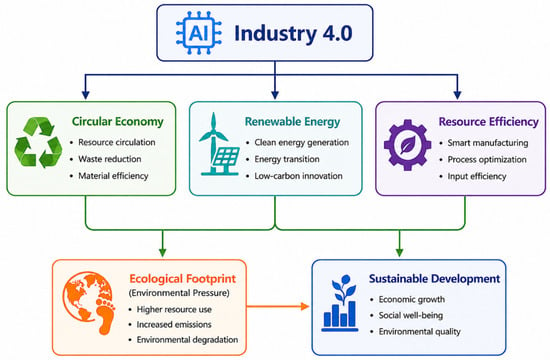
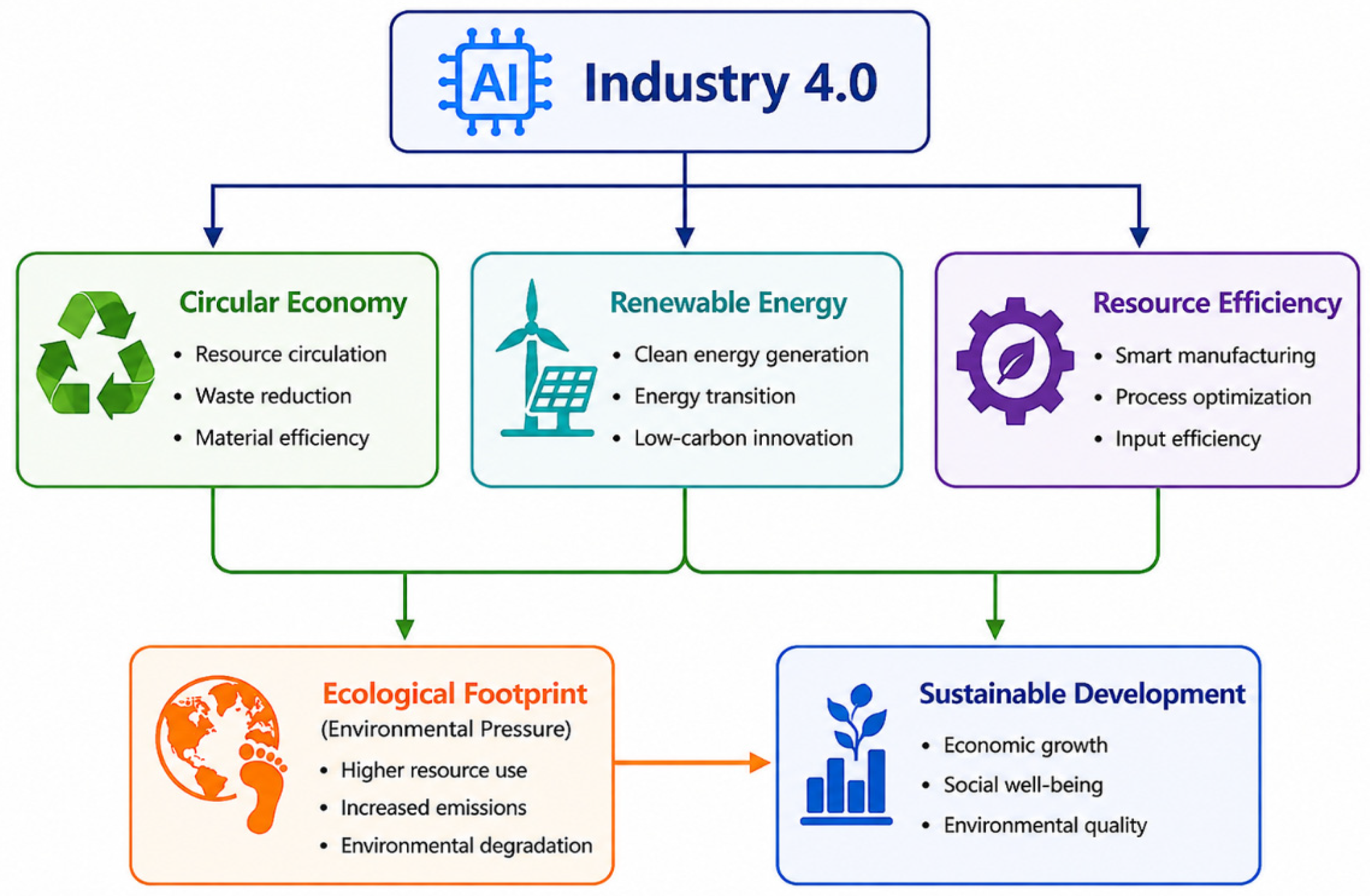
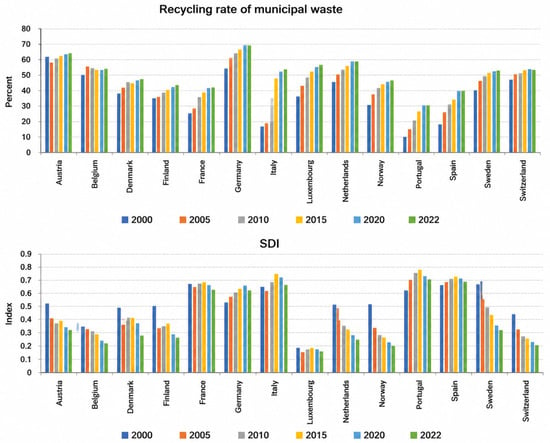
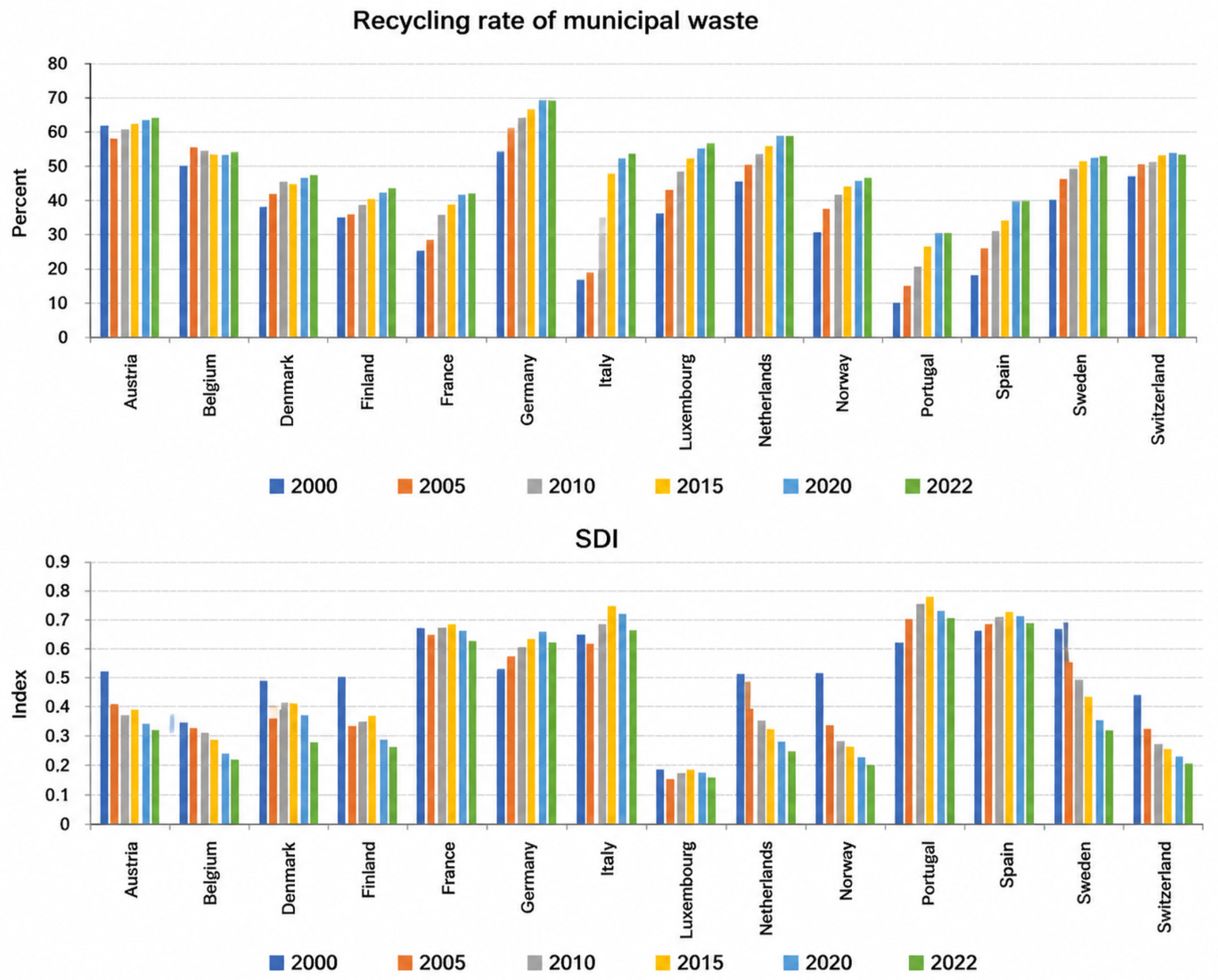
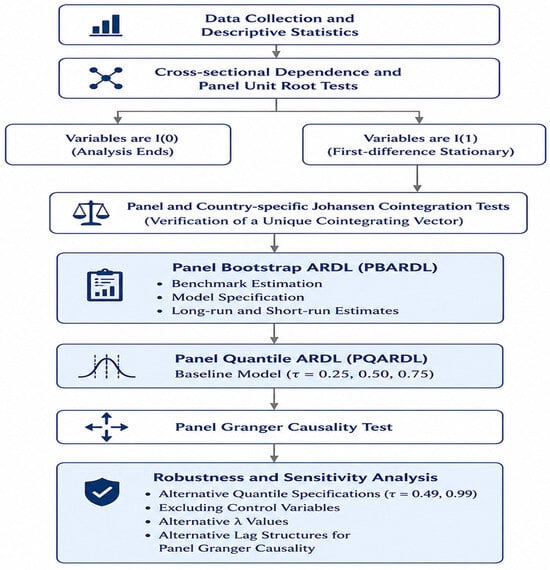
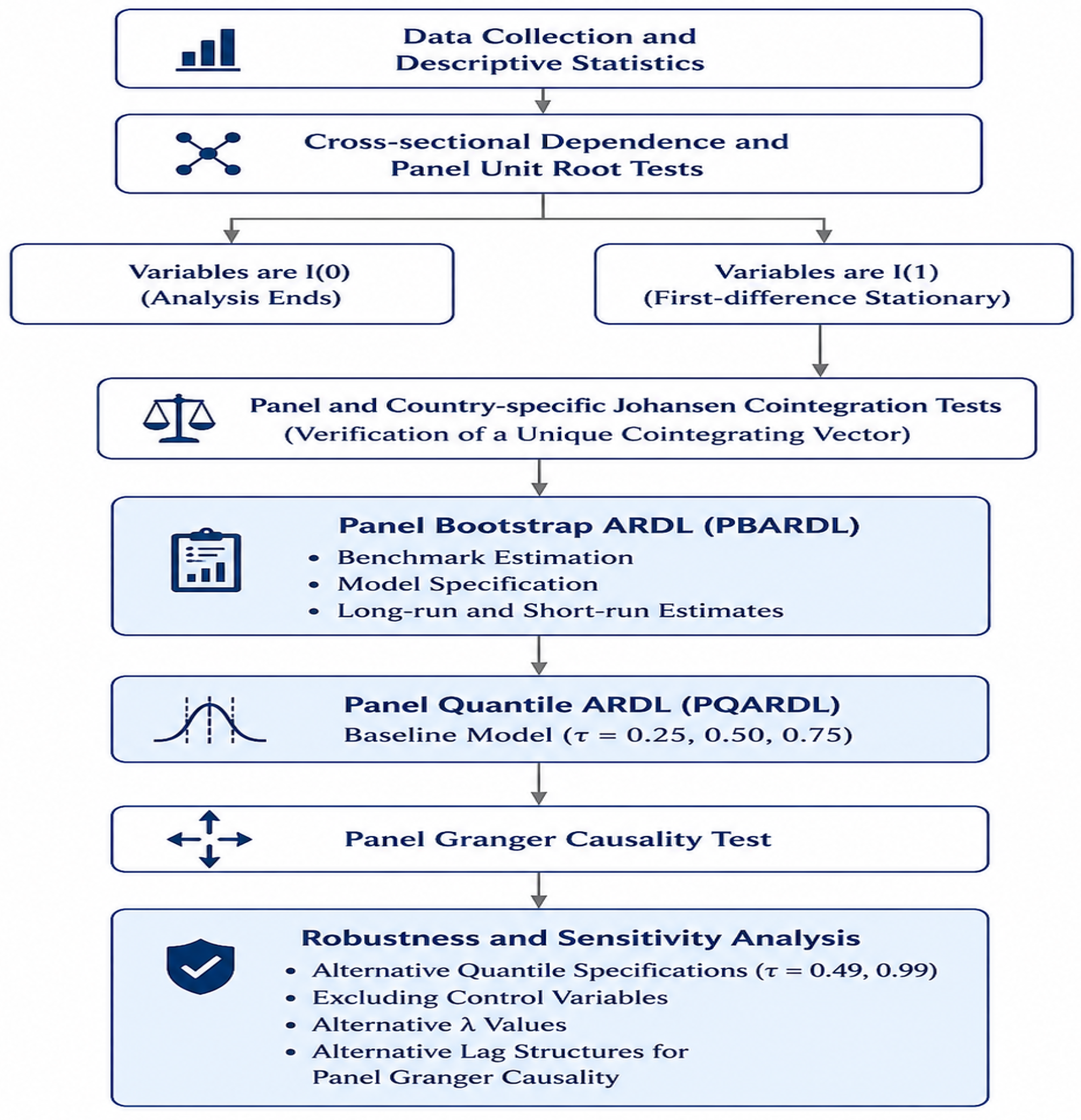
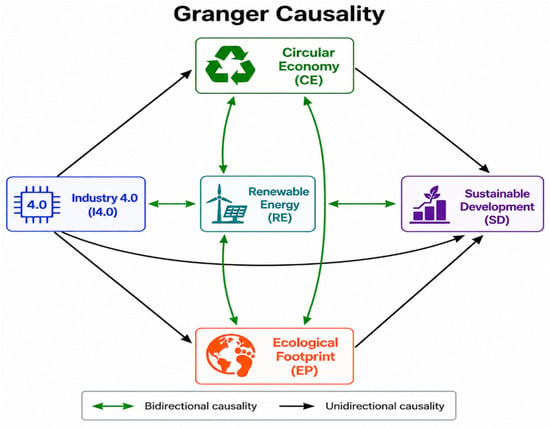
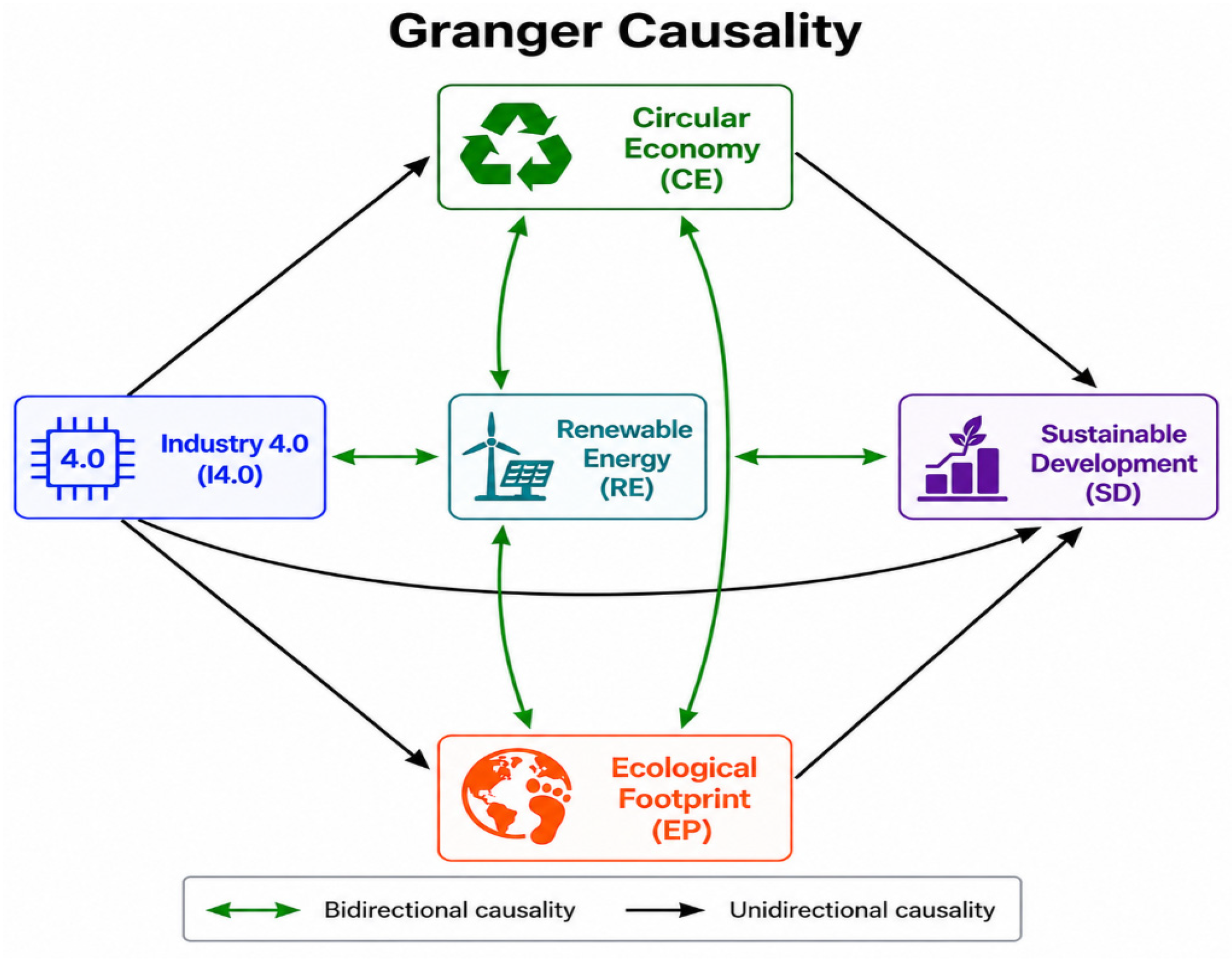

Disclaimer/Publisher’s Note: The statements, opinions and data contained in all publications are solely those of the individual author(s) and contributor(s) and not of MDPI and/or the editor(s). MDPI and/or the editor(s) disclaim responsibility for any injury to people or property resulting from any ideas, methods, instructions or products referred to in the content. |
© 2026 by the authors. Licensee MDPI, Basel, Switzerland. This article is an open access article distributed under the terms and conditions of the Creative Commons Attribution (CC BY) license.