


Abstract
The transition towards circular economy models is driving the transformation of wastewater treatment plants (WWTPs) from energy-intensive facilities into resource recovery systems capable of generating renewable energy. In this context, this study developed an integrated mass and energy balance methodology to assess sludge production, anaerobic digestion performance, biomethane recovery, and electricity generation in a full-scale urban WWTP. The proposed framework integrates the water treatment line, sludge processing line, and energy recovery system, combining primary and secondary sludge management with biogas upgrading and combined heat and power (CHP) generation. Representative operating parameters from the scientific literature were applied to a facility treating 204,000 m3 d−1 and serving approximately 425,000 population equivalents. The results showed that primary sludge accounted for approximately 70% of the volatile solids fed to the anaerobic digester. Methane production was estimated at 1.12 × 10³ kg CH4 d−1, corresponding to a biogas production of 2.40 × 10³ m3 d−1. Under two alternative valorisation scenarios, the maximum recovered biomethane flow was 1.48 × 10³ m3 d−1, whereas the maximum annual electricity generation potential through CHP was 1.9 × 10⁶ kWh. These findings highlight the potential of integrated sludge valorisation strategies to enhance renewable energy recovery and support the transition of WWTPs towards energy-efficient and low-carbon resource recovery facilities.
1. Introduction
Urban wastewater treatment is essential for protecting public health and aquatic ecosystems; however, it is also associated with significant energy consumption [1] and greenhouse gas (GHG) emissions [2]. Wastewater treatment plants (WWTPs) are among the largest municipal energy consumers [3], with substantial electricity requirements for aeration, pumping, and sludge management processes [4]. In the context of increasing energy costs, climate change mitigation targets [5], and decarbonization policies, improving the energy performance [6] of WWTPs has become a strategic priority worldwide.
Recent advances in sustainable wastewater management have promoted a transition from conventional treatment facilities toward Water Resource Recovery Facilities (WRRFs), where wastewater is no longer regarded as a waste stream but as a valuable source of water, energy, and nutrients [7]. This paradigm shift is closely aligned with the principles of the circular economy, which emphasize resource efficiency, waste minimization, and the recovery of valuable materials and energy from residual streams [8].
Among the available resource recovery technologies, anaerobic digestion of sewage sludge represents one of the most mature and widely implemented solutions. In addition to reducing sludge volume and stabilizing organic matter, anaerobic digestion enables the production of biogas, a renewable energy carrier primarily composed of methane and carbon dioxide. The generated biogas can be directly utilized in combined heat and power (CHP) systems or upgraded to biomethane [9] for grid injection, vehicle fuel applications, or other advanced energy uses [10]. Consequently, anaerobic digestion plays a central role in the integration of waste-to-energy strategies within modern WWTPs.
Recent studies have demonstrated that integrating anaerobic digestion with biogas upgrading and combined heat and power (CHP) systems can significantly improve energy recovery, reduce external energy demand, and support the transition towards energy-neutral wastewater treatment plants operating under circular economy principles [11,12].
Despite these advances, there remains a need for integrated yet practical modelling approaches capable of simultaneously evaluating sludge production, volatile solids degradation, methane generation, biomethane recovery, and electricity production within a unified framework. Such models can support the assessment and optimisation of energy recovery strategies in wastewater treatment plants, contributing to improved resource valorisation and the implementation of circular economy principles [13].
Unlike existing plant-wide WWTP simulation models, which generally require extensive operational datasets, model calibration, and dynamic process simulation for detailed process optimisation, the proposed methodology was conceived as a simplified steady-state engineering framework for preliminary assessment.
It integrates wastewater treatment, sludge management, anaerobic digestion, biomethane upgrading, and CHP-based energy recovery into a single mass and energy balance model using representative design and operating parameters rather than extensive plant-specific datasets. Consequently, the framework enables the rapid evaluation and comparison of alternative energy recovery pathways during the early stages of feasibility studies and plant design.
A comparison between representative integrated WWTP modelling approaches reported in the literature and the proposed framework is presented in Table 1.
Table 1.
Comparison of representative integrated wastewater treatment plant modelling approaches and the proposed framework.
The objective of this study is to develop an integrated mass and energy balance modelling framework for the preliminary assessment of energy recovery from wastewater sludge through anaerobic digestion and biogas valorisation within a circular economy perspective. The proposed methodology quantifies sludge production, biogas and biomethane generation, and electricity production through combined heat and power (CHP) systems by integrating the water treatment line, sludge processing line, and energy recovery system into a unified framework using representative design and operational parameters. Its applicability is illustrated through its implementation in a full-scale municipal wastewater treatment plant operating as a biofactory. The proposed approach provides a practical engineering tool for evaluating resource recovery potential and supports decision-making aimed at improving energy efficiency, renewable energy generation, and the transition towards circular wastewater management.
2. Materials and Methods
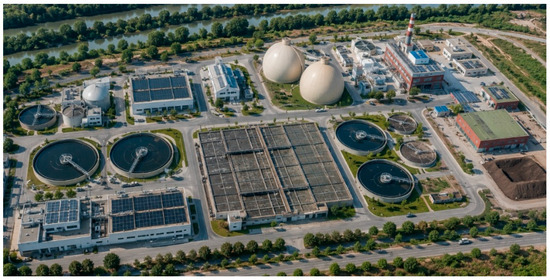
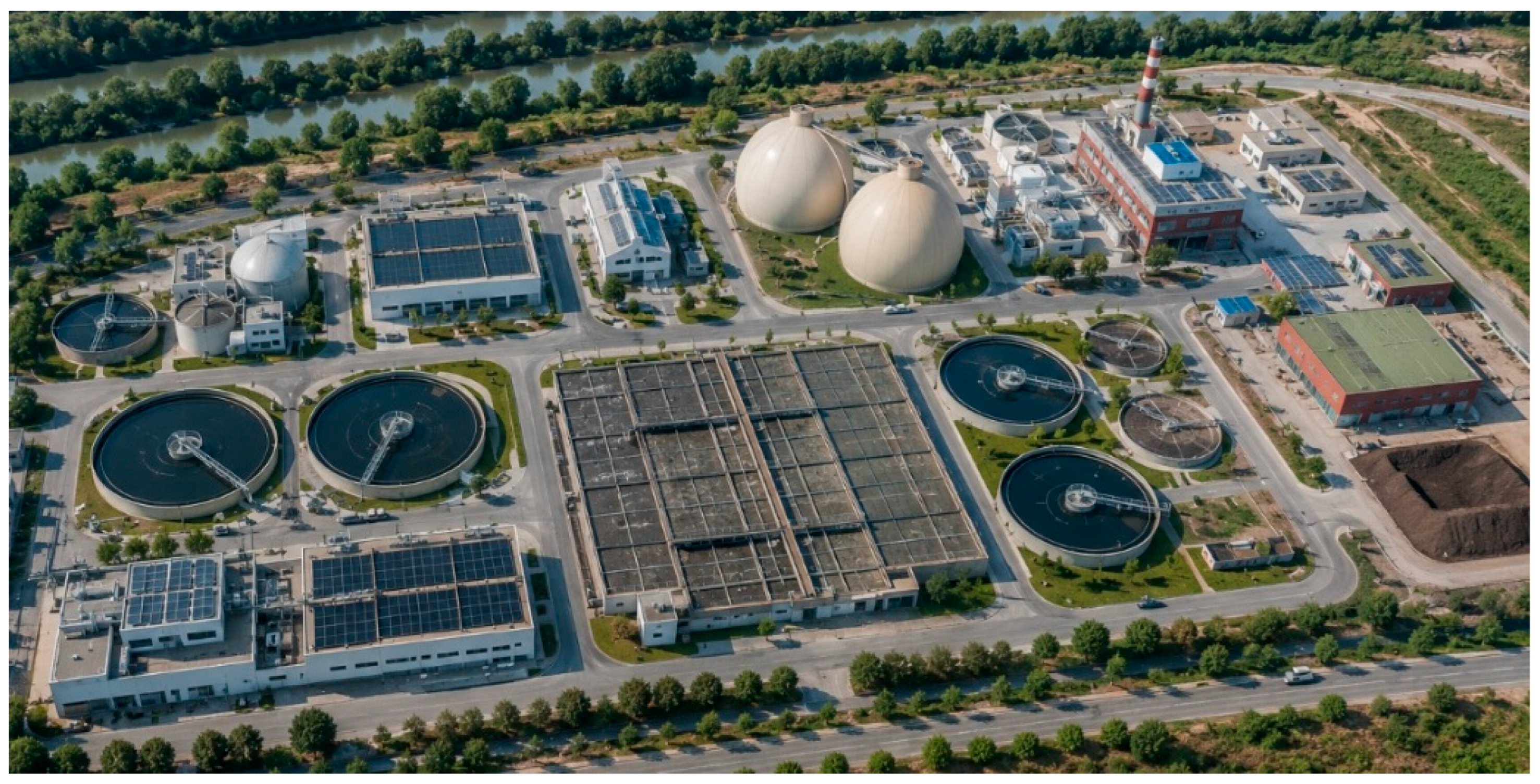
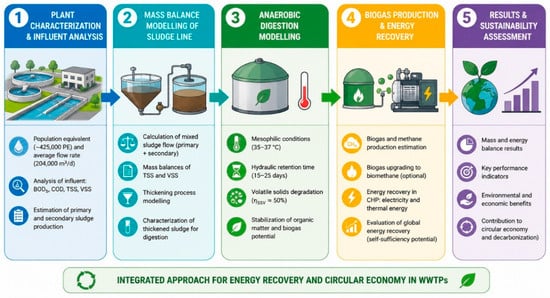
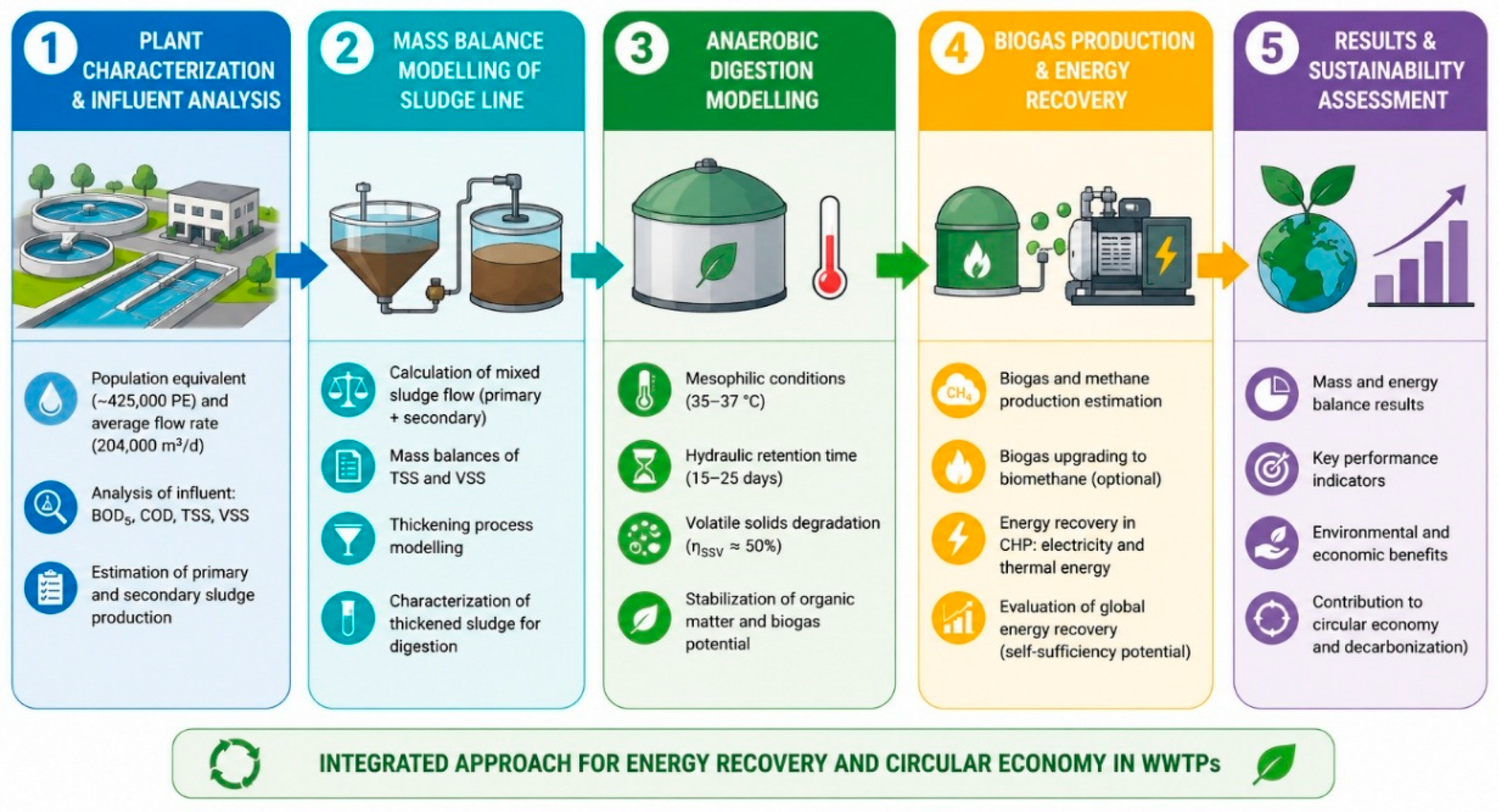
ChatGPT (OpenAI, GPT-5.5) was used to improve the graphical presentation of Figure 1, which depicts Biofactoría Sur, located in Granada, Spain, and to assist in the preparation of the schematic representations shown in Figure 2 and Figure 3. Its use was limited to enhancing the graphical layout, clarity, and visual presentation of the illustrations.
Figure 1.
Aerial view of Biofactoría Sur (Granada, Spain), the full-scale municipal WWTP used in this study.
Figure 2.
Methodological framework for assessing sludge production, anaerobic digestion, biomethane recovery, and energy generation in wastewater treatment plants.
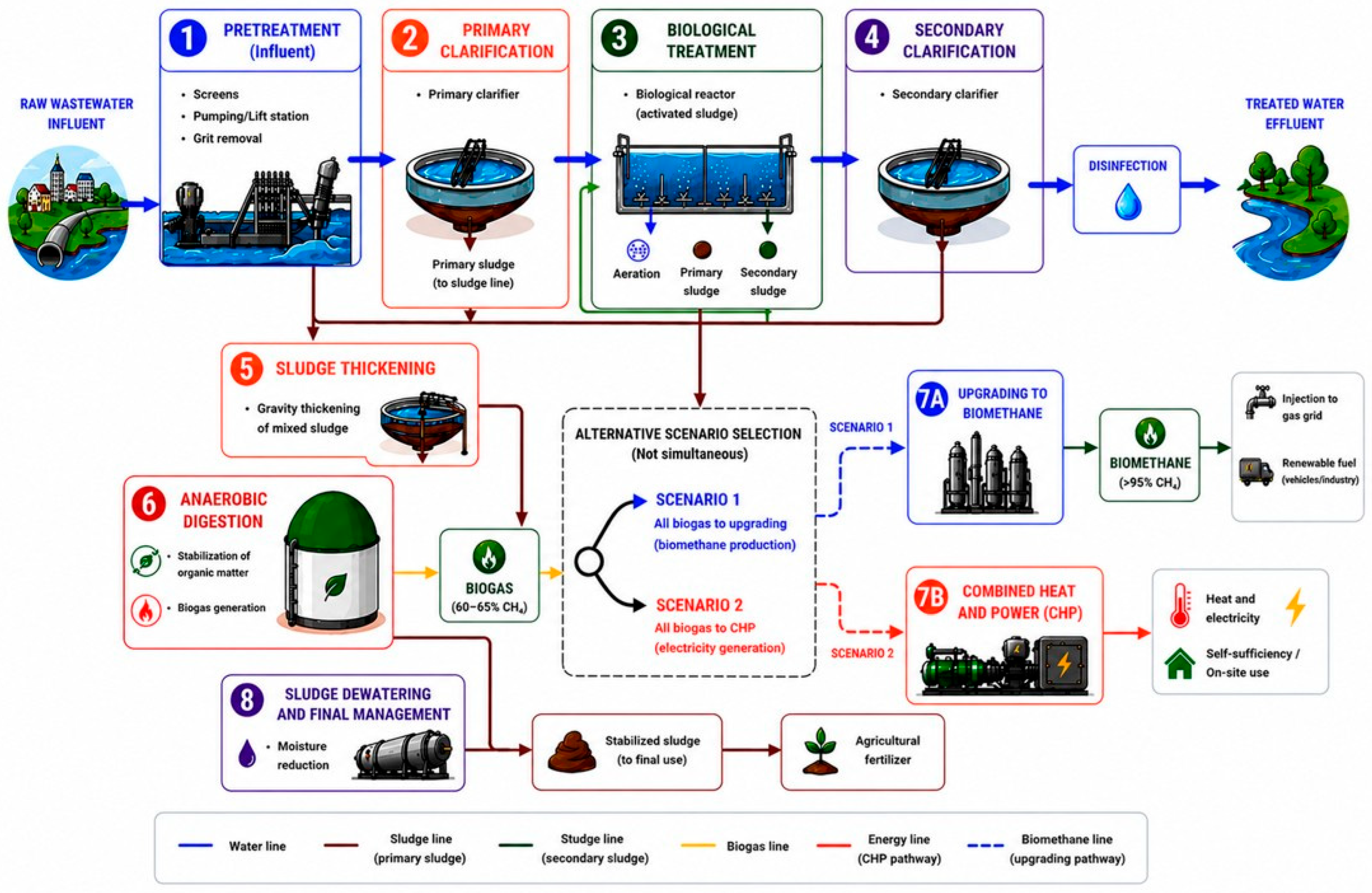
Figure 3.
Integrated wastewater treatment, sludge management, anaerobic digestion, and energy recovery pathways considered in the proposed modelling framework.
2.1. Case Study
The proposed modelling framework was applied to the WWTP Sur (Biofactoría Sur), located in Granada (Spain) and operated by Emasagra (Figure 1), the public water utility serving the city of Granada and its metropolitan area.
The facility serves approximately 425,000 population equivalents (PE) and treats an average wastewater flow of approximately 204,000 m3 d−1. The model was developed using representative operational data and design parameters corresponding to this full-scale facility. The calculated results were subsequently compared with values reported in the scientific literature for municipal WWTPs of similar size and configuration.
The WWTP comprises primary clarification, conventional activated sludge treatment, sludge thickening, anaerobic digestion, biogas upgrading, and combined heat and power (CHP) generation. As one of the biofactories operated by Emasagra, the facility is designed to maximize resource recovery and improve energy self-sufficiency through sludge valorization and renewable energy production. The main design and operating parameters adopted in the modelling framework are summarized in Table 2.
Table 2.
Main characteristics of the studied wastewater treatment plant.
2.2. System Description and Modelling Framework
The proposed methodology is based on an integrated mass and energy balance framework that combines the water treatment line, sludge treatment line, and energy recovery line within a single modelling approach. The system includes preliminary treatment, primary sedimentation, biological treatment by the activated sludge process, secondary clarification, sludge thickening, anaerobic digestion, biogas upgrading, and combined heat and power (CHP) generation.
Primary and secondary sludge streams are collected, thickened, and fed to a mesophilic anaerobic digester, where organic matter stabilization and biogas generation occur. The produced biogas can either be converted into electricity through CHP units or upgraded to biomethane for advanced energy applications. The overall methodological framework adopted in this study is illustrated in Figure 2.
The model was developed under steady-state conditions using representative operational parameters commonly reported for large urban wastewater treatment plants. Mass balances were applied to quantify sludge production and volatile solids flows, whereas energy balances were employed to estimate methane generation, biomethane recovery, and electricity production.
The produced biogas was evaluated through two alternative and mutually exclusive valorisation pathways: (i) upgrading to biomethane and (ii) on-site electricity generation through a combined heat and power (CHP) unit. Therefore, the biomethane and electricity results represent the maximum recovery potential of each individual pathway and should not be interpreted as simultaneous energy outputs.
2.3. Influent Characterization and Sludge Production Estimation
The characterization of the influent wastewater was based on conventional physicochemical parameters widely used in wastewater engineering, including biochemical oxygen demand (BOD5), chemical oxygen demand (COD), total suspended solids (TSS), and volatile suspended solids (VSS). These parameters define the organic loading entering the treatment plant and constitute the basis for estimating sludge production and energy recovery potential. The main characteristics of the selected full-scale case study are summarized in Table 3.
Table 3.
Main influent characteristics and operating parameters used in the model.
Primary sludge production (ṁPS) was calculated through a solids mass balance across the primary clarifier according to Equation (1):
where Qm is the average treated flow rate (m3 d−1), TSS is the influent total suspended solids concentration (kg m−3), and ηTSS is the TSS removal efficiency of the primary settling process.
ṁPS = Qm · TSS · ηTSS
Secondary sludge production was estimated from the amount of biodegradable organic matter removed in the activated sludge system. The sludge production coefficient (ζ) was defined as the mass of suspended solids generated per unit of removed BOD5.
The coefficient depends on the heterotrophic yield coefficient (H), the endogenous decay coefficient (ɓ), and the sludge retention time (θC), which are key operational parameters governing biomass growth and decay in activated sludge systems.
Under steady-state conditions, secondary sludge production was determined as Equation (2):
where ṁDBOD5,elim represents the daily BOD5 removal rate.
The sludge production coefficient was calculated using conventional activated sludge kinetics, allowing the influence of operating conditions on biomass generation to be incorporated into the model. The corresponding formulation is presented in Equations (3) and (4):
Equation (4) provides a theoretical estimate of net biological solids generation under representative steady-state activated sludge conditions [12]. For the subsequent sludge-line mass balances, representative operating secondary sludge flow rate and solids concentration values from the selected full-scale WWTP were adopted as input conditions for the anaerobic digestion and energy recovery calculations.
2.4. Model Assumptions and Parameters
The proposed framework was developed under steady-state operating conditions and relies on representative average values commonly reported for municipal wastewater treatment plants equipped with anaerobic digestion systems. The adopted assumptions were selected to provide a transparent and reproducible methodology while maintaining consistency with the operational conditions of full-scale WWTPs.
The model was developed under the following assumptions:
- Influent flow rate and wastewater characteristics remain constant.
- All treatment units operate under steady-state conditions.
- Sludge retention time remains constant throughout the biological treatment process.
- Volatile solids degradation efficiency in the anaerobic digester is constant.
- The methane content of the produced biogas remains constant.
- Methane recovery efficiency during biogas upgrading remains constant.
- CHP electrical conversion efficiency remains constant.
- Seasonal variability and short-term operational disturbances are considered negligible.
These assumptions allow the development of a simplified integrated mass and energy balance framework suitable for preliminary assessment of sludge valorization and energy recovery potential in urban WWTPs. The principal model parameters adopted in the calculations are summarized in Table 4. The implications of these assumptions are further discussed in the limitations and sensitivity analysis sections.
Table 4.
Main model parameters adopted in the integrated mass and energy balance framework.
2.5. Sludge Line Mass Balance Modelling
Steady-state mass balances were applied throughout the sludge treatment line to quantify sludge flow rates, solids concentrations, and organic matter loads at different process stages. The mixed sludge flow rate (QFM) was calculated as the sum of the primary sludge flow rate (QF1) and the secondary sludge flow rate (QF2) (Equation (5)):
QFM = QF1 + QF2
The total suspended solids (TSS) concentration in the mixed sludge stream was determined through a weighted mass balance (Equation (6)):
QF1 · TSSF1 + QF2 · TSSF2 = QFM · TSSFM
Similarly, the volatile suspended solids (VSS) concentration was calculated according to (Equation (7)):
where TSS and VSS represent total and volatile suspended solids concentrations, respectively.
QF1 · VSSF1 + QF2 · VSSF2 = QFM · VSSFM
The thickened sludge flow rate (QFE) was subsequently determined by applying a solids balance across the thickening unit (Equation (8)):
where TSSFE is the total suspended solids concentration in the thickened sludge stream. Typical values ranging from 20 to 40 g L−1 were considered, consistent with conventional gravity thickening systems commonly employed in municipal WWTPs [23,25].
QFM · TSSFM = QFE · TSSFE
The volatile solids concentration after thickening was calculated using (Equation (9)):
QFM · VSSFM = QFE · VSSFE
The resulting sludge characteristics provide the input for anaerobic digestion and determine methane generation and energy recovery potential. When representative operating data from a full-scale facility are available, these values may be directly incorporated into the sludge-line mass balances to better represent plant operating conditions.
2.6. Anaerobic Digestion and Methane Production Model
Anaerobic digestion was modelled as a mesophilic process operating at temperatures between 35 and 37 °C and hydraulic retention times ranging from 15 to 25 days. These operating conditions are representative of full-scale anaerobic digesters treating municipal sewage sludge [26,27].
The volatile suspended solids load entering the digester was calculated as (Equation (10)):
where ṁVSS,in is the mass flow rate of volatile suspended solids fed to the anaerobic digester.
ṁVSS,in = QFE · VSSFE
A volatile solids degradation efficiency of ηVSS = 0.50 was adopted, corresponding to typical performance values reported for mesophilic sludge digesters [10,12,23]. Consequently, the mass flow of degraded volatile solids was estimated as (Equation (11)):
ṁVSS,deg = ηVSS · ṁVSS,in
Methane production was calculated from the amount of degraded volatile solids. First, degraded VSS were converted into chemical oxygen demand (COD) equivalents using a conversion factor of 1.42 kg COD kg−1 VSS degraded. Subsequently, a methane yield of 0.25 kg CH4 kg−1 COD removed was applied. Combining both conversion factors, methane production was estimated as (Equation (12)):
ṁCH4 = 0.25 · 1.42·ṁVSS,deg
This formulation provides a simplified engineering estimate of methane generation and constitutes the basis for the subsequent biogas and energy recovery calculations.
2.7. Biogas Upgrading and Biomethane Recovery
For the biomethane valorisation scenario, the entire methane stream was assumed to be directed to the upgrading unit (fup = 1). Accordingly, no methane was simultaneously allocated to the CHP system in this scenario.
The produced biogas was assumed to consist primarily of methane and carbon dioxide. A representative methane content of 65% was adopted, consistent with values commonly reported for anaerobic digestion of municipal sewage sludge [10,23].
Biomethane production was estimated through a biogas upgrading process characterized by a methane recovery efficiency (ηrec). A recovery efficiency of 95% was assumed, which is representative of commercially available upgrading technologies [21,22].
The recovered methane flow rate was calculated as (Equation (13)) [28].
where fup· is the fraction of the methane stream allocated to biomethane upgrading, bg is the biogas production rate and χCH4,bg is the methane fraction in the raw biogas.
The upgraded gas stream obtained after purification was considered biomethane [20] and was assumed to meet the quality requirements for advanced energy applications, including grid injection and renewable fuel utilization.
2.8. Energy Recovery Through Combined Heat and Power Generation
For the CHP valorisation scenario, the entire methane stream was assumed to be supplied to the CHP unit (fup = 0). Therefore, the calculated electricity production represents an alternative to biomethane upgrading rather than an additional simultaneous energy output.
The energy recovery potential of the generated methane was assessed using a combined heat and power (CHP) system [24,29].
Electrical energy production was calculated according to (Equation (14)):
where (1 − fup) is the fraction of the methane stream allocated to the CHP unit, CH4 is the methane flow rate supplied to the CHP unit, LHVCH4 is the lower heating value of methane, and ηel is the electrical conversion efficiency.
Electrical efficiencies between 30% and 40% are typically reported for CHP systems operating with biogas. In this study, a representative value of 35% was adopted.
The proposed framework enables the quantification of electricity generation associated with sludge-derived biogas and supports the assessment of the energy recovery potential of the WWTP from a circular economy perspective.
3. Results and Discussion
Figure 3 presents the simplified process flow diagram of the wastewater treatment plant (WWTP) considered in this study. The system integrates the water treatment line, sludge treatment line, and energy recovery system associated with anaerobic digestion and biogas utilization.
The selected configuration represents a conventional full-scale municipal WWTP incorporating primary clarification, activated sludge treatment, anaerobic digestion, biogas upgrading, and combined heat and power (CHP) generation.
This process arrangement was adopted as the basis for the integrated mass and energy balance calculations developed in this study. Based on this configuration, mass and energy balances were applied to estimate sludge production, volatile solids degradation, methane generation, biomethane recovery, and electricity production.
The integrated modelling framework provides a systematic assessment of the role of urban WWTPs as resource recovery facilities operating under circular economy principles. By simultaneously considering sludge generation and energy valorisation pathways, the model allows the evaluation of the overall contribution of wastewater treatment processes to renewable energy production and resource efficiency.
3.1. Secondary Sludge Production and Solids Balance
Based on the average treated flow rate (Qm = 204,000 m3 d−1) and an average BOD5 removal of 274.9 g m−3, the daily removed organic load was estimated at approximately ṁBOD5,elim ≈ 5.61 × 10⁴ kg d−1.
Using the activated sludge production model and assuming a sludge retention time of 6 days, together with representative kinetic parameters for conventional activated sludge systems (H = 0.65 and ɓ = 0.08 d−1), a sludge production coefficient of ζ = 0.44 kg SS kg−1 BOD5 removed was obtained.
Equation (4) provides a theoretical estimate of net biological solids generation under the adopted steady-state conditions. However, the sludge-line mass balances require the representative secondary sludge stream entering anaerobic digestion. Accordingly, representative operating secondary sludge flow rate and solids concentration values from the selected full-scale WWTP were adopted. These values correspond to a secondary sludge solids flow of approximately 2.46 × 10³ kg SS d−1 and a sludge flow rate of 68.4 m3 d−1, yielding a total suspended solids concentration of approximately 36 kg SS m−3 and a VSS/TSS ratio of approximately 0.75, consistent with typical waste-activated sludge characteristics.
The mass balances performed along the sludge line yielded operating flow rates of QF1 = 141.2 m3 d−1, QF2 = 68.4 m3 d−1, and QFM = 209.6 m3 d−1. The corresponding volatile suspended solids concentrations were estimated as VSSF1 = 31.7 kg m−3 and VSSF2 = 26.9 kg m−3. Consequently, the volatile solids load entering the anaerobic digester was approximately ṁVSS,in ≈ 6.32 × 10³ kg VSS d−1. These representative operating values were subsequently used as the input conditions for the anaerobic digestion model and the corresponding methane and energy recovery calculations.
The results indicate that nearly 70% of the volatile solids fed to the digester originated from primary sludge. This finding highlights the critical role of primary sedimentation in maximizing energy recovery potential, since primary sludge generally contains a higher proportion of readily biodegradable organic matter than waste-activated sludge.
The obtained values fall within the ranges reported for full-scale WWTPs equipped with anaerobic digestion systems and further highlight the importance of efficient solids capture during primary treatment as a prerequisite for enhanced biogas production [19,30].
3.2. Methane Production and Energy Recovery Scenarios
Assuming a volatile solids degradation efficiency of ηVSS = 0.50, the mass of volatile solids degraded during anaerobic digestion was estimated as ṁVSS,deg ≈ 3.16 × 10³ kg d−1. Applying the adopted conversion factors from degraded volatile solids to COD and subsequently to methane, methane production was estimated at ṁCH4 ≈ 1.12 × 10³ kg CH4 d−1.
Expressed in volumetric terms, this corresponds to a methane production rate of CH4 ≈ 1.56 × 10³ m3 d−1 and a total biogas production of bg ≈ 2.40 × 10³ m3 d−1, assuming a methane content of 65%.
The obtained methane production is consistent with values reported for full-scale municipal WWTPs, supporting the technical consistency of the proposed modelling framework and representing a conservative estimate of the energy recovery potential.
Two alternative biogas valorization scenarios were then evaluated using the same methane production rate. In Scenario 1, the entire methane stream was upgraded to biomethane, resulting in a recovered biomethane flow of approximately 1.48 × 10³ m3 d−1. In Scenario 2, the entire methane stream was supplied to the CHP unit, yielding an electricity generation potential of approximately 5.2 × 10³ kWh d−1 (1.9 × 10⁶ kWh yr−1).
To further assess the consistency of the proposed modelling framework, the obtained methane production, biogas generation, and electricity recovery values were quantitatively compared with representative full-scale and modelling studies reported in the literature. As shown in Table 5, the predicted values fall within the ranges reported for comparable wastewater treatment plants, while differences are mainly associated with plant capacity, sludge characteristics, and the implementation of co-digestion strategies.
Table 5.
Comparison of methane production, biogas generation, and electricity recovery with representative wastewater treatment plant studies.
3.3. Energy Recovery Potential and Circular Economy Implications
Electrical energy generation was estimated using a methane lower heating value of 9.97 kWh m−3 and a CHP electrical efficiency of 35%. Under these conditions, the daily electricity production was Eel ≈ 5.2 × 10³ kWh d−1, corresponding to an annual electricity generation of approximately Eel,annual ≈ 1.9 × 10⁶ kWh yr−1.
It should be noted that the present modelling framework evaluates the overall energy recovery potential associated with the methane generated during anaerobic digestion. The biomethane upgrading pathway and CHP electricity generation are presented as alternative utilization scenarios for the recovered methane rather than simultaneous end-use options. Consequently, no double counting of the available methane is intended, and the proposed approach allows comparison of different energy recovery strategies depending on plant-specific operational objectives and infrastructure.
Although the calculations were performed under conservative operating assumptions, the results indicate the considerable energy recovery potential associated with sludge anaerobic digestion in full-scale WWTPs.
From an operational perspective, the recovered electricity could contribute significantly to reducing external energy demand and improving overall plant energy efficiency. This finding is particularly relevant given the growing interest in energy-neutral and low-carbon wastewater treatment systems.
The integration of anaerobic digestion, biogas upgrading, and CHP generation reinforces the transition from conventional wastewater treatment plants to resource recovery facilities capable of simultaneously delivering environmental protection, renewable energy production, and circular resource management.
Comparison with recent literature indicates that the proposed framework provides results that are consistent with reported values for volatile solids degradation, methane generation, and energy recovery in comparable WWTP configurations. The model therefore offers a practical and transparent tool for preliminary energy assessments and strategic planning of sludge valorisation pathways.
The estimated annual electricity production is within the range reported for large municipal wastewater treatment plants implementing anaerobic digestion and biogas valorisation strategies. Previous studies have demonstrated that the integration of anaerobic digestion with CHP systems can significantly reduce external electricity demand and contribute to the transition towards energy-neutral wastewater treatment facilities. Furthermore, the incorporation of biogas upgrading technologies increases operational flexibility by enabling biomethane production for grid injection or transportation applications. These findings support the growing role of wastewater treatment plants as multifunctional resource recovery facilities within circular economy and decarbonization frameworks.
3.4. Model Benchmarking and Practical Applicability
The proposed modelling framework was applied to the WWTP Sur (Biofactoría Sur) operated by Emasagra (Granada, Spain), a full-scale municipal wastewater treatment plant designed to serve approximately 425,000 population equivalents. Although the present study was not intended to reproduce plant operation through calibration against continuous monitoring data, the adopted operating conditions and design parameters correspond to those of the selected facility and are representative of conventional full-scale activated sludge plants incorporating anaerobic digestion and energy recovery.
Model consistency was assessed through comparisons with performance indicators reported for comparable full-scale municipal WWTPs available in the scientific literature. The predicted values for secondary sludge production, volatile solids degradation, methane generation, biomethane recovery and electricity production fall within the ranges commonly reported for facilities operating under mesophilic anaerobic digestion and CHP-based energy recovery.
This agreement supports the technical consistency of the proposed modelling framework and indicates that the simplified mass and energy balance approach provides representative estimates for preliminary engineering assessments.
Unlike detailed dynamic simulation models requiring extensive plant monitoring data and calibration procedures, the proposed methodology offers a transparent engineering tool that can be readily implemented during preliminary design studies, feasibility analyses and strategic planning of sludge valorisation systems. When plant-specific operational data are available, the framework can be directly adapted by replacing the representative input parameters with measured values, thereby improving prediction accuracy while preserving the overall modelling structure.
A broader comparison of the proposed methodology with representative full-scale municipal WWTPs reported in the literature is presented in Table 6.
Table 6.
Comparison of the present study with representative full-scale municipal WWTPs reported in the literature.
Table 6 shows that the predicted values obtained in this study fall within the ranges reported for comparable full-scale municipal WWTPs equipped with anaerobic digestion and energy recovery systems. This agreement supports the technical applicability of the proposed modelling framework for the preliminary assessment of energy recovery in municipal wastewater treatment plants.
3.5. Sensitivity Analysis
To evaluate the sensitivity of the proposed modelling framework, a simplified analysis was conducted by varying the four parameters that most strongly influence anaerobic digestion and energy recovery: volatile solids degradation efficiency (ηVSS), methane content in biogas (χCH4,bg), methane recovery during upgrading (ηrec), and CHP electrical efficiency (ηel). Each parameter was varied independently within representative literature ranges while keeping the remaining inputs constant.
The results indicate that volatile solids degradation has the greatest influence on methane production, whereas methane recovery and CHP electrical efficiency mainly affect biomethane and electricity generation, respectively. In all cases, the predicted values remained within the ranges reported for comparable full-scale municipal WWTPs, supporting the technical applicability of the proposed methodology for preliminary engineering assessments. The results of the simplified sensitivity analysis are summarized in Table 7.
Table 7.
Simplified sensitivity analysis of the principal model parameters.
The proposed modelling framework was developed under steady-state conditions using representative operating parameters and average influent characteristics. Consequently, temporal variations in wastewater composition, seasonal fluctuations, hydraulic loading, biological process dynamics, and operational disturbances were not explicitly considered. In addition, several conversion factors, including volatile solids degradation efficiency, methane content in biogas, methane recovery efficiency, and CHP electrical efficiency, were represented by fixed values derived from the scientific literature and design practice. The sensitivity analysis indicates that, although these parameters influence the predicted energy recovery potential, the overall results remain within the ranges reported for comparable full-scale municipal WWTPs. Future developments should incorporate plant-specific operational datasets, dynamic process modelling, and long-term monitoring data to further improve prediction accuracy and support real-time optimisation of sludge valorisation and energy recovery systems.
4. Conclusions
This study developed an integrated mass and energy balance methodology to assess sludge production, anaerobic digestion performance, biomethane recovery, and electricity generation in a full-scale municipal WWTP operating within a circular economy framework.
The proposed approach integrates the water treatment line, sludge processing line, anaerobic digestion, and alternative energy recovery pathways within a unified mass and energy balance framework. This integrated modelling scheme enables a systematic assessment of sludge production, methane generation, biomethane recovery, and CHP electricity generation in municipal wastewater treatment plants.
The modelling results indicated that primary sludge constitutes the dominant source of biodegradable volatile solids, accounting for approximately 70% of the volatile solids fed to the anaerobic digester and therefore exerting a major influence on methane generation.
Under the adopted operating conditions, the model predicted methane production of approximately 1.12 × 10³ kg CH4 d−1. The recovered methane can be directed either to CHP electricity generation or to biomethane upgrading, representing two alternative energy recovery pathways depending on plant operational objectives.
The present assessment indicates that anaerobic digestion remains one of the most effective pathways for converting wastewater-derived organic matter into renewable energy carriers, while biomethane upgrading provides additional opportunities for energy utilisation beyond on-site electricity production. These findings support the role of wastewater treatment plants as resource recovery facilities supporting renewable energy generation and circular economy strategies.
Although the model was developed under steady-state conditions using representative operating parameters, it provides a framework for preliminary engineering assessment of energy recovery in municipal wastewater treatment plants. The predicted results are consistent with values reported for comparable full-scale facilities. Future work should incorporate plant-specific operational data and dynamic operating conditions to further improve model accuracy and applicability.
Author Contributions
Conceptualization, L.M.V.-F. and B.S.-L.; Methodology, L.M.V.-F. and B.S.-L.; Validation, L.M.V.-F. and C.G.-O.; Formal Analysis, L.M.V.-F. and C.G.-O.; Investigation, L.M.V.-F. and B.S.-L.; Data Curation, L.M.V.-F. and C.G.-O.; Writing—Original Draft Preparation, L.M.V.-F. and B.S.-L.; Writing—Review and Editing, L.M.V.-F. and C.G.-O.; Visualization, C.G.-O.; Supervision, L.M.V.-F. and C.G.-O. All authors have read and agreed to the published version of the manuscript.
Funding
This research received no external funding.
Data Availability Statement
The original data presented in this study are included in the article. Additional information and supporting data are available from the corresponding author upon reasonable request.
Acknowledgments
During the preparation of this manuscript, the authors used ChatGPT (OpenAI, GPT-5.5) for English-language editing, drafting support, and the graphical preparation of schematic figures. The authors have reviewed and edited the output and take full responsibility for the content of this publication.
Conflicts of Interest
The authors declare no conflicts of interest.
Abbreviations
| b | Endogenous decay coefficient |
| Eel | Daily electrical energy production |
| Eel,annual | Annual electrical energy production |
| ṁBOD5,elim | Removed BOD5 load |
| ṁCH4 | Methane mass production |
| ṁFP/ṁSS | Primary/secondary sludge production |
| ṁVSS,deg | Degraded VSS mass flow |
| ṁVSS,in | VSS mass flow fed to the digester |
| LHVCH4 | Lower heating value of methane |
| PE | Population equivalent |
| QFE/QF1/QF2/QFM | Thickened/primary/secondary/mixed sludge flow rate |
| Qm | Average treated flow rate |
| TSSFE/TSSF1/TSSF2/TSSFM | TSS concentration in thickened/primary/secondary/mixed sludge |
| bg | Total biogas flow rate |
| CH4 | Volumetric methane flow rate |
| CH4,rec | Recovered biomethane flow rate |
| VSSFE/VSSF1/VSSF2/VSSFM | VSS concentration in thickened/primary/secondary/mixed sludge |
| YH | Heterotrophic yield coefficient |
| ζ | Sludge production coefficient |
| ηel | Electrical efficiency |
| ηrec | Methane recovery efficiency during upgrading |
| ηTSS | TSS removal efficiency |
| ηVSS | VSS degradation efficiency |
| θC | Sludge retention time |
| χCH4,bg | Methane fraction in biogas |
References
- Ramírez-Melgarejo, M.; Stringer, T. Wastewater treatment, energy consumption, and greenhouse gas emissions: An operational approach to comparing Barcelona and Mexico City. J. Environ. Manag. 2024, 353, 120175. [Google Scholar] [CrossRef] [Scilit] [PubMed]
- Parravicini, V.; Nielsen, P.H.; Thornberg, D.; Pistocchi, A. Evaluation of greenhouse gas emissions from the European urban wastewater sector, and options for their reduction. Sci. Total Environ. 2022, 838, 156322. [Google Scholar] [CrossRef] [Scilit] [PubMed]
- Longo, S.; d’Antoni, B.M.; Bongards, M.; Chaparro, A.; Cronrath, A.; Fatone, F.; Lema, J.M.; Mauricio-Iglesias, M.; Soares, A.; Hospido, A. Monitoring and diagnosis of energy consumption in wastewater treatment plants. A state of the art and proposals for improvement. Appl. Energy 2016, 179, 1251–1268. [Google Scholar] [CrossRef] [Scilit]
- Gu, Y.; Li, Y.; Yuan, F.; Yang, Q. Optimization and control strategies of aeration in WWTPs: A review. J. Clean. Prod. 2023, 418, 138008. [Google Scholar] [CrossRef] [Scilit]
- He, Y.; Li, Y.; Li, X.; Liu, Y.; Wang, Y.; Guo, H.; Hou, J.; Zhu, T.; Liu, Y. Net-zero greenhouse gas emission from wastewater treatment: Mechanisms, opportunities and perspectives. Renew. Sustain. Energy Rev. 2023, 184, 113547. [Google Scholar] [CrossRef] [Scilit]
- Li, L.; Wang, X.; Miao, J.; Abulimiti, A.; Jing, X.; Ren, N. Carbon neutrality of wastewater treatment—A systematic concept beyond the plant boundary. Environ. Sci. Ecotechnol. 2022, 11, 100180. [Google Scholar] [CrossRef] [Scilit] [PubMed]
- Guest, J.S.; Skerlos, S.J.; Barnard, J.L.; Beck, M.B.; Daigger, G.T.; Hilger, H.; Jackson, S.J.; Karvazy, K.; Kelly, L.; Macpherson, L.; et al. A New Planning and Design Paradigm to Achieve Sustainable Resource Recovery from Wastewater. Environ. Sci. Technol. 2009, 43, 6126–6130. [Google Scholar] [CrossRef] [Scilit] [PubMed]
- Kehrein, P.; van Loosdrecht, M.; Osseweijer, P.; Garfí, M.; Dewulf, J.; Posada, J. A critical review of resource recovery from municipal wastewater treatment plants—Market supply potentials, technologies and bottlenecks. Environ. Sci. Water Res. Technol. 2020, 6, 877–910. [Google Scholar] [CrossRef] [Scilit]
- Scarlat, N.; Dallemand, J.-F.; Fahl, F. Biogas: Developments and perspectives in Europe. Renew. Energy 2018, 129, 457–472. [Google Scholar] [CrossRef] [Scilit]
- Lima, D.; Appleby, G.; Li, L. A Scoping Review of Options for Increasing Biogas Production from Sewage Sludge: Challenges and Opportunities for Enhancing Energy Self-Sufficiency in Wastewater Treatment Plants. Energies 2023, 16, 2369. [Google Scholar] [CrossRef] [Scilit]
- Gu, Y.; Li, Y.; Li, X.; Luo, P.; Wang, H.; Robinson, Z.P.; Wang, X.; Wu, J.; Li, F. The feasibility and challenges of energy self-sufficient wastewater treatment plants. Appl. Energy 2017, 204, 1463–1475. [Google Scholar] [CrossRef] [Scilit]
- Henze, M.; Van Loosdrecht, M.C.M.; Ekama, G.A.; Brdjanovic, D. Biological Wastewater Treatment: Principles, Modelling and Design; IWA Publishing: London, UK, 2008. [Google Scholar] [CrossRef] [Scilit]
- Nika, C.; Gusmaroli, L.; Ghafourian, M.; Atanasova, N.; Buttiglieri, G.; Katsou, E. Nature-based solutions as enablers of circularity in water systems: A review on assessment methodologies, tools and indicators. Water Res. 2020, 183, 115988. [Google Scholar] [CrossRef] [Scilit] [PubMed]
- Gernaey, K.V.; van Loosdrecht, M.C.; Henze, M.; Lind, M.; Jørgensen, S.B. Activated sludge wastewater treatment plant modelling and simulation: State of the art. Environ. Model. Softw. 2004, 19, 763–783. [Google Scholar] [CrossRef] [Scilit]
- Jeppsson, U.; Pons, M.-N.; Nopens, I.; Alex, J.; Copp, J.; Gernaey, K.; Rosen, C.; Steyer, J.-P.; Vanrolleghem, P. Benchmark simulation model no 2: General protocol and exploratory case studies. Water Sci. Technol. 2007, 56, 67–78. [Google Scholar] [CrossRef] [Scilit] [PubMed]
- Pretel, R.; Robles, A.; Ruano, M.; Seco, A.; Ferrer, J. A plant-wide energy model for wastewater treatment plants: Application to anaerobic membrane bioreactor technology. Environ. Technol. 2016, 37, 2298–2315. [Google Scholar] [CrossRef] [Scilit] [PubMed]
- Zaborowska, E.; Czerwionka, K.; Makinia, J. Integrated plant-wide modelling for evaluation of the energy balance and greenhouse gas footprint in large wastewater treatment plants. Appl. Energy 2021, 282, 116126. [Google Scholar] [CrossRef] [Scilit]
- Grady, C.P.L., Jr.; Daigger, G.T.; Love, N.G.; Filipe, C.D.M. Biological Wastewater Treatment; CRC Press: Boca Raton, FL, USA, 2011. [Google Scholar] [CrossRef] [Scilit]
- Ferrer, I.; Passos, F.; Romero, E.; Vázquez, F.; Font, X. Optimising sewage sludge anaerobic digestion for resource recovery in wastewater treatment plants. Renew. Energy 2024, 224, 120123. [Google Scholar] [CrossRef] [Scilit]
- Angelidaki, I.; Treu, L.; Tsapekos, P.; Luo, G.; Campanaro, S.; Wenzel, H.; Kougias, P.G. Biogas upgrading and utilization: Current status and perspectives. Biotechnol. Adv. 2018, 36, 452–466. [Google Scholar] [CrossRef] [Scilit] [PubMed]
- Ardolino, F.; Cardamone, G.; Parrillo, F.; Arena, U. Biogas-to-biomethane upgrading: A comparative review and assessment in a life cycle perspective. Renew. Sustain. Energy Rev. 2021, 139, 110588. [Google Scholar] [CrossRef] [Scilit]
- Bauer, F.; Persson, T.; Hulteberg, C.; Tamm, D. Biogas upgrading—Technology overview, comparison and perspectives for the future. Biofuels Bioprod. Biorefin. 2013, 7, 499–511. [Google Scholar] [CrossRef] [Scilit]
- Tchobanoglous, G.; Stensel, H.D.; Tsuchihashi, R.; Burton, F.L.; Abu-Orf, M.; Bowden, G.; Pfrang, W.; Metcalf & Eddy (Eds.) Wastewater Engineering: Treatment and Resource Recovery, 5th ed.; McGraw-Hill Education: Columbus, OH, USA, 2014. [Google Scholar]
- Tsalas, N.; Golfinopoulos, S.K.; Samios, S.; Katsouras, G.; Peroulis, K. Optimization of Energy Consumption in a Wastewater Treatment Plant: An Overview. Energies 2024, 17, 2808. [Google Scholar] [CrossRef] [Scilit]
- Kamizela, T.; Kowalczyk, M. Sludge dewatering: Processes for enhanced performance. In Industrial and Municipal Sludge; Elsevier: Amsterdam, The Netherlands, 2019; pp. 399–423. [Google Scholar] [CrossRef] [Scilit]
- Cavinato, C.; Bolzonella, D.; Pavan, P.; Fatone, F.; Cecchi, F. Mesophilic and thermophilic anaerobic co-digestion of waste activated sludge and source sorted biowaste in pilot- and full-scale reactors. Renew. Energy 2013, 55, 260–265. [Google Scholar] [CrossRef] [Scilit]
- Mao, C.; Feng, Y.; Wang, X.; Ren, G. Review on research achievements of biogas from anaerobic digestion. Renew. Sustain. Energy Rev. 2015, 45, 540–555. [Google Scholar] [CrossRef] [Scilit]
- Cornejo, P.K.; Zhang, Q.; Mihelcic, J.R. Quantifying benefits of resource recovery from sanitation provision in a developing world setting. J. Environ. Manag. 2013, 131, 7–15. [Google Scholar] [CrossRef] [Scilit] [PubMed]
- Riley, D.M.; Tian, J.; Güngör-Demirci, G.; Phelan, P.; Villalobos, J.R.; Milcarek, R.J. Techno-Economic Assessment of CHP Systems in Wastewater Treatment Plants. Environments 2020, 7, 74. [Google Scholar] [CrossRef] [Scilit]
- Odirile, P.T.; Marumoloa, P.M.; Manali, A.; Gikas, P. Anaerobic Digestion for Biogas Production from Municipal Sewage Sludge: A Comparative Study between Fine Mesh Sieved Primary Sludge and Sedimented Primary Sludge. Water 2021, 13, 3532. [Google Scholar] [CrossRef] [Scilit]
- Stillwell, A.S.; Hoppock, D.C.; Webber, M.E. Energy Recovery from Wastewater Treatment Plants in the United States: A Case Study of the Energy-Water Nexus. Sustainability 2010, 2, 945–962. [Google Scholar] [CrossRef] [Scilit]

Disclaimer/Publisher’s Note: The statements, opinions and data contained in all publications are solely those of the individual author(s) and contributor(s) and not of MDPI and/or the editor(s). MDPI and/or the editor(s) disclaim responsibility for any injury to people or property resulting from any ideas, methods, instructions or products referred to in the content. |
© 2026 by the authors. Licensee MDPI, Basel, Switzerland. This article is an open access article distributed under the terms and conditions of the Creative Commons Attribution (CC BY) license.