


Abstract
Deep lacustrine rift basins present persistent challenges in hydrocarbon provenance determination, charging-history reconstruction, and migration pathway prediction within heterogeneous deep reservoirs. This study applies an integrated approach combining biomarker and light-hydrocarbon geochemistry, fluid-inclusion microthermometry, and two-dimensional migration modelling to the deep Eocene Dainan Formation in the southeastern Gaoyou Sag, Subei Basin. Based on 20 analytical entries from Dainan oils/reservoir samples and Funing Formation source-rock extracts, the results indicate mixed contributions from the E1f2 and E1f4 source intervals rather than a single-source origin. Maturity parameters place most oils within the early- to main-oil window, while hydrocarbon inclusions with dominantly blue fluorescence and homogenization temperatures of 85–110 °C are consistent with a dominant Sanduo-period charging episode. Integrated migration modelling identifies two accumulation styles: a northern fault-slope migration system and a southern Zhenwu fault-conduit system, with effective accumulation favoured by the coupling of active faults and connected sand bodies. The established genetic model offers a transferable framework for derisking exploration in analogous deep lacustrine rift basins.
1. Introduction
Deep and ultra-deep hydrocarbon exploration has become an increasingly important frontier for reserve growth as exploration moves toward deeper and more complex targets [1,2,3]. In lacustrine and continental rift basins worldwide, deeply buried reservoirs commonly involve near-source accumulation, multiple potential source intervals, complex charging histories, and structurally segmented migration pathways [4,5,6]. The rift basins of eastern China therefore provide a representative setting for examining these problems within deep continental successions. Nevertheless, these prospects are frequently complicated by substantial burial depths, complex charge histories, and pronounced reservoir heterogeneity, which obscure enrichment patterns and challenge established accumulation models. Accumulation mechanisms in these deep environments differ fundamentally from shallower systems [7,8], with key factors including sustained hydrocarbon generation and expulsion from source kitchens, deep burial-related diagenetic modification, and episodic fluid activity. A more precise understanding of hydrocarbon provenance, charge timing, and migration–accumulation processes is therefore essential to de-risk and effectively guide future deep exploration.
As a prolific hydrocarbon-bearing depression in the Subei Basin, the Gaoyou Sag has been the focus of extensive exploration, with numerous oilfields discovered and studied [9,10,11]. Previous research has largely established systematic accumulation models for mid-shallow sequences [4,12]. In contrast, the third submember of the Eocene Dainan Formation (E2d13), situated directly above the main source interval, has traditionally been considered a low-potential zone due to its significant burial depth, generally poor reservoir quality, and lack of structural traps—factors that have limited systematic investigation [13,14].
Recent drilling, however, has reported commercial oil flows from the E2d13 submember, revealing its untapped exploration potential. This discovery brings into focus three central unresolved questions. First, regarding hydrocarbon provenance, it remains unclear whether oils originate exclusively from the Paleocene Funing Formation (E1f4) or also receive contributions from secondary kitchens such as the Liulu and Qinlan sub-sags. Second, concerning charge history, contrasting models of single-phase versus multi-stage accumulation have been proposed, with fluid inclusion evidence from deep sag areas supporting the latter interpretation. Third, with respect to migration pathways, the mechanisms and predominant carrier systems—whether faults, sandstones, or their combination—that enable hydrocarbon entry into the E2d13 reservoir have yet to be delineated.
To address these three questions—source, charging episodes, and migration pathways—this study investigates the Eocene E2d13 submember in the southeastern Gaoyou Sag through an integrated analysis of oil geochemistry, fluid inclusion microthermometry, and two-dimensional migration modeling. The specific objectives are to: (1) constrain the origin of the Dainan Formation oils and evaluate the contribution of different Funing Formation source intervals and kitchen areas; (2) reconstruct the dominant charging episode and its timing; (3) delineate the main migration pathways and assess the coupled roles of faults and sandstone carrier beds; and (4) establish a migration–accumulation model for predicting favorable exploration targets. The main contribution of this study is to reinterpret the deeply buried E2d13 reservoir as a near-source accumulation system charged by different Funing Formation source intervals and controlled by the coupling between charging history and fault–sandstone carrier connectivity. By integrating oil-source correlation, fluid-inclusion constraints, and migration modeling, the study provides a locally calibrated framework for reducing exploration risk in the Gaoyou Sag and a comparative reference for analogous deeply buried lacustrine rift systems.
2. Geological Setting
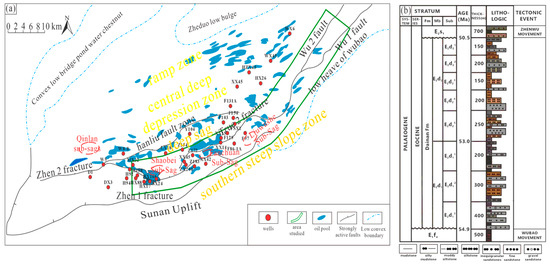
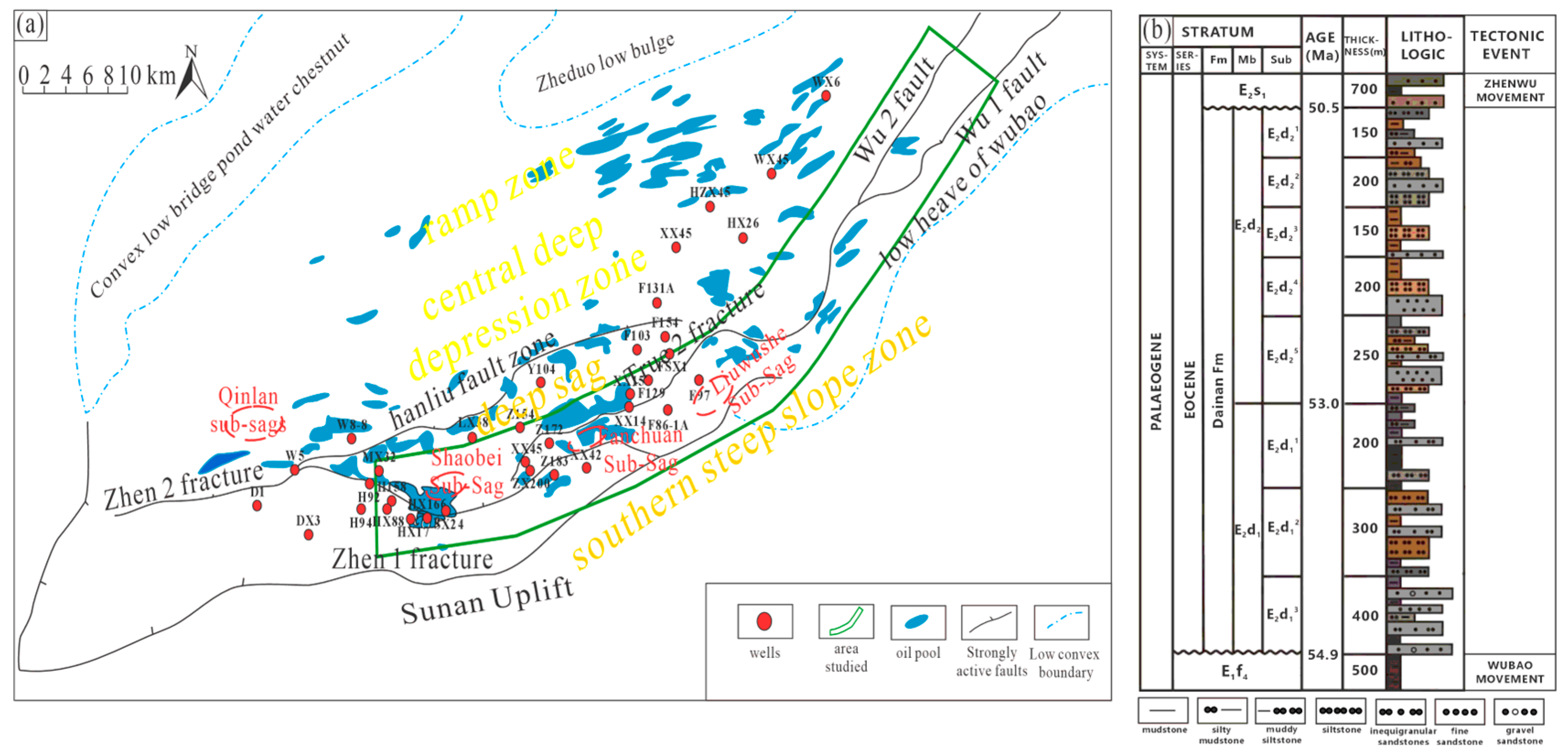
The Subei Basin is a major rift-depression basin in eastern China, covering an area of approximately 3.5 × 10⁴ km2 [15]. Within this basin, the Gaoyou Sag occupies the central-southern part of the Dongtai Depression and trends NE with an elongate geometry. It is bounded to the south by the Southern Jiangsu Uplift, to the north (via the Zhetuo Low Uplift) by the Jianhu Uplift, to the east by the Baiju Sag, to the southeast (across the Wubao Low Uplift) by the Qintong Sag, and to the west (along the Lingtangqiao Low Uplift) by the Jinhu Sag (Figure 1) [13]. Dominated by its southern boundary fault system, the sag exhibits a half-graben architecture with a steep, fault-bounded southern margin and a gently dipping northern slope. This structure permits subdivision into three secondary tectonic zones: a southern steep-slope (fault-terrace) zone, a central deep-subsag zone, and a northern gentle-slope (ramp) zone [8]. Formed by differential block subsidence during the Late Cretaceous Yizheng and Paleocene Wubao tectonic movements, the sag is dustpan-shaped, measuring approximately 100 km in length (E-W), 25–30 km in width (N–S), and about 2670 km2 in area [16].
Figure 1.
Study area and a brief table of stratigraphic development of the Paleogene Dainan Formation in Gaoyou Sag. (a) Location and structural framework of the Gaoyou Sag within the Subei Basin, showing the major tectonic zones. (b) Stratigraphic column of the Paleogene Dainan Formation in the Gaoyou Sag.
The tectonic-sedimentary evolution of the Gaoyou Sag comprises two principal stages: an initial fault-controlled rifting phase followed by a regional thermal-sag phase. The syn-rift stage extended from the deposition of the Cretaceous Taizhou Formation through the Paleogene Sanduo Formation. Subsequently, the post-rift sag stage began in the early Neogene and continues to the present. The stratigraphic column includes, from base to top, the Mesozoic Chishan Formation (K1c) and Taizhou Formation (K2t), overlain by the Cenozoic Funing Formation (E1f), Dainan Formation (E2d), Sanduo Formation (E2s), and Yancheng Formation (E2y) [13]. The Liulu and Qinlan sub-sags, previously referred to as “secondary kitchens”, are localized depocenters within the Funing Formation (specifically the E1f2 and E1f4 source intervals); they do not represent independent source rock units distinct from the Funing Formation. The Dainan Formation is subdivided into a lower First Member (E2d1) and an upper Second Member (E2d2). The E2d1 is further partitioned into three sub-members (E2d11, E2d12, E2d13), while the E2d2 consists of five sub-members (E2d21 to E2d25) (Figure 1). Comprising a syn-rift succession, the Dainan Formation unconformably overlies the hydrocarbon-rich Funing Formation. Its sub-members progressively onlap this regional unconformity, with thickness varying from nearly 2000 m in the central deep subsag to markedly thinner intervals on the northern gentle slope, reflecting differential subsidence during rift-basin infill [17].
The Paleocene Funing Formation consists of four members. The second (E1f2) and fourth (E1f4) members are composed predominantly of dark gray to black shales and mudstones with total organic carbon (TOC) contents ranging from 1.5% to 3.5%, representing the principal source rocks in the Gaoyou Sag [13,15]. In contrast, the Eocene Dainan Formation comprises alternating sandstones, siltstones, and mudstones deposited in deltaic to lacustrine environments. The third sub-member of the first member (E2d13), the focus of this study, is characterized by fine- to medium-grained sandstones with an average porosity of 8–12% and permeability of 0.5–5 mD, defining a tight to low-porosity reservoir interval. Sandstone bodies within this sub-member are laterally discontinuous but locally exhibit favorable porosity where preserved primary intergranular pores are enhanced by dissolution of unstable detrital grains.
3. Samples and Methods
A total of 14 E2d1 oil or reservoir-oil analytical entries from 13 wells were selected as the primary geochemical dataset for this study, with two E2d2 crude oils and four Funing Formation source-rock extract entries included for stratigraphic comparison and oil-source correlation (Table 1). Sample wells were strategically chosen to encompass the primary structural units of the southeastern Gaoyou Sag, including the northern gentle slope, central deep subsag, and southern Zhenwu fault belt [9,10]. This selection provides spatial coverage across the main hypothesized hydrocarbon migration pathways and accumulation areas. Sample X-X45 was analyzed in duplicate because of its anomalous molecular composition and evidence of severe biodegradation. While the sample set is constrained by the availability of wells penetrating the deep Dainan Formation reservoirs, the dataset captures the known geographical and structural variability relevant to the studied petroleum system.
Table 1.
Biomarker data of oils from Eocene Dainan Formation, Southeastern Gaoyou Sag.
3.1. Crude Oil Light Hydrocarbons
Light hydrocarbon (C5–C12) analysis was performed on 10 whole-oil samples from the Dainan Formation oil dataset using an Agilent 8890 Gas Chromatograph (Agilent Technologies, Santa Clara, CA, USA) equipped with a Flame Ionization Detector (GC-FID). These samples represent the subset of oils used for whole-oil light-hydrocarbon analysis within the broader analytical dataset summarized in Table 1. Separation was achieved using an HP-PONA capillary column (50 m × 0.20 mm × 0.50 μm; Agilent Technologies, Santa Clara, CA, USA). The GC oven was programmed from 35 °C, with an initial hold of 5 min, to 300 °C at defined heating rates. The FID was maintained at 310 °C, and hydrogen served as the carrier gas at a constant flow rate of 1.2 mL/min. This analysis provided distributions of n-alkanes and iso-alkanes for maturity assessment and oil-family correlation.
Saturated hydrocarbon biomarker analysis was conducted using an Agilent 8890 Gas Chromatograph coupled with an Agilent 5977B Mass Selective Detector (GC–MS; Agilent Technologies, Santa Clara, CA, USA). An HP-5MS UI capillary column (30 m × 0.32 mm × 0.25 μm; Agilent Technologies, Santa Clara, CA, USA) was used for separation. The mass spectrometer was operated in Selected Ion Monitoring (SIM) mode to enhance sensitivity for specific biomarker classes. The characteristic fragment ions monitored were: m/z 85 for n-alkanes, m/z 191 for terpanes (hopanes and tricyclic terpanes), and m/z 217 for steranes (regular and diasteranes). The ion source temperature was set at 230 °C. This methodology enabled the precise characterization of terpane and sterane distributions for oil-source correlation and depositional environment interpretation.
3.2. Saturated Hydrocarbon Gas Chromatography-Mass Spectrometry
Saturated hydrocarbon fractions were isolated from the crude-oil samples and Funing Formation source-rock extracts listed in Table 1 using liquid column chromatography. Approximately 100 mg of each oil or extract sample was loaded onto a glass column packed with activated silica gel (100–200 mesh). The saturated fraction was eluted with n-hexane (40 mL), collected, and concentrated under a gentle nitrogen stream.
Biomarker analysis was performed using an Agilent 8890 Gas Chromatograph coupled with an Agilent 5977B Mass Selective Detector (GC–MS). Separation was achieved using an HP-5MS UI capillary column (30 m × 0.32 mm × 0.25 μm). High-purity helium (≥99.999%) served as the carrier gas at a constant flow rate of 1.0 mL/min. Injection was conducted in split mode (75:1), with a volume of 1.0 μL and an injector temperature of 300 °C. The GC oven temperature program was as follows: 100 °C for 2 min, followed by heating at 4 °C/min to 310 °C and holding for 30 min. The transfer line and ion source temperatures were maintained at 280 °C and 230 °C, respectively.
Data acquisition was performed in Selected Ion Monitoring (SIM) mode after a solvent delay of 5 min, targeting fragment ions for n-alkanes (m/z 85), terpanes including tricyclic terpanes and hopanes (m/z 191), and steranes (m/z 217). The mass spectrometer was calibrated using perfluorotributylamine (PFTBA). Biomarker identifications were based on relative retention times and comparisons with published mass spectral data and available standards. The duplicate analyses of X-X45 were retained in the biomarker dataset but were treated separately when evaluating alteration-sensitive maturity parameters.
3.3. Fluid Inclusion
Fluid inclusions typically exhibit elliptical, spherical, or irregular geometries with diameters ranging from 2 to 32 μm. These inclusions serve as records of diagenetic and hydrocarbon accumulation-stage fluids, preserving geological and geochemical information on paleo-hydrocarbon charging conditions. The homogenization temperatures of hydrocarbon inclusions represent reservoir temperatures during hydrocarbon emplacement. Their peak values can reflect the period when hydrocarbon migration into the reservoir reached maximum intensity and the phase during which the volume of hydrocarbons injected into the reservoir attained its peak.
Core sampling was carried out in the E2d1 interval in the Gaoyou Sag. The core samples were prepared as double-sided polished sections with a thickness of approximately 60 μm. The petrographic characteristics of fluid inclusions were examined using a ZEISS microscope (Carl Zeiss AG, Oberkochen, Germany) equipped with transmitted and ultraviolet light sources. Uniform fluorescence signatures were defined as hydrocarbon inclusions exhibiting broadly consistent blue fluorescence under UV excitation, with comparable fluorescence intensity and spectral characteristics across the fluid-inclusion assemblage. These fluorescence characteristics were used, together with unimodal homogenization-temperature distributions, as indicators consistent with a dominant charging event, while recognizing that subtle multi-stage charging or closely spaced mixing events may not be fully resolved. Microthermometric measurements were conducted on a Linkam THMS-G600 heating-freezing stage (Linkam Scientific Instruments Ltd., Tadworth, Surrey, UK), with temperature measurement errors maintained within ±2 °C above 100 °C and ± 0.2 °C below 50 °C. Homogenization temperatures were determined using a heating rate of 0.1 °C/min. All analyses were performed in a controlled laboratory environment at 25 ± 0.5 °C and 65 ± 5% relative humidity to reduce environmental interference.
3.4. Numerical Simulation
To constrain the relative contribution of fault-related and sandstone-carrier migration, two-dimensional numerical modelling was conducted within the structural–stratigraphic framework of the southeastern Gaoyou Sag. The geological model incorporated the principal fault zones, Dainan Formation reservoir intervals, and underlying Funing Formation source intervals as the main geological domains. Model configuration was constrained by structural interpretation, stratigraphic correlation, sandbody distribution, and oil-bearing intervals documented in the study area, allowing the simulated migration pathways to be evaluated against the observed accumulation pattern.
Hydrocarbon migration through porous reservoir and carrier-bed domains was represented by Darcy-type flow, whereas fault-related migration was parameterized according to interpreted fault activity and conductive or sealing behavior. Petrophysical properties, including porosity, permeability, and relative sandstone connectivity, were assigned on the basis of compiled reservoir data and Dainan Formation sandbody interpretation. Hydrocarbon input was linked to the Funing Formation source intervals, which constitute the principal source rocks in the Gaoyou Sag. Boundary conditions were defined according to the stratigraphic relationship between the Funing source intervals and the overlying Dainan reservoirs, together with the regional pressure framework.
Model outputs, including migration directions and hydrocarbon saturation distributions, were compared with oil-bearing intervals, fault–sandbody configurations, and known accumulation zones. Fault activity and sandstone connectivity were treated as the principal variables controlling migration efficiency. Following regional calibration from the Subei Basin and project-scale geological interpretation, fault activity of approximately 20 m/Ma and sandstone connectivity of approximately 25% were adopted as screening criteria for favorable migration pathways. The principal uncertainties arise from the two-dimensional representation of a heterogeneous three-dimensional petroleum system, variations in sandstone connectivity, uncertainty in fault conductivity, and limited constraints on paleo-pressure evolution. Accordingly, the modelling results are interpreted as a constrained assessment of migration pathway plausibility within the available geological framework.
4. Results
4.1. n-Alkanes and Isoprenoids
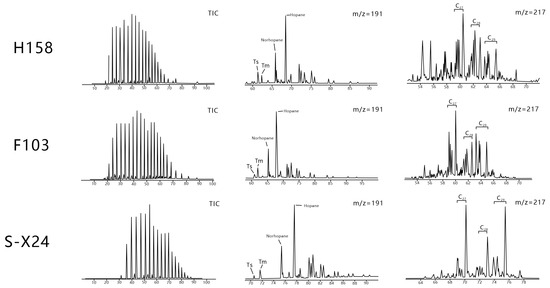
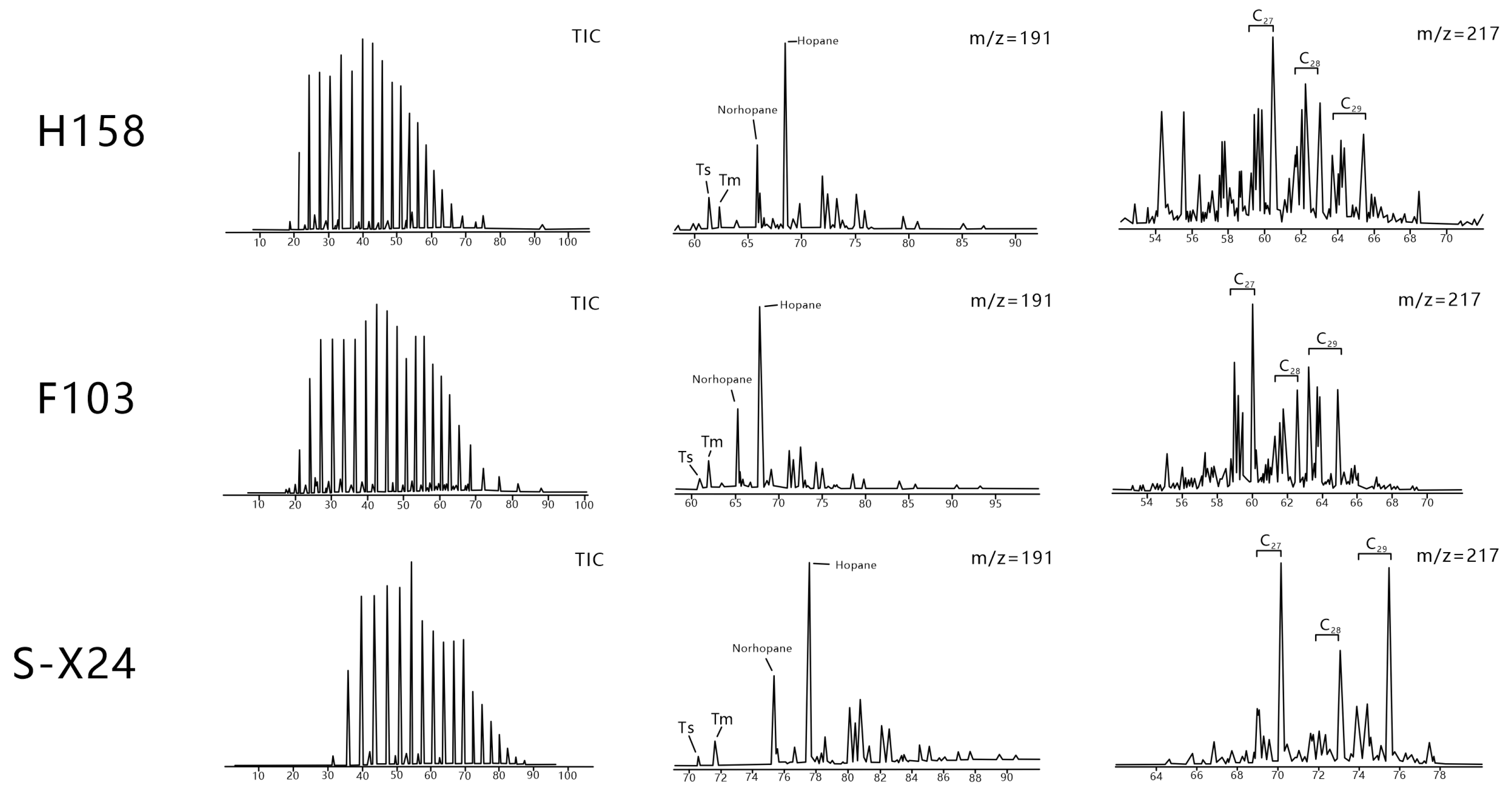
Analysis of saturated hydrocarbon gas chromatograms indicates that the crude oils are characterized by n-alkanes in the range of n-C15 to n-C30, along with the isoprenoid hydrocarbons pristane (Pr) and phytane (Ph). Figure 2 presents the representative chromatograms for this section, including the total ion chromatogram (TIC) for overall saturated hydrocarbon distribution, the m/z 191 mass chromatogram for tricyclic terpanes and pentacyclic triterpanes, and the m/z 217 mass chromatogram for steranes; relevant bulk and molecular parameters are summarized in Table 1. Most oils display a unimodal n-alkane profile. The main peak carbon number (MPC) for oils in the central and eastern parts of the sag predominantly falls between C22 and C23, as represented by samples such as F103, F129, and Y104, indicating a dominance of medium-molecular-weight components. In contrast, oils from the western margin, such as H92 and Z172, show a slightly lighter MPC of C22. The absence of a significant odd-over-even predominance, as indicated by low OEP values of 0.96–1.22, is consistent with a mature organic matter source. Pr/Ph ratios vary from 0.55 to 1.12, with an average value of 0.71, suggesting deposition of the related source organic matter under suboxic to anoxic conditions.
Figure 2.
TIC, m/z 191 and m/z 217 chromatograms of biomarker compounds.
Sample X-X45 was analyzed in duplicate to verify its anomalous molecular composition. The replicate analyses yielded consistently low Pr/Ph ratios and elevated Ph/n-C18 values, confirming that the unusual isoprenoid and n-alkane distributions are genuine sample characteristics rather than analytical artifacts. These features are attributed to severe secondary alteration, most likely biodegradation. Accordingly, X-X45 is treated as an altered sample in the interpretation of n-alkane and isoprenoid parameters and is not used as a primary constraint for quantitative maturity assessment based on alteration-sensitive ratios.
4.2. Tricyclic and Pentacyclic Terpanes
Distributions of terpanes, derived from m/z 191 mass chromatograms, display broadly comparable assemblage patterns across the study area, supporting a genetic affinity among the analyzed oils. All samples contain tricyclic terpanes (TT), with the C20TT/C23TT and C24TT/C26TT ratios showing considerable variation, ranging from 0.31 to 2.88 and 0.24 to 3.52, respectively. Relatively elevated tricyclic terpane abundances, as observed in samples such as F103 and LX44, are generally consistent with variable contributions of aquatic algal/bacterial organic matter within lacustrine source facies.
The pentacyclic terpane assemblage is dominated by C30 17α(H),21β(H)-hopane. The Ts/Tm ratio, which is sensitive to both thermal maturity and depositional facies, varies between 0.37 and 1.29. Samples from the central deep sag, including Xi-X14 and Y103X, tend to have higher Ts/Tm values (>1.0), suggesting relatively greater thermal maturity and/or facies-related variation in the source organic matter. The C29Ts/C30H ratio also exhibits significant variability, ranging from 0.06 to 2.40. Sample F103 shows a notably high C29Ts/C30H ratio of 2.40, whereas sample LX44 yields a low value of 0.07, indicating marked heterogeneity in terpane-based source and depositional signals. The hopane-to-sterane ratio (H/S), defined as C30 αβ-hopane/C29 ααα 20R sterane, also varies widely. Notably, sample LX44 exhibits an exceptionally high H/S value of 73.10, which is distinct from its low C29Ts/C30H ratio. This decoupling indicates that individual terpane and sterane-related parameters capture different aspects of organic input, bacterial contribution, and depositional conditions, and should therefore not be reduced to a single source-facies indicator. Because sample X-X45 shows evidence of severe secondary alteration, its terpane parameters are retained as flagged qualitative constraints rather than as primary quantitative criteria in subsequent source-correlation assessment.
4.3. Steranes
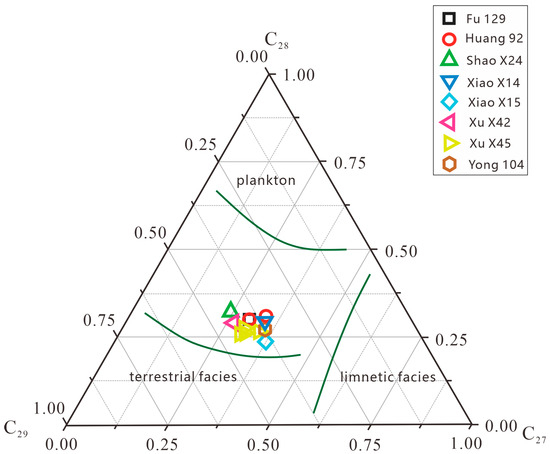
Sterane distributions, analyzed using m/z 217 mass chromatograms, provide constraints on organic matter input and depositional setting. The relative abundances of C27, C28, and C29 regular steranes were determined and are presented on a ternary diagram. Data points cluster along the C27–C29 join, with C29 steranes slightly predominating over C27 steranes. The C27/C29 sterane ratios range from 0.7 to 1.3, with oils from the central sag grouping around a value of approximately 1.0. This pattern is consistent with mixed aquatic and terrigenous organic matter input, without a clear dominance of either algal/bacterial or higher-plant precursors.
The absolute percentages of C29 steranes range from 33.3% to 46.4%, whereas C27 steranes range from 30.3% to 44.9%. The resulting pattern, in which C29 ≈ C27 > C28, is characteristic of lacustrine-related oils with variable contributions from aquatic organic matter and terrigenous higher-plant material. None of the samples show a strong predominance of C27 steranes, which would be expected for a purely algal-dominated source input. The sterane composition is relatively uniform among oils from the central sag, whereas oils from the slope and fault-terrace zones show greater variability. This spatial variability provides an additional biomarker constraint for evaluating source-facies heterogeneity and possible source mixing in the subsequent oil-source correlation.
5. Discussion
5.1. Crude Oil Parent Material Types and Secondary Changes
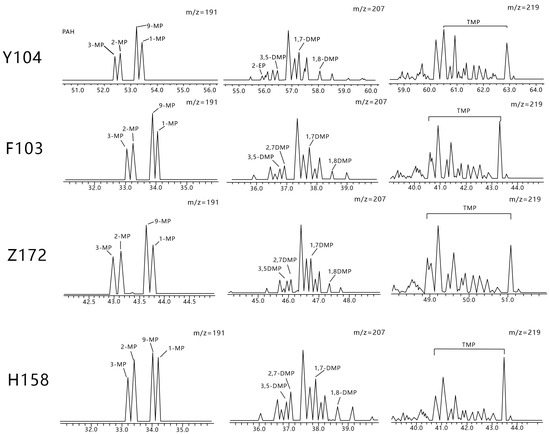
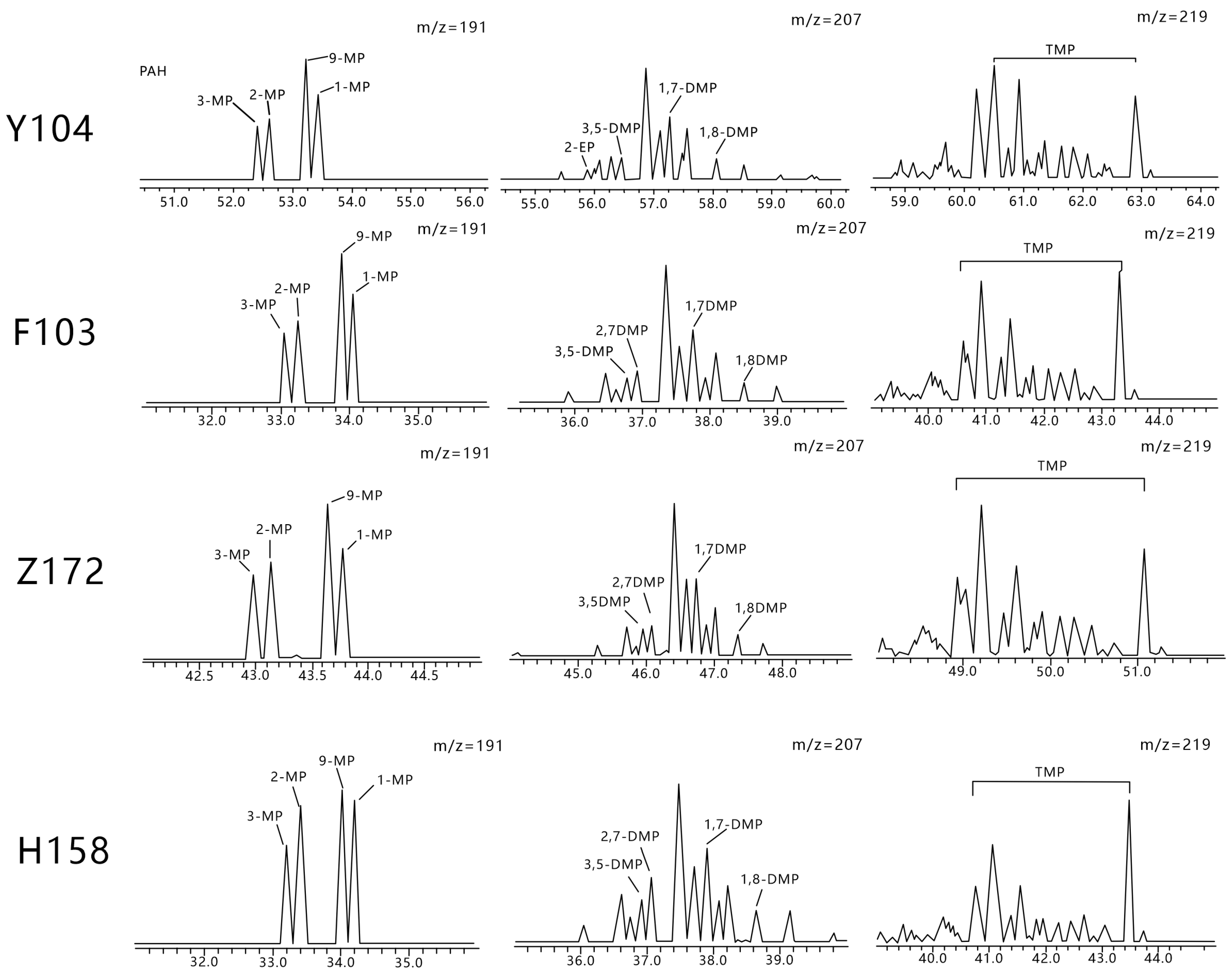
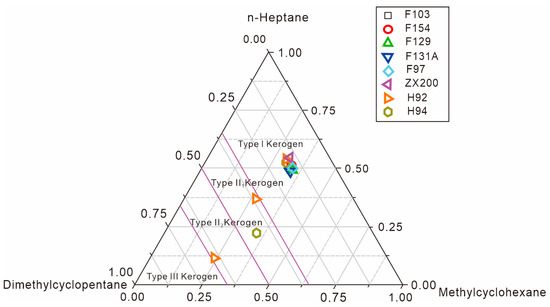
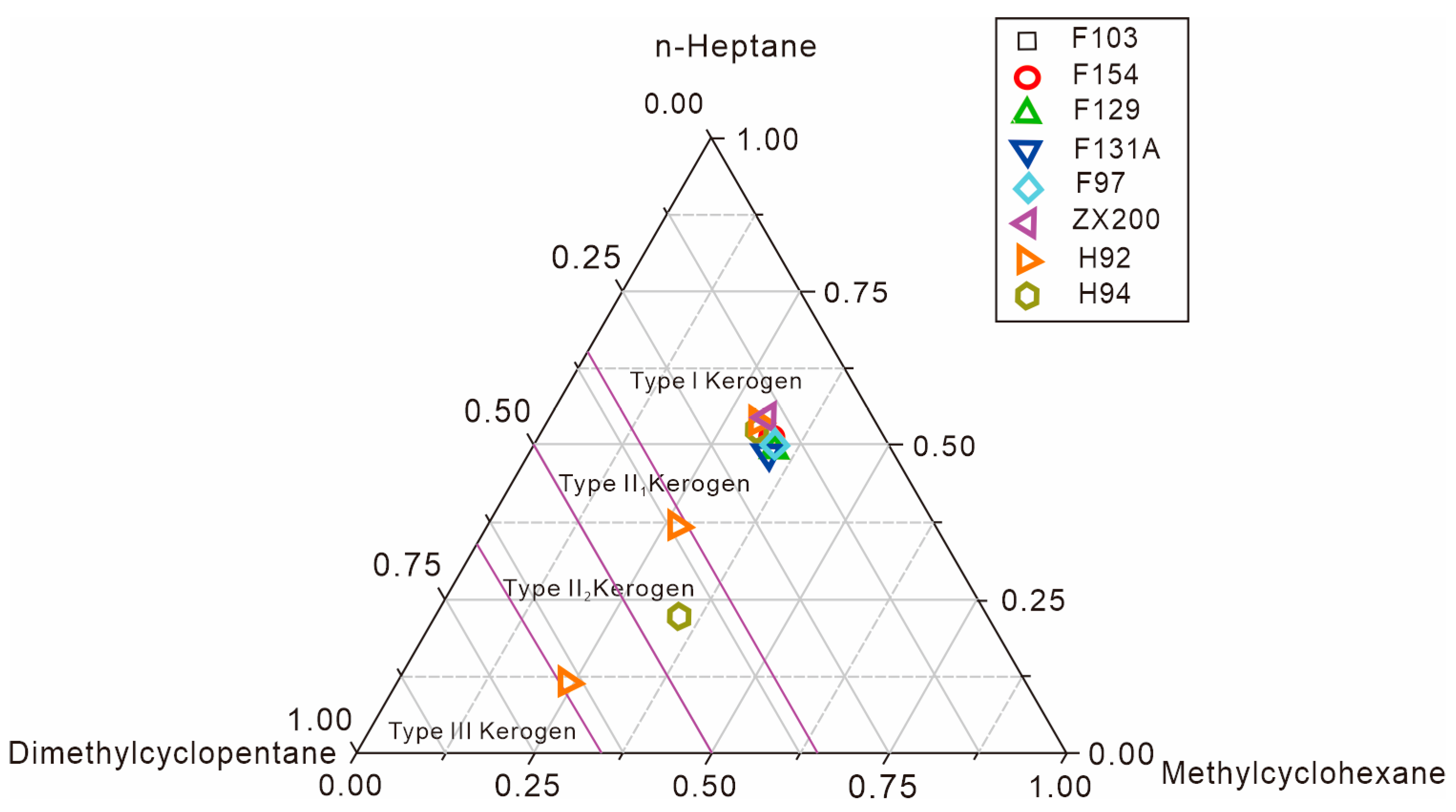
The aromatic compound distributions (Figure 3) provide supplementary information on thermal maturity and secondary alteration, complementing the light-hydrocarbon and sterane-based parameters discussed below.The ternary diagram of C5–C7 light hydrocarbons (Figure 4) shows that most samples plot within the fields of Type I–II kerogen, with only minor trends toward Type III [18]. This distribution indicates a predominance of oil-prone organic matter, with a limited contribution from gas-prone or more terrigenous input. Samples from Wells Fu 103, Fu 154, Fu 129, and Fu 131A form a tight cluster, suggesting a relatively consistent hydrocarbon composition across the study area. These results indicate that the light hydrocarbons in the crude oils of the Dainan Formation are primarily derived from Type I–II organic matter, which has strong hydrocarbon generation potential.
Figure 3.
Aromatic compound spectrum.
Figure 4.
Ternary diagram of C5–C7 light hydrocarbon composition for crude oils from Eocene Dainan Formation, Southeastern Gaoyou Sag.
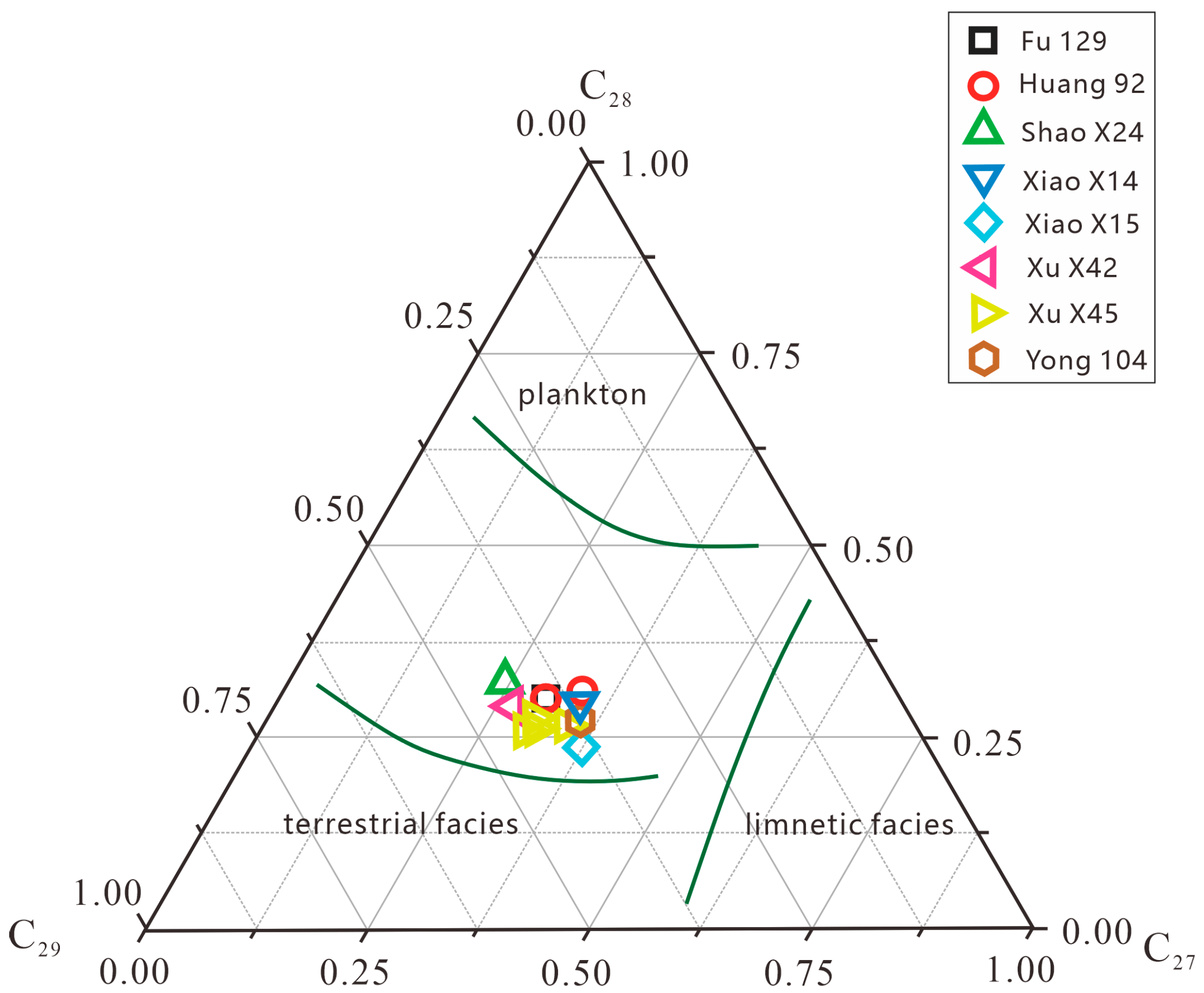
The C27–C28–C29 regular sterane ternary diagram (Figure 5) shows that all samples plot along the C27–C29 join, with C29 steranes slightly dominant over C27 steranes and very low C28 abundances. None of the samples fall within the plankton-dominated field. This pattern indicates a mixed organic matter input derived from both aquatic and terrigenous sources, with no single source type dominating. Together with the C5–C7 light-hydrocarbon evidence, the sterane distribution supports the interpretation that the Dainan Formation oils are mainly related to mixed Type I–II lacustrine organic matter.
Figure 5.
Ternary diagram of C27–C28–C29 regular steranes.
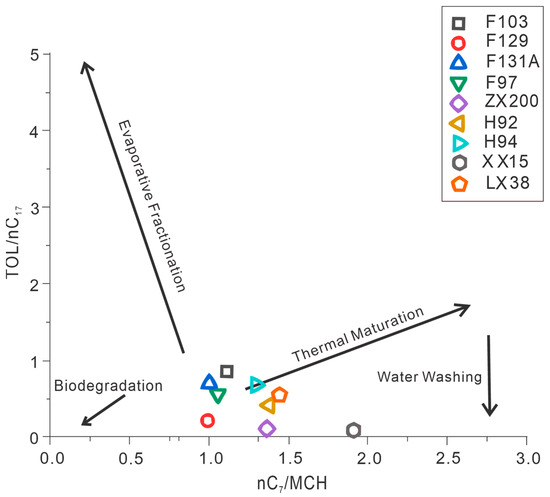
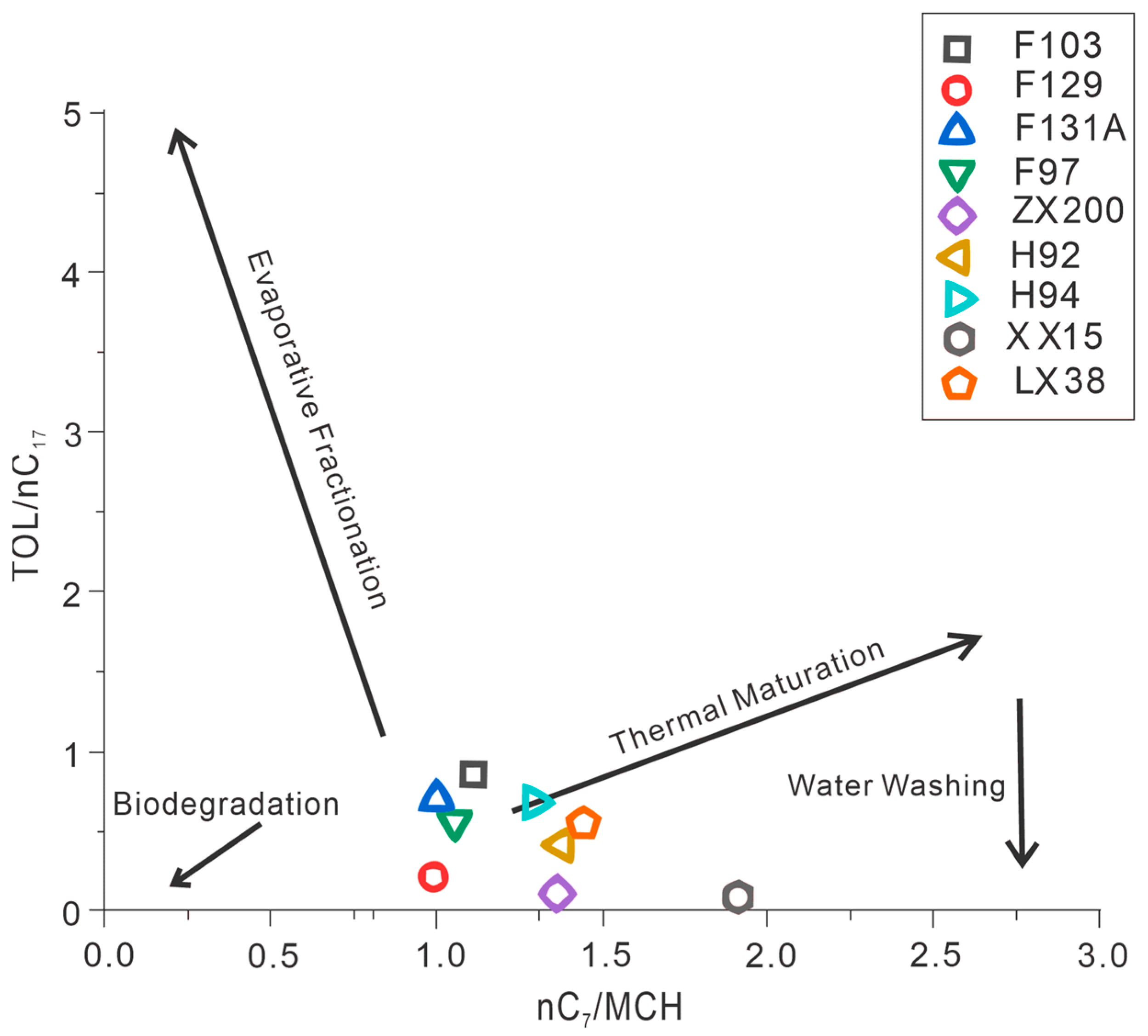
The cross-plot of TOL/n-C17 versus n-C17/MCH (Figure 6), where TOL denotes toluene and MCH denotes methylcyclohexane, shows that most samples define a trend consistent with increasing thermal maturity. All samples exhibit low TOL/n-C17 values. Several samples, including those from the Z oilfield (well ZX200), Xi oilfield (well XX15), F oilfield (well F129), and H oilfield (well H92), plot within the fields typically interpreted as indicating water washing and biodegradation. In such altered oils, benzene and toluene are more accurately described as preferentially water-soluble aromatic hydrocarbons relative to n-alkanes and heavier aromatic compounds; their partial removal may enrich n-alkanes and influence heptane- and toluene-related parameters. Therefore, maturity and source interpretations for altered samples were based preferentially on more resistant parameters, including C29 sterane isomerization ratios and selected terpane indices. Sample X-X45, whose duplicate analyses confirm anomalously low Pr/Ph ratios and elevated Ph/n-C18 values, is treated cautiously in maturity assessment and retained only as a flagged point in source-related biomarker comparisons.
Figure 6.
Cross-plot of TOL/nC17 vs. nC17/MCH showing thermal maturation and alteration trends.
5.2. Oil Maturity
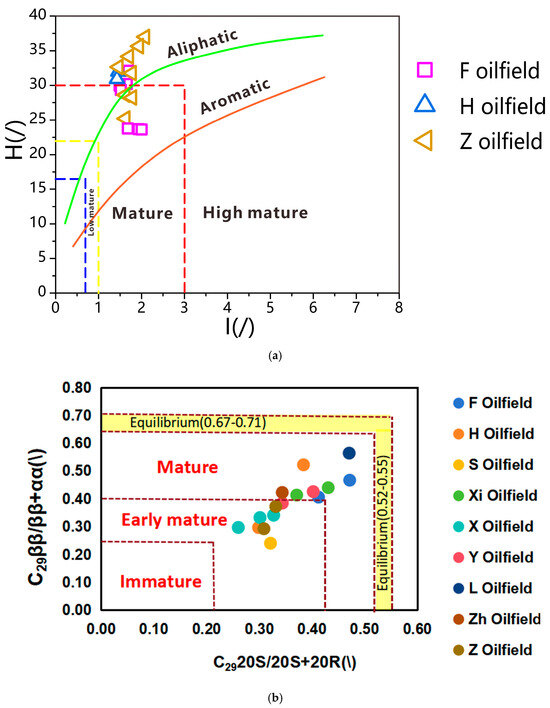
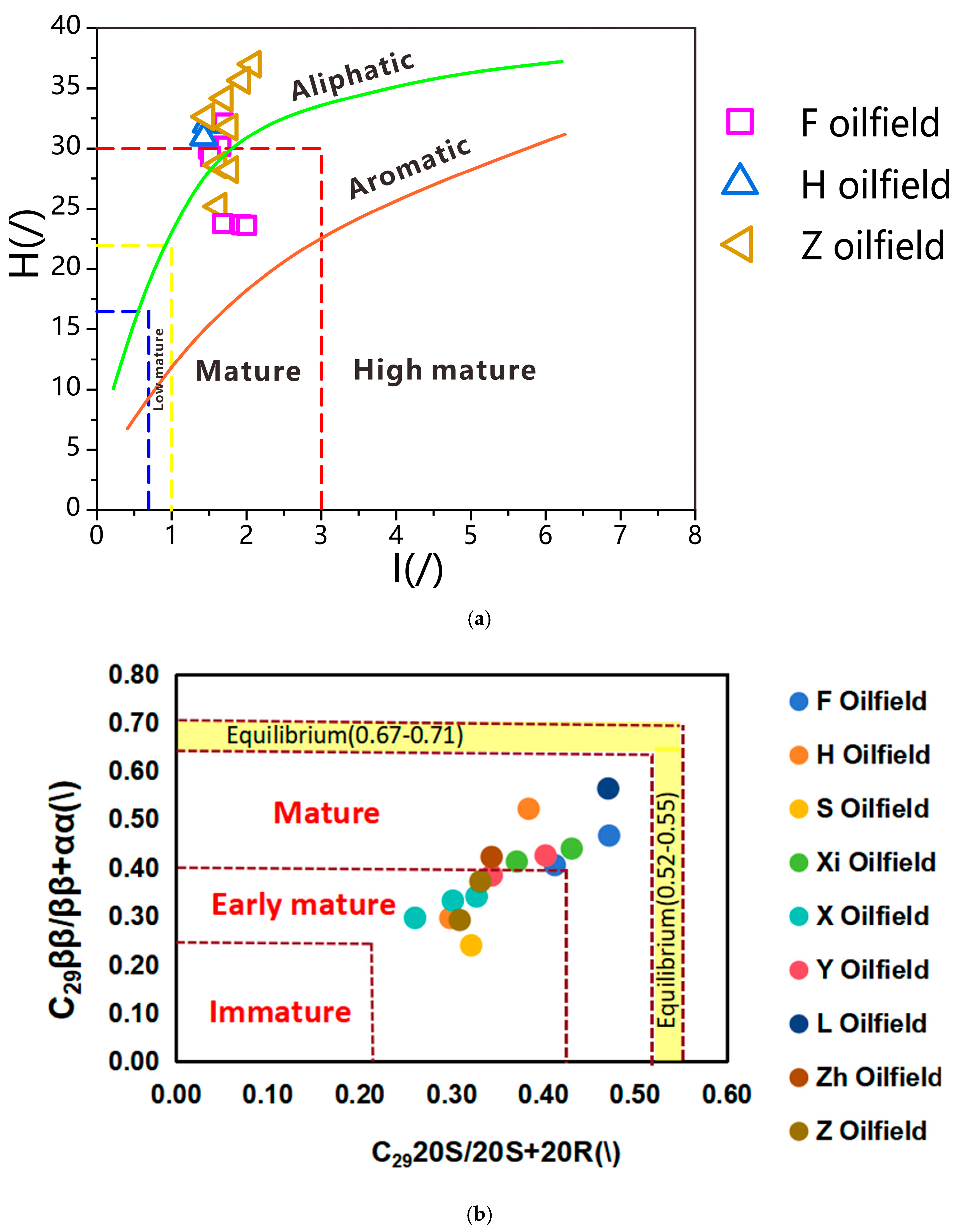
During the low- to mid-maturity stages, the C29 sterane ratios 20S/(20S + 20R) and ββ/(ββ + αα) serve as reliable indicators of thermal maturity and are widely applied in petroleum systems analysis [19,20]. As shown in Figure 7a, approximately half of the analyzed crude oil samples fall within the early oil window, while the remainder plots within the main oil window, corresponding to the mid-mature stage. Oils from the F and Xi oilfields consistently exhibit mature characteristics. In contrast, samples from the X and Zh oilfields are predominantly low-maturity. The H and Y oilfields display both low- and mature-stage oils, with maturity increasing systematically with depth. In the H oilfield, shallow reservoirs contain notably lower-maturity oils than deeper reservoirs, suggesting that buoyancy-driven migration may have preferentially charged shallower, better-quality reservoirs with less mature petroleum.
Figure 7.
Maturity assessment diagrams for the analyzed oils. (a) Biomarker maturity diagram based on C29 sterane 20S/(20S + 20R) and ββ/(ββ + αα) ratios. (b) Light-hydrocarbon maturity diagram based on heptane value (H) and isoheptane value (I).
Aromatic maturity parameters indicate that the crude oils within the study area have generally reached a mature stage of thermal evolution. The methylphenanthrene index-1 (MPI1) ranges from 0.42 to 0.73, corresponding to equivalent vitrinite reflectance (EqVRo) values of 0.65–0.84% based on the calibration of Radke and Welte [9]. The methylphenanthrene ratio (MPR) varies between 0.66 and 0.95, which further supports that most oils are thermally mature, with a subset approaching relatively higher maturity conditions (Table 1) [7,8,9]. Excluding the severely altered duplicate X-X45 analyses, MPI1-derived EqVRo values range from approximately 0.65% to 0.81%, which is consistent with the early- to mid-mature classification inferred from C29 sterane isomerization ratios. However, because water washing and biodegradation may preferentially affect some aromatic compounds, MPI1-derived EqVRo values from altered samples are treated as supporting rather than primary maturity constraints and are evaluated together with C29 sterane isomerization ratios and other alteration-resistant biomarker parameters.
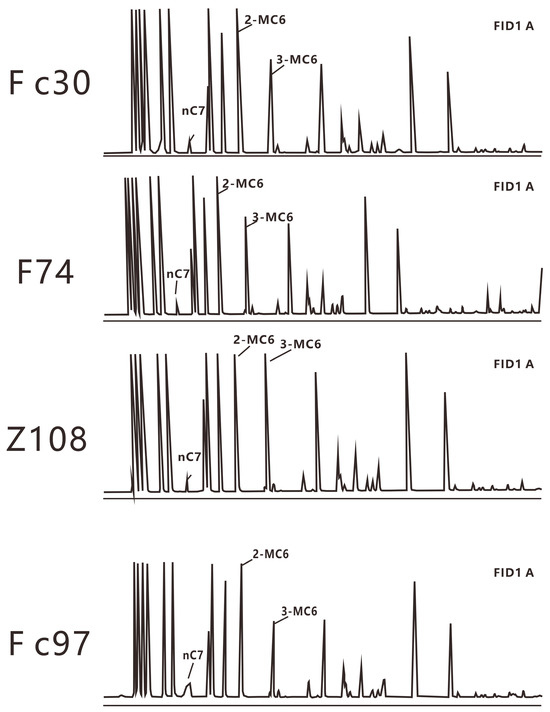
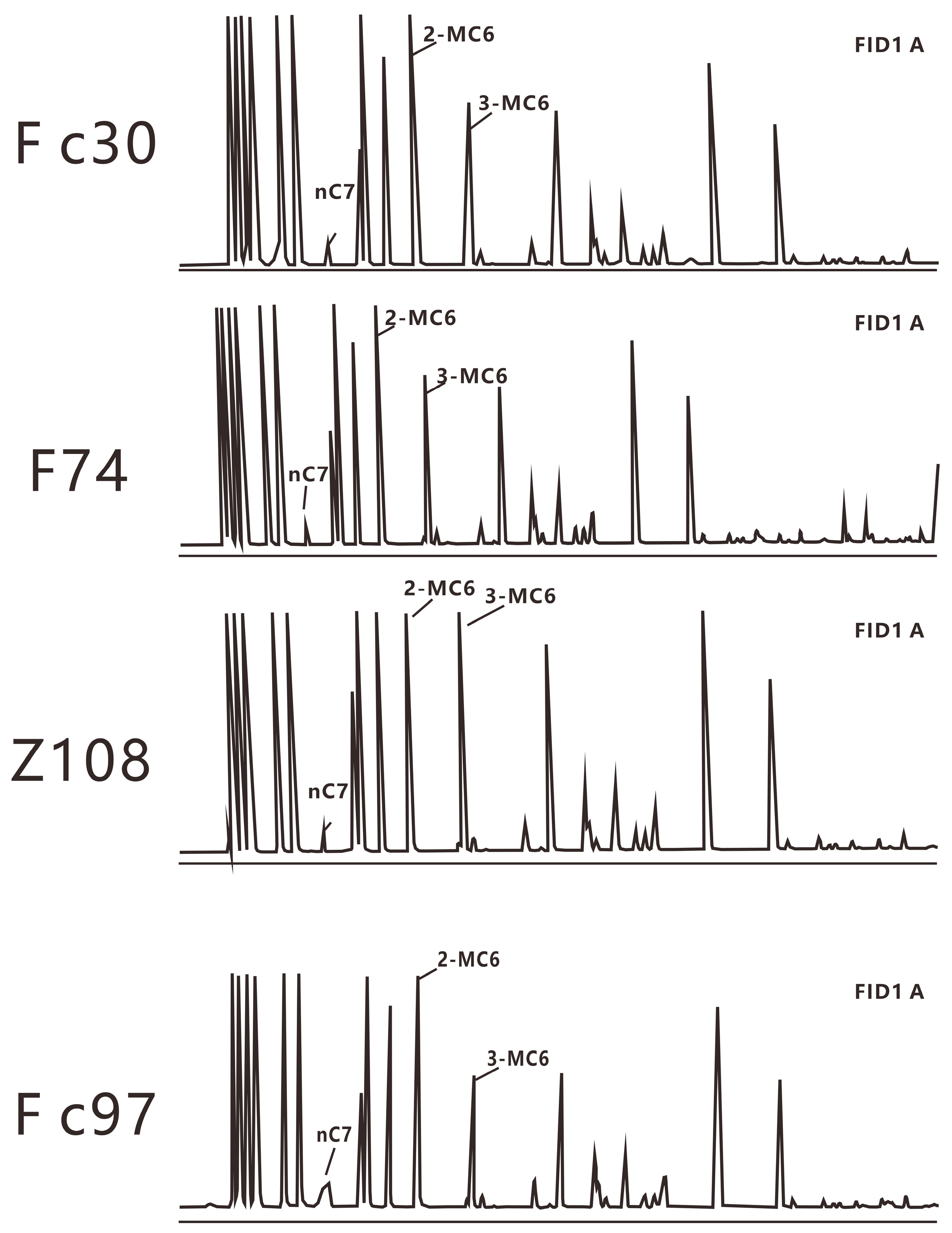
Light hydrocarbon parameters provide additional constraints on thermal maturity, primarily reflecting increases in alkylation during thermal cracking [1,2,3,4,5,6]. Among these, the isoheptane value is generally more robust than the heptane value due to its lower susceptibility to secondary alteration. In the cross-plot of heptane versus isoheptane values (Figure 7b), the isoheptane values of the studied oils range from 1.42 to 2.08, placing most samples within the mature oil window. The positive correlation between isoheptane values and other maturity parameters, including methylphenanthrene indices and sterane isomerization ratios, further supports the maturity assessment derived from light hydrocarbon distributions. However, the relatively elevated heptane values cause many data points to plot within the aromatic-compound field, with some samples extending into the higher-maturity range of the diagram. Previous investigations indicate that the source materials are mainly mixed-type, with limited purely terrestrial input. Moreover, most oils show evidence of water washing, during which preferentially water-soluble aromatic hydrocarbons, such as benzene and toluene, and low-molecular-weight naphthenes may be partly removed relative to n-alkanes and heavier aromatic compounds, thereby enriching n-alkanes and artificially elevating heptane values. Consequently, isoheptane values are regarded as the more reliable light-hydrocarbon maturity indicator for the altered oils, whereas heptane-related parameters are interpreted cautiously and integrated with sterane and aromatic maturity parameters. Representative light hydrocarbon profiles are presented in Figure 8.
Figure 8.
Light hydrocarbon chromatograms of oils from the Eocene Dainan Formation, Southeastern Gaoyou Sag.
5.3. Oil Origin
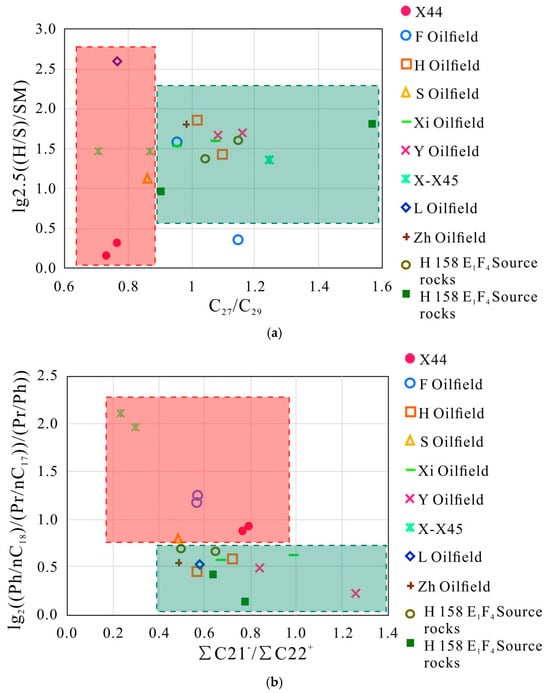
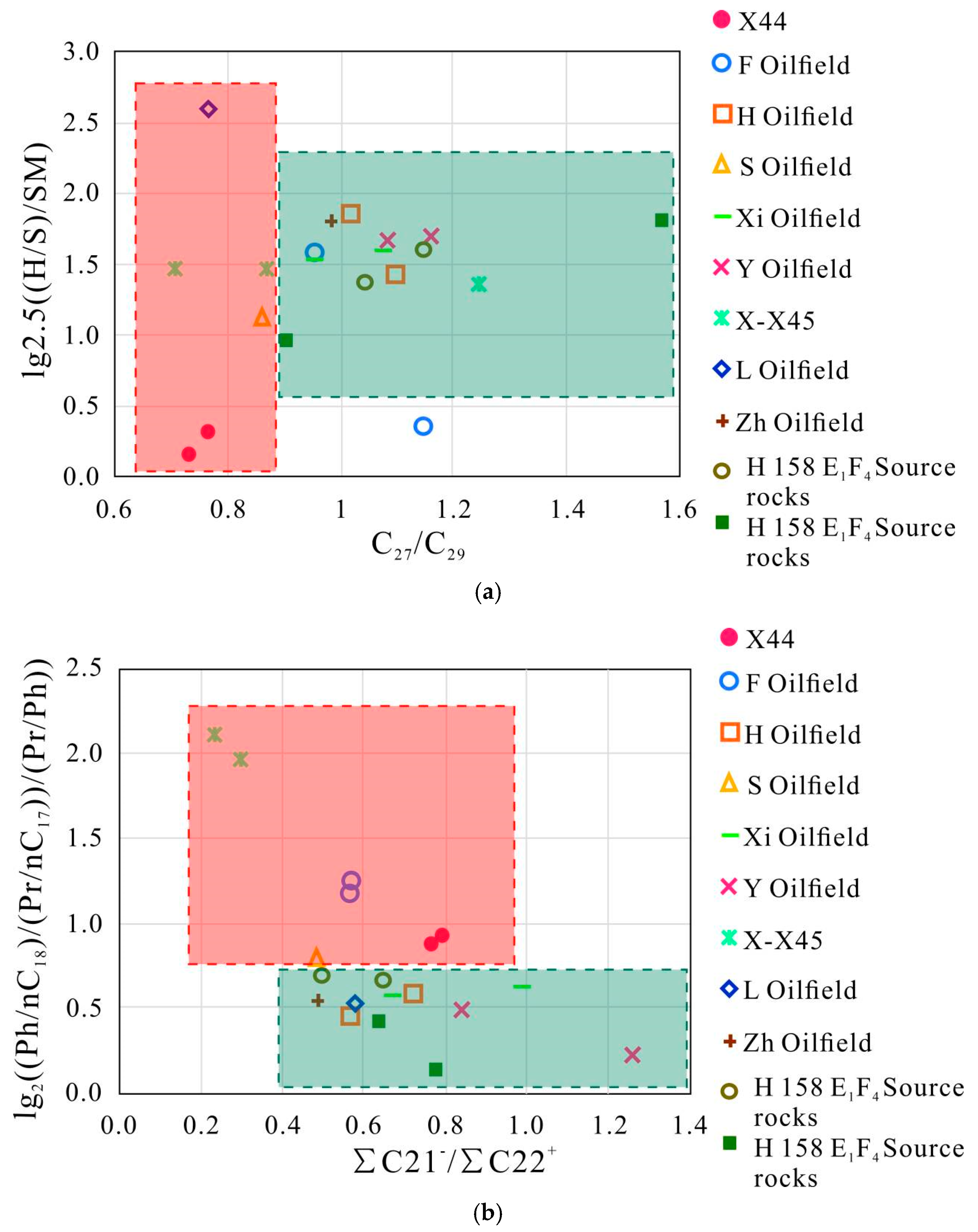
Steroidal biomarkers from GC-MS analysis of source rock saturated hydrocarbons are used to interrogate the geochemical signatures of source units in the E2d sub-members of the southeastern Gaoyou Sag. These biomarkers provide key constraints for oil-source correlation. Previous work [13] has identified a dual-source system—comprising the E1f2 and E1f4 units—supplying hydrocarbons to the southern fault belt, with distinct biomarker fingerprints distinguishing oils derived from these units across the Subei Basin (Figure 9) [21]. To further clarify the provenance of the E2d oils, specific geochemical cross-plots were constructed using diagnostic biomarker parameters. The data points for the E2d oils plot within a compositional continuum bounded by the characteristic signatures of the E1f2 and E1f4 end-members. This distribution indicates that the oils are not derived from a single source but occupy an intermediate position, consistent with mixing. The systematic variation along trends connecting the two end-member signatures provides direct graphical evidence for a dual-source input. Therefore, the cross-plots confirm that hydrocarbons in the E2d sub-members originated from the mixing of oils generated from the deeper E1f4 and the shallower E1f2 source rocks of the Funing Formation.
Figure 9.
Parameter discrimination map of biomarker compounds from crude oil sources in the southeast of Gaoyou Sag. (a) Cross-plot of sterane parameters (e.g., C27/C29 regular sterane ratio versus C28/C29 ratio) (b) Cross-plot of terpane parameters (e.g., Ts/Tm ratio versus C29Ts/C30H ratio).
The hydrocarbons are derived from two distinct source rock units within the Paleocene Funing Formation: the second member (E1f2) and the fourth member (E1f4). These source intervals reached generative maturity within localized depocenters, including the Liulu and Qinlan sub-sags, which served as the primary hydrocarbon kitchens. The term “kitchen” herein refers to the geographic area where a given source unit has entered the oil window, whereas “source rock unit” denotes the stratigraphic interval with organic-rich facies. One oil group shows a strong correlation with the E1f2 source facies, characterized by specific sterane and terpane signatures, while another correlates closely with the deeper E1f4 source rocks. Consistent trends in independent geochemical parameters confirm that oils in E2d are not derived from a single source unit but represent mixtures generated from these two distinct intervals. The mixed signatures may also reflect chemofacies variability between terrigenous-rich E1f2 and algal-rich E1f4. Diamondoid parameters (MAI, MDI, diamantane/adamantane ratios) can help deconvolute such variability [22,23]. Future integration of diamondoid indices with sterane/terpane data would quantitatively constrain end-member contributions and refine the mixed-source model.
5.4. Crude Oil Filling Period
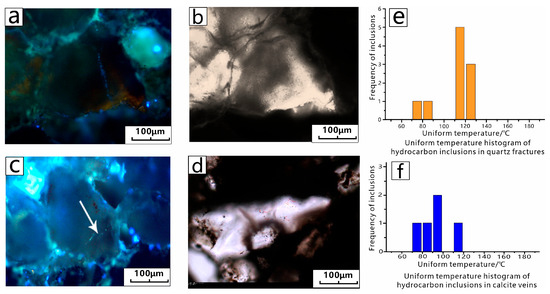
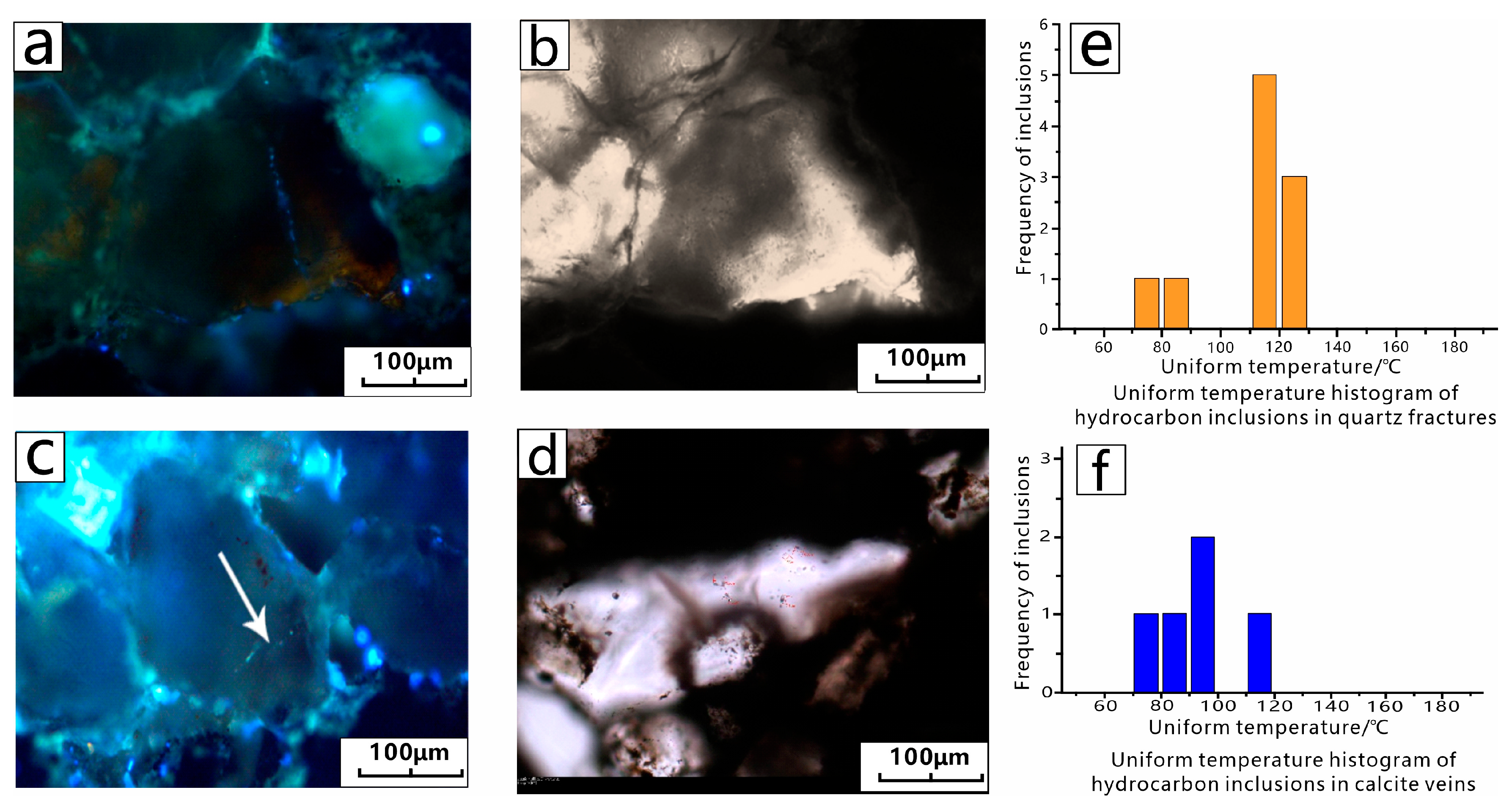
Fluid inclusion analyses were employed to constrain the hydrocarbon charging history of the E2d1 reservoirs in the southeastern Gaoyou Sag [24,25]. Hydrocarbon inclusions characterized by bright blue fluorescence were identified in E2d13 samples, predominantly hosted within quartz grains and calcite veins (Figure 10a,c). These inclusions exhibit liquid-dominated hydrocarbon properties, homogeneous fluorescence spectra, and broadly consistent vapor–liquid ratios, which are consistent with entrapment during a dominant hydrocarbon charging episode.
Figure 10.
Fluid inclusions and homogenization temperature distributions. (a) FSX1: Blue-fluorescing hydrocarbon inclusions; (b) HX88: Primary gaseous hydrocarbon inclusions; (c) LX38: Blue-fluorescing hydrocarbon inclusions; (d) Z2: Dispersed hydrocarbon inclusions. (e,f) show homogenization temperature histograms of hydrocarbon inclusions in quartz fractures and calcite veins, respectively.
No secondary inclusions with distinctly different fluorescence colors, such as yellow or white, were observed. The absence of compositionally differentiated inclusions does not provide clear evidence for multiple charging events involving markedly different petroleum compositions. Instead, the fluorescence characteristics are consistent with a dominant charging episode, although they do not strictly preclude closely spaced charging pulses with similar fluid compositions. This interpretation is also consistent with the lack of clear compositional stratification in the reservoir fluids [25].
Homogenization temperature (Th) data provide additional constraints on the charging model. Histograms of Th values for both quartz-hosted and calcite-hosted inclusions display unimodal distributions, with peak values centered at approximately 100 °C and no clear secondary temperature populations (Figure 10b,d). The Th values cluster within a narrow range of 85–110 °C, which is consistent with the regional paleothermal conditions during the Sanduo tectonic episode. This thermal interval broadly overlaps the main oil-generation window of the underlying Funing Formation source intervals, suggesting that hydrocarbon charging occurred during or shortly after the principal oil-generation stage. Most oils do not show evidence for reservoir-scale compositional stratification, although individual altered samples indicate local secondary modification. Therefore, the inclusion and geochemical evidence together support a dominant Sanduo-period charging episode rather than a clearly resolvable multi-stage charging history. Although the E1f2 and E1f4 source rocks are both present in the Gaoyou Sag, their broadly synchronous maturation and expulsion during the Sanduo period can explain why mixed-source oils may still be recorded by a largely unimodal inclusion-temperature distribution.
5.5. Oil and Gas Migration and Accumulation Modes
The genetic origin and charging timing of hydrocarbons in the southeastern Gaoyou Sag serve as important constraints for elucidating hydrocarbon migration and accumulation patterns. Two-dimensional numerical simulations of hydrocarbon migration were utilized to delineate possible migration pathways and accumulation architectures, with model constraints derived from paleo-structural evolution, paleo-pressure conditions, fault activity, sandbody connectivity, and available reservoir observations [13,21,22]. Model boundary conditions were constrained by paleo-structural evolutionary processes and paleo-pressure regimes. Fault transmissibility was considered a dynamic geological parameter, and fault activity rates greater than 20 m/Ma were used as a local screening criterion for identifying faults with relatively high migration potential, based on fault throw histories, syn-kinematic sediment thicknesses, and previous studies of active faults in the Subei Basin [23,24,25,26,27]. Sandbody connectivity greater than 25% was used as a local indicator of relatively effective lateral carrier-bed continuity, constrained by integrated well-log correlation and seismic attribute interpretation. These threshold values are therefore applied as basin-calibrated criteria for comparing migration efficiency within the E2d13 interval, rather than as universal physical cutoffs. The simulation outputs were evaluated against the observed distribution of oil-bearing intervals and known reservoir occurrences, so the modeled pathways are treated as geological constraints on migration style rather than uniquely determined flow solutions.
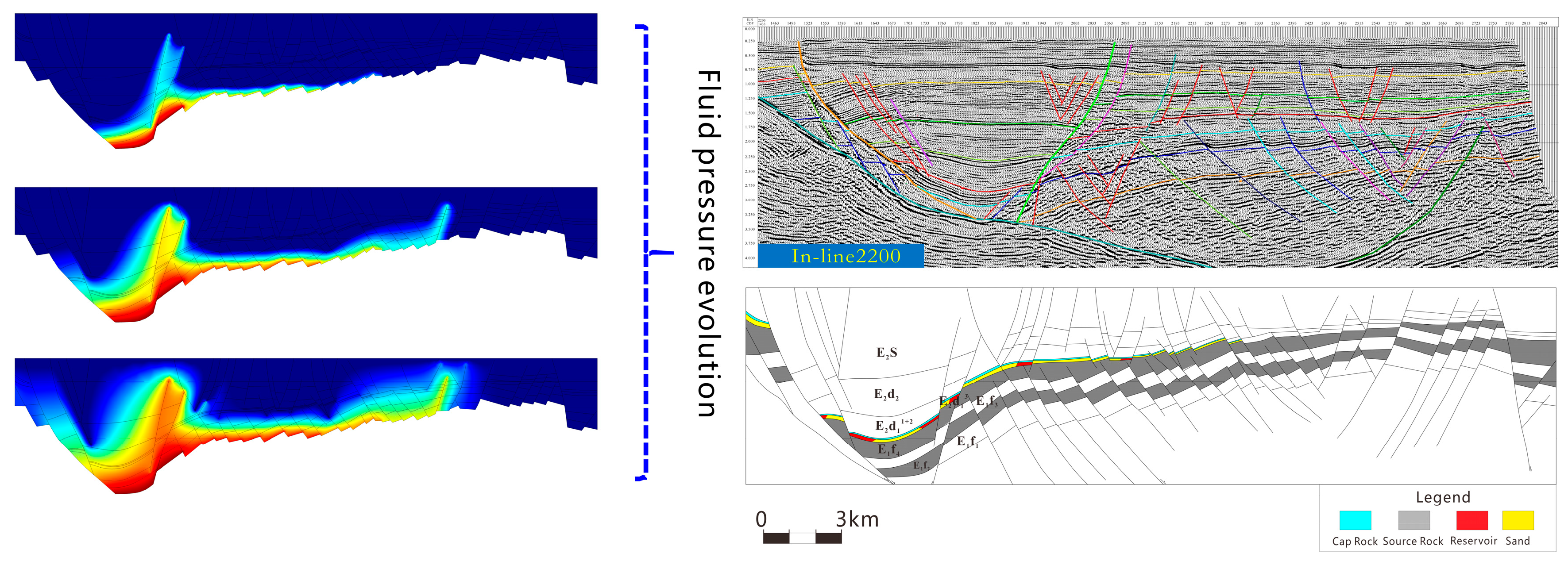
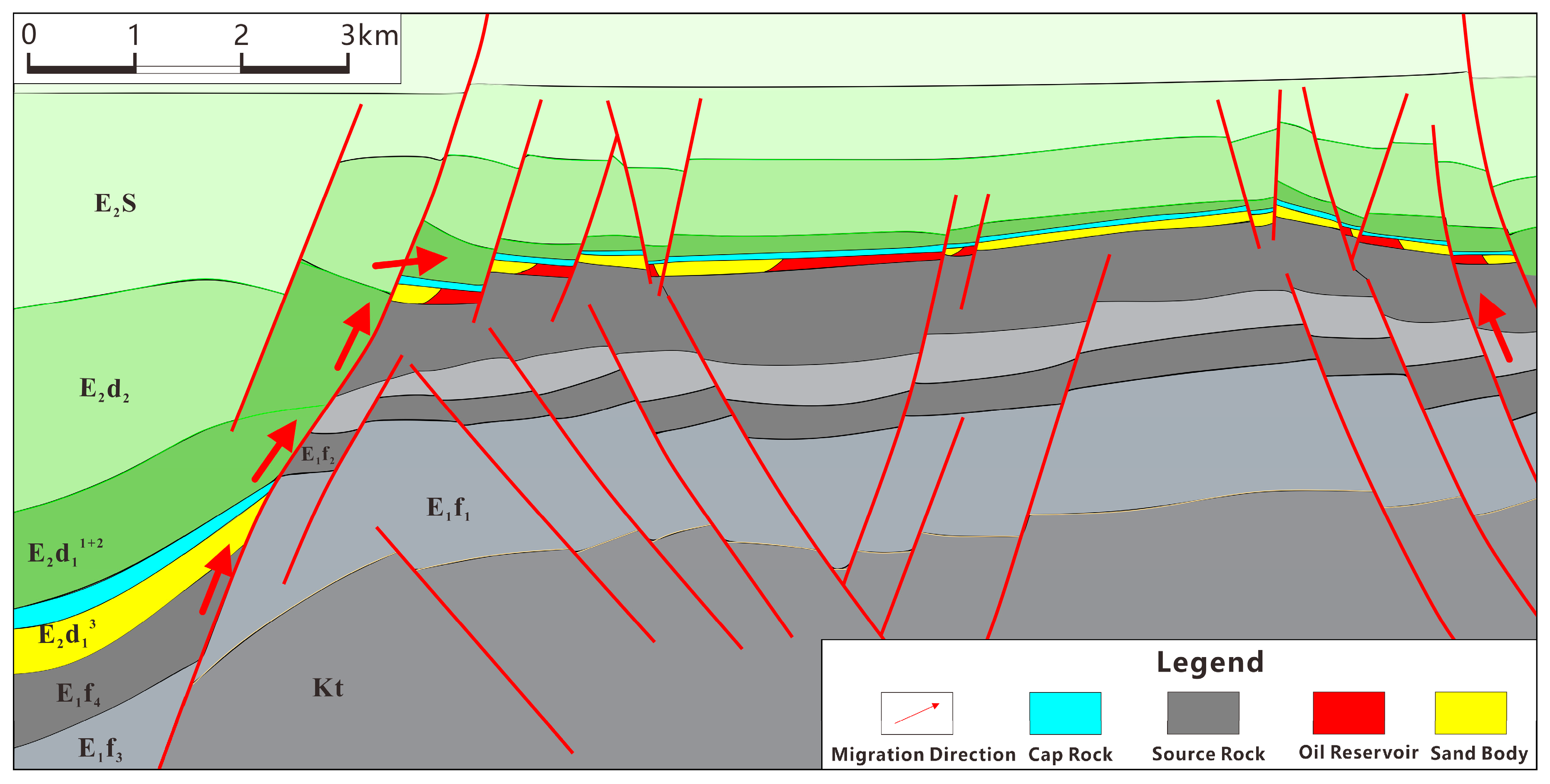
Simulation results suggest two distinct hydrocarbon migration and accumulation patterns within the E2d13 sub-member of the southeastern Gaoyou Sag, with spatial variability controlled by coupled structural and sedimentary factors. In the central deep sag zone, hydrocarbons preferentially migrate along the northern fault-bounded slope belt. Migration is predominantly characterized by up-dip movement along major fault planes and connected sandbodies, forming relatively continuous pathways, whereas localized fault–sandbody interactions generate discrete branch flows, as indicated by the modeled hydrocarbon pressure and saturation distributions. Fluid pressure and hydrocarbon saturation gradually increase along the slope, with local enrichment occurring in favorable sub-units of downthrown blocks and associated sandbodies.
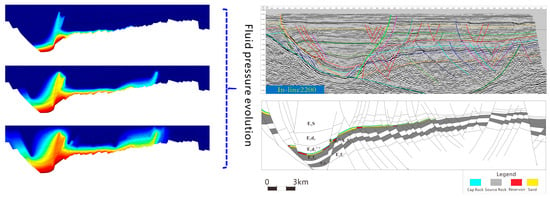
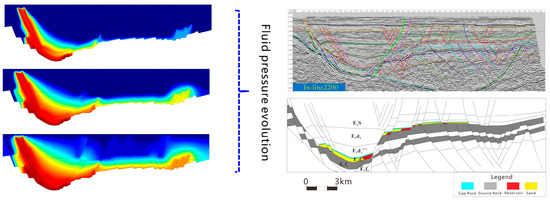
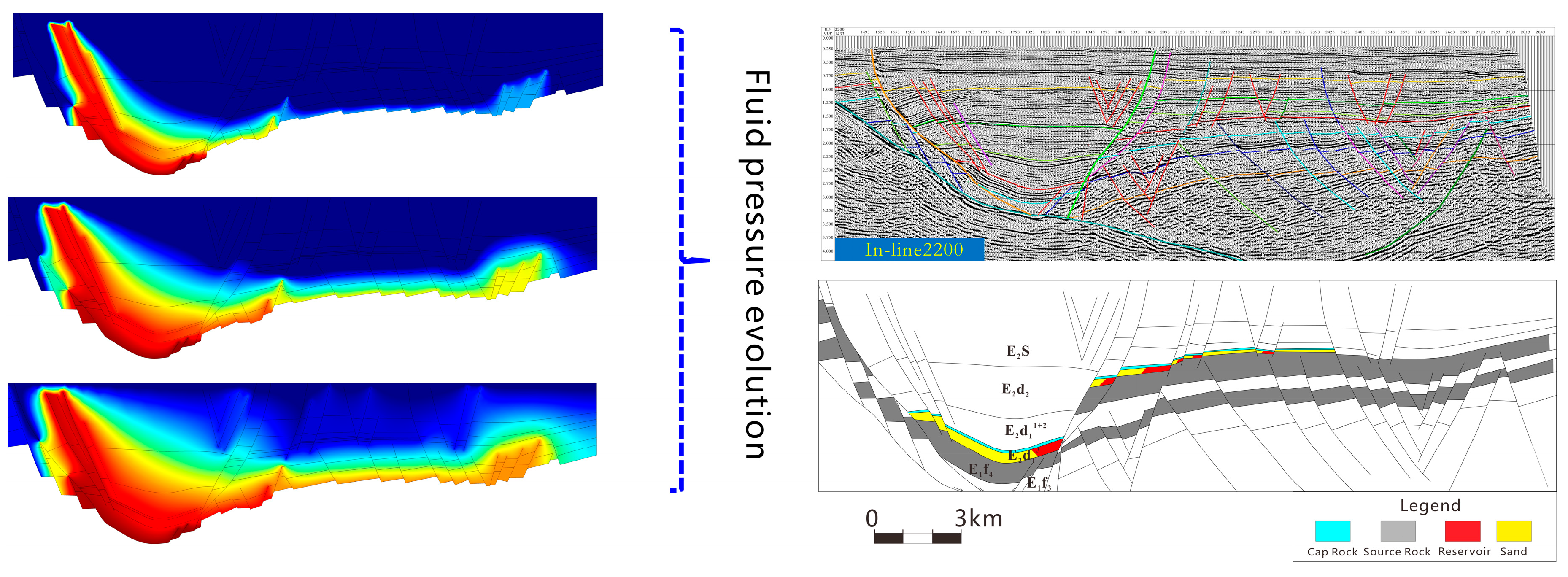
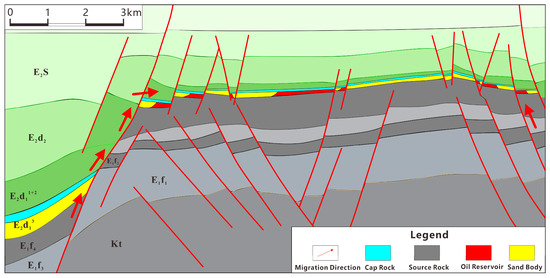
The northern fault-bounded slope belt serves as the primary migration conduit in the central deep sag zone, where hydrocarbons migrate updip along fault planes and connected sandbodies (Figure 11).Conversely, the western sub-sag is characterized by a migration pattern dominated by hydrocarbon migration along the southern Zhenwu Fault Zone, with weaker modeled migration intensity along the northern slope belt (Figure 12) [26]. Hydrocarbon flux concentrates in lower structural positions, forming elongated pathways broadly aligned with the strike of major faults. Hydrocarbons are interpreted to have charged southward from the deep-source kitchen, followed by limited lateral migration toward adjacent slope areas.
Figure 11.
Oil and gas migration and accumulation mode of the northern boundary fault system.
Figure 12.
Oil and gas migration and accumulation mode on the south side of the Zhenwu Fault Zone.
These migration patterns indicate a threefold control mechanism: (1) fluid potential gradients governing hydrocarbon migration toward structural highs; (2) relatively active faults, especially those exceeding the local 20 m/Ma screening criterion, facilitating vertical hydrocarbon conveyance; and (3) favorable sandbodies, represented by connectivity values above the local 25% criterion, mediating lateral hydrocarbon dispersion [27,28,29,30]. The southern Zhenwu Fault Belt accommodates relatively large hydrocarbon accumulation units in its central segment, where high fault activity and enhanced sandbody connectivity jointly promote vertical and lateral hydrocarbon migration (Figure 13). In contrast, the western flank and northern fringe of the belt are characterized by small- to medium-sized hydrocarbon accumulations, where diminished sandbody connectivity constrains lateral hydrocarbon propagation and favors localized, fault-dominated accumulation systems (Figure 13). This heterogeneity underscores the role of sandbody architecture and fault kinematics in regulating petroleum distribution [31,32]. While the migration pathways delineated above are derived from structural interpretation and numerical modeling, independent geochemical constraints would further test these results. Nitrogen-bearing aromatic compounds, particularly carbazoles and alkylated carbazoles, may provide molecular tracers of charge direction and pathway connectivity [33]. Future integration of carbazole-based parameters with the two-dimensional migration modeling presented here could provide a compositional means to assess whether the modeled pathways, such as the northern fault-slope and southern fault-conduit systems, are supported by molecular evidence, thereby refining the migration framework and reducing uncertainty in play assessment.
Figure 13.
Southeastern Gaoyou Sag Reservoir Formation Model Diagram.
6. Conclusions
The integrated study yields four main findings regarding the deep E2d member petroleum system in the Gaoyou Sag. (1) Source contribution: The E2d oils are genetically related to the lacustrine-algal E1f4 and terrigenous-influenced E1f2 source units of the Funing Formation, with biomarker correlations supporting a mixed-source interpretation. (2) Dominant Sanduo-period charging: Fluid inclusion homogenization temperatures and broadly uniform fluorescence characteristics indicate a dominant hydrocarbon charging episode during the Sanduo tectonic period, although closely spaced pulses with similar petroleum compositions cannot be fully excluded. (3) Distinct migration regimes: Two-dimensional migration modeling suggests a northern fault-slope system with updip lateral dispersion and a southern fault-conduit system dominated by migration along relatively active faults. (4) Accumulation controls: Hydrocarbon accumulation is mainly controlled by the coupling of fluid-potential gradients, fault activity, and sandbody connectivity, with fault activity greater than 20 m/Ma and sandbody connectivity greater than 25% used as local screening criteria for relatively efficient migration pathways. These findings establish a geological model that highlights the exploration potential of the deep E2d interval and provides a case-based reference for analogous deep lacustrine rift-basin petroleum systems.
Author Contributions
Conceptualization, J.Z. and L.F.; Methodology, W.L. and Y.L.; Software, J.Z. and Y.L.; Validation, J.Z.; Formal analysis, J.Z., W.L., L.F. and Y.L.; Investigation, J.Z.; Resources, J.Z. and Y.L.; Data curation, J.Z., W.L., L.F. and Y.L.; Writing—original draft, X.Y.; Writing—review & editing, X.Y.; Visualization, J.Z.; Supervision, W.L.; Project administration, J.Z. and L.F. All authors have read and agreed to the published version of the manuscript.
Funding
This research received no external funding.
Data Availability Statement
The key data supporting the conclusions of this study are included in the article. Original well, geological, and analytical datasets are not publicly available because they are proprietary and subject to confidentiality restrictions. Further information may be available from the corresponding author upon reasonable request and with permission from the data owner.
Acknowledgments
During the preparation of this manuscript, AI-assisted tools were used to polish the language and improve the readability of some sentences and phrases. These tools were not used for data generation, geological interpretation, figure preparation, or derivation of scientific conclusions. The authors reviewed and approved the final manuscript and take full responsibility for its content.
Conflicts of Interest
Authors Juan Zhang, Wenting Liao, Lixin Fan and Yuezhe Li were employed by the Geophysical Research Institute, SINOPEC Jiangsu Oil Products Company. The remaining authors declare that the research was conducted in the absence of any commercial or financial relationships that could be construed as a potential conflict of interest.
Abbreviations
| E2s1 | Sanduo Formation |
| E2d | The member of the Dainan Formation |
| E2d13 | The third sub-member of the first member of the Dainan Formation |
| E1f2 | The second member of the Funing Formation |
| E1f3 | The third member of the Funing Formation |
| E1f4 | The fourth member of the Funing Formation |
| K1c | The Mesozoic Chishan Formation |
| K2t | The Taizhou Formation |
References
- Jia, C.; Zheng, M.; Zhang, Y. Unconventional Hydrocarbon Resources in China and the Prospect of Exploration and Development. Pet. Explor. Dev. 2012, 39, 129–136. [Google Scholar] [CrossRef] [Scilit]
- Ma, Y.; Cai, X.; Li, M.; Li, H.; Zhu, D.; Qiu, N.; Pang, X.; Zeng, D.; Kang, Z.; Ma, A.; et al. Research Advances on the Mechanisms of Reservoir Formation and Hydrocarbon Accumulation and the Oil and Gas Development Methods of Deep and Ultra-Deep Marine Carbonates. Pet. Explor. Dev. 2024, 51, 795–812. [Google Scholar] [CrossRef] [Scilit]
- Zou, C.; Lin, M.; Ma, F.; Liu, H.; Yang, Z.; Zhang, G.; Yang, Y.; Guan, C.; Liang, Y.; Wang, Y.; et al. Development, Challenges and Strategies of Natural Gas Industry Under Carbon Neutral Target in China. Pet. Explor. Dev. 2024, 51, 476–497. [Google Scholar] [CrossRef] [Scilit]
- Magoon, L.B.; Dow, W.G. The Petroleum System—From Source to Trap. AAPG Mem. 1994, 60, 3–24. [Google Scholar]
- England, W.A.; Mackenzie, A.S.; Mann, D.M.; Quigley, T.M. The Movement and Entrapment of Petroleum Fluids in the Subsurface. J. Geol. Soc. 1987, 144, 327–347. [Google Scholar] [CrossRef] [Scilit]
- Hao, F. Enrichment Mechanism and Prospects of Deep Oil and Gas. Acta Geol. Sin. 2022, 96, 742–756. [Google Scholar] [CrossRef] [Scilit]
- Tissot, B.P.; Welte, D.H. Petroleum Formation and Occurrence; Springer: Berlin/Heidelberg, Germany, 1984. [Google Scholar]
- Liu, S.; Gao, G.; Gang, W.; Xiang, B.-L.; Wang, M. Differences in Geochemistry and Hydrocarbon Generation of Source-Rock Samples Dominated by Telalginite and Lamalginite: A Case Study on the Permian Saline Lacustrine Source Rocks in the Jimusaer Sag, NW China. Pet. Sci. 2023, 20, 141–160. [Google Scholar] [CrossRef] [Scilit]
- Qiu, X. Oil and Gas Migration in Gaoyou Sag. Pet. Nat. Gas Geol. 2008, 29, 437–443. (In Chinese) [Google Scholar]
- Xu, S.; Yang, H.; Xu, P.; Xiao, S. Formation Conditions of Natural Gas Fields in the Lacustrine Basin in Eastern China: Insights into the First Discovery within the Bohai Bay Basin. Front. Earth Sci. 2023, 11, 1002581. [Google Scholar] [CrossRef] [Scilit]
- Peters, K.E.; Walters, C.C.; Moldowan, J.M. The Biomarker Guide; Cambridge University Press: Cambridge, UK, 2005. [Google Scholar] [CrossRef] [Scilit]
- Zeng, L.; Song, Y.; Liu, G.; Tan, X.; Xu, X.; Yao, Y.; Mao, Z. Natural Fractures in Ultra-Deep Reservoirs of China: A Review. J. Struct. Geol. 2023, 175, 104954. [Google Scholar] [CrossRef] [Scilit]
- Li, S.; Fan, L.; Xia, L.; Zhang, J.; He, J.; Zhang, H.; Li, Y. Oil and gas accumulation characteristics of the third submember of the first member of Dainan Formation in deep layers of Gaoyou Sag, Subei Basin. Pet. Reserv. Eval. Dev. 2025, 15, 455–462. (In Chinese) [Google Scholar] [CrossRef]
- Hu, S.; Bai, B.; Tao, S.; Bian, C.; Zhang, T.; Chen, Y.; Liang, X.; Wang, L.; Zhu, R.; Jia, J.; et al. Heterogeneous Geological Conditions and Differential Enrichment of Medium and High Maturity Continental Shale Oil in China. Pet. Explor. Dev. 2022, 49, 224–237. [Google Scholar] [CrossRef] [Scilit]
- Zhang, X.; Shen, B.; Yang, J.; Sun, W.; Hou, D. Evolution Characteristics of Maturity-Related Sterane and Terpane Biomarker Parameters During Hydrothermal Experiments in a Semi-Open System Under Geological Constraint. J. Pet. Sci. Eng. 2021, 201, 108412. [Google Scholar] [CrossRef] [Scilit]
- Liu, S.; Gao, G.; Jin, J.; Gang, W.; Xiang, B. Source Rock with High Abundance of C28 Regular Sterane in Typical Brackish-Saline Lacustrine Sediments: Biogenic Source, Depositional Environment and Hydrocarbon Generation Potential in Junggar Basin, China. J. Pet. Sci. Eng. 2022, 208, 109670. [Google Scholar] [CrossRef] [Scilit]
- Wang, F.; Tang, G.; Wang, D.; Pan, W.; Yang, H.; Awan, R. Paleoenvironmental characteristics and evidence of subsag migration within the Laizhouwan Sag in the Bohai Sea. J. Pet. Sci. Eng. 2022, 210, 109961. [Google Scholar] [CrossRef] [Scilit]
- Liu, T.; Liu, X.; Li, Q.; Duan, H.; Li, S.; Sun, B.; Hua, Z. Quantitative Characterization and Influencing Factors of Free Oil Content in Lacustrine Shale: A Case Study of Funing Formation in the Gaoyou Sag, Subei Basin. Oil Gas Geol. 2023, 44, 409–420. (In Chinese) [Google Scholar] [CrossRef]
- Seifert, W.K.; Moldowan, J.M. The effect of thermal stress on source-rock quality as measured by hopane stereochemistry. Phys. Chem. Earth 1980, 12, 229–237. [Google Scholar] [CrossRef] [Scilit]
- Song, Z.; Ding, X.; Zhang, B.; Ge, B.; Tian, X.; Chen, X.; Ma, K.; Peng, H.; Wang, Y.; Yang, D. Dynamic Reconstruction of the Hydrocarbon Generation, Accumulation, and Evolution History in Ultra-Deeply-Buried Strata. Front. Earth Sci. 2022, 10, 927903. [Google Scholar] [CrossRef] [Scilit]
- Jiang, W.; Li, Y.; Fang, C.; Yu, Z.; Xiong, Y. Diamondoids in Petroleum: Their Potential as Source and Maturity Indicators. Org. Geochem. 2021, 160, 104298. [Google Scholar] [CrossRef] [Scilit]
- Schulz, L.K.; Wilhelms, A.; Rein, E.; Steen, A.S. Diamondoids and Source Rock Facies. Org. Geochem. 2001, 32, 365–375. [Google Scholar] [CrossRef] [Scilit]
- Liu, M.; Xiong, C. Diagenesis and Reservoir Quality of Deep-Lacustrine Sandy-Debris-Flow Tight Sandstones in Upper Triassic Yanchang Formation, Ordos Basin, China: Implications for Reservoir Heterogeneity and Hydrocarbon Accumulation. J. Pet. Sci. Eng. 2021, 202, 108548. [Google Scholar] [CrossRef] [Scilit]
- Atwah, I.; Mohammadi, S.; Moldowan, J.M.; Dahl, J. Episodic Hydrocarbon Charge. Mar. Pet. Geol. 2021, 123, 104742. [Google Scholar] [CrossRef] [Scilit]
- Li, C.; Qian, S.; Zheng, Y. Paleopressure during Hydrocarbon Charging and Its Evolution in the Funing Formation of the Gaoyou Sag, Subei Basin, Eastern China. Minerals 2024, 14, 821. [Google Scholar] [CrossRef] [Scilit]
- Fu, X.-F.; Fan, M.-X.; Wang, H.-X.; Jia, R.; Song, X.-Q.; Jin, Y.-J. Control of Fault Transport Ability on Hydrocarbon Migration and Accumulation in the No. 4 Structural Zone of Nanpu Sag, Bohai Bay Basin, China. Pet. Sci. 2025, 22, 4412–4427. [Google Scholar] [CrossRef] [Scilit]
- Yielding, G.; Freeman, B.; Needham, D. Quantitative Fault Seal Prediction. AAPG Bull. 1997, 81, 897–917. [Google Scholar] [CrossRef] [Scilit]
- Wang, W.; Pang, X.; Chen, Z.; Chen, D.; Wang, Y.; Yang, X.; Luo, B.; Zhang, W.; Zhang, X.; Li, C.; et al. Quantitative Evaluation of Migration Efficiency of Fault-Reservoir Composite Migration Pathway Systems in Carbonate Petroliferous Basins. Energy 2021, 222, 119983. [Google Scholar] [CrossRef] [Scilit]
- Zeng, L.; Gong, L.; Guan, C.; Zhang, B.; Wang, Q.; Zeng, Q.; Lyu, W. Natural Fractures and Their Contribution to Tight Gas Conglomerate Reservoirs: A Case Study in the Northwestern Sichuan Basin, China. J. Pet. Sci. Eng. 2022, 210, 110028. [Google Scholar] [CrossRef] [Scilit]
- Chen, J.; Wang, Y.; Shi, H.-T. Quantitative Evaluation of Fault Sealing Capacity and Hydrocarbon Migration: Insight from the Liuzhuang Fault in the Bohai Bay Basin, China. Int. J. Earth Sci. 2024, 113, 459–474. [Google Scholar] [CrossRef] [Scilit]
- Wang, X.; Zhou, X.; Li, S.; Zhang, N.; Ji, L.; Lu, H. Mechanism Study of Hydrocarbon Differential Distribution Controlled by the Activity of Growing Faults in Faulted Basins: Case Study of Paleogene in the Wang Guantun Area, Bohai Bay Basin, China. Lithosphere 2022, 2021, 7115985. [Google Scholar] [CrossRef] [Scilit]
- Dong, Y.; Zeng, J.; Dong, X.; Li, C.; Liu, Y. The Control Effect of Normal Faults and Caprocks on Hydrocarbon Accumulation: A Case Study from the Binhai Fault Nose of the Huanghua Depression, Bohai Bay Basin, China. J. Pet. Sci. Eng. 2022, 218, 110918. [Google Scholar] [CrossRef] [Scilit]
- Shi, Y.; Guo, H.; Li, X.; Li, H.; Li, M.; Wang, X.; Dong, S.; He, X. Origin, Migration, and Accumulation of Crude Oils in the Chaoyang Step-Fault Zone, Fushan Depression, Beibuwan Basin: Insight from Geochemical Evidence and Basin Modeling. Energies 2024, 17, 5842. [Google Scholar] [CrossRef] [Scilit]

Disclaimer/Publisher’s Note: The statements, opinions and data contained in all publications are solely those of the individual author(s) and contributor(s) and not of MDPI and/or the editor(s). MDPI and/or the editor(s) disclaim responsibility for any injury to people or property resulting from any ideas, methods, instructions or products referred to in the content. |
© 2026 by the authors. Licensee MDPI, Basel, Switzerland. This article is an open access article distributed under the terms and conditions of the Creative Commons Attribution (CC BY) license.