


Abstract
To overcome graphene aggregation in aqueous nanofluids, polycarboxylate-modified structural graphene (PSG) was synthesized via surface functionalization. Characterizations indicate that the modification preserves the 3D hierarchical porous framework while ensuring exceptional dispersion stability through steric hindrance and enhanced hydrophilicity. Convective heat transfer evaluations demonstrated remarkable enhancement; notably, the 0.1 wt% PSG nanofluid achieved a 46% increase in the heat transfer coefficient over pure water at Re = 4000. Molecular dynamics simulations further revealed the underlying interfacial mechanisms. The surface-anchored oxygen-containing groups induce a dense, hydrogen-bonded hydration layer that restricts local water diffusion. This highly ordered interfacial structure may facilitate vibrational energy exchange across the solid–liquid boundary. Together with the intrinsic high-conductivity 3D skeleton, these microscopic interactions are likely to contribute to the enhanced macroscopic thermal performance, providing a promising framework for designing advanced graphene-based thermal management fluids.
1. Introduction
With the continuous increase in integration density and power consumption of modern electronic devices, local heat flux in advanced thermal systems has exceeded 1000 W·cm−2, which places increasingly stringent demands on heat dissipation technologies [1,2,3]. While this extreme value represents the ultimate cooling requirement for next-generation electronics and serves as the primary motivation for exploring high-performance thermal fluids, the present study focuses on characterizing the convective heat transfer enhancement of PSG-nanofluids within a moderate heat flux range (q = 20–70 W/m2) to establish a fundamental understanding of their transport mechanisms. This baseline investigation is essential for evaluating the potential of these modified nanofluids for future applications in ultra-high heat flux regimes. Conventional air cooling and single-phase liquid cooling methods are gradually approaching their thermal performance limits because of the low thermal conductivity of traditional working fluids and increasing interfacial thermal resistance under high heat flux conditions [4,5,6,7]. Nanofluids, formed by dispersing nanoscale solid particles into conventional base fluids, have attracted extensive attention as advanced heat transfer media because suspended nanoparticles can effectively enhance thermal conductivity and disturb thermal boundary layers [8,9,10,11,12]. However, traditional nanofluids containing metallic [13] or oxide nanoparticles [14,15] often suffer from particle aggregation, sedimentation, and viscosity increase, which limit long-term stability and engineering applications [16]. Among various nanomaterials, graphene has emerged as one of the most promising candidates for thermal enhancement because of its ultrahigh intrinsic thermal conductivity, large specific surface area, and excellent mechanical stability [17,18,19]. Nevertheless, conventional two-dimensional graphene nanosheets are highly susceptible to van der Waals attraction in aqueous systems, which easily leads to sheet stacking and aggregation, thereby weakening effective heat transfer enhancement [20,21]. To overcome this limitation, three-dimensional stereoscopic-constructed graphene (SCG) has attracted increasing attention due to its self-supported porous architecture and improved structural stability. Compared with conventional two-dimensional graphene, SCG can effectively suppress interlayer restacking while maintaining abundant accessible surface area and defect sites for chemical functionalization [22,23]. The SCG powder used in this study was developed by the Collaborative Innovation Center of Renewable Energy, Guangxi University, using a polymer-assisted one-step preparation method, which provides excellent structural stability and dispersibility for nanofluid applications. Although SCG exhibits improved anti-aggregation characteristics, pristine graphene remains intrinsically nonpolar and hydrophobic, resulting in poor compatibility with water. Therefore, surface modification is necessary to achieve stable aqueous dispersion. Polycarboxylate superplasticizer (PC), owing to its comb-like molecular structure containing active carboxyl groups and long polyethylene glycol side chains, can chemically graft onto graphene defect sites and provide strong steric hindrance and hydration effects in aqueous media [6,24,25,26]. Such a synergistic mechanism effectively improves colloidal stability and suppresses particle agglomeration [27].
Recent studies have demonstrated that graphene-based nanofluids exhibit significant potential in convective heat transfer enhancement, especially in electronic cooling and compact heat exchanger systems [28,29]. In addition, molecular-level investigations indicate that surface functional groups can regulate the interfacial hydration layer and enhance the vibrational coupling between graphene and surrounding water molecules. This modification effectively reduces the interfacial thermal resistance (Kapitza resistance), thereby improving interfacial thermal transport efficiency. However, the interfacial heat transfer mechanism between chemically modified three-dimensional graphene and water molecules remains insufficiently understood, particularly at the molecular scale. Therefore, in this study, a combined experimental and molecular dynamics simulation approach was employed to investigate the thermal transport performance of PC-modified stereoscopic graphene (PSG) nanofluids. Convective heat transfer experiments were conducted under different Reynolds numbers and particle concentrations, while atomistic simulations were performed to analyze hydration-layer evolution and interfacial thermal transport mechanisms.
2. Materials and Methods
2.1. Material Preparation
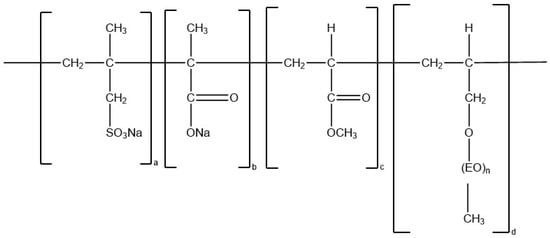
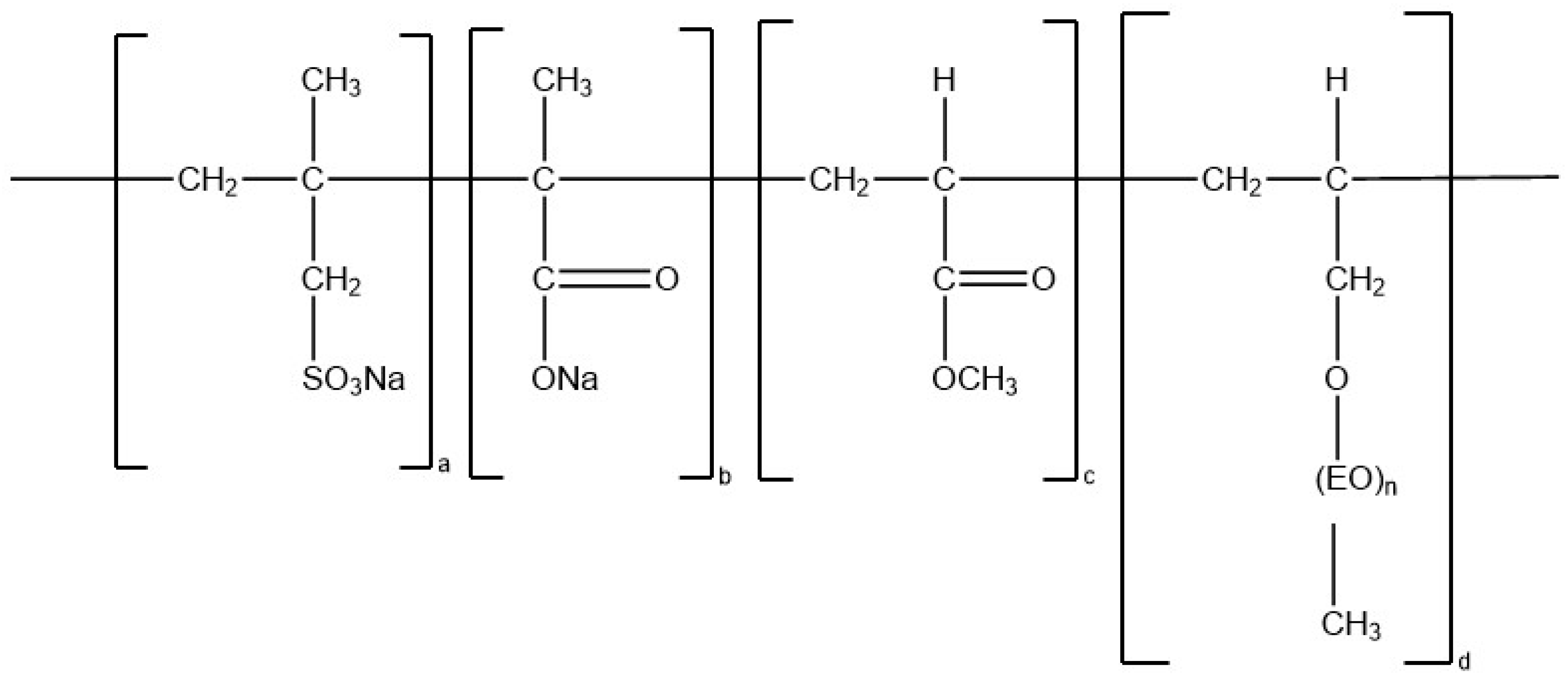
To achieve stable dispersion and effective thermal transport enhancement, appropriate surface functionalization of graphene is required prior to nanofluid preparation. SCG(Guangxi University Collaborative Innovation Center of Renewable Energy Materials, Naning, Guangxi, China) contains structural defects such as in-plane pores, carboxyl groups, and hydroxyl groups, which provide favorable active sites for chemical modification. A polycarboxylate superplasticizer (PC)(DONGFANGTONGREN, Chengdu, Sichuan, China) with a comb-like molecular structure was selected as the dispersing modifier, as illustrated in Figure 1. Active carboxyl and sulfonic groups distributed along the polymer main chain can associate with residual hydroxyl groups on the SCG surface through hydrogen bonding and electrostatic interactions, while polyethylene glycol side chains extend in water and generate steric hindrance between adjacent graphene sheets. This combined effect effectively improves dispersion stability and suppresses particle agglomeration in the aqueous phase.
Figure 1.
Molecular structure of PC.
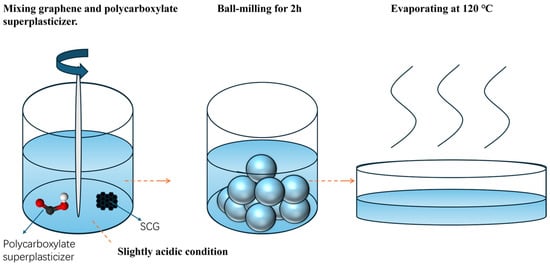
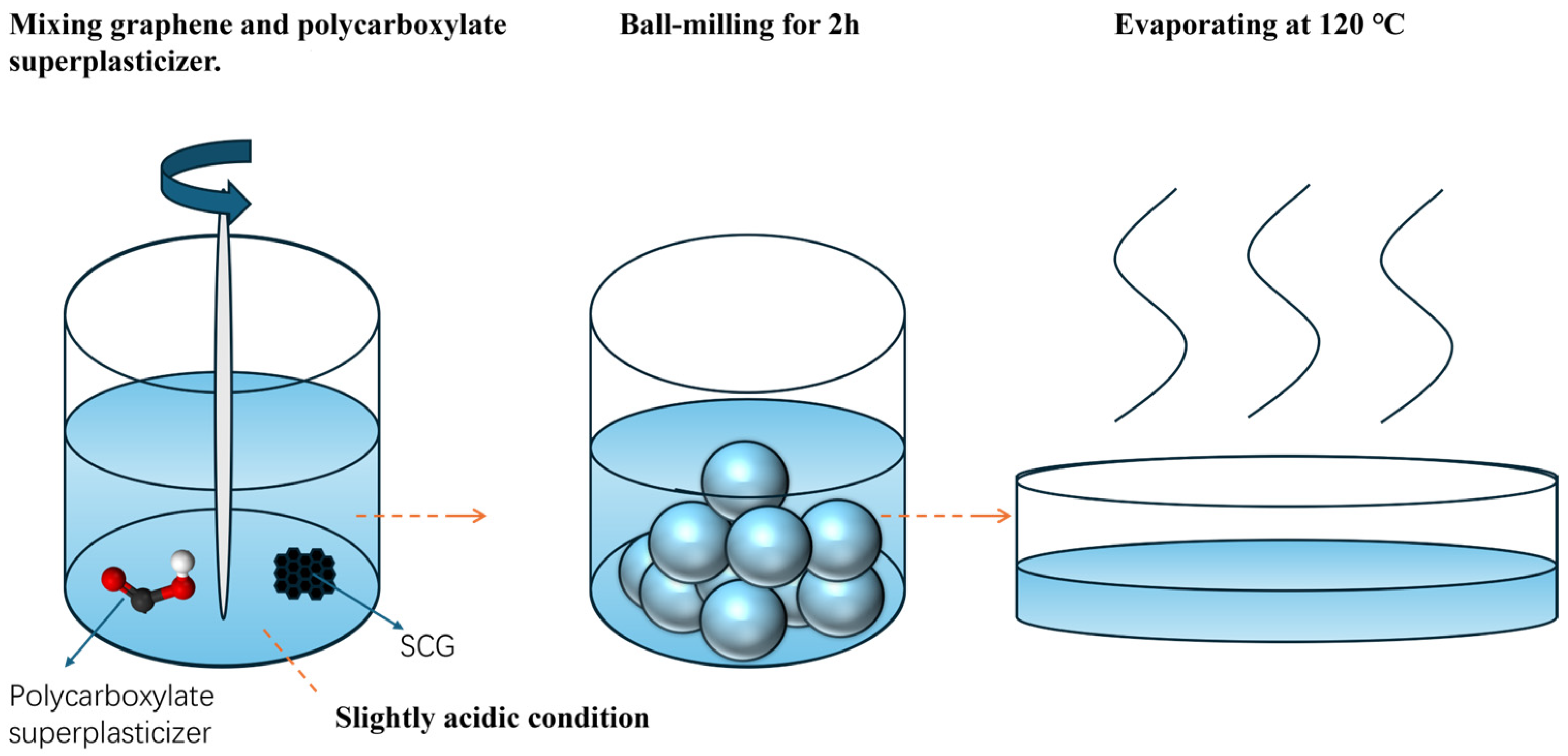
As shown in Figure 2, the PC was first dissolved in deionized water. The PC was first dissolved in deionized water, exhibiting an alkaline nature due to the hydrolysis of sodium carboxylate groups. Dilute hydrochloric acid was then added dropwise to adjust the solution to a slightly acidic condition (pH ≈ 5–6). This step is crucial for converting the sodium carboxylate (–COONa) into free carboxylic acid groups (–COOH), which are more reactive for the subsequent esterification. After a homogeneous mixed solution was obtained, SCG [22] was introduced and uniformly stirred, followed by ball milling for 2 h to promote sufficient interaction between PC molecules and graphene surfaces. Beyond mere particle size reduction, the high-energy mechanical shearing and impact during ball milling effectively overcome the strong interlayer van der Waals forces of graphene, facilitating the intercalation of PC long-chain molecules into the graphene galleries. This intensive mechanical activation ensures a molecular-level distribution of PC on the graphene basal planes and edges, thereby maximizing the effective contact area for subsequent functionalization.
Figure 2.
Synthesis steps of PSG.
After ball milling, the mixture was subjected to evaporation at 120 °C. During this process, the high temperature dehydration facilitates the interfacial association between PC molecules and graphene surfaces. As further evidenced by the XPS analysis in Section 3.4.1, the significant intensification of the O–C=O and C–O peaks indicates a strong interfacial association of PC with the graphene framework. The mass ratio of PC to graphene used in the synthesis was maintained at 2:1. The resulting solid product was first dispersed in deionized water by magnetic stirring for 2 h, followed by sonication for 30 min. Subsequently, most insoluble solid residues were removed. Finally, the supernatant was collected and centrifuged at high speed (30 min) to obtain the PC-modified stereoscopic graphene (PSG).
Nanofluids are generally prepared by two principal methods: the one-step method and the two-step method [30,31,32]. In the one-step method, nanoparticles are synthesized directly in the base fluid, allowing the generated particles to disperse naturally in the liquid phase and thereby reducing subsequent agglomeration. In contrast, the two-step method involves first preparing the nanomaterial separately and then dispersing it into the base fluid through external physical treatment, which is currently the most widely adopted route because of its flexibility and simplicity
In the present study, PSG nanofluid (PSGNF) was prepared using the two-step method. The synthesized PSG powder was mixed with deionized water and then subjected to ultrasonic treatment for 30 min to obtain a uniformly dispersed PSG nanofluid. Ultrasonication was employed to further weaken residual aggregation among PSG structural units and improve dispersion homogeneity in the aqueous phase.
The mean hydrodynamic diameter of the resulting PSG nanoparticles, as determined by dynamic light scattering (DLS), is approximately 260–280 nm, indicating effective de-agglomeration and stable dispersion in the aqueous phase (detailed particle size and Zeta potential characterization are presented in Section 3.5).
2.2. Experimental Equipment
2.2.1. Introduction to Experimental Equipment
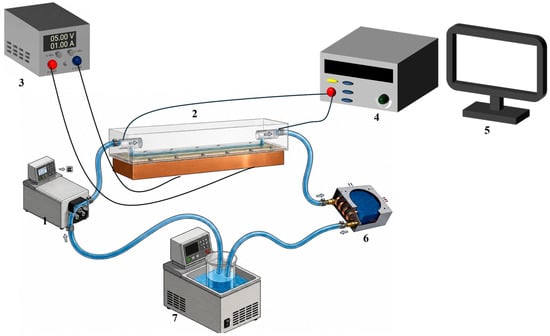
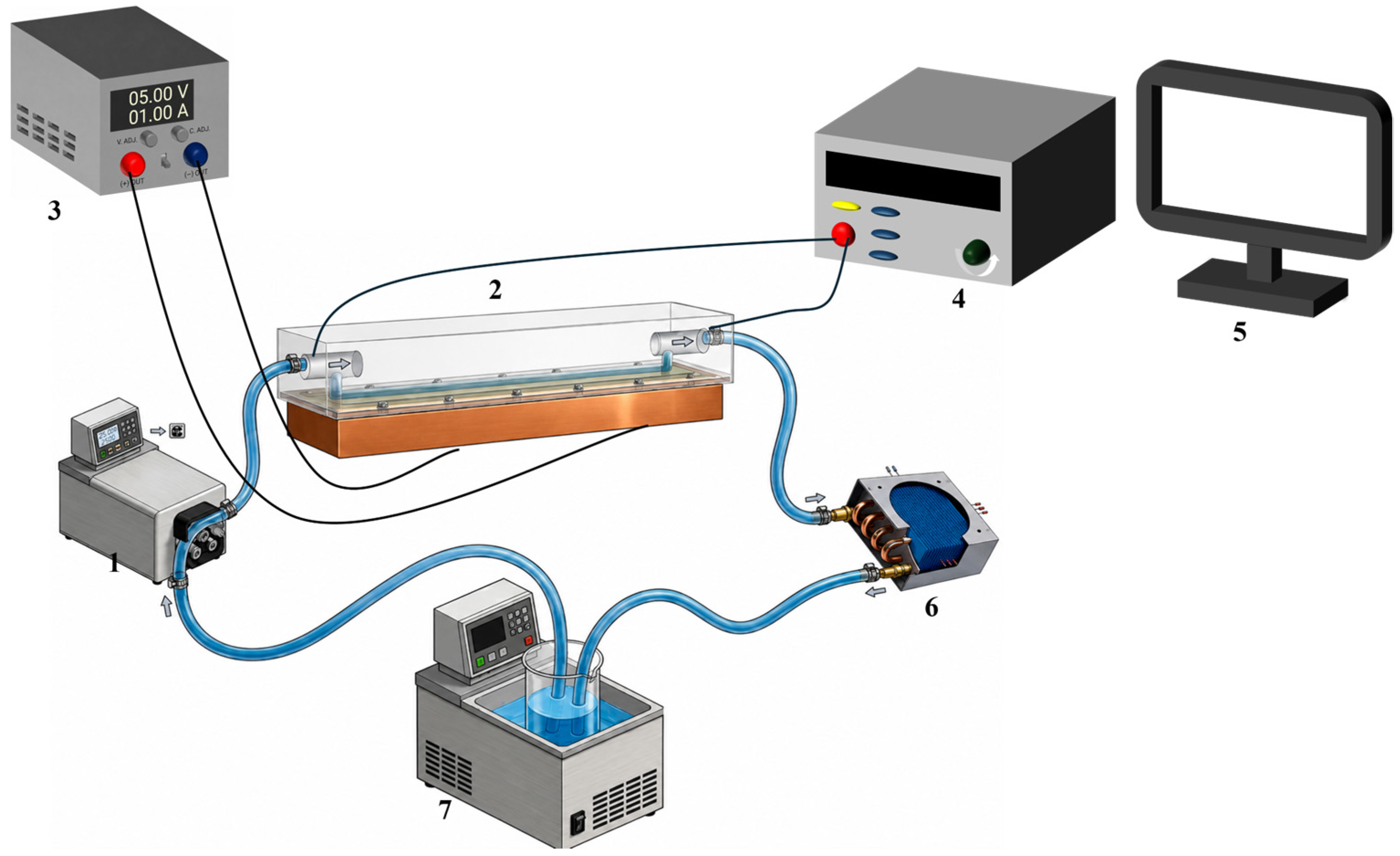
The experimental system consists of a thermostatic water bath, direct current (DC), peristaltic pump, experimental section, heat exchanger, temperature sensors, and a computer for data acquisition. First, the modified graphene nanofluid is heated in the thermostatic water bath until it reaches the desired temperature. Once preheated, the fluid is pumped into the experimental section through the peristaltic pump. A heating rod is inserted at the bottom of the experimental section, which is connected to a DC power supply. The heating power applied to the experimental section is controlled by adjusting the DC power supply voltage. After the heat exchange process in the experimental section, the working fluid is returned to the water bath through the heat exchanger for recirculation. Temperature sensors are installed at the inlet, outlet, and bottom of the experimental section, allowing real-time monitoring of the temperature changes of the inlet, outlet, and copper block, which are displayed on the computer. The overall experimental procedure is illustrated in Figure 3.
Figure 3.
Schematic diagram of the experimental apparatus. 1. Peristaltic pump, 2. Experimental section, 3. Direct current power supply, 4. Data acquisition card, 5. Electronic processor, 6. Heat exchanger, and 7. Water bath.
2.2.2. Experimental Section Structure and Design
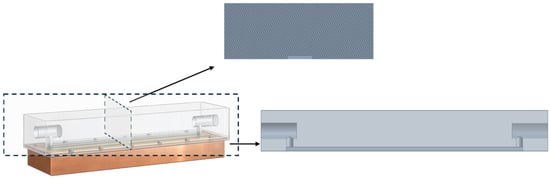
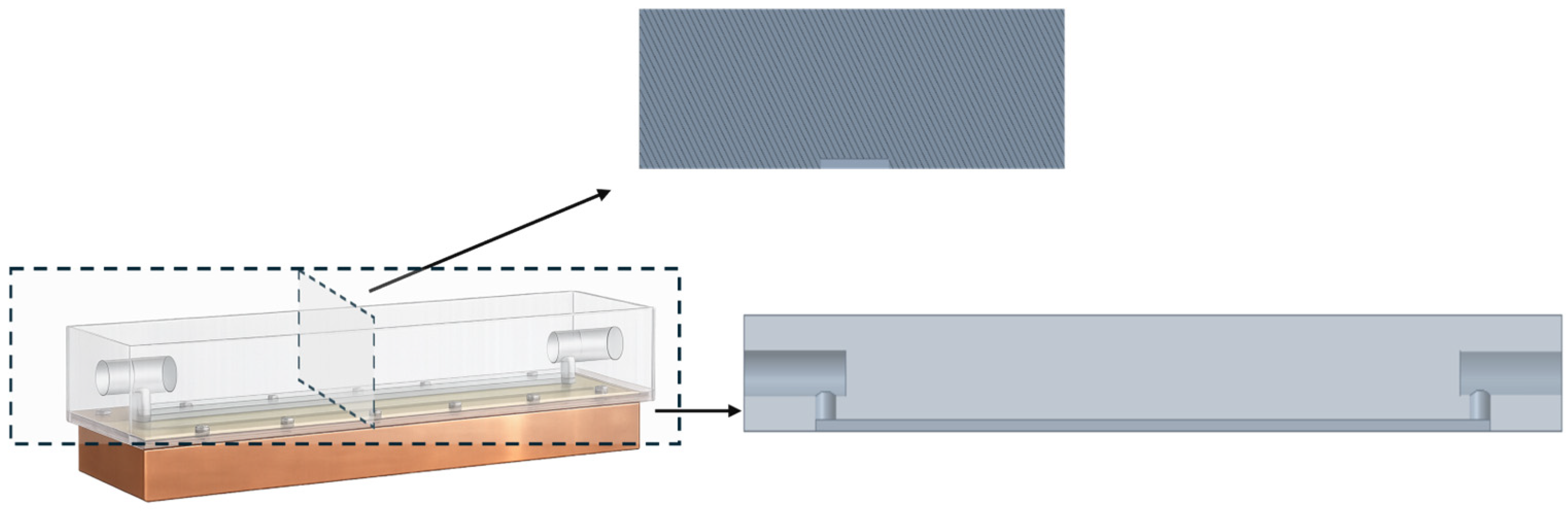
The experimental section for convective heat transfer is shown in Figure 4. The experimental section primarily consists of a copper block and a transparent acrylic cover. A channel with a width of 8 mm and a depth of 2 mm is milled on the underside of the acrylic plate, which serves as the flow path for the working fluid. The fluid will exchange heat with the copper block in this channel. Four heating rods are inserted at the bottom of the copper block, each with a heating power of 12 W, and they are connected in parallel. Temperature sensors are installed at the inlet and outlet of the acrylic plate as well as at the bottom of the copper block to monitor the temperature changes of the working fluid at the inlet and outlet of the channel, as well as the temperature variation in the copper block.
Figure 4.
Experimental section.
2.3. Data Processing
In order to improve the calculation accuracy in the convective heat transfer experiment, the heat absorbed by the fluid side was adopted as the basis for heat transfer calculation in this study. The effective heat transfer area was the bottom surface of the rectangular channel (2 mm × 8 mm) milled on the underside of the acrylic plate. The copper block was attached to this surface, while the side and top walls (low-conductivity acrylic) were insulated, ensuring only the bottom contributed to heat transfer.
2.3.1. Heat Transfer Rate and Heat Flux
The thermal conductivity of pure water was obtained from the NIST Chemistry WebBook, SRD 69 (National Institute of Standards and Technology, Gaithersburg, MD, USA) based on the bulk fluid temperature. This database implements the IAPWS Formulation 2011 for the Thermal Conductivity of Ordinary Water Substance, which provides an uncertainty of less than 1–2% in the temperature range of this study.
To improve the calculation accuracy in the convective heat transfer experiment, the heat absorbed by the fluid was taken as the reference heat transfer rate, and the convective heat transfer coefficient was determined based on the actual heat transfer area and the mean temperature difference. The heat absorbed by the fluid flowing through the channel, was determined from the volumetric flow rate and the temperature difference between the inlet and outlet. The volume flow rate was measured using the volumetric collection method (). Each measurement was repeated three times and averaged.
where is the volumetric flow rate of the fluid (m3/s); and are the effective density and specific heat capacity of the nanofluid, respectively; Tout and Tin and represent the outlet and inlet temperatures of the fluid, respectively.
The experimental channel is a rectangular groove machined directly into the acrylic cover plate. The groove has a precisely measured width ( mm) and depth ( mm). Its length along the flow direction, , is the geometric parameter defined in Equation (2). The copper block (heat source) is placed in contact with the underside of the acrylic plate. Consequently, the actual wetted heating surface—and thus the geometrically well-defined heat transfer area, is the bottom surface of the groove (i.e., the interface between the fluid and the acrylic plate, through which heat is conducted from the copper block). The sidewalls of the groove are not considered part of the effective heat transfer area because they are perpendicular to the main heat flux direction and their contribution is less than 5% of the total area based on the groove dimensions. The effective area is therefore calculated as:
where W is the channel width and L is the effective heating length.
The average heat flux supplied to the fluid is then expressed as:
2.3.2. Wall Temperature Assumption and Convective Heat Transfer Coefficient
The thermal conductivities of thermal insulation cotton and air in the temperature range of 300–400 K are approximately 0.075–0.085 W·m−1·K−1 and 0.0264–0.0335 W·m−1·K−1, respectively, whereas the thermal conductivity of copper is about 400 W·m−1·K−1. This significant difference indicates that, under identical conditions, the heat conducted through copper is at least three orders of magnitude greater than that transferred through the surrounding insulation material. More importantly, a scale analysis reveals that the heat transported by forced convection in the axial flow direction is approximately three orders of magnitude higher than the potential axial heat losses to the environment. Consequently, the heat transfer through the horizontal boundaries (i.e., the channel walls perpendicular to the flow direction) can be considered negligible, and the test section is reasonably assumed to be adiabatic.
Furthermore, given that the copper block has a thickness of 5 mm and the thermocouple junction is positioned at a depth of 2 mm, the temperature gradient within the high-conductivity copper is minimal. Thus, the measured temperature is regarded as the local wall temperature of the copper surface. Therefore, heat loss in the horizontal direction can be neglected, and the horizontal boundaries are assumed to be adiabatic and the temperature measured by the thermocouple is approximately regarded as the wall temperature of the copper block surface:
In the present experiments, the inlet-outlet temperature difference is maintained within 5 °C. Under such a small temperature difference, the deviation between the arithmetic mean and the logarithmic mean temperature is less than 0.2%, and the variations in fluid properties (density, specific heat, viscosity) are negligible. The bulk mean fluid temperature is defined as:
Thus, the convective heat transfer coefficient is calculated by:
2.3.3. Reynolds Number
The Reynolds number is calculated as:
where u is the average flow velocity, Dh is the hydraulic diameter of the rectangular channel, and μnf is the dynamic viscosity of the nanofluid.
For the rectangular channel, the hydraulic diameter is defined as:
where H is the height (depth) of the channel.
2.3.4. Nusselt Number
2.3.5. Uncertainty Analysis
To ensure the reliability of the experimental data, a standard uncertainty analysis was conducted for the primary calculated parameters (convective heat transfer coefficient h, Nusselt number (Nu), and Reynolds number (Re) based in the classical error propagation theory proposed by Kline and McClintock [33].
For any indirectly calculated objective parameter R derived from multiple independent measured variables (x1,x2,…,xi), its relative uncertainty can be determined using the Root-Sum-Square (RSS) method as follows:
In this experimental setup, the absolute errors of the direct measurement instruments are as follows: the temperature measurement error of the calibrated thermocouples is ; the relative error of the fluid volume flow rate is ; the geometrical dimensions of the copper channel (width W depth H, etc.) measured by a precision digital caliper have an error of .
Furthermore, based on standard literature practices, the relative uncertainties of the thermophysical properties of the nanofluids (density ρ, specific heat cp, thermal conductivity λ, and dynamic viscosity μ), are estimated to be ±2.0%, ±2.0%, ±5.0%, and ±2.0%, respectively, based on the precision of the measurement instruments and relevant literature for graphene-based nanofluids.
Based on the aforementioned principles, the relative uncertainty propagation formulas for the heat absorption of the fluid and the convective heat transfer coefficient h are expressed as:
where is the bulk fluid temperature difference, and is the average wall-to-fluid temperature difference.
Similarly, the relative uncertainty for Nu and Re can be derived as:
Substituting the extreme operating conditions (e.g., the scenario with the minimum temperature difference at the lowest Reynolds number) into the equations above reveals that within the scope of this study, the maximum relative uncertainty is 3.8% for the Reynolds number (Re), 7.4% for the convective heat transfer coefficient h, and 8.6% for the Nusselt number (Nu). All key parameter uncertainties fall well within a reasonable and acceptable range (<9%), robustly demonstrating the high reliability of the experimental measurement system and the acquired data.
2.4. Morphological Analysis
2.4.1. X-Ray Photoelectron Spectroscopy
The elemental composition and chemical states of the sample surfaces were quantitatively characterized by X-ray photoelectron spectroscopy (XPS). The measurements were conducted using a Thermo K-Alpha spectrometer (Thermo Fisher Scientific, Waltham, MA, USA).
2.4.2. Scanning Electron Microscope
The surface micro morphologies and structural features of the samples were characterized using a field-emission scanning electron microscope (FE-SEM, Zeiss Sigma 300, Carl Zeiss AG, Oberkochen, Germany).
2.4.3. Raman Spectroscopy
The crystal structures and defect degrees of the modified graphene samples were characterized using a Raman spectrometer (DXR Thermo Fisher Scientific, Waltham, MA, USA) equipped with a 532 nm laser excitation source.
3. Results
3.1. Effect of Nanoparticle Mass Fraction on Convective Heat Transfer Performance
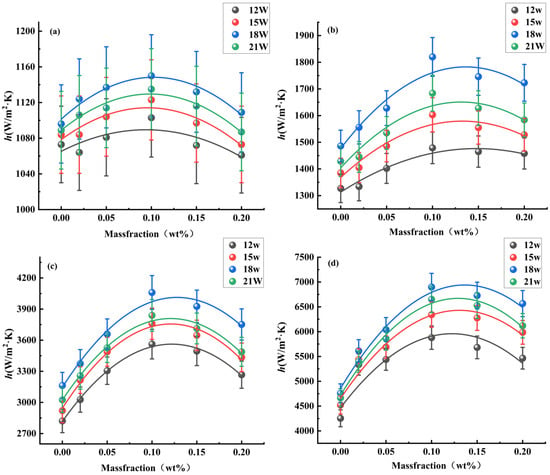
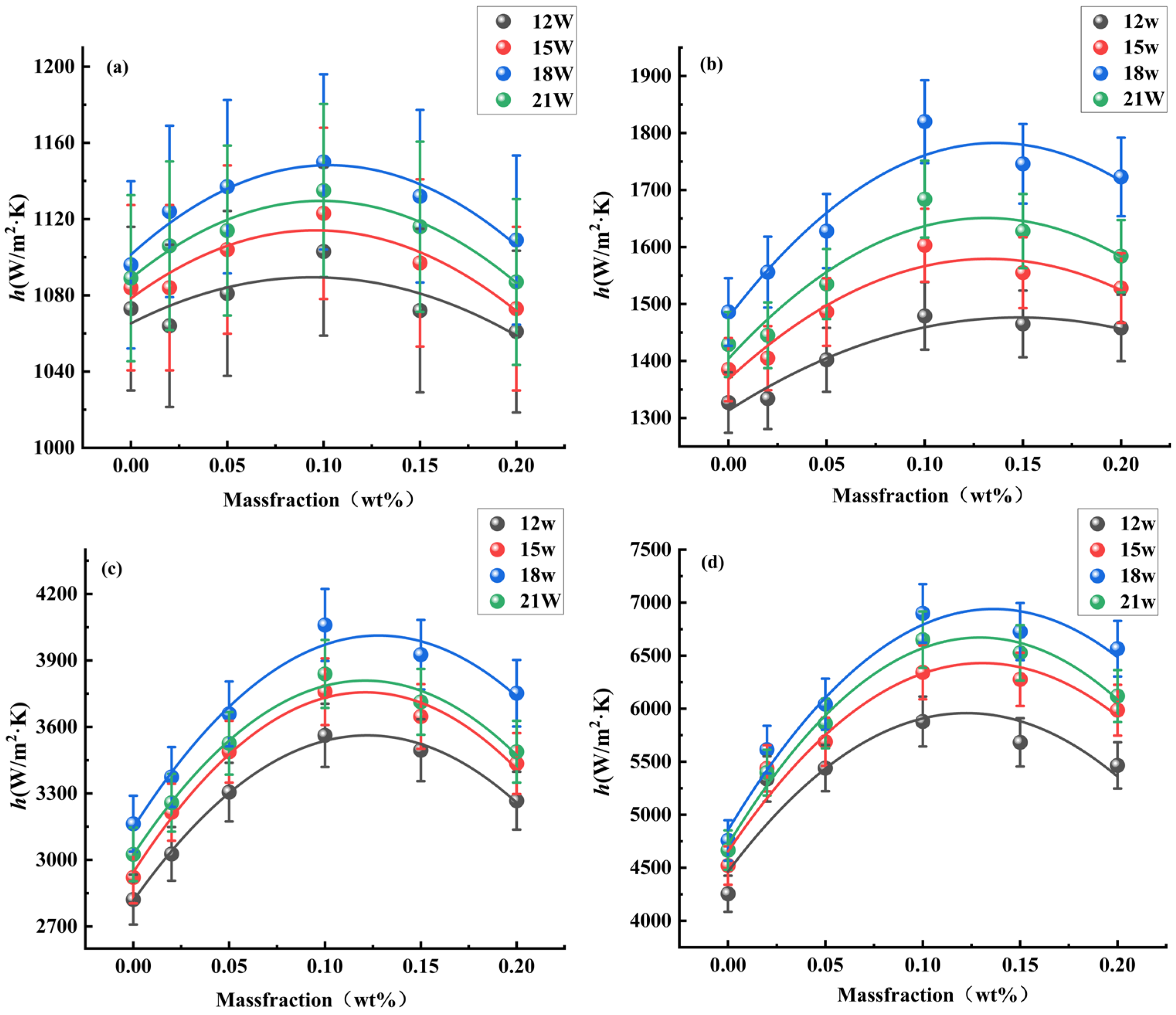
As shown in Figure 5, the convective heat transfer coefficient of PSGNF varies with Reynolds number (Re) and nanoparticle mass fraction. In this study, deionized (DI) water was utilized as the baseline reference. As evident from Figure 5, the addition of modified graphene nanoparticles into DI water significantly augments the convective heat transfer coefficient of the base fluid. Furthermore, this enhancement effect intensifies with the simultaneous increase in both nanoparticle concentration and Reynolds number. For instance, at a Re of 1200, the convective heat transfer coefficient of the nanofluid with a mass fraction of 0.05 wt% is enhanced by 10% compared to the base fluid, whereas the enhancement reaches 22% at a concentration of 0.1 wt%.
Figure 5.
Variation in convective heat transfer coefficient with mass fraction of PSG-nanofluids at different heating powers. Symbols represent experimental data with error bars, and solid lines represent the corresponding trend lines: (a) Re = 350; (b) Re = 1200; (c) Re = 2400; (d) Re = 4000.
At a constant Reynolds number, the heat transfer coefficient initially increases with the elevation of nanoparticle concentration, reaching an optimal peak at 0.1 wt%. However, a further increase in concentration leads to a declining trend. This phenomenon can be attributed to the fact that although higher nanoparticle concentrations improve the thermal conductivity of the nanofluid, they simultaneously induce a drastic increase in dynamic viscosity. During the heat exchange process, this elevated viscosity exacerbates nanoparticle deposition on the heating surface, which consequently thickens the thermal boundary layer and significantly elevates the solid-liquid interfacial thermal resistance. The subsequent decline in the heat transfer coefficient indicates that the detrimental impact of this augmented thermal resistance completely outweighs the heat transfer enhancement brought about by the increased nanoparticle concentration. Nevertheless, as the Reynolds number increases, the negative impact of the thickened boundary layer on convective heat transfer is gradually mitigated.
3.2. Effect of Flow Regimes on Convective Heat Transfer Performance
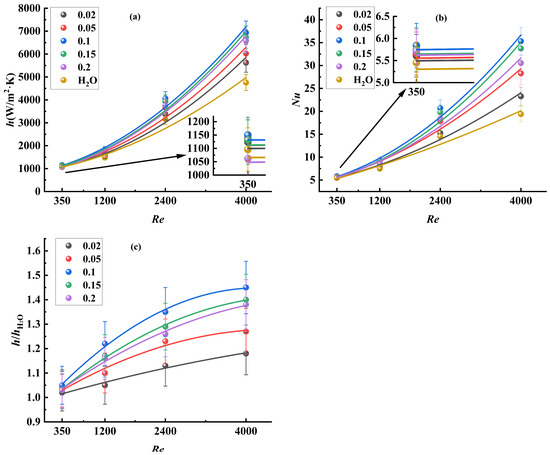
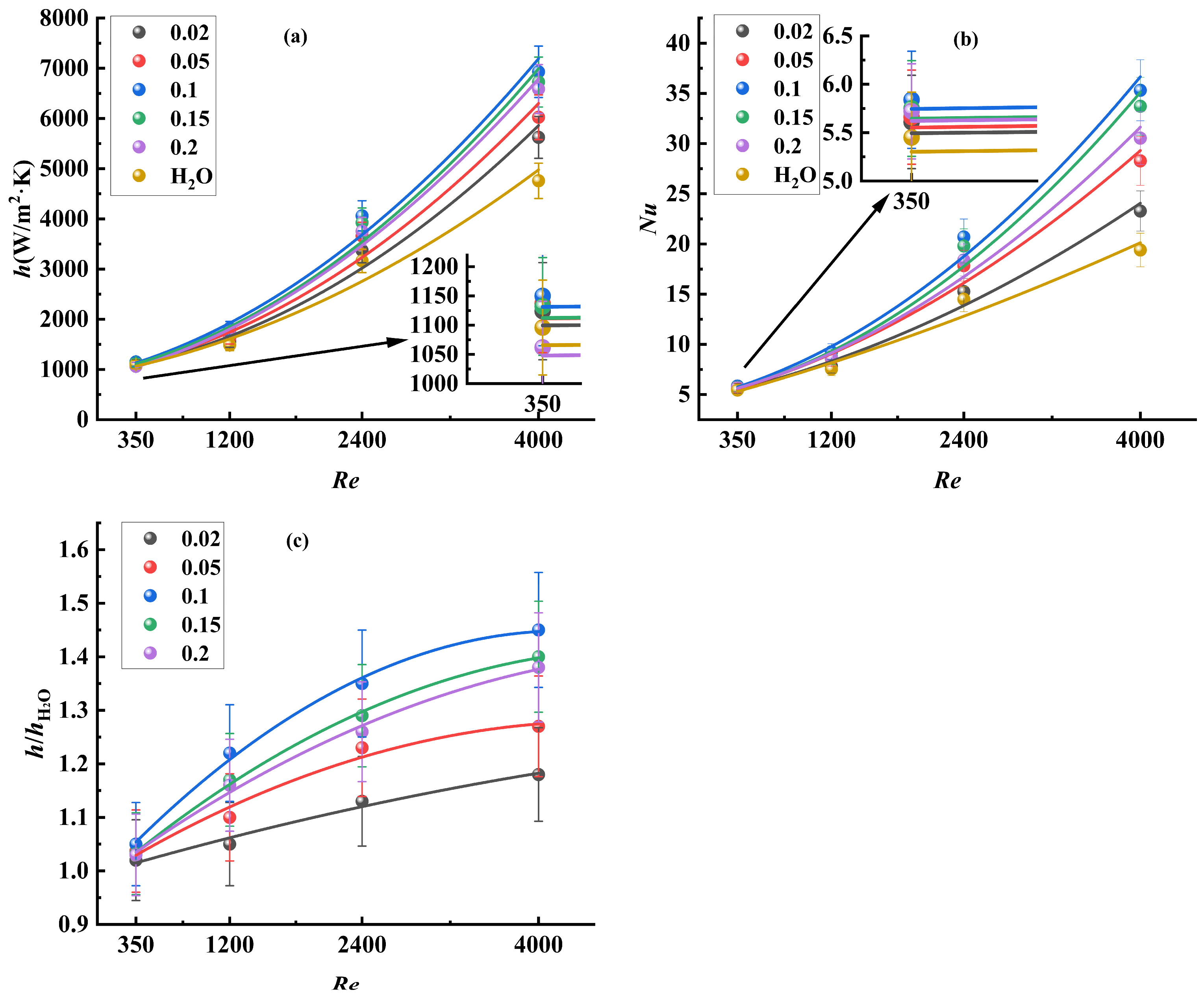
As shown in Figure 6a,b the convective heat transfer coefficient (h) and Nusselt number (Nu) of PSGNF across varying Reynolds numbers (Re) and nanoparticle concentrations. In the laminar regime (Re ≤ 1200), increasing flow velocity directly enhances h. Notably, at Re = 350 and a concentration of 0.1 wt%, the calculated Nu (5.84) exceeds the theoretical value for fully developed laminar flow (5.33). This deviation, which further expands at Re = 1200 (Nu = 9.26), highlights that thermal entrance effects dominate the heat transfer enhancement within the present short channel (L/D ≈ 55).
Figure 6.
(a) Relationship between convective heat transfer coefficient h and Reynolds number Re for nanofluids with different graphene concentrations. (b) Relationship between Nusselt number (Nu) and Reynolds number (Re) for nanofluids with different graphene concentrations. (c) Relative convective heat transfer coefficient () as a function of Reynolds number for nanofluids with different graphene concentrations. The ratio represents the enhancement of heat transfer relative to pure water under the same flow conditions.
As the flow enters the transitional regime (Re up to 2400), a 95% increase in velocity yields a disproportionate 123% enhancement in h. This nonlinear surge indicates an additional macroscopic mixing mechanism: the emergence of intermittent vortical structures that strongly disrupt the steadily developing thermal boundary layer, transferring heat far more efficiently than pure molecular diffusion. At the highest Reynolds number investigated (Re = 4000), the flow is expected to have entered the early turbulent regime, as the critical Reynolds number for internal flows is typically around 2300 [34]. Under these conditions, h increases by approximately 70% compared to transitional conditions. The enhanced turbulent fluctuations compress the laminar sublayer, substantially reducing thermal resistance. Furthermore, the experimental heat transfer increase in this regime (71%) significantly surpasses the theoretical prediction based on the scaling Nu ∝ Re0.8 (44%), indicating that entrance effects persistently contribute even at Re = 4000, partly due to the relatively short channel length (L/D≈ 55).
Figure 6c presents the relative convective heat transfer coefficient (h/hH2O). The enhancement effect of PSGNF magnifies with both concentration (optimizing at 0.1 wt%) and Re. Notably, the curve steepens beyond Re = 2300. This amplified advantage in turbulent flow occurs because intense fluctuations not only compress the thermal boundary layer to increase the wall temperature gradient, , but also promote microscopic nanoparticle migration. These combined effects synergistically improve energy transport within the graphene nanofluid.
3.3. Stability of Nanofluids
3.3.1. UV-Vis Analysis
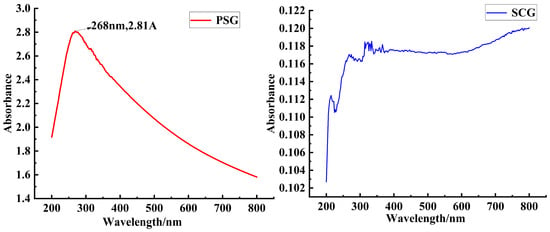
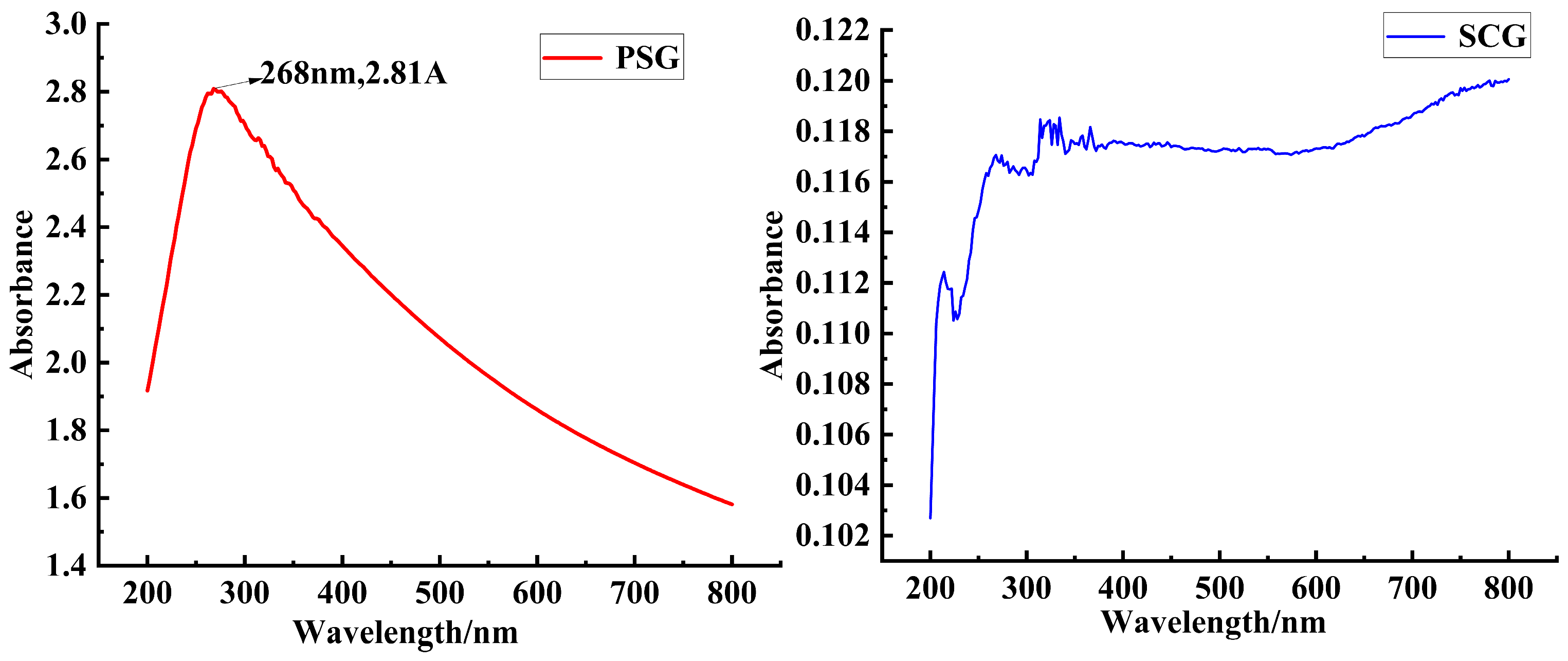
UV-Vis spectroscopy was used to evaluate the dispersion stability of 0.04 wt.% PSGNF (Figure 7). The modified PSG showed an absorbance of 2.81 at 268 nm, which is significantly higher than that of pristine SCG (0.12). Although absorbance values above 2 are outside the reliable linear range of the Beer-Lambert law and thus only qualitative conclusions can be drawn, the substantial increase in absorbance clearly indicates that the surface-anchored polycarboxylate molecules improve aqueous compatibility and ensure uniform dispersion of the 3D structural units. This maintained open porous structure facilitates fluid penetration, reducing solid-liquid interfacial thermal resistance and enhancing interfacial heat transport.
Figure 7.
UV–Vis spectra of pristine SCG and modified PSG nanofluids at a concentration of 0.04 wt%.
3.3.2. Long-Term Thermal Stability
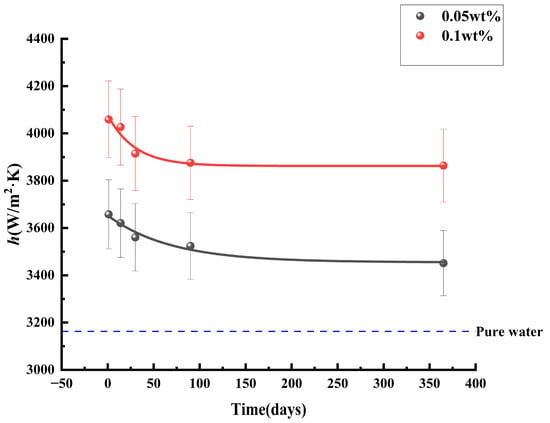
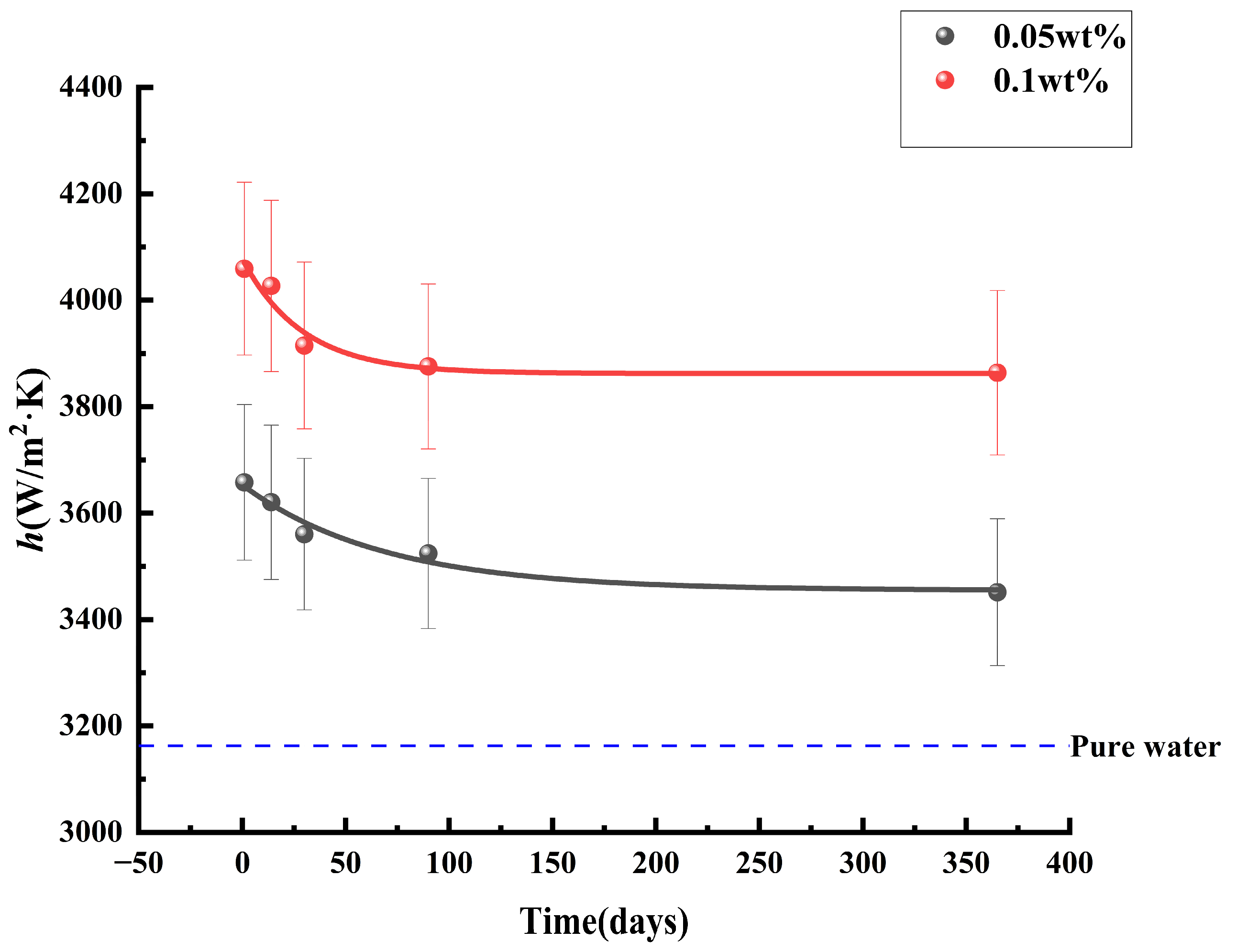
UV-Vis spectroscopy demonstrated the excellent initial dispersion of the modified graphene in the aqueous phase. However, for practical thermal management, the functional stability of nanofluids under long-term static conditions—specifically, whether heat transfer performance degrades over time—serves as the ultimate criterion for evaluating modification efficacy. Accordingly, long-term monitoring of modified graphene nanofluids at 0.05 wt% and 0.1 wt% was conducted over a one-year period, with the convective heat transfer coefficient (h) as the primary metric (Figure 8). To further evaluate the long-term evolutionary trend and potential stratification, an exponential decay model (y = A1 * exp(−x/t) + y0 was employed to fit the experimental data.
Figure 8.
Long-term stability of the convective heat transfer coefficient (h) for modified graphene nanofluids at different concentrations over a one-year static period.
PSG nanofluids (0.05 wt% and 0.1 wt%) were sealed in glass vials and stored under static conditions at room temperature (25 ± 1 °C) in the dark for 12 months. No agitation or shaking was applied during the entire storage period. At predetermined time intervals (0, 30, 60, 100, 200, 300, and 365 days), aliquots were carefully sampled from the middle height of the vial (avoiding any possible floating or sediment layers) using a pipette, and the convective heat transfer coefficient was immediately measured. Additionally, visual inspection was performed regularly to identify any visible sedimentation, aggregation, or phase separation. For the 0.1 wt% sample, a small amount of loose sediment was first observed at the bottom of the vial after 300 days, while for the 0.05 wt% sample, slight sedimentation appeared at 365 days. No irreversible aggregation or phase separation was observed for either concentration throughout the entire storage period.
The results clearly demonstrate exceptional stability for both concentrations throughout the year. As shown in Figure 8 and Table 1, the convective heat transfer coefficient experienced a minor initial decline but reached a steady plateau within approximately 100 days, indicating that the PSG-modified nanofluids achieved a robust dynamic equilibrium via steric hindrance. The maximum performance decline after one year was strictly within 5.4% and 4.8% for 0.05 wt% and 0.1 wt% respectively, with no abrupt degradation observed. Based on the fitted offset parameter (y0), the projected h values for a longer term (2–5 years) remain stable at 3448 and 38,657 W/(m2⋅K), representing a persistent thermal performance gain of 9.14% and 21.94% over pure water. This suggests that the nanofluids can effectively overcome the stratification issues common in conventional systems during extended operation.
Table 1.
Long-Term Thermal Characteristics of Nanofluids: Gain and Degradation Analysis.
This superior long-term thermal stability corroborates the previously discussed microstructural modifications. It indicates that the steric hindrance from the modification effectively preserves the 3D heat-conduction network, preventing sheet restacking even during extended static storage.
3.4. Morphological Analysis Result
3.4.1. XPS
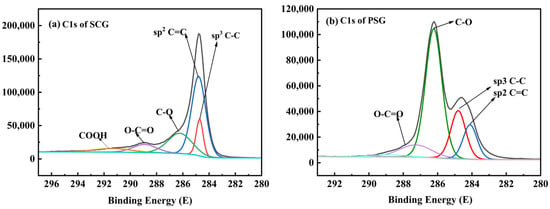
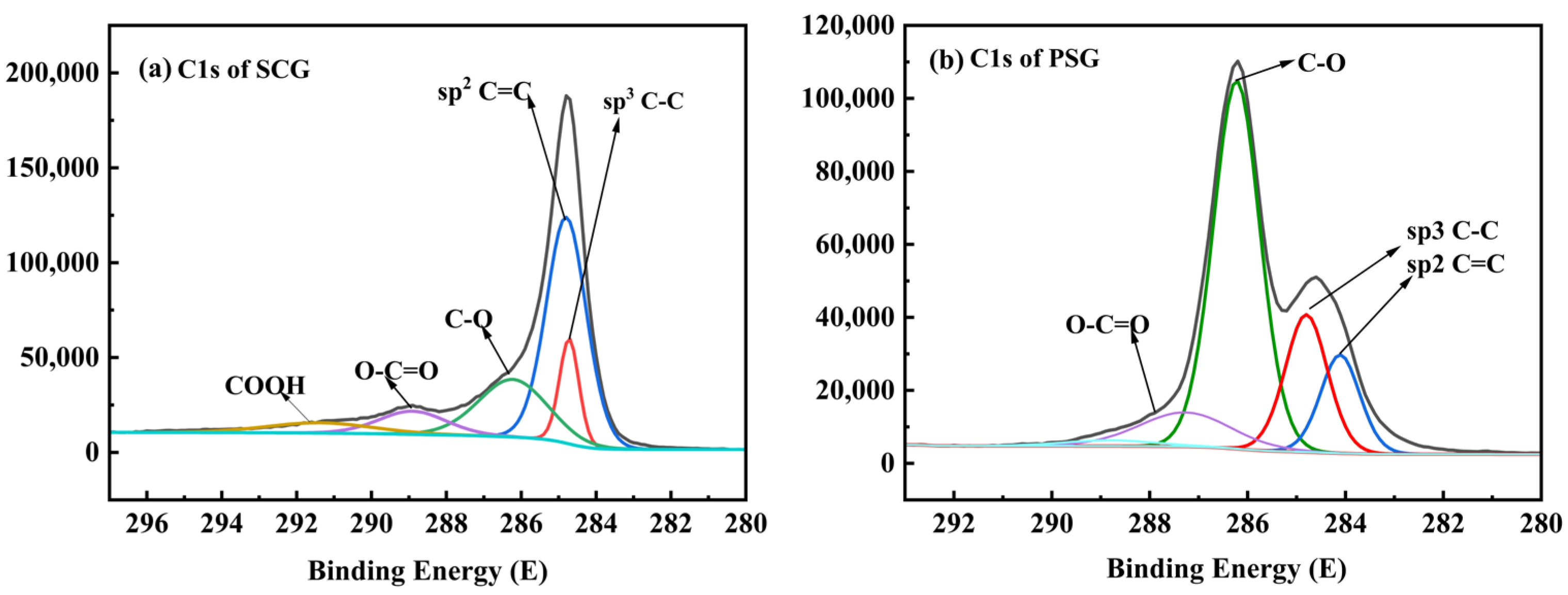
Figure 9 compares the C1s XPS spectra of pristine SCG and modified PSG. Following modification, the intensity of the main graphitic C=C peak (~284.8 eV) decreases significantly, consistent with the coverage of the graphene surface by a non-conjugated polymer layer. Conversely, the O–C=O peak (~288.7 eV) undergoes a pronounced enhancement, suggesting the successful incorporation of polycarboxylate species onto the graphene surface. Notably, the relative intensity of the C–O peak in PSG surges to exceed that of the graphitic carbon. This indicates an extensive surface coverage by polyethylene glycol-rich hydrophilic side chains, which likely enhances the hydrophilicity and water compatibility of the graphene surface. It should be noted that XPS alone cannot unambiguously distinguish covalent grafting from strong multi-point physical adsorption; therefore, the term “surface functionalization” is used throughout this study to describe the PCE–graphene interaction.
Figure 9.
High-resolution C1s XPS spectra and peak fitting results of (a) SCG and (b) PSG.
3.4.2. SEM
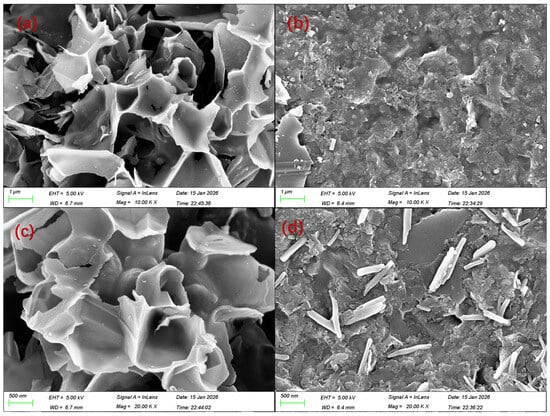
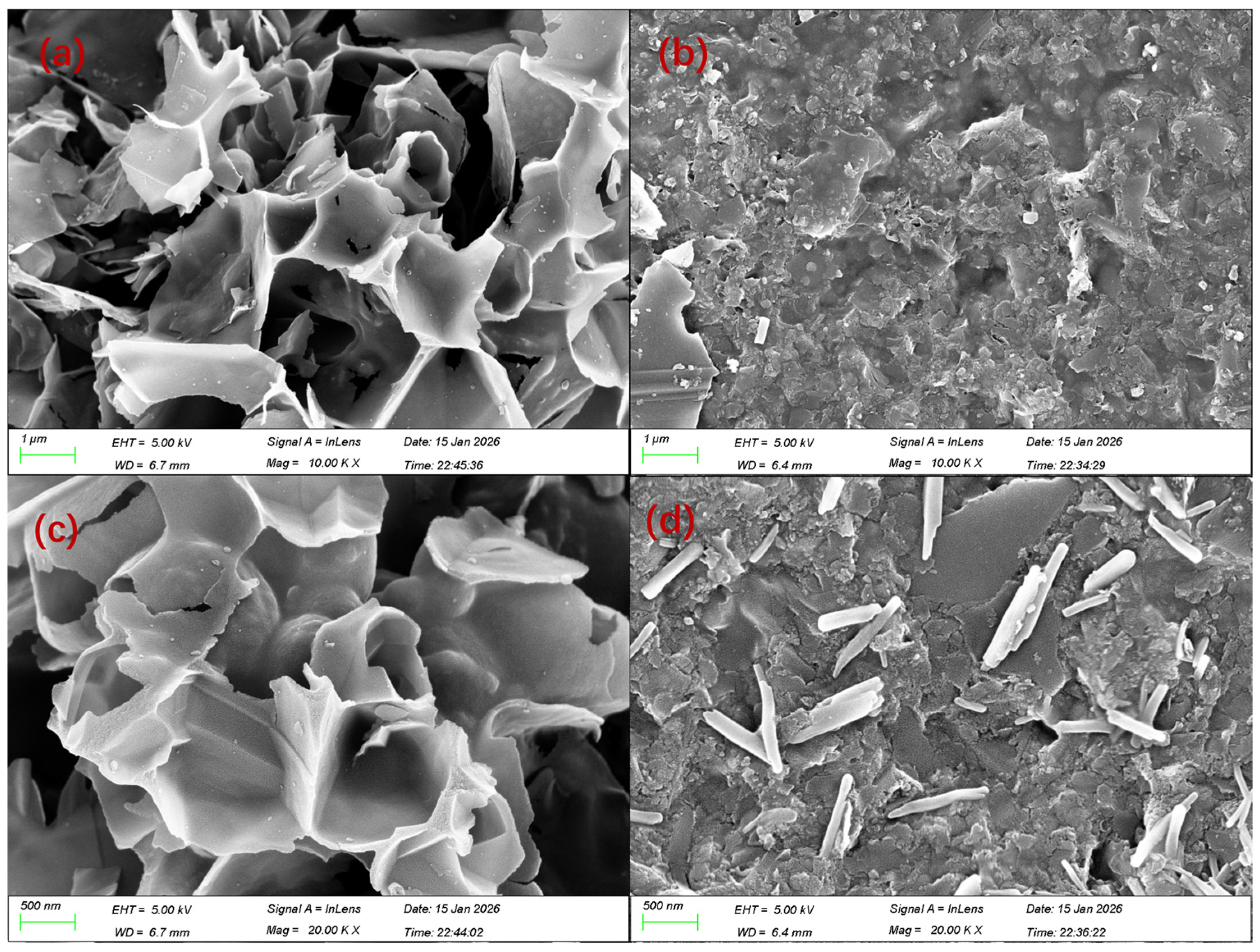
Figure 10a,c displays the morphology of pristine SCG, characterized by a highly developed, interconnected 3D porous network with sharp edges and smooth surfaces. This open architecture provides an exceptionally large interfacial area, serving as an ideal highly conductive framework for nanofluids.
Figure 10.
SEM images of (a,c) pristine SCG and (b,d) modified PSG at different magnifications.
Following polycarboxylate modification, significant morphological changes are observed in PSG (Figure 10b,d). The originally sharp graphene edges become thicker and smoother, enveloped by an obvious polymer layer that forms a “core-shell-like” composite morphology. Notably, the high-magnification image (Figure 10d) reveals that this dense and uniform coating does not disrupt the intrinsic 3D interconnected framework of the graphene. Consistent with the XPS results, this uniform polymer coating generates strong steric hindrance in aqueous media. It effectively suppresses the restacking and aggregation of graphene sheets during fluid circulation, thereby ensuring excellent dispersion stability even under high shear conditions. Furthermore, the dense coverage of polar functional groups substantially improves the interfacial wettability between the carbon framework and water molecules. This structural preservation, combined with the enhanced microscopic wetting, establishes a solid foundation for reducing solid-liquid interfacial thermal resistance and augmenting convective heat transfer in the subsequent nanofluid applications
3.4.3. Raman Spectroscopy
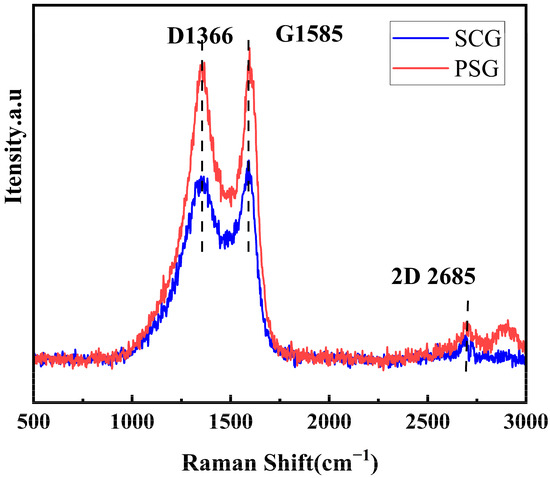
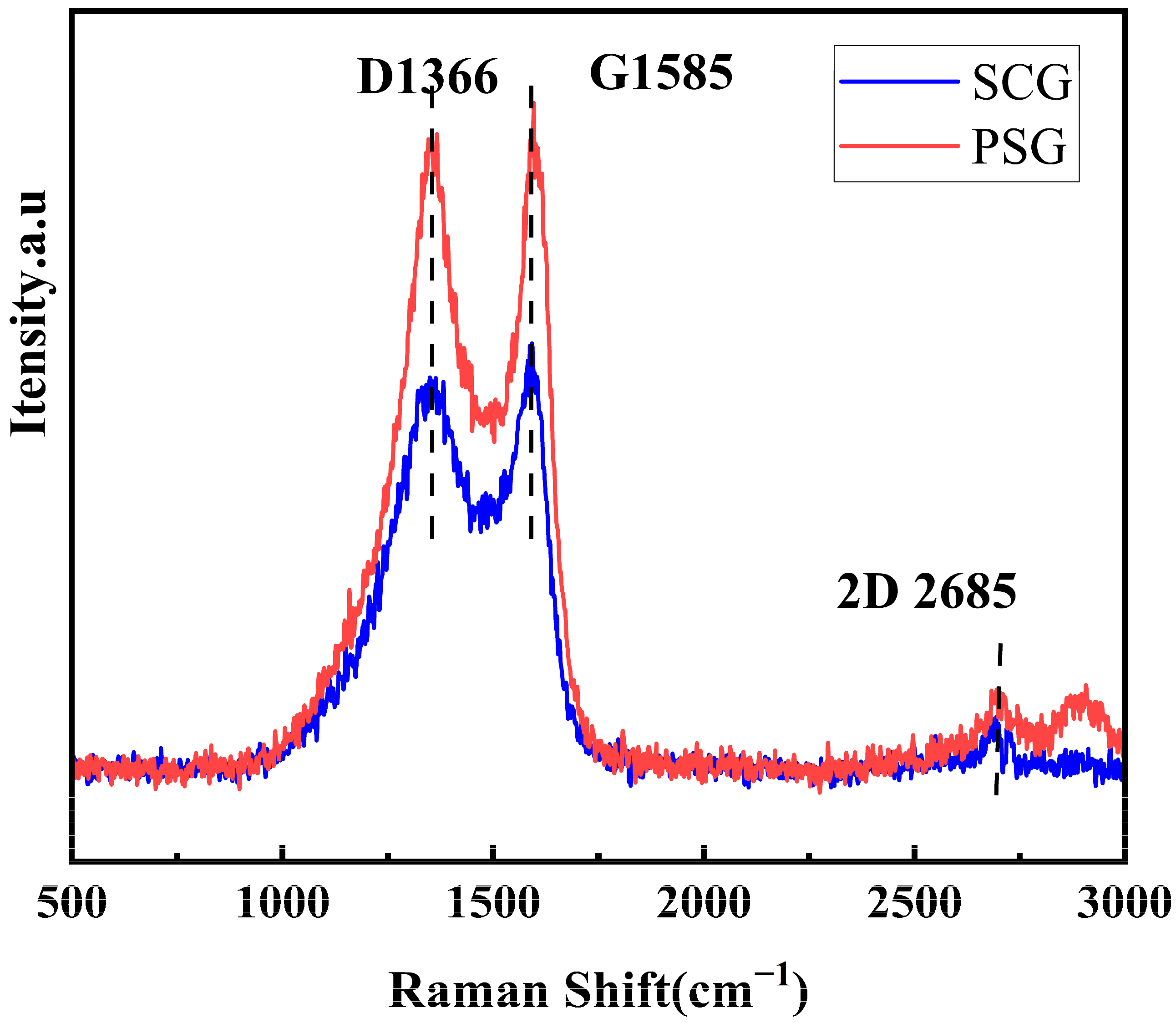
The Raman spectroscopy analysis results are presented in Table 2 and Figure 11. Raman spectra of both SCG and PSG exhibit distinct D (~1350 cm−1) and G (~1595 cm−1) bands. Following polycarboxylate modification, the ID/IG ratio increases only marginally from 0.92 to 0.95. This slight variation indicates a mild surface functionalization, which introduces hydrophilic groups without causing severe lattice damage, thereby preserving the intrinsic thermal conduction pathways. Moreover, PSG exhibits significantly higher overall Raman intensities, notably a surge in the 2D band intensity from 9.33 to 16.44. Within the preserved 3D interconnected skeleton, this striking enhancement indicates partial exfoliation and substantially improved structural accessibility driven by the steric stabilization of surface-anchored polycarboxylate molecules. Consequently, the uniformly exposed graphitic domains maximize the effective solid-liquid interfacial area, providing a favorable thermal transport framework for nanofluids.
Table 2.
Corresponding values of Raman spectroscopy.
Figure 11.
Raman spectroscopy measurement.
3.5. Nanoparticle Size Distribution and Colloidal Stability
To further characterize the dispersion state and colloidal stability of the modified graphene nanofluids, dynamic light scattering (DLS) and Zeta potential measurements were performed on both pristine SCG and PC-modified PSG dispersions. The measurements were conducted under two conditions: in deionized water and in saturated calcium hydroxide solution, the latter simulating an alkaline environment relevant to practical applications. For each sample, freshly prepared dispersions (-0) and dispersions aged for a period of time (-1) were analyzed to evaluate time-dependent stability. The results are summarized in Table 3.
Table 3.
DLS particle size and Zeta potential of SCG and PSG dispersions in deionized water and saturated Ca(OH)2 solution.
As shown in Table 3, the PC-modified PSG samples exhibit significantly smaller mean particle sizes than unmodified SCG. In deionized water, PSG-1 has a mean particle size of approximately 266 nm, roughly 3.4 times smaller than SCG-1 (901 nm) and 7.2 times smaller than SCG-0 (2003 nm), demonstrating the effectiveness of steric hindrance in suppressing graphene aggregation. This is consistent with SEM (Figure 10) and UV-Vis results (Figure 7).
The PSG dispersions also demonstrate excellent size stability upon aging, with PSG-1 remaining nearly unchanged (266.0 vs. 267.6 nm). In contrast, unmodified SCG undergoes severe agglomeration, most notably SCG-0 in saturated Ca(OH)2, which increases from approximately 2003 nm to over 5341 nm. This demonstrates the long-term robustness of the steric stabilization provided by the surface-anchored polycarboxylate chains.
The Zeta potential values of PSG samples (approximately −9 to −13 mV) indicate moderate electrostatic repulsion, which complements the dominant steric hindrance effect to ensure overall colloidal stability. The consistency of these values upon aging further corroborates the stable dispersion essential for reliable long-term convective heat transfer performance (Figure 8).
4. Molecular Dynamic Simulation
4.1. Simulation Models and Methods
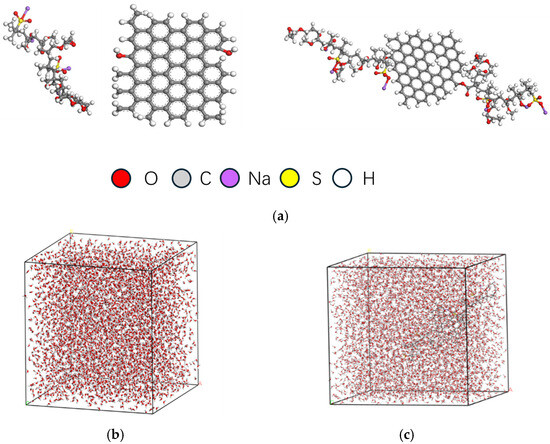
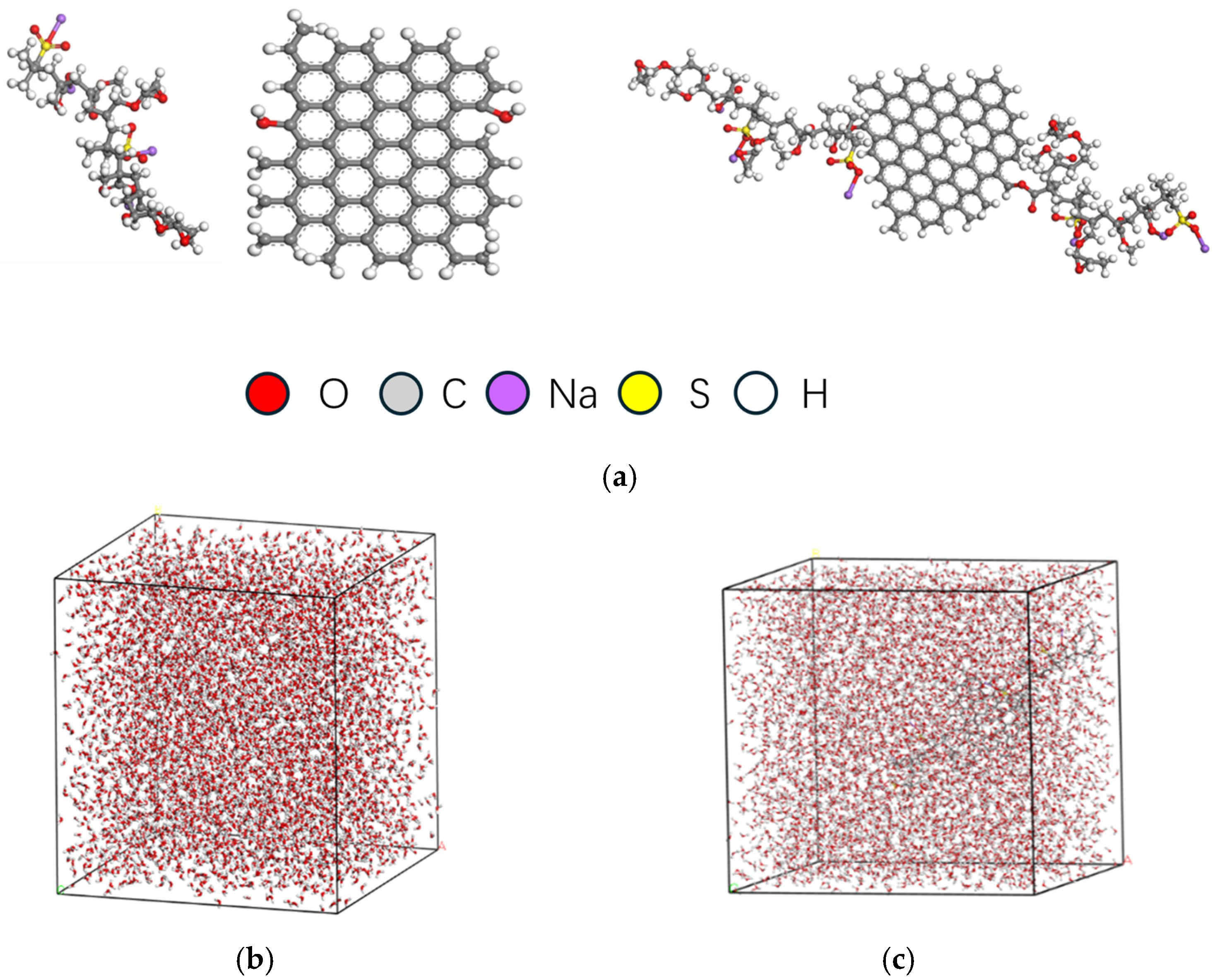
To elucidate the microscopic mechanisms underlying the convective heat transfer enhancement, molecular dynamics (MD) simulations were performed using Materials Studio 2017 (BIOVIA, Dassault Systèmes, San Diego, CA, USA). Based on experimental XPS characterization, a representative interfacial bonding configuration involving ester-type linkages was constructed between the polycarboxylate superplasticizer (PC) and graphene models, based on the oxygen-containing functional groups identified by XPS, to represent the PSG structure (Figure 12a,b). The PSG model was then solvated in a cubic simulation box (side length 54.1209 Å) containing 5000 SPC/E water molecules to represent the aqueous PSGNF system (Figure 12c). Periodic boundary conditions were applied in all three directions.
Figure 12.
Molecular dynamics simulation models: (a) molecular structure model, (b) water molecular box, and (c) PSGNF simulation box.
All simulations were carried out using the COMPASS II force field, with atomic partial charges automatically assigned by the force-field parameterization. Non-bonded interactions were calculated with a cutoff distance of 12.5 Å, while long-range electrostatic interactions were treated using the Ewald summation method with an accuracy of 0.001 kcal/mol. No rigid constraints were applied to the water molecules.
After geometry optimization, the systems were equilibrated under the NVT and NPT ensembles for 300 ps each using a 1.0 fs time step. The Nosé thermostat and Berendsen barostat were employed to maintain the temperature and pressure at 298 K and 1 atm, respectively. Equilibrium was confirmed by the stabilization of energy and temperature fluctuations (<0.5%). Subsequently, a 500 ps production simulation was performed under the NVE ensemble with a 1.0 fs time step, and trajectories were recorded every 100 fs for analysis. Although longer simulations may further improve statistical sampling, the present simulation duration was sufficient to capture the relative interfacial hydration behavior and structural differences among the pure water, SCG nanofluid (GNF), and PSGNF systems.
4.2. Validation of Simulation System
To ensure the reliability of the molecular dynamics simulation results, the simulation system was validated by examining the thermophysical properties of pure water.
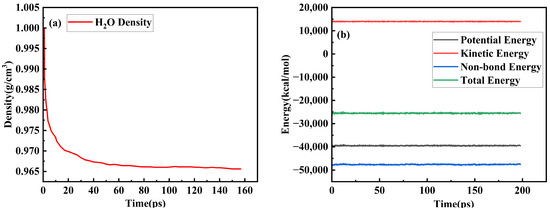
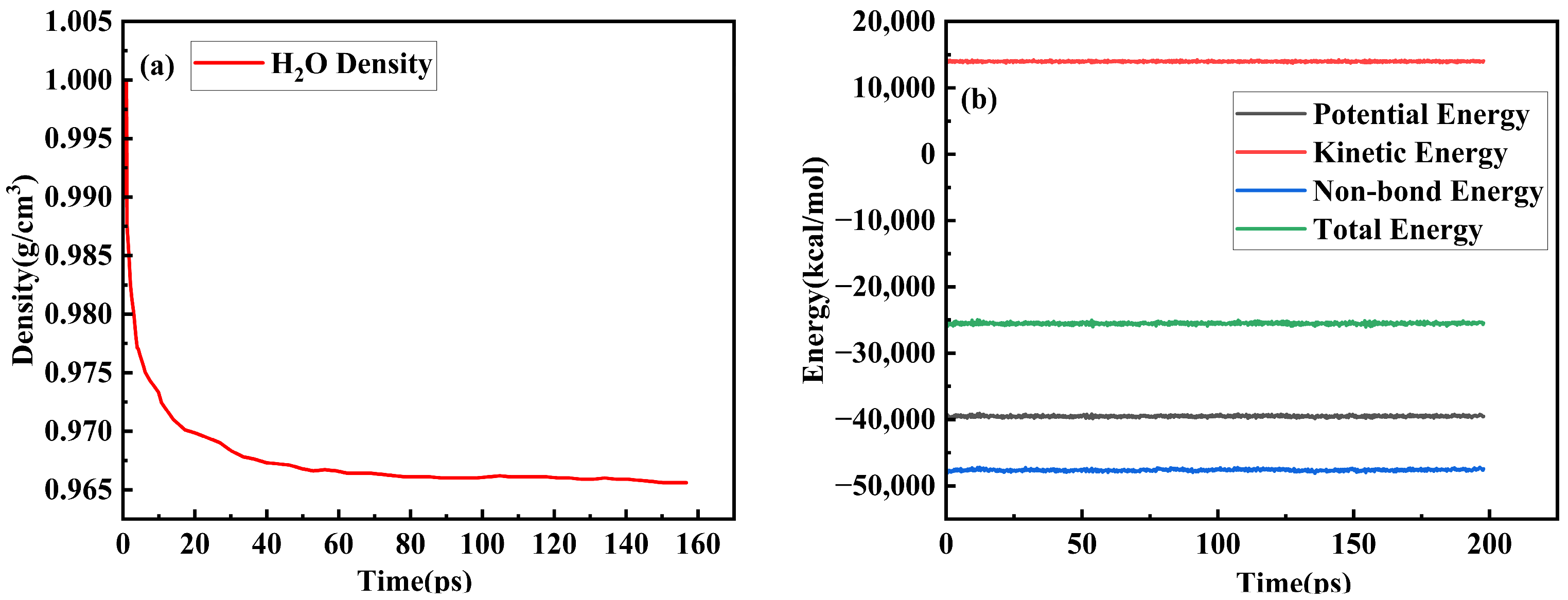
Figure 13 shows that under the NPT ensemble, both the potential energy and total energy gradually stabilized within the first 500 ps, with fluctuations below 0.1%, indicating satisfactory energy convergence and system equilibration.
Figure 13.
Time evolution of density and energy in the pure water system: (a) density variation of the pure water system, (b) Energy evolution of the pure water system as a function of simulation time.
The equilibrium density of pure water calculated at 298 K using the COMPASS II force field was 0.968 g/cm3, which shows less than 3% deviation from the experimental value of 0.997 g/cm3. This level of agreement confirms that the selected force field and simulation parameters are sufficiently reliable for subsequent investigation of modified graphene nanofluid systems.
4.3. MSD Analysis
To reveal the dynamic transport mechanism of PSGNF and its contribution to heat transfer, the mean squared displacement (MSD) was used to quantify the microscopic mobility of each component in the system. MSD is defined as the ensemble-averaged square displacement of particles relative to their initial positions at time t, and can be expressed as:
where ri(t) and ri(0) represent the position vectors of atom i at the initial time, respectively, and ⟨⟩ denotes ensemble averaging over all particles.
According to Einstein diffusion theory, the time-dependent slope of the MSD curve is directly related to the self-diffusion coefficient. For three-dimensional isotropic diffusion, the relationship is given by:
By analyzing the slope variation of the MSD curves, the diffusion state of molecular chains and graphene nanosheets in the base fluid can be directly evaluated. This parameter is not only an important indicator for assessing nanofluid dispersion stability, but also provides a physical basis for understanding nanoparticle-induced microscopic transport effects.
4.3.1. Reference System Analysis
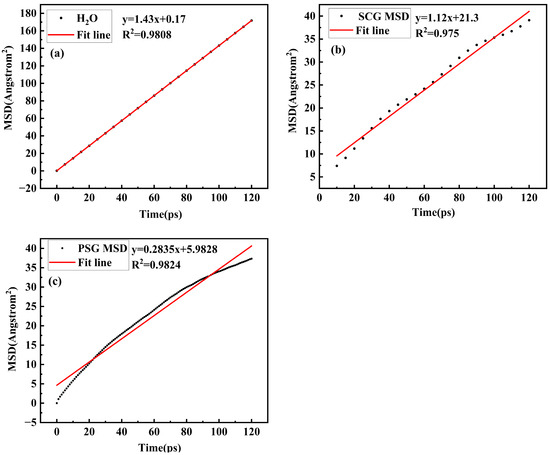
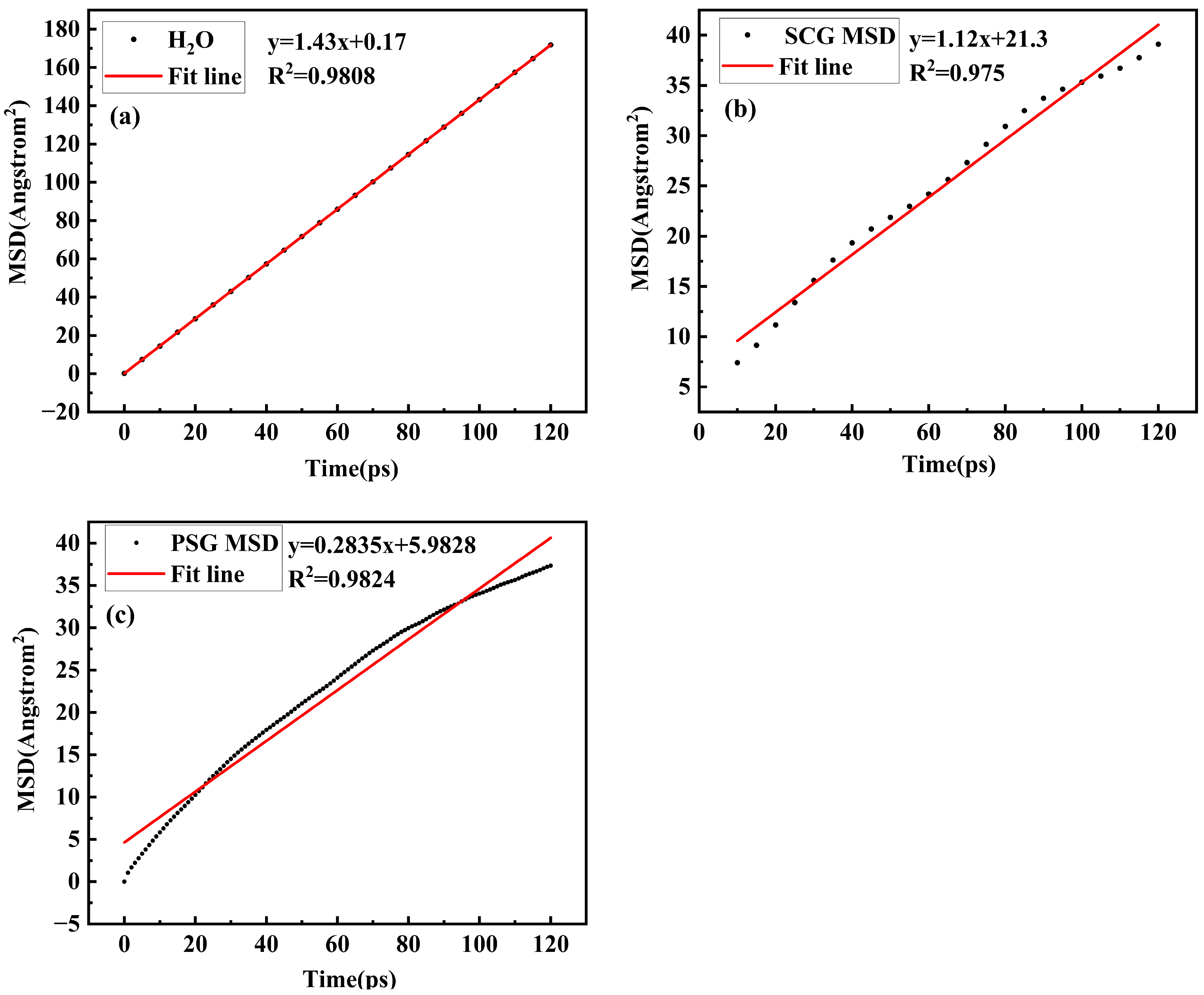
The pure water system was first simulated as the reference case. Figure 14a shows the time evolution of MSD for pure water at 298 K. The fitted slope of the pure water MSD curve is 1.43 Å2/ps (D = 0.238 Å2/ps), which is slightly higher than the experimental reference value of 1.38 Å2/ps, with an error within 5%. The curve exhibits excellent linearity with R2 = 0.98. indicating that the system has fully entered the diffusion regime. The diffusion coefficient calculated from the slope is consistent with the slightly lower density obtained in the model, confirming that the sampling of 5000 water molecules is statistically sufficient to represent macroscopic transport behavior.
Figure 14.
Mean squared displacement (MSD) curves and linear fitting results of different system: (a) pure water, (b) SCG nanofluid, and (c) PSG nanofluid.
4.3.2. Modified System Analysis
As shown in Figure 14b,c, the MSD slope decreases to 1.12 Å2/ps for the SCG system and further decreases to 0.2835 Å2/ps for the PSG system. Unlike SCG, which only weakly restricts water mobility through physical obstruction and van der Waals interactions, the carboxyl-rich PSG structure forms a stronger hydrogen-bonding interaction with surrounding water molecules. This enhanced interfacial interaction significantly suppresses water self-diffusion and prolongs the local residence time of water molecules, indicating the formation of a more structured interfacial hydration layer, which is further supported by the subsequent RDF analysis.
From an interfacial transport perspective, such stronger solid–liquid interactions may improve nanoscale energy exchange by reducing interfacial thermal resistance. Although the local mobility of water molecules is restricted, the highly conductive graphene framework together with the associated hydration shell may still facilitate coupled energy transport between the nanoparticle surface and surrounding fluid. Therefore, the MD results qualitatively suggest that the enhanced interfacial structuring in the PSG system could contribute to the experimentally observed convective heat transfer enhancement.
The self-diffusion coefficient (D), calculated as one-sixth of the MSD slope according to the Einstein relation, further reflects the reduced molecular mobility in the PSG system. The significantly lower D value for PSG (0.047 Å2/ps) compared with pure water (0.238 Å2/ps) supports the existence of a relatively stable interfacial hydration layer. These findings provide microscopic insight into the modified solid–liquid interfacial behavior, although the present MD simulations do not directly quantify the macroscopic convective heat transfer process.
4.4. Effect of Nanoparticles on the Microscopic Structure of the Base Fluid
The introduction of nanoparticles significantly alters the microscopic structure of the base fluid and induces complex interparticle interactions, which are key mechanisms affecting internal energy transport in nanofluids. In molecular dynamics simulations, the radial distribution function (RDF) is a core parameter used to characterize local structural ordering and interaction strength within fluids. RDF is defined as the ratio between the local probability density of finding another particle at a distance r from a reference particle and the average density of the system, and is expressed as:
where n(r) is the number of particles located within the spherical shell between r and r + Δr, while N and V represent the total particle number and system volume, respectively. The value of g(r) directly reflects microscopic structural characteristics: a higher peak indicates stronger local particle accumulation. By analyzing the position and intensity of the first main peak, the spatial distribution and short-range ordering inside nanofluids can be effectively evaluated.
4.4.1. RDF Analysis of Pure Water Reference System
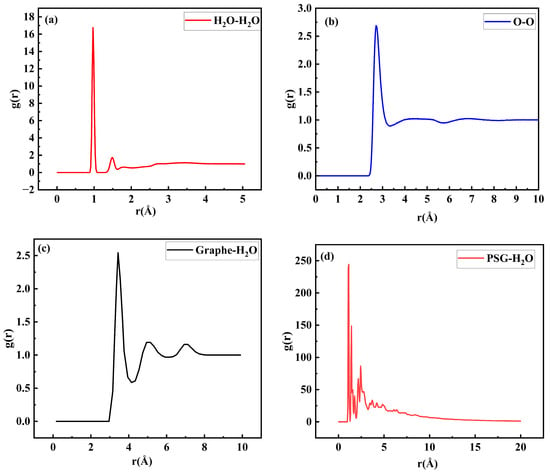
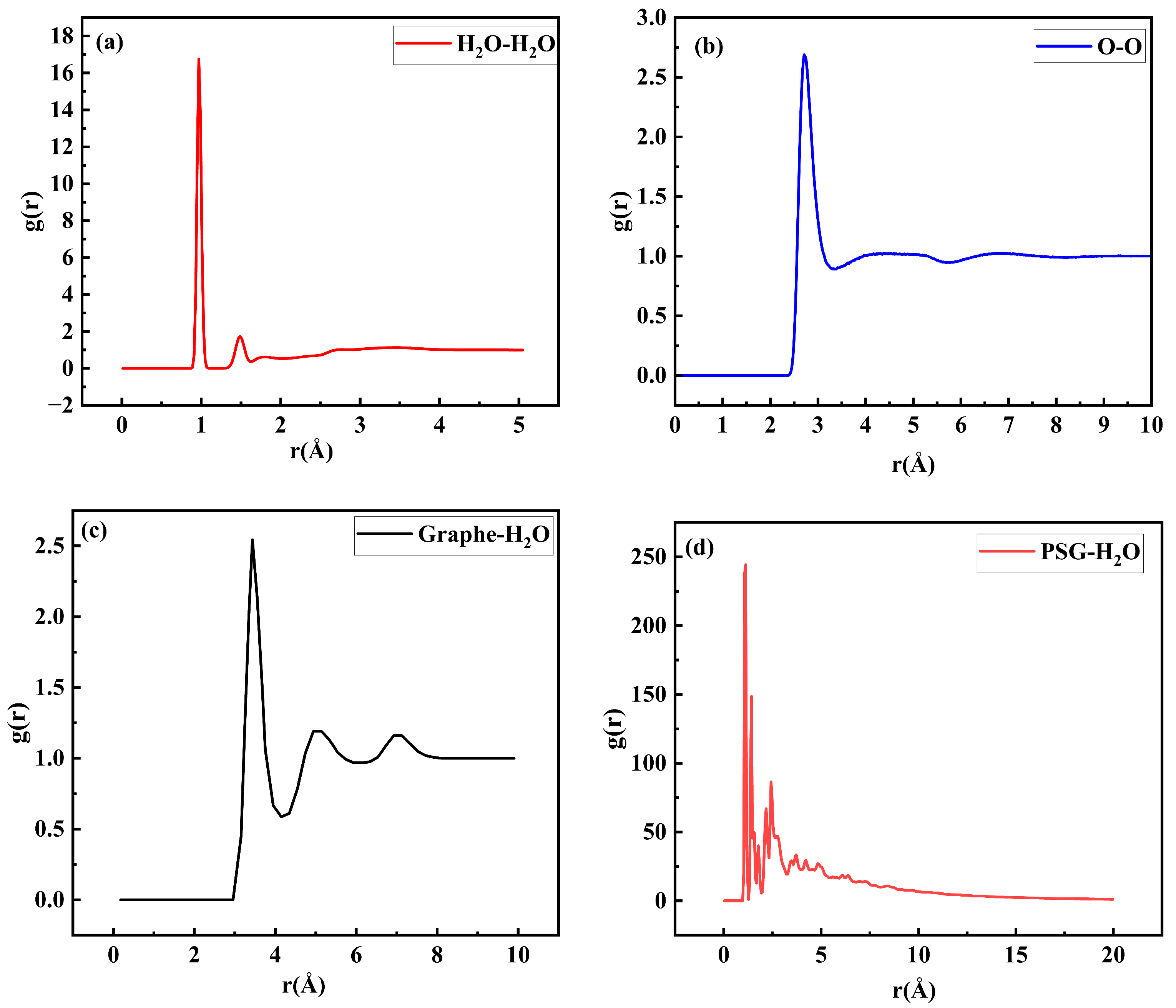
In the pure water system, water molecules exhibit the typical characteristics of short-range order and long-range disorder in liquids. As shown in Figure 15b, the oxygen–oxygen (O–O) RDF exhibits a first main peak at approximately 2.8 Å with a peak intensity of about 2.7, corresponding to the average nearest-neighbor oxygen distance within the tetrahedral hydrogen-bond network of water molecules. A weaker second peak appears around 4.5 Å and rapidly decays toward 1.0. This distribution indicates that water molecules remain in a relatively loose dynamic equilibrium without long-range structural constraints. Heat transfer in the base fluid therefore mainly depends on random molecular collisions and weak hydrogen-bond-mediated energy transfer, providing a structural reference for evaluating nanofluid enhancement.
Figure 15.
Comparison of radial distribution functions (RDFs) for different interaction pairs: (a) H2O-H2O, (b) O-O in pure water, (c) graphene-H2O, and (d) PSG-H2O.
4.4.2. Analysis of the Pristine Graphene System
For the unmodified three-dimensional structured graphene system (Figure 15c), the SCG–H2O RDF shows a main peak at 3.45 Å with a peak intensity of only 2.55. The relatively large equilibrium distance and low peak intensity indicate that the interaction is mainly dominated by van der Waals forces. The distinct trough following the first peak further suggests the hydrophobic nature of pristine graphene, implying limited interfacial coupling with surrounding water molecules. As a result, interfacial heat transfer remains relatively weak.
4.4.3. Analysis of the Modified System
As shown in Figure 15d, the RDF between the PSG framework and water molecules exhibits a pronounced first peak near 1.25 Å, with a peak intensity significantly higher than that observed for the unmodified SCG system (Figure 15c). The RDF was calculated between the oxygen atoms of the carboxyl and polyether groups of PSG and the oxygen atoms of surrounding water molecules. The RDF analysis was performed using trajectories generated with a non-bonded interaction cutoff of 20 Å. This intense peak reflects a strong local accumulation of water molecules in the immediate vicinity of the hydrophilic functional groups, rather than a global average density enhancement. The multiple sharp features observed at larger distances further indicate a structured interfacial water arrangement near the modified graphene surface. To quantitatively further evaluate water accumulation near the modified graphene surface, the coordination number N(r) was introduced.
To provide a comparative measure of this local water enrichment, a local hydration number was evaluated by integrating the RDF curve up to the first minimum following the primary peak (r ≈ 1.25 Å):
Its physical meaning is to describe the average number of target particles distributed within a distance r around a reference atom:
where ρ0 = Nw/L3 = 0.03154 molecules/Å3 is the bulk water number density (5000 water molecules in a cubic box of side 54.1209 Å). The integration yields a local hydration number of approximately 12 in the vicinity of the PSG functional groups.
It should be noted that the absolute value of the RDF peak and the derived local hydration number are influenced by the specific atom-pair selection and the integration cutoff. The standard spherical-shell normalization (4πr2 Δr) may also overestimate the local density for the 3D porous PSG surface, where a fraction of the sampled volume is occupied by the solid framework. These values, therefore, serve primarily as qualitative comparative metrics between the PSG and SCG systems, both computed under identical conditions, rather than as absolute thermodynamic quantities.
Taken together, the RDF and local hydration analysis indicate that the anchored hydrophilic groups induce a locally enriched and more ordered interfacial water layer near the PSG surface. This enhanced interfacial water structuring is consistent with the reduced water mobility revealed by the MSD analysis (Section 4.3), and may facilitate interfacial energy transfer across the solid–liquid boundary. These microscopic observations provide qualitative structural support for the macroscopic convective heat transfer enhancement observed experimentally, as further discussed in the semi-quantitative consistency analysis in Section 4.5.
4.5. Semi-Quantitative Correlation Between MD Results and Macroscopic Heat Transfer Enhancement
4.5.1. Physical Rationale: Interfacial Structuring and Its Implications for Heat Transfer
The MD simulations presented in Section 4.3 and Section 4.4 consistently show that polycarboxylate modification induces a more ordered and dynamically restricted hydration environment near the PSG surface compared with unmodified SCG. Such interfacial structuring is expected to influence thermal transport behavior in several ways. A densely packed hydration layer may facilitate vibrational energy exchange across the solid–liquid interface, resembling the enhanced thermal transport commonly observed in highly ordered hydrogen-bonded structures. At the same time, the tightly associated hydration shell surrounding the graphene framework may promote more effective particle–fluid energy exchange under convective flow conditions.
Although the reduced water mobility revealed by the MSD analysis cannot directly prove enhanced convective heat transfer, it does indicate stronger interfacial interactions and the formation of a relatively stable hydration structure around PSG. These nanoscale structural characteristics are therefore likely to contribute to interfacial energy transport. To further evaluate this possibility, a semi-quantitative analysis was carried out to determine whether the MD-derived parameters are directionally consistent with the experimentally observed heat transfer enhancement.
4.5.2. Extraction of Structural and Dynamic Parameters from MD Simulations
Several characteristic parameters were extracted from the MD trajectories in order to connect the atomic-scale observations with macroscopic transport behavior.
The thickness of the hydration layer (δ) was estimated from the PSG–H2O RDF profile shown in Figure 15d. After the first RDF peak, g(r) gradually returns to 1.0 at approximately 1.25 Å, which was taken as the effective boundary of the first solvation shell.
The diffusion behavior of the interfacial water molecules was evaluated using the MSD analysis. Compared with pure water (Dbulk = 0.238 Å2/ps), the ensemble-averaged self-diffusion coefficient in the PSG system decreases markedly to DPSG = 0.047 Å2/ps (Figure 14c), reflecting the restricted mobility induced by the strong interfacial interactions. Since the bound interfacial water molecules account for only a small fraction of the total water population, the local mobility within the hydration layer is expected to be lower than the ensemble-averaged value. For the purpose of semi-quantitative sensitivity analysis, Dlayer was conservatively assumed to be approximately one order of magnitude lower than bulk water, giving Dlayer ≈ 0.024 Å2/ps. It should be noted that this assumption is intended only to explore the possible influence of interfacial structuring rather than to provide a rigorous quantitative prediction.
Information regarding local molecular packing was obtained from the RDF intensity. The pronounced first peak suggests a relatively dense hydration structure near the PSG surface. Based on this trend, the density of the interfacial water layer was assumed to be approximately 1.2 times that of bulk water, corresponding to ρlayer ≈ 1.16 g/cm3 using the experimentally validated bulk water density (ρbulk = 0.968 g/cm3).
4.5.3. Semi-Quantitative Analysis Using the Nanolayer Model
To examine whether the MD-derived structural characteristics are physically consistent with the experimentally observed heat transfer enhancement, the Yu–Choi modified Maxwell model was adopted [35]. In this framework, the nanofluid is treated as a ternary system composed of nanoparticle cores, an interfacial nanolayer, and the surrounding base fluid.
The effective thermal conductivity of the nanofluid can be expressed as:
where the equivalent thermal conductivity of the composite particle is given by:
The parameters used in the analysis are summarized in Table 4.
Table 4.
Parameters for the semi-quantitative Yu-Choi model analysis.
Direct calculation of the nanolayer thermal conductivity from equilibrium MD simulations remains challenging, particularly for complex polymer-modified interfaces. Instead of assigning a single deterministic value, a sensitivity analysis was performed by varying the ratio k_layer/k_bf between 1.2 and 2.0. This range was selected to represent the potentially enhanced thermal transport capability associated with the ordered hydration structure surrounding the PSG framework.
4.5.4. Results of Consistency Analysis and Discussion
Within the selected parameter range, the Yu–Choi model predicts that the effective thermal conductivity of the nanofluid increases to approximately 1.03–1.10 times that of the base fluid. The predicted enhancement is relatively moderate, indicating that the interfacial nanolayer mainly contributes to the static component of thermal transport.
A comparison between the modeling results and the experimental observations reveals an important trend. The MD-derived interfacial structuring, together with the nanolayer model, consistently points toward a positive contribution to heat transfer enhancement. In other words, the formation of a dense and ordered hydration layer near the PSG surface appears to be physically compatible with the experimentally observed increase in thermal transport performance.
At the same time, the experimentally measured enhancement in the convective heat transfer coefficient reaches nearly 46%, which is substantially higher than the thermal conductivity enhancement predicted by the static nanolayer model alone. This discrepancy suggests that additional dynamic transport effects arising under flow conditions are also likely to participate in the overall enhancement process.
Taken together, the present analysis does not provide a direct quantitative proof of the microscopic heat transfer mechanism. It does, however, establish a reasonable semi-quantitative consistency between the MD-derived interfacial characteristics and the experimentally observed macroscopic behavior. The results therefore support the interpretation that the ordered hydration layer surrounding PSG contributes, at least in part, to the enhanced convective heat transfer performance of the nanofluid system.
5. Conclusions
In this study, highly stable polycarboxylate-modified 3D graphene (PSG) aqueous nanofluids were developed. By coupling mini-channel experiments with molecular dynamics (MD) simulations, the macroscopic convective heat transfer characteristics and their atomic-scale origins were elucidated. The primary conclusions are drawn as follows:
- (1)
- Robust Dispersion via Steric Stabilization: Surface functionalization of graphene with polycarboxylate chains introduced abundant hydrophilic groups without disrupting the intrinsic 3D highly conductive framework. This modification substantially improved the aqueous compatibility of the graphene surface, ensuring excellent long-term colloidal stability in water driven by strong steric repulsion.
- (2)
- Significant Macroscopic Heat Transfer Enhancement: The PSG nanofluids exhibited a striking maximum convective heat transfer enhancement of 46% ± 7.4% compared to pure water, achieved at an optimal concentration of 0.1 wt% and Re = 4000. The enhancement substantially exceeds the experimental uncertainty, indicating its statistical significance. While excessive nanoparticle loading triggered viscosity-induced penalties and localized deposition, the optimal concentration effectively synergized with turbulent fluctuations to severely disrupt the thermal boundary layer, thereby maximizing the heat transfer gain.
- (3)
- Microscopic Origins of Thermal Transport: Atomic-scale simulations revealed that the surface-anchored functional groups establish a dense hydrogen-bonding network, inducing the formation of a highly ordered interfacial hydration layer. This structured bound-water layer may facilitate solid–liquid interfacial energy transfer by acting as a vibrational coupling medium. The synchronized dynamic transport of the 3D continuous graphene framework and its associated hydration shell is likely to contribute to the enhanced macroscopic energy exchange observed experimentally. A semi-quantitative consistency analysis based on the Yu–Choi effective medium model further demonstrates that the MD-derived interfacial structural parameters are directionally consistent with the observed convective heat transfer enhancement.
In summary, the synergistic integration of 3D continuous thermal pathways and ordered interfacial hydration establishes PSG nanofluids as promising candidates for extreme-heat-flux thermal management systems.
Author Contributions
Conceptualization, L.L. (Lizhe Liang); methodology, Q.L.; software, Q.L. and L.L. (Lan Li); validation, Q.L. and L.L. (Lan Li); formal analysis, Q.L.; investigation, Q.L.; resources, Q.L.; data curation, Q.L.; writing—original draft preparation, Q.L.; writing—review and editing, Q.L.; visualization L.L. (Lizhe Liang); supervision, L.L. (Lizhe Liang); project administration, L.L. (Lizhe Liang); funding acquisition, L.L. (Lizhe Liang). All authors have read and agreed to the published version of the manuscript.
Funding
This work was supported by the Guangxi Science and Technology Project under Grant No. AB16380030 and the Guangxi Natural Science Foundation under Grant No. 2024JJA160299.
Data Availability Statement
The original contributions presented in this study are included in the article. Further inquiries can be directed to the corresponding authors.
Conflicts of Interest
The authors declare no conflicts of interest.
Abbreviations
The following abbreviations are used in this manuscript:
| Deionized | DI |
| Direct current | DC |
| Graphene nanofluid | GNF |
| Mean squared displacement | MSD |
| Molecular dynamics | MD |
| Nusselt number | Nu |
| Polycarboxylate-modified structural graphene | PSG |
| Polycarboxylate superplasticizer | PC |
| PSG nanofluid | PSGNF |
| Radial distribution function | RDF |
| Scanning electron microscope | SEM |
| Stereoscopic-constructed graphene | SCG |
| X-ray photoelectron spectroscopy | XPS |
References
- Mudawar, I. Assessment of high-heat-flux thermal management schemes. IEEE Trans. Compon. Packag. Technol. 2001, 24, 122–141. [Google Scholar] [CrossRef] [Scilit]
- Wang, Q.H.; Tao, J.Y.; Cui, Z.; Zhang, T.T.; Chen, G.Y. Passive enhanced heat transfer, hotspot management and temperature uniformity enhancement of electronic devices by micro heat sinks: A review. Int. J. Heat Fluid Flow. 2024, 107, 109368. [Google Scholar] [CrossRef] [Scilit]
- Baek, S.; Shin, D.; Kim, G.; Lee, A.; Noh, J.; Choi, B.; Huh, S.; Jeong, H.; Sung, Y.M. Influence of amphoteric and anionic surfactants on stability, surface tension, and thermal conductivity of Al2O3/water nanofluids. Case Stud. Therm. Eng. 2021, 25, 100995. [Google Scholar] [CrossRef] [Scilit]
- Nair, V.; Baby, A.; Anoop, M.B.; Indrajith, S.; Murali, M.; Nair, M.B. A comprehensive review of air-cooled heat sinks for thermal management of electronic devices. Int. Commun. Heat Mass Transf. 2024, 159, 108055. [Google Scholar] [CrossRef] [Scilit]
- Yu, M.; Zhu, J. Hotspot thermal management of silicon-based high power hetero-integration. Int. J. Heat Mass Transf. 2023, 203, 123790. [Google Scholar] [CrossRef] [Scilit]
- Sarkar, J. A critical review on convective heat transfer correlations of nanofluids. Renew. Sustain. Energy Rev. 2011, 15, 3271–3277. [Google Scholar] [CrossRef] [Scilit]
- Agostini, B.; Fabbri, M.; Park, J.E.; Wojtan, L.; Thome, J.R.; Michel, B. State of the art of high heat flux cooling technologies. Heat Transf. Eng. 2007, 28, 258–281. [Google Scholar] [CrossRef] [Scilit]
- Keblinski, P.; Phillpot, S.R.; Choi, S.U.S.; Eastman, J.A. Mechanisms of heat flow in suspensions of nano-sized particles (nanofluids). Int. J. Heat Mass Transf. 2002, 45, 855–863. [Google Scholar] [CrossRef] [Scilit]
- Eastman, J.A.; Choi, S.U.S.; Li, S.; Yu, W.; Thompson, L.J. Anomalously increased effective thermal conductivities of ethylene glycol-based nanofluids containing copper nanoparticles. Appl. Phys. Lett. 2001, 78, 718–720. [Google Scholar] [CrossRef] [Scilit]
- Jang, S.P.; Choi, S.U.S. U.S. Role of Brownian motion in the enhanced thermal conductivity of nanofluids. Appl. Phys. Lett. 2004, 84, 4316–4318. [Google Scholar] [CrossRef] [Scilit]
- Chein, R.Y.; Huang, G.M. Analysis of microchannel heat sink performance using nanofluids. Appl. Therm. Eng. 2005, 25, 3104–3114. [Google Scholar] [CrossRef] [Scilit]
- Choi, S.U.S.; Eastman, J.A. Enhancing thermal conductivity of fluids with nanoparticles. In ASME 1995 International Mechanical Engineering Congress and Exposition; ASME: San Francisco, CA, USA, 1995; pp. 99–105. [Google Scholar]
- Zhang, H.; Qing, S.; Huang, X.Y.; Zhang, X.H.; Zhang, A.M. Investigation on interfacial properties of conventional and functional modified TiO2/water nanofluids. Colloids Surf. A 2023, 658, 130647. [Google Scholar] [CrossRef] [Scilit]
- Traciak, J.; Zyla, G. Surface Tension of Ethylene Glycol-Based Nanofluids Containing Three Types of Oxides: Zinc Oxide (ZnO), Magnesium Oxide (MgO) and Indium Oxide (In2O3). Int. J. Thermophys. 2023, 44, 34. [Google Scholar] [CrossRef] [Scilit]
- Alsarraf, J.; Al-Rashed, A.; Alnaqi, A.A.; Goldanlou, A.S. Dominance of cohesion of EG-water molecules over Van der Waals force between SiO2-ZnO nanoparticles in the liquid interface. Powder Technol. 2021, 379, 537–546. [Google Scholar] [CrossRef] [Scilit]
- Ghadimi, A.; Saidur, R.; Metselaar, H.S.C. A review of nanofluid stability properties and characterization in stationary conditions. Int. J. Heat Mass Transf. 2011, 54, 4051–4068. [Google Scholar] [CrossRef] [Scilit]
- Novoselov, K.S.; Geim, A.K.; Morozov, S.V.; Jiang, D.; Zhang, Y.; Dubonos, S.V.; Grigorieva, I.V.; Firsov, A.A. Electric field effect in atomically thin carbon films. Science 2004, 306, 666–669. [Google Scholar] [CrossRef] [Scilit]
- Bandarra, E.P.; Castrillo, E.D.R.; Martins, G. Experimental investigation of thermal performance in multi-microchannel heat exchangers with ultra-low concentration graphene nanofluids. Appl. Therm. Eng. 2025, 280, 128323. [Google Scholar] [CrossRef] [Scilit]
- Gal, S.; Cabaleiro, D.; Hassen, W.; Nasri, A.; Lafue, Y.; Pham-Huu, C.; Ba, H.; Estellé, P. Thermophysical Profile of Industrial Graphene Water-Based Nanofluids. Nanomaterials 2024, 14, 1401. [Google Scholar] [CrossRef] [Scilit]
- Chen, Z.P.; Ren, W.C.; Gao, L.B.; Liu, B.L.; Pei, S.F.; Cheng, H.M. Three-dimensional flexible and conductive interconnected graphene networks grown by chemical vapour deposition. Nat. Mater. 2011, 10, 424–428. [Google Scholar] [CrossRef] [Scilit]
- Huq, T.; Ong, H.C.; Chew, B.T.; Leong, K.Y.; Kazi, S.N. Review on aqueous graphene nanoplatelet Nanofluids: Preparation, Stability, thermophysical Properties, and applications in heat exchangers and solar thermal collectors. Appl. Therm. Eng. 2022, 210, 118342. [Google Scholar] [CrossRef] [Scilit]
- Li, Y.Y.; Li, Z.S.; Shen, P.K. Simultaneous Formation of Ultrahigh Surface Area and Three-Dimensional Hierarchical Porous Graphene-like Networks for Fast and Highly Stable Supercapacitors. Adv. Mater. 2013, 25, 2474–2480. [Google Scholar] [CrossRef] [Scilit]
- Guo, L.P.; Wu, N.R.; Zhang, S.P.; Zeng, H.O.; Yang, J.; Han, X.; Duan, H.W.; Liu, Y.C.; Wang, L.D. Emerging Advances around Nanofluidic Transport and Mass Separation under Confinement in Atomically Thin Nanoporous Graphene. Small 2024, 20, 202404087. [Google Scholar] [CrossRef] [Scilit]
- Balaji, T.; Lal, D.M.; Selvam, C. A Critical Review on the Thermal Transport Characteristics of Graphene-Based Nanofluids. Energies 2023, 16, 2663. [Google Scholar] [CrossRef] [Scilit]
- Htwe, Y.; Mamat, H. Progress and prospects on stability and thermal properties of surfactant assisted graphene, carbon nanotubes based nanoffuid and their hybrid for next-generation thermal management. J. Mol. Liq. 2024, 414, 126345. [Google Scholar] [CrossRef] [Scilit]
- Ishii, K.; Ogiyama, T.; Fumoto, K.; Nishina, Y. Enhanced thermal conductivity of fluids by percolating high-concentration few-layer graphene. Appl. Phys. Lett. 2024, 125, 023104. [Google Scholar] [CrossRef] [Scilit]
- Pan, X.; Jin, H.; Ku, X.; Guo, Y.; Fan, J. Heat and mass transfer of water flow in graphene nanochannels: Effect of pressure and interfacial interaction. RSC Adv. 2024, 14, 29024–29038. [Google Scholar] [CrossRef] [Scilit]
- Shaik, A.H.; Chakraborty, S.; Saboor, S.; Kumar, K.R.; Majumdar, A.; Rizwan, M.; Arici, M.; Chandan, M.R. Cu-Graphene water-based hybrid nanofluids: Synthesis, stability, thermophysical characterization, and figure of merit analysis. J. Therm. Anal. Calorim. 2024, 149, 2953–2968. [Google Scholar] [CrossRef] [Scilit]
- Aich, W.; Khlissa, F.; Alshammari, B.M.; Kolsi, L. Experimental study of graphene-based nanofluid dispersions stability for efficient heat transmission within a concentric tube heat exchanger. Case Stud. Therm. Eng. 2024, 59, 104523. [Google Scholar] [CrossRef] [Scilit]
- Haddad, Z.; Abid, C.; Oztop, H.F.; Mataoui, A. A review on how the researchers prepare their nanofluids. Int. J. Therm. Sci. 2014, 76, 168–189. [Google Scholar] [CrossRef] [Scilit]
- Kong, L.H.; Sun, J.L.; Bao, Y.Y. Preparation, characterization and tribological mechanism of nanofluids. RSC Adv. 2017, 7, 12599–12609. [Google Scholar] [CrossRef] [Scilit]
- Das, P.K.; Santra, A.K.; Ganguly, R.; Dash, S.K.; Muthusamy, S.; Sha, M.; Sadasivuni, K.K. An extensive review of preparation, stabilization, and application of single and hybrid nanofluids. J. Therm. Anal. Calorim. 2024, 149, 9523–9557. [Google Scholar] [CrossRef] [Scilit]
- Kline, S.J.; McClintock, F.A. Describing uncertainties in single-sample experiments. Mech. Eng. 1953, 75, 3–8. [Google Scholar]
- Incropera, F.P.; DeWitt, D.P.; Bergman, T.L.; Lavine, A.S. Fundamentals of Heat and Mass Transfer, 6th ed.; John Wiley & Sons: Hoboken, NJ, USA, 2007. [Google Scholar]
- Yu, W.; Choi, S.U.S. The role of interfacial layers in the enhanced thermal conductivity of nanofluids: A renovated Maxwell model. J. Nanopart. Res. 2003, 5, 167–171. [Google Scholar] [CrossRef] [Scilit]

Disclaimer/Publisher’s Note: The statements, opinions and data contained in all publications are solely those of the individual author(s) and contributor(s) and not of MDPI and/or the editor(s). MDPI and/or the editor(s) disclaim responsibility for any injury to people or property resulting from any ideas, methods, instructions or products referred to in the content. |
© 2026 by the authors. Licensee MDPI, Basel, Switzerland. This article is an open access article distributed under the terms and conditions of the Creative Commons Attribution (CC BY) license.