


Abstract
Reinjection represents a fundamental strategy for sustainable geothermal reservoir development. During reinjection, reservoirs are subjected to pronounced physicochemical disequilibrium, under which complex water–rock interactions render long–term behavior difficult to predict. This review synthesizes mineral reactions and reservoir dynamic responses from a geochemical perspective. The interplay between reaction kinetics and fluid transport is examined using the Damköhler number, elucidating the spatiotemporal evolution of reactive transport. The dissolution–precipitation behaviors of silicate, carbonate, and sulfate minerals are evaluated, highlighting their distinct roles in governing long–term structural reorganization, short–term permeability variability, and rapid clogging. The influence of mineral reactions on pore structure evolution and the development of nonlinear porosity–permeability relationships is examined, alongside commonly used constitutive models and their inherent limitations. Multiscale characterization approaches for porosity–permeability evolution and the distinct responses of different reservoir types are reviewed. The chemo–mechanical coupling induced by water–rock interactions and its implications for reservoir stability are addressed. This work establishes a unified conceptual framework linking mineral reactions, fluid transport, and reservoir evolution, providing a basis for optimizing reinjection strategies and improving long–term geothermal system performance.
1. Introduction
Geothermal energy, a renewable energy source stored within the Earth, offers several advantages, including abundant reserves, stable energy supply, low carbon emissions, and minimal dependence on climatic conditions. Its development and utilization represent one of the effective approaches to achieving carbon reduction [1,2]. In recent years, geothermal energy utilization has expanded steadily with the development of medium to deep hydrothermal systems and enhanced geothermal systems (EGS). However, issues concerning its long–term stability and sustainability have gradually emerged as critical challenges constraining the further development of the geothermal industry [3].
During the long–term exploitation of geothermal resources, reinjection is widely recognized as a key technology for sustainable geothermal development, improving resource efficiency, maintaining reservoir pressure, and mitigating land subsidence [4,5,6,7]. It has been implemented in geothermal fields across more than ten countries, including the United States, New Zealand, Iceland, Italy, France, and China [8,9].
However, reinjection is not a simple fluid replenishment process. The injection of circulating fluids into geothermal reservoirs creates physicochemical disequilibrium with the in situ environment, thereby triggering complex water–rock interactions [10,11,12]. Specifically, differences in temperature and chemical composition between the injected fluids and the high–temperature reservoir disrupt the original fluid–rock equilibrium, driving mineral dissolution, precipitation, and alteration reactions. These hydrochemical processes modify pore structure and connectivity [13]. As a result, these processes govern the spatiotemporal evolution of reservoir physical properties and ultimately affect geothermal production performance [14,15]. Additionally, the dissolution and cementation effects induced by hydrochemical processes further alter the mechanical behavior of the rock mass [16]. Therefore, a systematic understanding of reservoir dynamic responses induced by water–rock interactions is essential for accurately predicting and efficiently managing geothermal system performance.
In recent years, extensive experimental and numerical simulation studies [17,18,19,20] have been conducted on water–rock interactions, yielding significant advances in elucidating mineral reaction mechanisms and their impact on rock properties. However, existing research findings are often based on specific study conditions or site contexts, making it difficult to develop a systematic geochemical framework for geothermal reinjection. In particular, there remains a lack of a systematic geochemical framework to explain how differences in fluid composition and rock mineralogy synergistically influence the spatiotemporal evolution of reservoirs. Moreover, the interplay between reaction kinetics and transport processes has not been comprehensively explained. These deficiencies hinder accurate predictions of complex geothermal reservoir reinjection behavior.
In light of this, this review integrates evidence from field observations, laboratory experiments, and numerical simulations to systematically synthesize mineral dissolution and precipitation during geothermal reinjection from a geochemical reaction–kinetics perspective. It further investigates the spatiotemporal evolution of reservoir porosity and permeability driven by these mineral reactions. In addition, the potential impacts of water–rock interactions on reservoir mechanical properties and long–term stability are analyzed. This study aims to provide a geochemically grounded theoretical basis for optimizing reinjection processes, regulating permeability, and achieving the safe, efficient, and sustainable development of geothermal resources.
2. Reactive Transport in Geothermal Reservoirs
Reactive transport refers to coupled processes involving fluid flow, heat and solute transport, and mineral reactions in porous media [21]. It provides a fundamental theoretical basis for understanding thermo–hydro–chemical (THC) interactions and their feedback on reservoir properties during geothermal reinjection.
Compared with static water–rock reaction analysis, reactive transport emphasizes the coupling between geochemical reactions and fluid movement. The distribution of dissolution and precipitation is controlled not only by thermodynamic disequilibrium and reaction kinetics, but also by flow velocity, diffusion, dispersion, and reactive surface area. These coupled controls determine where reactions occur, how strongly they proceed, and how long they persist, thereby shaping pore structure evolution and reservoir response.
Thermodynamic disequilibrium defines the potential direction of dissolution or precipitation, whereas reaction kinetics controls the rate at which the system approaches equilibrium. Transport processes regulate the supply of reactants and the removal of reaction products, thereby influencing the persistence and spatial extent of reactions. Therefore, the relative dominance of reaction kinetics and transport capacity provides a useful framework for interpreting reactive transport behavior during geothermal reinjection.
2.1. Competitive Mechanisms Between Reaction Kinetics and Transport Processes
The spatiotemporal evolution characteristics of mineral reactions within reservoirs fundamentally depend on the competition between chemical reaction rates and fluid transport rates, typically characterized by the Damköhler number () [22], which represents the relative magnitudes of the reaction and convection (, where is the surface reaction rate constant, is the fluid velocity, is the specific surface area, is the permeability). Fluid transport is governed by the combined effects of convection–dominated solute migration and diffusion–controlled local mass transfer, which can be characterized by the Péclet number () [23]. characterizes the relative magnitudes of convection and diffusion (, is the fluid velocity, is the permeability, is the diffusion coefficient). According to the relative magnitude of , reactive transport processes can be approximately classified into transport–limited and reaction–limited. further determines whether convection or diffusion dominates solute transport, thereby controlling the spatial distribution of reactions and the propagation of the reaction front.
Transport–limited reactions mean that the mineral reaction rate is significantly higher than the fluid transport rate. The reaction process is mainly governed by the supply of reactants and the removal of reaction products. Under these conditions, both dissolution and precipitation tend to concentrate near fluid inlets or along high–flux preferential pathways [24]. Under supersaturated conditions, mineral precipitation preferentially develops within fractures and other high–permeability flow pathways. This phenomenon has been observed in the Guide Basin in China, as well as in the Soultz EGS in France and the Kawerau geothermal system in New Zealand [25,26,27]. Under undersaturated conditions, dissolution is similarly localized, forming preferential dissolution pathways and even channelized structures. These processes reconfigure fluid flow paths and are characterized by strong coupling between reaction distribution and flow pathways. Rapid local changes in pore structure further enhance reservoir heterogeneity.
Reaction–limited reactions refer to cases where the fluid transport rate is significantly higher than the mineral reaction rate. The reaction process can hardly reach local chemical equilibrium within the fluid residence time, and its evolution is mainly governed by the intrinsic reaction kinetic parameters of the mineral surface [28]. In this regime, both dissolution and precipitation proceed at low intensity the evolution is gradual and spatially extensive. The reaction distribution remains relatively uniform. Pore structure evolves slowly and continuously. The impact on the flow field is limited.
This reaction–transport contrast also explains the transition from near well–localized reactions to more dispersed alteration in the far field. Near injection wells, high injection rates and sharp thermal and chemical gradients favor concentrated reaction fluxes, whereas farther from the wellbore, longer residence time allows reactions to become more spatially distributed [29,30,31] and provide a framework for interpreting how reaction kinetics and solute transport jointly control the spatial organization of water–rock reactions during geothermal reinjection. Although is useful for distinguishing transport–limited and reaction–limited regimes, its interpretation depends on the spatial scale and parameter definitions used.
2.2. Spatiotemporal Evolution Characteristics and Feedback Processes of Reservoirs
During geothermal reinjection, the spatiotemporal organization of water–rock reactions is governed by a continuously evolving balance between reaction kinetics and transport processes. As mineral dissolution and precipitation modify pore structure and flow distribution, reactive transport becomes a dynamic feedback process.
Spatially, reactive transport processes exhibit distinct variations across different structural units. Fractures and large pores serve as preferential pathways for fluid flow and solute transport [32], where reaction products can be rapidly removed and undersaturated fluids continuously supplied. In matrix regions, lower flow velocity and weaker convection favor local product accumulation and an earlier approach to chemical equilibrium. Moreover, under diffusion–limited conditions, local supersaturation readily induces mineral precipitation, leading to permeability reduction and even localized clogging. The contrasting reactivity between fracture and matrix domains has been well documented in multiscale reactive transport modeling and numerical studies [33,34,35].
Temporally, reactive transport exhibits characteristics of rapid responses in the early stages and slower evolution over the long term. During early reinjection, pronounced fluid–mineral disequilibrium increases dissolution and precipitation fluxes. As reaction products accumulate on pore surfaces and mineral interfaces, the effective reactive surface area decreases, and the controlling process may gradually shift from reaction kinetics to transport limitation [36]. Reactive transport models and pore structure evolution studies [37] indicate that the decrease in reaction rates over time is the result of the combined action of coupled fluid transport and mineral reactions, which are manifested in the evolution of macroscopic parameters such as porosity and permeability.
The spatial differentiation and temporal evolution features are directly demonstrated by simulation of the pore–fracture dual medium. As shown in Figure 1, fractures provide dominant transport pathways, whereas matrix domains control slower diffusive exchange and delayed reaction. This structural contrast causes dissolution and precipitation to evolve unevenly in space and time, leading to progressive differentiation of reactive zones within the reservoir.
Figure 1.
Spatiotemporal evolution of reactive transport in fractured porous geothermal systems. Modified from Ji, et al. [38] and Li, et al. [39]. (a–c) Mineral reaction rate, Ca2+ concentration, and normalized porosity in a karst reservoir after 1, 15, and 30 years of reinjection. (d–g) Silica reaction rate and permeability in an EGS under undersaturated (d,f) and oversaturated (e,g) injection after 5, 10, and 15 years. Negative values indicate dissolution.
The evolution of pore structure driven by mineral reactions is often accompanied by the combined effects of positive and negative feedback mechanisms. In regions where dissolution dominates, increases in porosity and permeability further enhance local flow velocity and mass transfer capacity, accelerating the dissolution process and promoting the formation of dominant flow pathways [40,41]. In precipitation–dominated zones, mineral accumulations reduce flow velocity and prolong fluid residence time, thereby intensifying the precipitation process and potentially triggering localized or even system–scale self–sealing behavior [36,42]. This feedback behavior imparts a high degree of sensitivity and complexity to geothermal reservoirs, making their long–term evolution difficult to predict.
3. Mineral Dissolution and Precipitation
Reactive minerals control the intensity and pathways of water–rock interactions during geothermal reinjection. In most geothermal reservoirs, the primary reacting minerals system includes silicate, carbonate, and sulfate, which differ markedly in thermodynamic stability, reaction kinetics, and sensitivity to fluid composition. These differences lead to distinct dissolution–precipitation behaviors under similar temperature–pressure and hydrochemical perturbations. Mineral reactions further regulate pore–structure evolution through ion exchange, secondary mineral formation, and competition among dissolved species, thereby affecting reservoir hydraulic properties. Table 1 lists the hydrogeochemical reactions that may occur between fluids and minerals in geothermal reservoirs.
Table 1.
Potential hydrogeochemical reactions between fluids and minerals in geothermal reservoirs [20,43].
3.1. Silicate Minerals
Silicate minerals constitute the primary framework of geothermal reservoir rocks, particularly in granitic systems. They mainly include major phases such as feldspars and quartz, as well as clay minerals such as montmorillonite and kaolinite [44].
Compared with carbonate minerals, which have faster reaction rates, silicate minerals are typically characterized by pronounced kinetic limitations under temperature–pressure perturbations induced by reinjection. Within the typical temperature range of geothermal reinjection, their dissolution rates are low and their contribution to water–rock interactions is relatively limited. However, over extended operational cycles, the non–equilibrium dissolution of primary silicate minerals, their transformation into secondary clay minerals (e.g., feldspar alteration to clay minerals), and silica precipitation collectively drive the irreversible and nonlinear evolution of reservoir porosity and permeability. The geochemical behavior of silicate minerals, characterized by diverse crystal structures and strong sensitivity to pH and temperature, is essential for understanding the dynamic responses of deep reservoirs.
3.1.1. Feldspar
Feldspars are widely distributed reactive silicate minerals in geothermal reservoir rocks. Their dissolution is controlled by temperature, pH, mineral composition, and dissolved cations. Within 0–350 °C, feldspar solubility shows a non–monotonic temperature dependence: it is relatively high at low temperatures, remains nearly stable at intermediate temperatures, and decreases markedly at higher temperatures [45]. The dissolution rate commonly exhibits a U–shaped dependence on pH, with enhanced dissolution under both acidic and alkaline conditions, reflecting protonation–controlled reactions on aluminosilicate surfaces [46,47]. In contrast, dissolved cations such as Na+, Ca2+, and Al3+ may inhibit feldspar dissolution by occupying reactive surface sites [47,48].
Feldspar reactions are important for long–term reservoir evolution. Dissolved species released during feldspar dissolution, such as Si4+, Al3+, and K+, drive the precipitation of secondary minerals. Under acidic conditions, feldspar dissolution commonly produces kaolinite [49], whereas under potassium–rich conditions, illite forms more readily [50]. Feldspar dissolution involves coupled mineral transformation processes, and the precipitation of secondary minerals can significantly offset the pore–enhancing effect of dissolution. According to the research results of Li, et al. [51], under laboratory conditions, the increase in porosity is only about 0.3%, which is far lower than the corresponding value of carbonate minerals.
The types and distribution of secondary clay minerals are important factors influencing the evolution of reservoir permeability. The precipitation of clay minerals is generally associated with the uneven dissolution of feldspar [52]. Montmorillonite readily precipitates when fluid pH decreases and the concentrations of Mg2+, Fe2+, Al3+, and Si4+ increase [53]. Although montmorillonite exhibits poor stability at high temperatures (180–220 °C) [54], its ability to swell upon contact with water means that even a small amount can cause an order–of–magnitude reduction in permeability by blocking pore throats [55]. In contrast, non–swelling clays such as kaolinite and illite have a relatively weaker direct impact on hydraulic conductivity. However, their precipitation and particle migration can still cause local blockages in fractures or pores, affecting fluid flow distribution [44,53].
3.1.2. Quartz
Quartz is a major rock–forming mineral in the upper crust [56] and is widely present in geothermal reservoirs. Its dissolution/precipitation processes are not only an important geochemical indicator of deep hydrothermal evolution but also affect the fracture aperture in reservoir and wellbore scaling.
Under subcritical conditions (<300 °C), quartz solubility generally increases with temperature, whereas near and above the critical point of water (374 °C), it may exhibit retrograde solubility [57,58,59]. Under constant temperature conditions, pressure promotes quartz dissolution. As temperature increases, the temperature range over which retrograde dissolution occurs becomes pressure–dependent. Higher pressure extends the temperature range of retrograde dissolution of quartz in water [60]. As a result, silica precipitation is more likely to occur in deep supercritical geothermal systems during cooling and reinjection processes.
The dissolution rate of quartz is controlled by fluid pH and the electrolyte environment. Quartz is relatively inert under acidic and neutral conditions, but its dissolution rate increases sharply under alkaline conditions, especially at pH > 9, where deprotonation of surface silanol groups weakens Si-O bonds [61,62,63,64]. Experimental results indicate that alkali metal cations such as Na+, Ca2+, and Mg2+ may further accelerate dissolution by lowering reaction activation energy. Even under near–neutral conditions, the presence of these cations can increase the dissolution rate of quartz by tens of magnitudes [65,66]. Silica precipitation can occur as amorphous surface deposits, colloidal aggregates, or complex metal silicates, which may cement fracture walls, reduce effective aperture, and form scale in wellbores and heat–exchange pipelines [67,68,69,70].
Reactive transport simulations further show that quartz reactions can produce spatially heterogeneous changes in fracture aperture and flow pathways. Pandey, et al. [71] revealed through a single–fracture model that the maximum changes in fracture aperture caused by dissolution or precipitation occur at a certain distance from the injection well. Supersaturated injection forms a precipitation zone at approximately 20–40% of the well spacing and reduces injectivity within 20 years, whereas freshwater injection promotes outward migration of the dissolution front and gradually enhances injectivity. These responses are temperature–dependent, with higher injection temperatures enlarging the precipitation zone or accelerating dissolution–front propagation. Chen, et al. [72] extended the model to a complex fracture network and verified the above mentioned laws. In addition, Li, et al. [39] incorporated both fracture and matrix reactions and conducted 30-year simulations, showing that chemical reactions are most active during the first 5–10 years of operation. Matrix reactions redistribute fluid flow paths and influence the position of the fracture cooling front.
3.2. Carbonate Minerals
Carbonate rocks are mainly composed of dolomite and calcite [73]. Due to the high chemical reactivity of their main mineral constituents, they are sensitive to changes in the hydrochemical environment [43]. In medium– to low–temperature geothermal systems (<150 °C), carbonate scaling is the primary factor causing the decline in reservoir performance [74]. Unlike silicate minerals, carbonate reactions are typically governed by thermodynamic equilibrium and mass transfer, resulting in a more rapid and pronounced response during the early stages of reinjection.
3.2.1. Calcite
Calcite is the dominant carbonate scaling phase in many geothermal systems and can strongly affect reservoir porosity and permeability even at low abundance (<5%) in reservoir rocks [75,76,77].
Calcite exhibits typical retrograde solubility behavior [78]. This property means that reinjected fluids readily reach a supersaturated state during the heating process within the reservoir. Compared to temperature, direct pressure effects on calcite solubility are relatively limited within 0.1–10 MPa. Pressure decline can reduce CO2 partial pressure, induce degassing, and shift carbonate equilibrium toward calcite precipitation [79,80].
Fluid pH controls calcite dissolution and precipitation through carbonate speciation. In the CO2–H2O system, carbonic acid exists mainly in three forms: H2CO3 (including dissolved CO2), HCO3−, and CO32−. At low pH, H2CO3 and dissolved CO2 dominate, while effective CO32− in the fluid is extremely low, calcite tends to dissolve. Under neutral conditions, HCO3− is the dominant species, and the system remains relatively stable. At high pH, CO32− becomes dominant and combines with Ca2+ to promote calcite precipitation [81]. Numerical simulation further demonstrated that increasing temperature and pH, along with decreasing CO2 partial pressure, increase the saturation index of geothermal water, promoting calcite precipitation [82].
The rapid kinetics of calcite make its response highly sensitive to the saturation state of injected fluids. Undersaturated water can rapidly dissolve and expand pores between wells, promoting the development of preferential flow paths. As a result, the injected low–temperature fluid reaches the production well without sufficient heat exchange with the surrounding hot matrix, leading to premature thermal breakthrough. When supersaturated water is injected, hydraulic conductivity can decrease to near zero within a few months [79]. These results indicate that calcite reactions exert strong short–term control on reservoir structure and injectivity, significantly influencing flow redistribution during the early stages of operation.
3.2.2. Dolomite
Dolomite is a major rock–forming mineral in carbonate geothermal reservoirs (e.g., the Wumishan Formation in Xiong’an New Area, China), and it is usually formed from reactive minerals such as calcite and aragonite through dolomitization [83]. Compared with calcite, dolomite has a denser crystal structure. Its geochemical response is jointly controlled by temperature, CO2 partial pressure, and fluid composition.
Dolomite dissolution is enhanced by increasing temperature, elevated CO2 partial pressure, and decreasing pH [84,85]. In high–temperature geothermal fluids, high Ca2+ and Mg2+ concentrations can promote secondary dolomite precipitation, with Mg2+ exerting a particularly significant effect [85]. Furthermore, when SO42− is present in the system, SO42− may further enhance dolomite dissolution by complexing with surface Mg2+. This process lowers the surface binding energy and promotes Mg2+ release from the crystal lattice, thereby accelerating dissolution kinetics [86].
Under specific mineral assemblages, dolomite often undergoes phase transformations through coupled reactions. Studies by Lei, et al. [87], and Tan, et al. [88] indicate that when gypsum occurs in association with dolomite, gypsum undergoes preferential dissolution. Under specific conditions, a large amount of Ca2+ released from the dissolution of gypsum or anhydrite can induce dedolomitization, converting CaMg(CO3)2 into CaCO3 [89,90]. This process is highly spatially localized and strongly dependent on the geochemical conditions of the aqueous environment [91].
Therefore, dolomite–related reservoir evolution is more dependent on fluid ionic conditions and mineral assemblages than calcite–dominated rapid scaling. Its response exhibits a certain delay. However, under high temperatures and intense chemical disturbances, significant changes in pore structure may still occur through dissolution or dedolomitization. Dissolution typically causes pore enlargement and enhanced connectivity, whereas dedolomitization is associated with secondary calcite precipitation, which leads to pore filling and permeability reduction.
3.3. Sulfate Minerals
Sulfate precipitation is an important cause of permeability loss, productivity decline, and wellbore scaling in geothermal systems [92]. Sulfate scale has a dense structure and high chemical inertness, making it difficult to remove using conventional acidizing or mechanical methods [93]. In geothermal reinjection, the precipitation of sulfate minerals is typically governed not only by temperature–pressure conditions but also by geochemical incompatibility between reinjected and formation fluid. This incompatibility leads to chemical disequilibrium during fluid mixing, triggering sulfate mineral crystallization [94,95]. The primary sulfate precipitates in geothermal fluids include gypsum, anhydrite, and barite [96].
3.3.1. Gypsum/Anhydrite
Calcium sulfate minerals (CaSO4·nH2O) are influenced by temperature–regulated phase equilibrium and fluid mixing effects. At relatively low temperatures (<100 °C), gypsum (CaSO4·2H2O) is the dominant calcium sulfate phase, whereas increasing temperature favors transformation toward anhydrite (CaSO4) [74]. Anhydrite exhibits pronounced retrograde solubility, meaning that its solubility decreases with increasing temperature [97]. This property dictates that low–temperature reinjection water, upon entering a thermal reservoir and undergoing heating, is prone to thermally induced precipitation, even without interaction with formation fluids.
Furthermore, fluid incompatibility is a key mechanism that triggers calcium sulfate precipitation. When formation brine rich in Ca2+ mixes with sulfate–rich reinjected water, anhydrite precipitates. Anhydrite frequently co–precipitates with calcite and silicate minerals [43], forming complex composite scale layers. The precipitation of anhydrite can be mitigated by reducing the concentration of SO42− in the fluid [98,99].
3.3.2. Barite
Barite (BaSO4) is one of the most persistent scaling phases in geothermal systems because of its very low solubility and high chemical stability [100]. Its precipitation is governed mainly by Ba2+ and SO42− interaction and fluid incompatibility rather than temperature–pressure variation [101,102]. From a kinetic perspective, the precipitation rate of barite exhibits significant concentration dependence. Christy and Putnis [103] showed that the precipitation rate typically increases quadratically with Ba2+ activity, suggesting that even minor perturbations in ionic equilibrium can trigger intense precipitation in Ba2+ rich reservoirs. Furthermore, barite’s precipitation is relatively insensitive to fluid pH, remaining stable over a wide pH range of 3–9 [103,104]. The dissolution rate of barite is also influenced by ionic strength and increases with rising ionic strength [105,106,107]. Therefore, sulfate minerals represent an abrupt, low–reversibility scaling mechanism that requires priority control during reinjection.
3.4. Implications for Reinjection Prediction and Geochemical Control
Silicate–rich reservoirs require attention to long-term clay formation and silica precipitation, which may gradually modify pore throats and fracture surfaces. Carbonate reservoirs are more sensitive to short–term changes in fluid saturation state, especially those controlled by pH, CO2 partial pressure, temperature, and carbonate saturation index. Sulfate–bearing systems require priority assessment of fluid compatibility because mixing–induced supersaturation can rapidly generate a low–reversibility scale. Therefore, the practical value of mineral reaction analysis lies in linking dominant mineral reactions with reservoir–specific monitoring indicators, predictive methods, and mitigation strategies for stable reinjection operation.
4. Porosity–Permeability Relationship During Mineral Dissolution/Precipitation Processes
4.1. Mechanisms of Mineral Dissolution and Precipitation Effects on Porosity and Permeability
Mineral dissolution and precipitation drive the dynamic evolution of effective porosity and permeability by reshaping microscopic pore geometries [108]. Essentially, the processes do not solely rely on the change in total pore volume, but are primarily controlled by the heterogeneous reorganization of pore structure parameters, including pore geometry, pore size distribution, connectivity, pore throat radius, and tortuosity [109,110], as illustrated in Figure 2.
Figure 2.
The modification of rock microstructure induced by geochemical processes constitutes the fundamental cause for the evolution of its macroscopic hydraulic behavior (Arrows indicate fluid flow and the dominant directions of dissolution or precipitation controlled pore–structure evolution, while yellow outlines highlight mineral deposition or pore–throat modification). Revised from Wetzel, et al. [111].
Dissolution tends to enlarge primary pores and interconnect isolated pore spaces [112,113]. Conversely, precipitation reduces pore volume by narrowing or clogging pore channels. Secondary mineral phases may precipitate on pore and fracture surfaces or accumulate at critical pore throats during fluid flow [114]. Consequently, both porosity and permeability decline. During dynamic water–rock reaction processes, changes in porosity and permeability do not follow a simple linear relationship. This nonlinearity arises because permeability is governed by pore network connectivity and the location of reactive alteration, rather than by pore volume change alone. When dissolution is focused along connected macropores, fractures, or high–permeability pathways, limited mineral removal can markedly enhance flow connectivity and increase permeability by several orders of magnitude [115,116]. Conversely, minor mineral precipitation or fine particles, once deposited at throats or key topological nodes of the flow path, can cause a sharp decline in permeability, thereby restricting fluid transport capacity [117]. Figure 3 illustrates the mineral dissolution–precipitation relationship.
Figure 3.
Dissolution–precipitation evolution along fluid transport pathways (Arrows indicate fluid flow direction, mass transfer, mineral transport, and pore–scale flow redistribution). Revised from Zhao, et al. [114] and Wang, et al. [118].
4.2. Porosity–Permeability Evolution Models and Model Selection
Porosity and permeability models are commonly used to link pore structure changes induced by mineral reactions with reservoir—scale hydraulic responses. In reactive transport simulations, mineral volume changes are first translated into porosity variations, and permeability is then updated using empirical or semi–empirical constitutive relationships. However, this treatment may be inadequate when permeability evolution is governed by pore throat connectivity, fracture aperture modification, or spatially localized dissolution and precipitation. Accordingly, model selection should be constrained by the dominant reaction regime and the resulting mode of pore structure evolution.
4.2.1. Porosity Updating in Reactive Transport Models
In reactive transport simulations, porosity updating is a key step in translating mineral reactions into reservoir property changes. It is governed by the net volumetric contribution of mineral dissolution and precipitation. The saturation state of the fluid determines whether a mineral tends to dissolve or precipitate, whereas the magnitude and rate of porosity evolution depend on mineral abundance, molar volume, reactive surface area, temperature–dependent kinetic constants, fluid composition, and the degree of departure from thermodynamic equilibrium. Mineral reaction rates are commonly described using Transition State Theory—based rate laws [119], which provide the kinetic basis for calculating porosity changes.
However, porosity updating represents only the first step in evaluating hydraulic response. The effect of reaction–induced pore structure changes on flow behavior must be further quantified by linking porosity to permeability through appropriate constitutive relationships.
4.2.2. Permeability Evolution Updating: Applicability and Limitations of Constitutive Models
Permeability updating is more uncertain than porosity updating because permeability is controlled by the connectivity and geometry of effective flow paths rather than by pore volume alone. Commonly used porosity–permeability relationships differ in their assumptions about pore–structure evolution and in their ability to represent smooth or abrupt permeability changes. The Kozeny–Carman model [120], Power–Law relationships [121], and the Verma–Pruess model [122,123] are among the most frequently used formulations in reactive transport simulations. Their applicability and limitations are summarized in Table 2.
Table 2.
Applicability and limitations of commonly used porosity–permeability constitutive models in reactive transport simulations.
This comparison highlights that model selection should reflect the expected mode of permeability evolution. Reaction–limited systems generally involve spatially distributed pore modification and smoother permeability evolution, for which Kozeny–Carman or Power–Law may be appropriate. In contrast, transport–limited systems often involve localized precipitation, pore throat clogging, or fracture aperture reduction, leading to abrupt permeability changes that require critical porosity formulations [128]. However, mineral dissolution and precipitation may alternate spatially and temporally in geothermal reservoirs, leading to the dynamic development of dissolution–dominated and precipitation–dominated zones. Under such conditions, a single porosity–permeability relationship is unlikely to capture the full complexity of permeability evolution. A more appropriate strategy is to develop zoned or dynamically switchable permeability updating frameworks based on the dominant reaction mechanism and pore structure evolution. Dimensionless indicators such as the and can be introduced to distinguish reaction–limited and transport–limited regimes, thereby providing criteria for dynamic switching of porosity–permeability models.
Despite their practical value, these constitutive relationships remain macroscopic approximations. They cannot explicitly resolve pore network connectivity, throat blockage locations, or fracture aperture redistribution. Therefore, model parameters should be constrained by experimental observations, pore–scale simulations, or reservoir–scale calibration. Representative reactive transport simulation tools and their porosity–permeability treatments are summarized in Table 3.
Table 3.
Mainstream models for reactive transport simulation [129,130,131].
4.3. Characterization Methods for Porosity–Permeability Evolution
Experimental characterization and numerical simulation provide complementary approaches for investigating porosity–permeability evolution during mineral dissolution and precipitation. Experiments identify mineral alteration and pore structure modification under controlled conditions, whereas simulations extend these processes to larger spatial and temporal scales to evaluate permeability evolution and flow redistribution.
4.3.1. Experimental Characterization Methods
Experimental studies on pore structure evolution during water–rock interactions mainly examine fluid chemistry changes, mineral alteration, and pore topology reconstruction. These studies are mainly divided into static batch reaction experiments and dynamic seepage experiments. Static batch experiments are used to identify geochemical reaction tendencies and mineral alteration pathways, whereas dynamic seepage experiments evaluate porosity–permeability evolution and hydraulic response under flow conditions. A schematic diagram of the experimental device is shown in Figure 4.
Figure 4.
Schematic diagrams of different experimental setups for water–rock interaction.
- (1)
- Static batch reaction experiment
Static batch reaction experiments are usually conducted under prescribed temperature, pressure, and fluid composition conditions [17,132,133,134]. By comparing ion concentration and mineral assemblages before and after reaction, these experiments can identify the dominant tendency toward mineral dissolution, secondary precipitation, or mineral transformation [135,136,137]. They are useful for constraining the geochemical direction of water–rock reactions and for evaluating potential dissolution or scaling risks. However, because continuous flow and advective transport through connected pore networks are absent, static experiments cannot represent reaction front migration, preferential flow development, or localized pore throat clogging under flowing conditions [11]. Therefore, they mainly provide information on reaction tendency and reaction potential.
- (2)
- Dynamic Seepage Experiment
Dynamic seepage or core flooding experiments introduce fluid flow under controlled temperature and pressure conditions [138,139]. By continuously monitoring pressure drop, flow rate, effluent chemistry, and permeability evolution, these experiments provide a more direct assessment of how mineral reactions affect hydraulic properties [140,141]. Permeability enhancement is commonly associated with mineral dissolution, fracture aperture enlargement, and improved pore connectivity, whereas permeability reduction is generally linked to secondary precipitation, pore throat blockage, clay swelling, and fines migration. For example, reactive core flooding experiments have shown that carbonate dissolution can enhance permeability through localized flow path enlargement, whereas barite precipitation or clay particle migration can reduce permeability through pore throat blockage [142,143,144]. The interpretation of both static batch and dynamic seepage experiments often relies on supplementary microstructural, mineralogical, and chemical characterization. Techniques such as scanning electron microscopy (SEM), X–ray computed tomography (X–ray CT), nuclear magnetic resonance (NMR), X–ray diffraction (XRD), mercury intrusion capillary pressure (MICP), and solution chemistry are commonly used to relate observed changes in ion concentration, mineral assemblage, porosity, and permeability to pore network reorganization and mineral alteration [136,142,145,146,147,148]. However, because most conventional observations are still based on before–and–after comparison, they provide limited information on the real–time migration of reaction fronts and the dynamic evolution of pore connectivity.
4.3.2. Numerical Simulation Methods
Numerical simulation is an important approach for investigating the coupling among fluid flow, solute transport, heat transfer, mineral reactions, and porosity–permeability evolution. According to the scale of investigation, it can generally be divided into pore–scale and continuum–scale approaches. Pore scale simulations provide a more direct description of how mineral dissolution and precipitation affect pore geometry, connectivity, and flow redistribution [110,149,150]. Continuum scale models represent these processes through effective parameters and constitutive relationships, allowing long–term permeability evolution, injectivity variation, and reservoir scale flow redistribution to be evaluated during geothermal reinjection [151,152].
- (1)
- Pore–scale Simulation
Pore–scale simulation investigates reactive transport within pore geometries derived from high–resolution imaging, numerical reconstruction, or idealized conceptual models. As shown in Figure 5, image–derived digital pore structures obtained from CT or SEM can provide geometric inputs for reactive–flow simulations. Two types of pore–scale methods are commonly used: Direct numerical simulation and pore network models [153].
Direct numerical simulation methods, such as the lattice Boltzmann method(LBM) [154] and the volume of fluid method [155], solves flow, transport, and reaction processes directly within the resolved pore geometry [154,155,156,157]. It can capture local flow redistribution, reaction front migration, and fluid–solid interface evolution with relatively high spatial fidelity when coupled with appropriate interface tracking or boundary updating schemes. However, its application is generally limited by pore geometry complexity, computational domain size, simulation time, and computational cost, making it more suitable for local mechanism analysis. Pore network modeling (PNM) provides a more computationally efficient framework for studying porosity–permeability evolution during mineral dissolution and precipitation [158]. In this method, the pore space is represented by pore bodies and pore throats of varying sizes. The simplified cross sections enable efficient numerical solution of the flow equations [159]. However, due to the reliance on simplified geometries, this approach has limited accuracy in predicting transport properties [158].
Figure 5.
Pore–scale modeling workflow for reactive transport and porosity–permeability evolution. Revised from Song, et al. [160], Du, et al. [161] and Amabogha, et al. [162]. (a) Registration of initial and treated sample images; (b) Noise filtering and extraction of pore/fracture features; (c) Three dimensional reconstruction of pore fractures, minerals, and matrix; (d) Direct numerical simulation based on LBM; (e) Pore network model constructed from the reconstructed pore structure; (f) Simulated porosity evolution with time; (g) Simulated permeability evolution with time.
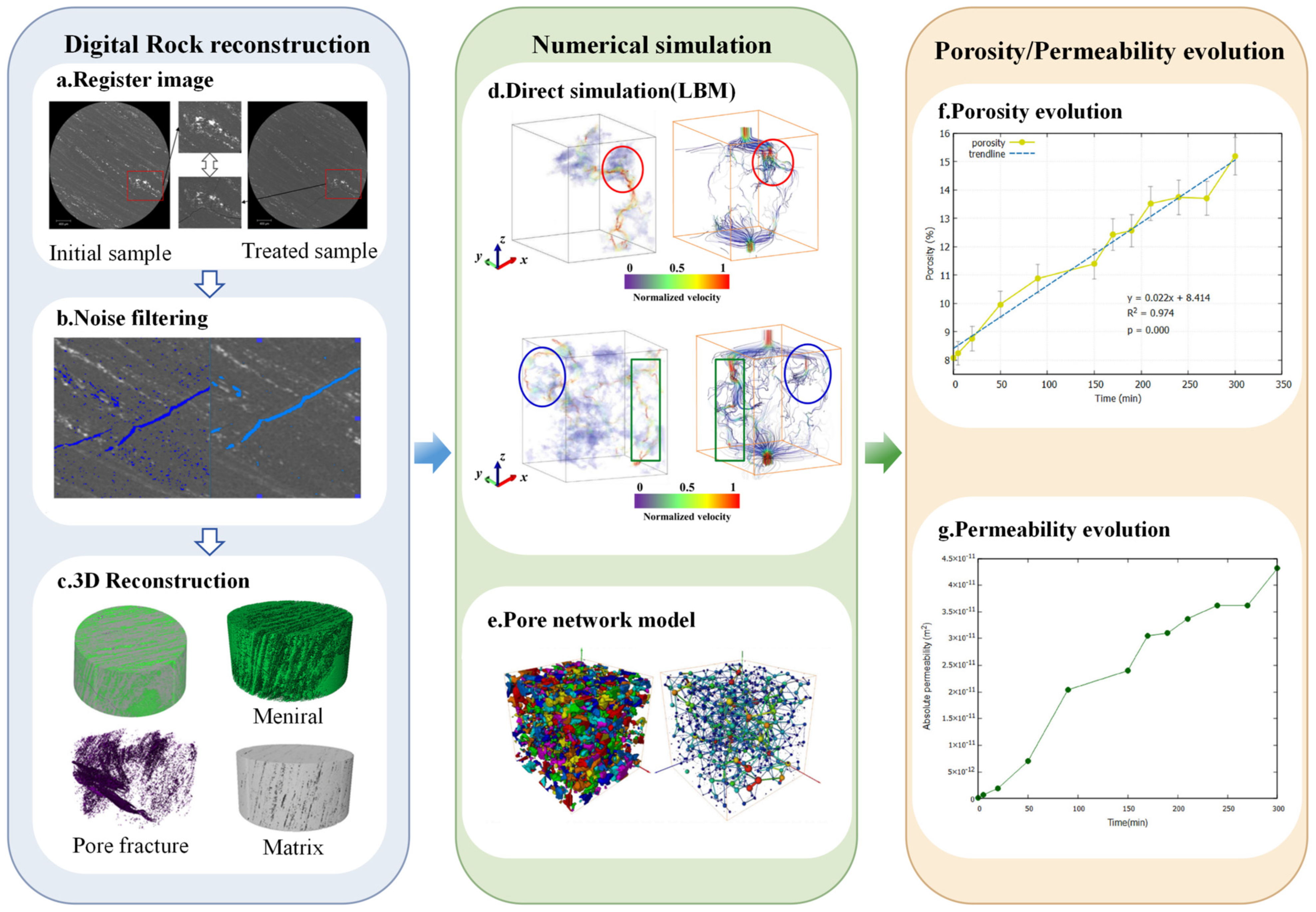
Pore scale simulation is not limited to reproducing pore morphology changes; its key value lies in linking local reaction–induced structural evolution with permeability updating. By resolving flow, transport, and mineral reactions within pore geometries, these models can identify how velocity redistribution, concentration gradients, reaction fronts, and pore connectivity affect permeability evolution. The resulting structural parameters, such as connected porosity, pore throat radius, tortuosity, fracture aperture, and reactive surface area, can support the estimation of effective permeability and permeability anisotropy. More importantly, they help determine whether permeability evolution follows a smooth porosity–permeability relationship or requires critical–throat or clogging–sensitive parameters. However, pore–scale results are sensitive to image resolution, segmentation strategy, representative elementary volume, boundary conditions, and scale–dependent parameter definitions. Therefore, they are more suitable for identifying local interactions among reactions, pore structures, and flow processes and providing porosity–permeability relationship constraints for continuum–scale Simulation than for direct long–term reservoir–scale prediction.
- (2)
- Continuum–scale Simulation
Compared with pore–scale studies that focus on local pore structure, continuum models emphasize the impact of water–rock reactions on overall reservoir performance. By coupling fluid flow, heat transfer, solute transport, and geochemical reactions, these models can represent mineral phase transformation and porosity–permeability evolution at the reservoir scale. The permeability field is dynamically updated through porosity–permeability constitutive relationships, enabling prediction of long–term changes in reservoir properties under injection and production conditions.
One type of study focuses on simulating the evolution of spatial heterogeneity in porosity and permeability fields. It emphasizes the propagation of dissolution and precipitation reaction fronts under injection and production disturbances. It also reveals the spatiotemporal differentiation of high– and low–permeability zones within the reservoir [39,60,163,164]. Another type of study focuses on simulating near–wellbore clogging and the decline of injectivity. It mainly analyzes mineral precipitation induced by reinjection fluids, as well as the associated porosity reduction and permeability decline. It is particularly useful for identifying clogging risks near injection wells [165,166,167,168]. Further studies focus on predicting reservoir performance over long–term operation. Porosity–permeability evolution is incorporated into development processes over decades to centuries. This enables evaluation of reservoir properties, heat recovery efficiency, and project lifetime [39,60,165,166].
Continuum models provide insight into how water–rock interaction controls flow pathways, reaction zonation, and long–term engineering performance at the reservoir scale. They are a key tool for analyzing porosity–permeability evolution.
4.3.3. Cross–Scale Bridging and Experiment–Simulation Synergy
The porosity–permeability response induced by mineral dissolution and precipitation is a typical multiscale process, linking pore–scale structural modification with reservoir–scale flow behavior. Cross–scale simulation therefore requires the integration of laboratory experiments, pore–scale observations, and continuum–scale numerical models. Laboratory experiments provide kinetic parameters, mineralogical evidence, and mechanistic constraints under controlled temperature, pressure, and fluid chemistry conditions, whereas numerical simulations extend these mechanisms to larger spatial and temporal scales for predicting long–term porosity–permeability evolution.
In practice, cross–scale modeling is achieved by translating pore–scale information into effective parameters or constitutive relationships for continuum–scale simulations. Figure 6 illustrates a numerical simulation that constructs a two–dimensional model coupling fluid flow, solute transport, and water–rock reactions through an upscaling process, based on microscopic petrographic observations from karst reservoirs. It characterizes reaction–driven porosity–permeability evolution and incorporates this feedback into the flow and reaction processes, ultimately generating spatial distribution maps of both porosity and permeability. However, quantitative upscaling remains challenging because pore–scale reaction and structural information cannot be directly averaged into continuum–scale parameters. In addition, two–way feedback between local reactions and reservoir–scale flow redistribution remains insufficiently represented, and geological heterogeneity is often simplified. Future studies should improve the characterization of pore–scale heterogeneity, developing quantitative scale transition models, integrating multiscale simulation platforms, and calibrating key parameters with physical experiments, thereby enabling quantitative upscaling.
Figure 6.
Cross–scale modeling of reactive transport and porosity–permeability evolution based on pore–scale petrological observations revised from Ying, et al. [169].
4.4. Effects of Mineral Reactions on Reservoir Porosity–Permeability Evolution
Disturbances in thermal and chemical fields caused by fluid injection lead reservoirs with varying mineral assemblages and pore structures to exhibit distinct evolutionary pathways and engineering responses.
4.4.1. Granite Reservoirs
As a typical high–temperature tight rock mass, granite possesses low matrix porosity and permeability, relying on fracture networks created by hydraulic fracturing as the primary seepage channels [170]. The primary minerals of the reservoir include feldspar, quartz, and mica. Therefore, reaction–induced porosity–permeability evolution in granite reservoirs is primarily expressed through changes in fracture aperture, fracture connectivity, and mineral precipitation along flow paths. Although silicate minerals generally react more slowly than carbonate minerals, long–term reinjection can still modify reservoir hydraulic properties through localized silicate dissolution, secondary clay formation, and silica precipitation.
During the initial stage of fluid injection (days to months), low–temperature, chemically undersaturated fluids undergo rapid non–equilibrium dissolution of reactive minerals such as quartz and feldspar [171]. This process preferentially expands micro–fractures and connects pores, thereby significantly enhancing reservoir permeability in the short term, as evidenced by the substantial increase in permeability (by two orders of magnitude) observed in short–term experiments (5–7 days) on the Carnmenellis granite in the UK [172]. However, as the reaction progresses, Si4+, Al3+, and K+ released by dissolution accumulate in the fluid, eventually reaching saturation conditions for secondary minerals like quartz and illite. The precipitation of these minerals, particularly amorphous silica, at pore throats and fracture walls gradually clogs key flow paths, leading to a decline in permeability, which eventually stabilizes at 60% of its initial value [136]. Pandey, et al. [71] showed that injecting low–temperature (>70 °C) fresh water or undersaturated water into granite reservoirs can promote mineral dissolution to a certain degree. It also extends the flow path, thus enhancing heat extraction efficiency. Compared with saturated water injection, the temperature decline in production wells is slower under fresh water injection. These results suggest that the effect of mineral dissolution in granite reservoirs should be evaluated not only from the perspective of permeability enhancement, but also in terms of its influence on flow–path distribution and heat exchange performance.
4.4.2. Carbonate Reservoirs
Carbonate geothermal reservoirs are primarily composed of rocks such as dolomite and limestone [173]. Compared with silicate reservoirs, carbonate reservoirs exhibit higher chemical reactivity and respond more rapidly to thermal and chemical disturbances. Therefore, mineral reactions in carbonate reservoirs can induce rapid permeability redistribution during the early stage of reinjection.
The injection of low–temperature or acidic fluids induces intense dissolution in the near–wellbore region, rapidly widening fractures or even forming dissolution wormholes, thereby significantly improving flow. Acidizing experiments and simulation studies have confirmed the substantial short–term enhancement of porosity and permeability enhancement [76,174].
However, this dissolution–induced enhancement is spatially limited and may be reversed as the injected fluid is progressively heated during reservoir migration. Because calcite solubility decreases with increasing temperature, the warmed fluid may become supersaturated with respect to calcite, leading to precipitation and scaling in higher temperature regions. Consequently, carbonate reservoirs may develop a temperature–controlled dissolution and precipitation pattern during reinjection: dissolution–dominated high–permeability zones tend to form around injection wells, whereas precipitation–prone clogging zones may develop near production wells [79,175]. In addition to this dissolution and precipitation redistribution, carbonate mineral transformation can further modify pore structure. Calcite dolomite transformation may produce contrasting porosity responses, with dolomitization increasing pore space and dedolomitization reducing porosity through calcite precipitation or pore filling [176].
The hydraulic response of carbonate reservoirs is controlled primarily by fast shifts between dissolution and precipitation, rather than by the slow accumulation of mineral alteration.
4.4.3. Sandstone Reservoirs
As typical porous media systems, sandstone geothermal reservoirs consist of framework minerals such as quartz and feldspar, along with cements like clay minerals and calcite [177,178]. The evolution of their porosity and permeability is a dynamic competition among multiple processes, including permeability enhancement via the dissolution of feldspar and carbonate cements, and clogging due to the precipitation of secondary kaolinite, carbonates, and sulfates [81]. These variations are highly dependent on the properties of injected fluids and formation minerals, as well as the chemical compatibility between the injected and formation fluids. Previous studies show that sandstone reservoirs may exhibit permeability enhancement, reduction, or limited hydraulic alteration under different geochemical conditions: acidic systems such as oxalic acid or CO2–water reactions can improve pore structure through mineral dissolution, whereas in situ geothermal fluids or incompatible reinjected tailwater may induce precipitation, scaling, or fines related clogging; under relatively balanced brine rock conditions, porosity and permeability may remain largely stable [148,179,180,181,182,183]. Under reinjection–induced cooling conditions, the response of sandstone reservoirs is particularly complex: decreased temperatures inhibit feldspar hydrolysis, thereby reducing colloid sources, yet simultaneously promote the exsolution of silica colloids and the formation of stable scales, triggering combined physical chemical clogging [184]. This composite mechanism, coupling “chemical scaling” with “fines migration,” presents severe challenges for maintaining permeability in sandstone reservoirs during long–term reinjection.
Overall, mineral reactions do not affect porosity–permeability evolution in a uniform manner across geothermal reservoirs. Their effects are mediated by reservoir lithology, pore fracture architecture, mineral assemblage, and the location of reactions within the flow system. In granite reservoirs, relatively slow silicate reactions mainly modify fracture aperture and connectivity through localized dissolution and secondary mineral precipitation. In carbonate reservoirs, rapid dissolution–precipitation shifts can alter fracture conductivity and connected flow paths, leading to permeability redistribution. In sandstone reservoirs, permeability evolution is more strongly governed by fluid compatibility, pore–filling minerals, clay instability, and fines migration.
5. Impact of Hydrothermal Interaction on the Mechanical Properties of Rocks
In geothermal development, continuous water–rock interactions occur between the circulating fluid and the rock. These interactions involve both physical and chemical processes, which lead to the degradation of the rock’s physical and mechanical properties. The chemical aspect can be regarded as a long–term geochemical load imposed on the reservoir. This process induces geochemical damage to the rock structure by altering the rock microstructure and mineral composition, thereby reducing mechanical strength. Existing studies have demonstrated that the reduction in cohesion and skeletal strength caused by water–rock interactions exhibits significant cumulative effects, which can result in long–term fatigue damage and a reduction in the rock’s load–bearing capacity [185,186]. Such mechanical deterioration may activate pre–existing faults and trigger induced seismicity, posing a potential threat to the safety and integrity of geothermal projects [13].
5.1. Mechanical Damage Mechanisms Driven by Water–Rock Interactions
Experimental studies have confirmed that mineral dissolution and particle detachment, which increase porosity, are the primary factors reducing the elastic modulus and uniaxial compressive strength [187,188]. The internal stress structure of rocks is altered through differential reactions among mineral components: the dissolution of soluble minerals promotes the development of primary pores and micro–fissures, while the hydrolysis of refractory minerals and the chemical degradation of cements weaken intergranular cohesion, creating favorable conditions for the initiation, propagation, and coalescence of micro–cracks [189].
As mineral dissolution increases pore volume, it weakens the load–bearing capacity of the rock skeleton while inducing fluctuations in fluid pressure. According to the principle of effective stress, the evolution of pore pressure significantly alters the rock’s stress state, causing the Mohr circle to shift toward the failure envelope and lowering the threshold for shear failure. Once mechanical failure occurs, a dynamic feedback loop is established: shear failure significantly enhances matrix permeability, which accelerates water–rock interactions and further expands the extent of chemical dissolution and pressure difference, thereby exacerbating subsequent failure [190].
In contrast to the mechanical weakening caused by dissolution, mineral precipitation induced by water–rock interactions also significantly affects rock mechanical properties. Precipitation increases stiffness and strength through pore filling and cementation. However, its spatial heterogeneity may cause local stress concentration. Crystallization pressure in confined spaces can also damage the rock structure or reactivate microcracks [191]. Recent studies have shown that mineral precipitation reduces porosity and leads to local pore pressure buildup. This, in turn, alters the effective stress state [192,193,194]. This process may enhance stability by fracture closure but may also induce instability due to pressure buildup.
5.2. Mechanical Response Characteristics of Different Lithologies
Due to intrinsic differences in mineral composition, cementation styles, and primary pore topology, different lithologies exhibit distinct mechanical response pathways under water–rock interactions. This divergence stems not from a single controlling factor but from the synergistic effects of multiple structural and geochemical processes.
5.2.1. Sandstone Reservoir
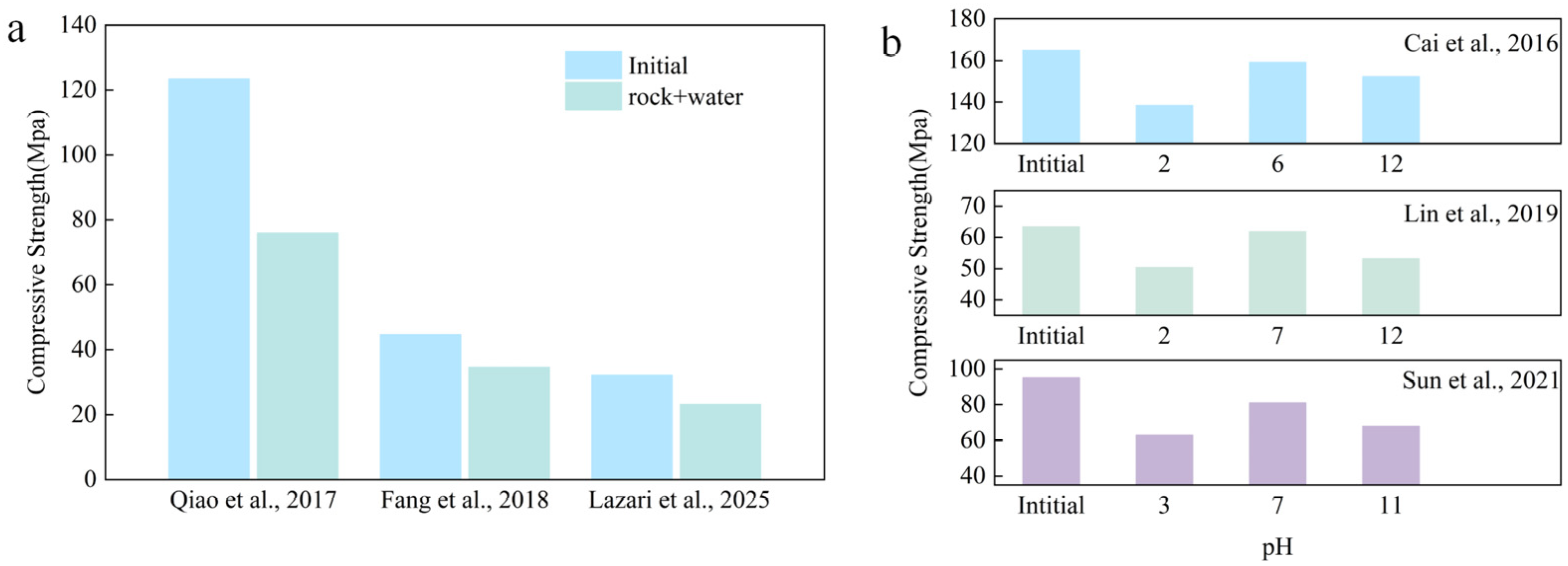
In the sandstone reservoir, water–rock interactions mainly degrade mechanical properties by weakening intergranular cementation through carbonate cement dissolution and clay mineral swelling [195]. Qiao, et al. [178] reported that distilled water treatment reduced the elastic modulus of sandstone by approximately 50% compared with the dry sample. Xi, et al. [195] found that, after heating to 200 °C and 600 °C, the elastic modulus decay rates of water–cooled samples were 7.13 and 5.29 percentage points higher than those of liquid nitrogen–cooled samples, respectively. Another long–term immersion experiment showed that the uniaxial compressive strength of sandstone decreased by 20.37% after 180 days of sandstone water interaction [196]. The uniaxial compressive strength of sandstone decreased after water–rock interaction, as shown in Figure 7a.
The pH of the fluid exerts a significant regulatory effect on the strength degradation of sandstone [197]. Acidic solutions generally cause the most pronounced reduction in compressive strength [188,198], because carbonate cements, feldspar–related components, and some clay–associated phases are more susceptible to dissolution or alteration under low pH conditions. Alkaline solutions can also weaken sandstone [178,199], mainly through reactions involving quartz and aluminosilicate minerals, but the resulting strength attenuation is usually less significant than that under acidic conditions. In neutral solutions, only limited hydrolysis or dissolution of readily reactive minerals occurs, leading to comparatively weaker mechanical degradation. This mineral–specific pH sensitivity explains why sandstone strength reduction commonly follows the order acidic > alkaline > neutral [200,201], as shown in Figure 7b. Under the same mineral composition and pH condition, higher solution concentration and longer reaction time further intensify the degradation of peak strength and elastic modulus [202].
Figure 7.
Uniaxial compressive strength (UCS) of sandstone. (a) Comparison of UCS before and after water–sandstone interaction, revised from Qiao, et al. [178], Lazari, et al. [200] and Fang, et al. [203] (b) Changes in UCS under different pH conditions, revised from Lin, et al. [188], Cai, et al. [204], Sun and Lu [205].
5.2.2. Carbonate Reservoir
Carbonate rocks exhibit highly sensitive mechanical responses to variations in the hydrochemical environment. Acidic fluids accelerate carbonate mineral dissolution, promote pore development and fracture expansion, and weaken crystal contacts and cemented boundaries, leading to a reduction in compressive strength, as shown in Figure 8a. The pore structure of rocks is closely related to their mechanical properties. As the porosity increases, compressive strength gradually decreases, as illustrated in Figure 8b.
Figure 8.
Influence of pH conditions and time on the evolution of specimen strength and porosity revised from Liu, et al. [206] (a) Variation in specimen strength with time under different pH conditions. (b) Synergistic evolution of specimen porosity and strength with time at pH = 1.
Under high temperature alkaline conditions, carbonate rocks may undergo a different mechanical degradation pathway, dedolomitization dissolves micro–protrusions on fracture surfaces, thereby decreasing surface roughness and causing the elastic modulus to decline progressively as pH rises. Existing research indicates that the synergistic dissolution–crystallization–expansion mechanism during dedolomitization is the primary driver of mechanical degradation in carbonate rocks under alkaline water–rock interactions [207]. This dissolution–recrystallization process is characterized by significant spatial heterogeneity, manifesting as localized zones of intense mechanical weakening, which ultimately affect fracture stability and the evolution of seepage structures.
5.2.3. Granite Reservoir
The mechanical behavior of Granite reservoirs is mainly controlled by the integrity of the quartz and feldspar framework and pre–existing microfractures. Under high temperature and high pressure conditions, and particularly under supercritical water conditions, water–rock interaction can substantially accelerate hydrothermal alteration. Experimental studies have shown that supercritical water promotes the formation of dissolution pores and dense microfracture networks in granite, leading to significant reductions in triaxial compressive strength and elastic modulus [208,209], as shown in Figure 9. This weakening has been attributed to the leaching of silica–bearing components and the degradation of the crystalline load–bearing framework [209,210].
Figure 9.
Experimental investigation on the strength evolution of rocks under different treatment conditions revised from Hu, et al. [209]. (a) Scheme of high–pressure and high–temperature vessel for supercritical water atmosphere. (b) Comparison of the compressive strength under different treatment conditions. (c) Granite sample before and after uniaxial compression test.
The dissolution of feldspar minerals and the subsequent expansion of micro–cracks, the destruction of cementation structures, and the formation of secondary clay minerals (e.g., kaolinite) are the primary drivers of the decline in mechanical strength. The transformation of biotite into clay minerals further exacerbates the weakening of mechanical parameters [211]. Furthermore, studies have found that under supercritical water conditions, the fracture surfaces of granite undergo an evolutionary process of initial dissolution followed by precipitation; fractures partially close due to mineral recrystallization, leading to a decrease in the Joint Roughness Coefficient [212]. Although this interfacial evolution resembles the dissolution–precipitation pattern in carbonate rocks, it is mainly controlled by hydrothermal alteration of silicate minerals and silica bearing components.
6. Conclusions and Prospects
6.1. Conclusions
Reinjection is a key technology for sustainable geothermal development, but it also creates a dynamic non–equilibrium system controlled by fluid transport, heat transfer, and geochemical reactions. This paper reviews reaction–transport processes and water–rock interactions in geothermal reservoirs, and examines the effects of pore structure evolution on nonlinear porosity–permeability relationships as well as the influence of water chemistry on rock mechanical properties.
The dynamic response of geothermal reservoirs is governed by the competition between reaction kinetics and fluid transport. During long–term reinjection, spatially differentiated dissolution and precipitation modify permeability and redistribute flow pathways, which in turn regulate subsequent reactions and drive nonlinear reservoir evolution across scales.
Mineral–specific kinetics control the temporal evolution of geothermal reservoirs. Silicate reactions mainly drive long–term structural alteration, carbonate reactions control short–term permeability changes, and sulfate precipitation triggered by fluid incompatibility can cause rapid permeability decline.
Mineral dissolution and precipitation modify pore connectivity and critical pore throats, leading to nonlinear porosity–permeability relationships. Common porosity–permeability models provide useful approximations for permeability updating, but their applicability must be constrained by reaction conditions, pore–structure evolution, and multiscale experimental or numerical evidence. Different reservoir types exhibit distinct reaction mechanisms and pore structure evolution patterns, requiring porosity–permeability relationships to be analyzed dynamically based on reservoir conditions.
Water–rock interactions also induce reservoir chemo–mechanical responses, indicating that long–term stability assessment should couple porosity–permeability evolution with lithology–dependent mechanical degradation.
6.2. Prospect
Although the mechanisms by which water–rock interactions affect geothermal reservoirs have been increasingly clarified, their long–term prediction remains uncertain because mineral reactions, pore–structure evolution, and field–scale hydraulic behavior are still difficult to link quantitatively. In particular, dissolution and precipitation may coexist and evolve differently along flow paths, causing permeability enhancement and permeability damage to occur simultaneously within the same reservoir. Future studies should therefore move from mechanism identification under specific experimental or modeling conditions toward quantitative prediction of how these processes evolve and scale up during long–term reinjection.
A transition from static characterization to dynamic in situ analysis is required. Future studies should focus on capturing the temporal evolution of reaction fronts, pore throat clogging, fracture aperture changes, and pore network connectivity under reservoir–relevant temperature, pressure, and fluid–chemistry conditions. Dynamic in situ techniques, such as pore–scale X–ray microtomography, can provide time–resolved information on pore geometry, connectivity, and fluid distribution during reactions. Nevertheless, its broader application requires further advances in imaging scale, temporal resolution, experimental cost control, and the reproduction of extreme geothermal conditions. Combining in situ imaging with reactive core flooding, effluent chemistry, mineralogical analysis, and pore–scale simulation would provide a more robust basis for constraining reaction–induced structural evolution.
A shift from empirical permeability updating to mechanism–constrained model selection is needed. Common models provide useful approximations for permeability updating, but they cannot capture all possible evolution pathways caused by mineral dissolution and precipitation. Their applicability depends on whether reactions produce distributed pore modification, localized clogging, fracture aperture change, or connectivity loss. Future permeability models should therefore be constrained by reaction regime and pore–structure evolution. Dimensionless indicators such as the and numbers, together with saturation indices and connectivity metrics, may help identify whether the system is reaction–limited or transport–limited.
Quantitative characterization of chemo–mechanical coupling remains essential. Most existing studies treat geochemical reactions and mechanical processes separately. Structural reconstruction induced by mineral dissolution and precipitation should be integrated into constitutive relations to develop thermo–hydro–mechanical–chemical (THMC) coupling models that account for chemical weakening. The cumulative nature of reservoir damage under cyclic injection–production conditions also warrants systematic investigation.
Multi–source data integration and AI–driven modeling represent an important direction for improving cross–scale prediction. As illustrated in Figure 10, laboratory observations, pore–scale simulations, field monitoring data, and reservoir–scale models can be integrated into a unified framework to link pore–structure evolution with macroscopic flow behavior. AI–assisted methods can help extract multiscale structural information and identify nonlinear relationships among mineral reactions, transport processes, and permeability evolution. More importantly, these approaches can preserve the influence of fine–scale heterogeneity and localized reaction zones in larger–scale models. Continuous calibration with production and monitoring data will further improve the reliability of long–term reservoir prediction.
Figure 10.
Workflow of multi–source data integration and AI–driven multi–scale modeling in geothermal systems. (a) Multi–source observation and data acquisition; (b) AI–assisted image analysis and digital reconstruction; (c) Multiscale THMC simulation and surrogate modeling; (d) Mechanism–constrained digital twin and dynamic updating.
A shift from passive description of reservoir changes to active regulation of water–rock reactions is required for future geothermal reinjection studies. The key is not only to determine whether permeability increases or decreases, but also to identify where dissolution and precipitation occur, how they reshape flow pathways, and how they can be regulated through injected–fluid chemistry, injection temperature, injection rate, well pattern design, and water pretreatment. In particular, greater attention should be paid to precipitation kinetics and its spatial distribution within pore networks, especially in hydraulically and chemically sensitive zones such as abrupt velocity–change regions, fluid–mixing interfaces, temperature–gradient zones, near–wellbore regions, and preferential flow channels. These locations are prone to localized precipitation, pore throat clogging, and flow redistribution and are critical for predicting plugging risk, injectivity evolution, and thermal breakthrough. Reinjection strategies may regulate mineral dissolution and precipitation by adjusting fluid saturation state, ionic composition, pH, and injection mode, but such regulation should be constrained by reservoir–specific reaction kinetics, thermal evolution, and flow path distribution. Therefore, in situ monitoring, tracer tests, effluent chemistry, and reactive transport modeling should be integrated to characterize spatially heterogeneous reactions and improve the prediction of plugging risk, injectivity evolution, and thermal breakthrough.
Author Contributions
Conceptualization, H.L. and Y.C.; methodology, B.F., Y.C. and H.L.; formal analysis, S.H., B.H. and H.C.; writing—original draft preparation, H.L. and B.F.; writing—review and editing, B.F. and Y.C. All authors have read and agreed to the published version of the manuscript.
Funding
This study was funded by the following: Deep Earth Probe and Mineral Resources Exploration-National Science and Technology Major Project, No. 2024ZD1003601; The Open Fund of Observation and Research Station of Tianjin Low-Medium Temperature Geothermal Resources, Ministry of Natural Resources, No. TJDRYWZ-202403; Sichuan Science and Technology Program (Grant No. 2024NSFSC0092).
Data Availability Statement
The original contributions presented in the study are included in the article, and further inquiries can be directed to the corresponding author.
Acknowledgments
The authors would like to extend their sincere gratitude to the relevant institutions for financial and technical support.
Conflicts of Interest
The authors declare no conflicts of interest.
References
- Kassem, M.A.; Moscariello, A. Geothermal energy: A sustainable and cost-effective alternative for clean energy production and climate change mitigation. Sustain. Futures 2025, 10, 101247. [Google Scholar] [CrossRef] [Scilit]
- Wang, J.; Pang, Z.; Cheng, Y.; Huang, Y.; Jiang, G.; Lu, Z.; Kong, H. Current state, utilization and prospective of global geothermal energy. Sci. Technol. Rev. 2023, 41, 5–11. [Google Scholar]
- Lund, J.W.; Toth, A.N. Direct utilization of geothermal energy 2020 worldwide review. Geothermics 2021, 90, 101915. [Google Scholar] [CrossRef] [Scilit]
- Chen, Y.; Wang, P.K.; Wu, Y.; Ma, Q.P.; Yu, L.; Shangguan, R. Analysis and countermeasures on influencing factors of geothermal well reinjection in Lankao, Henan province. Drill. Eng. 2022, 49, 146–152. [Google Scholar]
- Zhang, B.; Wang, S.; Kang, F.; Wu, Y.; Li, Y.; Gao, J.; Yuan, W.; Xing, Y. Heat accumulation mechanism of the gaoyang carbonatite geothermal field, hebei province, North China. Front. Earth Sci. 2022, 10, 858814. [Google Scholar] [CrossRef] [Scilit]
- Diaz, A.R.; Kaya, E.; Zarrouk, S.J. Reinjection in geothermal fields—A worldwide review update. Renew. Sustain. Energy Rev. 2016, 53, 105–162. [Google Scholar] [CrossRef] [Scilit]
- Axelsson, G. Role and management of geothermal reinjection. In Proceedings of the Short Course on Geothermal Development and Geothermal Wells, Santa Tecla, El Salvador, 11–17 March 2012; pp. 11–17. [Google Scholar]
- Liu, J.R. The status of geothermal reinjection. Hydrogeol. Eng. Geol. 2003, 30, 100–104. [Google Scholar] [CrossRef]
- Cao, Q.; Fang, C.H.; Li, Y.; Wang, H.X.; Fang, Q.; Shi, X.Y. Development status of geothermal reinjection at home and abroad and its enlightenment. Oil Drill. Prod. Technol. 2021, 43, 203–211. [Google Scholar] [CrossRef]
- Bringedal, C.; Berre, I.; Radu, F.A. An approach for investigation of geochemical rock-fluid interactions. In Proceedings of the 39th Workshop on Geothermal Reservoir Engineering 2014, Stanford, CA, USA, 24–26 February 2014. [Google Scholar]
- Murugesu, M.P.; Vega, B.; Ross, C.M.; Kurotori, T.; Druhan, J.L.; Kovscek, A.R. Coupled transport, reactivity, and mechanics in fractured shale caprocks. Water Resour. Res. 2024, 60, e2023WR035482. [Google Scholar] [CrossRef] [Scilit]
- Chen, S.; Ding, B.; Gong, L.; Huang, Z.; Yu, B.; Sun, S. Comparison of multi-field coupling numerical simulation in hot dry rock thermal exploitation of enhanced geothermal systems. Adv. Geo-Energy Res. 2019, 3, 396–409. [Google Scholar] [CrossRef] [Scilit]
- Zhou, S.; Sun, Q.; Zhang, H.; Meng, H.; Gao, Q.; Zhou, Y. Elemental dissolution characteristics of granite and gabbro under high-temperature water-rock interactions. Sci. Total Environ. 2023, 897, 165455. [Google Scholar] [CrossRef] [Scilit]
- Griffiths, L.; Heap, M.J.; Wang, F.; Daval, D.; Gilg, H.A.; Baud, P.; Schmittbuhl, J.; Genter, A. Geothermal implications for fracture-filling hydrothermal precipitation. Geothermics 2016, 64, 235–245. [Google Scholar] [CrossRef] [Scilit]
- Scott, S.W.; Driesner, T. Permeability changes resulting from quartz precipitation and dissolution around upper crustal intrusions. Geofluids 2018, 2018, 6957306. [Google Scholar] [CrossRef] [Scilit]
- Xu, Q.; Tian, A.; Luo, X.; Liao, X.; Tang, Q. Chemical Damage Constitutive Model Establishment and the Energy Analysis of Rocks under Water–Rock Interaction. Energies 2022, 15, 9386. [Google Scholar] [CrossRef] [Scilit]
- Liu, Z.; Feng, B.; Alexey, K.; Shen, J.; He, S.; Yuan, Y. Impact of Injected Water Chemistry on Mineral Precipitation and Dissolution in Medium–Deep Geothermal Systems: A Case Study of the Wumishan Formation Dolomite Reservoir. Water 2025, 17, 3099. [Google Scholar] [CrossRef] [Scilit]
- Pérez-Zárate, D.; Santoyo, E.; Guevara, M.; Torres-Alvarado, I.; Peiffer, L.; Martínez-Frías, J. Geochemometric modeling and geothermal experiments of Water/Rock Interaction for the study of alkali-feldspars dissolution. Appl. Therm. Eng. 2015, 75, 1244–1261. [Google Scholar] [CrossRef] [Scilit]
- Li, J.Q.; Wei, M.C.; Feng, B.; Lei, H.W.; Xu, T.F. Impacts of water-rock interactions on thermal reservoir characteristics in EGS geothermal development. Renew. Energy Resour. 2014, 32, 1004–1010. [Google Scholar] [CrossRef]
- Zhao, Y.H.; Feng, B.; Zhang, G.B.; Shangguan, S.T.; Qi, X.F.; Li, X.; Qiao, Y.C.; Xu, J.N. Study of the interaction between the granitic hot-dry rock (HDR) and different injection waters. Acta Geol. Sin. 2020, 94, 2115–2123. [Google Scholar] [CrossRef]
- Abd, A.S.; Abushaikha, A.S. Reactive transport in porous media: A review of recent mathematical efforts in modeling geochemical reactions in petroleum subsurface reservoirs. SN Appl. Sci. 2021, 3, 401. [Google Scholar] [CrossRef] [Scilit]
- Patil, V.V.; Mcpherson, B.J. Identifying Hydrogeochemical Conditions for Fault Self-Sealing in Geological Storage. Water Resour. Res. 2020, 56, e2018WR024436. [Google Scholar] [CrossRef] [Scilit]
- Nissan, A.; Berkowitz, B. Reactive transport in heterogeneous porous media under different peclet numbers. Water Resour. Res. 2019, 55, 10119–10129. [Google Scholar] [CrossRef] [Scilit]
- Godinho, J.R.A.; Gerke, K.M.; Stack, A.G.; Lee, P.D. The dynamic nature of crystal growth in pores. Sci. Rep. 2016, 6, 33086. [Google Scholar] [CrossRef] [Scilit]
- Hou, Z.; Xu, T.; Feng, G.; Feng, B.; Yuan, Y.; Jiang, Z. Numerical Modeling of Reactive Transport and Self-Sealing Processes in the Fault-Controlled Geothermal System of the Guide Basin, China. Geofluids 2019, 2019, 1853068. [Google Scholar] [CrossRef] [Scilit]
- Hébert, R.; Ledésert, B.; Genter, A.; Bartier, D.; Dezayes, C. Mineral precipitation in geothermal reservoir: The study case of calcite in the Soultz-sous-Forêts enhanced geothermal system. In Proceedings of the 36rd Workshop on Geothermal Reservoir Engineering, Stanford, CA, USA, 31 January–2 February 2011. [Google Scholar]
- Mcnamara, D.D.; Lister, A.; Prior, D.J. Calcite sealing in a fractured geothermal reservoir: Insights from combined EBSD and chemistry mapping. J. Volcanol. Geotherm. Res. 2016, 323, 38–52. [Google Scholar] [CrossRef] [Scilit]
- Chen, L.; Kang, Q.; Tang, Q.; Robinson, B.A.; He, Y.-L.; Tao, W.-Q. Pore-scale simulation of multicomponent multiphase reactive transport with dissolution and precipitation. Int. J. Heat Mass Transf. 2015, 85, 935–949. [Google Scholar] [CrossRef] [Scilit]
- Huang, Y.Y.; Na, J.; Lei, H.W. Numerical simulation study of chemical clogging of sandstone pore thermal reservoirs reservoir backfill in kaifeng area. Acta Energiae Solaris Sin. 2024, 45, 225–235. [Google Scholar] [CrossRef]
- Xu, T.F.; Sonnenthal, E.; Spycher, N.; Pruess, K. TOUGHREACT—A simulation program for non-isothermal multiphase reactive geochemical transport in variably saturated geologic media: Applications to geothermal injectivity and CO2 geological sequestration. Comput. Geosci. 2006, 32, 145–165. [Google Scholar] [CrossRef] [Scilit]
- Feng, B.; Cui, Z.; Liu, X.; Shangguan, S.; Qi, X.; Li, S. Effects of water–rock interaction on the permeability of the near-well reservoir in an enhanced geothermal system. Energies 2022, 15, 8820. [Google Scholar] [CrossRef] [Scilit]
- Fumagalli, A.; Scotti, A. Reactive flow in fractured porous media. In Proceedings of the International Conference on Finite Volumes for Complex Applications, Bergen, Norway, 15–19 June 2020. [Google Scholar]
- Andersen, P.; Evje, S. A model for reactive flow in fractured porous media. Chem. Eng. Sci. 2016, 145, 196–213. [Google Scholar] [CrossRef] [Scilit]
- Duan, R.; Shang, G.; Yu, C.; Wang, Q.; Zhang, H.; Wang, L.; Xu, Z.; Dong, Y. Reactive transport simulation of cavern formation along fractures in carbonate rocks. Water 2021, 13, 38. [Google Scholar] [CrossRef] [Scilit]
- Molins, S.; Trebotich, D.; Arora, B.; Steefel, C.I.; Deng, H. Multi-scale model of reactive transport in fractured media: Diffusion limitations on rates. Transp. Porous Media 2019, 128, 701–721. [Google Scholar] [CrossRef] [Scilit]
- Seigneur, N.; Mayer, K.U.; Steefel, C.I. Reactive transport in evolving porous media. Rev. Mineral. Geochem. 2019, 85, 197–238. [Google Scholar] [CrossRef] [Scilit]
- Baqer, Y.; Chen, X. A review on reactive transport model and porosity evolution in the porous media. Environ. Sci. Pollut. Res. 2022, 29, 47873–47901. [Google Scholar] [CrossRef] [Scilit]
- Ji, J.Y.; Song, X.Z.; Li, G.S. Thermal–hydraulic–chemical coupling mechanism of porous–fractured karst geothermal reservoirs. Nat. Gas Ind. 2024, 44, 214–224. [Google Scholar]
- Li, S.; Liu, J.; Huang, W.; Zhang, C. Numerical simulation of the thermo-hydro-chemical coupling in enhanced geothermal systems: Impact of SiO2 dissolution/precipitation in matrix and fractures. Energy 2024, 290, 130190. [Google Scholar] [CrossRef] [Scilit]
- Edery, Y.; Stolar, M.; Porta, G.; Guadagnini, A. Feedback mechanisms between precipitation and dissolution reactions across randomly heterogeneous conductivity fields. Hydrol. Earth Syst. Sci. Discuss. 2021, 25, 5905–5915. [Google Scholar] [CrossRef] [Scilit]
- Yang, Y.; Bruns, S.; Rogowska, M.; Hakim, S.S.; Hammel, J.U.; Stipp, S.L.S.; Sørensen, H.O. Retraction of the dissolution front in natural porous media. Sci. Rep. 2018, 8, 5693. [Google Scholar] [CrossRef] [Scilit] [PubMed]
- Deng, H.; Poonoosamy, J. Mineral precipitation in porous media systems: Controlling factors and impacts on porous media evolution. Adv. Colloid Interface Sci. 2026, 348, 103745. [Google Scholar] [CrossRef] [Scilit]
- Gao, B.; Li, Y.; Pang, Z.; Huang, T.; Kong, Y.; Li, B.; Zhang, F. Geochemical mechanisms of water/CO2-rock interactions in EGS and its impacts on reservoir properties: A review. Geothermics 2024, 118, 102923. [Google Scholar] [CrossRef] [Scilit]
- Liu, P.J. A Review on Surface Dissolution Behavior of Silicate Minerals. Adv. Geosci. 2025, 15, 740–751. [Google Scholar] [CrossRef]
- Arnorsson, S.; Stefansson, A. Assessment of feldspar solubility constants in water in the range of 0 degrees to 350 degrees C at vapor saturation pressures. Am. J. Sci. 1999, 299, 173–209. [Google Scholar] [CrossRef] [Scilit]
- Li, T.; Li, H.; Xu, L. An experimental study of interaction between pure water and alkaline feldspar at high temperatures and pressures. Acta Geochim. 2018, 37, 60–67. [Google Scholar] [CrossRef] [Scilit]
- Tang, C.; Dong, H. The effects of Cu2+ adsorption on surface dissolution of albite. Colloids Surf. A Physicochem. Eng. Asp. 2022, 644, 128832. [Google Scholar] [CrossRef] [Scilit]
- Blake, R.E.; Walter, L.M. Kinetics of feldspar and quartz dissolution at 70–80 °C and near-neutral pH: Effects of organic acids and NaCl. Geochim. Cosmochim. Acta 1999, 63, 2043–2059. [Google Scholar] [CrossRef] [Scilit]
- Tong, R.-C.; Liu, H.-J.; Song, Y.-J.; Xie, L.-H.; Ban, S.-N. Permeability and Mechanical Response of Granite after Thermal and CO2 Bearing Fluid Hydro-Chemical Stimulation. Energies 2022, 15, 8280. [Google Scholar] [CrossRef] [Scilit]
- Nguyen-Thanh, L.; Mählmann, R.F.; Hoang-Minh, T.; Petschick, R.; Reischmann, T.; Nesbor, H.-D.; Ruttmann, M.; Fritsche, J.-G. Clay mineral formation in Permian rocks of a geothermal borehole at Northern Upper Rhine Graben, Germany. Int. J. Earth Sci. 2021, 110, 1415–1438. [Google Scholar] [CrossRef] [Scilit]
- Li, M.; Li, C.; Xing, J.; Sun, X.; Yuan, G.; Cao, Y. An experimental study on dynamic coupling process of alkaline feldspar dissolution and secondary mineral precipitation. Acta Geochim. 2019, 38, 872–882. [Google Scholar] [CrossRef] [Scilit]
- Velde, B. Genesis of Clay Minerals; Elsevier Science & Technology: Amsterdam, The Netherlands, 2006. [Google Scholar]
- Ré, C.L.; Kaszuba, J.P.; Moore, J.N.; Mcpherson, B.J. Fluid–rock interactions in CO2-saturated, granite-hosted geothermal systems: Implications for natural and engineered systems from geochemical experiments and models. Geochim. Cosmochim. Acta 2014, 141, 160–178. [Google Scholar]
- Henley, R.W.; Ellis, A.J. Geothermal systems ancient and modern: A geochemical review. Earth-Sci. Rev. 1983, 19, 1–50. [Google Scholar] [CrossRef] [Scilit]
- Han, Z.Y.; Zheng, X.L.; Chen, J.H. Water sensitivity characters of different clay minerals. Hydrogeol. Eng. Geol. 2008, 1, 80–82+89. [Google Scholar] [CrossRef]
- Tsuchiya, N.; Hirano, N. Chemical reaction diversity of geofluids revealed by hydrothermal experiments under sub-and supercritical states. Isl. Arc 2007, 16, 6–15. [Google Scholar] [CrossRef] [Scilit]
- Kennedy, G.C. A portion of the system silica-water. Econ. Geol. Bull. Soc. Econ. Geol. 1950, 45, 629–653. [Google Scholar] [CrossRef] [Scilit]
- Zhang, R.; Zhang, X.; Hu, S. Dissolution kinetics of quartz in water at high temperatures across the critical state of water. J. Supercrit. Fluids 2015, 100, 58–69. [Google Scholar] [CrossRef] [Scilit]
- Manning, C.E. The solubility of quartz in H2O in the lower crust and upper mantle. Geochim. Cosmochim. Acta 1994, 58, 4831–4839. [Google Scholar] [CrossRef] [Scilit]
- Zhong, C.H. Study on Quartz Dissolution/Precipitation Law and Its Effect on Stratum Permeability Under Supercritical Geothermal Conditions. Ph.D. Thesis, Jilin University, Changchun, China, 2024. [Google Scholar]
- Brantley, S.L. Kinetics of dissolution and precipitation–Experimental and field results. In Proceedings of the 7th International Symposium on Water-Rock Interaction, Park City, Utah, USA, 13–18 July 1992; pp. 3–6. [Google Scholar]
- Zhu, J.; Tang, C.; Wei, J.; Li, Z.; Laipan, M.; He, H.; Liang, X.; Tao, Q.; Cai, L. Structural effects on dissolution of silica polymorphs in various solutions. Inorganica Chim. Acta 2018, 471, 57–65. [Google Scholar] [CrossRef] [Scilit]
- Knauss, K.G.; Wolery, T.J. The dissolution kinetics of quartz as a function of pH and time at 70 °C. Geochim. Cosmochim. Acta 1988, 52, 43–53. [Google Scholar] [CrossRef] [Scilit]
- Worley, W.G.; Tester, J.W.; Grigsby, C.O. Quartz dissolution kinetics from 100–200 °C as a function of pH and ionic strength. AIChE J. 1996, 42, 3442–3457. [Google Scholar] [CrossRef] [Scilit]
- Kaszuba, J.; Yardley, B.; Andreani, M. Experimental perspectives of mineral dissolution and precipitation due to carbon dioxide-water-rock interactions. Rev. Mineral. Geochem. 2013, 77, 153–188. [Google Scholar] [CrossRef] [Scilit]
- Li, Z.M.; Tan, X.F.; Xue, W.W.; Qiu, Y.; Yong, Y.T.; Liu, Z.B. Material source of siliceous cement in clastic rock and the precipitation mechanism. Pet. Geol. Eng. 2015, 29, 19–24+145–146. [Google Scholar]
- Gunnarsson, I.; Arnórsson, S. Impact of silica scaling on the efficiency of heat extraction from high-temperature geothermal fluids. Geothermics 2005, 34, 320–329. [Google Scholar] [CrossRef] [Scilit]
- Brown, K. Thermodynamics and kinetics of silica scaling. In Proceedings of the International Workshop on Mineral Scaling, Manila, Philippines, 25–27 May 2011. [Google Scholar]
- Çelik, A.; Topçu, G.; Baba, A.; Akdogan, Y.; Şentürk, U.; Demir, M.M. Experimental modeling of silicate-based geothermal deposits. Geothermics 2017, 69, 65–73. [Google Scholar] [CrossRef] [Scilit]
- Gallup, D.L.; Sugiaman, F.; Capuno, V.; Manceau, A. Laboratory investigation of silica removal from geothermal brines to control silica scaling and produce usable silicates. Appl. Geochem. 2003, 18, 1597–1612. [Google Scholar] [CrossRef] [Scilit]
- Pandey, S.N.; Chaudhuri, A.; Rajaram, H.; Kelkar, S. Fracture transmissivity evolution due to silica dissolution/precipitation during geothermal heat extraction. Geothermics 2015, 57, 111–126. [Google Scholar] [CrossRef] [Scilit]
- Chen, Y.; Ma, G.; Wang, H. The simulation of thermo-hydro-chemical coupled heat extraction process in fractured geothermal reservoir. Appl. Therm. Eng. 2018, 143, 859–870. [Google Scholar] [CrossRef] [Scilit]
- Mirza, T.A.; Rashid, S.G. Evaluation of the pila spi formation carbonate rocks for dimension stone, Qara Dagh Area, Kurdistan Region, NE Iraq. Iraqi Bull. Geol. Min. 2019, 15, 107–120. [Google Scholar]
- Lv, G.; Zhang, X.; Wei, D.; Yu, Z.; Yuan, X.; Sun, M.; Kong, X.; Zhang, Y. Water–rock interactions, genesis mechanism, and mineral scaling of geothermal waters in northwestern Sichuan, SW China. Water 2023, 15, 3730. [Google Scholar] [CrossRef] [Scilit]
- André, L.; Rabemanana, V.; Vuataz, F.-D. Influence of water–rock interactions on fracture permeability of the deep reservoir at Soultz-sous-Forêts, France. Geothermics 2006, 35, 507–531. [Google Scholar] [CrossRef] [Scilit]
- Bächler, D.; Kohl, T. Coupled thermal–hydraulic–chemical modelling of enhanced geothermal systems. Geophys. J. Int. 2005, 161, 533–548. [Google Scholar] [CrossRef] [Scilit]
- Taron, J.; Elsworth, D. Thermal–hydrologic–mechanical–chemical processes in the evolution of engineered geothermal reservoirs. Int. J. Rock Mech. Min. Sci. 2009, 46, 855–864. [Google Scholar] [CrossRef] [Scilit]
- Appelo, C.A.J.; Postma, D. Geochemistry, Groundwater and Pollution; CRC Press: Boca Raton, FL, USA, 2004. [Google Scholar]
- Pandey, S.N.; Chaudhuri, A.; Kelkar, S.; Sandeep, V.R.; Rajaram, H. Investigation of permeability alteration of fractured limestone reservoir due to geothermal heat extraction using three-dimensional thermo-hydro-chemical (THC) model. Geothermics 2014, 51, 46–62. [Google Scholar] [CrossRef] [Scilit]
- Cui, R.J. Mechanism of Combined Clogging of Porous Media in Managed Aquifer Recharge. Ph.D. Thesis, Jilin University, Changchun, China, 2023. [Google Scholar]
- Dou, H.P. Research of Chemical Clogging During Waste Geothermal Water Re-Injection Based on Hydrogeochemical Simulation—Take Xian Yang Re-Injection Well No.1 for Example. Master’s Thesis, Chang’an University, Xi’an, China, 2012. [Google Scholar]
- Yun, Z.H.; Ma, Z.Y.; Zhou, X.; Sun, C.X. The Effect of Carbonate Scale on the Reinjection of Geothermal Effluent at Low/Middle Temperature——A Case Study of Geothermal Field in Xianyang. Ground Water 2014, 36, 31–33. [Google Scholar]
- Bouch, J.E. Models of Dolomitisation: A Literature Review; British Geological Survey: Keyworth, UK, 2003. [Google Scholar]
- Gu, Z.; Huang, B.; Liu, Z.; Quan, X.; Xie, Y. Experimental study on the influence of vibration loads and temperatures on the dissolution of dolomite and limestone. Zhongguo Yan Rong 2023, 42, 834–841. [Google Scholar] [CrossRef]
- Liu, D.; Cai, Y.; Feng, Z.; Zhang, Q.; Hu, L.; Li, S. Feasibility study on geothermal dolomite reservoir reinjection with surface water in Tianjin, China. Water 2024, 16, 3144. [Google Scholar] [CrossRef] [Scilit]
- Ding, Q.; He, Z.L.; Wo, Y.J.; Zhang, J.T.; Fan, M.; Yue, X.J. Factors controlling carbonate rock dissolution under high temperature and pressure. Oil Gas Geol. 2017, 38, 784–791. [Google Scholar]
- Lei, T.; Ding, X.Q.; Tian, Y.Y.; Tang, M.Y.; Yang, S.J.; Cui, M.D. Formation mechanism of the mid-assemblage of Majiagou Formation in the northern Ordos Basin. Nat. Gas Geosci. 2024, 35, 1750–1763. [Google Scholar]
- Tan, F.; Zhang, Y.F.; Wang, Z.Y.; Dong, Z.X.; Huang, Z.L.; Wang, Q.P.; Gao, J.W. Simulation Experiment for the Burial Dissolution of Different Petrofabric Carbonate Rocks of Ordovician in the Ordos Basin. Acta Sedimentol. Sin. 2017, 35, 413–424. [Google Scholar] [CrossRef]
- Escorcia, L.C.; Gomez-Rivas, E.; Daniele, L.; Corbella, M. Dedolomitization and reservoir quality: Insights from reactive transport modelling. Geofluids 2013, 13, 221–231. [Google Scholar] [CrossRef] [Scilit]
- Imer, E.Ü.; Güleç, N.; Kuşcu, İ.; Fallick, A.E. Genetic investigation and comparison of Kartaldağ and Madendağ epithermal gold deposits in Çanakkale, NW Turkey. Ore Geol. Rev. 2013, 53, 204–222. [Google Scholar] [CrossRef] [Scilit]
- Elidemir, S.; Güleç, N. Geochemical characterization of geothermal systems in western Anatolia (Turkey): Implications for CO2 trapping mechanisms in prospective CO2-EGS sites. Greenh. Gases Sci. Technol. 2018, 8, 63–76. [Google Scholar] [CrossRef] [Scilit]
- Bin, Y.; Wood David, A. A holistic review of geosystem damage during unconventional oil, gas and geothermal energy recovery. Fuel 2018, 227, 99–110. [Google Scholar] [CrossRef] [Scilit]
- Bader, M.S.H. Sulfate scale problems in oil fields water injection operations. Desalination 2006, 201, 100–105. [Google Scholar] [CrossRef] [Scilit]
- Bedrikovetsky, P.; Silva, R.M.P.; Daher, J.S.; Gomes, J.A.T.; Amorim, V.C. Well-data-based prediction of productivity decline due to sulphate scaling. J. Pet. Sci. Eng. 2009, 68, 60–70. [Google Scholar] [CrossRef] [Scilit]
- Bedrikovetsky, P.G.; Mackay, E.J.; Silva, R.M.P.; Patricio, F.M.R.; Rosário, F.F. Produced water re-injection with seawater treated by sulphate reduction plant: Injectivity decline, analytical model. J. Pet. Sci. Eng. 2009, 68, 19–28. [Google Scholar] [CrossRef] [Scilit]
- Zhang, H.; Hu, Y.Z.; Yun, Z.H.; Qu, Z.W. Applying Hydro-Geochemistry Simulating Technology to Study Scaling of the High-Temperature Geothermal Well in Kangding County. Adv. New Renew. Energy 2016, 4, 111–117. [Google Scholar] [CrossRef] [Scilit]
- Pape, H.; Clauser, C.; Iffland, J.; Krug, R.; Wagner, R. Anhydrite cementation and compaction in geothermal reservoirs: Interaction of pore-space structure with flow, transport, P–T conditions, and chemical reactions. Int. J. Rock Mech. Min. Sci. 2005, 42, 1056–1069. [Google Scholar] [CrossRef] [Scilit]
- Vetter, O.J.; Kandarpa, V. Scale Formation at Various Locations in a Geothermal Operation due to Injection of Imported Waters; Vetter Research: Costa Mesa, CA, USA, 1982. [Google Scholar]
- Banks, J. Sulfate Mineral Scaling During the Production of Geothermal Energy from Sedimentary Basin Formation Brines: A Case Study at the Groß Schönebeck In-Situ Geothermal Laboratory, Germany. Doctoral Dissertation, Freien Universität Berlin, Berlin, Germany, 2013. [Google Scholar]
- Tranter, M.; De Lucia, M.; Kühn, M. Numerical investigation of barite scaling kinetics in fractures. Geothermics 2021, 91, 102027. [Google Scholar] [CrossRef] [Scilit]
- Blount, C.W. Barite solubilities and thermodynamic quantities up to 300 degrees °C and 1400 bars. Am. Mineral. 1977, 62, 942–957. [Google Scholar]
- Zhen-Wu, B.Y.; Dideriksen, K.; Olsson, J.; Raahauge, P.J.; Stipp, S.L.S.; Oelkers, E.H. Experimental determination of barite dissolution and precipitation rates as a function of temperature and aqueous fluid composition. Geochim. Cosmochim. Acta 2016, 194, 193–210. [Google Scholar] [CrossRef] [Scilit]
- Christy, A.G.; Putnis, A. The kinetics of barite dissolution and precipitation in water and sodium chloride brines at 44–85 °C. Geochim. Cosmochim. Acta 1993, 57, 2161–2168. [Google Scholar] [CrossRef] [Scilit]
- Ruiz-Agudo, C.; Putnis, C.V.; Ruiz-Agudo, E.; Putnis, A. The influence of pH on barite nucleation and growth. Chem. Geol. 2015, 391, 7–18. [Google Scholar] [CrossRef] [Scilit]
- Zotzmann, J.; Hastreiter, N.; Mayanna, S.; Reinsch, T.; Regenspurg, S. A fibre-optical method for monitoring barite precipitation at high pressure/high temperature conditions. Appl. Geochem. 2021, 127, 104906. [Google Scholar] [CrossRef] [Scilit]
- Ouyang, B.; Renock, D.; Akob, D.M. Effects of organic ligands and background electrolytes on barite dissolution. Geochim. Cosmochim. Acta 2019, 256, 6–19. [Google Scholar] [CrossRef] [Scilit]
- Kuwahara, Y.; Makio, M. In situ AFM study on barite (001) surface dissolution in NaCl solutions at 30 °C. Appl. Geochem. 2014, 51, 246–254. [Google Scholar] [CrossRef] [Scilit]
- Goddard, J.V.; Evans, J.P. Chemical changes and fluid-rock interaction in faults of crystalline thrust sheets, northwestern Wyoming, USA. J. Struct. Geol. 1995, 17, 533–547. [Google Scholar] [CrossRef] [Scilit]
- Wang, Z.; Chen, L.; Wei, H.; Dai, Z.; Kang, Q.; Tao, W.-Q. Pore-scale study of mineral dissolution in heterogeneous structures and deep learning prediction of permeability. Phys. Fluids 2022, 34, 116609. [Google Scholar] [CrossRef] [Scilit]
- Chen, L.; Kang, Q.; Carey, B.; Tao, W.-Q. Pore-scale study of diffusion–reaction processes involving dissolution and precipitation using the lattice Boltzmann method. Int. J. Heat Mass Transf. 2014, 75, 483–496. [Google Scholar] [CrossRef] [Scilit]
- Wetzel, M.; Kempka, T.; Kühn, M. Hysteresis in permeability evolution simulated for a sandstone by mineral precipitation and dissolution. Adv. Geosci. 2022, 58, 1–10. [Google Scholar] [CrossRef] [Scilit]
- Lai, K.H.; Chen, J.S.; Liu, C.W.; Yang, S.Y. Effect of permeability–porosity functions on simulated morphological evolution of a chemical dissolution front. Hydrol. Process. 2014, 28, 16–24. [Google Scholar] [CrossRef] [Scilit]
- Li, M.R.; Song, L.D.; Yu, H.P.; Cao, Y.C.; Yuan, G.H. Influence of pH value on feldspar dissolution and pore-increasing effect. J. China Univ. Pet. (Ed. Nat. Sci.) 2021, 45, 33–41. [Google Scholar]
- Zhao, Y.L.; Wang, Y.C.; Wen, S.M.; Wei, Y.S.; Zhang, L.H.; Huang, L.; Cao, C. Mechanisms of dissolution, precipitation, and precipitate migration induced by CO2 injection in water-bearing carbonate gas reservoirs. Nat. Gas Ind. 2025, 45, 68–78. [Google Scholar]
- Menke, H.P.; Maes, J.; Geiger, S. Channeling is a distinct class of dissolution in complex porous media. Sci. Rep. 2023, 13, 11312. [Google Scholar] [CrossRef] [Scilit]
- Rötting, T.S.; Luquot, L.; Carrera, J.; Casalinuovo, D.J. Changes in porosity, permeability, water retention curve and reactive surface area during carbonate rock dissolution. Chem. Geol. 2015, 403, 86–98. [Google Scholar] [CrossRef] [Scilit]
- Khather, M.; Saeedi, A.; Rezaee, R.; Noble, R.R.P. Experimental evaluation of carbonated brine-limestone interactions under reservoir conditions-emphasis on the effect of core scale heterogeneities. Int. J. Greenh. Gas Control 2018, 68, 128–145. [Google Scholar] [CrossRef] [Scilit]
- Wang, Q.; Yang, S.; Han, H.; Wang, L.; Qian, K.; Pang, J. Experimental investigation on the effects of CO2 displacement methods on petrophysical property changes of ultra-low permeability sandstone reservoirs near injection wells. Energies 2019, 12, 327. [Google Scholar] [CrossRef] [Scilit]
- Poonoosamy, J.; Haber-Pohlmeier, S.; Deng, H.; Deissmann, G.; Klinkenberg, M.; Gizatullin, B.; Stapf, S.; Brandt, F.; Bosbach, D.; Pohlmeier, A. Combination of MRI and SEM to assess changes in the chemical properties and permeability of porous media due to barite precipitation. Minerals 2020, 10, 226. [Google Scholar] [CrossRef] [Scilit]
- Kozeny, J. Über kapillare Leitung des Wassers im Boden. Sitzungsberichte Akad. Wiss. Wien Math.-Naturwissenschaftliche Kl. 1927, 136, 271–306. [Google Scholar]
- Noiriel, C.; Gouze, P.; Bernard, D. Investigation of porosity and permeability effects from microstructure changes during limestone dissolution. Geophys. Res. Lett. 2004, 31, L24603. [Google Scholar] [CrossRef] [Scilit]
- Verma, A.; Pruess, K. Thermohydrological conditions and silica redistribution near high-level nuclear wastes emplaced in saturated geological formations. J. Geophys. Res. Solid Earth 1988, 93, 1159–1173. [Google Scholar] [CrossRef] [Scilit]
- Luquot, L.; Gouze, P. Experimental determination of porosity and permeability changes induced by injection of CO2 into carbonate rocks. Chem. Geol. 2009, 265, 148–159. [Google Scholar] [CrossRef] [Scilit]
- Hommel, J.; Coltman, E.; Class, H. Porosity-permeability relations for evolving pore space; a review with a focus on (bio-)geochemically altered porous media. Transp. Porous Media 2018, 124, 589–629. [Google Scholar] [CrossRef] [Scilit]
- Smith, M.M.; Hao, Y.; Carroll, S.A. Development and calibration of a reactive transport model for carbonate reservoir porosity and permeability changes based on CO2 core-flood experiments. Int. J. Greenh. Gas Control 2017, 57, 73–88. [Google Scholar] [CrossRef] [Scilit]
- Birkle, P.; Pruess, K.; Xu, T.; Hernandez Figueroa, R.A.; Díaz López, M.; Contreras López, E. Using laboratory flow experiments and reactive chemical transport modeling for designing waterflooding of the Agua Fría reservoir, Poza Rica-Altamira field, Mexico. SPE Reserv. Eval. Eng. 2008, 11, 1029–1045. [Google Scholar] [CrossRef] [Scilit]
- Wasch, L.; Koenen, M. Injection of a CO2-Reactive Solution for Wellbore Annulus Leakage Remediation. Minerals 2019, 9, 645. [Google Scholar] [CrossRef] [Scilit]
- Niu, Q.; Zhang, C. Permeability prediction in rocks experiencing mineral precipitation and dissolution: A numerical study. Water Resour. Res. 2019, 55, 3107–3121. [Google Scholar] [CrossRef] [Scilit]
- Pandey, S.N.; Vishal, V.; Chaudhuri, A. Geothermal reservoir modeling in a coupled thermo-hydro-mechanical-chemical approach: A review. Earth-Sci. Rev. 2018, 185, 1157–1169. [Google Scholar] [CrossRef] [Scilit]
- Li, G.; Ji, J.; Song, X.; Shi, Y.; Li, S.; Song, Z.; Song, G.; Xu, F. Research advances in multi-field coupling model for geothermal reservoir heat extraction. Energy Rev. 2022, 1, 100009. [Google Scholar] [CrossRef] [Scilit]
- Xu, T.; Sonnenthal, E.; Spycher, N.; Zhang, G.; Zheng, L.; Pruess, K. TOUGHREACT: A Simulation Program for Subsurface Reactive Chemical Transport Under Non-Isothermal Multiphase Flow Conditions; Bentham Science Publishers: Sharjah, United Arab Emirates, 2012. [Google Scholar]
- Schäffer, R.; Götz, E.; Schlatter, N.; Schubert, G.; Weinert, S.; Schmidt, S.; Kolb, U.; Sass, I. Fluid–rock interactions in geothermal reservoirs, Germany: Thermal autoclave experiments using sandstones and natural hydrothermal brines. Aquat. Geochem. 2022, 28, 63–110. [Google Scholar] [CrossRef] [Scilit]
- Belshaw, G.E.; Steer, E.; Ji, Y.; Azis, H.; Sapiie, B. Fluid-rock interaction experiments with andesite at 100 °C for potential carbon storage in geothermal reservoirs. Deep Undergr. Sci. Eng. 2024, 3, 369–382. [Google Scholar] [CrossRef] [Scilit]
- Li, C.; Chen, G.; Li, C.; Tian, B.; Sun, R.; Su, L.; Lu, Y.; Wang, L. Experimental Study on Water-rock Reactions with CO2 Fluid in a Deep Sandstone Formation under High Temperature and Pressure. Acta Geol. Sin.-Engl. Ed. 2021, 95, 268–279. [Google Scholar] [CrossRef] [Scilit]
- Ordóñez-Casado, B.; Ledesma, S.; Mediato, J.; Kóvacs, T.; Chinchilla, D.; González-Menéndez, L.; Berrezueta, E. Carbonate-rich Sandstone Reactivity to Supercritical CO2 and Brine: A Case Study from the Guadalquivir Basin, Spain. In Proceedings of the EGU General Assembly 2026, Vienna, Austria, 3–8 May 2026. [Google Scholar]
- Yang, F.; Wang, G.; Hu, D.; Zhou, H.; Tan, X. Influence of water-rock interaction on permeability and heat conductivity of granite under high temperature and pressure conditions. Geothermics 2022, 100, 102347. [Google Scholar] [CrossRef] [Scilit]
- Pudlo, D.; Henkel, S.; Enzmann, F.; Heister, K.; Werner, L.; Ganzer, L.; Reitenbach, V.; Albrecht, D.; Gaupp, R. The relevance of mineral mobilization and-dissolution on the reservoir quality of sandstones in CO2 storage sites. Energy Procedia 2014, 59, 390–396. [Google Scholar] [CrossRef] [Scilit]
- Holmslykke, H.D.; Weibel, R.; Olsen, D.; Anthonsen, K.L. Geochemical reactions upon injection of heated formation water in a Danish geothermal reservoir. ACS Earth Space Chem. 2023, 7, 1635–1647. [Google Scholar] [CrossRef] [Scilit]
- Wang, H.; Bernabé, Y.; Mok, U.; Evans, B. Localized reactive flow in carbonate rocks: Core-flood experiments and network simulations. J. Geophys. Res. Solid Earth 2016, 121, 7965–7983. [Google Scholar] [CrossRef] [Scilit]
- Navarro-Perez, D.; Fisher, Q.; Allshorn, S.; Grattoni, C.; Lorinczi, P. Multi-salinity core flooding study in clay-bearing sandstones, a contribution to geothermal reservoir characterisation. Adv. Geosci. 2024, 62, 71–80. [Google Scholar] [CrossRef] [Scilit]
- Li, W.; Einstein, H.H.; Germaine, J.T. An experimental study of matrix dissolution and wormhole formation using gypsum core flood tests: 1. Permeability evolution and wormhole geometry analysis. J. Geophys. Res. Solid Earth 2019, 124, 11055–11073. [Google Scholar] [CrossRef] [Scilit]
- Ines, R.; Marc, F.; Eric, K.; Nicolas, P.; Béatrice, L. Clay-induced permeability decline in sandstone reservoirs: Insights from a coupled NMR-SEM experimental approach. Geothermics 2023, 114, 102784. [Google Scholar] [CrossRef] [Scilit]
- Luquot, L.; Rodriguez, O.; Gouze, P. Experimental characterization of porosity structure and transport property changes in limestone undergoing different dissolution regimes. Transp. Porous Media 2014, 101, 507–532. [Google Scholar] [CrossRef] [Scilit]
- Orywall, P.; Drüppel, K.; Kuhn, D.; Kohl, T.; Zimmermann, M.; Eiche, E. Flow-through experiments on the interaction of sandstone with Ba-rich fluids at geothermal conditions. Geotherm. Energy 2017, 5, 20. [Google Scholar] [CrossRef] [Scilit]
- Yasin, Q.; Liu, B.; Sun, M.; Sohail, G.M.; Ismail, A.; Majdanski, M.; Golsanami, N.; Ma, Y.; Fu, X. Automatic pore structure analysis in organic-rich shale using FIB-SEM and attention U-Net. Fuel 2024, 358, 130161. [Google Scholar] [CrossRef] [Scilit]
- Lin, B.; Cerato, A.B. Applications of SEM and ESEM in microstructural investigation of shale-weathered expansive soils along swelling-shrinkage cycles. Eng. Geol. 2014, 177, 66–74. [Google Scholar] [CrossRef] [Scilit]
- Zolfaghari, A.; Holyk, J.; Tang, Y.; Dehghanpour, H.; Bearinger, D. Flowback chemical analysis: An interplay of shale-water interactions. In Proceedings of the SPE Asia Pacific Unconventional Resources Technology Conference, Brisbane, Australia, 9–11 November 2015. [Google Scholar]
- Lu, J.; Darvari, R.; Nicot, J.-P.; Mickler, P.; Hosseini, S.A. Geochemical impact of injection of Eagle Ford brine on Hosston sandstone formation—Observations of autoclave water–rock interaction experiments. Appl. Geochem. 2017, 84, 26–40. [Google Scholar] [CrossRef] [Scilit]
- Deng, H.; Poonoosamy, J.; Molins, S. A reactive transport modeling perspective on the dynamics of interface-coupled dissolution-precipitation. Appl. Geochem. 2022, 137, 105207. [Google Scholar] [CrossRef] [Scilit]
- Wang, Z.; Hu, M.; Steefel, C. Pore-scale modeling of reactive transport with coupled mineral dissolution and precipitation. Water Resour. Res. 2024, 60, e2023WR036122. [Google Scholar] [CrossRef] [Scilit]
- Chen, S. Hydrodynamics and Growth of Colloidal Silica in Geothermal Reinjection. Ph.D. Thesis, University of Canterbury, Christchurch, New Zealand, 2019. [Google Scholar]
- Ma, L.; Cui, Z.; Feng, B.; Qi, X.; Zhao, Y.; Zhang, C. Reactive transport modeling of chemical stimulation processes for an enhanced geothermal system (EGS). Energies 2023, 16, 6229. [Google Scholar] [CrossRef] [Scilit]
- Zhao, T.; Zhao, H.; Ning, Z.; Li, X.; Wang, Q. Permeability prediction of numerical reconstructed multiscale tight porous media using the representative elementary volume scale lattice Boltzmann method. Int. J. Heat Mass Transf. 2018, 118, 368–377. [Google Scholar] [CrossRef] [Scilit]
- Nooraiepour, M.; Masoudi, M.; Hellevang, H. Probabilistic nucleation governs time, amount, and location of mineral precipitation and geometry evolution in the porous medium. Sci. Rep. 2021, 11, 16397. [Google Scholar] [CrossRef] [Scilit] [PubMed]
- Maes, J.; Menke, H.P. GeoChemFoam: Direct modelling of multiphase reactive transport in real pore geometries with equilibrium reactions. Transp. Porous Media 2021, 139, 271–299. [Google Scholar] [CrossRef] [Scilit]
- Matias, A.F.V.; Coelho, R.C.V.; Andrade, J.S., Jr.; Araújo, N.A.M. Flow through time–evolving porous media: Swelling and erosion. J. Comput. Sci. 2021, 53, 101360. [Google Scholar] [CrossRef] [Scilit]
- Molins, S. Reactive interfaces in direct numerical simulation of pore-scale processes. Rev. Mineral. Geochem. 2015, 80, 461–481. [Google Scholar] [CrossRef] [Scilit]
- Xiong, Q.; Baychev, T.G.; Jivkov, A.P. Review of pore network modelling of porous media: Experimental characterisations, network constructions and applications to reactive transport. J. Contam. Hydrol. 2016, 192, 101–117. [Google Scholar] [CrossRef] [Scilit]
- Algive, L.; Bekri, S.; Vizika, O. Pore-network modeling dedicated to the determination of the petrophysical-property changes in the presence of reactive fluid. SPE J. 2010, 15, 618–633. [Google Scholar] [CrossRef] [Scilit]
- Song, R.; Wang, Y.; Liu, J.; Cui, M.; Lei, Y. Comparative analysis on pore-scale permeability prediction on micro-CT images of rock using numerical and empirical approaches. Energy Sci. Eng. 2019, 7, 2842–2854. [Google Scholar] [CrossRef] [Scilit]
- Du, Y.; Yan, S.; Fu, C.; Fang, H.; Cui, G.; Sang, S.; Pan, Z.; Wang, Z.; Ma, J.; Gao, W. Study on the influence mechanism of the supercritical CO2-H2O-coal interaction on the anisotropy of coal permeability via digital rock technology. Energy 2025, 343, 139813. [Google Scholar] [CrossRef] [Scilit]
- Amabogha, A.J.; Taghavinejad, A.; Dokhon, W.; Marathe, S.; Ma, L.; Bijeljic, B.; Blunt, M.; Arif, M.; Zhang, Y. Temporal dynamics of reactive CO2 flow in carbonate rock: Insights from 4D synchrotron imaging. Energy Fuels 2025, 39, 20397–20409. [Google Scholar] [CrossRef] [Scilit] [PubMed]
- Pandey, S.N.; Chaudhuri, A. The effect of heterogeneity on heat extraction and transmissivity evolution in a carbonate reservoir: A thermo-hydro-chemical study. Geothermics 2017, 69, 45–54. [Google Scholar] [CrossRef] [Scilit]
- Ji, J.; Song, X.; Yi, J.; Song, G.; Wang, G. Effects of pore water-rock reaction on heat extraction from the karst geothermal reservoirs: Based on the dual media model. Energy 2024, 293, 130651. [Google Scholar] [CrossRef] [Scilit]
- Huang, Y.; Lei, H.; Na, J.; Yuan, Y.; Tian, H. Investigations of the impact of geothermal water reinjection on water-rock interaction through laboratory experiments and numerical simulations. Appl. Geochem. 2024, 175, 106180. [Google Scholar] [CrossRef] [Scilit]
- Chen, J.; Xu, T.; Jiang, Z.; Feng, B.; Liang, X. Reducing formation damage by artificially controlling the fluid-rock chemical interaction in a double-well geothermal heat production system. Renew. Energy 2020, 149, 455–467. [Google Scholar] [CrossRef] [Scilit]
- Xu, T.; Ontoy, Y.; Molling, P.; Spycher, N.; Parini, M.; Pruess, K. Reactive transport modeling of injection well scaling and acidizing at Tiwi field, Philippines. Geothermics 2004, 33, 477–491. [Google Scholar] [CrossRef] [Scilit]
- Shi, J.; Yang, Y.; Lu, Y.; Li, S.; Zhang, W.; Wang, L.; Ding, X.; Zhu, Y. Hydrochemical evolution and environmental implications of geothermal reservoirs under transient surface water injection. J. Environ. Manag. 2026, 401, 128735. [Google Scholar] [CrossRef] [Scilit]
- Ying, X.; Xiucheng, T.; Bo, L.; Hou, Z.; Luo, J.; Wu, L.; Feifan, L.; Di, X. On the dissolution paths and formation mechanisms of paleokarst reservoirs; constraints from reactive transport modeling. Mar. Pet. Geol. 2023, 156, 106462. [Google Scholar] [CrossRef] [Scilit]
- Klee, J.; Chabani, A.; Ledesert, B.; Potel, S.; Hebert, R.; Trullenque, G. Fluid-rock interactions in a paleo-geothermal reservoir (Noble Hills Granite, California, USA); Part 2, The influence of fracturing on granite alteration processes and fluid circulation at low to moderate regional strain. Geosciences 2021, 11, 433. [Google Scholar] [CrossRef] [Scilit]
- Sanchez, C.; Saldi, G.; Mitchell, T.; Meredith, P.; Jones, A.; Oelkers, E.; Striolo, A. The role of fluid chemistry on permeability and fault strength evolution in granite. In Proceedings of the EGU General Assembly, Online, 3–8 May 2020. [Google Scholar]
- Sanchez-Roa, C.; Saldi, G.D.; Mitchell, T.M.; Iacoviello, F.; Bailey, J.; Shearing, P.-R.; Oelkers, E.H.; Meredith, P.G.; Jones, A.P.; Striolo, A. The role of fluid chemistry on permeability evolution in granite: Applications to natural and anthropogenic systems. Earth Planet. Sci. Lett. 2021, 553, 116641. [Google Scholar] [CrossRef] [Scilit]
- Cui, Z.P. Study on Chemicial-Mechanical Coupling Response and Permeability Evolution of Acid Fracturing in Carbonate Geothermal Reservoir. Ph.D. Thesis, Jilin University, Changchun, China, 2025. [Google Scholar]
- Li, Y.; Huang, Y.; Zhang, Y.; Liang, D.; Zhao, J.; Zhang, X.; Ma, K.; Yi, Y.; Wang, H.; Guo, J. Experimental analysis of primary factors controlling carbonate rock dissolution capability and its impact on geothermal reservoir modification. Geothermics 2025, 126, 103124. [Google Scholar] [CrossRef] [Scilit]
- Ji, J.Y.; Song, X.Z.; Yi, J.L.; Li, G.S.; Wang, G.S. Study of the effect of water-rock reaction on reservoir pore-permeability evolution during exploitation of karst geothermal resources. Pet. Sci. Bull. 2024, 9, 737–749. [Google Scholar]
- Ahmat, K.; Cheng, J.; Yu, Y.; Zhao, R.; Li, J. CO2-Water-rock interactions in carbonate formations at the Tazhong Uplift, Tarim Basin, China. Minerals 2022, 12, 635. [Google Scholar] [CrossRef] [Scilit]
- Sun, H.Q.; Gao, N.A.; Wu-Chen, B.J.; Guo, D.B.; Fang, J.C.; Zhao, L.; Liu, J.; Zhou, Z.Y. Medium-deep geothermal exploration and development technology and typical applications. Earth Sci. Front. 2025, 32, 230–241. [Google Scholar] [CrossRef]
- Qiao, L.; Wang, Z.; Huang, A. Alteration of mesoscopic properties and mechanical behavior of sandstone due to hydro-physical and hydro-chemical effects. Rock Mech. Rock Eng. 2017, 50, 255–267. [Google Scholar] [CrossRef] [Scilit]
- Tao, W.Y.; Zheng, J.; Dou, B.; Tian, H.; Lai, X.T.; Zhang, H. Chemical clogging pattern of hot reservoir tailwater recharge in the Guantao Formation, northern Shandong, China. Bull. Geol. Sci. Technol. 2025, 44, 229–240. [Google Scholar] [CrossRef]
- Milsch, H.; Seibt, A.; Spangenberg, E. Long-term petrophysical investigations on geothermal reservoir rocks at simulated in situ conditions. Transp. Porous Media 2009, 77, 59–78. [Google Scholar] [CrossRef] [Scilit]
- Gan, H.; Liu, Z.; Wang, G.; Liao, Y.; Wang, X.; Zhang, Y.; Zhao, J.; Liu, Z. Permeability and porosity changes in sandstone reservoir by geothermal fluid reinjection: Insights from a laboratory study. Water 2022, 14, 3131. [Google Scholar] [CrossRef] [Scilit]
- Zhao, Y.; Wu, S.; Chen, Y.; Yu, C.; Yu, Z.; Hua, G.; Guan, M.; Lin, M.; Yu, X. CO2-water-rock interaction and pore structure evolution of the tight sandstones of the Quantou formation, Songliao Basin. Energies 2022, 15, 9268. [Google Scholar] [CrossRef] [Scilit]
- Zhu, X.; Chen, Q.Q.; Fu, M.Y.; Zhang, S.N.; You, L.; Zhang, Y.C. Experimental Study on Water-rock Reaction of Sandstone in Various Fluid Systems. Mar. Orig. Pet. Geol. 2018, 23, 17–24. [Google Scholar]
- Fan, T. Study on Porosity-Permeability Characteristics and Damage Mechanism of High Temperature Sandstone Under Reinjection Cooling Effect. Master’s Thesis, China University of Geosciences, Wuhan, China, 2023. [Google Scholar]
- Jia, H.; Ding, S.; Zi, F.; Dong, Y.; Shen, Y. Evolution in sandstone pore structures with freeze-thaw cycling and interpretation of damage mechanisms in saturated porous rocks. Catena 2020, 195, 104915. [Google Scholar] [CrossRef] [Scilit]
- Sun, Q.; Zhang, H.; Hu, J.; Geng, J.; Zhou, S. Damage mechanism of granite under subcritical water–rock interaction. Environ. Earth Sci. 2023, 82, 124. [Google Scholar] [CrossRef] [Scilit]
- Li, S.; Jiao, B.; Deng, B.; Huang, J.; Pang, J. Impact of water–rock interaction on microstructure damage of carbonate rocks and alteration of its micromechanical properties. Phys. Fluids 2025, 37, 077104. [Google Scholar] [CrossRef] [Scilit]
- Lin, Y.; Zhou, K.; Gao, F.; Li, J. Damage evolution behavior and constitutive model of sandstone subjected to chemical corrosion. Bull. Eng. Geol. Environ. 2019, 78, 5991–6002. [Google Scholar] [CrossRef] [Scilit]
- Huang, Y.Y.; Zhai, Y.; Wang, M.; Li, Y.B.; Li, Y. Study on the influence of water-rock interaction time on dynamic impact compression characteristics and damage of granite. Chin. J. Rock Mech. Eng. 2024, 43, 3759–3770. [Google Scholar] [CrossRef]
- Kim, J.; Sonnenthal, E.; Rutqvist, J. A sequential implicit algorithm of chemo-thermo-poro-mechanics for fractured geothermal reservoirs. Comput. Geosci. 2015, 76, 59–71. [Google Scholar] [CrossRef] [Scilit]
- Noiriel, C.; Renard, F.; Doan, M.L.; Gratier, J.P. Intense fracturing and fracture sealing induced by mineral growth in porous rocks. Chem. Geol. 2010, 269, 197–209. [Google Scholar] [CrossRef] [Scilit]
- Gisler, B.M.; Miller, S.A. A thermo-hydro-chemical model with porosity reduction and enthalpy production: Application to silica precipitation in geothermal reservoirs. Energy Rep. 2021, 7, 6260–6272. [Google Scholar] [CrossRef] [Scilit]
- Ettehadi, A.; Mutume, B. Coupled Chemical–Mechanical Behavior of Natural Fractures and Its Implications for Proppant Design at Utah FORGE EGS. In Proceedings of the 51st Workshop on Geothermal Reservoir Engineering Stanford University, Stanford, CA, USA, 9–11 February 2026. [Google Scholar]
- Khurshid, I.; Afgan, I. Investigation of water composition on formation damage and related energy recovery from geothermal reservoirs: Geochemical and geomechanics insights. Energies 2021, 14, 7415. [Google Scholar] [CrossRef] [Scilit]
- Xi, Y.; Xing, J.; Jiang, H.; Chen, Y.; Li, J.; Fan, L. Experimental study on pore characteristics evolution and rock damage mechanism of thermal-cooling treated sandstone. Constr. Build. Mater. 2024, 440, 137498. [Google Scholar] [CrossRef] [Scilit]
- Li, Y.Z.; Gao, S.; Shen, S.Q.; Zhang, Q.H.; Chen, W.Y.; Hu, L. Experimental study on influence of immersion times on rock strength and failure characteristics. Chin. J. Rock Mech. Eng. 2025, 44, 99–113. [Google Scholar] [CrossRef] [Scilit]
- Xie, N.; Luo, X.; Chen, J.; Yan, S. Machine Learning Models for Prediction of Sandstone Compressive Strength Under Hydro-chemical Corrosion. Rock Mech. Rock Eng. 2025, 58, 13349–13367. [Google Scholar] [CrossRef] [Scilit]
- Li, S.; Huo, R.; Wang, B.; Ren, Z.; Ding, Y.; Qian, M.; Qiu, T. Experimental Study on Physicomechanical Properties of Sandstone under Acidic Environment. Adv. Civ. Eng. 2018, 2018, 5784831. [Google Scholar] [CrossRef] [Scilit]
- Zhang, X.; Wang, Q.; Fang, J.; Huang, H.; Zhang, K. Macroscopic mechanical and microscopic characteristics variations of red sandstone from Qinghai Province with solution erosion. Bull. Eng. Geol. Environ. 2024, 83, 339. [Google Scholar] [CrossRef] [Scilit]
- Lazari, F.; Meyer, G.; Baumgartner, L.; Violay, M. Fluid chemistry effect on localized and ductile deformation of a porous sandstone. J. Geophys. Res. Solid Earth 2025, 130, e2025JB031258. [Google Scholar] [CrossRef] [Scilit]
- Gan, Z.; Hua, W.; Huang, J.; Huang, L.; Pan, X.; Dong, S. Effect of coupled thermal-chemical on the mixed mode I-II fracture characteristic of sandstone. Theor. Appl. Fract. Mech. 2022, 122, 103619. [Google Scholar] [CrossRef] [Scilit]
- Han, T.L.; Shi, J.P.; Chen, Y.S.; Ma, W.T. Experimental study of physical and mechanics characteristic of sandstone sample subjected to chemical erosion. J. Xi’an Univ. Technol. 2014, 30, 34–39. [Google Scholar] [CrossRef]
- Fang, X.; Xu, J.; Wang, P. Compressive failure characteristics of yellow sandstone subjected to the coupling effects of chemical corrosion and repeated freezing and thawing. Eng. Geol. 2018, 233, 160–171. [Google Scholar] [CrossRef] [Scilit]
- Cai, Y.-Y.; Yu, J.; Fu, G.-F.; Li, H. Experimental investigation on the relevance of mechanical properties and porosity of sandstone after hydrochemical erosion. J. Mt. Sci. 2016, 13, 2053–2068. [Google Scholar] [CrossRef] [Scilit]
- Sun, Z.; Lu, H. Experimental Study on Creep Characteristics of Red Sandstone under Water Rock Chemical Corrosion Damage. Met. Mine 2021, 50, 83–89. [Google Scholar] [CrossRef]
- Liu, W.; Liu, P.; Xu, H.; Gong, B.; Ji, F. Study on the Microstructure Evolution and Strength Damage Mechanism of Dolomite under Dissolution Condition. Sustainability 2022, 14, 11447. [Google Scholar] [CrossRef] [Scilit]
- Li, D.; Zhang, D.; Jin, J.; Tu, Y.; Rached, R. Experimental investigation of the mechanisms of carbonate formation strength degradation induced by alkaline fluid-rock interaction. Geoenergy Sci. Eng. 2024, 242, 213226. [Google Scholar] [CrossRef] [Scilit]
- Shou, X.S.; Zhang, Y.H.; Wang, S.B.; Wang, C. Mechanical Properties of Storage Granite Under High Temperature and Weak Alkaline Water Transfer. Nonferrous Met. 2025, 15, 1798–1810. [Google Scholar] [CrossRef]
- Hu, X.; Song, X.; Liu, Y.; Cheng, Z.; Ji, J.; Shen, Z. Experiment investigation of granite damage under the high-temperature and high-pressure supercritical water condition. J. Pet. Sci. Eng. 2019, 180, 289–297. [Google Scholar] [CrossRef] [Scilit]
- Caulk, R.A.; Ghazanfari, E.; Perdrial, J.N.; Perdrial, N. Experimental investigation of fracture aperture and permeability change within Enhanced Geothermal Systems. Geothermics 2016, 62, 12–21. [Google Scholar] [CrossRef] [Scilit]
- Zhang, X.D.; Chen, D.; Jin, S.S.; Li, X.W.; Ma, F.; Zhang, S.; Wang, G.L. Deterioration mechanisms of microscale mechanical properties in granite under ScCO2-water-rock interactions at high temperature and pressure. Coal Sci. Technol. 2026, 54, 1–12. [Google Scholar]
- Wang, X.Q.; Feng, Z.J.; Chen, Z.N.; Gao, Q.; Yin, W.T.; Jin, P.H.; Li, Y.B. Evolution of seepage characteristics of granite fractures under the action of supercritical water. Rock Soil Mech. 2025, 46, 2847–2858. [Google Scholar] [CrossRef]
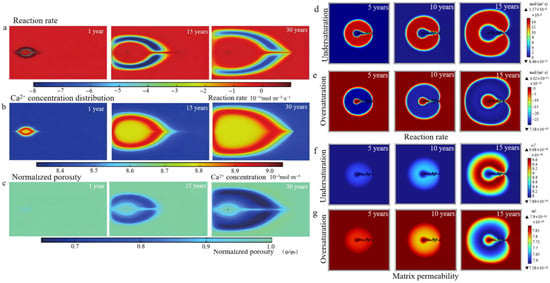
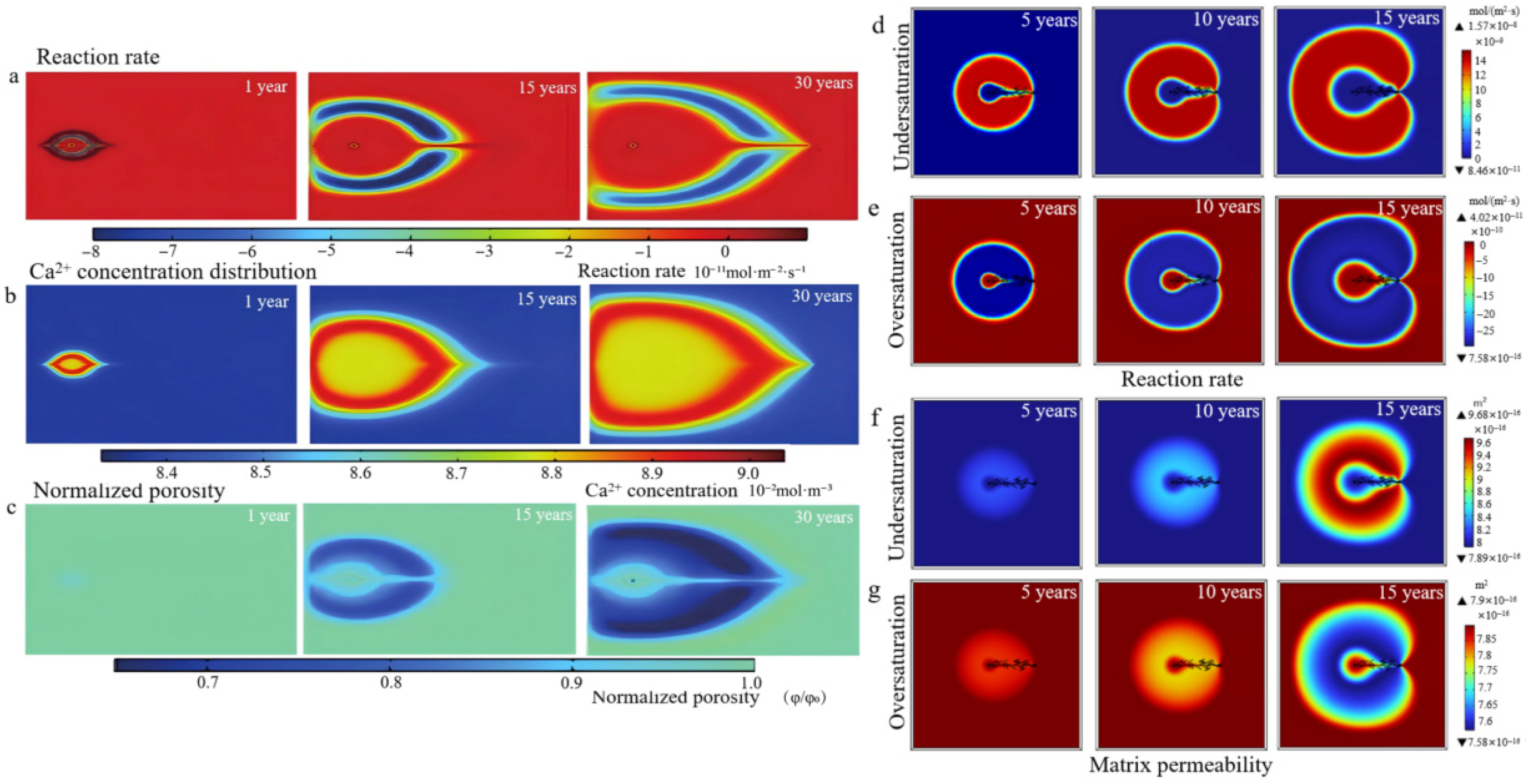
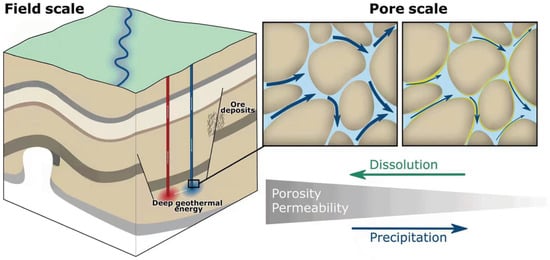
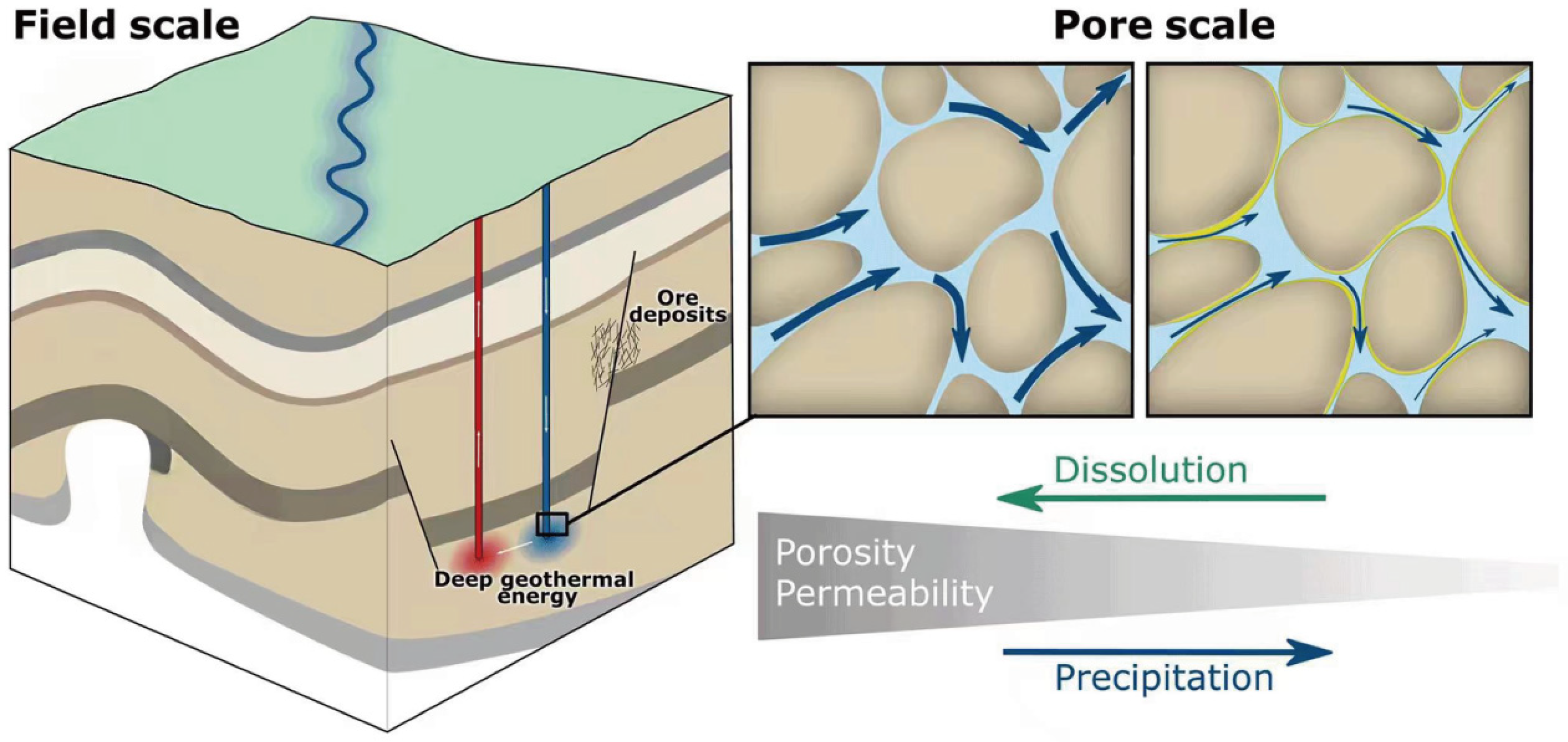
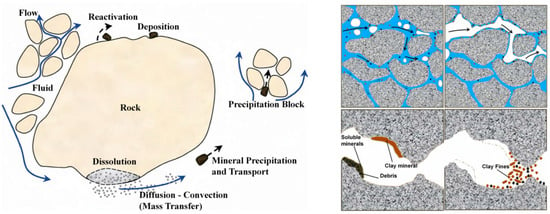
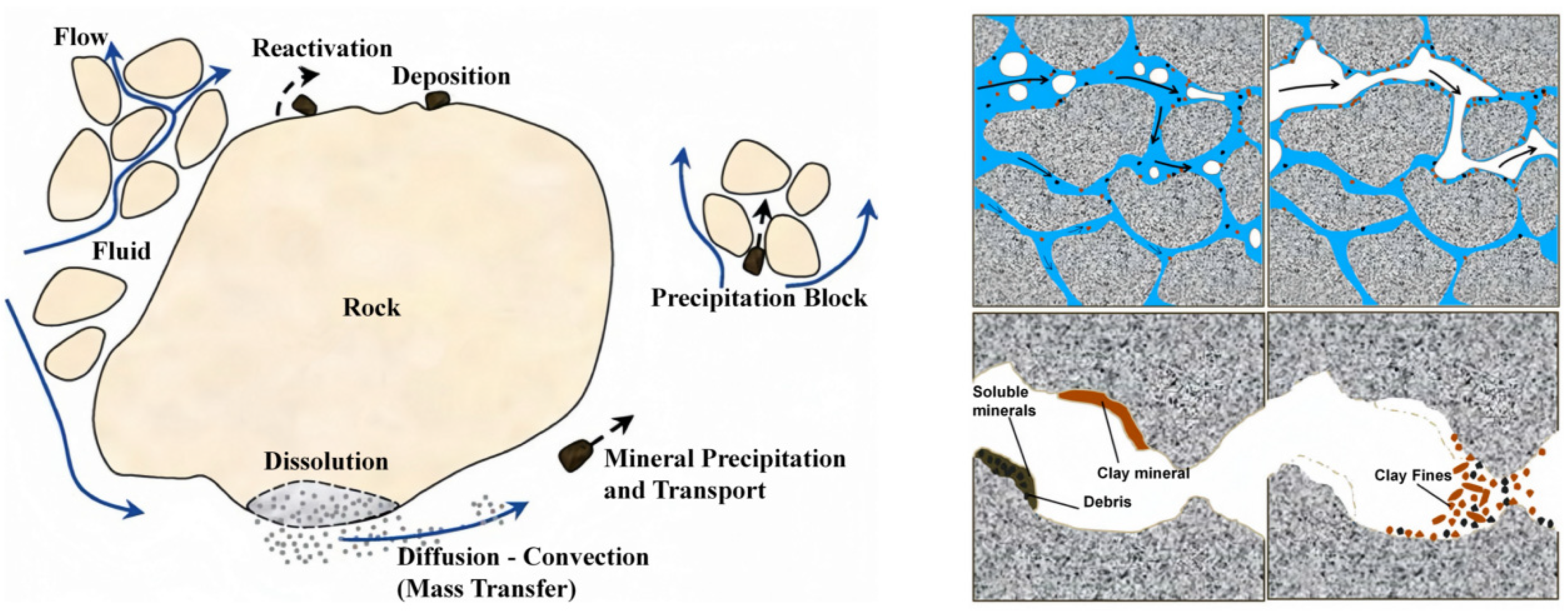
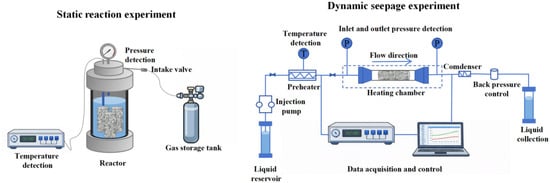
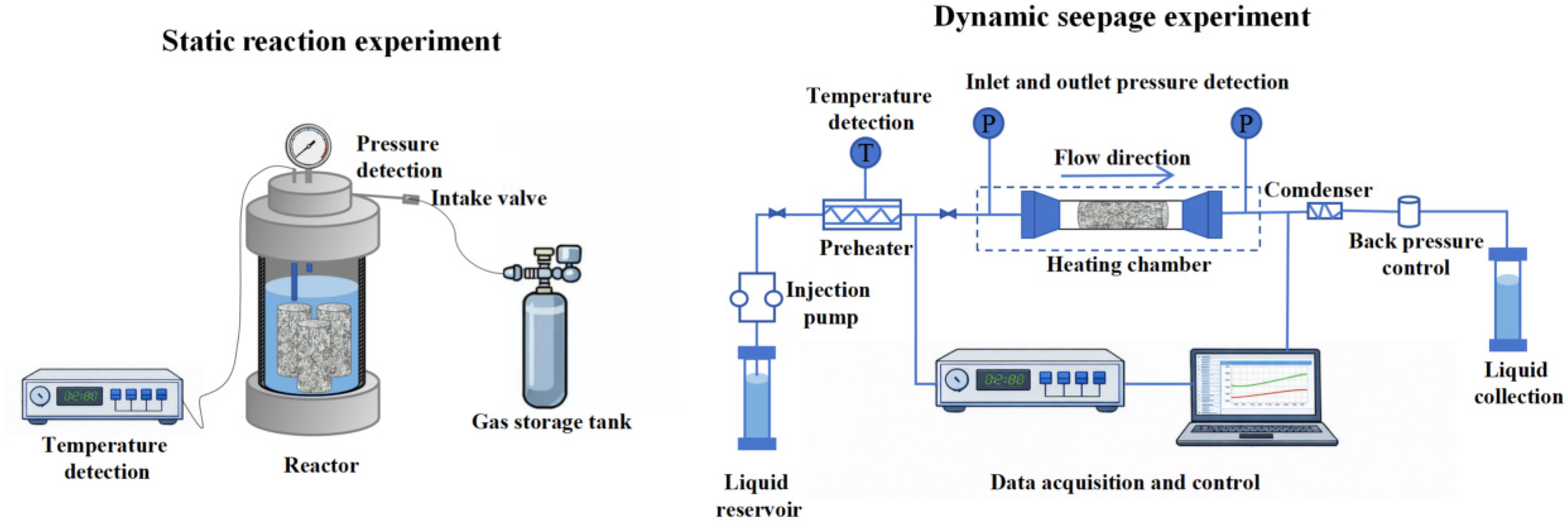
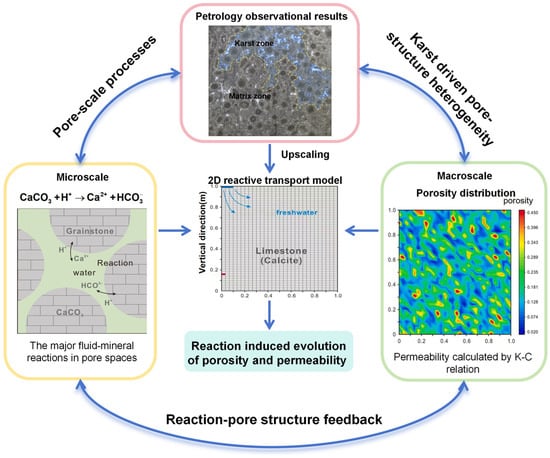
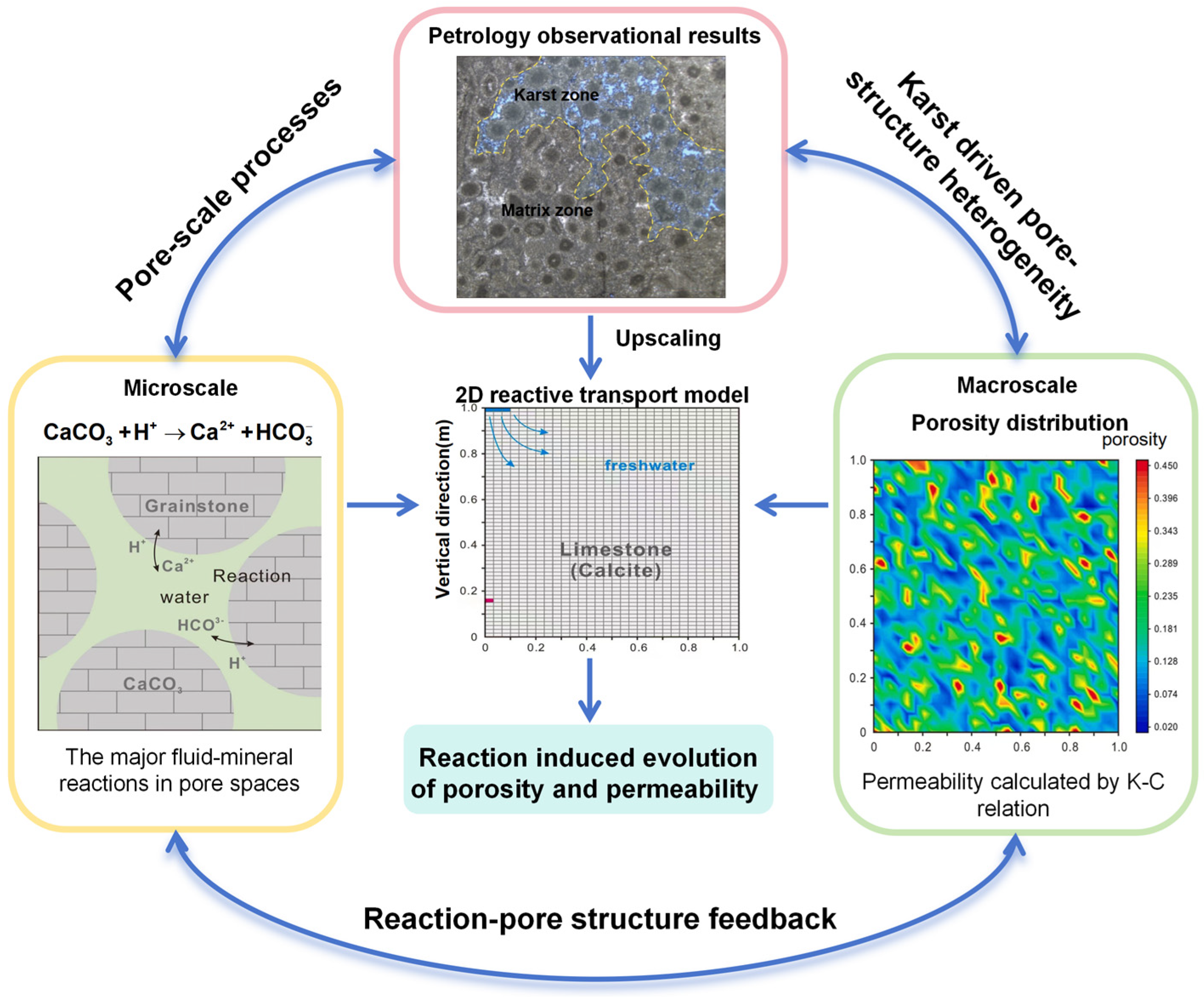
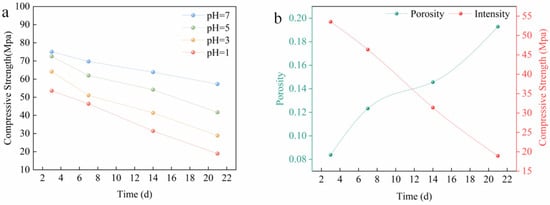
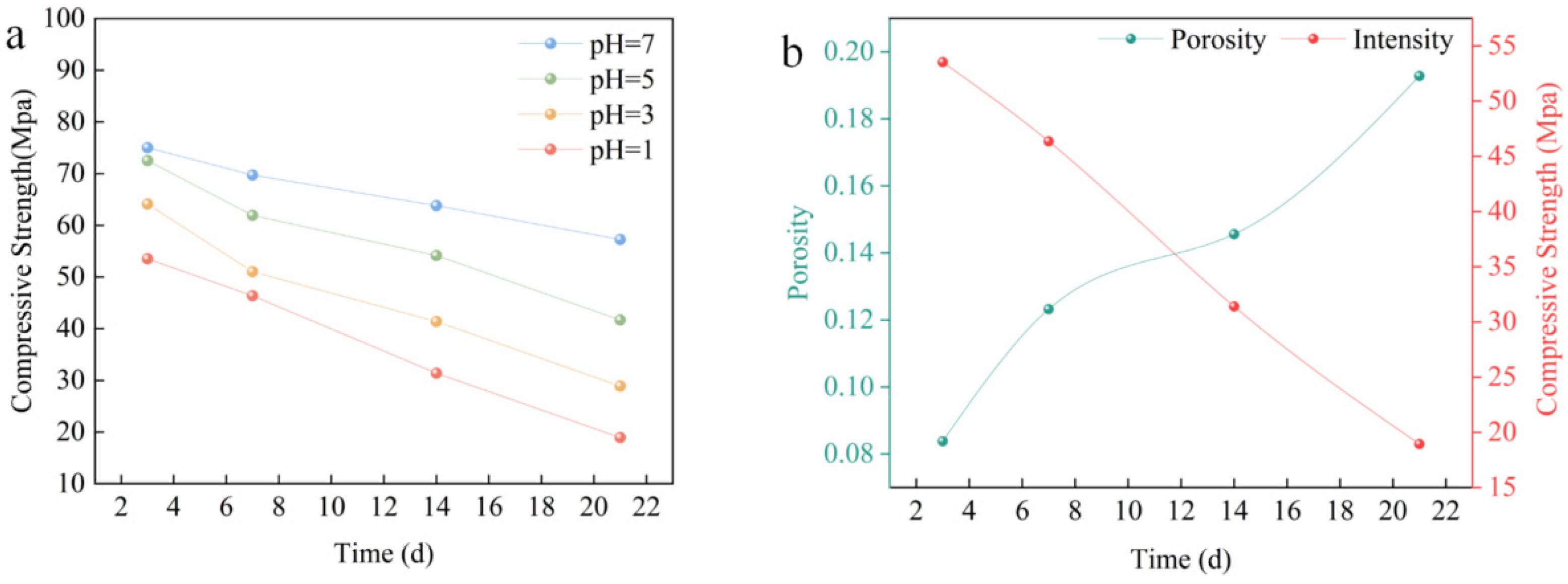
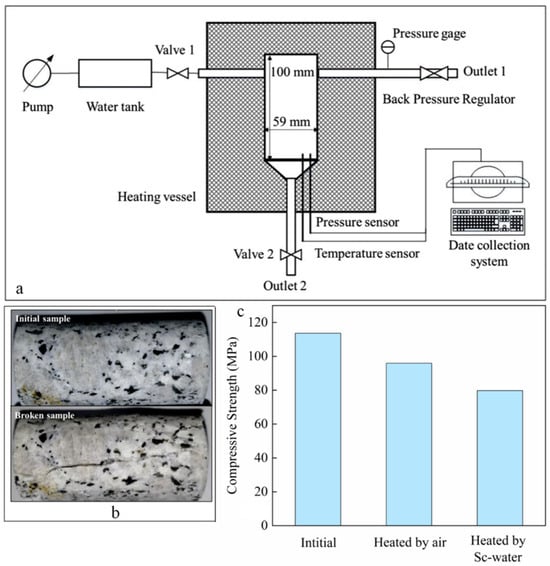
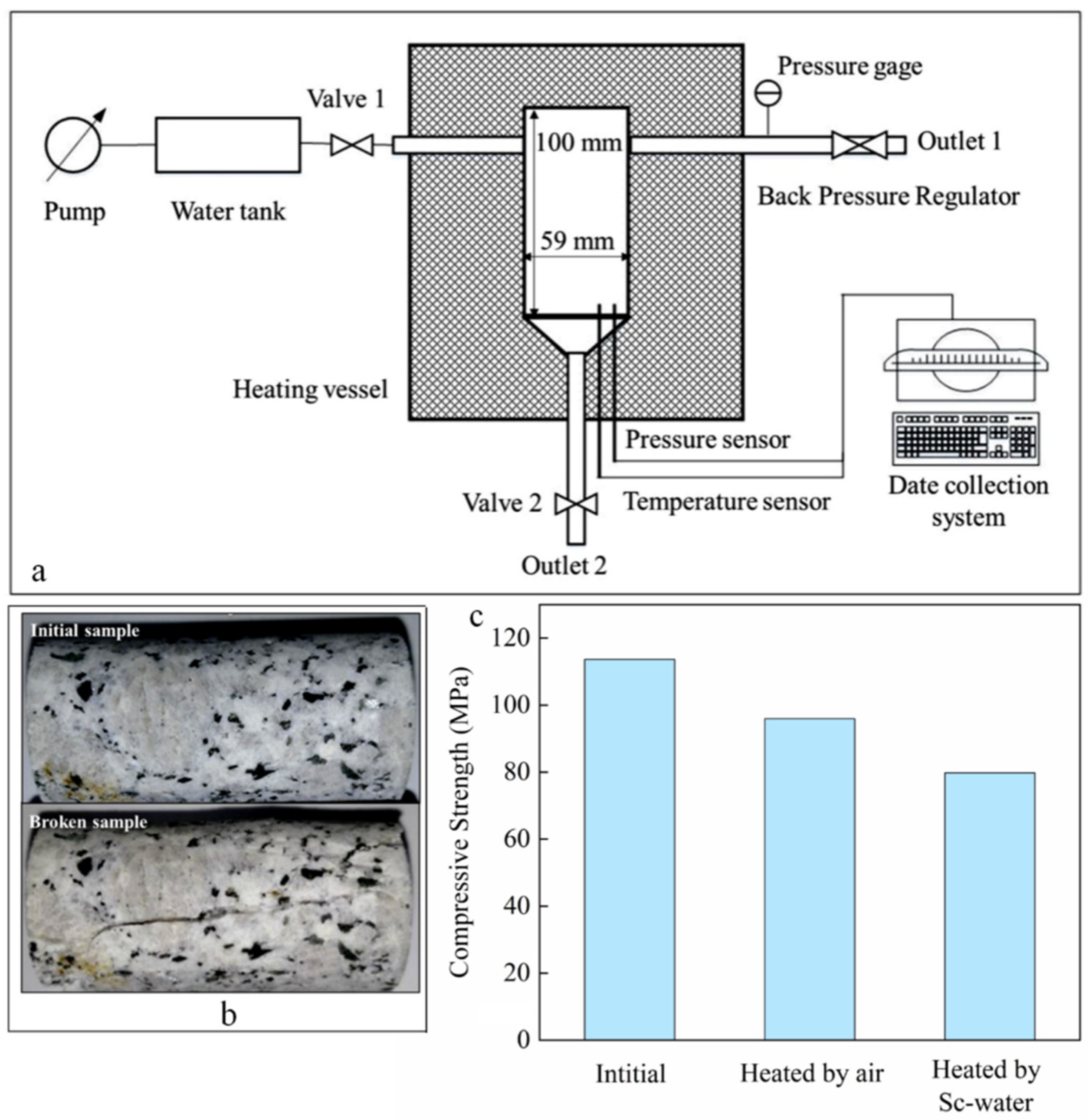
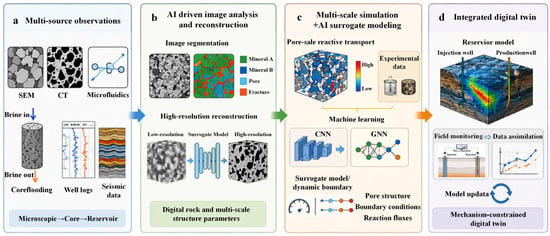
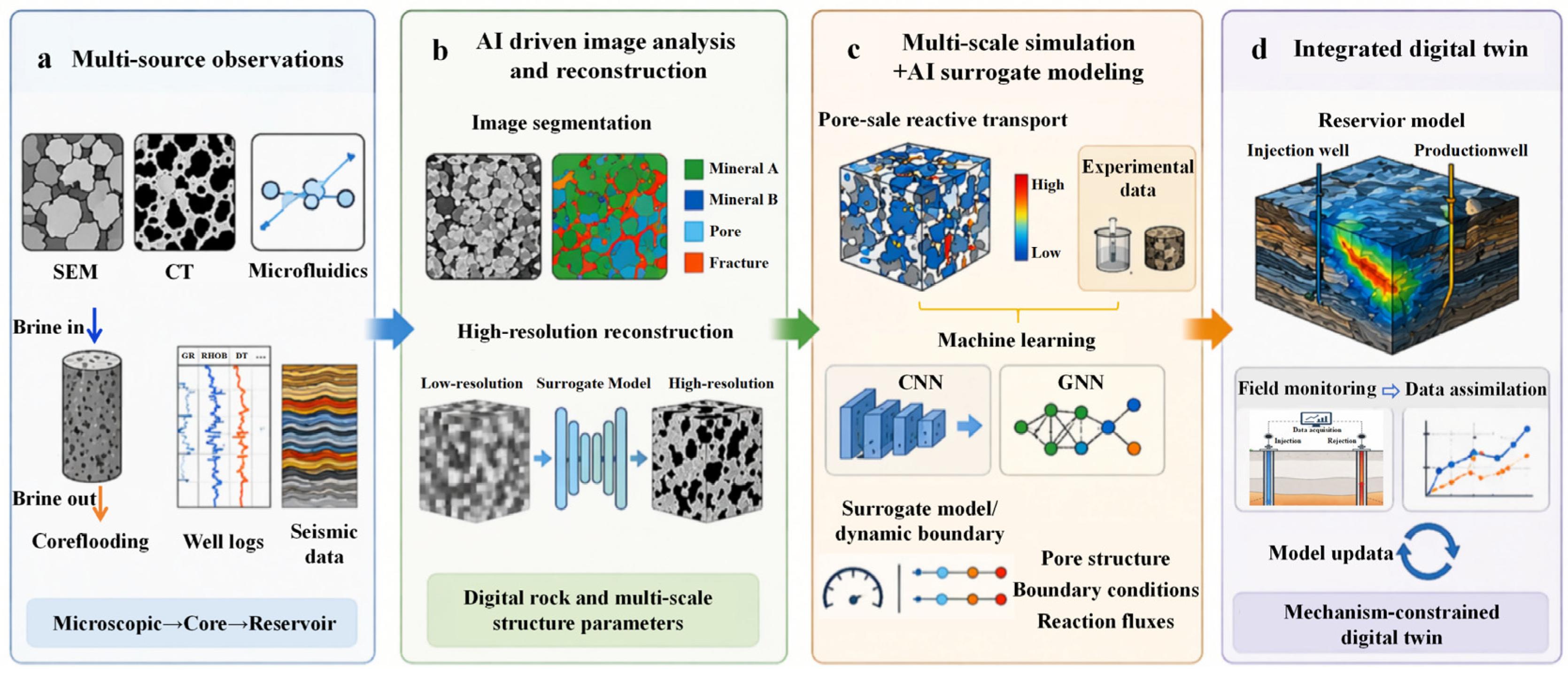

Disclaimer/Publisher’s Note: The statements, opinions and data contained in all publications are solely those of the individual author(s) and contributor(s) and not of MDPI and/or the editor(s). MDPI and/or the editor(s) disclaim responsibility for any injury to people or property resulting from any ideas, methods, instructions or products referred to in the content. |
© 2026 by the authors. Licensee MDPI, Basel, Switzerland. This article is an open access article distributed under the terms and conditions of the Creative Commons Attribution (CC BY) license.