


Abstract
The genesis of the conducted research was the intention to determine how the rheological properties of engine oil change upon the addition of a coolant. The aim of the study was to assess the effect of coolant addition to engine oil on its dynamic viscosity. The experiments were carried out for six different fresh engine oils and six of the same oils sampled during routine oil replacement after a vehicle mileage of 10,000 km. Two oils were selected from each of the three primary categories: synthetic, semi-synthetic, and mineral oils. Then, mixtures of engine oils with the addition of coolant were prepared at 0, 5, 10, 20, 30, 40 and 50% (v/v), respectively. The study involved measuring the dynamic viscosity of the samples at 1000 s−1, covering temperatures from 0 to 50 °C. The tests were conducted using a measurement setup equipped with a RHEOLABQC rotational rheometer manufactured by Anton Paar GmbH (Ostfildern, Germany). To investigate the temperature dependence of dynamic viscosity, a GRANT thermostatic bath was coupled with the rheometer. The studies demonstrated that dynamic viscosity strongly depends on temperature, as well as on the type and condition of the engine oil. At 0 °C, the dynamic viscosity of fresh oils ranged from approximately 500 to 700 mPa·s, whereas at 50 °C it decreased to approximately 100 mPa·s. The addition of 5% (v/v) coolant to engine oil resulted in only a slight change in dynamic viscosity. In contrast, a substantial decrease in dynamic viscosity was observed when 50% (v/v) coolant was added to the tested engine oils. The results indicate that coolant, which may enter the engine oil in the event of an engine failure, can significantly deteriorate the rheological properties of this lubricant.
1. Introduction
The reliable and efficient operation of reciprocating internal combustion engines is possible due to two of its systems in which operational fluids play a very important role: lubricating oil and cooling fluid. The lubrication system and the cooling system in the engine are separate, and the fluids contained within them must not mix. Their proper selection and correct operation allow for meeting engine requirements, particularly regarding environmental impact. Both systems must be hermetically sealed and strictly separated from each other to fulfill their tasks.
Improving fuel efficiency is one of the key objectives in modern vehicle design. Fuel consumption is closely linked to friction in tribological nodes, which directly affects the efficiency and durability of engine components [1,2,3]. Modern reciprocating internal combustion engines achieve high power outputs despite small dimensions, which leads to an increase in thermal loads; locally, the temperature in the cooling system can reach 120 °C, whereas in older designs it was 70–80 °C [4].
Lubricants are currently used universally—from gears, gearboxes, and hydraulic systems to internal combustion engines [5,6]. Their primary function is to reduce friction, limit the wear of interacting surfaces, and dissipate heat [7,8,9]. In the case of new-generation engine oils, ensuring easy cold starts and proper flow in the lubrication system is of particular importance [10].
Equally vital for proper engine operation is maintaining its correct temperature. Cooling fluids must absorb a significant portion of the generated heat, and their properties determine the effective dissipation of heat from the engine [11]. A lack of effective cooling leads to overheating, preignition, loss of oil lubricating properties, excessive thermal expansion of the piston and, consequently, seizure. Conversely, an excessively low temperature impairs the combustion process, increases toxic emissions, and promotes the washing away of the oil film from cylinder liners. The cooling system’s task is to maintain the operating temperature in the range of 90–100 °C and prevent it from exceeding 150 °C [12,13,14]. Liquid cooling is most commonly used, providing a more uniform temperature distribution around the combustion chamber than air cooling [15].
Glycol is the primary component of cooling fluids used in internal combustion engines. Ethylene glycol is most frequently utilized, while propylene glycol is used less common. It is standardly mixed with water in a 50/50 ratio, resulting in a liquid that effectively extracts heat from the engine, raises the boiling point (above 107 °C), and lowers the freezing point (below −35 °C). After being enriched with organometallic and organic additives, the coolant provides protection against corrosion, cavitation, and foaming, and stabilizes the pH. Additives such as phosphates, borates, molybdates, silicates, and sodium nitrates are used. Ethylene glycol is characterized by more favorable heat exchange properties (lower dynamic viscosity, higher thermal conductivity) than propylene glycol, and is therefore more widely used despite its toxicity. It can be used in installations made of metals and their alloys, such as steel, cast iron, aluminum, copper, or brass [16,17,18,19,20,21].
A problem arises when coolant leaks into the engine oil, most often due to gasket damage, cylinder head cracks, or corrosion of cylinder liners [16]. Operational studies showed the presence of glycol in 8.6% of 100,000 fuel samples tested in Diesel engines [14]. In another test, 11,000 long-haul trucks showed high glycol levels in 1.5% of samples and small amounts in 16% of samples [14].
Under high engine operating temperatures, ethylene glycol undergoes oxidation to carboxylic acids (including glycolic, oxalic, and formic acids) as the primary degradation products. The resulting acids reduce the oil’s alkalinity, initiate corrosion of metal surfaces—particularly non-ferrous metal bearings—and lead to the formation of metal salts and corrosive pitting. The rate of these reactions increases with temperature [16,22,23,24].
Glycol also reacts with oil additives, such as zinc dialkyldithiophosphate (ZDDP) or calcium sulfonates, creating reaction products that precipitate in the form of deposits, gels, or so-called “oil balls” (5–40 µm). These phenomena lead to filter clogging, impaired soot dispersion, loss of anti-wear and antioxidant properties, and accelerated wear of engine components [16,25,26,27]. Studies [28] have shown that even 2% ethylene glycol in oil can generate significant amounts of solid particles, and 75% of filter clogging cases were associated with the presence of coolant or moisture in the crankcase. Simultaneously, assessing the actual glycol content can be difficult, as it can quickly decompose at elevated temperatures.
Glycol contamination also increases the viscosity of the oil and may lead to the formation of an emulsion referred to as “black mayonnaise,” which restricts lubricant flow, leading to filter clogging, loss of anti-wear and antioxidant properties, and accelerated wear of components, especially bearings [29,30]. Cummins research showed that oil containing 4% coolant after 8 h at 93 °C retained only about 10% of the originally present glycol, although its degradation products remained in the oil. For this reason, in diagnostic practice, indicator elements such as sodium are also monitored [16].
Glycol contamination leads to increased oil viscosity, impaired flow, and intensified oxidation processes. Caterpillar indicates that the presence of coolant in gearboxes and hydraulic systems manifests as increased oil oxidation. In laboratory analysis, the level of sodium in filter ash is considered a reliable indicator of coolant leakage [31].
The effect ofwater addition (0–10%) on the rheological properties of used engine oils from gasoline, Diesel, and LPG engines in the range of 10–100 °C was presented in a study by [32]. At low temperatures (especially <50 °C), water caused a clear increase in viscosity, strongest in Diesel engine oil, due to the formation of emulsions and gel structures. Diesel engine oil showed the highest sensitivity to water, followed by gasoline engine oil, with LPG oil showing the least.
Research [33] has shown that the kinematic viscosity of engine oil changes during operation under the influence of factors such as fuel and coolant contamination, and that these changes can be described by mathematical relationships as a function of vehicle mileage. Studies indicate that the presence of contaminants significantly affects the viscosity parameters of the lubricant, which is crucial for the durability of the oil film and lubrication conditions.
A report on engine oil contamination by coolant describes that such contamination can disrupt the determination of kinematic viscosity at 100 °C, which is one of the key parameters used in laboratory oil analysis [34].
In the study by Wang et al. [35], the AC impedance technique was used to measure the volume resistivity of a layer of engine oil containing glycol. A glycol concentration of 150 ppm did not cause harmful changes in the engine oil. The authors suggest that this method allows glycol leaks to be identified at an earlier stage while providing warning signals; moreover, the measured bulk layer resistance remains unaffected by micelle formation between glycol and detergents or dispersants, meaning it can still be used as a reliable parameter for detecting glycol contamination even after such micelles have formed.
In the study [36] engine dynamometer trials were conducted during which coolantwas continuously added to the lubrication system over a 250-h test. The results suggested that the coolant was marginally detrimental to the engine.
In paper [37] experimental investigation was carried out on a four-stroke Diesel engine featuring with engine oil contaminated with various glycol concentrations to evaluate the impact on performance parameters. Results showed that as glycol content increased, fuel consumption and exhaust gas temperature rose, while the brake thermal efficiency rate decreased. The presented results suggest that even minor glycol contamination of the oil negatively affects engine efficiency. Booser [38] demonstrated that 150 ppm of glycol did not cause engine oil degradation. A definitive permissible limit for glycol in engine oil has not been established, though some sources suggest a safe contamination level of 100–200 ppm [39].
In the article [40] investigated the effect of permissible (so-called “safe”) levels of glycol contamination on the operation of four-stroke compression-ignition engine at two different loads (4.5 kW and 9 kW). It was found that as the glycol concentration in the oil increased (0 → 120 → 220 ppm) at a constant load: brake specific fuel consumption (BSFC), friction power, and exhaust gas temperature increased, while brake thermal efficiency (BTE) decreased (meaning the engine worked less efficiently). At a higher engine load (9 kW vs. 4.5 kW), regardless of the glycol level, higher thermal efficiency, friction power, and exhaust gas temperature and lower brake specific fuel consumption were observed. The best parameters (highest efficiency and lowest fuel consumption) were achieved with no glycol contamination and higher load. The authors conclude that even permissible amounts of glycol in engine oil can degrade its performance, which is significant for the operation of engines with such contamination. For this reason, regular oil changes and analysis are key predictive, preventive actions, allowing for early detection of coolant presence and prevention of costly engine damage.
There is relatively little information in the literature regarding the effect of moisture and coolant on lubricating oils and their physicochemical properties, including viscosity. This parameter is considered a key physical property of oil, indicating the lubricant’s internal resistance to flow at a specific temperature over time; changes in this parameter may indicate improper use, contamination, or damage to the lubricant [41,42]. Therefore, the authors of this study undertook the task of determining the effect of adding coolant to various engine oils on their dynamic viscosity. Six different engine oils, both new and after a 10,000 km mileage, were tested. Two mineral, two semi-synthetic, and two synthetic oils were selected for the study. Under laboratory conditions (outside the engine), mixtures of oils and coolant were prepared, and their dynamic viscosity was determined at various temperatures. The studies aimed to determine the impact of coolant addition on the dynamic viscosity of the tested engine oils.
2. Materials and Methods
2.1. Oils and Coolant Selected for Analysis
The study involved 6 brand-new engine oils (two mineral, two semi-synthetic, and two synthetic) and 6 used samples of the same oils. All the tested oils were used in automotive engines. The used oils were oils after a service interval of 10,000 km for all the tested oils. Table 1 presents information about basic information about the tested engine oils.
Shell Rimula R4 X 15W40 (London, UK) mineral oil is designed for various machinery equipped with compression-ignition (Diesel) engines, except for the latest engines equipped with diesel particulate filters (DPF). Liqui Moly MoS2 Leichtlauf Super 15W40 (Ulm, Germany) mineral engine oil is intended for spark-ignition engines and both naturally aspirated and turbocharged compression-ignition engines. Total Quartz 10W40 (Paris, France) semi-synthetic oil is universal and primarily used in older spark-ignition and Diesel engines (including turbocharged, LPG, multi-valve, and catalyst-equipped). Elf Evolution 700 Sti 10W40 (Nanterre Cedex, France) semi-synthetic oil is designed for spark-ignition and compression-ignition engines, with or without turbocharging. Castrol Edge Titanium FST LL 5W40 (Pangbourne, UK) is a synthetic oil with increased oil film strength due to Fluid Strength Technology with titanium addition. Castrol Edge Titanium FST 5W-40 is a synthetic motor oil designed for modern gasoline and diesel engines (including those with DPF filters). General Motors GM 5W40 (Detroit, MI, USA) synthetic oil is intended for spark-ignition and Diesel engines.
PRESTONE coolant from Prestone Products Corporation (Lake Forest, IL, USA) was also tested. This fluid was added to the tested new and used oils under laboratory conditions (outside the engine), and the dynamic viscosity of the resulting mixtures was determined. PRESTONE coolant consists of ethane-1,2-diol (ethylene glycol) in an amount of 30–60%, 2,2′-oxybisethanol (diethylene glycol) in an amount of 1–5%, and deionized water in an amount of 40 to 50% [43]. It can be used for cooling systems in all makes and models of cars (with standard and aluminum radiators). It is miscible with all mono-ethylene glycol-based fluids. Table 1 summarizes coolant used in the study.
Table 1.
Basic information about the tested engine oils and coolant.
2.2. Scope of Research
Initially, the dynamic viscosity of the fresh and used engine oils was determined as a function of temperature. Additionally, the dynamic viscosity of Prestone coolant was measured. The tests were conducted at temperatures of 0, 10, 20, 30, 40, and 50 °C. Due to the limitations of the rheometer, cooling the oils below 0 °C resulted in viscosity levels and resistance that prevented the rotating spindle from maintaining the set shear rate of 1000 s−1. As is well established, rheometers determine dynamic viscosity based on the shearing moment, which is directly related to the shear stress generated when fluid layers move relative to each other or a fixed boundary. In engine oils, viscosity causes internal friction, leading to stress. The thermostatic bath used in the experimental setup did not allow for temperatures exceeding 50 °C.
Subsequently, the dynamic viscosities of mixtures consisting of the tested engine oils and the coolant were determined. The mixtures contained coolant concentrations of 0, 5, 10, 20, 30, 40, and 50% (v/v). The relationship between the dynamic viscosity of fresh and used oils and the percentage of coolant was analyzed over a temperature range of 0 °C to 50 °C. For each temperature, the dynamic viscosity of the mixture of engine oil and coolant was determined, and then the following relationship charts were prepared:
where: η—dynamic viscosity; mPa·s, C—content of coolant in oil % (v/v).
η = f(C)
Additionally, it was proposed to calculate the pollution resistance index (Woz). In the literature, oil resistance to contamination is not expressed in the form of a dimensionless index 0–1, but by cleanliness classes [60]. The ISO 3448 standard allows a deviation of ±10% from the nominal viscosity at 40 °C [61].
This work proposes the concept of a resistance index with values in the range of 0–1. If this index obtains values above >0.9, the oil has a high resistance to contamination. If the index for the tested oil reaches values of 0.75–0.9, the oil has moderate resistance to contamination. If the index value is below 0.75, the oil has low resistance to contamination. Such a situation can be considered an alarm or even critical condition. The values of the pollution resistance index were determined from equation:
where: η0—oil viscosity without contamination, ηx—viscosity of oil containing % coolant.
In order to assess the impact of coolant contamination of engine oils, dynamic viscosity data determined at various temperatures for the tested engine oils containing different concentrations of contamination were analysed. The Arrhenius equation [62] was used to describe the temperature dependence of viscosity:
where: η—dynamic viscosity [Pa·s], A—pre-exponential factor (Arrhenius equation constant), Ea—activation energy of viscous flow [J·mol−1], R—gas constant (8.314 J·mol−1·K−1), T—absolute temperature [K].
After transforming into a linear form, the equation takes the form:
On this basis, plots of versus the reciprocal of temperature were prepared for the tested oil samples with varying degrees of coolant contamination. For each data series, a linear regression analysis was performed, allowing for the determination of the activation energy (Ea) from the slope of the line. The value reflects the sensitivity of the oil’s viscosity to the presence of coolant, allowing for an assessment of the impact of this contaminant concentration on the rheological properties of the engine oil. The quality of the model fit was evaluated using the coefficient of determination. The results obtained enabled a quantitative assessment of the impact of contamination on the viscosity of the tested engine oils.
2.3. Research Apparatus
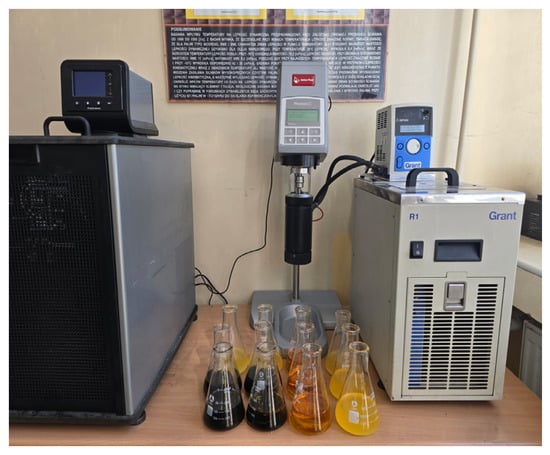
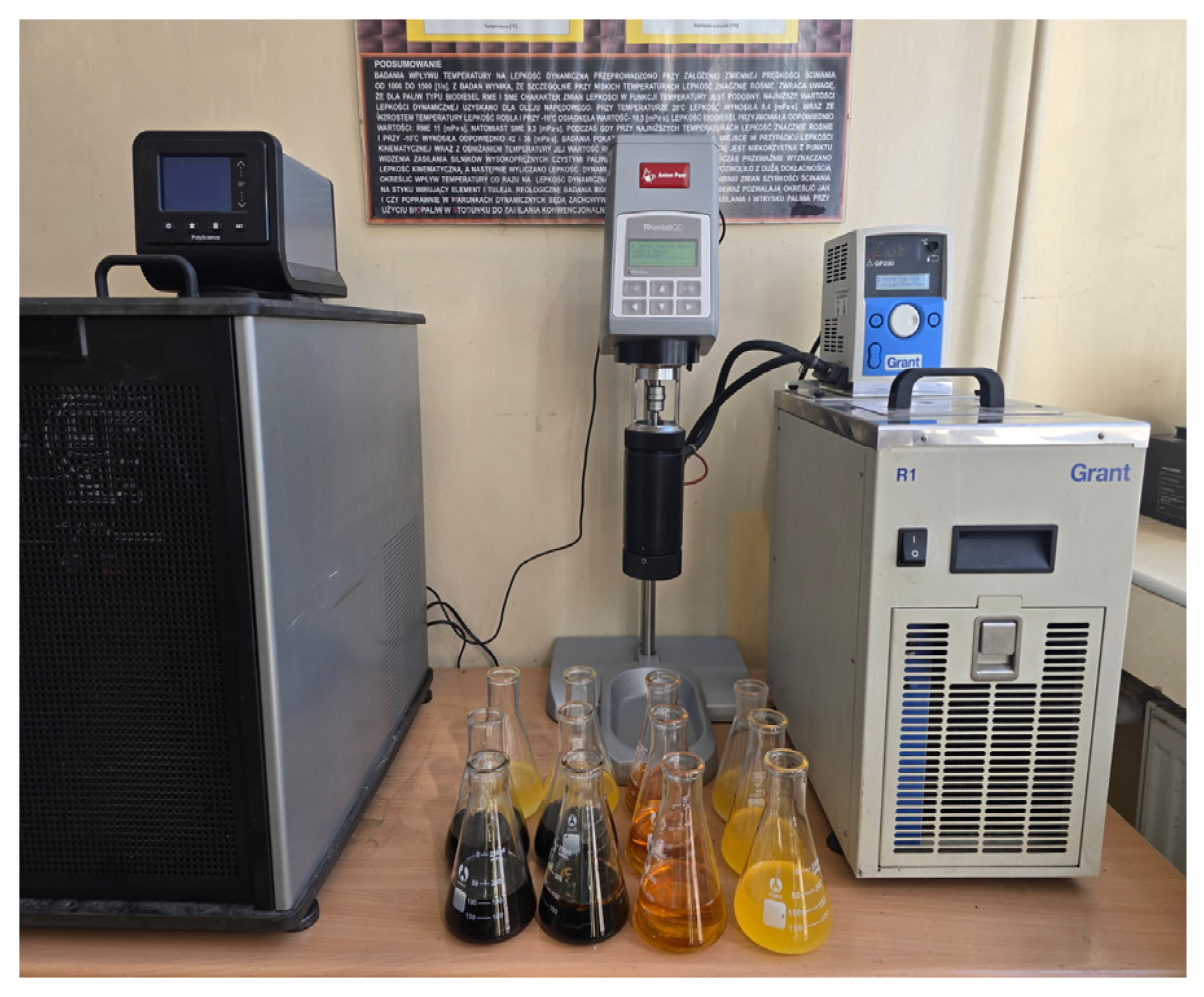
All tests were conducted at the Laboratory of Technology and Physicochemical Property Assessment of the Faculty of Production and Energy Engineering at the Hugo Kołłątaj University of Agriculture in Krakow. The main device of the research stand was ReolabQC rotational rheometer from Anton Paar GmbH, shown in Figure 1, which also presents example samples of engine oils prepared for testing with varying coolant content. It is used for determining the rheological parameters of fluids. The rheometer is equipped with internal memory and a system for generating test programs. The operation of the rheometer can be managed externally by a computer, enabling the creation and editing of measurement programs, which allows for the flexible and repeated setting and saving of parameters without the need for deletion. The rheometer was fitted with a temperature sensor and an integrated time measurement system. To evaluate the influence of temperature on dynamic viscosity, the device was connected to a Grant thermostatic bath, which enabled precise control and stabilization of the sample temperature within the range of 0 to 50 °C. Measurement data were transmitted from the viscometer to a computer, where they were recorded and analyzed using RHEOPLUS/32 V3.0 software. The RheolabQC rheometer used in this study is highly precise, and its coaxial cylinder system ensures excellent data repeatability. It is the most effective method for analyzing fluids such as fuels and engine oils. The maximum error determined in preliminary tests did not exceed ±0.5.
Figure 1.
View of the test stand equipped with a rheometer and a thermostatic bath along with selected samples of new and used oils and coolant.
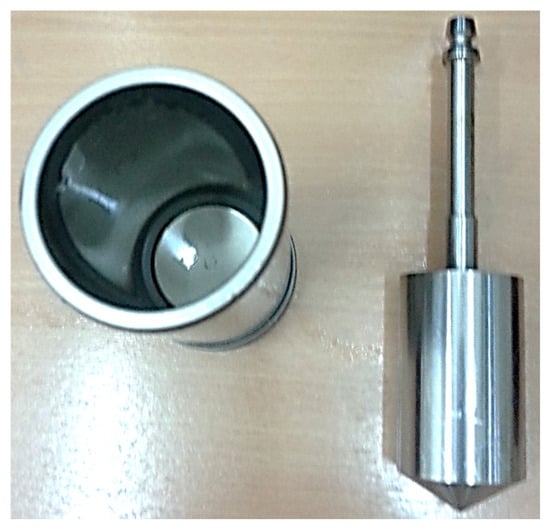
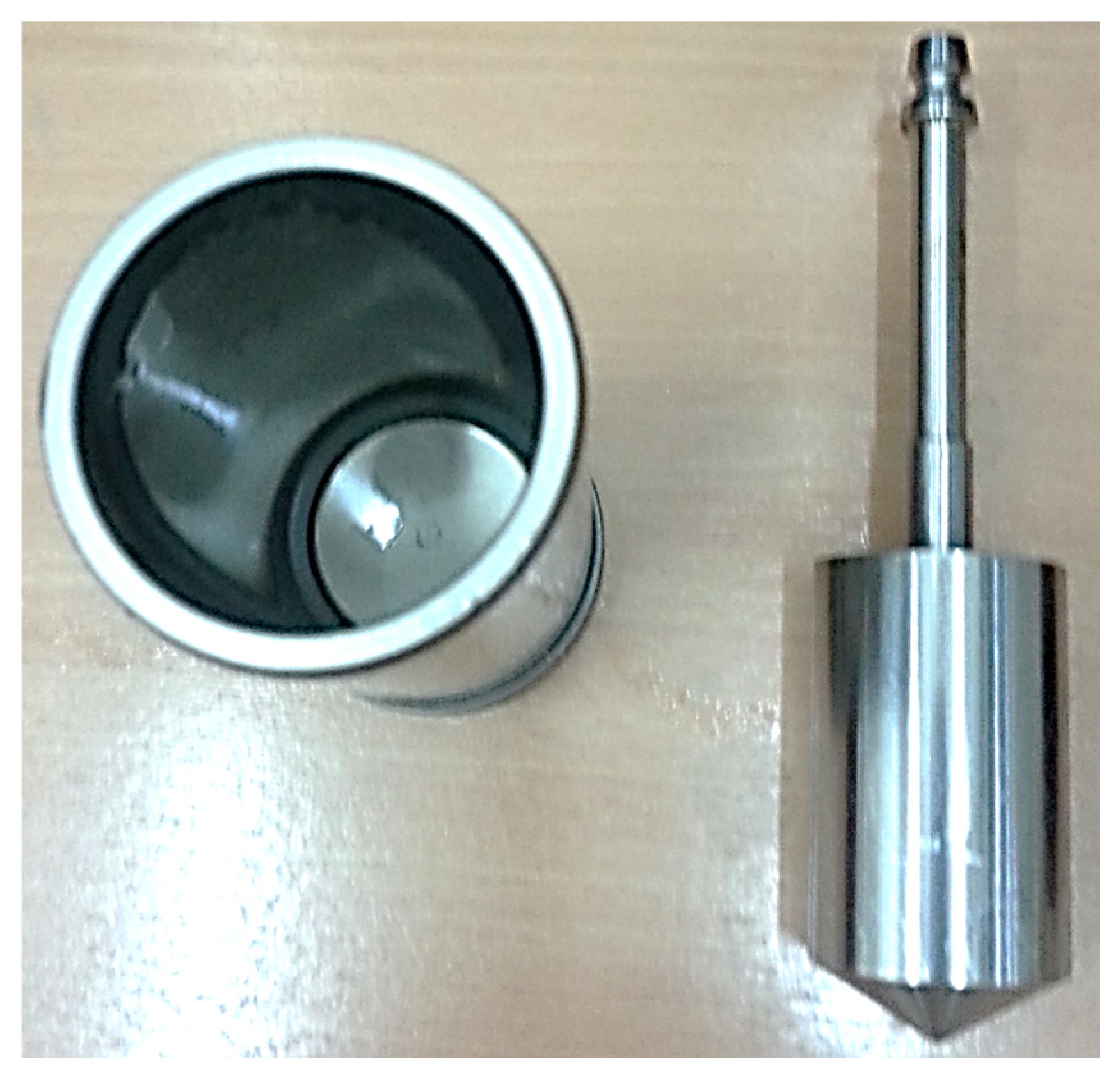
The configuration of the coaxial cylinder–spindle measuring system applied in the rheometer is shown in Figure 2. The system comprises an outer cylinder of radius R2 and an inner rotating cylinder (spindle) of radius R1. The inner cylinder rotates with a defined angular velocity, inducing shear in the engine oil sample located in the annular gap between the cylinders. As a result of tangential friction forces, torque is generated and transmitted to the measuring system. For the purposes of theoretical analysis, it is assumed that both the cylinder and the spindle are of infinite length, and only a section of a given height is considered. In the presented measurement system, dynamic viscosity is determined from the following relationship:
where: H—the considered height of the spindle cylinder, R1—radius of the spindle cylinder, R2—radius of the cylinder, M—torque, Ω—shear rate (angular).
Figure 2.
Dynamic viscosity measurement system of the ReolabQC rheometer from Anton Paar GmbH, consisting of a cylinder and a spindle rotating within it.
A more detailed description of the methodology for deriving Equation (5) was presented by the authors of this work in publication [63].
3. Results and Discussion
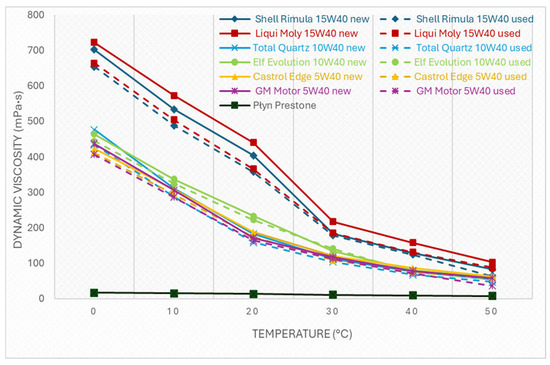
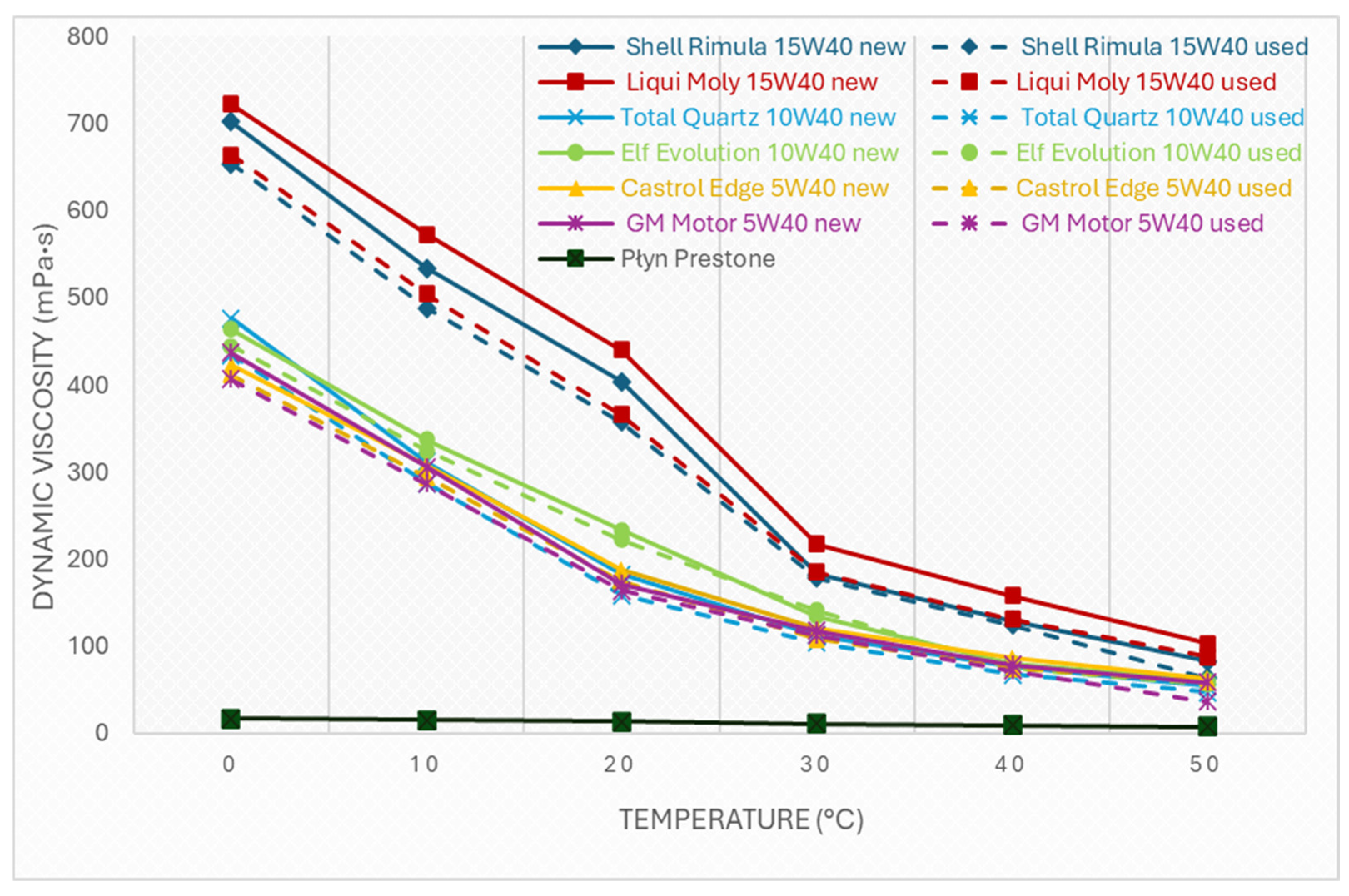
Dynamic viscosity is one of the most important parameters of engine oils, indicating the resistance a liquid will provide during flow under dynamic conditions of cooperating tribological pairs in reciprocating internal combustion engines at a given temperature. Changes in viscosity may indicate improper maintenance, contamination, or failure of the lubricant [45,46]. Figure 3 shows the temperature-dependent dynamic viscosity of both fresh and used oil samples in the range of 0 °C to 50 °C, measured at a steady shear rate of 1000 s−1. A significant reduction in viscosity was observed for all analyzed samples as the temperature increased. Furthermore, the mineral oil Liqui Moly 15W40 exhibited the highest dynamic viscosity values throughout the entire temperature range. The absolute differences in dynamic viscosity values for mineral oils compared to the other oils are significantly larger in the temperature range from 0 °C to 20 °C than in the range from 30 °C to 50 °C. The differences in dynamic viscosity between semi-synthetic and synthetic oils are not as clear or unambiguous as in the comparison of mineral oils with the other tested oils. Mineral oils have significantly higher dynamic viscosity values compared to synthetic and semi-synthetic oils. This applies to both fresh and used oils. Additionally, Figure 3 presents the results of the dynamic viscosity measurement for Prestone coolant in the temperature range from 0 °C to 50 °C. Throughout the temperature range of 0 °C to 50 °C, the coolant exhibited significantly lower viscosity values compared to all tested engine oils. Specifically, the coolant’s dynamic viscosity dropped from 17 mPa·s (0 °C) to 7.6 mPa·s (50 °C). Among the lubricants, the lowest dynamic viscosity measurements were recorded for the used GM Motor 5W40 synthetic oil and the used Total Quartz 10W40 semi-synthetic oil. At a constant shear rate of 1000 s−1, all oils showed a distinct reduction in viscosity as temperatures rose; for instance, the GM Motor 5W40 oil viscosity decreased from 406 mPa·s at 0 °C to 36 mPa·s at 50 °C.
Figure 3.
Dynamic viscosity of tested new and used oils and Prestone coolant as a function of temperature.
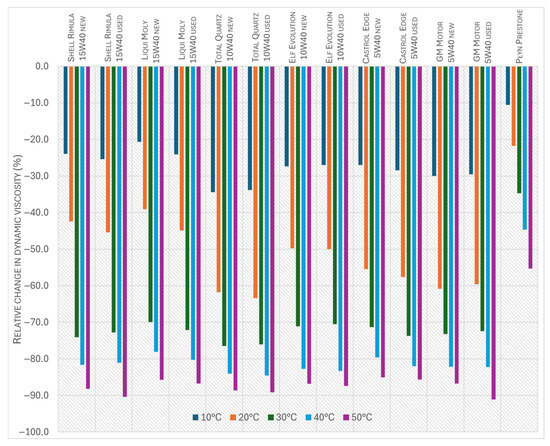
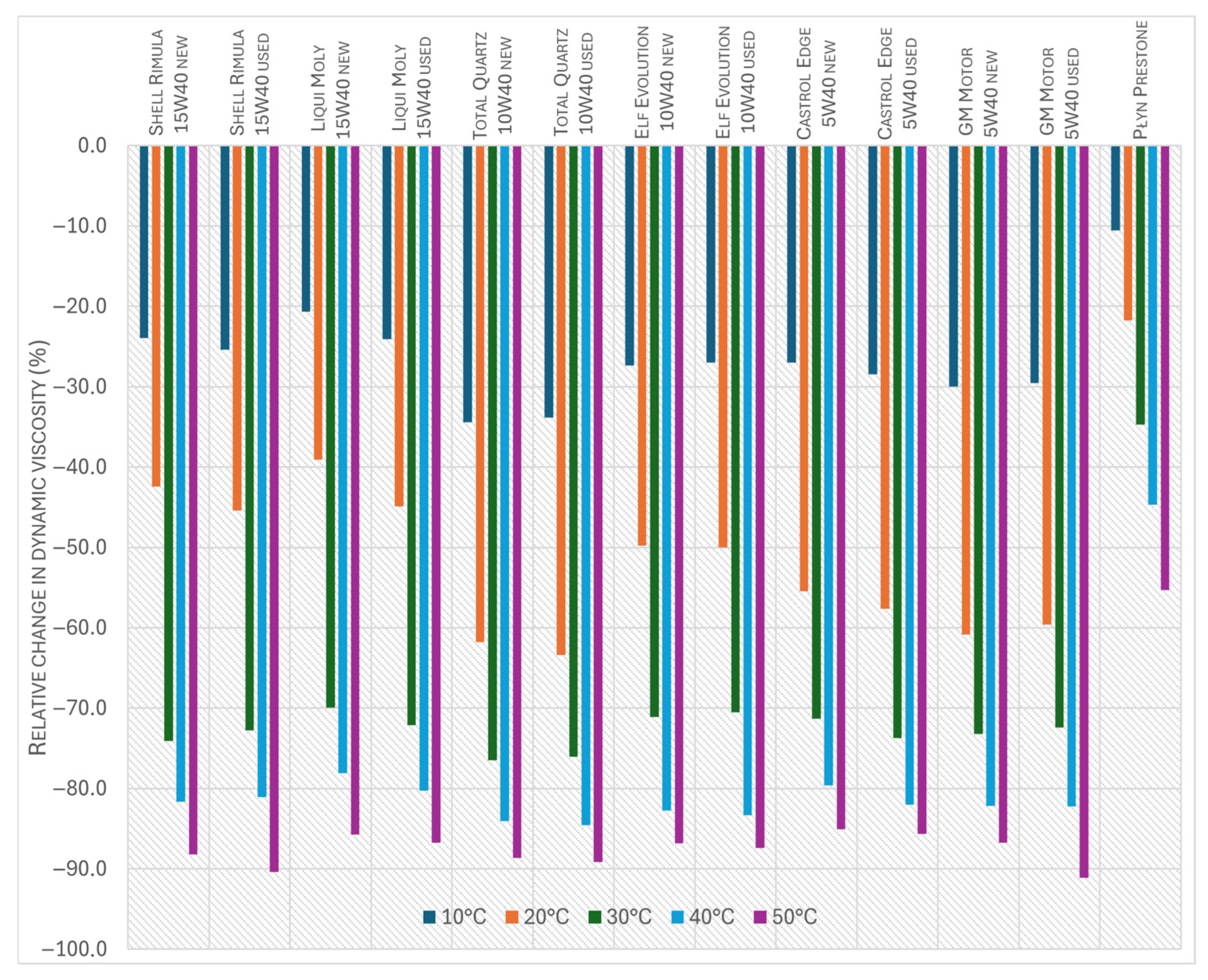
Figure 4 presents the relative changes in dynamic viscosity of the tested fresh and used oils and the coolant, induced by temperature increase relative to the viscosity measured at 0 °C. The greatest reduction in viscosity was observed for the synthetic oil GM Motor 5W40. The relative changes in dynamic viscosity for Prestone coolant with increasing measurement temperature are significantly smaller than the relative changes in dynamic viscosity for the tested new and used oils.
Figure 4.
Relative change in dynamic viscosity of tested fresh and used oils and coolant caused by an increase in temperature in relation to the viscosity measured at 0 °C.
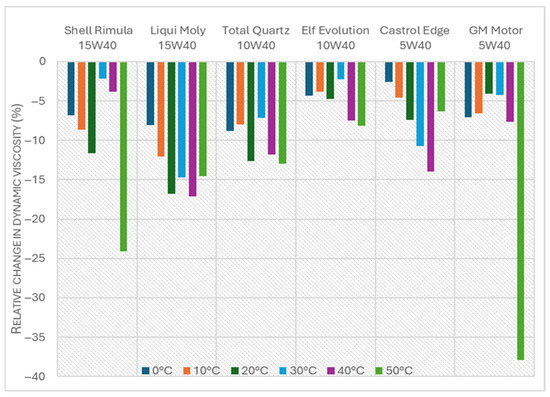
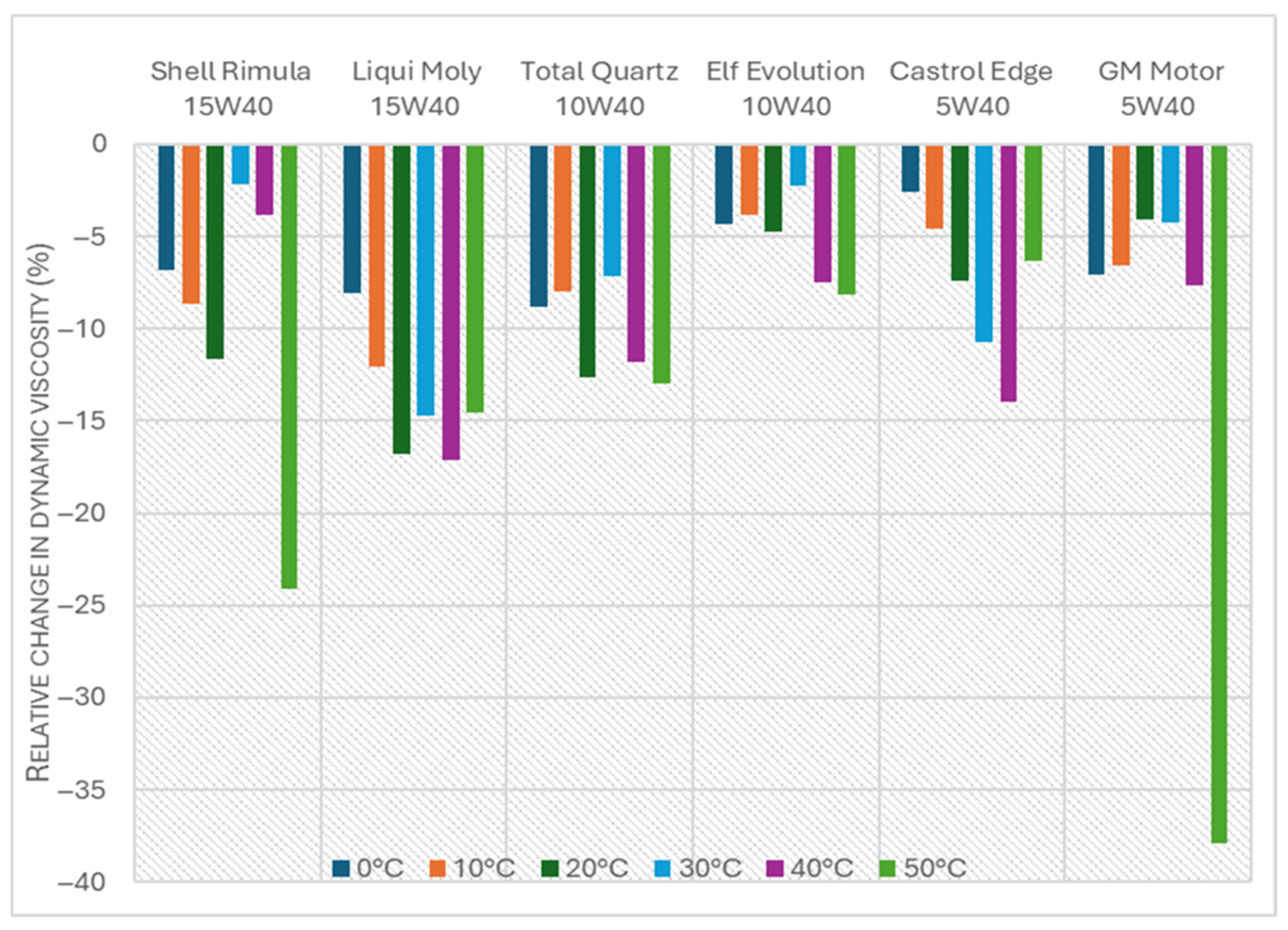
A reduce in dynamic viscosity values was also observed for oils used compared to new oils. The relative change in dynamic viscosity of the tested used oils compared to the new oils for various measurement temperatures is presented in Figure 5. The highest values of dynamic viscosity change in used oils relative to new ones were shown for the synthetic oil GM Motor 5W40 and the mineral oil Shell Rimula 15W40 at 50 °C. The smallest relative changes in dynamic viscosity of new oils relative to used ones were demonstrated for most measurement points for the semi-synthetic oil Elf Evolution 10W40.
Figure 5.
Relative change in dynamic viscosity of tested used oils in relation to new oils, for different measurement temperatures.
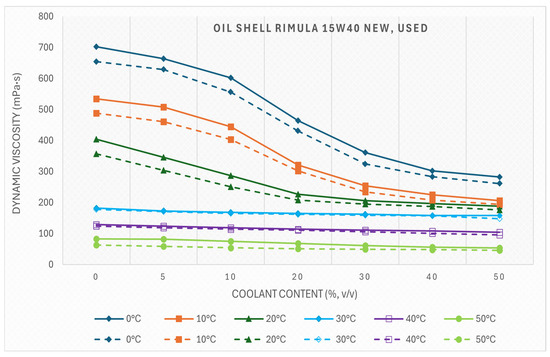
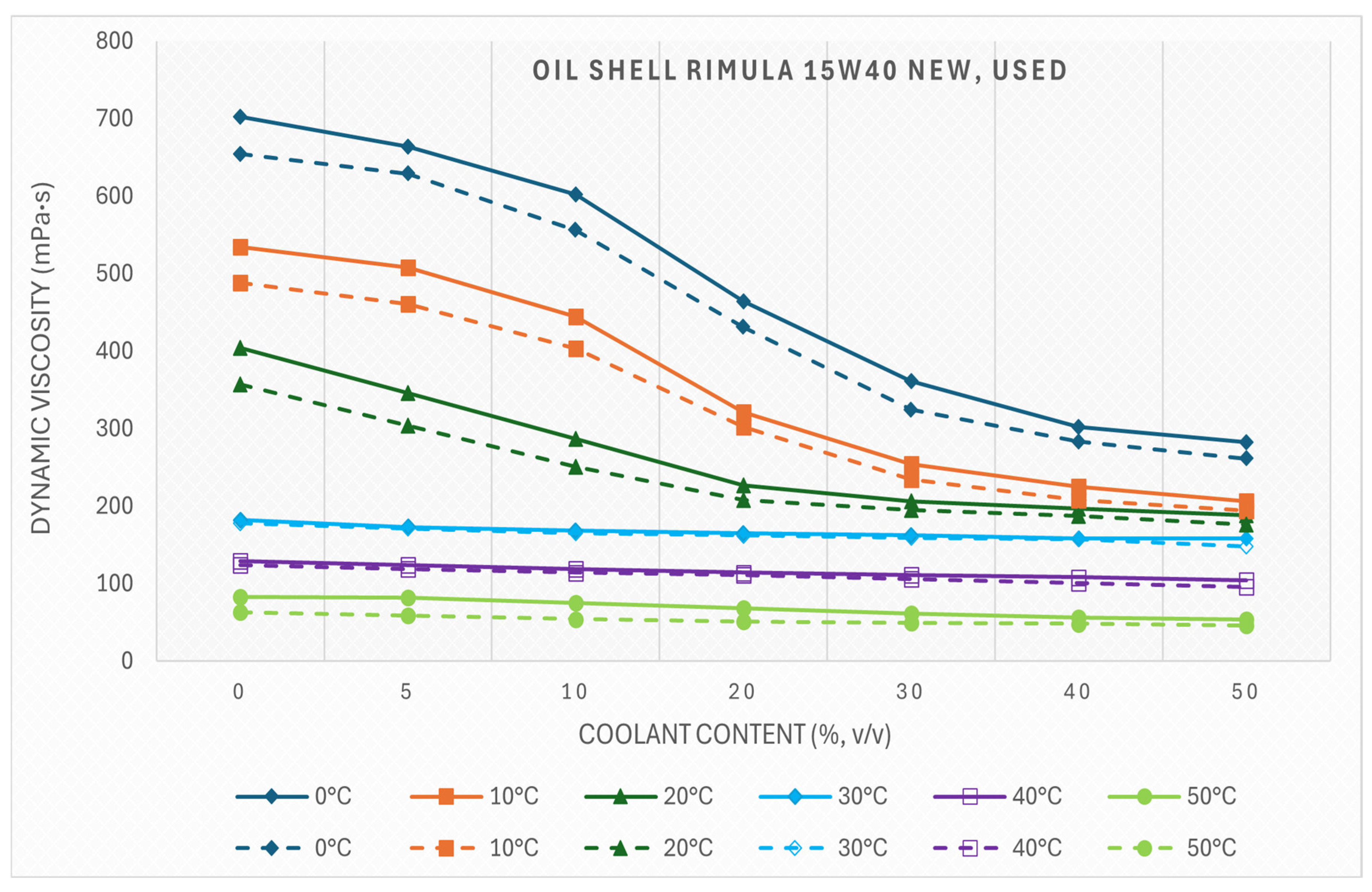
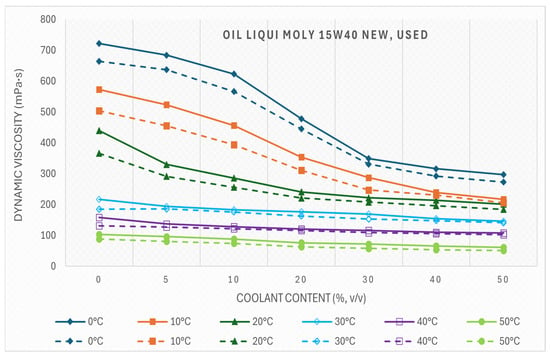
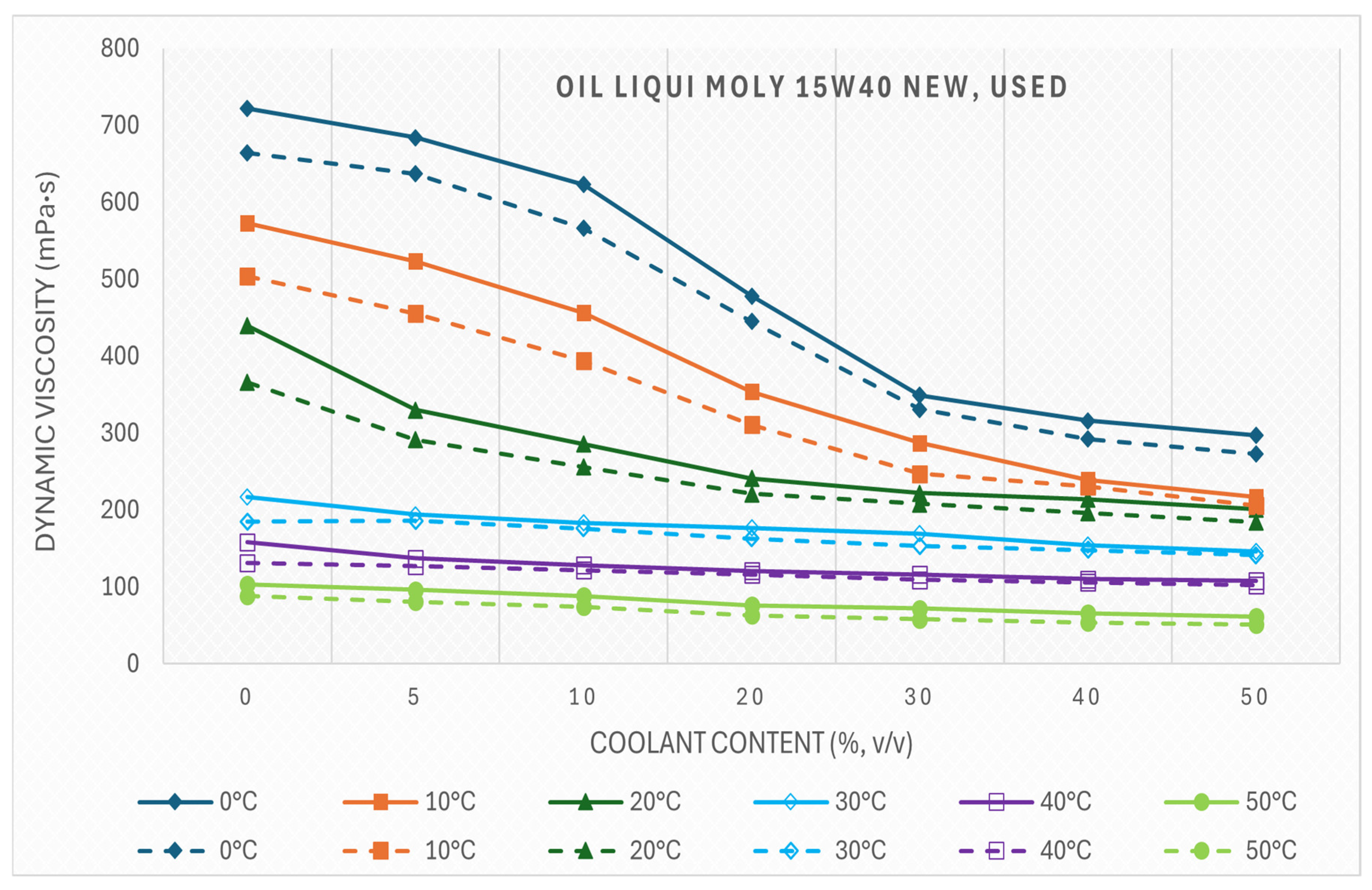
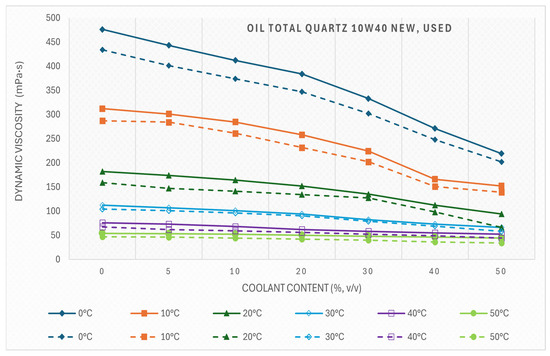
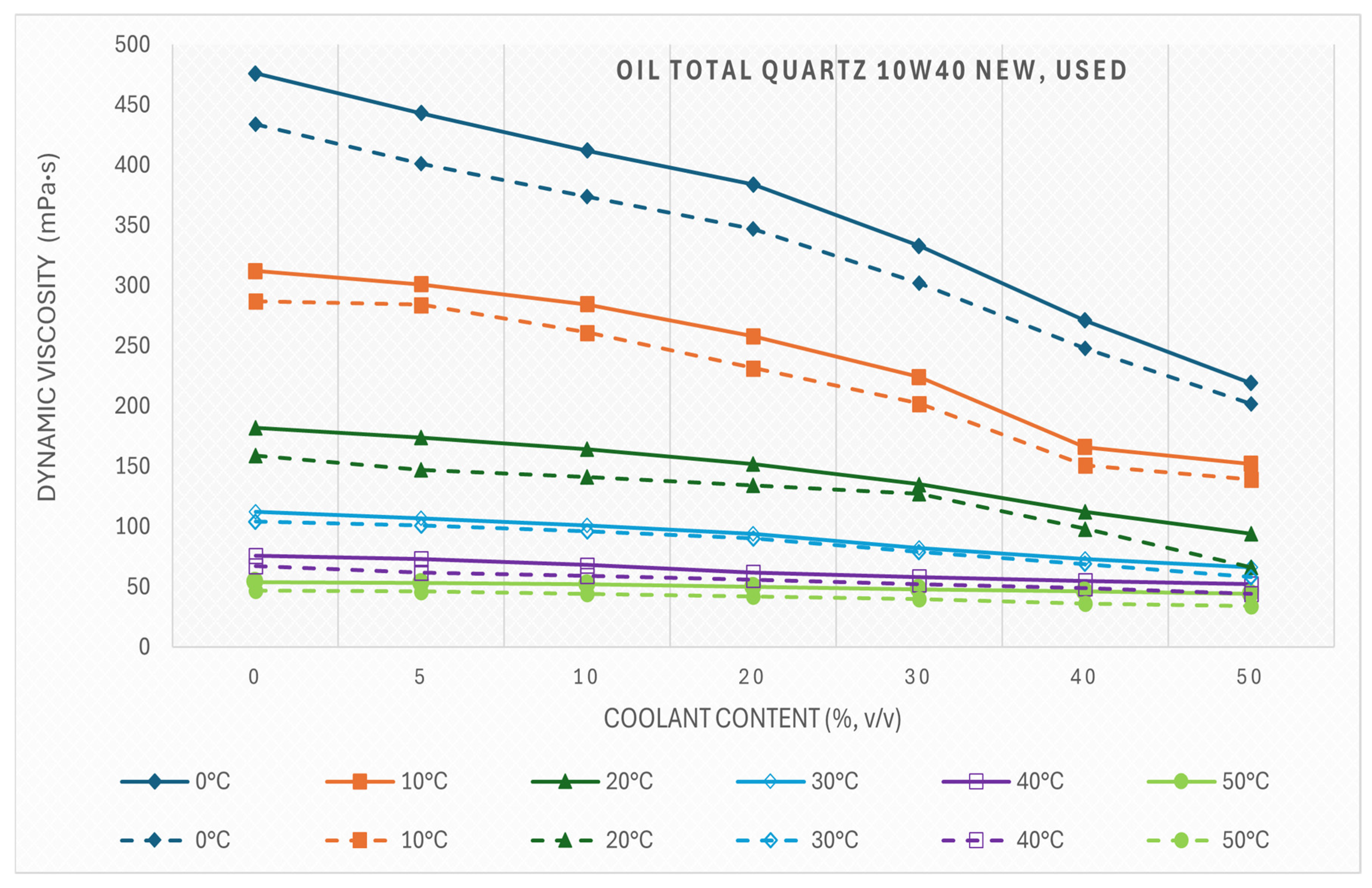
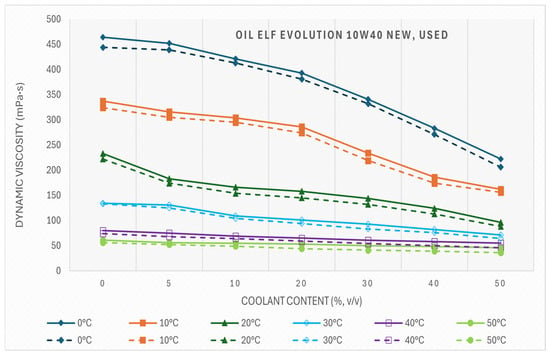
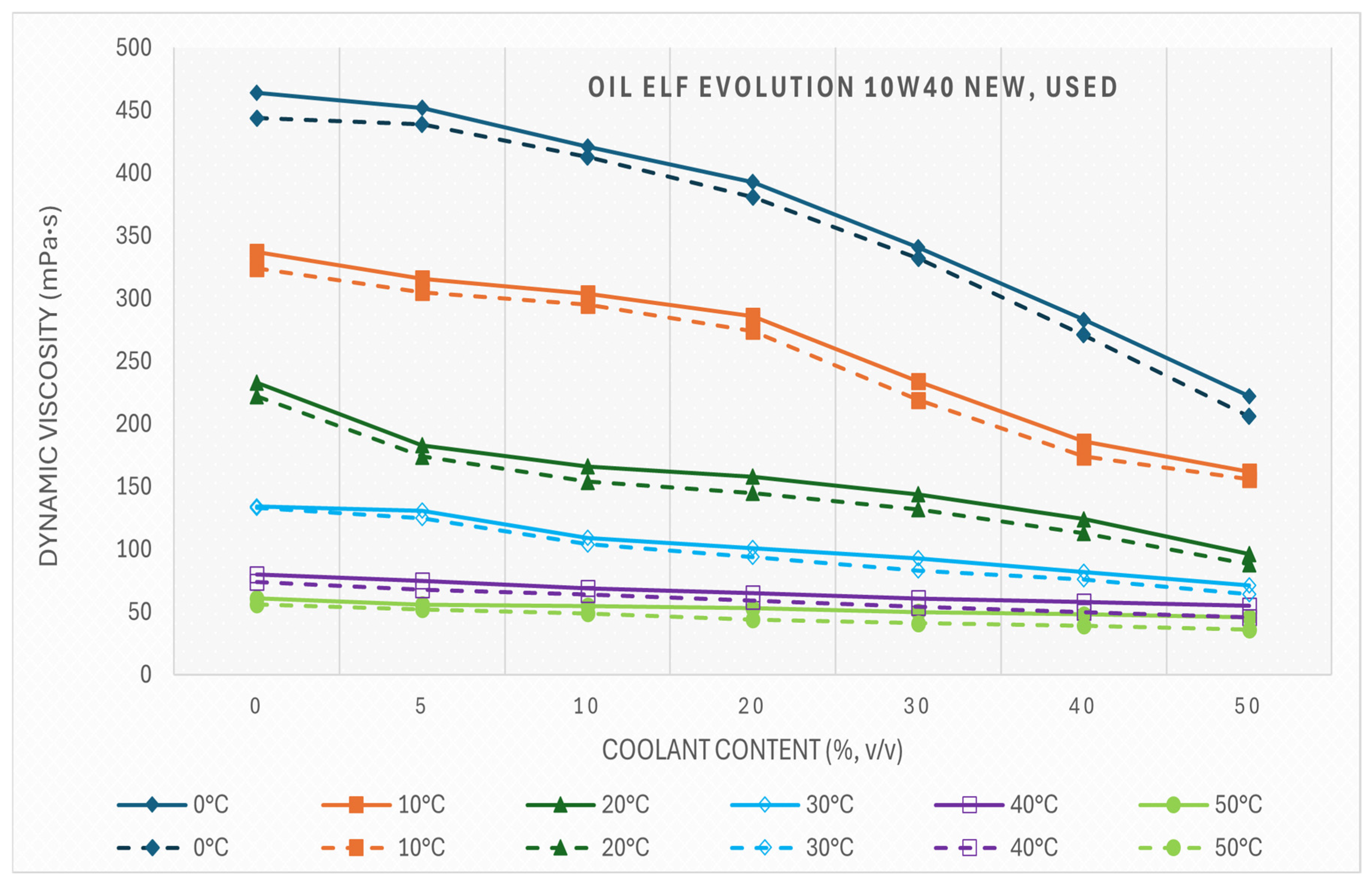
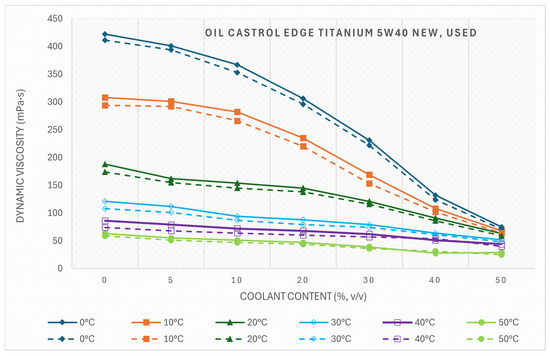
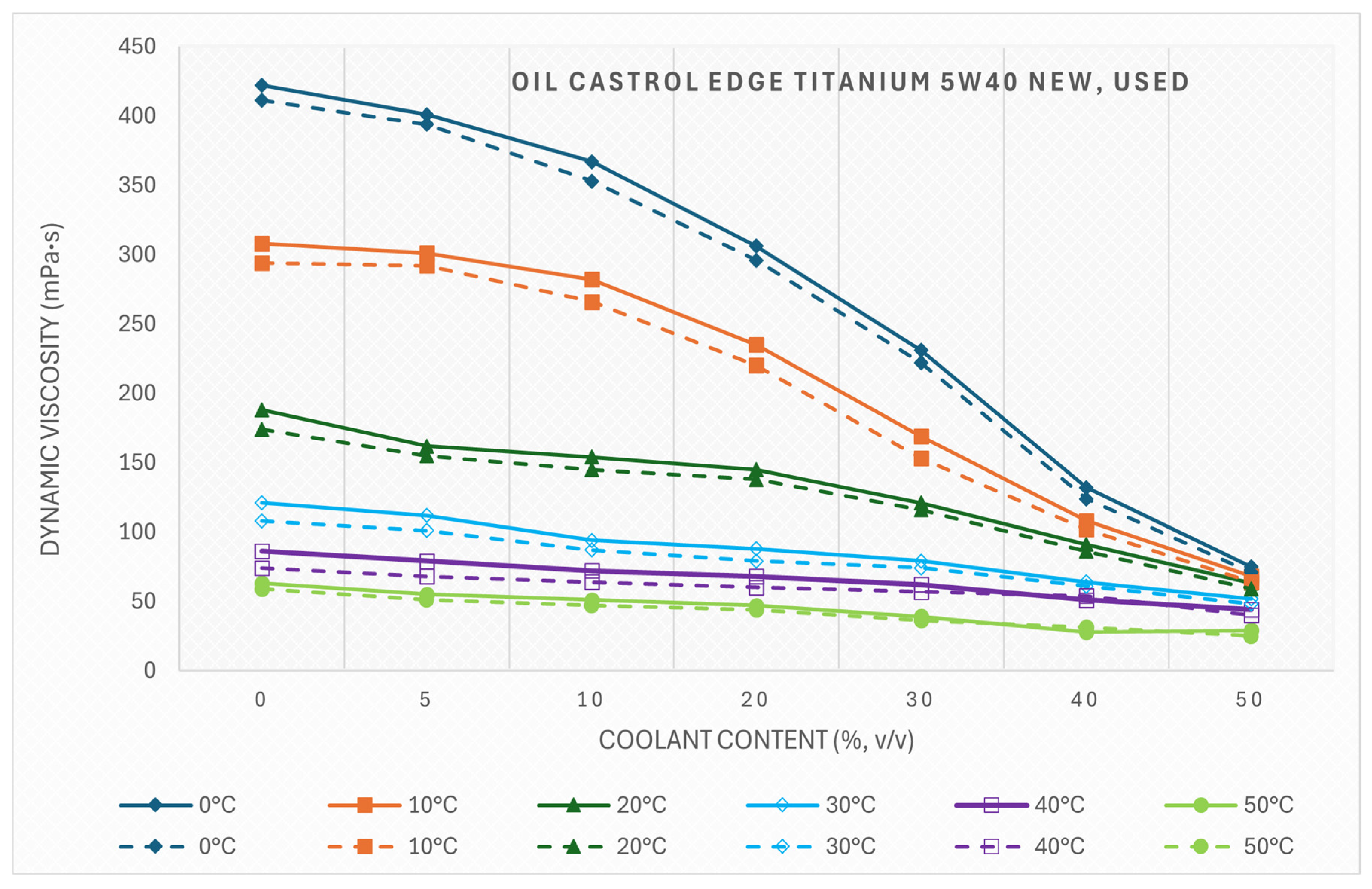
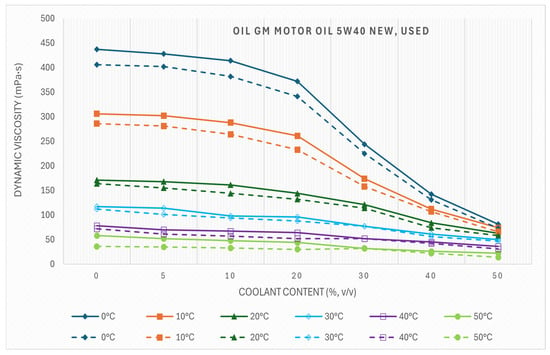
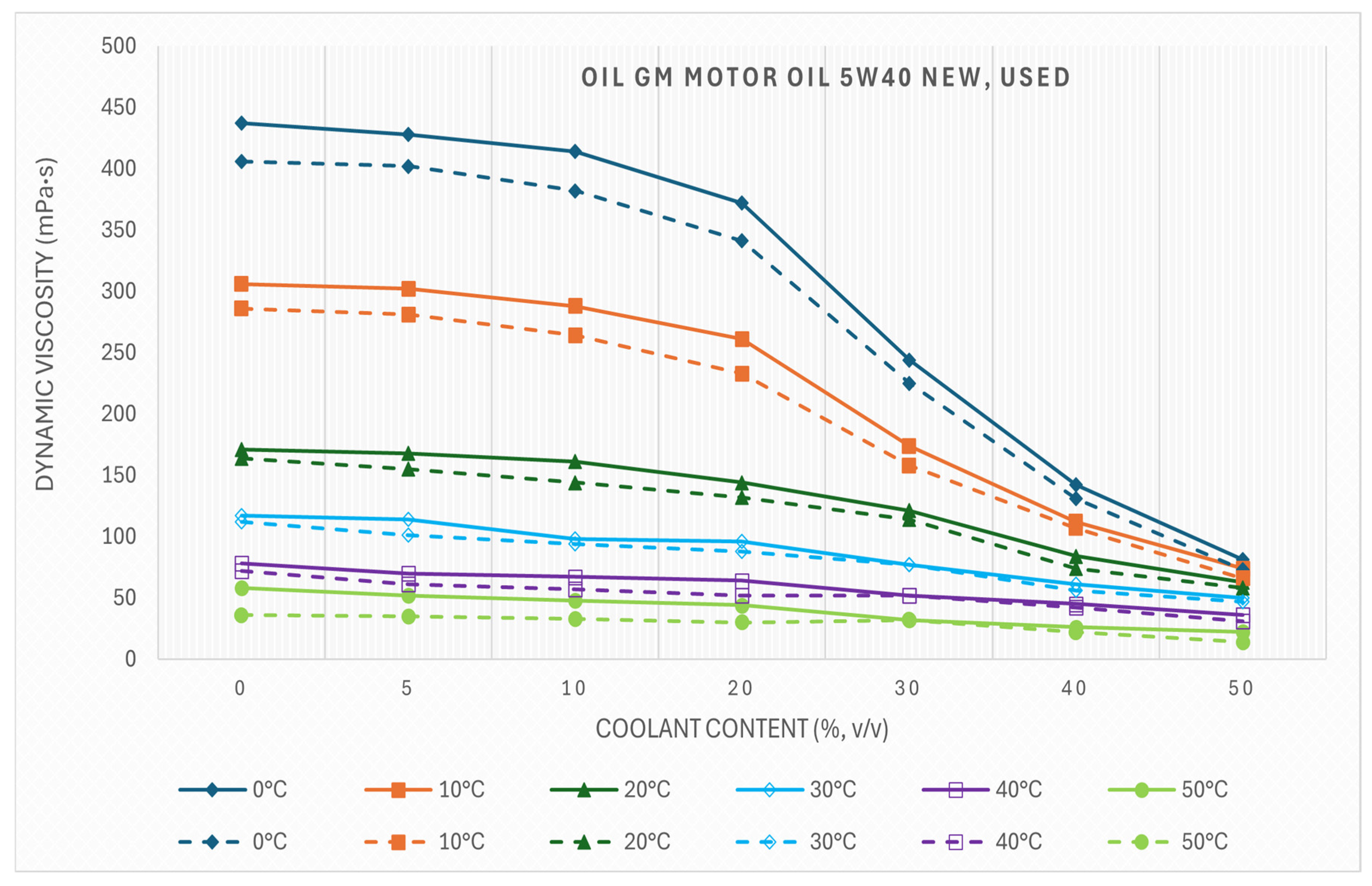
Figure 6, Figure 7, Figure 8, Figure 9, Figure 10 and Figure 11 present the influence of Prestone coolant contamination on the dynamic viscosity of the tested engine oils, both new and after engine service. The mixtures of new and used engine oils with coolant prepared for the tests were not operated in engines. The coolant content in the tested oils was varied in the range from 0 to 50% (v/v). The plots show the dynamic viscosity change lines of the tested oils for measurements performed at temperatures of 0, 10, 20, 30, 40, and 50 °C. The presented plots show both the impact of temperature and the coolant content in the tested oils on dynamic viscosity. As the temperature increases, a clear reduction in the dynamic viscosity values of the tested oils and their mixtures with coolant is obtained. Higher concentration of coolant in the oil mixture with oils also causes a decrease in the dynamic viscosity values. The presented plots indicate that for measurements performed at lower temperatures, namely 0, 10, and 20 °C, the impact of increasing the proportion of coolant in the mixture with oil is significant. Similarly, for tests conducted at temperatures of 30, 40, and 50 °C, increased amount of coolant in the blend with oil causes a reduction in dynamic viscosity values. At these temperatures, looking at the plots, the decreases in dynamic viscosity of the tested oils contaminated with increasing amounts of coolant are not as large as for lower temperatures. Introducing coolant into oils at higher temperatures does not cause as large changes in oil viscosity as in the case of lower temperatures.
Figure 6.
The influence of the addition of Prestone coolant on the dynamic viscosity of fresh (solid line) and used (dashed line) Shell Rimula 15W40 mineral oil at various measurement temperatures.
Figure 7.
The influence of the addition of Prestone coolant on the dynamic viscosity of fresh (solid line) and used (dashed line) Liqui Moly 15W40 mineral oil at different temperatures.
Figure 8.
The influence of the addition of Prestone coolant on the dynamic viscosity of semi-synthetic Total Quartz 10W40 oil, fresh (solid line) and used (dashed line)at different temperatures.
Figure 9.
The influence of the addition of Prestone coolant on the dynamic viscosity of fresh (solid line) and used (dashed line) Elf Evolution 10W40 semi-synthetic oil at different temperatures.
Figure 10.
The influence of the addition of Prestone coolant on the dynamic viscosity of fresh (solid line) and used (dashed line) Castrol Edge Titanium 5W40 synthetic oil at various temperatures.
Figure 11.
The influence of the addition of Prestone coolant on the dynamic viscosity of fresh (solid line) and used (dashed line) GM Motor 5W40 synthetic oil at various temperatures.
For synthetic oils (Figure 10 and Figure 11), the measured dynamic viscosity after introducing 50% (v/v) coolant has a significantly smaller spread of values determined at different measurement temperatures (0, 10, 20, 30, 40, and 50 °C). For semi-synthetic and mineral oils contaminated with 50% (v/v) coolant, the spread of measured dynamic viscosity values for different temperatures is significantly larger. For the synthetic oil GM Motor 5W40, it can be observed from Figure 11 that a large drop in the dynamic viscosity value of this oil occurs in the coolant content range from 20 to 50% (v/v).
Figure 6, Figure 7, Figure 8, Figure 9, Figure 10 and Figure 11 illustrate how viscosity changes for both fresh and used oils depending on the coolant content in their mixtures. Analysis of these curves shows that, under all test conditions, fresh oils and their blends with coolant exhibit higher dynamic viscosity than used oils and their corresponding mixtures. Moreover, at temperatures of 0, 10, and 20 °C, the absolute differences in dynamic viscosity between fresh oils (and their mixtures) and used oils (and their mixtures) are higher than at 30, 40, and 50 °C. The smallest differences in dynamic viscosity for new and used oils (and their respective mixtures with coolant) for all temperatures were obtained for the semi-synthetic oil Elf Evolution 10W40. A similar relationship was obtained for the synthetic oil Castrol Edge Titanium 5W40. The smallest differences in dynamic viscosity between new and used oils and their respective mixtures with coolant were obtained for all tested oils at temperatures of 30 and 40 °C.
For all tested new and used engine oils, the relative changes in dynamic viscosity caused by increasing the volume fraction of coolant in these oils were calculated for temperatures of 0, 10, 20, 30, 40, and 50 °C. The reference point for the calculation of relative changes was the dynamic viscosity values determined for the tested oils containing no coolant. Table 2, Table 3, Table 4, Table 5, Table 6 and Table 7 show the results of these calculations. The numerical values presented in the tables indicate the percentage decrease in the dynamic viscosity value of the oil after adding a specific amount of coolant (5, 10, 20, 30, 40, and 50% (v/v)). It is clearly evident that for all tested engine oils, both new and used, and for all temperature values at which measurements were performed, the volumetric increase in Preston coolant concentration in oil causes a decrease in dynamic viscosity. The absolute values of the relative dynamic viscosity changes of the tested oils containing the coolant additive are significantly larger at lower measurement temperatures and smaller at higher temperatures. Dynamic viscosity was investigated for various mixtures of new engine oils and coolant, as well as for mixtures of used engine oils and coolant. For mineral oils, at most measurement points, the absolute values of the relative changes in dynamic viscosity are higher for the new oils. The opposite relationship was obtained for semi-synthetic oils. For fresh synthetic Castrol Edge Titanium 5W40 oil, slightly higher absolute values of relative changes in dynamic viscosity were obtained at most measurement points. For the second synthetic oil, an unambiguous conclusion could not be determined in this area. The absolute values of relative changes in dynamic viscosity for mixtures of synthetic oils and coolant at high coolant fractions (30, 40, and 50% (v/v)) are significantly larger compared to semi-synthetic and mineral oils. This implies that at high proportions of coolant, these oils changed their dynamic viscosity values the most.
Table 2.
Relative changes in the dynamic viscosity of fresh and used Shell Rimula 15W40 mineral oil containing Prestone coolant in amounts from 5% (v/v) to 50% (v/v) relative to oil containing no coolant at different temperatures.
Table 3.
Relative changes in the dynamic viscosity of fresh and used Liqui Moly 15W40 mineral oil containing Prestone coolant in amounts from 5% (v/v) to 50% (v/v) relative to oil containing no coolant at different temperatures.
Table 4.
Relative changes in the dynamic viscosity of fresh and used Total Quartz 10W40 semi-synthetic oil containing Prestone coolant in amounts from 5% (v/v) to 50% (v/v) relative to oil containing no coolant at different temperatures.
Table 5.
Relative changes in the dynamic viscosity of fresh and used Elf Evolution 10W40 semi-synthetic oil containing Prestone coolant in amounts from 5% (v/v) to 50% (v/v) relative to oil containing no coolant at different temperatures.
Table 6.
Relative changes in the dynamic viscosity of fresh and used Castrol Edge Titanium 5W40 synthetic oil containing Prestone coolant in amounts from 5% (v/v) to 50% (v/v) relative to oil containing no coolant at different temperatures.
Table 7.
Relative changes in the dynamic viscosity of fresh and used GM Motor 5W40 synthetic oil containing Prestone coolant in amounts from 5% (v/v) to 50% (v/v) relative to oil containing no coolant at different temperatures.
The proposed contamination resistance index is based on the analysis of the relative change in viscosity, indicating that viscosity stability in the presence of contaminants such as coolant is a direct determinant of the durability of the lubricant film and the protection of friction nodes. The adopted interpretation ranges (≥0.9 for high resistance) reflect industrial standards of permissible viscosity fluctuations (±10–20%), above which the performance properties of the oil are degraded.
Based on the data in Table 8, resistance to contamination with coolant in the tested oils is in most cases < 0.75, which means low resistance (alarm condition) to this contamination, especially visible at low temperatures. Interestingly, Castrol Edge and GM Motor Oil synthetic oils were most sensitive to the effects of antifreeze. However, Shell Rimula mineral oil, both new and used, showed moderate resistance to contamination (0.75–0.90), especially at higher temperatures of 30–40 °C.
Table 8.
Contamination resistance index values of the tested oils to coolant at different temperatures.
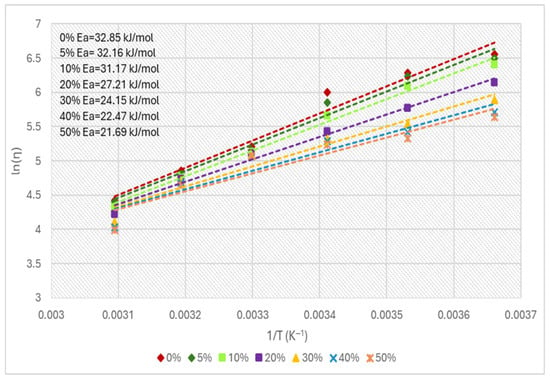
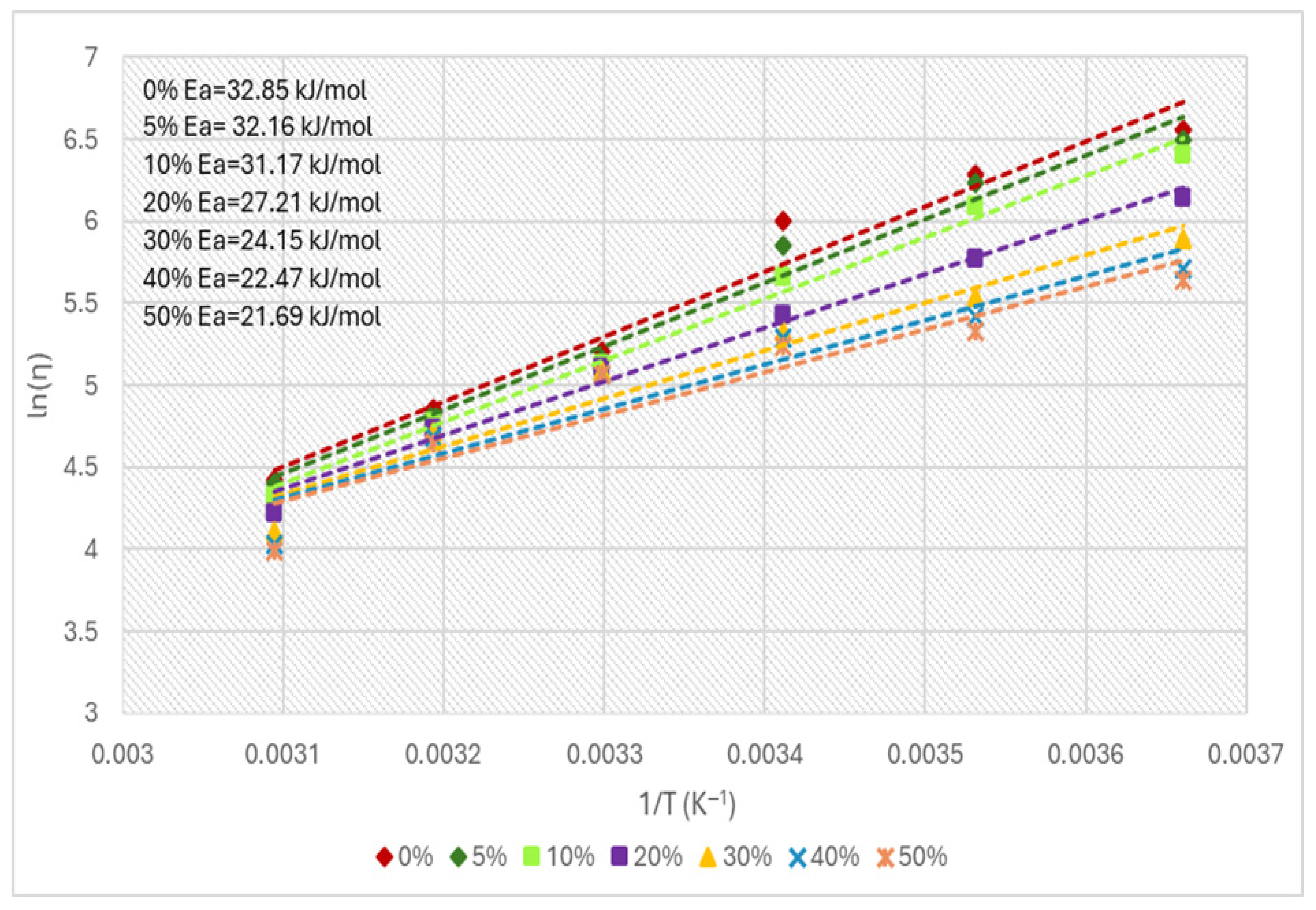
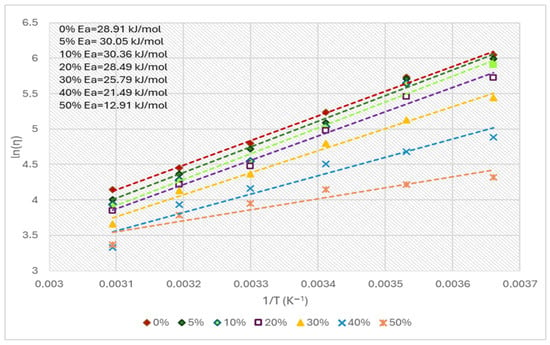
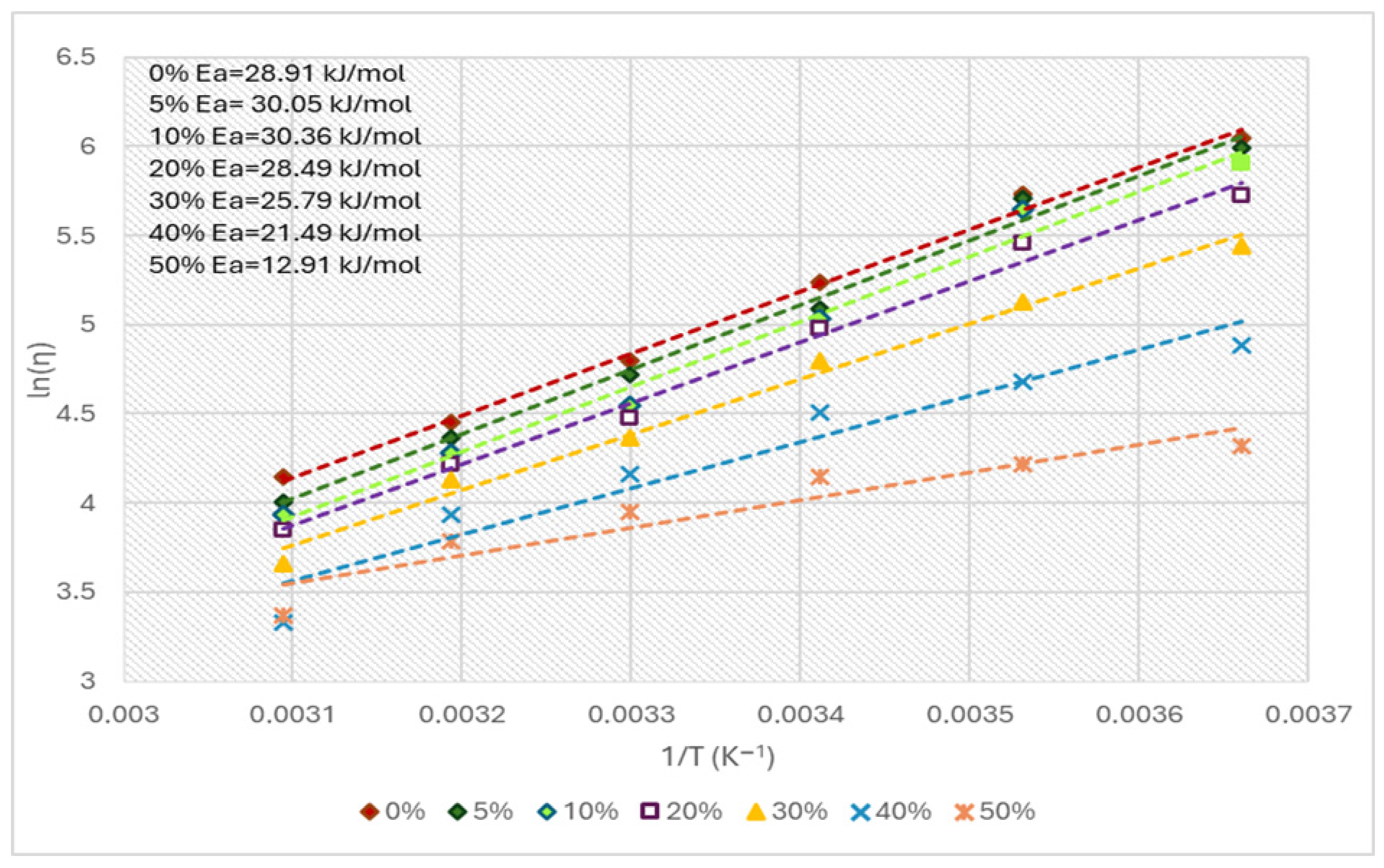
The Arrhenius equation was used to determine the activation energy (Ea) to examine the impact of contamination in the form of radiator fluid on the rheological properties of the tested engine oils. Of course, this is not an ideal method for examining the impact of radiator fluid contamination on engine oil. The disadvantage of comparison using this model is the significant complexity of substances, processes and relationships between them. Examples of Figure 12 and Figure 13 and Table 9 show the dependence of viscosity on temperature in accordance with the Arrhenius equation. Reducing the activation energy (Ea) means that the viscosity depends on the temperature and, in this case, also on the degree of contamination of the engine oils with coolant. An increase in the % (v/v) of coolant in engine oil causes a systematic decrease in viscosity. For most tested engine oils, the activation energy exhibits only minor changes when adding coolant in the 0–20% v/v range. The exception are mineral oils, the activation energy of which, for contamination between 10–20% (v/v) of radiator fluid, decreased in the case of new and used Shell Rimula 15W40 oil by about 14%, and Liqui Moly 15W40 oil by about 10–11%.
Figure 12.
Dependence of on 1/T for fresh Rimula 15W40 oil with the addition of coolant in concentrations of 0–50% (v/v); (dashes lines denotes the linear regression fit).
Figure 13.
Dependence of on 1/T for fresh Castrol Edge 5W40 oil with the addition of coolant in concentrations of 0–50% (v/v); (dashes lines denotes the linear regression fit).
Table 9.
Determined values of activation energy (Ea), coefficient of determination (R2) and relative change in activation energy for engine oils contaminated with coolant in the amount of 0–50% (v/v).
The addition of coolant to the tested engine oils in amounts ranging from 30 to 50% (v/v) causes significant decreases in the activation energy (Ea), which indicates a change in the viscosity of the analyzed oils. The greatest sensitivity f engine oil to contamination in the form of coolant was found in Castrol Edge 5W40 oils, the relative decrease in viscosity of which was 55.3% for new oil and 53.1% for used oil, and GM Motor 5W40, the relative decrease in viscosity of which was 40% for new oil and 36.5% for used oil. The coefficient of determination for the tested oils containing 0–30% (v/v) coolant is very high (above 0.96–0.99), which means that the viscosity curves are described by a linear model, the liquid shows Newtonian behavior. There is a noticeable drop in the coefficient of determination below 95% in most of the tested samples containing 40–50% (v/v) coolant, which indicates a significant change in the rheological character of the tested samples. While initially they behaved as a homogeneous Newtonian fluid, well described by the linear model, with the increase in the presence of coolant contaminants, clear deviations from this model are observed.
This suggests a shift towards non-Newtonian behavior. The presence of such a large amount of liquid leads to the formation of an emulsion. Semi-synthetic oils were an exception, as their coefficients of determination exceeded 96%. Furthermore, the presence of antifreeze (which has a much lower viscosity than oil) reduces the oil’s viscosity and also appears to promote degradation processes in the oil and weaken its lubricating properties. At 50% (v/v) contamination, the viscosity is very low and the graph becomes a straight line, this is especially visible for Castrol Edge 5W40 synthetic oil. In this situation, fluid contamination of the oil may suggest that the mixture is no longer stable (an emulsion is formed or separation occurs). In this condition, the engine operates practically without lubricant protection. However, in order to properly describe the changes taking place in engine oils, it is necessary to expand the scope of rheological tests. In particular, it is justified to perform additional measurements in a wider range of shear rates and to use nonlinear models, which will allow for a more accurate characterization of the degree of non-Newtonian of the system. Complementing the analysis with physicochemical tests (e.g., water content and impurities) will enable the identification of the causes of the observed changes.
4. Conclusions
Research was conducted to determine the impact of adding coolant to engine oils on their dynamic viscosity values. The tests were carried out for new and used (after an operational exchange at a vehicle mileage of 10,000 km) mineral, semi-synthetic, and synthetic oils. Before the study, mixtures of oils and coolant were prepared under laboratory conditions. These mixtures were not operated in engines. The dynamic viscosity of the oil and coolant mixtures was determined at temperatures from 0 °C to 50 °C. Based on the tests performed and the analyses conducted, the following conclusions were drawn:
- The dynamic viscosity of mineral engine oils was significantly higher than that of semi-synthetic and synthetic oils.
- The dynamic viscosity of the coolant was significantly lower than that of lubricating oils.
- The relative changes in the dynamic viscosity of the coolant as the measurement temperature increases are significantly smaller than the relative changes in the dynamic viscosity of the new and used oils under test.
- Across the entire measurement range, a reduction in the dynamic viscosity of used engine oils was observed compared to new engine oils.
- For measurements performed at lower temperatures (0, 10, and 20 °C), the impact of increasing the proportion of coolant in the mixture with oil is substantial. Introducing coolant into oils at higher temperatures (30, 40, and 50 °C) does not cause as large changes in oil viscosity as in the case of lower temperatures.
- For all tested engine oils, both fresh and used, and across all temperatures at which the measurements were carried out, an increase in the volumetric proportion of coolant in the oil mixture results in a clear reduction in dynamic viscosity.
- The dynamic viscosity measured at different measurement temperatures for synthetic oils after introducing 50% (v/v) coolant has a significantly smaller spread of values compared to the other tested oils.
- Synthetic oils changed their dynamic viscosity values to the greatest extent after the introduction of large amounts of coolant.
- The lowering of the activation energy of viscosity indicates a reduction in the system’s sensitivity to temperature, suggesting an increase in the contribution of structural factors (coolant contamination and emulsion formation) and confirming the progressive degradation of the oil.
- Low resistance of engine oils to coolant contamination was demonstrated. Synthetic oils showed the greatest sensitivity to the action of coolant.
Furthermore, further planned research will aim to identify dynamic viscosity behavior of various lubricating oils contaminated with coolant, operated in an engine under specific and repeatable operating conditions. Research is planned for oils intended for more heavily loaded engines, i.e., in agricultural tractors and delivery vehicles. Such research is significant due to the development of engine oils, the creation of new oil formulas, and their performance in engines under heavy loads. It is worth considering the development of oils in such a way that they possess additives allowing for the neutralization of the negative impact of potential coolant ingress into the lubrication system of a pistol engine. It can be proposed to engine manufacturers to install a sensor in the oil pan to identify the presence of undesired coolant. Sensors could operate on a principle similar to Flex Fuel sensors used for detecting ethanol or ether content in gasoline.
Author Contributions
Conceptualization, G.W.; methodology, G.W.; software, A.L. and D.K.; validation, A.L., D.K. and G.W.; formal analysis, A.L., D.K. and G.W.; investigation, A.L. and D.K.; resources, G.W.; data curation, G.W. and D.K.; writing—original draft preparation, A.L. and D.K.; writing—review and editing, A.L., D.K. and G.W.; visualization, A.L., D.K. and G.W.; supervision, A.L. and D.K.; project administration, A.L.; funding acquisition, A.L. All authors have read and agreed to the published version of the manuscript.
Funding
This research was funded by the Faculty of Production Engineering and Power Technologies, University of Agriculture in Krakow, and the Faculty of Mechatronics and Mechanical Engineering Kielce University of Technology, and Institute of Quality and Product Management Sciences, Krakow University of Economics.
Data Availability Statement
The data presented in this study are available from the corresponding author upon reasonable request.
Acknowledgments
The authors gratefully acknowledge the Faculty of Production Engineering and Power Technologies, University of Agriculture in Krakow, the Faculty of Mechatronics and Mechanical Engineering Kielce University of Technology, and the “BioEnergia” Małopolskie Centre for Renewable Energy Sources.
Conflicts of Interest
The authors declare no conflicts of interest.
Abbreviations
| API | American Petroleum Institute |
| CJ-4 | engine oil quality class for high-speed four-stroke cycle diesel engines designed to meet 2010 model year on-highway and Tier 4 non-road exhaust emission standards as well as for previous model year diesel engines. |
| CI-4 | oils are formulated to sustain engine durability where exhaust gas recirculation (EGR) is used and are intended for use with diesel fuels ranging in sulfur content up to 0.5% weight. |
| CH-4 | CH-4 oils are specifically compounded for use with diesel fuels ranging in sulfur content up to 0.5% weight. |
| SJ | engine oil quality class for gasoline engines introduced in 2001. |
| SL | engine oil quality class for all engines |
| SN | engine oil quality class for modern gasoline engines introduced in 2010 |
| CF | engine oil quality class for diesel engines |
| CG | Not suitable for use in most diesel-powered automotive engines built after 2009 |
| ACEA | Association des Constructers Europeans d’Automobiles/European Automobile Manufacturers Association |
| A3/B3 | engine oil quality class for engine oil intended for gasoline engines (A3) and diesel engines (B3) in passenger cars. |
| C3 | Catalyst & GPF/DPF compatible Engine Oils |
| AC | Alternating Current |
| ZDDP | zinc dialkyldithiophosphate |
| OEM | Original Equipment Manufacturer |
| ASTM D3306:2021 | Standard Specification for Glycol Base Engine Coolant for Automobile and Light-Duty, 2021, ASTM International |
| ASTM D4985:2010 | Standard Specification for Low Silicate Ethylene Glycol Base Engine Coolant for Heavy Duty Engines Requiring a Pre-Charge of Supplemental Coolant Additive (SCA), 2010 ASTM International |
| BS 6580:2010 | Specification for corrosion inhibiting, engine coolant concentrate (“antifreeze”), 2010 BSI (British Standards Institution) |
| T | Temperature |
| η | dynamic viscosity |
References
- Heywood, J.B. Internal Combustion Engine Fundamentals, 2nd ed.; McGraw-Hill Education: New York, NY, USA, 2018. [Google Scholar]
- Merkisz, J. Combustion engines development and real driving emissions. J. KONES Powertrain Transp. 2014, 21, 209–219. [Google Scholar] [CrossRef] [Scilit]
- Penchaliah, R.; Harley, T.J.; Wood, R.J.K.; Nelson, K.; Powrie, H.E.G. The effects of diesel contaminants on tribological performance of slipping steel on steel contacts. Proc. Inst. Mech. Eng. Part J. 2011, 225, 779–797. [Google Scholar] [CrossRef] [Scilit]
- Luft, S. Fundamentals of Engine Design (Podstawy Budowy Silników); Wydawnictwa Komunikacji i Łączności (WKŁ): Warszawa, Poland, 2003. [Google Scholar]
- Zwierzycki, W. Płyny Eksploatacyjne do Środków Transportu Drogowego; Wydawnictwo Politechniki Poznańskiej: Poznań, Poland, 2006. [Google Scholar]
- Totten, G.E. (Ed.) Handbook of Lubrication and Tribology; CRC Press: Boca Raton, FL, USA, 2006; Volume I–III. [Google Scholar]
- Hutchings, I.; Shipway, P. Tribology: Friction and Wear of Engineering Materials, 2nd ed.; Butterworth-Heinemann: Oxford, UK, 2017. [Google Scholar]
- Speight, J.G. Handbook of Petroleum Product Analysis; John Wiley & Sons: Hoboken, NJ, USA, 2015. [Google Scholar]
- Evans, J.S. How does oil work. WearCheck Tech. Bull. 2002, 23, 1–6. [Google Scholar]
- Merkisz, J. Analiza Kierunków Rozwoju Olejów Silnikowych i Ich Oceny Pod Kątem Wymagań Współczesnych Silników Spalinowych; Wydawnictwo Politechniki Poznańskiej: Poznań, Poland, 1999. [Google Scholar]
- Stajuda, L.; Levchenko, D.; Kubiak, P.; Siczek, K.; Bogusławski, G.; Kuchar, M.; Wozniak, M.; Szymczyk, M.; Ozuna, G.; Siczek, K. Composition, features, problems, and treatment related to cooling fluid—A review. Combust. Engines 2024, 196, 106–125. [Google Scholar] [CrossRef] [Scilit]
- Bernhardt, M.; Dobrzyński, S.; Loth, E. Silniki Samochodowe; WKiŁ: Warszawa, Poland, 1988. [Google Scholar]
- Frydrychowicz, K.; Iwanowski, J.; Kuczyński, Z. Pojazdy Samochodowe; PWSZ: Nowy Sącz, Poland, 1971; pp. 75–83. [Google Scholar]
- Fitch, J.; Noria Corporation. Four Lethal Diesel Engine Oil Contaminants. Machinery Lubrication, 2015. Available online: https://www.machinerylubrication.com/Read/1033/diesel-engine-oil-contaminats (accessed on 10 February 2026).
- Ogrodzki, A. Chłodzenie Trakcyjnych Silników Spalinowych; WKiŁ: Warszawa, Poland, 1974. [Google Scholar]
- Fitch, J.; Noria Corporation. Glycol in Lubricating Oil—Detection, Analysis and Removal. Machinery Lubrication, 2014. Available online: https://www.machinerylubrication.com/Read/193/oil-glycol (accessed on 10 February 2026).
- Skordalou, G.; Demadis, K.D. Ethylene glycol based coolant technologies for automotive applications: A critical review. Int. J. Corros. Scale Inhib. 2024, 13, 1355–1374. [Google Scholar] [CrossRef] [Scilit]
- Beal, R.E. Engine coolant testing. In ASTM Selected Technical Papers; Hannigan, H.J., Ed.; ASTM: West Conshohocken, PA, USA, 1993. [Google Scholar] [CrossRef] [Scilit]
- Gündem, A.; Hoşözm, M.; Keklik, E. Performance comparison of propylene glycol–water and ethylene glycol–water mixtures as engine coolants. Int. J. Automot. Sci. Technol. 2021, 5, 147–156. [Google Scholar] [CrossRef] [Scilit]
- Turlej, A.; Skolniak, M.; Giemza, B. Assessment of glycol antifreeze to combustion engines. J. KONBiN 2020, 50, 371–389. [Google Scholar] [CrossRef] [Scilit]
- Song, G.-L.; StJohn, D.H. Corrosion of magnesium alloys in engine coolants. In Corrosion of Magnesium Alloys; Elsevier: London, UK, 2011; pp. 426–454. [Google Scholar] [CrossRef] [Scilit]
- Santambrogio, M.; Perrucci, G.; Trueba, M.; Trasatti, S.P.; Casaletto, M.P. Effect of major degradation products of ethylene glycol aqueous solutions on steel corrosion. Electrochim. Acta 2016, 203, 439–450. [Google Scholar] [CrossRef] [Scilit]
- Spectro Scientific. Guide to Measuring Glycol Contamination in Oil; Spectro Scientific: Chelmsford, MA, USA, 2016; pp. 1–5. [Google Scholar]
- A Guide to Measuring Glycol Contamination in Oil. 2018. Available online: https://www.azom.com/article.aspx?ArticleID=14939 (accessed on 31 January 2026).
- Płaza, S.; Margielewski, L.; Celichowski, G. Wstęp do Tribologii i Tribochemia; Wydawnictwo Uniwersytetu Łódzkiego: Łódź, Poland, 2005. [Google Scholar]
- POLARIS Laboratories. Glycol Contamination: The Engine Killer. Technical Bulletin; POLARIS Laboratories: Indianapolis, IN, USA, 2015; Available online: https://wci.group/resources-detail_4.php (accessed on 15 January 2026).
- Fluid Life. Nasty Business: Coolant Contamination of Oils. Available online: https://www.fluidlife.com/blog-nasty-business-coolant-contamination-of-oils (accessed on 9 January 2026).
- Hudgens, R.D.; Feldhaus, L.B. Diesel engine lube filter life related to oil chemistry. SAE Trans. 1978, 87, 3695–3716. [Google Scholar]
- Bonner, D.W. The problem of coolant contamination. Ind. Lubr. Tribol. 1974, 26, 133–135. [Google Scholar] [CrossRef] [Scilit]
- Cash, W. The Effects of Glycol Contamination in Engine Oils. Machinery Lubrication. 2012. Available online: https://www.machinerylubrication.com/Read/28863/glycol-contamination-engine-oils (accessed on 12 January 2026).
- Caterpillar. S·O·S Services: Understanding Your Results; PEGJ0046-03; Caterpillar: Peoria, IL, USA, 2017; Available online: https://s7d2.scene7.com/is/content/Caterpillar/C842738 (accessed on 15 February 2026).
- Armioni, D.M.; Rațiu, S.A.; Ionel, I. Study on the impact of water contamination of used engine oil. Preprints 2025. [Google Scholar] [CrossRef] [Scilit]
- Pashukevich, S.V. Motor oil performance analysis due to water and coolant contamination. Vestn. SibADI 2023, 20, 728–737. [Google Scholar] [CrossRef] [Scilit]
- Raport Kolejowy. Nieszczelności Układu Chłodzenia a Oznaczanie Glikolu w Oleju Silnikowym. 2024. Available online: https://ecol.eu/baza-wiedzy/nieszczelnosci-ukladu-chlodzenia-plyn-chlodniczy-w-oleju/ (accessed on 15 February 2026).
- Wang, S.S.; Lee, H.S. The application of AC impedance technique for detecting glycol contamination in engine oil. Sens. Actuators B Chem. 1997, 40, 193–197. [Google Scholar] [CrossRef] [Scilit]
- Stehouwer, D.; Hudgens, R. Coolant contamination of diesel engine oils. SAE Tech. Pap. 1987, 96, 870645. [Google Scholar] [CrossRef] [Scilit]
- Kadhim, N.S.; Hasan, H.A.; Abdul-Munaim, A.M. Effect of diesel oil contamination with glycol on engine performance. IOP Conf. Ser. Earth Environ. Sci. 2023, 1262, 092012. [Google Scholar] [CrossRef] [Scilit]
- Booser, E.R. CRC Handbook of Lubrication and Tribology; CRC Press: Boca Raton, FL, USA, 1993; Volume III. [Google Scholar]
- Angeles, R. Tables on Oil Analysis. Technical Training, File No. RSA-006, 2003. Available online: https://www.scribd.com/document/748123245/RSA-2003-Tabelas-em-Analise-de-Oleo (accessed on 14 January 2026).
- Hasan, H.A.; Al-Sumaidaee, S.A.K.M.; Abdul-Munaim, A.M. Diesel engine efficiency under varying loads and glycol-contaminated oil. Basrah J. Agric. Sci. 2025, 38, 20–29. [Google Scholar] [CrossRef] [Scilit]
- Jeżowiecka-Kabsch, K.; Szewczyk, H. Mechanika Płynów; Oficyna Wydawnicza Politechniki Wrocławskiej: Wrocław, Poland, 2001. [Google Scholar]
- Krupowies, J. Badania i Ocena Zmian Właściwości Użytkowych Olejów Urządzeń Okrętowych; Wydawnictwo Naukowe Akademii Morskiej: Szczecin, Poland, 2009. [Google Scholar]
- Prestone. Safety Data Sheet for Coolant −37 °C (REACH Compliant). Available online: https://www.prestone.com/wp-content/uploads/2026/02/SDS967-Prestone_Antifreeze_Coolant_with_Leak_Detect-AF2150-US-en-1.pdf (accessed on 5 February 2026).
- API CJ-4; API Standard for Diesel Engine Oils, Mainly Designed for Engines Equipped with DPF Systems and Compliant with 2007 Emission Regulations. American Petroleum Institute: Washington, DC, USA, 2006.
- API CI-4; API Standard Introduced in 2002, Intended for Heavy-Duty Diesel Engines with EGR Systems. American Petroleum Institute: Washington, DC, USA, 2002.
- API CH-4; API Standard Introduced in 1998, Developed for Diesel Engines Meeting 1998 Emission Standards. American Petroleum Institute: Washington, DC, USA, 1998.
- ACEA E7; European ACEA Specification for Heavy-Duty Diesel Engines, High-Performance Oils Without Mandatory DPF Compatibility. European Automobile Manufacturers’ Association: Brussels, Belgium, 2004.
- ACEA E9; European ACEA Specification for Modern Heavy-Duty Diesel Engines with DPF/SCR Systems, Low SAPS Oils. European Automobile Manufacturers’ Association: Brussels, Belgium, 2008.
- ACEA A3/B3; European ACEA Specification for High-Performance Gasoline and Light-Duty Diesel Engines, Intended for Extended Drain Intervals and High Engine Protection; Introduced in 1998. European Automobile Manufacturers’ Association: Brussels, Belgium, 1998.
- API SJ; API Engine Oil Specification for Gasoline Engines. American Petroleum Institute: Washington, DC, USA, 1996.
- API CF; API Engine Oil Specification for Indirect-Injection and Certain Direct-Injection Diesel Engines. American Petroleum Institute: Washington, DC, USA, 1994.
- API SN; API Engine Oil Specification for Gasoline Engines. American Petroleum Institute: Washington, DC, USA, 2010.
- ACEA A3/B4; European ACEA Specification for High-Performance Gasoline and Direct-Injection Diesel Engines. European Automobile Manufacturers’ Association: Brussels, Belgium, 2004.
- API SL; API Engine Oil Specification for Gasoline Engines. American Petroleum Institute: Washington, DC, USA, 2001.
- ACEA C3; European ACEA Specification for Low-SAPS Engine Oils Intended for High-Performance Gasoline and Light-Duty Diesel Engines Equipped with Exhaust After-Treatment Systems Such as DPF and TWC. European Automobile Manufacturers’ Association: Brussels, Belgium, 2004.
- ASTM D3306; Standard Specification for Glycol-Base Engine Coolants Intended for Automobile and Light-Duty Service. ASTM International: West Conshohocken, PA, USA, 1974.
- ASTM D4985; Standard Specification for Low-Silicate Ethylene Glycol Base Engine Coolant for Heavy-Duty Engines Requiring a Pre-Charge of Supplemental Coolant Additives (SCA). ASTM International: West Conshohocken, PA, USA, 1989.
- SAE; Standards Developed by SAE for Automotive, Aerospace, and Commercial Vehicle Engineering, Including Engine Oil Viscosity Classifications Such as SAE J300. SAE International: Warrendale, PA, USA, 1911.
- BS 6580; British Standard Specification for Engine Coolants and Antifreezes Used in Automotive Cooling Systems, Defining Requirements for Corrosion Protection, Physical Properties, and Compatibility. British Standards Institution: London, UK, 1992.
- ISO 4406:2021; Hydraulic Fluid Power—Fluids—Method for Coding the Level of Contamination by Solid Particles, Edition 4. ISO: Geneva, Switzerland, 2021.
- ISO 3448:1992; Industrial Liquid Lubricants—ISO Viscosity Classification. ISO: Geneva, Switzerland, 1992.
- Arrhenius, S. Über die innere Reibung verdünnter wässeriger Lösungen. Z. Phys. Chem. 1887, 1U, 285–298. [Google Scholar] [CrossRef] [Scilit]
- Leśniak, A.; Kurczyński, D.; Wcisło, G. Experimental Studies of the Effect of Operating Time and Temperature on the Dynamic Viscosity of Engine Oils. Energies 2025, 18, 6530. [Google Scholar] [CrossRef] [Scilit]

Disclaimer/Publisher’s Note: The statements, opinions and data contained in all publications are solely those of the individual author(s) and contributor(s) and not of MDPI and/or the editor(s). MDPI and/or the editor(s) disclaim responsibility for any injury to people or property resulting from any ideas, methods, instructions or products referred to in the content. |
© 2026 by the authors. Licensee MDPI, Basel, Switzerland. This article is an open access article distributed under the terms and conditions of the Creative Commons Attribution (CC BY) license.