Article

Base-Load Nuclear Reactors for Fully Dispatchable Electricity: Nuclear Air-Brayton Combined Cycles, Firebrick Heat Storage, Hydrogen Storage, and Hydrocarbon Biofuels

Department of Nuclear Science and Technology, Massachusetts Institute of Technology, 77 Massachusetts Ave., Cambridge, MA 02139, USA
Energies 2025, 18(4), 821; https://doi.org/10.3390/en18040821
Submission received: 14 December 2024 / Revised: 4 February 2025 / Accepted: 7 February 2025 / Published: 10 February 2025
(This article belongs to the Special Issue Advances in Nuclear Power for Integrated Energy Systems)

Abstract

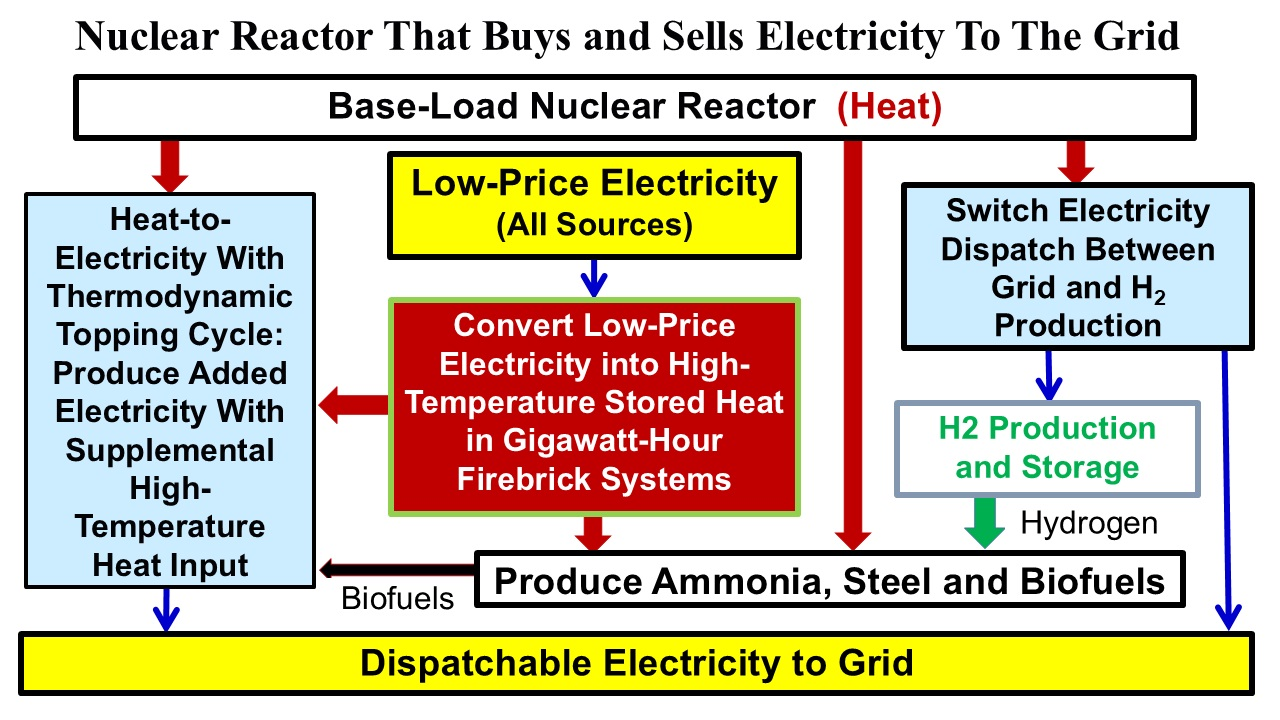
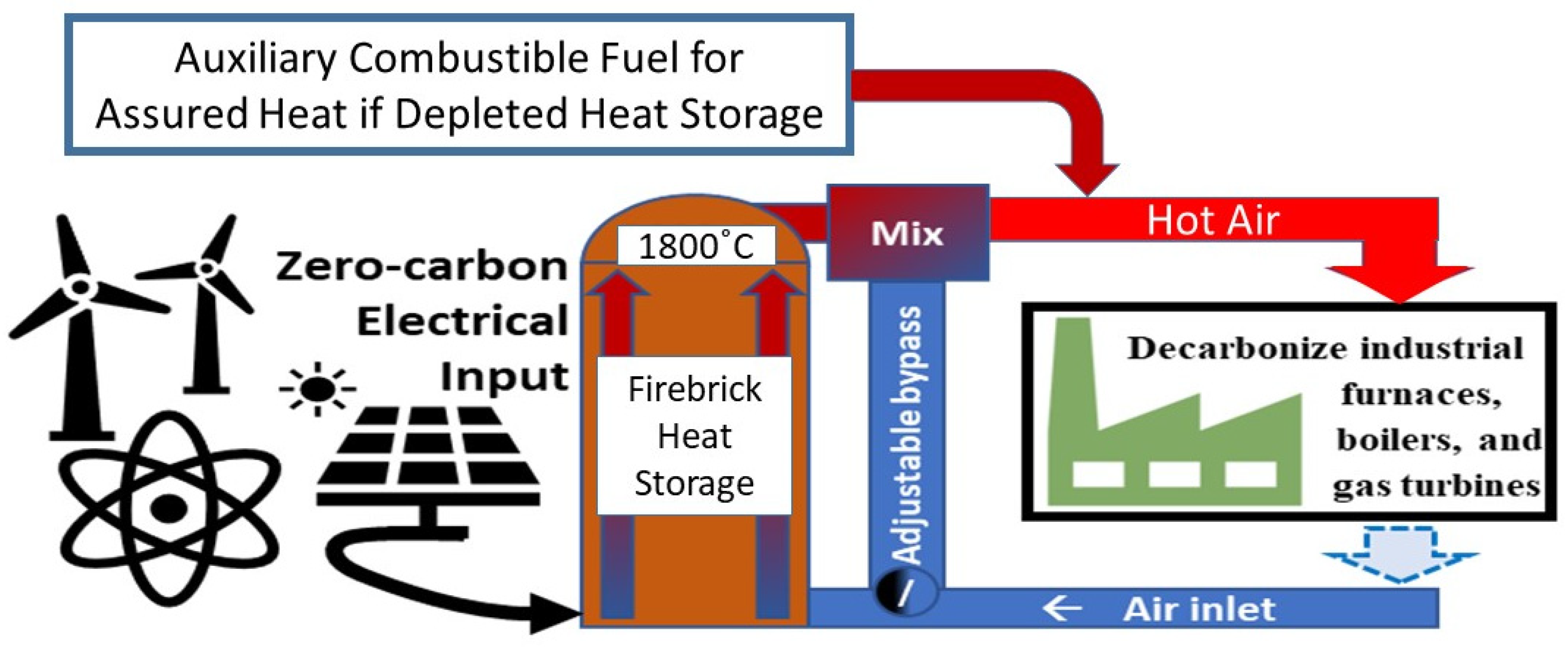
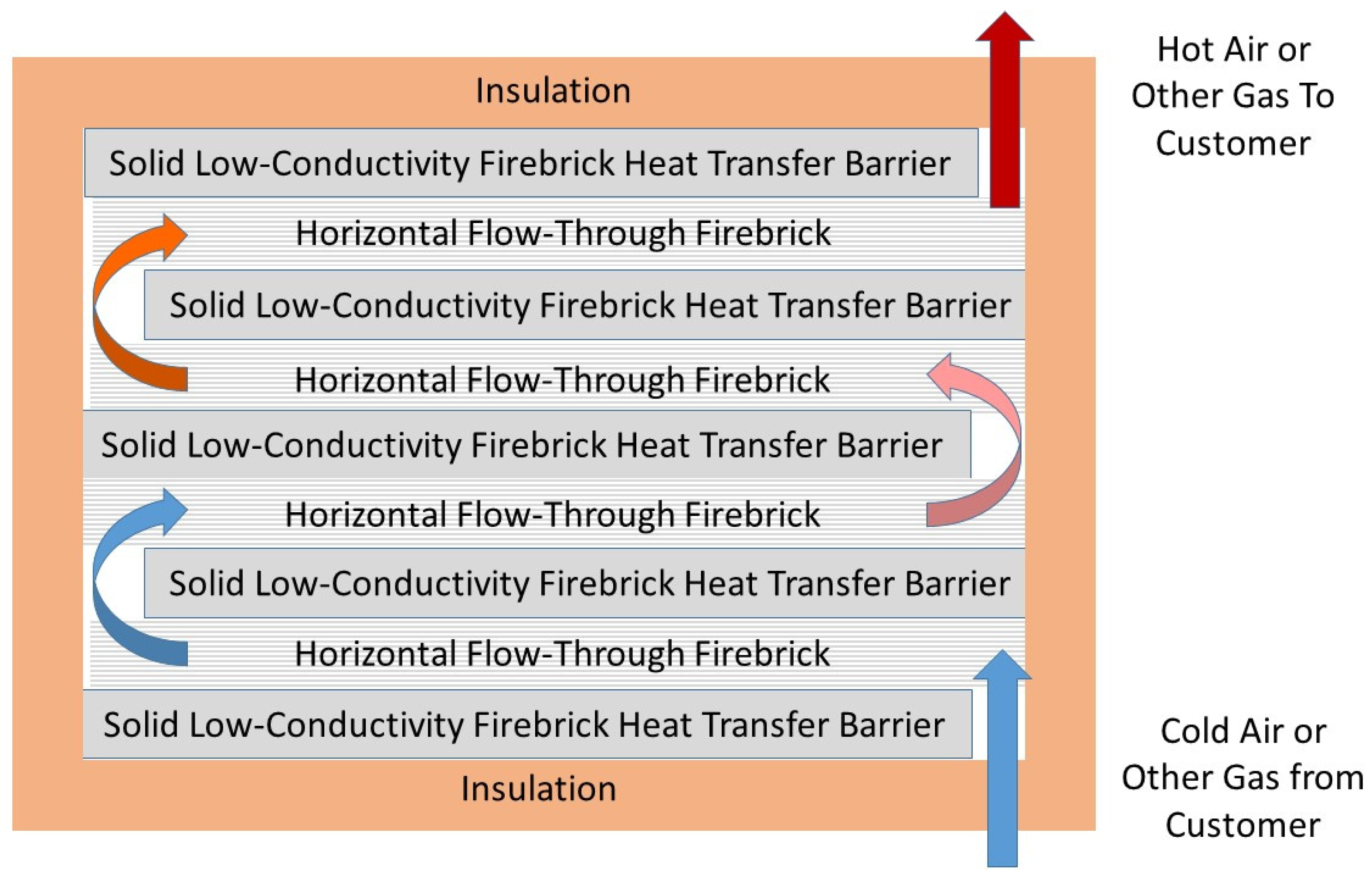
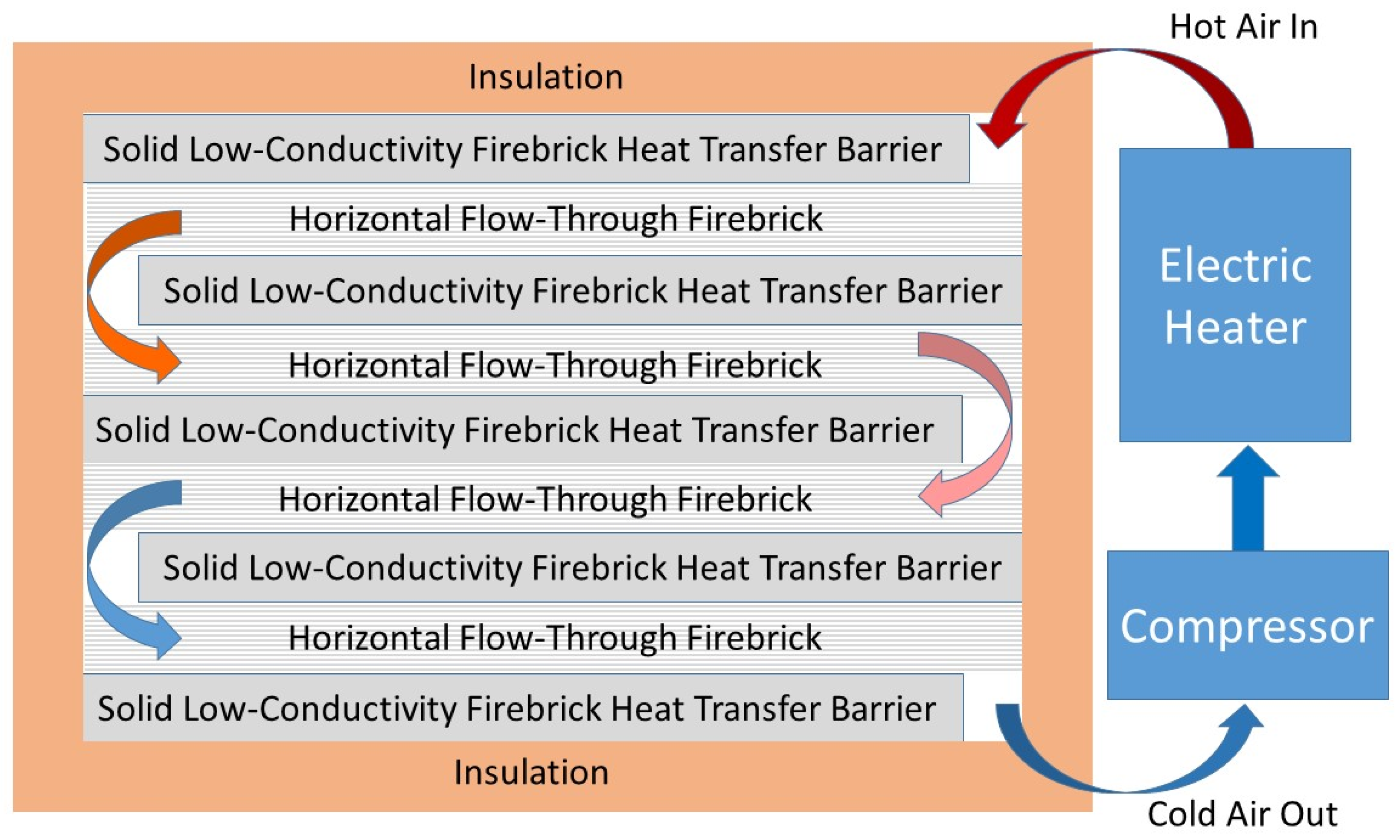
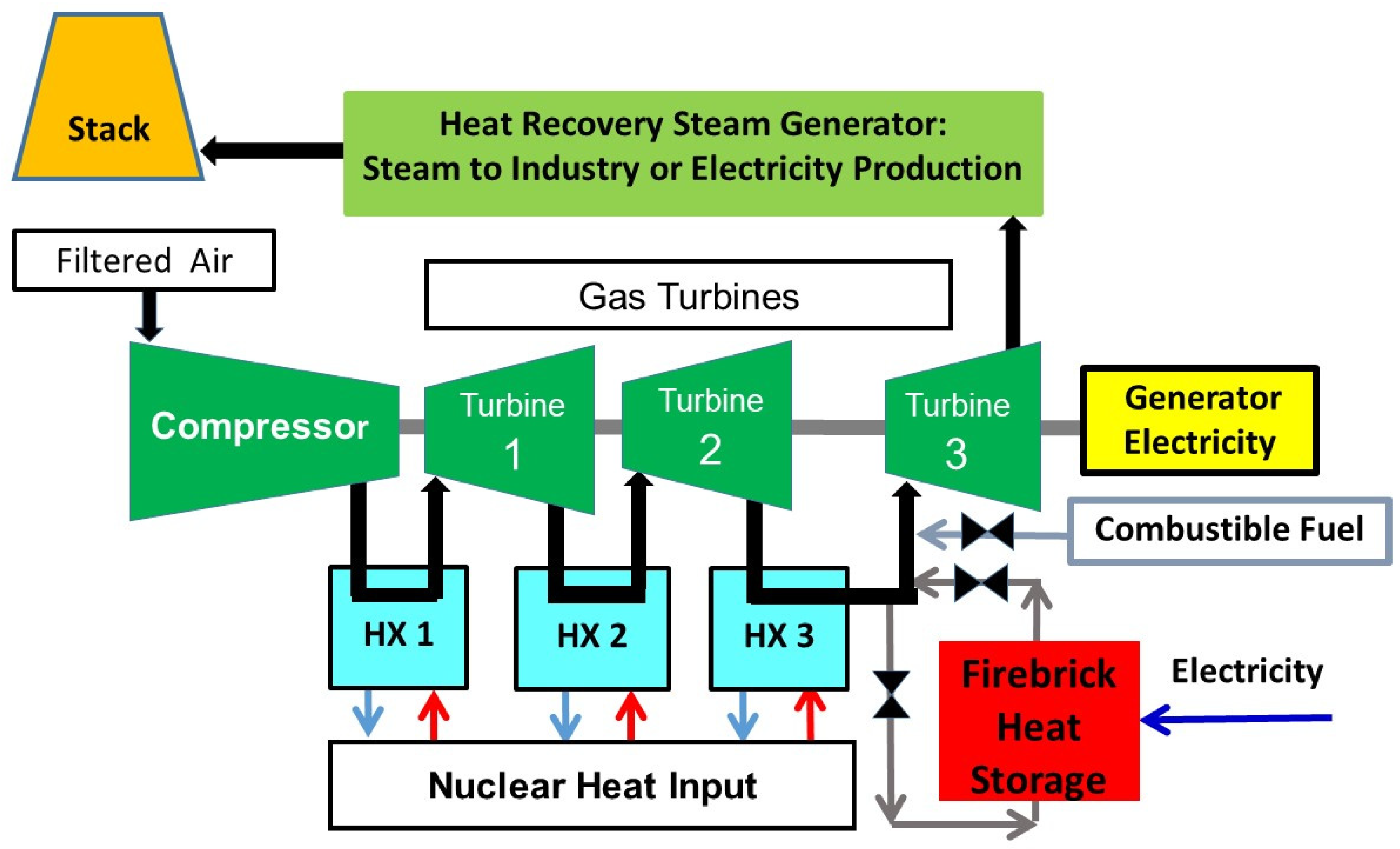
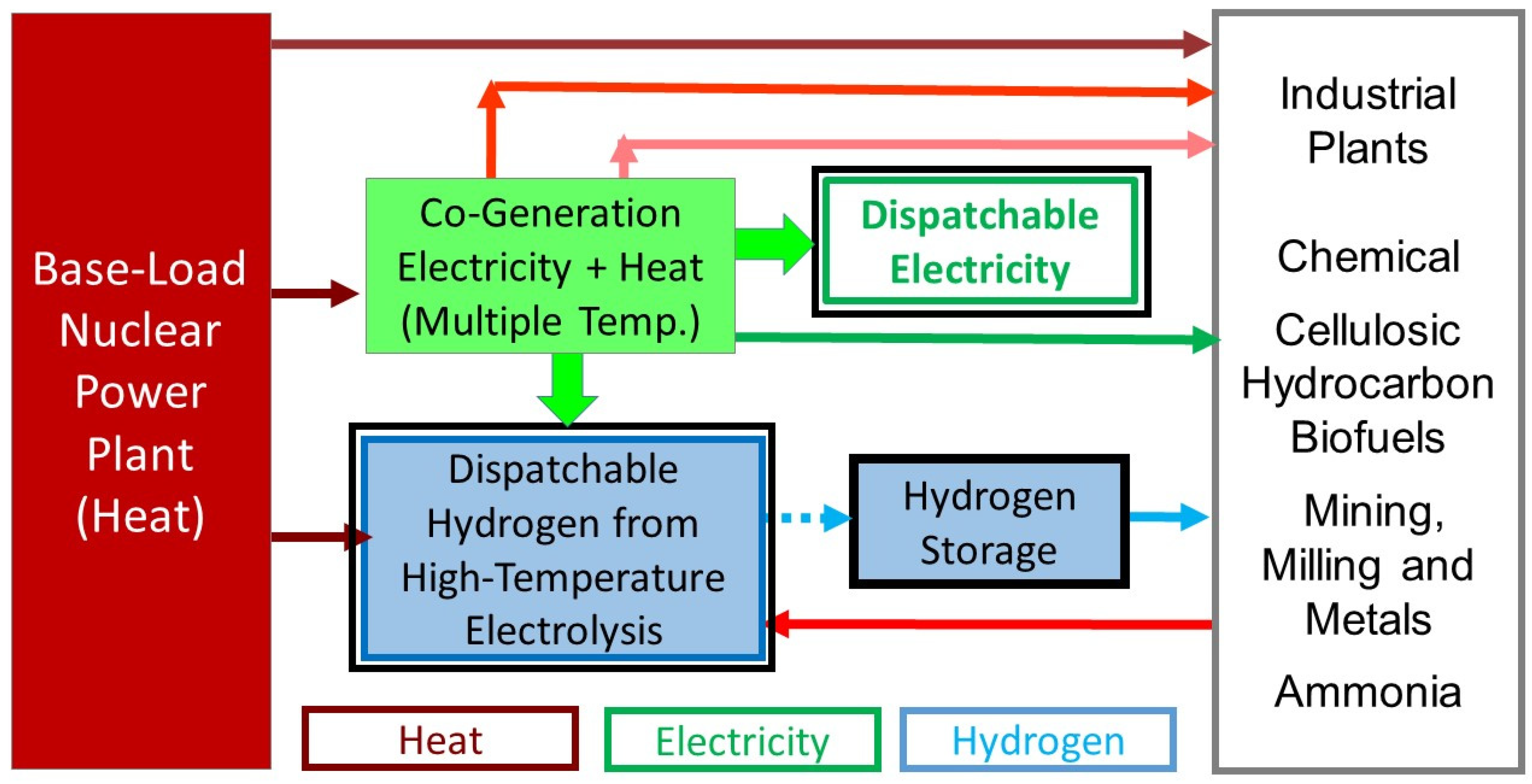
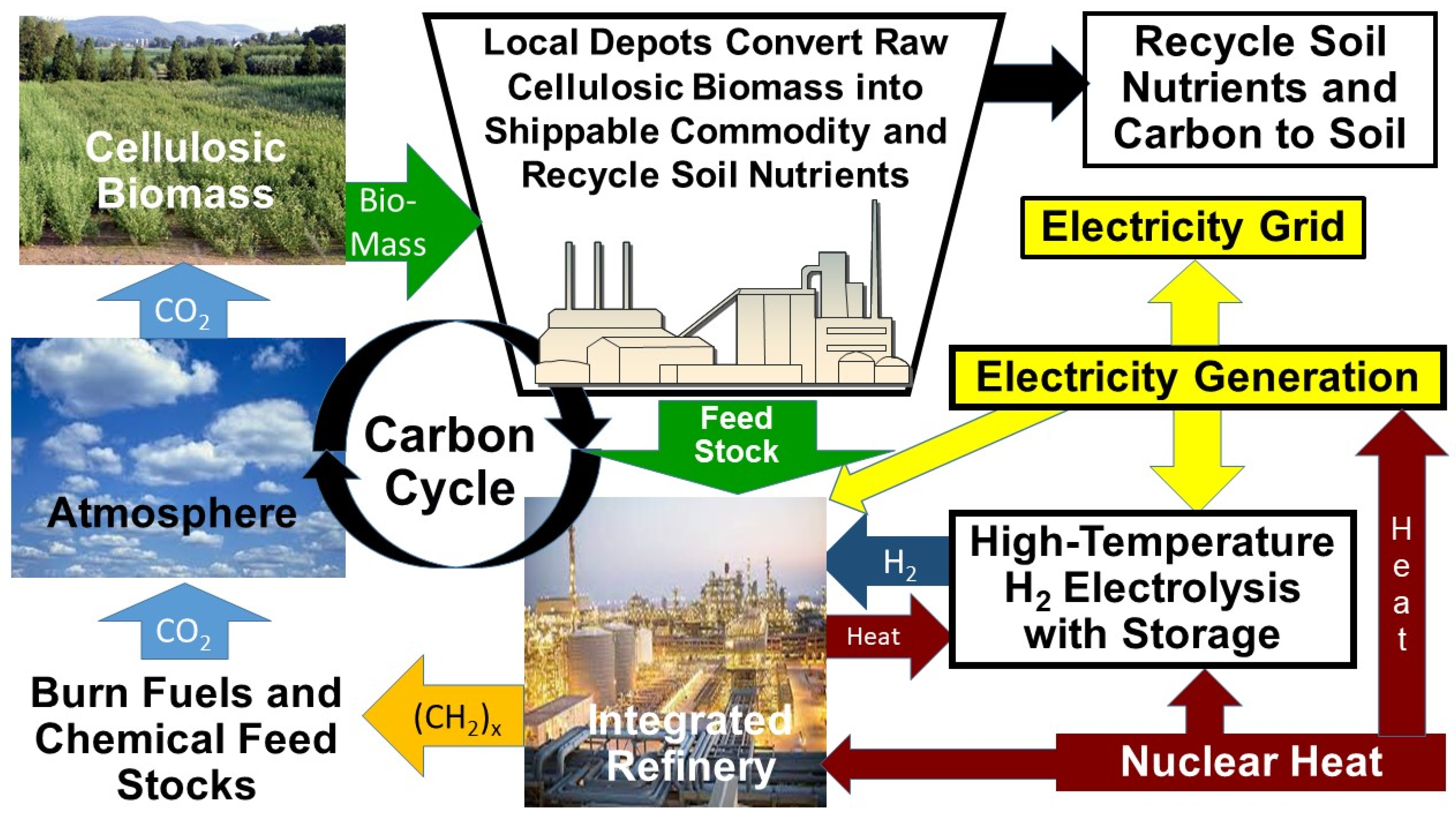
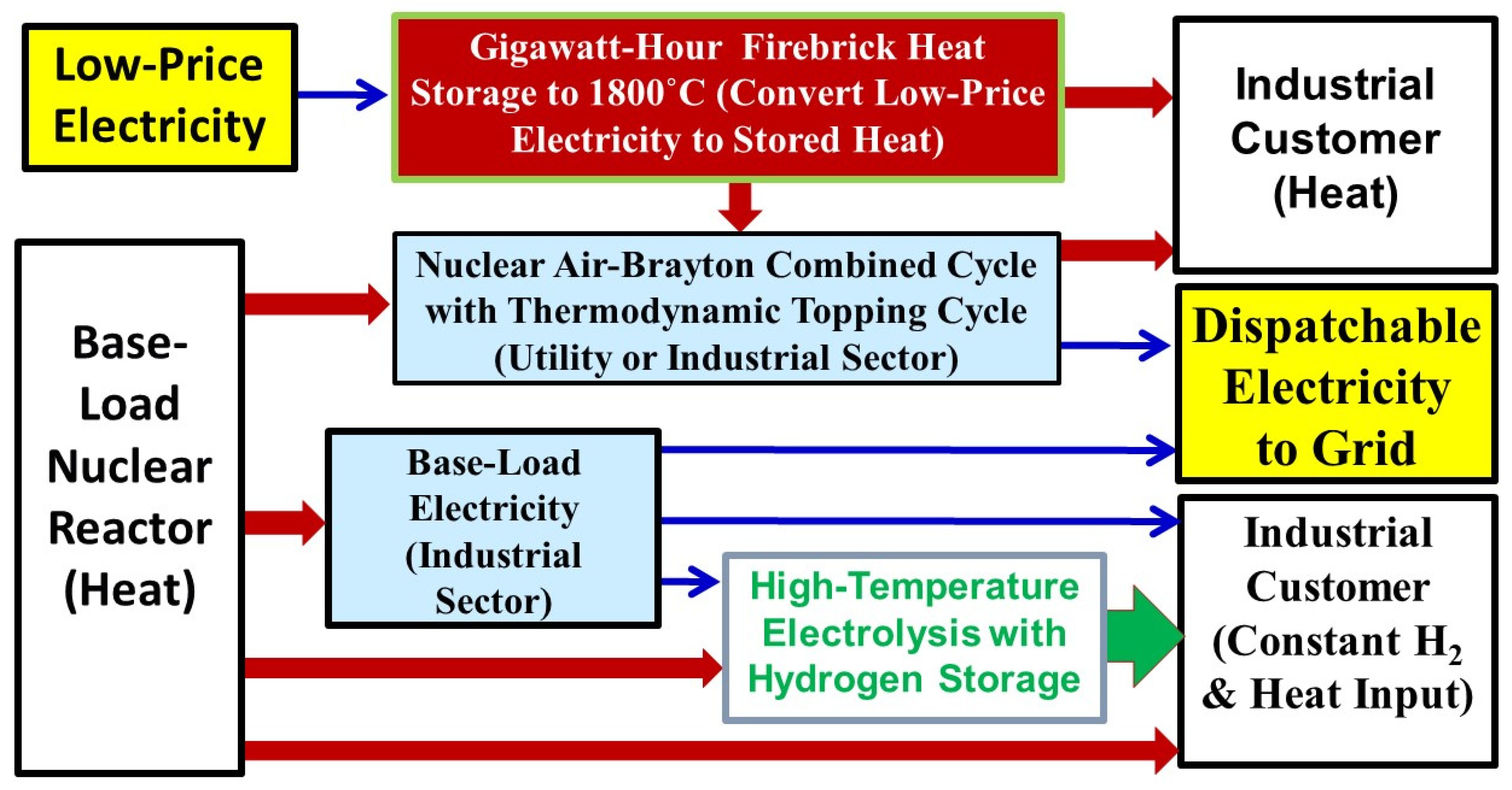
Three partly coupled integrated nuclear energy systems are described. These enable base-load nuclear reactors to provide fully dispatchable electricity without greenhouse-gas emissions, thus replacing gas turbines burning natural gas and batteries storing electricity. These hybrid systems link the industrial sector to the electricity sector. Firstly, electricity-to-high-temperature (1800 °C) gigawatt-hour firebrick heat storage converts low-price electricity to high-temperature stored heat to provide dispatchable heat for industry and power generation. Secondly, Nuclear Air-Brayton Combined Cycles (NACC) with thermodynamic topping cycles using high-temperature stored heat or combustible fuel to provide dispatchable electricity. Peak power output can be two to five times the base-load electricity production. The heat-to-electricity efficiency of the thermodynamic topping cycles exceeds 70%. Thirdly, nuclear hydrogen production for industrial markets enables the production of dispatchable electricity where hydrogen is used for energy storage but not to produce heat and electricity. Base-load nuclear reactors send electricity to the grid and/or electrolyzers for hydrogen production depending upon electricity prices. Low-cost hydrogen storage enables us to meet steady-state industrial hydrogen demands, even though hydrogen and grid electricity production is varied. Hydrogen production for industrial uses (ammonia fertilizer, direct reduction of iron ore to iron replacing coke, cellulosic liquid hydrocarbon biofuels replacing crude oil) may exceed 20% of total energy demand and may be a massive source of dispatchable electricity. The biofuels provide storable energy when heat storage is depleted.
Keywords: nuclear power; dispatchable electricity; firebrick heat storage; hydrogen; hybrid energy systems nuclear power; dispatchable electricity; firebrick heat storage; hydrogen; hybrid energy systems
Graphical Abstract