Review

Prospects of Bioethanol from Agricultural Residues in Bangladesh

by
Islam Mohammed Mahbubul
1,* and
Miah Himan
2
1
Institute of Energy Engineering, Dhaka University of Engineering & Technology, Gazipur (DUET), Gazipur 1707, Bangladesh
2
Department of Mechanical Engineering, Dhaka University of Engineering & Technology, Gazipur (DUET), Gazipur 1707, Bangladesh
*
Author to whom correspondence should be addressed.
Energies 2023, 16(12), 4657; https://doi.org/10.3390/en16124657
Submission received: 21 February 2023 / Revised: 31 May 2023 / Accepted: 7 June 2023 / Published: 12 June 2023
(This article belongs to the Section A4: Bio-Energy)

Abstract

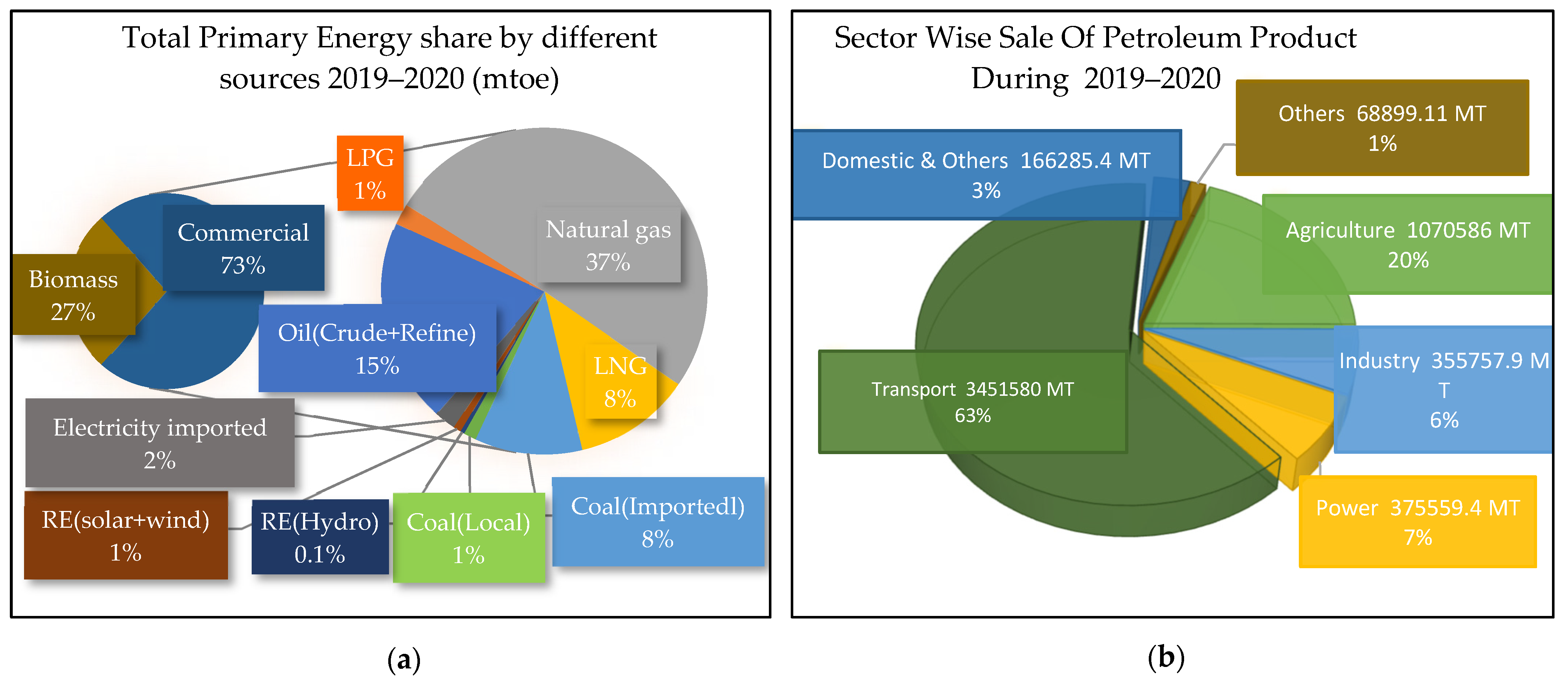
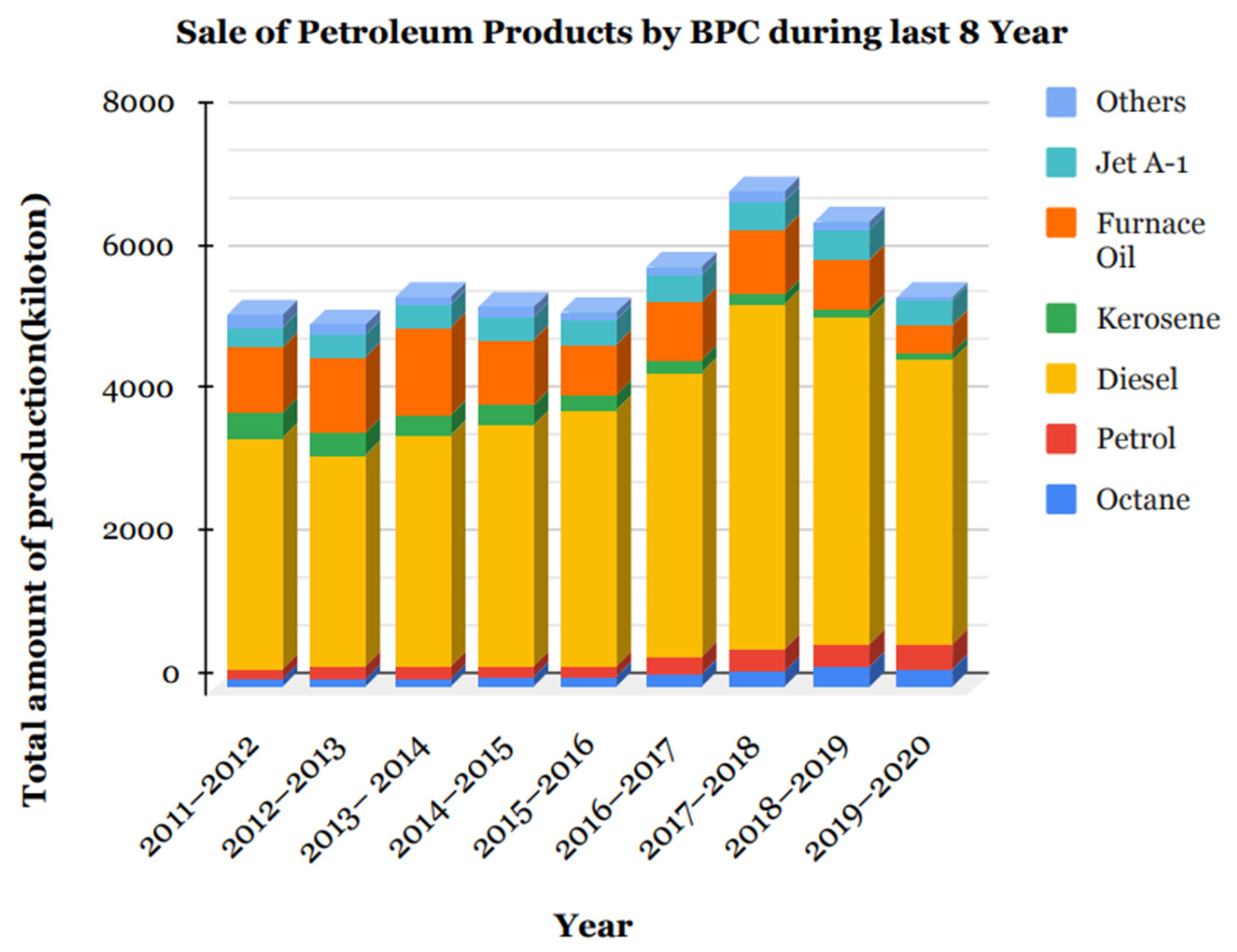
Bangladesh is a middle-income country. With the development of the industrial and agricultural sectors, the demand for petroleum-based fuels in the transport sector has been steadily growing. Diesel, petrol, octane (C8H18), liquid petroleum gas (LPG), and compressed natural gas are mainly used as fuels in the transportation sectors of Bangladesh. The government imports LPG as well as refined, crude, and furnace oil from abroad to meet the country’s growing energy demand. Apart from that, Bangladesh has a shortage of natural gas reserves, which is a great concern. As a result, it is essential to find and use renewable fuel sources. Since Bangladesh is an agricultural country, bioethanol could be the best alternative fuel generated from agricultural residues and waste. Every year, a large amount of agricultural residue is generated in this country, from which a vast amount of bioethanol could be produced. Bioethanol derived from agricultural residue and waste can reduce dependency on fossil resources, reduce fossil fuel’s environmental impact, and improve engine performance. This article comprehensively reviews the bioethanol production potential from agricultural residues and investigates the opportunities and possibilities in Bangladesh. The research outcomes reveal that in the fiscal year 2019–2020, approximately 46.5 million tons of agricultural residue were generated from the available major crops, from which about 19.325 GL (gigalitres) of bioethanol could be generated. This current study also investigates the practical methods of bioethanol production from different agricultural feedstocks and identifies the challenges related to bioethanol production in Bangladesh.
Keywords: renewable energy; waste to energy; biofuel; lignocellulosic biomass renewable energy; waste to energy; biofuel; lignocellulosic biomass