


Abstract
In the context of the ‘carbon peaking and carbon neutrality goals’, renewable energy, with its clean and low-carbon characteristics, has become one of the key driving forces for sustainable development in China. However, the inherent disadvantages of the renewable energy industry, such as high initial investment costs, technical difficulties, and slow returns on investment, make it difficult to compete with traditional fossil energy sources in the market economy at the initial stage of its establishment. Therefore, after considering the environmental and ecological value, economic value, and industrial growth dilemma brought by the development of renewable energy industry, subsidies as a governmental incentive measure were created to support the development and growth of the renewable energy industry. At present, there are many problems with China’s renewable energy subsidy policy in practice, such as fragmented institutional policies, lack of procedural regulations, and lagging subsidy funds. The excellent legislative practice experience of foreign countries can be borrowed by China to make up for the corresponding loopholes and, on the basis of fully examining the specific conditions of China, to promote the progressive reform of China’s renewable energy subsidy system; form a trinity system of law, general strategy, and specific policies; strengthen collaboration; and enhance its scientific level. At the same time, China can actively broaden the sources of subsidy funds, explore diversified financing methods, further standardize the subsidy procedures, strengthen the supervision in implementation, and enhance the efficiency of the utilization of funds, so as to enhance the legalization of the subsidy system.
1. Introduction
With rapid global economic and social development, energy consumption levels are increasing, traditional energy sources represented by fossil fuels are becoming increasingly depleted, and the imbalance between energy demand and supply is widening and is no longer able to meet the needs of production and life. In addition to the excessive dependence on fossil fuels, various environmental problems have arisen as a result, which have a serious impact on global climate change. In China, in addition to important initiatives such as improving energy efficiency and promoting technological change, a significant increase in the share of renewable energy and a fundamental shift [1] in the energy mix are inevitable options to address this issue. In particular, to achieve the carbon neutrality target of 2060, the share of renewable energy in China’s energy consumption may need to be close to 100% [2]. However, the renewable energy industry is limited by the technical difficulties of development, the high initial investment costs and the slow return on capital, making it difficult for the industry to grow on its own and to compete with traditional energy sources in the current market economy. In order to promote the development of renewable energy and its industry, subsidies have emerged as a government incentive. In recent years, under the guidance of the tariff subsidy policy, China’s renewable energy has been able to continue its rapid development. The next step is to promote the market-oriented development of renewable energy, shifting from subsidy-supported development to affordable and low-cost development and from policy-driven development to market-driven development.
2. Overview of Renewable Energy Subsidy Policy
Subsidies are a governmental measure implemented by a country for the purpose of protecting its national economic development on a periodic basis. Renewable energy subsidies, on the other hand, are a strategic energy decision in the current context of national energy security, global climate change, and the transformation of the energy industry.
2.1. Definition of the Concept of Renewable Energy
As an important condition for the economic and social development of a country, the adequacy of energy is directly related to the security of a country. At present, as traditional energy sources such as fossil energy are becoming increasingly depleted with endless extraction and utilisation, reusable energy sources have become the focus of attention for all countries and are seen as the only way to alleviate the global energy crisis.
The definition of the concept of renewable energy varies from country to country. The first definition of the scope of renewable energy was in 1978 in Resolution 148 of the 33rd United Nations General Assembly, which defined its scope as: solar energy, geothermal energy, wind energy, tidal energy, ocean wave and temperature difference energy, biomass conversion, fuelwood, charcoal, peat, livestock energy, oil shale, oil sands, and hydro energy [3]. Its connotation is defined by the Nairobi Programme of Action for the Development and Utilisation of New and Renewable Sources of Energy, adopted at the Conference on New and Renewable Sources of Energy held in Nairobi in August 1981, which distinguishes renewable energy from fossil energy in the traditional sense from a doctrinal point of view and expresses it as a new and renewable energy resource, dependent on new technologies or materials for its exploitation, which is different from conventional fossil energy; a renewable energy resource is sustainable, almost inexhaustible, and can be restored and replenished after consumption, producing no or few pollutants, causing little damage to the environment, and contributing to a virtuous ecological cycle [4]. Specifically, it refers to the process of continuously drawing energy from the original ecology. The International Energy Agency (IEA), on the other hand, defines renewable energy as a form of energy that arises from nature and has its own sustainable mechanisms, replenishing faster than it is consumed [5]. China’s Renewable Energy Law defines renewable energy from a legal perspective as: “renewable energy refers to wind, solar, hydro, biomass, geothermal, ocean and other non-fossil energy sources”. This shows that one of the main characteristics of renewable energy is that it can be recycled and reused, and that it will not be overexploited in the short term.
2.2. Characteristics of Renewable Energy
After defining the concept of renewable energy, it is necessary to further grasp its characteristics in order to explore the development value of renewable energy and to build a legal regime for renewable energy subsidies.
2.2.1. Public Goods Nature
Renewable energy, such as conventional energy, comes from nature and is a public good. A public good is a good that can be enjoyed by all members of society, i.e., everyone has an equal opportunity to consume the public good. In the strictest sense, public goods are non-competitive and non-exclusive. Non-competition means that the marginal cost of providing a public good to a given consumer at a given level of production is zero, and non-exclusivity means that when you enjoy the process of consuming a good, you cannot prevent or hinder others from consuming it. It cannot be attributed to a specific sector. In the case of renewable energies, it is clear that they are a socially shared good and that their ownership cannot be defined, except through technological developments that make them freely tradable in the market and give them the character of a private good.
2.2.2. Renewability
Renewability is one of the keys that distinguishes renewable energy from traditional energy sources and is therefore used by countries as an alternative source of energy. Its renewable nature extends to sustainability. Sustainability is described in the World Conservation Framework as the ability to meet the needs of the present without compromising the ability of future generations to meet their needs. In other words, what can be recycled and reused is sustainable. Solar, wind, and water energy, for example, renew themselves naturally or perpetually with the change from day to night and the cycle of the seasons. As renewable energy is green energy, it can be collected repeatedly, it self-recovers, and the use of renewable energy causes very little pollution to the environment, which is conducive to the protection of the ecological environment.
2.2.3. Instability
Instability is an inherent disadvantage of renewable energy. The instability highlighted here is different from the long-term sustainability of repeated use and is specific to the instability of its energy use over a certain period of time. As the exploitation and use of renewable energy is entirely dependent on nature, it is sensitive to external factors such as the weather, as solar energy is greatly influenced by the weather, and rainy weather and other times of insufficient light lead to indirect and discontinuous energy use, which is highly variable and not stable enough. The problem of saving renewable energy has not yet been fully solved, so the supply of energy may be discontinuous for a short period of time. However, this problem is expected to be improved in the future through technological development and innovation in order to enhance its stability.
2.3. Definition of the Concept of Renewable Energy Subsidies
The definition of the concept of ‘subsidy’ is not yet universally agreed upon. It is also understood differently by different disciplines. In the legal sense, a ‘subsidy’ is an act by the government to provide funds to enterprises, projects, etc., that require appropriate assistance from the government for the benefit of the public [6]. In international law, the term “subsidy” is used in the Agreement on Subsidies and Countervailing Measures to refer to the granting of certain financial compensation or tax assistance by government departments or national public utilities to eligible enterprises, thereby causing direct or indirect damage to the interests of other members to a certain extent. Subsidies are referred to in our Countervailing Regulations as a phenomenon whereby government departments or public utilities in the exporting country grant certain price subsidies or indirect financial support to enterprises that meet certain conditions, thereby enabling them to obtain additional benefits.
In the case of subsidies for renewable energy, the author believes that the essence of “subsidies” is quoted, that is, through financial means, to develop renewable energy enterprises, special price management, appropriate cost compensation, etc., to alleviate the pressure of the development of enterprises and to help enterprises to tide over the difficulties of the initial stage in order to promote the prosperous development of the renewable energy industry. This kind of subsidy is based on the legal rights and obligations formed under the financial support of the public authority.
2.4. Classification of Renewable Energy Subsidies
The aforementioned has made it clear that the development of renewable energy requires not only technological support but also a large amount of initial capital investment, which makes it difficult for enterprises to break through on their own and therefore requires special treatment from the government, such as special incentives and targeted financial support to help the market form a renewable energy industry chain.
The United Nations Environment Programme’s Energy Subsidy Reform published in 2008 classifies energy subsidies into five categories: tax incentives, trade restrictions, direct fiscal transfers, direct service provision, and policy support for the energy sector [7]. However, the scope of subsidies here is broad, including subsidies for traditional energy sources and new energy sources, of which renewable energy is a type.
Specifically for renewable energy subsidies, they can be divided into two categories in terms of content: broad subsidies and narrow subsidies. In a broad sense, renewable energy subsidies refer to all relevant incentives in the renewable energy sector, such as tax breaks, financial subsidies, low-interest loans, price subsidies, and subsidies for the construction of electricity feed-in tariffs. In contrast, renewable energy subsidies in a narrow sense refer only to government financial subsidies in this field [8].
From the perspective of the production chain, the renewable energy production chain is interlinked, and its subsidies can be divided into production subsidies, distribution subsidies, and consumption subsidies. Production subsidies are granted to renewable energy producers as part of their initial investment in order to ease the pressure of start-ups and subsequent development and to increase their competitiveness with the traditional energy industry. Distribution subsidies are subsidies for the distribution of renewable energy products to ensure the supply of products and business operations. Consumer subsidies are direct incentives for consumers to increase their purchasing power for renewable energy products by regulating the supply side and meeting their demand for energy consumption and affordability [9]. From the perspective of subsidy means, it can be divided into industry subsidies, catalogue subsidies, and special subsidies [10].
3. Analysis of the Need for Renewable Energy Subsidy Policies
Based on the aforementioned advantages and disadvantages of renewable energy, it is necessary to subsidise it appropriately, mainly because of its climatic and economic value, as well as the fact that subsidies are one of the means to promote the structural transformation of a low-carbon economy and to achieve sustainable development.
3.1. Analysis of the Need to Develop Renewable Energy
3.1.1. The Development of Renewable Energy Is an Important Step to Protect the Ecological Environment
Since the industrial revolution, traditional fossil energy has provided the original impetus for economic and social development, propelling human society into modern civilisation. However, on the other hand, this has also brought about many environmental problems, such as the carbon dioxide emitted from the burning of fossil fuels, which is one of the main causes of haze; the sulphur dioxide emitted, which is the cause of acid rain; and the massive and uncontrolled mining of ores, which has caused soil erosion and damage to the geological structure, seriously threatening the ecological environment in and around mining areas. The most obvious is global climate change, with the use of fossil fuels accounting for two-thirds of man-made greenhouse gas emissions, according to authorities [11].
The renewable nature of renewable energy sources can alleviate ecological pressures and has some environmental value. As renewable energy is mostly clean energy, its environmental pollution emissions are very low. In contrast to high-emission fossil energy, developing renewable energy and optimising the energy structure can reduce pollution and damage to the environment and help restore damaged ecosystems. Secondly, the development of renewable energy is currently the best option for all countries in the world to jointly address climate change. The goal of reducing greenhouse gas emissions while pursuing development can only be achieved through the development of renewable energy.
3.1.2. Development of Renewable Energy as a Driving Force for Structural Transformation of the Economy
Energy is the basic driving force of modernization and an important material basis for the development of human society. However, the storage capacity of traditional fossil energy is limited, and its extraction and use usually follows a “bell curve” model, which means that there is a peak, and when the limited fossil energy reaches its peak, it will show a downward trend, which will affect the supply of production and life. It is therefore inevitable to promote the energy transition and seek clean energy alternatives, not only for long-term energy security but also to stimulate a green economic recovery. The ‘renewable’ nature of renewable energy can, on the one hand, solve the problem of energy depletion caused by the finite nature of fossil energy, and on the other hand, reduce the dependence of fossil-energy-poor countries on energy imports and build an independent and secure energy structure. Fossil energy sources, mainly coal and oil, are controversial in terms of energy security and energy access. The low-carbon energy transition has been a major trend in energy governance. New energy sources represented by wind, solar, and biomass energy have become the key areas of energy transformation. The transformation of energy structure is an important barrier to the secure and stable supply of energy in China [12]. With the development of technology, the economic and social value of renewable energy is significant and the development of renewable energy will also provide a large number of jobs, as noted in an article by the Union of Scientists: “The renewable energy industry is more labour-intensive than mechanised and capital-intensive fossil fuels. Solar panels require manpower to install and wind farms require technicians to maintain them. Thus, on average, renewable energy sources create more jobs per unit of electricity produced than the fossil fuel industry”.
3.1.3. The Development of Renewable Energy Is an Inevitable Choice to Meet International Obligations
Climate change is one of the most serious challenges facing humankind and has already brought serious adverse impacts and risks to humankind, which are transmitted from natural ecosystems to economic and social systems in a “risk cascade” manner, posing a serious threat to people’s lives and property. In 2015, nearly 200 parties reached the Paris Agreement at the Paris Climate Change Conference, which is a landmark agreement in the field of international environmental law, defining the “hard targets” for implementing environmental protection and addressing climate change. It is a milestone in the field of international environmental law. The development of renewable energy for energy conservation and emission reduction is an inevitable choice for the international community to take responsibility for the existing energy structure and the serious damage caused to the environment by the use of fossil energy.
3.2. Analysis of the Need for Subsidies for Renewable Energy
The previous analysis of the need to develop renewable energy shows that it is imperative to increase the share of renewable energy research and development and to promote the transformation of the energy mix but that subsidies are also necessary due to the inherent disadvantages of the sector. The most important of these is based on externality theory.
Externalities are a concept in economics that are generally explained as the effects of an action of an economic agent on a third party with whom it has no relationship. According to Samuelson’s definition, the theory of externality can be explained as an economic agent’s impact on other agents in its economic activity which is not included in the cost of market transactions. A person’s behaviour has a positive externality if the benefit to him personally is less than the social benefit caused by the behaviour; if the cost to him personally is less than the social cost caused by the behaviour, then his behaviour has a negative externality. If the cost to the individual is less than the cost to society, then the behaviour is a negative externality [13].
In the energy sector, this is reflected in the negative externalities associated with the use of traditional fossil fuels and the positive externalities associated with the use of renewable energy. Fossil energy has always been a major driver of productivity, but at the same time, it has caused unrecoverable damage to resources and the environment, which is a negative externality of traditional fossil energy use, but this external cost is not fully accounted for in the cost of the finished product. Renewable energy is far less polluting to the environment than fossil energy, and with its clean, renewable characteristics, it can compensate for the environmental damage caused by fossil energy and alleviate the imminent energy crisis. However, these advantages do not bring additional benefits to the production and use of renewable energy itself, i.e., the initial R&D, development, and other costs invested in sustainable development do not yield an effective economic return. It is well-known that modern markets allocate resources through the behaviour of each rational economic person seeking to maximise his or her individual interests, so when externalities exist, the outcome of market allocation of resources is often not optimal from a social perspective [14]. For example, in the electricity sector market, relatively cheap thermal power generation is preferred by consumers over electricity generated by clean and environmentally friendly but costly renewable energy sources. Based on the effect of externalities, the market becomes dysfunctional in regulating the allocation of resources, and with the asymmetry between benefits and costs, renewable energy is far less competitive than traditional energy sources.
Therefore, internalising the positive externalities of renewable energy is the key to subsidies. Economic theory suggests that government intervention is necessary when the market is unable to deal with such externalities. According to the ‘beneficiary pays’ principle, subsidies for the renewable energy industry can be used to reduce the production and operating costs of renewable energy enterprises, and subsidies to consumers of renewable energy can be used to reduce the market price of renewable energy products and expand the consumer market, thus increasing the revenue for renewable energy enterprises and bringing the benefits of renewable energy to the environment. The positive externalities of the environmental benefits of renewable energy enterprises are internalised. At the same time, the costs of traditional fossil energy companies will be raised through environmental taxes, such as the “polluter pays” principle, which will promote a change in production methods and increase energy consumption rates, thus internalising the negative externalities of traditional fossil energy. Ultimately, the price difference between the negative externalities of traditional fossil energy use and the positive externalities of renewable energy use will be reduced.
4. Current Situation and Problems of the Legal System of Renewable Energy Subsidy Policy in China
4.1. Sorting Out the Legal Regime of Renewable Energy Subsidy Policies
According to the legislative system stipulated in China’s constitution and legislative law, there are six levels of legal validity, which are, in descending order, the constitution, basic law, general law, administrative regulations, local laws, and administrative rules. The significance of the legal ranking arrangement is that, in legislation, the higher law can be used as the legislative basis of the lower law; in the application of law, if the lower law conflicts with the provisions of the higher law, the higher law must be applied. This is no exception in the field of renewable energy. China has gradually formed a system of renewable energy regulations and some more effective legal systems [15]. However, no specific legislation on renewable energy subsidies has been introduced but is instead mostly found in various departmental regulations and normative documents. Moreover, the legal status of renewable energy subsidies is relatively low, and the framework of a systematic subsidy system has not yet been constructed. Therefore, the legal system in this section refers to the “law” in a broad sense. The details are shown in Table 1 and Table 2 below.
Table 1.
List of renewable energy subsidies laws and regulations in China.
Table 2.
List of Renewable Energy Plans.
4.1.1. Laws Related to Renewable Energy Subsidies
The Renewable Energy Act is the highest-ranking law in the renewable energy subsidy regime. It has undergone one amendment, and supporting policies such as renewable energy subsidies are constantly being adjusted. At present, the settlement cost of renewable energy feed-in tariff is divided into two parts, one part of the cost is calculated according to its feed-in tariff and the benchmark tariff of coal-fired units in the province where it is located, and the other part of the cost is the state subsidy fund, which can only be obtained after it is included in the national subsidy catalogue and the relevant funds are allocated to the grid enterprises by the finance department. In addition, the Energy Conservation Law also mentions the use of state financial subsidies, pricing policies, taxation policies, and special fund incentives to encourage the development of new energy sources, ensure the safe development of energy in China and meet the basic needs of people’s lives. In the field of electricity, the Electricity Law, through the “Electricity Price and Tariff”, directly regulates the feed-in tariff of power generation enterprises under special circumstances by the State Council, and makes basic regulations on the mutual supply tariff, sales tariff, classified tariff, and time-sharing tariff of power generation enterprises, providing a legal basis for the renewable energy feed-in tariff and sharing mechanism. In addition, the Budget Law also has an impact on the system of renewable energy subsidies. Although the Budget Law does not directly regulate renewable energy subsidies, the two are closely related, as most of the renewable energy subsidies come from the special funds for renewable energy development. The Budget Law, as the superior law of the Interim Measures for the Management of Special Funds for Renewable Energy Development, has a guiding role in regulating renewable energy subsidies and is also of great value in constructing the renewable energy subsidy system.
4.1.2. Policies Related to Renewable Energy Subsidies
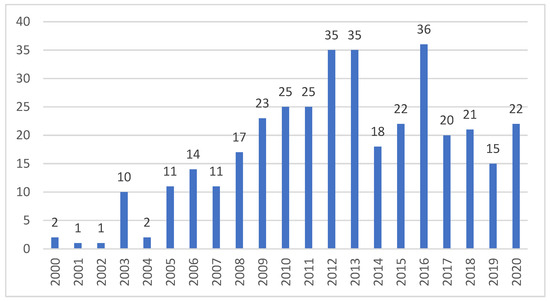
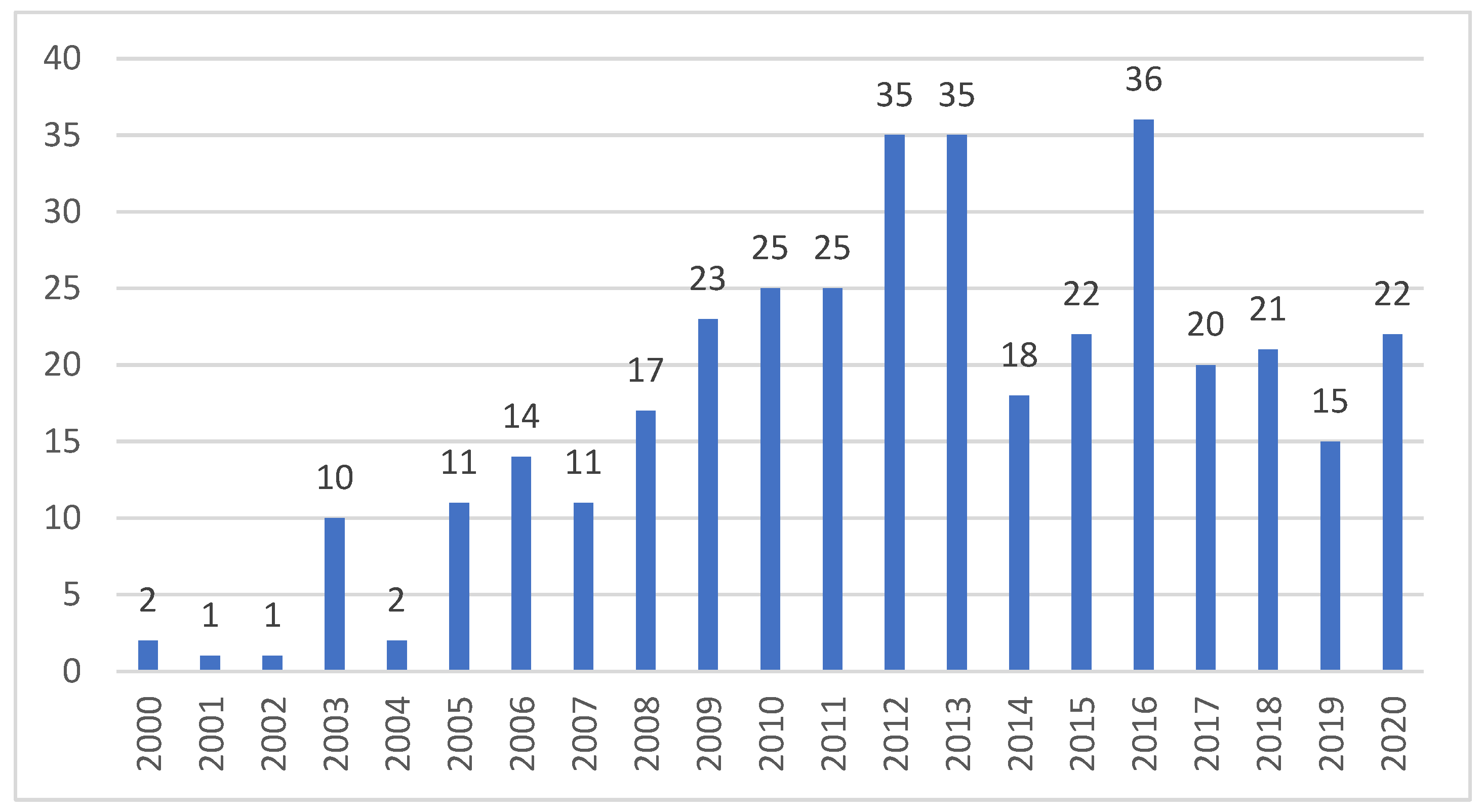
China has long been concerned about the development of the renewable energy industry and has introduced a series of policies from renewable energy industry planning, policy support, and fund allocation and use to actively promote the development of renewable energy. The details are shown in Figure 1.
Figure 1.
2000–2020 central institutions on renewable energy policy situation. Note: The data in the figure are from the BYU Law Database.
In order to meet energy demand and promote energy conservation and emission reduction, the Medium and Long-term Development Plan for Renewable Energy in 2007 clarified the general objectives for the development of the renewable energy sector in the next fifteen years, through the implementation of a fixed tariff acquisition system, a mandatory market quota system, increased investment subsidies for renewable energy, and the expansion of tax concessions, in order to increase the proportion of renewable energy in energy consumption. In 2022, the National Development and Reform Commission and the Energy Bureau proposed in their Opinions on Improving Institutional Mechanisms and Policy Measures for the Green and Low-carbon Energy Transition to establish a national unified electricity market system on the supply side, improve the electricity trading mechanism that favours the priority use of renewable energy, and establish a national electricity market system on the demand side. On the supply side, the National Development and Reform Commission and the Energy Bureau proposed to establish a national unified electricity market system, improve the electricity trading mechanism that favours the priority use of renewable energy, and explore the establishment of a market-based demand response compensation mechanism on the demand side.
In order to improve the efficiency of the use of renewable energy development funds, the State Council and the Ministry of Finance have issued measures involving the collection and use management of renewable energy development funds and the management of renewable energy tariff surcharge subsidy funds in accordance with the Renewable Energy Law, making detailed provisions on the collection, use, management, and supervision of funds related to renewable energy development. However, these legal provisions belong to the same legal level and only stay at the level of temporary measures, with lower legal effect and less stability. The 2022 Implementation Plan on Promoting the High Quality Development of New Energy in the New Era clearly points out the need to improve the financial and fiscal policies to support the development of new energy, optimise the use of financial funds, improve financial-related support measures, and enrich green financial products and services.
4.2. Problems with the Renewable Energy Subsidy System
4.2.1. Inadequate Institutional System
The regulations related to renewable energy subsidies in China are scattered among various types and levels of laws, regulations, and policy documents, and a unified and complete system has not yet been constructed. For example, the system of renewable energy tariff subsidies has both overall provisions made by the Electricity Law and specific special provisions designated for different types of renewable energy, and there is a certain conflict of application. Moreover, the provisions of the law on the renewable energy subsidy system are too principled and vague, mostly oath provisions lacking practical operability; the provisions of various normative documents are rather one-sided and uneven in content, so if you want to grasp a system completely, you need to sort out various relevant documents and integrate various fragmentary provisions, which is against the systemic requirements of system construction and is not conducive to the understanding and application of relevant subjects. In addition, there are many departments promulgating relevant documents, which will easily lead to a situation of “nine dragons ruling the water”, bringing certain difficulties to the systemic development and specific application of the system. In addition, the various measures and systems currently in place for the renewable energy industry are complex, and their modes of operation and roles may even overlap [16].
4.2.2. Insufficient Institutional Coercion
Energy law and energy policy are two of the most important institutional tools for energy development and use in China, and they are intertwined, coupled, and symbiotic. In the field of renewable energy subsidies, the number of laws is much smaller than that of policies, in which the laws on renewable energy subsidies are mostly based on principles, while the policies are more specific. Throughout the renewable energy subsidy policies, most of them are based on temporary measures, which are not high level, stable enough, nor transparent enough, thus affecting the implementation effect of the system. In addition, the connection between laws and policies is not completely close, which is not conducive to the establishment of a long-term institutional mechanism for renewable energy development. At the same time, the content of various specific policy documents is rather disorganised, with multiple departments issuing separate documents, resulting in a lack of overall framework and global planning and a weak interconnection between them.
4.2.3. Unclear Procedural Provisions
A glance at the institutional systems of other countries shows that there is a unity of substance and procedure. A scientific and efficient system should be an organic unity of substantive and procedural content. In contrast, the legal systems or policies currently in place in China rarely involve procedural content, and if they do, they are mostly based on principles. The impact on enterprises and consumers is more direct in this case [17]. China’s renewable energy subsidy system is policy-based, with a weak system and a lack of transparency, and a lack of procedural requirements that could further undermine the effective implementation of the policy.
In addition, the existing system lacks an effective evaluation and monitoring mechanism for the payment of renewable energy subsidies, which does not provide timely feedback on the extent to which the payment of subsidies has promoted renewable energy and its industry, and thus does not allow for accurate predictions on how much to pay and when to reduce or stop payment, which is not conducive to the scientific development of the withdrawal mechanism of renewable energy subsidies. At the same time, there is a lack of a system for evaluating and monitoring renewable energy development funds, with no specific laws or regulations and monitoring methods scattered throughout various legal documents. Usually, the monitoring of the development fund mainly relies on annual audits and occasional inspections by the Ministry of Finance, which is a single form of monitoring, resulting in a lack of monitoring strength and a failure to form a diversified monitoring mechanism to achieve the essential goal of supervision.
4.2.4. Outstanding Problem of Subsidy Fund Arrears
After the promulgation of a series of policy documents, the implementation effect may not be as effective as expected, as in the case of new energy subsidy arrears that cannot be met [18]. China’s current renewable energy subsidies are relatively limited, resulting in the rapid development of the industry in recent years, while also facing the constraints of subsidy arrears. Since 2016, the development of the renewable energy industry has entered an explosive phase, and although the tariff surcharge standard has been raised, it is difficult to catch up with the speed of new installations, and the funds received are lower than the actual demand for subsidies. In addition, it is difficult to collect all the electricity price surcharge, and the perennial collection rate of captive power plants and local power grids for electricity is less than 85%, resulting in a widening renewable energy subsidy gap. By the end of 2021, the total subsidy arrears for renewable energy generation will be around RMB 400 billion [19]. Continuity and stability of funding are prerequisite for an effective subsidy system, and “only adequate renewable energy subsidy funding can attract sufficient resources to the renewable energy sector”.
Article 24 of the Renewable Energy Law defines the sources of renewable energy development funds as: “including the special funds arranged by the State and the additional income from renewable energy tariffs collected in accordance with the law”, which has expanded the sources of renewable energy subsidies in China compared to 2005, but there is still room for further development of policy innovations, such as expanding the sources of renewable energy subsidies, such as to local finance, NGOs, and the public, that needs to be further explored.
5. Review of the Legal Practice of Renewable Energy Subsidy Systems in Foreign Countries
5.1. Renewable Energy Subsidy System in the USA
The United States, as one of the largest countries in terms of energy storage and consumption, has developed its own legal system for the development of renewable energy and its industry—a combination of federal and state laws, a holistic framework and specific legislation to fill the gap, reflecting the respect for the market allocation of resources.
In the US federal energy law system, the National Energy Act of 1978 focuses on reducing dependence on imported oil through the use of various types of energy, the improvement in energy efficiency, the promotion of energy conservation, and the development of alternative energy sources, while the Energy Security Act of 1980 reflects the shift from conventional fossil energy legislation to renewable energy legislation. The Energy Policy Act 1992 provides support for the development of the renewable energy industry in terms of tax measures through the production tax credit and the investment tax credit. The Energy Policy Act of 2005 and the Energy Independence and Security Act of 2007 both focused on the renewable energy sector, incorporating subsidies for residential renewable energy equipment purchases. In 2009, the American Recovery and Reinvestment Act added “cash subsidies for investment projects” [20], of which the funds directly allocated to clean energy investments amounted to USD 60 million [21]; set up a financing guarantee system; and included both domestic and foreign companies in the US as targets for subsidies. Moreover, the US Clean Energy Security Act specified national emission reduction targets and required that renewable energy sources in each US state must meet more than 15% of the electricity supply by 2020. Following the enactment of these two Acts, the clean energy sector has become one of the key areas to reinvigorate the US economy, and the US clean energy sector has seen historic, groundbreaking, and leapfrogging development. In the US renewable energy legal regime at the federal level, production taxes, investment tax credits, and cash subsidies are the main types of subsidies.
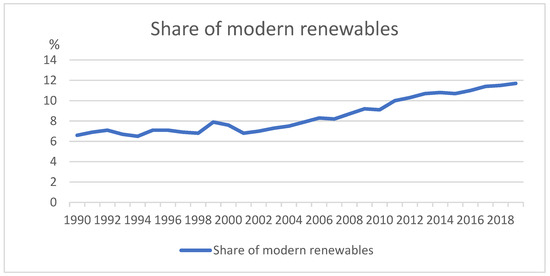
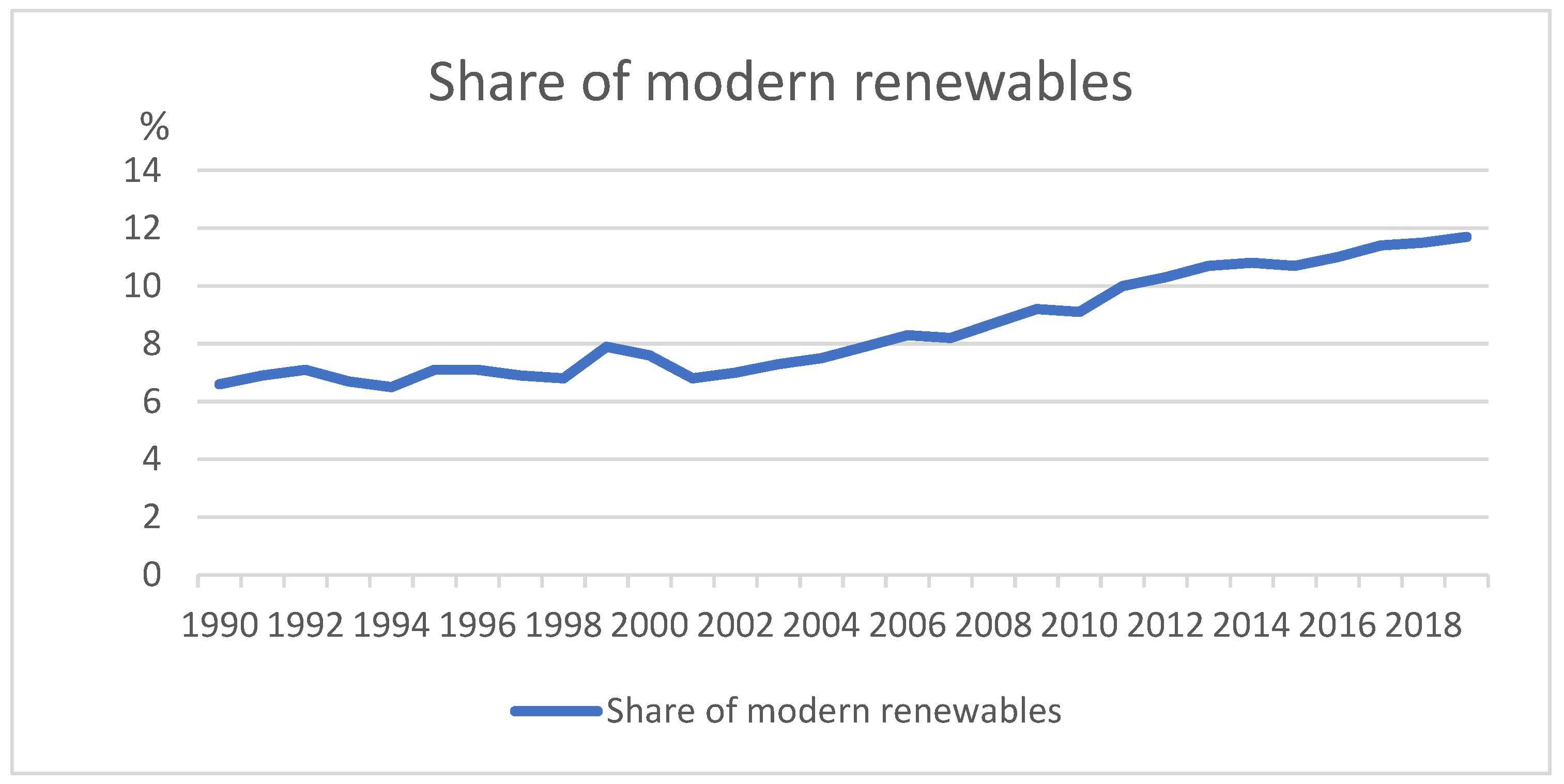
State laws also contain provisions relating to renewable energy subsidies, the most typical of which is the Renewable Power Set-Aside System (RPS). RPS systems are typically regulated and marketed using renewable energy ‘certificates’ that register units of qualifying renewable electricity [22]. The RPS is a system in which electricity companies can purchase ‘certificates’ to meet quota requirements [23]. This initiative has achieved the goal of ensuring a share of renewable electricity through government intervention, while also giving full play to the role of the market in allocating resources to promote renewable energy development in an efficient market manner, mobilising the dynamics of both the government and the market. It is also reflected in the statistics from the International Energy Agency, where the share of renewable energy in final energy consumption is growing. The details are shown in Figure 2.
Figure 2.
Renewable share (modern renewables) in final energy consumption, North America 1990–2019. Note: The data in the figure are from IEA Sustainable Development Goal 7 https://www.iea.org/reports/tracking-sdg7-the-energy-progress-report-2021, (accessed on 1 September 2022).
5.2. Renewable Energy Subsidy System in Germany
Germany is also one of the largest consumers of energy and has gradually developed a comprehensive system for the development of renewable energy sources in order to break away from its dependence on traditional fossil energy sources. The Energy Industry Act (EIA) is the basis for the German energy law system, together with the related energy legislation. The German legal system for renewable energy is constantly being updated to keep up with the times.
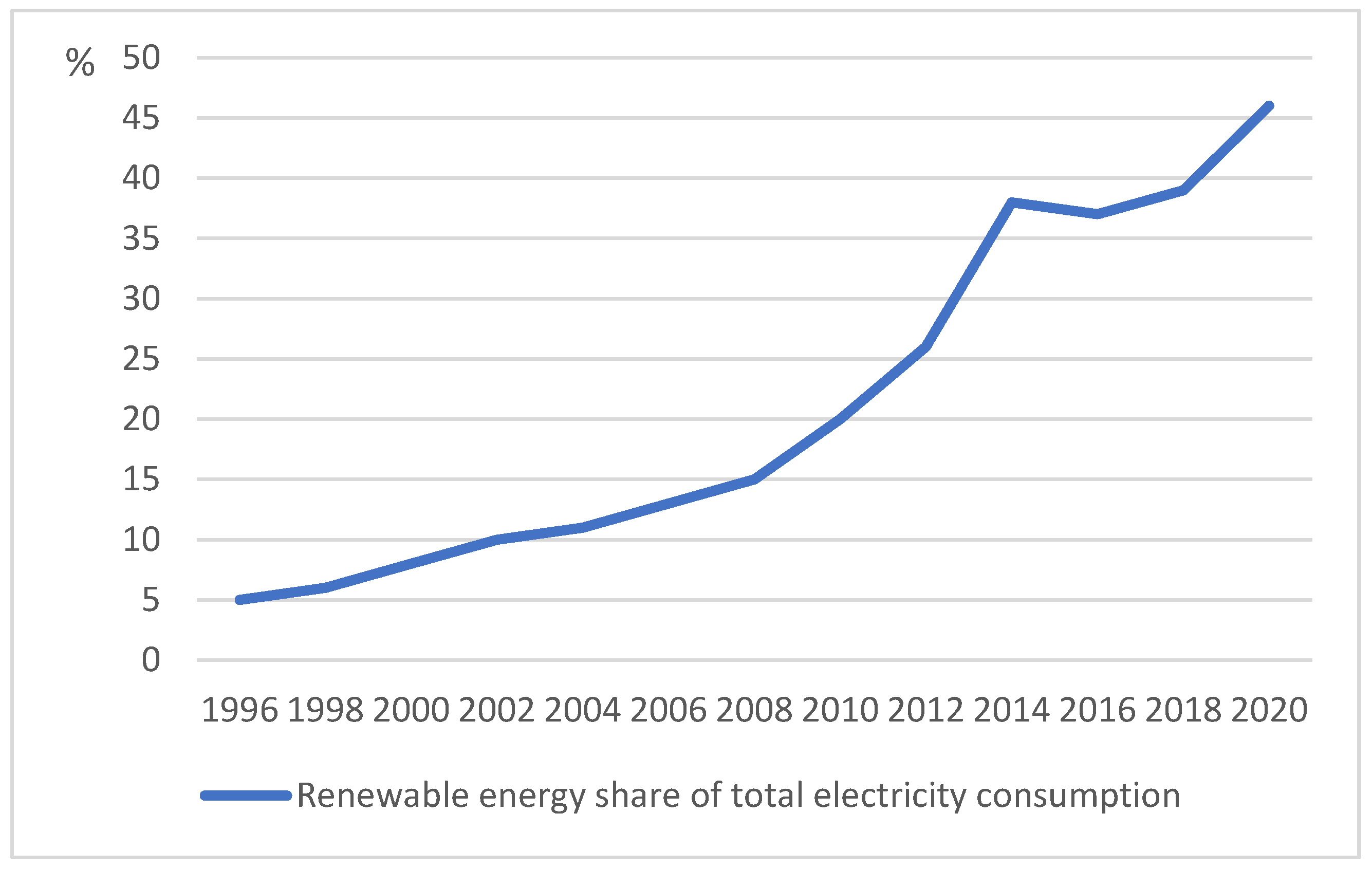
The Electricity Transmission Act of 1991 provides for a fixed tariff system, followed by the Renewable Energy Priority Act of 2000, which sets out clear requirements for this system, giving long-term investors confidence by fixing a mandatory subsidy for the purchase and sale of electricity and fixing the price of electricity from renewable energy sources by force of law, which allows the government, through price incentives, to enable electricity suppliers to effectively estimate costs and revenues. The government has also made it possible for “green electricity” to be sold on the grid. The Renewable Energy Law has been amended six times since then, setting different subsidised prices for various renewable energy sources and making corresponding adjustments in real time according to real needs, with a decreasing trend of subsidies in general, especially for the relatively mature renewable energy industry [24]. The eco-energy tax has been set up to gradually balance the costs of the renewable energy industry and the traditional fossil energy industry. Since the 2017 revision, a tendering process has been introduced, thus changing the previous national pricing system for renewable energy subsidies and integrating it more into the competitive market system. The 2020 revision bill shows Germany’s determination to promote the market-oriented development trend of renewable energy, with market-driven development being the main focus. In addition, the 2018 German Comprehensive Energy Act also matches the Renewable Energy Act, placing emphasis on the development and promotion of renewable energy and the market-based development of renewable energy. In this context, there has been a tremendous increase in the share of renewable energy in total electricity generation, as shown in Figure 3.
Figure 3.
Germany’s renewable electricity contribution in 2020 [25].
5.3. Renewable Energy Subsidy System in Japan
Japan does not have an abundance of energy resources, and since the nuclear meltdown, the country has been developing renewable energy sources and gradually increasing the types of energy sources it uses in order to move away from energy import dependence. The development of renewable energy in Japan cannot be separated from the high priority it places on strategic planning [26]. Japan’s subsidy system on renewable energy is based on the Basic Law on Energy Policy as the core, supported by specific supporting policies.
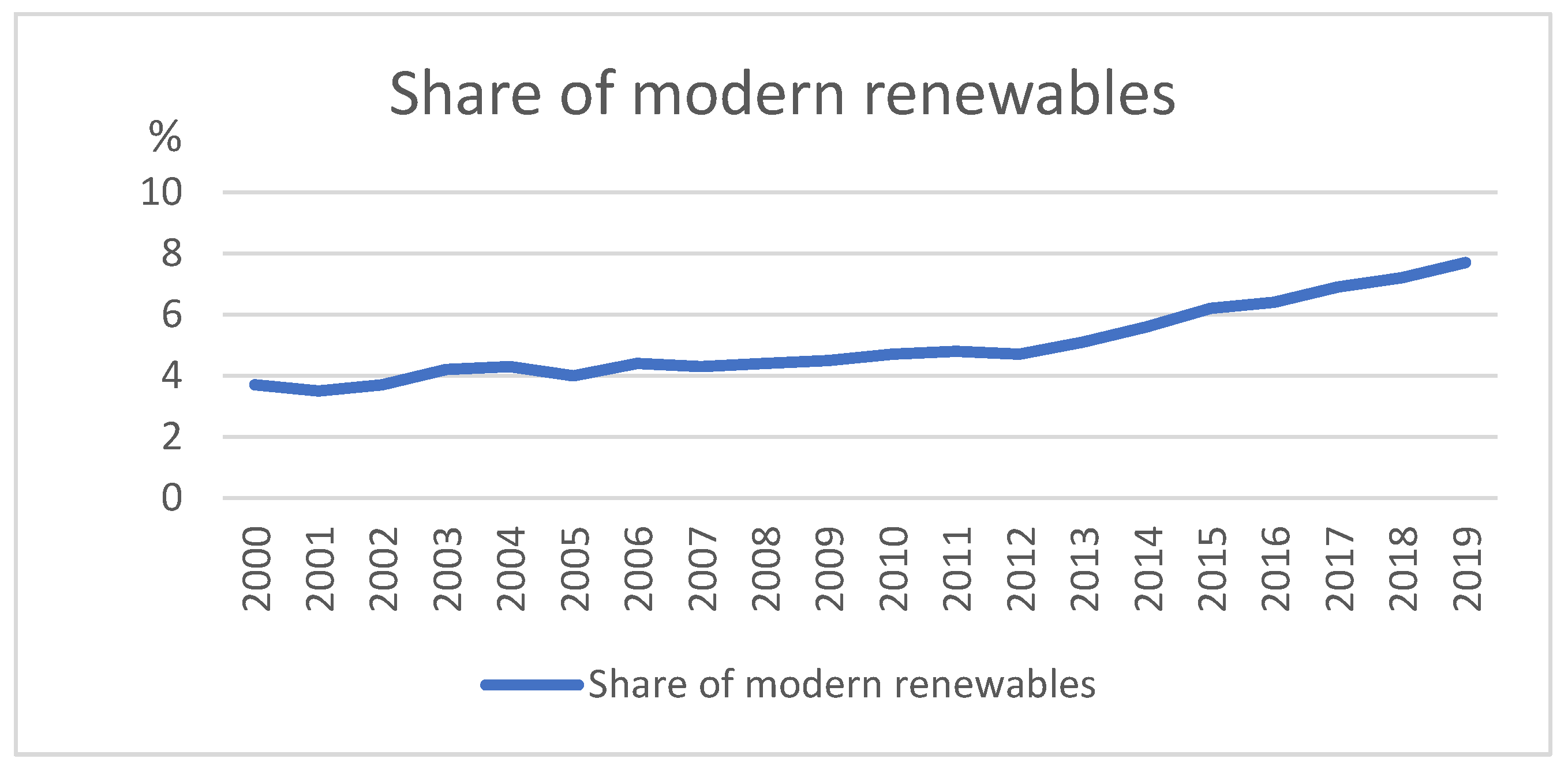
The Law on the Promotion of the Development and Introduction of Alternative Energy Sources from Petroleum of 1980 (renamed the Law on the Promotion of the Development and Introduction of Non-Fossil Energy Sources in 2009) initiated the exploration of the legal system for the development and utilization of renewable energy sources. Article 10 of the Act stipulates that “the business of the New Energy and Industrial Technology Development Agency, an independent administrative body, to promote the use of new energy, etc., shall include the provision of debt guarantees for the funds necessary for the use of new energy, etc., by certified operators in accordance with the certified utilization plan, and the business incidental thereto”. The Basic Law on Energy Policy of 2002 specifies in its “Legal Measures” that “in order to implement policy measures on energy supply and demand, the government must take the necessary measures in legal, financial or fiscal terms, as well as in other areas and other necessary measures” [27]. The same year, the Act on Special Measures for the Utilization of New Energy by Electricity Operators, etc., also adopted the US RPS system, and in 2011, a fixed tariff subsidy system was added for renewable energy power. 2010′s Act on the Promotion of Businesses that Develop and Manufacture Energy-Environmentally Adapted Products provides institutional support for companies that develop and manufacture products adapted to new energy sources [28]. These initiatives have effectively contributed to the growth in the share of renewable energy in final energy consumption in Japan, as shown in Figure 4.
Figure 4.
Renewable share (modern renewables) in final energy consumption, Japan 2000–2019. Note: The data in the figure are from IEA Sustainable Development Goal 7 https://www.iea.org/reports/tracking-sdg7-the-energy-progress-report-2021, accessed on 1 September 2022.
5.4. Summary
A review of the legal regimes for renewable energy subsidies in the above three countries shows that the legal regimes for renewable energy subsidies in developed countries are all structured in a systematic way: a basic law is the core, supplemented by individual laws or legal codes to regulate specific aspects. In addition, the substantive and procedural content of the renewable energy subsidies laws are constantly evolving. Subsidy standards have evolved in line with the development of the market and the industry and have eventually converged in the direction of marketisation. In the context of the ‘carbon peaking and carbon neutrality goals’, China needs to further improve the existing renewable energy policy system in order to achieve the goal of large-scale, high-ratio, market-based, and high-quality development of renewable energy [29] and to address the uncertainties and challenges of renewable energy development. Renewable energy subsidy policies can be used to influence the energy consumption structure and the industrial structure to promote the low-carbon transformation of industries. For example, tariff control policies, RPS, and other consumption guarantee policies can help promote the consumption of renewable energy and reduce fossil energy consumption [30]. Relevant policies can promote the optimisation of energy dispatch and increase the efficiency of renewable energy facilities utilisation, grid connection rate, penetration rate, and market demand [31,32,33], thus promoting the energy consumption structure of industry to low carbon and facilitating the low carbon transformation of industry.
6. The Path of Improving the Legal System of China’s Renewable Energy Subsidy Policy
Against the backdrop of the accelerated energy transition and the achievement of the carbon neutrality target [34], renewable energy in China is developing rapidly, with strong government policy support, and production costs continue to fall. However, there is no denying that there are still many problems with China’s renewable energy subsidy system, such as the lack of a systematic system, the lack of protection of the compulsory power of the subsidy measures, and the difficulties of consumption in the face of subsidy arrears. It is necessary to improve the system because of the importance of renewable energy in protecting the environment and achieving sustainable economic and social development.
6.1. Clarifying the Position of Law and Policy
Renewable energy laws provide a macro-level framework of principles, while policies add to the institutional framework to guide the market activities of the renewable energy industry from a detailed point of view. As two different institutional tools, renewable energy law and renewable energy policy both play an important role in issues such as energy use, energy security, and environmental protection, and they both have irreplaceable functions and values. Therefore, in order to rationalize the relationship between the two, we can learn from Japan’s practice and include in the basic law the introduction of a national-level renewable energy development strategy every few years, and then introduce and modify specific renewable energy policies according to the national-level renewable energy development strategy, forming a trinity of law, overall strategy, and specific policies. At the same time, it is possible to track the effects of the implementation of renewable energy subsidy policies, and on the basis of adequate research and evaluation of its necessity, transform the policies into local laws to enhance their compulsory power.
6.2. Advancing the Development of Policy Systems
At the present stage, China’s renewable energy subsidy system is complicated and fragmented. The author believes that the development of the policy system can be promoted by systematically sorting out China’s renewable energy subsidy policies, raising the threshold for the promulgation of renewable energy subsidy policies, and adhering to the prudent attitude of “not issuing unless necessary”. The first is to do a good job of sorting out the policies, clarifying the ranking and interrelationship between policies, eliminating any contradictions or policy gaps, and laying the foundation for the construction and development of the policy system. For example, the application, examination, and issuance procedures for the same type of renewable energy subsidies can be relatively unified, and the missing elements of the renewable energy subsidy assessment mechanism in the existing policies can be filled in. By focusing on a phased approach, precise policies can be implemented to strengthen policy synergy and promote the high proportion of renewable energy consumption and quality development [35]. Secondly, efforts should be made to enhance the scientific level of policies. The prerequisite for the formulation of relevant policies is to conduct extensive field research and listen to the views of various parties, including stakeholders, NGOs, relevant experts, and scholars to ensure that the policies meet objective and practical needs. At the same time, it is also crucial to improve the stability of the policy. Before promulgating the policy, it is necessary to fully consider the relationship with the existing policies, to prevent contradiction with the superior policies and conflict with the policies of the same level, and to avoid changing the policy overnight to affect the authority of the policy. Thirdly, it is important to clarify the authorities that have the authority to formulate renewable energy subsidy policies, delineate their respective competencies, and designate the lead department for key areas of work, strengthen the collaboration between various departments, and continuously improve the level of synergy.
6.3. Improving the Renewable Energy Subsidy Process
A standardised procedure is a key element to guarantee the implementation of the system. Firstly, the significance of optimising the development of procedural provisions of the renewable energy subsidy system is viewed from the perspective of the scientific development of the renewable energy subsidy system. When laws and policies are being formulated, consideration is given to designing and incorporating procedural provisions on the collection, management and methodological procedures of renewable energy subsidy funds in China, as well as the procedures of how applicants for renewable energy subsidies can apply for, receive, manage, and use renewable energy subsidies. The law on renewable energy subsidies should be clarified. Secondly, taking into account the decentralised nature of renewable energy subsidy laws and policies, the regulation of similar matters should be unified at the procedural level, so as to promote the systematic development of the renewable energy subsidy system at the procedural level. In addition, we can draw on the legislative experience of overseas countries to establish a mechanism for the withdrawal of renewable energy subsidies. Market-oriented renewable energy is the ultimate destination of renewable energy development, but at this stage, we still need to promote market-oriented reform in a gradual manner: “Establish the temporary nature and withdrawal of renewable energy subsidies, and establish a system of periodic review and fair adjudication” [36]. On the premise of scientific assessment of the technical level of the renewable energy industry and market development, the subsidy withdrawal mechanism for different types of renewable energy should be classified and clarified with regard to the timing of withdrawal and the extent of write-downs. At the same time, there is an urgent need to improve the monitoring and evaluation mechanism in China’s renewable energy policy system, increase the penalties for non-implementation of the policy, and strengthen the implementation rules [37].
6.4. Expanding Sources of Subsidy Funding
At present, financial subsidies have revealed some problems, and the situation of default subsidies specifically is more serious. China must actively broaden the source of funding channels, exploring diversified funding methods in addition to financial funds and tariff surcharge income, for China to lay a solid economic foundation for renewable energy subsidy system development. For example, we can consider borrowing from Germany’s practice through levying taxes and fees on the fossil-fuel-related industries to or raise fees for renewable energy beneficiaries to expand China’s source of funds for renewable energy subsidies, in line with the “beneficiary pays” principle. A renewable energy development fund can also be set up by the national treasury to support subsidies. In addition, local financial support is also a key factor in the development of renewable energy and its industry, bringing together non-governmental environmental organisations and the public. At the same time, it is necessary to standardise the integration of various special funds for co-ordinated planning, to increase the input of funds, as well as to do a good job of articulating with specific plans, to play a key area for the use of funds, to improve the efficiency of the use of funds, to improve the procedures for transferring special funds across regional cities, to make up for the subsidy gap in each region, and to speed up the energy transition. While broadening the sources of renewable energy subsidies in China, at the same time, from the specific level of use, we should adhere to the principle of “income to expenditure”, clarify the ratio of expenditure on stock and new subsidy projects, optimise the optimal allocation of resources, and improve the efficiency of the use of subsidy funds.
6.5. Summary
Based on the value of renewable energy and China’s demand for renewable energy and its industrial development, the author believes that the development of China’s renewable energy subsidy system can be optimized and improved from the following paths. First, to promote the progressive reform of China’s renewable energy subsidy system, under the guidance of learning from the beneficial practices of other countries and adhering to the idea of adapting to local conditions, China should improve the system and focus on improving the legalization level of China’s renewable energy subsidy system and the scientific level of the content of China’s renewable energy subsidy system. Secondly, we should strictly implement and supervise the procedures, from refining the provisions of the procedures to strengthening the implementation supervision and assessment, to assist in the implementation of the renewable energy subsidy system. Thirdly, we should actively explore diversified financing methods to lay a solid economic foundation for the development of China’s renewable energy subsidy system and optimize the allocation of resources by “setting revenues and expenditures”.
7. Conclusions
Under the ‘carbon peaking and carbon neutrality goals’, renewable energy will be the focus of development for a long time in the future based on its ecological and economic values; however, the existing level of renewable energy development in China cannot meet this goal and needs to be supported by relevant subsidy policies. By reviewing the current situation of China’s legal system in the field of renewable energy; analysing its problems; and comparing and analysing the practical experience of the United States, Germany, and Japan and combining the findings with China’s specific situation, four feasible improvement paths are proposed for China’s legal system of renewable energy subsidies. The first is to clarify the positioning of law and policy, sort out the intricate relationship between the two, and achieve a clear division of labour to cooperate with each other in order to achieve the expected governance effect. Secondly, we should promote the development of policy systematization and strive to enhance the scientific level of formulation by means of coordination and departmental synergy. Third, to improve the renewable energy subsidy procedures, we should strengthen the process supervision and improve the assessment system to ensure that the policy can be efficiently implemented on the ground. Fourth, we should expand the sources of subsidy funds, explore diversified investment methods, solve the fundamental problems from the source, and escort the development of renewable energy.
Funding
This work was supported by the Key Project from National Social Science Foundation of China (Grant No: 20&ZD178). This work was supported by the National Key R&D Program of China (Grant No: 2018YFA0902400-3). This work was supported by the Graduate Education and Teaching Reform Research Project of China University of Geosciences (Wuhan) (Grant No: YJG2021204).
Data Availability Statement
Not applicable.
Conflicts of Interest
The authors declare no conflict of interest.
References
- Liao, H.; Xiang, F. China’s Energy Demand Forecast and Outlook for the 14th Five-Year Plan. J. Beijing Univ. Technol. 2021, 23, 1–8. [Google Scholar]
- Zeng, S.; Li, G.; Weng, Z.; Li, T. A study of China’s energy transition pathway towards carbon peak and carbon neutral targets. Environ. Prot. 2021, 49, 26–29. [Google Scholar]
- United Nations General Assembly Resolution 33/148 of 20 December 1978. Available online: https://documents-dds-ny.un.org/doc/RESOLUTION/GEN/NR0/359/59/IMG/NR035959.pdf?OpenElement (accessed on 1 September 2022).
- United Nations Report of the United Nations Conference on New and Renewable Sources of Energy Nairobi, 10 to 21 August 1981; Sales No. E.81.I.24; United Nations Publication: Nairobi, Kenya, 1981.
- IEA. Renewables. Available online: https://www.iea.org/fuels-and-technologies/renewables (accessed on 29 August 2022).
- Black, H.C. (Ed.) Black’s Law Dictionary, 9th ed.; West Group: Saint Paul, MI, USA, 2009; Volume 1565. [Google Scholar]
- United Nations Environment Programme, Reforming Energy Subsidies, 2008. Available online: https://www.unep.org/resources/report/reforming-energy-subsidies (accessed on 9 October 2022).
- Li, Y. New and Renewable Energy Law and Policy Research; Economic Science Press: Beijing, China, 2015; Volume 420. [Google Scholar]
- Song, D.; Liu, Y.; Qin, T.; Gu, H.; Cao, Y.; Shi, H. Overview of the Policy Instruments for Renewable Energy Development in China. Energies 2022, 15, 6513. [Google Scholar] [CrossRef] [Scilit]
- Yu, W. On the choice of tools for renewable energy efficiency promotion. J. Jinan 2018, 12, 50–58. [Google Scholar]
- International Energy Agency. World Energy Outlook Special Report: Energy and Climate Change; International Energy Agency: Paris, France, 2015; Volume 20. [Google Scholar]
- Wang, Y. Carbon peaking, carbon neutral targets and China’s new energy revolution. People’s Forum-Acad. Front. 2021, 14, 88–96. [Google Scholar]
- Li, X. Western Economics; Southwest University of Finance and Economics Press: Chengdu, China, 2017; Volume 146. [Google Scholar]
- Song, D.; Pei, H.; Liu, Y.; Wei, H.; Yang, S.; Hu, S. Review on Legislative System of Photovoltaic Industry Development in China. Energies 2022, 15, 306. [Google Scholar] [CrossRef] [Scilit]
- Yu, W. Renewable Energy Policy and Law; China University of Political Science and Law Press: Beijing, China, 2019; Volume 22. [Google Scholar]
- Zhang, Y. On the Improvement of the Legal System of Renewable Energy Incentives. Energy Rule Law 2021, 191–210. [Google Scholar]
- Song, D.; Jiao, H.; Fan, C. Overview of the photovoltaic technology status and perspective in China. Renew. Sustain. Energy Rev. 2015, 48, 848–856. [Google Scholar] [CrossRef] [Scilit]
- Yao, J. How hard is it to cash in on renewable energy subsidy arrears? China Energy News 2021. Available online: http://energylaw.chinalaw.org.cn/portal/article/index/id/3181.html (accessed on 29 August 2022).
- Nearly 400 billion yuan of renewable energy subsidies or a one-time payment. Polaris Wind. Power Netw. 2022. Available online: https://news.bjx.com.cn/html/20220328/1213300.shtml (accessed on 29 August 2022).
- Tellis, P.G. American Recovery and Reinvestment Act; Nova Science Publishers: Hauppauge, NY, USA, 2009. [Google Scholar]
- Hu, D. Energy Law and Policy in the United States; Zhengzhou University Press: Zhengzhou, China, 2010; Volume 71. [Google Scholar]
- Li, Y.; Yue, X. The US Renewable Energy Quota System and Its Implications-An Empirical Analysis Based on the State of Texas. Tsinghua J. Law Order 2020, 1, 207–229. [Google Scholar]
- National Renewable Energy Centre; Renewable Energy Development Centre Energy Research Institute National Development and Reform Commission. International Renewable Energy Development Report 2017; China Environment Press: Beijing, China, 2017; Volume 248.
- Yang, Z. From Industrial Revolution: New Energy Legal Policies in Developed Countries and China’s Strategic Choices; Wuhan University Press: Wuhan, China, 2015; pp. 284–285. [Google Scholar]
- Installed Power and Generation in 2020. Federal Association of Energy and Water Management 2021. Available online: https://www.bdew.de/service/daten-und-grafiken/installierte-leistung-und-erzeugung (accessed on 22 September 2022).
- Yin, X.; Sun, P. A brief review of the Japanese government’s role in new energy development and utilization. Mod. Jpn. Econ. 2019, 3, 24–34. [Google Scholar]
- The series of laws include the 2002 Law on Special Measures for Electricity Operators to Utilize New Energy Sources, etc., the 2009 Basic Law for the Promotion of the Utilization of Biomass, the 2009 Law on the Promotion of the Utilization of Non-Fossil Energy Sources and the Efficient Use of Fossil Energy Raw Materials by Energy Industry Operators, the 2010 Law on the Promotion of Businesses for the Development and Manufacture of Energy-Environmentally Adapted Products, and the 2011 Law on Special Measures for Electricity Operators to Procure Electricity from Renewable Energy Sources, etc.
- Zhang, J. Selected Japanese Energy Literature: Strategies, Plans, Laws; Social Science Literature Press: Beijing, China, 2014; Volume 16. [Google Scholar]
- Xiang, H. New energy sources show new features of large-scale, high-ratio, market-oriented and high-quality development. China Energy Res. Soc. 2022. Available online: https://www.cers.org.cn/site/content/1b457b018e98fb560755b20920a87406.html (accessed on 29 August 2022).
- Kim, J.E.; Tang, T. Preventing early lock-in with technology-specific policy designs: The renewable portfolio standards and diversity in renewable energy technologies. Renew. Sustain. Energy Rev. 2020, 123, 109738. [Google Scholar] [CrossRef] [Scilit]
- Wang, H.; Zheng, S.; Zhang, Y.; Zhang, K. Analysis of the policy effets of downstream feed-in tariff on China’s solar photovoltaic industry. Energy Policy 2016, 95, 479–488. [Google Scholar] [CrossRef] [Scilit]
- Tan, Q.; Ding, Y.; Zheng, J.; Dai, M.; Zhang, Y. The effects of carbon emissions trading and renewable portfolio standards on the integrated wind-photovoltaic-thermal power-dispatching system: Real case studies in China. Energy 2021, 222, 119927. [Google Scholar] [CrossRef] [Scilit]
- Zhao, X.; Lei, X.; Ying, Z. How to promote the effective implementation of China’ s renewable portfolio standards considering non-neutral technology? Energy 2022, 238, 121748. [Google Scholar]
- National Development and Reform Commission of the People’s Republic of China. Efforts to Promote the Achievement of Peak Carbon and Carbon Neutrality Targets. Available online: https://www.ndrc.gov.cn/wsdwhfz/202111/t20211111_1303691.html?code=&state=123 (accessed on 29 August 2022).
- Yu, S.; Sun, Y.; Hu, X. Study on the improvement of China’s renewable energy policy system under the “double carbon” target. J. Beijing Univ. Technol. 2022, 24, 93–102. [Google Scholar]
- Zillman, D.N.; Redgwell, C.; Barrera-Hernandez, L.K. Beyond the Carbon Economy: Energy Law in Transition; Oxford University Press: Oxford, UK, 2012; Volume 187. [Google Scholar]
- Zhang, Y.; Chu, Z.; Song, D. Review of the Law Popularizing Education on Administrative Compulsion in Response to Major Epidemic Situations in China. Sustainability 2022, 14, 6853. [Google Scholar] [CrossRef] [Scilit]

Publisher’s Note: MDPI stays neutral with regard to jurisdictional claims in published maps and institutional affiliations. |
© 2022 by the authors. Licensee MDPI, Basel, Switzerland. This article is an open access article distributed under the terms and conditions of the Creative Commons Attribution (CC BY) license (https://creativecommons.org/licenses/by/4.0/).