


Abstract
Wastewater and sewage sludge contain organic matter that can be valorized through conversion into energy and/or green chemicals. Moreover, resource recovery from these wastes has become the new focus of wastewater management, to develop more sustainable processes in a circular economy approach. The aim of this review was to analyze current sewage sludge management systems in Scandinavia with respect to resource recovery, in combination with other organic wastes. As anaerobic digestion (AD) was found to be the common sludge treatment approach in Scandinavia, different available organic municipal and industrial wastes were identified and compared, to evaluate the potential for expanding the resource recovery by anaerobic co-digestion. Additionally, a full-scale case study of co-digestion, as strategy for optimization of the anaerobic digestion treatment, was presented for each country, together with advanced biorefinery approaches to wastewater treatment and resource recovery.
1. Introduction
The paradigm of waste and wastewater management has changed in recent years from mere waste disposal to resource recovery. Increasing waste generation due to population growth and increasing living standards requires an efficient waste management system, encompassing waste prevention, waste recycling and waste detoxification, including the separation and conversion of heavy metals and organic contaminants. For organic waste and wastewater, this means (a) recovering the energy content of carbon compounds, (b) recovering nutrients such as nitrogen and phosphorous and (c) separating and neutralizing toxic compounds such as microplastics or pharmaceuticals from waste and wastewater.
Thus, wastewater treatment plants (WWTP) represent a clear example of the shift towards resource recovery, and they are now seen as water resource recovery facilities (WRRF) [1] or wastewater biorefineries (WWBR), aiming to link the treatment of wastewater to the production of renewable bioproducts that can maximize resource recovery. A WWBR revolves around conversion of the organic carbon and the recovery of nutrients from the wastewater as value-added products. Additionally, the revenues from these bioproducts should be enough to guarantee economic feasibility of the wastewater treatment and generate a further income. At the same time, the effluent from the initial wastewater is clean enough to meet the corresponding discharge policies [2].
After the clarification of wastewater in conventional wastewater treatment plants, organic and inorganic compounds are mainly found as the major byproduct in sewage sludge [3]. Sewage sludge has a potential value that can be recovered in the form of energy or resources, depending on the applied technology [4]. The specific amount and composition of sewage sludge is dependent on the wastewater and the treatment technology applied. In modern sewage treatment plants, consisting of at least a mechanical and a biological purification stage, sewage sludge can be divided into primary and secondary sludge, according to its generation during wastewater treatment. Primary sludge contains the solids that form sediment in the primary settling tank (mechanical purification). Secondary sludge, commonly known as waste-activated sludge (WAS) from the biological purification stage, is composed of a variety of microorganisms that remove most of the organic matter in an aerated process and settle in the secondary clarifier. A total of 10.13 million tons in dry solids of sewage sludge were estimated in 2008, but only in Europe, with an expected increase of 30% until 2020 [5,6].
A specific regulation regarding management of sewage sludge in the European Union (EU) is still missing; therefore, there is an urgent need to establish a proper management system to reduce the amounts and recover valuable energy and compounds from sewage sludge. The directive concerning urban wastewater treatment only states that the disposal of sewage sludge to surface waters should be phased out and its recycling should be encouraged [7]. Furthermore, it establishes the need to make information regarding the disposal of wastewater and sludge publicly available. Nevertheless, there is a lack of coherent reporting on the generation of sewage sludge within the European countries, with incomplete data sources.
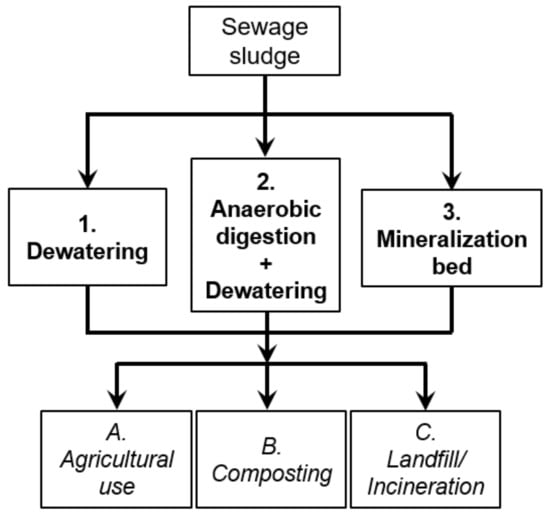
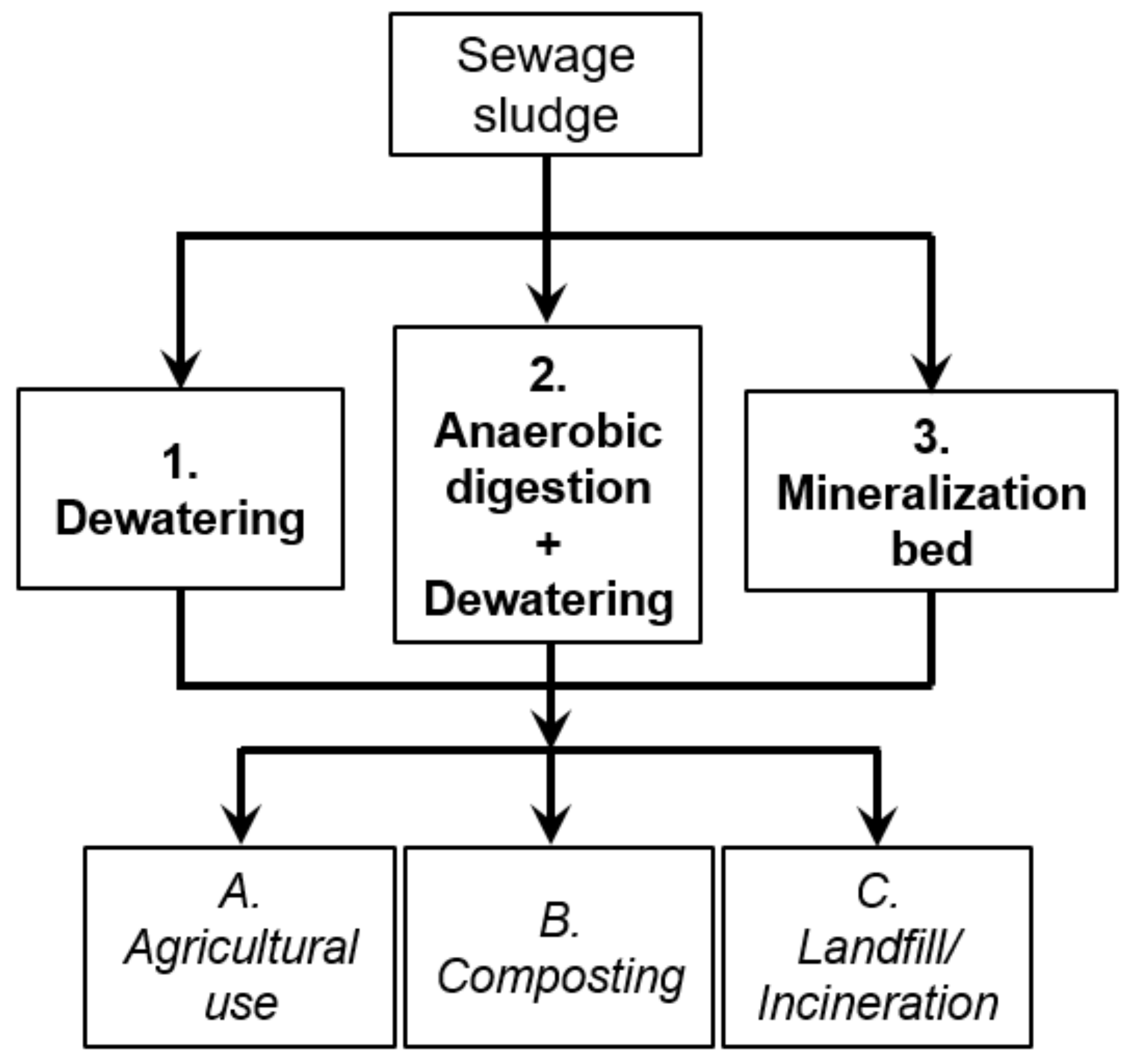
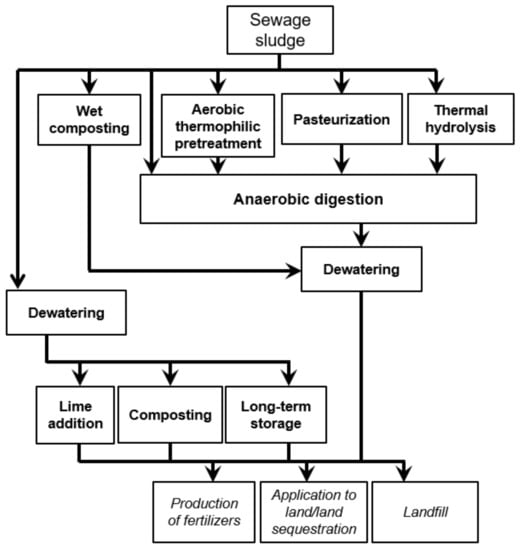
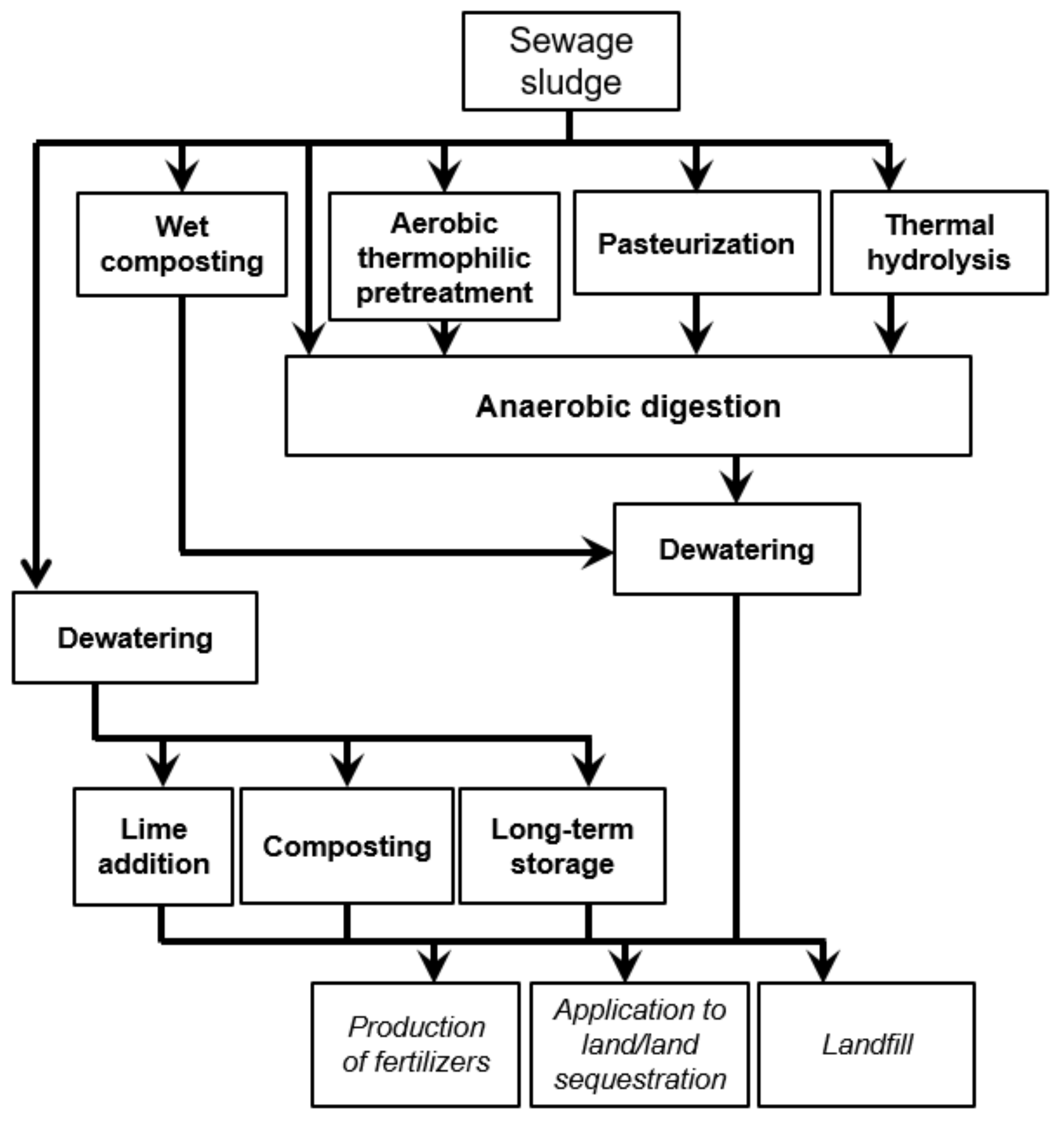
Incineration, for example, is an established thermal technology to yield energy from recalcitrant organic matter from sewage sludge and solid municipal waste, while reducing its volume. Anaerobic digestion (AD), on the other hand, is the most common biological method to recover the energy content of carbon compounds in the sludge by their conversion into methane. While nutrients can be reused in agriculture after biological treatment, they are either lost or bound to ashes after thermal treatment. According to the Sewage Sludge Directive, which regulates the use of sludge on the soil, this can only be done after proper treatment (e.g., biological, chemical or long-term storage) to reduce its fermentability and potential health hazards [8]. In Europe, the produced sewage sludge has different final destinations, such as agriculture (49.2%), land reclamation (12.4%), incineration (24.9%) or landfill (8.7%). For comparison, around 65% of the sludge was destined to agriculture in Scandinavia in 2016 [9,10].
However, sewage sludge contains a rich pool of organic matter (i.e., carbohydrates, proteins and lipids) that could also be biologically fermented for the production of other value-added products, rather than biogas. Moreover, the increasing depletion of natural resources has shifted the research efforts towards green chemical production, in addition to energy recovery, as previously mentioned in WWBR. For instance, sewage sludge has been used for the production of biofuels such as biodiesel [11], and for the production of biopesticides [12], bioplastics [13] or volatile fatty acids [14].
A promising approach to improve sewage sludge valorization is the addition of another organic waste, which can increase the amounts of energy and green chemicals recovered from organic waste and improve the economy of the treatment plant [15]. Moreover, the co-digestion of wastes can overcome problems related to single substrate digestion, such as a lack of micronutrients or imbalanced C/N ratio, and favors the growth of a robust and more diverse microbial community [16]. Some examples of organic wastes that can be co-digested are animal manure, agricultural residues, garden waste, sludge from fish farming (manure and excess feed), the organic fraction of municipal solid waste (OFMSW) or slaughterhouse waste. Organic wastes containing biodegradable matter also hold huge potential as carbon resources that can either be used for energy recovery in the form of biogas or as raw material for different bio-based compounds [17].
The management of sewage sludge through anaerobic digestion and co-digestion with other organic waste has been commonly applied in northern Europe, especially for bioenergy production [5]. In fact, Nordic countries have ambitious policies to become fossil-free by 2050, focusing on renewable energy sources, such as wind or bioenergy. In 2013, biomass and waste accounted for 18% of the primary energy production, with an expected further increase to about 35% by 2050 [18,19]. The proper management of sewage sludge can play a fundamental role in future bioenergy production, apart from resource recovery and its valorization to green chemicals. For that purpose, biorefineries and the co-digestion of wastes will be key players in the future of sludge management [20]. There are several publications in which sludge management is reviewed, focusing on the different available technologies [21,22]. The co-management of sewage sludge with other solids wastes in Europe was also evaluated, presenting the potential benefits of co-composting, co-incinerating or co-landfilling these wastes, for optimization and cost reduction of these technologies [23]. However, incineration is only economically feasible for waste with low moisture content. Likewise, landfilling requires a low moisture content (at least 20–25% dry matter, DM), and is highly regulated by the European legislation, due to its potentially negative environmental effects [23]. In addition to the treatment and disposal of sludge, the recovery of resources such as nutrients is another important factor to consider during its management. Different technologies have been and are still being developed for that purpose, as reviewed in several publications [24,25]. However, a life cycle assessment (LCA) is often required to evaluate the environmental impact of the nutrient recycling [26].
The chemical composition of sludge can vary significantly depending on the applied wastewater treatment, and the geographical location. For that purpose, the available technologies for sludge management and resource recovery should be tailored to the characteristics of the sludge. Potential substrates for anaerobic co-digestion with the sludge have been previously reviewed [27], but there is a lack of publications targeting Scandinavian countries, in which the co-digestion of organic waste for biogas production has been taking place for several years [28]. These established systems present an opportunity to include sludge in co-digestion, which could be an interesting approach to centralized organic waste management. In this paper, focus is on Scandinavian countries (i.e., Denmark, Norway and Sweden), to review the current technologies applied for sludge management. Moreover, due to the Scandinavian experience with co-digestion, other relevant organic waste fractions were identified, which could potentially be co-digested with the sludge. A full-scale case study is presented for each country, in which sewage sludge is co-digested with another organic waste, emphasizing the advantages of co-digestion. In addition, several advanced biorefinery approaches to wastewater treatment and resource recovery are included. Therefore, the findings from this review paper could enhance the establishment of robust co-digestion systems, key players in urban organic waste management.
4. Co-Digestion Concepts of Organic Wastes for Higher Energy Yields and Production of Green Chemicals
Examples of relevant organic wastes that can be co-digested with sewage sludge for its valorization are OFMSW, fish waste or even the scum produced during wastewater treatment [35]. As previously mentioned, co-digestion can improve the efficiency of the process, due to the synergistic effect of the microbial communities [15]. Moreover, it can reduce possible inhibitory compounds of the wastes [98]. The co-digestion of different organic wastes for biogas production has been applied in Danish manure-based biogas plants since the 1980s. The co-digestion concept has been increasingly applied in recent years in Norway, and some of the biggest Norwegian biogas plants are treating (or being designed to do so) more than one substrate at present. From the total of 43 biogas plants, eight treat food waste, alone or in combination with sewage sludge/animal manure, while seven plants combine sludge with other organic resources, such as fish waste, forestry residues or animal manure [99].
A description of different case studies where another organic waste is added to sewage sludge, is presented in the next section, as well as current examples of sewage sludge management strategies in Denmark, Norway and Sweden.
4.1. Billund Vand, Denmark. Co-Digestion of Sewage Sludge with OFMSW and Organic Industrial Waste
An example of co-digestion takes place in Billund, a municipality located in central Jutland, the mainland of Denmark. Billund Vand, in charge of wastewater treatment, has been producing biogas from the co-digestion of organic wastes and sewage sludge since 1996. In this plant, organic household waste and organic industrial waste (OIW) are added to the sewage sludge, which are anaerobically digested to produce biogas. The citizens of Billund municipality have been effectively sorting organic household waste since 1997, which is transported from the collection points to the plant. Organic household waste is collected in special paper bags, which do not degrade with the moisture of the waste, but can take part in the anaerobic digestion [100]. In addition, the waste passes through a magnetic separator to make sure there are no metal scraps. The other organic waste is OIW, which consists of flotation fat from the food processing industry. A total of 48,000 tons of waste is treated annually, of which sewage sludge represents 63%, organic household waste 4% and OIW 33%. The produced biogas, around 1.28 million m3, is used for electricity and heat production, generating a 50% energy surplus in the plant. Electricity is sold to the public grid and the heat is used to heat the plant. Additionally, the digestate after AD is dewatered in a screw press, the rejected liquid is sent to the WWTP again, and the fiber fraction (20–25% DM) is used as fertilizer by the farmers. Nevertheless, the national policies limit the application of digested OFMSW as fertilizers, requiring a previous hygienization process at 70 °C degrees for 1 h, in order to ensure there are no present bacteria in the fertilizer [70].
In 1993, the first pilot project to sort OFMSW started, which was consolidated in 1997. The sorting rate is extremely good, since only 1% of the collected fraction is rejected [100]. The success is largely due to the motivation of the citizens, which are responsible for the proper sorting of the waste. Billund was the first municipality in the country which used OFMSW for biogas production, a currently increasing trend in the rest of the country. Despite the current effectiveness of the system, the plant initially faced some technical challenges: the presence of sand and bones in the waste broke the rotatory pumps only after 14 days of operation and the heat exchanger capacity had to be increased. However, the system currently uses centrifugal pumps and has run smoothly since 2001 [100]. The process is also centralized, meaning that the residues from different locations are treated in the same plant. The successful treatment of different types of wastes is very socially accepted in the region, which can help increase awareness of the need of proper waste-sorting in the rest of the country.
4.2. IVAR, Norway. Co-Digestion of Sewage Sludge with Fish Sludge
On the Norwegian west coast, an association of municipalities aims to digest fish sludge, as well as other organic waste fractions, with their municipal sludge. IVAR IKS was stablished in 1979 as an inter-municipal organization to treat water, wastewater and waste from the Stavanger region. The central wastewater treatment plant at Nord Jæren (SNJ) in Randaberg, near Stavanger, is the biggest waste treatment plant in this region [101]. In addition to SNJ, Grødaland is the newest and largest biogas plant built by IVAR in Hå, Rogaland, opened in April 2017. This is one of Norway’s biggest biogas plants to date and is dimensioned to treat 22,600 tons DM/year of both regional sewage sludge and OFMSW. The addition of other substrates as fat from the neighboring dairy industry and fish sludge is currently being considered.
SNJ opened in 1992 as a chemical wastewater treatment plant and was upgraded to a biological one in 2018. The mesophilic biogas plant produces methane from the co-digestion of OFMSW and sewage sludge, currently testing the addition of some fish sludge to the mix. Research trials were performed on sewage sludge co-digestion, with up to 30% in volatile solids (VS) from fish sludge, obtaining a 35% increase in the methane production [102].
The produced biogas at the plant is upgraded to biomethane and injected to the gas grid, while the digested sludge is dewatered in centrifuges and dried with steam (and hygienized in the process, so it can be used as fertilizer). The dried sludge is then used for the production of biopellets as soil improver or fertilizer production by nutrient addition [101]. In fact, SNJ was the first plant in Europe to produce a complete fertilizer from sewage sludge. IVAR is very interested in improving the recirculation of nutrients in the region and, therefore, also invests in the addition of dry fish sludge as a nitrogen source for the already-produced, sewage-sludge-based organic fertilizer (MINORGA© pellets). The factory that produces these pellets is located in the same area as the SNJ plant, and based its technology on IVAR’s 20 years of experience with drying and pelletizing sludge. The MINORGA© pellets are produced by adding N, P and K to the dried sludge, adapting the amount of nutrients to the customer’s needs. Moreover, the content of heavy metals is closely monitored to ensure compliance with pertinent regulations [103].
4.3. Gryaab, Sweden. Co-Digestion of Sewage Sludge with Grease and Food Waste
In Sweden, several plants for co-digestion of different organic wastes exist, but not many treat sewage sludge together with other organic waste. One example is Ryaverket WWTP, which belongs to Gryaab, a municipally owned company. This plant receives the wastewater collected from several municipalities surrounding Gothenburg and treats the generated sludge together with other organic wastes. Digestion of the sewage sludge takes place since 1990 and co-digestion with fat and food waste since 1996 [57]. Two organic wastes are added to the digester in order to increase the biogas yield: grease from grease separators in catering kitchens, restaurants, etc. and food residues from the food industry and restaurants, as long as it is not classified as animal by-product. Gryaab is licensed to receive and treat up to 70,000 tons of organic waste every year, although only 22% of this amount is currently treated [104]. In addition, the waste must be pumpable and should not affect the quality of the sludge. Digestion of the wastes takes place in a series of operations, in which the substrate is treated in the two first digesters. The third digester in the plant is used as storage of the digested sludge before it is drained in the screw press.
The biogas generated in the process is stored in a chamber and sent to the upgrading facility 3 km away at Arendal, which belongs to Gothenburg Energy, via long pipes. In this plant, the biogas is chemically upgraded using the Cooab® technology to capture the carbon dioxide present in the gas, and the purified gas is then compressed and sold as vehicle fuel [105]. The digested sludge after anaerobic digestion is dewatered via screw press and polymer addition, followed by different uses depending on its quality. Samples of digested sludge are analyzed to verify that it meets the guidelines of the REVAQ quality system [104], the certification system used in WWTP that aims to reduce the flow of hazardous substances [106]. If the sludge complies with the requirements, it is hygienized via long-term storage for six months and then applied to agricultural land. In the case that the sludge does not meet the requirements or cannot be disposed for agricultural use, it is used for the production of different soil products. The sludge is composted, mixed with bark and chippings and finally mixed with rock flour and sand. The final product is used for golf courses, coverage of landfills or construction, among others [57].
4.4. Advanced Biorefinery Scenarios for Wastewater Treatment and Resource Recovery
Despite the established energy recovery from sewage sludge, the organic matter content from this fraction can also be converted to other valuable compounds, such as carboxylates. Due to the current depletion of natural resources, used as precursors of daily products like fuels, plastics or clothing, research efforts are switching towards production of green chemicals from sewage sludge in a circular economy framework. Moreover, different technologies for the recovery of other resources from wastewater, such as nutrients, are being developed to transform WWTP into WRRF.
As a step forward from Billund Vand, Billund Biorefinery was inaugurated in 2017 in collaboration with Krüger Veolia A/S. It was established by inserting process units into the already existing facility, which enables the application of this transformation process to any other WWTP. The novelty of Billund Biorefinery revolves around the combination of new technologies in a unique way of consuming less energy for wastewater treatment while generating a water effluent far cleaner than the requirements (25% of the maximum values). Additionally, the plant focuses on the co-digestion of sewage sludge with organic household waste and waste from restaurants, caterings, dairies or slaughterhouses. One of the main features of this plant is the use of the ExelysTM technology from Veolia, which contributes to the 50% increase in energy production in the plant, while reducing the generated sludge by 30–40% [107,108]. Therefore, the sludge is easier to manage and produces an efficient organic fertilizer for agriculture. Another important feature is the ANITATM Mox process, also from Veolia, which reduces operational costs while removing nitrogen from the wastewater. This technology is especially suitable for treating the reject water generated during sludge dewatering, after anaerobic digestion, due to its high ammonia content [109]. At present, the generated biogas is used for the production of electricity and heat, but other uses, such as operation of fuel cells, are being considered for the future.
Following the same line, Aarhus Vand (which aims to be energy- and CO2-neutral by 2030) decided to centralize the wastewater treatment of the region, transforming two of its WWTP, Egå and Marselisborg WWTP, into energy-exporting plants [110]. They aim to generate 50% more energy than they consume. Egå WWTP was renovated in 2016, by EnviDan A/S and Per Aarslef A/S, using cutting-edge new technologies, such as the Salsnes® filters and DEMON® [111]. With the Salnes® filters, the plant maximizes the carbon input to the anaerobic digester, replacing the conventional primary treatment [112]. Moreover, two anammox technologies are used to reduce the nitrogen load: DEMON® for the reject water from sludge dewatering and EssDe® for wastewater [113,114].
Marselisborg WWTP, on the other hand, is being expanded so that it can treat 480,000 PE (from initial 200,000 PE), and become a resource recovery facility, called Marselisborg ReWater, by 2028 [110]. In order to upgrade the plant, several current processes will be optimized, such as nutrient removal or the gas engines for electricity and heat production from biogas. Moreover, a nutrient recovery process will be established in order to generate struvite, as is currently performed in Aaby WWTP (which also belongs to Aarhus Vand) [115]. This technology commercializes a product called PhosphorCareTM, a valuable fertilizer produced from the recovered nutrients from wastewater [116]. Additionally, Marselisborg ReWater aims to improve biogas utilization in the plant, and to use the final dewatered solids (after anaerobic digestion) as a fertilizer in agriculture (60%) and for the cement industry (40%) [115]. For this purpose, pellets of dried sewage sludge can be transformed to a similar material to expanded clays during a ceramization process [117].
Another Scandinavian biorefinery will be developed by Hias IKS WWTP in Norway. The Norwegian company started to rethink their WWTP in 2009, aiming to convert it to a WRRF, focusing on phosphorus removal. For that purpose, they developed the patented Hias® process, which produces struvite from wastewater (extracting about 50% of the phosphorus). The method combines two technologies: enhanced biological phosphorus removal (EBPR) and moving-bed biofilm reactor (MBBR) [118]. The process is performed in a new type of bioreactor and does not require the addition of chemicals, with a 30% lower operating cost than competing technologies [119]. During the period 2013–2015, the technology was successfully applied to a pilot plant, followed by a demonstration plant treating 10,000 PE in 2016. The next step includes the complete Hias IKS WWTP retrofit, with a capacity of 140,000 PE, by the end of 2021 [118].
5. Conclusions
In this paper, management of sewage sludge, together with other organic waste types in Scandinavia, was reviewed, identifying relevant organic waste sources for each country. Sewage sludge contains organic matter that can be used for energy generation or the production of green chemicals. Among the technologies applied for the stabilization of the organic matter in the sludge, anaerobic digestion is very common in WWTP, since it also recovers its energy content in the form of methane. Nevertheless, other novel routes for energy recovery from sludge are emerging, such as pyrolysis or gasification, which present a greater volume reduction. Due to the abundance of other organic wastes, anaerobic co-digestion has been used as a management strategy in Scandinavia, which, in turn, enhances the methane production. However, the use of sewage sludge for production of green chemicals has also received increased attention, due to the future depletion of natural resources.
Originally, the sole objective of WWTP was to meet the environmental policies for safe water discharge, focusing only on water recovery. This approach has changed in recent years, and different resources can be recovered from wastewater at present. In this paper, some Scandinavian examples were presented, which focus on energy and resource recovery from wastewater and sewage sludge, showing the potential of co-managing these waste streams in a circular economy framework. Therefore, future efforts will focus on the development and optimization of these strategies for sewage sludge valorization, simultaneously achieving environmental and economic sustainability.
Author Contributions
Conceptualization, C.F.-F. and C.V.; writing—original draft preparation, C.F.-F.; writing—review and editing, M.M.E., H.U. and C.V.; supervision, C.V. All authors have read and agreed to the published version of the manuscript.
Funding
This research was funded by COWI Fonden, project number A092762-001: Wastewater and Organic Waste Treatment Facilities—Net Green Energy, Nutrients and Bioproducts Producers.
Institutional Review Board Statement
Not applicable.
Informed Consent Statement
Not applicable.
Conflicts of Interest
The authors declare no conflict of interest.
Abbreviations
| AD | Anaerobic digestion |
| DM | Dry matter |
| EBPR | Enhanced biological phosphorus removal |
| EC | European Commission |
| EU | European Union |
| LCA | Life cycle assessment |
| MBBR | Moving bed biofilm reactor |
| OFMSW | Organic fraction of municipal solid waste |
| OIW | Organic industrial waste |
| STBR | Sludge treatment reed beds |
| VS | Volatile solids |
| WAS | Waste activated sludge |
| WRRF | Wastewater resource recovery facility |
| WWBR | Wastewater biorefinery |
| WWTP | Wastewater treatment plant |
References
- Holmgren, K.E.; Li, H.; Verstraete, W.; Cornel, P. State of the Art Compendium Report on Resource Recovery from Water; International Water Association (IWA): London, UK, 2016. [Google Scholar]
- Pott, R.; Johnstone-Robertson, M.; Verster, B.; Rumjeet, S.; Nkadimeng, L.; Raper, T.; Rademeyer, S.; Harrison, S.T.L. Wastewater biorefineries: Integrating water treatment and value recovery. In The Nexus: Energy, Environment and Climate Change; Leal Filho, W., Surroop, D., Eds.; Springer: Berlin/Heidelberg, Germany, 2018; pp. 289–302. ISBN 9783319636122. [Google Scholar]
- Peccia, J.; Westerhoff, P. We should expect more out of our sewage sludge. Environ. Sci. Technol. 2015, 49, 8271–8276. [Google Scholar] [CrossRef] [Scilit] [PubMed]
- Healy, M.G.; Clarke, R.; Peyton, D.; Cummins, E.; Moynihan, E.L.; Martins, A.; Béraud, P.; Fenton, O. Resource recovery from sewage sludge. In Sewage Treatment Plants: Economic Evaluation of Innovative Technologies for Energy Efficiency; Stamatelatou, K., Tsagarakis, K.P., Eds.; IWA Publishing: London, UK, 2015; pp. 139–162. ISBN 9781780405025. [Google Scholar]
- Bianchini, A.; Bonfiglioli, L.; Pellegrini, M.; Saccani, C. Sewage sludge management in Europe: A critical analysis of data quality. Int. J. Environ. Waste Manag. 2016, 18, 226–238. [Google Scholar] [CrossRef] [Scilit]
- European Commission. Environmental, Economic and Social Impacts of the Use of Sewage Sludge on Land—Final Report—Part I: Overview Report. Available online: https://ec.europa.eu/environment/archives/waste/sludge/pdf/part_i_report.pdf (accessed on 21 September 2019).
- European Commission. Council Directive of 21 May 1991 concerning urban waste water treatment (91/271/EEC). Off. J. Eur. Commun. 1991, L135, 40–52. [Google Scholar]
- European Commission. Council Directive of 12 June 1986 on the protection of the environment, and in particular of the soil, when sewage sludge is used in agriculture (86/278/EEC). Off. J. Eur. Commun. 1986, L181, 6–12. [Google Scholar]
- EurEau. Europe’s Water in Figures: An Overview of the European Drinking Water and Waste Water Sectors, 2017 ed.; The European Federation of National Associations of Water Services: Brussels, Belgium, 2017. [Google Scholar]
- European Commission. Urban Waste Water Treatment Directive: Dissemination Platform. Available online: https://uwwtd.eu/ (accessed on 7 July 2020).
- Olkiewicz, M.; Torres, C.M.; Jiménez, L.; Font, J.; Bengoa, C. Scale-up and economic analysis of biodiesel production from municipal primary sewage sludge. Bioresour. Technol. 2016, 214, 122–131. [Google Scholar] [CrossRef] [Scilit] [PubMed]
- Brar, S.K.; Verma, M.; Tyagi, R.D.; Valéro, J.R.; Surampalli, R.Y. Entomotoxicity, protease and chitinase activity of Bacillus thuringiensis fermented wastewater sludge with a high solids content. Bioresour. Technol. 2009, 100, 4317–4325. [Google Scholar] [CrossRef] [Scilit] [PubMed]
- Crutchik, D.; Franchi, O.; Caminos, L.; Jeison, D.; Belmonte, M.; Pedrouso, A.; Val del Rio, A.; Mosquera-Corral, A.; Campos, J. Polyhydroxyalkanoates (PHAs) production: A feasible economic option for the treatment of sewage sludge in municipal wastewater treatment plants? Water 2020, 12, 1118. [Google Scholar] [CrossRef] [Scilit]
- Luo, K.; Pang, Y.; Yang, Q.; Wang, D.; Li, X.; Lei, M.; Huang, Q. A critical review of volatile fatty acids produced from waste activated sludge: Enhanced strategies and its applications. Environ. Sci. Pollut. Res. 2019, 26, 13984–13998. [Google Scholar] [CrossRef] [Scilit] [PubMed]
- Xie, S.; Wickham, R.; Nghiem, L.D. Synergistic effect from anaerobic co-digestion of sewage sludge and organic wastes. Int. Biodeterior. Biodegrad. 2017, 116, 191–197. [Google Scholar] [CrossRef] [Scilit]
- Mehariya, S.; Patel, A.K.; Obulisamy, P.K.; Punniyakotti, E.; Wong, J.W.C. Co-digestion of food waste and sewage sludge for methane production: Current status and perspective. Bioresour. Technol. 2018, 265, 519–531. [Google Scholar] [CrossRef] [Scilit] [PubMed]
- Coma, M.; Martinez-Hernandez, E.; Abeln, F.; Raikova, S.; Donnelly, J.; Arnot, T.C.; Allen, M.J.; Hong, D.D.; Chuck, C.J. Organic waste as a sustainable feedstock for platform chemicals. Faraday Discuss. 2017, 202, 175–195. [Google Scholar] [CrossRef] [Scilit]
- Sovacool, B.K. Contestation, contingency, and justice in the Nordic low-carbon energy transition. Energy Policy 2017, 102, 569–582. [Google Scholar] [CrossRef] [Scilit]
- Kofoed-Wiuff, A.; Dyhr-Mikkelsen, K.; Rueskov, I.S.; Pasquali, A.; Brunak, K.; Bröckl, M.; Hagström, M. Progress towards Nordic Carbon Neutrality: Tracking Nordic Clean Energy Progress 2020; Nordic Energy Research: Oslo, Norway, 2020. [Google Scholar]
- Banerjee, A.; Bhaskar, T.; Ghosh, D. A biorefinery approach for sewage sludge. In Waste Biorefinery: Integrating Biorefineries for Waste Valorization; Bhaskar, T., Pandey, A., Rene, E.R., Tsang, D.C.W., Eds.; Elsevier B.V.: Amsterdam, The Netherlands, 2020; pp. 393–421. ISBN 9780128182284. [Google Scholar]
- Fytili, D.; Zabaniotou, A. Utilization of sewage sludge in EU application of old and new methods—A review. Renew. Sustain. Energy Rev. 2008, 12, 116–140. [Google Scholar] [CrossRef] [Scilit]
- Cieślik, B.M.; Namieśnik, J.; Konieczka, P. Review of sewage sludge management: Standards, regulations and analytical methods. J. Clean. Prod. 2015, 90, 1–15. [Google Scholar] [CrossRef] [Scilit]
- Spinosa, L.; Leschber, R.; Wichmann, K. Sewage sludge co-management: Developments in EU regulations and characterization procedures. Water Pract. Technol. 2007, 2. [Google Scholar] [CrossRef] [Scilit]
- Kirchmann, H.; Börjesson, G.; Kätterer, T.; Cohen, Y. From agricultural use of sewage sludge to nutrient extraction: A soil science outlook. Ambio 2017, 46, 143–154. [Google Scholar] [CrossRef] [Scilit] [PubMed]
- Shaddel, S.; Bakhtiary-Davijany, H.; Kabbe, C.; Dadgar, F.; Østerhus, S. Sustainable sewage sludge management: From current practices to emerging nutrient recovery technologies. Sustainability 2019, 11, 3435. [Google Scholar] [CrossRef] [Scilit]
- Lam, K.L.; Zlatanović, L.; van der Hoek, J.P. Life cycle assessment of nutrient recycling from wastewater: A critical review. Water Res. 2020, 173, 115519. [Google Scholar] [CrossRef] [Scilit] [PubMed]
- Chow, W.L.; Chong, S.; Lim, J.W.; Chan, Y.J.; Chong, M.F.; Tiong, T.J.; Chin, J.K.; Pan, G.-T. Anaerobic co-digestion of wastewater sludge: A review of potential co-substrates and operating factors for improved methane yield. Processes 2020, 8, 39. [Google Scholar] [CrossRef] [Scilit]
- Sund Energy AS. Mapping Biogas in the Nordic Countries; Sund Energy AS: Oslo, Norway, 2010. [Google Scholar]
- Nybruket, S.; Paulsrud, B.; Nedland, K.T. Erfaringer Med Hygienisering av Slam i Norge; VA-FORSK RAPPORT Nr 32; VA-Forsk: Stockholm, Sweden, 2003. [Google Scholar]
- Mackenzie, L.D. Water and Wastewater Engineering. Design Principles and Practice; McGraw-Hill Companies, Inc.: New York, NY, USA, 2010; ISBN 978-0-07-171385-6. [Google Scholar]
- Chang, Z.; Long, G.; Zhou, J.L.; Ma, C. Valorization of sewage sludge in the fabrication of construction and building materials: A review. Resour. Conserv. Recycl. 2020, 154, 104606. [Google Scholar] [CrossRef] [Scilit]
- Baresel, C.; Lüdtke, M.; Levlin, E.; Fortkamp, U.; Ekengren, Ö. Slamavvattning i Kommunala Reningsverk—Nuläget, Begråansningar och Perspektiv (IVL Rapport B2188); IVL: Stockholm, Sweden, 2014. [Google Scholar]
- Svenskt Vatten. Slamanvändning och Strategier för Slamanvändning (Meddelande M137); Svensk Vatten AB: Stockholm, Sweden, 2013. [Google Scholar]
- Gao, N.; Kamran, K.; Quan, C.; Williams, P.T. Thermochemical conversion of sewage sludge: A critical review. Prog. Energy Combust. Sci. 2020, 79, 100843. [Google Scholar] [CrossRef] [Scilit]
- Chen, P.; Xie, Q.; Addy, M.; Zhou, W.; Liu, Y.; Wang, Y.; Cheng, Y.; Li, K.; Ruan, R. Utilization of municipal solid and liquid wastes for bioenergy and bioproducts production. Bioresour. Technol. 2016, 215, 163–172. [Google Scholar] [CrossRef] [Scilit] [PubMed]
- Kehrein, P.; van Loosdrecht, M.; Osseweijer, P.; Garfí, M.; Dewulf, J.; Posada, J. A critical review of resource recovery from municipal wastewater treatment plants—Market supply potentials, technologies and bottlenecks. Environ. Sci. Water Res. Technol. 2020, 6, 877–910. [Google Scholar] [CrossRef] [Scilit]
- Callegari, A.; Capodaglio, A.G. Properties and beneficial uses of (bio)chars, with special attention to products from sewage sludge pyrolysis. Resources 2018, 7, 20. [Google Scholar] [CrossRef] [Scilit]
- Ali, A.M.; Nesse, A.S.; Eich-Greatorex, S.; Sogn, T.A.; Aanrud, S.G.; Aasen Bunæs, J.A.; Lyche, J.L.; Kallenborn, R. Organic contaminants of emerging concern in Norwegian digestates from biogas production. Environ. Sci. Process. Impacts 2019, 21, 1498–1508. [Google Scholar] [CrossRef] [Scilit] [PubMed]
- Keller, A.S.; Jimenez-Martinez, J.; Mitrano, D.M. Transport of nano- and microplastic through unsaturated porous media from sewage sludge application. Environ. Sci. Technol. 2020, 54, 911–920. [Google Scholar] [CrossRef] [Scilit] [PubMed]
- Eggen, T.; Heimstad, E.S.; Nikiforov, V.; Vogelsang, C. Maximum Limit Values for Selected Hazardous Organic Contaminants (HOCs) in Secondary Raw Materials Used in Fertilisers and Soil Products (NIBIO Rapport 5/110/2019); Norsk Institut for Bioøkonomi (NIBIO): Ås, Norway, 2019. [Google Scholar]
- Díaz-Cruz, M.S.; García-Galán, M.J.; Guerra, P.; Jelic, A.; Postigo, C.; Eljarrat, E.; Farré, M.; López de Alda, M.J.; Petrovic, M.; Barceló, D. Analysis of selected emerging contaminants in sewage sludge. Trends Anal. Chem. 2009, 28, 1263–1275. [Google Scholar] [CrossRef] [Scilit]
- Papineschi, J.; Hoog, D.; Chowdhury, T.; Durrant, C.; Thomson, A. Analysis of Nordic Regulatory Framework and Its Effect on Waste Prevention and Recycling in the Region (2019:522); Nordic Council of Ministers, Ed.; Nordic Council of Ministers/Publication Unit: Copenhagen, Denmark, 2019; ISBN 9789289361033.
- Dansk Vand- og Spildevandsforening (DANVA). Water in Figures 2019, DANVA Statistics & Benchmarking. Available online: https://www.danva.dk/media/6355/2019_water-in-figures_web.pdf (accessed on 28 July 2020).
- Dansk Vand- og Spildevandsforening (DANVA). Water in Figures 2020, DANVA Statistics & Benchmarking. Available online: https://www.danva.dk/media/7251/2020_water-in-figures_web.pdf (accessed on 21 April 2021).
- Nielsen, S.; Larsen, J.D. Operational strategy, economic and environmental performance of sludge treatment reed bed systems—Based on 28 years of experience. Water Sci. Technol. 2016, 74, 1793–1799. [Google Scholar] [CrossRef] [Scilit] [PubMed]
- Brix, H. Sludge dewatering and mineralization in sludge treatment reed beds. Water 2017, 9, 160. [Google Scholar] [CrossRef] [Scilit]
- Nielsen, S.; Bruun, E.W. Sludge quality after 10–20 years of treatment in reed bed systems. Environ. Sci. Pollut. Res. 2015, 22, 12885–12891. [Google Scholar] [CrossRef] [Scilit] [PubMed]
- Statistisk Sentralbyrå Norway (SSB). Land Use and Land Cover. Available online: https://www.ssb.no/en/natur-og-miljo/statistikker/arealstat (accessed on 10 May 2021).
- Berge, G.; Chaudhary, M. Kommunale Avløp 2017. Ressursinnsats, Utslipp, Rensing og Slamdisponering 2017. Gebyrer 2018 (Rapporter 2018/40); Statistisk Sentralbyrå: Oslo, Norway, 2018; ISBN 9788253798523. [Google Scholar]
- Paruch, A.M.; Mæhlum, T.; Obarska-Pempkowiak, H.; Gajewska, M.; Wojciechowska, E.; Ostojski, A. Rural domestic wastewater treatment in Norway and Poland: Experiences, cooperation and concepts on the improvement of constructed wetland technology. Water Sci. Technol. 2011, 63, 776–781. [Google Scholar] [CrossRef] [Scilit] [PubMed]
- Ødegaard, H.; Rusten, B.; Storhaug, R.; Paulsrud, B. Veiledning for Dimensjonering av Avløpsrenseanlegg (Rapportnr: 168/2009); Norsk Vann: Hamar, Norway, 2009. [Google Scholar]
- Norsk Institutt for Bioøkonomi (NIBIO). Available online: https://www.nibio.no/ (accessed on 30 July 2020).
- Landbruks- og matdepartementet. Forskrift om Gjødselvarer mv. av Organisk Opphav. 2003. Available online: https://lovdata.no/dokument/SF/forskrift/2003-07-04-951 (accessed on 30 July 2020).
- Landbruks- og matdepartementet. Forskrift om Endring i Forskrift om Gjødselvarer mv. av Organisk Opphav (Avløpsslambasert Gjødsel Med Særskilte Bruksvilkår). 2019. Available online: https://lovdata.no/dokument/LTI/forskrift/2019-01-30-58 (accessed on 30 July 2020).
- Statistics Sweden (SCB). Production and Use of Sewage Sludge from Municipal Waste Water Treatment Plants by County and Use Category. Every Other Year 2014–2018. Available online: http://www.statistikdatabasen.scb.se/pxweb/en/ssd/START__MI__MI0106/MI0106T03/ (accessed on 16 September 2020).
- Åkerblom, A.; Lüdtke, M.; Lans, N.; Linderholm, L.; Johansson, E.; Unger, M.L.; Gunnarsson, Å.; Dimberg, A.; Åkerblom, S. Wastewater Treatment in Sweden 2018; Swedish Environmental Protection Agency: Stockholm, Sweden, 2020; ISBN 978-91-620-8867-5. [Google Scholar]
- Jarvis, A. Biogas ur Gödsel, Avfall och Restprodukter—Goda Svenska Exempel; Swedish Environmental Protection Agency: Stockholm, Sweden, 2012; ISBN 9789162065188. [Google Scholar]
- Valderrama, C.; Granados, R.; Cortina, J.L. Stabilisation of dewatered domestic sewage sludge by lime addition as raw material for the cement industry: Understanding process and reactor performance. Chem. Eng. J. 2013, 232, 458–467. [Google Scholar] [CrossRef] [Scilit]
- Ekane, N.; Barquet, K.; Rosemarin, A. Resources and risks: Perceptions on the application of sewage sludge on agricultural land in Sweden, a case study. Front. Sustain. Food Syst. 2021, 5, 647780. [Google Scholar] [CrossRef] [Scilit]
- Miljö- och energidepartementet. Kommittédirektiv. Giftfri och Cirkulär Återföring av Fosfor Från Avloppsslam (Dir. 2018:67; Stockholm, 2018. Available online: https://www.regeringen.se/rattsliga-dokument/kommittedirektiv/2018/07/dir.-201867/ (accessed on 19 August 2020).
- European Commission. European Commission Urban Waste Water Website: Denmark. Graphs for National Stats. Available online: https://uwwtd.eu/Denmark/stats/graphs (accessed on 7 July 2020).
- Statistisk Sentralbyrå Norway (SSB). Discharges and treatment of municipal waste water 05279: Disposal of sewage slugde (C) 2002–2018. Available online: https://www.ssb.no/en/statbank/table/05279 (accessed on 16 September 2020).
- Statistics Denmark. Waste Generation by Industry, Kind of Treatment and Waste Category. Available online: https://www.statbank.dk/statbank5a/SelectVarVal/Define.asp?MainTable=AFFALD&PLanguage=1&PXSId=0&wsid=cftree (accessed on 10 May 2021).
- DAKOFA. Waste and Resources Network Denmark Incineration in Denmark. Available online: https://dakofa.com/element/incineration-in-denmark/ (accessed on 10 May 2021).
- Frijns, J.; Hofman, J.; Nederlof, M. The potential of (waste)water as energy carrier. Energy Convers. Manag. 2013, 65, 357–363. [Google Scholar] [CrossRef] [Scilit]
- European Commission. Directive 2008/98/EC of the European Parliament and of the Council of 19 November 2008 on waste and repealing certain Directives (Text with EEA relevance). Off. J. Eur. Union 2008, L312, 3–30. [Google Scholar]
- European Commission. Council Directive 1999/31/EC of 26 April 1999 on the landfill of waste. Off. J. Eur. Communities 1999, L182. [Google Scholar] [CrossRef] [Scilit]
- Thomsen, M. Wastewater Treatment and Discharge; Scientific Report from DCE—Danish Centre for Environment and Energy (no. 193); Aarhus University, DCE—Danish Centre for Environment and Energy: Aarhus, Denmark, 2016. [Google Scholar]
- BIOFOS. Miljøberetning 2019. 2019. Available online: https://biofos.dk/wwwroot/media/1430/publiceret-miljoeberetning_2019-d20-354027-10.pdf (accessed on 19 August 2020).
- Danish Ministry of Environment and Food. Bekendtgørelse om anvendelse af affald til jordbrugsformål. In Miljø- og Fødevaremin., j. nr. 2018-6950; Danish Ministry of Environment and Food: Copenhagen, Denmark, 2018. [Google Scholar]
- Statistisk Sentralbyrå Norway (SSB). Discharges and Treatment of Municipal Waste Water 05314: Heavy Metals in Sewage Sludge (mg/kg Dry Weight) 1993–2019. Available online: https://www.ssb.no/en/statbank/table/05314/ (accessed on 16 September 2020).
- Werther, I.L.; Petersen, P.H. Nabotjek af Reglerne om Spildevandsslam: Sverige, Norge, Finland, Tyskland og England (Miljøprojekt nr. 1989); Miljøstyrelsen: København, Denmark, 2018; ISBN 9788793614833. [Google Scholar]
- Statistics Sweden (SCB). Concentrations of Nutrients, Metals and Organic Indicator Substances in Sludge from Municipal Wastewater Treatment Plants. Every Other Year 2014–2018. Available online: http://www.statistikdatabasen.scb.se/pxweb/en/ssd/START__MI__MI0106/MI0106T05/ (accessed on 7 July 2020).
- European Commission. Regulation (EU) 2019/1009 of the European Parliament and of the Council of 5 June 2019 laying down rules on the making available on the market of EU fertilising products and amending Regulation (EC) No 1069/2009 and (EC) No 1107/2009 and repealing Regulation (EC) No 2003/2003 (Text with EEA relevance). Off. J. Eur. Union 2019, L170, 1–114. [Google Scholar]
- EasyMining Ash2Phos. Available online: https://www.easymining.se/technologies/ash2phos (accessed on 11 May 2021).
- European Commission. Communication from the Commission to the European Parliament, the Council, the European Economic and Social Committee and the Committee of the Regions, Towards a Circular Economy: A zero waste programme for Europe 2014. Available online: https://eur-lex.europa.eu/legal-content/EN/TXT/?uri=celex%3A52014DC0398 (accessed on 17 December 2020).
- European Commission. Communication from the Commission to the European Parliament, the Council, the European Economic and Social Committee and the Committee of the Regions, Closing the loop—An EU action plan for the Circular Economy 2015. Available online: https://eur-lex.europa.eu/legal-content/EN/TXT/?uri=CELEX%3A52015DC0614 (accessed on 18 December 2020).
- Yoshida, H.; Christensen, T.H.; Scheutz, C. Life cycle assessment of sewage sludge management: A review. Waste Manag. Res. J. A Sustain. Circ. Econ. 2013, 31, 1083–1101. [Google Scholar] [CrossRef] [Scilit] [PubMed]
- Cao, Y.; Pawłowski, A. Life cycle assessment of two emerging sewage sludge-to-energy systems: Evaluating energy and greenhouse gas emissions implications. Bioresour. Technol. 2013, 127, 81–91. [Google Scholar] [CrossRef] [Scilit]
- Samolada, M.C.; Zabaniotou, A.A. Comparative assessment of municipal sewage sludge incineration, gasification and pyrolysis for a sustainable sludge-to-energy management in Greece. Waste Manag. 2014, 34, 411–420. [Google Scholar] [CrossRef] [Scilit]
- Gentil, E.C.; Damgaard, A.; Hauschild, M.; Finnveden, G.; Eriksson, O.; Thorneloe, S.; Kaplan, P.O.; Barlaz, M.; Muller, O.; Matsui, Y.; et al. Models for waste life cycle assessment: Review of technical assumptions. Waste Manag. 2010, 30, 2636–2648. [Google Scholar] [CrossRef] [Scilit]
- European Commission. Directive (EU) 2018/851 of the European Parliament and of the Council of 30 May 2018 amending Directive 2008/98/EC on waste (Text with EEA relevance). Off. J. Eur. Union 2018, L150, 109–140. [Google Scholar]
- European Commission. Communication from the Commission to the Council and the European Parliament on Future Steps in Bio-Waste Management in the European Union (COM(2010)235 Final). Available online: https://eur-lex.europa.eu/legal-content/EN/TXT/?uri=CELEX%3A52010DC0235 (accessed on 21 September 2019).
- European Environment Agency. Bio-Waste in Europe—Turning Challenges into Opportunities (EEA Report No 04/2020); Publications Office of the European Union: Luxembourg, 2020; ISBN 9789294802231. [Google Scholar]
- European Commission. Proposal for a Directive of the European Parliament and of the Council Amending Directives 2008/98/EC on Waste, 94/62/EC on Packaging and Packaging Waste, 1999/31/EC on the Landfill of Waste, 2000/53/EC on End-of-Life Vehicles, 2006/66/EC on Batteries and Accumulators and Waste Batteries and Accumulators, and 2012/19/EU on Waste Electrical and Electronic Equipment (Text with EEA Relevance). Available online: https://eur-lex.europa.eu/legal-content/DA/ALL/?uri=CELEX:52014SC0209 (accessed on 27 July 2020).
- European Commission. Directive (EU) 2018/850 of the European Parliament and of the Council of 30 May 2018 amending Directive 1999/31/EC on the landfill of waste (Text with EEA relevance). Off. J. Eur. Union 2018, L150, 100–108. [Google Scholar]
- Madsen, M.L.; Kiilerich, O.; Nissen, A.L.; Nissen, E.L. Affaldsstatistik 2018 (Miljøprojekt nr. 2133); Miljøstyrelsen: København, Denmark, 2020; ISBN 9788770381833. [Google Scholar]
- Miljøstyrelsen. Denmark without Waste: Recycle More—Incinerate Less; Miljøstyrelsen: København, Denmark, 2013. [Google Scholar]
- Damgaard, C.K.; Christensen, C.; Werther, I.; Christensen, L.H.; Nyegaard, R. Organisk Affald fra Servicesektoren: Samfundsøkonomisk Vurdering af Øget Genanvendelse (Miljøprojekt nr. 2070); Miljøstyrelsen: København, Denmark, 2019; ISBN 9788770380454. [Google Scholar]
- Foged, H.L. Livestock Manure to Energy: Status, Technologies and Innovation in Denmark; Agro Business Park: Tjele, Denmark, 2012. [Google Scholar]
- Statistisk Sentralbyrå Norway (SSB). Waste from Households—Household Waste by Material. Available online: https://www.ssb.no/en/natur-og-miljo/statistikker/avfkomm (accessed on 16 September 2020).
- Norwegian Directorate of Fisheries Aquaculture Statistics: Total Sale 1998–2019. Available online: https://www.fiskeridir.no/English/Aquaculture/Statistics/Total (accessed on 3 August 2020).
- Torrissen, O.; Hansen, P.K.; Aure, J.; Husa, V.; Andersen, S.; Strohmeier, T.; Olsen, R.E. Næringsutslipp fra Havbruk—Nasjonale og Regionale Perspektiv. (Rapport fra Havforskningen nr 21-2016); Havforskningsinstituttet: Bergen, Norway, 2016. [Google Scholar]
- Bjørndal, T.; Holte, E.A.; Hilmarsen, Ø.; Tusvik, A. Analyse av Lukka Oppdrett av Laks—Landbaseret og i sjø: Produksjon, Økonomi og Risiko (Sluttrapport FHF Prosjekt 901442); The Norwegian Seafood Research Fund (FHF): Oslo, Norway, 2018. [Google Scholar]
- Estevez, M.M.; Sapci, Z.; Linjordet, R.; Morken, J. Incorporation of fish by-product into the semi-continuous anaerobic co-digestion of pre-treated lignocellulose and cow manure, with recovery of digestate’s nutrients. Renew. Energy 2014, 66, 550–558. [Google Scholar] [CrossRef] [Scilit]
- Avfall Sverige. Svensk Avfallshantering 2019; Avfall Sverige: Malmö, Sweden, 2020. [Google Scholar]
- BIOGÖDSEL. Certifierad Återvinning av Biogödsel. Available online: https://www.biogodsel.se/certifiering/ (accessed on 8 July 2020).
- Mata-Alvarez, J.; Dosta, J.; Macé, S.; Astals, S. Codigestion of solid wastes: A review of its uses and perspectives including modeling. Crit. Rev. Biotechnol. 2011, 31, 99–111. [Google Scholar] [CrossRef] [Scilit] [PubMed]
- Avfall Norge. Status Biologisk Behandling 2019; Avfall Norge: Oslo, Norway, 2019. [Google Scholar]
- Wittrup, S. Billund Vand har lavet biogas af madaffald i 15 år. Ingeniøren. 2012. Available online: https://ing.dk/artikel/billund-vand-har-lavet-biogas-af-madaffald-i-15-ar-127927 (accessed on 8 September 2019).
- IVAR. Kort om IVAR. Available online: https://www.ivar.no/Omivar/ (accessed on 28 November 2019).
- Estevez, M.M.; Tomczak-wandzel, R.; Akervold, K.; Tornes, O. Co-digestion of waste from the salmon aquaculture sector with regional sewage sludge: Effects on methane yield and digestate nutrient content. Eco-Energetics Technol. Environ. Law Econ. 2019, 2, 29–34. [Google Scholar] [CrossRef]
- IVAR. Minorga Gjødselfabrikk. Available online: https://www.ivar.no/minorga/ (accessed on 28 November 2019).
- Nunes, J.; Lindqvist, P.; Tumlin, S.; Neth, M.; Lumley, D. Teknisk Beskrivning: Tillståndsansökan för Ryaverket; Gryaab AB: Göteborg, Sweden, 2017. [Google Scholar]
- Gryaab. Kort om Gryaab. Available online: https://www.gryaab.se/vad-vi-gor/kort-om-gryaab/ (accessed on 8 September 2019).
- SVENSKT VATTEN. Aktivt Uppströmsarbete Med Revaq-Certifiering. Available online: https://www.svensktvatten.se/vattentjanster/avlopp-och-miljo/kretslopp-och-uppstromsarbete/revaq-certifiering/ (accessed on 8 September 2019).
- VEOLIA. Exelys™ Continuous Thermal Hydrolysis. Available online: https://www.veoliawatertechnologies.com/en/products/exelys (accessed on 8 September 2019).
- Billund Vand & Energi. Et Fyrtårnsprojekt for Miljø og Eksport. Available online: https://www.billundvand.dk/bæredygtighed/billund-biorefinery/ (accessed on 11 May 2021).
- VEOLIA. ANITA™ Mox: The MBBR Solution for High Ammonia Waste. Available online: https://www.veoliawatertechnologies.com/en/technologies/anita-mox (accessed on 11 May 2021).
- Aarhus Vand. Aarhus ReWater—På Vej Mod Verdens Mest Effektive Ressourceanlæg. Available online: https://www.aarhusvand.dk/projekter/vores-losninger/aarhus-rewater/ (accessed on 11 May 2021).
- EnviDan. The Wastewater Treatment Plant of the Future Is Located in Egå. Available online: https://www.envidan.com/cases/expansion-of-egaa-wwtp (accessed on 11 May 2021).
- Salsnes Filter. Municipal Wastewater Treatment Applications. Available online: https://www.salsnes-filter.com/applications/municipal/ (accessed on 11 May 2021).
- World Water Works. DEMON® Anammox Treatment Technology. Available online: https://www.worldwaterworks.com/technologies/demon (accessed on 11 May 2021).
- EssDe. EssDe® in the Mainstream Plant. Available online: https://www.essde.com/en/essde/self-sufficient-wastewater-treatment-plant (accessed on 11 May 2021).
- Møller, F.B. The Energy Positive WWTP. Wastewater as a Major Challenge and a Great Opportunity. 2020. Available online: https://marmara.gov.tr/wp-content/uploads/2020/12/Flemming-B.-Moller.pdf (accessed on 15 May 2021).
- Aarhus Vand International. From Wastewater to Valuable Fertiliser. Available online: https://www.aarhusvand.dk/en/international/solutions/from-wastewater-to-valuable-fertiliser2/ (accessed on 11 May 2021).
- Cusidó, J.A.; Soriano, C. Valorization of pellets from municipal WWTP sludge in lightweight clay ceramics. Waste Manag. 2011, 31, 1372–1380. [Google Scholar] [CrossRef] [Scilit] [PubMed]
- Hias. The Hias® Process. Available online: https://www.hias.as/ (accessed on 11 May 2021).
- Olsen, T. Utvinner Fosfor fra Avløpsvann. Available online: https://www.vanytt.no/2017/12/27/utvinner-fosfor-fra-avlopsvann/ (accessed on 11 May 2021).



Publisher’s Note: MDPI stays neutral with regard to jurisdictional claims in published maps and institutional affiliations. |
© 2021 by the authors. Licensee MDPI, Basel, Switzerland. This article is an open access article distributed under the terms and conditions of the Creative Commons Attribution (CC BY) license (https://creativecommons.org/licenses/by/4.0/).