Article

New Reactive Power Compensation Strategies for Railway Infrastructure Capacity Increasing


by
Vítor A. Morais
1,*,
João L. Afonso
2,
Adriano S. Carvalho
1 and
António P. Martins
1
1
Department of Electrical and Computers Engineering, University of Porto, 4200-465 Porto, Portugal
2
Centro ALGORITMI, University of Minho, 4800-058 Guimarães, Portugal
*
Author to whom correspondence should be addressed.
Energies 2020, 13(17), 4379; https://doi.org/10.3390/en13174379
Submission received: 31 July 2020 / Revised: 21 August 2020 / Accepted: 23 August 2020 / Published: 25 August 2020
(This article belongs to the Special Issue Power Quality in Electrified Transportation Systems)

Abstract

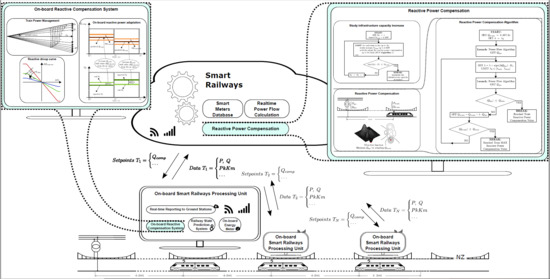
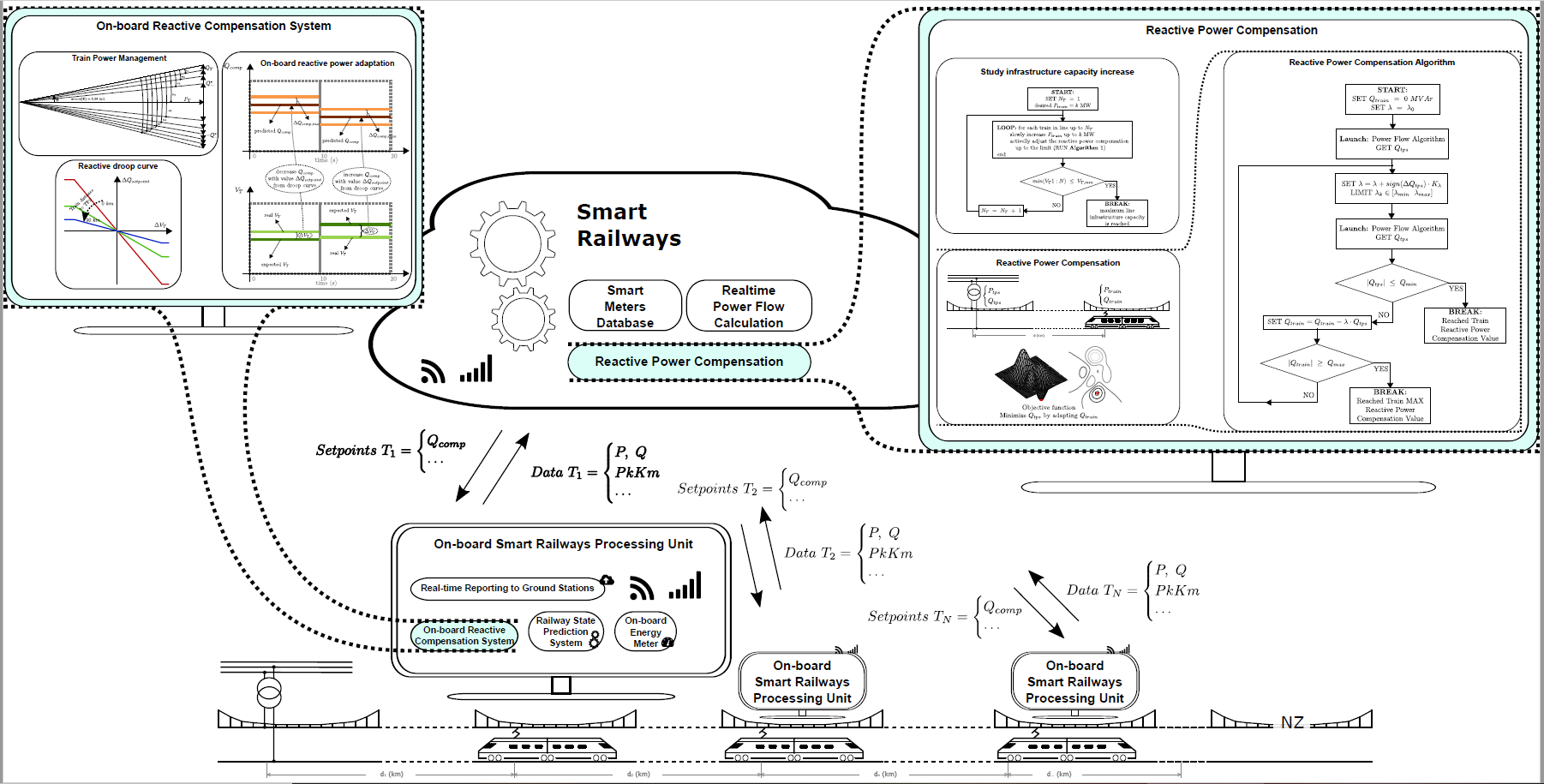
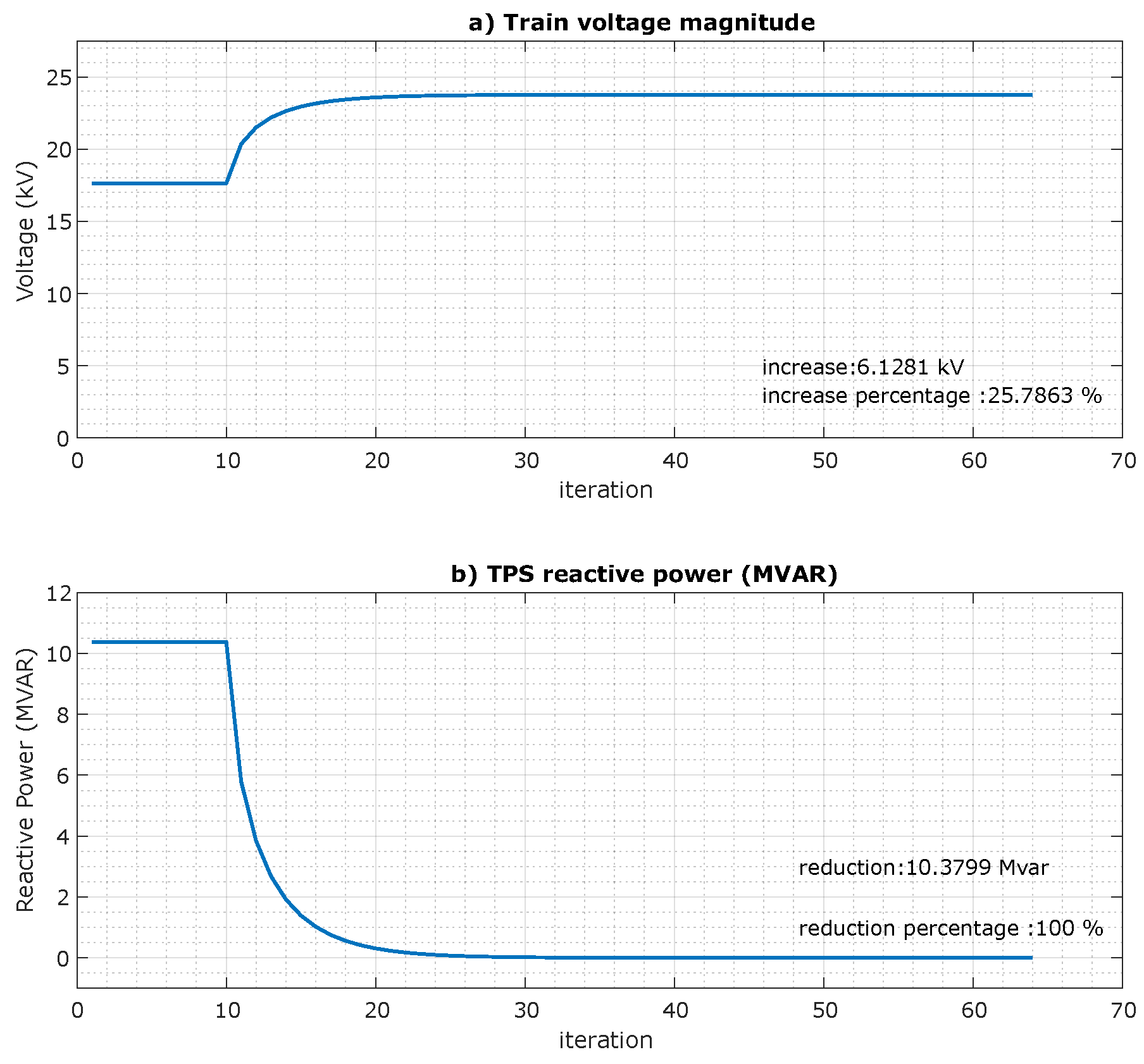
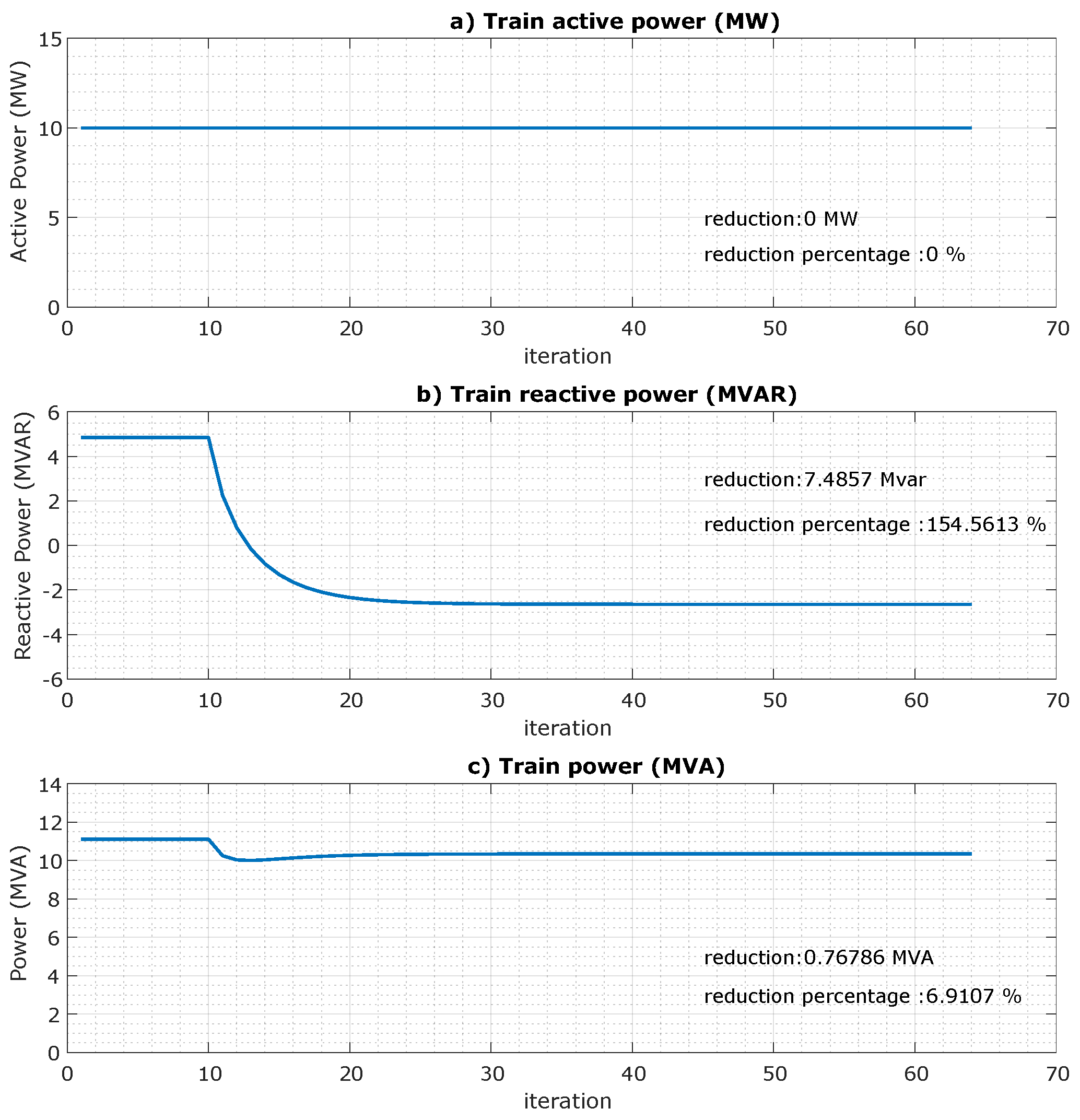
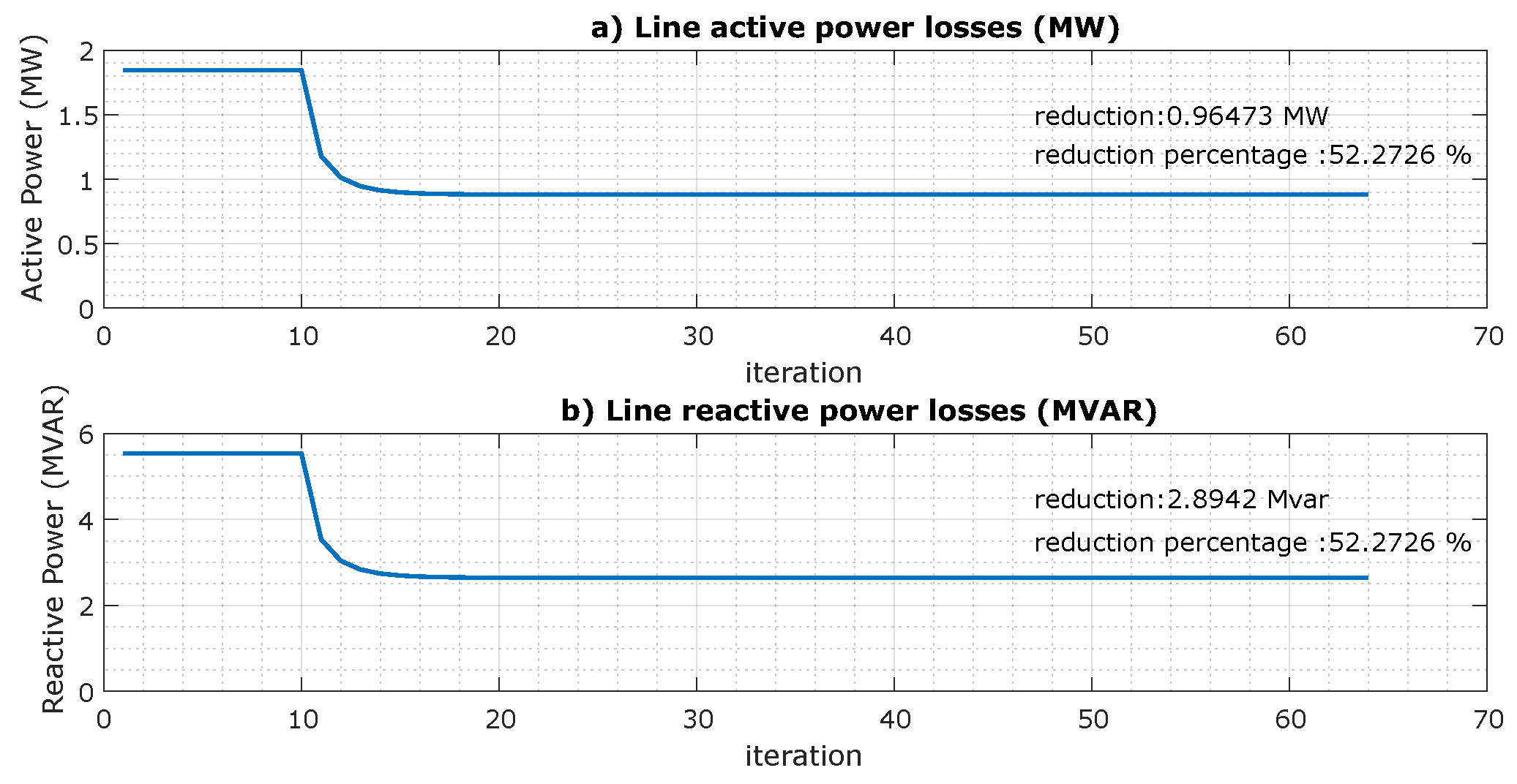
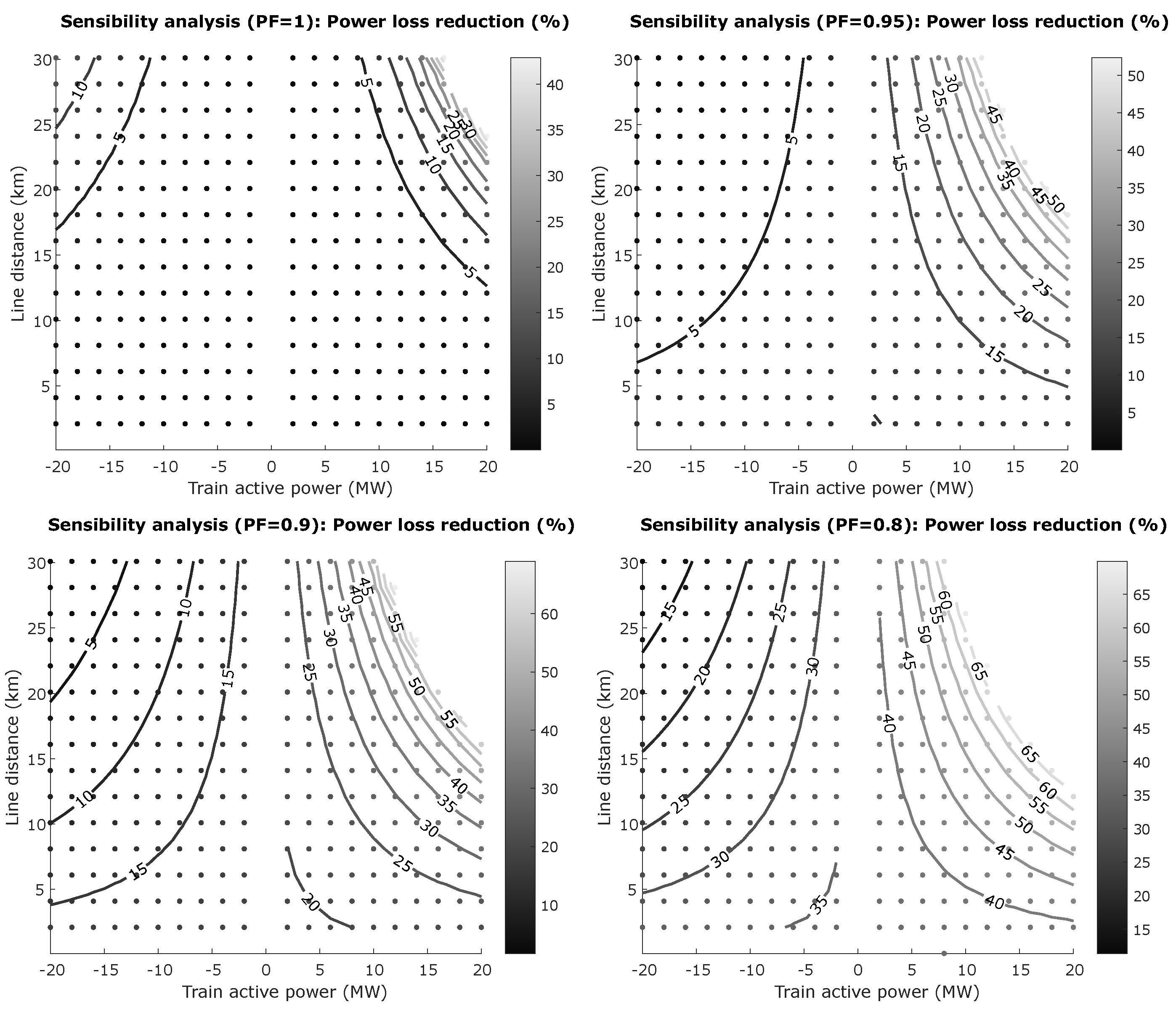
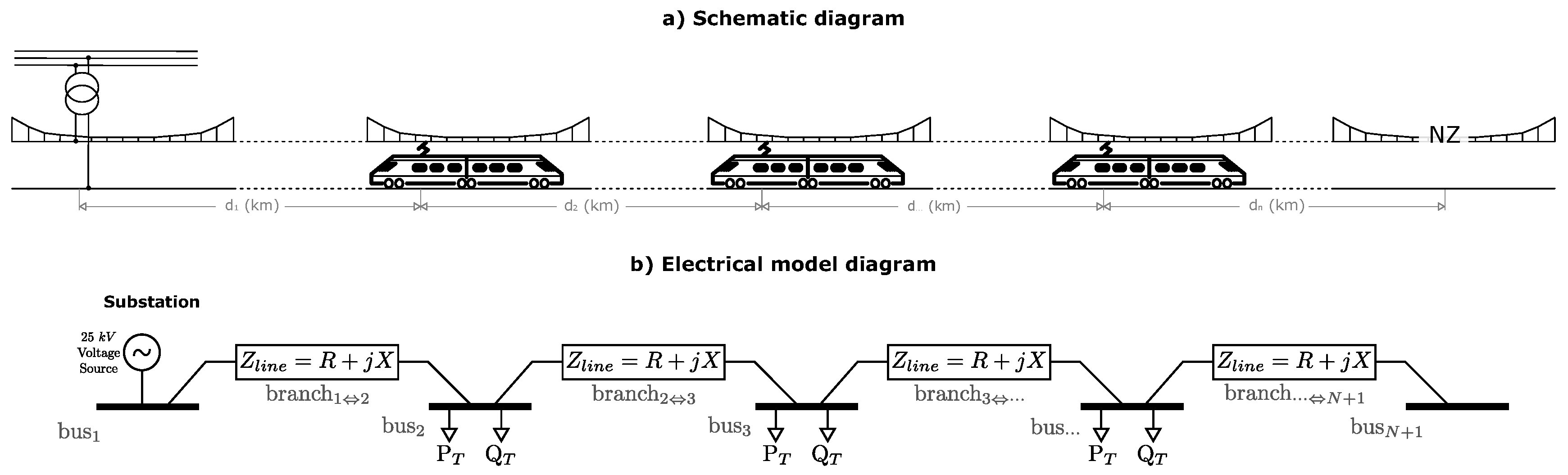
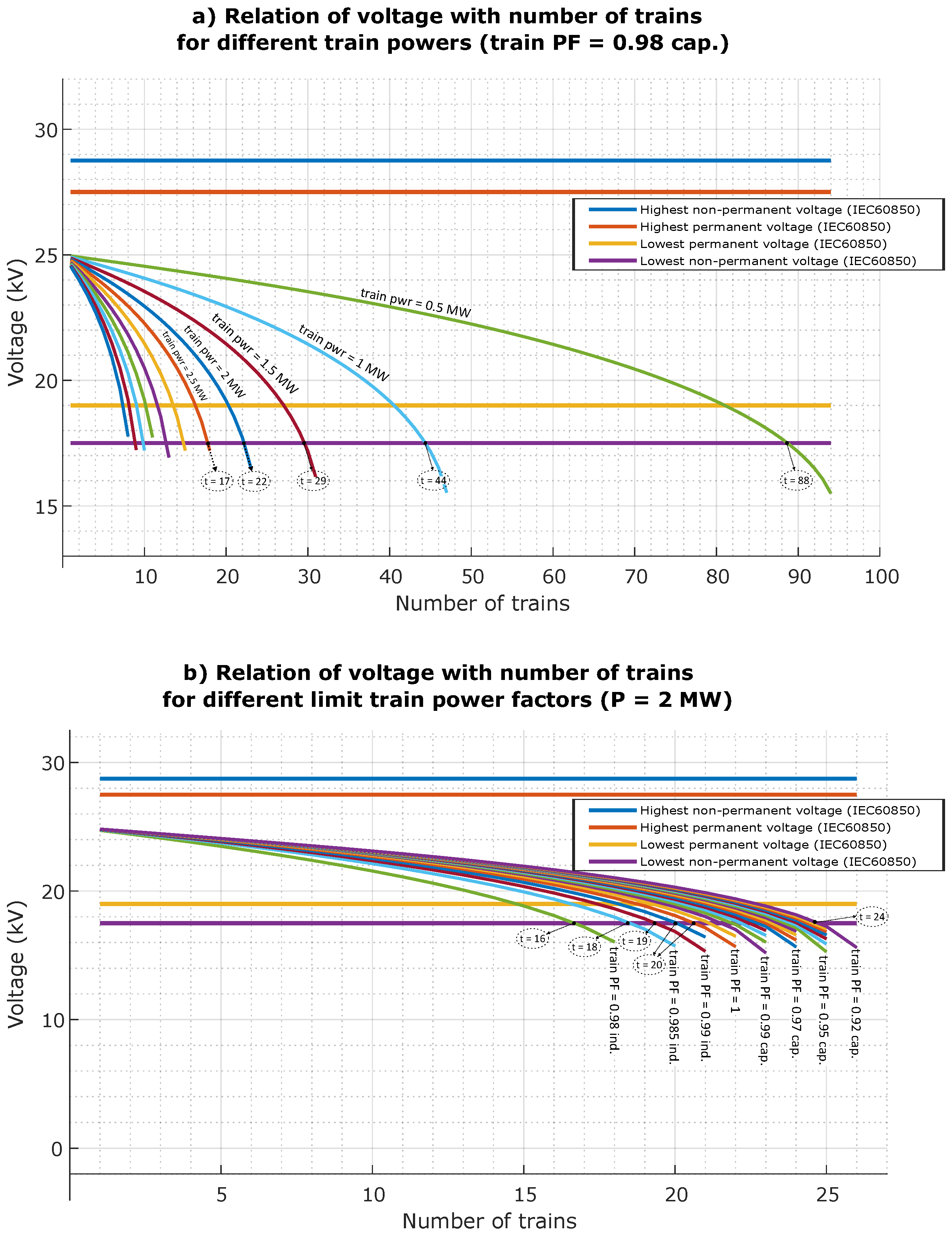
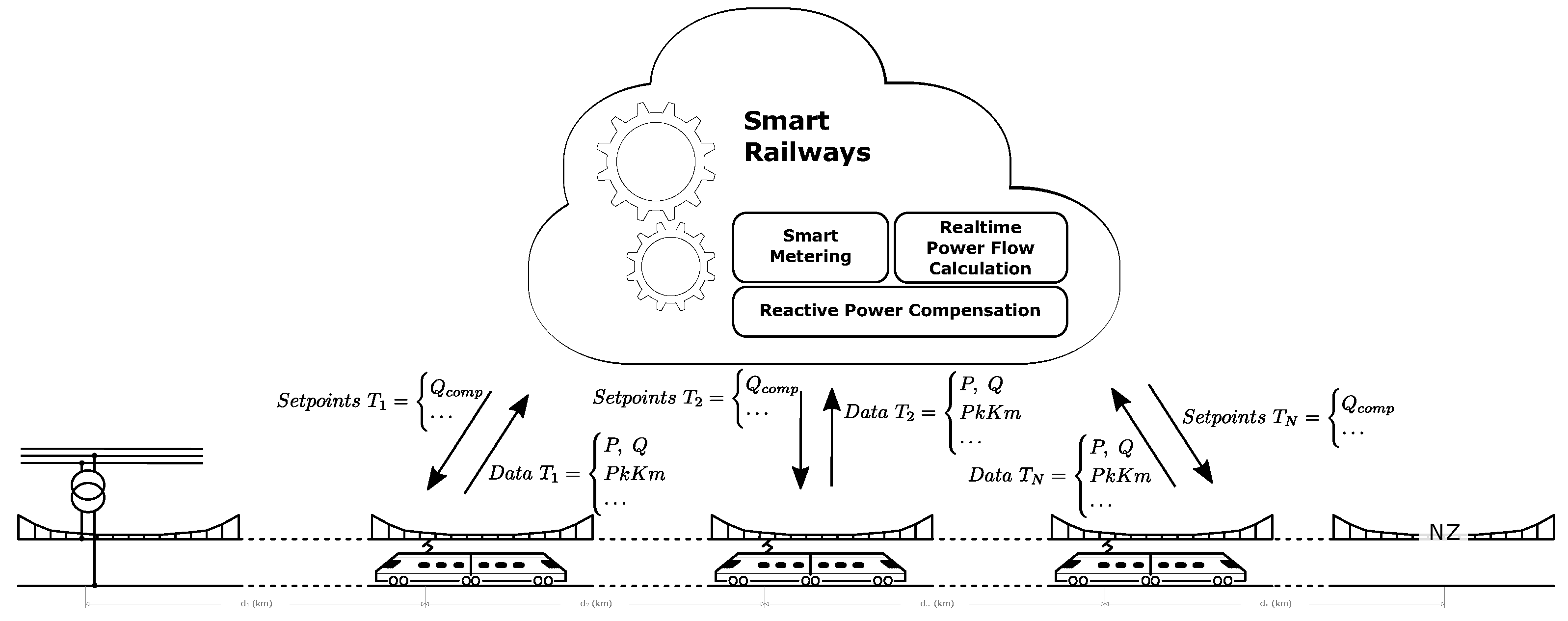
In AC railway electrification systems, the impact of reactive power flow in the feeding voltage magnitude is one aspect contributing to the quality of supply degradation. Specifically, this issue results in limitations in the infrastructure capacity, either in the maximum number of trains and in maximum train power. In this paper, two reactive power compensation strategies are presented and compared, in terms of the theoretical railway infrastructure capacity. The first strategy considers a static VAR compensator, located in the neutral zone and compensating the substation reactive power, achieving a maximum capacity increase up to 50% without depending on each train active power. The second strategy adapts each train reactive power, achieving also a capacity increase around 50%, only with an increase of the train apparent power below 10%. With a smart metering infrastructure, the implementation of such compensation strategy is viable, satisfying the requirements of real-time knowledge of the railway electrification system state. Specifically, the usage of droop curves to adapt in real time the compensation scheme can bring the operation closer to optimality. Thus, the quality of supply and the infrastructure capacity can be increased with a mobile reactive power compensation scheme, based on a smart metering framework.
Keywords: electric traction systems; mobile reactive power compensation; power quality; railway power systems; railway infrastructure capacity; smart railways electric traction systems; mobile reactive power compensation; power quality; railway power systems; railway infrastructure capacity; smart railways
Graphical Abstract