


Abstract
Background: People with diabetic foot ulcers report poor quality of life. However, prospective studies that chart quality of life from the onset of diabetic foot ulcers are lacking. We describe change in quality of life in a cohort of people with diabetes and their first foot ulcer during 18 months and its association with adverse outcomes. Methods: In this prospective cohort study of adults with their first diabetic foot ulcer, the main outcome was change in Medical Outcomes Study 36-Item Short Form Health Survey scores between baseline and 18-month follow-up. We recorded baseline demographics, diabetes characteristics, depression, and diabetic foot outcomes and mortality at 18 months. Results: In 253 people with diabetes and their first ulcer, there were 40 deaths (15.8%), 36 amputations (15.5%), 99 recurrences (43.2%), and 52 nonhealing ulcers (21.9%). The 36-Item Short Form Health Survey response rate of survivors at 18 months was 78% (n = 157). There was a 5- to 6-point deterioration in mental component summary scores in people who did not heal (adjusted mean difference, −6.54; 95% confidence interval, −12.64 to −0.44) or had recurrent ulcers (adjusted mean difference, −5.30; 95% confidence interval, −9.87 to −0.73) and a nonsignificant reduction in those amputated (adjusted mean difference, −5.00; 95% confidence interval, −11.15 to 1.14). Conclusions: Quality of life deteriorates in people with diabetes whose first foot ulcer recurs or does not heal within 18 months. (J Am Podiatr Med Assoc 99(5): 406–414, 2009)
Diabetic foot ulcers are associated with increased morbidity and mortality.[1] They are the leading cause of amputation[2] and have high rates of recurrence[3] and osteomyelitis. Treatment of diabetic foot ulcers may include multiple antibiotics, total-contact casting, restrictive weightbearing to promote pressure relief (and consequent iatrogenic reduced physical activity), frequent physician appointments, intensive management of diabetes and other complications, and, ultimately, surgery and potential limb loss. Despite the range of effective intensive and complex multidisciplinary regimens, patient perceptions of the impact of ulceration, its treatments, and its relationship to quality of life are not well understood. Treatment interventions may be invasive, extensive, and all-consuming; may lead to loss of occupational and social roles; and may restrict leisure activities. Therefore, it is important to understand the impact of foot ulcers on quality of life because interventions to improve the former may need to include a rehabilitative component to improve the latter too.
Quality of life is variously defined as “the impact of disease and treatment on disability and daily living or as a patient-based focus on the impact of perceived health state on the ability to lead a fulfilling life.”[4] In other words, the perception of the problem is as important as the health status. Quality of life (as measured with the Medical Outcomes Study 20-Item Short Form Health Survey) is reduced by approximately 10% in the general diabetes population compared with the general population,[5] but the relative reduction in quality of life in those with significant diabetes complications, such as foot ulcers, has been less well studied.
Qualitatively, people with diabetic foot ulcers have identified that their social, psychological, physical, and economic quality of life is poor.[6–10] The main reasons are the impact of reduced mobility and change in lifestyle for the whole family,[6–10] loss of social role, unemployment, curtailment of social activities, and stigma.[8–13]
Quantitative research has demonstrated that quality of life is reduced by approximately 10% to 40% on the Medical Outcomes Study 36-Item Short Form Health Survey (SF-36) in people with diabetic foot ulcers compared with nonulcer diabetes[14–16] and nondiabetic[15] groups and that impairment is more marked if people also experience further complications such as amputation.[17] Studies[18,19] of people with diabetes who have had amputations report poor health and psychological functioning. On the other hand, results of a randomized controlled trial[20] of growth factor therapy to improve healing of foot ulcers suggests that prompt healing can improve quality of life.
Prospective studies[9,10] that chart quality of life from the onset of diabetic foot ulcers are lacking, and awareness of quality of life at an early stage of diabetic foot ulceration may offer a valuable window of opportunity for adjunct interventions for secondary prevention. We[21] previously found high rates of depressive disorder (25%) in a representative sample of people with their first diabetic foot ulcer, and mood is known to worsen quality of life in people with diabetes.[22] We aimed to prospectively describe the change in quality of life across 18 months in a cohort of people with diabetes and their first foot ulcer. We tested the hypothesis that quality of life worsened in those alive at 18 months who had amputations, nonhealing ulcers, and recurrences compared with those who did not have these outcomes.
Methods
Participants
This was a population-based prospective cohort study of adults with diabetes with their first ulcer on either foot (baseline ulcer) presenting at all hospital foot and community chiropody clinics between October 10, 2001, and February 28, 2003, in four health authorities (representing a general population of 2 million) in South London, England. Diabetes was defined according to the World Health Organization criteria,[23] ethical approval was obtained from the ethics committees of the participating centers, and informed consent was provided by each participant. The case definition for a diabetic foot ulcer was as follows: 1) the ulceration was in the anatomical foot, 2) there was a full-thickness break in the epithelium with a minimum width of 5 mm, and 3) to exclude severely ischemic feet, the ankle to brachial ratio was greater than 0.5 to 1.5 (to exclude those with potential calcification of the medial arteries) at either the dorsalis pedis or the posterior tibial site using Doppler pressure readings. When participants had more than one ulcer at first presentation, the largest ulcer was defined as the baseline ulcer.[21]
First diabetic foot ulcers with a duration longer than 1 year at recruitment were excluded to reduce the effects of chronicity on quality of life and adverse outcome. Other exclusion criteria were 1) the patient not being fluent in English, 2) independent comorbid medical conditions (such as rheumatoid arthritis), and 3) severe mental illness (such as schizophrenia, other psychoses, and dementia). Further details of recruitment, tracing, and follow-up have been described previously.[21] Only participants who had completed the baseline quality-of-life measures were included in this analysis.
Measures
At baseline, data on sociodemographic and diabetes-specific status were recorded. We measured age at recruitment, sex, self-reported ethnicity, marital status (married/cohabiting, separated/divorced, or single), and socioeconomic status according to occupational class.[24] Smoking was coded as nonsmoker, former smoker, or current smoker. The Alcohol Use Disorders Identification Test was used to classify patients who reported hazardous and harmful alcohol consumption (a score >8 was defined as having an alcohol use problem).[25]
Because blood glucose levels may fluctuate markedly throughout 18 months and there is likely to be a close temporal relationship between high blood sugar levels and risk of ulceration,[26] the mean percentage glycosylated hemoglobin value was derived at baseline and at 12 and 18 months. Macrovascular complications were defined as previous myocardial infarct, coronary angioplasty, coronary artery bypass, and peripheral angioplasty or cerebrovascular accident. Microvascular complications included retinopathy (background or proliferative) measured with digital fundal examination, nephropathy (macroalbuminuria or undergoing dialysis), and neuropathy (vibration perception threshold ≥ 25 V).
The size of the ulcer was determined with digital imaging[27]; the severity of the ulcer was graded according to the University of Texas Diabetic Wound Classification System[28]; the duration of ulceration was recorded from first presentation; the degree of ischemia was assessed with the ankle-brachial pressure index; and the degree of protective pain sensation and sensory neuropathy was determined according to the vibration perception threshold (in this study, we coded a vibration perception threshold of ≥ 25 V as neuropathic regardless of age). We also assessed depression because it is common in patients with diabetes[29] and may confound the association between foot ulcers and quality of life. The World Health Organization’s Schedules for Clinical Assessment in Neuropsychiatry version 2.1,[30] which is a diagnostic research interview, was administered to the patients at baseline to determine the presence or absence of a minor or major depressive disorder according to the Diagnostic and Statistical Manual of Mental Disorders, Fourth Edition, criteria, and the methods used have been described in detail elsewhere.[21]
Quality-of-Life Outcome
The main outcome was the mean difference (change score) in quality of life between baseline and 18 months using the SF-36 version 1.[31] The SF-36 is a generic measure of health status as opposed to one that targets a specific condition, and it has been extensively found to be a reliable and valid measure in diabetes-related settings.[32] It consists of 36 items and eight domains (physical functioning, role-physical, bodily pain, general health, vitality, social functioning, role-emotional, and mental health). From the eight domains, a physical component summary score and a mental component summary score can be calculated. Studies[33,34] of the SF-36 in general populations in the United Kingdom, Sweden, and the United States have used factor analysis to confirm the presence of these two higher-order physical and mental health factors. The domains and summary scales cover the areas used most widely in health surveys and are thought to be most affected by changes in disease status according to treatment[33,35] and include behavioral function and dysfunction, distress and well-being, and objective and subjective self-reports of self-evaluated general health status,[31,35] although disease-specific measures are likely to be more sensitive.[36] Norm-based domain scores (T-scores) are calculated from scores from 0 to 100 that have been standardized (to Z-scores) using the data from the 1998 US general population and transformed using a T-score transformation so that they have a mean (SD) value of 50 (10).[37] To calculate the physical and mental component summary scores, the standardized domain scores (Z-scores) are then aggregated using weights from the 1990 US general population and are standardized using a linear T-score transformation with a mean (SD) value of 50 (10).[37] Three-point reductions in physical and mental component summary scores are associated with 2-year increased mortality of 20% and 10%, respectively, in a US Medicare population survey of 519,035 people reporting 14 diseases (including diabetes) and are accepted by the scale authors as a reasonable threshold for a minimally important difference in norm-based scores.[37] Reliability testing demonstrated α coefficients greater than 0.70.[35,38] The SF-36 is a comprehensive measure of health covering the same health concepts as other widely used health surveys and has content validity in relation to accepted definitions of health.[31] The SF-36 can be self-administered or administered by a trained interviewer. In the present study, participants completed it at the study visit or at home within 2 weeks of the study visit.
Diabetic Foot Outcomes
The four clinical outcomes recorded at 18 months were death, first amputation, first recurrent ulceration, and whether the baseline ulcer healed. The date and cause of death was obtained through the United Kingdom’s Central Register Office. The podiatric physician attending the patient recorded the date of first amputation, the date of first recurrent ulceration, and the date of healing. Amputation was defined as surgical removal of all or part of the lower limb and whether this was above or below the anatomical ankle. Recurrence of foot ulcers was defined as recurrence of a full-thickness break in the epithelium with a minimum width of 5 mm at the same or a different site as the baseline ulcer. Healed ulcers were defined as complete closure of the ulcer with the skin intact (complete epithelialization) without drainage or sinus formation.[39]
Statistical Analysis
The characteristics of the group with completed quality-of-life measures at baseline were computed by using percentage proportions or means (SDs) and were compared with those who had not completed the baseline questionnaire with independent-samples t tests to compare means and χ2 tests to compare frequencies. The mean and the 95% confidence interval (CI) for each domain on the SF-36 at baseline and at 18-month follow-up were reported for those who were alive at the end of the study. A one-way between-groups analysis of covariance was conducted to compare the change in quality-of-life scores according to adverse foot outcomes. The between-group factor was type of outcome (amputated versus nonamputated, baseline ulcer healed versus not healed, recurrence of an ulcer versus no recurrence, and any adverse foot outcome versus none). The dependent variable was change in the mean difference of SF-36 physical and mental component summary scores between 18 months and baseline to determine whether quality-of-life scores reduced in line with the main hypothesis. The regression models were adjusted first for sociodemographic variables, duration of diabetes, and the presence of macrovascular complications and second for the presence of depressive disorder. We also adjusted for the other adverse foot outcomes because some participants may have experienced more than one, but we did not adjust for microvascular complications because almost all (90%) had at least one. The baseline characteristics of survivors were compared between those who completed the SF-36 at 18 months and those who did not.
Results
Baseline Characteristics
We identified 260 people with their first ulcer; we recruited 253 people with diabetes and their first foot ulcer to the cohort, and its characteristics have been described elsewhere.[21] The proportion who had completed the baseline SF-36 for this study was 95.3% (n = 241), and the characteristics of this sample are reported in Table 1. P values represent differences between completers and noncompleters (4.7%, n = 12). People who completed the SF-36 were more likely to be older (mean age, 62.40 versus 54.42 years) and to have type 2 diabetes, but there were no other significant differences compared with the small proportion who did not complete the SF-36.
Quality of Life at 18 Months
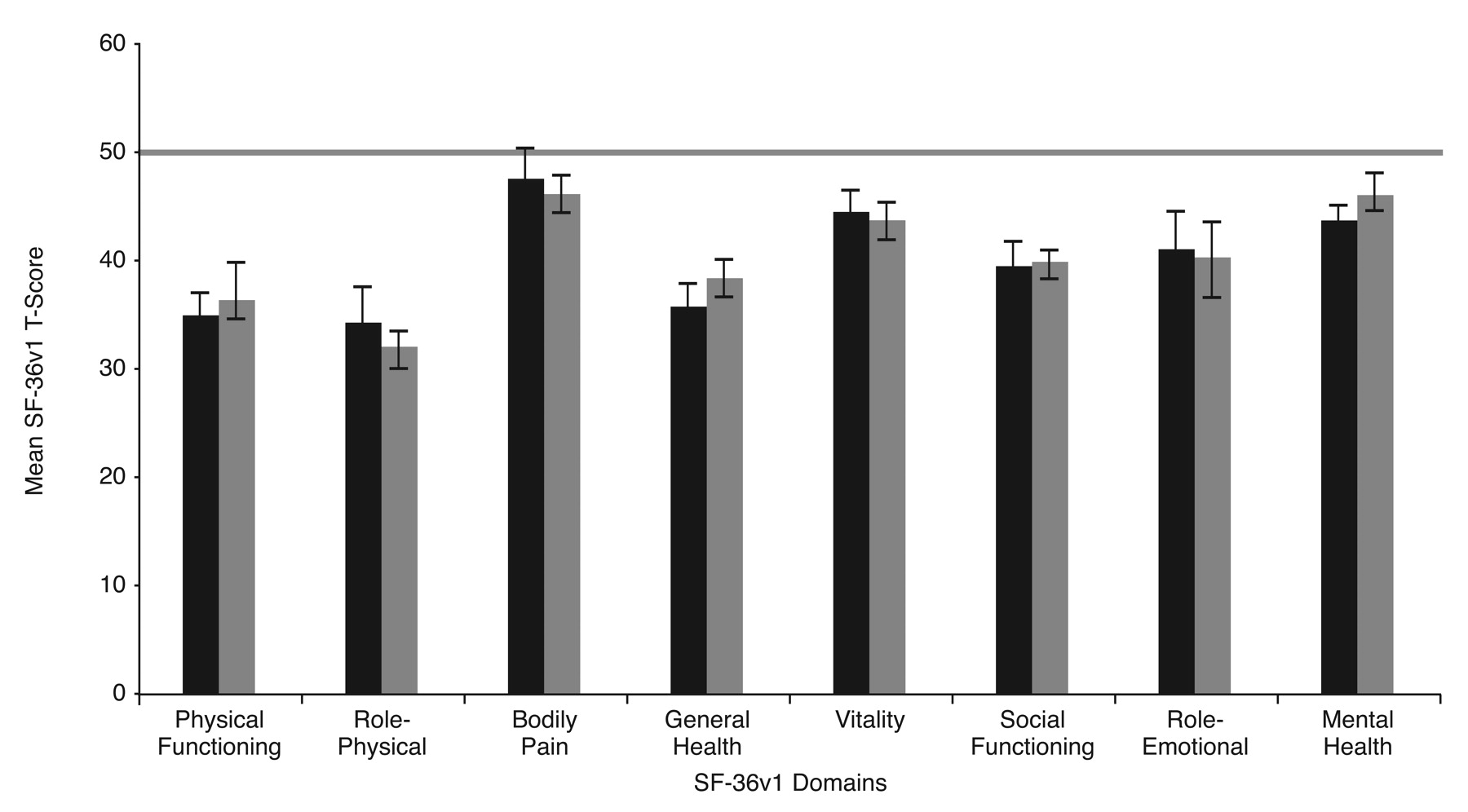
During 18-month follow-up, there were 40 deaths (15.8%), 36 amputations (15.5%), 99 recurrences of ulcer (43.2%), and 52 nonhealing ulcers (21.9%). The questionnaire response rate of survivors at 18 months was 78% (n = 157); 44.6% (n = 70) of these participants healed without complication, and the remaining 55.4% (n = 87) experienced at least one adverse foot outcome. When survivors who completed the SF-36 at 18 months were compared with those who did not, there were no significant differences regarding age, sex, complication status, baseline SF-36 scores, or adverse outcomes. The distribution of each SF-36 norm-based domain (T) score at baseline and in those alive at 18 months is shown in Figure 1. There was deterioration in nearly all of the SF-36 domains. This was significant for physical functioning (mean difference, −2.95; 95% CI, −4.30 to −1.60), mental health (mean difference, −3.16; 95% CI, −5.05 to −1.26), and general health (mean difference, −2.95; 95% CI, −4.12 to −1.79) but not for role-emotional (mean difference, −0.03; 95% CI, −3.41 to 3.46) and social functioning (mean difference, −1.09; 95% CI, −1.11 to 3.30). There was a small, nonsignificant increase in scores on the role-physical (mean difference, 1.67; 95% CI, −4.26 to 0.92), pain (mean difference, 0.75; 95% CI, −2.68 to 1.17), and vitality (mean difference, 0.11; 95% CI, −1.38 to 1.60) domains.
In the group that healed without further complication, there were no significant changes in SF-36 quality-of-life domain scores except for a deterioration in general health (mean difference, −1.95; 95% CI, −3.93 to 0.04).
Quality of Life and Type of Adverse Outcome
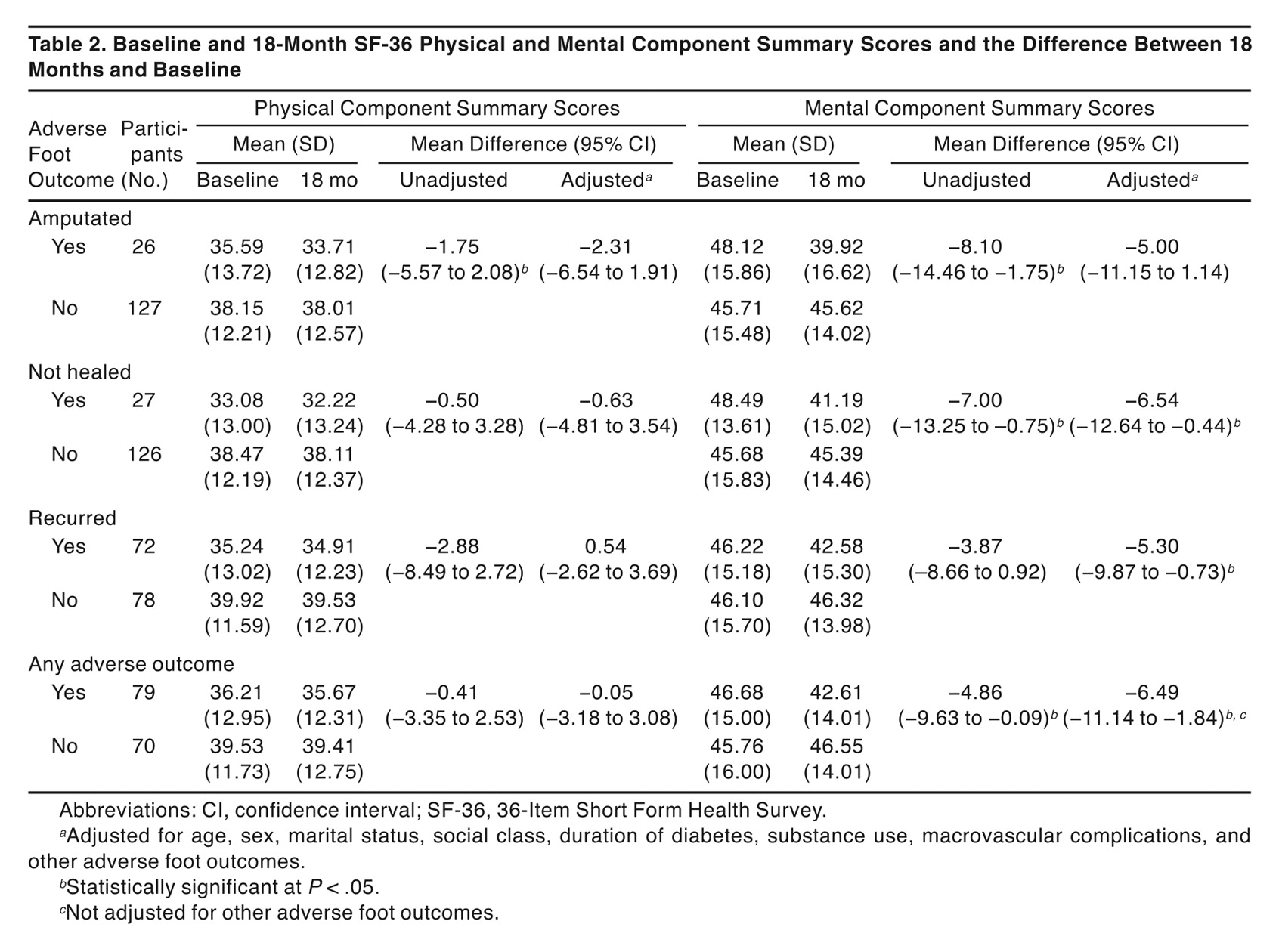
The eight SF-36 domains were used to generate the physical and mental component summary scores.[37] There was no significant deterioration in physical component summary scores in the group with amputations (adjusted mean difference, −2.31; 95% CI, −6.54 to 1.91), even when the analysis was also adjusted for depression status (adjusted mean difference, −2.51; 95% CI, −6.76 to 1.74) (Table 2). There was significant deterioration in mental component summary scores in the group with amputations (unadjusted mean difference, −8.10; 95% CI, −14.46 to −1.75), but this was not maintained after adjustment for confounders (adjusted mean difference, −5.00; 95% CI, −11.15 to 1.14); when we also adjusted for depression, the effect size was attenuated and approached significance (adjusted mean difference, −5.53; 95% CI, −11.64 to 0.59).
There was no significant deterioration in physical component summary scores in the group that did not heal compared with those who did heal (adjusted mean difference, −0.63; 95% CI, −4.81 to 3.54) even after adjusting for depression (adjusted mean difference, −0.44; 95% CI, −4.63 to 3.76). Mental component summary scores deteriorated in the nonhealed group, and this remained significant after adjusting for sociodemographic and diabetes variables (adjusted mean difference, −6.54; 95% CI, −12.64 to −0.44) and was maintained when we adjusted for depression (adjusted mean difference, −6.11; 95% CI, −12.22 to 0.00).

Table 1.
Baseline Characteristics of the Cohort of People With Their First Diabetic Foot Ulcer by Questionnaire-Response Status
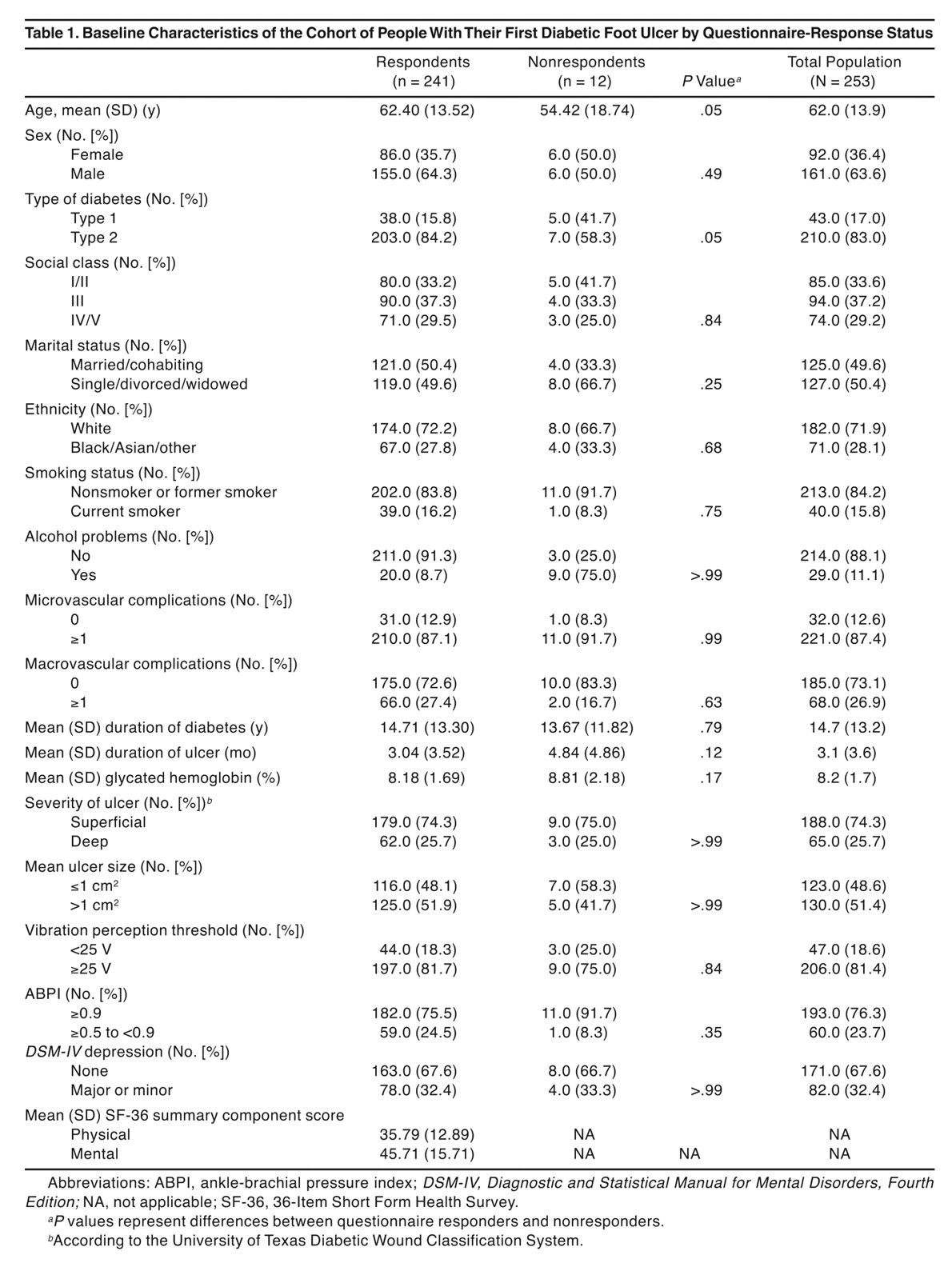
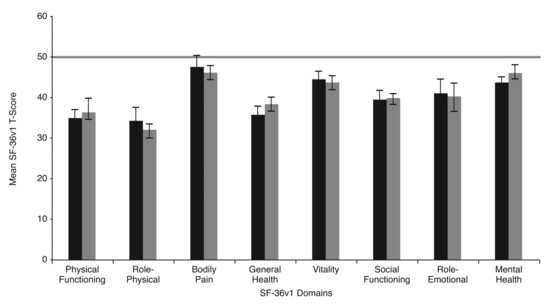
Figure 1.
Mean 36-Item Short Form Health Survey version 1 (SF-36v1) domain subscale norm-based T- (transformed) scores for responders at baseline (gray bars) and at 18 months (black bars) for those alive at 18 months (n = 157). Error bars represent 95% confidence intervals; the horizontal reference line shows the standard population mean T-score of 50.
There was no significant change in physical component summary scores in those who had recurrence of ulcers compared with those who had none (adjusted mean difference, 0.54, 95% CI, −2.62 to 3.69) and when adjusted for depression (adjusted mean difference, 0.39; 95% CI, −2.78 to 3.56). Mental component summary scores were significantly worse in those who had recurrence of ulcers (adjusted mean difference, −5.30; 95% CI, −9.87 to −0.73), and this was attenuated when we also adjusted for depression (adjusted mean difference, −5.698; 95% CI, −10.25 to −1.14).
When any adverse foot outcome was considered as a between-group factor, physical component summary scores were not reduced compared with those who had healed without complication (adjusted mean difference, −0.05; 95% CI, −3.18 to 3.08) or when adjusted for depression (adjusted mean difference, −0.19; 95% CI, −3.33 to 2.96). On the other hand, there was a significant reduction in mental component summary scores in those who had complications (adjusted mean difference, −6.49; 95% CI, −11.14 to −1.84) that was maintained after adjusting for depression (mean difference, −6.84; 95% CI, −11.48 to −2.19).
Discussion
In this prospective cohort of patients with their first diabetic foot ulcer, we found that overall scores on the SF-36 physical functioning, general health, and mental health quality-of-life domains deteriorated during 18 months but only in those who experienced further complications. Individuals who healed without further adverse outcomes continued to perceive their quality of life as the same. We demonstrated that having a nonhealing ulcer or recurrent ulceration was accompanied by worsening mental component summary scores (even when we controlled for depression) of approximately 5 to 6 points, which is deemed clinically significant.[34] We found a similar nonsignificant deterioration in the amputation group, although this approached significance when we also adjusted for depression. However, there was no significant reduction in physical component summary scores after adjustment for confounders.
The strengths of this study are that it was a population-based cohort and had a prospective design, reducing selection bias and allowing for the temporal association between quality of life and adverse foot outcome to be determined. The adverse outcomes measured were clinical and objective, and podiatric physicians were blind to depression status. Limitations of the study include that we used a generic quality-of-life measure that was not specific to diabetes or foot ulcer. However, the SF-36 has been widely used in diabetic populations and has comparable reliability and validity as diabetes-specific measures such as the Diabetes Quality of Life Measure, and it is particularly sensitive to changes in functional status.[40,41] There are now two validated quality-of-life measures specifically developed for people with diabetic foot ulcers[42] and for people with foot ulcers and neuropathy,[36] but these measures were not available when the protocol for this study was prepared. We used only one method for determining peripheral arterial disease, the ankle-brachial pressure index, when recent studies suggest that other measurements, such as toe and skin perfusion pressures, are more accurate determinants of healing.[43] We achieved a nearly 80% response on the SF-36 in those alive at 18-month follow-up, but taking into account the 16% of the cohort who died, this may have reduced the power of the study to measure change across time. There was a small group of homebound patients with first ulcers who would not have been identified by our recruitment strategy. Regarding the latter, most patients were seen in outpatient settings and were recruited from hospital and community clinics, and the results are likely to be generalizable to this population of foot ulcers as a whole.
Table 2.
Baseline and 18-Month SF-36 Physical and Mental Component Summary Scores and the Difference Between 18 Months and Baseline
It is notable that in a short period, quality of life deteriorates in people with diabetes and foot ulcers only when further adverse foot outcomes are experienced. The 5- to 6-point reduction in mental health (mental component summary score) quality of life in people who had adverse foot outcomes at 18 months may be explained by the fact that they are more disabled or have an obvious physical problem and, as a result, are more likely to lose their social role, to perceive their body image differently, and, perhaps, to perceive themselves as stigmatized. A recent clinical trial[44] of standardized pressure off-loading treatments for people with diabetes and neuropathic foot ulcers found that SF-36 physical and mental component summary scores improved when ulcers healed regardless of the type of treatment; therefore, to achieve healing is of major importance. Regarding amputation, one study[17] showed that people who undergo major amputation rate their quality of life as poorer than others who have experienced diabetic foot ulceration. Whereas other studies[16,19] suggest that people who undergo minor amputation or who are fully mobile after amputation perceive their quality of life to be better than that of those with current diabetic foot ulcers. Another important work[45] has demonstrated cross-sectionally that people with diabetic ulcers for 6 months report significantly poorer physical quality of life compared with those with healed ulcers but no difference in mental health quality of life. A randomized controlled trial[20] comparing wound dressings found improvements in perceived quality of life when ulcers healed. These discrepancies with the present findings may be explained by the following. First, in terms of the duration of nonhealing ulcers, the present study participants who did not heal had ulcers for more than 18 months, and this may have led to a more profound impact on psychological functioning. Second, patients without ulcer healing by 18 months reported very low physical component summary scores (physical quality of life) at baseline, and it is likely that their ulcers were severe. We know from the literature of self-reported health and mortality, the large US epidemiologic study National Health and Nutrition Examination Survey of 6,440 people,[46] that self-reported health at baseline predicted survival at 12-month follow-up.
In diabetes, the number and severity of microvascular and macrovascular complications are generally proportional to impairment in quality of life.[40] Cross-sectional research[47] has demonstrated poorer quality of life in those with microvascular complications, and the United Kingdom Prospective Diabetes Study[48] found that the presence of macrovascular disease increased the likelihood of reporting problems with mobility and daily activities. Previous studies of diabetic foot ulcers have demonstrated cross-sectional associations with quality of life[14–16] and that improvements are possible if treatment promotes healing.[20,44] In the present study, we showed that quality of life in people with first ulcers does not deteriorate unless they experience significant problems. This highlights the importance of healing first ulcers. Failure to do so risks the loss of an opportunity to protect perceived quality of life. For people at high risk or with complications, increased attention to strategies to maintain or improve quality of life, such as social rehabilitation, is needed.
Financial Disclosure: The Wellcome Trust funded this project. | |
Conflict of Interest: None reported. |
Acknowledgments
Maureen Bates, Tim Jemmott, and Ian Aitkenhead; the Diabetic Foot Clinic at King’s College Hospital; and participating patients and staff for giving their time so generously.
References
- Ramsey SD, Newton K, Blough D, et al: Incidence, outcomes, and cost of foot ulcers in patients with diabetes. Diabetes Care 1999, 22, 382.
- Pecoraro R, Reiber G, Burgess E: Pathways to diabetic limb amputation: basis for prevention. Diabetes Care 1990, 13, 513.
- Apelqvist J, Larsson J, Agardh C: Long-term prognosis for diabetic patients with foot ulcers. J Intern Med 1993, 233, 485.
- Price P: Defining and measuring quality of life. J Wound Care 1996, 5, 139.
- Aalto AM, Uutela A, Kangas T: Health, behavior, social integration, perceived health and dysfunction: a comparison between patients with type I and II diabetes and controls. Scand J Prim Health Care 1996, 15, 97.
- Brod M: Quality of life issues in patients with diabetes and lower extremity ulcers: patients and care givers. Qual Life Res 1998, 7, 365.
- Hjelm K, Nyberg P, Apelqvist J: Gender influences beliefs about health and illness in diabetic subjects with severe foot lesions. J Adv Nurs 2002, 40, 673.
- Kinmond K, McGhee P, Gough S, et al: Loss of self: a psychosocial study of the quality of life of adults with diabetic foot ulceration. J Tissue Viability 2003, 13, 6.
- Goodridge D, Trepman E, Embil JM: Health-related quality of life in diabetic patients with foot ulcers. J Wound Ostomy Continence Nurs 2005, 32, 368.
- Vileikyte L: Diabetic foot ulcers: a quality of life issue. Diabetes Metab Res Rev 2001, 17, 246.
- Croxson S: Diabetes in the elderly: problems of care and service provision. Diabet Med 2002, 19, S66.
- Douglas V: Living with a chronic leg ulcer: an insight into patients’ experiences and feelings. J Wound Care 2001, 10, 355.
- Fox RD: Innocent beginnings, uncertain futures: exploring the challenges of living with diabetic foot ulcers. Can J Diabetes 2005, 29, 105.
- Meijer JWG, Trip J, Jaegers SM, et al: Quality of life in patients with diabetic foot ulcers. Disabil Rehabil 2001, 23, 336.
- Ribu L, Hanestad BR, Moum T, et al: A comparison of the health-related quality of life in patients with diabetic foot ulcers, with a diabetes group and a non-diabetes group from the general population. Qual Life Res 2007, 16, 179.
- Eckman MH, Greenfield S, Mackey WC, et al: Foot infections in diabetic patients: decision and cost-effectiveness analyses. JAMA 1995, 273, 712.
- Tenvall GR, Apelqvist J: Health-related quality of life in patients with diabetes mellitus and foot ulcers. J Diabetes Complications 2000, 14, 235.
- Peters EJG, Childs MR, Wunderlich RP, et al: Functional status of persons with diabetes-related lower-extremity amputations. Diabetes Care 2001, 24, 1799.
- Carrington AL, Mawdsley SKV, Morley M, et al: Psychological status of diabetic people with or without lower limb disability. Diabetes Res Clin Pract 1996, 32, 19.
- Nabuurs-Franssen MH, Huijberts MSP, Nieuwenhuijzen Kruseman AC, et al: Health-related quality of life of diabetic foot ulcer patients and their caregivers. Diabetologia 2005, 48, 1906.
- Ismail K, Winkley K, Stahl D, et al: A cohort study of people with diabetes and their first foot ulcer: the role of depression on mortality. Diabetes Care 2007, 30, 1473.
- Jacobson AM, de Groot M, Samson JA: The effects of psychiatric disorders and symptoms on quality of life in patients with type I and type II diabetes mellitus. Qual Life Res 1997, 6, 11.
- World Health Organization: Definition, Diagnosis and Classification of Diabetes Mellitus and Its Complications: Report of a WHO Consultation, World Health Organization, Geneva. 1999.
- Office of National Statistics: ONS Standard Occupational Classification 2000: Volume 1: Structure and Description of Unit Groups; Volume 2: The Coding Index, Stationery Office, London. 2000.
- Saunders J, Aasland O, Babor TF, et al: Development of the Alcohol Use Disorders Identifications Test (AUDIT): WHO collaborative project on the early detection of persons with harmful alcohol consumption. Addiction 1993, 88, 791.
- Jeffcoate S: Diabetes control and complications: the role of glycated haemoglobin, 25 years on. Diabet Med 2004, 21, 657.
- Rajbhandari S, Harris N, Sutton M, et al: Digital imaging: an accurate and easy method of measuring foot ulcers. Diabet Med 1999, 16, 339.
- Armstrong DG, Lavery LA, Harkless LB: Validation of a diabetic wound classification system. Diabetes Care 1998, 21, 855.
- Anderson RJ, Freedland KE, Clouse RE, et al: The prevalence of co-morbid depression in adults with diabetes. Diabetes Care 2001, 6, 1069.
- World Health Organization: SCAN: Schedules for Clinical Assessment in Neuropsychiatry, Version 2.1, World Health Organization, Geneva. 1997.
- Ware JE Jr, Sherbourne CD: The MOS 36-item short-form health survey (SF-36): I. Conceptual framework and item selection. Med Care 1992, 30, 473.
- Stewart AL, Hays RD, Ware JE: The MOS short-form general health survey: reliability and validity in a patient population. Med Care 1988, 26, 724.
- Ware JE, Kosinski M, Keller SD: SF-36 Physical and Mental Health Summary Scores: A User’s Manual and Interpretation Guide, The Health Institute, New England Medical Center, Boston. 1994.
- Sullivan M, Karlsson J, Ware JE: The Swedish SF-36 health survey: I. Evaluation of data quality, scaling assumptions, reliability and construct validity across general populations in Sweden. Soc Sci Med 1195, 41, 1349.
- Ware JE, Snow KK, Kosinski B: SF-36 Health Survey: Manual and Interpretation Guide, The Health Institute, New England Medical Center, Boston. 1993.
- Vileikyte L, Peyrot M, Bundy CE, et al: The development and validation of a neuropathy- and foot ulcer-specific quality of life instrument. Diabetes Care 2003, 26, 2549.
- Ware JE, Kosinski M, Bjorner JB, et al: User’s Manual for the SF-36v2 Health Survey, 2nd Ed, QualityMetric Inc, Lincoln, RI. 2007.
- McHorney CA, Ware JE, Raczek AE: The MOS 36-item Short-Form Health Survey (SF-36): II. Psychometric and clinical tests of validity in measuring physical and mental health constructs. Med Care 1993, 31, 247.
- Sinacore D: Total contact casting for diabetic neuropathic ulcers. Phys Ther 1996, 76, 296.
- Jacobson AM, de Groot M, Samson JA: The evaluation of 2 measures of quality of life in patients with type 1 and type 2 diabetes. Diabetes Care 1994, 17, 267.
- Trief PM, Wade MJ, Pine D: A comparison of health-related quality of life in elderly and younger insulin-treated adults with diabetes. Age Ageing 2003, 32, 613.
- Abetz L, Sutton M, Brady L, et al: The Diabetic Foot Ulcer Scale (DFS): a quality of life instrument for use in clinical trials. Practical Diabetes Int 2002, 19, 167.
- Yamada T, Ohta T, Ishibashi H, et al: Clinical reliability and utility of skin perfusion pressure measurement in ischemic limbs: comparison with other noninvasive diagnostic methods. J Vasc Surg 2008, 47, 318.
- Armstrong DG, Lavery LA, Wrobel JS, et al: Quality of life in healing diabetic wounds: does the end justify the means? J Foot Ankle Surg 2008, 47, 278.
- Goodridge D, Trepman E, Sloan J, et al: Quality of life in adults with unhealed and healed diabetic foot ulcers. Foot Ankle Int 2006, 27, 274.
- Idler EL, Angel RJ: Self-related health and mortality in the NHANES-I epidemiologic follow-up study. Am J Public Health 1990, 80, 446.
- Bradley C, Todd C, Gorton T, et al: The development of an individualized questionnaire measure of perceived impact of diabetes on quality of life: the AFFQoL. Qual Life Res 1999, 8, 79.
- UK Prospective Diabetes Study Group: Quality of life in type 2 diabetic patients is affected by complications but not by intensive policies to improve blood glucose or blood pressure control (UKPDS 37). Diabetes Care 1999, 22, 1125.
© 2009 American Podiatric Medical Association