


Abstract
Background: Complementary and alternative medicine (CAM) is one of the fastest growing areas of health care. This has necessitated an increased awareness and understanding of CAM by conventional health professionals.Methods: A questionnaire seeking information about use of and attitudes toward CAM was mailed to 1,365 Australian podiatric physicians.Results: Ninety-one percent of Australian podiatric physicians surveyed have used at least one CAM therapy in the past 12 months, and 93% have treated patients with CAM or have recommended its use to patients. Overall, the respondents rated their knowledge of various CAM therapies as “average,” and responses on the CAM Health Belief Questionnaire indicated that respondents tended not to endorse CAM health beliefs, with statements about CAM therapies being seen as “a threat to public safety” and effects being “usually due to the placebo effect” producing the strongest responses.Conclusions: Complementary and alternative medicine therapies are already being used in podiatric medical practice, and there are significant opportunities for further research into CAM education and clinical research relevant to podiatric medicine.
Complementary and alternative medicine (CAM) is one of the fastest-growing areas of health care and encompasses a broad range of healing practices from various health systems together with their accompanying theories and beliefs. [1–4] These are generally considered to be outside of “normal” medical practice and may not be recognized by orthodox medicine. In Australia, estimates of CAM use in the population range from 50% to 70%, [5,6] with the most recent data showing that within a 12-month period, 69% of Australians had used at least one CAM therapy and 44% had visited a CAM practitioner. [7] In addition, these authors estimated that total visits to CAM practitioners were almost equal to those for medical practitioners. Australians have one of the highest CAM use adoption rates in the world; however, why this occurs is as yet unknown. The implication of this finding is that all health workers need to have appropriate knowledge of CAM techniques and research so that they might better inform their patients when asked about these medicines and therapies. Podiatric physicians are in a unique position in the health workforce because they spend 20 to 30 minutes talking with each patient during a standard consultation. In addition, this increased time factor means that they may be more likely to be asked about CAM. There have been many calls by CAM and conventional health-care professionals for a greater understanding of the value of CAM and how it can be integrated into the health-care system. [8–11] This reinforces the complementary rather than alternative nature of CAM practices.
Podiatric physicians are important members of modern multidisciplinary health-care teams and have prime responsibility for the treatment and diagnosis of conditions of the lower limbs and feet. This may involve individuals with no other disease, eg, those with tinea, or those for whom foot care is necessitated because of other disease processes (eg, diabetes). There is very little literature about the role of CAM in podiatric medicine, with most research addressing the use of reflexology (pressure point therapy of the feet), the ingestion of herbs to treat systemic disease, and the application of essential oils for the treatment of tinea or onychomycosis. Reflexology has been shown to have beneficial effects in multiple sclerosis [12] and in foot pain associated with rheumatoid arthritis, [13] and some herbs have shown benefit in the reduction of inflammation and pain associated with joint disease. [14] Perhaps the best-known, at least to the general public, application of CAM to podiatric medicine is the use of essential oils, such as tea tree oil, in the treatment of tinea. [15] Products containing this and other essential oils are widely available in pharmacies and supermarkets. Despite the use of these CAM therapies and products in foot care, very little is known about the attitudes of podiatrists to these therapies or whether they themselves use these therapies with patients.
There are more than 2,000 podiatric physicians working in Australia, and they are predominantly female, university educated, young (<35 years), and working full time. [16] Coincidently, this profile also fits with that of the typical CAM user [2,7,17] and may be a factor in the use of CAM by podiatric physicians. This study was designed to investigate the use of and attitudes toward CAM by Australian podiatric physicians. This will help inform podiatric medical practice and will lead to greater integration of CAM and conventional health-care practices.
Methods
A questionnaire was developed to gather information about respondents’ personal and professional use of CAM. The questionnaire was based on that used to investigate CAM use by other health professionals [18,19] and included, in addition to questions about demographic and general respondent characteristics, the CAM Health Belief Questionnaire, [20] questions about personal use of various CAM therapies, and questions about use of CAM in podiatric medicine. After initial development of the questionnaire, a small pilot group of local podiatrists was asked to complete the questionnaire and to provide feedback on question design and content. This feedback was then incorporated into the final questionnaire used in this study. This study was approved by the Charles Sturt University Ethics in Human Research Committee.
To ensure national distribution of the questionnaire, each state podiatric medical board was approached to allow access to state mailing lists. Permission was granted by five states, with New South Wales declining for privacy reasons. Questionnaires were mailed, with a postage-paid envelope, to 1,365 individuals and included 285 podiatric physicians in Western Australia and Northern Territory, 48 in the Australian Capital Territory, 302 in South Australia, 555 in Victoria, and 175 in Queensland. No identifying marks or numbers were present on the questionnaires or envelopes, ensuring confidentiality and anonymity for respondents. No follow-up of nonrespondents was undertaken.
Questionnaire responses were coded and entered into SPSS version 14 (SPSS Inc, Chicago, Illinois), and descriptive statistics (eg, frequencies, means, and standard deviations) were generated for all of the questions. Statistical differences were calculated using the χ2 test, with differences deemed statistically significant when P < .05.
Results
Respondent Characteristics and General Views About CAM
Excluding envelopes returned “address unknown,” the response rate for this study was 36% (n = 466) (61% female and 39% male). The mean ± SD age of the respondents was 37.6 ± 10.2 years (age range, 21–73 years), and they had been working as podiatrists for 1 to 66 years (mean ± SD, 13.7 ± 9 years). Note that the individual indicating a working life of 66 years did not provide age data. There were no statistically significant differences between men and women regarding either of these parameters. Most respondents (60%) were working as the owner of a private practice; the remaining sites of practice were private practice (12%), a hospital (9%) or community health clinic (9%), a university academic center (2%), or a combination of sites (8%). Female respondents were more likely to work in private practice, in a hospital, or in a community health clinic compared with male respondents (P = .002). Most respondents (92%) were Australian trained, with 7% trained in the United Kingdom and less than 1% trained in either the United States or Southeast Asia.
With respect to CAM training, a third (33%) of the respondents had engaged in some form of CAM training, with 48% of these individuals attending a workshop or a weekend course. Ten percent had completed a continuing professional education activity, 12% had a formal qualification, and 5% engaged in self-study. The remainder had completed multiple forms of training in CAM. Of those who did not have any training in CAM, 63% would be interested in undertaking training in this area.
When asked whether they felt there was a place for CAM in podiatric medical practice, 67% felt that there was, 19% were unsure, and 8% indicated that they did not know enough to comment. Only 7% could not see a place for CAM in podiatric medicine. Similarly, most respondents (76%) felt that some CAM education should be included in undergraduate podiatric medical programs, and 60% felt that statements about CAM should appear in the professional code of conduct for podiatric physicians. Significantly more women versus men agreed that CAM had a place in podiatric medicine (73% versus 55%, P < .0001) and that CAM education should be included in undergraduate programs (83% versus 67%, P < .0001).
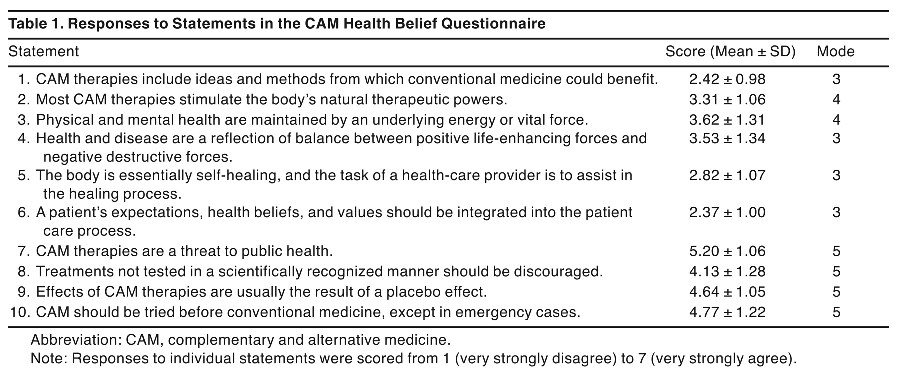
Table 1 shows responses to the individual questions in the CAM Health Belief Questionnaire. Each question used a 7-point response scale, with higher scores corresponding to stronger agreement with the statement. A total score of 35 was taken as a “neutral” response; in this study, the mean total score for the CAM Health Belief Questionnaire was 33, which was significantly different from the neutral response (P < .0001), with women providing more negative responses (mean = 32) than men (mean = 34; P < .0001). Taking 4 as a neutral response for individual items, these podiatrists generally did not endorse the statements in the CAM Health Belief Questionnaire. Women indicated greater agreement with statements 3 (P = .15), 4 (P = .027), and 6 (P = .006), which relate to beliefs about underlying health energy, whereas men indicated greater agreement with statement 9 (P = .022), relating to CAM as a threat to public safety. The question relating to public safety also elicited the strongest response overall (mean score = 5.2).
Table 1.
Responses to Statements in the CAM Health Belief Questionnaire.
Personal and Professional Use of CAM
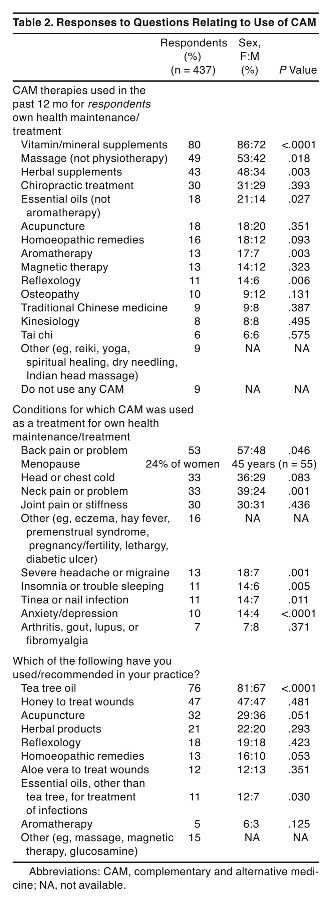
The personal use of CAM products and therapies and the conditions for which CAM was used by podiatric physicians are given in Table 2. Overall, 91% of respondents indicated use of CAM during the past 12 months; recalculation after removal of users of vitamin/mineral supplements, which may be part of conventional care, reduced the overall rate of CAM use to 82%. Significantly more women than men (88% versus 73%, P < .0001) had used CAM, with women also showing higher use of herbal supplements, vitamin/mineral supplements, essential oils, aromatherapy, reflexology, and massage. Similarly, use of CAM for many of the listed specific conditions or diseases was higher in women (Table 2).
Table 2.
Responses to Questions Relating to Use of CAM.
When asked how often they were approached by patients about use of CAM for podiatric medical problems, 10% indicated that they were approached at least once a day, 31% at least once a week, 29% at least once a month, and 27% less frequently. Three percent of respondents indicated that they had never been asked about CAM, and there were no statistically significant differences between men and women for this question.
Ninety-three percent of respondents had treated patients, or recommended treatment, with at least one type of CAM. The most common CAM therapy recommended by this group was tea tree oil (76%), followed by honey for wound healing (47%), acupuncture (32%), and herbal products (21%), with other CAM therapies recommended by less than 20% of respondents (Table 2). Statistically significantly more women than men recommended essential oils (tea tree and other oils), with no significant differences for other CAM therapies.
Respondents who use CAM in their podiatric medical practice were also asked to indicate agreement with a variety of reasons for using CAM. The statement producing the strongest positive response (97%) was “I find them a significant benefit to my patients” (41% strongly agreed, 56% agreed). Up to 22% of respondents agreed with the remaining statements that CAM allowed them to change their patient profile away from the elderly (1% strongly agreed, 10% agreed), to have a market advantage over competitors (3% strongly agreed, 19% agreed), or to have a higher professional status in the local community (2% strongly agreed, 18% agreed) or among peers (2% strongly agreed, 10% agreed).
Knowledge and Sources of Information
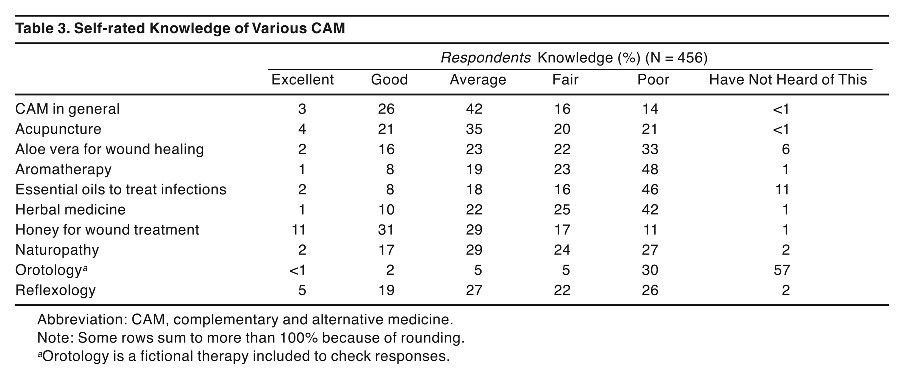
Respondents were asked to rate their knowledge about nine CAM modalities (including a fictional therapy, orotology) and CAM generally (Table 3). Although most respondents had heard of the various CAM modalities, few rated their knowledge as excellent, with the use of honey for wound treatment having the highest frequency response (11%). Modalities with the highest combined “excellent” and “good” rating for knowledge were honey for wound treatment (42%), acupuncture (25%), and reflexology (24%). In contrast, 40% or more rated their knowledge of aromatherapy, essential oils to treat infection, and herbal medicine as poor. Although self-rated knowledge of aromatherapy by women was higher than that by men (P < .0001), men rated their knowledge of essential oils to treat infection higher than that of women (P = .001).
Table 3.
Self-rated Knowledge of Various CAM.
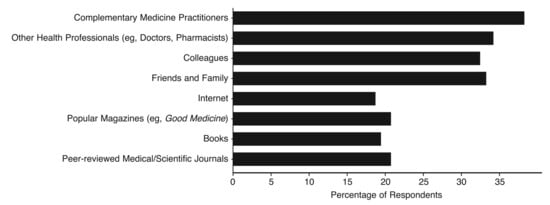
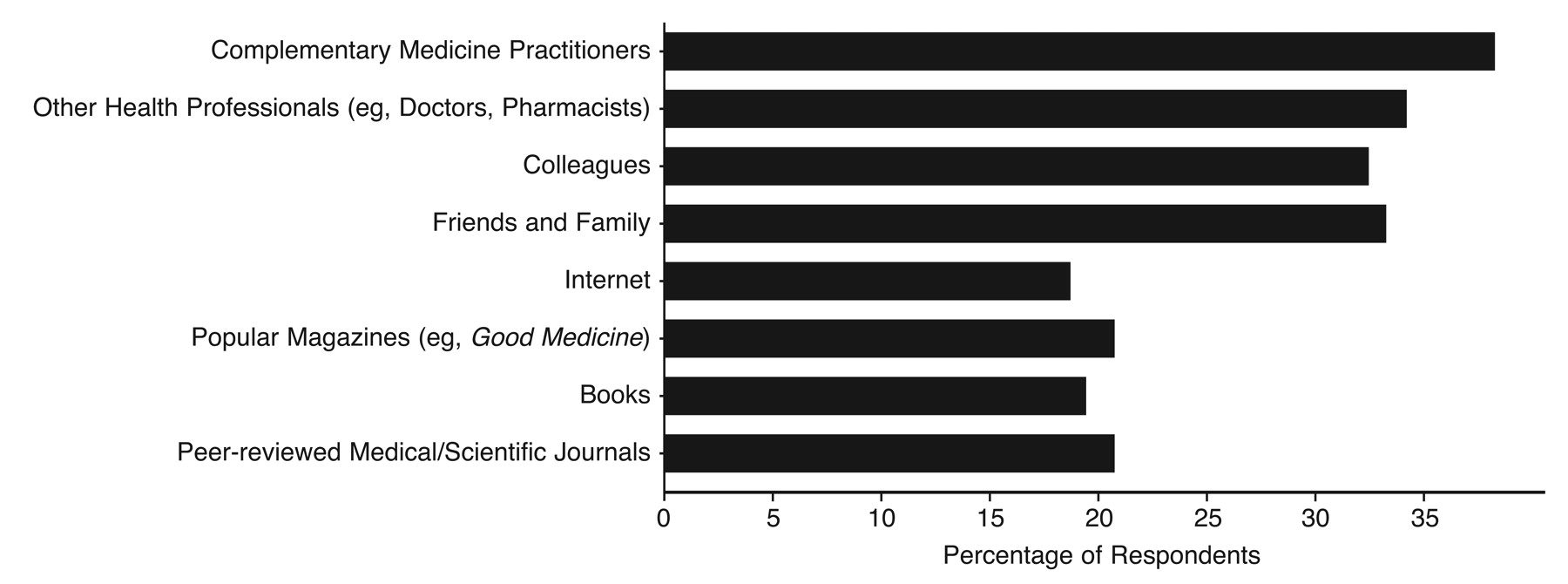
Complementary medicine practitioners, other health professionals, friends and family, and colleagues were cited by more than a third of respondents as their primary sources of information about CAM (Figure 1). There were some significant differences between men and women regarding information sources, with more women than men using popular magazines (70% versus 30%; P = .022), friends and family (70% versus 31%, P = .006), other health professionals (66% versus 34%, P = .041), and CAM practitioners (66% versus 34%, P = .043).
Figure 1.
Primary sources of information for podiatric physicians in this study (n = 460).
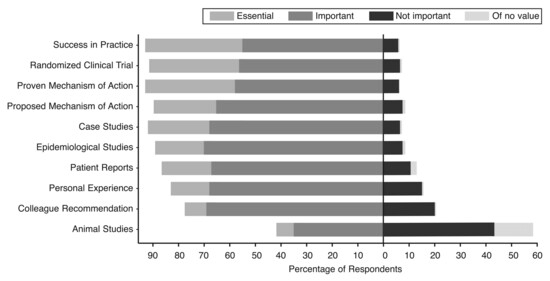
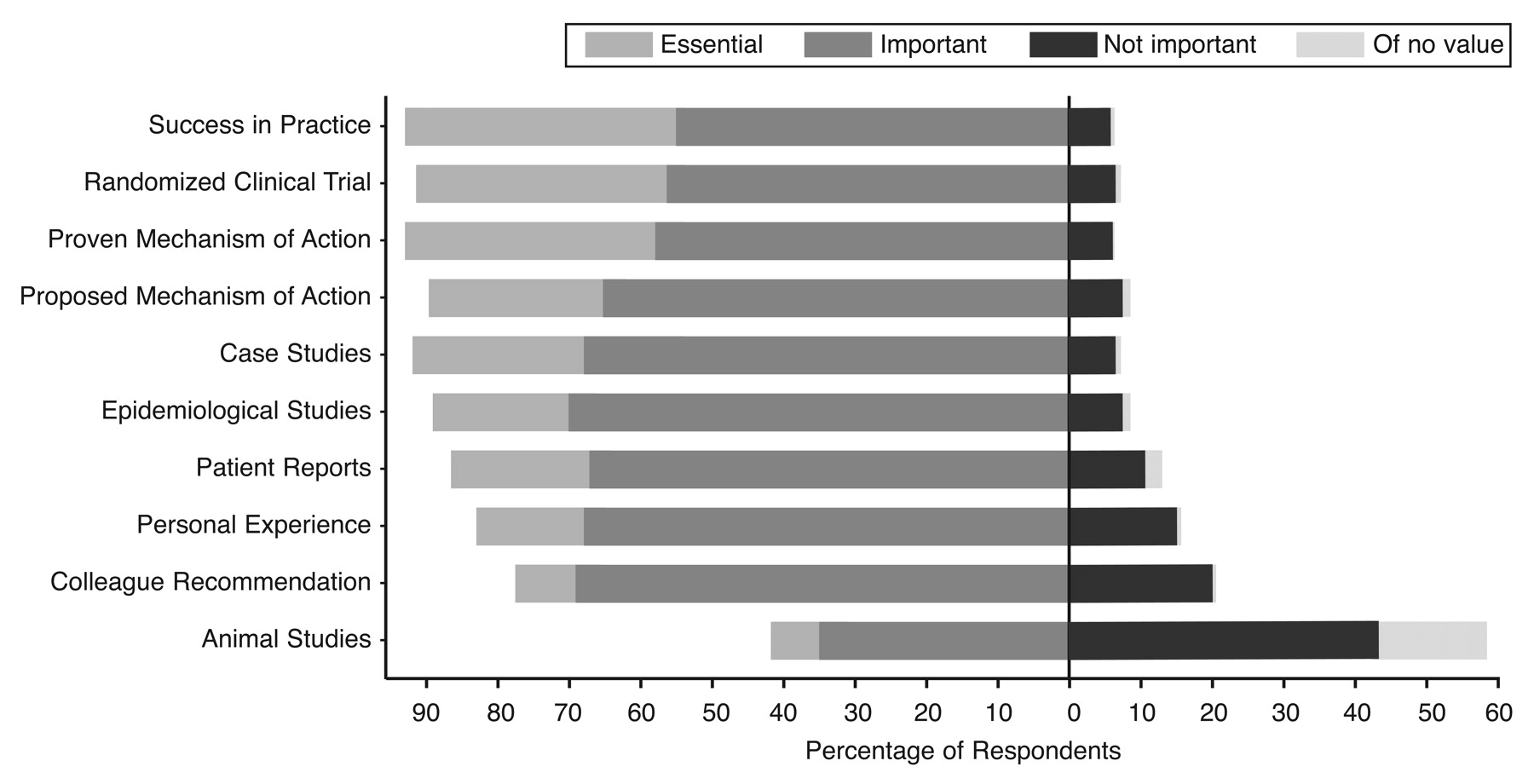
Respondents were also asked to rate the importance of a variety of difference sources of evidence about use of CAM in a clinical environment. All sources listed in the questionnaire, apart from animal studies, were seen to be either important or essential sources of evidence (Figure 2).
Figure 2.
Perceived importance of various sources of evidence about the use of complementary therapies/medicines in clinical environments.
Discussion
The most significant finding in this study is the very high personal use of CAM products and therapies by podiatric physicians. This is significantly higher than what has been previously reported for Australian nurses and pharmacists or students in health professions [18,19,21,22] or for the general population. [6,7] Relative to these groups, the podiatric physicians in this study had higher use of massage; it may be interesting to speculate whether this was also related to the finding that 53% of respondents were using a CAM for treatment of their own back pain, with a third using CAM for joint or neck pain or stiffness.
Despite this high personal use of CAM, that 93% of respondents had used or recommended a CAM in their practice, and that 67% felt that CAM had a place in podiatric medicine, the results of the CAM Health Belief Questionnaire show a more negative view of complementary health. The CAM Health Belief Questionnaire responses in this group were more negative than those reported by Lie and Boker [20,23] for medical students, medical residents, and academics staff. Although differences existed between these various groups of medical students, the total scores for all groups were greater than 45, whereas in the present study, the podiatrists’ total score was 32. This suggests that although this group of podiatric physicians had high use of various CAM products and therapies, they may not endorse the underlying CAM health beliefs. Hirschkorn and Bourgeault [24] also note that there can be discrepancies between the personal views and professional behaviors of health professionals regarding CAM and that there is a complex interplay of personal, professional, and patient factors that needs to be considered to understand health professionals’ behaviors regarding CAM.
Opportunities for the use of CAM in podiatric medical practice may be reasonably restricted to treatments for fungal infections of the skin or nails, for wounds, or for pain; however, there is little or no research on the specific use of CAM for conditions of podiatric medical interest, with the use of tea tree oil for tinea pedis or onychomycosis being the most frequent type of study. It is, therefore, not surprising that tea tree oil was the most frequently cited of the CAM products or therapies recommended to patients by podiatric physicians in this study. Tea tree oil is well known for its antibacterial and antifungal activity, [15] and although there is little doubt that this essential oil is active in vitro against dermatophytes, [15,25–27] the data on its use in vivo are less conclusive, possibly owing to the generally small sample size, the variable concentrations, and the inclusion of vehicles (eg, sorbelene cream) in some studies. [28–31] Other essential oils, with better antifungal activity than tea tree oil, have also been suggested for use in the treatment of skin and nail infections. [32–35]
Of the other CAM treatments, honey, herbal medicine, and aloe vera for wound healing all have some, although not conclusive, clinical evidence relevant to podiatric medicine. [36,37] Honey has a reputation as a natural wound-healing treatment, a finding generally supported by clinical studies [38,39]; however, a study by McIntosh and Thomson [40] demonstrated that paraffin tulle gras dressings were better than honey for healing after toenail surgery. Approximately a third of the respondents indicated that they had recommended acupuncture to or used acupuncture with their patients; it is not known, however, why this CAM therapy was recommended. Future research in this area may focus on the reasons for these recommendations and whether they are related directly to podiatric medical conditions or to other conditions (eg, back pain).
Regarding professional development, the results of this study suggest that although CAM is widely used in Australian podiatric medical practice, present knowledge of CAM is not strong. Information sources are generally other people (ie, CAM practitioners or other health professionals) rather than the literature. Only 21% used peer-reviewed scientific or medical literature as their main source of information about CAM; this is somewhat at odds with those types of evidence seen to be essential or important for the use of CAM in a clinical environment. For example, information about randomized controlled trials, proven mechanisms of action, and epidemiologic studies are reported in the peer-reviewed literature. That these individuals are interested in undertaking further training in CAM, that they see a place for CAM in undergraduate curricula, and that they believe there is a place for CAM in podiatric medical practice suggests that although there is a place for CAM in podiatric medicine, there may be a lack of readily accessible high-quality information on which to make decisions or provide advice.
This study has raised some significant and interesting issues for podiatric medicine and, to our knowledge, is the first published report of CAM use in podiatric medical practice. Podiatric physicians in Australia have demonstrated high personal and professional use of CAM. This study also highlights some areas for concern, eg, reliance on other health professionals rather than on peer-reviewed literature for evidence, and this, along with the support for inclusion of CAM in undergraduate degree programs, opens opportunities for further education and clinical research into the use of CAM in podiatric medicine.
Funding
This work was funded by an Australian Podiatry Education and Research Foundation grant.
Acknowledgments
The representatives of the state podiatric medical boards for their assistance in accessing mailing information for the study participants.
Conflicts of Interest
None reported.
References
- Barnes PM, Powell-Griner E, McFann K, et al: Complementary and alternative medicine use among adults: United States, 2002, National Center for Health Statistics, Hyattsville, MD. 2004.
- Eisenberg D, Davis R, Ettner S, et al: Trends in alternative medicine use in the United States, 1990–1997: results of a follow-up national survey. JAMA 280: 1569, 1998.
- Ernst E: Prevalence of use of complementary/alternative medicine: a systematic review. Bull WHO 78: 252, 2000.
- Thomas KJ, Nicholl JP, Coleman P: Use and expenditure on complementary medicine in England: a population based survey. Complement Ther Med 9: 2, 2001.
- MacLennan AH, Wilson DH, Taylor AW: Prevalence and cost of alternative medicine in Australia. Lancet 347: 569, 1996.
- Wilkinson JM, Simpson MD: High use of complementary therapies in a NSW rural community. Aust J Rural Health 9: 166, 2001.
- Xue CCL, Zhang AL, Lin V, et al: Complementary and alternative medicine use in Australia: a national population-based survey. J Altern Complement Med 13: 643, 2007.
- Barrett B, Marchand L, Scheder J, et al: Themes of holism, empowerment, access, and legitimacy define complementary, alternative, and integrative medicine in relation to conventional biomedicine. J Altern Complement Med 9: 937, 2003.
- House of Lords: Complementary and Alternative Medicine: Select Committee on Science and Technology 6th Report: Session 1999–2000, The Stationary Office, Norwich, England. 2000.
- Cohen MM: CAM practitioners and “regular” doctors: is integration possible?. Med J Aust 180: 645, 2004.
- Gaylord SA, Mann JD: Rationales for CAM education in health professions training programs. Acad Med 82: 927, 2007.
- Siev-Ner I, Gamus D, Lerner-Geva L, et al: Reflexology treatment relieves symptoms of multiple sclerosis: a randomized controlled study. Mult Scler 9: 356, 2003.
- Khan S, Otter S, Springett K: The effects of reflexology on foot pain and quality of life in a patient with rheumatoid arthritis: a case report. The Foot 16: 112, 2006.
- Braun L, Cohen M: Herbs & Natural Supplements: An Evidence Based Guide, Elsevier, Sydney. 2005.
- Carson CF, Hammer KA, Riley TV: Melaleuca alternifolia (tea tree) oil: a review of the antimicrobial and other medicinal properties. Clin Microbiol Rev 19: 50, 2006.
- Australian Institute of Health and Welfare: Podiatry Labour Force 2003, Australian Institute of Health and Welfare, Canberra. 2006. AIHW Cat. No. HWL 36.
- Tindle HA, Davis RB, Phillips RS, et al: Trends in use of complementary and alternative medicine by US adults: 1997–2002. Altern Ther Health Med 11: 42, 2005.
- Naidu S, Wilkinson JM, Simpson MD: Attitudes of Australian pharmacists toward complementary and alternative medicine. Ann Pharmacother 39: 1456, 2005.
- Wilkinson JM, Simpson MD: Personal and professional use of complementary therapies by nurses in NSW, Australia. Complement Ther Nurs Midwifery 8: 142, 2002.
- Lie D, Boker J: Development and validation of the CAM Health Belief Questionnaire (CHBQ) and CAM use and attitudes amongst medical students. BMC Med Educ 4: 1, 2004.
- Wilkinson JM, Simpson MD: Use of complementary therapies by nursing, pharmacy and biomedical science students. Nurs Health Sci 3: 19, 2001.
- Braun LA, Cohen MM: Australian hospital pharmacists’ attitudes, perceptions, knowledge and practices of CAMs. J Pharm Pract Res 37: 220, 2007.
- Lie D, Boker J: Comparative survey of complementary and alternative medicine (CAM) attitudes, use, and information-seeking behaviour among medical students, residents and faculty. BMC Med Educ 6: 58, 2006.
- Hirschkorn KA, Bourgeault IL: Conceptualizing mainstream health providers’ behaviours in relation to complementary and alternative medicine. Soc Sci Med 61: 157, 2005.
- Benger S, Townsend P, Ashford RL, et al: An in vitro study to determine the minimum inhibitory concentration of Melaleuca alternifolia against the dermatophyte Trichophyton rubrum. The Foot 14: 89, 2004.
- Hammer KA, Carson CF, Riley TV: In vitro activity of Melaleuca alternifolia (tea tree) oil against dermatophytes and other filamentous fungi. J Antimicrobial Chemother 50: 159, 2002.
- Hammer KA, Carson CF, Riley TV: Antifungal Activity of Tea Tree Oil In Vitro, Rural Industries Research and Development Corp, Canberra, Australia. 2001. RIRDC Project No. UWA-50A.
- Satchell AC, Saurajen A, Bell C, et al: Treatment of interdigital tinea pedis with 25% and 50% tea tree solution: a randomized, placebo-controlled, blinded study. Australas J Dermatol 45: 175, 2002.
- Syed TA, Qureshi ZA, Ali SM, et al: Treatment of toenail onychomycosis with 2% butenafine and 5% Melaleuca alternifolia (tea tree) oil in cream. Trop Med Int Health 4: 284, 1999.
- Buck DS, Nidorf DM, Addino JG: Comparison of two topical preparations for the treatment of onychomycosis: Melaleuca alternifolia (tea tree) oil and clotrimazole. J Fam Pract 38: 601, 1994.
- Tong MM, Altman PM, Barnetson RS: Tea tree oil in the treatment of tinea pedis. Aust J Dermatol 33: 145, 1992.
- Inouye S, Uchida K, Yamaguchi H: In-vitro and in-vivo anti-Trichophyton activity of essential oils by vapour contact. Mycoses 44: 99, 2001.
- Cassella JP: Synergistic antifungal activity of tea tree (Melaleuca alternifolia) and lavender (Lavandula angustifolia) essential oils against dermatophyte infection. Int J Aromather 12: 2, 2002.
- Inouye S, Uchida K, Nishiyama Y, et al: Combined effect of heat, essential oils and salt on fungicidal activity against Trichophyton mentagrophytes in foot bath. Nippon Ishinkin Gakkai Zasshi 48: 27, 2007.
- Patra M, Shahi SK, Midgely G, et al: Utilization of essential oil as natural antifungal against nail-infective fungi. Flavour Fragrance J 17: 91, 2002.
- Martin KW, Ernst E: Herbal medicines for treatment of fungal infections: a systematic review of controlled clinical trials. Mycoses 47: 87, 2004.
- Vogler BK, Ernst E: Aloe vera: a systematic review of its clinical effectiveness. Br J Gen Pract 49: 823, 1999.
- Moore OA, Smith LA, Campbell F, et al: Systematic review of the use of honey as wound dressing. BMC Complement Altern Med 1: 2, 2001.
- Molan PC: The evidence supporting the use of honey as a wound dressing. Int J Low Extrem Wounds 5: 40, 2006.
- McIntosh CD, Thomson CE: Honey dressing versus paraffin tulle gras following toenail surgery. J Wound Care 15: 133, 2006.

© 2009 American Podiatric Medical Association