


Abstract
Background: An open-label, noncomparative study was conducted to assess the safety and efficacy of ciclopirox 8% nail lacquer topical solution in patients with type 2 diabetes mellitus. Methods: Forty-nine diabetic patients with distal subungual onychomycosis were treated once daily for 48 weeks with ciclopirox 8% nail lacquer, a topical nail solution approved for the treatment of patients with mild-to-moderate onychomycosis. Results: Treatment resulted in clinical improvement in 63.4% of patients. Most patients (85.7%) had a mycologic outcome of improvement or cure, with 54.3% attaining mycologic cure. Consideration of mycologic and clinical outcomes generated a treatment outcome of improvement, success, or cure in 84.4% of patients. Moreover, patients experienced improvement in the diseased area of the nail (63.4%), nail surface (56.1%), nail color (48.8%), and nail thickness (65.9%). Ciclopirox 8% nail lacquer was safe, with treatment-related adverse events limited to infection in one patient, which resolved in 15 days; the patient completed the study. No treatment-related serious adverse events were observed. Conclusion: Ciclopirox 8% nail lacquer is a safe and effective treatment for distal subungual onychomycosis in patients with type 2 diabetes mellitus receiving insulin or oral hypoglycemic therapy.
Onychomycosis is a fungal infection involving the nail bed or nail plate that is estimated to affect approximately 14% of the North American population.[1] The most common type of onychomycosis is distal subungual onychomycosis, in which the disease begins in the hyponychium or the lateral nail fold and spreads to the stratum corneum of the nail bed. This spread is followed by the development of acute or subacute dermatitis or subungual hyperkeratosis, with distortion of the nail plate and its resultant separation from the nail bed.[2] In addition to the psychosocial concerns that result from disfigurement of the diseased nail, onychomycosis may cause significant pain and, in severe cases, loss of mobility.
Patients with diabetes are at increased risk for onychomycosis, with approximately one-quarter to one-third of diabetic patients affected.[3] Patients with impaired foot sensation (neuropathy) are at greatest risk for onychomycosis complications such as pressure necrosis or ulcerations, which often go unrecognized (and, therefore, untreated) in these patients. Clinically, it is not uncommon to see patients with neuropathic ulcerations who have at least one onychomycotic digit. The presence of the mycotic nail may result in adjacent nail or skin injury and may provide a reservoir for organisms, thereby further increasing the risk of serious sequelae and infection.[4] Diabetic patients with onychomycosis have a substantially higher risk of secondary foot infection, gangrene, and foot ulcers compared with diabetic patients without onychomycosis.[5,6] Elderly diabetic patients also have slow-growing nails; it may take up to 18 months for a toenail to grow out.[7] It is, therefore, important for patients with diabetes to treat any infection, including fungal infection, that could eventually lead to serious complications and possible amputation.[8]
Treatment options, which are similar for diabetic and nondiabetic patients with onychomycosis, include oral antifungal agents, topical therapy, mechanical intervention, and surgical removal. Oral antifungal agents are effective but may be associated with systemic adverse events and drug interactions; thus they require close monitoring.[9,10] Imidazole oral antifungal agents, such as ketoconazole, fluconazole, and itraconazole, may act as competitive inhibitors of the cytochrome P-450 3A4 enzyme. Because many medications are substrates for cytochrome P-450 3A enzyme systems,[11,12,13] coadministration of these drugs with imidazoles can affect their metabolism and may cause significant interactions.[11,12] Diabetic patients receiving oral hypoglycemic agents, such as chlorpropamide and glipizide, which are substrates for this enzyme system, may have an increased risk of hypoglycemia when treated with an imidazole oral antifungal agent.[11,12] Although topical medications not approved by the US Food and Drug Administration may be used initially by physicians because they have less potential for serious adverse effects and drug interactions,[14] they may be associated with poor penetration of the nail matrix and minimal efficacy.[15] However, the Food and Drug Administration–approved topical medication ciclopirox 8% nail lacquer topical solution penetrates the nail plate at a concentration sufficient to kill fungal pathogens and has shown efficacy and excellent safety in patients with and without diabetes.[4,16,17] Ciclopirox 8% nail lacquer (Penlac Nail Lacquer; Dermik Laboratories, Berwyn, Pennsylvania) is the first topical nail solution approved for use in the United States by the Food and Drug Administration for the treatment of mild-to-moderate onychomycosis.[4,15,18,19,20] Currently, it is approved for onychomycosis of the fingernails and toenails, without involvement of the lunula, that results from infection with Trichophyton rubrum, the most common causative dermatophyte for distal subungual onychomycosis.[21] In two pivotal US studies,[4] treatment of 460 patients with ciclopirox 8% nail lacquer was safe and effective for mild-tomoderate onychomycosis without involvement of the lunula caused by dermatophytes. Mycologic cure rates were 29% and 36% for ciclopirox, compared with 11% and 9% for vehicle alone in these studies. Combined results from these studies show a mycologic cure rate of 34% in patients treated with ciclopirox 8% nail lacquer, compared with 10% in those given placebo (P < .001). The most common adverse event was mild transient irritation at the site of application.[22]
In a postmarketing open-label study17 conducted in Germany, ciclopirox 8% nail lacquer was safe and effective in a subset of 215 diabetic patients included in the study. At an interim assessment, physicians rated onychomycosis as improved in 88.7% of patients. At the final assessment, physicians rated efficacy as good in 62% of patients, and treatment with ciclopirox 8% nail lacquer reduced the mean affected area by 60%. The most frequent adverse events were vasodilation and nail disorders, from which patients recovered completely. Tolerance of therapy was rated as good in 99.5% of patients, and no exacerbation of diabetes or other medical conditions was reported. Here, we report an open-label, noncomparative study conducted in the United States to assess the safety and efficacy of ciclopirox 8% nail lacquer used in conjunction with scheduled podiatric medical nail and foot care to treat diabetic patients with distal subungual onychomycosis.
Patients and Methods
Study Design and Treatment
This multicenter, open-label, noncomparative study was conducted at four investigative sites in the United States and was designed to evaluate the safety and efficacy of ciclopirox 8% nail lacquer in diabetic patients with distal subungual onychomycosis who participated in scheduled podiatric medical visits for nail care.
The study drug was applied once daily for 48 weeks to all of the toenails of the affected foot or feet, irrespective of disease involvement. The lacquer was applied to the entire nail plate and up to approximately 5 mm of the surrounding skin. Ciclopirox 8% nail lacquer was applied daily over the previous coat, and the nail lacquer was removed every 7 days using isopropyl alcohol. At each scheduled study visit, investigators were responsible for trimming and debriding the nails on an as-needed basis in a manner consistent with that used in previous visits for nail care.
At the screening visit, a full medical history was obtained, patients underwent a physical examination (including vital signs), and patient eligibility was confirmed. After treatment initiation, follow-up visits were conducted every 8 weeks and coincided with each patient’s routine scheduled nail-care visits.
Patient Eligibility
Patients 18 years or older with a medical history of type 2 diabetes mellitus currently under good control with medical intervention (insulin injection or oral hypoglycemic agents) who had been given a clinical diagnosis of distal subungual onychomycosis of at least one great toenail (target nail) were eligible for study enrollment. Clinical diagnosis of onychomycosis consisted of a positive potassium hydroxide (KOH) stain or positive mycologic culture findings. At least 20% of the target great toenail had to show signs of disease without involvement of the lunula. Patients were required to 1) have a history of regularly scheduled podiatric medical visits for nail care at the location where the study was conducted, 2) be in good general health, and 3) have a good pulse in both feet, as confirmed by medical history and physical examination findings. Eligibility criteria for female patients of childbearing potential included a negative urine pregnancy test result at the screening visit and the use of an effective birth control method throughout the study period.
Exclusion criteria included serious diabetic foot conditions (eg, open wounds and surgery), severe plantar or moccasin tinea pedis, and any disease or condition that might cause nail abnormalities or interfere with the evaluation of the study treatment. Patients with any clinically significant abnormal physical findings, a history of immunosuppression, overt signs of foot neuropathy (such as the absence of vibratory sensation and poor 2-point discrimination according to the University of Texas Diabetic Foot Risk Classification system23), or known or suspected human immunodeficiency virus infection were also excluded. In addition, patients who received systemic antifungal drug therapy within 24 weeks preceding the screening visit and those who used systemic or topical medications that could interfere with study results (eg, systemic antifungal agents, systemic retinoids, immunosuppressive drugs, and over-the-counter topical products intended to treat onychomycosis) were excluded. Use of 1% ciclopiroxolamine cream or other topical antifungal agents for the treatment of dermal fungal infection (such as tinea pedis or tinea cruris) was allowed.
Informed consent was obtained from all of the patients who enrolled in the study. This study was approved by the institutional review boards of all participating centers and was conducted in accordance with the Declaration of Helsinki and globally accepted standards of good clinical practice.
Efficacy and Safety Assessments
Assessment of the diseased nail in terms of involved area, severity, subungual hyperkeratosis, and other clinical signs and symptoms (eg, color, surface, and thickness of the target nail) was performed at screening and at weeks 8, 16, 24, 32, 40, and 48. Diseased nail involvement was estimated visually by dividing the nail from the proximal to the distal end and then cross-sectioning it into five sections. Percentage of nail involvement by disease was assessed at screening and at weeks 8, 16, 24, 32, 40, and 48. Mycologic evaluations, performed at the screening and final visits, included KOH staining and collection of a sample for culture. At the final visit, physicians assessed the overall change in the onychomycotic condition of the target nail compared with its baseline condition according to the following categories: excellent improvement, good improvement, fair improvement, slight improvement, no change, and exacerbation.
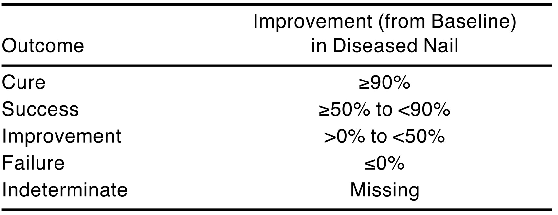
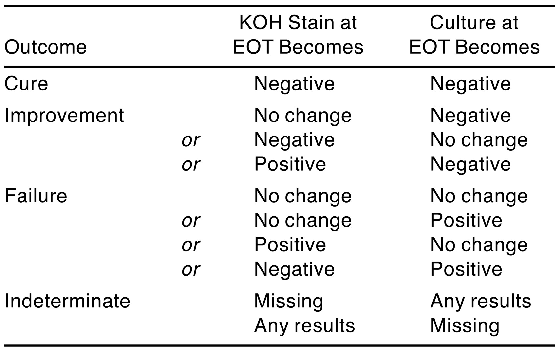
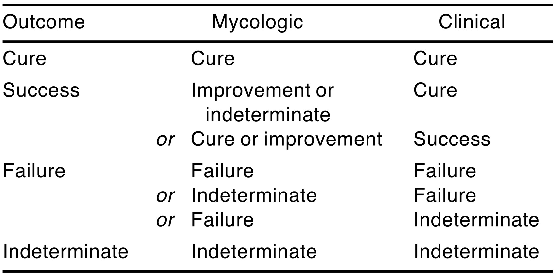
Definitions of efficacy outcomes are summarized in Table 1,Table 2 and Table 3. Clinical outcomes were based on improvements from baseline in the percentage of diseased nail. Treatment outcomes were based on a combination of mycologic and clinical outcomes.
Table 1.
Clinical Outcomes.
Table 2.
Mycology Outcomes.
Table 3.
Treatment Outcomes.
At the final treatment visit of the study, each patient evaluated the effectiveness of treatment by referring to the original photograph as a reference point. Effectiveness was defined as “excellent” (very pleased with improvement in nail appearance; definite clearing of the nail), “good” (noticeable difference in nail color and texture; improvement continued during treatment), “no change” (no visible difference), or “worse” (nail looks worse; disease seems to be progressing). The cosmetic acceptability of treatment was rated as excellent, good, fair, or poor.
Safety was evaluated on the basis of local or systemic adverse events observed by the investigator or reported by the patient from the time that study medication was applied to completion of the study. An adverse event was any symptom, sign, illness, or experience that developed or worsened during the study. Investigators assessed the association between the adverse event and the study medication and rated the event as serious or nonserious according to its severity.
Statistical Analysis
The intention-to-treat population consisted of all of the patients who received at least one dose of the study medication. Efficacy variables included mycologic, clinical, and treatment outcomes. Demographic and baseline data are summarized using descriptive statistics. Efficacy variables are summarized by visit, with confidence intervals for change from baseline. Incidences of adverse events were tabulated for clinical review.
Results
Study Population
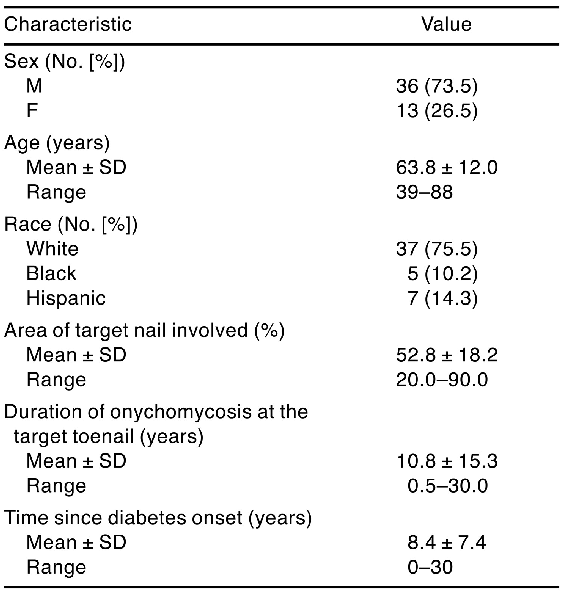
The demographic and baseline disease characteristics of the intention-to-treat patient population are summarized in Table 4. A total of 49 patients were enrolled at four investigational sites. All of the patients had a history of diabetes (mean duration, 8.4 years). Sixteen patients (33%) had used injectable insulin at some time, and 40 (82%) had used oral hypoglycemic agents. The mean duration of podiatric medical care for diabetic foot and nail problems was 18 years, and the mean duration of onychomycosis of the target toenail was 10.8 years. Between 20% and 90% of the nail was infected with onychomycosis, and mean involvement was 52.8% at baseline. Thirteen patients had more than 60% involvement; two of these had more than 80% involvement. Nineteen patients (39%) had chronic tinea pedis.
Table 4.
Demographic and Baseline Disease Characteris- tics of the Intention-to-Treat Population (N = 49).
Concomitant medications included insulin products, used by 12 patients, and oral hypoglycemic agents, used by 10 patients. The most commonly used antifungal agent was econazole cream, and the most common antibacterial agent was levofloxacin tablets (two patients each).
Thirty-six (73.5%) of 49 enrolled patients completed the study; 9 (18.4%) were lost to follow-up, 2 (4.1%) elected to leave the study, and 2 (4.1%) discontinued the study because of protocol violations. The mean ± SD number of treatment weeks among the intentionto-treat cohort was 46.5 ± 13.8. Treatment compliance was good, with 35 of 44 patients for whom the extent of exposure data was recorded (79.5%) receiving at least 45 weeks of treatment.
Efficacy
Efficacy analyses were based on the number of patients with evaluations performed at baseline and at the various study time points. Some study evaluations were not recorded, in which case the outcome was indeterminate, and those subjects were excluded from the analysis.
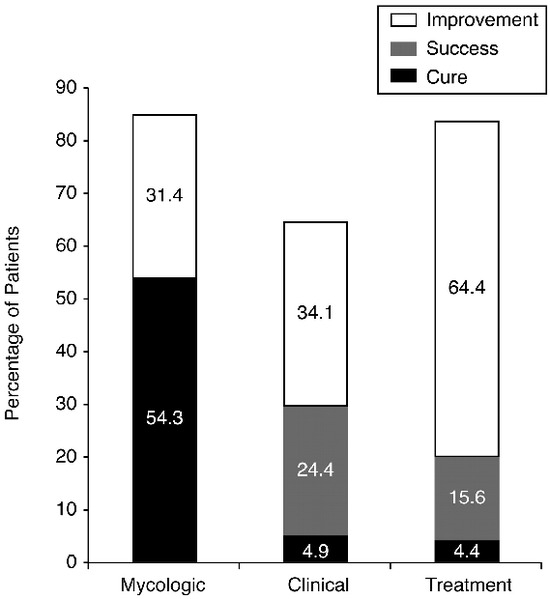
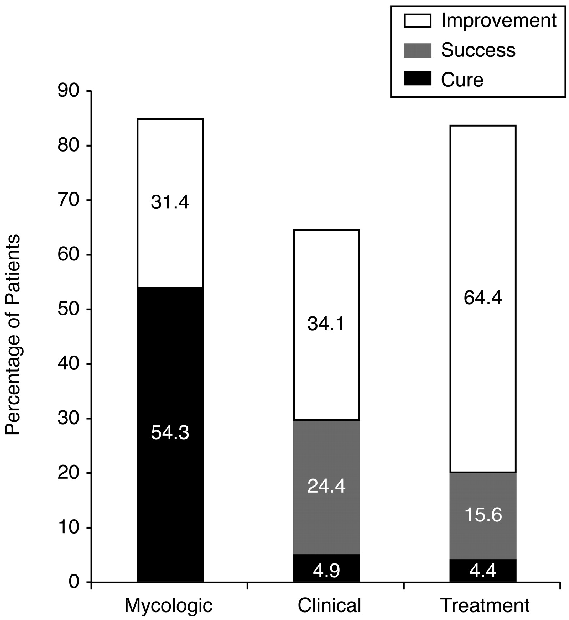
Most patients experienced clinical improvement, success, or cure after 48 weeks of treatment with ciclopirox 8% nail lacquer (26/41; 63.4%). At the study end point, most patients (30/35; 85.7%) had achieved at least a mycologic improvement; 19 of these patients (54.3%) achieved mycologic cure. Treatment improvement, success, or cure was achieved by most patients (38/45; 84.4%) at the study end point. Clinical cure or success was observed most often in patients treated for at least 45 weeks with no missed doses. Clinical failure occurred most frequently in patients treated for at least 45 weeks who had missed more than five treatment doses. Clinical, mycologic, and treatment outcomes are summarized in Figure 1.
Figure 1.
Mycologic, clinical, and treatment outcomes at week 48.
Improvement in the diseased area of the nail was observed in 63.4% (26/41) of the patients at the end of the study. Mean percent involvement decreased from 52.8% at baseline to 39.6% at the study end point, resulting in a 25% improvement. Patients also experienced improvements in nail surface (23/41; 56.1%), color (20/41; 48.8%), and thickness (27/41; 65.9%).
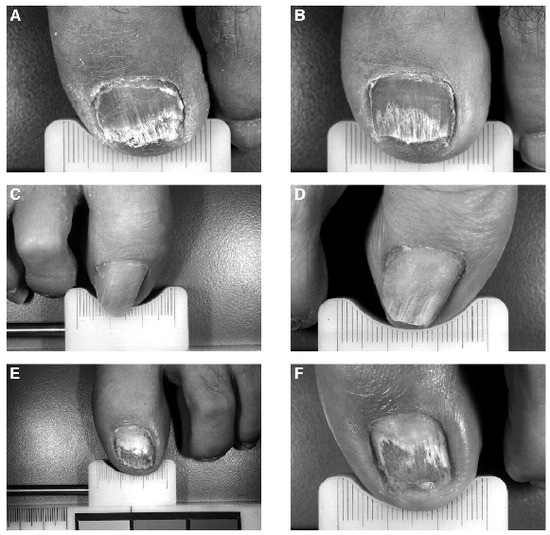
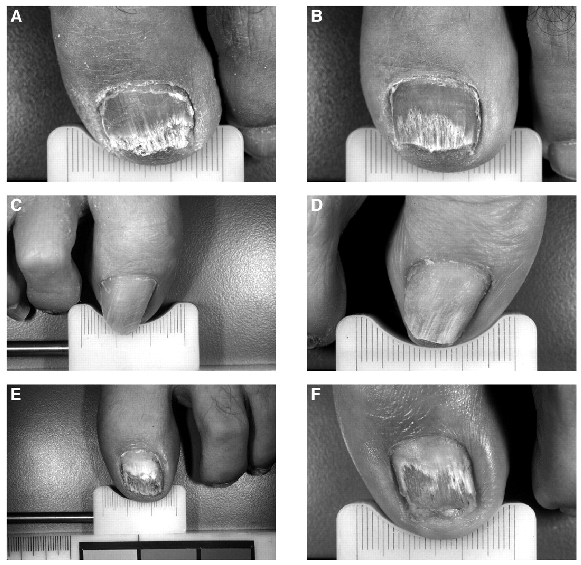
At the study end point, physicians rated most patients (30/38; 78.9%) as experiencing at least a slight improvement in the target nail; 52.6% of patients were rated as experiencing a fair-to-good improvement, and 7.9% were rated as experiencing an excellent improvement. Patient-rated effectiveness was good or excellent in most patients (28/38; 73.7%). Cosmetic acceptability was rated as excellent or good for the target nail in 22 (57.9%) of 38 patients and for the other nails in 24 (63.2%) of 38 patients. Overall disease improvements are illustrated in the photographs in Figure 2; all of these patients experienced clinical improvement, including a patient with more severe disease at baseline who showed significant improvement over time (Figure 2 E and F).
Figure 2.
Overall disease improvement during the study period, as shown by photographs taken at baseline (A, C, and E) and at the end of the study (B, D, and F).
Safety
Most patients (35/44; 79.5%) received 45 or more weeks of treatment, and 48.9% were administered all of the planned doses. Adverse events were reported in 22 of 49 patients (44.9%) and were mild or moderate in intensity except for three severe events: a respiratory disorder, hematuria, and a urinary tract infection. All of the severe events were unrelated to the study drug. Only one patient experienced an event that was considered possibly drug related (infection of the left fifth digit toenail). The event resolved within 15 days (treatment included cephalexin for 10 days). The most common adverse events were nail disorder, reported in six patients, and fungal infection, reported in five patients. Serious adverse events (those defined as life-threatening or requiring medical or surgical intervention) were reported in five patients: aortic stenosis, congestive heart failure, respiratory disorder, skin carcinoma, skin ulcer, and urinary tract infection. However, none of these events were related to the study drug. No adverse event led to premature discontinuation of study medication.
Discussion
In the present open-label study, ciclopirox 8% nail lacquer was safe and effective for the treatment of onychomycosis in diabetic patients. Only one adverse event was related to the study drug, indicating that this treatment method was well tolerated by diabetic patients. Treatment for 48 weeks resulted in clinical improvement in 63.4% of patients. Most patients (85.7%) had a mycologic outcome of improvement or cure. The 54.3% mycologic cure rate reported here is higher than the mycologic cure rates reported in a combined analysis of two studies in a general US population (34%).[4] In non-US studies, mycologic cure rates have ranged from 46.7% to 85.7%.[4] The efficacy of ciclopirox 8% nail lacquer in diabetic patients also has been evaluated in a non-US observational study.[17] Although differences in study design (specifically, physician assessment of improvement) preclude direct comparison of physician-reported efficacy in these two trials, patient-reported efficacy was similar; 74% of patients in the present study reported excellent or good efficacy, compared with 62% in the non-US trial.[17] Most patients (84.4%) experienced a treatment outcome (mycologic and clinical outcomes combined) of improvement, success, or cure. By the end of the study, 63.4% of patients had experienced improvement in the diseased area of the target nail.
Treatment of onychomycosis with ciclopirox nail lacquer has particular relevance in the diabetic population. Patients with diabetes are at greater risk for onychomycosis. Diabetic patients often receive multiple systemic medications and, thus, may not be good candidates for oral antifungal agents.[24,25,26,27] Specifically, potential drug interactions between oral antifungal agents and oral hypoglycemic agents must be considered.[26,27] The oral antifungal medication itraconazole (Sporanox; Janssen Pharmaceutica Products LP, Titusville, New Jersey) is a potent cytochrome P-450 3A4 inhibitor and may increase the concentration of drugs that are metabolized by this pathway. Furthermore, inhibitors or inducers of cytochrome P-450 3A4 may decrease or increase the concentrations of itraconazole, respectively. Contraindicated medications include immunosuppressants, calcium channel blockers, protease inhibitors, antiarrhythmics, and, most significantly for diabetic patients, oral hypoglycemic agents. Severe hypoglycemia has been reported in patients who were given both azole antifungal agents and oral hypoglycemic agents.[28] Terbinafine (Lamisil; Novartis Pharmaceuticals Corp, East Hanover, New Jersey), an oral antifungal agent, is an inhibitor of the cytochrome P450 2D6 isoenzyme. It is less likely than itraconazole to produce significant drug interactions, but when terbinafine is coadministered with drugs that are predominantly metabolized by the same pathway (eg, tricyclic antidepressants, serotonin reuptake inhibitors, β-blockers, and type B monoamine oxidase inhibitors), it requires careful monitoring.[29] In contrast to oral antifungals, the systemic absorption of ciclopirox 8% nail lacquer is extremely low, and any drug absorbed is rapidly metabolized. The main pathway for metabolism of ciclopirox 8% nail lacquer is glucuronidation; thus any interaction with drugs metabolized via the cytochrome P-450 system is unlikely.[30,31] Ciclopirox 8% nail lacquer also has a broad spectrum of antimicrobial activity. In addition to dermatophytes, ciclopirox has shown activity against yeast and other nondermatophyte molds.[32,33,34,35,36] Thus ciclopirox 8% nail lacquer is a treatment option in cases where the causative agent for onychomycosis cannot be determined, although it is currently approved only for the treatment of onychomycosis due to dermatophytes.
Having a product that is fungicidal and safe to use is beneficial for populations such as those with diabetes, which are at increased risk for infection. In addition, the use of a daily topical product requires that patients give attention to their feet daily. This treatment regimen is, therefore, ideal for diabetic patients, who should be examining their feet regularly to monitor for ulcer formation.
Conclusion
Ciclopirox 8% nail lacquer was safe and well tolerated in the treatment of patients with type 2 diabetes with distal subungual onychomycosis in this study, and it showed efficacy in the patient population studied. The effectiveness of ciclopirox 8% nail lacquer, together with its ease of use, good patient compliance, and safety profile, makes it a good treatment agent for onychomycosis. In diabetic patients, ciclopirox 8% nail lacquer is a particularly attractive treatment option because of its lack of drug interactions and excellent safety profile.
Acknowledgments
Editorial assistance in the development of this article was sponsored by Dermik Laboratories, a business of sanofi-aventis US LLC. Editorial assistance was provided by Lisa Feder, PhD, and Fran Karo, PhD, of Scientific Connexions, Newtown, Pennsylvania.
Financial Disclosures
This study was supported by Dermik Laboratories. Dr. Brenner received an honorarium for his participation in the development of this article.
Conflicts of Interest
Dr. Brenner has been an active consultant for Dermik Laboratories since 2001. Drs. Brenner and Harkless participate in Dermik Laboratories’ speakers’ bureau.
References
- GHANNOUM MA, HAJJEH RA, SCHER R, ET AL: A large-scale North American study of fungal isolates from nails: the frequency of onychomycosis, fungal distribution, and antifungal susceptibility patterns [abstract]. J Am Acad Dermatol 2000, 43, 641. [CrossRef] [Scilit]
- GUPTA AK: Types of onychomycosis. Cutis 2001, 68, 4.
- GUPTA AK, KONNIKOV N, MACDONALD P, ET AL: Prevalence and epidemiology of toenail onychomycosis in diabetic subjects: a multicentre survey. Br J Dermatol 1998, 139, 665. [CrossRef] [Scilit] [PubMed]
- GUPTA AK, FLECKMAN P, BARAN R: Ciclopirox nail lacquer topical solution 8% in the treatment of toenail onychomycosis. J Am Acad Dermatol 2000, 43, S70.
- BOYKO WL, DOYLE JJ, RYU S, ET AL: Onychomycosis and its impact on secondary infection development in the diabetic population. Value Health 1999, 2, 199.
- DOYLE JJ, BOYKO W, RYU S, ET AL: Onychomycosis among diabetic patients: prevalence and impact of nonfungal foot infections [abstract]. Diabetes 2000, 49, 195.
- AYE M, MASSON EA: Dermatological care of the diabetic foot. Am J Clin Dermatol 2002, 3, 463. [CrossRef] [Scilit] [PubMed]
- LEVY LA: Epidemiology of onychomycosis in special-risk populations. JAPMA 1997, 87, 546. [CrossRef] [Scilit] [PubMed]
- TOM CM, KANE MP: Management of toenail onychomycosis. Am J Health Syst Pharm 1999, 56, 865. [CrossRef] [Scilit] [PubMed]
- ROBBINS JM: Treatment of onychomycosis in the diabetic patient population. J Diabetes Complications 2003, 17, 98. [CrossRef] [Scilit] [PubMed]
- KATZ HI: Drug interactions of the newer oral antifungal agents. Br J Dermatol 1999, 141, 26. [CrossRef] [Scilit]
- KATZ HI, GUPTA AK: Oral antifungal drug interactions. Dermatol Clin 1997, 15, 535. [CrossRef] [Scilit] [PubMed]
- BRECKENRIDGE A: Clinical significance of interactions with antifungal agents. Br J Dermatol 1992, 126, 19. [CrossRef] [Scilit]
- GUPTA AK, EINARSON TR, SUMMERBELL RC, ET AL: An overview of topical antifungal therapy in dermatomycoses: a North American perspective. Drugs 1998, 55, 645. [CrossRef] [Scilit] [PubMed]
- ANONYMOUS: Ciclopirox (Penlac) nail lacquer for onychomycosis. Med Lett Drugs Ther 2000, 42, 51.
- 16. CESCHIN-ROQUES CG, HANEL H, PRUJA-BOUGARET SM, ET AL: Ciclopirox nail lacquer 8%: in vivo penetration into and through nails and in vitro effect on pig skin. Skin Pharmacol 1991, 4, 89. [CrossRef] [Scilit] [PubMed]
- SEEBACHER C, NIETSCH K-H, ULBRICHT HM: A multicenter, open-label study of the efficacy and safety of ciclopirox nail lacquer solution 8% for the treatment of onychomycosis in patients with diabetes. Cutis 2001, 68, 17.
- GUPTA AK: Ciclopirox nail lacquer topical solution 8%. Skin Ther Lett 2000, 6, 1.
- GUPTA AK, BARAN R: Ciclopirox nail lacquer solution 8% in the 21st century. J Am Acad Dermatol 2000, 43, S96. [CrossRef] [Scilit] [PubMed]
- GUPTA AK, MALKIN KF: Ciclopirox nail lacquer and podiatric practice. JAPMA 2000, 90, 502. [CrossRef] [Scilit]
- Penlac Nail Lacquer (ciclopirox) Topical Solution 8% [package insert]; Dermik Laboratories: Berwyn, PA, January 2005.
- GUPTA AK, JOSEPH WS: Ciclopirox 8% nail lacquer in the treatment of onychomycosis of the toenails in the United States. JAPMA 2000, 90, 495. [CrossRef] [Scilit]
- ARMSTRONG DG, LAVERY LA, HARKLESS LB: Who is at risk for diabetic foot ulceration? Clin Podiatr Med Surg 1998, 15, 11. [CrossRef] [Scilit]
- RICH P, HARE A: Onychomycosis in a special patient population: focus on the diabetic. Int J Dermatol 1999, 38 (suppl 2), 17. [CrossRef] [Scilit]
- RICH P: Special patient populations: onychomycosis in the diabetic patient. J Am Acad Dermatol 1996, 35, S10. [CrossRef] [Scilit]
- DAMANHOURI Z, GUMBLETON M, NICHOLLS PJ, ET AL: In-vivo effects of itraconazole on hepatic mixed-function oxidase. J Antimicrob Chemother 1988, 21, 187. [CrossRef] [Scilit]
- GUMBLETON M, HOUSTON WA, NICHOLLS PJ, ET AL: Tolbu-tamide pharmacokinetics, in the presence of itraconazole, in the rat. J Pharm Pharmacol 1987, 39 (suppl 1), 150.
- Sporanox (itraconazole) [package insert]; anssen Pharmaceutica Products LP: Titusville, NJ, January 2004.
- Lamisil (terbinafine hydrochloride) Tablets [package insert]; Novartis Pharmaceuticals Corp: East Hanover, NJ, June 2006.
- KELLNER HM, ARNOLD C, CHIRST OE, ET AL: Pharmacokinetics and biotransformation of the antimycotic drug ciclopirox olamine in animals and man after topical and systemic administration (in German). Arzneimittelforschung 1981, 31, 1337.
- BOHN M, KRAEMER KT: Dermatopharmacology of ciclopirox nail lacquer topical solution 8% in the treatment of onychomycosis. J Am Acad Dermatol 2000, 43, S57. [CrossRef] [Scilit] [PubMed]
- MARKUS A: “Hydroxy Pyridones Outstanding Biological Properties,”. In Hydroxy Pyridones as Antifungal Agents with Special Emphasis on Onychomycosis; Shuster, S., Ed.; Springer-Verlag: Berlin, 1999; p. 1. [Google Scholar]
- KORTING HC, GRUNDMANN-KOLLMAN M: The hydroxypyridones: a class of antimycotics of its own. Mycoses 1997, 40, 243. [CrossRef] [Scilit]
- ULBRICHT H, WÖRZ K: Therapy of onychomycosis due to moulds with ciclopirox lacquer. Mycoses 1994, 37 (suppl 1), 97.
- ROLLMAN O, JOHANSSON S: Hendersonula toruloidea infection: successful response of onychomycosis to nail avulsion and topical ciclopiroxolamine. Acta Derm Venereol 1987, 67, 506. [CrossRef] [Scilit]
- YU B, ZHOU G, WANG B, ET AL: A clinical and laboratory study of ciclopirox olamine (8% Batrafen) in the treatment of onychomycosis. Chin Med Sci J 1991, 6, 166.

© 2007 American Podiatric Medical Association