


Abstract
The purpose of this study, which involved two dermatology clinics and two podiatric medical clinics, was to determine whether a difference exists in patient-reported satisfaction and compliance between continuous terbinafine therapy and pulse-dose itraconazole therapy for the treatment of toenail onychomycosis. Patients in this multicenter, open-label, cross-sectional study had previously completed treatment with either oral terbinafine or oral itraconazole for toenail onychomycosis. Patients were interviewed by telephone to assess clinical outcomes, compliance, and satisfaction with treatment; clinical data were collected by medical chart review. Patients reported significantly greater ease and convenience of treatment and higher overall satisfaction with continuous terbinafine therapy compared with pulse-dose itraconazole therapy.
Onychomycosis, a localized fungal infection of the nail or nail bed, is the most common nail disease. It is estimated to affect 15% to 20% of individuals aged 40 to 60 years, and the incidence is increasing [1-3]. Onychomycosis can lead to pain, reduced quality of life, and other deleterious physical, psychosocial, and occupational effects [3-7]. The condition also imposes a considerable financial burden on the health-care system.
Eradication of infection usually requires oral therapy, although topical medications and mechanical and surgical treatments are commonly used adjunctive therapies [8, 9]. Treatment duration is long: it typically takes months for a patient to see visible improvement. However, multiple controlled trials [8, 10, 11] have demonstrated the effectiveness of commonly used newer oral agents, such as terbinafine and itraconazole, for the treatment of onychomycosis.
Patient satisfaction is a rapidly growing and important area of outcomes research. Treatment satisfaction is particularly relevant in onychomycosis because several different available treatments offer reasonable efficacy, and the onset of improvement may require many months. Providers are receiving increasing pressure from managed-care organizations and patients to deliver the modality of care that is not only the most cost-effective but also the most satisfactory to patients.
Medication compliance is affected by the agent’s efficacy, side effects, convenience of the dosing regimen, cost, and drug interactions [12]. Other variables may also be involved. Direct comparisons of patient satisfaction between pulse dosing and continuous dosing are lacking. The primary objective of this study was to assess patient-reported satisfaction and compliance with continuous-dose oral terbinafine therapy versus pulse-dose oral itraconazole therapy, two regimens commonly used to manage this condition. Although pulse dosing of itraconazole is not indicated for the treatment of toenail onychomycosis in the United States, it is indicated for the treatment of fingernail onychomycosis. Several studies [13, 14] have evaluated the use of pulse-dose itraconazole to treat toenail onychomycosis, and most practitioners in the United States who use itraconazole to treat toenail onychomycosis use it off-label in a pulse-dosing fashion.
Methods
Design
Participating investigators were located at four US clinics that used both continuous-dose terbinafine and pulse-dose itraconazole for the treatment of onychomycosis. The four clinics were a private dermatology clinic (MetroHealth Medical Center, Cleveland, Ohio), a Veterans Affairs–based dermatology clinic (Minneapolis Veterans Affairs Medical Center, Minneapolis, Minnesota), an academic podiatric medical clinic (Ohio College of Podiatric Medicine, Cleveland), and a private podiatric medical clinic (North Oaks Podiatry, Dalton, Georgia). Each participating investigator reviewed patient records to identify eligible patients with onychomycosis. The number of eligible patients varied from site to site. This study received institutional review board approval from an independent review board (Independent Review Consulting, Inc, San Anselmo, California, IRC #99100) and from local institutional review boards when necessary.
Study Population
Each site completed a series of enrollment forms identifying eligible patients for the study. Patient inclusion criteria included a minimum age of 18 years and status post treatment for toenail onychomycosis between June 1, 1998, and March 31, 1999. Patients must have been treated with either a standardized continuous oral terbinafine regimen, defined as one 250-mg tablet daily for a minimum of 12 weeks (3 months), or a standardized oral pulse-dose itraconazole regimen, defined as at least three 1-week courses of 200 mg (two 100-mg tablets) twice a day, with each course separated by 3 weeks of no treatment. Patients were ineligible for the study if they received oral antifungal therapy within 3 months before initiation of the index treatment, were unable to respond to an English-language telephone interview, or were unable or unwilling to give verbal informed consent.
Procedures
Providers identified eligible patients by medical chart review or electronic search for pharmacy and administration data. The provider (or a designated staff member) contacted eligible patients by telephone and invited them to participate in the study. Individuals who agreed to participate were contacted by interviewers. Interested patients provided informed consent and took part in a telephone interview conducted by trained interviewers from the University of San Diego Health Outcomes Assessment Program to assess clinical outcomes, satisfaction with treatment, and compliance. The interview typically took 15 to 20 min and occurred approximately 9 to 12 months after completion of onychomycosis treatment. Investigators abstracted a 1-page clinical form for each patient who completed the interview.
Measures
Health-care providers and their staff recorded date of birth and sex, the medication regimen prescribed, information regarding any office procedures conducted, and the toenail condition for each patient.
An onychomycosis severity scale was used to quantify the extent of disease in each patient. From chart records, the provider rated the toenail involvement as 0 (no fungus), 1 (one-third of the toenail involved), 2 (two-thirds of the toenail involved), or 3 (entire toenail involved). If no value was recorded, a value of 0 was assumed. The numbers were weighted by the size of the toenail (0.15 for the large toenail, 0.10 for each middle toenail, and 0.05 for the smallest toenail) and then summed. Creation of tertiles based on the sums allowed patients to be classified as having “mild,” “moderate,” or “severe” disease.
During the telephone interview, patients reported their clinical history of toenail onychomycosis, compliance with treatment, and satisfaction with the dosing regimen and treatment. Patients were also asked about comorbid conditions, the need for retreatment of their onychomycosis, the reasons for seeking treatment, side effects, currently prescribed medications, and demographic information (marital status, education, income, and ethnicity).
The Morisky Compliance Scale [15] was used to assess patient compliance. Scores were categorized as “low,” “medium,” and “high” compliance based on tertiles of the sums.
Separate items evaluated cost concerns (patients were asked if they ever cut back or stopped the treatment owing to cost concerns), whether any sharing of the treatment prescription with family members took place, and whether patients ever stopped the treatment on the recommendation of their physician.
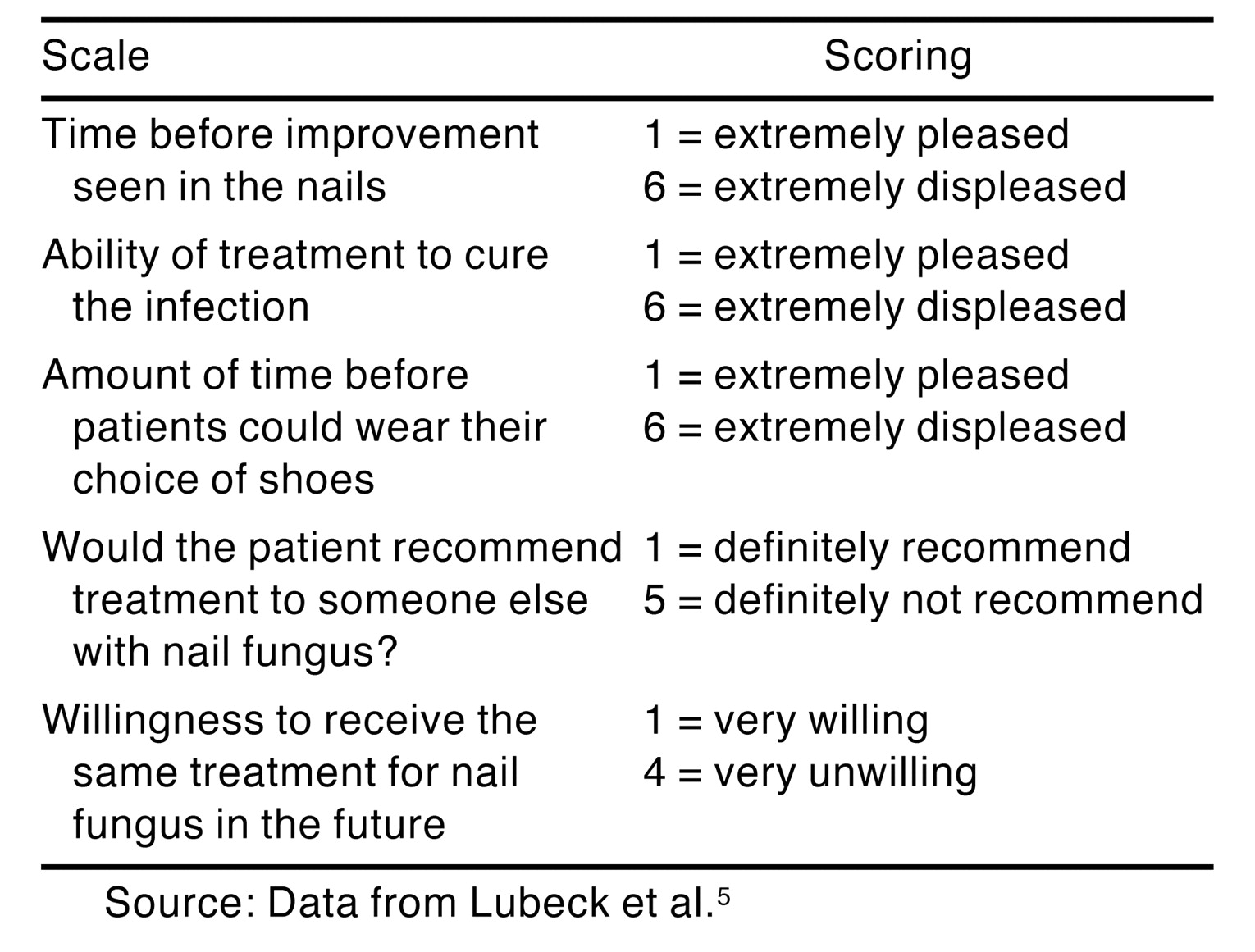
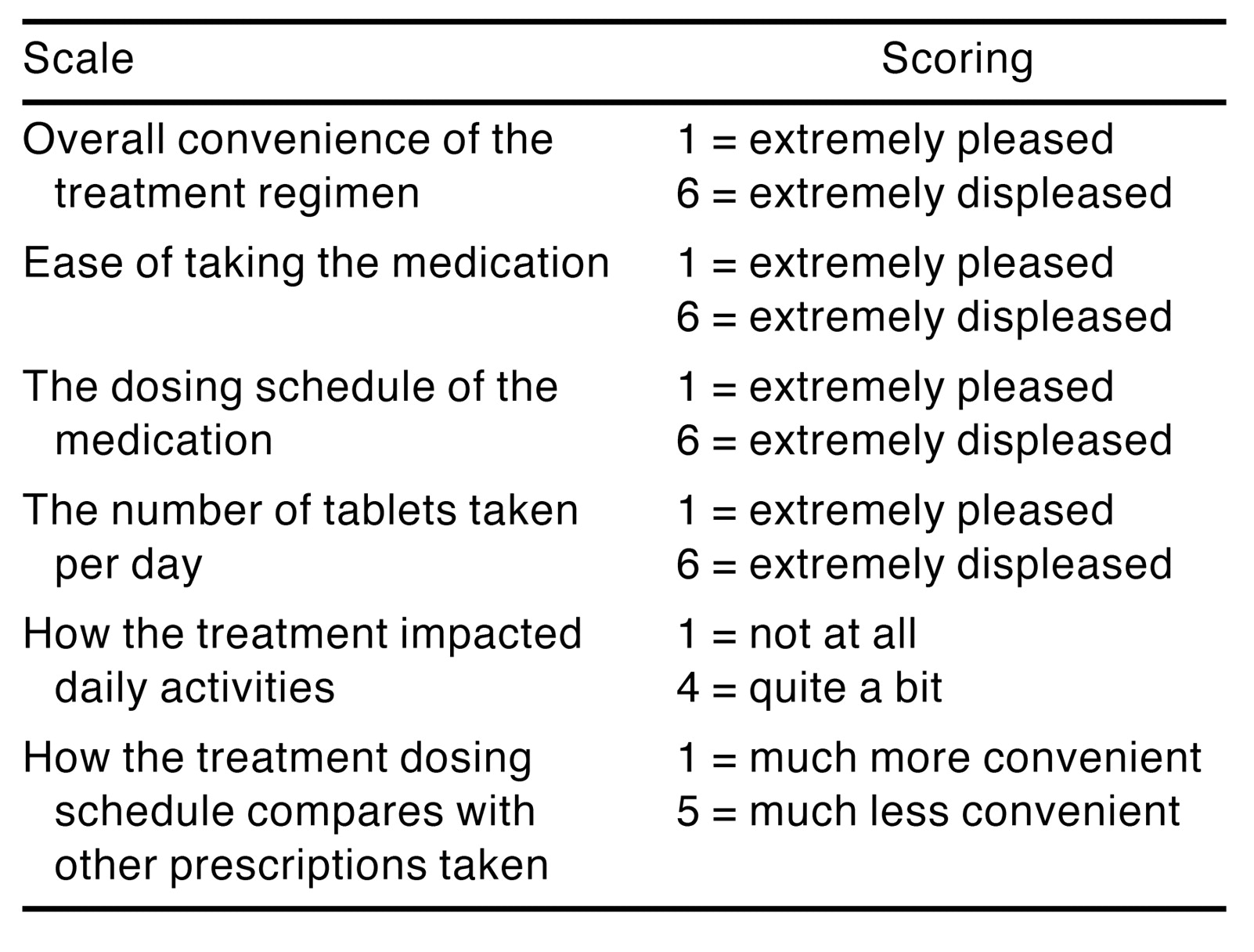
The five-item Onychomycosis Collaborative Observational Evidence (OnyCOE) Satisfaction Scale, previously developed and validated by Lubeck et al, [5] was used to determine each patient’s overall satisfaction with the treatment regimen (Table 1). Based on items shown to affect medication compliance [12], questions were also asked to assess patient perception of the ease and convenience of the regimens used (Table 2).

Table 1.
Components of the Five-Item Onychomycosis Collaborative Observational Evidence Satisfaction Scale
Table 2.
Components of the Treatment Ease and Convenience Scale
Statistical Analysis
For treatment group comparisons, the null hypothesis was that there were no statistically significant differences between continuous-dose terbinafine and pulse-dose itraconazole. Two-tailed tests were performed, and P < .05 was considered statistically significant. Analyses were performed on all patients for whom complete data were available. As a result, sample size varied in some of the analyses if data were not available. All statistical analyses were performed using SAS version 8.1 (SAS Institute Inc, Cary, North Carolina).
Confirmatory psychometric testing was performed as part of the overall analysis plan of the study [16]. A cluster analysis was used to determine scale structure for the original items in the questionnaire. Internal consistency (reliability) was measured using Cronbach’s α, after data were pooled across treatment groups. An α coefficient of .70 or greater was considered acceptable [17]. Known-groups validity was evaluated using analysis of variance to compare treatment satisfaction for patients who did and did not require retreatment, using the assumption that patients requiring retreatment should report less treatment satisfaction than those who did not need retreatment. Construct validity (convergent and divergent validity) was measured using Pearson correlation coefficients.
Demographic (age, sex, ethnicity, marital status, highest education level completed, and annual household income), clinical, and medical history data were compared between the two treatment groups using a χ2 test for categorical variables. However, if the number of expected cell counts was less than five, the Fisher exact test was substituted. The t-test was used for comparisons of continuous variables. For all primary and secondary outcomes, a two-way analysis of variance was used, which included a fixed effect for site and treatment group.
Results
A total of 146 questionnaires were completed by telephone interview, and 143 clinical data forms were completed by medical chart review. Data from 142 patients who had completed an interview and whose investigative site had completed a clinical data form were analyzed (97% of patients enrolled). Of these 142 patients, 94 (66%) received continuous-dose terbinafine and 48 (34%) received pulse-dose itraconazole. Twenty patients did not meet the original inclusion criteria based on the date of treatment but were included in the data analysis to increase the sample size. Six of these patients (three receiving terbinafine and three receiving itraconazole) began treatment within 3 months before the inclusion date of June 1, 1998, and 14 patients (7 receiving terbinafine and 7 receiving itraconazole) ended treatment within 10 months after March 31, 1999.
Demographic Information
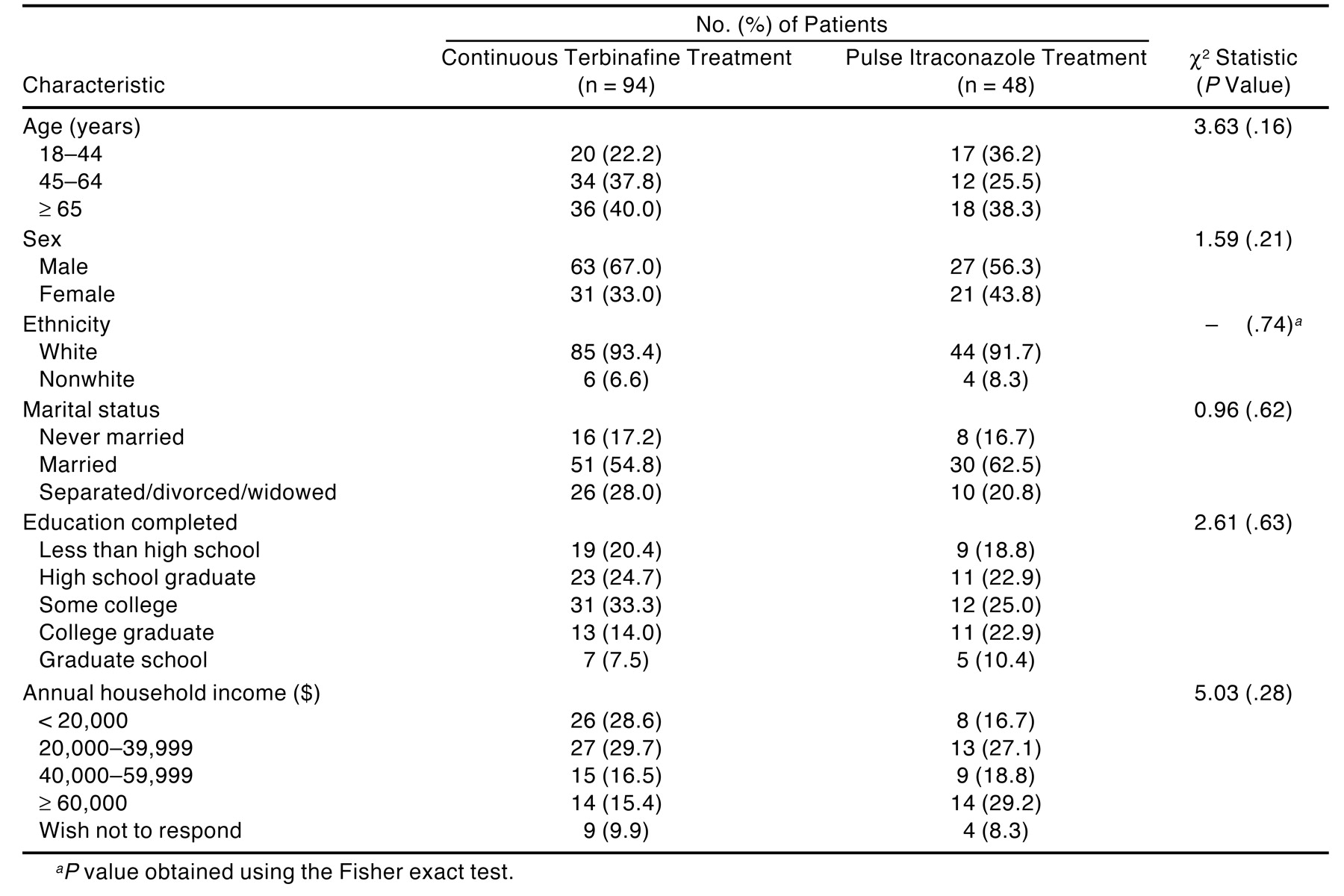
Table 3 contains demographic information by treatment group. Patients tended to be at least 45 years of age, male, white, and married and had at least a high school education. Annual household income varied widely. No statistically significant differences between treatment groups were observed.
Table 3.
Demographic Information by Treatment Group
Clinical Characteristics
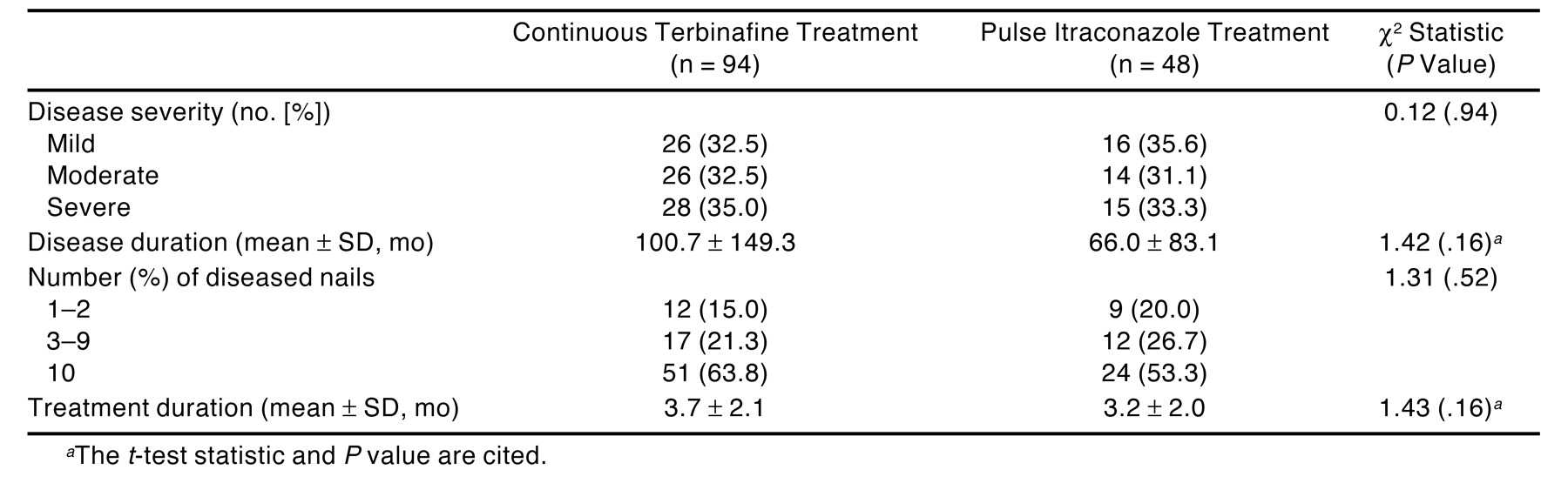
Analysis of the clinical outcomes was derived from the clinical data form supplied by providers (Table 4). The disease severity, number of diseased nails, and length of treatment were comparable between groups. Patients were included if they had been treated for a minimum of 12 consecutive weeks (3 months) with terbinafine or for a minimum of three pulses with itraconazole. Because some practitioners used 4 months of terbinafine and four pulses of itraconazole, the average length of treatment for both groups was higher than the inclusion minimum. Patients in the terbinafine group had onychomycosis for an average of 100 months versus 66 months for patients in the itraconazole group, although this difference was not statistically significant.
Table 4.
Clinical Characteristics by Treatment Group Obtained by Medical Chart Abstraction
Topical antifungal therapy and nail avulsion treatment were not used in most patients, and none received matrixectomy. Approximately 60% of patients in each treatment group had at least one nail debridement. None of these findings were significantly different between groups.
Patient-Reported Medical History and Comorbidity Analysis
The patient-reported medical history revealed two statistically significant differences between the study groups at baseline. Compared with the itraconazole group, more patients in the terbinafine group reported having fingernail fungus (22.8% versus 8.3%; P = .034). In addition, more patients in the itraconazole group than in the terbinafine group reported that other people in the household had toenail fungus (33.3% versus 16.1%; P = .019).
The two primary reasons given for seeking treatment were comparable in the terbinafine and itraconazole groups: patients felt self-conscious about nail appearance (30.9% versus 33.3%) and their physician recommended treatment (19.2% versus 29.2%). Although there were slight differences in the percentage of patients who reported pain (higher in the terbinafine group) or an inability to wear certain shoes (higher in the itraconazole group), these findings were not statistically significant. No patients in either group reported seeking treatment because of embarrassment in intimate situations.
A relapse of onychomycosis, caused by either reinfection or incomplete eradication of the original fungus, necessitates the administration of a second course of medication. Patients in this study were asked whether they had received retreatment of their onychomycosis. Fewer patients in the terbinafine group than in the itraconazole group required retreatment (29.7% versus 40.4%), although this difference was not statistically significant.
The prevalence of comorbid conditions was low (<10% for asthma, cancer, human immunodeficiency virus/acquired immunodeficiency syndrome, kidney disease, and organ transplantation), except that approximately 40% of participants in both groups reported previous or current athlete’s foot. Although there was a slightly higher self-reported diagnosis of diabetes mellitus in the terbinafine group and a slightly higher rate of psoriasis in the itraconazole group, these differences were not statistically significant.
Analysis of Patient Satisfaction with Treatment and Compliance
A cluster analysis conducted to determine whether questionnaire items could be reasonably combined to form meaningful scales resulted in the derivation of the Ease and Convenience Scale. Three questionnaire items (medication cost concerns, shared medication with family, and discontinued medication use on physician’s recommendation) did not logically belong with the other three scales and were thus analyzed separately.
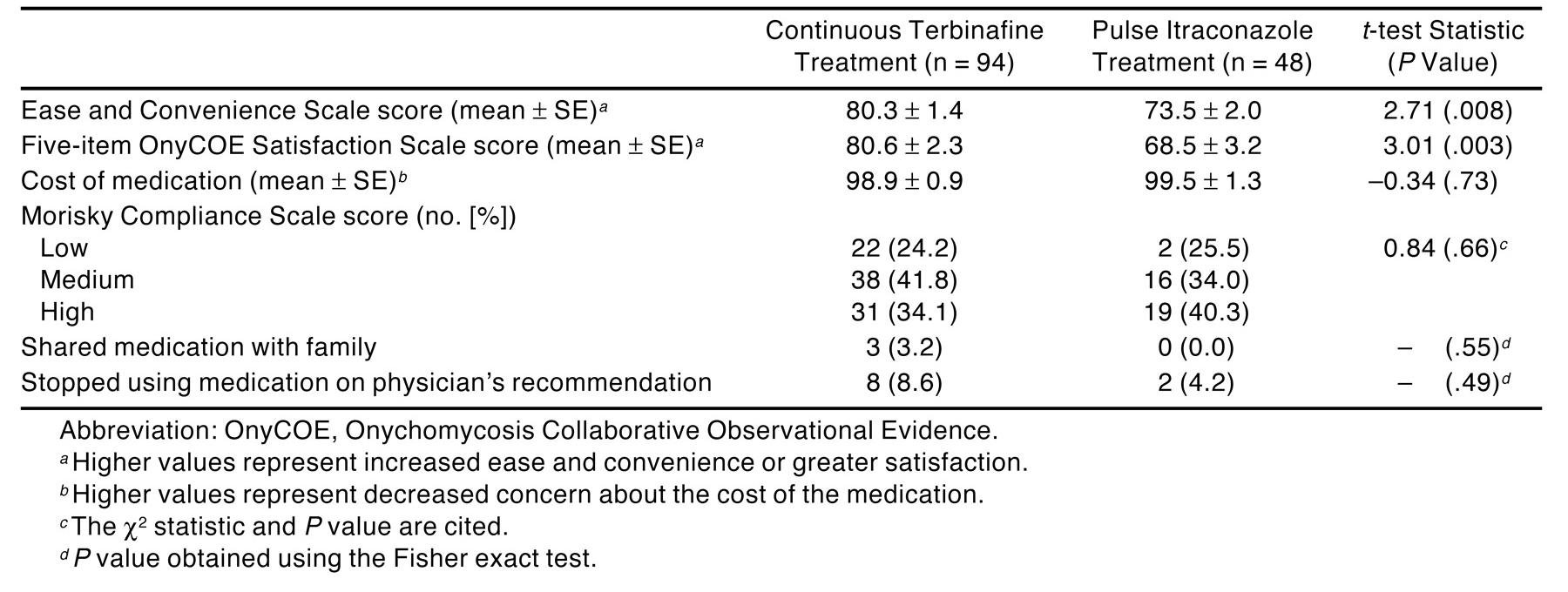
Results from the psychometric testing found that the Ease and Convenience Scale (Cronbach’s α = 0.86) and the five-item OnyCOE Satisfaction Scale (Cronbach’s α = 0.92) demonstrated high internal consistency reliability. The Morisky Compliance Scale (Cronbach’s α = 0.55) demonstrated a lower internal consistency reliability. For both the Ease and Convenience Scale and the OnyCOE Satisfaction Scale, respondents who did not need retreatment reported increased ease and convenience and greater satisfaction. Significant differences between treatment groups were found for both scales (P < .001) (Table 5). The Pearson correlation coefficient revealed moderate intraclass correlation between the Ease and Convenience Scale and the five-item OnyCOE Satisfaction Scale (r = 0.56).
Table 5.
Patient Satisfaction by Treatment Group
As summarized in Table 5, results obtained using the Ease and Convenience Scale indicate that patients in the continuous-dose terbinafine group reported increased ease and convenience of their medication compared with the pulse-dose itraconazole group (80.27 ± 1.44 versus 73.48 ± 2.00; P = .008). Similarly, the terbinafine group reported significantly greater overall satisfaction with treatment than the itraconazole group (80.62 ± 2.28 versus 68.49 ± 3.24; P = .003) on the OnyCOE Satisfaction Scale. Both scales assign a higher value to increased ease and convenience or satisfaction. There were no significant differences between the two groups in the Morisky Compliance Scale score or the other three questionnaire items (medication cost concerns, shared medication with family, and discontinued medication use on physician’s recommendation). The subset of patients who reported a previous history or current diagnosis of athlete’s foot was analyzed separately with nearly identical results (data not shown).
Discussion
The results of this study indicate that patients who received continuous-dose terbinafine reported greater overall satisfaction with their treatment for toenail onychomycosis than those who received pulse-dose itraconazole. In addition, patients who received continuous-dose terbinafine found their medication easier and more convenient to use compared with those who received pulse-dose itraconazole. Compliance and cost concerns did not differ. The questionnaire used to obtain these results was found to be reliable and valid.
Several factors may account for the increased ease and convenience reported by patients taking terbinafine compared with those taking itraconazole. Terbinafine requires patients to take one tablet once daily, whereas itraconazole requires patients to take two capsules twice daily. The more frequent dosing regimen and the higher number of capsules required likely make itraconazole a less convenient treatment. Terbinafine was also used on a continuous basis for 3 months, whereas itraconazole was given on a pulse-dose basis, which required patients to take medication for 1 week each month for 3 consecutive months. Patients may prefer a standard, continuous medication regimen rather than a pulse-dose regimen that may require record keeping. In addition, itraconazole capsules must be taken with meals to optimize absorption [18], whereas this is not required with terbinafine [19]. Although not assessed in this study, the smaller tablet size of terbinafine compared with the large capsules of itraconazole may have also contributed to the greater perceived ease and convenience.
Overall, few studies comparing patient satisfaction between terbinafine and itraconazole have been conducted. In contrast to the observations presented in this study, patient satisfaction with itraconazole therapy has previously been shown to be similar to that with terbinafine; most patients considered both treatments to be “very good.” [10] The reasons for the disparity between studies is not clear, but may involve differences in disease severity or dosing regimens.
This study has several limitations. Use of a cross-sectional study design required patients to recall their experiences 9 to 12 months after onychomycosis treatment, thus introducing possible recall bias. Patients were not randomly assigned to receive terbinafine or itraconazole, and providers and interviewers were not masked to the treatment received.
Two statistically significant differences in patient characteristics could have affected the outcomes of this study. At baseline, patients in the terbinafine group reported a higher rate of fingernail onychomycosis than those in the itraconazole group. In addition, the itraconazole group reported that significantly more household members had toenail onychomycosis. However, when these two differences in treatment groups were controlled for at baseline using multivariate methods, the results were unchanged (data not shown).
Conclusion
This is the first study to explore patient satisfaction with treatment using a reliable and valid questionnaire among patients receiving treatment for onychomycosis. Patients who received continuous-dose terbinafine reported significantly greater satisfaction and found their medication easier and more convenient to use than patients who received pulse-dose itraconazole for the treatment of toenail onychomycosis. The psychometric tests used in this study may prove to be valuable tools for future outcomes studies designed to evaluate patient satisfaction with the treatment of onychomycosis.
References
- Drake LA, Scher RK, Smith EB, et al: Effect of onychomycosis on quality of life. .J Am Acad Dermatol38::702. ,1998. .
- Scher RK: Onychomycosis: a significant medical disorder. .J Am Acad Dermatol35::S2. ,1996. .
- Scher RK: Onychomycosis is more than a cosmetic problem. .Br J Dermatol130: (suppl 43):15. ,1994. .
- Rich P, Schein JR, Lubeck D: Onychomycosis: symptoms and quality of life associated with this medical condition [poster]. Presented at a meeting of the American Academy of Dermatology, July 31–August 4, 1998, Chicago..
- Lubeck DP, Gause D, Schein JR, et al: A health-related quality of life measure for use in patients with onychomycosis: a validation study. .Qual Life Res8::121. ,1999. .
- Drake L: Quality of life issues for patients with fungal nail infections. .AIDS Patient Care9: (suppl 1):S15. ,1995. .
- Lubeck DP: Measuring health-related quality of life in onychomycosis. .J Am Acad Dermatol38::S64. ,1998. .
- Elewski BE: Onychomycosis: pathogenesis, diagnosis, and management. .Clin Microbiol Rev11::415. ,1998. .
- Cohen PR, Scher RK: Topical and surgical treatment of onychomycosis. .J Am Acad Dermatol31::S74. ,1994. .
- Arenas R, Domínguez-Cherit J, FernÁndez LM: Open randomized comparison of itraconazole versus terbinafine in onychomycosis. .Int J Dermatol34::138. ,1995. .
- BrÄutigam M, Nolting S, Schopf RE, et al: Randomised double blind comparison of terbinafine and itraconazole for treatment of toenail tinea infection. .BMJ311::919. ,1995. .
- DiMatteo MR: Patient adherence to pharmacotherapy: the importance of effective communication. .Formulary30::596. ,1995. .
- Hiruma M, Matsushita A, Kobayashi M, et al: One week pulse therapy with itraconazole (200 mg day-1) for onychomycosis: evaluation of treatment results according to patient background. .Mycoses44::87. ,2001. .
- Gupta AK, De Doncker P, Haneke E: Itraconazole pulse therapy for the treatment of Candida onychomycosis. .J Eur Acad Dermatol Venereol15::112. ,2000. .
- Morisky DE, Green LW, Levine DM: Concurrent and predictive validity of a self-reported measure of medication adherence. .Med Care24::67. ,1986. .
- Lohr KN, Aaronson NK, Alonso J, et al: Evaluating quality-of-life and health status instruments: development of scientific review criteria. .Clin Ther18::979. ,1996. .
- Cronbach LJ: Coefficient alpha and the internal structure of tests. .Psychometrika16::297. ,1951. .
- Sporanox [package insert], Janssen Pharmaceutica, Inc, Titusville, NJ, 2001..
- Lamisil [package insert], Novartis Pharmaceuticals Corp, East Hanover, NJ, 2001..
© 2003 American Podiatric Medical Association