


Abstract
This paper is the first in a series of three aimed at introducing clinicians to current concepts in research, and outlining how they may be able to apply these concepts to their own clinical practice. It has become evident in recent years that while many practitioners may not want to become actively involved in the research process, simply keeping abreast of the burgeoning publication base will create new demands on their time, and will often require the acquisition of new skills.
This series introduces the philosophies of integrating what sometimes may appear to be abstract research into the realities of the clinical environment. It will provide practitioners with an accessible summary of the tools required in order to understand the research process. For some, it is hoped this series may provide some impetus for the contemplative practitioner to become a more active participant in the research process. This first paper addresses how the evidence based practice (EBP) revolution can be used to empower the individual practitioner and how good quality evidence can improve the overall clinical decision making process. It also suggests key strategies by which the clinician may try to enhance their clinical decision making process and make research evidence more applicable to their day to day clinical practice.
Introduction
The mass of information with which we are each confronted as we attempt to keep up to date professionally, can be both daunting and bewildering. As clinicians, we can often feel overwhelmed as we come to terms with an enormous volume of information—much of which may appear inaccessible, inconclusive or irrelevant—to the care of our patients. Furthermore, administering bodies, such as private health insurance agencies, are utilising available information to question the justification of future funding, and are placing ever-greater emphasis on the need to validate what we do as clinicians.
It is essential, therefore, that clinicians be discerning consumers of the information explosion. Fundamentally, we as clinicians, need to be able to determine the believability of the information presented, the clinical relevance of the information and how this information may be used to inform or enhance patient management.
Some clinicians may think that most research is a distant and removed process from that which occurs in day-to-day clinical practice. Indeed, in the case of much laboratory-based work, this is probably true. However, in the area of clinical research it is well recognised that the two roles of researcher and clinician become inextricably linked by the mutual aim of providing the best possible health care for the patient. In this context, the researcher cannot ignore the importance of the clinical application of research. Similarly, whether or not they intend to actively participate in the research process, clinicians have an obligation to be familiar with the fundamental principles and practice of research methods.
There have been several initiatives in the area of health research that have attempted to integrate research and investigate how research is integrated into clinical practice (Auplish, 1997; Conroy, 1997; Haynes et al., 1997; Muir Gray et al., 1997; Balas et al., 1998; Chessare, 1998; Michaud et al., 1998; Straus and Sackett, 1998). This integration is the underlying philosophy of evidence based practice (EBP) and is one mechanism by which we can apply research outcomes to our patients. Evidence based practice is an approach to clinical practice that emphasises clinical decision making based on the rigorous analysis of clinical research, the outcomes of which are then tailored to the individual characteristics of a specific patient (Dowie, 1996; Ellrodt et al., 1997). McKibbon describes EBP as being “an approach to health care that promotes the collection, interpretation, and integration of valid, important and applicable patient-reported, clinician-observed, and research-derived evidence. The best available evidence, moderated by patient circumstances and preferences, is applied to improve the quality of clinical judgements” (McKibbon et al., 1995). In this model, EBP is seen as being applied to individual patients through clinical decision making which is informed by research and knowledge, is acted upon using critical thinking, and is reviewed and reflected in light of how each unique case responds.
In this paper we also attempt to recap some of the basic principles of the scientific method. We will provide an overview of the clinical decision making process and include strategies on how to improve the same. Finally, easy steps to make research accessible to clinicians are outlined.
Brief Overview of the Scientific Process and Evidence Based Practice
There are several assumptions that need to be recognised if the philosophy EBP is to be integrated into our clinical practices. These include (after Eddy 1996):
(i) Podiatry is not practiced totally at random
(ii) Podiatry is not fraudulent. The aim of clinicians is to practice diligently, honestly and with sincerity
(iii) While the majority of practices we undertake are effective, some are not. It is therefore essential to determine which practices fall into which category, and to determine potential benefit to risk ratio
(iv) We make decisions in a complex environment where the needs of individuals need to be recognised and the health care environment is constantly changing
(v) We can always do better
While most people would acknowledge the need to incorporate research into clinical practice, many clinicians may feel unsure of what, precisely, is involved in this process. Thus, the single greatest step in becoming a discerning consumer of research is the development of the skills required to critically evaluate what is presented in the journals, and to use those skills to decide whether to allow new information to inform or alter one’s future practice. For example, the fact that a paper has been published in a journal does not, unfortunately, always vouch for its worth. While the standing, or apparent credibility of the journal in which a paper is published may give some indication of the merits of a piece of research, the final assessment of that worth is entirely up to the clinician.
Historically, individual practitioners have developed their own principles of clinical practice based on a series of factors unique to each of us. These include various proportions of:
(i) pre-training life experience,
(ii) the medical education process,
(iii) clinical experience,
(iv) anecdotal and some data (scientific) oriented evidence, (Sackett and Rosenberg, 1995).
As a consequence of this eclectic base, while many of us would claim that in most cases our practice is based on best principles, this is often simply not reflected in the actual fact. It is unfortunately the case that the principles of practice are more often swayed by custom and tradition or the wholesale adoption of current trends. This, in turn, is often reinforced by an individual clinician’s personal experience, which even when based on only one or two successful (or unsuccessful) cases, due to the intensely personal nature of the experience, can have a huge impact on an individual’s future treatment choices. Even where good evidence exists that a treatment may be ineffective or harmful, custom, practice and personal experience can be hard to put aside (Sackett and Rosenberg, 1995; Muir Gray et al., 1997). The current emphasis on evidence based medicine is an attempt to redress this deficiency by promoting a move towards clinical decision making that is informed by data—not instead of, but in addition to personal experience and preference. The key feature here in incorporating EBP principles into practice is that the best decisions are made only if and when we are fully appraised of the evidence first, and then we adapt this knowledge to the unique set of circumstances presenting in the case in front of us. In this model EBP does not become a substitute for experience and expertise, but is used to enhance our experience by supplementing it with a stronger and more justifiable base.
Research and the Clinical Decision Making Process
Clinical decision making refers to the complex thinking and decision making process involved in clinical practice (Higgs and Jones, 1995). One key aspect of clinical decision making includes the ability to identify the personal context of an individual patient/client (Higgs and Jones, 1995). As such, the reasoning involved with the clinical decision making process covers not only diagnostic and management orientated problem solving, but also dealing with the unique personal situation of the patient/client. Clinical decision making is “the most important factor in effective clinical practice” (Higgs and Jones, 1995).
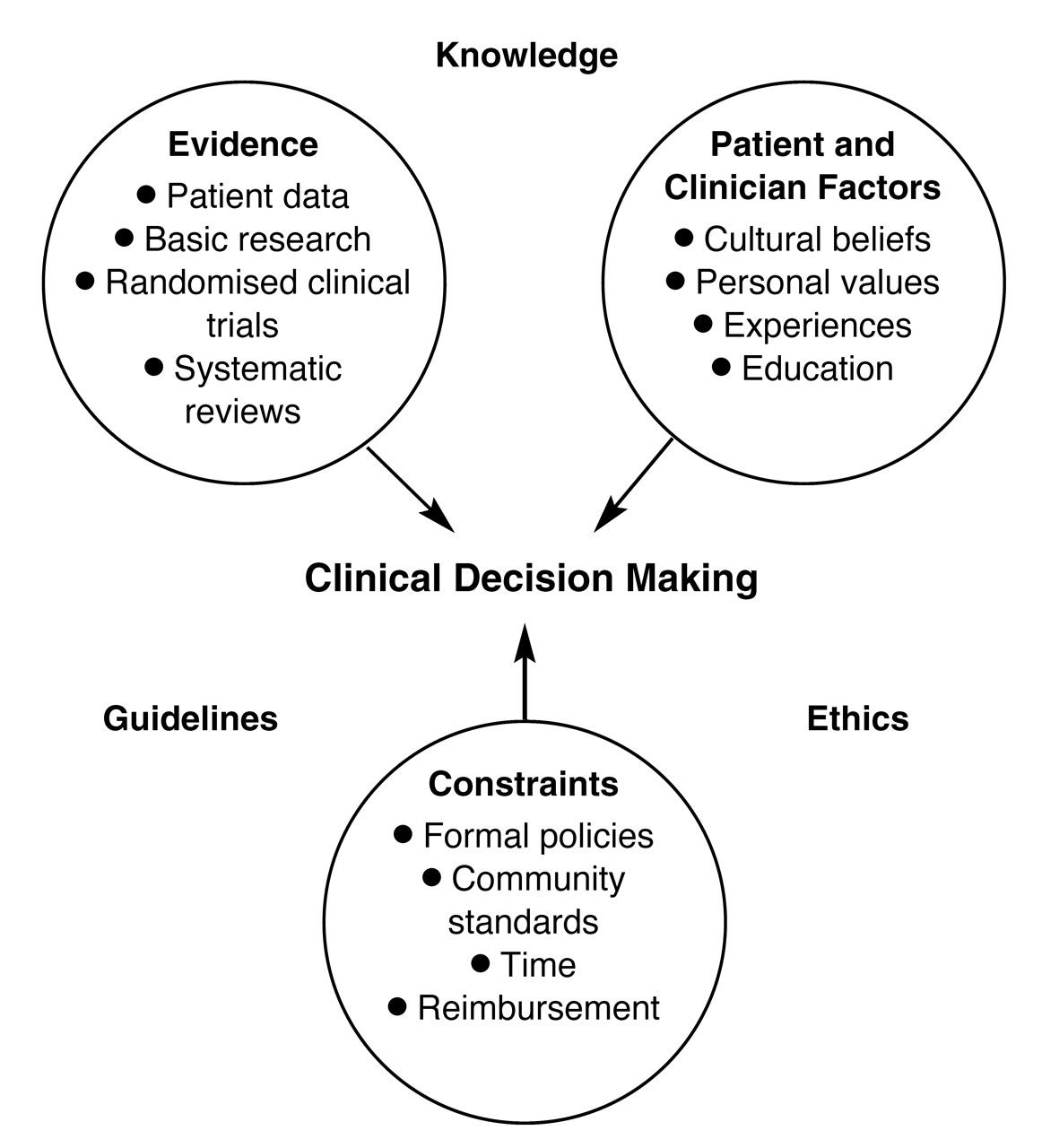
The process of clinical decision making is a complex one which is governed by three key factors: the evidence we have available to us, individual patient and clinician factors and the constraints in which we, as clinicians, work under (Figure 1).
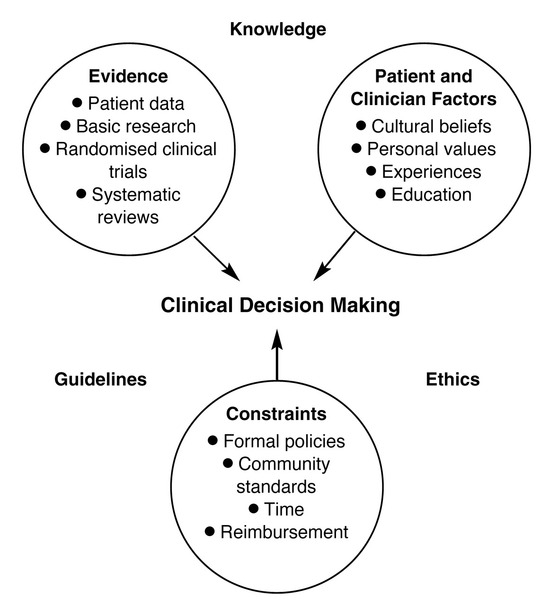
Figure 1.
Factors that enter into clinical decisions, adapted from Mulrow et al (1997), pg 389.
Evidence
The evidence that is required in clinical decision making includes information from a number of sources, ranging from the history that we obtain from our patient, to evidence from the published literature. Clearly, the ability to access and interpret this information is essential for accurate patient diagnosis and management.
Patient and Clinician Factors
Most clinicians would be aware that making clinical decisions is heavily influenced by the individual considerations of the patient. These may include issues such as cultural beliefs and the personal values of the patient. However, we should also remember that the decision making process is also a product of our own preconceptions. Thus it is important that the clinician carefully evaluate the factors that influence his or her own personal choice in making decisions in order to minimise any undesired effects. One of the most significant of these influences over clinicians’ reasoning is their educational experience. This is particularly true of our studies at pre-registration level (Candy and Worrall-Carter, 1999; Landorf et al., 1999), which will continue to influence our practice, even if we later discover that some of what were we were taught may have been questionable.
Constraints
All practitioners would probably prefer to practice with complete autonomy. In reality however, clinical decision making must be made in an environment that is tempered by fiscal and practical constraints. Therefore, for effective and realistic decision making to be enhanced, it is essential that the clinician acknowledges the constraints of the physical environment, the socioeconomic factors (of the patient and the institution) and access to technology. As we are all sufficiently aware of the constraints imposed by the systems in which we operate, it is not proposed to list them here, but the reader is encouraged to identify any constraints in their own work systems.
Clinical Guidelines
Clinical guidelines are usually developed to improve patient care in areas of practice where large discrepancies in the habits of individuals, or groups of practitioners, suggest that not all patients are receiving the best available care (Cook et al., 1997). Clinical guidelines are generally developed in order to inform and guide clinicians in the clinical decision making process while taking into consideration the factors outlined in the previous sections. Good clinical guidelines have the following characteristics: they aid the outcomes of health care; they address issues of prevention, diagnosis and treatment; they are specific and achievable; they enhance the process of making clinical decisions and optimise resource utilisation (Grol et al., 1998).
Clinicians often express concern that their autonomy is challenged by the introduction of clinical guidelines. This however implies a degree of misuse or misunderstanding of guidelines, something that unfortunately, occurs with some regularity. Ideally, clinical guidelines represent a tool for clinicians to enhance the clinical decision-making process, in as much as they should be applied as conventions which can be modified to the needs of the specific case. It is poor use of guidelines to have them rigidly dictate what a practitioner can and cannot do. Clinical guidelines are an invaluable asset for the clinician, but guidelines cannot and should not be used to replace the clinician’s flexibility in dealing with the personal needs of each patient.
What Enhances Good Clinical Decision-Making?
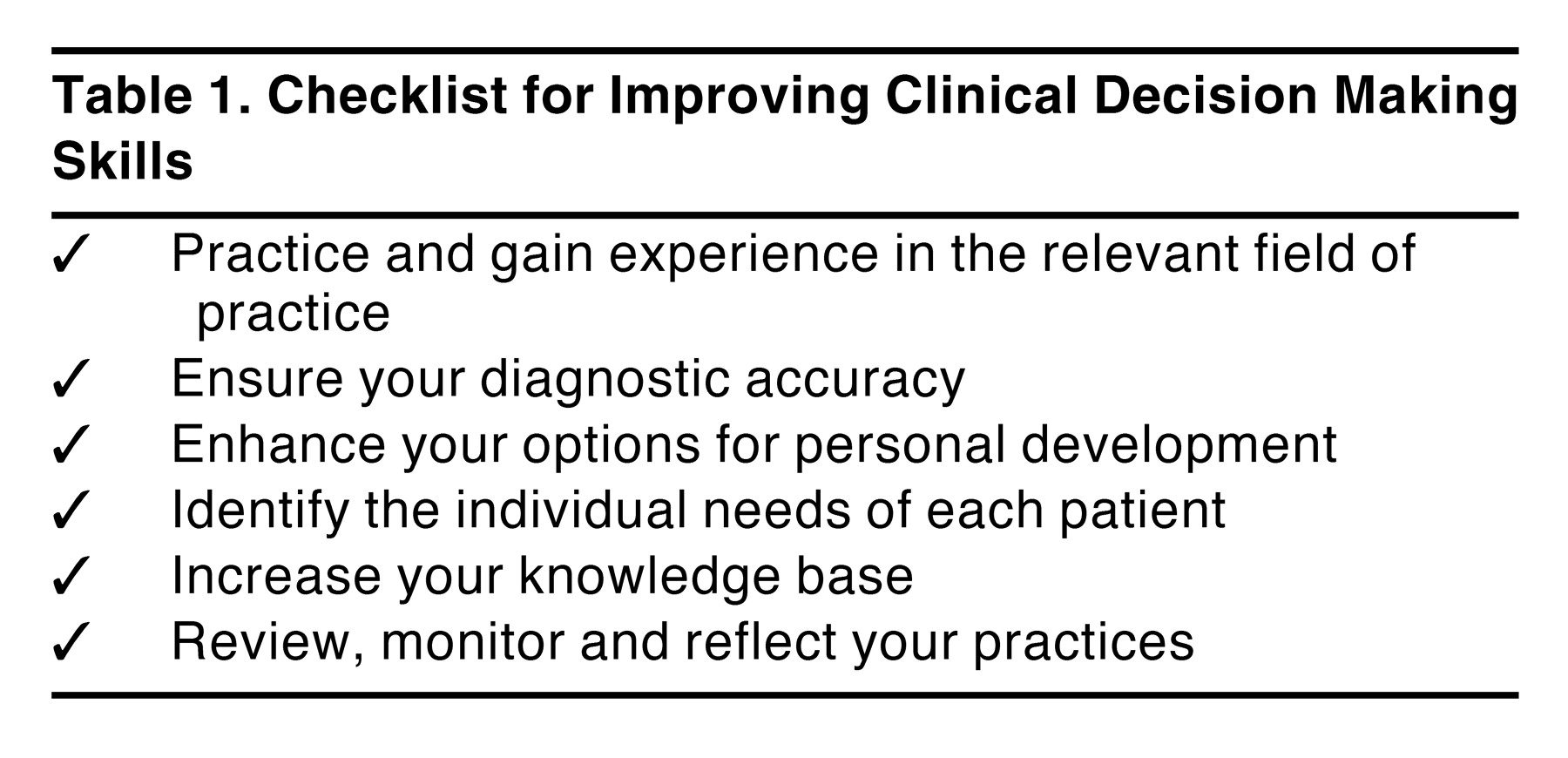
As outlined previously, most of us could improve our decision-making skills to at least some degree, no matter how experienced, expert or informed we may consider ourselves. To this end, several key features have been identified which can be employed to maximise our effectiveness in making complex clinical decisions. Several factors are outlined below and are summarised in Table 1.

Table 1.
Checklist for Improving Clinical Decision Making Skills
Experience
Clinicians become better at clinical reasoning as they develop more experience in the areas to which they are most regularly exposed. There has been substantial research into differences between experts and novices, and those factors that may improve clinical decision making ability. It has been found that experts in a field have a greater ability to organise information into meaningful and interrelated pieces, do not process irrelevant information and, in routine situations, use highly specific strategies for each patient based on knowledge that they can identify (Ericsson and Smith, 1991).
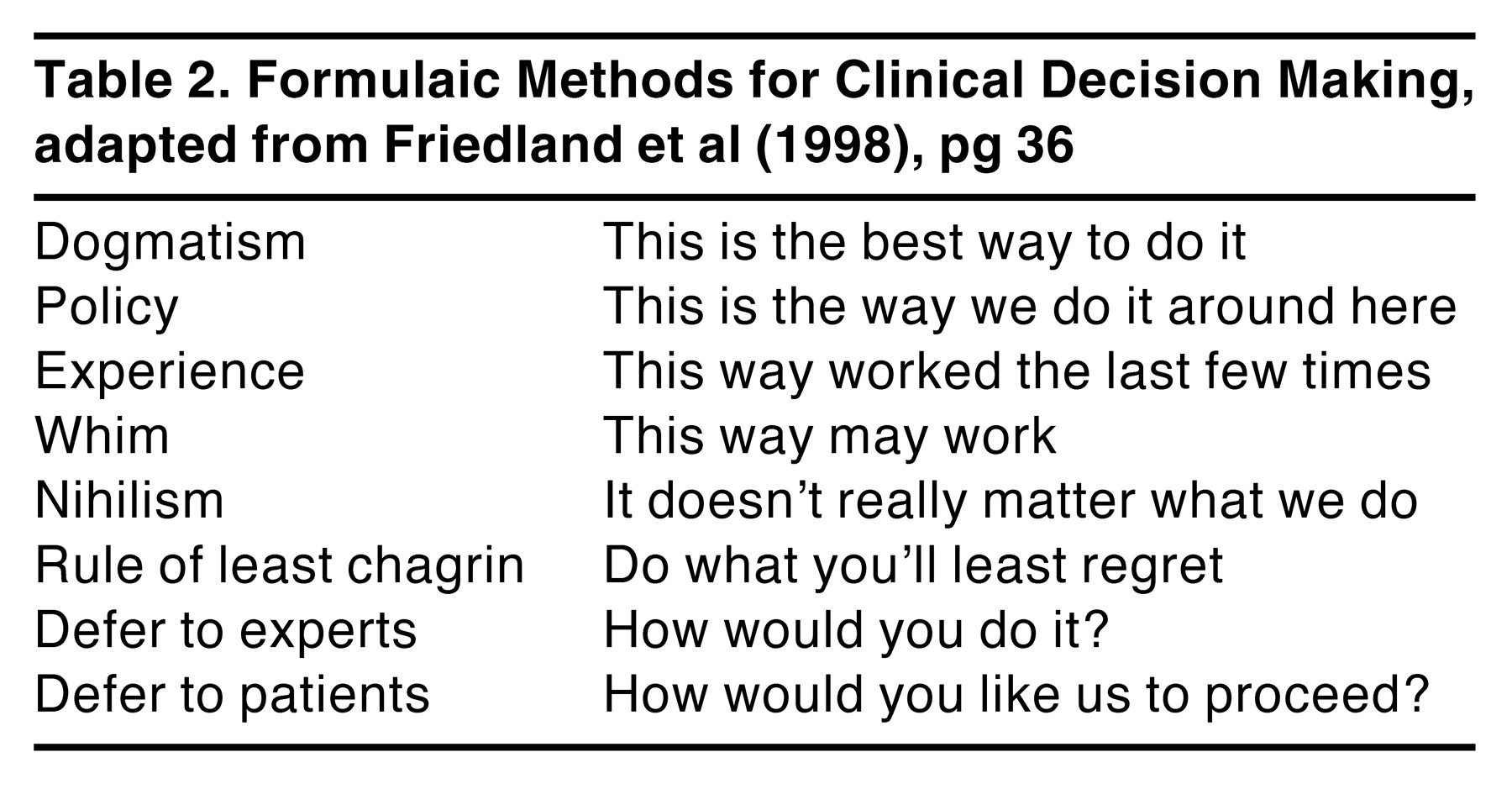
Adopting either formulaic or empirical approaches rather than a process based on the individual requirements of the patient and EBP can impede good clinical decision making. By adopting either a “this always works” or a formulaic method (as outlined in Table 2), the clinician forfeits the ability to use their clinical decision making skills.
Table 2.
Formulaic Methods for Clinical Decision Making, adapted from Friedland et al (1998), pg 36
Diagnostic Accuracy
Fundamental to the basis of good clinical decision making is diagnostic accuracy, without which management strategies and outcomes become obsolete. Diagnostic accuracy is aided by appropriate questioning given contextual understanding of the patient’s needs, good clinical assessment skills and an understanding of the application and limitations of diagnostic and assessment aids.
Personal Development
While knowledge per se is generally recognised as being essential to the ongoing professional development of a clinician, it is also desirable to develop and enhance other skills. These may include manual and technical abilities, communication skills, personal characteristics such as empathy, critical reasoning skills and reflective reasoning skills. While many of these skills develop with experience it is often useful to take a more systematic approach and focus explicitly on an area through continuing professional development, formal graduate programs or professional mentoring.
Individual Needs of Patients
According to Higgs and Jones (1995), the most important characteristic in clinical reasoning is the effectiveness and appropriateness of clinical outcomes and the key to the identification of the individual issues of each patient is good communication skills. This can be further enhanced by the development of management plans that have negotiated and agreed goals on behalf of the clinician and the patient.
Knowledge
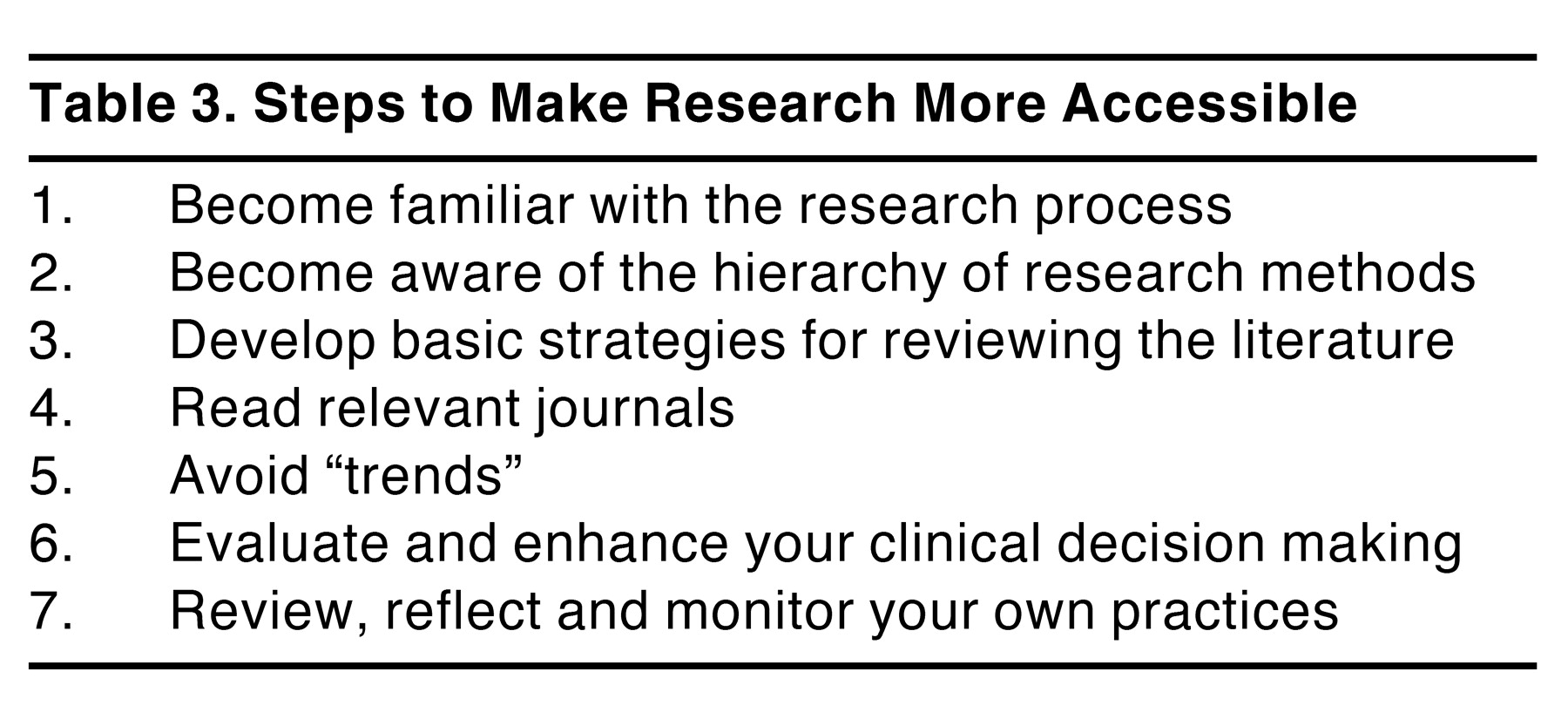
Access and interpretation of knowledge is essential in order to provide patients with optimal care. There are several different sources and strategies that can facilitate a clinician’s access to the information (Table 3).
Table 3.
Steps to Make Research More Accessible
Review, Monitor and Reflection
Reflective practitioners shape and reshape their actions as required by the context (Higgs and Jones 1995). As such, practitioners must constantly review, monitor and reflect on the clinical practices and the decisions that dictate these practices.
Pitfalls for Clinicians
It is easy for decision making to be influenced by formulaic approaches, which diminish the input and skills of the clinician (Table 2). Such approaches, such as the dogmatic approach (“this is the best way to do it”) or the nihilistic approach (“it doesn’t really matter what we do”) reduce the professional autonomy of the clinician and diminish the potential outcomes for the patient.
Current Trends in Practice That May Assist in Clinical Decision Making
Alongside the increasing need for the integration of research into practice there has been a shift in the conduct and presentation of clinical research in order to facilitate the process. Reviews, meta-analyses and comprehensive clinical practice guidelines which aim to collect, analyse, discuss and summarise the results of primary research have gained wide acceptance. Integrative research methods such as these, significantly streamline the process of accessing the best available evidence.
In a similar vein, the statistics that are used in primary clinical studies are also now often presented in a more clinically meaningful and accessible manner. While it may require a little effort to come to terms with the basic concepts, statistics such as ‘risk reduction’ and ‘number needed to treat’ offer a clinically meaningful indication of the likely odds of successful treatments for the patient facing you. They are therefore more directly applicable than, for instance, the more general ‘p’ values and other complex statistics with which we are often faced. Some of these concepts will be developed in the third paper in this series.
Easy Steps to Make Research More Accessible
In order to encourage clinicians to make greater use of research, we have summarised seven easy steps for clinicians to make research more accessible and to enable clinicians to become a more discerning consumer of clinically relevant research (Table 3).
Becoming Familiar with the Research Process
It is not possible to evaluate the merits of studies from an informed perspective without at least a working knowledge of the research process. Increasingly, this is becoming every bit as important as basic clinical skills. An understanding of the basics of the research process can be gained from texts that address research in the health sciences, although this distant approach can be daunting for all but the most self-assured. For some, an alternative might be to attend a short course at their local college or university. In the company of others in a similar situation, the concepts encountered in research methods and statistics should appear less intimidating and a caring tutor should be able to lead even the most terrified beginner through to a basic understanding of concepts.
Becoming Aware of the Hierarchy of Research Methods
The ‘believability’ of the results presented in a paper will vary according to the method that was employed in conducting the study. For single studies, (rather than reviews and meta-analyses) randomised clinical trials (RCTs) are considered to be the “Rolls Royce” of study design, due to the rigorous conditions under which the study is undertaken. There are good reasons for this, and it is unfortunately to the detriment of podiatry, that much of the research upon which our discipline is founded has been based on inferior methods. Guyatt et al (1995) proposed a hierarchy of credibility, which attempts to rank in order of merit, the various quantitative designs that can be employed in clinical research. The authors of this paper have also added to Guyatt et al’s ranking, some designs originally excluded, but which may be encountered in the podiatric literature (Figure 2). The hierarchy places the various designs in order of the credibility to the research process offered by the design. This offers an indication of the relative faith the reader should consider placing in the results.
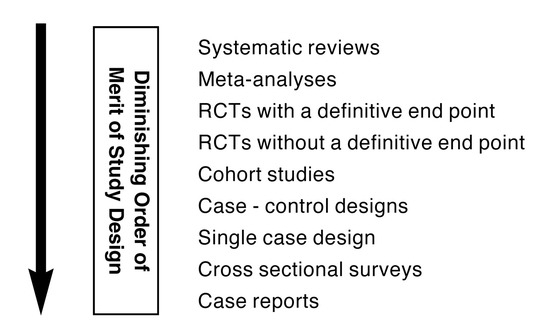
Figure 2.
Hierarchy of believability of study design, adapted from Guyatt et al (1995).
Naturally, the precise choice of study method is only one factor that will influence our appraisal of a piece of research. To further assist in evaluating the merits of studies, Harris (1996) suggested a number of ancillary criteria against which treatments should be critiqued for scientific method. It is recommended that we, as clinicians, should consider evaluating new treatments according to six criteria prior to allowing the reported findings to influence practice:
(i) theories should be supported by valid anatomical and physiological evidence;
(ii) peer-reviewed studies include well designed, randomised, controlled clinical trials or well designed single-subject experimental studies should be provided as evidence to support the theory;
(iii) the proponents of the treatment approach should be open and willing in discussing its limitations;
(iv) any treatment approach is designed for a specific population;
(v) potential side effects and complications of treatments should be presented;
(vi) studies from peer-reviewed journals are provided that support any treatment’s efficacy.
Developing Basic Strategies for Keeping Abreast of the Literature
As with most areas of practice, we will do better at something if a strategic approach is developed. Mendelson (Freidland, 1998) suggests the following:
(i) Choose a small number of core journals for regular browsing (browse before you decide on these and have a criteria for which ones you choose),
(ii) Expand your literature surveillance by reading pre-reviewed summaries,
(iii) Use continuing professional education and conferences to expand your familiarity with the literature,
(iv) Expand your knowledge by reading evidence based syntheses (integrative research such as reviews, meta-analyses, comprehensive clinical practice guidelines),
(v) Try to establish protected time for critical reading.
In selecting our reading it is probably worth seeking out and reading journals that have the best mix of credibility and relevance. Journals such as the Australasian Journal of Podiatric Medicine are, for example, invaluable for maintaining professional contact, but we must also be realistic and acknowledge that the very best quality research is probably published in other, usually international journals. Such journals may include Clinical Biomechanics, Archives of Physical Medicine and Rehabilitation, Foot and Ankle International, Journal of Orthopaedic and Sports Physical Therapy, and Age and Ageing. Other journals such as Gait and Posture, the Journal of the American Podiatric Medical Association and The Foot, have greater emphasis on clinical practice. It is up to each of us to decide upon the mix that best serves our purposes.
Reading Relevant Sources
The single most influential factor affecting reading is accessibility: we primarily read what we have at hand. Therefore strategies to improve access to information tend also to make us better informed. The most obvious solution is to subscribe to journals and have them delivered to your door, but it is not practical of course, to cover all sources that may contain pertinent information. With the volume of information that is being produced, alternative sources may be more useful. Access to the Internet is one such source of information which, if used wisely, could prove to be a great asset. Currently most journals offer the tables of contents on-line, many offer e-mail bulletins informing you of their current contents, and even full text versions are becoming increasingly available.
Avoiding “Trends” or the Dissolution of One Pardigm for the Wholesale Adoption of Another
It is easy (and in some instances, encouraged) to reject aspects of traditional practice in favour of the adoption of more ‘fashionable’ or up-to-date practices — even where the new approaches have yet to be validated (Payne, 1997; Heath, 1998; Payne, 1998). Depending on the conservatism or otherwise of an individual’s personality, we will be susceptible to this kind of ‘trend following’ to a greater or lesser extent. While we must acknowledge a need to change when the evidence is clear, Harris’ criteria for study evaluation will aid in the process of discerning what changes in practice may be appropriate for a given stage of development of a theory or its supporting evidence.
Enhancing Clinical Decision Making Skills
As outlined previously and summarised in Table 1, developing good clinical decision making skills does not come simply through reading and experience. It involves a structured approach that addresses developing the skills, knowledge and attributes of the clinician and being able to appropriately adapt each to the individual requirements of a patient. It is with this philosophy that research empowers the clinician to make good clinical decisions appropriate for the individual requirements of each patient.
Reviewing, Reflecting and Monitoring Individual Practices
Implementing EBP into clinical practice is not complete until the outcomes of practices are identified and reviewed. It is only then that we can evaluate on a patient by patient level the application of knowledge and skill to an individual’s progress. It is at this level that the informed decisions, undertaken from a position of knowledge, have their true relevance to us as clinicians.
Conclusion
The evidence based practice revolution has developed as a response to variations in practice, some of which are difficult to justify solely on the basis of patient individuality. It is recognised that every patient is unique and every clinical decision is a complex one and EBP should not restrict freedom of choice. Where EBP is important, is in providing for choices made from a position of knowledge rather than from ignorance—no matter how benign or ‘excusable’ the source of the ignorance.
The fact that there are large variations in practice is in part reflective of a genuine lack of clear evidence in some areas. However in other areas, strong evidence about the most effective therapy in a given type of situation does indeed exist. In this situation, much of the variation in practice is unfortunately a reflection of ignorance on behalf of the practitioner as to what clear evidence is available. Clearly this is not an ideal state of affairs and it is one that we each share some responsibility in addressing.
We should also be aware that the EBP revolution will continue to gather momentum, be it under our influence, or outside of it. This does not inherently make it a revolution to be afraid of, but its inevitability essentially means that it would be in our best interests to have some say over its introduction, rather than waiting until it is entirely imposed from outside. If we take the early initiative to practice responsibly, podiatrists will have some say in determining the evidence to be employed. If we resist or ignore the problem until principles of evidence based care are imposed by outside parties, then the principles will indeed arrive in the form of restrictions on practice, withdrawal of funding and rigid clinical guidelines.
Major changes in habit and in practice are not easy to embrace, especially when they involve substantial personal development. To become a discerning user of good quality clinical evidence requires the development of skills and knowledge which for many lie outside of their previous sphere of experience. The world of research is unfortunately full of jargon and seemingly complex principles that are all but guaranteed to put off the beginner. However, the same is true of areas such as vascular medicine, diabetes care, biomechanics and surgery—and as podiatrists, we recognise that we have to embrace these difficult topics in order to be effective practitioners. Why then should the fact that a topic lies outside of our comfort zone excuse us from developing skills in reading and evaluating clinical evidence? We need not shy from it; we can and probably should use the opportunity to further develop our professional selves.
In summary, the EBP revolution gives us an opportunity to define criteria against which we as a profession are prepared to assess ourselves, and, in turn, are prepared to be assessed. Implementing research in our clinical practice empowers practitioner and patient choice, and provides a mechanism for our professional development as individuals and as a group. Ultimately, and without a doubt most importantly, incorporating good quality research into our clinical decision making improves the care we provide for our patients.
References
- Auplish S. (1997). Using clinical audit to promote evidencebased medicine and clinical effectiveness—an overview of one health authority’s experience. Journal of Evaluation in Clinical Practice 3(1): 77-82.
- Balas EA, Boren SA, Hicks LL, Chonko AM, Stephenson K. (1998). Effect of linking practice data to published evidence. A randomized controlled trial of clinical direct reports. Medical Care 36(1): 79-87.
- Candy P, Worrall-Carter L. (1999) Educating health science students for lifelong learning in J. Higgs and H. Edwards (Ed.). Educating beginning practitioners. Oxford: Butterworth-Heinemann.
- Chessare JB. (1998). Teaching clinical decision-making to pediatric residents in an era of managed care. Pediatrics 101(4 Pt 2): 762-6; discussion 766-7.
- Conroy MC. (1997). ‘Why are you doing that?’ A project to look for evidence of efficacy within occupational therapy. British Journal of Occupational Therapy 60(11): 487-490.
- Cook DJ, Greengold NL, Ellrodt AG, Weingarten SR. (1997). The relation between systematic reviews and practice guidelines. Annals of Internal Medicine 127(3): 210-6.
- Dowie J. (1996). ‘Evidence-based’, ‘cost-effective’ and ‘preference-driven’ medicine: decision analysis based medical decision making is the pre-requisite. Journal of Health Services & Research Policy 1(2): 104-13.
- Eddy DM. (1996) Clinical decision making: from theory to practice. Sudbury, MA: Jones and Bartlett.
- Ellrodt AG, Cho M, Cush JJ, Kavanaugh AF, Lipsky PE. (1997). An evidence-based medicine approach to the diagnosis and management of musculoskeletal complaints. American Journal of Medicine 103(6A): 3S-6S.
- Ericsson A, Smith J, Eds. (1991). Toward a general theory of expertise: prospects and limits. New York, Cambridge University Press.
- Freidland DJ, Ed. (1998). Evidence based medicine: a framework for clinical practice. Stamford, Appleton & Lange.
- Grol R, Dalhuijsen J, Thomas S, Veld C, Rutten G, Mokkink H. (1998). Attributes of clinical guidelines that influence use of guidelines in general practice: observational study. BMJ 317(7162): 858-61.
- Haynes RB, Sackett DL, Guyatt GH, Cook DJ, Gray JA. (1997). Transferring evidence from research into practice: 4. Overcoming barriers to application [editorial]. ACP Journal Club 126(3): A14-5.
- Heath H. (1998). Paradigm dialogues and dogma: finding a place for research, nursing models and reflective practice. Journal of Advanced Nursing 28(2): 288-94.
- Higgs J, Jones M. (1995) Clinical reasoning in the health professions. Oxford: Butterworth-Heinemann.
- Landorf K, Keenan AM, Rushworth L. (1999) Foot Orthoses Prescription Habits of Australian and New Zealand Podiatrists. Inaugural Conference of Australasian and New Zealand Podiatrists. Methven, New Zealand.
- McKibbon AK, Wilczynski N, Haywarsd RS, Walker-Dilks C, Haynes BR. (1995). The Medical Literature as a Resource for Evidence Based Care. On-line at http://hiru.mcmaster.ca/hiru/medline/MDL-EBC.HTM
- Michaud C, McGowan JL, van der Jagt R, Wells G, Tugwell P. (1998). Are therapeutic decisions supported by evidence from health care research?Archives of Internal Medicine 158(15): 1665-8.
- Muir Gray JA, Haynes RB, Sackett DL, Cook DJ, Guyatt GH. (1997). Transferring evidence from research into practice: 3. Developing evidence-based clinical policy [editorial]. ACP Journal Club 126(2): A14-6.
- Muir Gray JA, Haynes RB, Sackett DL, Guyatt GH. (1997). Transferring evidence from research into practice: developing evidence-based clinical policy. Evidence Based Medicine 2(2): 36-38.
- Payne CB. (1997). Should the baby be thrown out with the bath-water?Australasian Journal of Podiatric Medicine. 31(3): 73-75.
- Payne CB. (1998). The past, present, and future of podiatric biomechanics. Journal of the American Podiatric Medical Association 88(2): 53-63.
- Sackett DL, Rosenberg WM. (1995). On the needs for evidence based medicine. Health Economics 4: : 249-354.
- Straus SE, Sackett DL. (1998). Using research findings in clinical practice. BMJ 317(7154): 339-42.
© 2002 American Podiatric Medical Association