


Abstract
The number of trials required to obtain a reliable representation of the plantar pressure pattern is an important factor in the assessment of people with insensate feet or the use of plantar pressure data as a basis for fabrication of foot orthoses. Traditionally, the midgait method has been used for the collection of pressure data, but the large number of walking trials required by this method can increase the risk of injury to the plantar surface of the insensate foot. As a result, the two-step method of plantar pressure data collection has been advocated. The purpose of this investigation was to determine the degree of variability in regional plantar pressure measurements using the midgait and two-step methods of data collection. Plantar pressure data were collected from ten volunteers (five men and five women) between the ages of 20 and 35 years in 20 trials using both data-collection protocols. The results of the study indicate that three to five walking trials are needed to obtain reliable regional peak pressure and pressure-time integral values when the two-step data-collection protocol is used. Although either method can be used for pressure data collection, one method should be used consistently when repeated assessments are required.
The assessment of plantar pressures is considered an important component of the evaluation of people with neuropathy that results in sensory loss affecting the plantar surface of the foot. Several studies have shown that the repeated application of high pressures on the plantar surface of the foot is a primary risk factor in the development of foot ulcerations [1,2,3]. Cavanagh and Ulbrecht [4] have suggested that plantar pressure assessment be performed on all patients with insensate feet. It is imperative, therefore, that accurate and reliable methods of collecting the data be identified. Furthermore, recently introduced systems for designing foot orthoses use plantar pressures as the primary basis for fabrication. Thus it is important to know the number of trials required in order to obtain an accurate representation of the plantar pressure pattern.
The traditional method of collecting plantar pressure data is the midgait method. Several studies have been reported that used this method to collect plantar pressure data [3,5,6,7,8,9]. The midgait method requires that the subject walk over a walkway that has a pressure sensor platform embedded at its midpoint. (A description of this protocol is included in the “Methods” section.) Plantar pressure data are then collected from a single foot contact while the subject is walking. Hughes and associates [10] evaluated the reliability of the midgait method using ten subjects. Data from 25 trials were collected for each of three different walking speeds for each subject. They found that excellent between-trial reliability was achieved for total force and peak pressure if data from three or more trials were collected. In addition, total force and peak pressure increased with increased cadence. The authors demonstrated the importance of controlling walking speed during plantar pressure assessment and the overall reliability of the pressure measurements, but they did not consider variability of pressures under different sites of the foot. Division of the plantar surface of the foot into specific regions has become a popular practice in the assessment of plantar pressure. The reliability of such measurements is extremely important for both clinicians and researchers.
While the midgait method is considered the “gold standard” for the collection of plantar pressure data, several issues have been raised regarding the use of this method for patients with insensate feet [4]. First, the diabetic patient with poor vision and possibly decreased coordination secondary to neurologic deficits may have difficulty contacting the relatively small sensor surface of the pressure platform consistently without a large number of attempts. This could lead to a higher incidence of the patient “targeting” the sensor platform to ensure that the foot makes contact with the sensor surface. Targeting is a problem that can occur when the patient or subject alters his or her walking pattern in order to contact the sensor platform. Thus targeting can result in inaccuracies in the pressure data collected. Second, the ensuing large number of trials may lead to fatigue and therefore an unusual pattern of pressure or failure to complete the number of trials needed to obtain reliable and valid values. Finally, there is an increased risk of plantar ulceration in diabetic patients with insensate feet because of the large number of steps required for adequate data collection.
In response to these concerns regarding the midgait method, one-step and two-step methods of collecting plantar pressure data have been advocated in the literature. With these methods, the subject stands in front of the pressure sensor platform and then walks forward, striking the sensor area on the first or second step. Several studies have compared the data collected using the midgait method with those collected using the one-step or two-step method. Rodgers [11] used 60 healthy men with no history of diabetes to collect one-step and midgait plantar pressure data. Rodgers reported that peak pressures were an average of 13% greater for the midgait method than for the one-step method. She also reported that peak pressures under the metatarsal heads using the one-step method were only 4.7% lower than those using the midgait method. Morlock and Mittlmeier [12] also compared the midgait and one-step methods, using 16 healthy subjects with a mean age of 30.6 years. In comparing the values obtained with the two methods, they found that 26 of the 69 variables evaluated were significantly different. On the basis of these two studies, the one-step method has been advocated for patients who are incapable of performing the number of repetitions required by the midgait method. In a third study, Meyers-Rice et al [13] compared plantar pressure data collected using the one-step and midgait methods as well as the two-step method. Ten healthy subjects with a mean age of 27 years participated in the study. The authors found that the two-step method, as compared with the one-step method, yielded plantar pressure values that were closer to those obtained with the midgait method.
On the basis of the findings of these studies, it would appear that the use of the two-step method in patients with insensate feet results in less repetitive stress on the plantar surface of the foot while yielding pressure data that are quite similar to those obtained with the midgait method. An issue that still needs to be addressed, however, is the minimum number of trials needed for the two-step method to yield reliable results. This number of trials should be low, yet sufficient to minimize the variability of pressure measurements. To date, the between-trial reliability for different plantar regions of the foot has not been studied for either the two-step or the midgait method. The purpose of this investigation, therefore, was to determine the degree of variability in regional plantar pressure measurements using the midgait and two-step methods of data collection.
Methods
Subjects
Ten volunteers (five men and five women) between the ages of 20 and 35 years participated in this study. All subjects were screened to make sure that they did not have a congenital or traumatic deformity of either lower extremity, a history of foot pain, or a traumatic injury of the ankle or foot within the 12 months preceding the start of data collection. The research protocol used in this investigation was approved by the institutional review board at Northern Arizona University, and all subjects gave written informed consent before being enrolled in the study.
Equipment
An EMED-SF floor-mounted capacitance transducer matrix platform (Novel Electronics, Inc, St Paul, Min-nesota) was used to collect plantar pressure data from subjects during walking. The sensor mat, which has an active sensor area of 23 × 44 cm, was positioned at the midpoint of a 12-m walkway. The EMED-SF platform has a matrix of 1,944 force transducers with a density of two sensors per square centimeter and a sampling rate of 70 Hz. The entire pressure sensor surface of the platform was calibrated prior to the start of the study; an air bladder was used to apply known pressure values.
Procedures
Two-Step Protocol. All subjects performed the two-step method first. In accordance with the procedures described by Meyers-Rice et al, [13] each subject was first positioned 115 cm from the front edge of the pressure platform. After the subject completed three practice trials, his or her starting position was altered to ensure proper placement of the right foot on the sensor platform with the second step. Pressure data were then collected for 20 consecutive barefoot steps of the right foot on the sensor platform. A trial was repeated if it appeared that the subject targeted the sensor surface or if an atypical foot placement on the platform was observed by the investigators.
Midgait Protocol. After completing the two-step data-collection procedure, each subject performed the midgait method. For this protocol, each subject was instructed to practice walking barefoot for 5 to 10 min over the 12-m walkway at a self-selected speed. In order to prevent targeting of the EMED-SF sensor surface, subjects were instructed not to look at the ground while walking. Walking speed was monitored using two infrared photo cells positioned 6.1 m apart and connected to a digital timer. When between-trial walking speed was consistent (variation of less than 5% between trials), pressure data were collected for 20 consecutive trials of the right foot. A trial was repeated if the investigators observed an atypical foot placement on the platform or if the subject’s gait velocity was 50 msec less or greater than that observed during the practice session. Each subject completed both data-collection methods during a single testing session. To prevent fatigue, each subject was required to take a 20-min rest period between the two-step and midgait data-collection sessions.
Data and Statistical Analysis
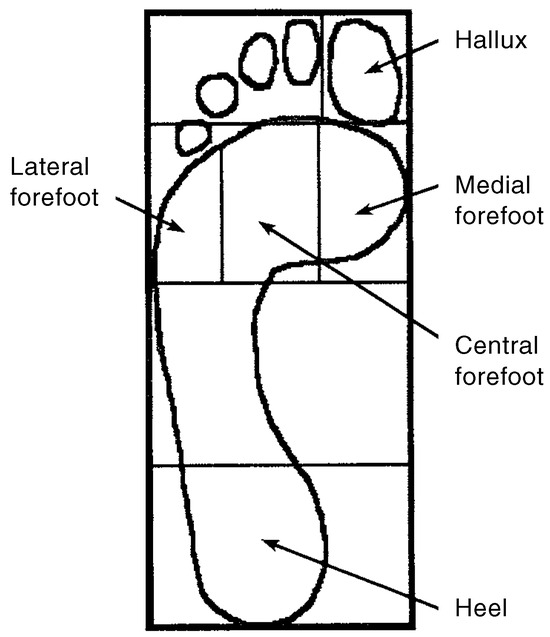
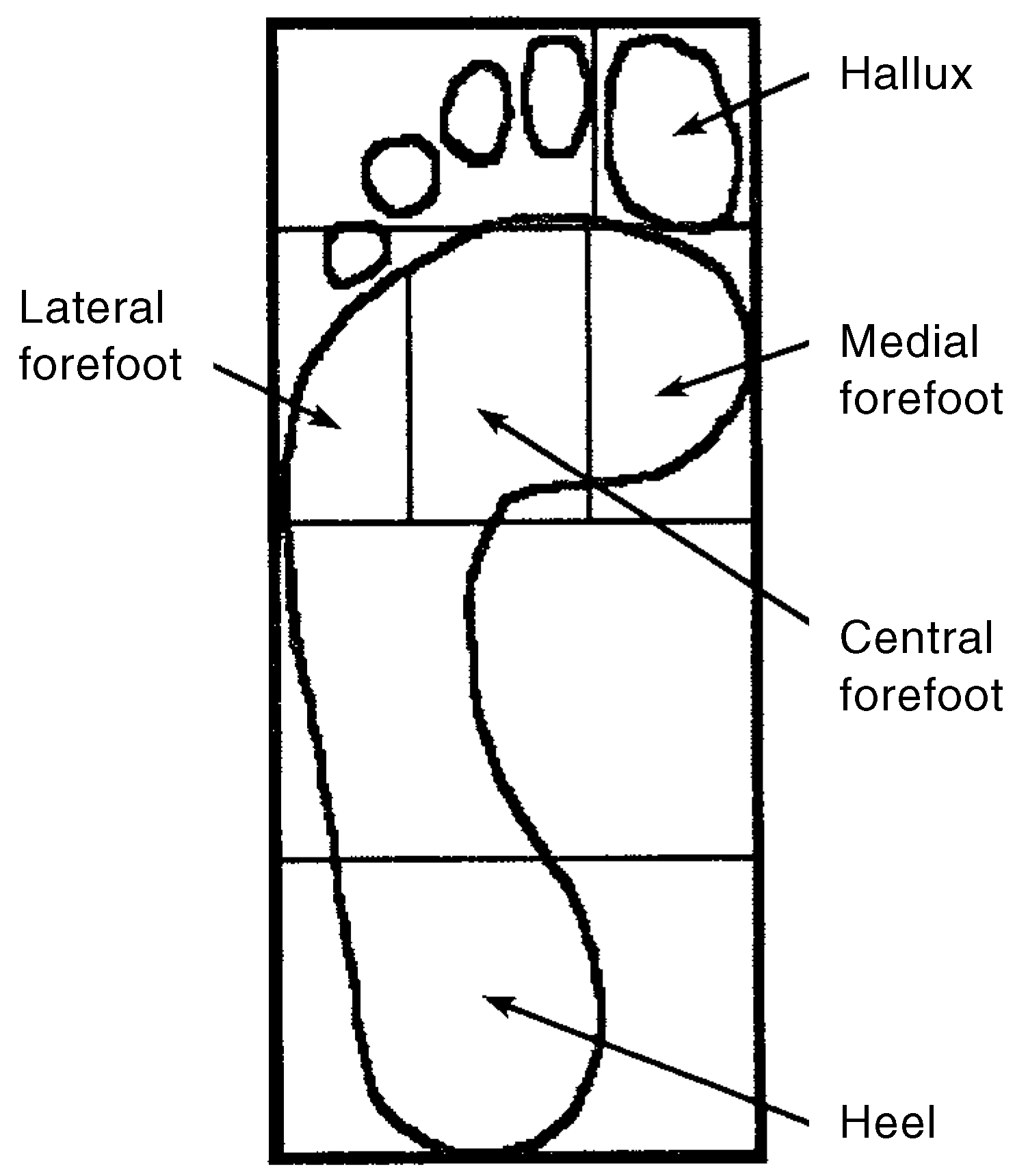
The EMED Multimasks software (Novel Electronics, Inc) was used to divide each plantar pressure footprint into five different regions based on a percentage of the width and length of the foot (Fig. 1). The five regions were the heel, lateral forefoot, central forefoot, medial forefoot, and hallux. These regions were selected because they are frequently sites of concern in the assessment of patients for excessively high plantar pressure as well as the provision of data for the fabrication of foot orthoses. Peak plantar pressure and pressure-time integral were calculated for each region using the Multimasks software.
Figure 1.
The five plantar surface regions of the foot that were analyzed in the current study.
Means and standard deviations were calculated for stance-phase duration, peak plantar pressure, and pressure-time integral for each data-collection method and plantar region. To determine the optimal number of trials required to obtain an acceptable level of reliability, means and standard deviations were calculated by first averaging two trials, then three trials, then four trials, and continuing up to a maximum of 20 trials. As a measure of between-trial reliability, intraclass correlation coefficients were also calculated in a similar manner for each data-collection method and dependent variable [14]. In this way, 19 means, standard deviations, and intraclass correlation coefficients were calculated for each variable, under each condition, and for each plantar surface region. Finally, paired t-tests were performed for the averaged trials of each variable to determine whether there was a significant difference between the two-step and midgait methods. Because of the large number of statistical tests being performed, an alpha level of .01 was used for all tests of statistical significance to minimize the experiment-wise error rate [15].
Results
The mean (±SD) stance-phase duration for all 20 trials was found to be 640 ± 9.8 msec for the midgait method and 683 ± 19.6 msec for the two-step method. The result of a paired t-test showed that there was no statistically significant difference (P > .01) in stance-phase duration between the two data-collection methods if the results of three or more trials were averaged. All of the intraclass correlation coefficients for stance-phase duration were found to be greater than .975, regardless of the number of trials averaged or the method of data collection.
The mean and standard deviation values for peak pressure and pressure-time integral obtained using both the two-step and midgait methods are shown in Table 1 and Table 2. The intraclass correlation coefficients calculated for both peak pressure and pressure-time integral were all above .800, regardless of the number of trials averaged or the data-collection method used, with the exception of the region under the lateral forefoot during midgait data collection. The intraclass correlation coefficient for peak pressure under the lateral forefoot was less than .800 if only two (.580) or three (.776) walking trials were averaged. The intraclass correlation coefficient for pressure-time integral was .755 if only two walking trials were averaged. Each variable measured, regardless of the data-collection method used, showed a rapid rise in the intraclass correlation coefficient values as the number of trials averaged increased until approximately five to seven trials were averaged, at which point a plateau was achieved.
Table 1.
Mean Values for Peak Plantar Pressure (in kilopascals) for 20 Walking Trials Using the Two-Step and Midgait Methods

Table 2.
Mean Values for Plantar Pressure-Time Integral (in kilopascal-seconds) for 20 Walking Trials Using the Two-Step and Midgait Methods

The results of the paired t-tests for the two data-collection methods showed no statistically significant difference (P > .01) when data from three or more walking trials were collected. The exception to this was peak pressure under the heel, for which five walking trials were needed before no statistically significant difference was found between the two data-collection methods.
Discussion
The purpose of this investigation was to determine the number of trials required using either the two-step or midgait data-collection method to achieve acceptable reliability in stance-phase duration and regional peak pressure and pressure-time integral values. The results of this study indicate that either method can be used to collect reliable regional plantar pressure data. The issue of the minimum number of trials needed to obtain reliable data, however, remains to be addressed. Although the intraclass correlation coefficients for stance-phase duration under both data-collection methods were high regardless of the number of trials collected, a rise in the mean and standard deviation of the stance-phase duration values was seen after five trials. This was not the case with the midgait method, which showed very consistent means and standard deviations for the 19 separate averaged values. These results indicate that subjects tended to step more slowly as data were collected from more trials. On the basis of this finding, the authors recommend that data from three to five trials be collected to obtain reliable results when using the two-step data-collection protocol. Table 3 shows the mean and standard deviation values for stance-phase duration from both three and five trials for each data-collection method.
Table 3.
Mean Values for Stance-Phase Duration (in milliseconds) for Three and Five Walking Trials Using the Two-Step and Midgait Methods
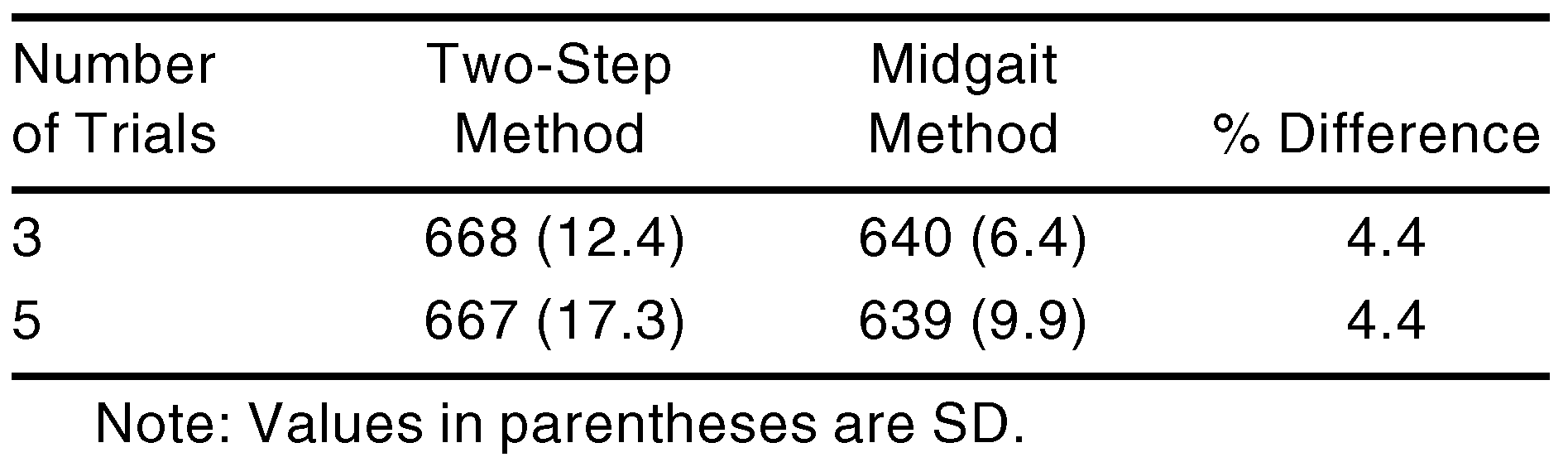
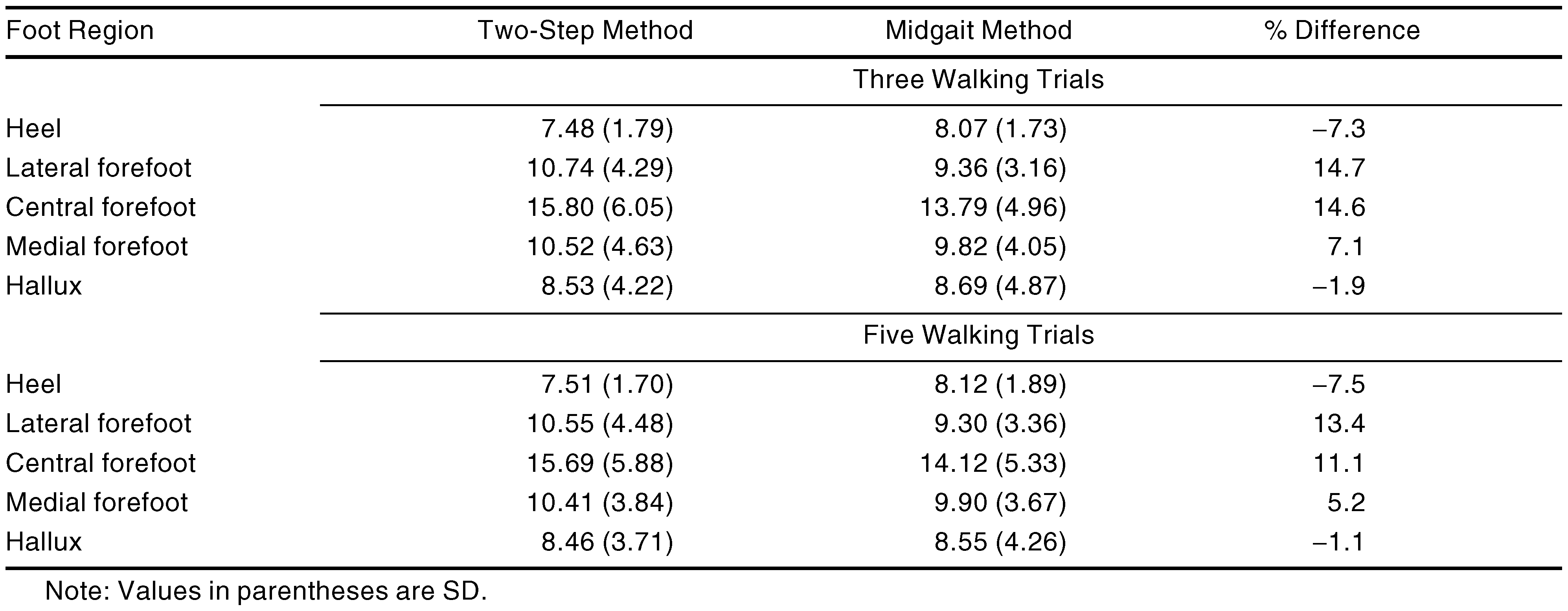
Table 4 and Table 5 show the intraclass correlation coefficients obtained from recording three and five walking trials under both data-collection methods. As these tables show, three or five trials provide almost perfect between-trial reliability according to the classification system proposed by Landis and Koch [16]. The means and standard deviations for peak pressure and pressure-time integral for the five plantar regions obtained under each data-collection protocol are shown in Table 6 and Table 7. It is important to note that although there is no statistically significant difference between the two data-collection methods for most of the dependent variables measured, there can be as much as a 17.1% difference between the two methods. The authors recommend, therefore, that clinicians and researchers follow the same data-collection protocol for both initial and all follow-up assessments of the same subject or patient.
Table 4.
Intraclass Correlation Coefficients for Plantar Peak Pressure for Three and Five Walking Trials Using the Two-Step and Midgait Methods
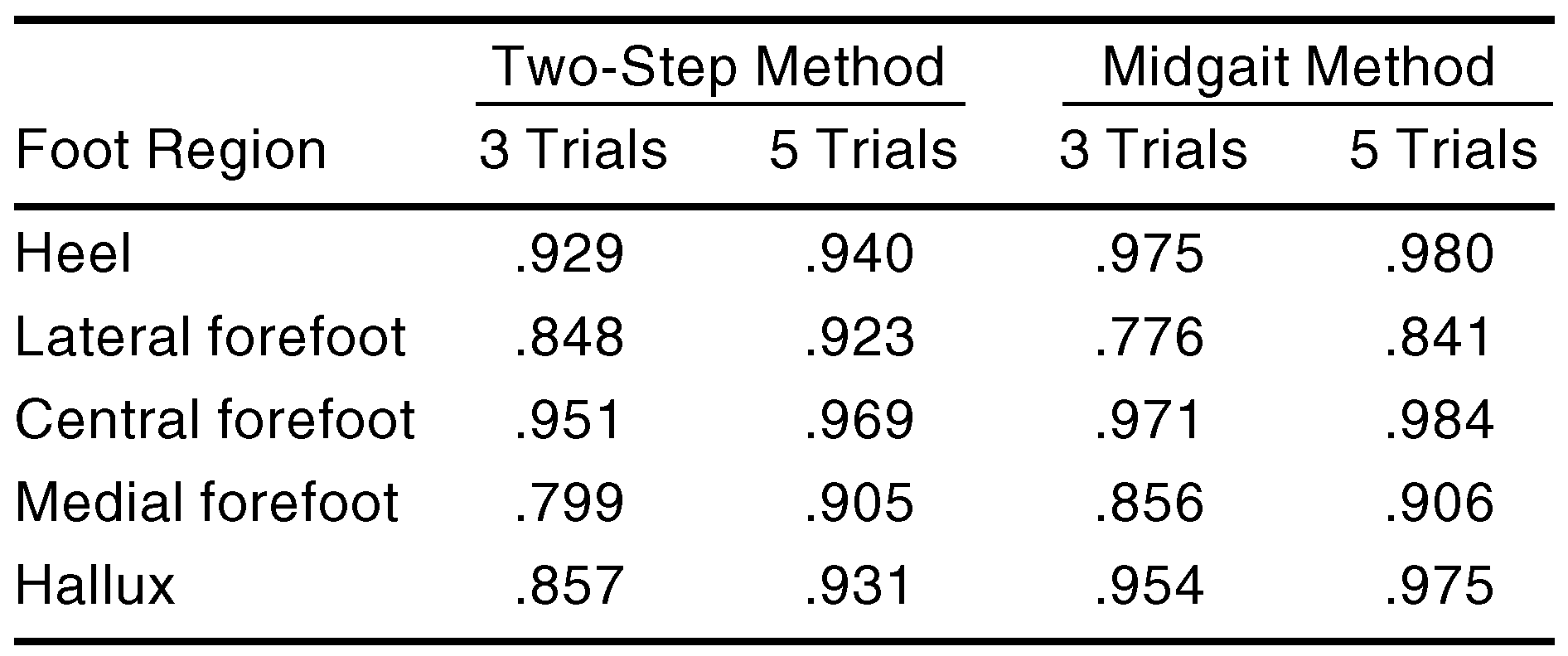
Table 5.
Intraclass Correlation Coefficients for Plantar Pressure-Time Integral for Three and Five Walking Trials Using the Two-Step and Midgait Methods
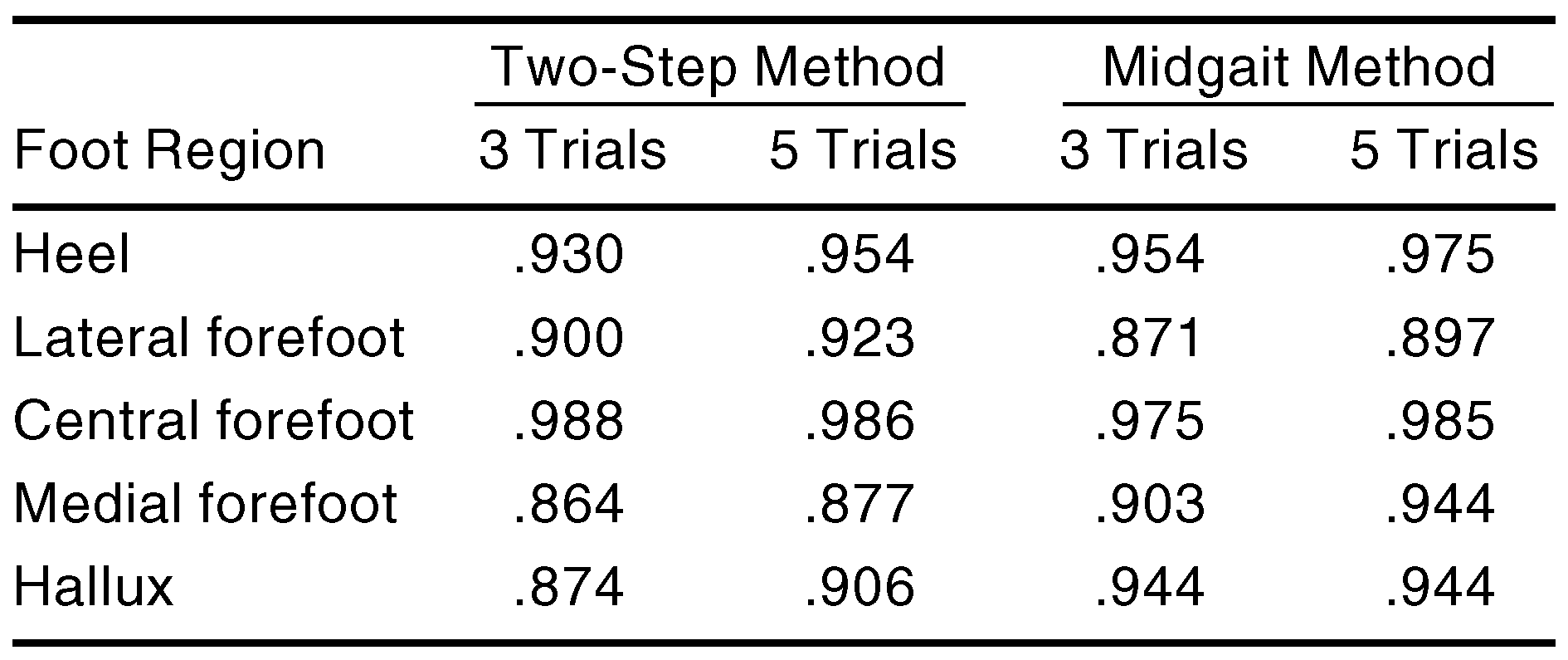
Table 6.
Mean Values for Plantar Peak Pressure (in kilopascals) for Three and Five Walking Trials Using the Two-Step and Midgait Methods
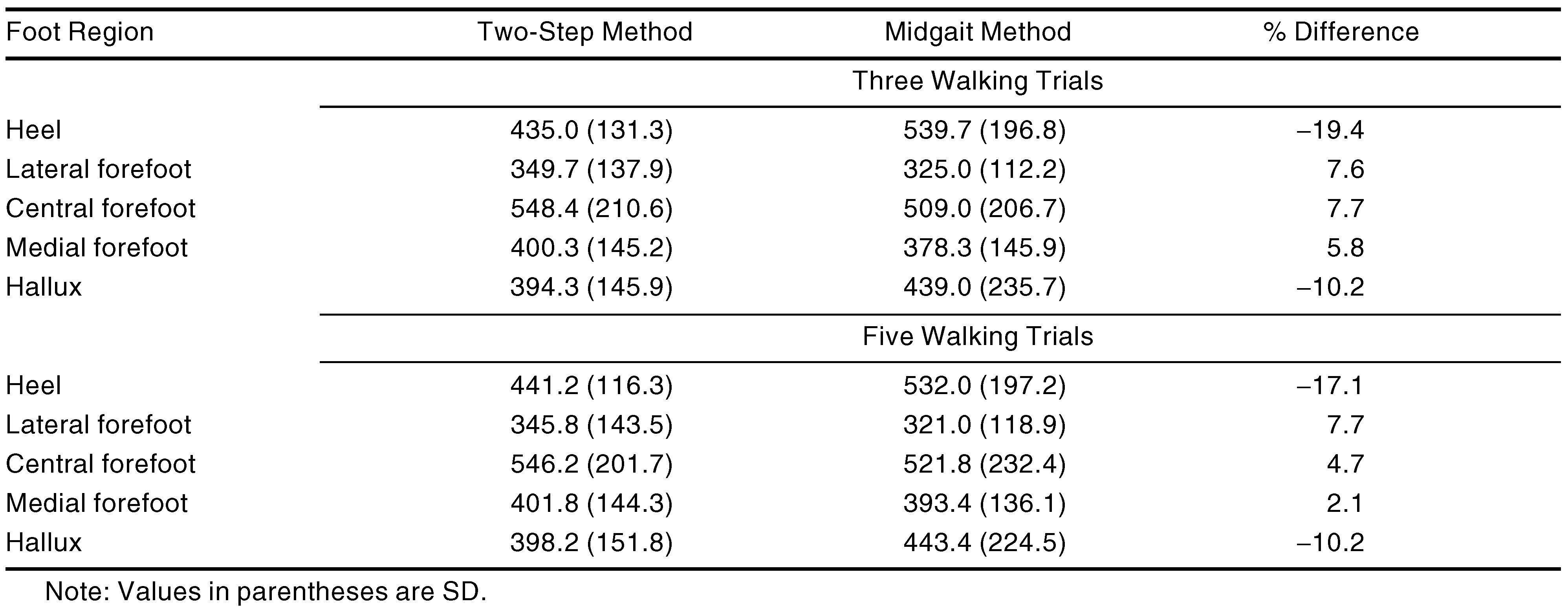
Table 7.
Mean Values for Plantar Pressure-Time Integral (in kilopascal-seconds) for Three and Five Walking Trials Using the Two-Step and Midgait Methods
The results of this study also have implications for the use of plantar pressure data collected during dynamic activities such as walking in the design and fabrication of foot orthoses. The findings of this study indicate that clinicians who use orthotic fabrication systems based on pressure measurements should be required to collect data from at least three trials to ensure that an appropriate representation of the patient’s plantar pressure pattern is obtained.
The subjects participating in the current study were healthy, nondiabetic adults; therefore, a limitation of the study is that these results may not be applicable to the diabetic population. The authors chose to use healthy subjects to avoid subjecting diabetic patients to possible stress on the plantar surface of the foot caused by the multiple walking trials required for this investigation.
Summary
The results of the current study indicate that the two-step method of collecting plantar pressure data provides values quite similar to those obtained using the midgait method. The use of the two-step method, however, requires that pressure data from three, four, or five trials be averaged. While between-trial reliability of regional plantar pressure values is acceptable whether data from three, four, or five trials are averaged, the least amount of between-trial variability is obtained using a mean calculated from five trials. This yields reliable pressure data without subjecting the patient to excessive, repetitive loads over the plantar surface of the foot. In addition, it is important to use the same data-collection method for the initial and all follow-up assessments of plantar pressures, as the two-step and midgait methods do not provide identical results.
References
- BOULTON AJ, FRANKS CI, BETTS RP, ET AL: Reduction of abnormal foot pressures in diabetic neuropathy using a new polymer insole material. Diabetes Care 7: 42, 1984.
- BRAND PW: “The Diabetic Foot,” in Diabetes Mellitus: Theory and Practice, ed by M Ellenburg, H Rifkin, p 1864, Medical Examination Publishers, New Hyde Park, NY, 1983.
- DELBRIDGE L, CTERCTEKO G, FOWLER C, ET AL: The aetiology of diabetic neuropathic ulceration of the foot. Br J Surg 72: 1, 1985.
- CAVANAGH PR, ULBRECHT JS: “Biomechanics of the Diabetic Foot,” in Disorders of the Foot and Ankle, ed by MH Jahss, p 829, WB Saunders, Philadelphia, 1991.
- VEVES A, VAN ROSS ER, BOULTON AJ: Foot pressure measurements in diabetic and nondiabetic amputees. Diabetes Care 15: 905, 1992.
- STOKES IA, FARIS IB, HUTTON WC: The neuropathic ulcer and loads on the foot in diabetic patients. Acta Orthop Scand 46: 839, 1975.
- CTERCTEKO GC, DHANENDRAN M, HUTTON WC, ET AL: Vertical forces acting on the feet of diabetic patients with neuropathic ulceration. Br J Surg 68: 608, 1981.
- DUCKWORTH T, BOULTON AJ, BETTS RP, ET AL: Plantar pressure measurements and the prevention of ulceration in the diabetic foot. J Bone Joint Surg Br 67: 79, 1985.
- VEVES A, MURRAY HJ, YOUNG MJ, ET AL: The risk of foot ulceration in diabetic patients with high foot pressure: a prospective study. Diabetologia 35: 660, 1992.
- HUGHES J, PRATT L, LINGE K, ET AL: Reliability of pressure measurements: the EMED-F system. Clin Biomech 6: 14, 1991.
- RODGERS MM: Plantar Pressure Distribution Measurement During Barefoot Walking: Normal Values and Predictive Equations [dissertation], Pennsylvania State University, University Park, PA, 1985.
- MORLOCK M, MITTLMEIER T: First step method vs. full gait method: results of a comparison. Eur J Phys Med Rehab 2: 33, 1992.
- MEYERS-RICE B, SUGARS L, MCPOIL T, ET AL: Comparison of three methods for obtaining plantar pressures in non-pathologic subjects. JAPMA 84: 499, 1994.
- SHROUT PE, FLEISS JL: Intraclass correlations: uses in assessing rater reliability. Psychol Bull 86: 420, 1979.
- KEPPEL GT: Design and Analysis: A Researcher’s Hand-book, Prentice-Hall, Englewood Cliffs, NJ, 1973.
- LANDIS JR, KOCH GG: The measurement of observer agreement for categorical data. Biometrics 33: 159, 1977.
© 1999 American Podiatric Medical Association